Skip to content
Discimus
  • Grades
  • Subjects
  • Occasions
  • Standards
  • Membership
Sign inJoin
  1. Home
  2. Grades
  3. Grade 10
  4. English Language Arts

Common Core State Standards for English Language Arts

Grade 10 English Language Arts

Phonics, reading, grammar, vocabulary and writing.

TopicsArgument Writing 1Figurative Language 1Grammar 2Punctuation 2Rhetorical Analysis 1Spelling 1Vocabulary 6Writing 19
StandardsL.9-10.1.AL.9-10.1.BL.9-10.2.AL.9-10.2.BL.9-10.2.CL.9-10.3.AL.9-10.4.AL.9-10.4.BL.9-10.4.CL.9-10.4.DL.9-10.5.AL.9-10.5.BL.9-10.6RI.9-10.4RI.9-10.6RI.9-10.9W.9-10.1.AWHST.9-10.1.AWHST.9-10.1.BWHST.9-10.1.CWHST.9-10.1.DWHST.9-10.1.EWHST.9-10.2.AWHST.9-10.2.BWHST.9-10.2.CWHST.9-10.2.DWHST.9-10.2.EWHST.9-10.2.FWHST.9-10.4WHST.9-10.5WHST.9-10.6WHST.9-10.7WHST.9-10.8WHST.9-10.9WHST.9-10.10
  • ELAGrade 10

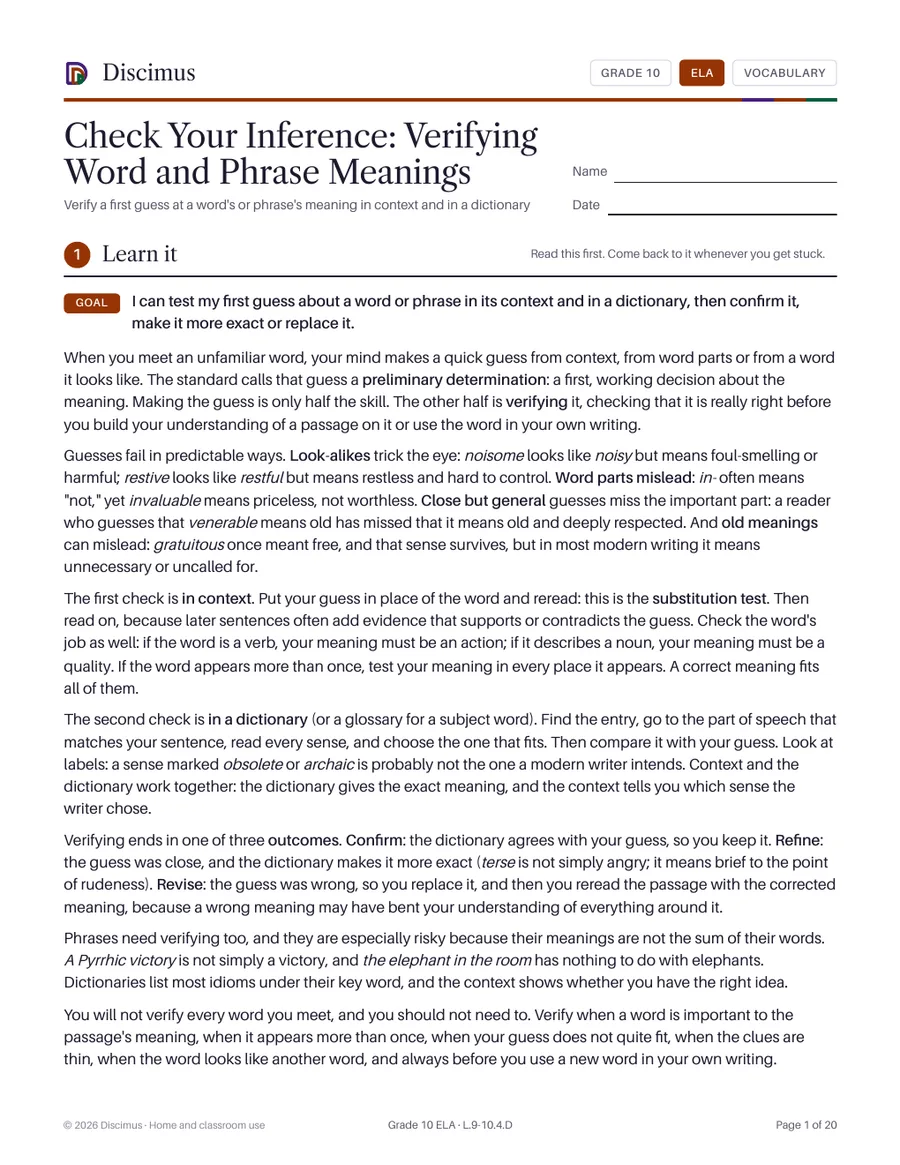
    Check Your Inference: Verifying Word and Phrase Meanings

    Verify a first guess at a word's or phrase's meaning in context and in a dictionary
  • ELAGrade 10

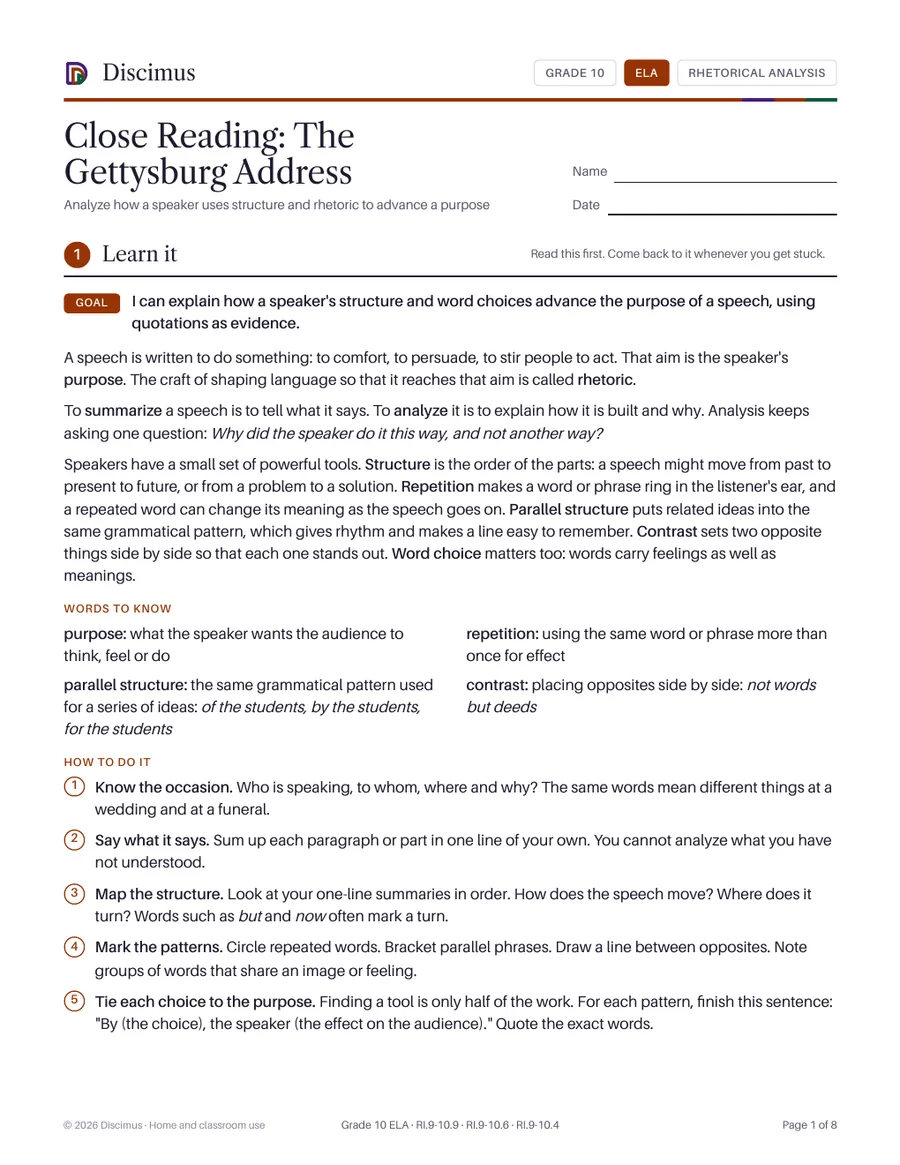
    Close Reading: The Gettysburg Address

    Analyze how a speaker uses structure and rhetoric to advance a purpose
  • ELAGrade 10

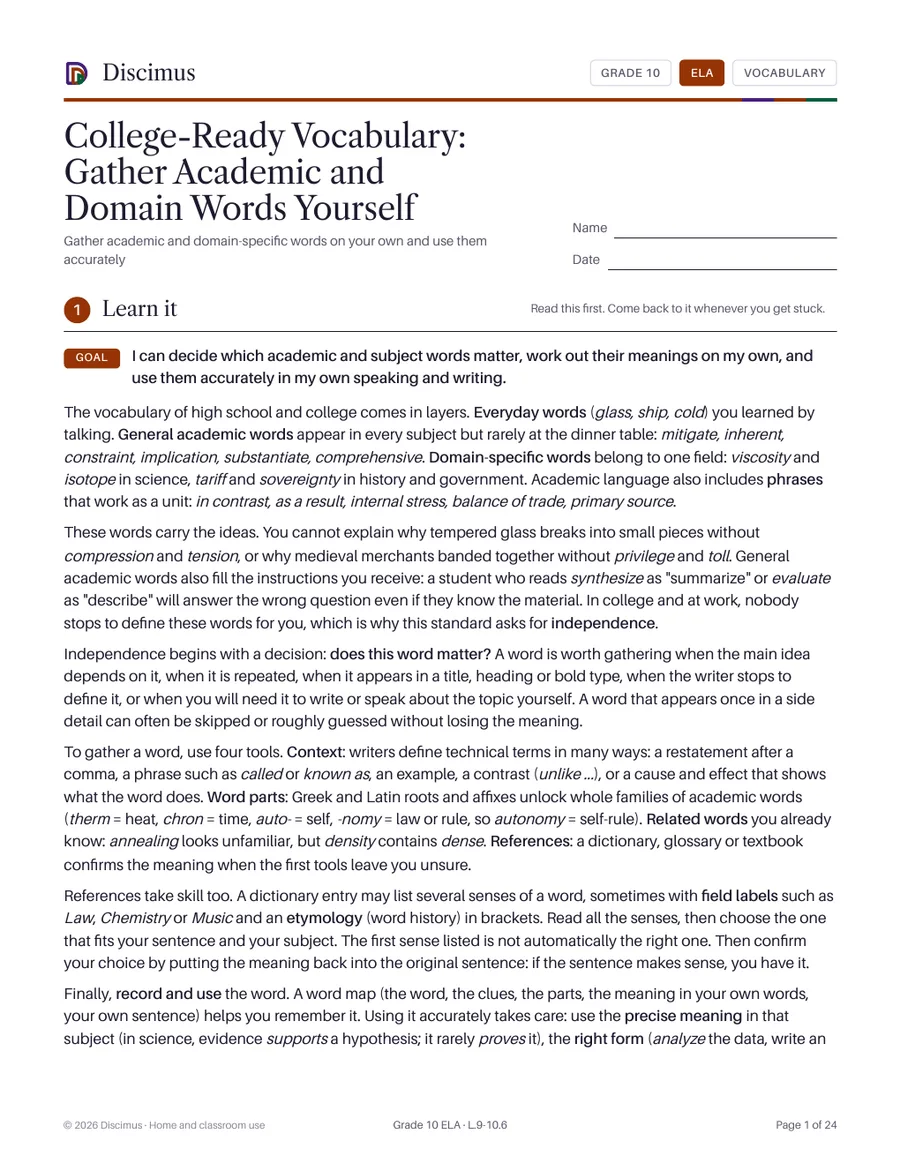
    College-Ready Vocabulary: Gather Academic and Domain Words Yourself

    Gather academic and domain-specific words on your own and use them accurately
  • ELAGrade 10

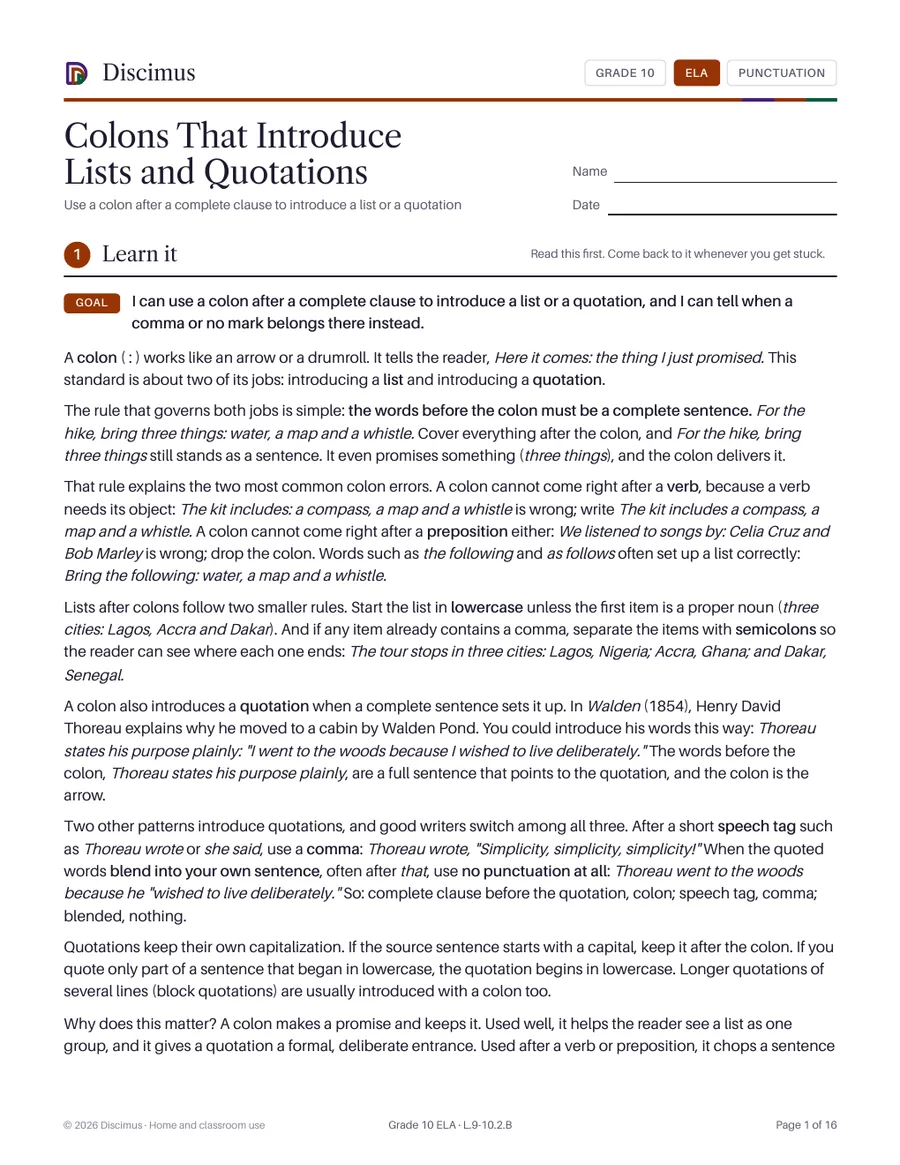
    Colons That Introduce Lists and Quotations

    Use a colon after a complete clause to introduce a list or a quotation
  • ELAGrade 10

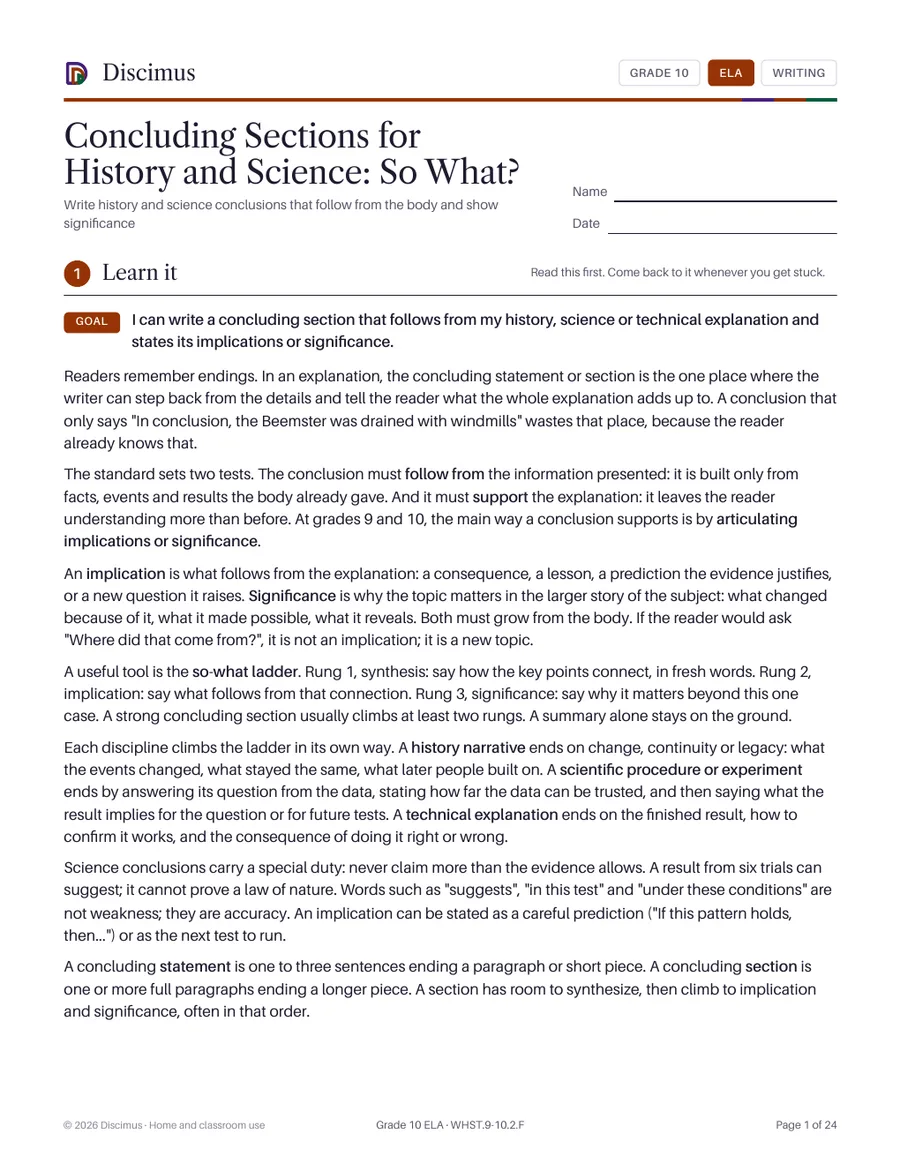
    Concluding Sections for History and Science: So What?

    Write history and science conclusions that follow from the body and show significance
  • ELAGrade 10

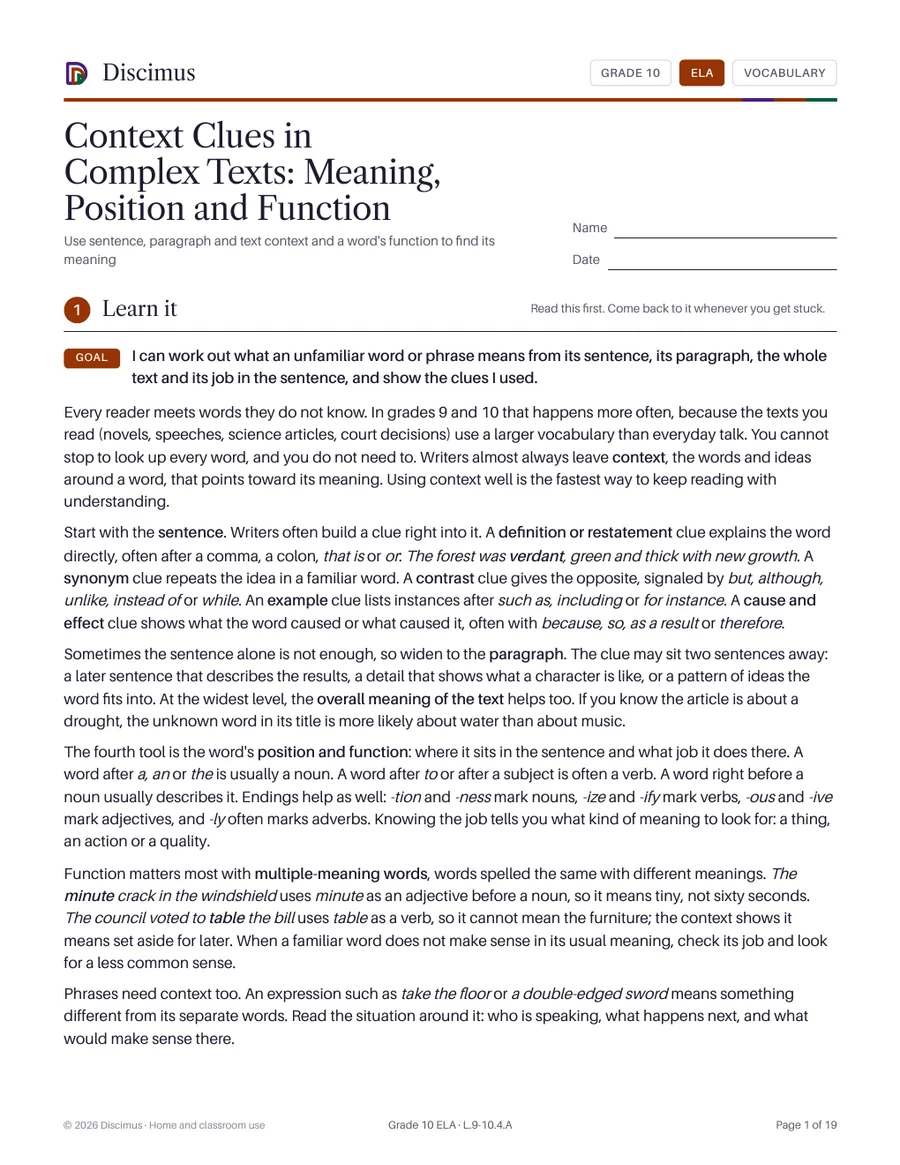
    Context Clues in Complex Texts: Meaning, Position and Function

    Use sentence, paragraph and text context and a word's function to find its meaning
  • ELAGrade 10

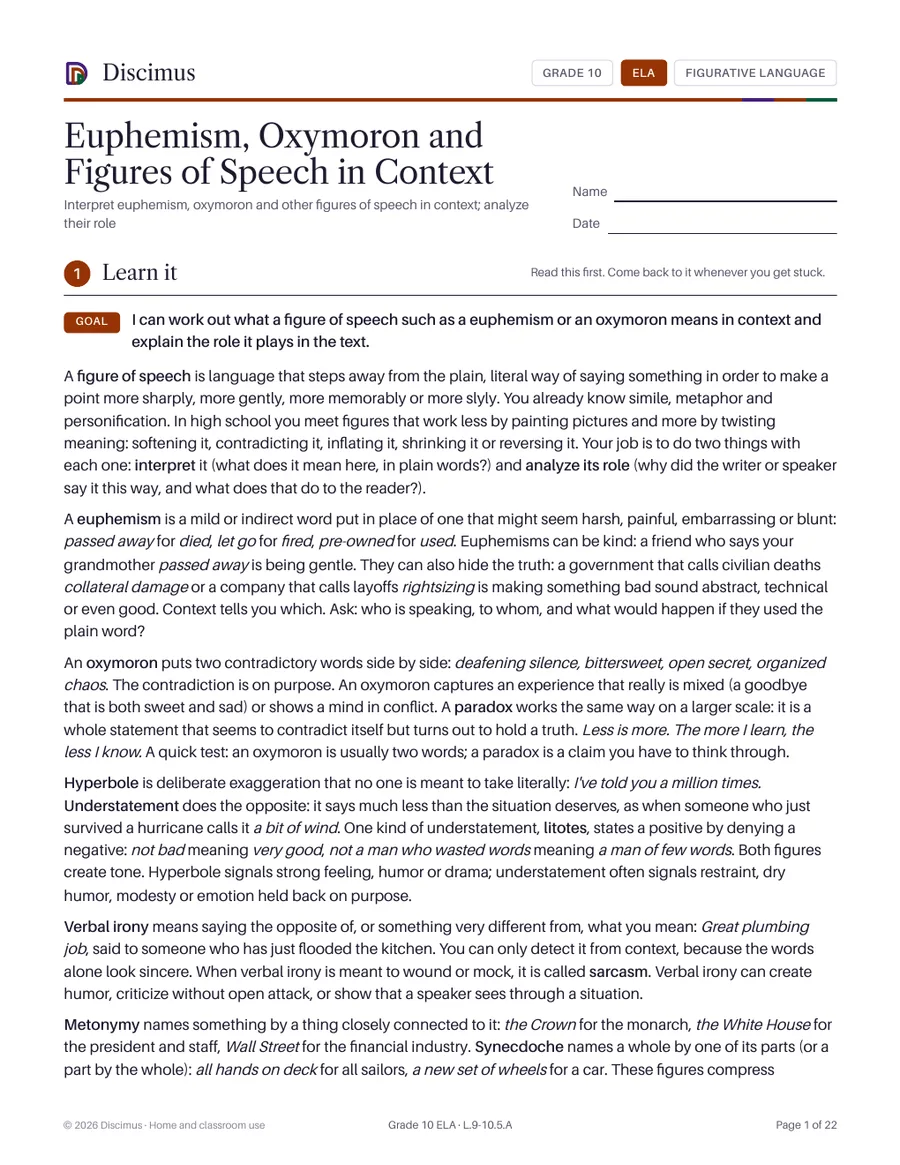
    Euphemism, Oxymoron and Figures of Speech in Context

    Interpret euphemism, oxymoron and other figures of speech in context; analyze their role
  • ELAGrade 10

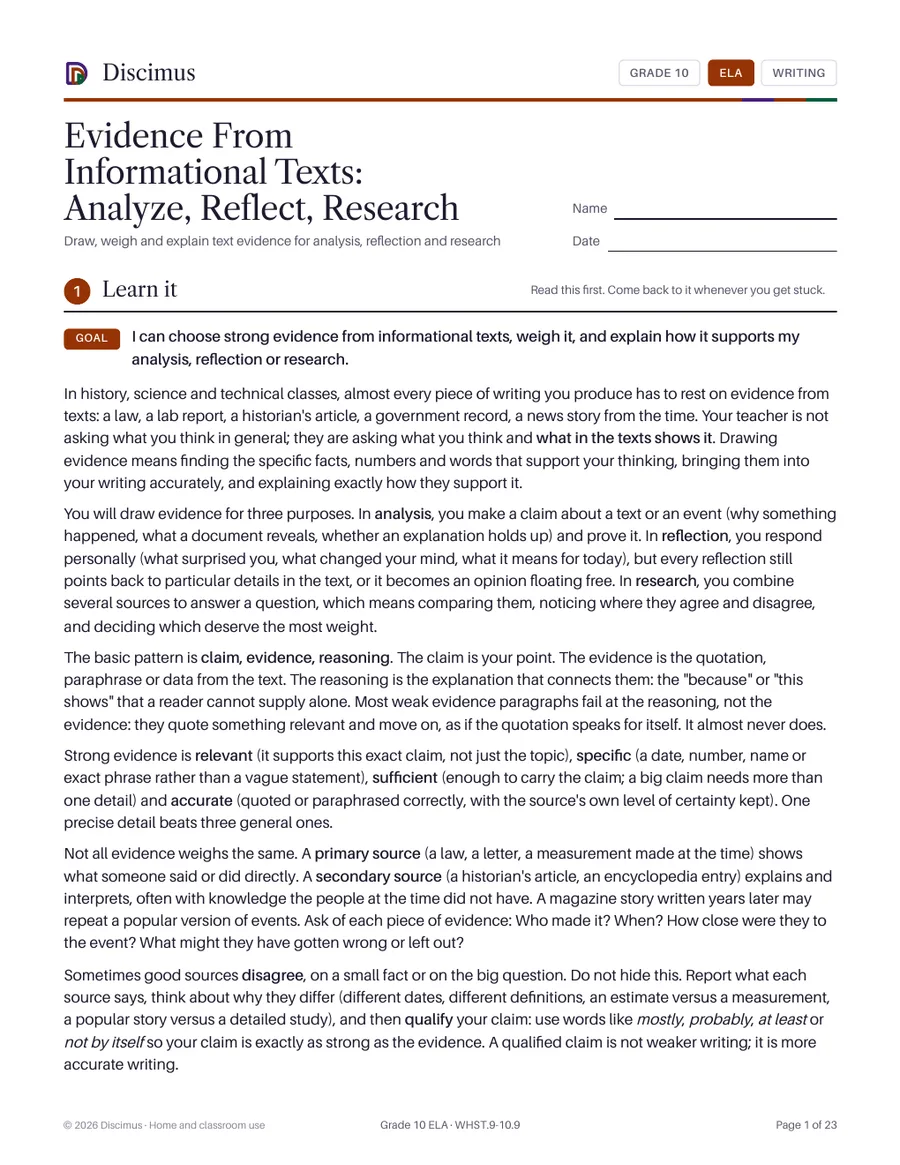
    Evidence From Informational Texts: Analyze, Reflect, Research

    Draw, weigh and explain text evidence for analysis, reflection and research
  • ELAGrade 10

    History and Science Research: From Question to Synthesis

    Research a history or science question, narrow or broaden it, and synthesize sources
  • ELAGrade 10

    History and Science Writing: Facts, Definitions and Quotations

    Develop history and science explanations with facts, definitions, details and quotations
  • ELAGrade 10

    History and Science Writing: Formal Style, Tone and Conventions

    Keep a formal style, objective tone and discipline conventions in history and science
  • ELAGrade 10

    History and Science Writing: Introduce and Organize an Explanation

    Open and organize history, science and technical explanations with headings and graphics
  • ELAGrade 10

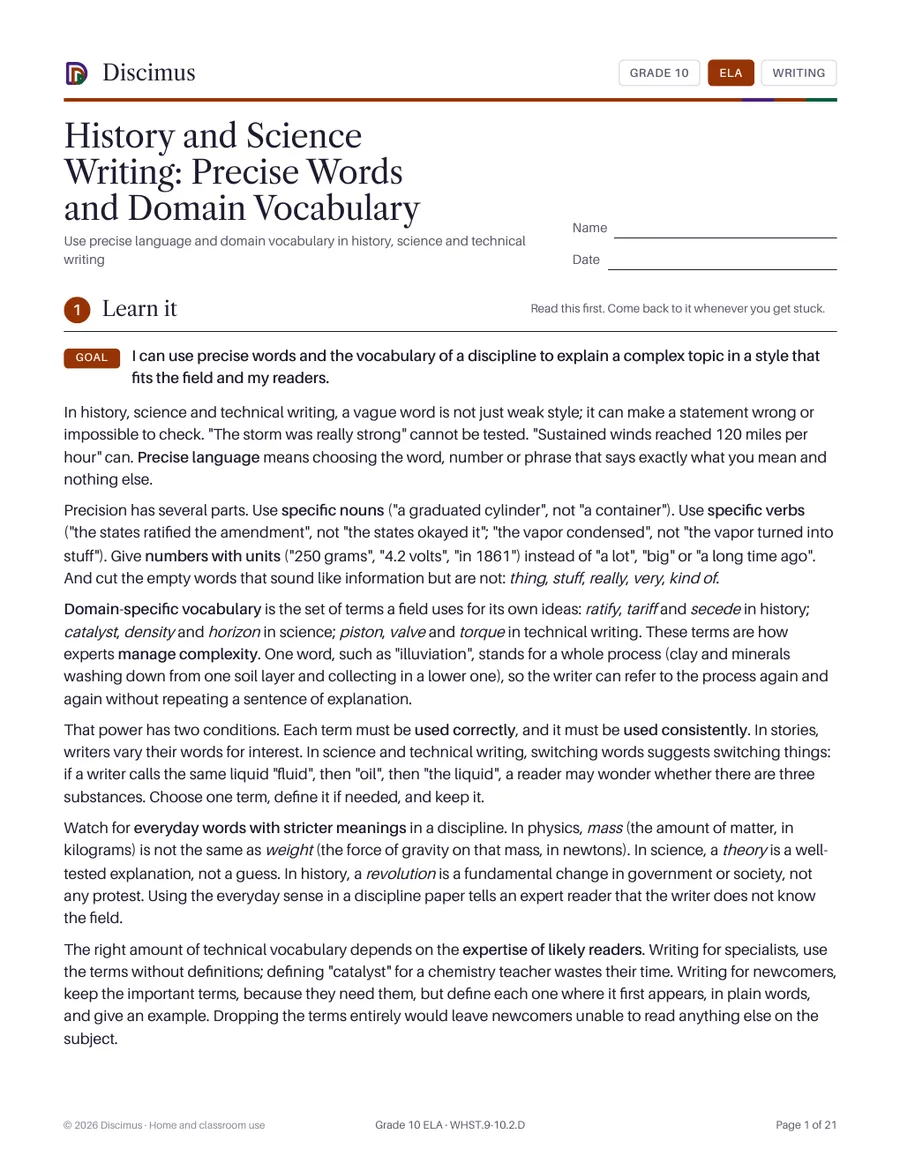
    History and Science Writing: Precise Words and Domain Vocabulary

    Use precise language and domain vocabulary in history, science and technical writing
  • ELAGrade 10

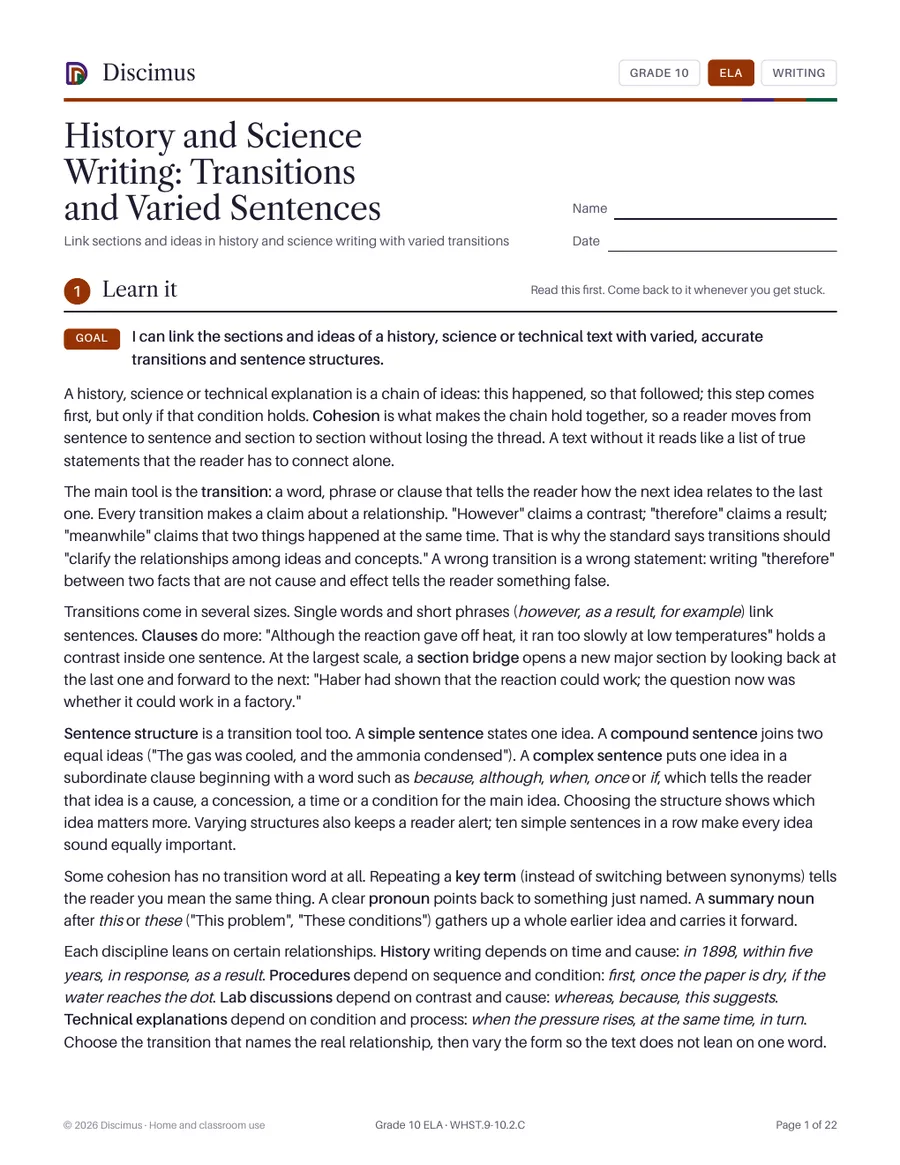
    History and Science Writing: Transitions and Varied Sentences

    Link sections and ideas in history and science writing with varied transitions
  • ELAGrade 10

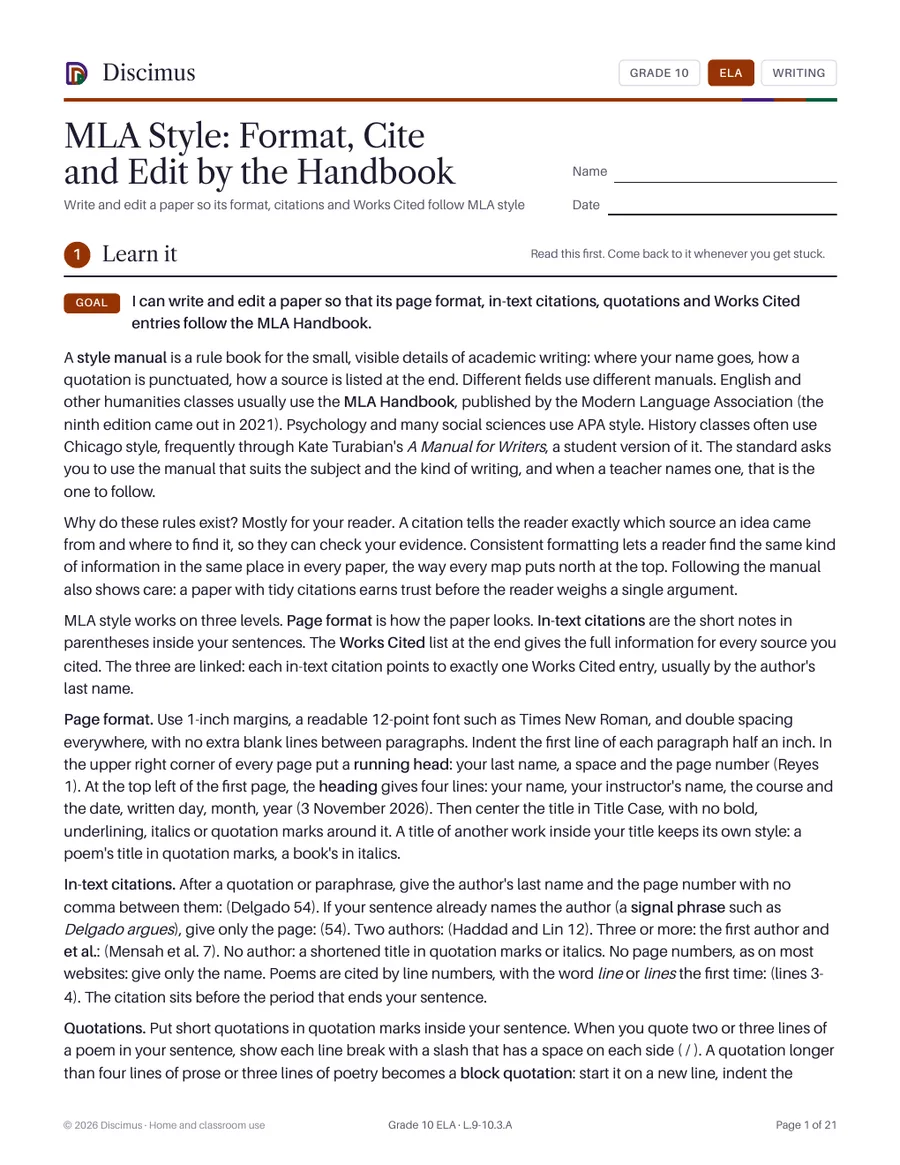
    MLA Style: Format, Cite and Edit by the Handbook

    Write and edit a paper so its format, citations and Works Cited follow MLA style
  • ELAGrade 10

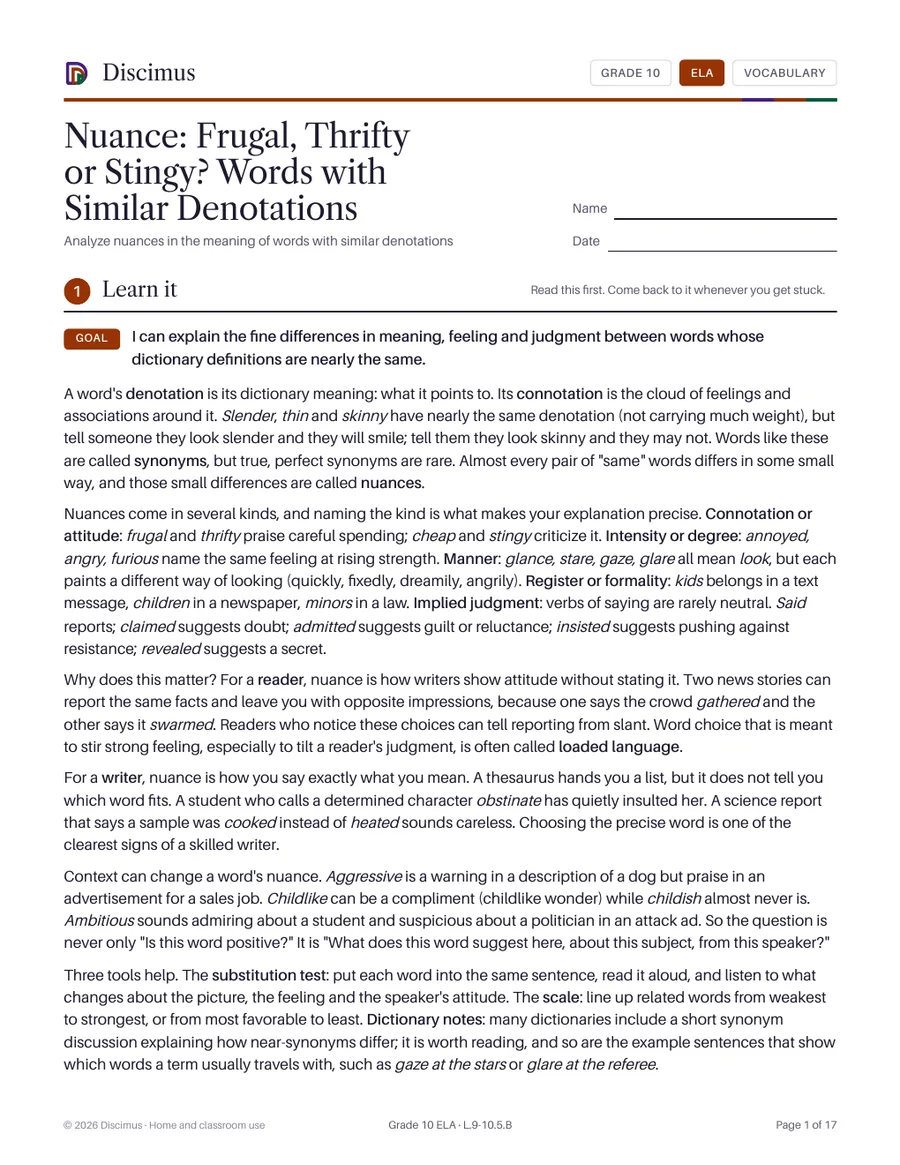
    Nuance: Frugal, Thrifty or Stingy? Words with Similar Denotations

    Analyze nuances in the meaning of words with similar denotations
  • ELAGrade 10

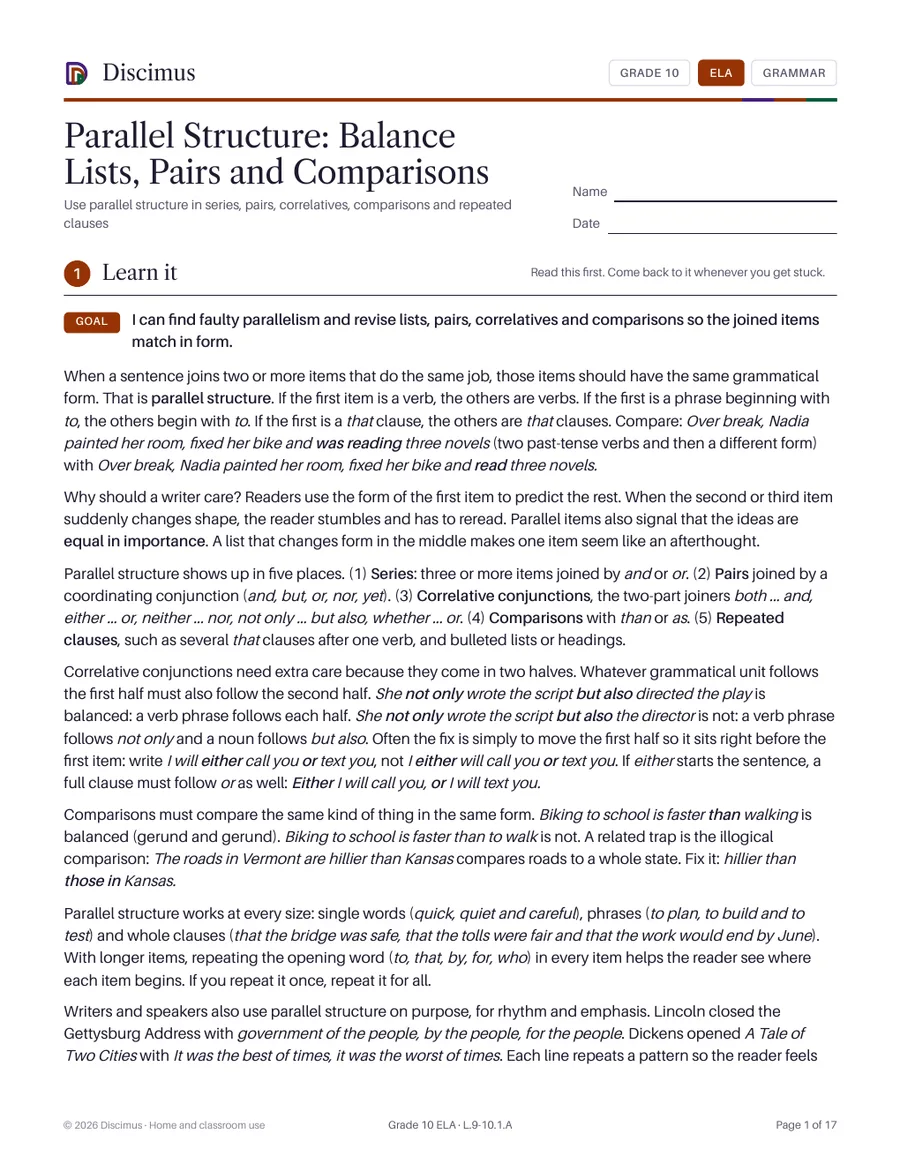
    Parallel Structure: Balance Lists, Pairs and Comparisons

    Use parallel structure in series, pairs, correlatives, comparisons and repeated clauses
  • ELAGrade 10

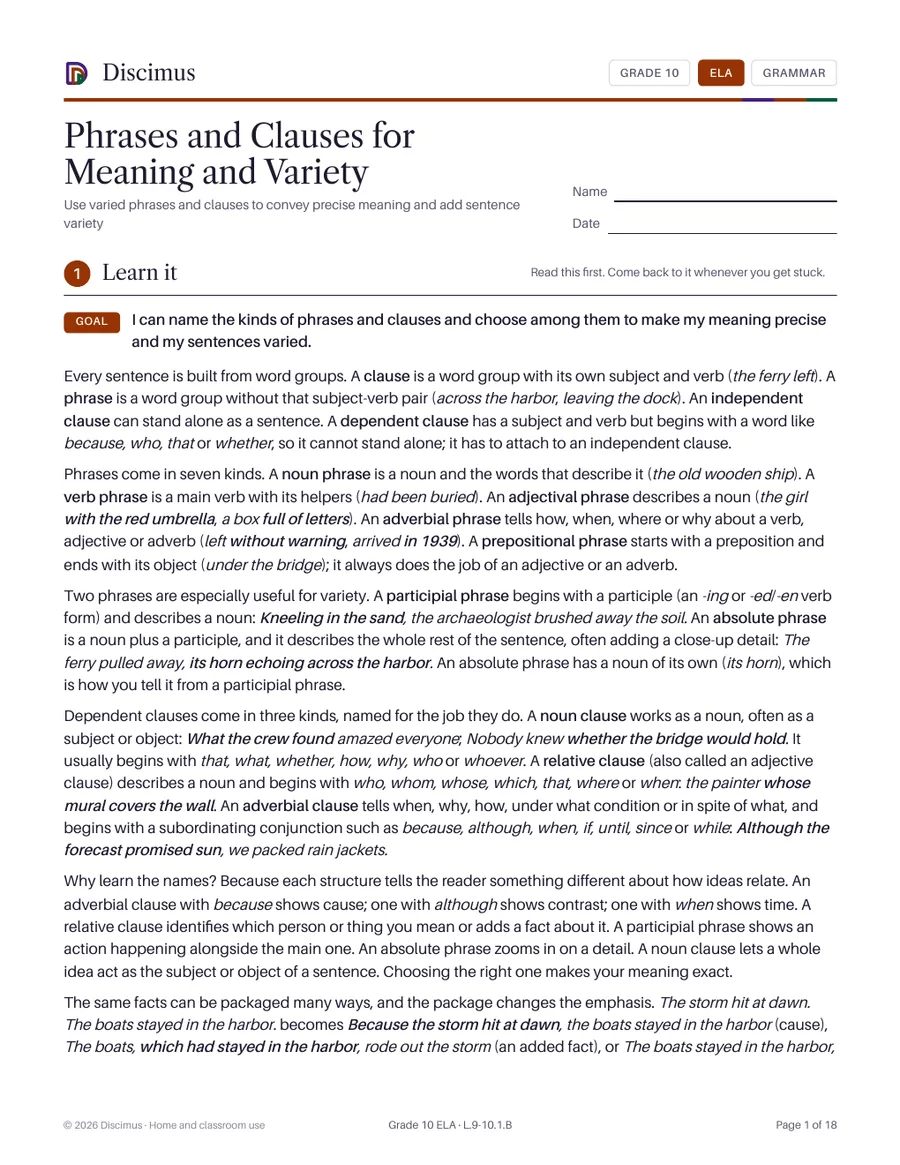
    Phrases and Clauses for Meaning and Variety

    Use varied phrases and clauses to convey precise meaning and add sentence variety
  • ELAGrade 10

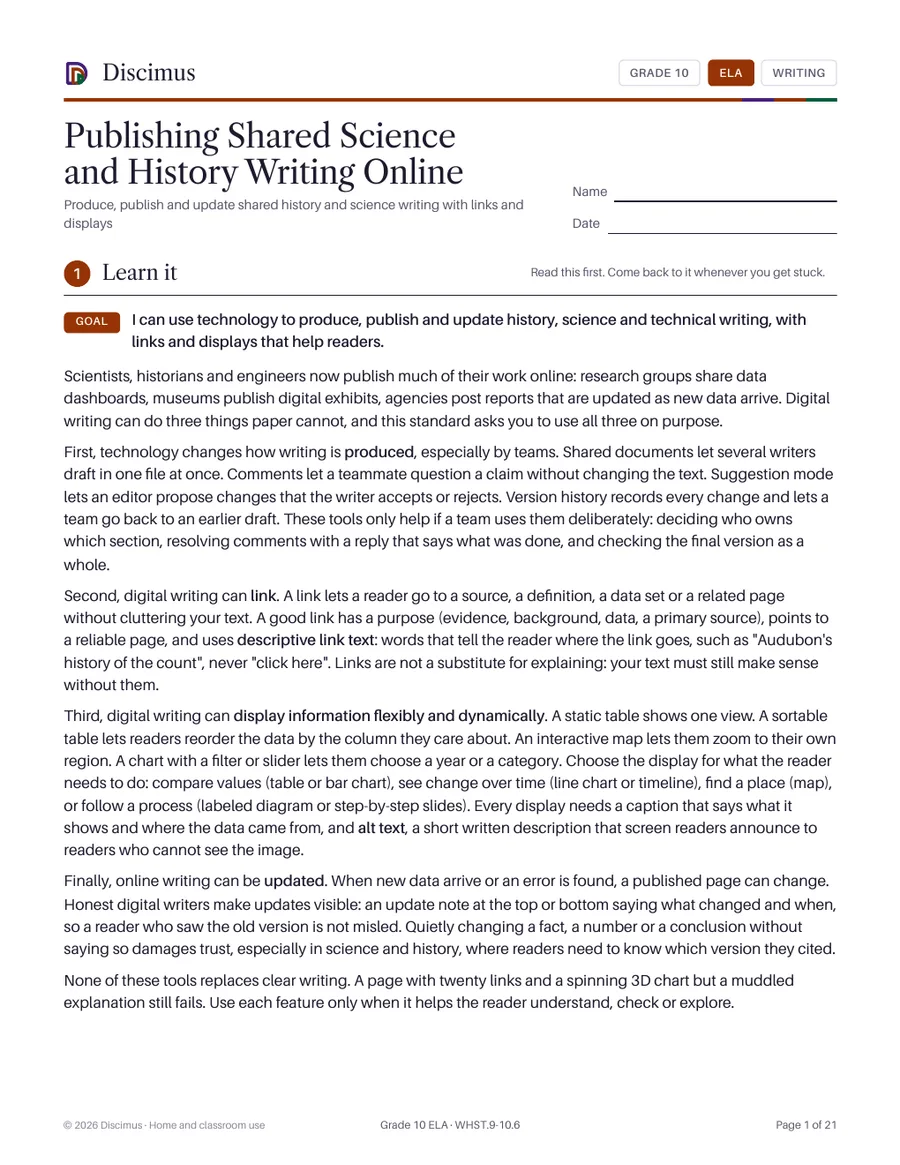
    Publishing Shared Science and History Writing Online

    Produce, publish and update shared history and science writing with links and displays
  • ELAGrade 10

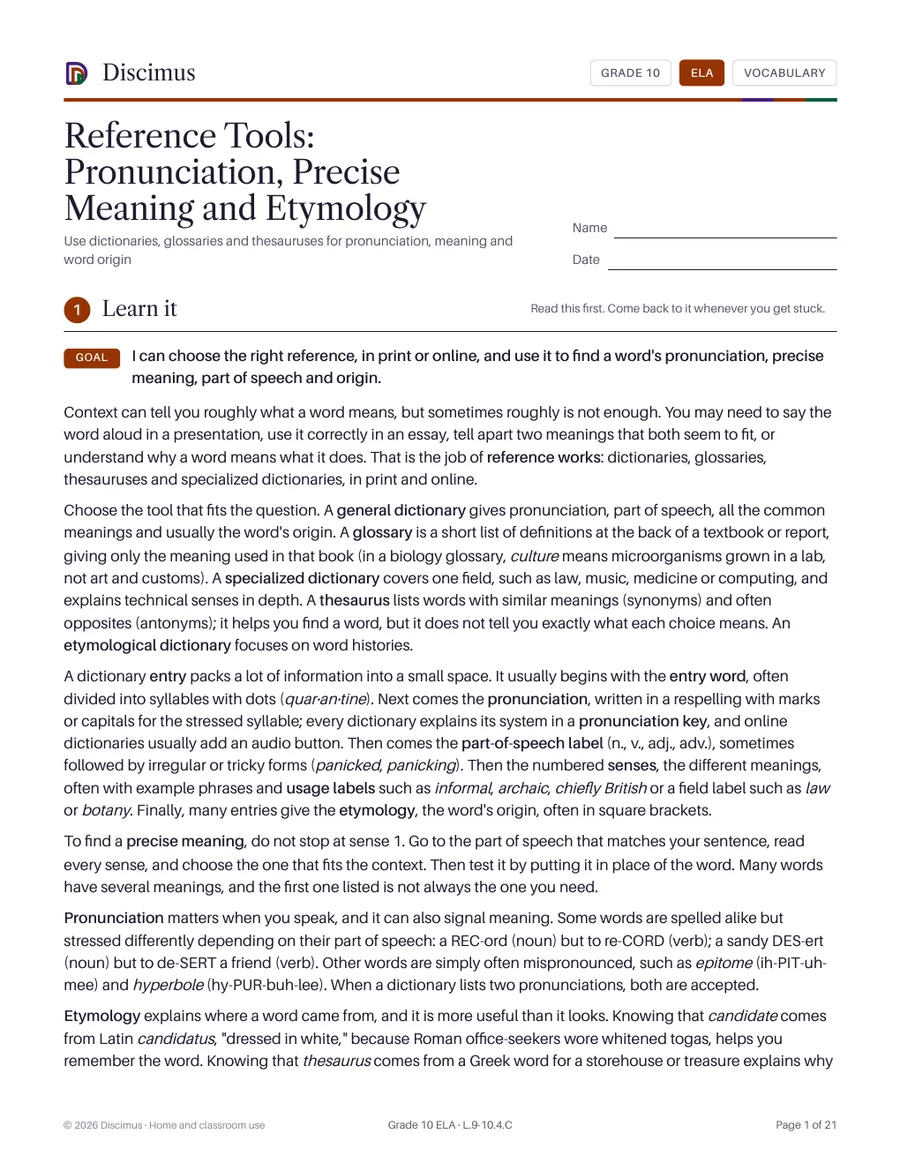
    Reference Tools: Pronunciation, Precise Meaning and Etymology

    Use dictionaries, glossaries and thesauruses for pronunciation, meaning and word origin
  • ELAGrade 10

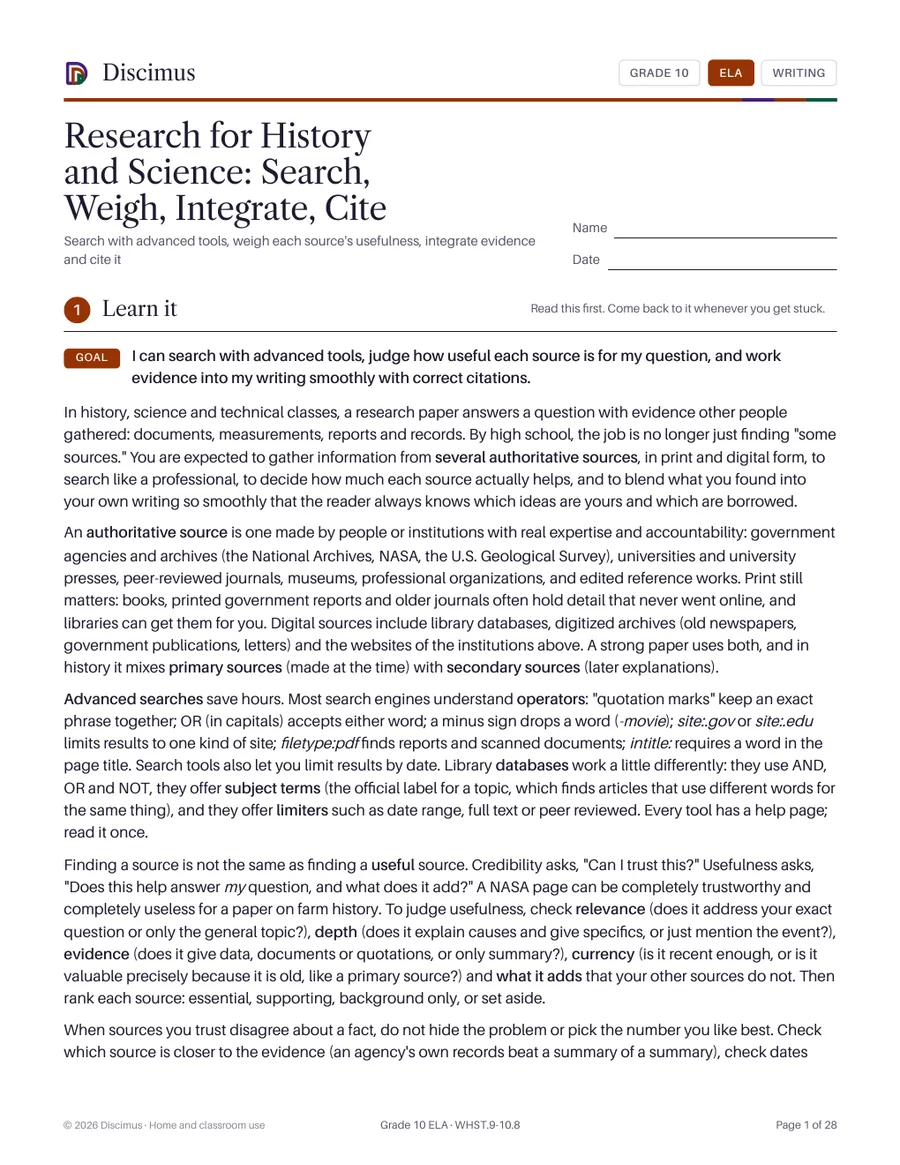
    Research for History and Science: Search, Weigh, Integrate, Cite

    Search with advanced tools, weigh each source's usefulness, integrate evidence and cite it
  • ELAGrade 10

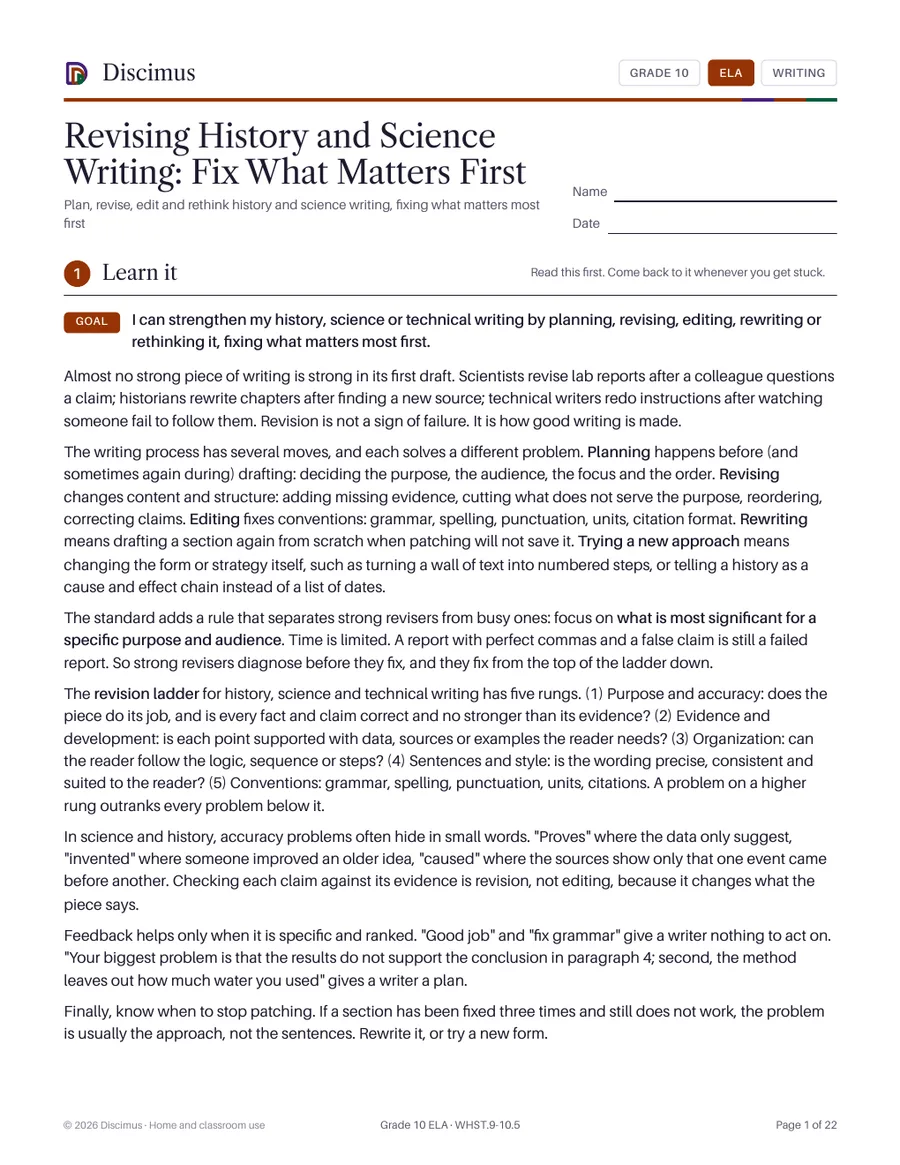
    Revising History and Science Writing: Fix What Matters First

    Plan, revise, edit and rethink history and science writing, fixing what matters most first
  • ELAGrade 10

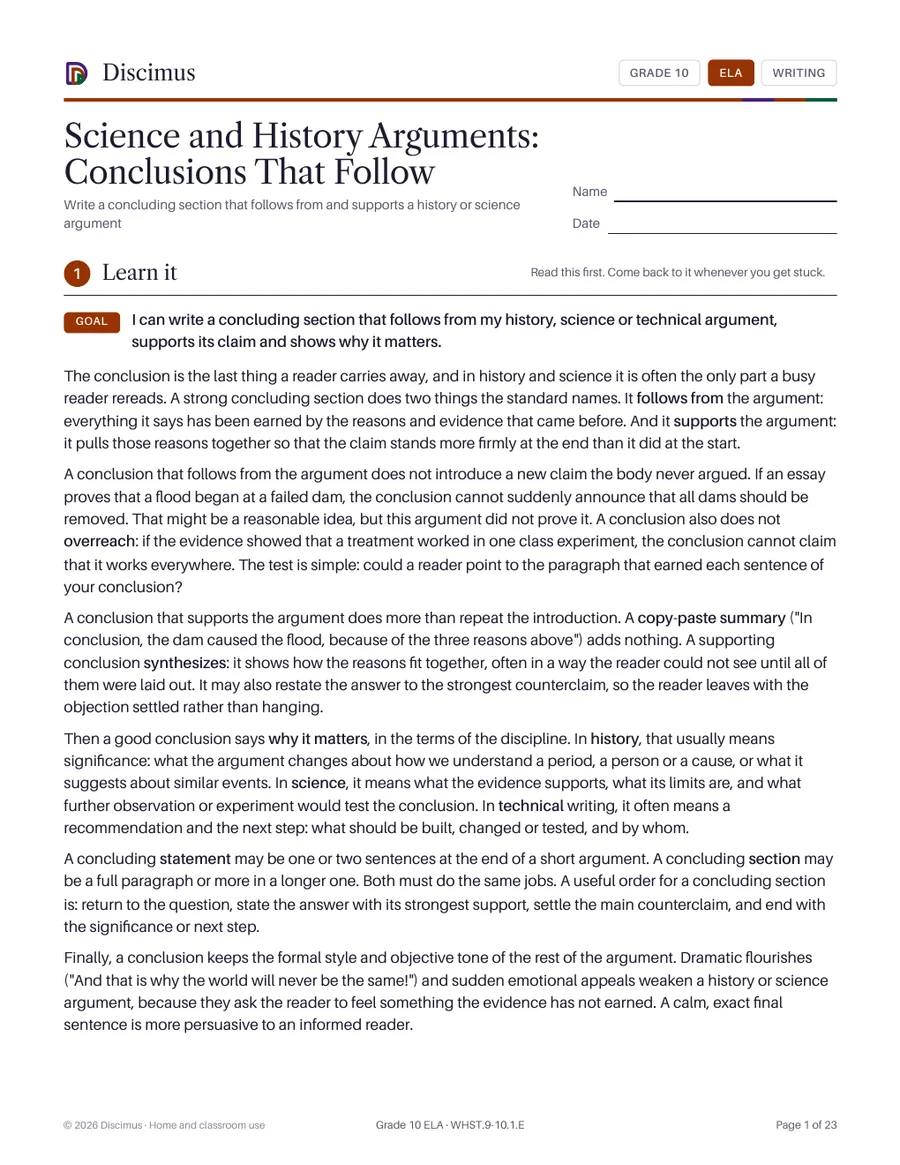
    Science and History Arguments: Conclusions That Follow

    Write a concluding section that follows from and supports a history or science argument
  • ELAGrade 10

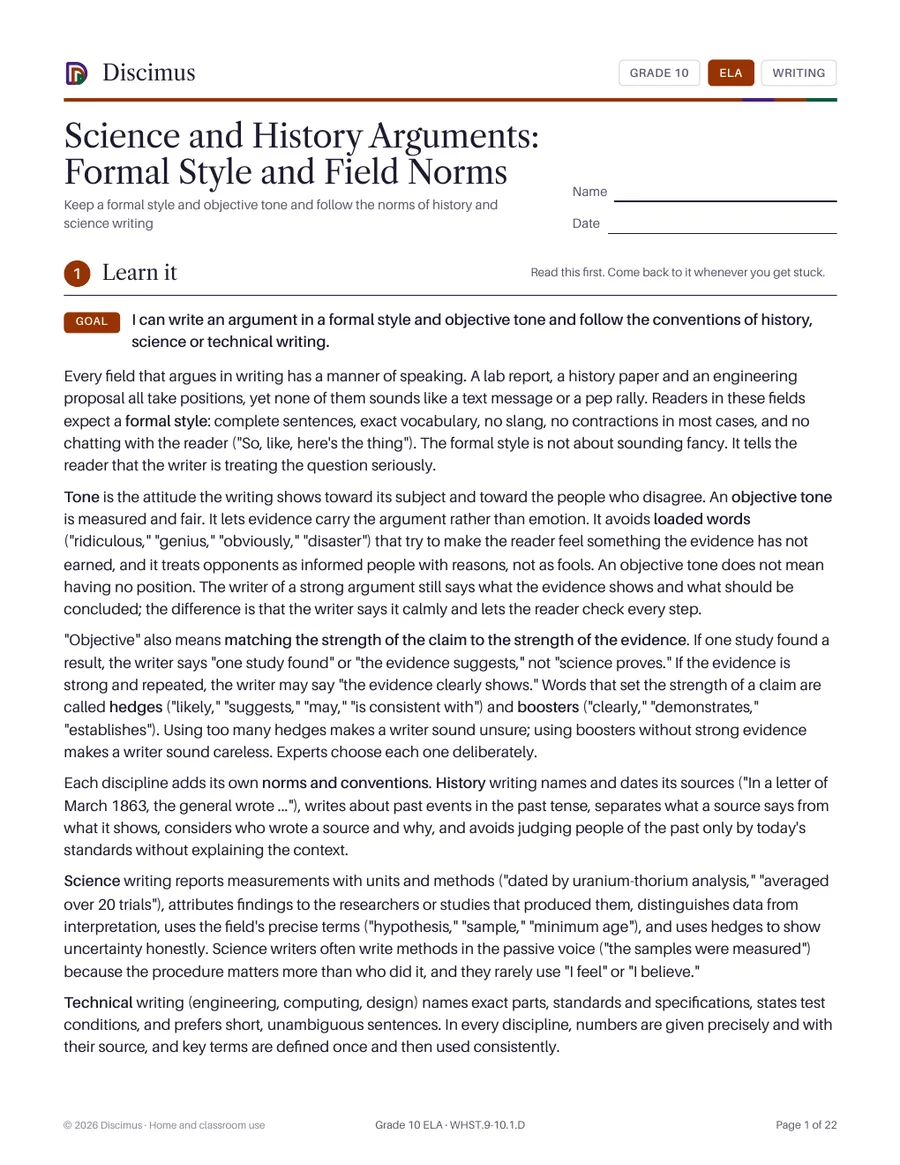
    Science and History Arguments: Formal Style and Field Norms

    Keep a formal style and objective tone and follow the norms of history and science writing
  • ELAGrade 10

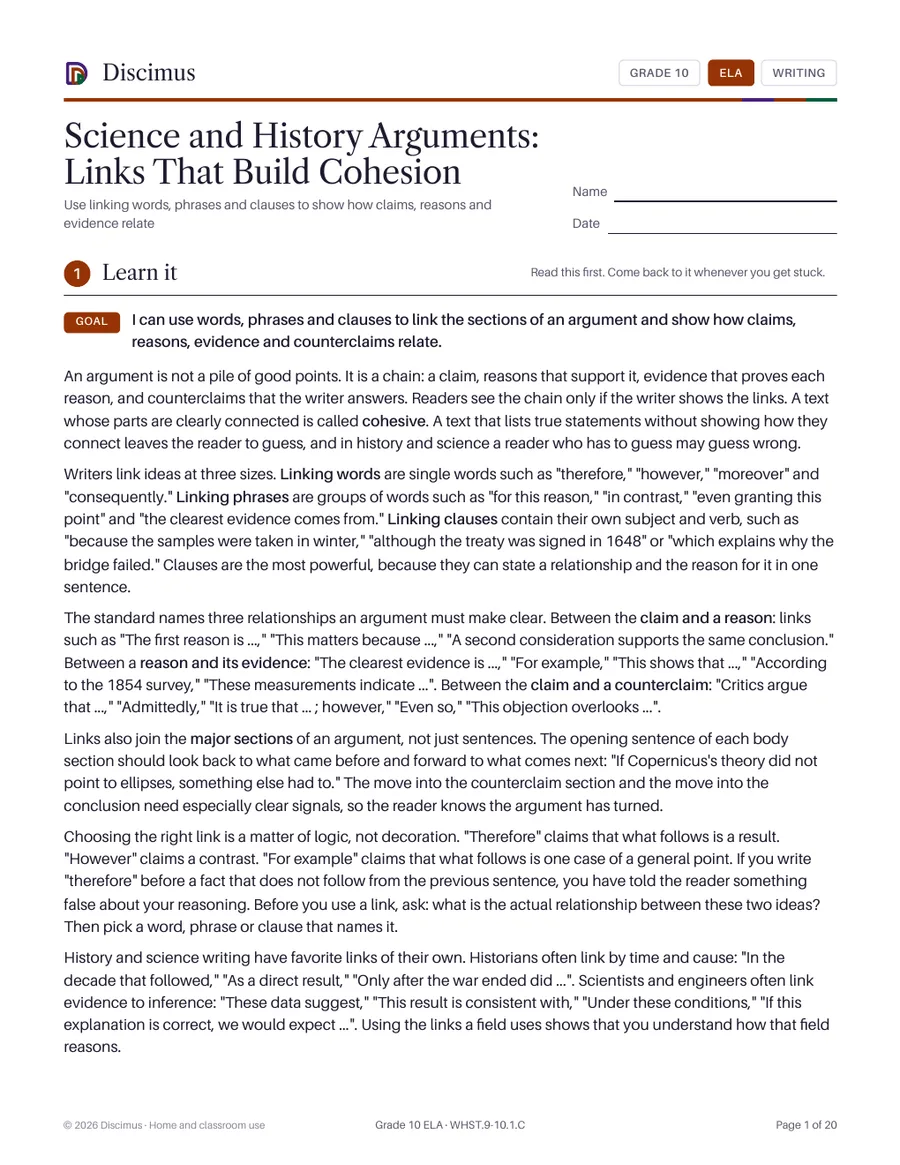
    Science and History Arguments: Links That Build Cohesion

    Use linking words, phrases and clauses to show how claims, reasons and evidence relate
  • ELAGrade 10

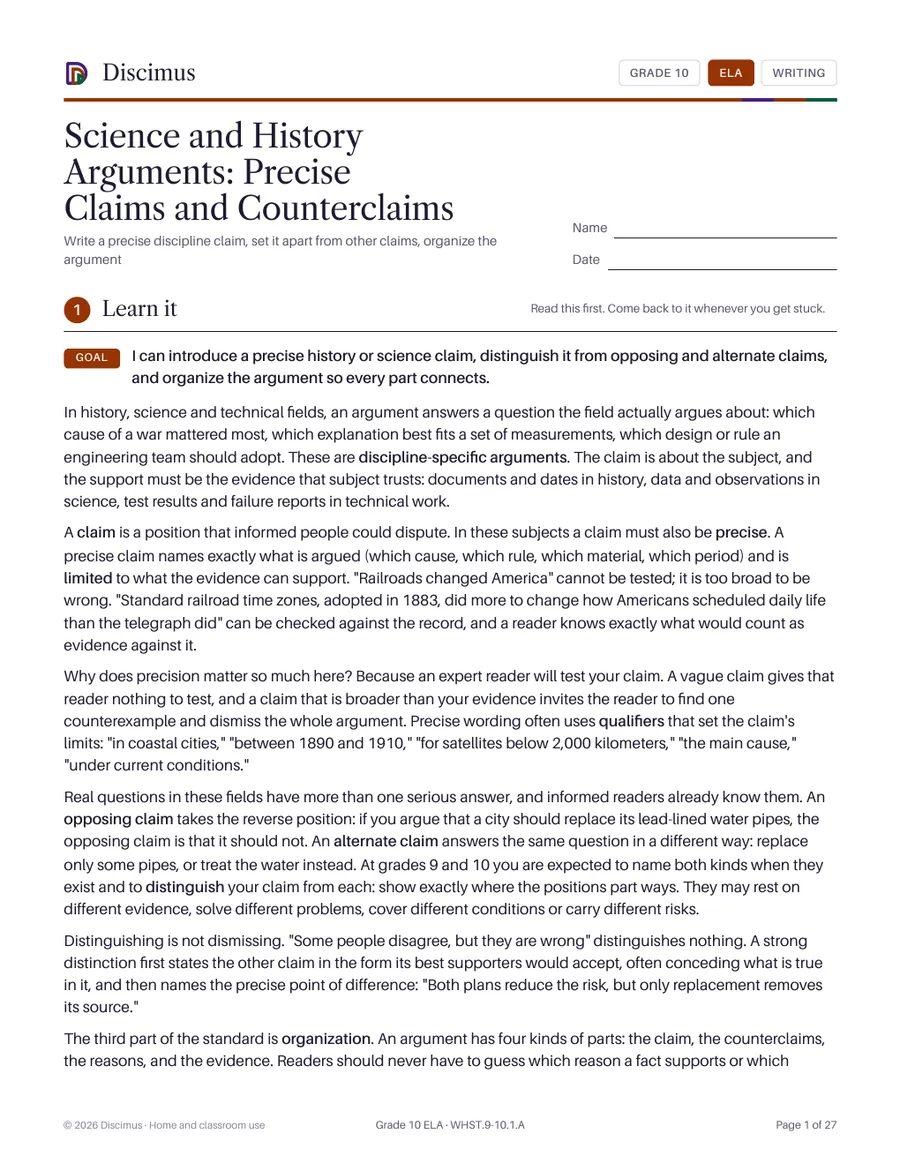
    Science and History Arguments: Precise Claims and Counterclaims

    Write a precise discipline claim, set it apart from other claims, organize the argument
  • ELAGrade 10

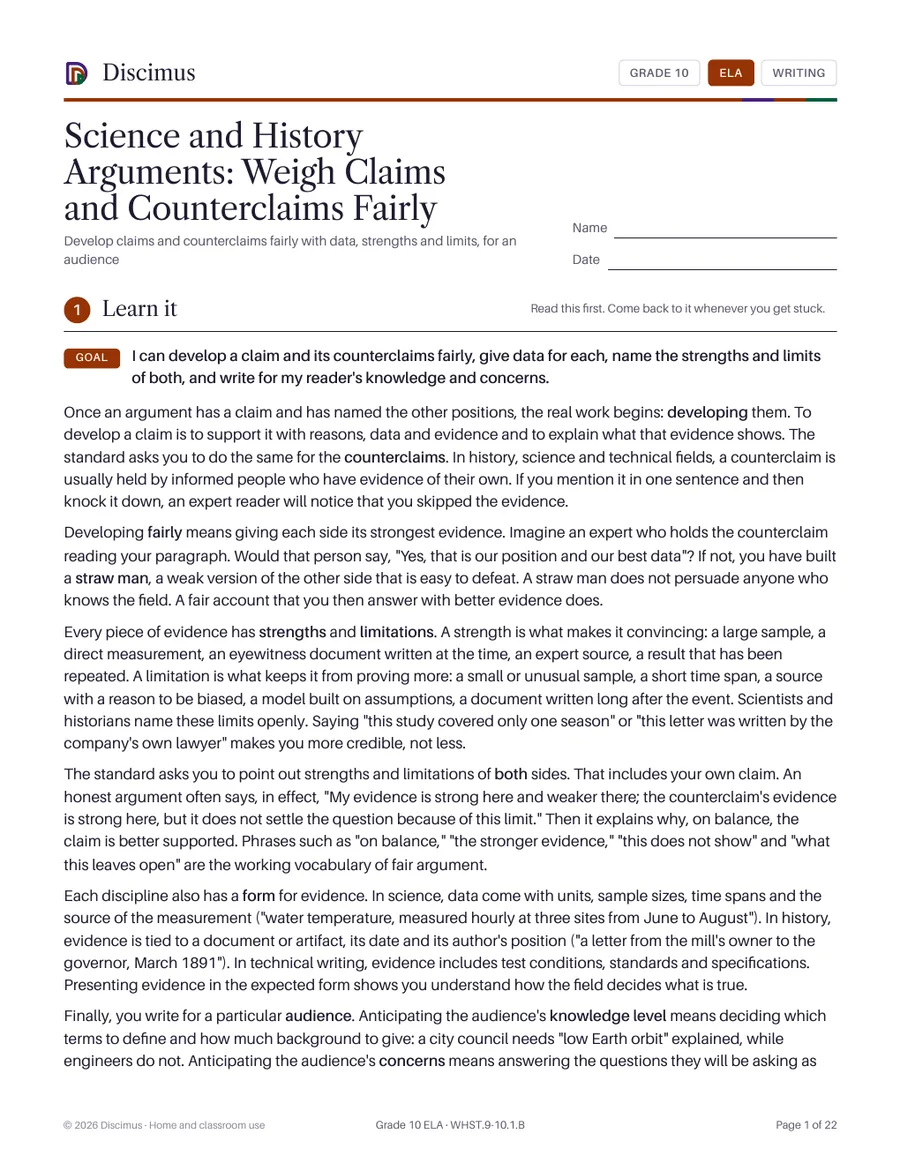
    Science and History Arguments: Weigh Claims and Counterclaims Fairly

    Develop claims and counterclaims fairly with data, strengths and limits, for an audience
  • ELAGrade 10

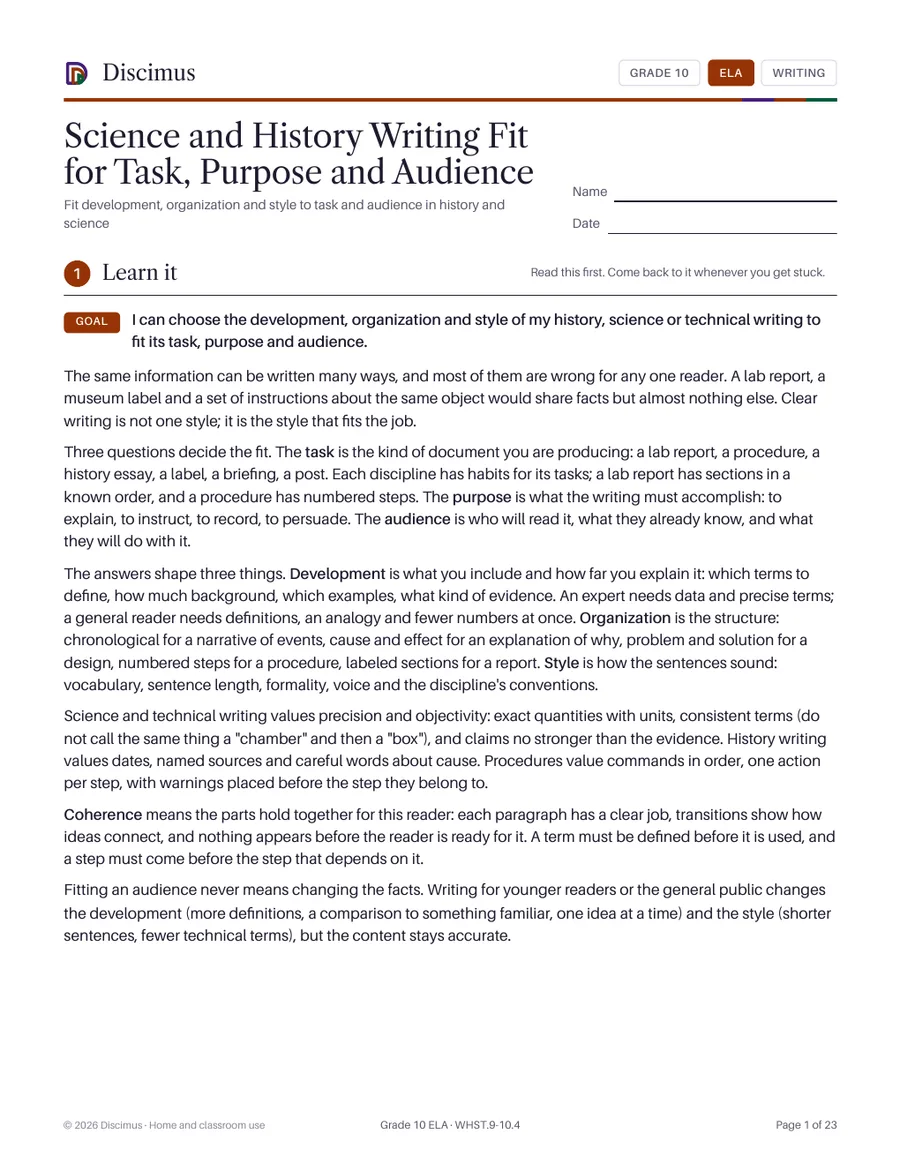
    Science and History Writing Fit for Task, Purpose and Audience

    Fit development, organization and style to task and audience in history and science
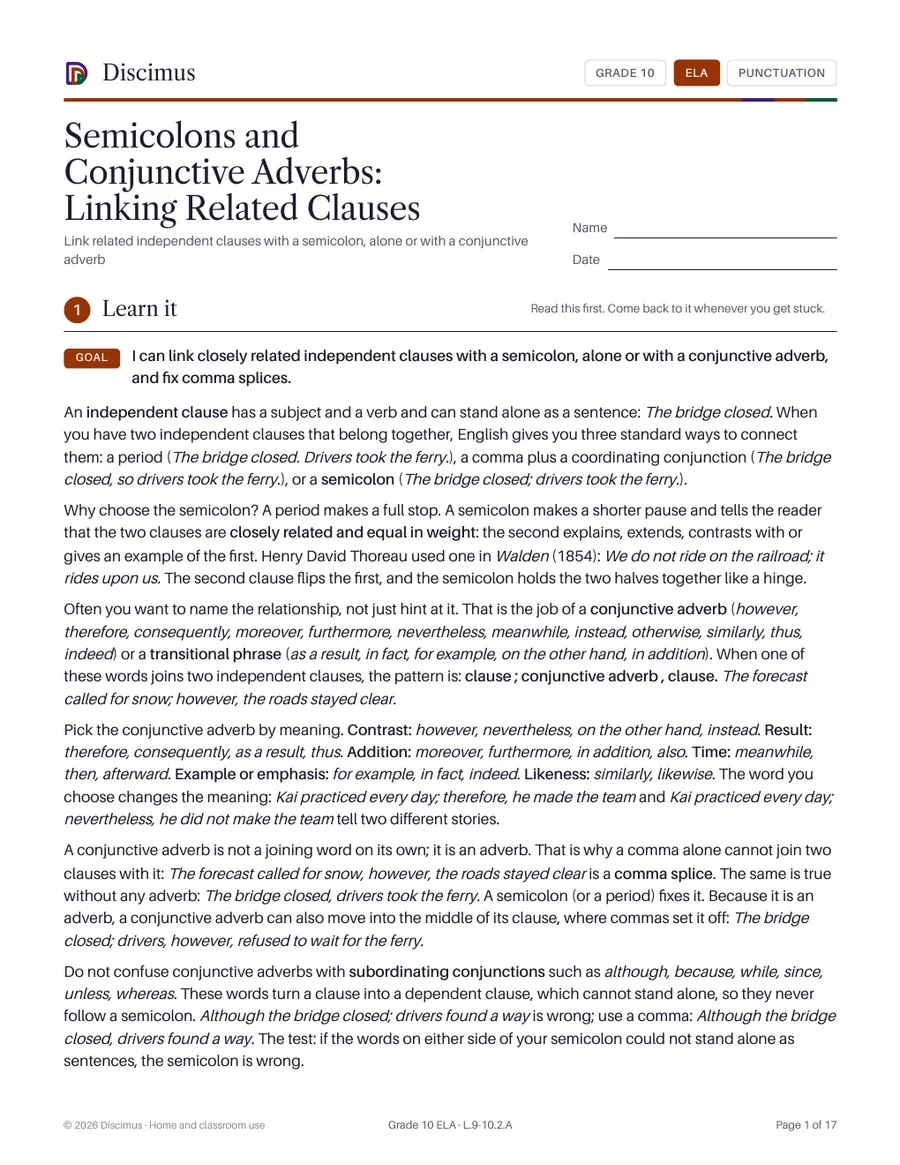
  • ELAGrade 10

    Semicolons and Conjunctive Adverbs: Linking Related Clauses

    Link related independent clauses with a semicolon, alone or with a conjunctive adverb
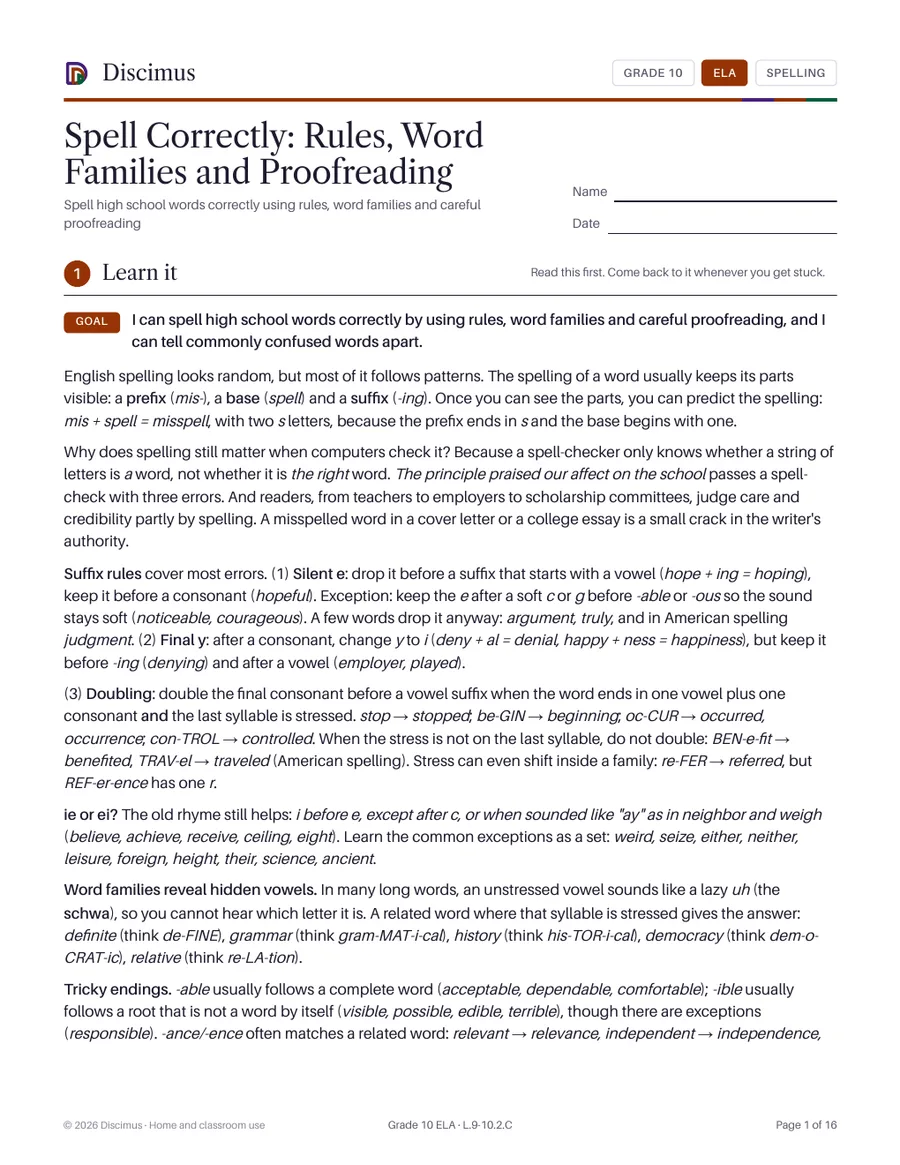
  • ELAGrade 10

    Spell Correctly: Rules, Word Families and Proofreading

    Spell high school words correctly using rules, word families and careful proofreading
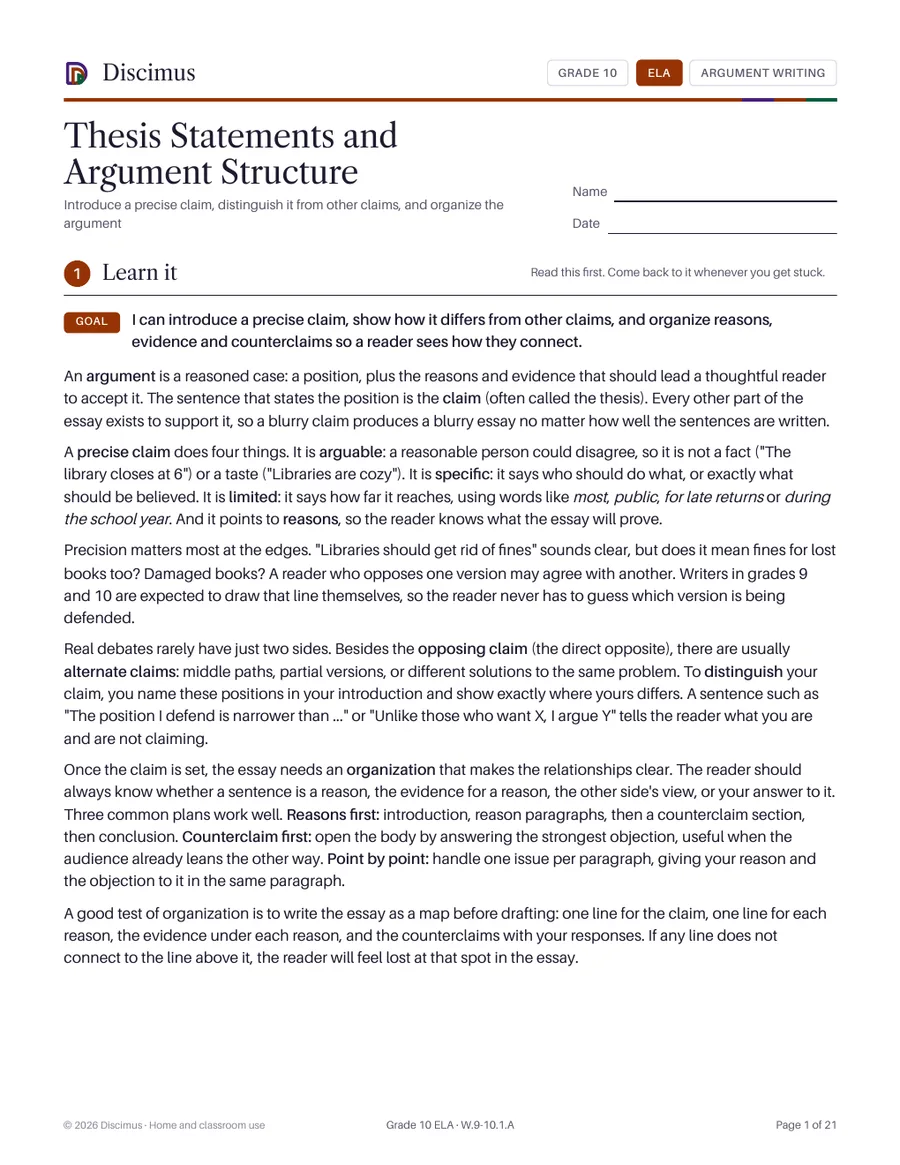
  • ELAGrade 10

    Thesis Statements and Argument Structure

    Introduce a precise claim, distinguish it from other claims, and organize the argument
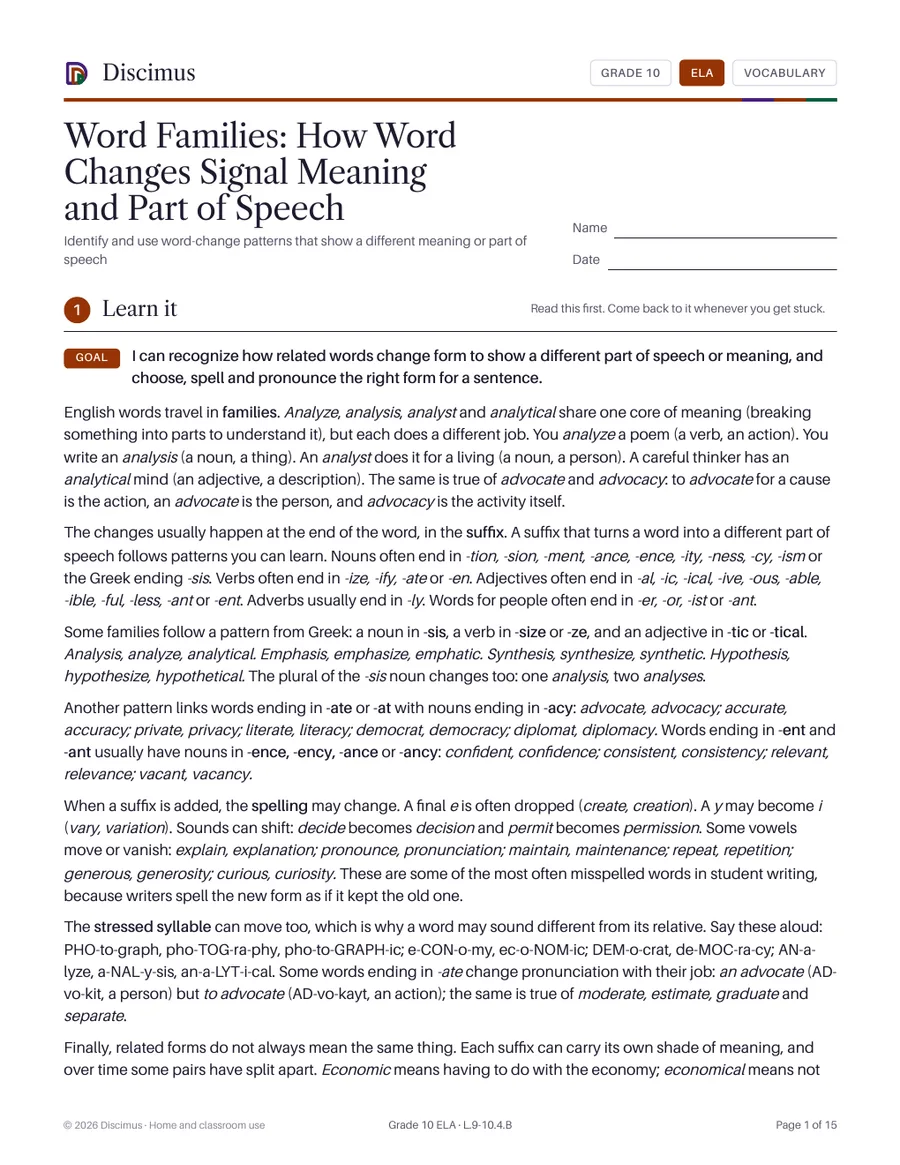
  • ELAGrade 10

    Word Families: How Word Changes Signal Meaning and Part of Speech

    Identify and use word-change patterns that show a different meaning or part of speech
  • ELAGrade 10

    Writing in the Disciplines: Quick Writes to Long Projects

    Write discipline tasks in one sitting and over weeks, for varied purposes and readers

Discimus

Docendo discimus. By teaching, we learn.

By age

  • Early Childhood
  • Elementary School
  • Middle School
  • High School
  • All grades

By subject

  • Math
  • English Language Arts
  • Science
  • Social Studies
  • Foreign Language
  • Technology

Discimus

  • Membership
  • Occasions
  • Standards
  • About
  • Contact

© 2026 Ceterum. All rights reserved. Worksheets are for home and single-classroom use.

  • Terms
  • Privacy