Christmas Tree Counting: 1 to 8
Count up to 8 objects and write the numeral
Common Core State Standards for Mathematics
From counting to calculus, one skill at a time.
Count up to 8 objects and write the numeral
Name and count circles, squares and triangles
 Free sample
Count up to 5 objects and write the numeral
Add and subtract within 10 and solve story problems using drawings
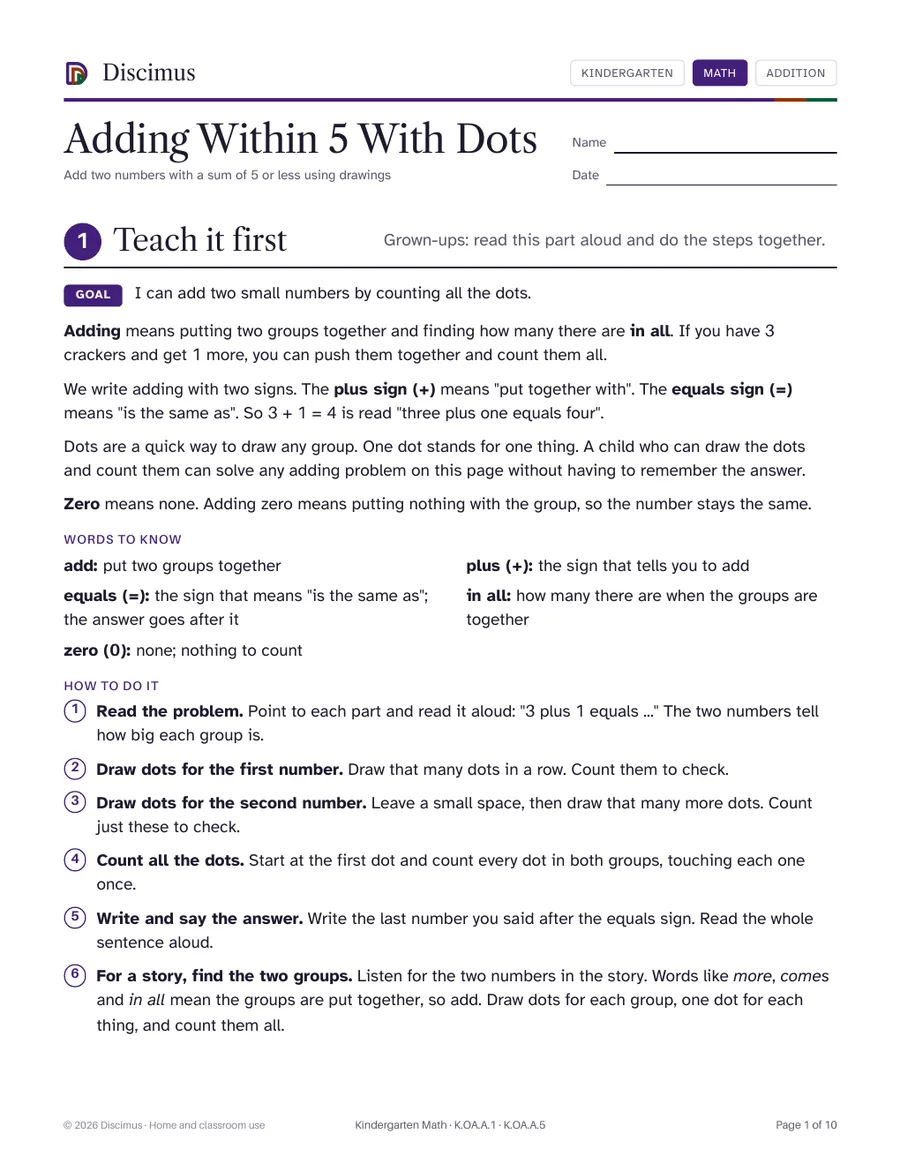
Add two numbers with a sum of 5 or less using drawings
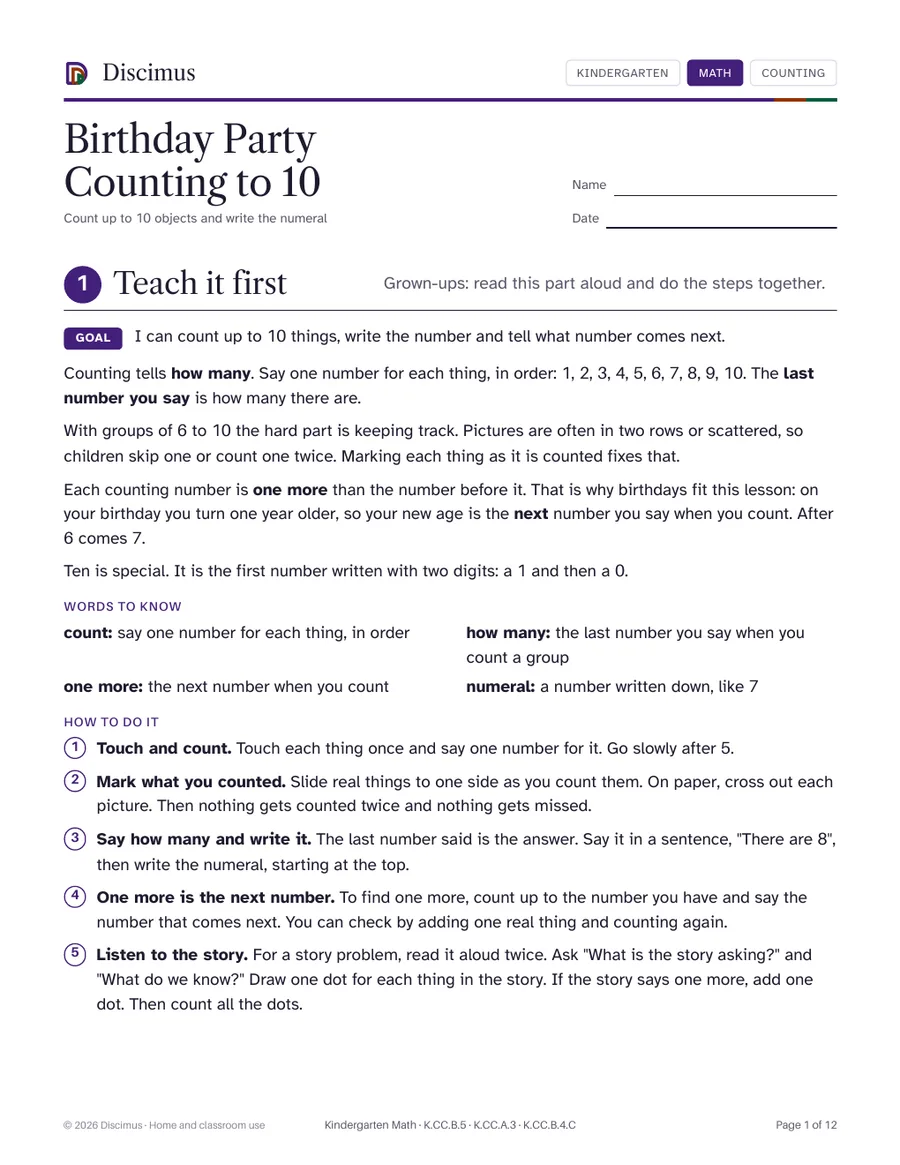
Count up to 10 objects and write the numeral
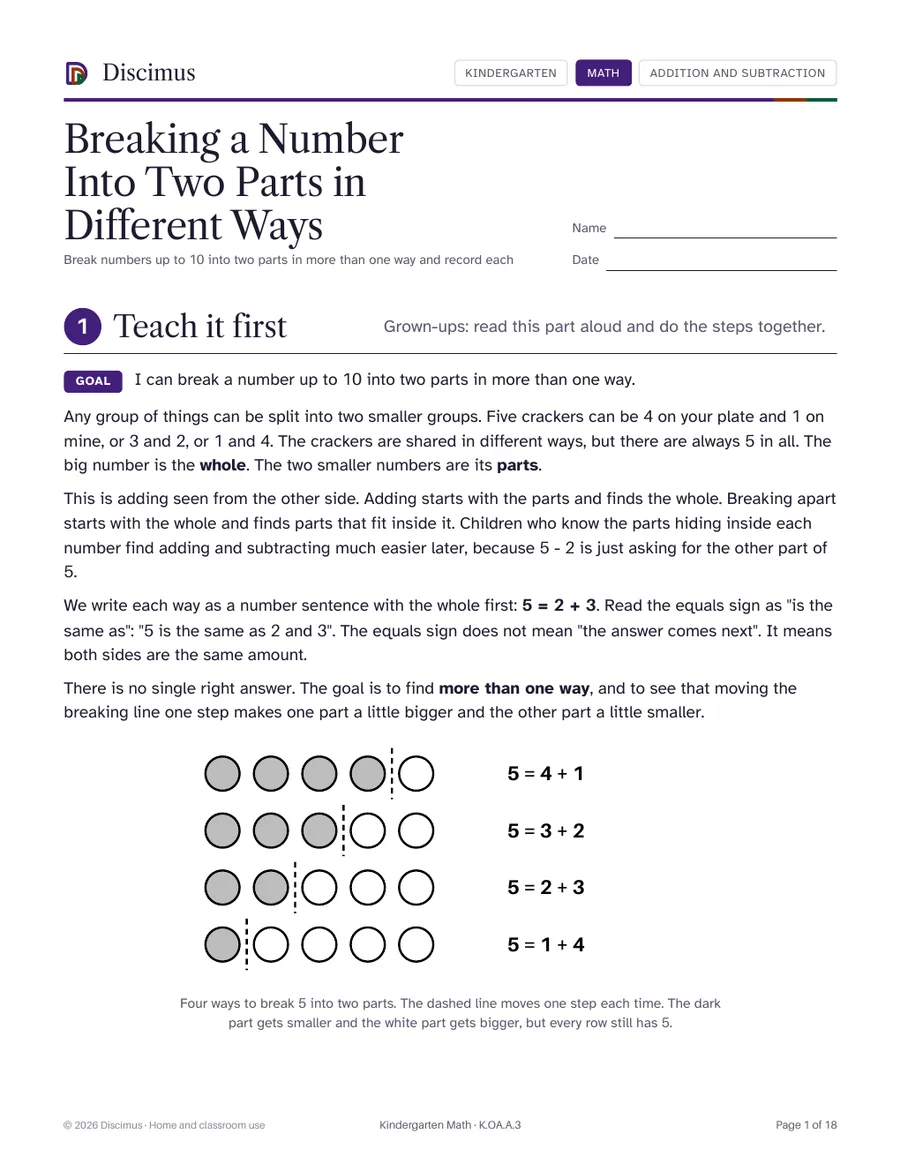
Break numbers up to 10 into two parts in more than one way and record each
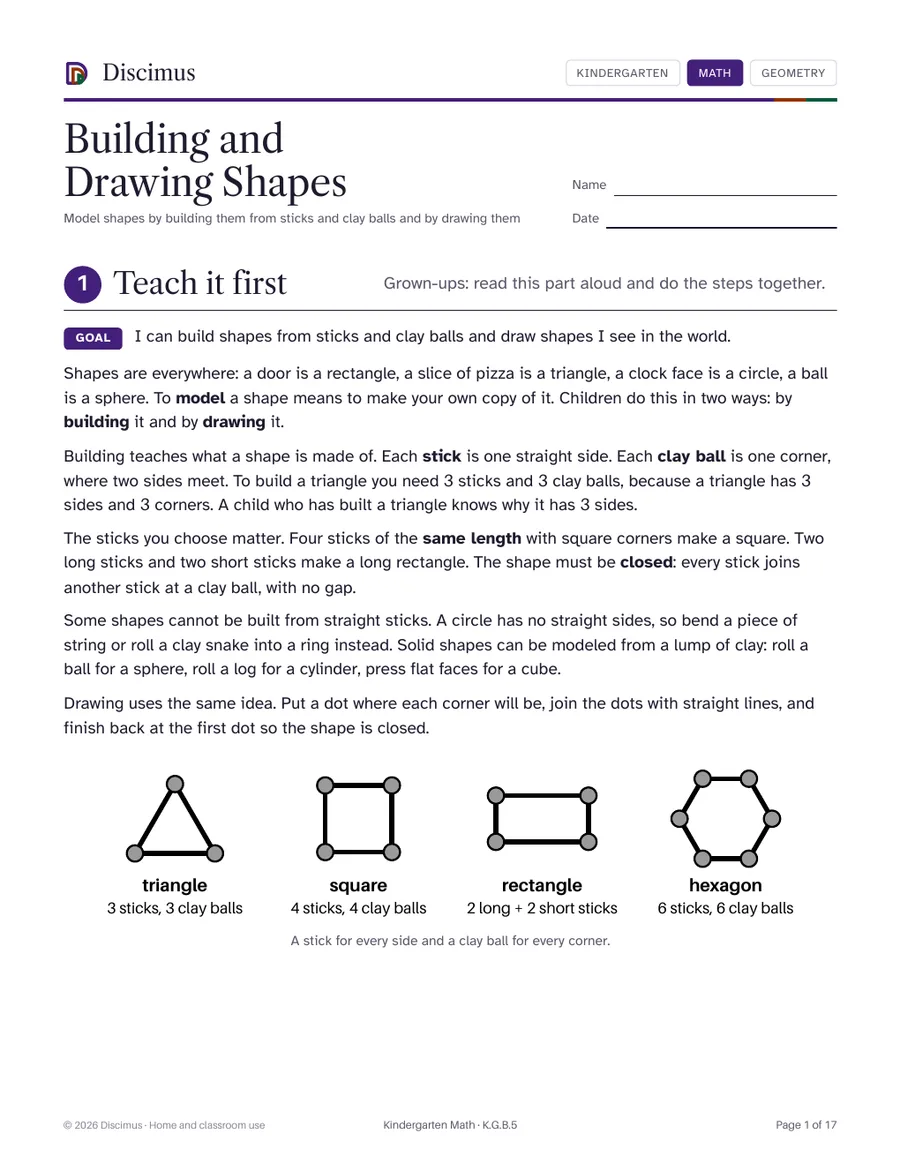
Model shapes by building them from sticks and clay balls and by drawing them
Describe and compare flat and solid shapes by their sides, corners, faces and side lengths
Directly compare two objects by length, height or weight and describe the difference
Count forward by ones starting from any number up to 100
Count objects by pairing each one with exactly one number name, in order
Count aloud to 100 by ones and by tens
Identify shapes as flat (two-dimensional) or solid (three-dimensional)
Join simple shapes with full sides touching to make larger shapes
Find the number that makes 10 with any number from 1 to 9
 Free sample
Compare two groups or two numbers up to 10 using more and fewer
Name flat and solid shapes whatever their size or which way they are turned
Name the shapes of real objects and describe where they are with position words
Sort objects into given categories, count each group and order the groups by count
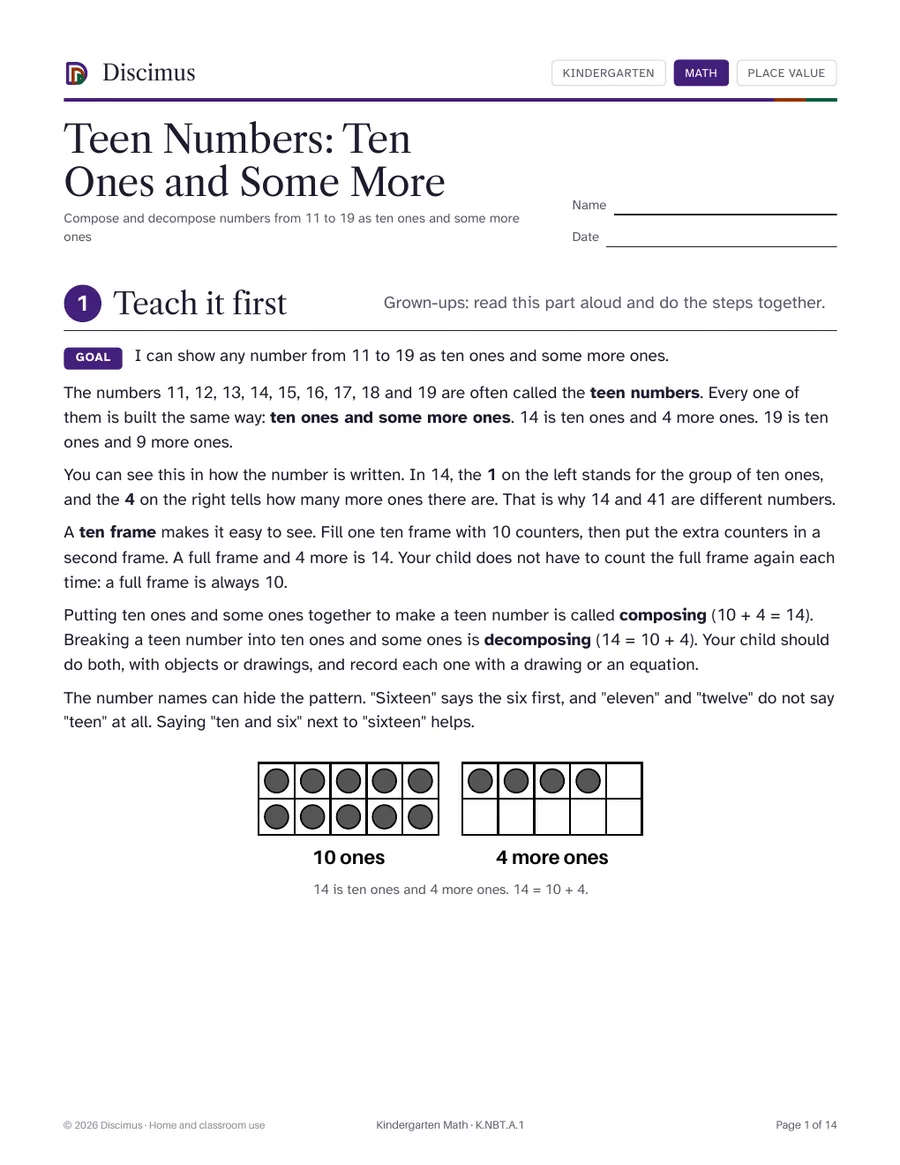
Compose and decompose numbers from 11 to 19 as ten ones and some more ones
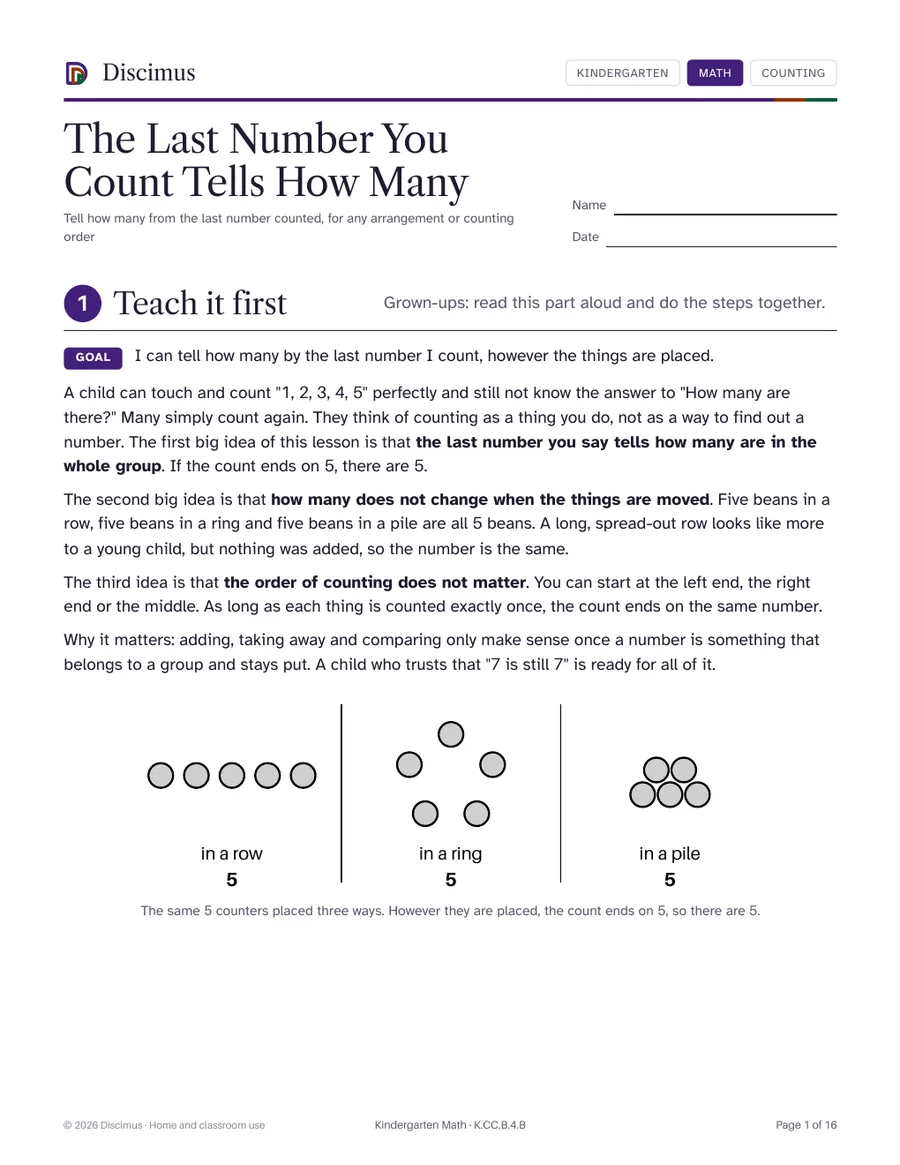
Tell how many from the last number counted, for any arrangement or counting order
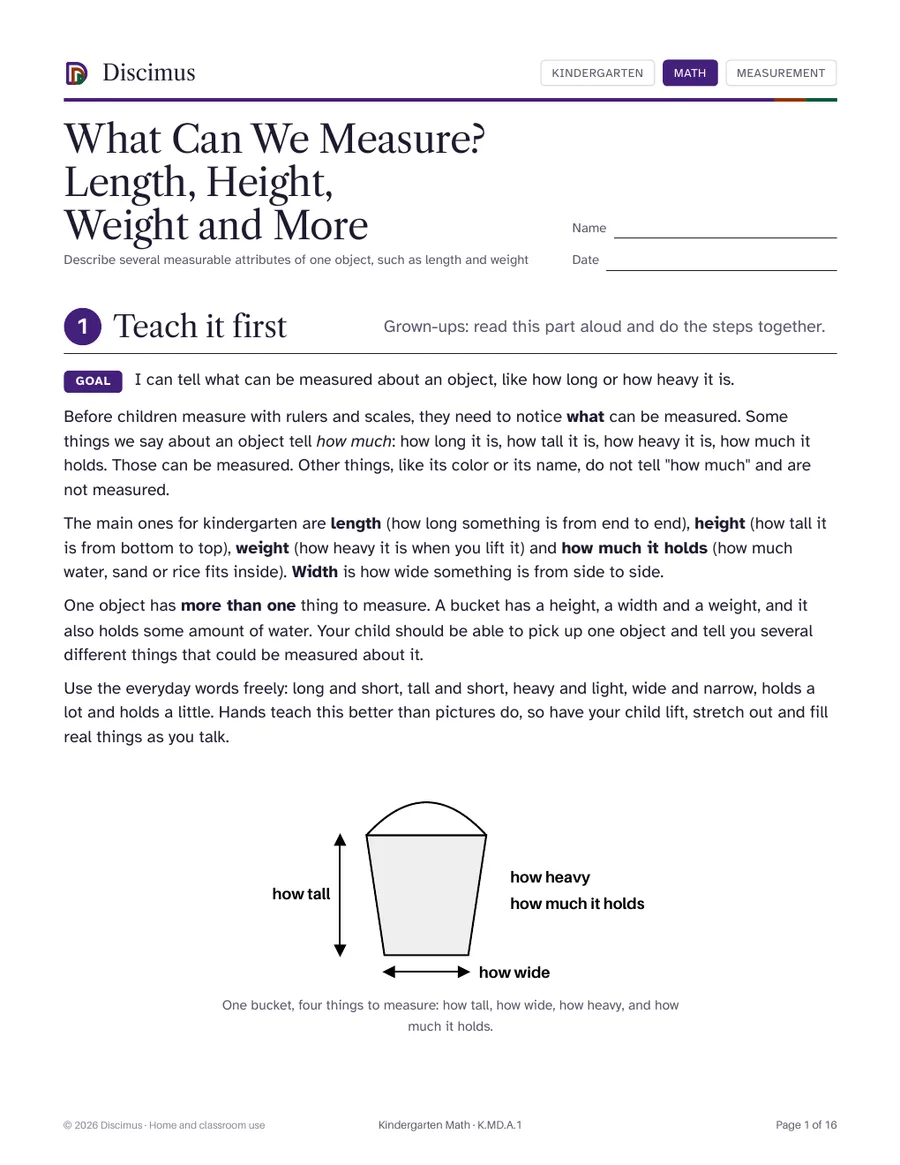
Describe several measurable attributes of one object, such as length and weight
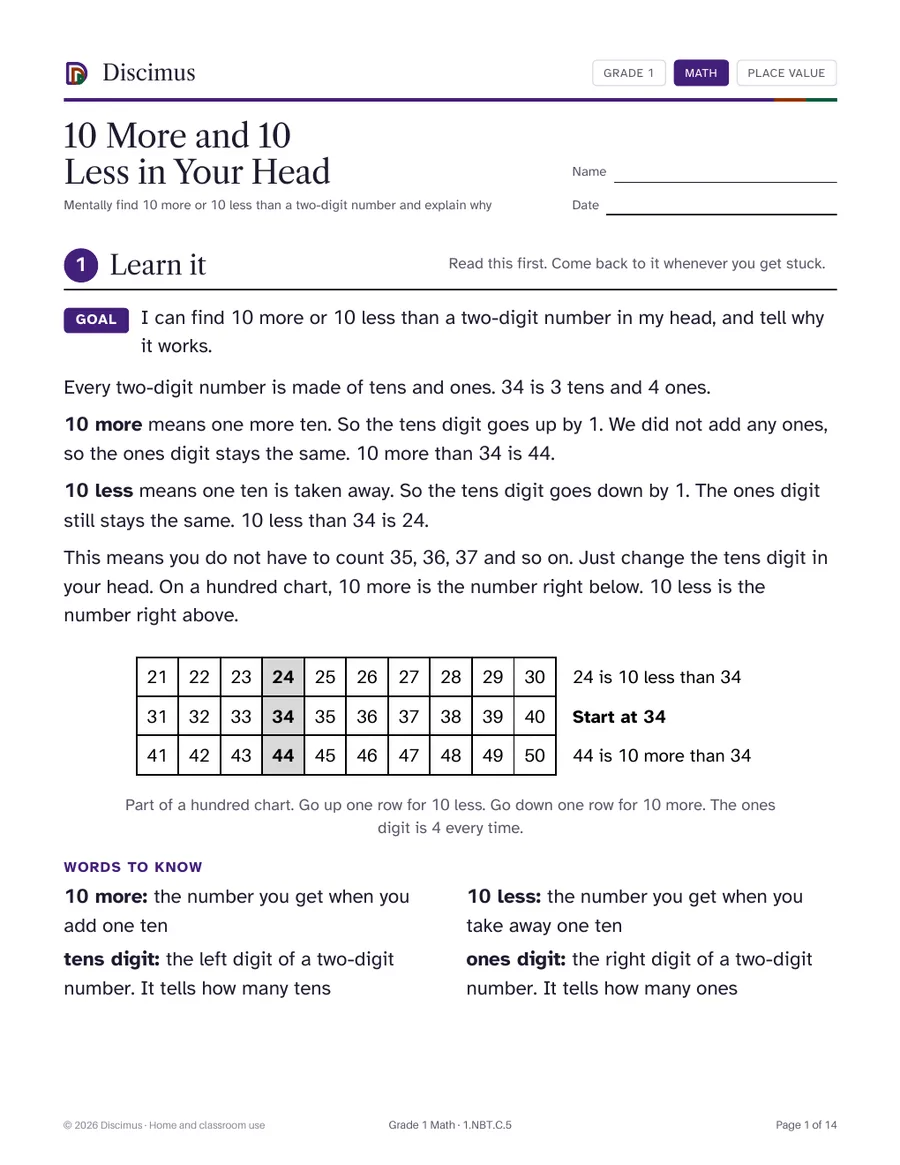
Mentally find 10 more or 10 less than a two-digit number and explain why
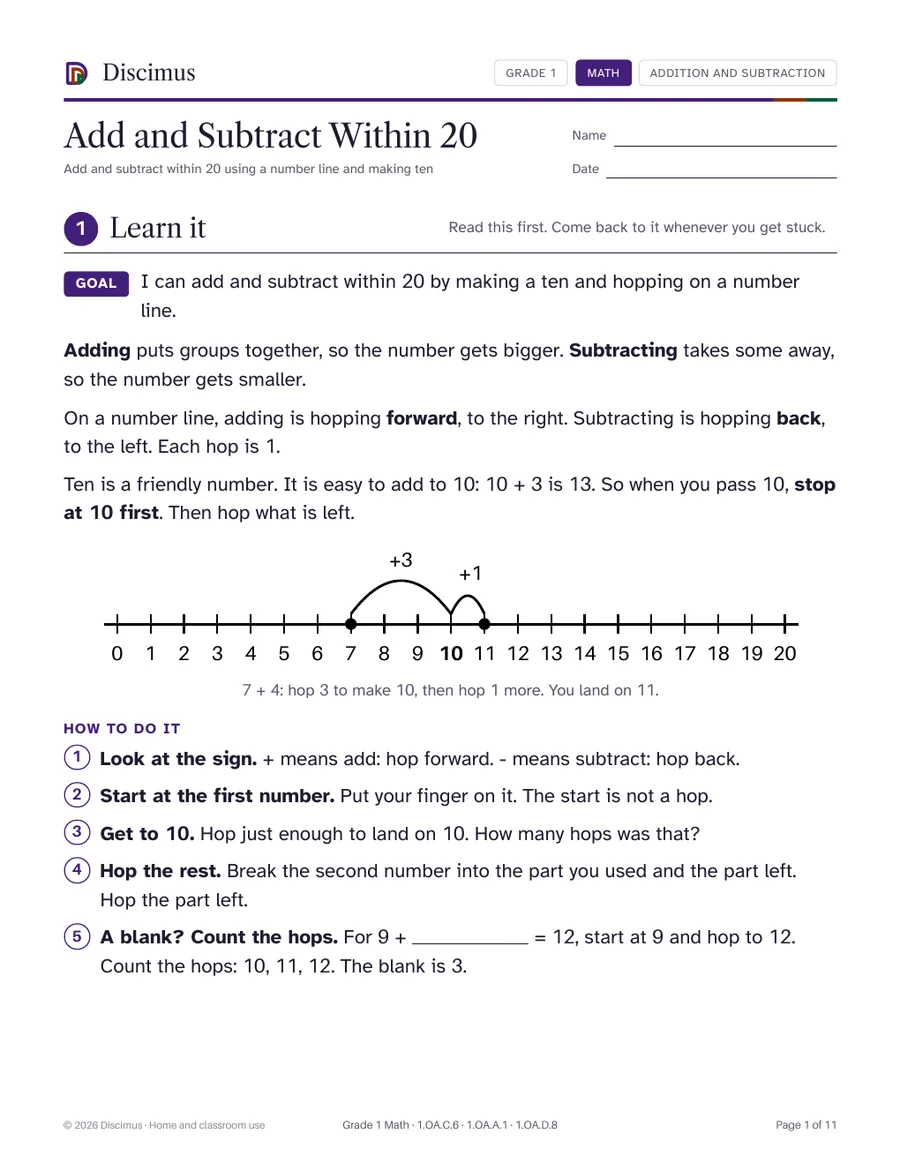
Add and subtract within 20 using a number line and making ten
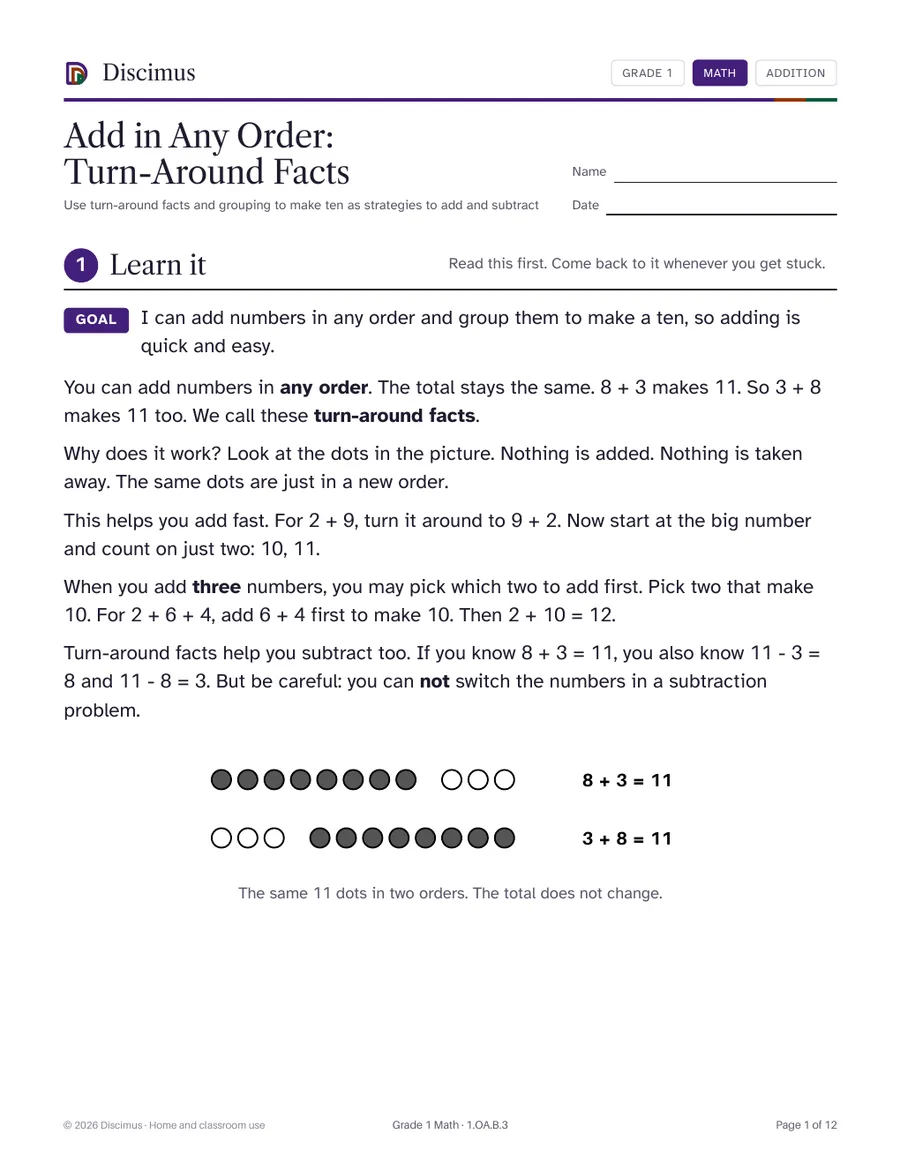
Use turn-around facts and grouping to make ten as strategies to add and subtract
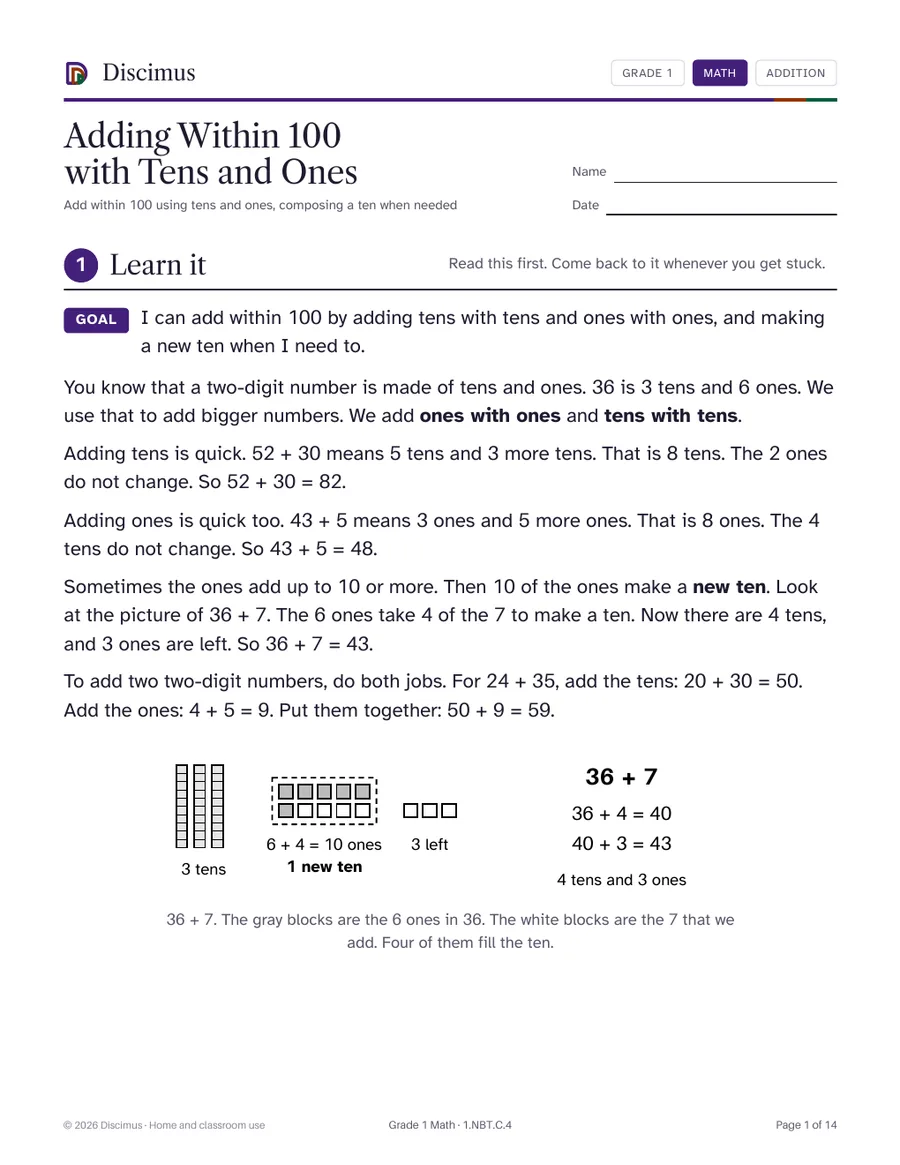
Add within 100 using tens and ones, composing a ten when needed
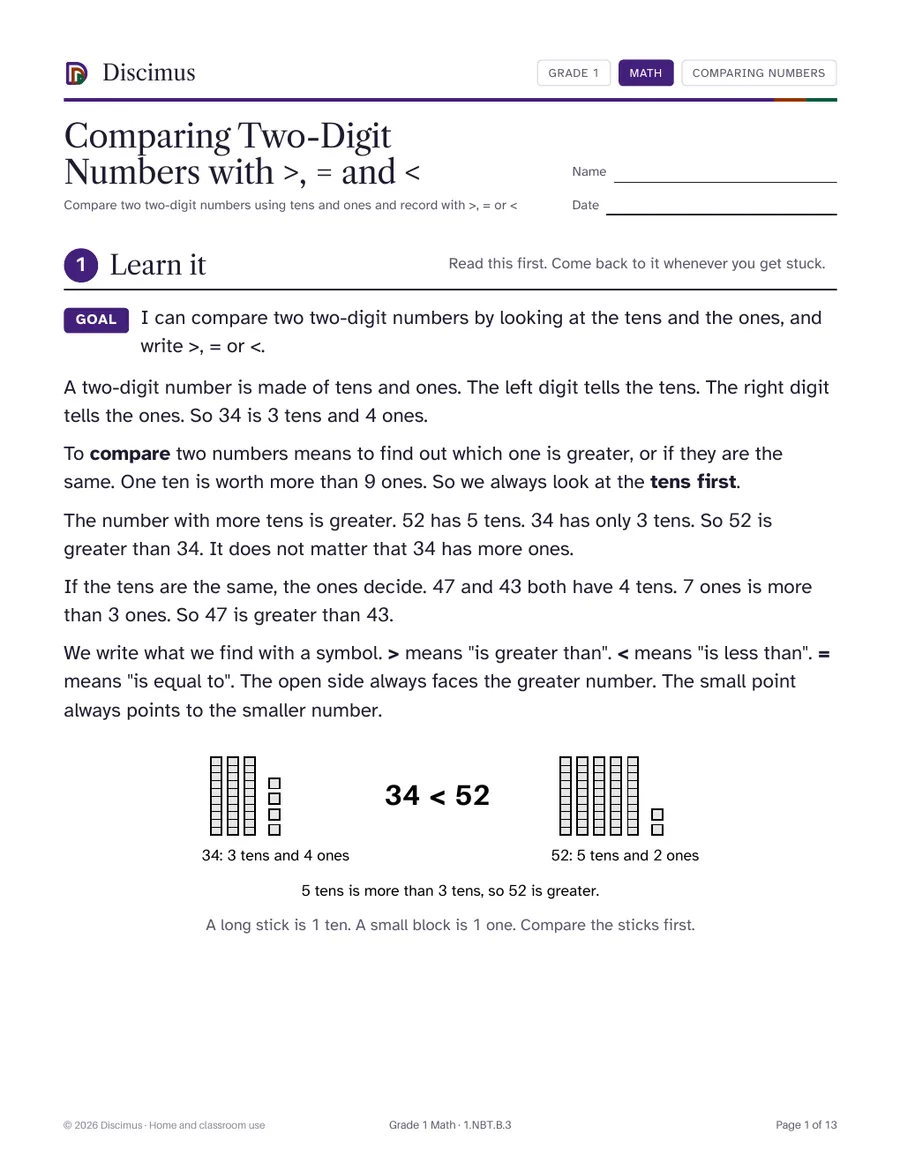
Compare two two-digit numbers using tens and ones and record with >, = or <
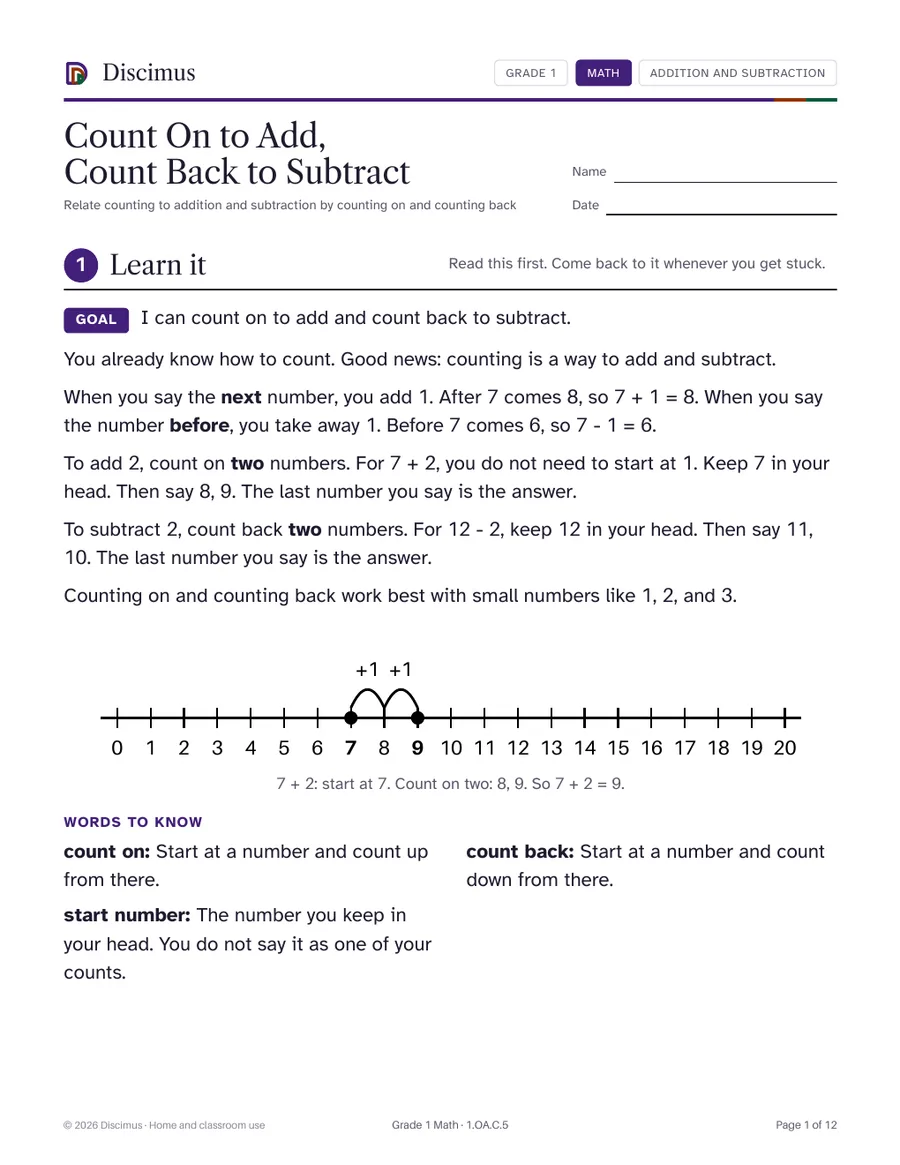
Relate counting to addition and subtraction by counting on and counting back
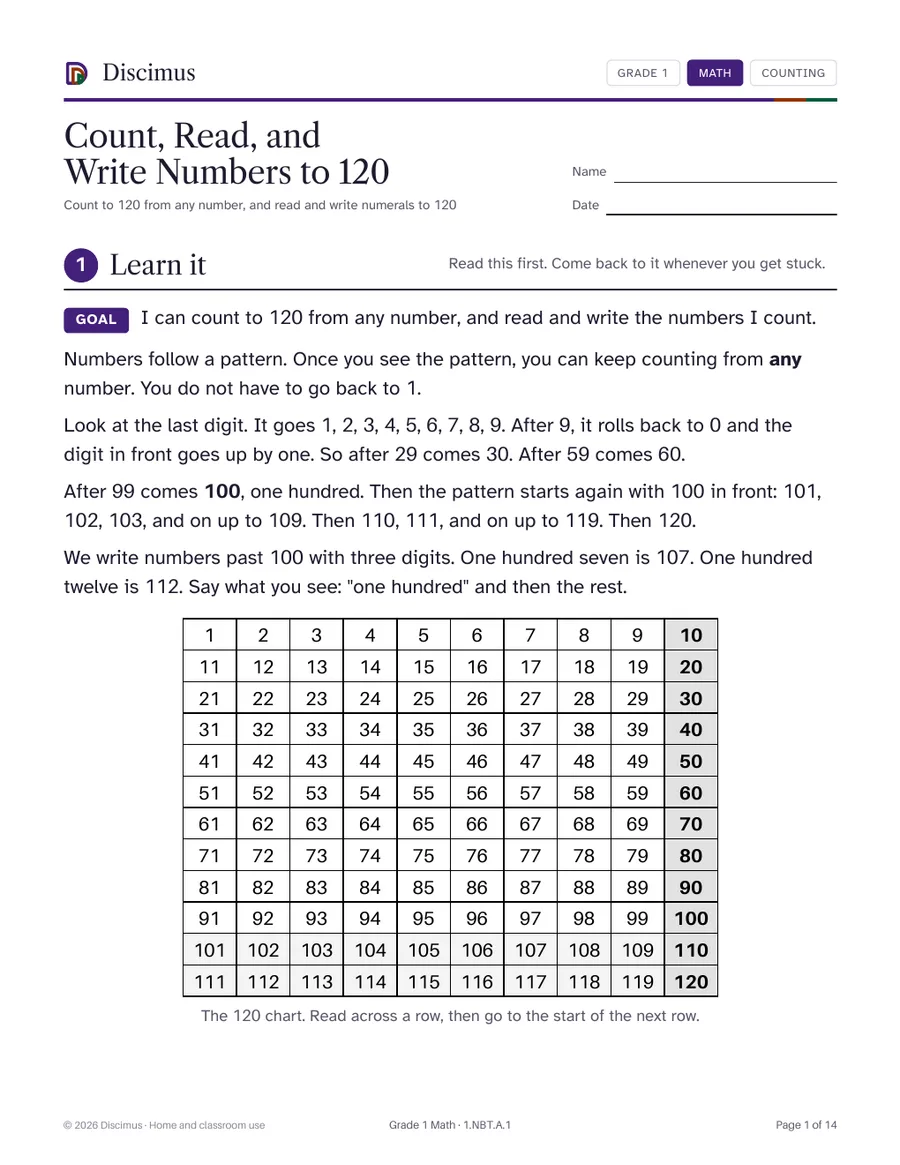
Count to 120 from any number, and read and write numerals to 120
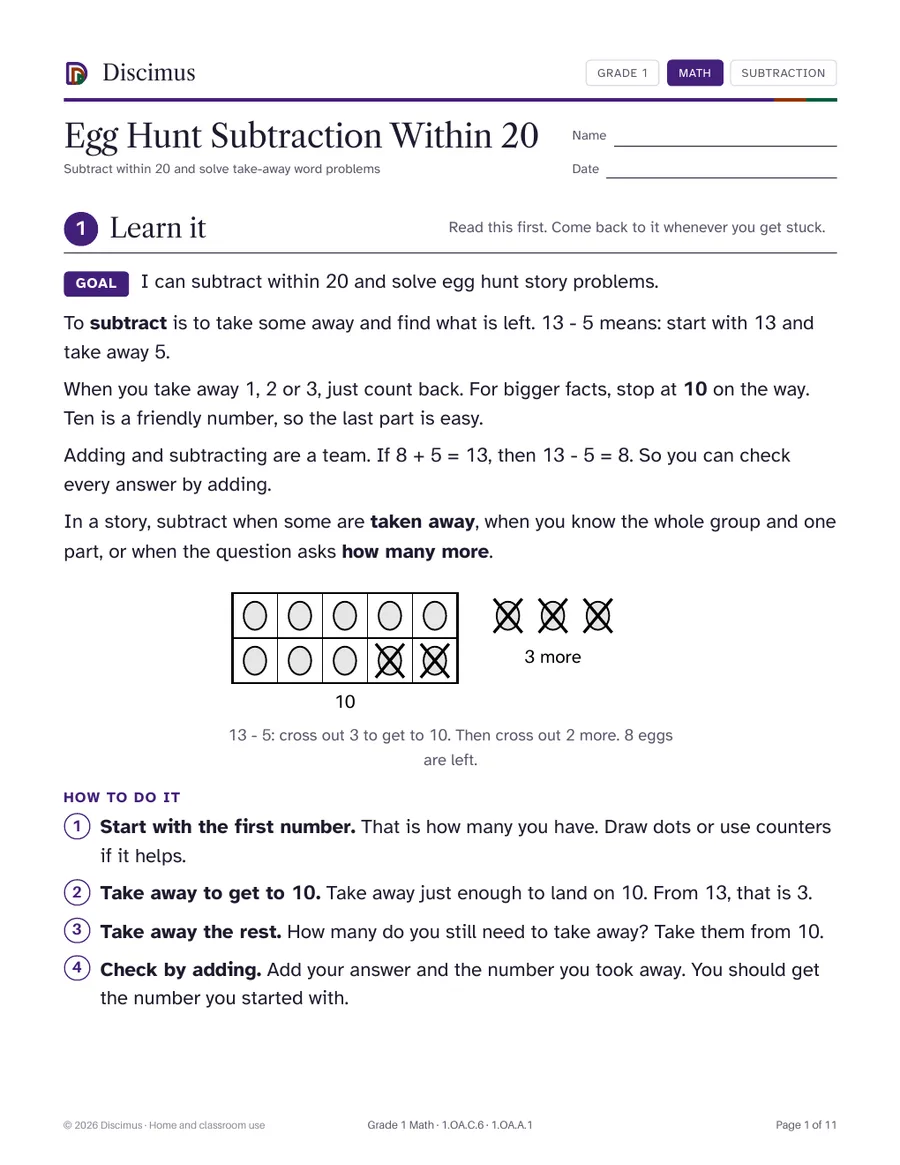
Subtract within 20 and solve take-away word problems
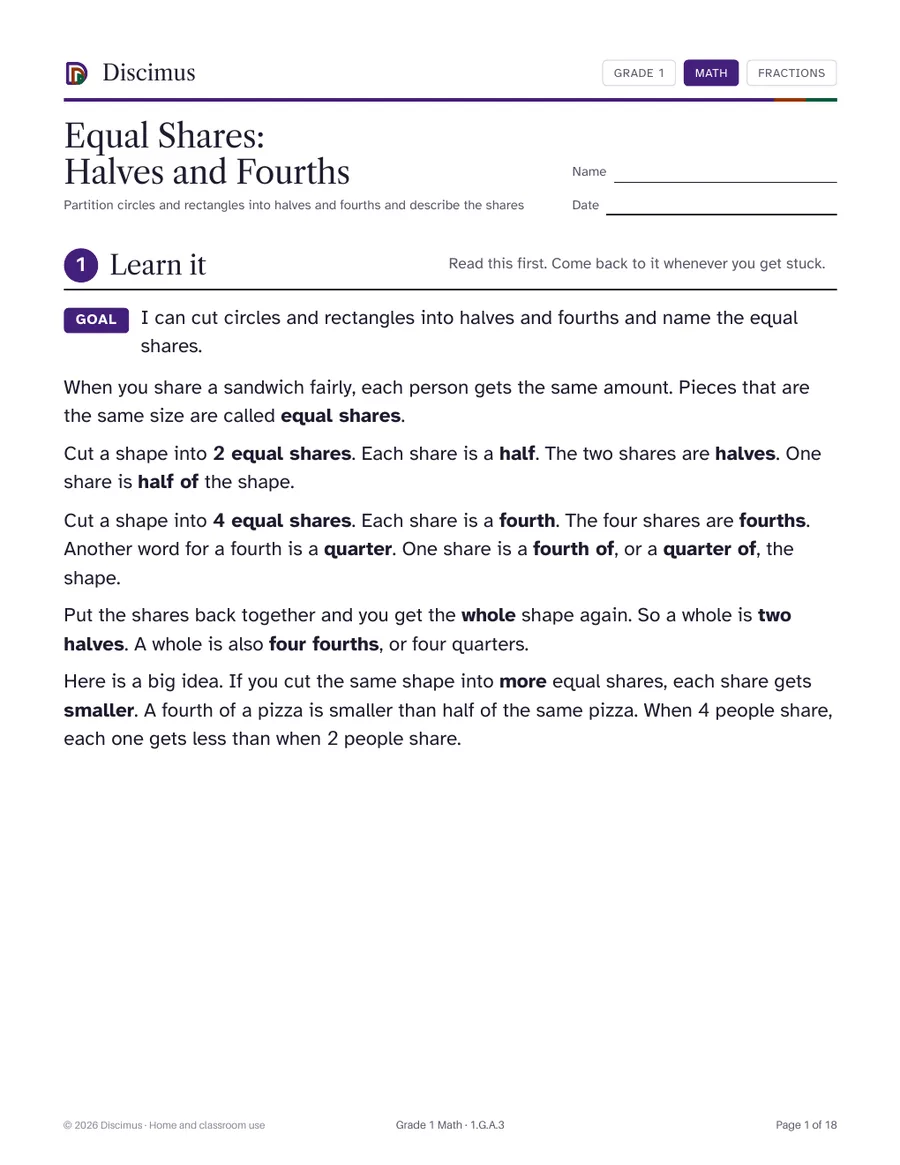
Partition circles and rectangles into halves and fourths and describe the shares
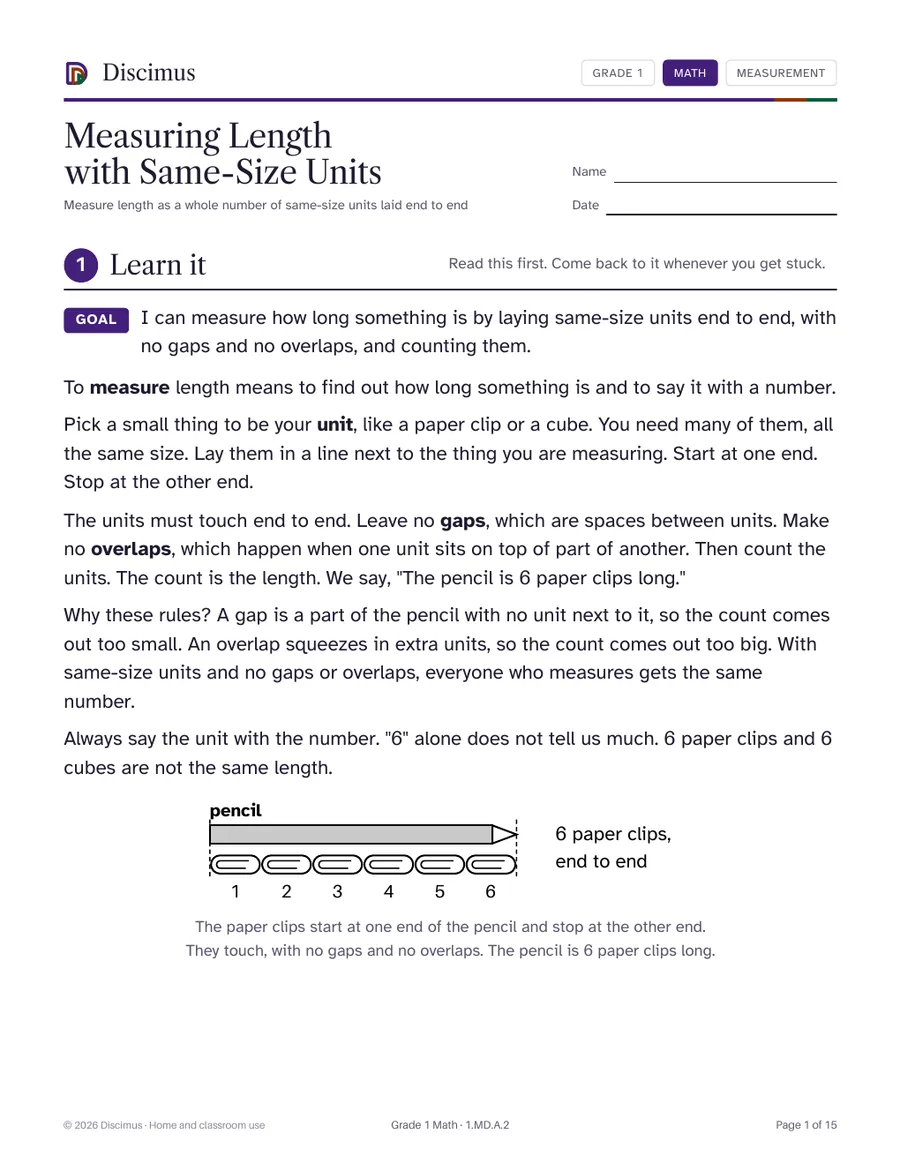
Measure length as a whole number of same-size units laid end to end
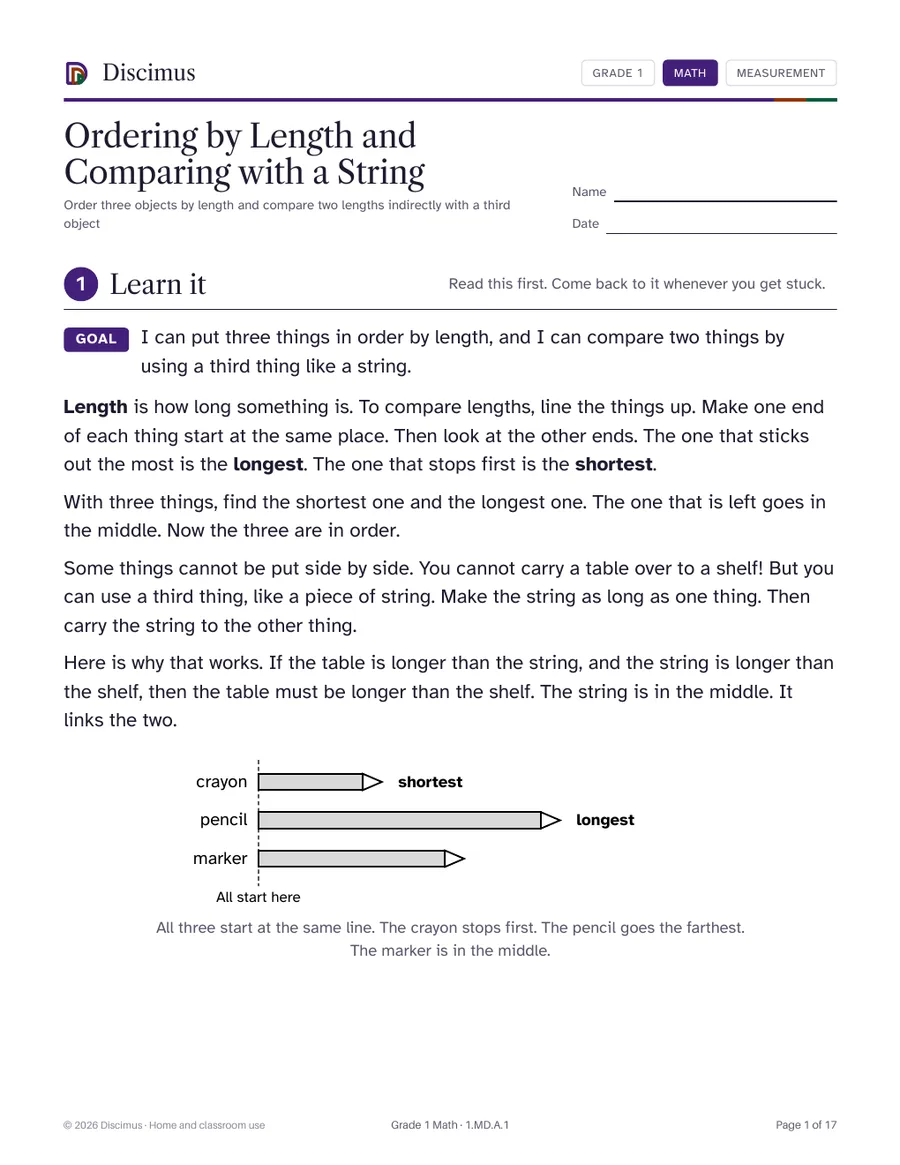
Order three objects by length and compare two lengths indirectly with a third object
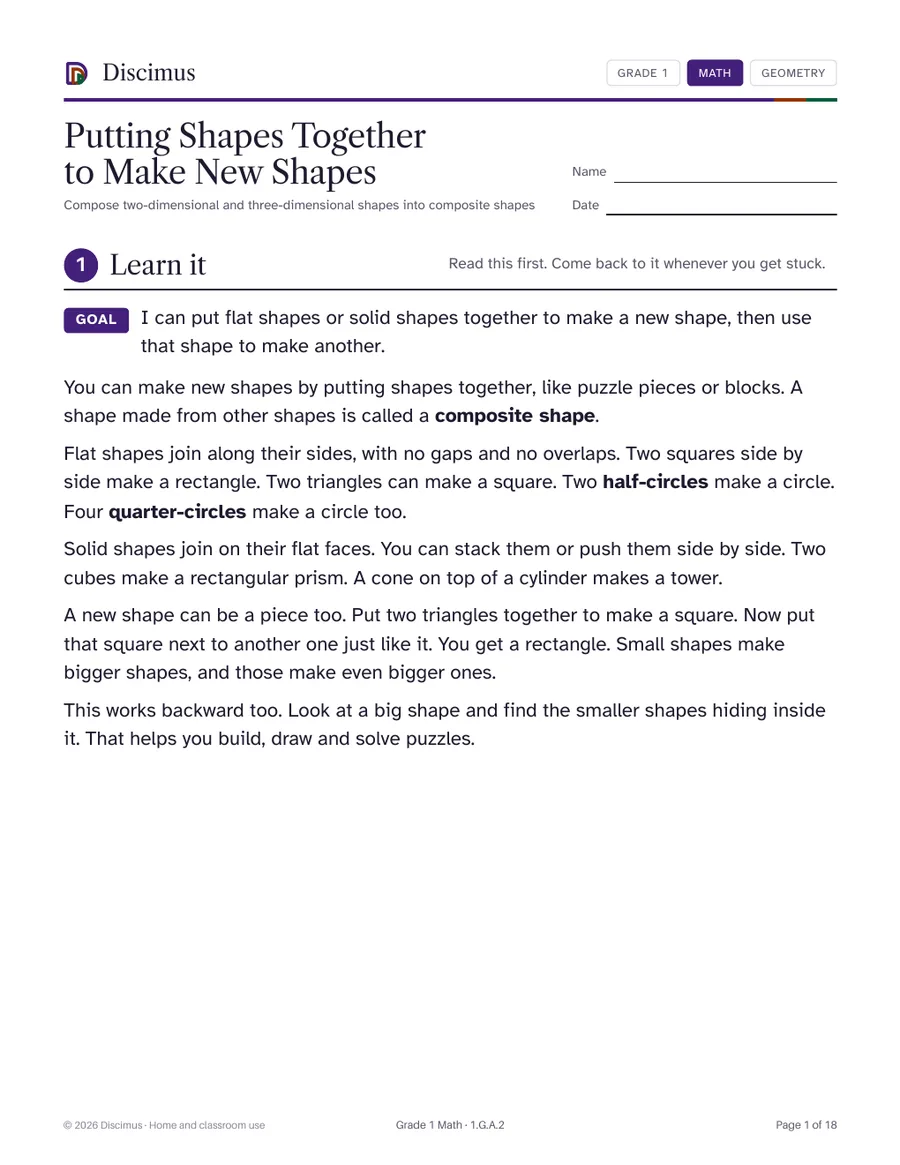
Compose two-dimensional and three-dimensional shapes into composite shapes
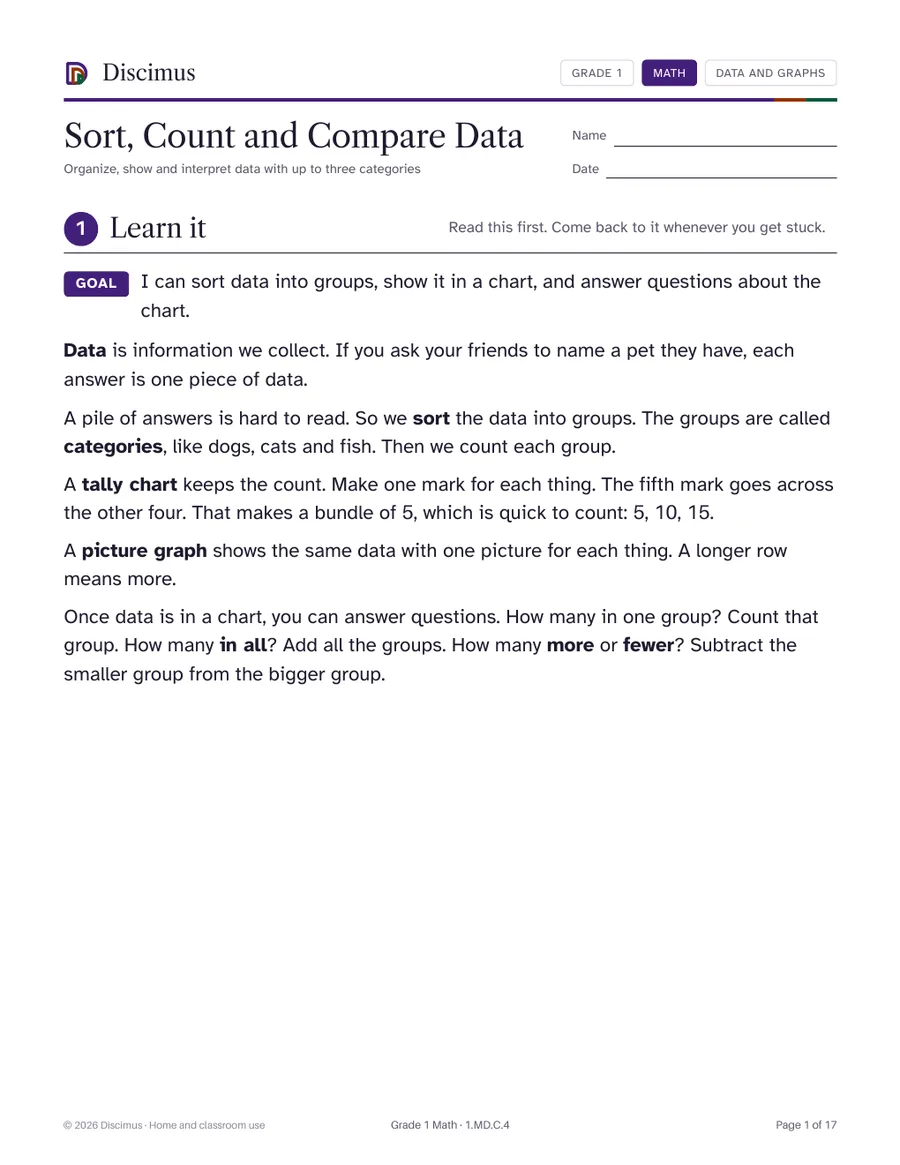
Organize, show and interpret data with up to three categories
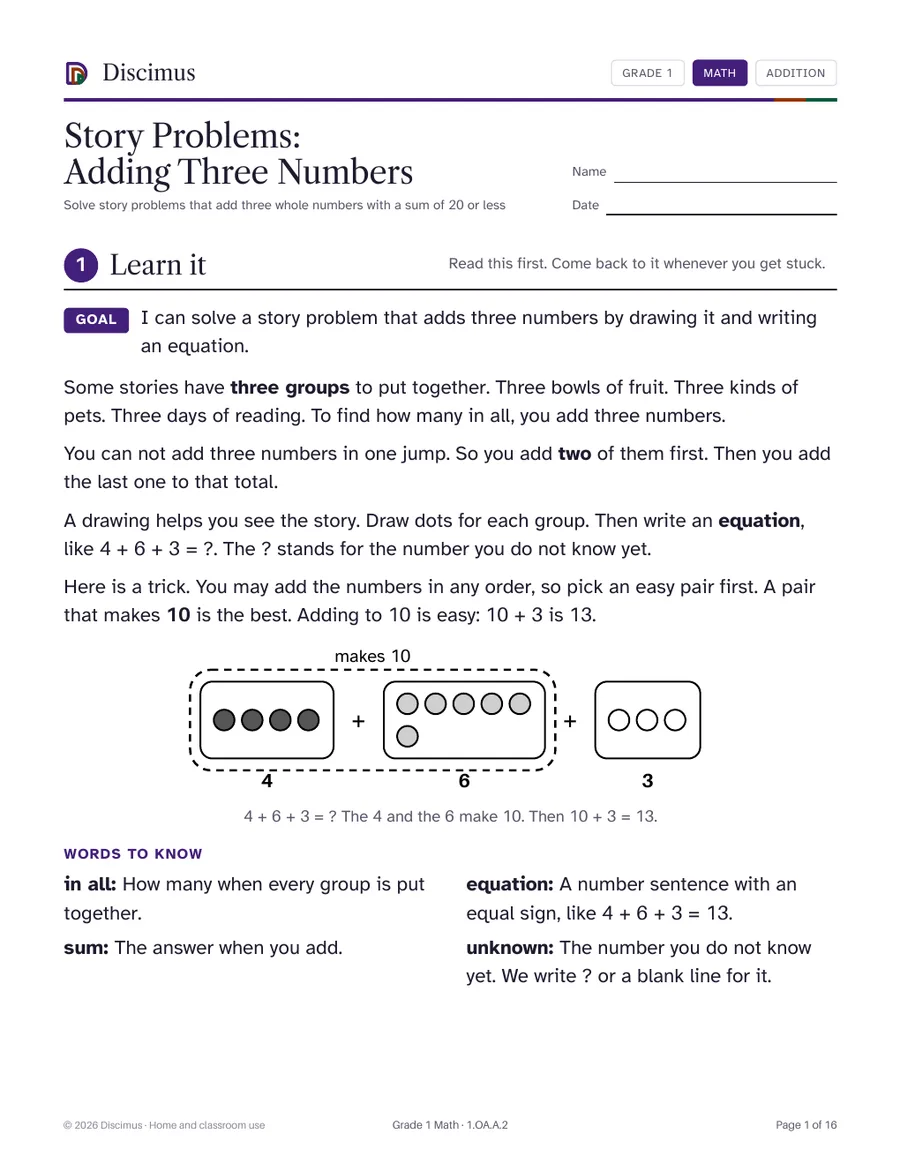
Solve story problems that add three whole numbers with a sum of 20 or less
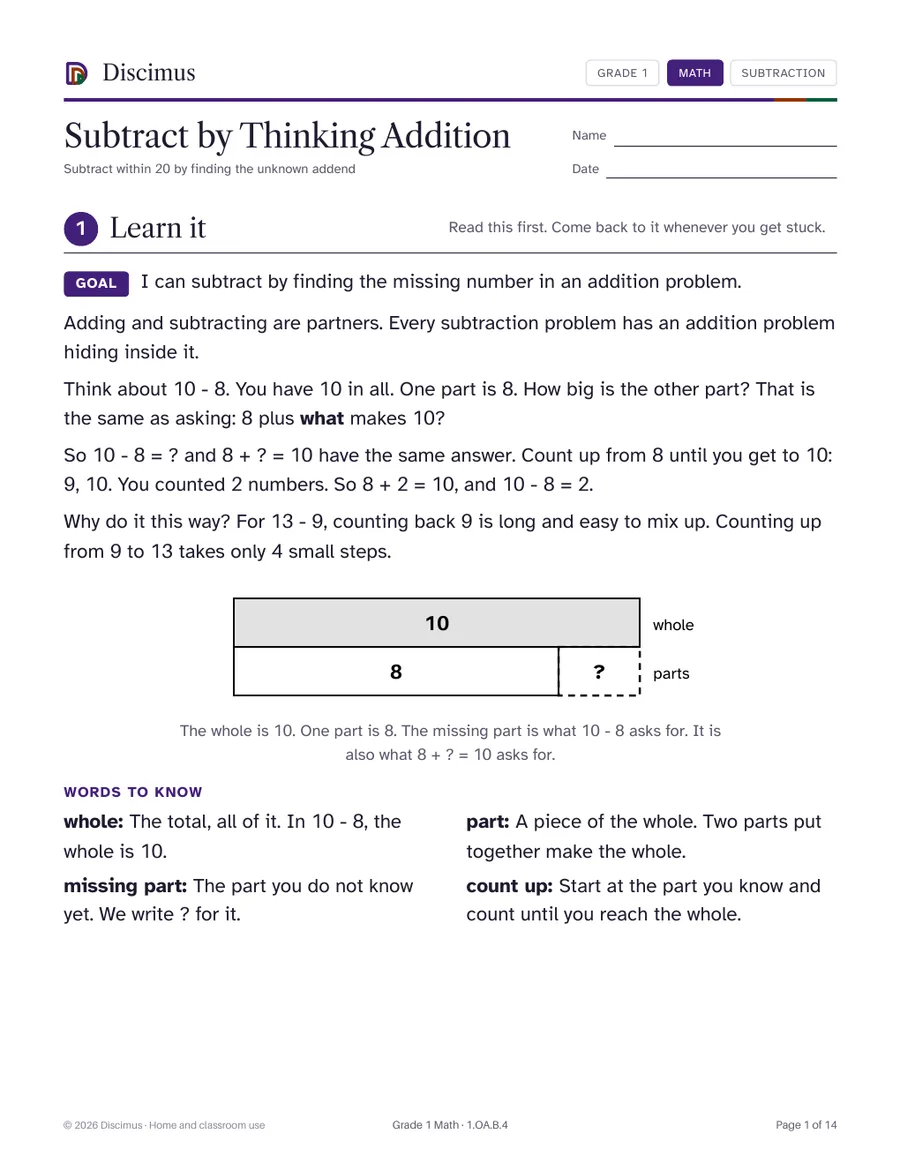
Subtract within 20 by finding the unknown addend
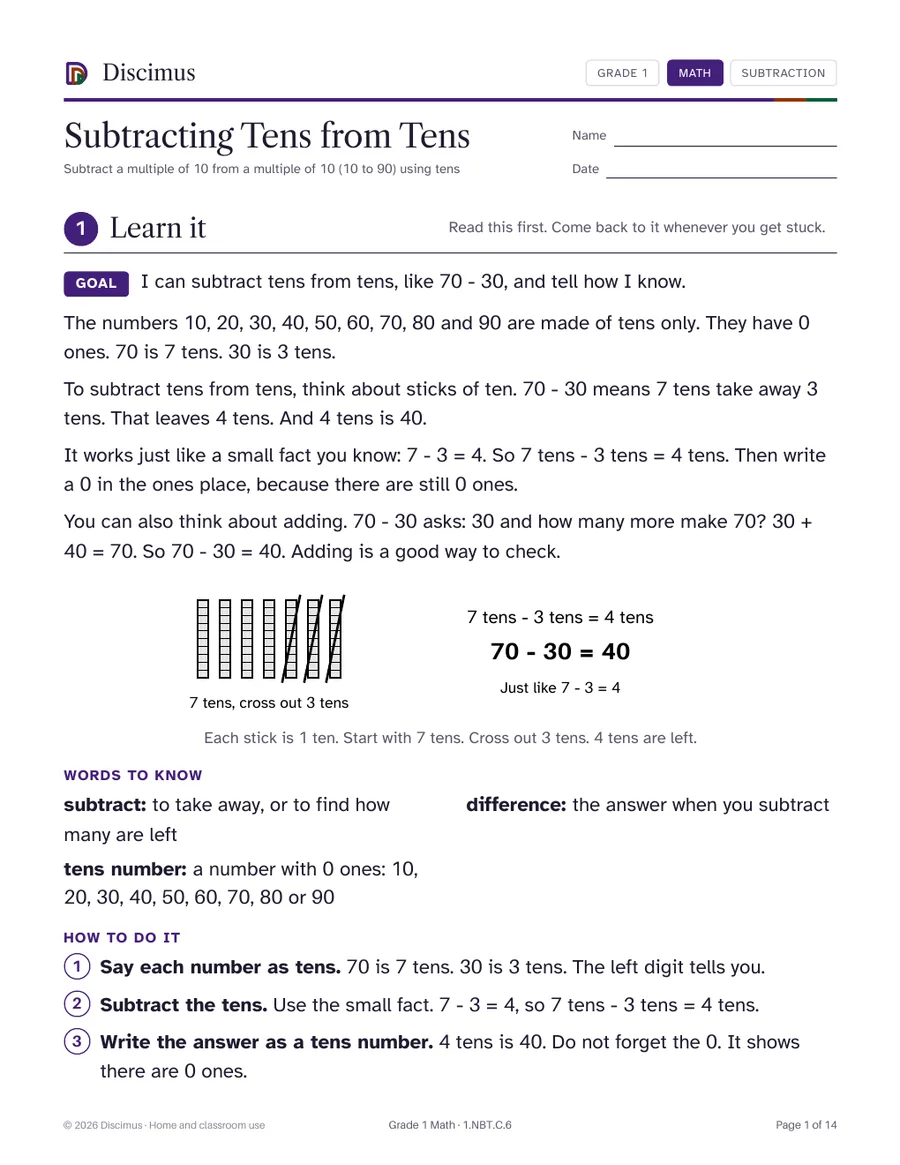
Subtract a multiple of 10 from a multiple of 10 (10 to 90) using tens
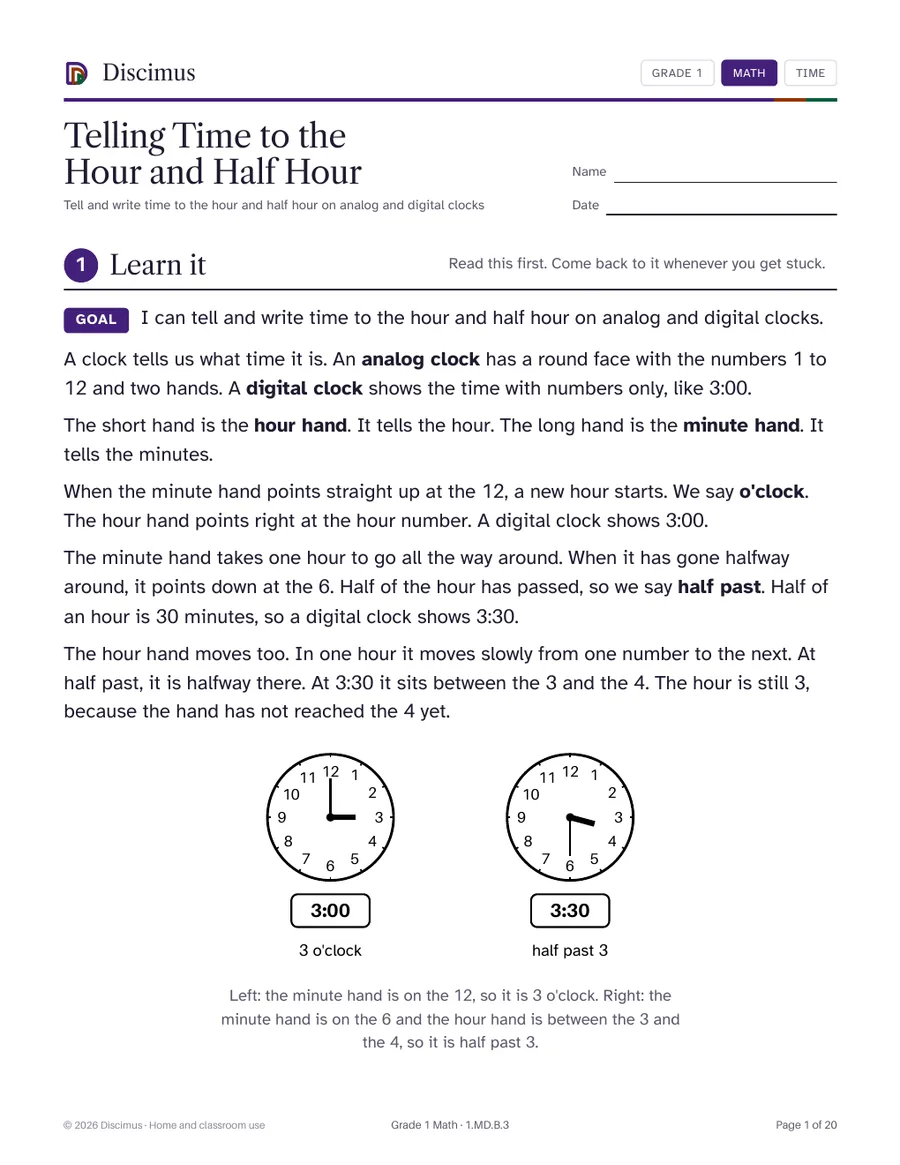
Tell and write time to the hour and half hour on analog and digital clocks
 Free sample
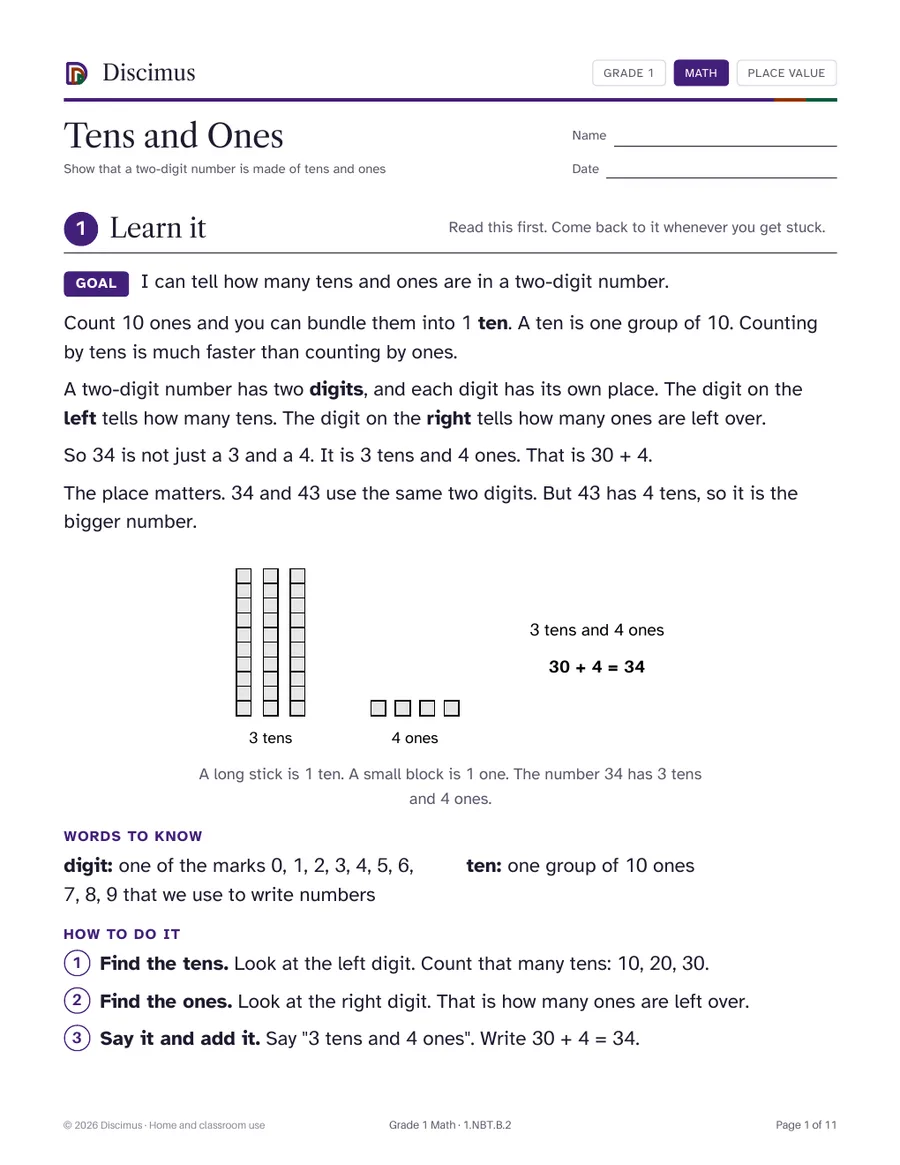
Show that a two-digit number is made of tens and ones
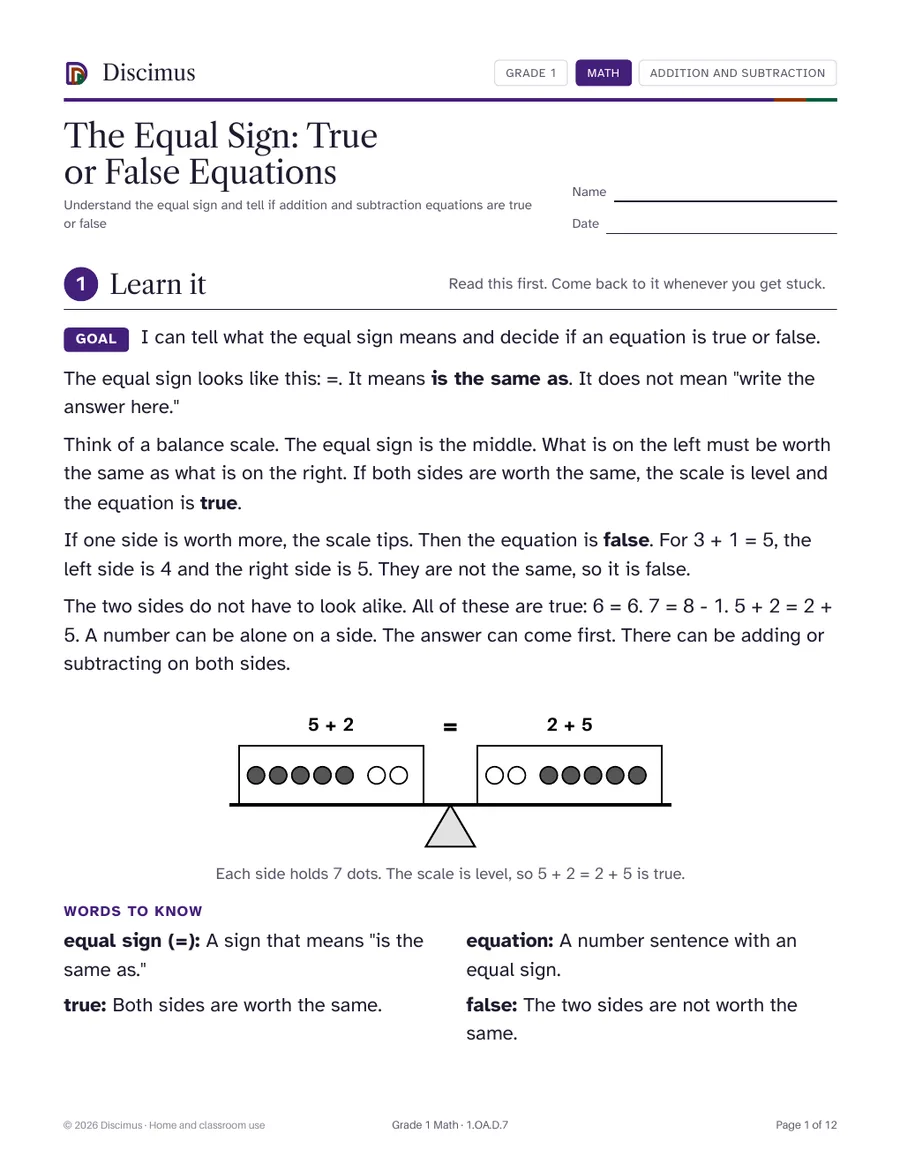
Understand the equal sign and tell if addition and subtraction equations are true or false
Tell defining attributes from non-defining attributes and draw shapes that have them
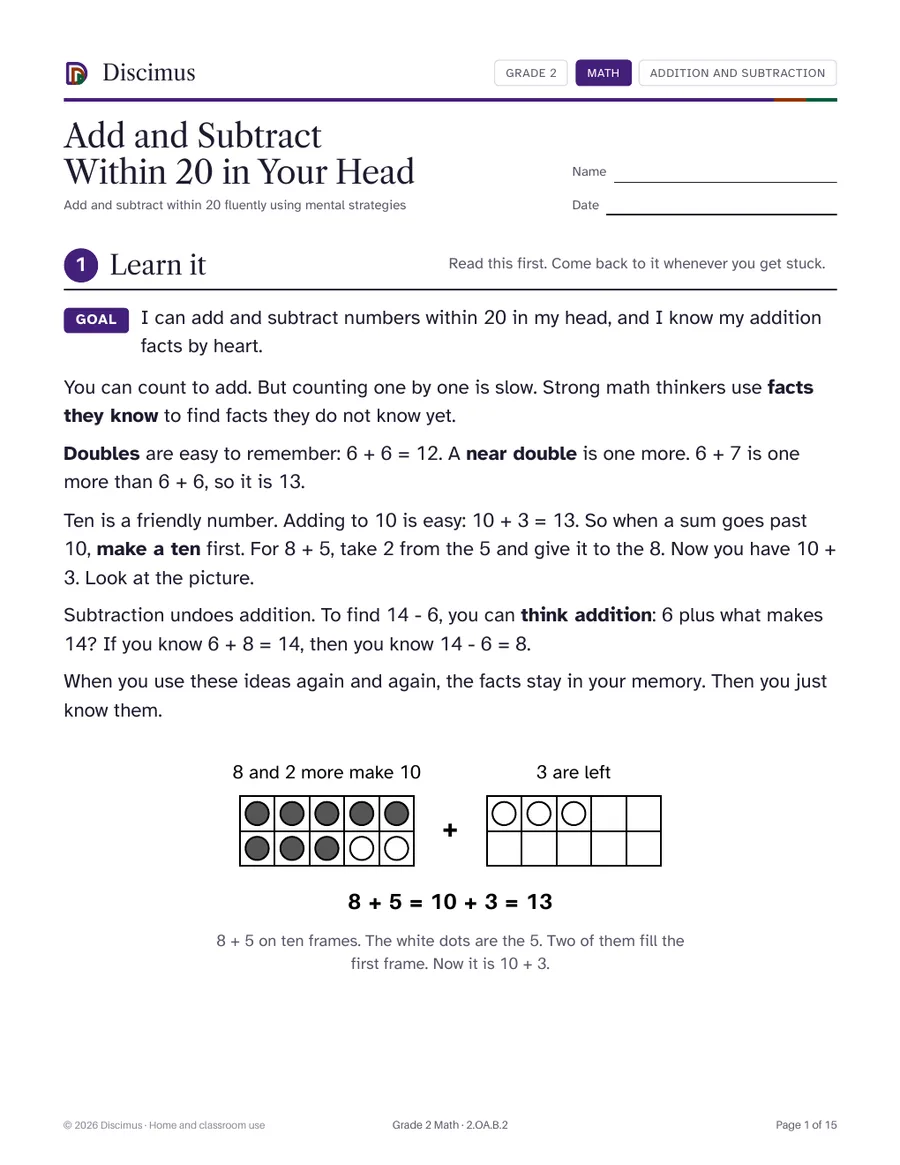
Add and subtract within 20 fluently using mental strategies
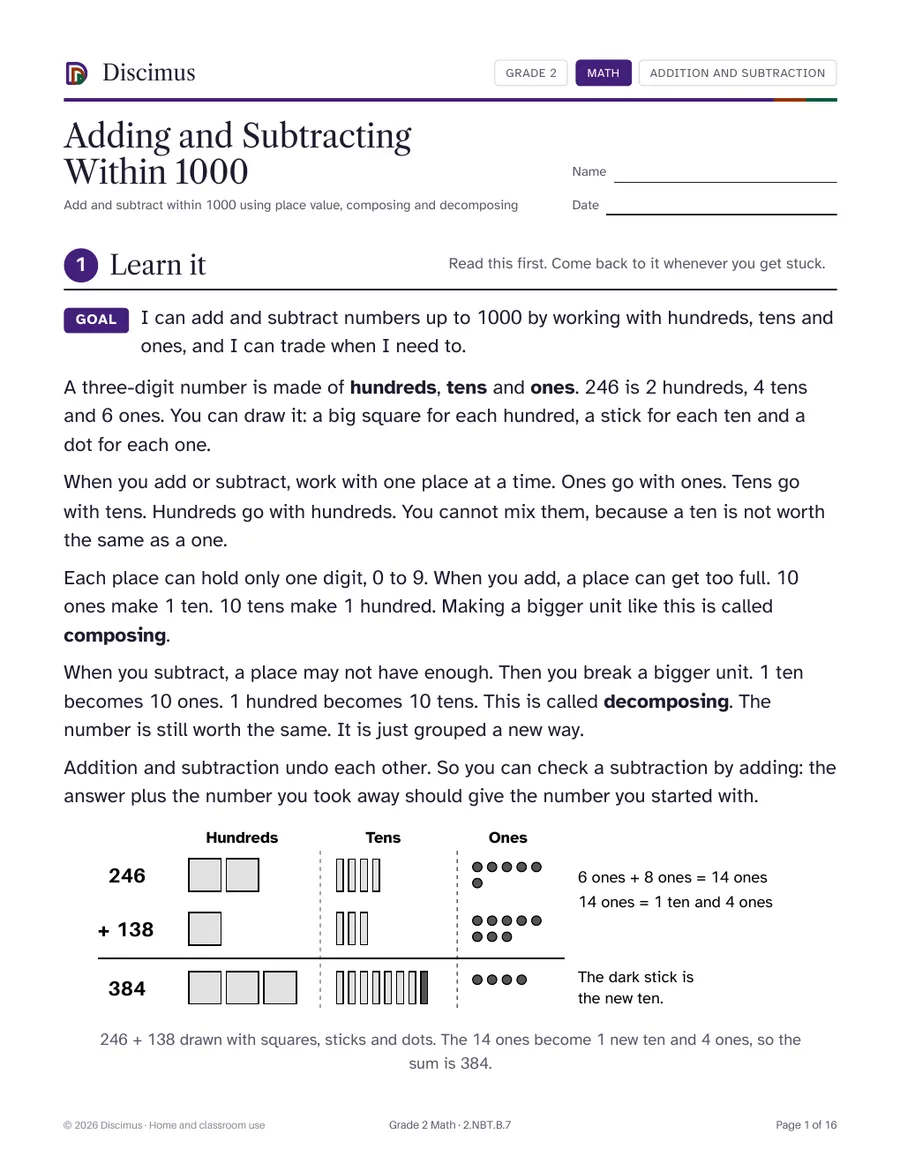
Add and subtract within 1000 using place value, composing and decomposing
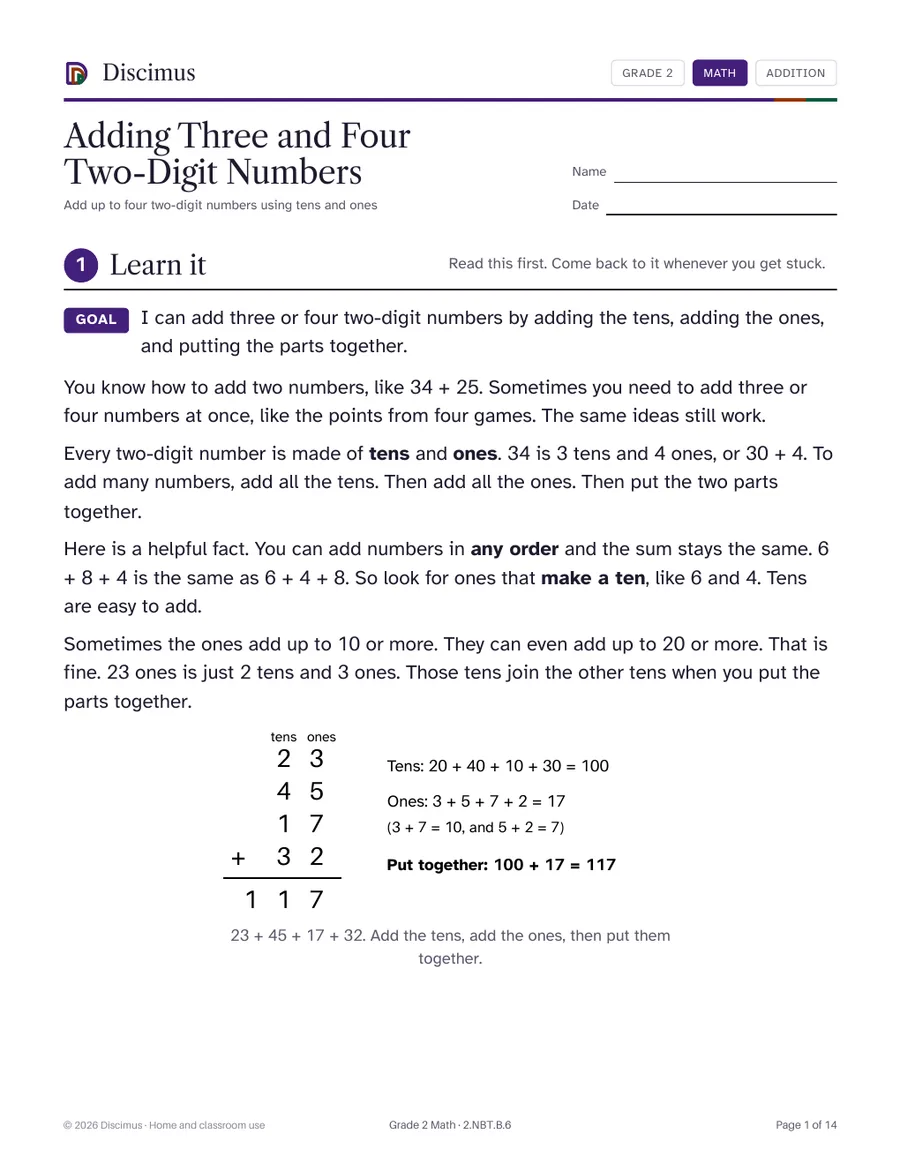
Add up to four two-digit numbers using tens and ones
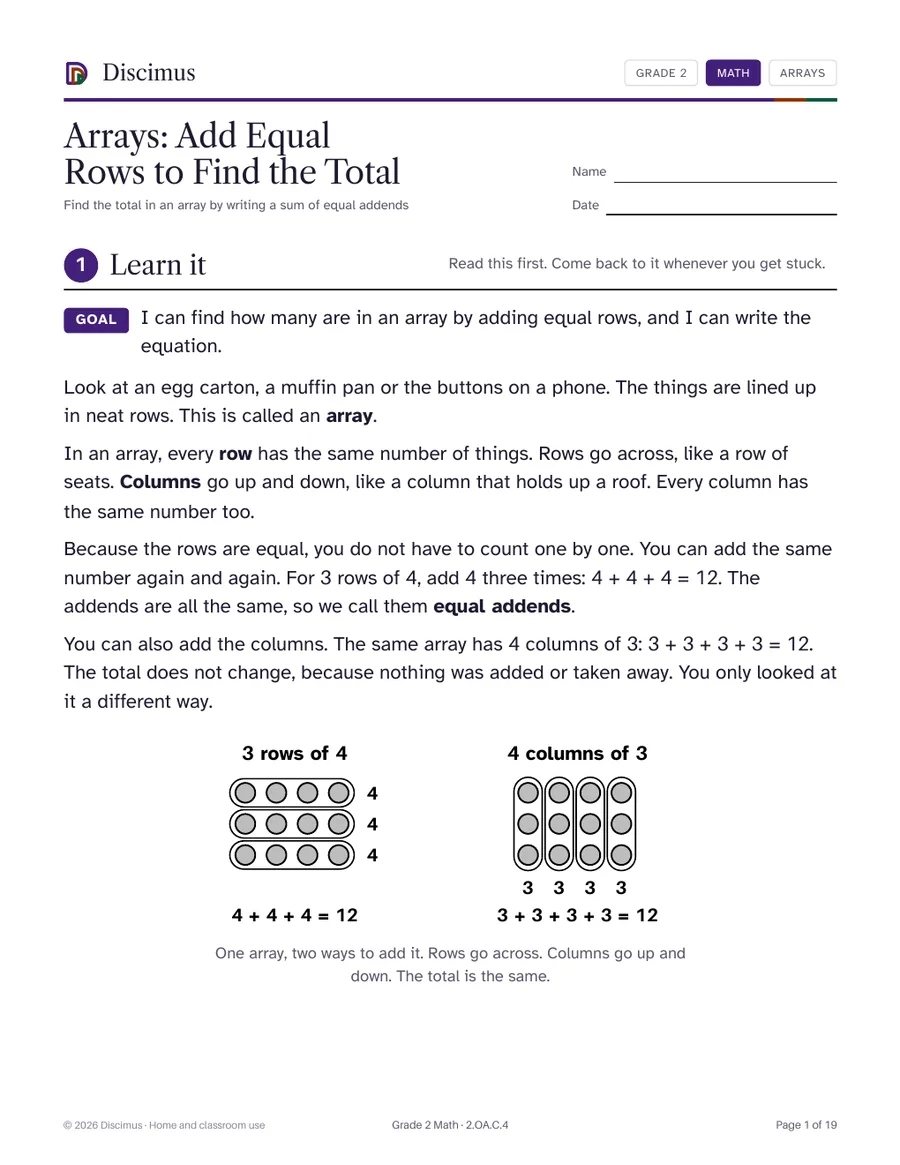
Find the total in an array by writing a sum of equal addends
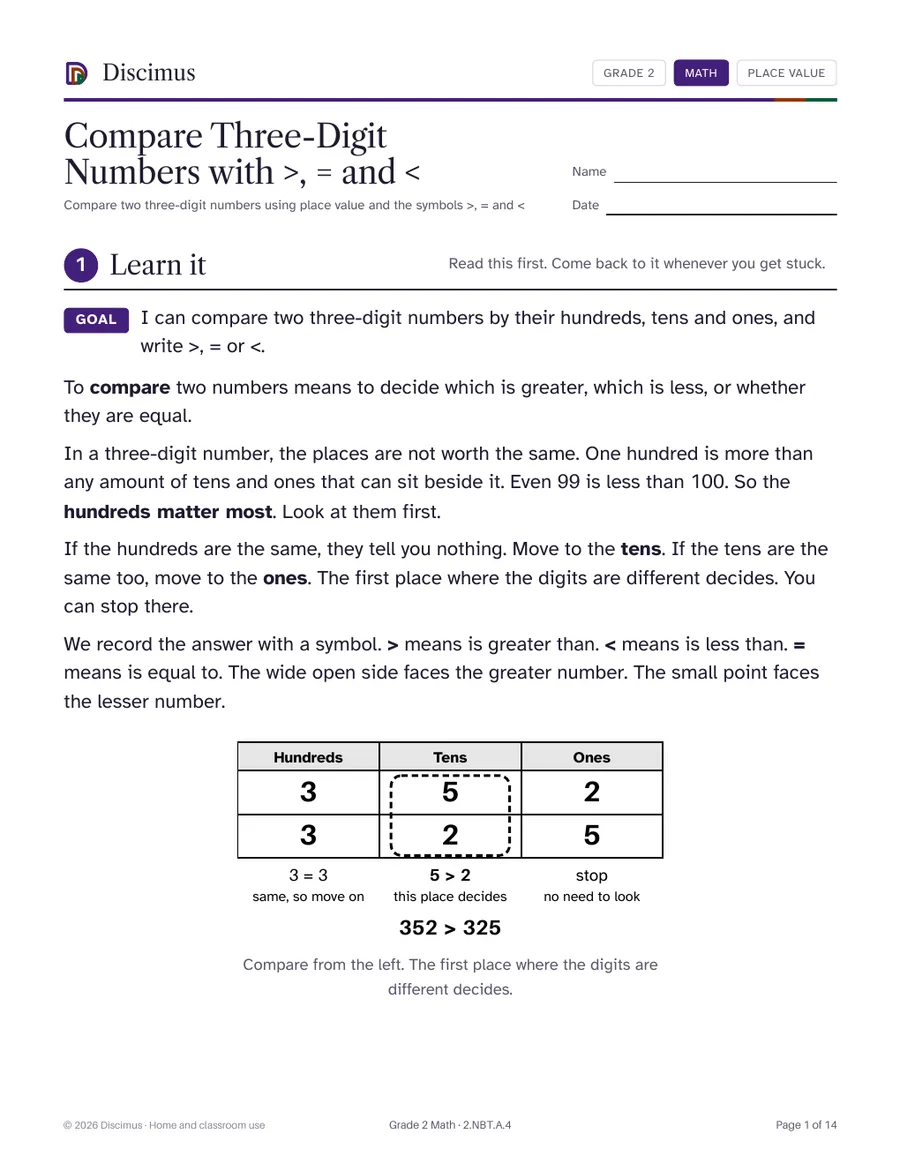
Compare two three-digit numbers using place value and the symbols >, = and <
Count within 1000 and skip count by 5s, 10s and 100s
 Free sample
Find the value of a set of coins and solve money word problems
Partition circles and rectangles into halves, thirds and fourths and name the shares
Estimate lengths in inches, feet, centimeters and meters using benchmarks
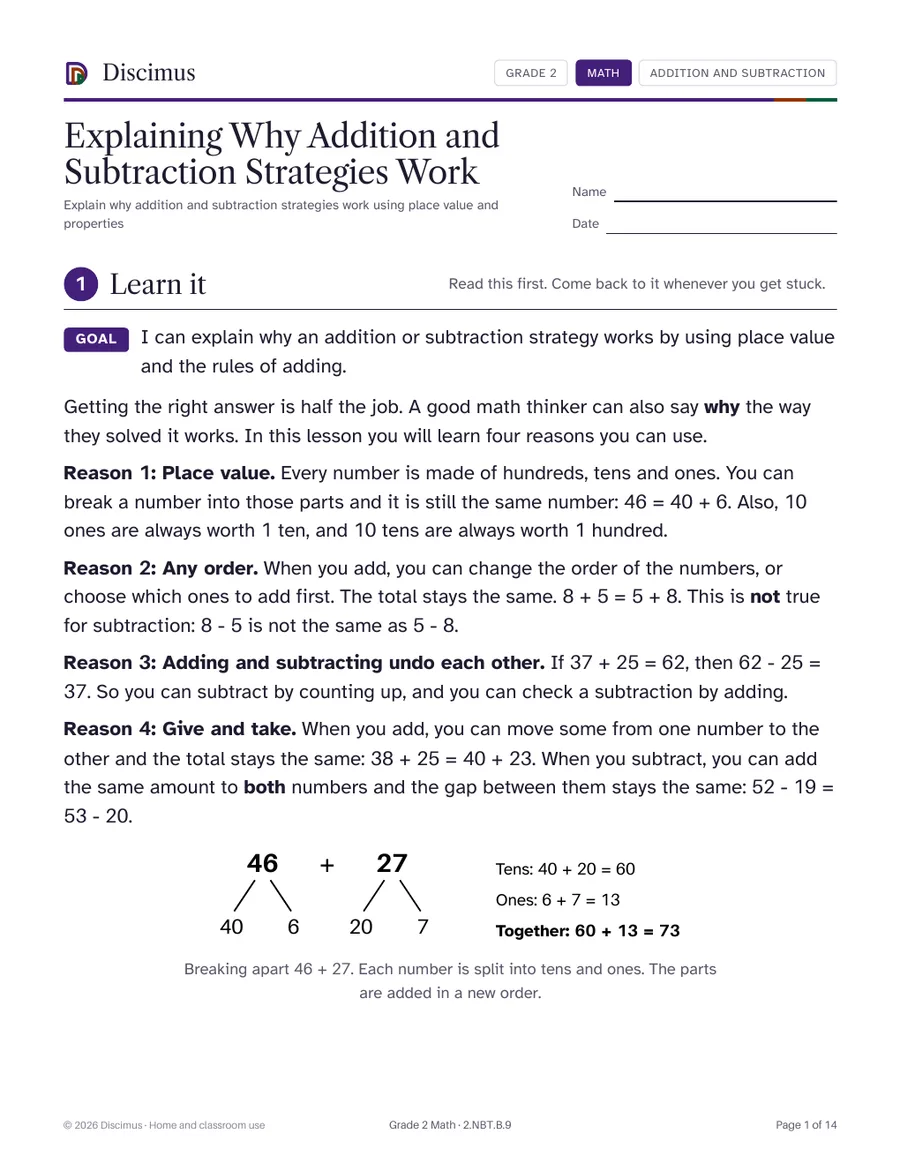
Explain why addition and subtraction strategies work using place value and properties
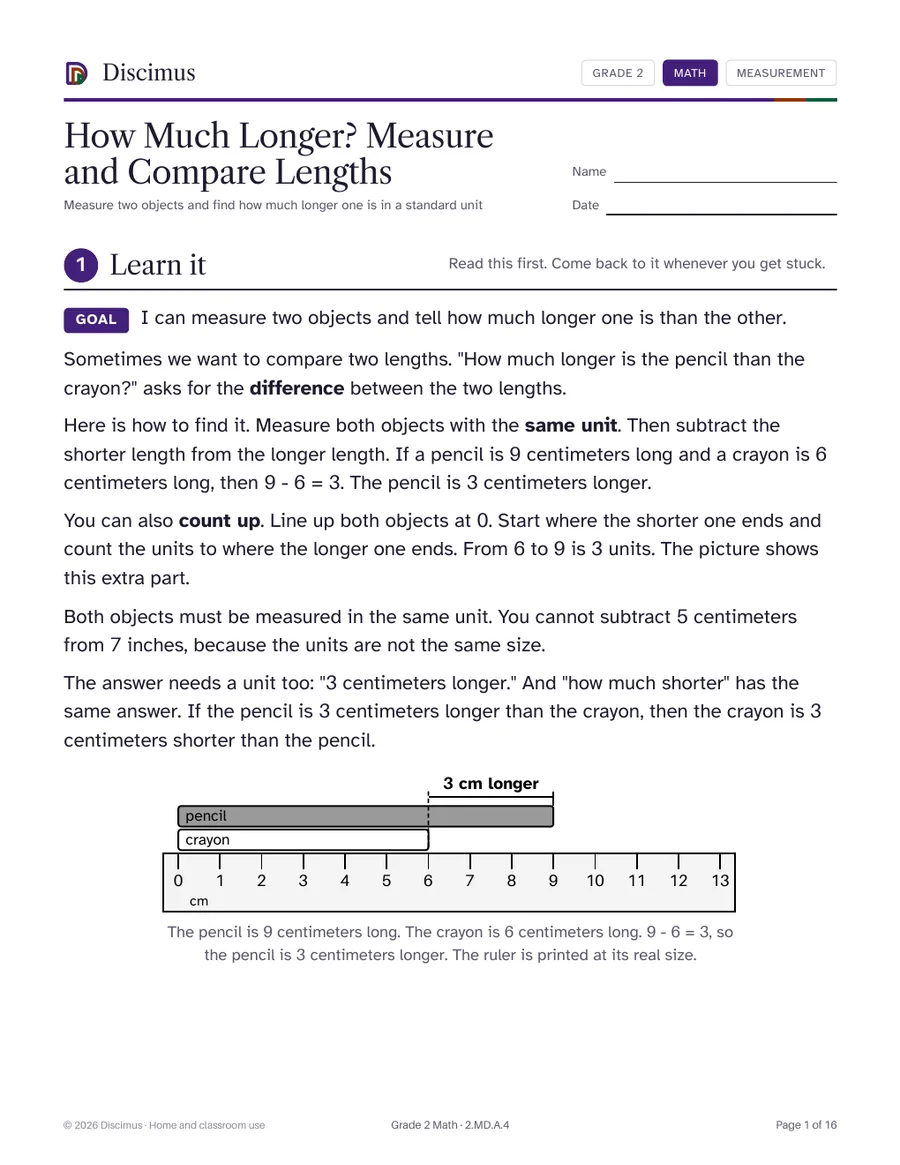
Measure two objects and find how much longer one is in a standard unit
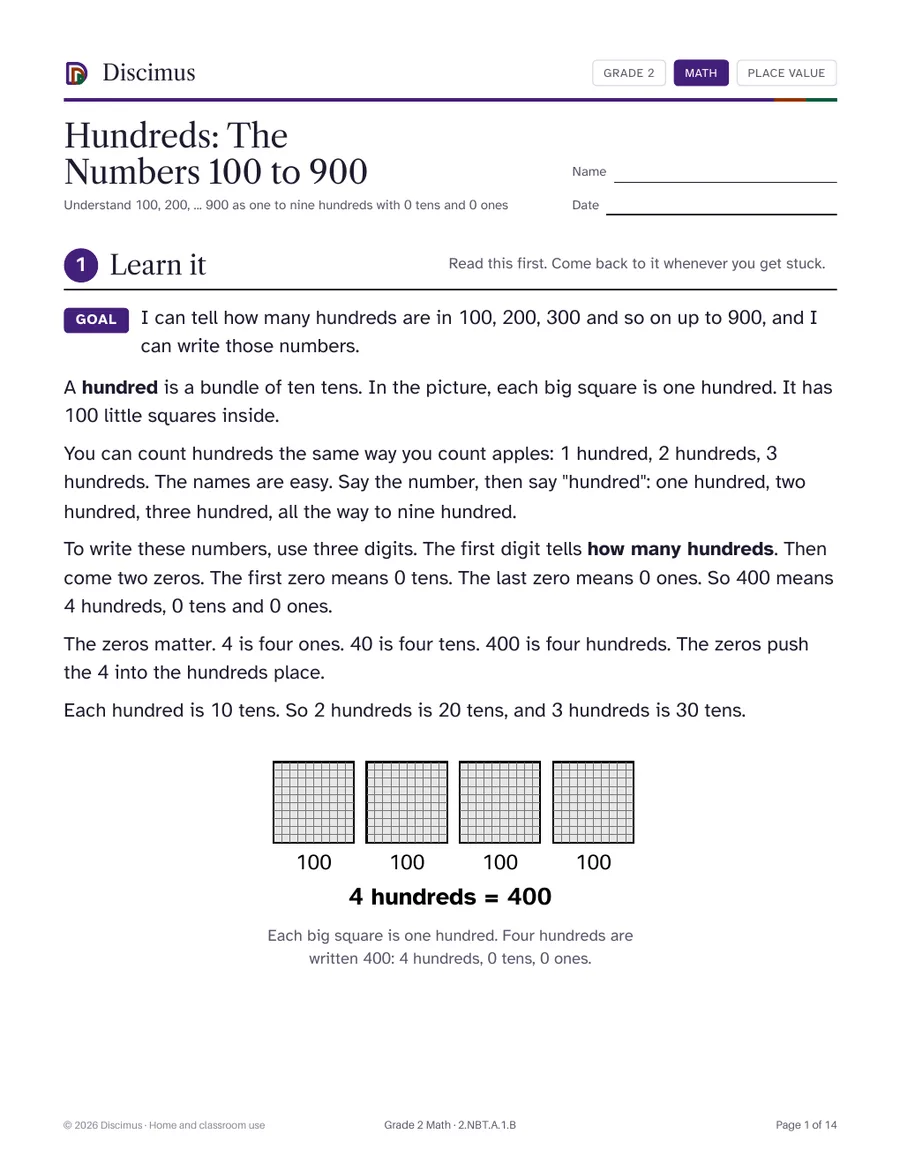
Understand 100, 200, ... 900 as one to nine hundreds with 0 tens and 0 ones
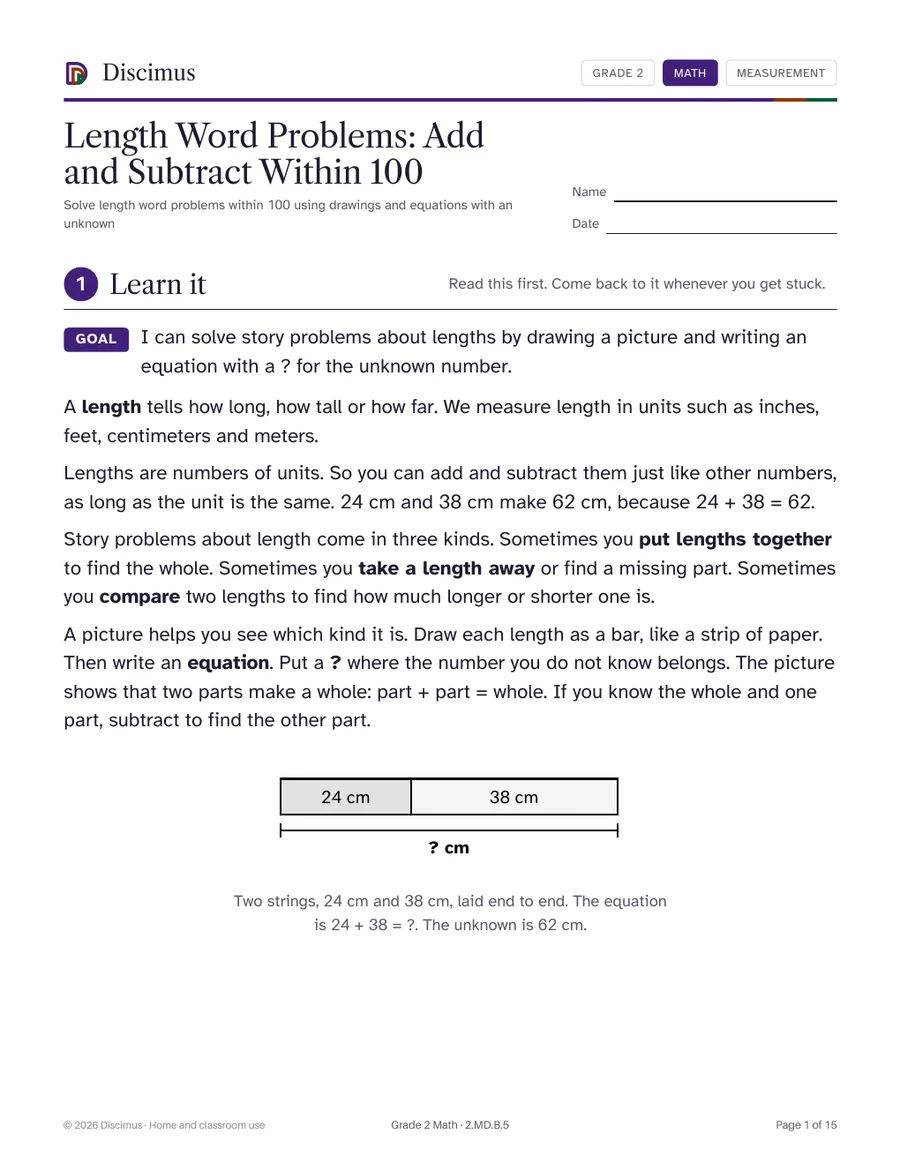
Solve length word problems within 100 using drawings and equations with an unknown
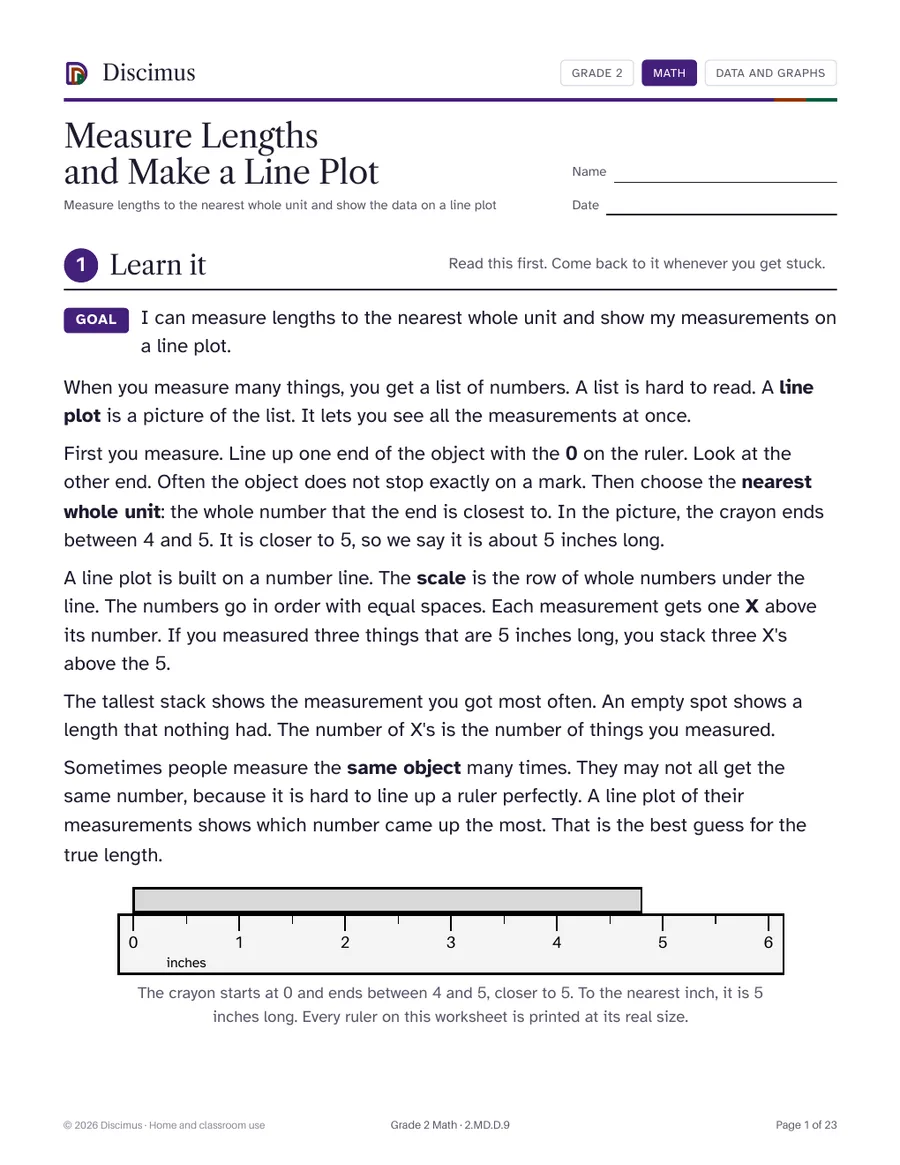
Measure lengths to the nearest whole unit and show the data on a line plot
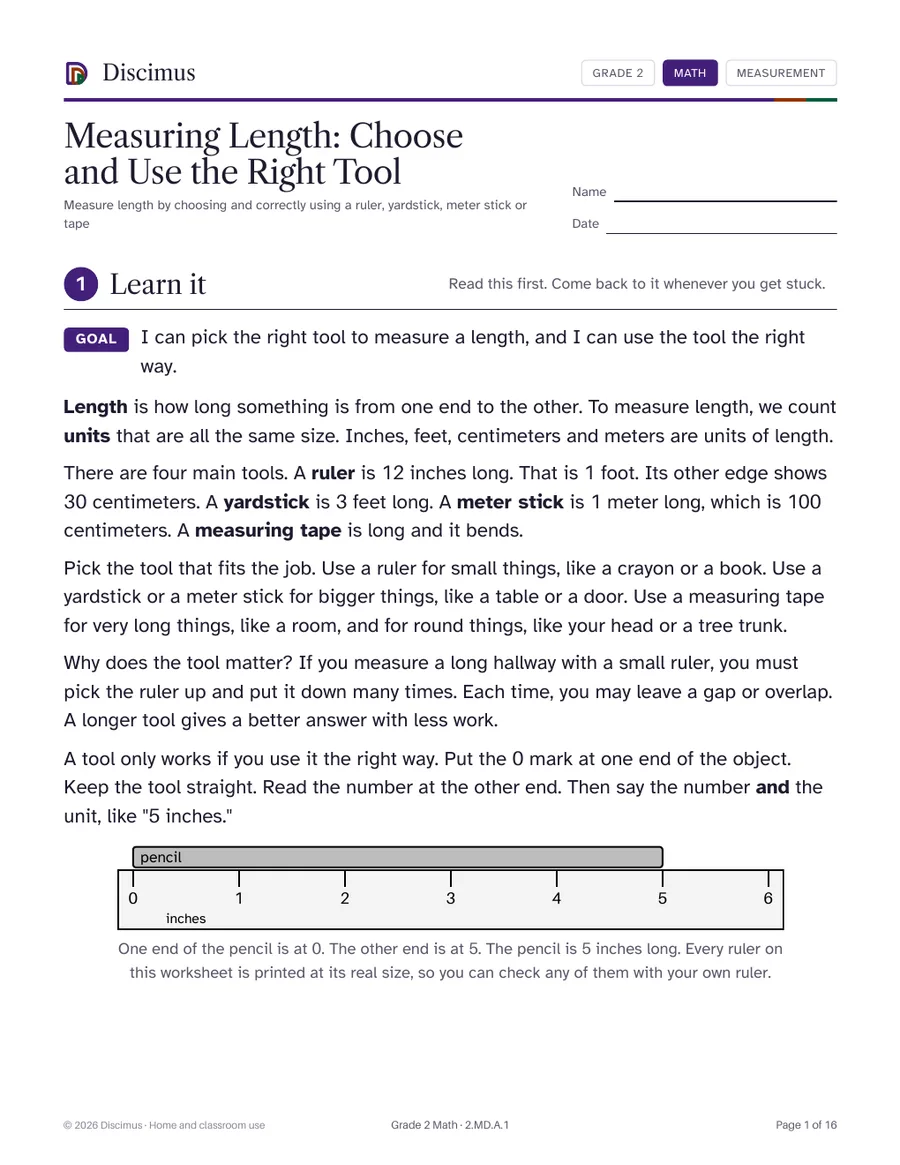
Measure length by choosing and correctly using a ruler, yardstick, meter stick or tape
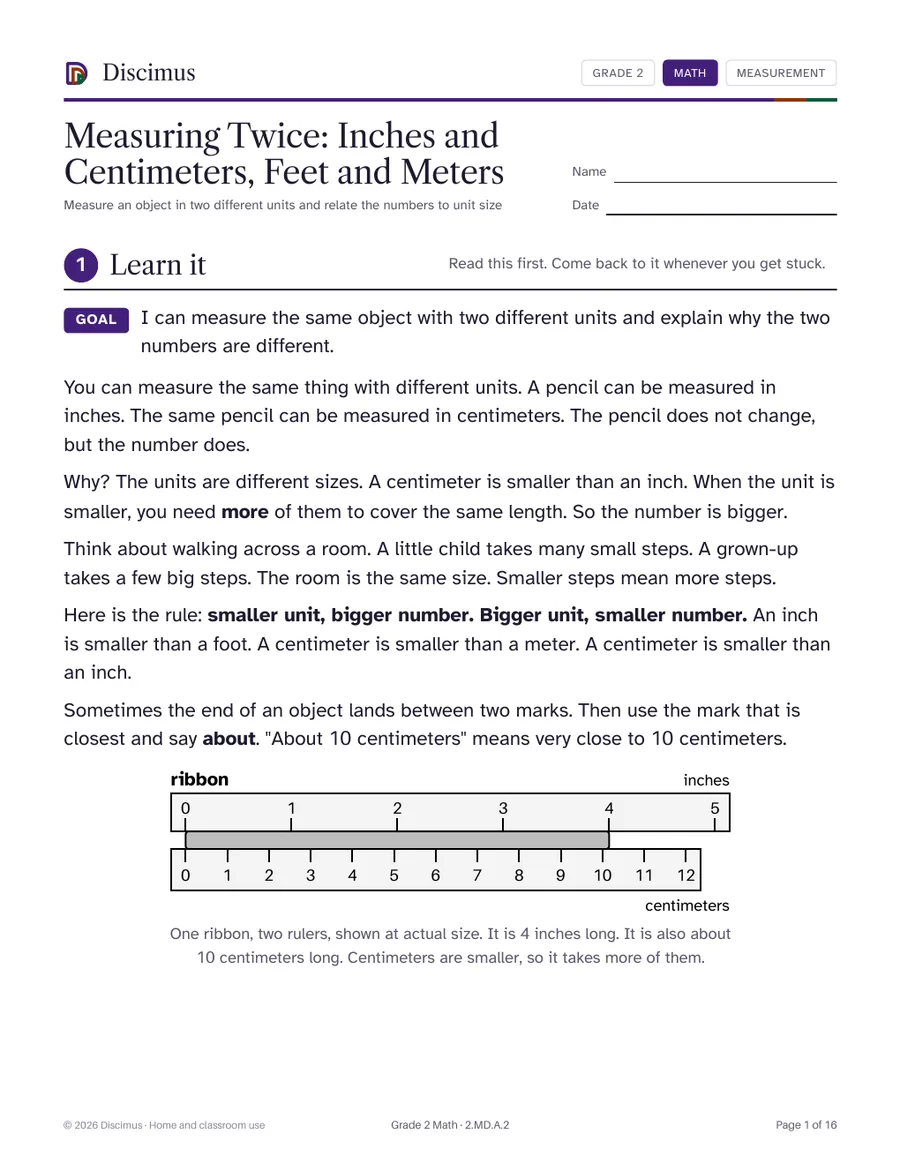
Measure an object in two different units and relate the numbers to unit size
Mentally add or subtract 10 or 100 from a number between 100 and 900
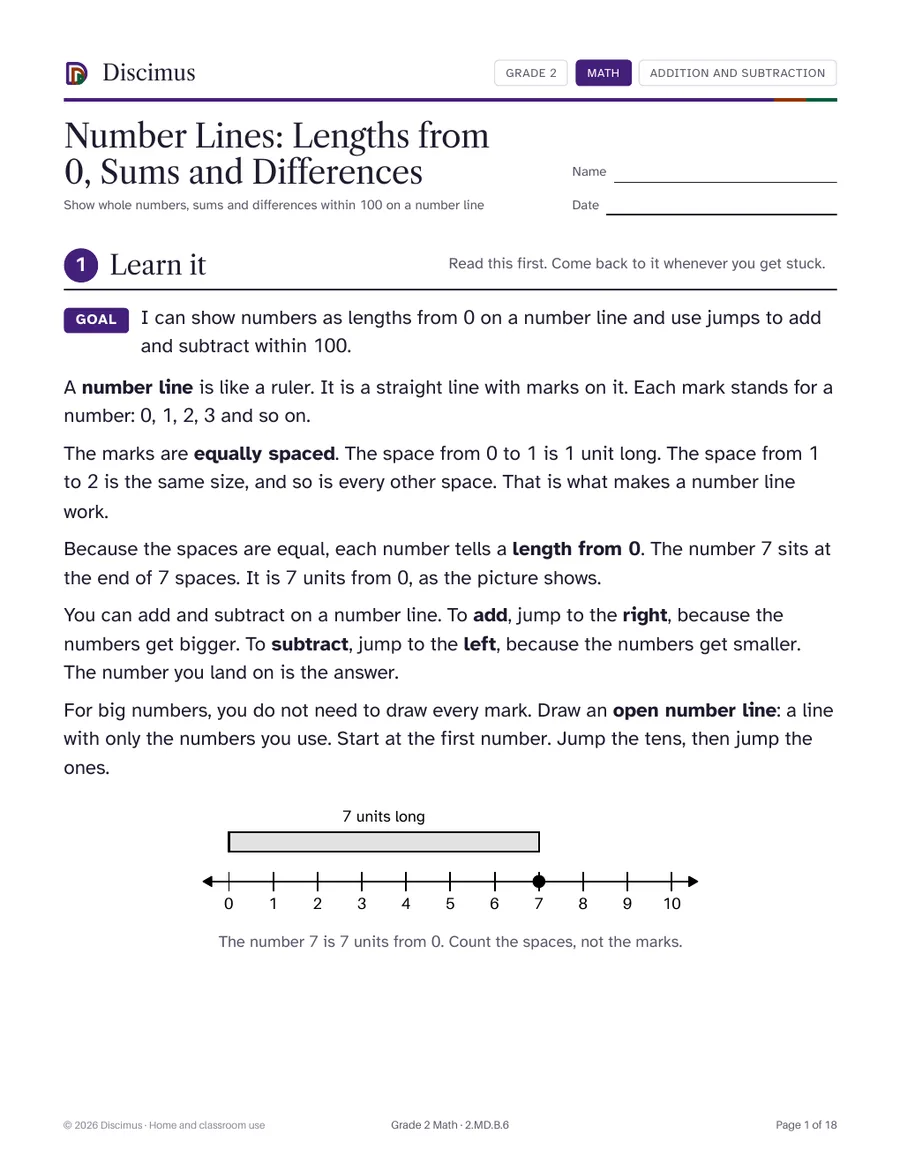
Show whole numbers, sums and differences within 100 on a number line
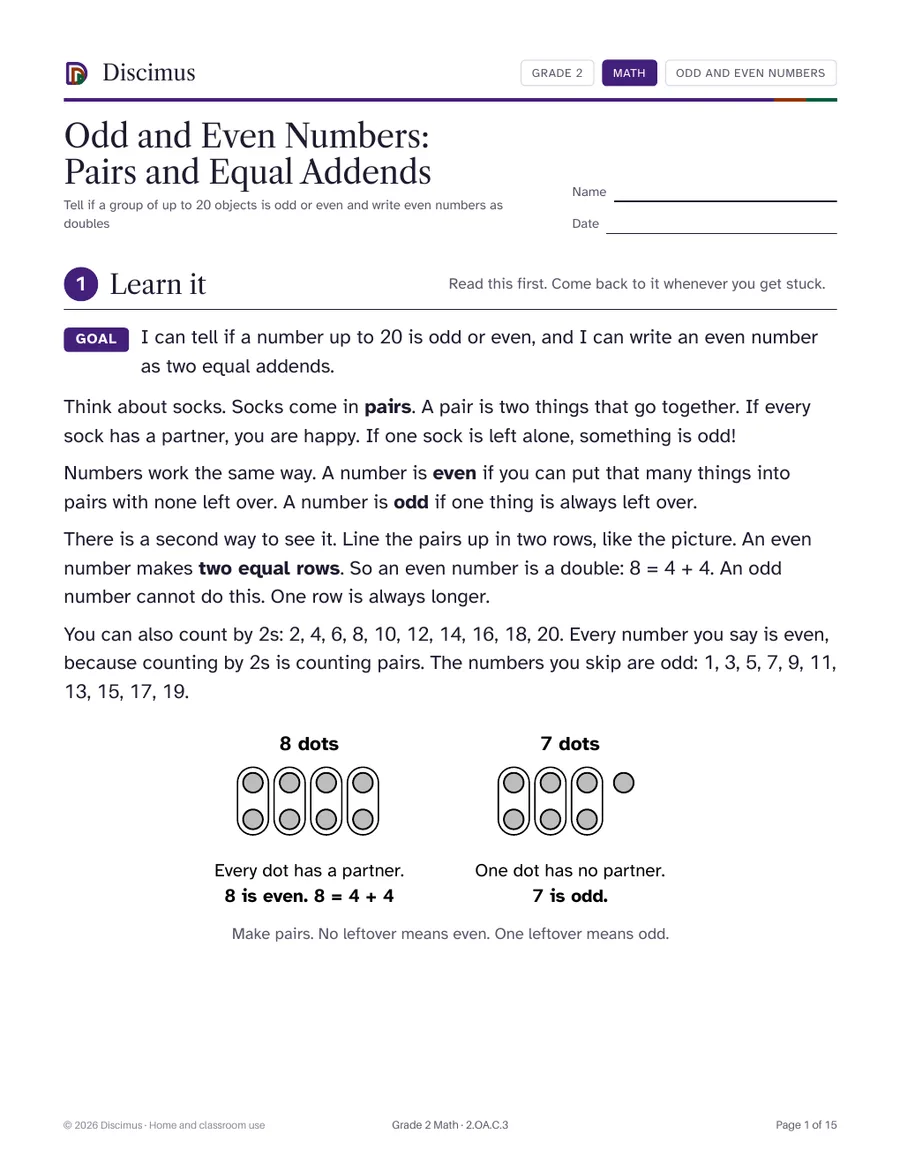
Tell if a group of up to 20 objects is odd or even and write even numbers as doubles
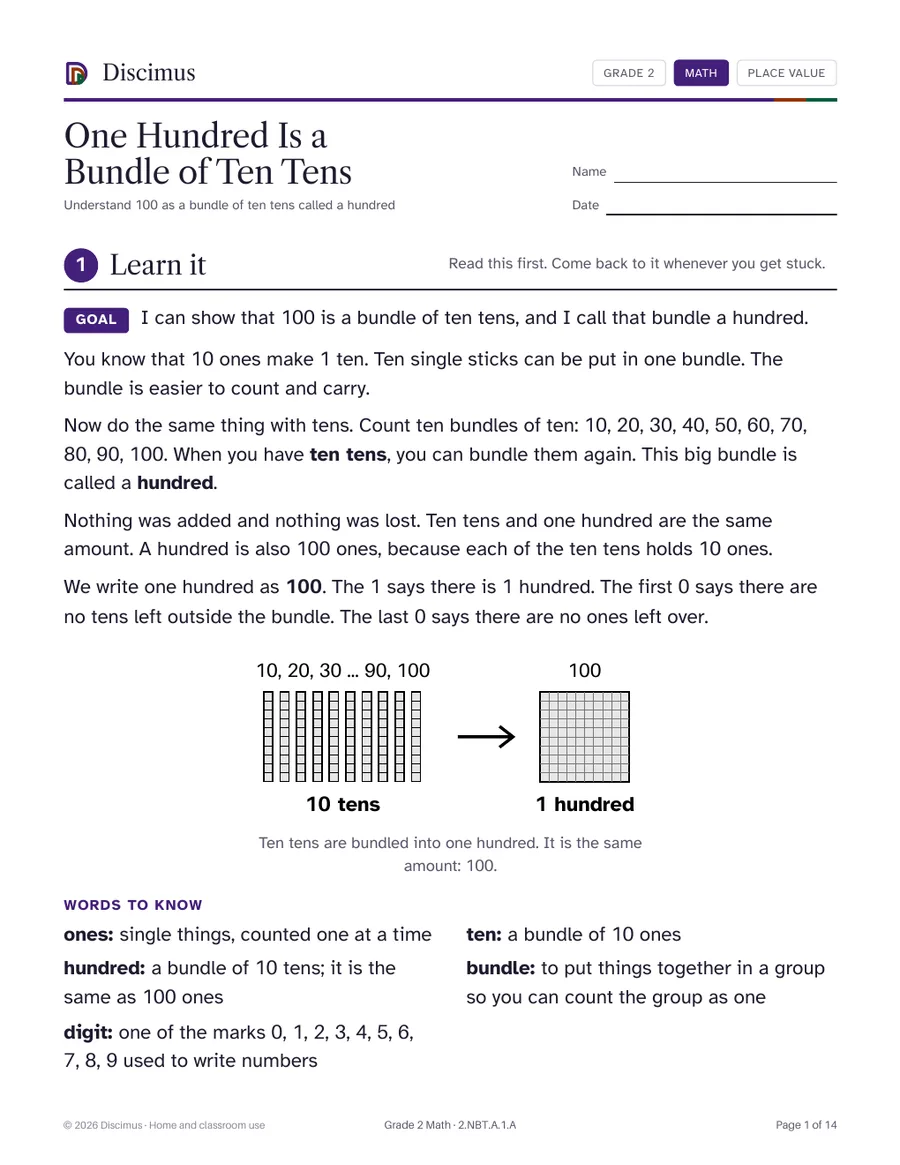
Understand 100 as a bundle of ten tens called a hundred
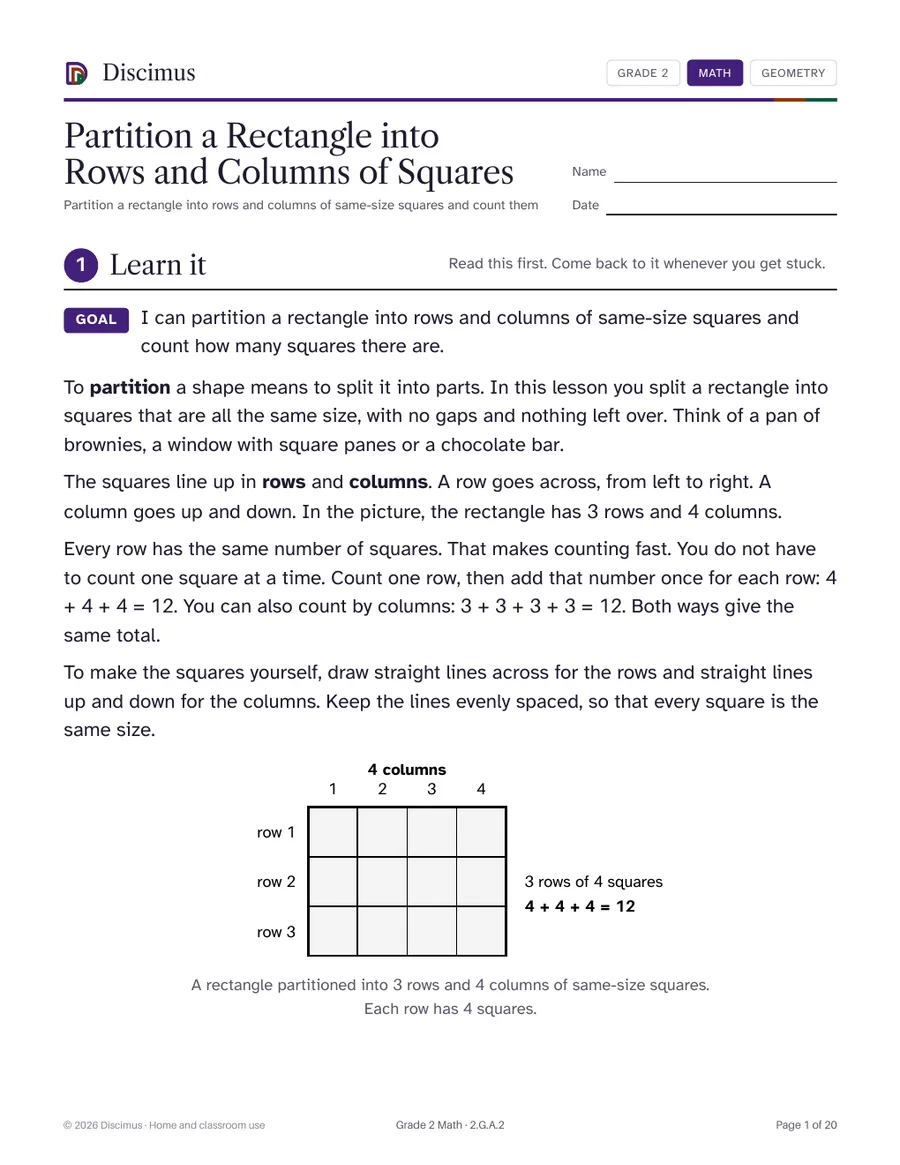
Partition a rectangle into rows and columns of same-size squares and count them
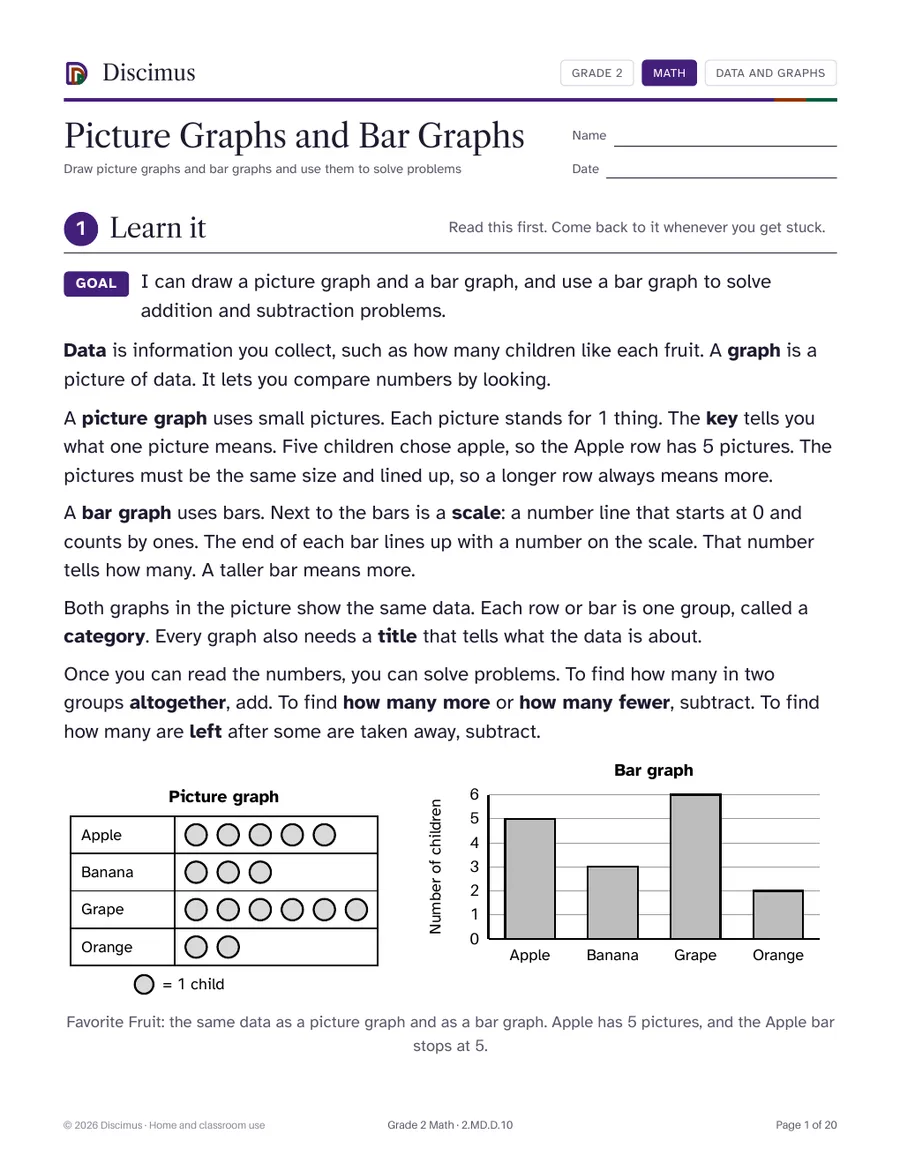
Draw picture graphs and bar graphs and use them to solve problems
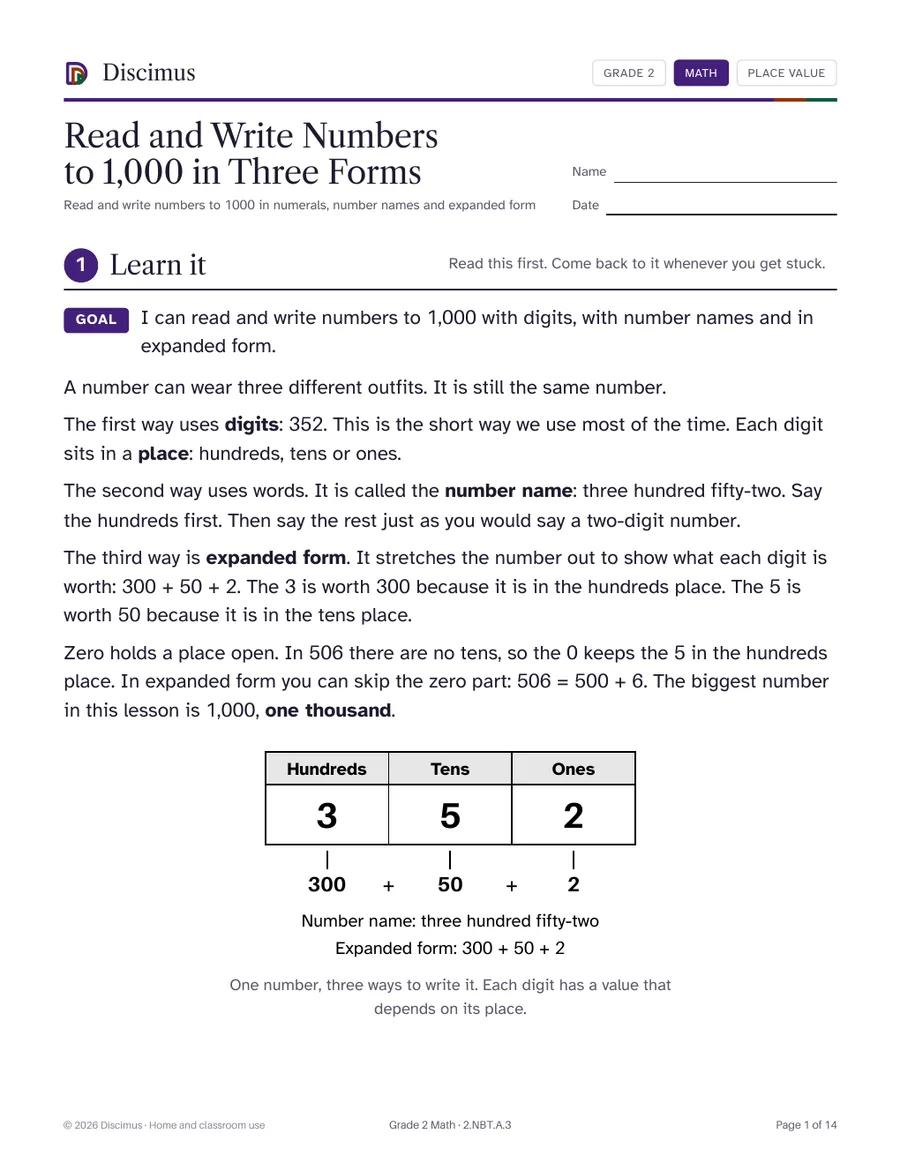
Read and write numbers to 1000 in numerals, number names and expanded form
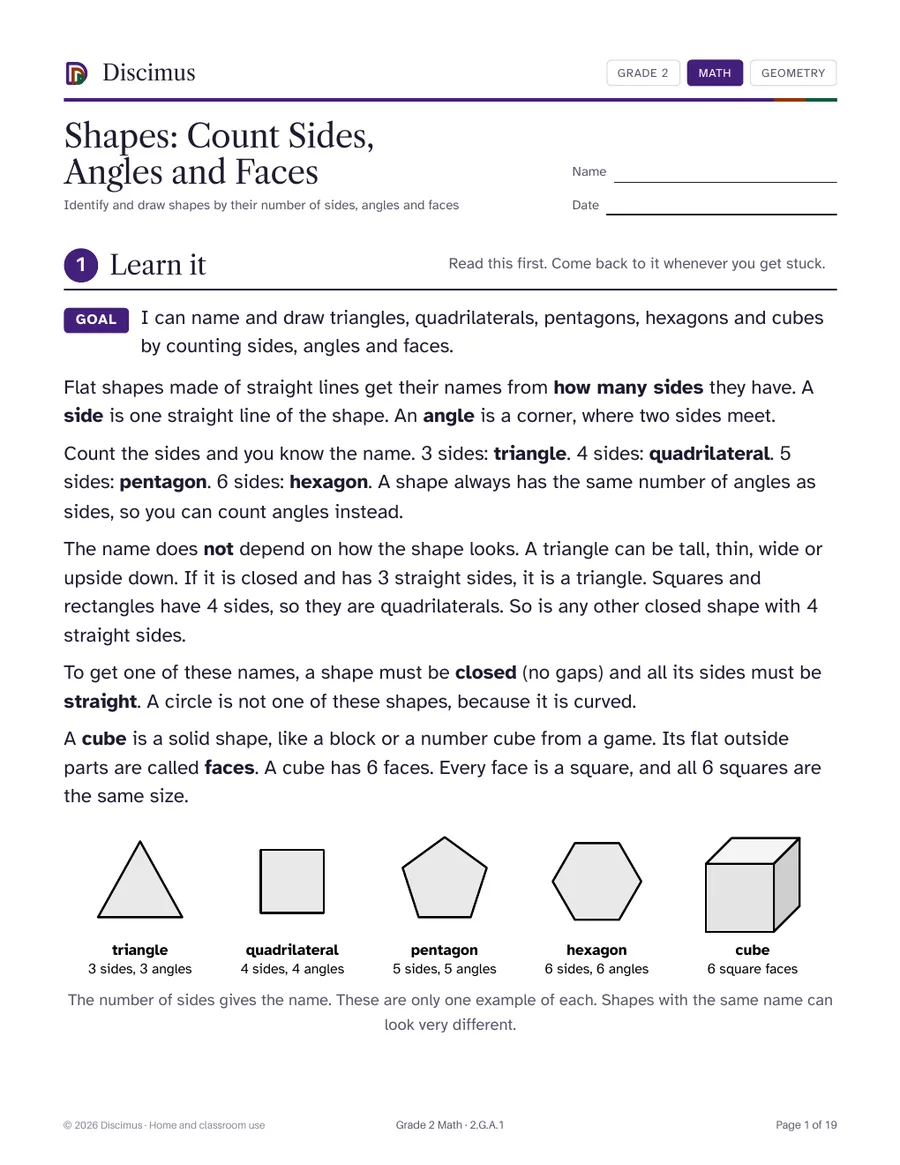
Identify and draw shapes by their number of sides, angles and faces
Tell and write time to the nearest five minutes using a.m. and p.m.
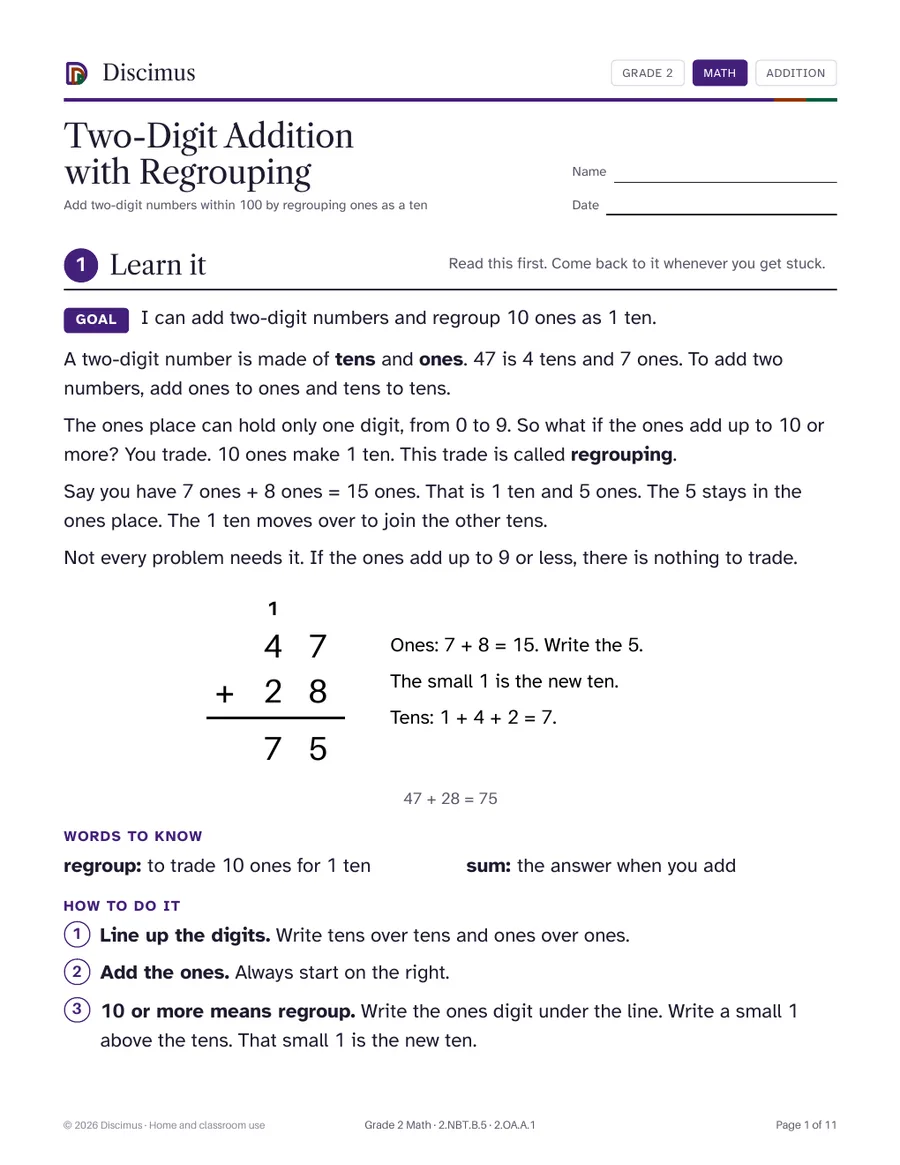
Add two-digit numbers within 100 by regrouping ones as a ten
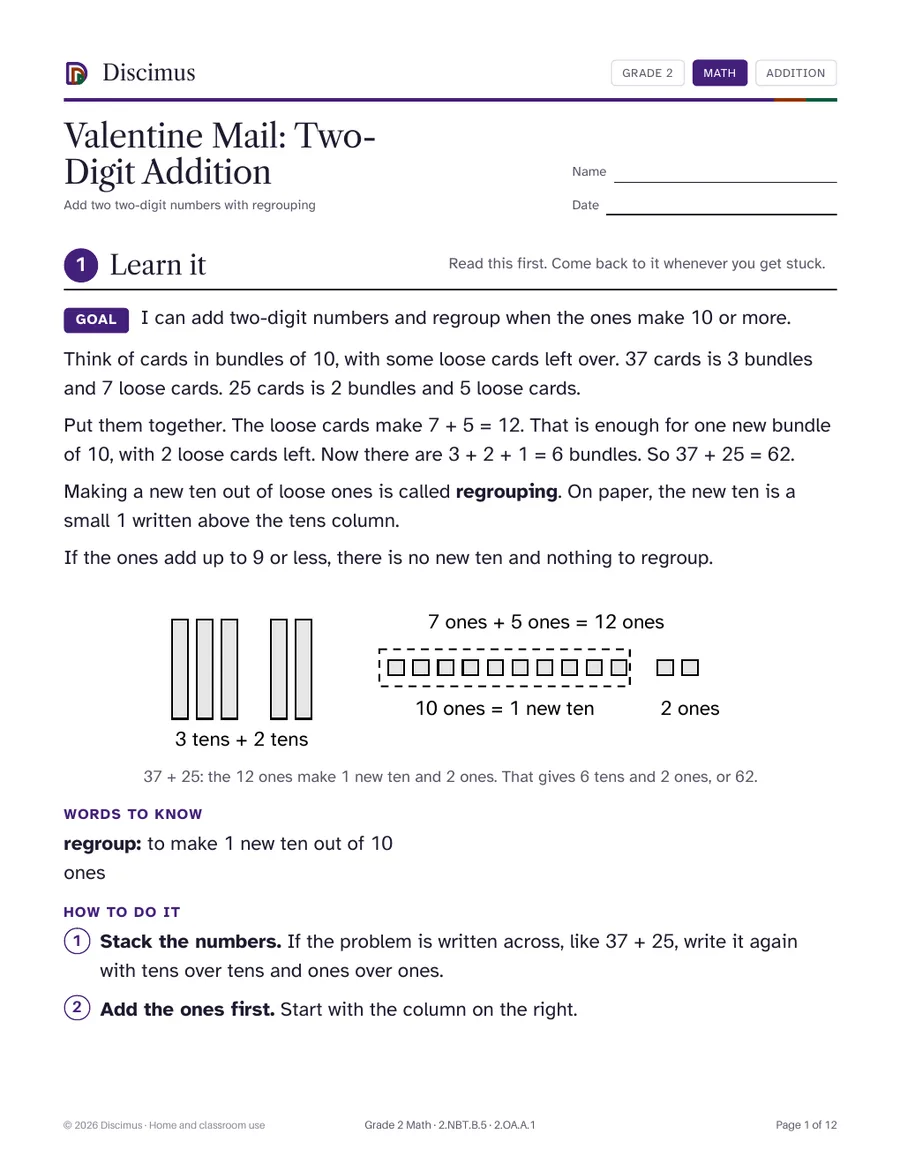
Add two two-digit numbers with regrouping
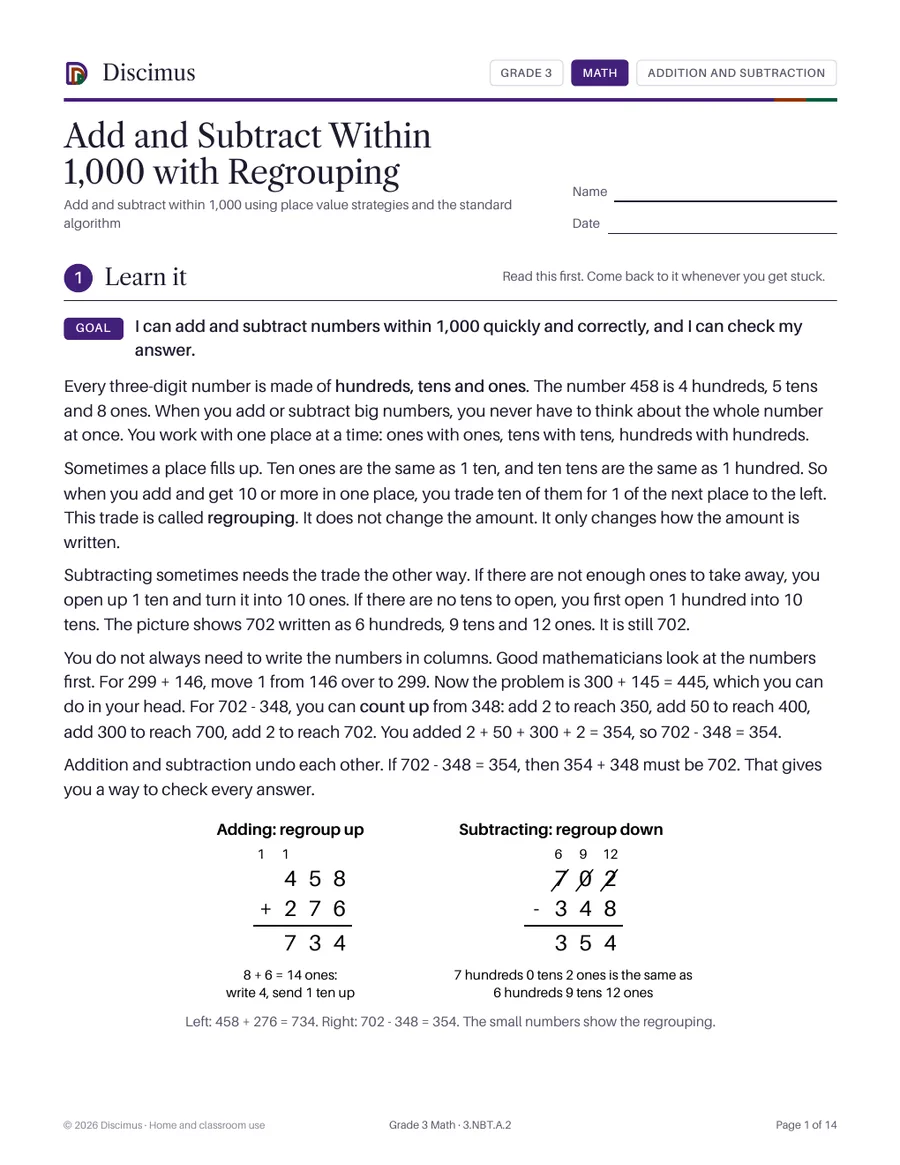
Add and subtract within 1,000 using place value strategies and the standard algorithm
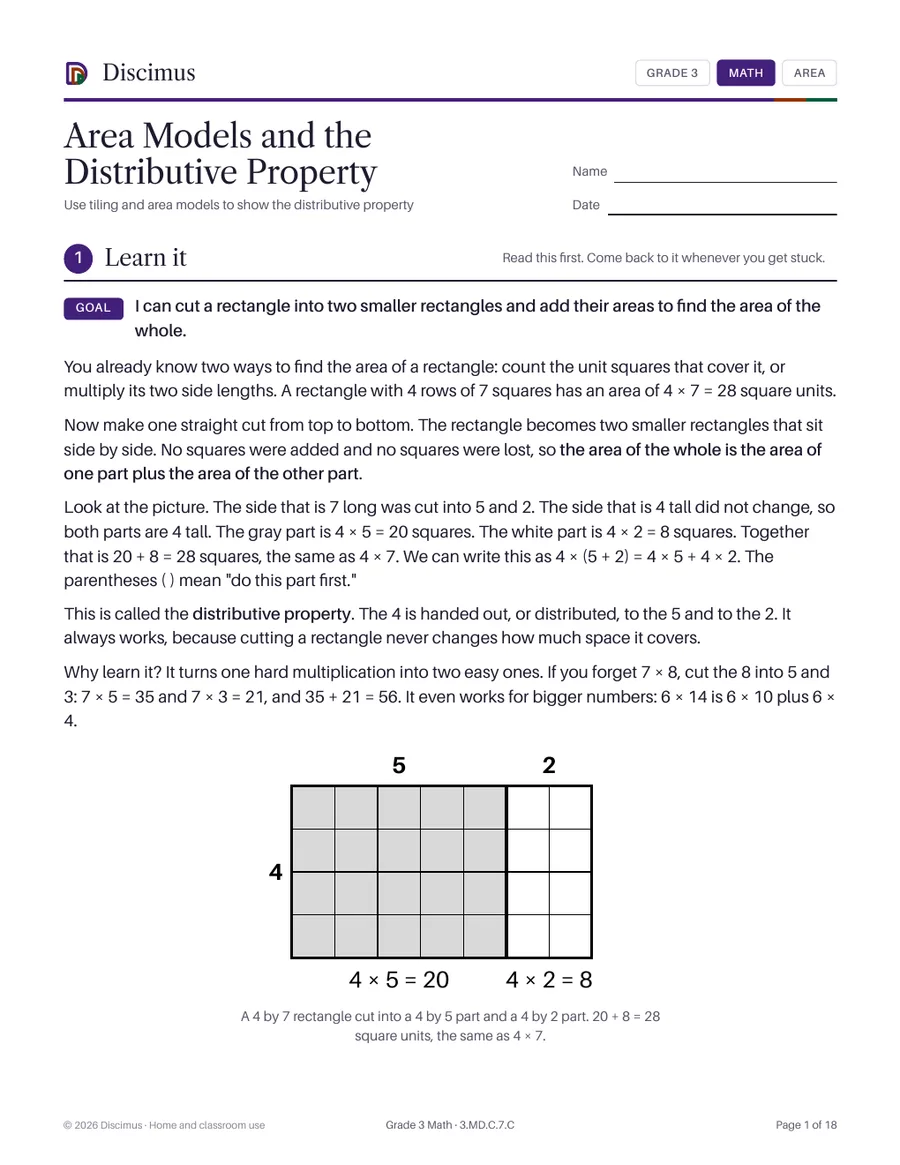
Use tiling and area models to show the distributive property
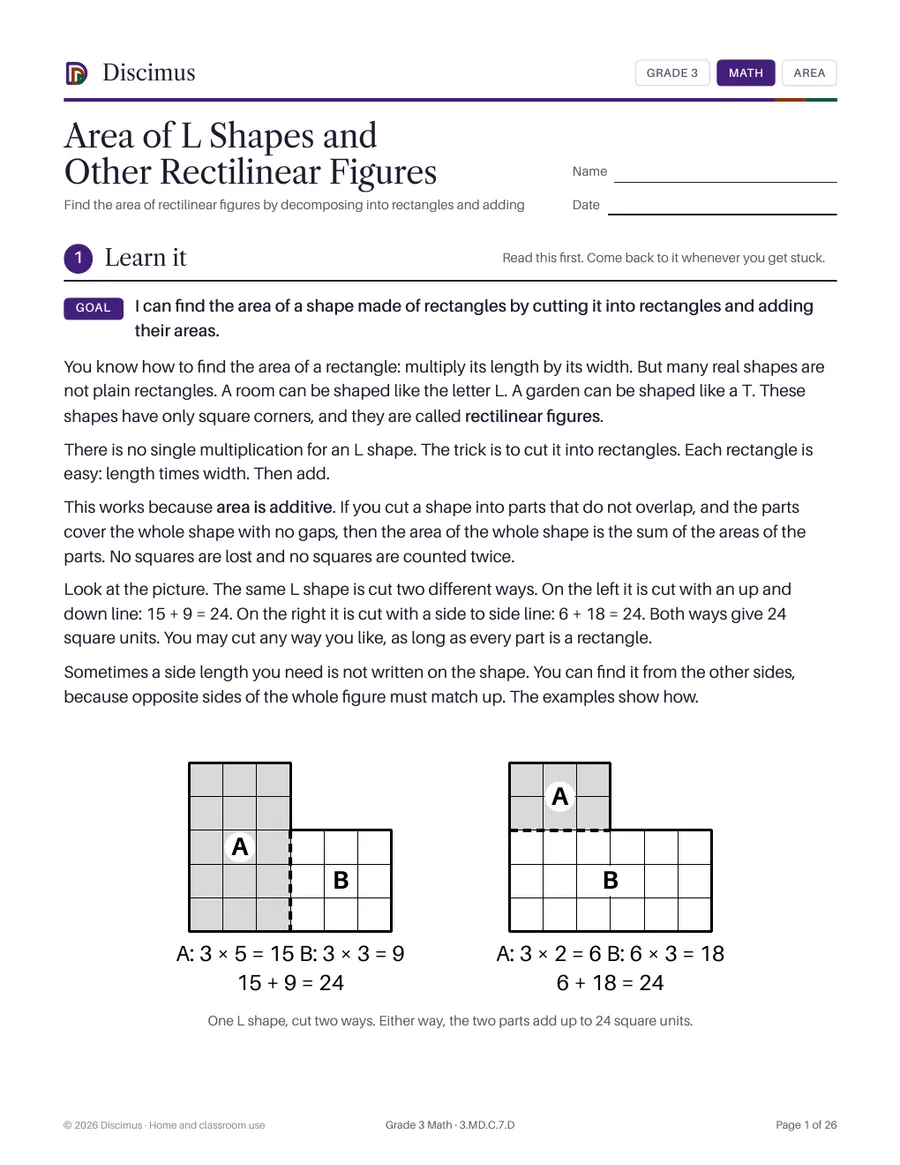
Find the area of rectilinear figures by decomposing into rectangles and adding
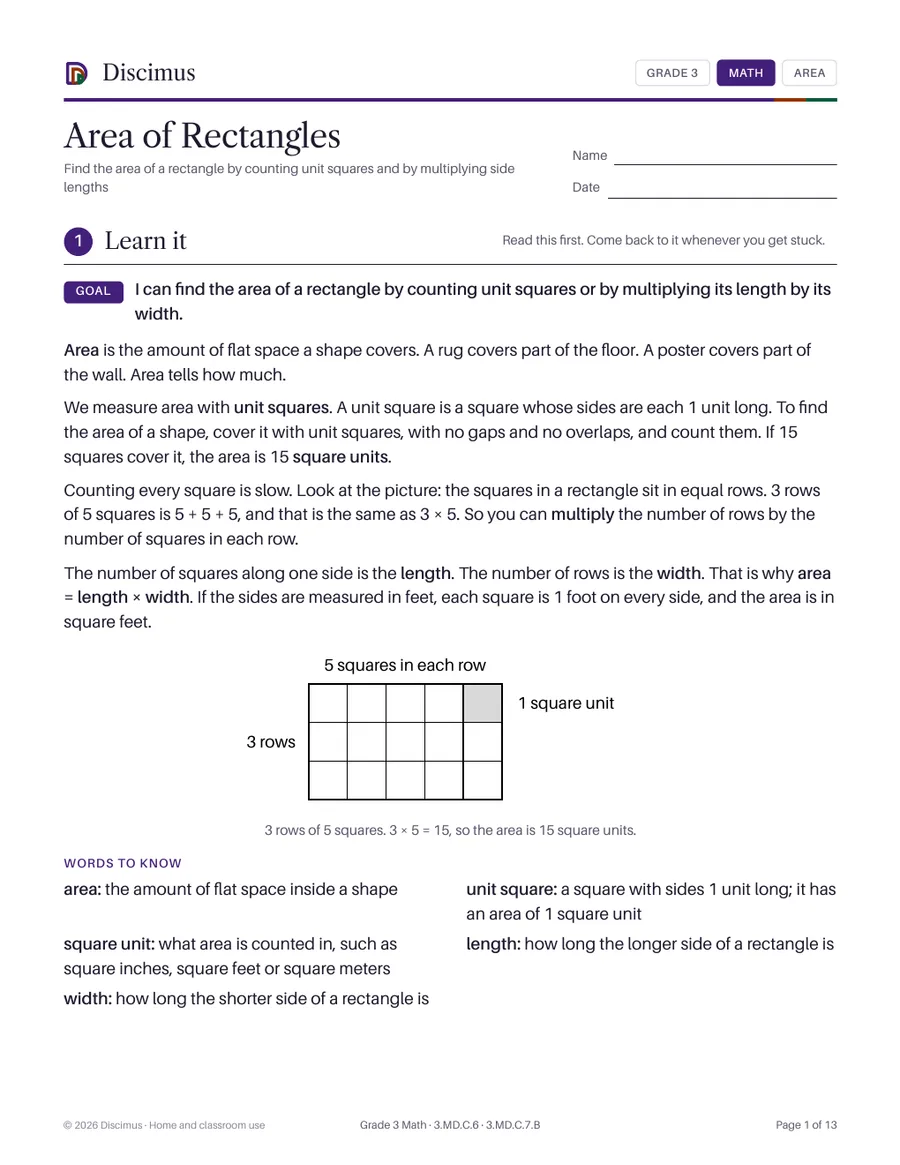
Find the area of a rectangle by counting unit squares and by multiplying side lengths
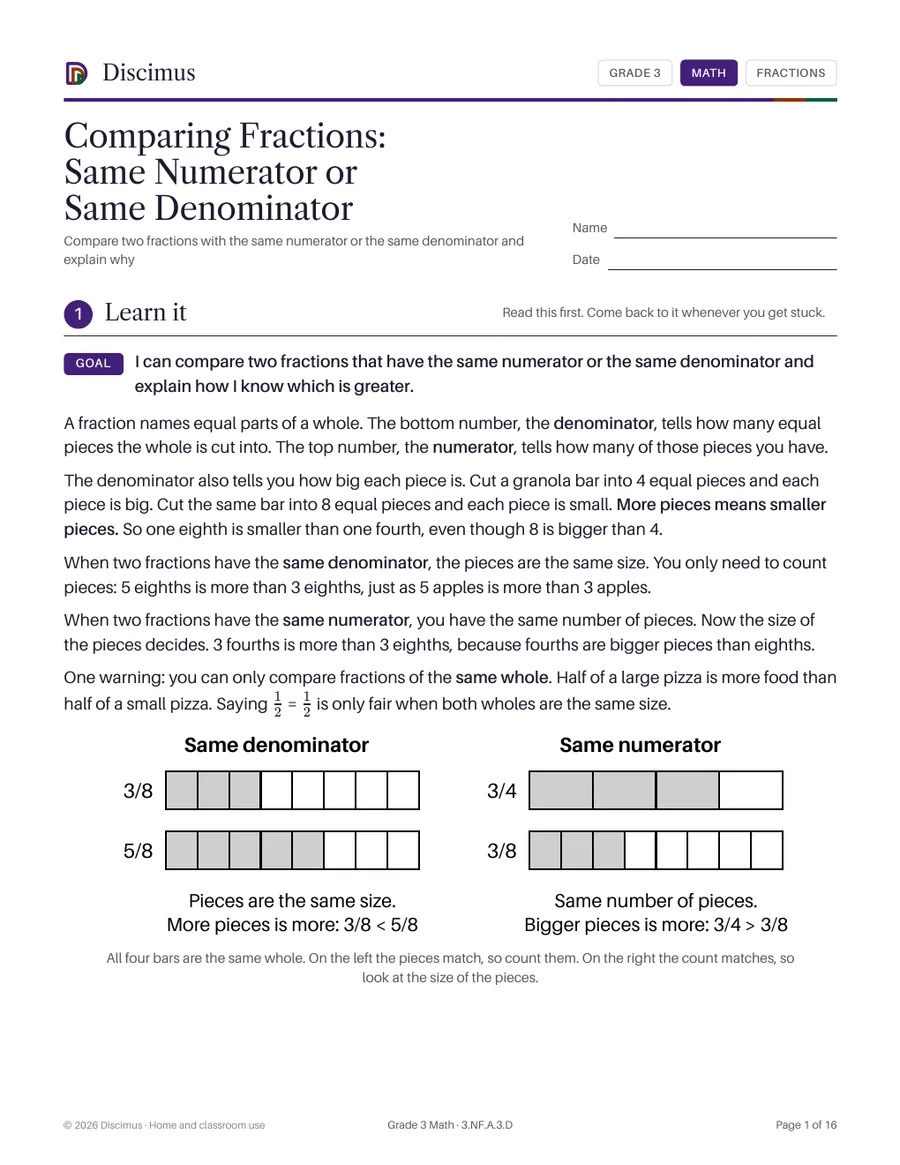
Compare two fractions with the same numerator or the same denominator and explain why
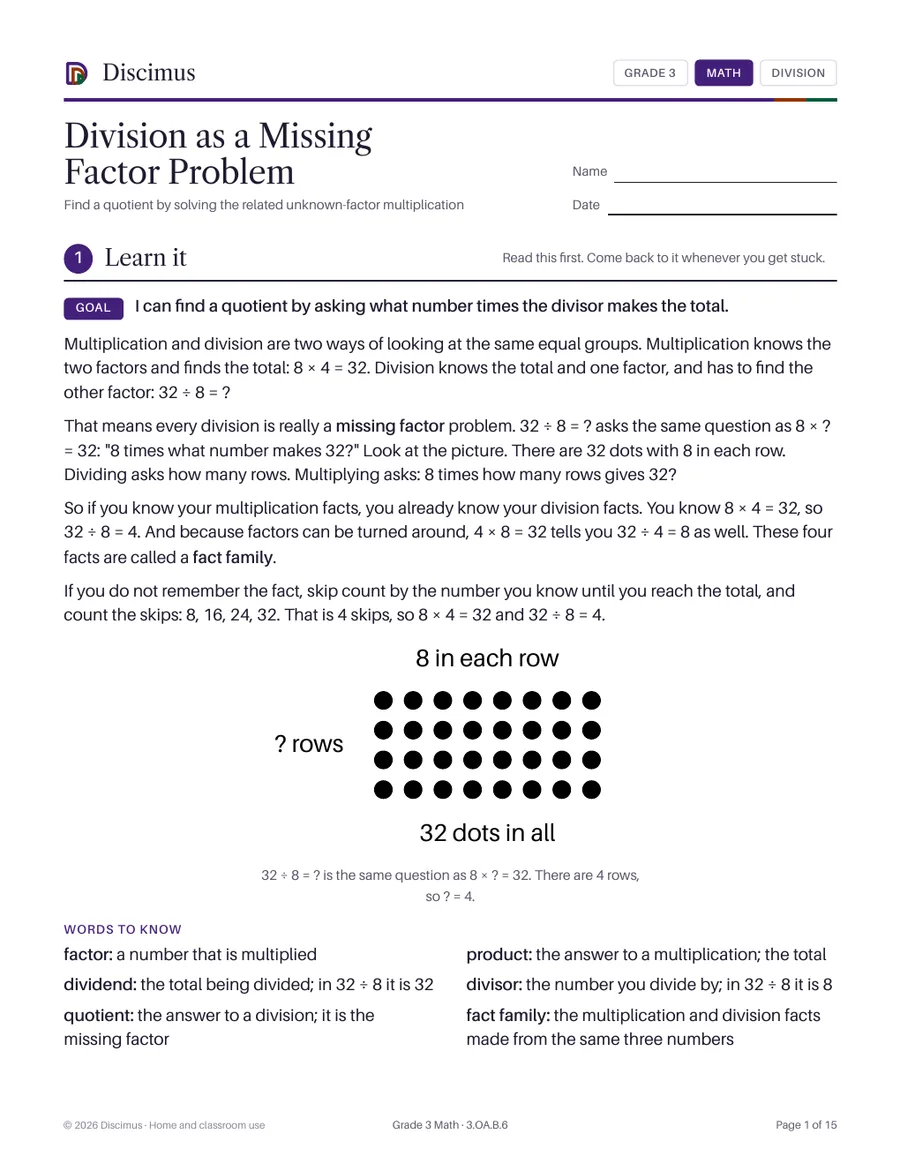
Find a quotient by solving the related unknown-factor multiplication
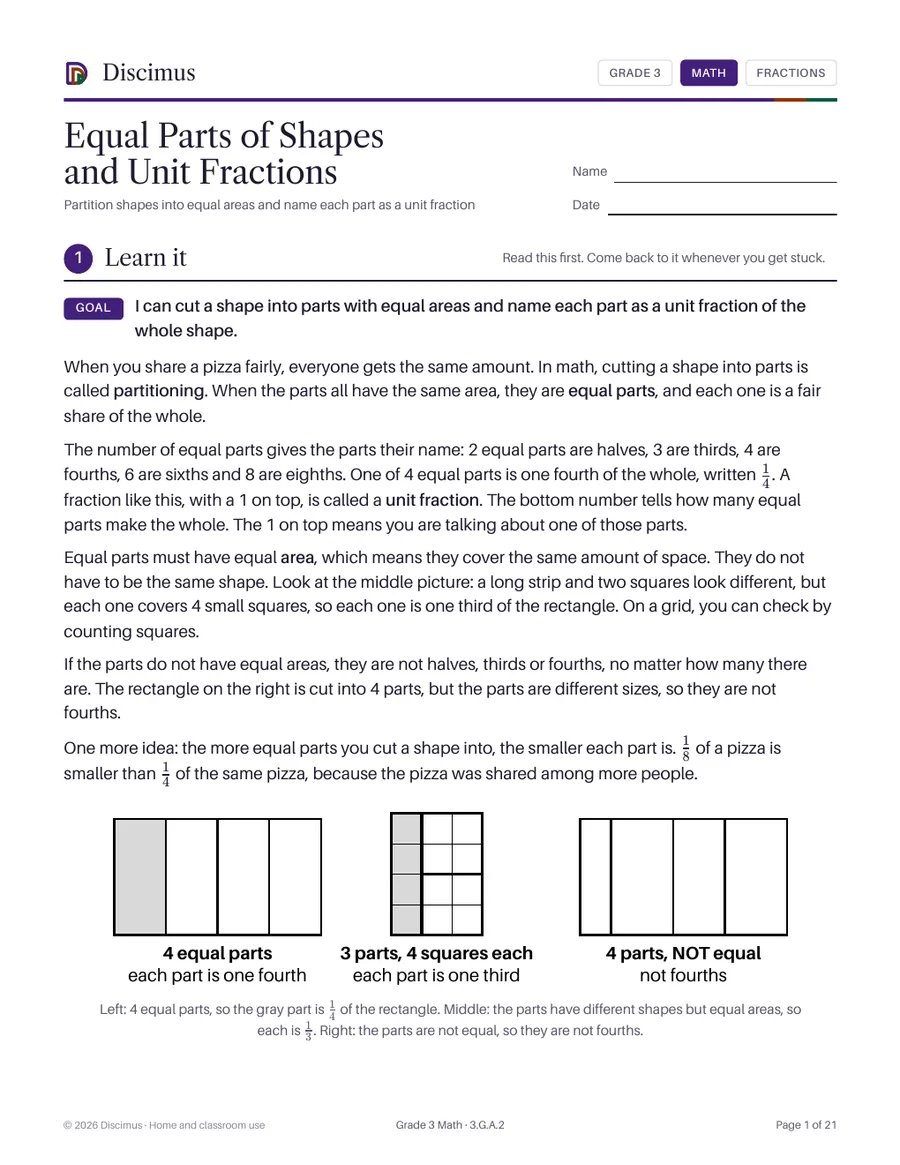
Partition shapes into equal areas and name each part as a unit fraction
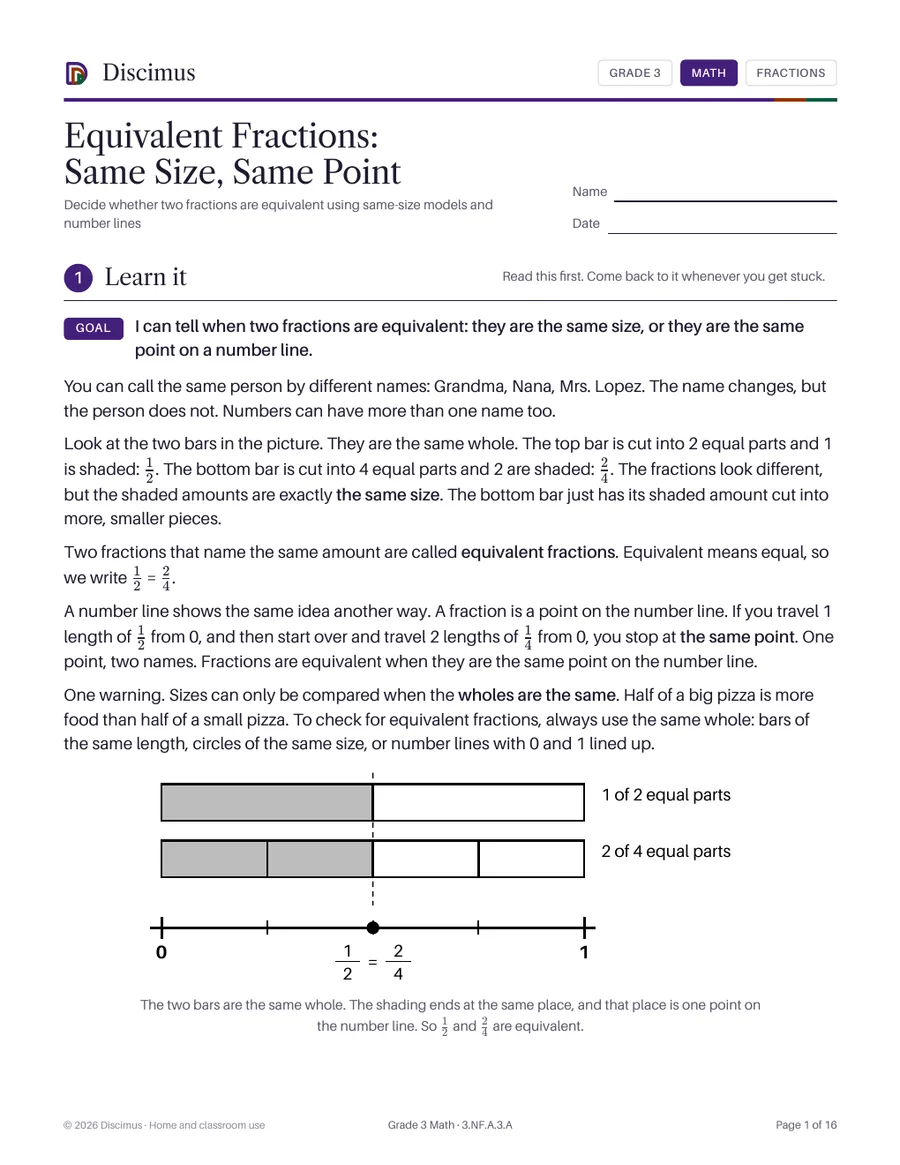
Decide whether two fractions are equivalent using same-size models and number lines
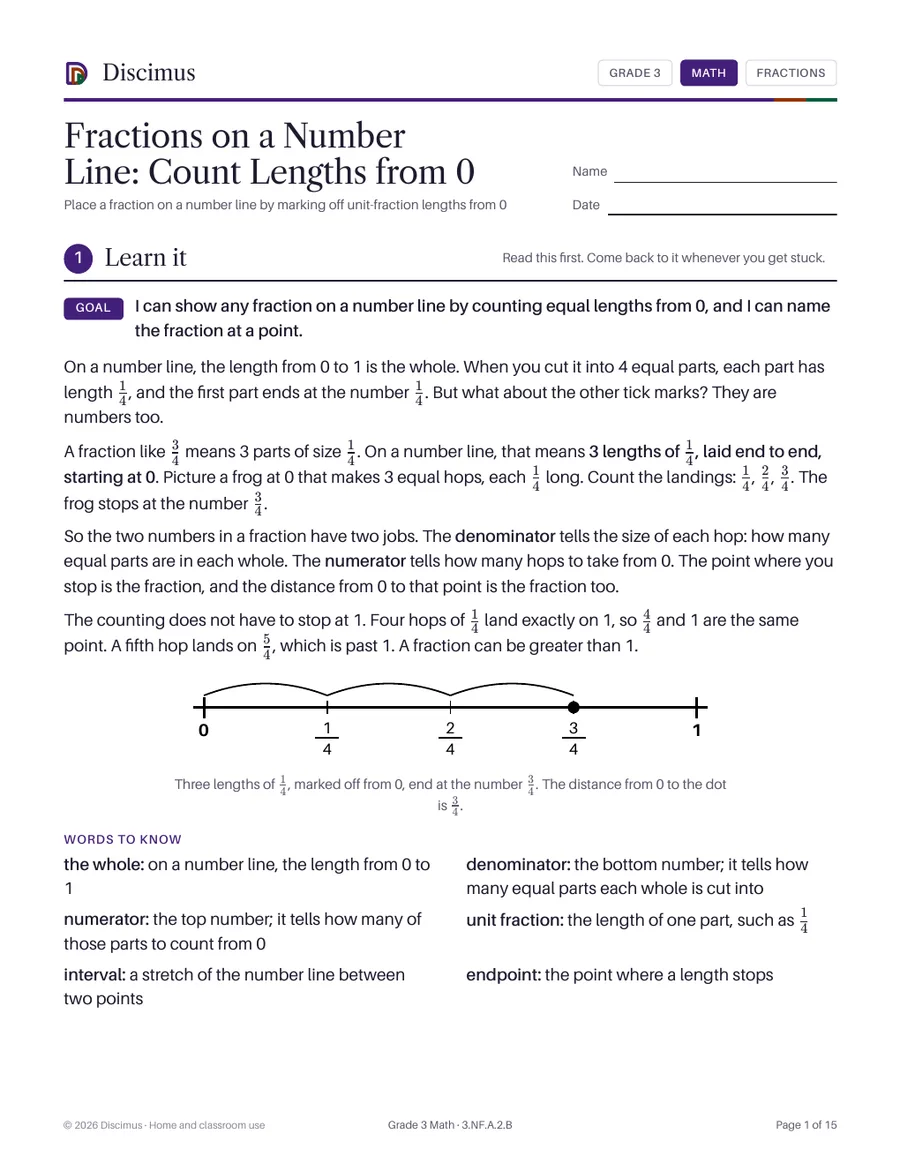
Place a fraction on a number line by marking off unit-fraction lengths from 0
Measure and estimate liquid volume and mass (L, g, kg) and solve one-step problems
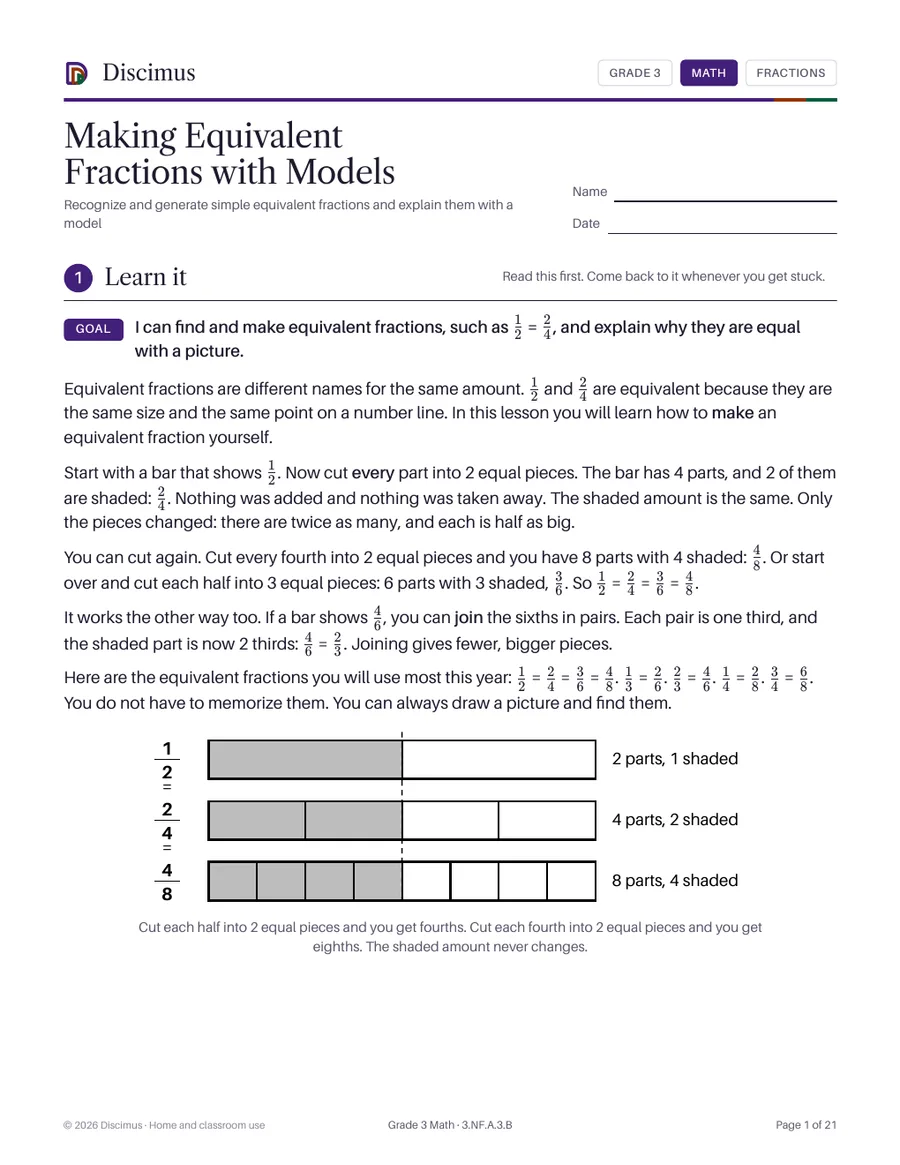
Recognize and generate simple equivalent fractions and explain them with a model
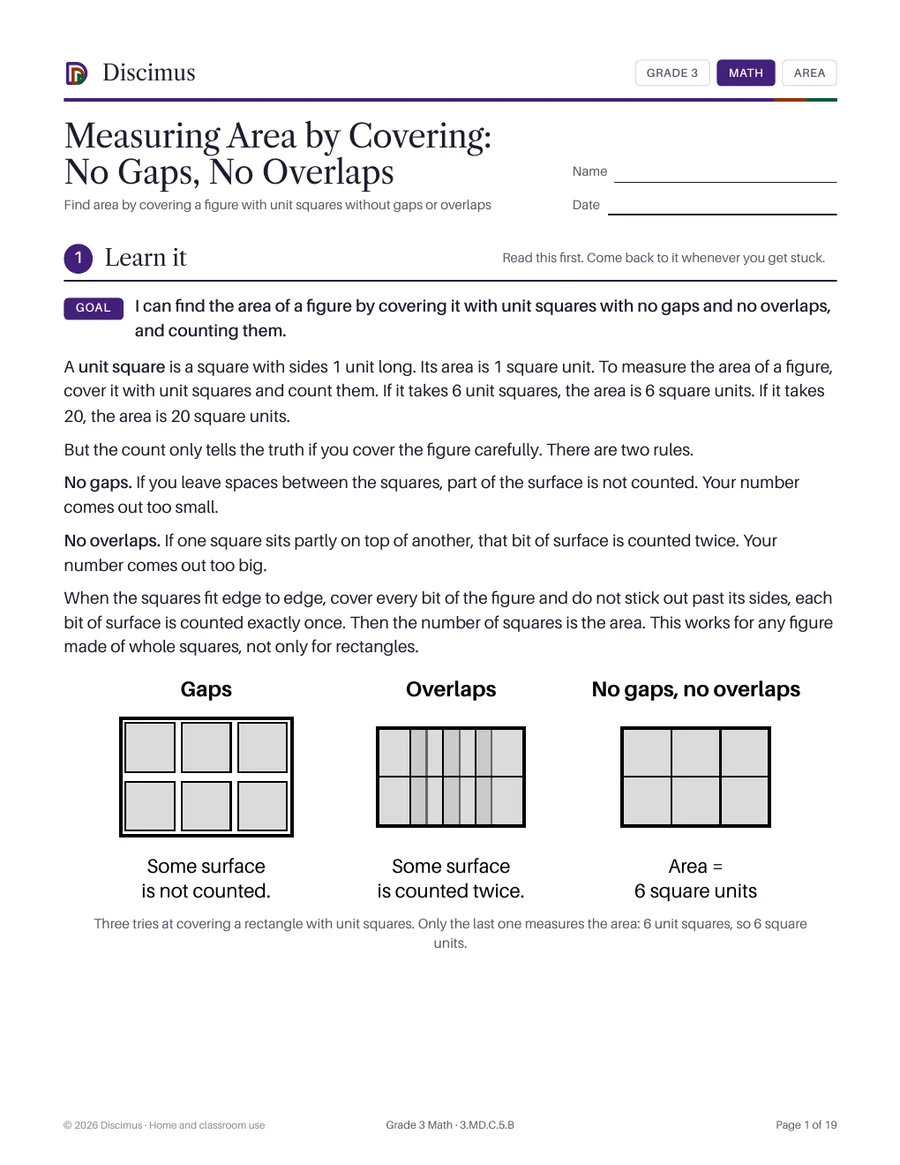
Find area by covering a figure with unit squares without gaps or overlaps
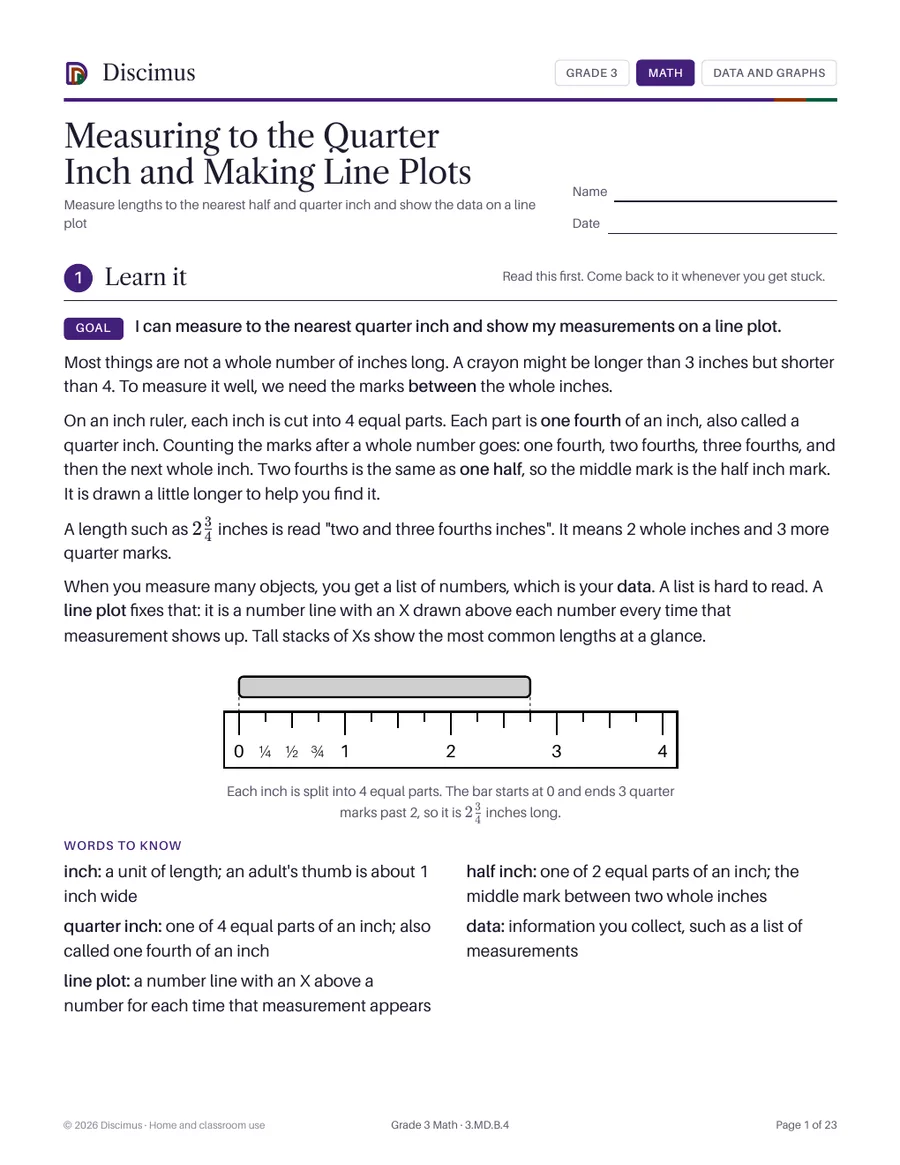
Measure lengths to the nearest half and quarter inch and show the data on a line plot
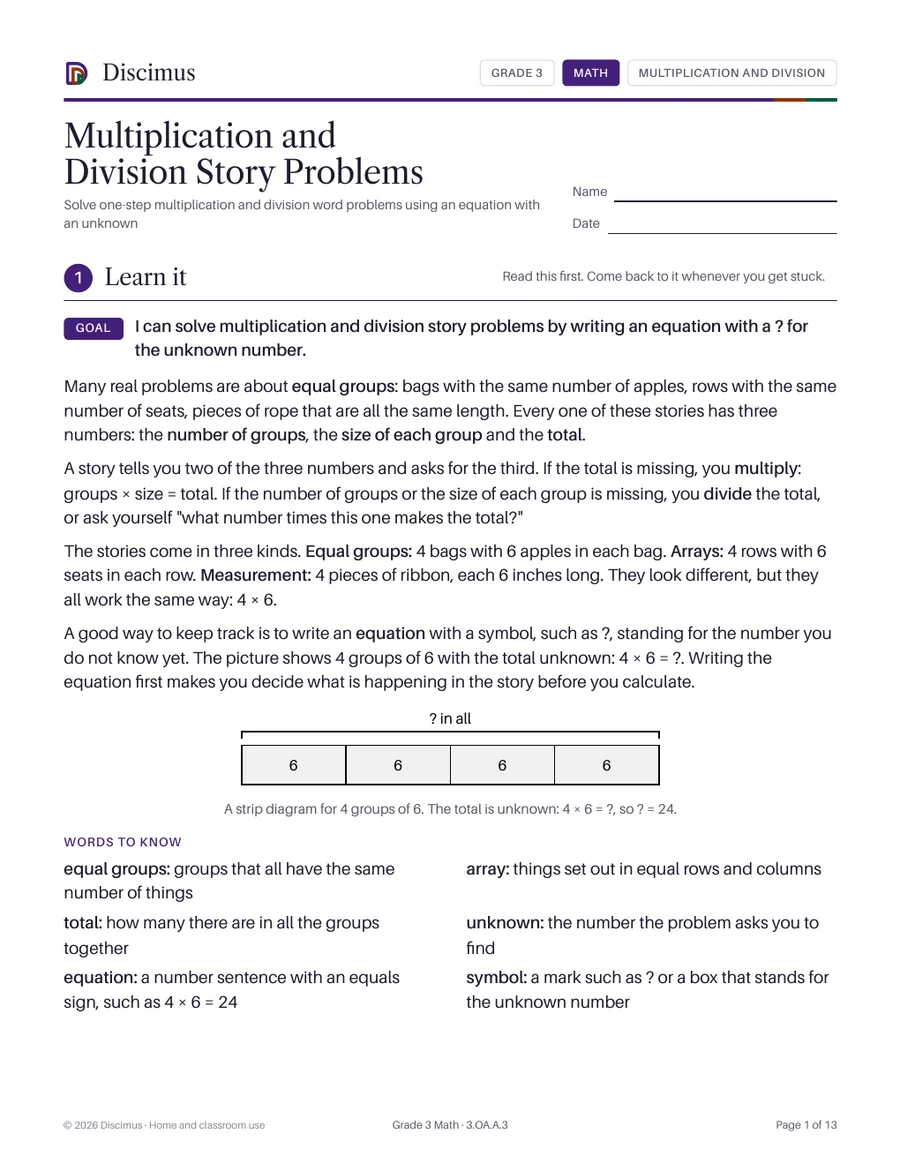
Solve one-step multiplication and division word problems using an equation with an unknown
 Free sample
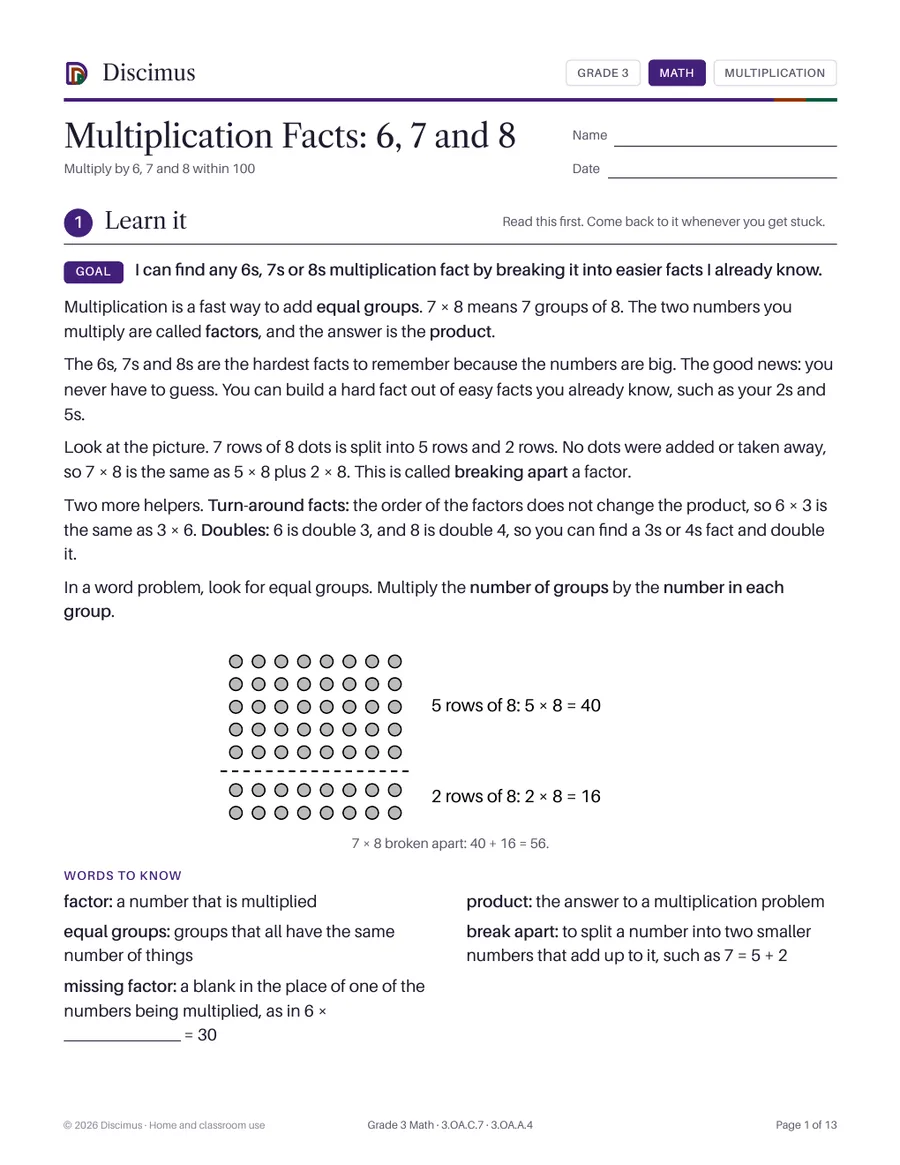
Multiply by 6, 7 and 8 within 100
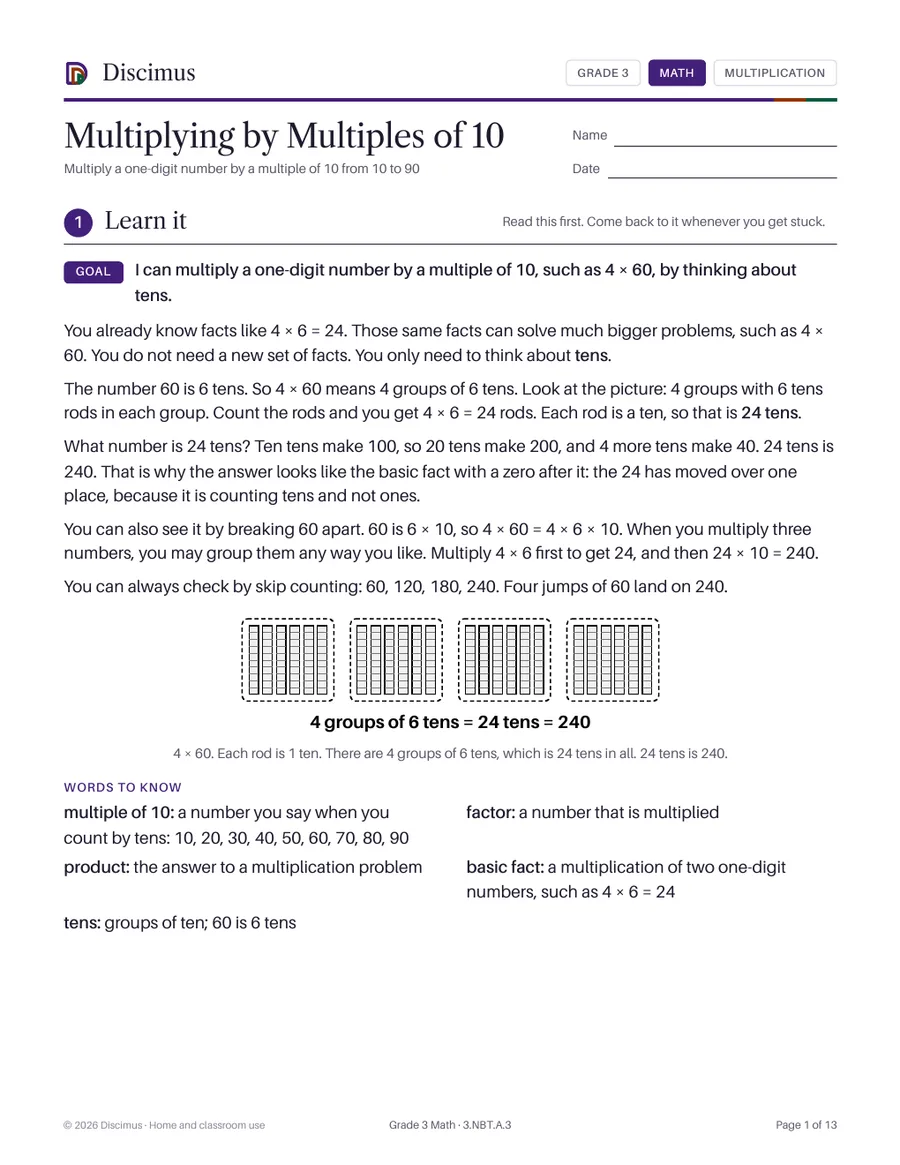
Multiply a one-digit number by a multiple of 10 from 10 to 90
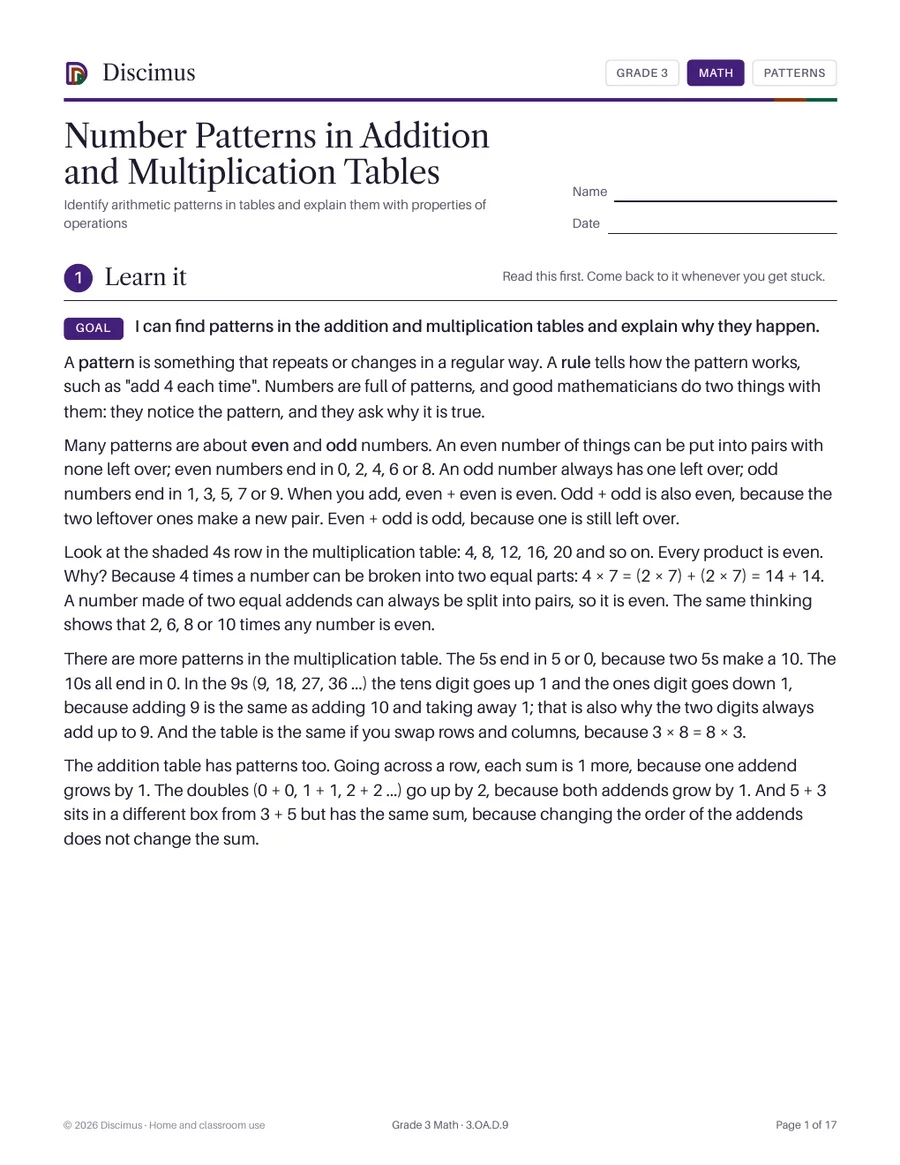
Identify arithmetic patterns in tables and explain them with properties of operations
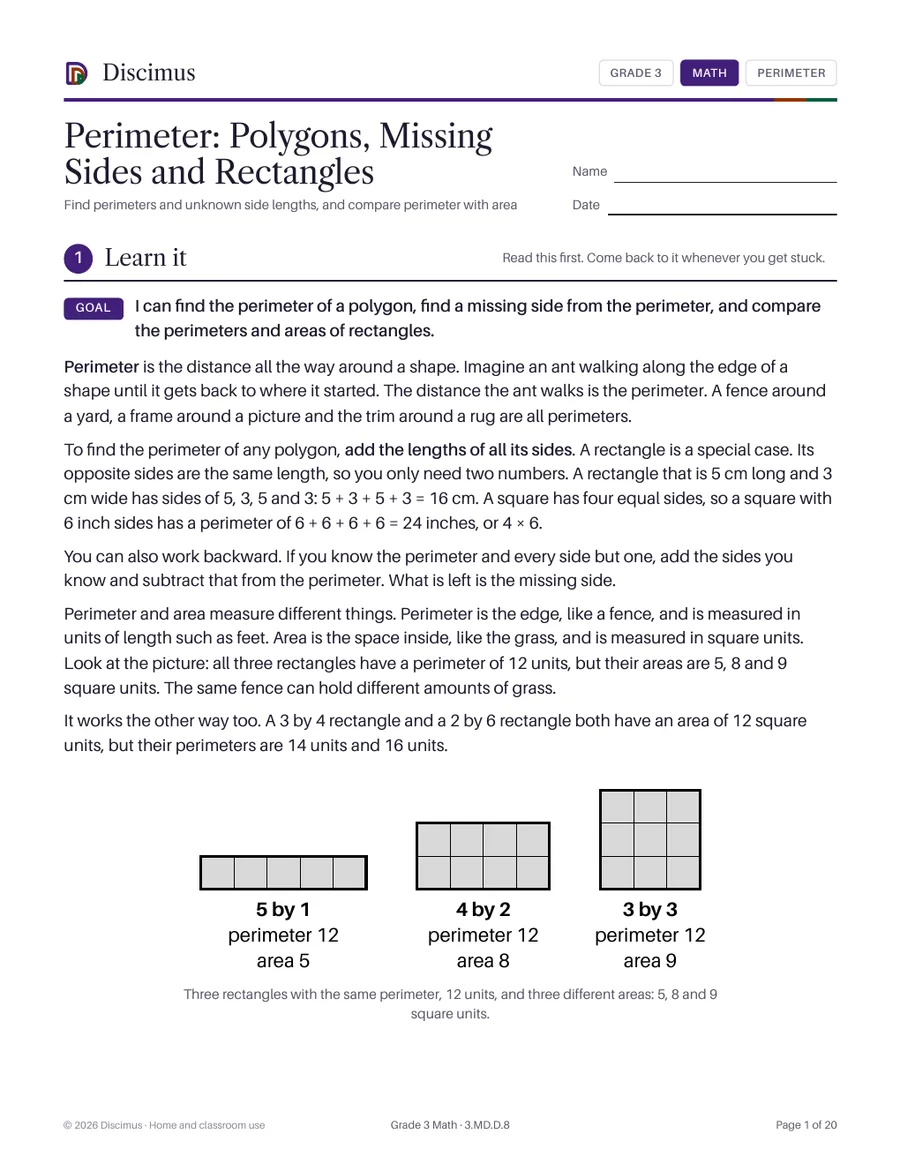
Find perimeters and unknown side lengths, and compare perimeter with area
Classify quadrilaterals by shared attributes; name rhombuses, rectangles and squares
Find the area of a rectangle by tiling and show it equals the product of the side lengths
Round whole numbers to the nearest 10 or 100 using place value
Draw and read scaled picture graphs and bar graphs to solve how many more or fewer
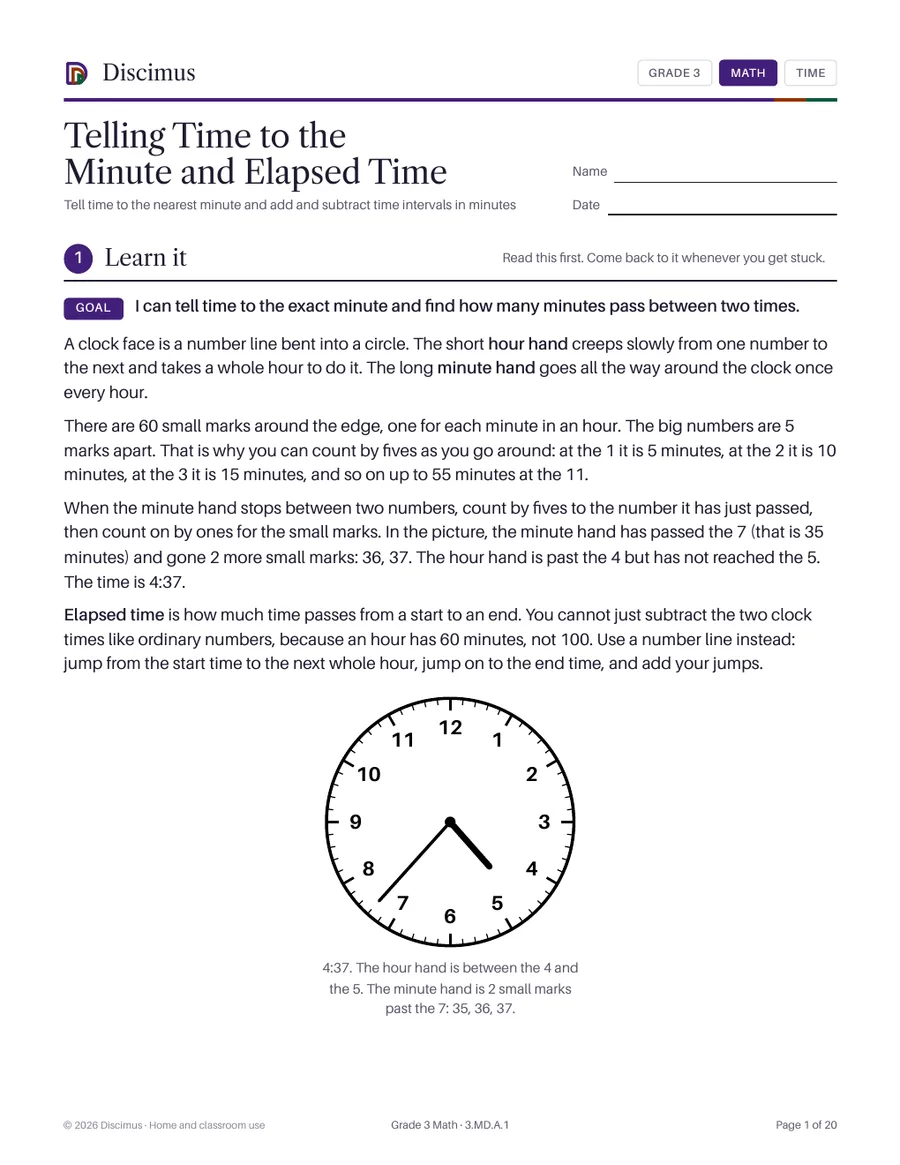
Tell time to the nearest minute and add and subtract time intervals in minutes
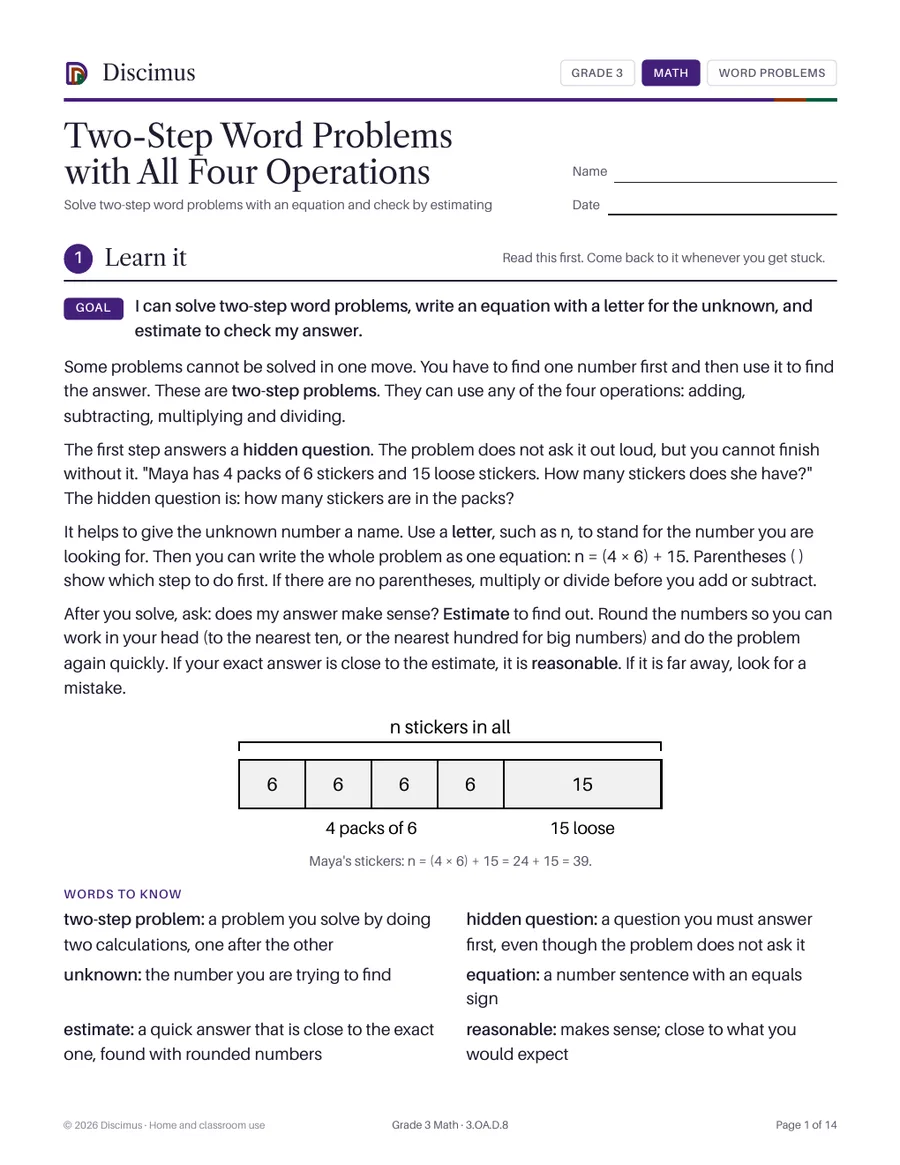
Solve two-step word problems with an equation and check by estimating
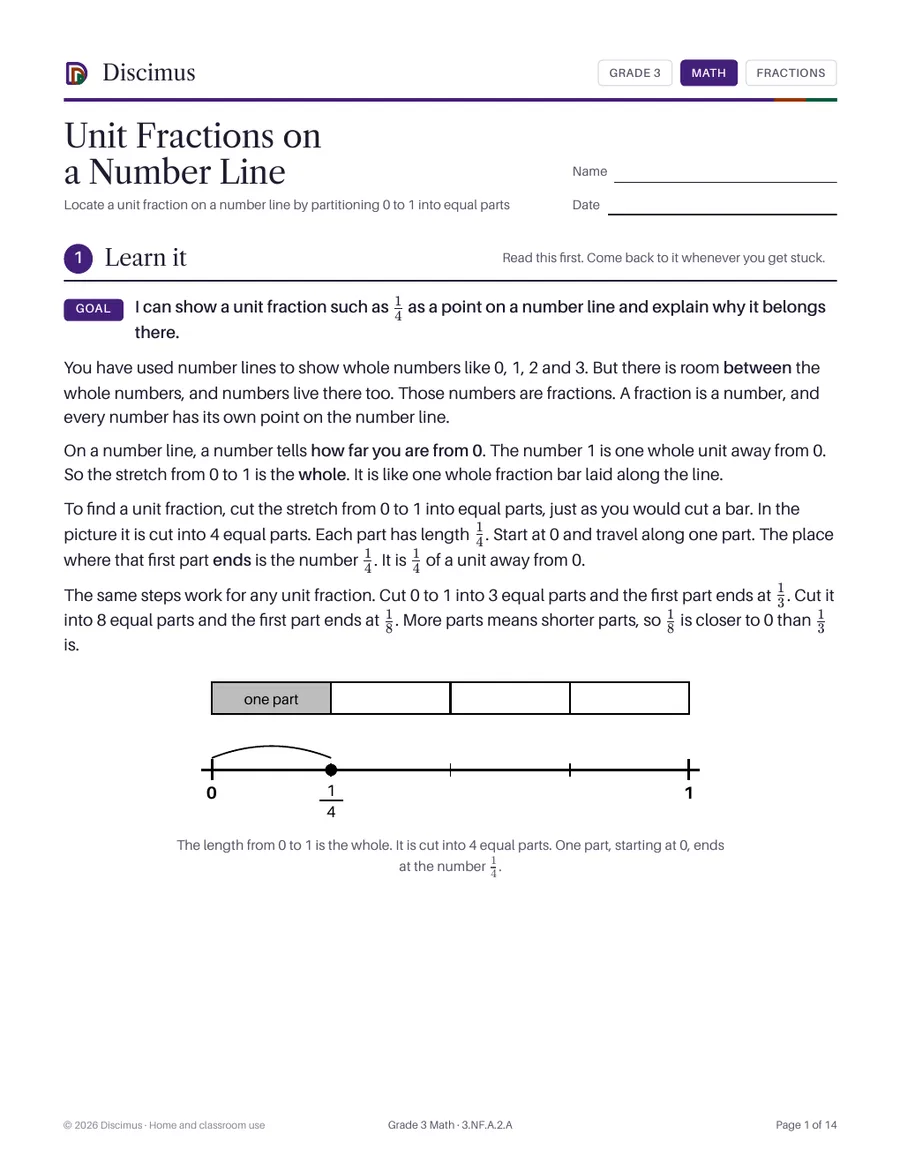
Locate a unit fraction on a number line by partitioning 0 to 1 into equal parts
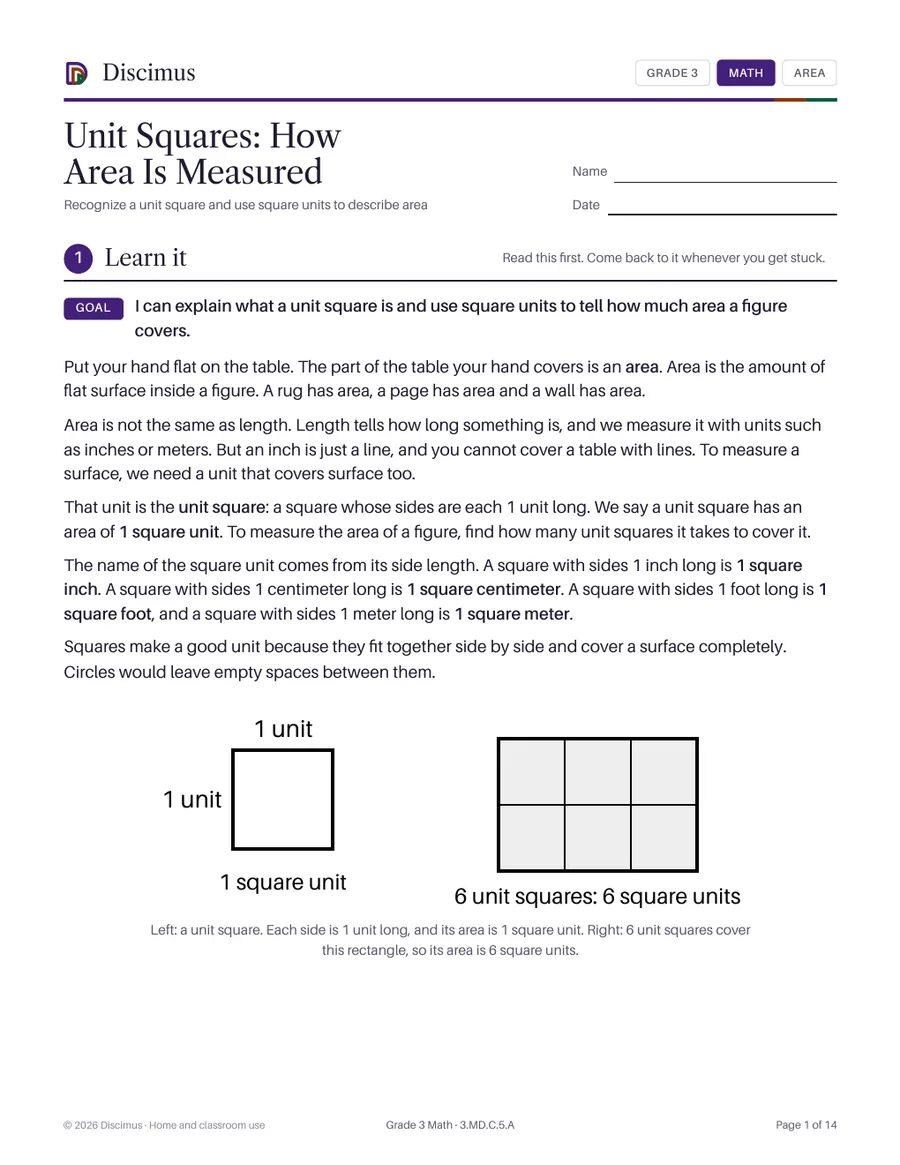
Recognize a unit square and use square units to describe area
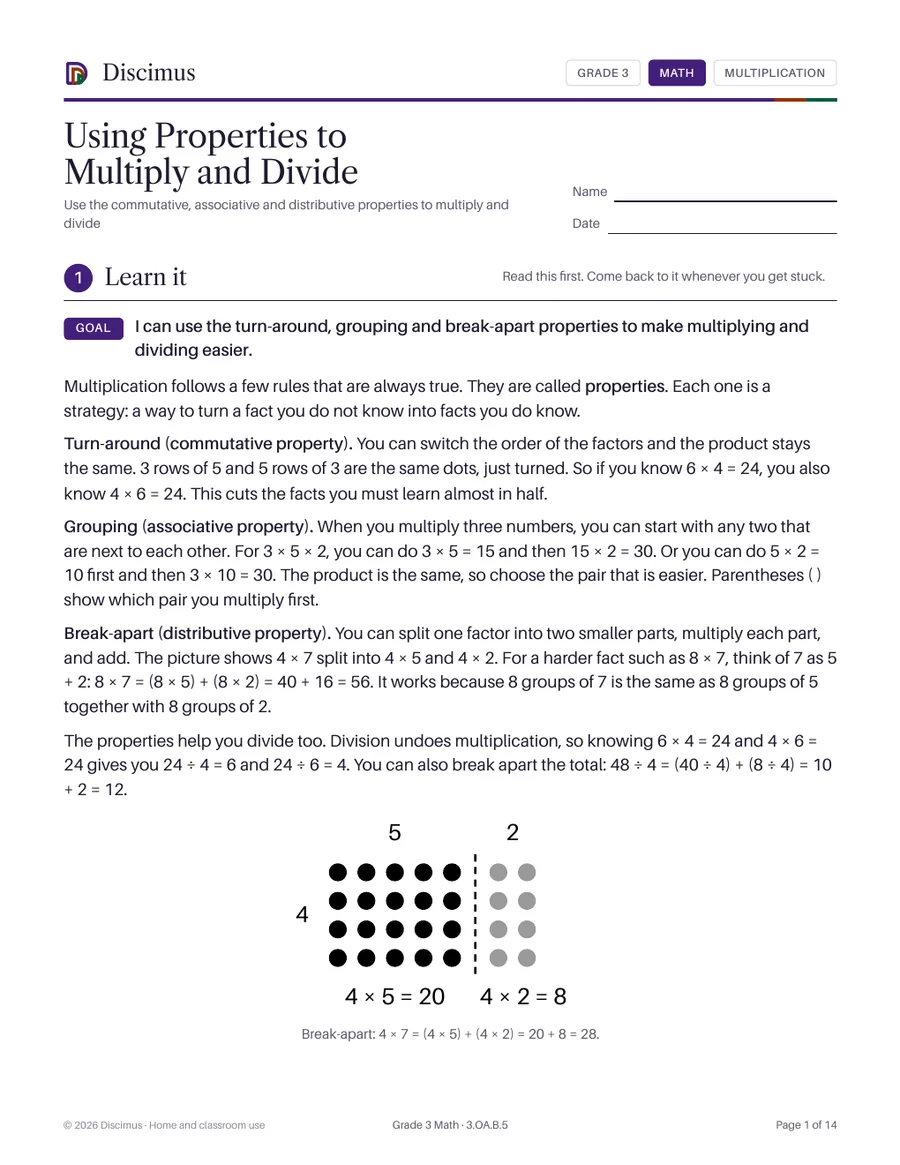
Use the commutative, associative and distributive properties to multiply and divide
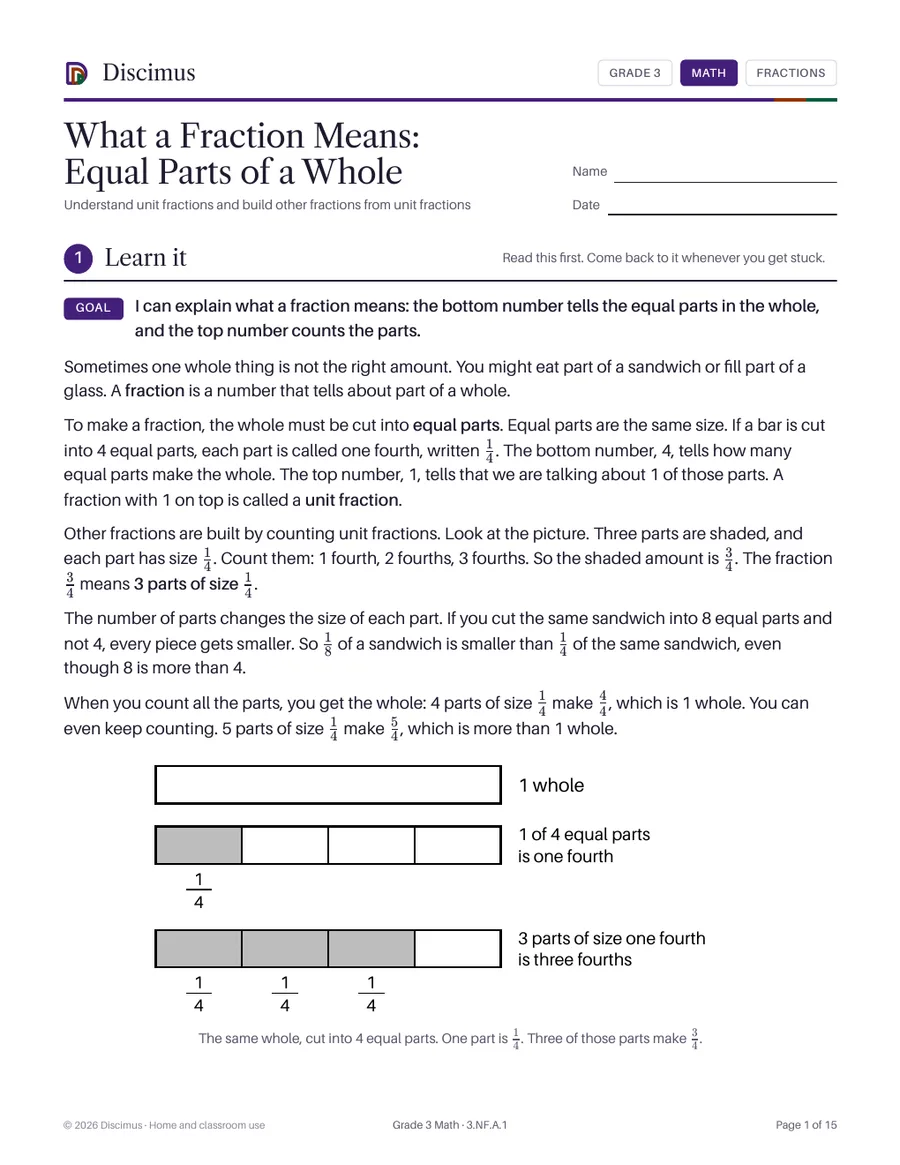
Understand unit fractions and build other fractions from unit fractions
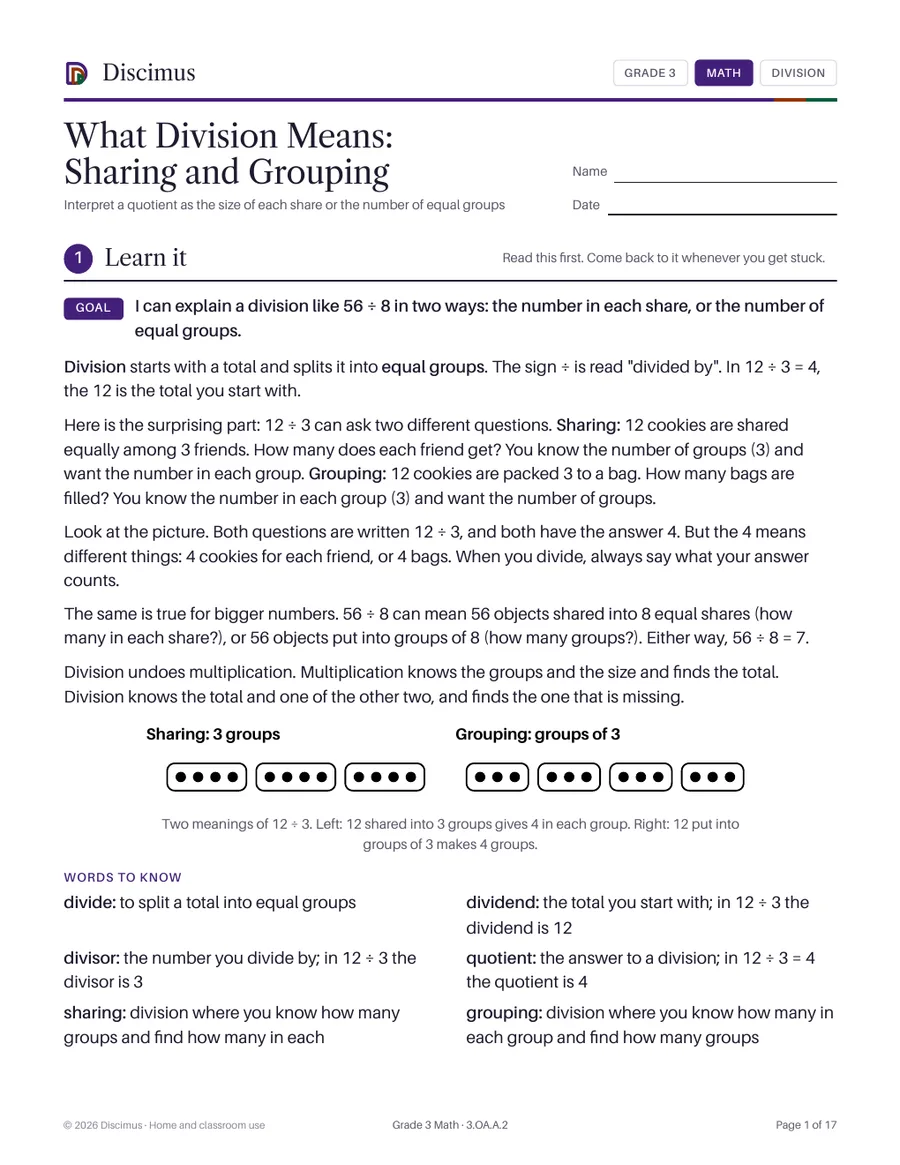
Interpret a quotient as the size of each share or the number of equal groups
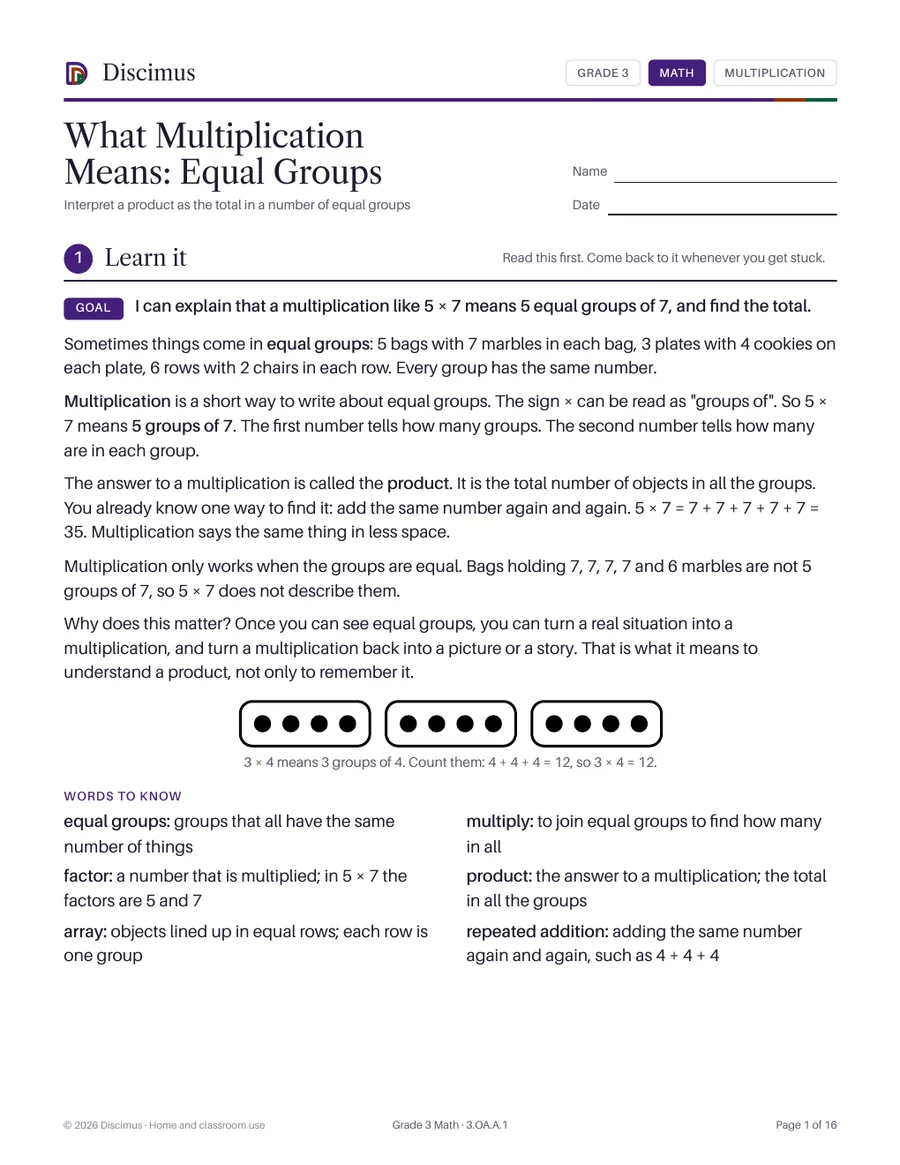
Interpret a product as the total in a number of equal groups
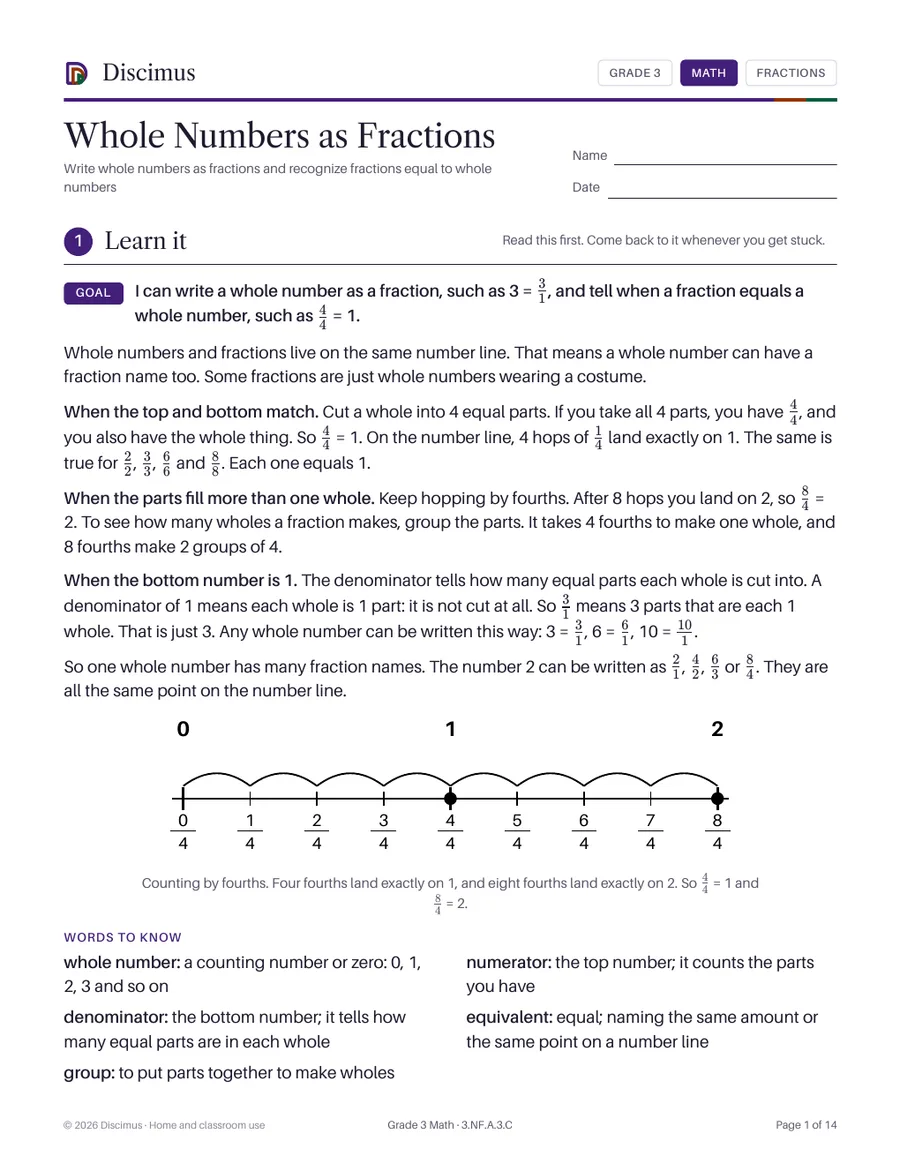
Write whole numbers as fractions and recognize fractions equal to whole numbers
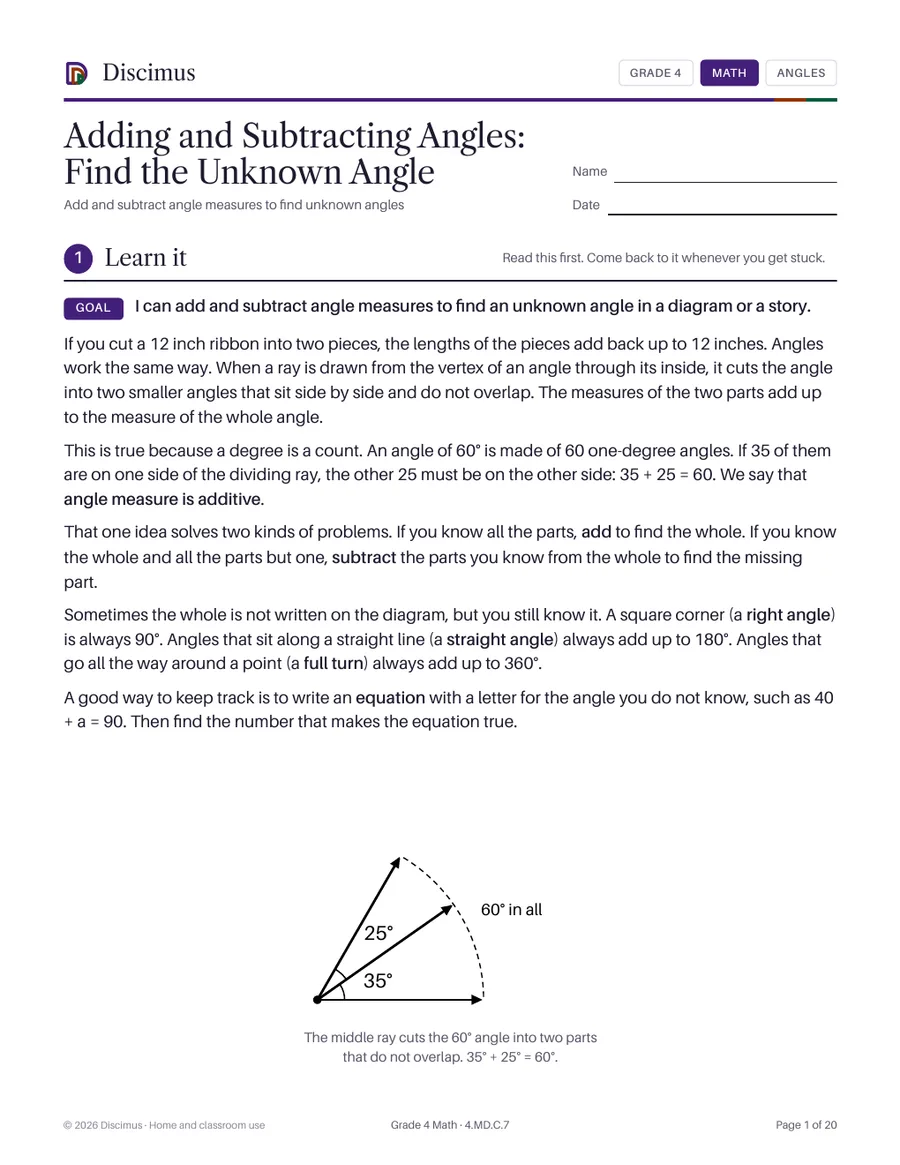
Add and subtract angle measures to find unknown angles
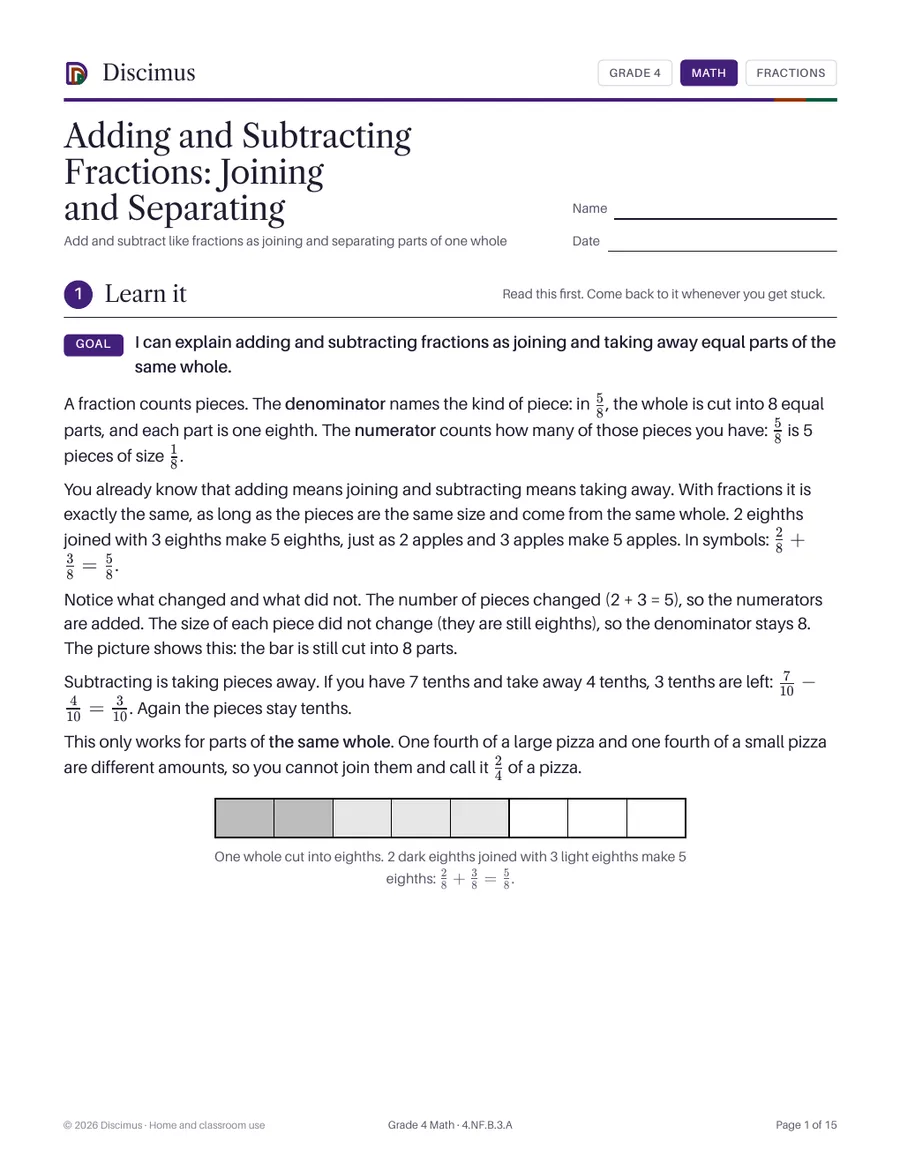
Add and subtract like fractions as joining and separating parts of one whole
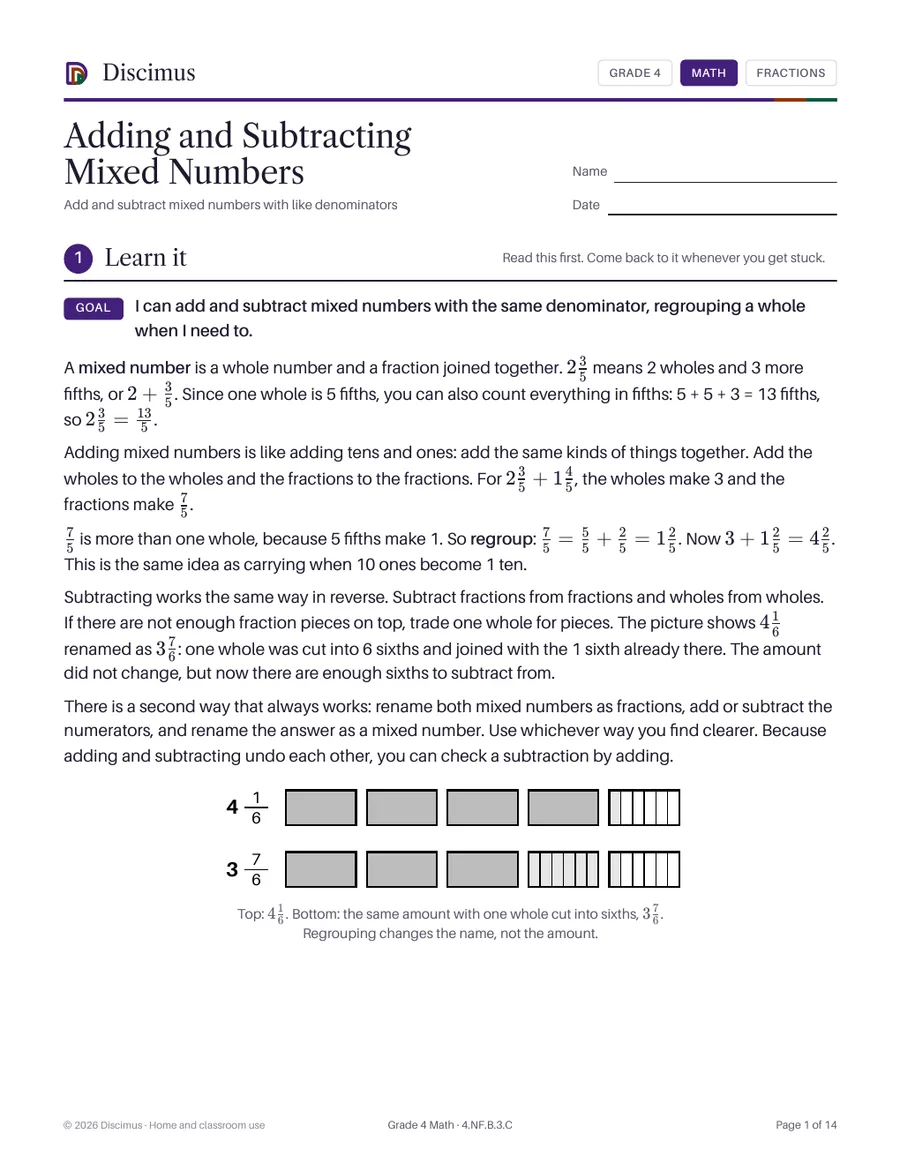
Add and subtract mixed numbers with like denominators
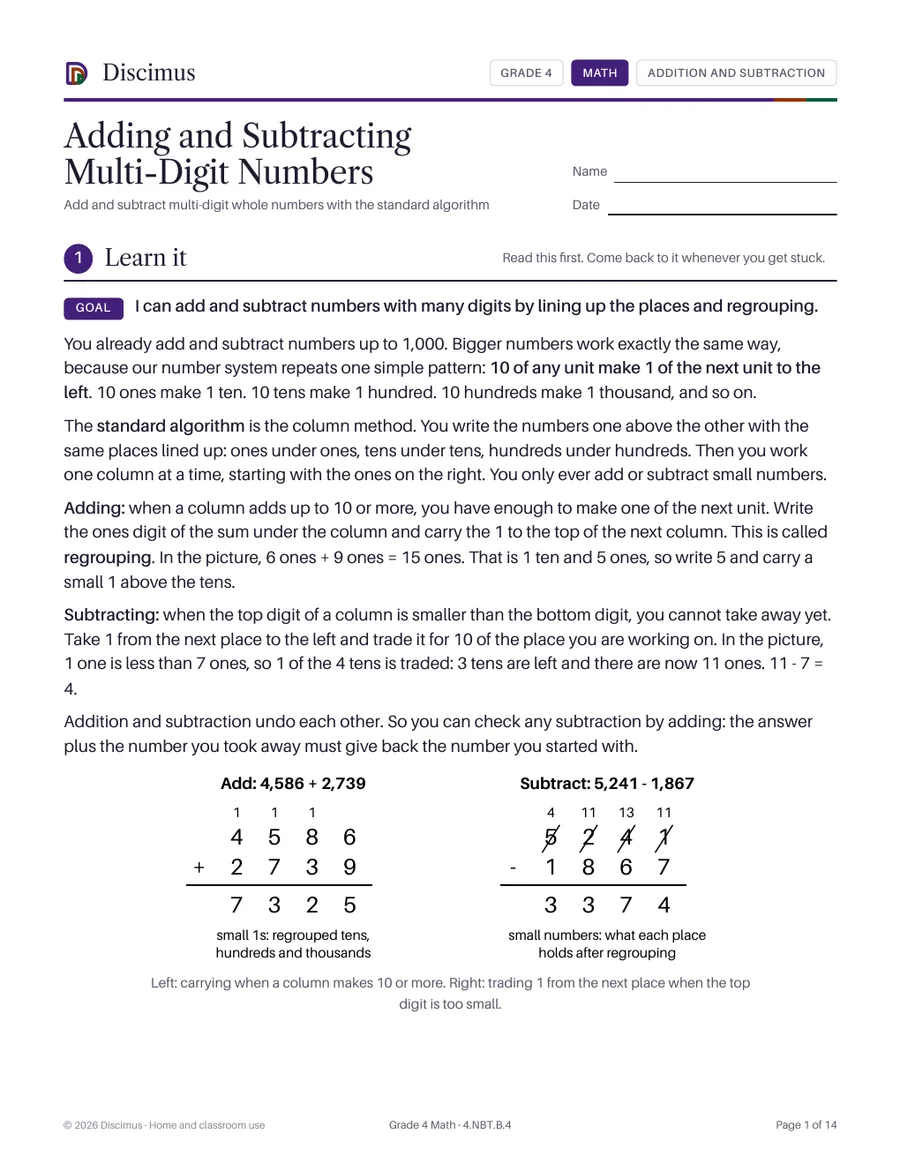
Add and subtract multi-digit whole numbers with the standard algorithm
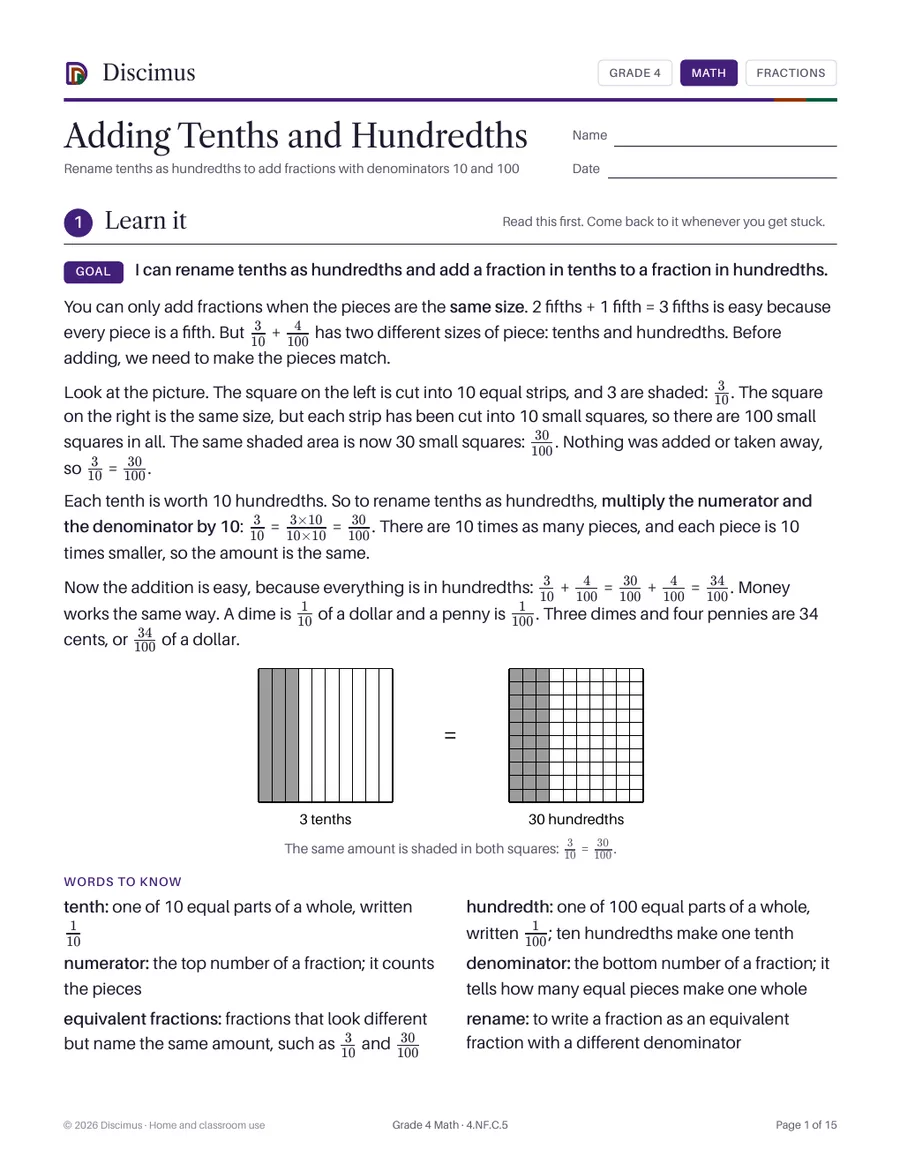
Rename tenths as hundredths to add fractions with denominators 10 and 100
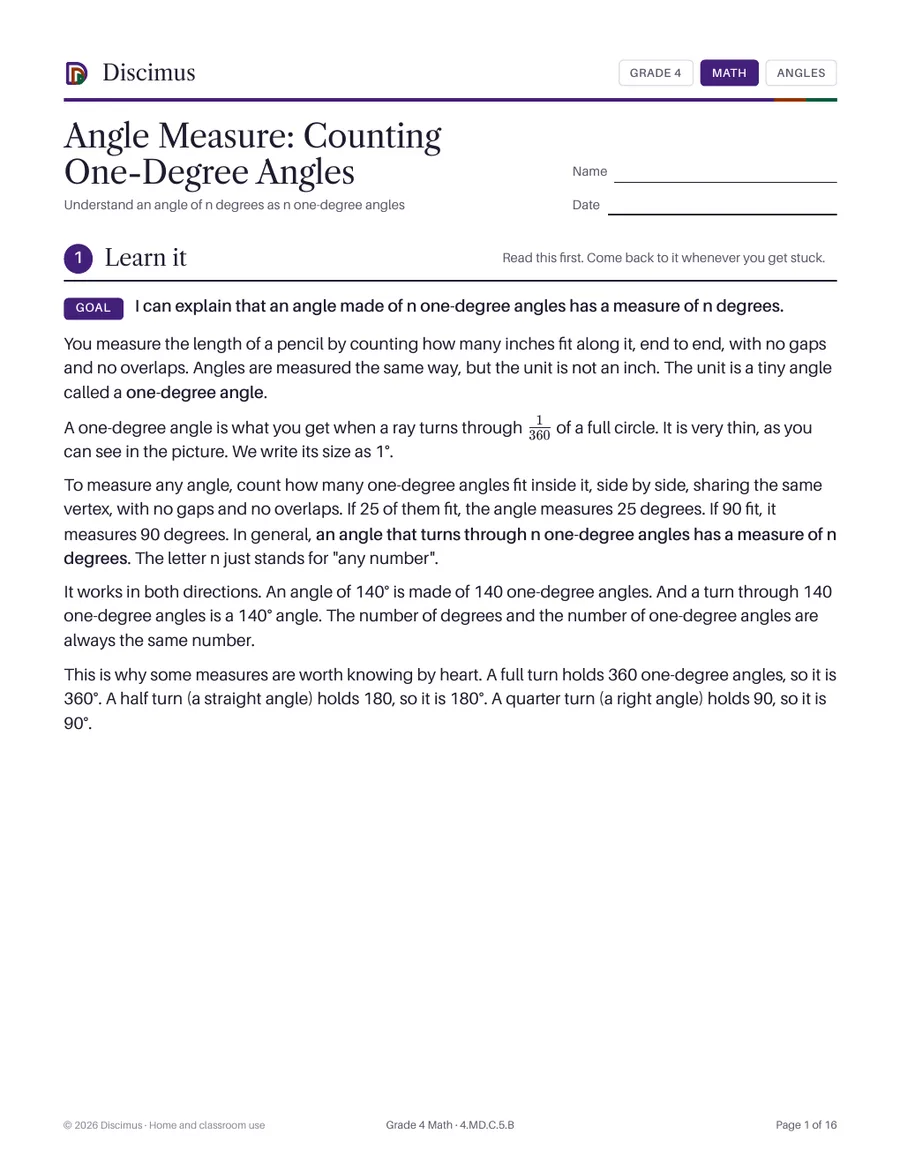
Understand an angle of n degrees as n one-degree angles
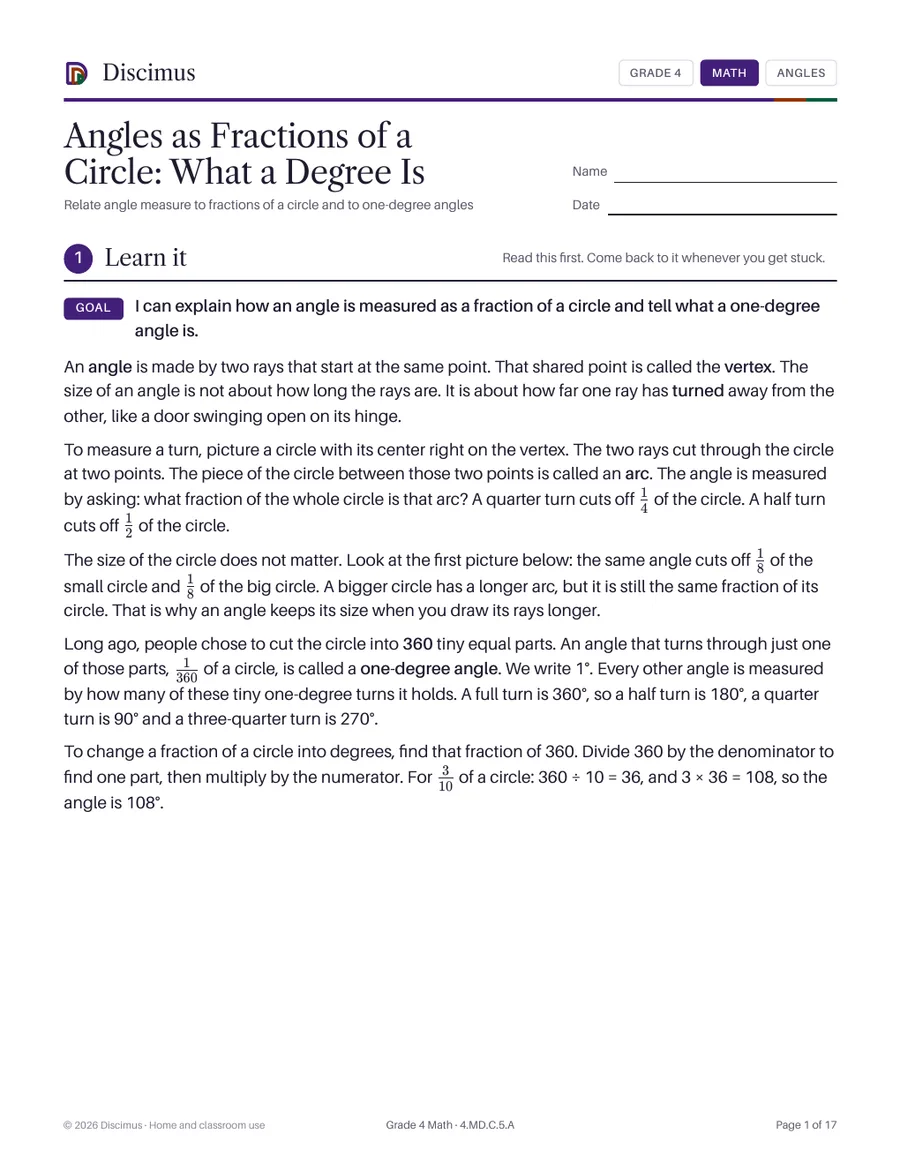
Relate angle measure to fractions of a circle and to one-degree angles
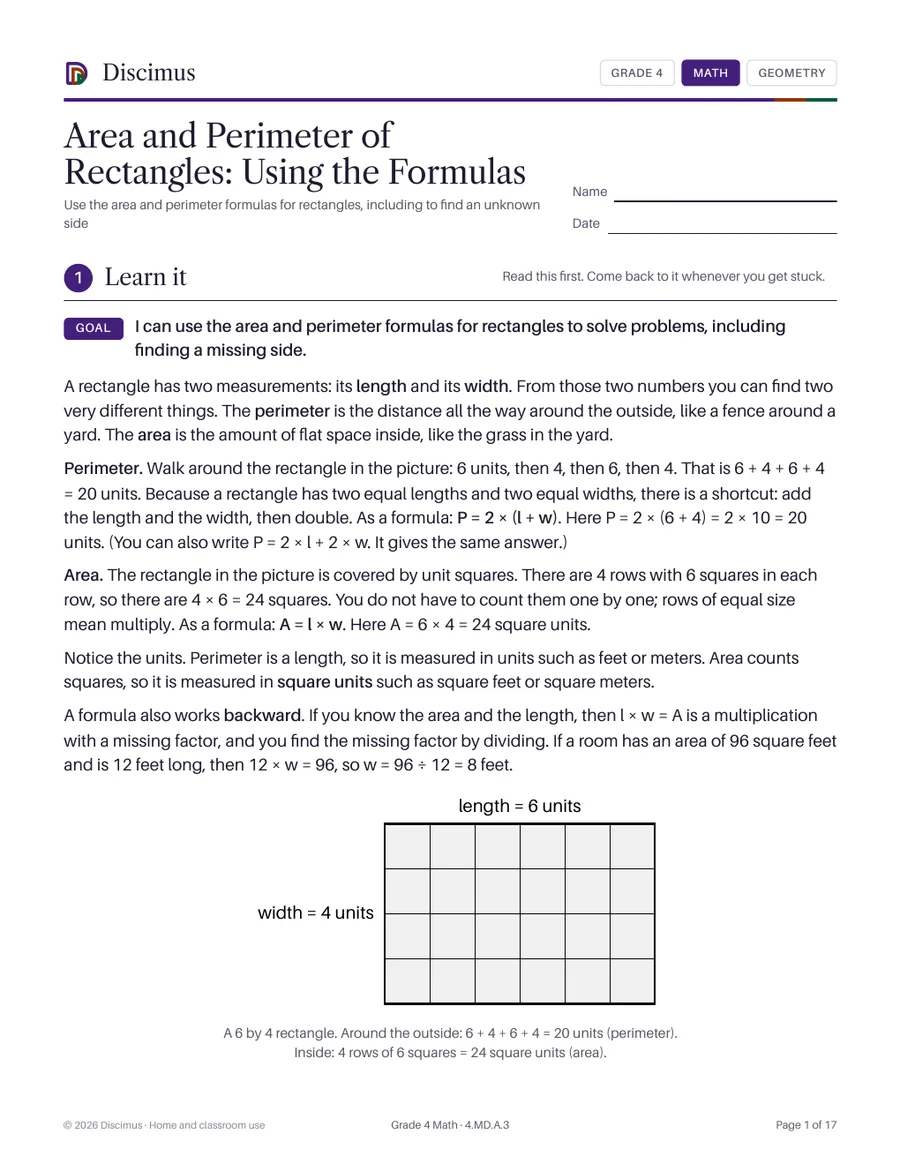
Use the area and perimeter formulas for rectangles, including to find an unknown side
Classify shapes by parallel or perpendicular sides and angles; find right triangles
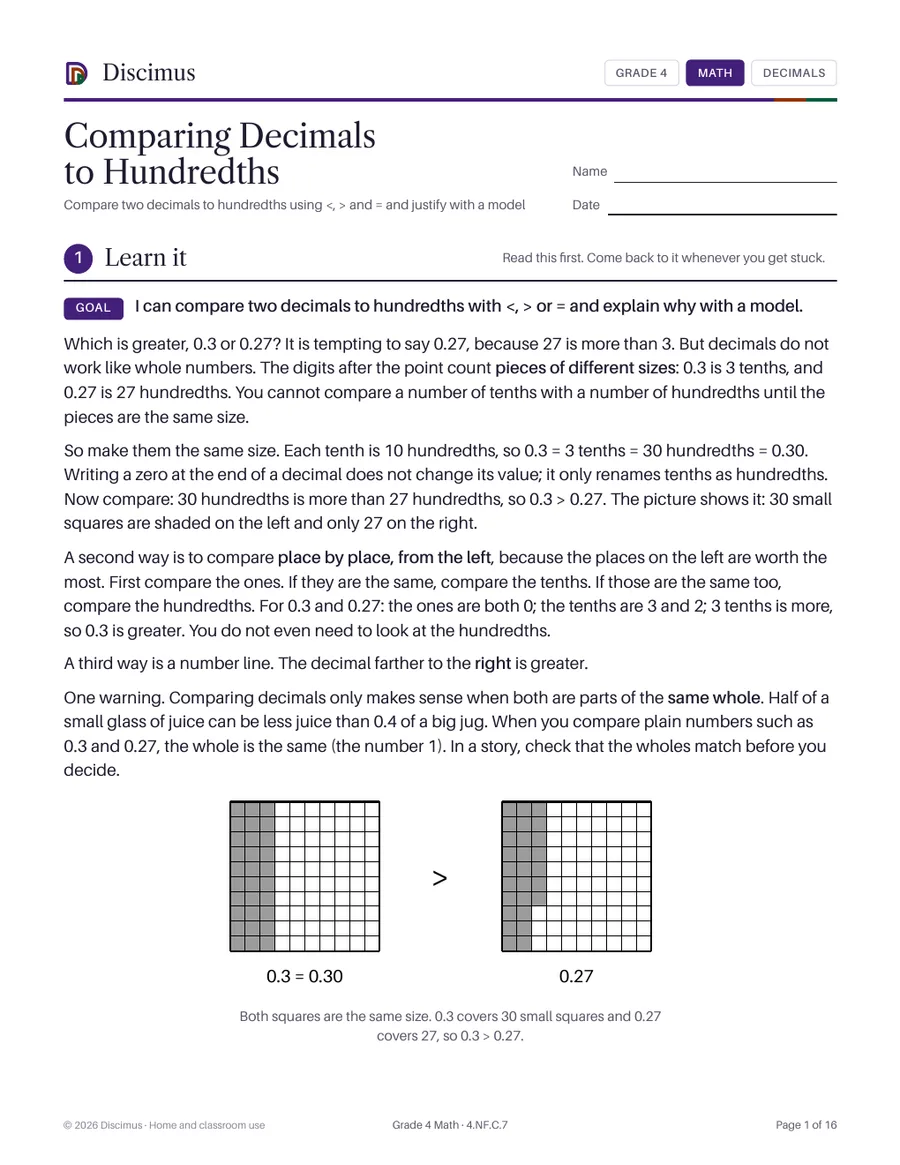
Compare two decimals to hundredths using <, > and = and justify with a model
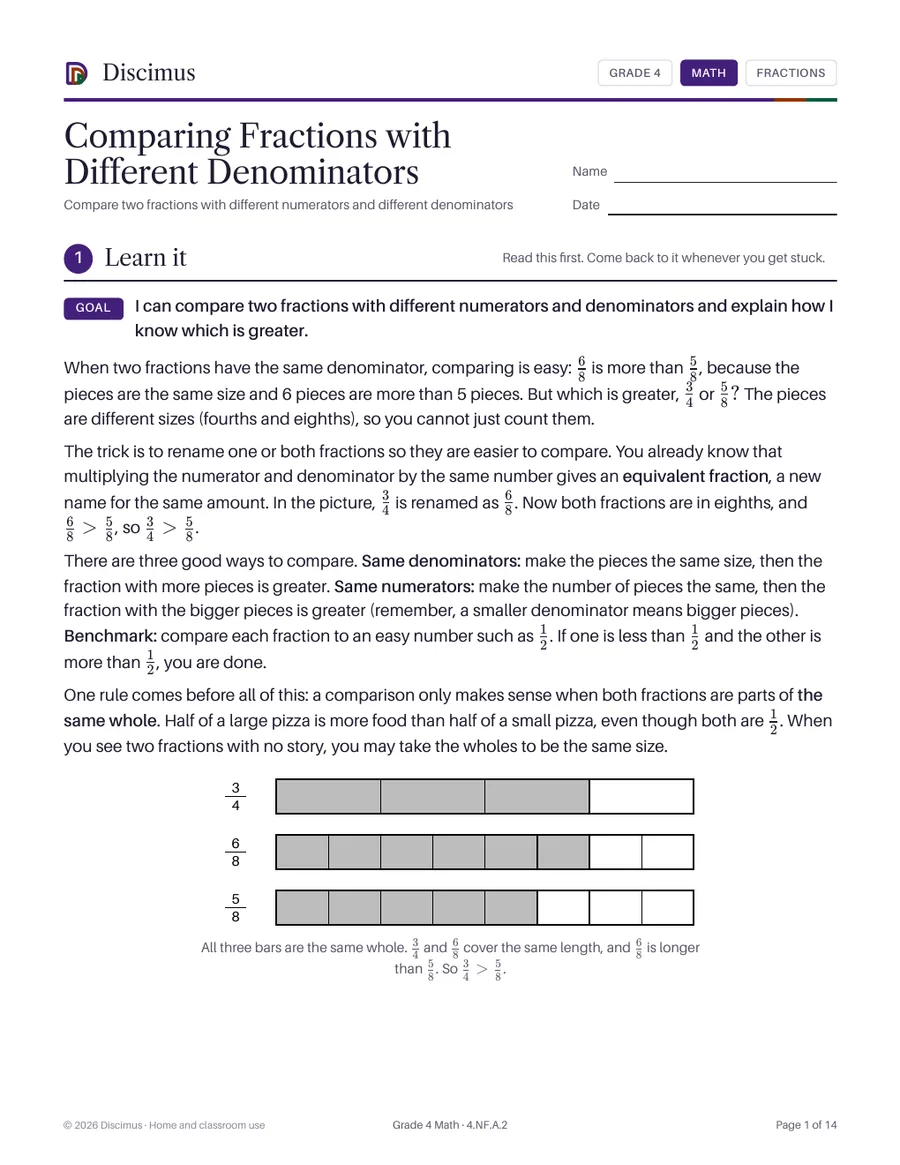
Compare two fractions with different numerators and different denominators
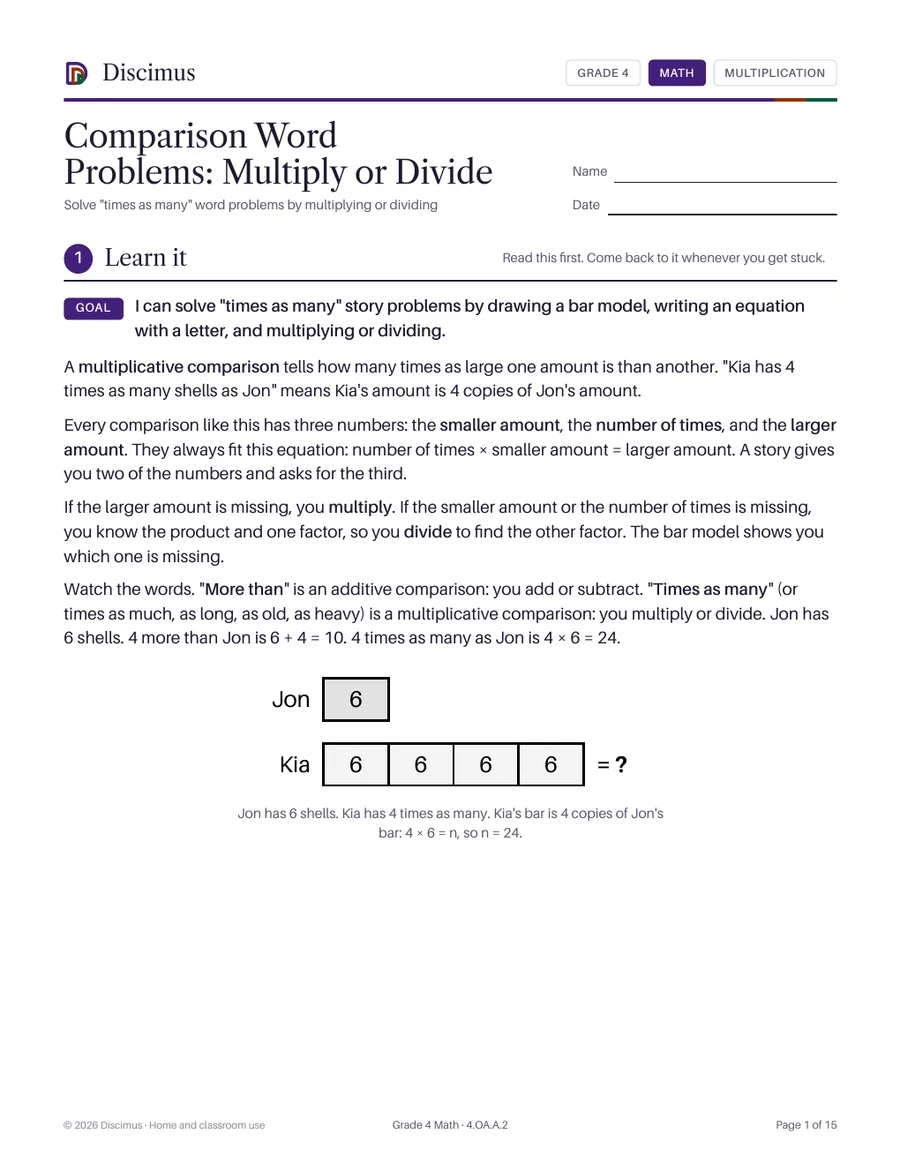
Solve "times as many" word problems by multiplying or dividing
Convert a larger unit to a smaller unit in one system and record equivalents in a table
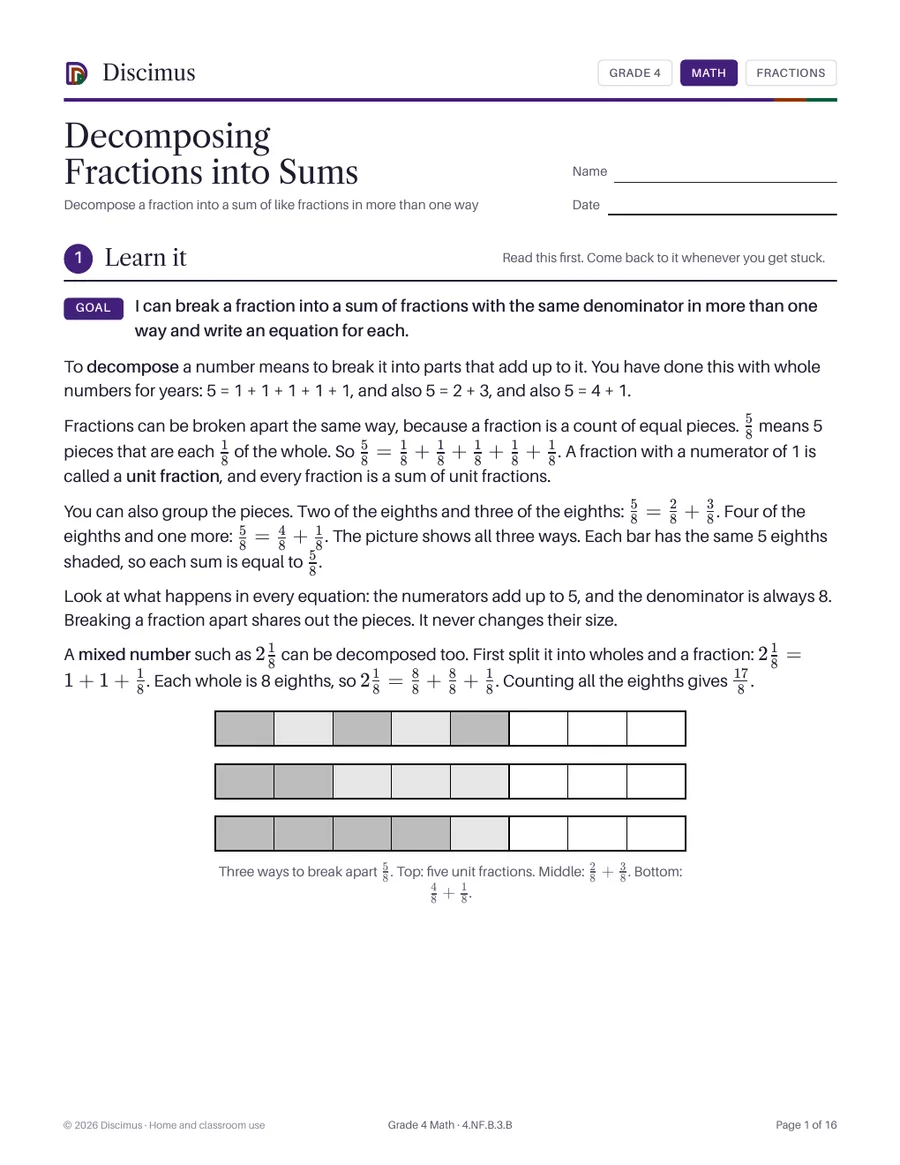
Decompose a fraction into a sum of like fractions in more than one way
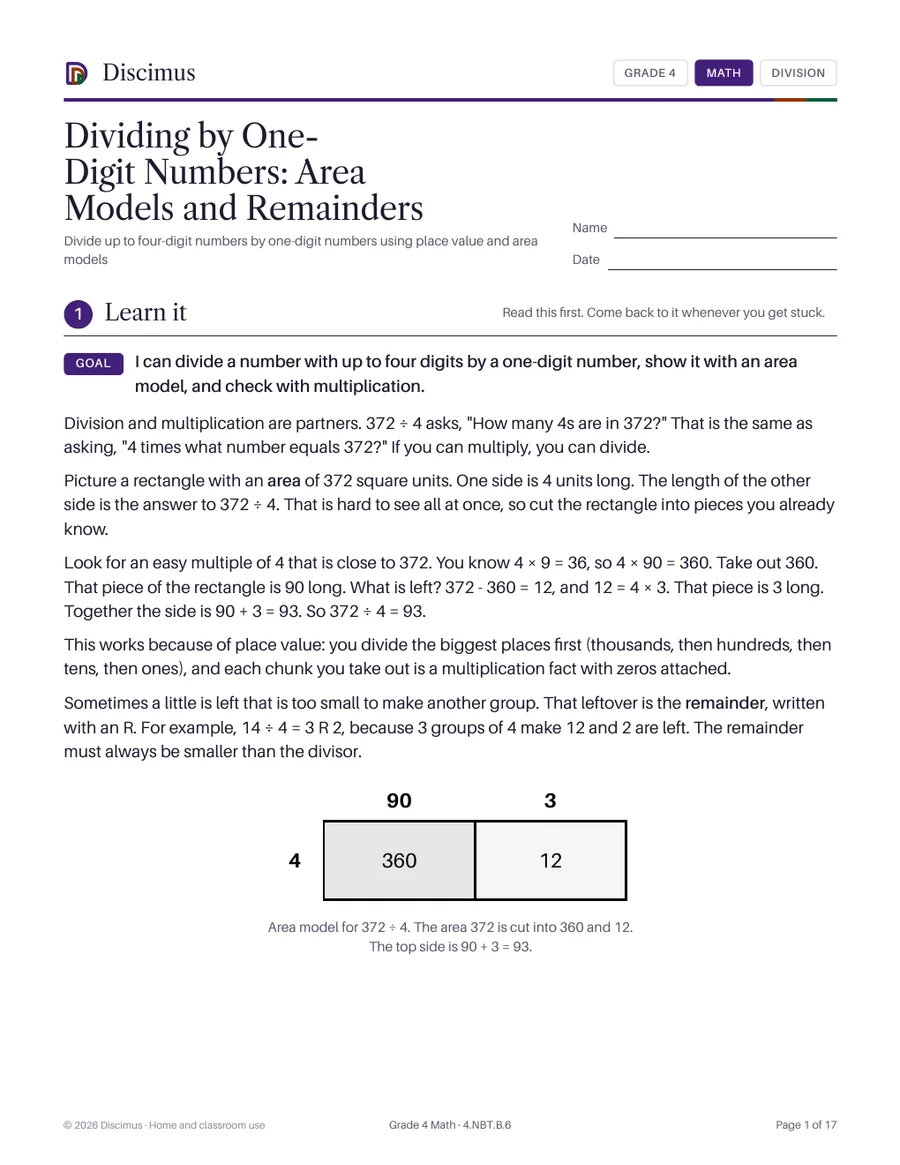
Divide up to four-digit numbers by one-digit numbers using place value and area models
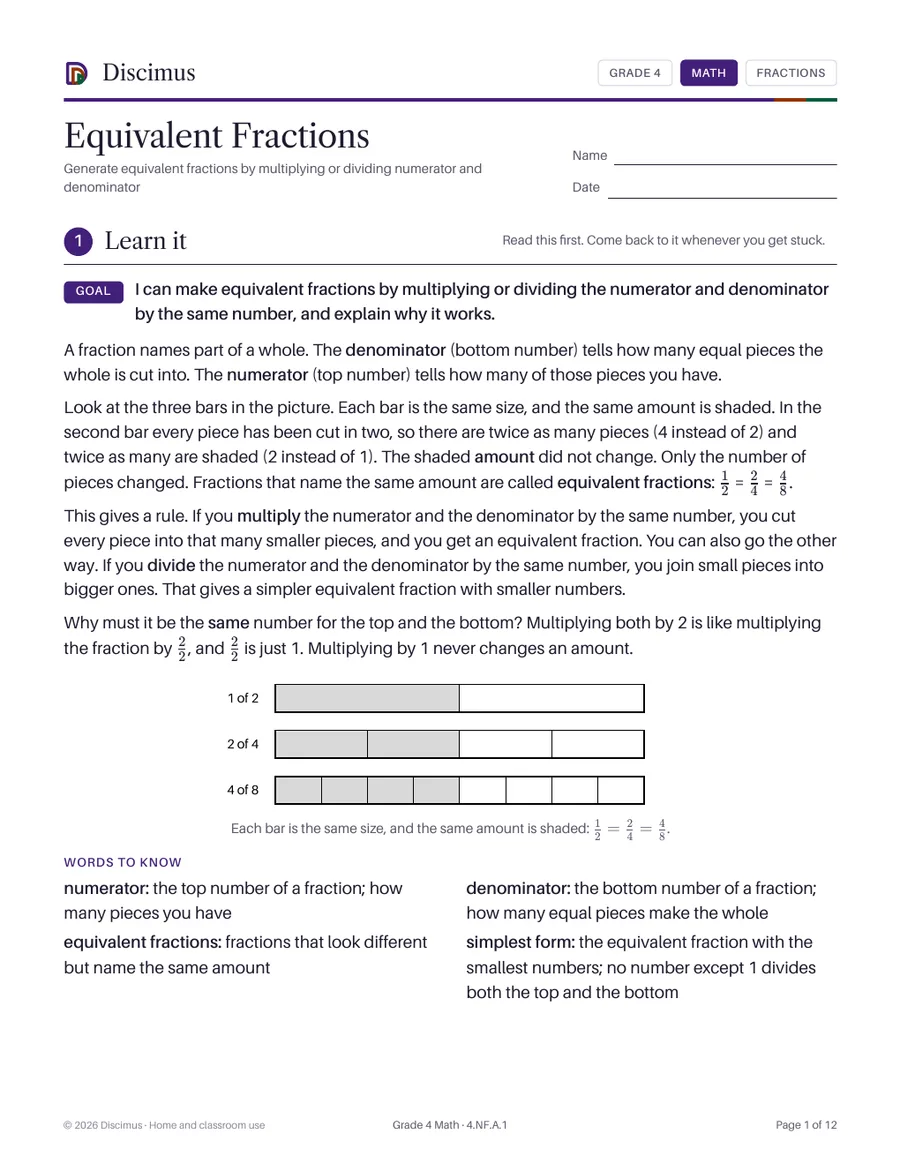
Generate equivalent fractions by multiplying or dividing numerator and denominator
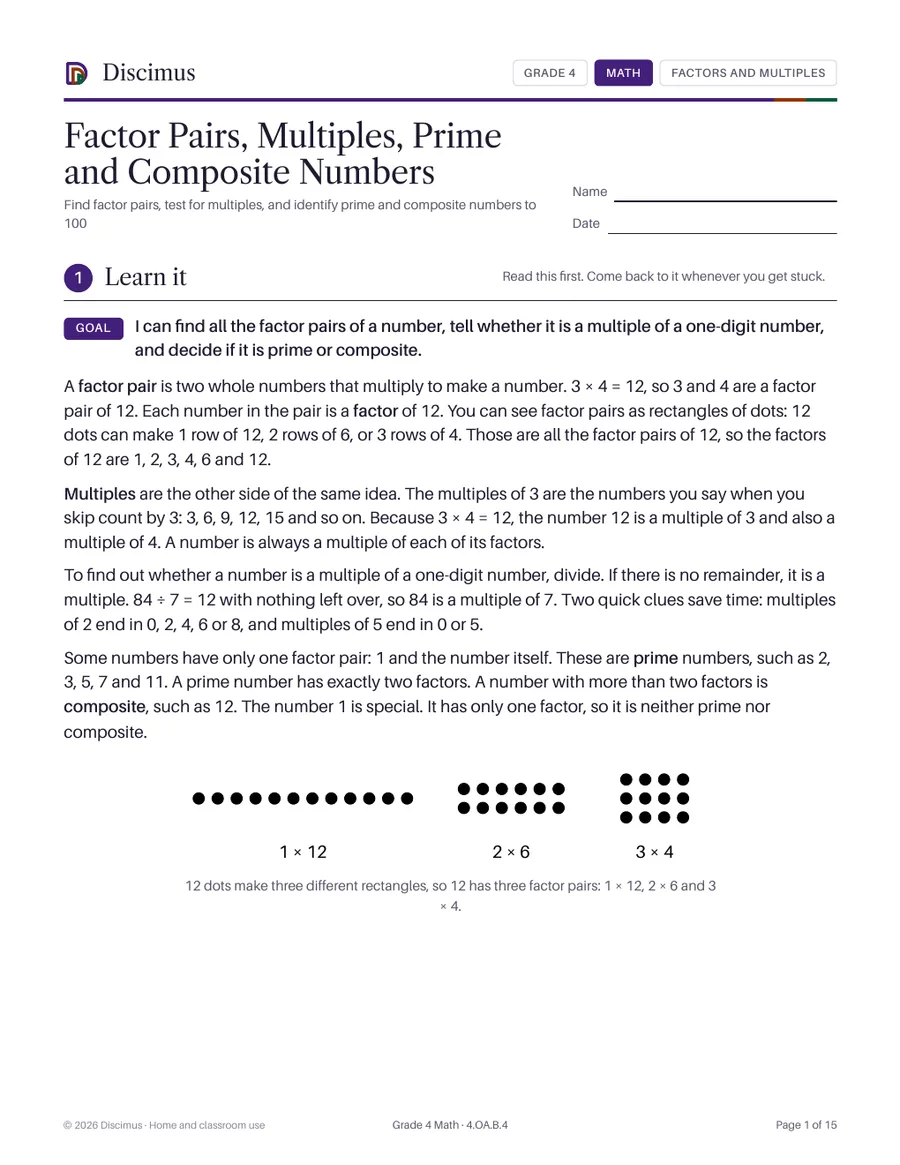
Find factor pairs, test for multiples, and identify prime and composite numbers to 100
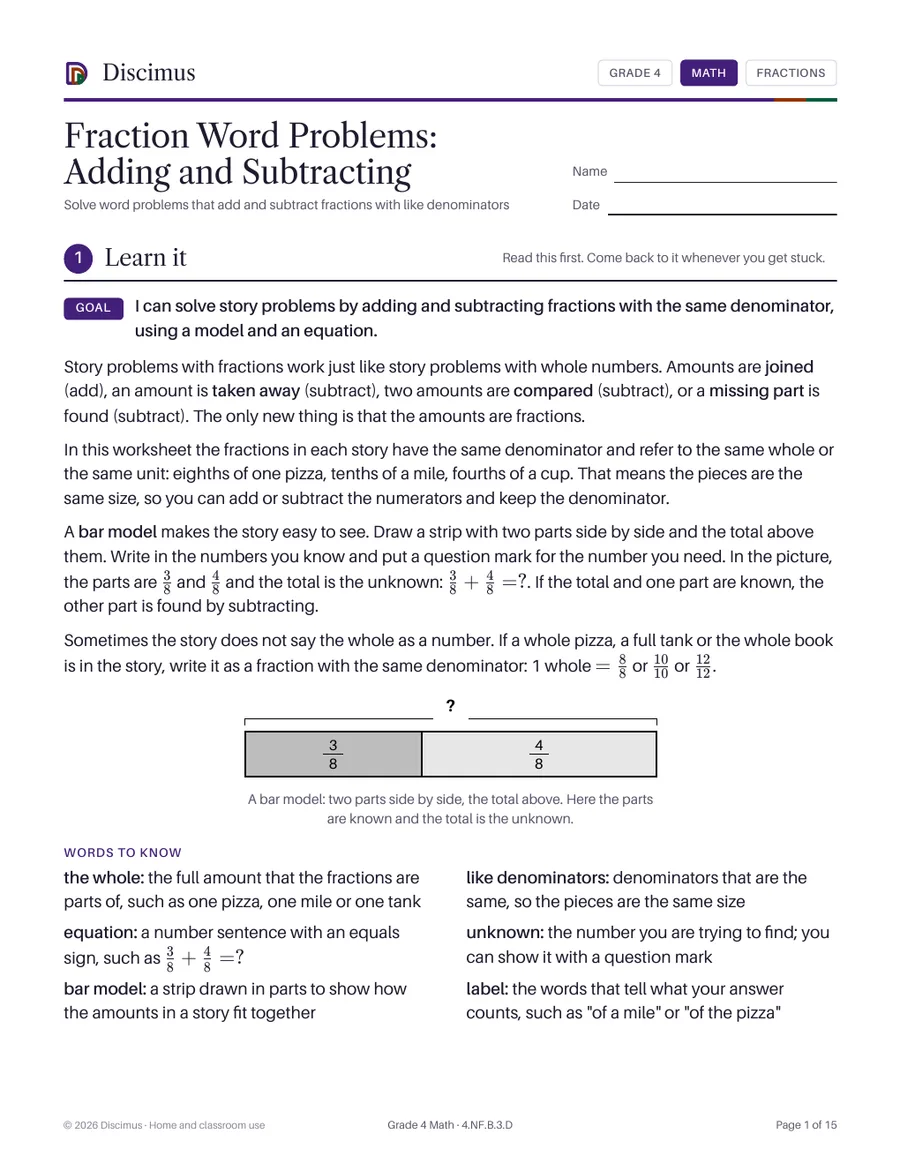
Solve word problems that add and subtract fractions with like denominators
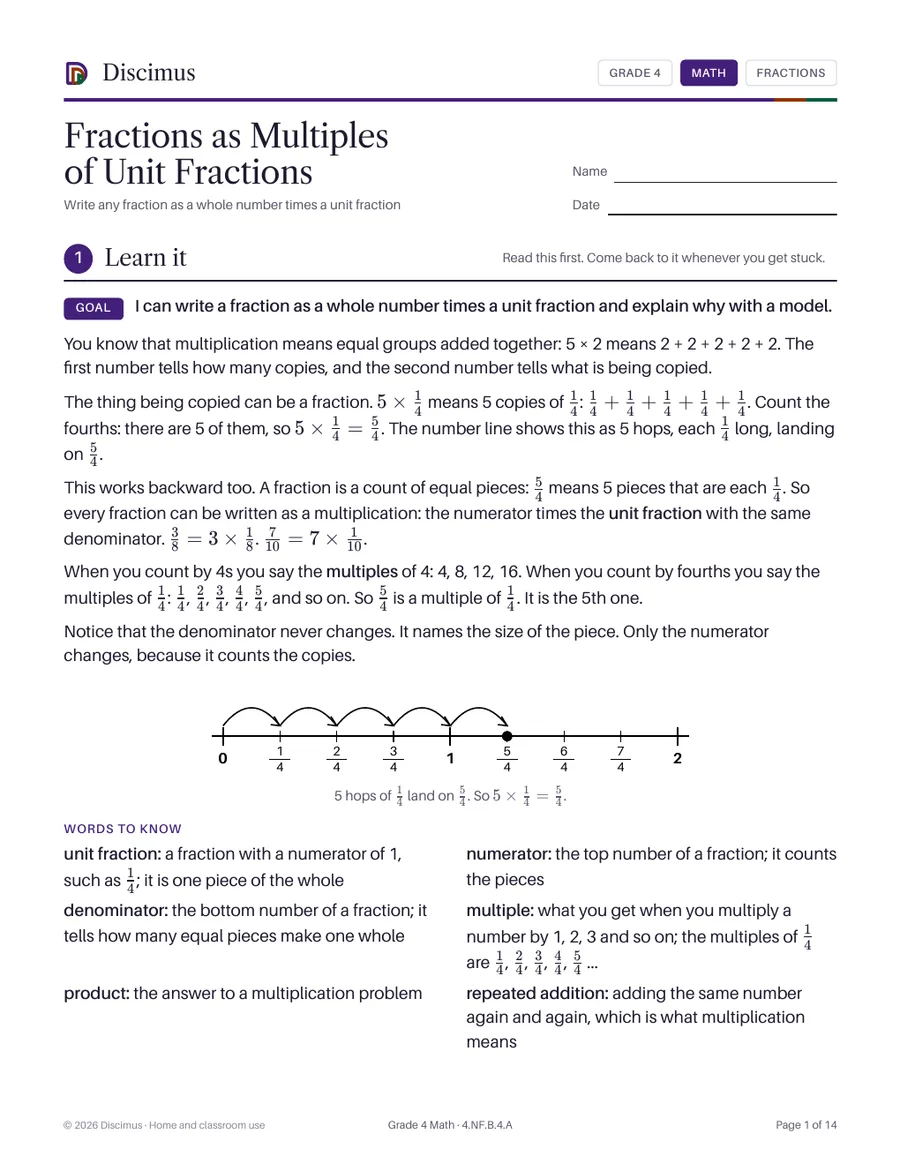
Write any fraction as a whole number times a unit fraction
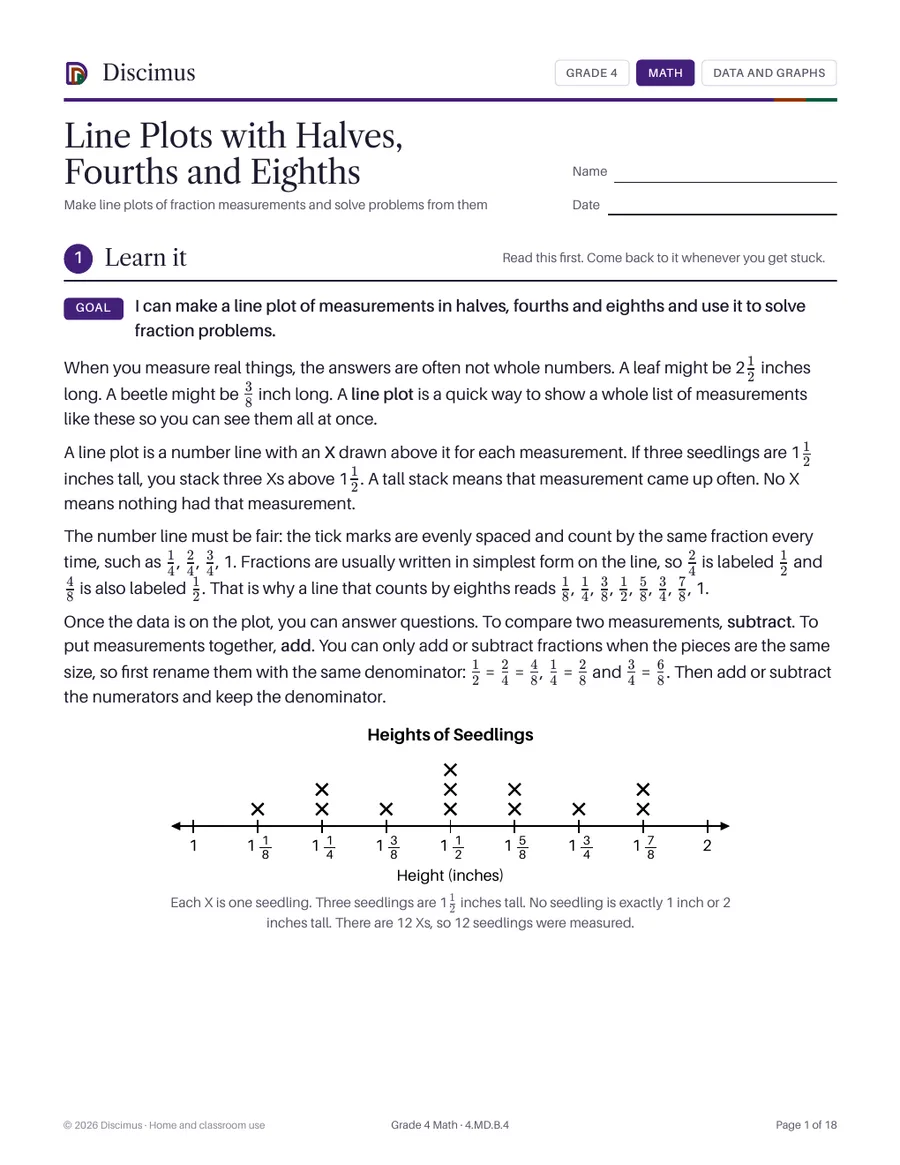
Make line plots of fraction measurements and solve problems from them
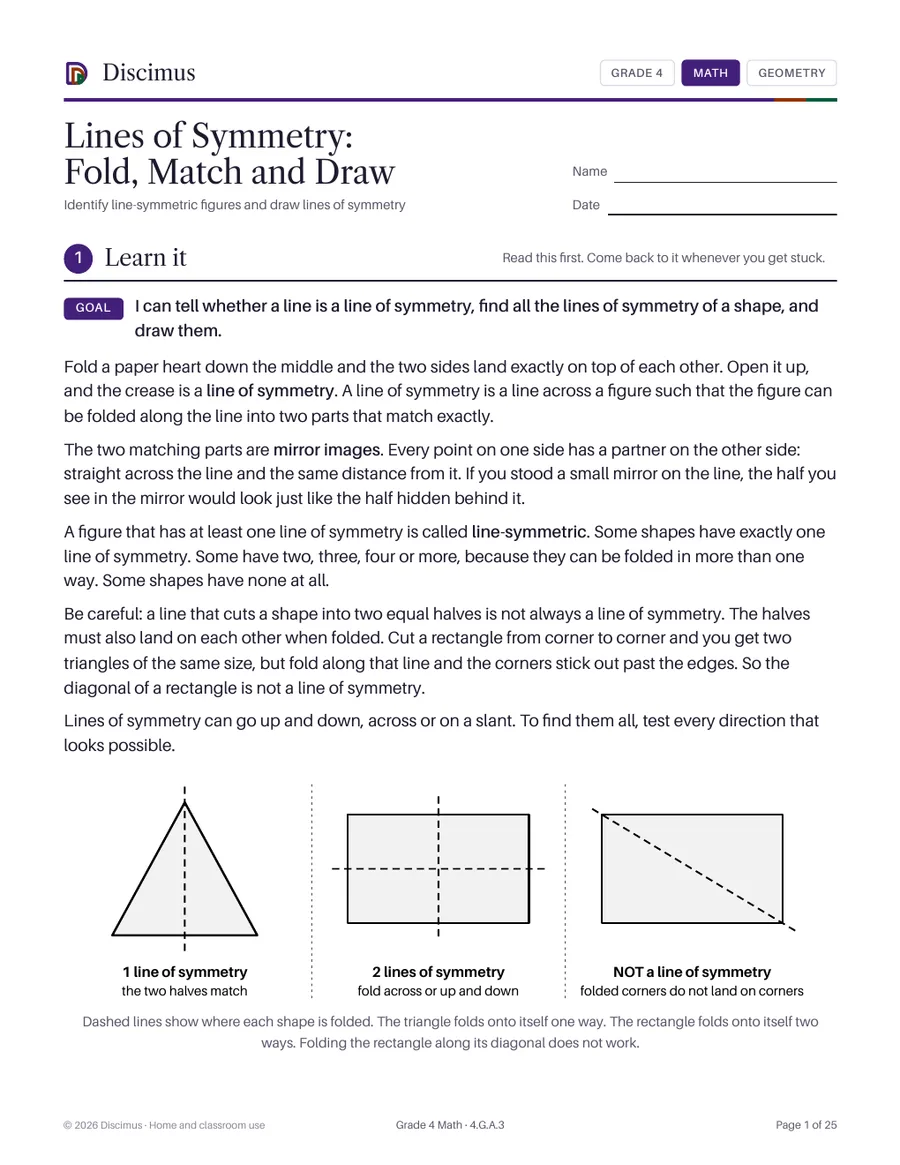
Identify line-symmetric figures and draw lines of symmetry
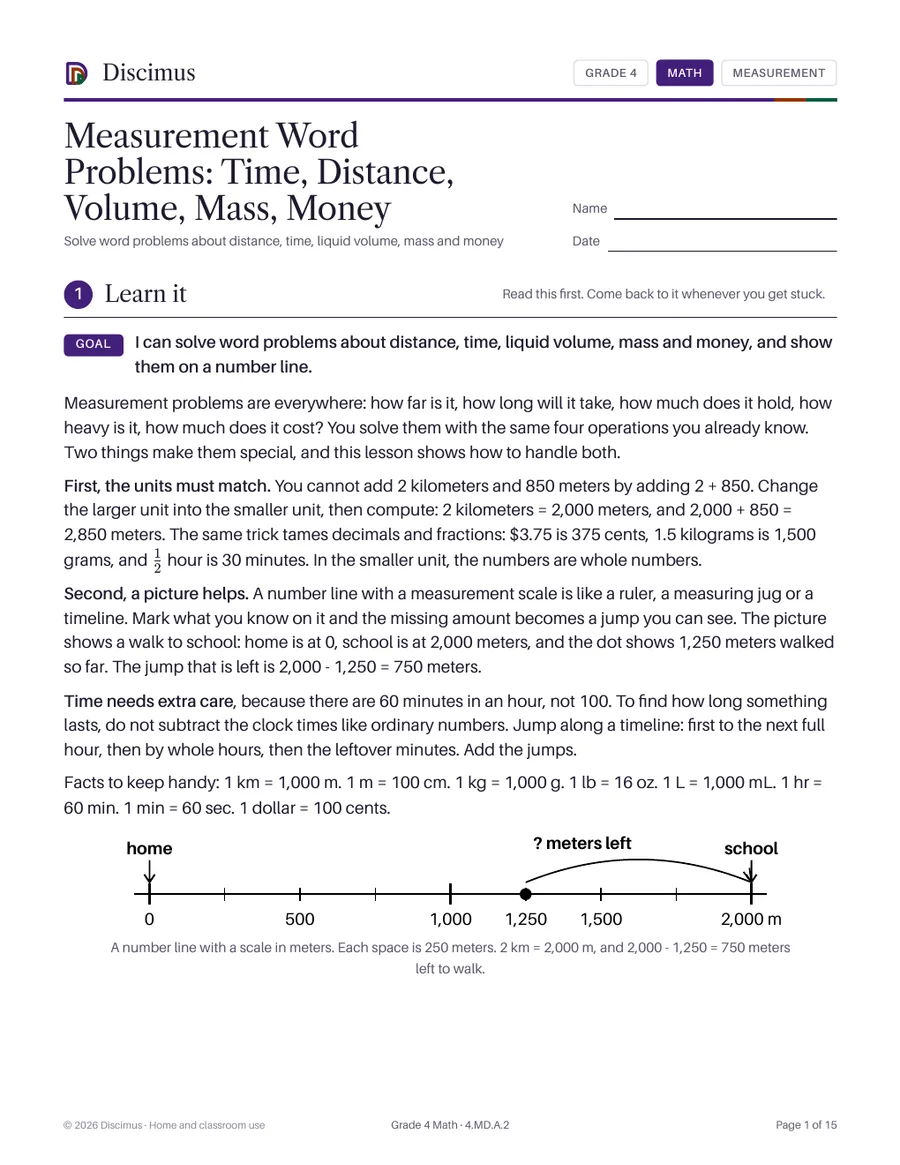
Solve word problems about distance, time, liquid volume, mass and money
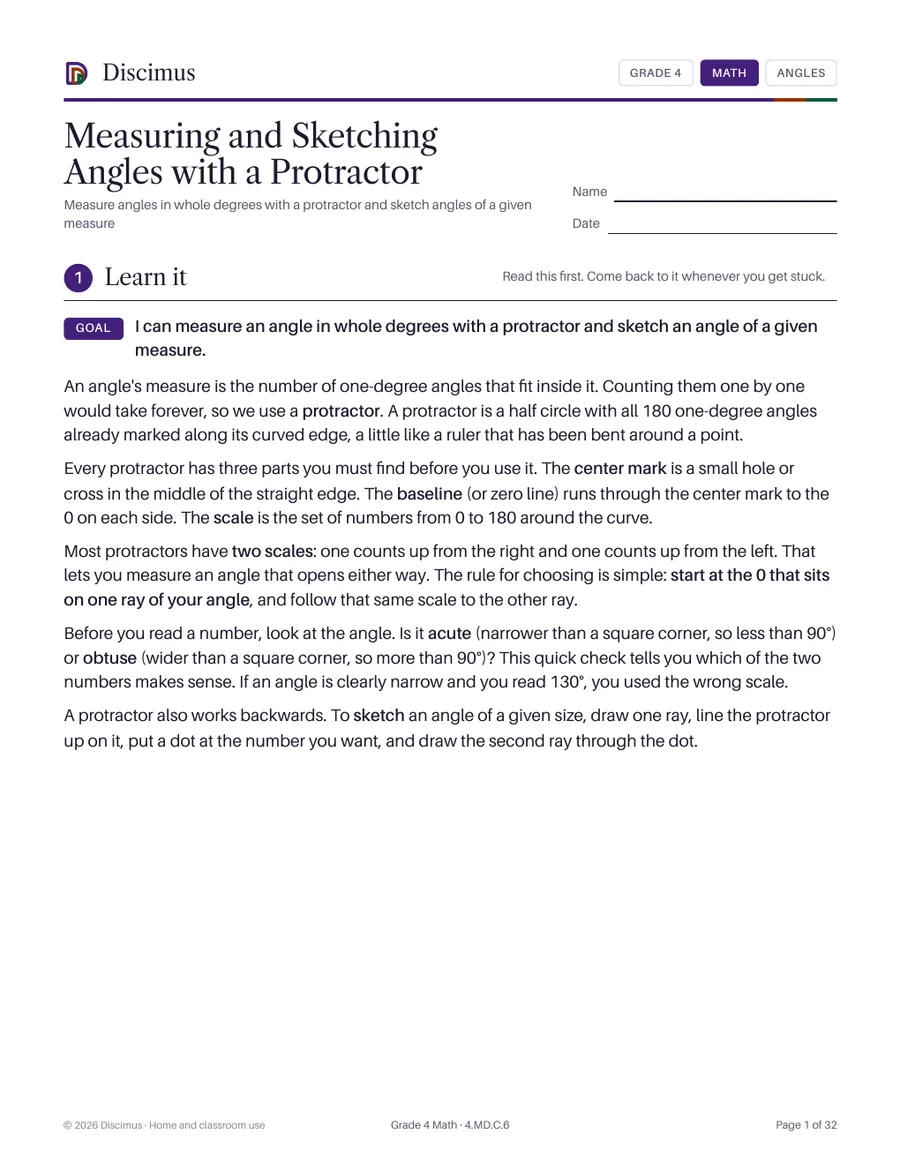
Measure angles in whole degrees with a protractor and sketch angles of a given measure
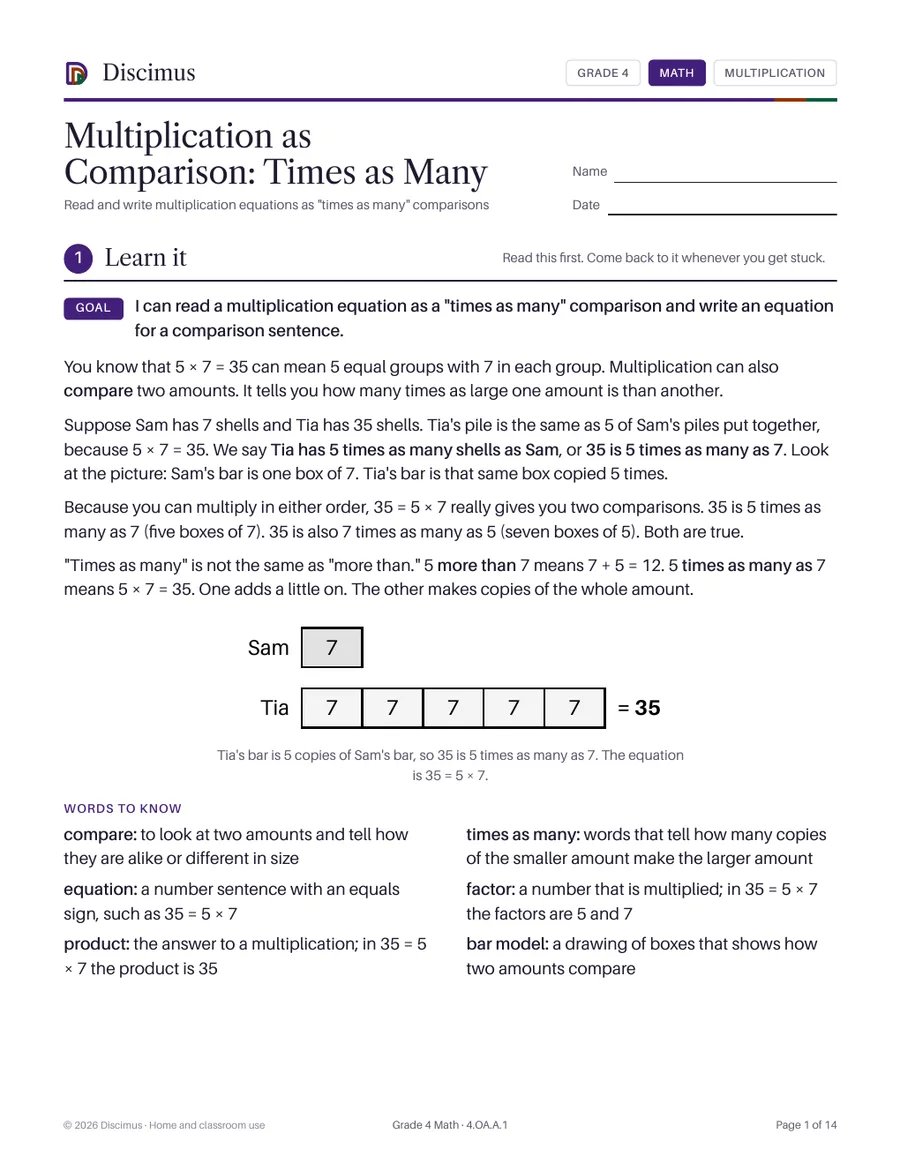
Read and write multiplication equations as "times as many" comparisons
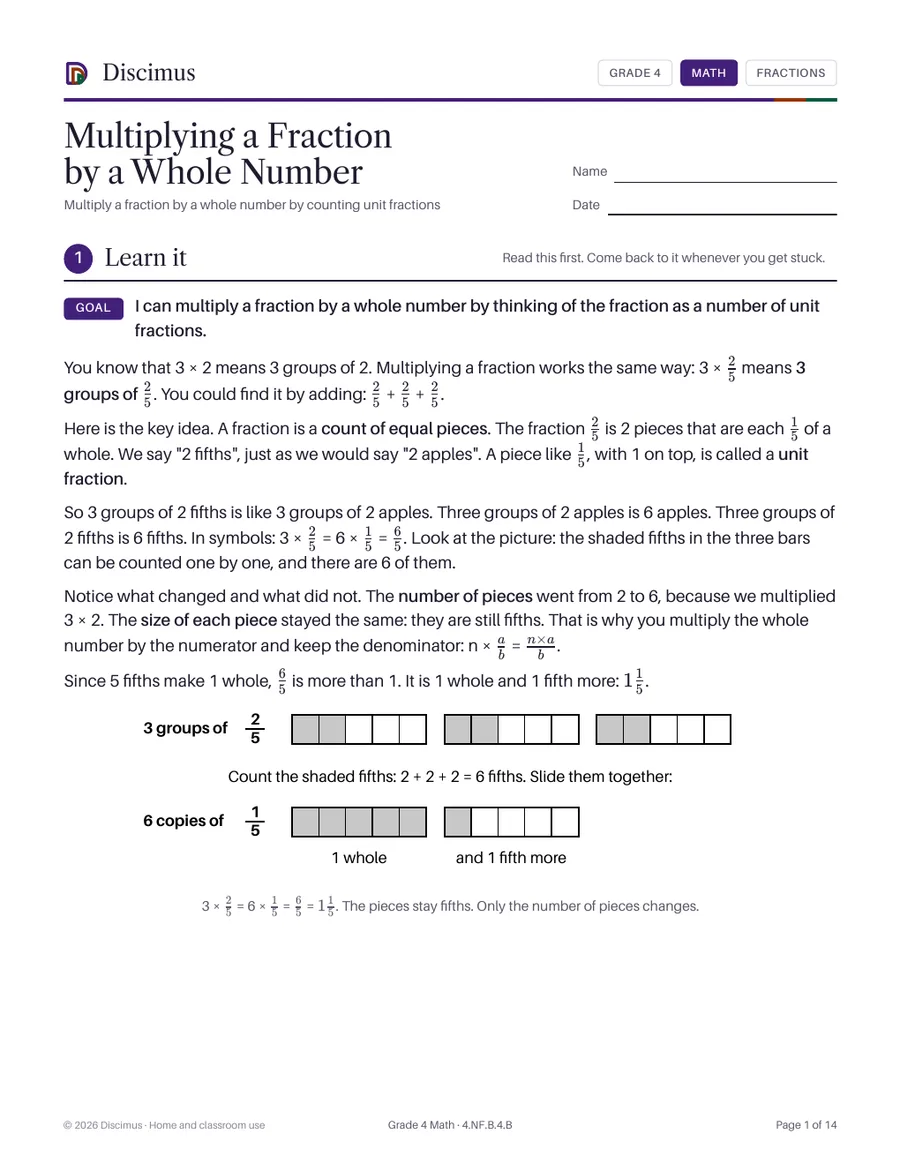
Multiply a fraction by a whole number by counting unit fractions
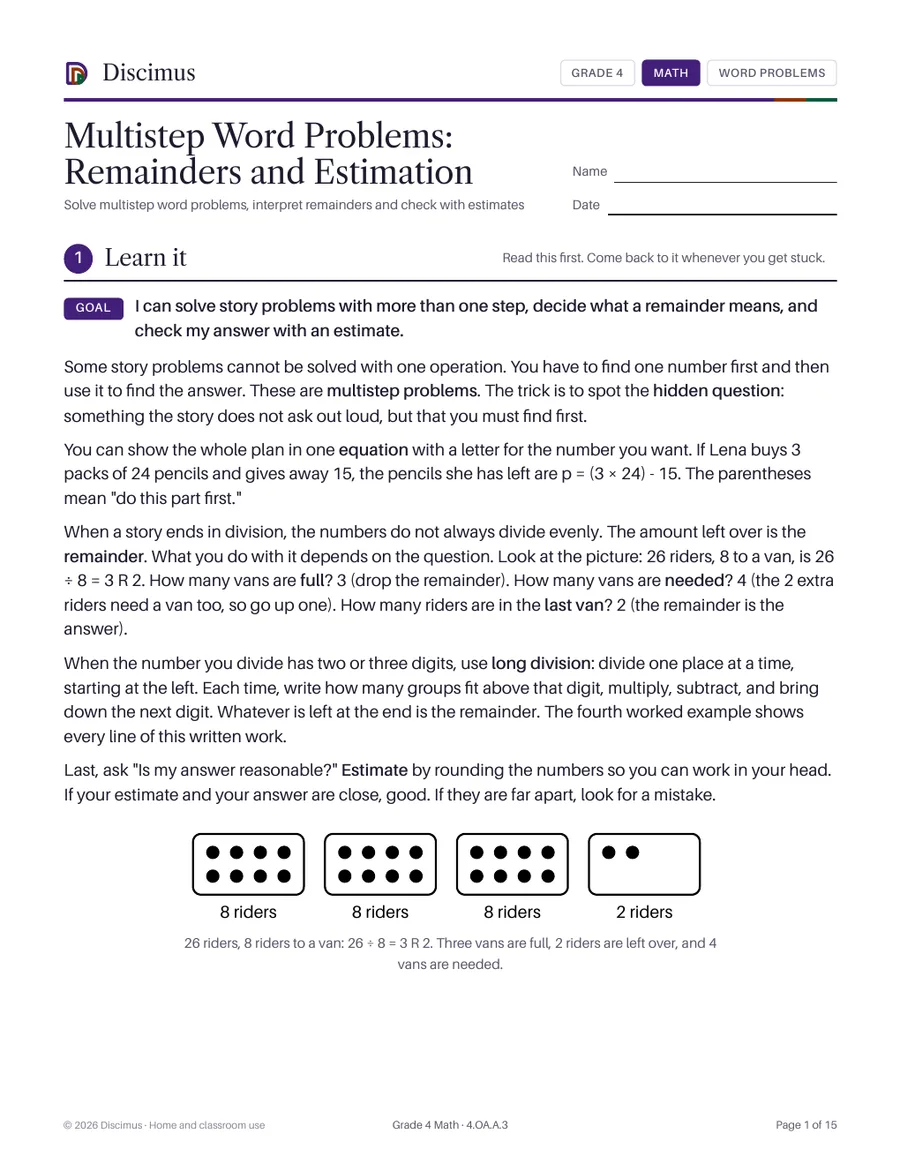
Solve multistep word problems, interpret remainders and check with estimates
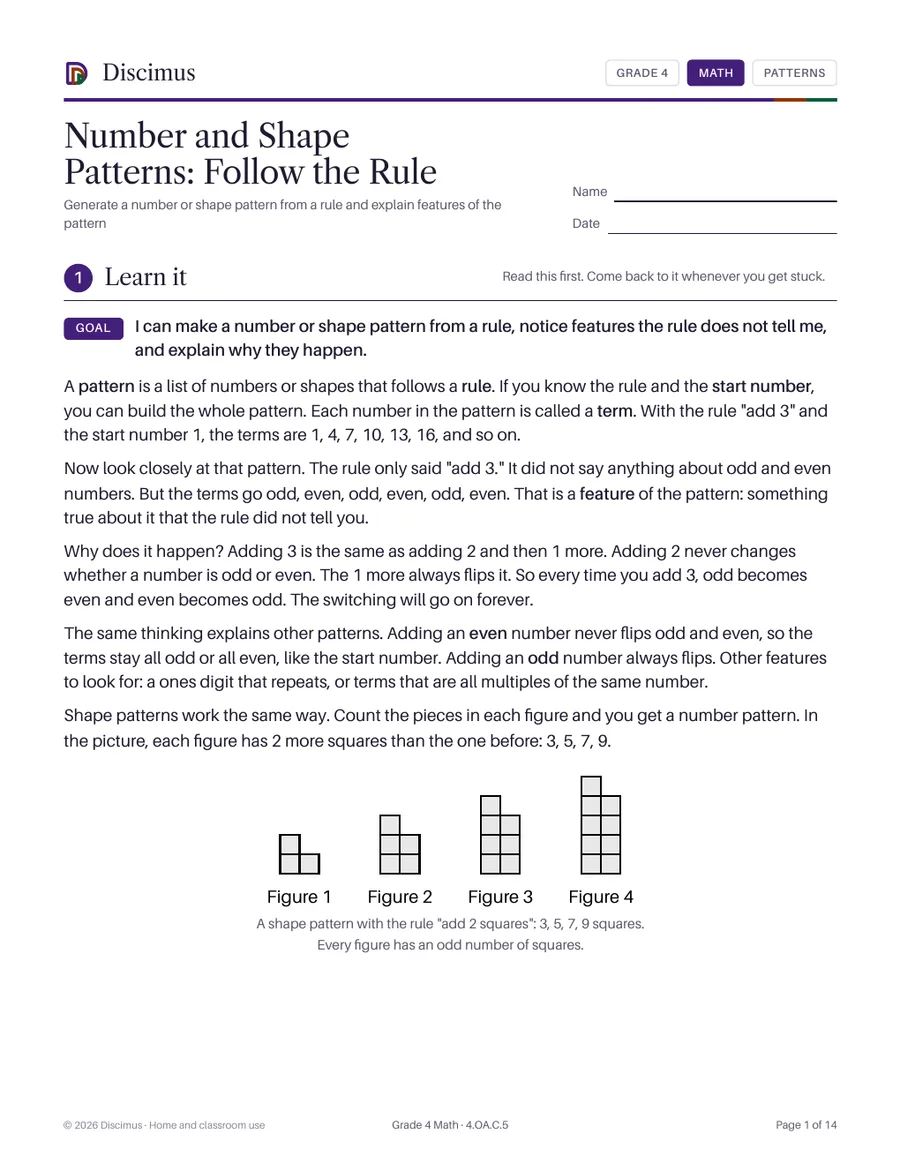
Generate a number or shape pattern from a rule and explain features of the pattern
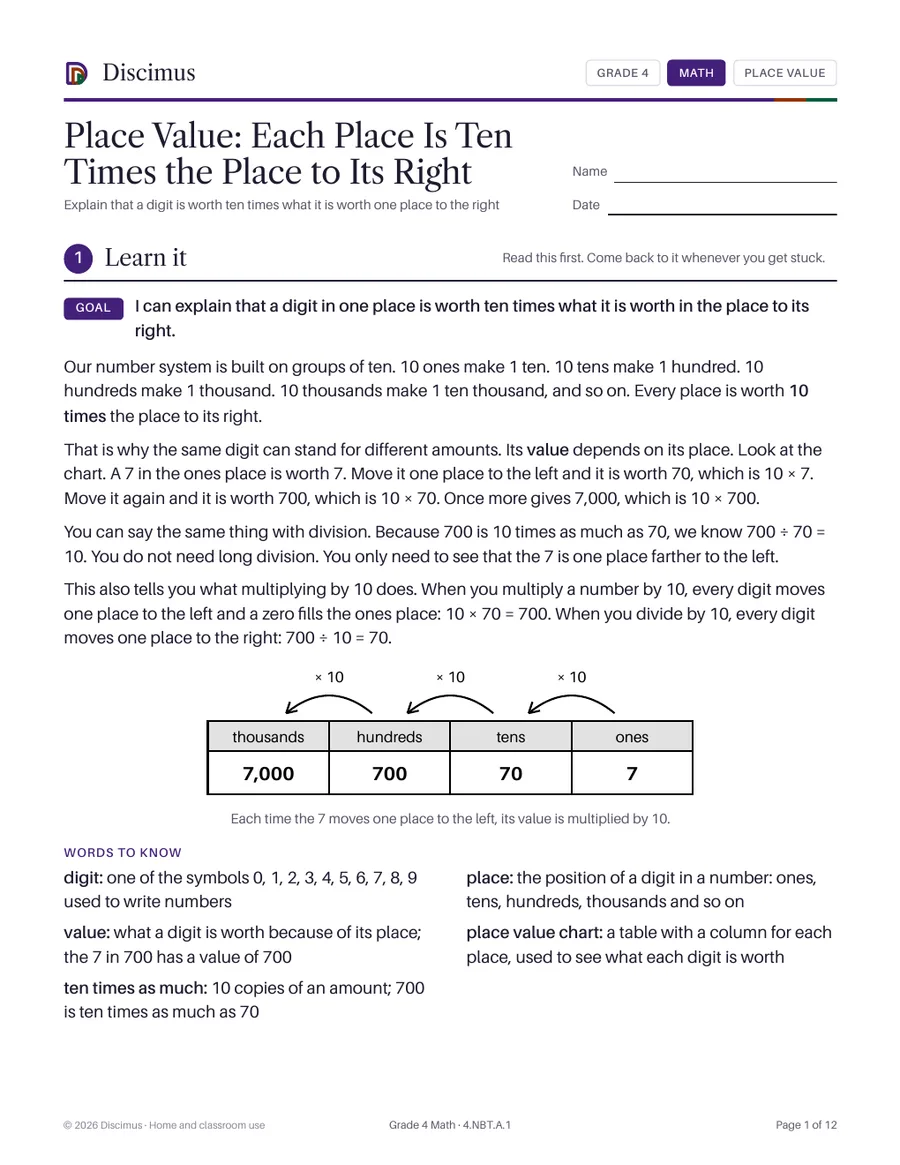
Explain that a digit is worth ten times what it is worth one place to the right
Draw and identify lines, segments, rays, angles, parallel and perpendicular lines
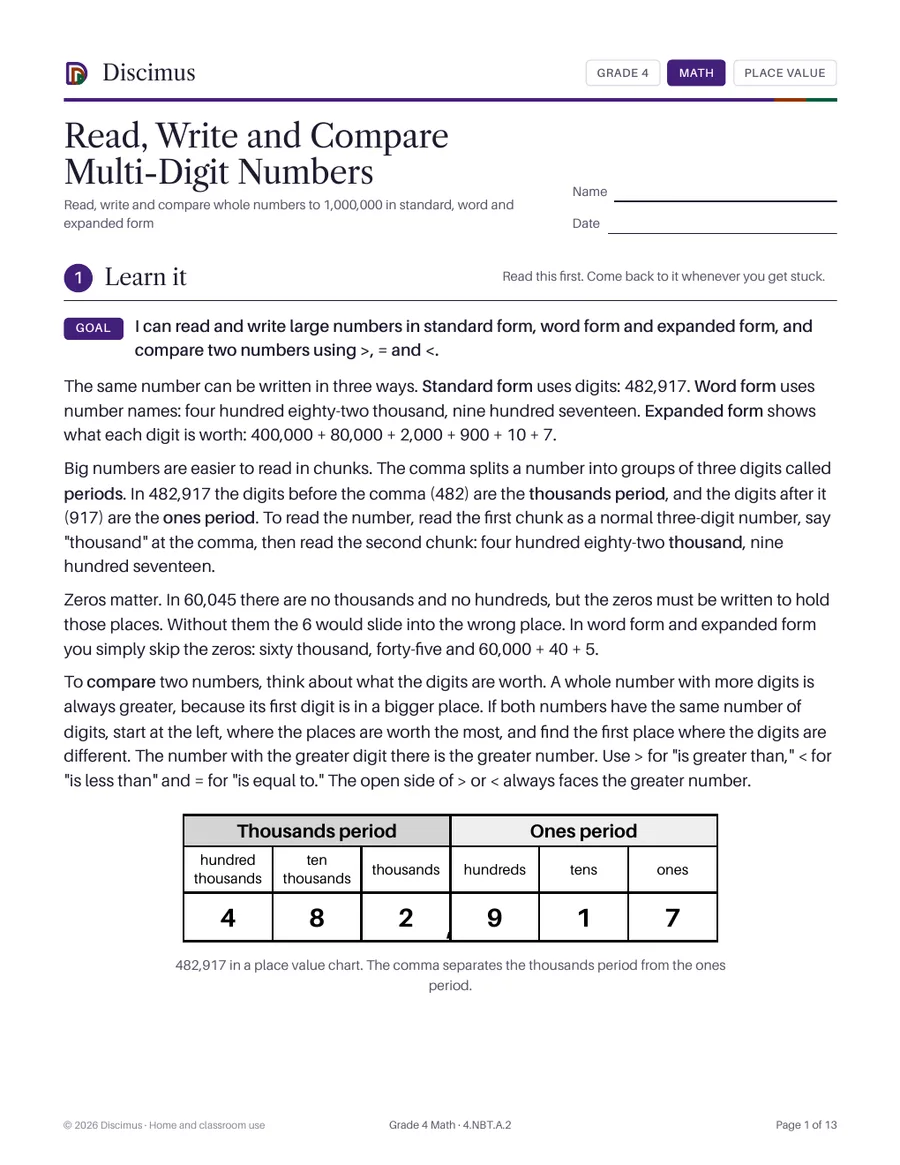
Read, write and compare whole numbers to 1,000,000 in standard, word and expanded form
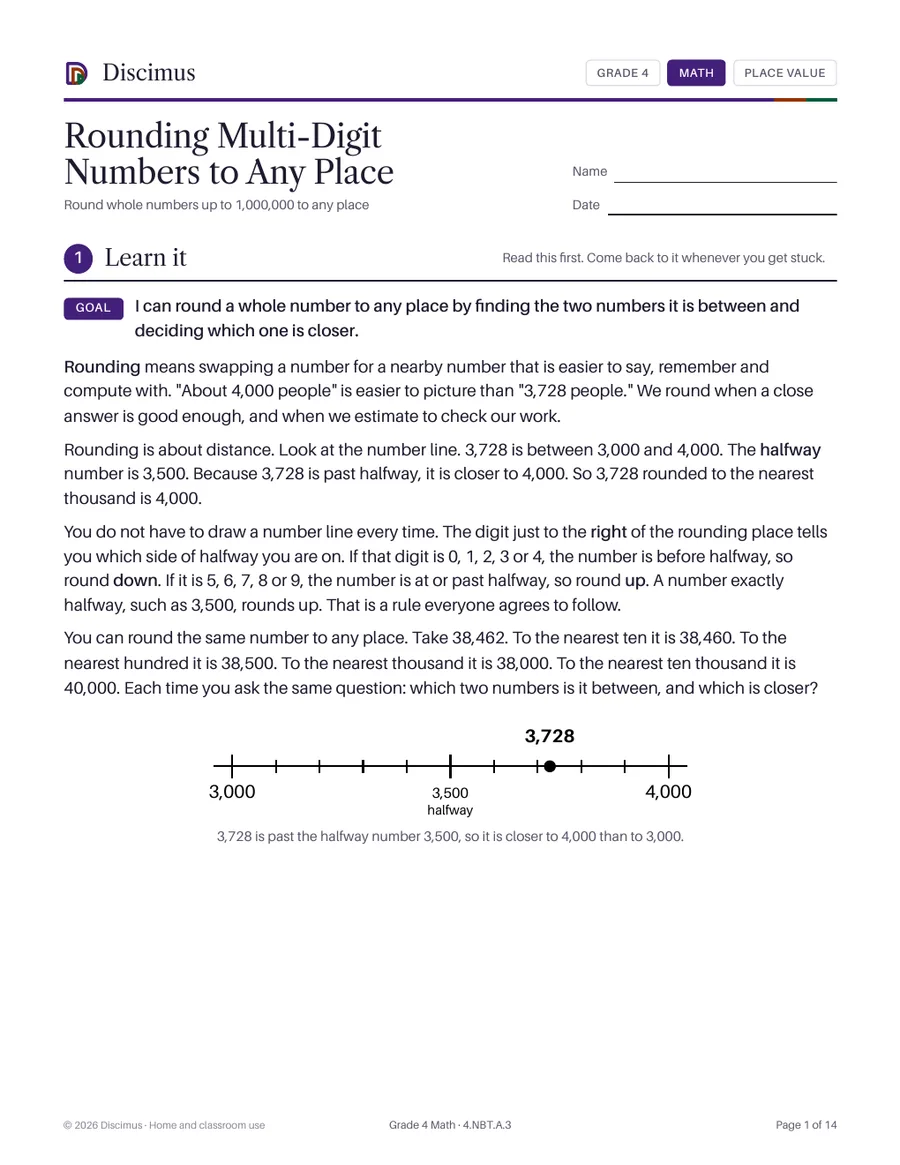
Round whole numbers up to 1,000,000 to any place
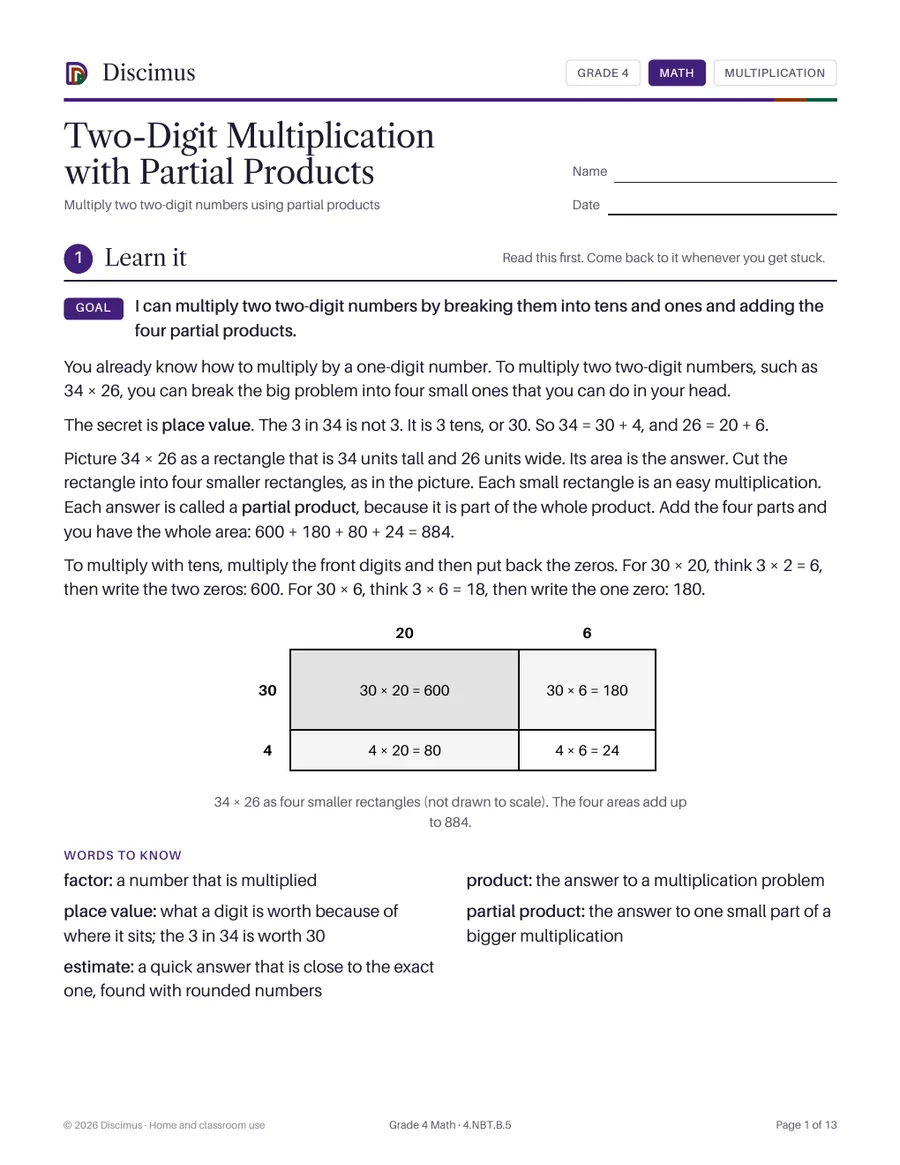
Multiply two two-digit numbers using partial products
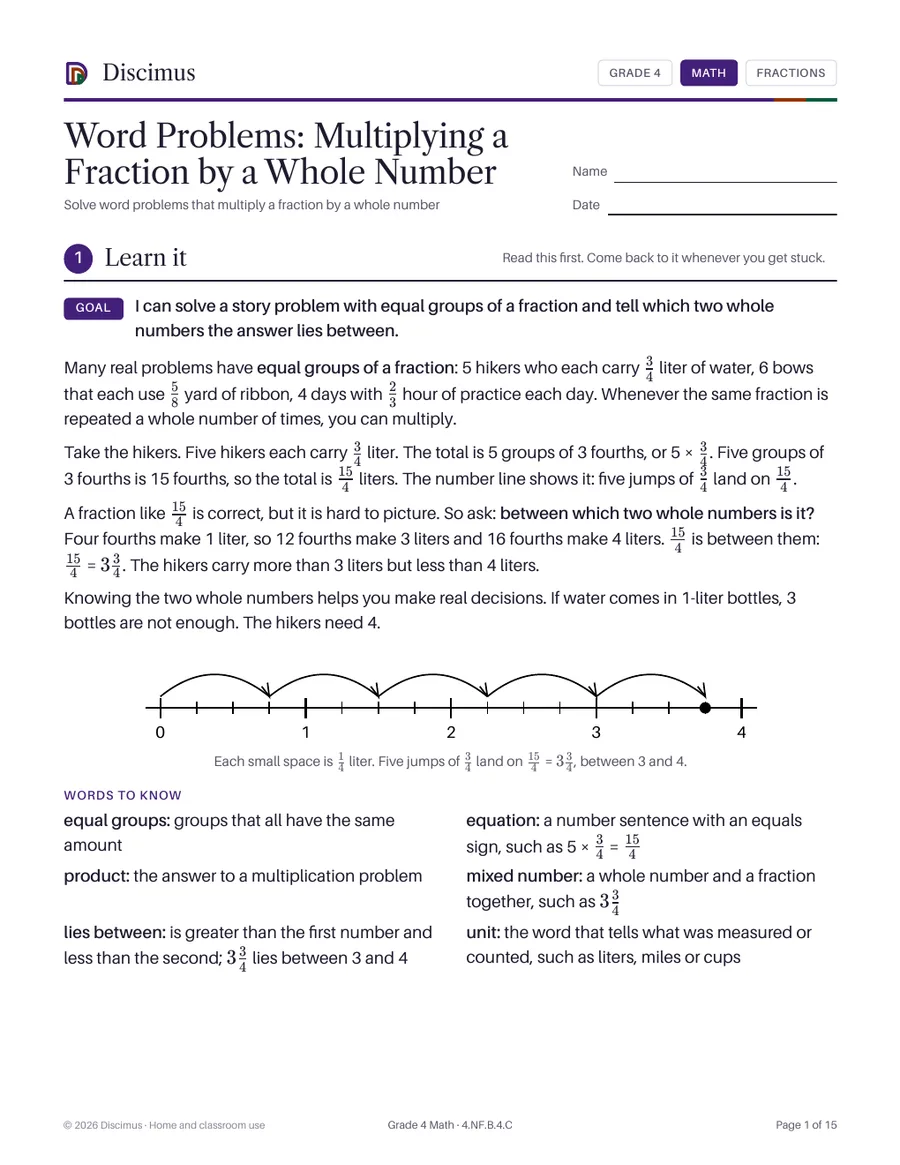
Solve word problems that multiply a fraction by a whole number
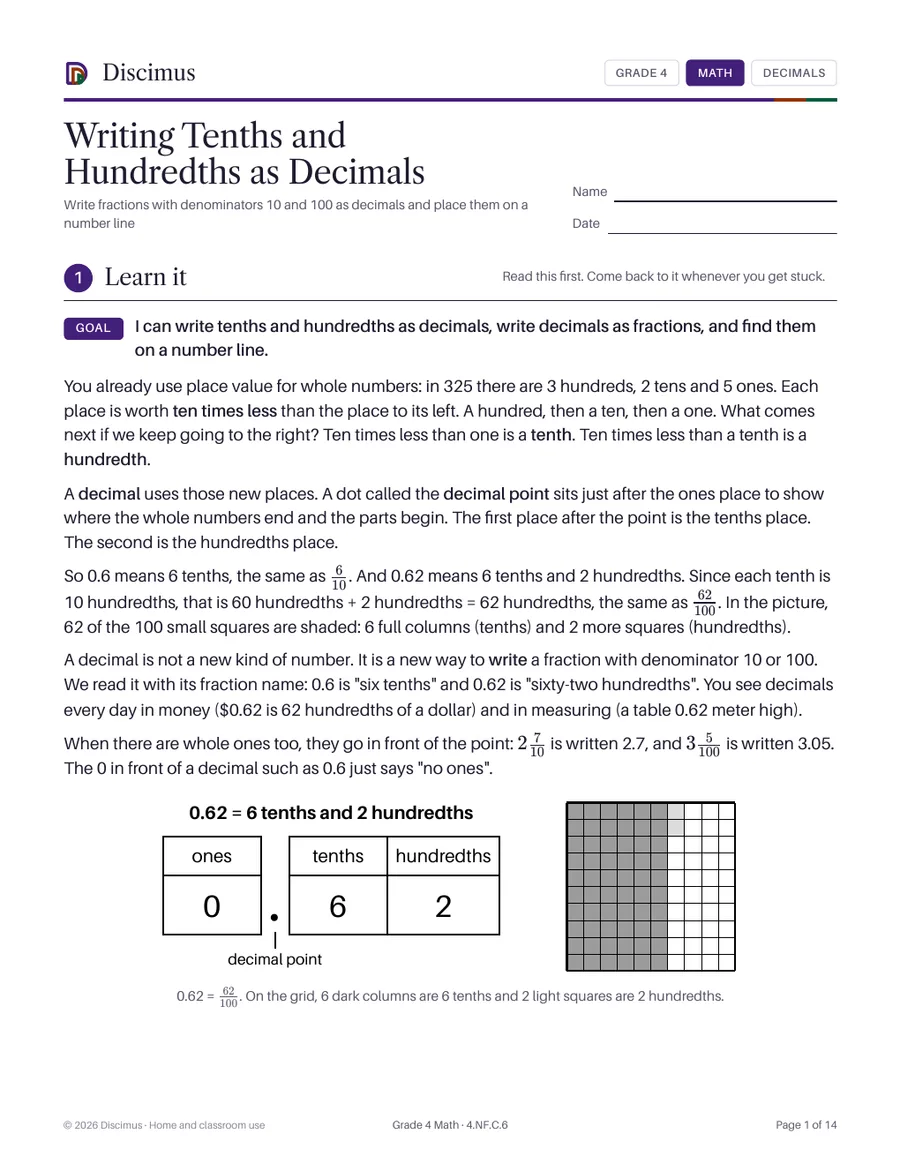
Write fractions with denominators 10 and 100 as decimals and place them on a number line
Add, subtract, multiply and divide decimals to hundredths using place value
 Free sample
Add fractions and mixed numbers with unlike denominators
Find the volume of a solid made of two rectangular prisms by adding the parts
Find areas of rectangles with fractional sides by tiling and by multiplying
Classify two-dimensional figures in a hierarchy based on their properties
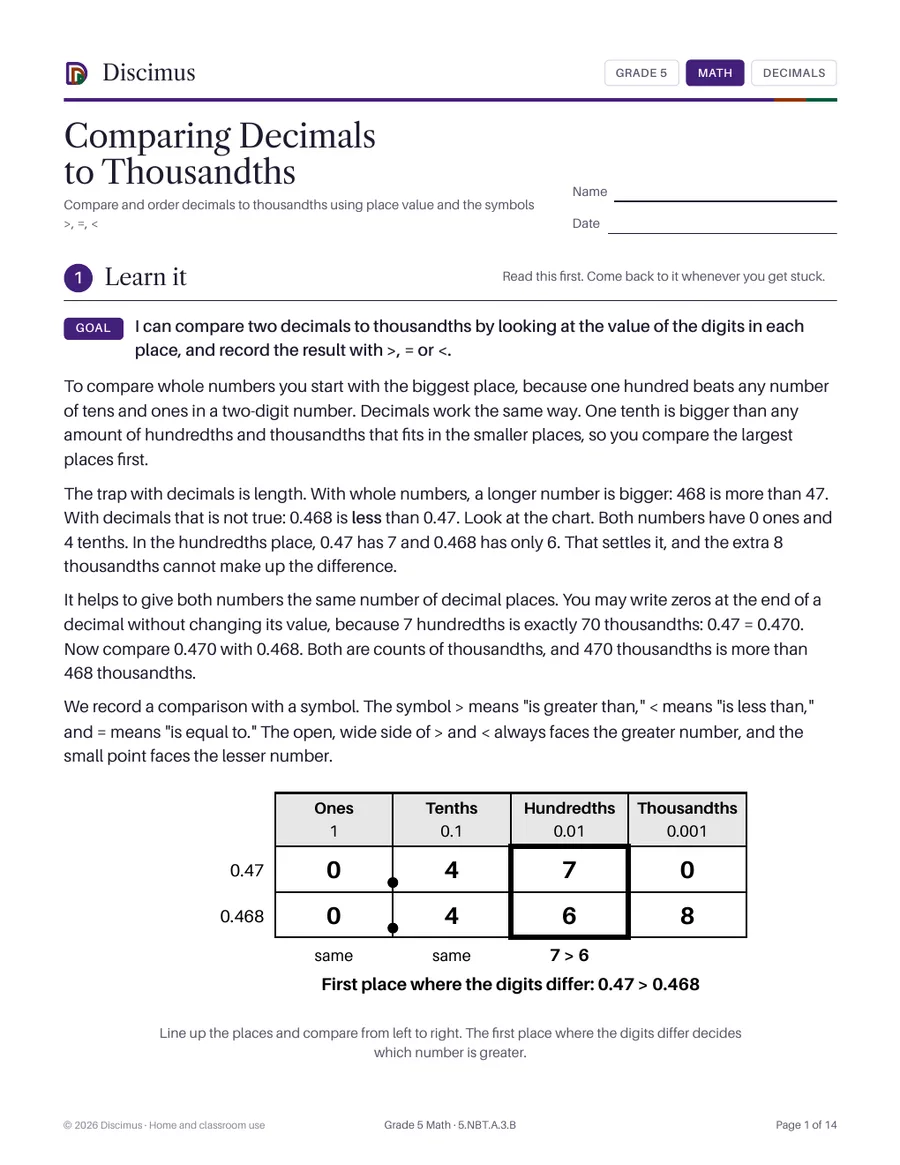
Compare and order decimals to thousandths using place value and the symbols >, =, <
Convert units within one measurement system and use conversions in multi-step problems
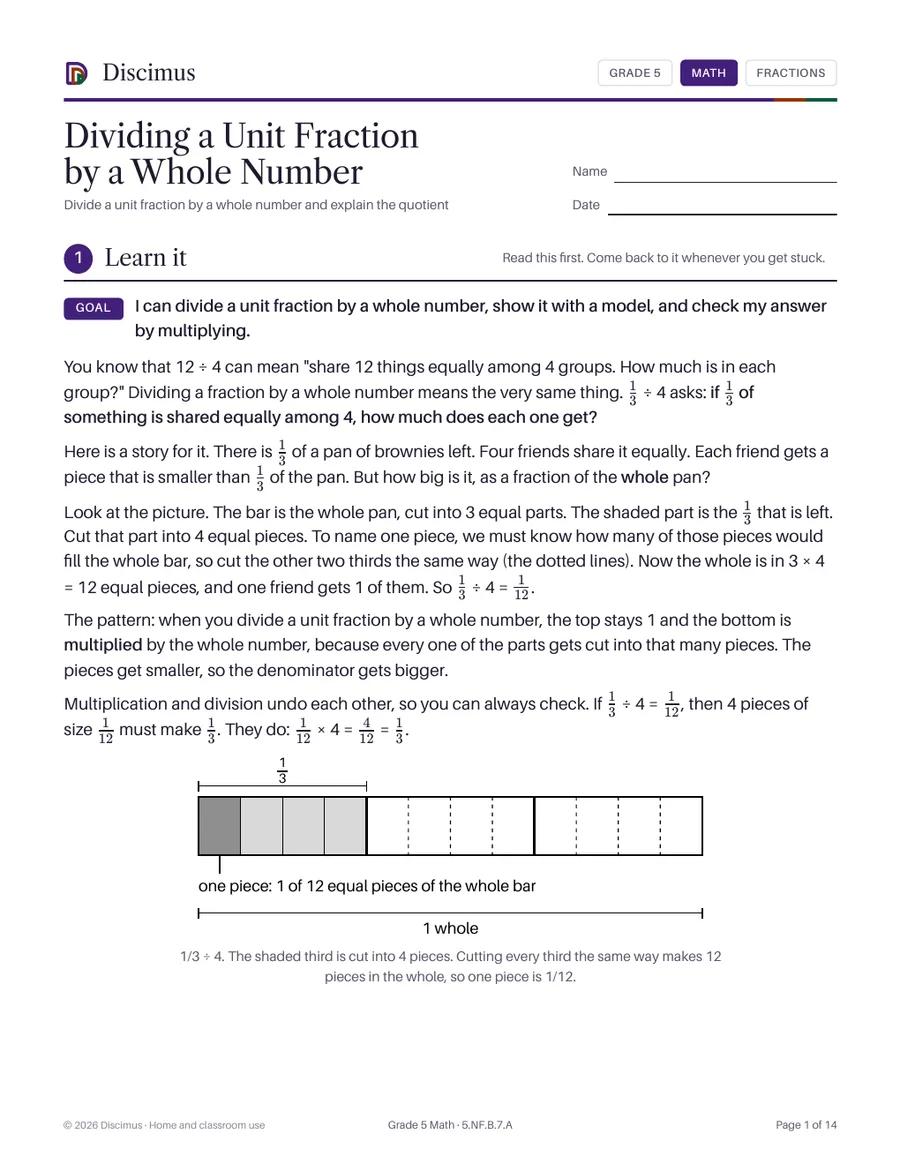
Divide a unit fraction by a whole number and explain the quotient
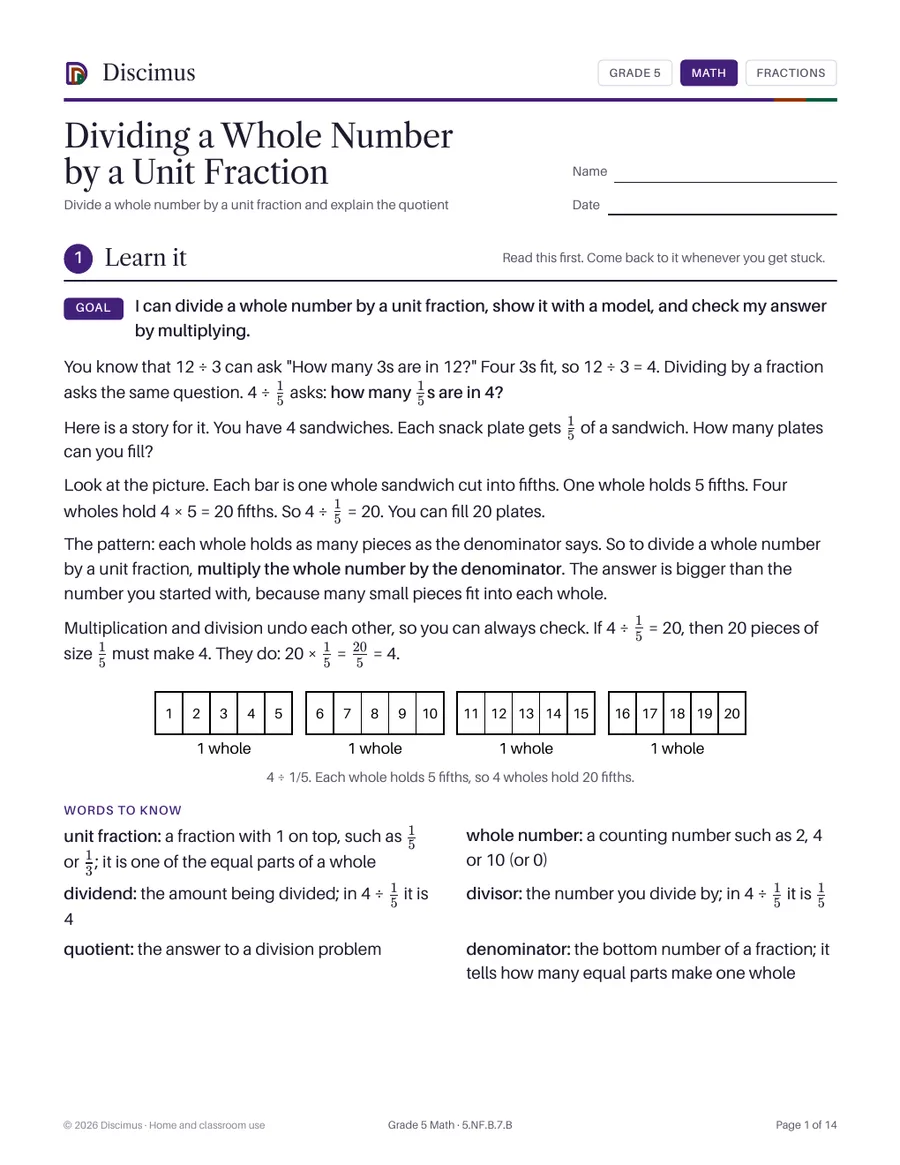
Divide a whole number by a unit fraction and explain the quotient
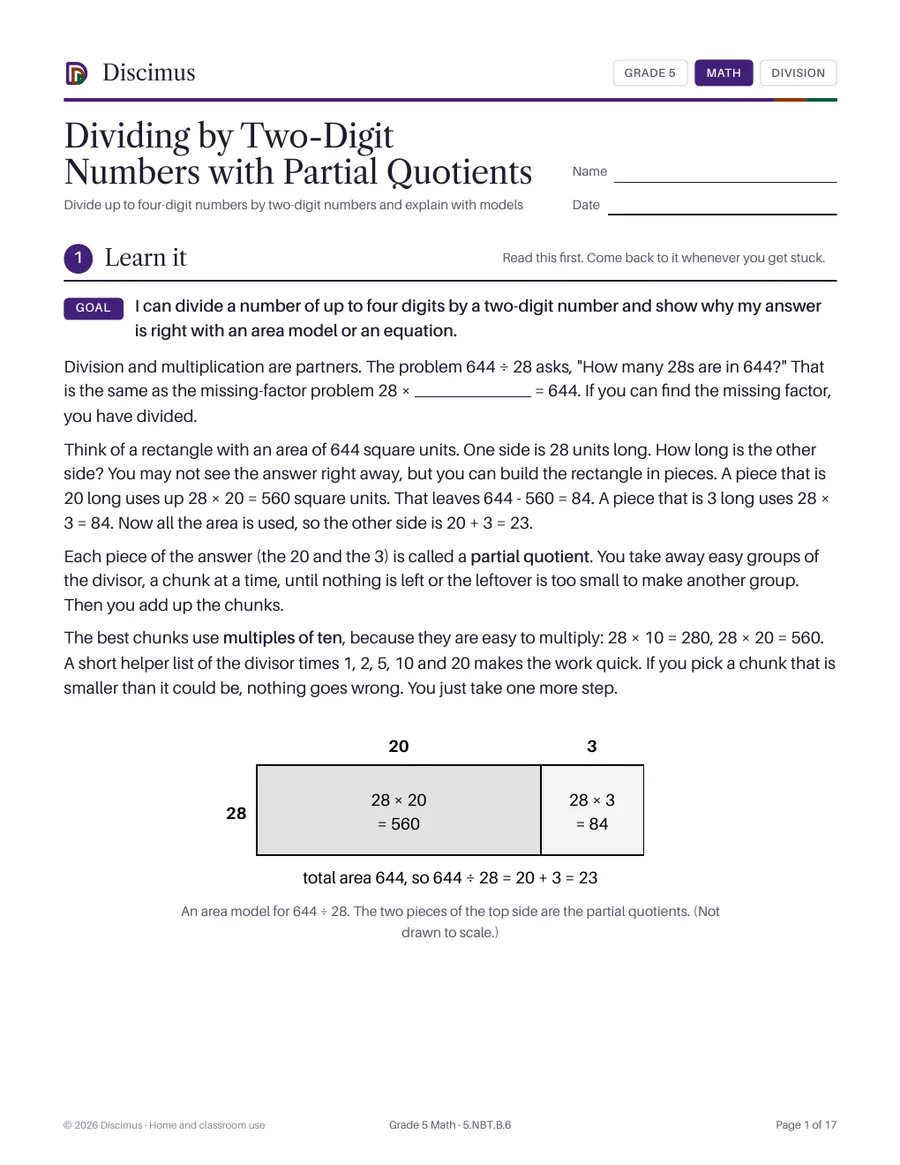
Divide up to four-digit numbers by two-digit numbers and explain with models
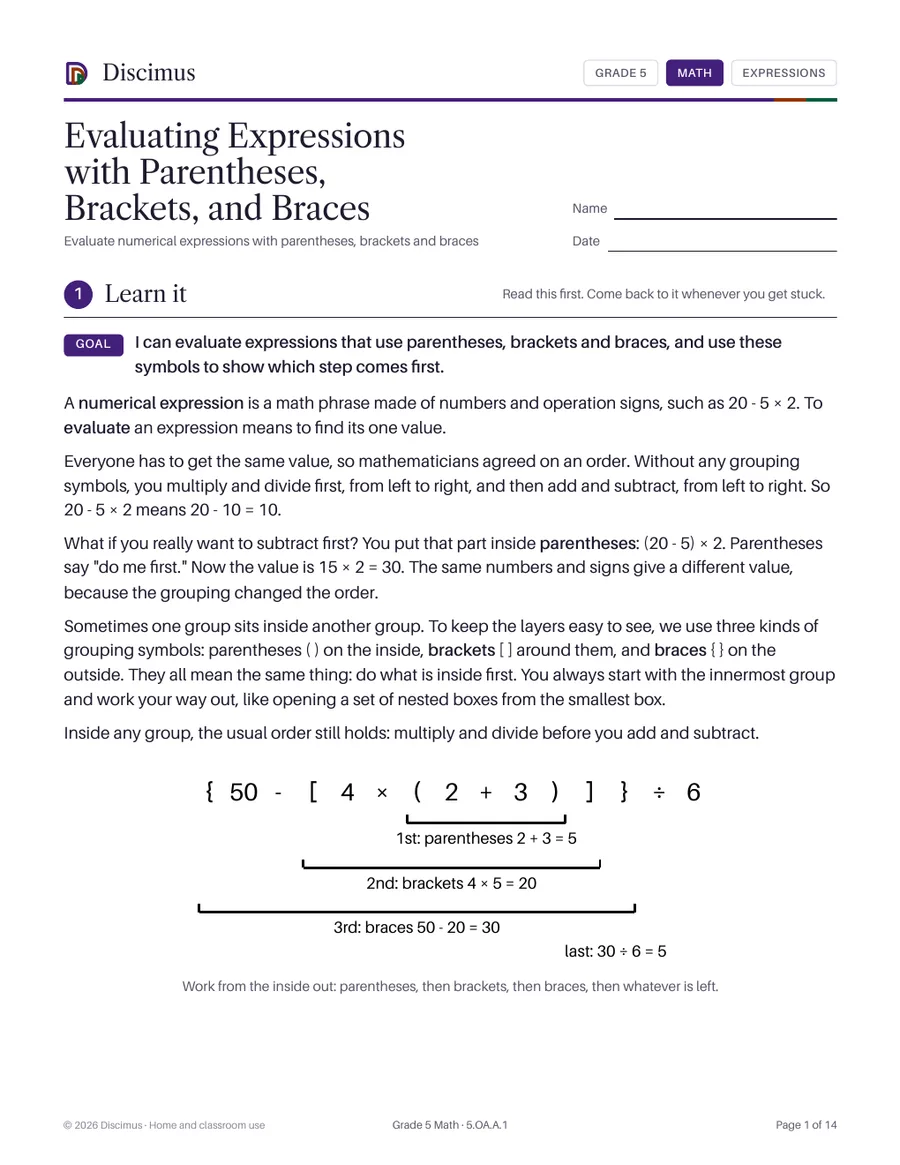
Evaluate numerical expressions with parentheses, brackets and braces
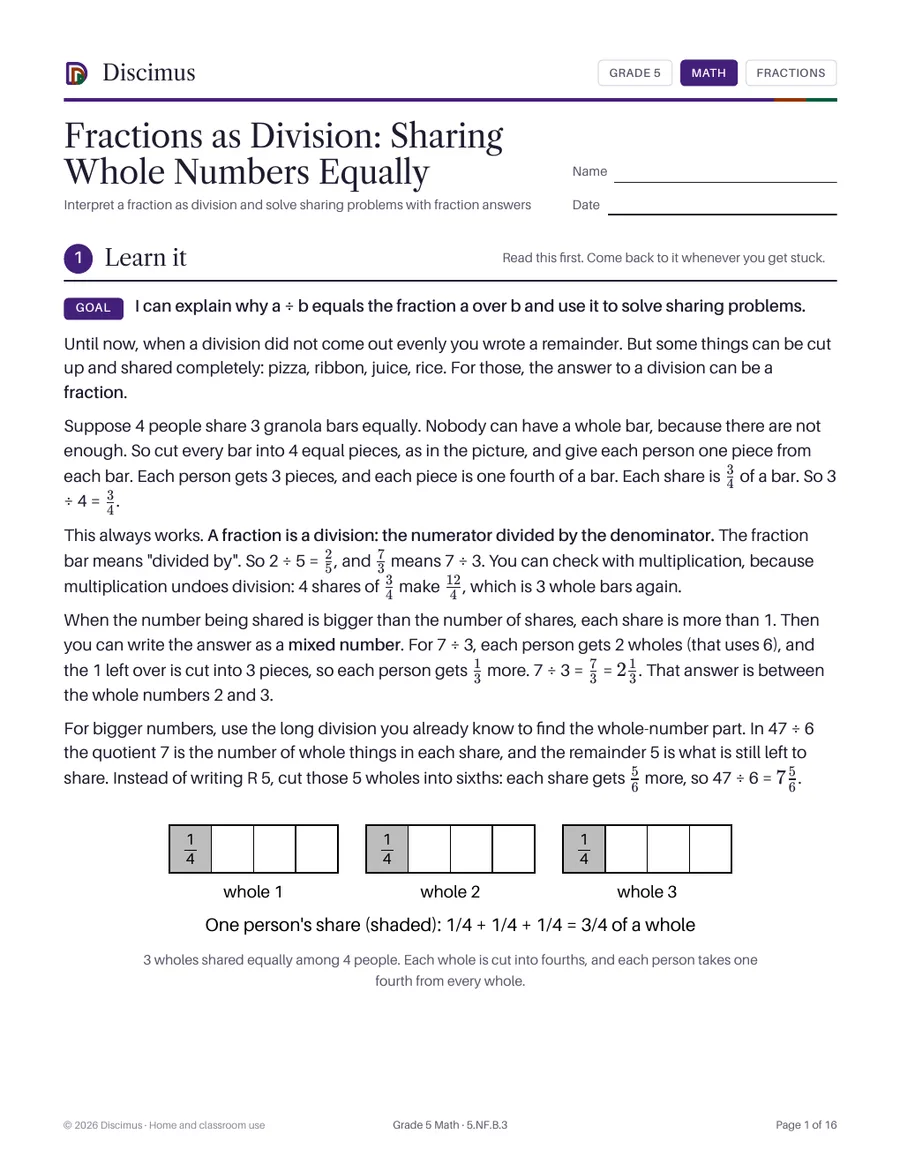
Interpret a fraction as division and solve sharing problems with fraction answers
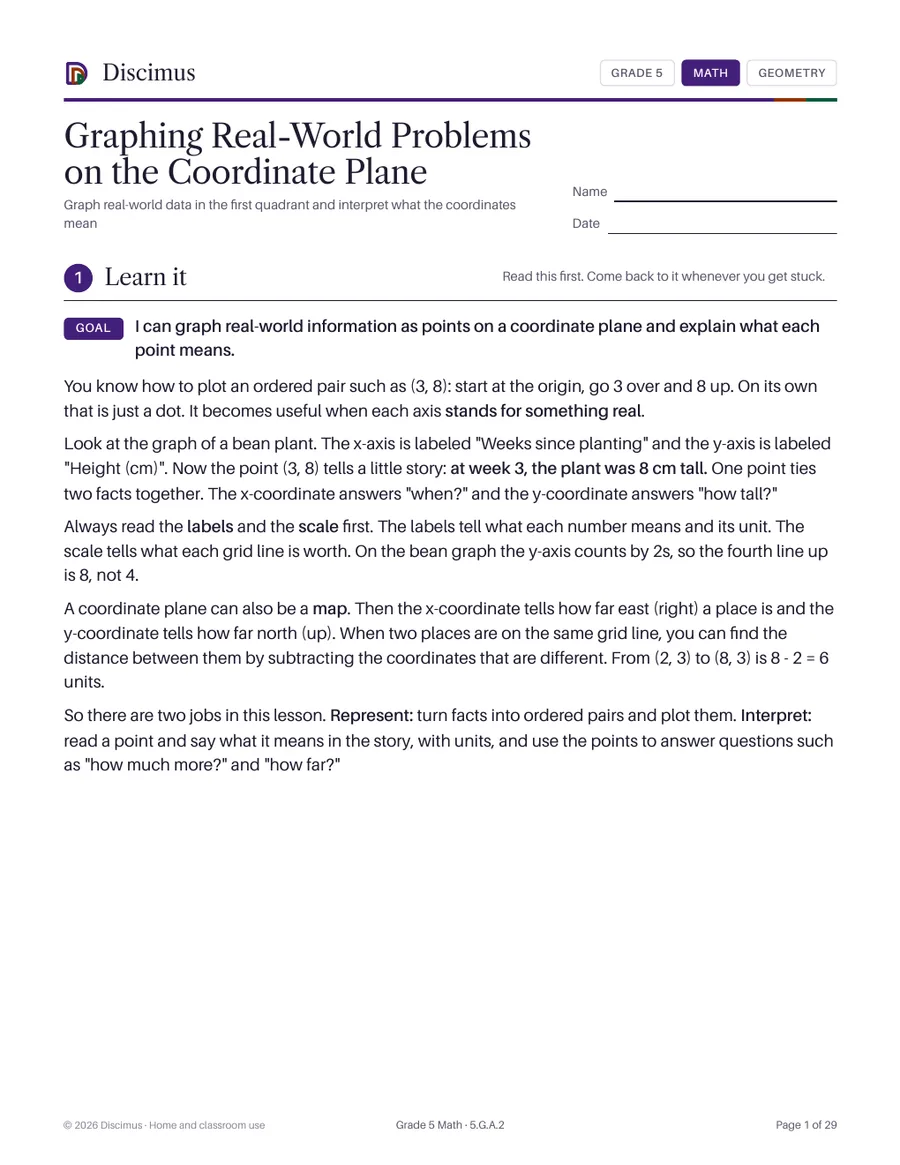
Graph real-world data in the first quadrant and interpret what the coordinates mean
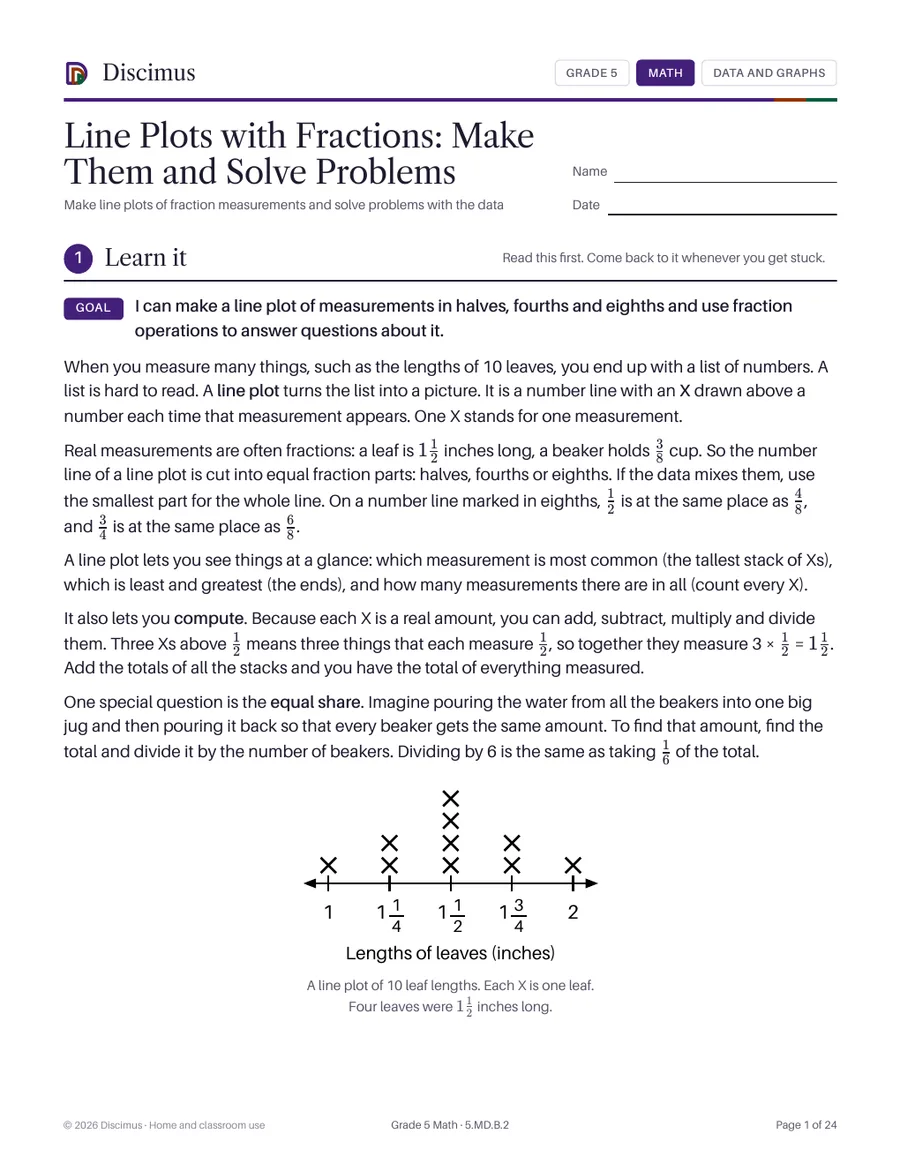
Make line plots of fraction measurements and solve problems with the data
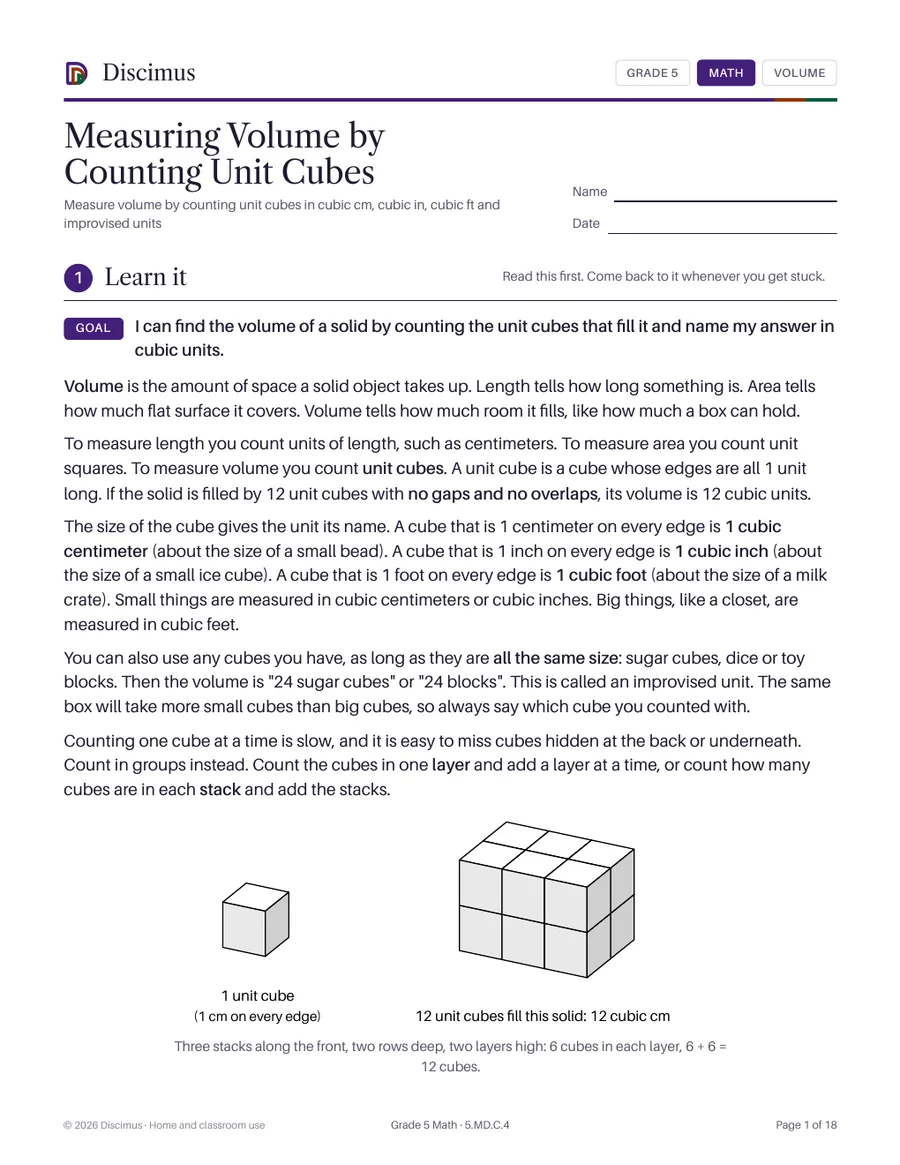
Measure volume by counting unit cubes in cubic cm, cubic in, cubic ft and improvised units
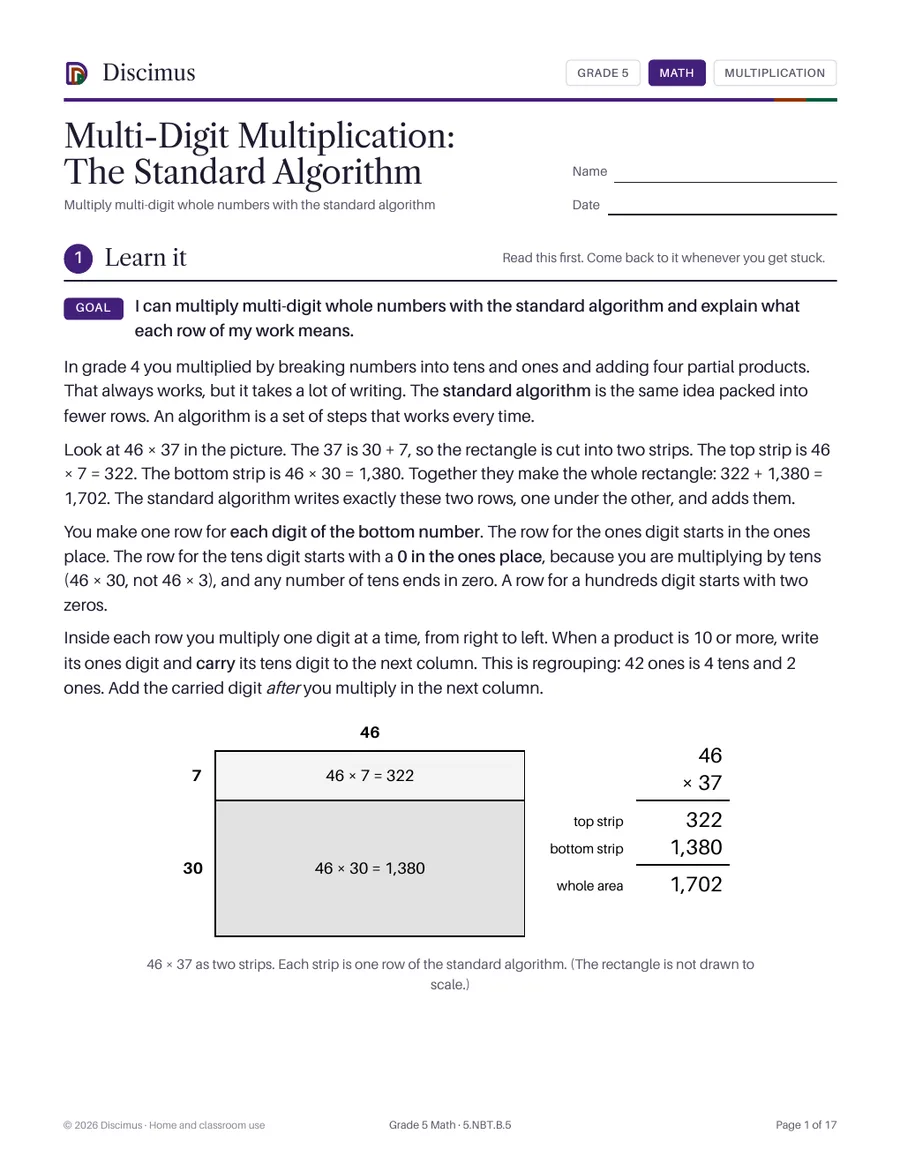
Multiply multi-digit whole numbers with the standard algorithm
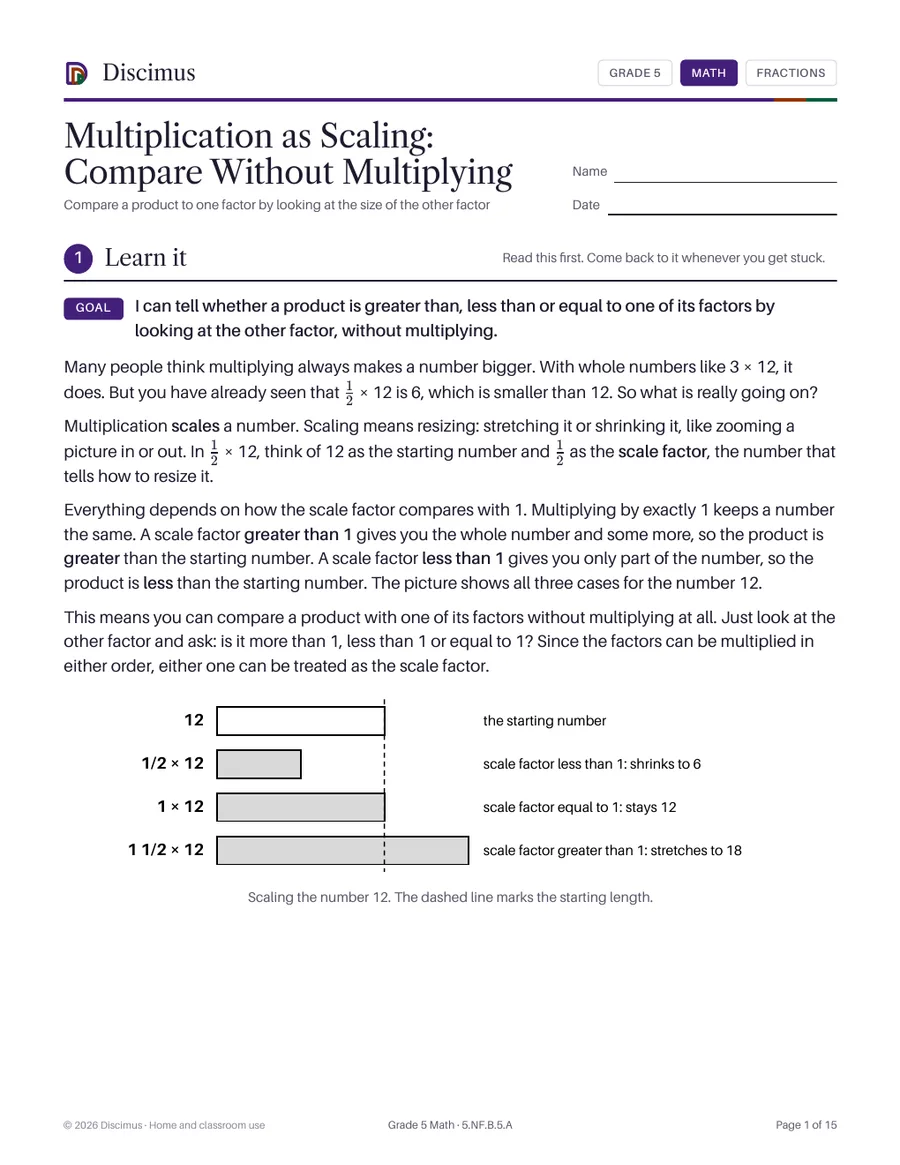
Compare a product to one factor by looking at the size of the other factor
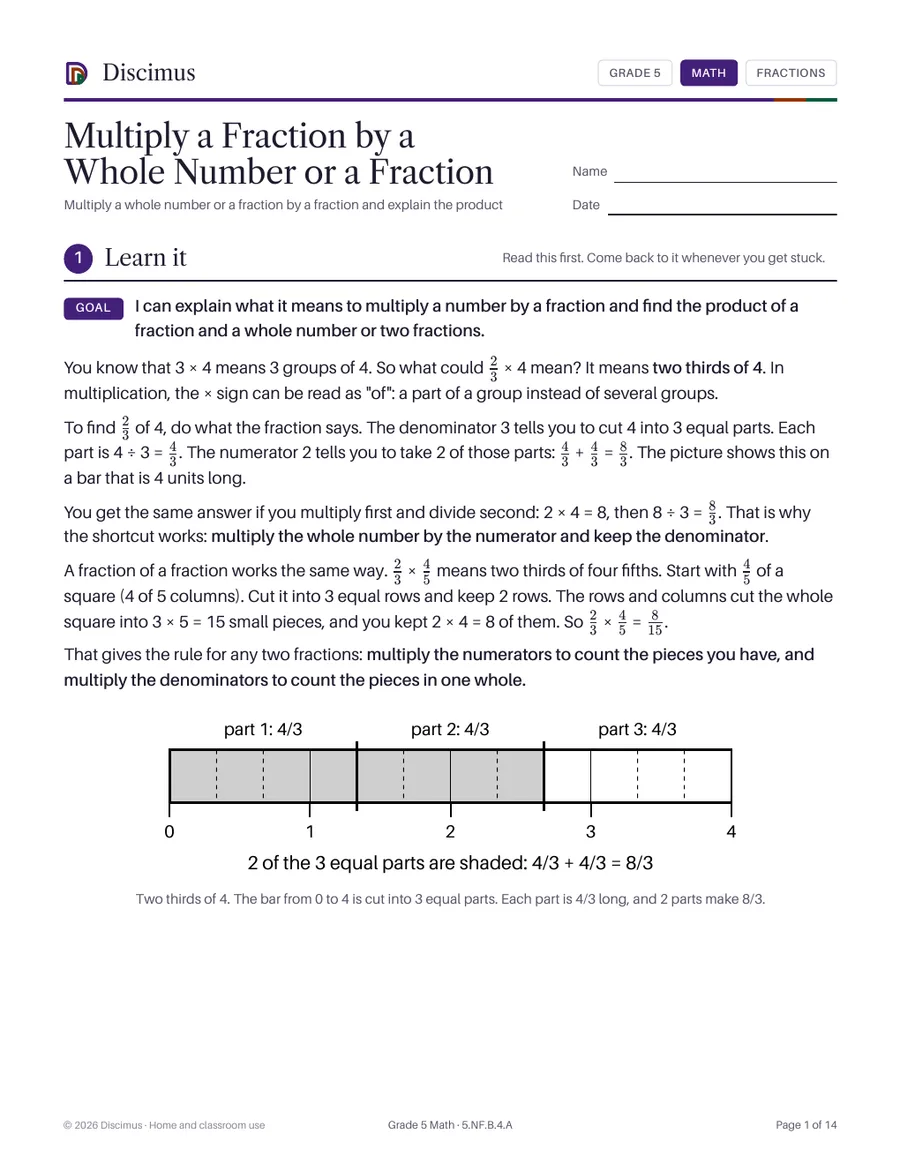
Multiply a whole number or a fraction by a fraction and explain the product
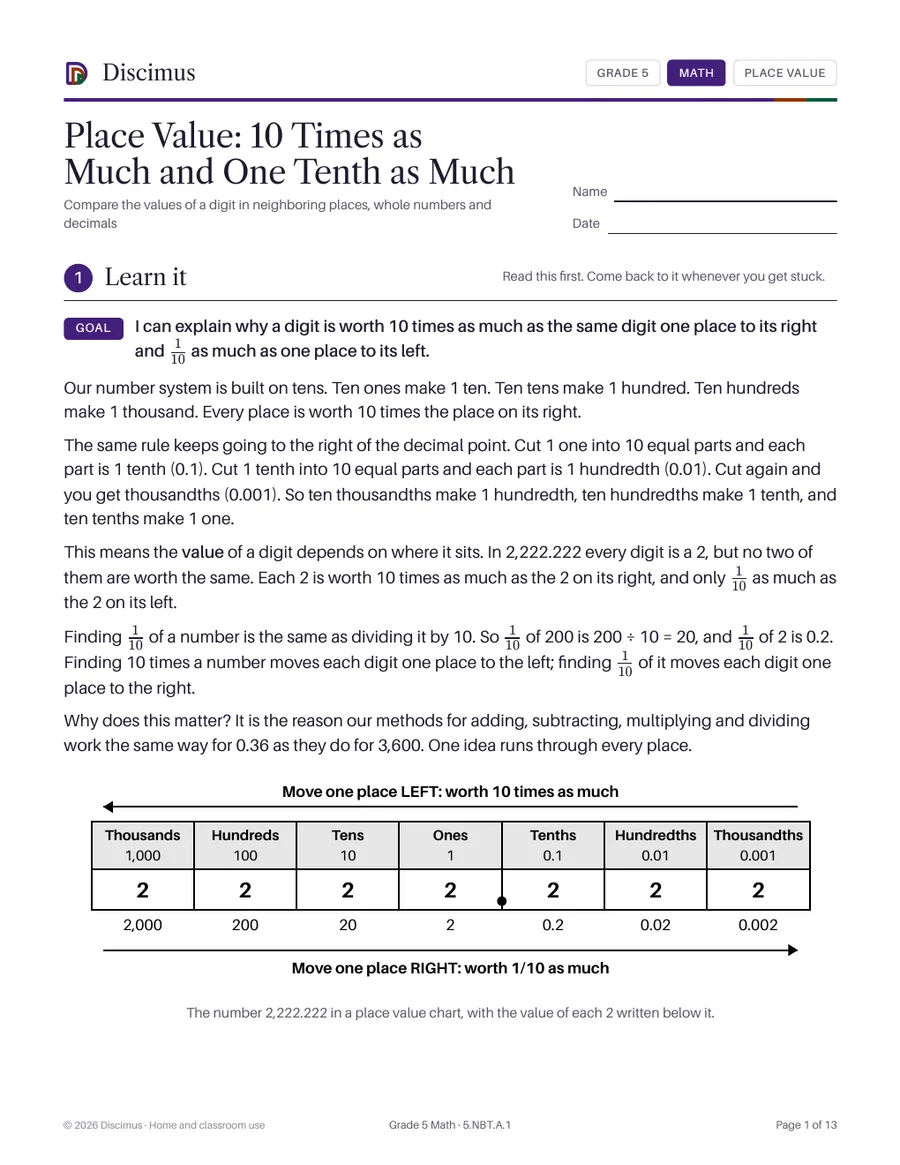
Compare the values of a digit in neighboring places, whole numbers and decimals
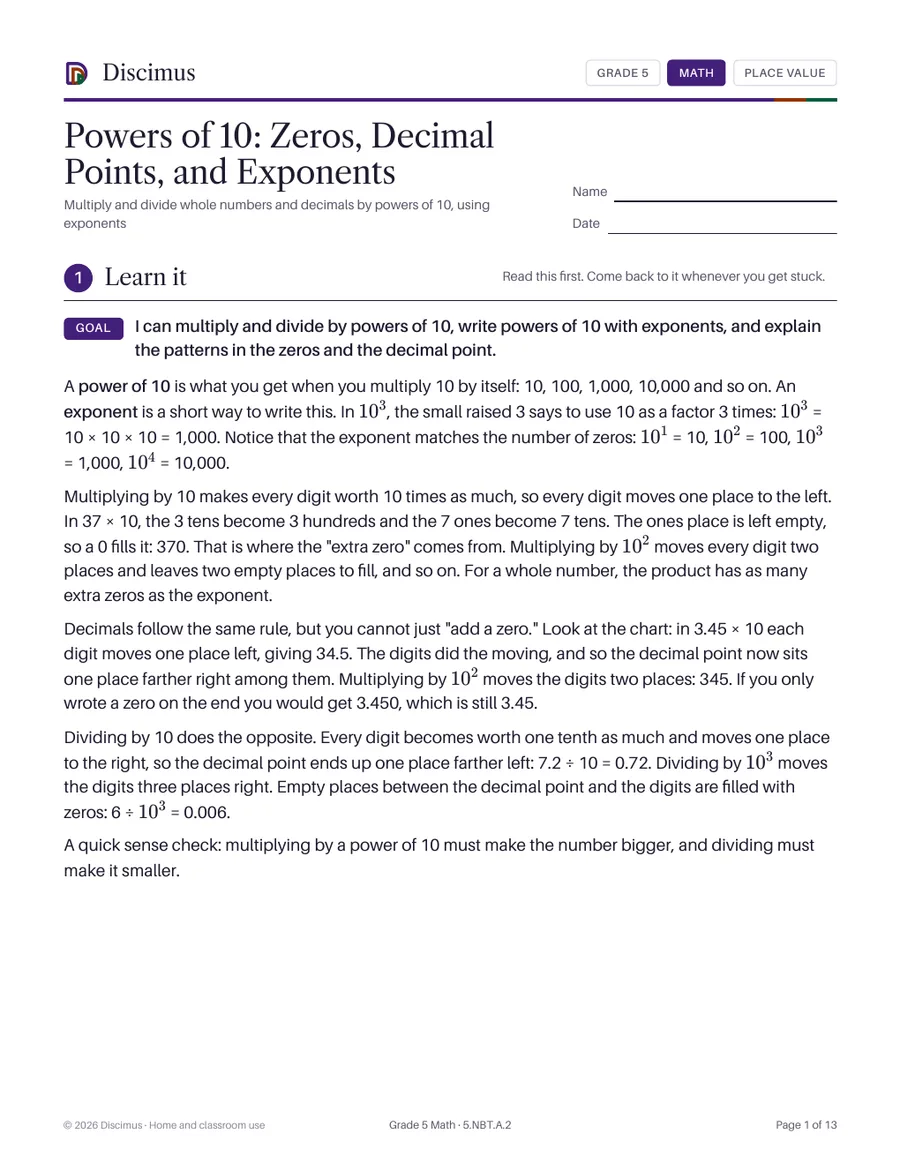
Multiply and divide whole numbers and decimals by powers of 10, using exponents
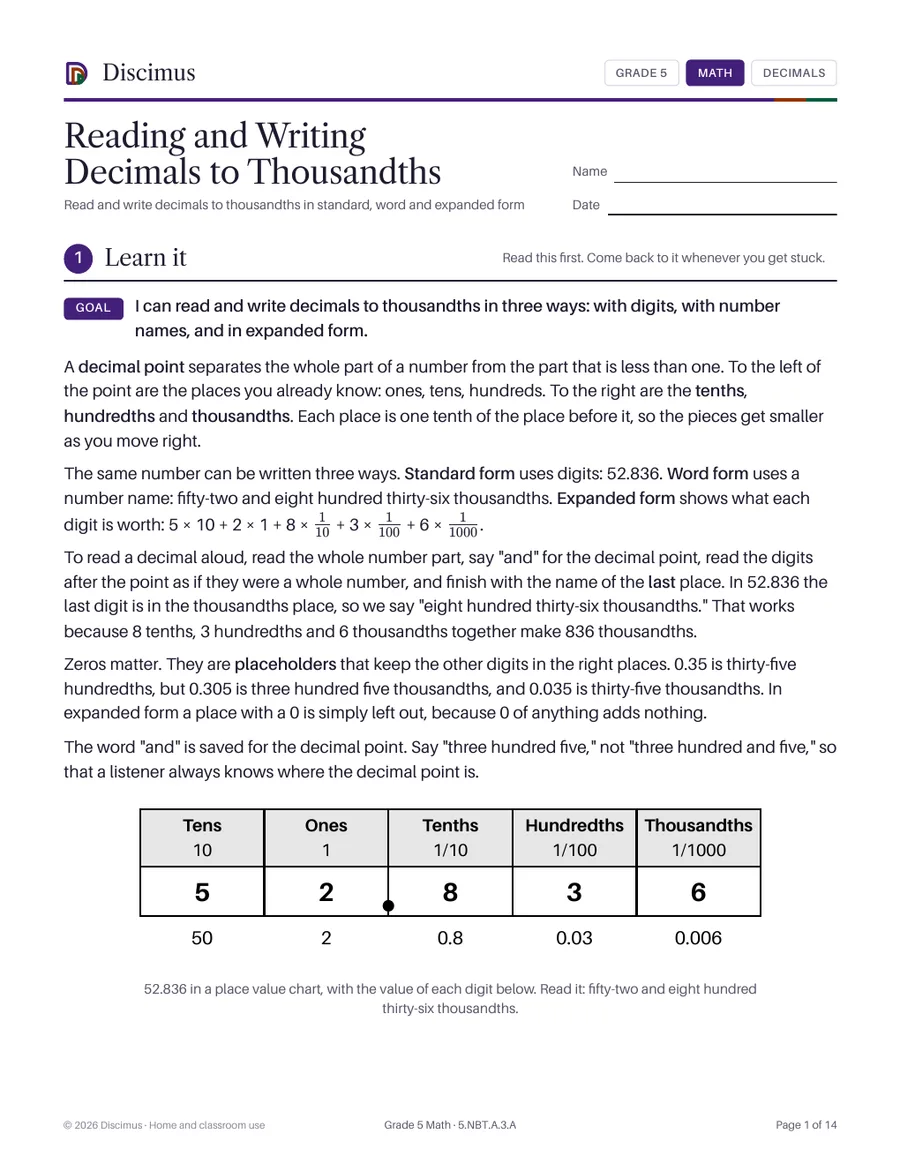
Read and write decimals to thousandths in standard, word and expanded form
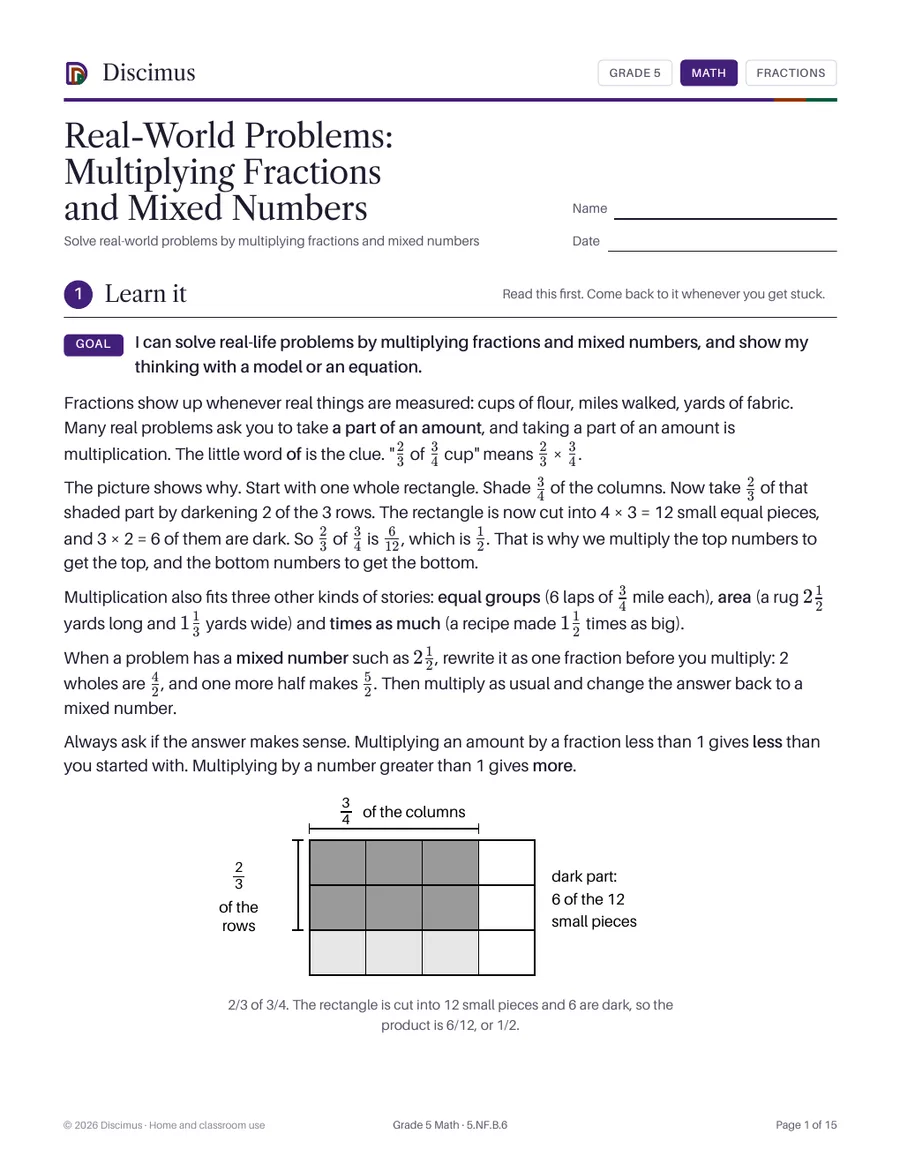
Solve real-world problems by multiplying fractions and mixed numbers
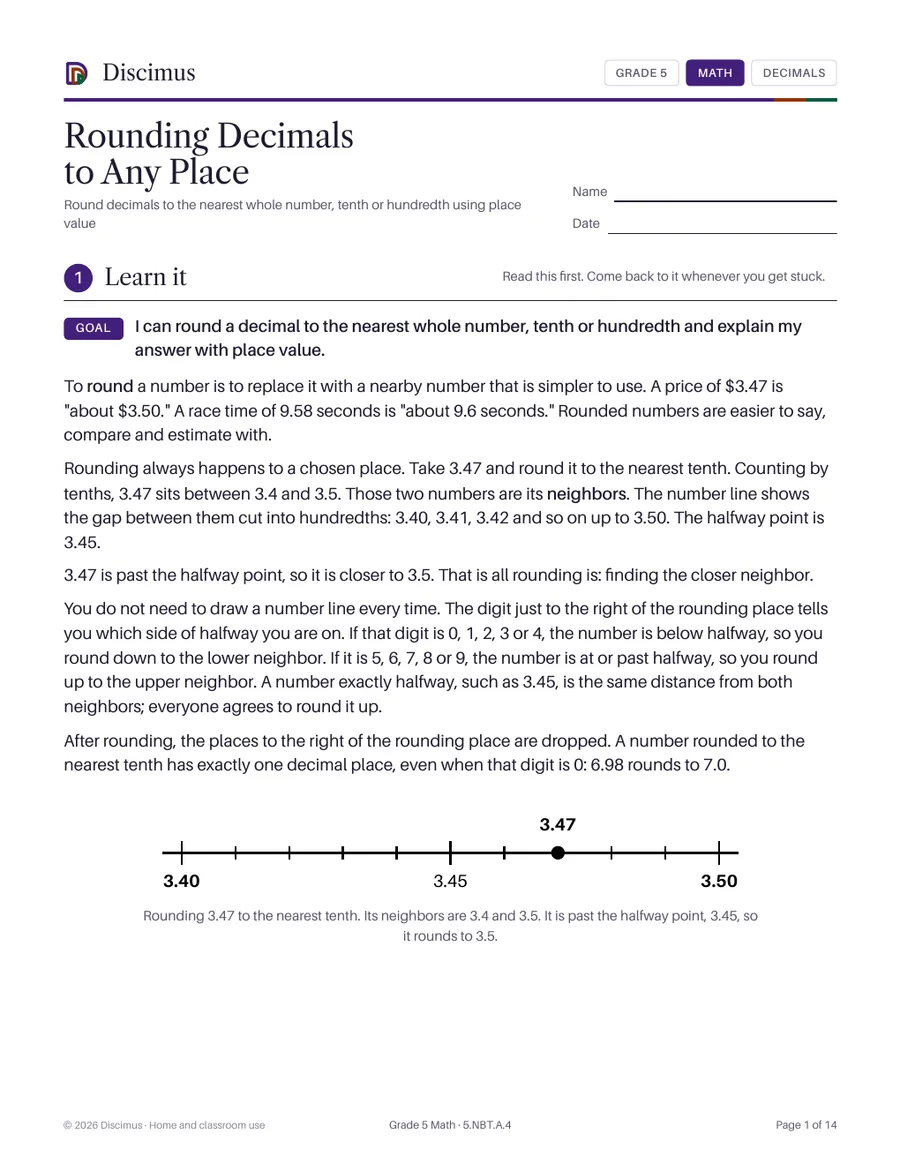
Round decimals to the nearest whole number, tenth or hundredth using place value
Reason that attributes of a category of 2D figures belong to all its subcategories
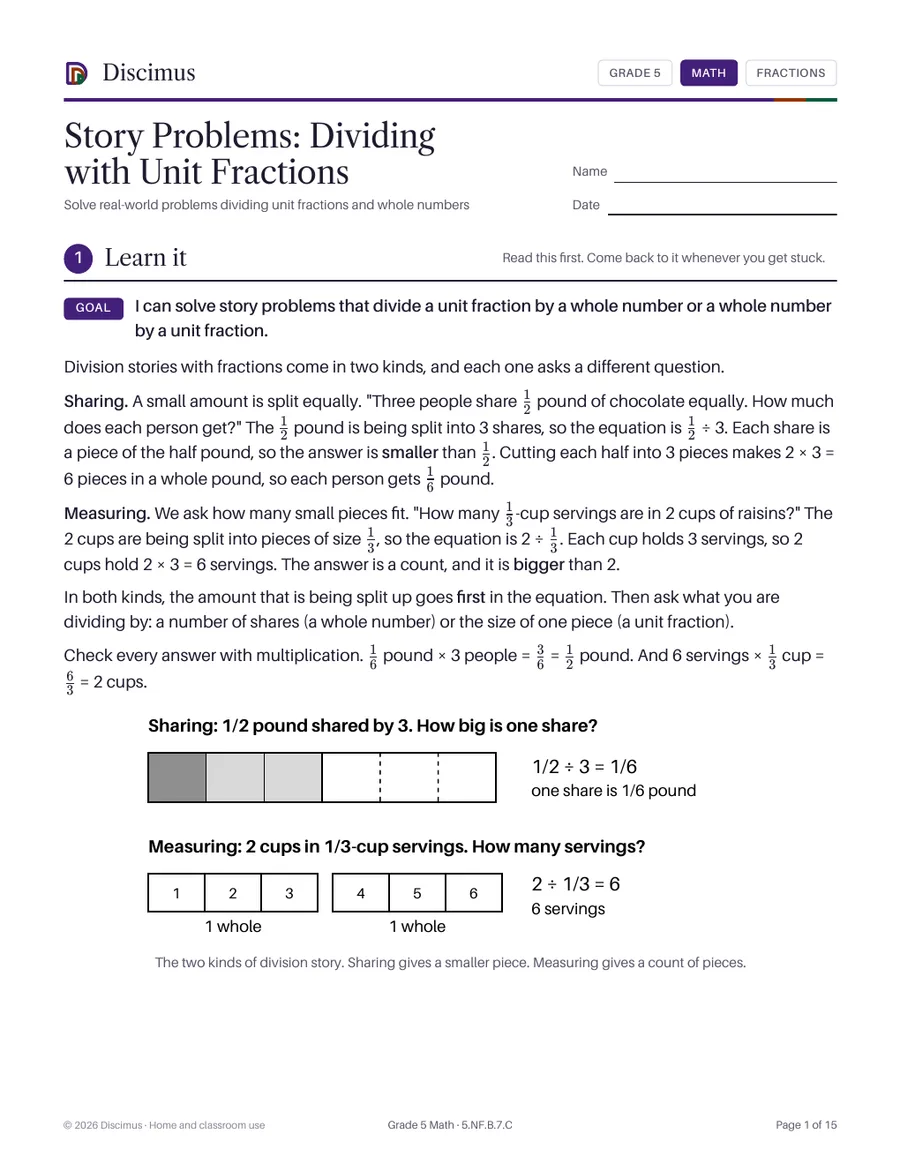
Solve real-world problems dividing unit fractions and whole numbers
Name and plot points in the first quadrant using axes, the origin and ordered pairs
Generate two patterns, relate corresponding terms, and graph the ordered pairs
Understand that a solid packed by n unit cubes without gaps or overlaps has volume n
Find the volume of a right rectangular prism using V = l × w × h and V = B × h
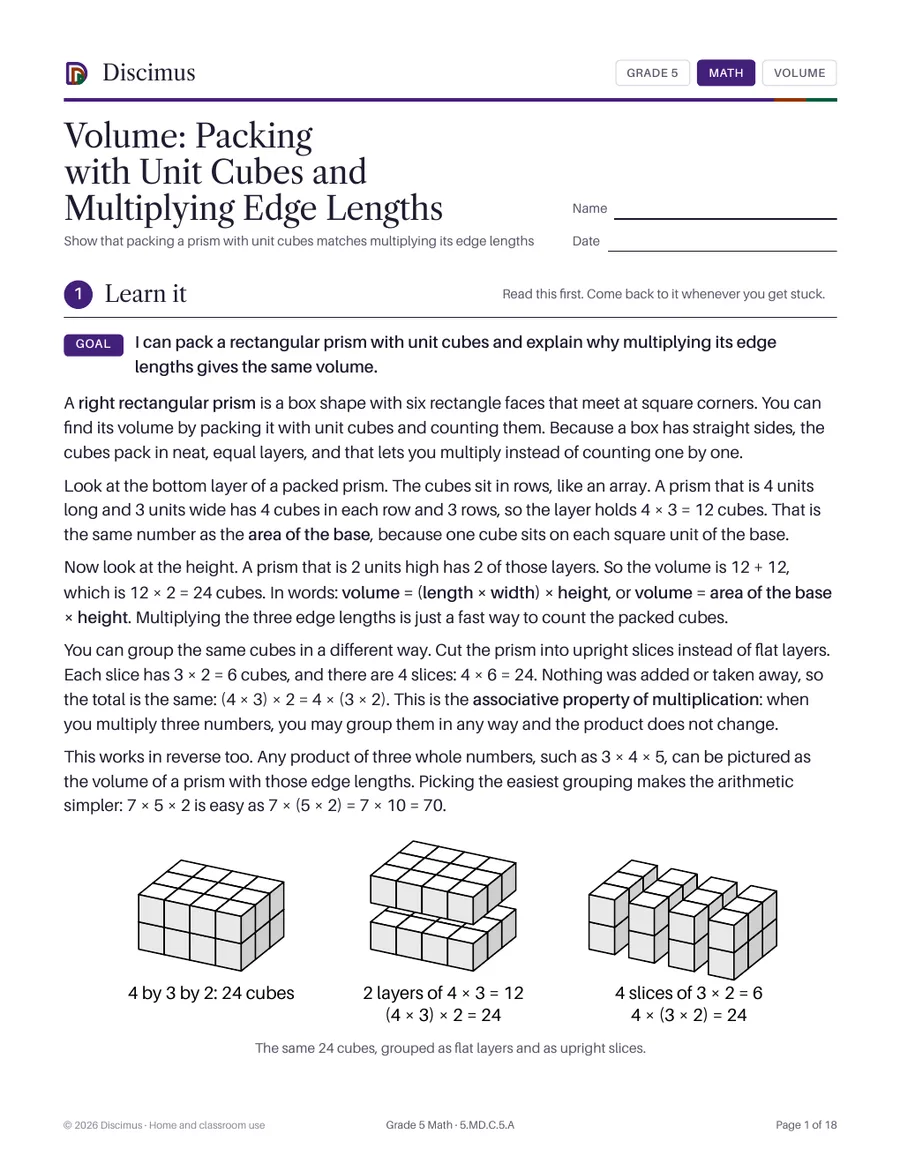
Show that packing a prism with unit cubes matches multiplying its edge lengths
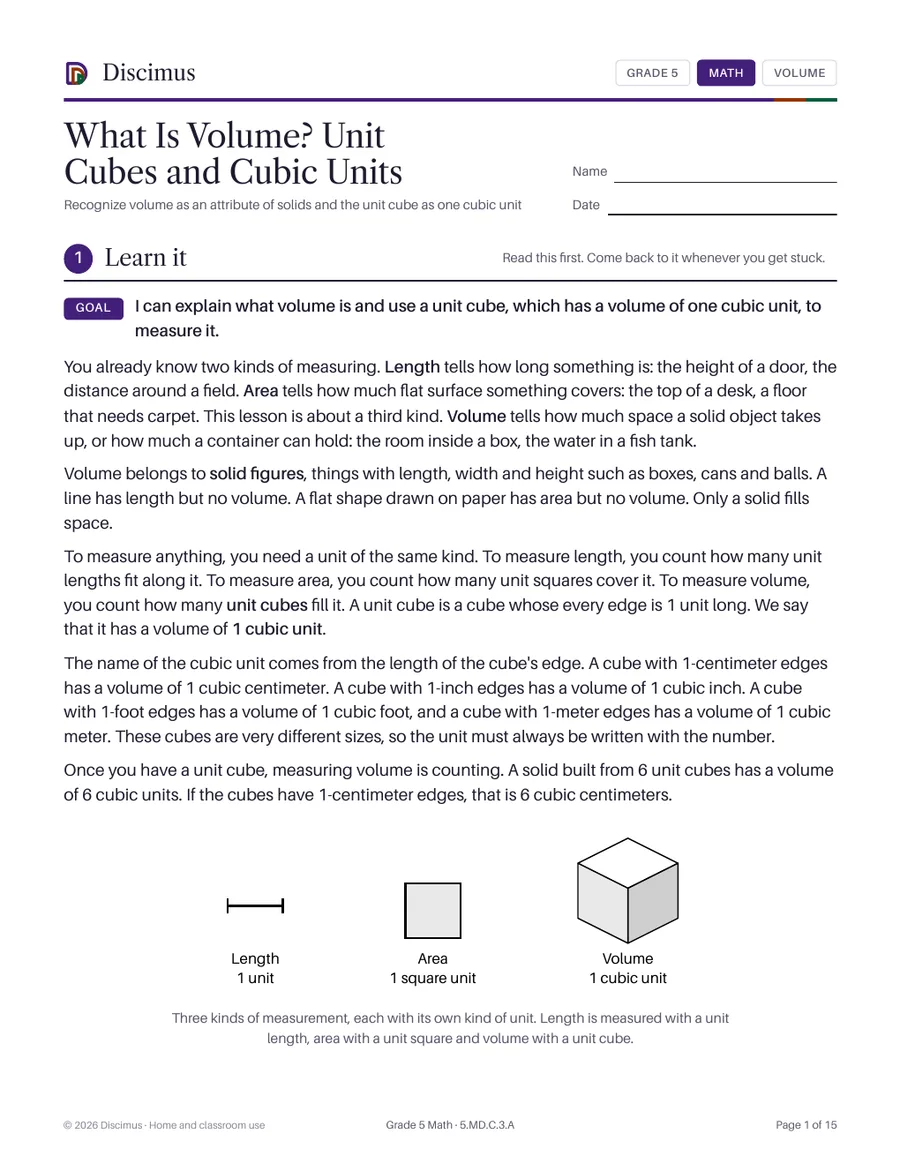
Recognize volume as an attribute of solids and the unit cube as one cubic unit
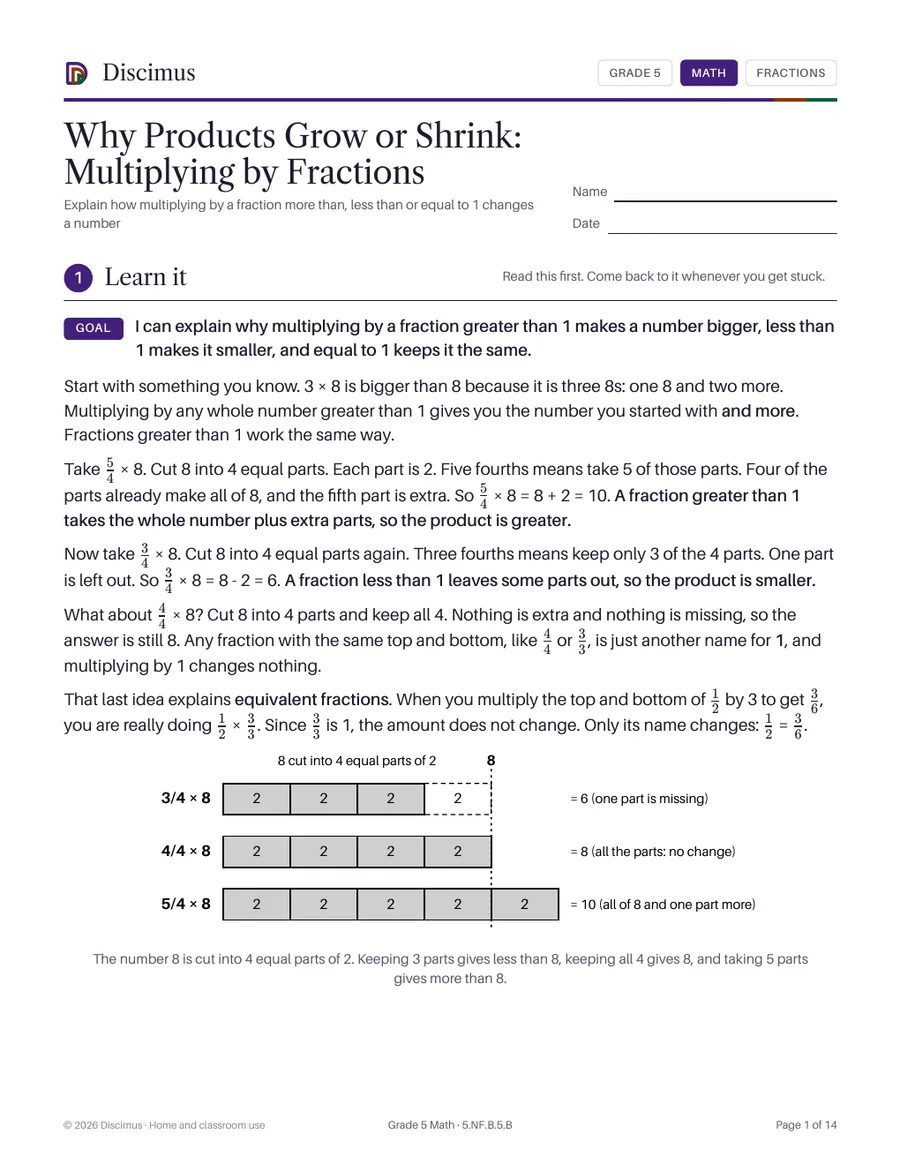
Explain how multiplying by a fraction more than, less than or equal to 1 changes a number
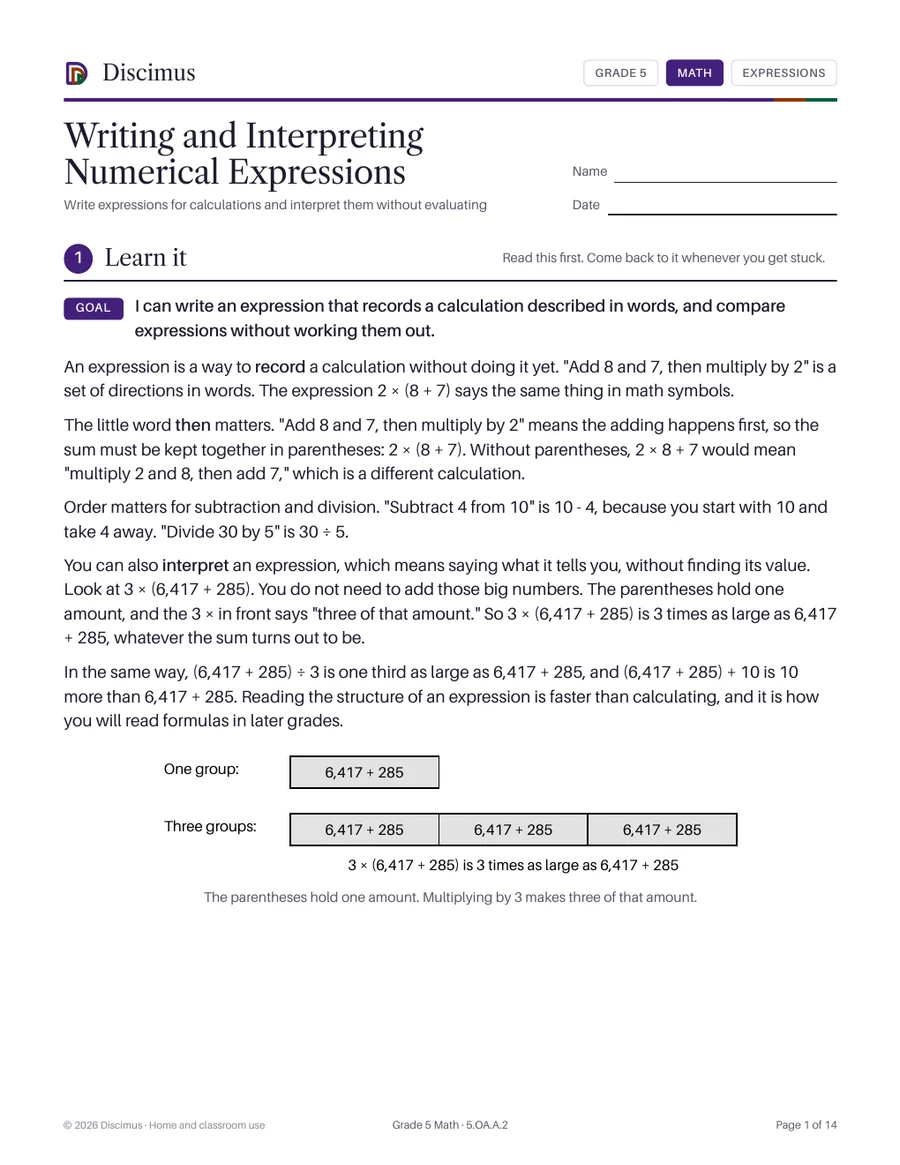
Write expressions for calculations and interpret them without evaluating
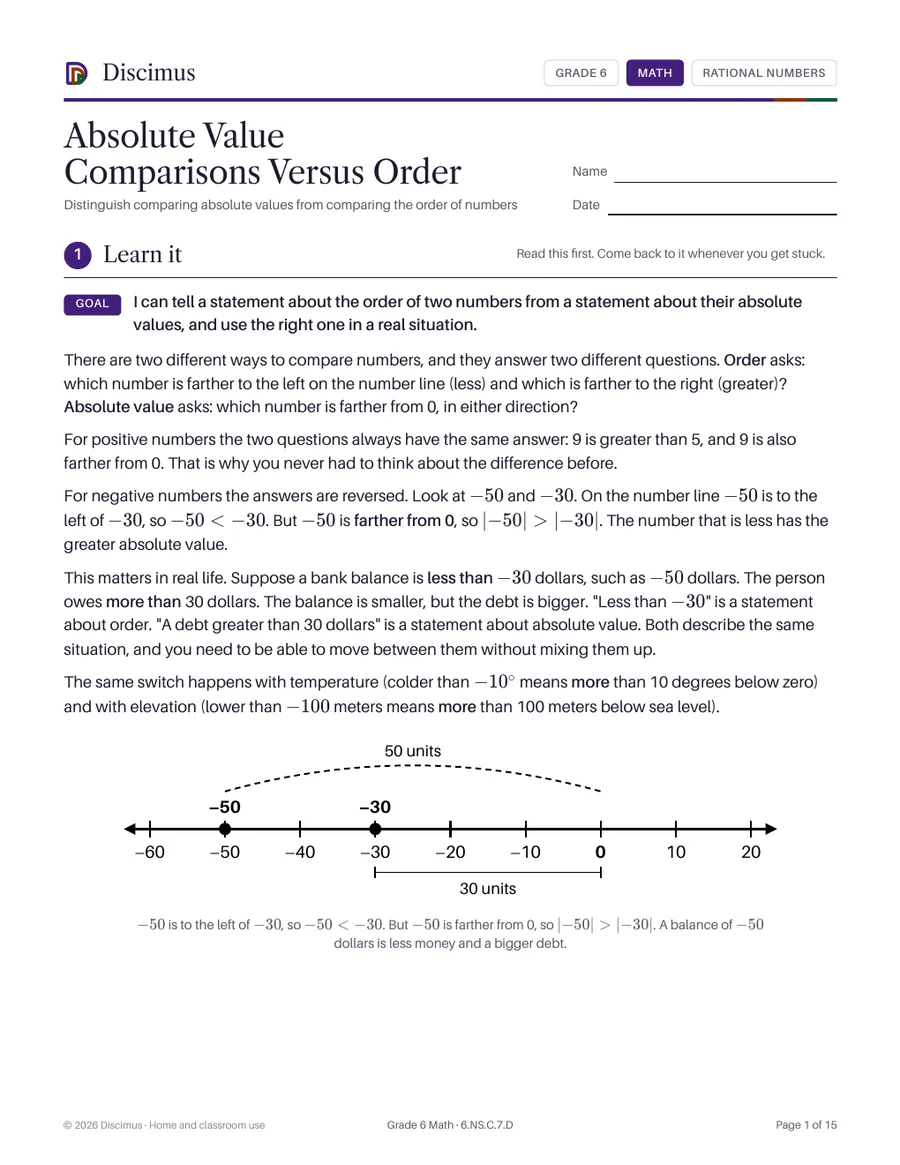
Distinguish comparing absolute values from comparing the order of numbers
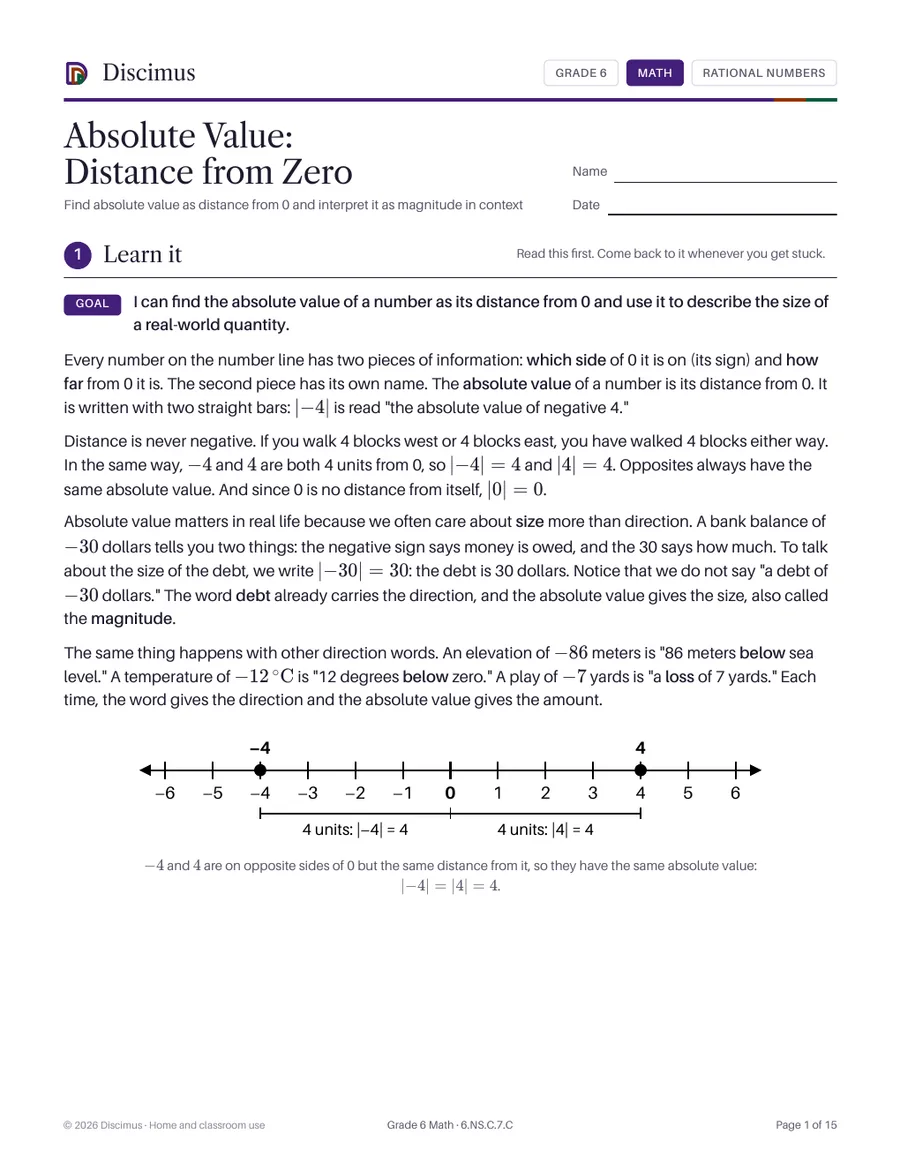
Find absolute value as distance from 0 and interpret it as magnitude in context
Add, subtract, multiply and divide multi-digit decimals with the standard algorithms
Find areas of triangles, quadrilaterals and polygons by composing and decomposing
Tell measures of center from measures of variation and explain what each describes
Choose measures of center and variability to fit the shape and context of the data
Write, interpret and explain inequalities for rational numbers in real-world contexts
Convert measurement units with ratio reasoning and keep track of units in calculations
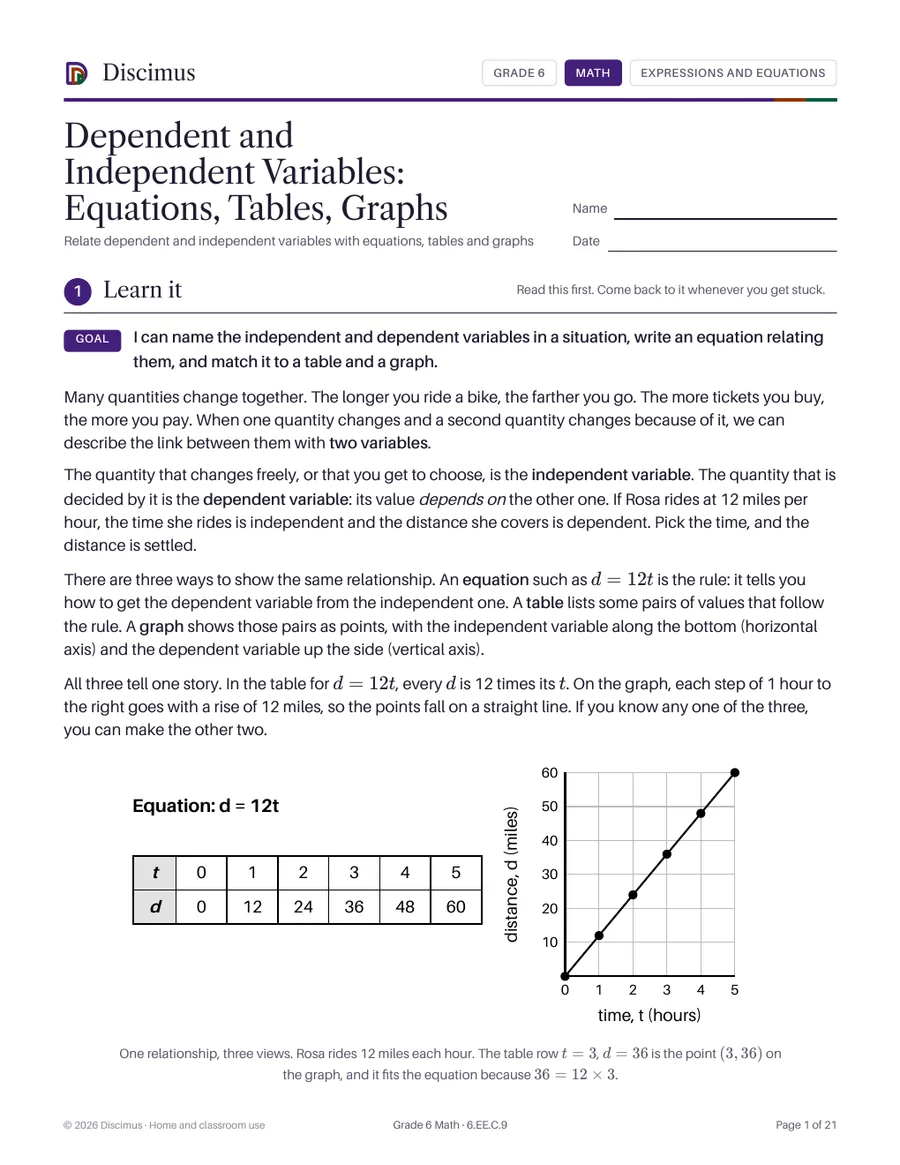
Relate dependent and independent variables with equations, tables and graphs
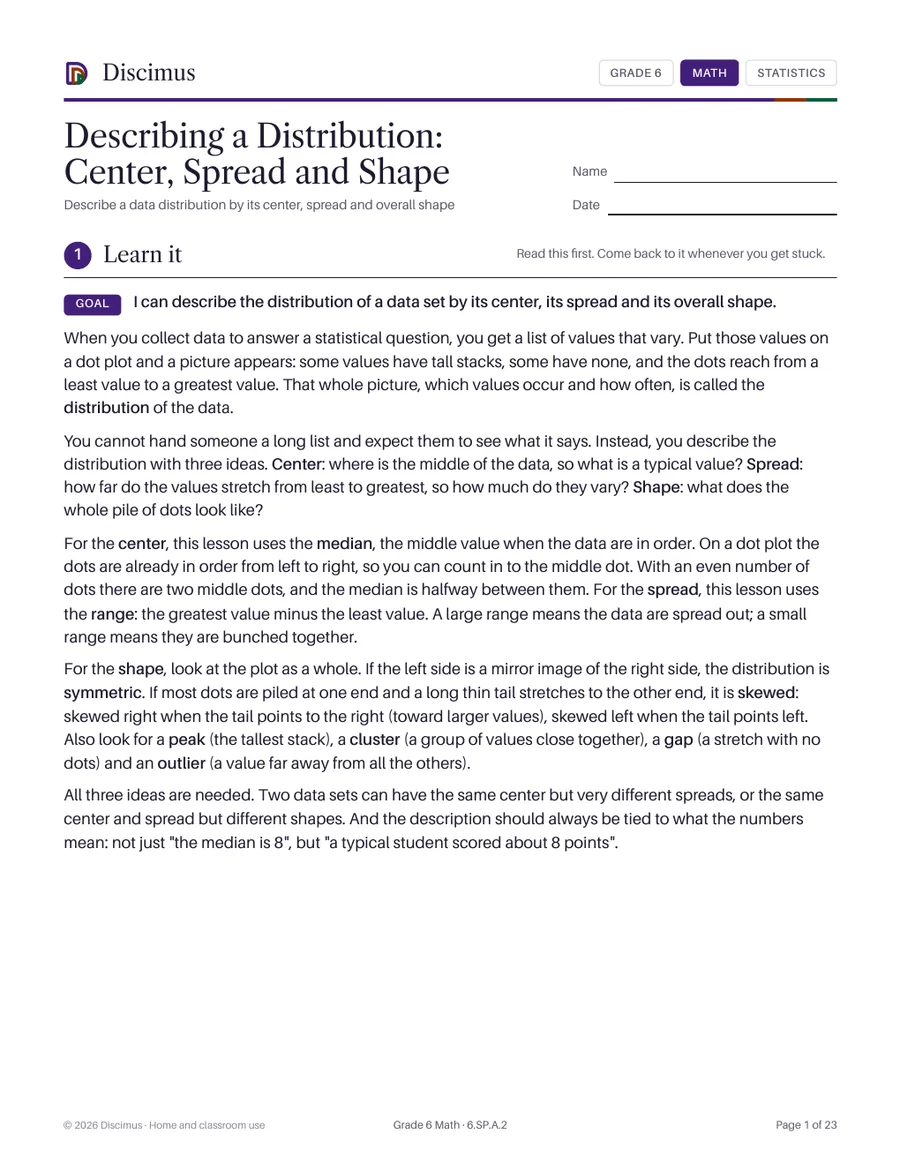
Describe a data distribution by its center, spread and overall shape
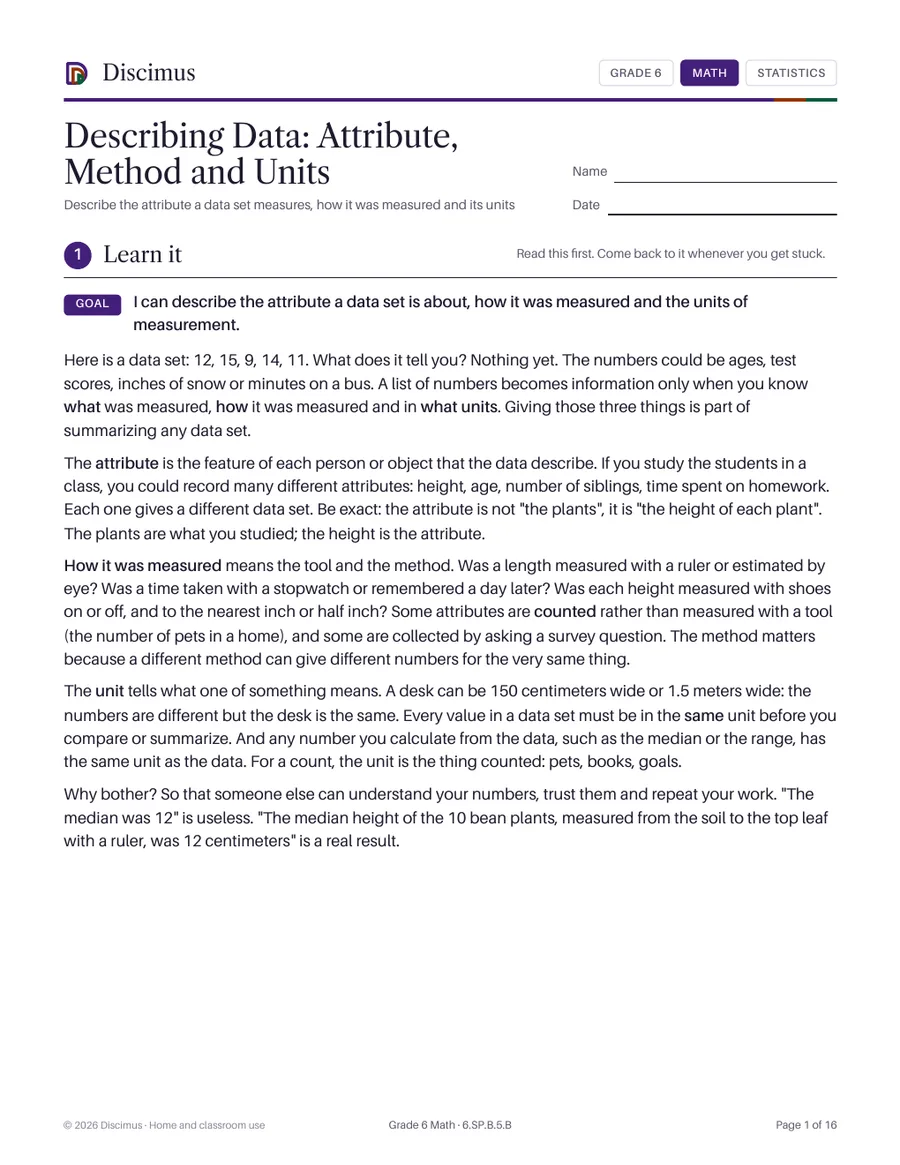
Describe the attribute a data set measures, how it was measured and its units
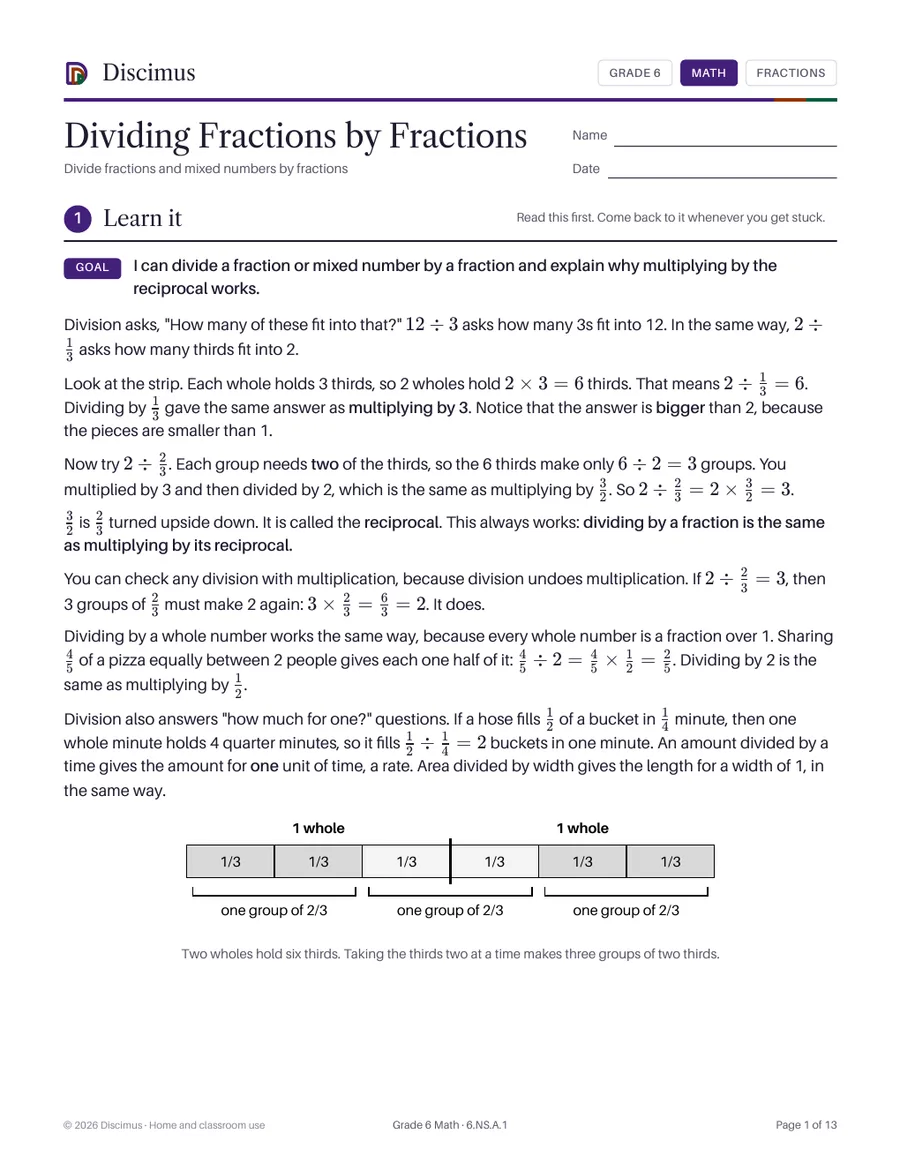
Divide fractions and mixed numbers by fractions
Display numerical data in dot plots, histograms and box plots
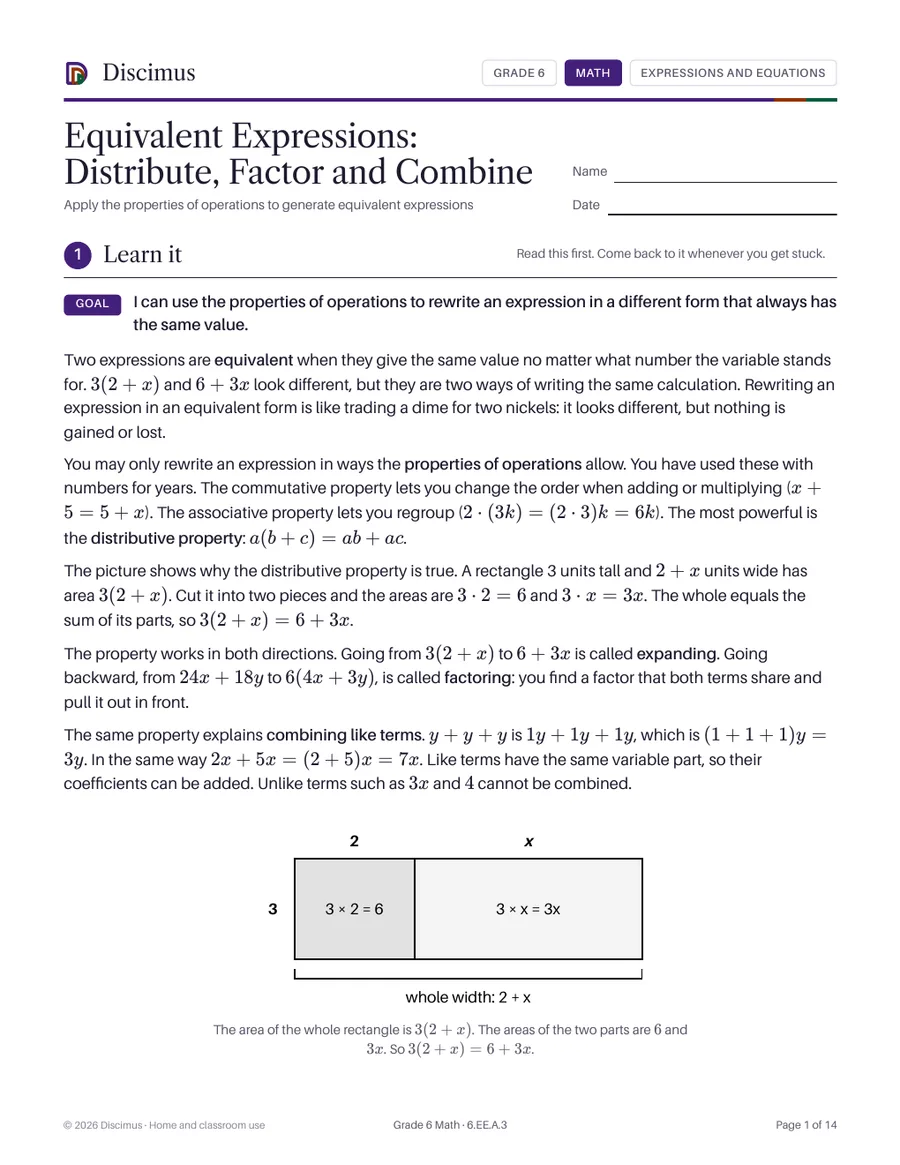
Apply the properties of operations to generate equivalent expressions
Evaluate expressions and formulas at given values using the order of operations
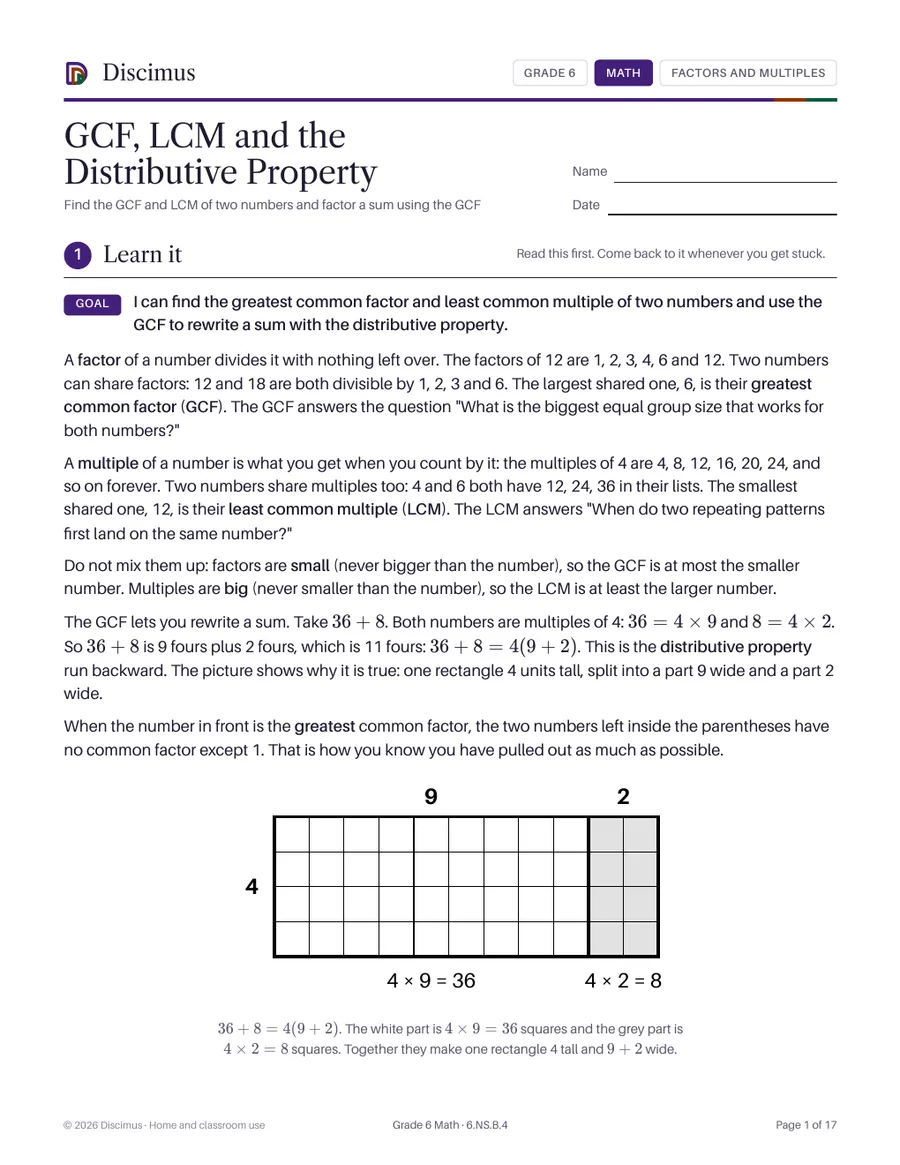
Find the GCF and LCM of two numbers and factor a sum using the GCF
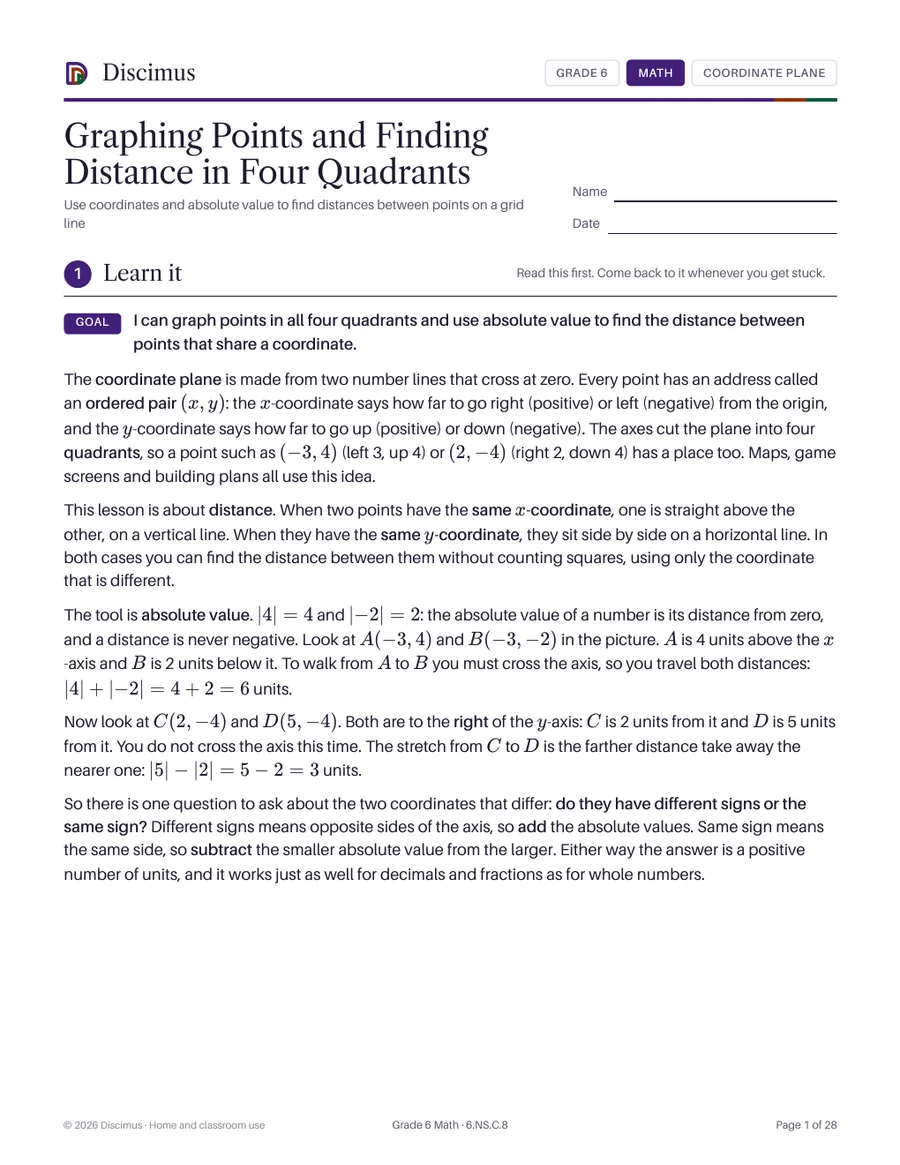
Use coordinates and absolute value to find distances between points on a grid line
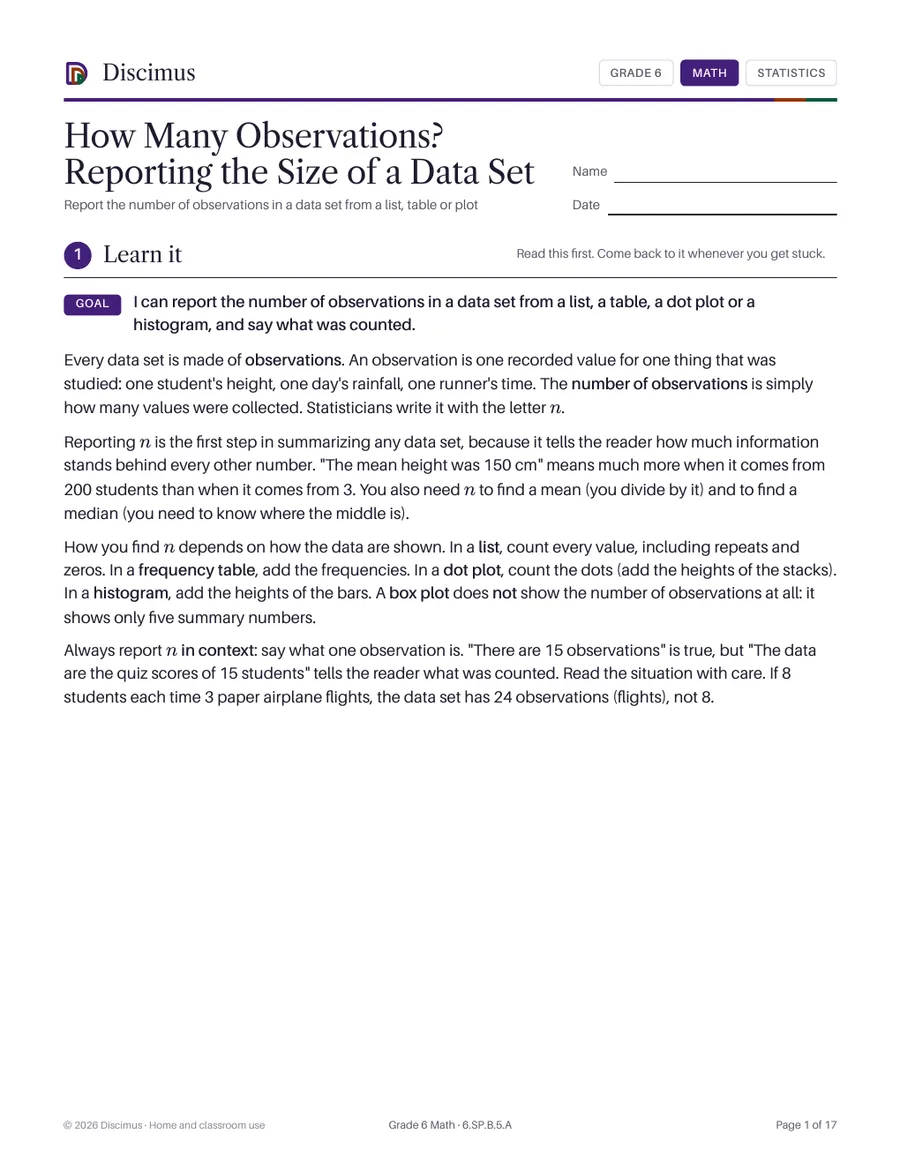
Report the number of observations in a data set from a list, table or plot
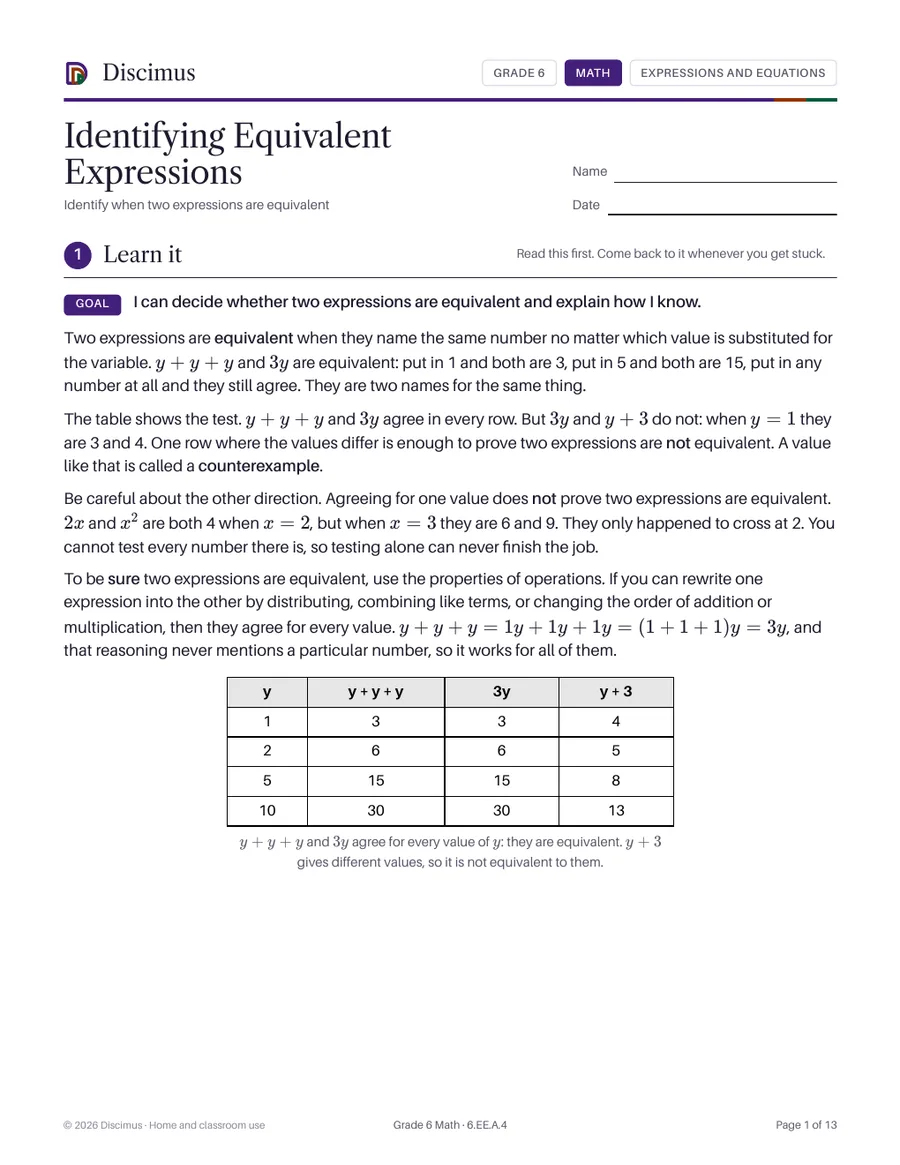
Identify when two expressions are equivalent
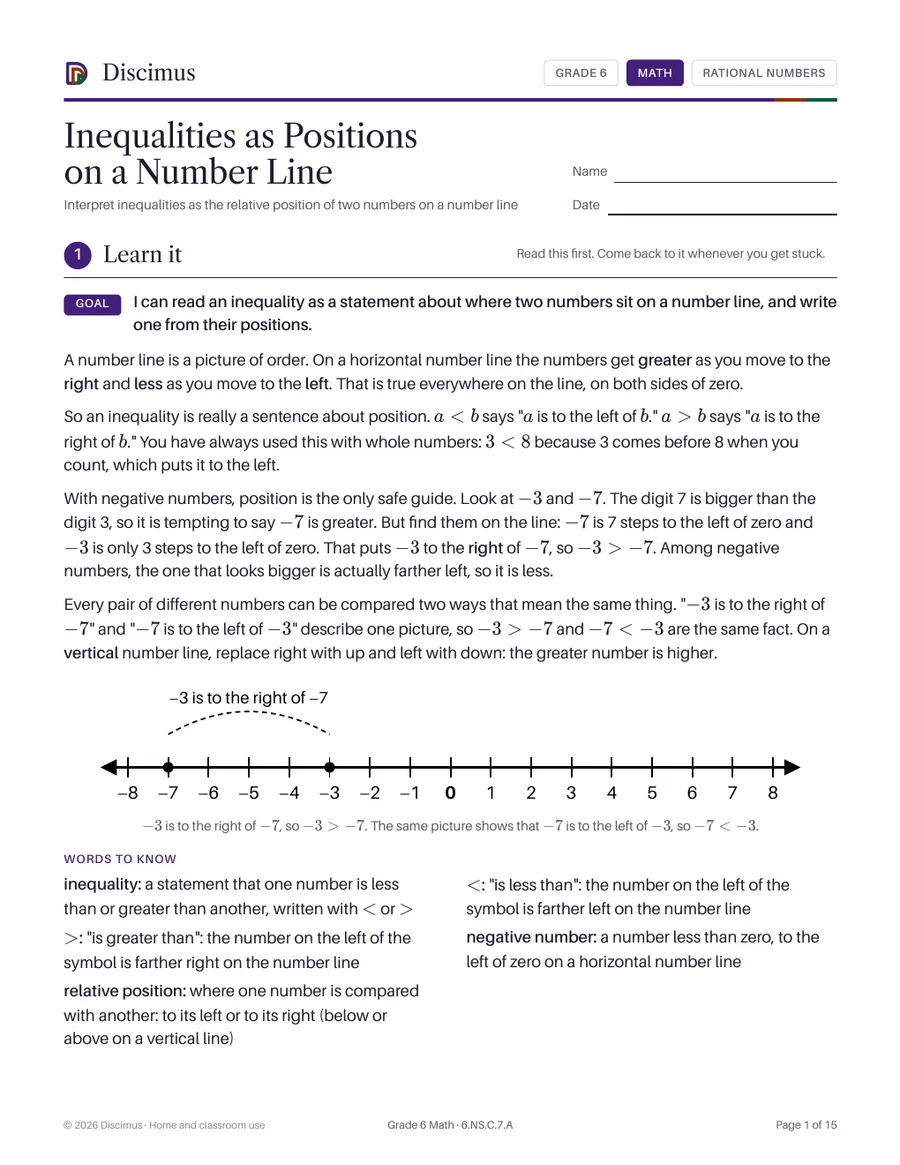
Interpret inequalities as the relative position of two numbers on a number line
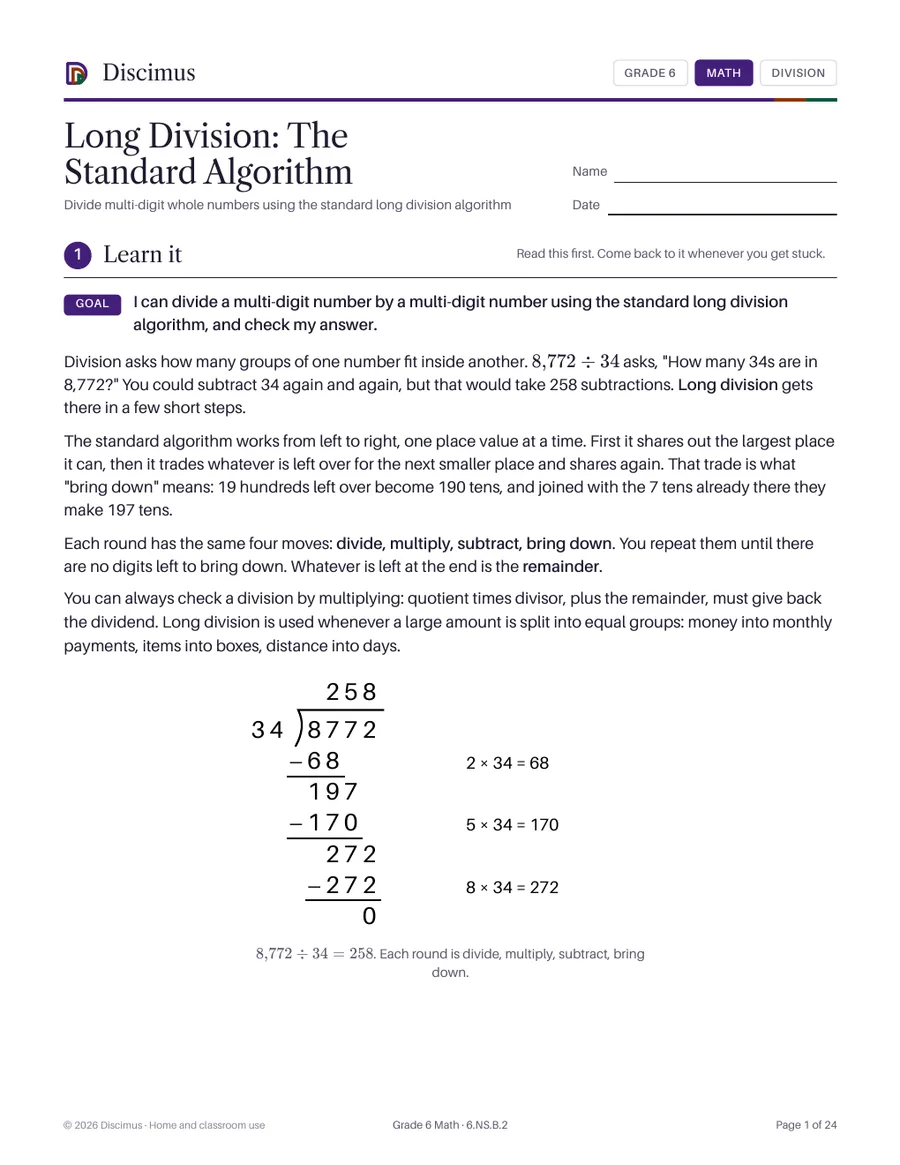
Divide multi-digit whole numbers using the standard long division algorithm
Represent prisms and pyramids with nets and use the nets to find surface area
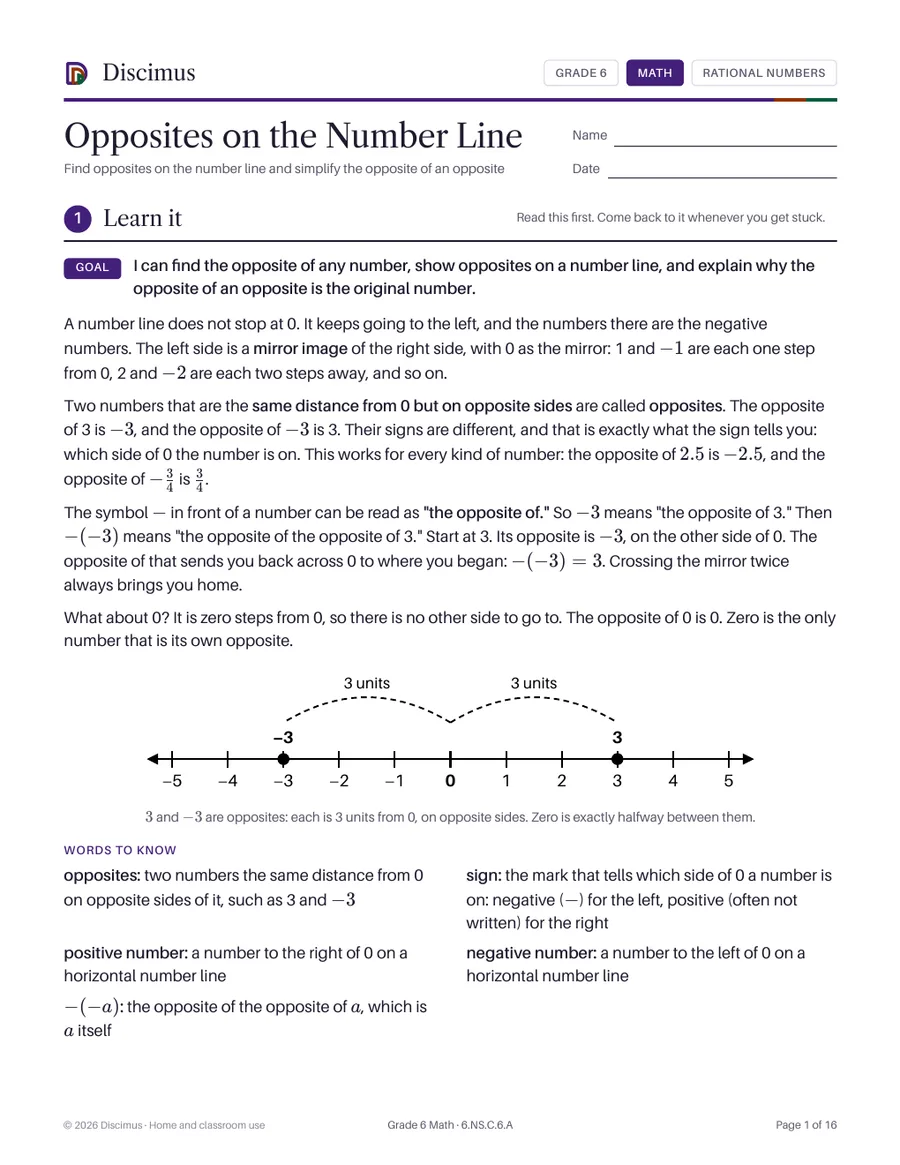
Find opposites on the number line and simplify the opposite of an opposite
Use coordinate signs to name quadrants and to reflect points across the axes
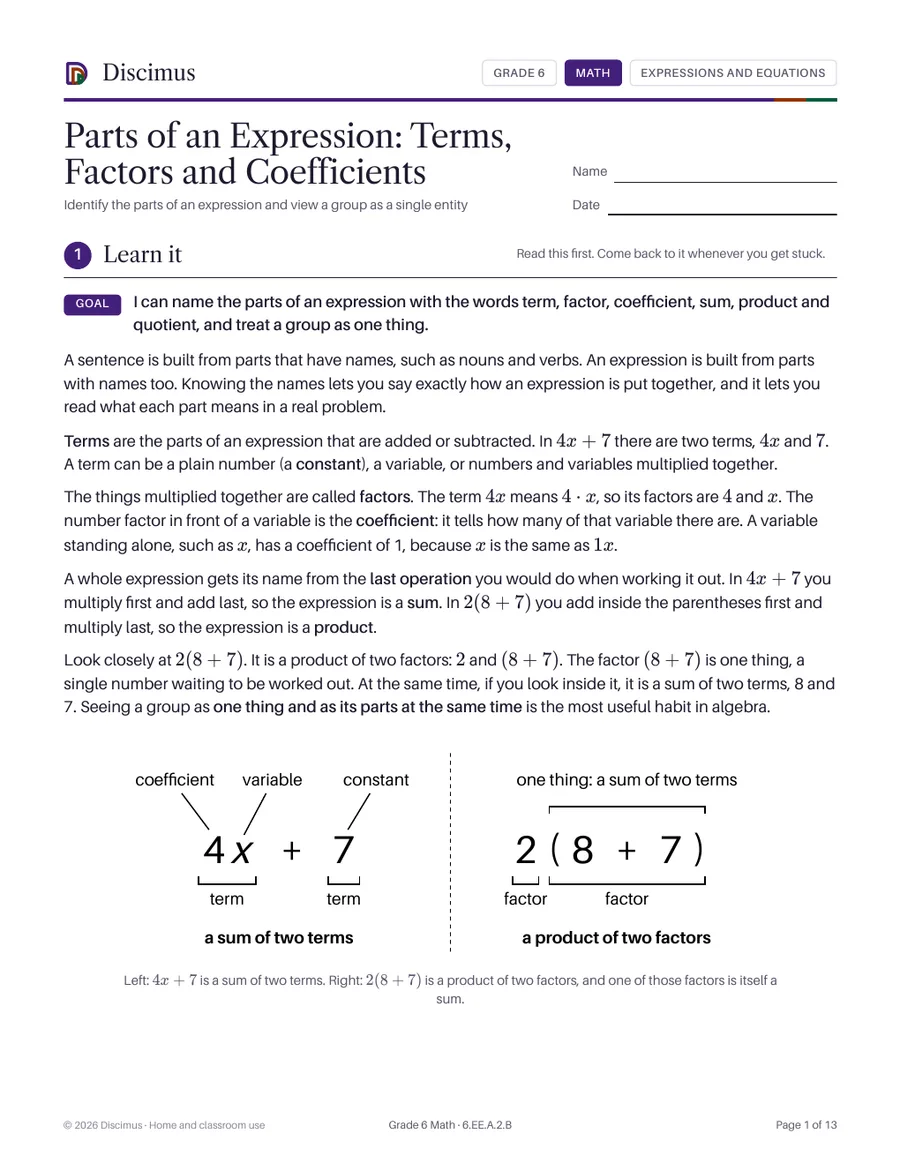
Identify the parts of an expression and view a group as a single entity
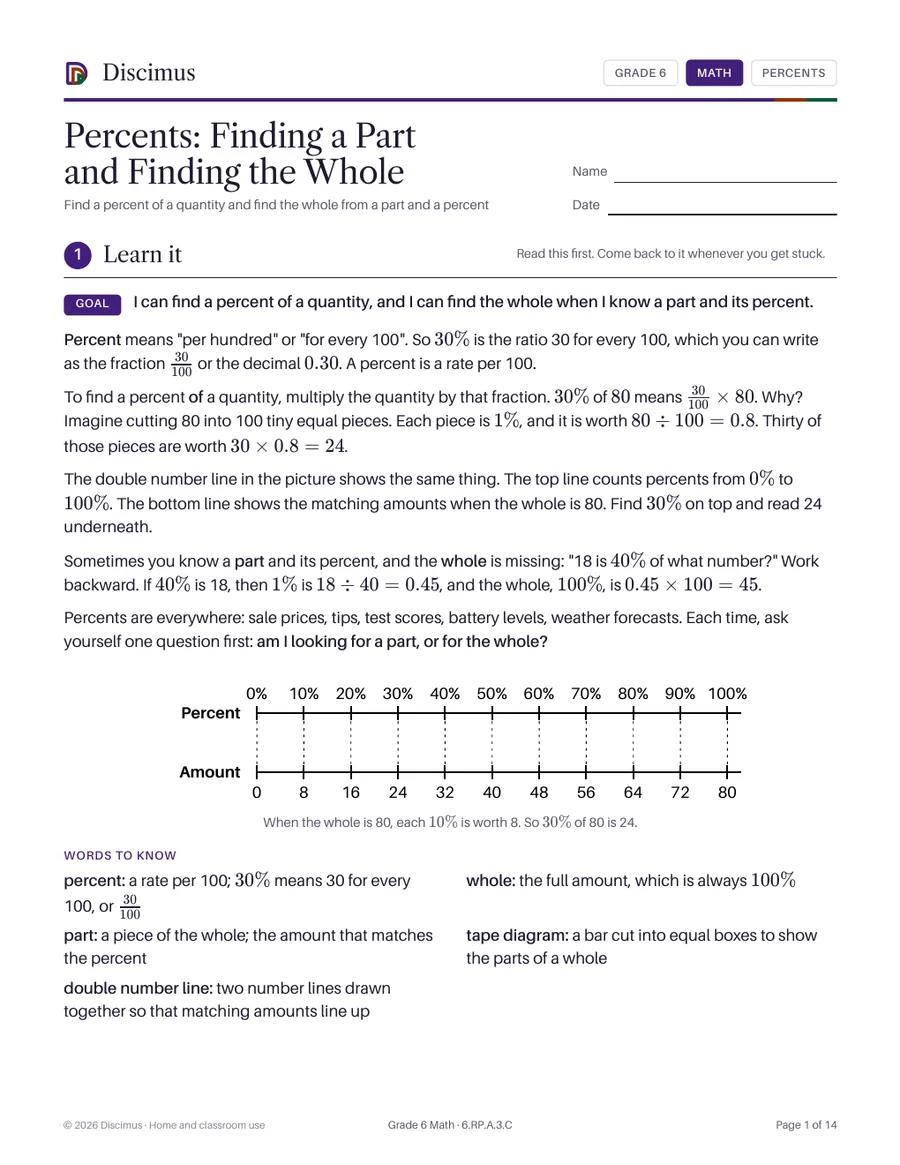
Find a percent of a quantity and find the whole from a part and a percent
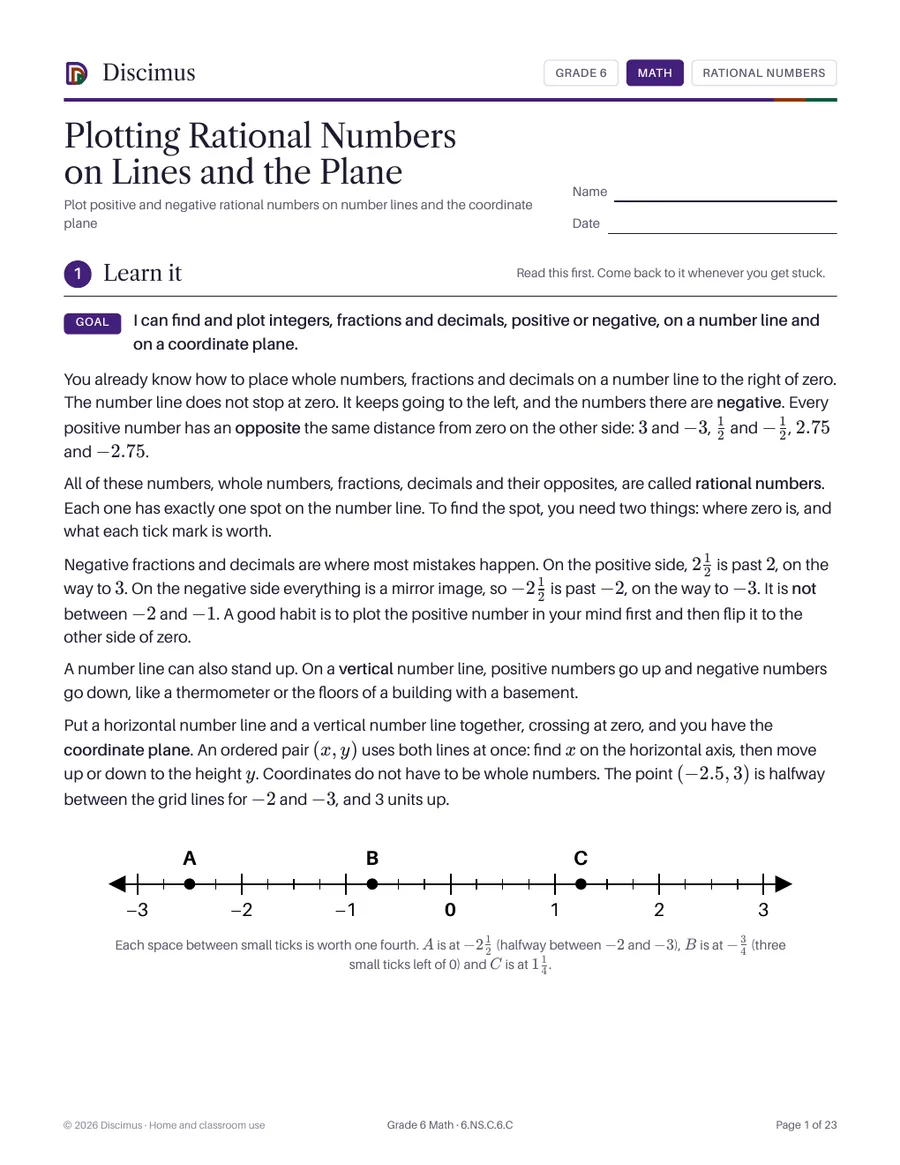
Plot positive and negative rational numbers on number lines and the coordinate plane
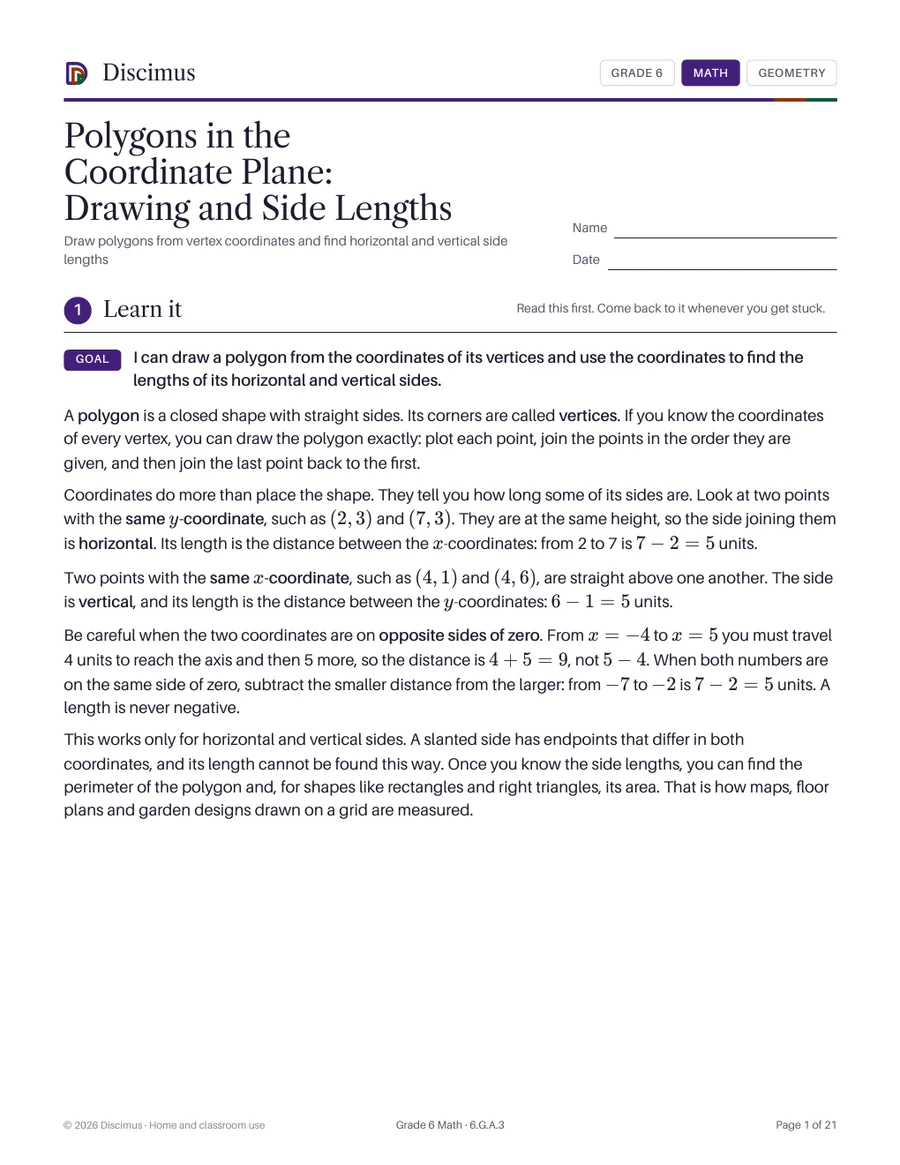
Draw polygons from vertex coordinates and find horizontal and vertical side lengths
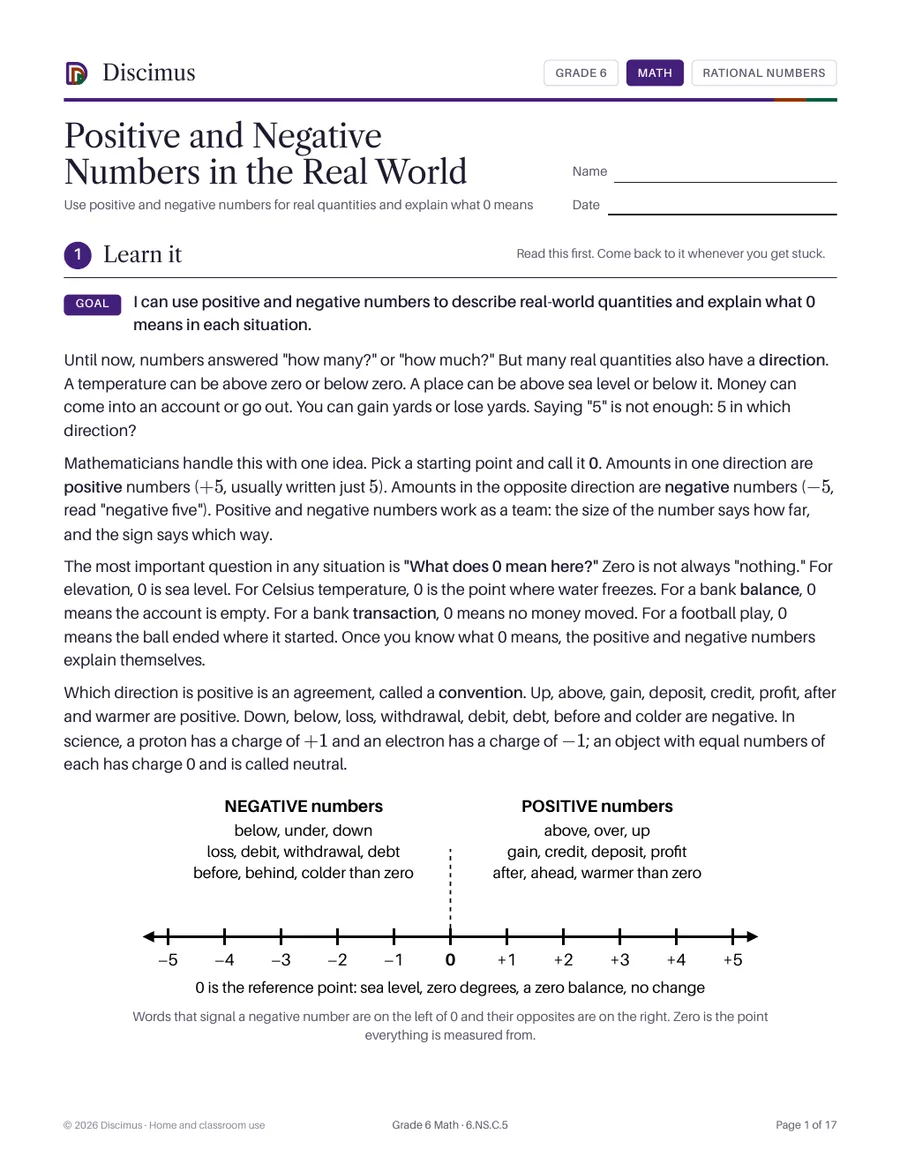
Use positive and negative numbers for real quantities and explain what 0 means
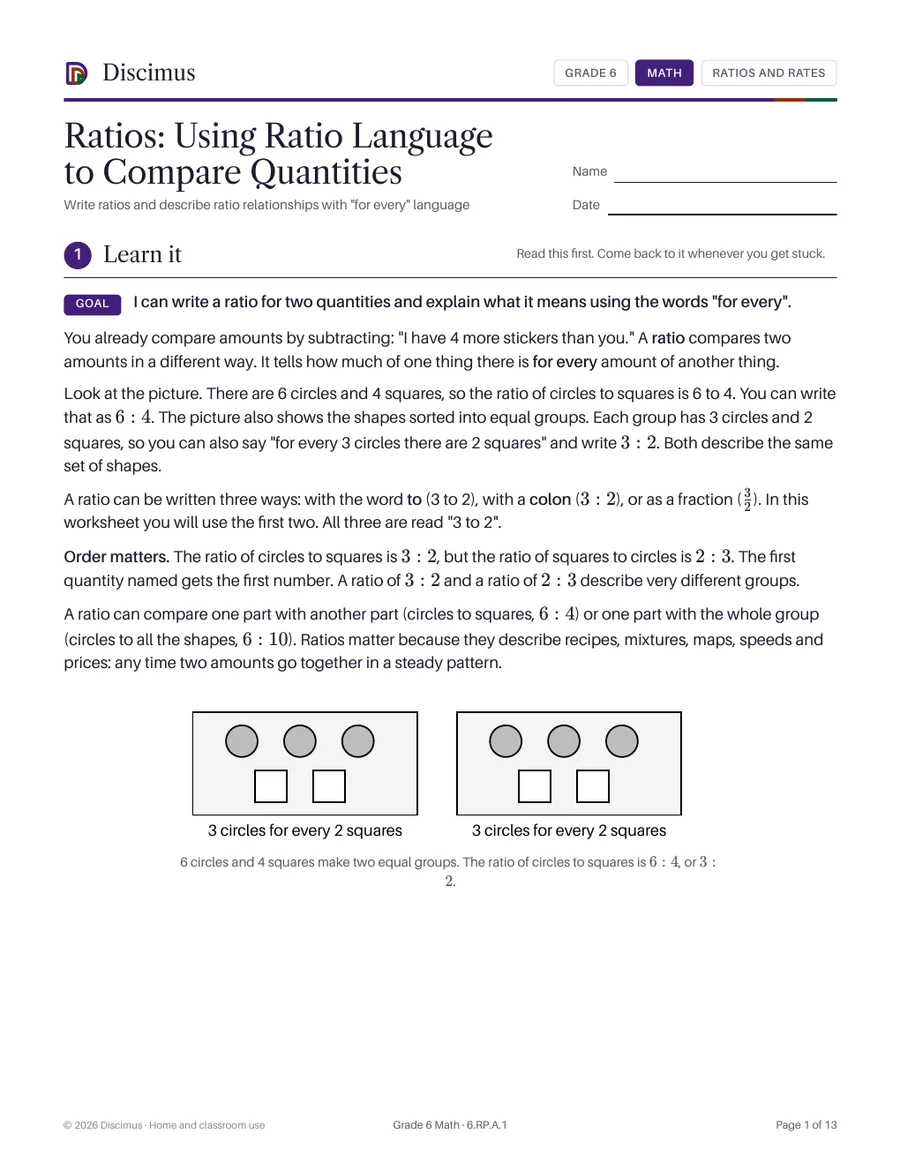
Write ratios and describe ratio relationships with "for every" language
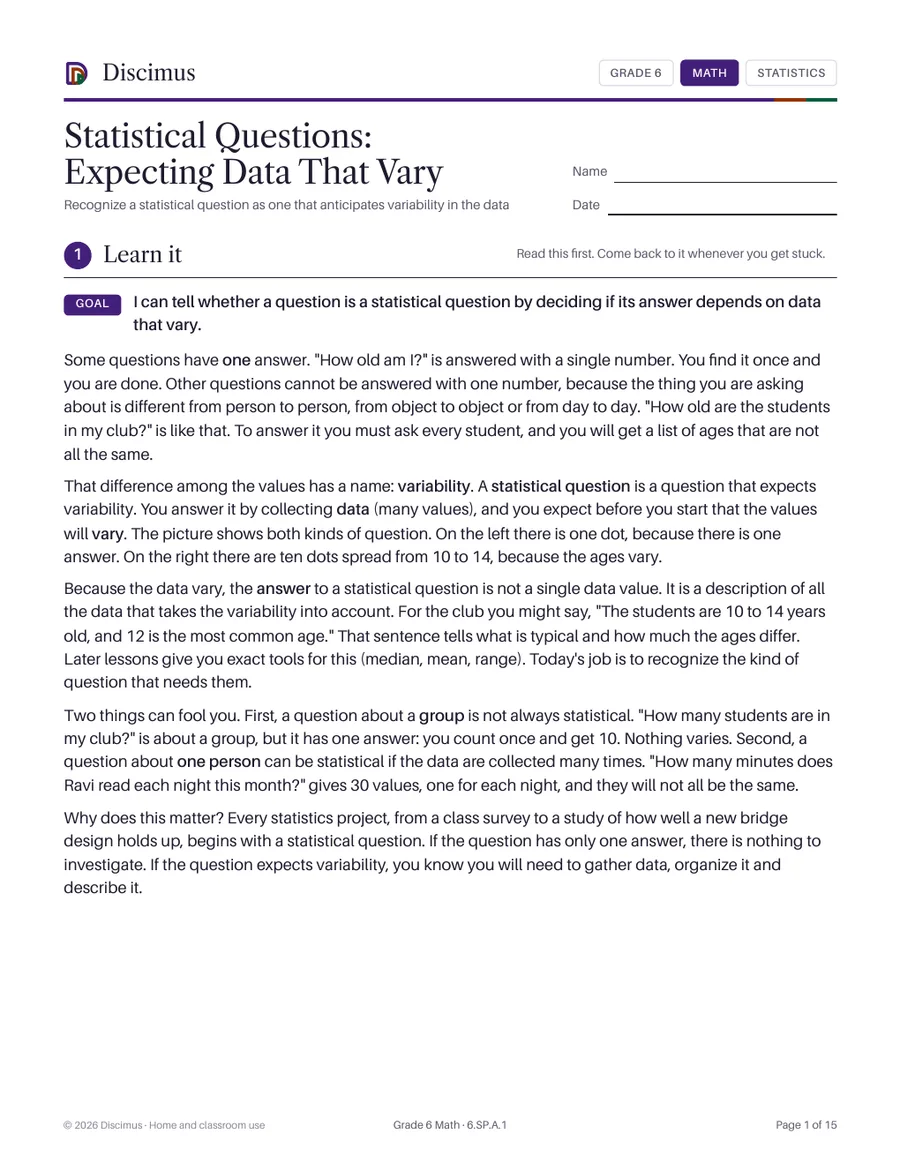
Recognize a statistical question as one that anticipates variability in the data
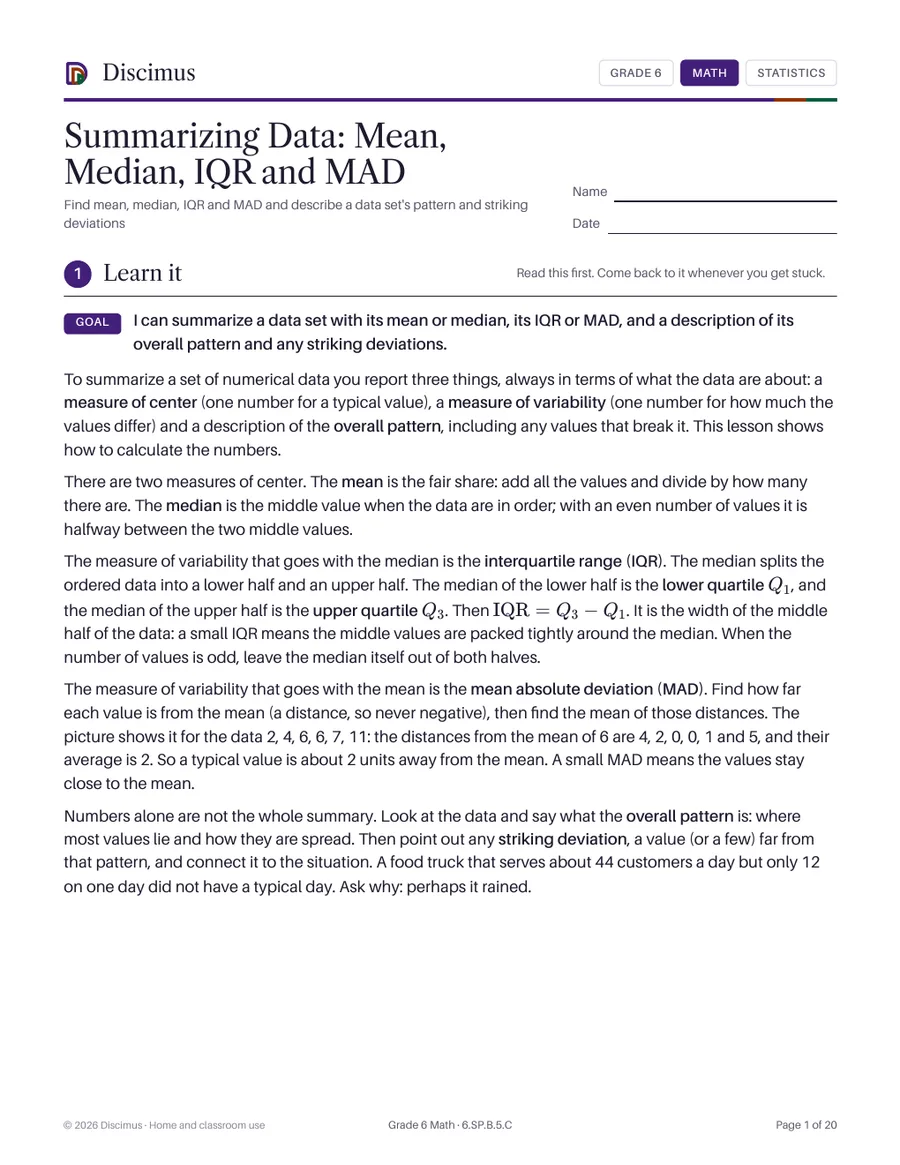
Find mean, median, IQR and MAD and describe a data set's pattern and striking deviations
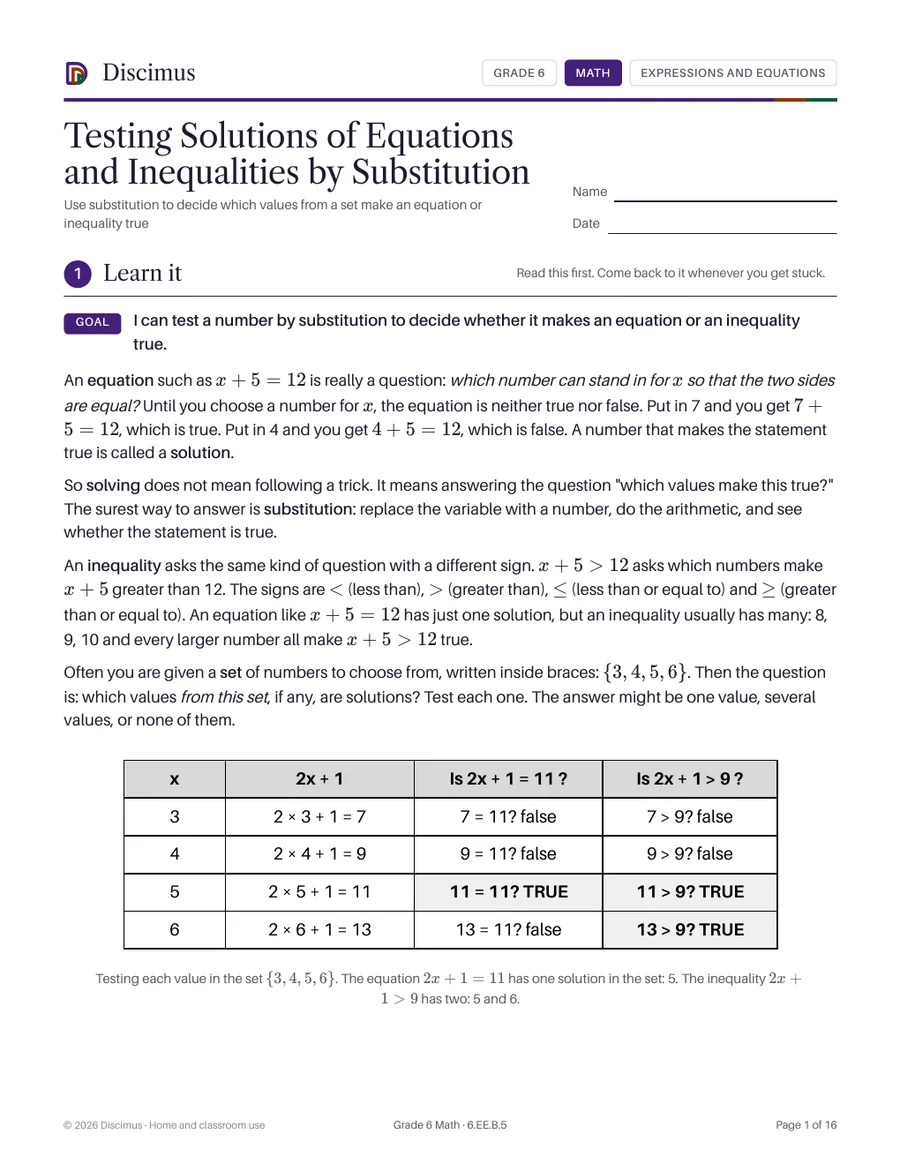
Use substitution to decide which values from a set make an equation or inequality true
 Free sample
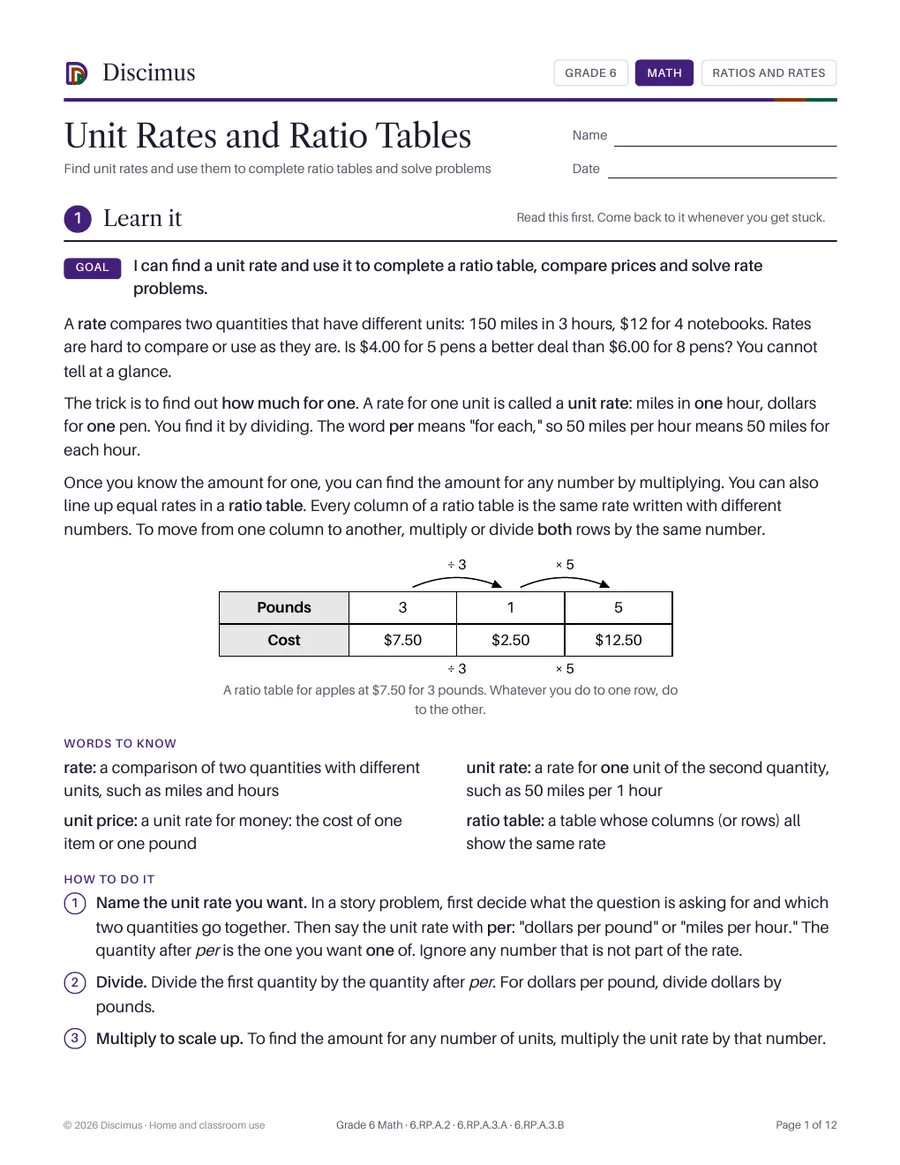
Find unit rates and use them to complete ratio tables and solve problems
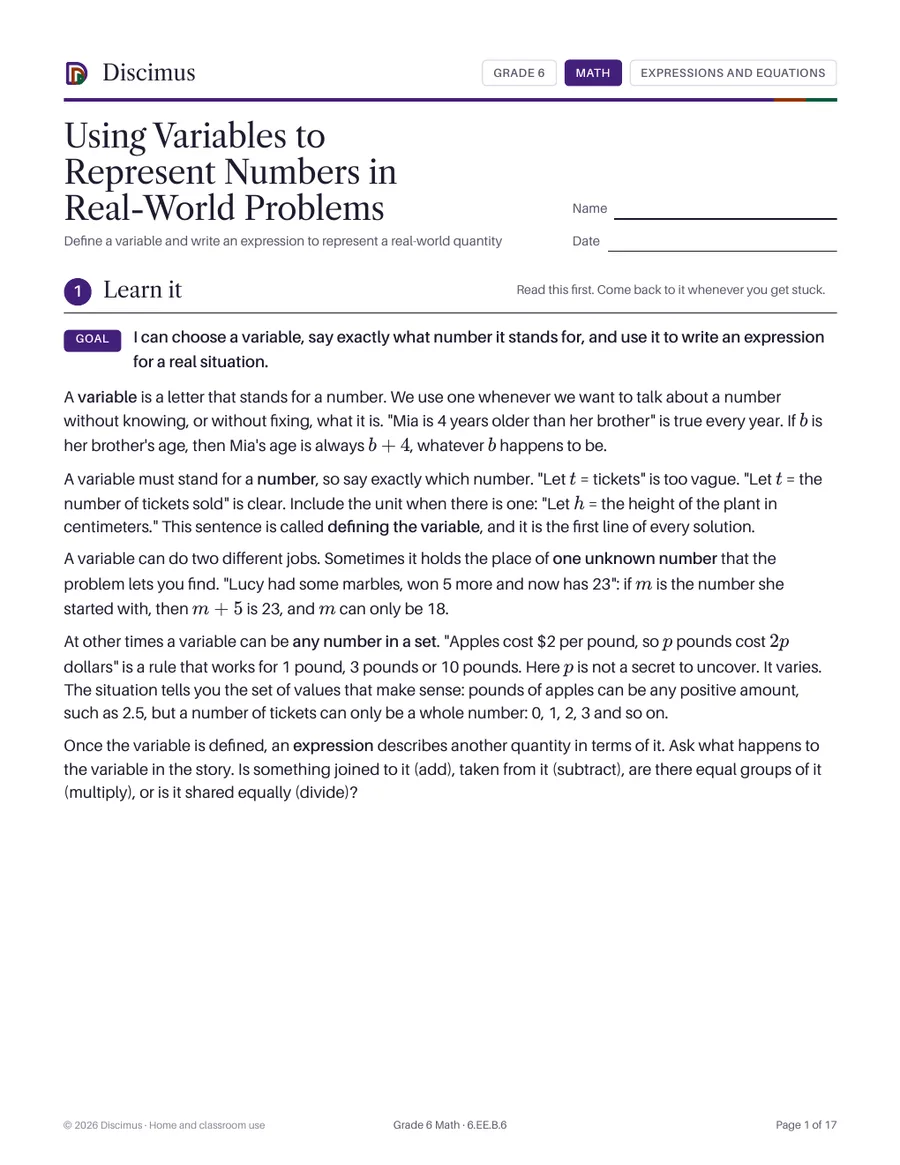
Define a variable and write an expression to represent a real-world quantity
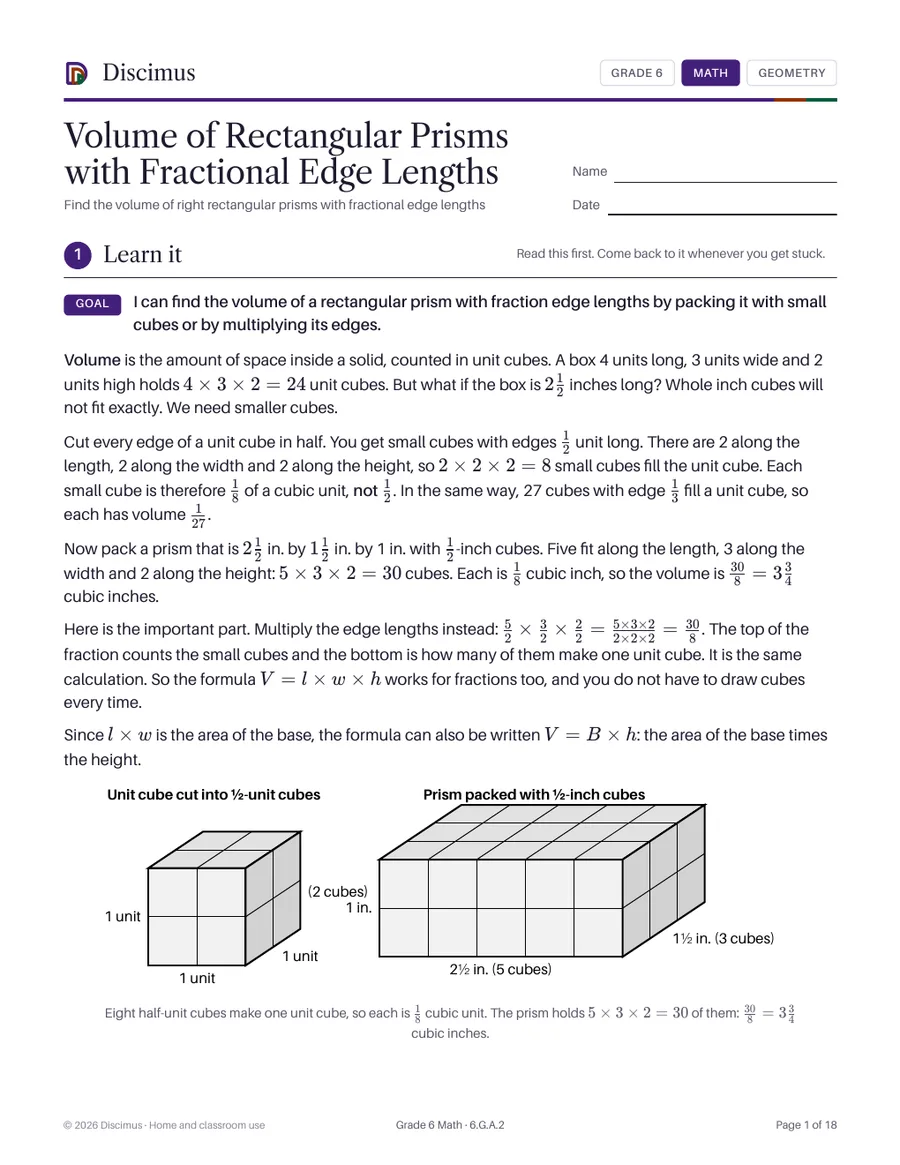
Find the volume of right rectangular prisms with fractional edge lengths
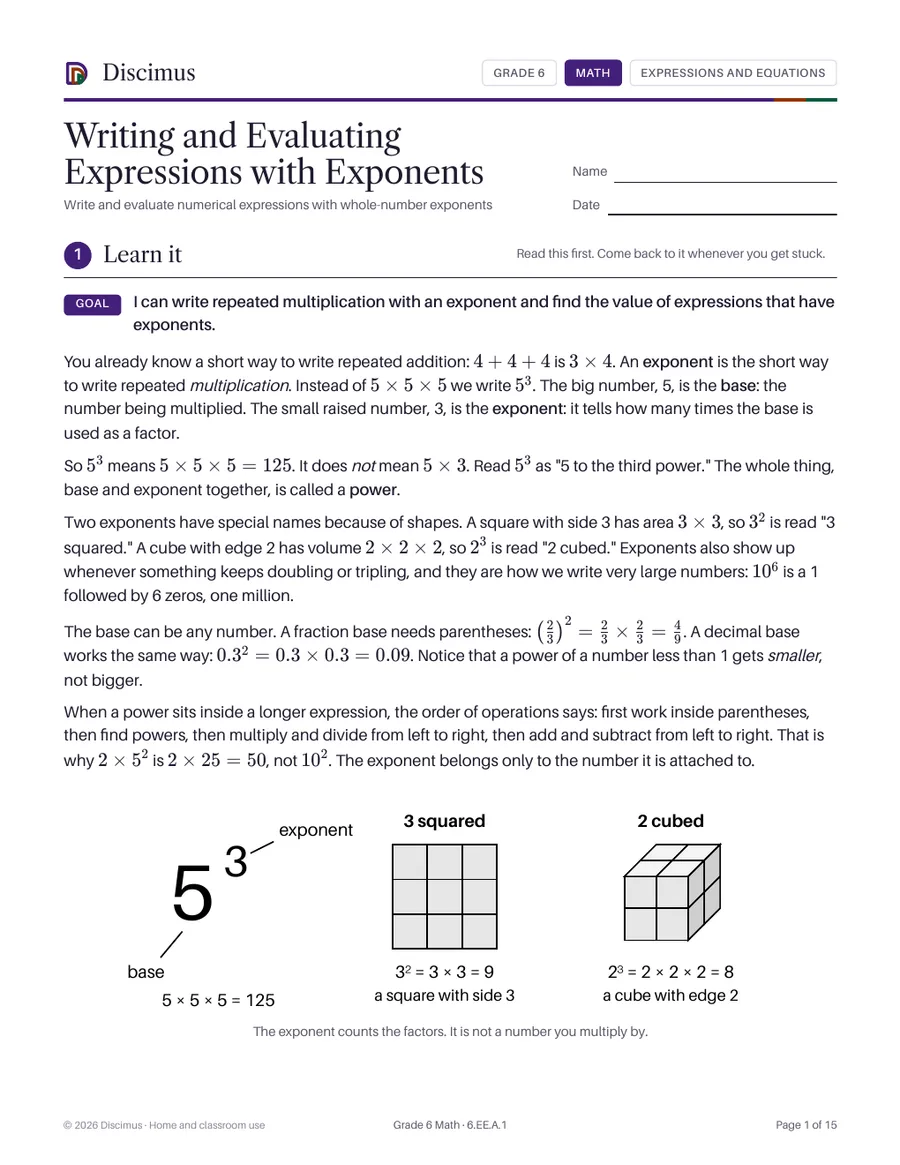
Write and evaluate numerical expressions with whole-number exponents
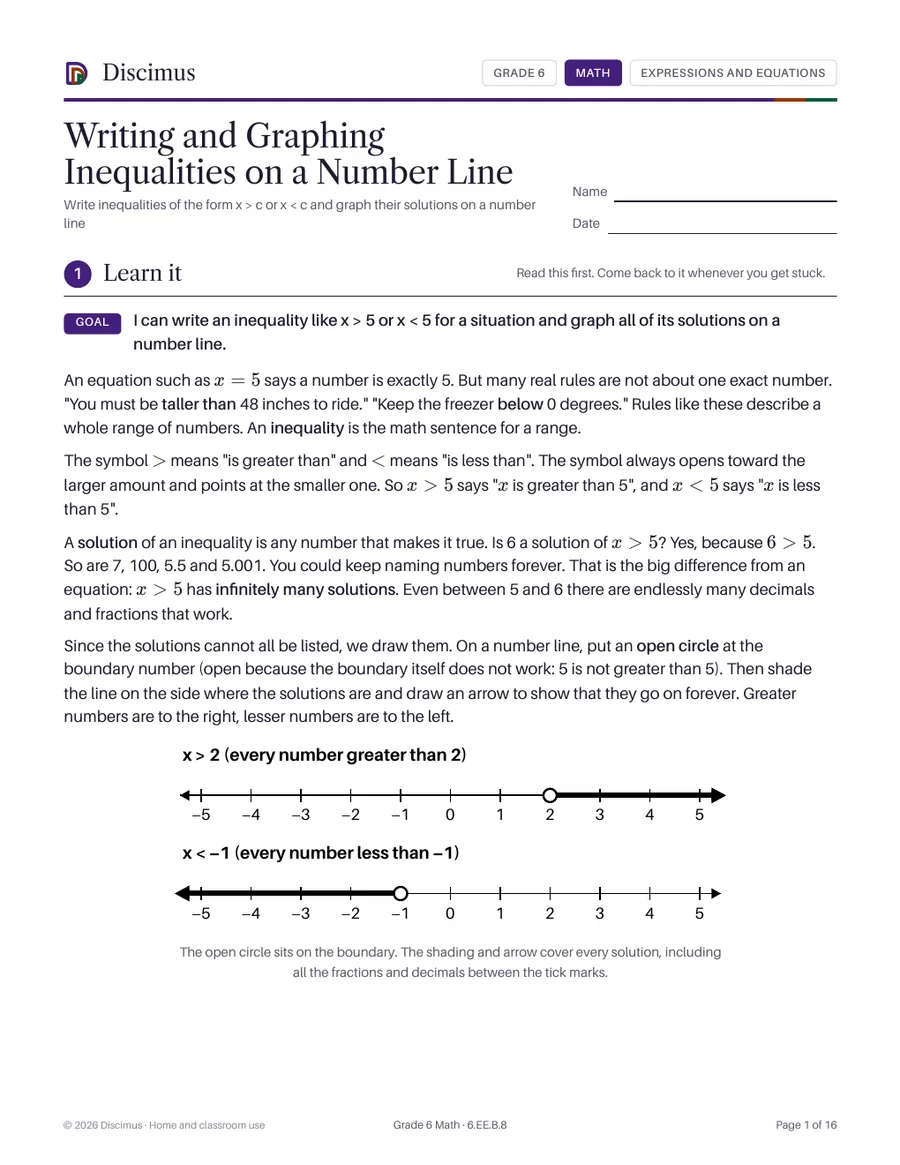
Write inequalities of the form x > c or x < c and graph their solutions on a number line
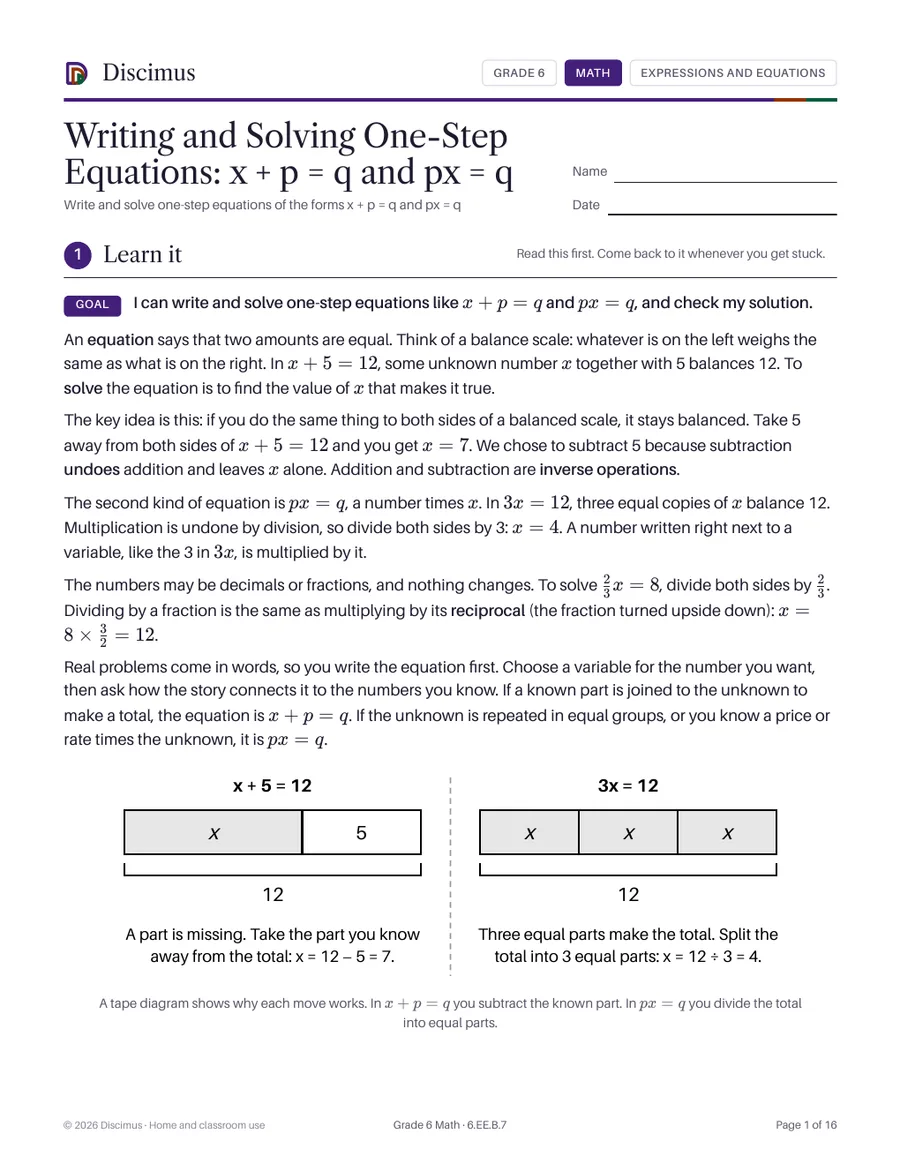
Write and solve one-step equations of the forms x + p = q and px = q
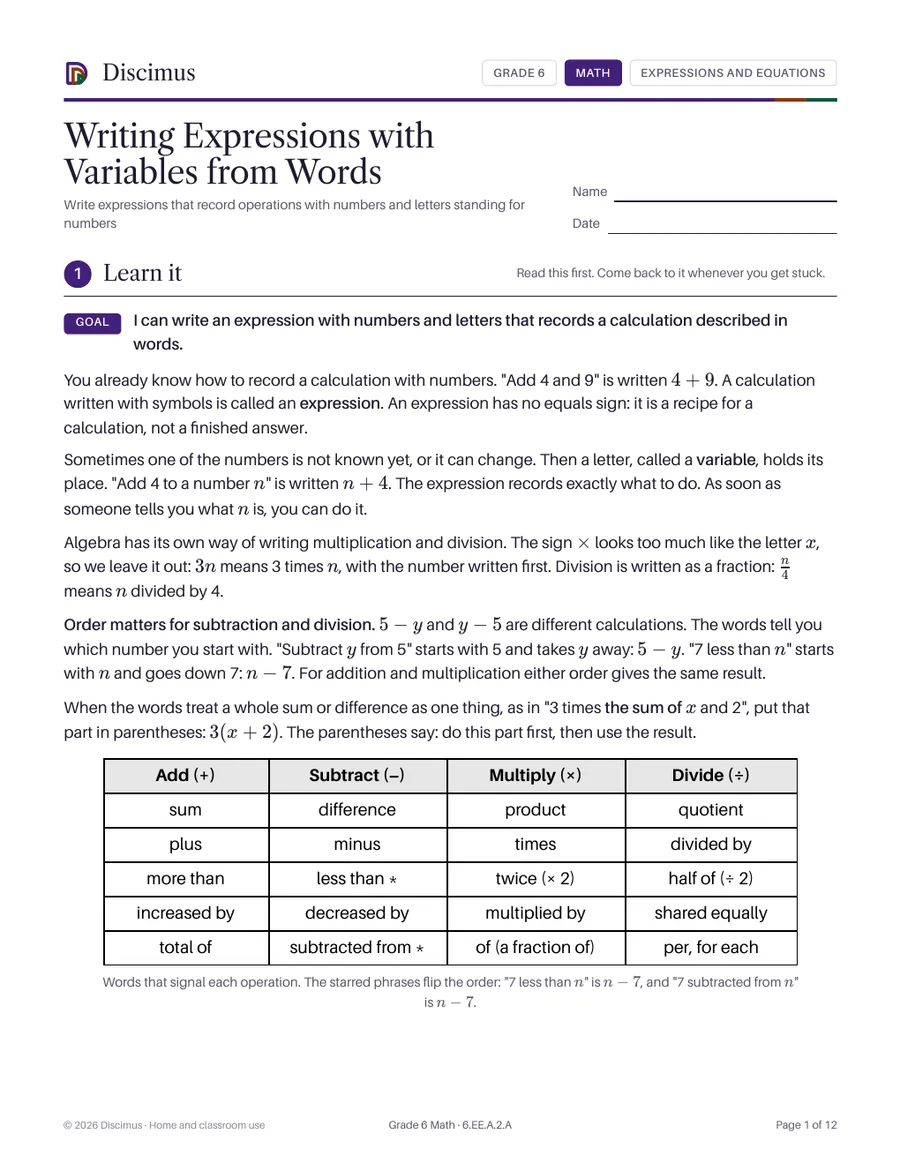
Write expressions that record operations with numbers and letters standing for numbers
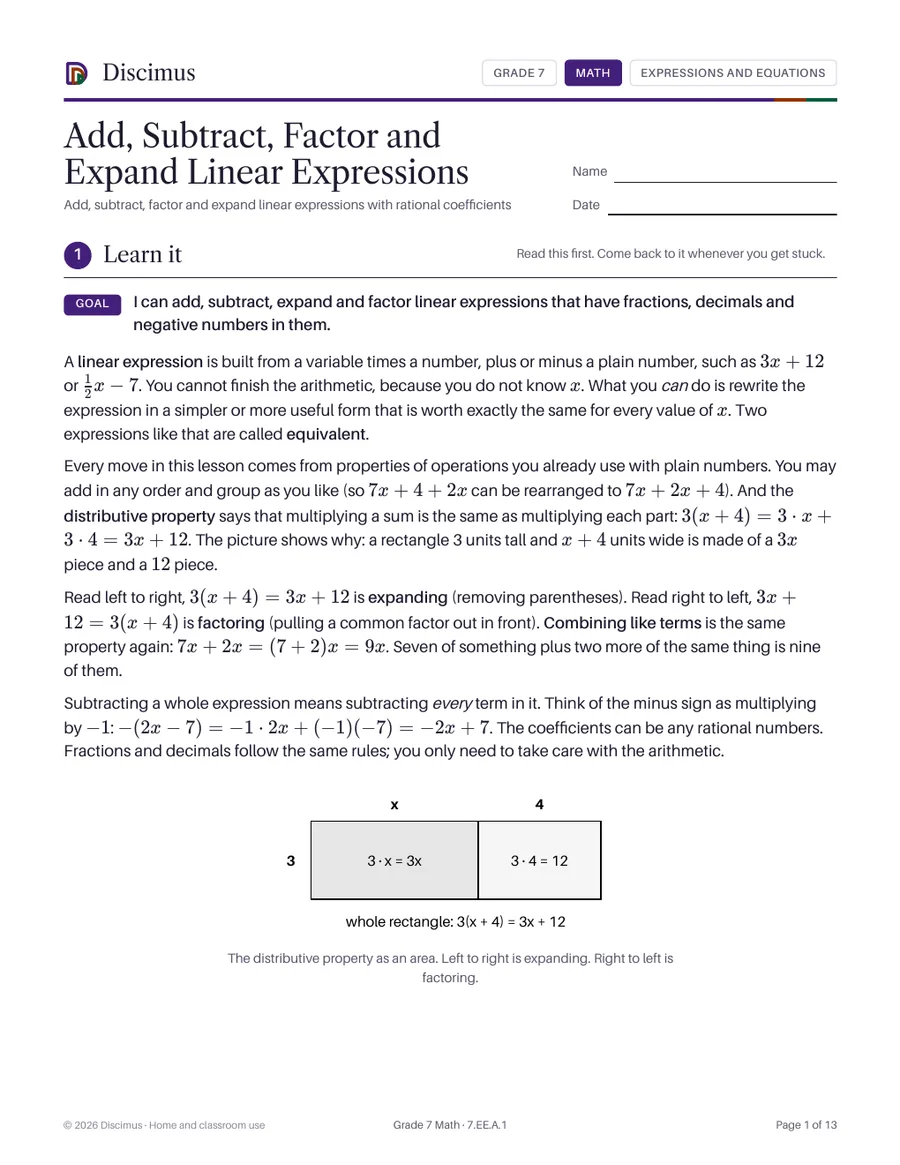
Add, subtract, factor and expand linear expressions with rational coefficients
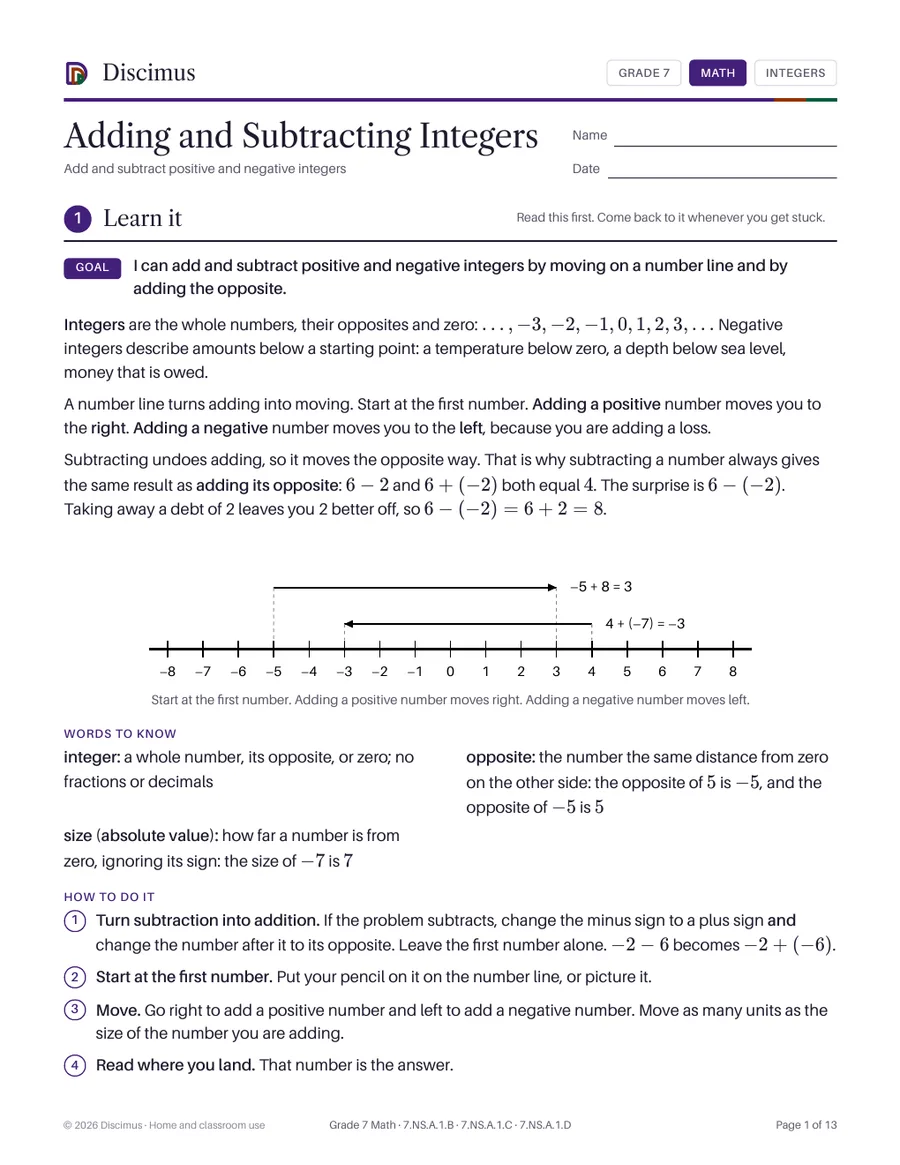
Add and subtract positive and negative integers
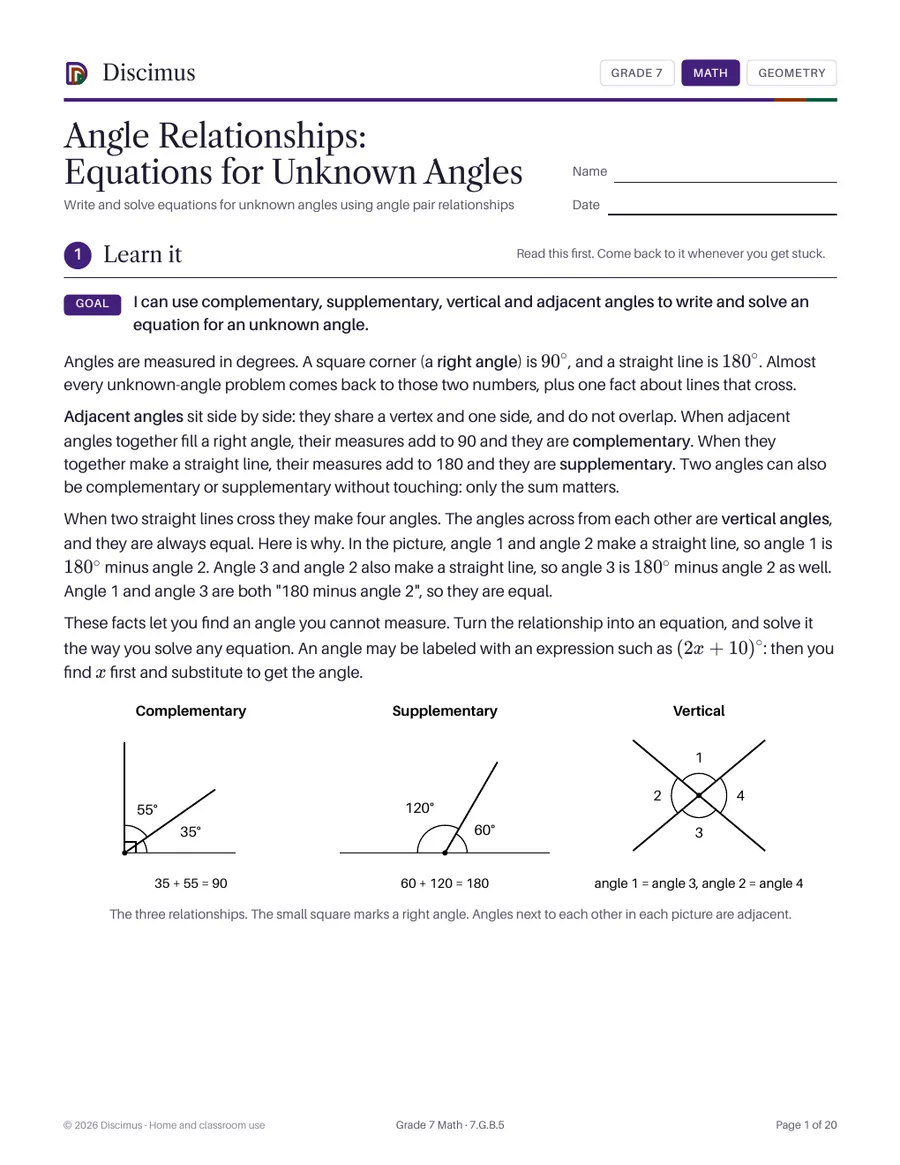
Write and solve equations for unknown angles using angle pair relationships
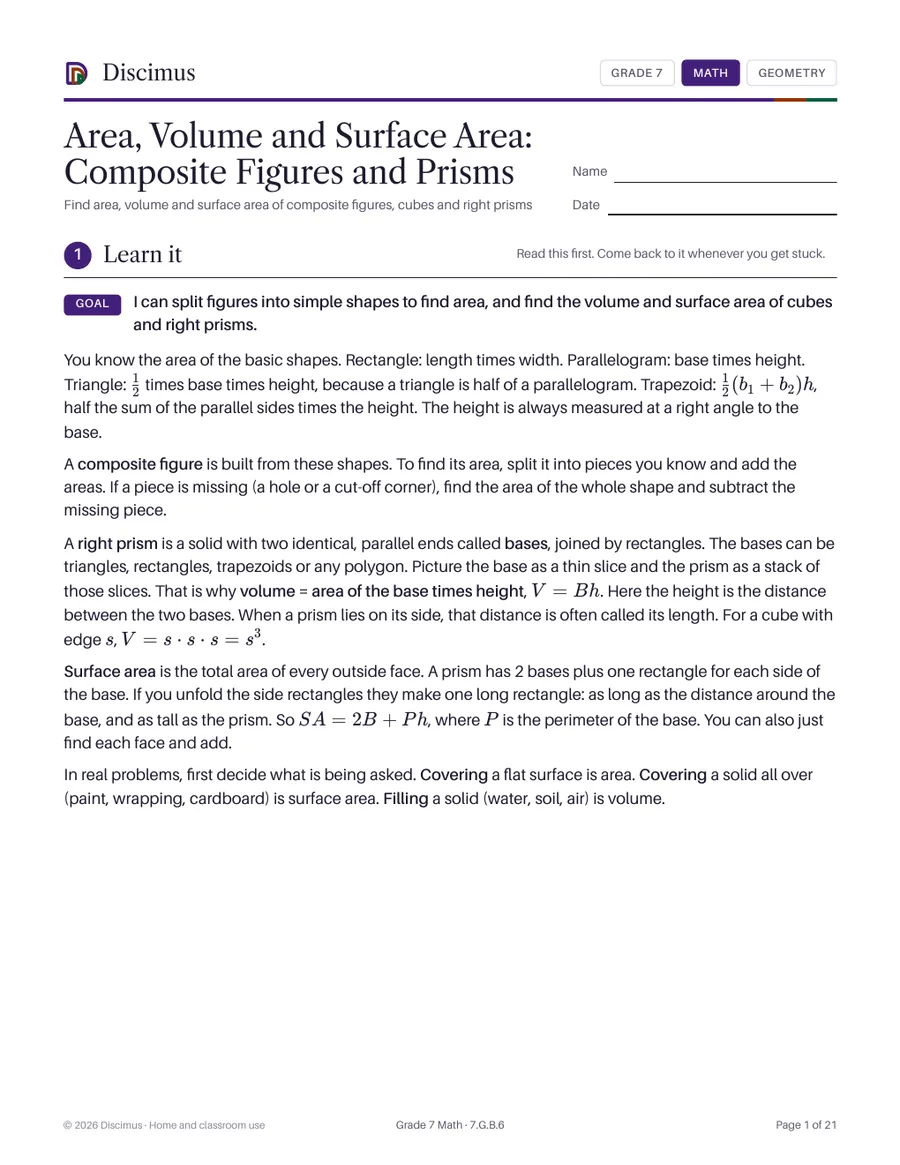
Find area, volume and surface area of composite figures, cubes and right prisms
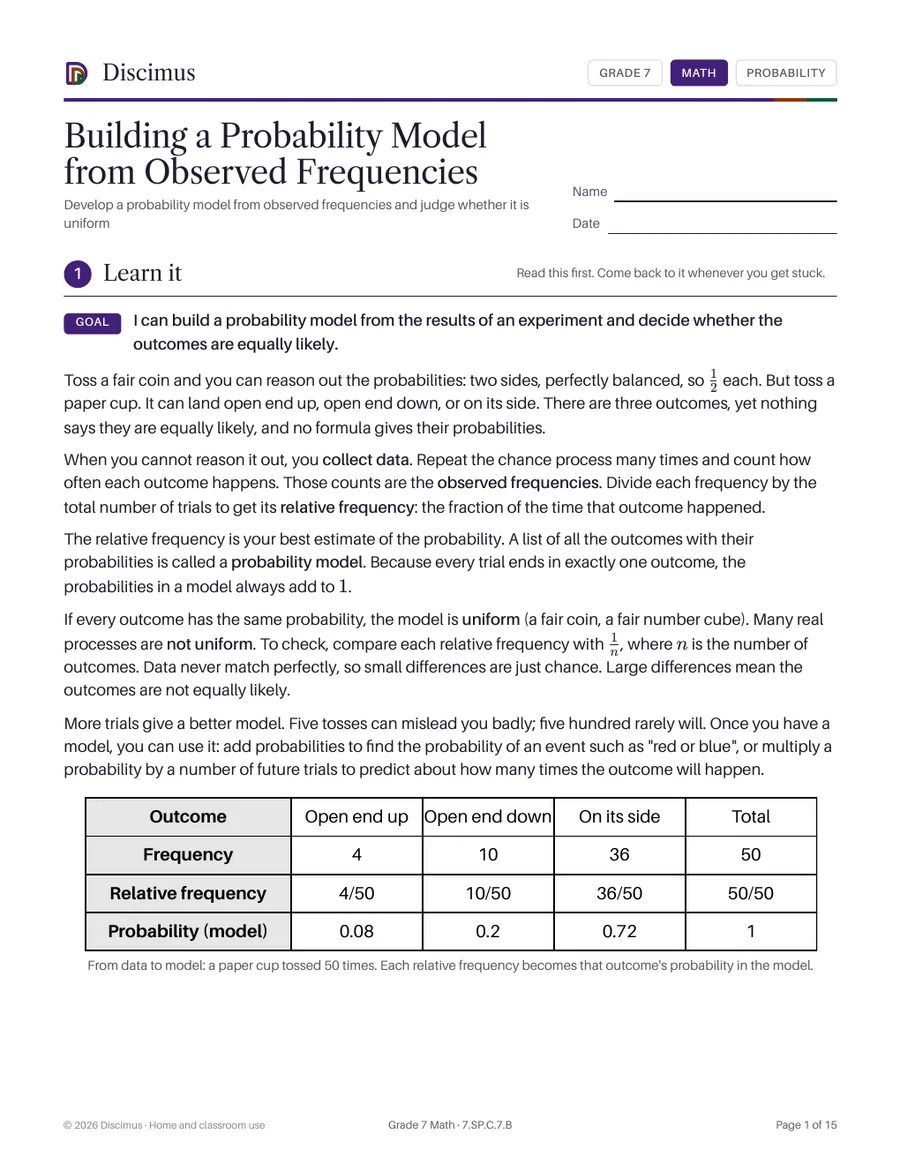
Develop a probability model from observed frequencies and judge whether it is uniform
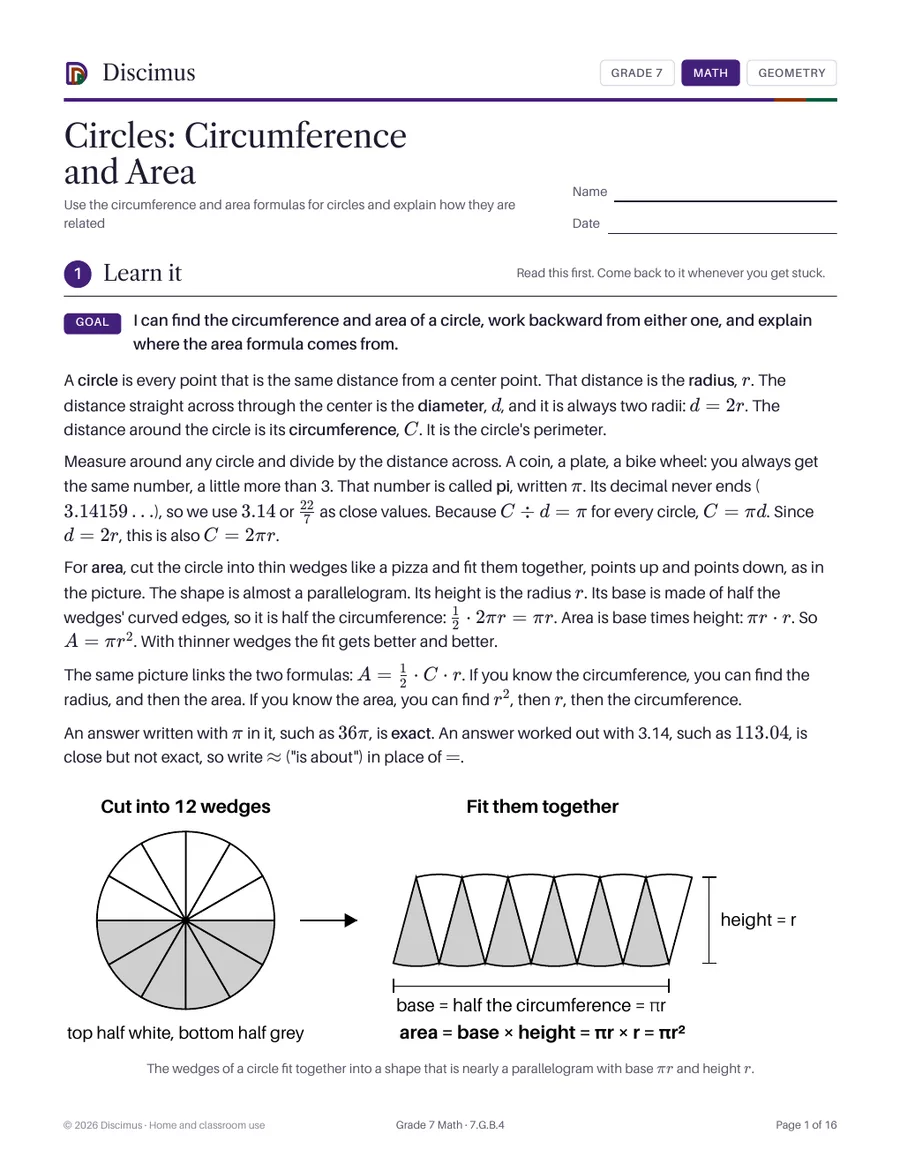
Use the circumference and area formulas for circles and explain how they are related
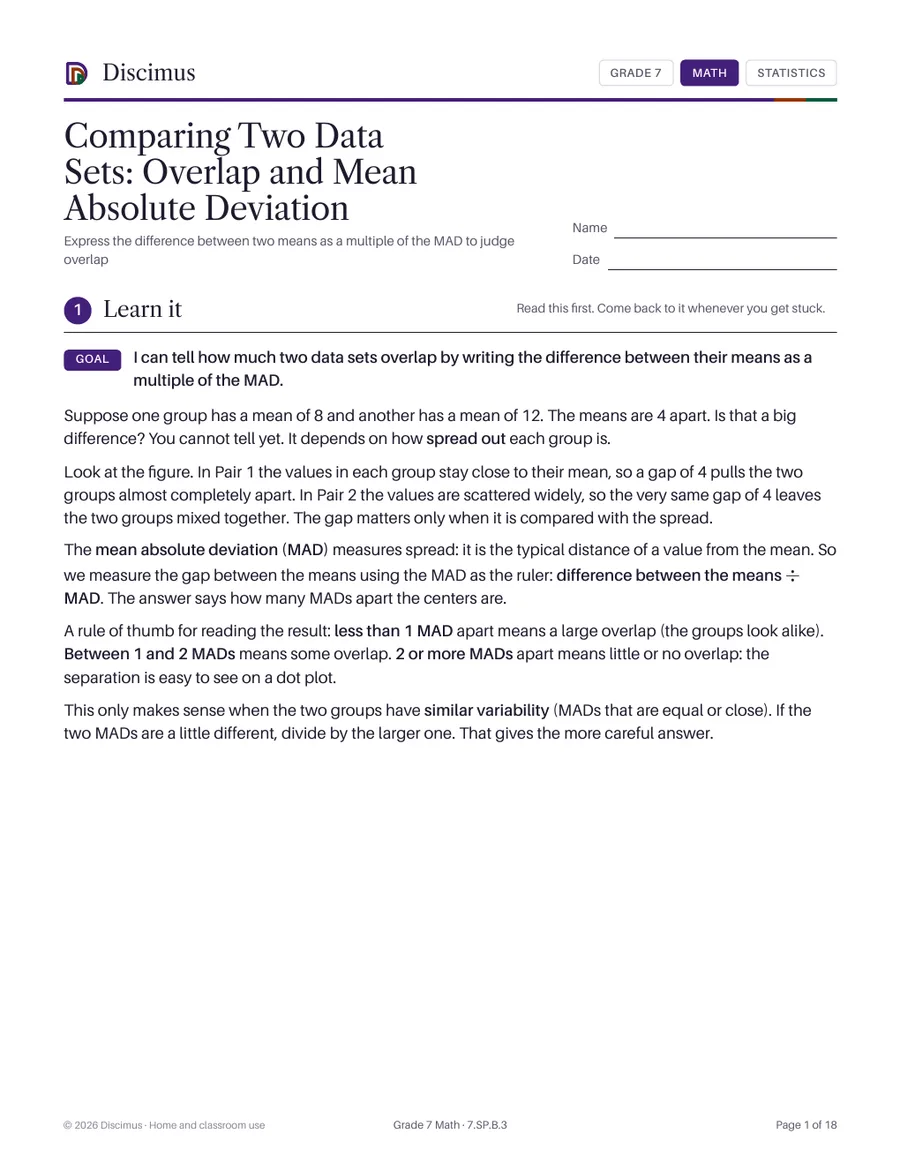
Express the difference between two means as a multiple of the MAD to judge overlap
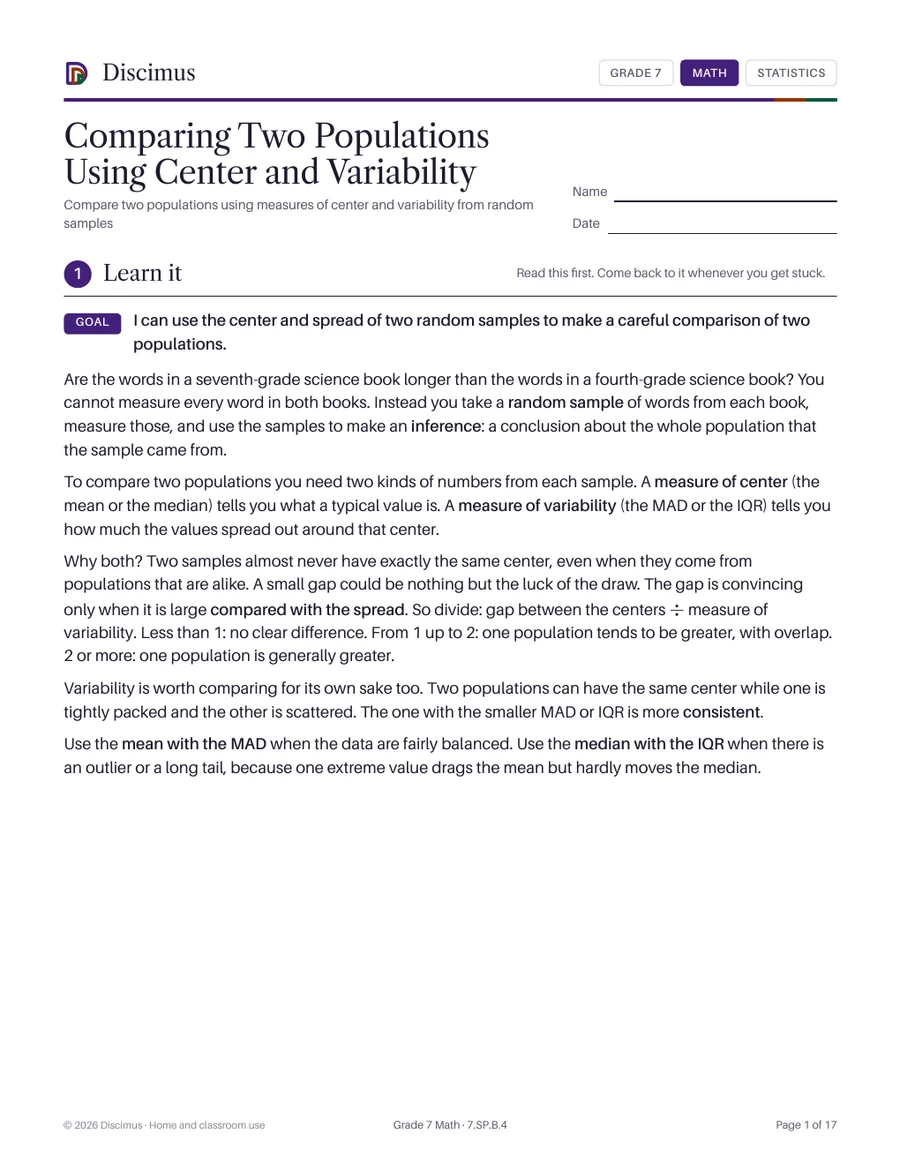
Compare two populations using measures of center and variability from random samples
Divide integers, write quotients as rational numbers, and interpret them in context
Draw triangles from given measures and tell if one, many or no triangles fit
Find theoretical and experimental probabilities for a four-outcome spinner
Convert rational numbers to decimals by long division; tell terminating from repeating
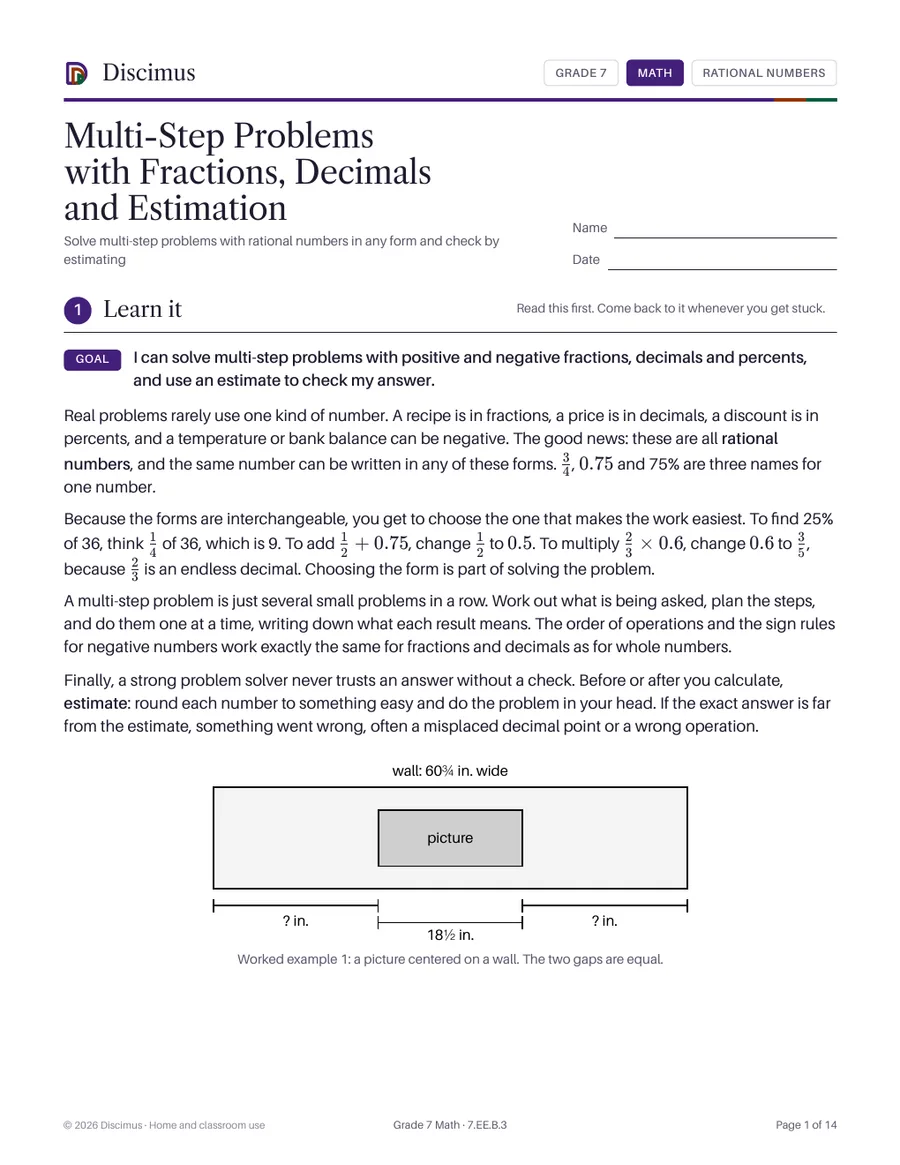
Solve multi-step problems with rational numbers in any form and check by estimating
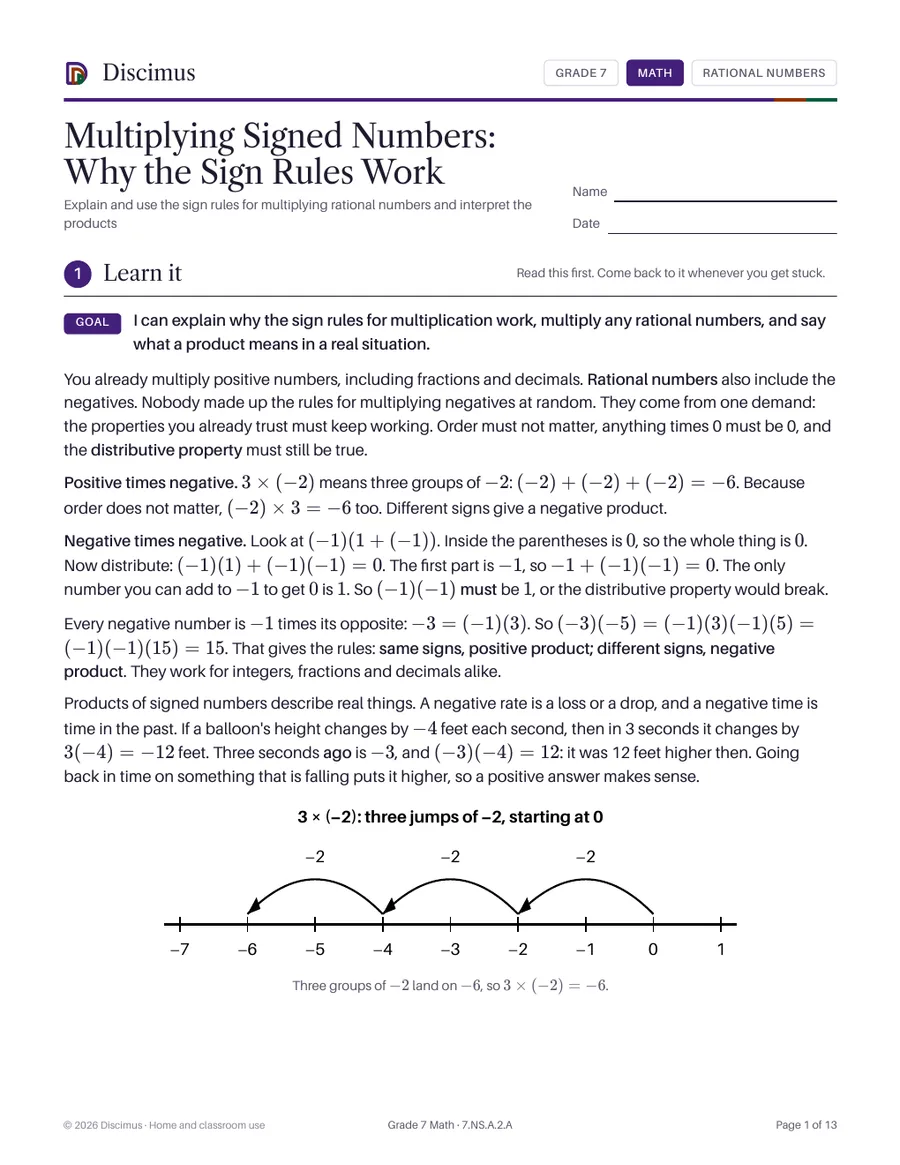
Explain and use the sign rules for multiplying rational numbers and interpret the products
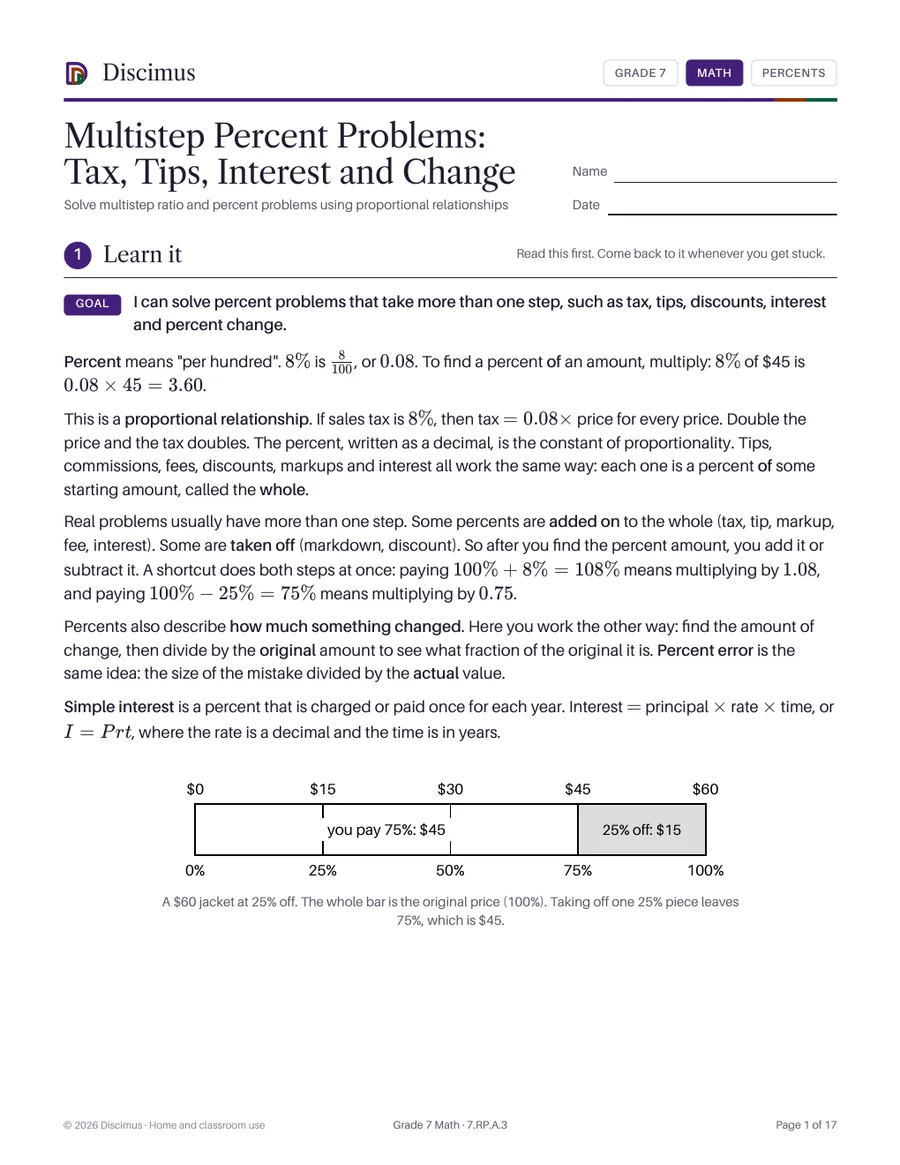
Solve multistep ratio and percent problems using proportional relationships
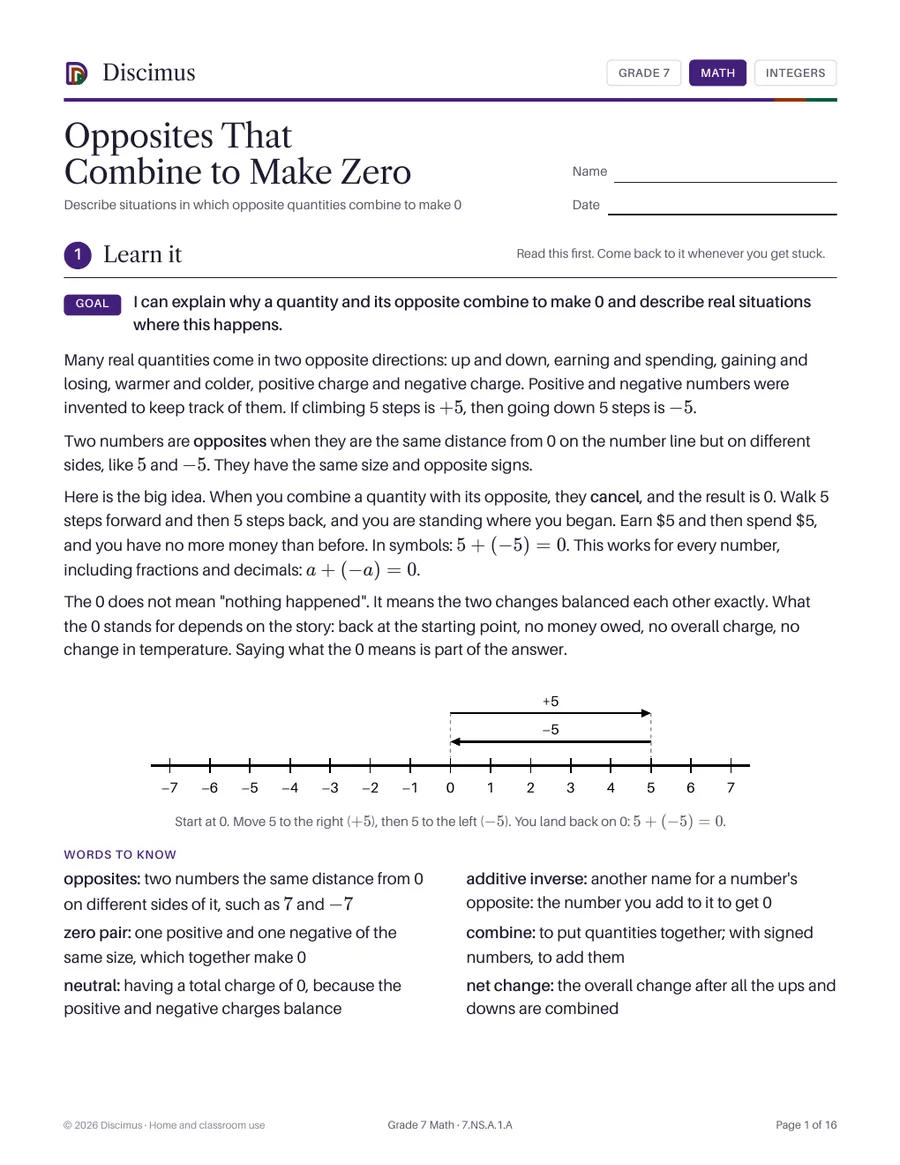
Describe situations in which opposite quantities combine to make 0
Explain why a random, representative sample supports valid conclusions about a population
Interpret a probability from 0 to 1 as a measure of how likely an event is
 Free sample
Identify the constant of proportionality in tables, graphs and equations
Rewrite an expression in an equivalent form and interpret what the new form shows
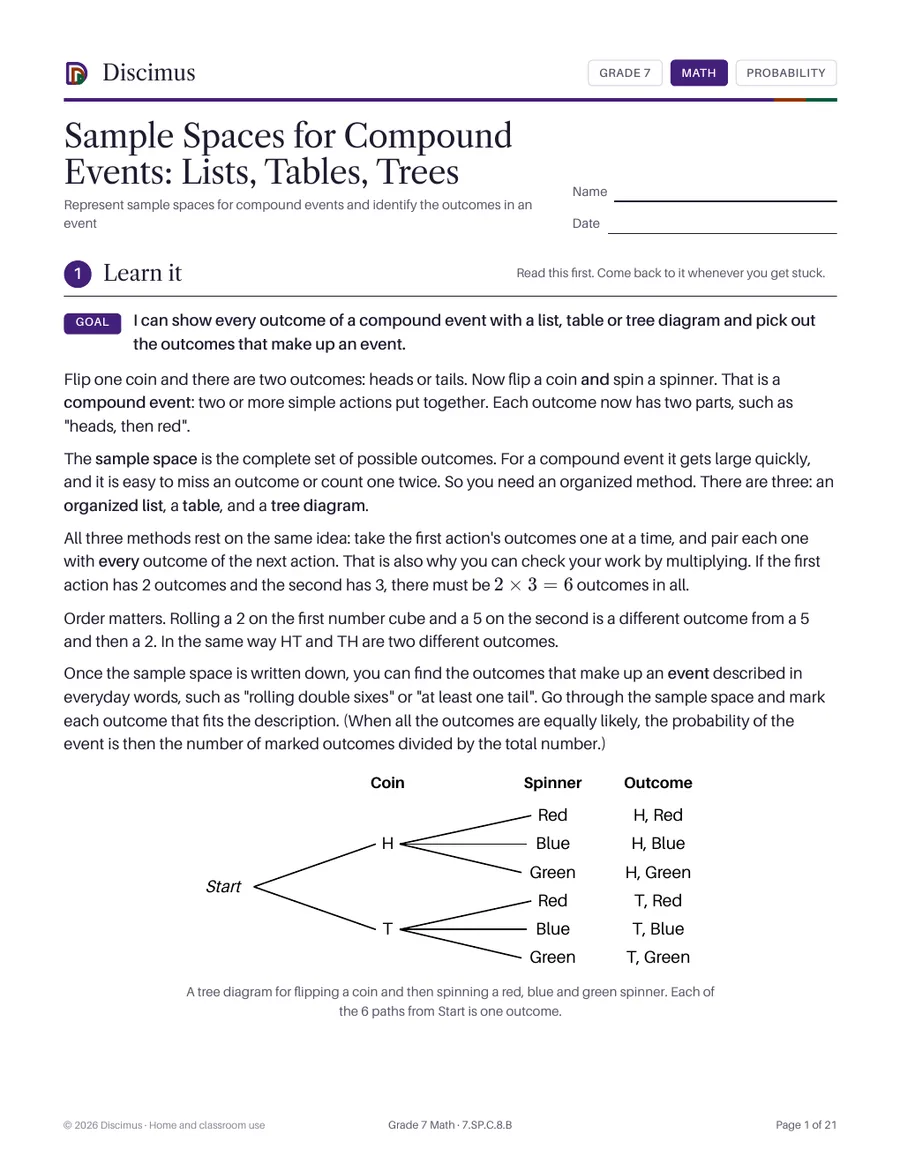
Represent sample spaces for compound events and identify the outcomes in an event
Find actual lengths and areas from scale drawings and redraw at a different scale
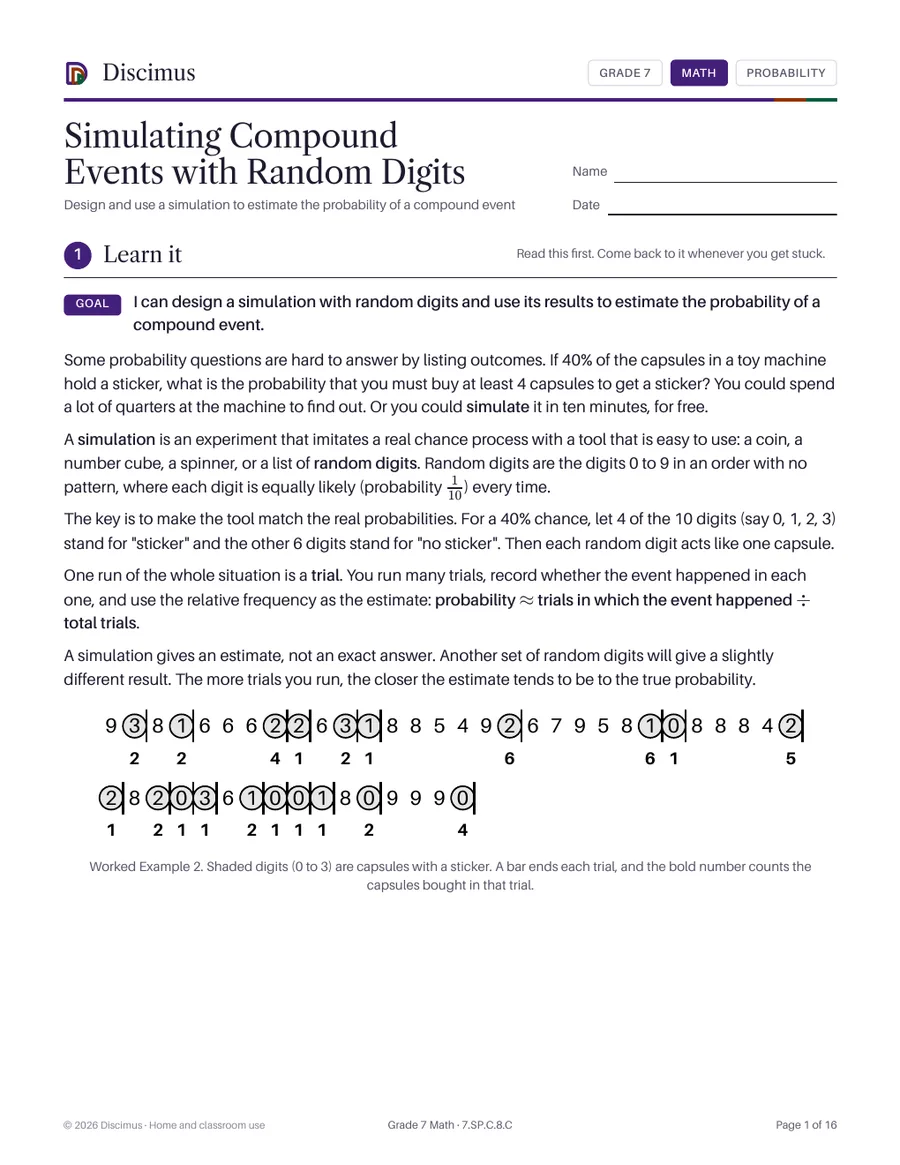
Design and use a simulation to estimate the probability of a compound event
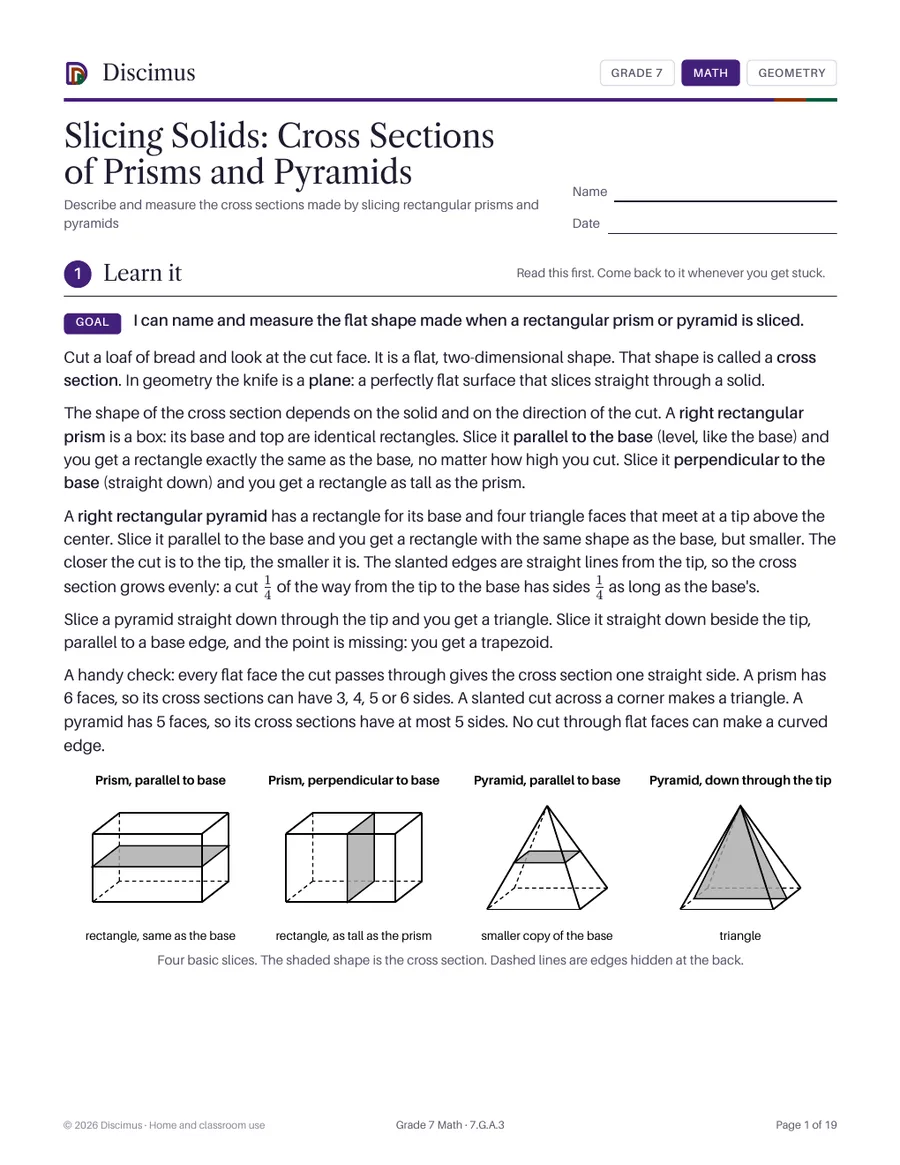
Describe and measure the cross sections made by slicing rectangular prisms and pyramids
Solve real-world and mathematical problems using all four operations with rational numbers
Write, solve, graph and interpret two-step inequalities such as px + q > r
Compute unit rates from ratios of fractions using complex fractions
Use properties of operations as strategies to multiply and divide rational numbers
Use random samples to make inferences about a population and gauge how estimates vary
Write and solve two-step equations of the forms px + q = r and p(x + q) = r
Use and explain angle facts for triangles, parallel lines and AA similarity
Approximate irrational numbers with rational numbers to compare, locate and estimate
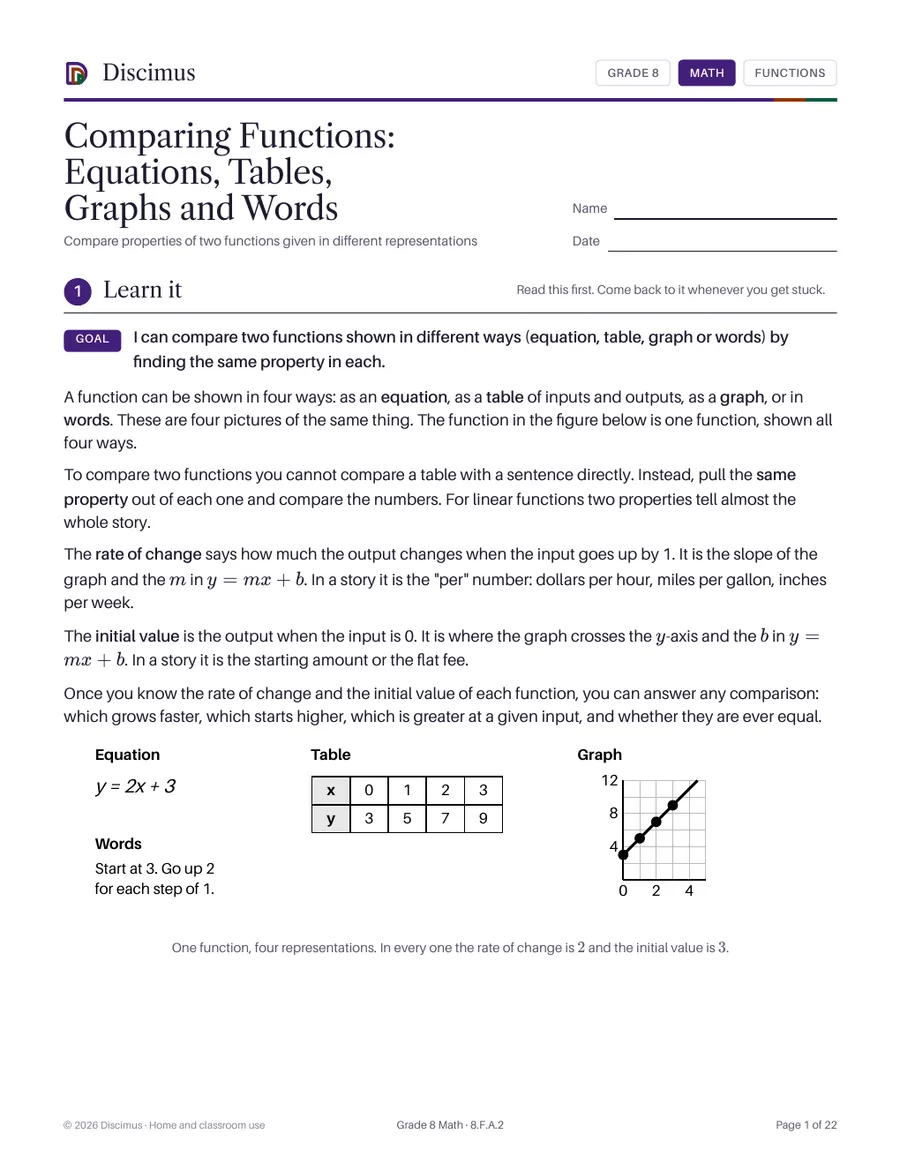
Compare properties of two functions given in different representations
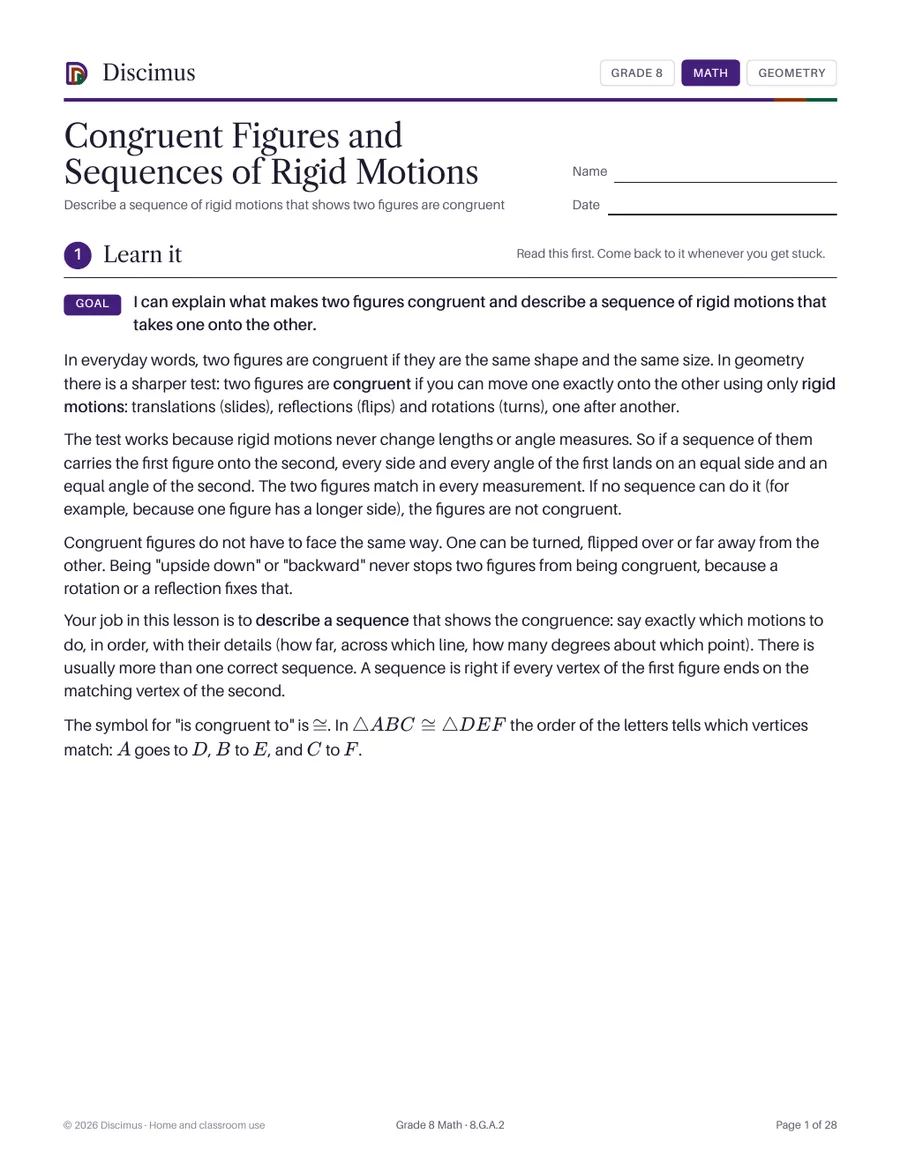
Describe a sequence of rigid motions that shows two figures are congruent
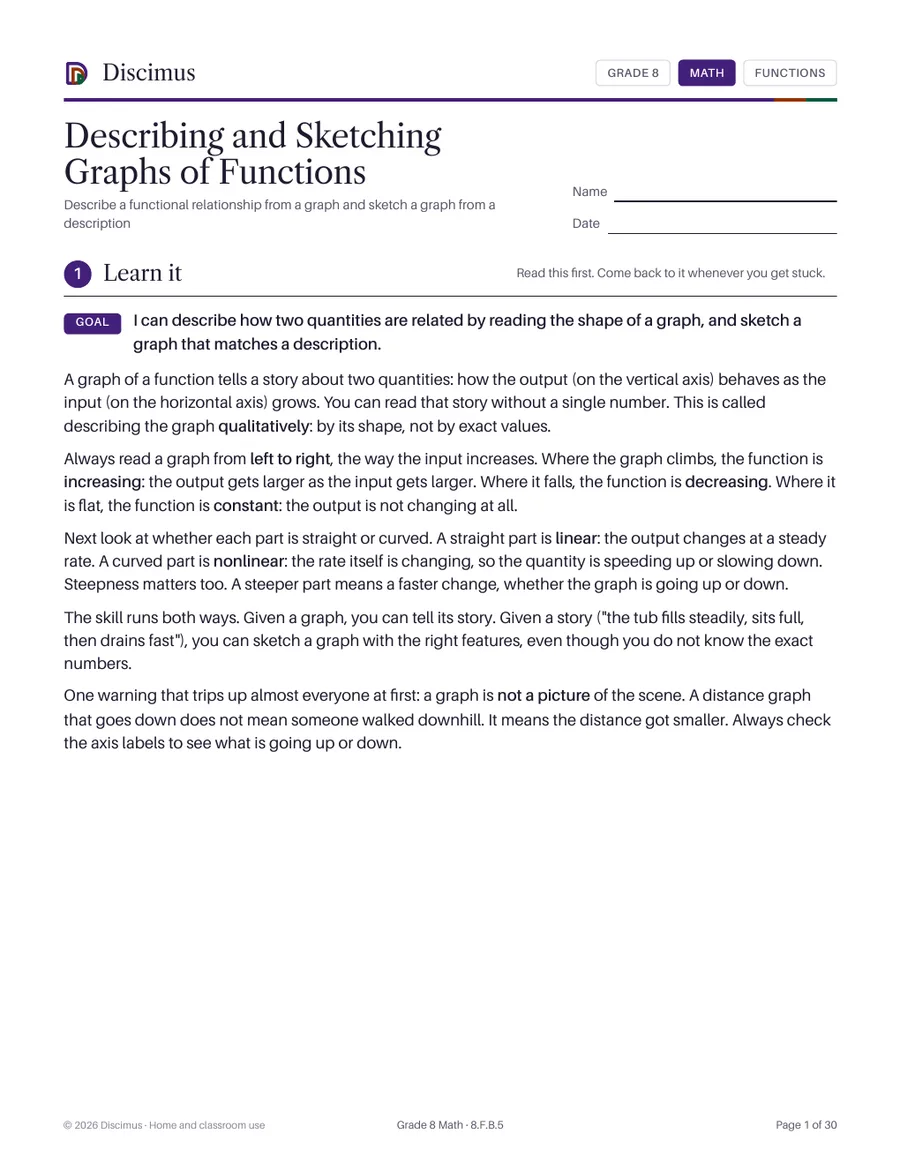
Describe a functional relationship from a graph and sketch a graph from a description
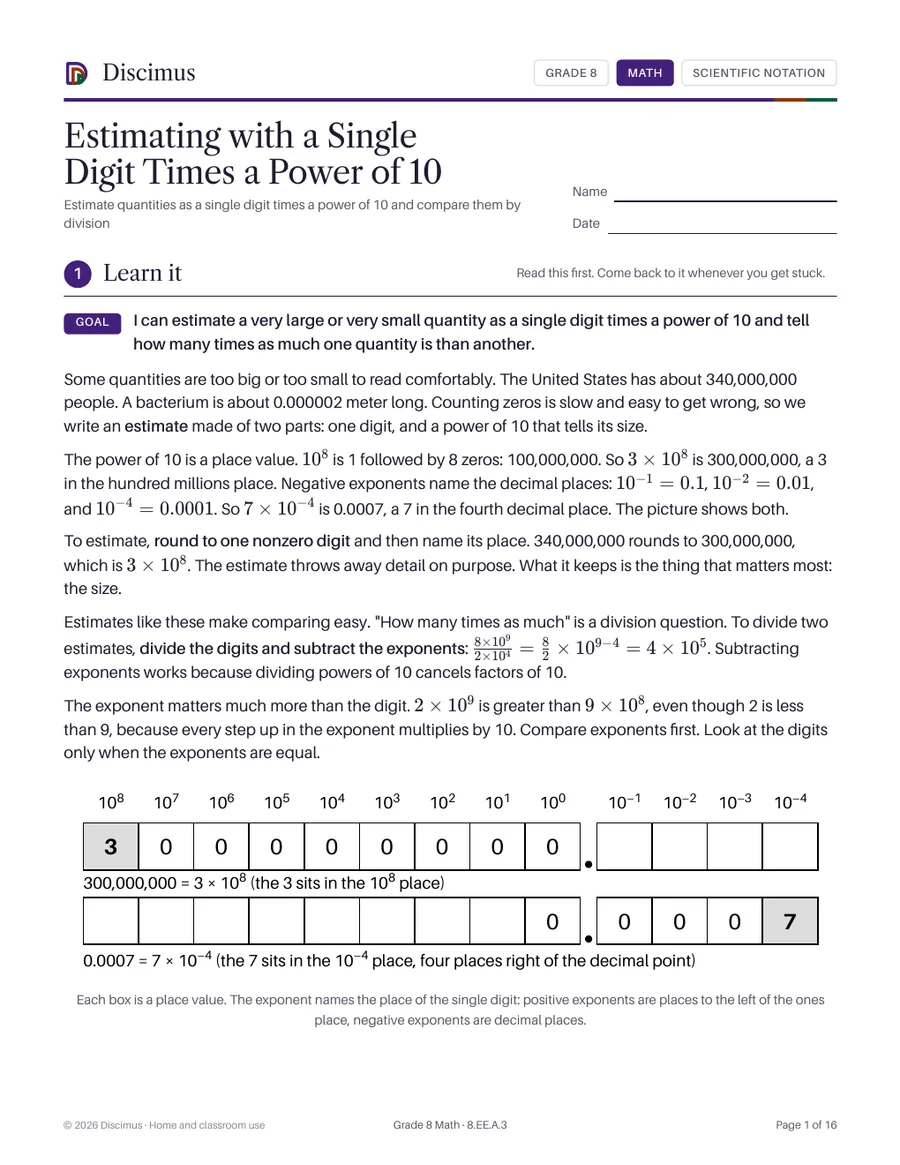
Estimate quantities as a single digit times a power of 10 and compare them by division
Informally fit a straight line to a scatter plot and assess how well it fits
Graph proportional relationships, read the unit rate as slope, and compare representations
Identify linear functions of the form y = mx + b and give examples of nonlinear functions
 Free sample
Solve linear equations in one variable with variables on both sides
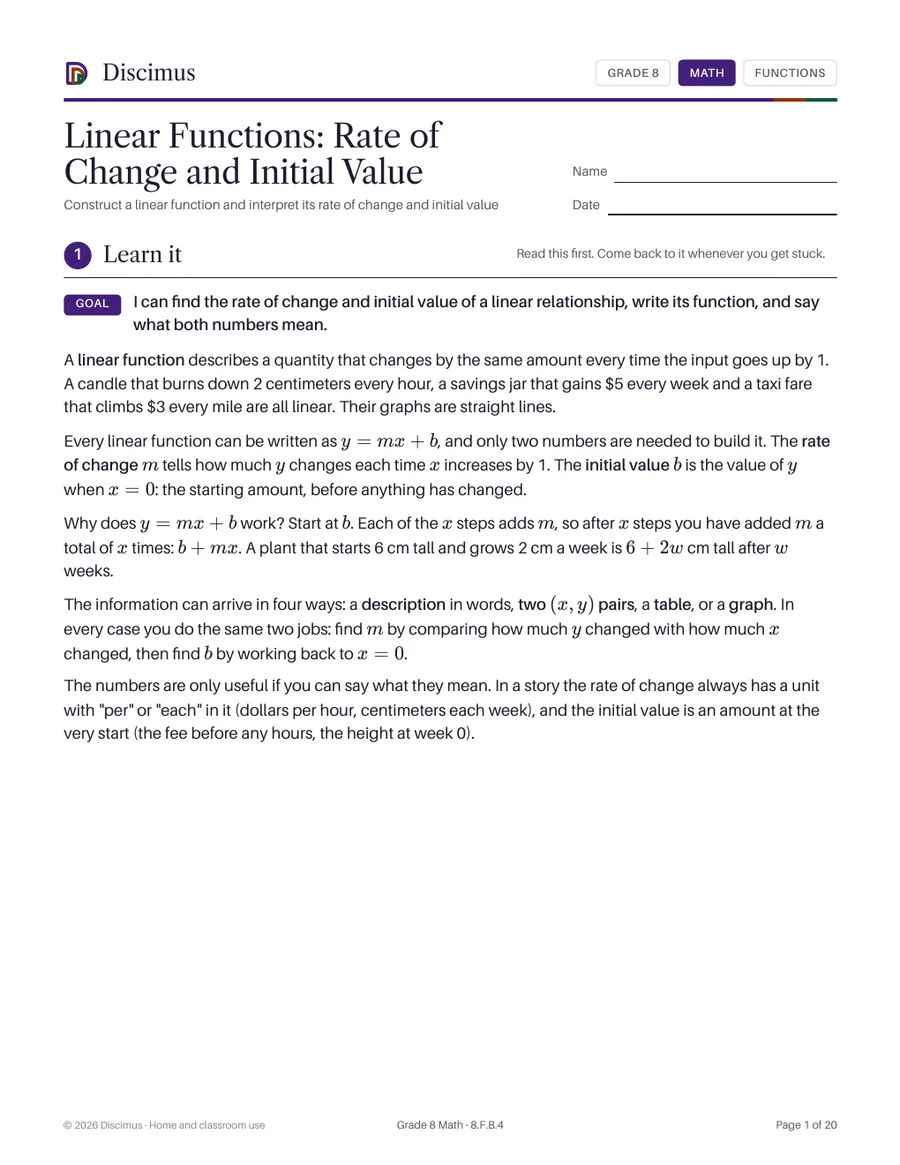
Construct a linear function and interpret its rate of change and initial value
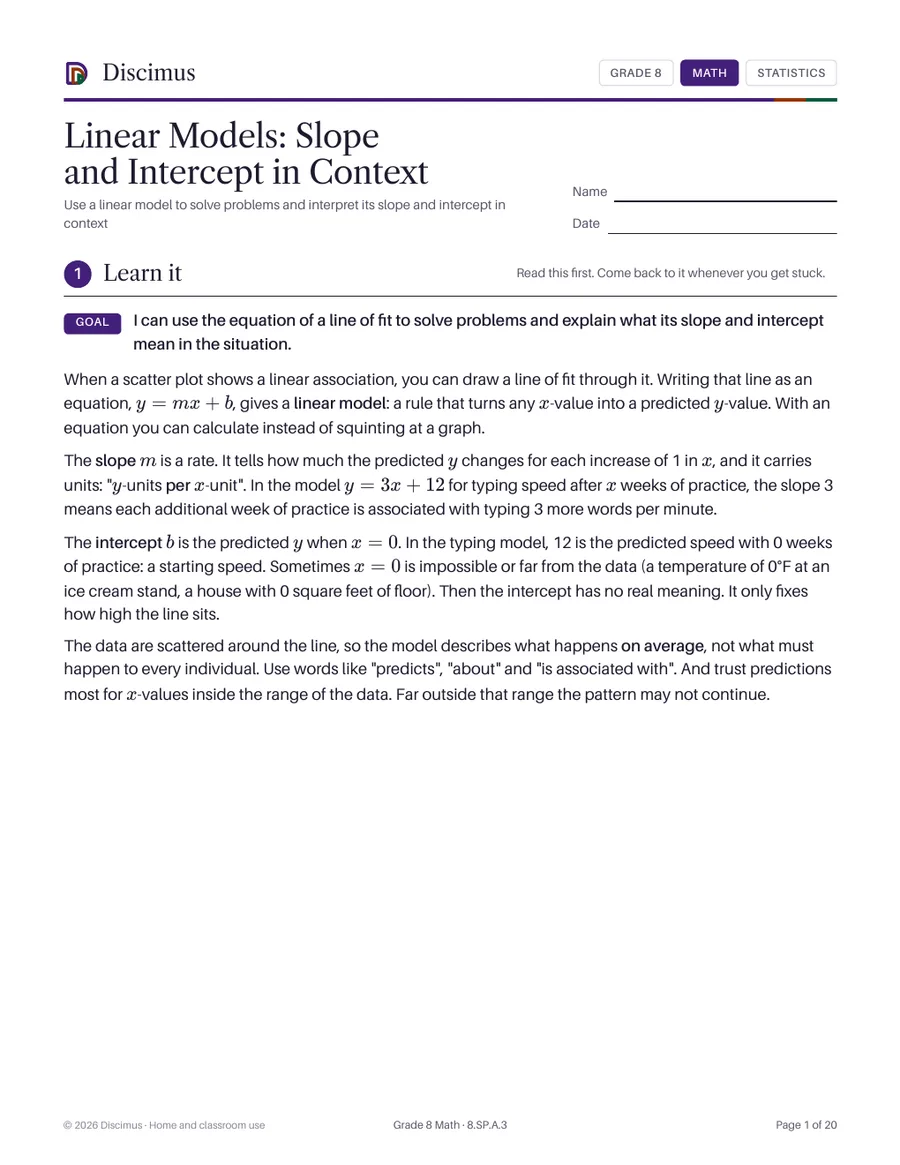
Use a linear model to solve problems and interpret its slope and intercept in context
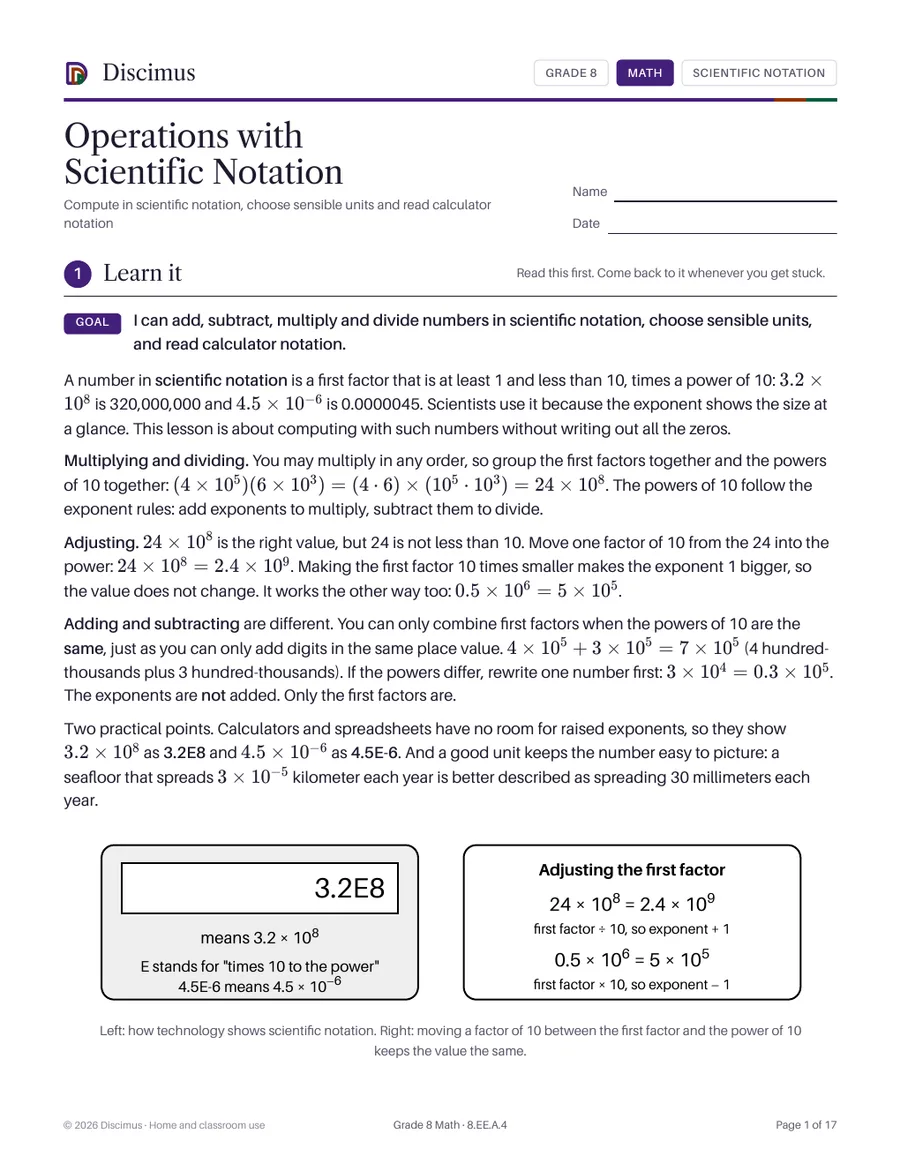
Compute in scientific notation, choose sensible units and read calculator notation
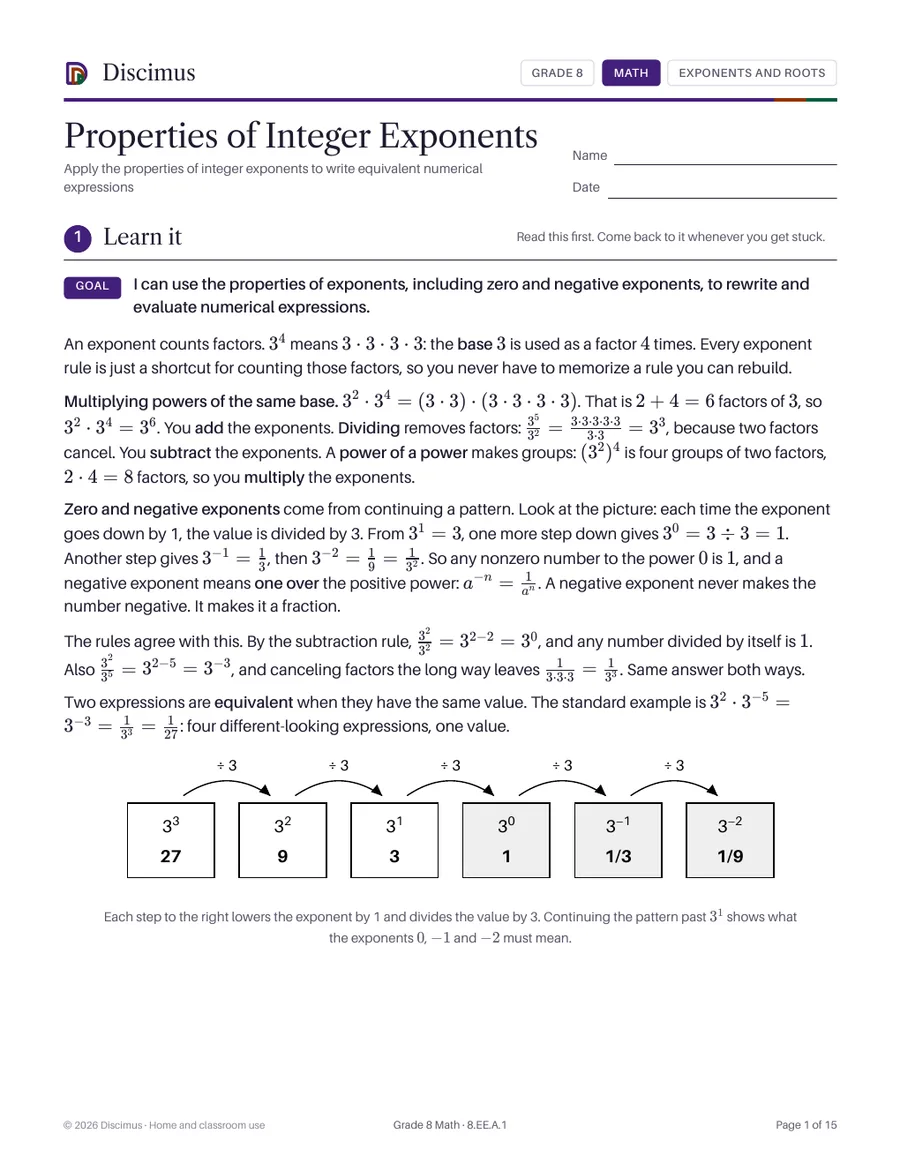
Apply the properties of integer exponents to write equivalent numerical expressions
Explain a proof of the Pythagorean theorem and of its converse
Tell rational from irrational numbers and convert repeating decimals to fractions
Verify that rigid motions take angles to angles of the same measure
Verify that rigid motions take lines to lines and segments to segments of equal length
Verify that rigid motions take parallel lines to parallel lines
Construct scatter plots and describe patterns of association, clusters and outliers
Show two figures are similar by describing a sequence of transformations
Explain constant slope with similar triangles and derive y = mx and y = mx + b
Solve systems of two linear equations algebraically, by graphing and by inspection
Solve x² = p and x³ = p with square root and cube root symbols and evaluate perfect roots
Write and solve a system of two linear equations for a real-world or mathematical problem
Explain and verify that a system's solution is the intersection point of its graphs
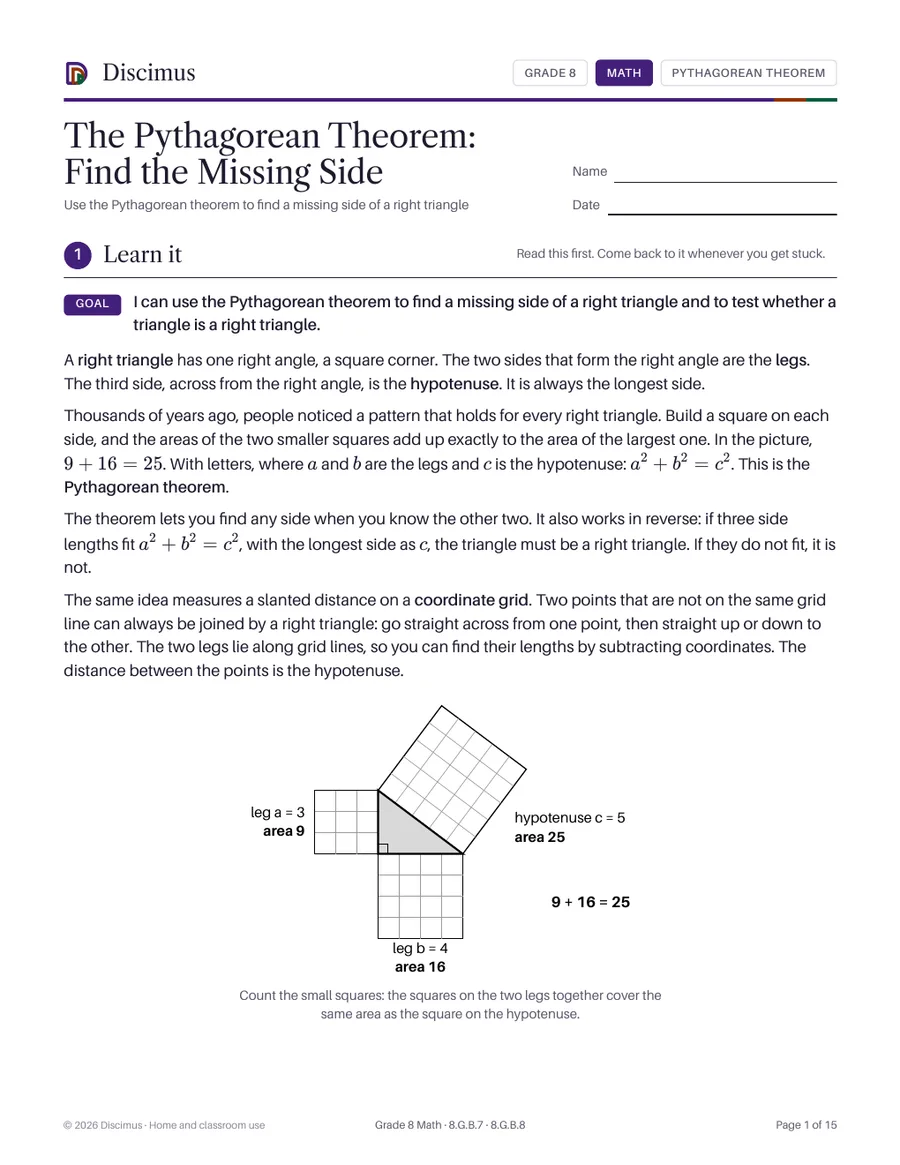
Use the Pythagorean theorem to find a missing side of a right triangle
Describe translations, reflections, rotations and dilations using coordinate rules
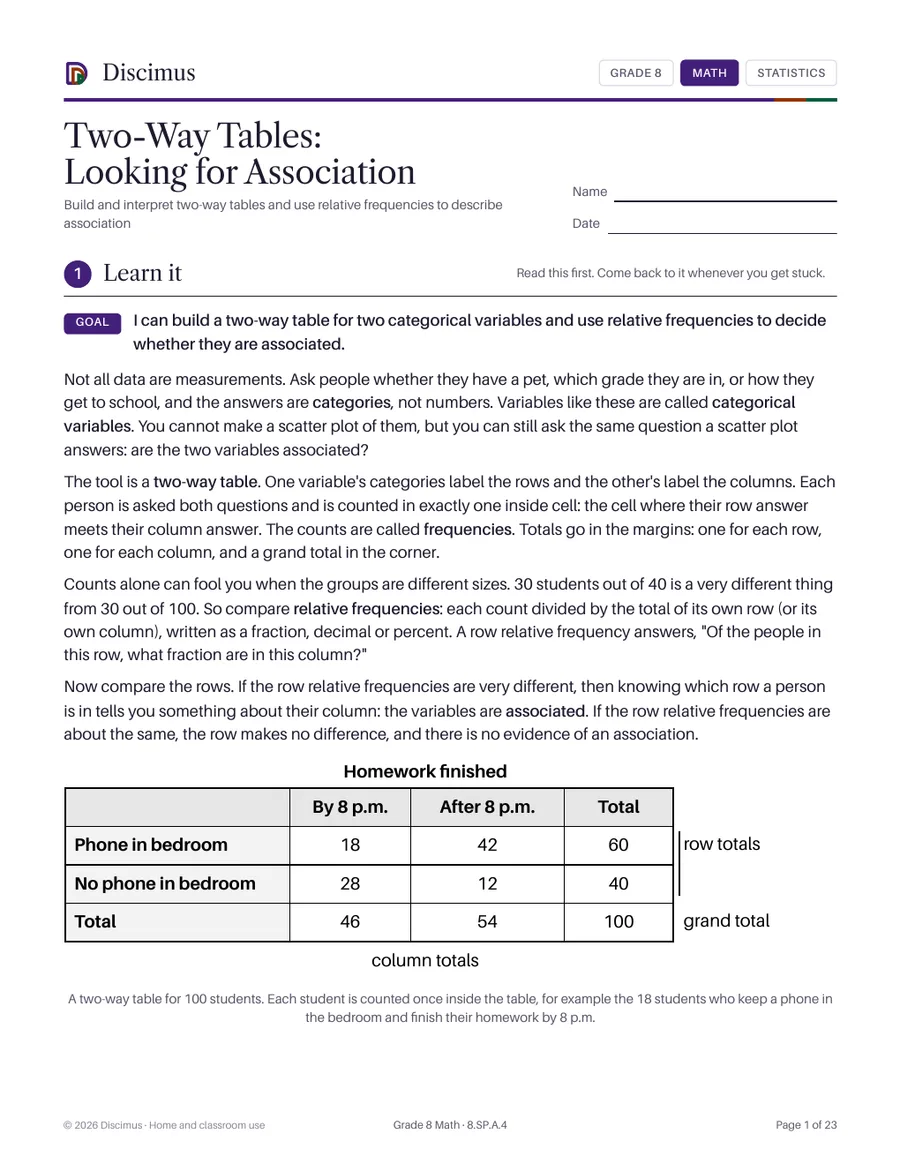
Build and interpret two-way tables and use relative frequencies to describe association
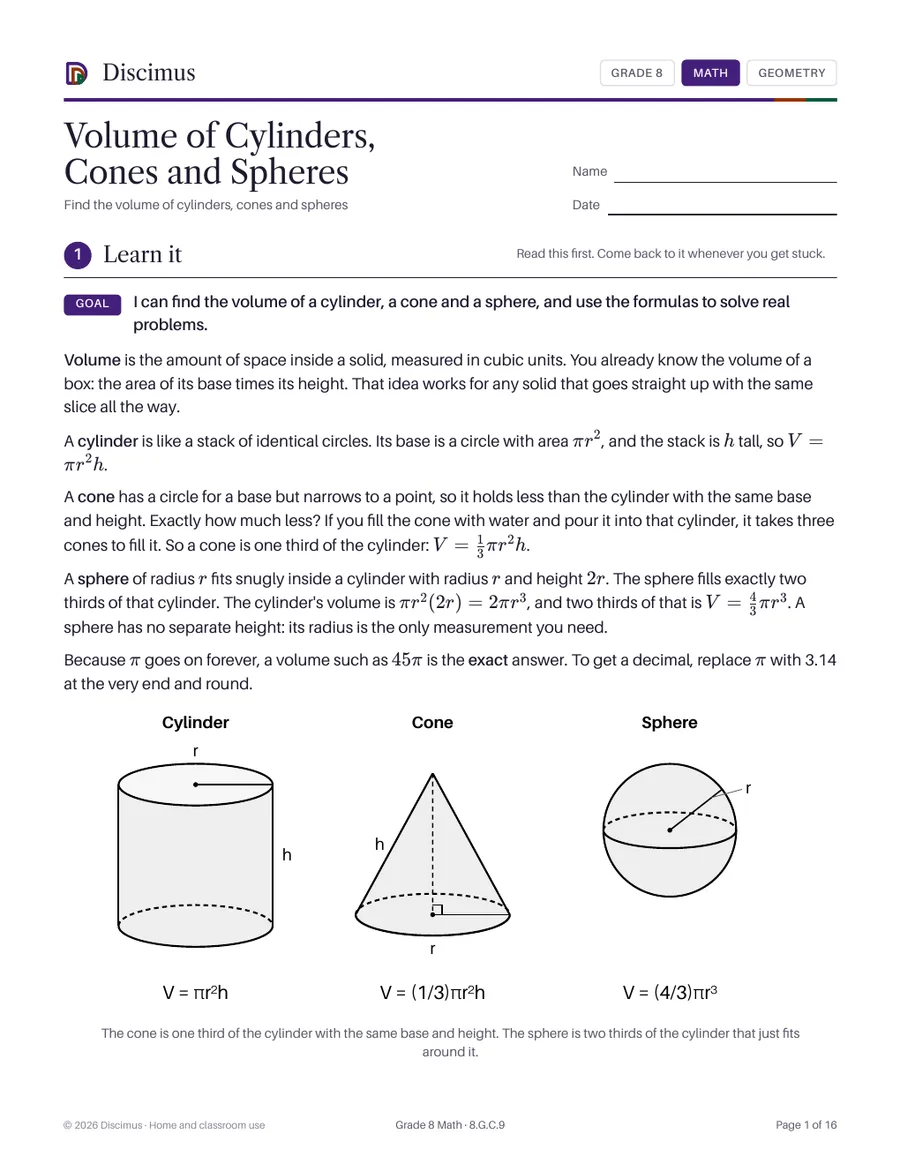
Find the volume of cylinders, cones and spheres
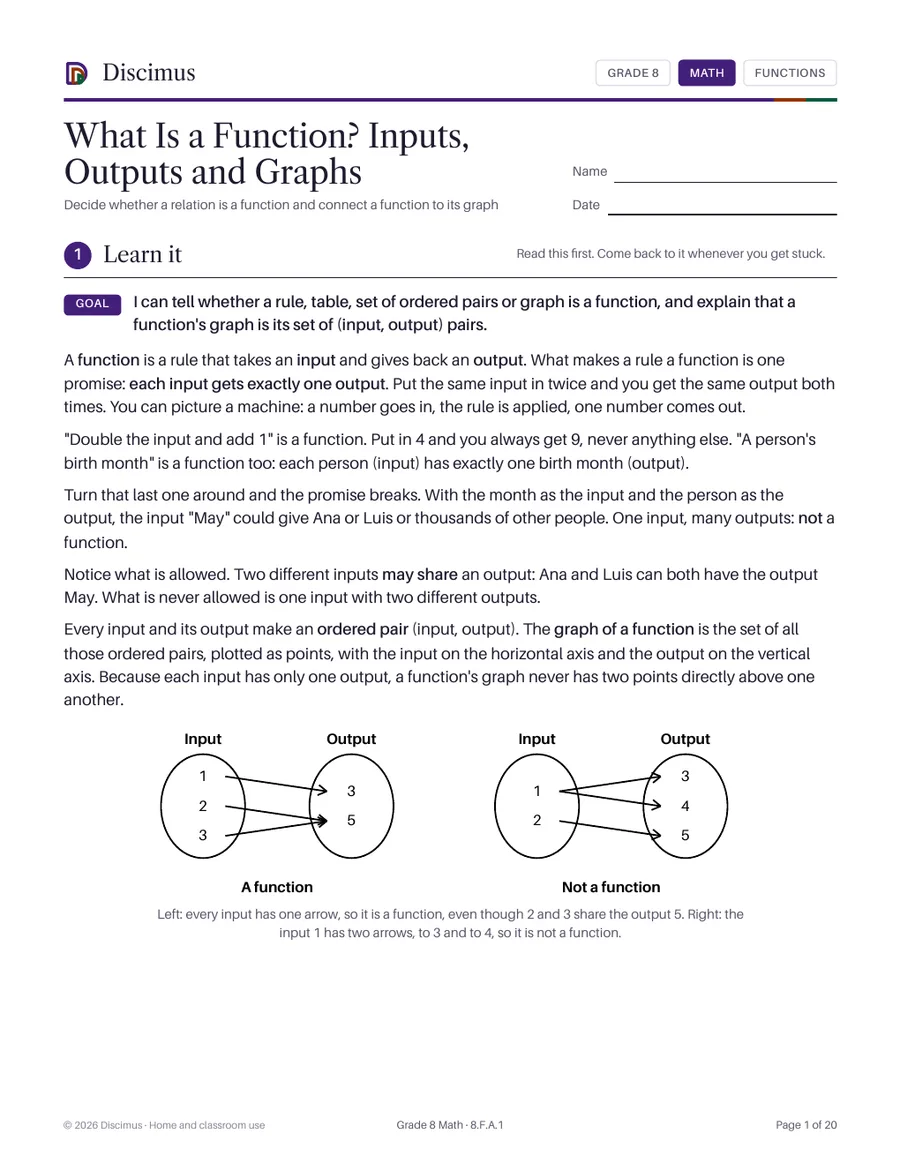
Decide whether a relation is a function and connect a function to its graph
Calculate, estimate and interpret average rate of change over an interval
Report measured and calculated quantities to a level of accuracy the measurements support
Compare data sets using center and spread measures that fit the shape of the distribution
Compare properties of two functions given in different representations
Complete the square to solve quadratic equations and derive the quadratic formula
Complete the square in a quadratic expression to reveal its maximum or minimum value
Write a linear or exponential function from a table, graph, description or two points
Distinguish between correlation and causation and evaluate causal claims
Write equations in two or more variables and graph them with labeled, scaled axes
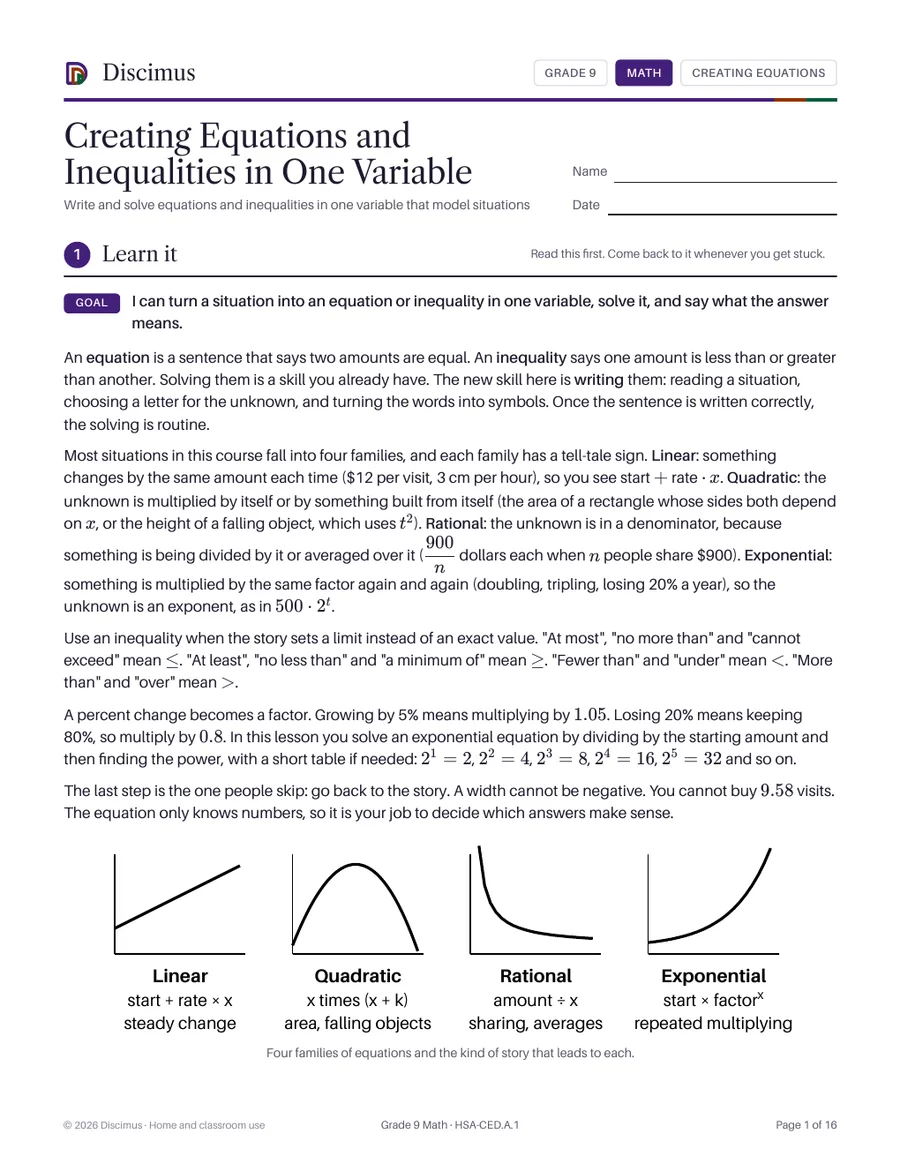
Write and solve equations and inequalities in one variable that model situations
Choose and define an appropriate quantity, with units, to describe a real situation
Relate the domain of a function to its graph and to the situation it models
Compare exponential growth with linear and polynomial growth using tables and graphs
Factor quadratic trinomials with leading coefficient 1, including a common factor first
Fit a linear function to a scatter plot by eye and with technology, and write its equation
Fit linear, quadratic and exponential functions to data and use them to solve problems
Evaluate functions in function notation and interpret statements like f(a) = b in context
Graph exponential, logarithmic and trigonometric functions and show their key features
Graph linear and quadratic functions showing intercepts, maxima and minima
Graph linear inequalities as half-planes and systems as the overlap of half-planes
Graph polynomial functions using factored zeros and end behavior
Graph rational functions, identifying zeros, asymptotes and end behavior
Graph square root, cube root, absolute value, piecewise and step functions
Use exponent properties to find the percent rate of change of an exponential function
Interpret a complicated expression by viewing a part of it as a single quantity
Interpret key features of graphs and tables and sketch graphs from descriptions
Interpret the parameters of a linear or exponential function in terms of its context
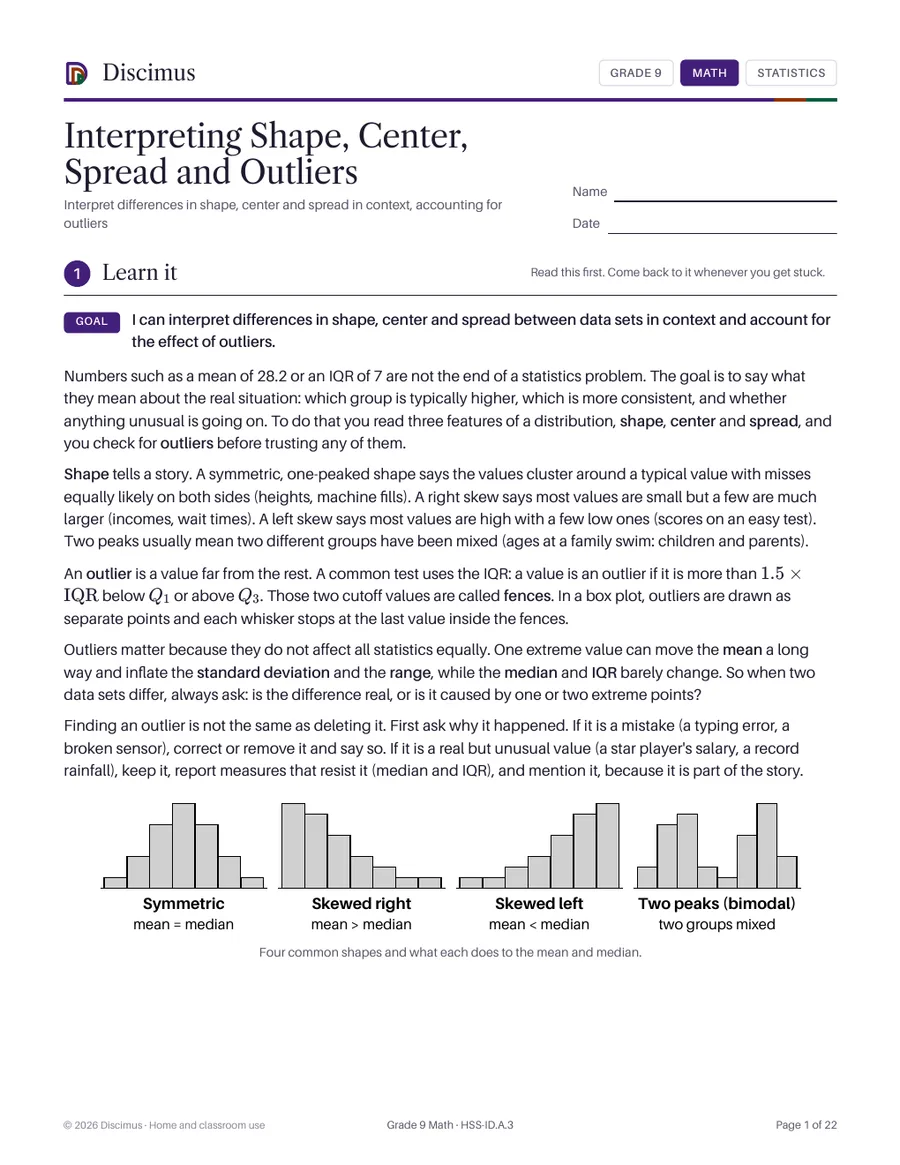
Interpret differences in shape, center and spread in context, accounting for outliers
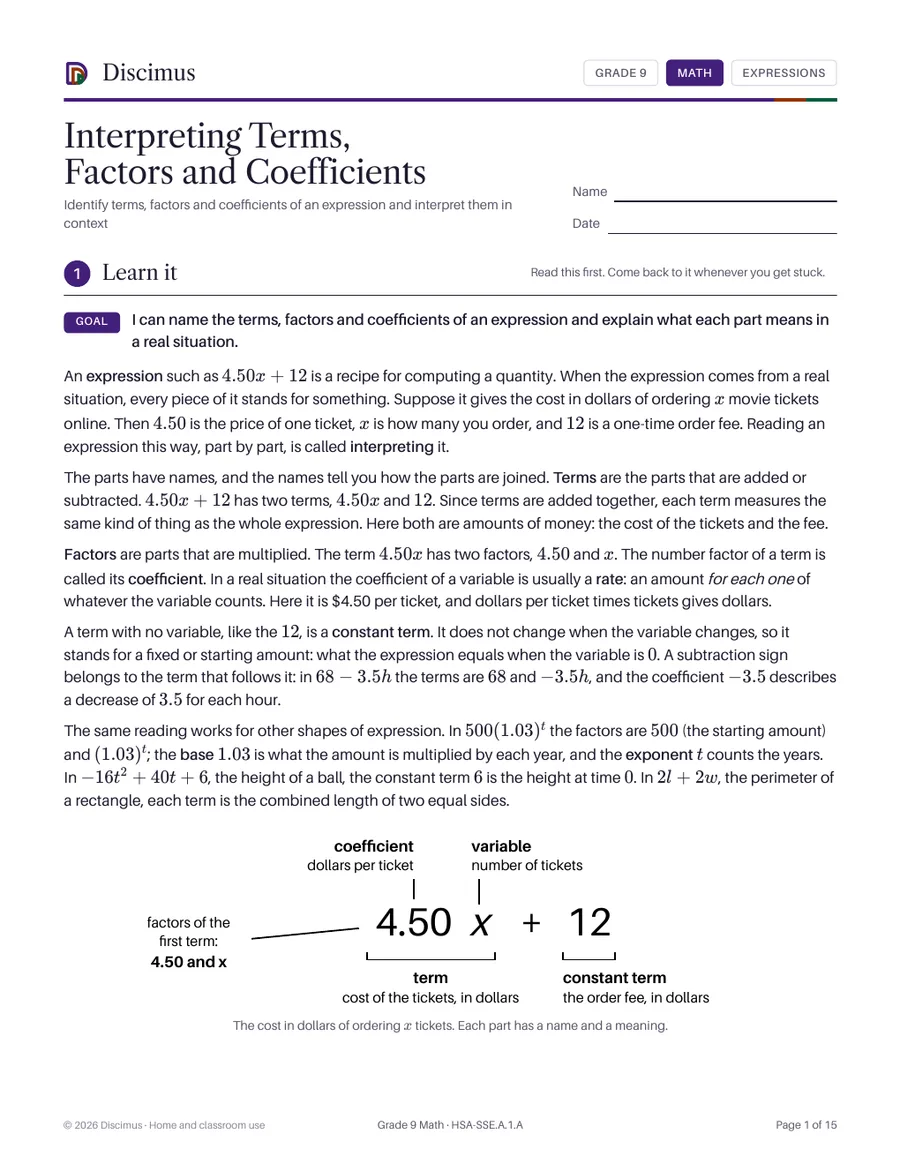
Identify terms, factors and coefficients of an expression and interpret them in context
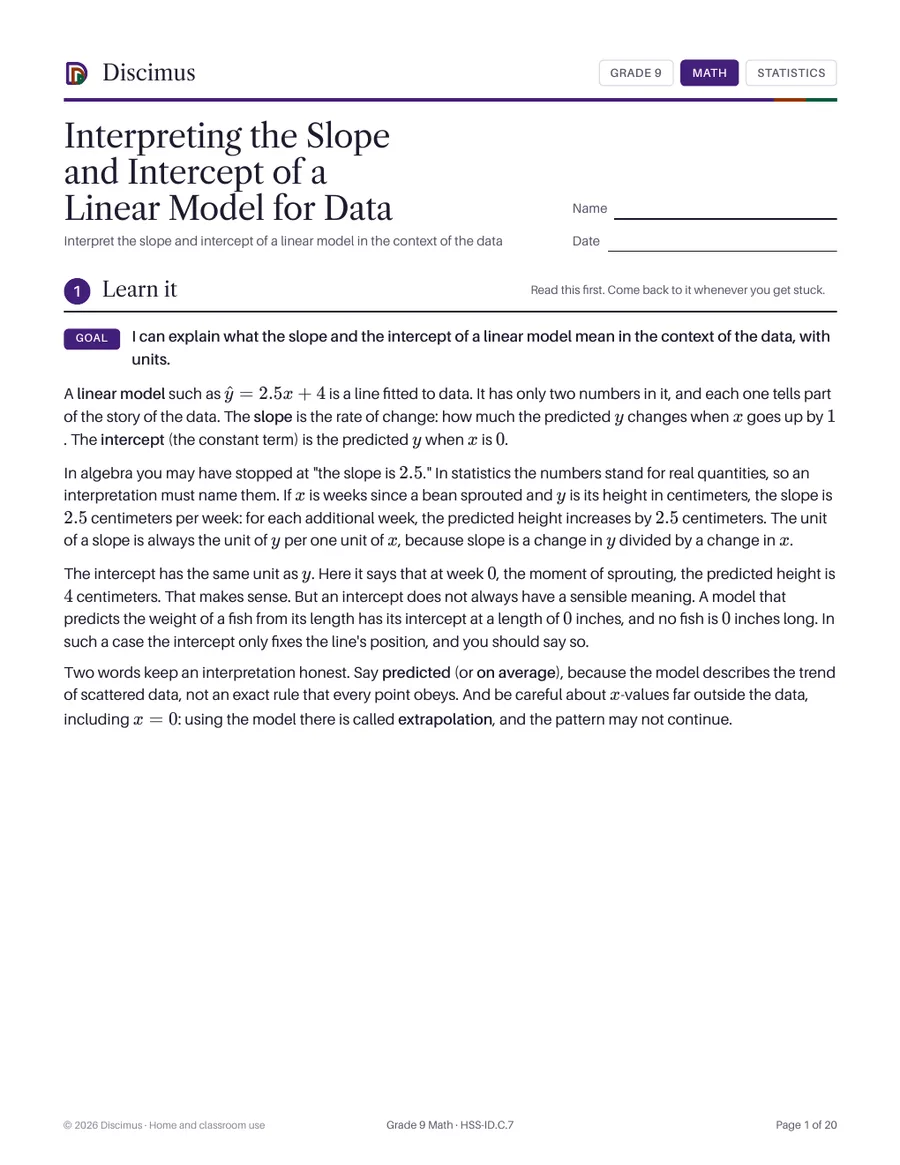
Interpret the slope and intercept of a linear model in the context of the data
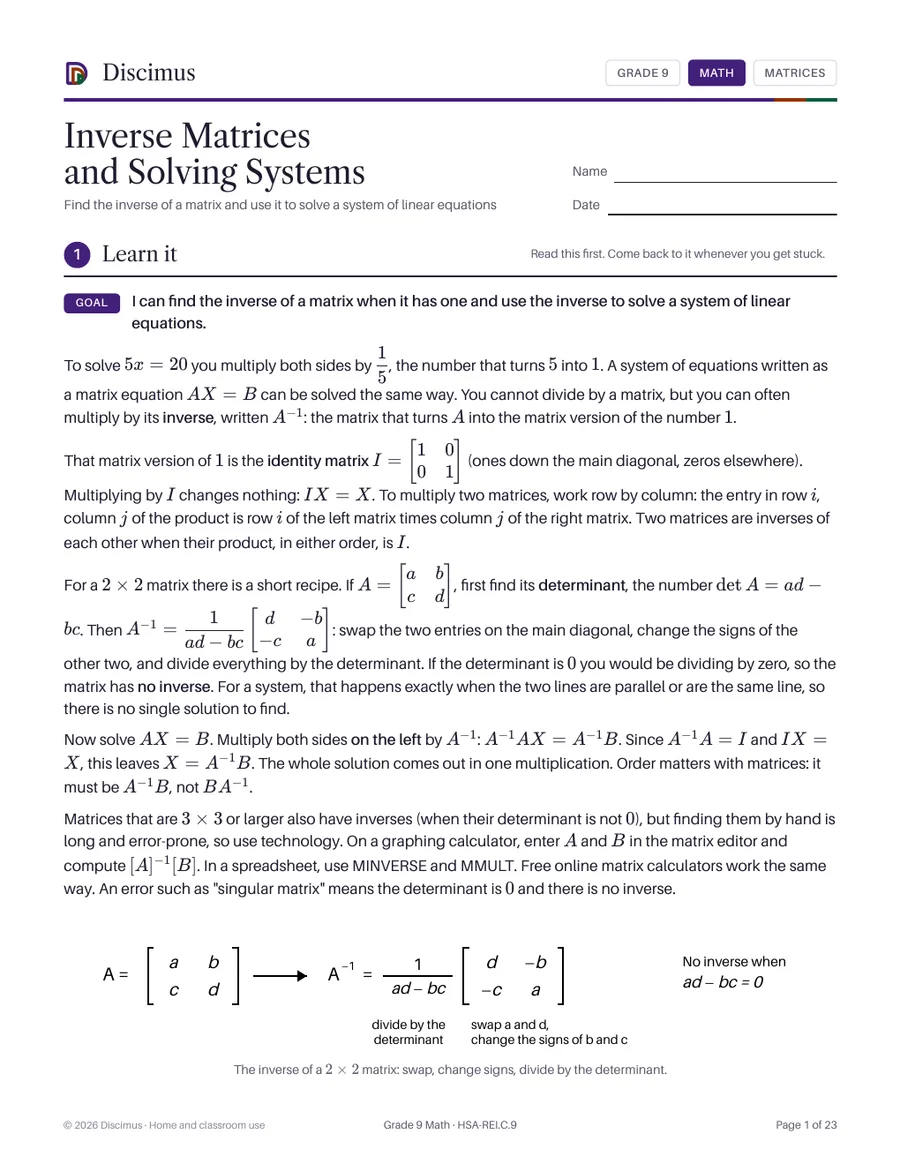
Find the inverse of a matrix and use it to solve a system of linear equations
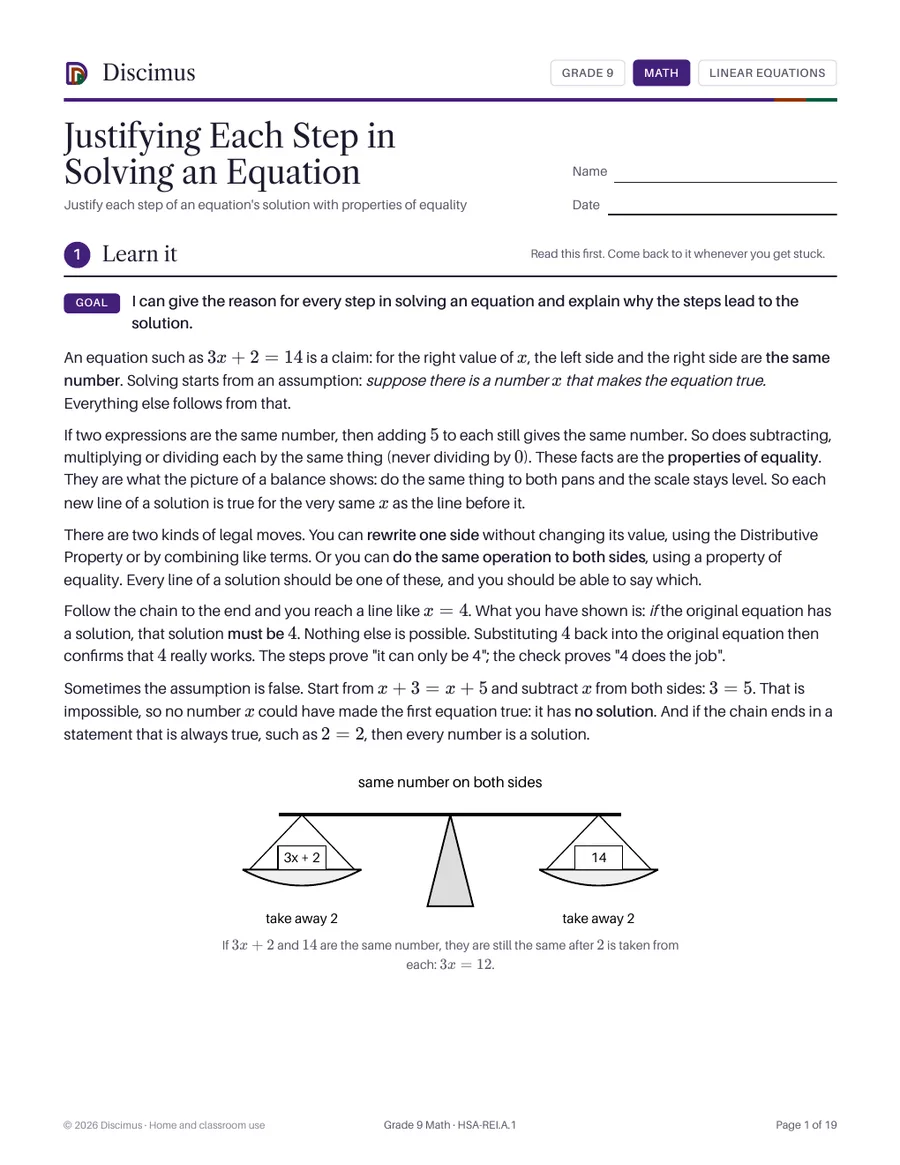
Justify each step of an equation's solution with properties of equality
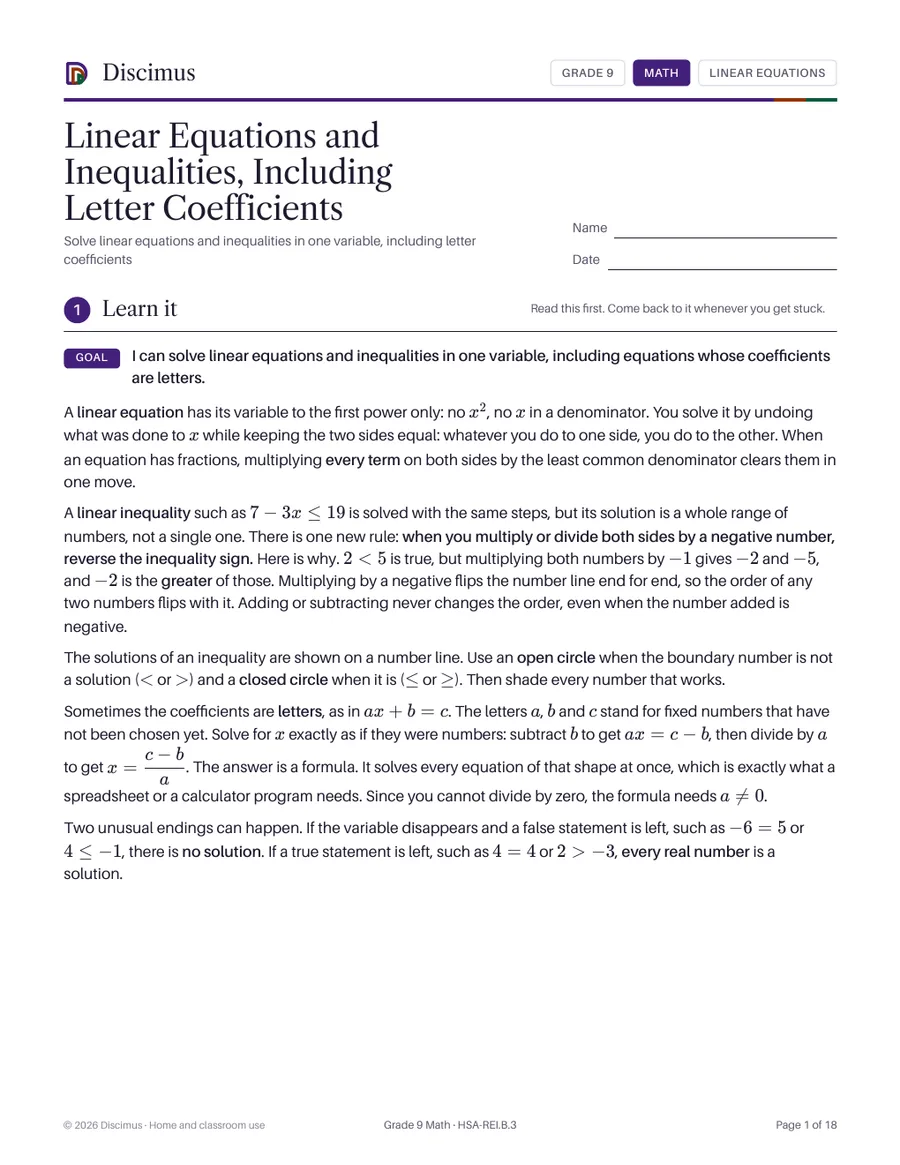
Solve linear equations and inequalities in one variable, including letter coefficients
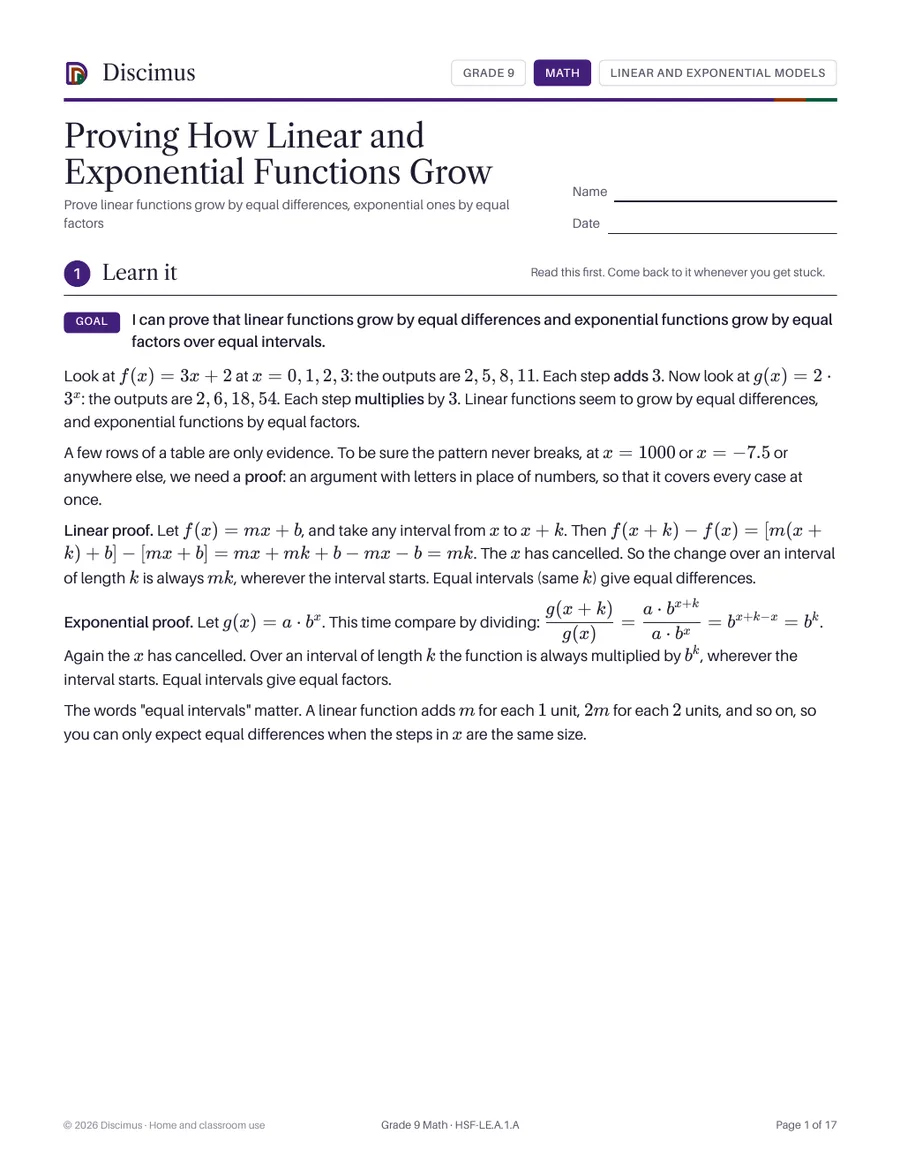
Prove linear functions grow by equal differences, exponential ones by equal factors
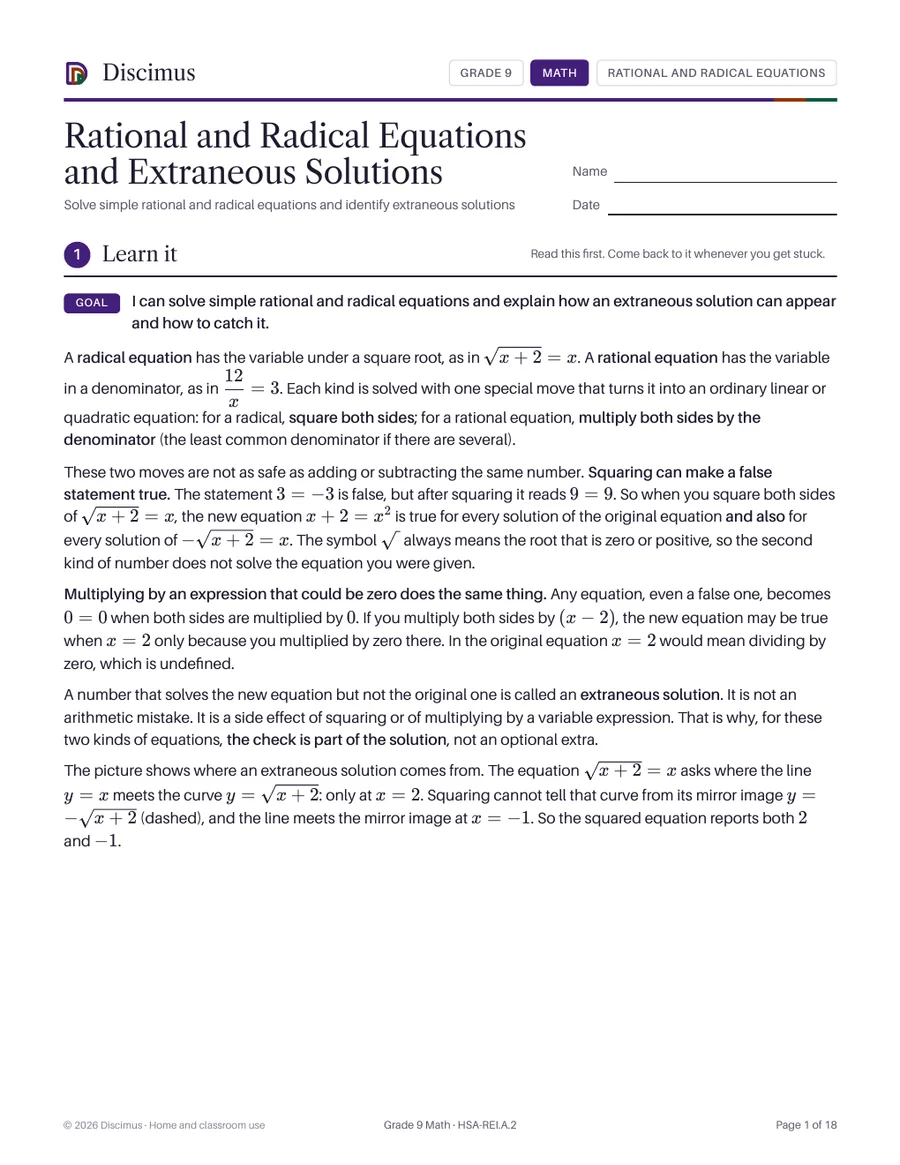
Solve simple rational and radical equations and identify extraneous solutions
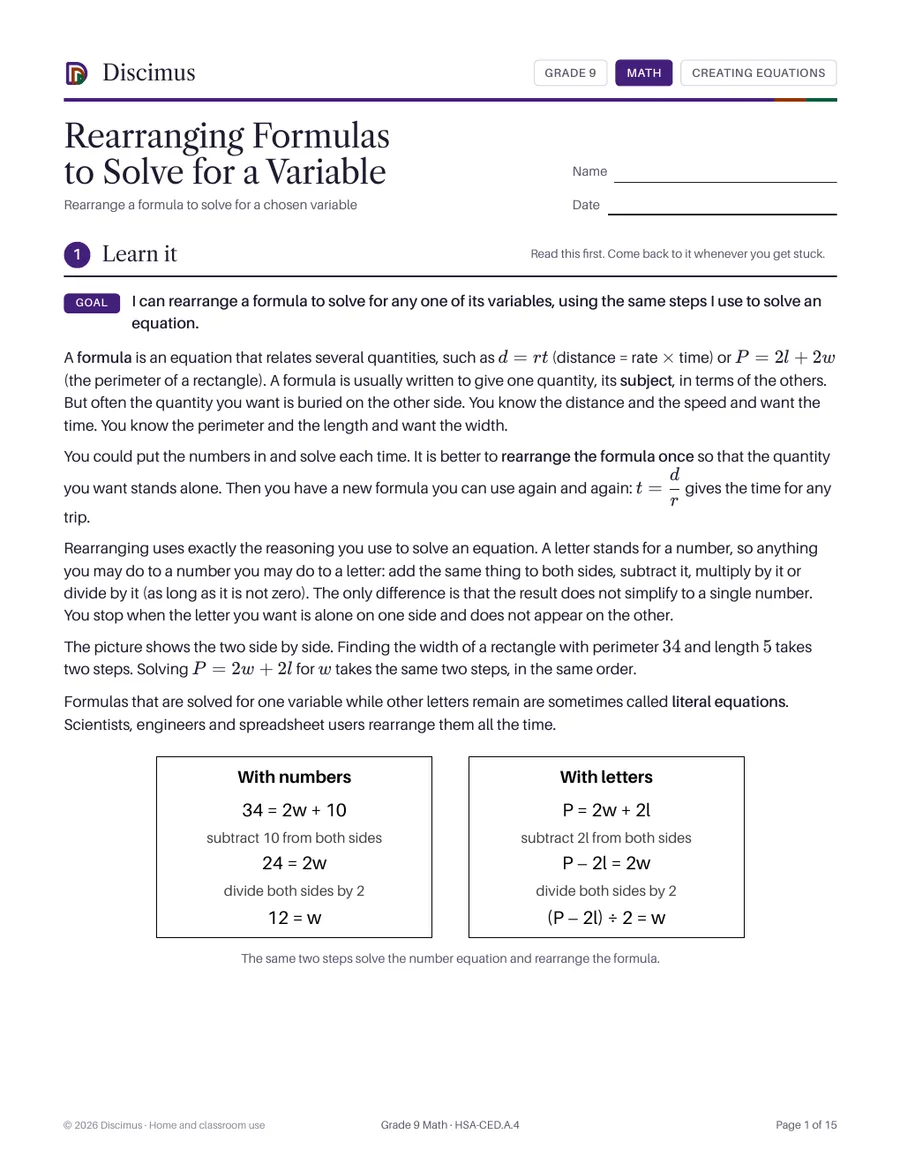
Rearrange a formula to solve for a chosen variable
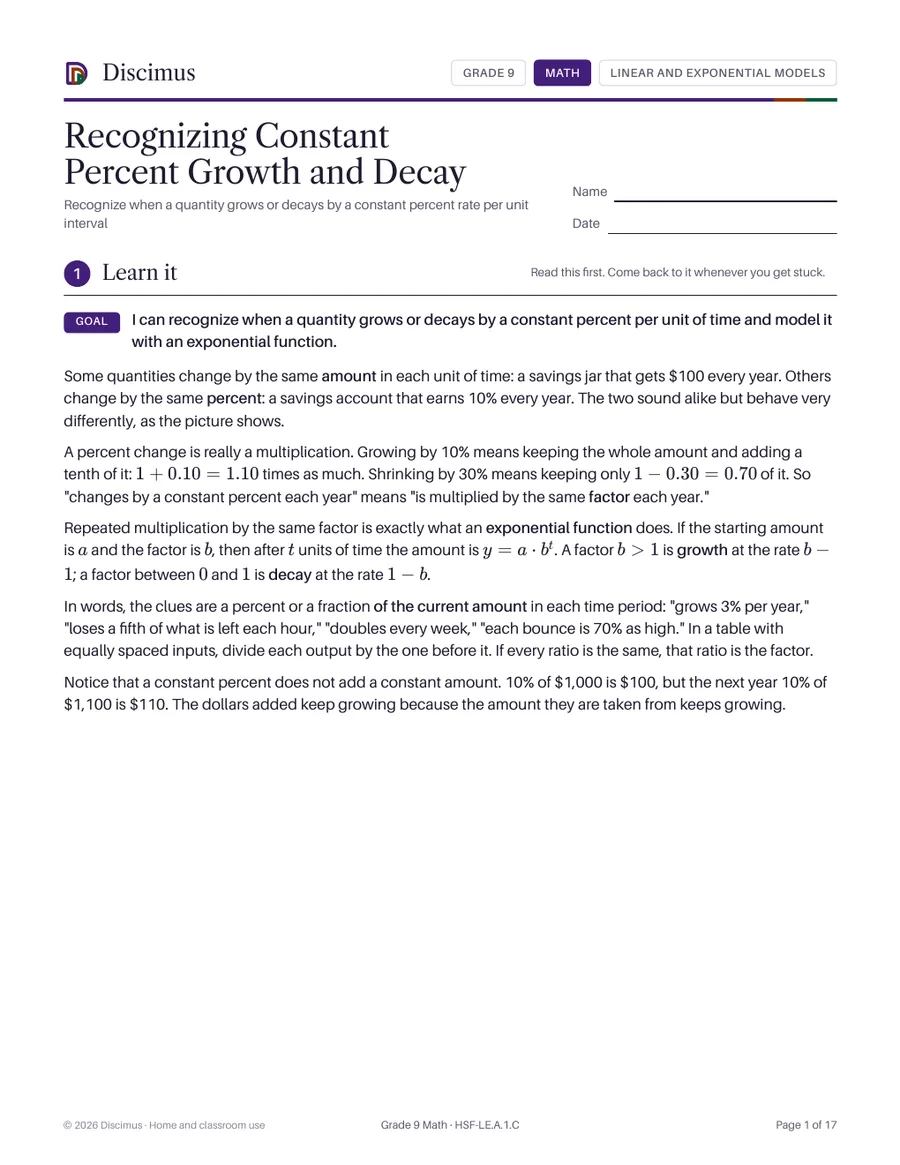
Recognize when a quantity grows or decays by a constant percent rate per unit interval
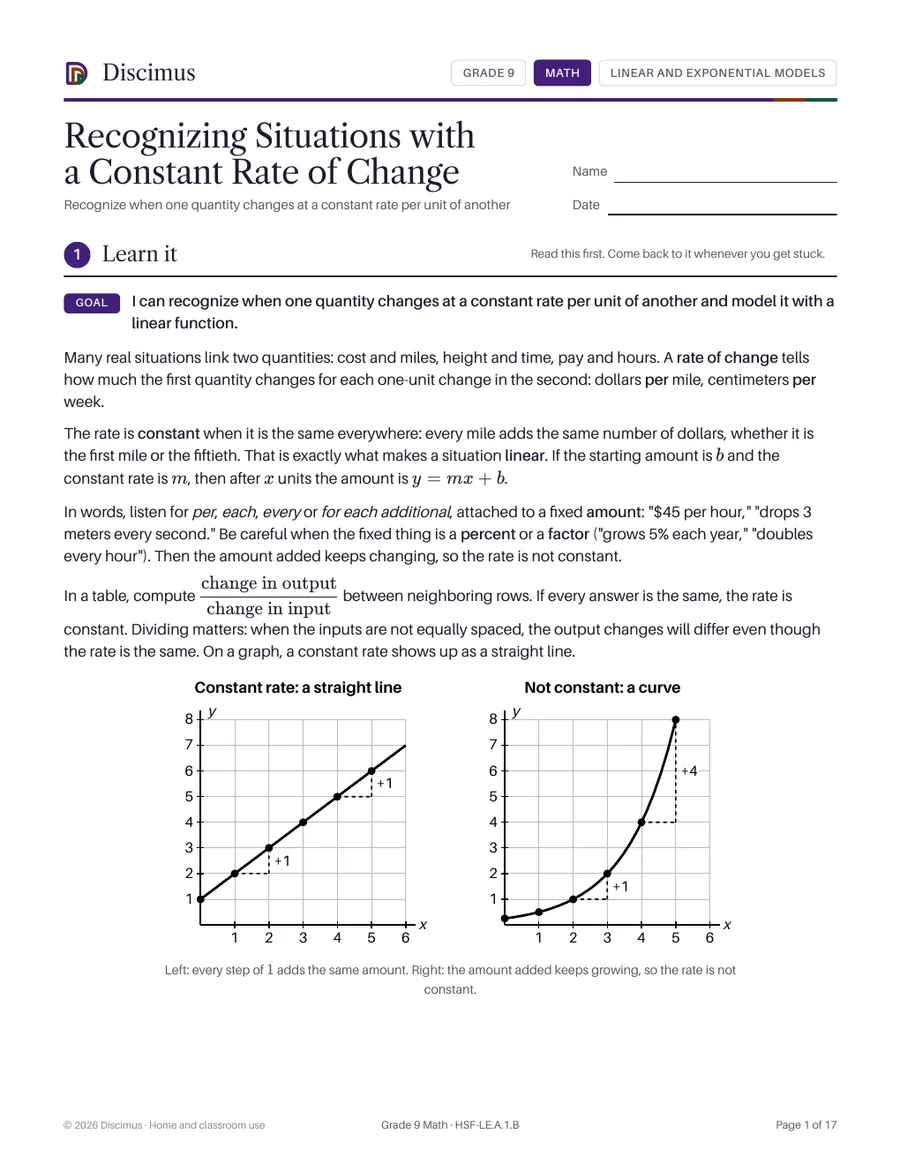
Recognize when one quantity changes at a constant rate per unit of another
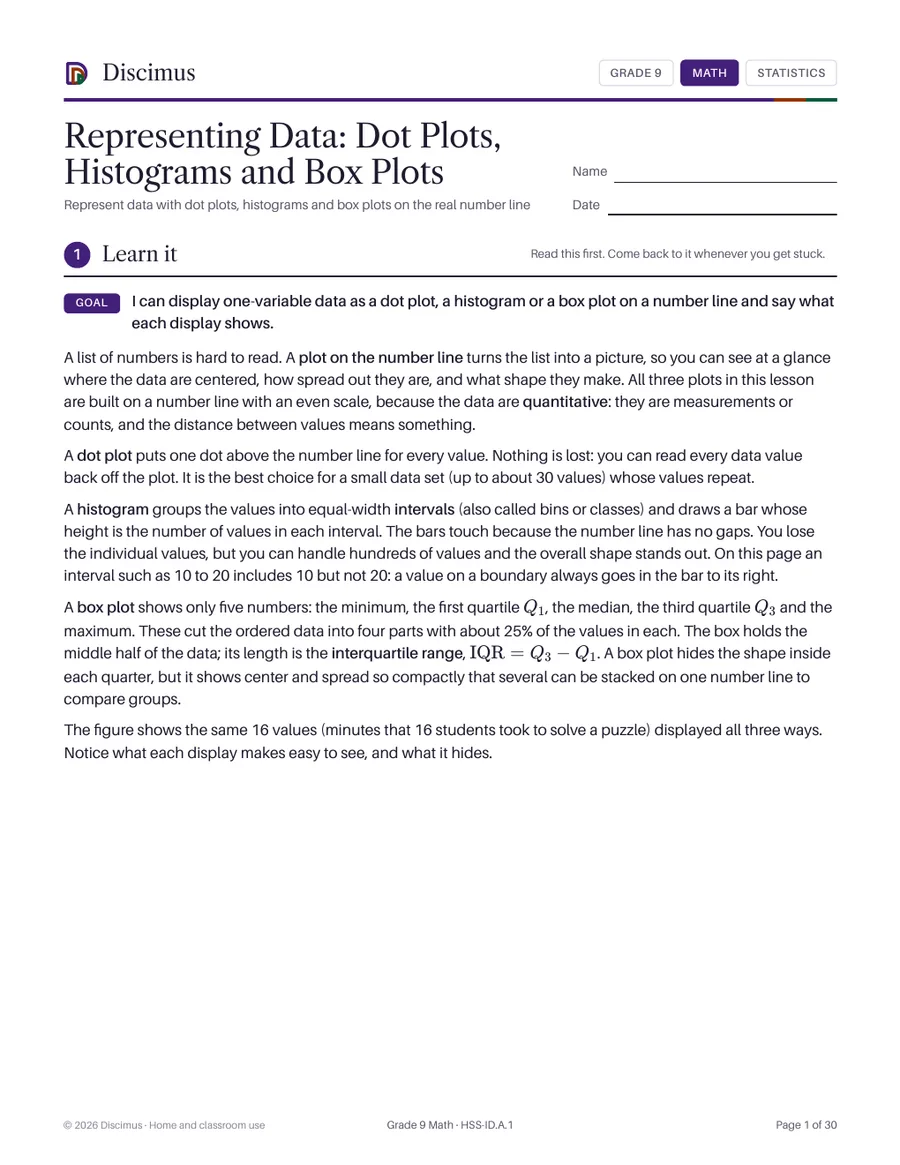
Represent data with dot plots, histograms and box plots on the real number line
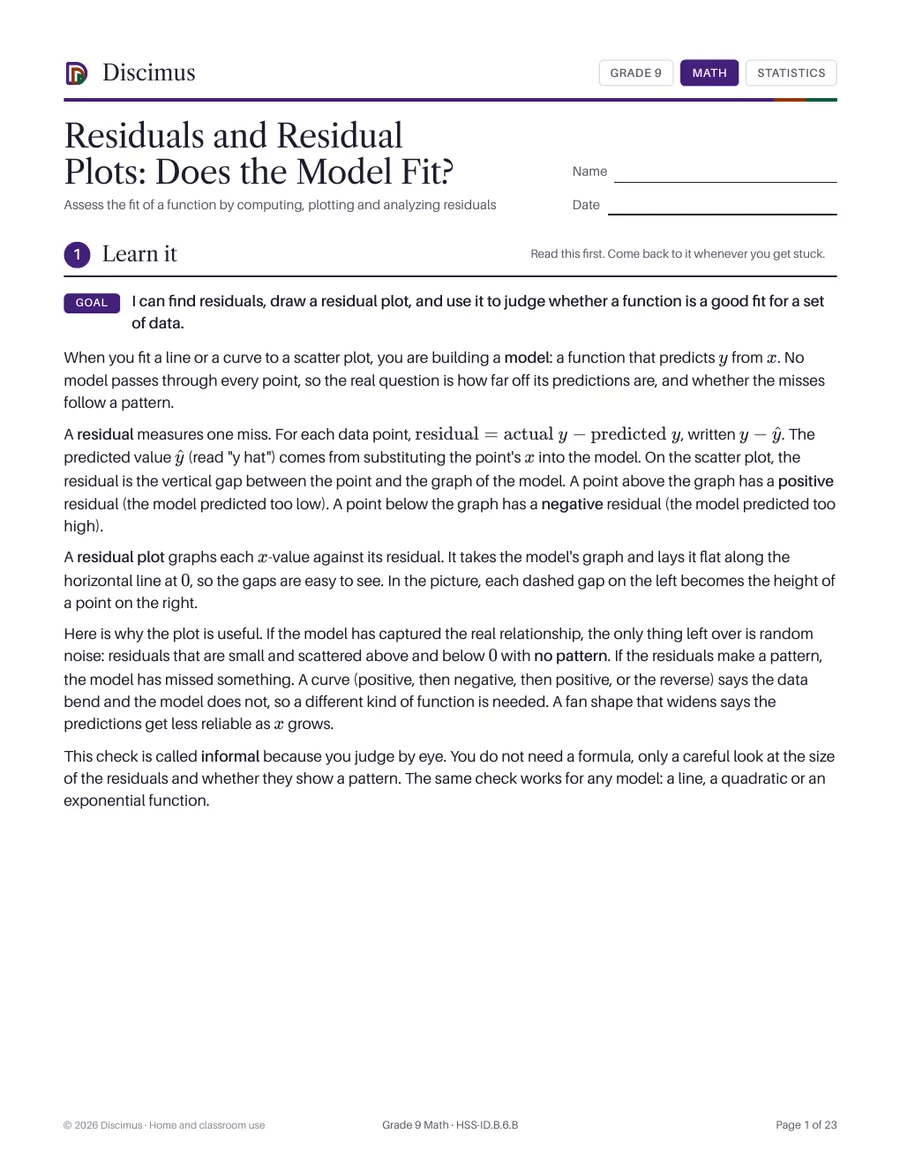
Assess the fit of a function by computing, plotting and analyzing residuals
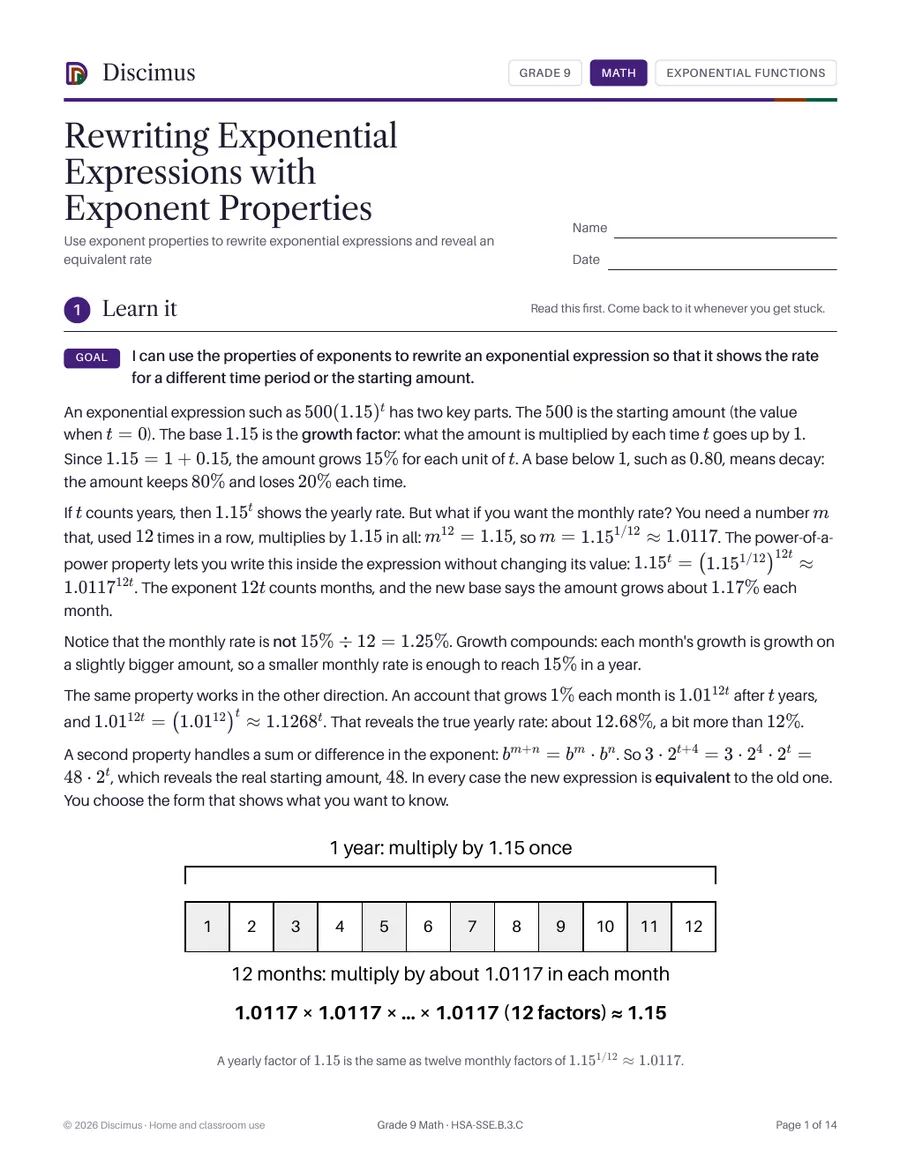
Use exponent properties to rewrite exponential expressions and reveal an equivalent rate
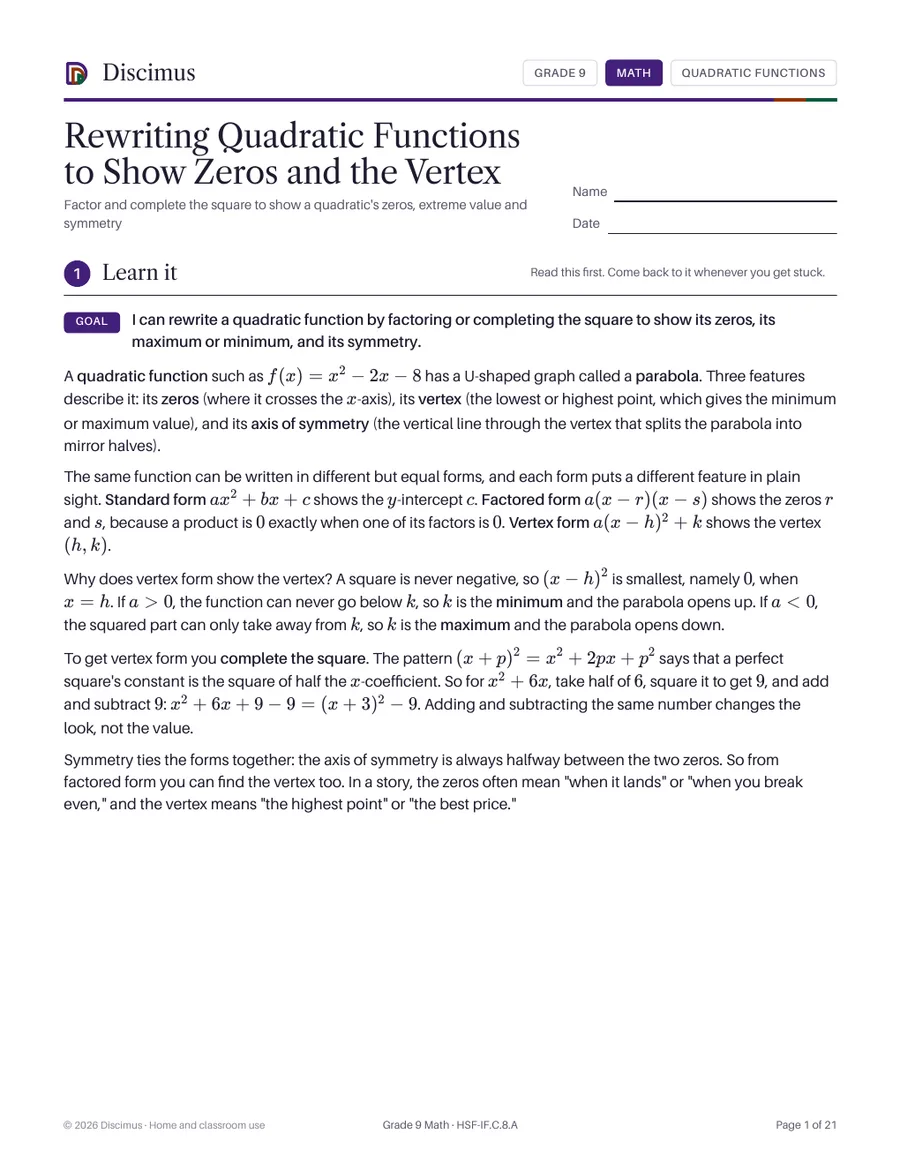
Factor and complete the square to show a quadratic's zeros, extreme value and symmetry
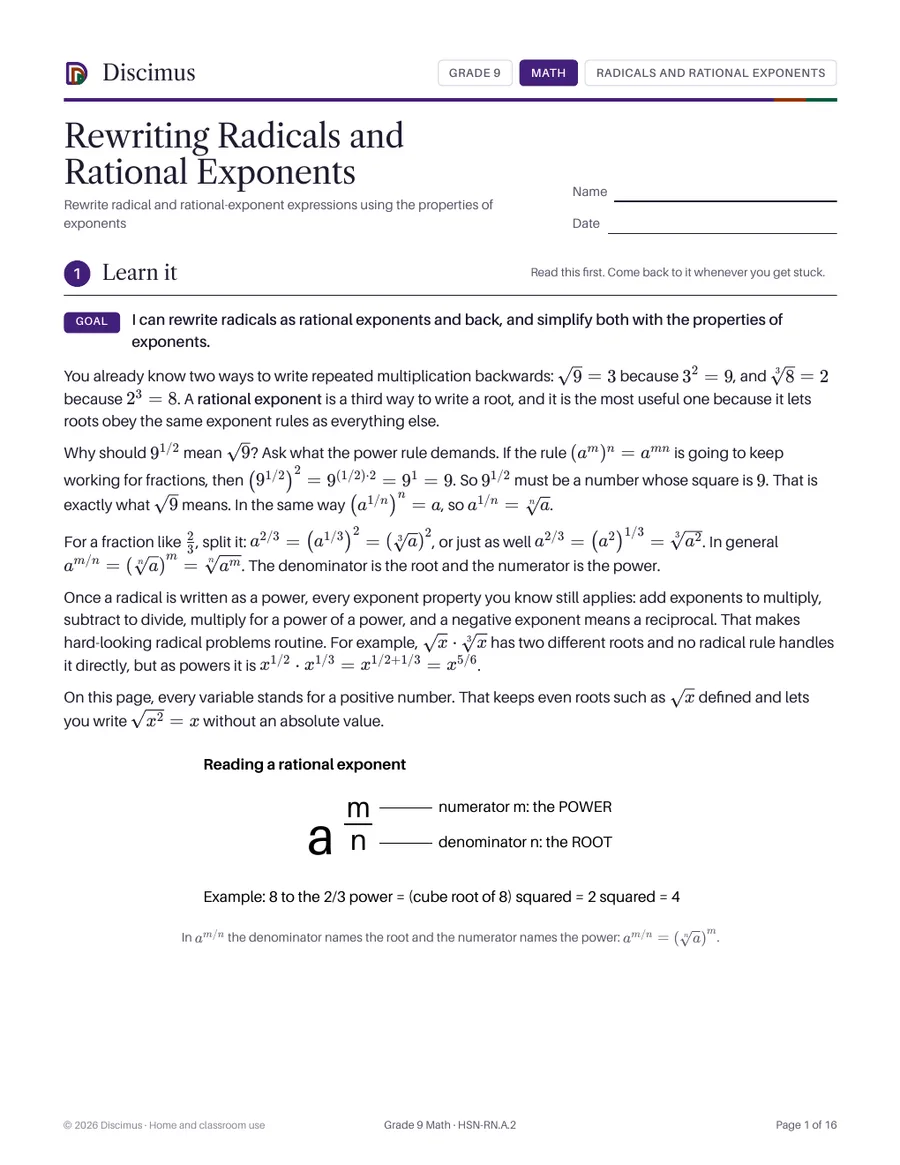
Rewrite radical and rational-exponent expressions using the properties of exponents
Treat sequences as functions on the integers and use explicit and recursive rules
Solve f(x) = g(x) from intersecting graphs, tables and successive approximation
Solve a system of one linear and one quadratic equation algebraically and graphically
Explain why sums and products of rationals and irrationals are rational or irrational
Solve systems of two linear equations by substitution and by elimination
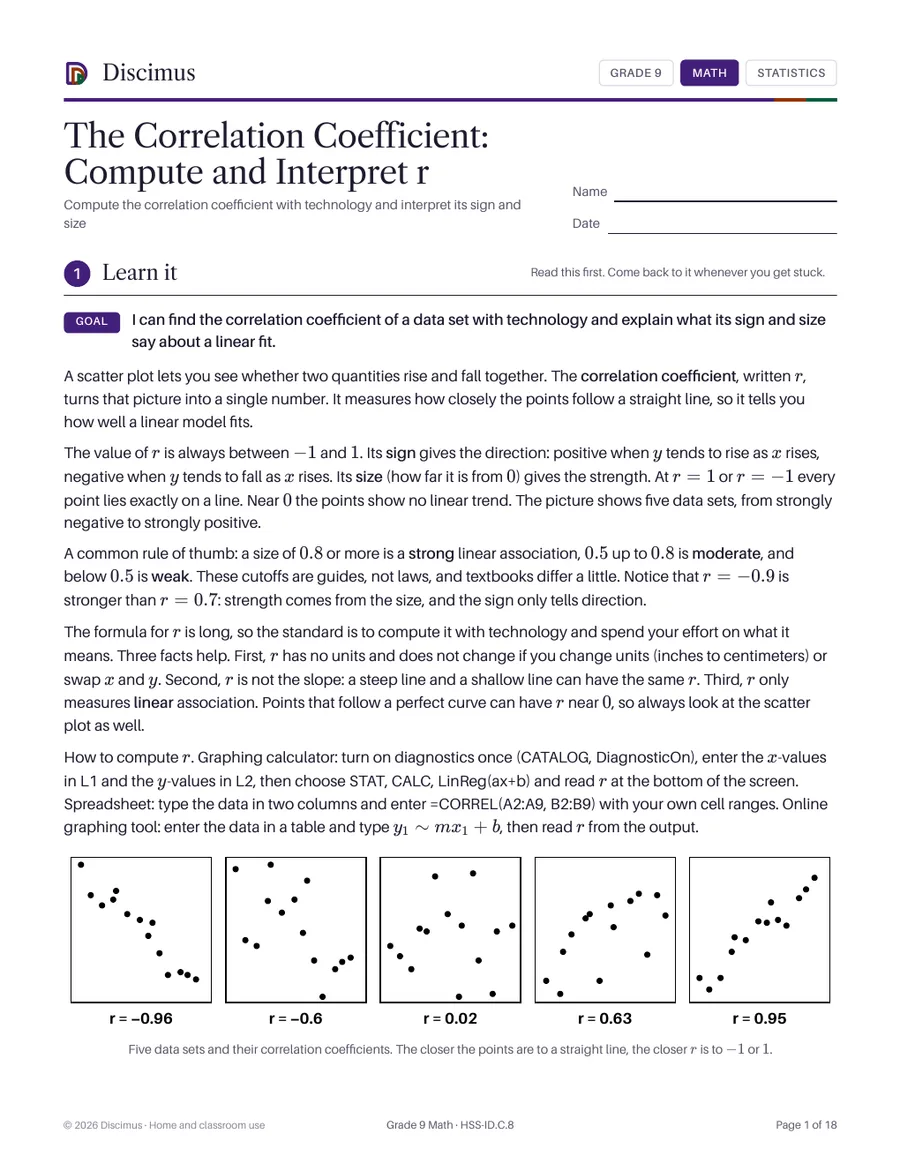
Compute the correlation coefficient with technology and interpret its sign and size
Explain and use the fact that a graph shows every solution of an equation in two variables
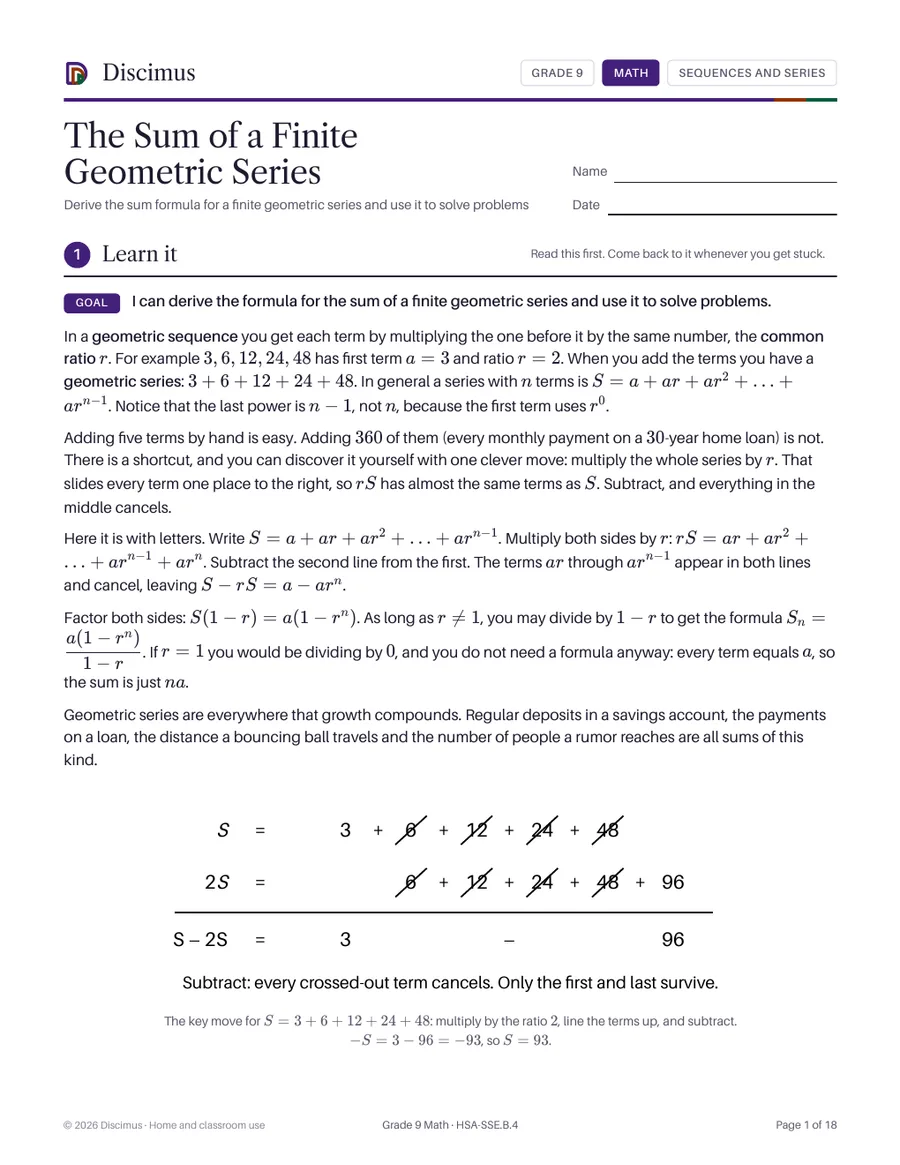
Derive the sum formula for a finite geometric series and use it to solve problems
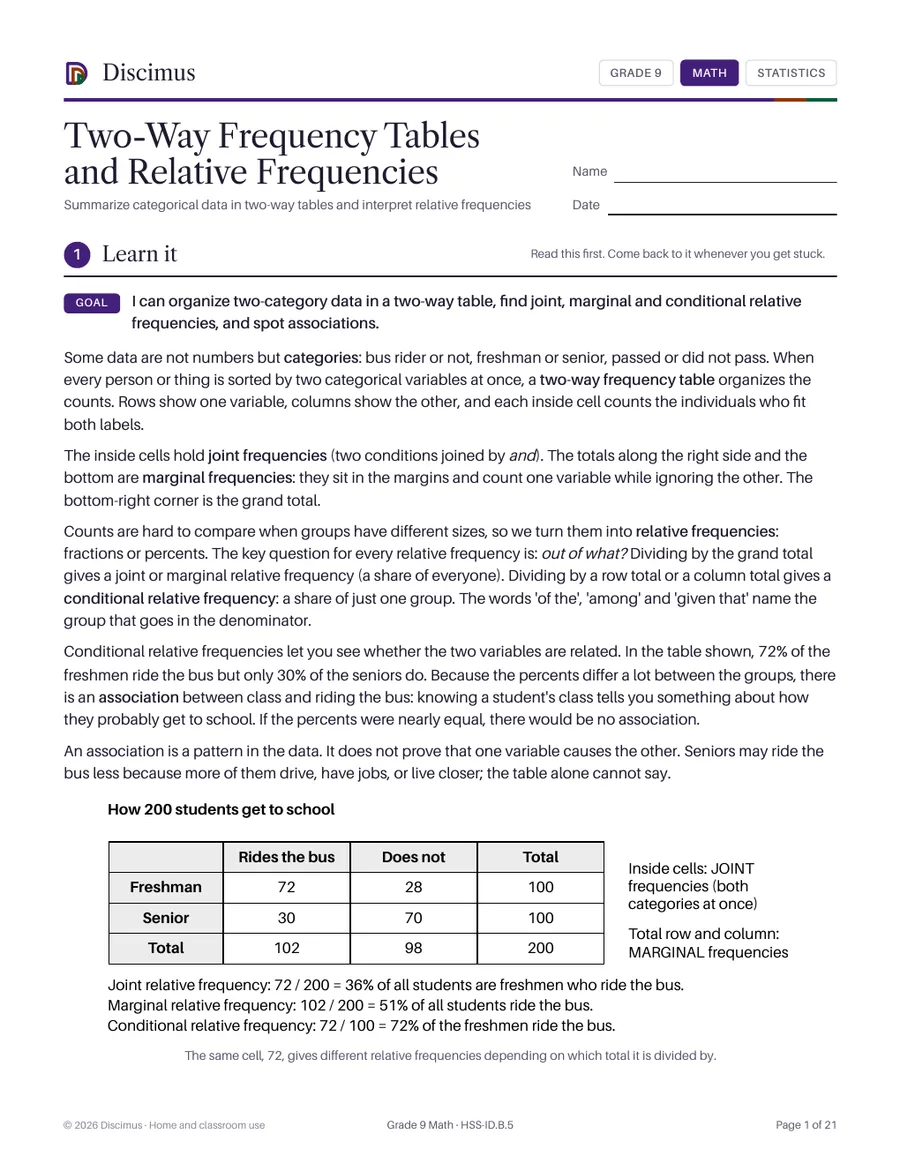
Summarize categorical data in two-way tables and interpret relative frequencies
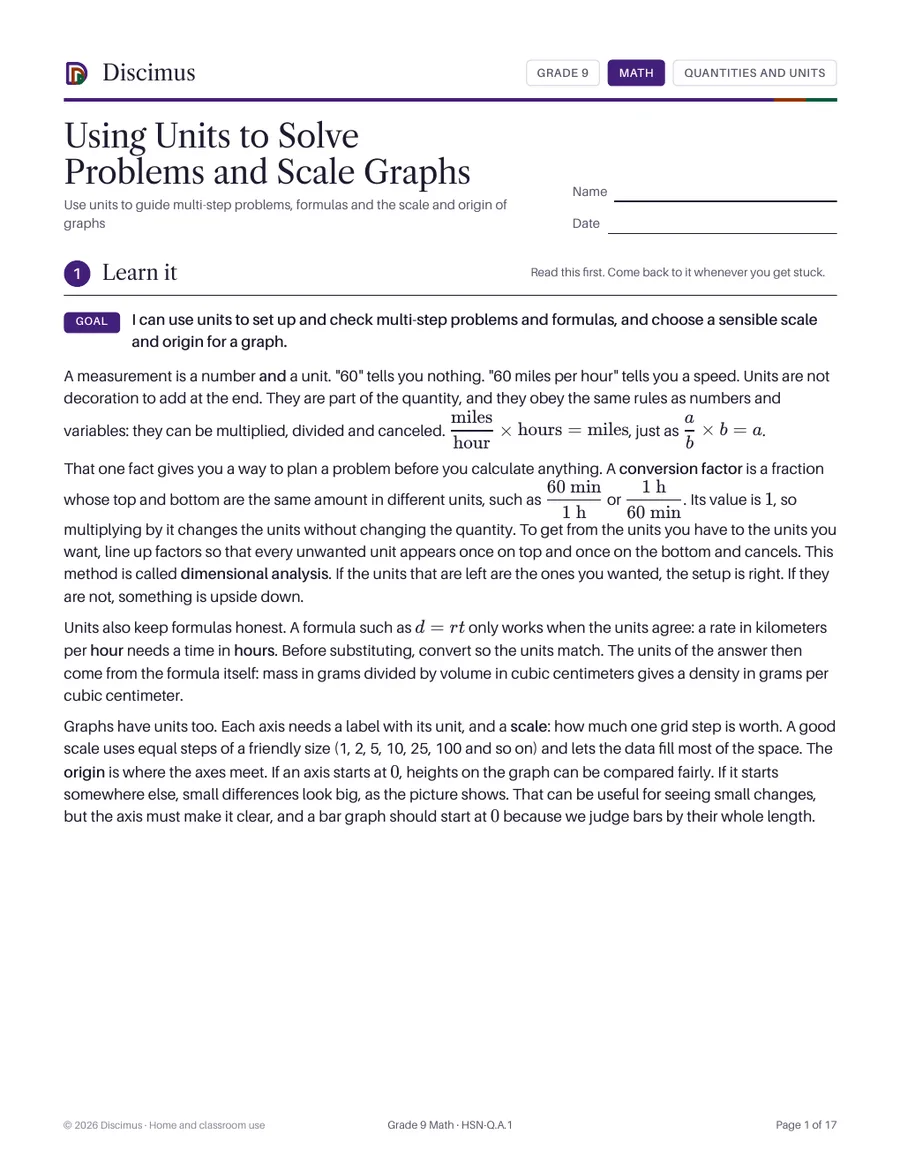
Use units to guide multi-step problems, formulas and the scale and origin of graphs
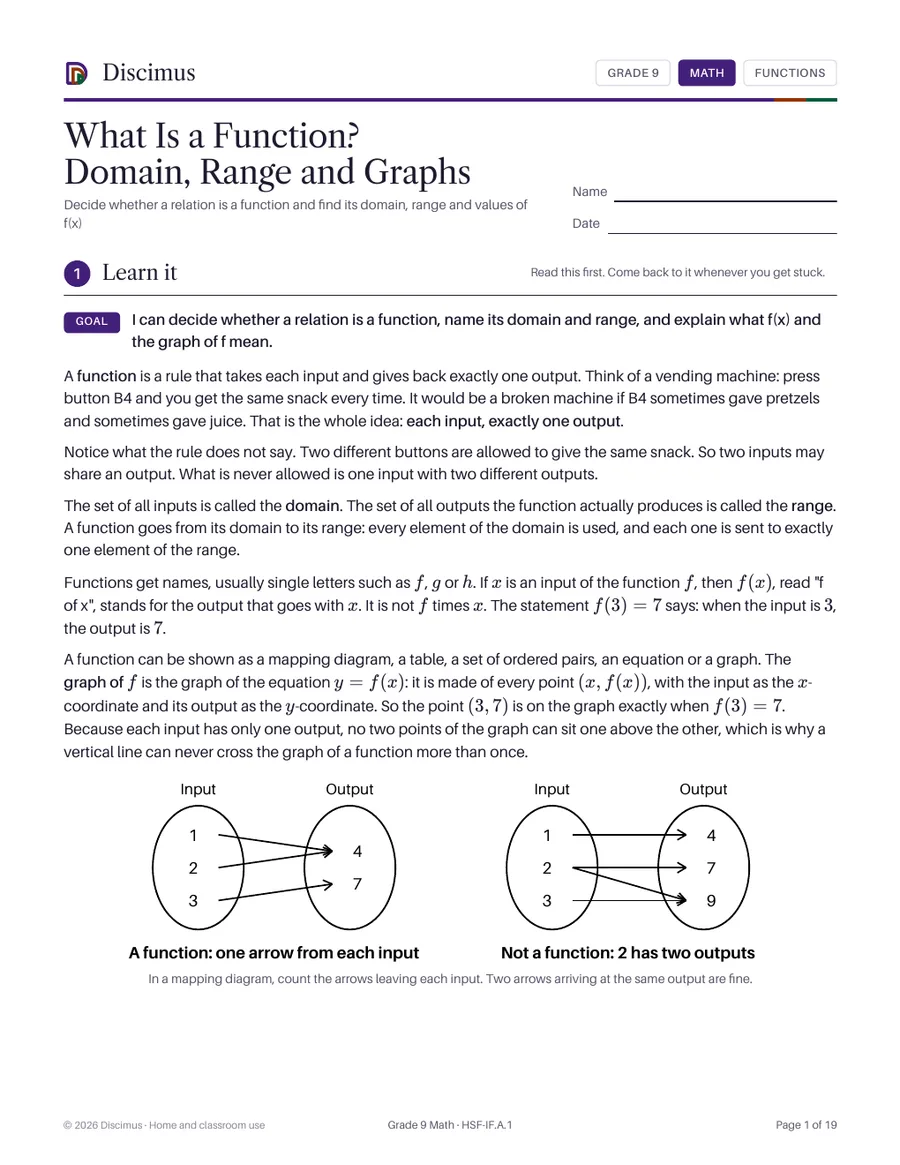
Decide whether a relation is a function and find its domain, range and values of f(x)
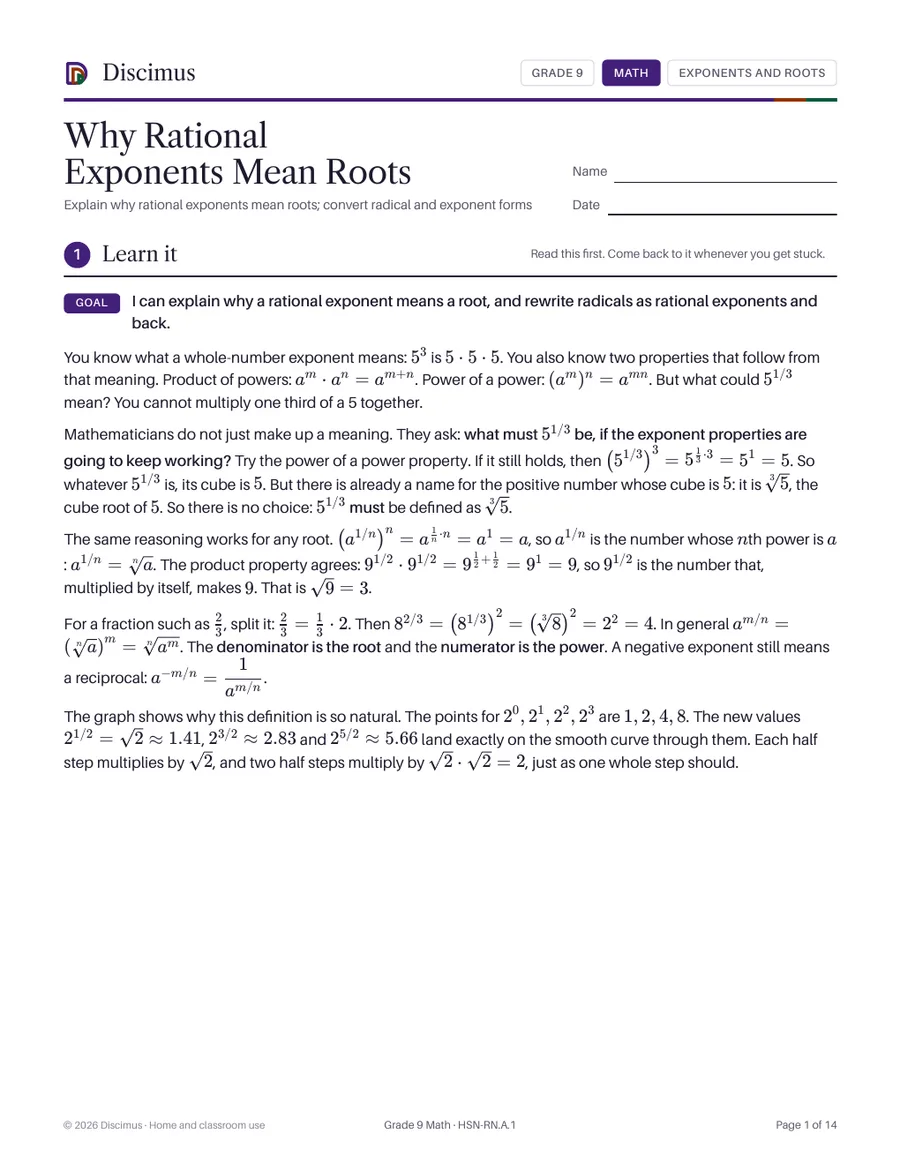
Explain why rational exponents mean roots; convert radical and exponent forms
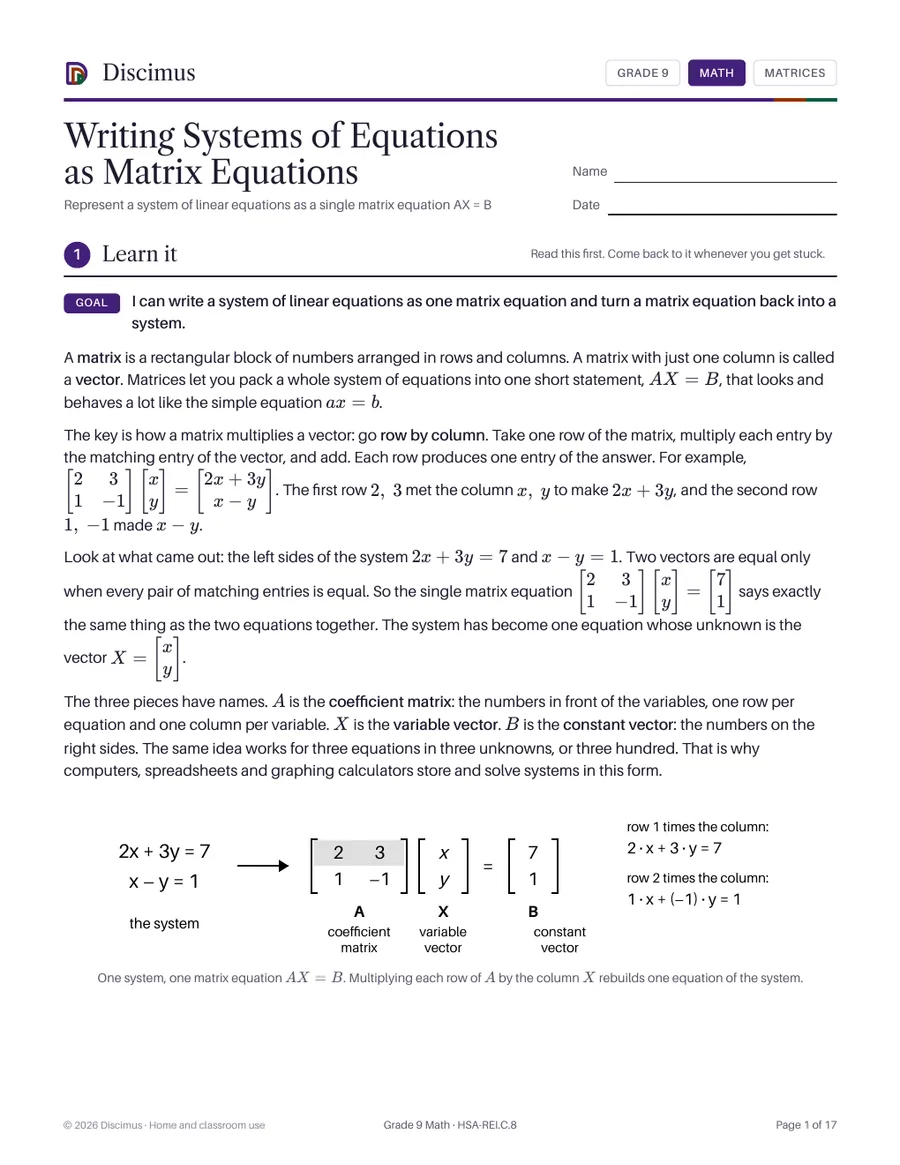
Represent a system of linear equations as a single matrix equation AX = B
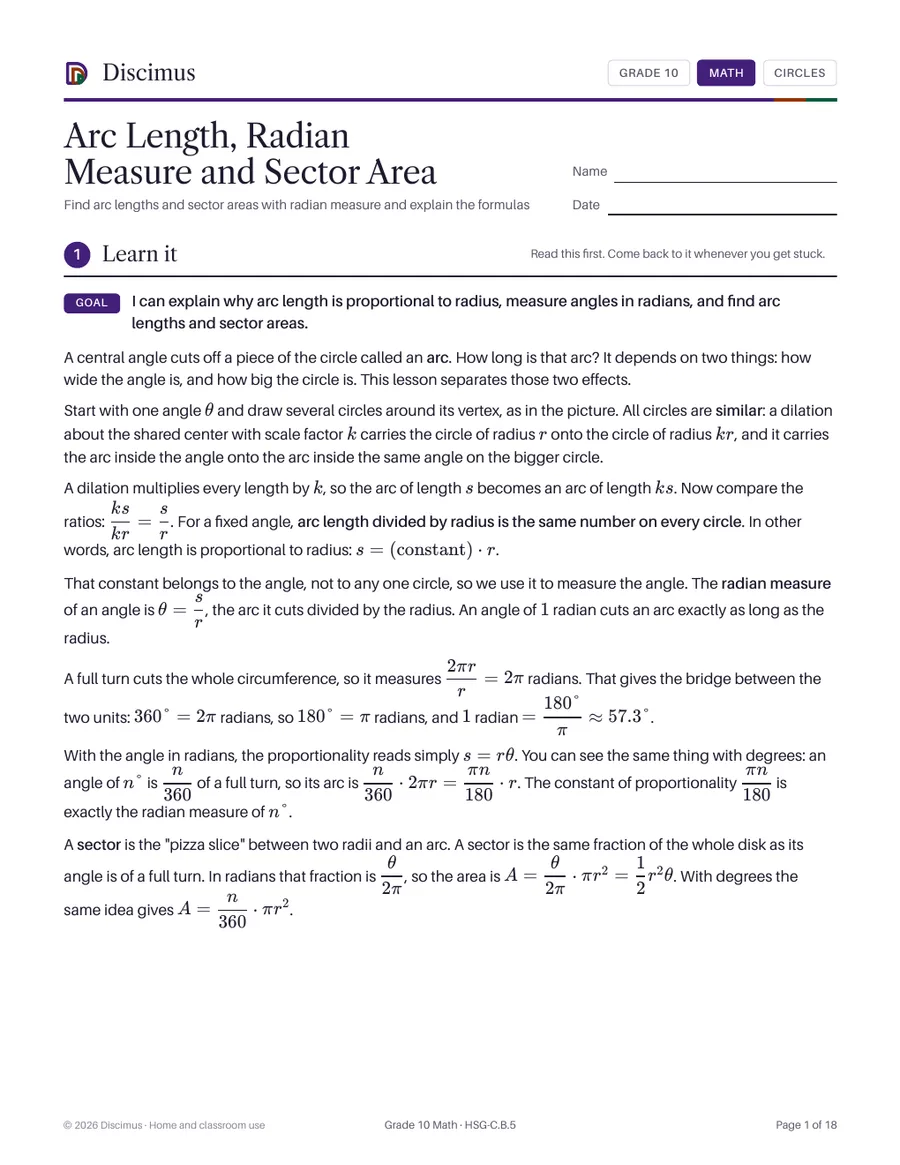
Find arc lengths and sector areas with radian measure and explain the formulas
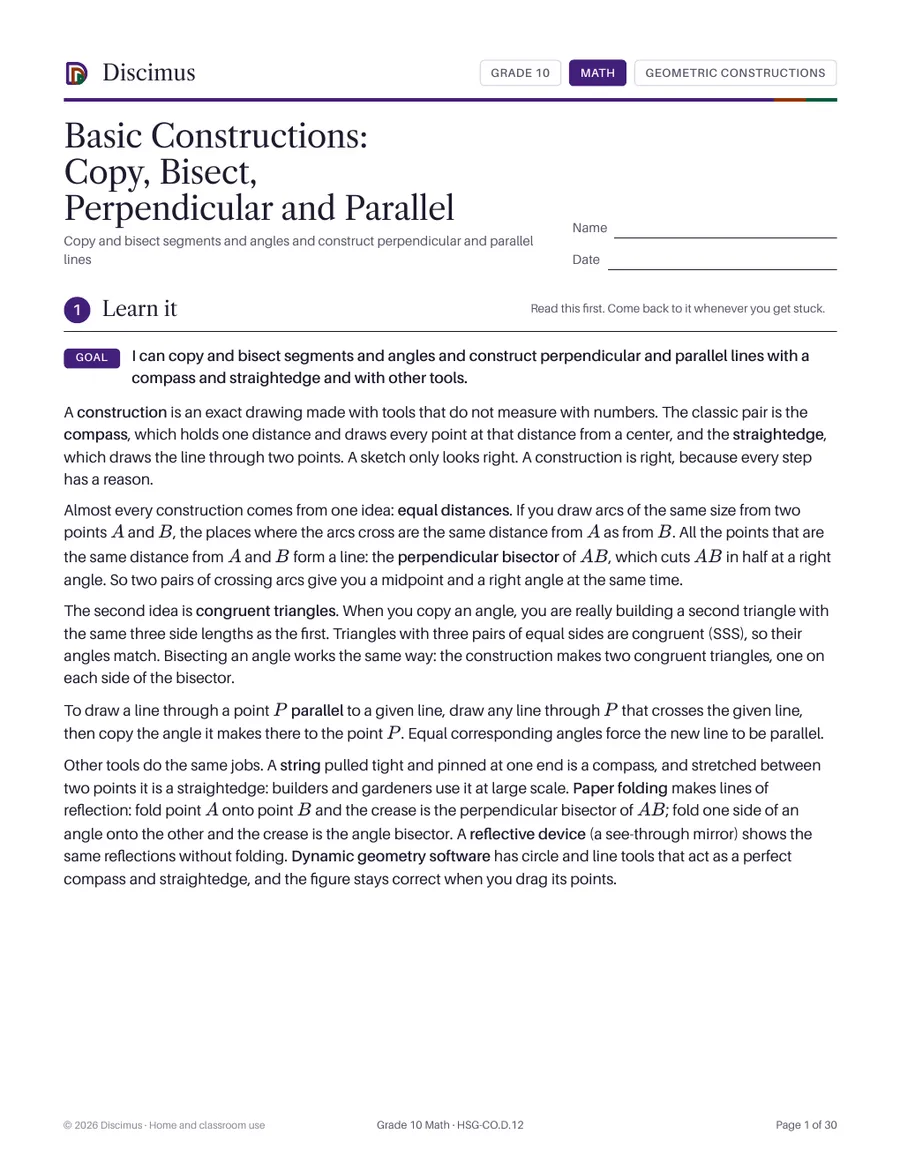
Copy and bisect segments and angles and construct perpendicular and parallel lines
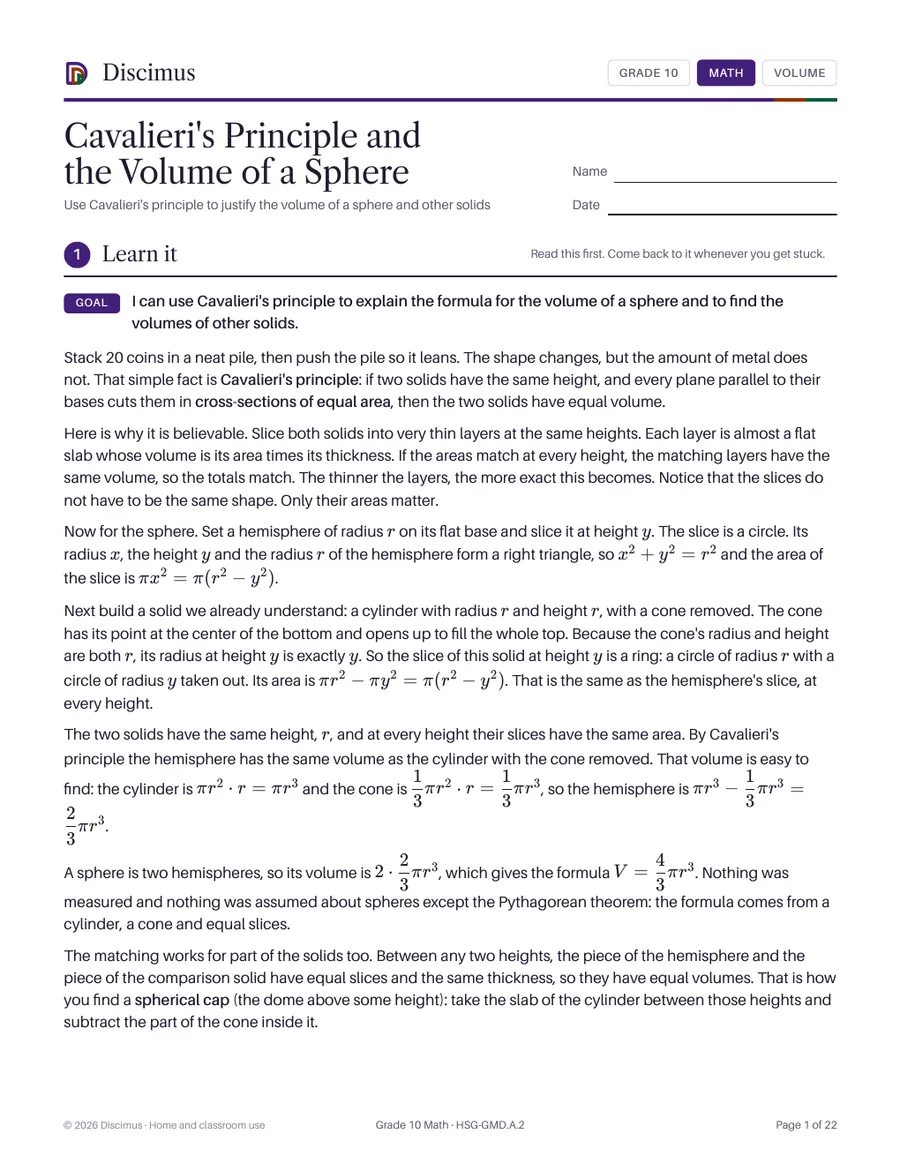
Use Cavalieri's principle to justify the volume of a sphere and other solids
Construct circles in and around a triangle; use angles of inscribed quadrilaterals
Recognize and explain conditional probability and independence in everyday situations
Find conditional probabilities and interpret independence as P(A given B) = P(A)
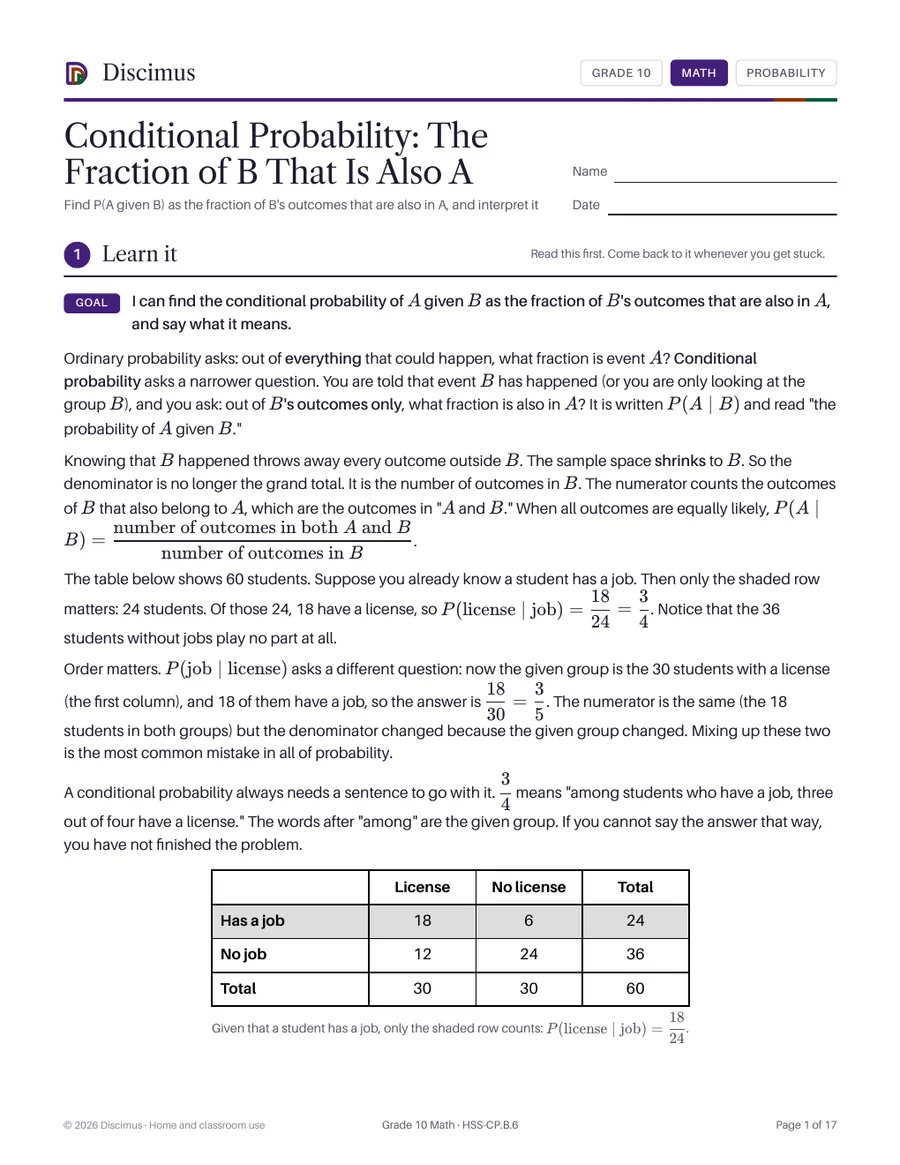
Find P(A given B) as the fraction of B's outcomes that are also in A, and interpret it
Show triangles are congruent if and only if corresponding sides and angles are congruent
Construct an equilateral triangle, square and regular hexagon inscribed in a circle
Construct the tangent lines to a circle from an outside point and justify the construction
Prove or disprove geometric statements using coordinates and algebra
Identify cross-sections of solids and the solids generated by rotating flat shapes
Use density based on area and volume to model and solve real situations
Derive the equation of a parabola from its focus and directrix
Derive equations of ellipses and hyperbolas from foci and a constant sum or difference
Derive and use the triangle area formula A = ½ ab sin C
Apply geometric methods to design problems with constraints, cost and ratio-based grids
Verify that a dilation maps a line to a parallel line or leaves it unchanged
Verify and use the fact that a dilation scales every segment length by the scale factor
Derive the equation of a circle and complete the square to find its center and radius
Describe events as subsets of a sample space using unions, intersections and complements
Decide whether two events are independent by comparing P(A and B) with P(A) times P(B)
Relate central, inscribed and circumscribed angles, radii, tangents and chords
Prove the Laws of Sines and Cosines and use them to solve triangles
Model real objects with geometric shapes to estimate their measures
Find the point that partitions a directed line segment in a given ratio
Compute perimeters and areas of polygons from coordinates using the distance formula
Define rotations, reflections and translations using angles, circles and lines
State and apply precise definitions of angle, circle, segment, parallel, perpendicular
Use permutations and combinations to find probabilities of compound events
Prove that any two circles are similar using a translation and a dilation
Prove and apply theorems about vertical angles, parallel lines and perpendicular bisectors
Prove and apply theorems about the sides, angles and diagonals of parallelograms
Prove and apply the angle sum, isosceles, midsegment and median theorems for triangles
Describe the rotations and reflections that map a figure onto itself
 Free sample
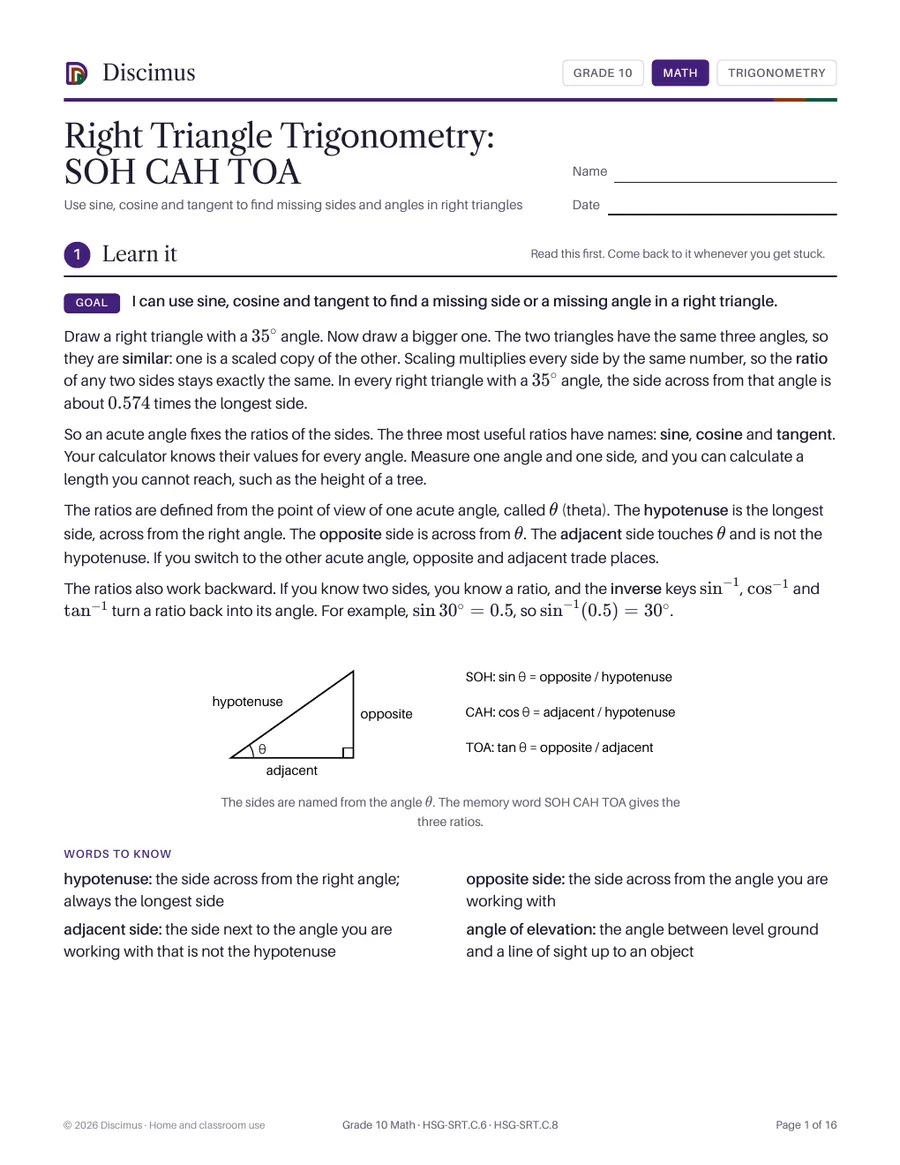
Use sine, cosine and tangent to find missing sides and angles in right triangles
Transform figures with rigid motions and use them to decide whether figures are congruent
Use proportions to find missing side lengths in similar triangles
Use similarity transformations to decide whether two figures are similar
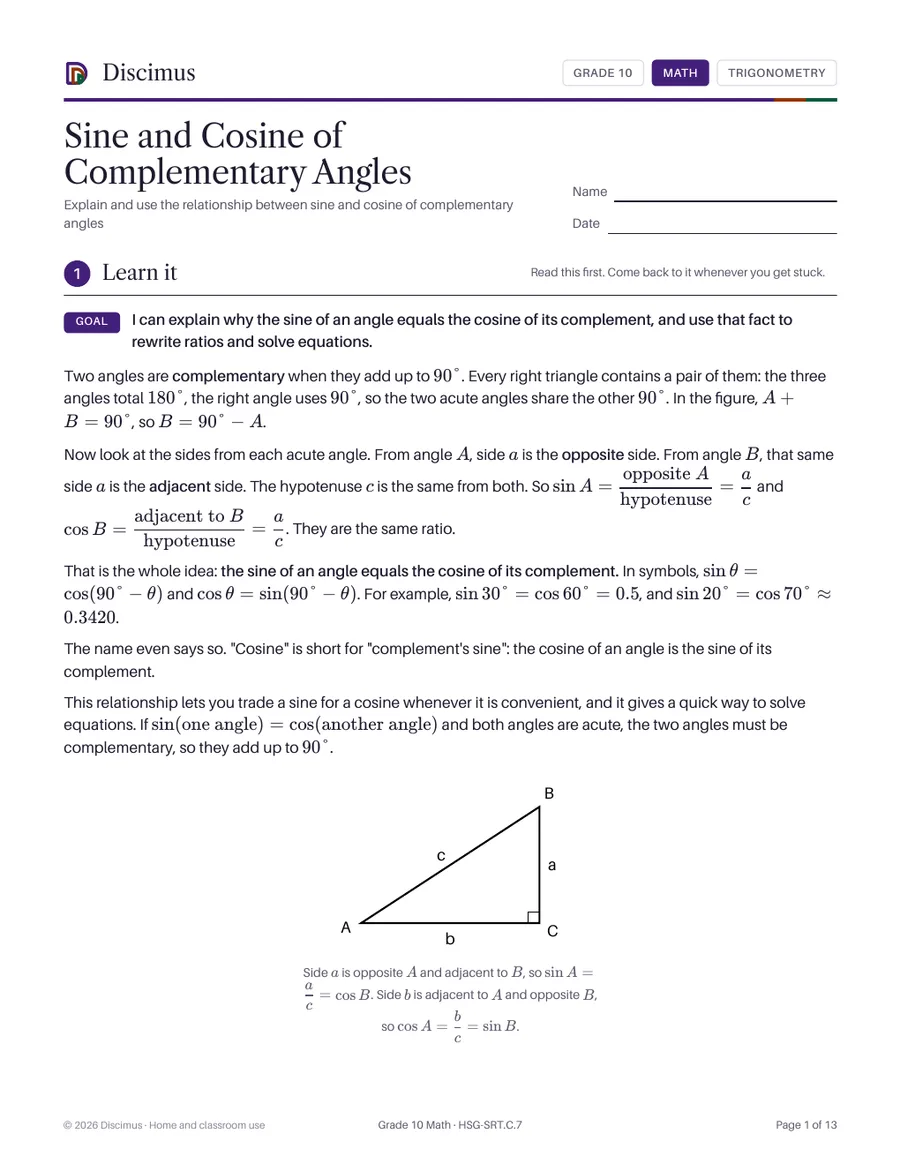
Explain and use the relationship between sine and cosine of complementary angles
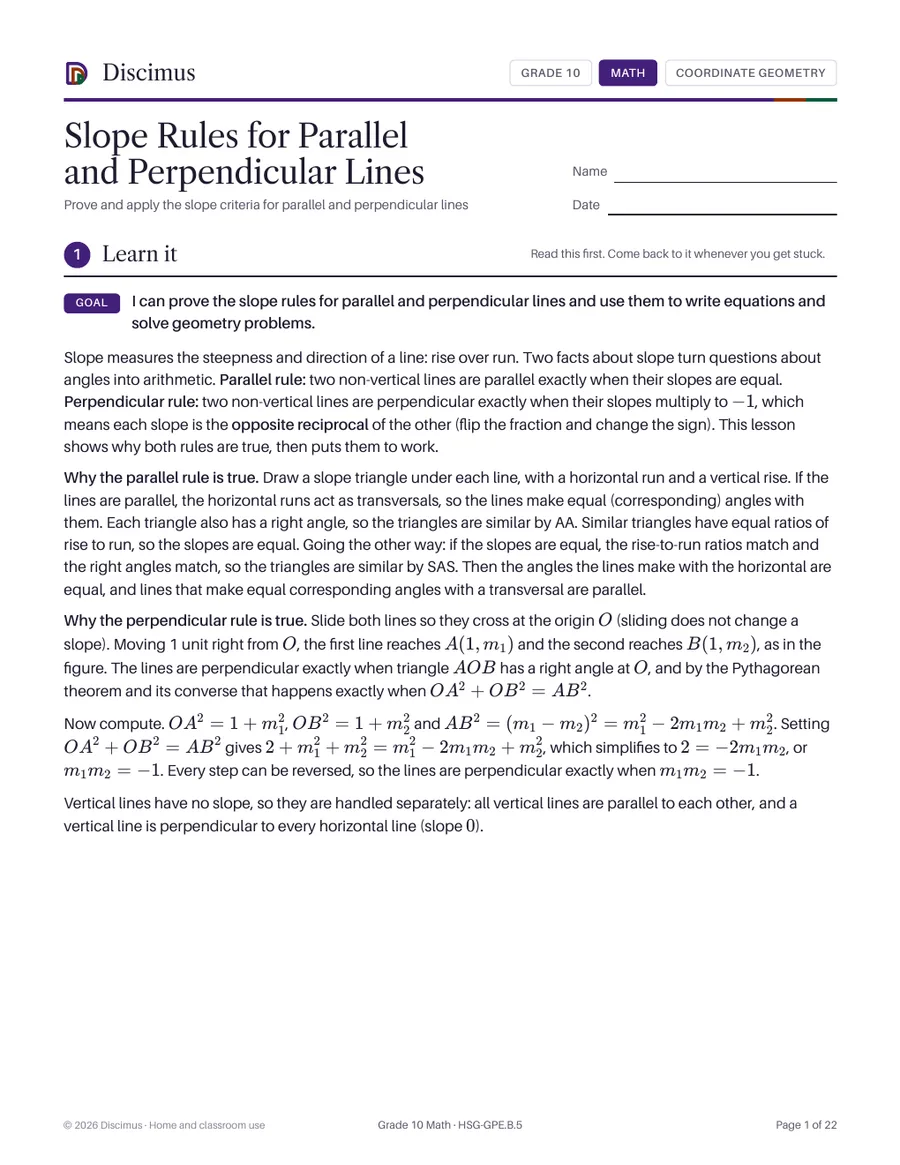
Prove and apply the slope criteria for parallel and perpendicular lines
Use volume formulas for cylinders, pyramids, cones and spheres to solve problems
Apply the Addition Rule P(A or B) = P(A) + P(B) - P(A and B) and interpret the answer
Apply the general Multiplication Rule P(A and B) = P(A)P(B|A) and interpret the answer
Find unknown sides and angles in any triangle with the Law of Sines and Law of Cosines
Describe transformations as functions and decide whether they preserve distance and angle
Use two-way frequency tables to estimate conditional probabilities and decide independence
Explain why SAS, ASA and SSS guarantee congruent triangles using rigid motions
Give informal arguments for the circle, cylinder, pyramid and cone formulas
Add, subtract and multiply complex numbers and simplify powers of i
Write arithmetic and geometric sequences recursively and explicitly, and translate
Combine linear, quadratic and exponential functions with arithmetic to build models
Compare two treatments and judge significance with a re-randomization simulation
Find conjugates and moduli of complex numbers and divide complex numbers using conjugates
Add, subtract, multiply and conjugate complex numbers geometrically
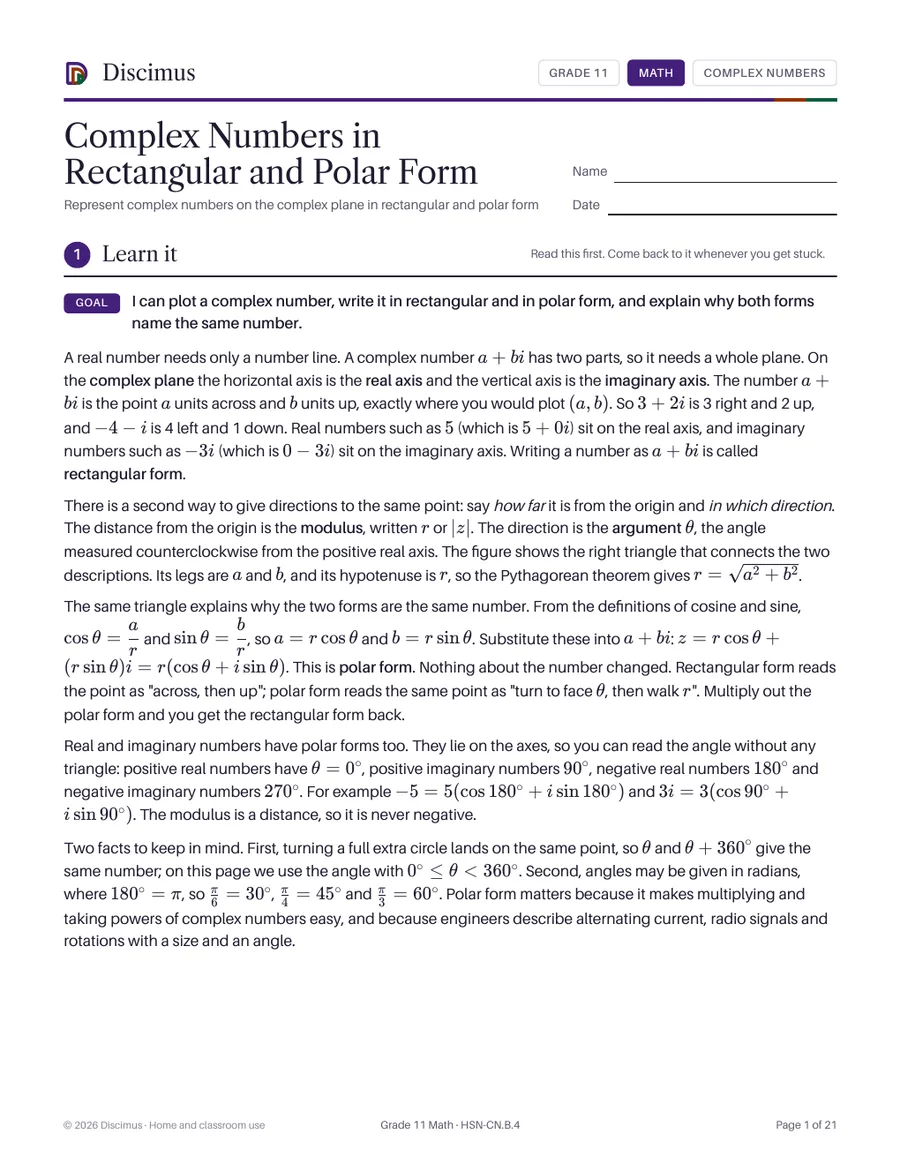
Represent complex numbers on the complex plane in rectangular and polar form
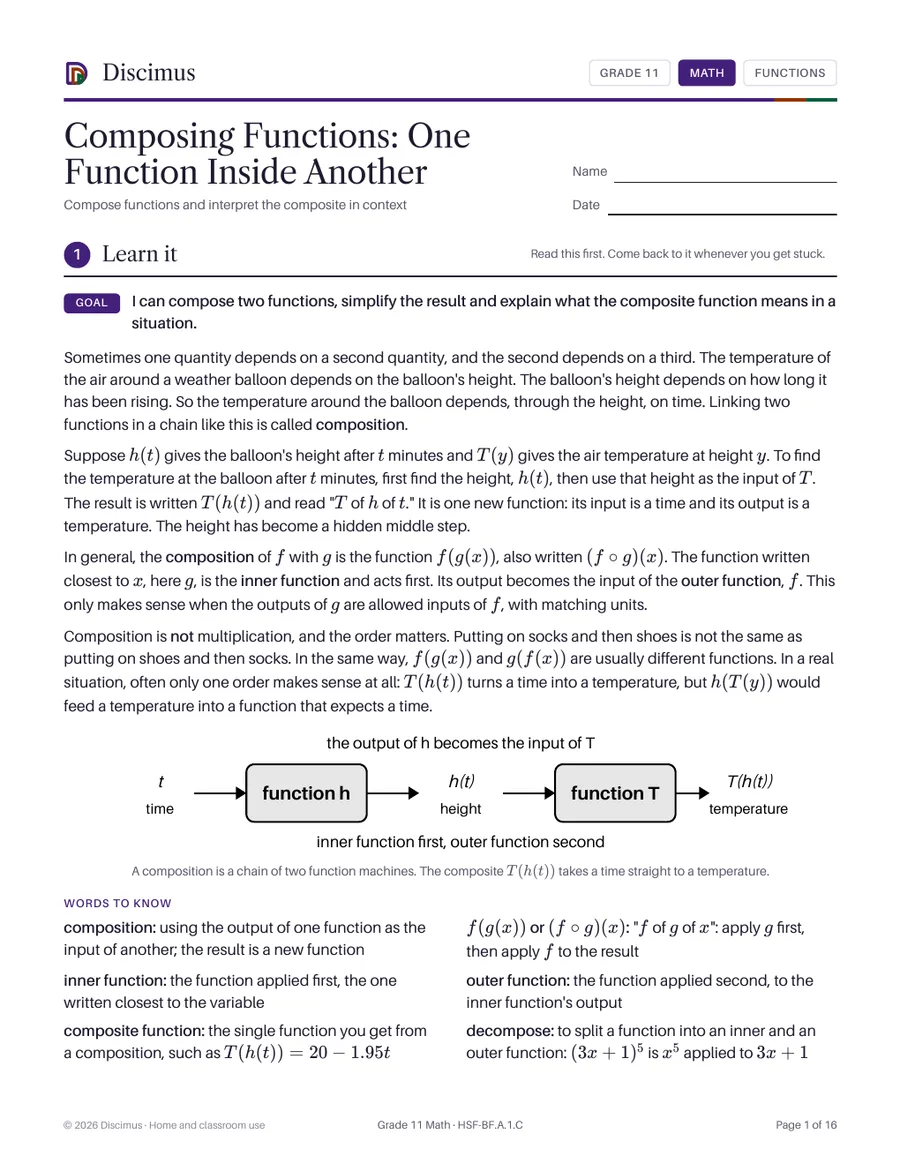
Compose functions and interpret the composite in context
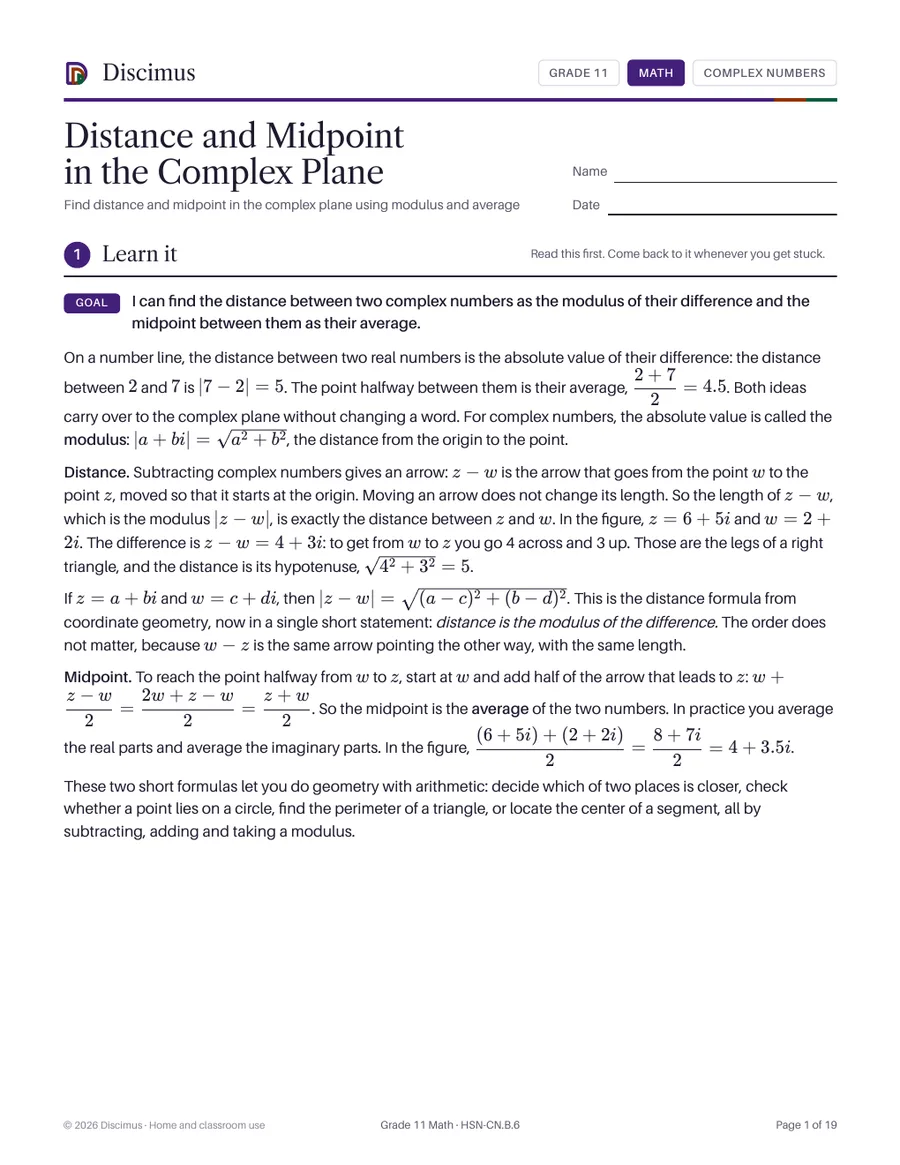
Find distance and midpoint in the complex plane using modulus and average
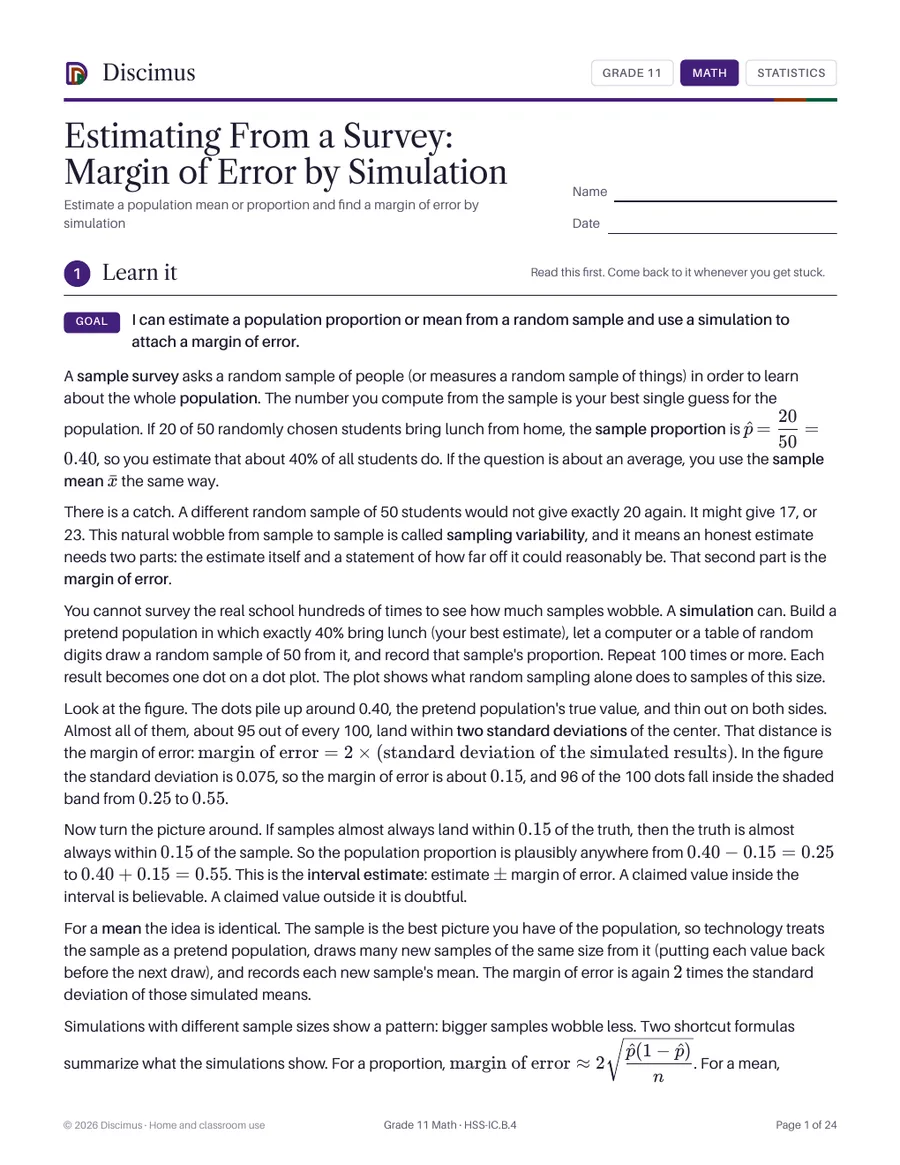
Estimate a population mean or proportion and find a margin of error by simulation
Evaluate claims in reports by examining the sample, design, uncertainty and presentation
Factor and expand polynomials using identities extended to complex numbers
Solve f(x) = c and write an expression for the inverse of a simple function
Decide whether a probability model is consistent with observed results, using simulation
Choose a sine or cosine function with a given amplitude, frequency and midline as a model
Add, subtract and multiply polynomials and explain closure
Prove polynomial identities and use them to describe numerical relationships
Understand radian measure as arc length on the unit circle and convert angle measures
Add, subtract, multiply and divide rational expressions and explain closure
Read values of an inverse function from a graph or a table
Explain why restricting a trig function's domain allows an inverse, and evaluate inverses
Restrict the domain of a non-invertible function to produce an invertible function
Rewrite a rational expression as a quotient plus a remainder over the divisor
Solve exponential and logarithmic equations algebraically
Solve trig equations from real models with inverse functions and interpret the solutions
Find exact trig values with special triangles and unit circle symmetry
Explain how a random sample is used to make inferences about a population parameter
Prove and apply the sum and difference formulas for sine, cosine and tangent
Distinguish surveys, experiments and observational studies and the role of randomization
Explain and use the even-odd symmetry and periodicity of sine, cosine and tangent
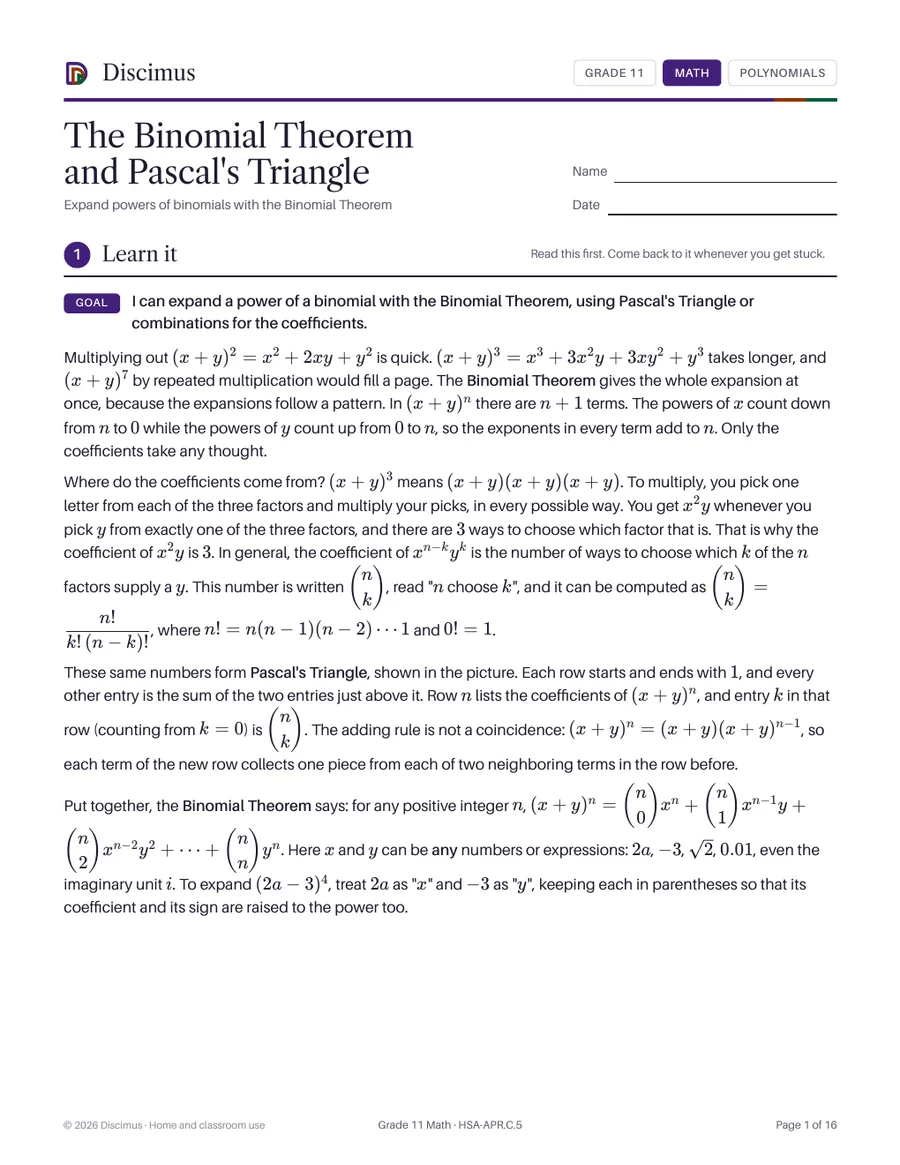
Expand powers of binomials with the Binomial Theorem
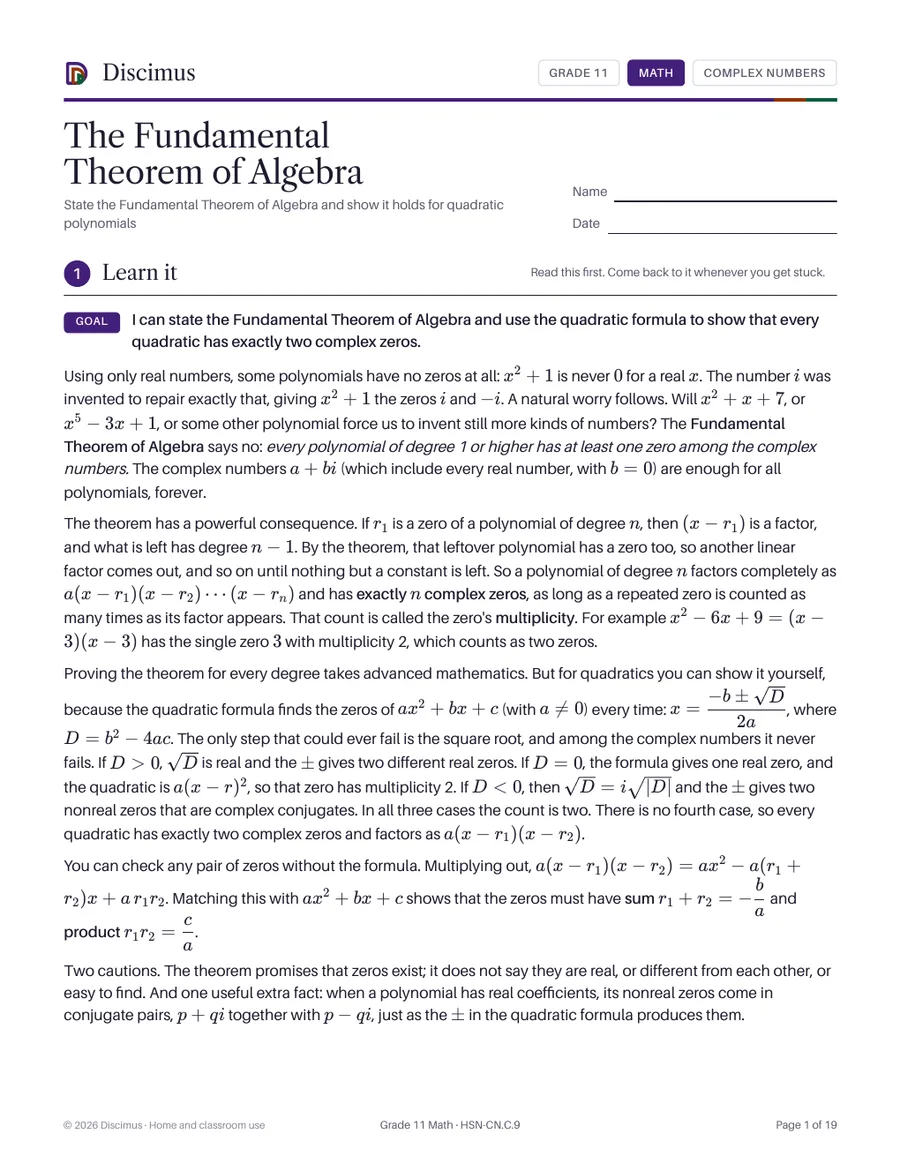
State the Fundamental Theorem of Algebra and show it holds for quadratic polynomials
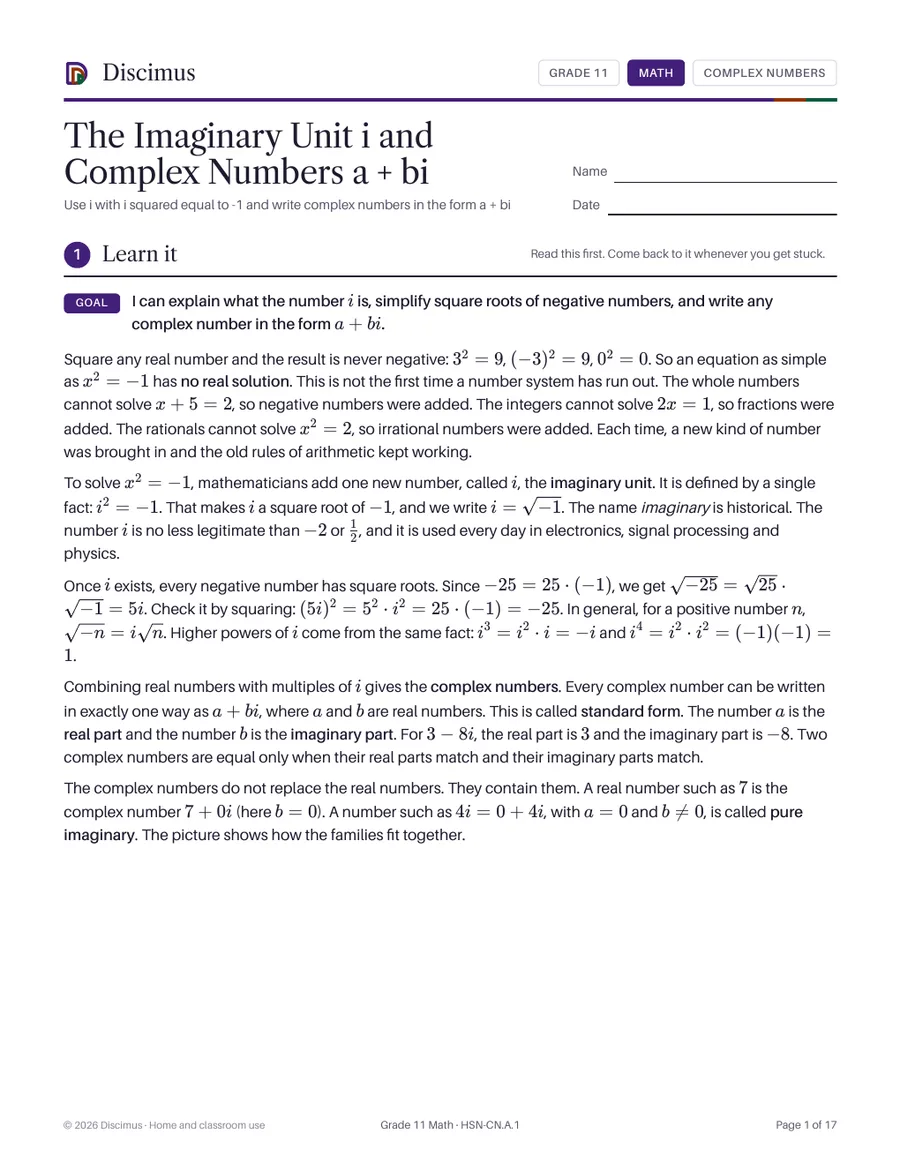
Use i with i squared equal to -1 and write complex numbers in the form a + bi
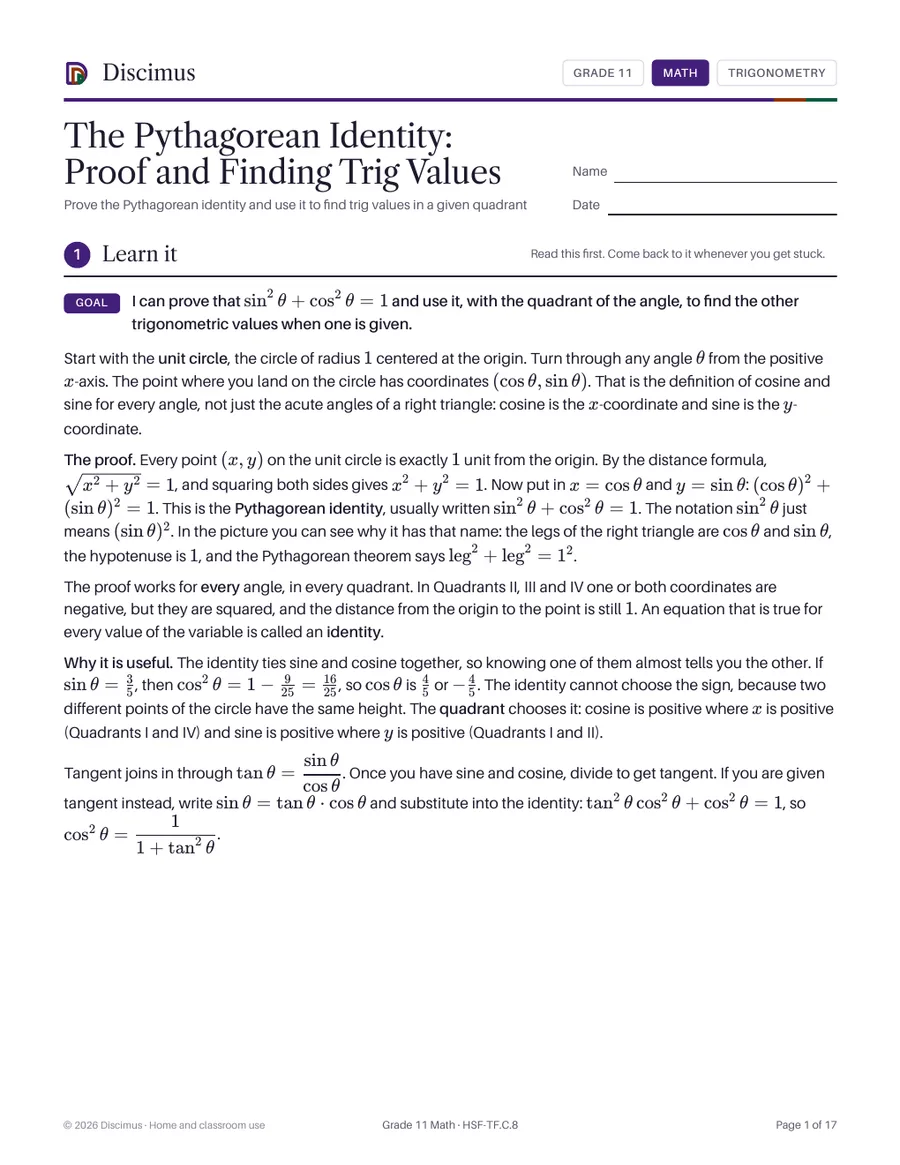
Prove the Pythagorean identity and use it to find trig values in a given quadrant
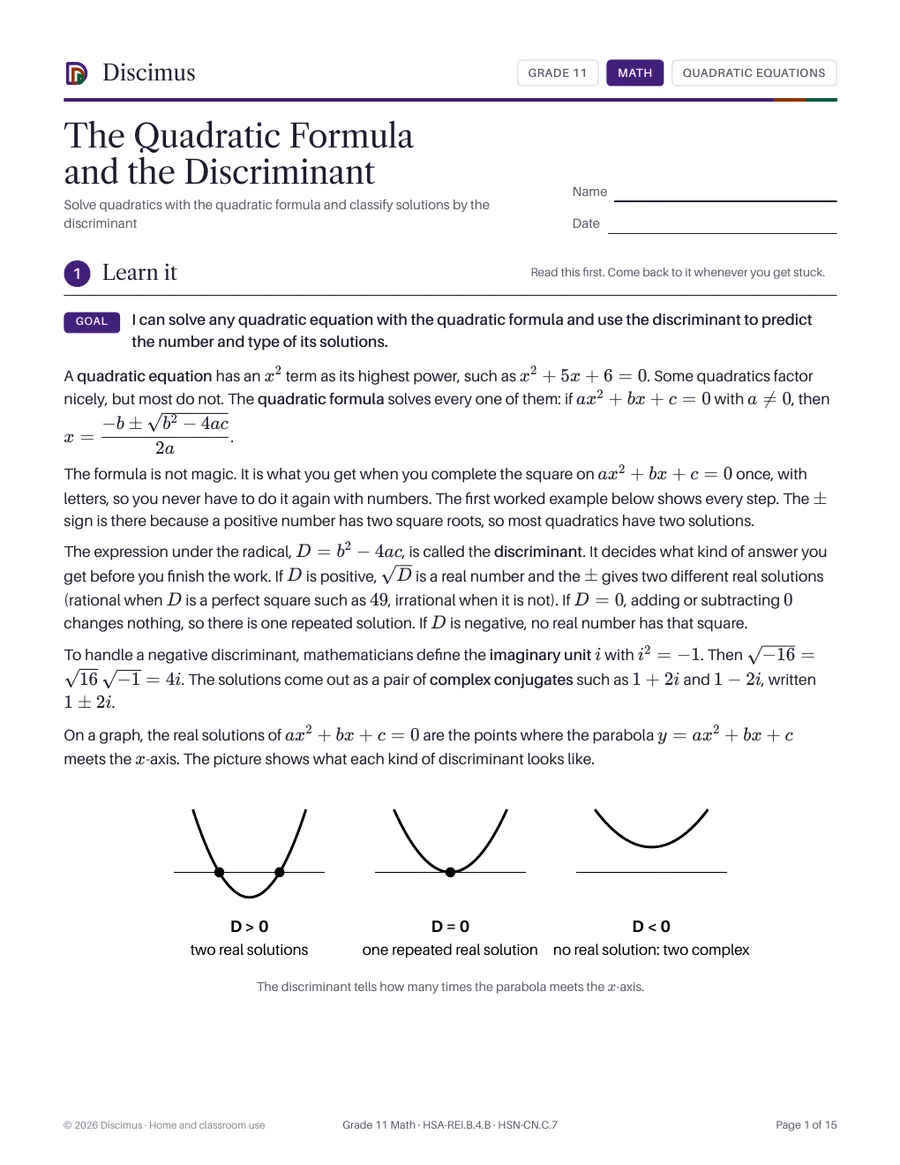 Free sample
Solve quadratics with the quadratic formula and classify solutions by the discriminant
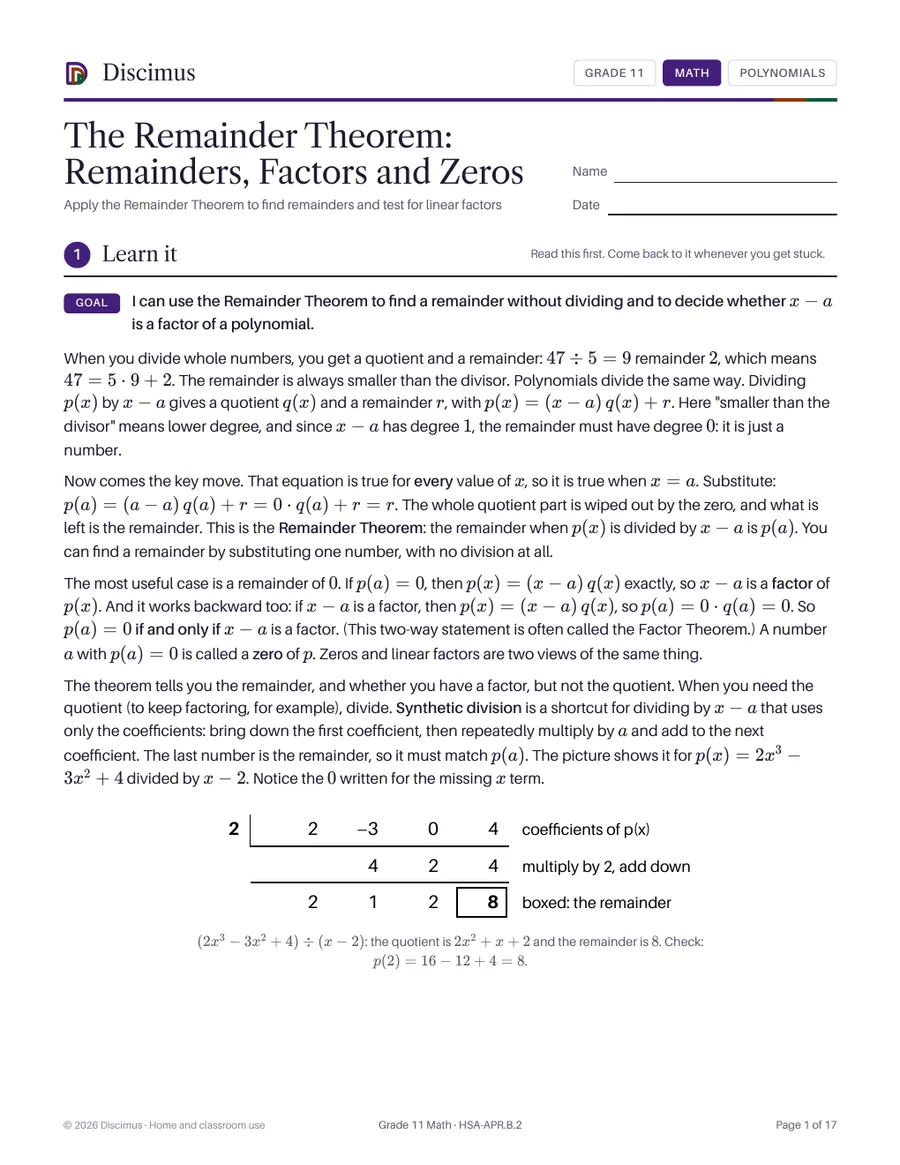
Apply the Remainder Theorem to find remainders and test for linear factors
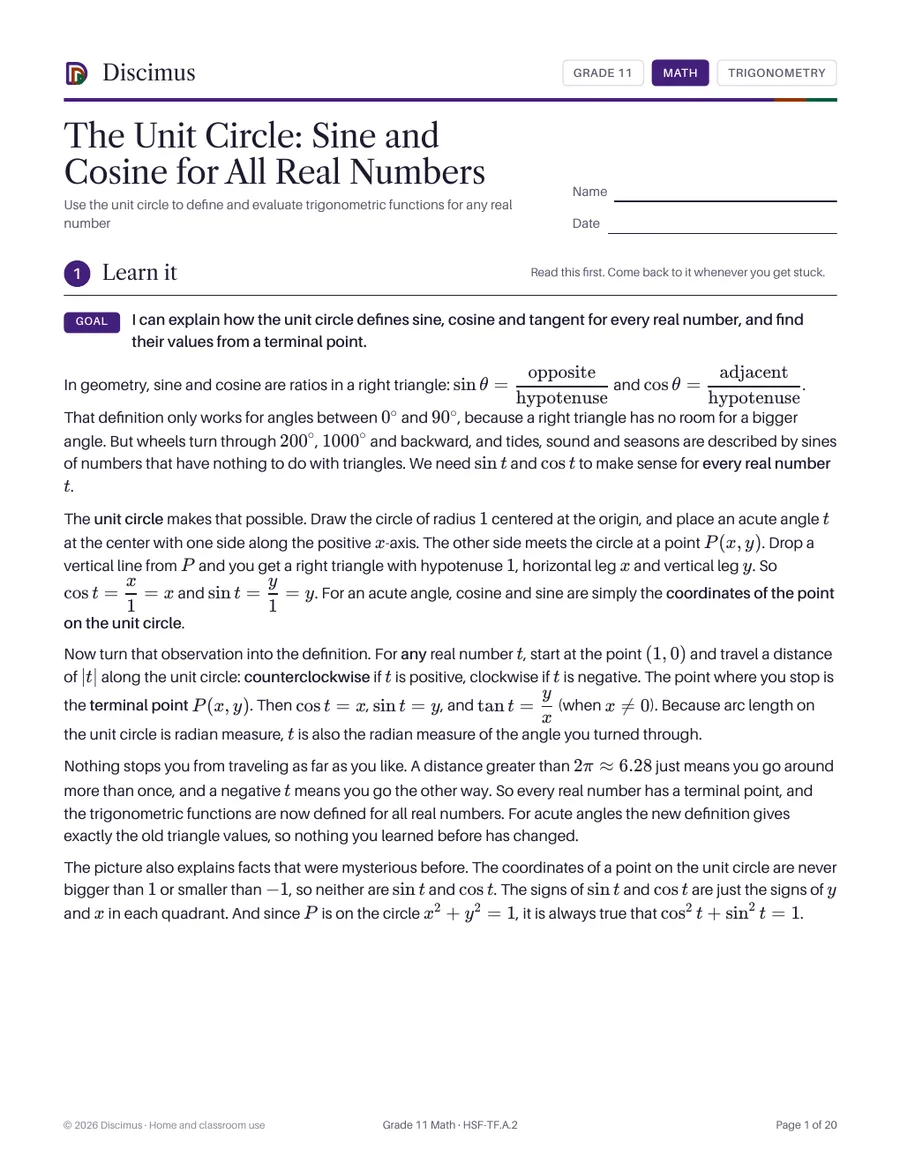
Use the unit circle to define and evaluate trigonometric functions for any real number
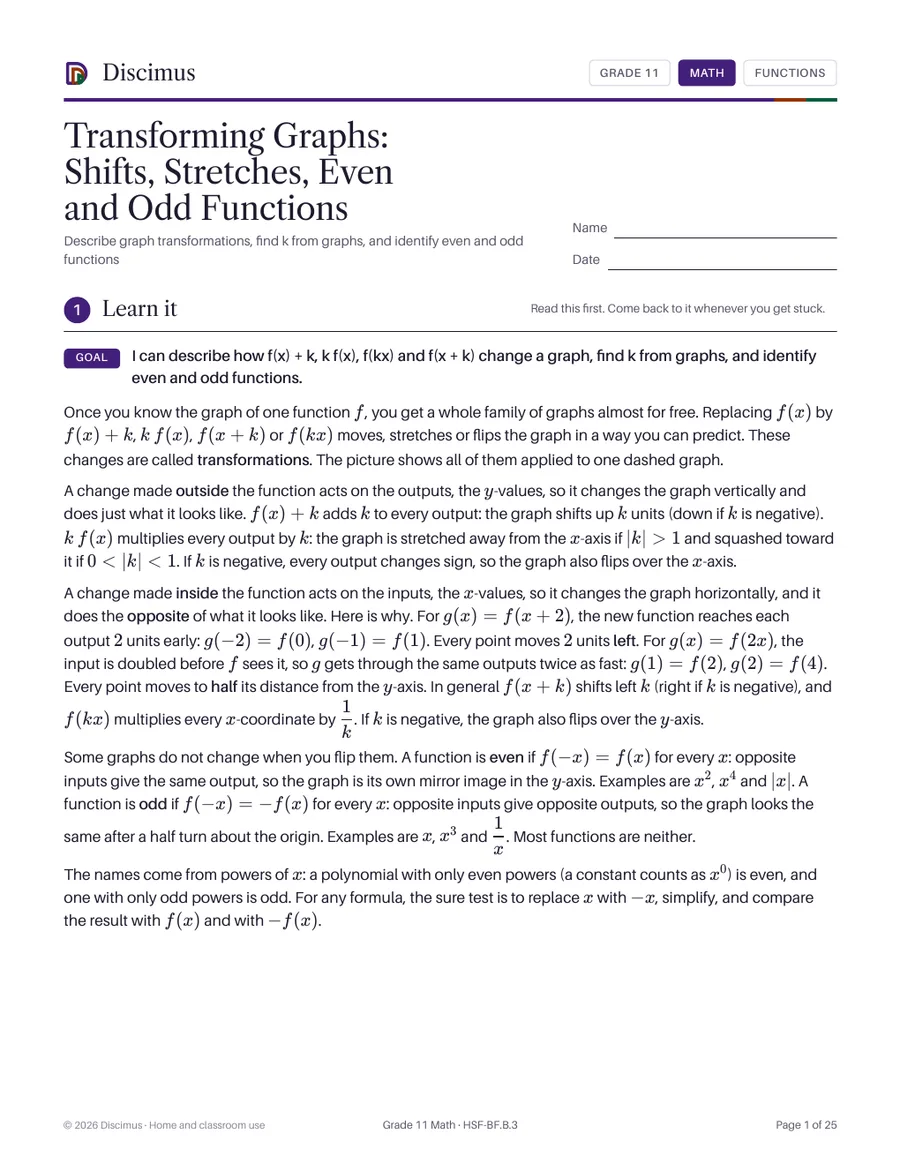
Describe graph transformations, find k from graphs, and identify even and odd functions
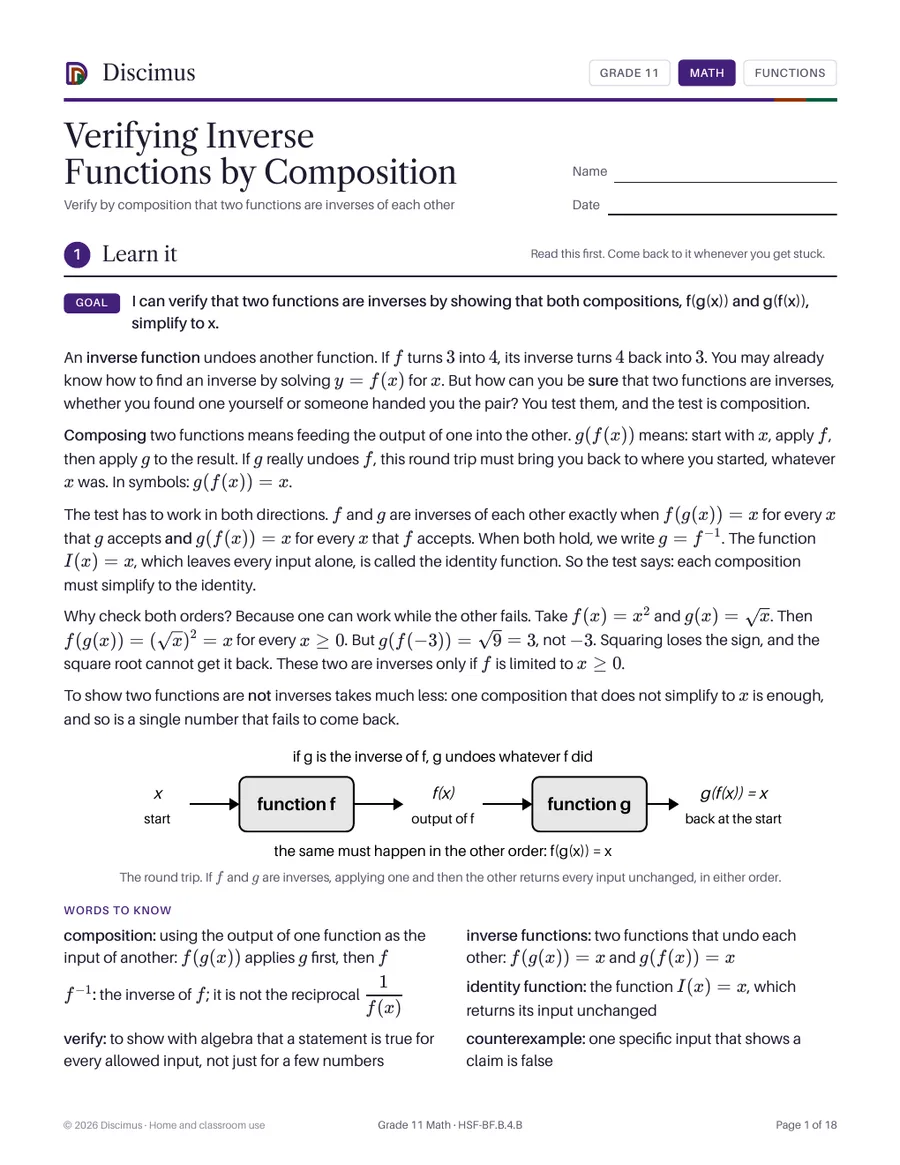
Verify by composition that two functions are inverses of each other
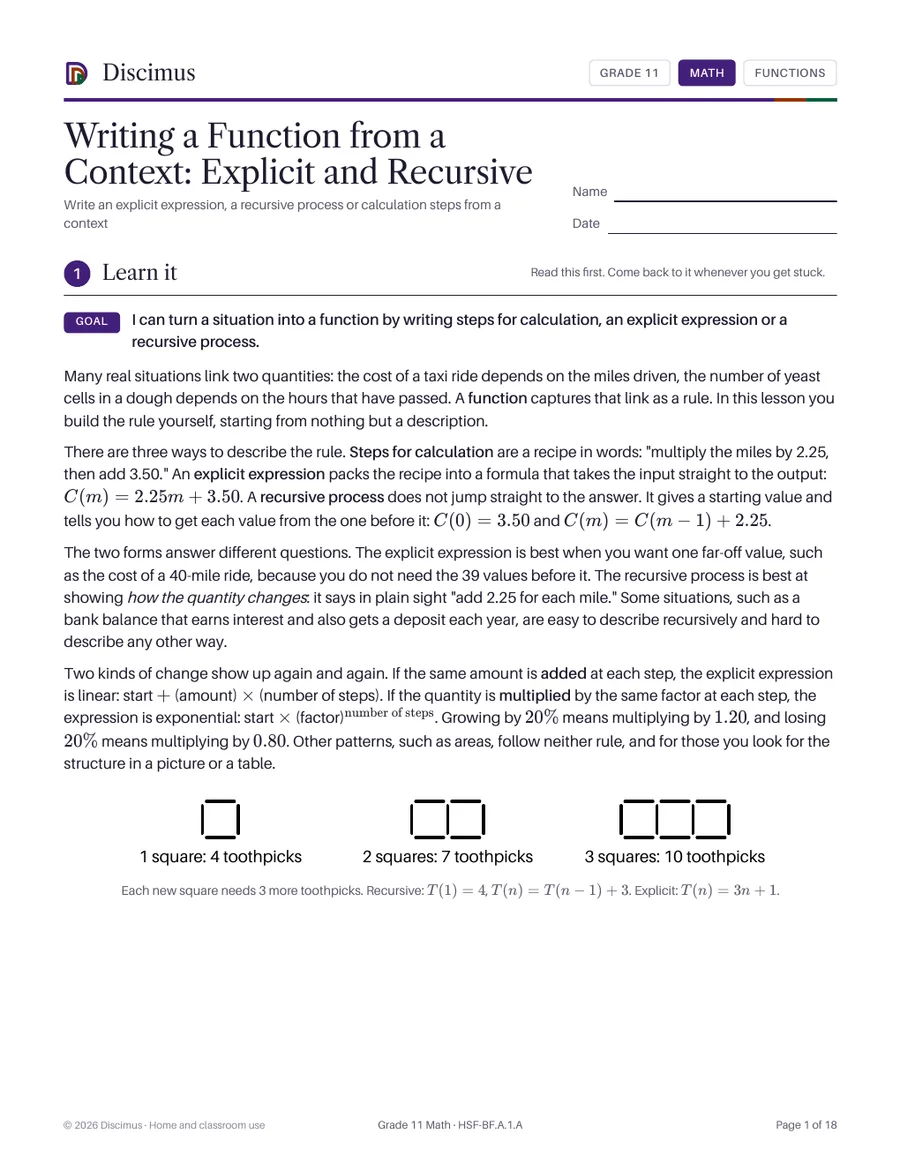
Write an explicit expression, a recursive process or calculation steps from a context
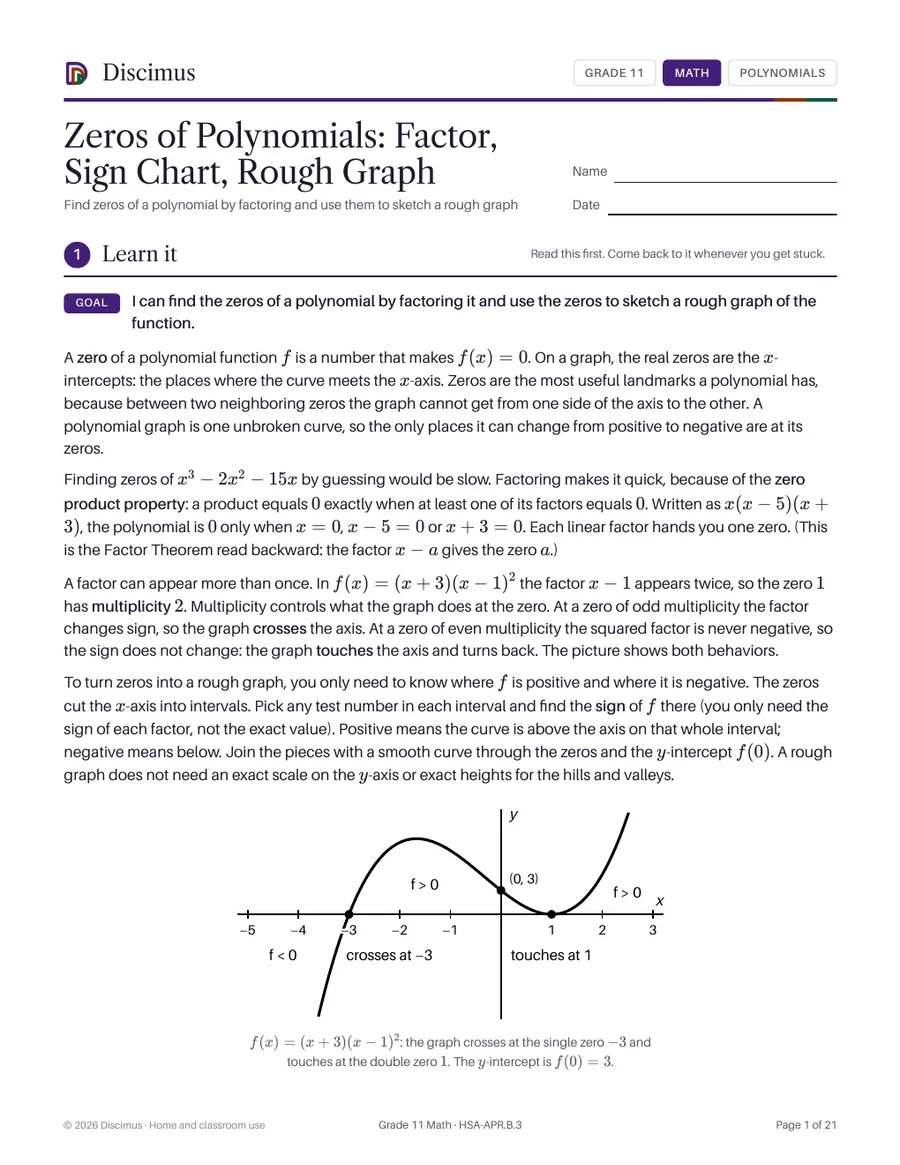
Find zeros of a polynomial by factoring and use them to sketch a rough graph
Apply 2 by 2 matrices to figures in the plane and use the determinant to find area
Find the magnitude and direction of a sum of vectors given by magnitude and direction
Add vectors end-to-end, by components and by the parallelogram rule
Add, subtract and multiply matrices of appropriate dimensions
Analyze decisions and strategies using probability concepts
Evaluate and compare strategies using expected values
 Free sample
Differentiate power and polynomial functions and interpret the derivative as a slope
Develop an empirical probability distribution from data and find its expected value
Use probabilities to make and test fair decisions
Represent and manipulate data, payoffs and networks with matrices
Show that matrix multiplication is not commutative but is associative and distributive
Multiply a matrix by a scalar and use scalar multiples to rescale data
Multiply a matrix by a column vector and interpret the matrix as a transformation
Define a random variable on a sample space and graph its probability distribution
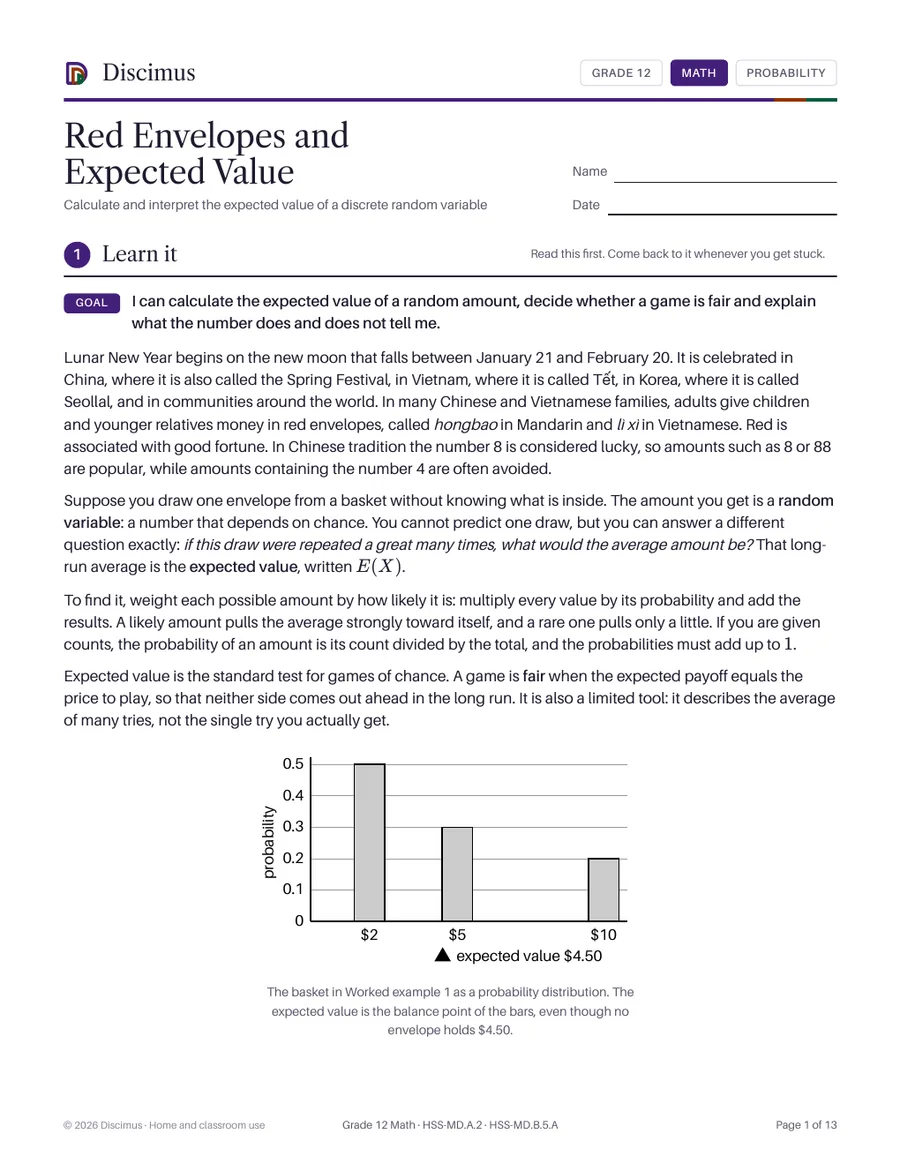
Calculate and interpret the expected value of a discrete random variable
Find the magnitude and direction of a scalar multiple of a vector
Multiply a vector by a scalar graphically and component-wise
Solve velocity, force and displacement problems by modeling the quantities as vectors
Subtract vectors by adding the opposite vector, by connecting tips and by components
Use z-scores, the empirical rule and a normal table to estimate population percentages
Develop a theoretical probability distribution and find its expected value
Find a vector's components by subtracting its initial point from its terminal point
Recognize vector quantities, draw them as directed line segments and use vector notation
Use zero and identity matrices and test for an inverse with the determinant