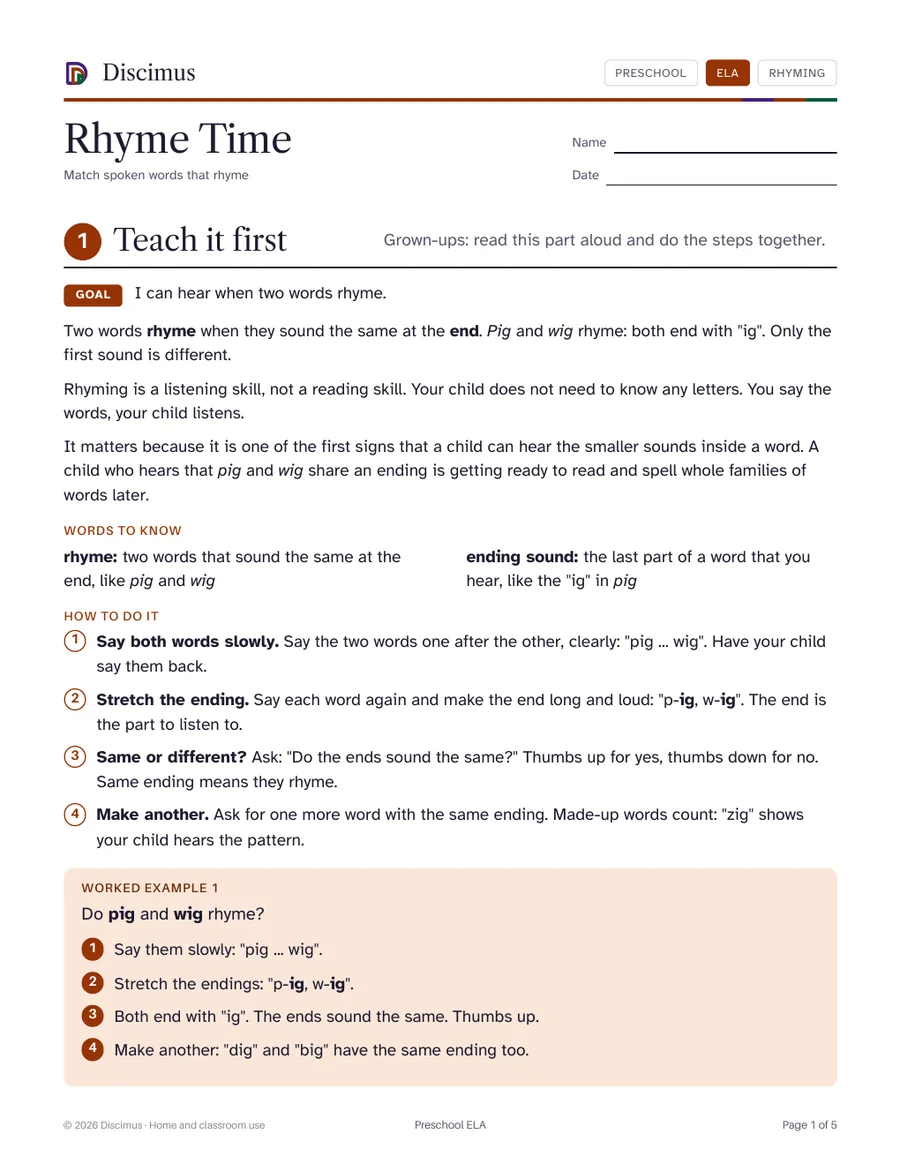
Rhyme Time
Match spoken words that rhyme
Common Core State Standards for English Language Arts
Phonics, reading, grammar, vocabulary and writing.
Match spoken words that rhyme
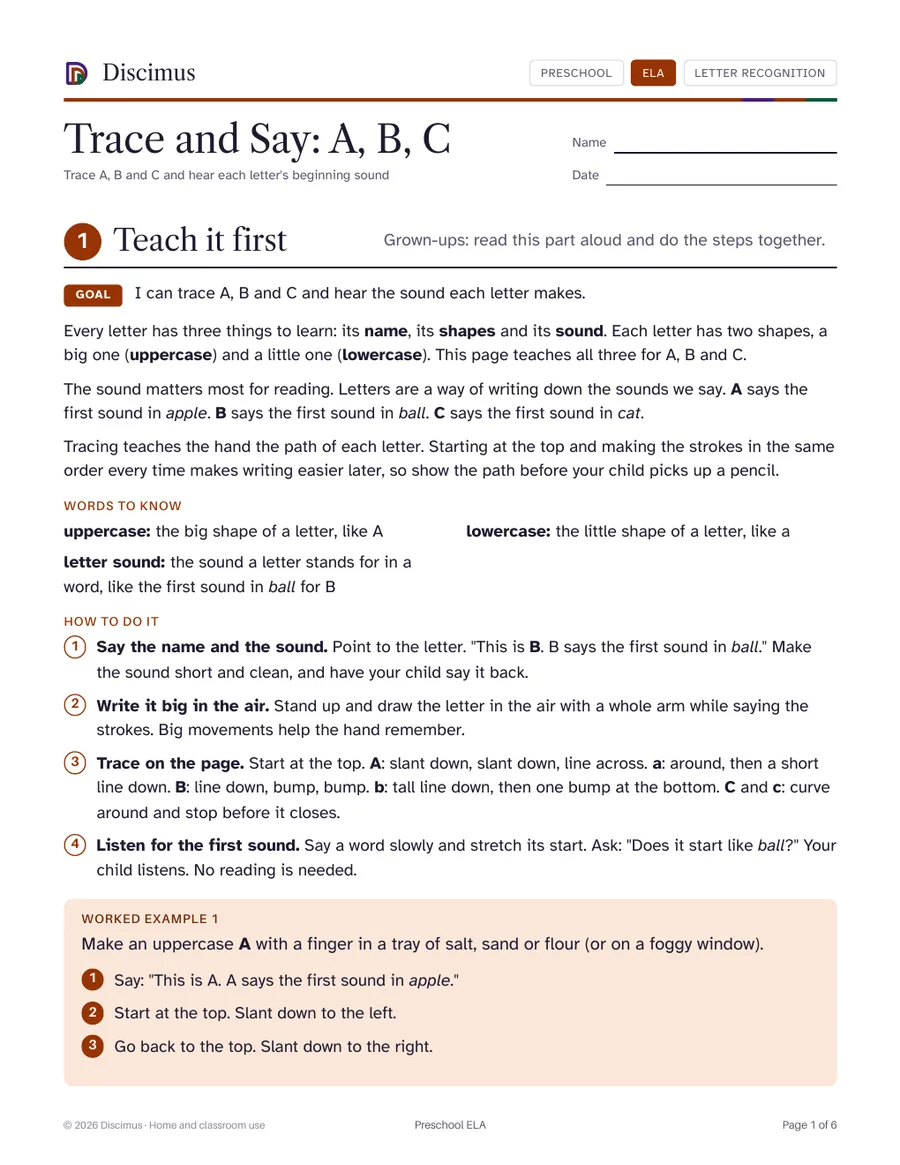
Trace A, B and C and hear each letter's beginning sound
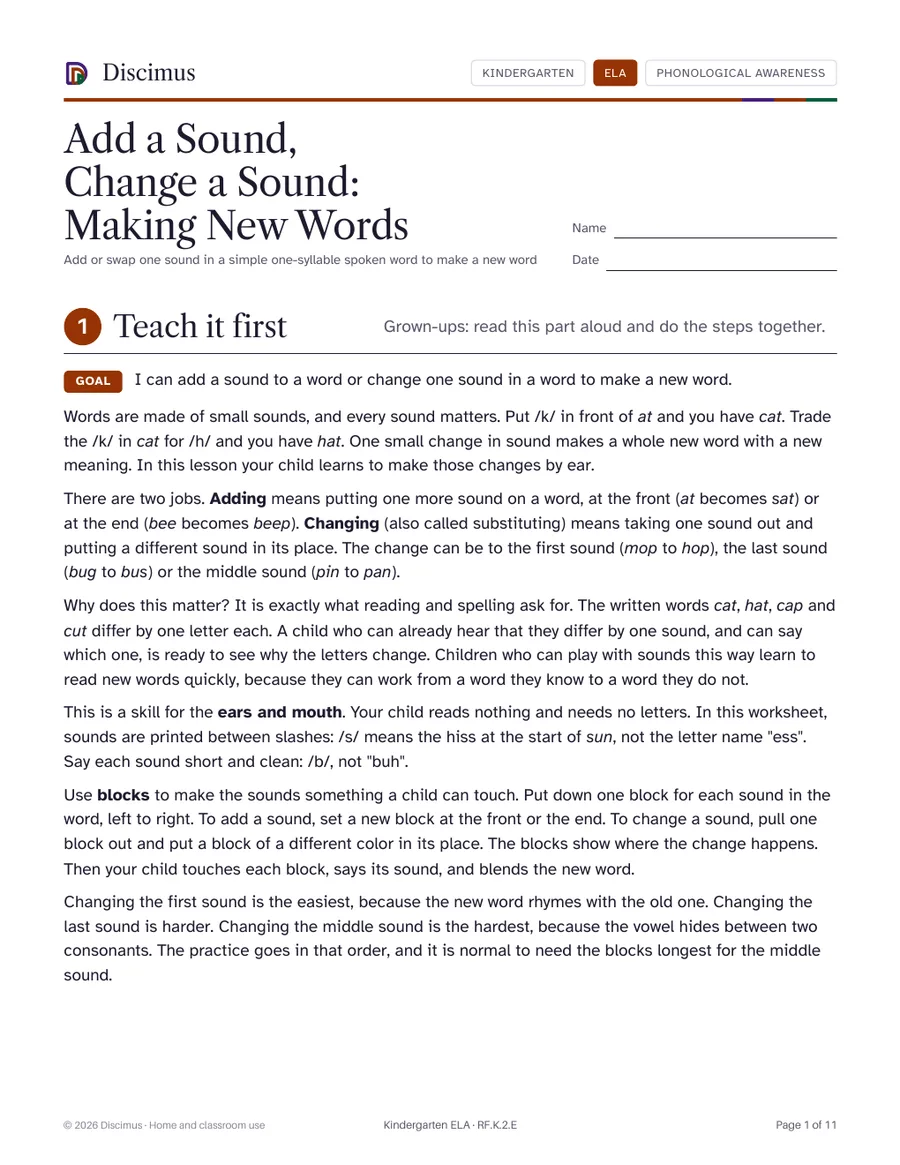
Add or swap one sound in a simple one-syllable spoken word to make a new word
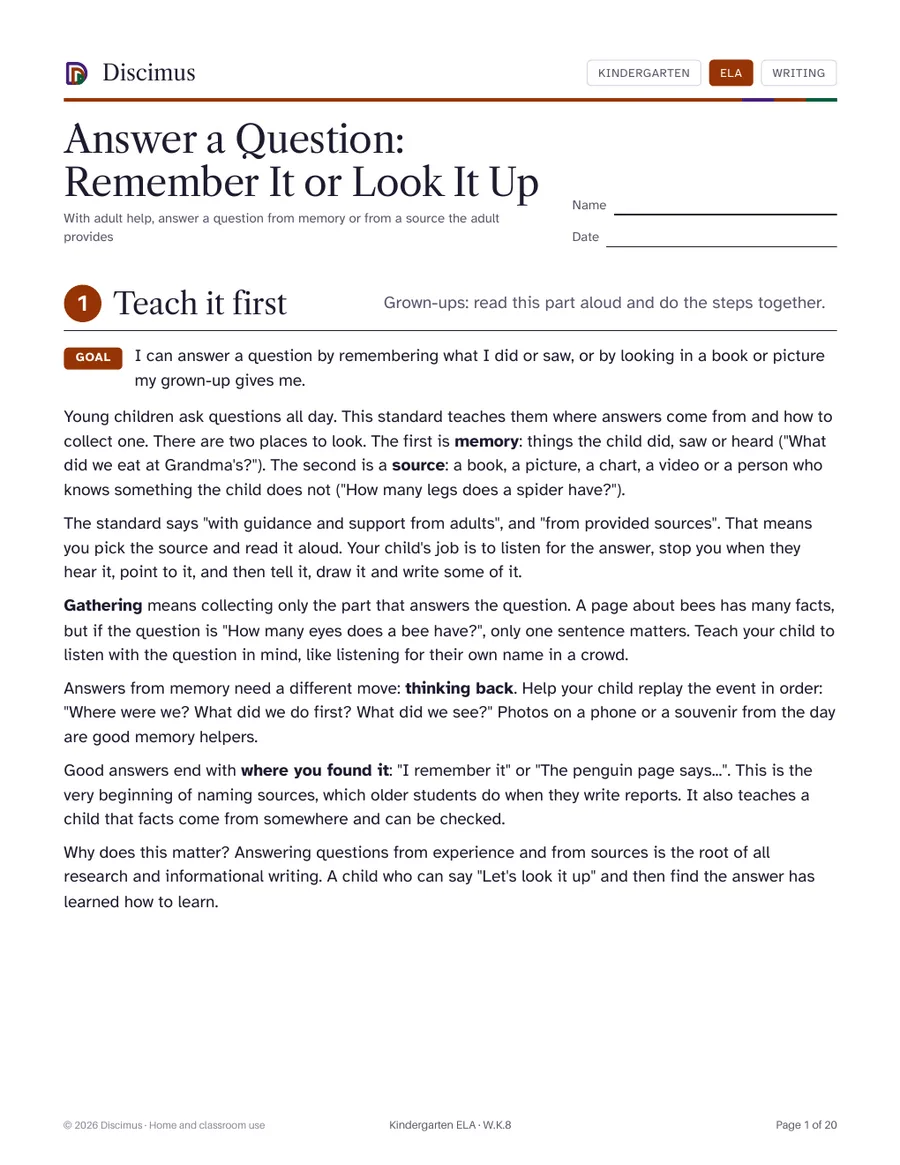
With adult help, answer a question from memory or from a source the adult provides
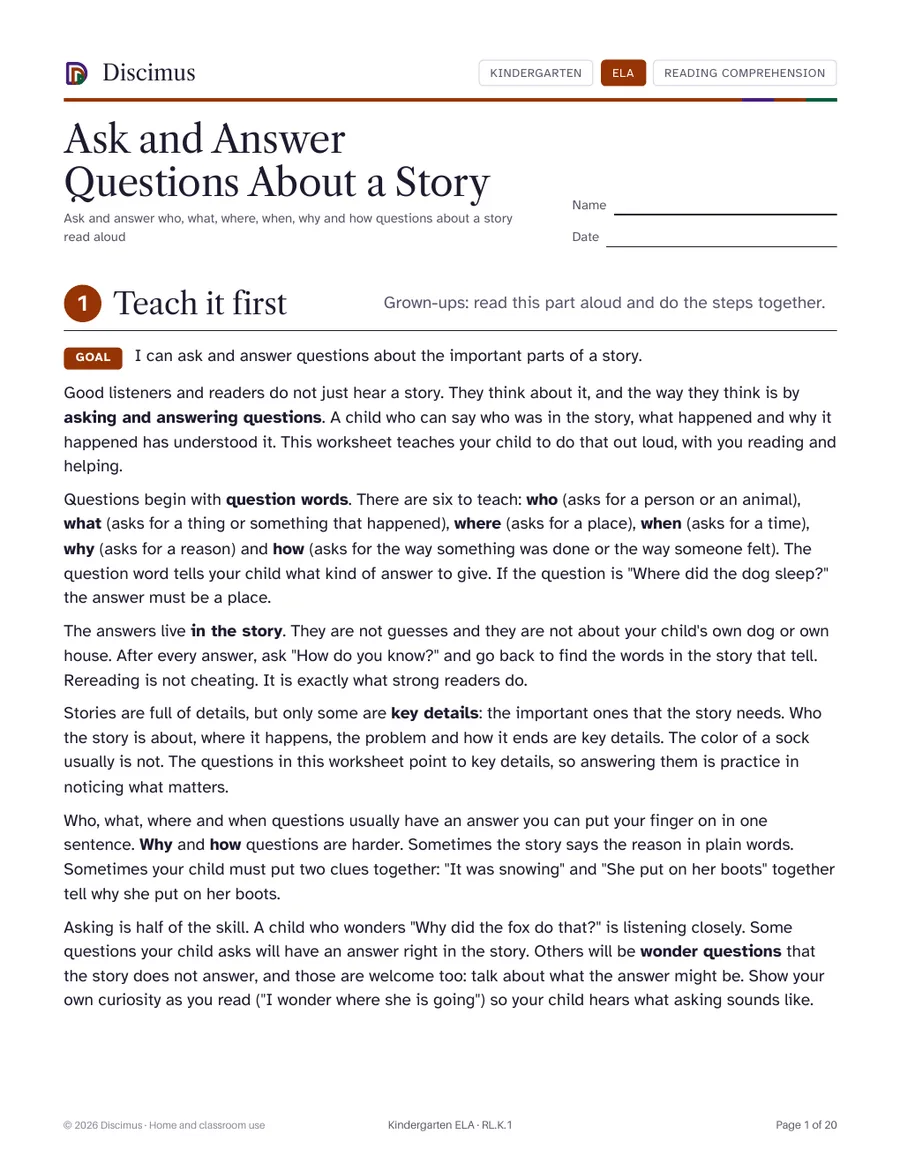
Ask and answer who, what, where, when, why and how questions about a story read aloud
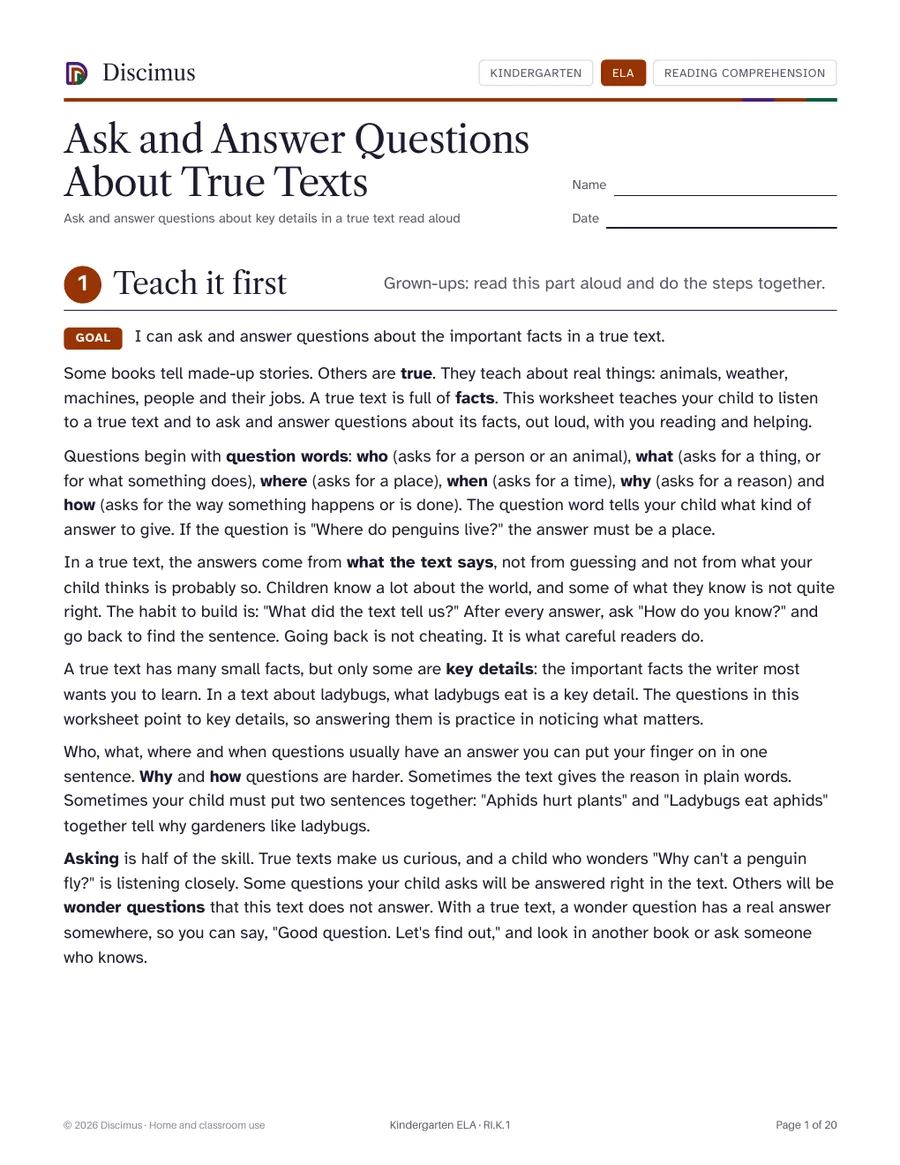
Ask and answer questions about key details in a true text read aloud
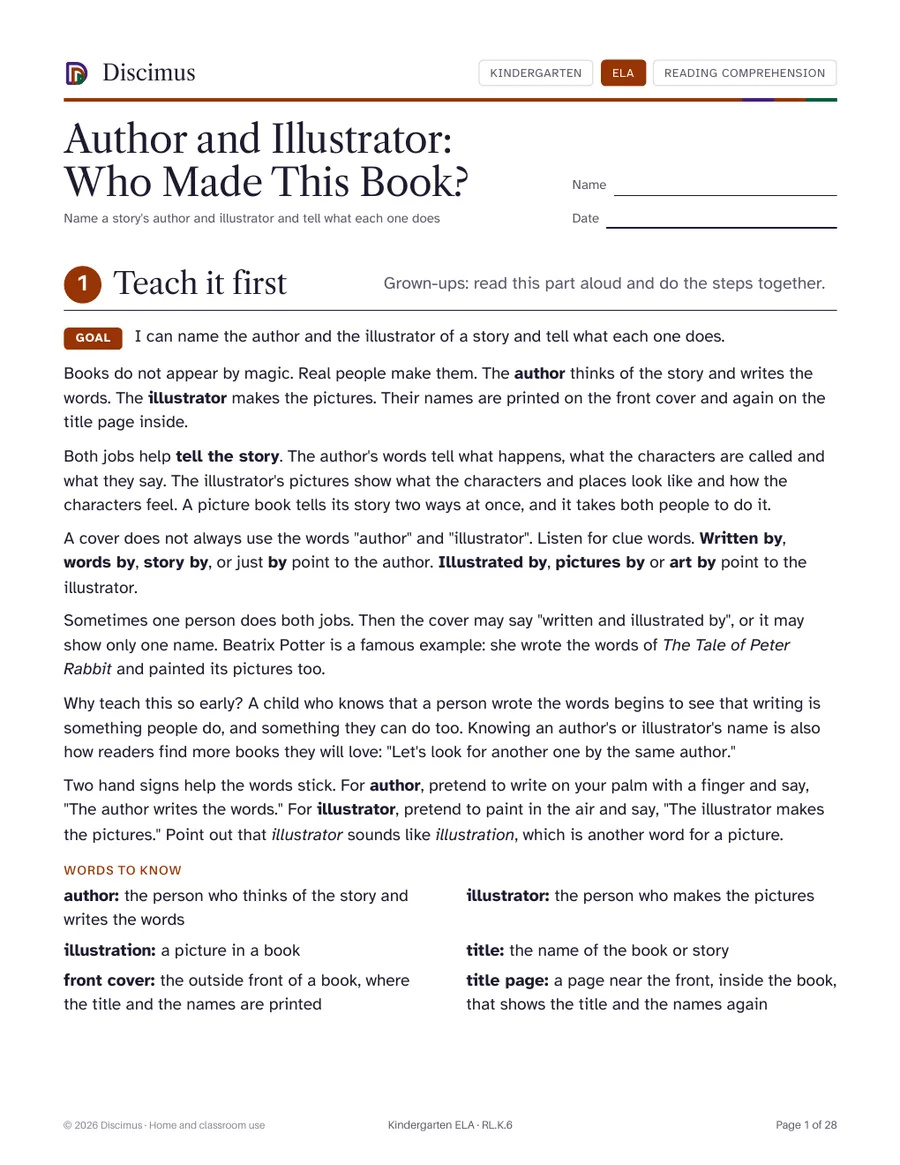
Name a story's author and illustrator and tell what each one does
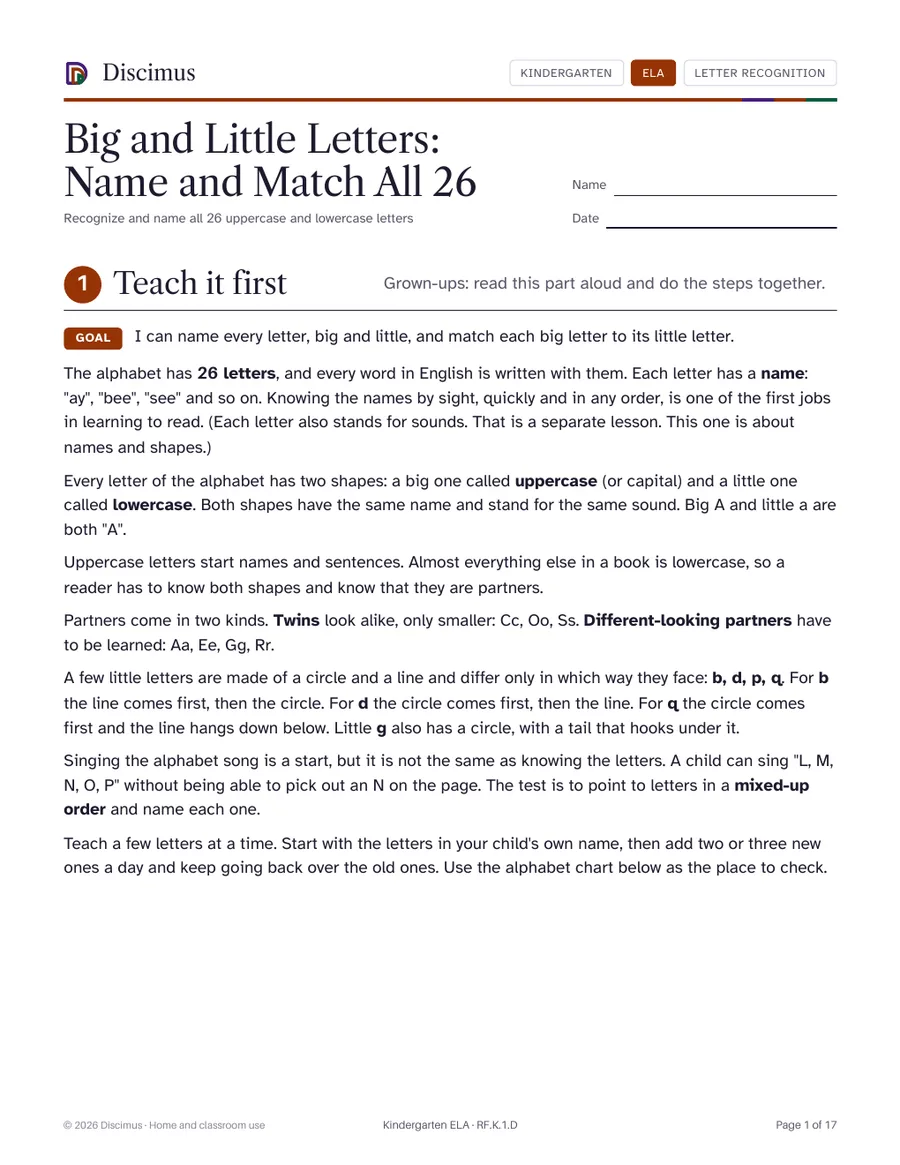
Recognize and name all 26 uppercase and lowercase letters
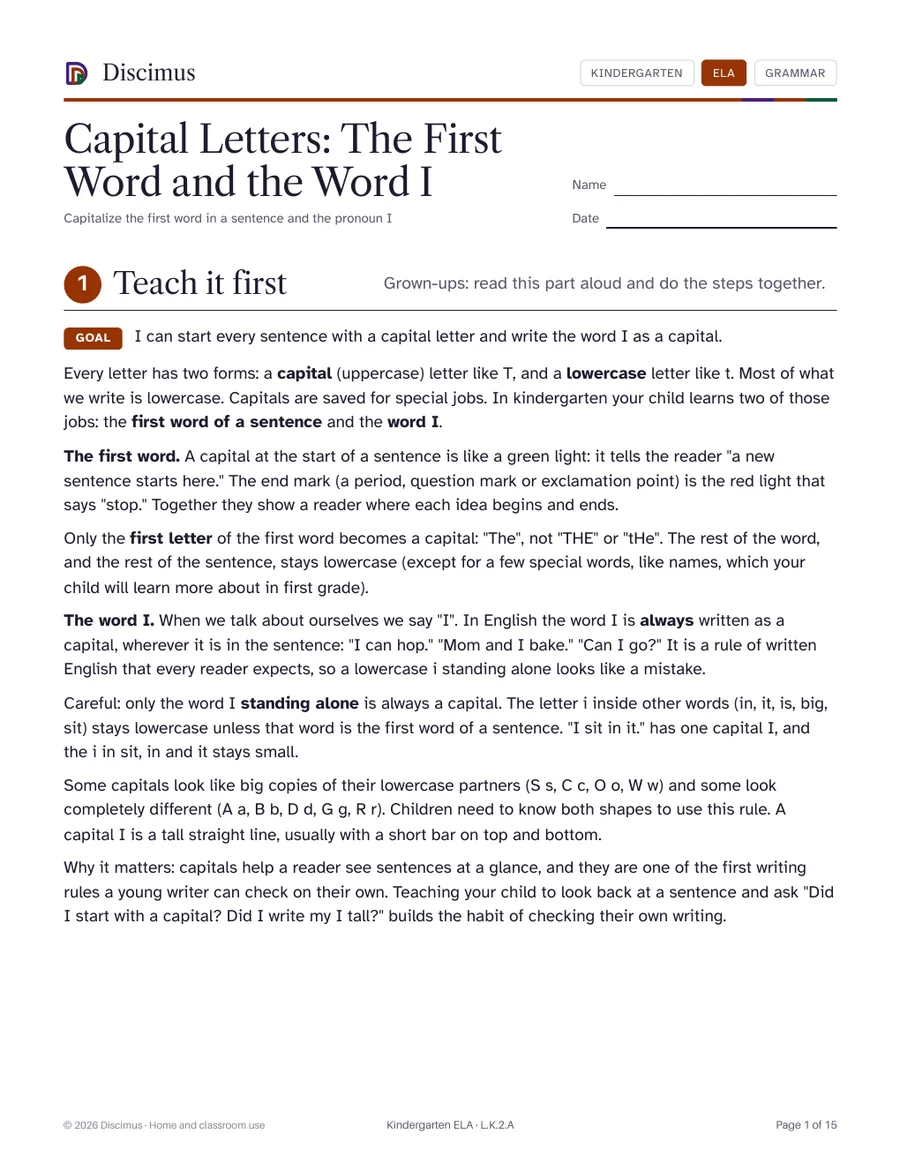
Capitalize the first word in a sentence and the pronoun I
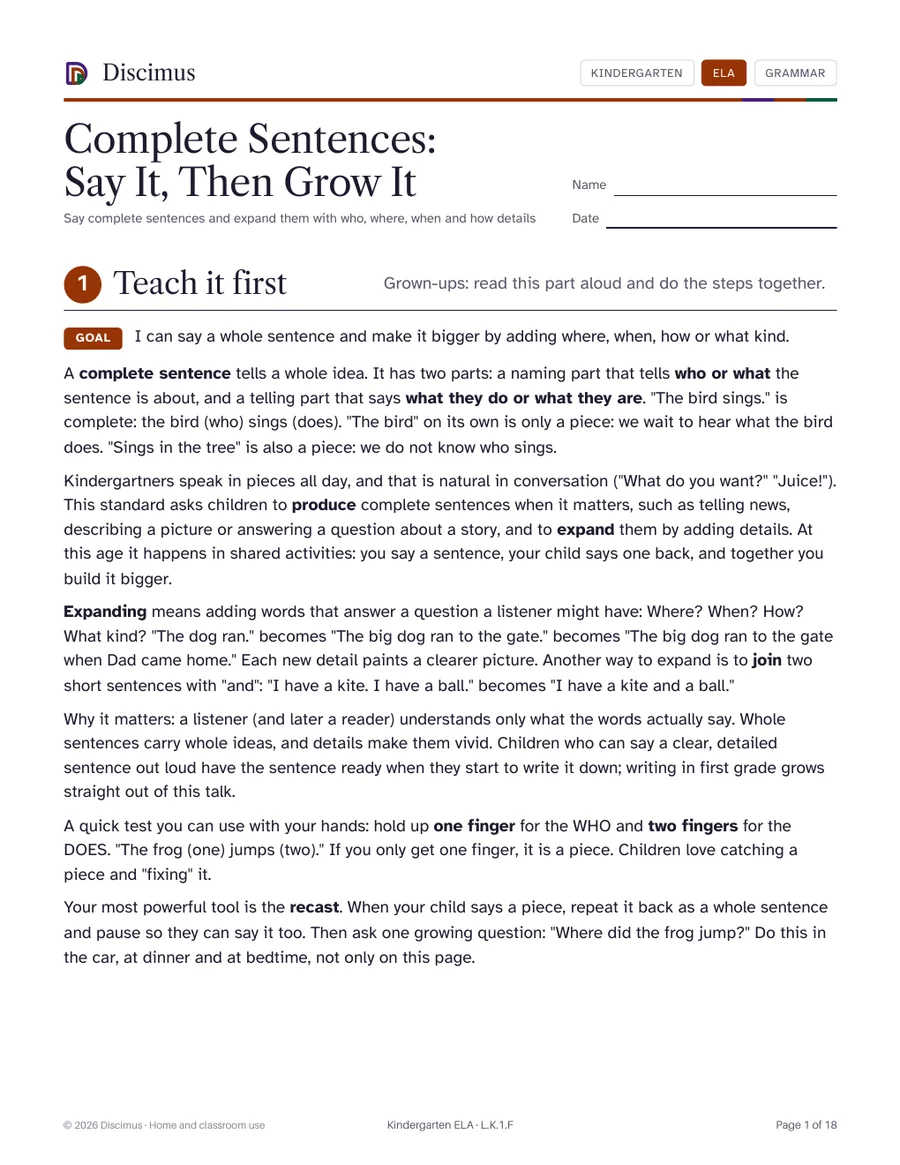
Say complete sentences and expand them with who, where, when and how details
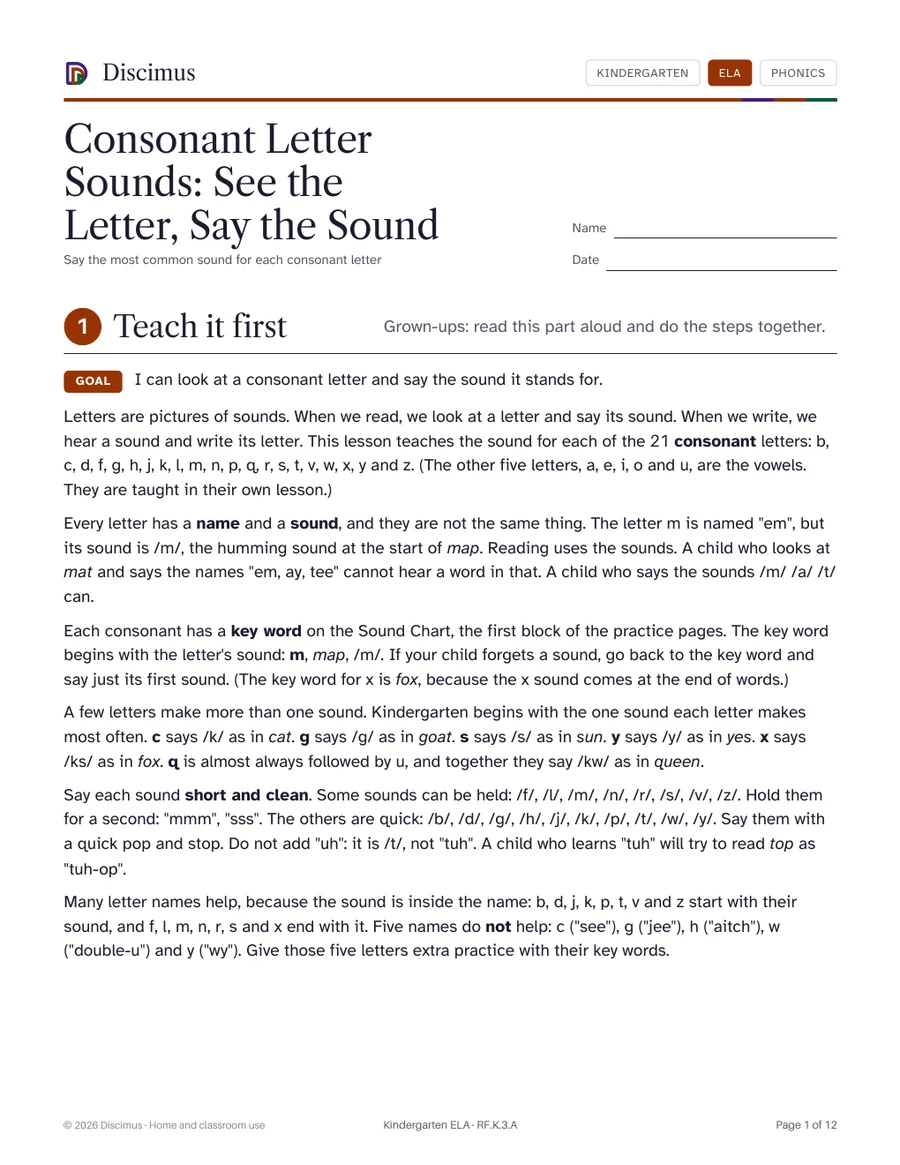
Say the most common sound for each consonant letter
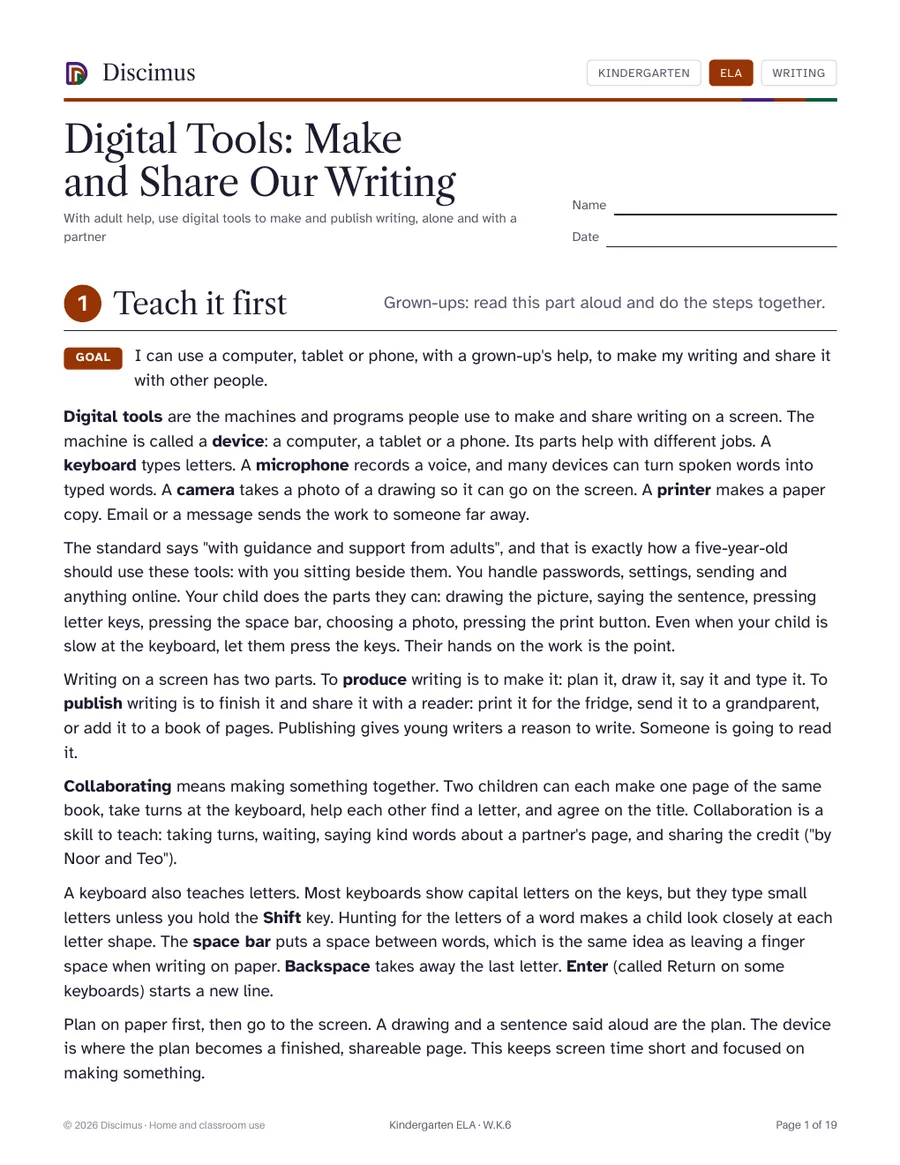
With adult help, use digital tools to make and publish writing, alone and with a partner
Recognize and name end marks: period, question mark and exclamation point
Say the first, middle vowel and last sound in three-sound (CVC) spoken words
Follow print left to right, top to bottom and page by page
Write the letter or letters for consonant and short-vowel sounds heard in spoken words
Describe how two people, events, ideas or facts in a true text are connected
Use common prepositions such as to, from, in, out, on, off, for, of, by and with
Match the short and long sound of each vowel (a, e, i, o, u) to its common spellings
Tell similarly spelled words apart by naming the sounds of the letters that differ
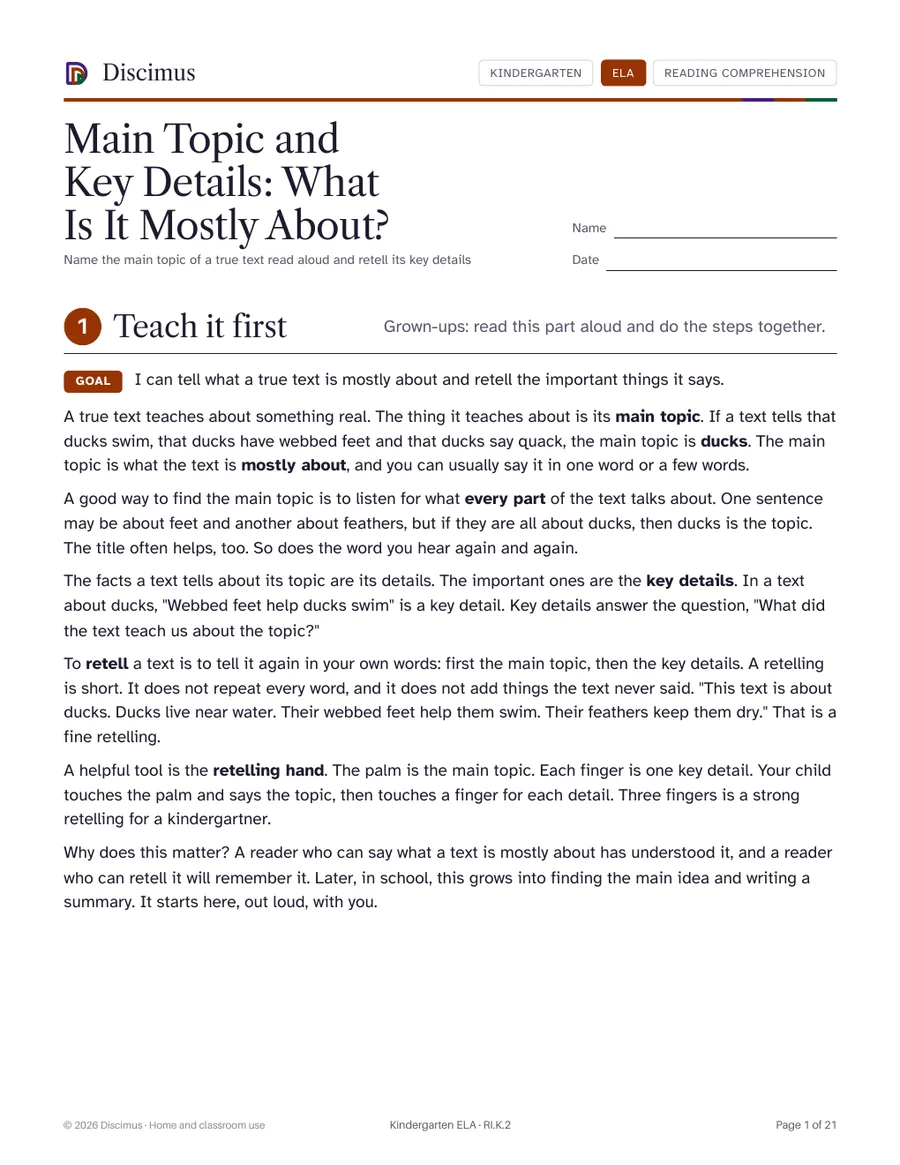
Name the main topic of a true text read aloud and retell its key details
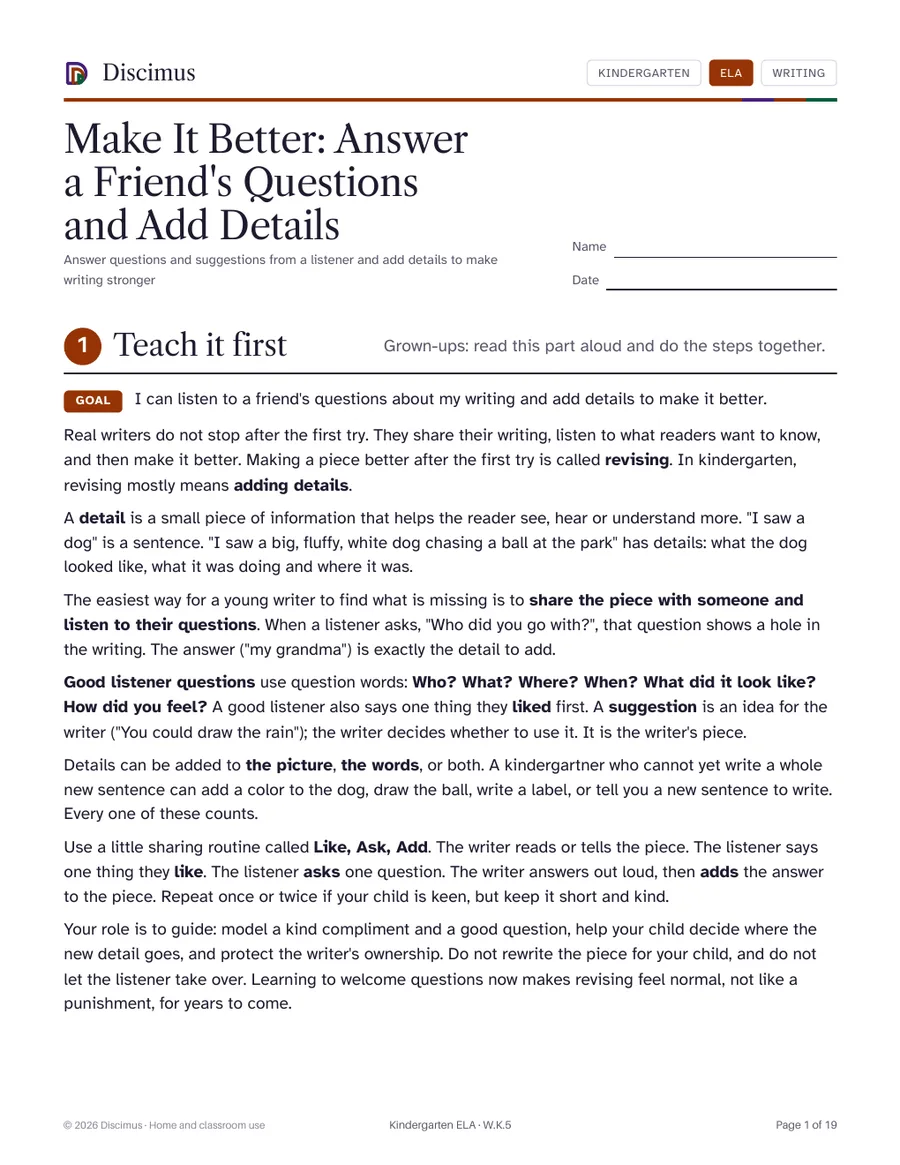
Answer questions and suggestions from a listener and add details to make writing stronger
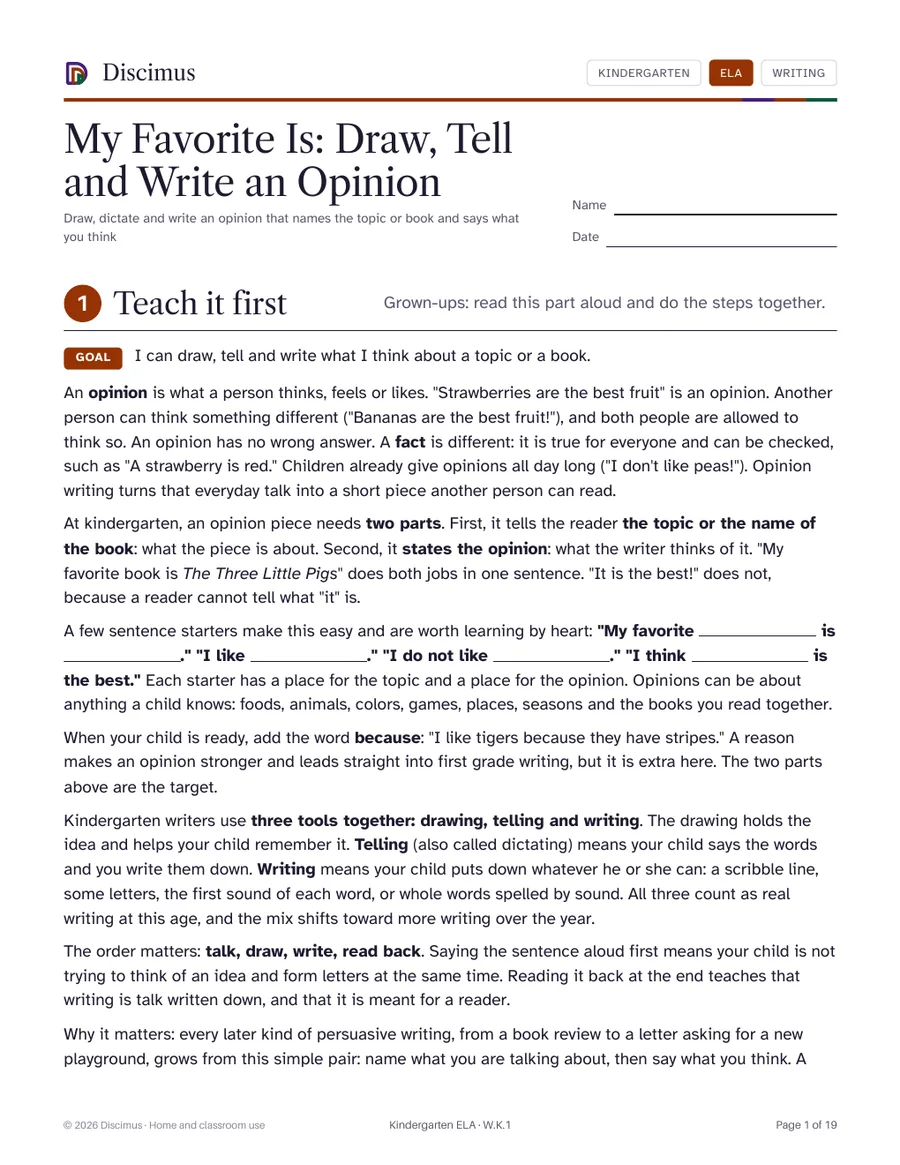
Draw, dictate and write an opinion that names the topic or book and says what you think
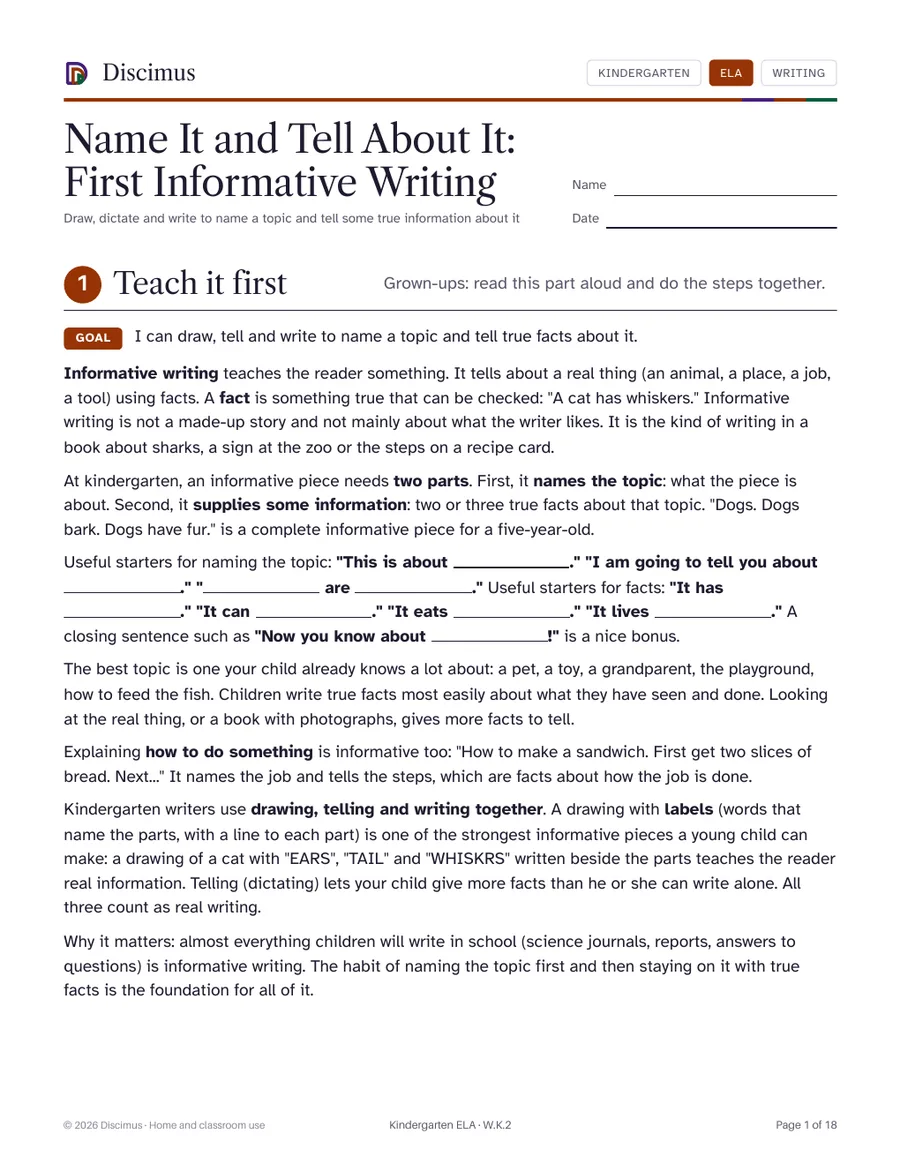
Draw, dictate and write to name a topic and tell some true information about it
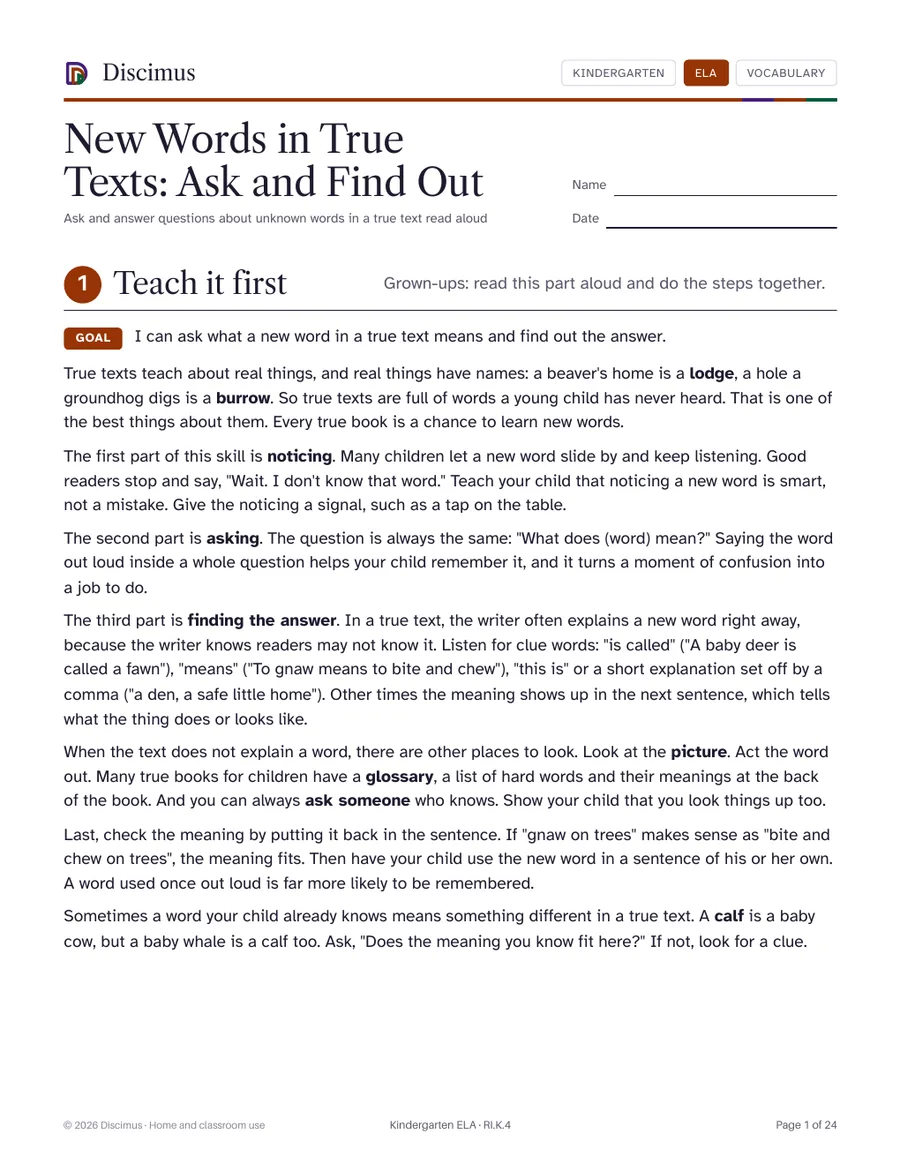
Ask and answer questions about unknown words in a true text read aloud
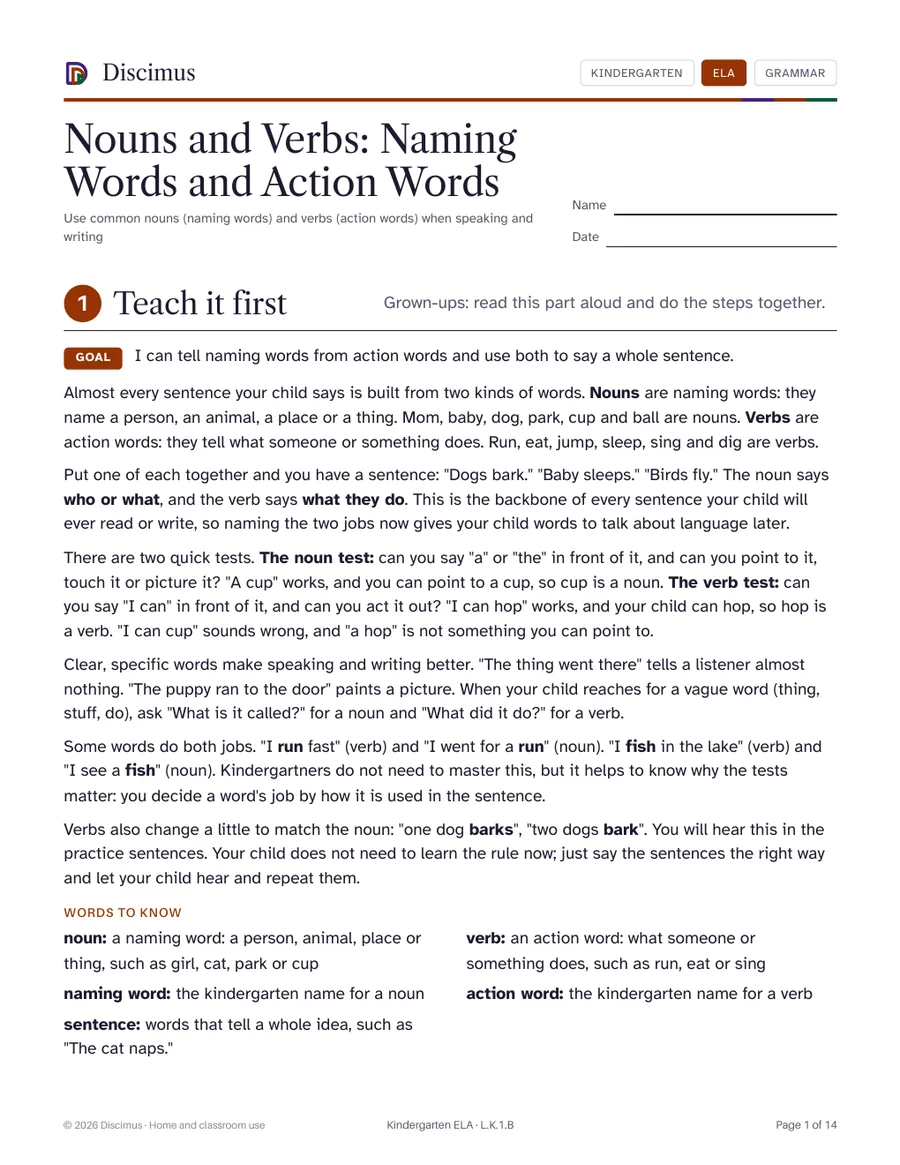
Use common nouns (naming words) and verbs (action words) when speaking and writing
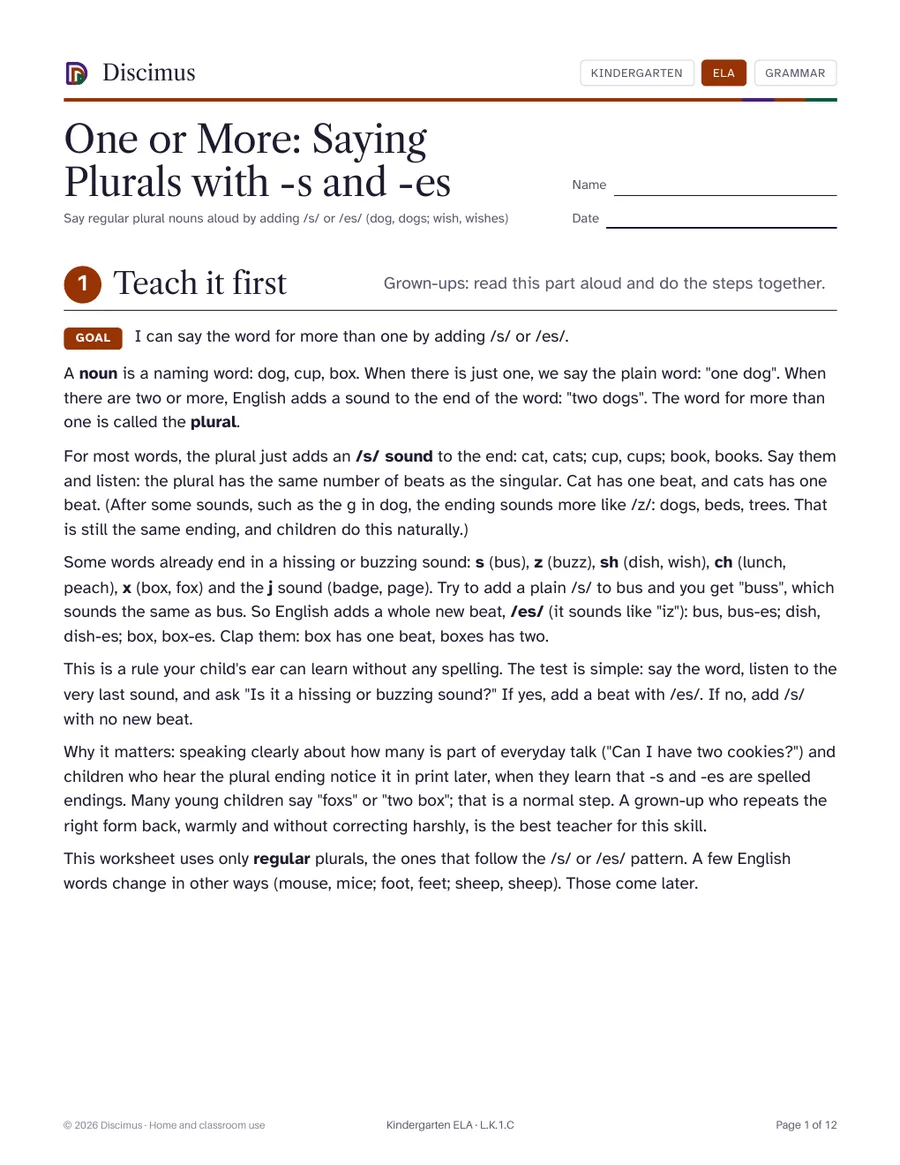
Say regular plural nouns aloud by adding /s/ or /es/ (dog, dogs; wish, wishes)
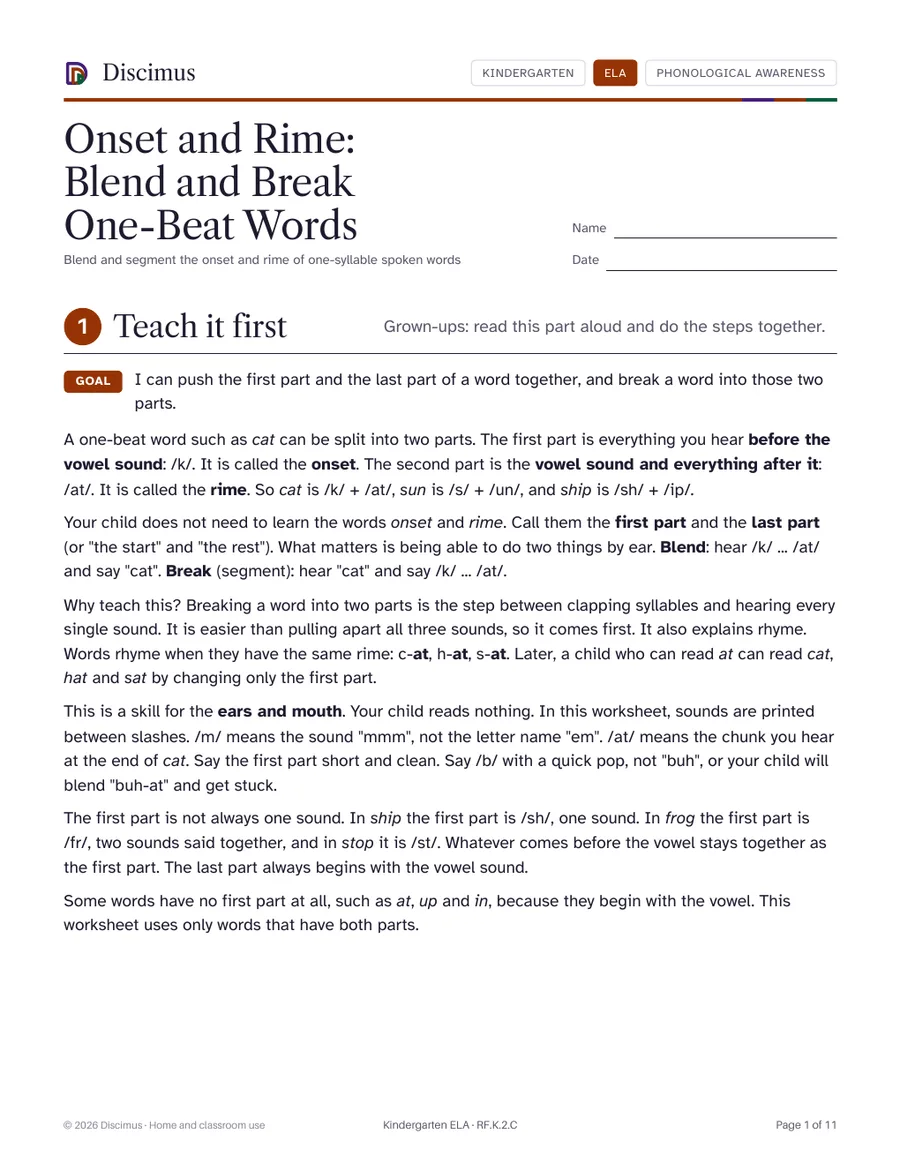
Blend and segment the onset and rime of one-syllable spoken words
Understand common action words and describing words by naming and using their opposites
Identify the front cover, back cover and title page of a book
Tell which moment of a story a picture shows and what the picture adds
Tell what a picture in a true text shows and match it to the words
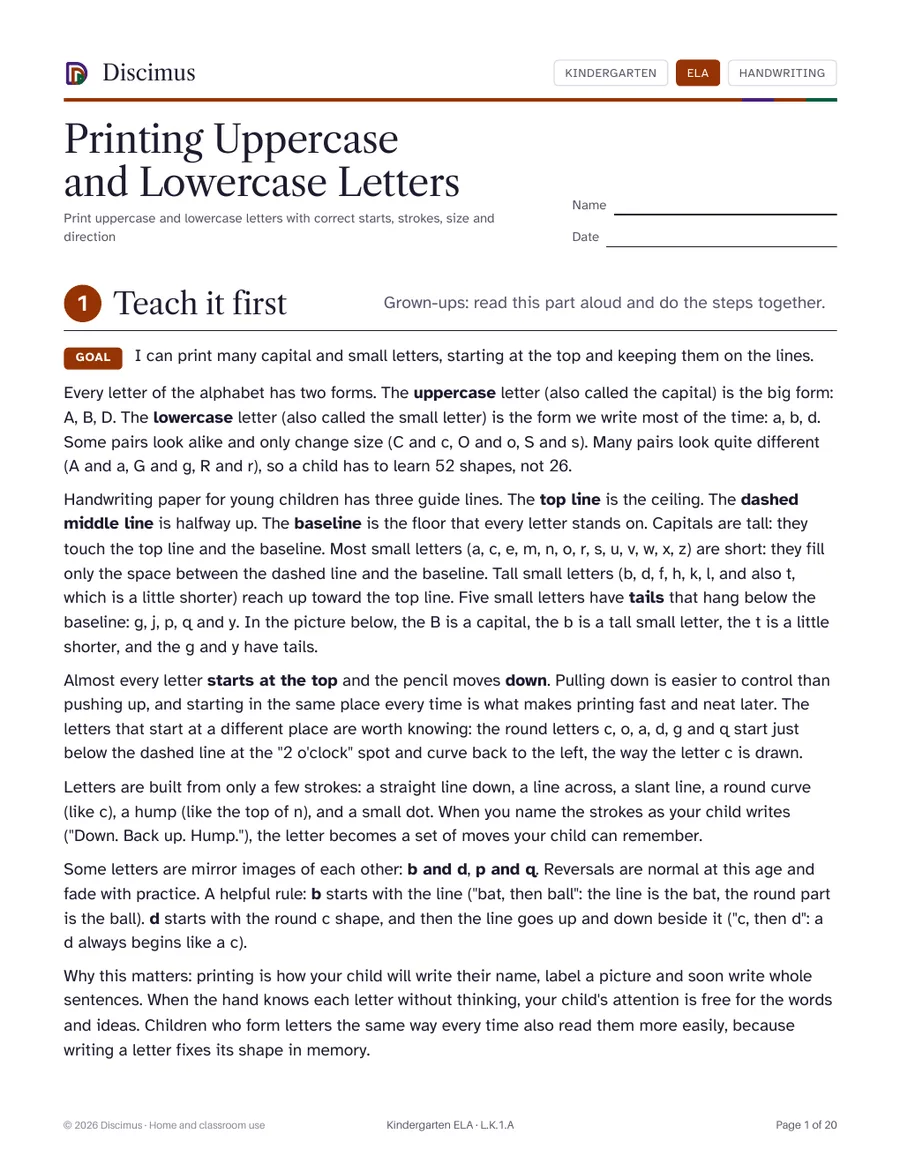
Print uppercase and lowercase letters with correct starts, strokes, size and direction
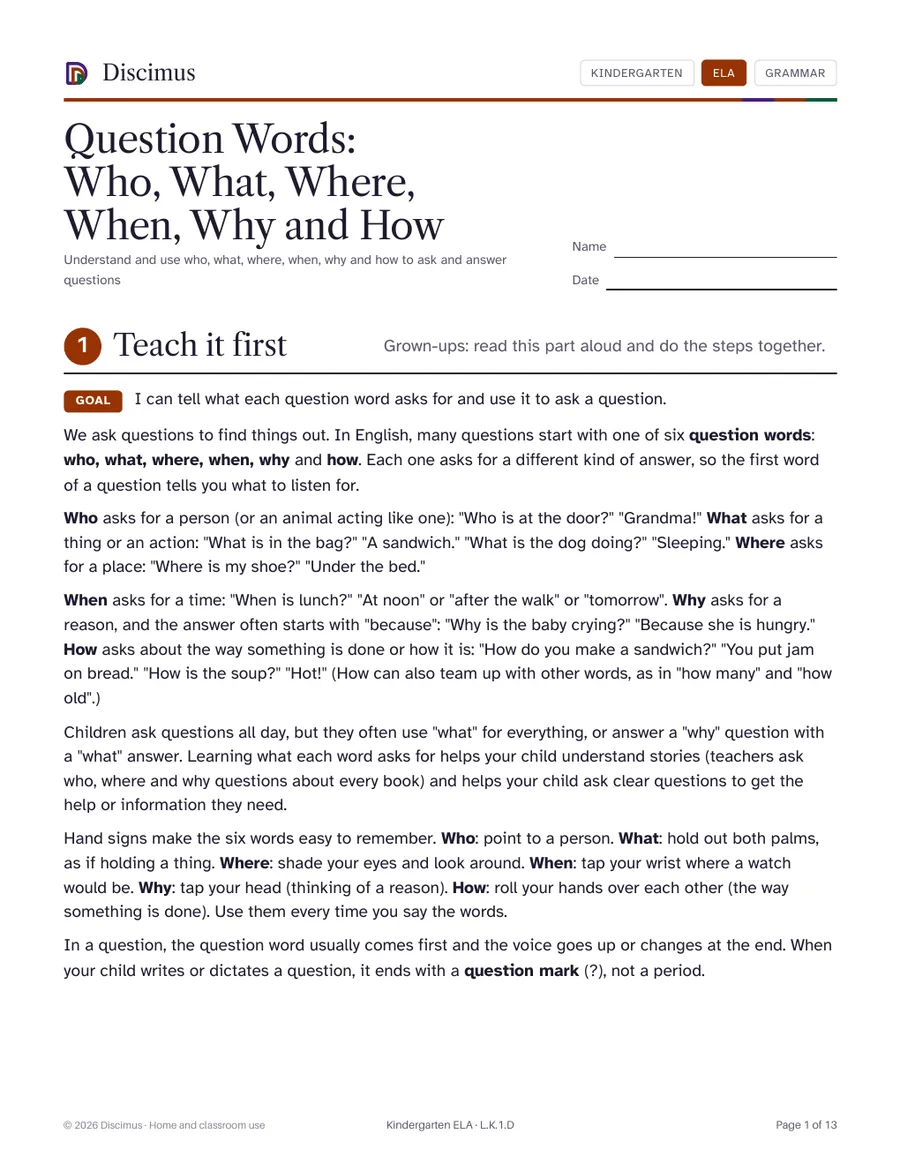
Understand and use who, what, where, when, why and how to ask and answer questions
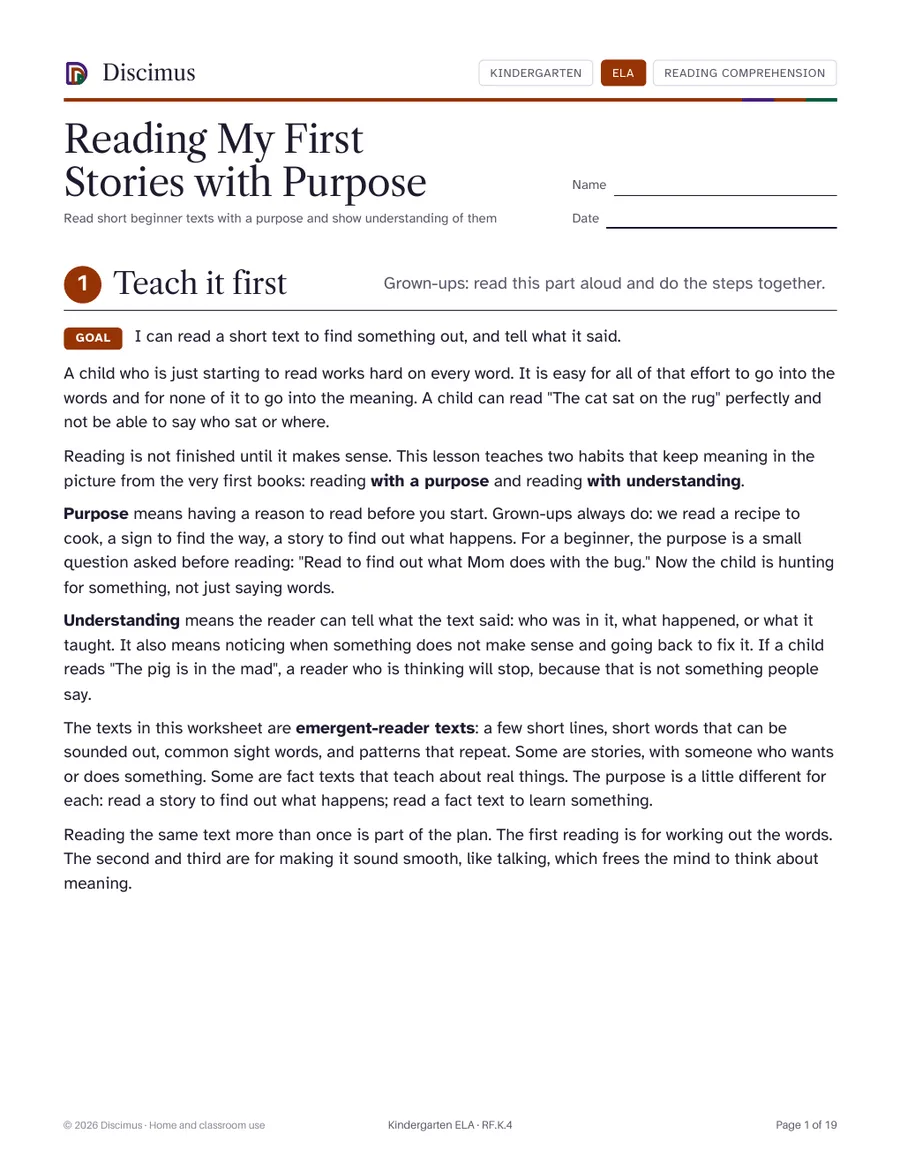
Read short beginner texts with a purpose and show understanding of them
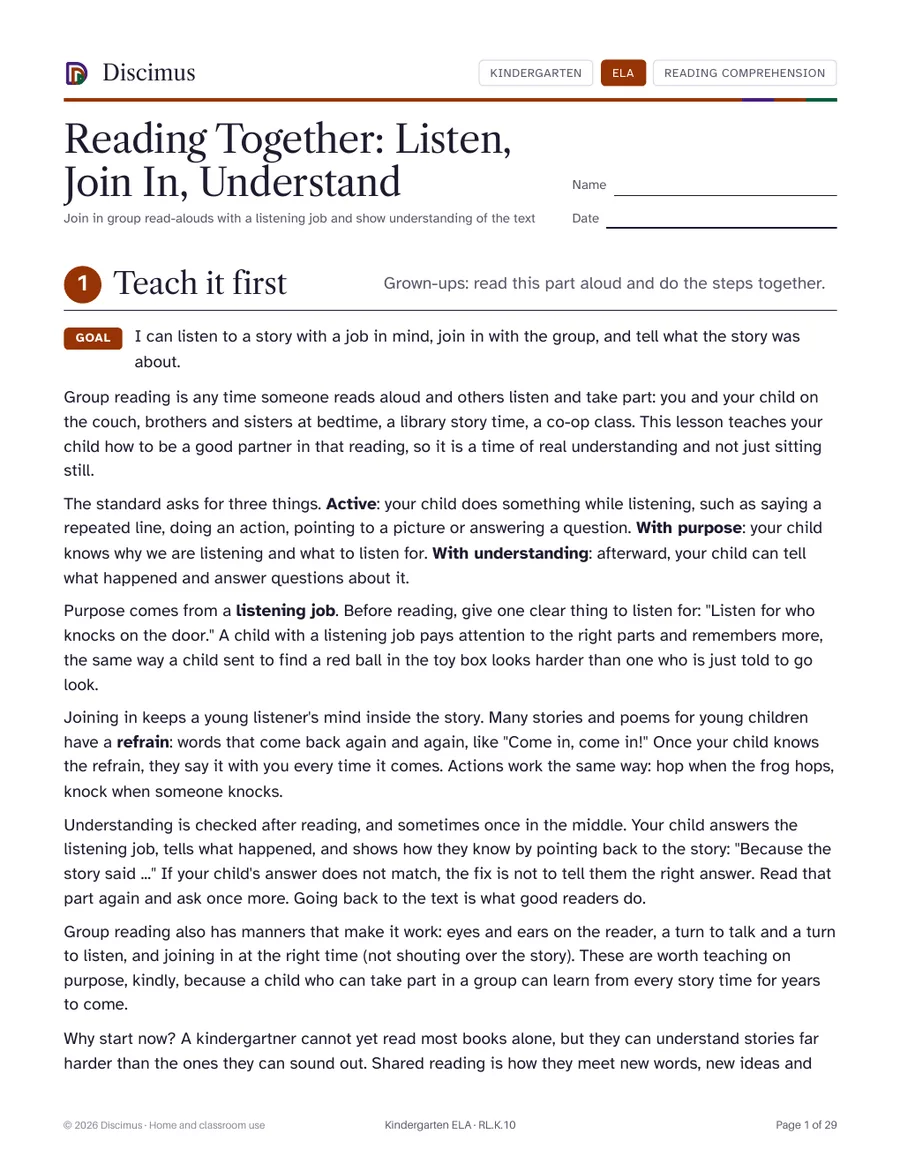
Join in group read-alouds with a listening job and show understanding of the text
Take an active part in a group read-aloud of a true text with a purpose and understanding
Retell a familiar story in order, with the characters, setting and key events
Tell whether two spoken words rhyme and say a word that rhymes
Compare and contrast what happens to characters in familiar stories
Learn a new meaning for a familiar word and use the sentence to tell which meaning fits
Explore several books by one author in a shared project and give opinions with reasons
Read 14 common high-frequency words by sight, alone and in sentences
Sort common objects into categories and name each category and what makes it a group
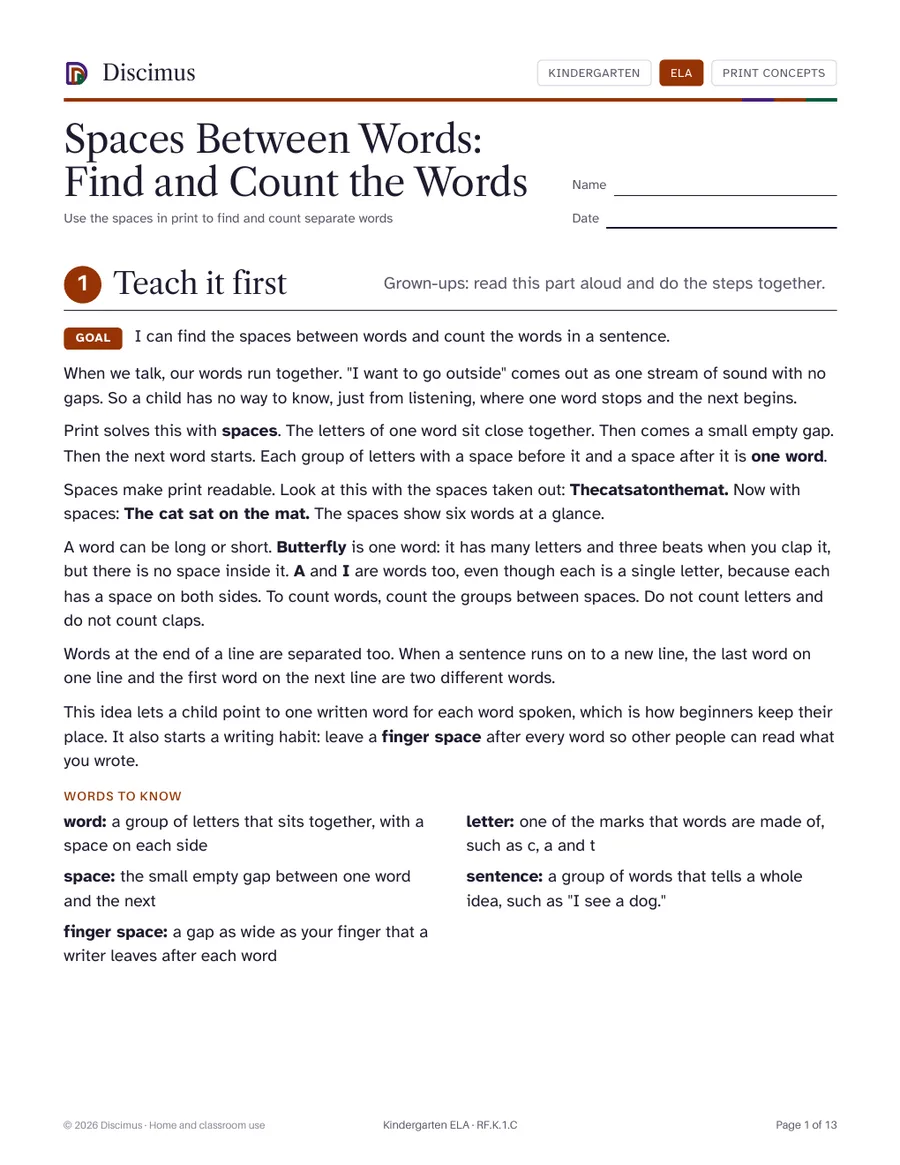
Use the spaces in print to find and count separate words
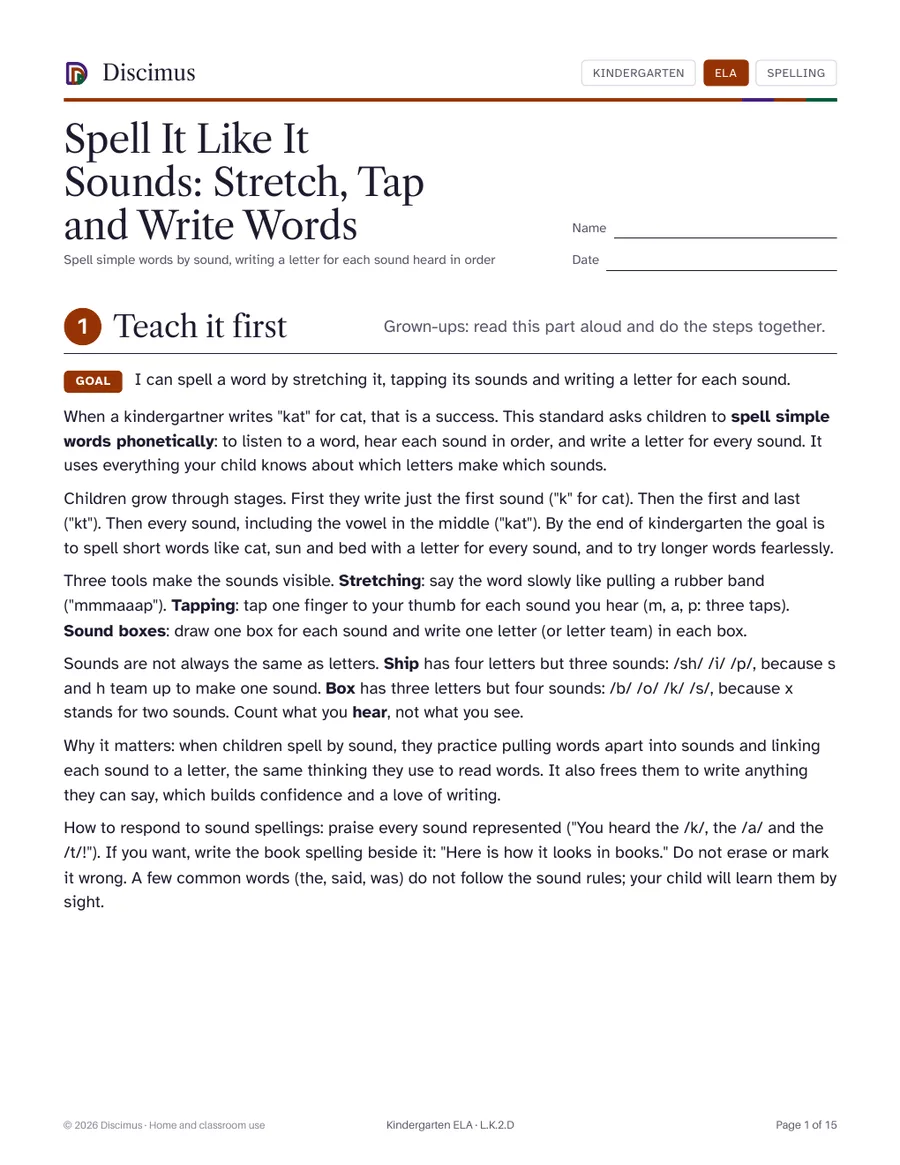
Spell simple words by sound, writing a letter for each sound heard in order
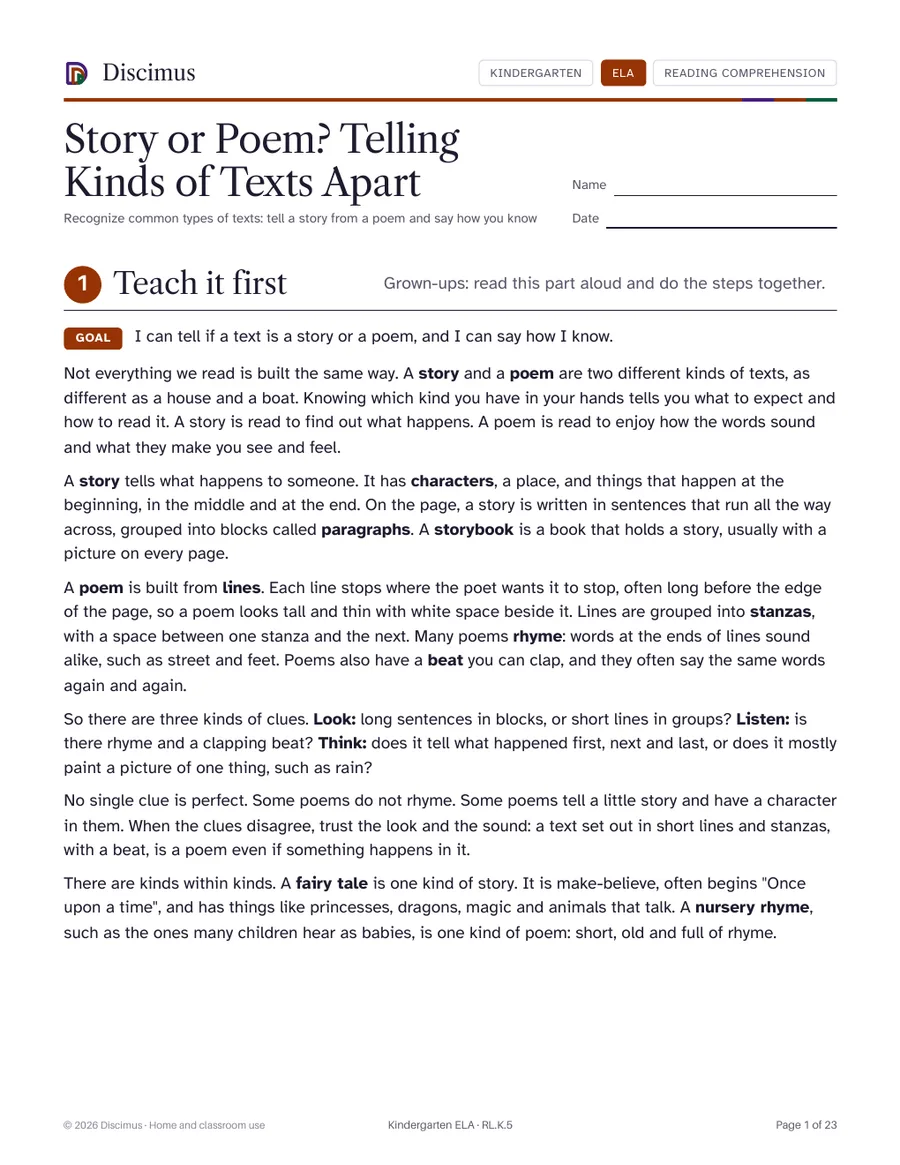
Recognize common types of texts: tell a story from a poem and say how you know
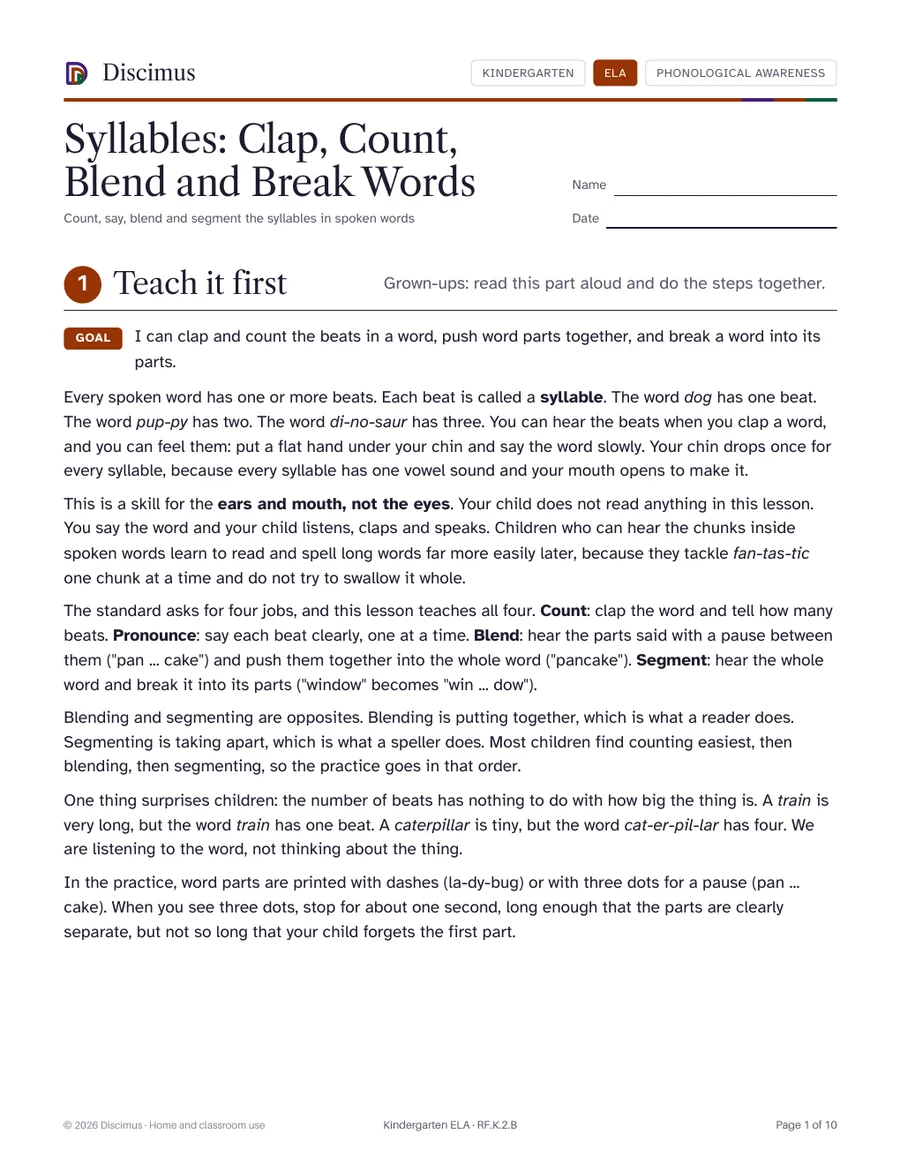
Count, say, blend and segment the syllables in spoken words
Tell how two true texts on the same topic are alike and different
Tell apart close action words (walk, march, strut, prance) by acting them out
Ask and answer questions about unknown words in a story, using clues from the story
Draw, dictate and write about events in the order they happened and tell how you felt
Name the author and illustrator of a true text and tell how each one presents the facts
Name the characters, the setting and the major events of a story read aloud
Identify the reasons an author gives to support a point in a true text
Use new words and phrases from talk and read-alouds when speaking and retelling
Use word parts (-s, -ed, re-, un-, pre-, -ful, -less) as clues to a new word's meaning
Connect words to real-life examples by finding places, things and times each word fits
Know that each spoken word is written with its own letters in a set order
Ask and answer questions about key details in an informational text
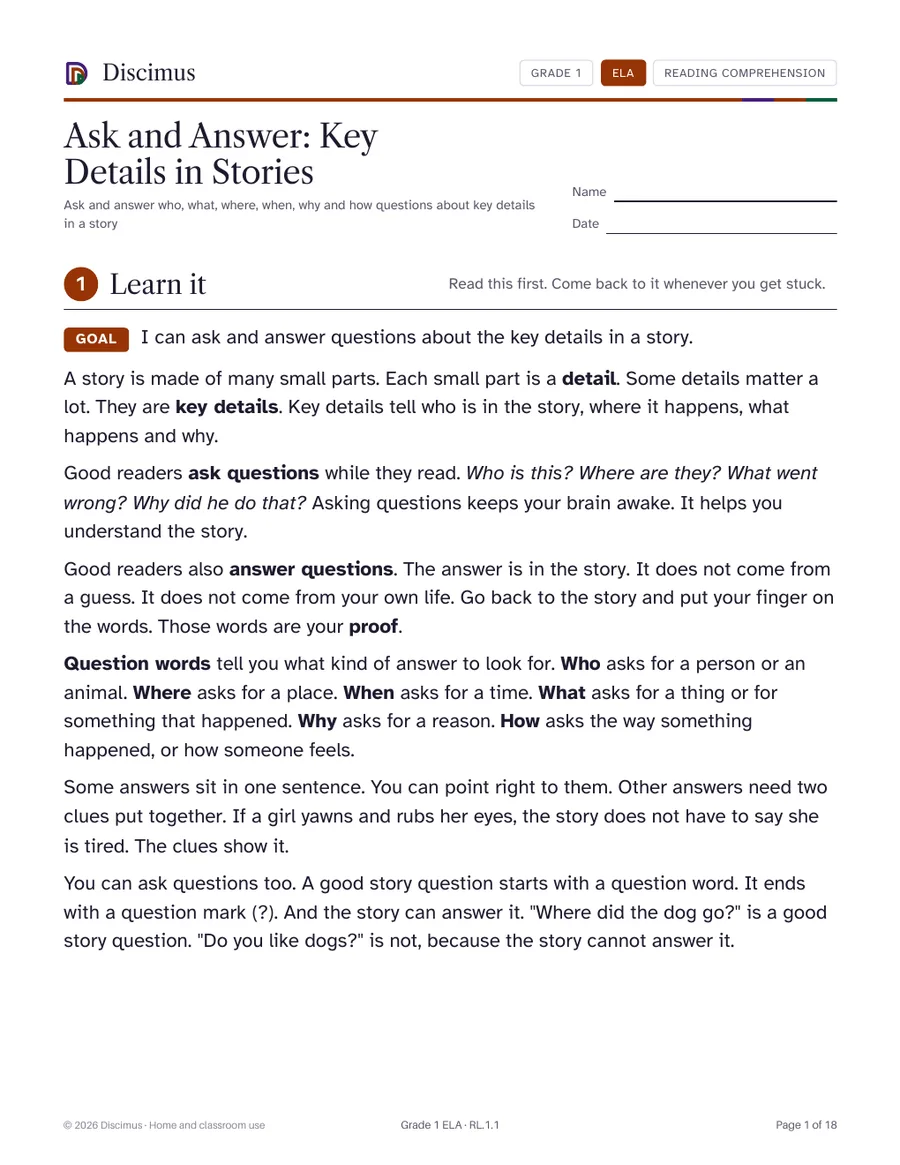
Ask and answer who, what, where, when, why and how questions about key details in a story
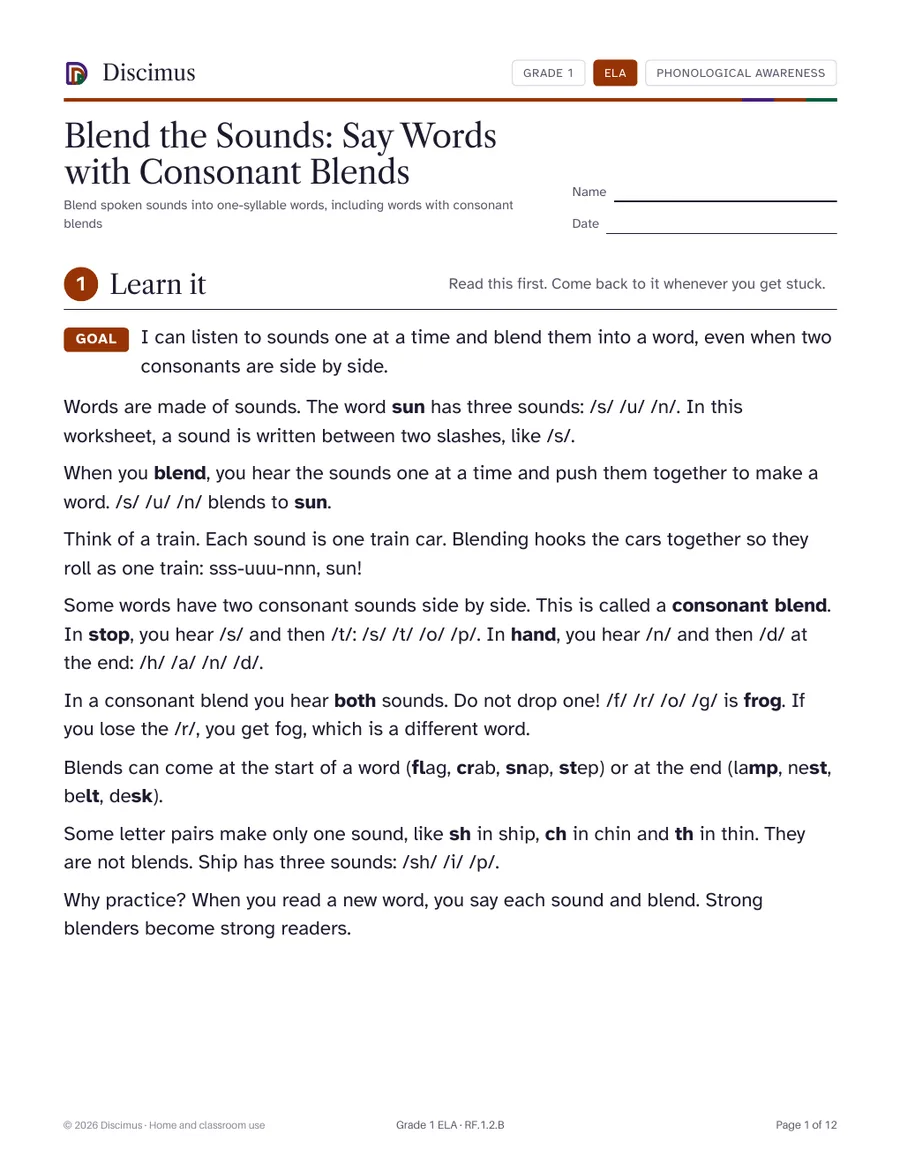
Blend spoken sounds into one-syllable words, including words with consonant blends
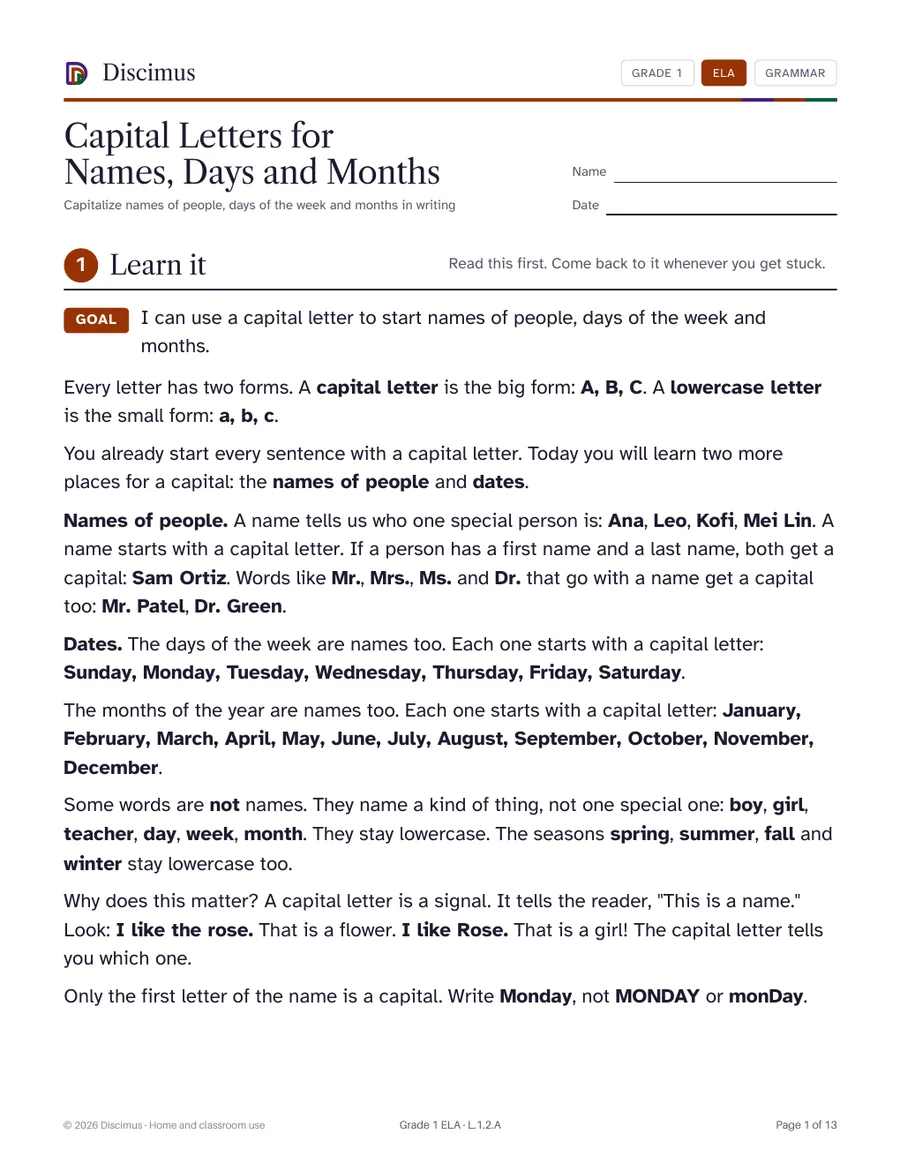
Capitalize names of people, days of the week and months in writing
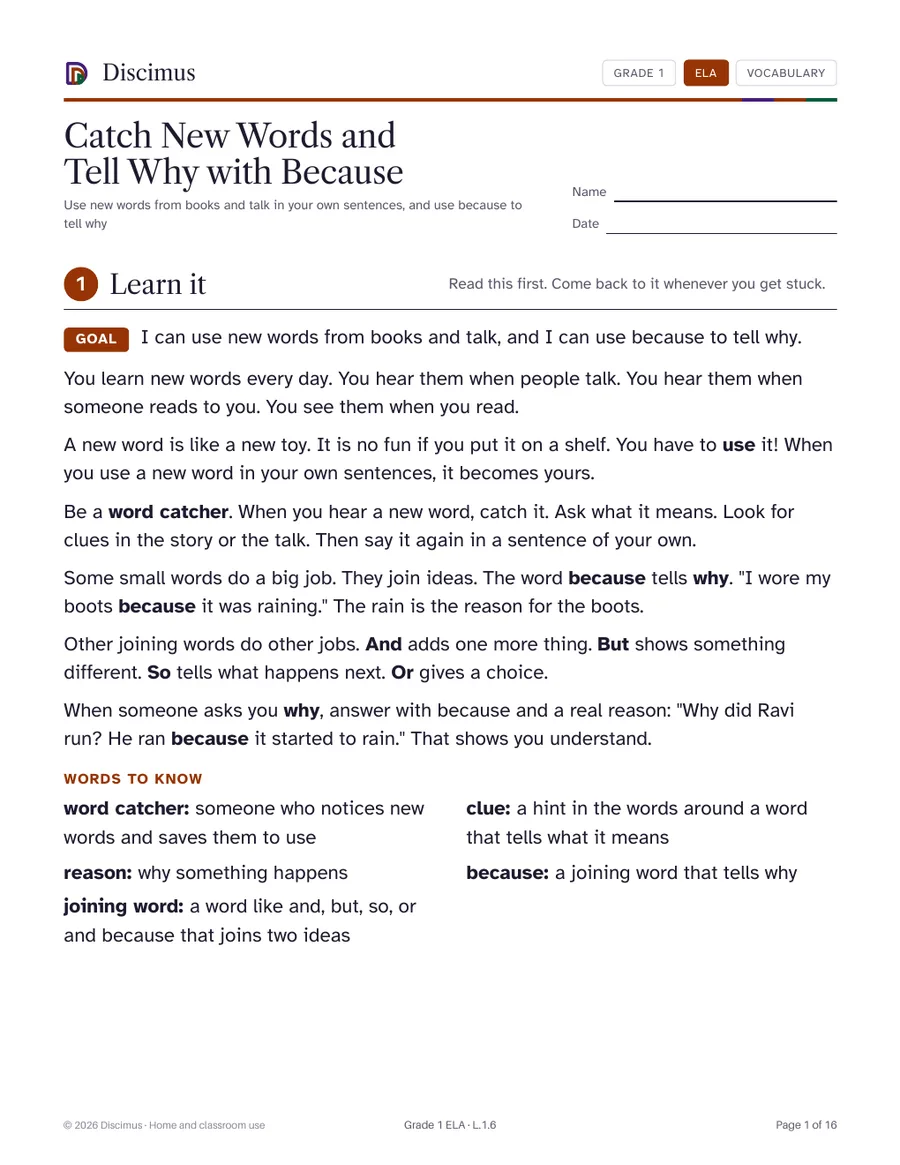
Use new words from books and talk in your own sentences, and use because to tell why
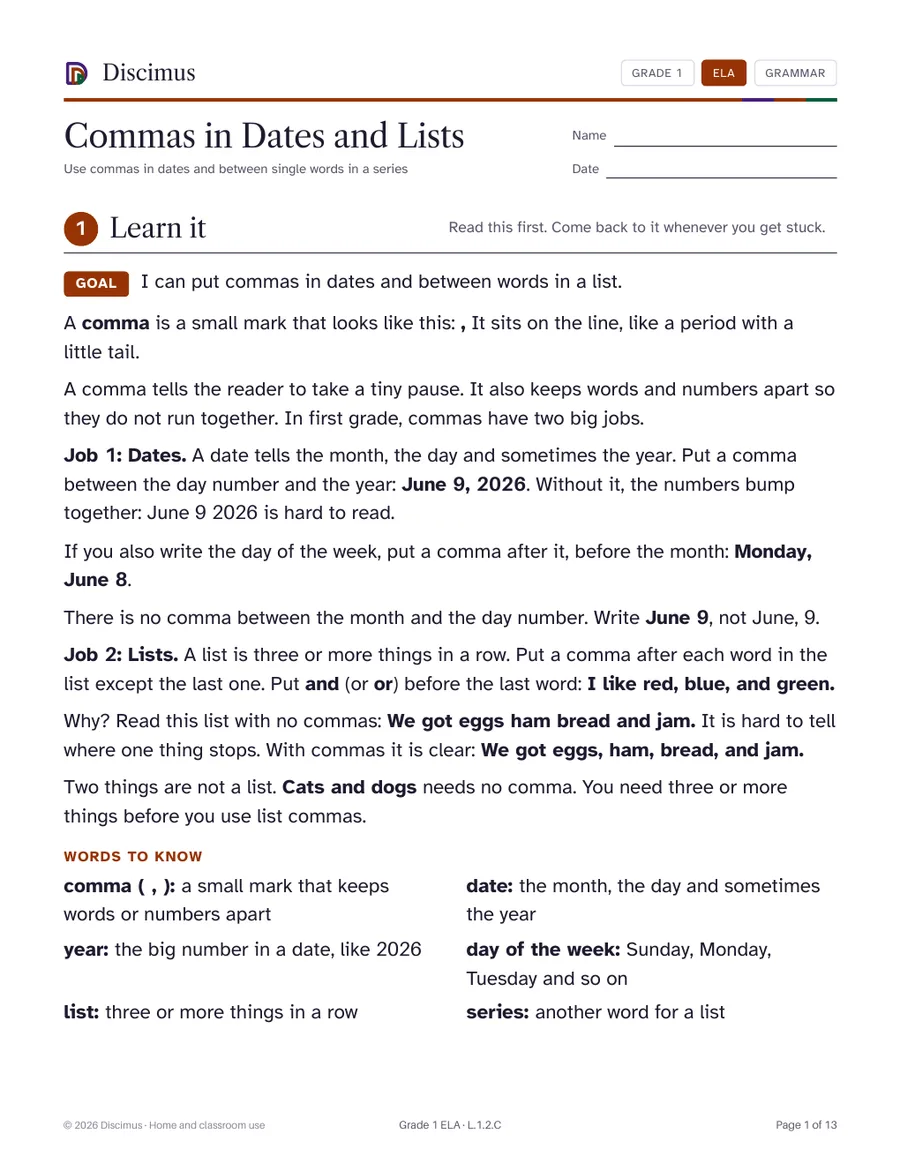
Use commas in dates and between single words in a series
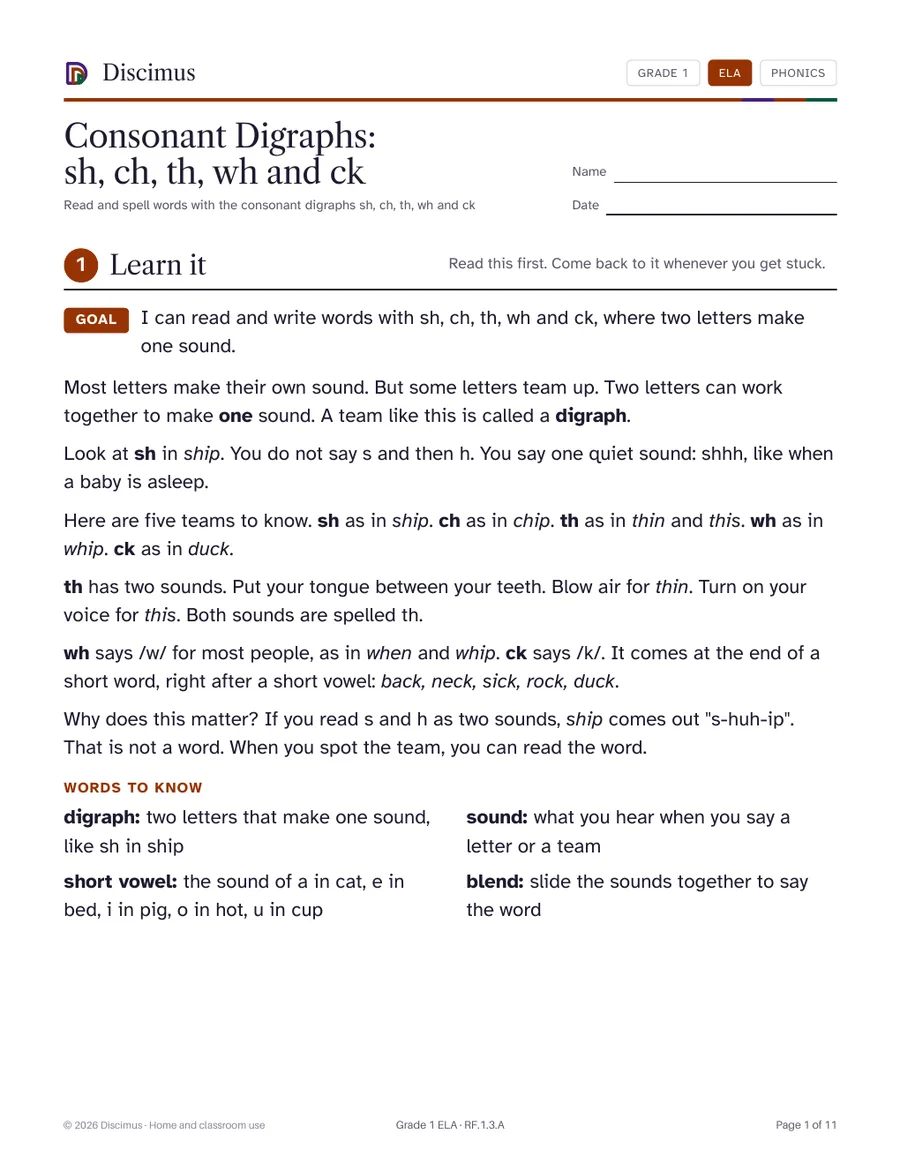
Read and spell words with the consonant digraphs sh, ch, th, wh and ck
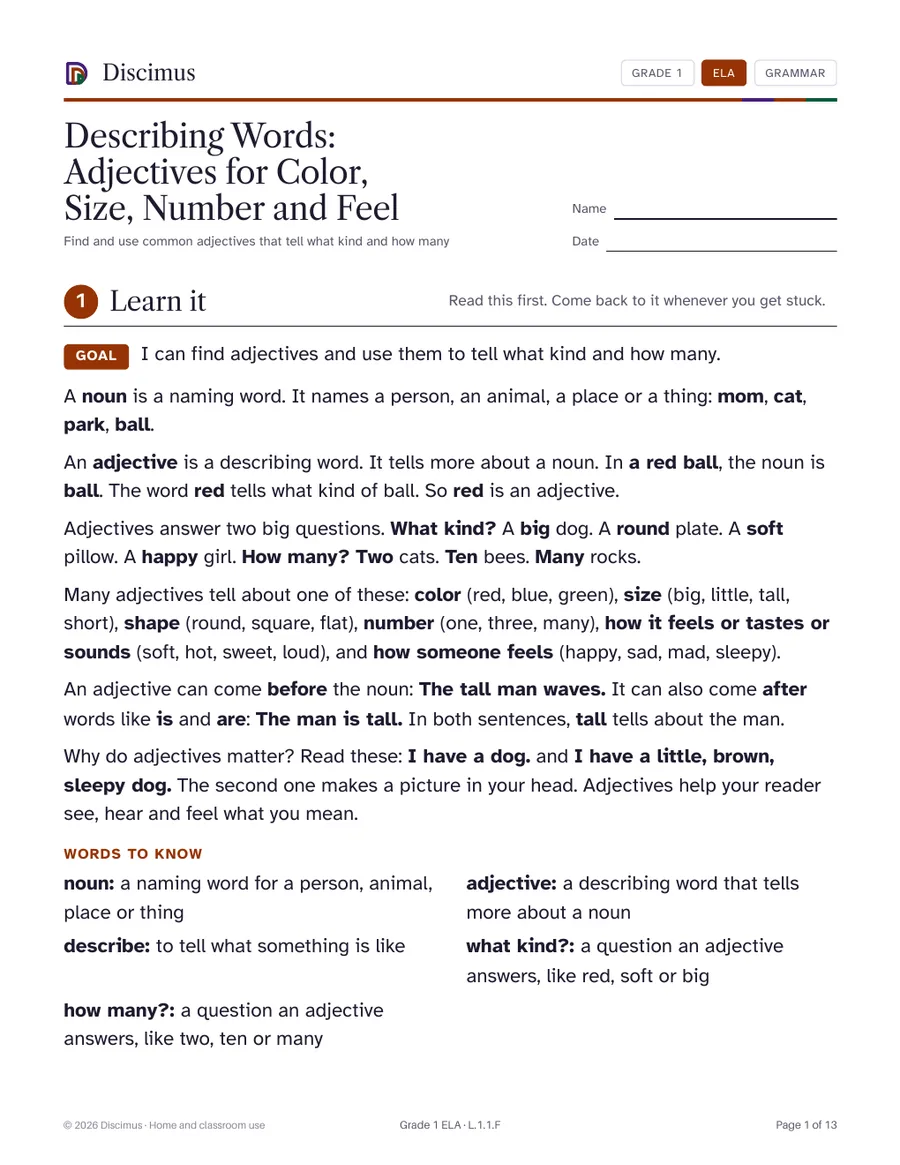
Find and use common adjectives that tell what kind and how many
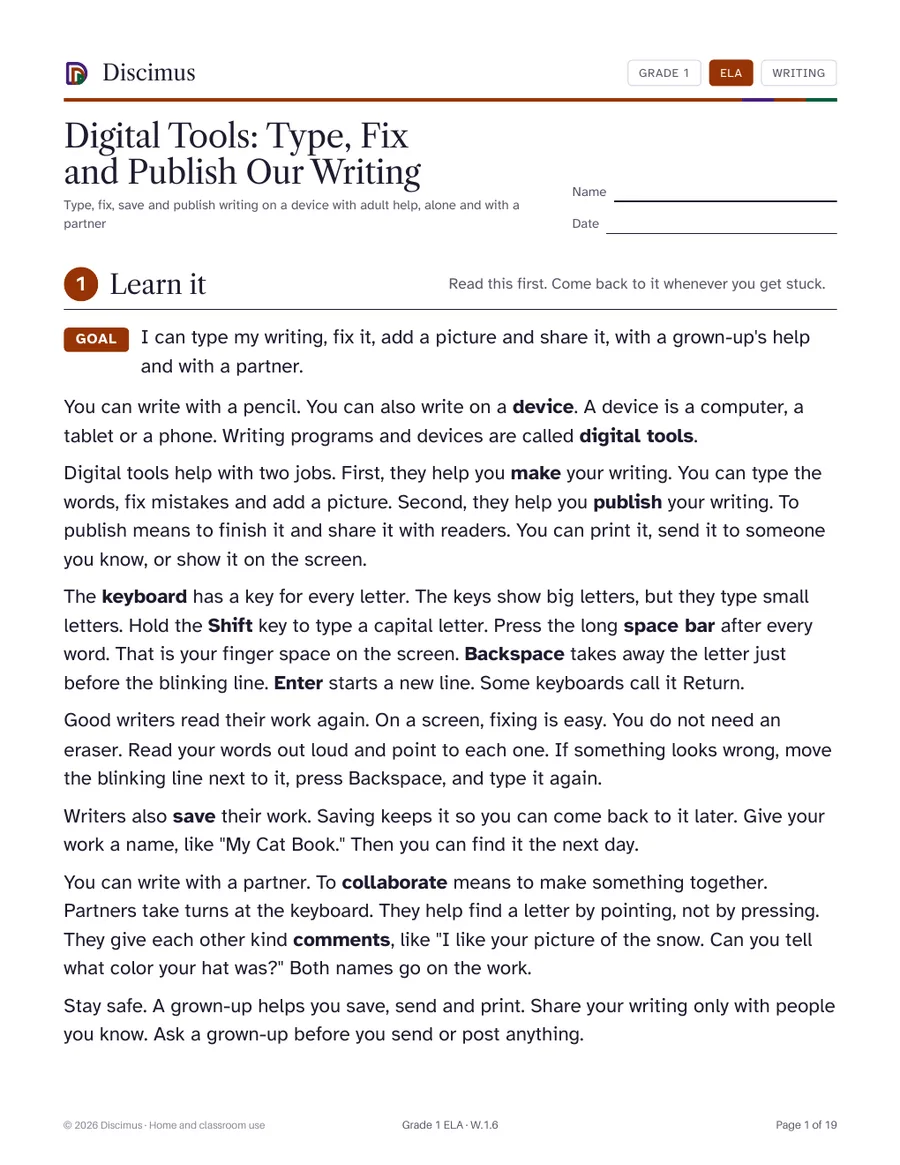
Type, fix, save and publish writing on a device with adult help, alone and with a partner
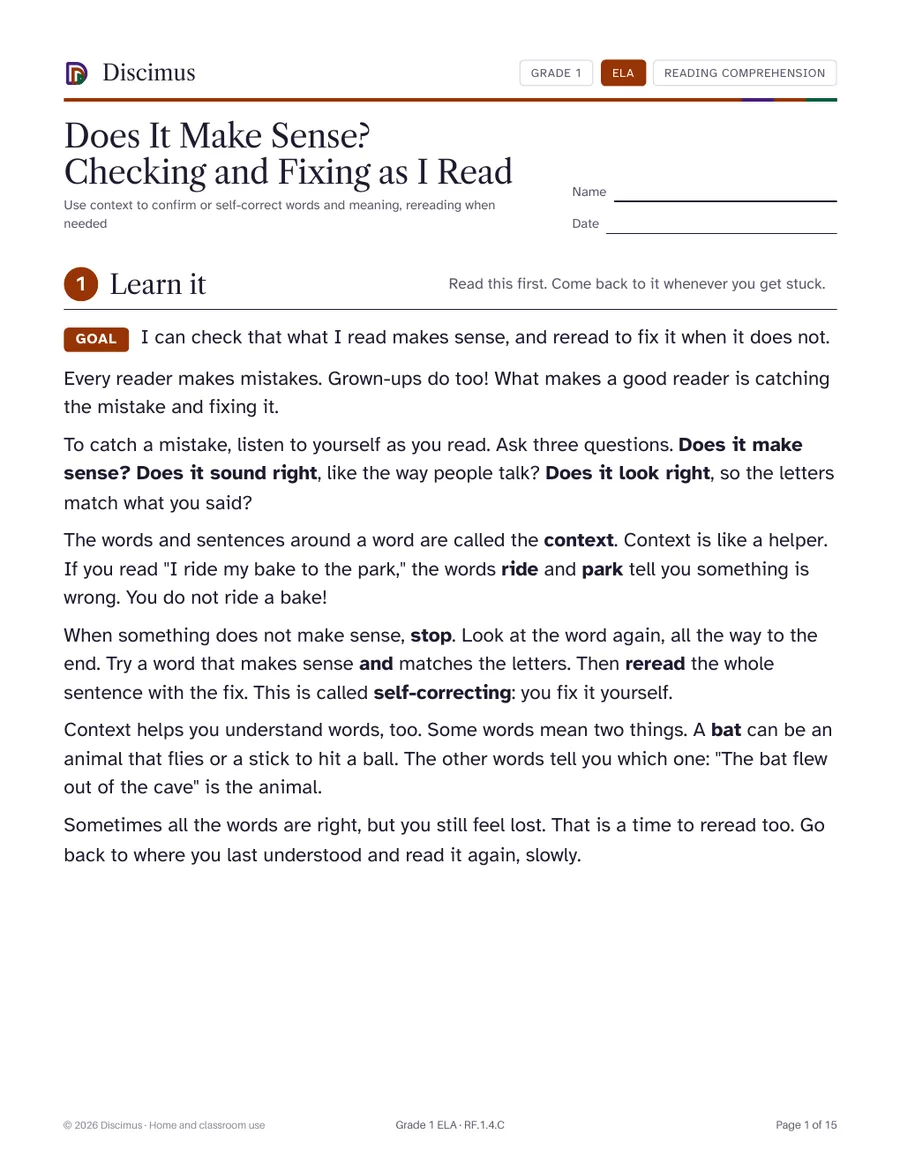
Use context to confirm or self-correct words and meaning, rereading when needed
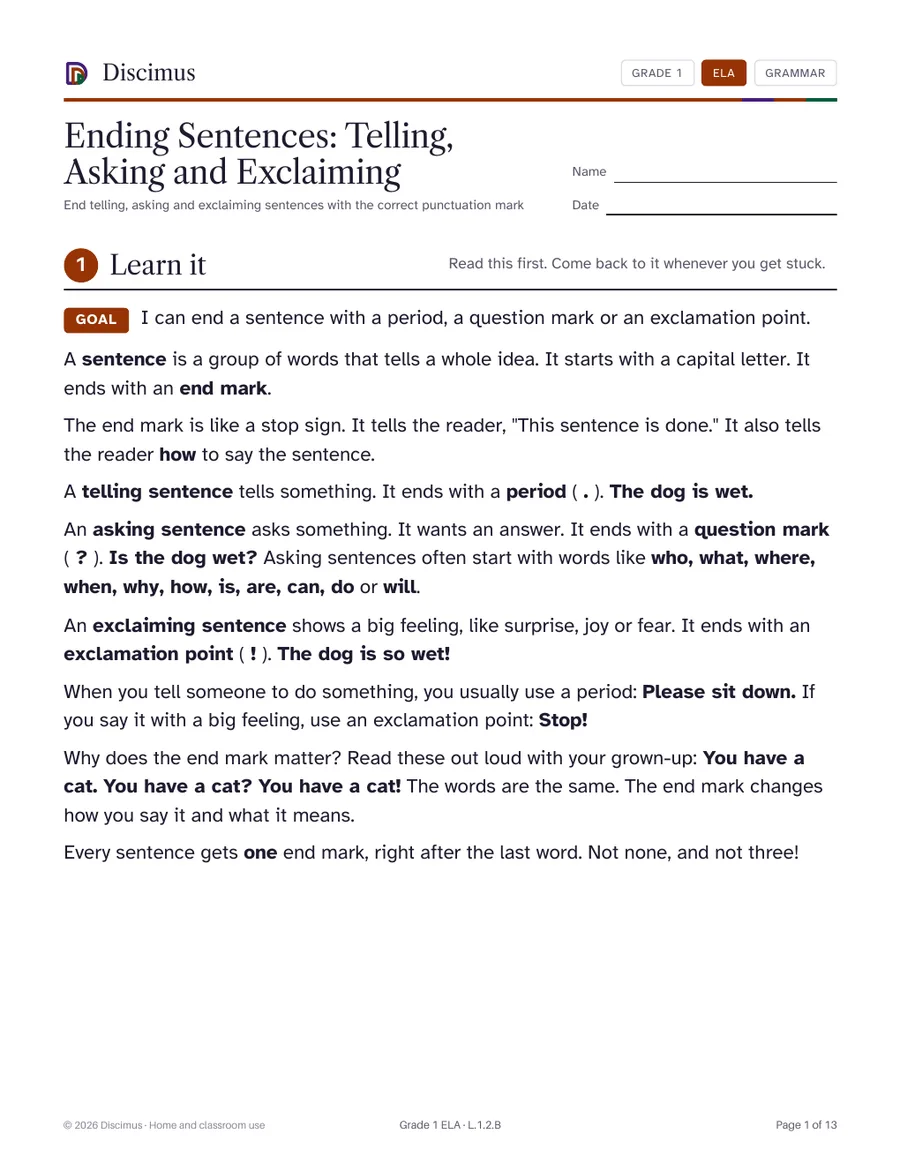
End telling, asking and exclaiming sentences with the correct punctuation mark
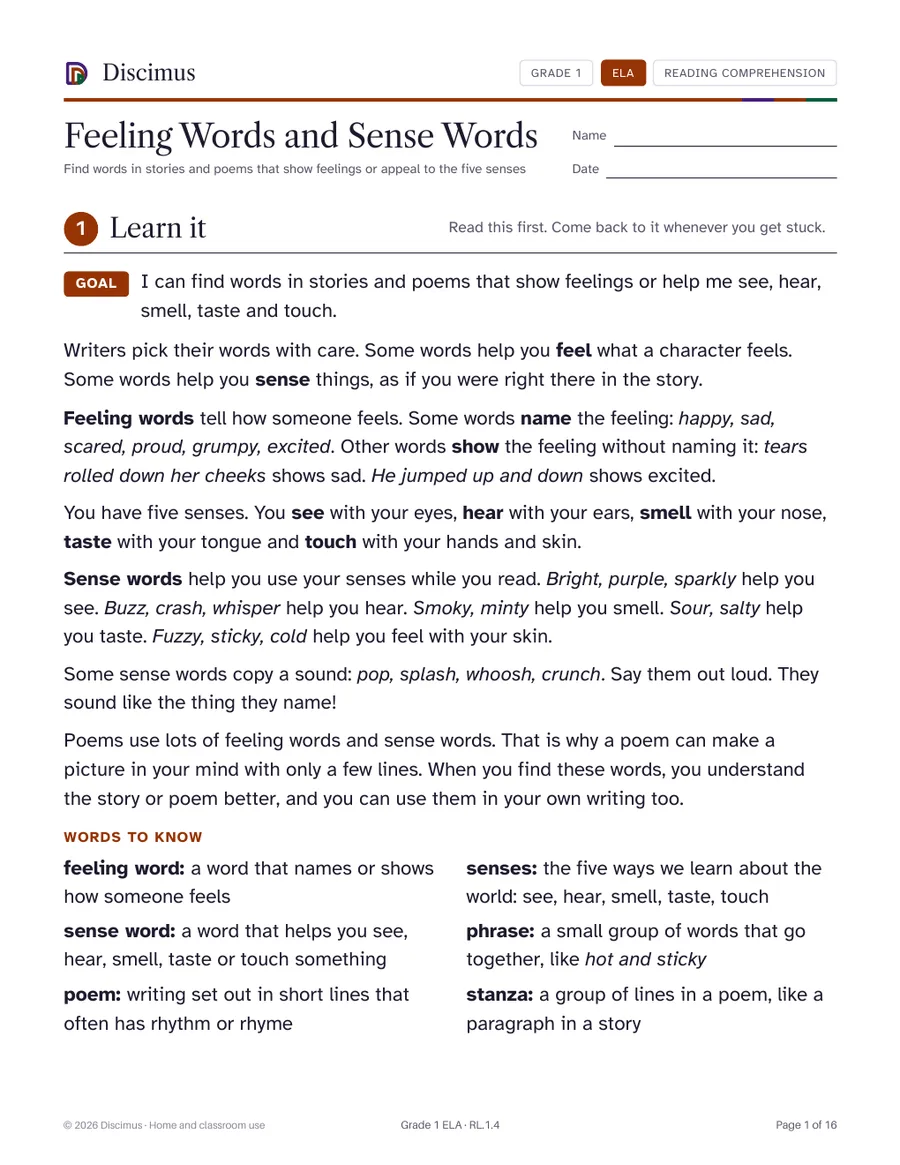
Find words in stories and poems that show feelings or appeal to the five senses
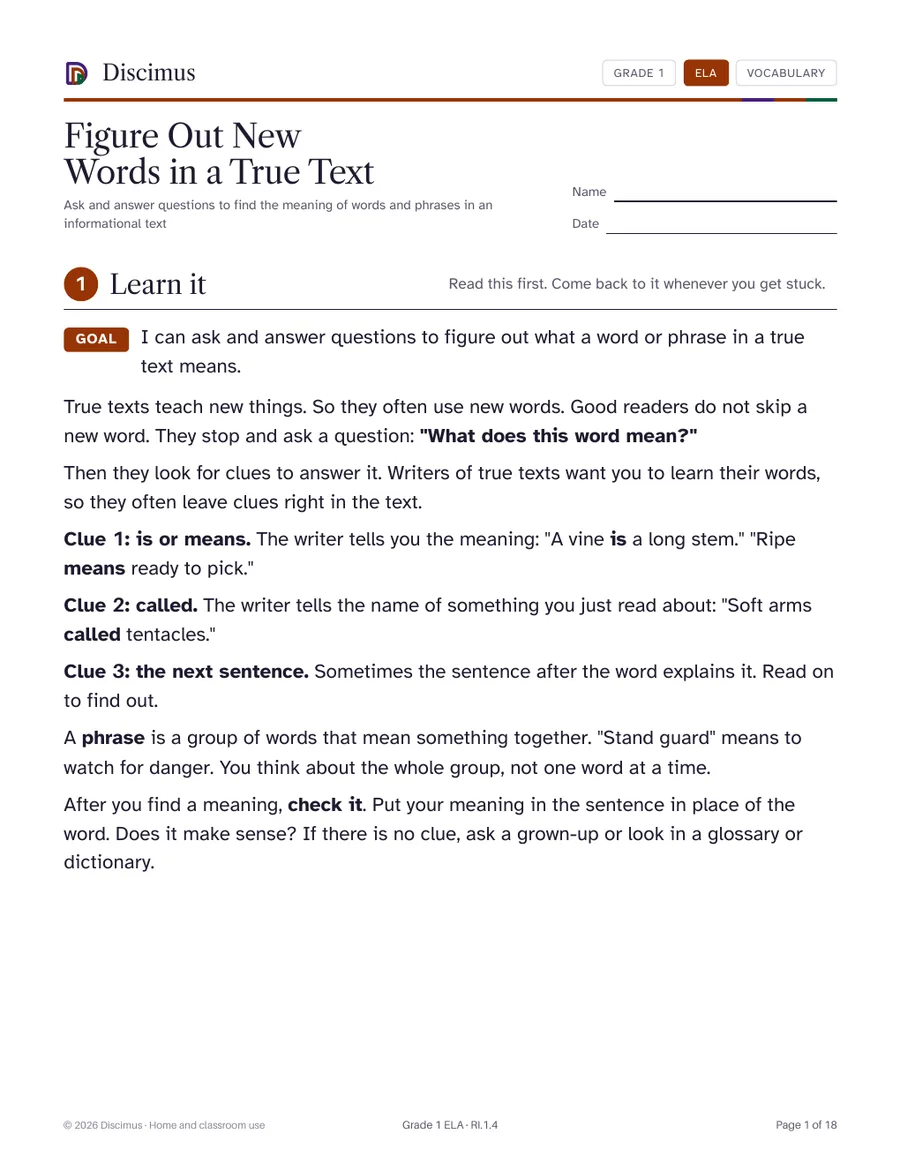
Ask and answer questions to find the meaning of words and phrases in an informational text
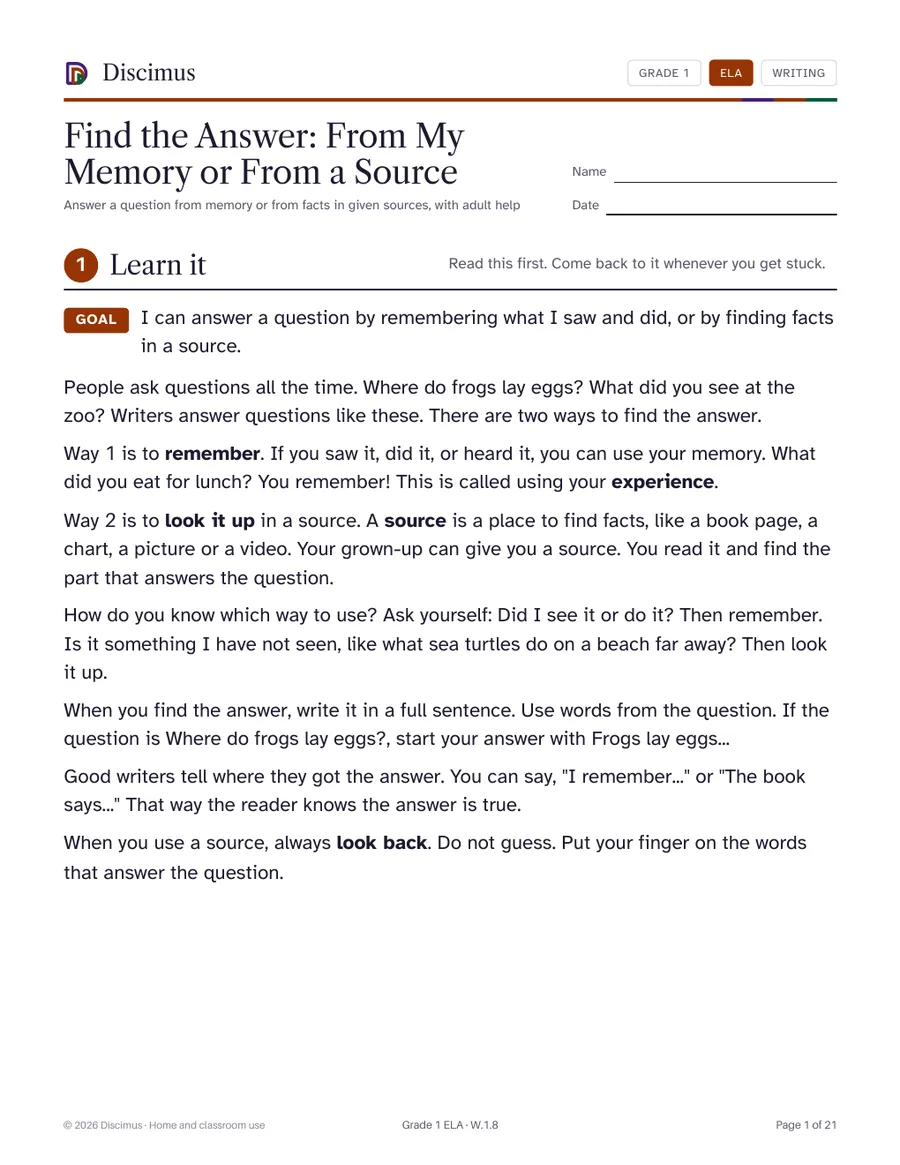
Answer a question from memory or from facts in given sources, with adult help
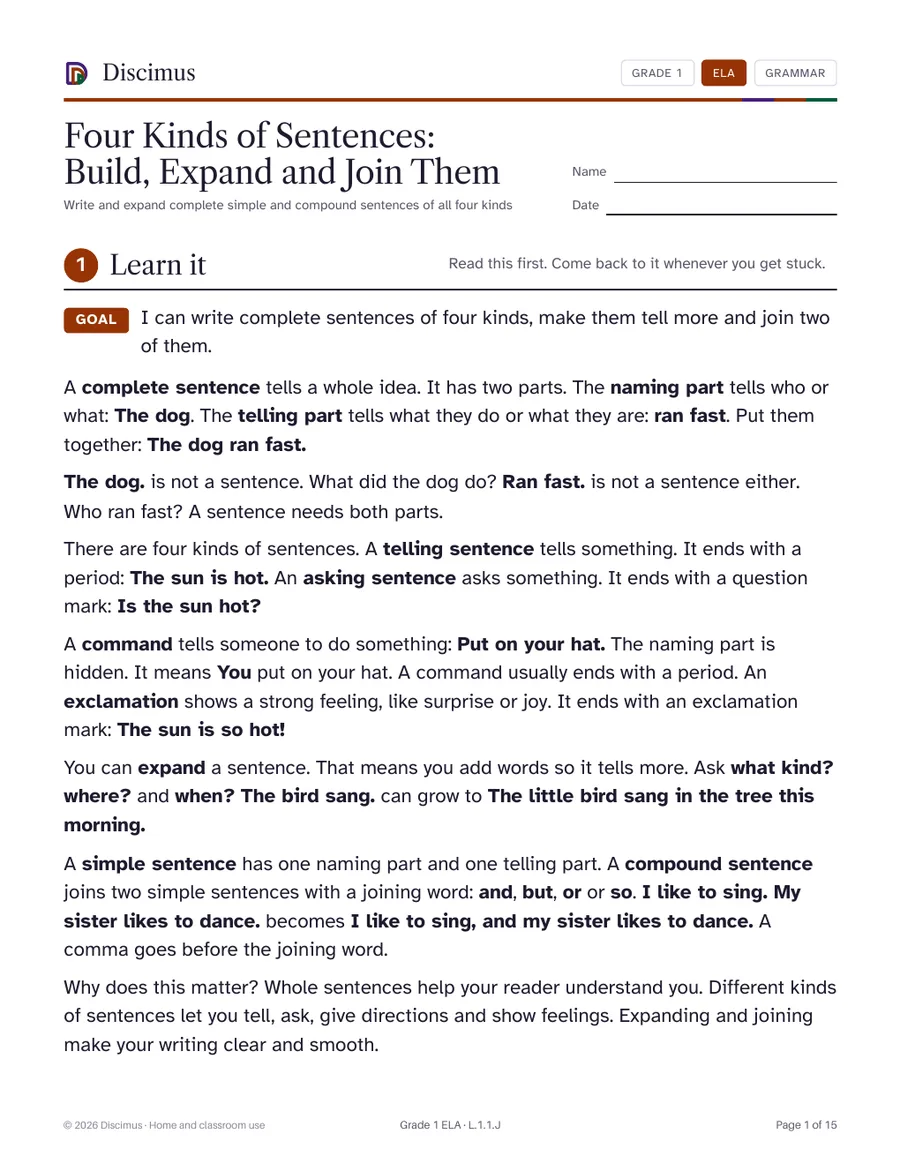
Write and expand complete simple and compound sentences of all four kinds
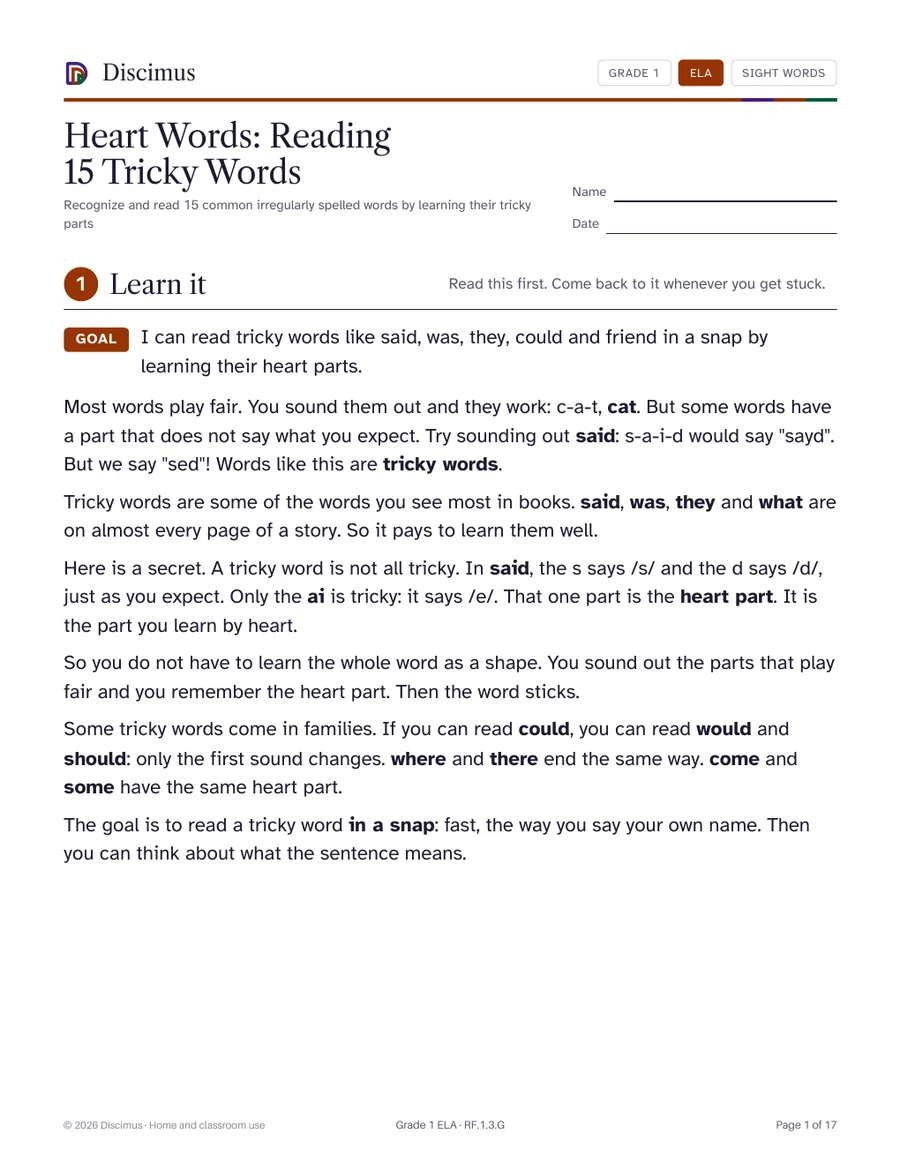
Recognize and read 15 common irregularly spelled words by learning their tricky parts
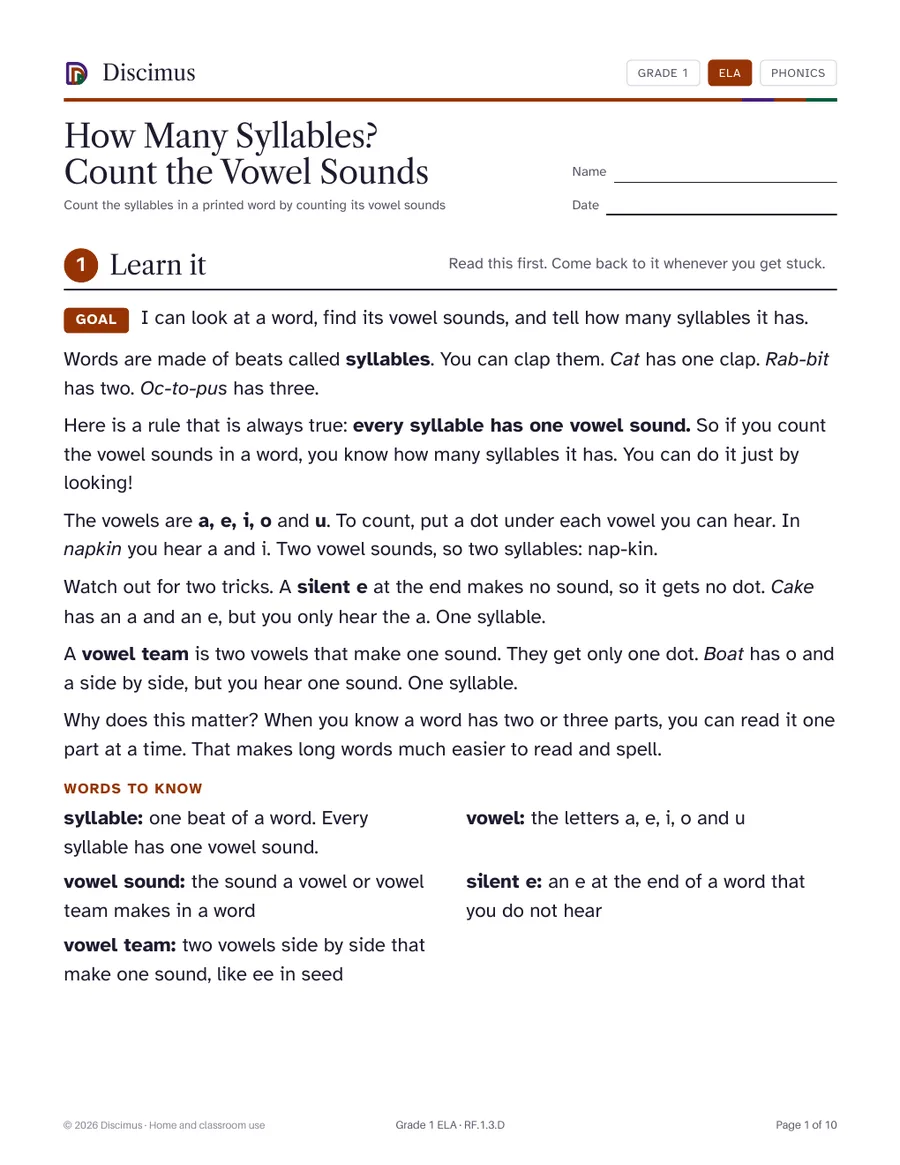
Count the syllables in a printed word by counting its vowel sounds
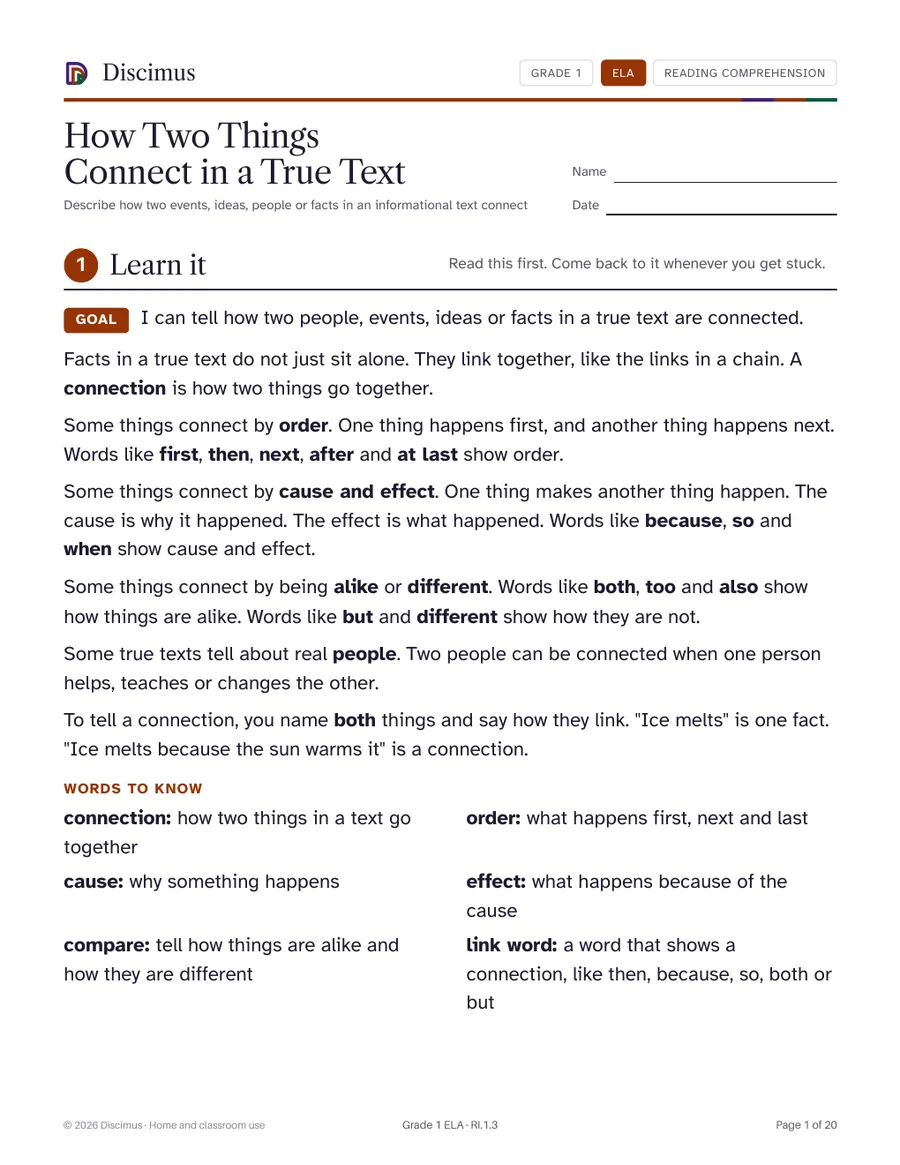
Describe how two events, ideas, people or facts in an informational text connect
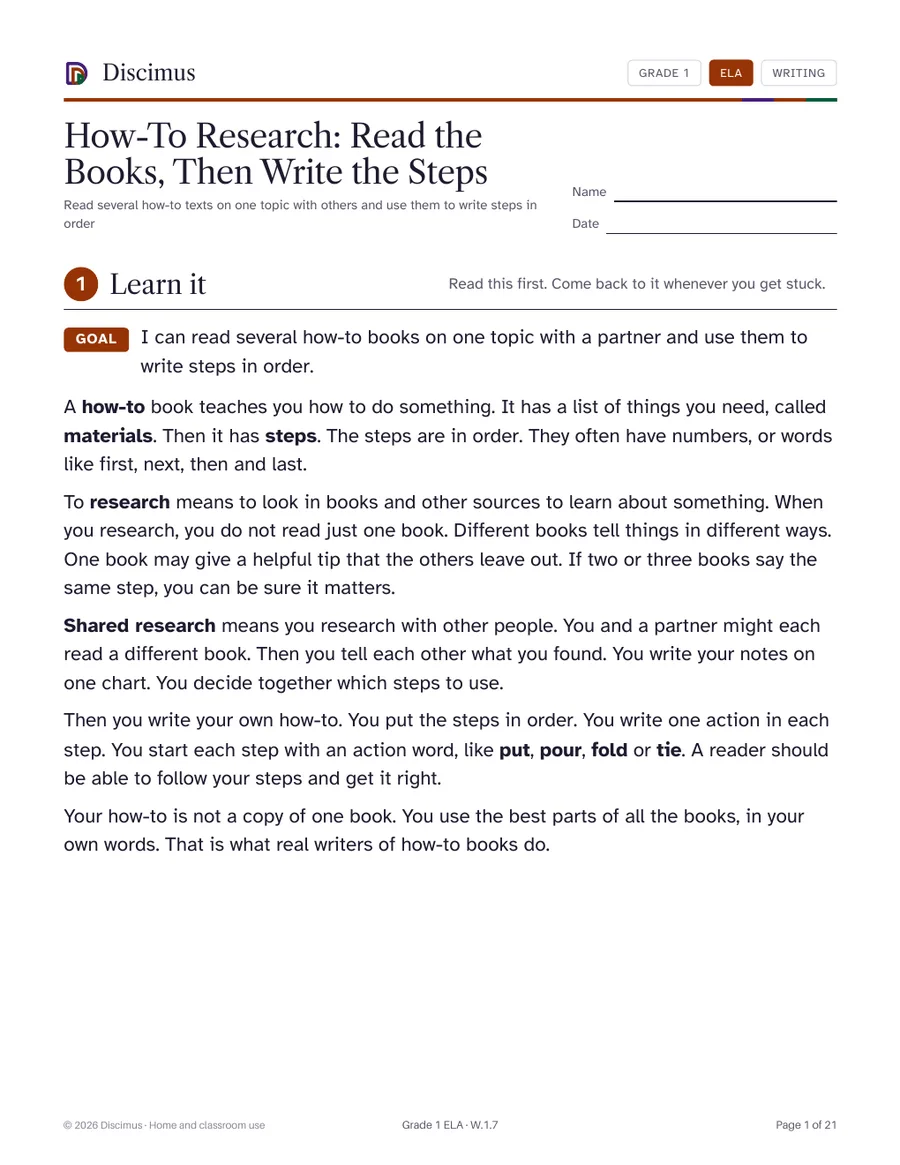
Read several how-to texts on one topic with others and use them to write steps in order
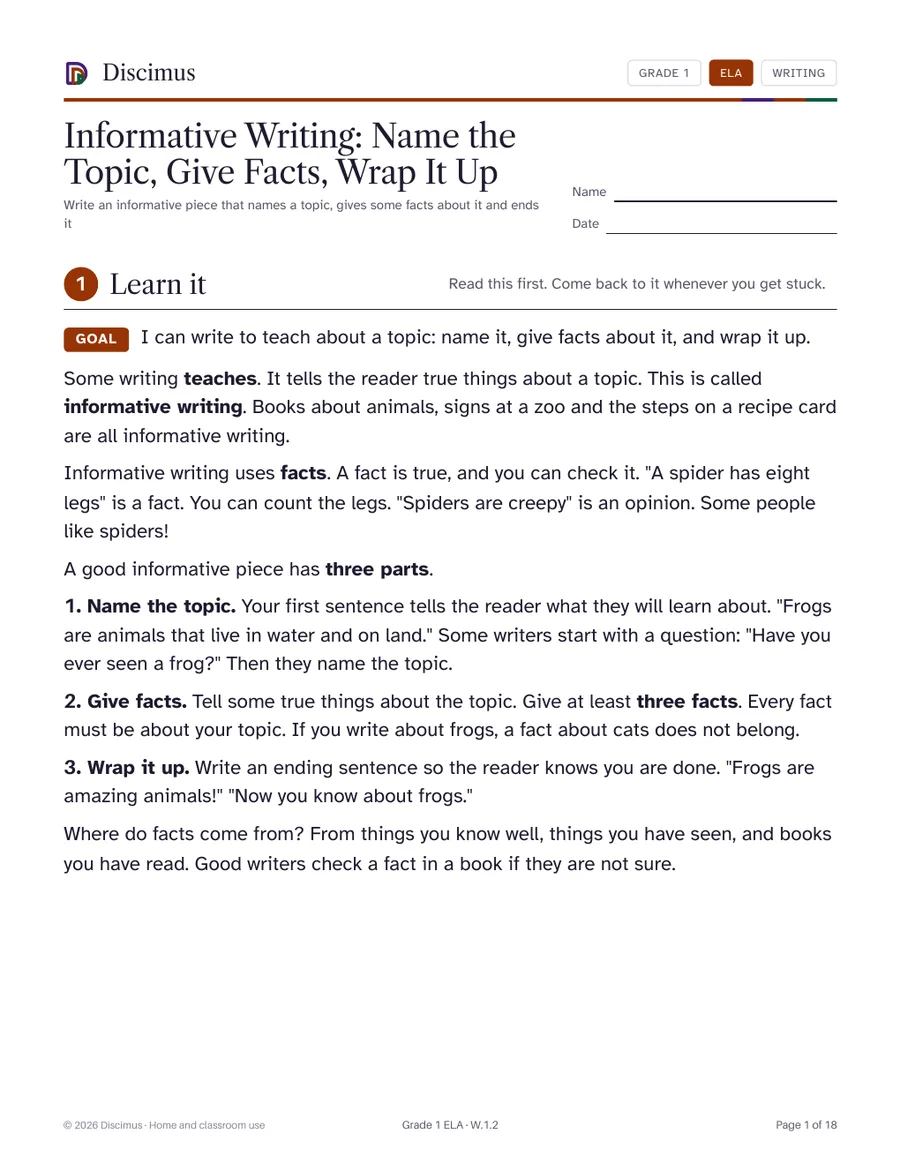
Write an informative piece that names a topic, gives some facts about it and ends it
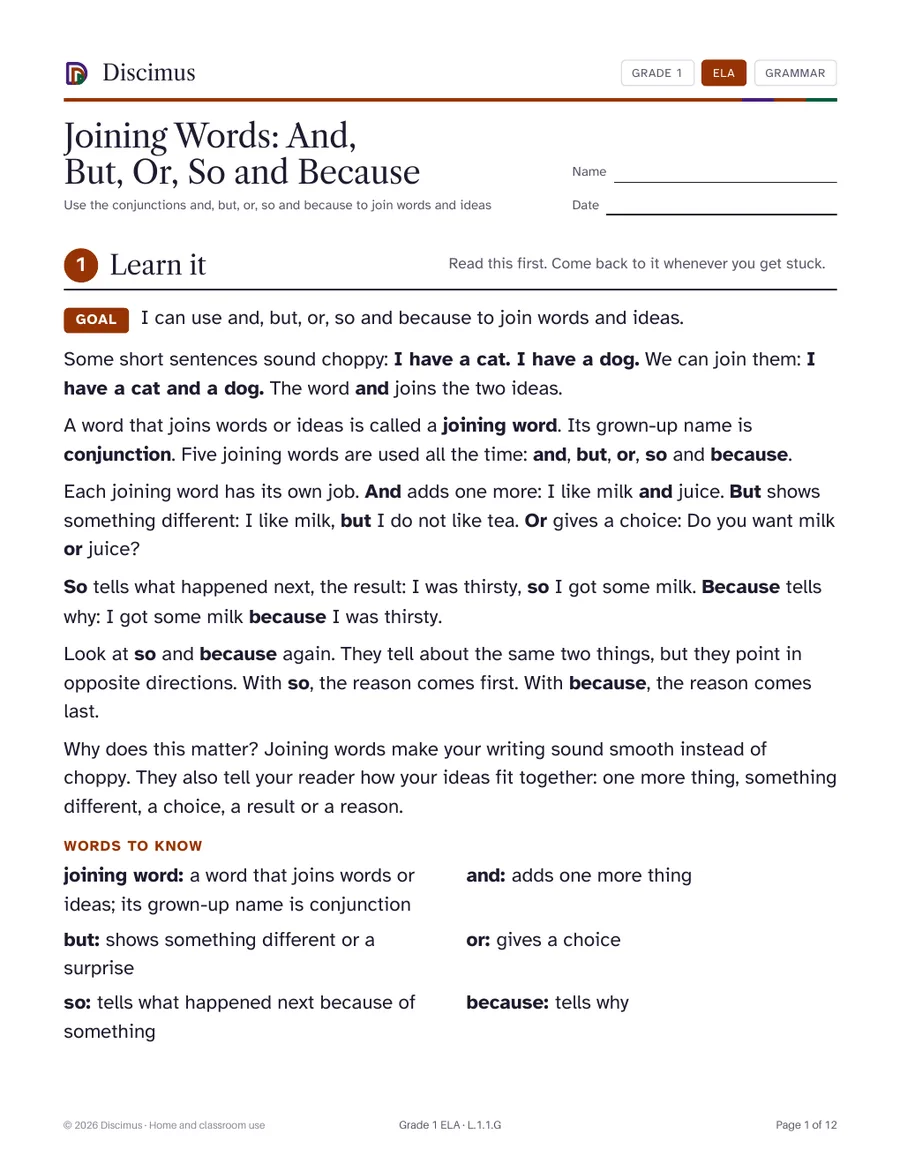
Use the conjunctions and, but, or, so and because to join words and ideas
Hear whether a spoken one-syllable word has a long or a short vowel sound
Read long vowel words spelled with final e or the vowel teams ai, ay, ee, ea and oa
Identify the main topic and retell key details of an informational text
Write a narrative with events in order, details, time words and an ending
Match a verb to a singular or plural noun or pronoun in basic sentences
Write an opinion piece naming the topic or book, with an opinion, a reason and an ending
Tell which facts in a true text come from the pictures and which come from the words
Use illustrations and details in a story to describe its characters, setting or events
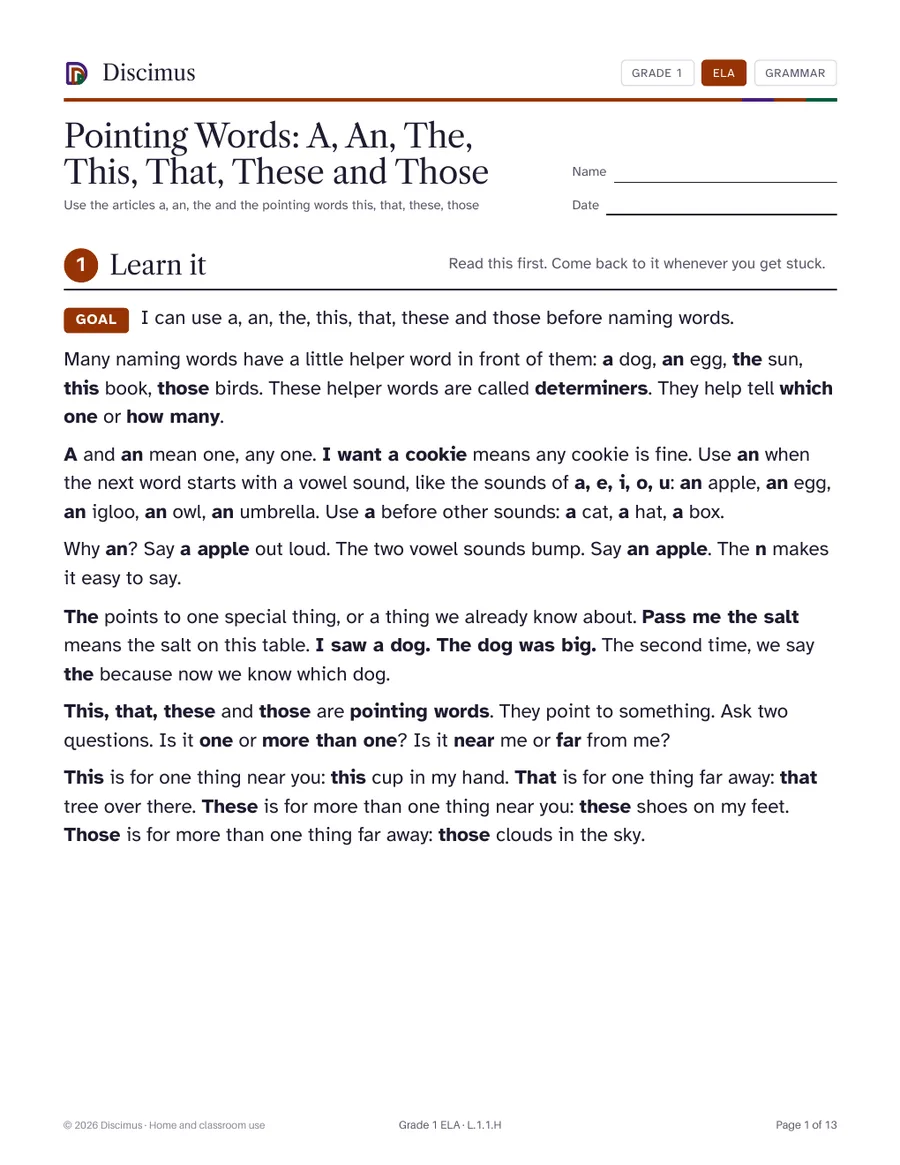
Use the articles a, an, the and the pointing words this, that, these, those
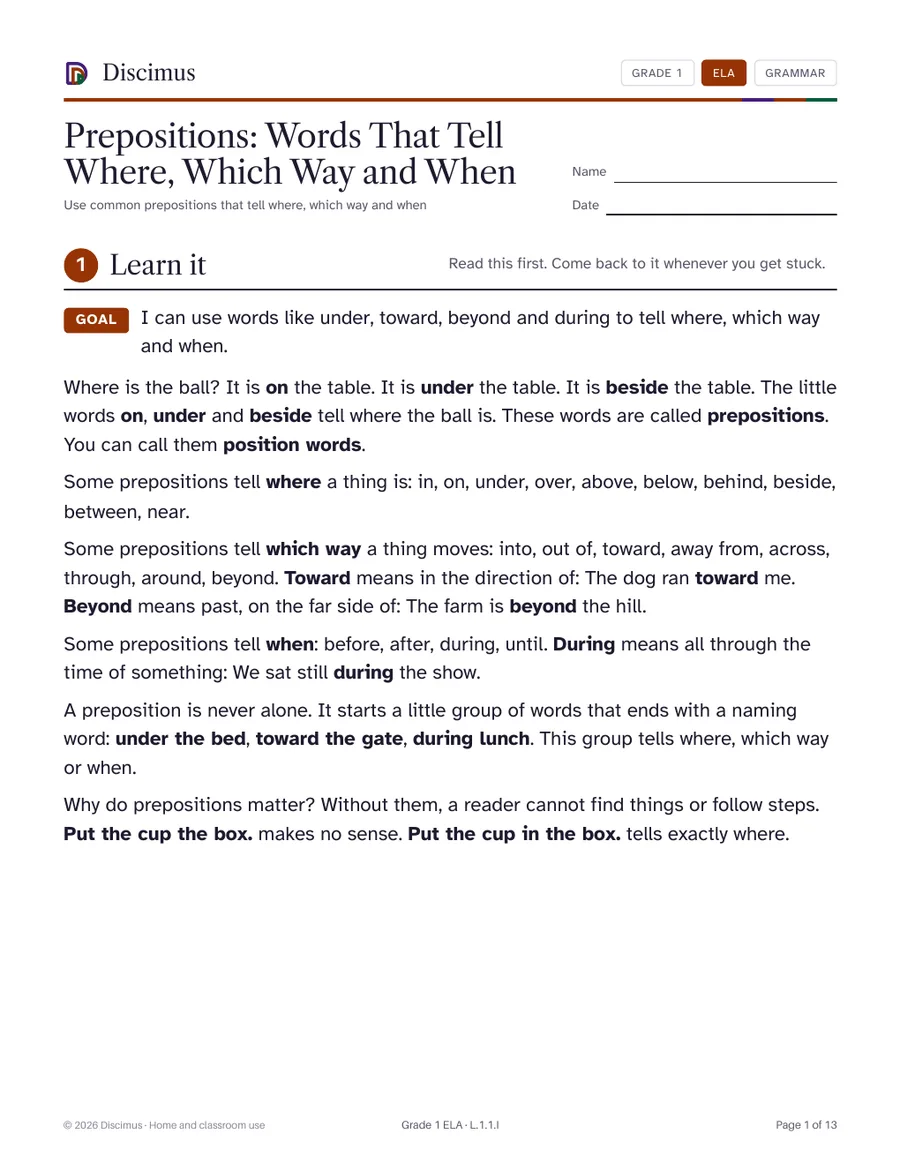
Use common prepositions that tell where, which way and when
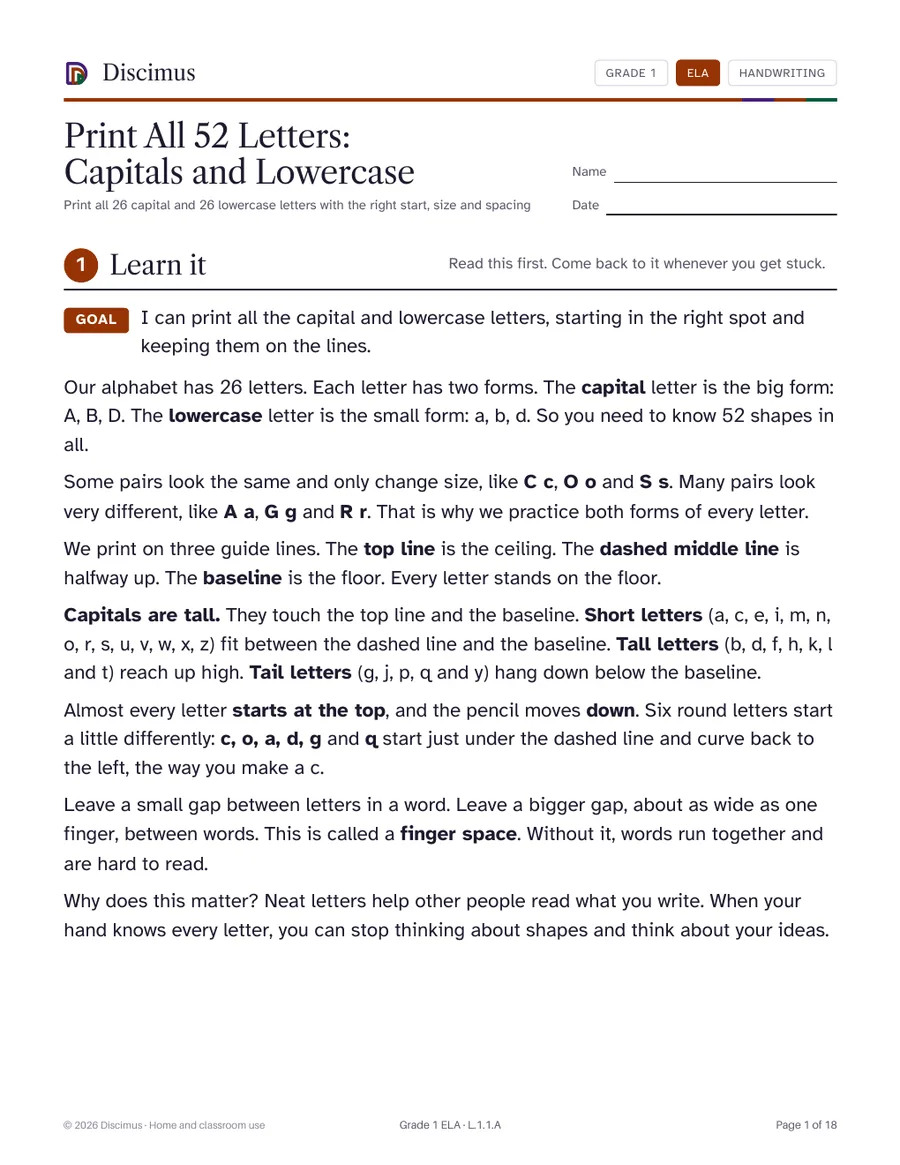
Print all 26 capital and 26 lowercase letters with the right start, size and spacing
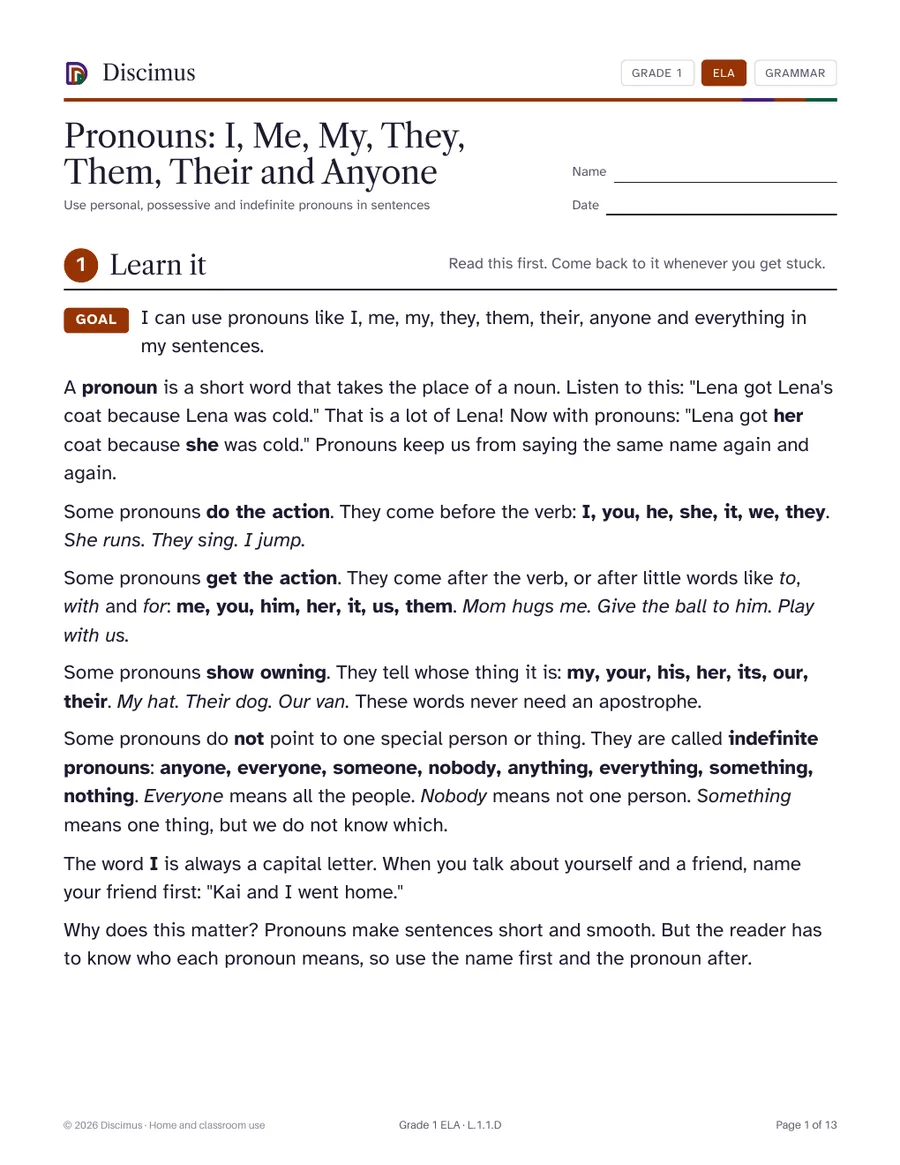
Use personal, possessive and indefinite pronouns in sentences
Read grade-level text with a purpose, check understanding and retell what was read
Read grade-level text aloud accurately, at a talking pace and with expression
Read grade 1 stories and poems with prompting and support
Read grade 1 true texts with support using a before, during and after reading plan
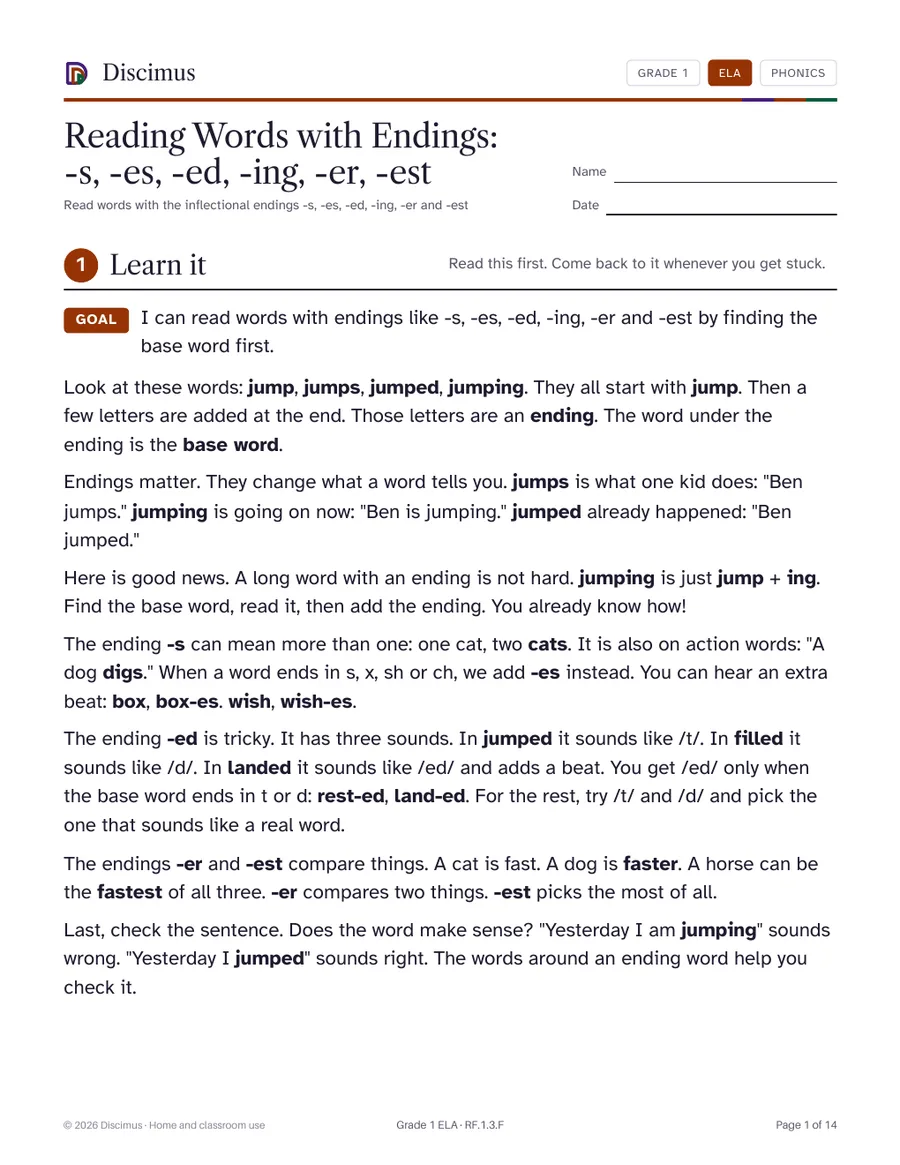
Read words with the inflectional endings -s, -es, -ed, -ing, -er and -est
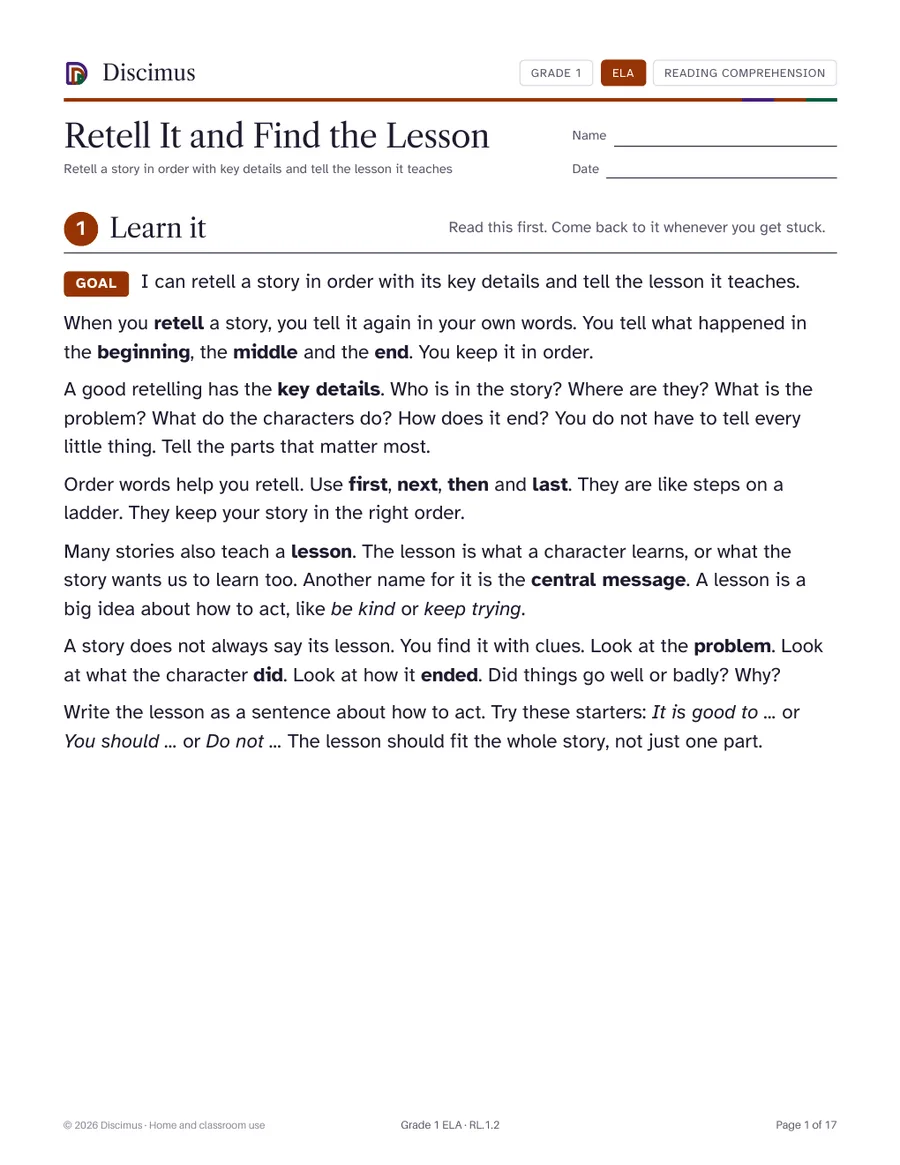
Retell a story in order with key details and tell the lesson it teaches
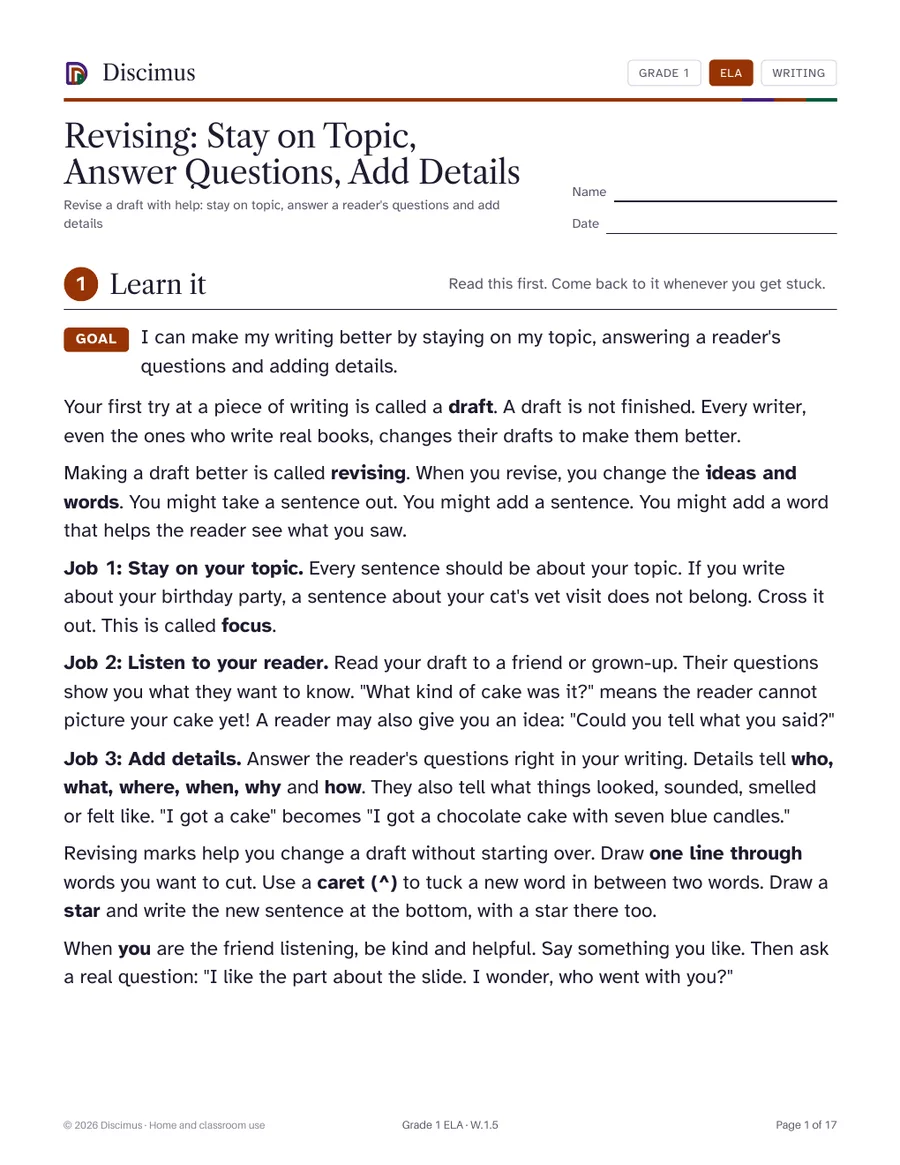
Revise a draft with help: stay on topic, answer a reader's questions and add details
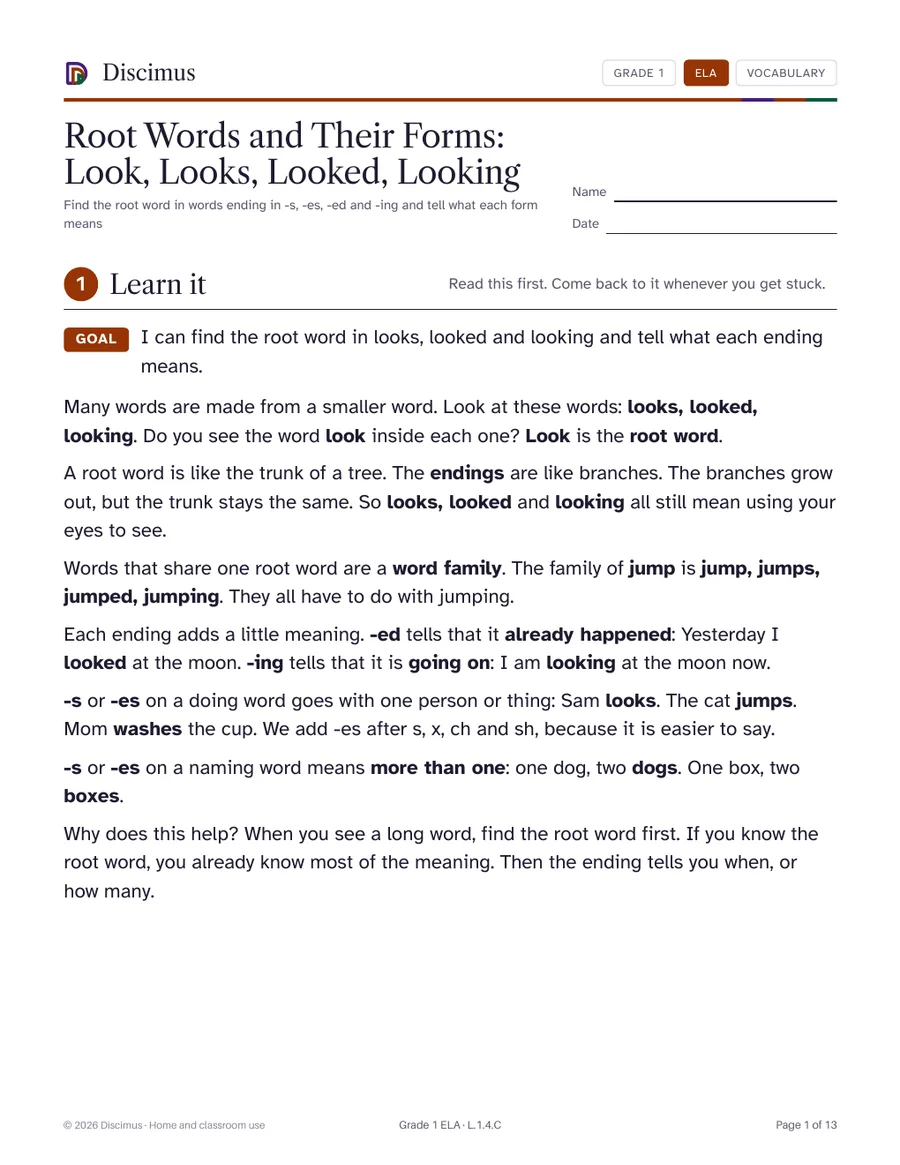
Find the root word in words ending in -s, -es, -ed and -ing and tell what each form means
Compare and contrast the adventures and experiences of characters in two stories
Use clues in the same sentence to work out the meaning of a new word or phrase
Tell apart close action words (peek, stare) and describing words (big, huge, gigantic)
Decode and spell short a words in the -at, -an and -ap families
Say the first, middle vowel and last sound of a spoken one-syllable word
Spell new words by hearing each sound and writing letters for it, using known patterns
Spell words with common patterns and frequently used tricky words correctly
Explain the big differences between storybooks and information books
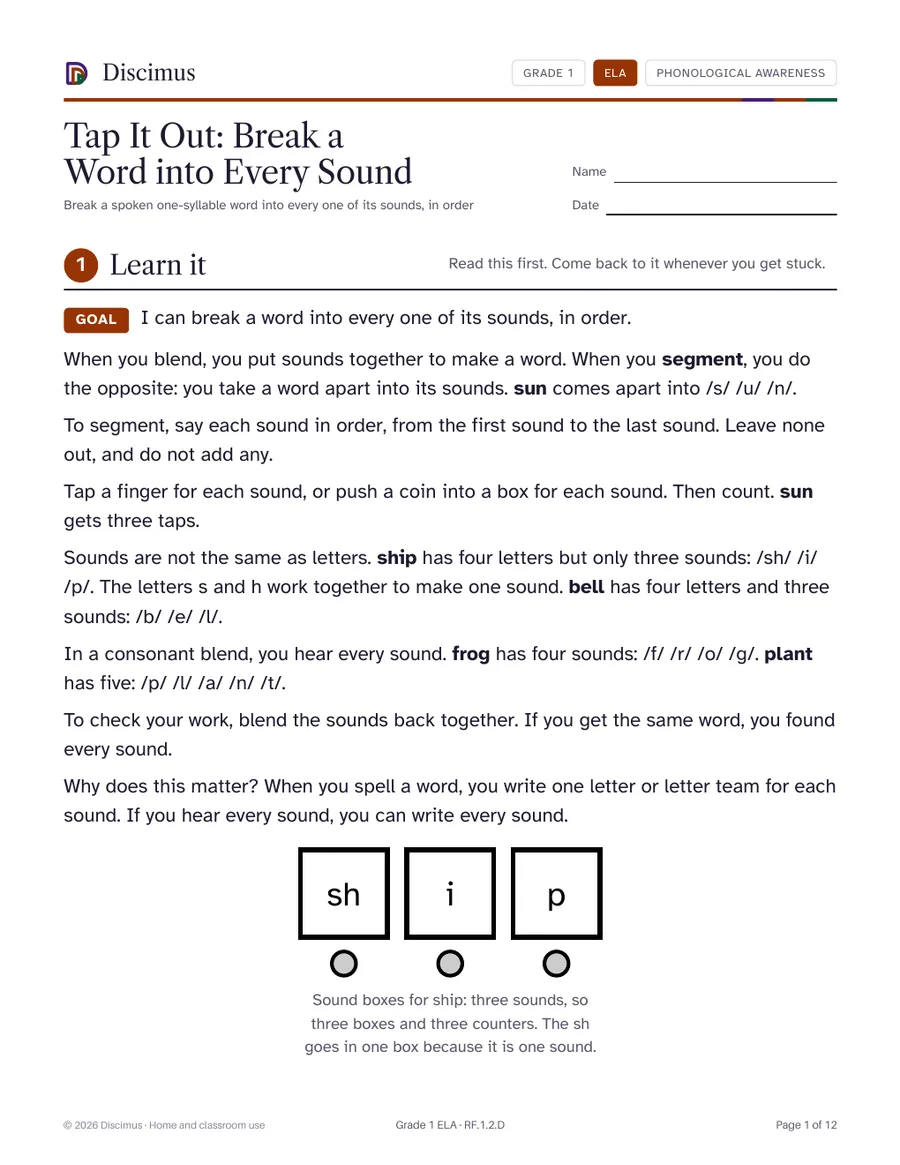
Break a spoken one-syllable word into every one of its sounds, in order
Define a word by naming its category and one or more key attributes
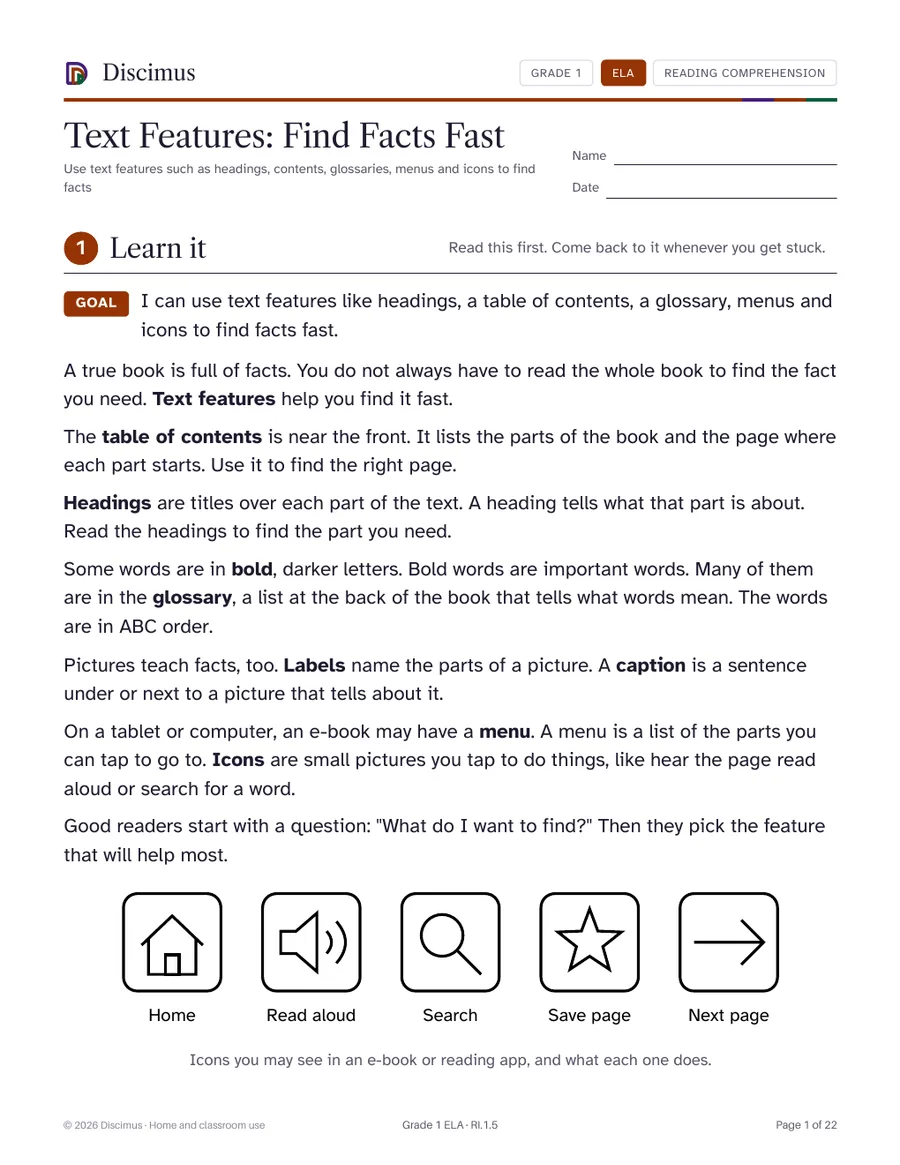
Use text features such as headings, contents, glossaries, menus and icons to find facts
Use common, proper and possessive nouns in sentences
Answer questions about the characters, setting and events in a story
Tell how two true texts on one topic are alike and different in words, pictures and steps
Decode two-syllable words by breaking them into syllables
Use the pictures and the details in a true text to describe its key idea
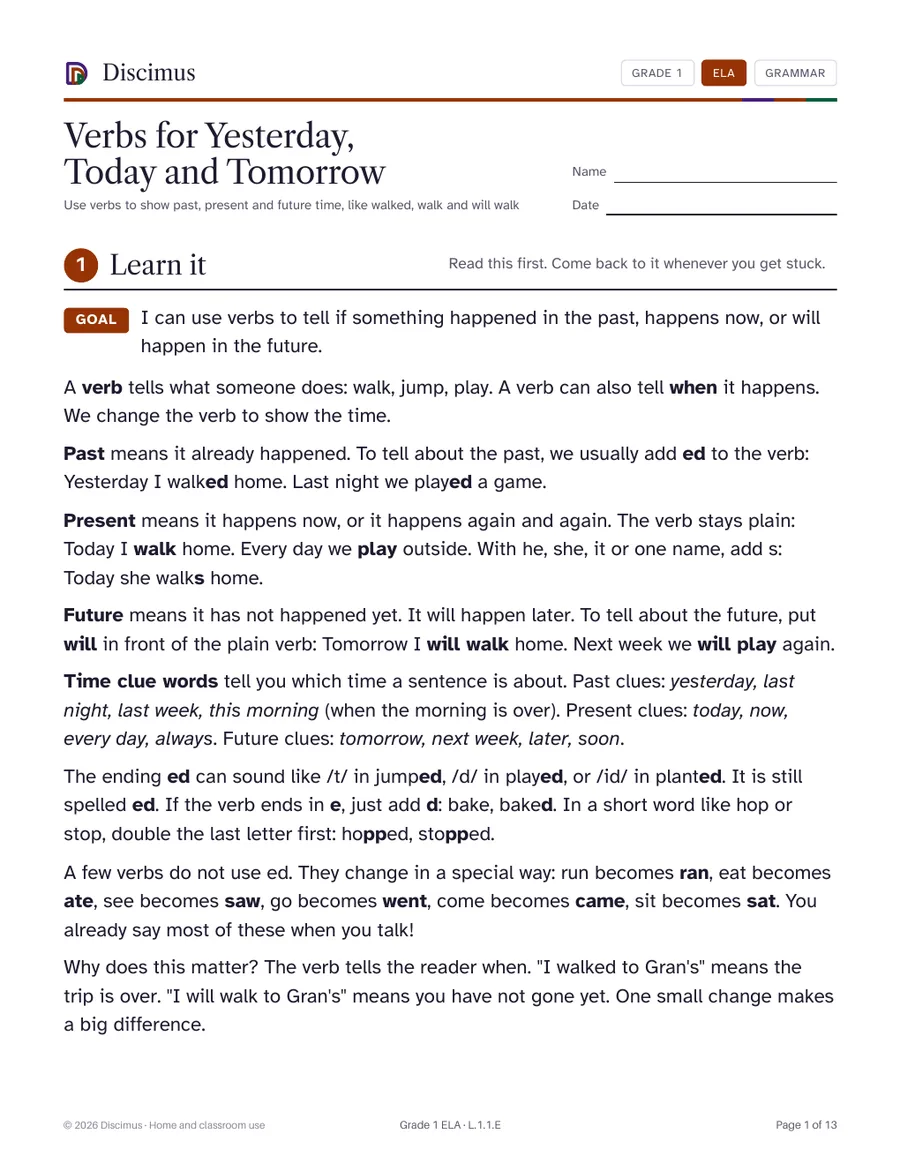
Use verbs to show past, present and future time, like walked, walk and will walk
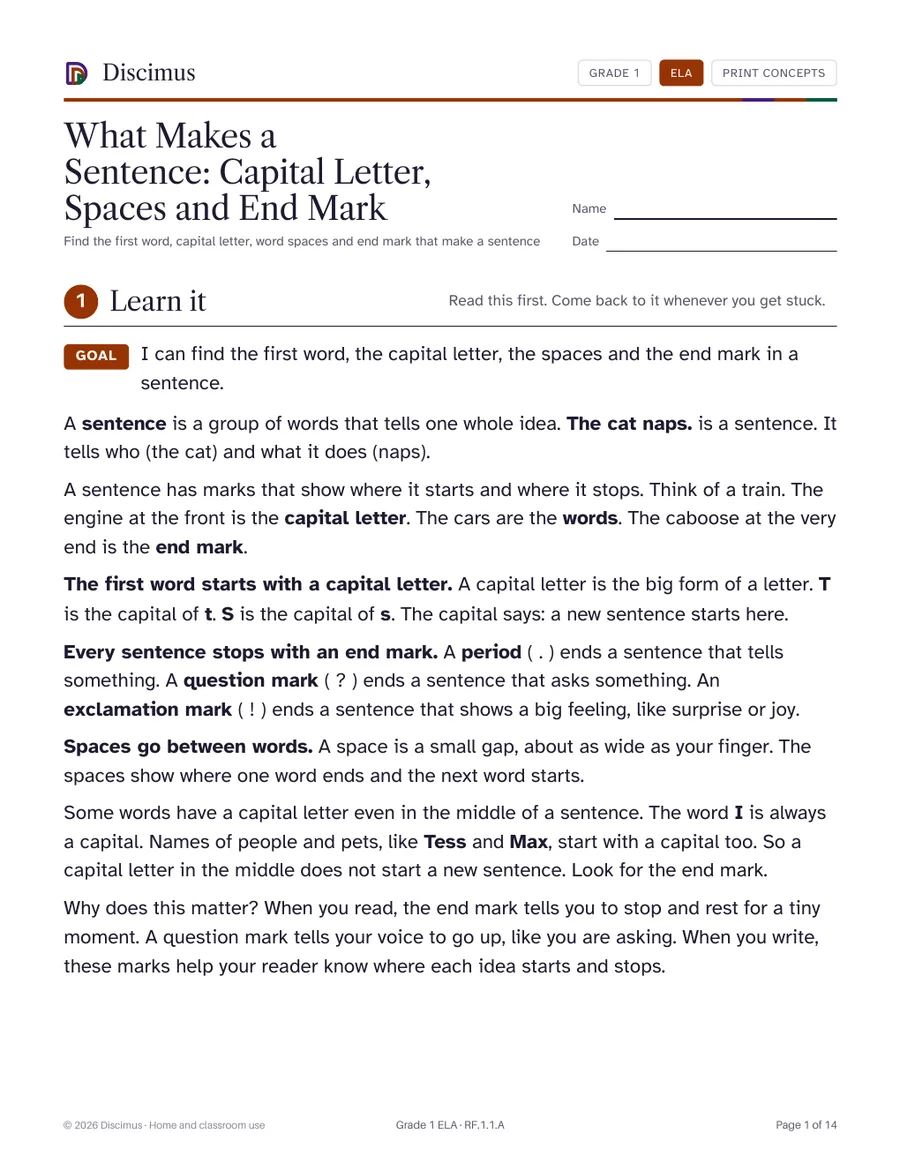
Find the first word, capital letter, word spaces and end mark that make a sentence
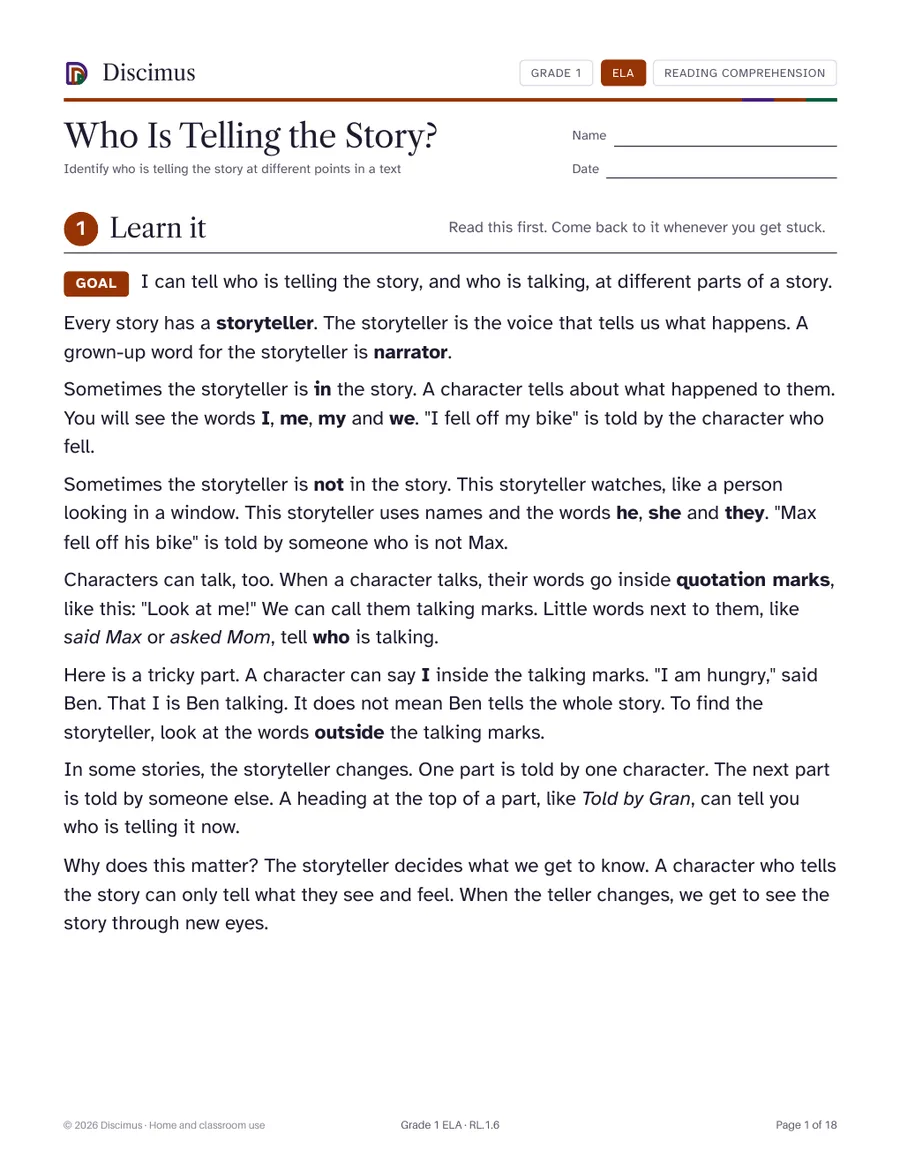
Identify who is telling the story at different points in a text
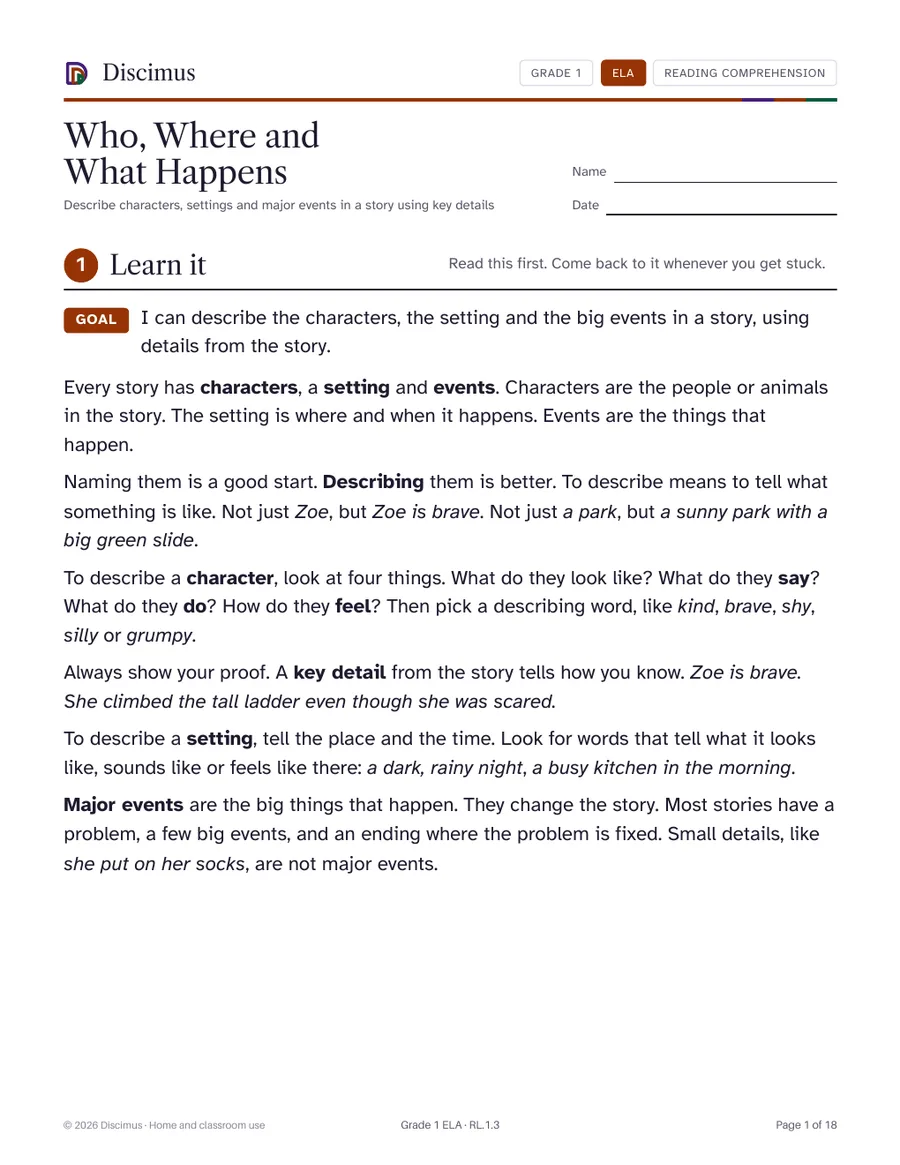
Describe characters, settings and major events in a story using key details
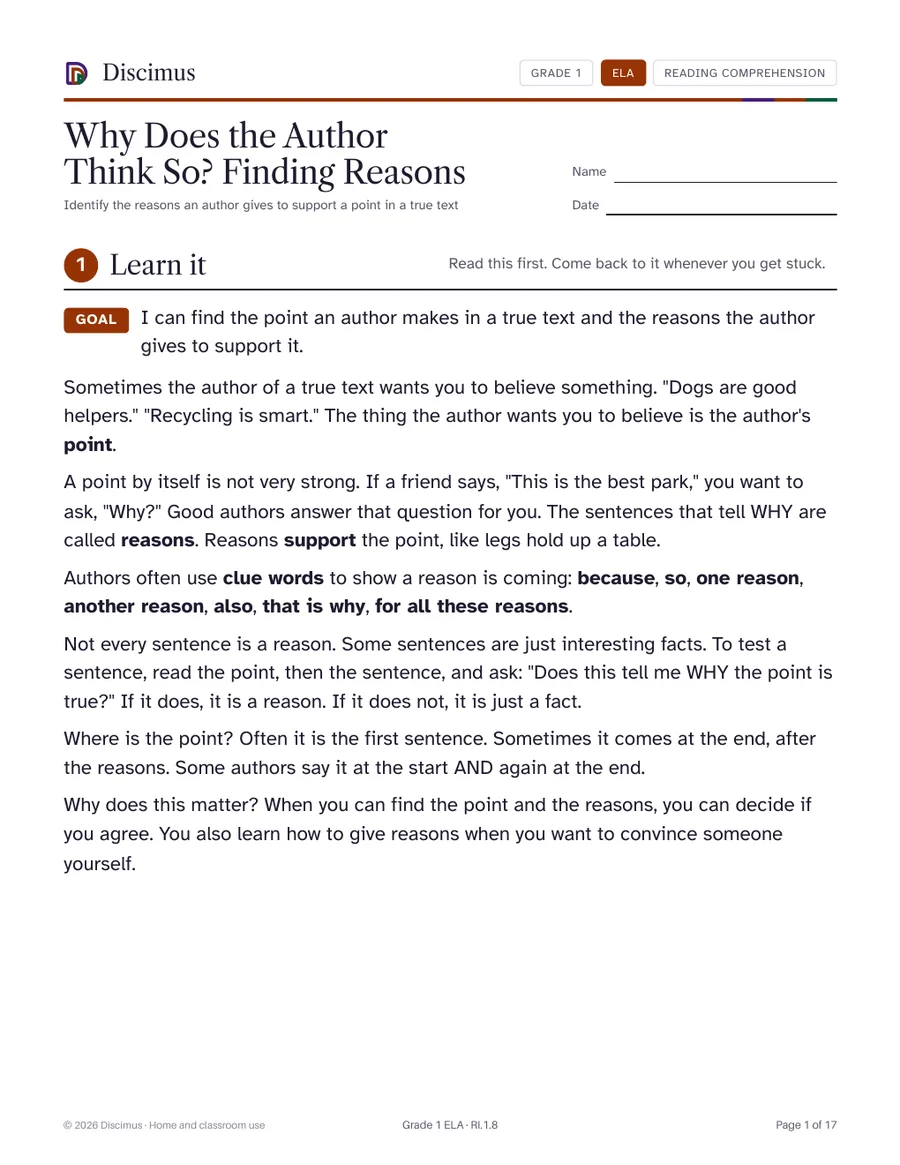
Identify the reasons an author gives to support a point in a true text
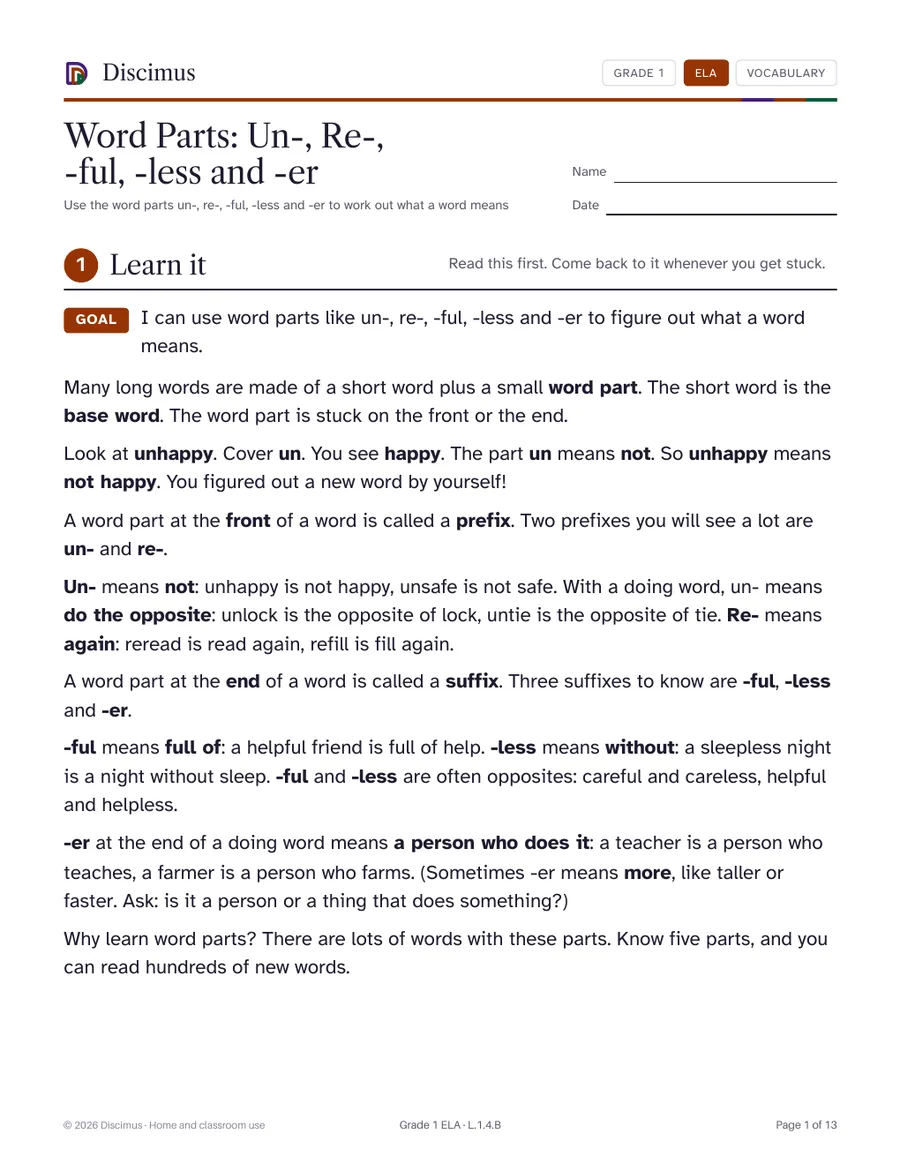
Use the word parts un-, re-, -ful, -less and -er to work out what a word means
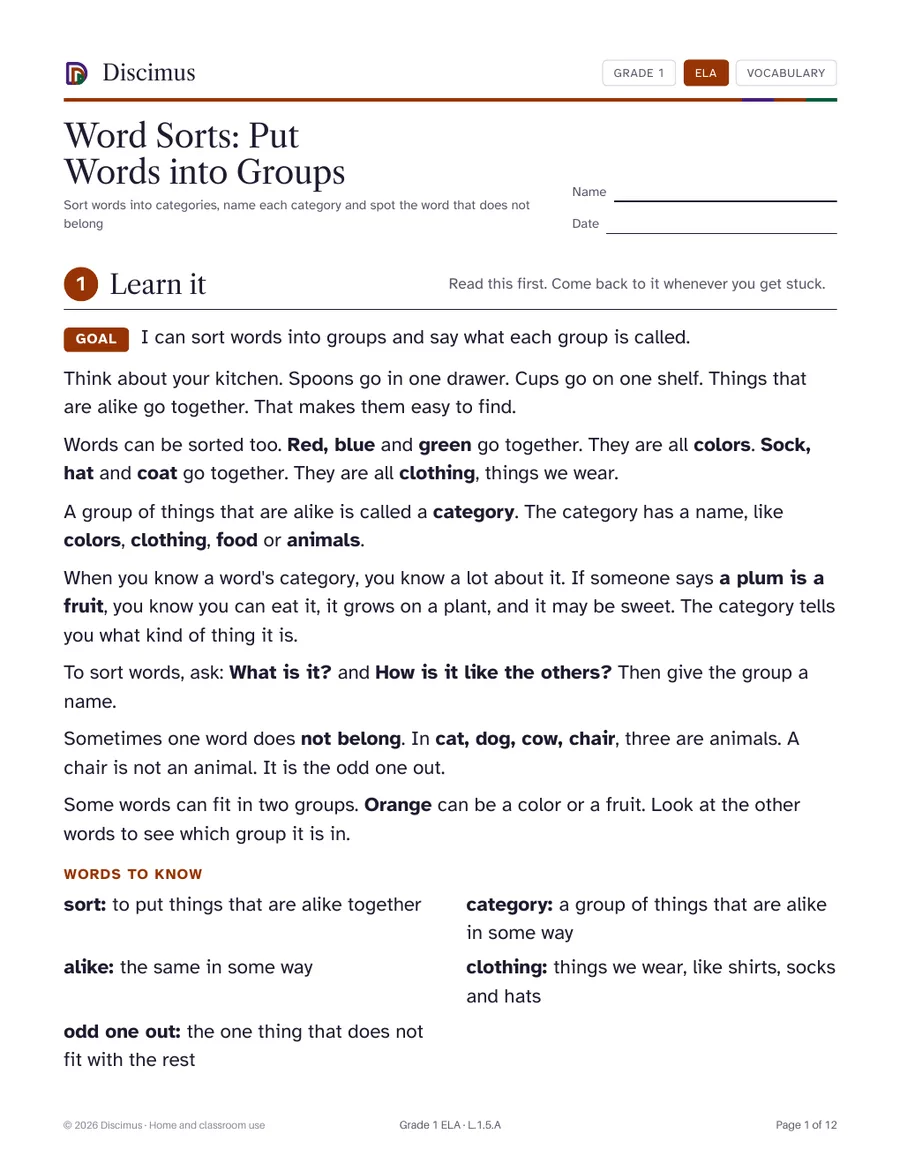
Sort words into categories, name each category and spot the word that does not belong
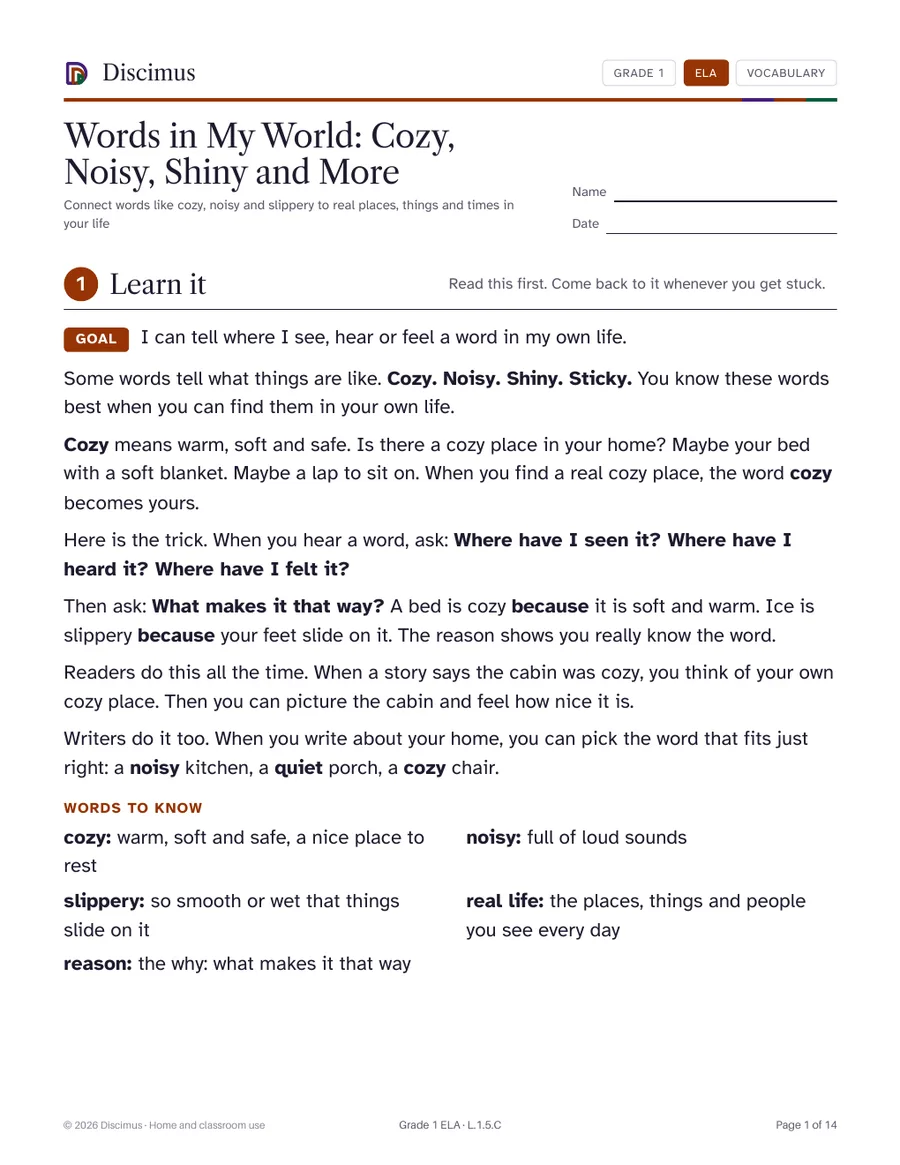
Connect words like cozy, noisy and slippery to real places, things and times in your life
Use adjectives and adverbs, choosing the right one for the word it describes
Recall experiences or gather facts from provided sources to answer a question in writing
Use an apostrophe to form contractions and common possessives
Ask and answer who, what, where, when, why and how questions about key details
Describe how beats, alliteration, rhymes and repeated lines supply rhythm and meaning
Produce, expand and rearrange complete simple and compound sentences
Answer who, what, where, why and how questions about a nonfiction text
Capitalize holidays, product names and geographic names
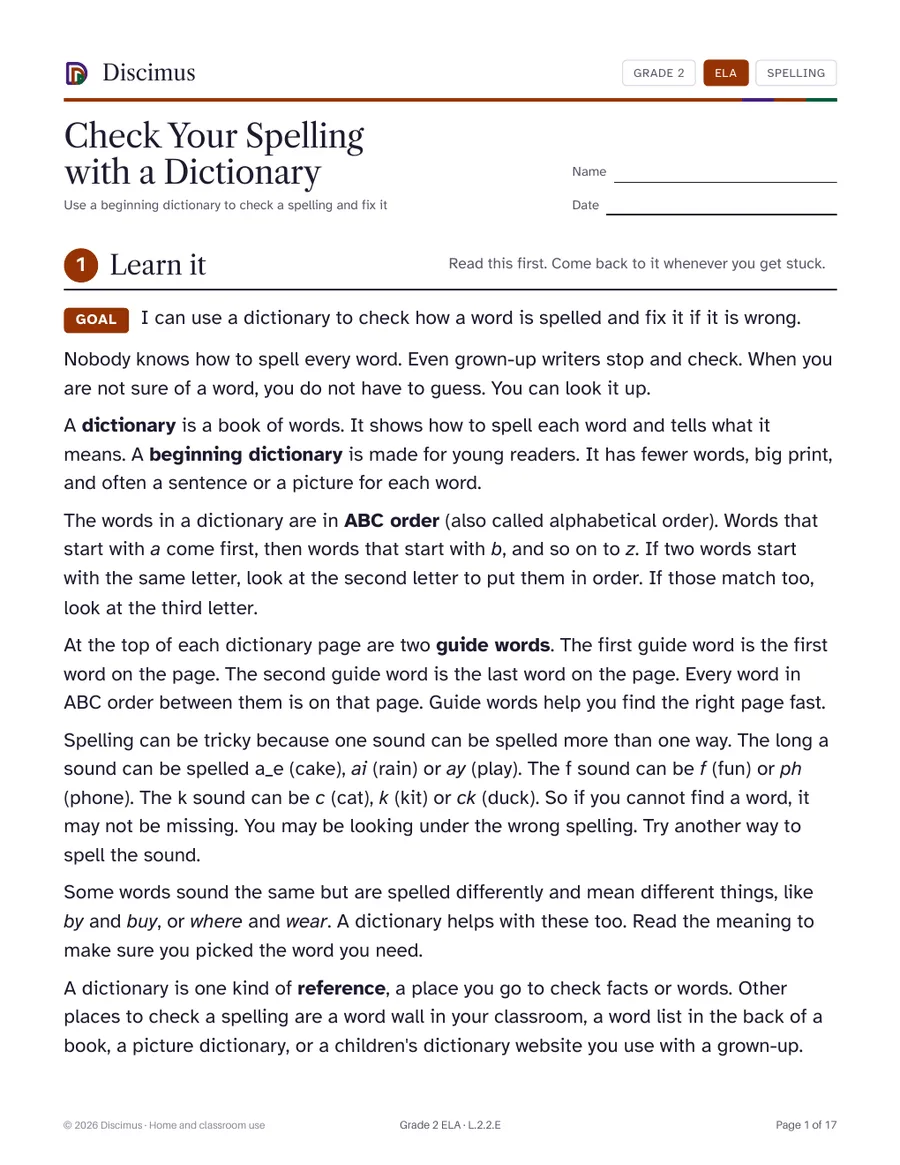
Use a beginning dictionary to check a spelling and fix it
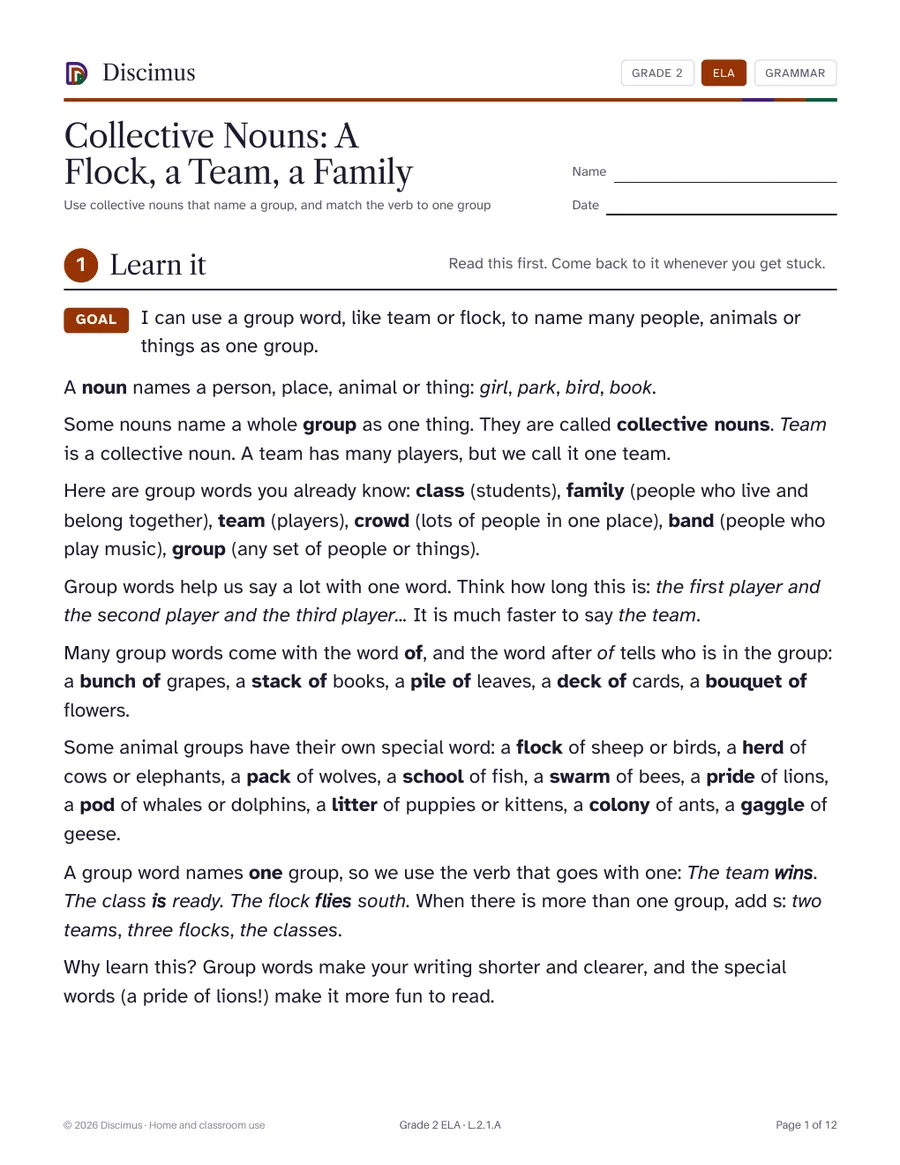
Use collective nouns that name a group, and match the verb to one group
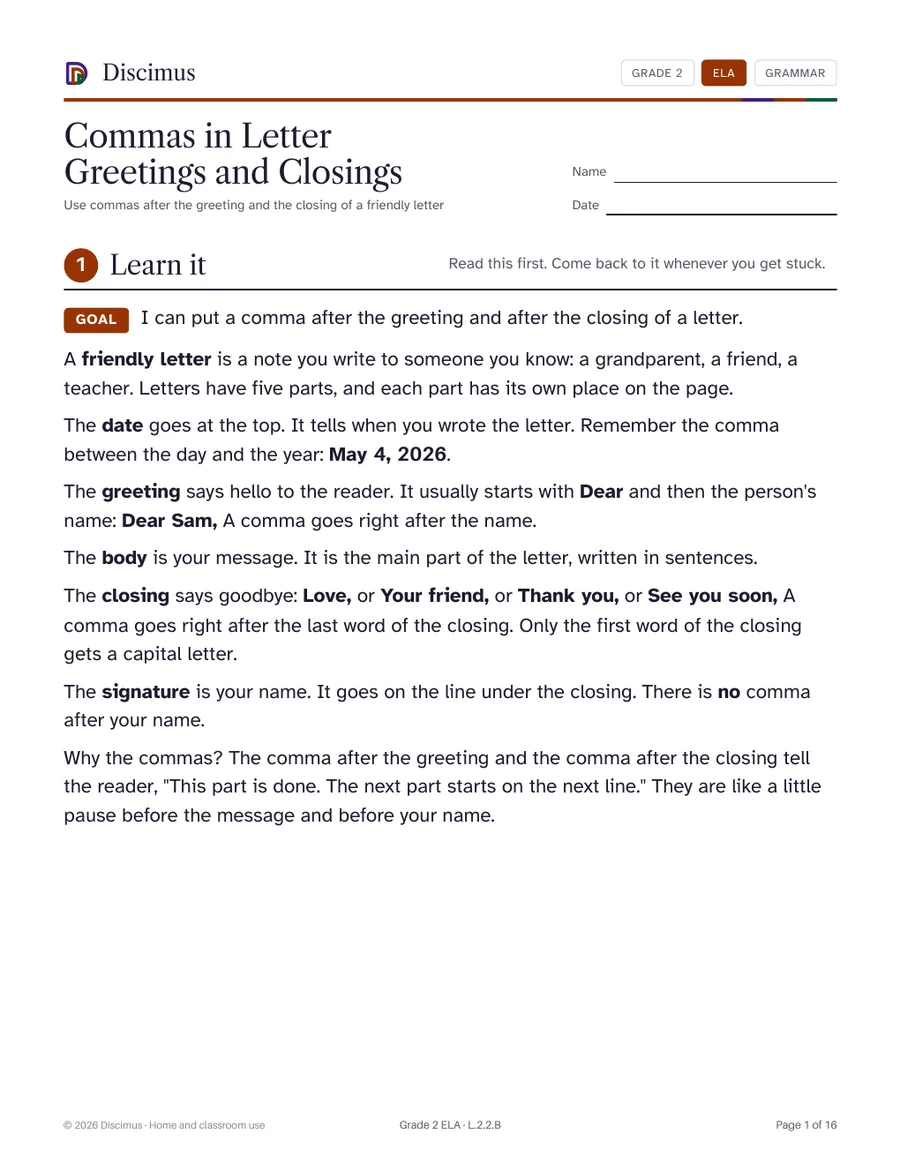
Use commas after the greeting and the closing of a friendly letter
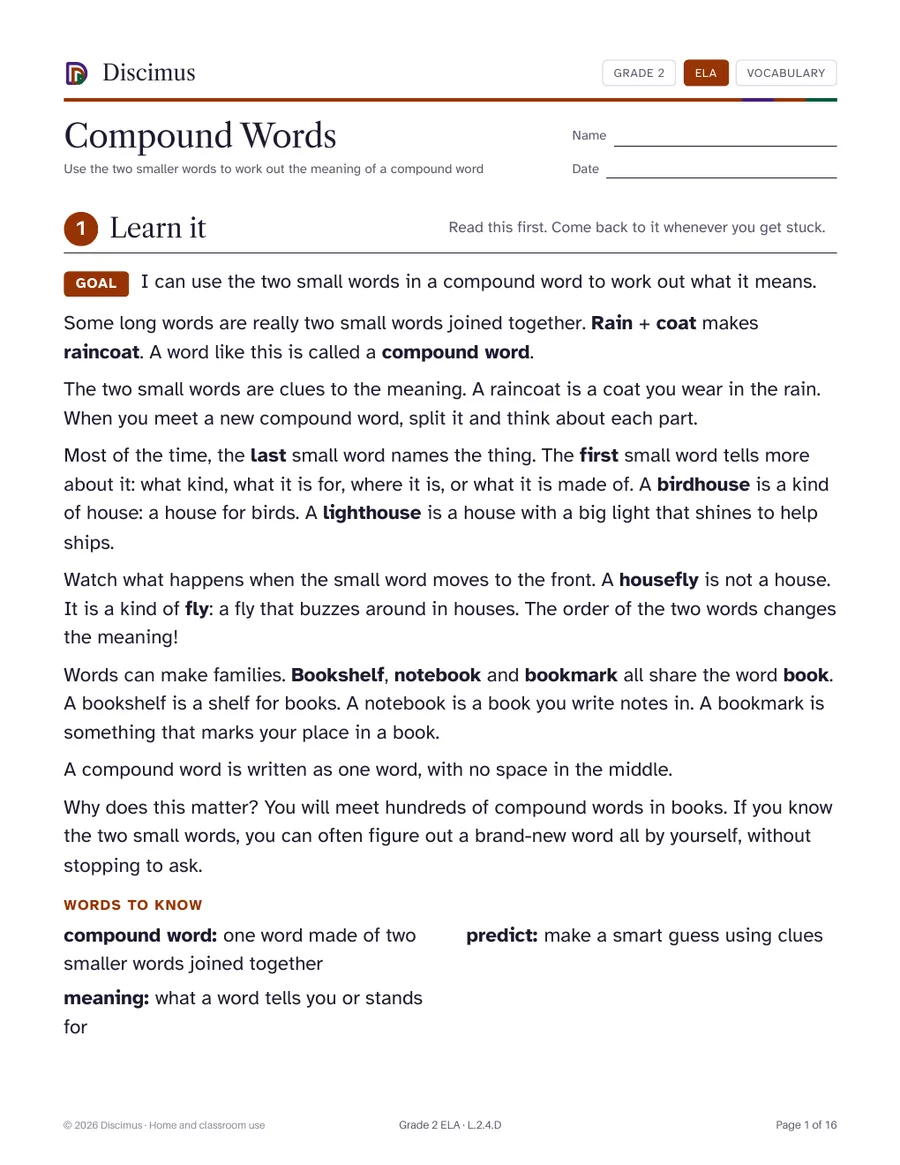
Use the two smaller words to work out the meaning of a compound word
Describe how a series of events, science ideas or steps in a procedure connect
Use clues in the sentence to work out the meaning of a new word or phrase
Tell how characters' points of view differ and read each one's dialogue in a fitting voice
Type, edit, format and publish writing digitally with adult help, alone and with peers
Recount fables and folktales from many cultures and determine the central message or moral
Read grade 2 text aloud accurately, in phrases, at a fitting pace and with expression
Compare formal and informal English and choose the one that fits the listener
Recognize and read grade 2 irregularly spelled words by learning their tricky heart parts
Describe how characters respond to major events and challenges in a story
Explain how diagrams and pictures add to and clarify a true text
Write an informative text with a topic, facts, definitions and a concluding statement
Form and use the past tense of common irregular verbs such as sat, hid, told, ran and went
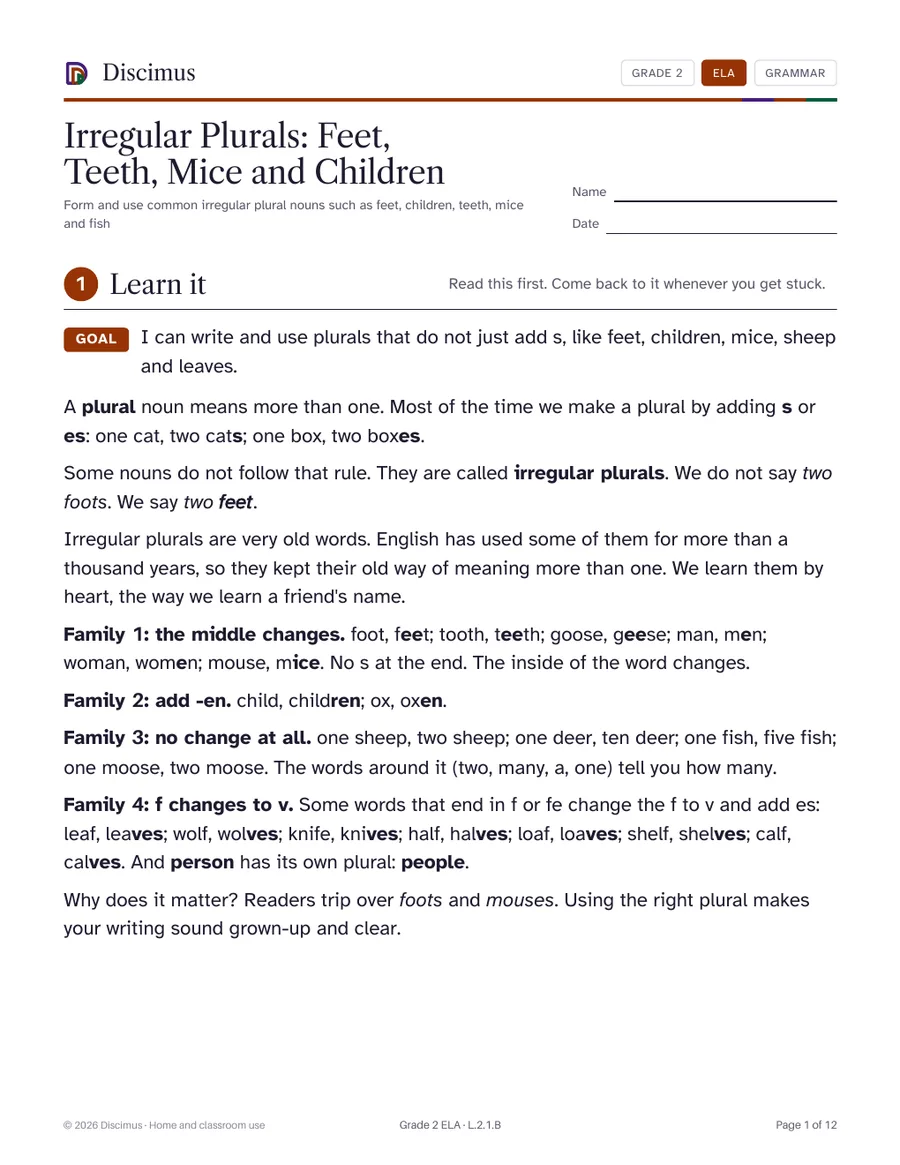
Form and use common irregular plural nouns such as feet, children, teeth, mice and fish
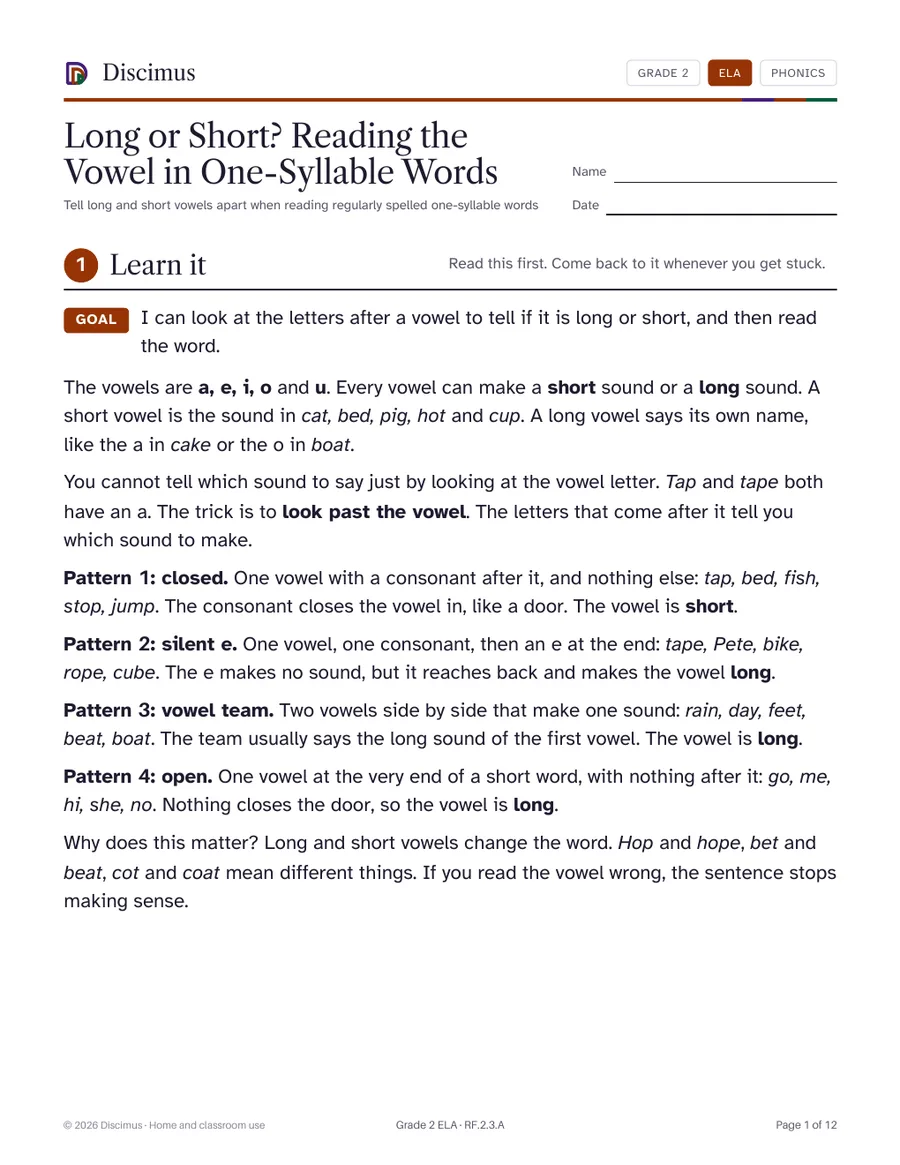
Tell long and short vowels apart when reading regularly spelled one-syllable words
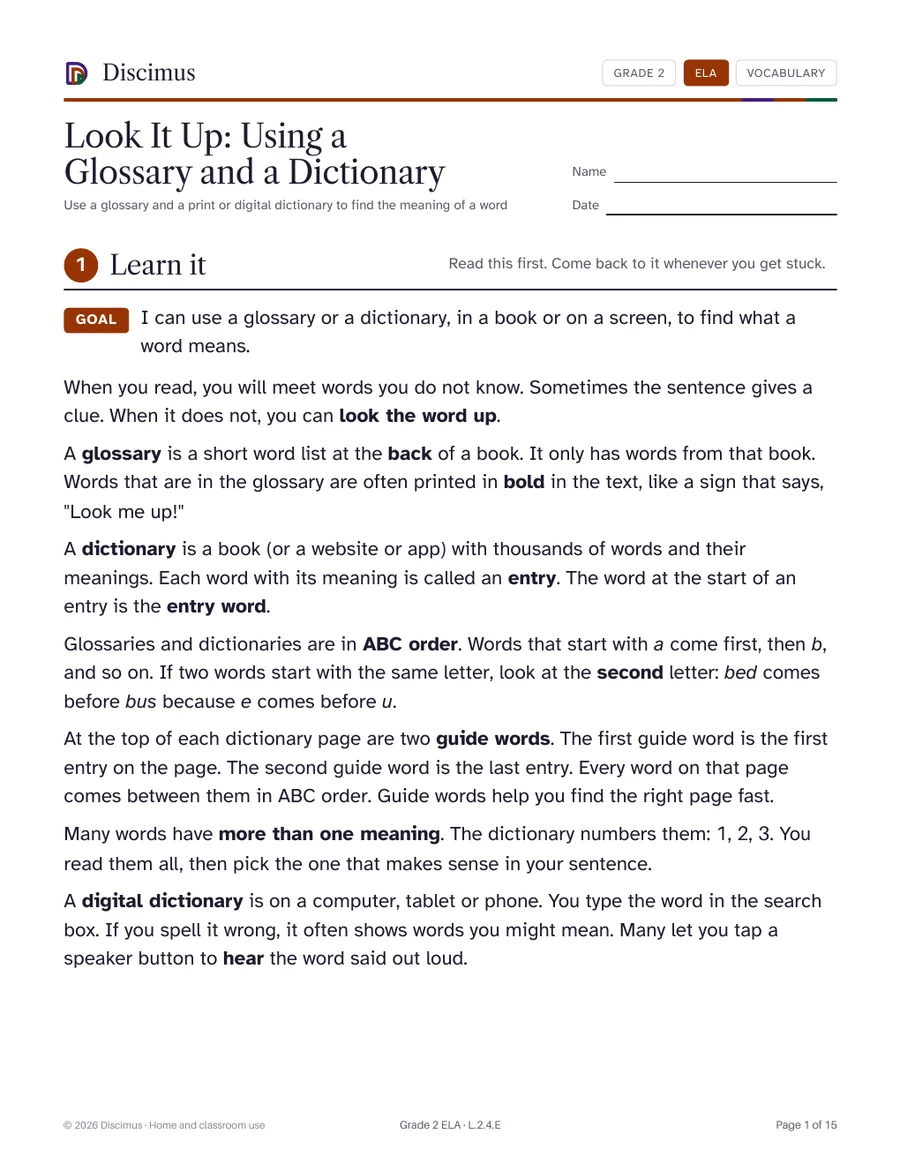
Use a glossary and a print or digital dictionary to find the meaning of a word
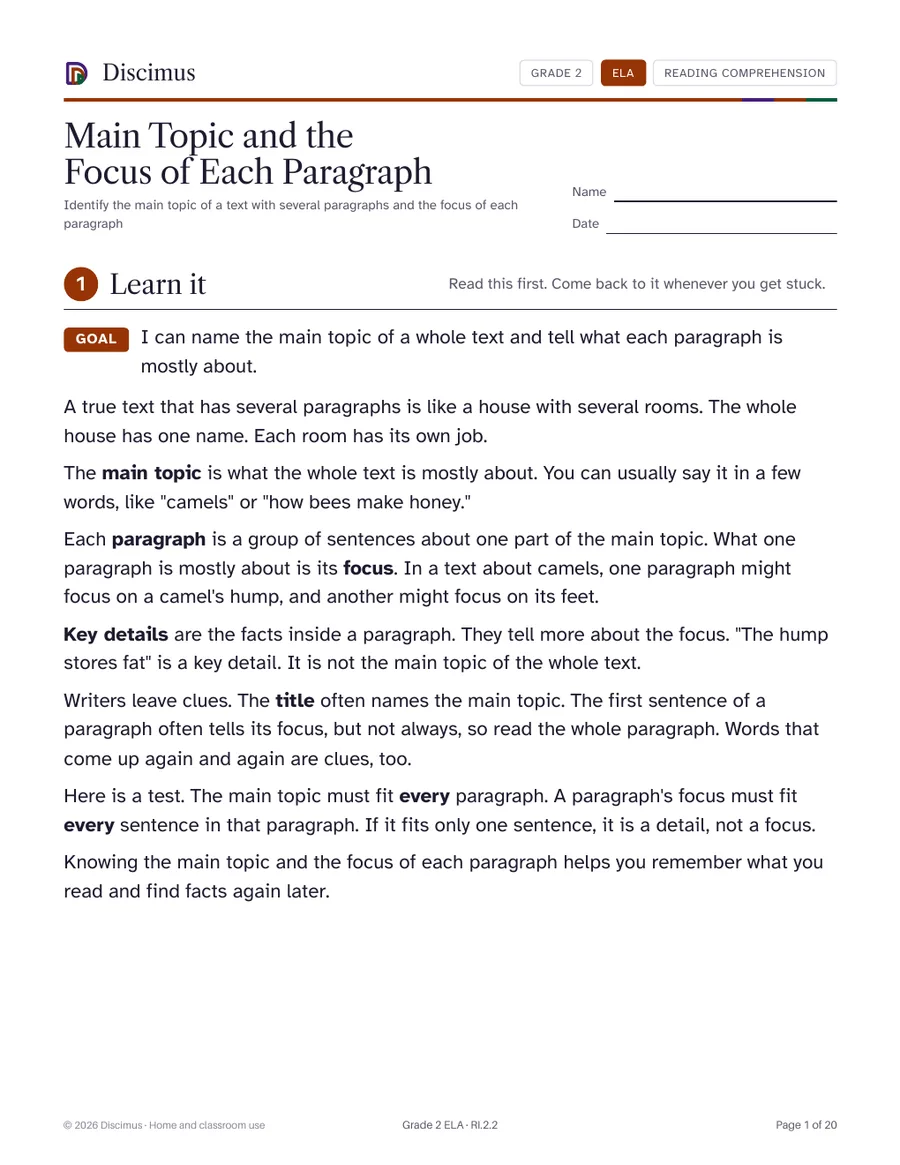
Identify the main topic of a text with several paragraphs and the focus of each paragraph
Read words with the vowel teams oo, ou, ow, oi, oy, au, aw, ew, ue, igh and ie
Write a narrative with action, thought and feeling details, time words and a closing
Identify words where common spellings (ea, ou, ow, oo, c, g, y) make an unexpected sound
Write an opinion piece with reasons joined by linking words and a concluding statement
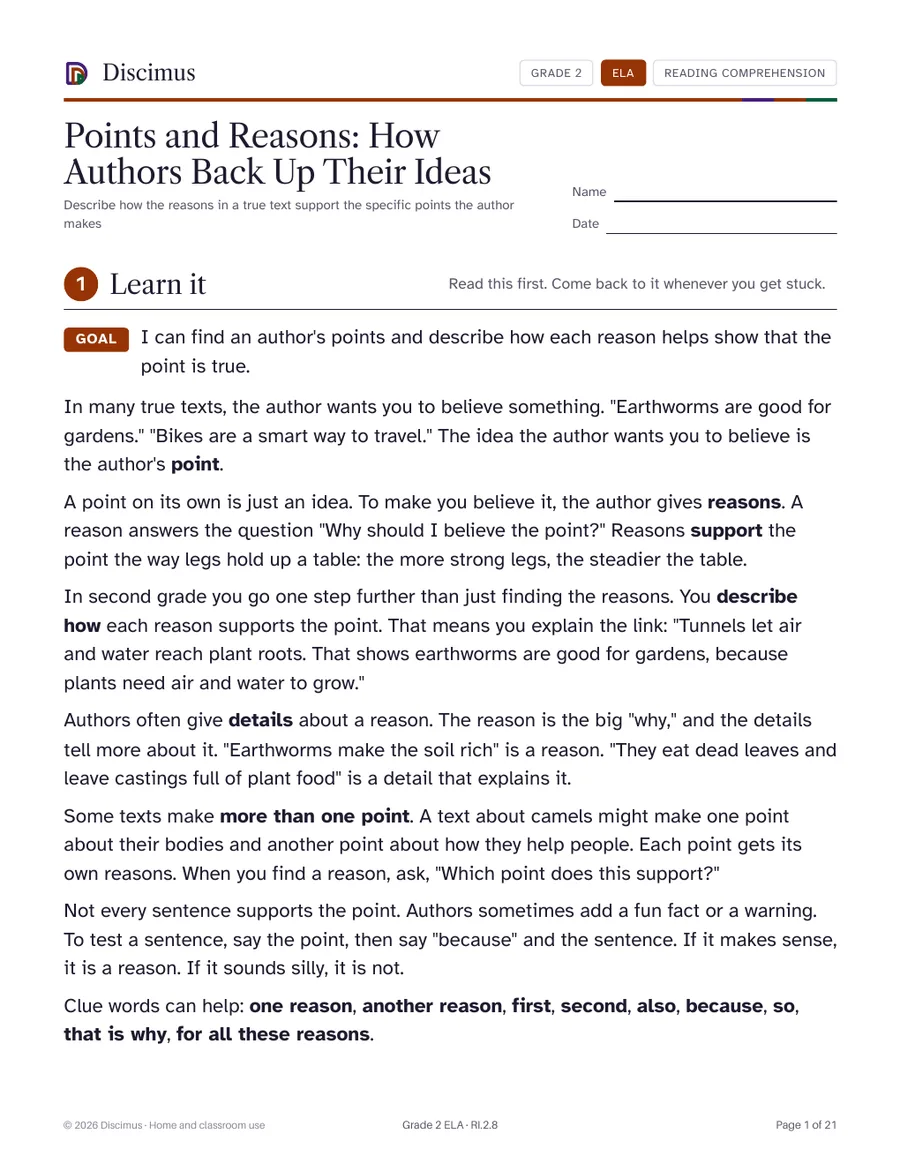
Describe how the reasons in a true text support the specific points the author makes
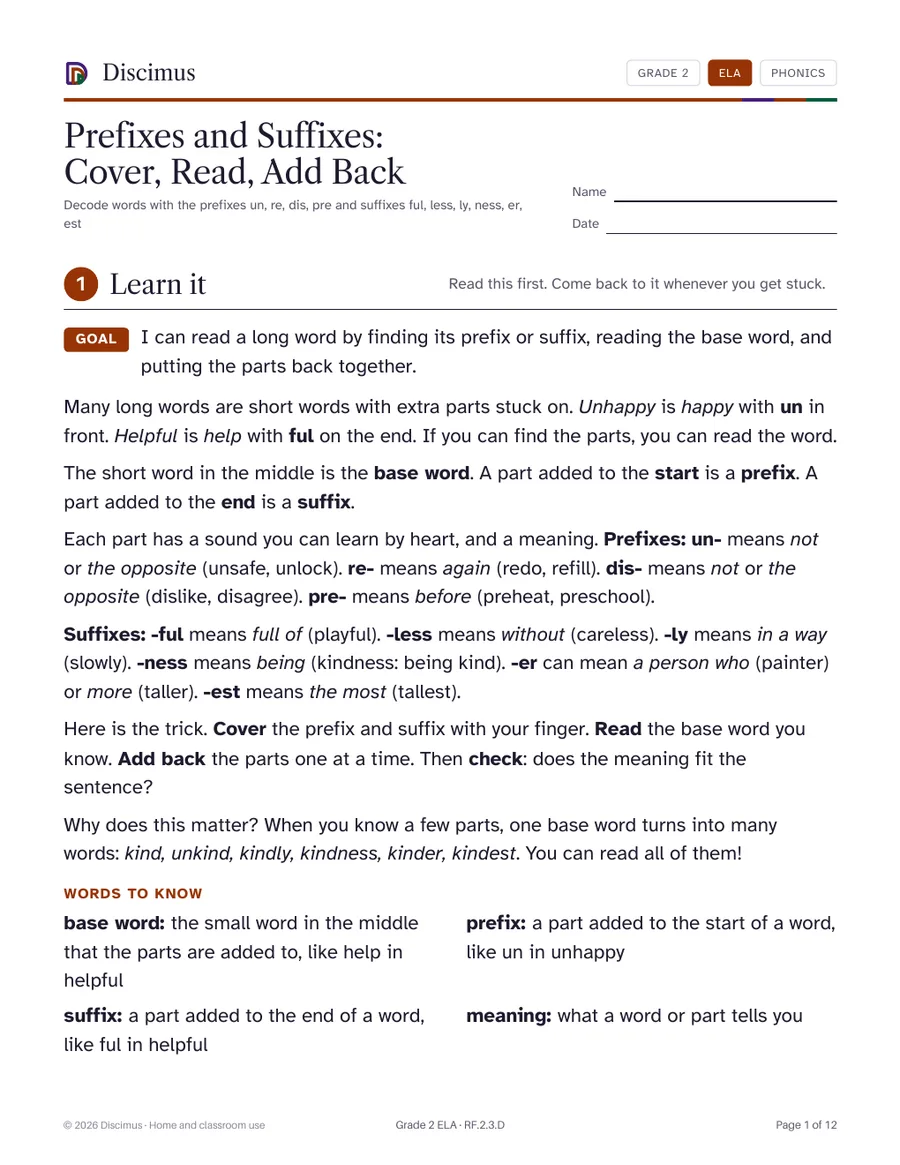
Decode words with the prefixes un, re, dis, pre and suffixes ful, less, ly, ness, er, est
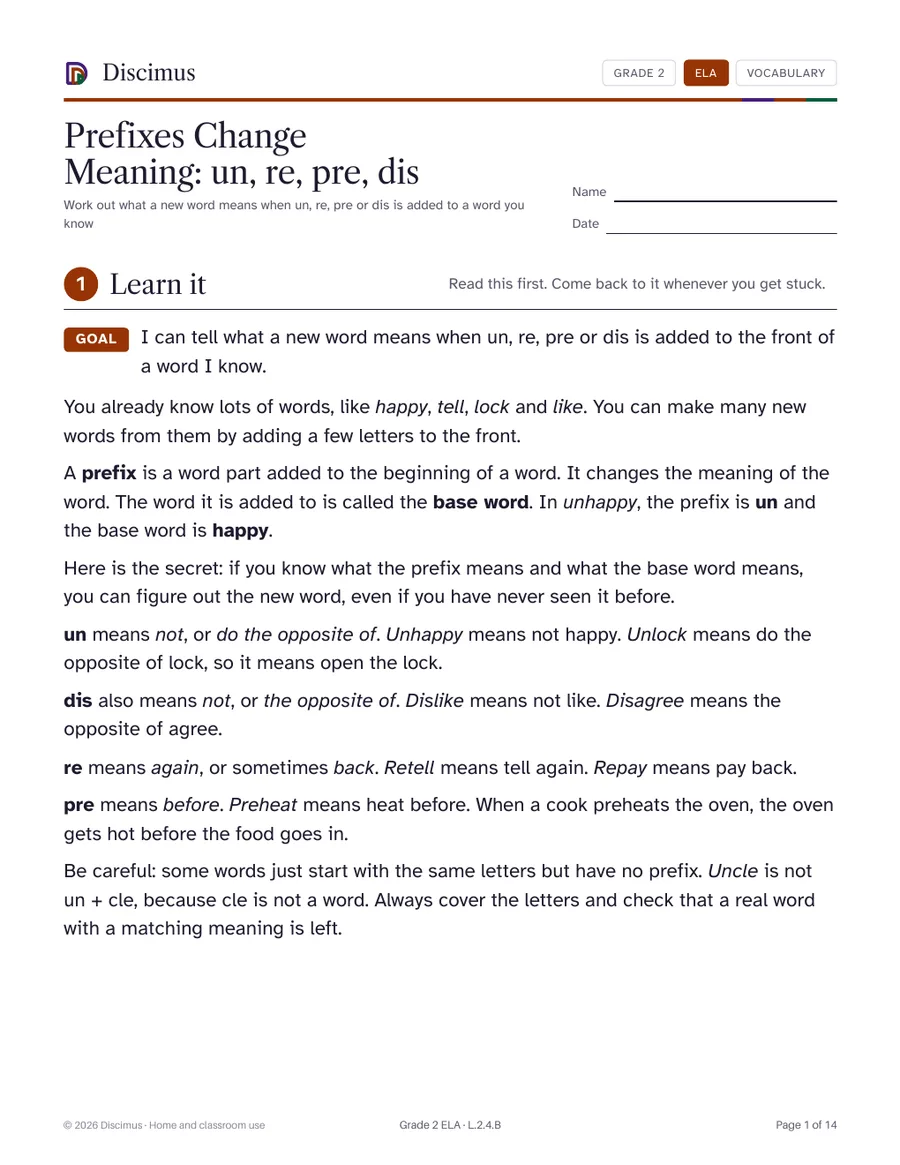
Work out what a new word means when un, re, pre or dis is added to a word you know
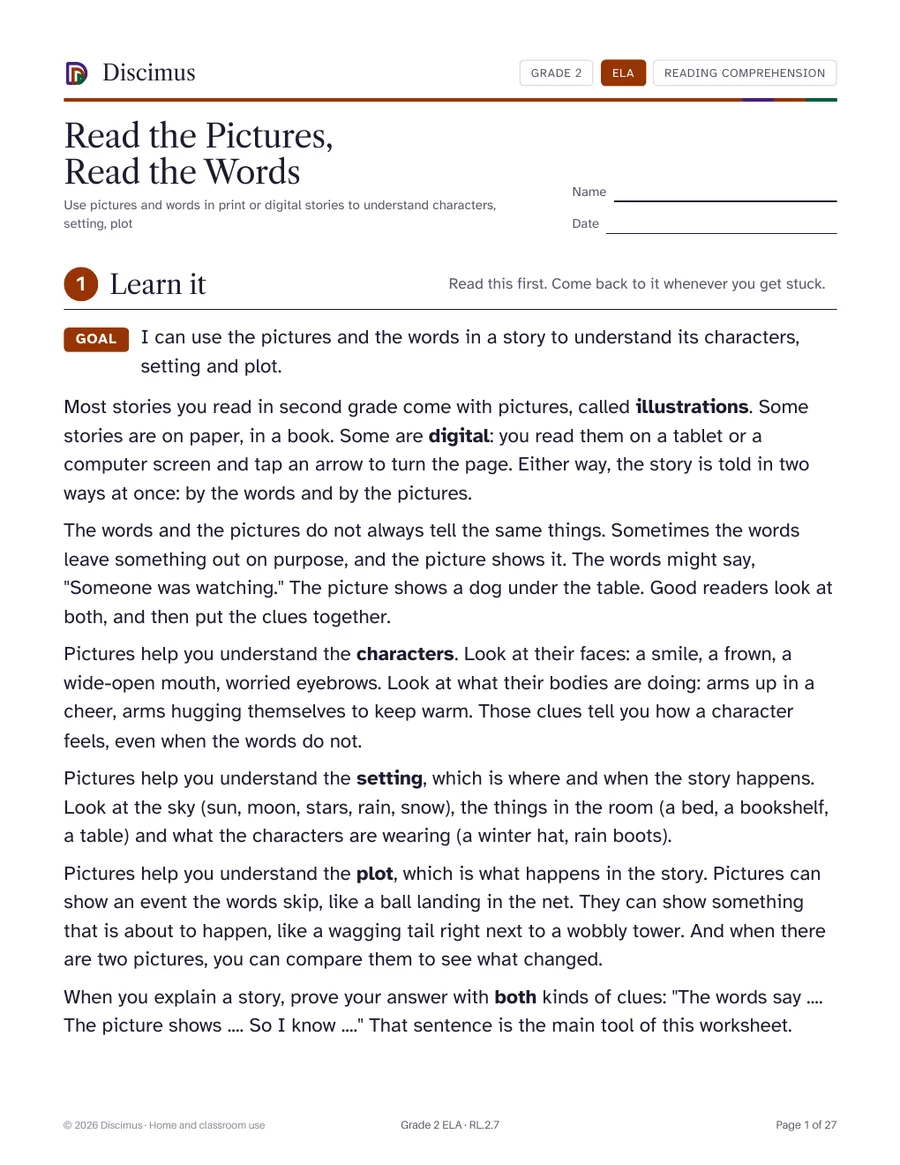
Use pictures and words in print or digital stories to understand characters, setting, plot
Read and understand grade 2 to 3 science, history and how-to texts independently
Read grade 2 text with a purpose, check understanding while reading and retell it
Connect words to real-life examples and explain why each example fits the word
Use reflexive pronouns such as myself, herself, ourselves and themselves correctly
Revise a draft for focus and detail, then edit capitals, punctuation and spelling
Use a root word you know to work out the meaning of a longer word with the same root
Compare and contrast two versions of the same story from different authors or cultures
Ask and answer who, what, when and why questions about an informational text
Tell apart close verbs and adjectives by strength and feeling, and choose the best one
Read several sources on one topic to write a shared report, and keep a science log
Split and read regularly spelled two-syllable words that have long vowels
Describe story structure: how the beginning introduces and the ending concludes a story
Read and understand grade 2 to 3 stories and poems independently, using fix-up strategies
Use captions, bold words, subheadings, glossaries, indexes, menus and icons to find facts
Compare and contrast the most important points in two true texts on the same topic
Use new words from reading and talk, including adjectives and adverbs, to describe
Use known spelling patterns to spell new words (cage to badge, boy to boil)
Use context to confirm or self-correct words and meaning, rereading as needed
Ask and answer who, what, where, when, why and how questions about key details in a story
Identify a true text's main purpose: what the author wants to answer, explain or describe
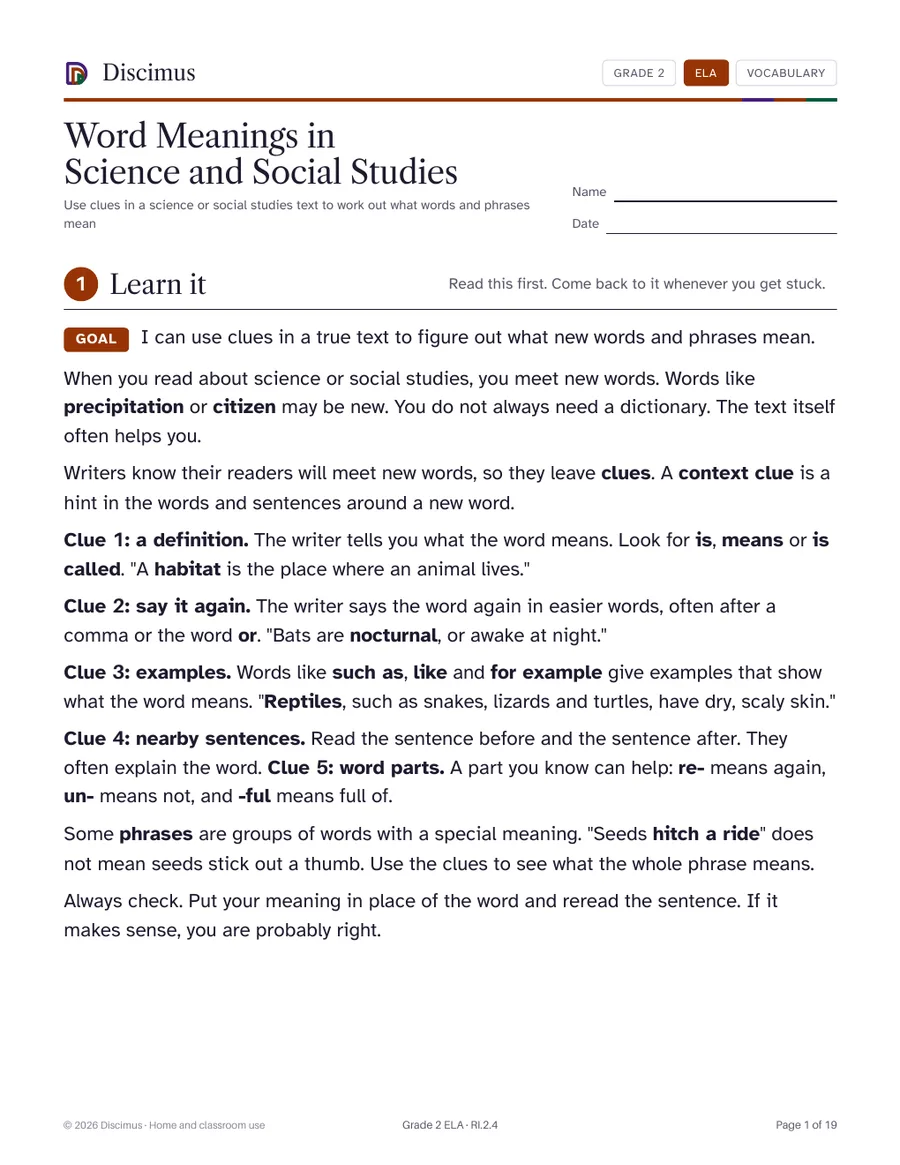
Use clues in a science or social studies text to work out what words and phrases mean
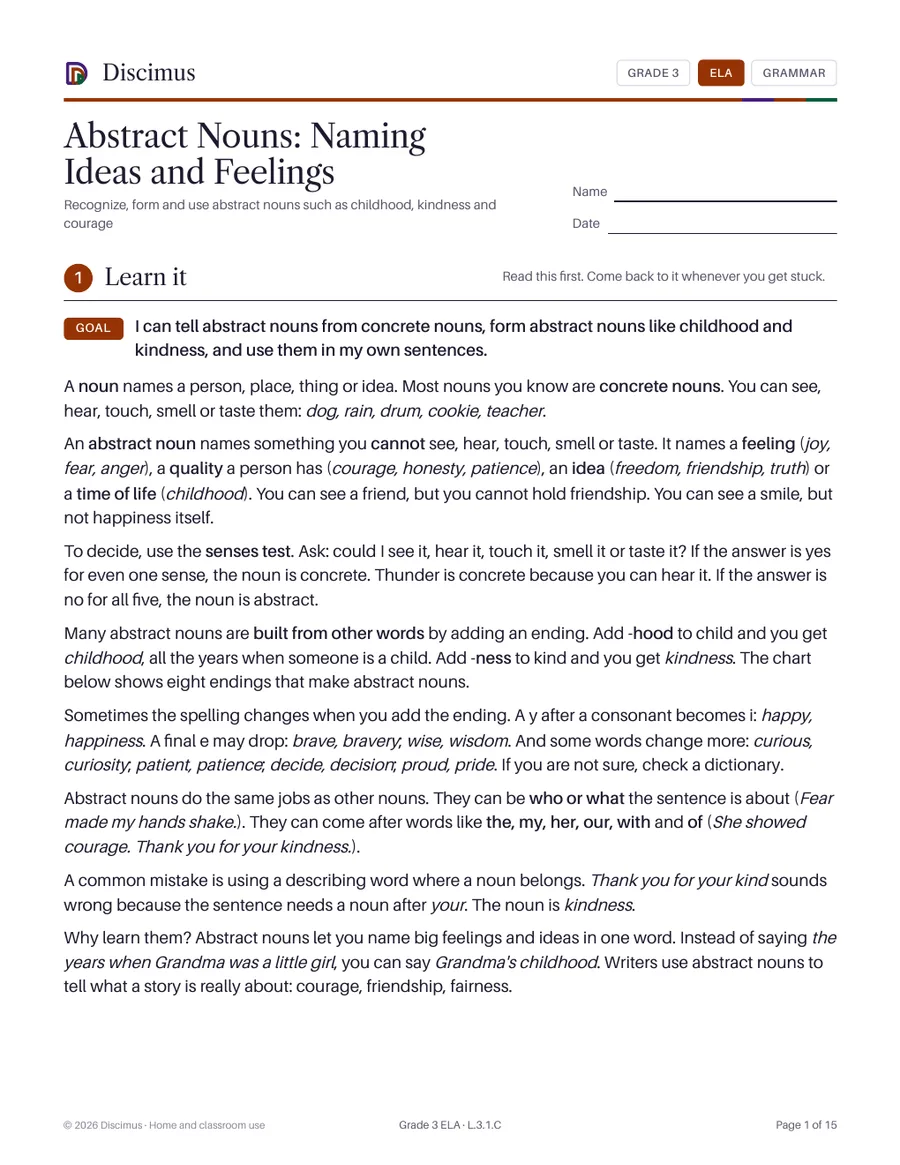
Recognize, form and use abstract nouns such as childhood, kindness and courage
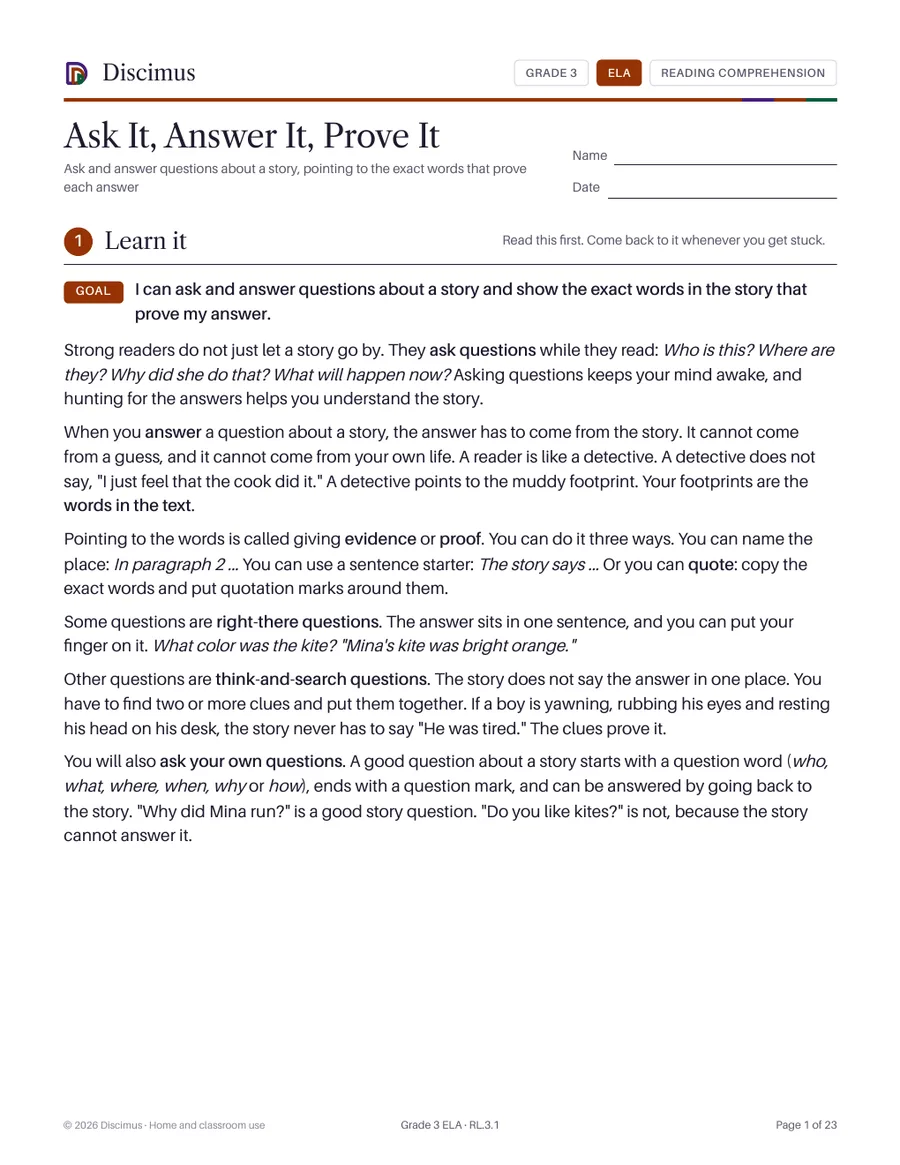
Ask and answer questions about a story, pointing to the exact words that prove each answer
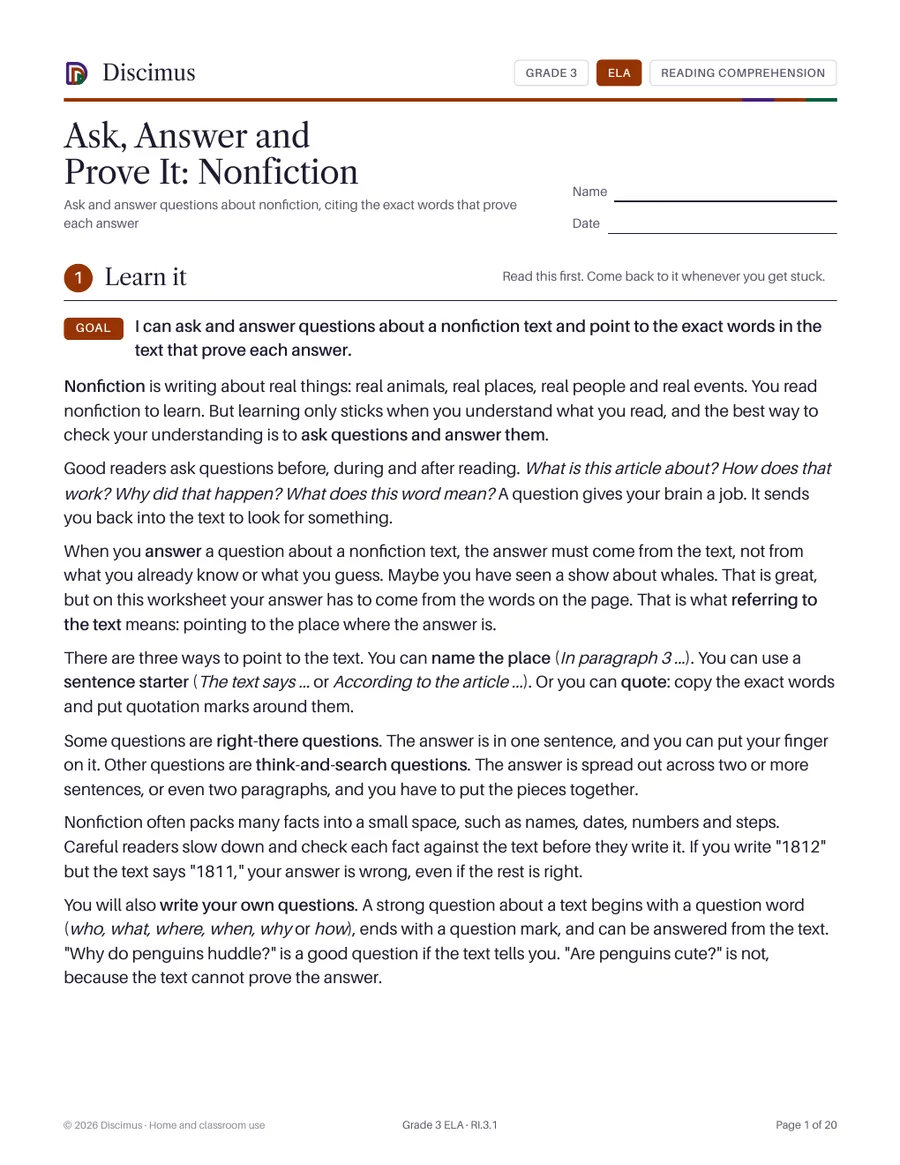
Ask and answer questions about nonfiction, citing the exact words that prove each answer
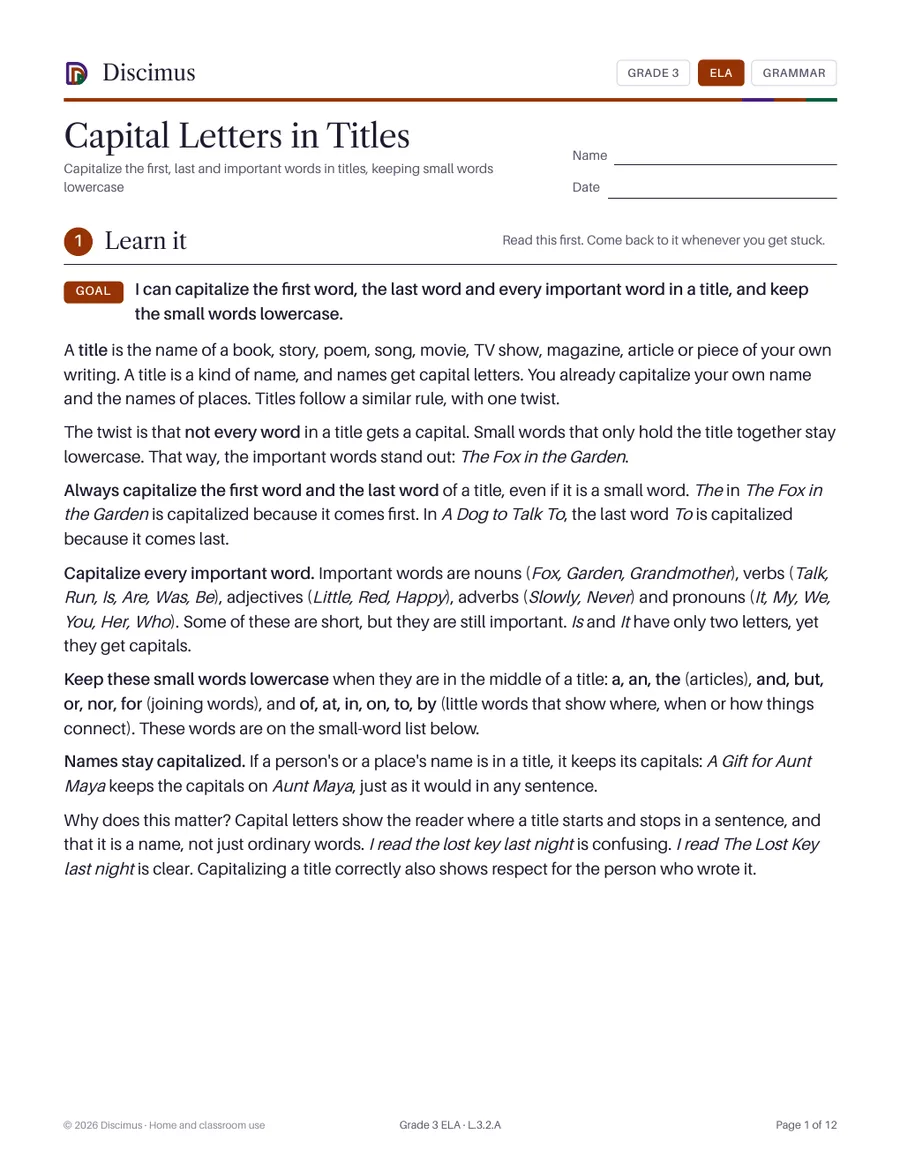
Capitalize the first, last and important words in titles, keeping small words lowercase
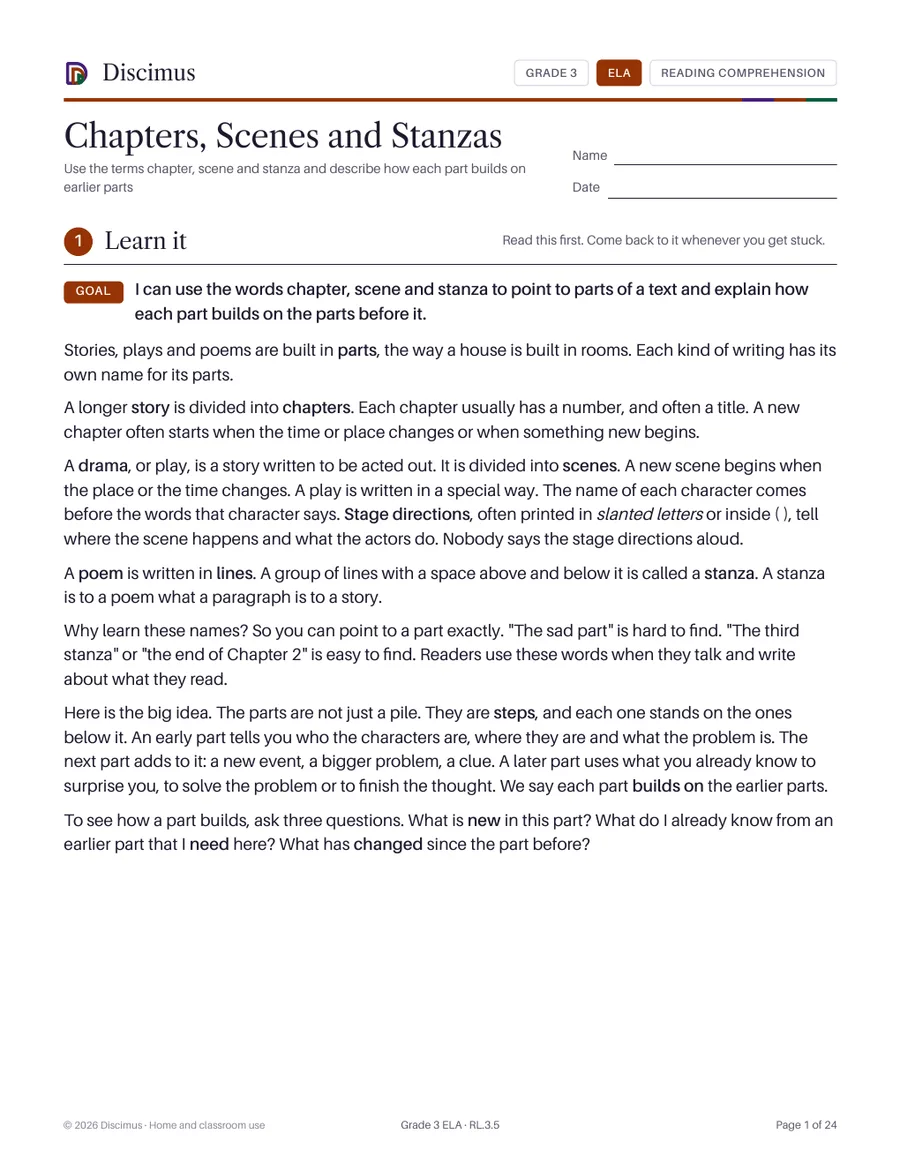
Use the terms chapter, scene and stanza and describe how each part builds on earlier parts
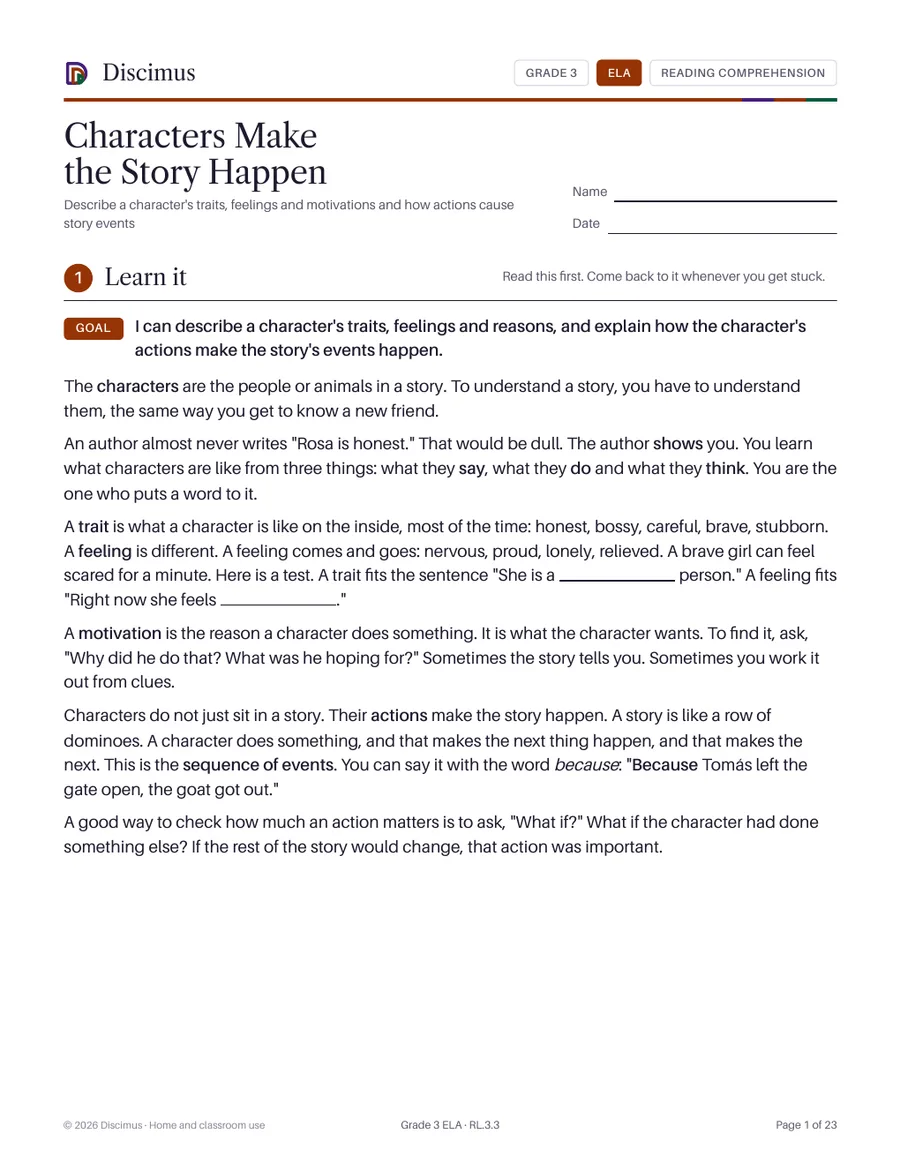
Describe a character's traits, feelings and motivations and how actions cause story events
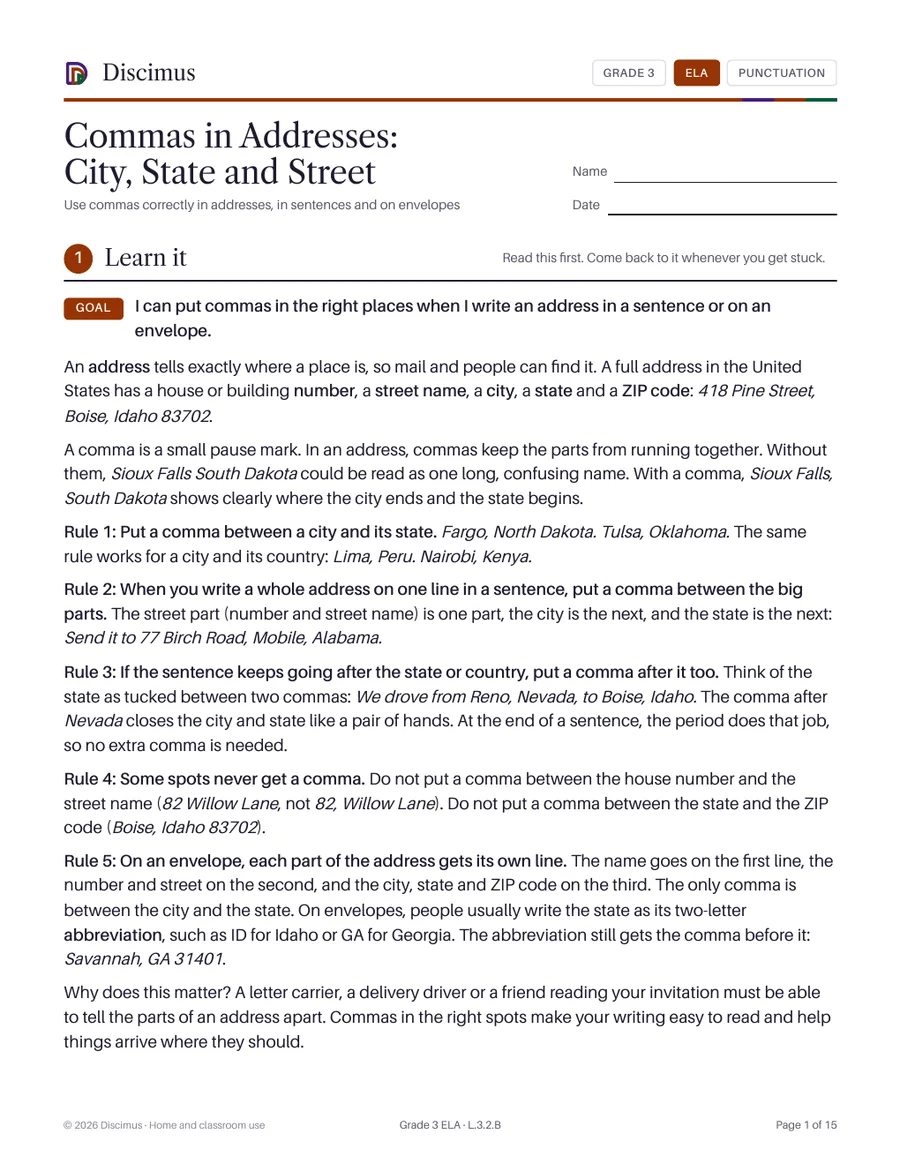
Use commas correctly in addresses, in sentences and on envelopes
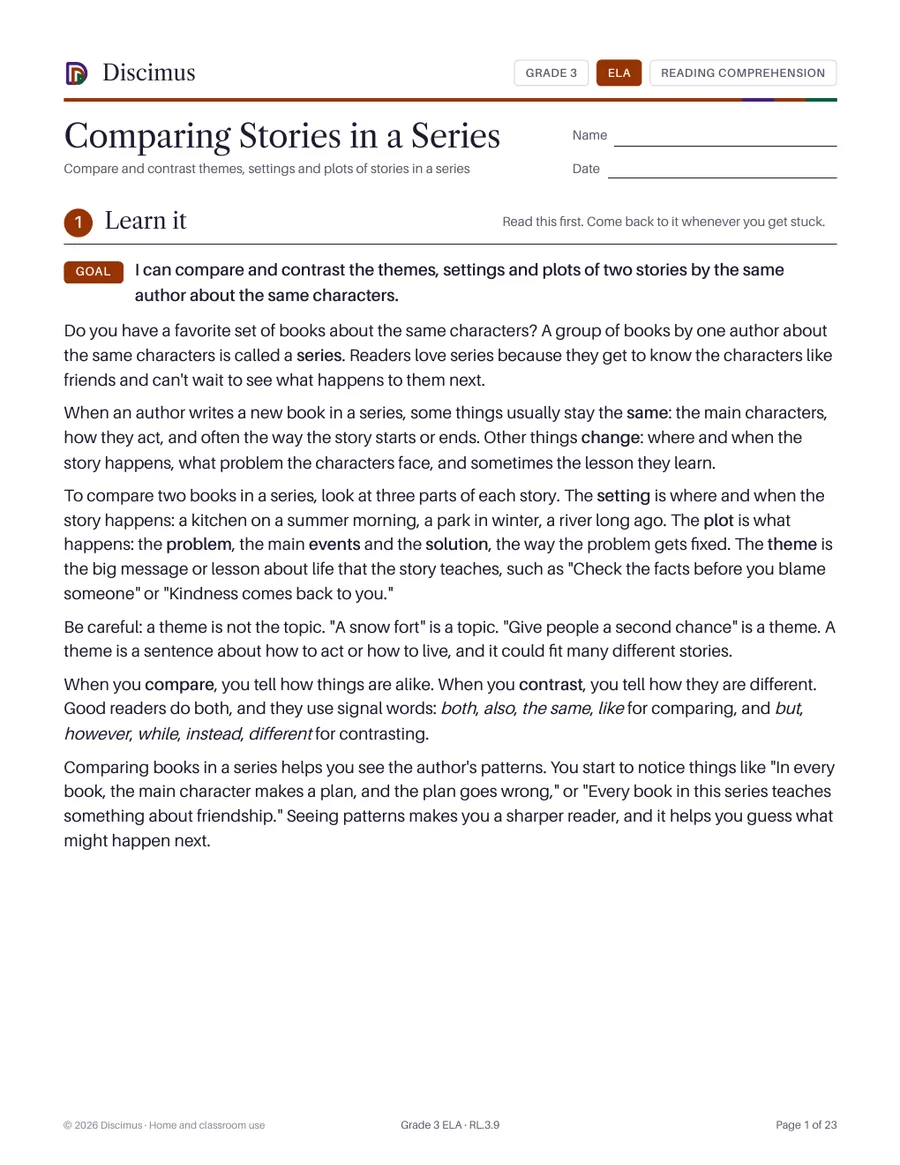
Compare and contrast themes, settings and plots of stories in a series
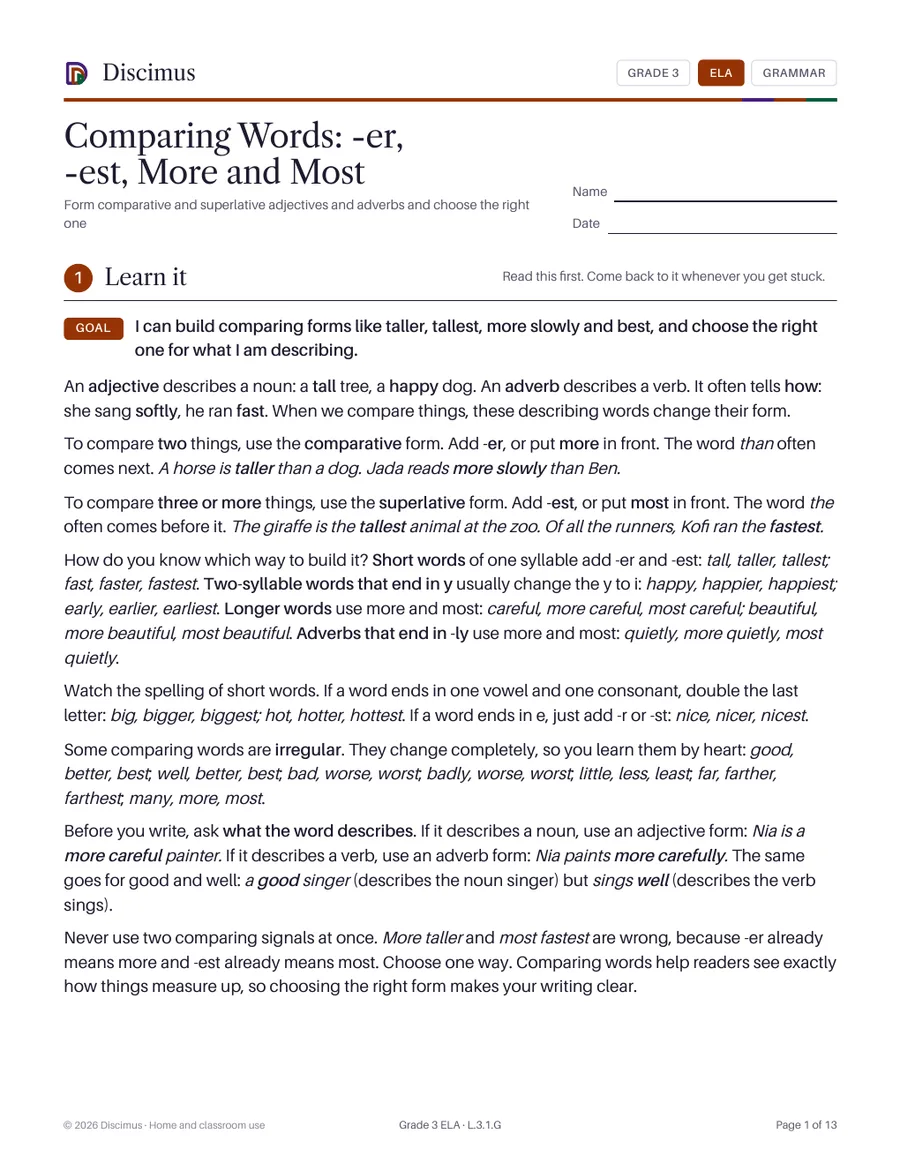
Form comparative and superlative adjectives and adverbs and choose the right one
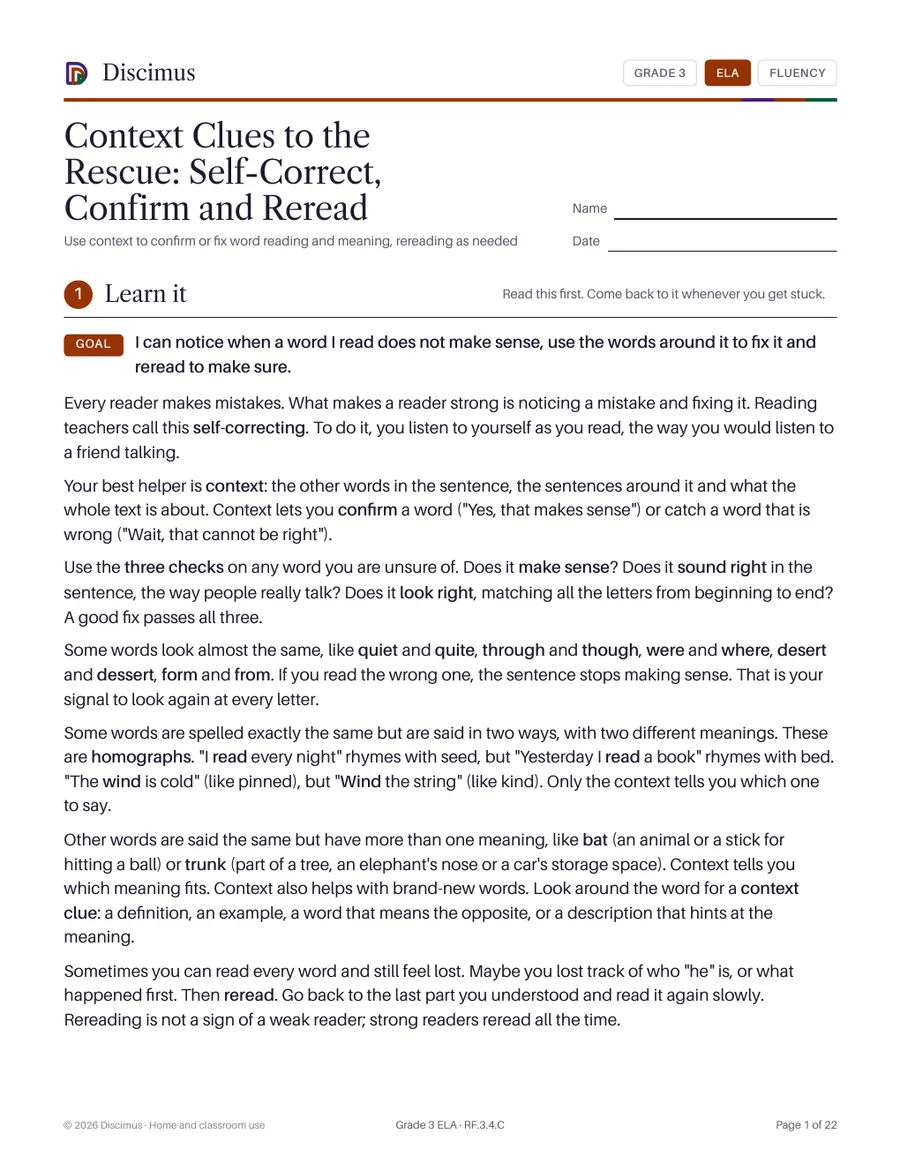
Use context to confirm or fix word reading and meaning, rereading as needed
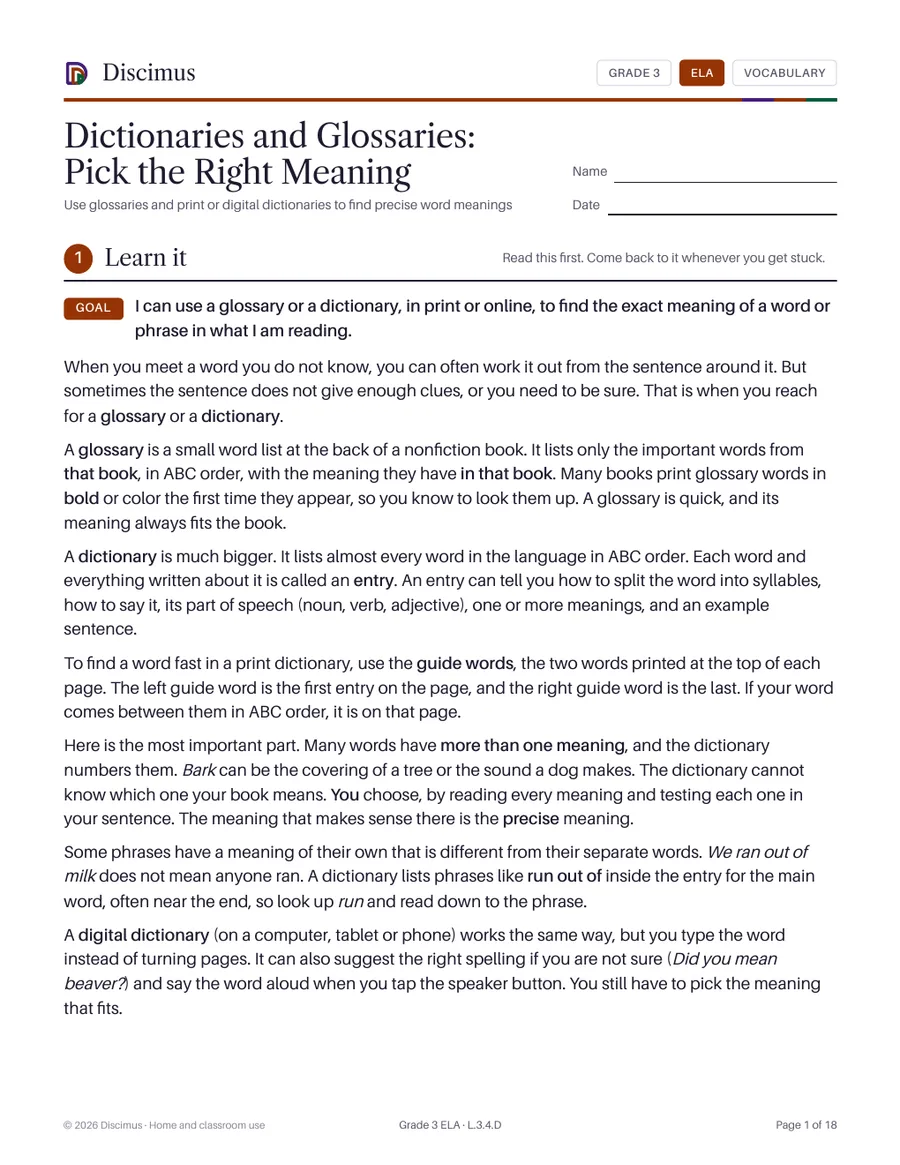
Use glossaries and print or digital dictionaries to find precise word meanings
Use a beginning dictionary to check and correct spellings
Explain how events, ideas or steps connect, using time, sequence and cause-effect words
Choose organization and details that fit the writing task, purpose and audience
Read grade 3 irregularly spelled words such as though, caught and island by heart parts
Use text features and search tools to find information on a topic quickly
Explain how a story's illustrations add to its words: mood, character and setting
Describe how sentences and paragraphs connect: sequence, comparison, or cause and effect
Develop an informative topic with facts, definitions and details
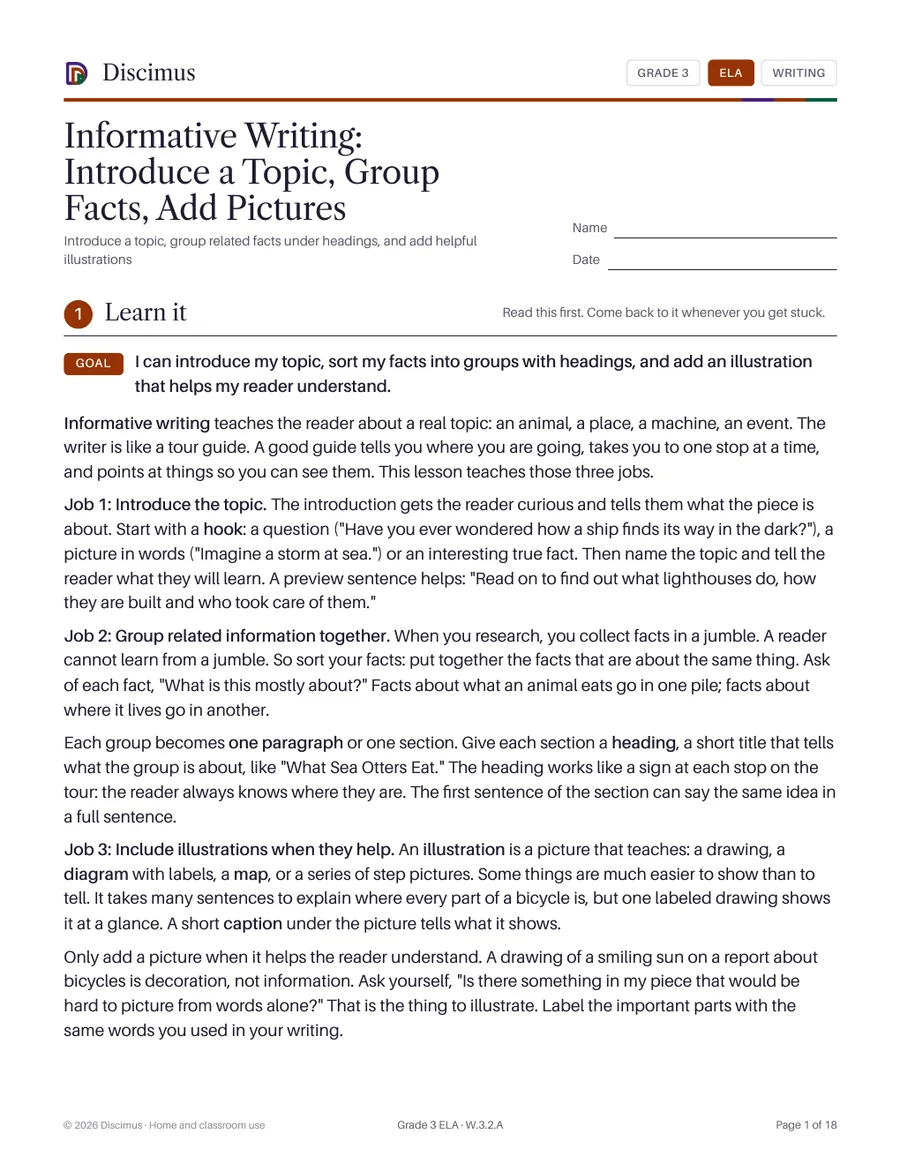
Introduce a topic, group related facts under headings, and add helpful illustrations
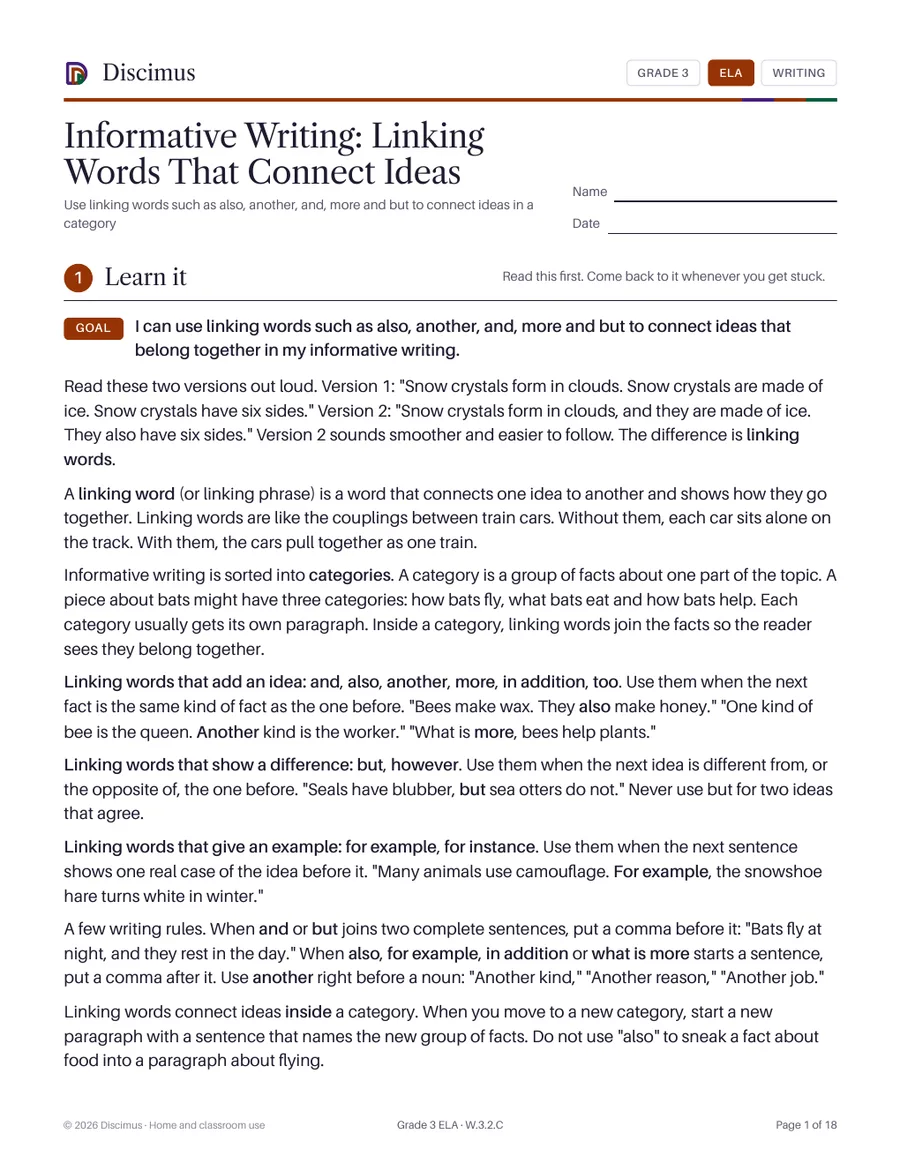
Use linking words such as also, another, and, more and but to connect ideas in a category
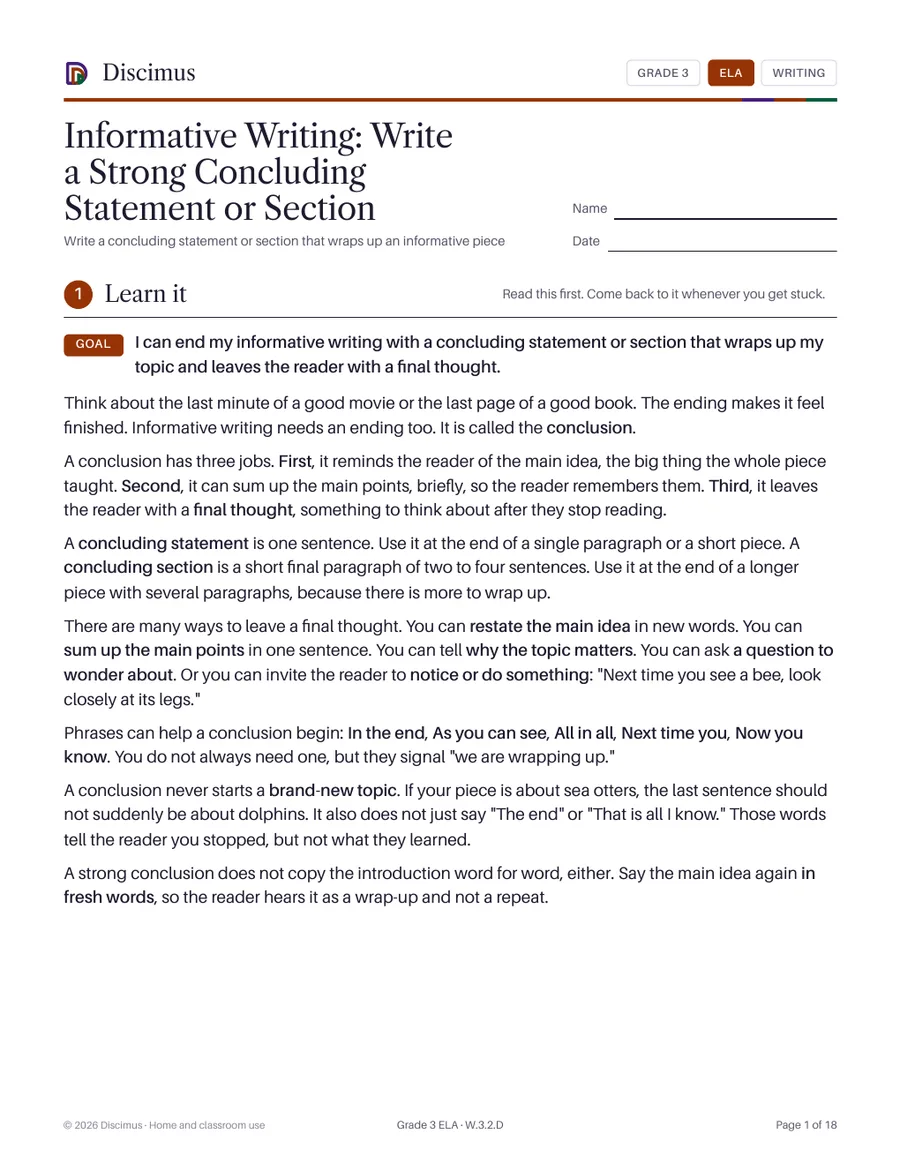
Write a concluding statement or section that wraps up an informative piece
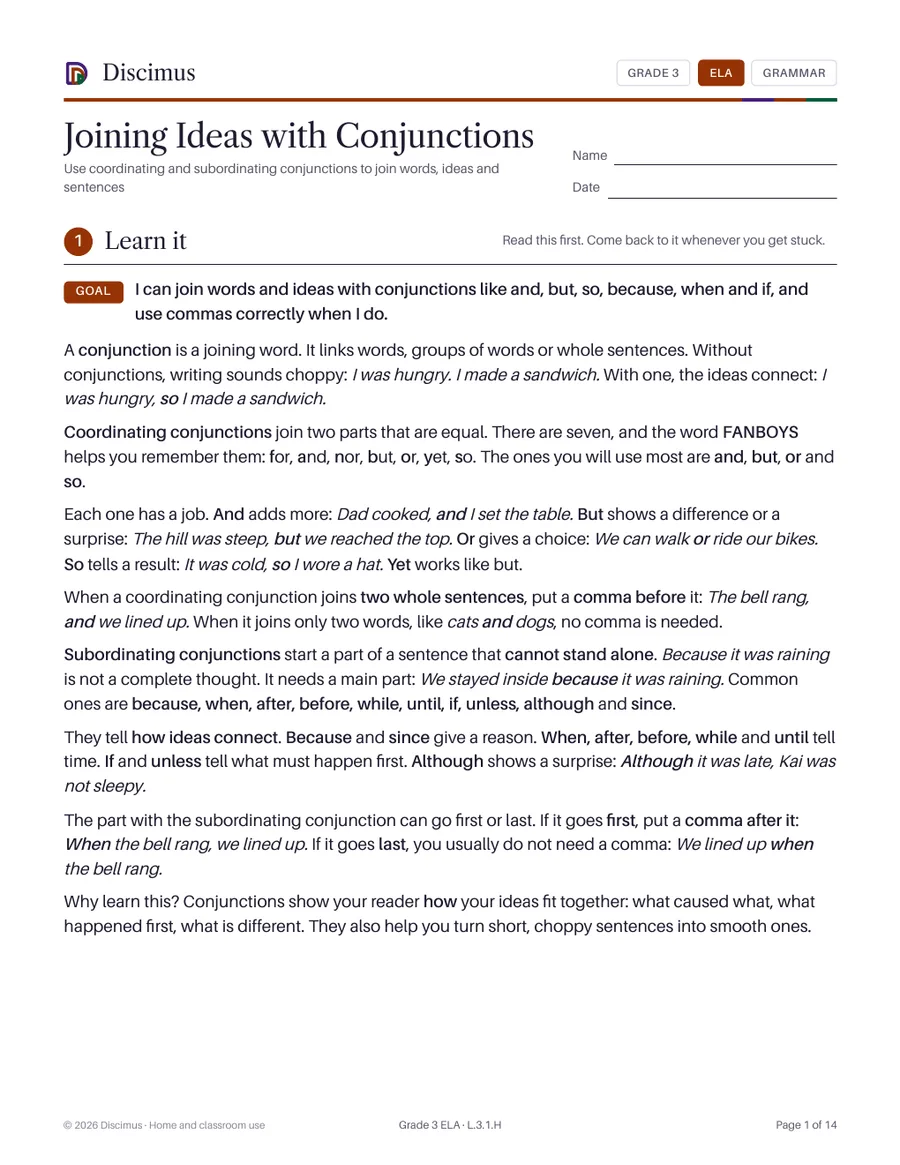
Use coordinating and subordinating conjunctions to join words, ideas and sentences
Work out the meaning of a new word formed when a known affix is added to a known word
Decode words ending in the Latin suffixes -tion, -sion, -ture, -ous, -able, -ible, -ive
Tell the literal and nonliteral meanings of words and phrases apart using context
Decode multisyllable words by finding word parts, splitting syllables and blending
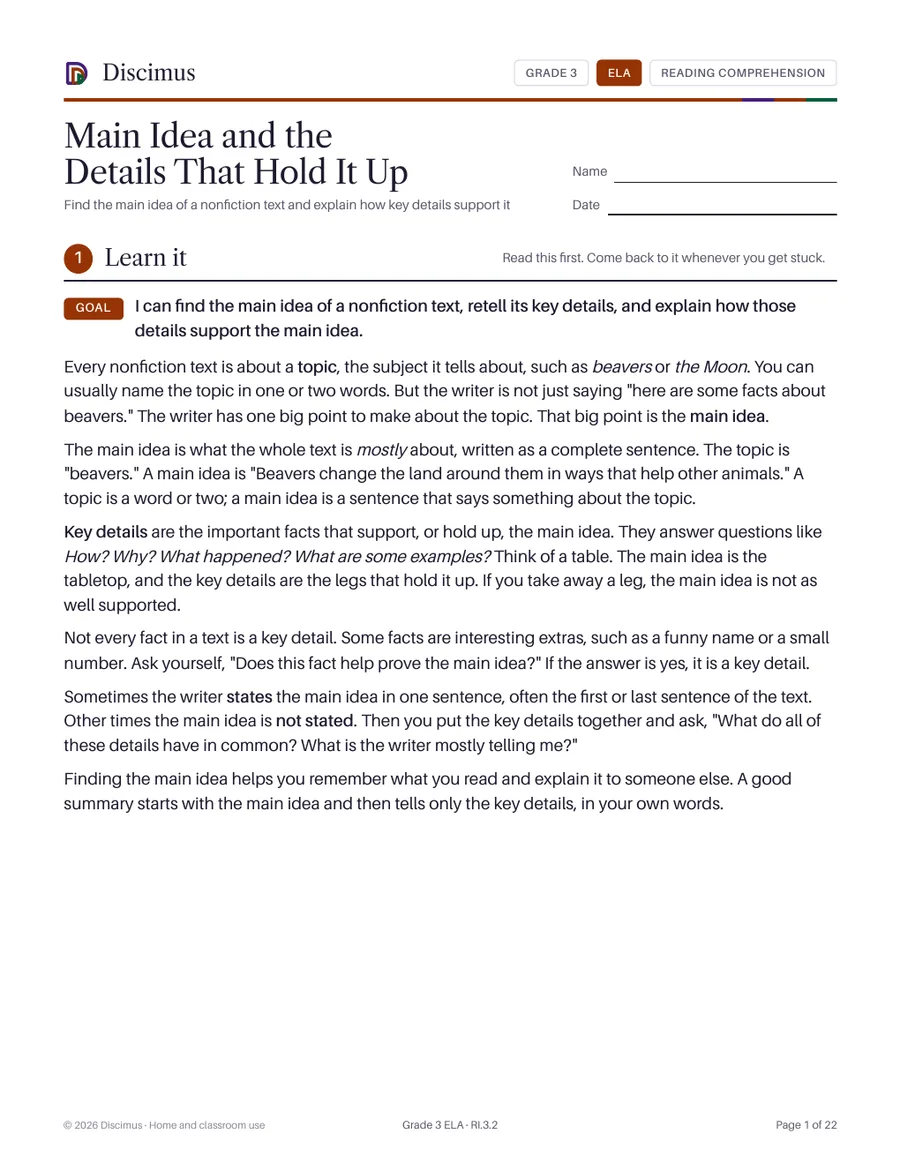
Find the main idea of a nonfiction text and explain how key details support it
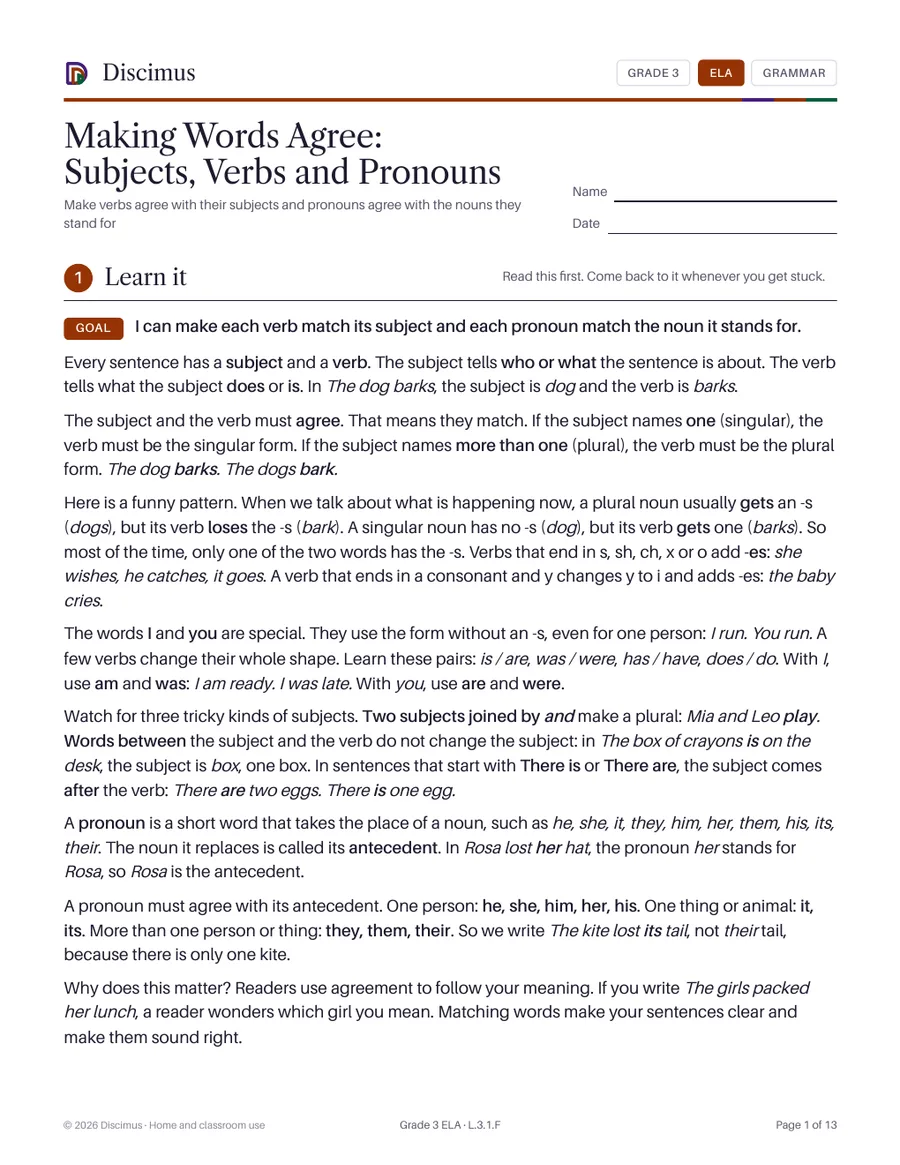
Make verbs agree with their subjects and pronouns agree with the nouns they stand for
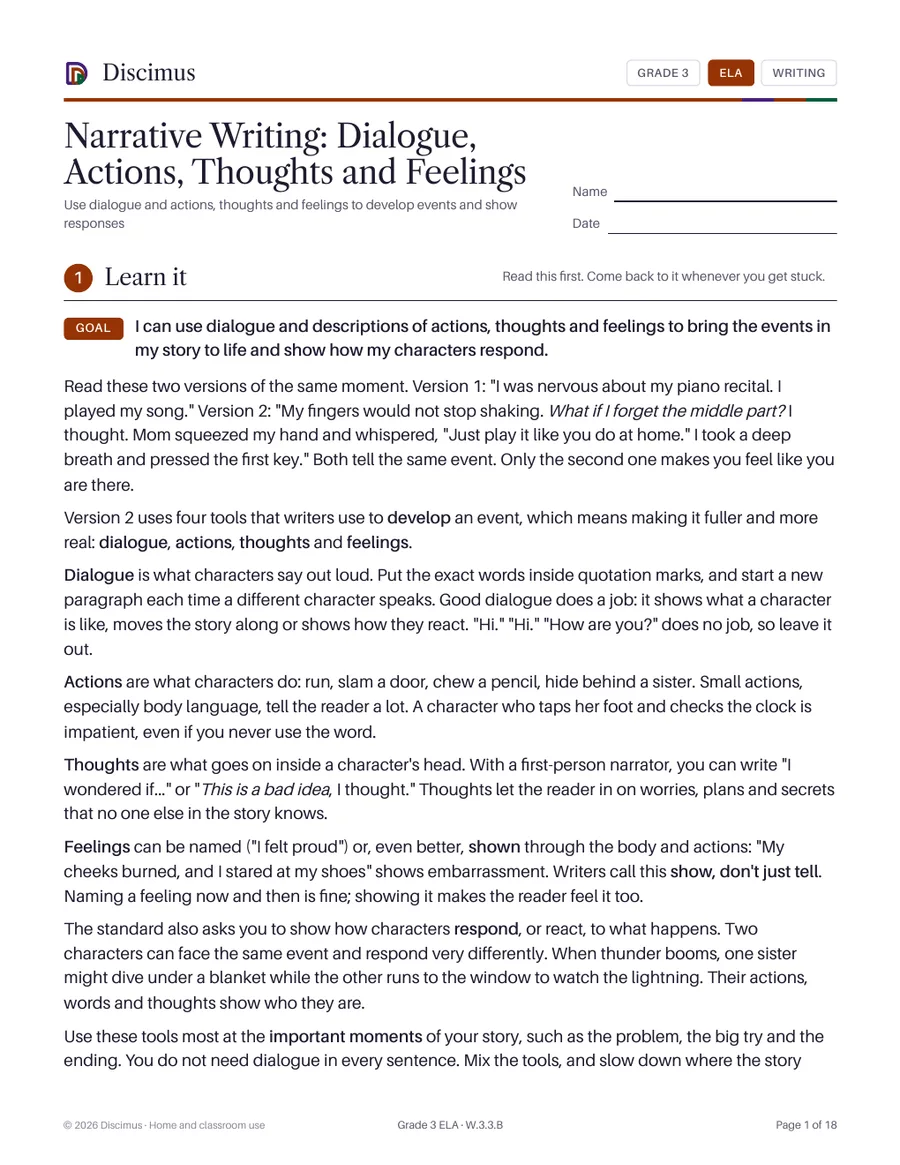
Use dialogue and actions, thoughts and feelings to develop events and show responses
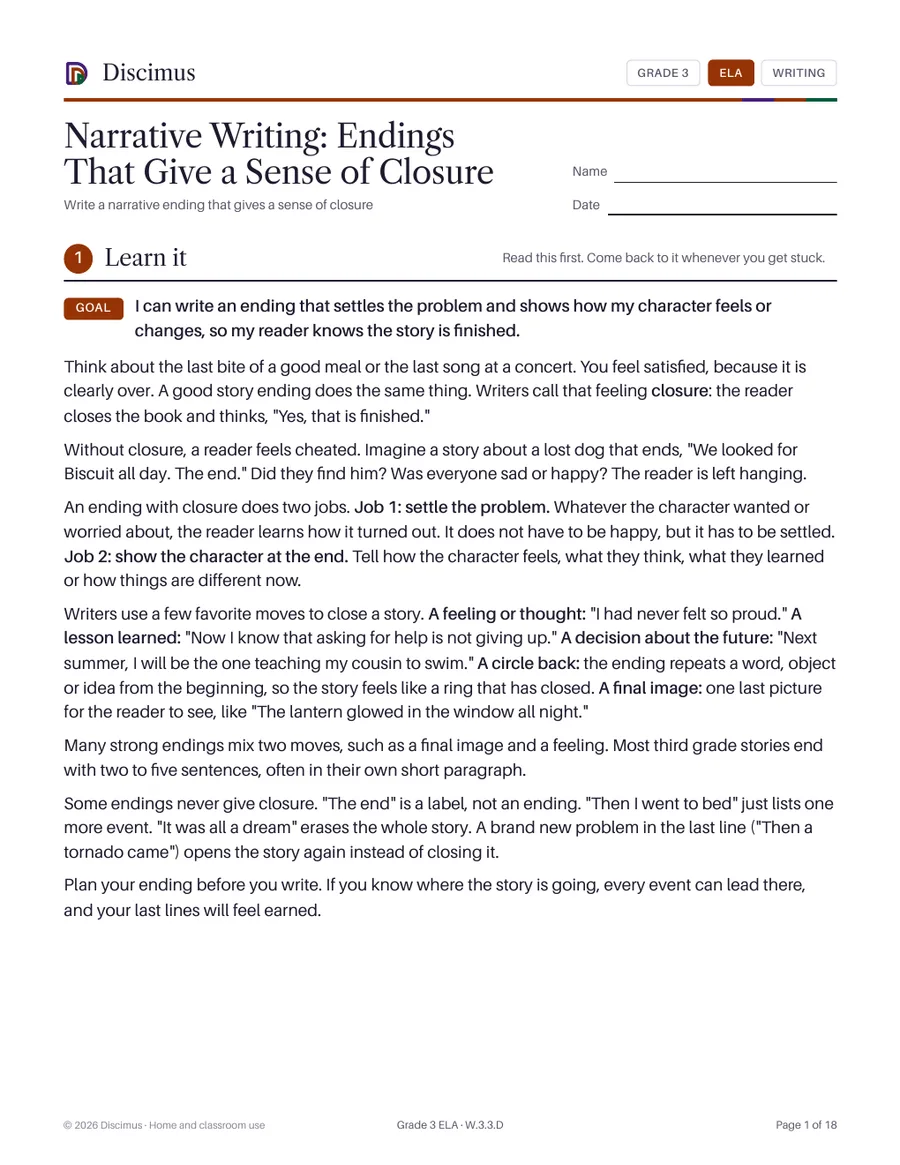
Write a narrative ending that gives a sense of closure
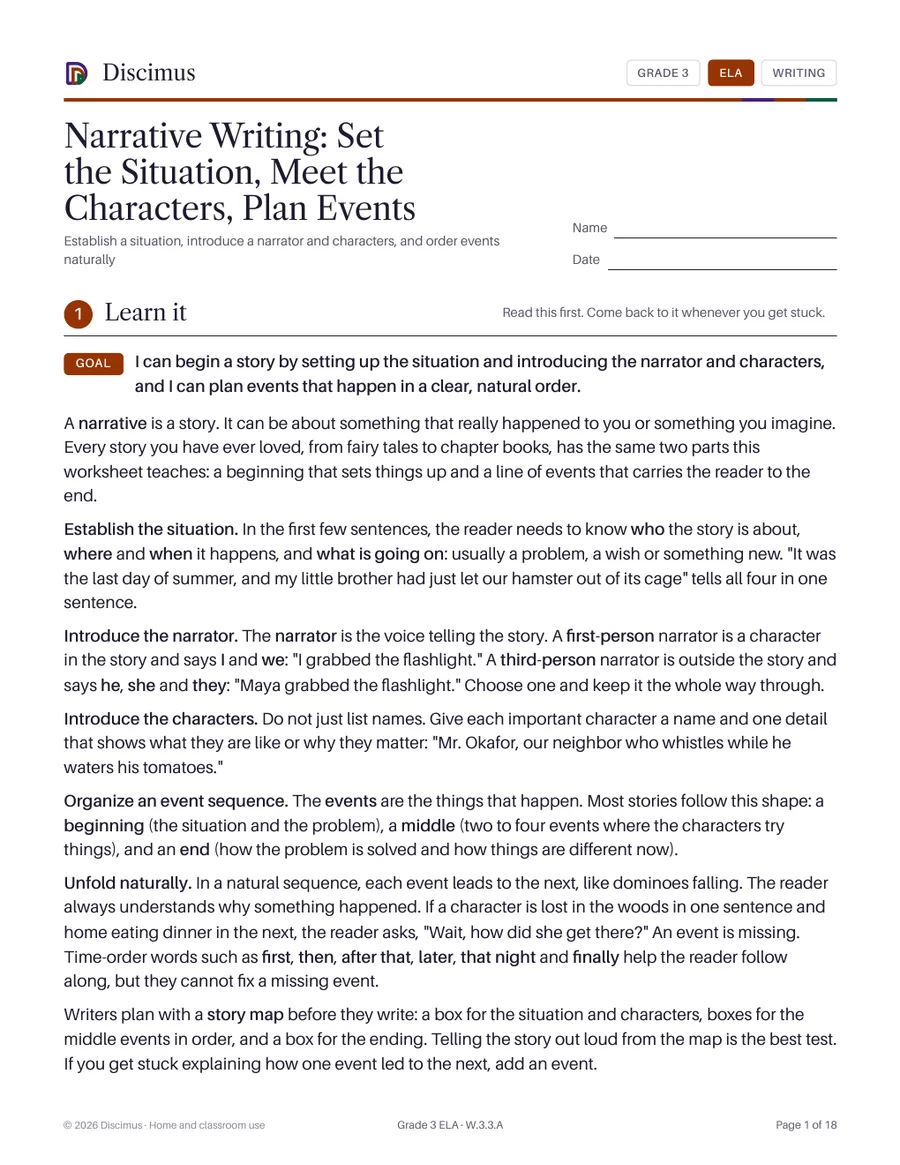
Establish a situation, introduce a narrator and characters, and order events naturally
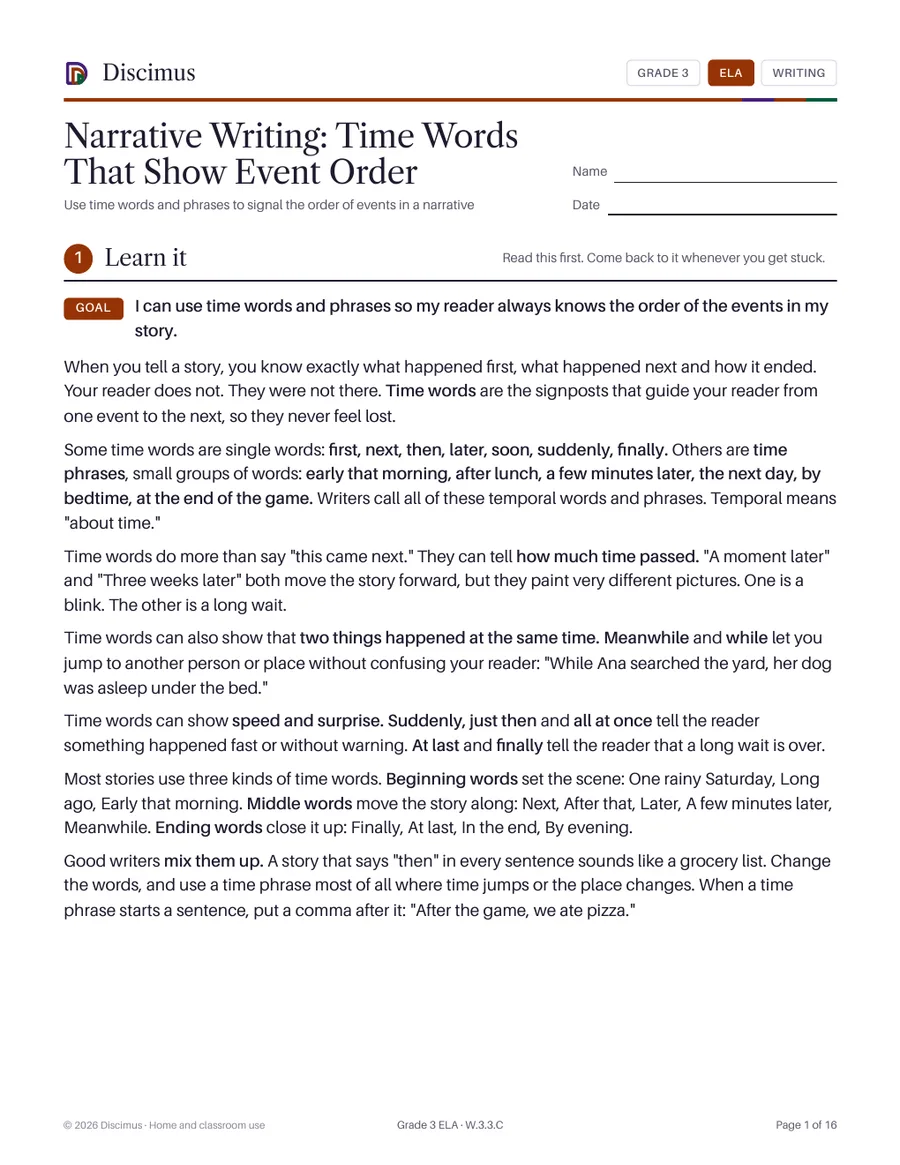
Use time words and phrases to signal the order of events in a narrative
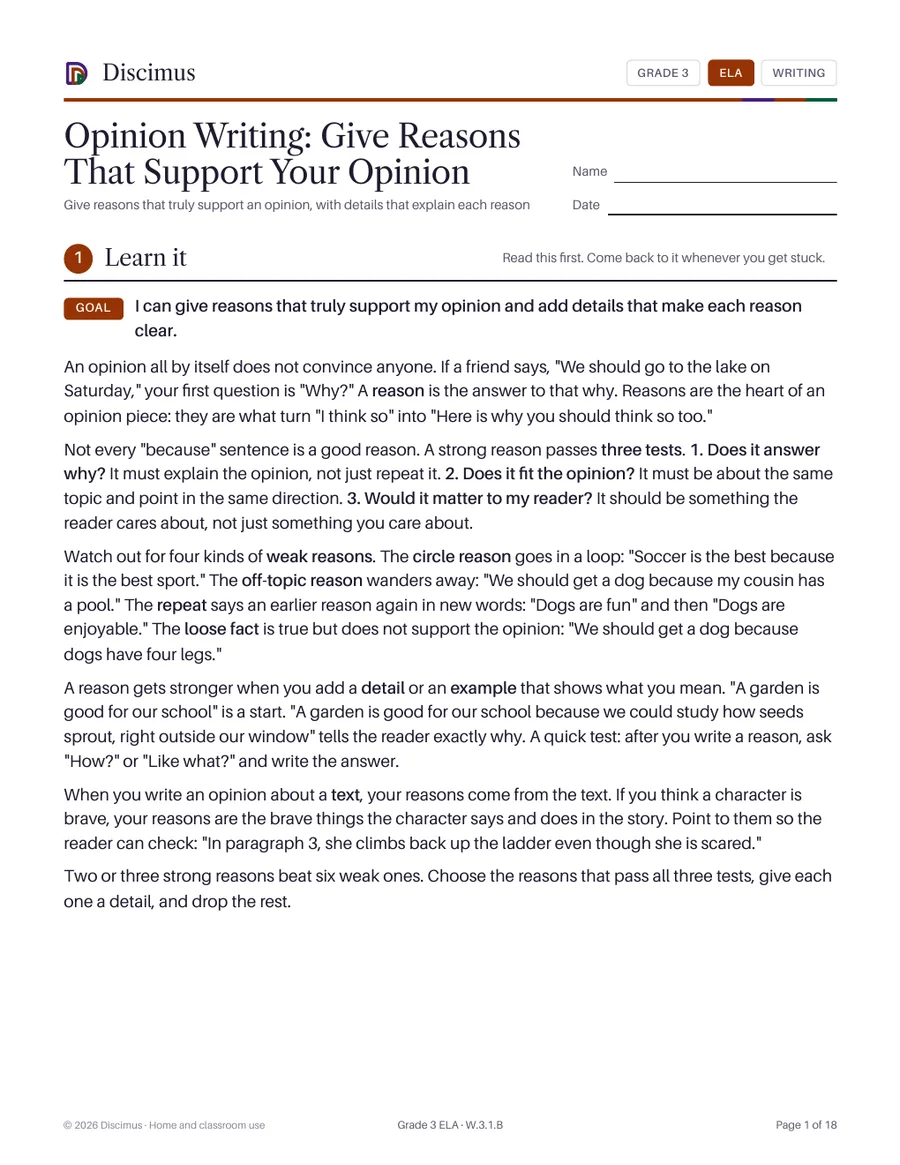
Give reasons that truly support an opinion, with details that explain each reason
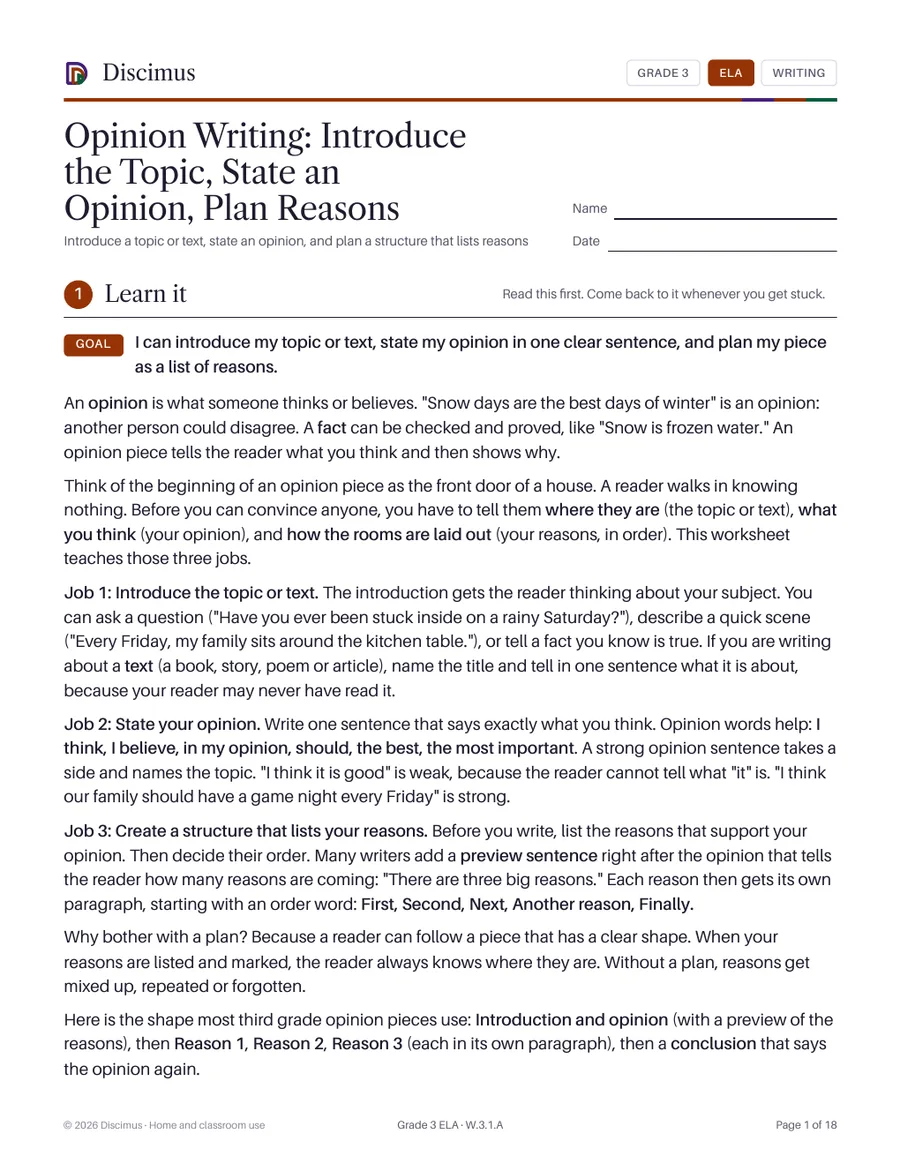
Introduce a topic or text, state an opinion, and plan a structure that lists reasons
Connect an opinion and reasons with linking words: because, therefore, since, for example
End an opinion piece with a concluding statement or section that restates the opinion
Explain the jobs of nouns, pronouns, verbs, adjectives and adverbs in sentences
Use maps, diagrams and timelines with the words to explain where, when, why and how
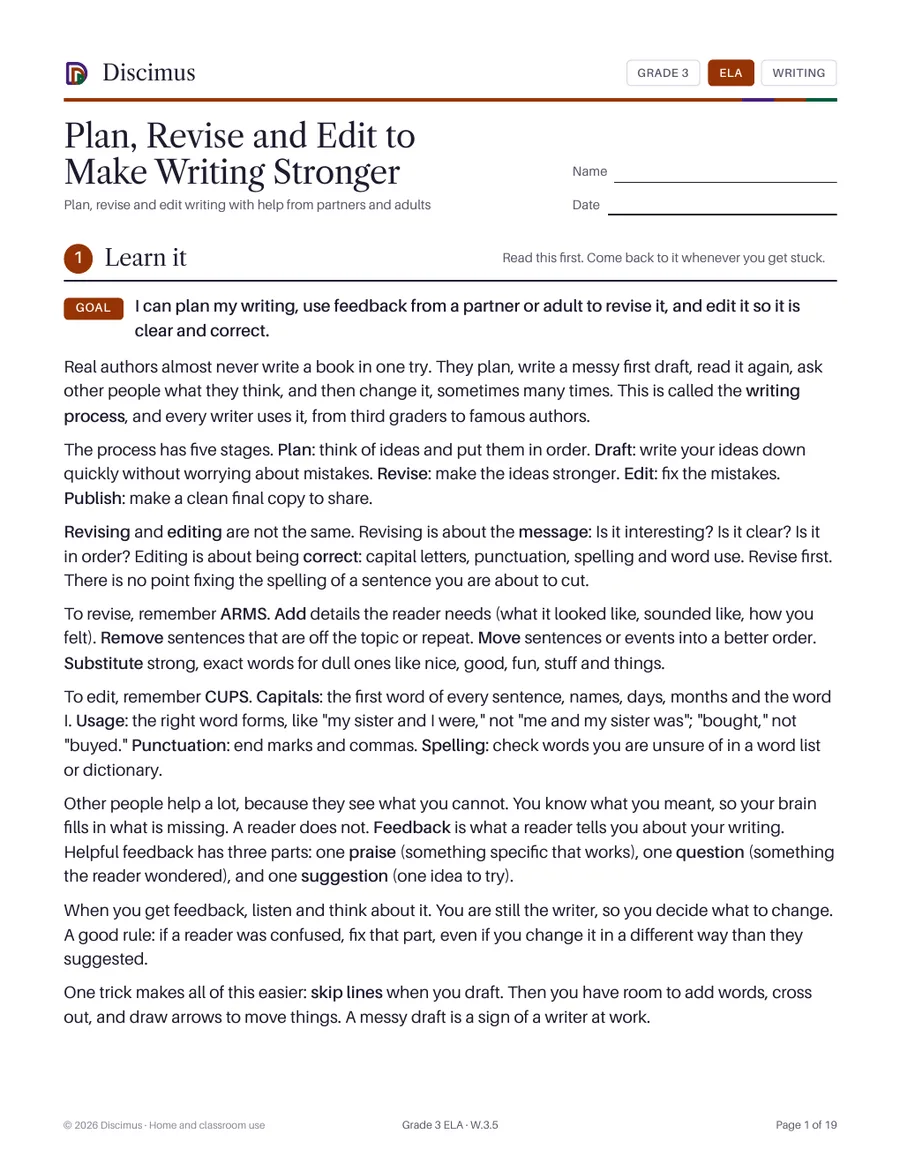
Plan, revise and edit writing with help from partners and adults
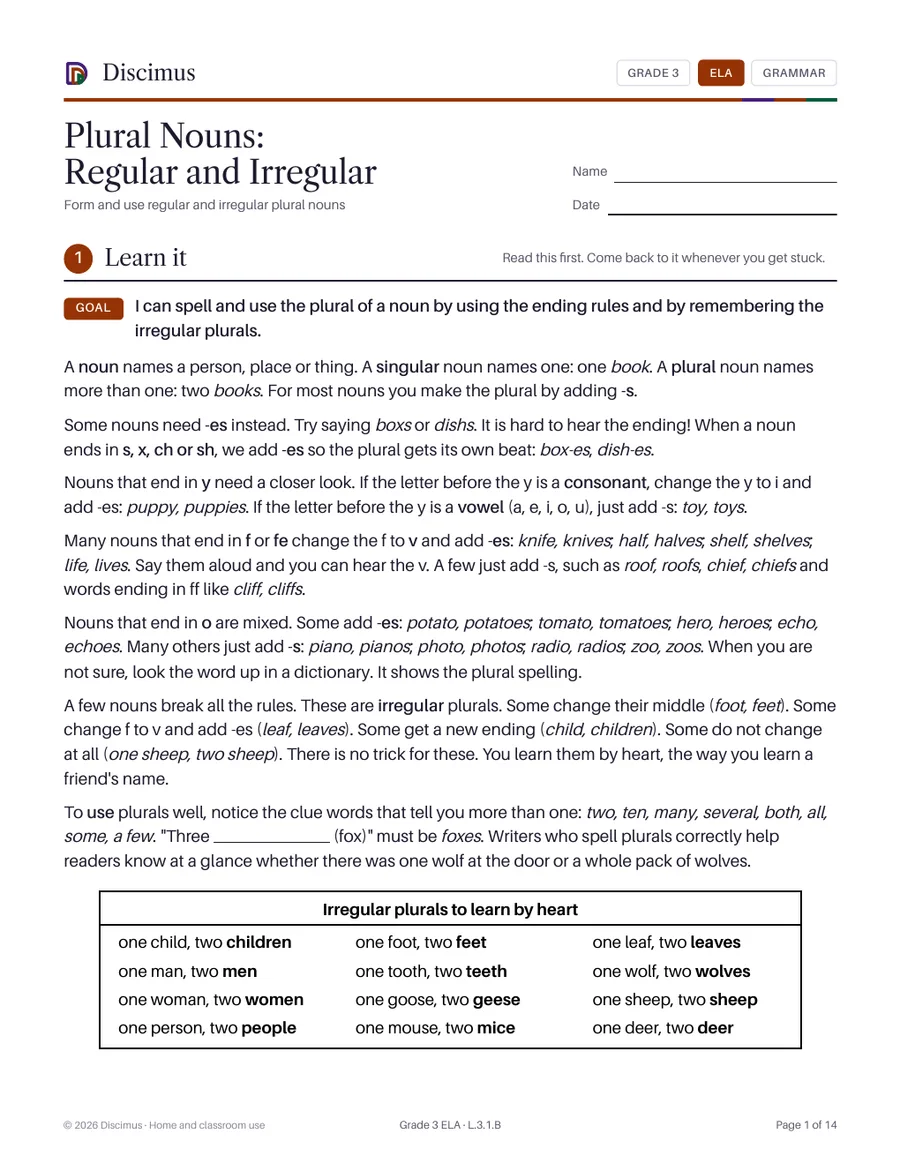
Form and use regular and irregular plural nouns
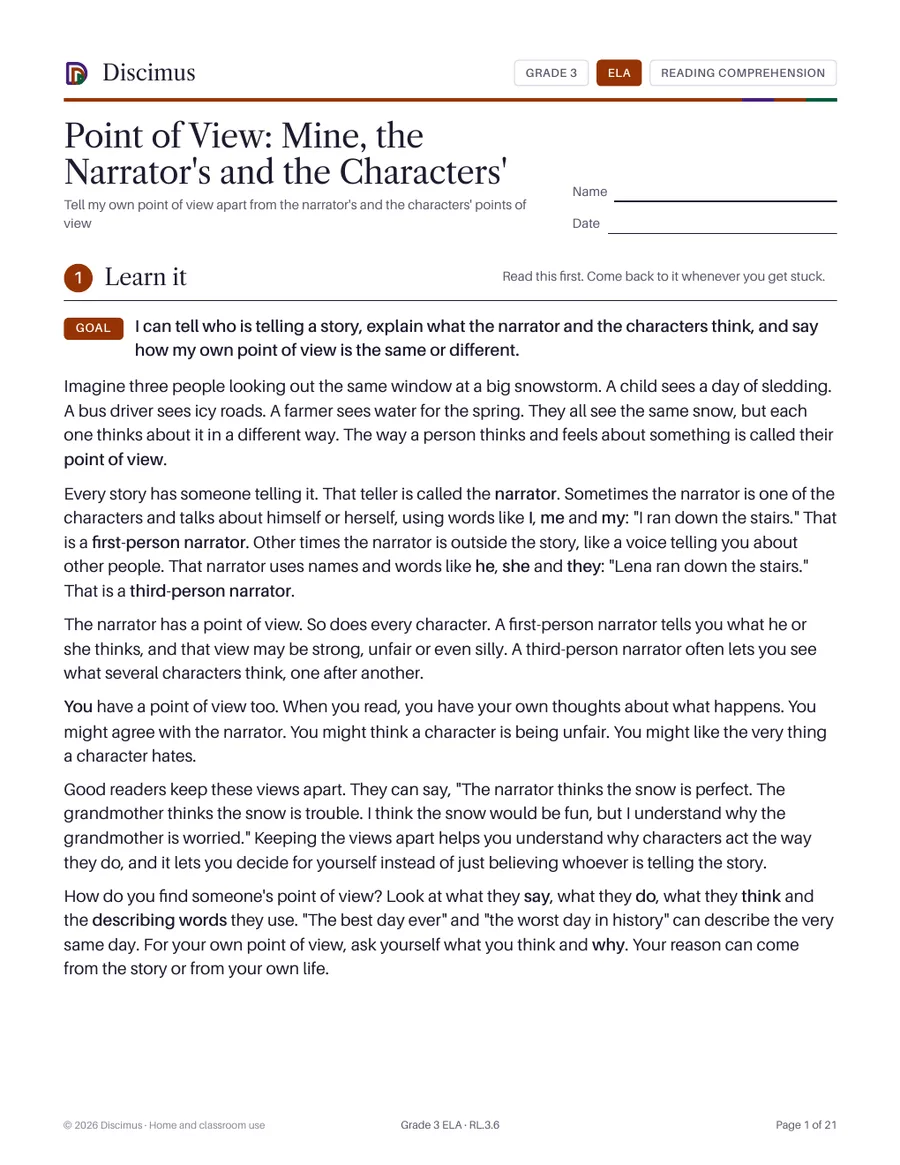
Tell my own point of view apart from the narrator's and the characters' points of view
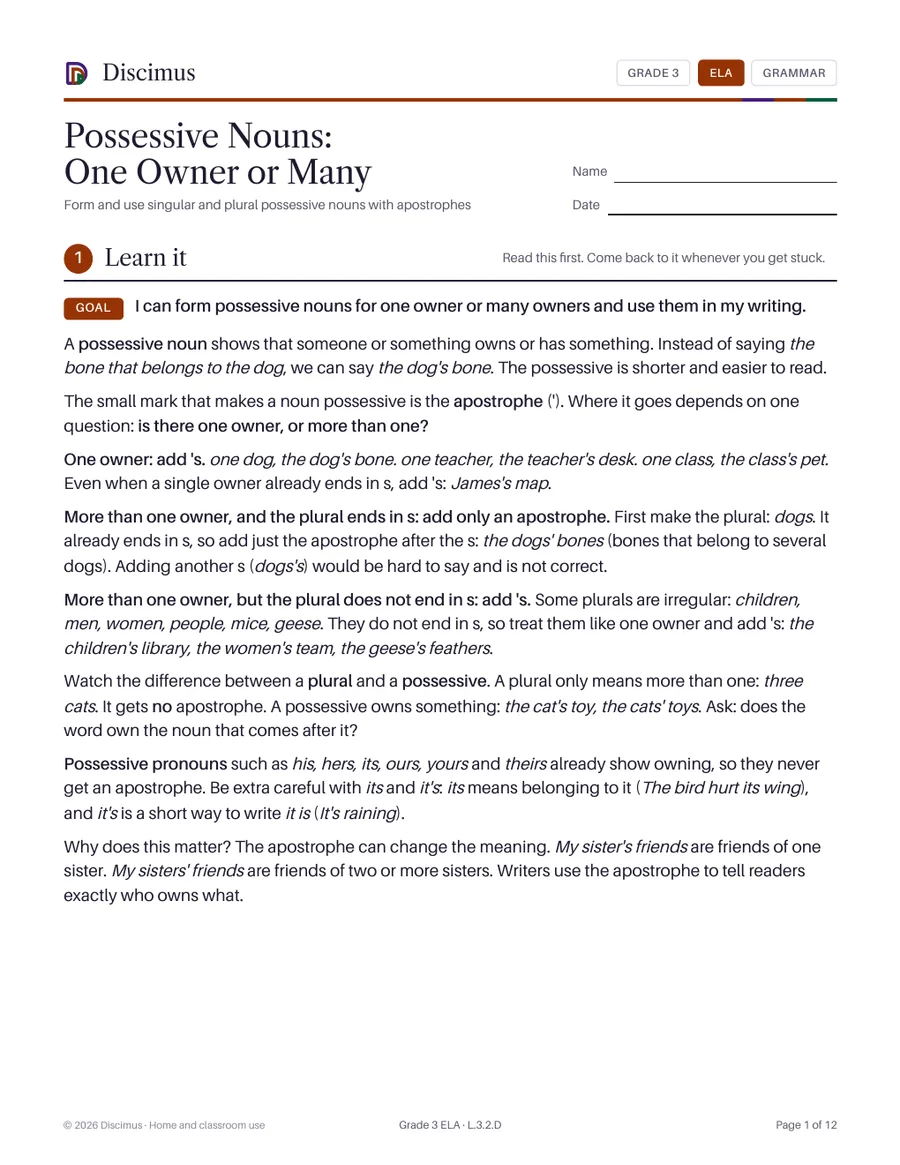
Form and use singular and plural possessive nouns with apostrophes
Use commas and quotation marks correctly in dialogue
Set a purpose before reading, check understanding while reading, and sum up after
Read history, science and how-to texts independently using a reading routine
Read grade 3 prose and poetry aloud accurately, at a fitting pace and with expression
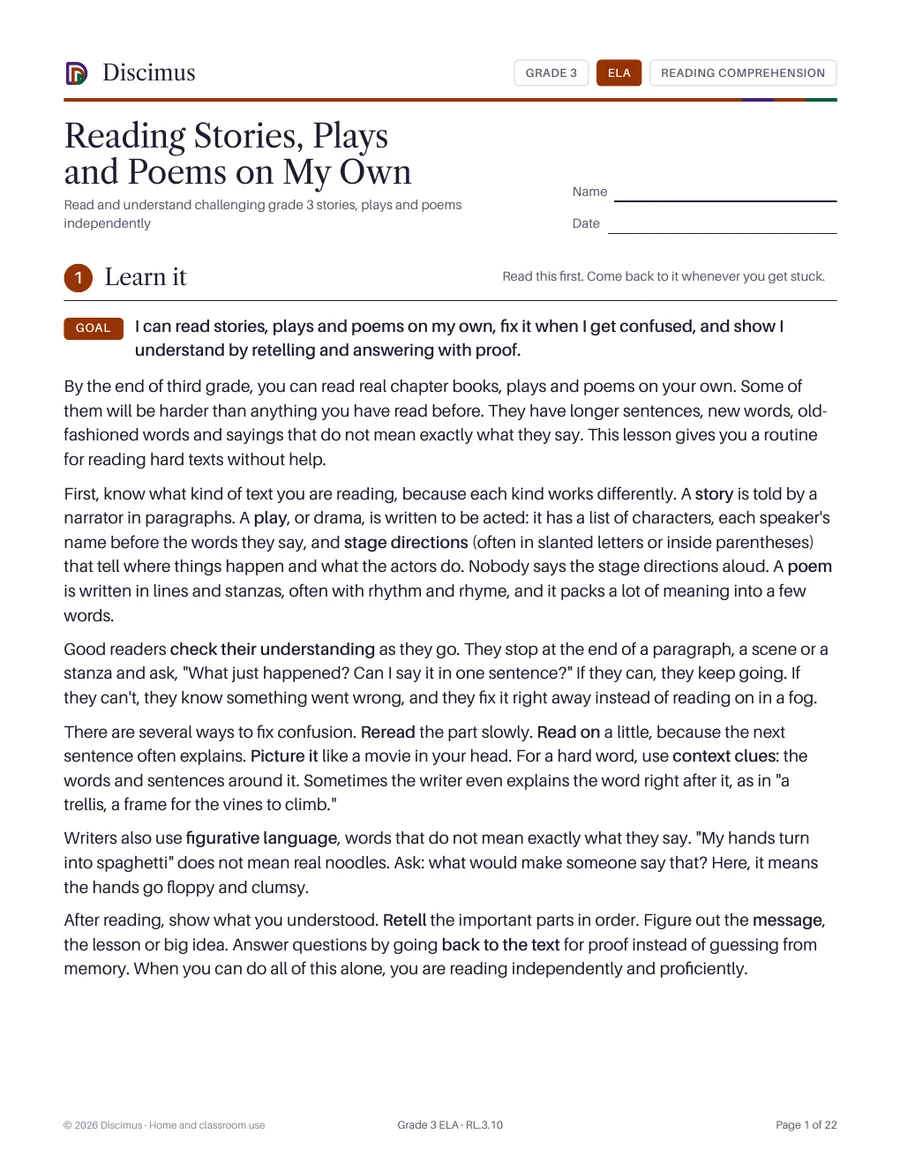
Read and understand challenging grade 3 stories, plays and poems independently
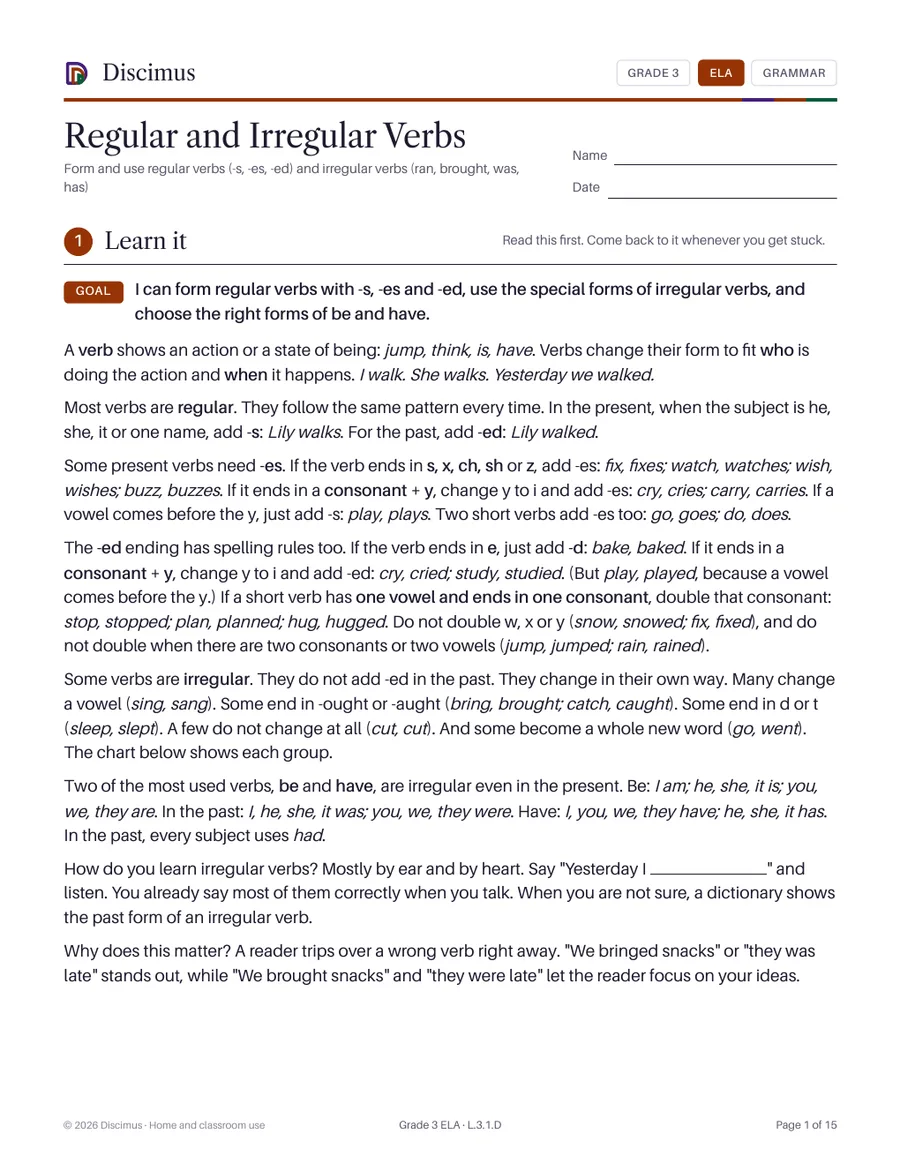
Form and use regular verbs (-s, -es, -ed) and irregular verbs (ran, brought, was, has)
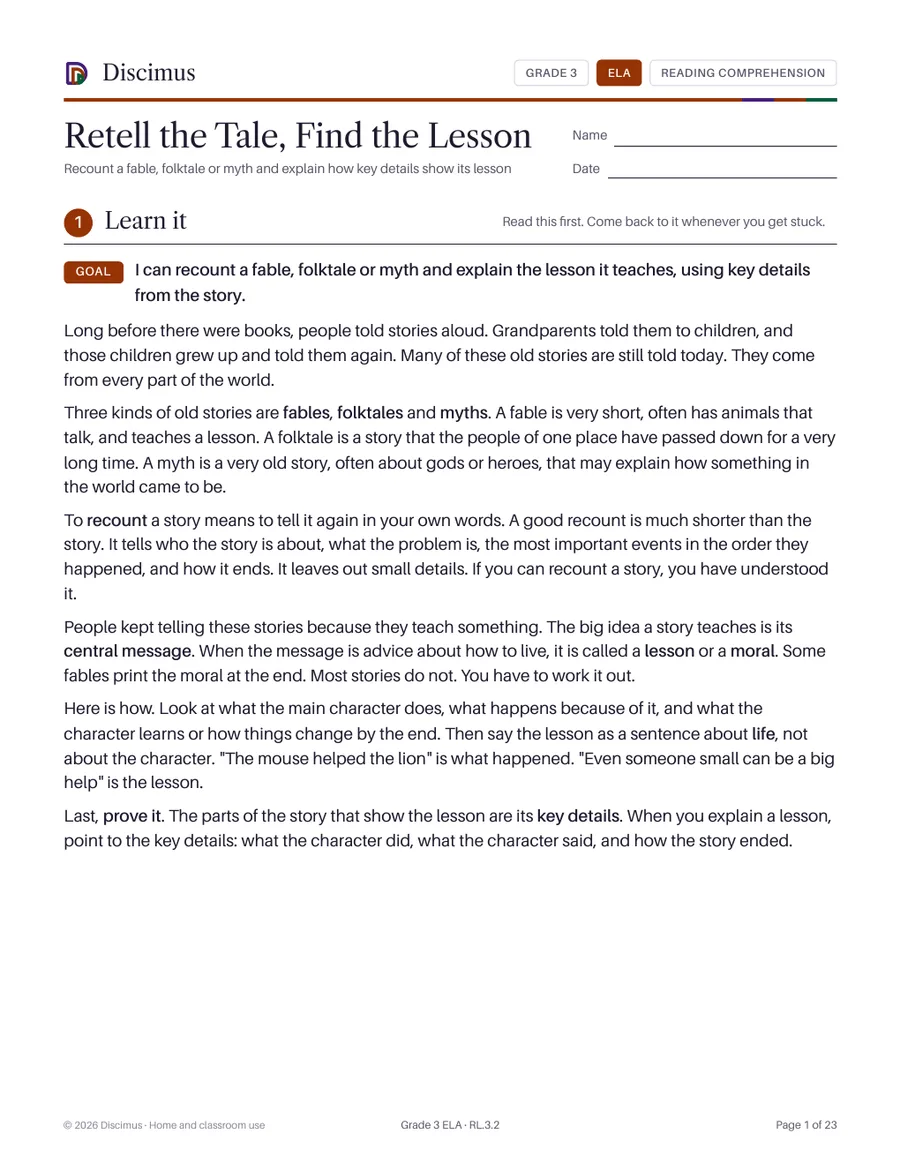
Recount a fable, folktale or myth and explain how key details show its lesson
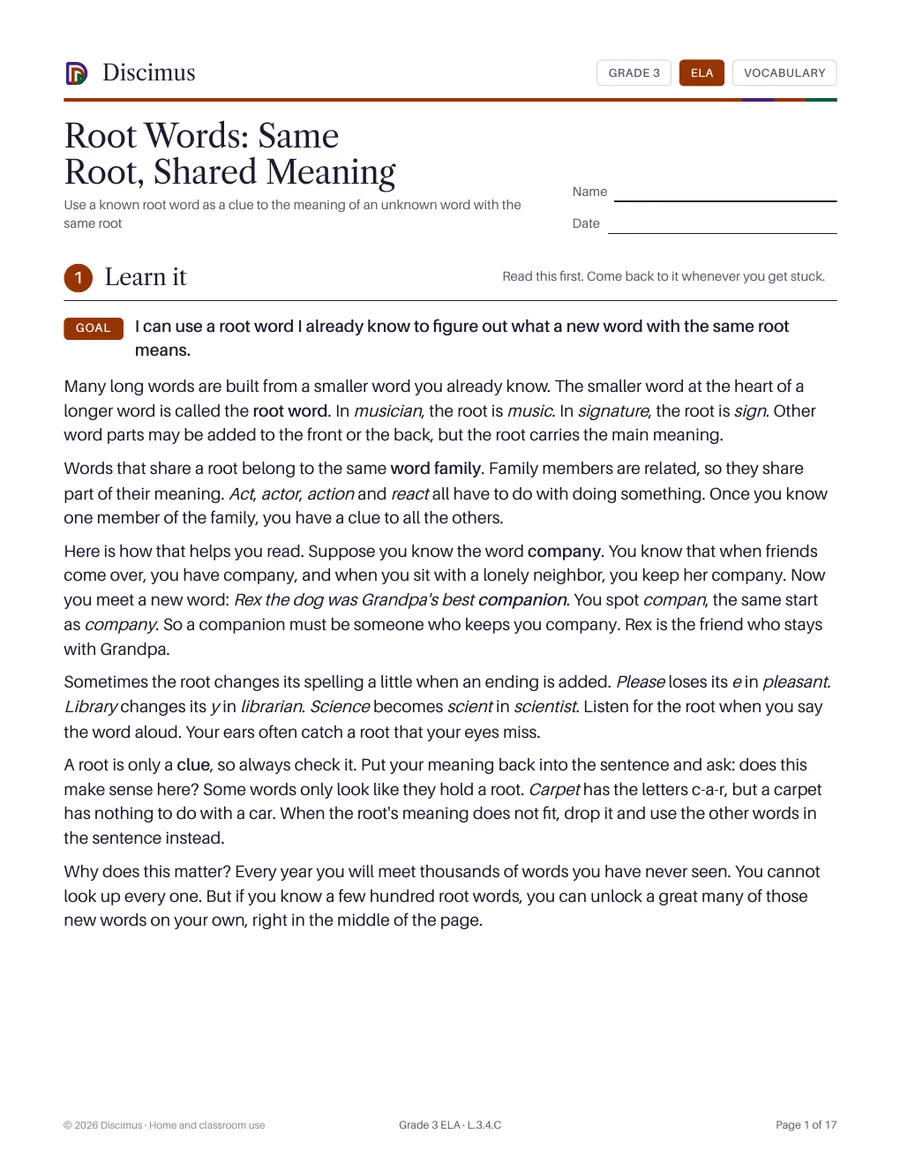
Use a known root word as a clue to the meaning of an unknown word with the same root
Compare and contrast the most important points and key details in two texts on one topic
Recognize and observe differences between spoken and written standard English
Use clues in the sentence to work out the meaning of an unknown word or phrase
Tell apart related words that show states of mind or how certain someone is
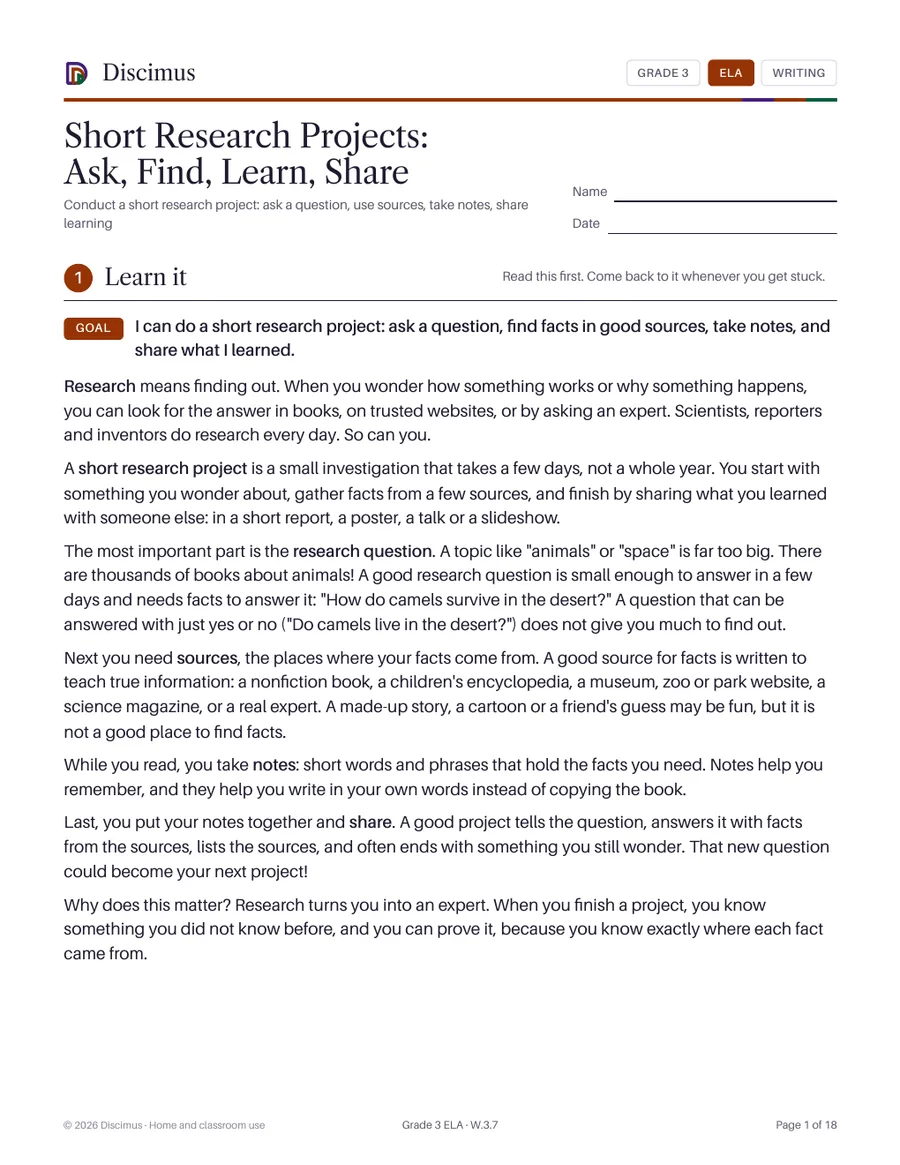
Conduct a short research project: ask a question, use sources, take notes, share learning
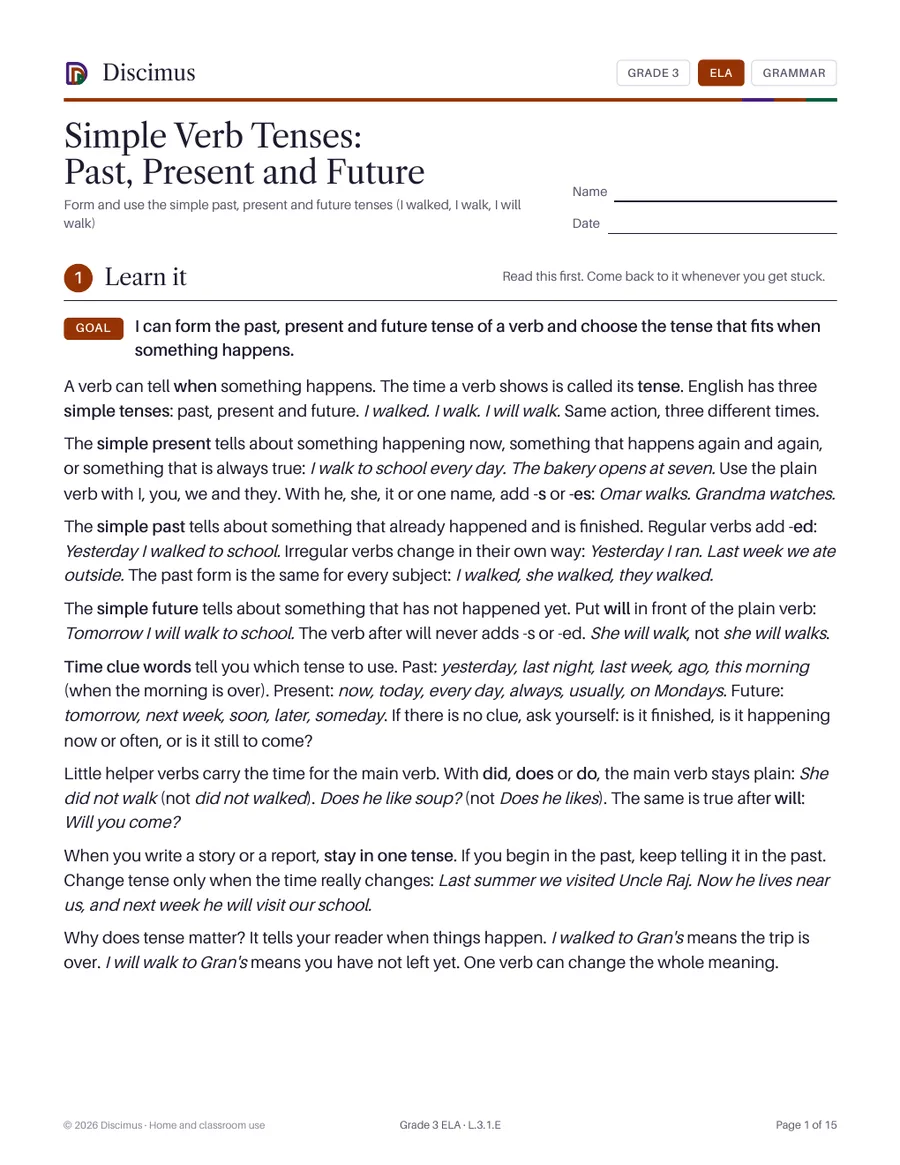
Form and use the simple past, present and future tenses (I walked, I walk, I will walk)
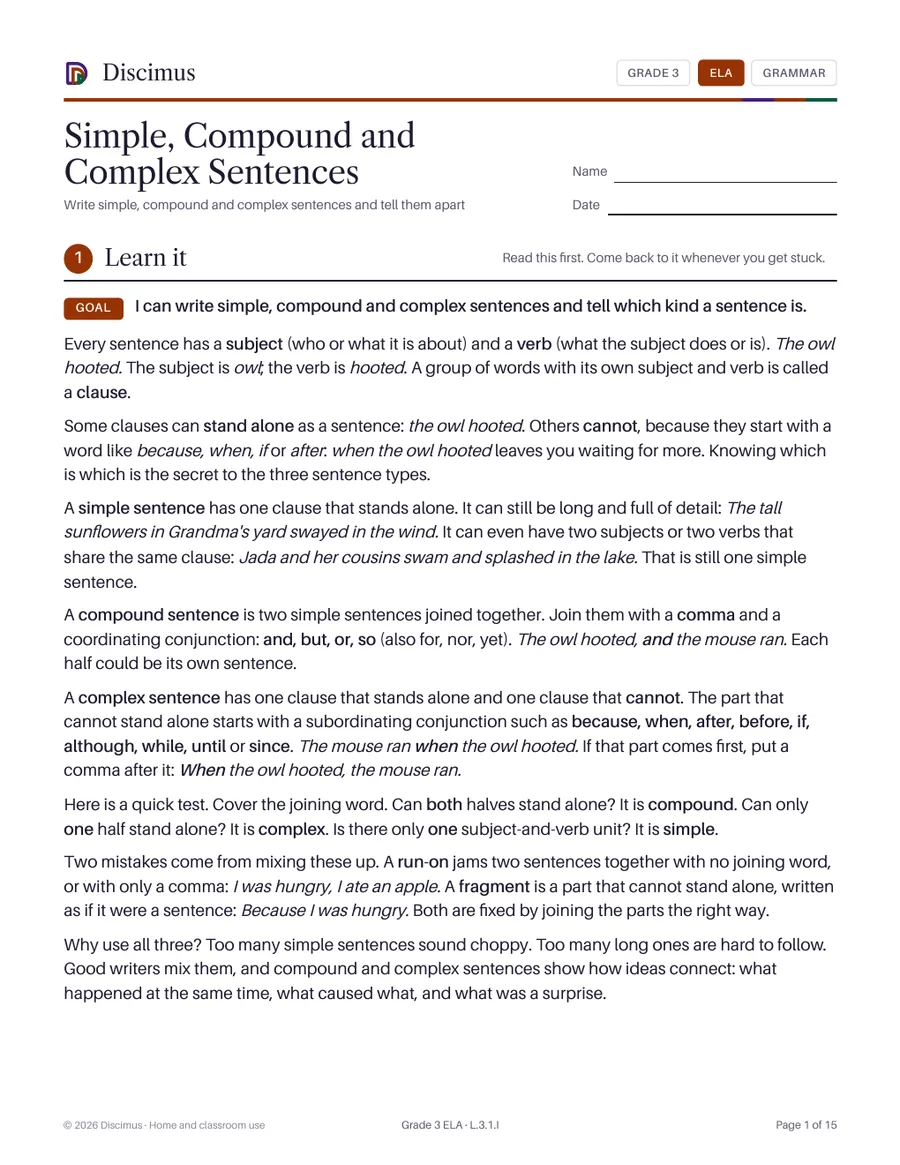
Write simple, compound and complex sentences and tell them apart
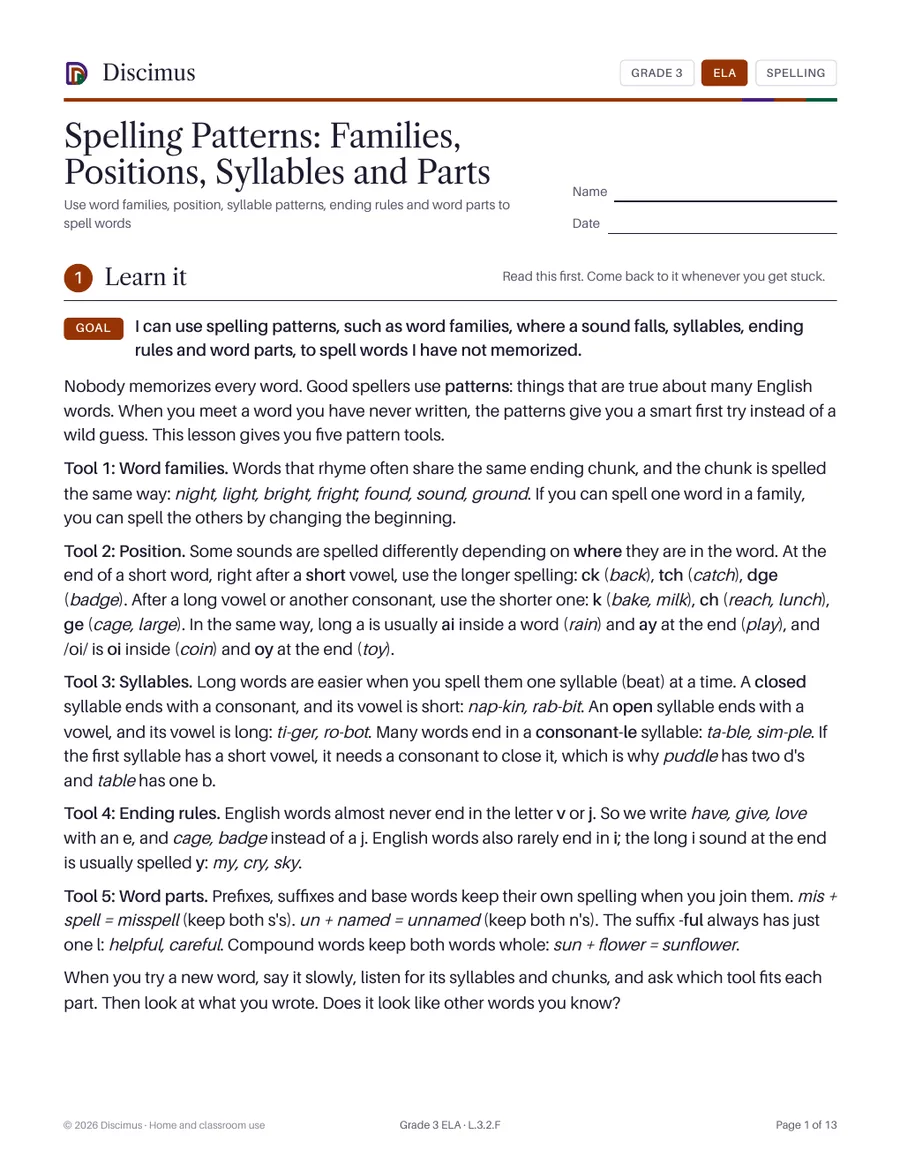
Use word families, position, syllable patterns, ending rules and word parts to spell words
Spell words with suffixes using ending rules, and spell common high-frequency words
Gather facts from experience and sources, take brief notes, sort them into categories
Describe a character and explain how her actions move the story forward
Use keyboarding and digital tools to produce, publish and collaborate on writing
Figure out the meaning of science and social studies words in a nonfiction text
Work out word and phrase meanings in a story and tell literal from nonliteral language
Tell the author's point of view in a nonfiction text apart from your own point of view
Choose words and phrases for effect: strong verbs, exact nouns, sense words and mood
Identify common prefixes and derivational suffixes and use their meanings to define words
Learn and use talk, school and subject words, and words that tell where and when
Connect words to real-life people, places and events and explain why each example fits
Write routinely, short and extended, for different tasks, purposes and audiences
Capitalize sentences, proper nouns, titles of works, quotations, greetings and closings
Write clear, coherent pieces organized and developed to fit task, purpose and audience
Use a comma before a coordinating conjunction that joins two sentences into one
Write complete sentences and correct fragments and run-ons
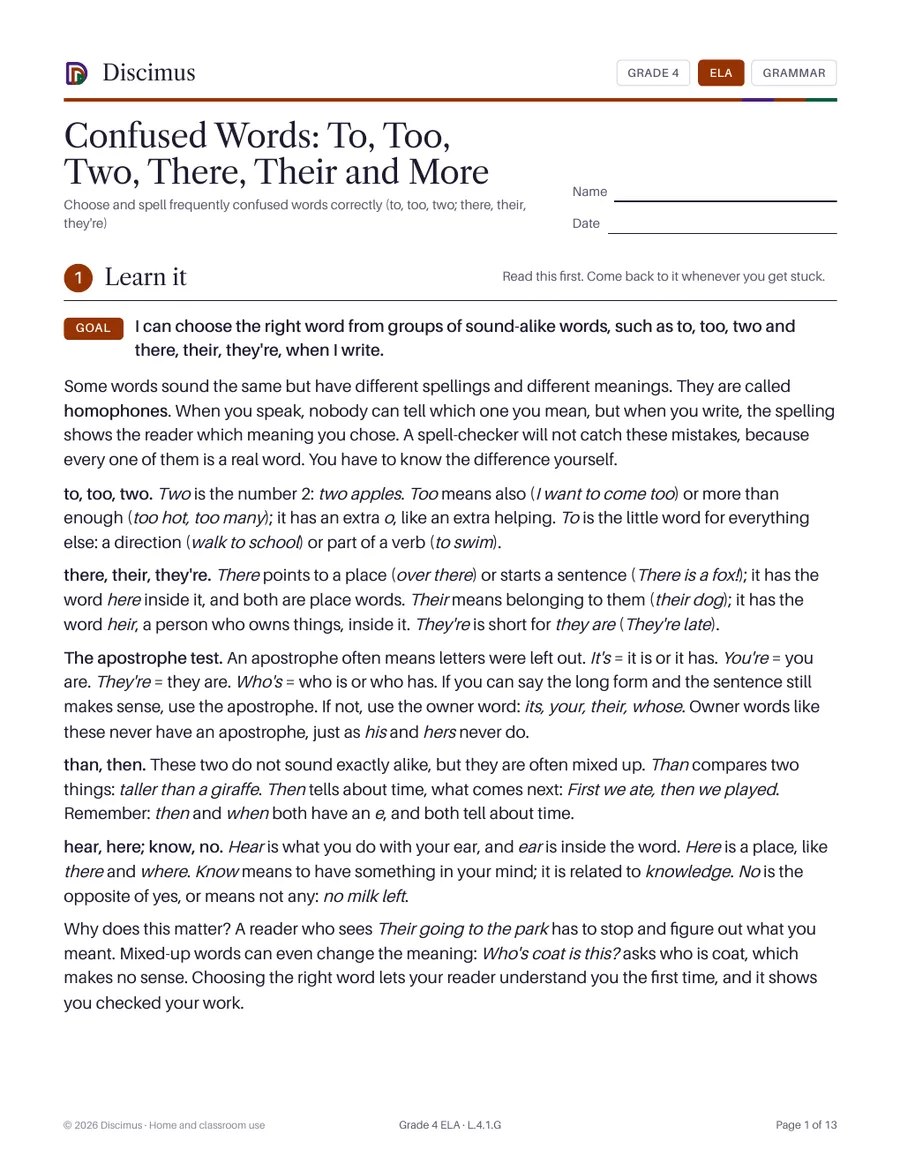
Choose and spell frequently confused words correctly (to, too, two; there, their, they're)
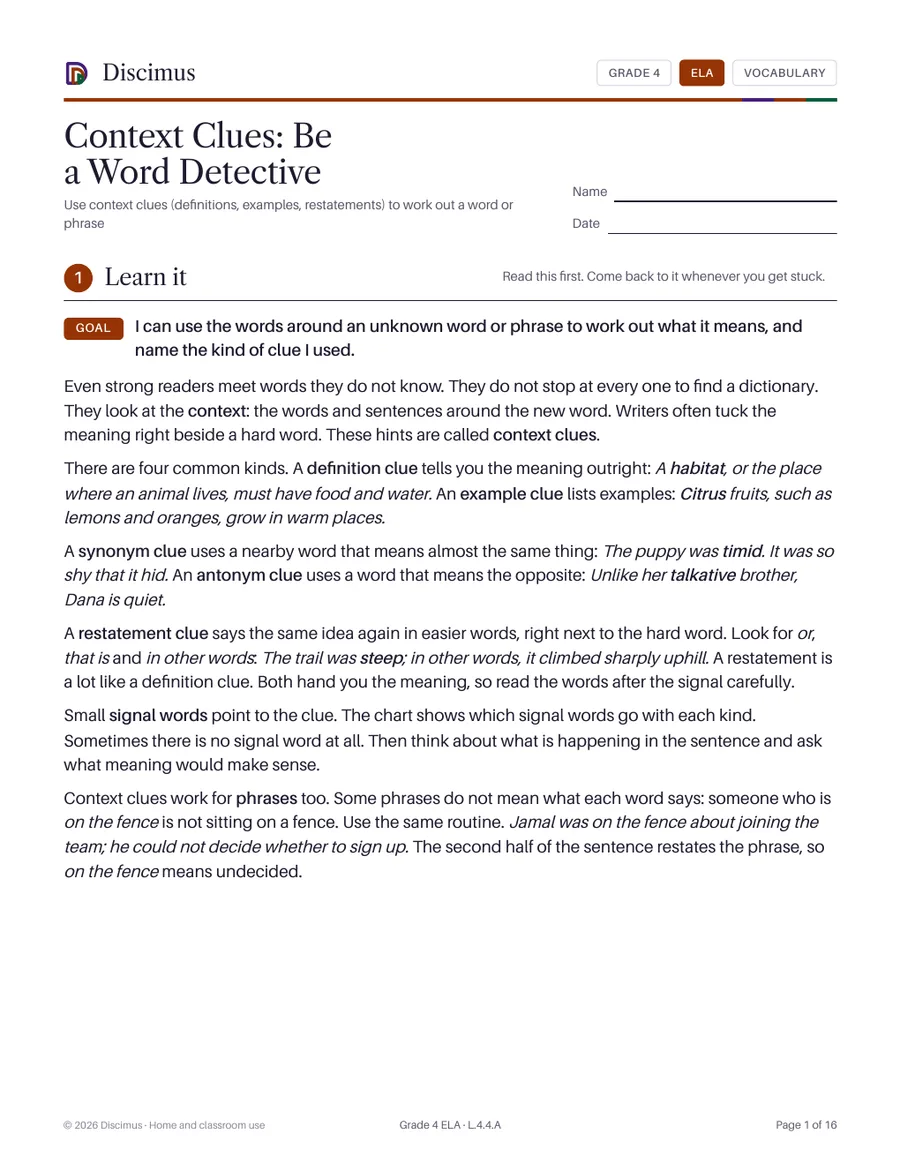
Use context clues (definitions, examples, restatements) to work out a word or phrase
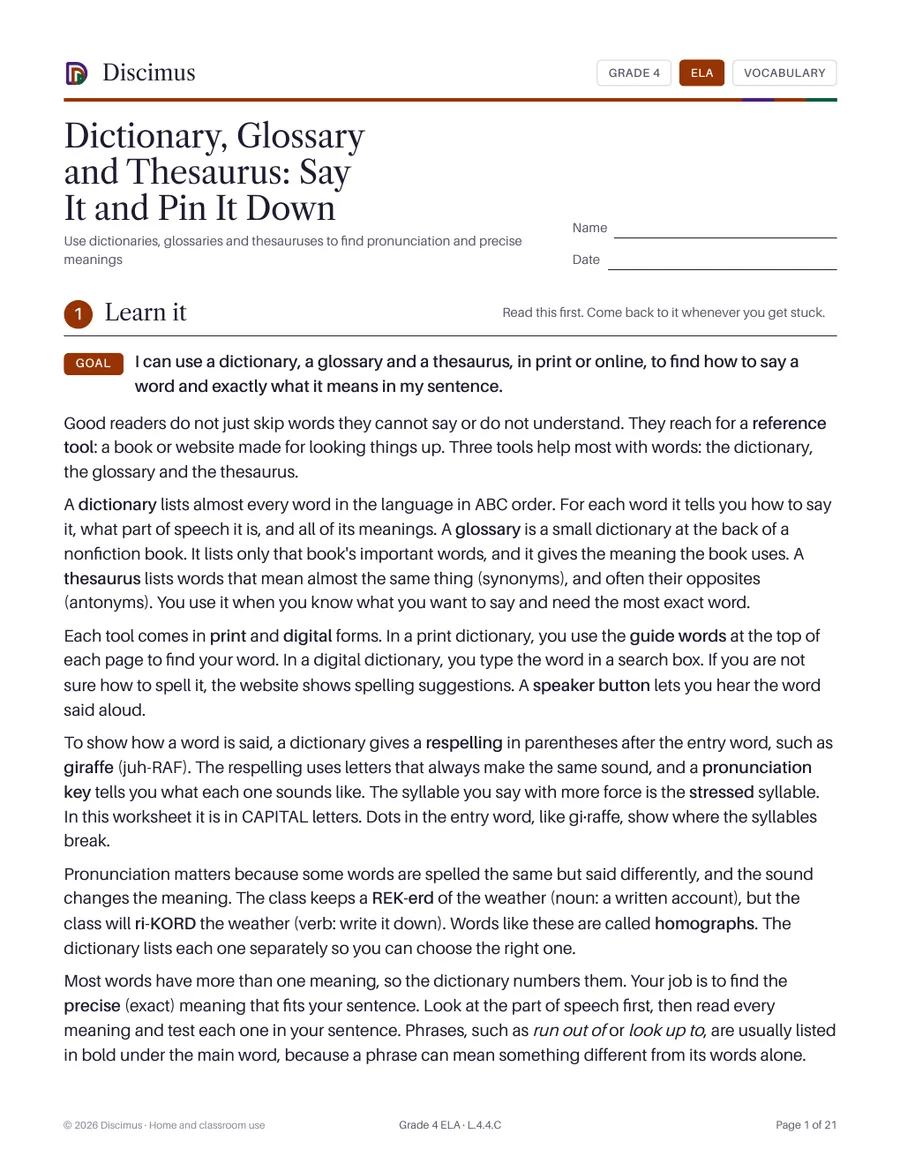
Use dictionaries, glossaries and thesauruses to find pronunciation and precise meanings
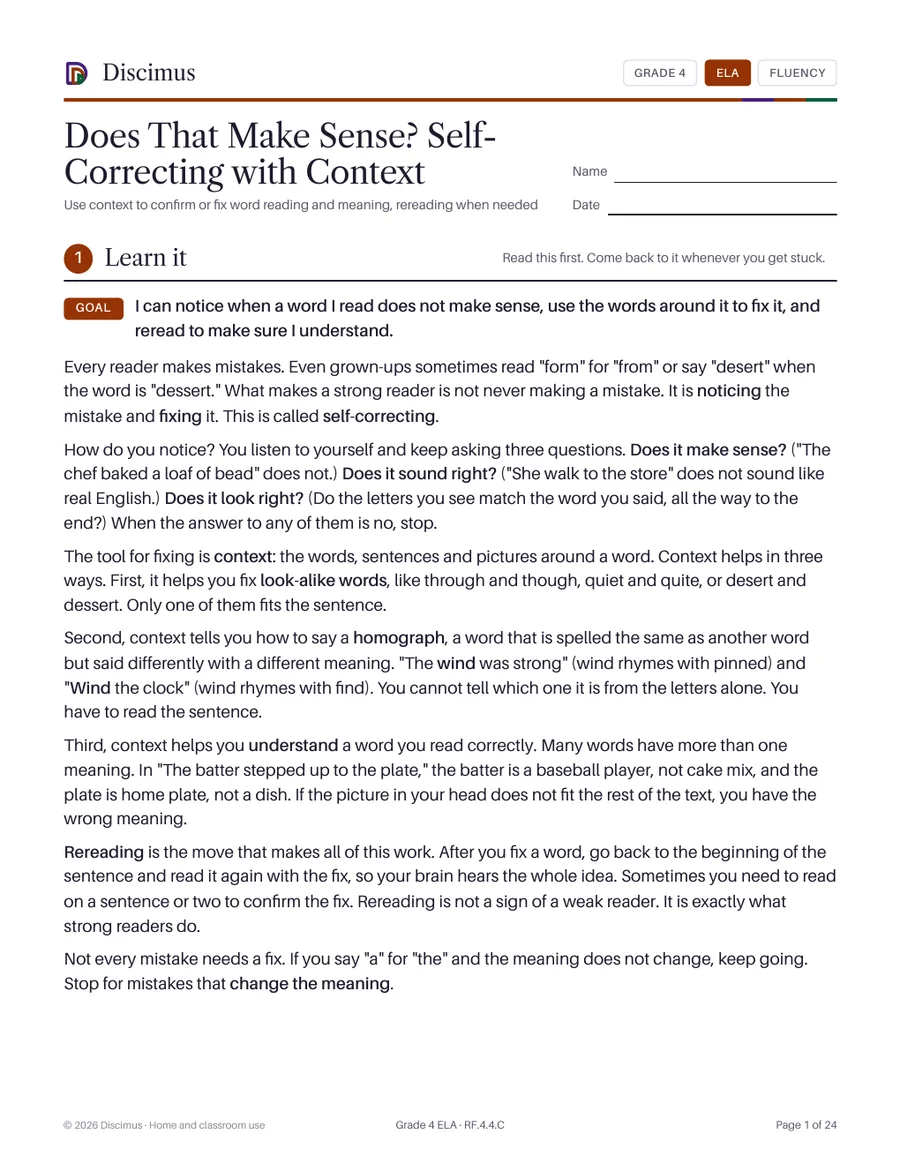
Use context to confirm or fix word reading and meaning, rereading when needed
Determine a theme of a story, play or poem from its details and summarize the text
Compare first-person and third-person narration and how each narrator shapes the story
Compare firsthand and secondhand accounts of one event: focus and information
Tell when a situation calls for formal English and when informal language fits, and switch
Connect a story or play to its picture, performance or audio version, citing exact words
Gather information from experience and sources, take and categorize notes, list sources
Describe a character, setting or event in depth using specific details from the text
Use Greek and Latin roots and affixes as clues to the meaning of a word
Work out words and phrases in a text from context, including allusions to mythology
Explain how an author uses reasons and evidence to support particular points in a text
Describe text structure: time order, comparison, cause and effect, problem and solution
Recognize and explain the meaning of common idioms, adages and proverbs
Develop a topic with facts, definitions, concrete details, quotations and examples
Introduce a topic, group facts into sections with headings, add helpful illustrations
Link ideas within categories using words such as another, for example, also and because
Use precise language and domain-specific vocabulary to inform about or explain a topic
Write a concluding statement or section related to the information presented
Find a nonfiction text's main idea, explain how key details support it, and summarize it
Use modals such as can, may and must to show ability, permission, need or possibility
Write a narrative conclusion that follows from the experiences and events in the story
Use concrete words and sensory details to show experiences and events precisely
Use dialogue and description to develop events and show how characters respond
Orient the reader with a situation, narrator and characters; order events naturally
Use a variety of transition words and phrases to manage the sequence of events in a story
Read and understand grade 4 to 5 history, science and technical texts independently
Support each opinion reason with facts, details and examples, then explain them
Introduce a topic or text, state an opinion, and group related ideas into a clear plan
Link opinion and reasons with words like for instance, in order to, in addition
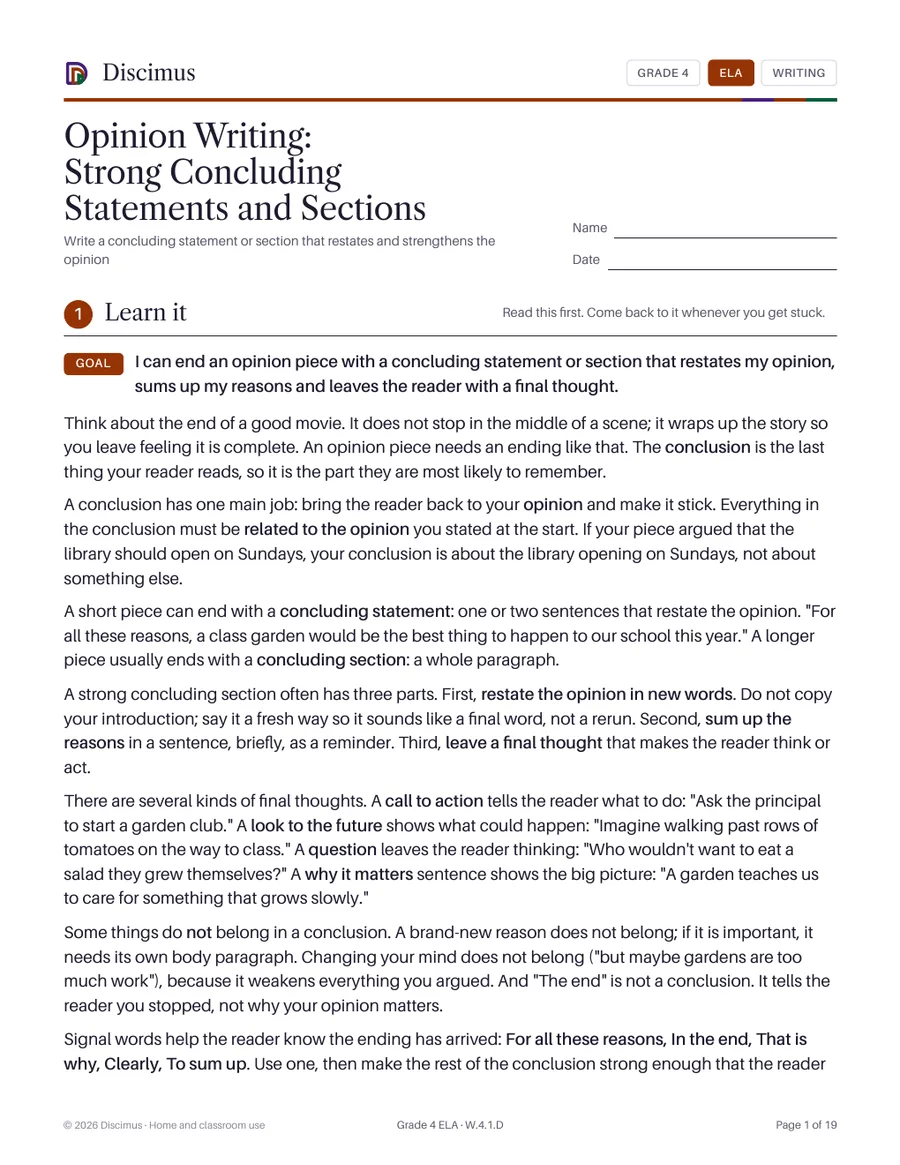
Write a concluding statement or section that restates and strengthens the opinion
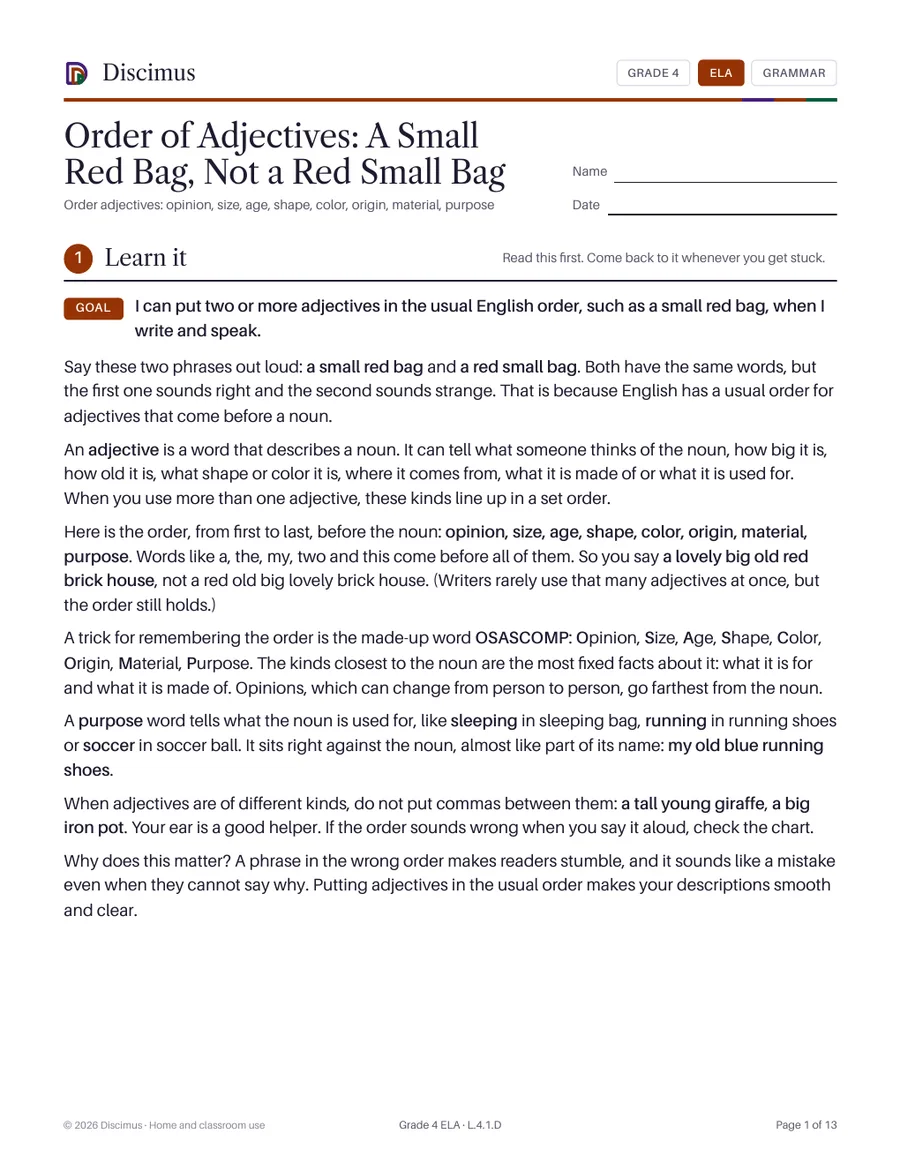
Order adjectives: opinion, size, age, shape, color, origin, material, purpose
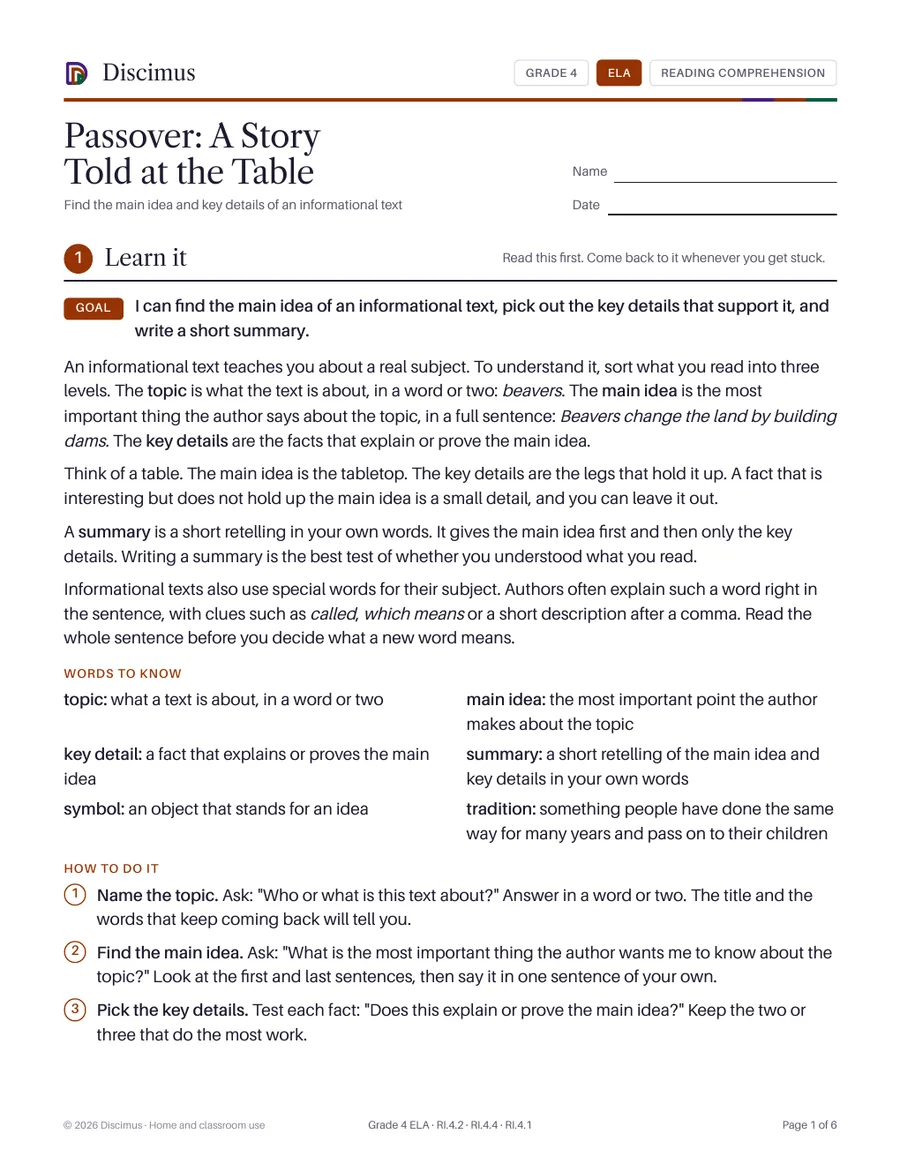
Find the main idea and key details of an informational text
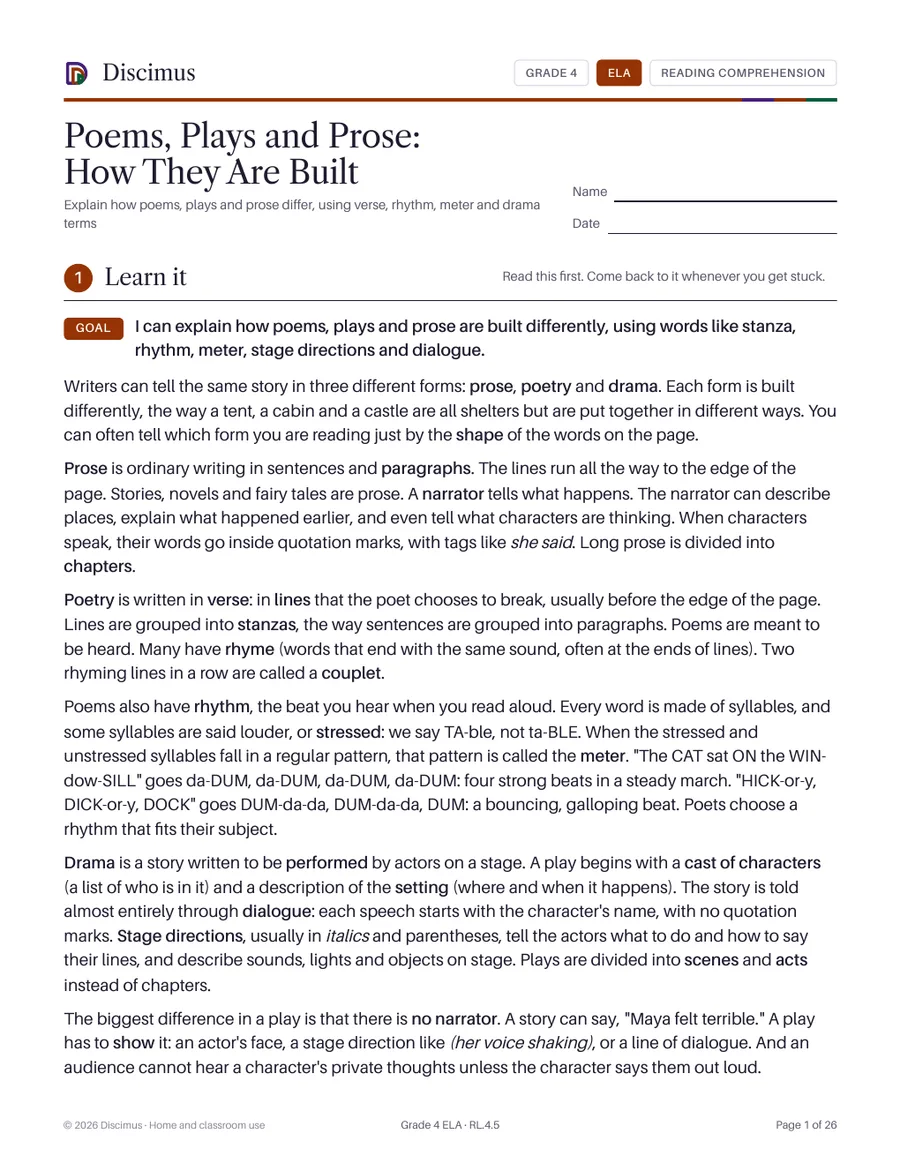
Explain how poems, plays and prose differ, using verse, rhythm, meter and drama terms
Form and use prepositional phrases to tell where, when, how and which one
Form and use the past, present and future progressive verb tenses
Use nonfiction details and examples to explain what a text says and to support inferences
Use details and examples from a story to explain what it states and what you can infer
Choose punctuation (! ? ... — , : and short sentences) to create an effect on the reader
Use commas and quotation marks for dialogue and for quotations from a text
Read grade 4 prose and poetry aloud with accuracy, a fitting rate and expression
Interpret diagrams, graphs, time lines and tables and explain how each helps the text
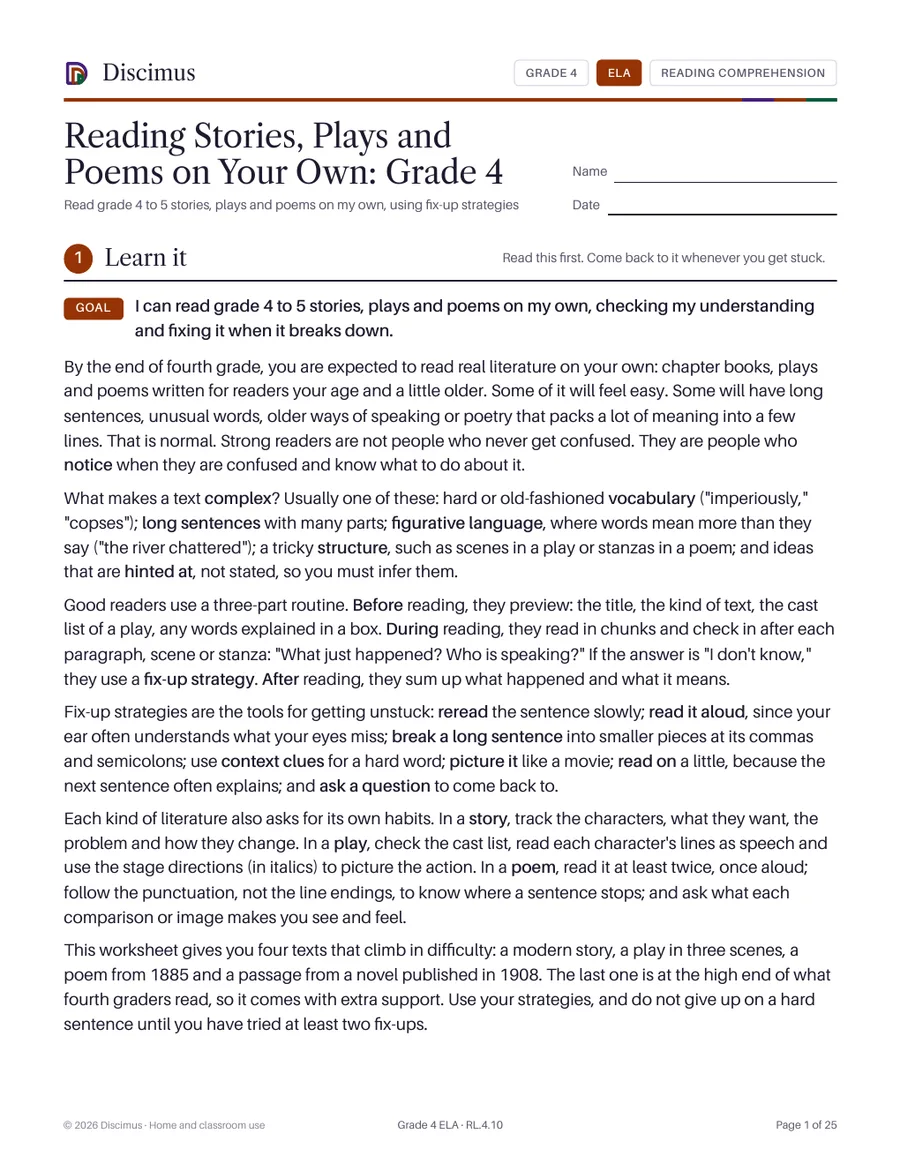
Read grade 4 to 5 stories, plays and poems on my own, using fix-up strategies
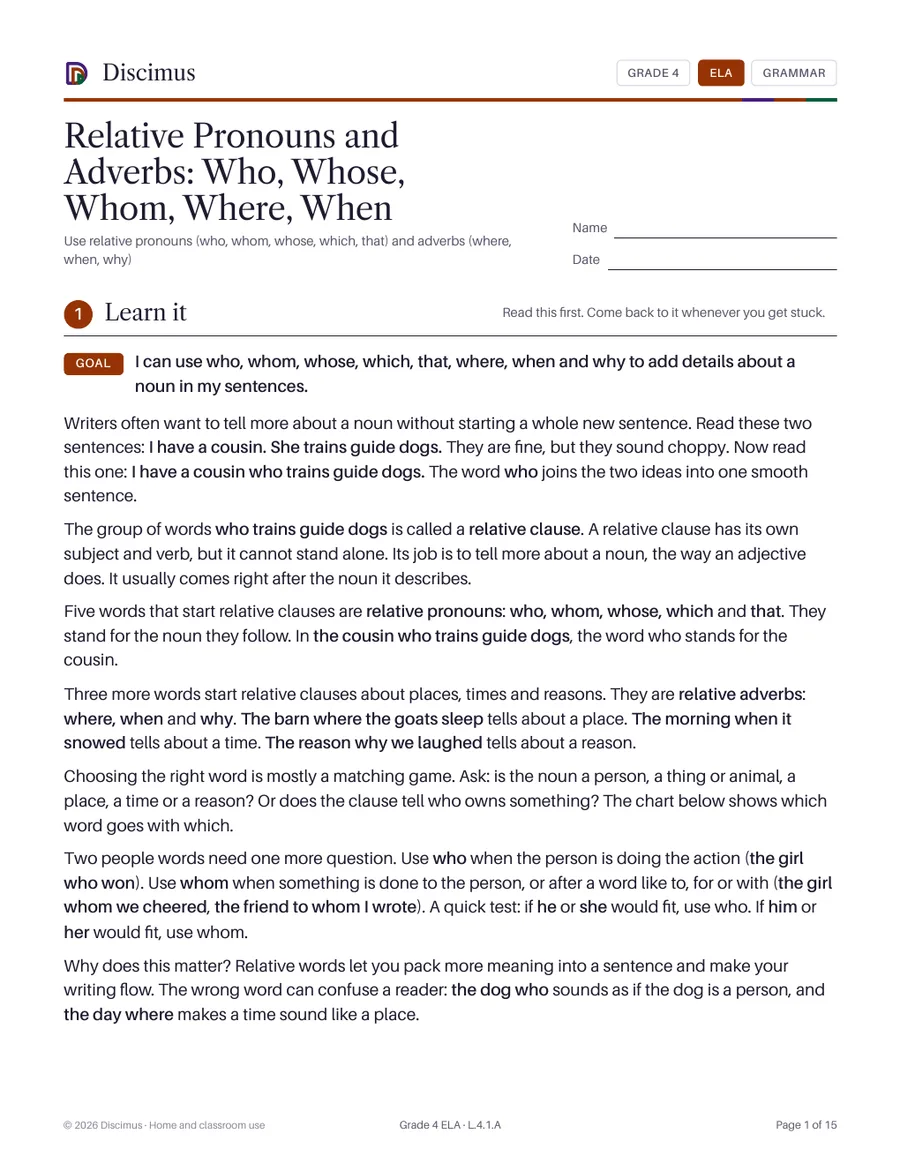
Use relative pronouns (who, whom, whose, which, that) and adverbs (where, when, why)
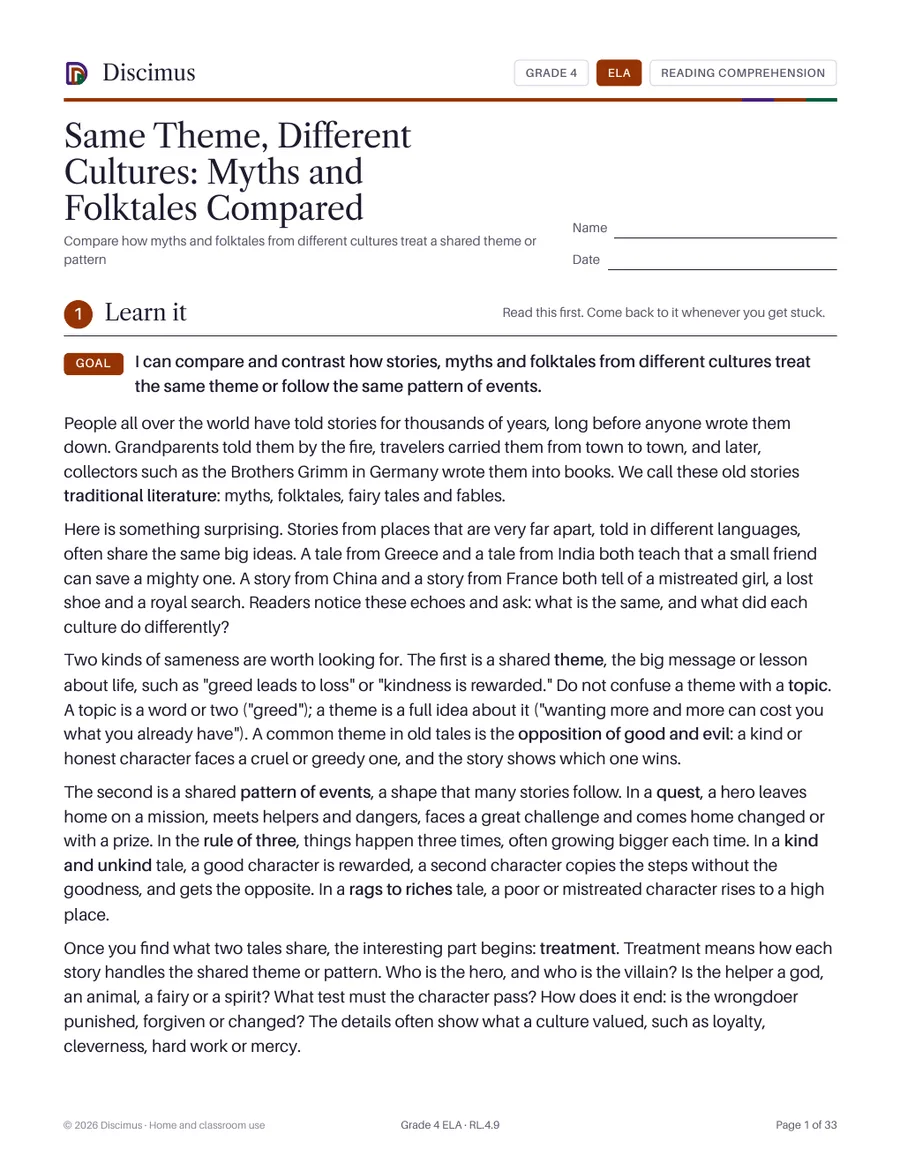
Compare how myths and folktales from different cultures treat a shared theme or pattern
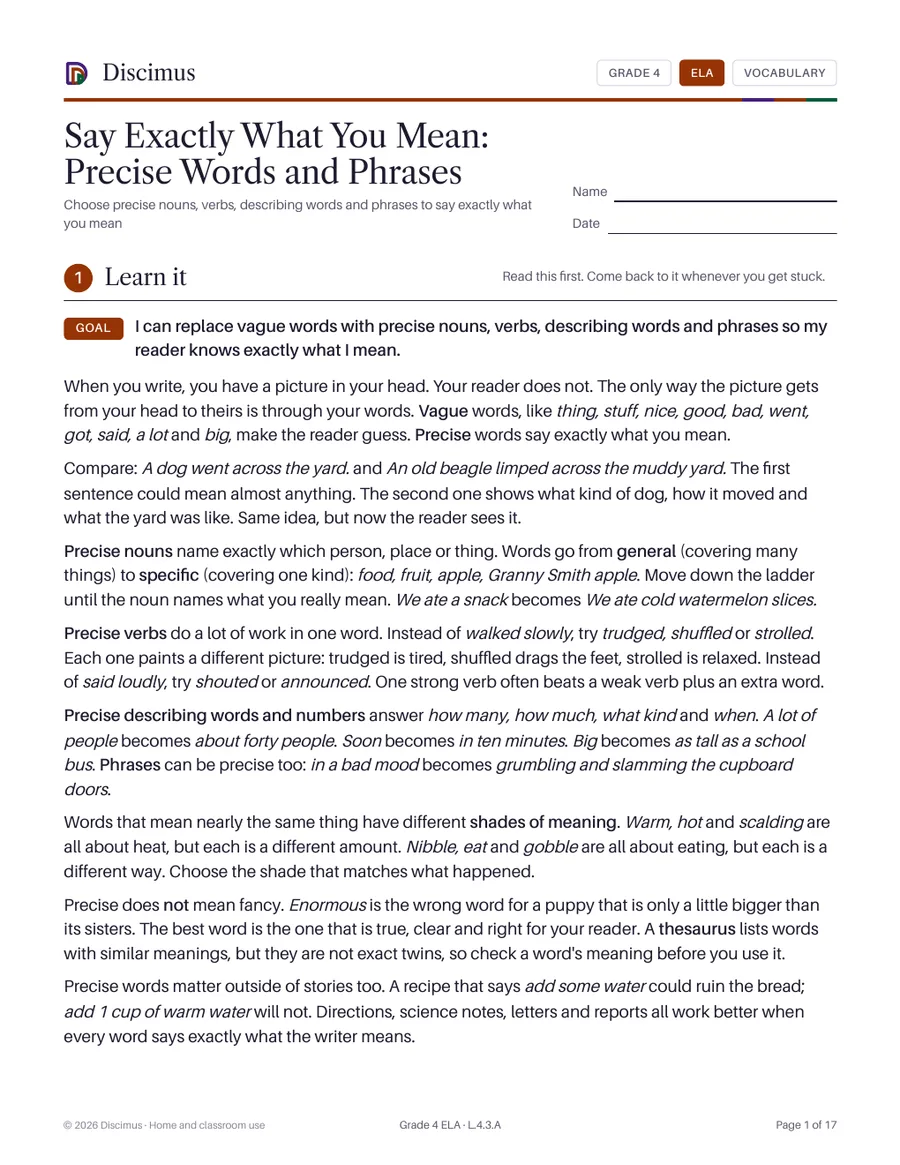
Choose precise nouns, verbs, describing words and phrases to say exactly what you mean
Conduct a short research project that investigates different aspects of a topic
Explain the meaning of simple similes and metaphors in context
Spell grade 4 words correctly and check uncertain spellings in a dictionary
Plan, revise and edit writing with feedback from partners and adults
Relate words to their antonyms and to synonyms with similar but not identical meanings
Integrate information from two texts on one topic to write or speak about it knowledgeably
Use technology to type a full page, publish writing and collaborate with others
Read unfamiliar long words using letter sounds, syllable patterns, roots and affixes
Explain events, steps and ideas in history, science and technical texts, and tell why
 Free sample
Explain a scientific process using details from an informational text
Set a purpose for reading, check understanding while reading, and sum up afterward
Figure out academic words and subject terms in grade 4 science and social studies texts
Learn and use precise action, emotion and state words, academic words and topic words
Write about a story's character, setting or event in depth, using text details as evidence
Write about a nonfiction text, explaining how the author uses reasons and evidence
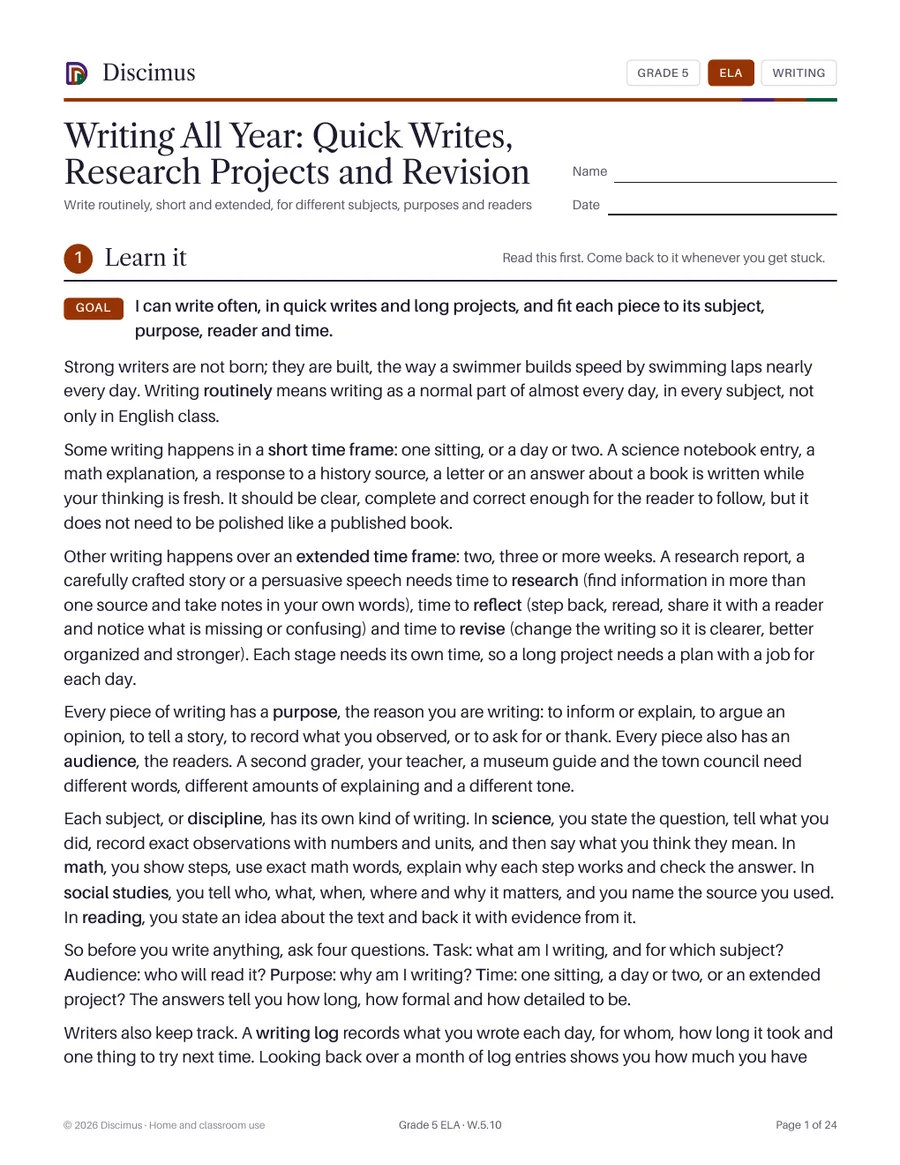
Write routinely, short and extended, for different subjects, purposes and audiences
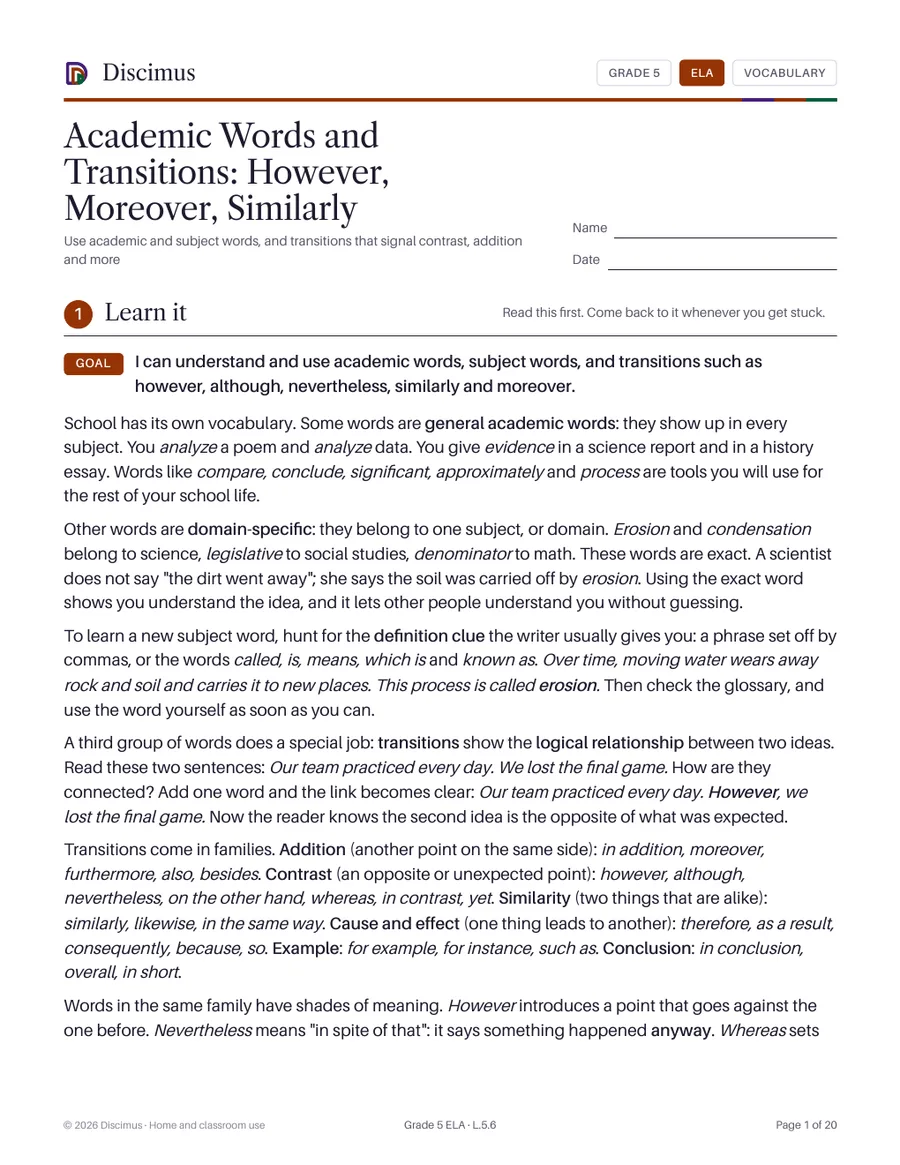
Use academic and subject words, and transitions that signal contrast, addition and more
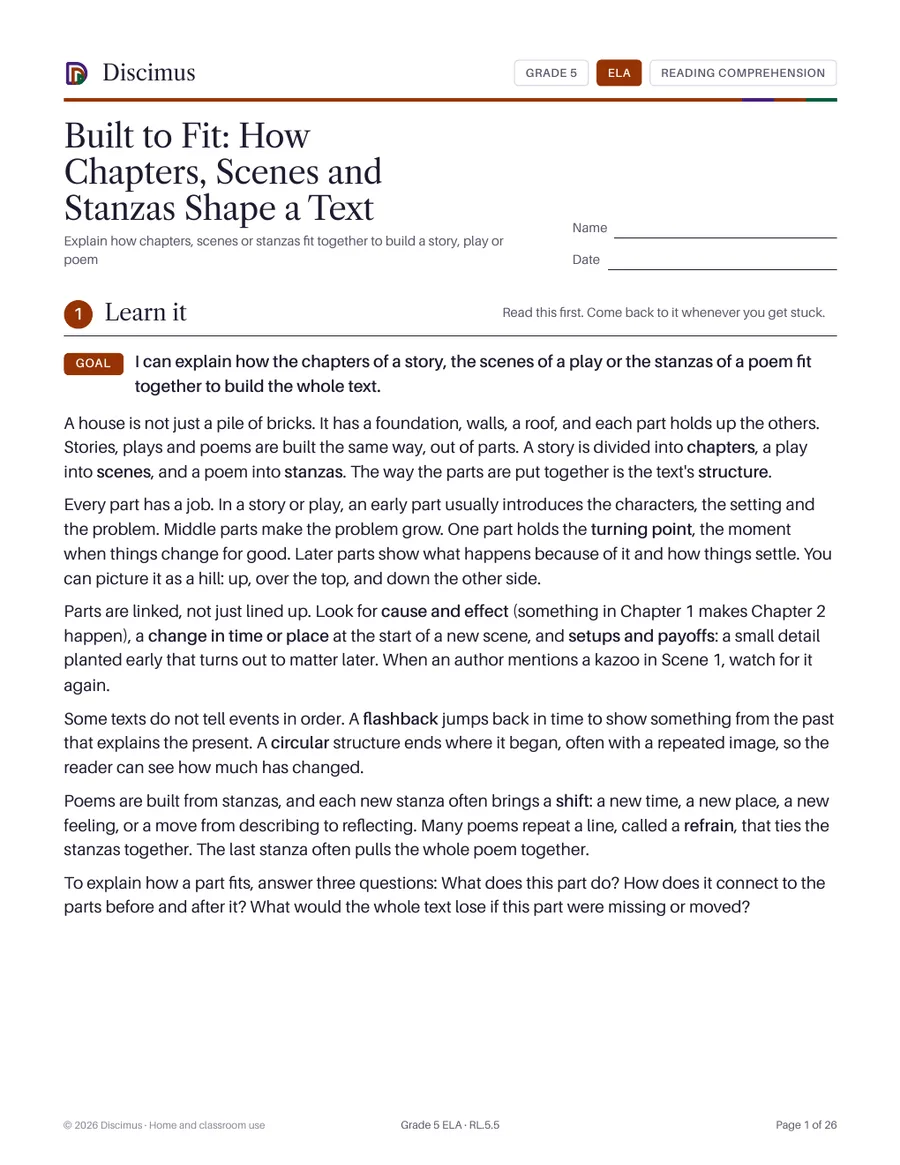
Explain how chapters, scenes or stanzas fit together to build a story, play or poem
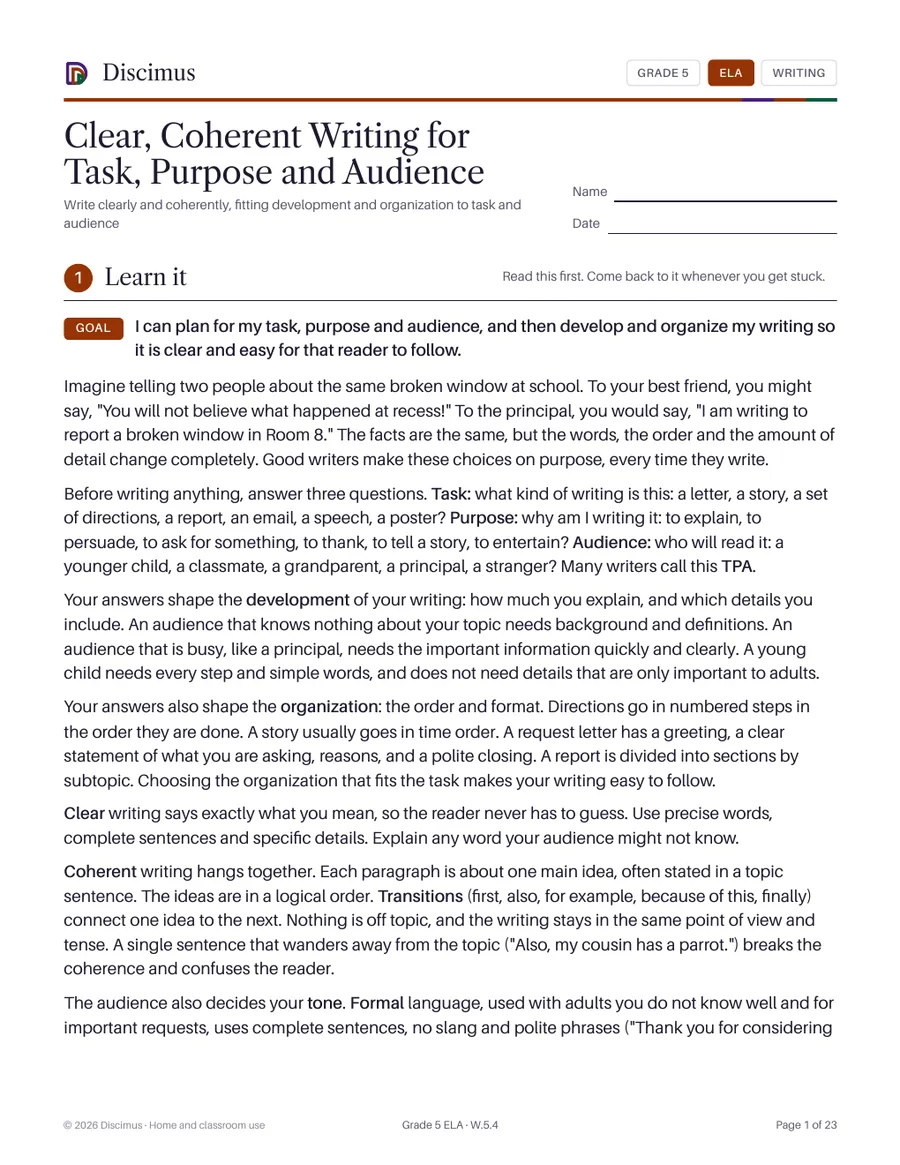
Write clearly and coherently, fitting development and organization to task and audience
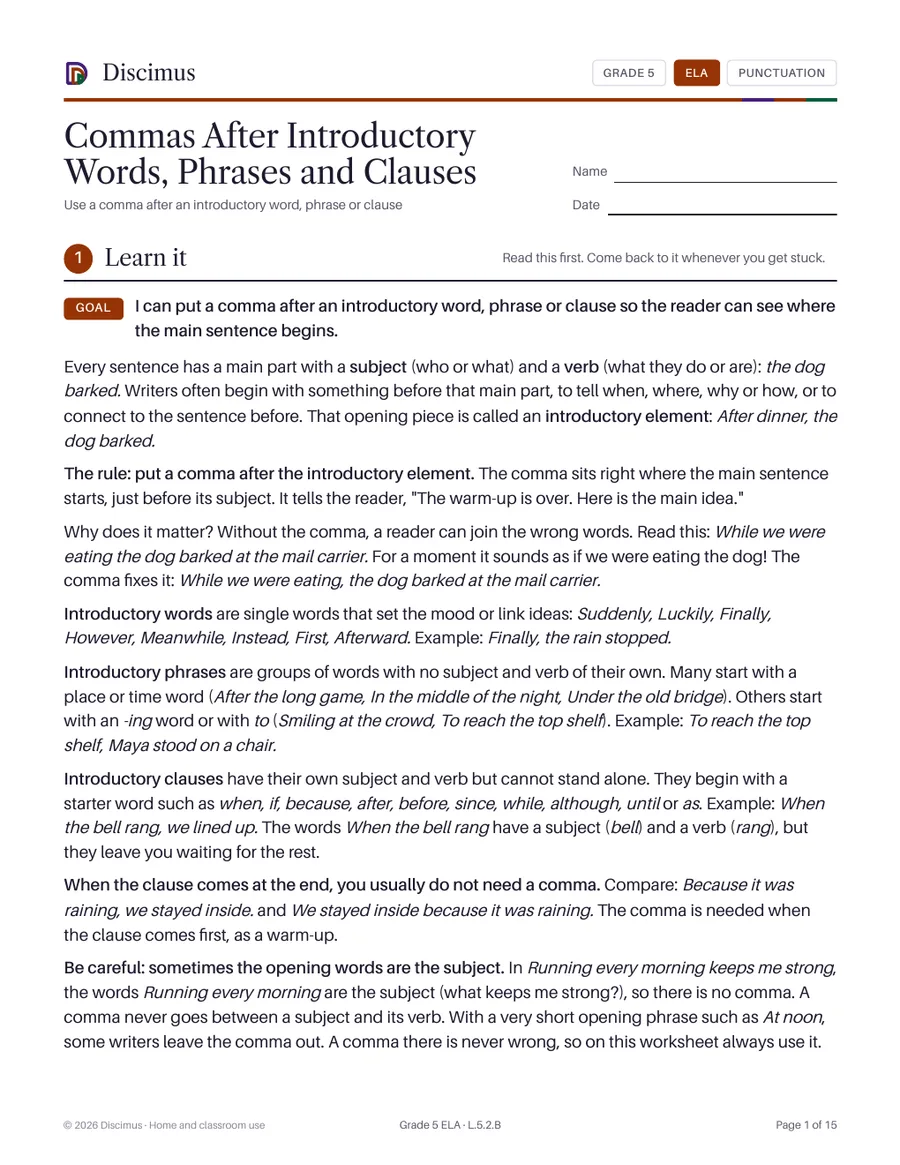
Use a comma after an introductory word, phrase or clause
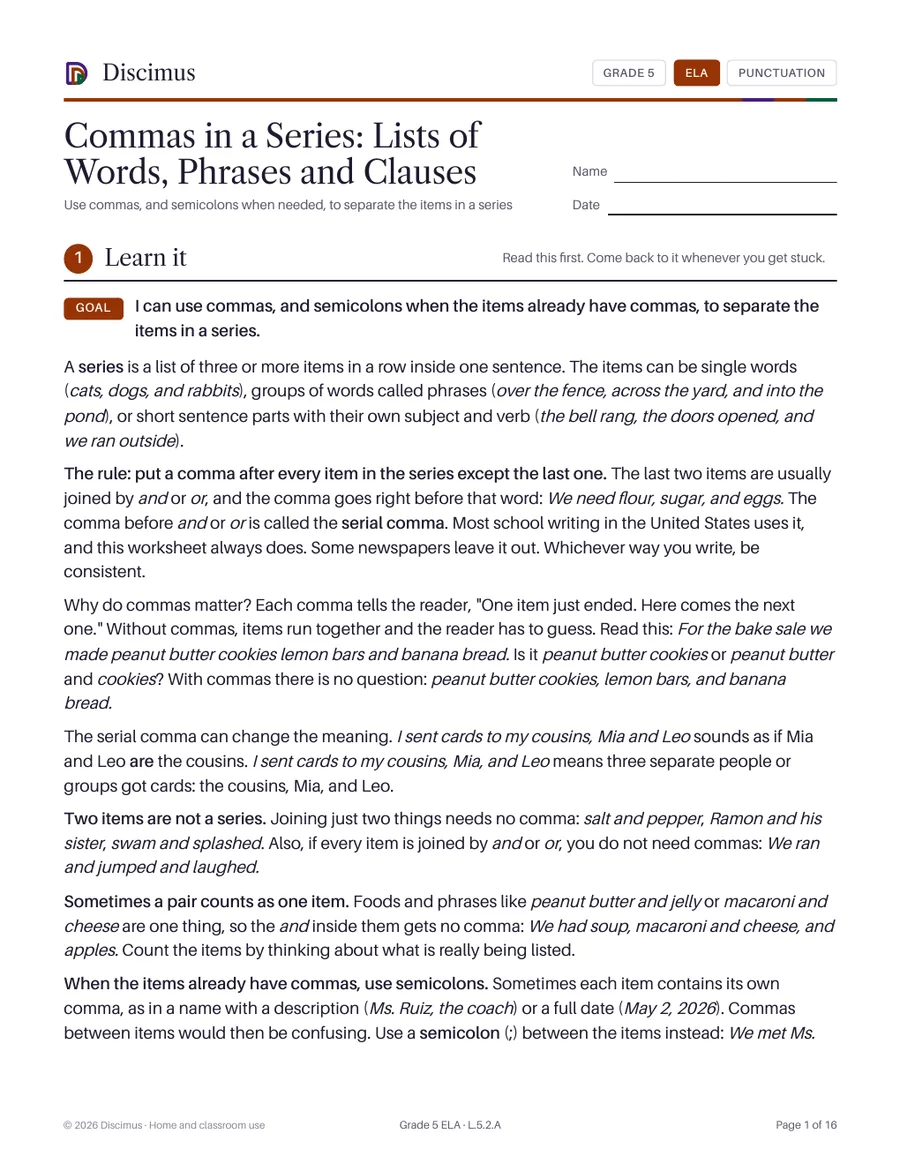
Use commas, and semicolons when needed, to separate the items in a series
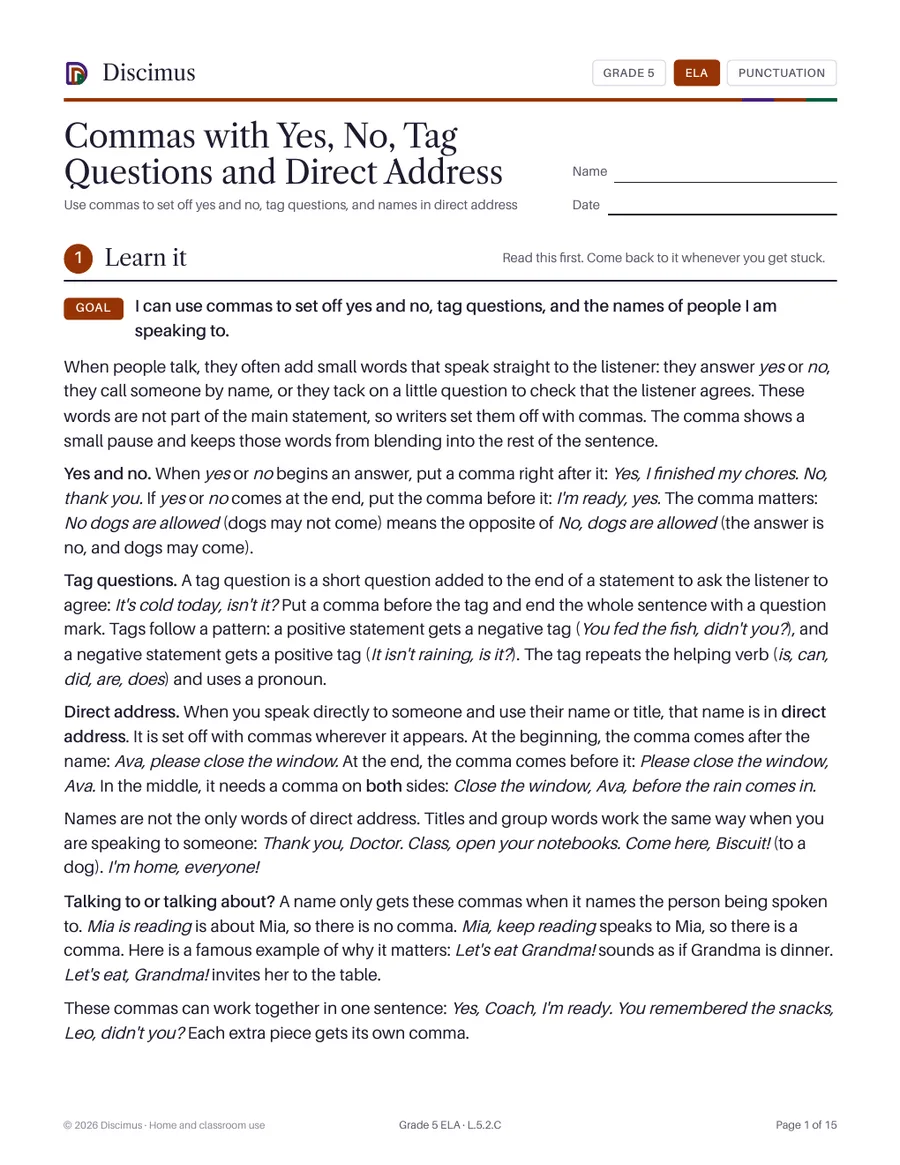
Use commas to set off yes and no, tag questions, and names in direct address
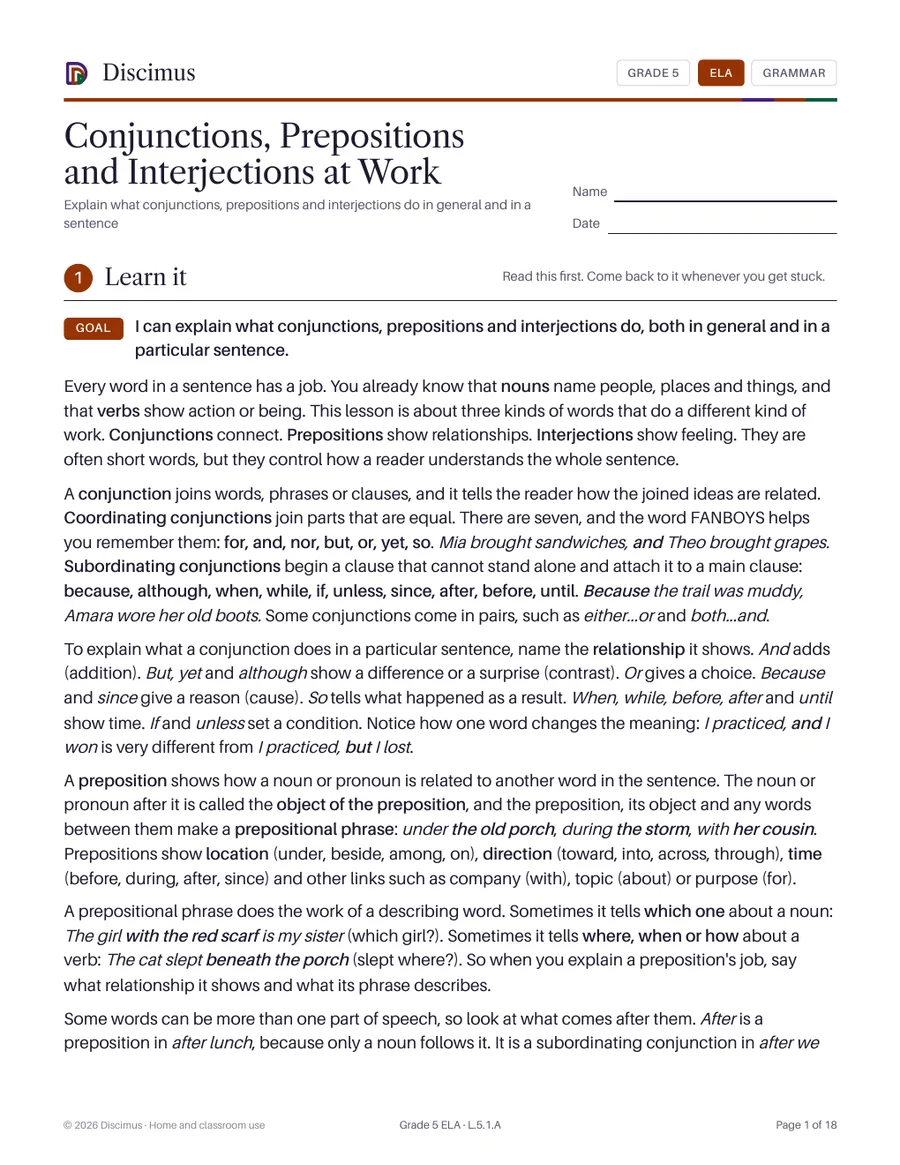
Explain what conjunctions, prepositions and interjections do in general and in a sentence
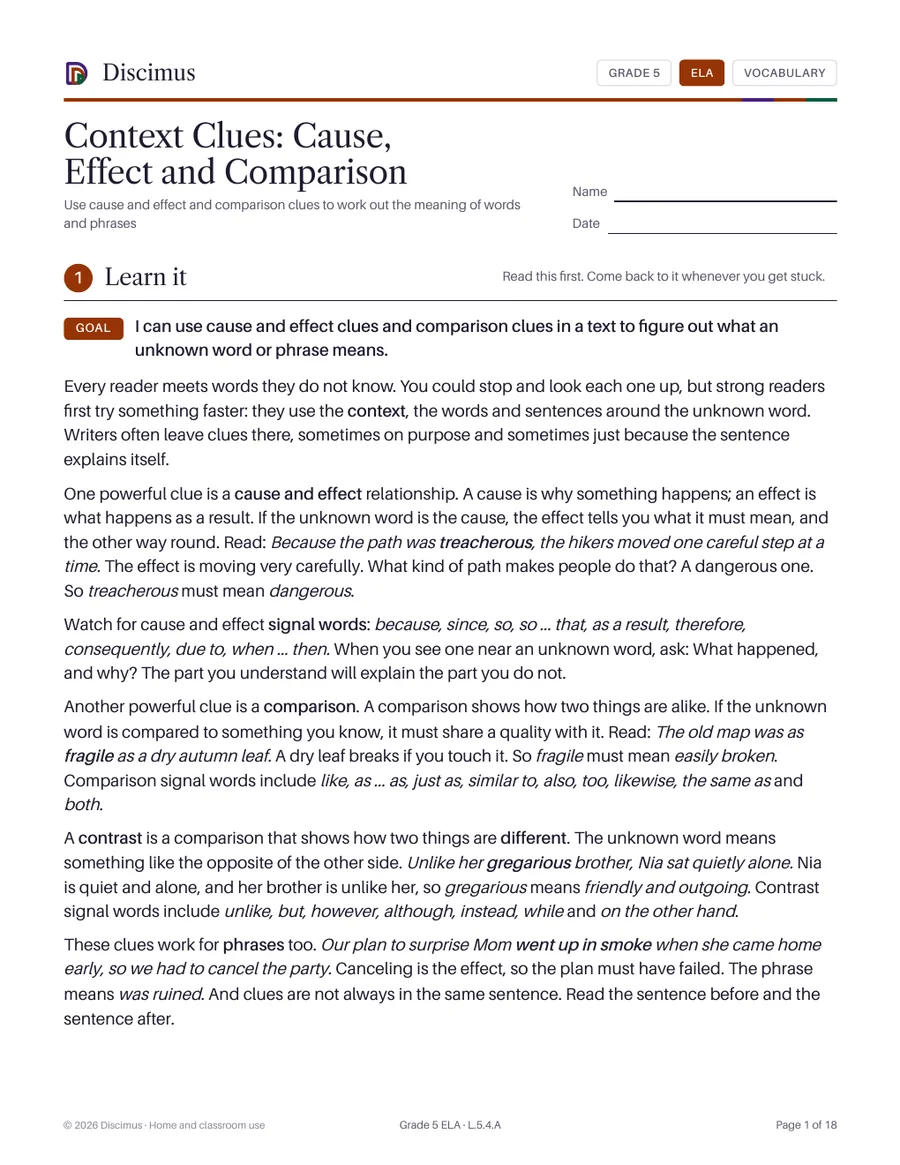
Use cause and effect and comparison clues to work out the meaning of words and phrases
Use correlative conjunctions: either/or, neither/nor, both/and, not only/but also
Expand, combine and reduce sentences for meaning, reader interest and style
Use several print and digital sources to find an answer quickly or solve a problem
Recognize and correct inappropriate shifts in verb tense
Use Greek and Latin roots and affixes as clues to the meaning of unfamiliar words
Describe how a narrator's or speaker's point of view influences how events are described
Explain how people, events and ideas interact in history, science and technical texts
Recognize and explain the meaning of common idioms, adages and proverbs
Write a concluding statement or section related to the information presented
Develop an informative topic with facts, definitions, details, quotations and examples
Link ideas within and across categories with linking words, phrases and clauses
Introduce a topic with an observation and focus, group facts, add headings and visuals
Use precise language and domain-specific vocabulary to inform about or explain a topic
Read unfamiliar long words using letter sounds, syllable patterns, roots and affixes
Strengthen writing by planning, revising, editing, rewriting or trying a new approach
Compare several accounts of one event or topic and the points of view they represent
 Free sample
Explain relationships between events in a biography using evidence from the text
Find two or more main ideas in a nonfiction text, explain their key details and summarize
Use dialogue, description and pacing to develop events and show characters' responses
Use a variety of transitional words, phrases and clauses to manage the sequence of events
Write a narrative conclusion that follows from the narrated experiences or events
Orient the reader with a situation, narrator and characters; order events naturally
Use concrete words and sensory details to convey experiences and events precisely
Introduce a topic or text, state an opinion, and group ideas in a logical structure
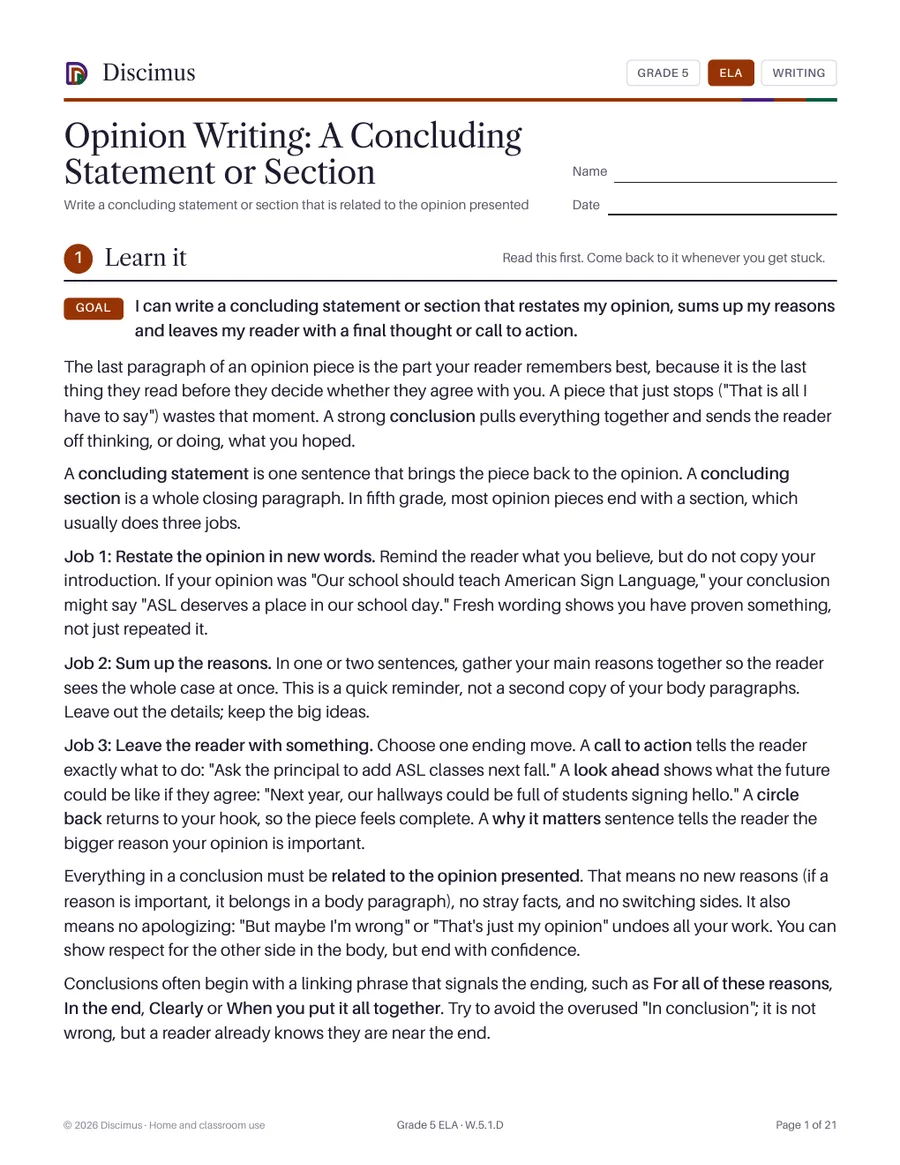
Write a concluding statement or section that is related to the opinion presented
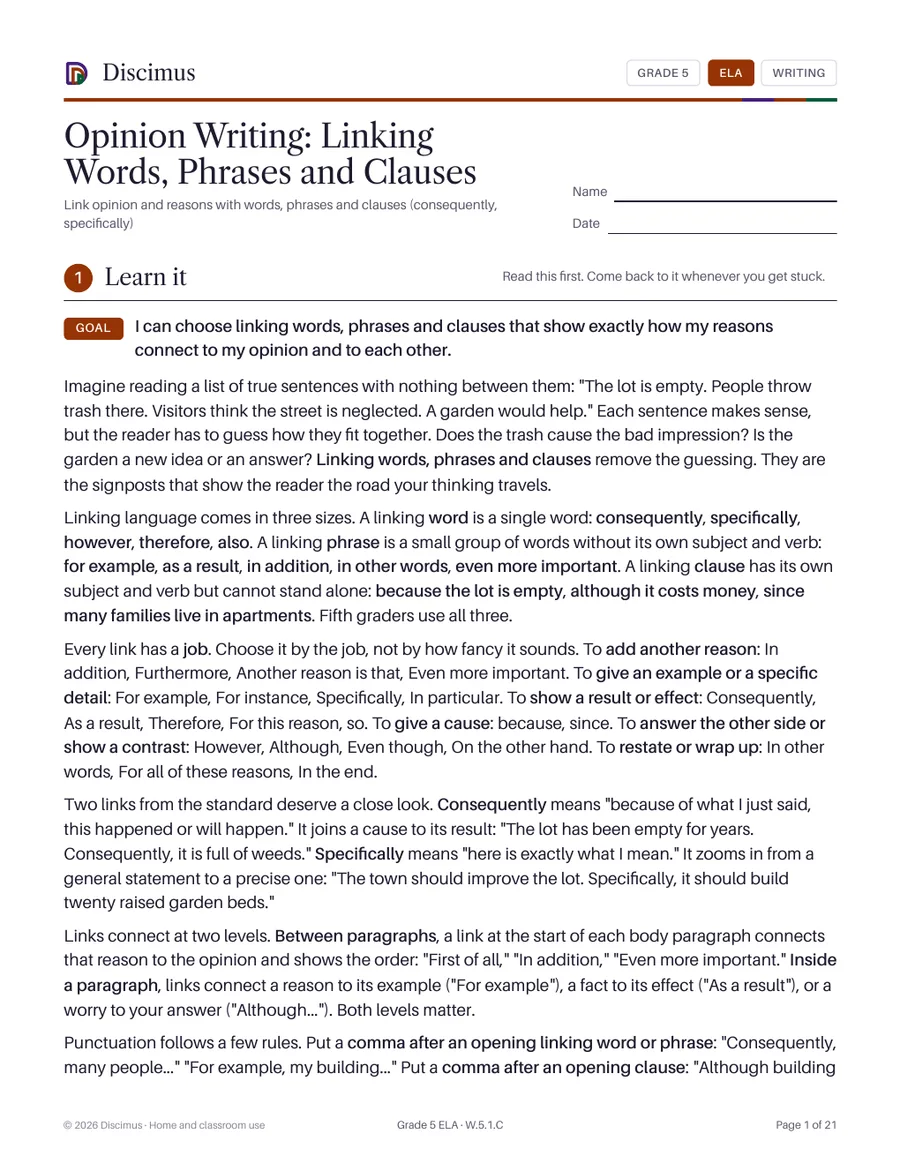
Link opinion and reasons with words, phrases and clauses (consequently, specifically)
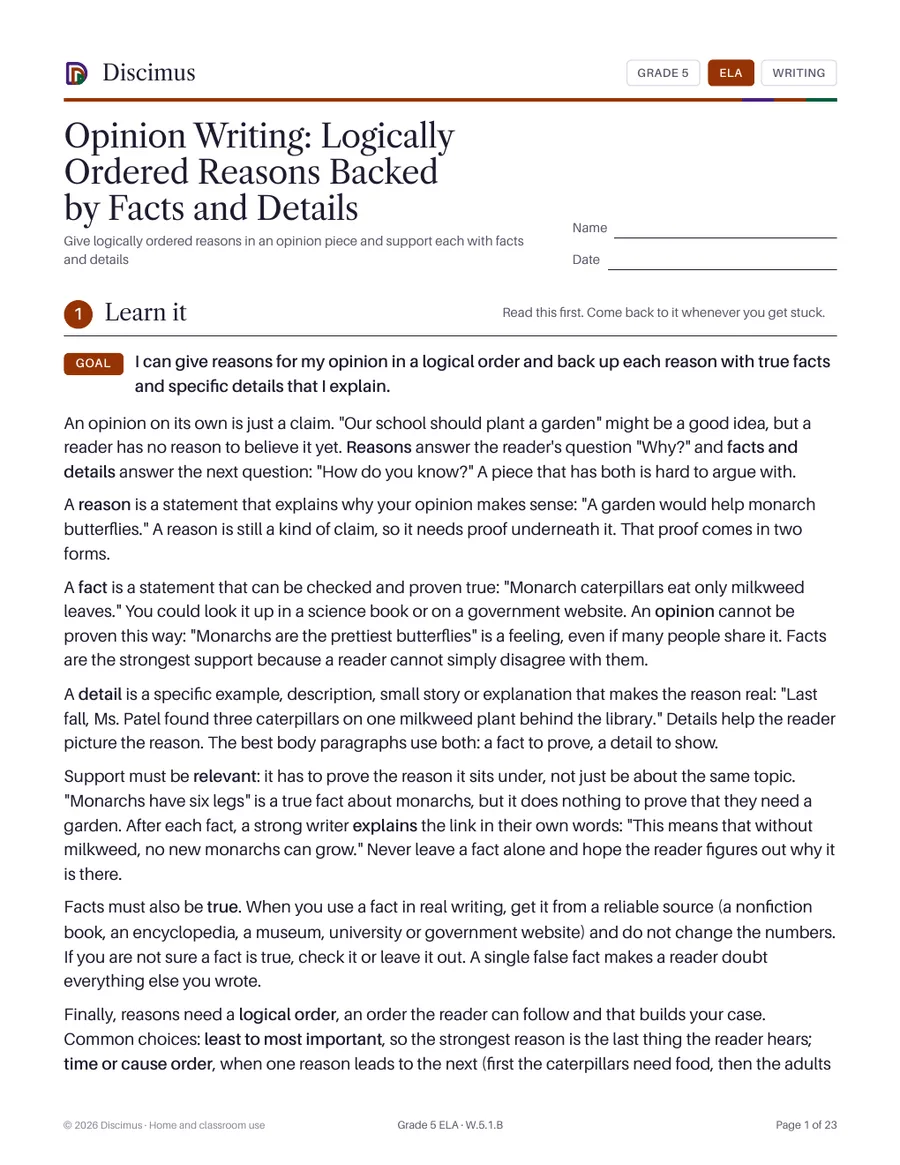
Give logically ordered reasons in an opinion piece and support each with facts and details
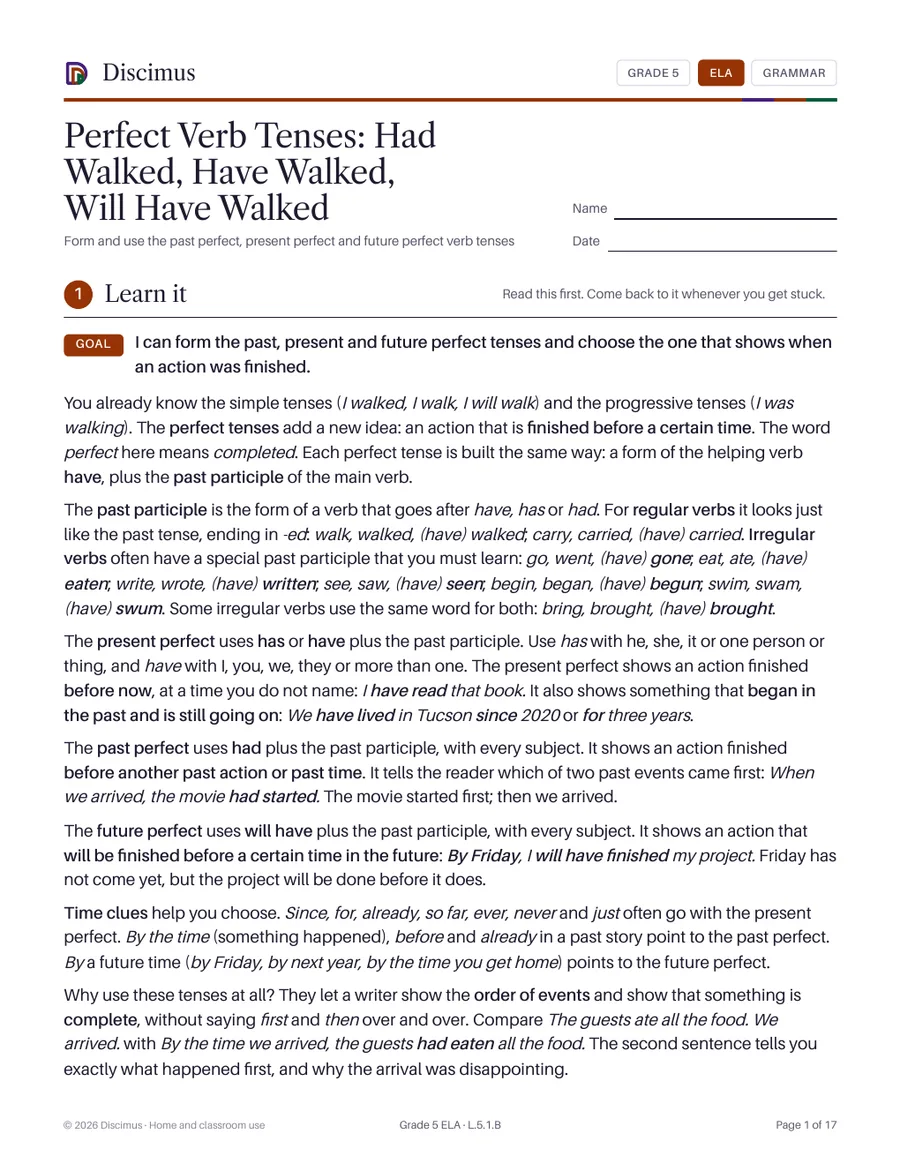
Form and use the past perfect, present perfect and future perfect verb tenses
Analyze how visual and multimedia elements add to the meaning, tone or beauty of a text
Read grade 5 prose and poetry aloud with accuracy, a fitting rate and expression
Quote accurately from a nonfiction text to explain what it says and to support inferences
Quote accurately from a literary text to explain what it states and to support inferences
Read and understand grade 5 history, science and technical texts independently
Read grade 5 texts with a clear purpose, check understanding while reading, and sum up
Read and understand grade 5 stories, plays and poems on my own, fixing confusion as I go
Use dictionaries, glossaries and thesauruses to find pronunciation and precise meaning
Conduct a short research project using several sources to investigate different aspects
Compare stories in the same genre on how they approach similar themes and topics
Compare and contrast the overall structure of two or more nonfiction texts on one topic
Integrate information from several texts on one topic to write or speak knowledgeably
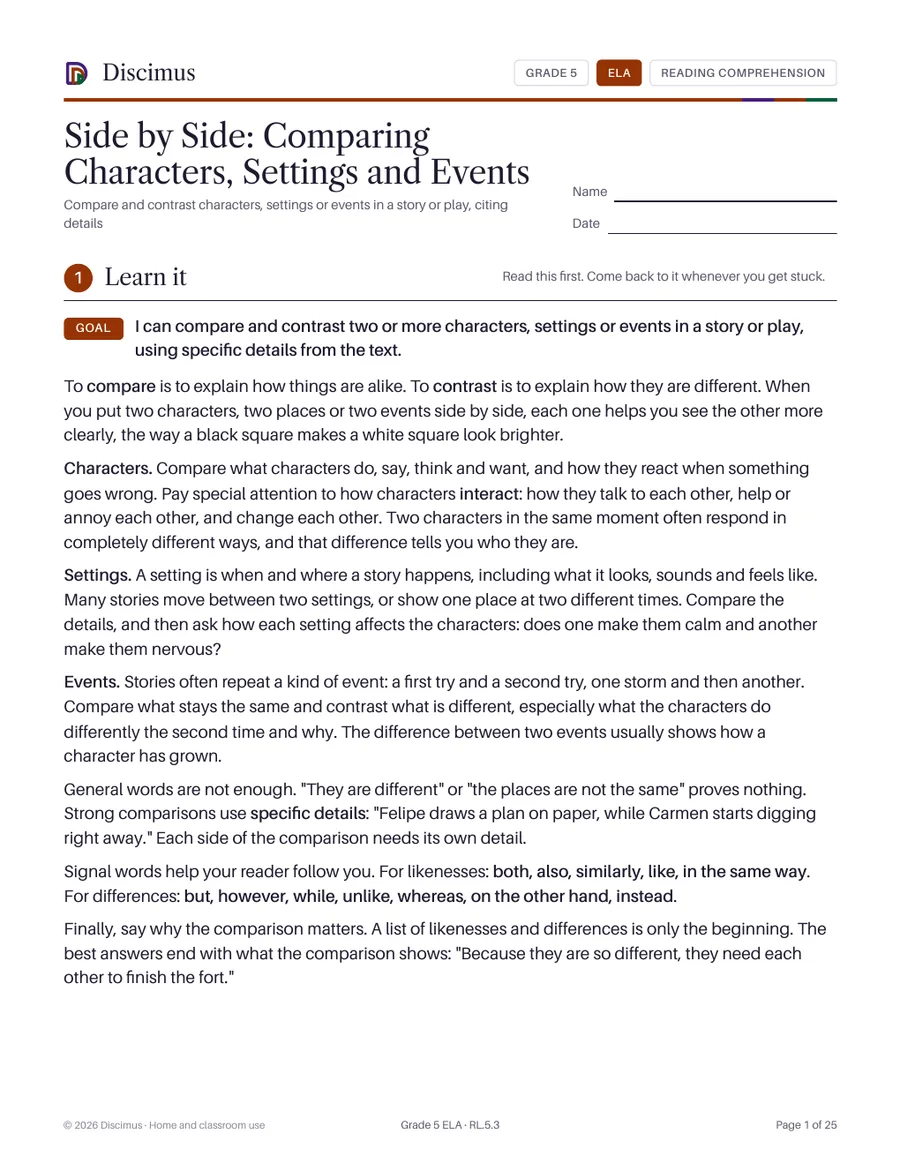
Compare and contrast characters, settings or events in a story or play, citing details
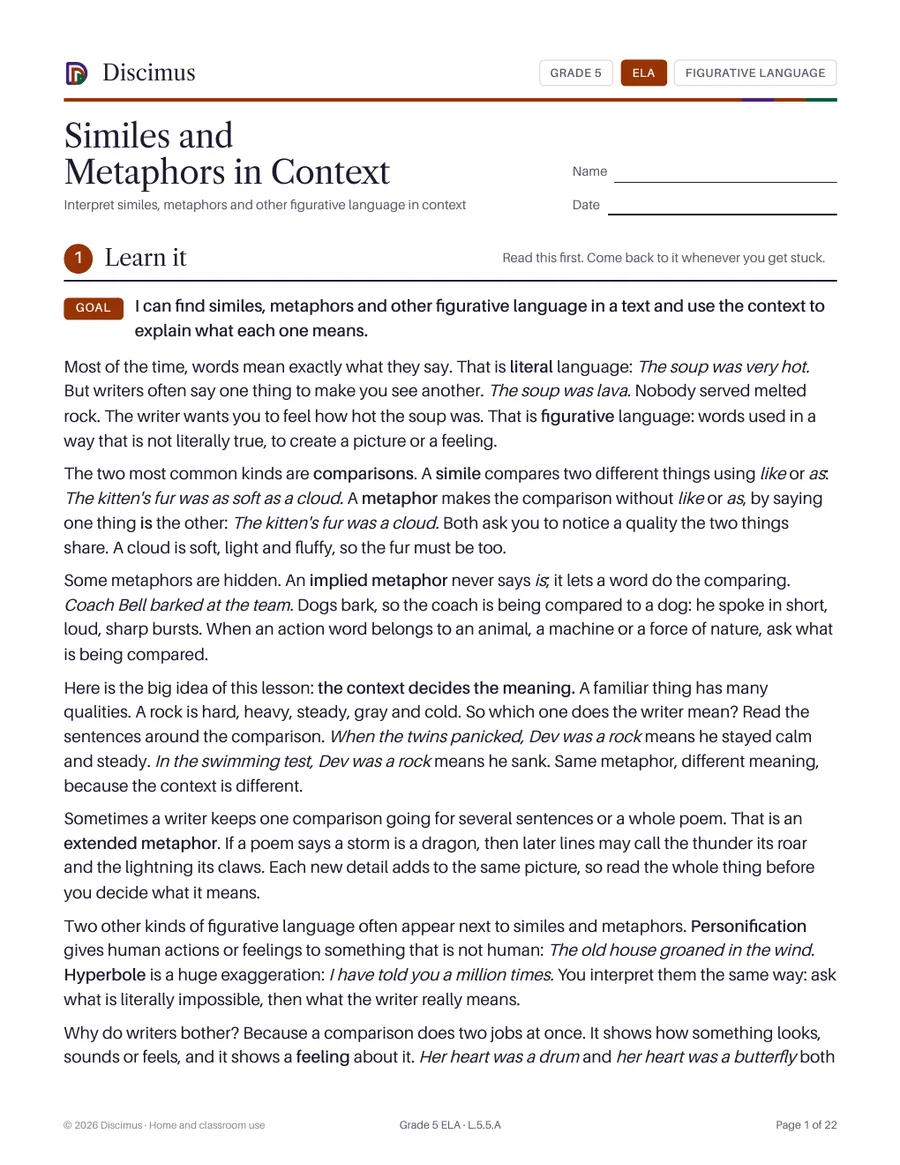
Interpret similes, metaphors and other figurative language in context
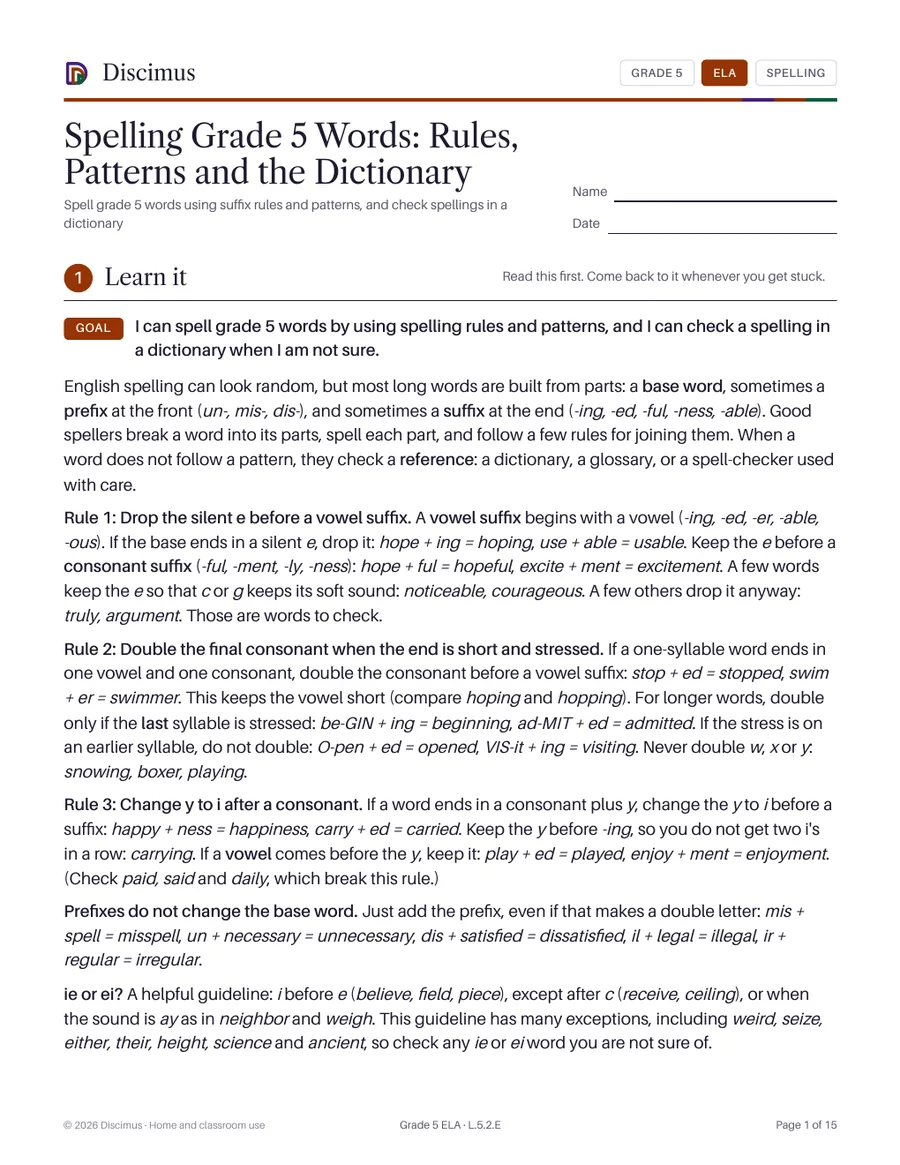
Spell grade 5 words using suffix rules and patterns, and check spellings in a dictionary
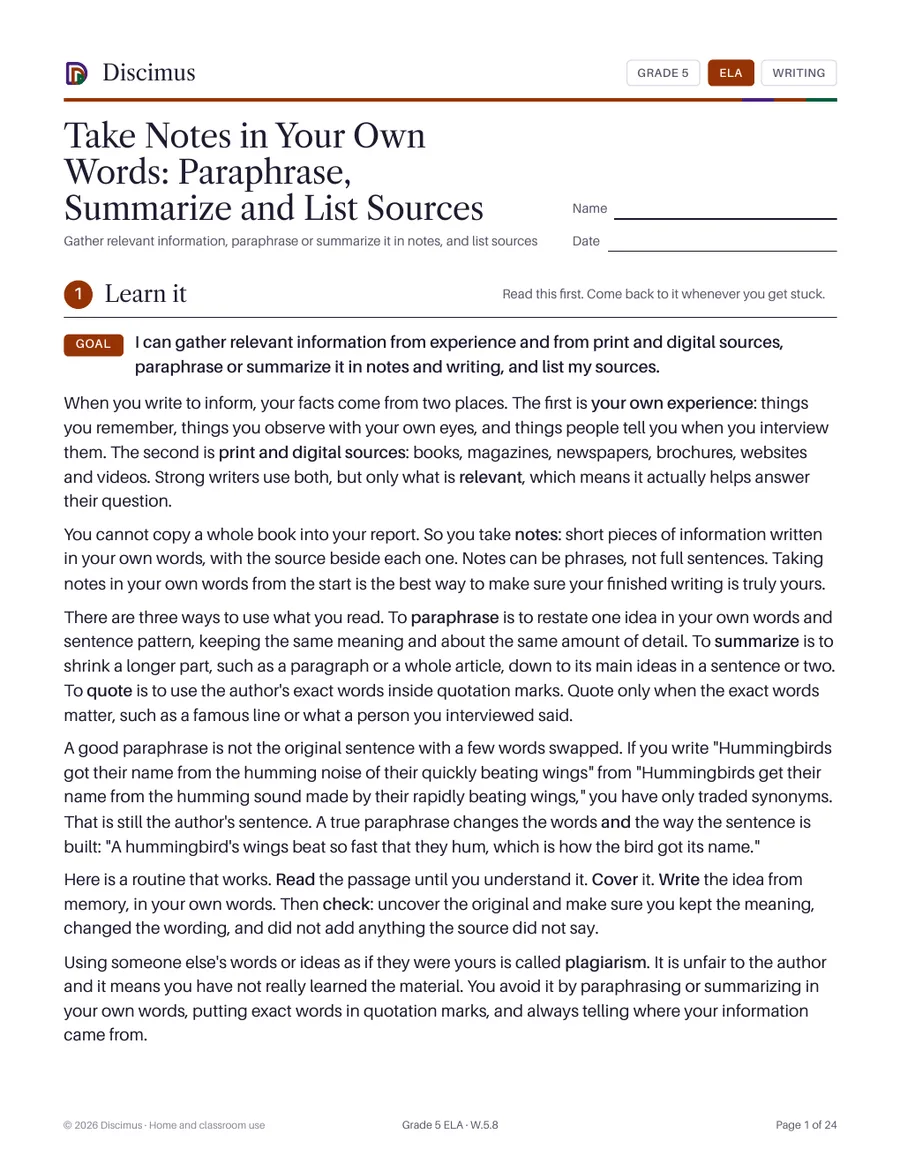
Gather relevant information, paraphrase or summarize it in notes, and list sources
Determine main ideas and explain how key details support them
Use underlining, italics or quotation marks to show the titles of works
Use technology to produce, publish and collaborate; type two pages in one sitting
Work out the meaning of academic and subject-specific words and phrases in grade 5 texts
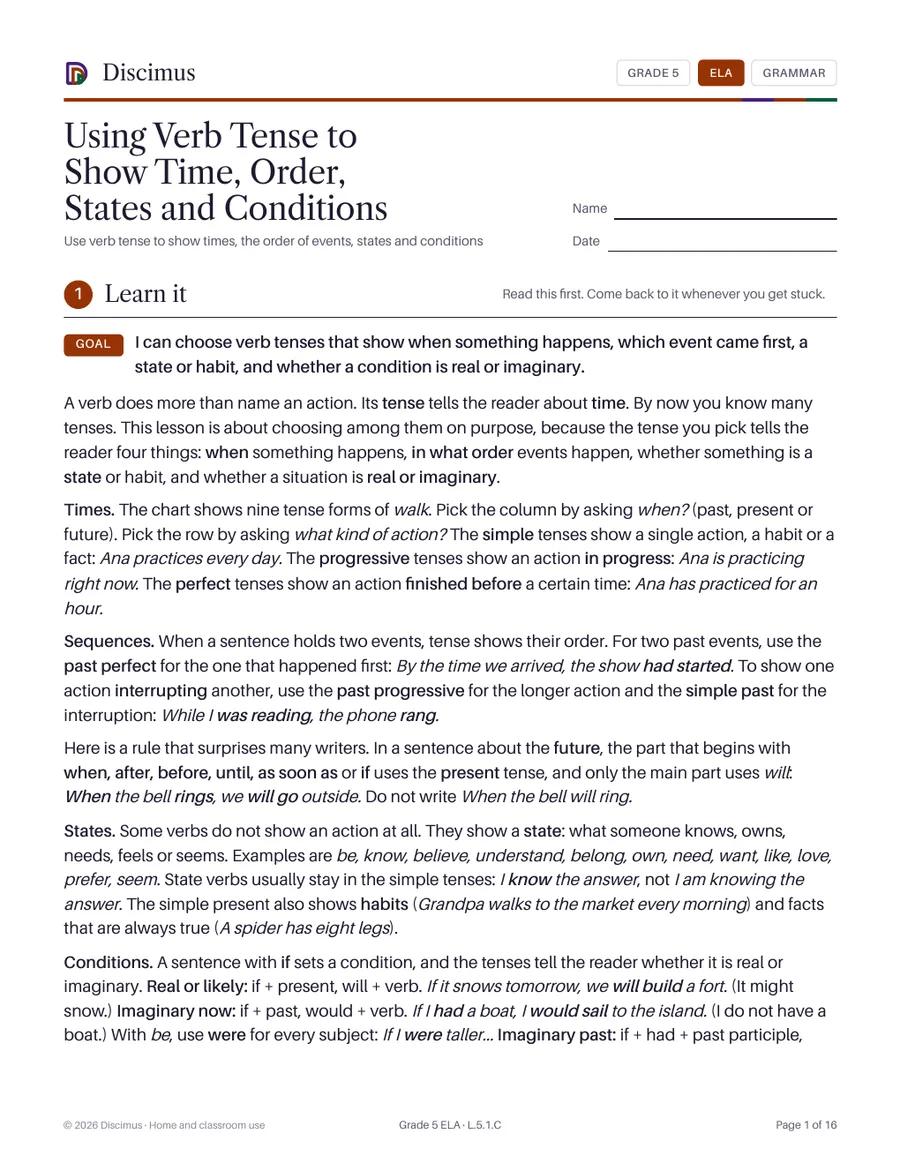
Use verb tense to show times, the order of events, states and conditions
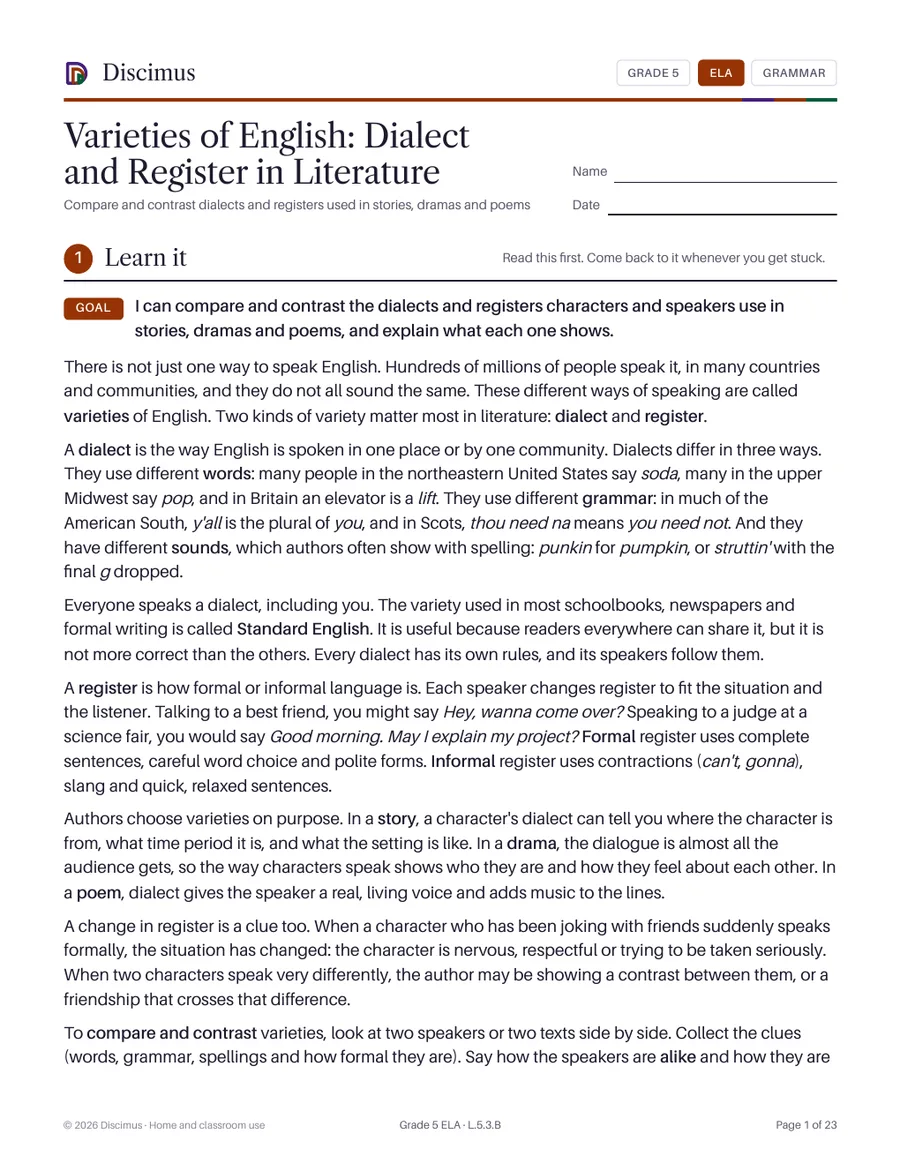
Compare and contrast dialects and registers used in stories, dramas and poems
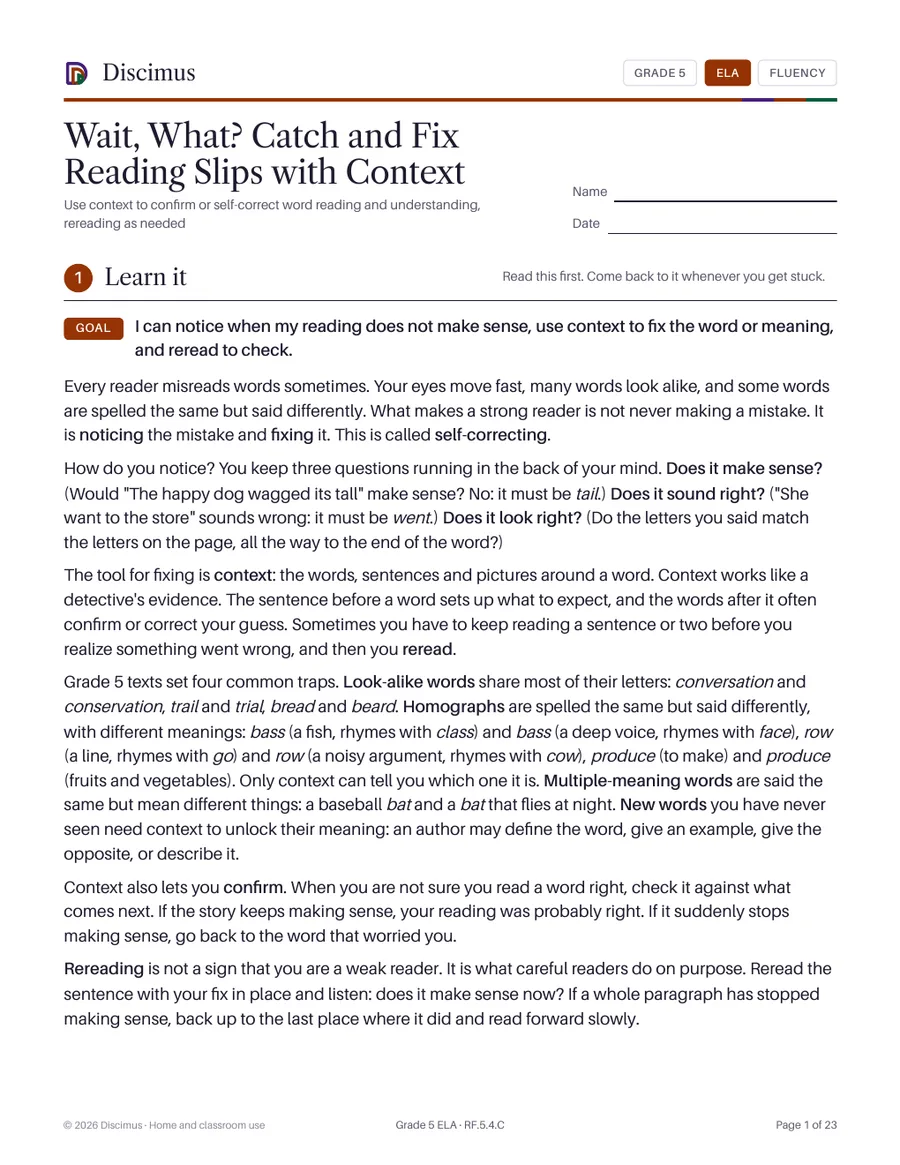
Use context to confirm or self-correct word reading and understanding, rereading as needed
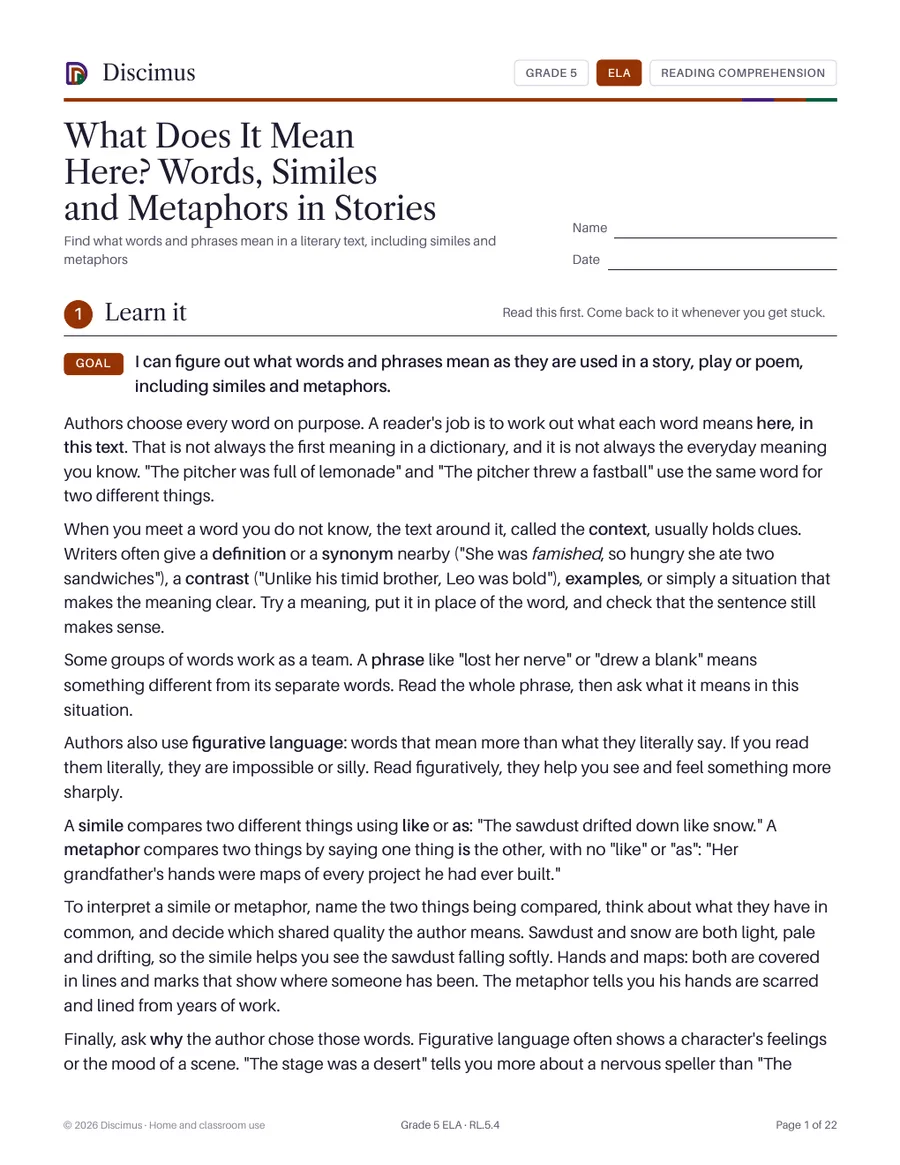
Find what words and phrases mean in a literary text, including similes and metaphors
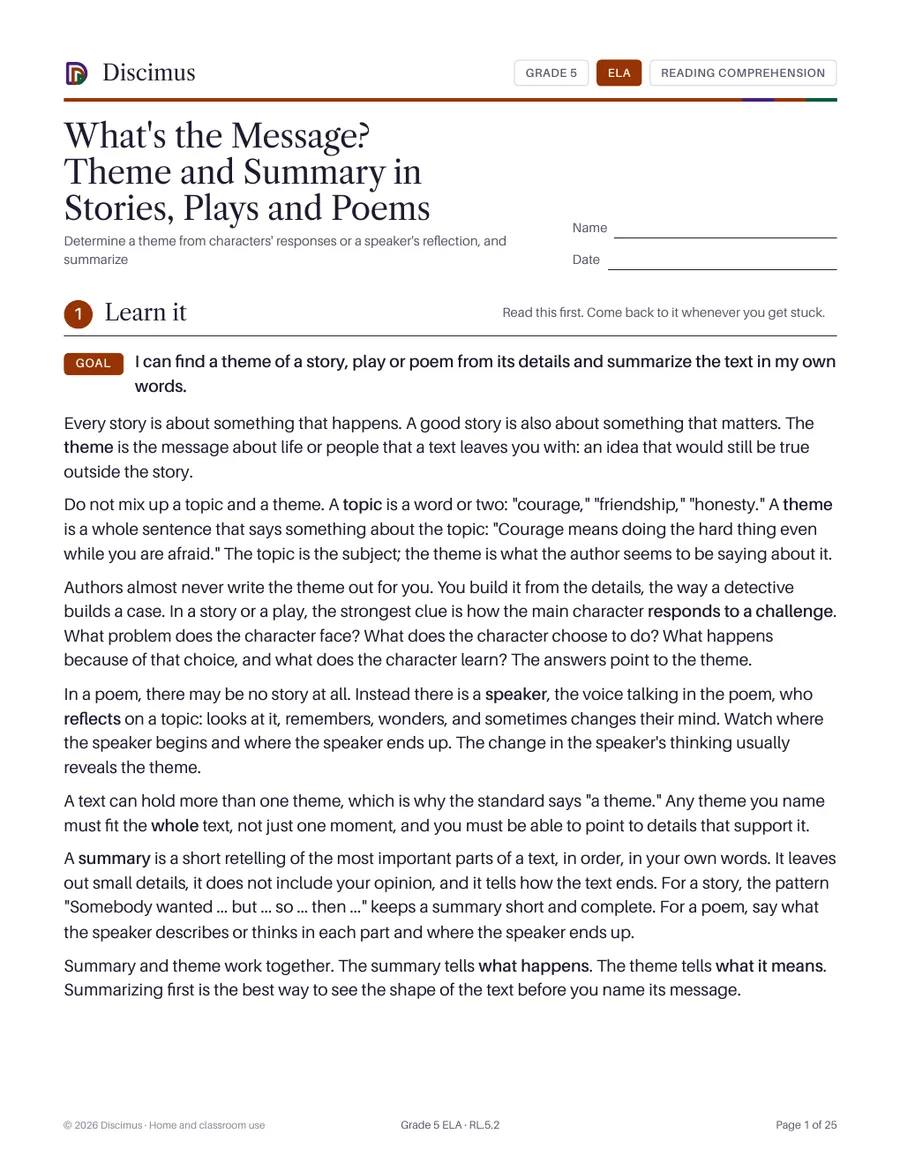
Determine a theme from characters' responses or a speaker's reflection, and summarize
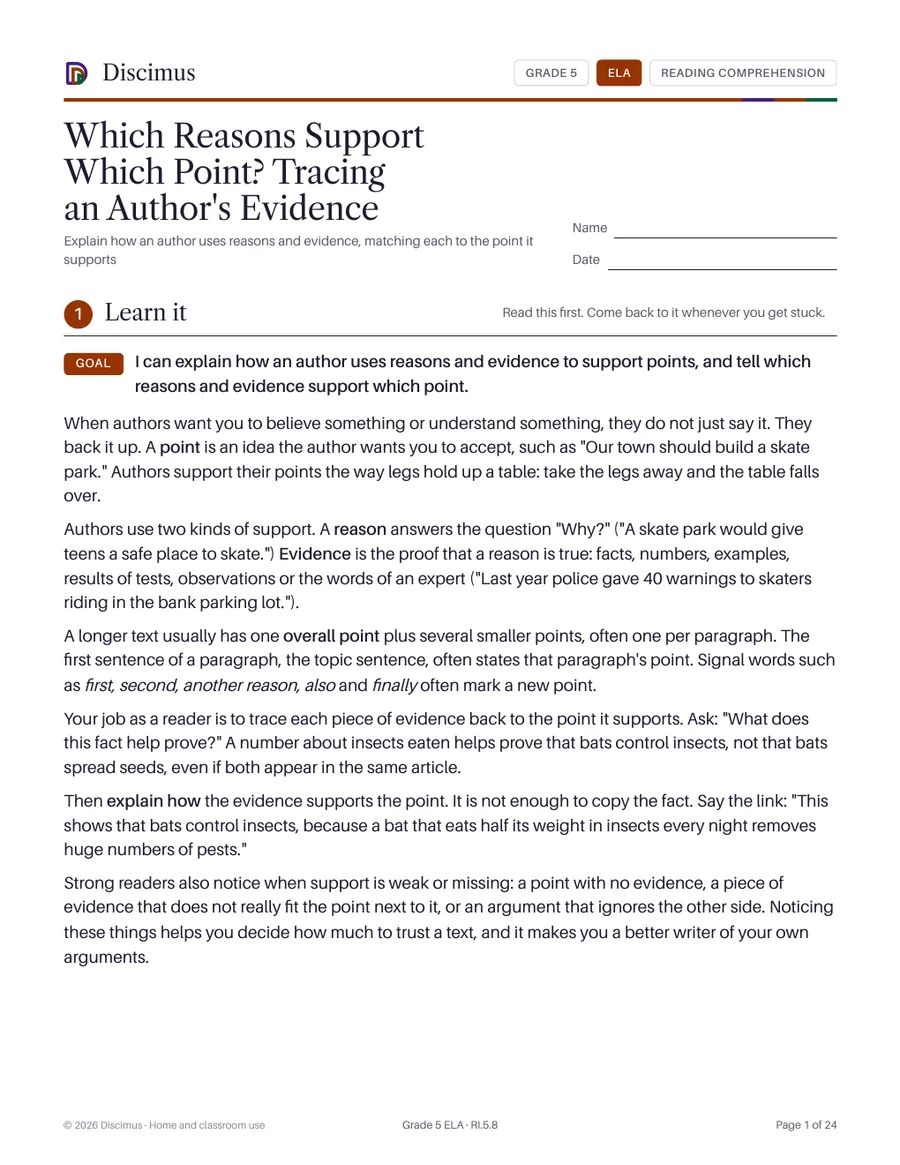
Explain how an author uses reasons and evidence, matching each to the point it supports
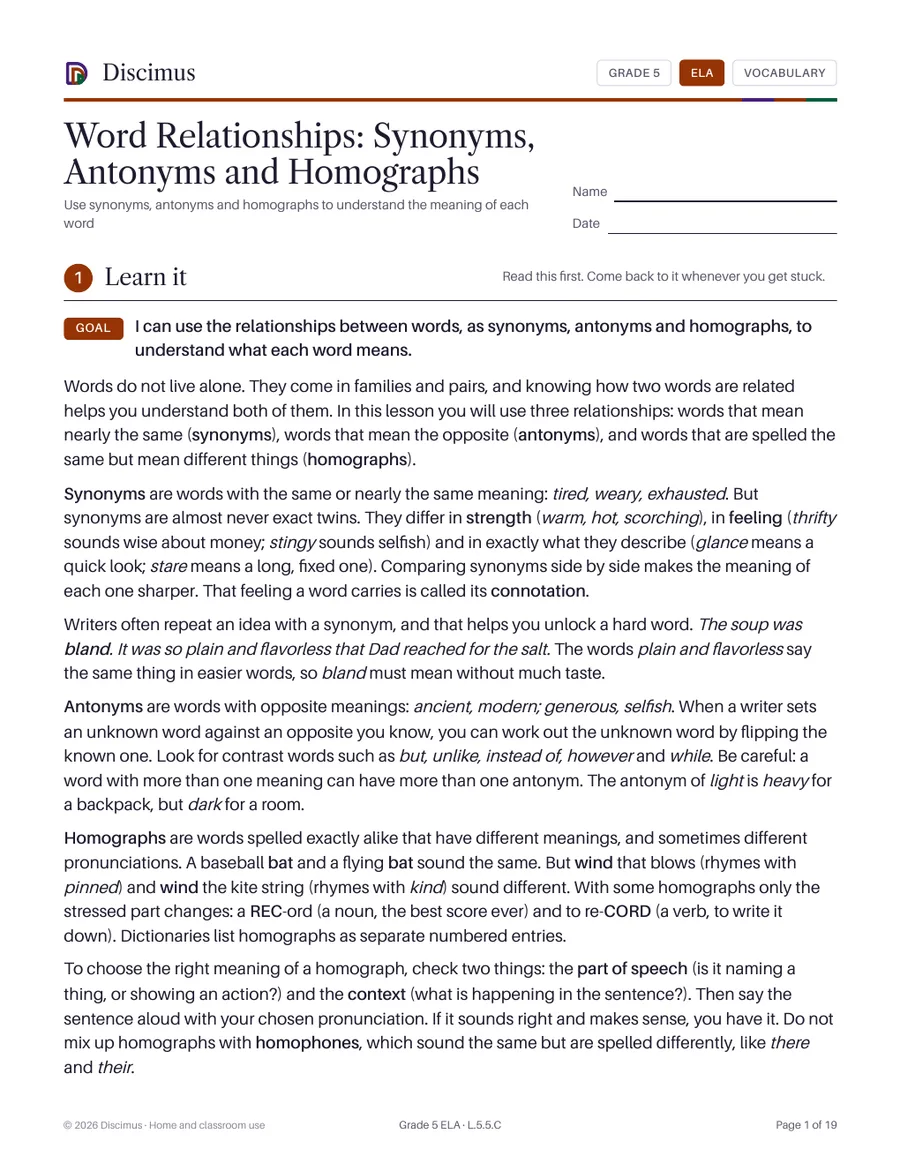
Use synonyms, antonyms and homographs to understand the meaning of each word
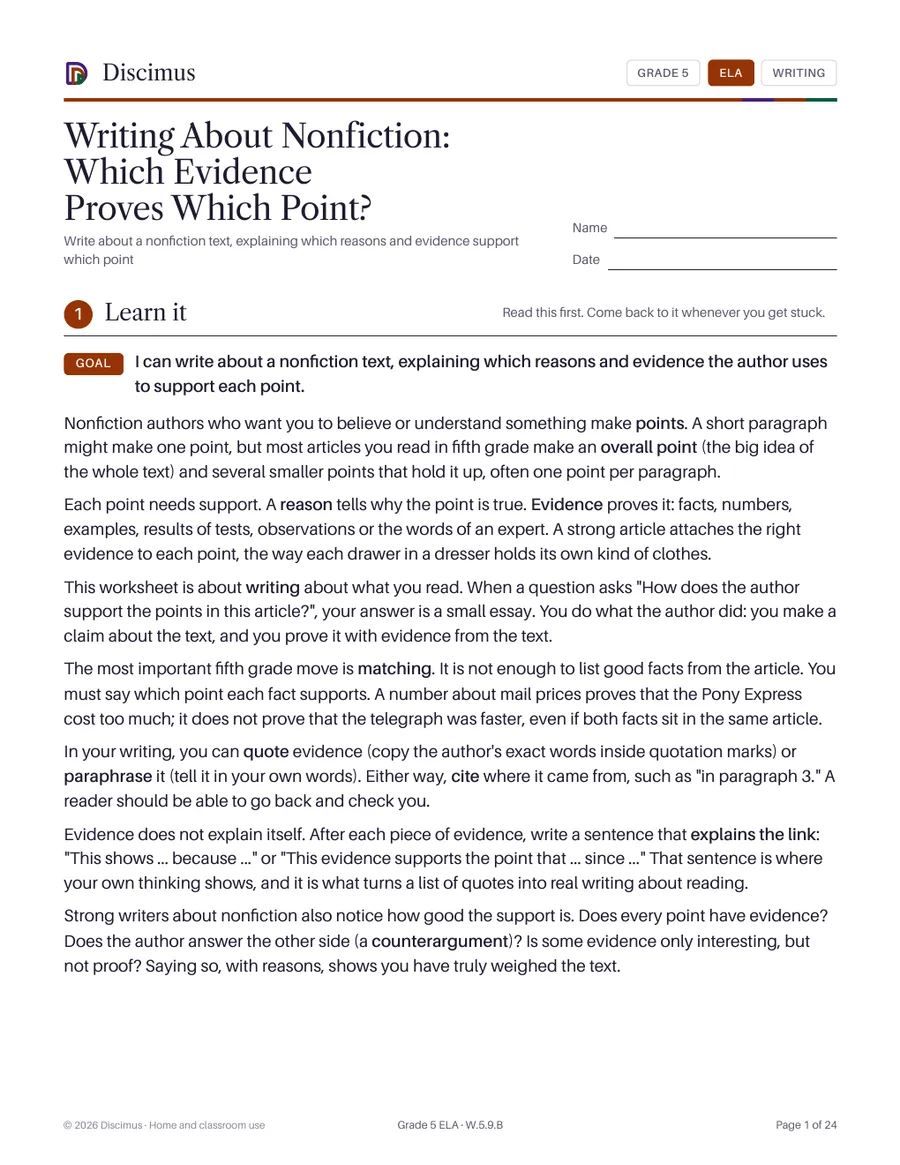
Write about a nonfiction text, explaining which reasons and evidence support which point
Write routinely, short and extended, for different subjects, purposes and readers
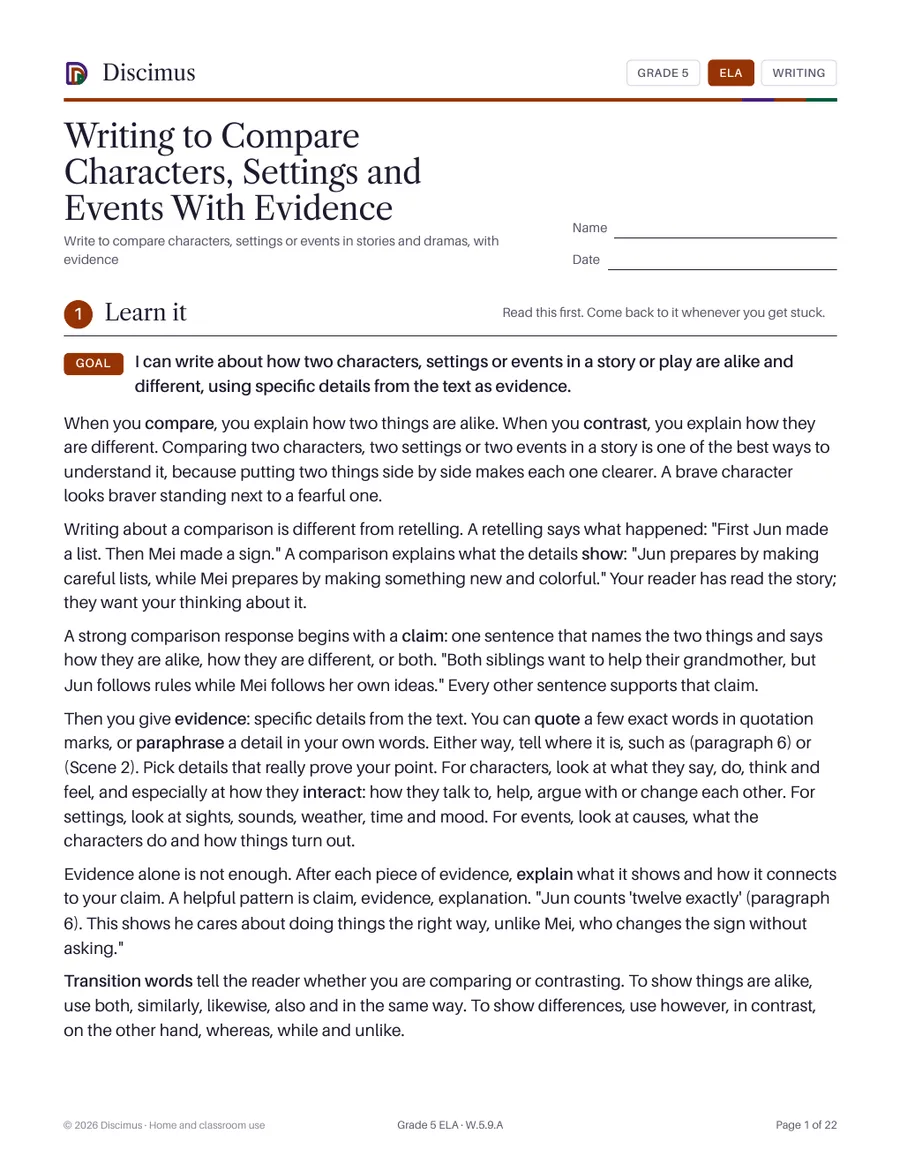
Write to compare characters, settings or events in stories and dramas, with evidence
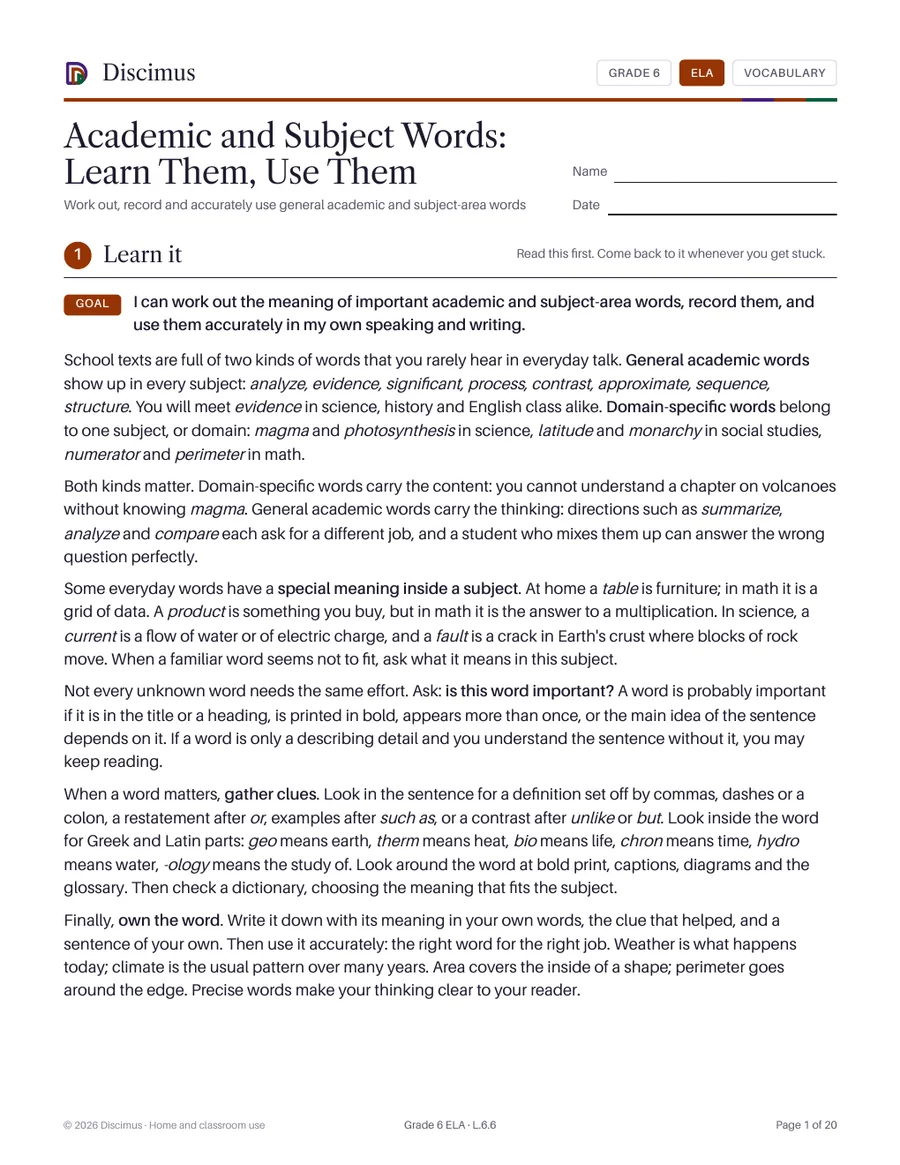
Work out, record and accurately use general academic and subject-area words
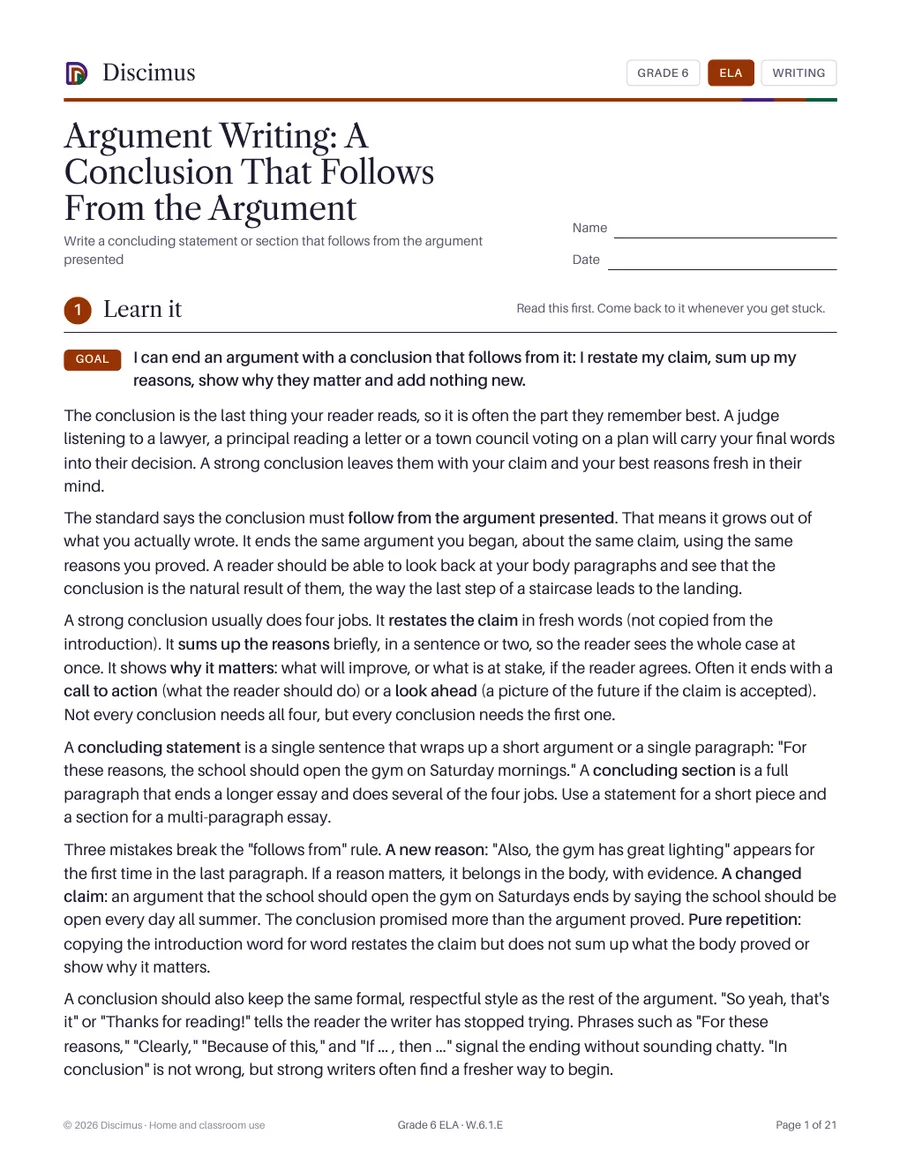
Write a concluding statement or section that follows from the argument presented
Establish and maintain a formal style in argument writing
Introduce a claim in an argument and organize reasons and evidence clearly
Support a claim with clear reasons and relevant evidence from credible sources
Use words, phrases and clauses to show how claims, reasons and evidence connect
Determine an author's purpose and point of view and explain how the text conveys them
Analyze how a text introduces, illustrates and elaborates a key individual, event or idea
Verify a first guess about a word's meaning in context and in a dictionary
Use commas, parentheses and dashes to set off nonrestrictive and parenthetical elements
Tell apart the connotations of words with similar denotations and choose words for effect
Use sentence and paragraph meaning and a word's position or function to find its meaning
Describe how a plot unfolds in episodes and how characters respond and change
Choose development, organization and style that fit the task, purpose and audience
Strengthen writing by planning, revising, editing, rewriting or trying a new approach
Use Greek and Latin roots and affixes as clues to the meaning of unfamiliar words
Explain how an author develops the point of view of a narrator or speaker
Cite text evidence to support what a nonfiction text says directly and inferences from it
Analyze how a sentence, paragraph or section fits a text's structure and builds its ideas
Write a concluding statement or section that follows from the information or explanation
Develop a topic with relevant facts, definitions, details, quotations and examples
Establish and maintain a formal style in informative writing
Introduce a topic; organize by definition, classification, comparison or cause and effect
Use precise language and domain-specific vocabulary to inform about or explain a topic
Use transitions that make the relationships between ideas clear in informative writing
Use intensive pronouns (myself, ourselves, themselves) correctly to add emphasis
Interpret personification and other figures of speech in context
Keep style and tone consistent in word choice, formality, point of view and tense
Compare and contrast how a memoir and a biography present the same events
Use dialogue, pacing and description to develop experiences, events and characters
Use varied transitions to show sequence and signal shifts in time or setting
Write a narrative conclusion that follows from the experiences and events narrated
Hook and orient the reader, introduce narrator and characters, and order events logically
Use precise words, relevant details and sensory language to convey events
Compare how texts in different forms or genres approach similar themes and topics
Compare reading a story, drama or poem with listening to or watching a version of it
Analyze how a sentence, chapter, scene or stanza develops a text's theme, setting or plot
Use pronouns in the proper case: subjective, objective and possessive
Recognize and correct inappropriate shifts in pronoun number and person
Cite text evidence for explicit details and for inferences drawn from a literary text
Integrate information from text, graphs, maps, tables and diagrams to understand a topic
Read grade 6 to 8 literary nonfiction independently, using fix-up strategies
Read and understand grade 6 stories, dramas and poems independently, fixing confusion
Gather and judge sources, quote or paraphrase without plagiarism, and list sources
Answer a question through short research with several sources, refocusing when needed
Spell correctly using suffix rules, word parts, related words and proofreading
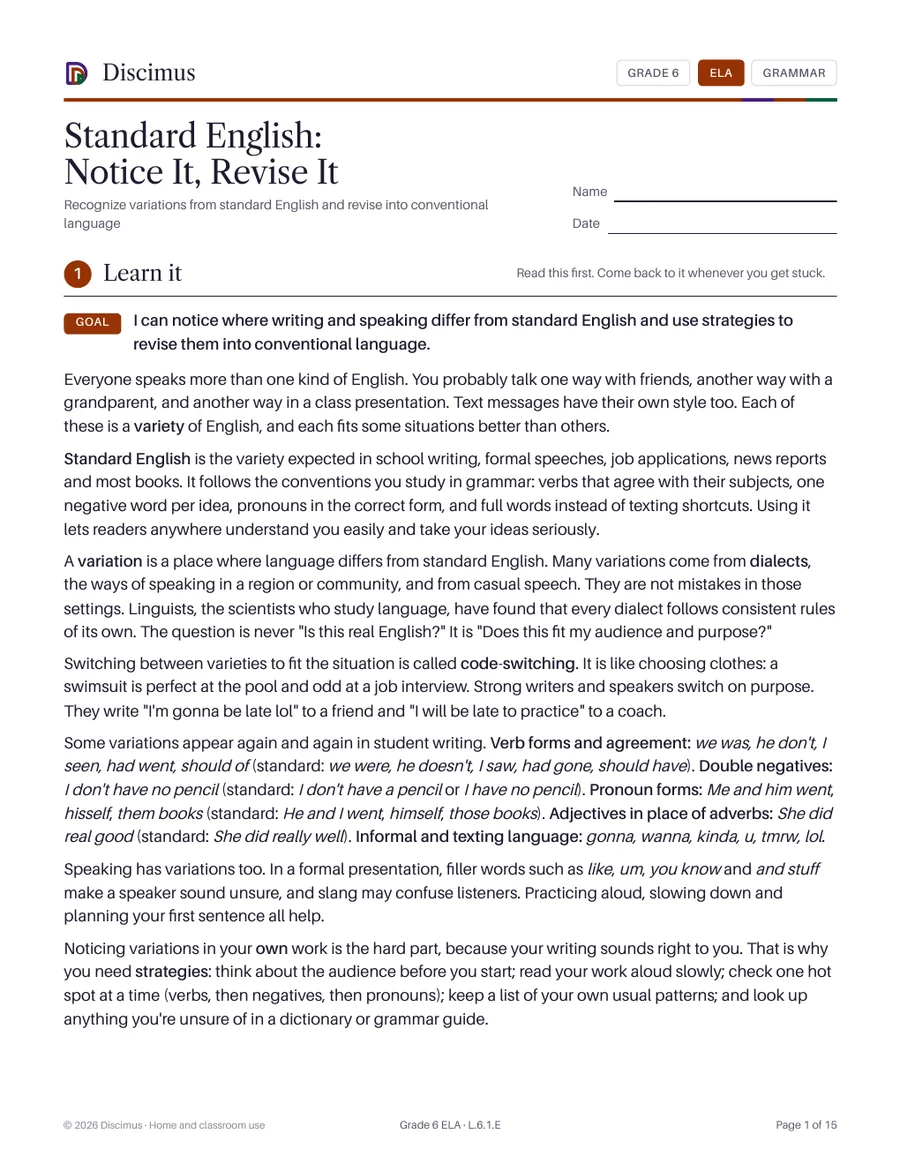
Recognize variations from standard English and revise into conventional language
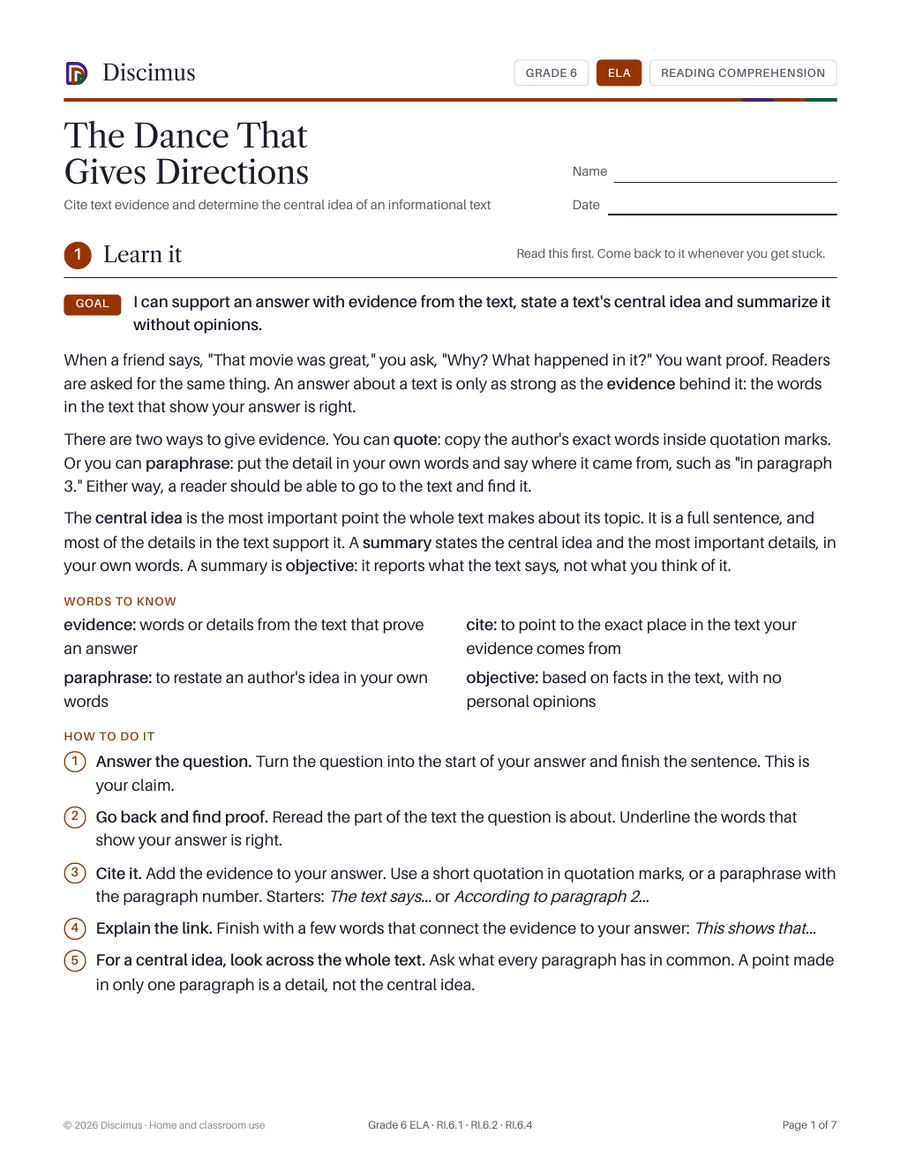
Cite text evidence and determine the central idea of an informational text
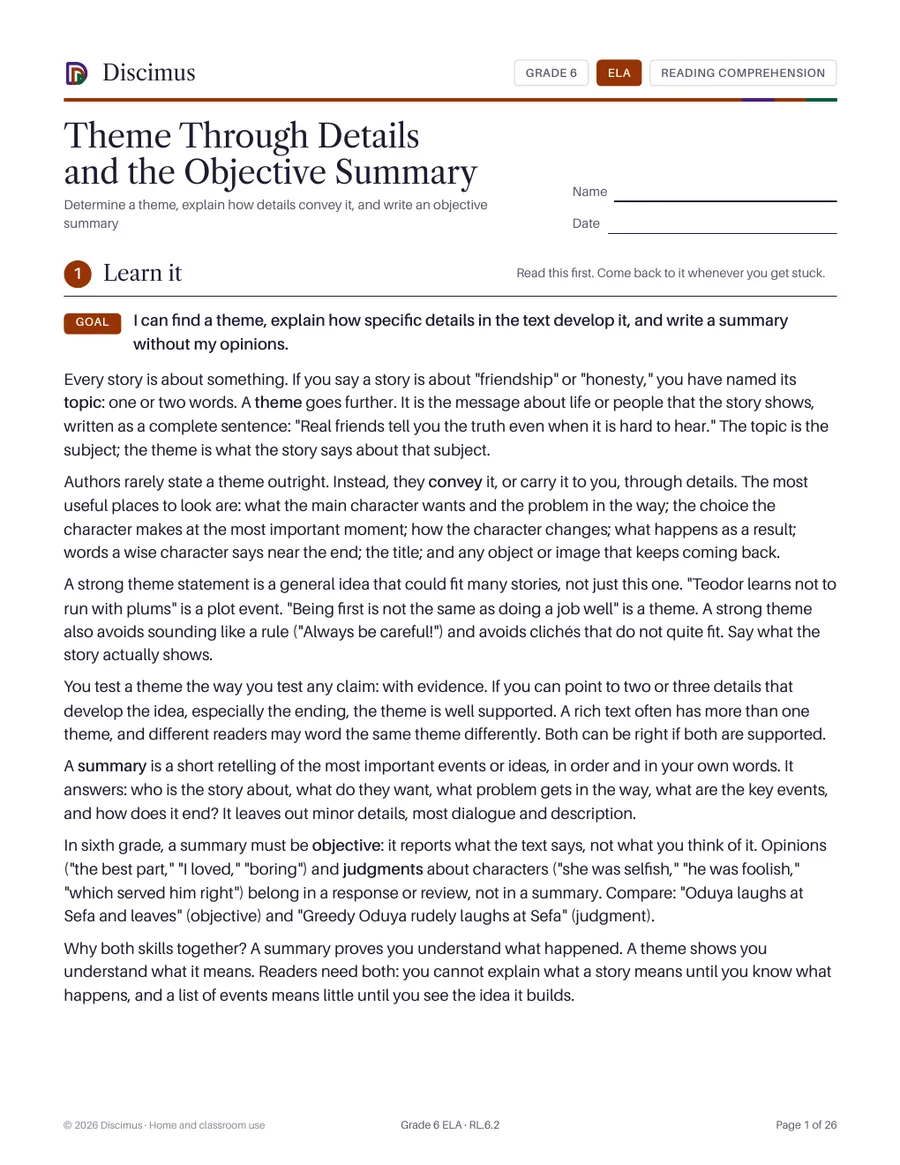
Determine a theme, explain how details convey it, and write an objective summary
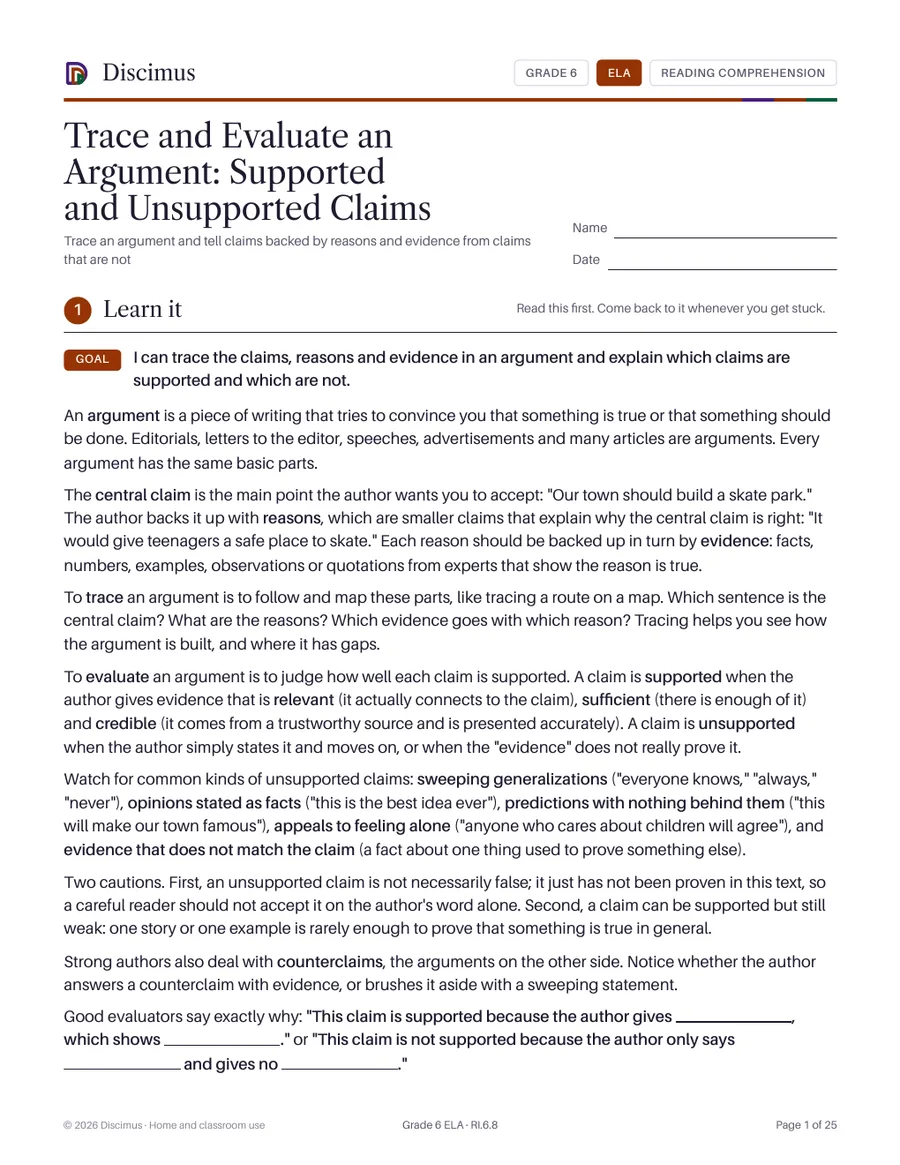
Trace an argument and tell claims backed by reasons and evidence from claims that are not
Use a dictionary, glossary or thesaurus to find pronunciation, part of speech and meaning
Recognize and correct vague pronouns with unclear or ambiguous antecedents
Vary sentence length, structure and openings to show meaning and keep readers interested
Determine a central idea, explain how details convey it and write an objective summary
Determine figurative and connotative meanings and analyze how word choice shapes tone
Use cause/effect, part/whole and item/category relationships to understand words
Determine figurative, connotative and technical meanings of words in an informational text
Use technology to publish and collaborate, and type three pages in one sitting
Write an evaluation of an argument, citing which claims are supported and which are not
Write to compare how texts in different genres approach a similar theme, citing evidence
Write routinely in short and extended time frames for varied subjects, purposes, readers
Interpret literary, biblical and mythological allusions in context
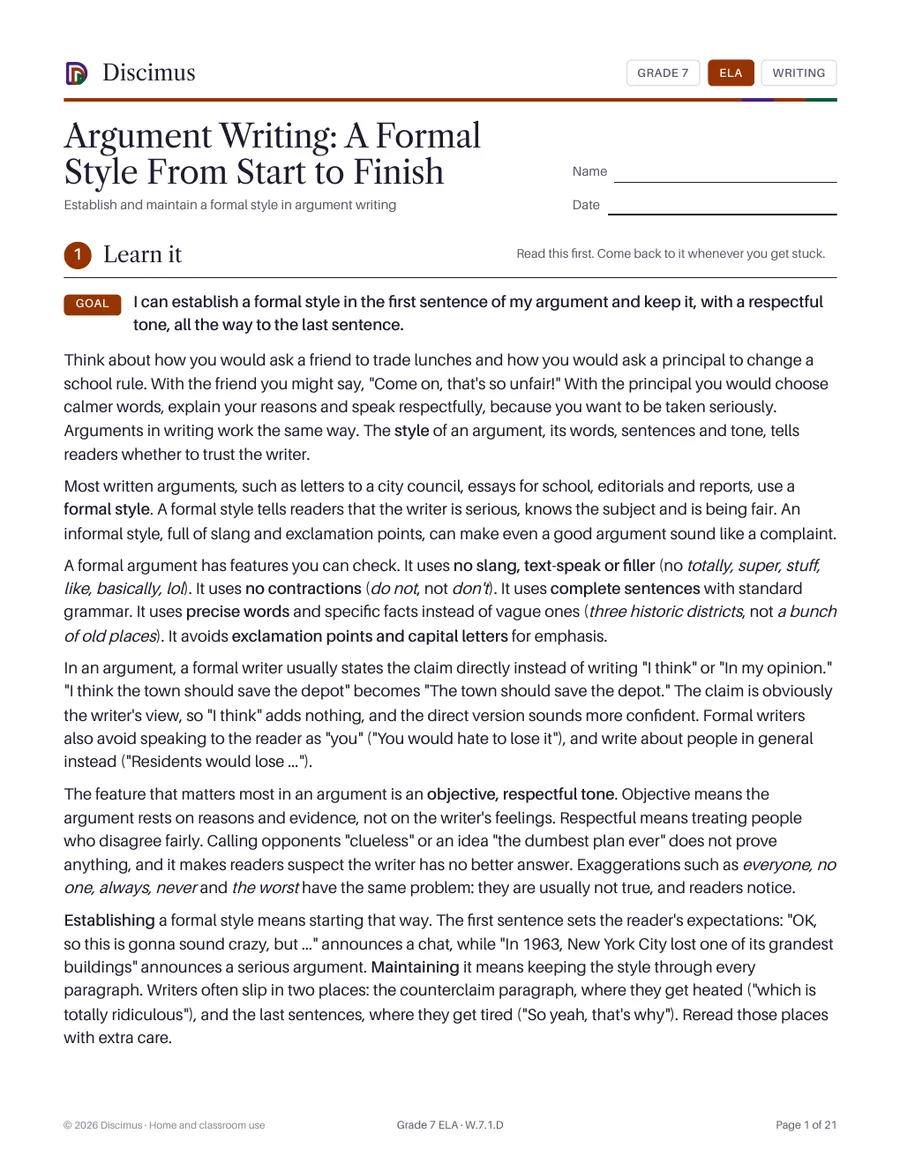
Establish and maintain a formal style in argument writing
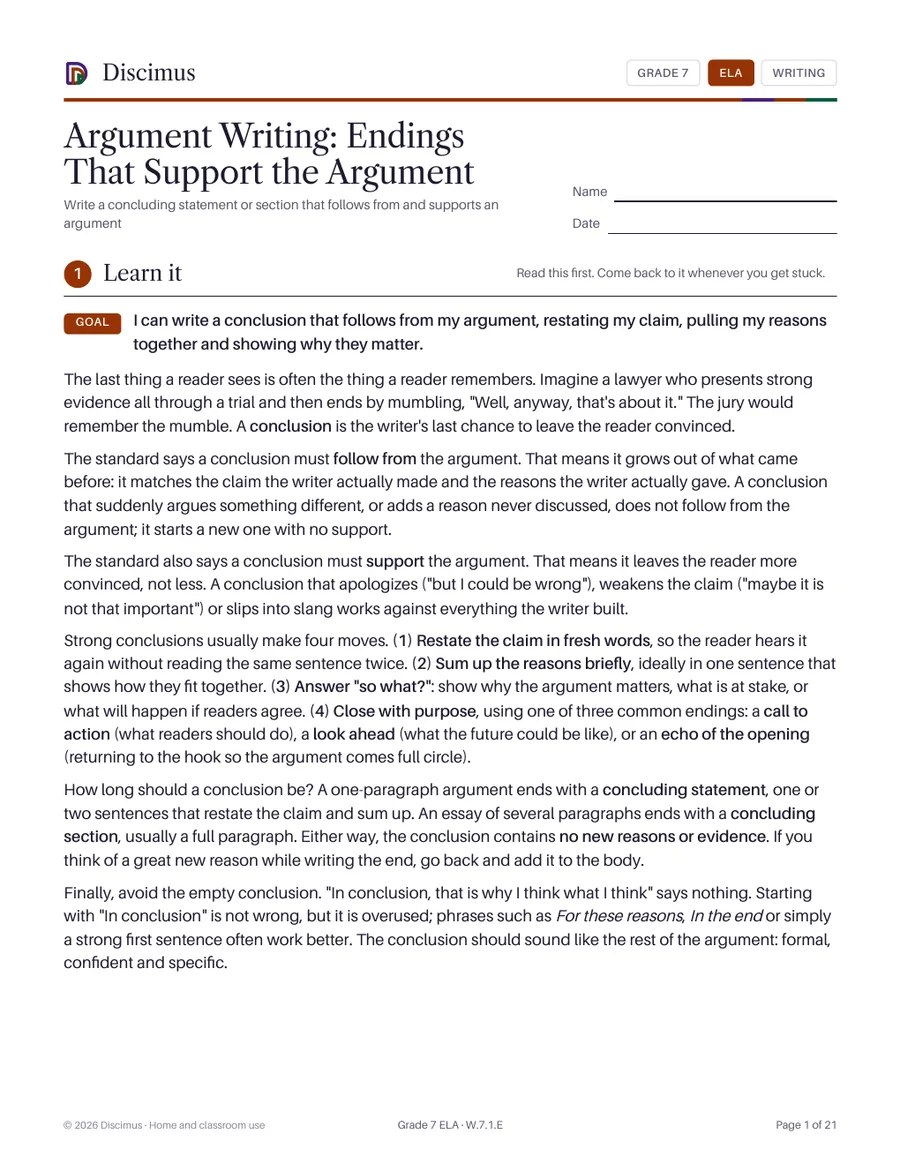
Write a concluding statement or section that follows from and supports an argument
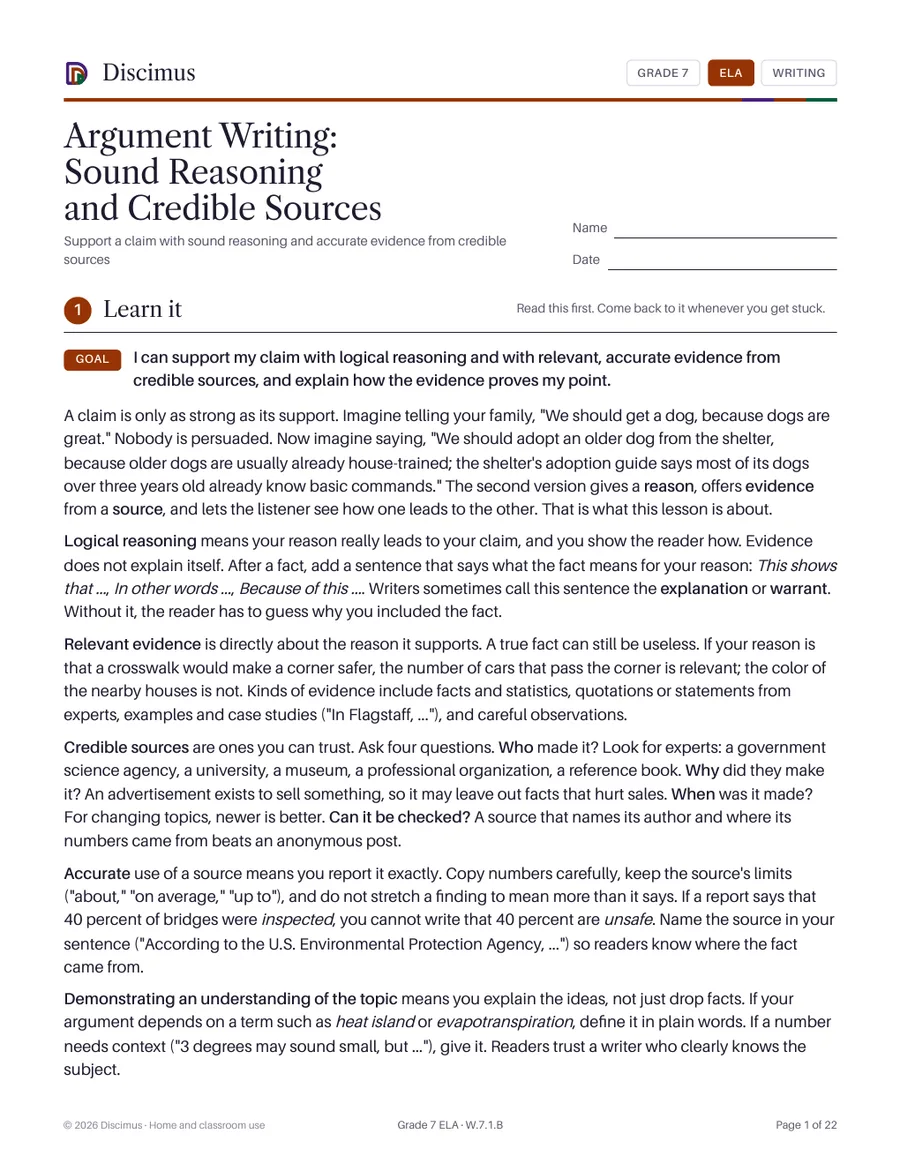
Support a claim with sound reasoning and accurate evidence from credible sources
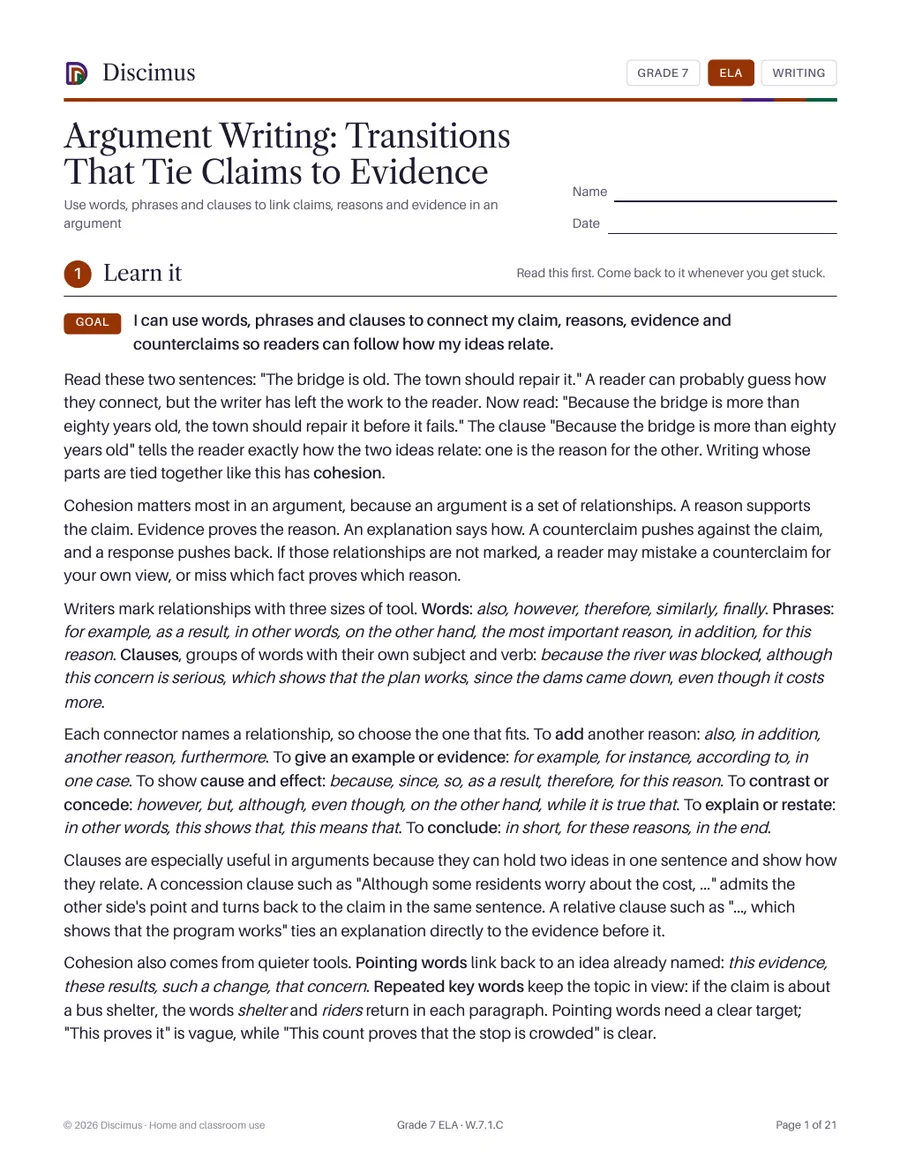
Use words, phrases and clauses to link claims, reasons and evidence in an argument
Cite several pieces of text evidence for explicit meaning and inferences in literature
Introduce a claim, acknowledge opposing claims and organize reasons and evidence logically
Fit development, organization and style to task, purpose and audience
Use a comma between coordinate adjectives but not between cumulative adjectives
Distinguish the connotations of words with similar denotations
Use sentence and paragraph meaning and a word's position or function to find its meaning
Develop a topic with relevant facts, definitions, details, quotations and examples
Use precise language and domain-specific vocabulary to inform about or explain a topic
Preview a topic; organize by definition, classification, comparison or cause and effect
Establish and maintain a formal style in explanatory writing
Use transitions to create cohesion and show how ideas and concepts relate
Compare historical fiction with a historical account to see how authors use or alter it
Analyze how a poem's or play's form, such as a sonnet or soliloquy, adds to its meaning
Use Greek and Latin roots and affixes as clues to the meaning of unfamiliar words
Analyze a text's structure and how its major sections develop the ideas
Analyze how setting, characters and plot shape one another in a story or play
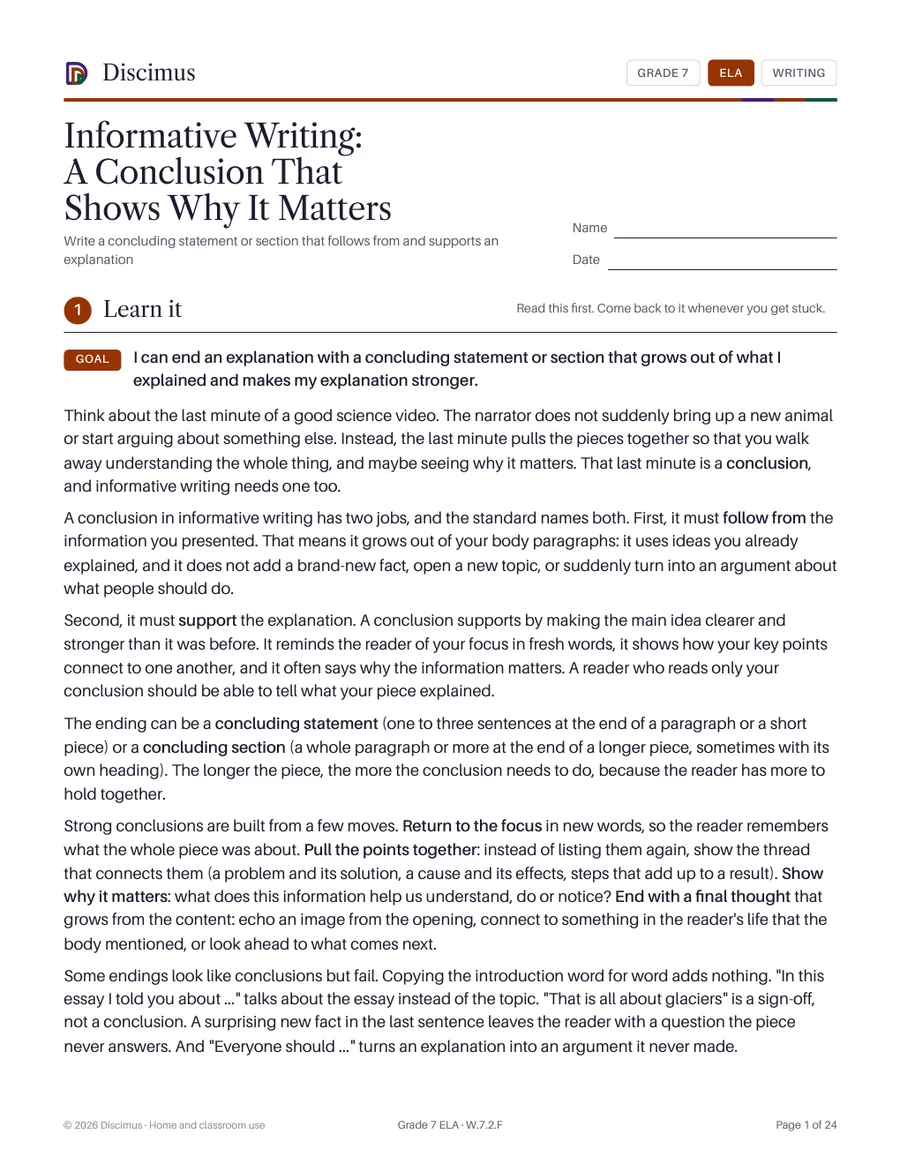
Write a concluding statement or section that follows from and supports an explanation
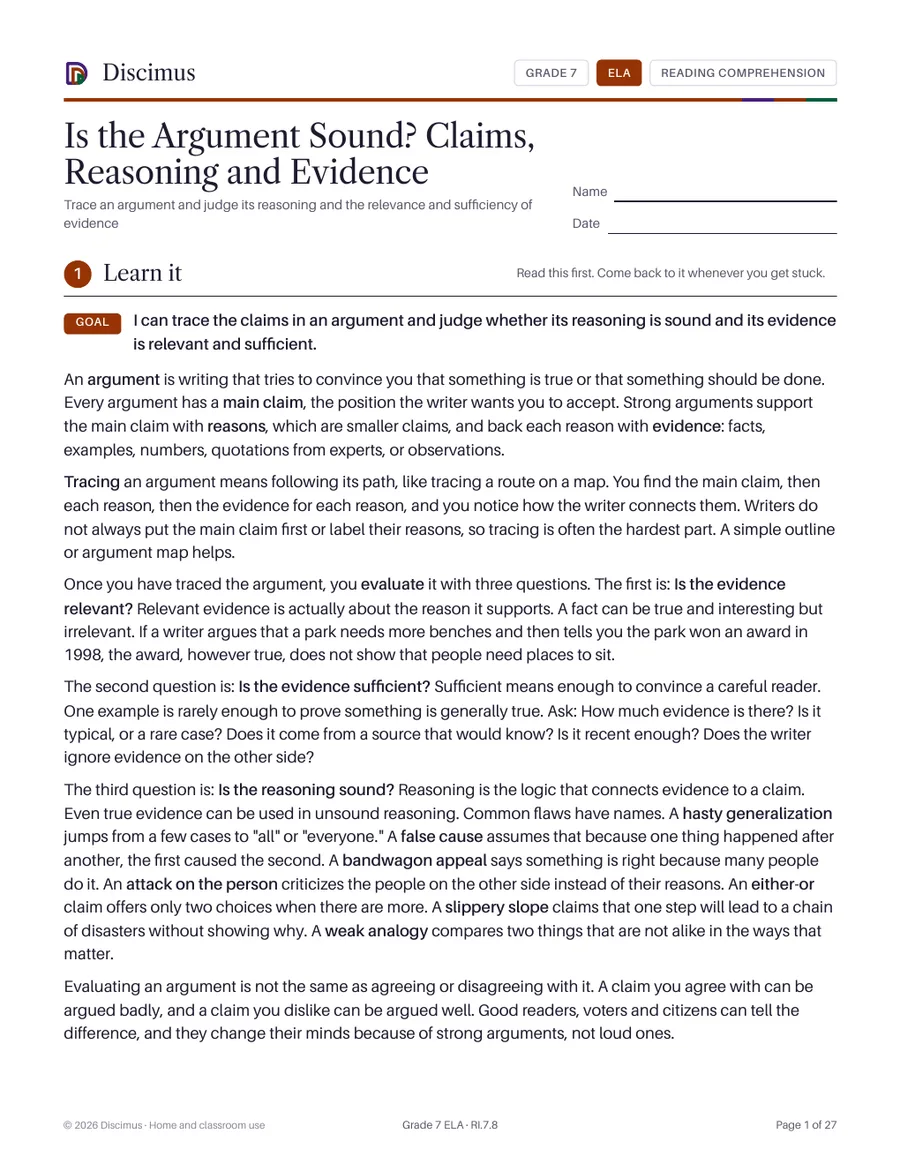
Trace an argument and judge its reasoning and the relevance and sufficiency of evidence
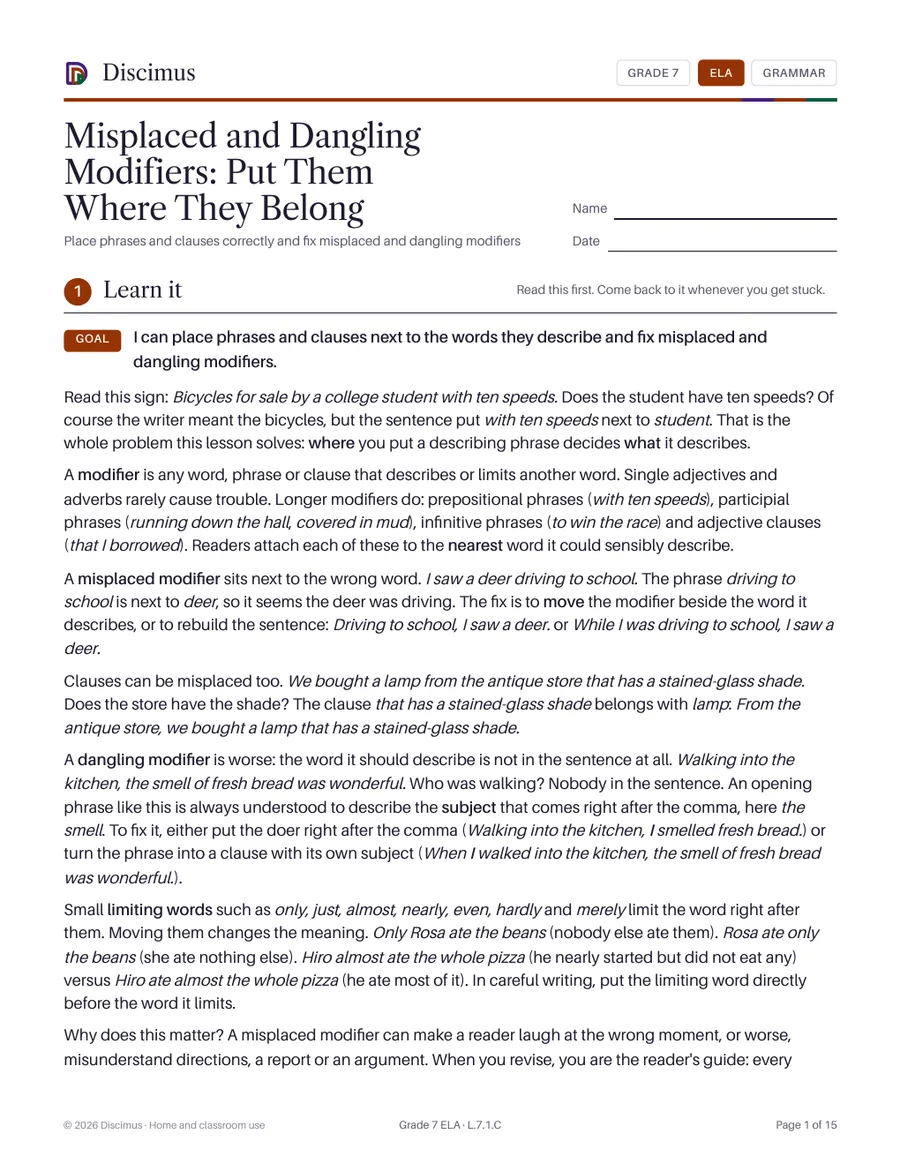
Place phrases and clauses correctly and fix misplaced and dangling modifiers
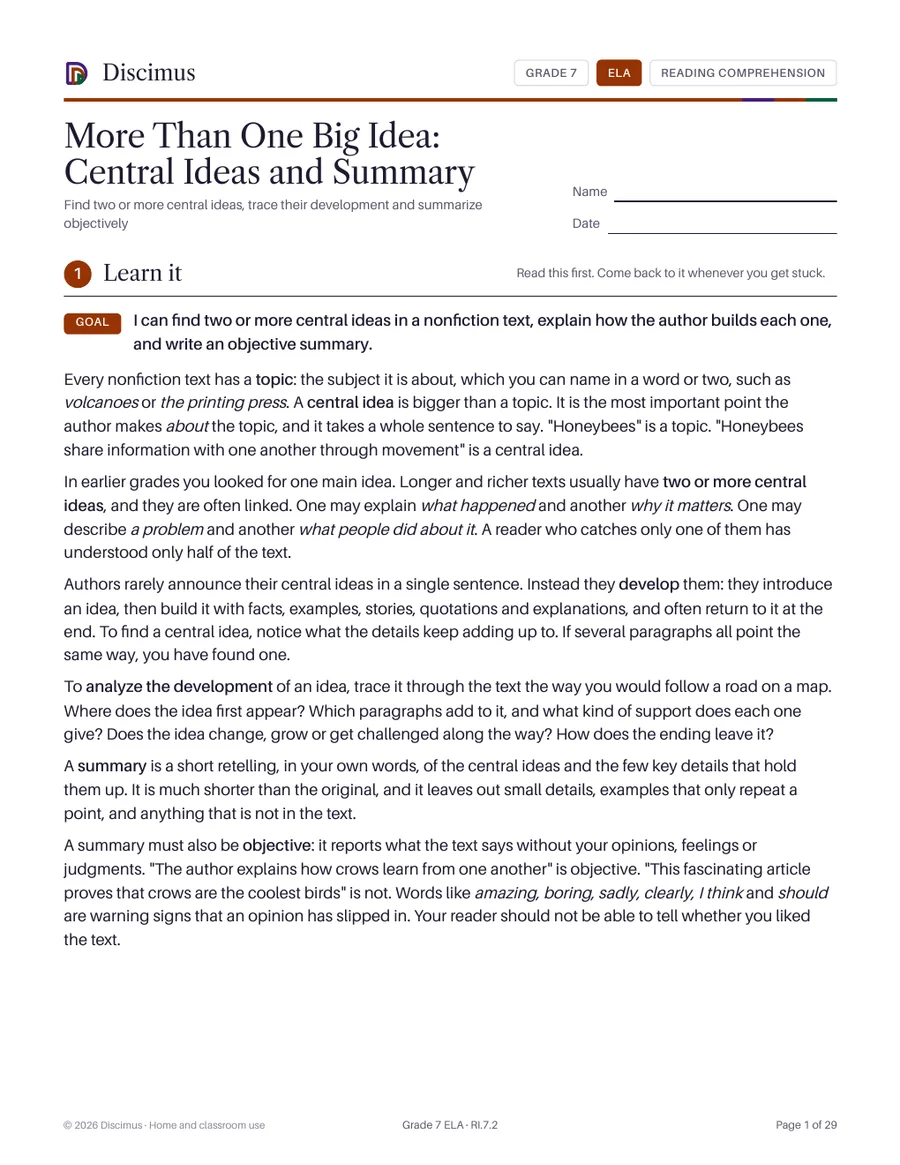
Find two or more central ideas, trace their development and summarize objectively
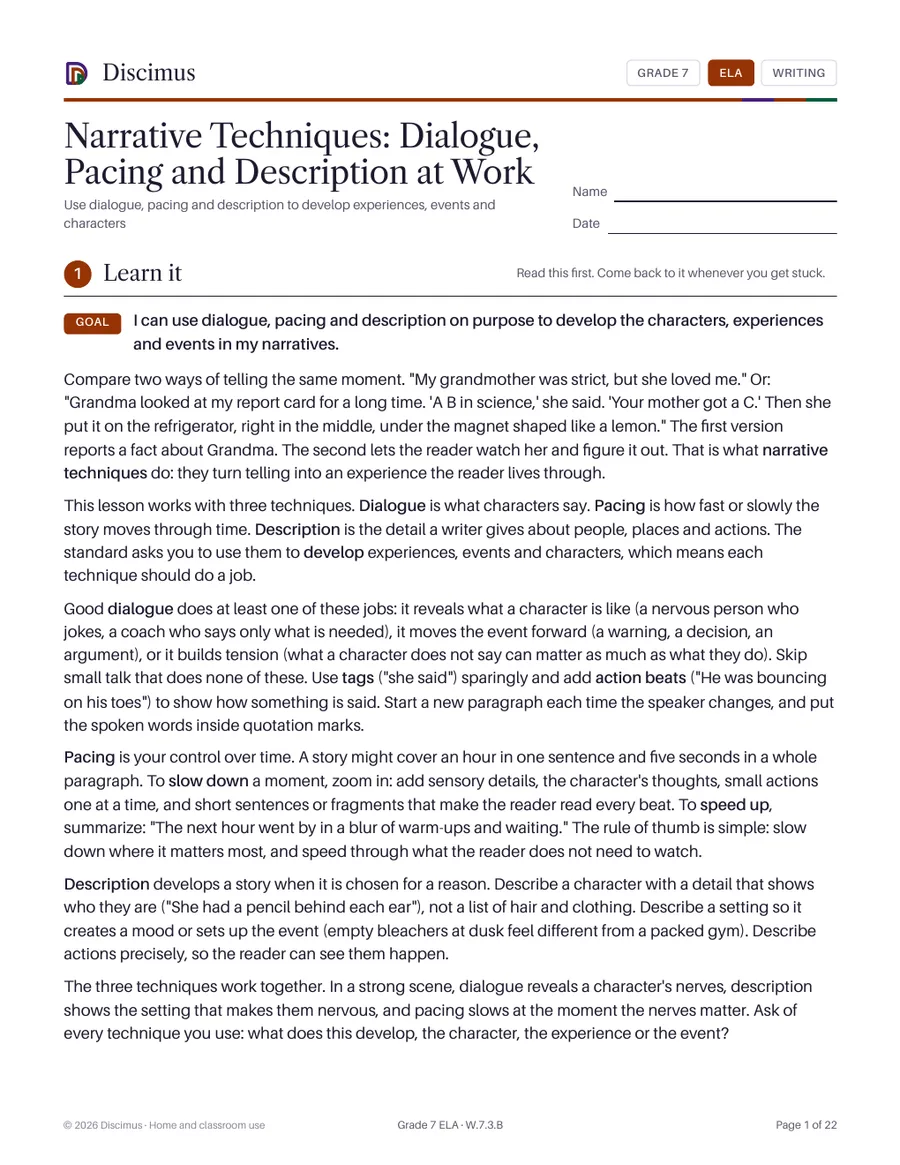
Use dialogue, pacing and description to develop experiences, events and characters
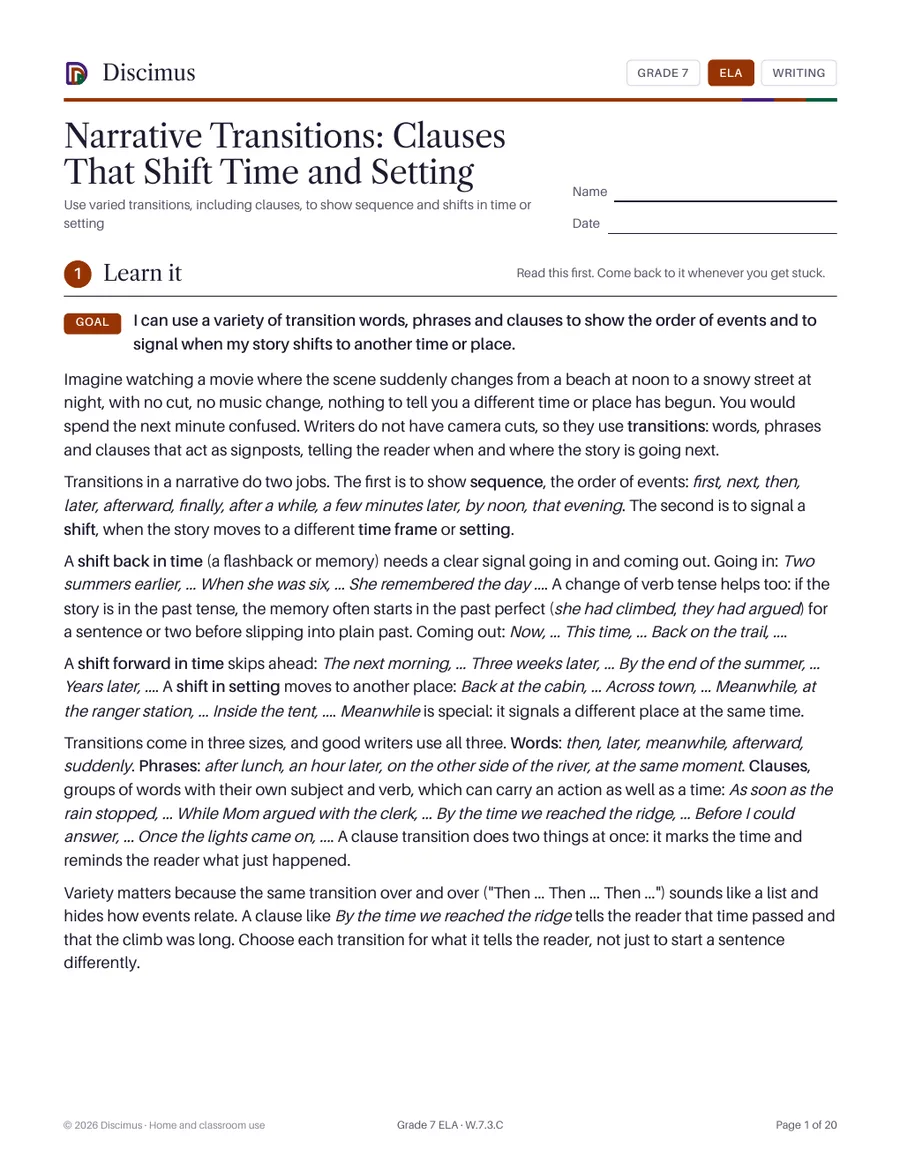
Use varied transitions, including clauses, to show sequence and shifts in time or setting
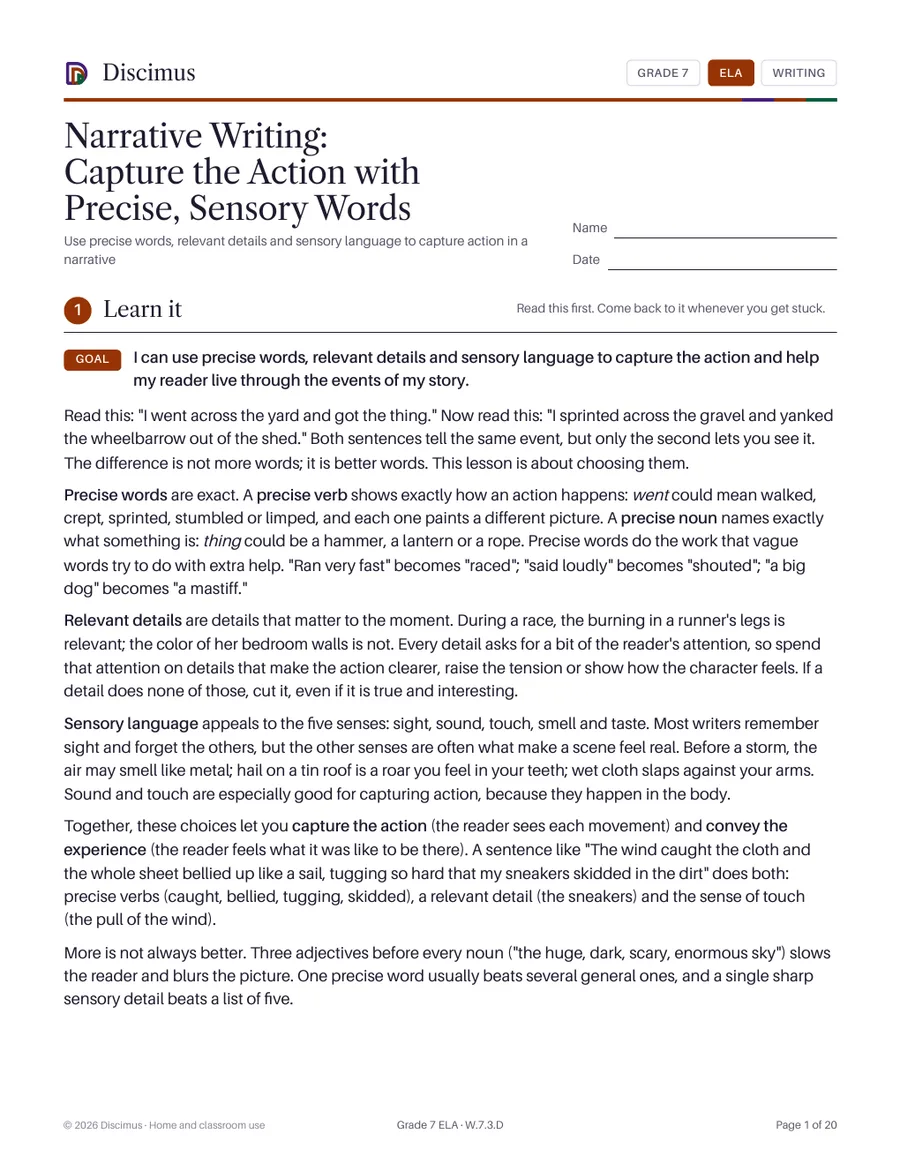
Use precise words, relevant details and sensory language to capture action in a narrative
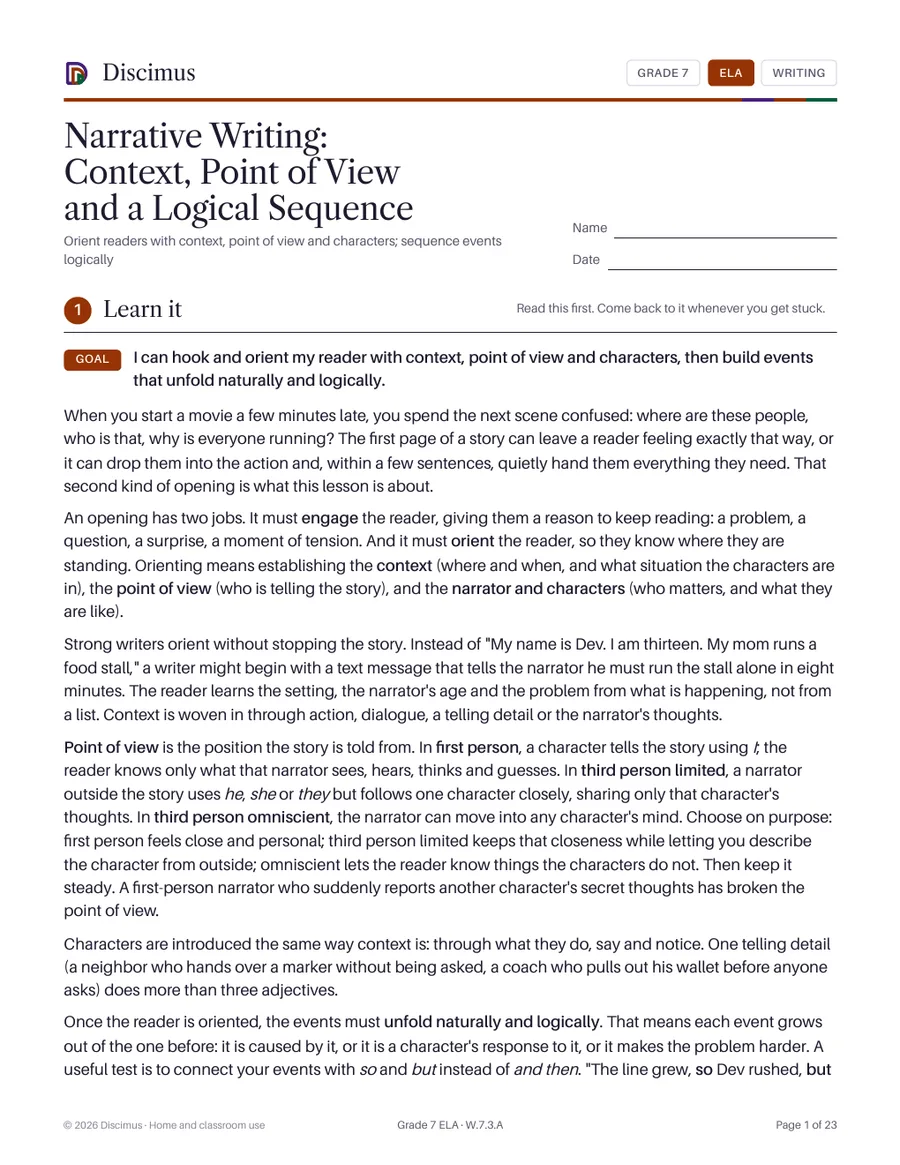
Orient readers with context, point of view and characters; sequence events logically
Write a narrative conclusion that follows from and reflects on the narrated events
Compare a text with its film, stage or audio version and analyze each medium's techniques
Compare a nonfiction text with its audio, video or multimedia version and each portrayal
Explain what phrases and clauses are and the job each one does in a specific sentence
Cite several pieces of evidence for explicit statements and inferences in nonfiction
Verify a first guess about a word's meaning by checking it in context and in a dictionary
Publish writing online with linked, cited sources and collaborate respectfully
Read grade 6 to 8 stories, plays and poems independently, using fix-up strategies
Use print and digital references to find pronunciation, part of speech and precise meaning
Search effectively, judge credibility and accuracy, quote or paraphrase, and cite in MLA
Analyze how two authors on one topic stress different evidence or interpret facts
Analyze how an author develops and contrasts characters' and narrators' points of view
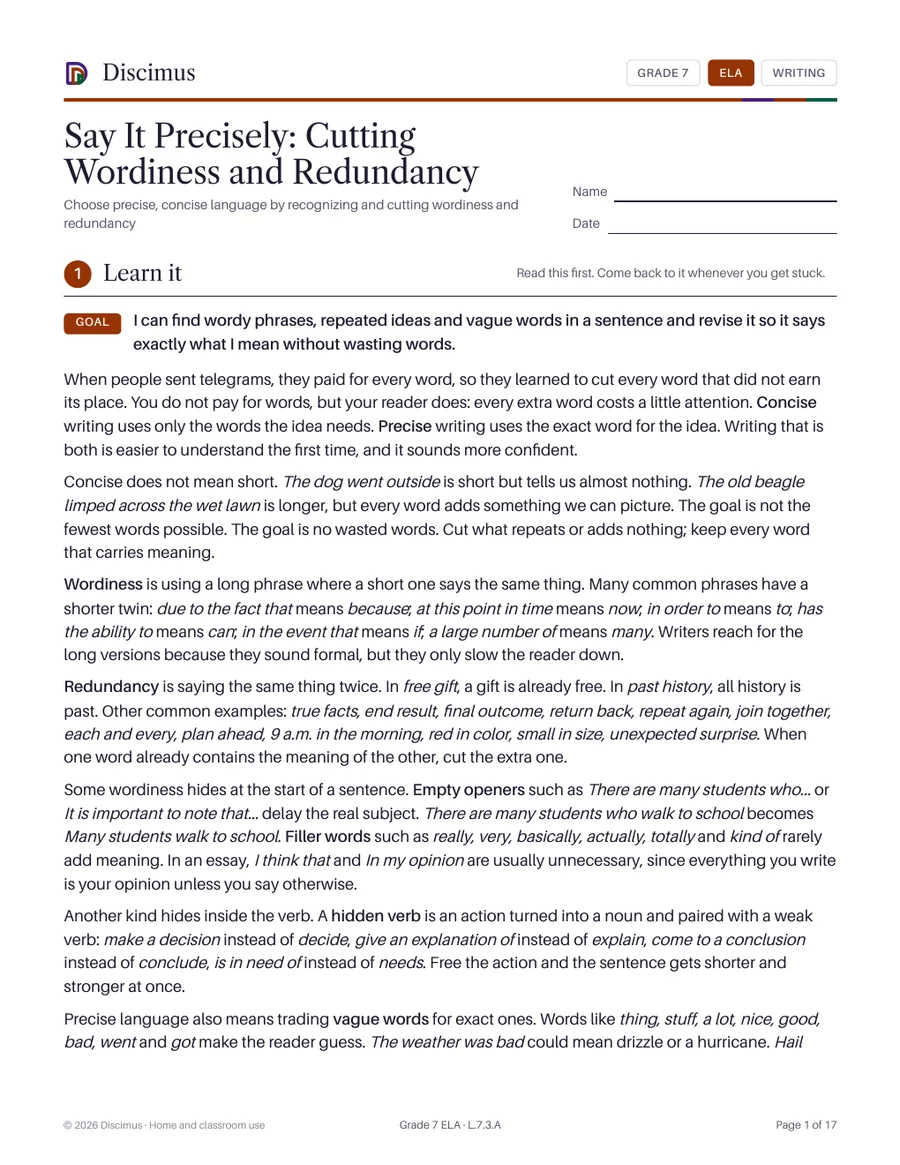
Choose precise, concise language by recognizing and cutting wordiness and redundancy
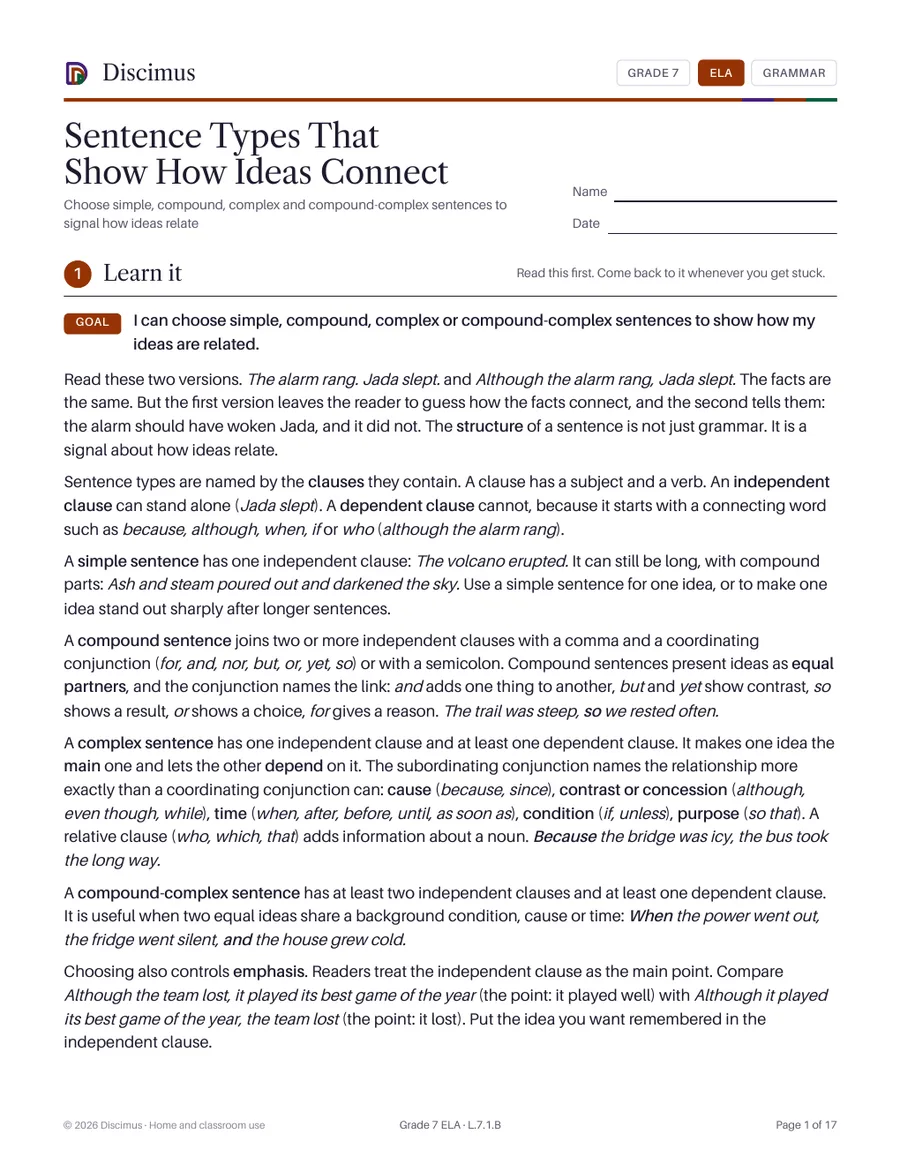
Choose simple, compound, complex and compound-complex sentences to signal how ideas relate
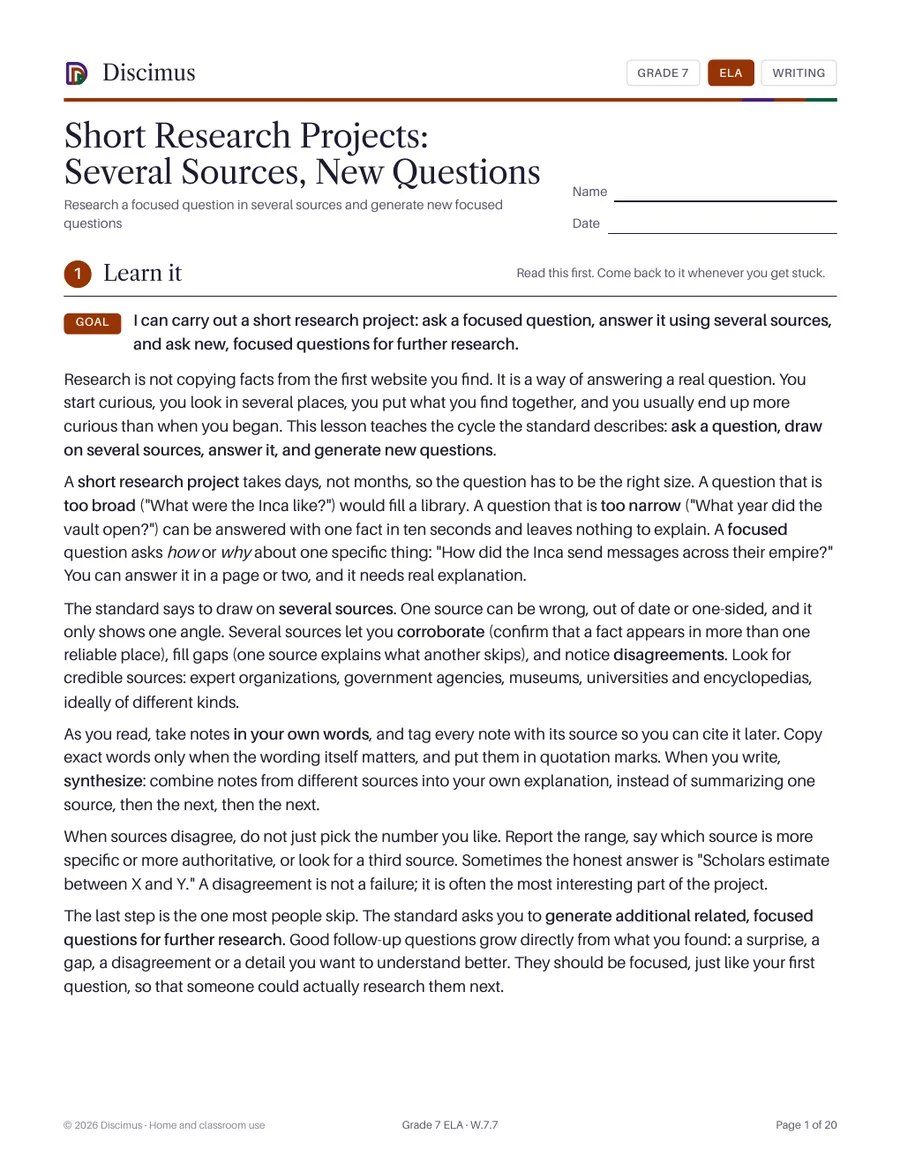
Research a focused question in several sources and generate new focused questions
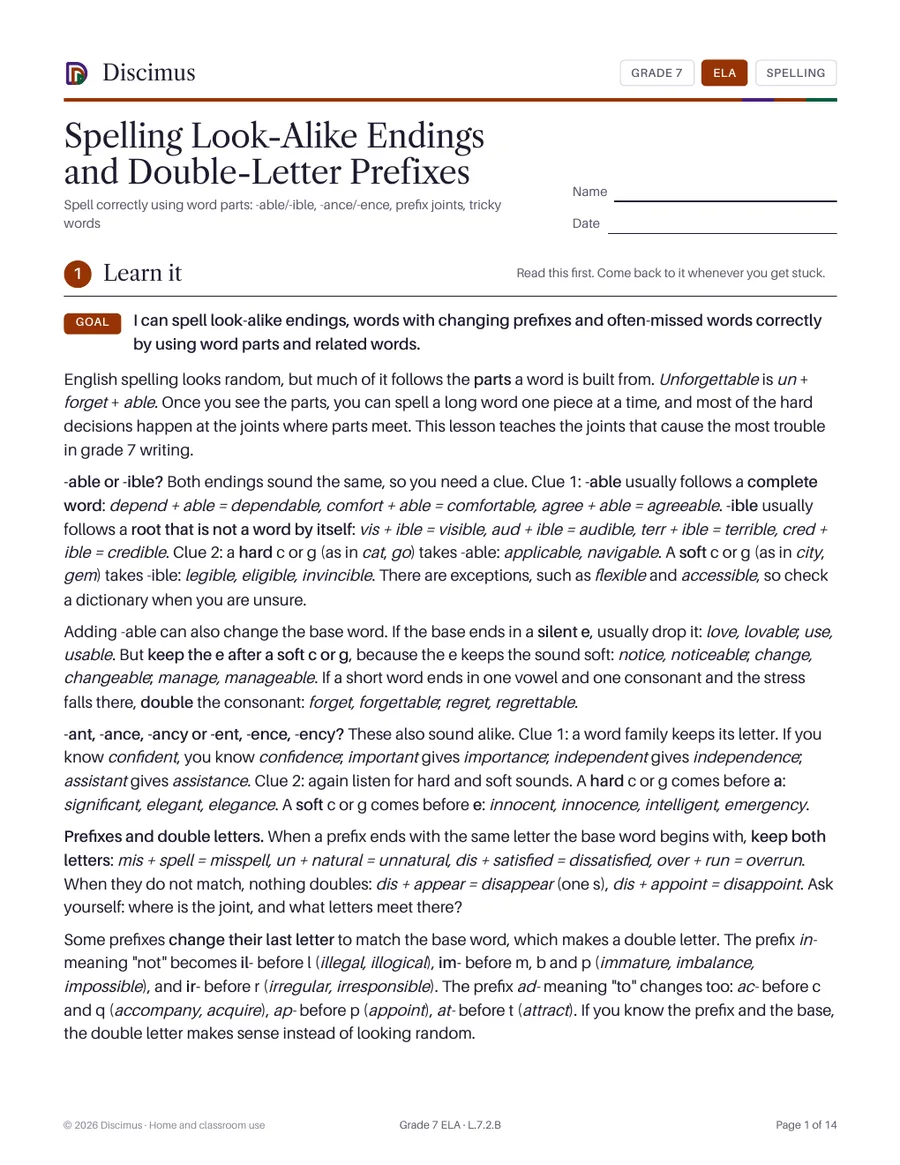
Spell correctly using word parts: -able/-ible, -ance/-ence, prefix joints, tricky words
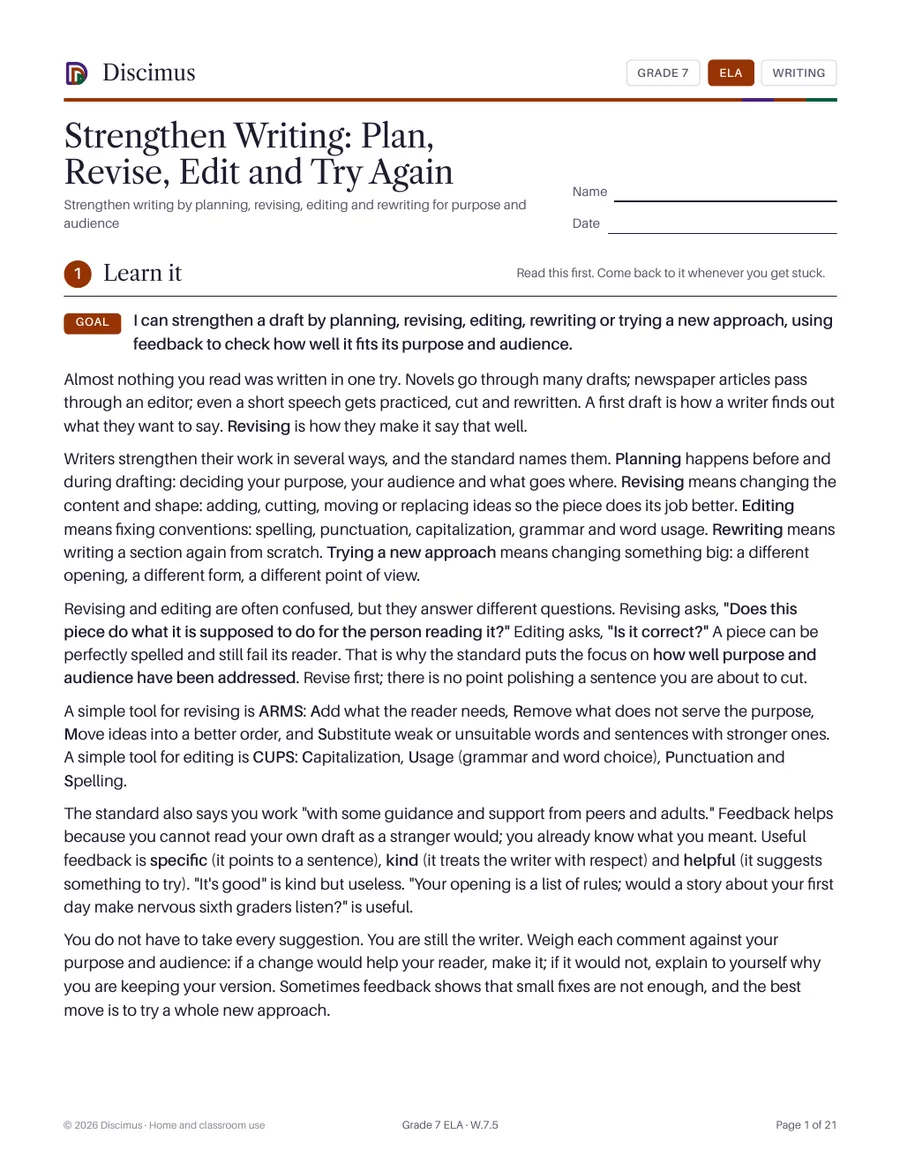
Strengthen writing by planning, revising, editing and rewriting for purpose and audience
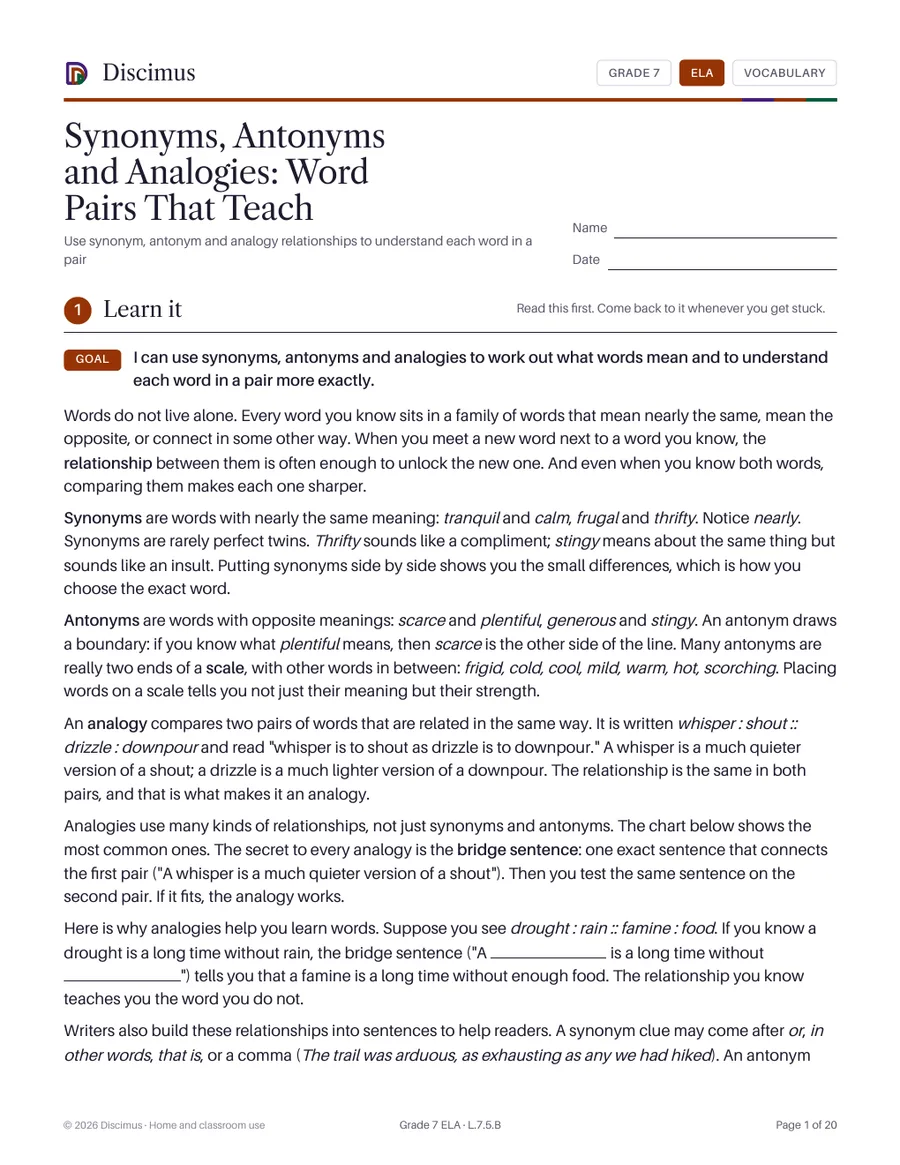
Use synonym, antonym and analogy relationships to understand each word in a pair
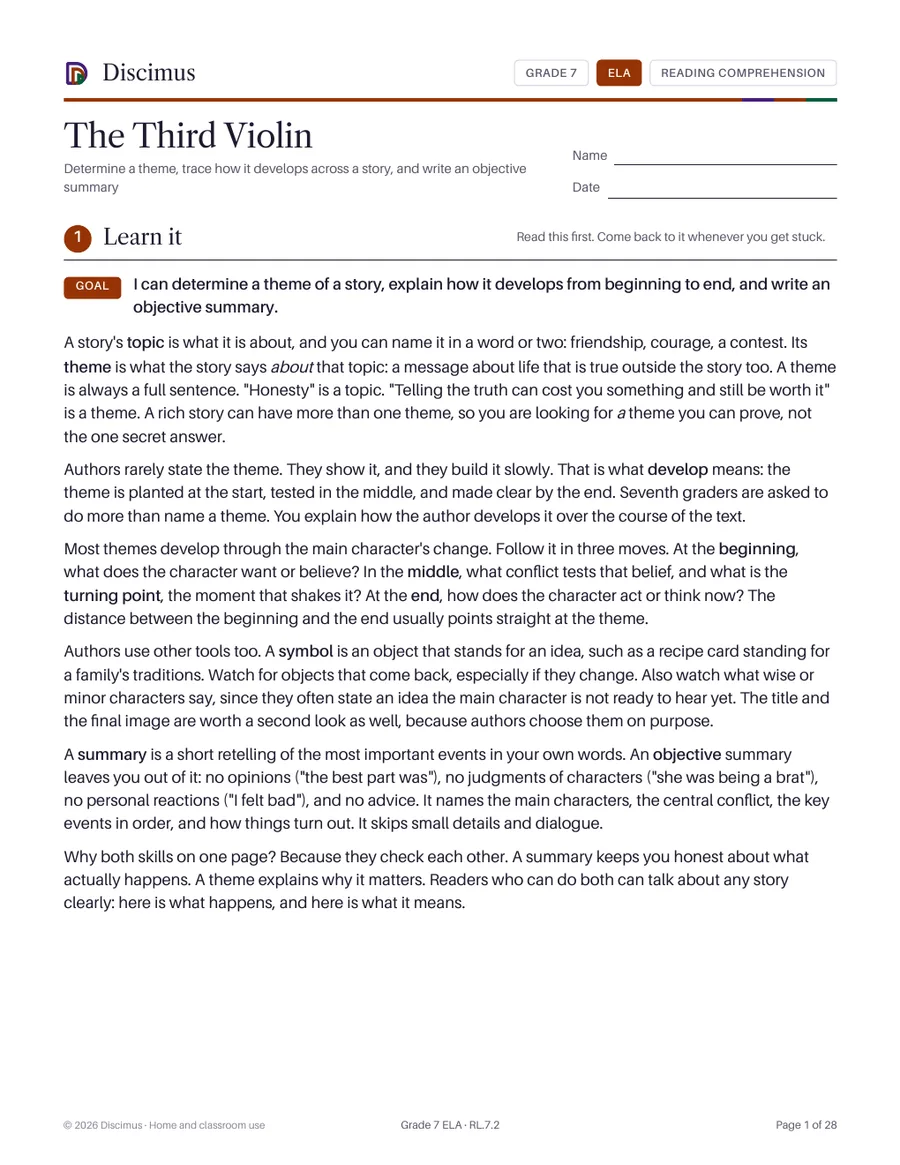
Determine a theme, trace how it develops across a story, and write an objective summary
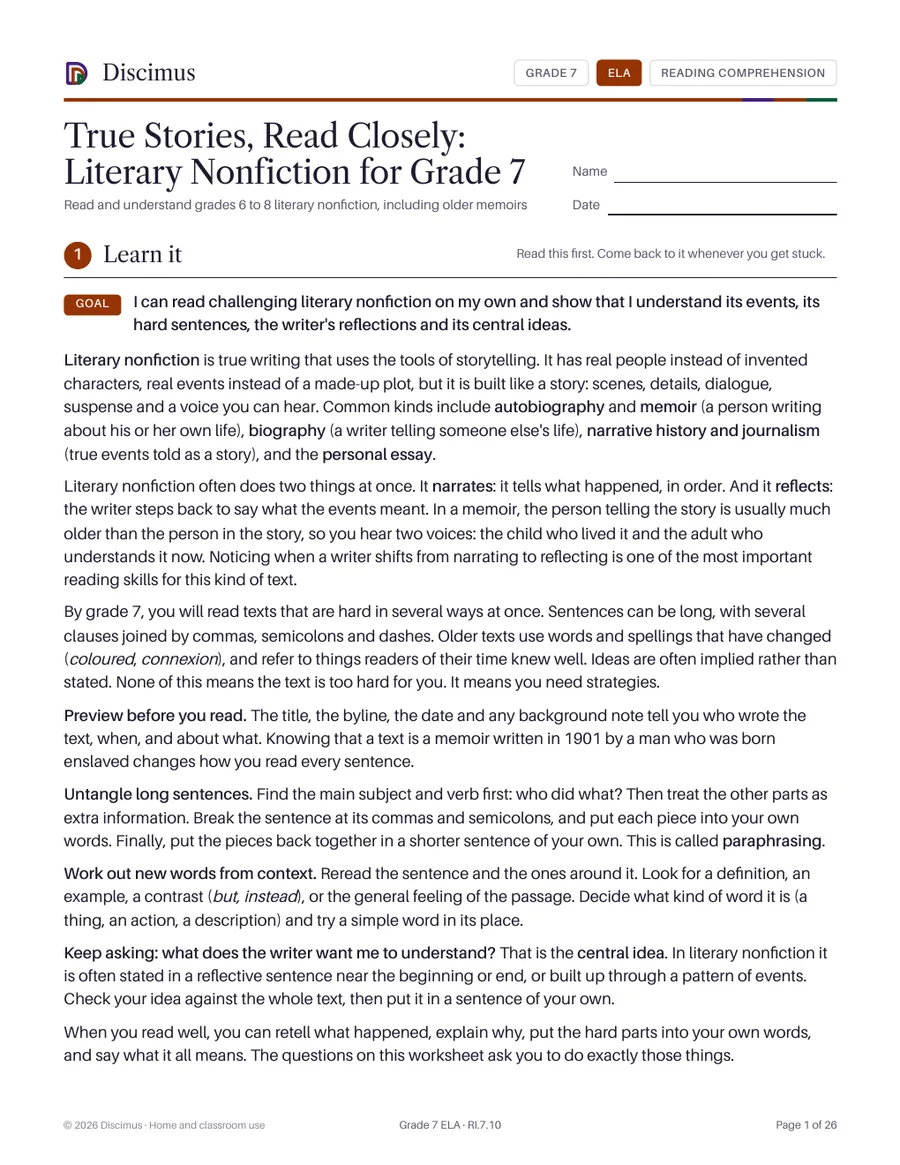
Read and understand grades 6 to 8 literary nonfiction, including older memoirs
Find an author's point of view and purpose and how the author sets it apart from others
Analyze how individuals, events and ideas influence one another in a nonfiction text
Determine figurative, connotative and technical meanings and analyze word choice and tone
Interpret figurative and connotative language and the effect of rhyme and repeated sounds
Learn and accurately use general academic and domain-specific words and phrases
Compare a story and a historical account in writing: how the author uses or alters history
Write in short and extended time frames for different subjects, purposes and audiences
Write an evaluation of an argument: trace its claims and judge its reasoning and evidence
Gather, learn and accurately use general academic and domain-specific words and phrases
Form verbs in the active and passive voice and choose the voice that fits the purpose
Determine an author's point of view and analyze how the author answers conflicting views
Establish and maintain a formal style in argument writing
Introduce a claim, distinguish it from other claims, and order reasons logically
Write a concluding statement or section that follows from and supports the argument
Use words, phrases and clauses to link claims, counterclaims, reasons and evidence
Support a claim with logical reasoning and relevant evidence from credible sources
Trace how a central idea develops through supporting ideas and write an objective summary
Compare the structures of two texts and how each structure shapes meaning and style
Write conclusions that follow from and support history, science and technical explanations
Distinguish connotations of words with similar meanings, such as firm and bullheaded
Read and understand complex literary nonfiction independently and proficiently
Map an argument and judge its reasoning and the relevance and sufficiency of its evidence
Analyze how figurative words, connotations, analogies and allusions shape meaning and tone
Draw and explain evidence from informational texts for analysis, reflection and research
Develop a topic with relevant facts, definitions, details, quotations and examples
Establish and maintain a formal style in explanatory writing
Use precise language and domain-specific vocabulary to explain a topic
Introduce and preview a topic; group information into broader categories with headings
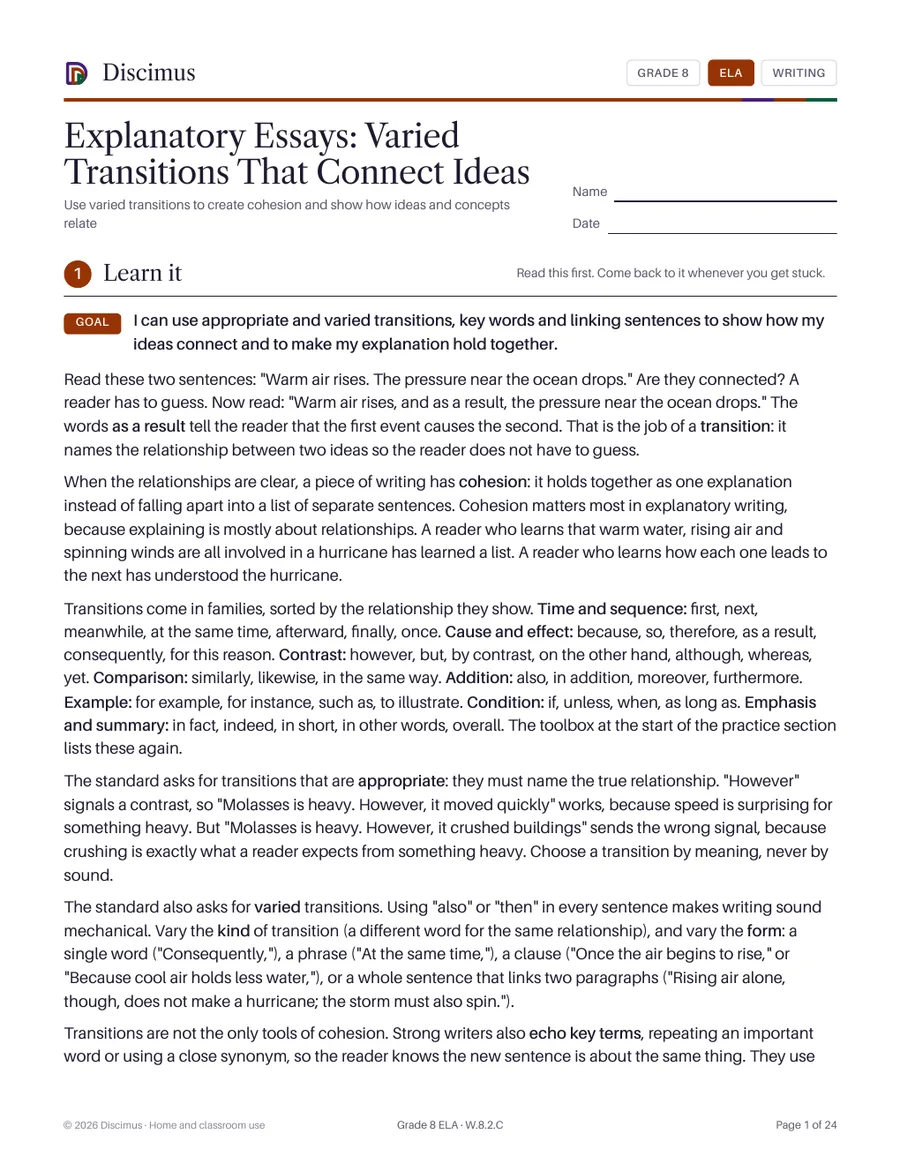
Use varied transitions to create cohesion and show how ideas and concepts relate
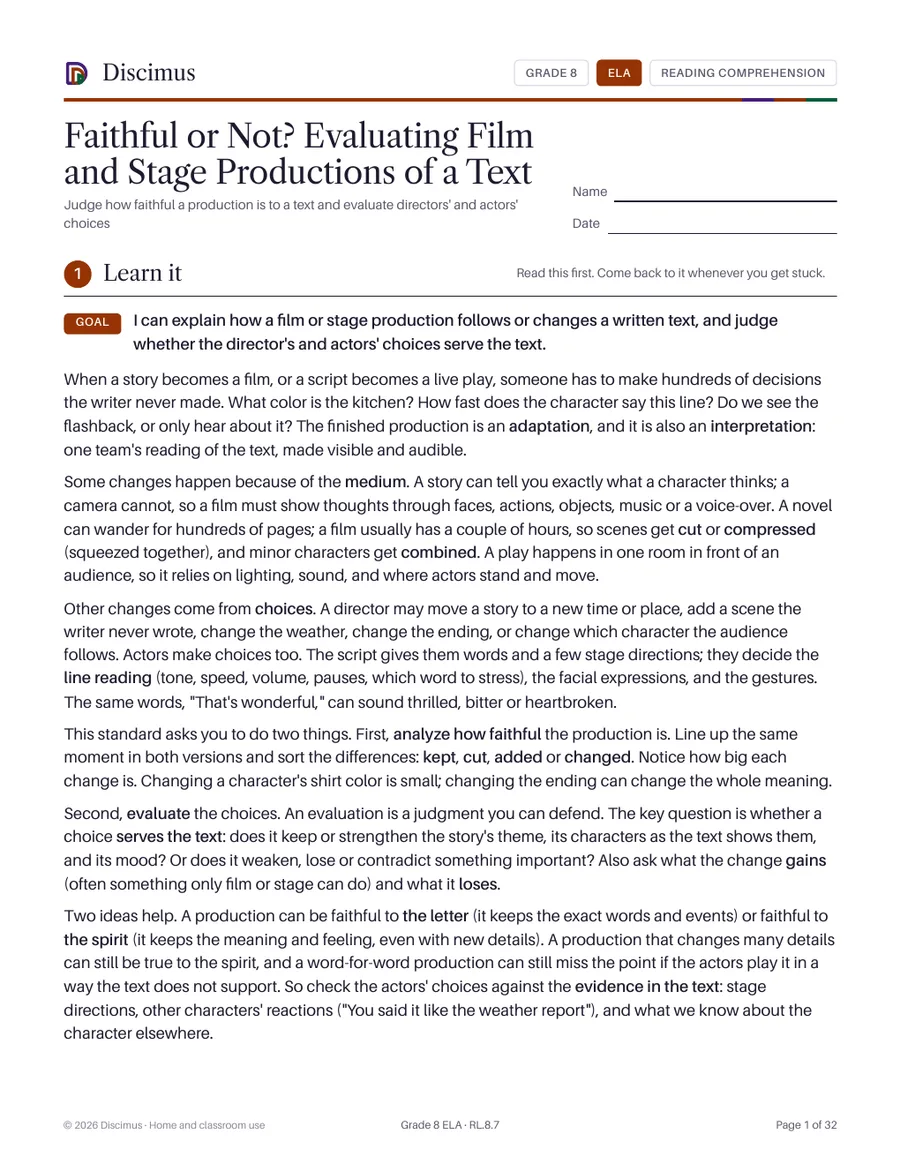
Judge how faithful a production is to a text and evaluate directors' and actors' choices
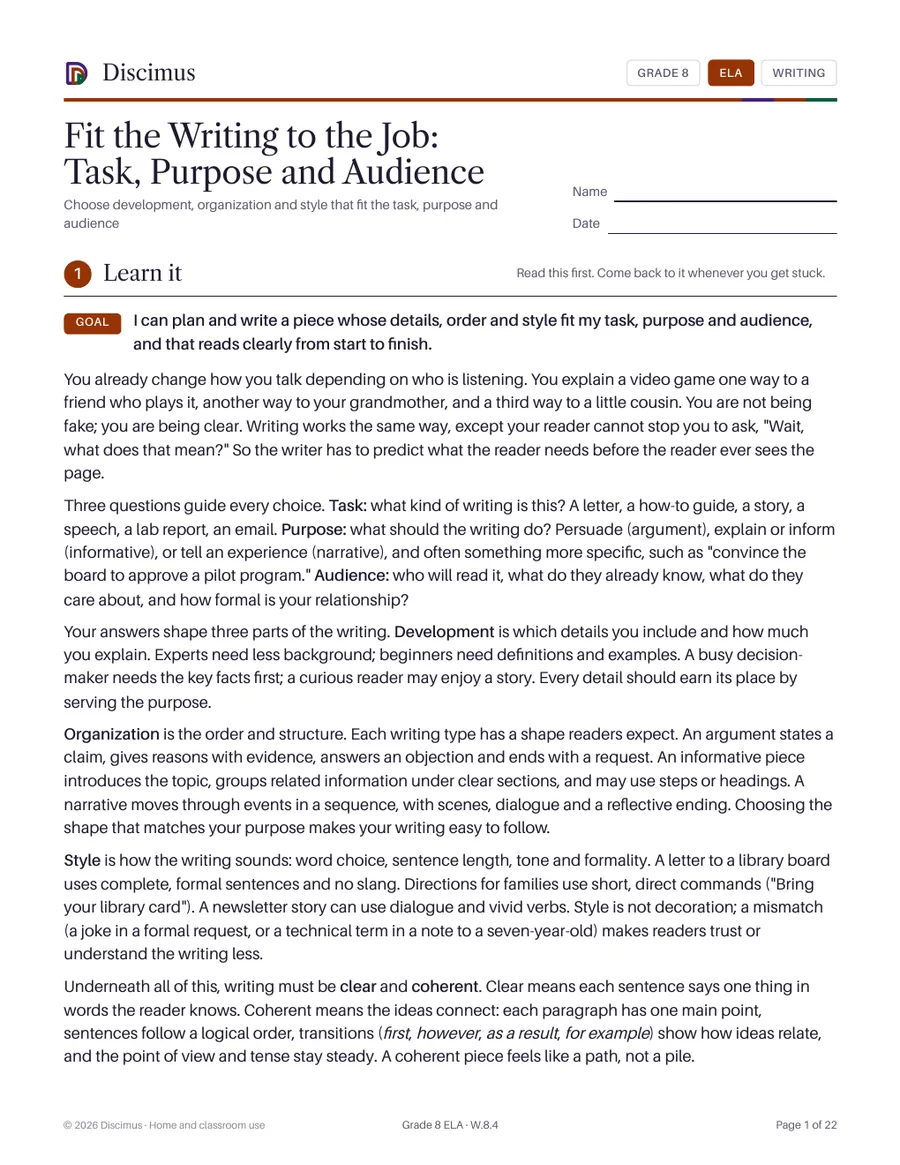
Choose development, organization and style that fit the task, purpose and audience
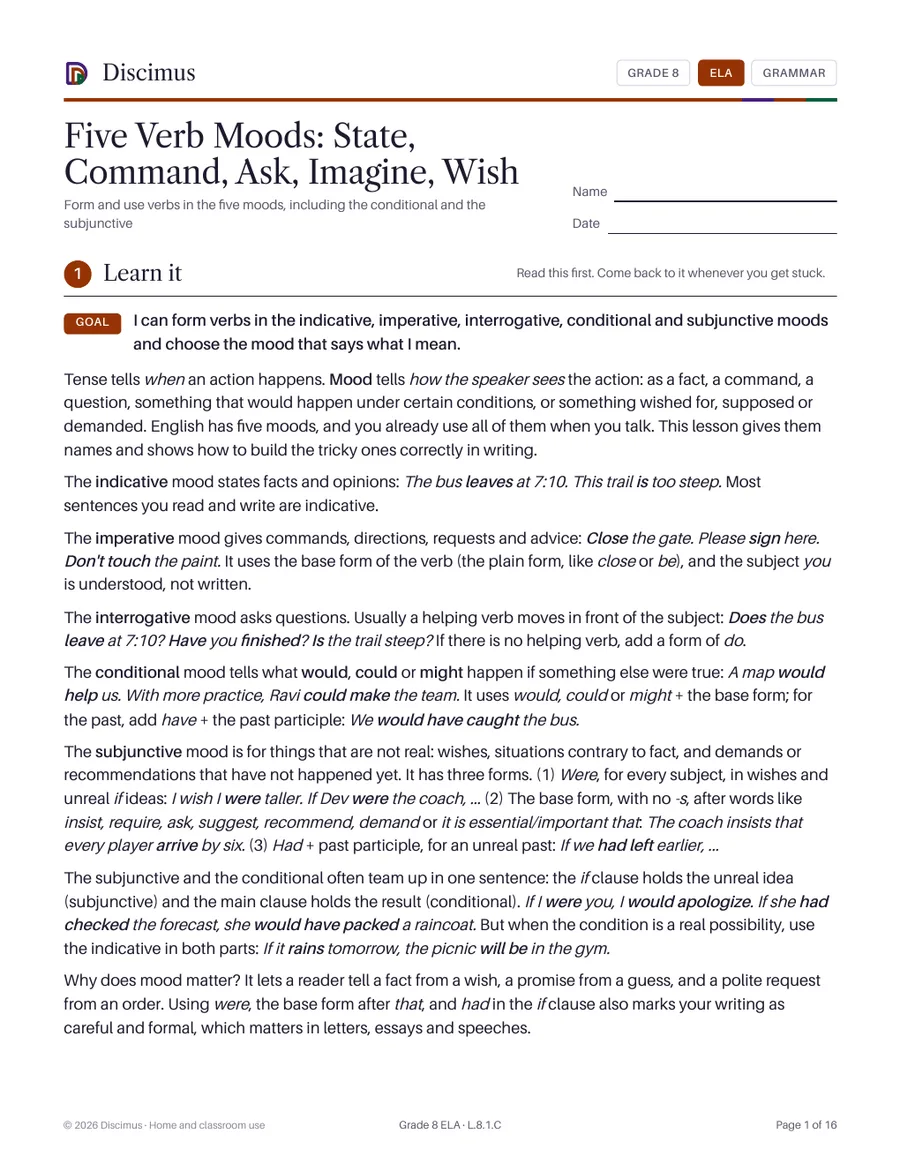
Form and use verbs in the five moods, including the conditional and the subjunctive
Establish and maintain a formal style in a history, science or technical argument
Write a conclusion that follows from and supports a history, science or technical argument
Support a history or science claim with sound reasoning and accurate, credible evidence
Introduce a history or science claim, distinguish it from other claims, order the support
Use words, phrases and clauses to link claims, counterclaims, reasons and evidence
Develop a history or science topic with facts, definitions, details, quotations, examples
Establish and keep a formal style and objective tone in history and science writing
Introduce and preview a history or science topic; sort it into headed categories
Use precise language and domain-specific vocabulary to explain a history or science topic
Use varied transitions to show how ideas relate in history, science and technical writing
Write a concluding statement or section that follows from and supports an explanation
Analyze a paragraph's structure and how its sentences develop and refine a key concept
Use an ellipsis to show where words have been left out of a quotation
Analyze how dialogue and incidents propel action, reveal character or provoke decisions
Analyze how a text links and separates ideas through comparisons, analogies and categories
Use print and digital references to find pronunciation, part of speech and precise meaning
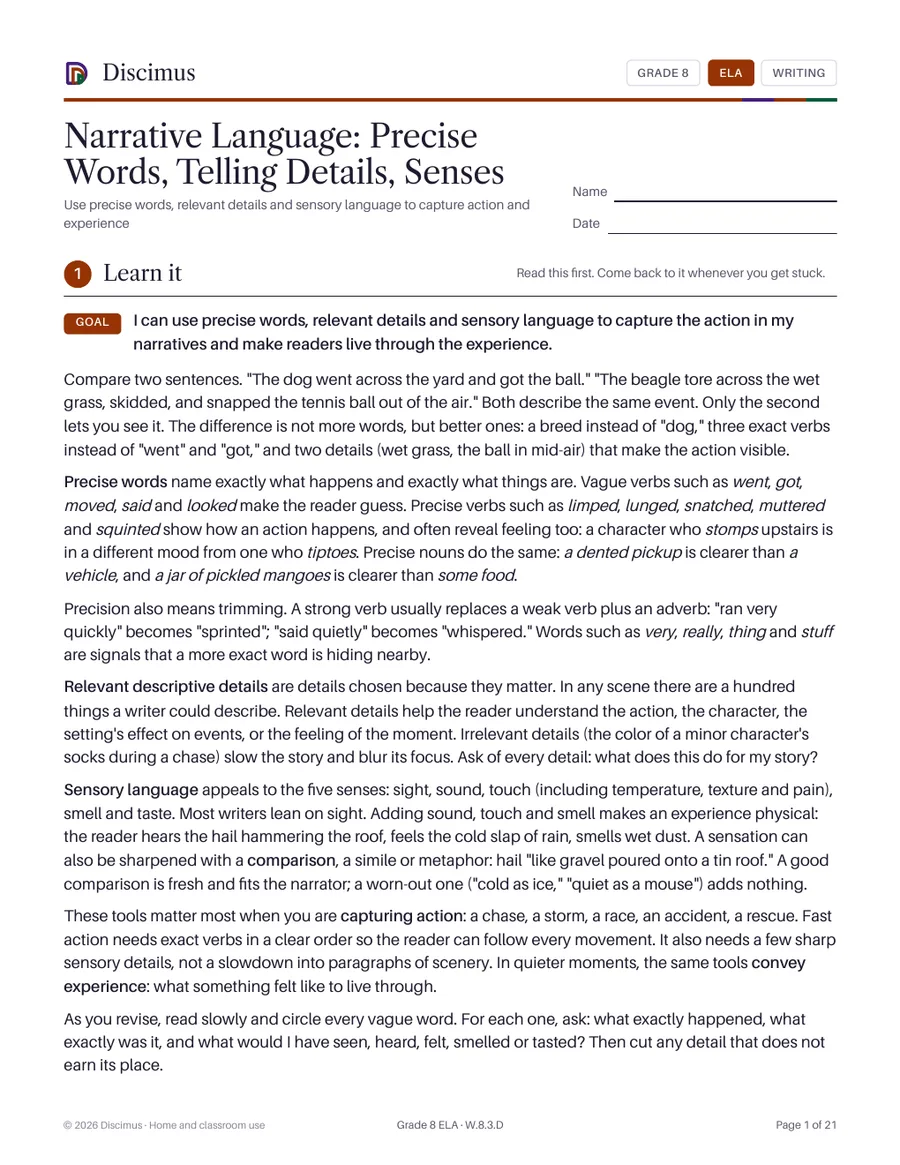
Use precise words, relevant details and sensory language to capture action and experience
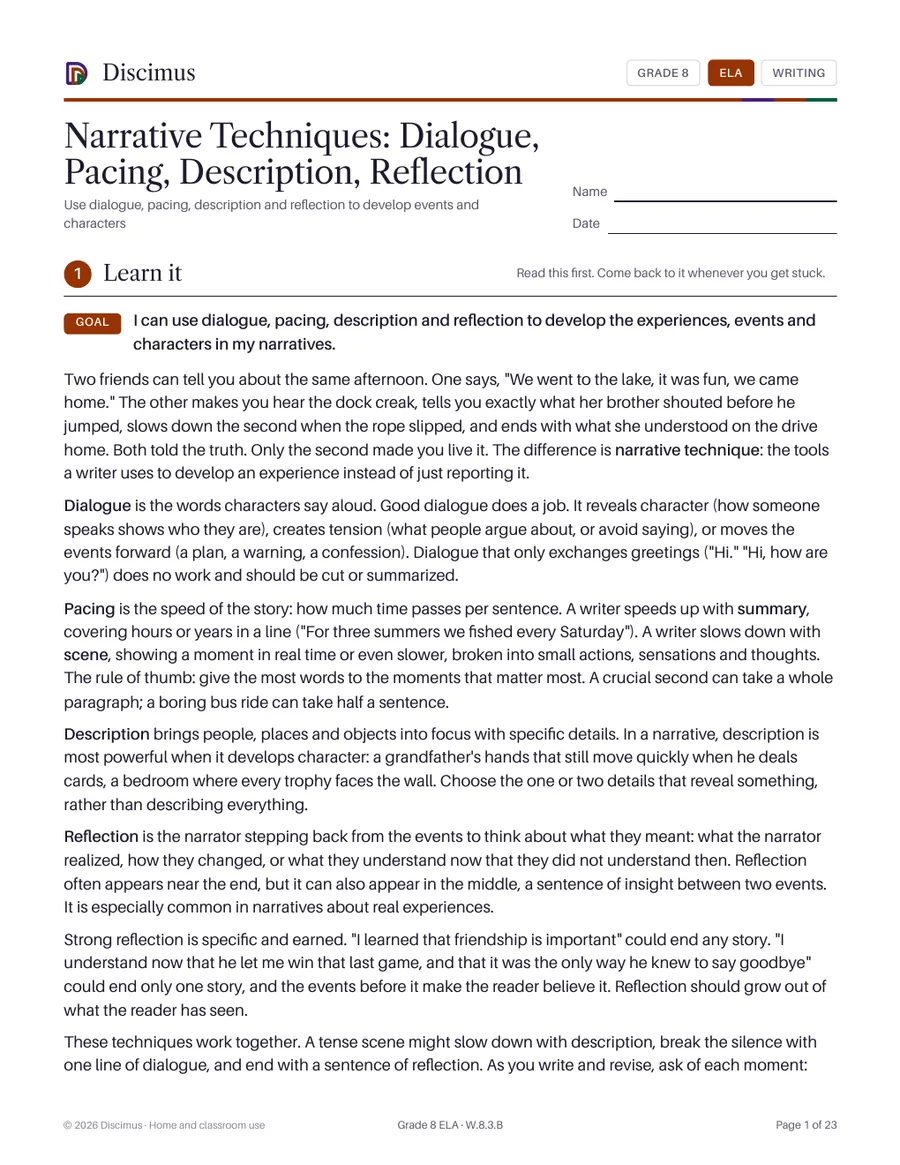
Use dialogue, pacing, description and reflection to develop events and characters
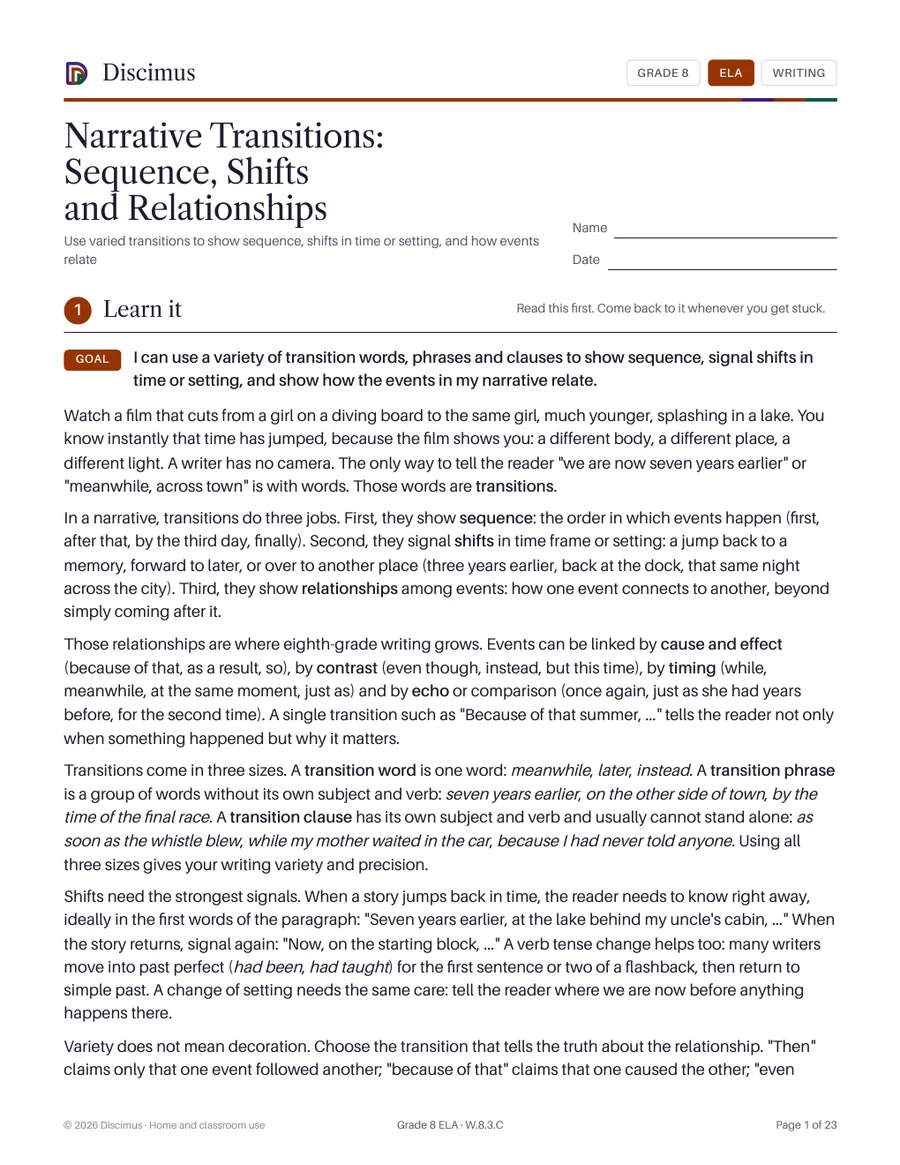
Use varied transitions to show sequence, shifts in time or setting, and how events relate
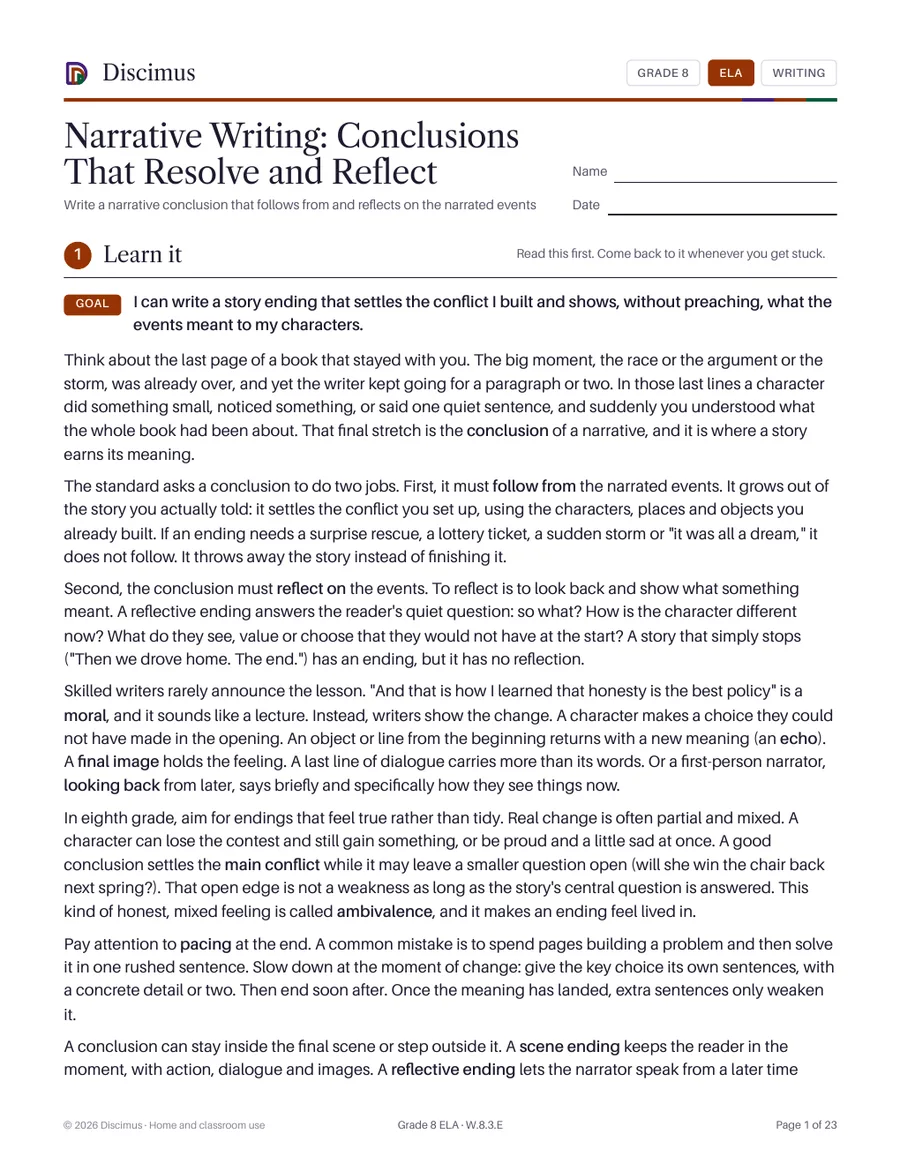
Write a narrative conclusion that follows from and reflects on the narrated events
Orient readers with context, point of view and characters; sequence events logically
Analyze how modern fiction draws on myths, old tales and the Bible and makes them new
Use a comma, an ellipsis or a dash to show a pause or break in a sentence
Cite the evidence that most strongly supports what nonfiction states and implies
Publish writing with digital tools that show how ideas connect, and collaborate online
Use technology to publish content writing and show how information and ideas connect
Read and understand challenging grade 8 stories, plays and poems independently
Use sentence and paragraph meaning and a word's position or function to define words
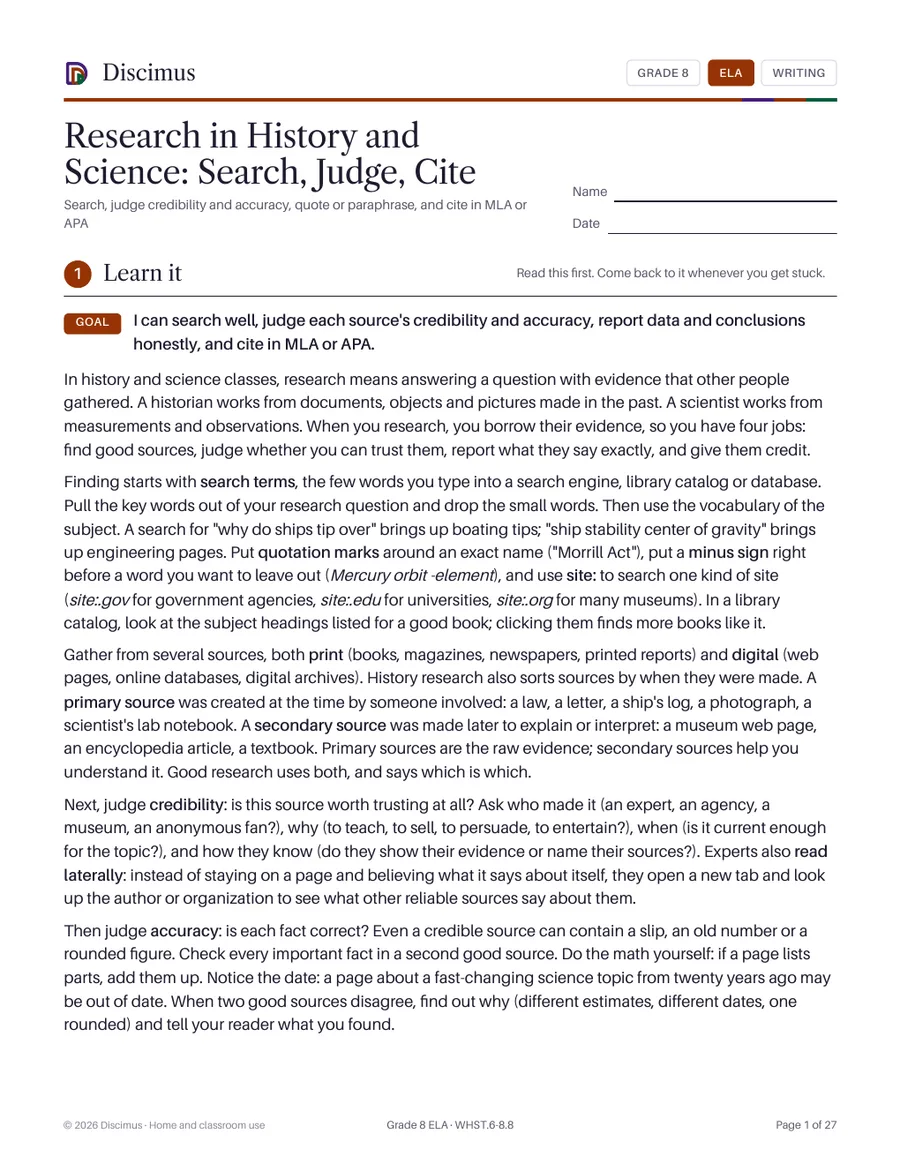
Search, judge credibility and accuracy, quote or paraphrase, and cite in MLA or APA
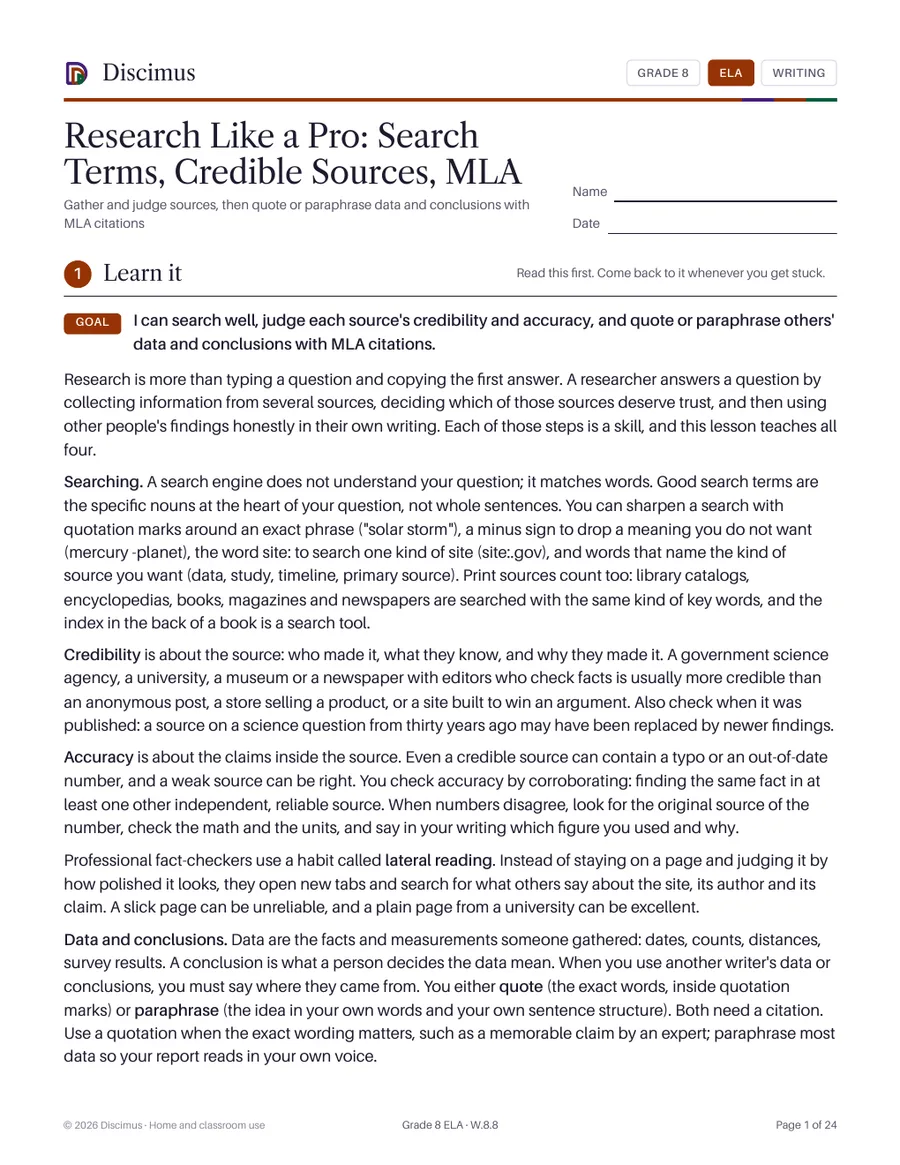
Gather and judge sources, then quote or paraphrase data and conclusions with MLA citations
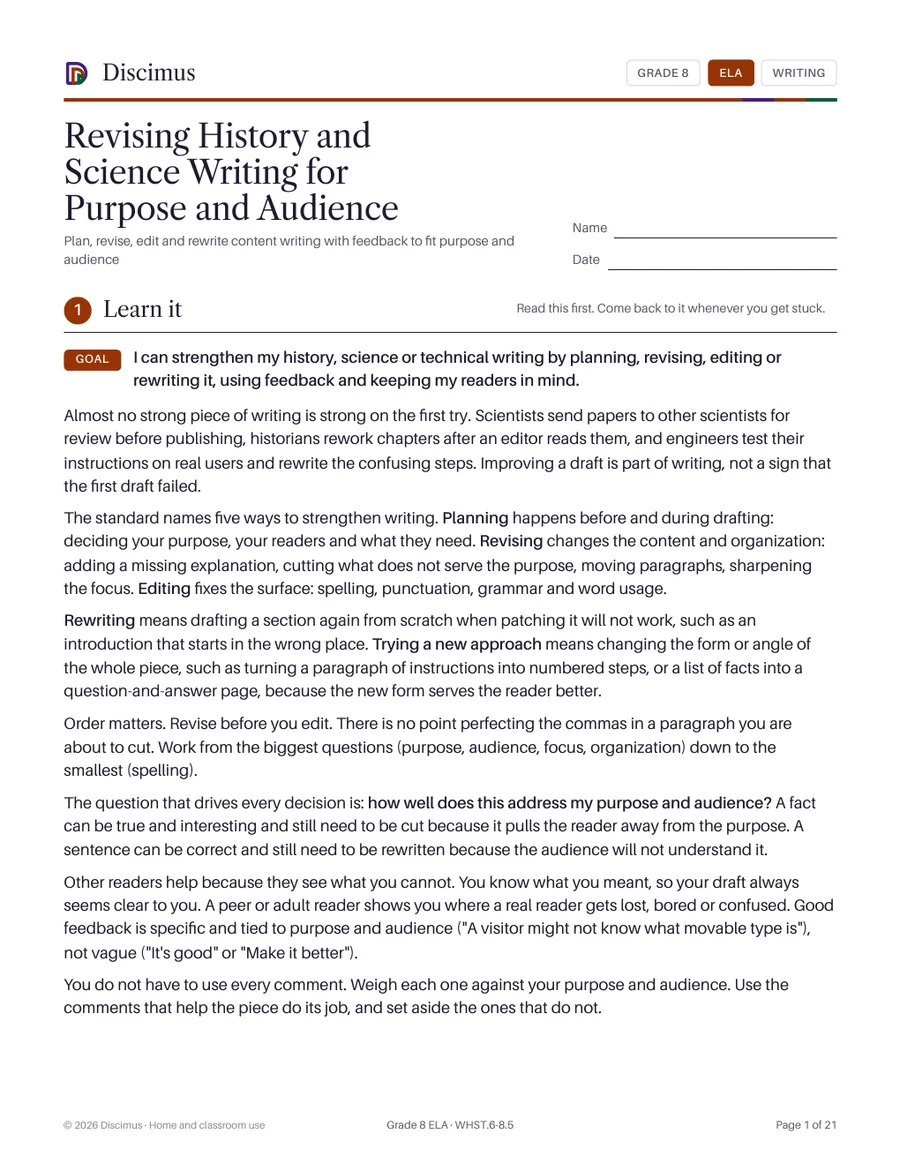
Plan, revise, edit and rewrite content writing with feedback to fit purpose and audience
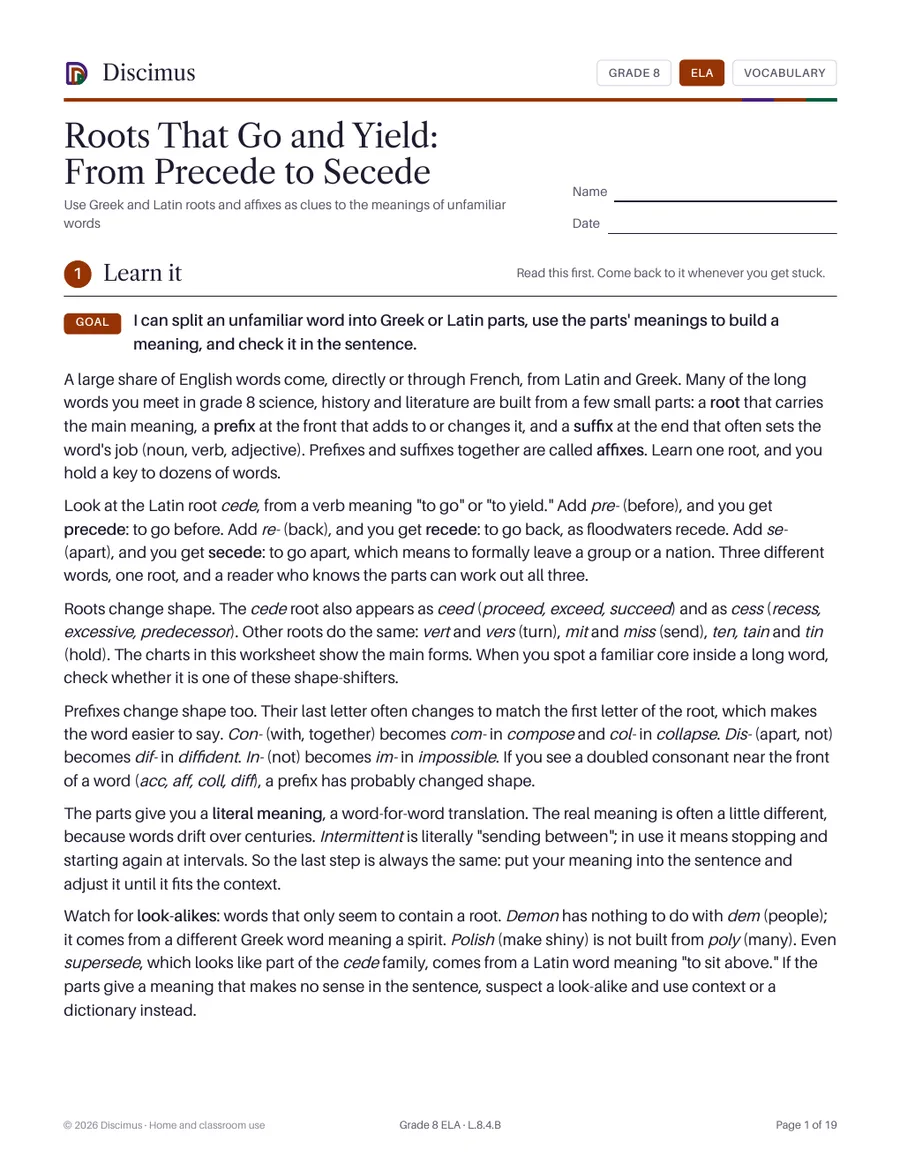
Use Greek and Latin roots and affixes as clues to the meanings of unfamiliar words
Fit development, organization and style to task, purpose and audience in content writing
Verify a first guess at a word's meaning by checking it in context and in a dictionary
Recognize and correct inappropriate shifts in verb voice and mood
Answer a history or science question from several sources and ask focused new questions
Research a focused question with several sources, then generate follow-up questions
Spell correctly using stress and doubling, soft c and g, -cede/-ceed/-sede and -cian
Plan, revise, edit, rewrite or try a new approach, judging changes by purpose and audience
Determine a central idea and analyze how it develops over the course of a text
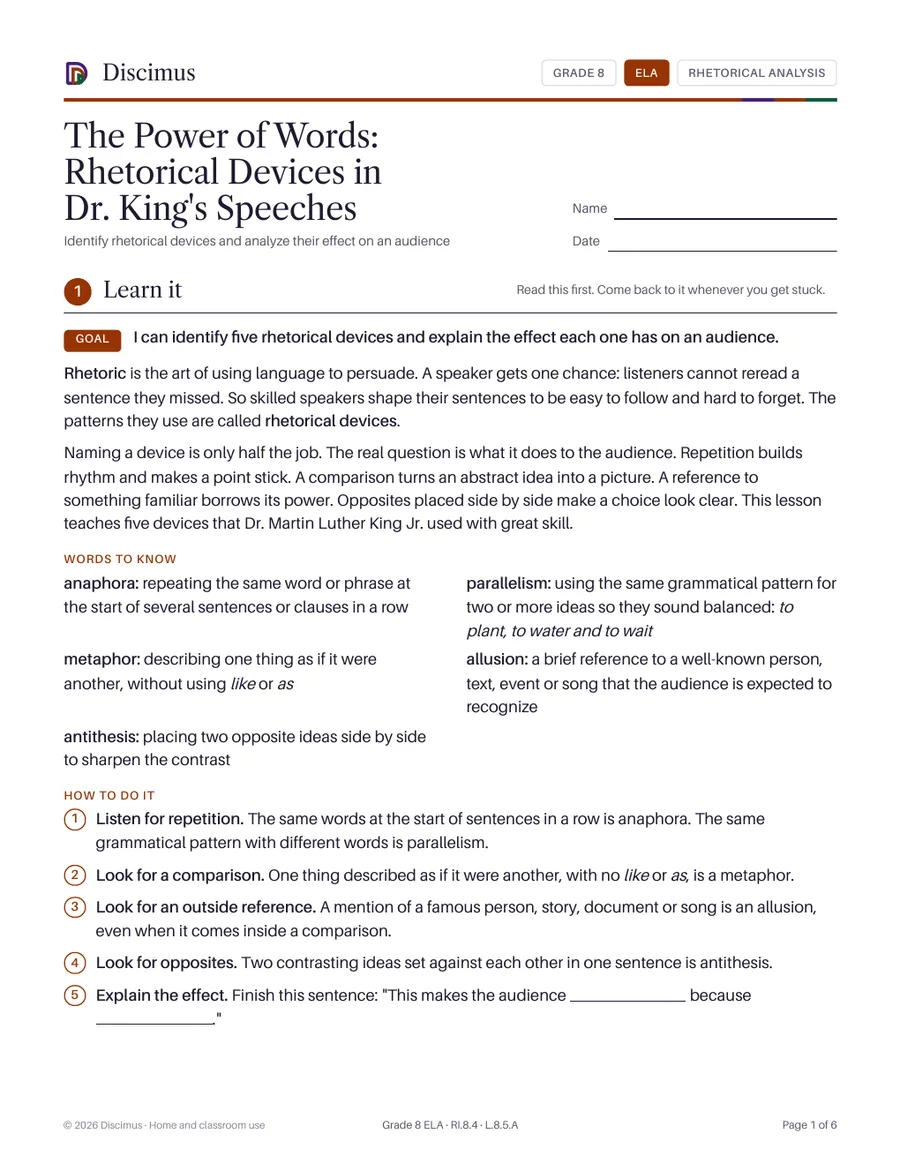
Identify rhetorical devices and analyze their effect on an audience
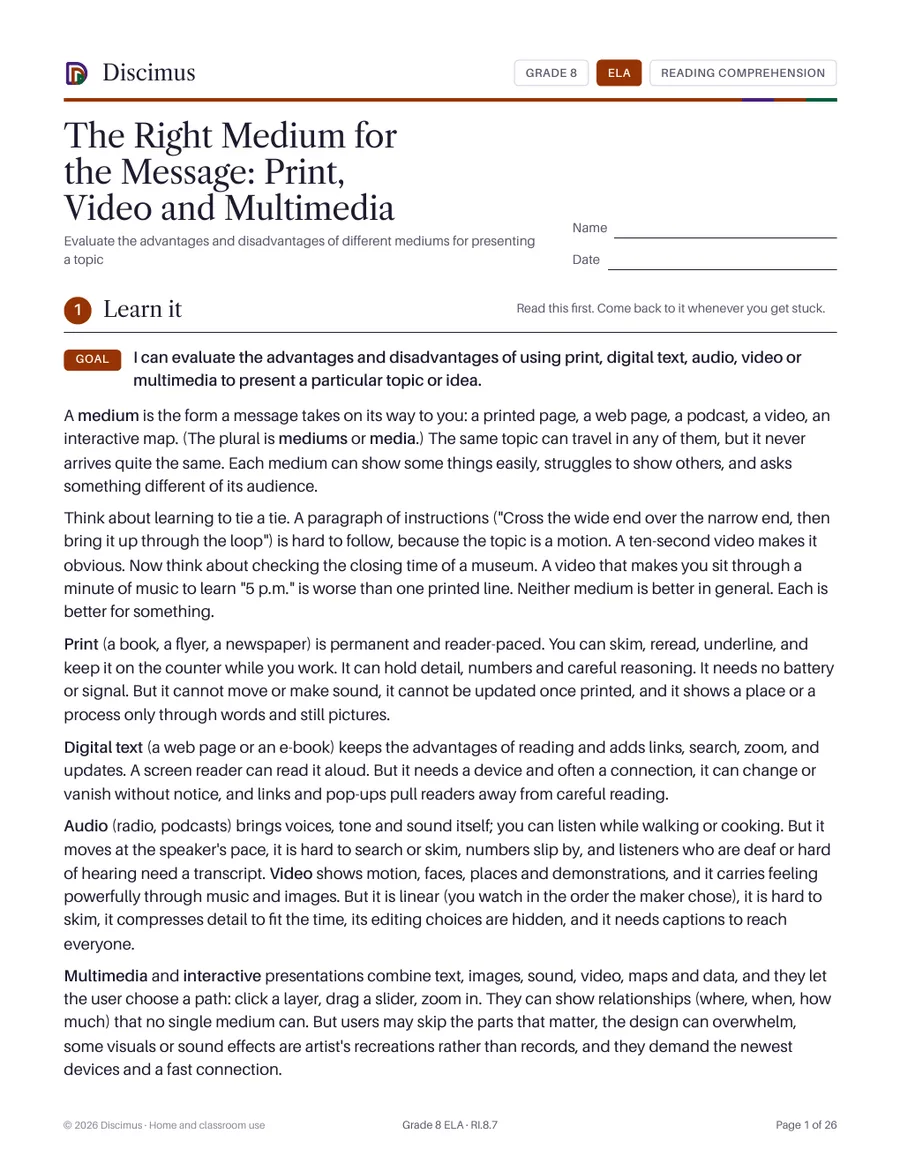
Evaluate the advantages and disadvantages of different mediums for presenting a topic
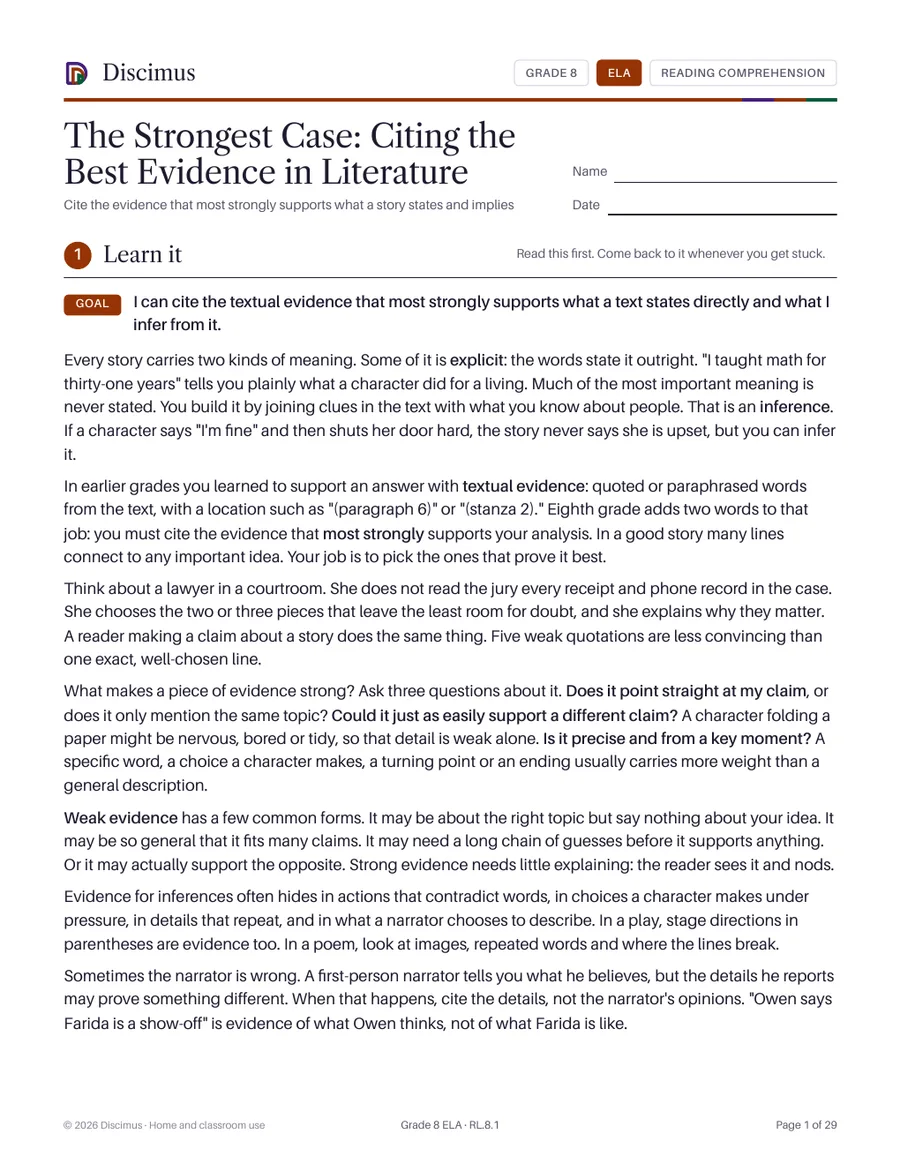
Cite the evidence that most strongly supports what a story states and implies
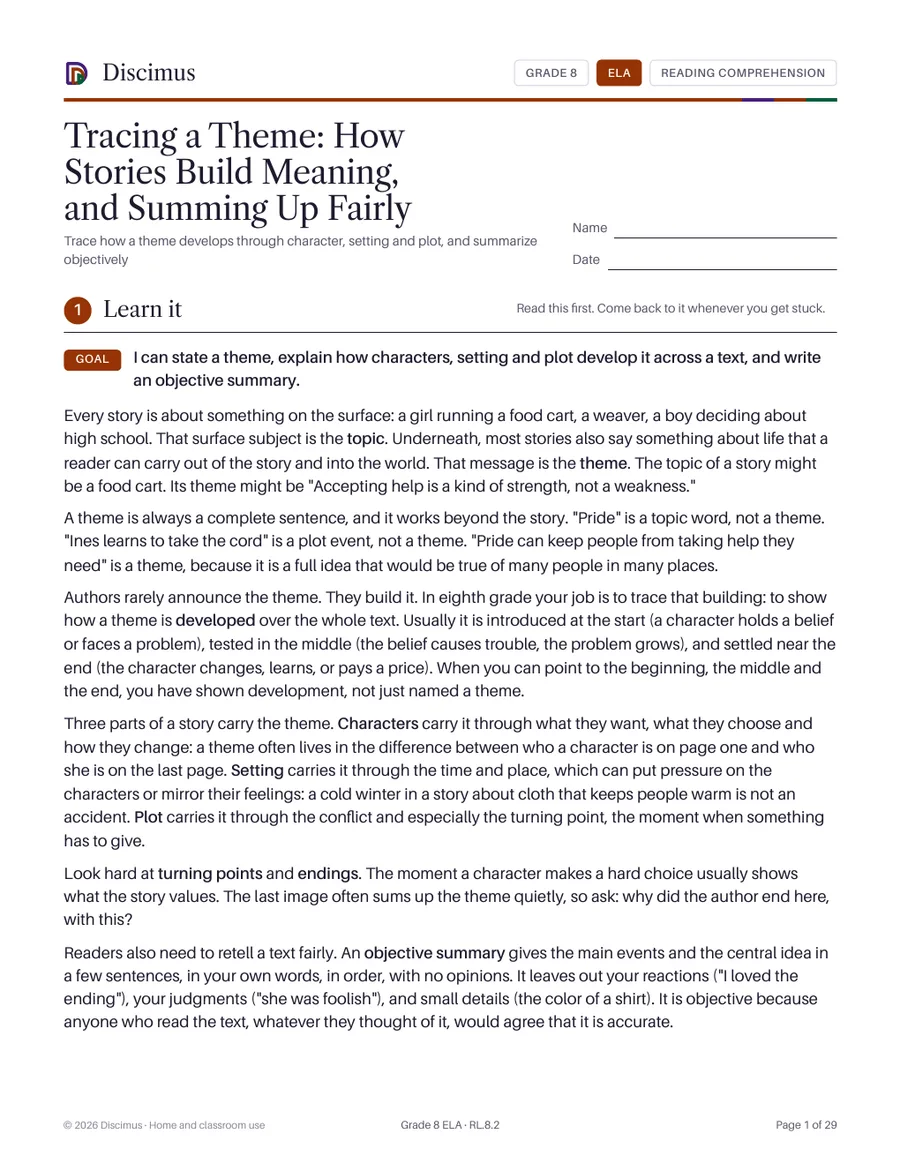
Trace how a theme develops through character, setting and plot, and summarize objectively
Interpret verbal irony, puns and other figures of speech from their context
Identify gerunds, participles and infinitives and explain their function in a sentence
Choose active or passive voice and conditional or subjunctive mood for a particular effect
Analyze how differences in what characters and readers know create suspense or humor
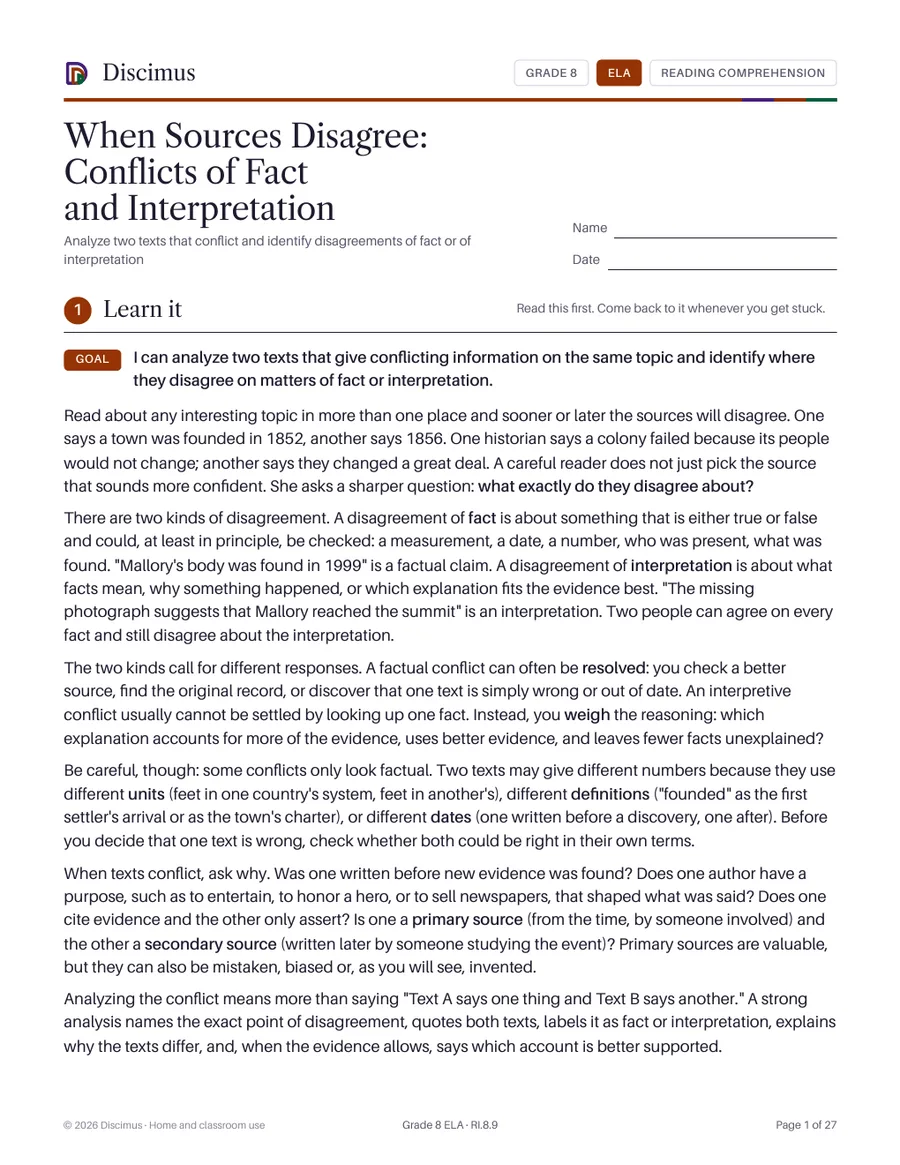
Analyze two texts that conflict and identify disagreements of fact or of interpretation
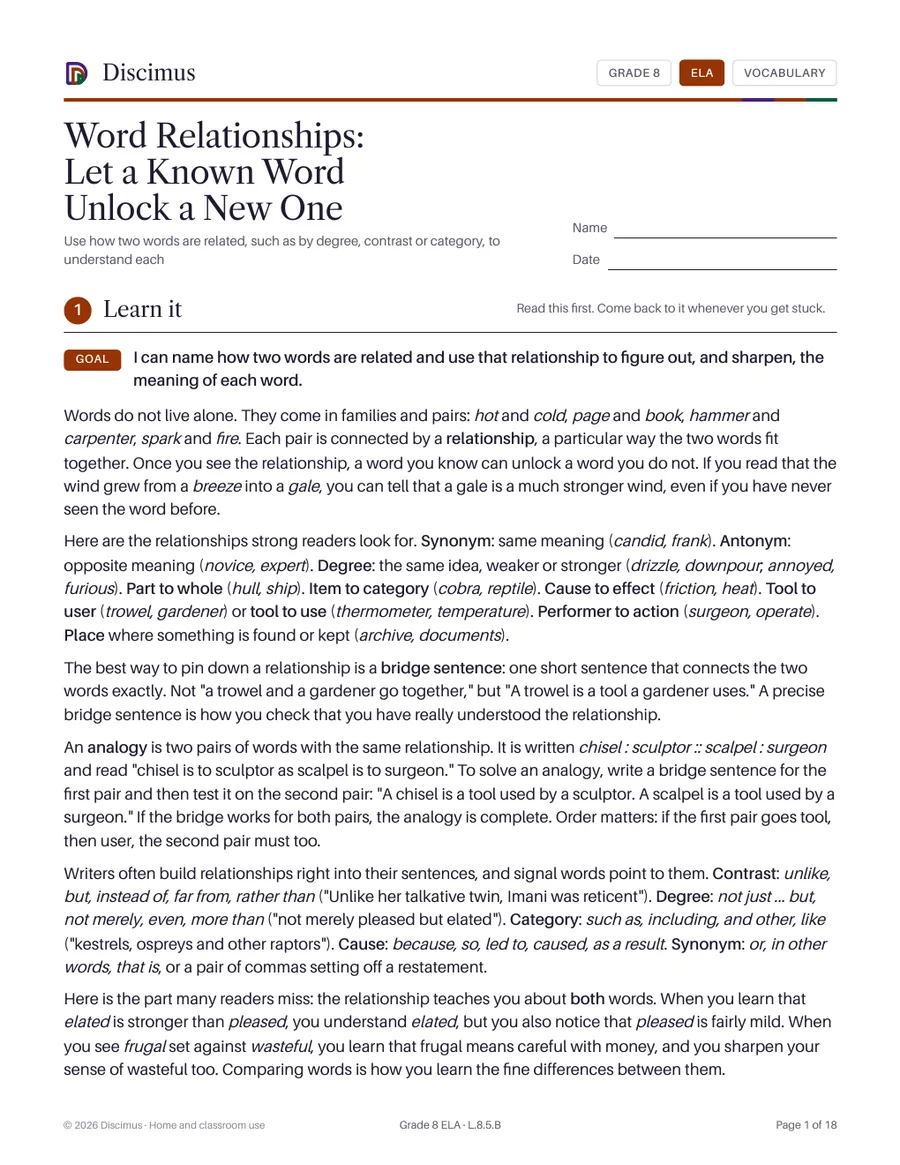
Use how two words are related, such as by degree, contrast or category, to understand each
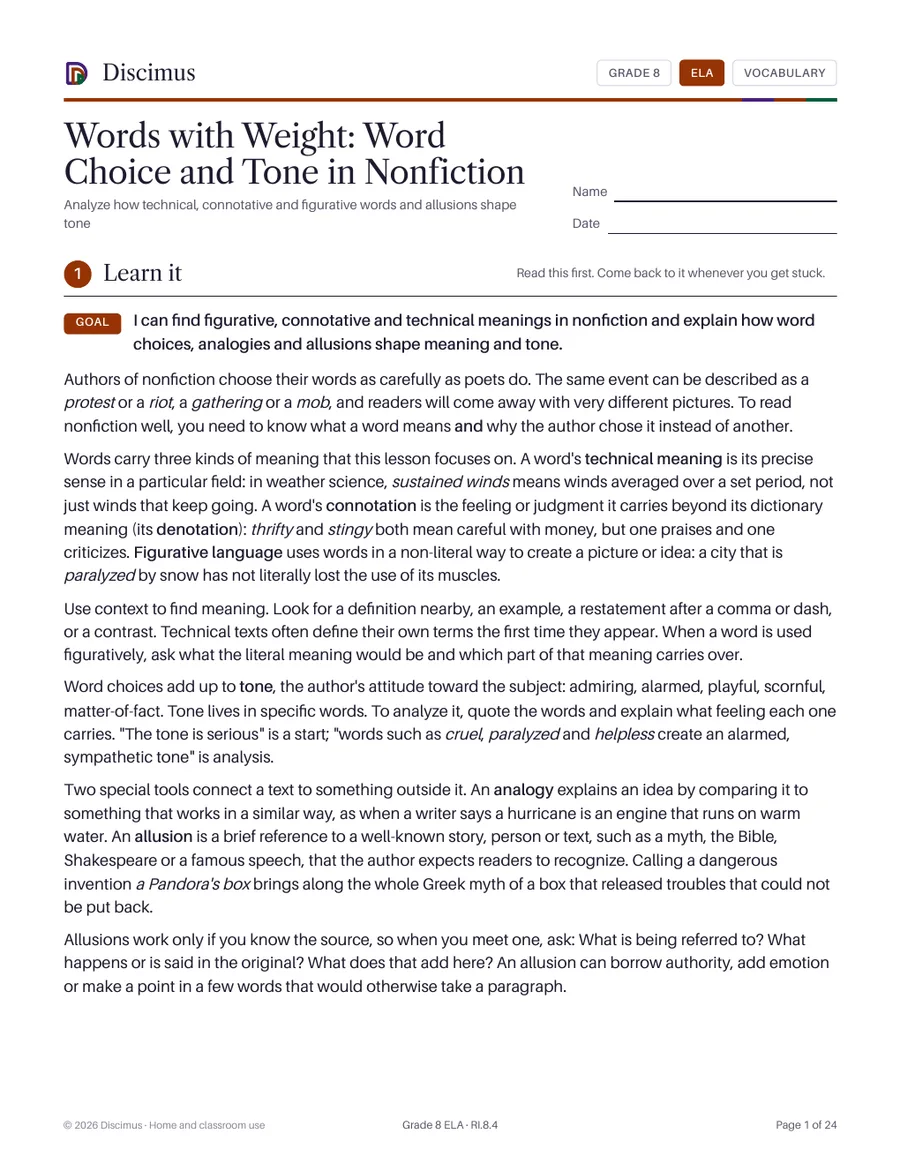
Analyze how technical, connotative and figurative words and allusions shape tone
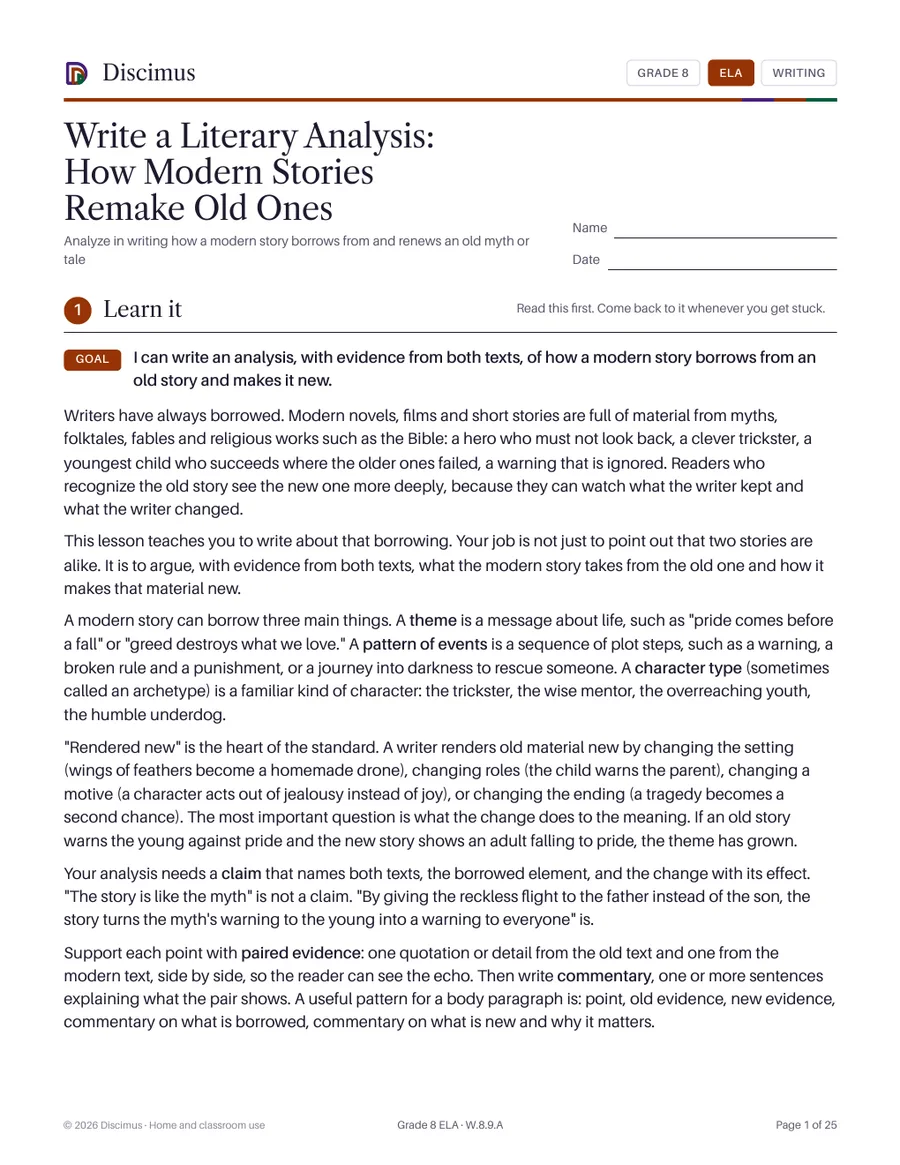
Analyze in writing how a modern story borrows from and renews an old myth or tale
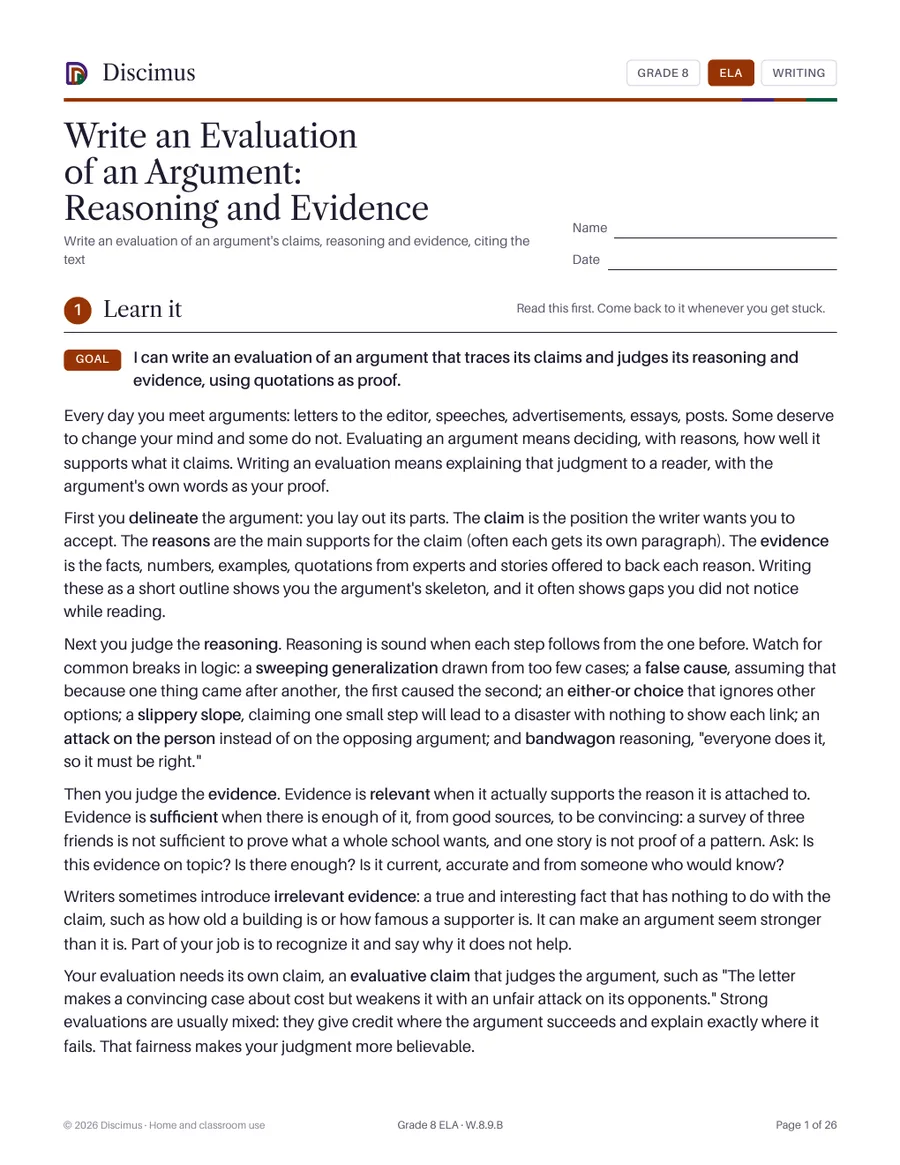
Write an evaluation of an argument's claims, reasoning and evidence, citing the text
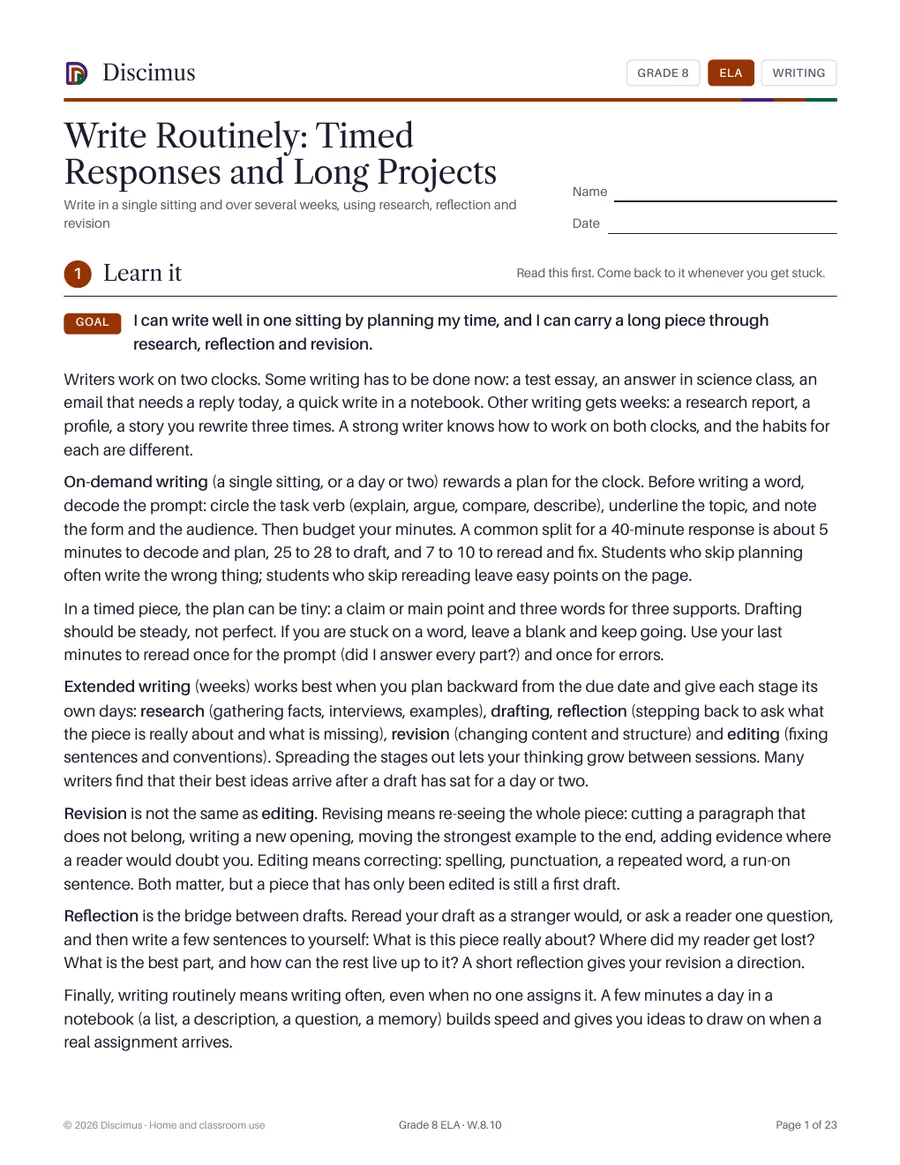
Write in a single sitting and over several weeks, using research, reflection and revision
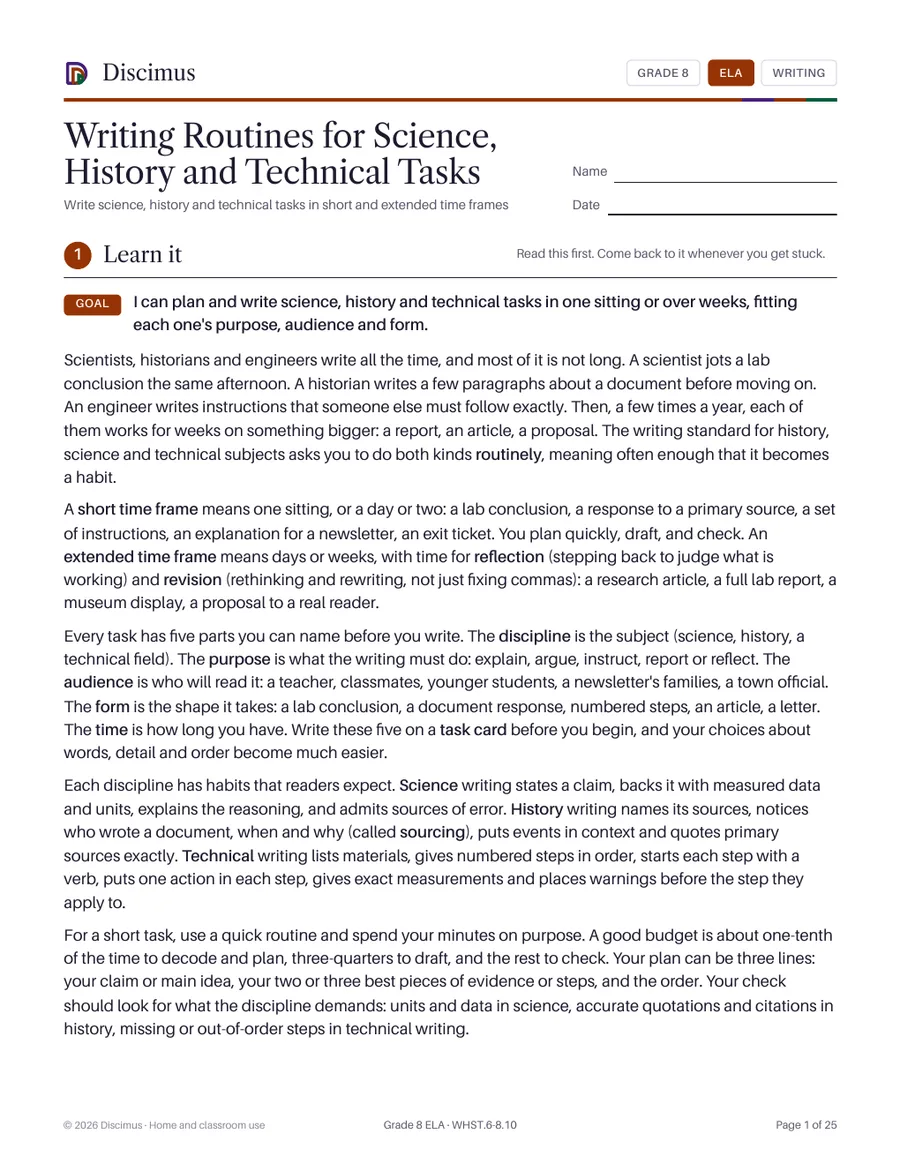
Write science, history and technical tasks in short and extended time frames
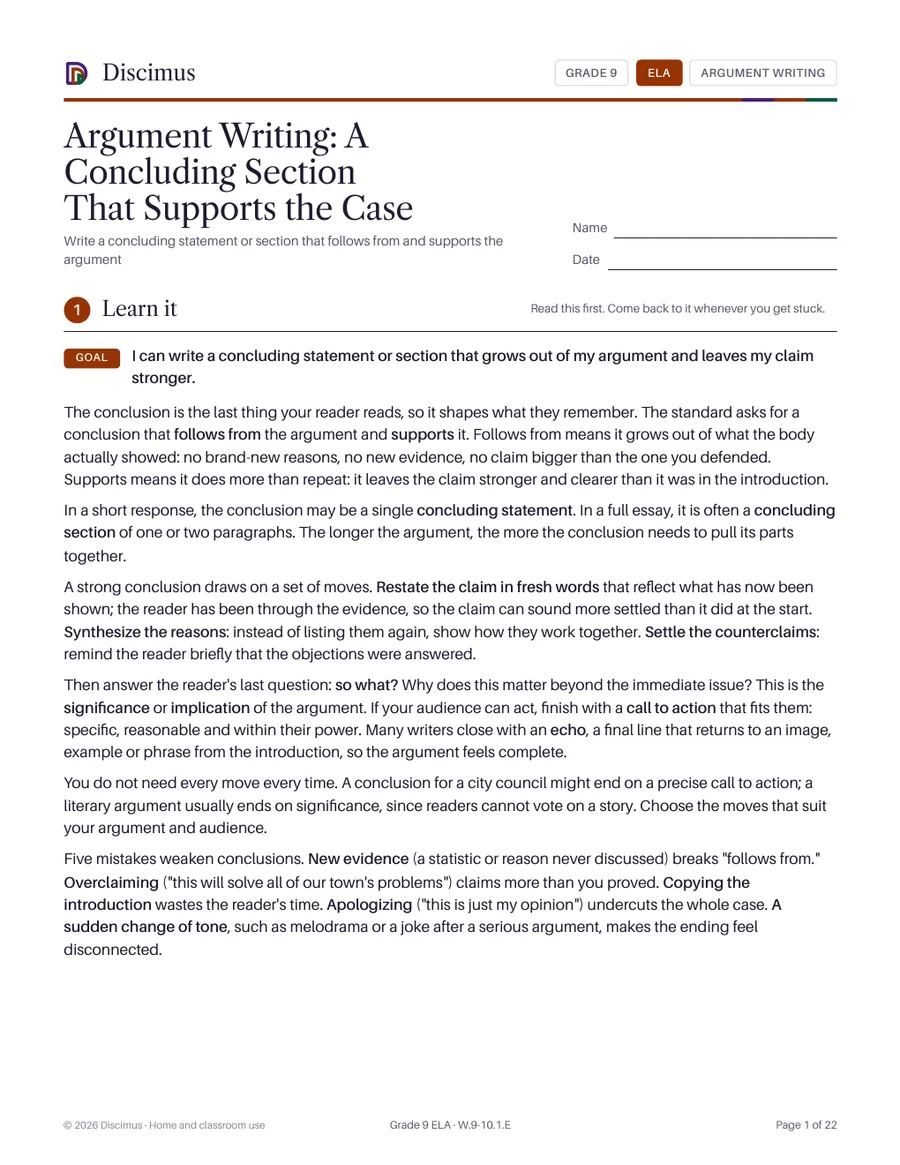
Write a concluding statement or section that follows from and supports the argument
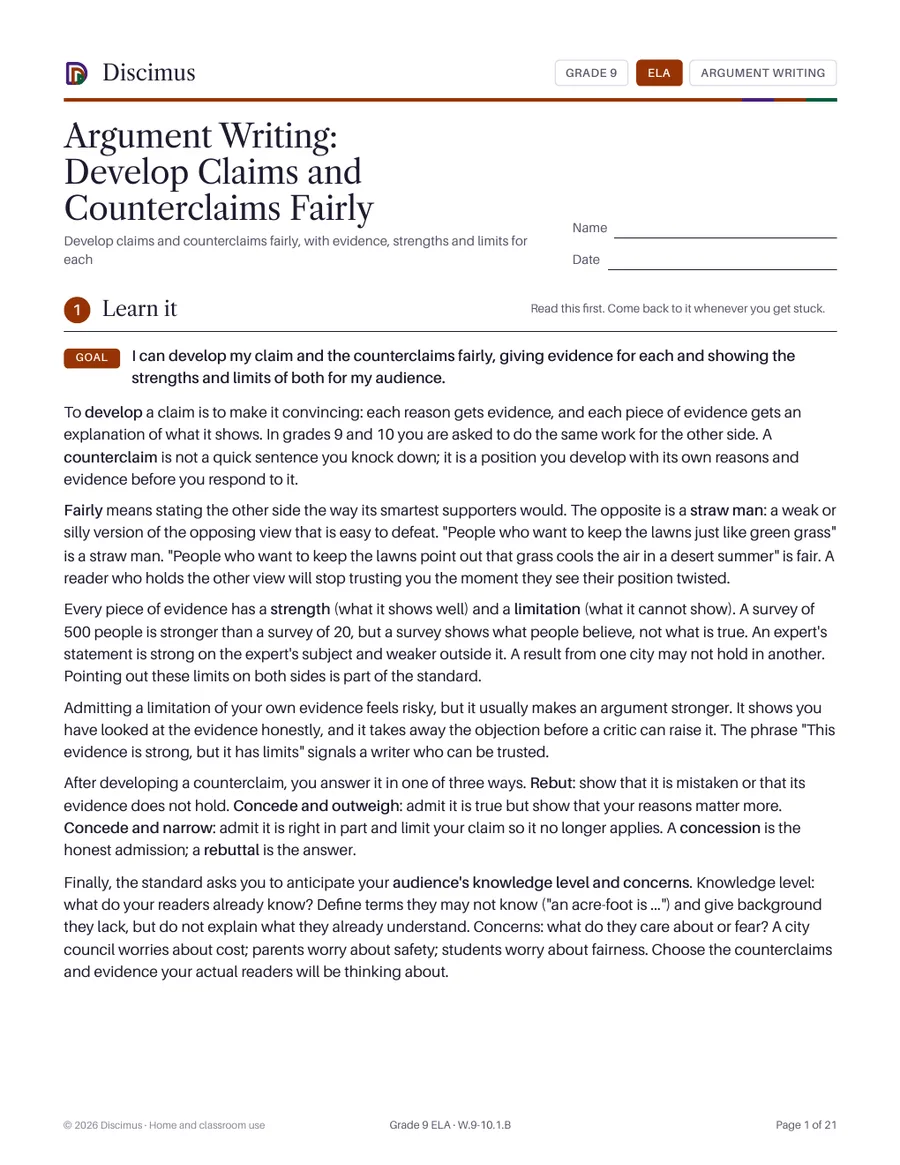
Develop claims and counterclaims fairly, with evidence, strengths and limits for each
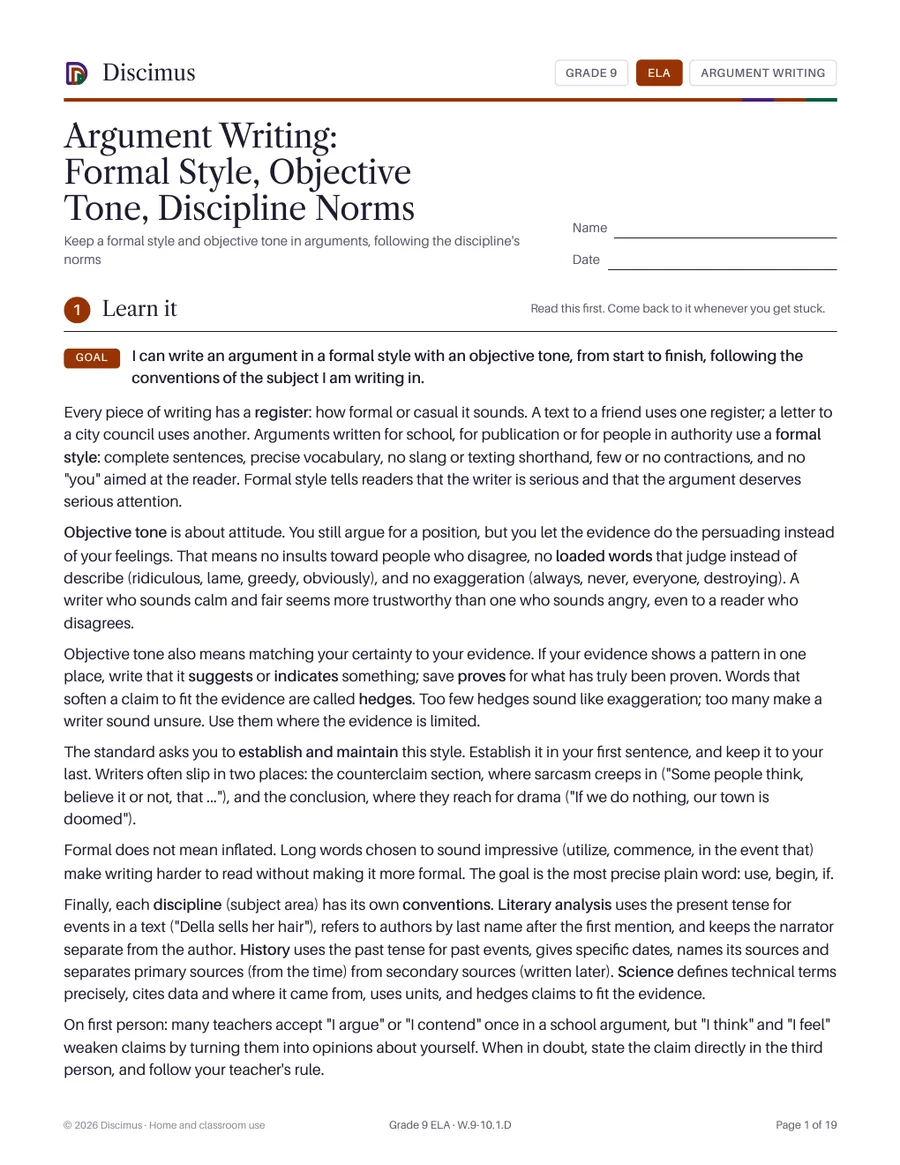
Keep a formal style and objective tone in arguments, following the discipline's norms
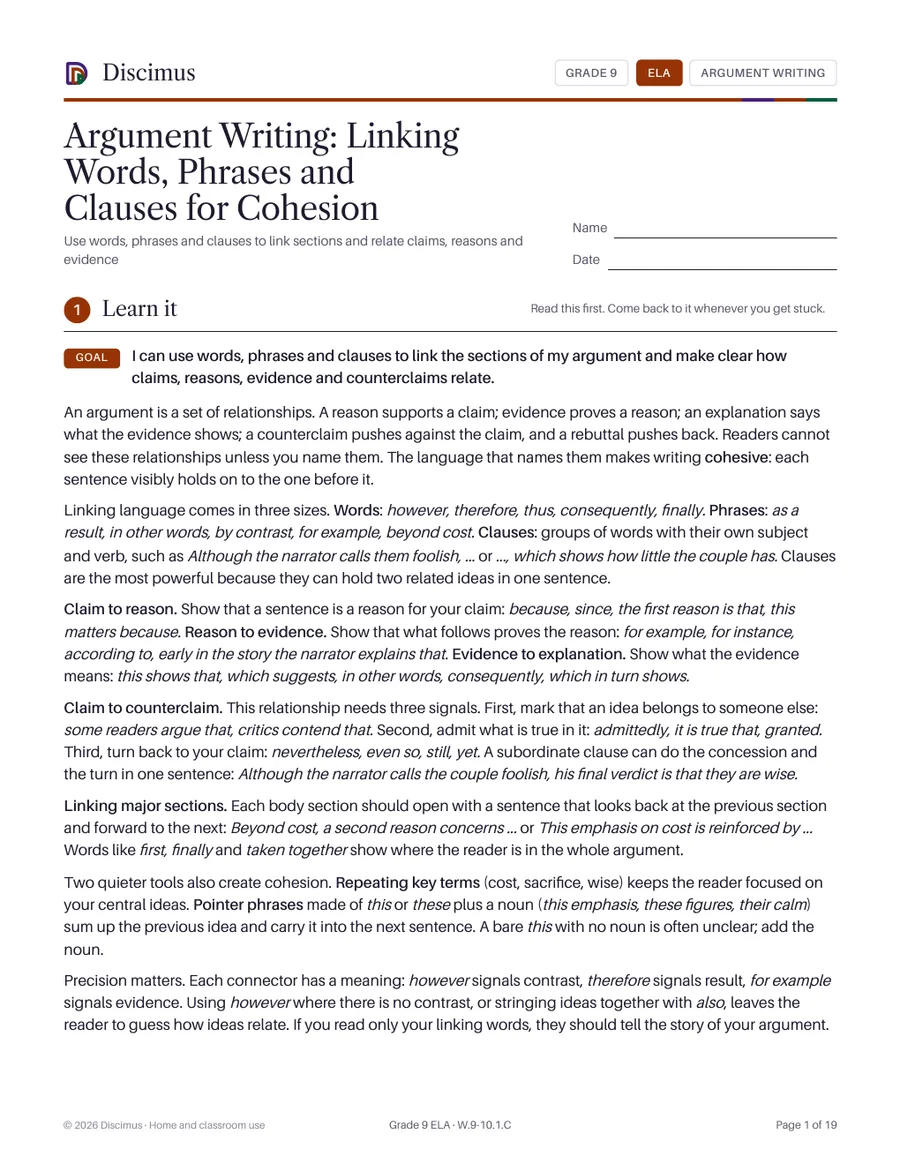
Use words, phrases and clauses to link sections and relate claims, reasons and evidence
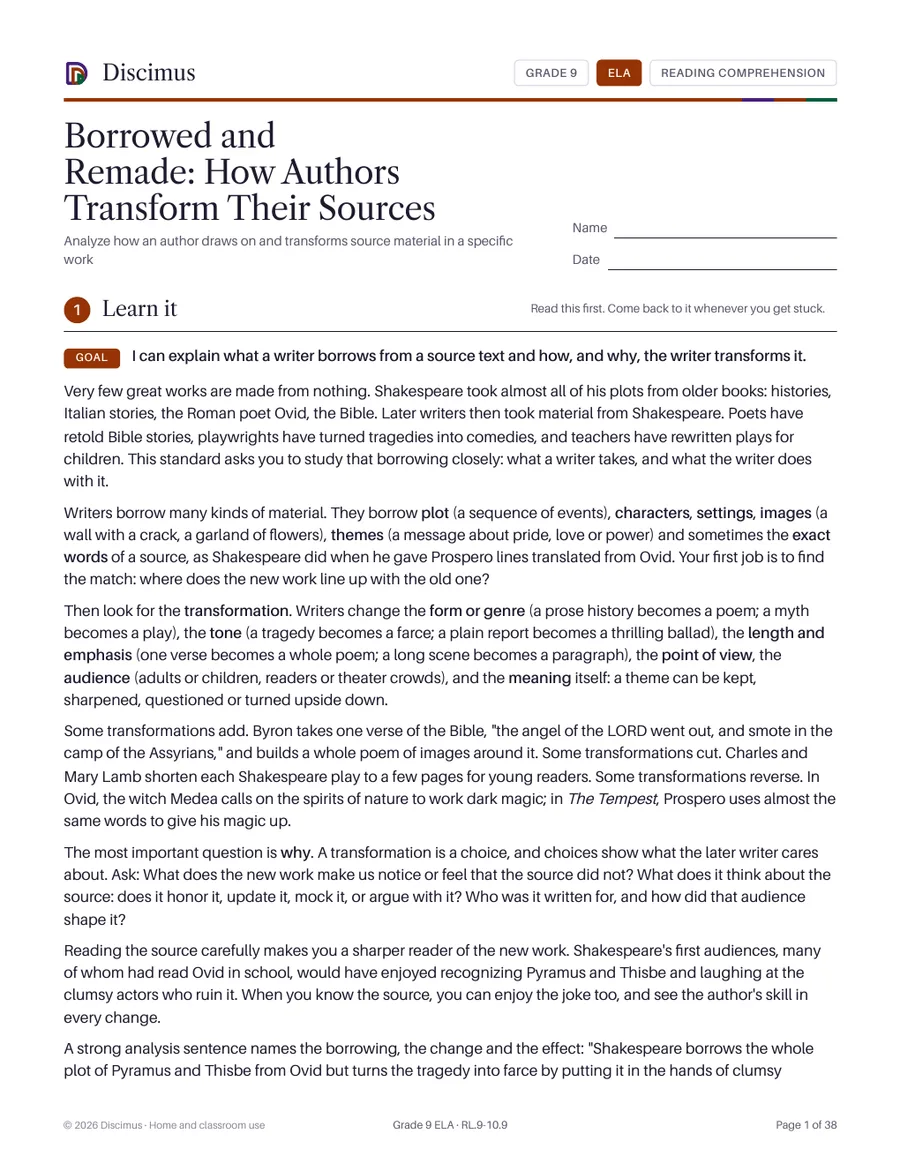
Analyze how an author draws on and transforms source material in a specific work
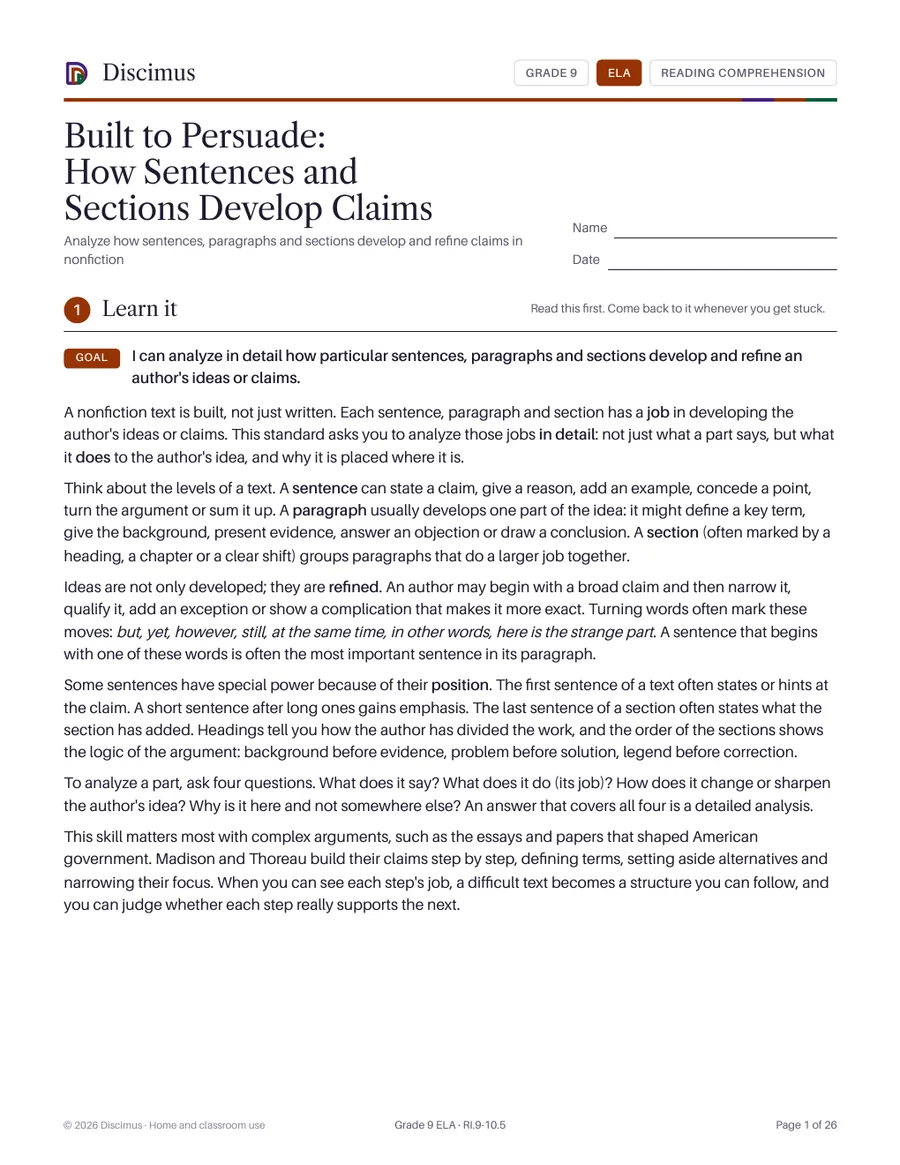
Analyze how sentences, paragraphs and sections develop and refine claims in nonfiction
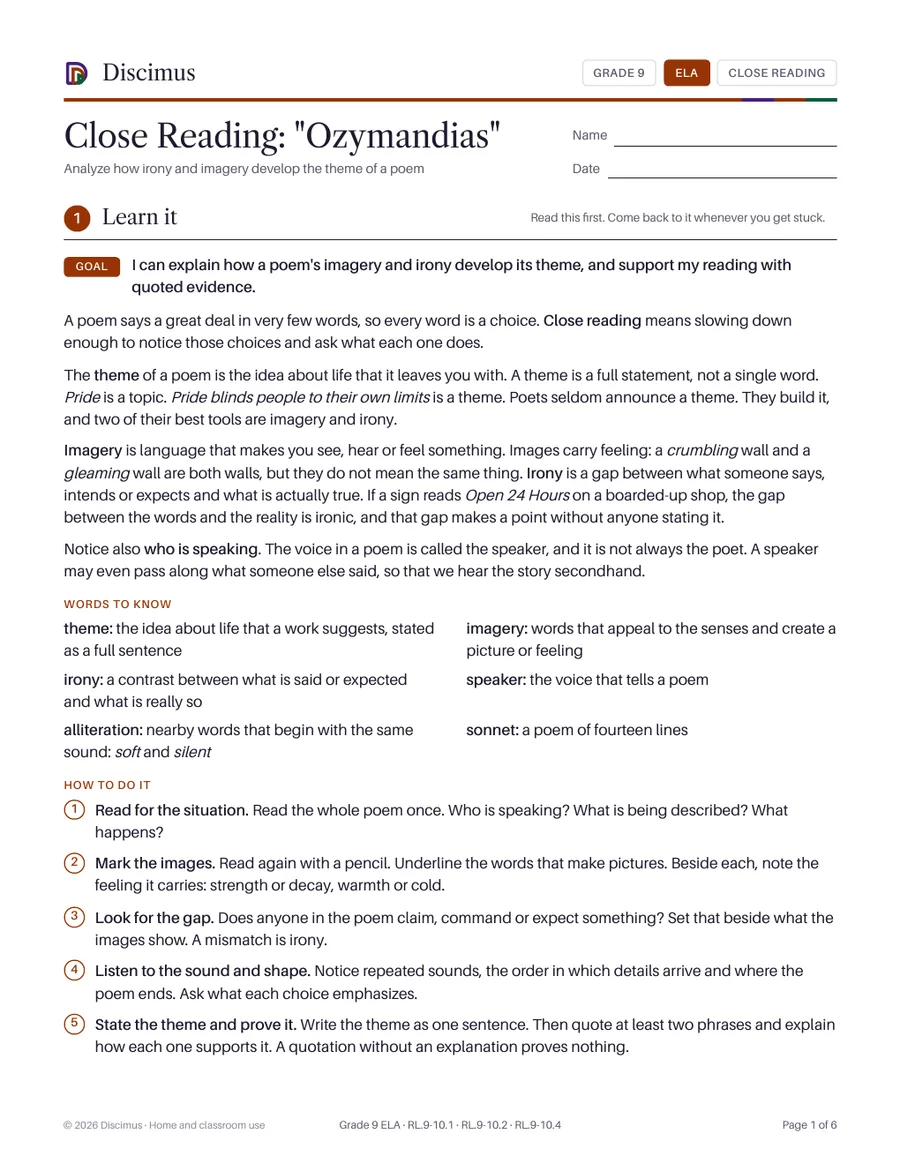
Analyze how irony and imagery develop the theme of a poem
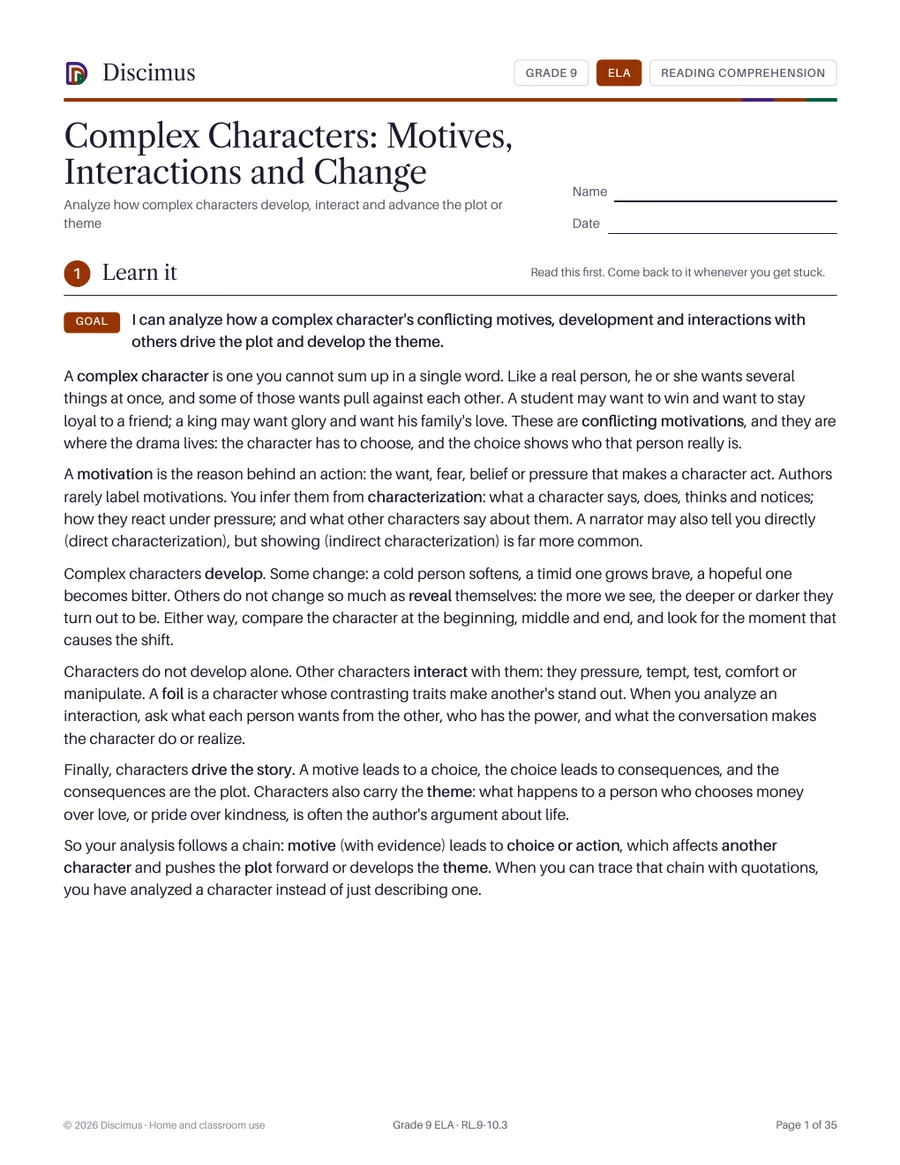
Analyze how complex characters develop, interact and advance the plot or theme
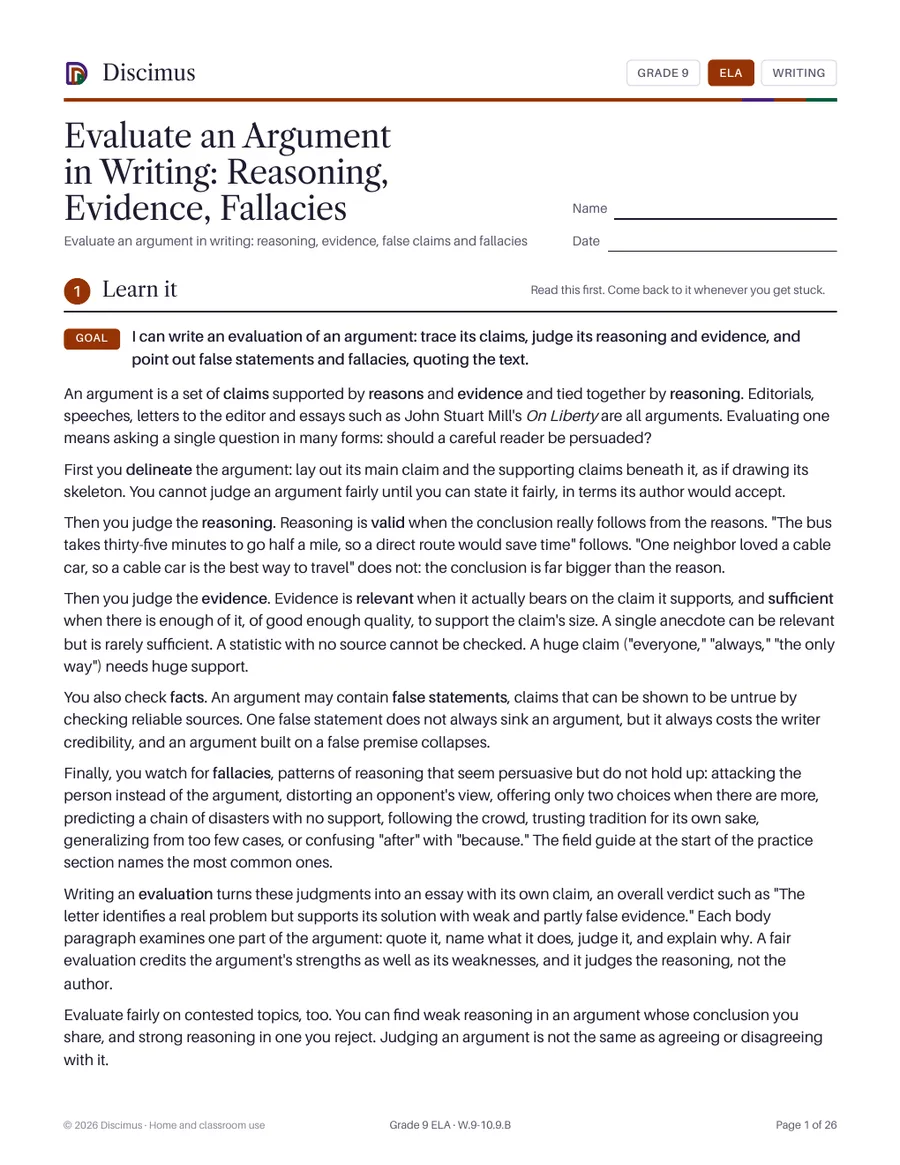
Evaluate an argument in writing: reasoning, evidence, false claims and fallacies
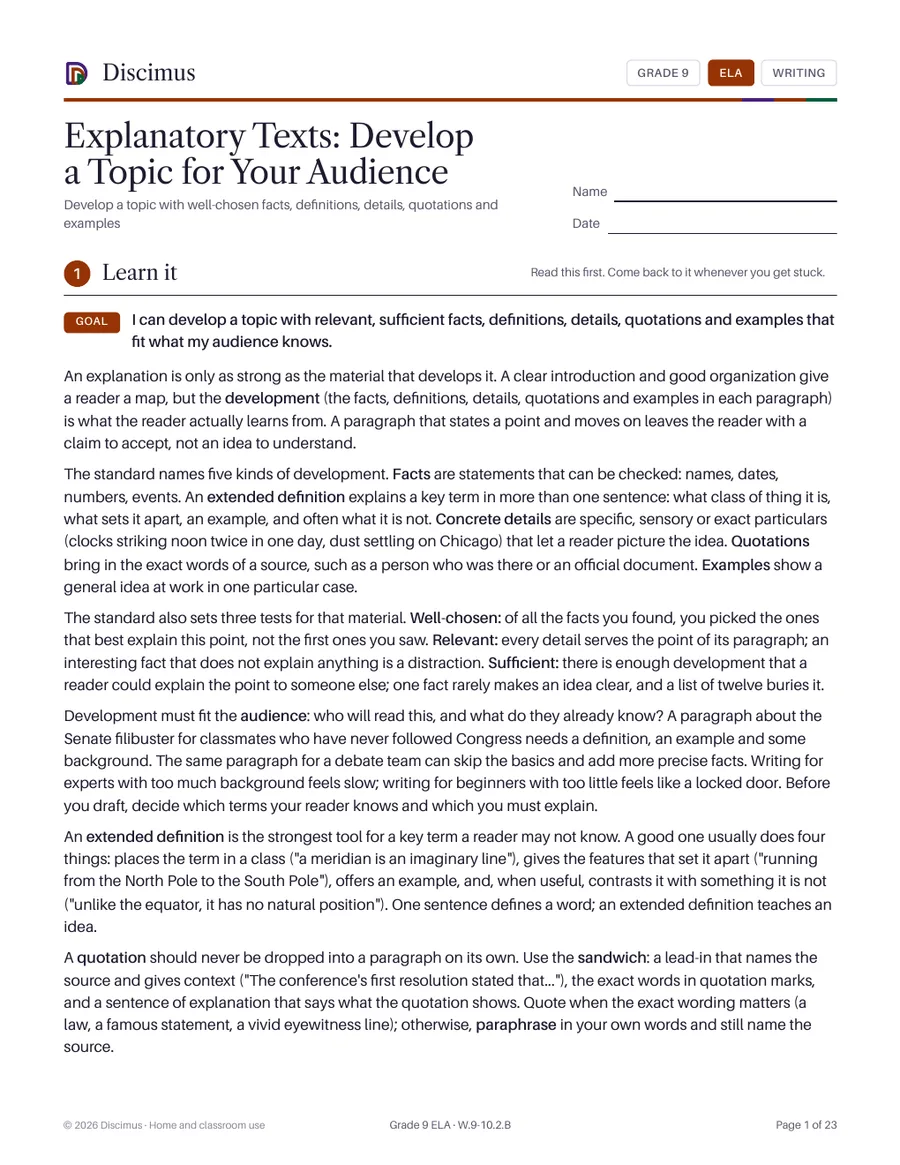
Develop a topic with well-chosen facts, definitions, details, quotations and examples
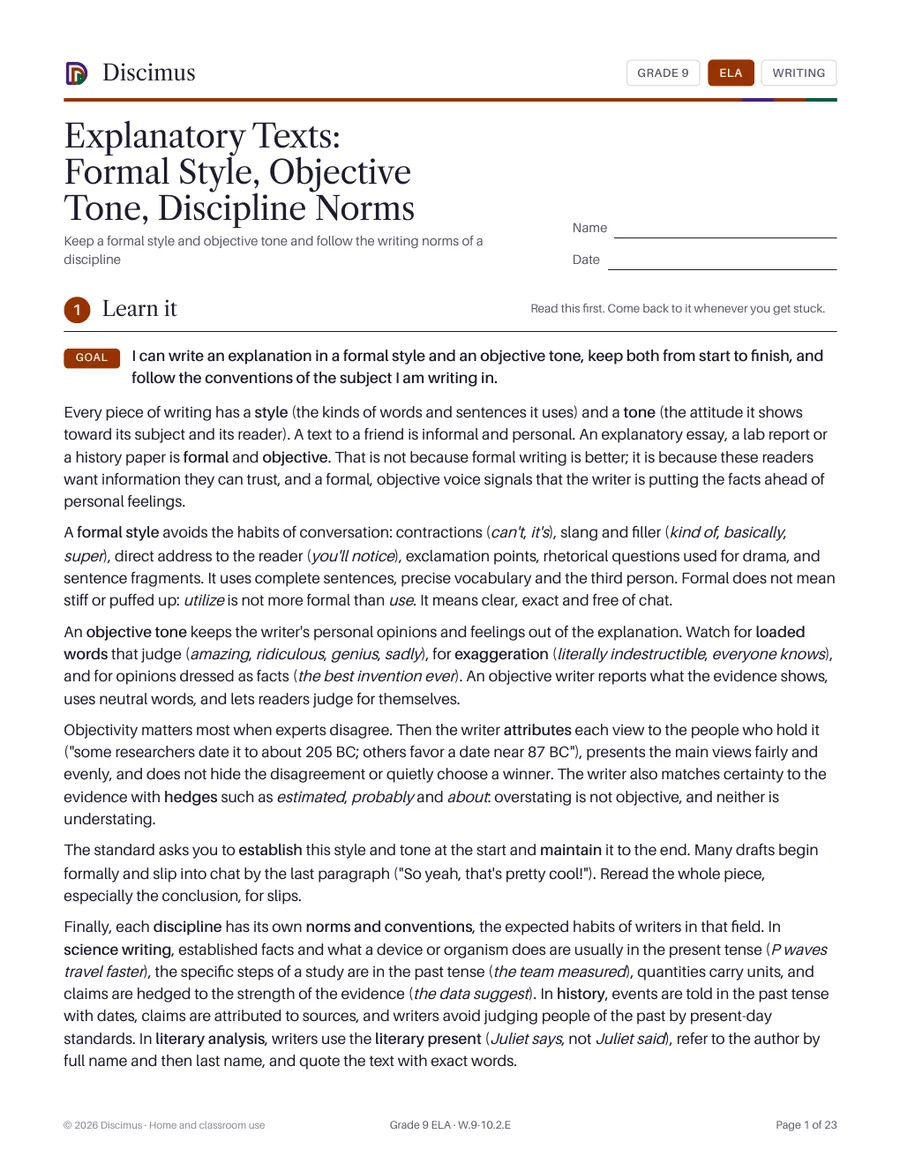
Keep a formal style and objective tone and follow the writing norms of a discipline
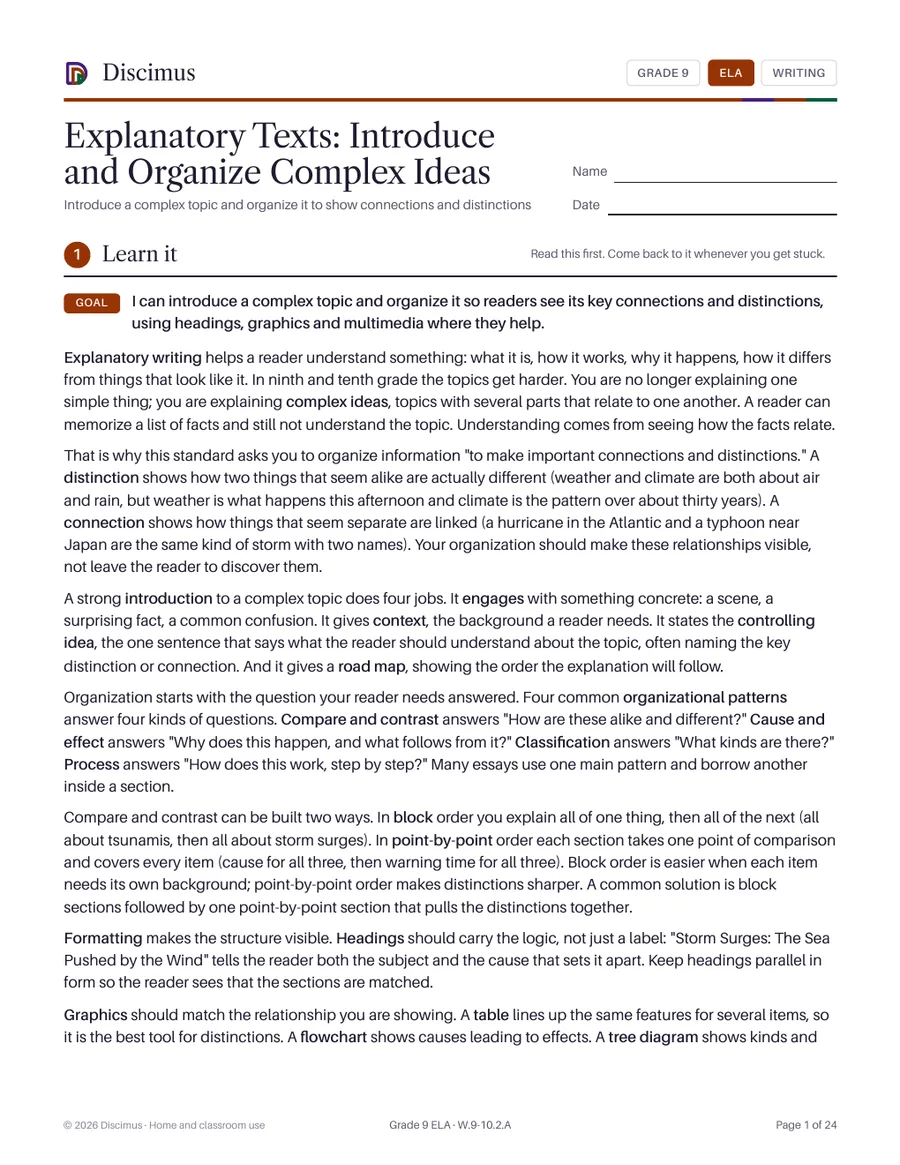
Introduce a complex topic and organize it to show connections and distinctions
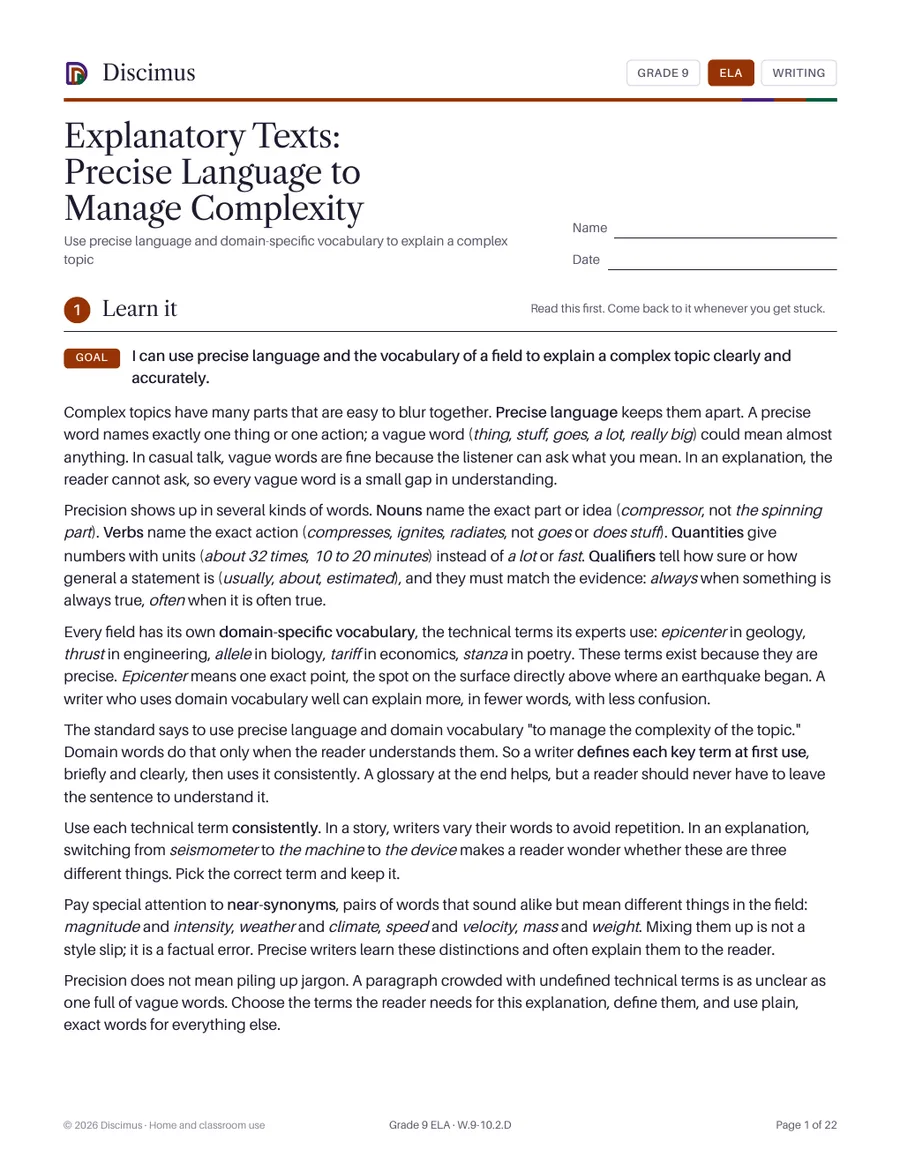
Use precise language and domain-specific vocabulary to explain a complex topic
Use varied, precise transitions to link sections and clarify relationships among ideas
Fit development, organization and style to the task, purpose and audience
Trace how a central idea emerges and is refined in nonfiction; write an objective summary
Trace how a theme emerges and is refined by details, and write an objective summary
Analyze the order, development and connections of ideas or events in nonfiction
Write an informative conclusion that follows from the body and shows its significance
Write an analysis of how an author draws on and transforms source material
Read and comprehend complex literary nonfiction independently and proficiently
Write a narrative conclusion that follows from the events and reflects on their meaning
Use precise words, telling details and sensory language to make narrative vivid
Orient readers to a situation, narrator and point of view, then build a smooth progression
Sequence narrative events with varied techniques so they build into a coherent whole
Use dialogue, pacing, description, reflection and multiple plot lines in a narrative
Compare accounts of a subject in different mediums and the details each one emphasizes
Compare a subject or key scene in two artistic mediums: what each emphasizes or leaves out
Use parallel structure, semicolons and colons correctly in sentences
Analyze a point of view or cultural experience in literature from outside the U.S.
Determine an author's point of view or purpose and analyze how rhetoric advances it
Publish and update writing online with links and dynamic displays of information
Read and understand grade 9 to 10 stories, dramas and poems independently and proficiently
Research a question, narrow or broaden the inquiry, and synthesize several sources
Research with advanced searches, assess sources, integrate them smoothly and cite in MLA
Strengthen a draft by revising what matters most for purpose and audience first
Analyze seminal U.S. documents and how they address related themes and concepts
Cite strong and thorough evidence for what nonfiction states and for inferences from it
Cite strong, thorough textual evidence for explicit meaning and for inferences
Analyze how structure, event order and pacing create mystery, tension or surprise
Evaluate an argument's reasoning and evidence and identify false statements and fallacies
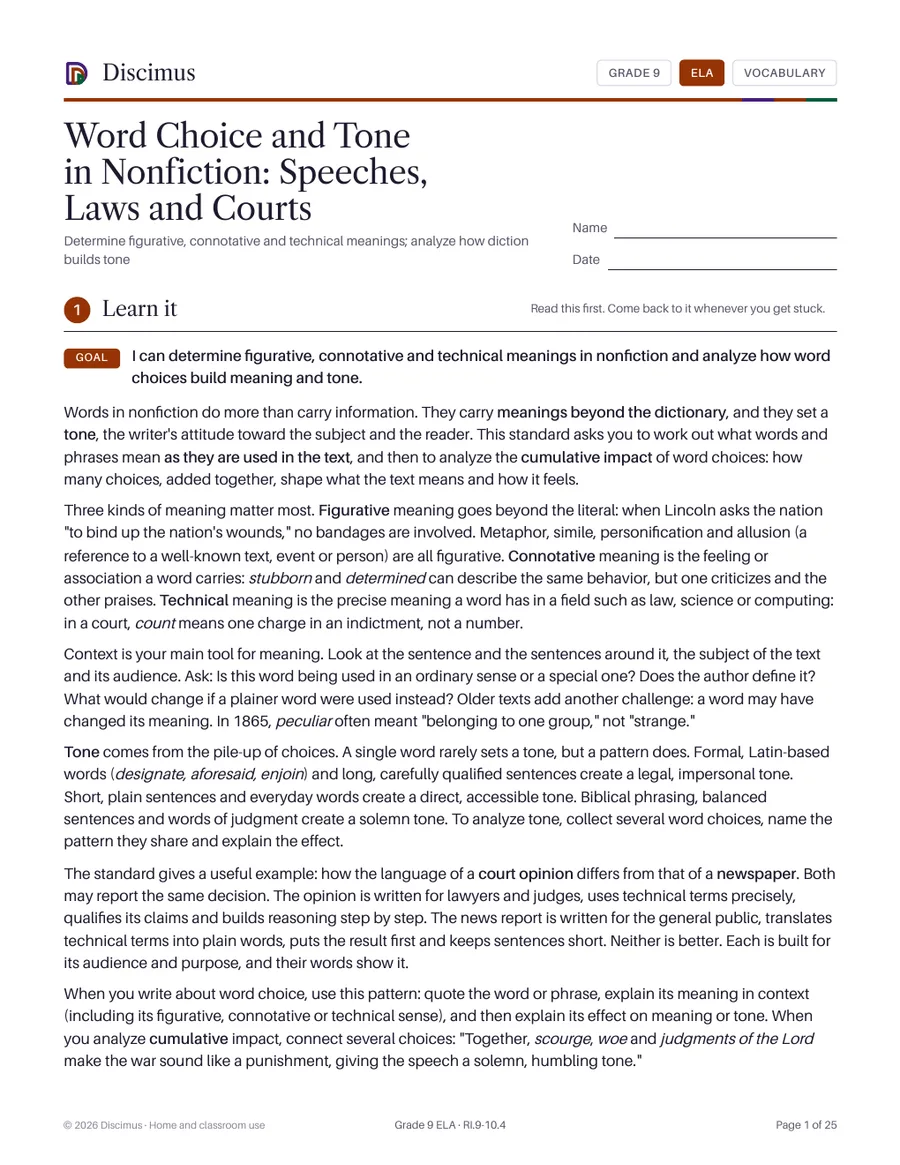
Determine figurative, connotative and technical meanings; analyze how diction builds tone
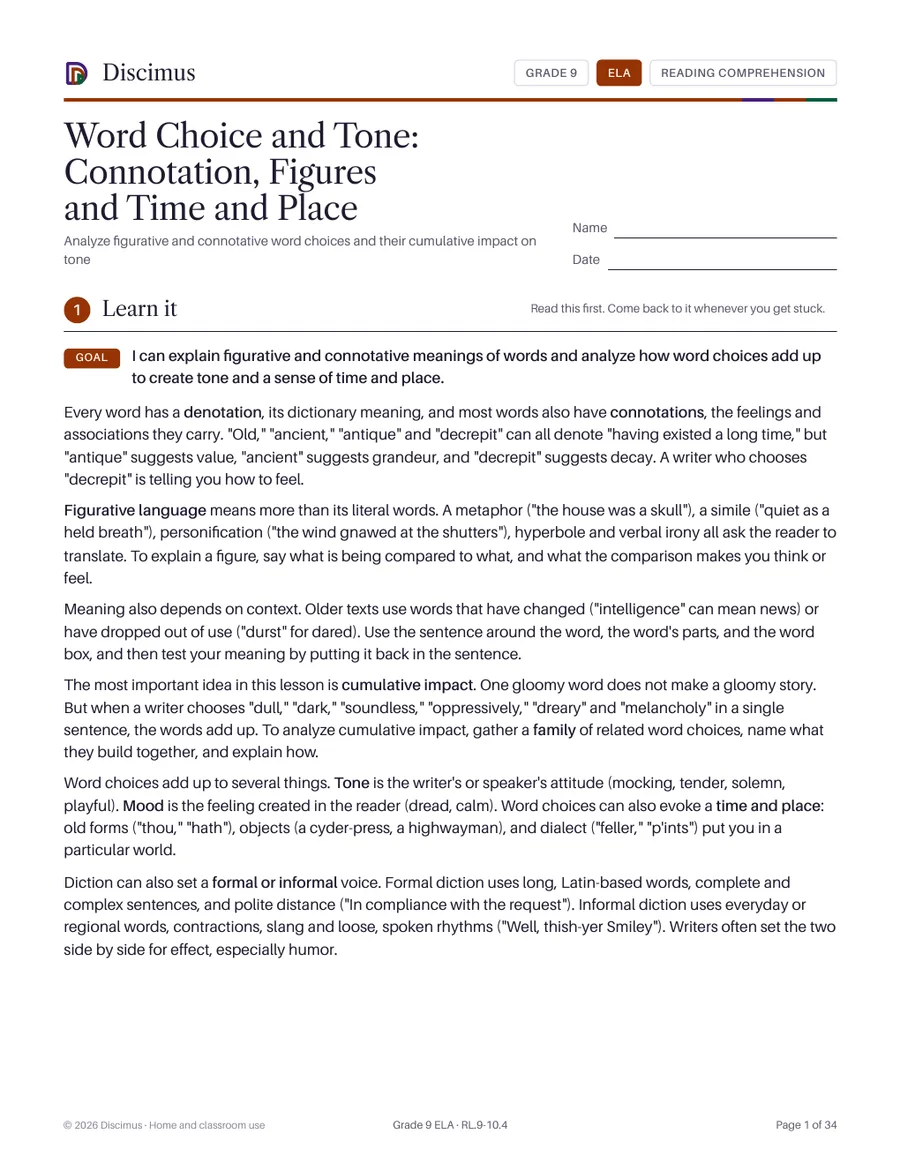
Analyze figurative and connotative word choices and their cumulative impact on tone
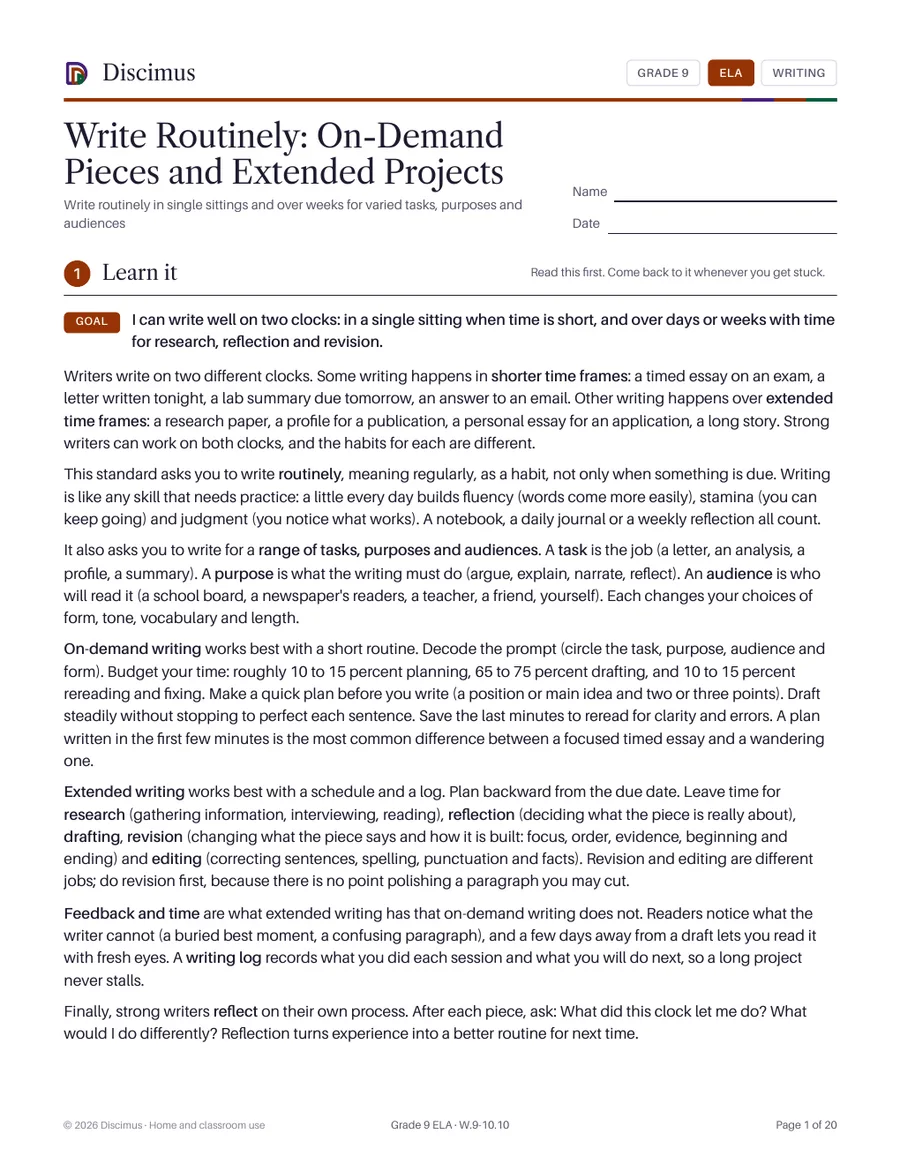
Write routinely in single sittings and over weeks for varied tasks, purposes and audiences
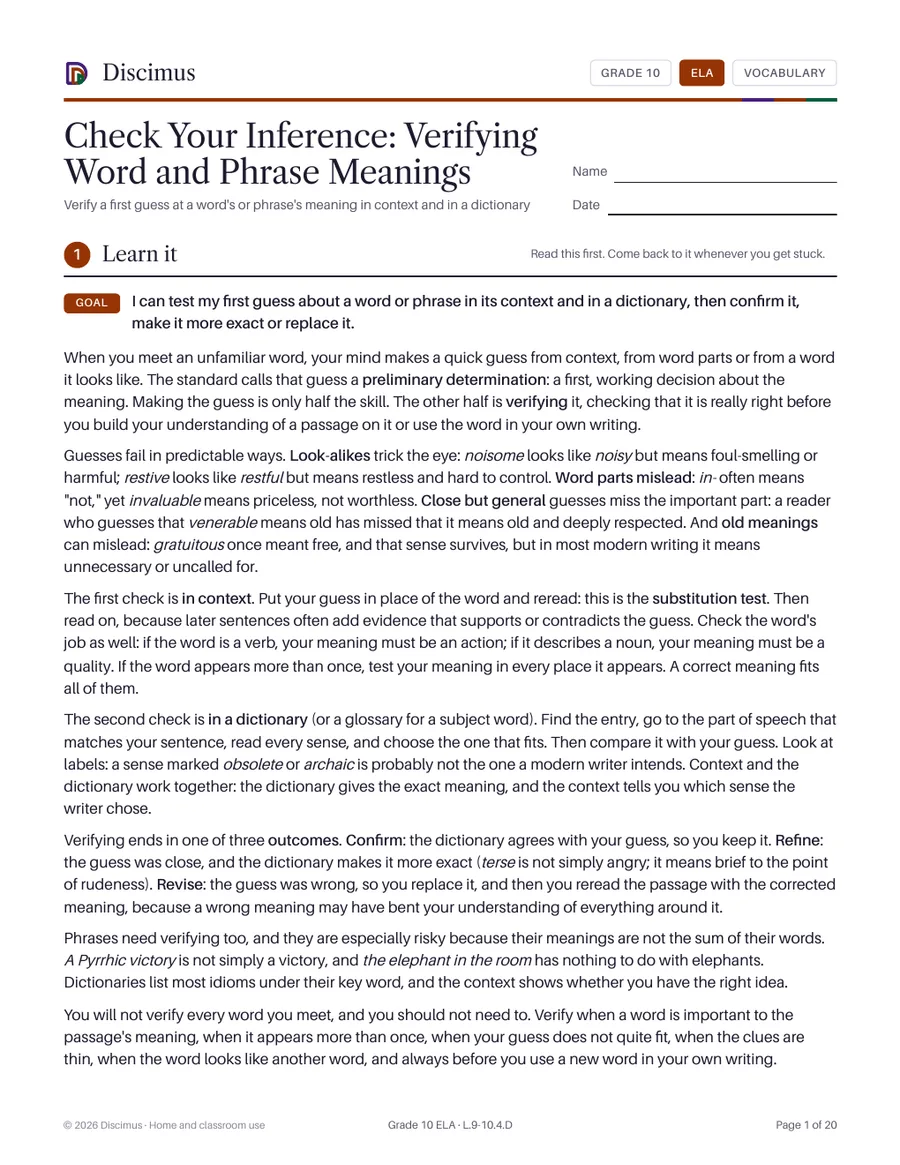
Verify a first guess at a word's or phrase's meaning in context and in a dictionary
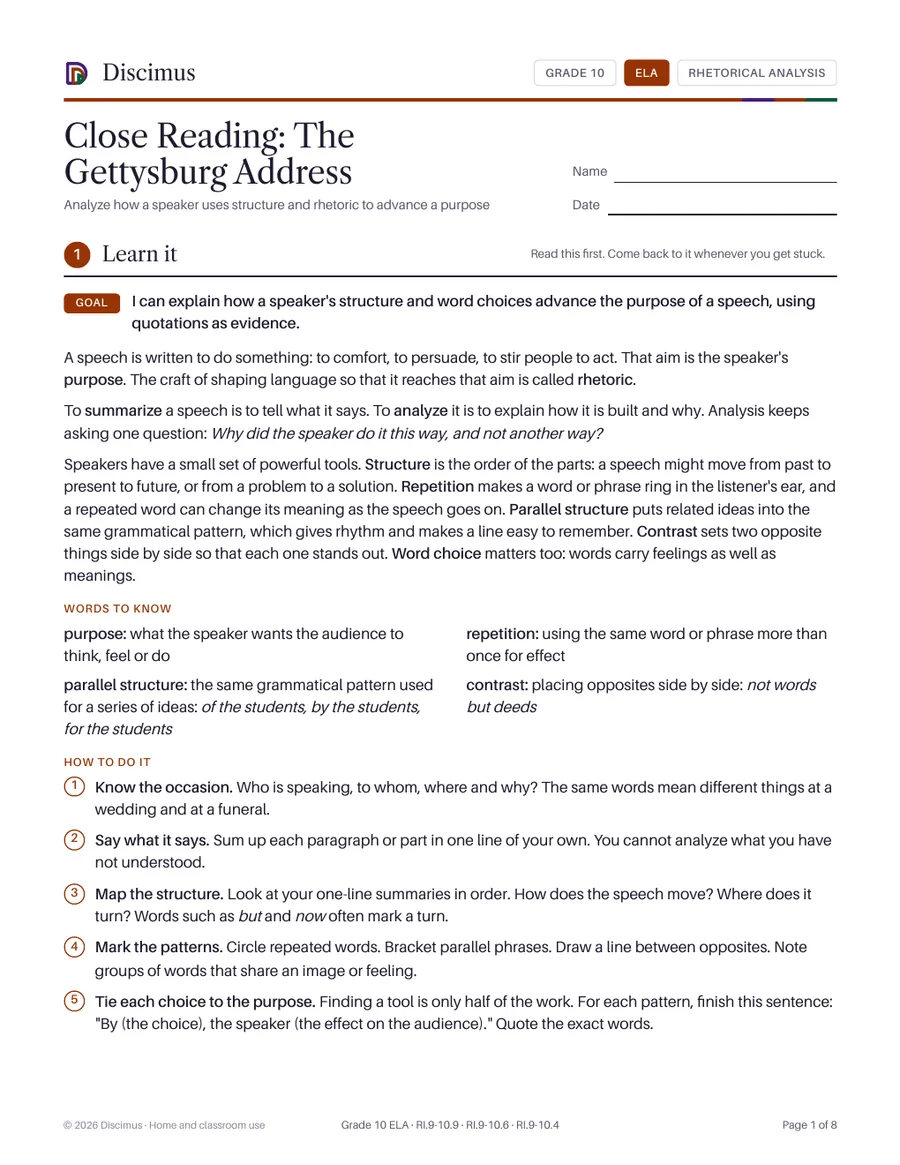
Analyze how a speaker uses structure and rhetoric to advance a purpose
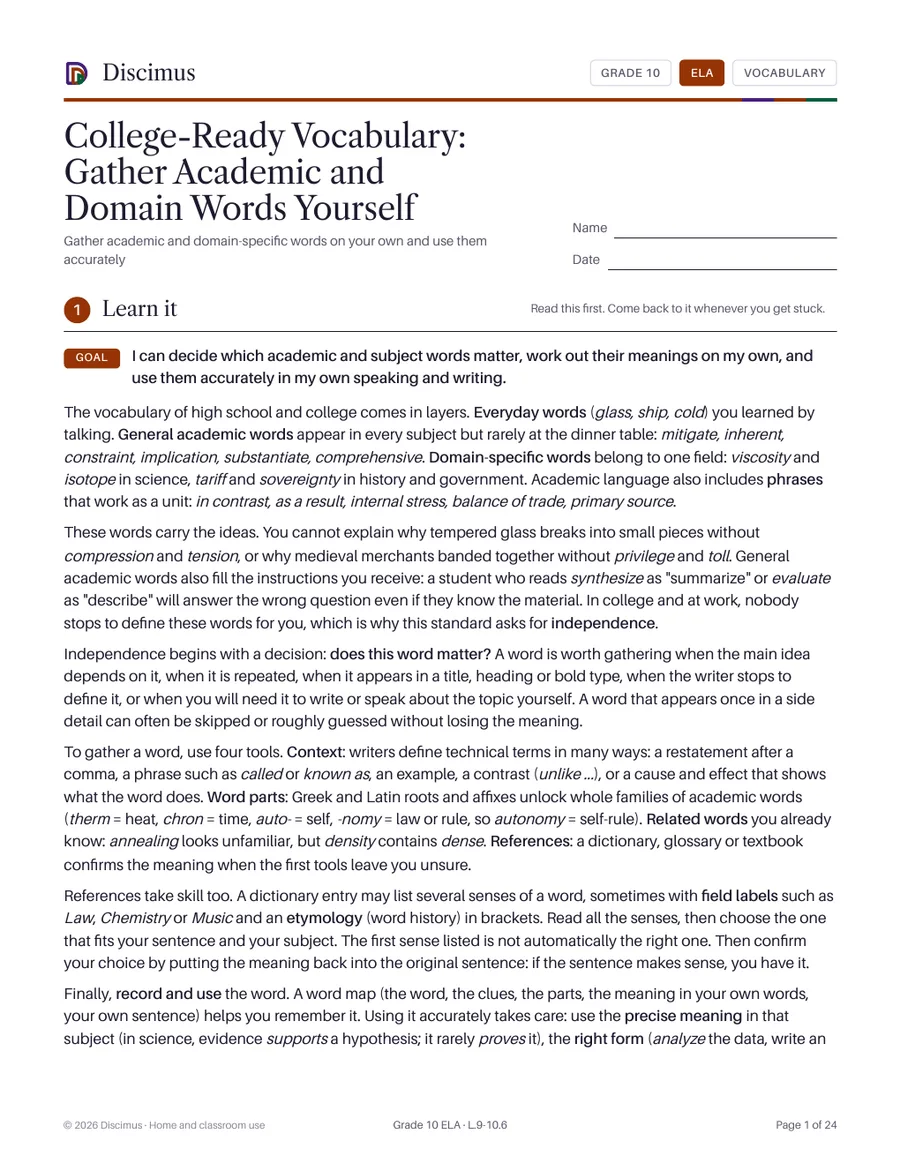
Gather academic and domain-specific words on your own and use them accurately
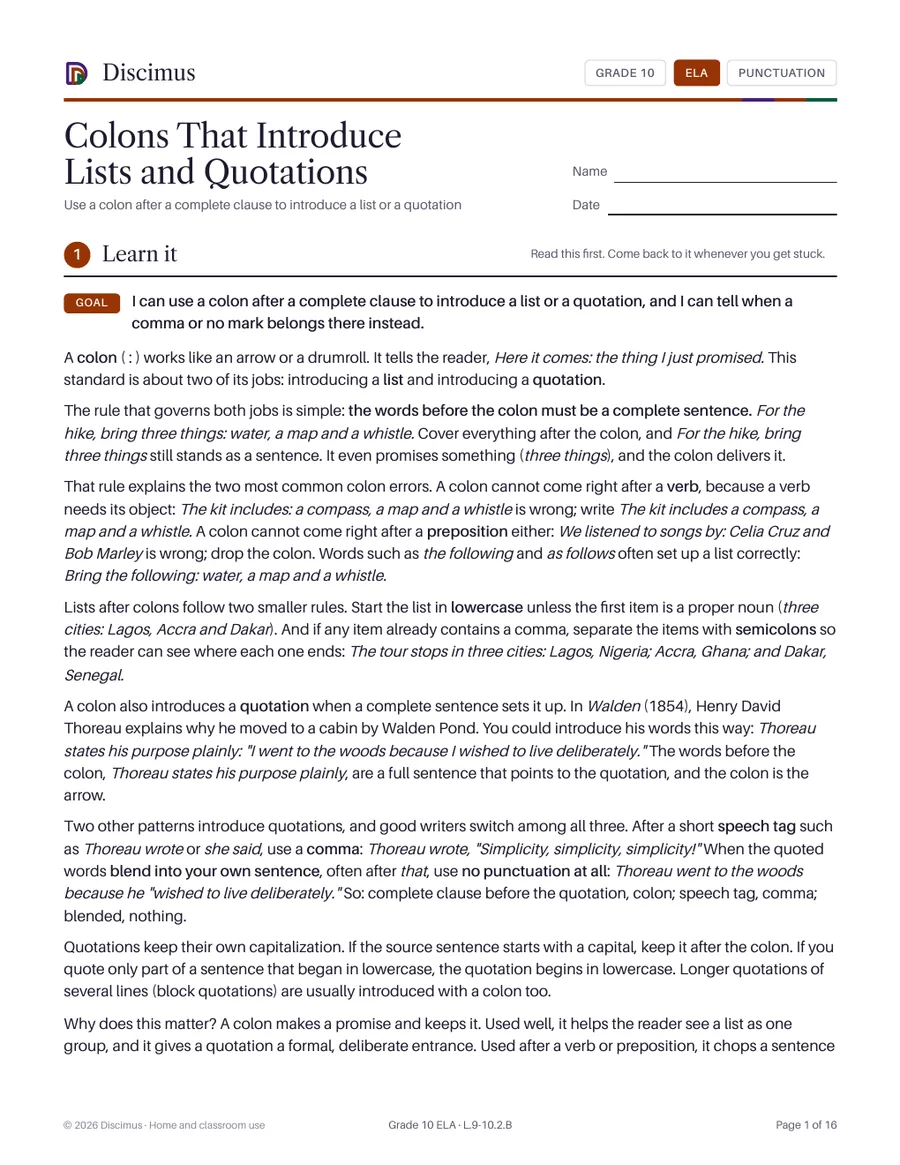
Use a colon after a complete clause to introduce a list or a quotation
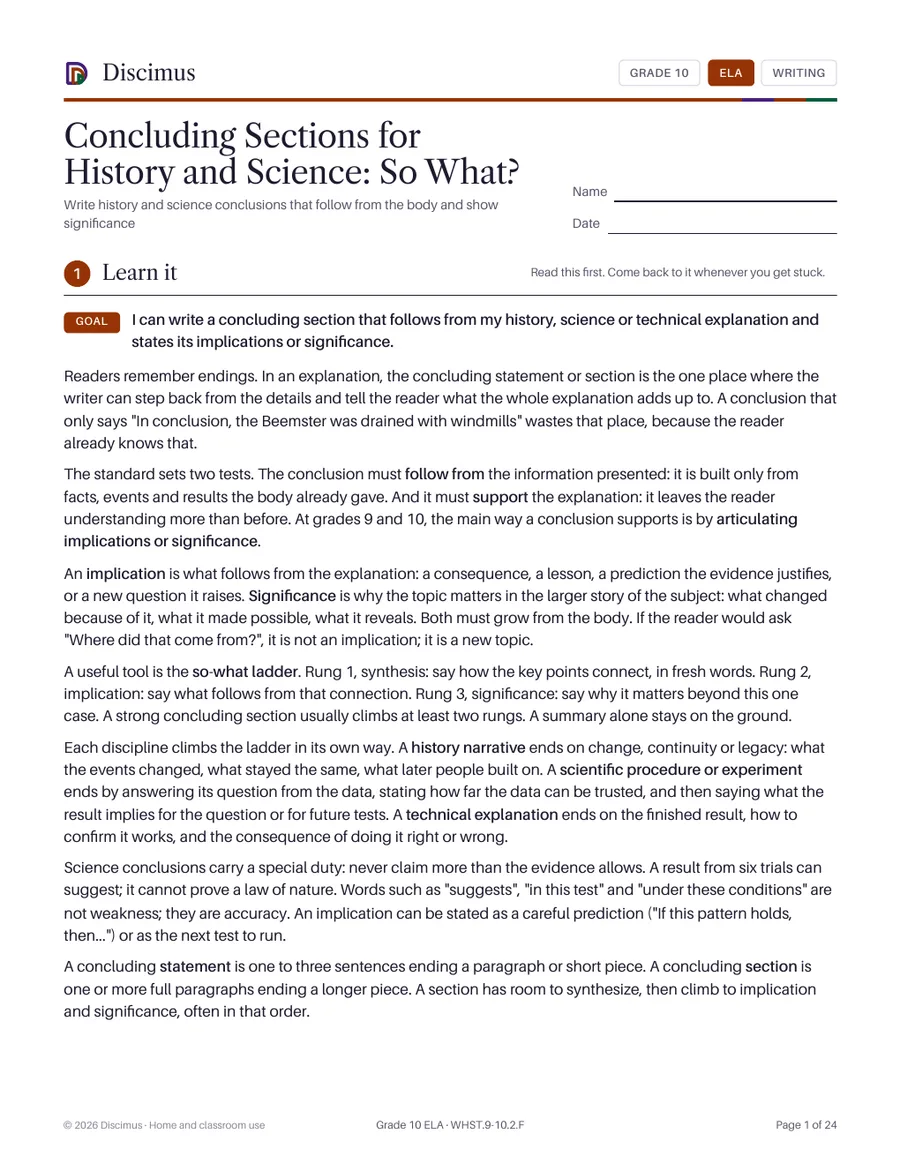
Write history and science conclusions that follow from the body and show significance
Use sentence, paragraph and text context and a word's function to find its meaning
Interpret euphemism, oxymoron and other figures of speech in context; analyze their role
Draw, weigh and explain text evidence for analysis, reflection and research
Research a history or science question, narrow or broaden it, and synthesize sources
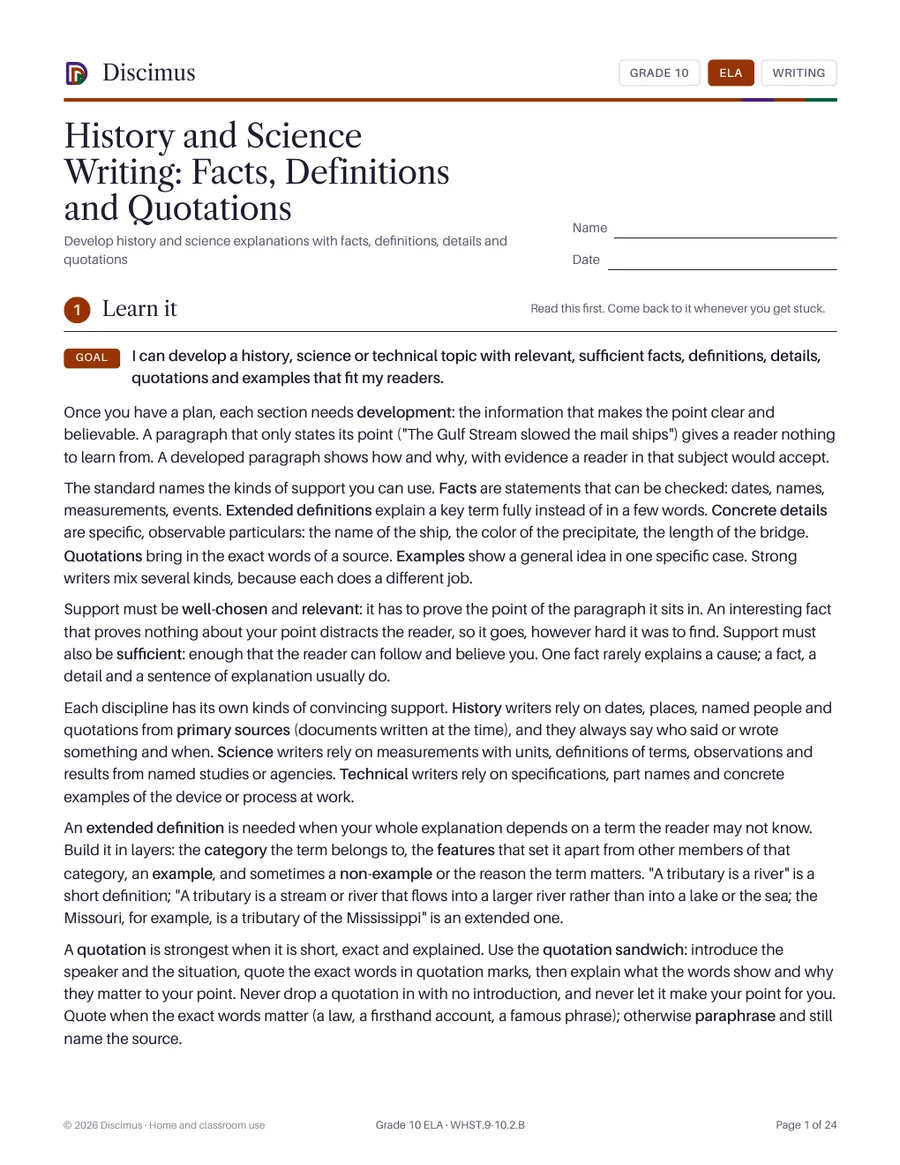
Develop history and science explanations with facts, definitions, details and quotations
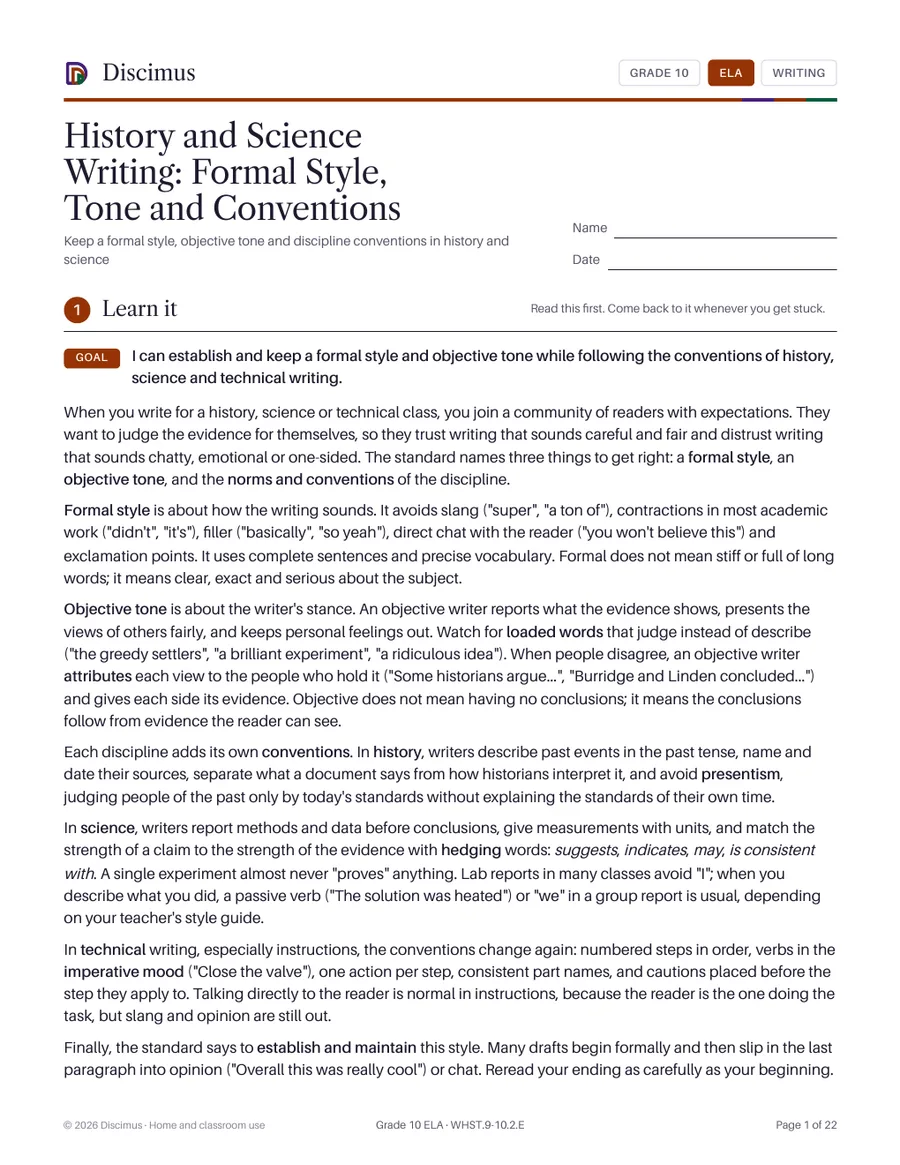
Keep a formal style, objective tone and discipline conventions in history and science
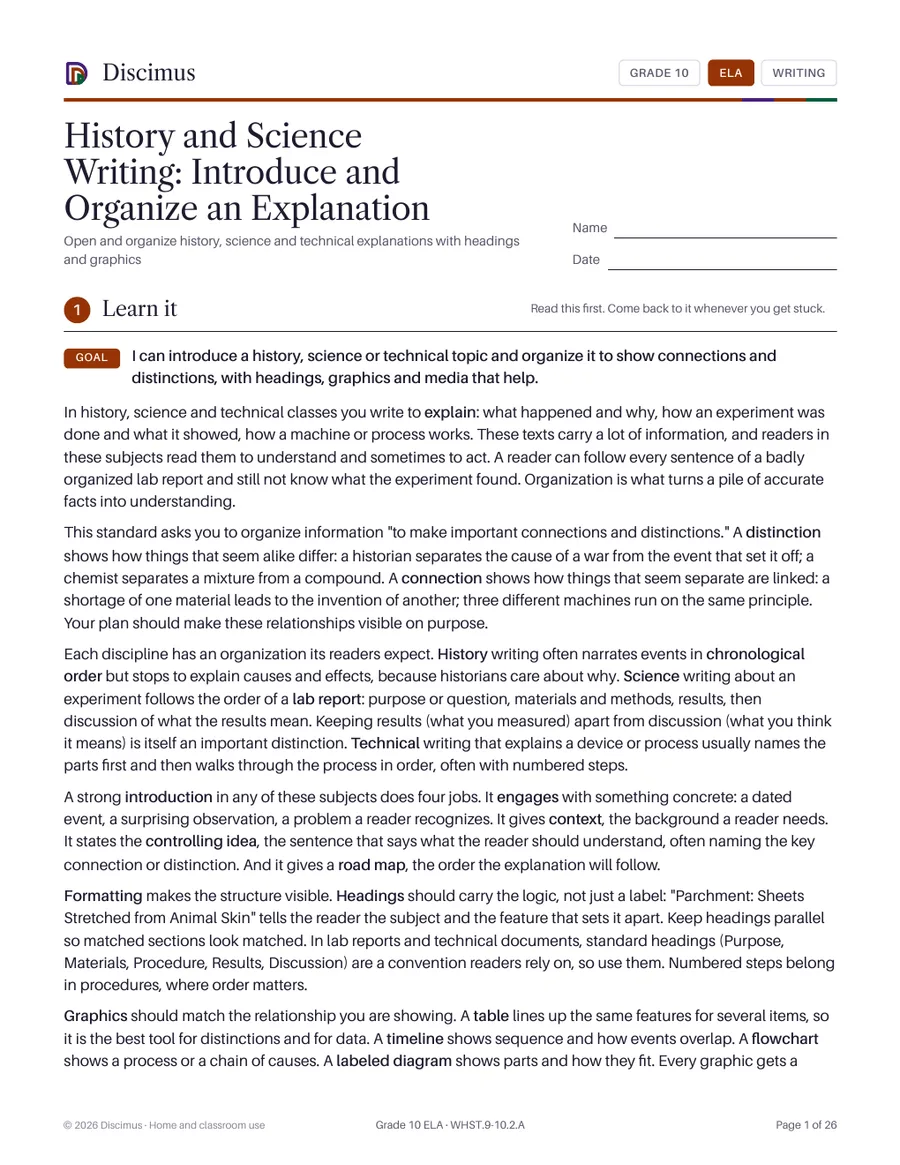
Open and organize history, science and technical explanations with headings and graphics
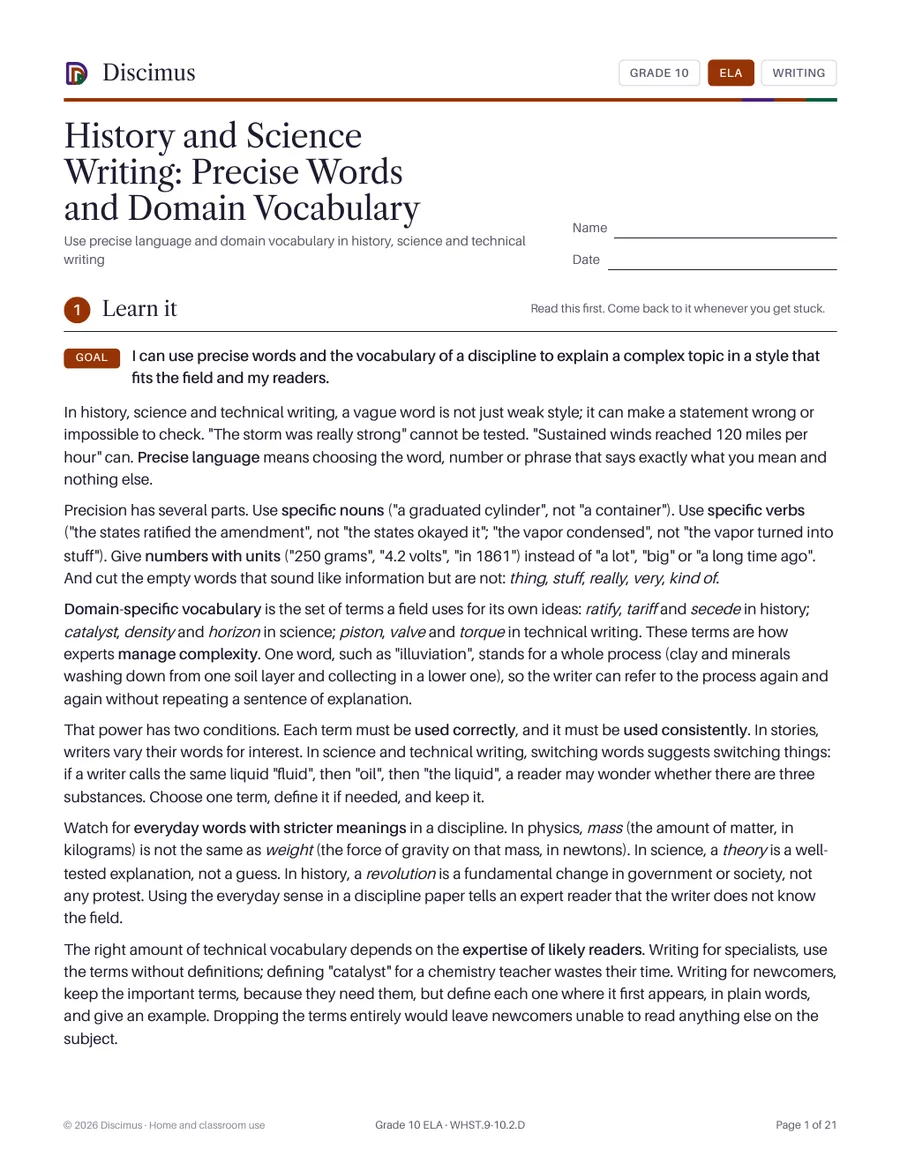
Use precise language and domain vocabulary in history, science and technical writing
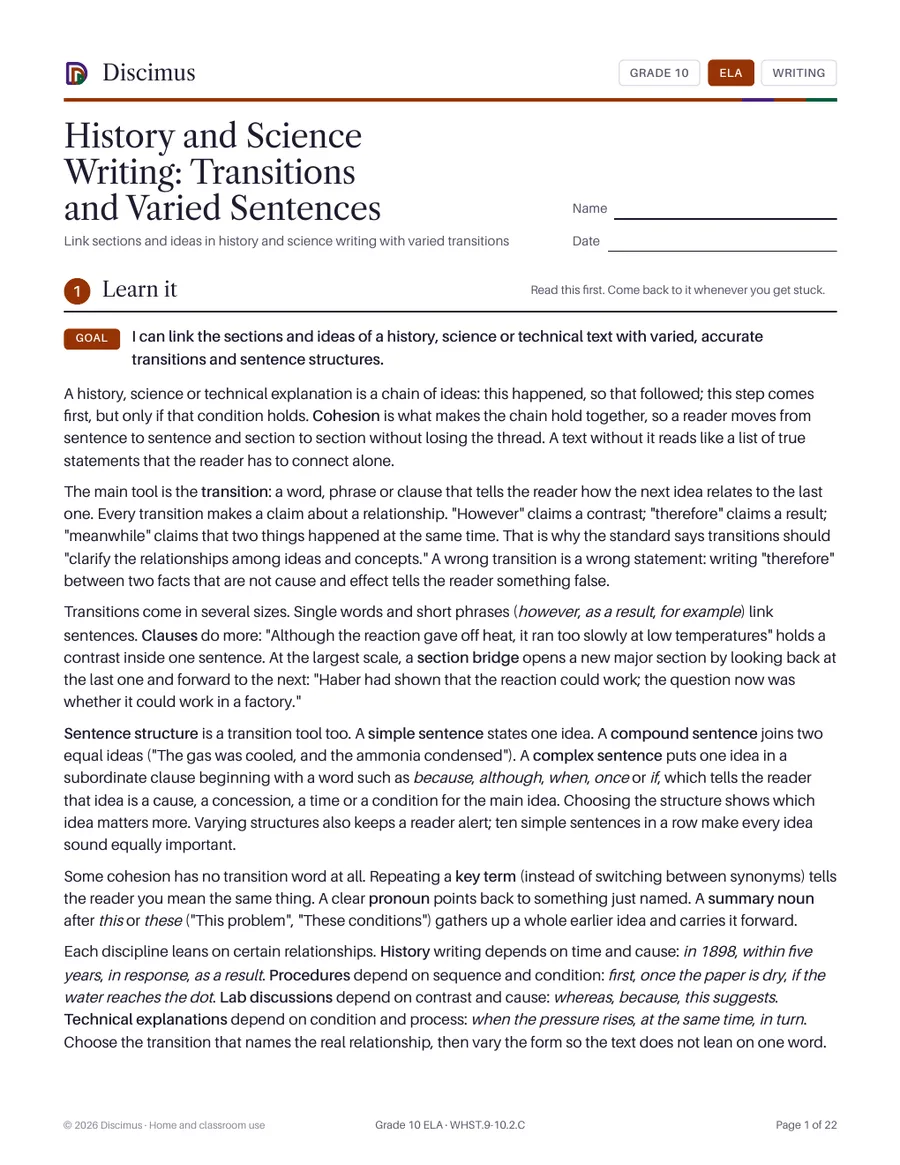
Link sections and ideas in history and science writing with varied transitions
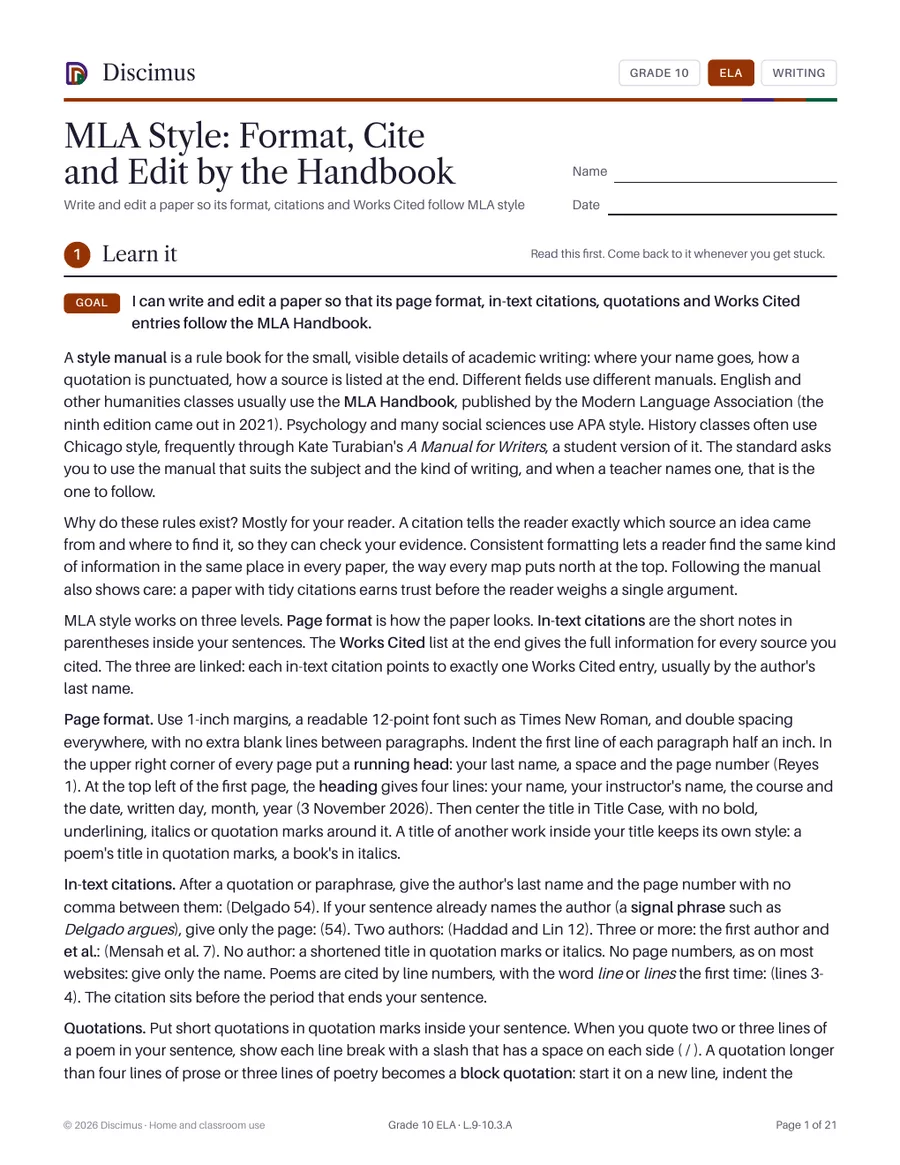
Write and edit a paper so its format, citations and Works Cited follow MLA style
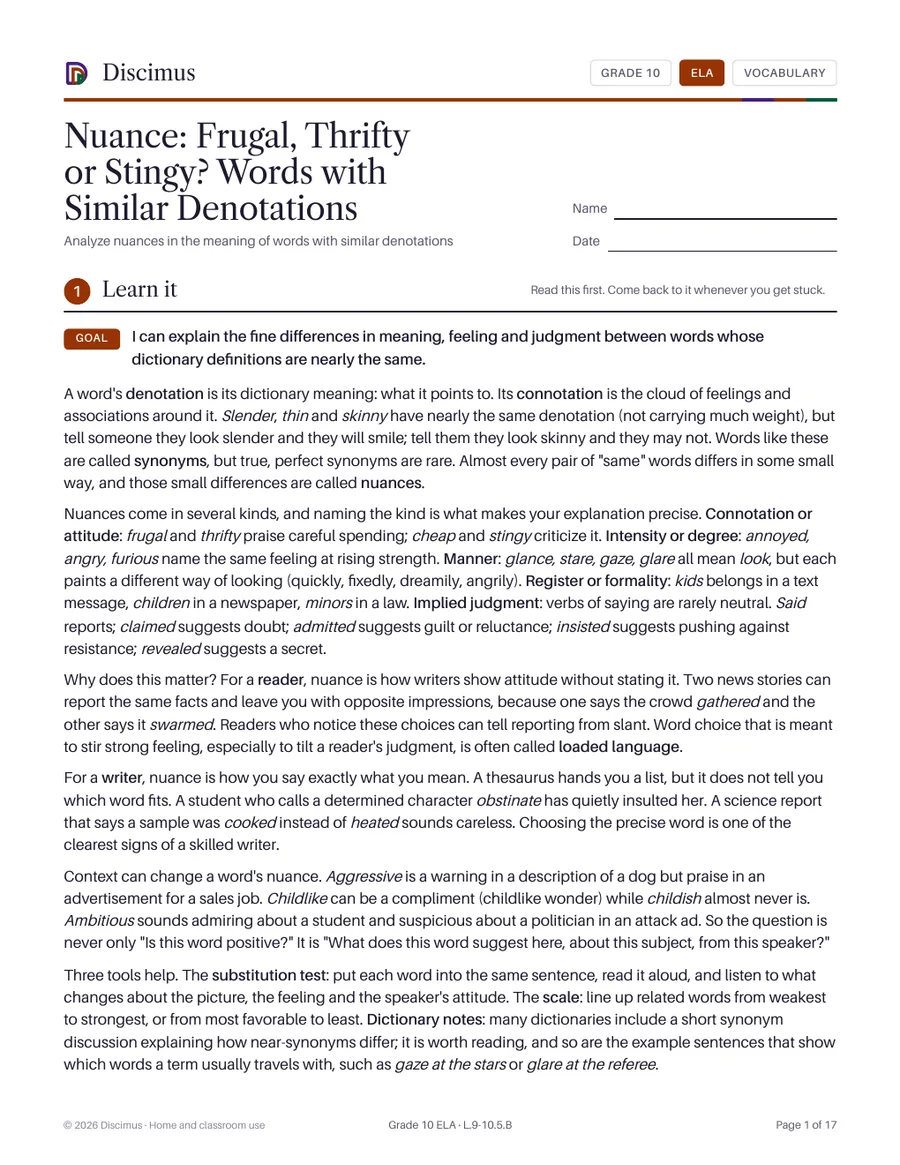
Analyze nuances in the meaning of words with similar denotations
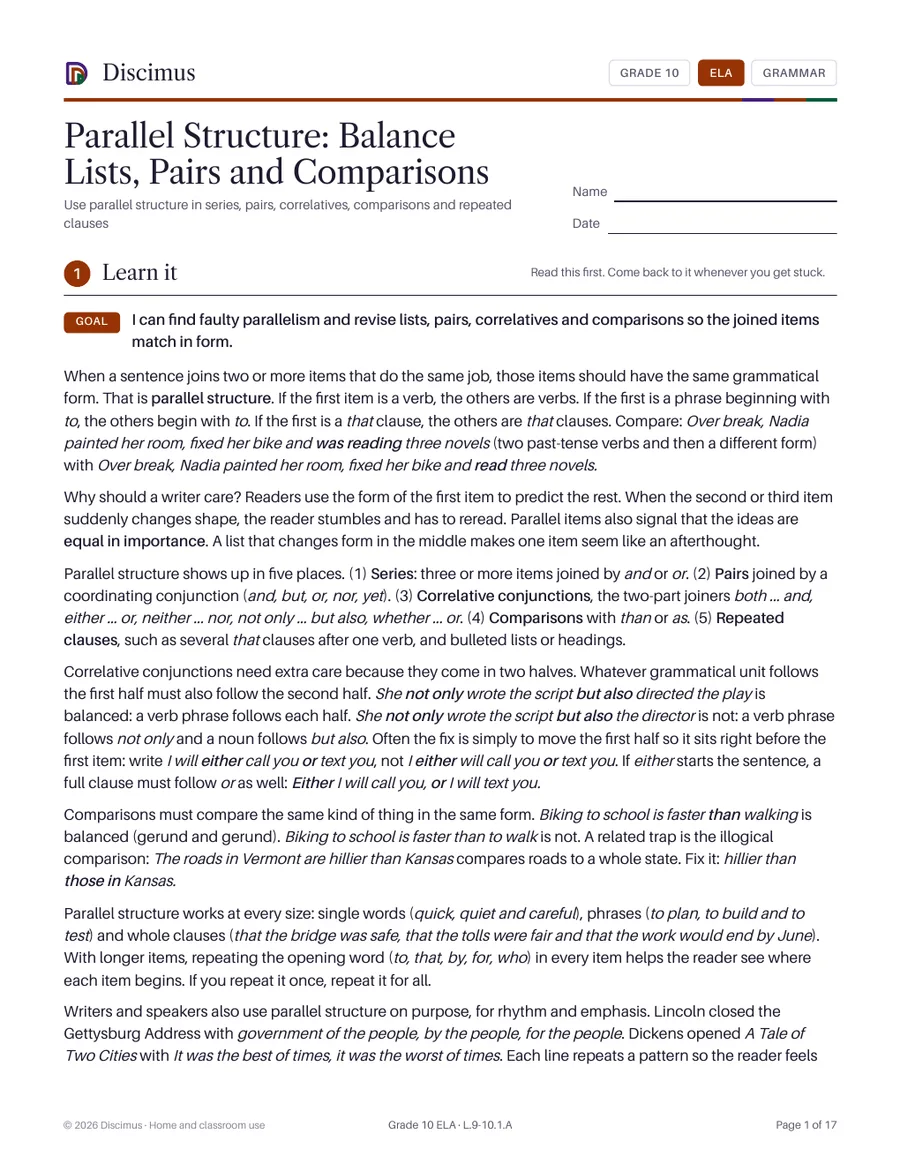
Use parallel structure in series, pairs, correlatives, comparisons and repeated clauses
Use varied phrases and clauses to convey precise meaning and add sentence variety
Produce, publish and update shared history and science writing with links and displays
Use dictionaries, glossaries and thesauruses for pronunciation, meaning and word origin
Search with advanced tools, weigh each source's usefulness, integrate evidence and cite it
Plan, revise, edit and rethink history and science writing, fixing what matters most first
Write a concluding section that follows from and supports a history or science argument
Keep a formal style and objective tone and follow the norms of history and science writing
Use linking words, phrases and clauses to show how claims, reasons and evidence relate
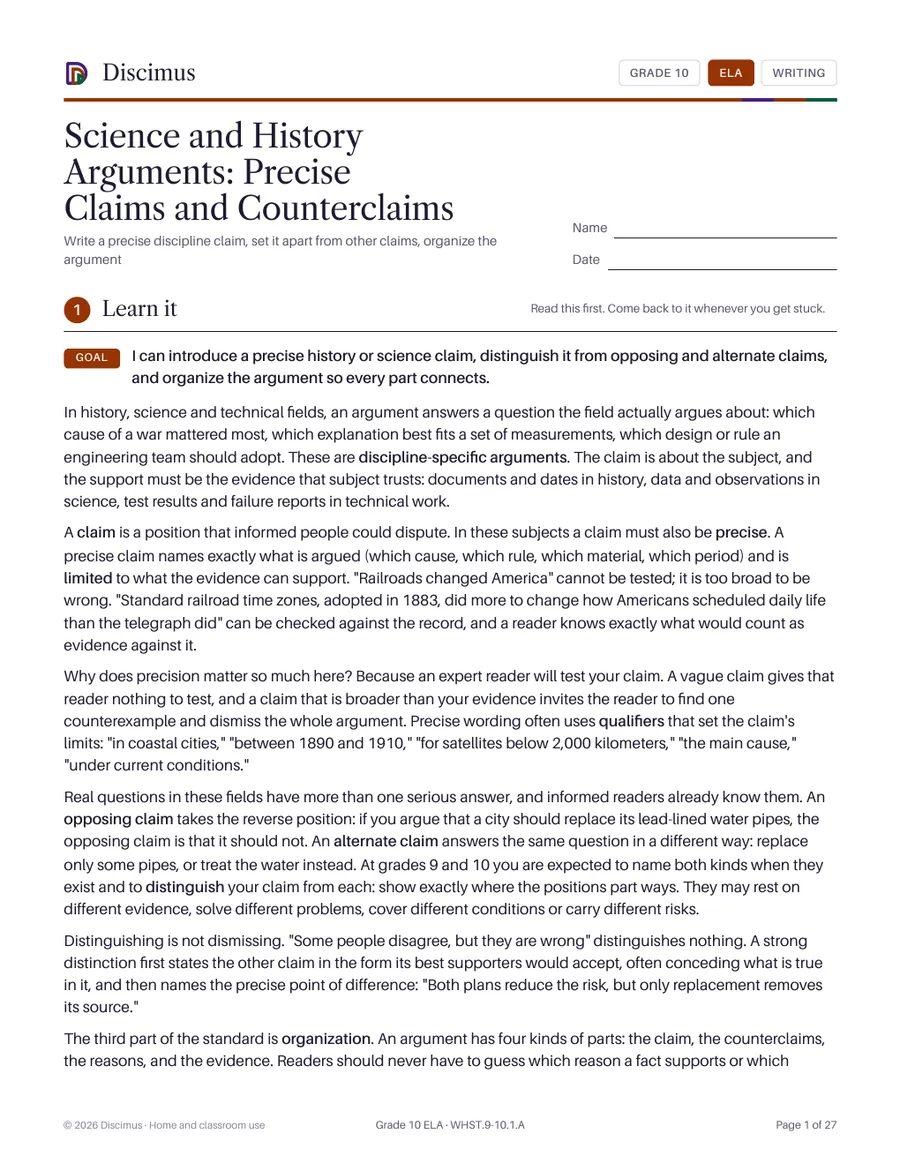
Write a precise discipline claim, set it apart from other claims, organize the argument
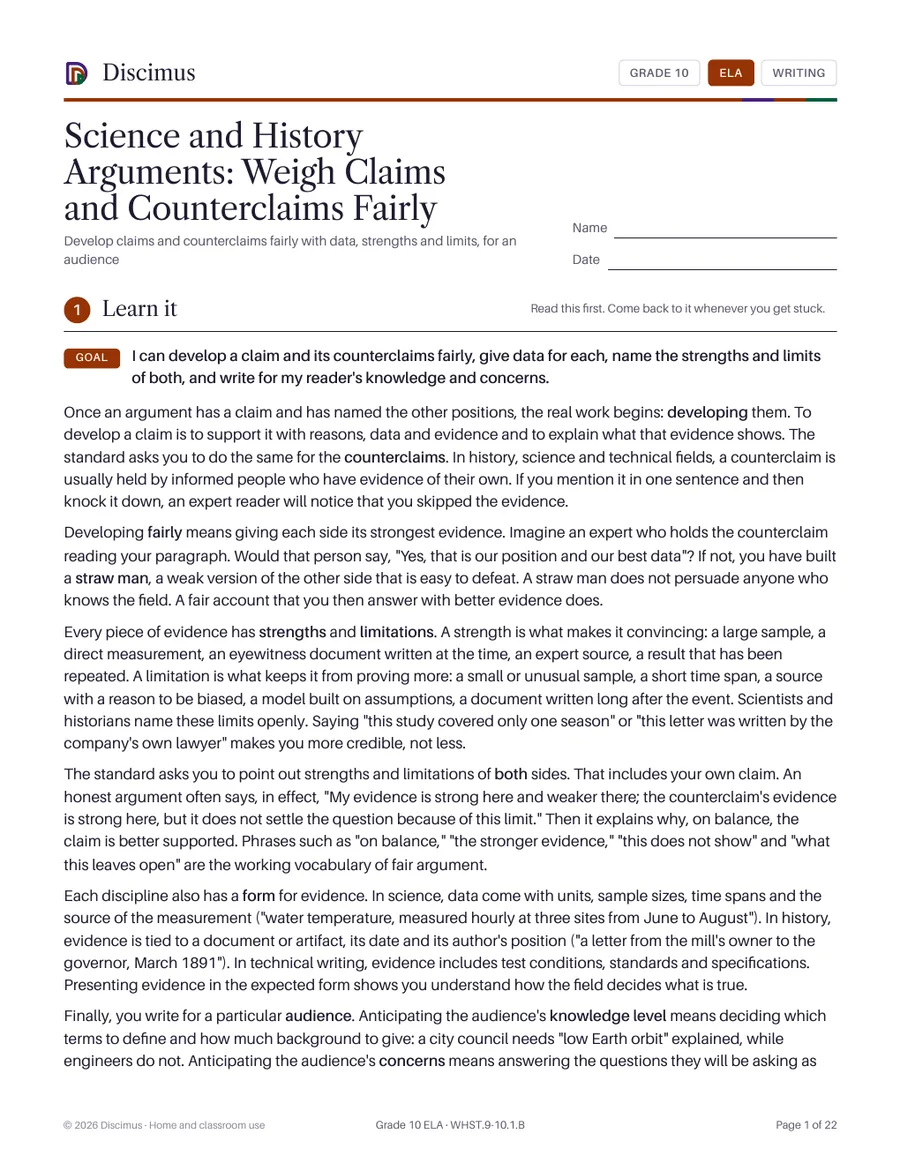
Develop claims and counterclaims fairly with data, strengths and limits, for an audience
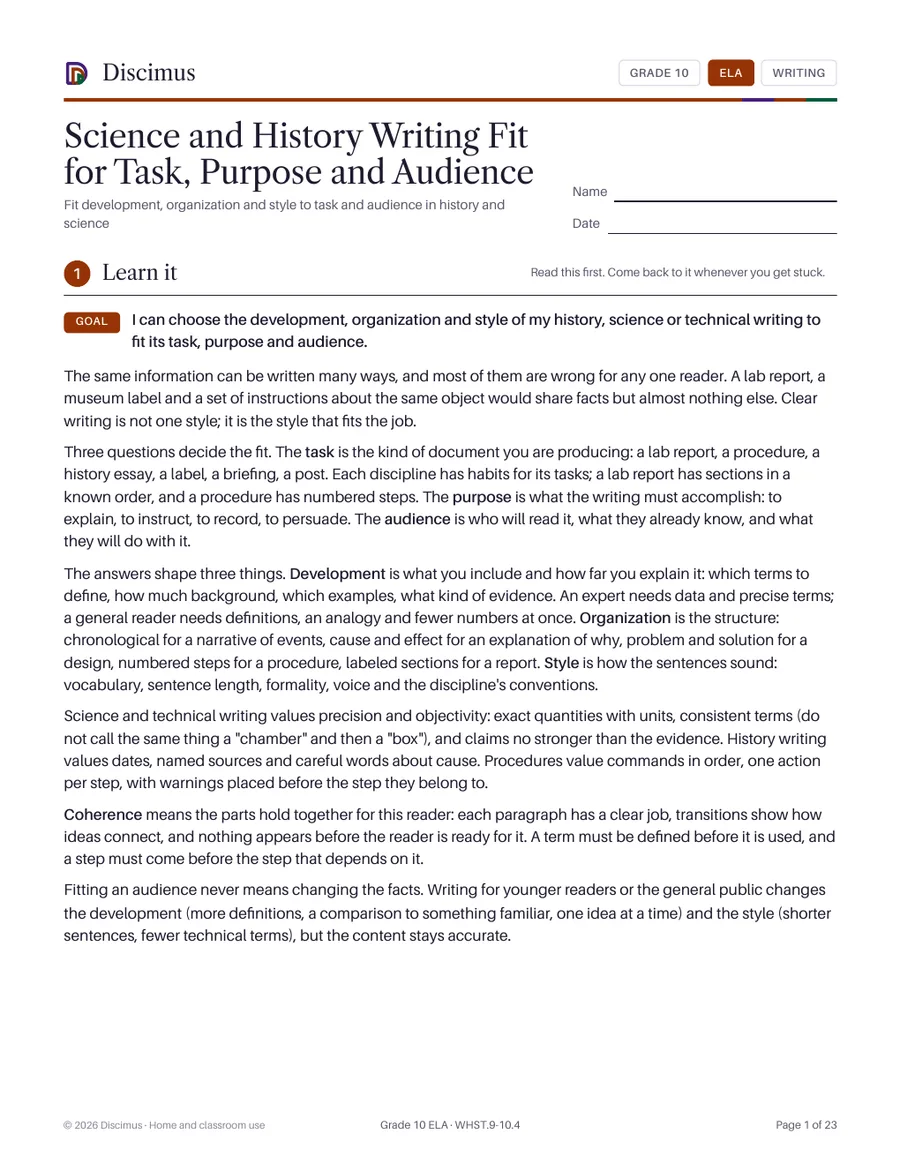
Fit development, organization and style to task and audience in history and science
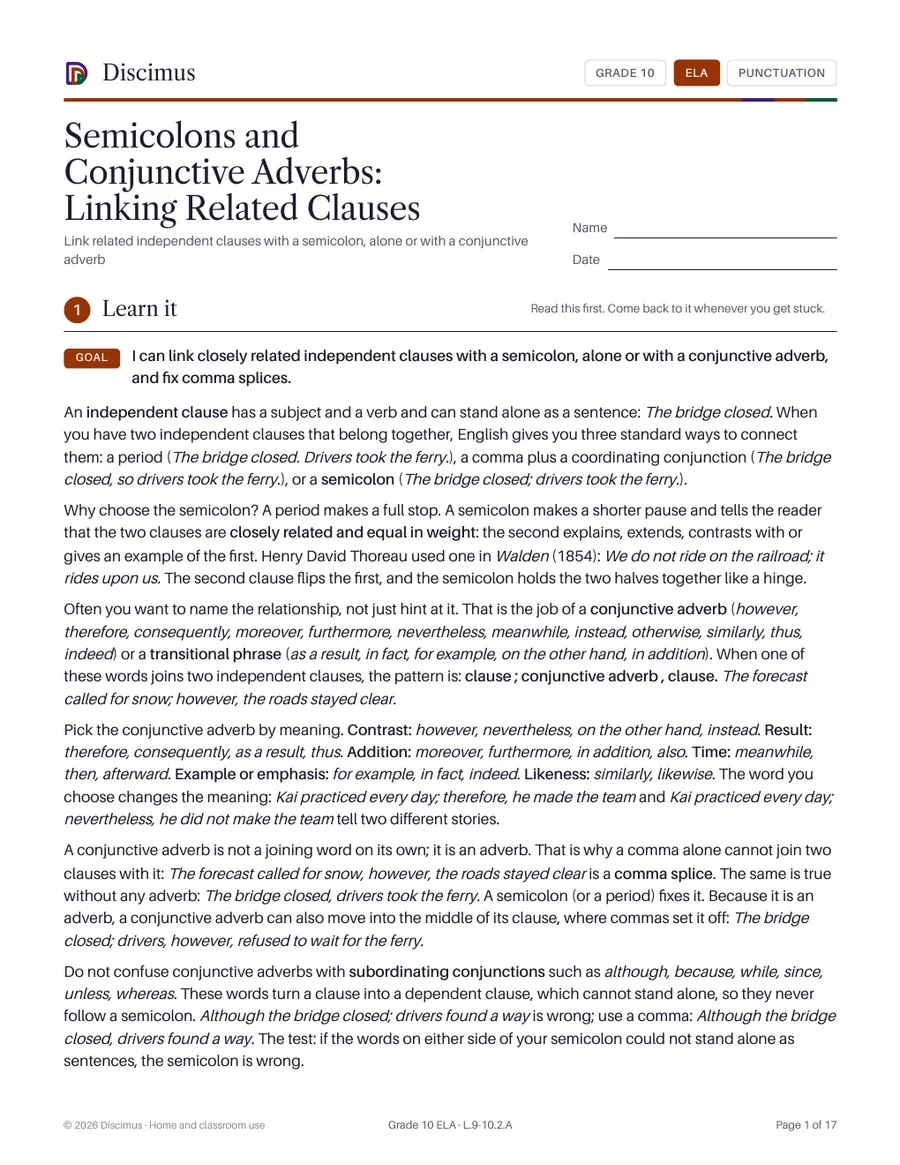
Link related independent clauses with a semicolon, alone or with a conjunctive adverb
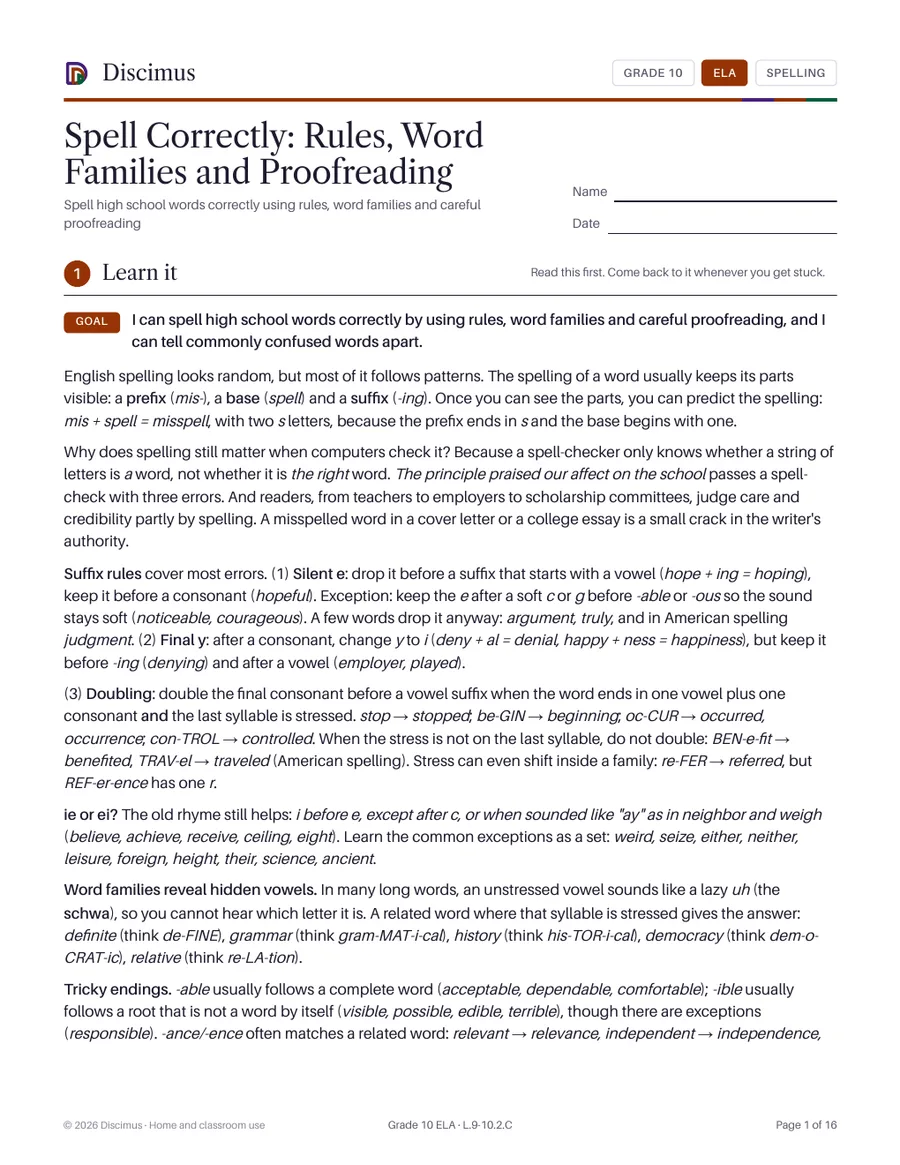
Spell high school words correctly using rules, word families and careful proofreading
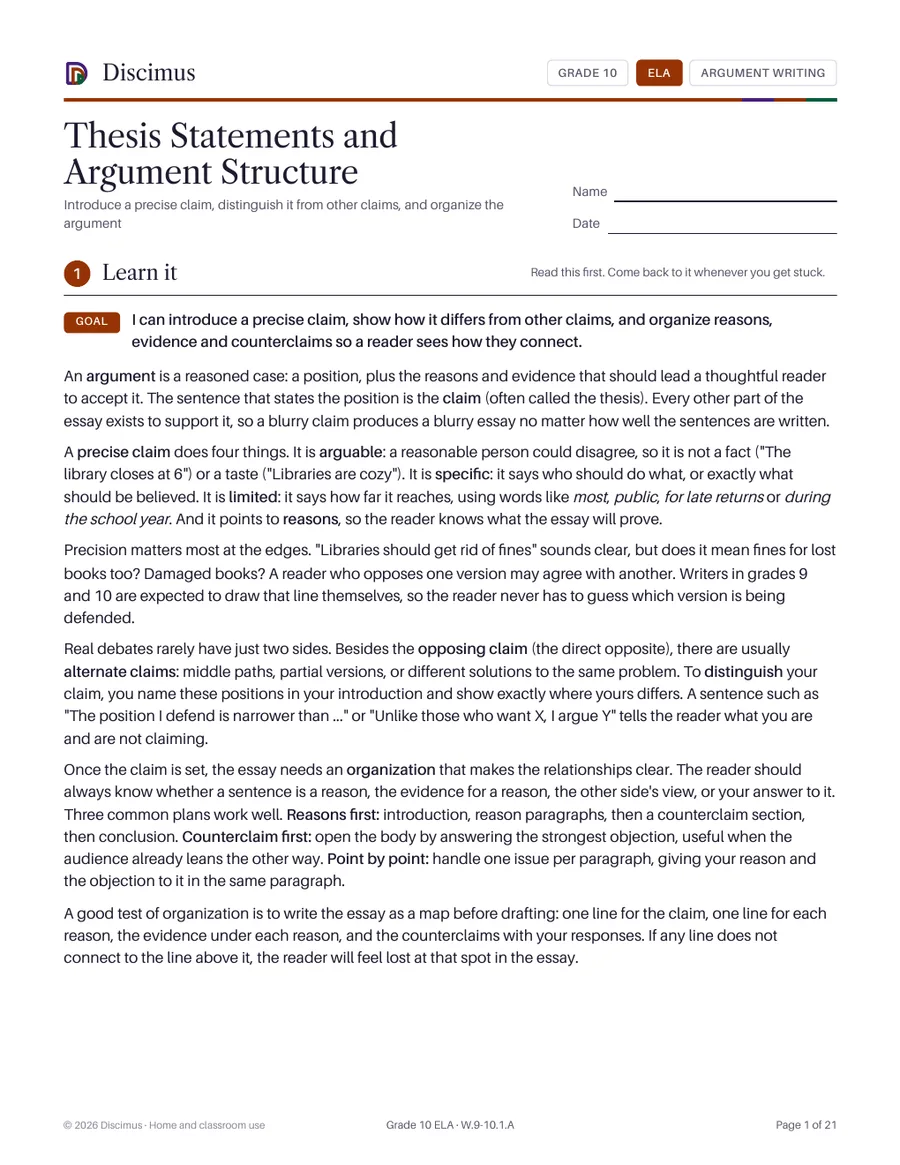
Introduce a precise claim, distinguish it from other claims, and organize the argument
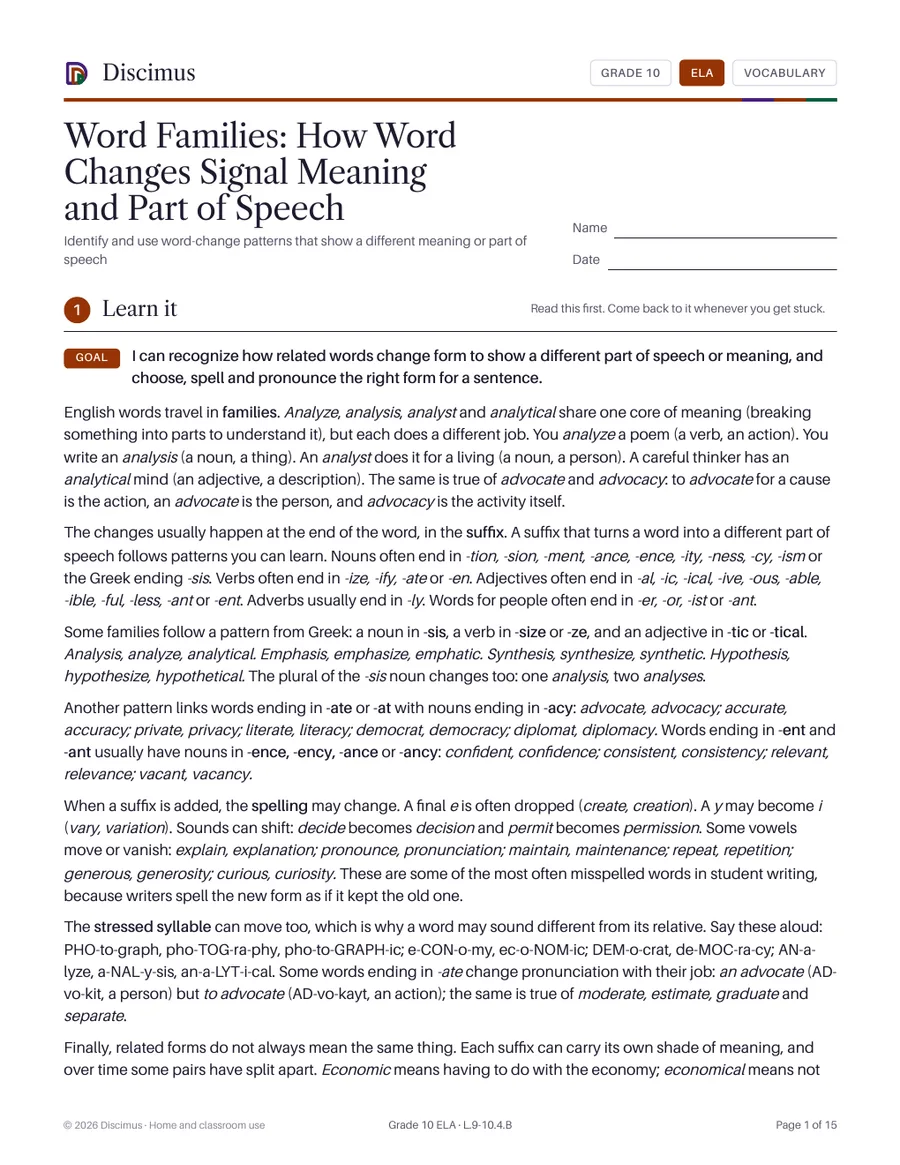
Identify and use word-change patterns that show a different meaning or part of speech
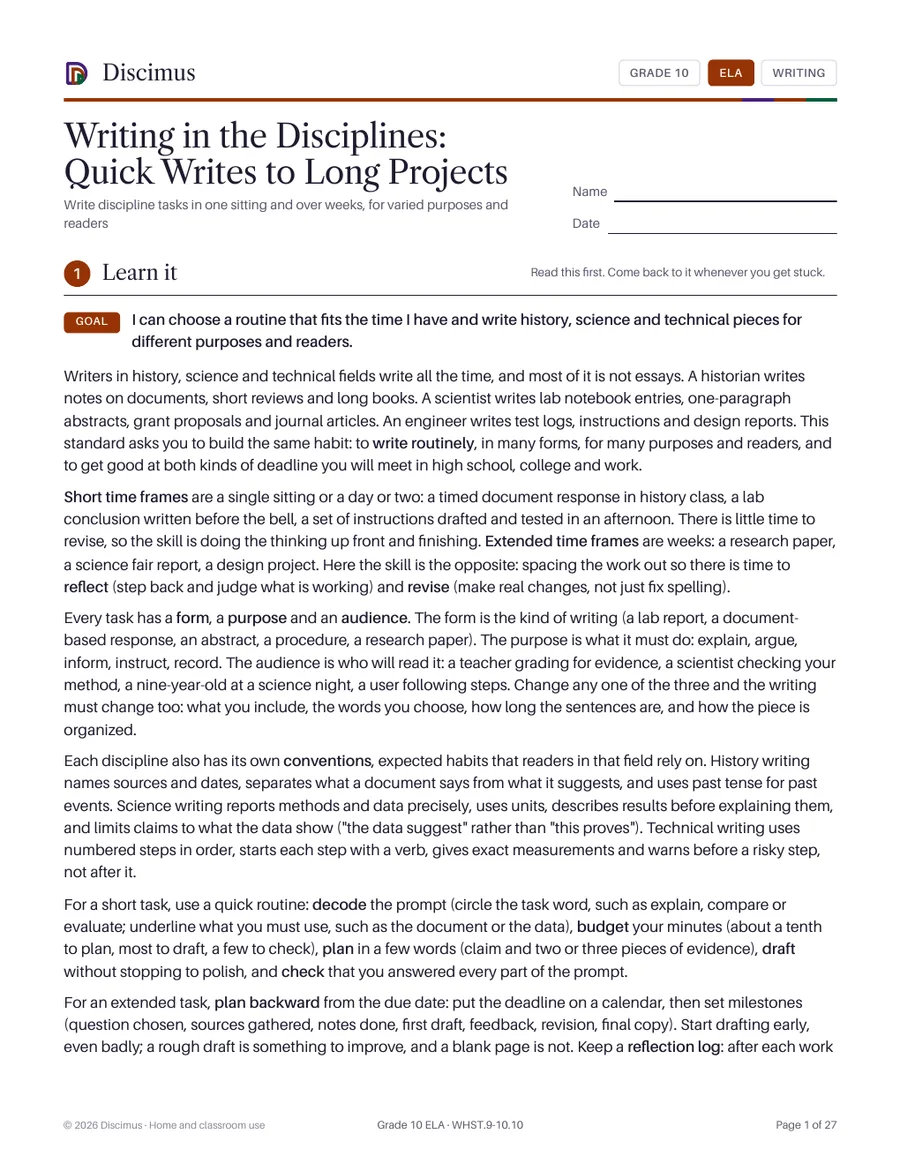
Write discipline tasks in one sitting and over weeks, for varied purposes and readers
Analyze the impact of an author's choices about setting, order of events and characters
Trace how two or more central ideas develop and interact, and write an objective summary
Analyze the themes, purposes and rhetorical features of foundational U.S. documents
Delineate and evaluate the reasoning in seminal U.S. legal texts and public advocacy
Evaluate whether an author's structure makes points clear, convincing and engaging
Cite strong evidence for stated and implied points and find where a text is uncertain
Cite thorough evidence for stated and inferred meaning and find where a text is uncertain
Write a concluding section that follows from an explanation and states its implications
Introduce a complex topic and organize it so each new section builds on the last
Keep a formal style and objective tone while following the norms of the discipline
Use precise language, domain terms, metaphor, simile and analogy to manage a complex topic
Develop a topic with the most significant facts, definitions, details and quotations
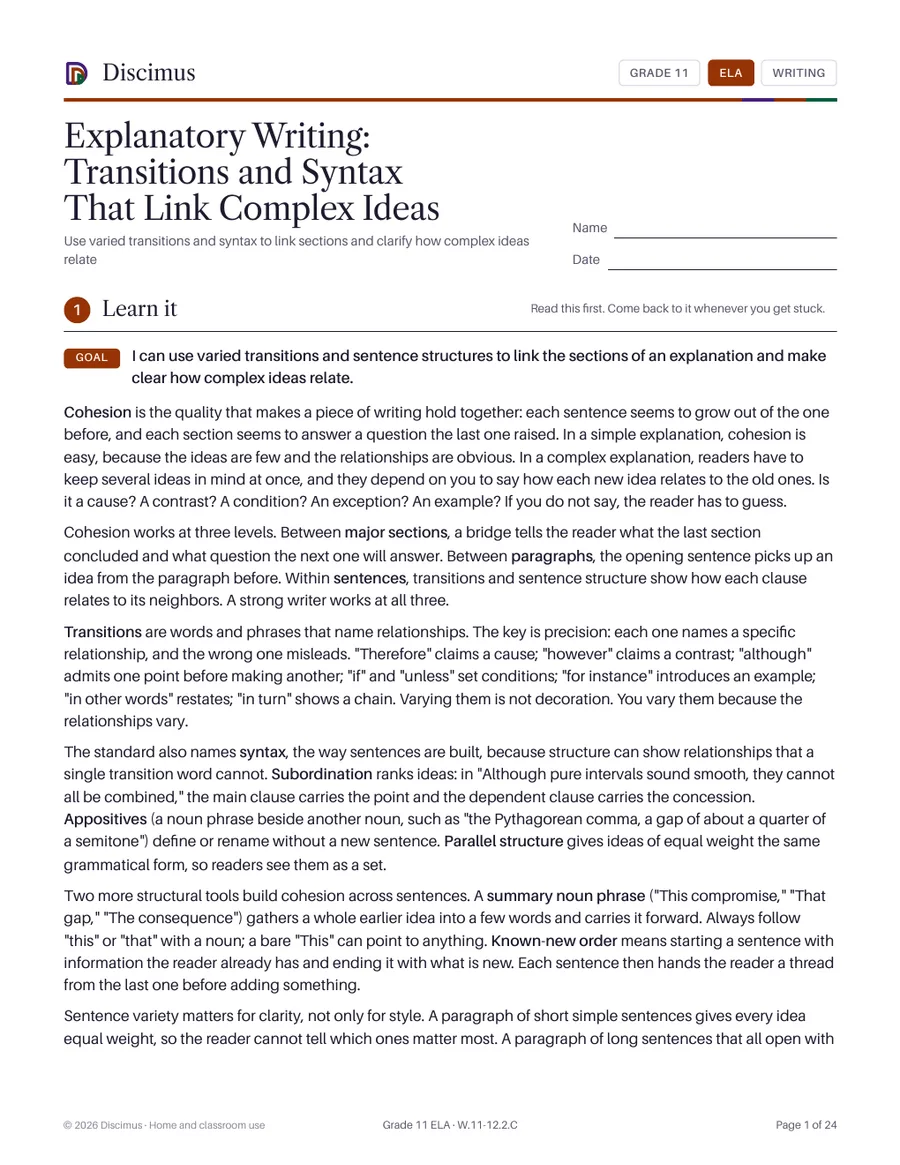
Use varied transitions and syntax to link sections and clarify how complex ideas relate
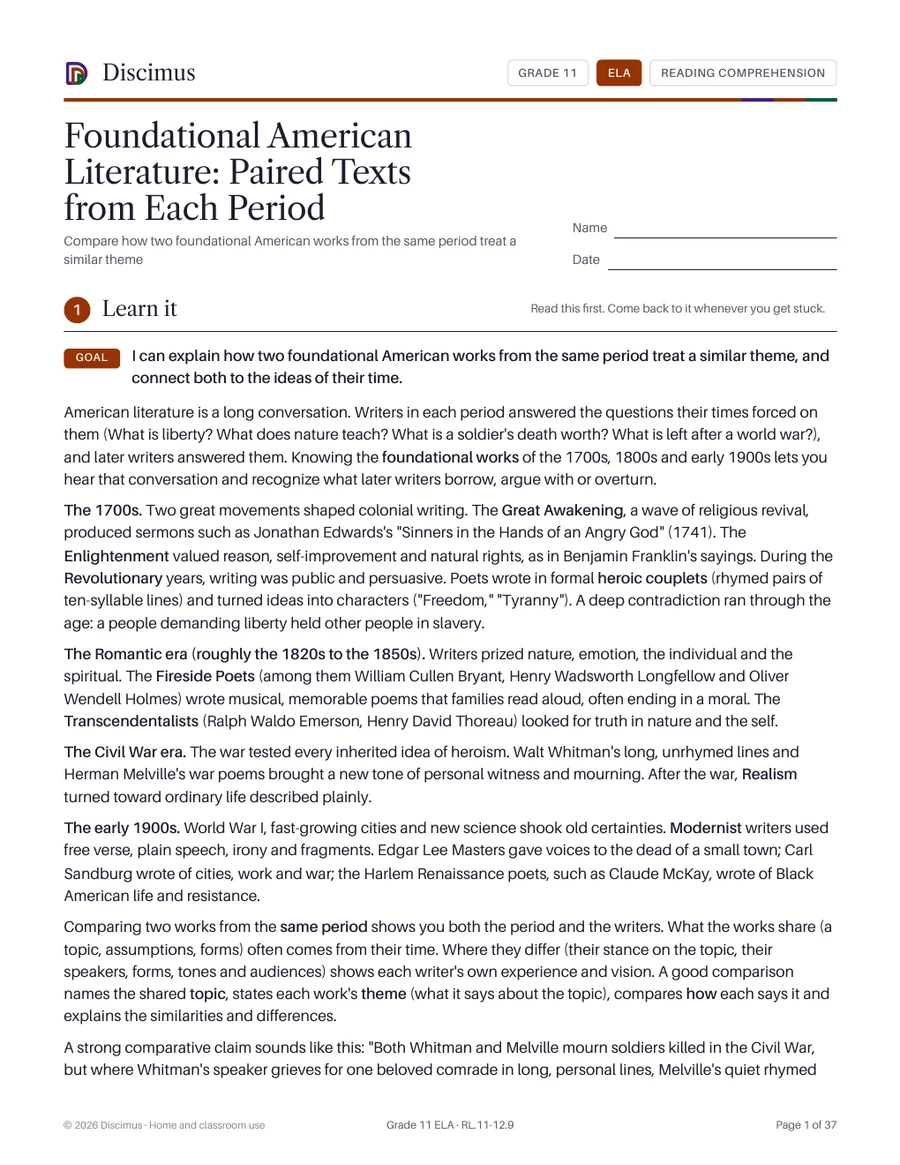
Compare how two foundational American works from the same period treat a similar theme
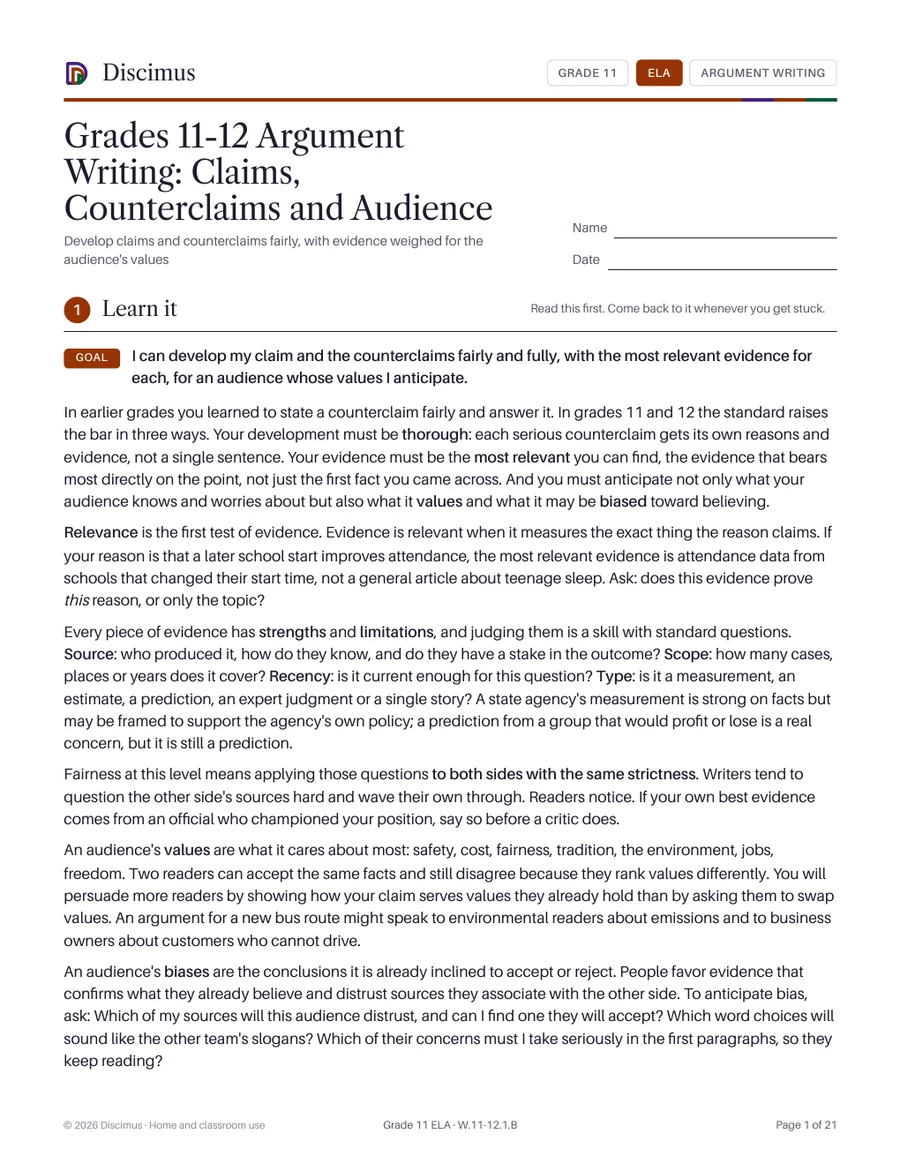
Develop claims and counterclaims fairly, with evidence weighed for the audience's values
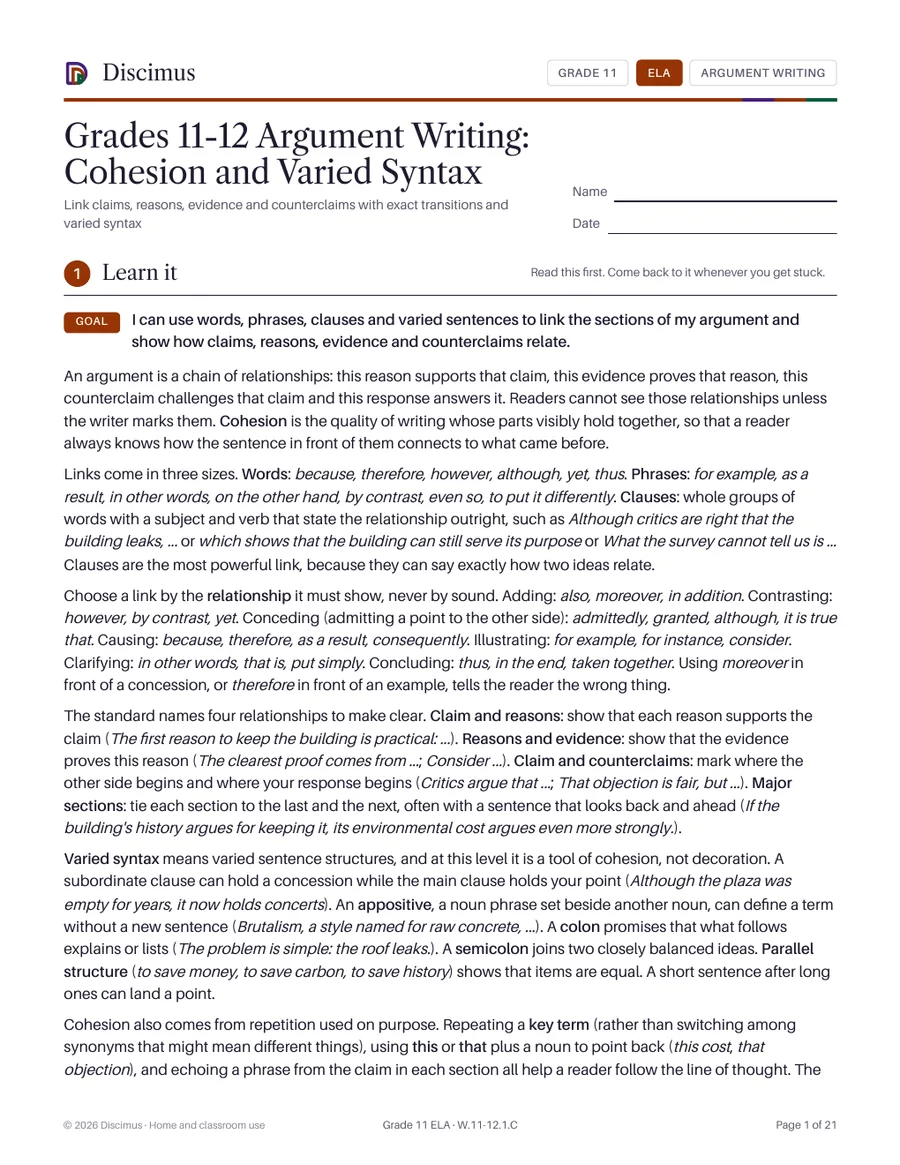
Link claims, reasons, evidence and counterclaims with exact transitions and varied syntax
Write a concluding section that follows from and supports the argument presented
Keep a formal style and objective tone, following the norms of the discipline
Introduce a precise claim and its significance, distinguish rivals, order the argument
Analyze how people, ideas and events interact and develop over a complex nonfiction text
Integrate and evaluate information from text, tables and graphics to answer a question
Trace how two or more themes develop and interact, and write an objective summary
Separate what a text states from what it means to grasp point of view in irony and satire
Analyze multiple interpretations of a story or play and evaluate how each reads the source
Write a narrative conclusion that follows from the events and reflects on their meaning
Use dialogue, pacing, description, reflection and multiple plot lines in a narrative
Open a narrative with a problem and its stakes, clear point of view and smooth progression
Sequence narrative events so they build toward a tone such as mystery, suspense or growth
Use digital tools to publish shared writing and update it for feedback and new information
Read and comprehend complex literary nonfiction at the grade 11 to college-ready level
Read and understand grade 11 to college-ready stories, dramas and poems independently
Conduct a research project: refine a question and synthesize sources that disagree
Search, assess, integrate and cite sources in MLA without plagiarism or overreliance
Strengthen a draft with the revision move that matters most for purpose and audience
Fit development, organization and style to the task, purpose and audience
Analyze how choices about beginnings, endings and resolutions shape meaning and effect
Use precise words, telling details and sensory language to make a narrative vivid
Analyze figurative, connotative and multiple meanings and their impact on meaning and tone
Interpret figurative, connotative and technical meanings; trace how a key term is refined
Write an analysis comparing how two American works from the same period treat a theme
Write an analysis that delineates and evaluates the reasoning in seminal U.S. texts
Write routinely in single sittings and over weeks for varied tasks, purposes and audiences
Search well, weigh each source's strengths and limits, integrate selectively and cite
Use dictionaries and specialized references for pronunciation, meaning, origin and usage
Use sentence, paragraph and whole-text context and a word's function to find its meaning
Analyze nuances in meaning among words with similar denotations and their effect in a text
Fit development, organization and style to task and audience in history and science texts
Develop claims and counterclaims fairly with relevant evidence, strengths and limits
Introduce a precise, knowledgeable claim, show its significance and order the argument
Use linking words, phrases, clauses and varied syntax to make an argument cohesive
Write a concluding section that follows from and supports a discipline argument
Keep a formal style and objective tone that follow the norms of the discipline
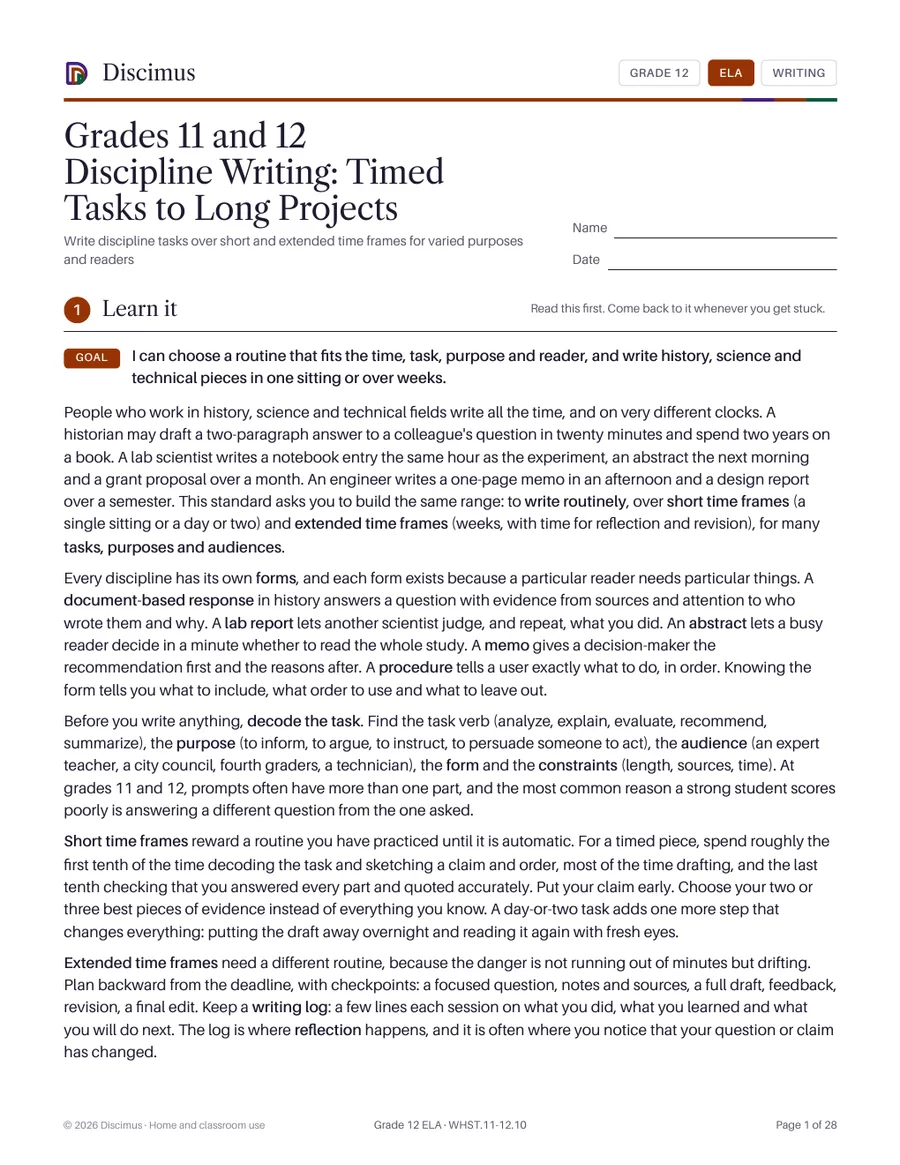
Write discipline tasks over short and extended time frames for varied purposes and readers
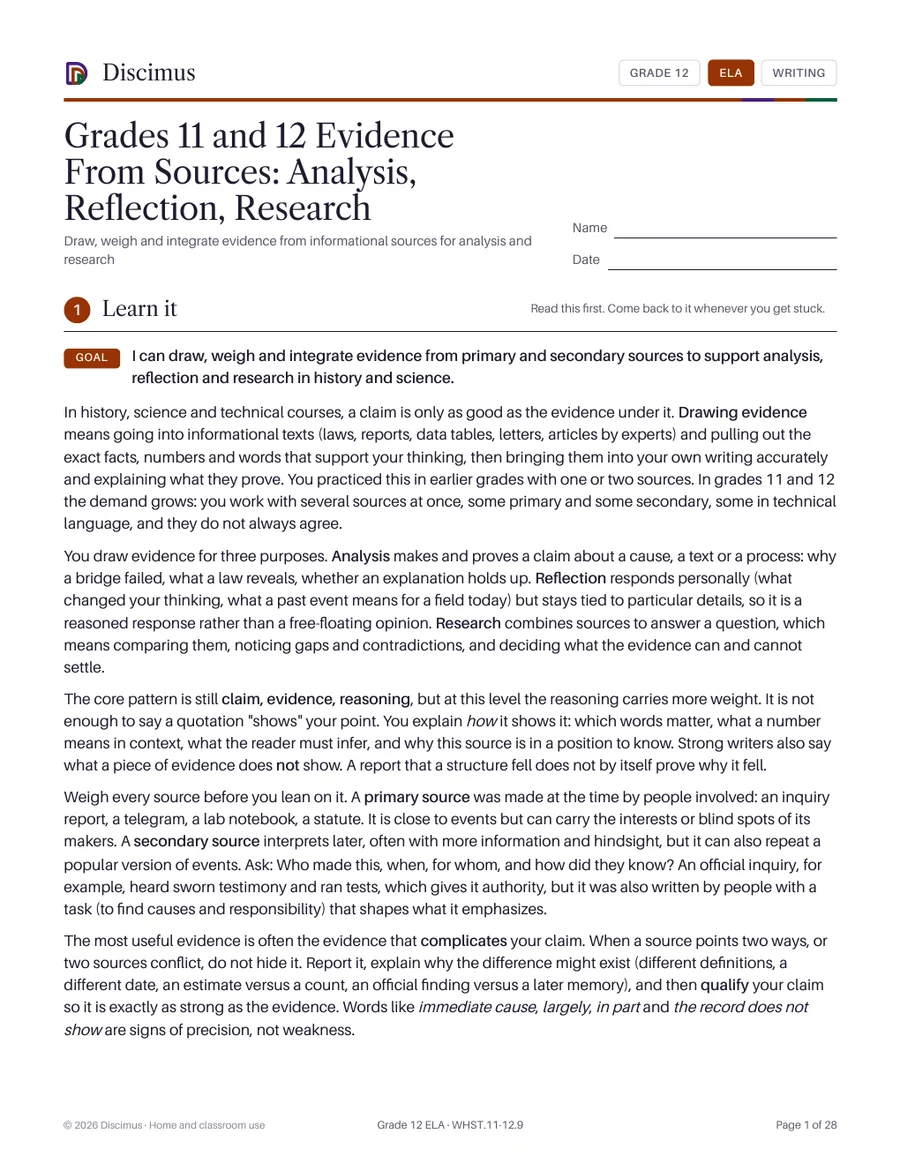
Draw, weigh and integrate evidence from informational sources for analysis and research
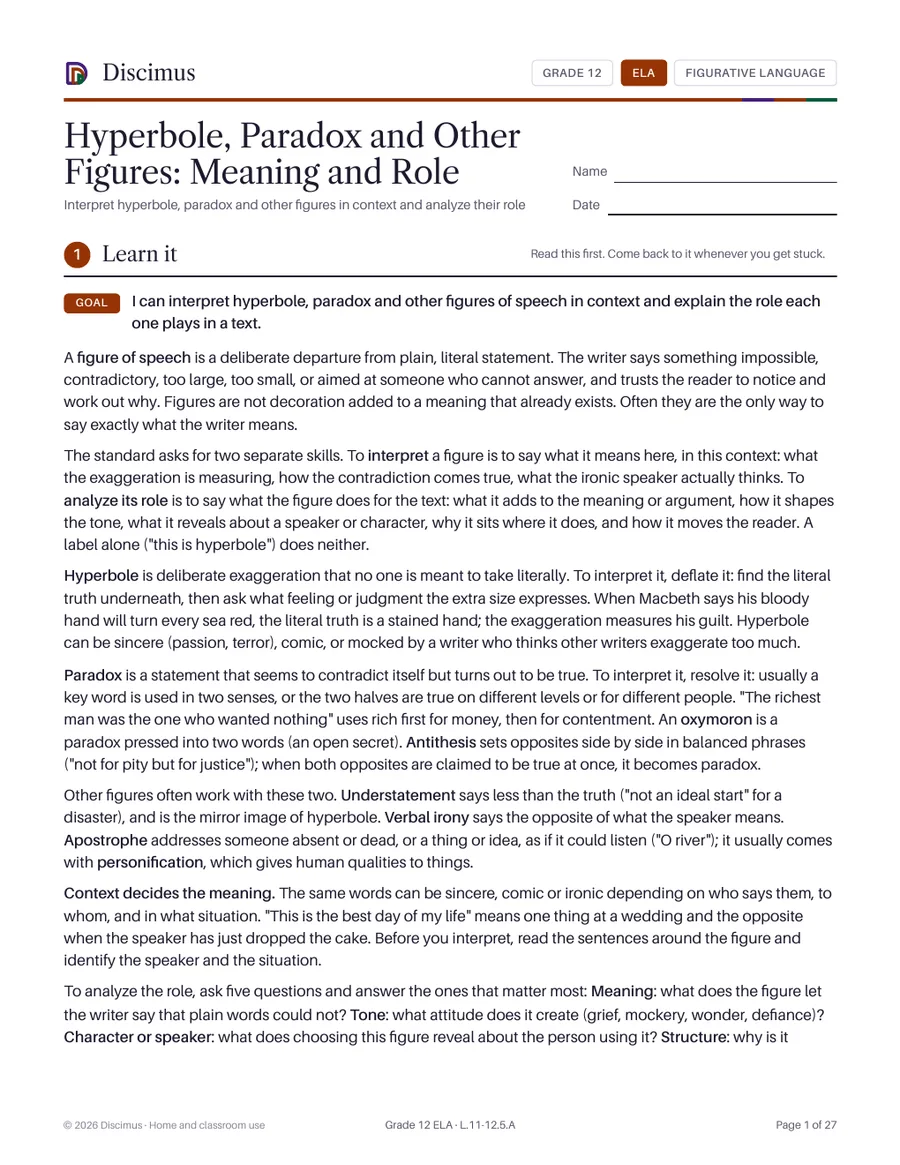
Interpret hyperbole, paradox and other figures in context and analyze their role
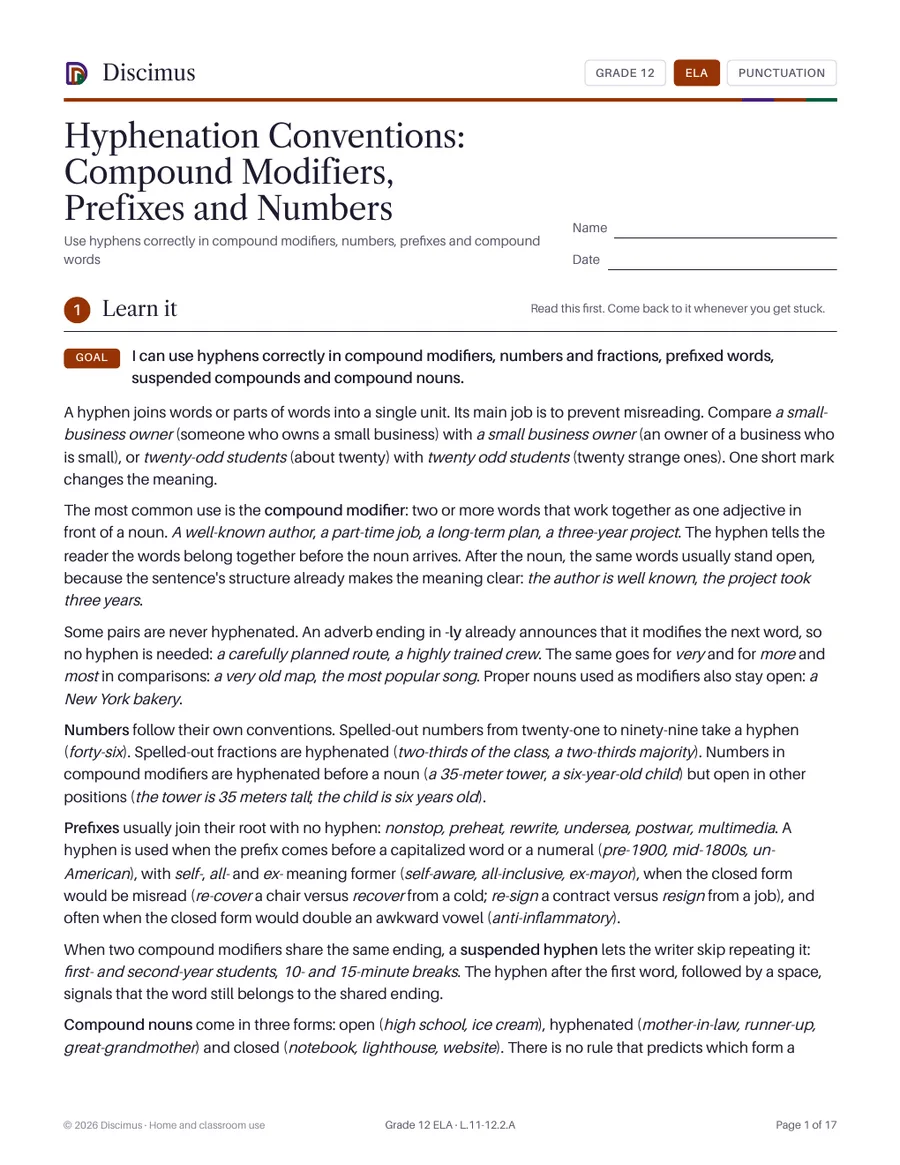
Use hyphens correctly in compound modifiers, numbers, prefixes and compound words
Produce, publish and update shared science and history writing as evidence arrives
Research a question or problem, narrow or broaden it, and synthesize several sources
Resolve complex or contested usage by consulting dictionaries and usage guides
Plan, revise, edit and rewrite history and technical writing, biggest problems first
Analyze how style and content make a speaker's rhetoric powerful, persuasive or beautiful
Write concluding sections that follow from an explanation and state its significance
Introduce and order history, science and technical topics so each part builds on the last
Use precise terms, domain vocabulary and analogies with a knowledgeable stance
Develop discipline explanations with the most significant facts, definitions and quotes
Link sections and ideas in discipline writing with varied transitions and syntax
Spell advanced and commonly misspelled words correctly and proofread for spelling errors
Vary syntax for effect and analyze how syntax shapes meaning in complex texts
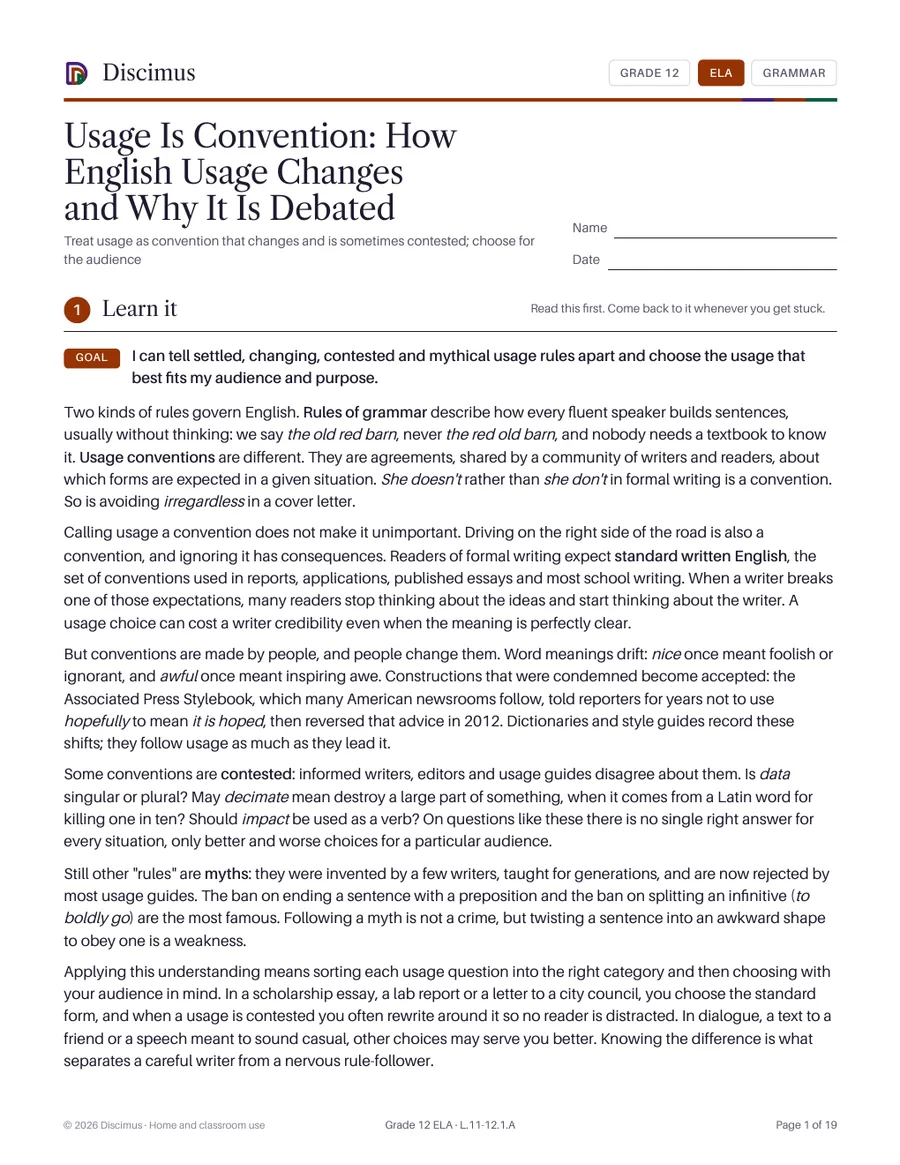
Treat usage as convention that changes and is sometimes contested; choose for the audience
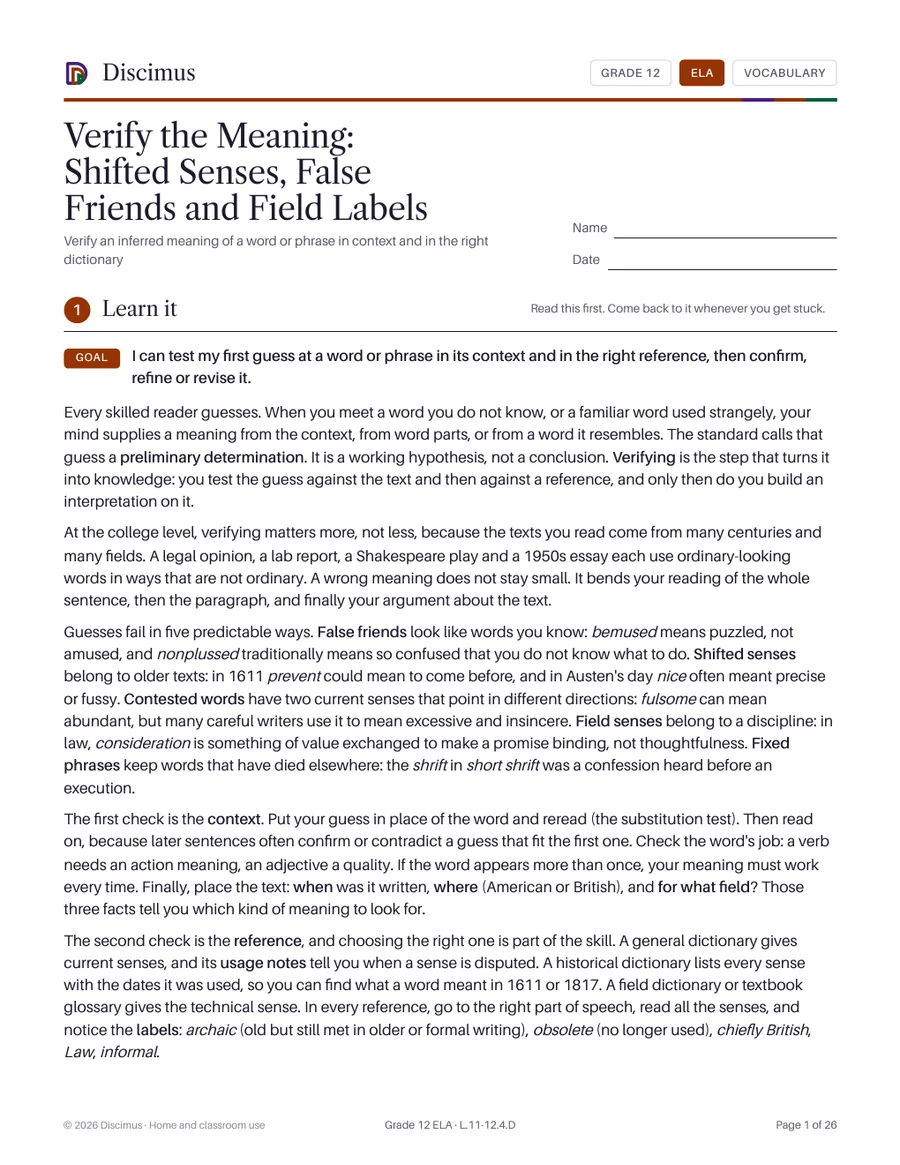
Verify an inferred meaning of a word or phrase in context and in the right dictionary
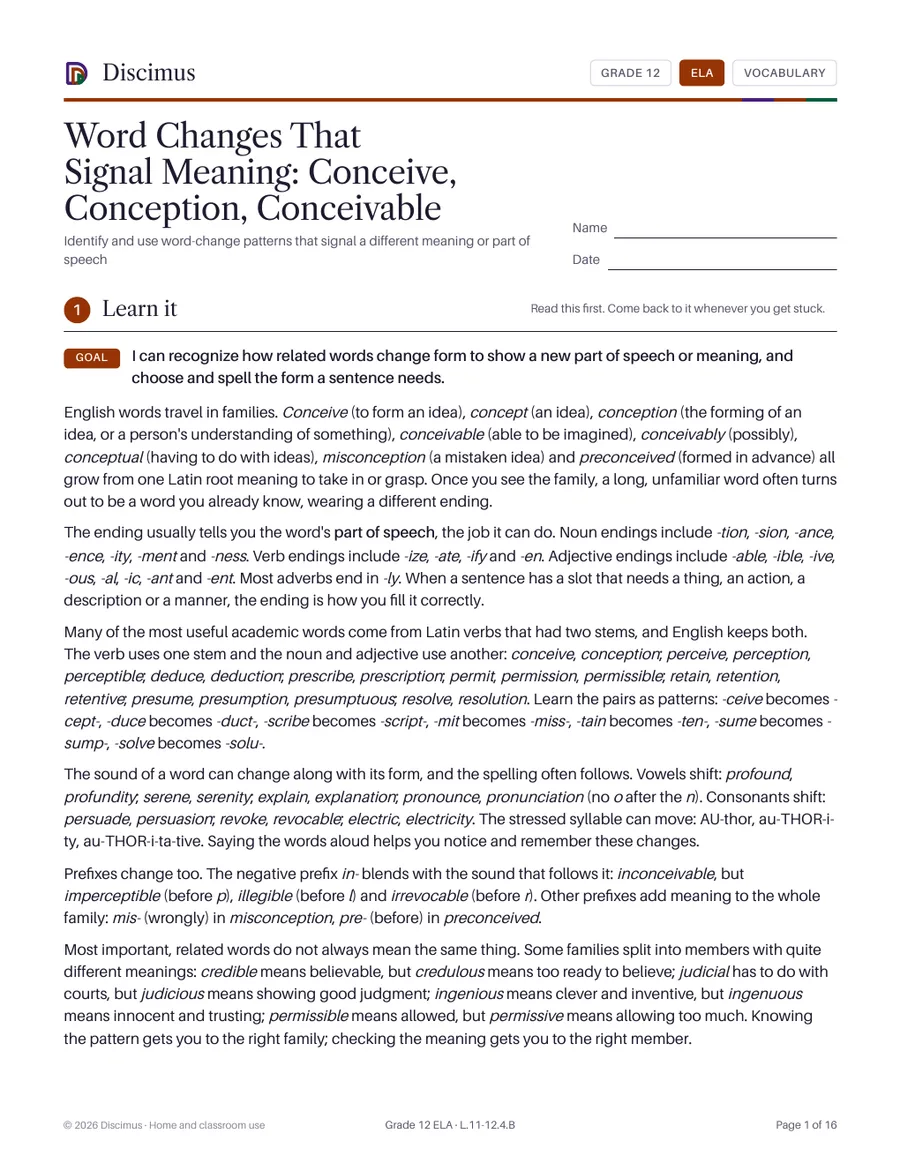
Identify and use word-change patterns that signal a different meaning or part of speech
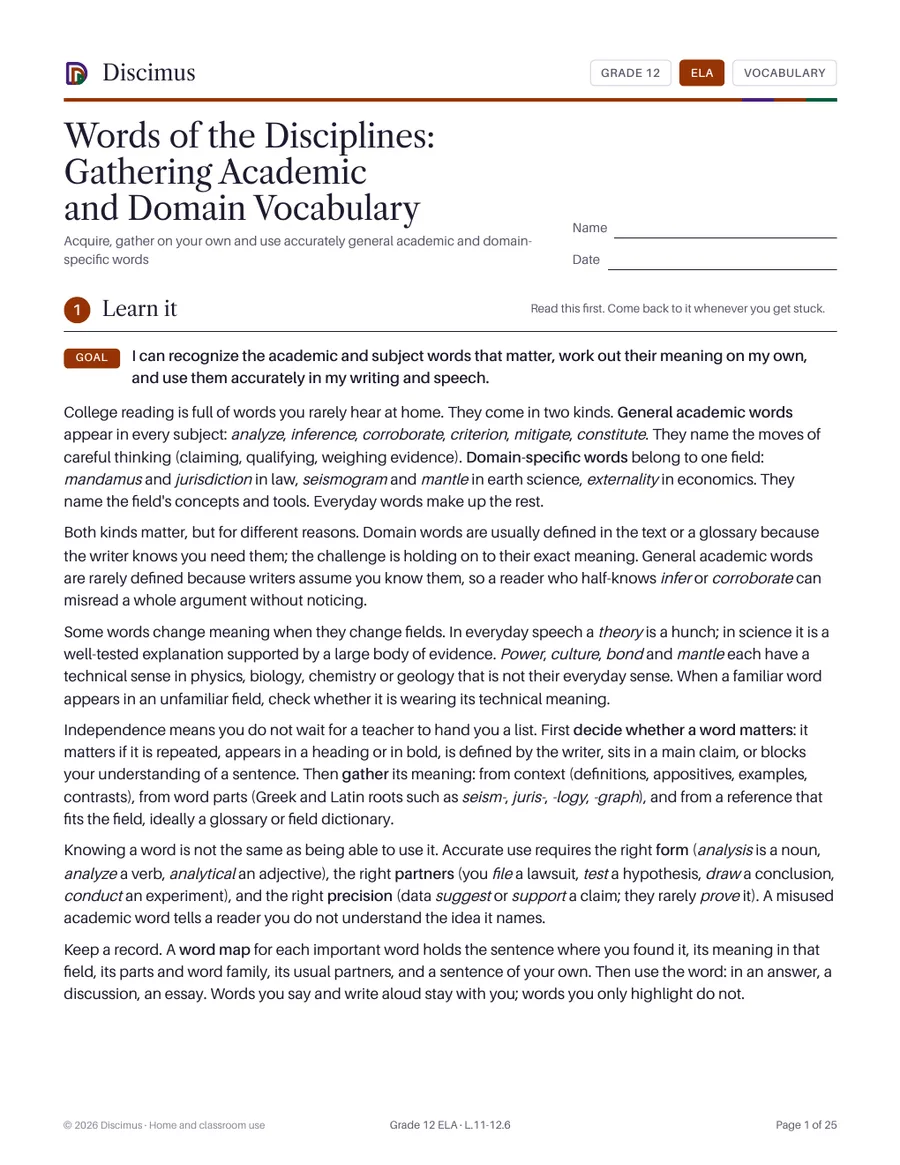
Acquire, gather on your own and use accurately general academic and domain-specific words