Arc Length, Radian Measure and Sector Area
Find arc lengths and sector areas with radian measure and explain the formulas
Common Core State Standards for Mathematics
From counting to calculus, one skill at a time.
Find arc lengths and sector areas with radian measure and explain the formulas
Copy and bisect segments and angles and construct perpendicular and parallel lines
Use Cavalieri's principle to justify the volume of a sphere and other solids
Construct circles in and around a triangle; use angles of inscribed quadrilaterals
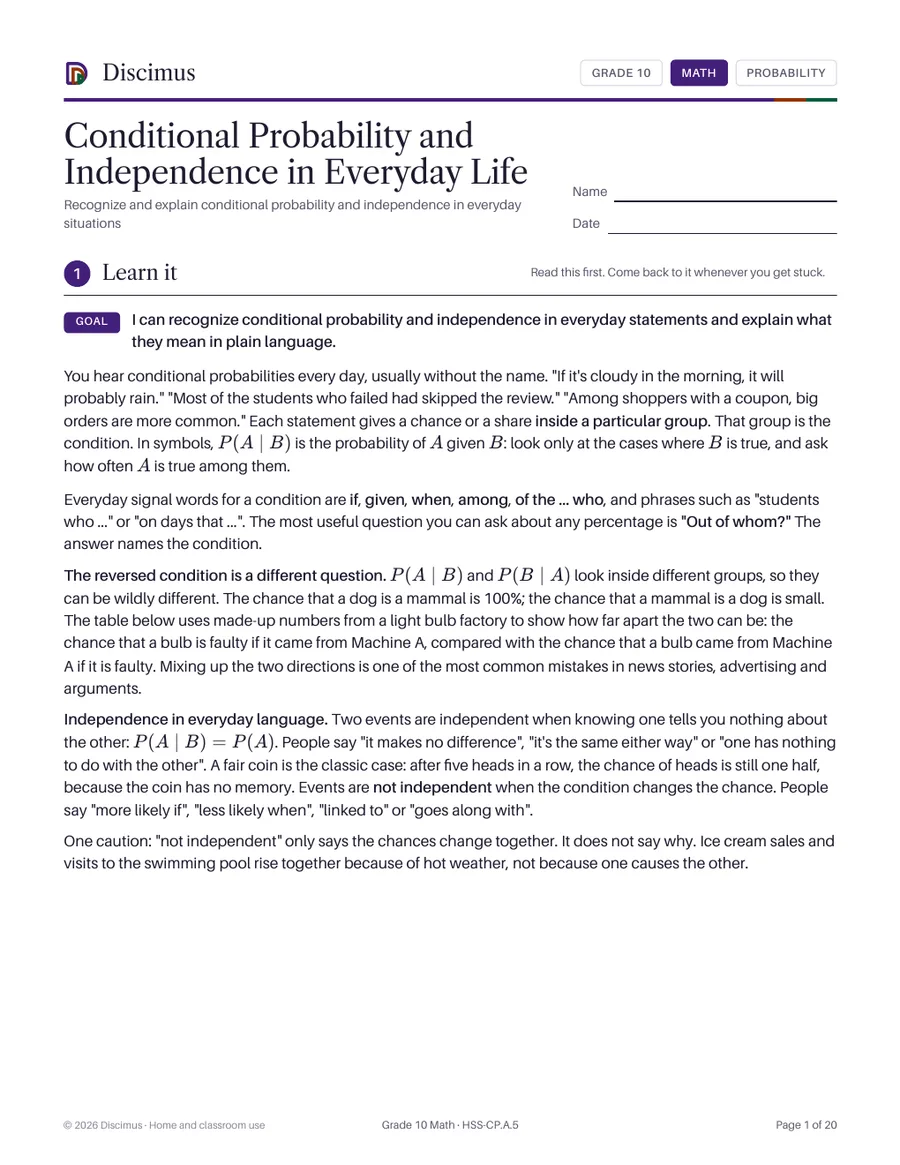
Recognize and explain conditional probability and independence in everyday situations
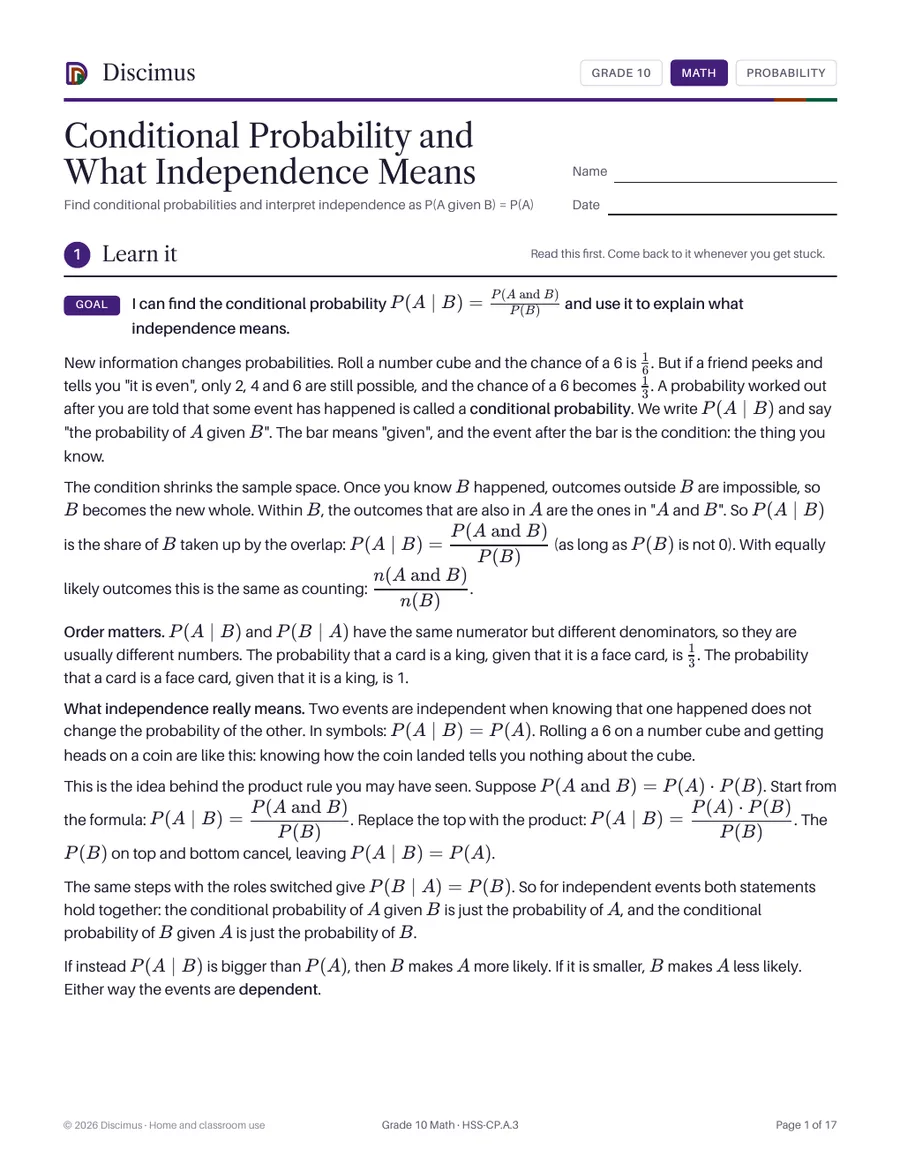
Find conditional probabilities and interpret independence as P(A given B) = P(A)
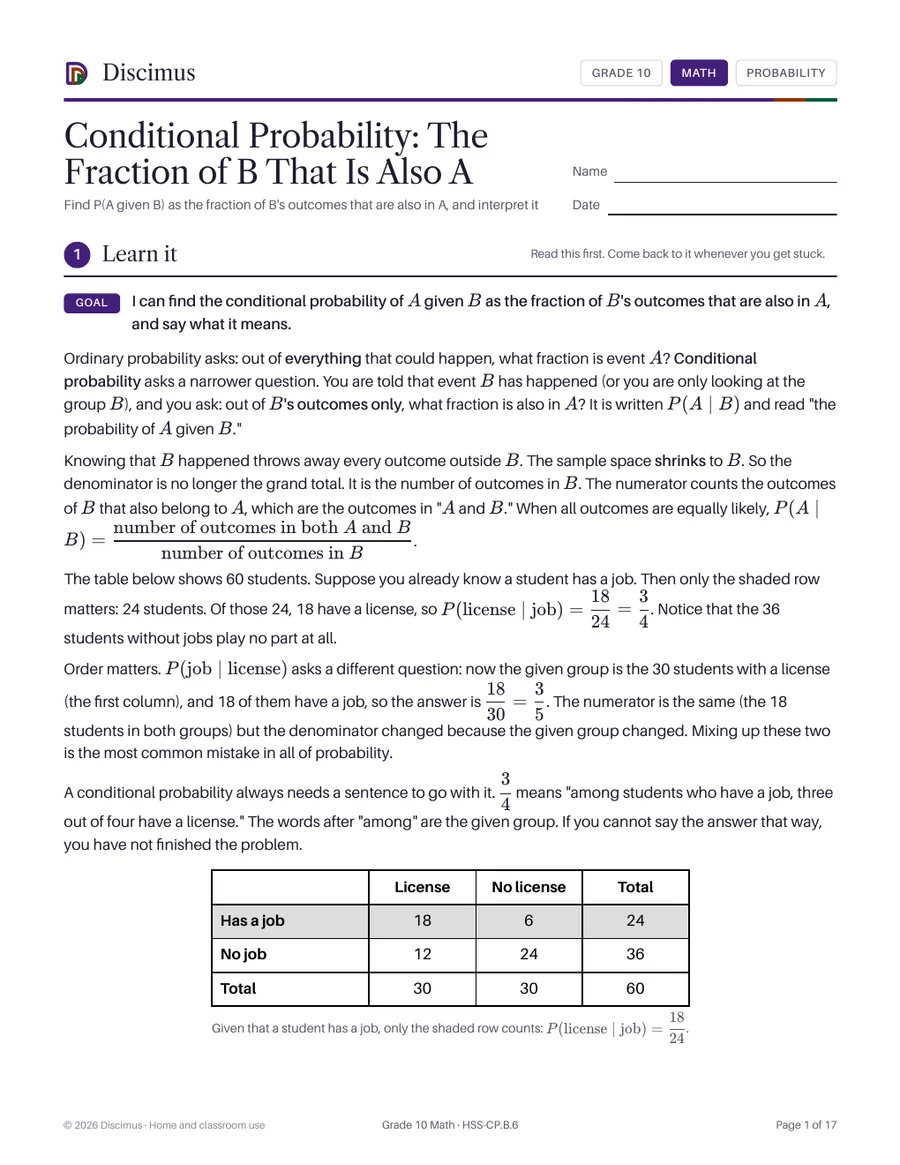
Find P(A given B) as the fraction of B's outcomes that are also in A, and interpret it
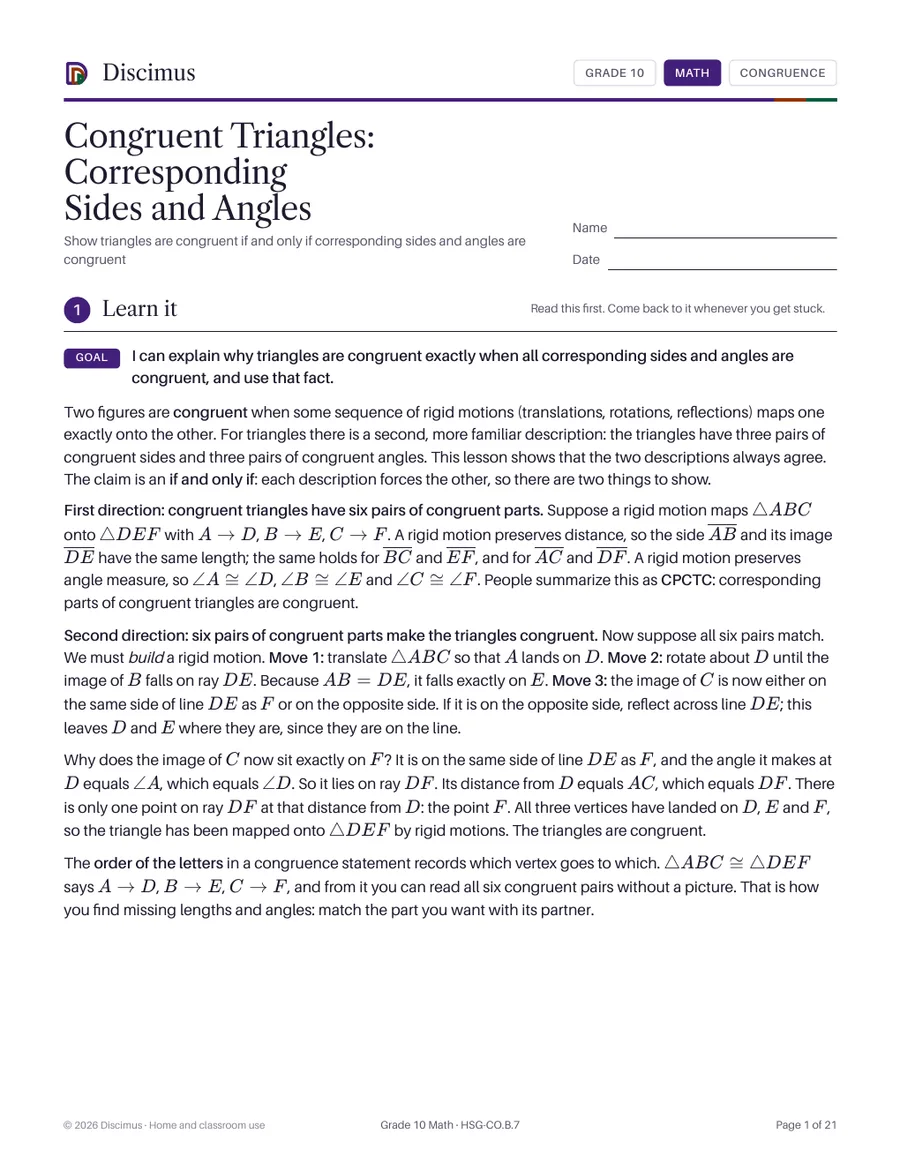
Show triangles are congruent if and only if corresponding sides and angles are congruent
Construct an equilateral triangle, square and regular hexagon inscribed in a circle
Construct the tangent lines to a circle from an outside point and justify the construction
Prove or disprove geometric statements using coordinates and algebra
Identify cross-sections of solids and the solids generated by rotating flat shapes
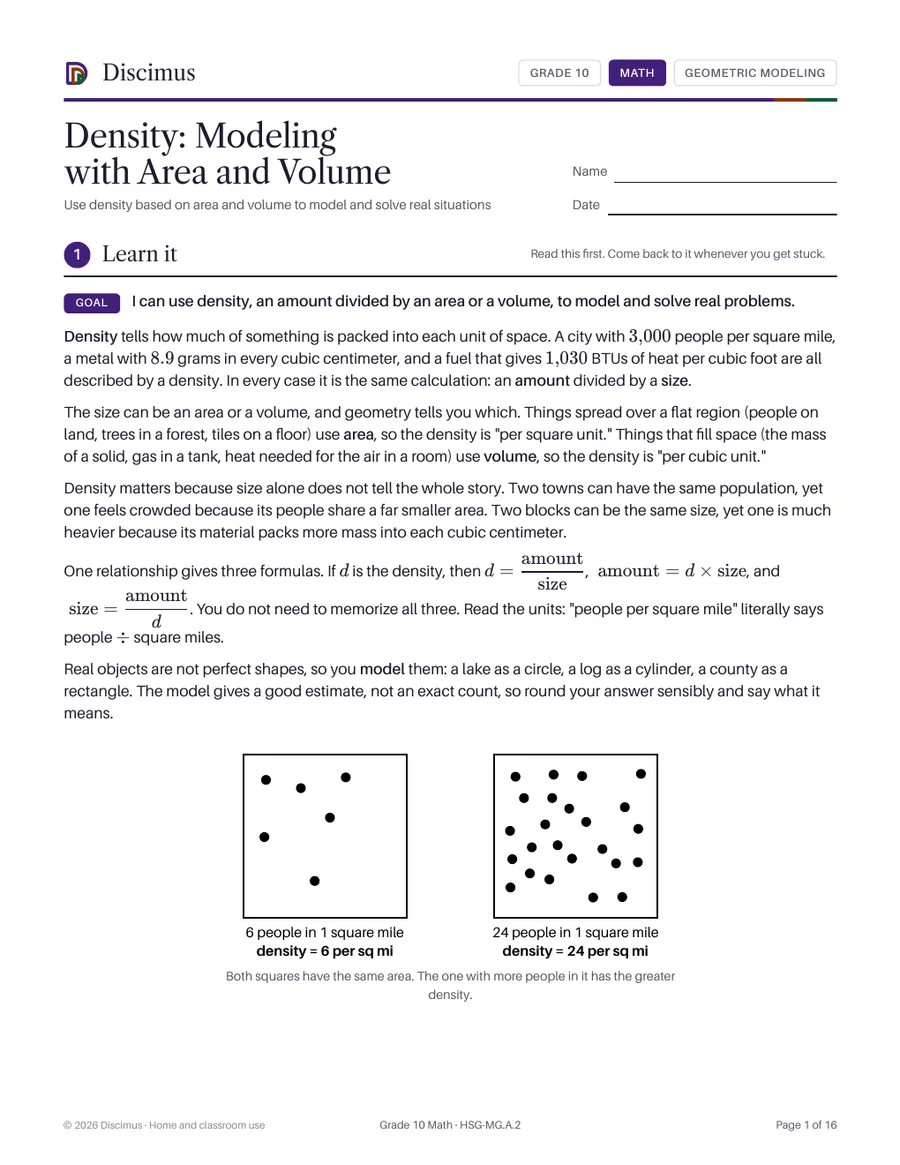
Use density based on area and volume to model and solve real situations
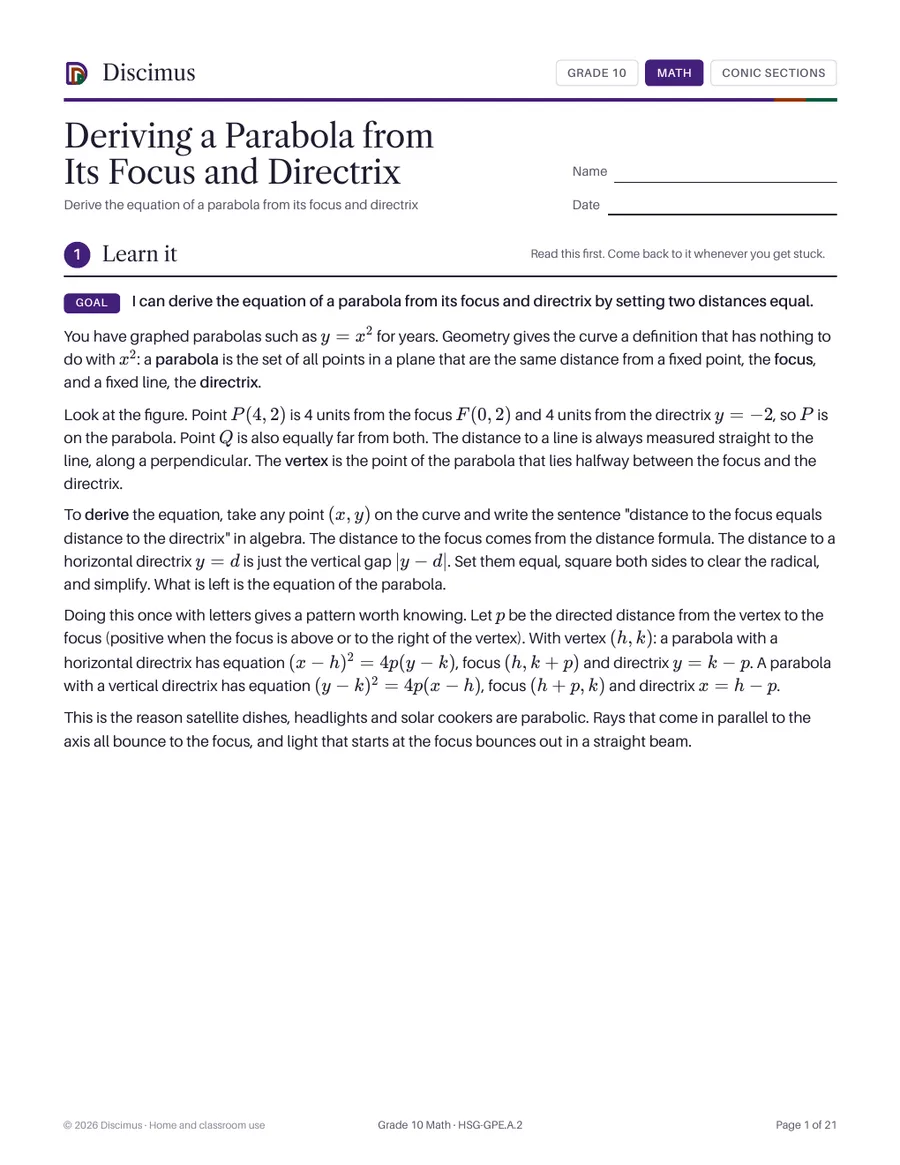
Derive the equation of a parabola from its focus and directrix
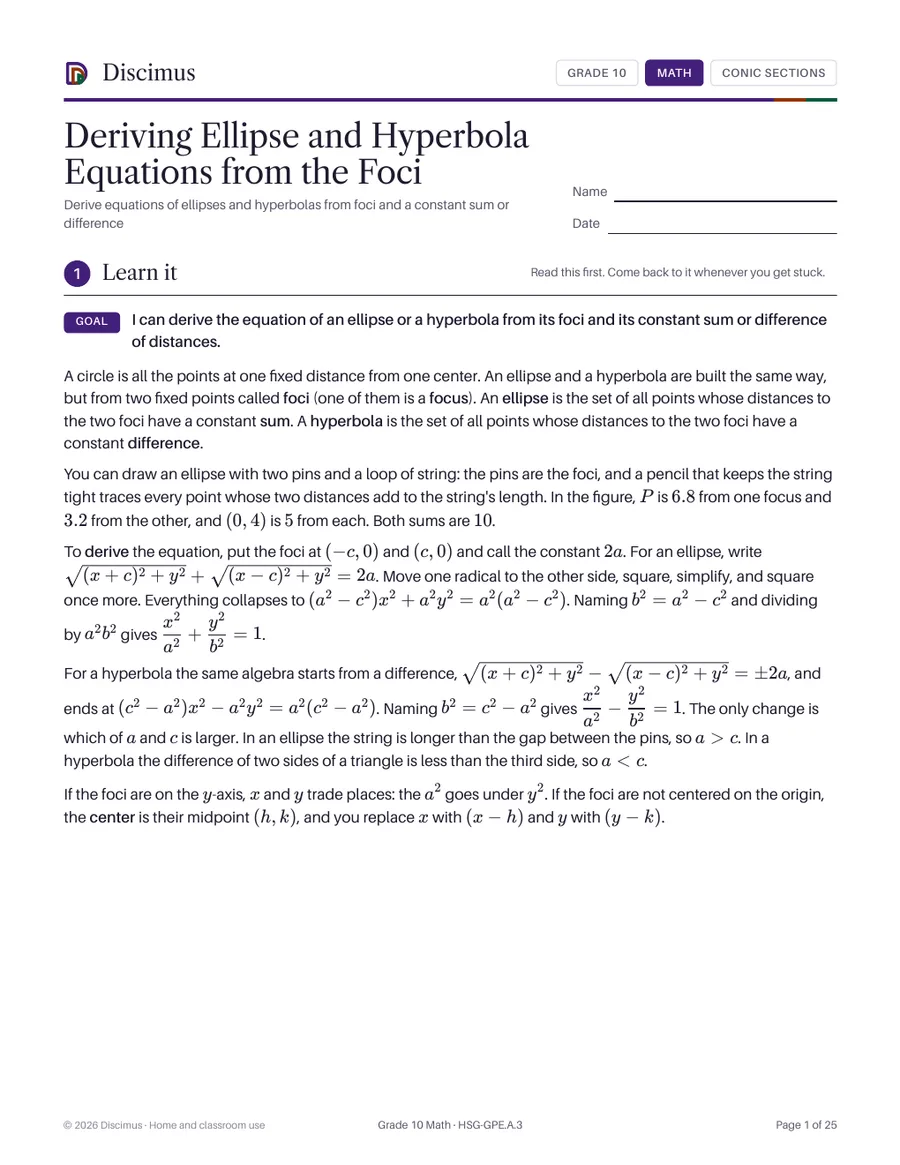
Derive equations of ellipses and hyperbolas from foci and a constant sum or difference
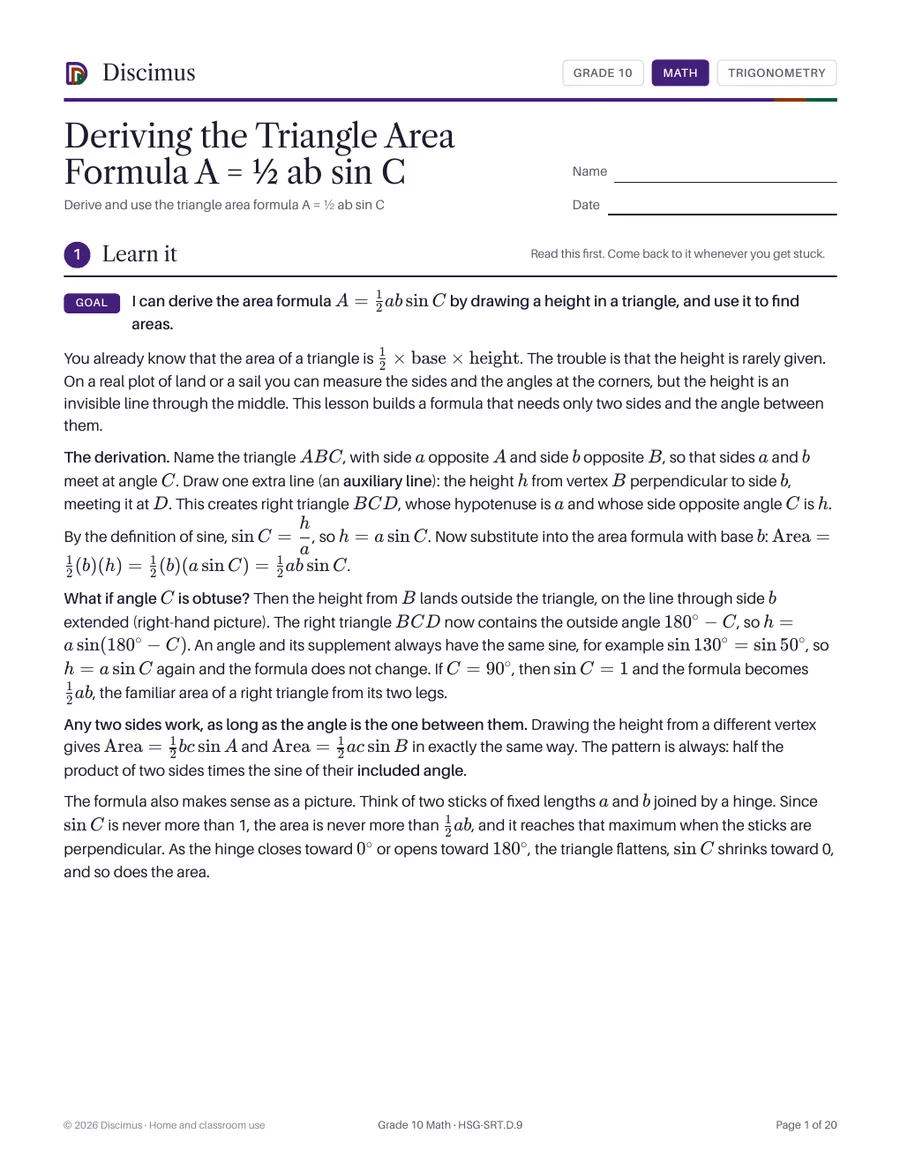
Derive and use the triangle area formula A = ½ ab sin C
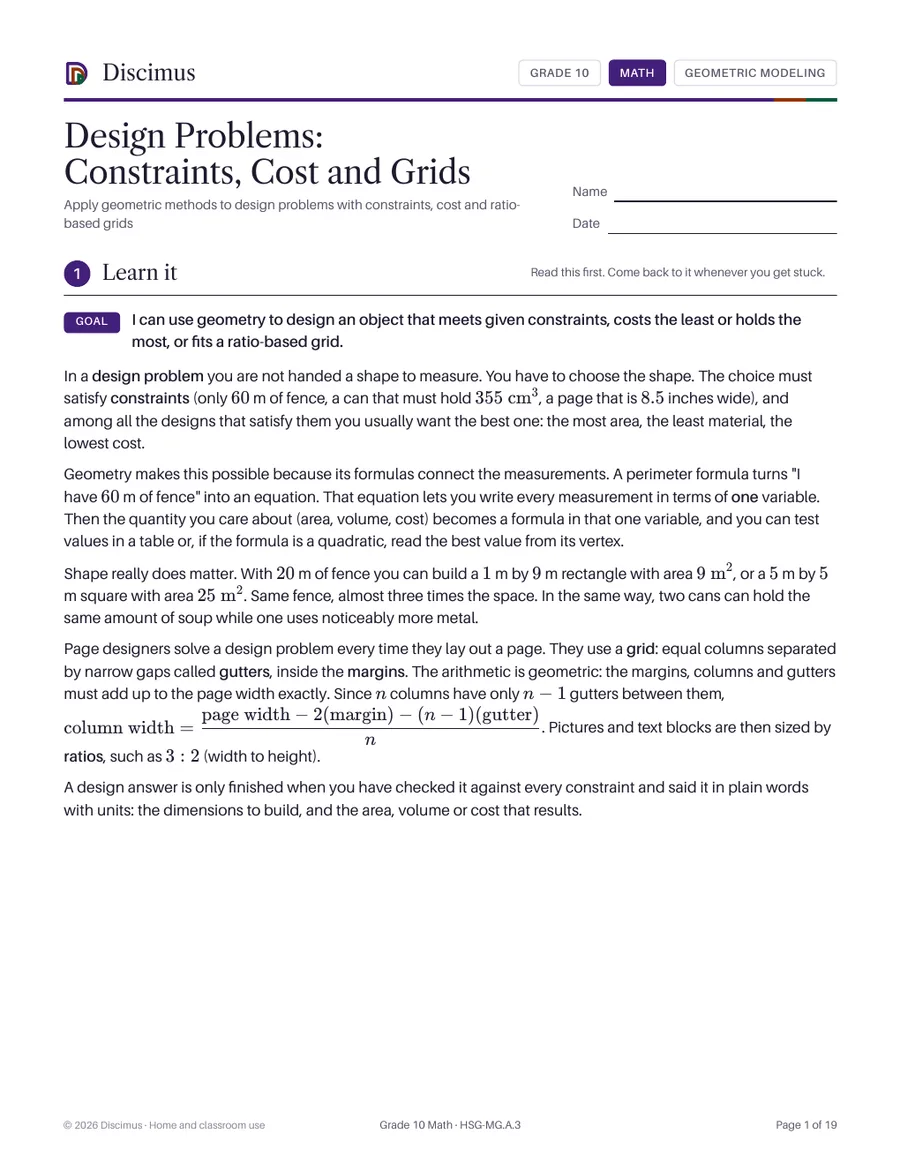
Apply geometric methods to design problems with constraints, cost and ratio-based grids
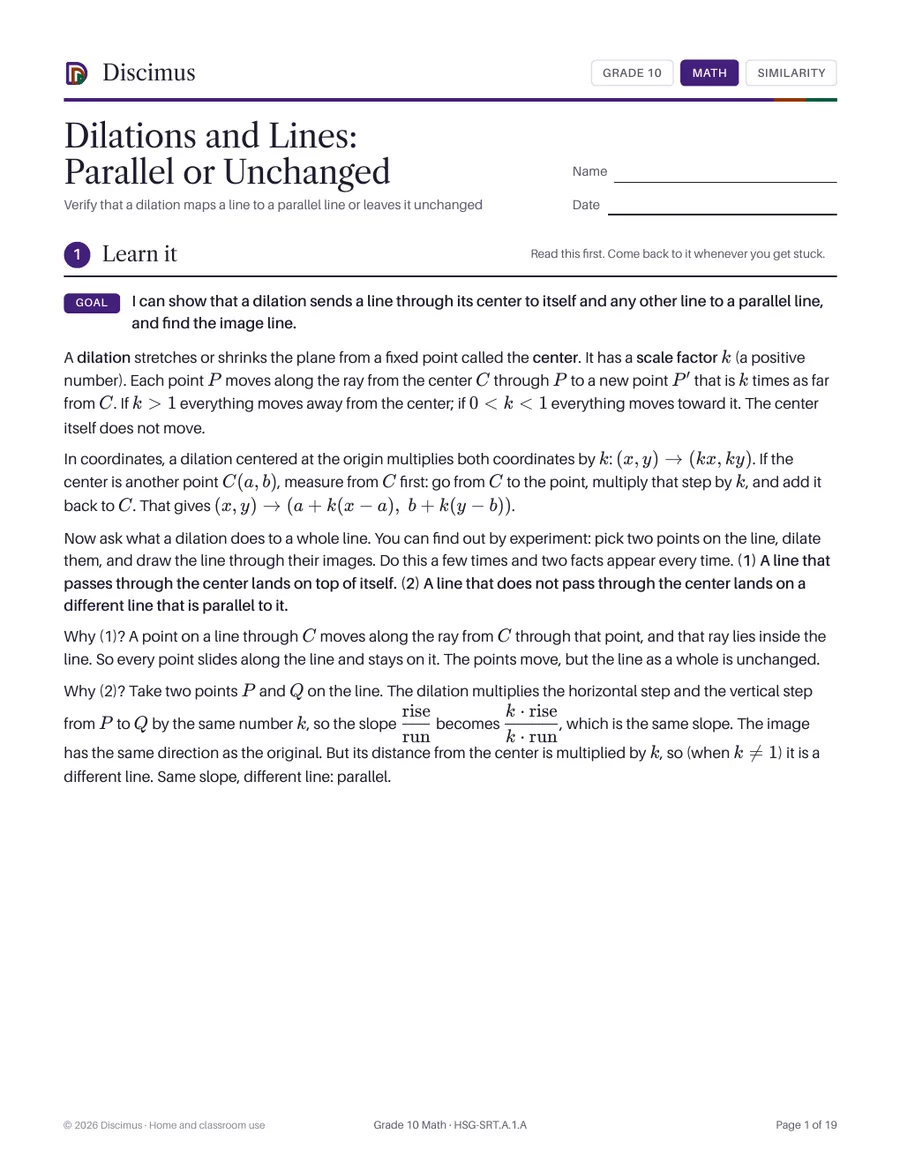
Verify that a dilation maps a line to a parallel line or leaves it unchanged
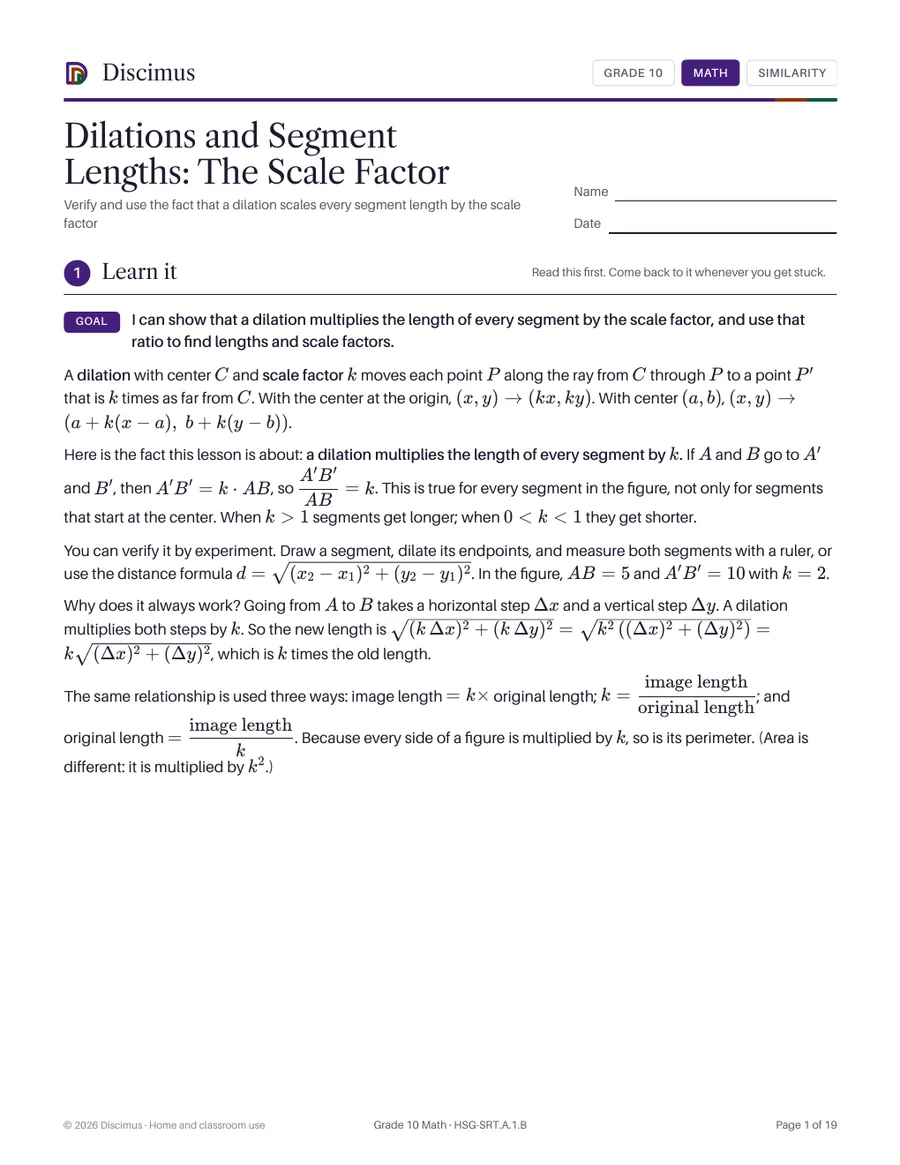
Verify and use the fact that a dilation scales every segment length by the scale factor
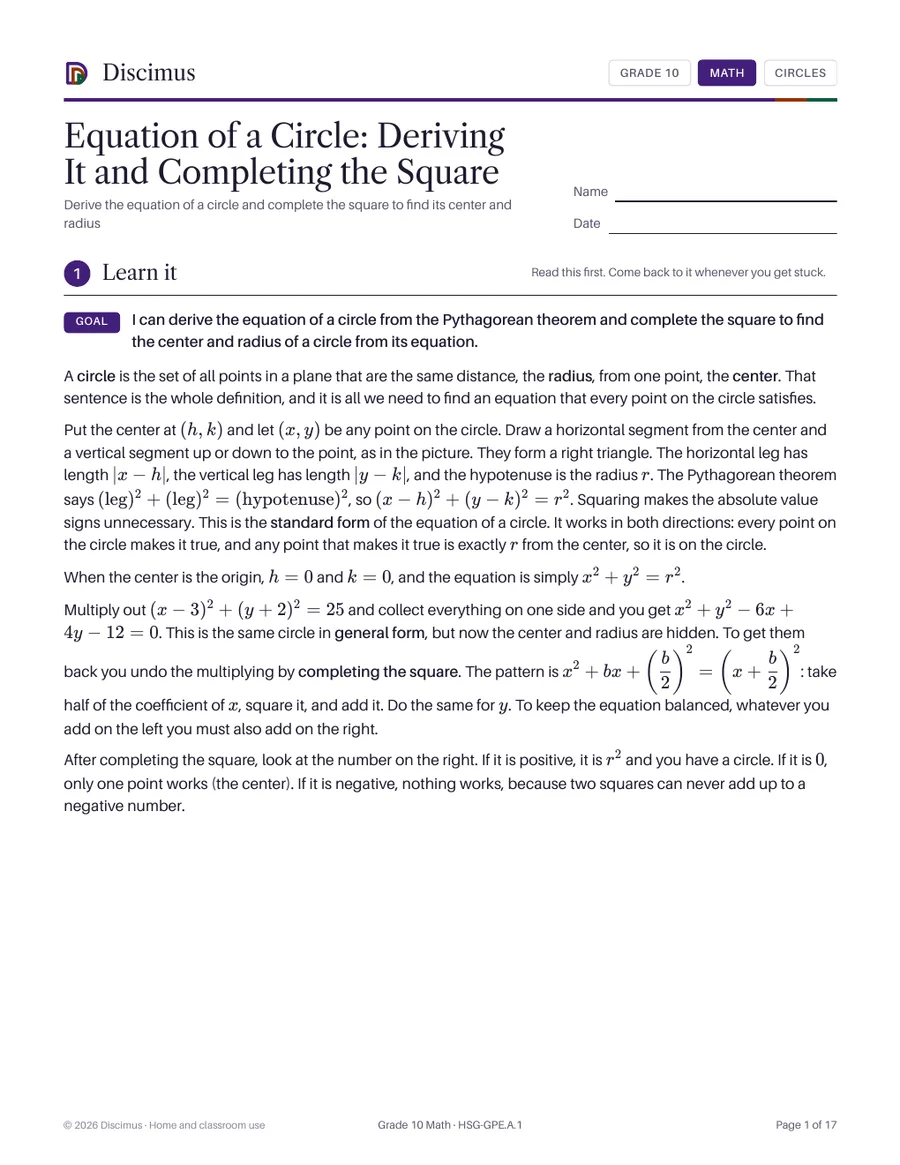
Derive the equation of a circle and complete the square to find its center and radius
Describe events as subsets of a sample space using unions, intersections and complements
Decide whether two events are independent by comparing P(A and B) with P(A) times P(B)
Relate central, inscribed and circumscribed angles, radii, tangents and chords
Prove the Laws of Sines and Cosines and use them to solve triangles
Model real objects with geometric shapes to estimate their measures
Find the point that partitions a directed line segment in a given ratio
Compute perimeters and areas of polygons from coordinates using the distance formula
Define rotations, reflections and translations using angles, circles and lines
State and apply precise definitions of angle, circle, segment, parallel, perpendicular
Use permutations and combinations to find probabilities of compound events
Prove that any two circles are similar using a translation and a dilation
Prove and apply theorems about vertical angles, parallel lines and perpendicular bisectors
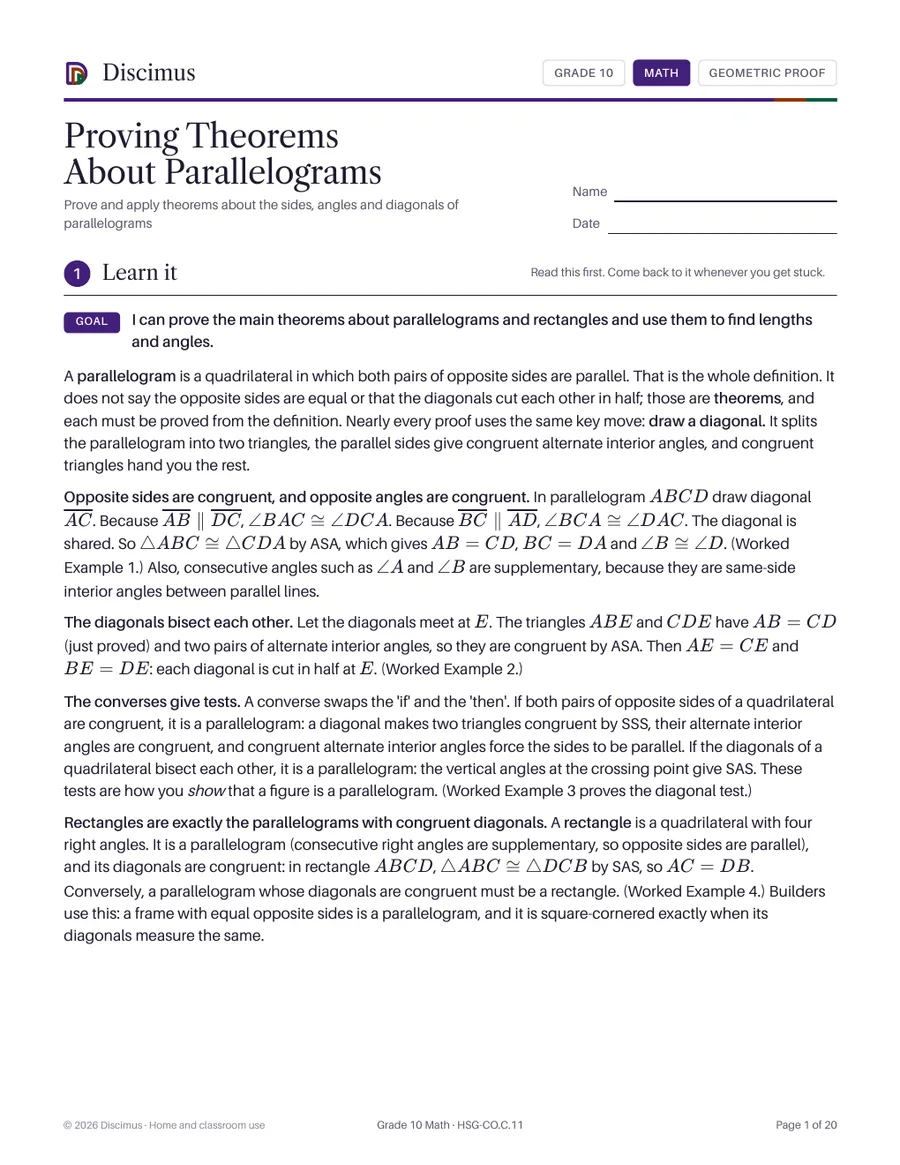
Prove and apply theorems about the sides, angles and diagonals of parallelograms
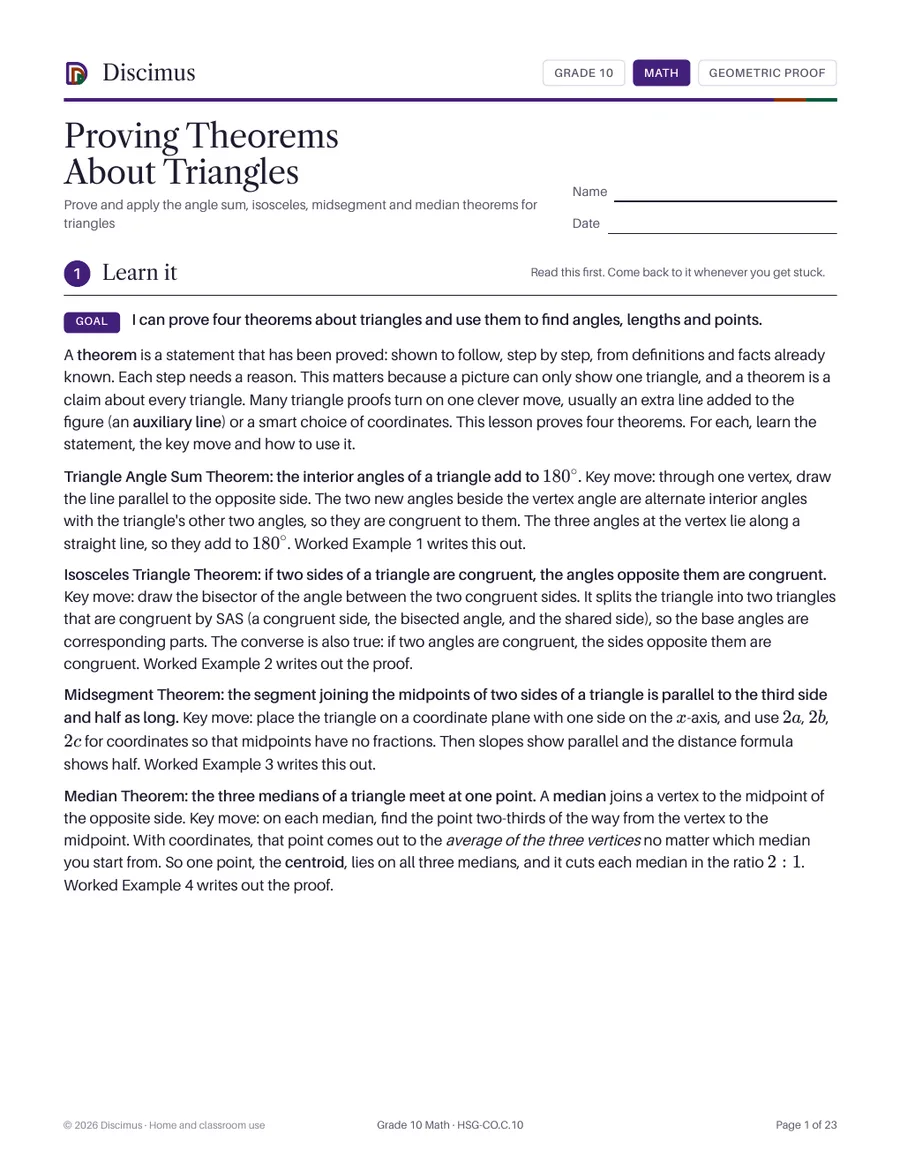
Prove and apply the angle sum, isosceles, midsegment and median theorems for triangles
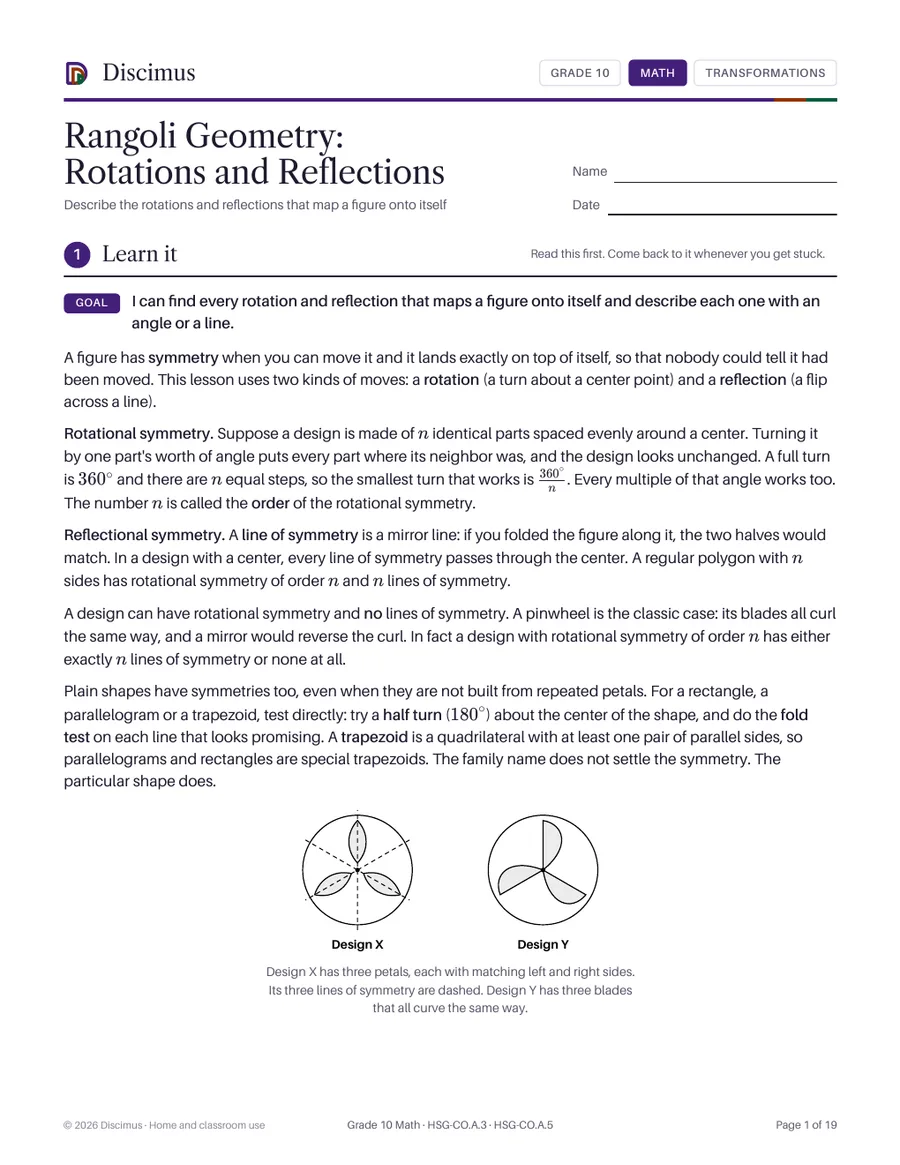
Describe the rotations and reflections that map a figure onto itself
 Free sample
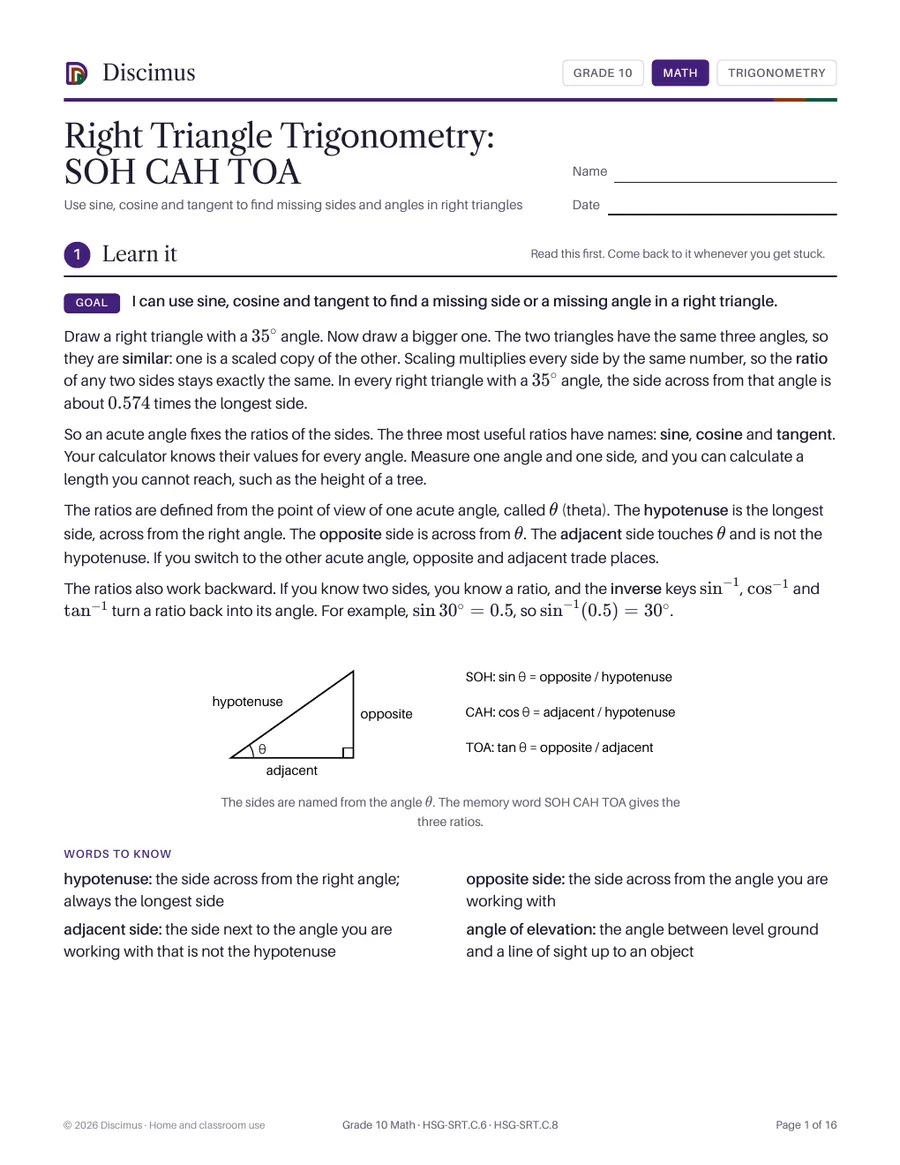
Use sine, cosine and tangent to find missing sides and angles in right triangles
Transform figures with rigid motions and use them to decide whether figures are congruent
Use proportions to find missing side lengths in similar triangles
Use similarity transformations to decide whether two figures are similar
Explain and use the relationship between sine and cosine of complementary angles
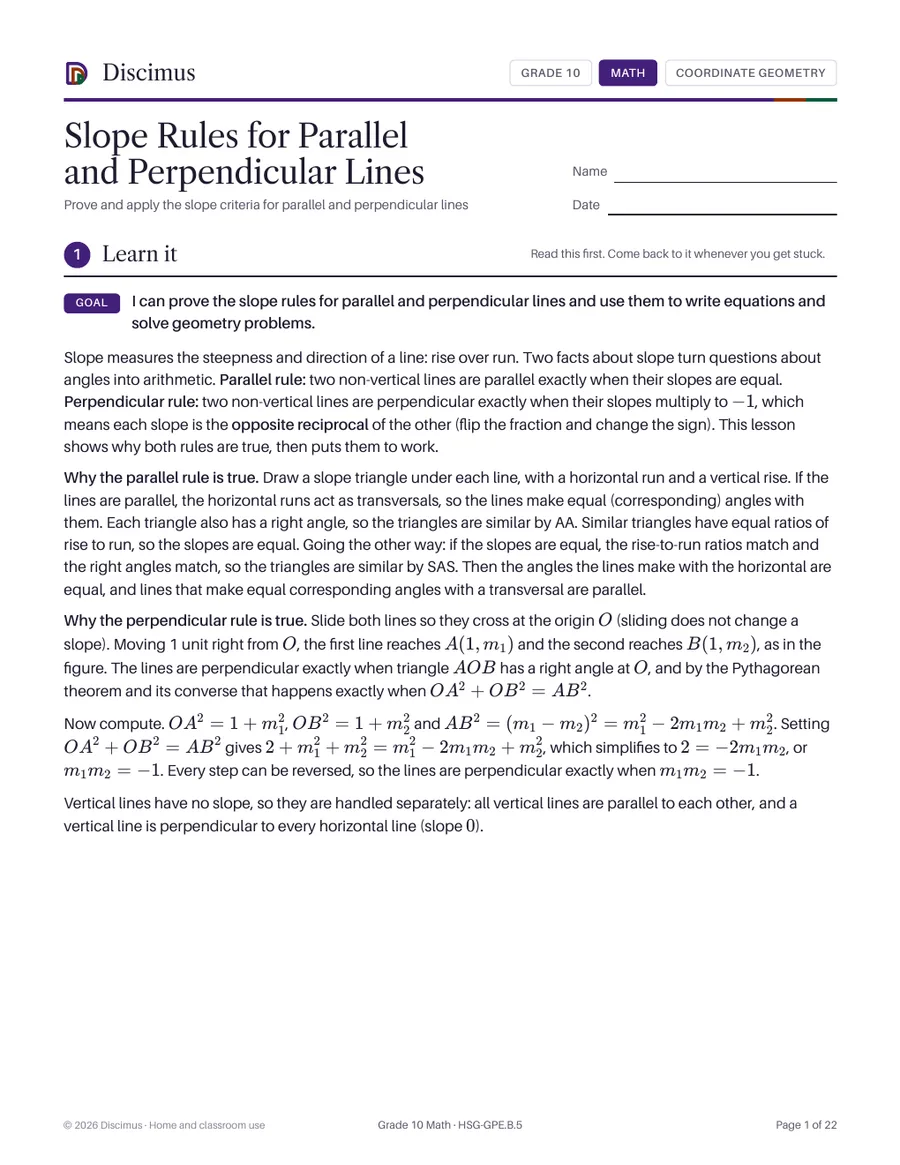
Prove and apply the slope criteria for parallel and perpendicular lines
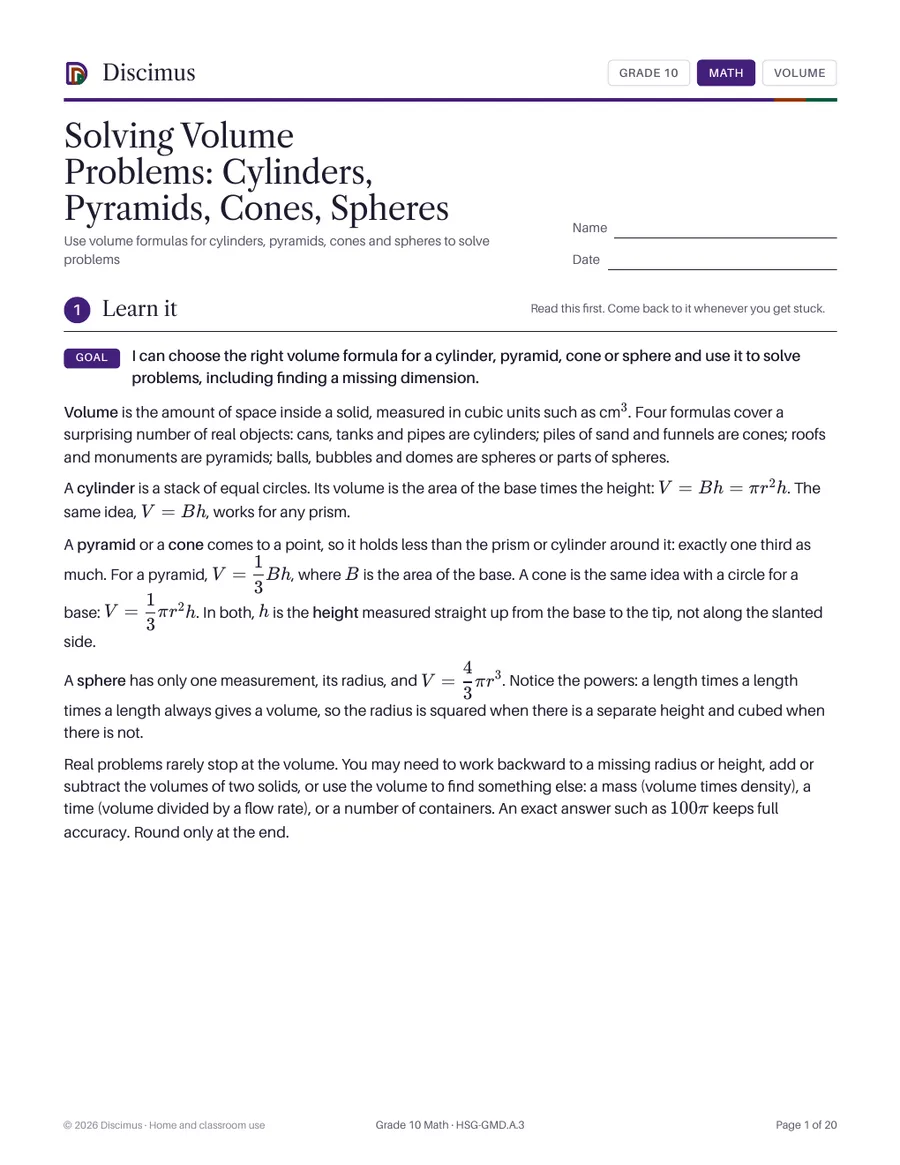
Use volume formulas for cylinders, pyramids, cones and spheres to solve problems
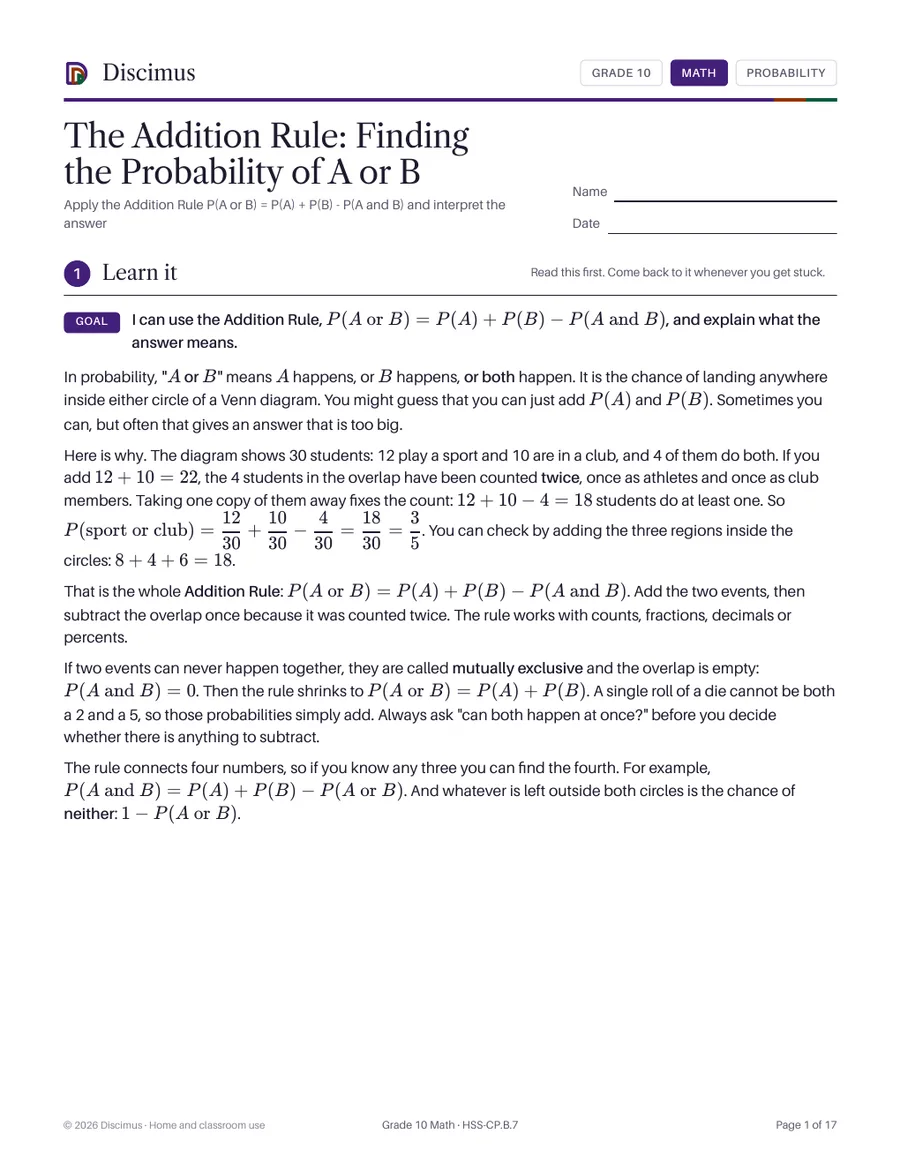
Apply the Addition Rule P(A or B) = P(A) + P(B) - P(A and B) and interpret the answer
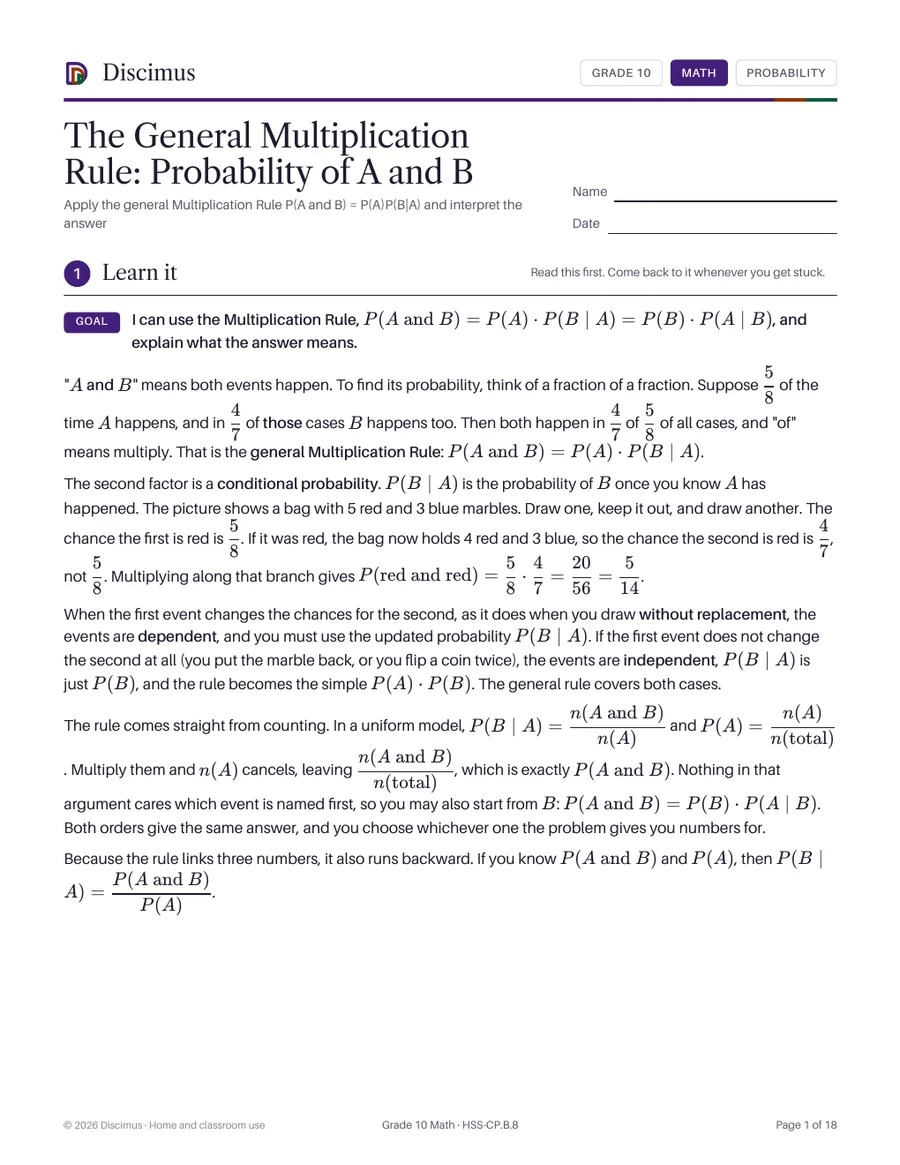
Apply the general Multiplication Rule P(A and B) = P(A)P(B|A) and interpret the answer
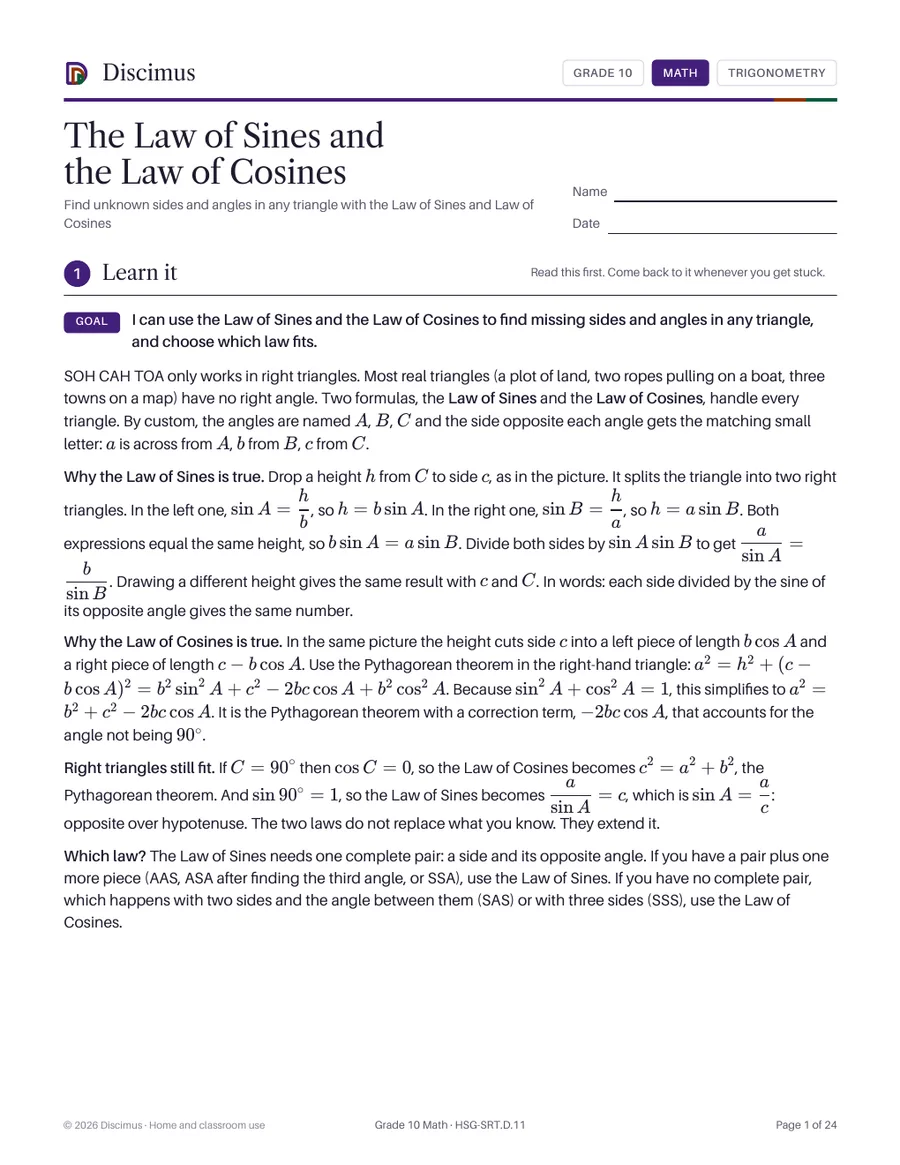
Find unknown sides and angles in any triangle with the Law of Sines and Law of Cosines
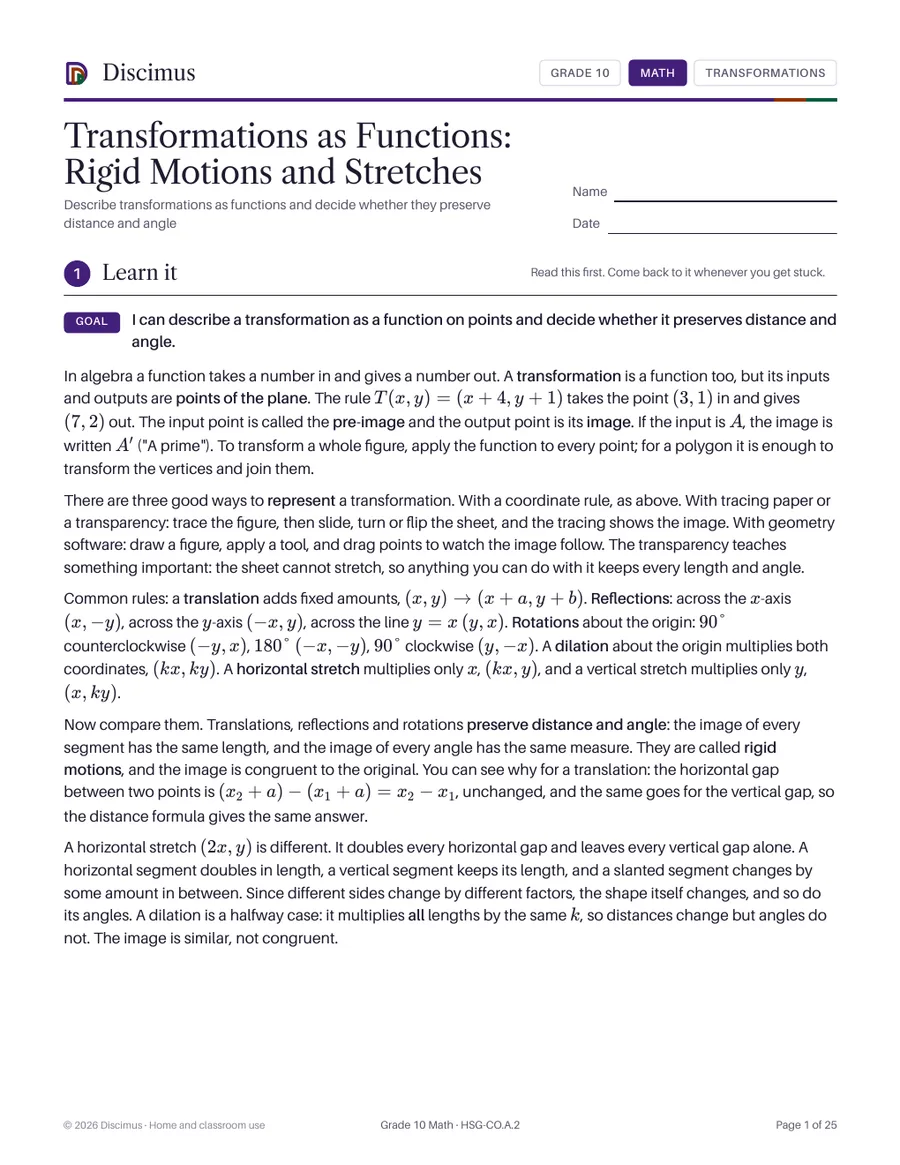
Describe transformations as functions and decide whether they preserve distance and angle
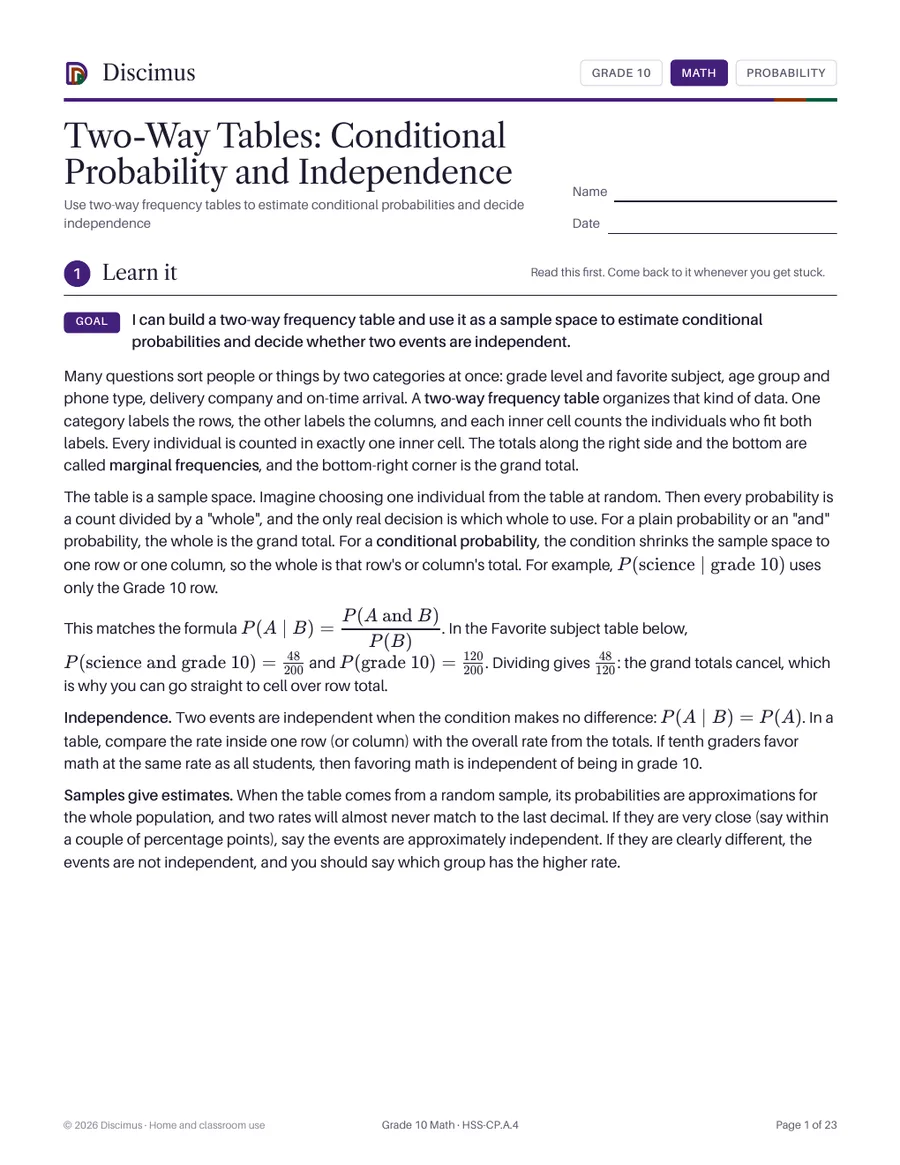
Use two-way frequency tables to estimate conditional probabilities and decide independence
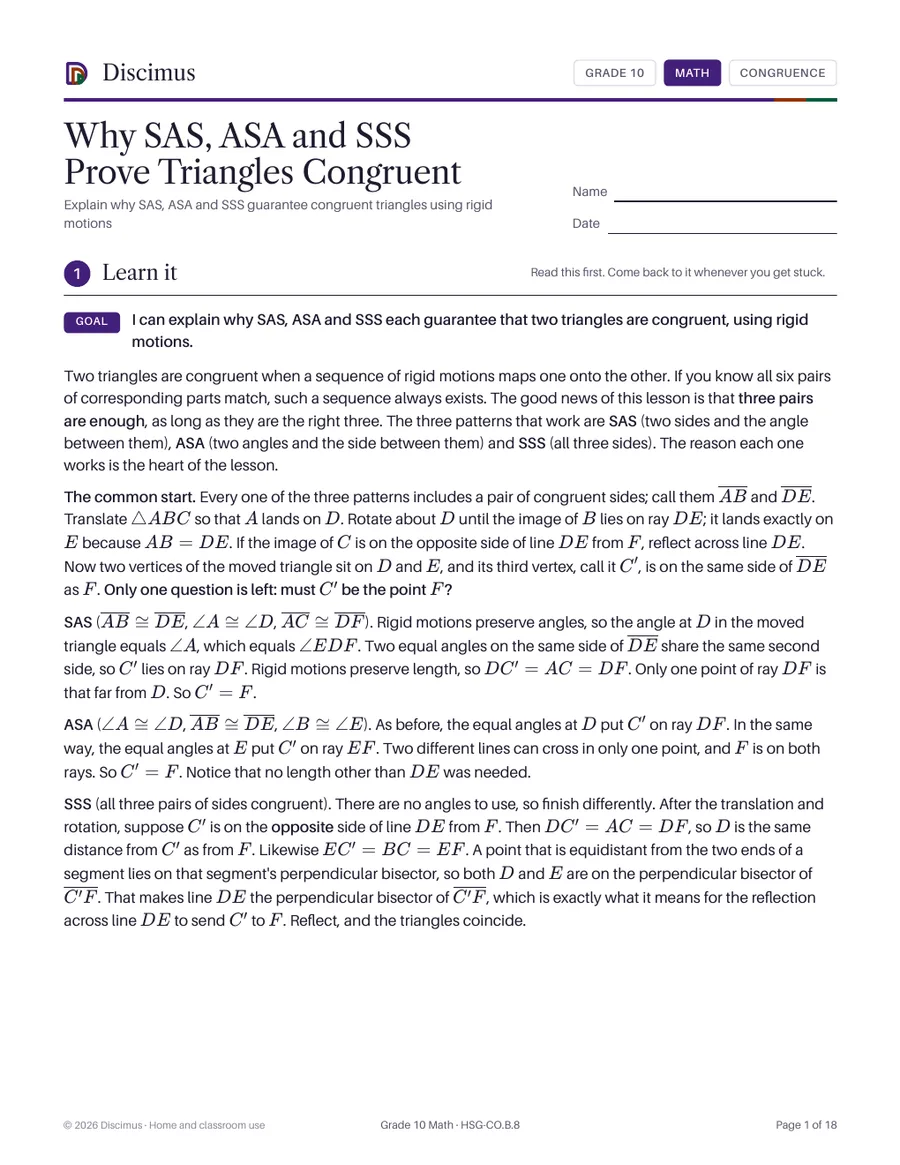
Explain why SAS, ASA and SSS guarantee congruent triangles using rigid motions
Give informal arguments for the circle, cylinder, pyramid and cone formulas