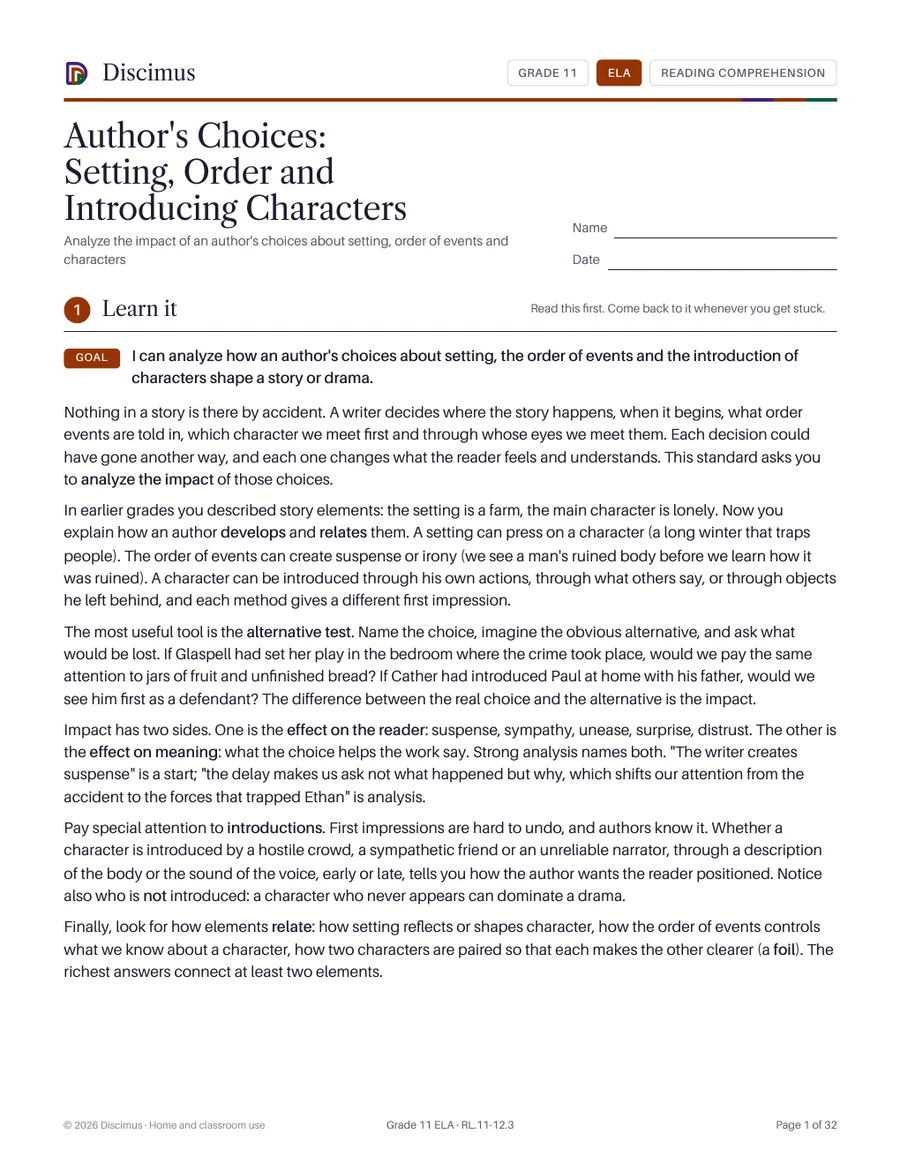
Author's Choices: Setting, Order and Introducing Characters
Analyze the impact of an author's choices about setting, order of events and characters
Common Core State Standards for English Language Arts
Phonics, reading, grammar, vocabulary and writing.
Analyze the impact of an author's choices about setting, order of events and characters
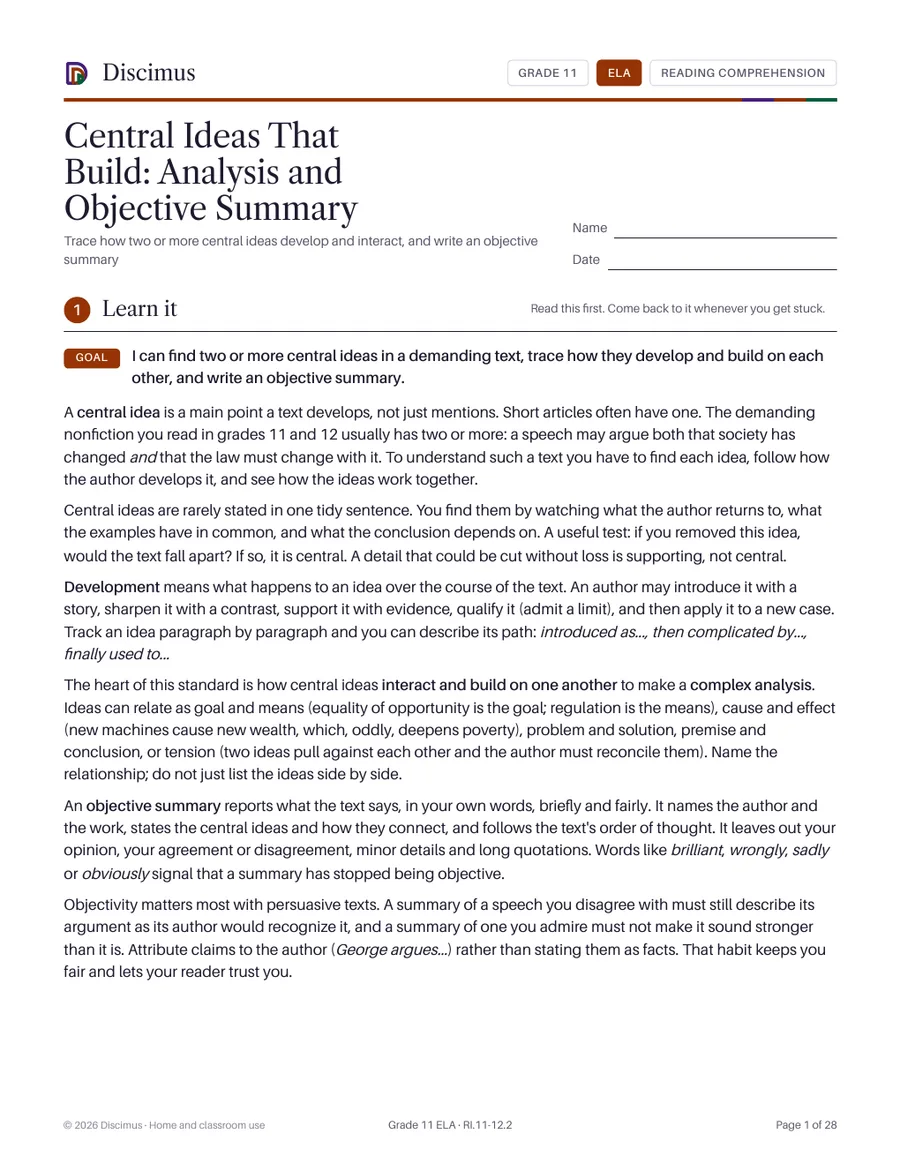
Trace how two or more central ideas develop and interact, and write an objective summary
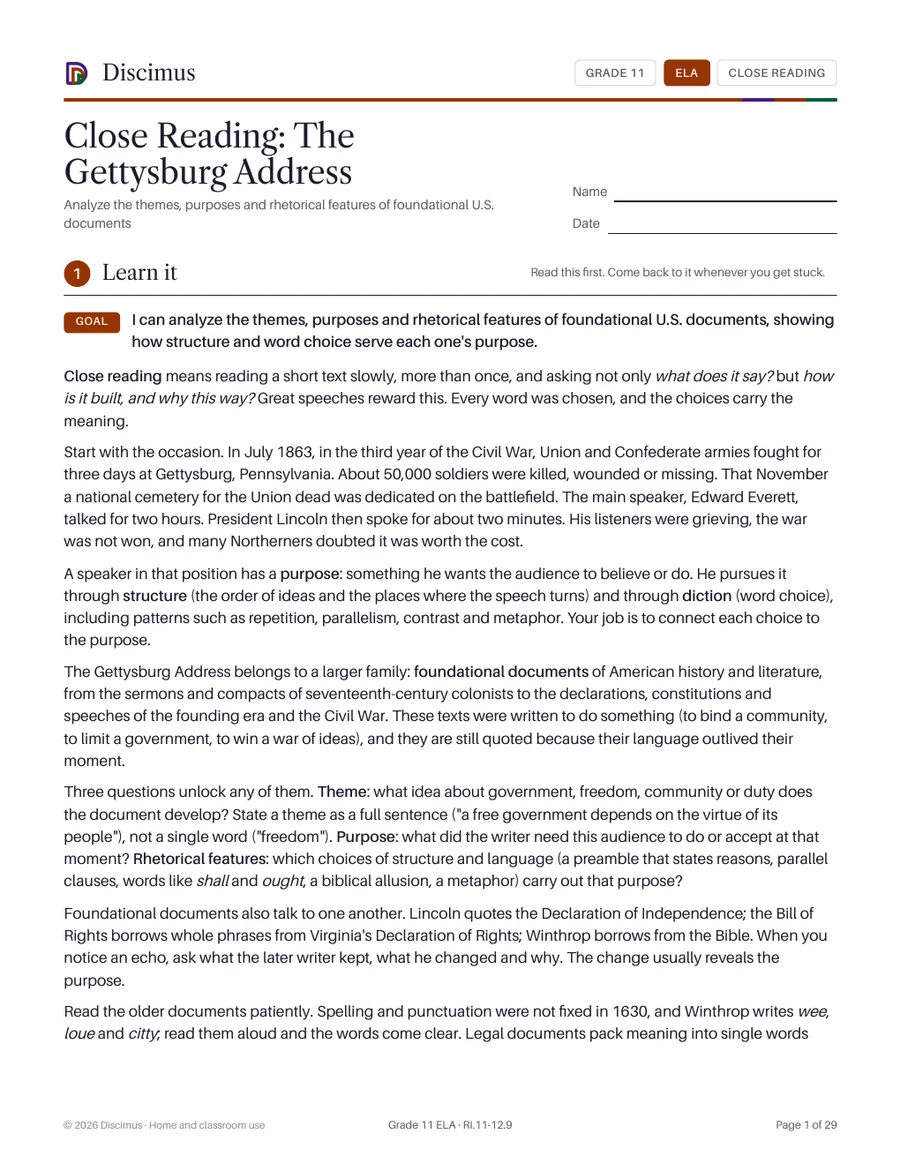
Analyze the themes, purposes and rhetorical features of foundational U.S. documents
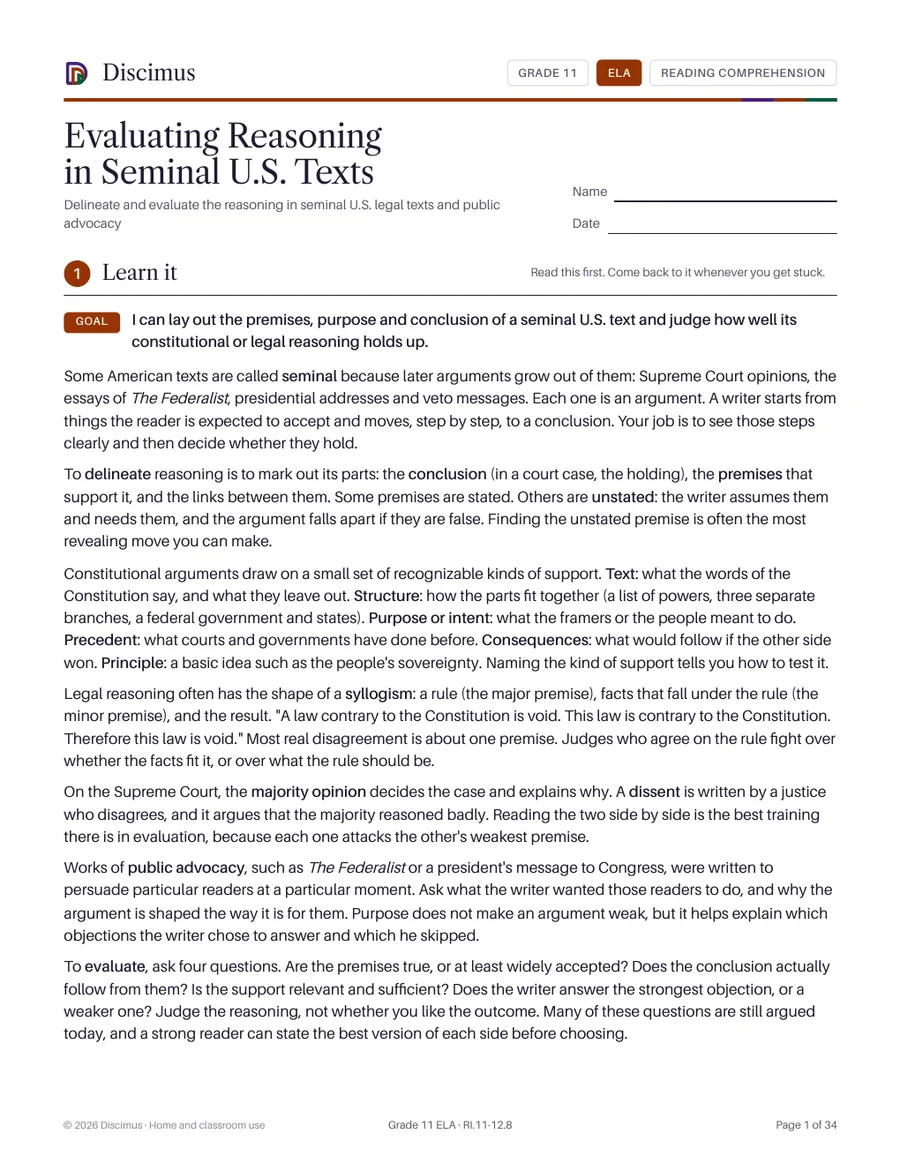
Delineate and evaluate the reasoning in seminal U.S. legal texts and public advocacy
Evaluate whether an author's structure makes points clear, convincing and engaging
Cite strong evidence for stated and implied points and find where a text is uncertain
Cite thorough evidence for stated and inferred meaning and find where a text is uncertain
Write a concluding section that follows from an explanation and states its implications
Introduce a complex topic and organize it so each new section builds on the last
Keep a formal style and objective tone while following the norms of the discipline
Use precise language, domain terms, metaphor, simile and analogy to manage a complex topic
Develop a topic with the most significant facts, definitions, details and quotations
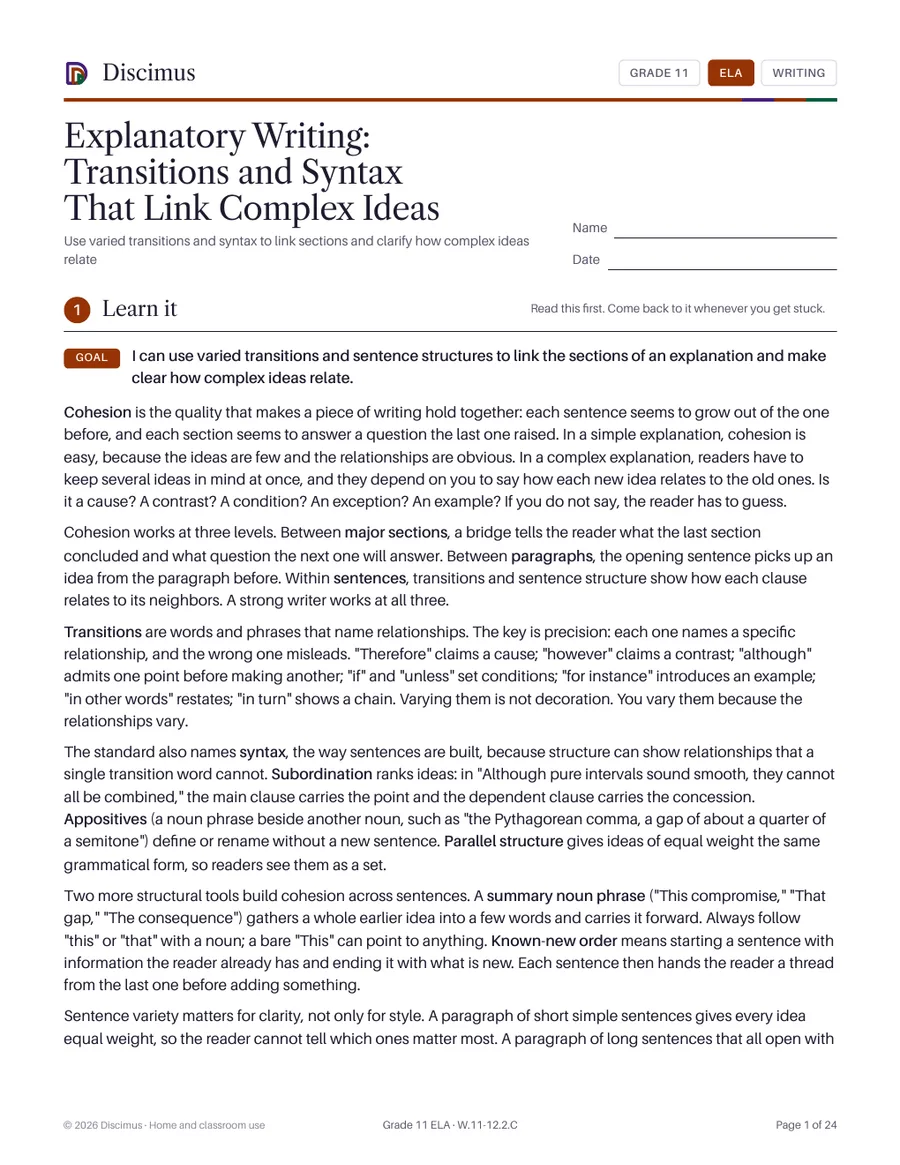
Use varied transitions and syntax to link sections and clarify how complex ideas relate
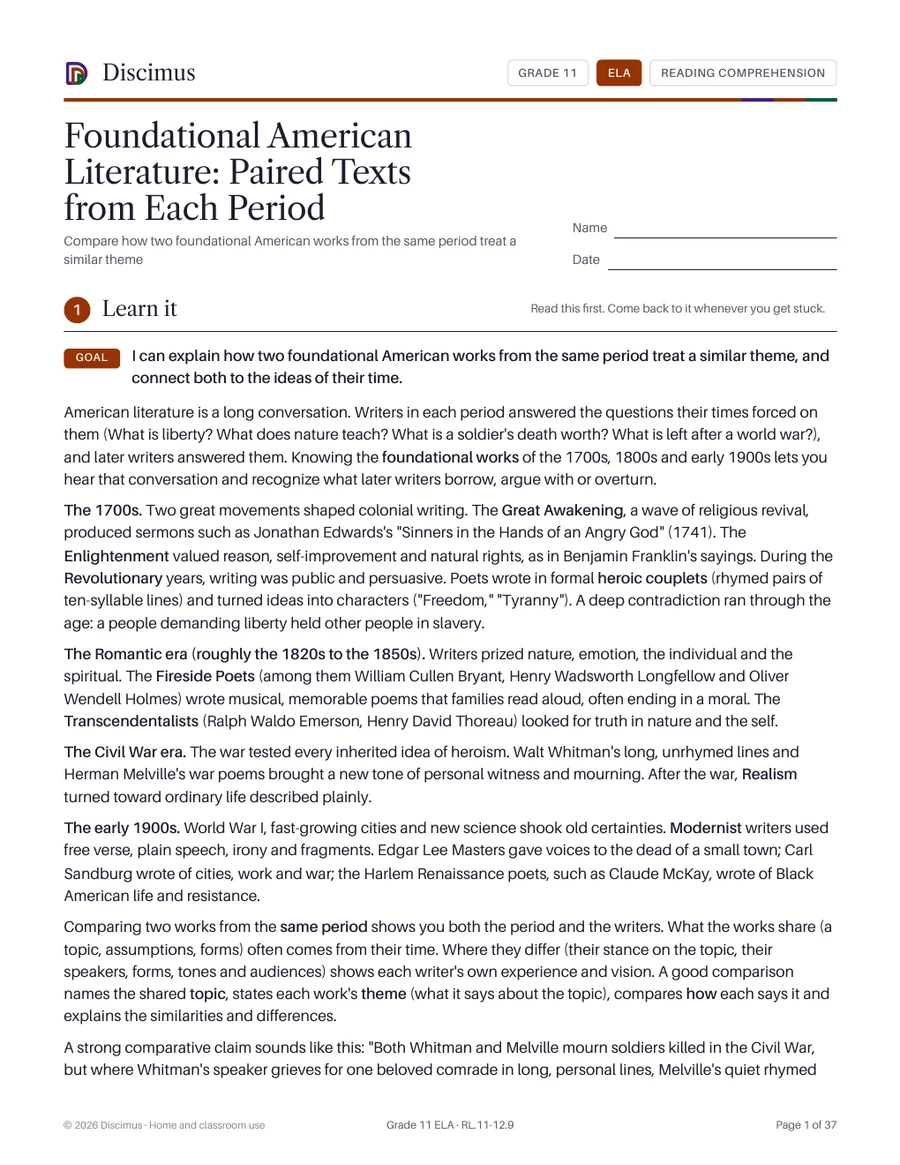
Compare how two foundational American works from the same period treat a similar theme
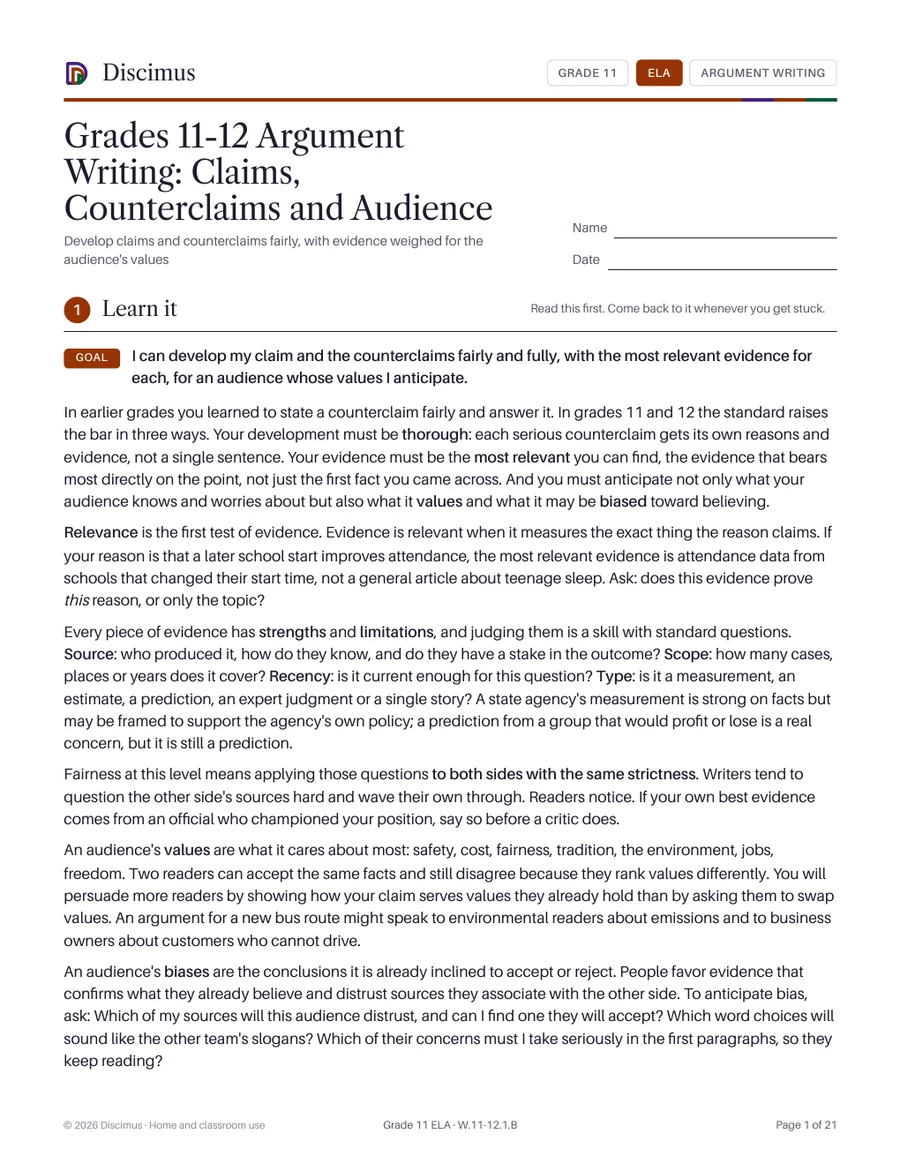
Develop claims and counterclaims fairly, with evidence weighed for the audience's values
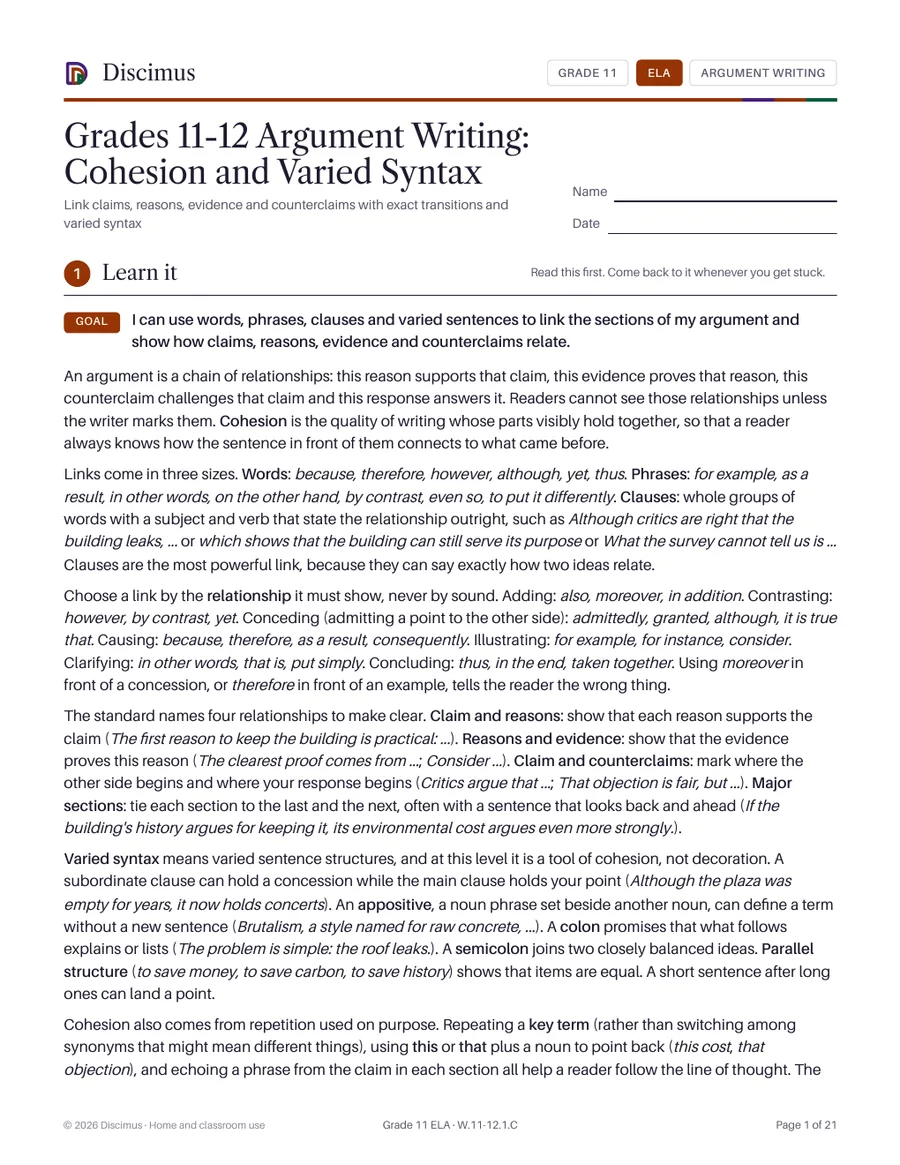
Link claims, reasons, evidence and counterclaims with exact transitions and varied syntax
Write a concluding section that follows from and supports the argument presented
Keep a formal style and objective tone, following the norms of the discipline
Introduce a precise claim and its significance, distinguish rivals, order the argument
Analyze how people, ideas and events interact and develop over a complex nonfiction text
Integrate and evaluate information from text, tables and graphics to answer a question
Trace how two or more themes develop and interact, and write an objective summary
Separate what a text states from what it means to grasp point of view in irony and satire
Analyze multiple interpretations of a story or play and evaluate how each reads the source
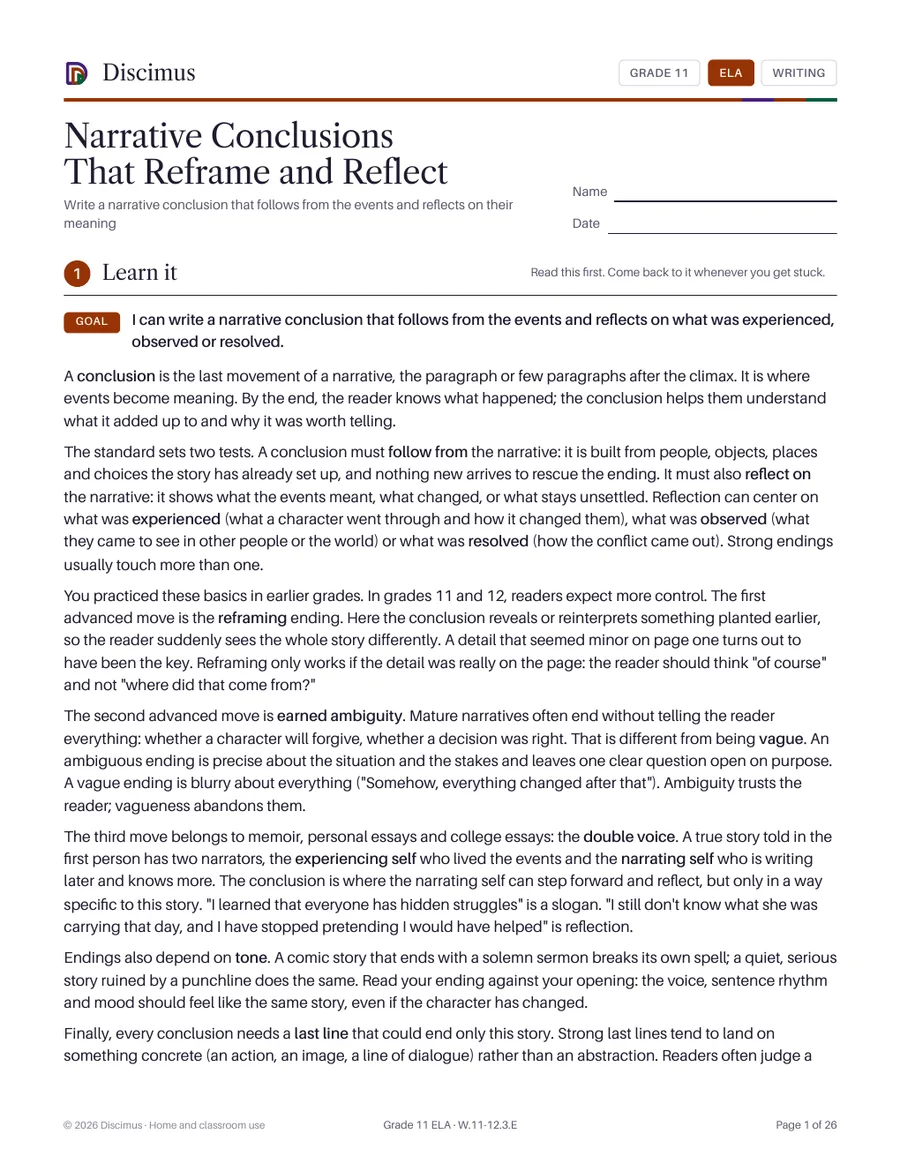
Write a narrative conclusion that follows from the events and reflects on their meaning
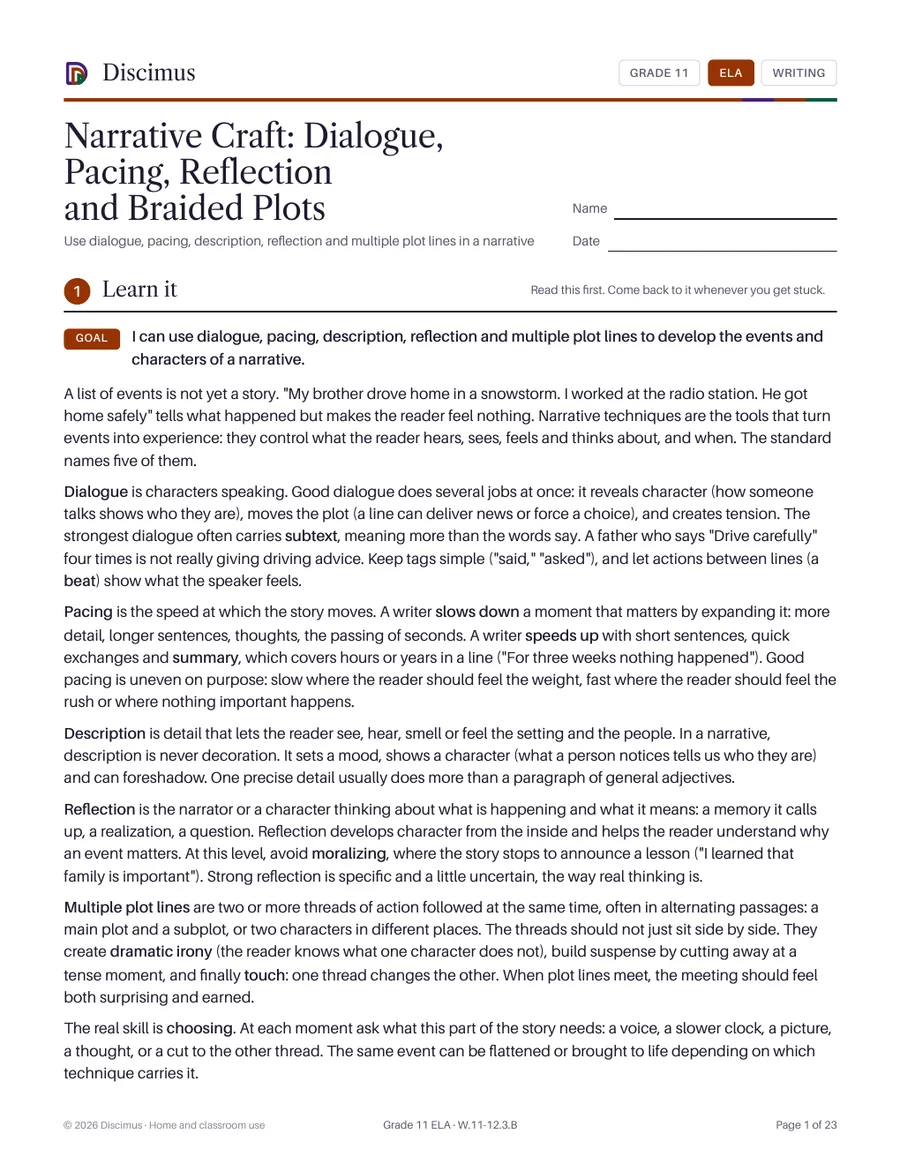
Use dialogue, pacing, description, reflection and multiple plot lines in a narrative
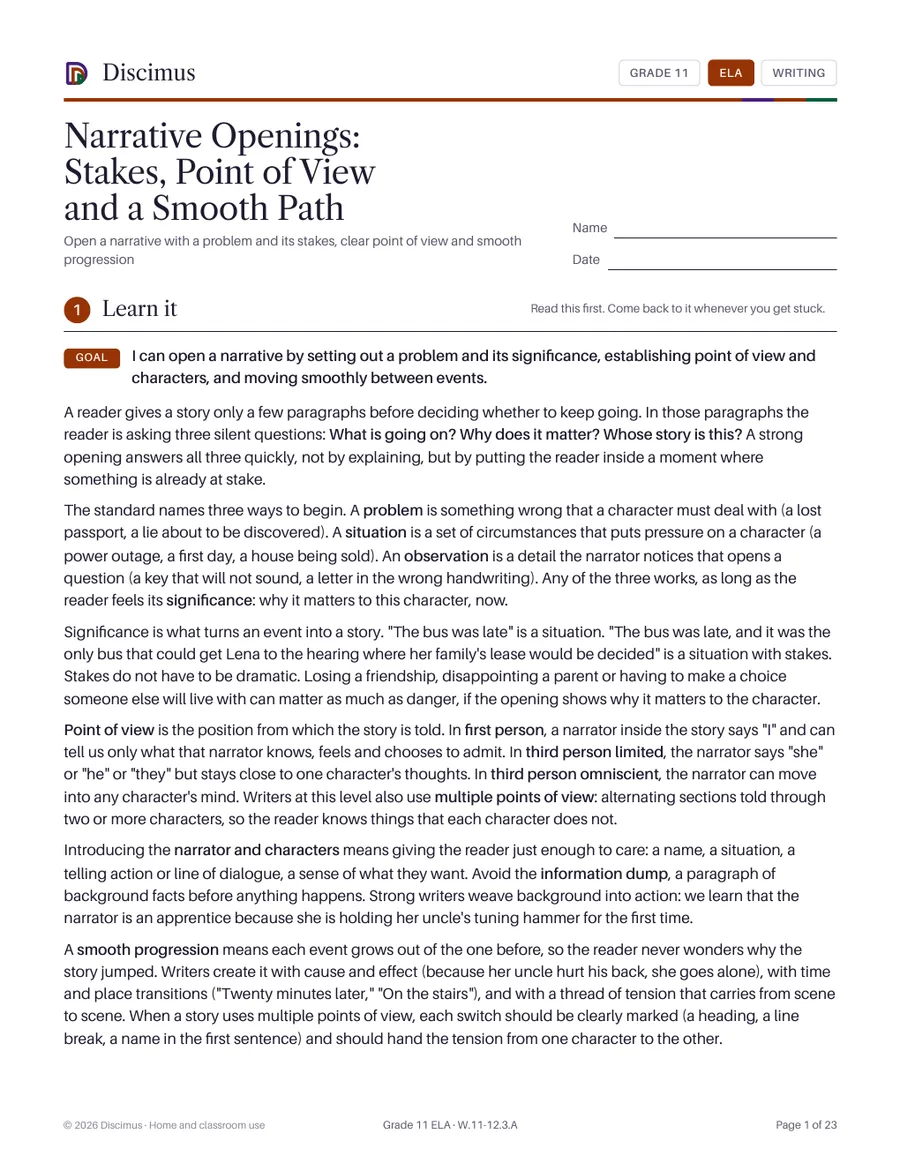
Open a narrative with a problem and its stakes, clear point of view and smooth progression
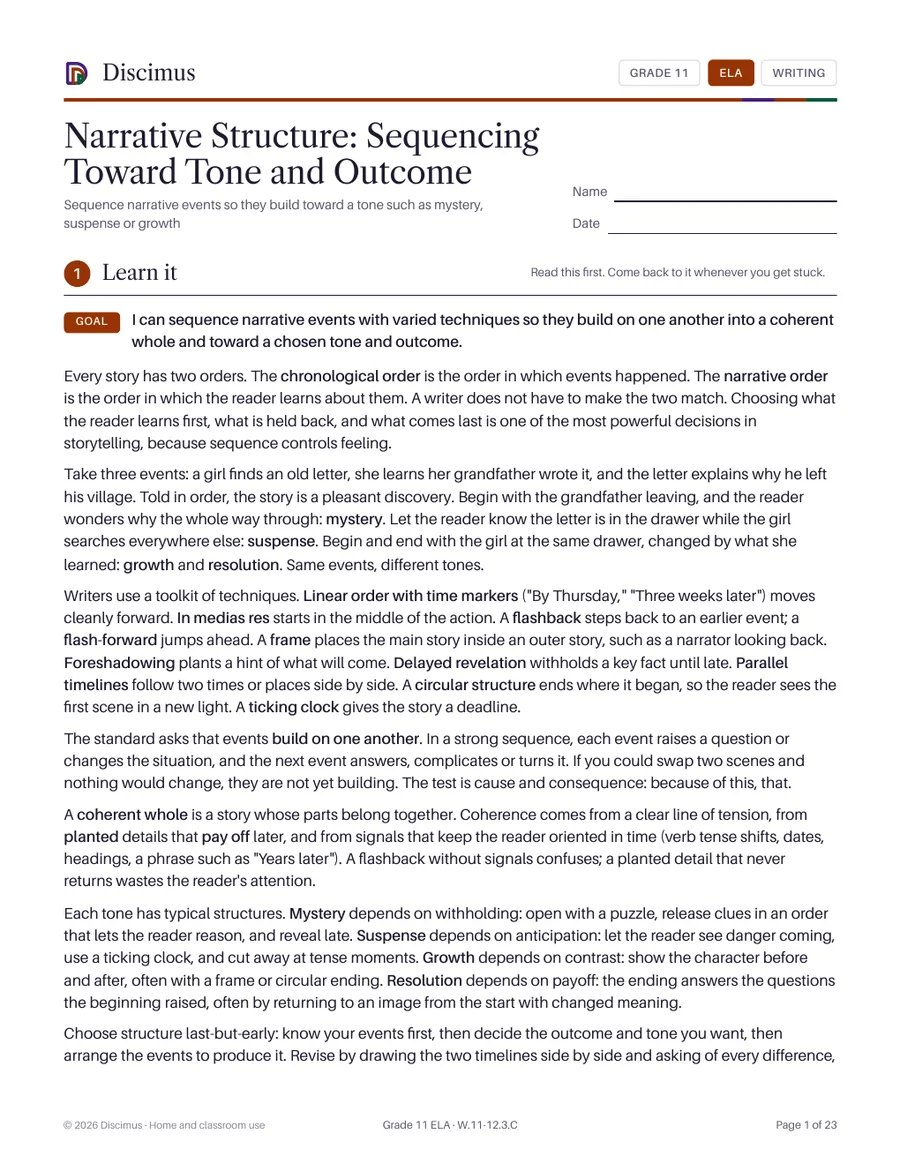
Sequence narrative events so they build toward a tone such as mystery, suspense or growth
Use digital tools to publish shared writing and update it for feedback and new information
Read and comprehend complex literary nonfiction at the grade 11 to college-ready level
Read and understand grade 11 to college-ready stories, dramas and poems independently
Conduct a research project: refine a question and synthesize sources that disagree
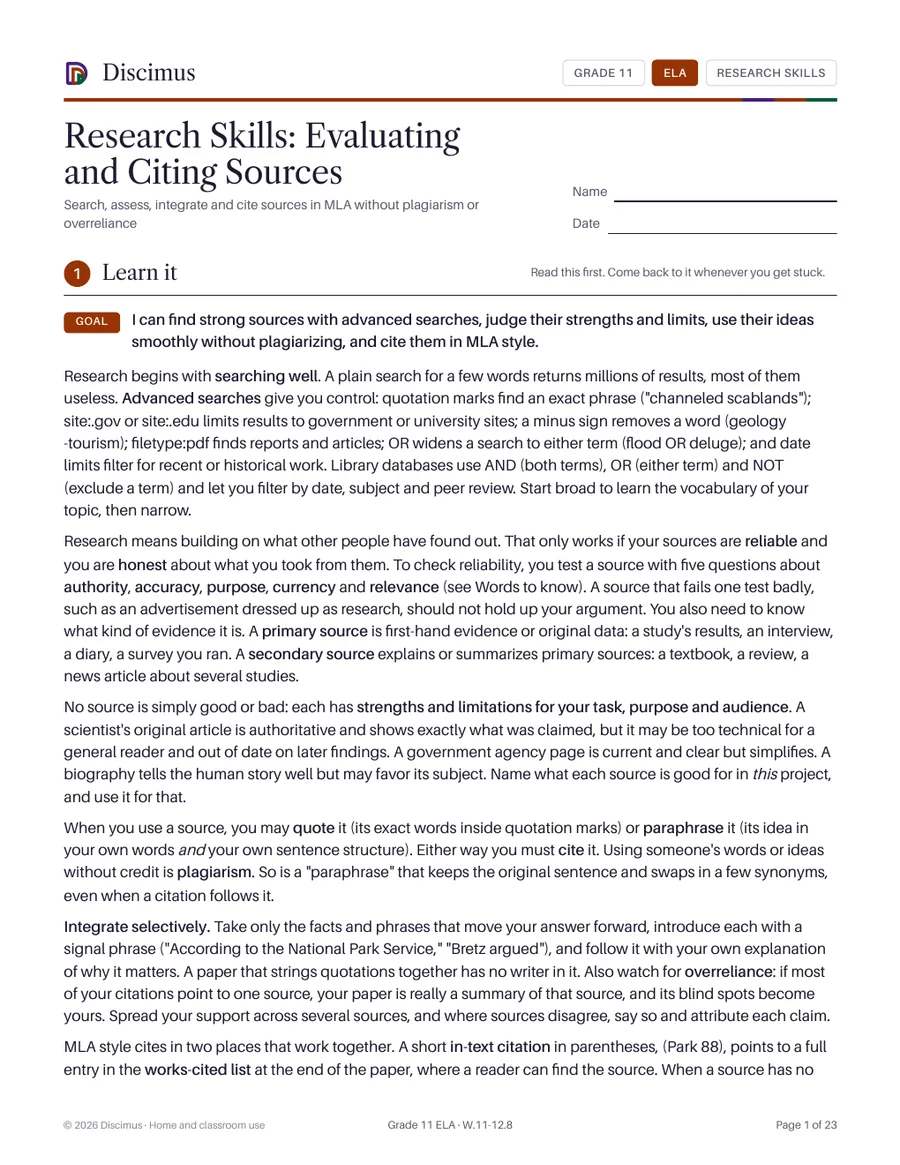
Search, assess, integrate and cite sources in MLA without plagiarism or overreliance
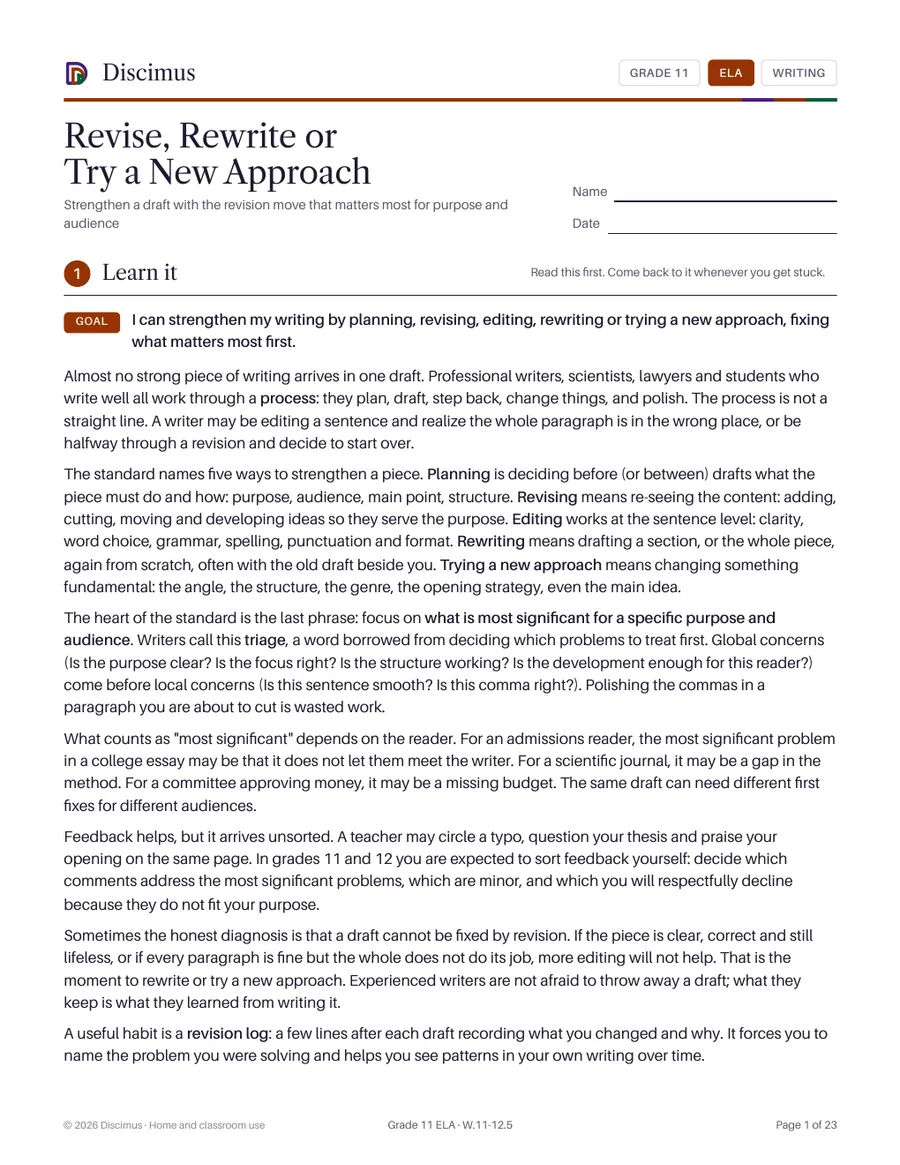
Strengthen a draft with the revision move that matters most for purpose and audience
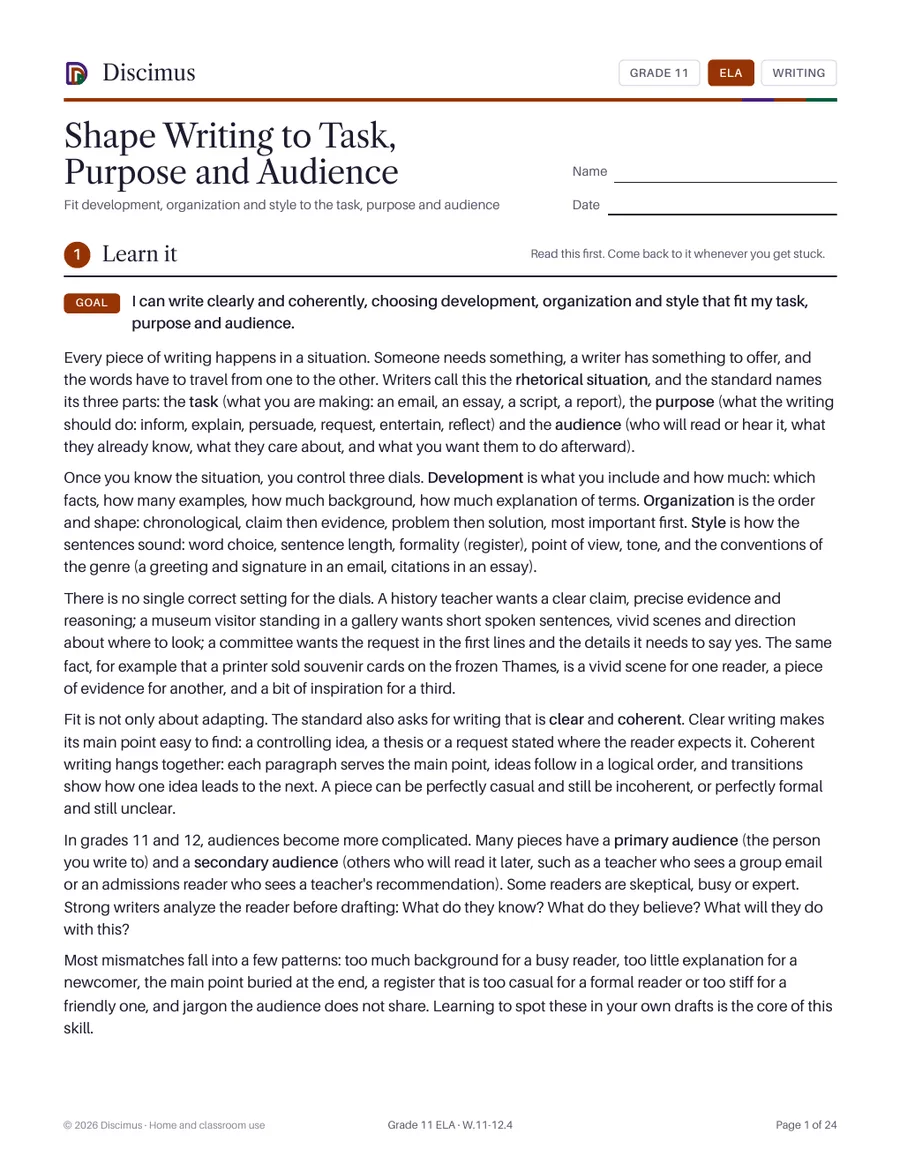
Fit development, organization and style to the task, purpose and audience
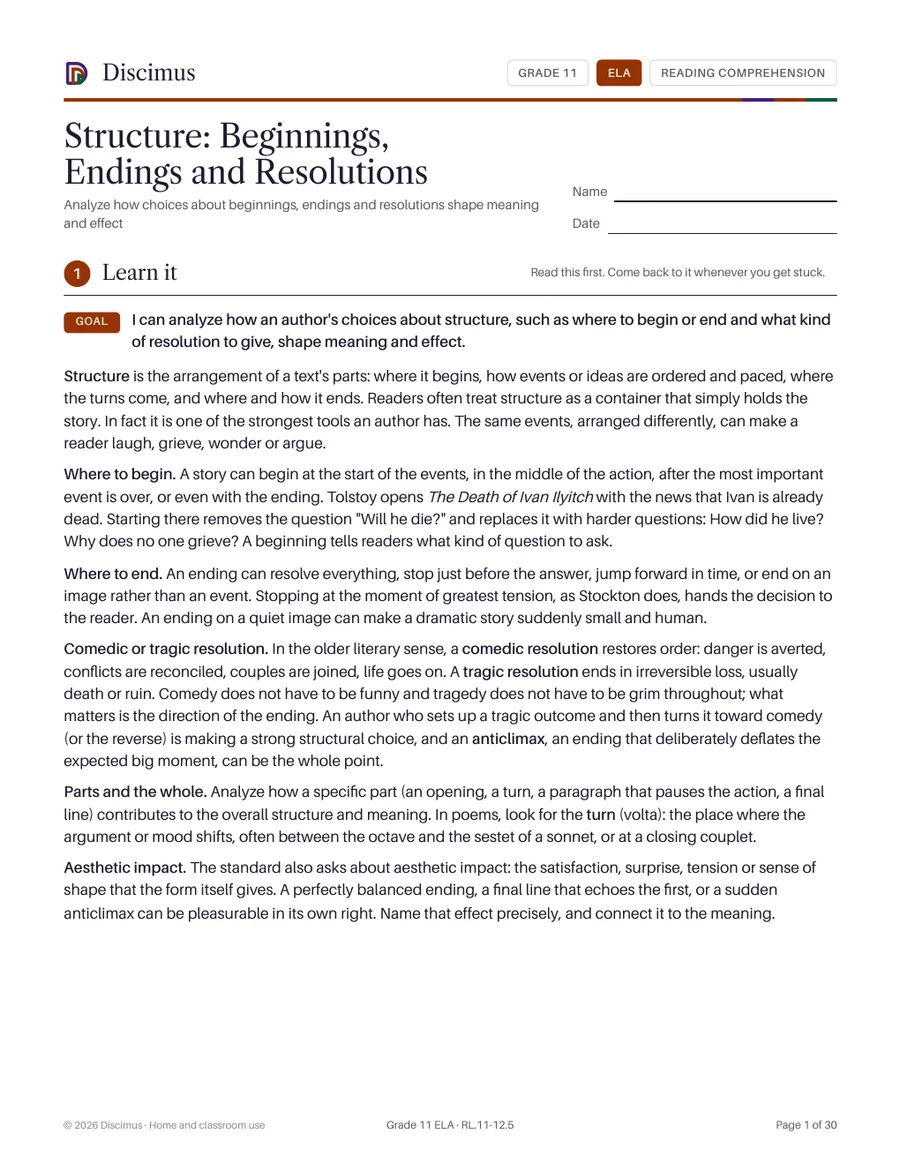
Analyze how choices about beginnings, endings and resolutions shape meaning and effect
Use precise words, telling details and sensory language to make a narrative vivid
Analyze figurative, connotative and multiple meanings and their impact on meaning and tone
Interpret figurative, connotative and technical meanings; trace how a key term is refined
Write an analysis comparing how two American works from the same period treat a theme
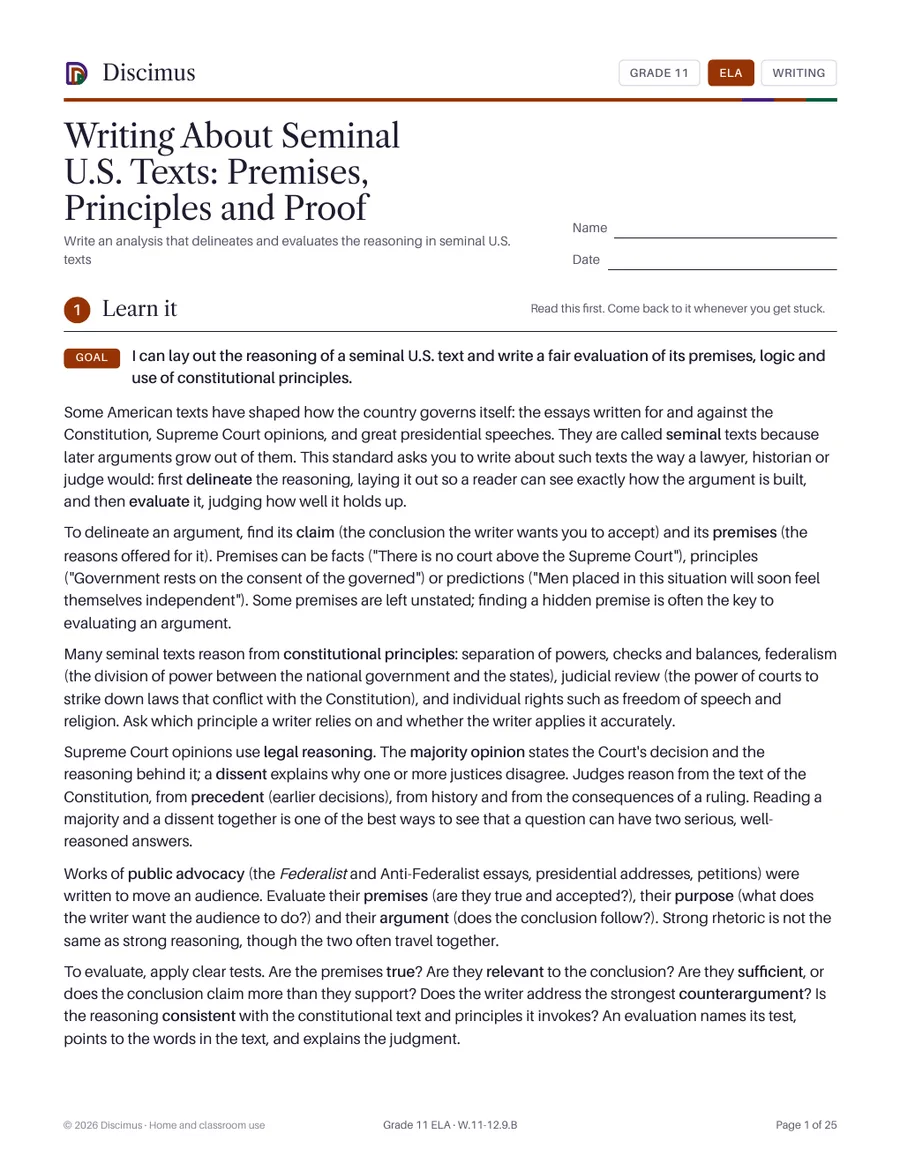
Write an analysis that delineates and evaluates the reasoning in seminal U.S. texts
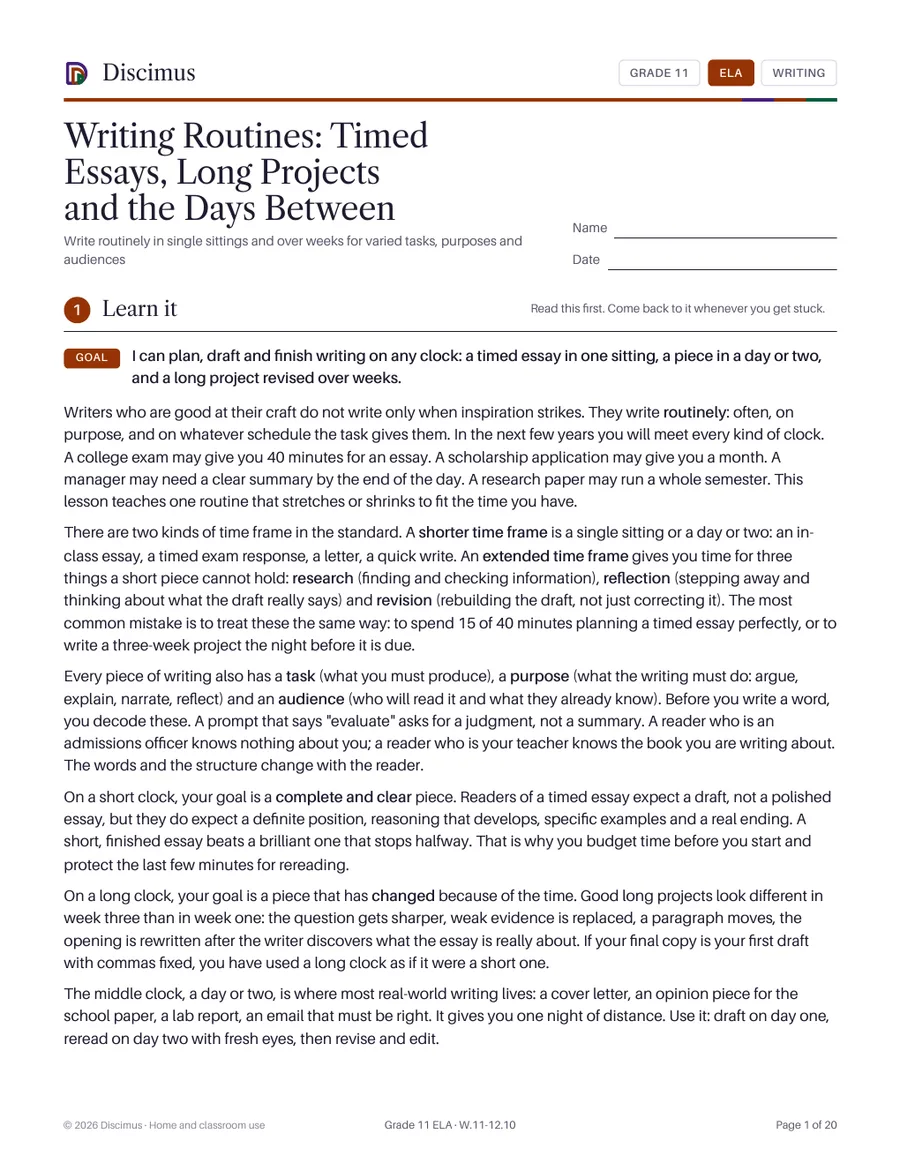
Write routinely in single sittings and over weeks for varied tasks, purposes and audiences