Adding, Subtracting and Multiplying Complex Numbers
Add, subtract and multiply complex numbers and simplify powers of i
Common Core State Standards for Mathematics
From counting to calculus, one skill at a time.
Add, subtract and multiply complex numbers and simplify powers of i
Write arithmetic and geometric sequences recursively and explicitly, and translate
Combine linear, quadratic and exponential functions with arithmetic to build models
Compare two treatments and judge significance with a re-randomization simulation
Find conjugates and moduli of complex numbers and divide complex numbers using conjugates
Add, subtract, multiply and conjugate complex numbers geometrically
Represent complex numbers on the complex plane in rectangular and polar form
Compose functions and interpret the composite in context
Find distance and midpoint in the complex plane using modulus and average
Estimate a population mean or proportion and find a margin of error by simulation
Evaluate claims in reports by examining the sample, design, uncertainty and presentation
Factor and expand polynomials using identities extended to complex numbers
Solve f(x) = c and write an expression for the inverse of a simple function
Decide whether a probability model is consistent with observed results, using simulation
Choose a sine or cosine function with a given amplitude, frequency and midline as a model
Add, subtract and multiply polynomials and explain closure
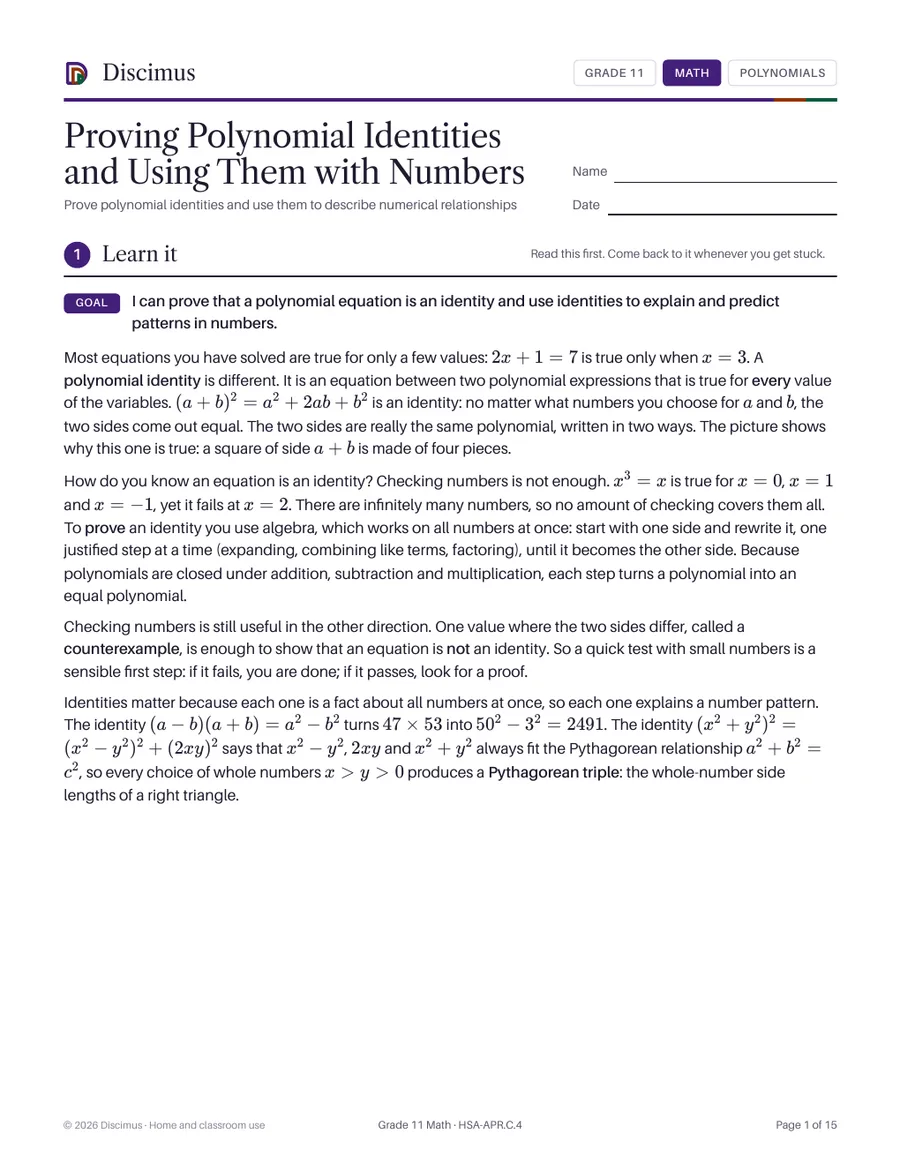
Prove polynomial identities and use them to describe numerical relationships
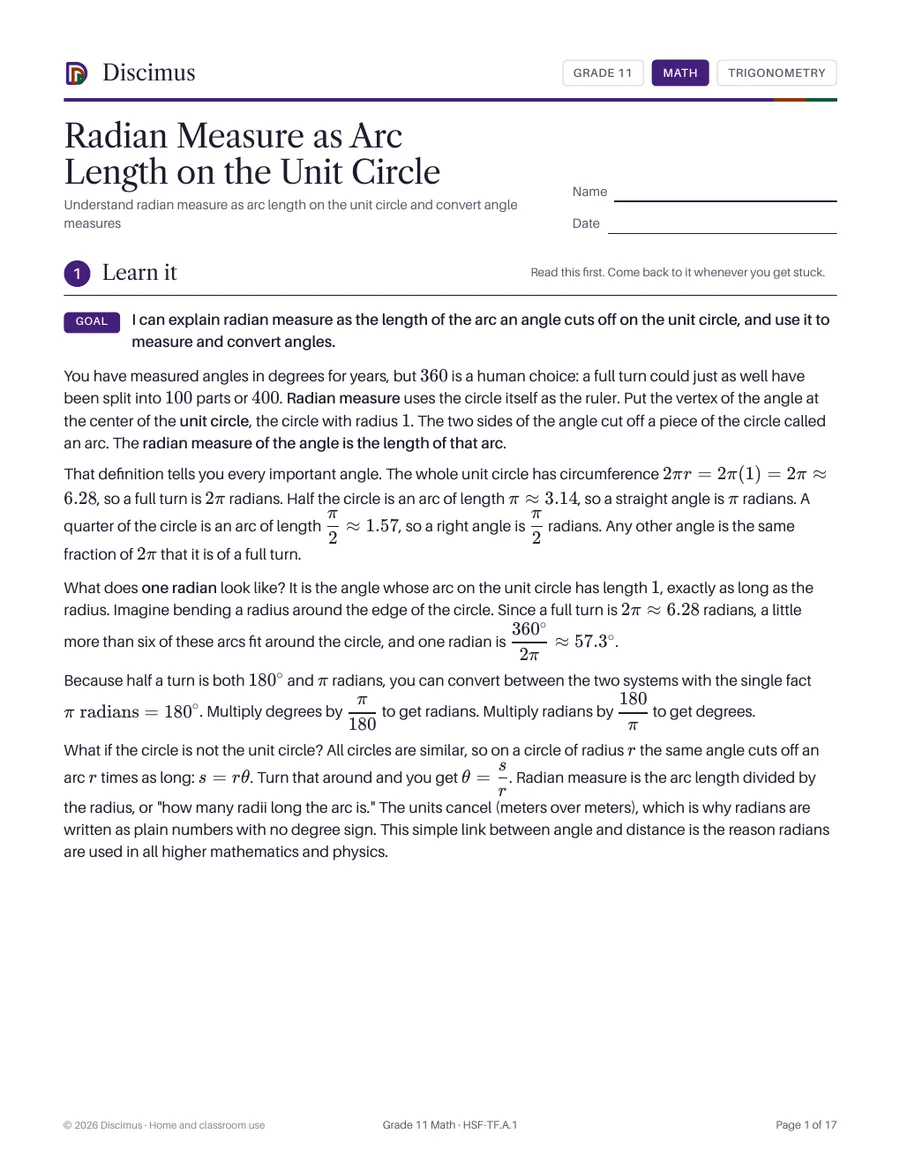
Understand radian measure as arc length on the unit circle and convert angle measures
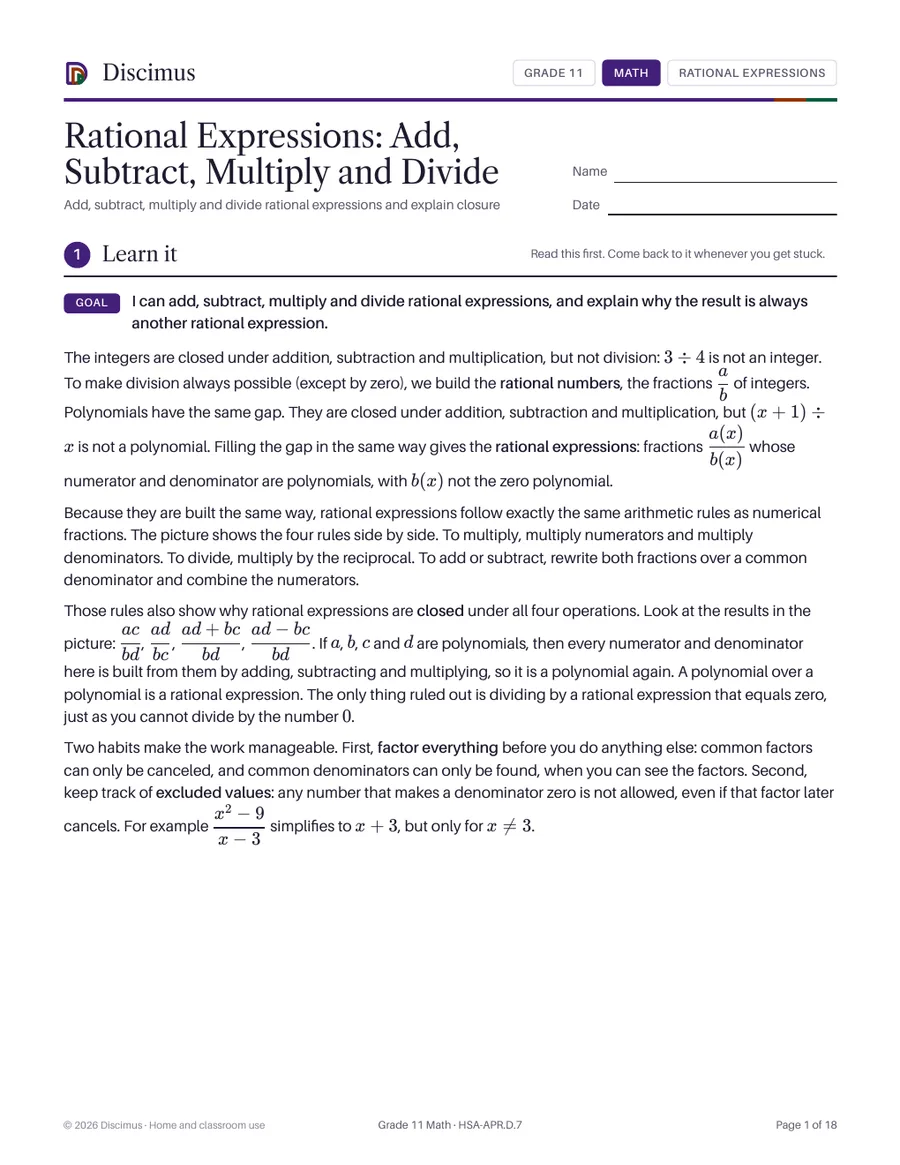
Add, subtract, multiply and divide rational expressions and explain closure
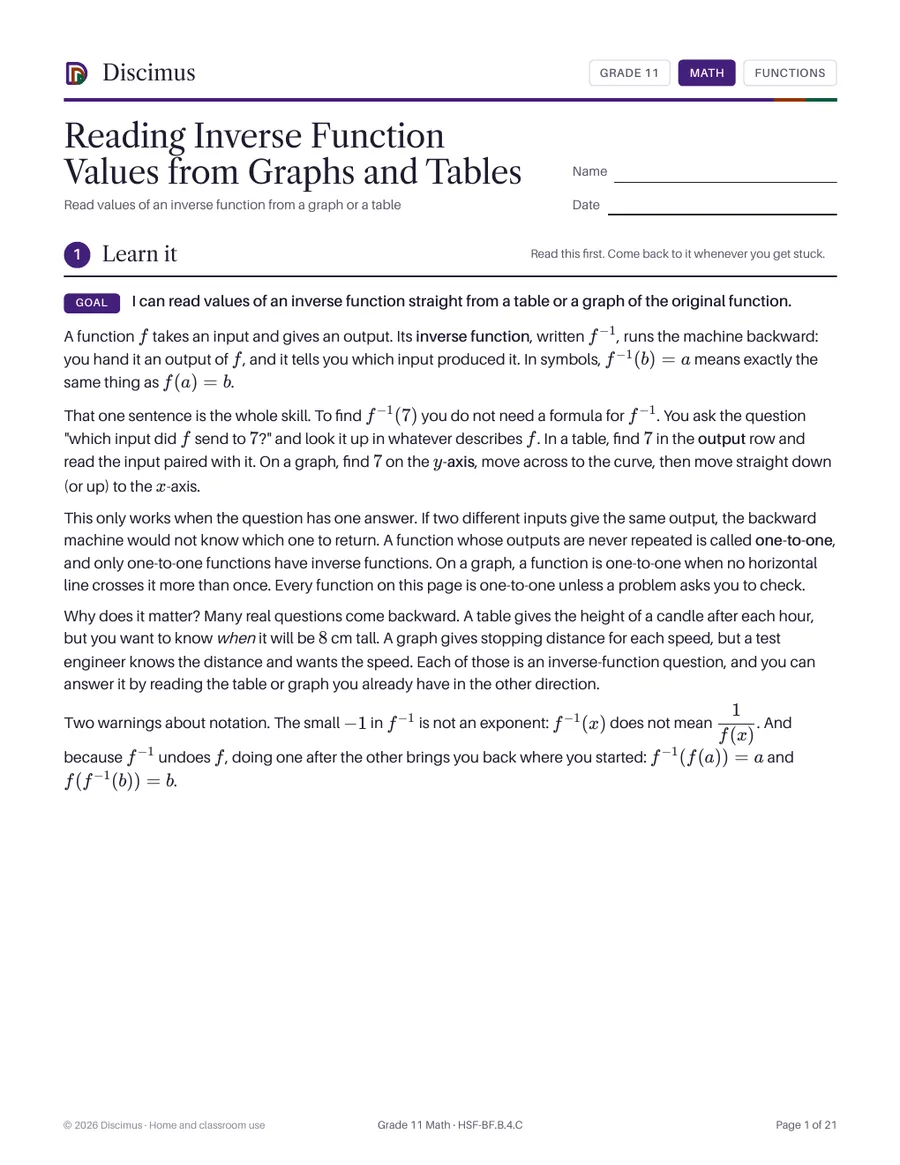
Read values of an inverse function from a graph or a table
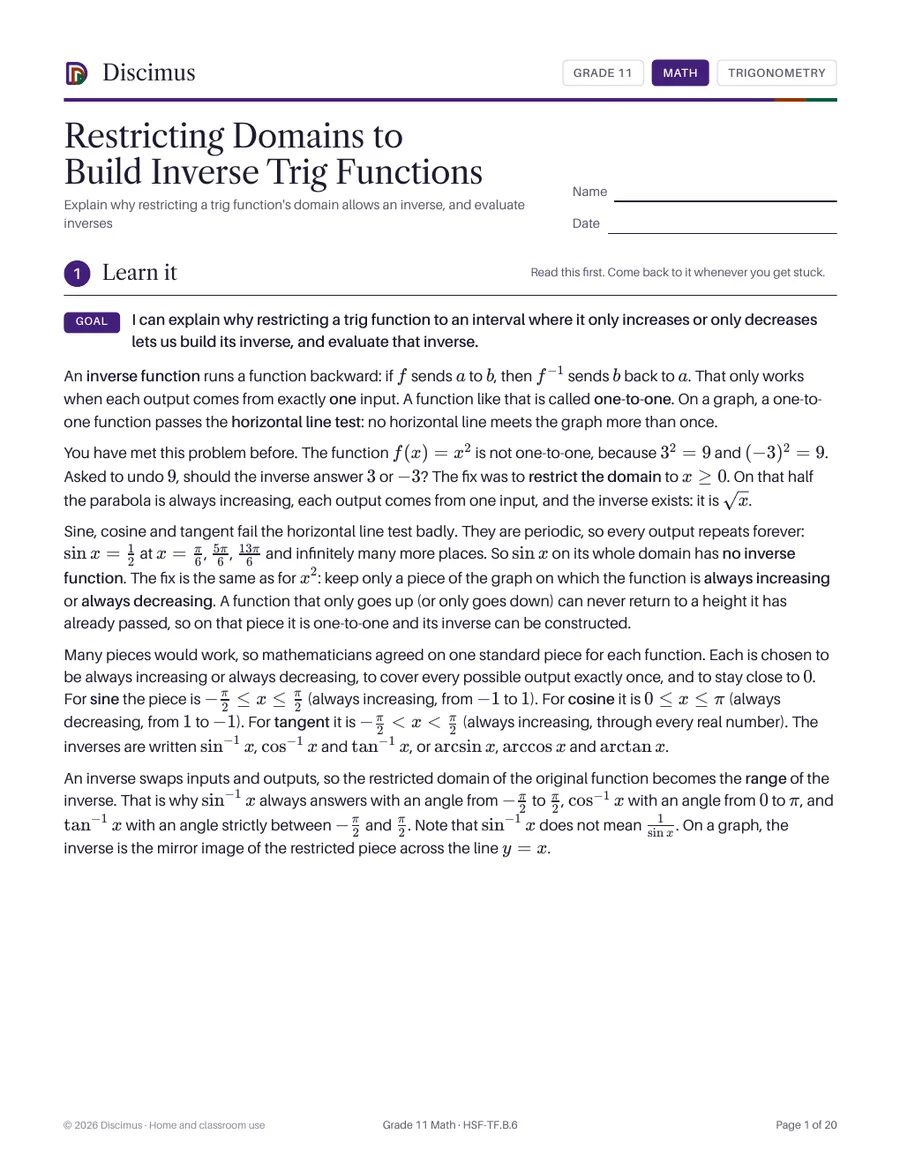
Explain why restricting a trig function's domain allows an inverse, and evaluate inverses
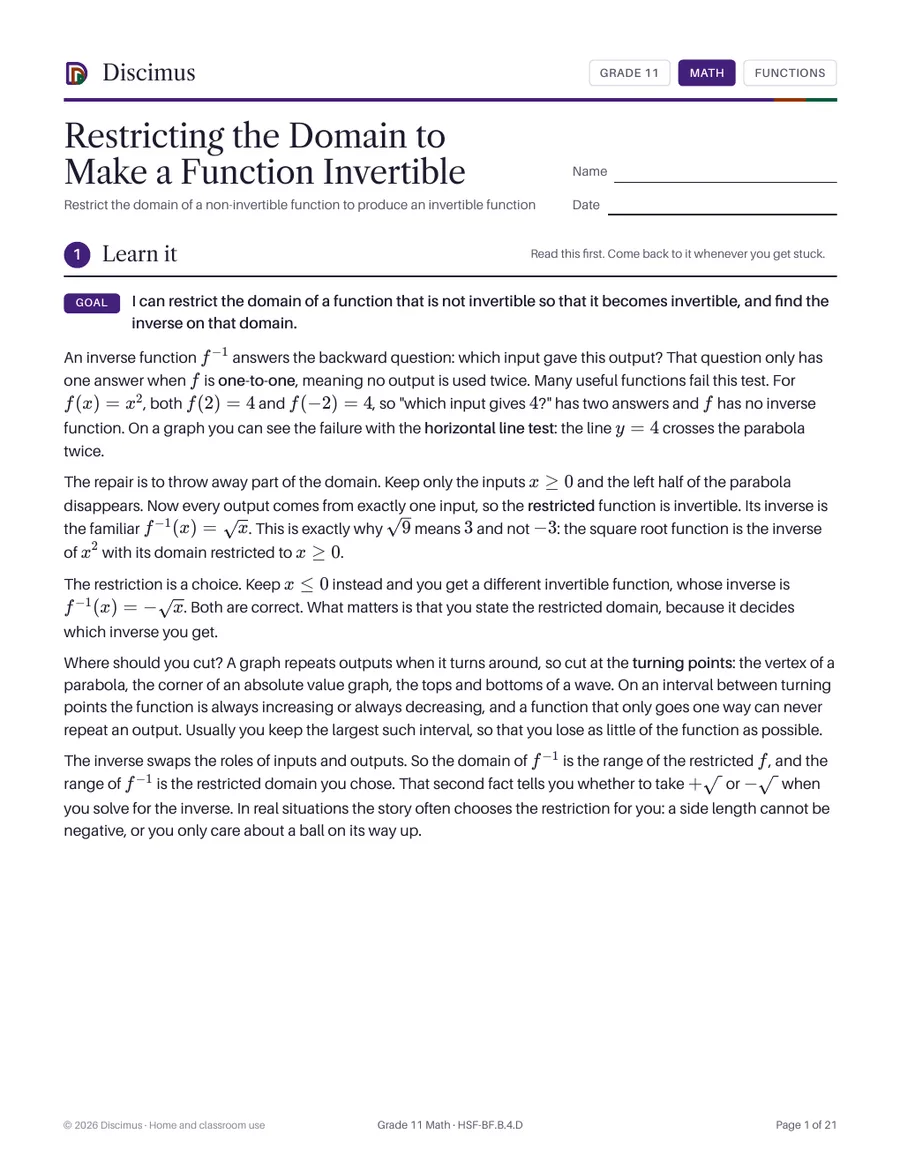
Restrict the domain of a non-invertible function to produce an invertible function
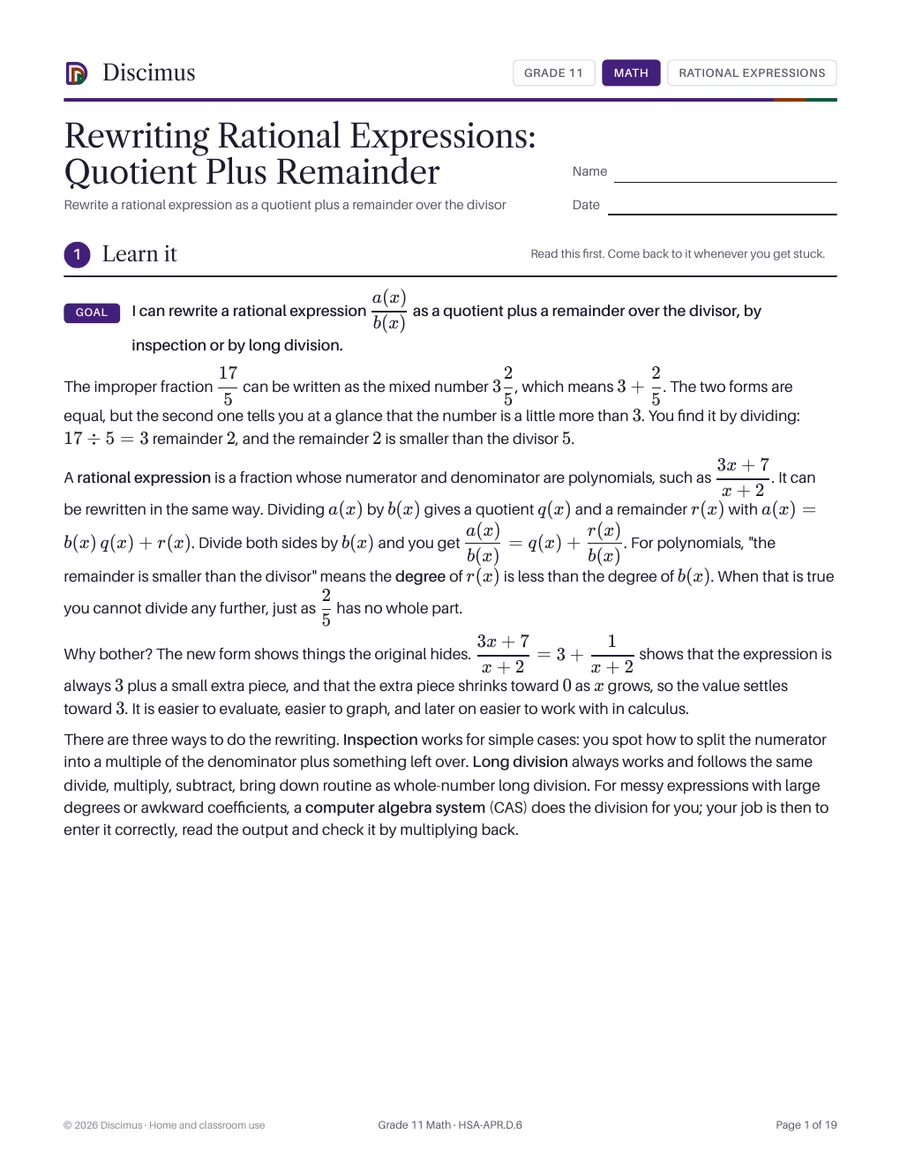
Rewrite a rational expression as a quotient plus a remainder over the divisor
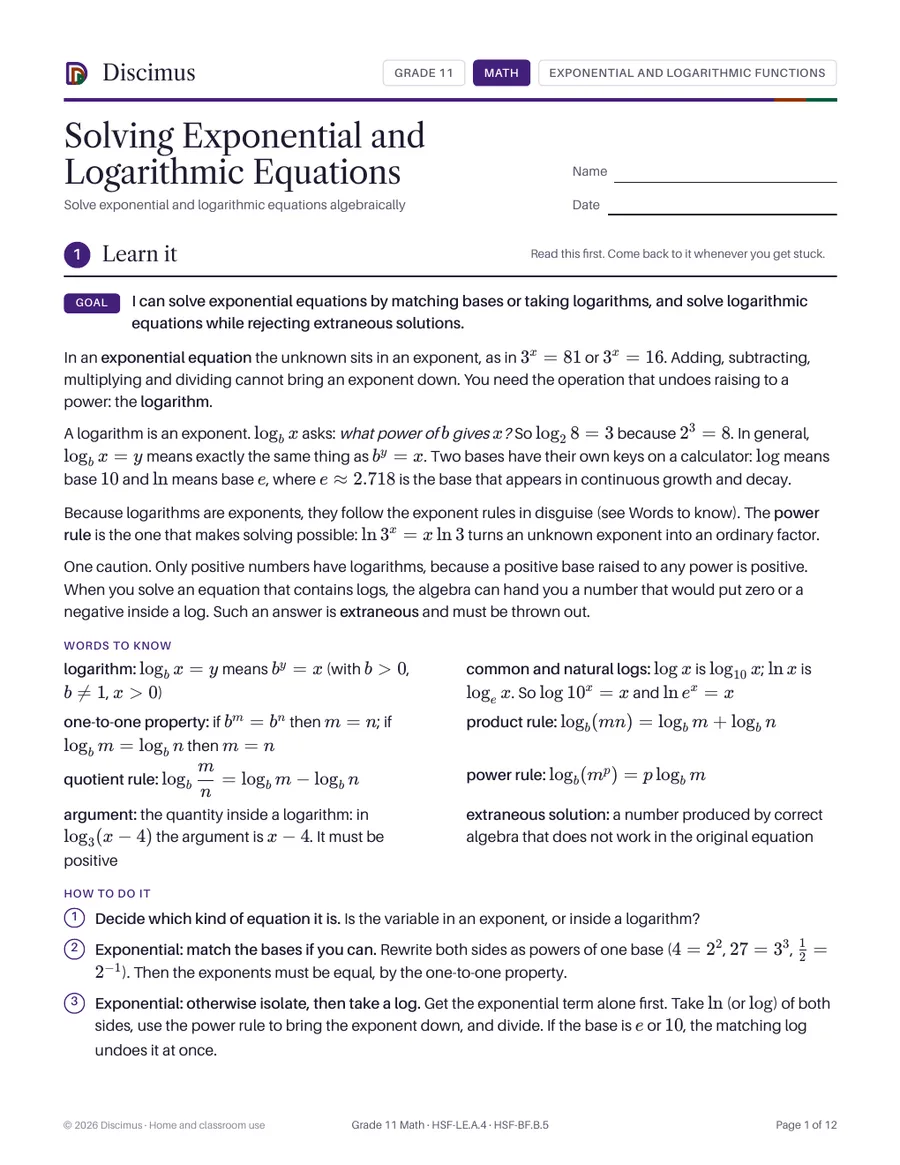
Solve exponential and logarithmic equations algebraically
Solve trig equations from real models with inverse functions and interpret the solutions
Find exact trig values with special triangles and unit circle symmetry
Explain how a random sample is used to make inferences about a population parameter
Prove and apply the sum and difference formulas for sine, cosine and tangent
Distinguish surveys, experiments and observational studies and the role of randomization
Explain and use the even-odd symmetry and periodicity of sine, cosine and tangent
Expand powers of binomials with the Binomial Theorem
State the Fundamental Theorem of Algebra and show it holds for quadratic polynomials
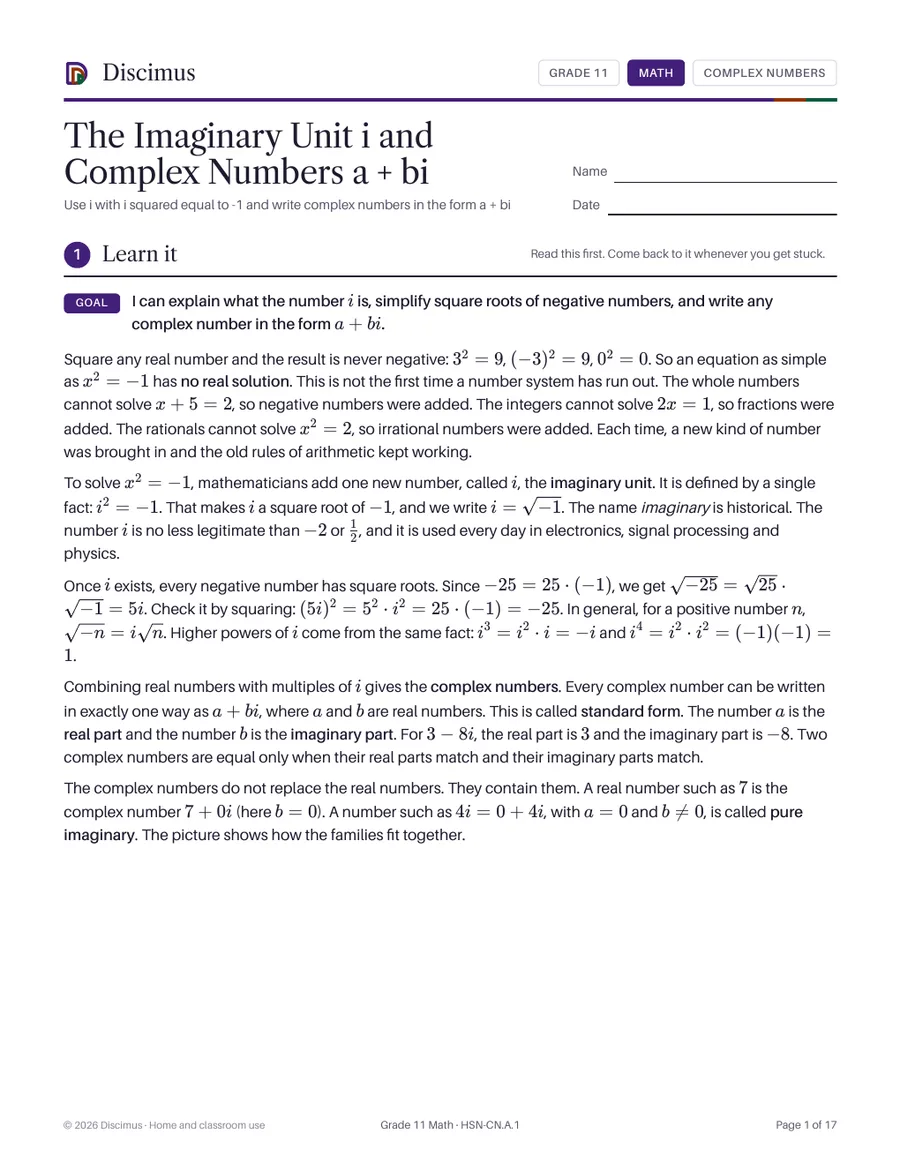
Use i with i squared equal to -1 and write complex numbers in the form a + bi
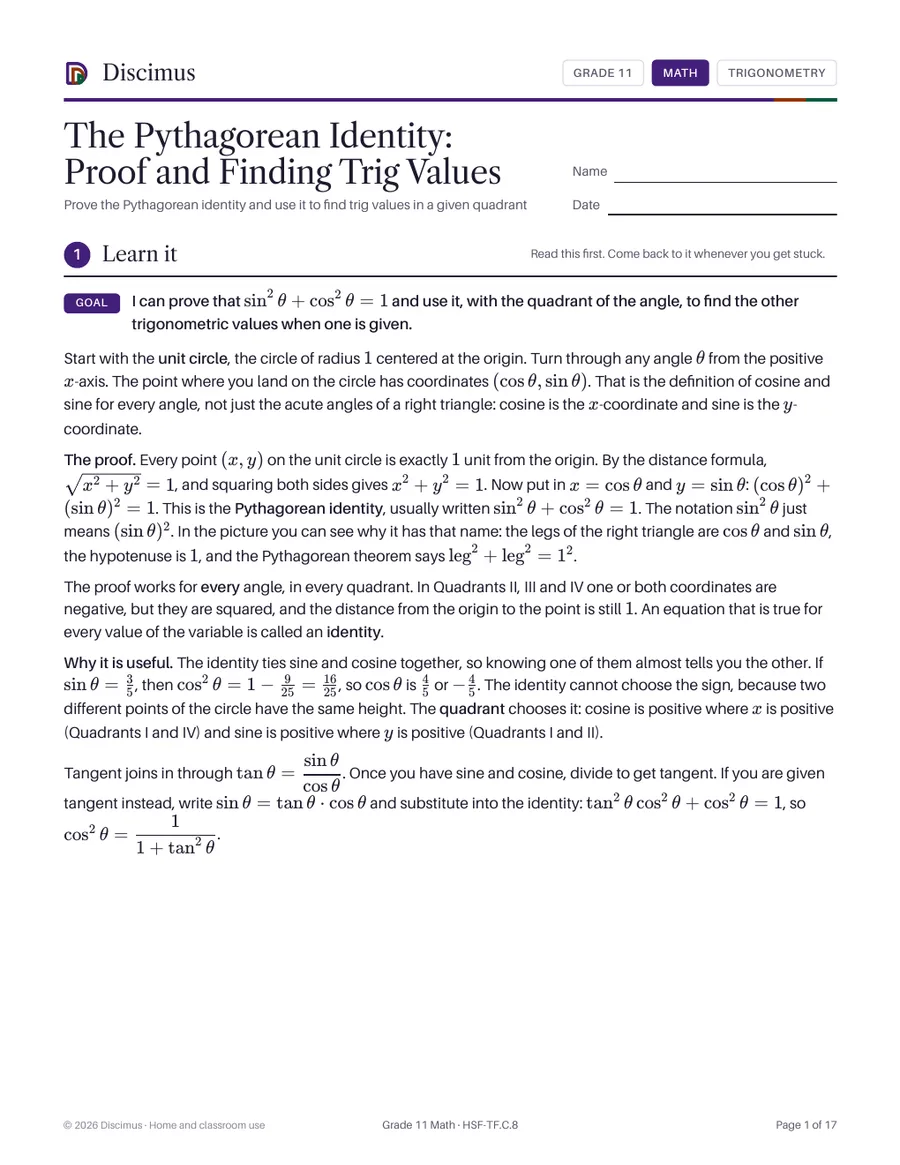
Prove the Pythagorean identity and use it to find trig values in a given quadrant
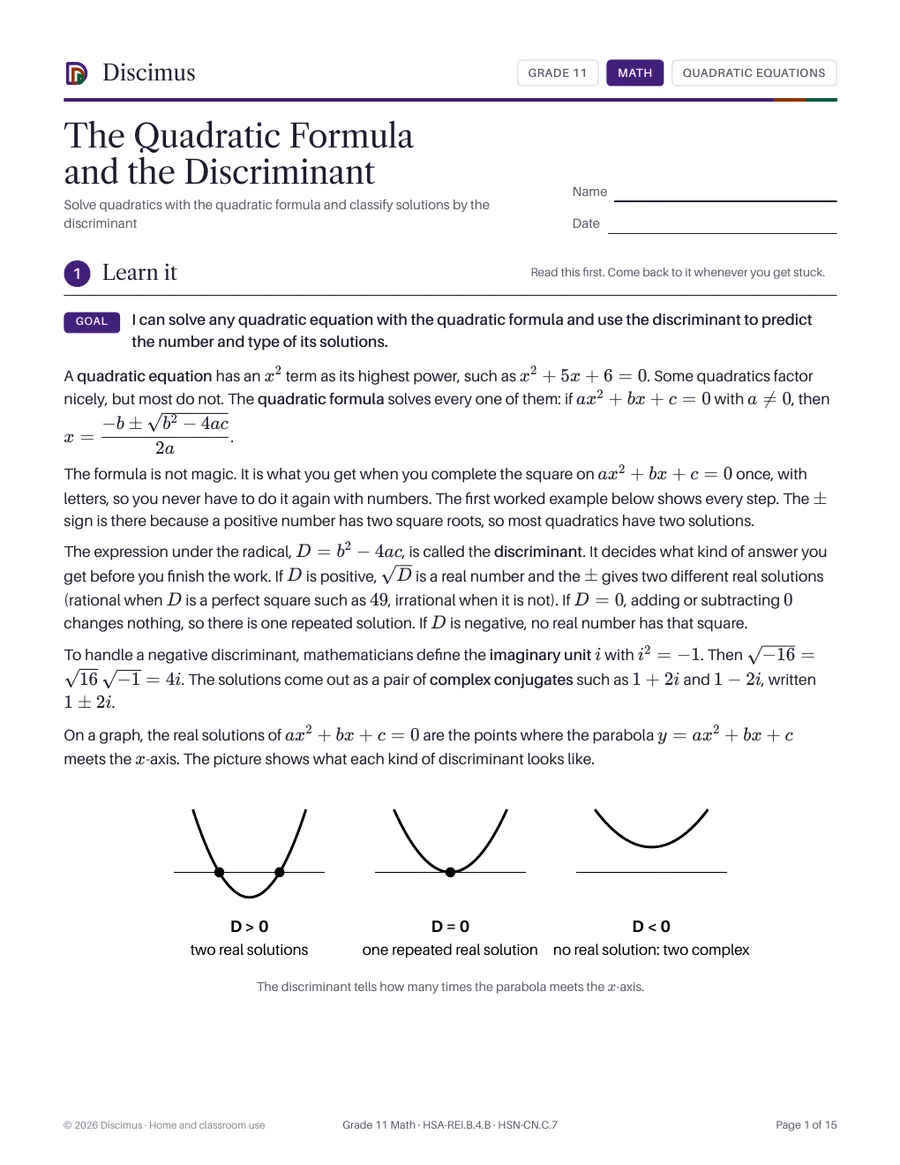 Free sample
Solve quadratics with the quadratic formula and classify solutions by the discriminant
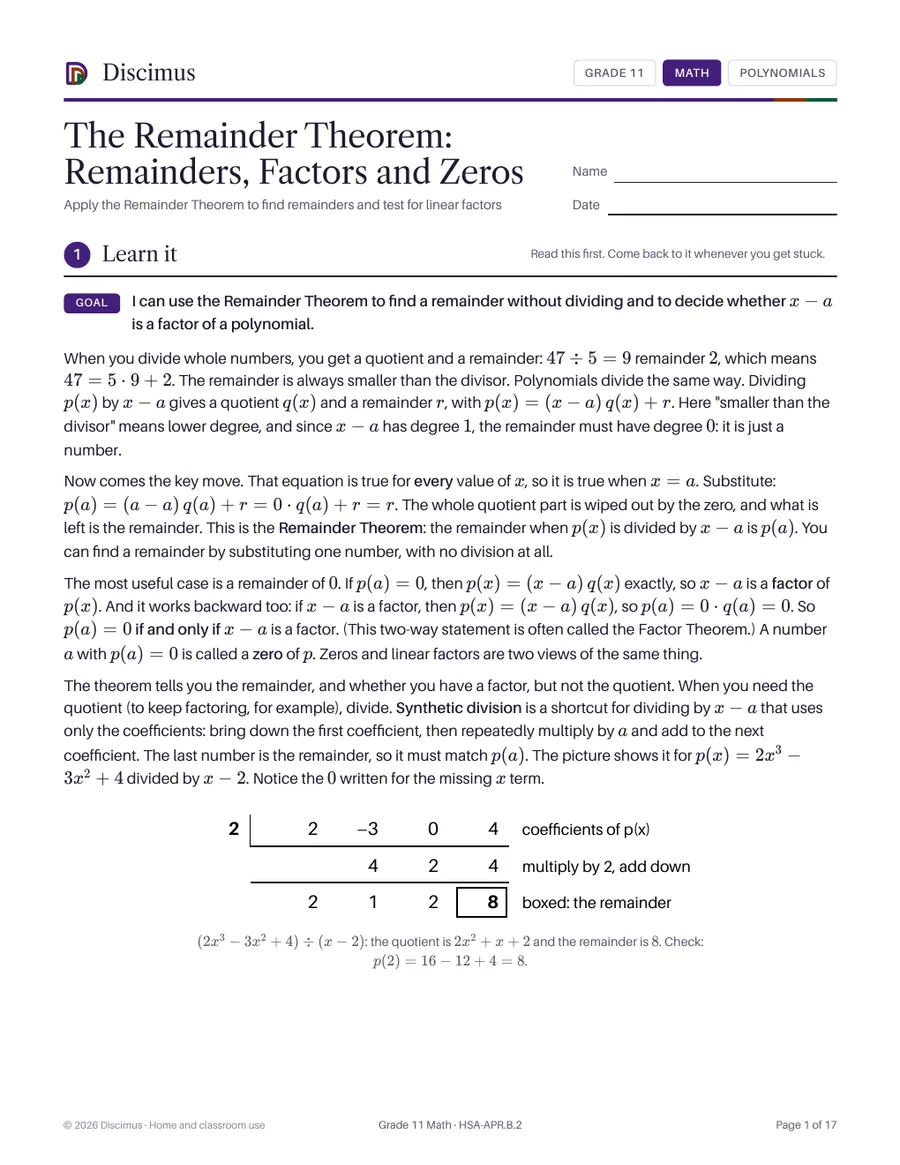
Apply the Remainder Theorem to find remainders and test for linear factors
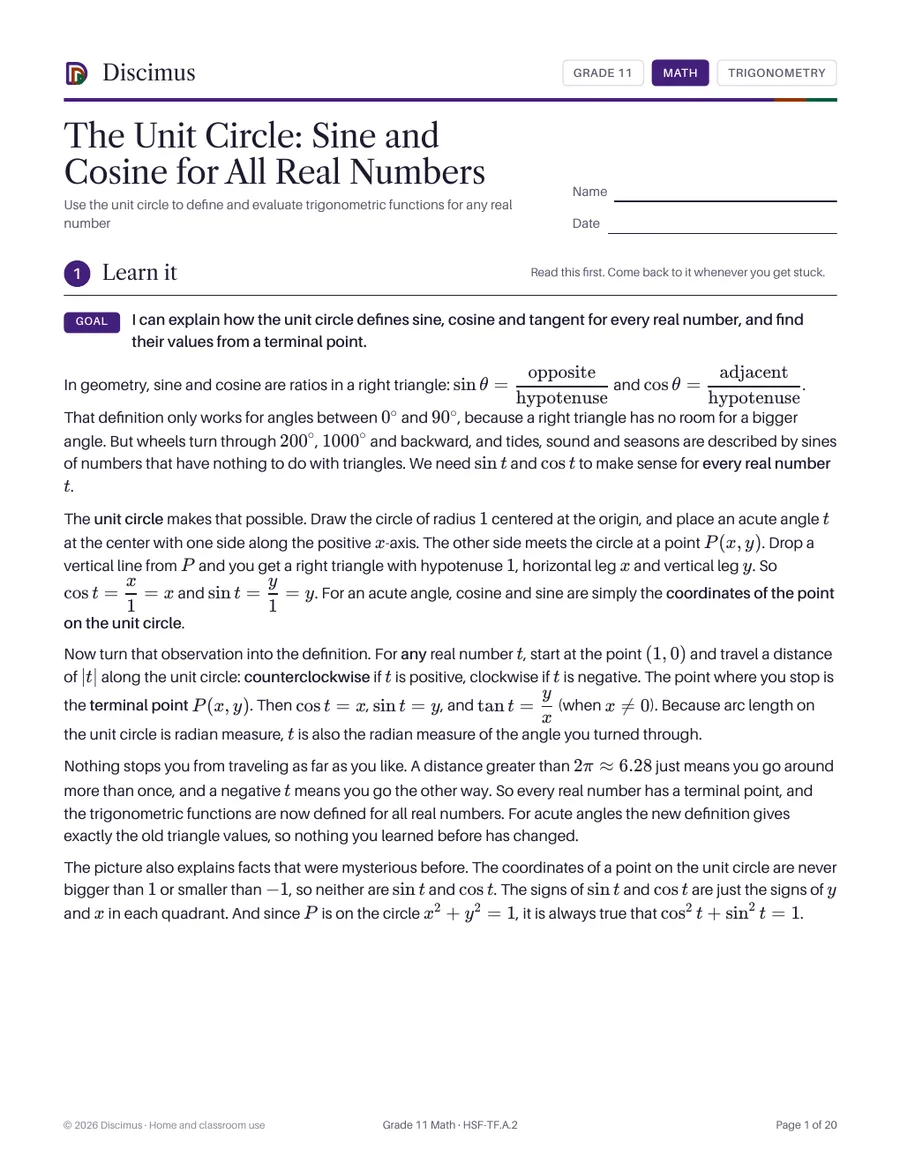
Use the unit circle to define and evaluate trigonometric functions for any real number
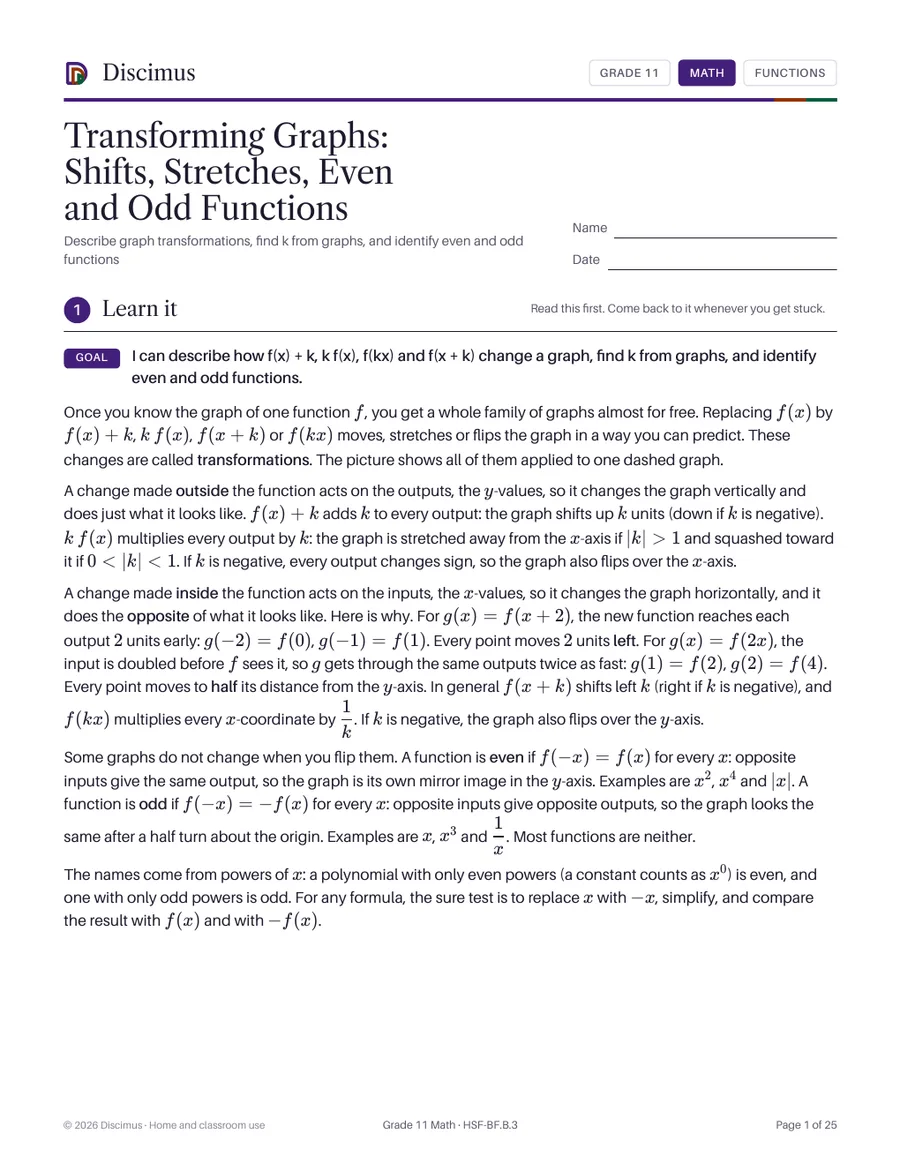
Describe graph transformations, find k from graphs, and identify even and odd functions
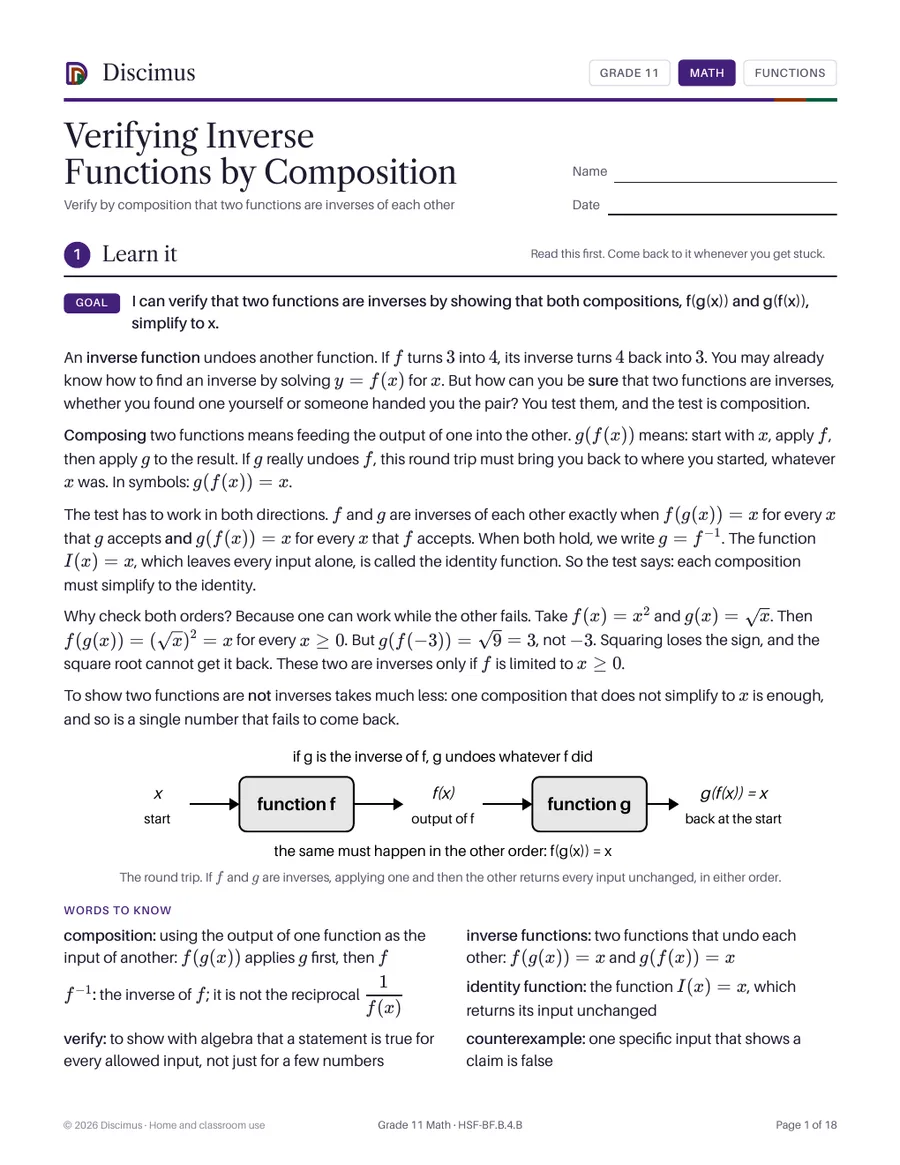
Verify by composition that two functions are inverses of each other
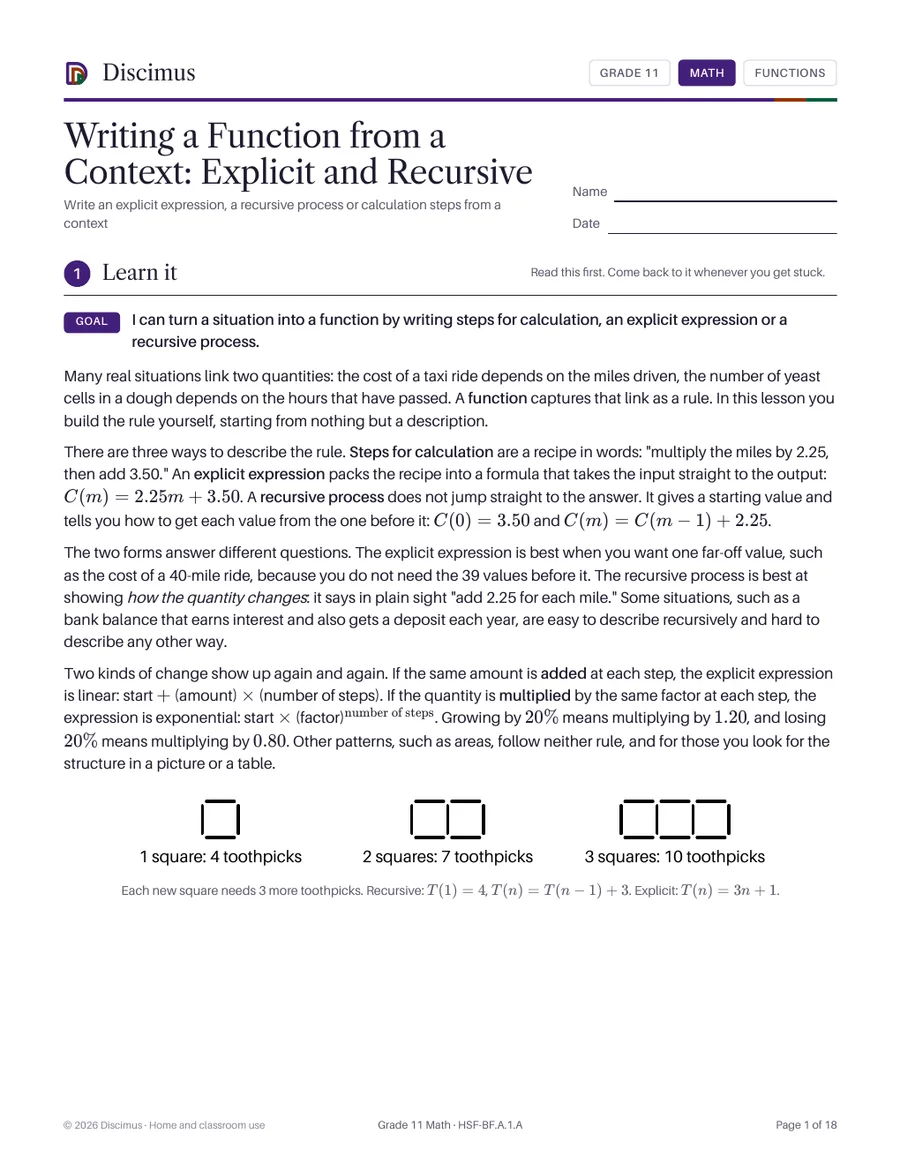
Write an explicit expression, a recursive process or calculation steps from a context
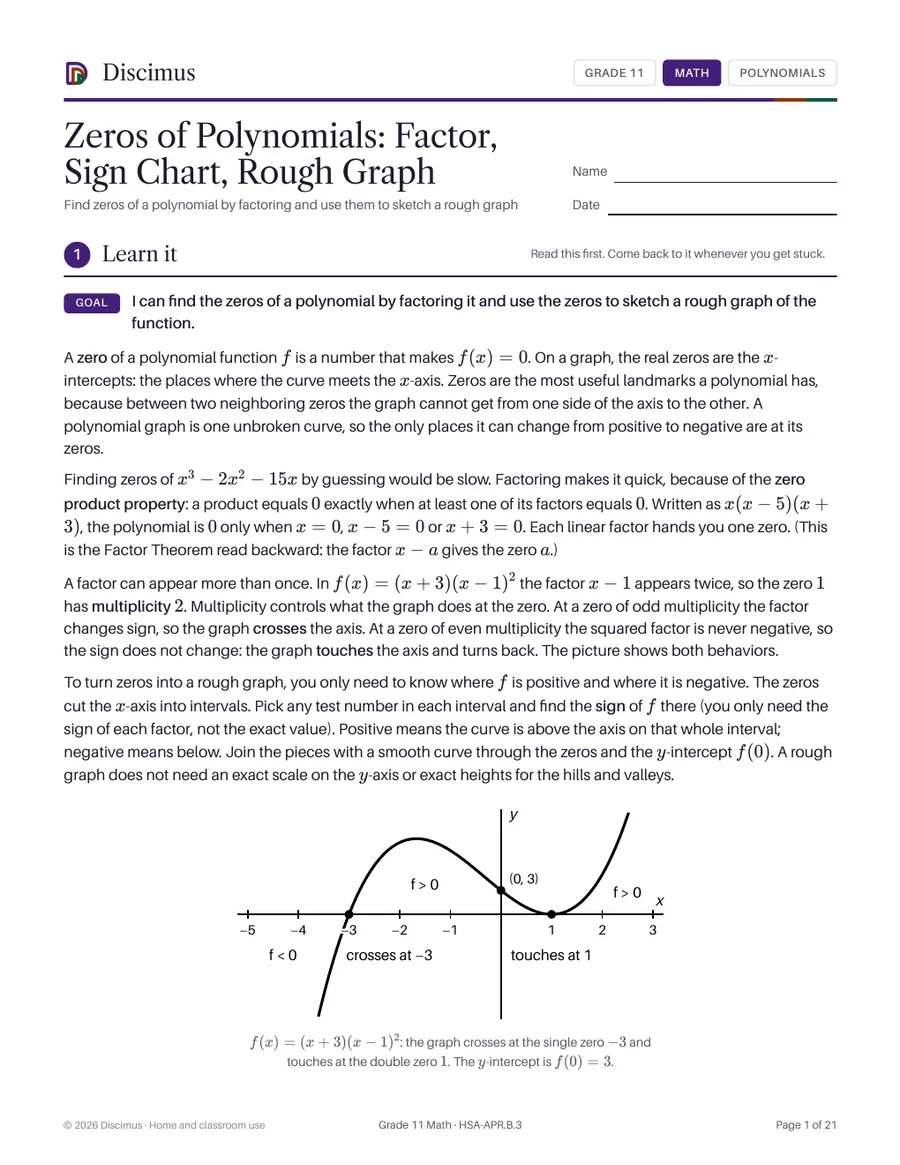
Find zeros of a polynomial by factoring and use them to sketch a rough graph