Conservation of Momentum in Collisions and Push-Offs
Use momentum equations to show that total momentum of two objects is conserved
Next Generation Science Standards
Life, earth, physical science and the habits of investigation.
Use momentum equations to show that total momentum of two objects is conserved
Design, test and refine a device that converts energy, judged by output for a given input
Evaluate questions about the advantages and drawbacks of digital transmission and storage
Build a computational model to calculate an unknown energy change in a system
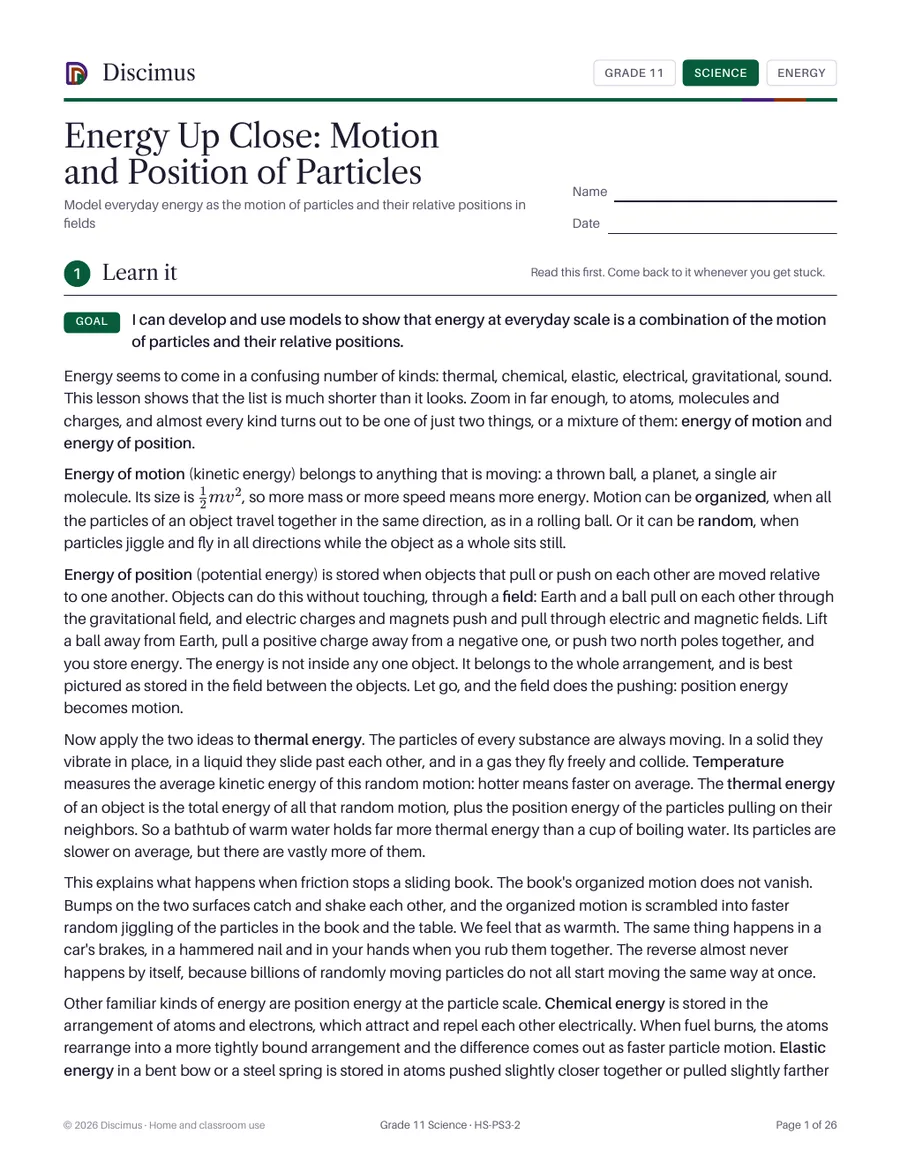
Model everyday energy as the motion of particles and their relative positions in fields
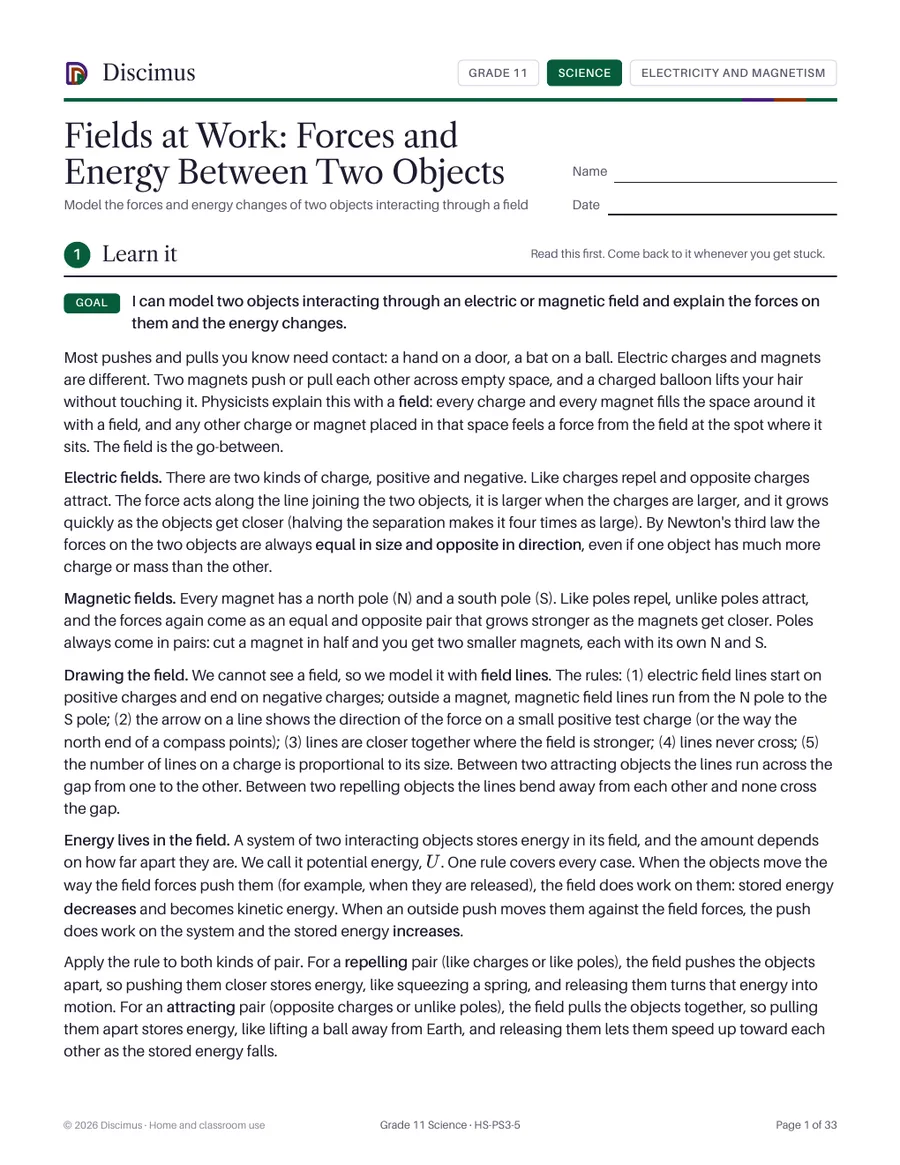
Model the forces and energy changes of two objects interacting through a field
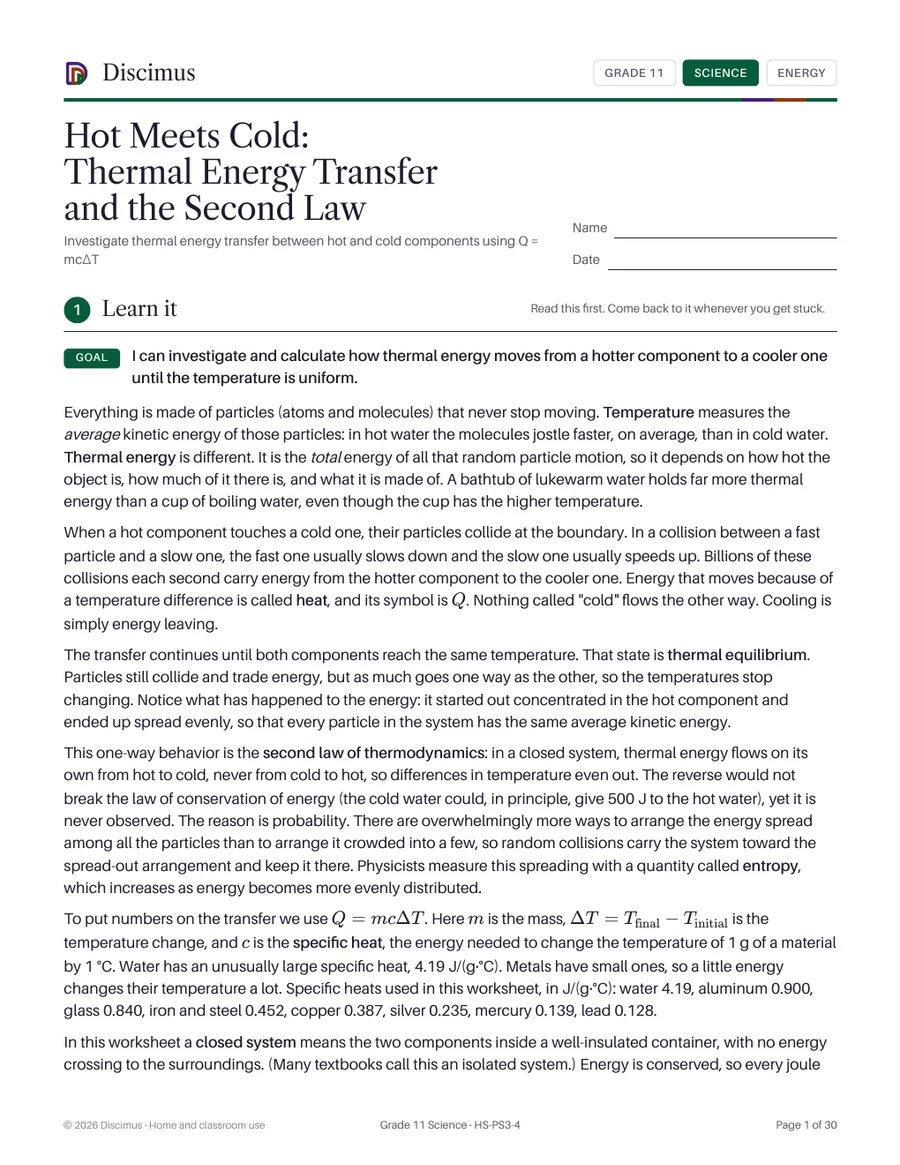
Investigate thermal energy transfer between hot and cold components using Q = mcΔT
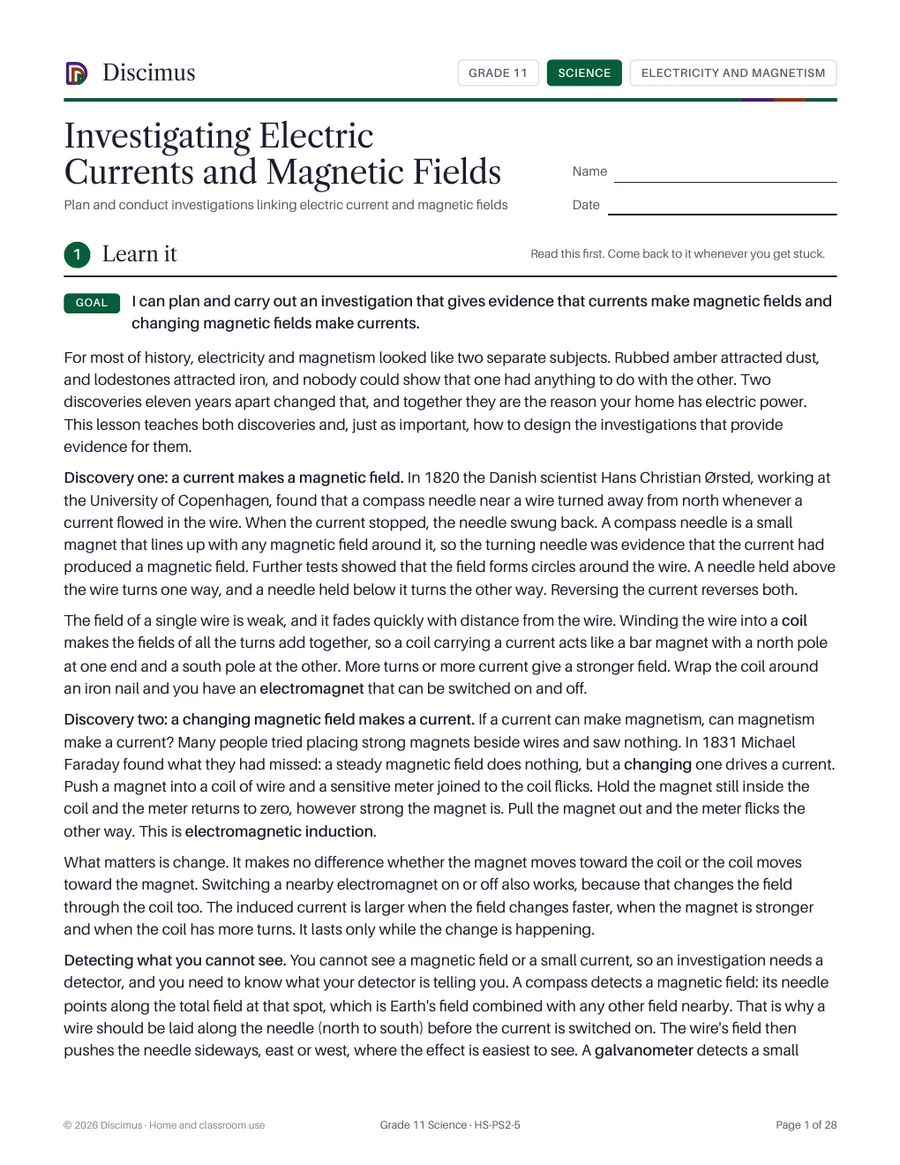
Plan and conduct investigations linking electric current and magnetic fields
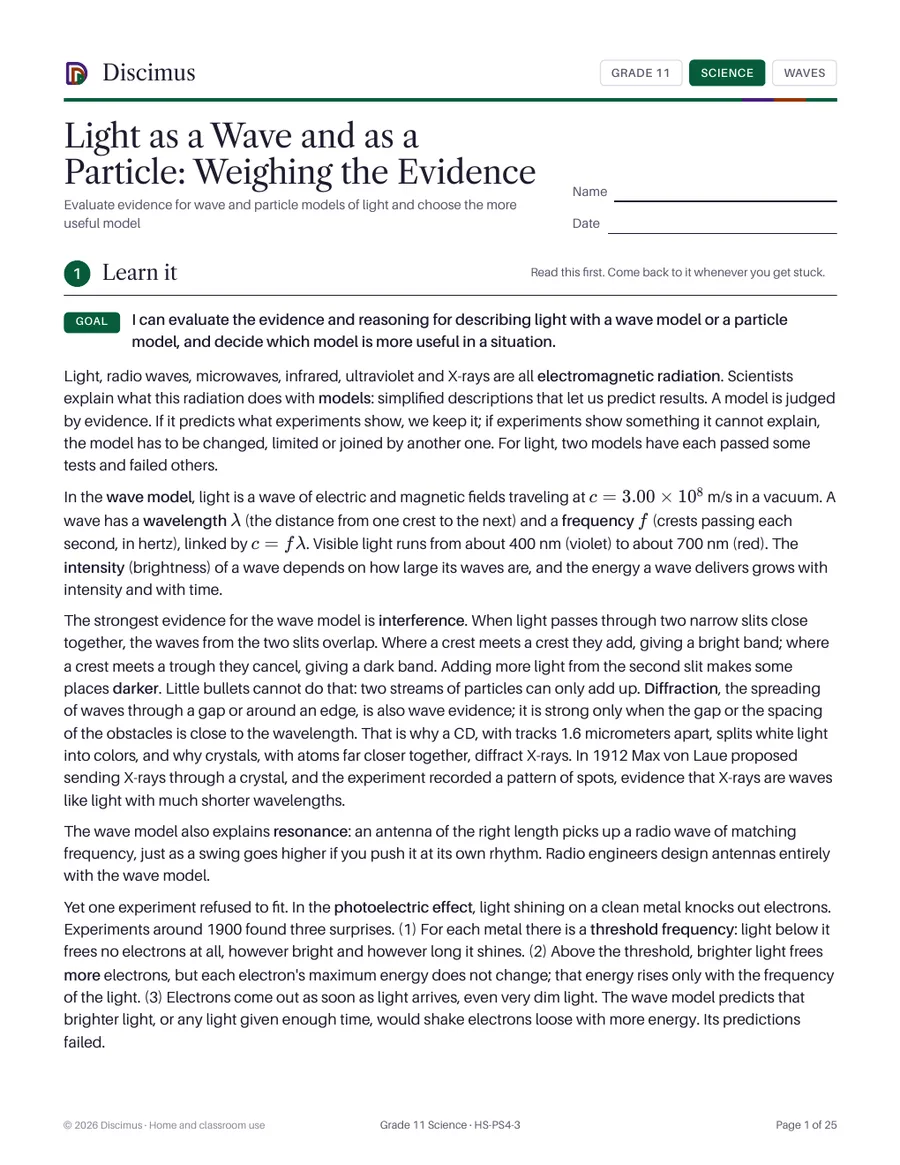
Evaluate evidence for wave and particle models of light and choose the more useful model
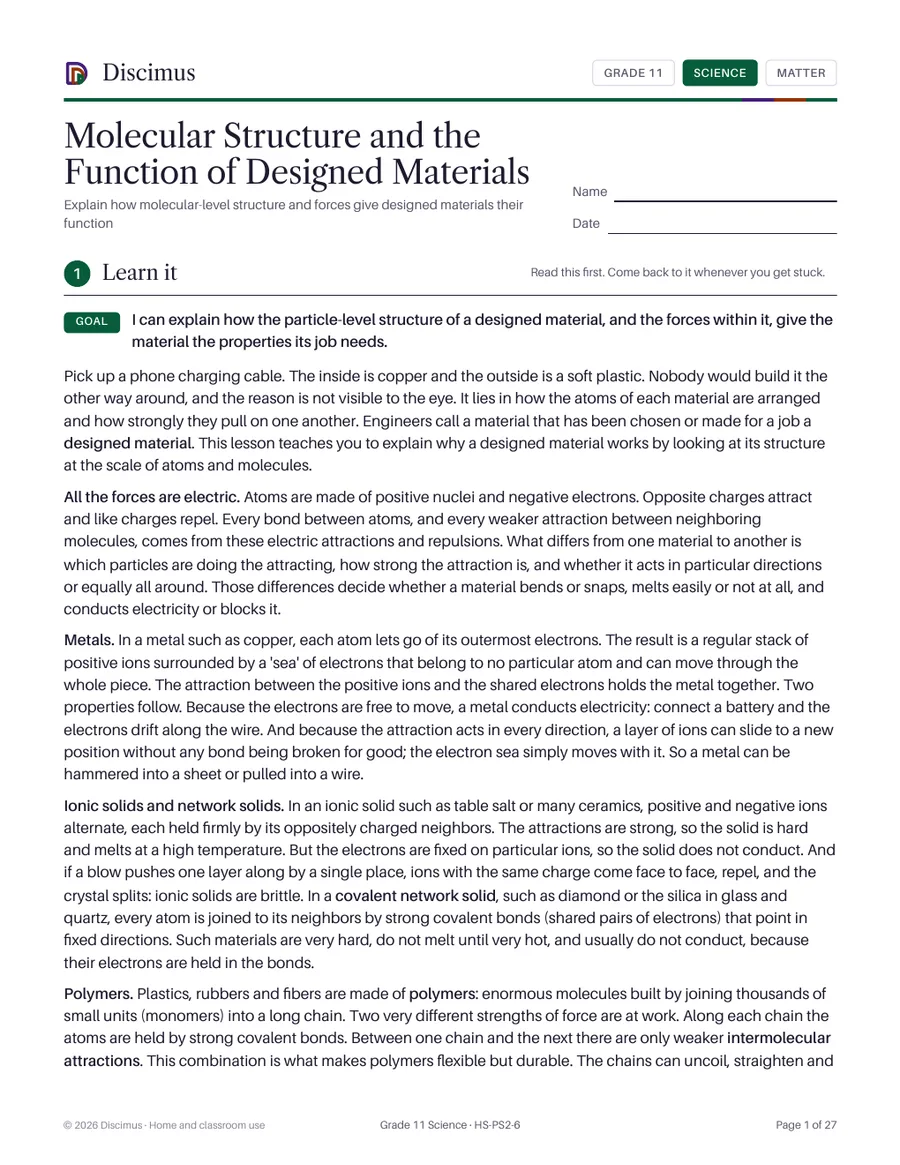
Explain how molecular-level structure and forces give designed materials their function
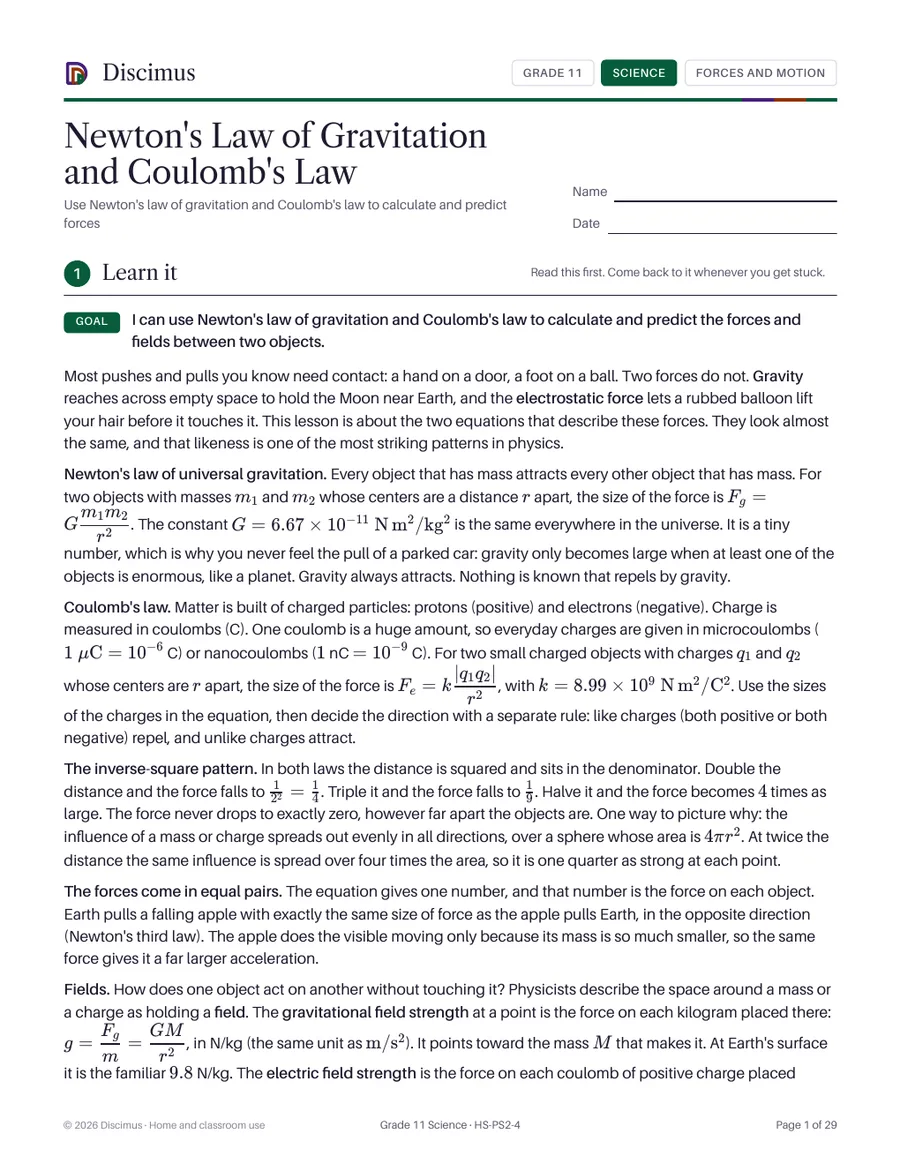
Use Newton's law of gravitation and Coulomb's law to calculate and predict forces
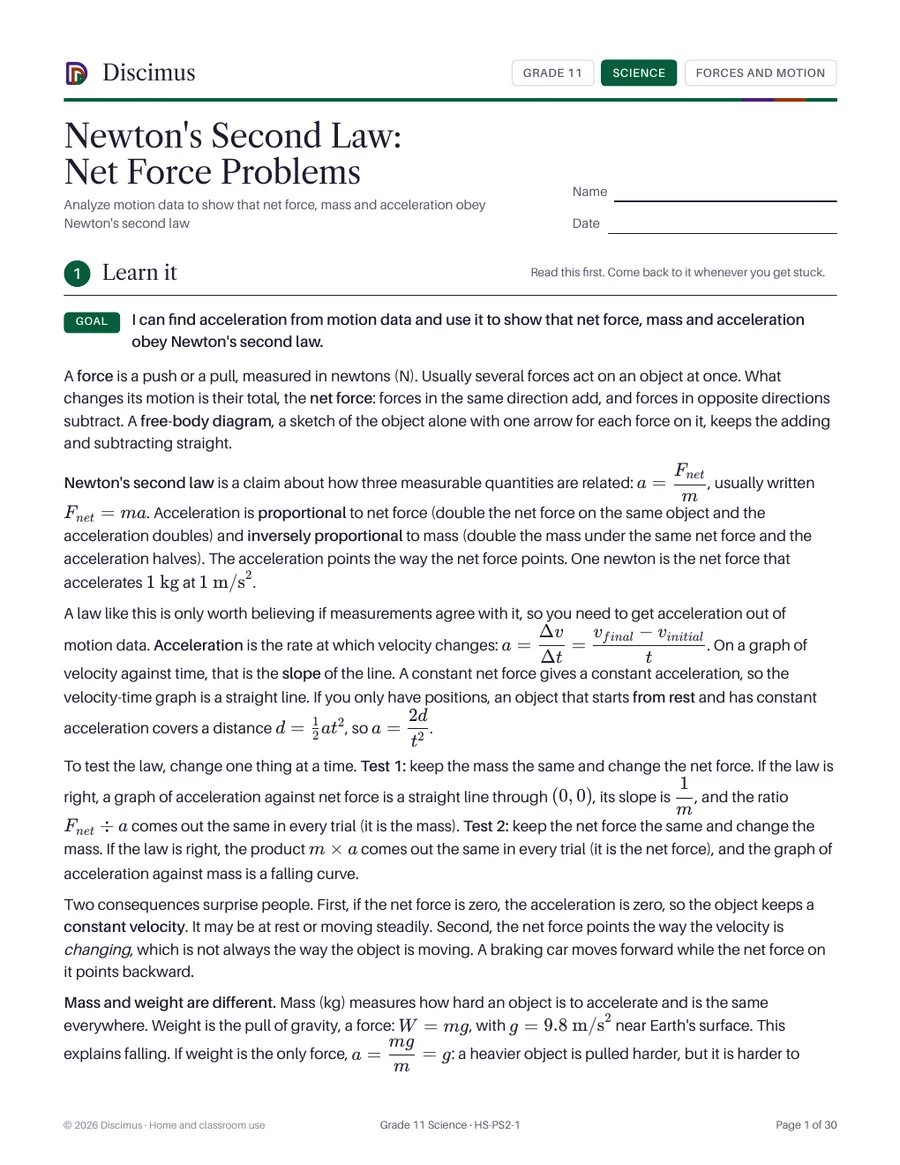
Analyze motion data to show that net force, mass and acceleration obey Newton's second law
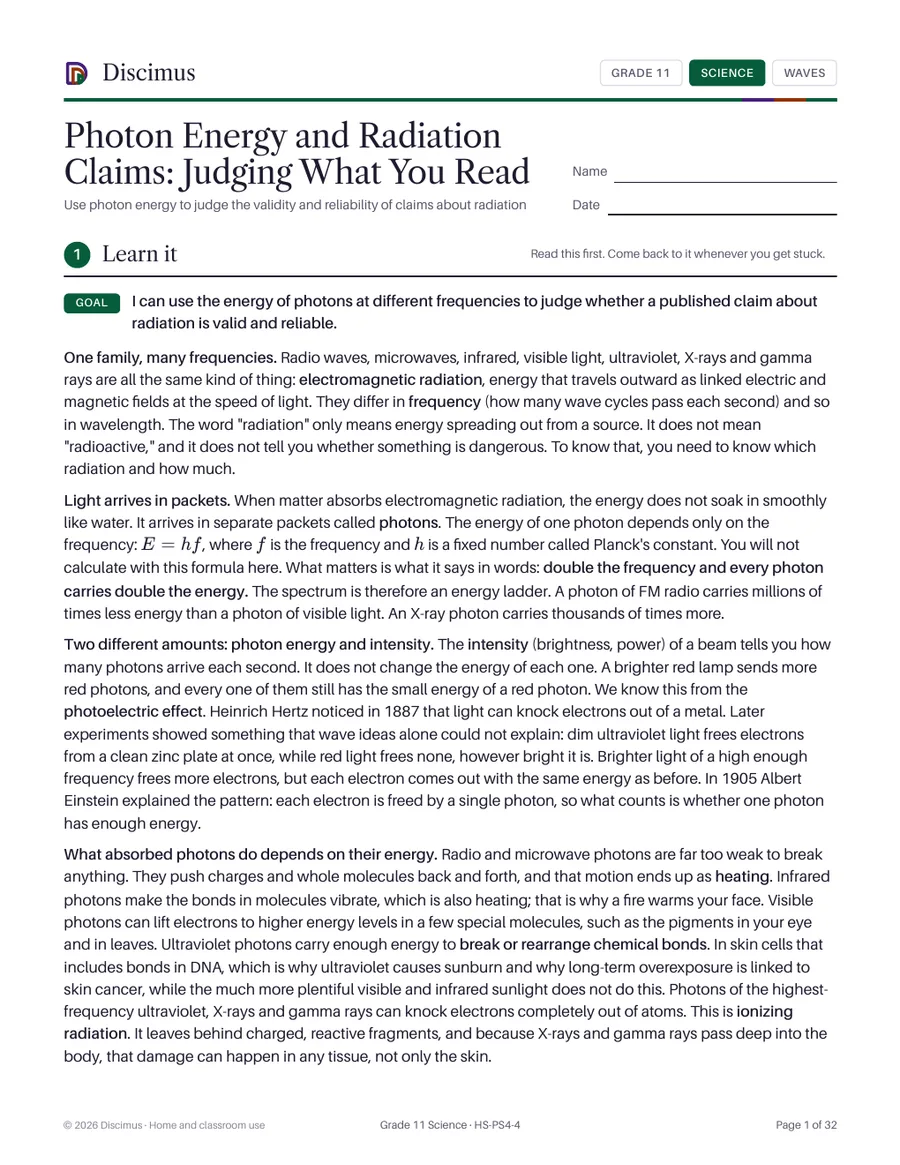
Use photon energy to judge the validity and reliability of claims about radiation
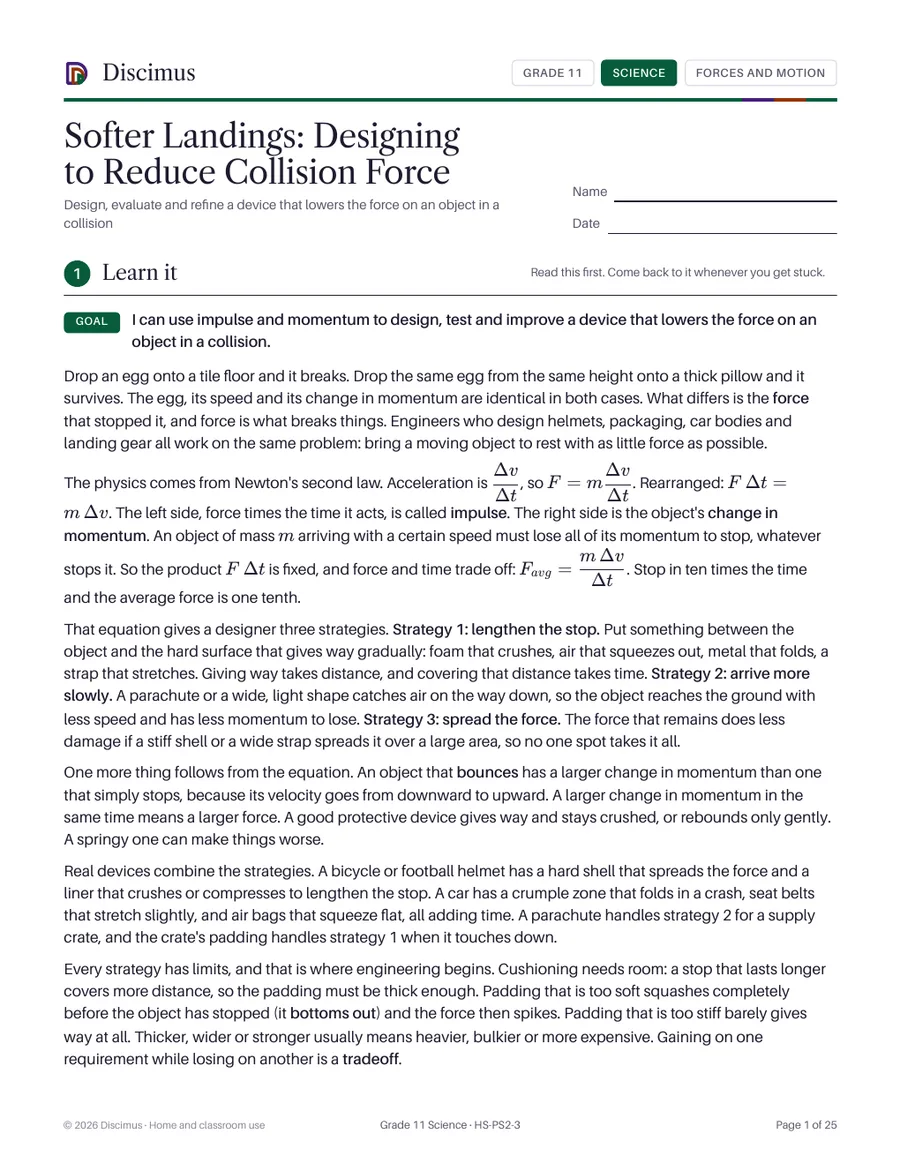
Design, evaluate and refine a device that lowers the force on an object in a collision
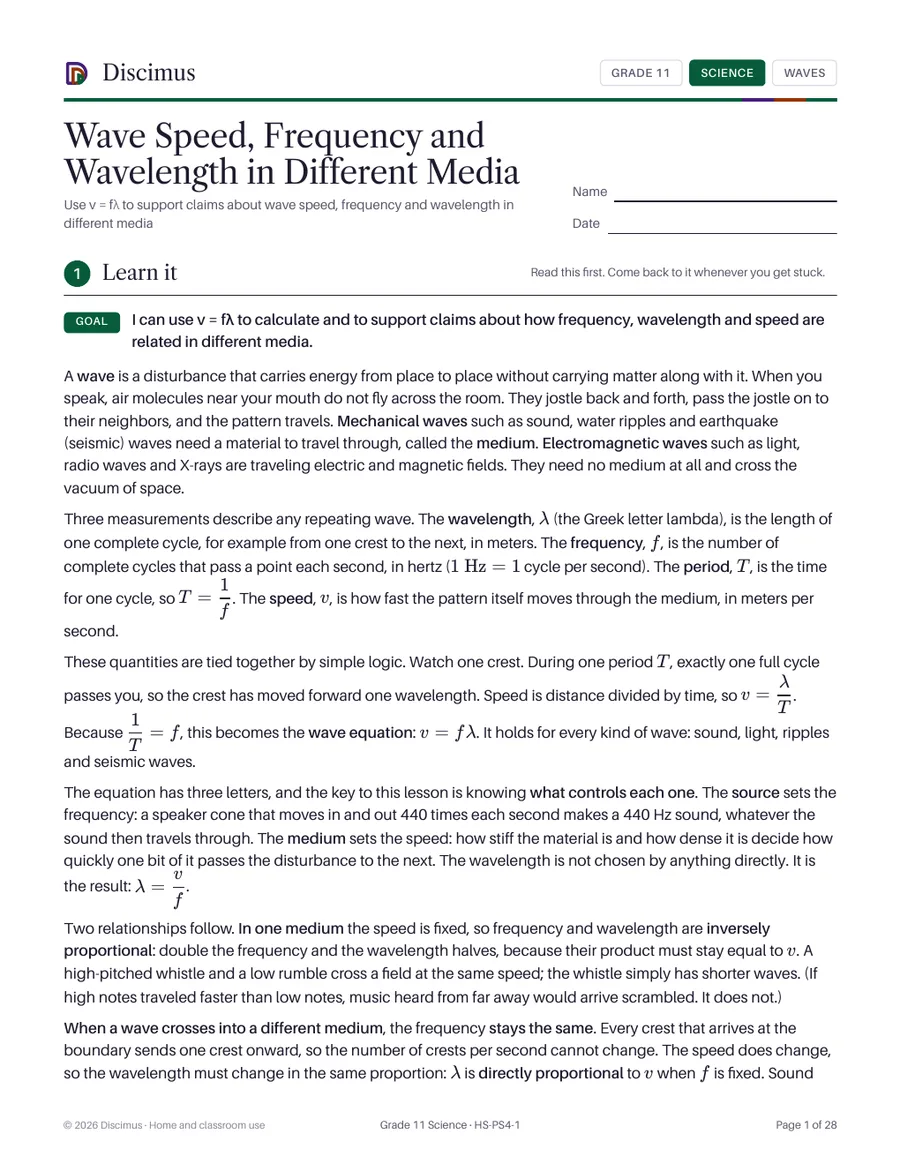
Use v = fλ to support claims about wave speed, frequency and wavelength in different media
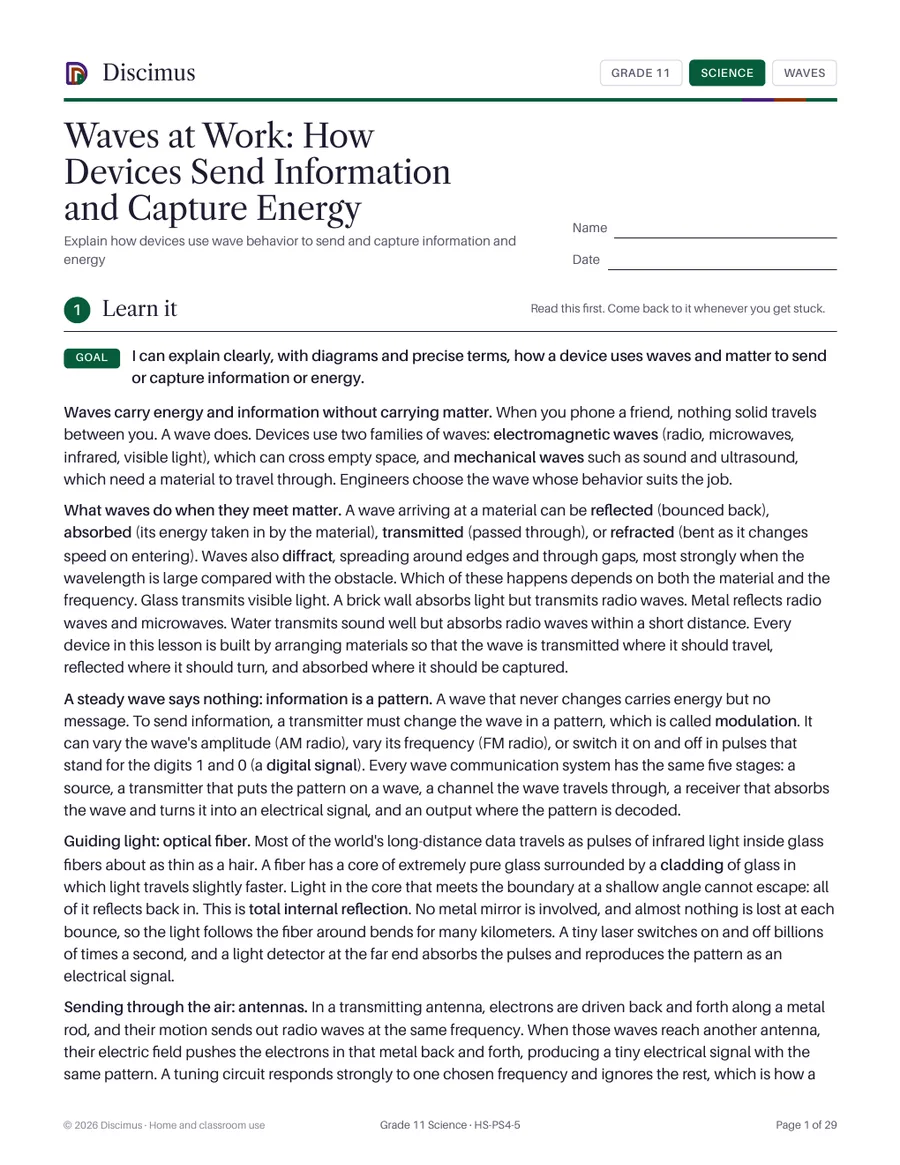
Explain how devices use wave behavior to send and capture information and energy