Breaking a Complex Problem into Solvable Parts
Design a solution by breaking a complex problem into smaller sub-problems
Next Generation Science Standards
Life, earth, physical science and the habits of investigation.
Design a solution by breaking a complex problem into smaller sub-problems
Model how internal and surface processes build and wear down land and sea-floor features
Follow complex multistep science procedures precisely and analyze results using the text
Build and use a quantitative box model of carbon cycling among Earth's four spheres
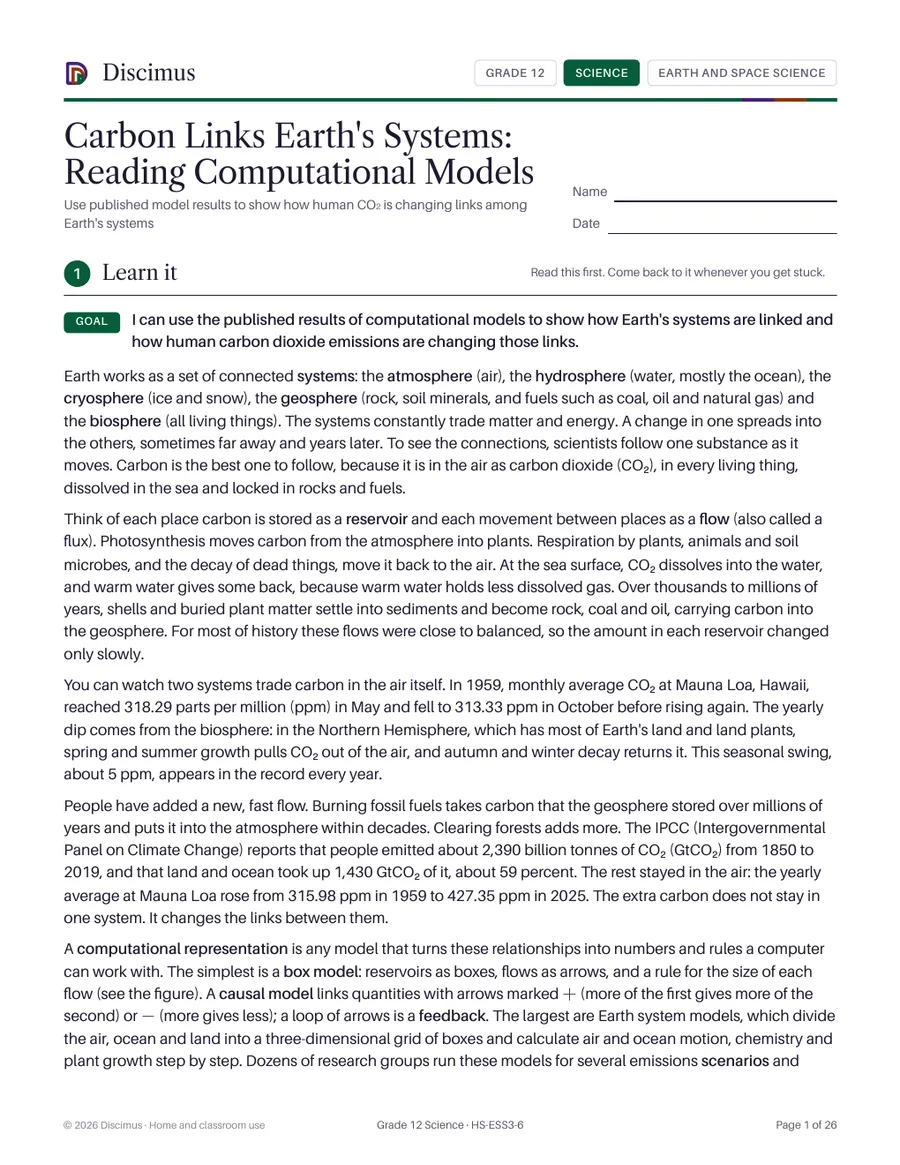
Use published model results to show how human CO₂ is changing links among Earth's systems
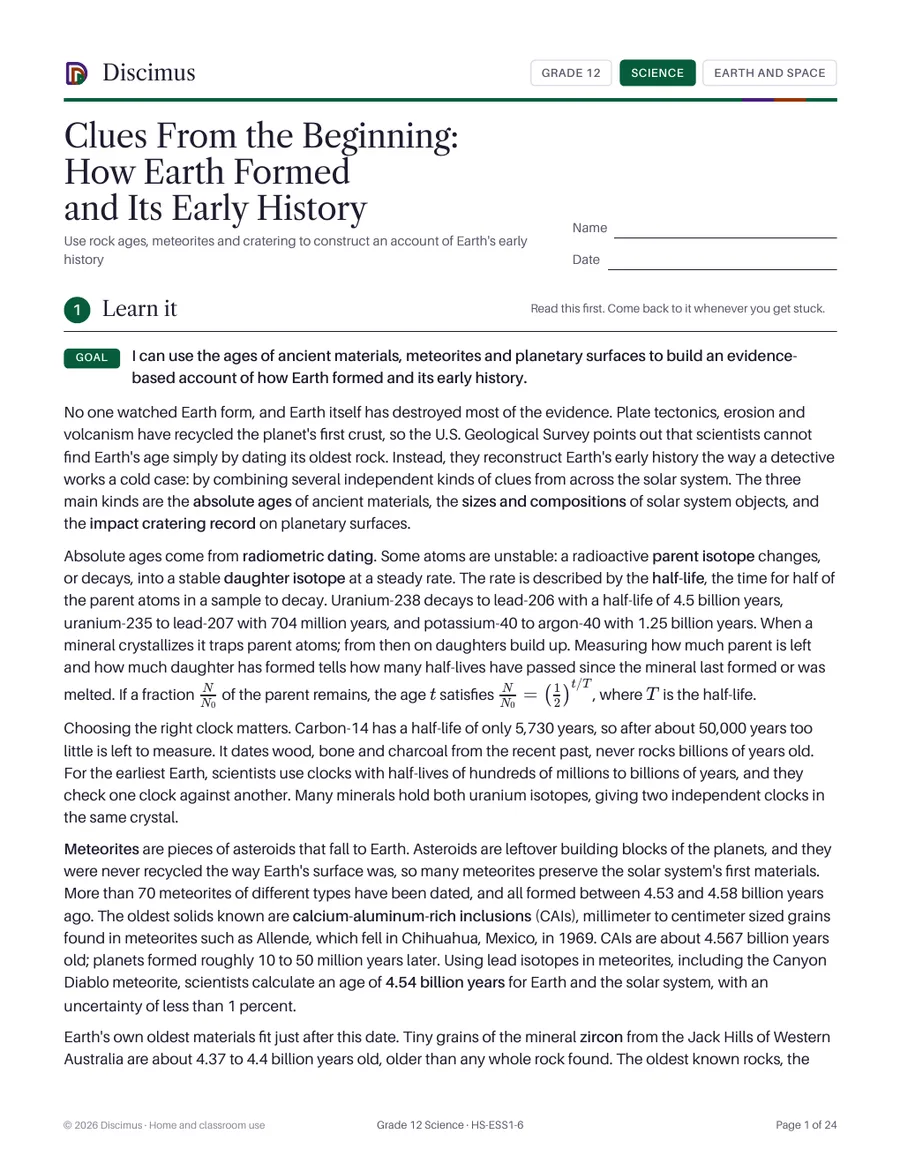
Use rock ages, meteorites and cratering to construct an account of Earth's early history
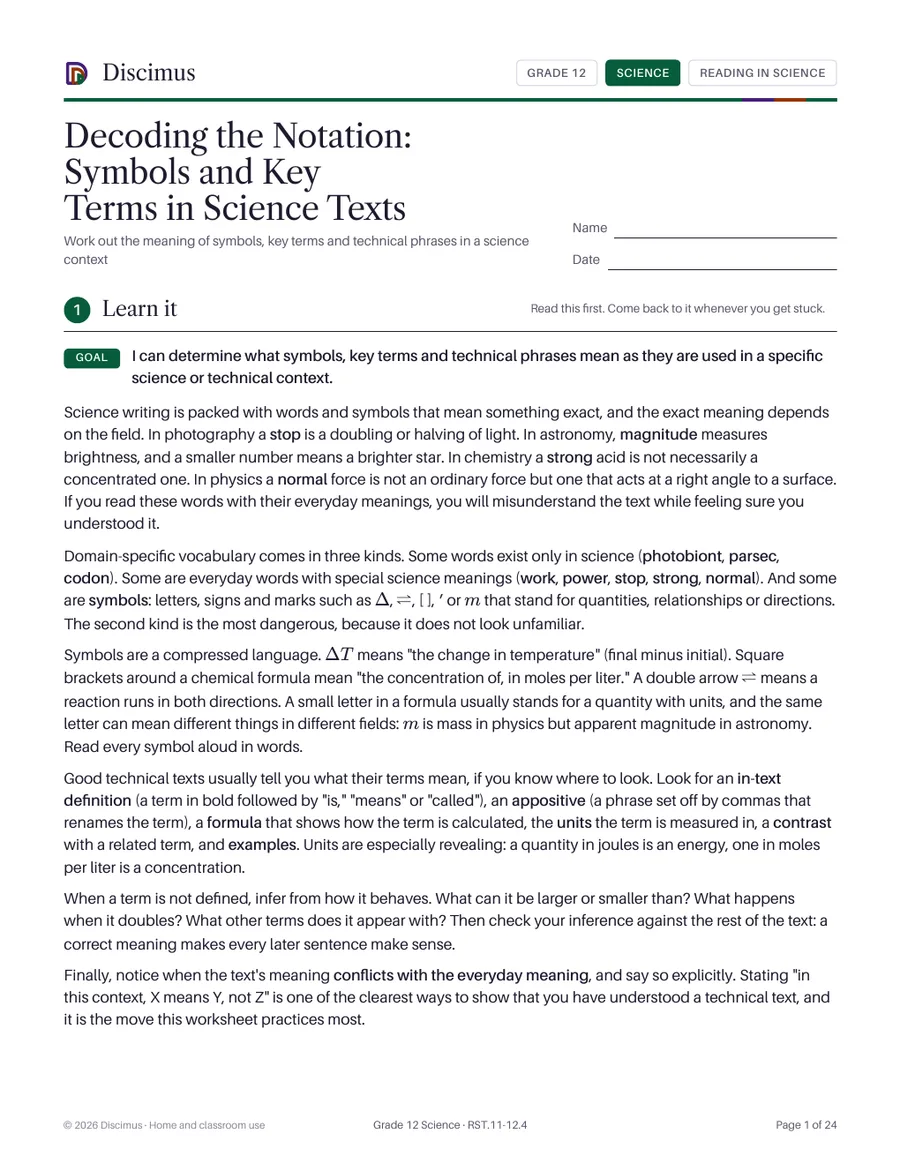
Work out the meaning of symbols, key terms and technical phrases in a science context
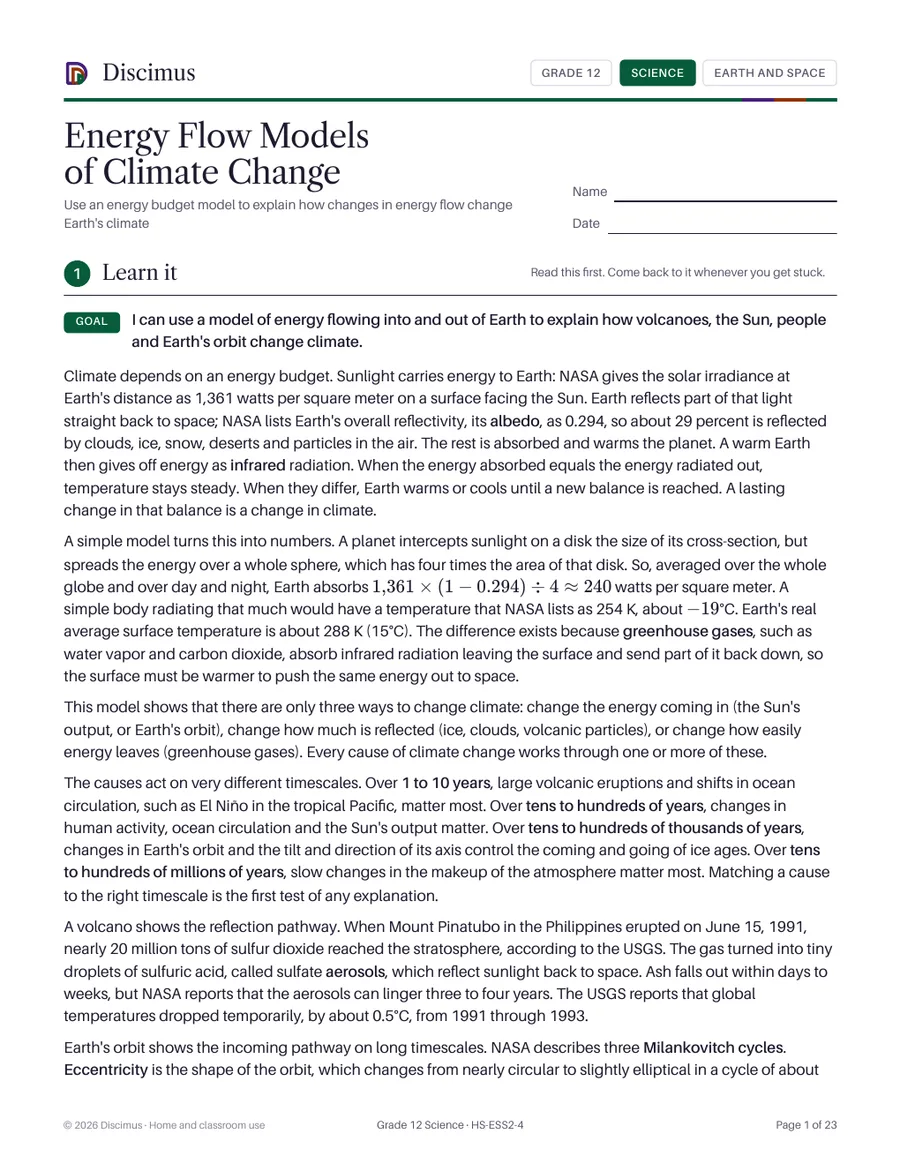
Use an energy budget model to explain how changes in energy flow change Earth's climate
Evaluate and refine a technology that reduces a human impact on natural systems
Evaluate a solution using prioritized criteria, trade-offs, constraints and impacts
Explain the Big Bang theory with evidence from redshift, the CMB and cosmic composition
Use geoscience data to show how one surface change causes feedbacks in other Earth systems
Use climate data and model results to forecast a rate of climate change and its impacts
Specify qualitative and quantitative criteria and constraints for a global challenge
Construct an evidence-based argument that life and Earth's systems have changed each other
Cite evidence from science texts, noting key distinctions, gaps and inconsistencies
Model Earth's layers from evidence and explain how thermal convection cycles matter
Use growth models, graphs and density to explain what sets carrying capacity
Use Kepler's laws and Newton's law of gravitation to predict orbital periods and speeds
Read and understand grades 11 to 12 science and technical texts independently
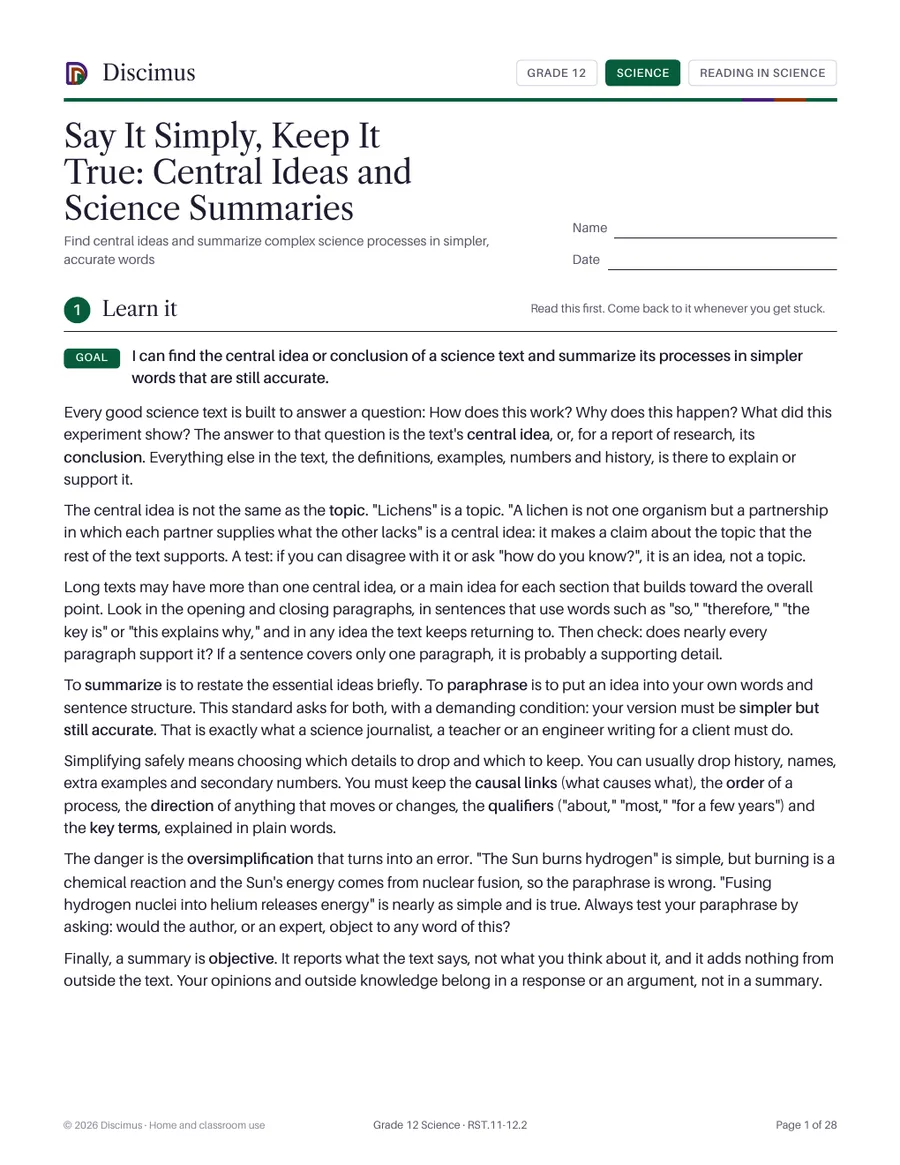
Find central ideas and summarize complex science processes in simpler, accurate words
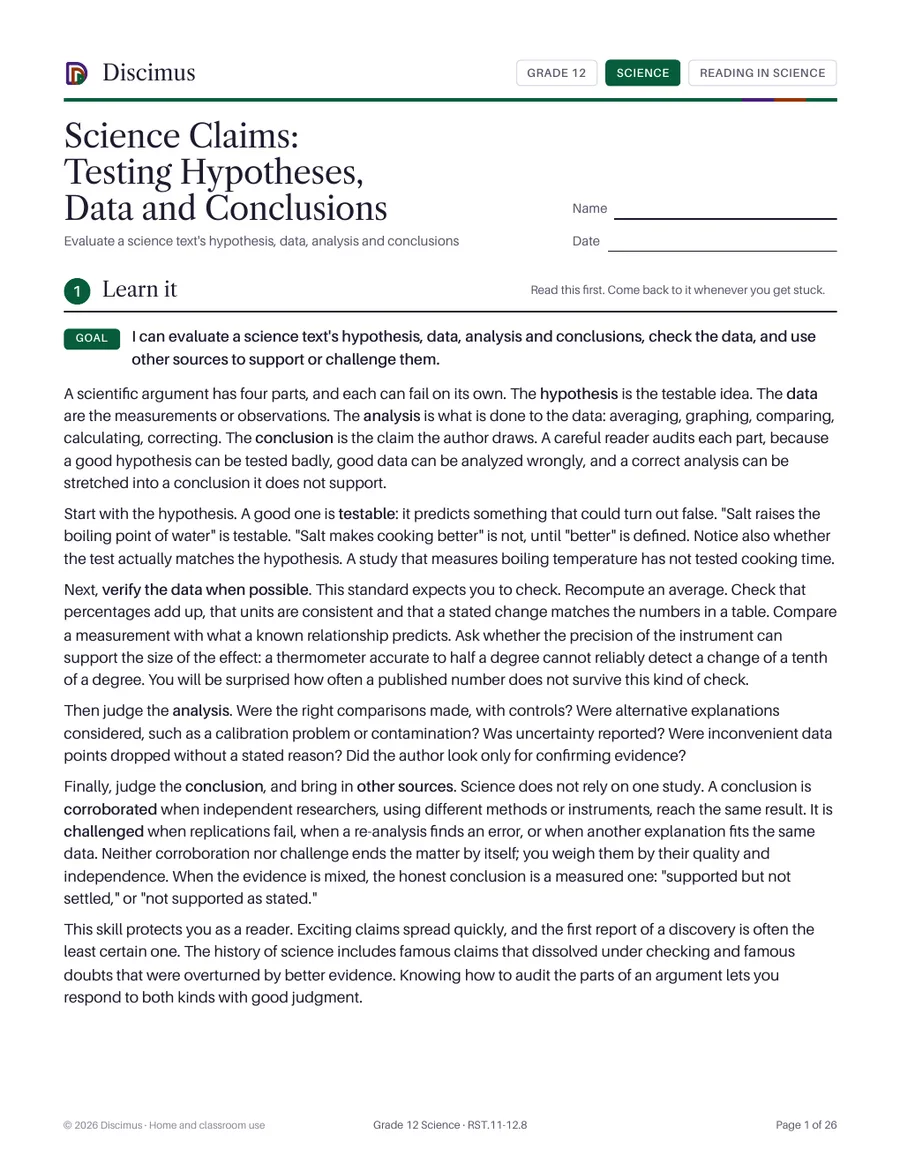
Evaluate a science text's hypothesis, data, analysis and conclusions
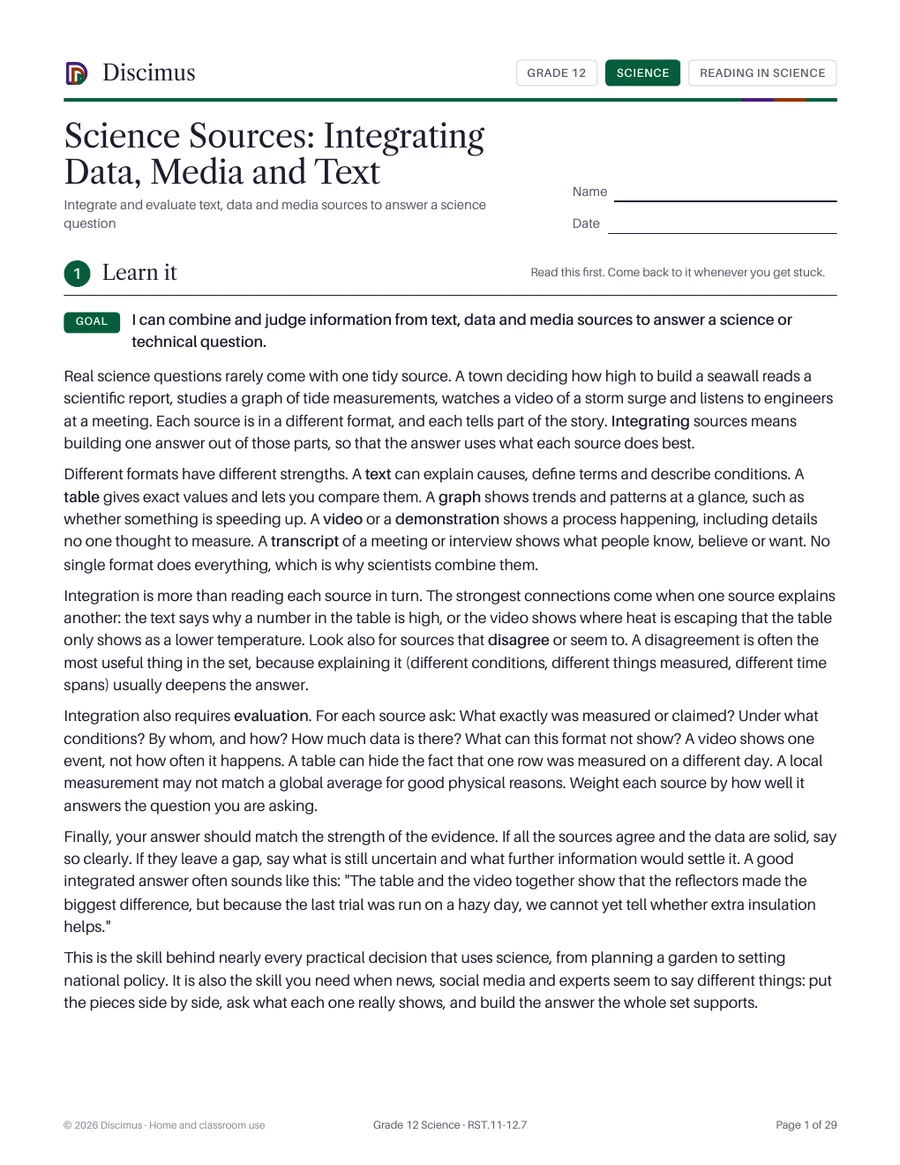
Integrate and evaluate text, data and media sources to answer a science question
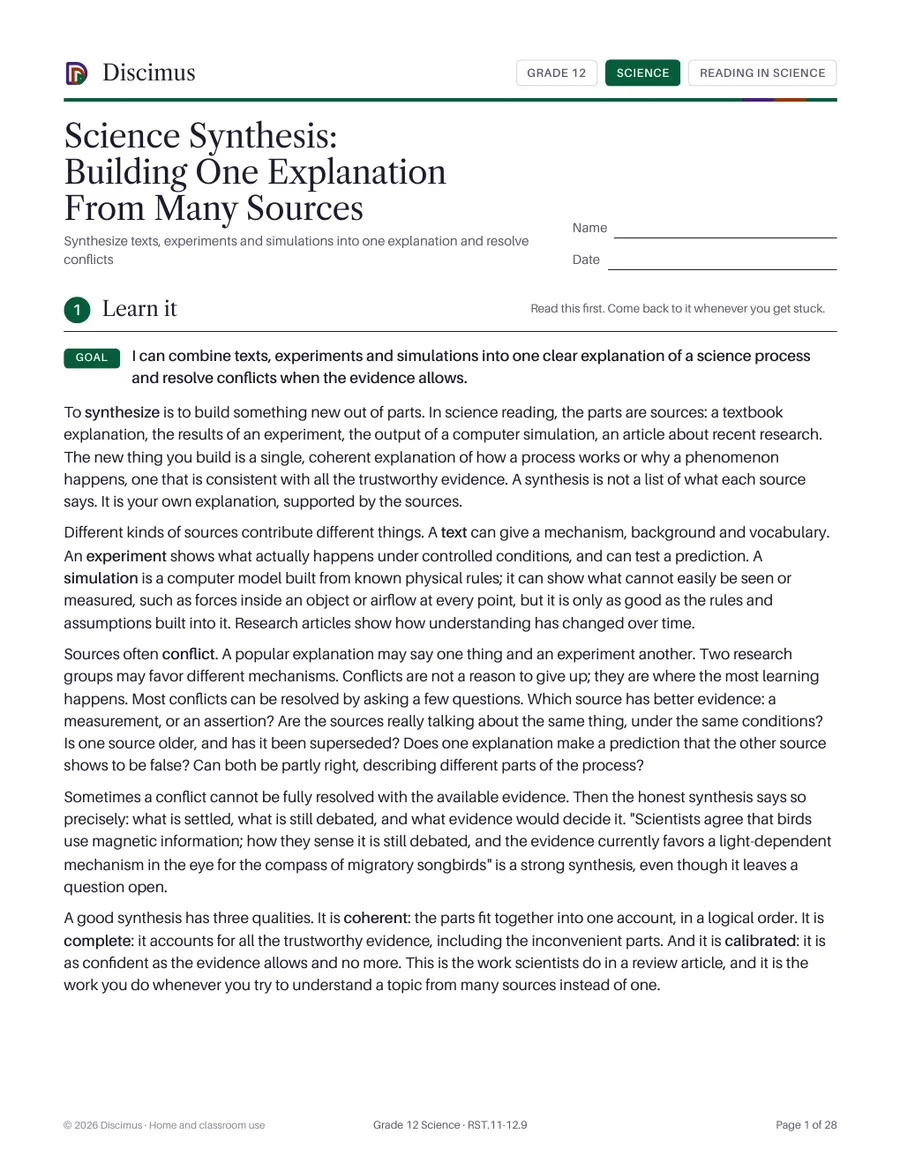
Synthesize texts, experiments and simulations into one explanation and resolve conflicts
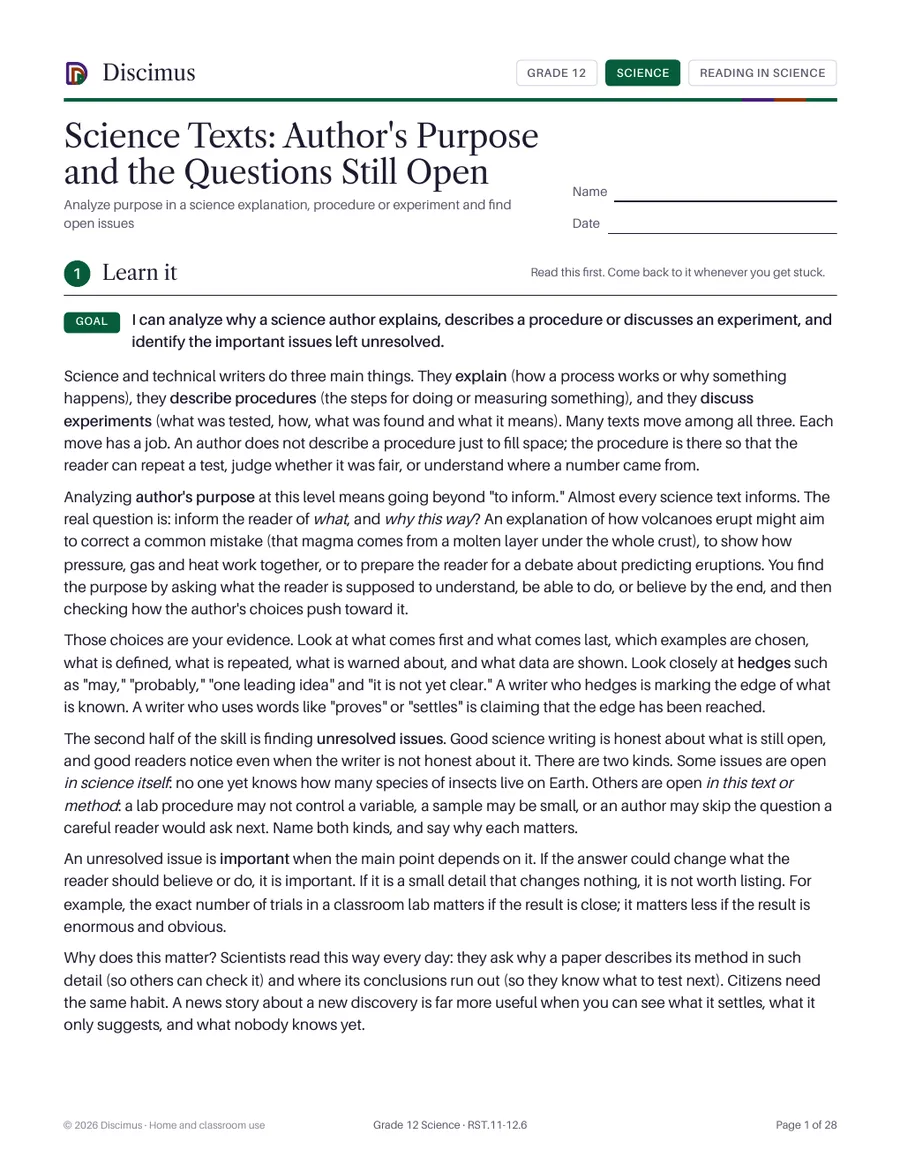
Analyze purpose in a science explanation, procedure or experiment and find open issues
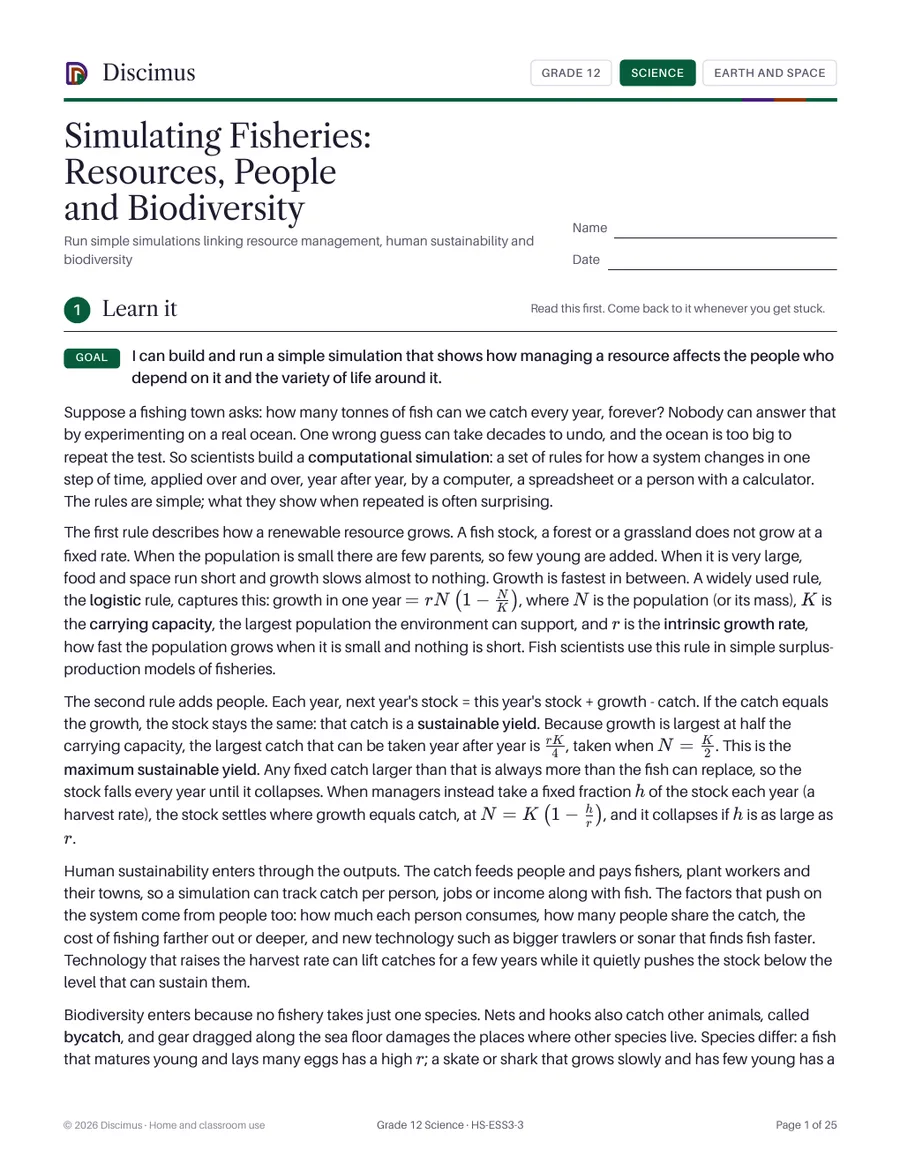
Run simple simulations linking resource management, human sustainability and biodiversity
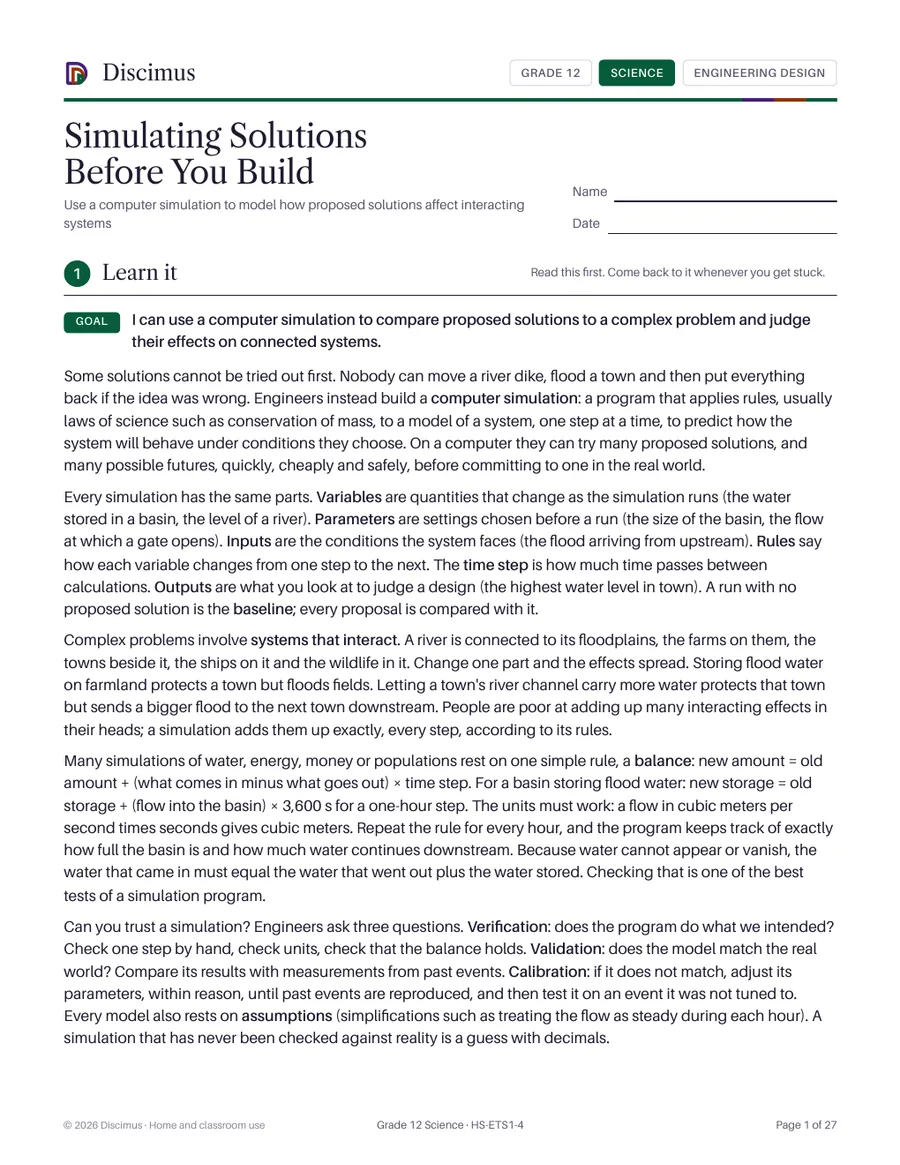
Use a computer simulation to model how proposed solutions affect interacting systems
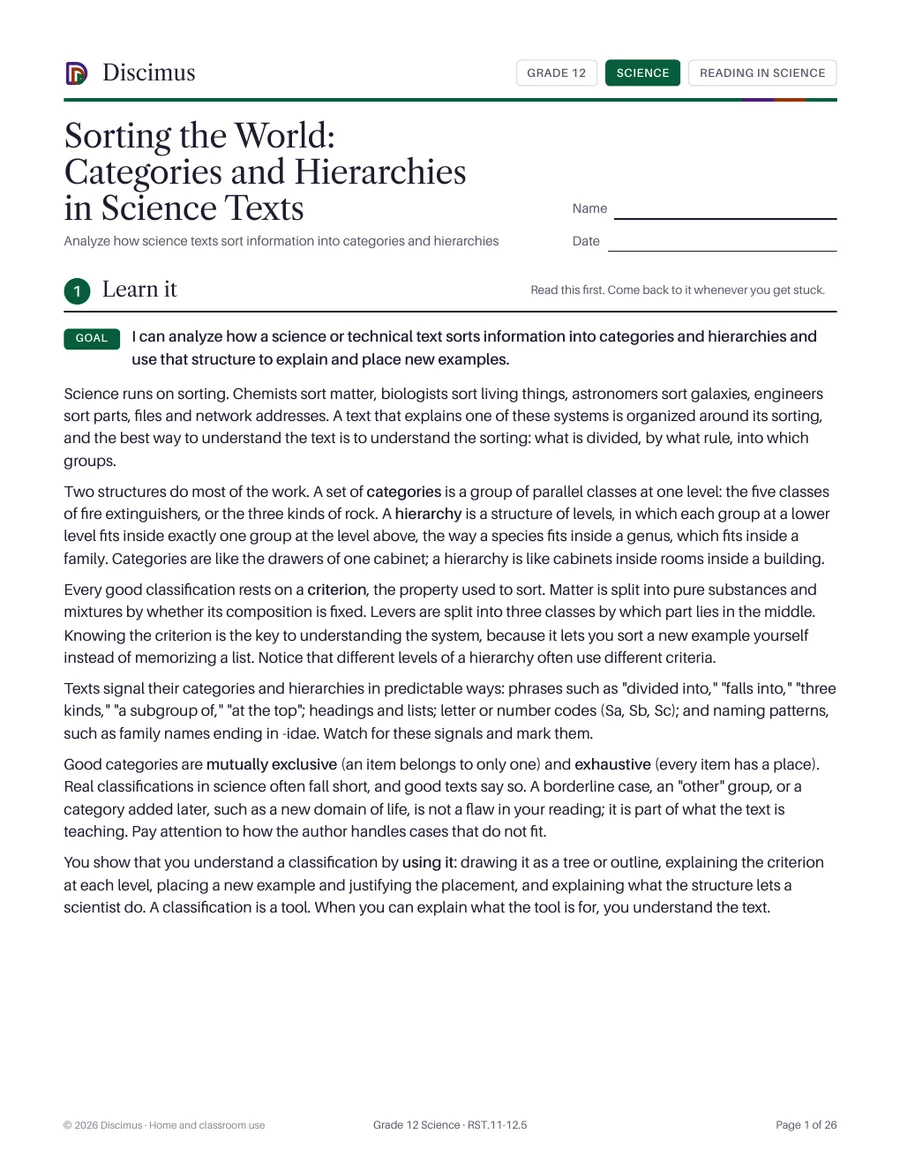
Analyze how science texts sort information into categories and hierarchies
Explain how the elements a star makes depend on its mass and its stage of life
Model the Sun's life span and how energy from core fusion reaches Earth as radiation
Plan and carry out investigations of how water's properties change Earth materials
Evaluate competing designs for using energy and mineral resources with cost-benefit ratios
Explain from evidence how resources, hazards and climate change have shaped human activity
Use plate tectonics to explain the ages of oceanic and continental crustal rocks