Skip to content
Discimus
  • Grades
  • Subjects
  • Occasions
  • Standards
  • Membership
Sign inJoin
  1. Home
  2. Grades
  3. Grade 2
  4. English Language Arts

Common Core State Standards for English Language Arts

Grade 2 English Language Arts

Phonics, reading, grammar, vocabulary and writing.

TopicsFluency 1Grammar 10Phonics 6Poetry 1Reading Comprehension 21Sight Words 1Spelling 1Vocabulary 9Writing 7
StandardsL.2.1.AL.2.1.BL.2.1.CL.2.1.DL.2.1.EL.2.1.FL.2.2.AL.2.2.BL.2.2.CL.2.2.DL.2.2.EL.2.3.AL.2.4.AL.2.4.BL.2.4.CL.2.4.DL.2.4.EL.2.5.AL.2.5.BL.2.6RF.2.3.ARF.2.3.BRF.2.3.CRF.2.3.DRF.2.3.ERF.2.3.FRF.2.4.ARF.2.4.BRF.2.4.CRI.2.1RI.2.2RI.2.3RI.2.4RI.2.5RI.2.6RI.2.7RI.2.8RI.2.9RI.2.10RL.2.1RL.2.2RL.2.3RL.2.4RL.2.5RL.2.6RL.2.7RL.2.9RL.2.10W.2.1W.2.2W.2.3W.2.5W.2.6W.2.7W.2.8
  • ELAGrade 2

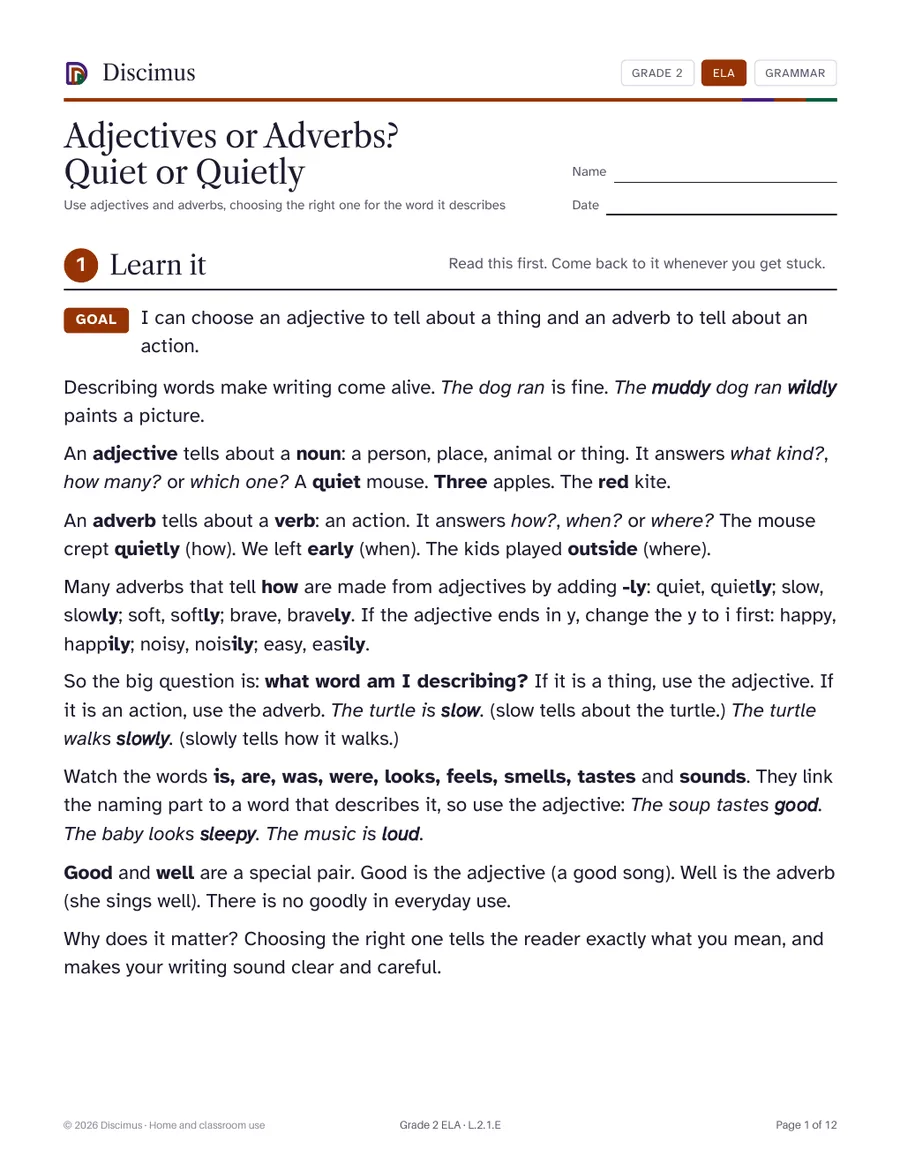
    Adjectives or Adverbs? Quiet or Quietly

    Use adjectives and adverbs, choosing the right one for the word it describes
  • ELAGrade 2

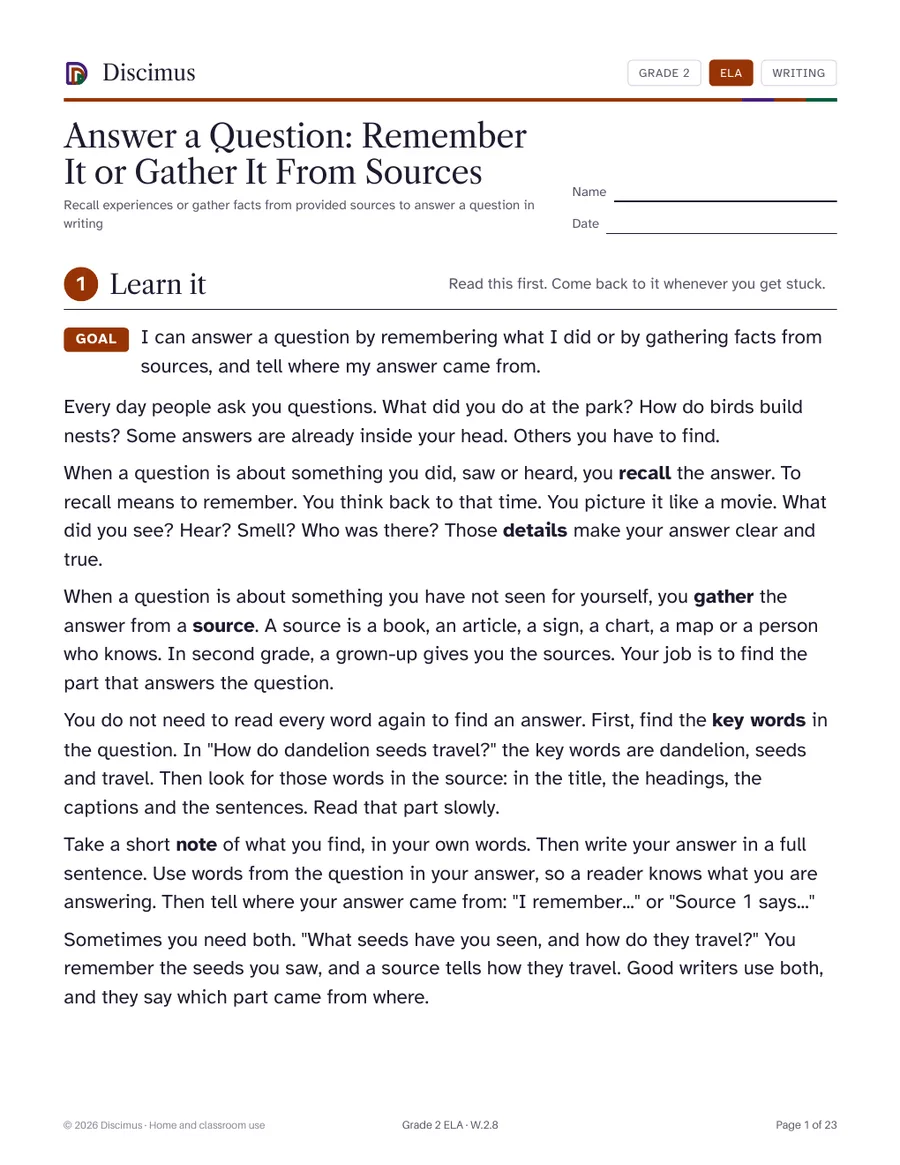
    Answer a Question: Remember It or Gather It From Sources

    Recall experiences or gather facts from provided sources to answer a question in writing
  • ELAGrade 2

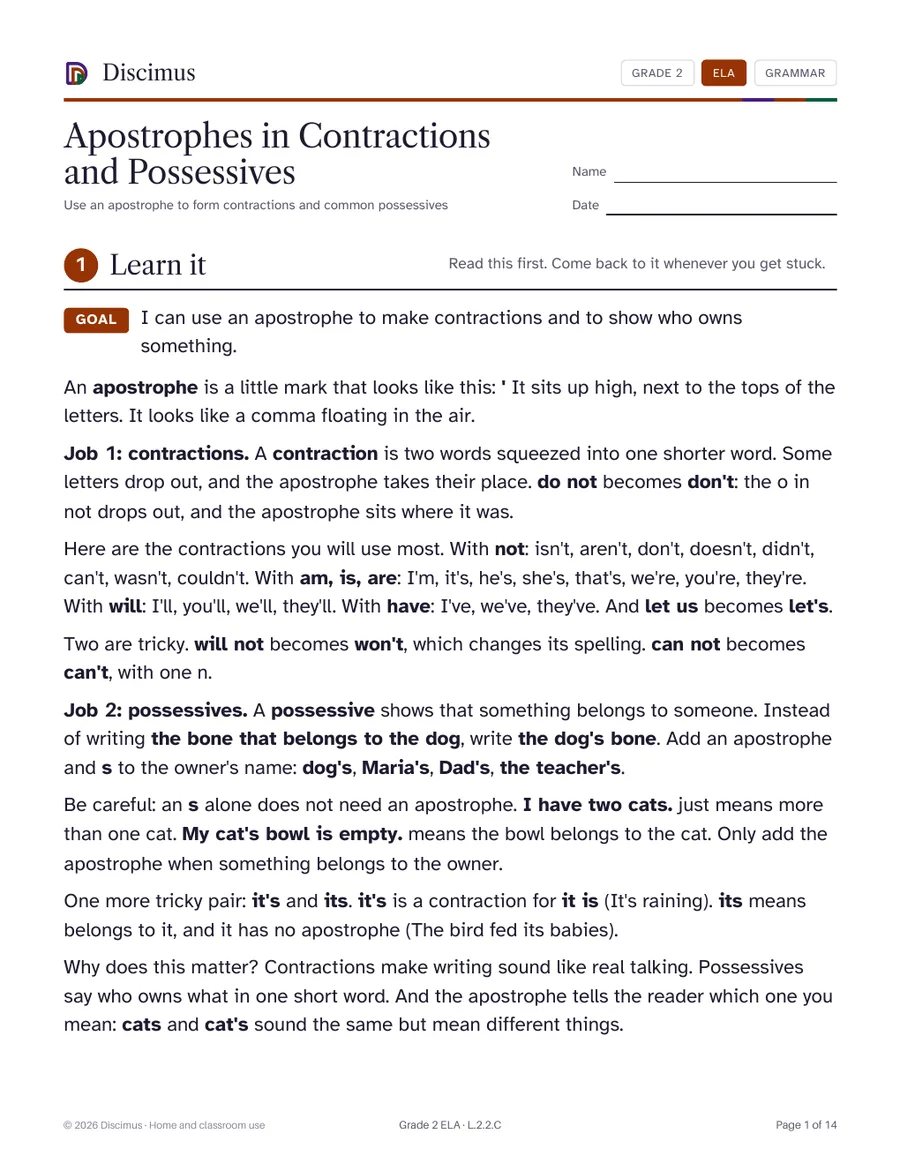
    Apostrophes in Contractions and Possessives

    Use an apostrophe to form contractions and common possessives
  • ELAGrade 2

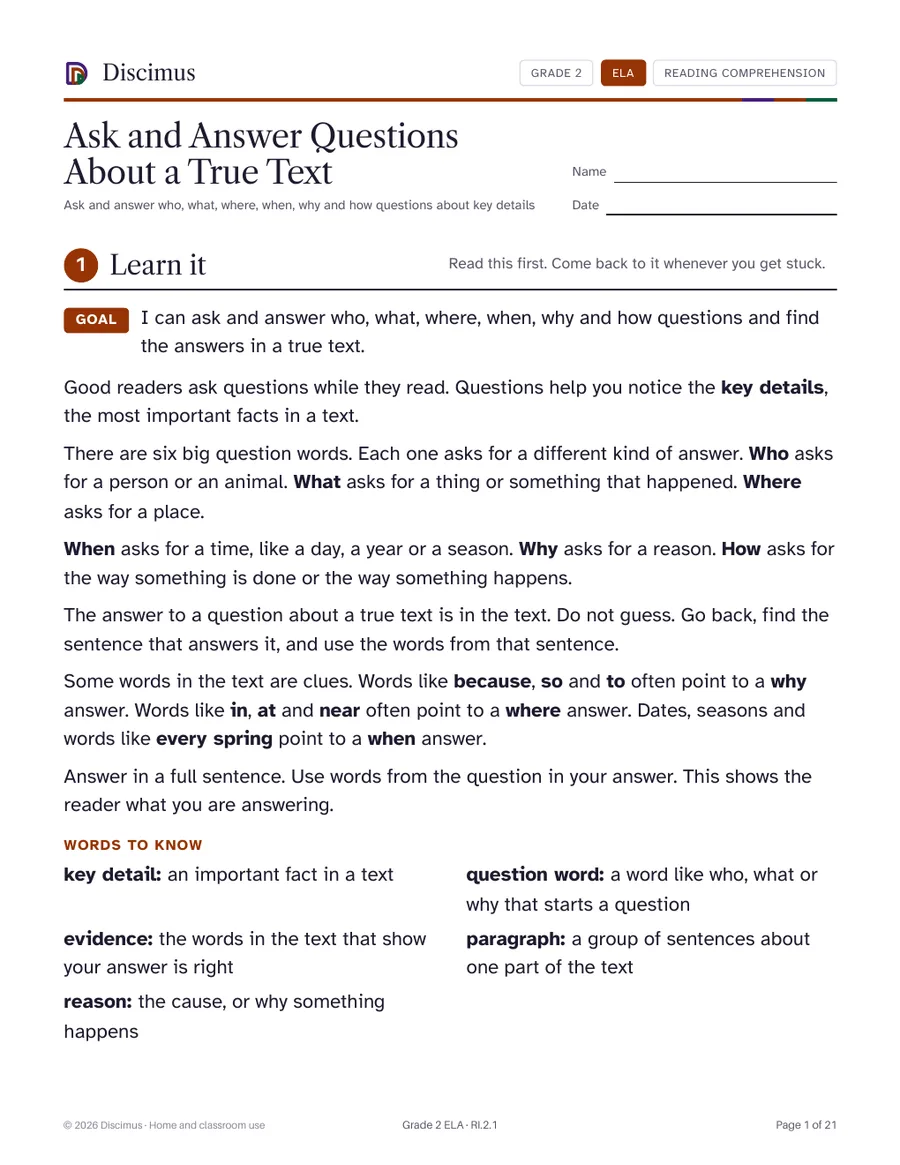
    Ask and Answer Questions About a True Text

    Ask and answer who, what, where, when, why and how questions about key details
  • ELAGrade 2

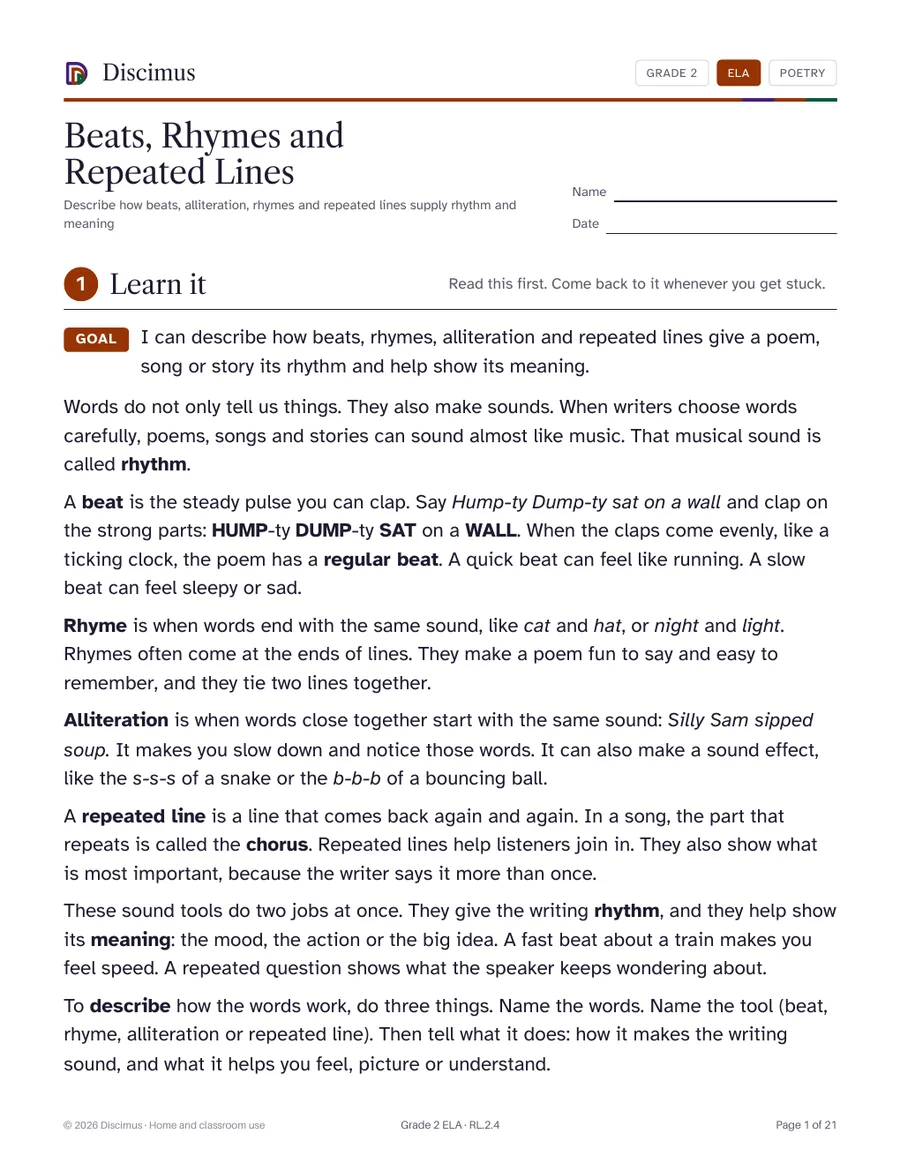
    Beats, Rhymes and Repeated Lines

    Describe how beats, alliteration, rhymes and repeated lines supply rhythm and meaning
  • ELAGrade 2

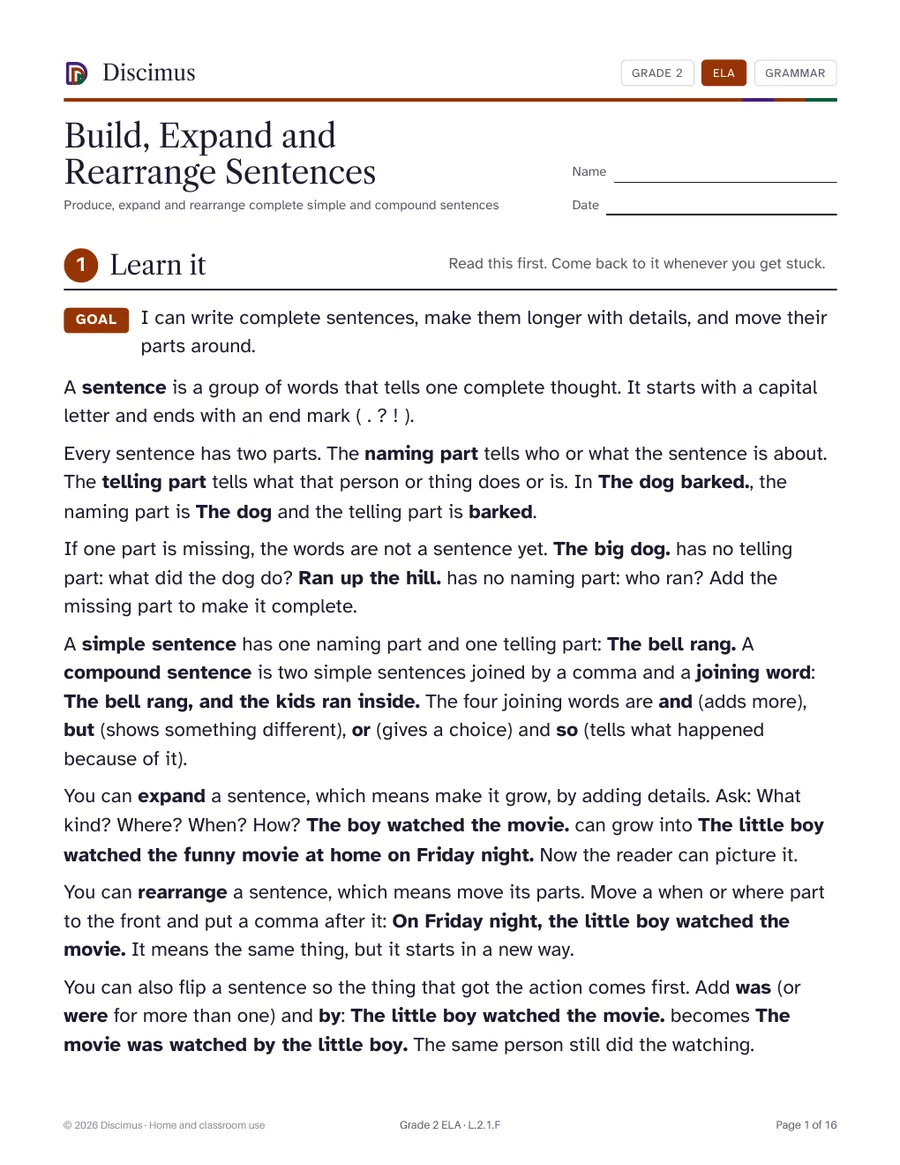
    Build, Expand and Rearrange Sentences

    Produce, expand and rearrange complete simple and compound sentences
  • ELAGrade 2

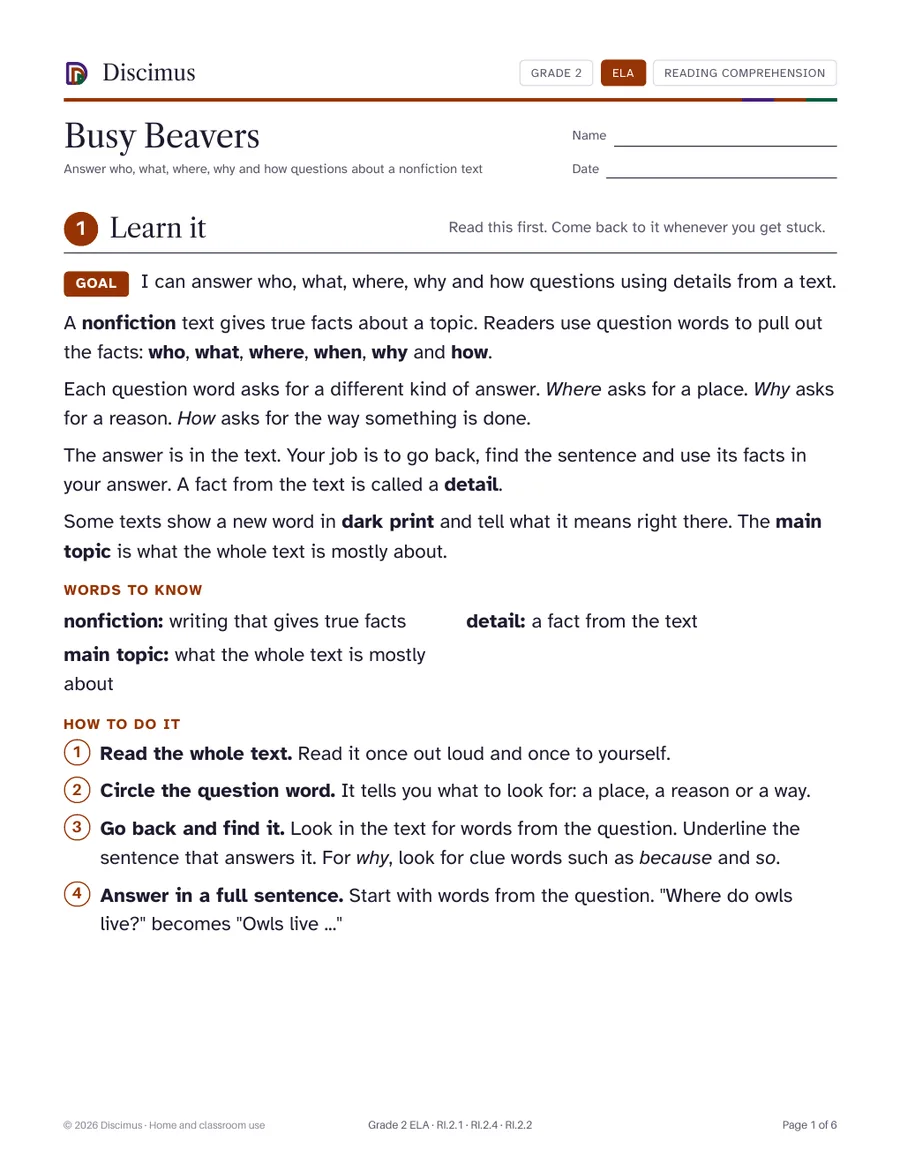
    Busy Beavers

    Answer who, what, where, why and how questions about a nonfiction text
  • ELAGrade 2

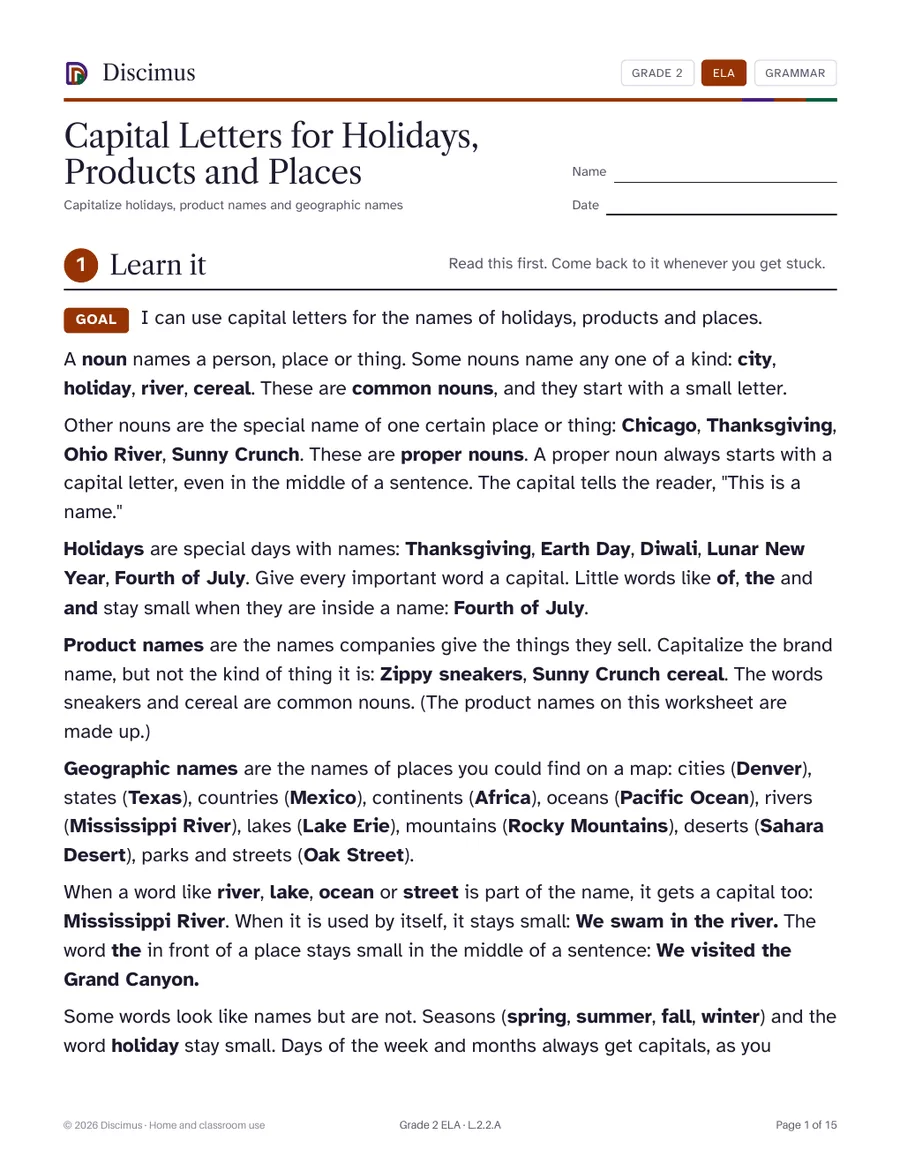
    Capital Letters for Holidays, Products and Places

    Capitalize holidays, product names and geographic names
  • ELAGrade 2

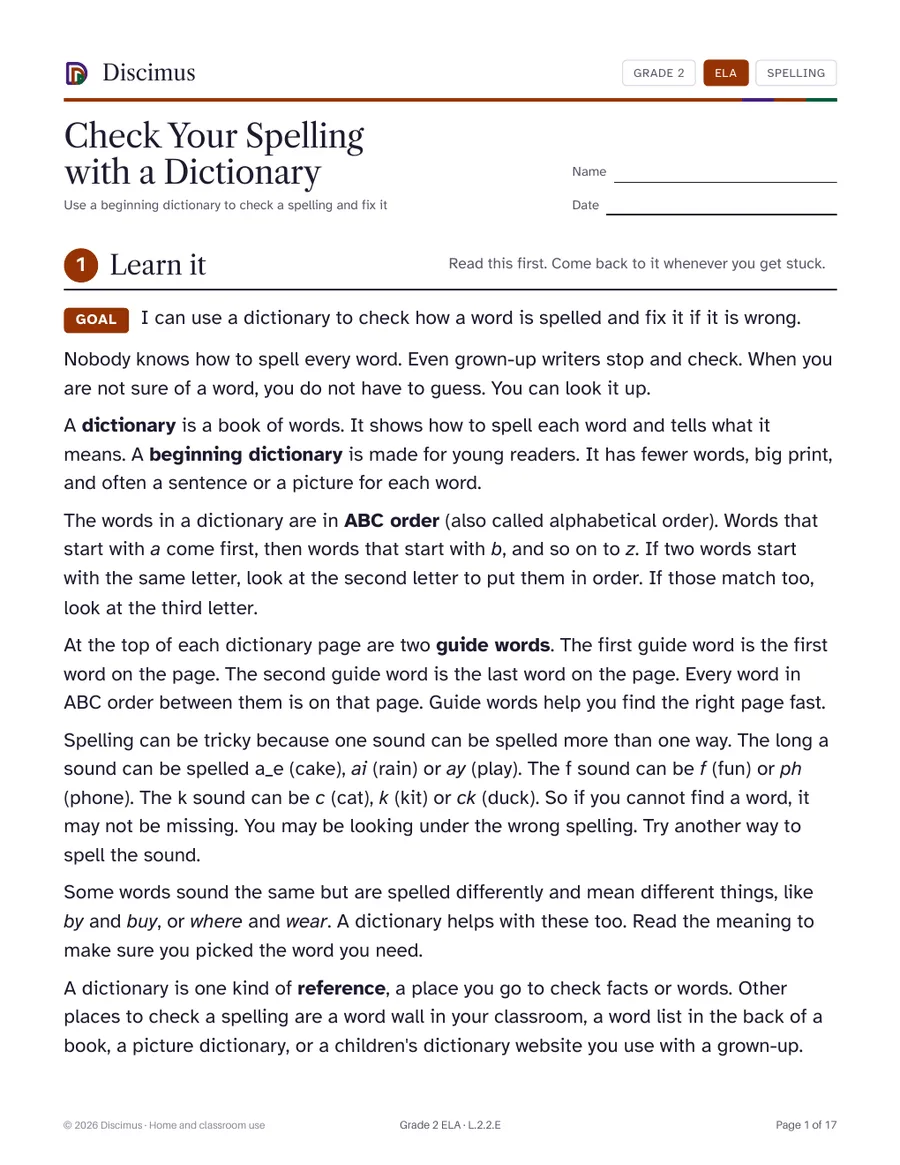
    Check Your Spelling with a Dictionary

    Use a beginning dictionary to check a spelling and fix it
  • ELAGrade 2

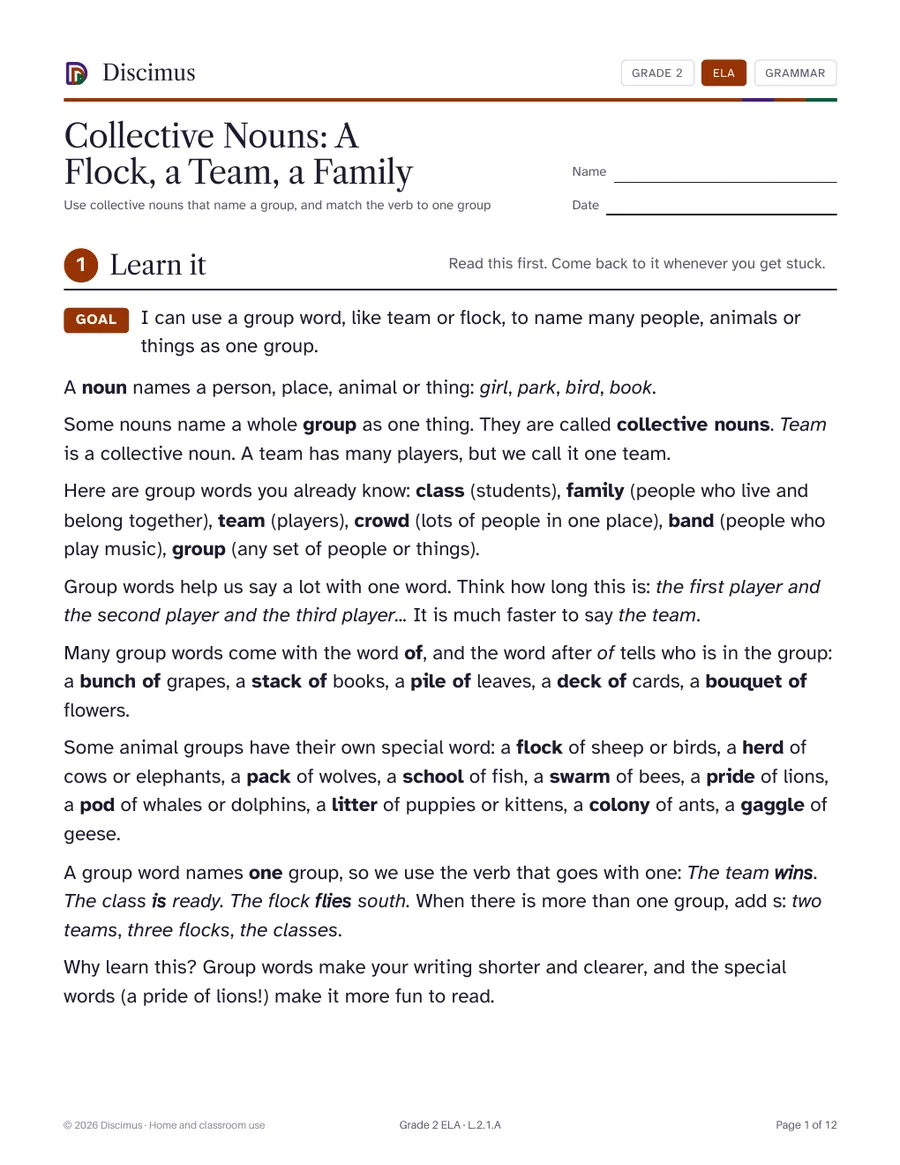
    Collective Nouns: A Flock, a Team, a Family

    Use collective nouns that name a group, and match the verb to one group
  • ELAGrade 2

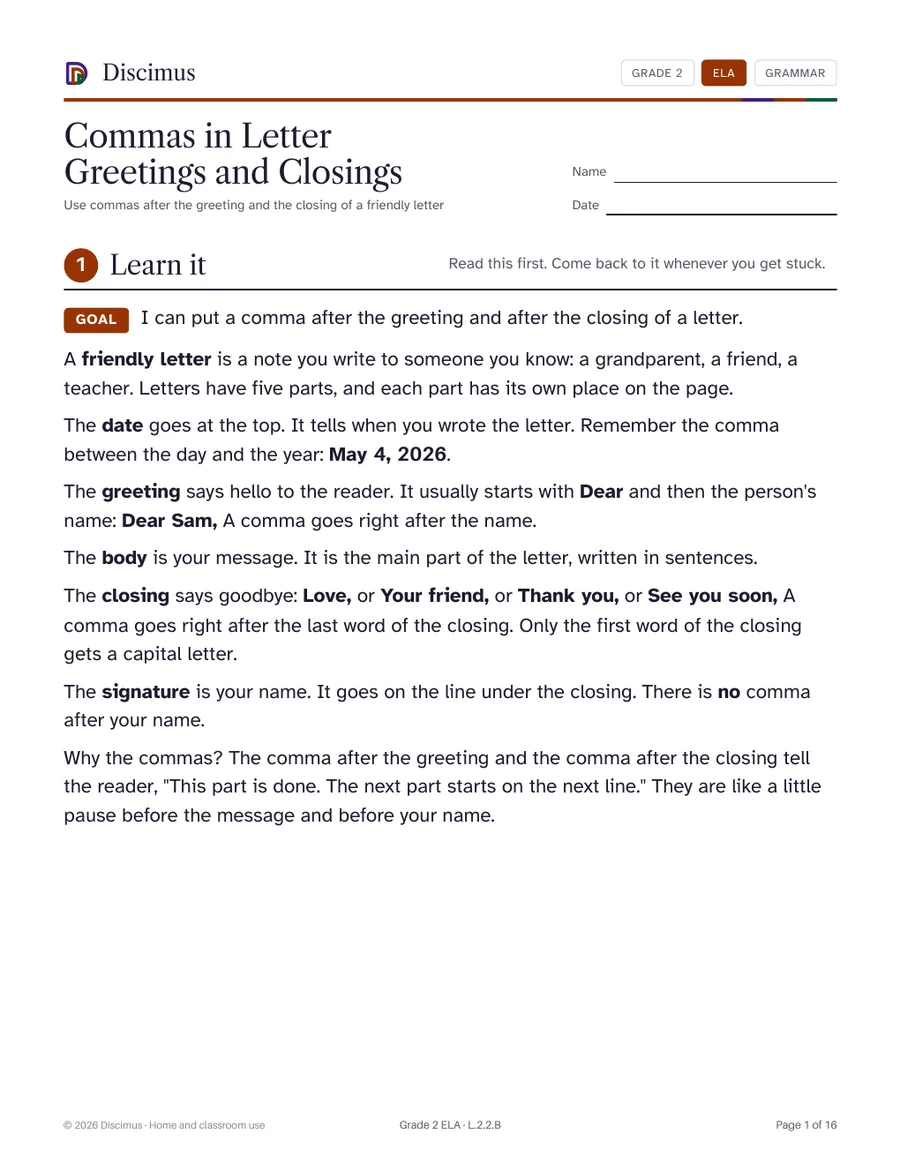
    Commas in Letter Greetings and Closings

    Use commas after the greeting and the closing of a friendly letter
  • ELAGrade 2

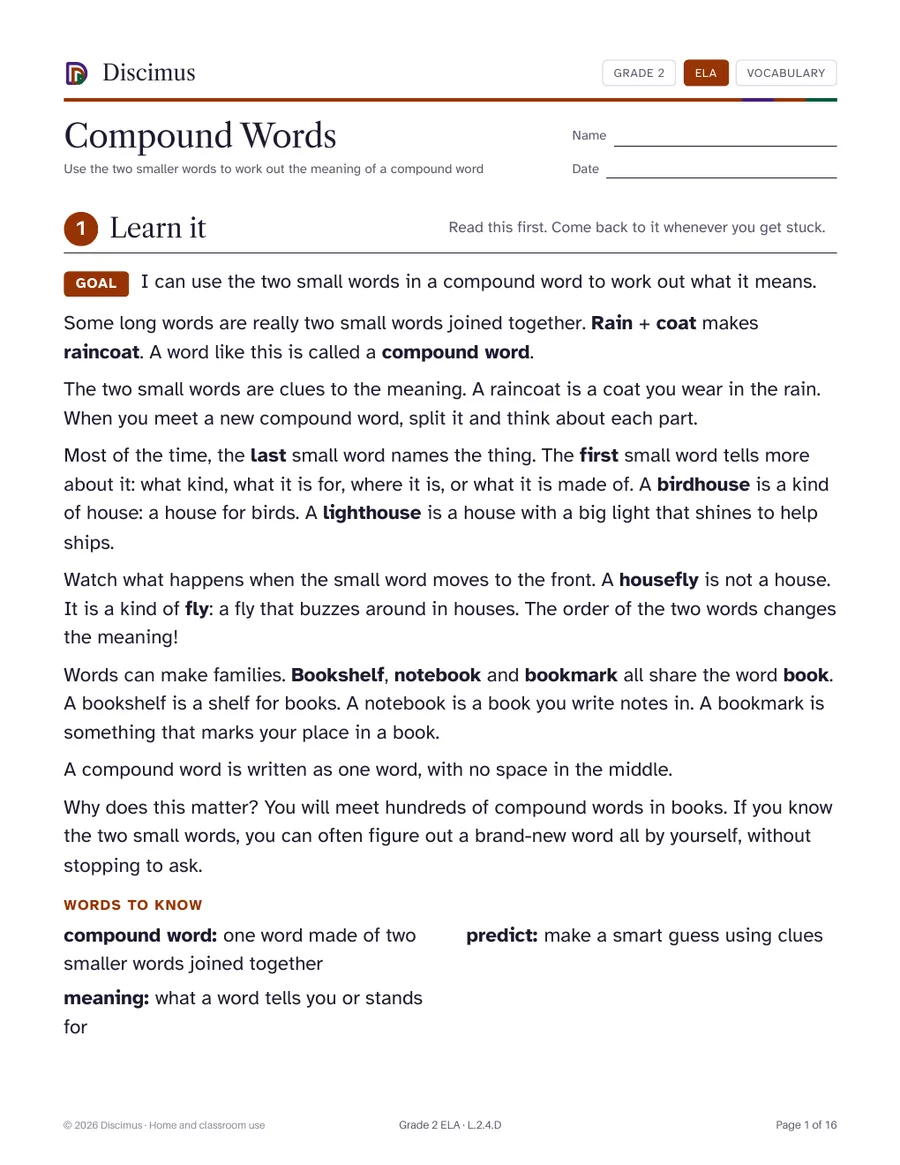
    Compound Words

    Use the two smaller words to work out the meaning of a compound word
  • ELAGrade 2

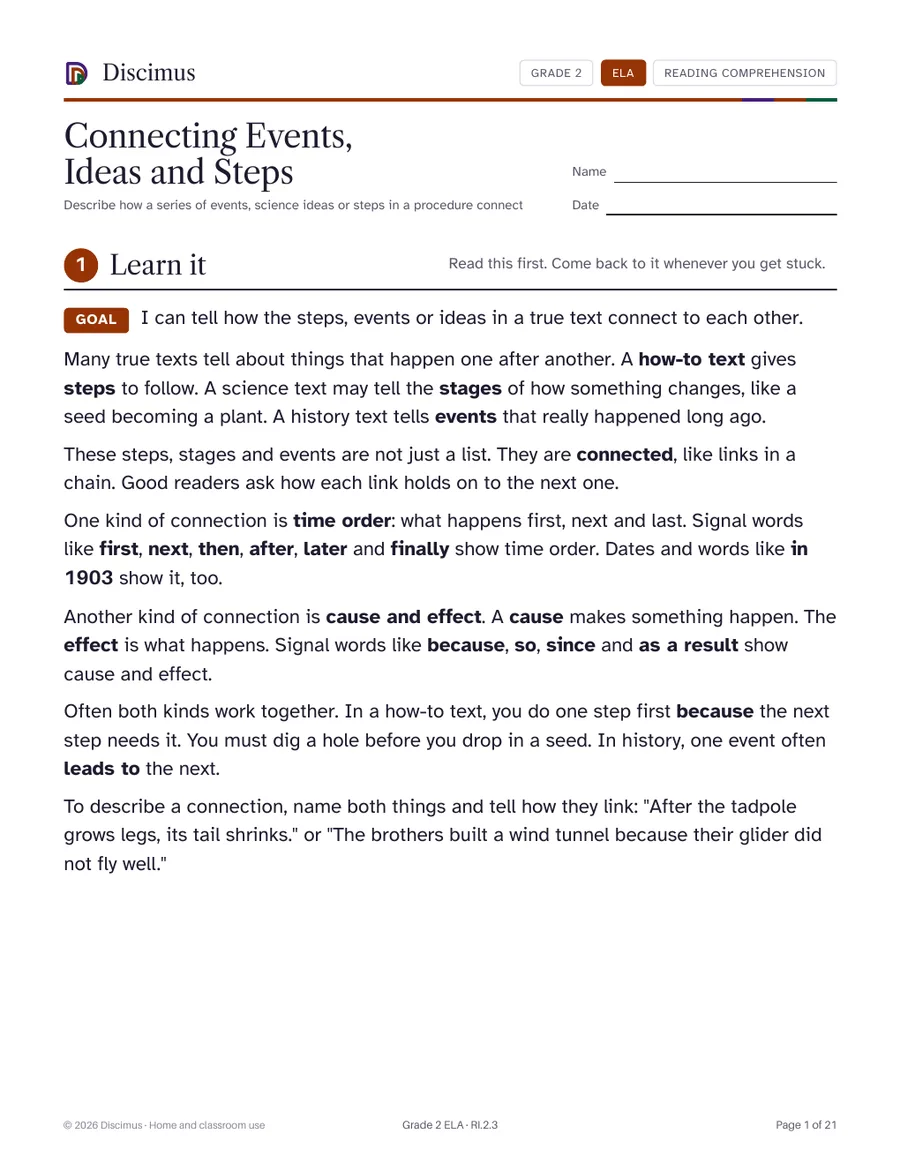
    Connecting Events, Ideas and Steps

    Describe how a series of events, science ideas or steps in a procedure connect
  • ELAGrade 2

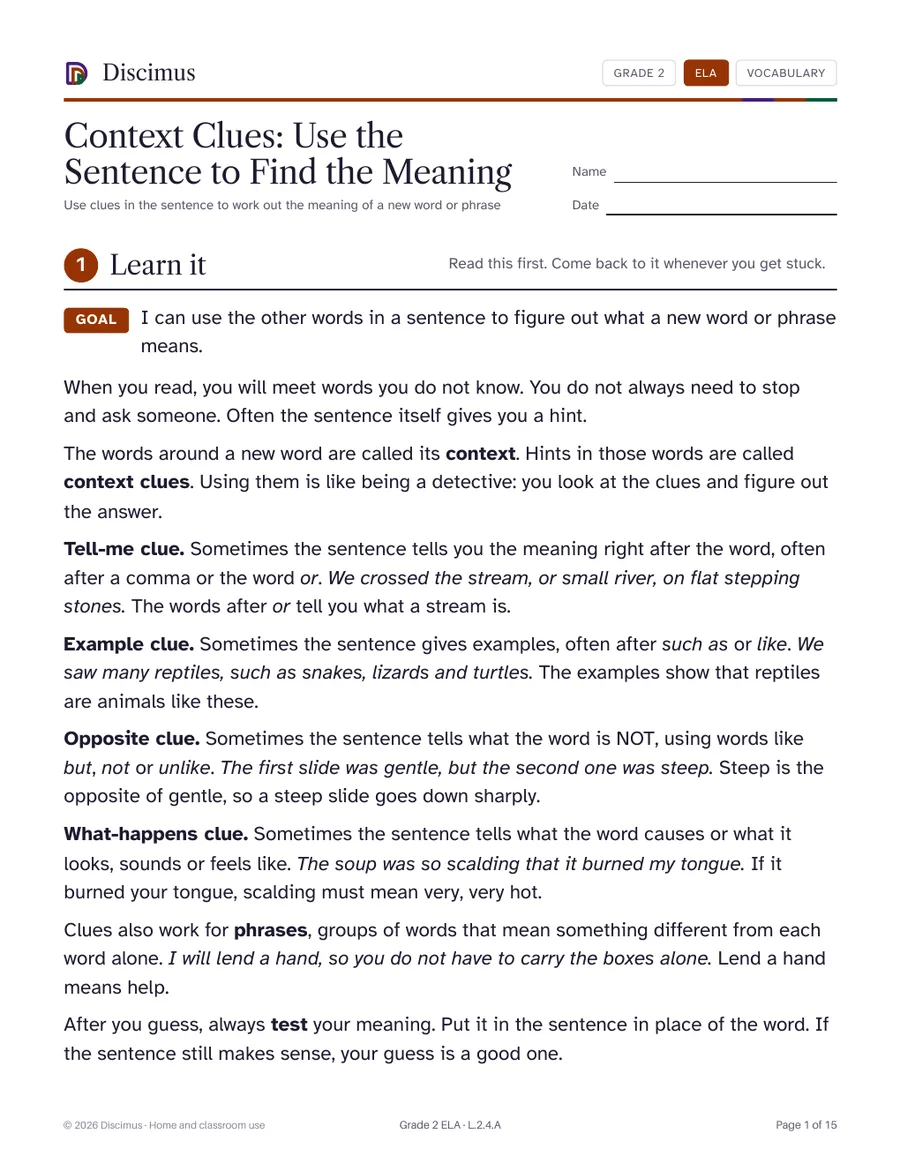
    Context Clues: Use the Sentence to Find the Meaning

    Use clues in the sentence to work out the meaning of a new word or phrase
  • ELAGrade 2

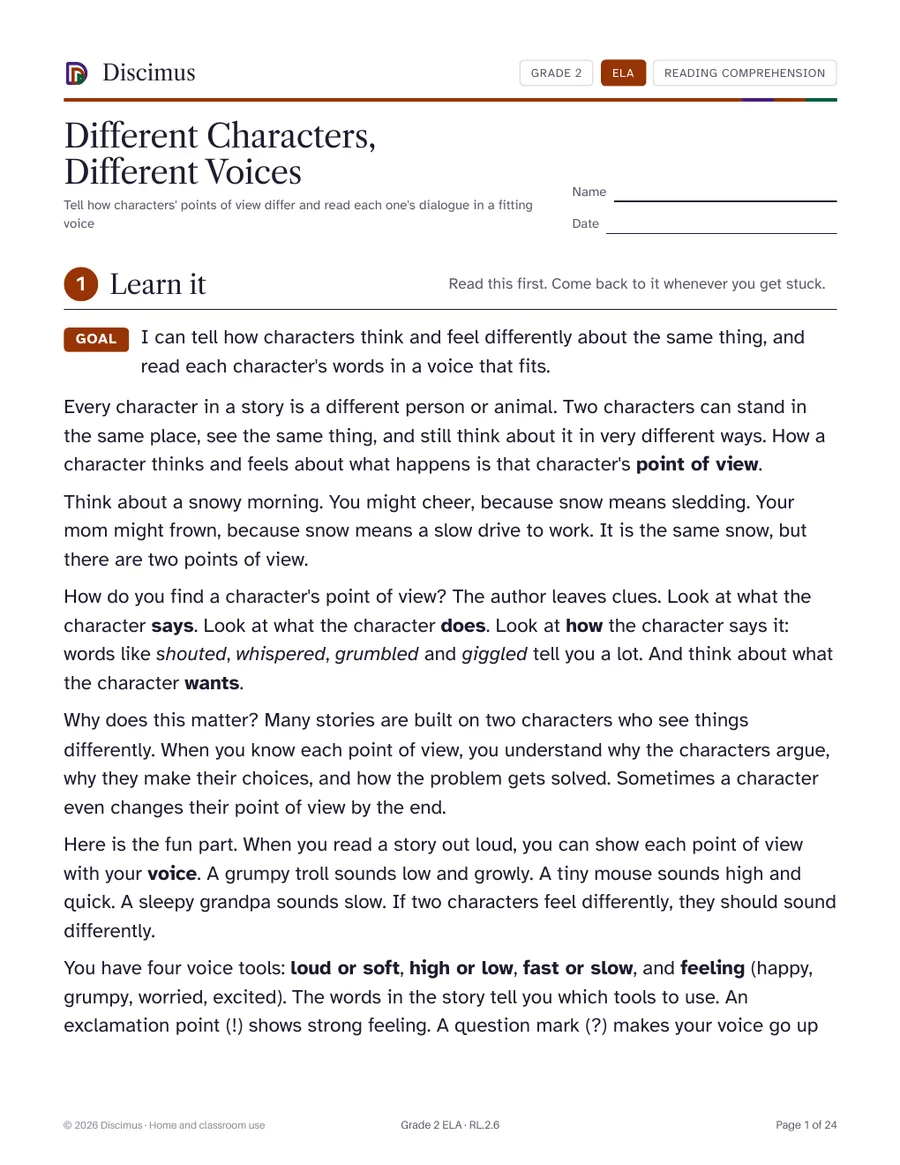
    Different Characters, Different Voices

    Tell how characters' points of view differ and read each one's dialogue in a fitting voice
  • ELAGrade 2

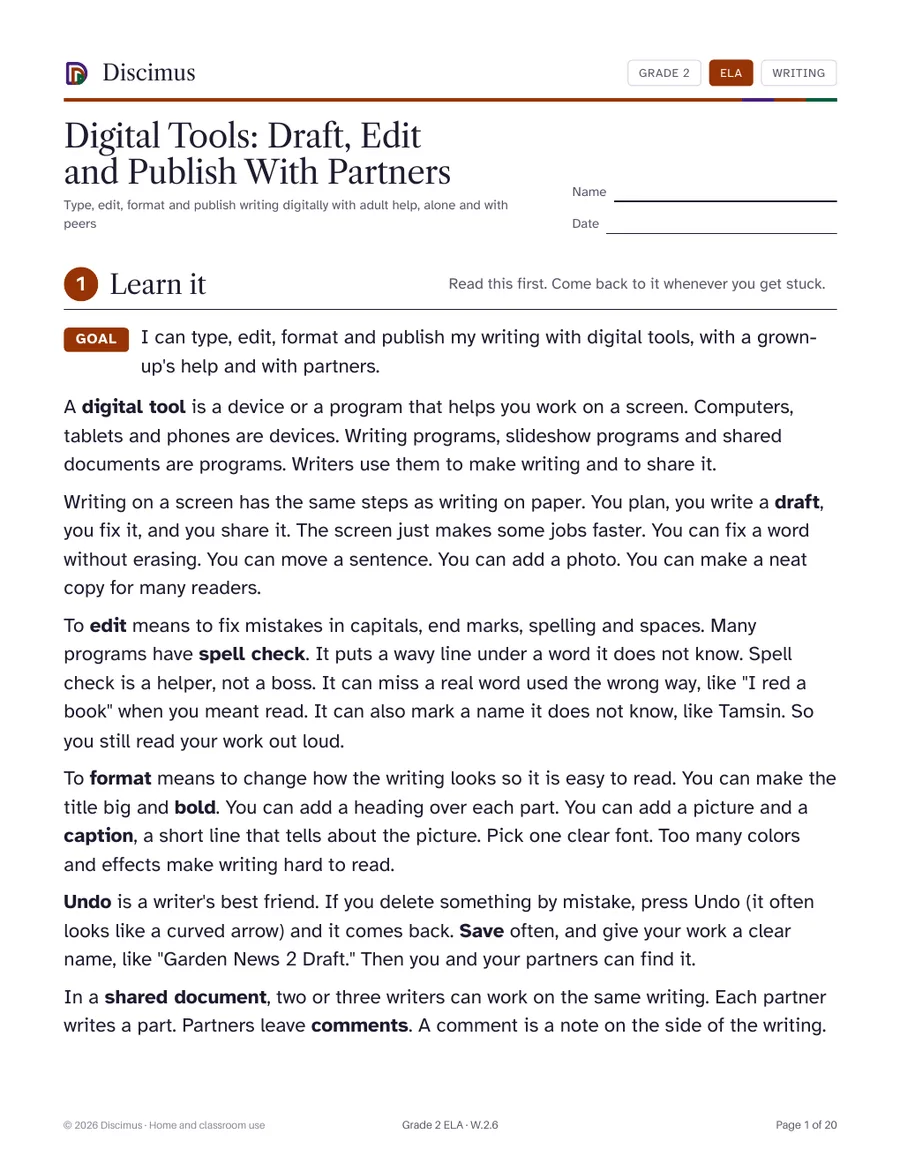
    Digital Tools: Draft, Edit and Publish With Partners

    Type, edit, format and publish writing digitally with adult help, alone and with peers
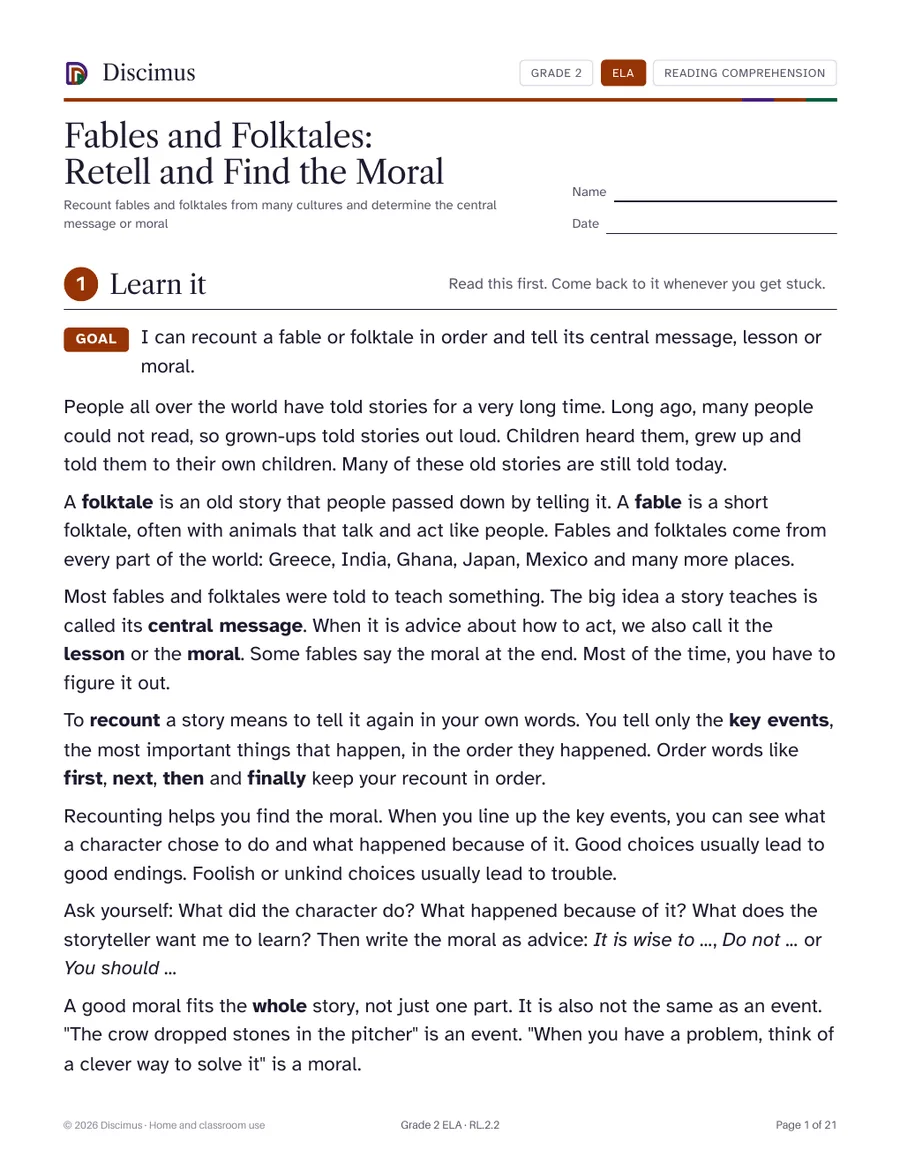
  • ELAGrade 2

    Fables and Folktales: Retell and Find the Moral

    Recount fables and folktales from many cultures and determine the central message or moral
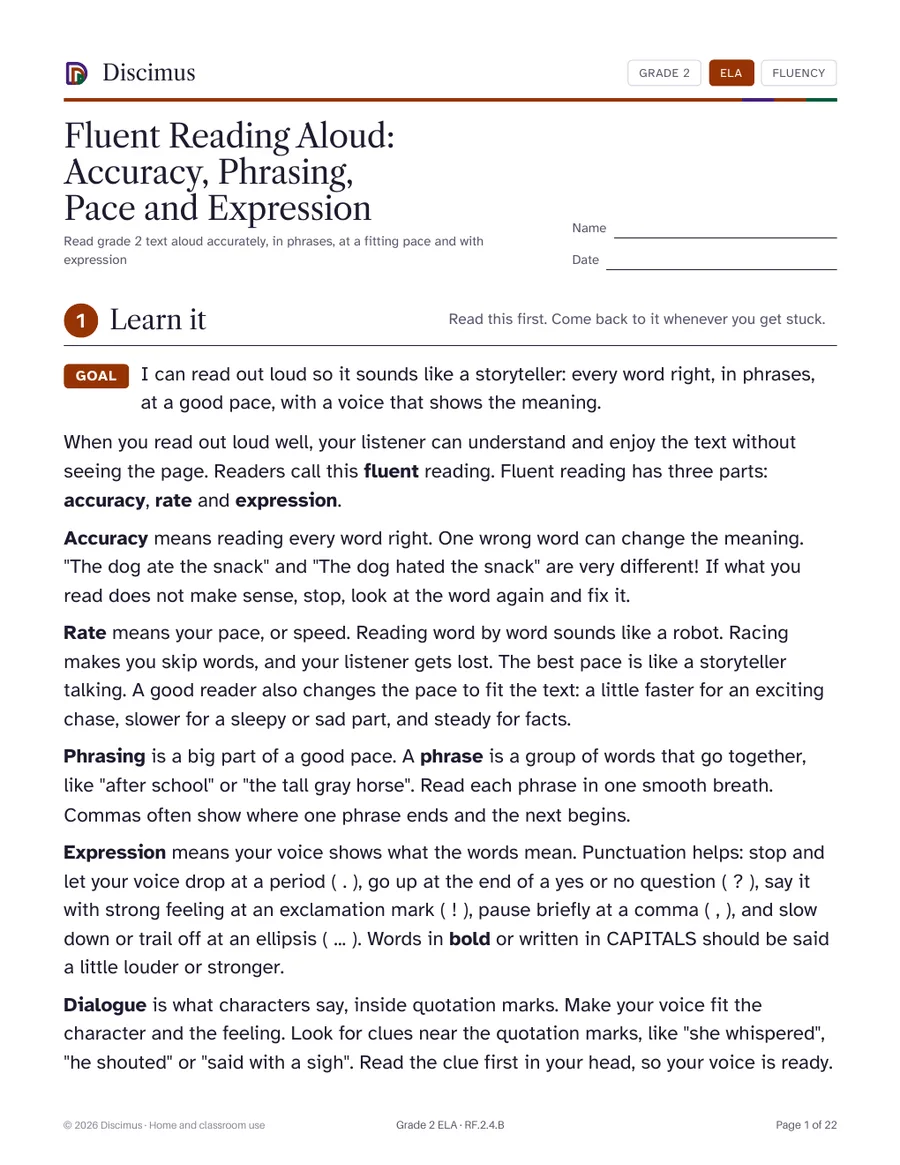
  • ELAGrade 2

    Fluent Reading Aloud: Accuracy, Phrasing, Pace and Expression

    Read grade 2 text aloud accurately, in phrases, at a fitting pace and with expression
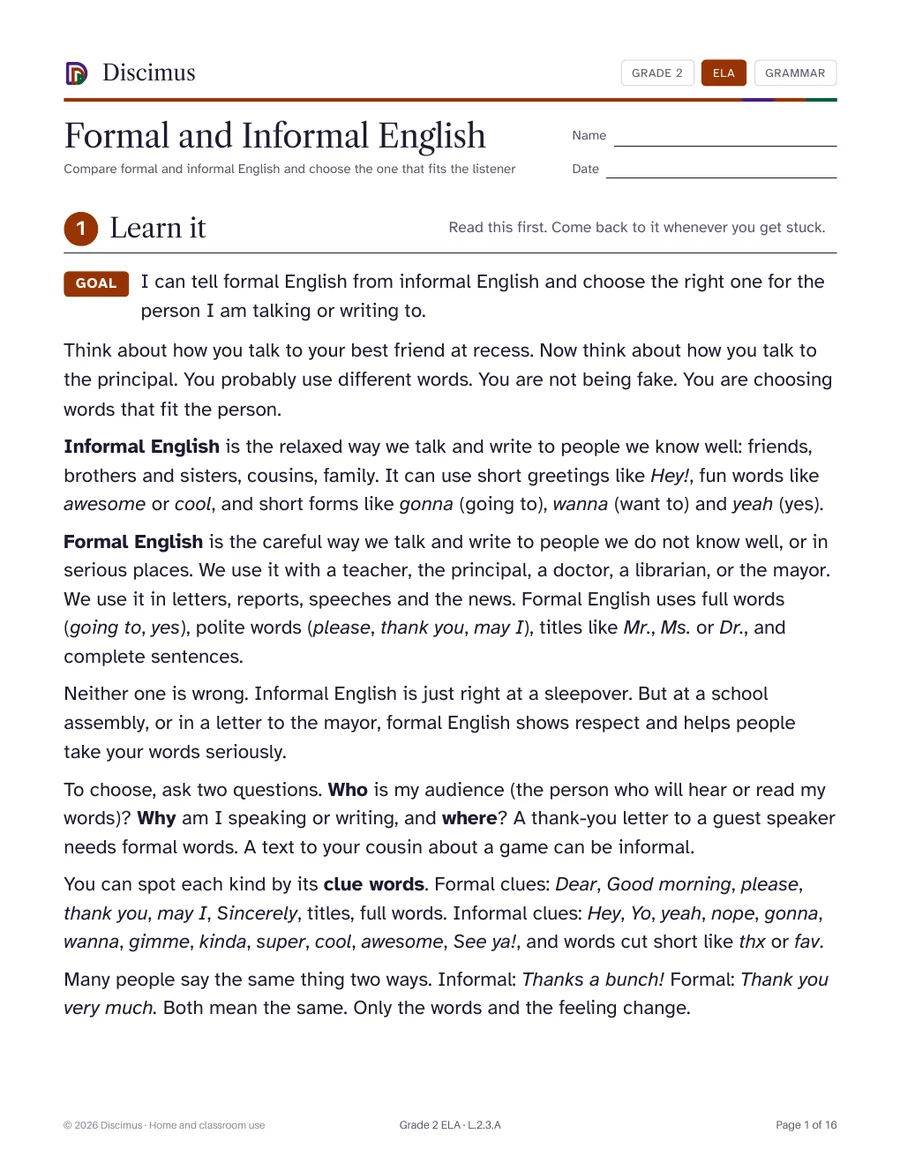
  • ELAGrade 2

    Formal and Informal English

    Compare formal and informal English and choose the one that fits the listener
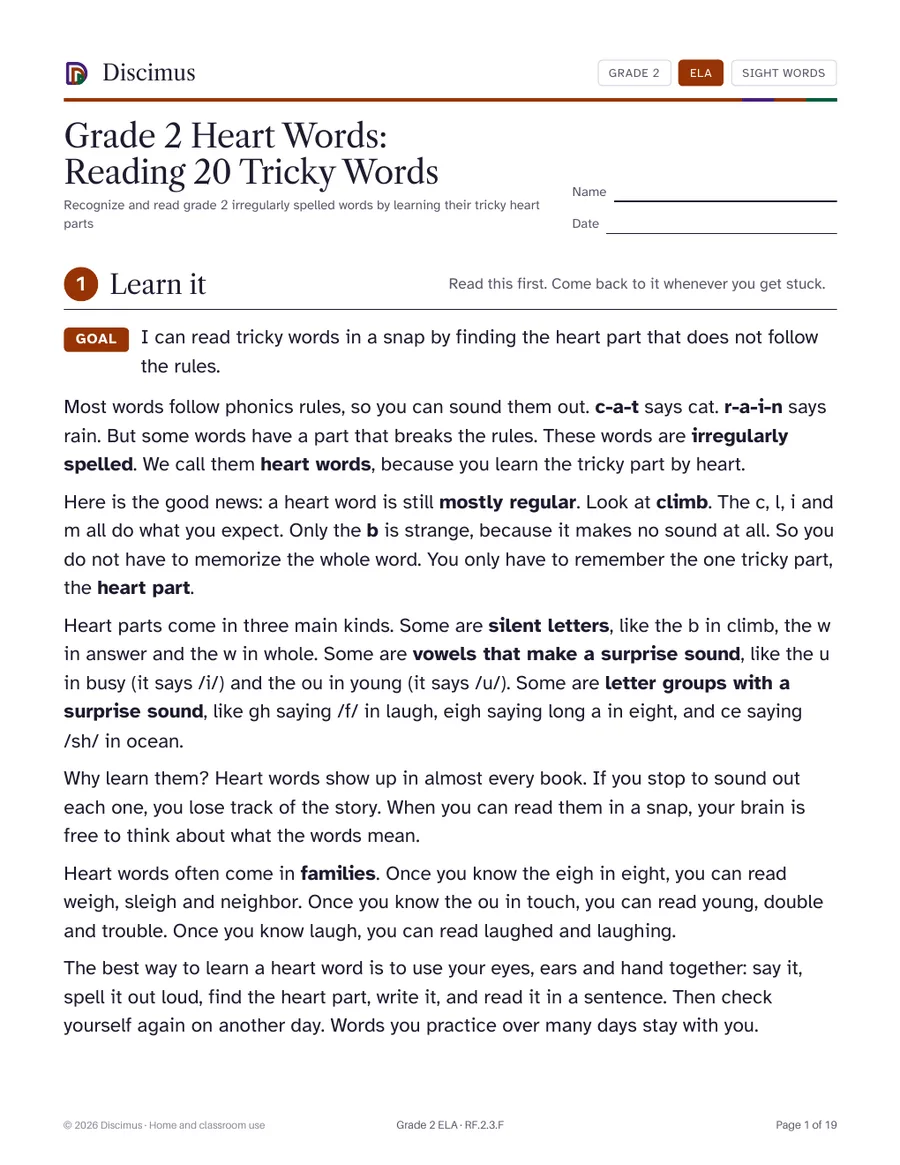
  • ELAGrade 2

    Grade 2 Heart Words: Reading 20 Tricky Words

    Recognize and read grade 2 irregularly spelled words by learning their tricky heart parts
  • ELAGrade 2

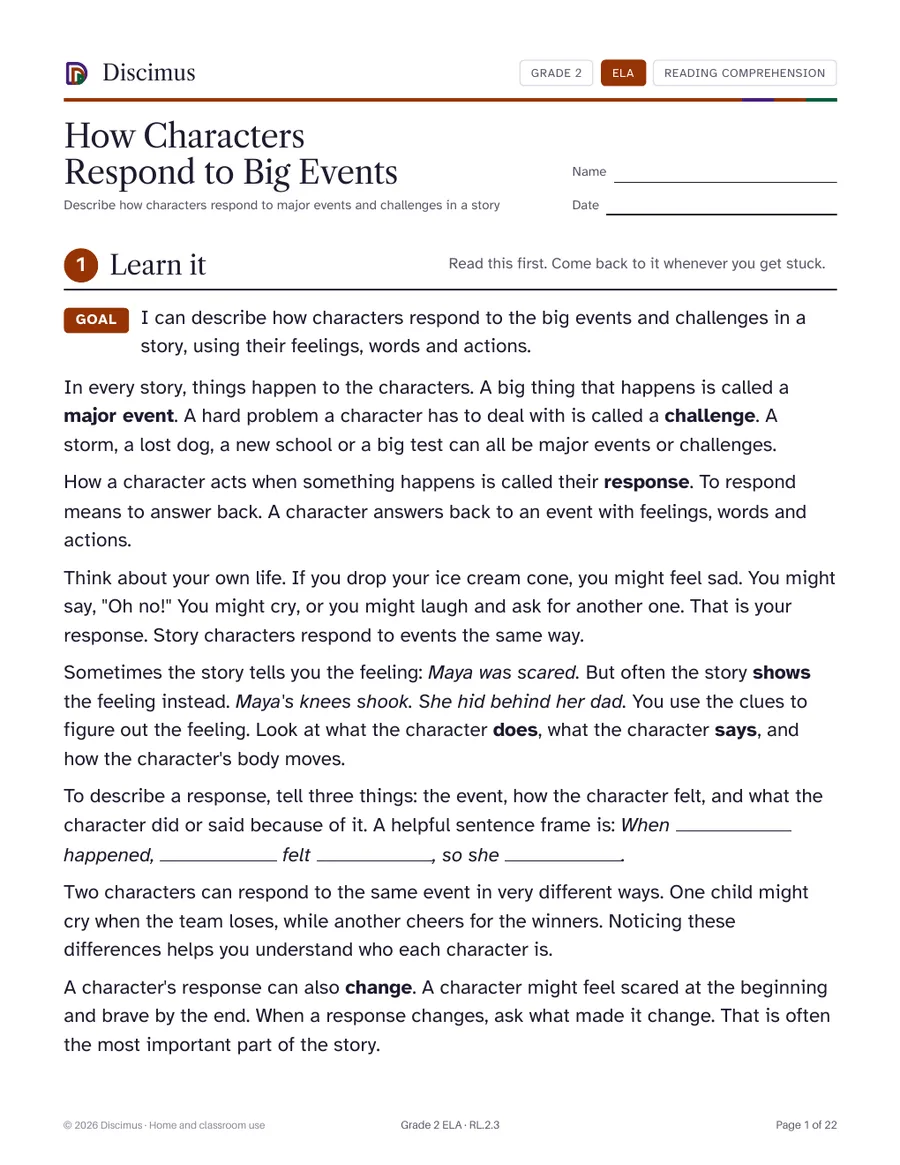
    How Characters Respond to Big Events

    Describe how characters respond to major events and challenges in a story
  • ELAGrade 2

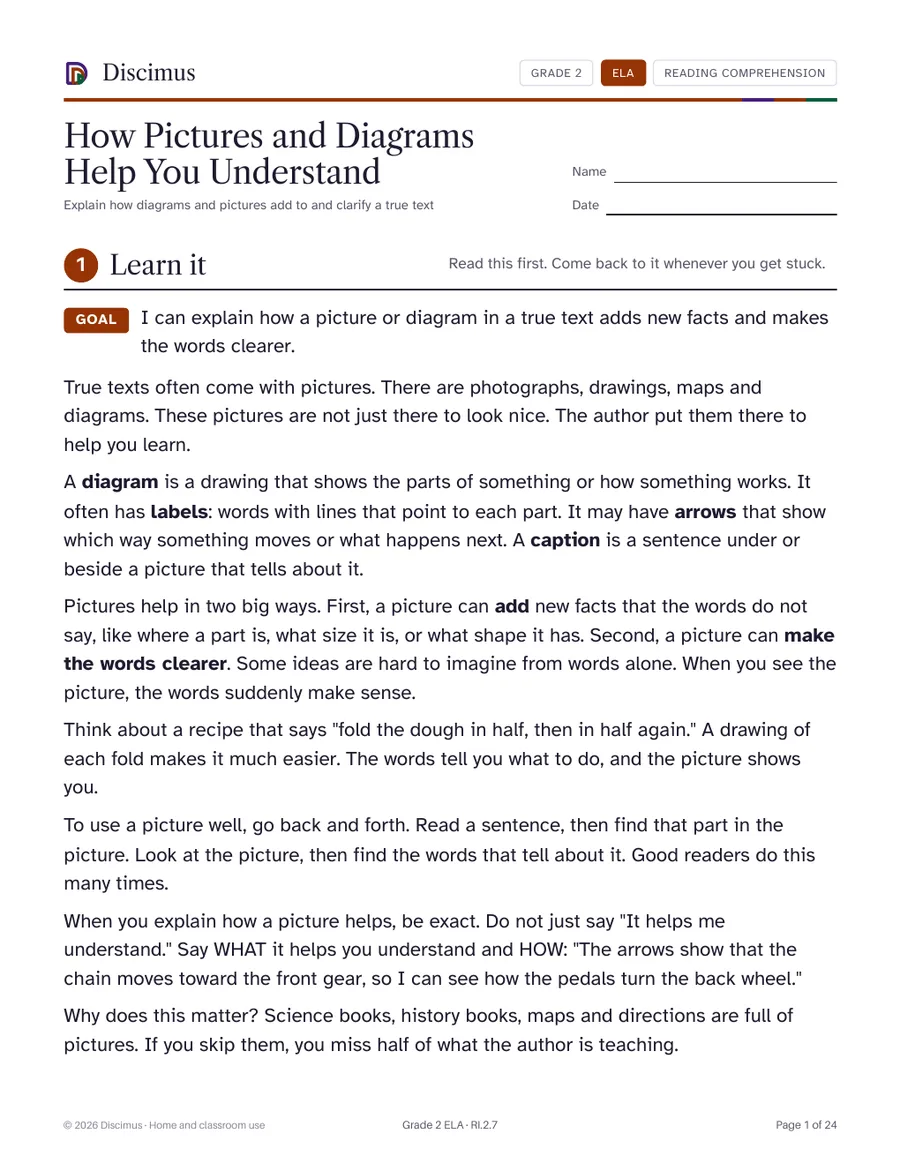
    How Pictures and Diagrams Help You Understand

    Explain how diagrams and pictures add to and clarify a true text
  • ELAGrade 2

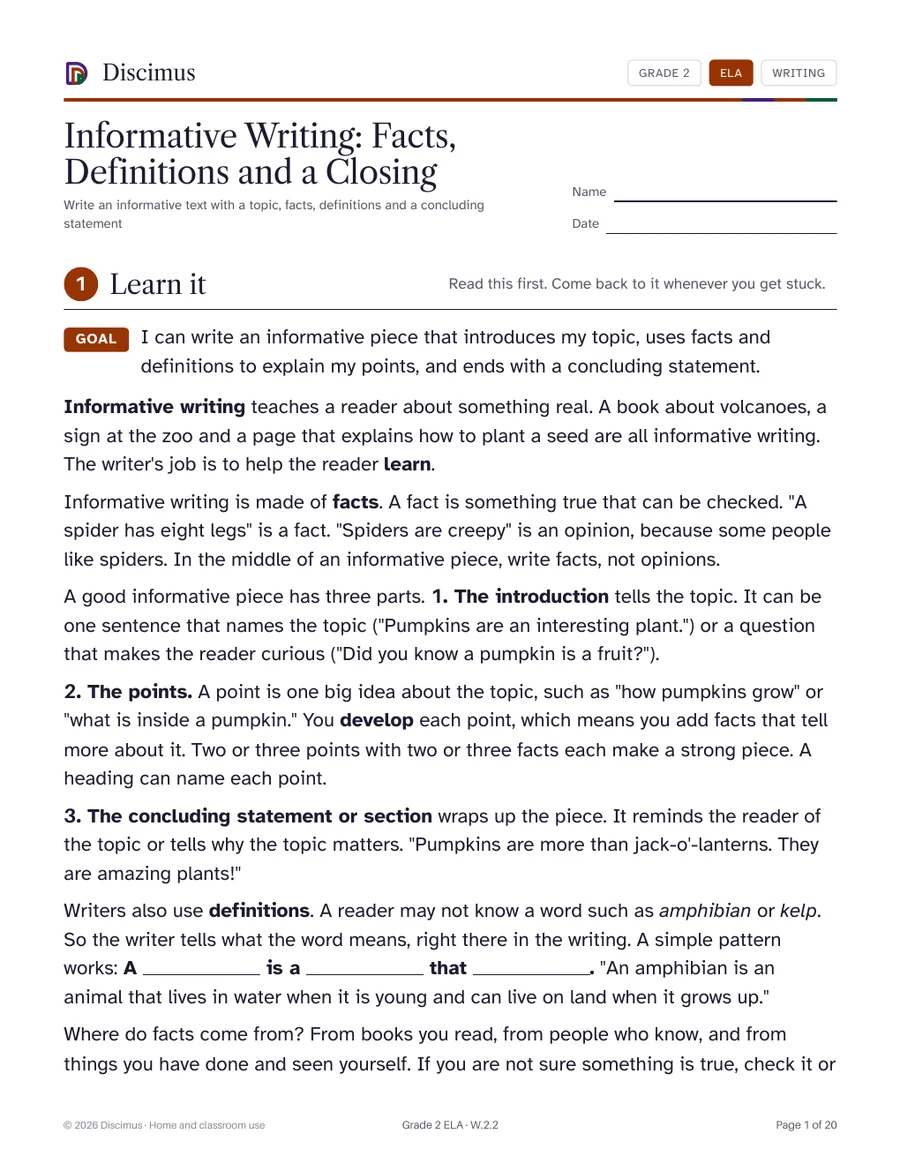
    Informative Writing: Facts, Definitions and a Closing

    Write an informative text with a topic, facts, definitions and a concluding statement
  • ELAGrade 2

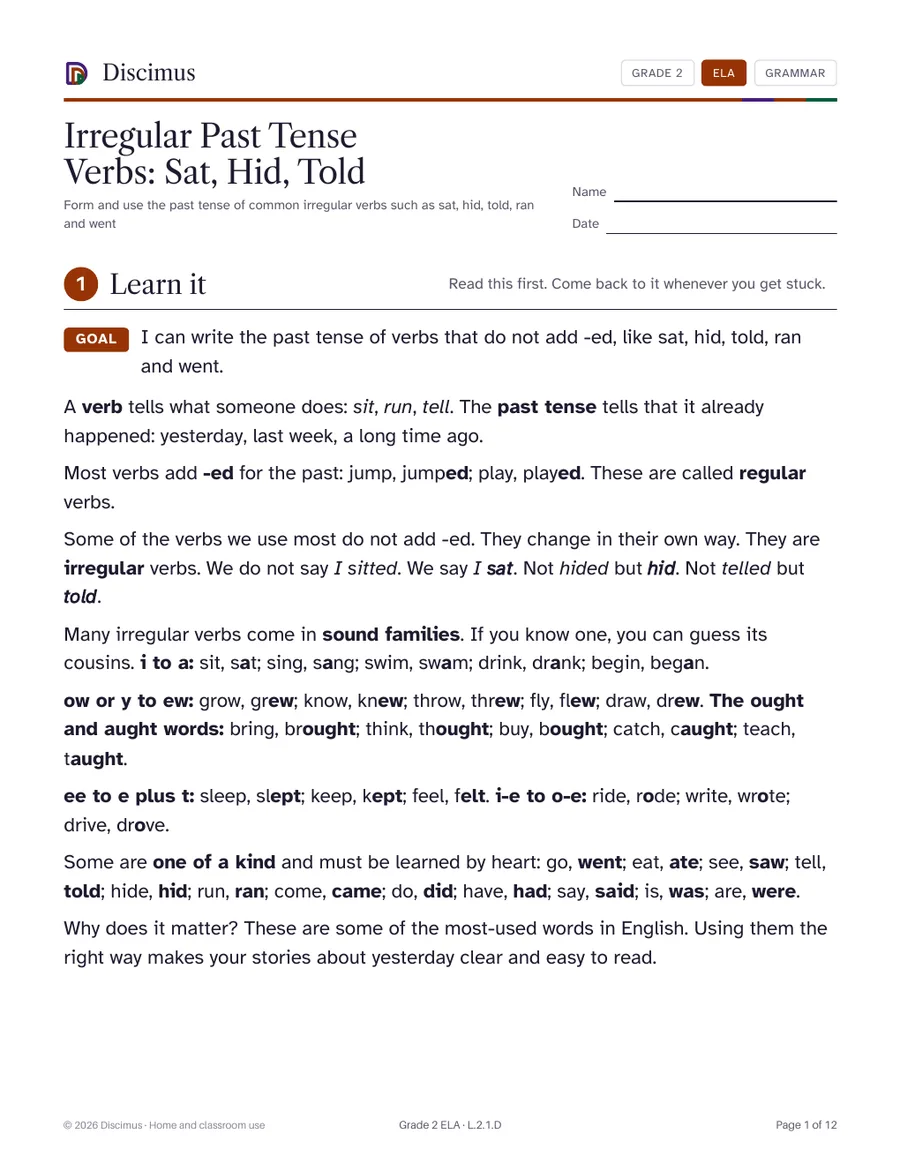
    Irregular Past Tense Verbs: Sat, Hid, Told

    Form and use the past tense of common irregular verbs such as sat, hid, told, ran and went
  • ELAGrade 2

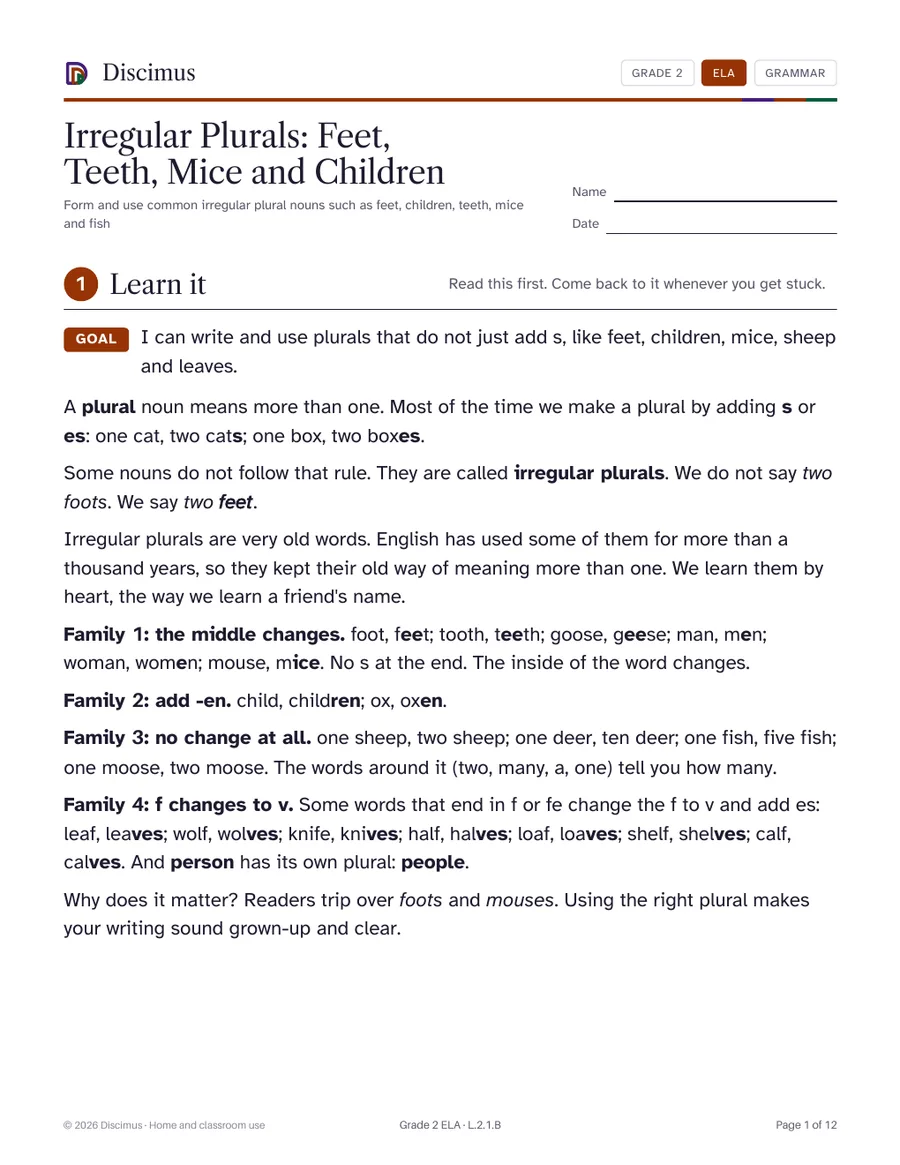
    Irregular Plurals: Feet, Teeth, Mice and Children

    Form and use common irregular plural nouns such as feet, children, teeth, mice and fish
  • ELAGrade 2

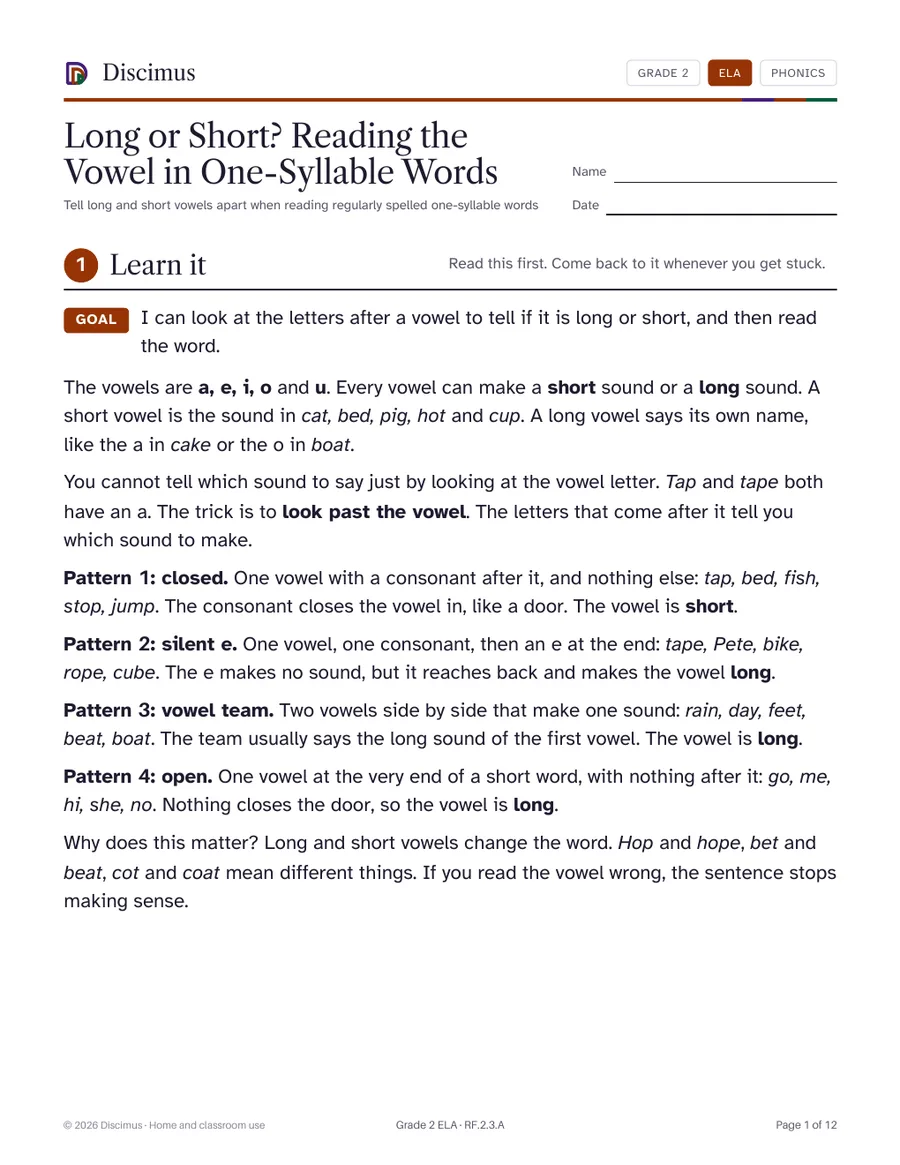
    Long or Short? Reading the Vowel in One-Syllable Words

    Tell long and short vowels apart when reading regularly spelled one-syllable words
  • ELAGrade 2

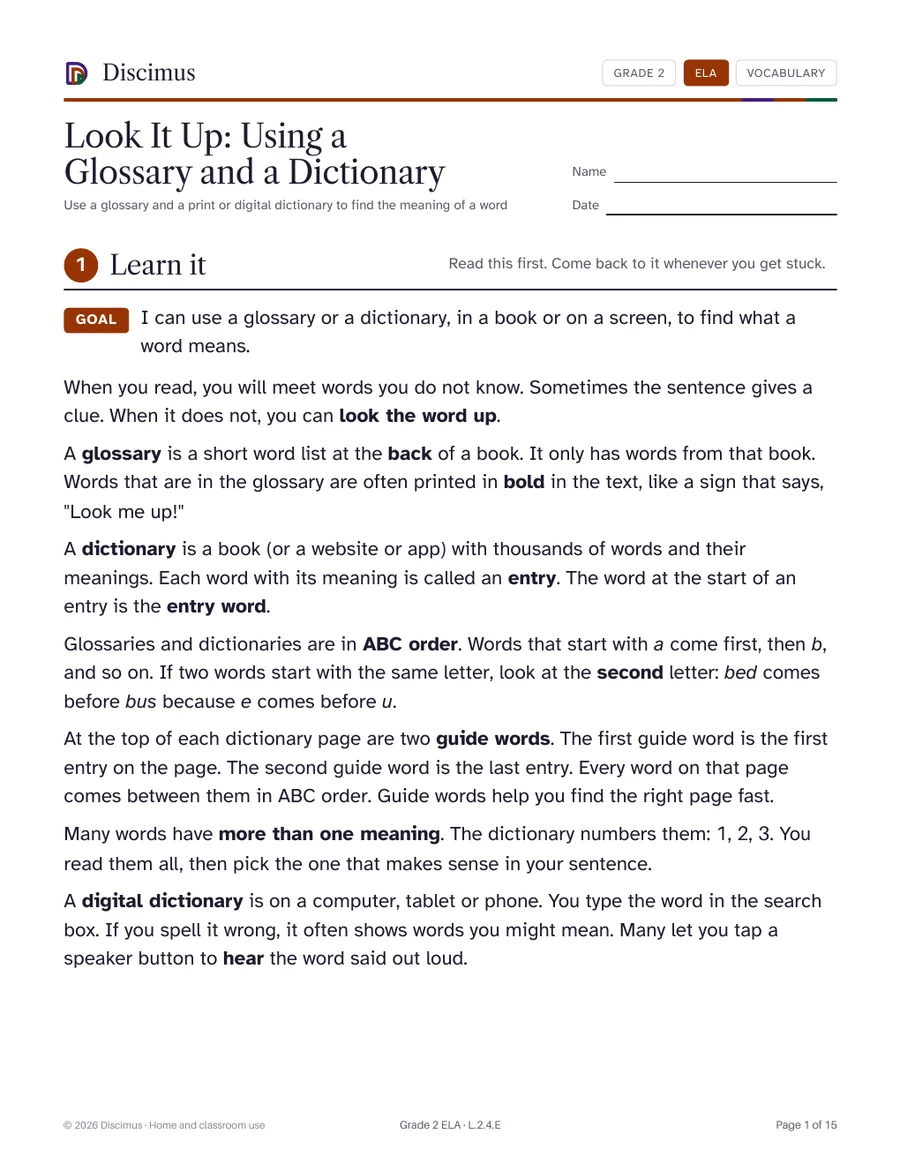
    Look It Up: Using a Glossary and a Dictionary

    Use a glossary and a print or digital dictionary to find the meaning of a word
  • ELAGrade 2

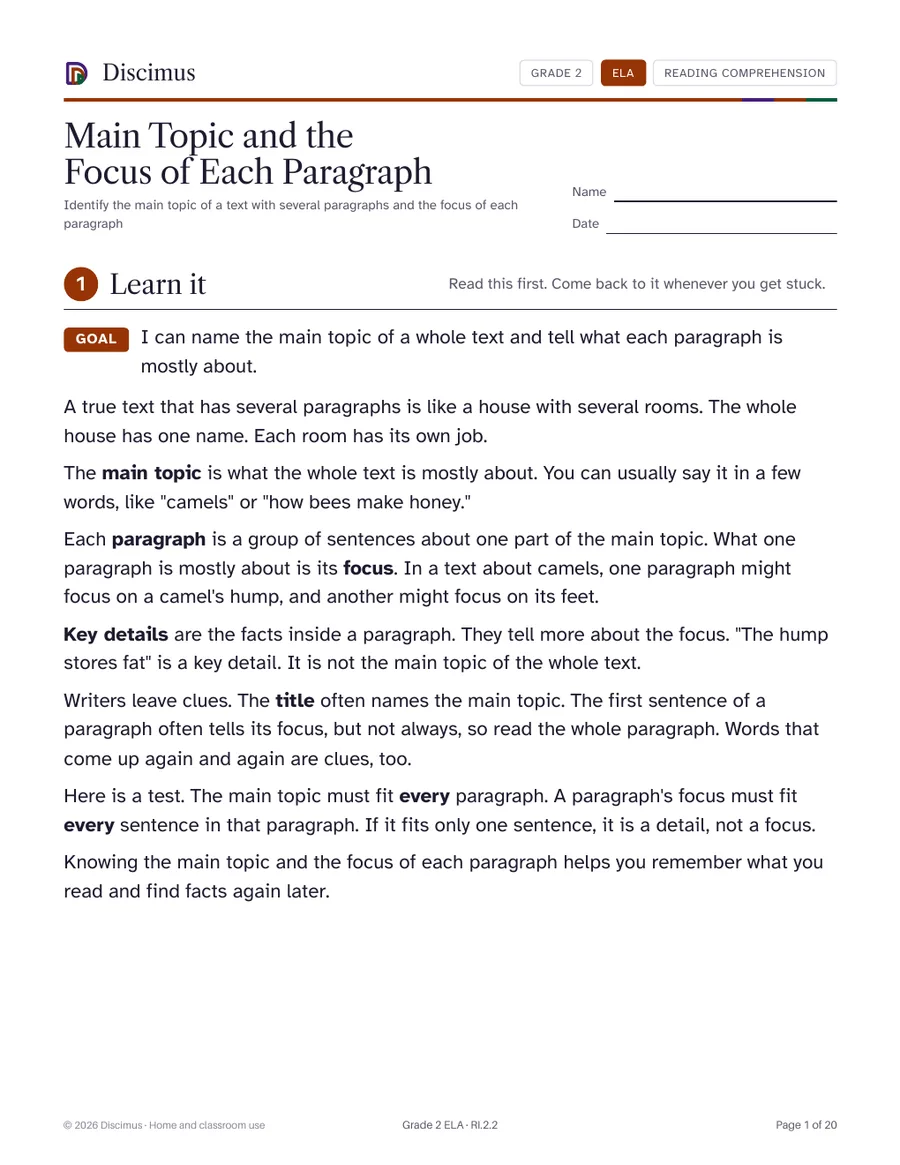
    Main Topic and the Focus of Each Paragraph

    Identify the main topic of a text with several paragraphs and the focus of each paragraph
  • ELAGrade 2

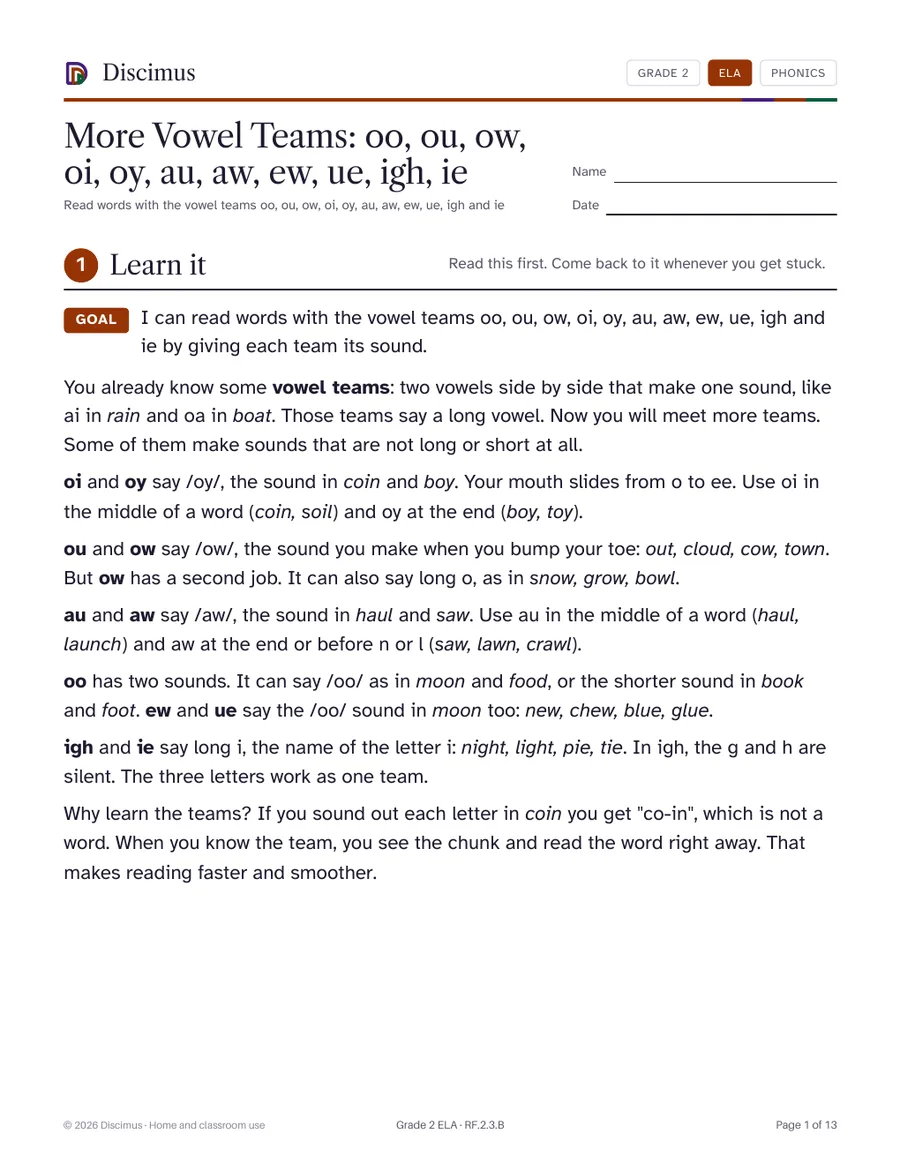
    More Vowel Teams: oo, ou, ow, oi, oy, au, aw, ew, ue, igh, ie

    Read words with the vowel teams oo, ou, ow, oi, oy, au, aw, ew, ue, igh and ie
  • ELAGrade 2

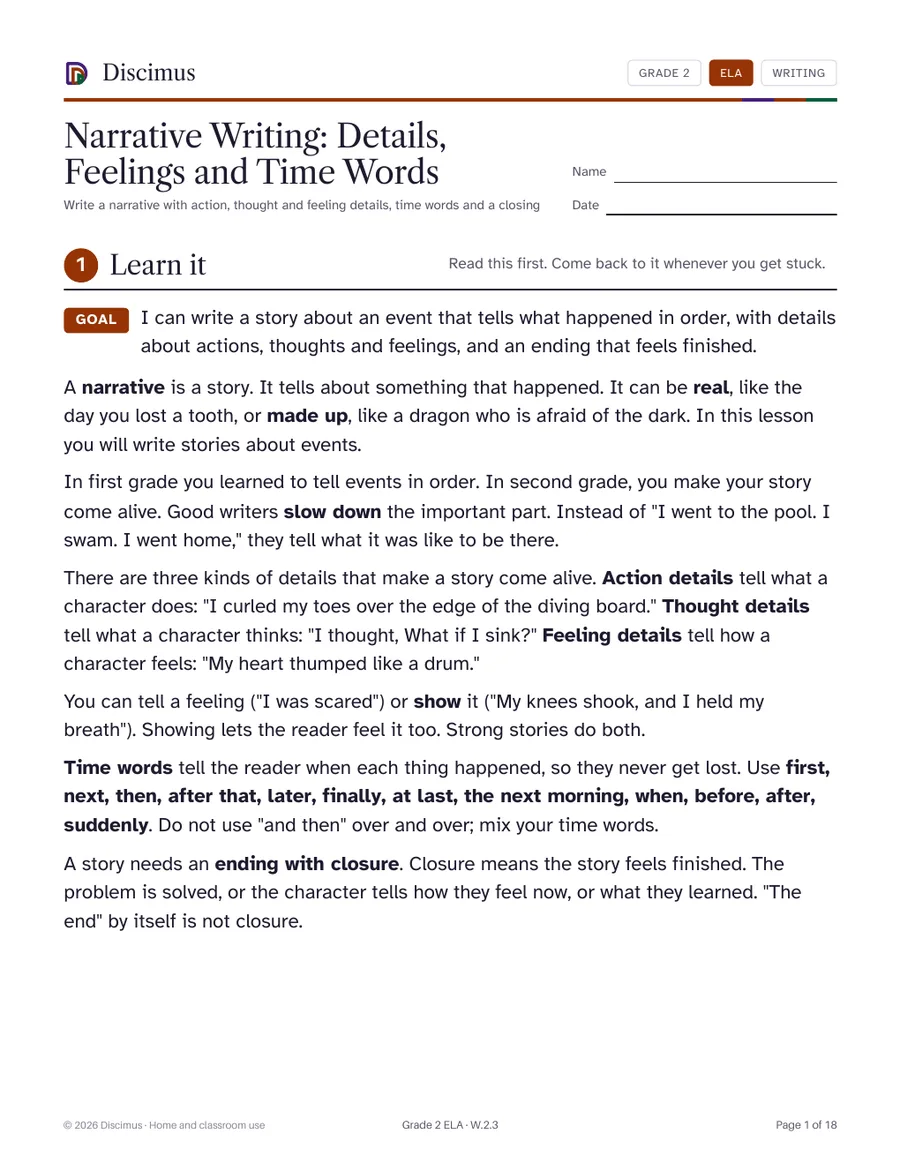
    Narrative Writing: Details, Feelings and Time Words

    Write a narrative with action, thought and feeling details, time words and a closing
  • ELAGrade 2

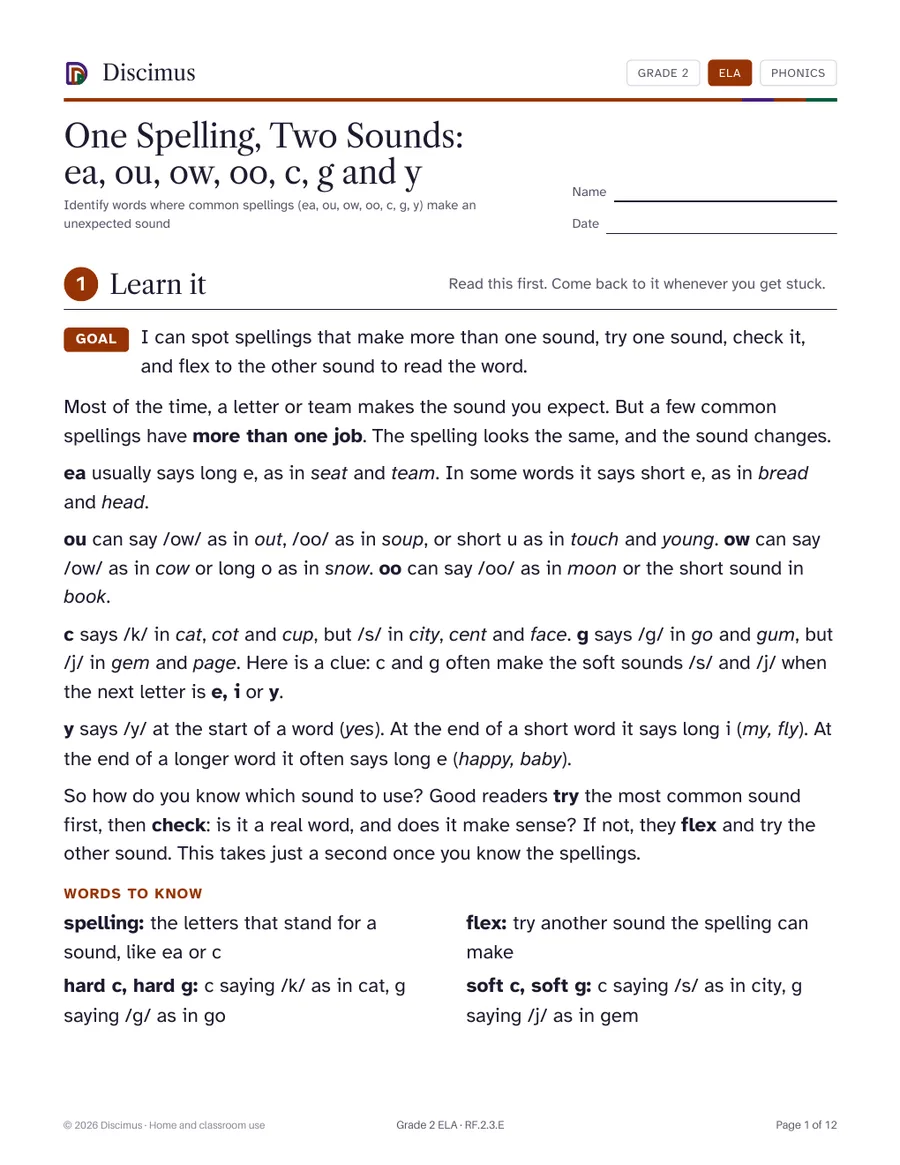
    One Spelling, Two Sounds: ea, ou, ow, oo, c, g and y

    Identify words where common spellings (ea, ou, ow, oo, c, g, y) make an unexpected sound
  • ELAGrade 2

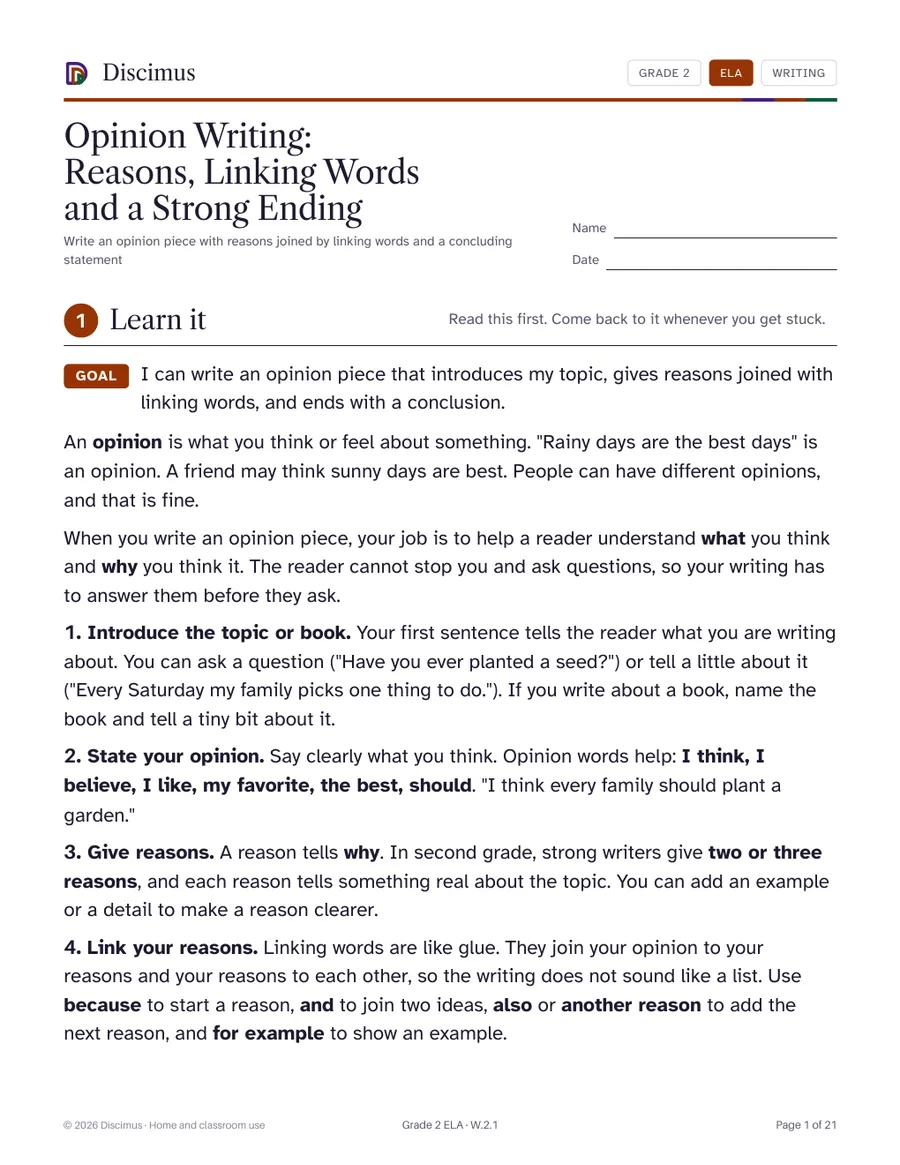
    Opinion Writing: Reasons, Linking Words and a Strong Ending

    Write an opinion piece with reasons joined by linking words and a concluding statement
  • ELAGrade 2

    Points and Reasons: How Authors Back Up Their Ideas

    Describe how the reasons in a true text support the specific points the author makes
  • ELAGrade 2

    Prefixes and Suffixes: Cover, Read, Add Back

    Decode words with the prefixes un, re, dis, pre and suffixes ful, less, ly, ness, er, est
  • ELAGrade 2

    Prefixes Change Meaning: un, re, pre, dis

    Work out what a new word means when un, re, pre or dis is added to a word you know
  • ELAGrade 2

    Read the Pictures, Read the Words

    Use pictures and words in print or digital stories to understand characters, setting, plot
  • ELAGrade 2

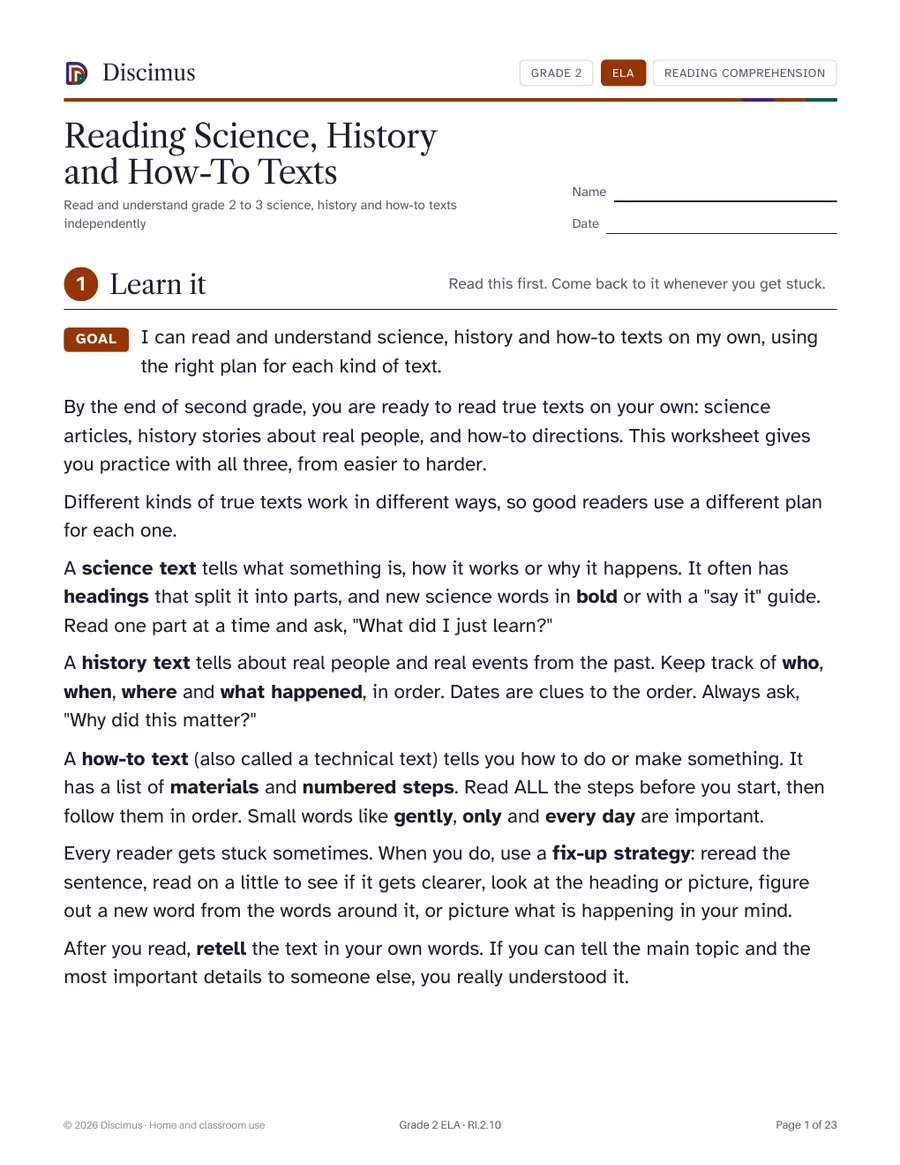
    Reading Science, History and How-To Texts

    Read and understand grade 2 to 3 science, history and how-to texts independently
  • ELAGrade 2

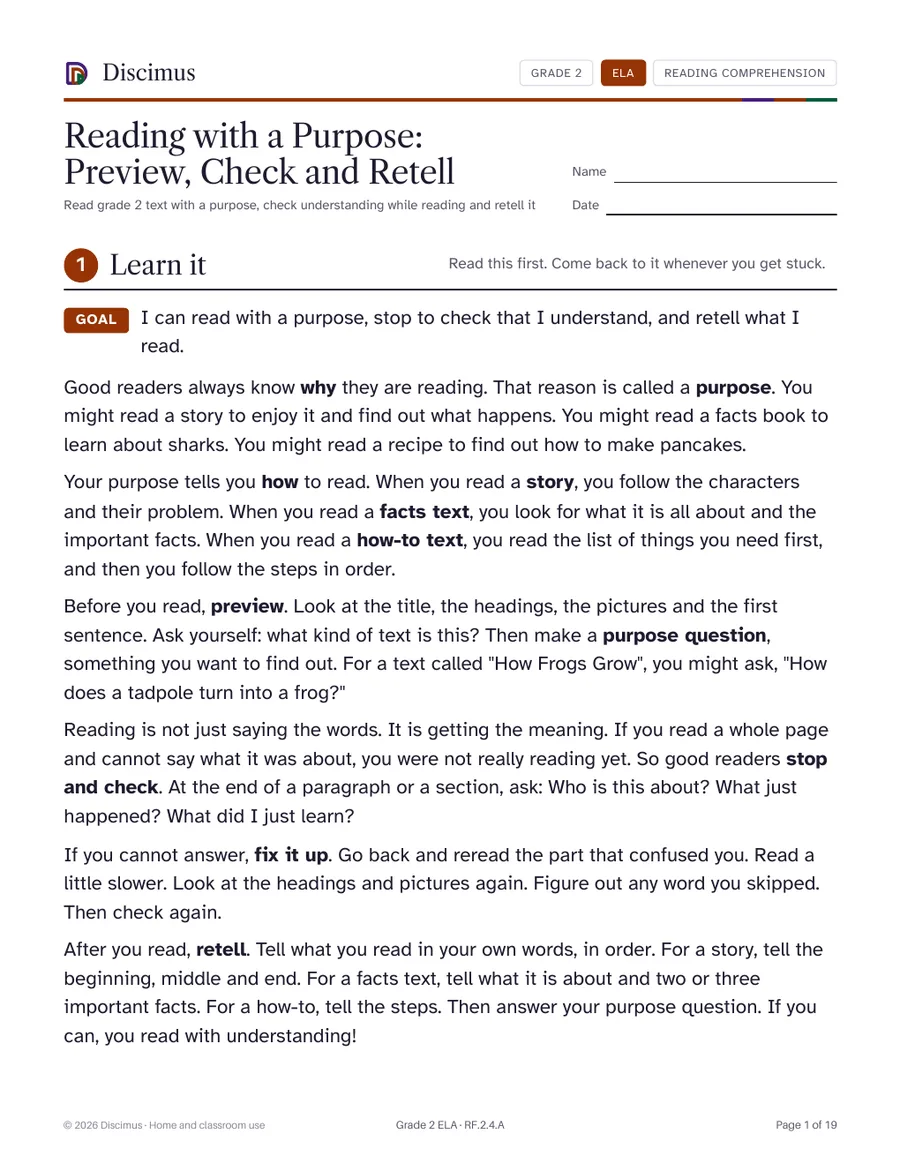
    Reading with a Purpose: Preview, Check and Retell

    Read grade 2 text with a purpose, check understanding while reading and retell it
  • ELAGrade 2

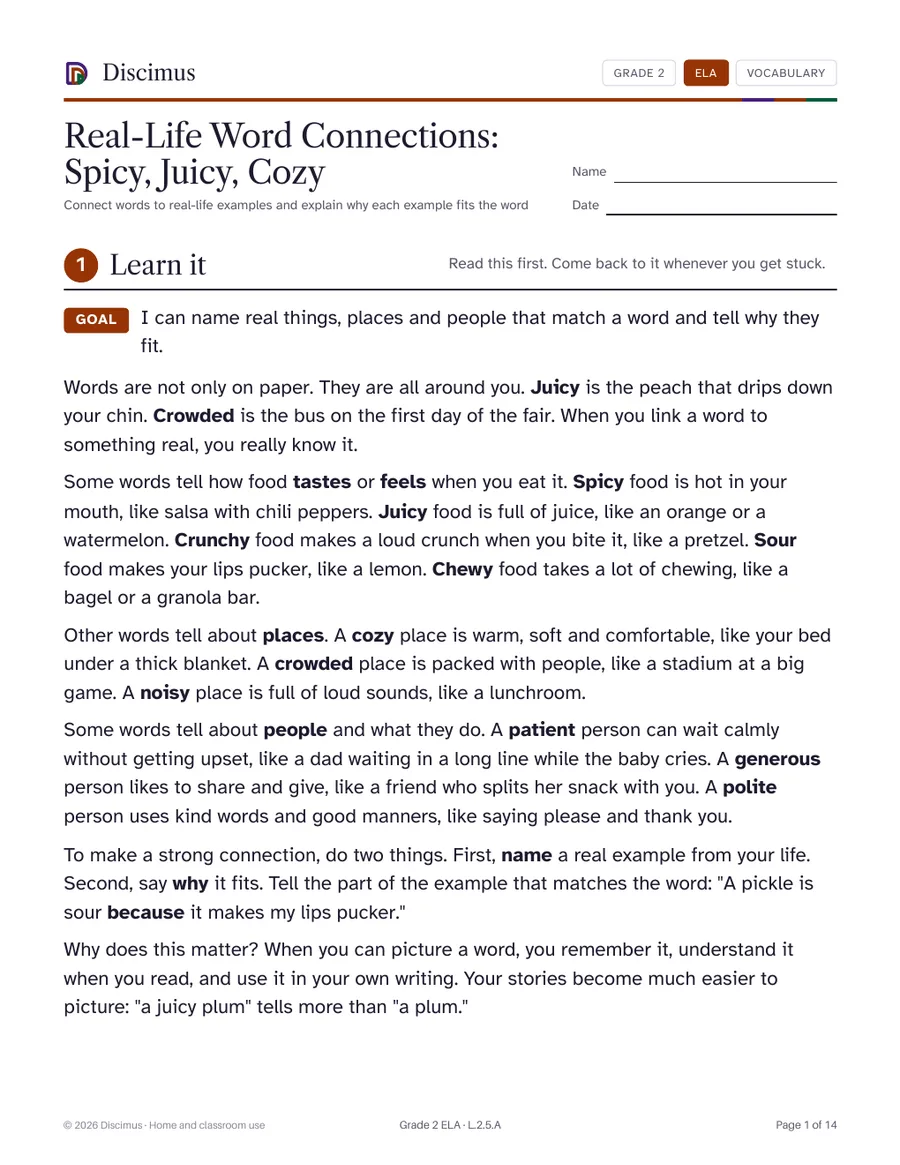
    Real-Life Word Connections: Spicy, Juicy, Cozy

    Connect words to real-life examples and explain why each example fits the word
  • ELAGrade 2

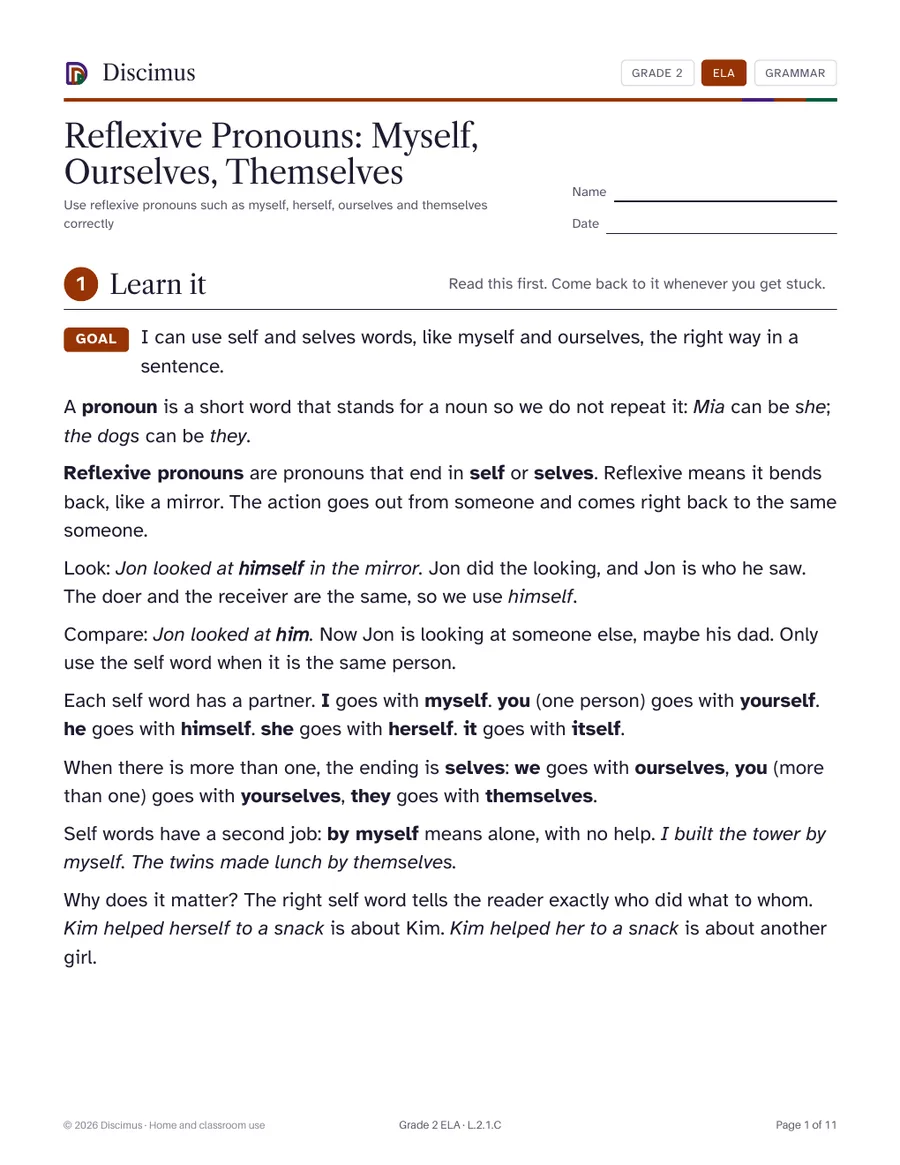
    Reflexive Pronouns: Myself, Ourselves, Themselves

    Use reflexive pronouns such as myself, herself, ourselves and themselves correctly
  • ELAGrade 2

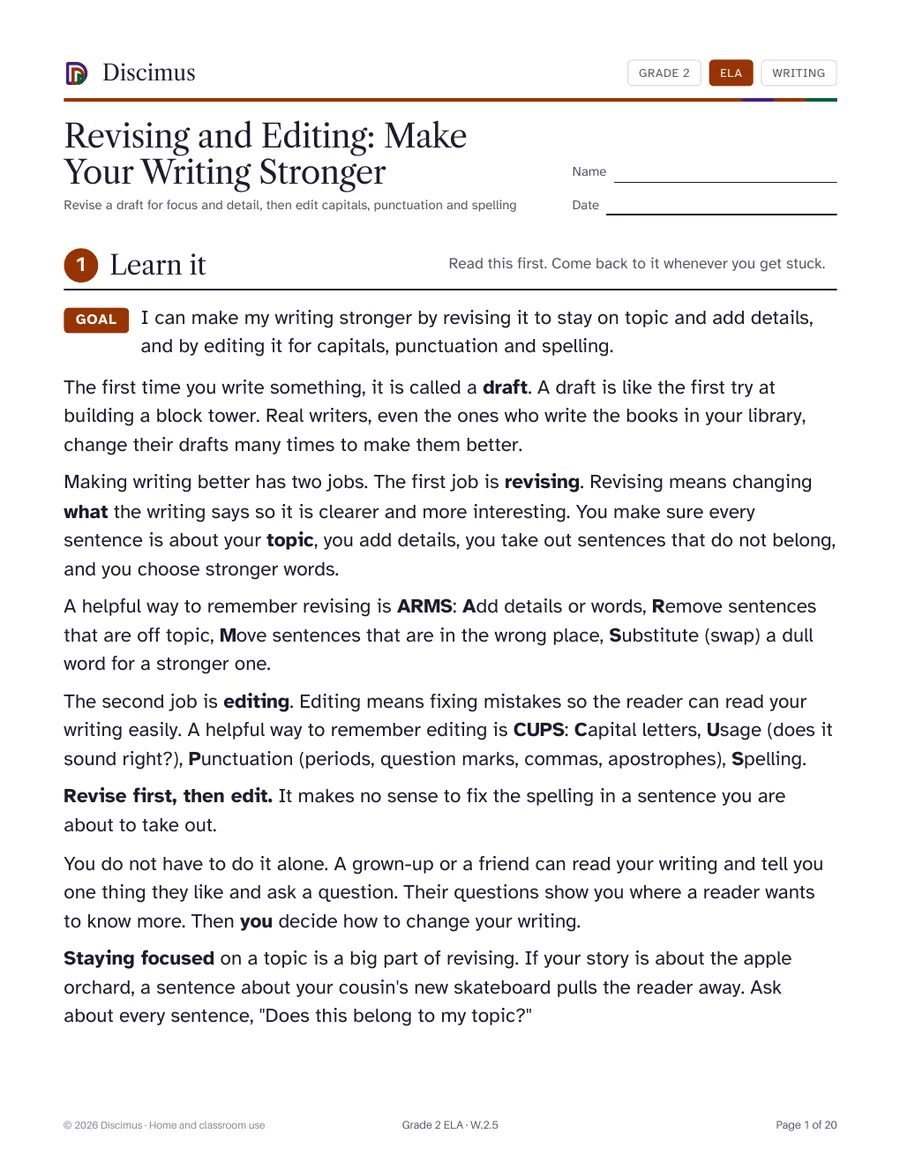
    Revising and Editing: Make Your Writing Stronger

    Revise a draft for focus and detail, then edit capitals, punctuation and spelling
  • ELAGrade 2

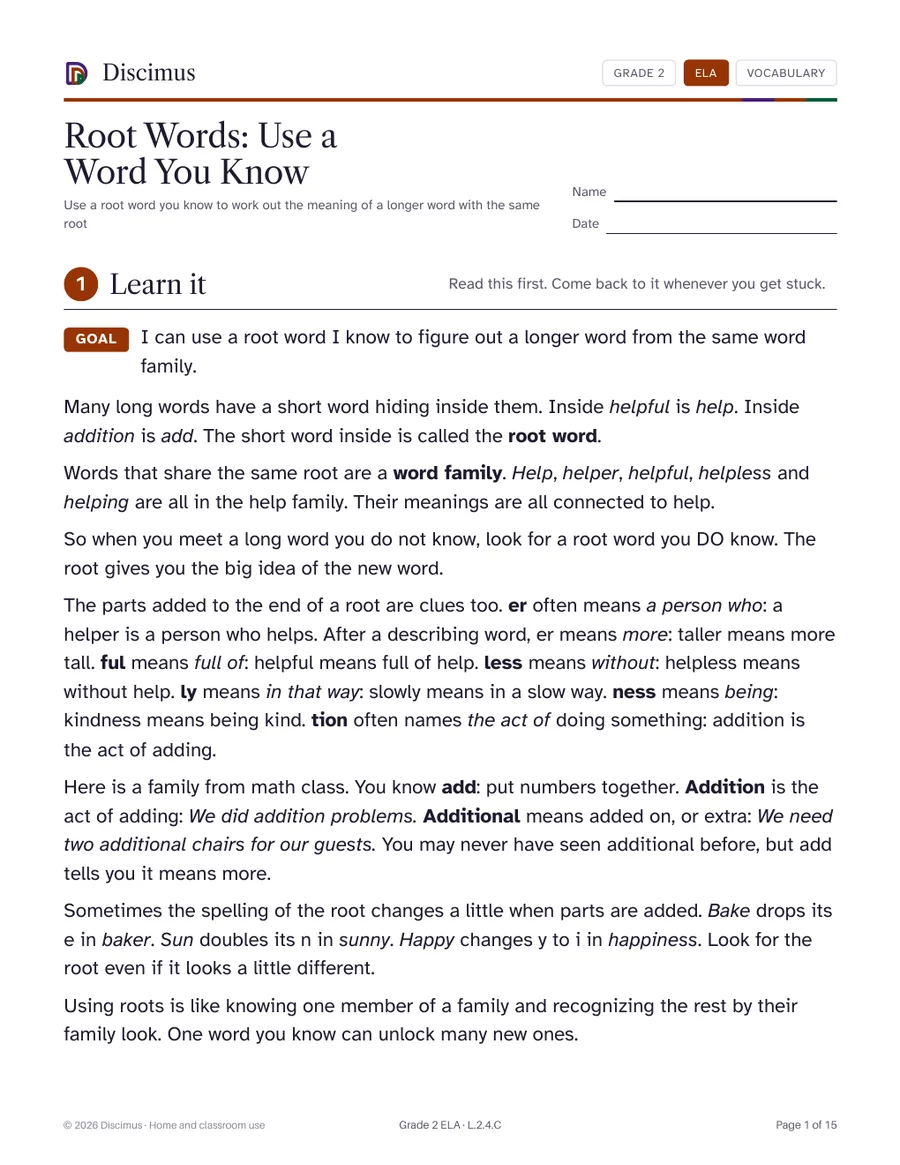
    Root Words: Use a Word You Know

    Use a root word you know to work out the meaning of a longer word with the same root
  • ELAGrade 2

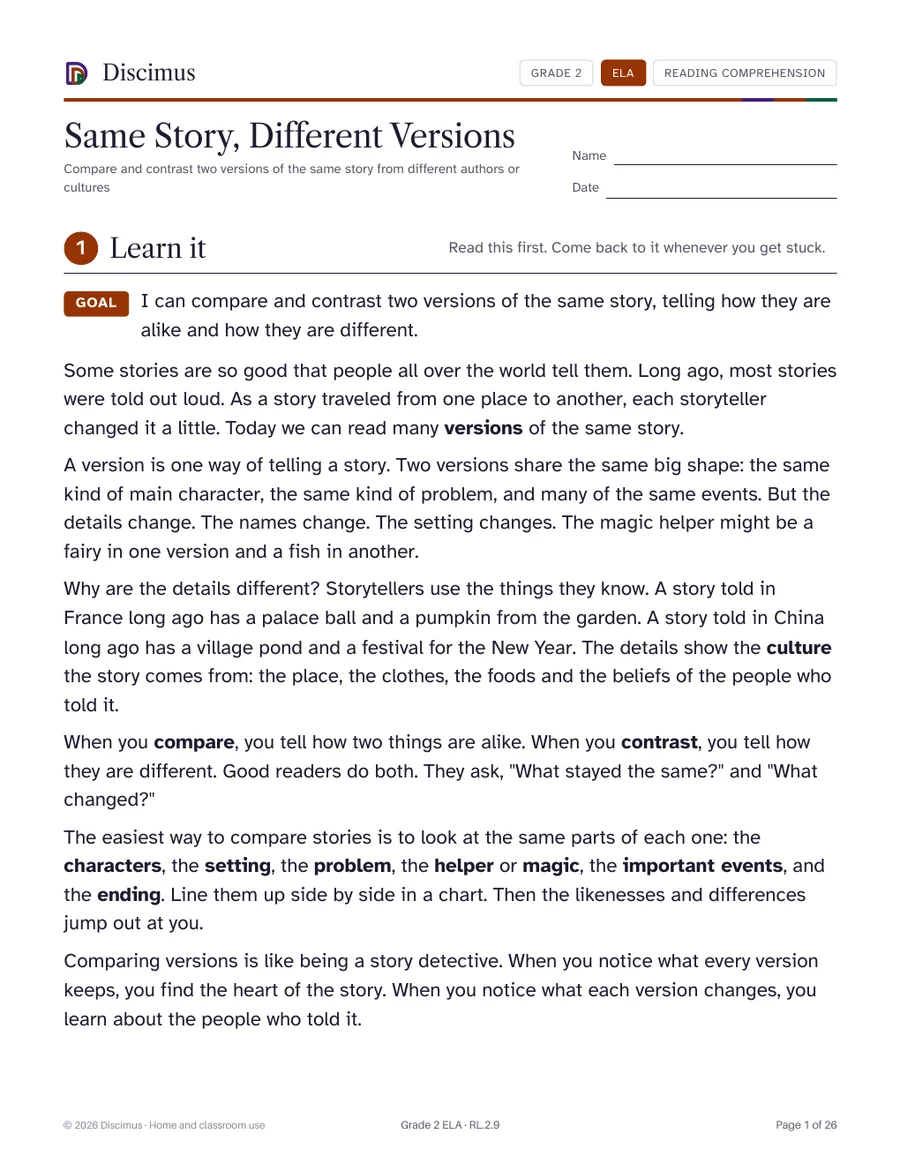
    Same Story, Different Versions

    Compare and contrast two versions of the same story from different authors or cultures
  • ELAGrade 2

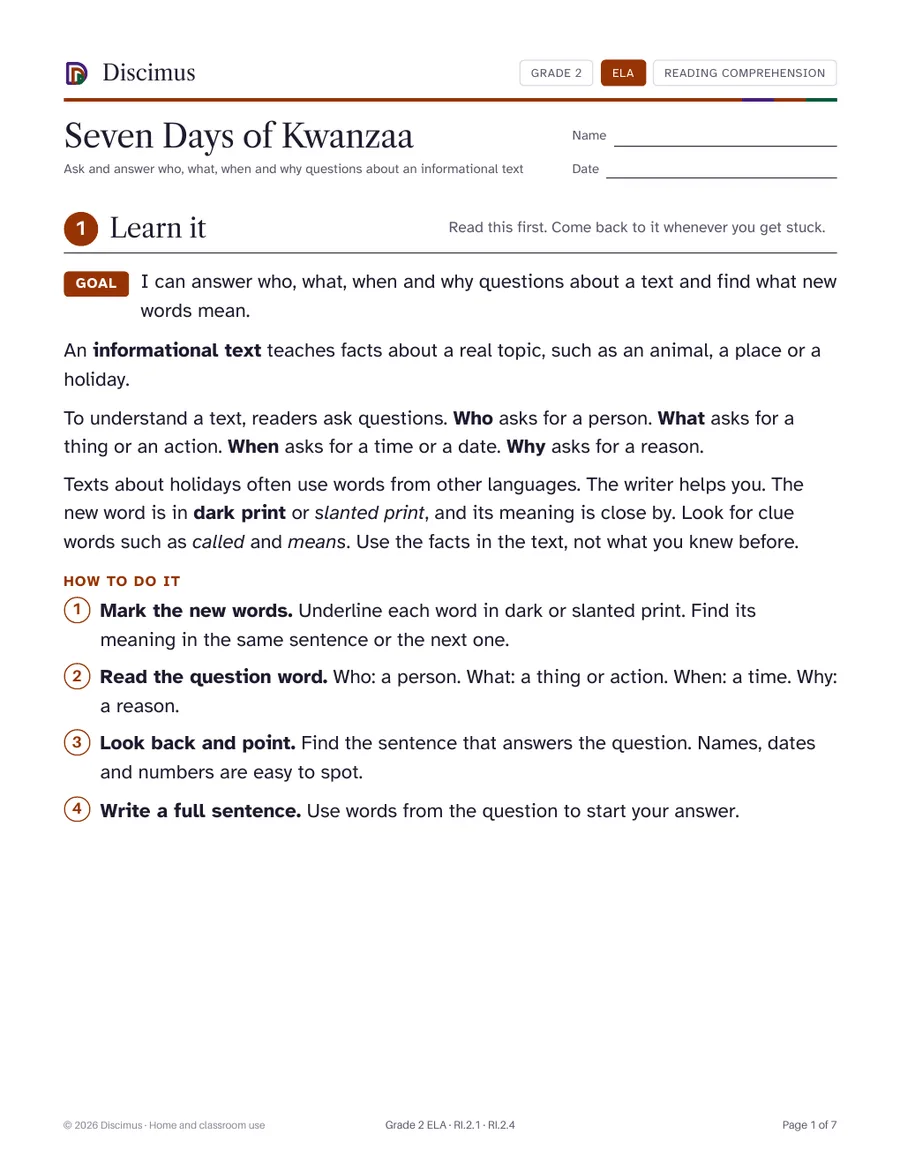
    Seven Days of Kwanzaa

    Ask and answer who, what, when and why questions about an informational text
  • ELAGrade 2

    Shades of Meaning: Toss, Throw, Hurl and Thin to Scrawny

    Tell apart close verbs and adjectives by strength and feeling, and choose the best one
  • ELAGrade 2

    Shared Research: Many Books, One Report, and a Science Log

    Read several sources on one topic to write a shared report, and keep a science log
  • ELAGrade 2

    Split and Read: Two-Syllable Words with Long Vowels

    Split and read regularly spelled two-syllable words that have long vowels
  • ELAGrade 2

    Story Structure: How Stories Begin and End

    Describe story structure: how the beginning introduces and the ending concludes a story
  • ELAGrade 2

    Strong Readers: Stories and Poems

    Read and understand grade 2 to 3 stories and poems independently, using fix-up strategies
  • ELAGrade 2

    Text Features: Captions, Glossaries, Indexes and Menus

    Use captions, bold words, subheadings, glossaries, indexes, menus and icons to find facts
  • ELAGrade 2

    Two Texts, One Topic: Compare the Most Important Points

    Compare and contrast the most important points in two true texts on the same topic
  • ELAGrade 2

    Use New Words: Describe with Adjectives and Adverbs

    Use new words from reading and talk, including adjectives and adverbs, to describe
  • ELAGrade 2

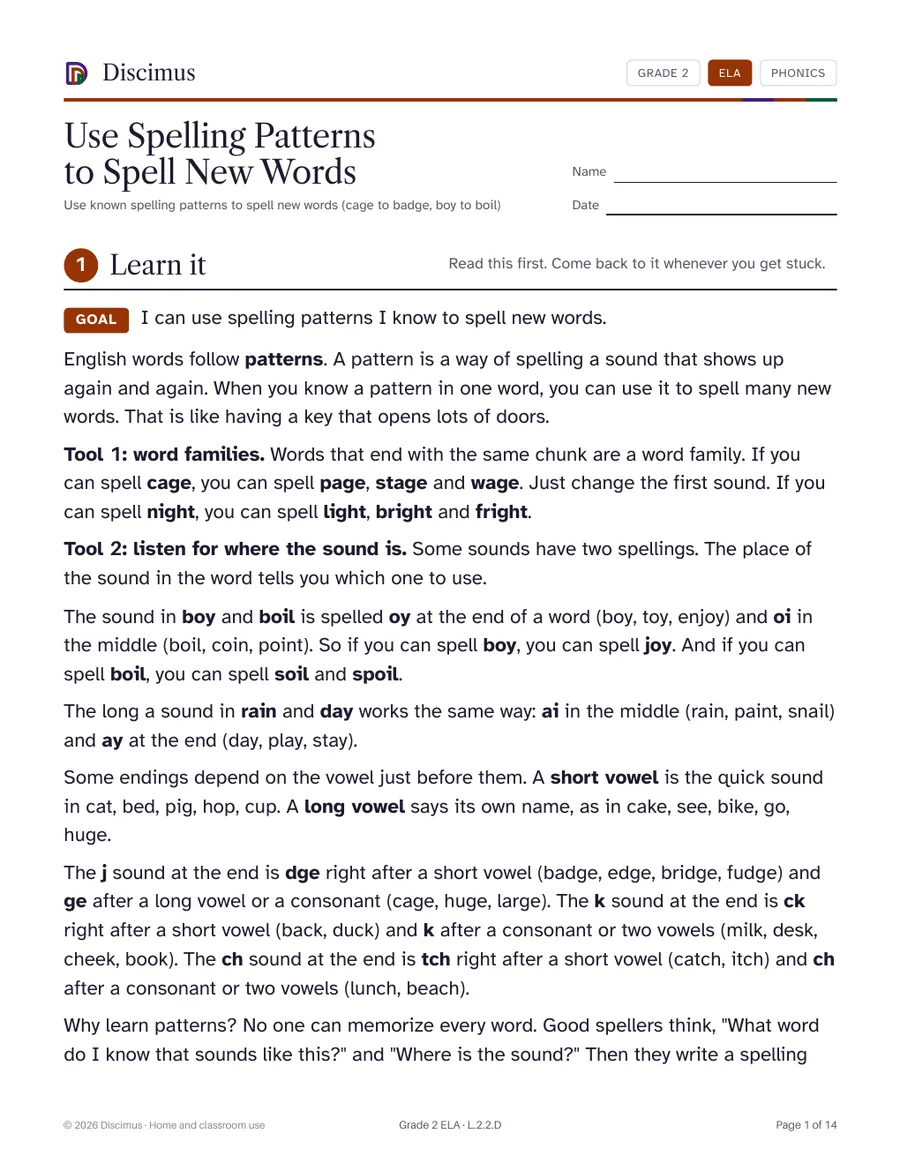
    Use Spelling Patterns to Spell New Words

    Use known spelling patterns to spell new words (cage to badge, boy to boil)
  • ELAGrade 2

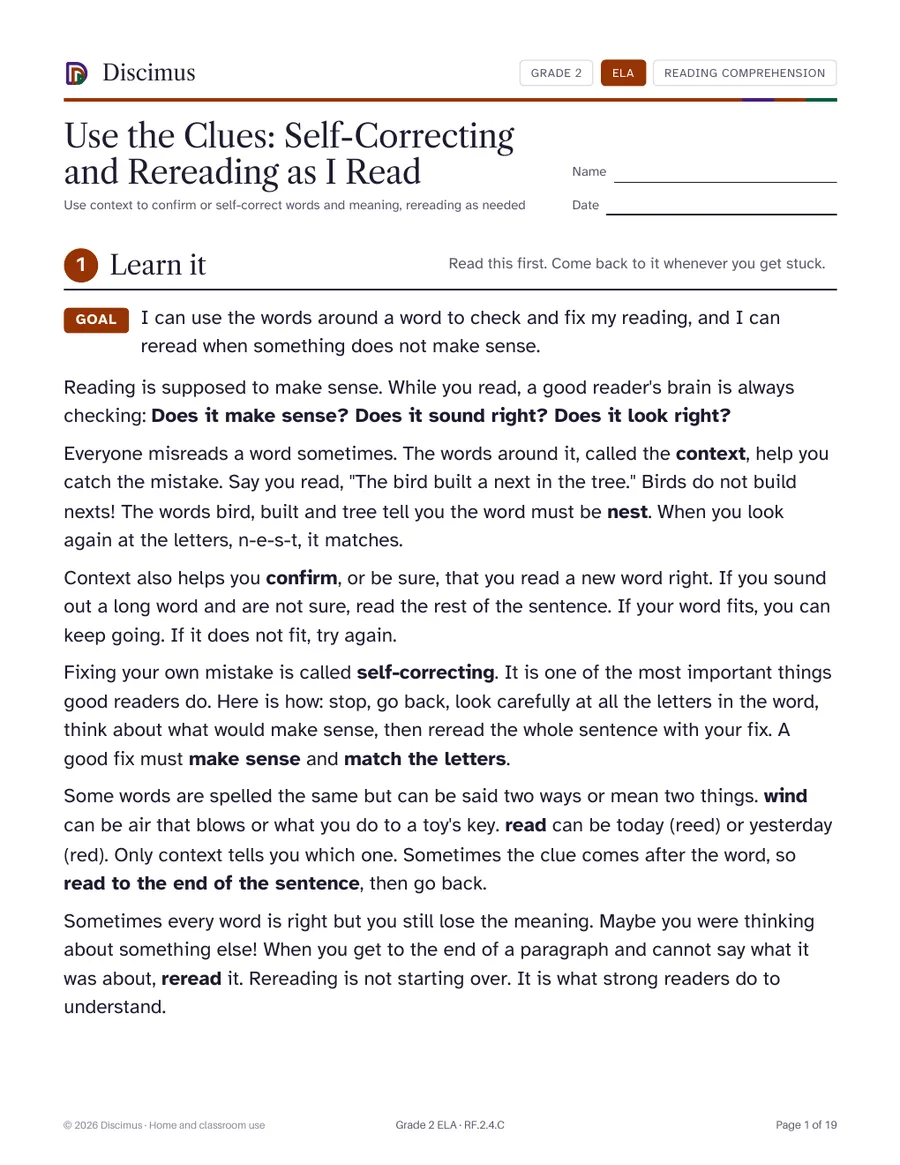
    Use the Clues: Self-Correcting and Rereading as I Read

    Use context to confirm or self-correct words and meaning, rereading as needed
  • ELAGrade 2

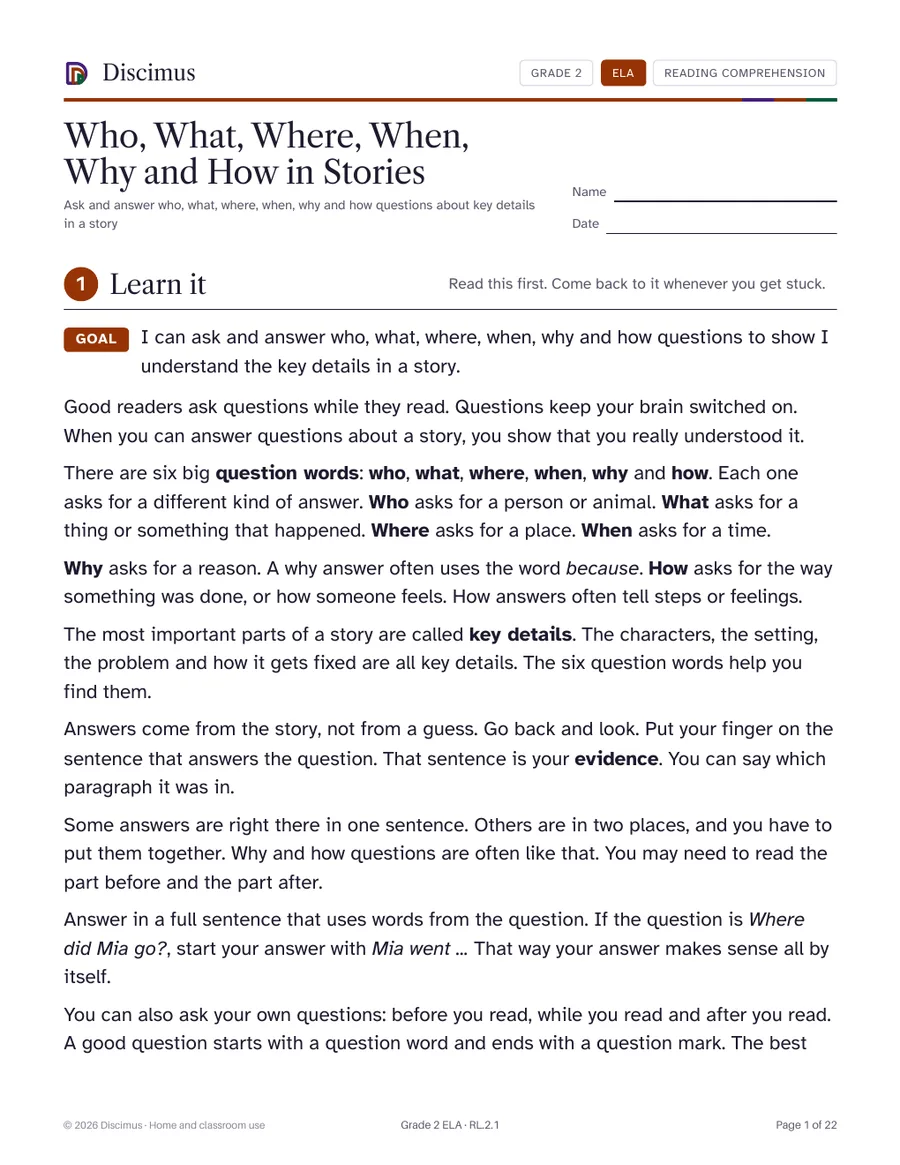
    Who, What, Where, When, Why and How in Stories

    Ask and answer who, what, where, when, why and how questions about key details in a story
  • ELAGrade 2

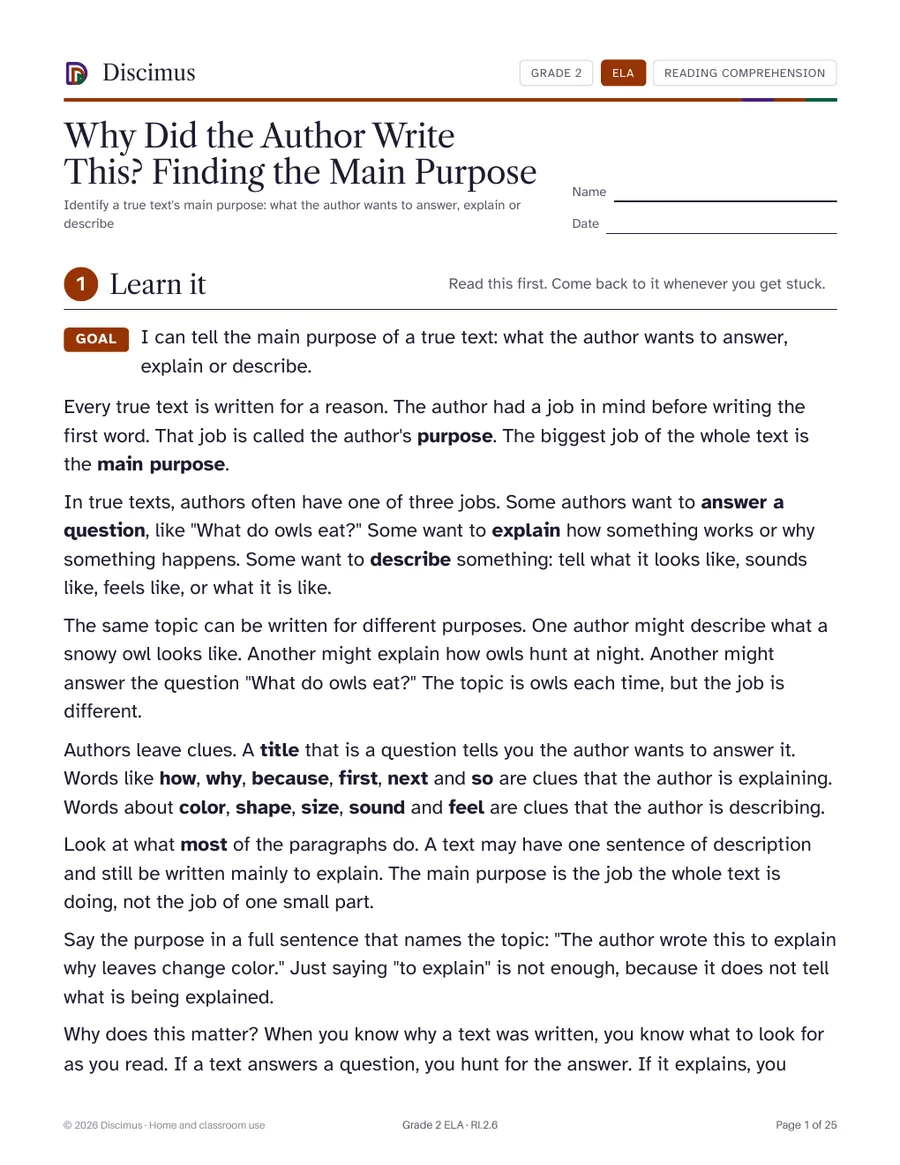
    Why Did the Author Write This? Finding the Main Purpose

    Identify a true text's main purpose: what the author wants to answer, explain or describe
  • ELAGrade 2

    Word Meanings in Science and Social Studies

    Use clues in a science or social studies text to work out what words and phrases mean

Discimus

Docendo discimus. By teaching, we learn.

By age

  • Early Childhood
  • Elementary School
  • Middle School
  • High School
  • All grades

By subject

  • Math
  • English Language Arts
  • Science
  • Social Studies
  • Foreign Language
  • Technology

Discimus

  • Membership
  • Occasions
  • Standards
  • About
  • Contact

© 2026 Ceterum. All rights reserved. Worksheets are for home and single-classroom use.

  • Terms
  • Privacy