Abstract Nouns: Naming Ideas and Feelings
Recognize, form and use abstract nouns such as childhood, kindness and courage
Common Core State Standards for English Language Arts
Phonics, reading, grammar, vocabulary and writing.
Recognize, form and use abstract nouns such as childhood, kindness and courage
Ask and answer questions about a story, pointing to the exact words that prove each answer
Ask and answer questions about nonfiction, citing the exact words that prove each answer
Capitalize the first, last and important words in titles, keeping small words lowercase
Use the terms chapter, scene and stanza and describe how each part builds on earlier parts
Describe a character's traits, feelings and motivations and how actions cause story events
Use commas correctly in addresses, in sentences and on envelopes
Compare and contrast themes, settings and plots of stories in a series
Form comparative and superlative adjectives and adverbs and choose the right one
Use context to confirm or fix word reading and meaning, rereading as needed
Use glossaries and print or digital dictionaries to find precise word meanings
Use a beginning dictionary to check and correct spellings
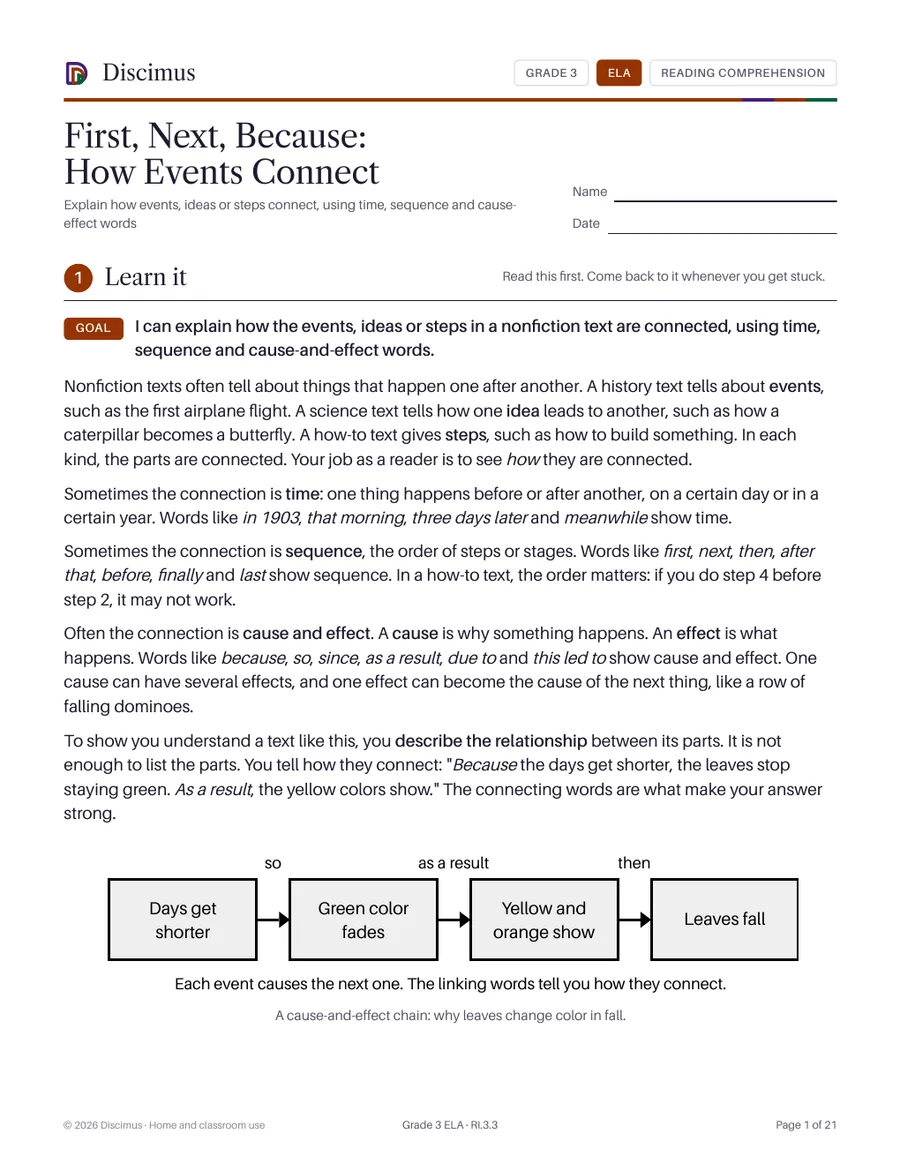
Explain how events, ideas or steps connect, using time, sequence and cause-effect words
Choose organization and details that fit the writing task, purpose and audience
Read grade 3 irregularly spelled words such as though, caught and island by heart parts
Use text features and search tools to find information on a topic quickly
Explain how a story's illustrations add to its words: mood, character and setting
Describe how sentences and paragraphs connect: sequence, comparison, or cause and effect
Develop an informative topic with facts, definitions and details
Introduce a topic, group related facts under headings, and add helpful illustrations
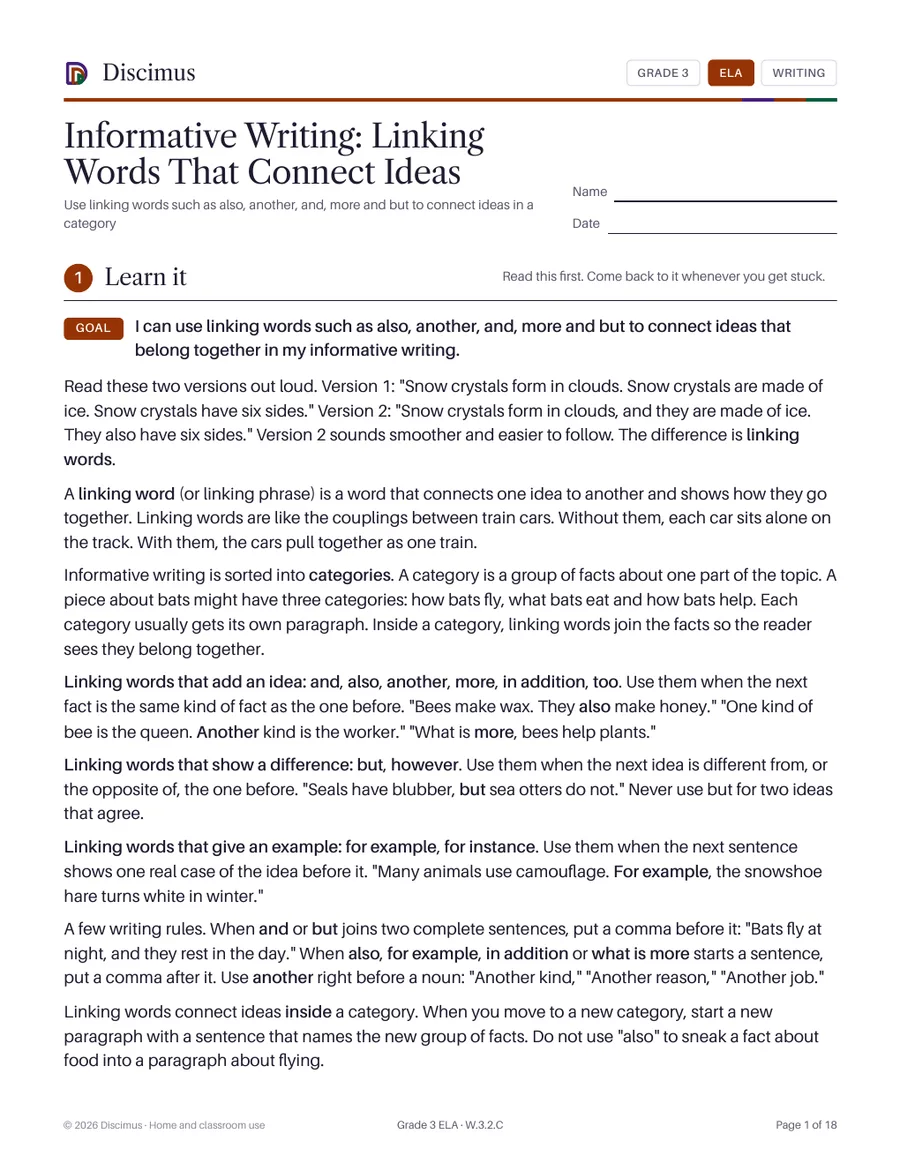
Use linking words such as also, another, and, more and but to connect ideas in a category
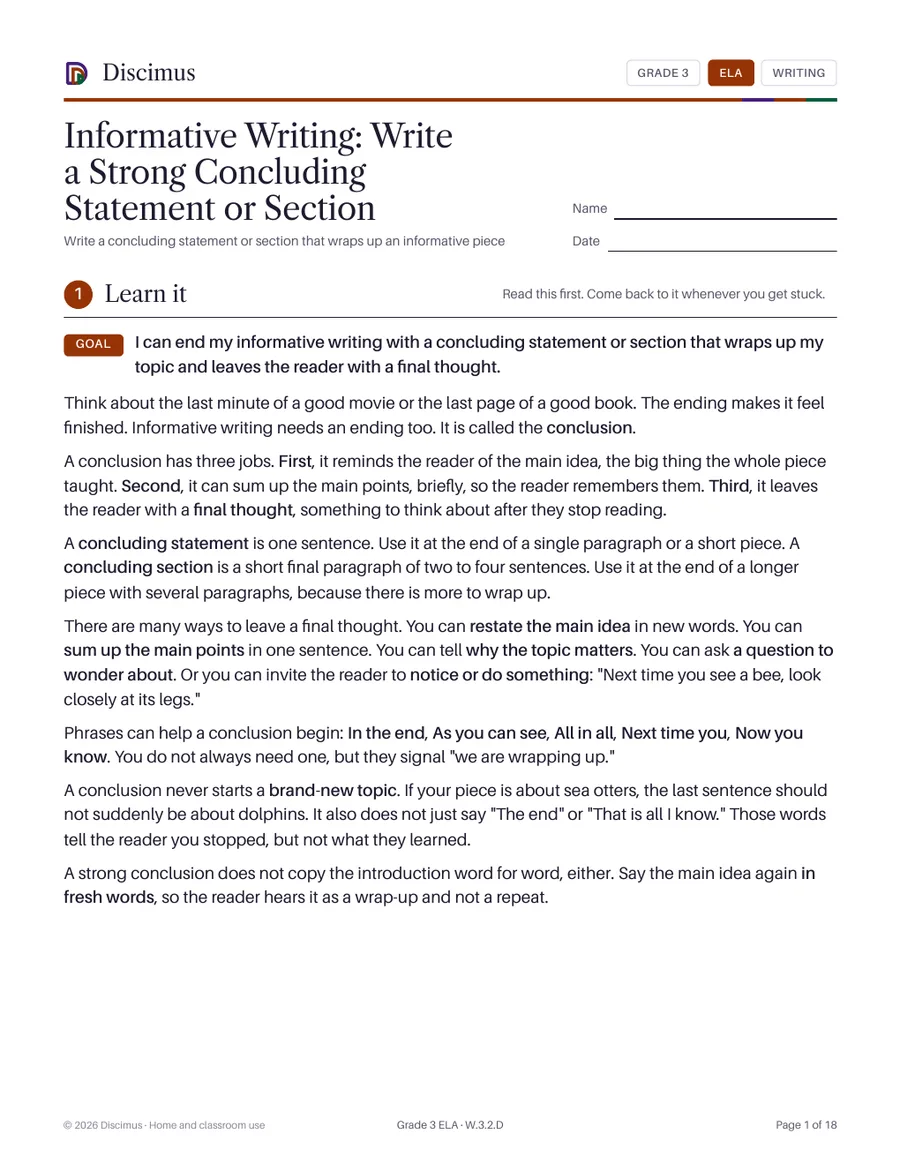
Write a concluding statement or section that wraps up an informative piece
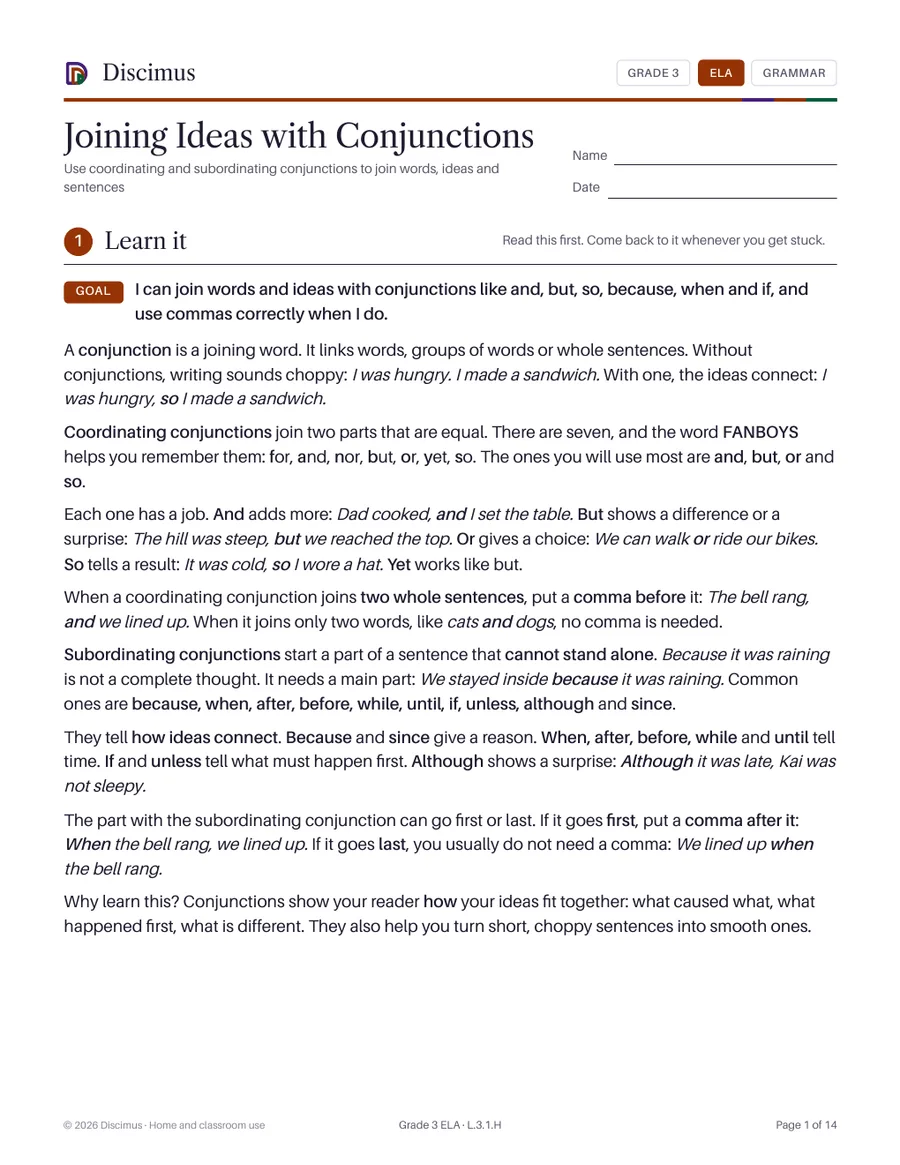
Use coordinating and subordinating conjunctions to join words, ideas and sentences
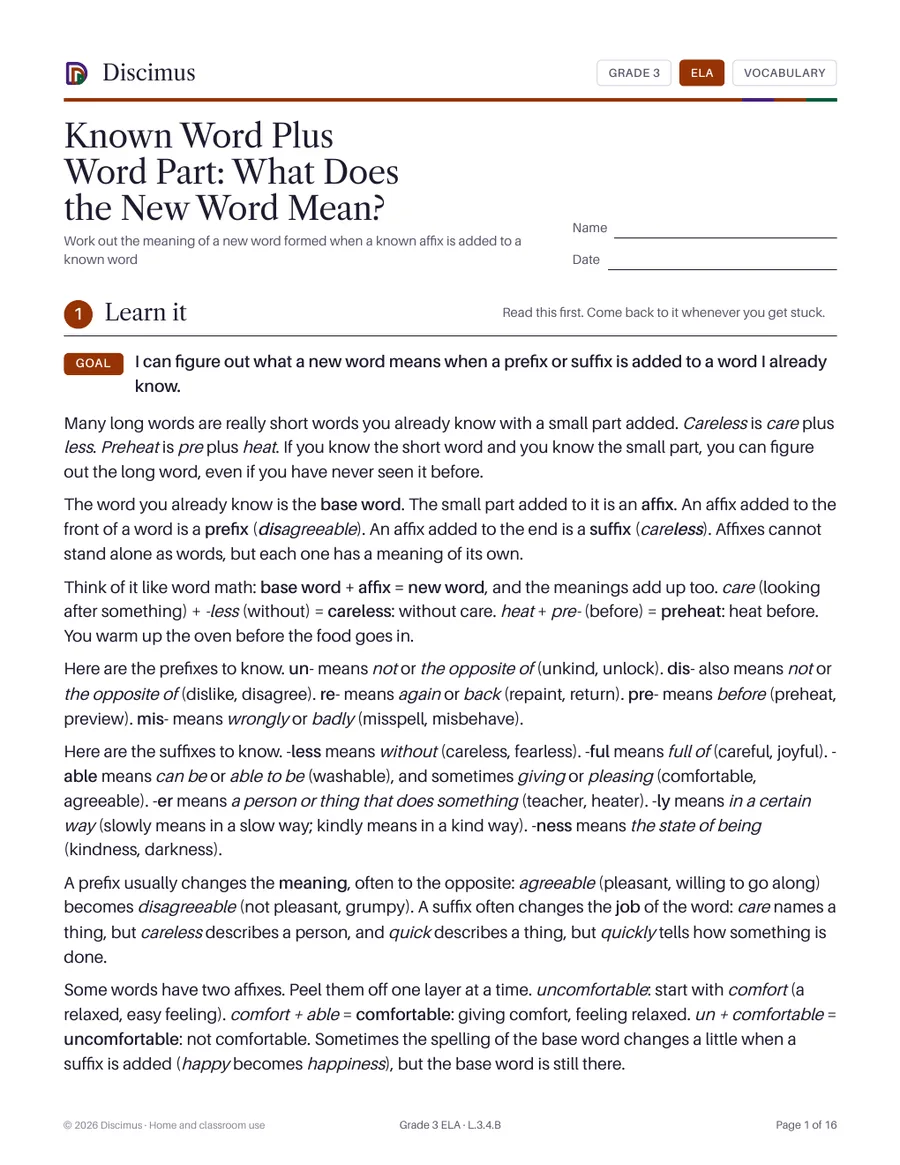
Work out the meaning of a new word formed when a known affix is added to a known word
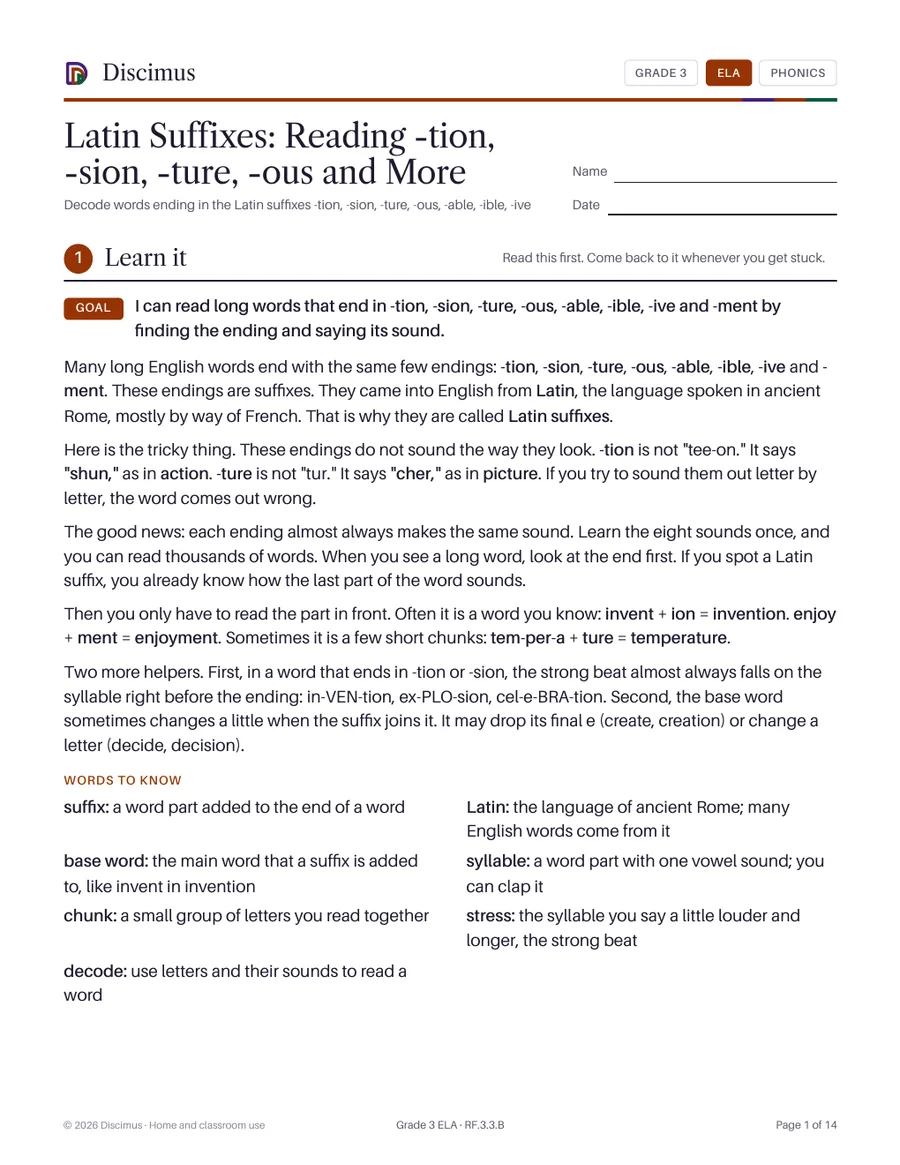
Decode words ending in the Latin suffixes -tion, -sion, -ture, -ous, -able, -ible, -ive
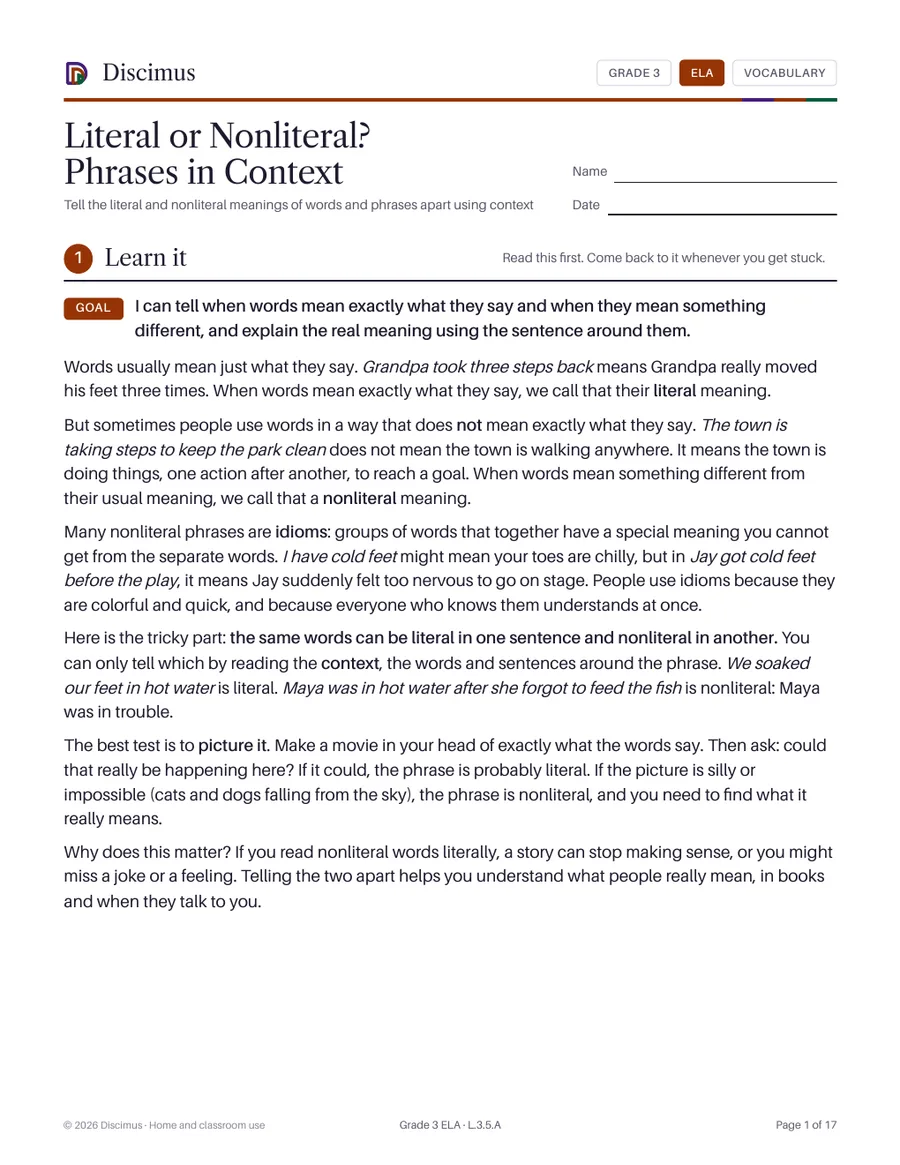
Tell the literal and nonliteral meanings of words and phrases apart using context
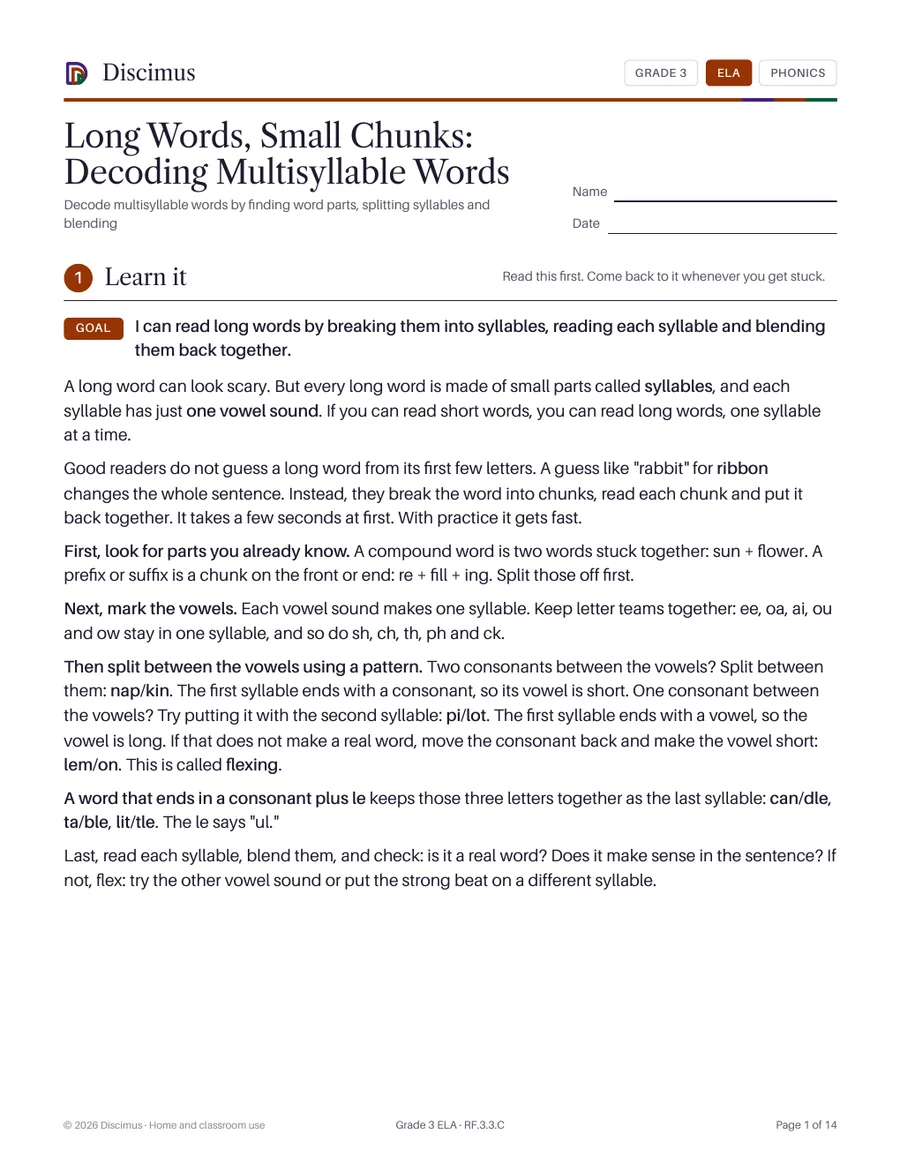
Decode multisyllable words by finding word parts, splitting syllables and blending
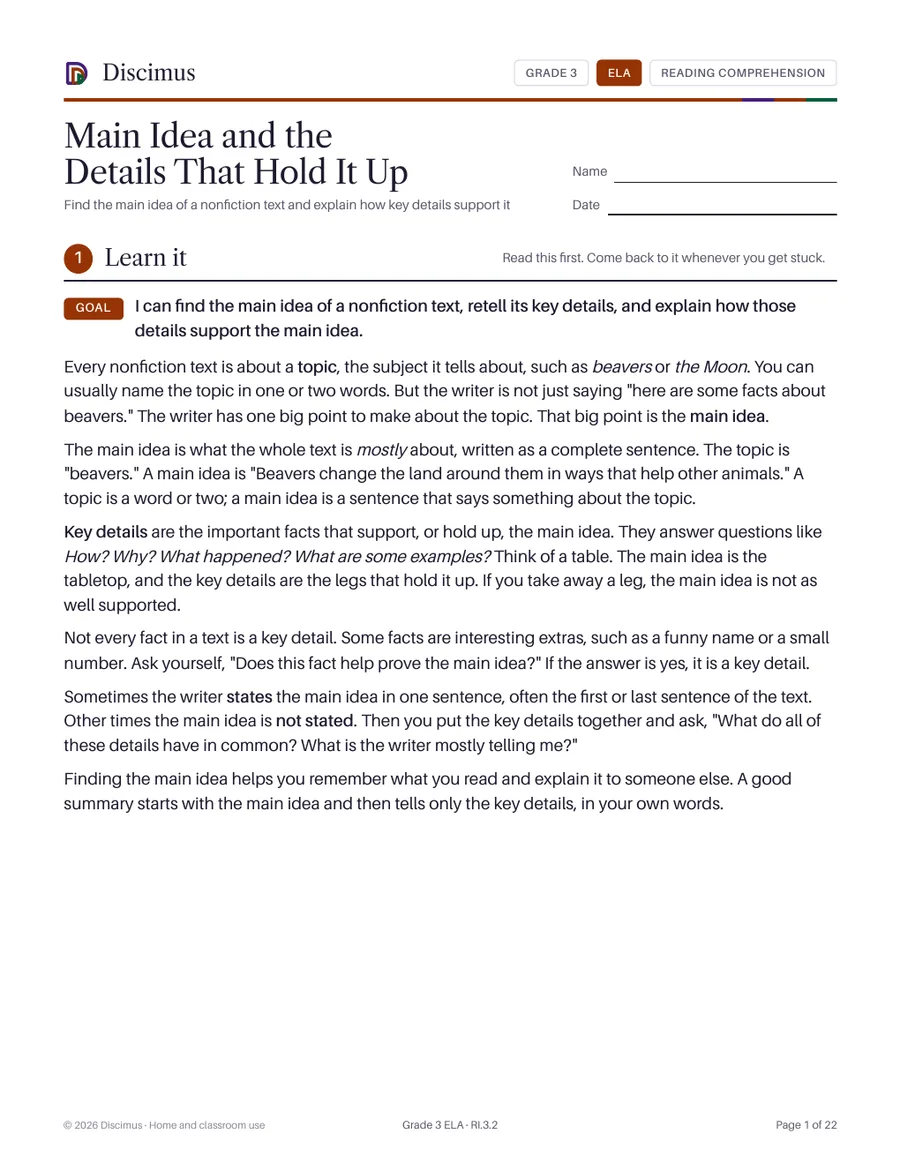
Find the main idea of a nonfiction text and explain how key details support it
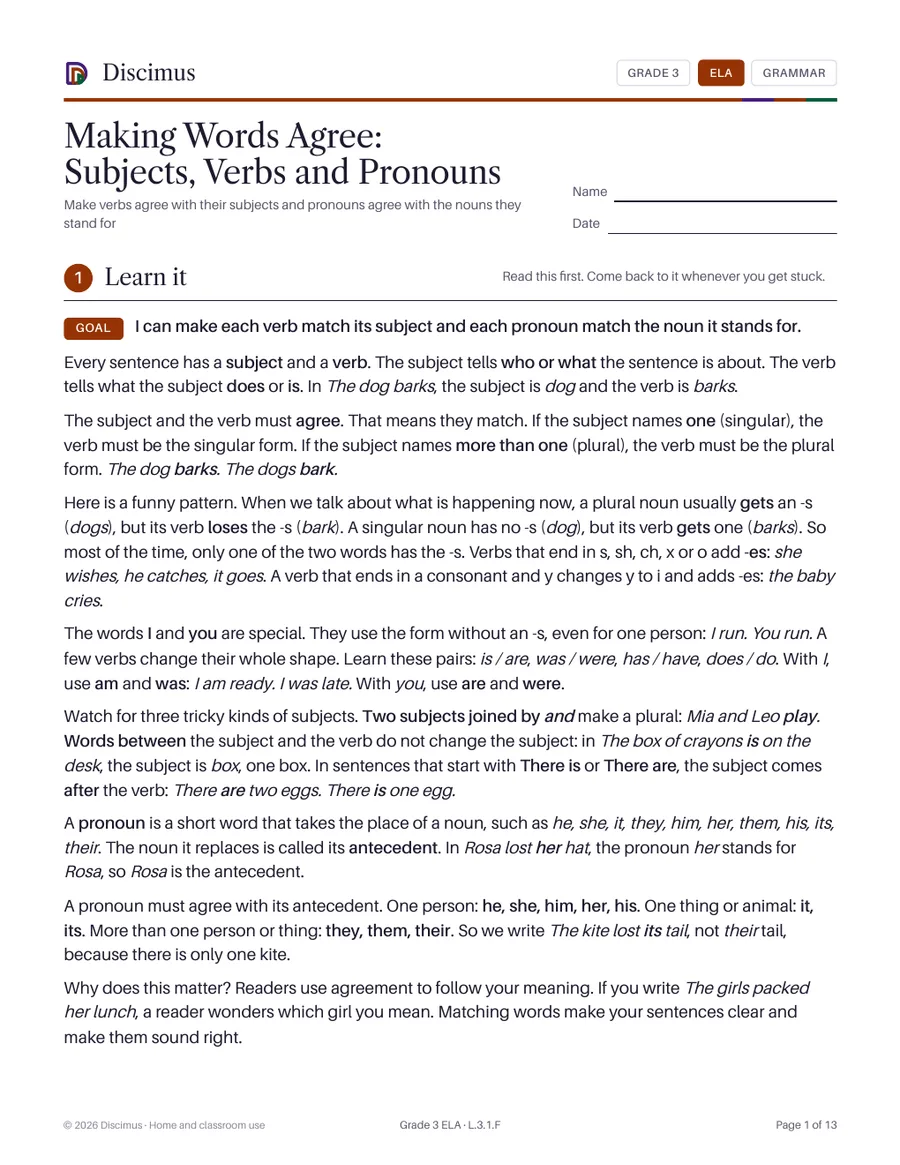
Make verbs agree with their subjects and pronouns agree with the nouns they stand for
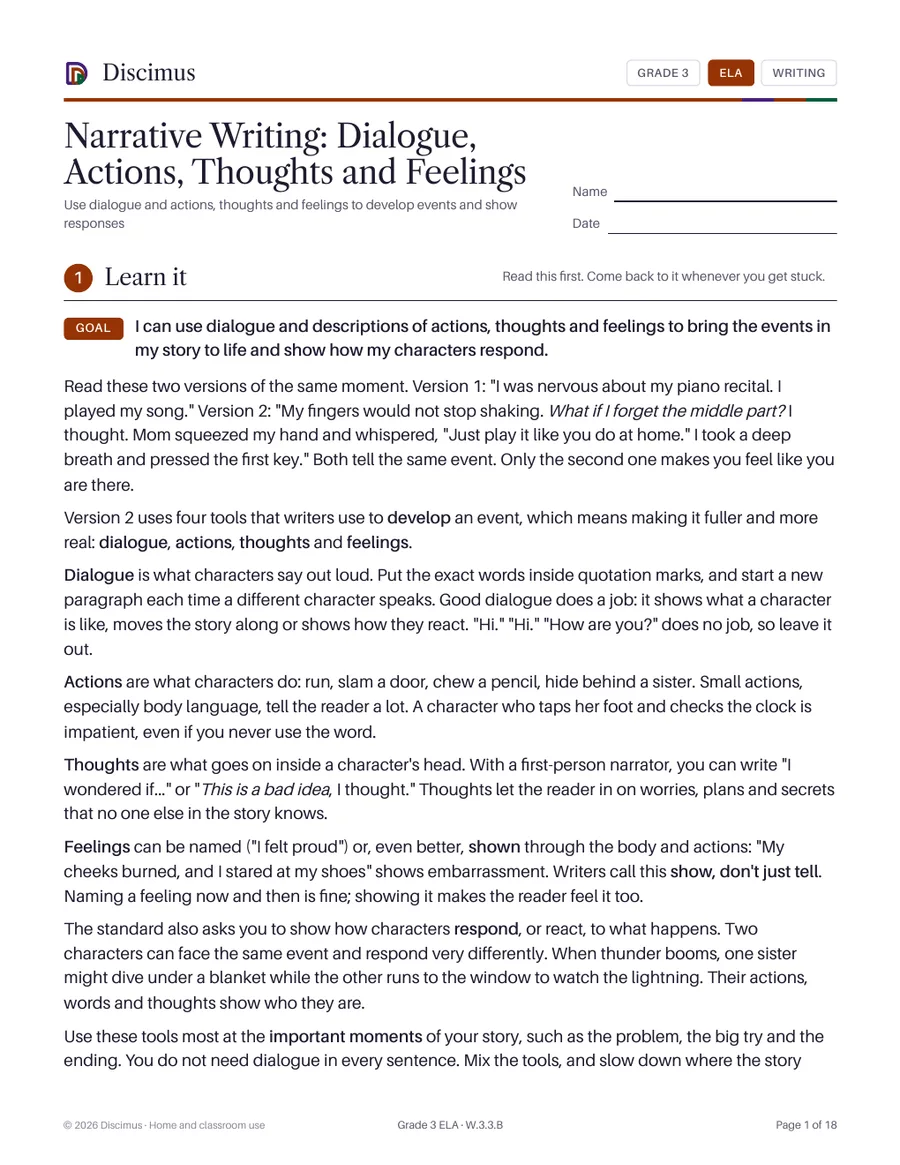
Use dialogue and actions, thoughts and feelings to develop events and show responses
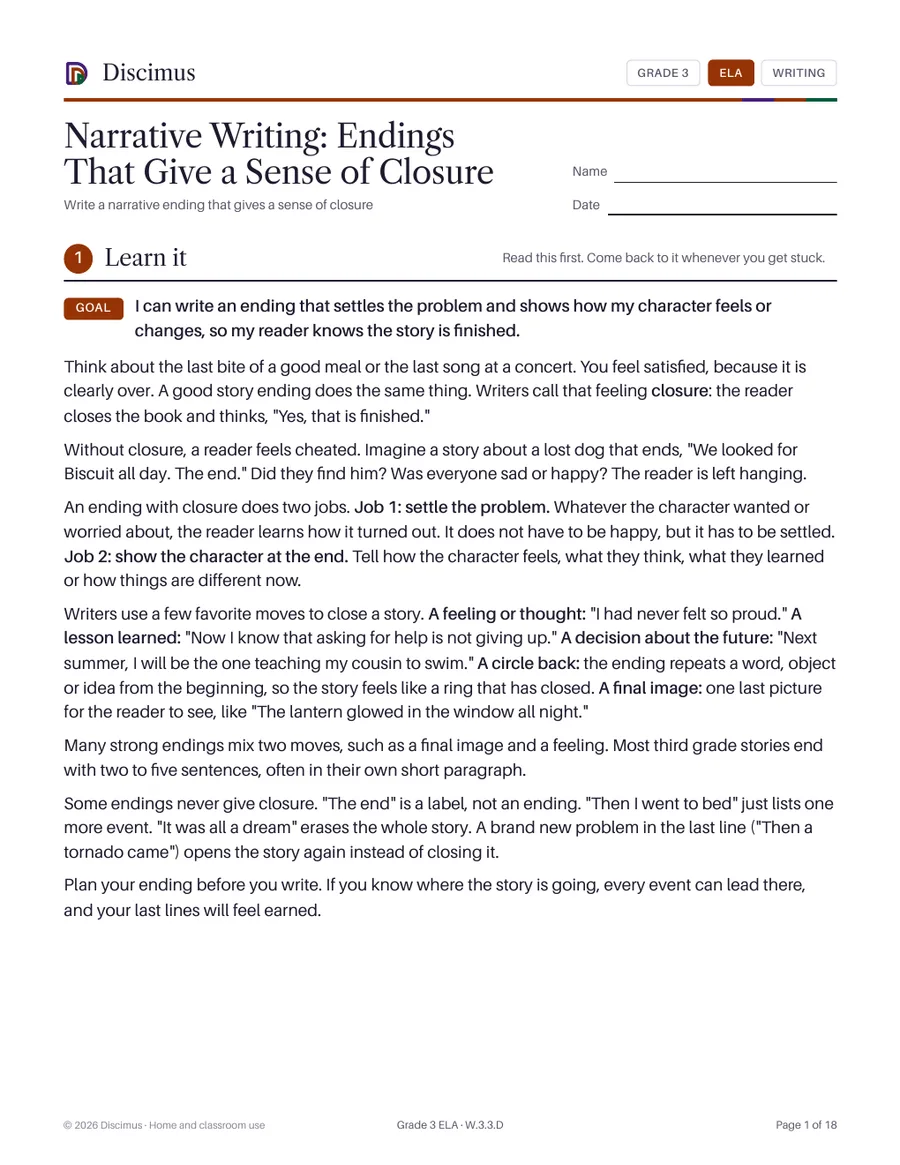
Write a narrative ending that gives a sense of closure
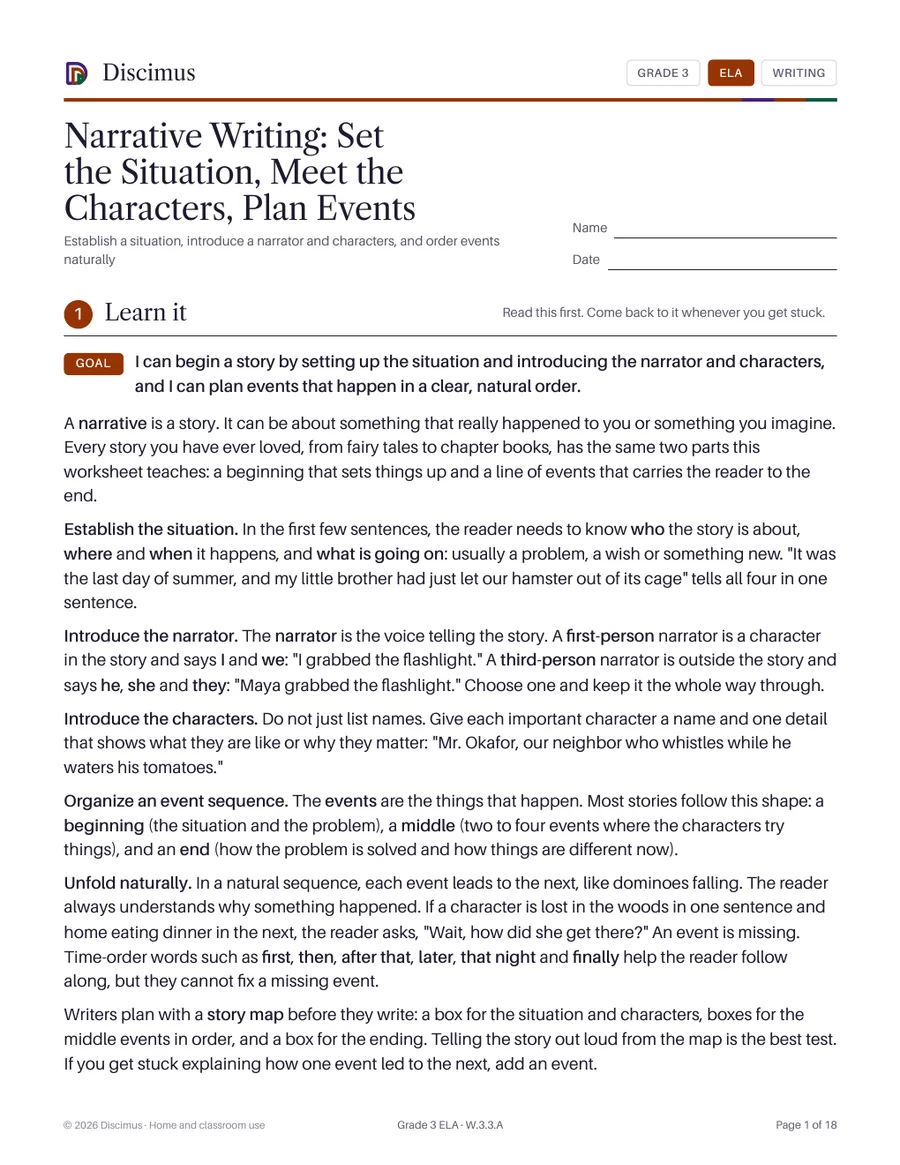
Establish a situation, introduce a narrator and characters, and order events naturally
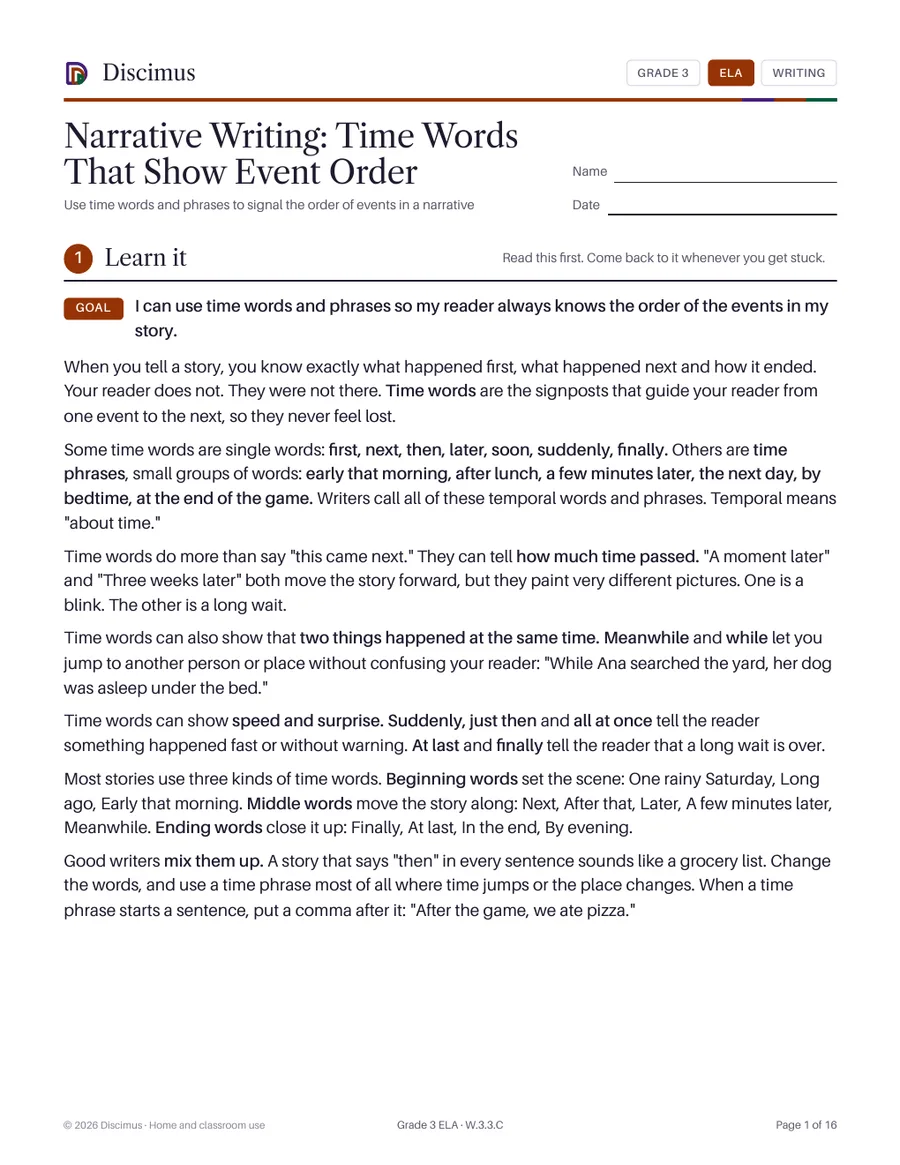
Use time words and phrases to signal the order of events in a narrative
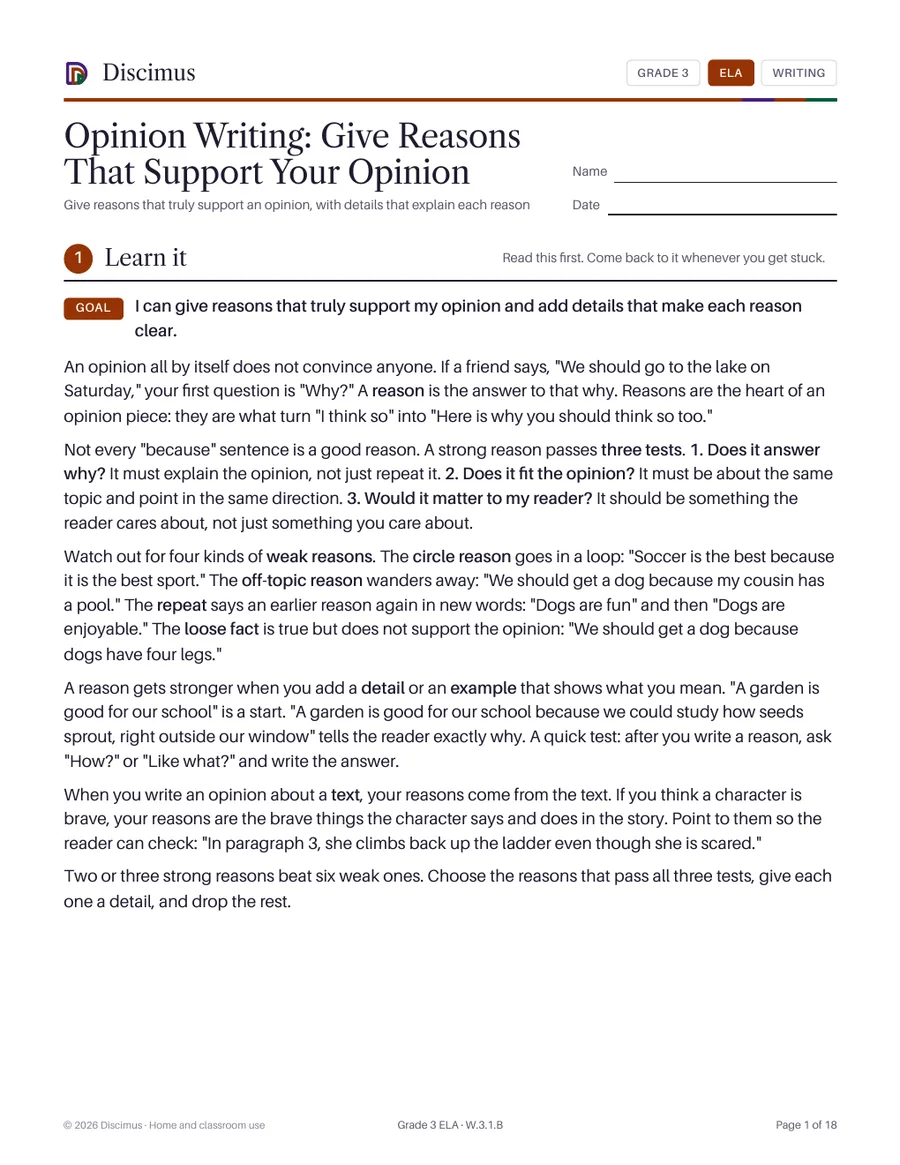
Give reasons that truly support an opinion, with details that explain each reason
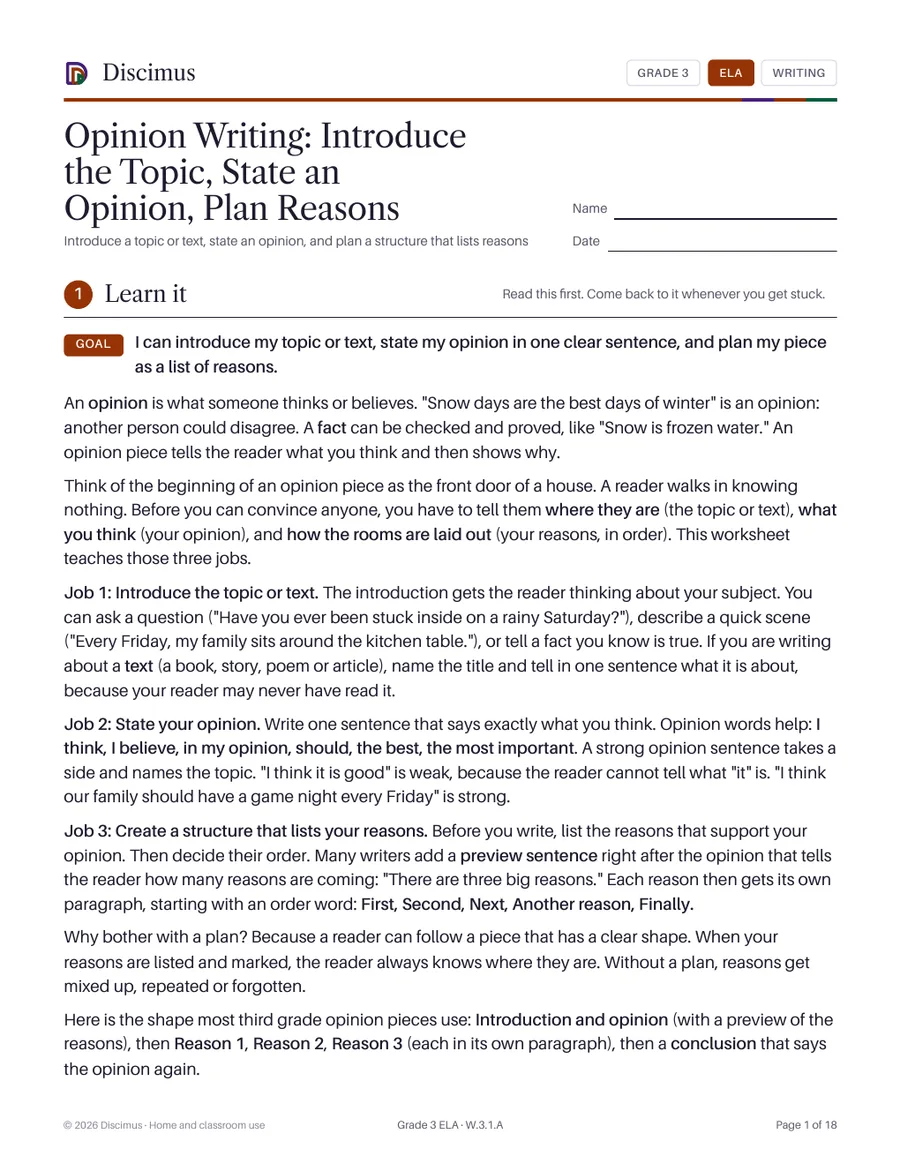
Introduce a topic or text, state an opinion, and plan a structure that lists reasons
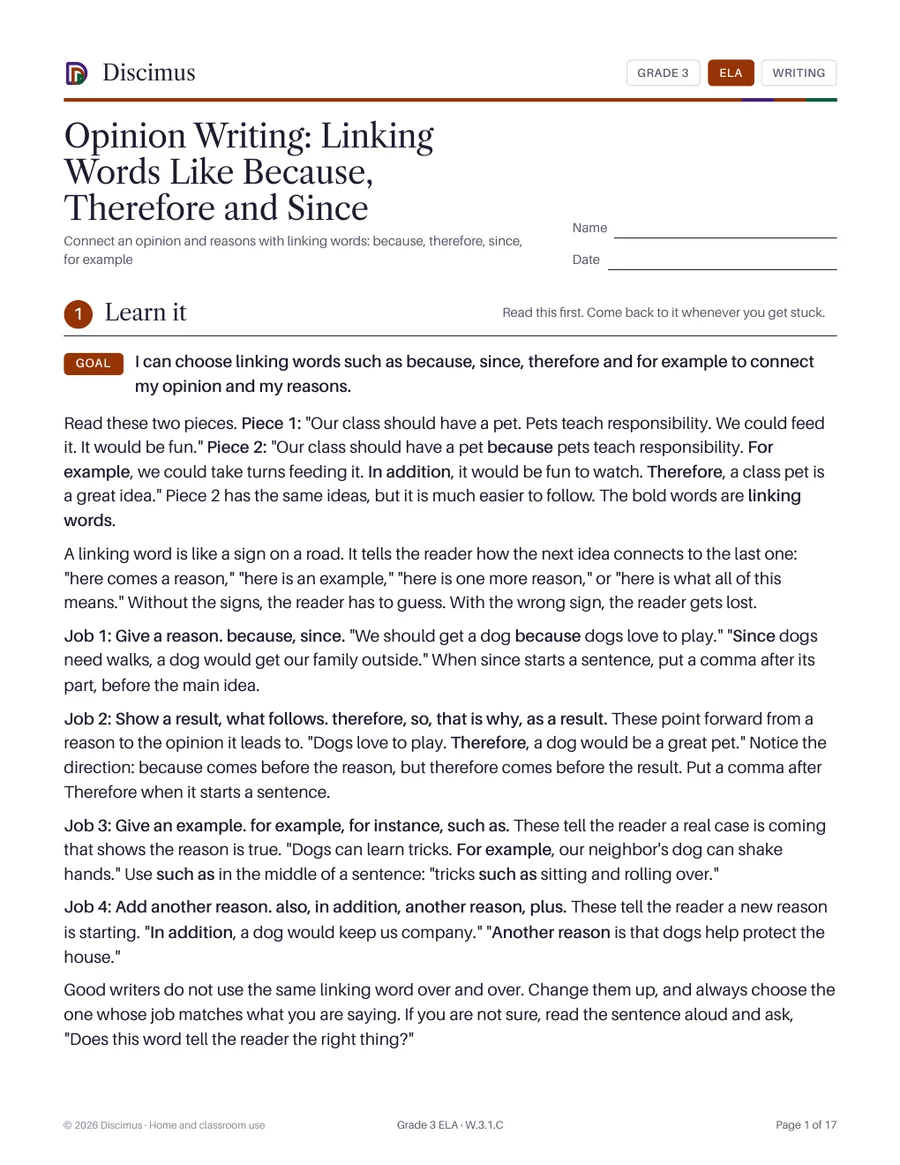
Connect an opinion and reasons with linking words: because, therefore, since, for example
End an opinion piece with a concluding statement or section that restates the opinion
Explain the jobs of nouns, pronouns, verbs, adjectives and adverbs in sentences
Use maps, diagrams and timelines with the words to explain where, when, why and how
Plan, revise and edit writing with help from partners and adults
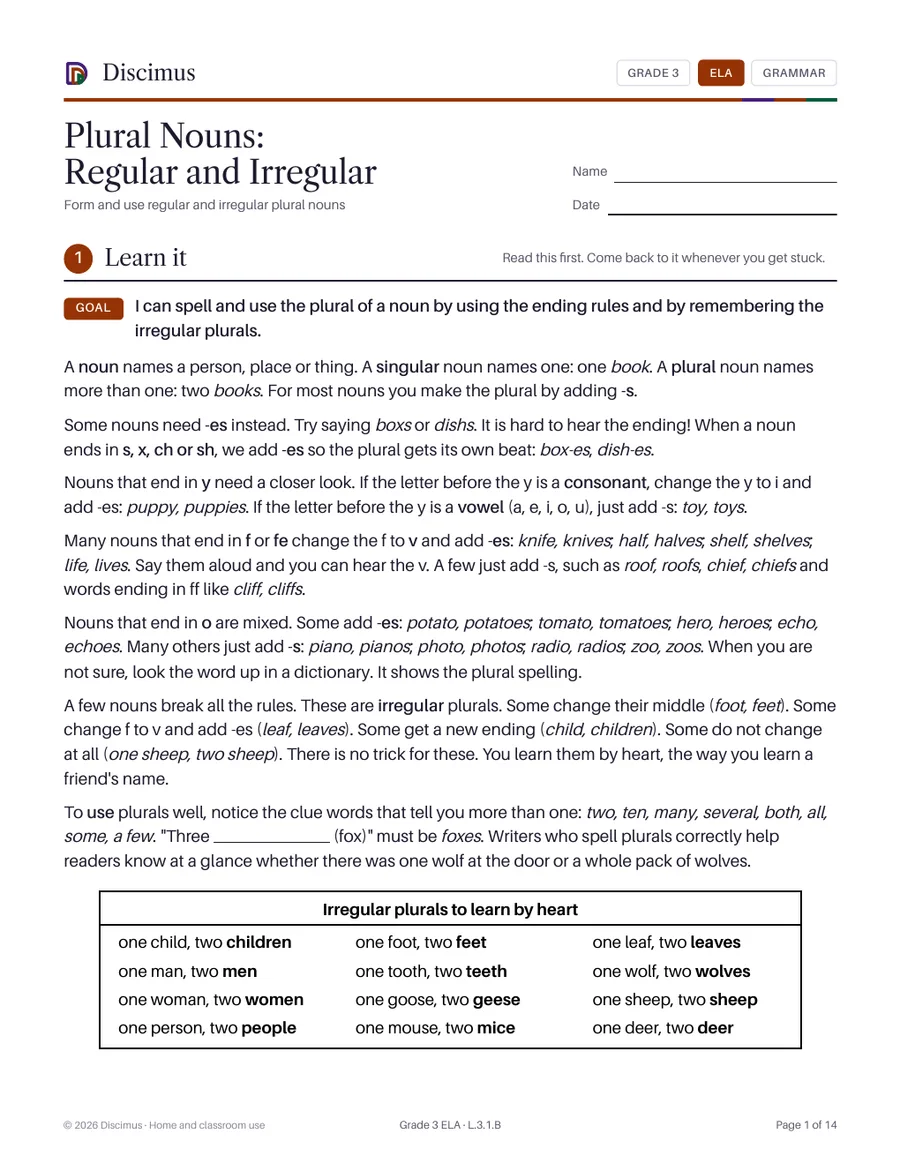
Form and use regular and irregular plural nouns
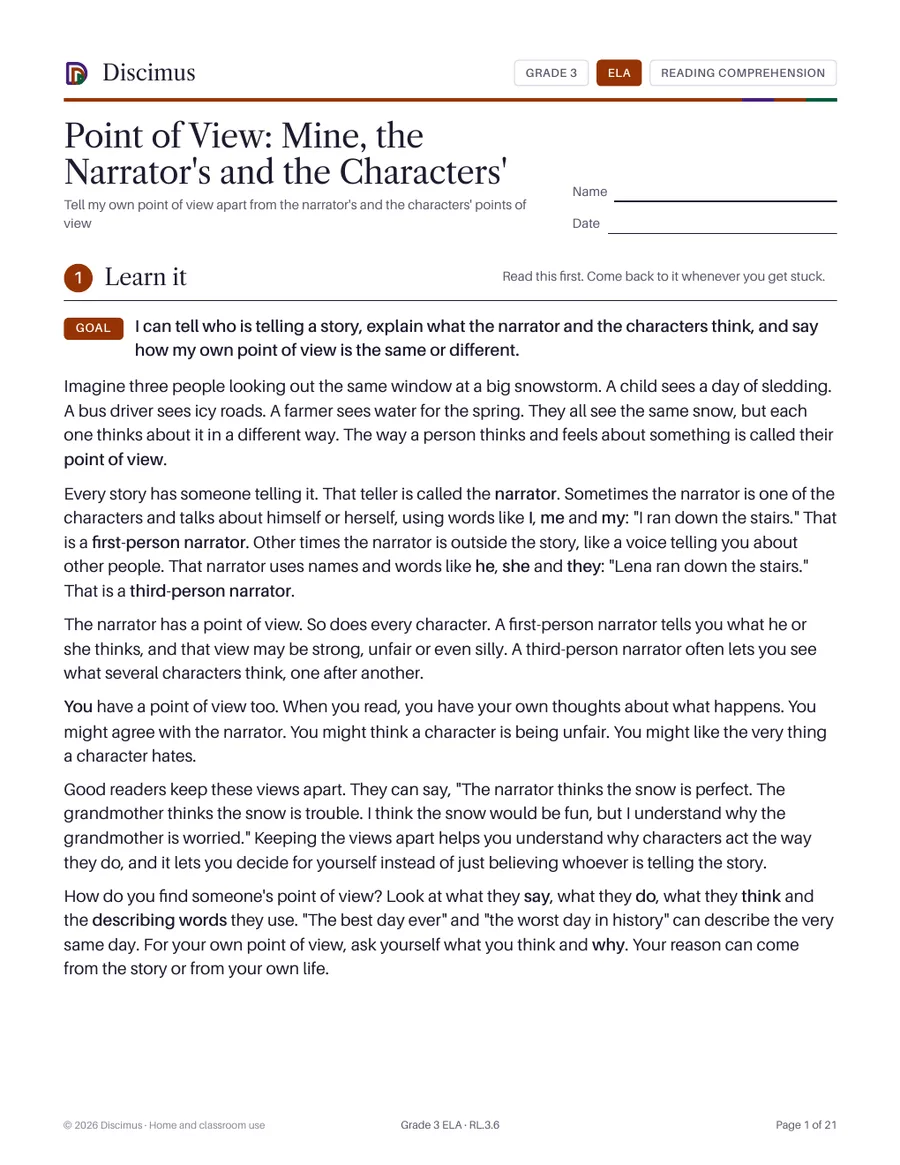
Tell my own point of view apart from the narrator's and the characters' points of view
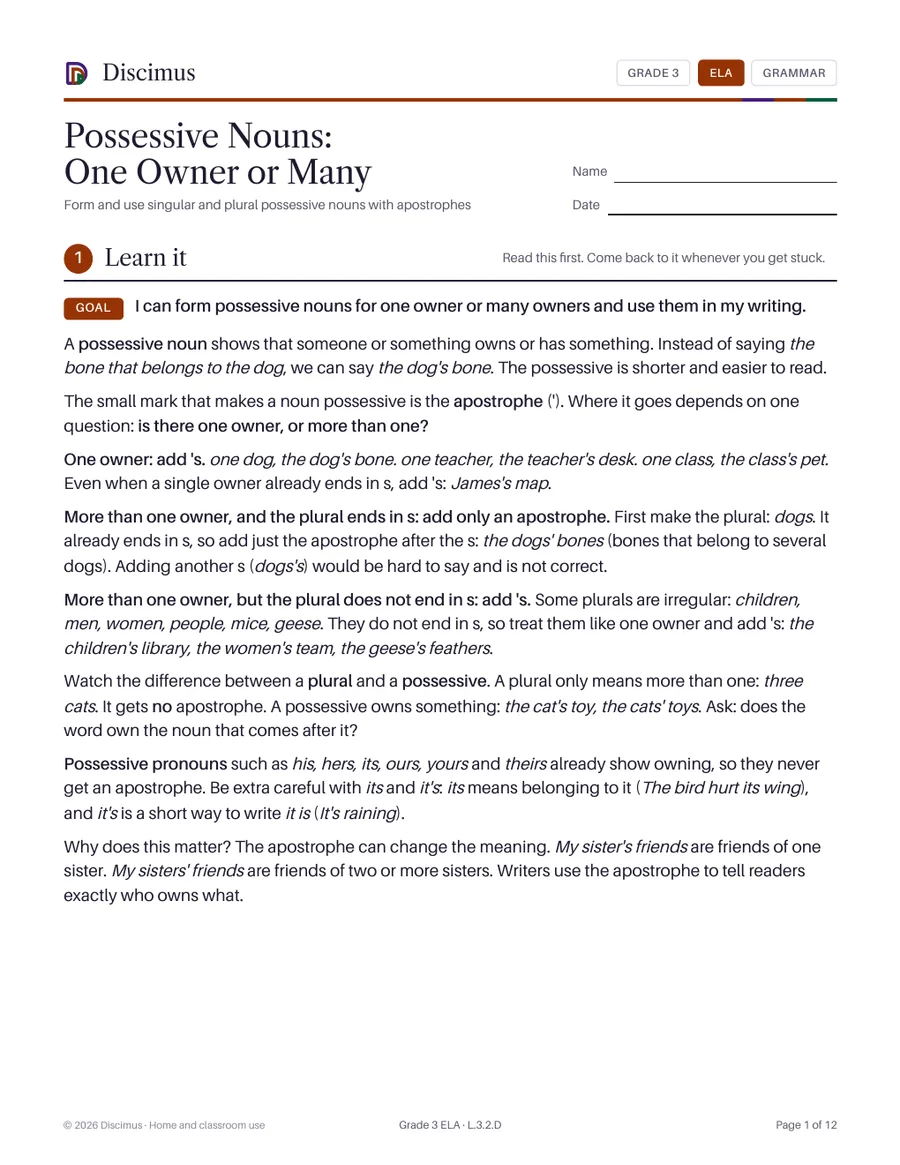
Form and use singular and plural possessive nouns with apostrophes
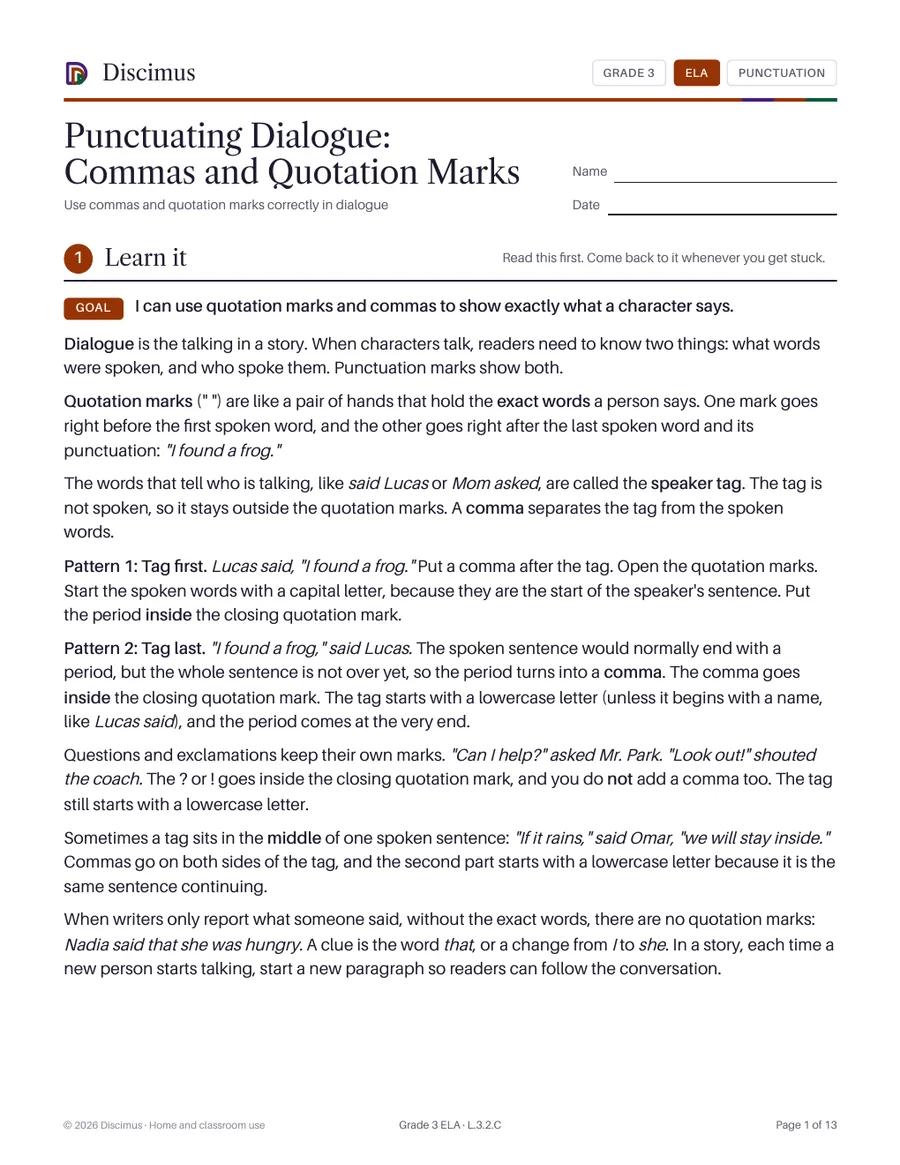
Use commas and quotation marks correctly in dialogue
Set a purpose before reading, check understanding while reading, and sum up after
Read history, science and how-to texts independently using a reading routine
Read grade 3 prose and poetry aloud accurately, at a fitting pace and with expression
Read and understand challenging grade 3 stories, plays and poems independently
Form and use regular verbs (-s, -es, -ed) and irregular verbs (ran, brought, was, has)
Recount a fable, folktale or myth and explain how key details show its lesson
Use a known root word as a clue to the meaning of an unknown word with the same root
Compare and contrast the most important points and key details in two texts on one topic
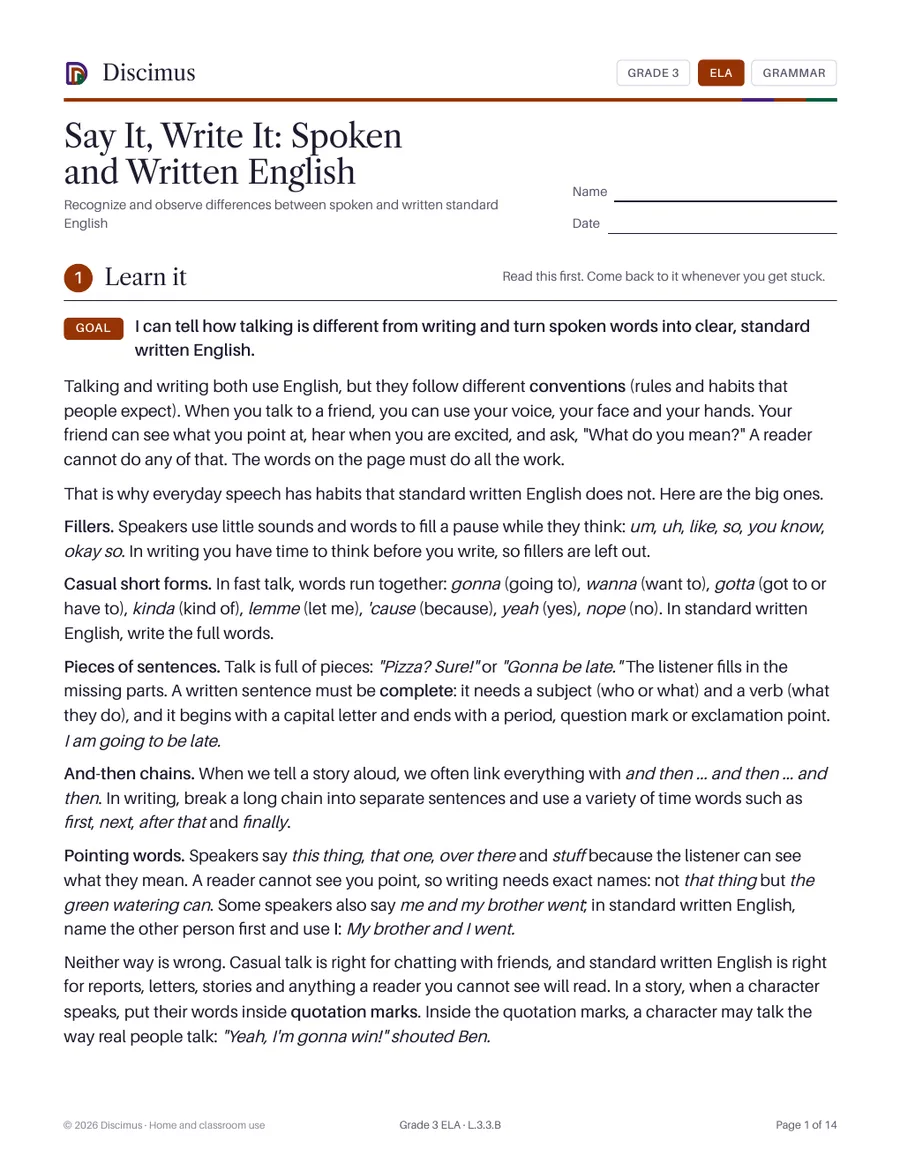
Recognize and observe differences between spoken and written standard English
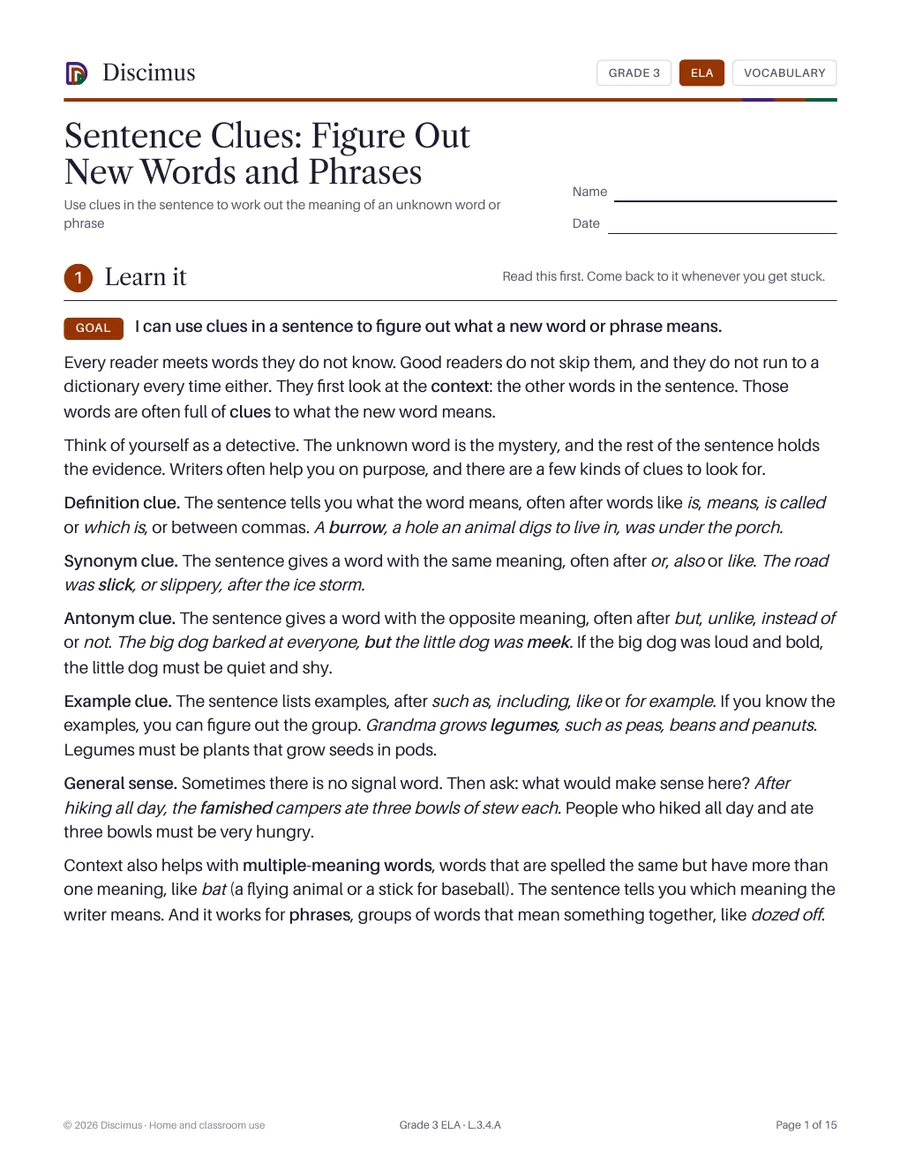
Use clues in the sentence to work out the meaning of an unknown word or phrase
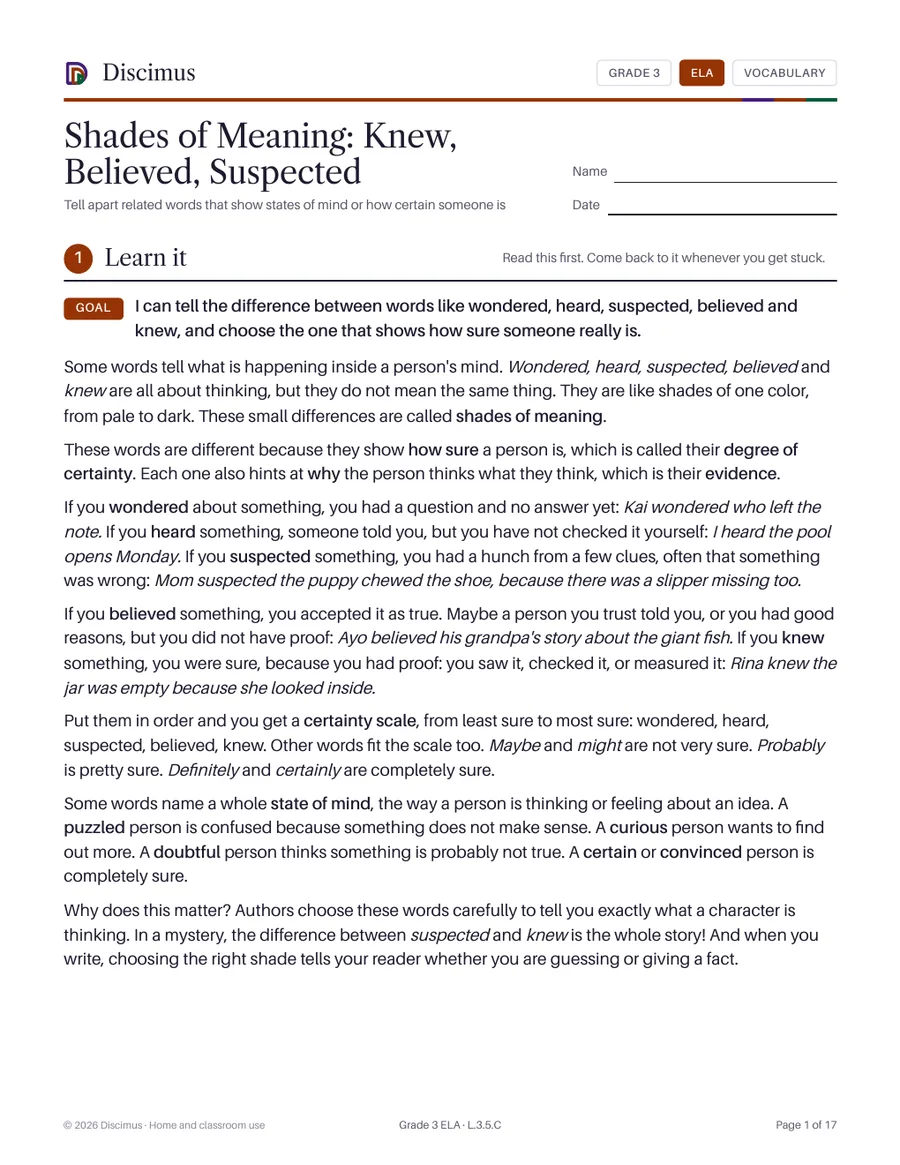
Tell apart related words that show states of mind or how certain someone is
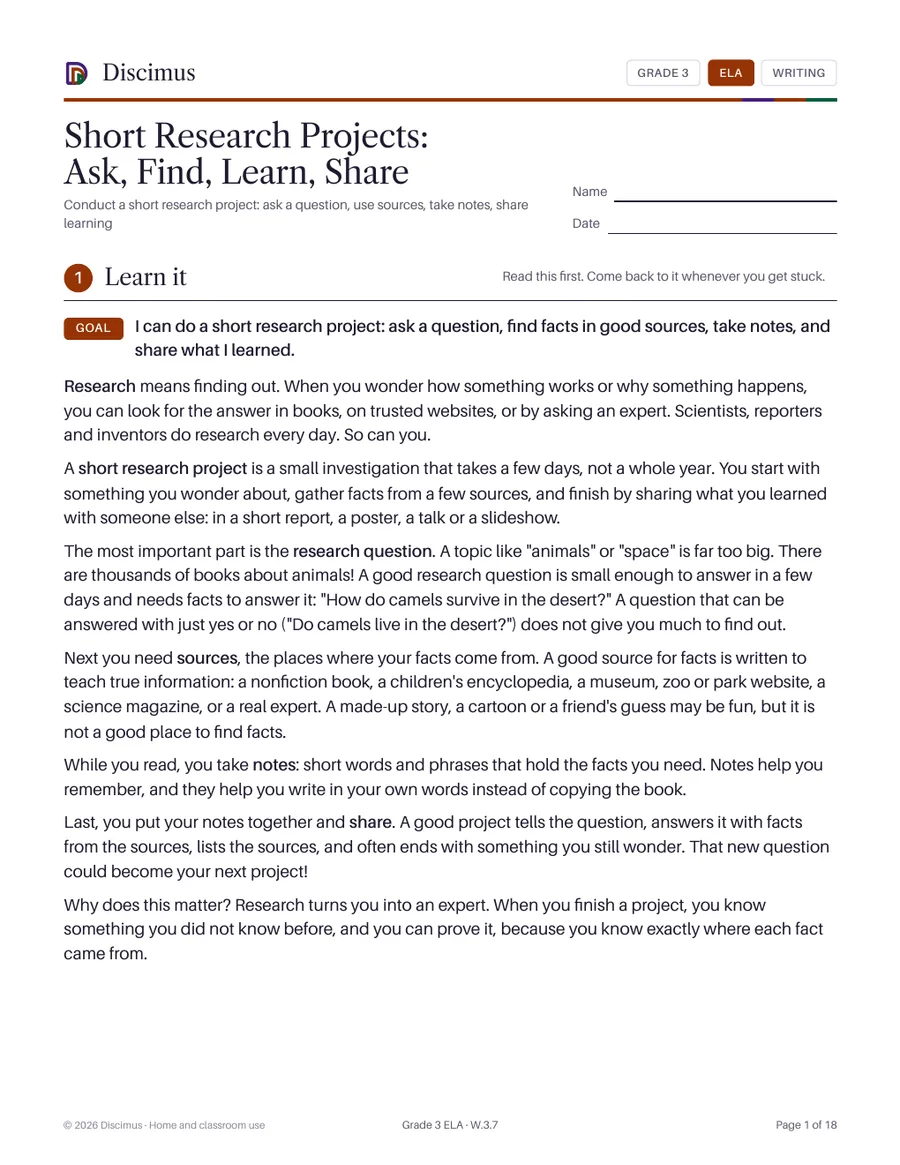
Conduct a short research project: ask a question, use sources, take notes, share learning
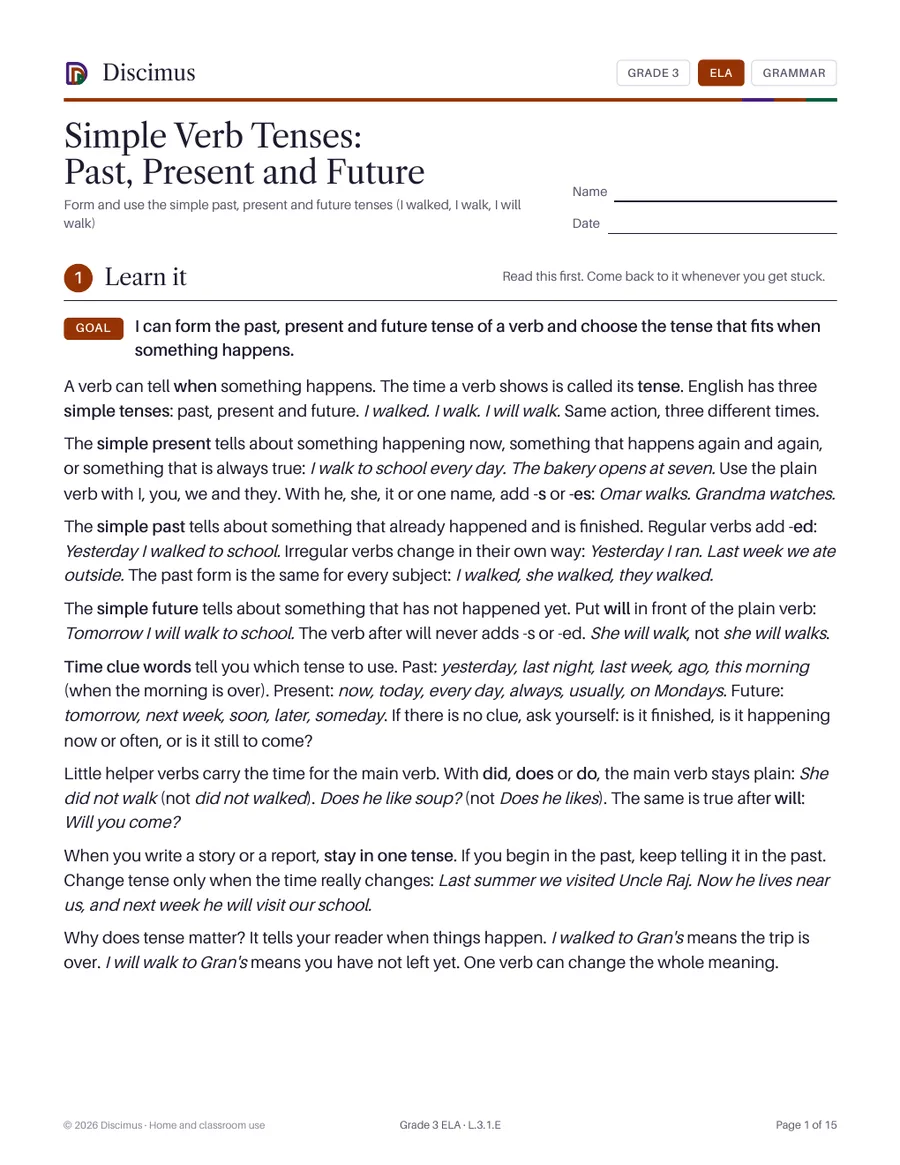
Form and use the simple past, present and future tenses (I walked, I walk, I will walk)
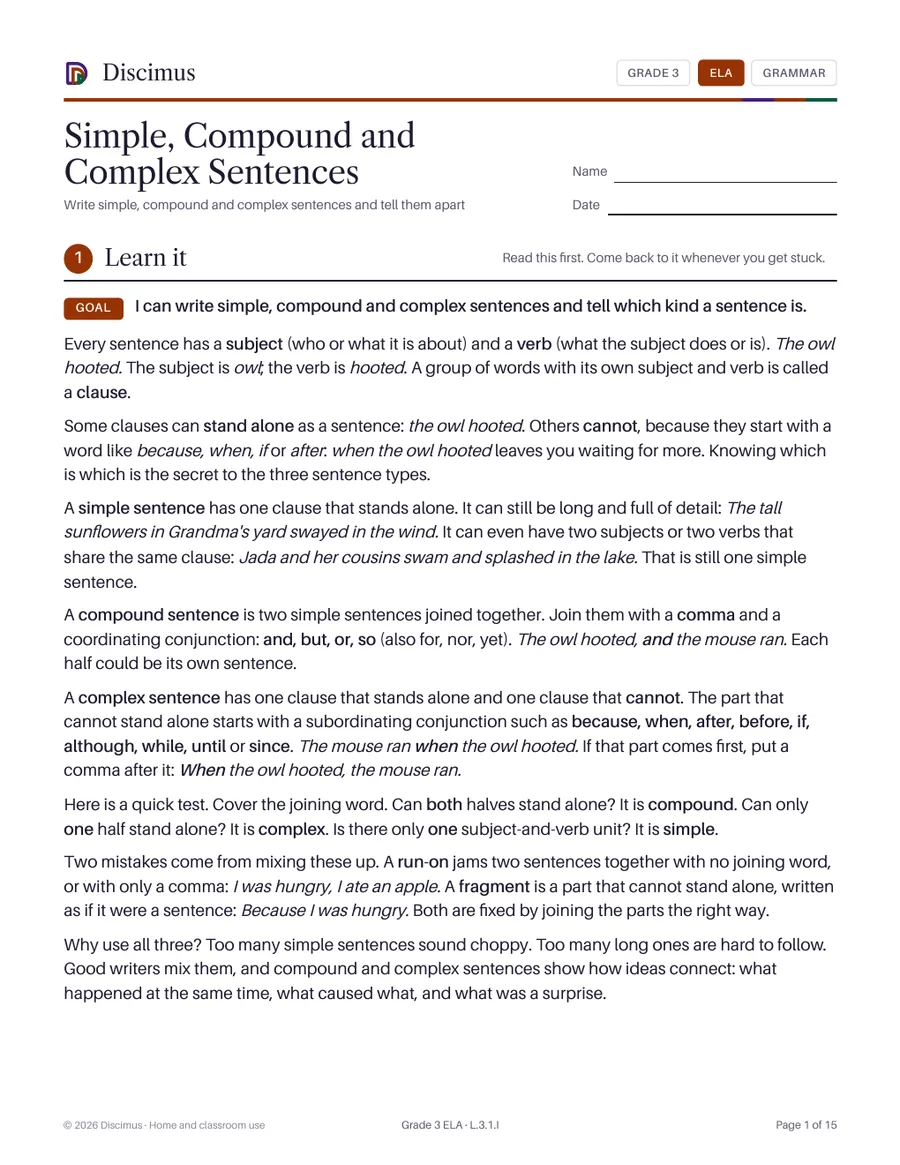
Write simple, compound and complex sentences and tell them apart
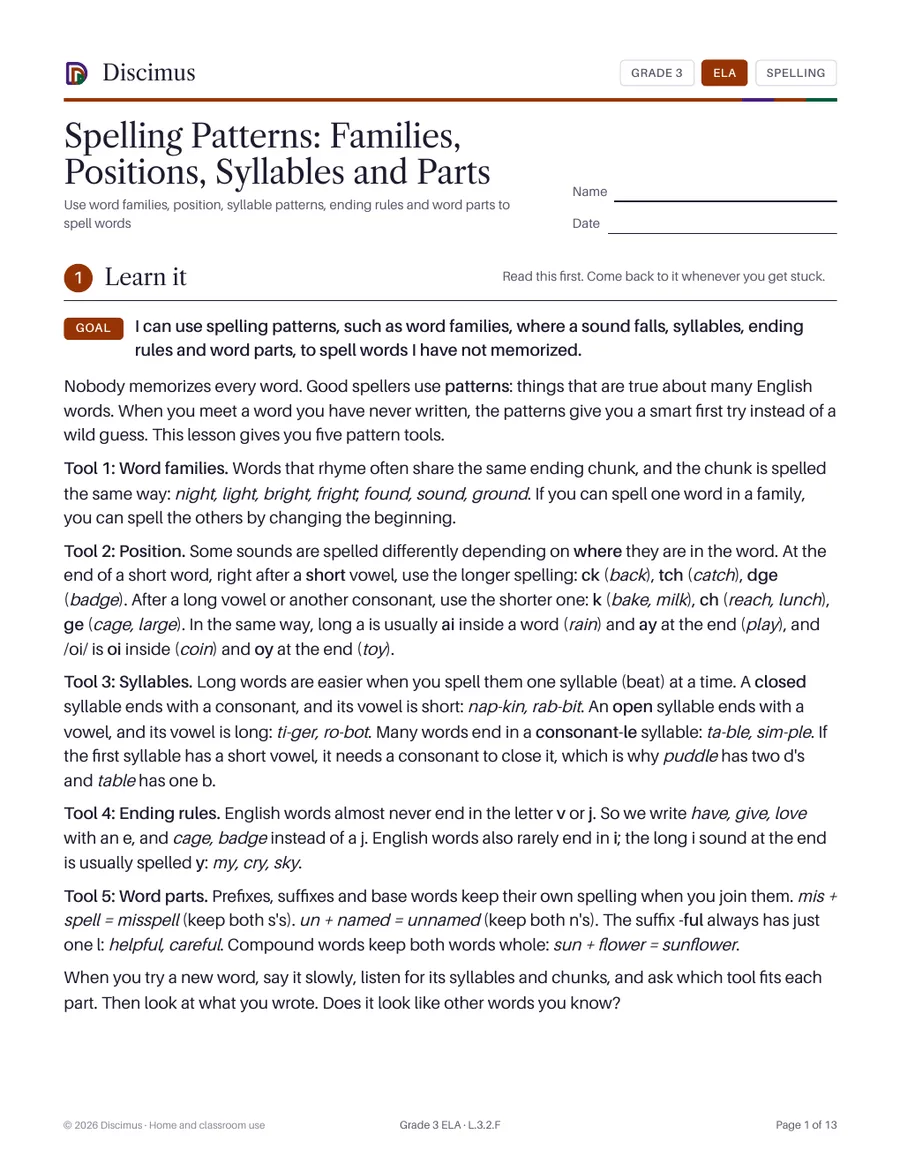
Use word families, position, syllable patterns, ending rules and word parts to spell words
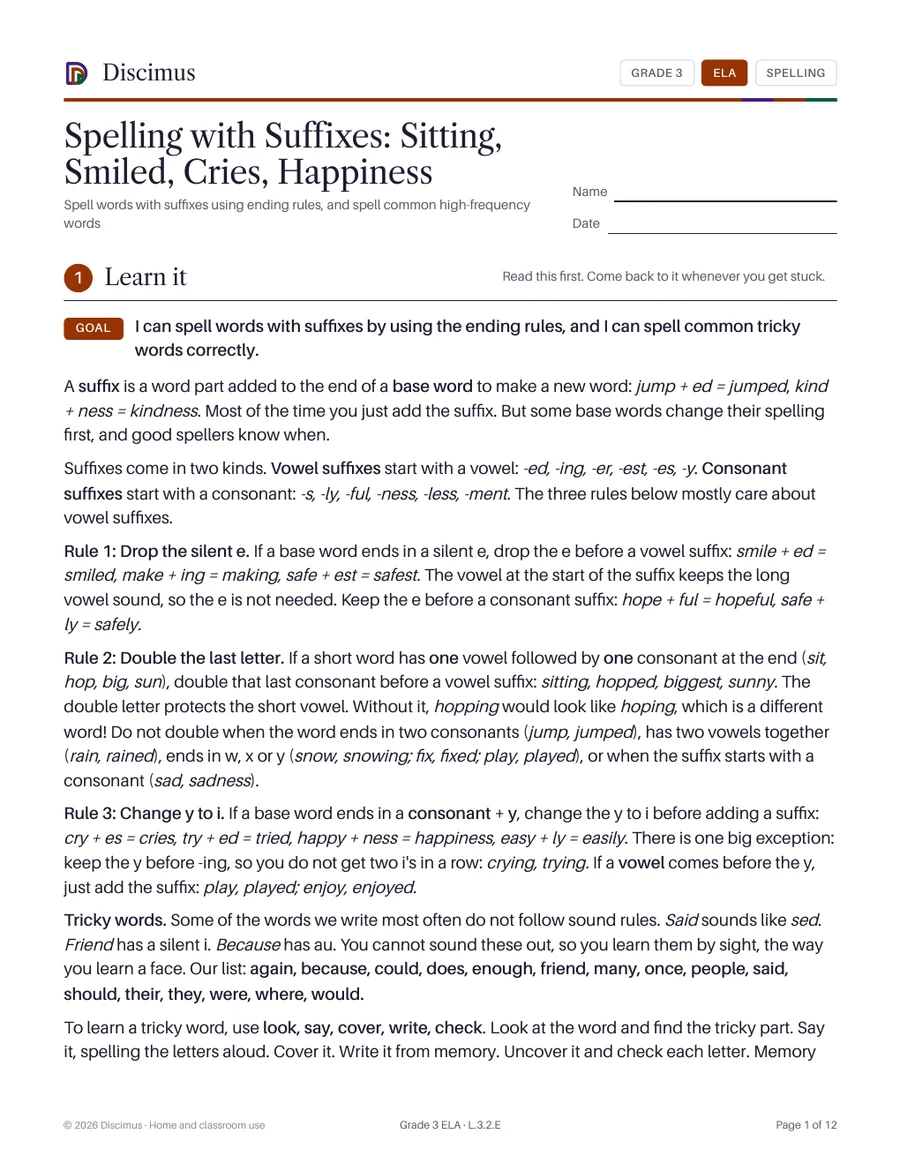
Spell words with suffixes using ending rules, and spell common high-frequency words
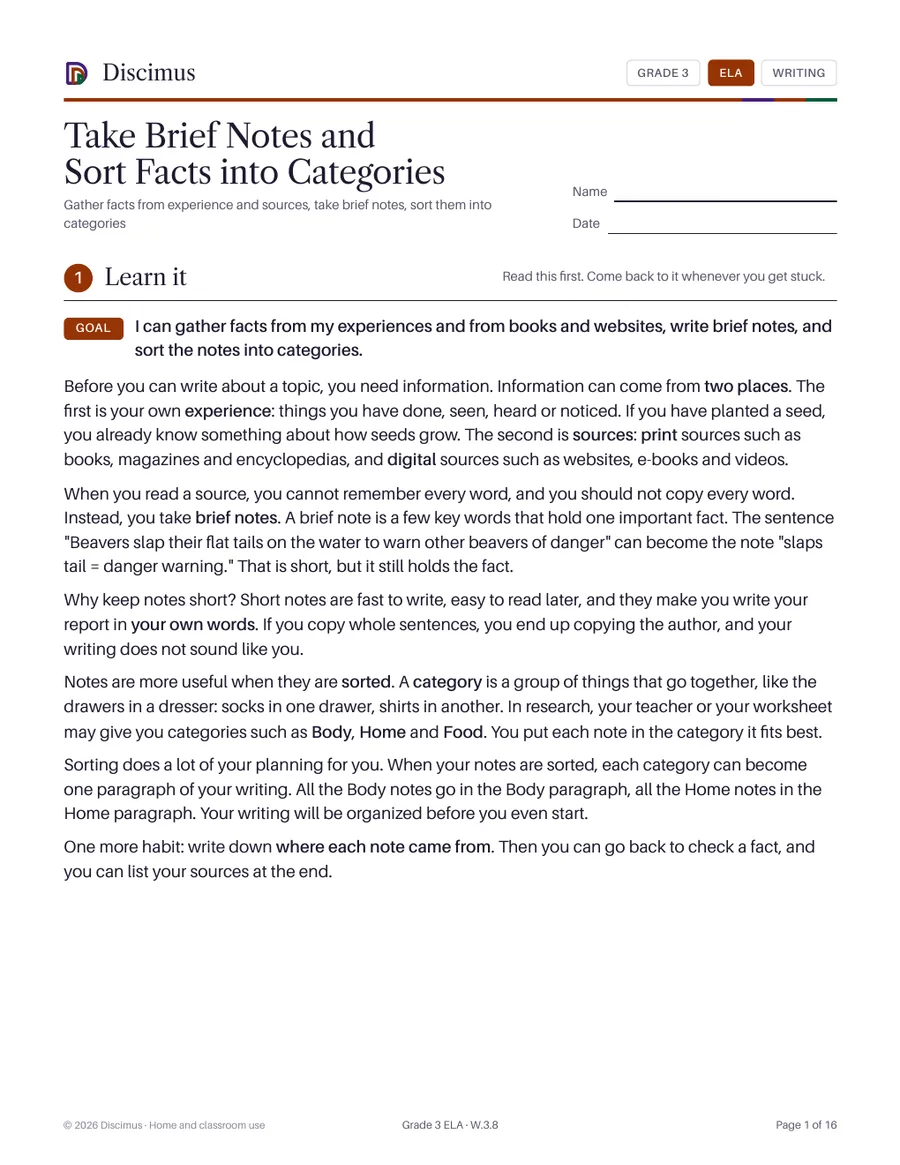
Gather facts from experience and sources, take brief notes, sort them into categories
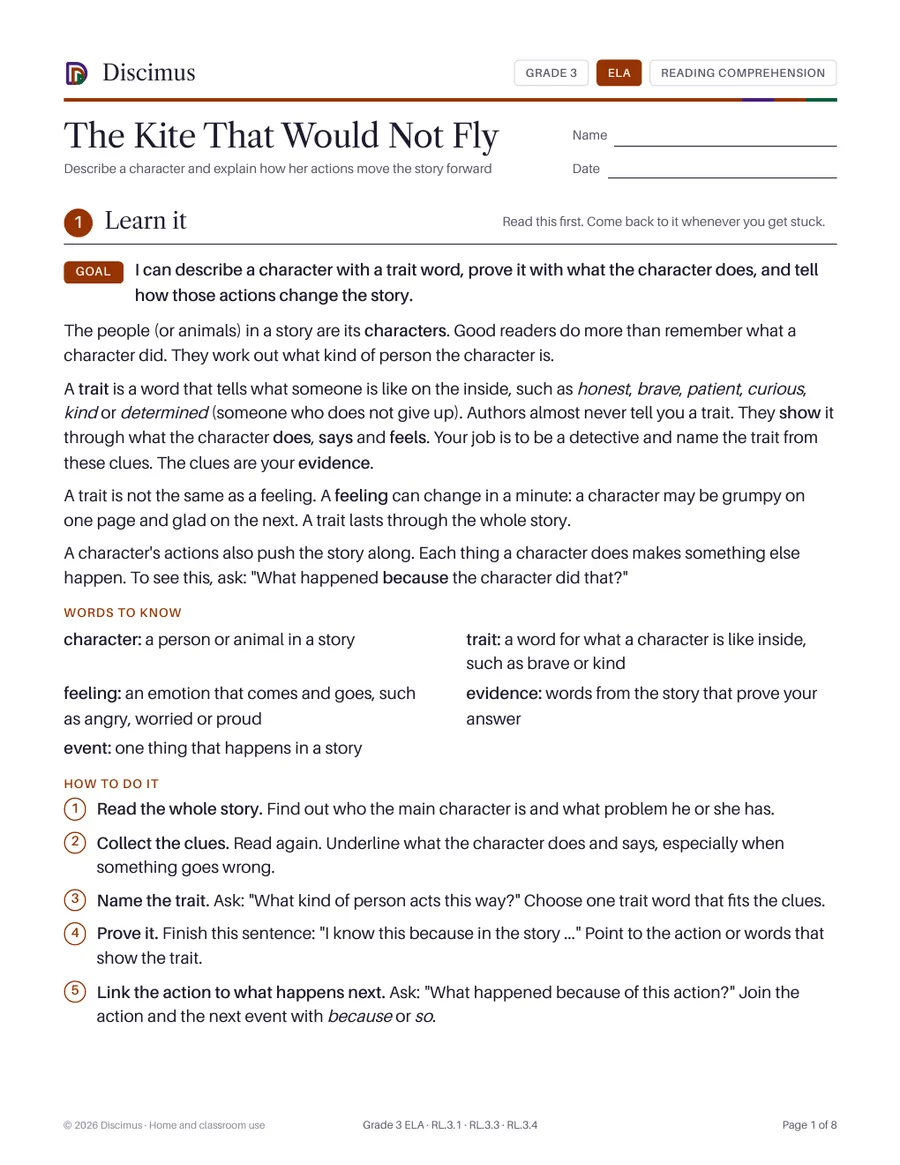
Describe a character and explain how her actions move the story forward
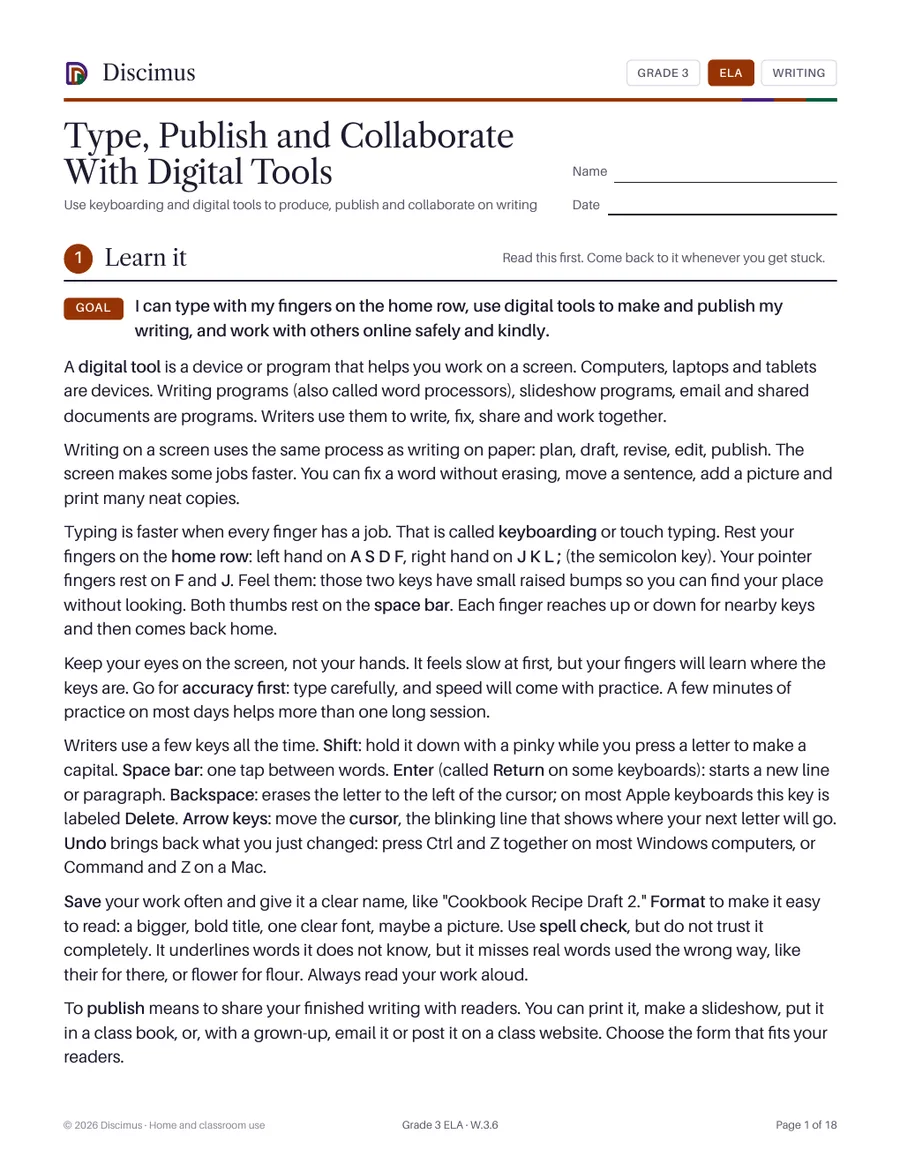
Use keyboarding and digital tools to produce, publish and collaborate on writing
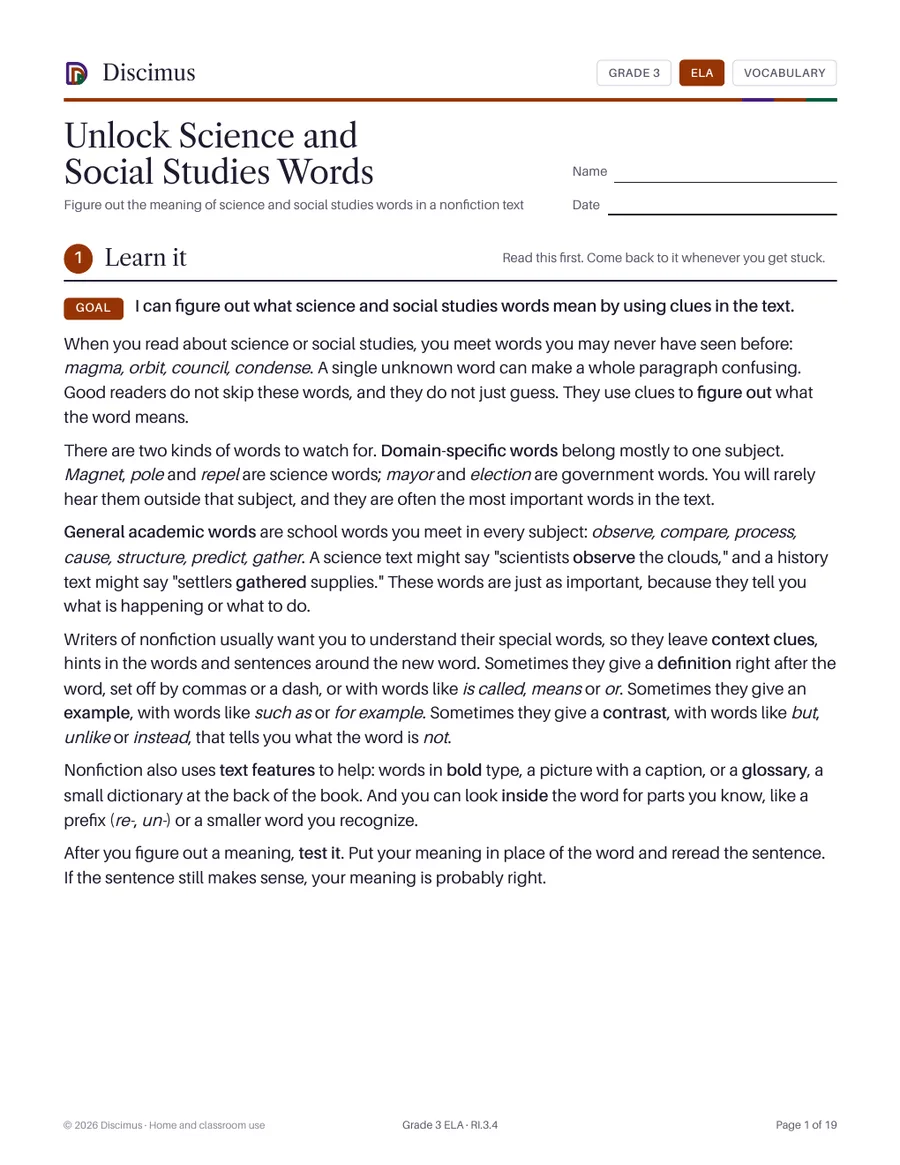
Figure out the meaning of science and social studies words in a nonfiction text
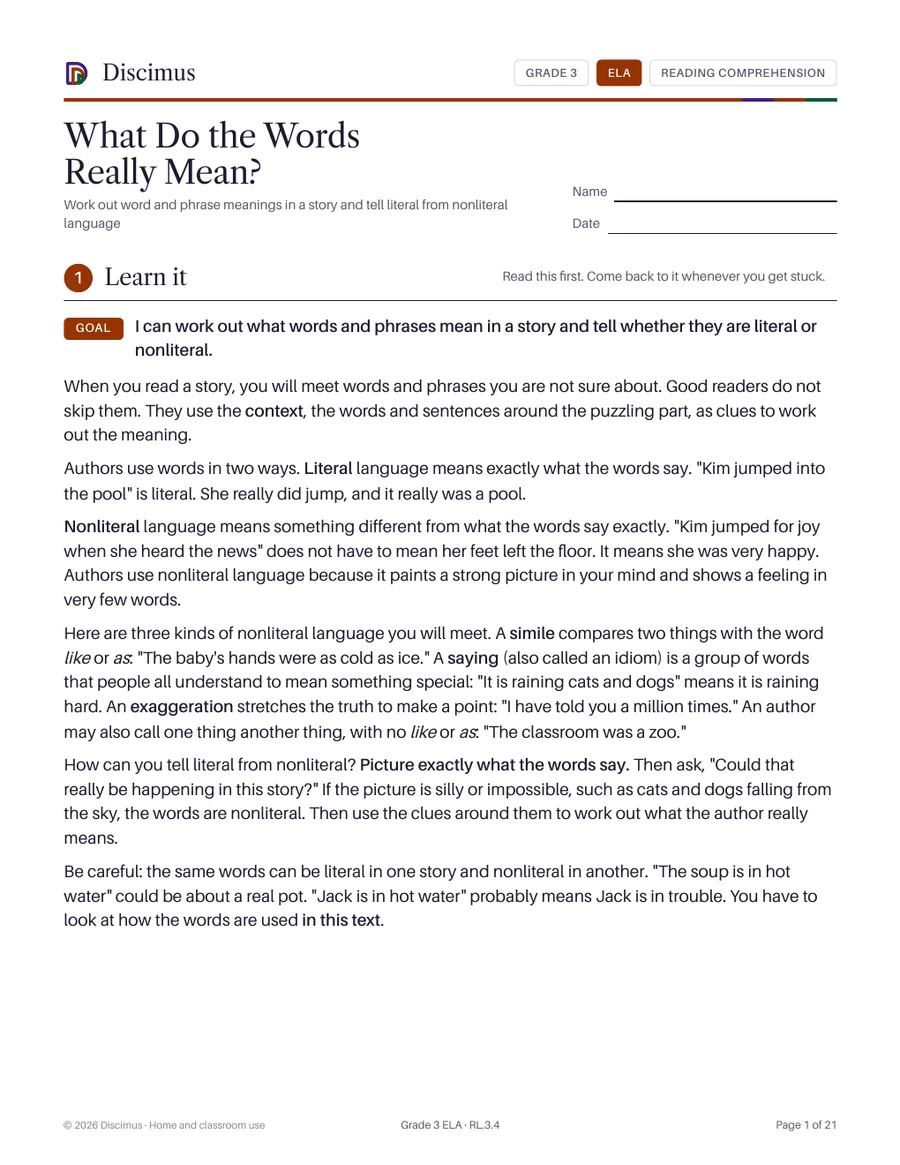
Work out word and phrase meanings in a story and tell literal from nonliteral language
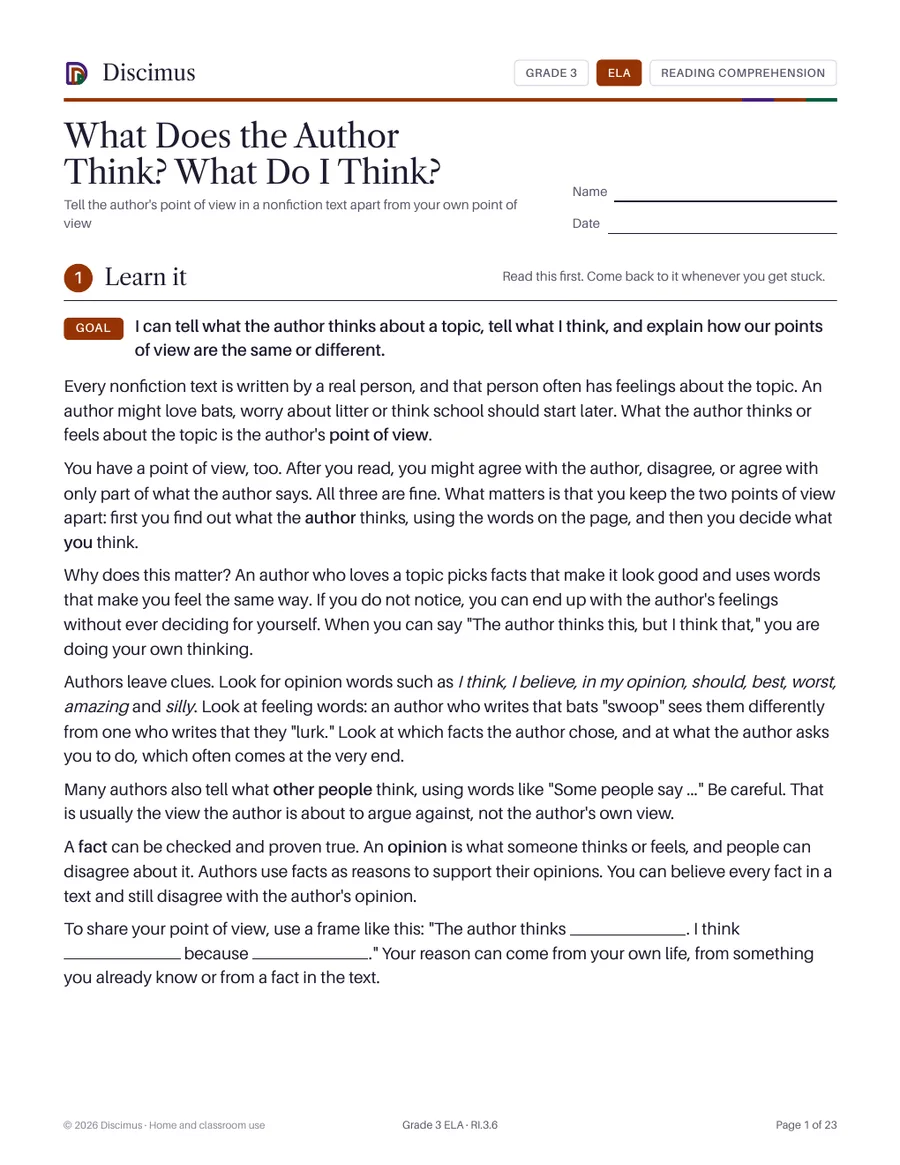
Tell the author's point of view in a nonfiction text apart from your own point of view
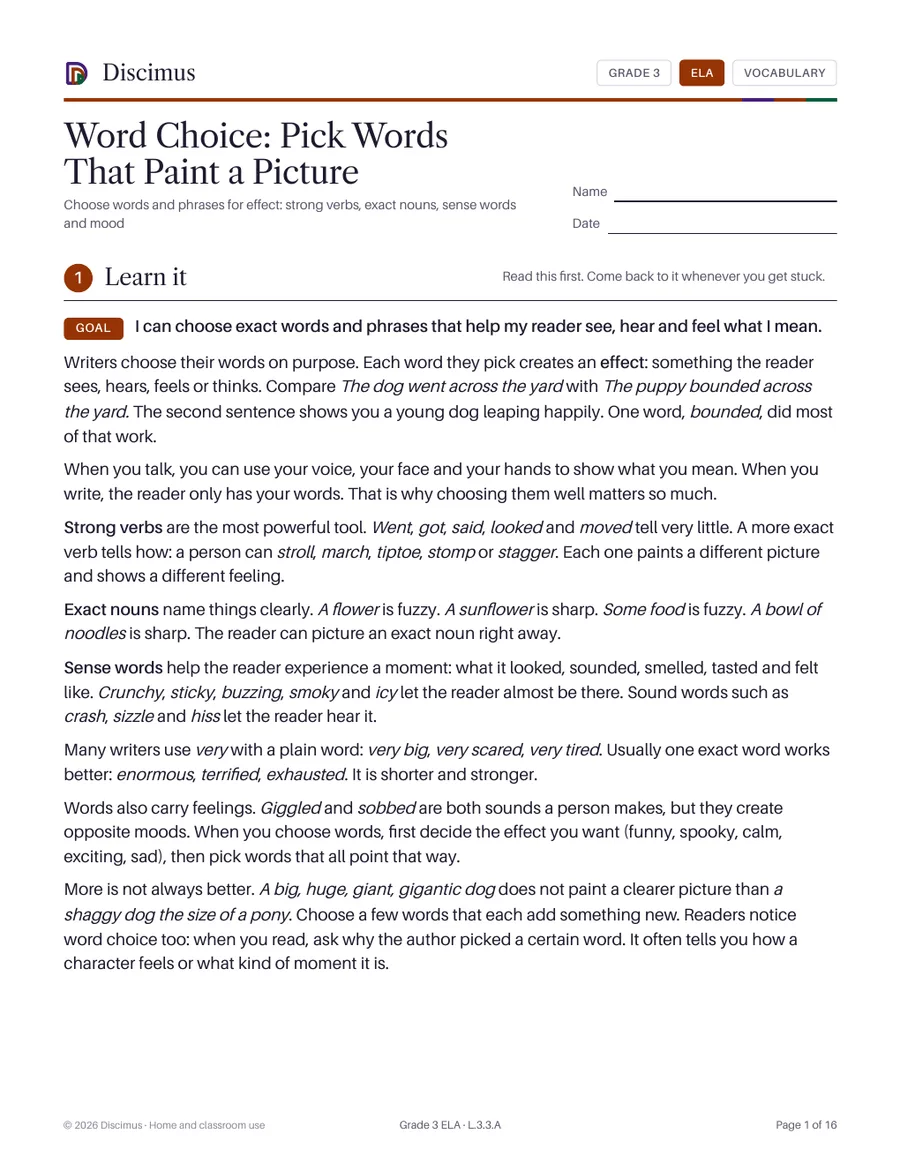
Choose words and phrases for effect: strong verbs, exact nouns, sense words and mood
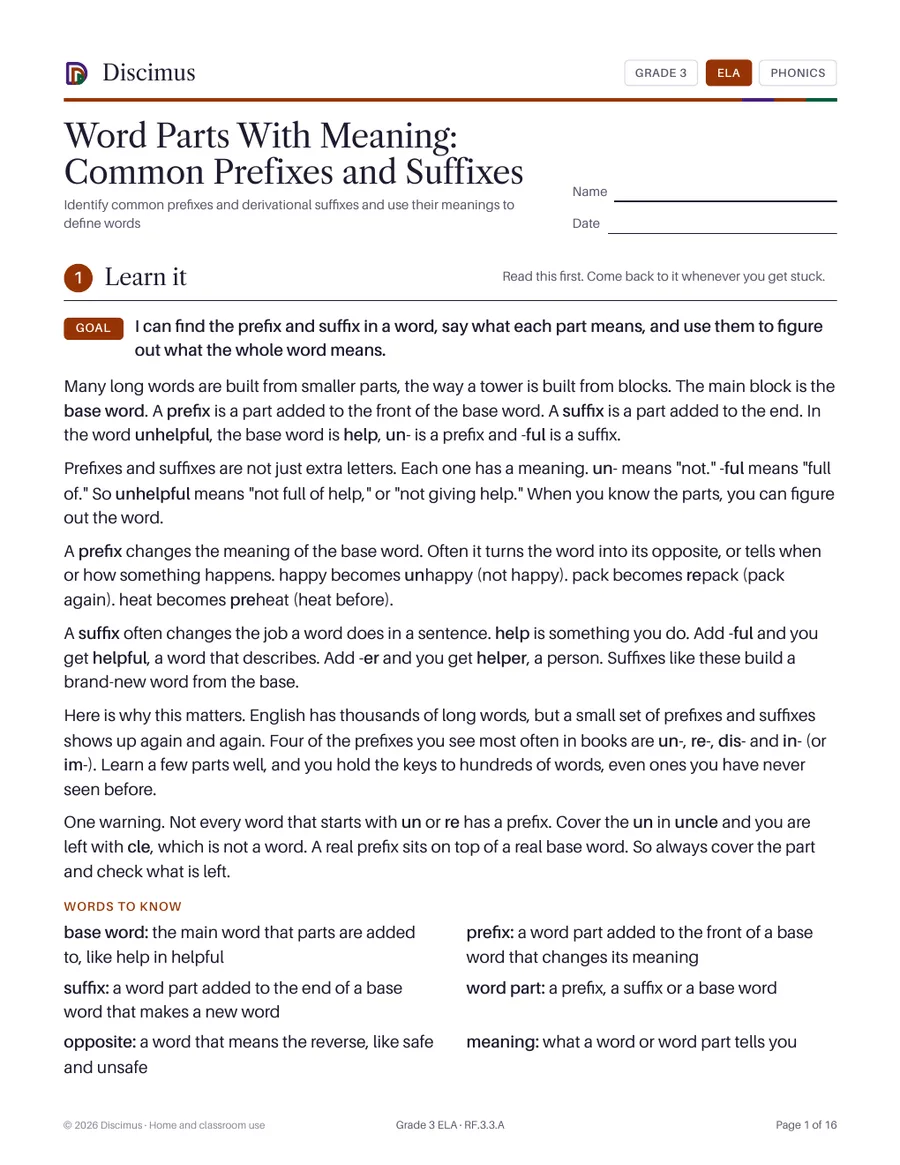
Identify common prefixes and derivational suffixes and use their meanings to define words
Learn and use talk, school and subject words, and words that tell where and when
Connect words to real-life people, places and events and explain why each example fits
Write routinely, short and extended, for different tasks, purposes and audiences