After the Disaster: How Towns Change and People Move
Explain how natural and technological disasters change towns and make people move
C3 Framework for Social Studies
History, geography, civics and economics.
Explain how natural and technological disasters change towns and make people move
Identify the civic virtues and democratic principles that guide government and communities
Explain how nature and ways of life shape where people live in a region
Explain how a group's culture shapes the way it changes and adapts to its environment
Explain the steps communities follow to make a policy that solves a public problem
Explain how where people settle and move relates to natural resources and their use
Apply civic virtues and democratic principles to real choices in a class, co-op or club
Explain how a democracy relies on responsible participation and how people should join in
Explain the origins, jobs and structure of governments, including U.S. and state ones
Explain how groups make rules that create responsibilities and protect freedoms
Explain how laws change society and the peaceful ways people work to change laws
Make maps of known and unknown places with a title, key, compass rose, grid and scale
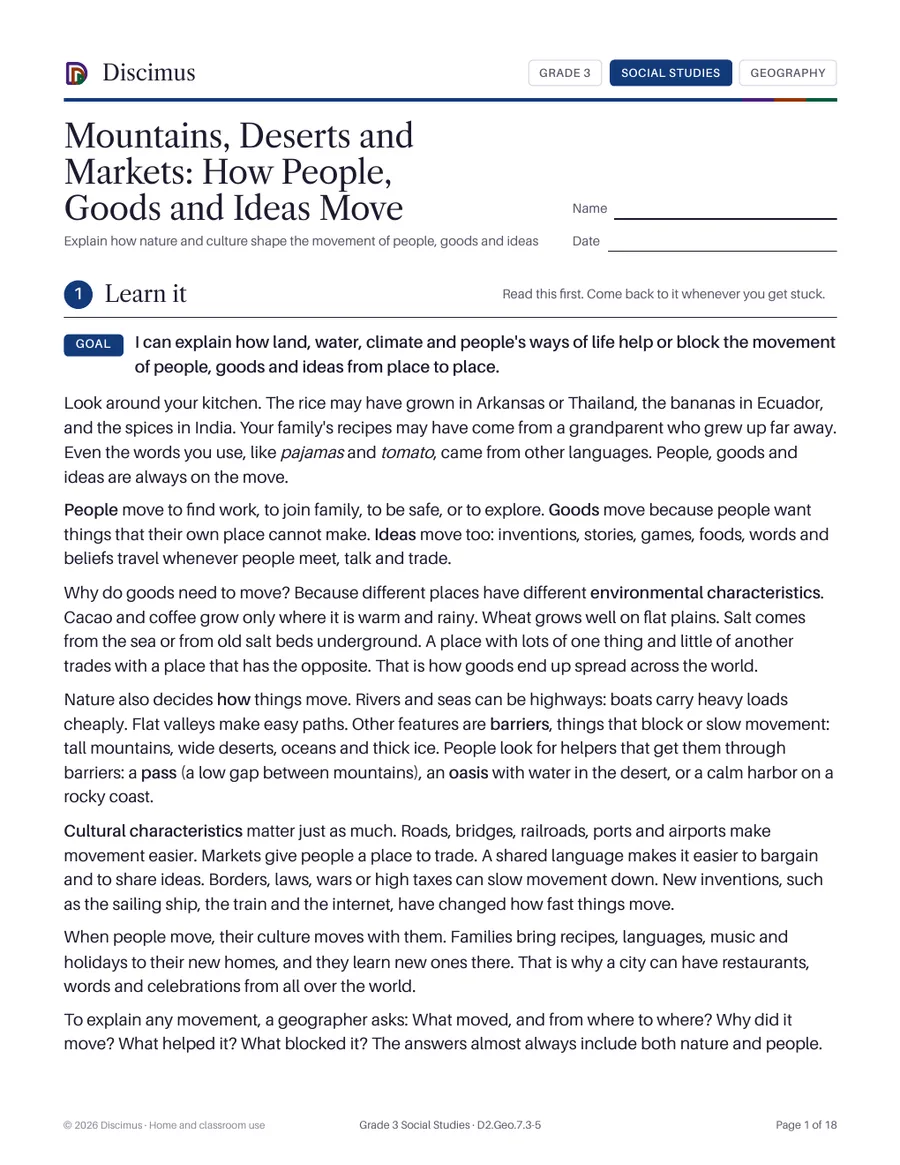
Explain how nature and culture shape the movement of people, goods and ideas
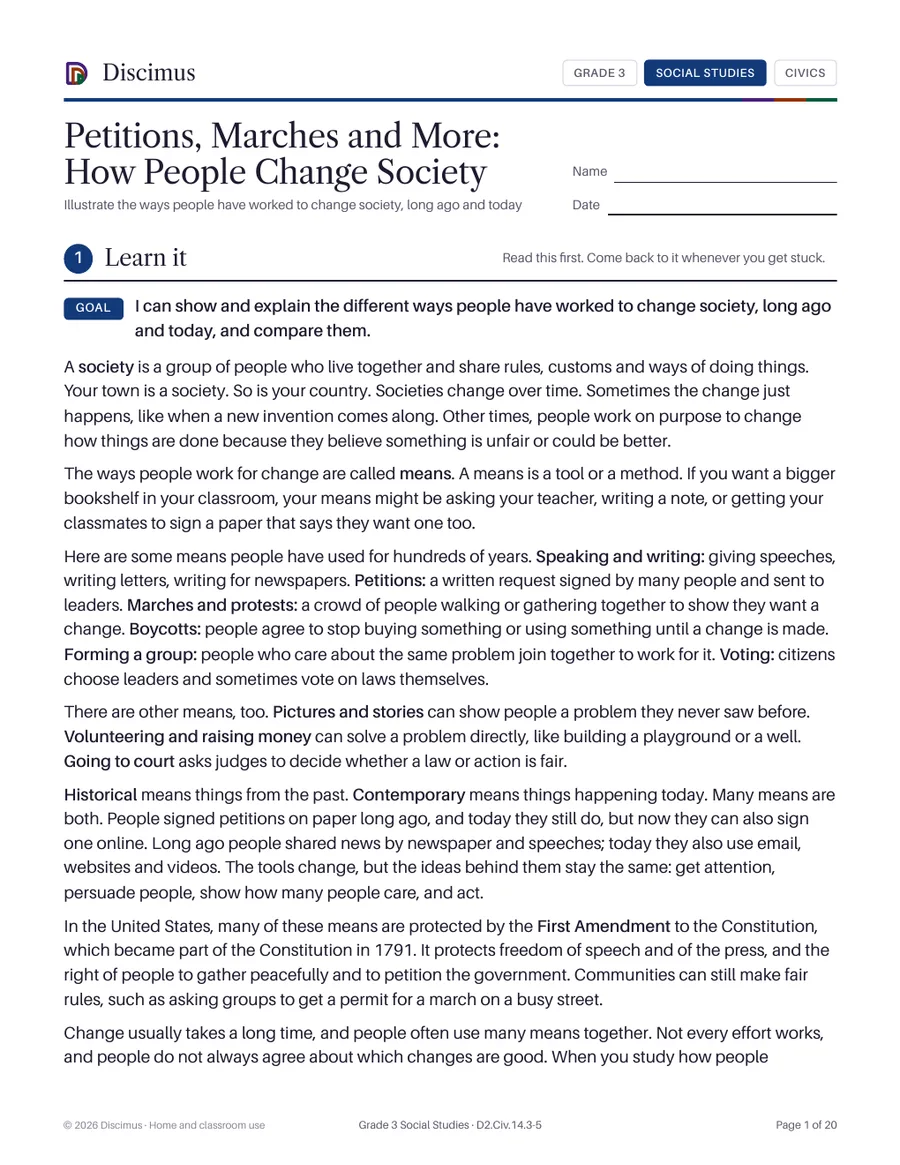
Illustrate the ways people have worked to change society, long ago and today
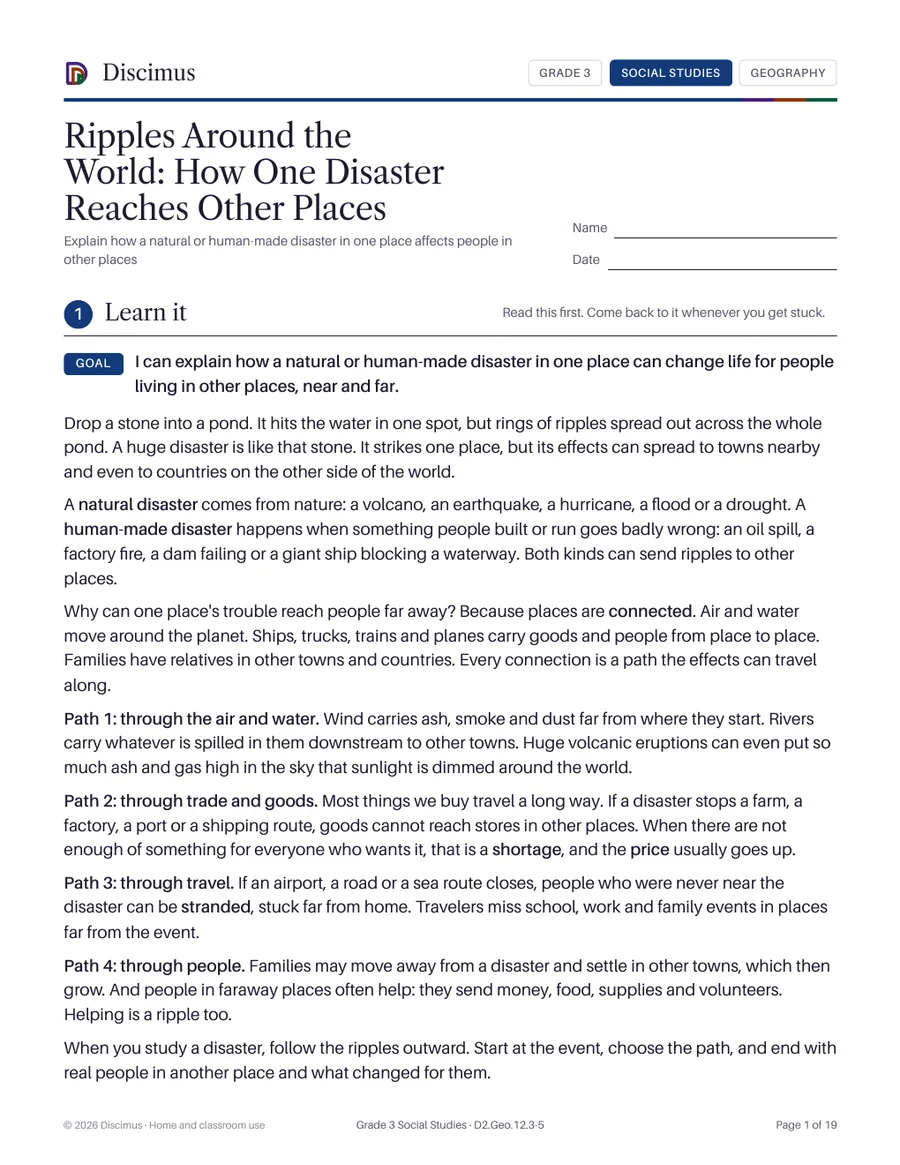
Explain how a natural or human-made disaster in one place affects people in other places
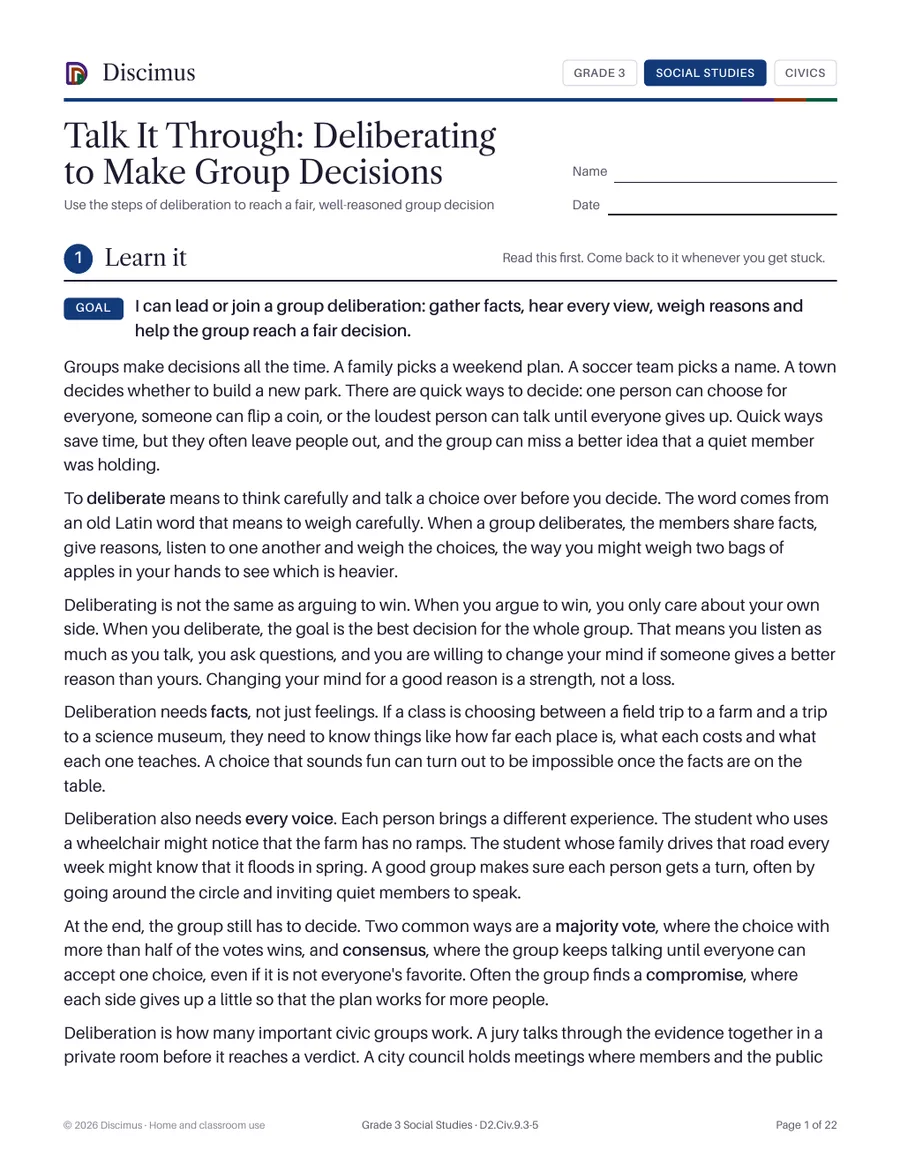
Use the steps of deliberation to reach a fair, well-reasoned group decision
Use maps, graphs and images to explain how a place's location shapes its environment
Explain how the environmental and cultural characteristics of a place change over time
Explain the origins and purposes of rules, laws and key parts of the U.S. Constitution
Describe how links with nearby and faraway places change where work happens in a place
Compare the procedures groups use to make decisions in classrooms, schools and governments
Explain why world regions have different climates, plants and animals
Identify the values, beliefs, experiences and perspectives behind views on civic issues
Describe how people benefit from and are challenged by working together in groups
Use maps of different scales to tell where cultural and environmental features are