Academic Words and Transitions: However, Moreover, Similarly
Use academic and subject words, and transitions that signal contrast, addition and more
Common Core State Standards for English Language Arts
Phonics, reading, grammar, vocabulary and writing.
Use academic and subject words, and transitions that signal contrast, addition and more
Explain how chapters, scenes or stanzas fit together to build a story, play or poem
Write clearly and coherently, fitting development and organization to task and audience
Use a comma after an introductory word, phrase or clause
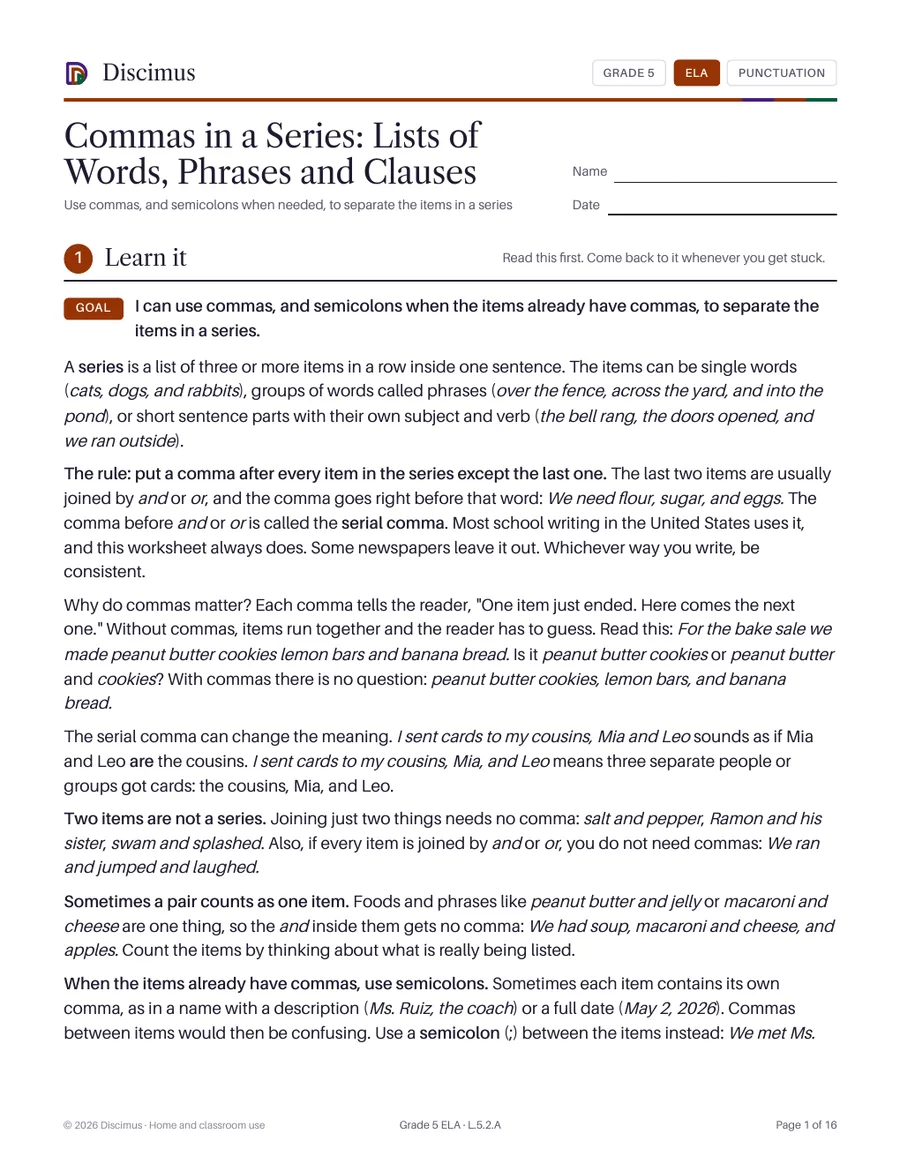
Use commas, and semicolons when needed, to separate the items in a series
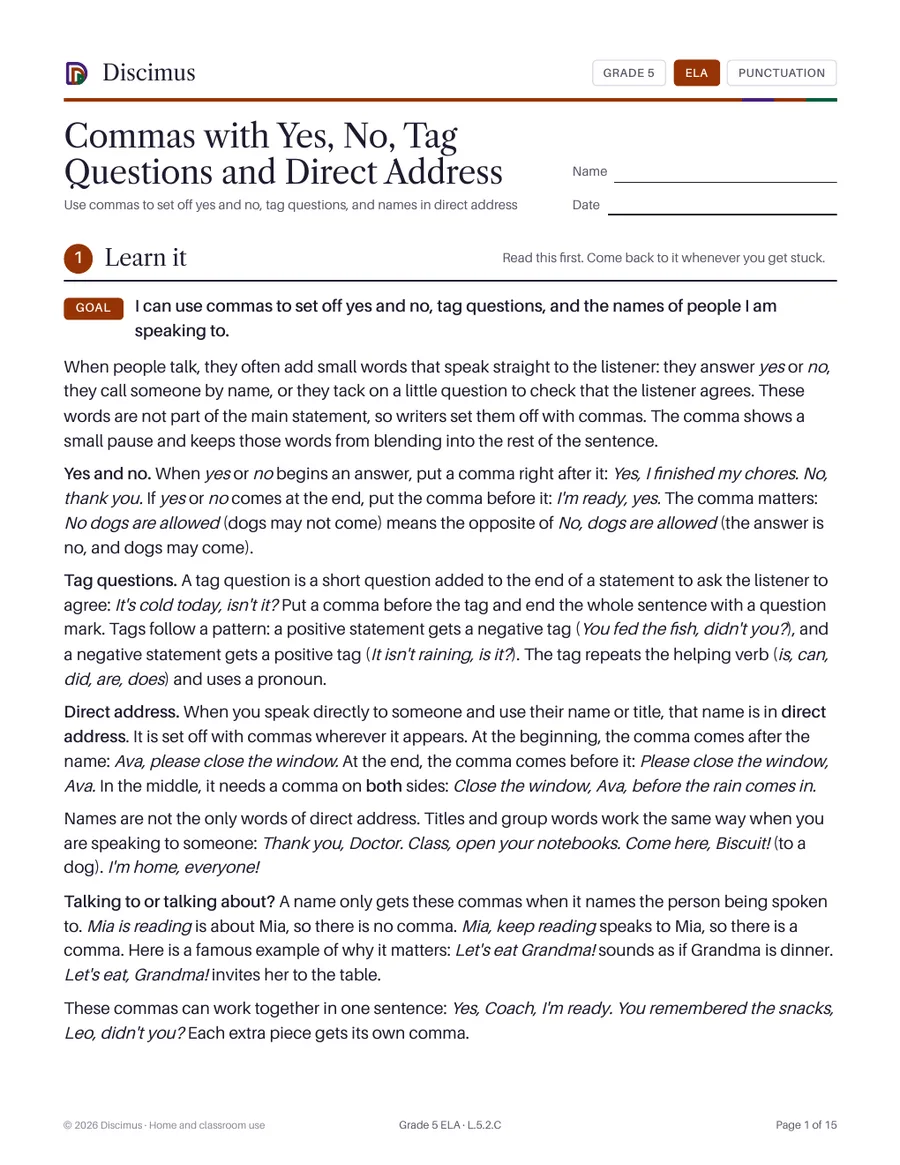
Use commas to set off yes and no, tag questions, and names in direct address
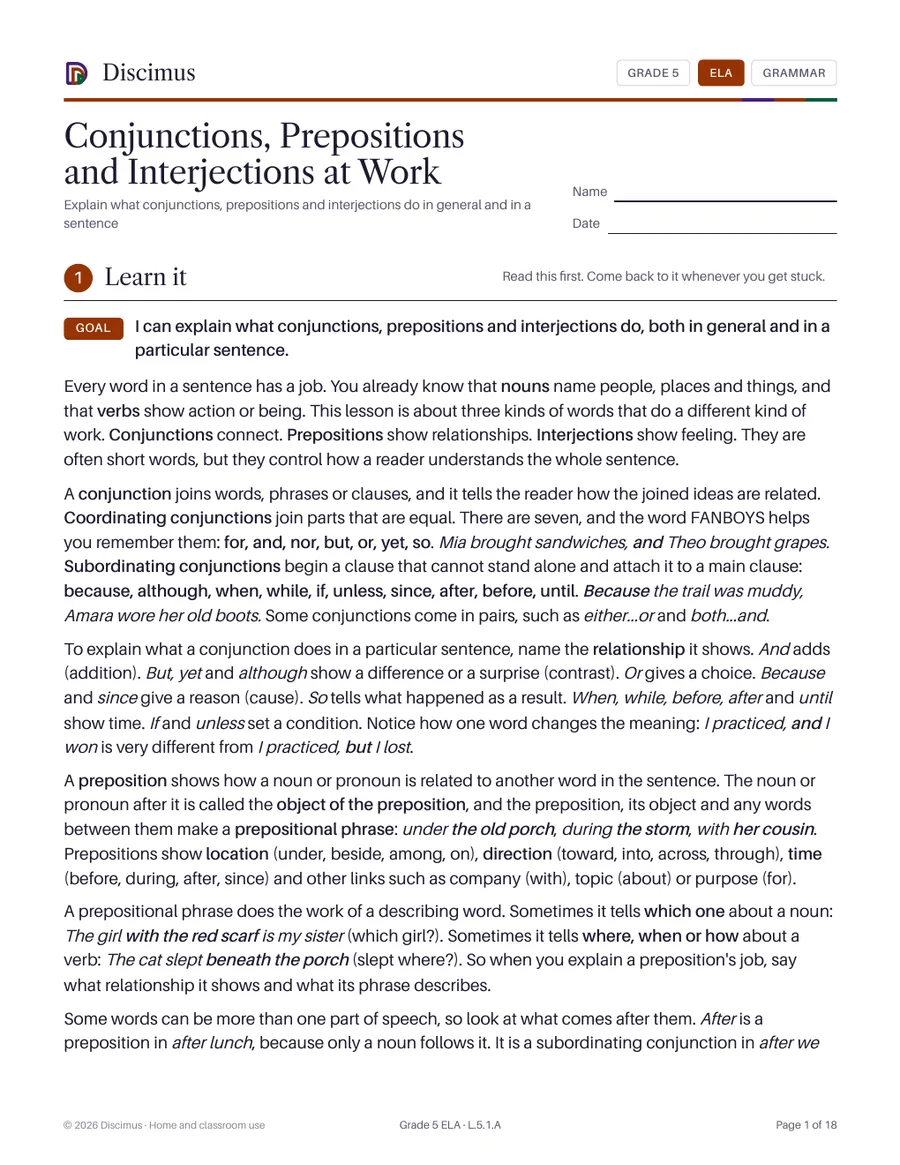
Explain what conjunctions, prepositions and interjections do in general and in a sentence
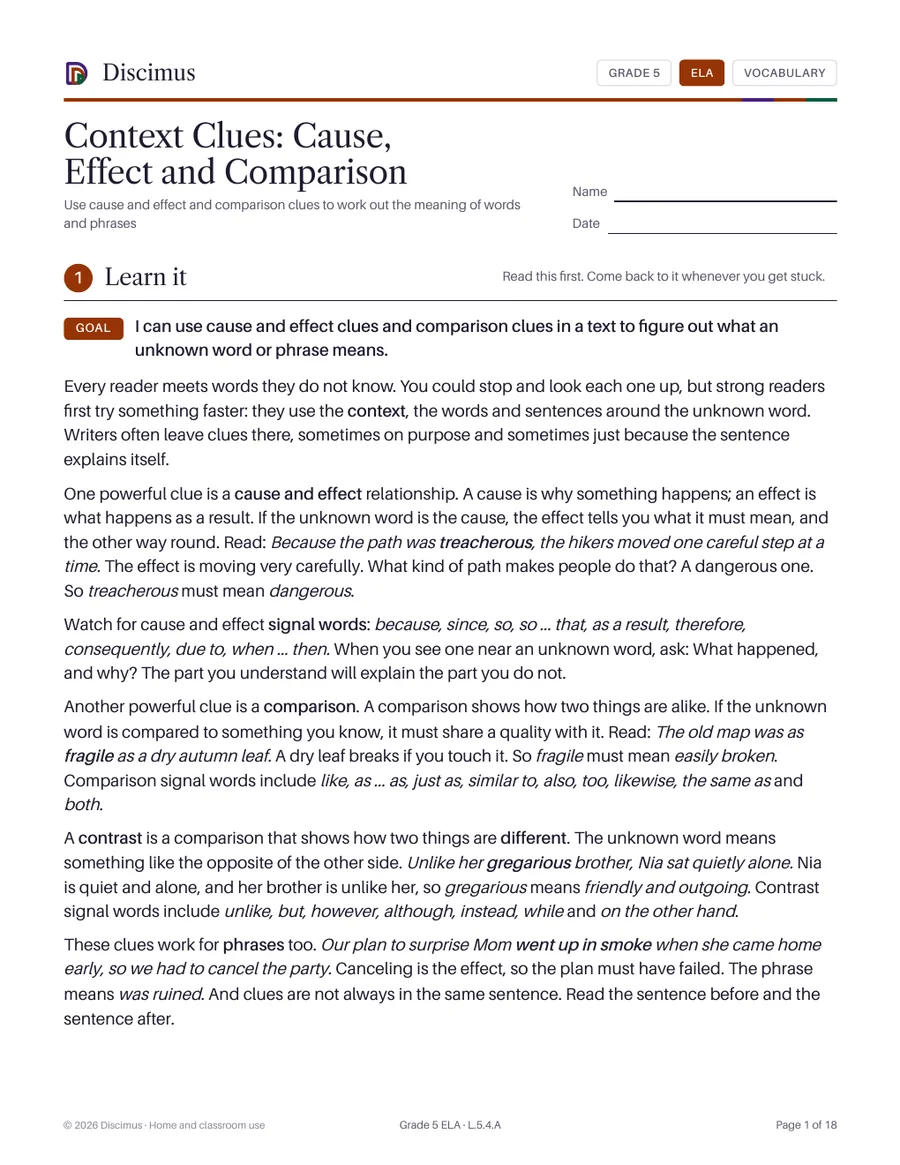
Use cause and effect and comparison clues to work out the meaning of words and phrases
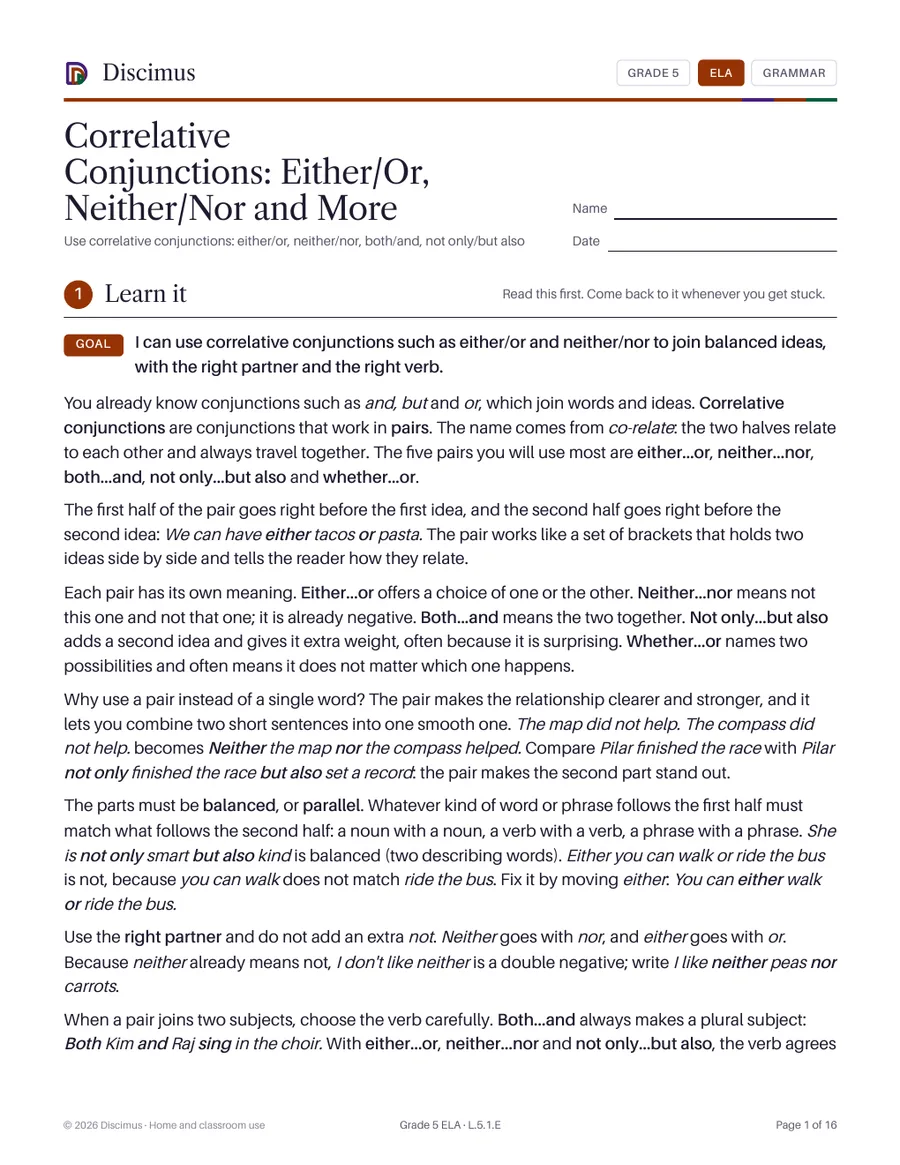
Use correlative conjunctions: either/or, neither/nor, both/and, not only/but also
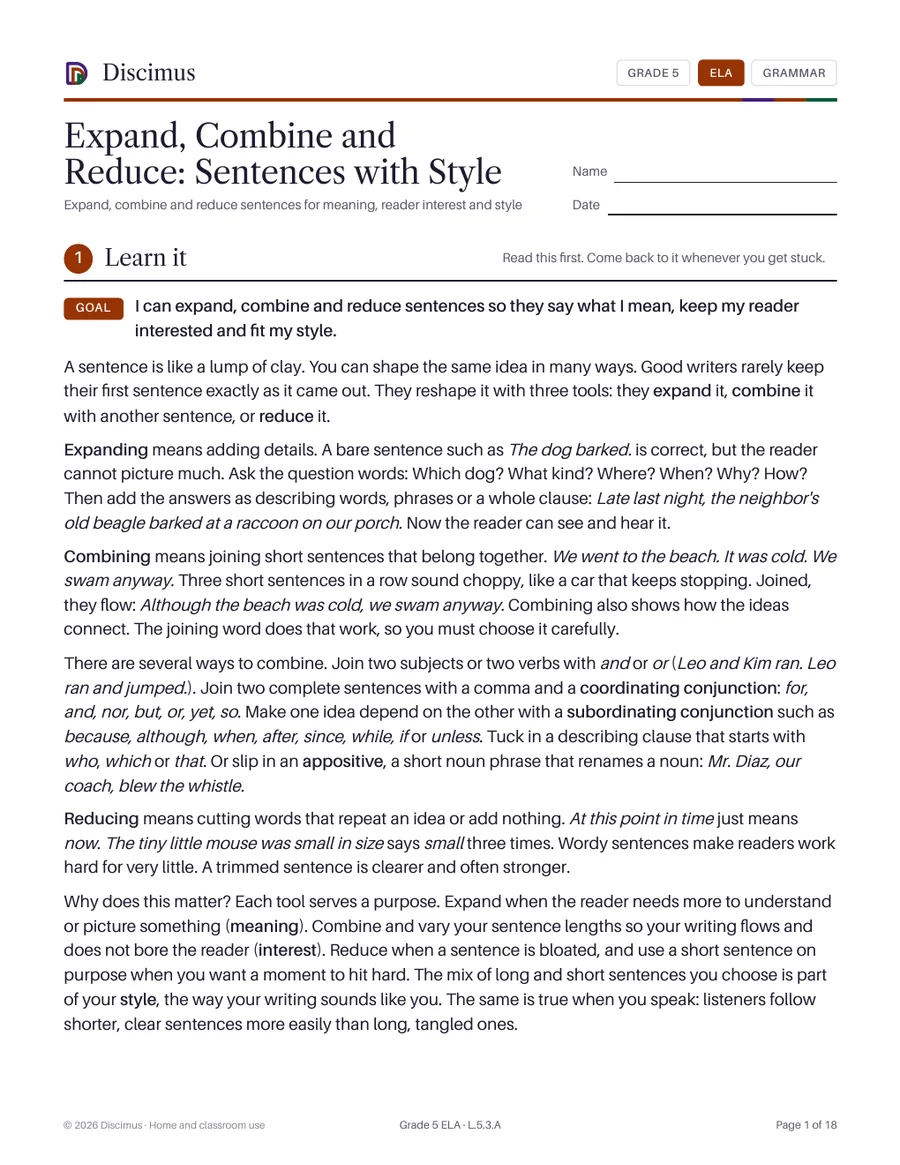
Expand, combine and reduce sentences for meaning, reader interest and style
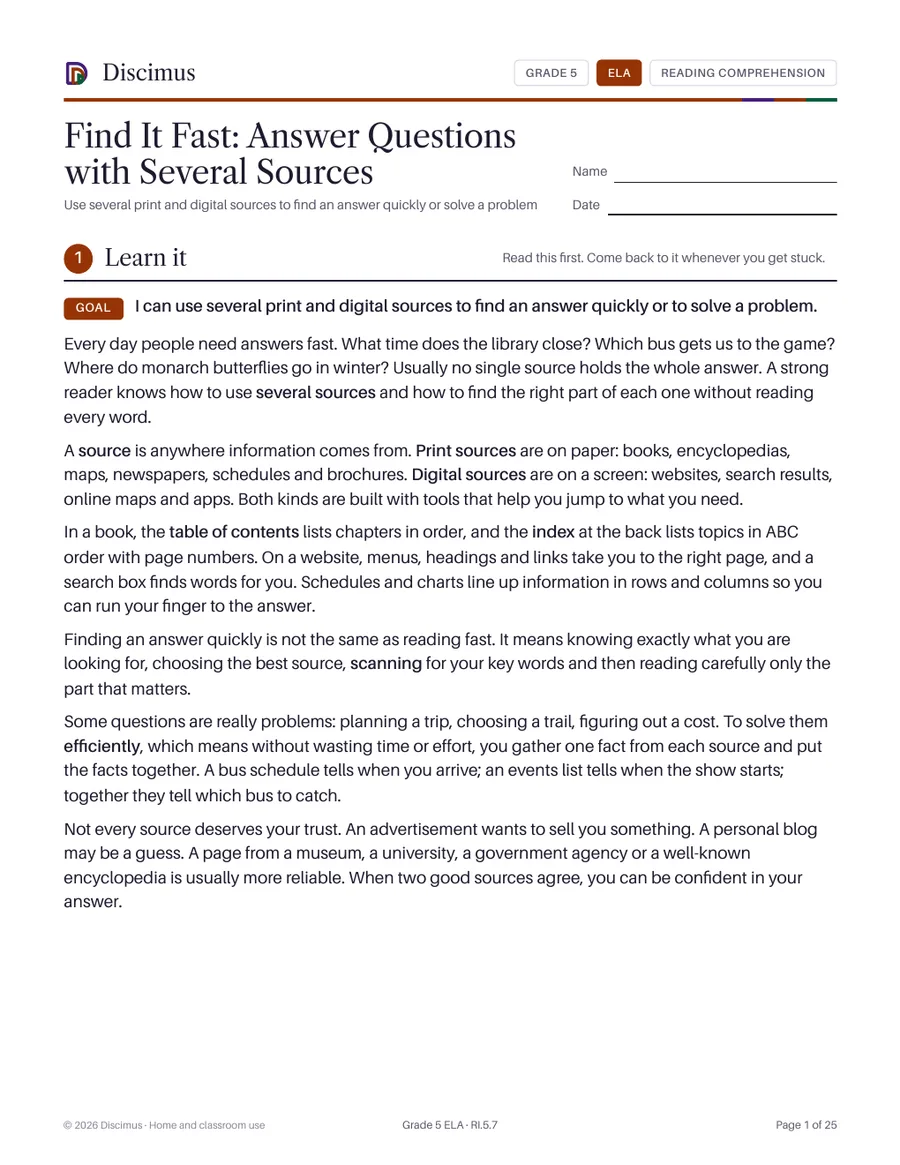
Use several print and digital sources to find an answer quickly or solve a problem
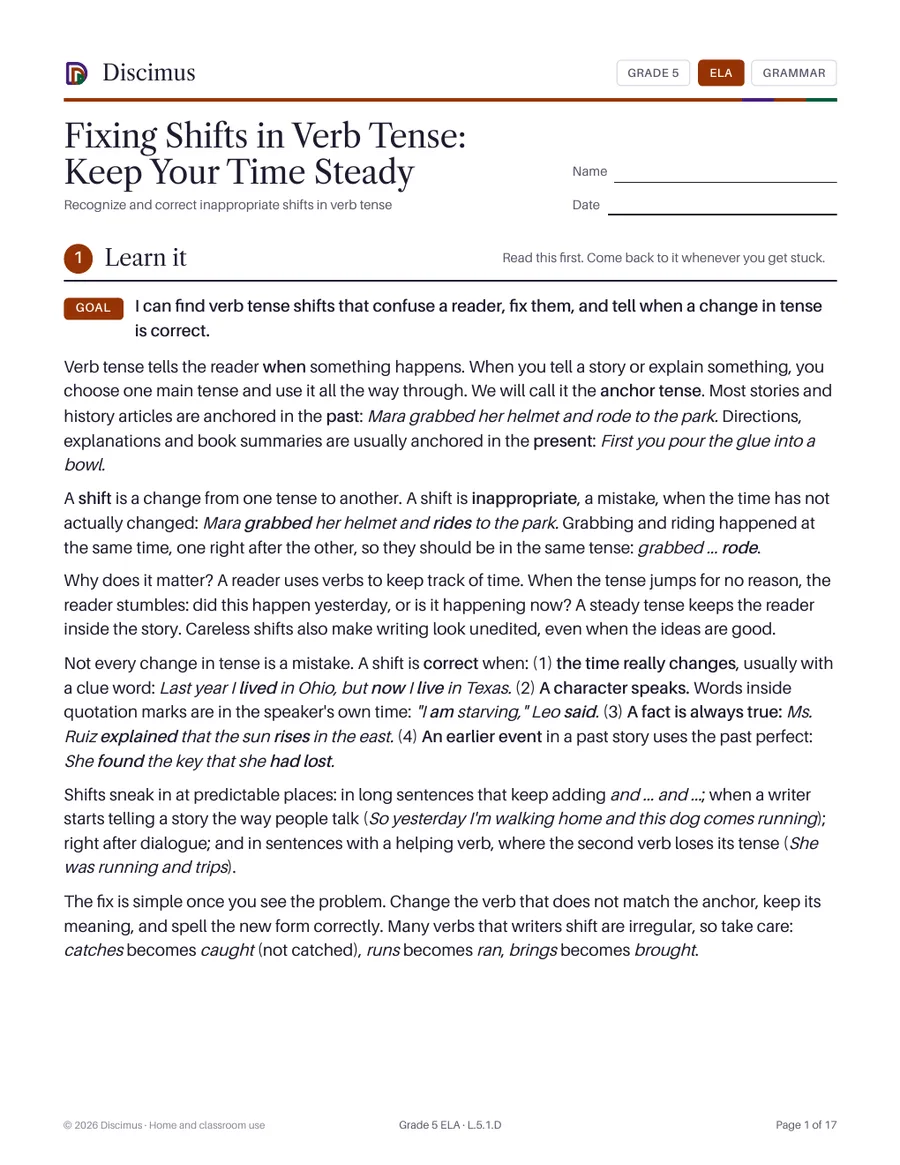
Recognize and correct inappropriate shifts in verb tense
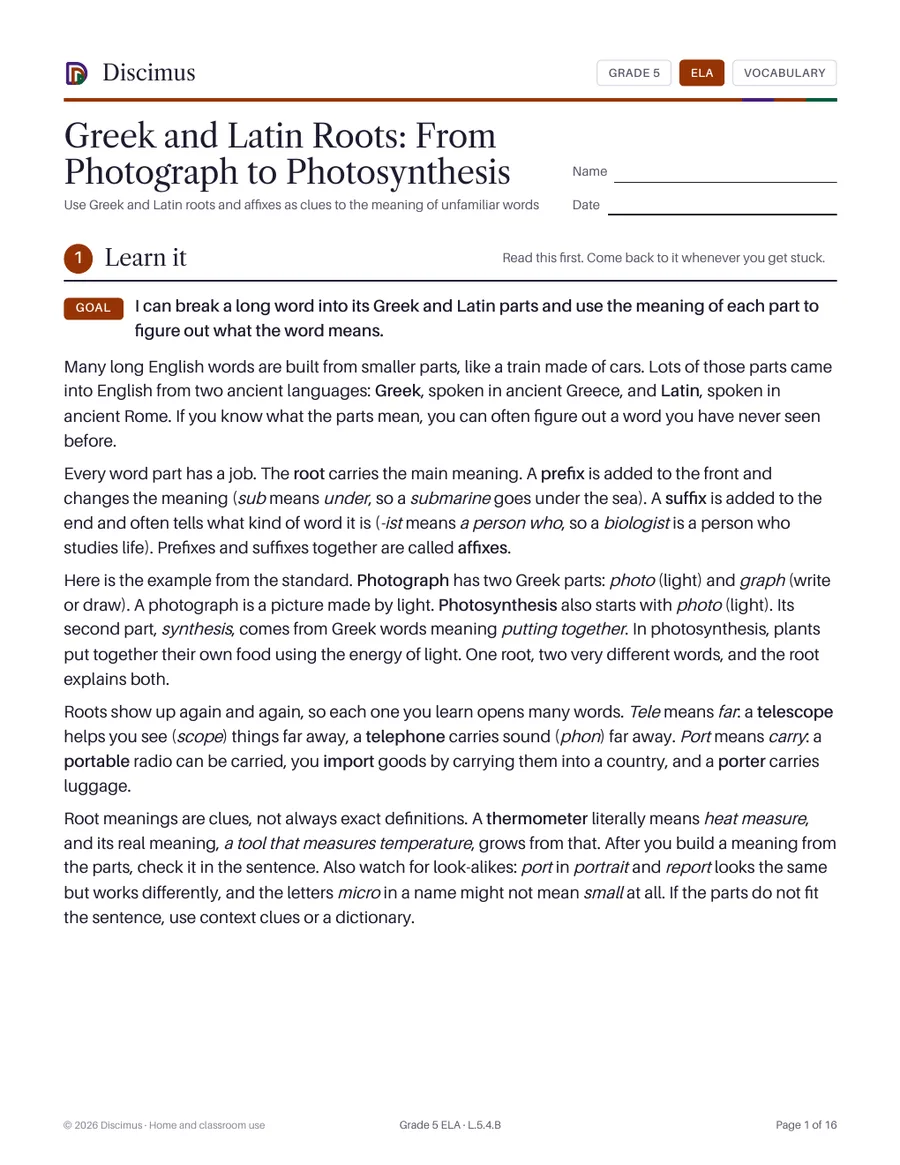
Use Greek and Latin roots and affixes as clues to the meaning of unfamiliar words
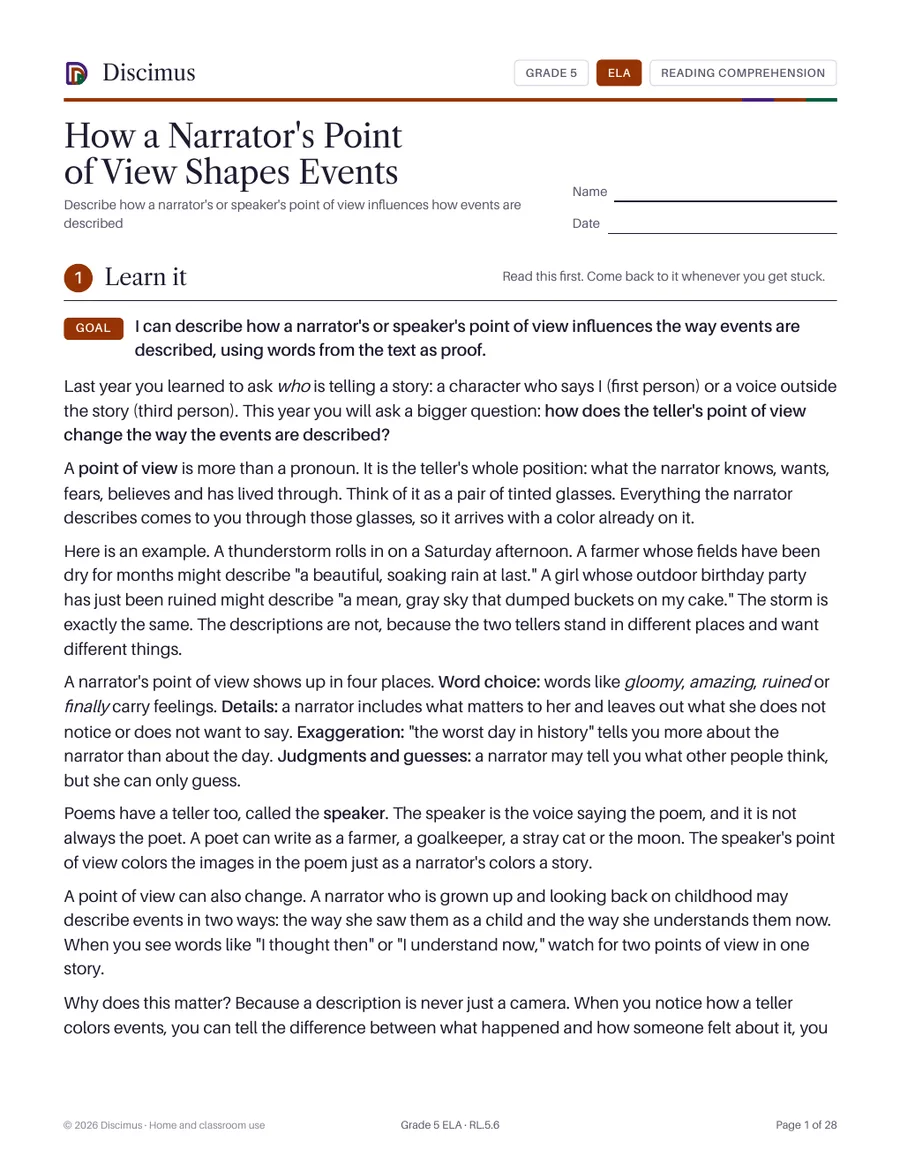
Describe how a narrator's or speaker's point of view influences how events are described
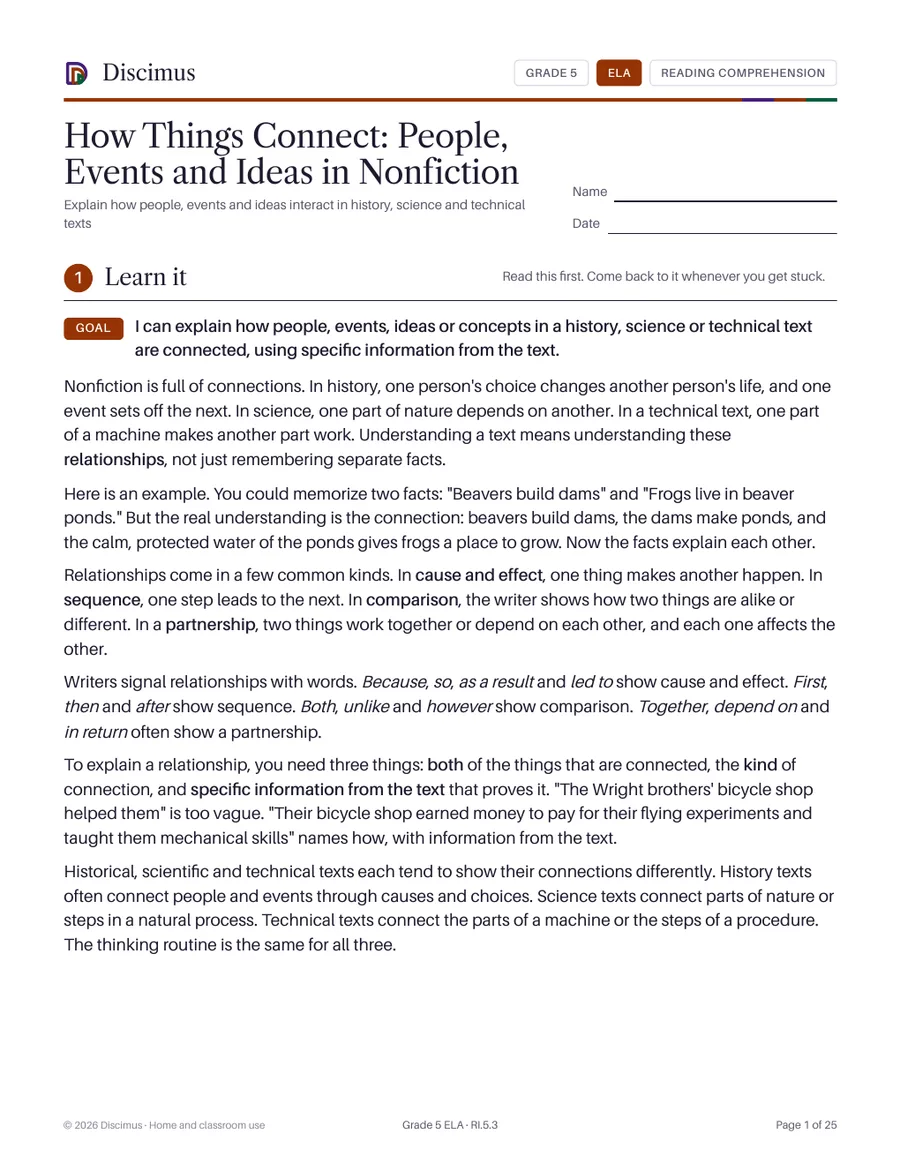
Explain how people, events and ideas interact in history, science and technical texts
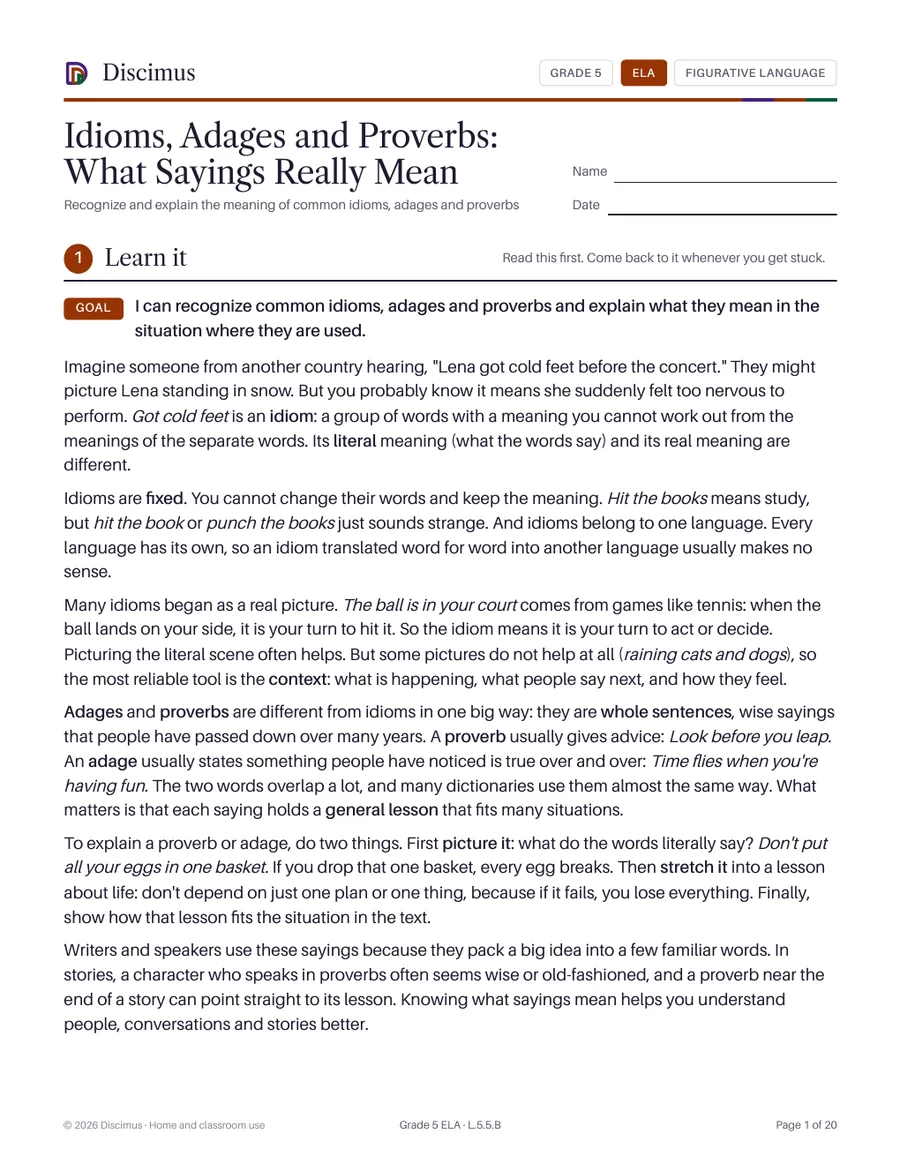
Recognize and explain the meaning of common idioms, adages and proverbs
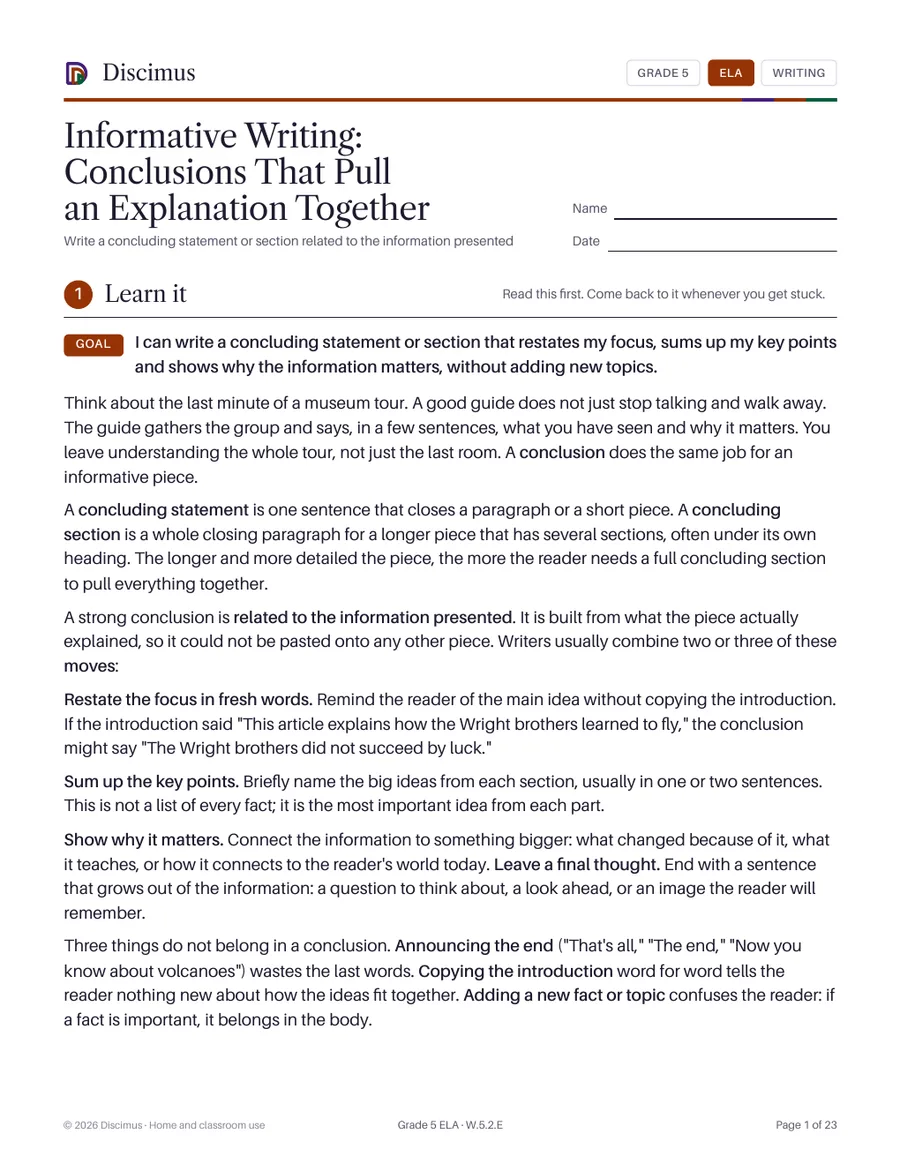
Write a concluding statement or section related to the information presented
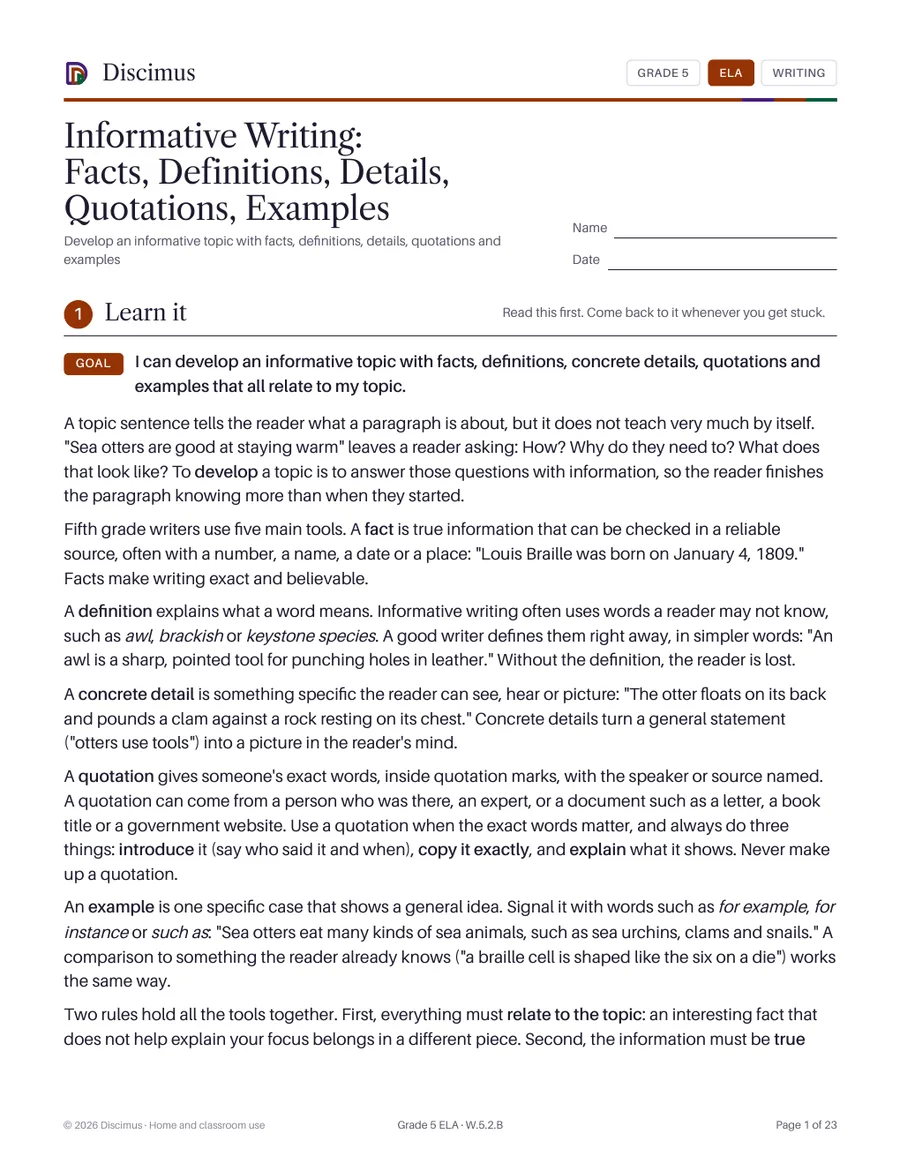
Develop an informative topic with facts, definitions, details, quotations and examples
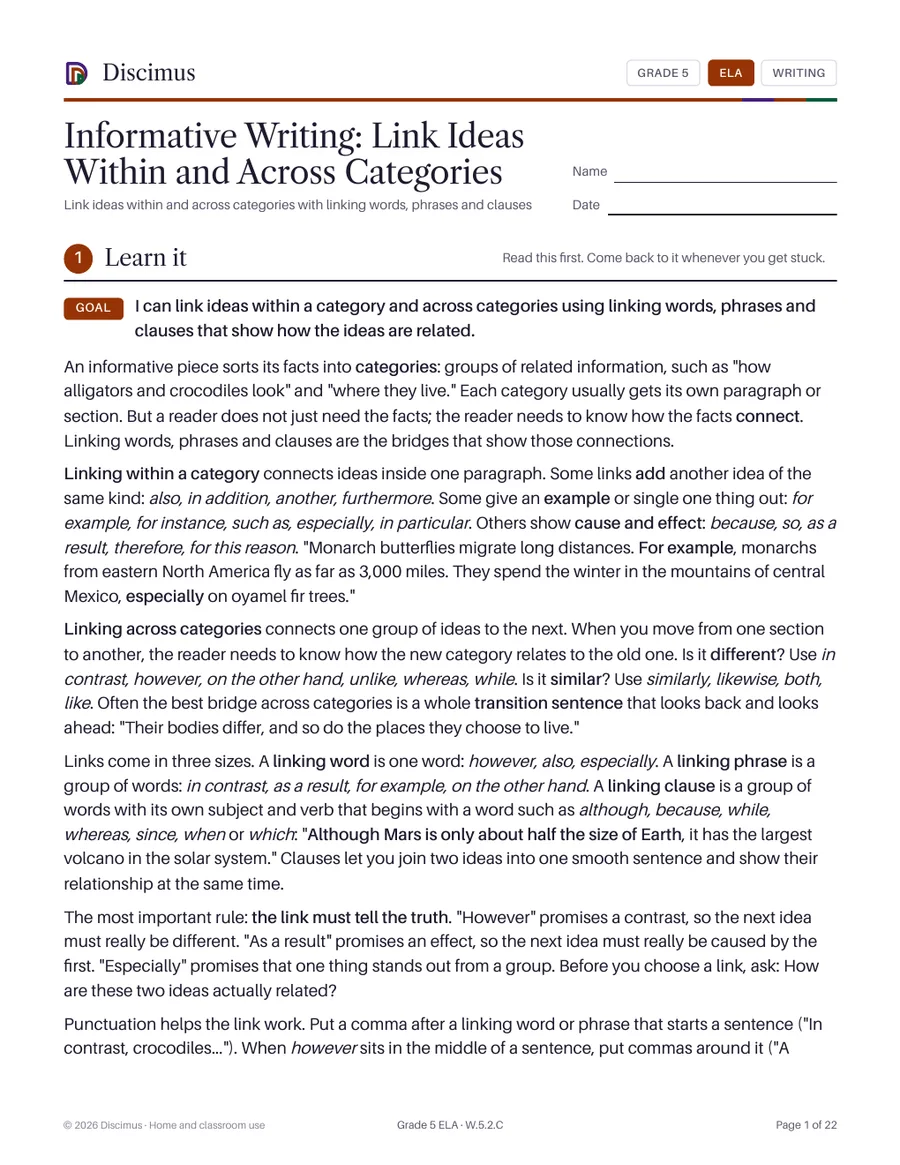
Link ideas within and across categories with linking words, phrases and clauses
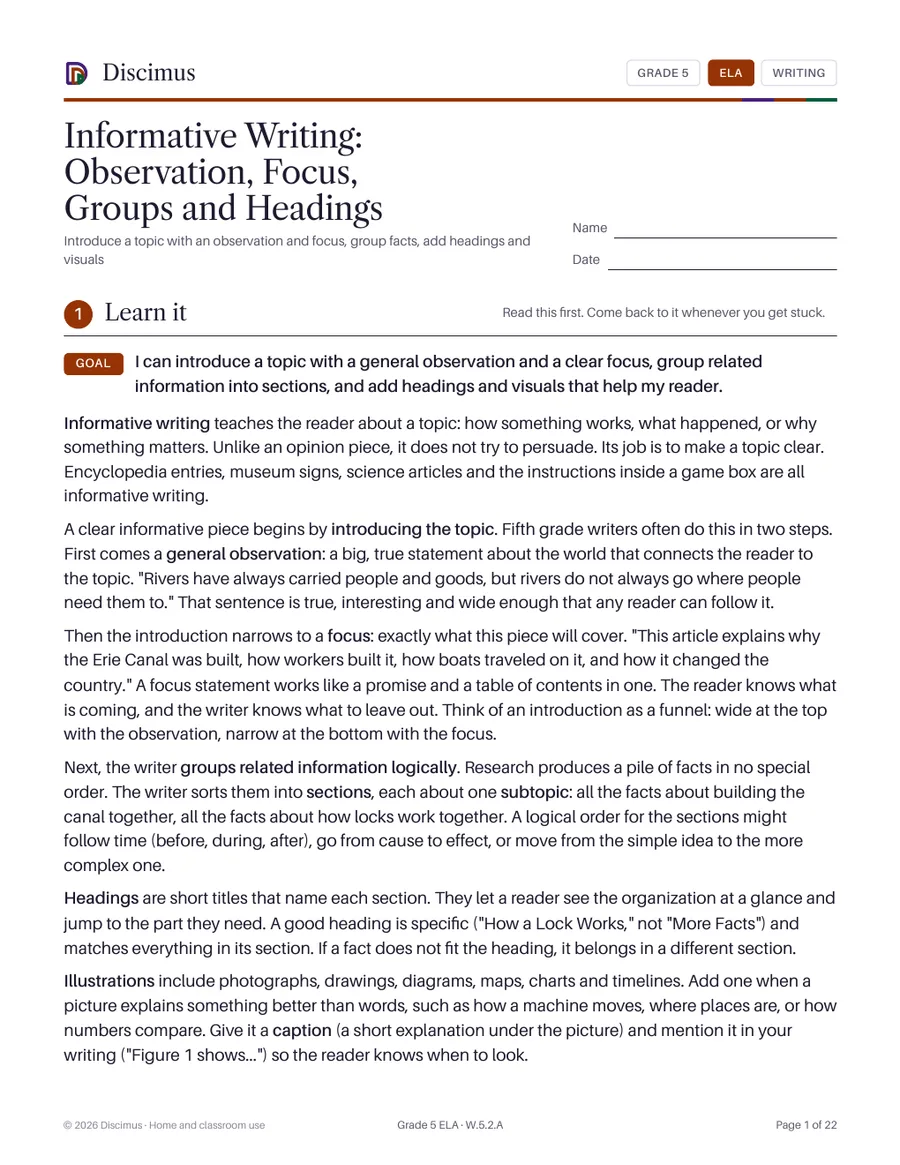
Introduce a topic with an observation and focus, group facts, add headings and visuals
Use precise language and domain-specific vocabulary to inform about or explain a topic
Read unfamiliar long words using letter sounds, syllable patterns, roots and affixes
Strengthen writing by planning, revising, editing, rewriting or trying a new approach
Compare several accounts of one event or topic and the points of view they represent
 Free sample
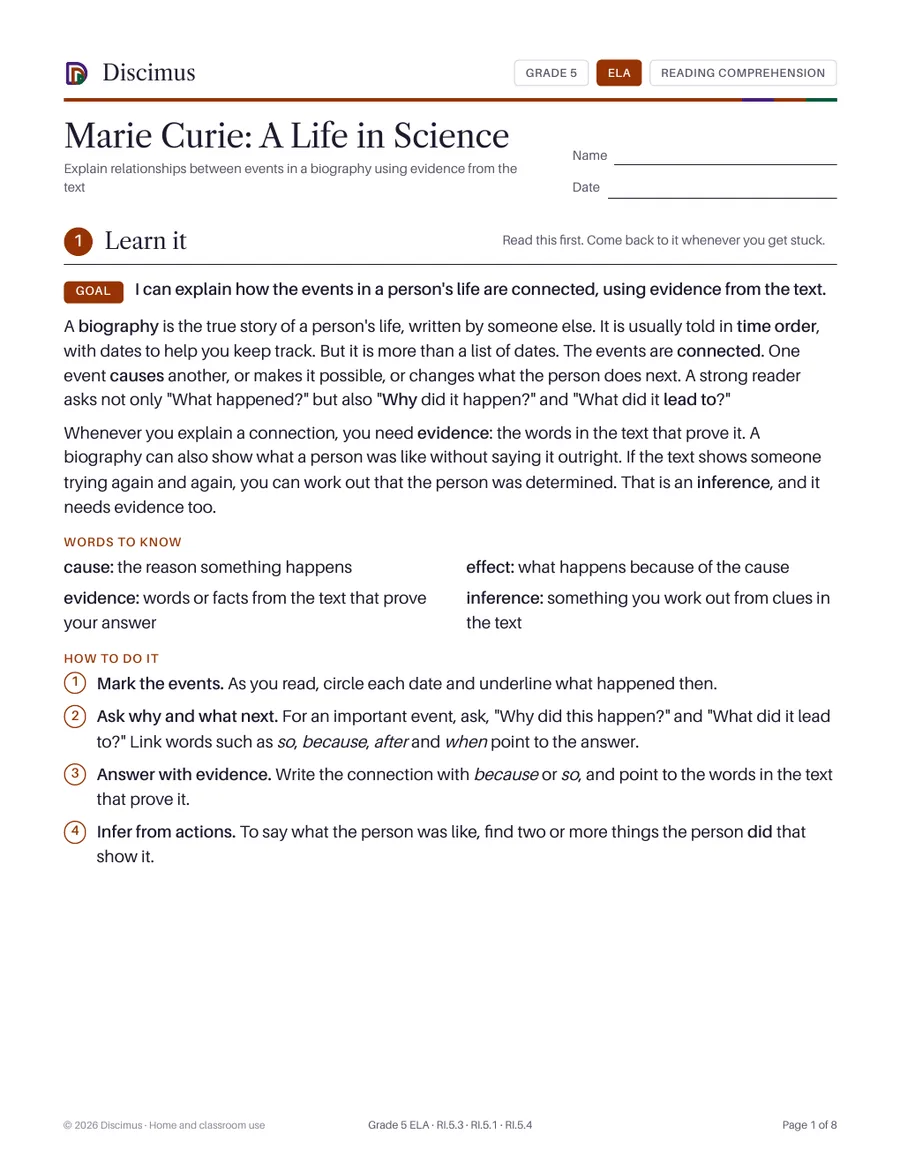
Explain relationships between events in a biography using evidence from the text
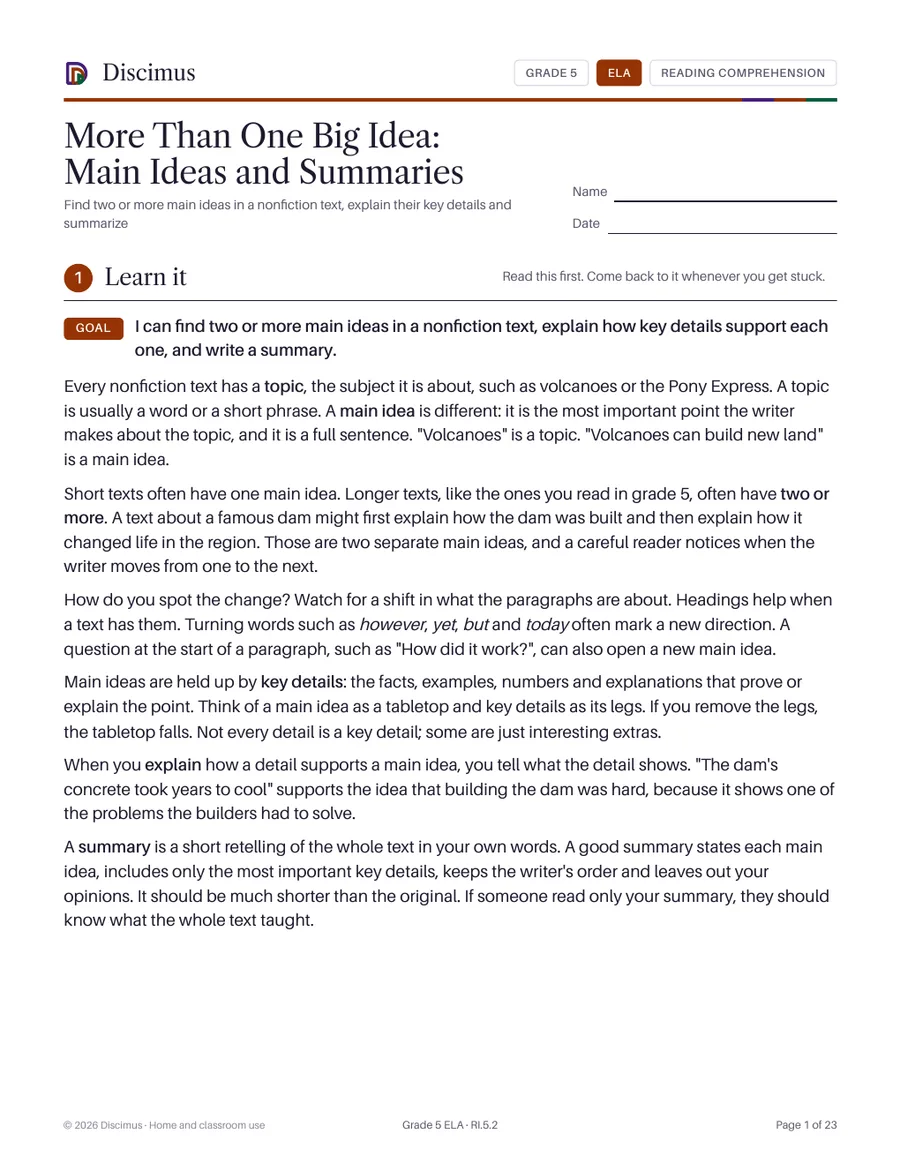
Find two or more main ideas in a nonfiction text, explain their key details and summarize
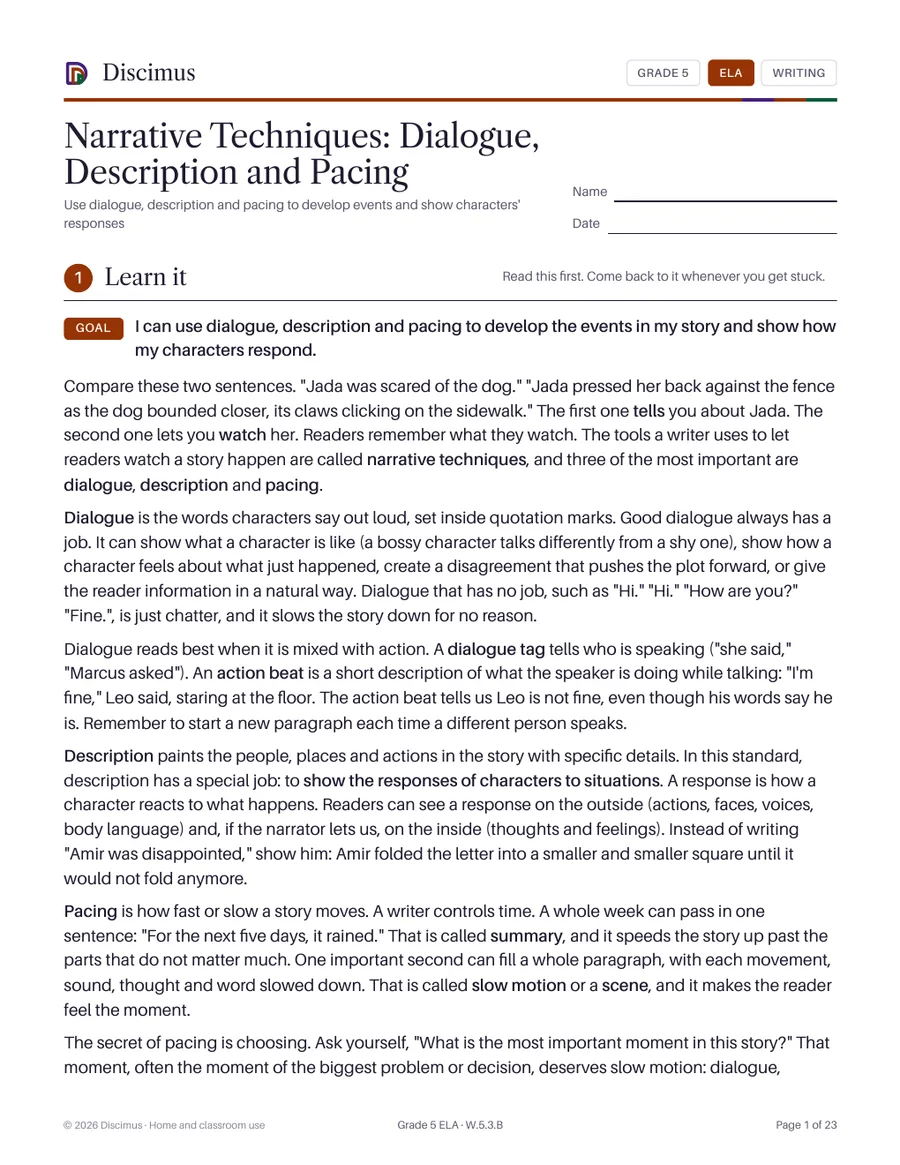
Use dialogue, description and pacing to develop events and show characters' responses
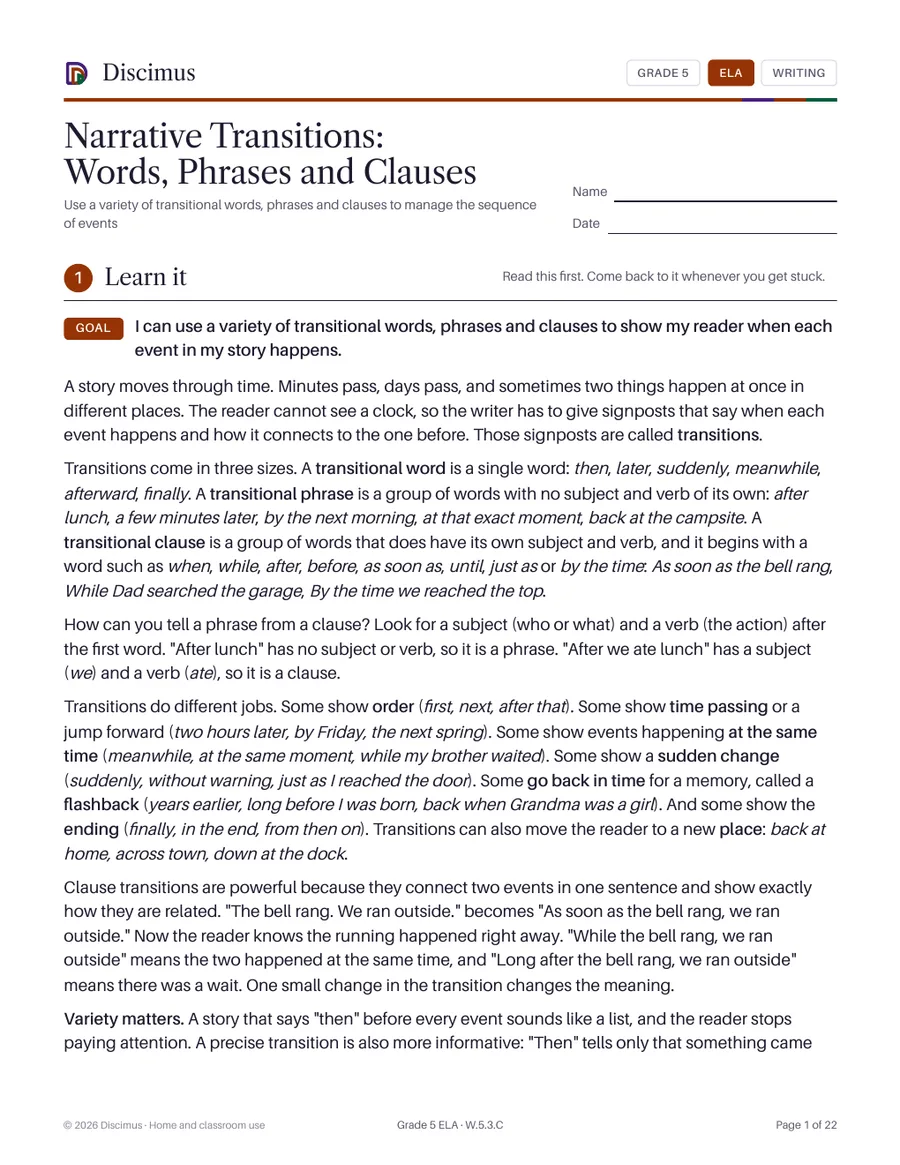
Use a variety of transitional words, phrases and clauses to manage the sequence of events
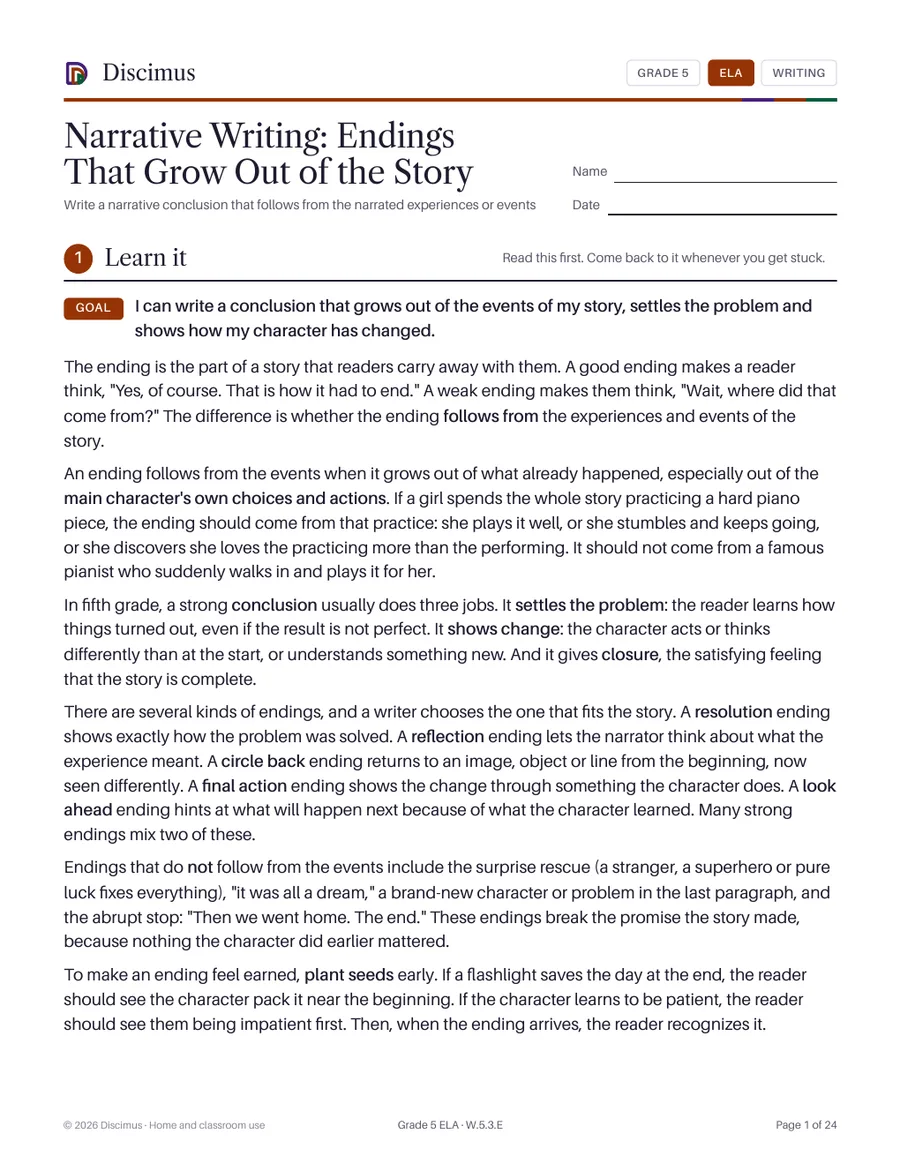
Write a narrative conclusion that follows from the narrated experiences or events
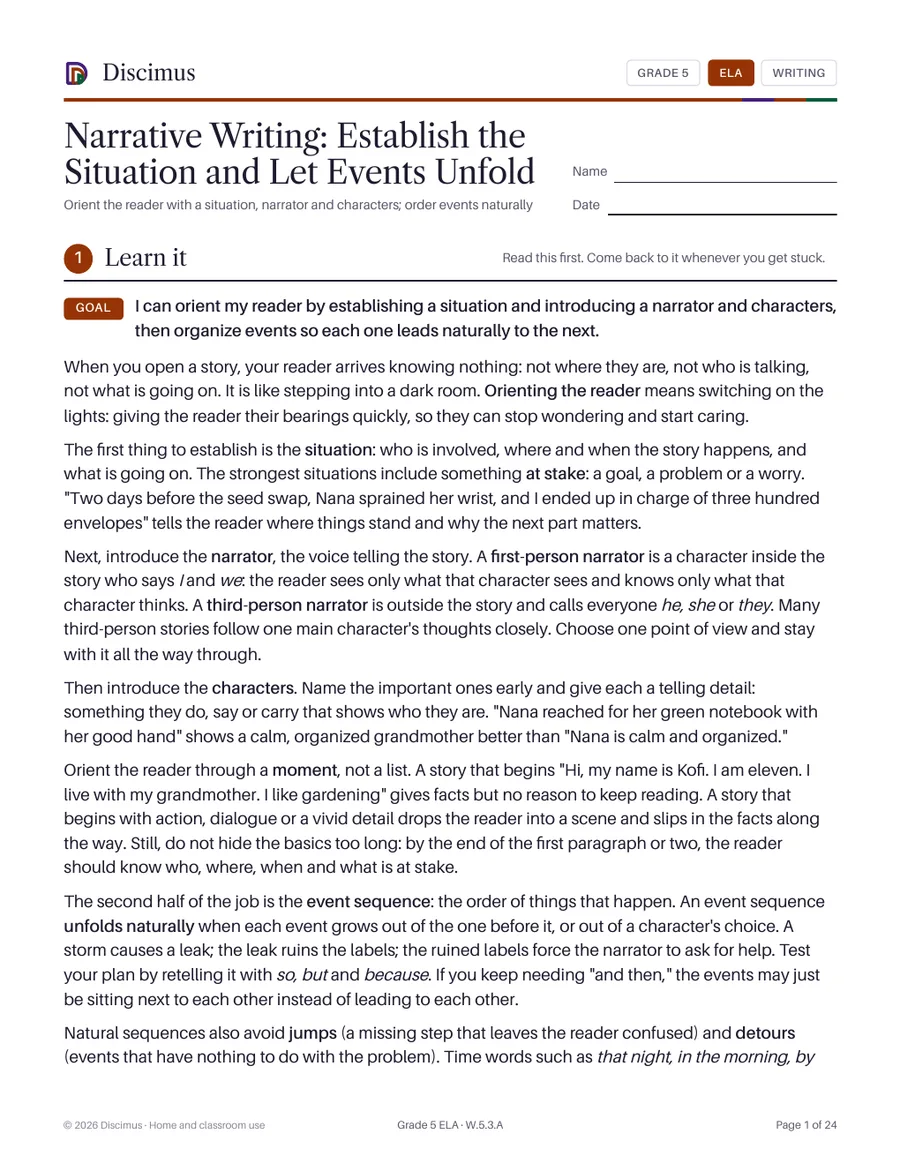
Orient the reader with a situation, narrator and characters; order events naturally
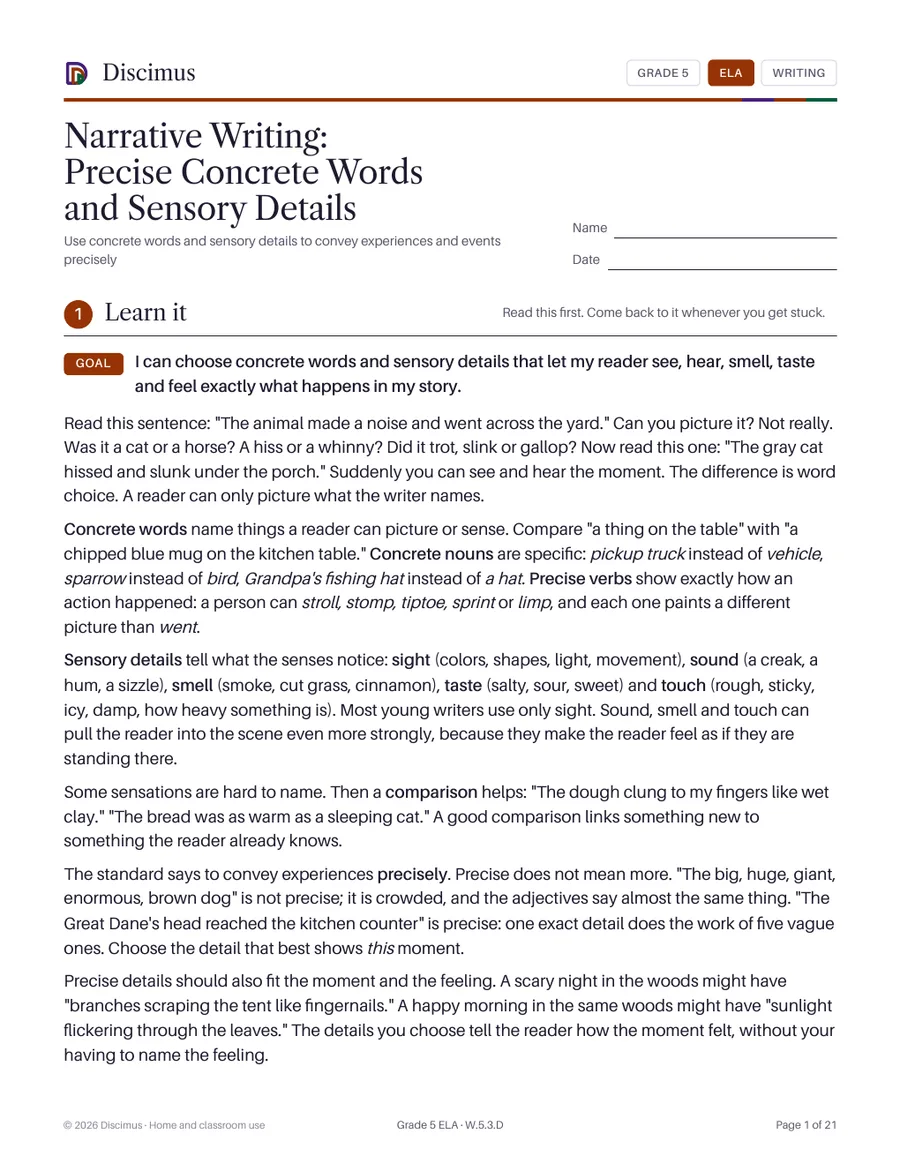
Use concrete words and sensory details to convey experiences and events precisely
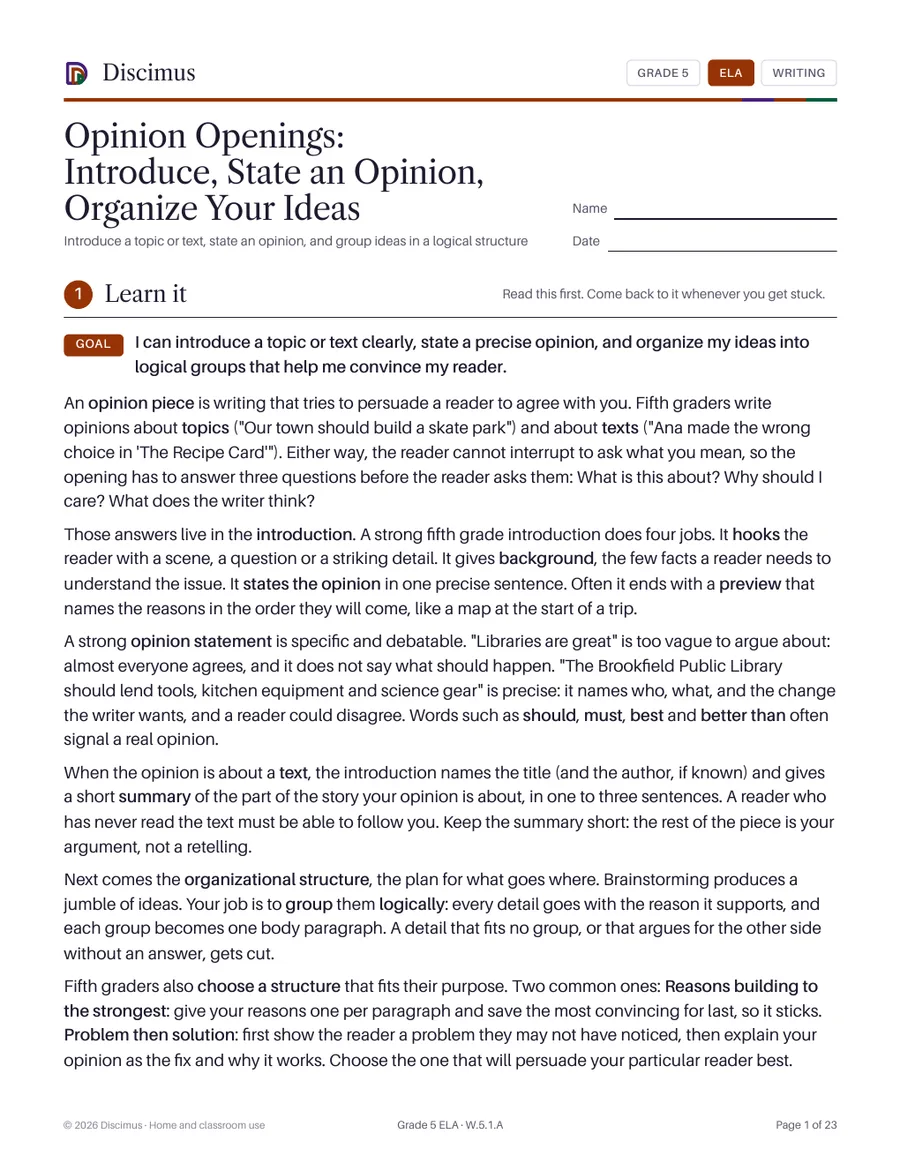
Introduce a topic or text, state an opinion, and group ideas in a logical structure
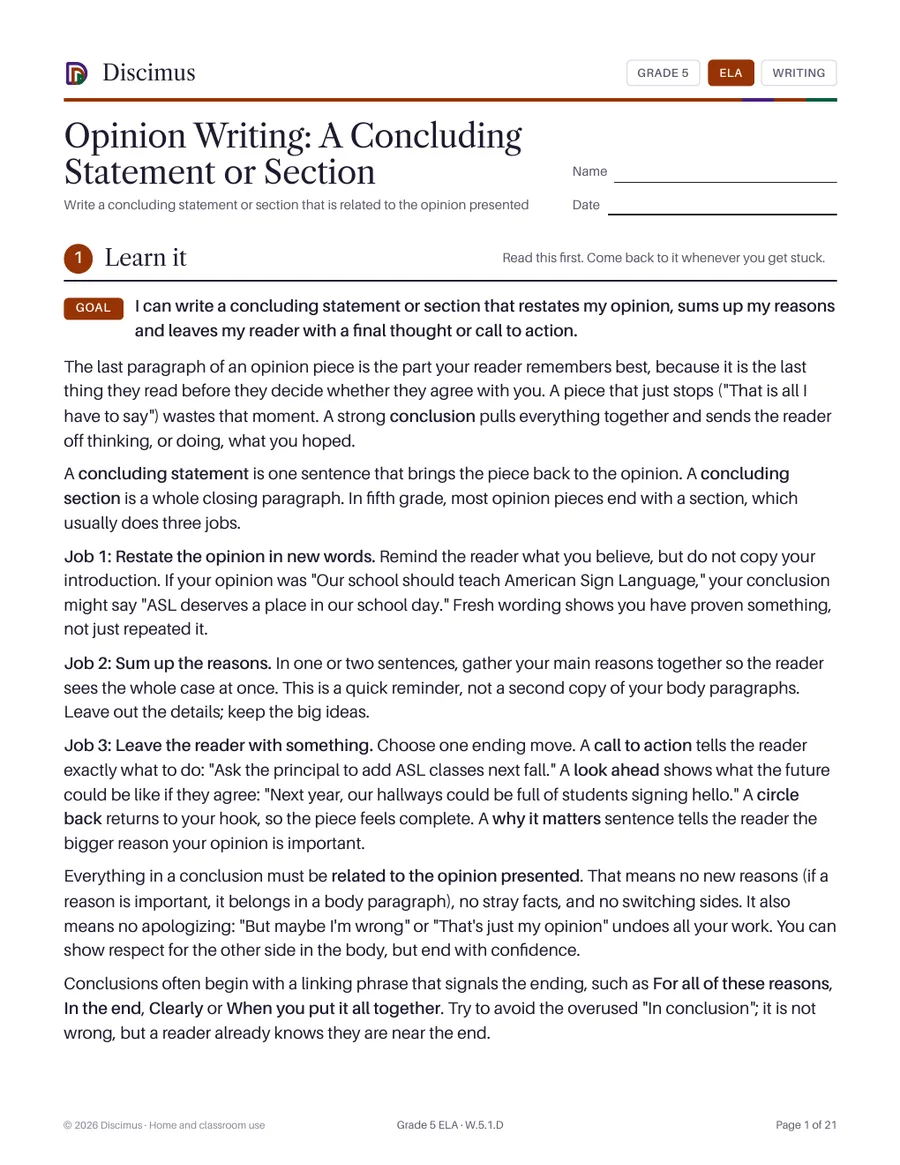
Write a concluding statement or section that is related to the opinion presented
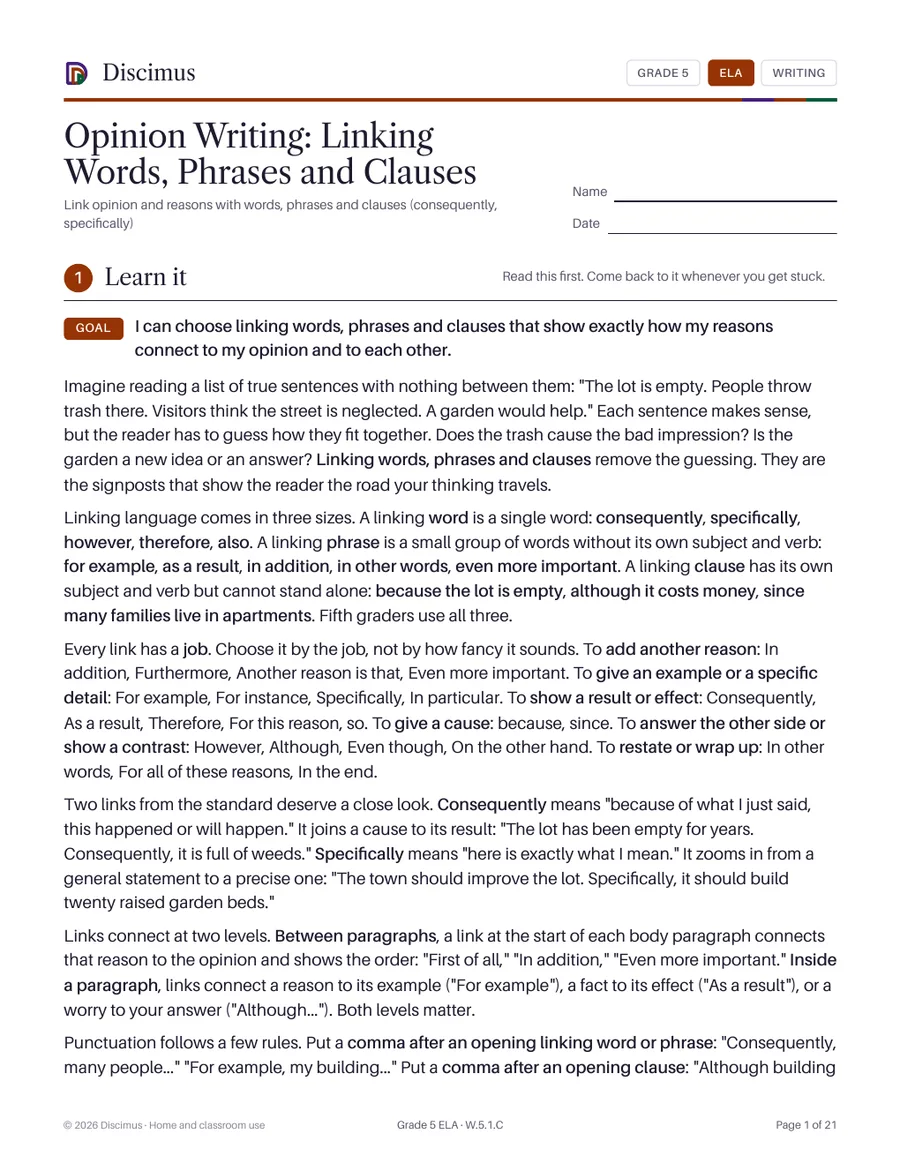
Link opinion and reasons with words, phrases and clauses (consequently, specifically)
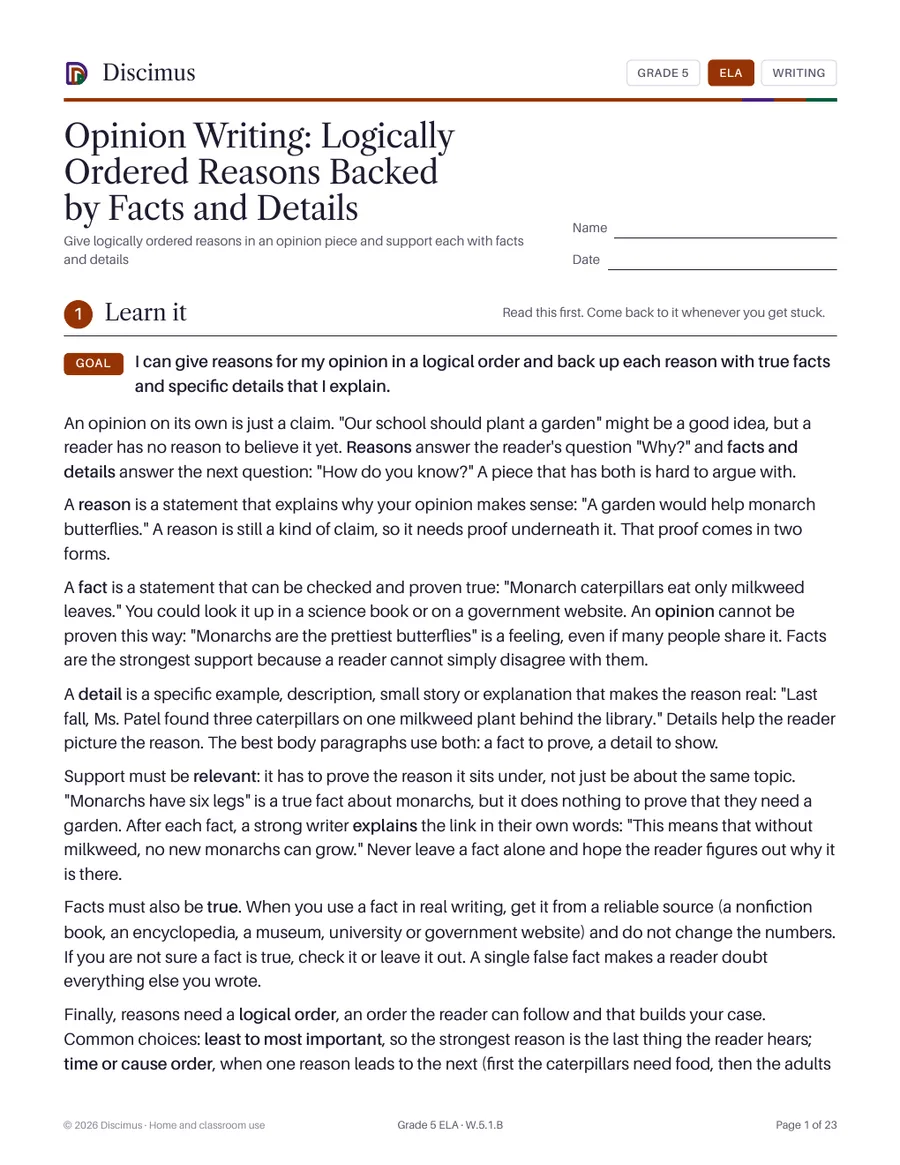
Give logically ordered reasons in an opinion piece and support each with facts and details
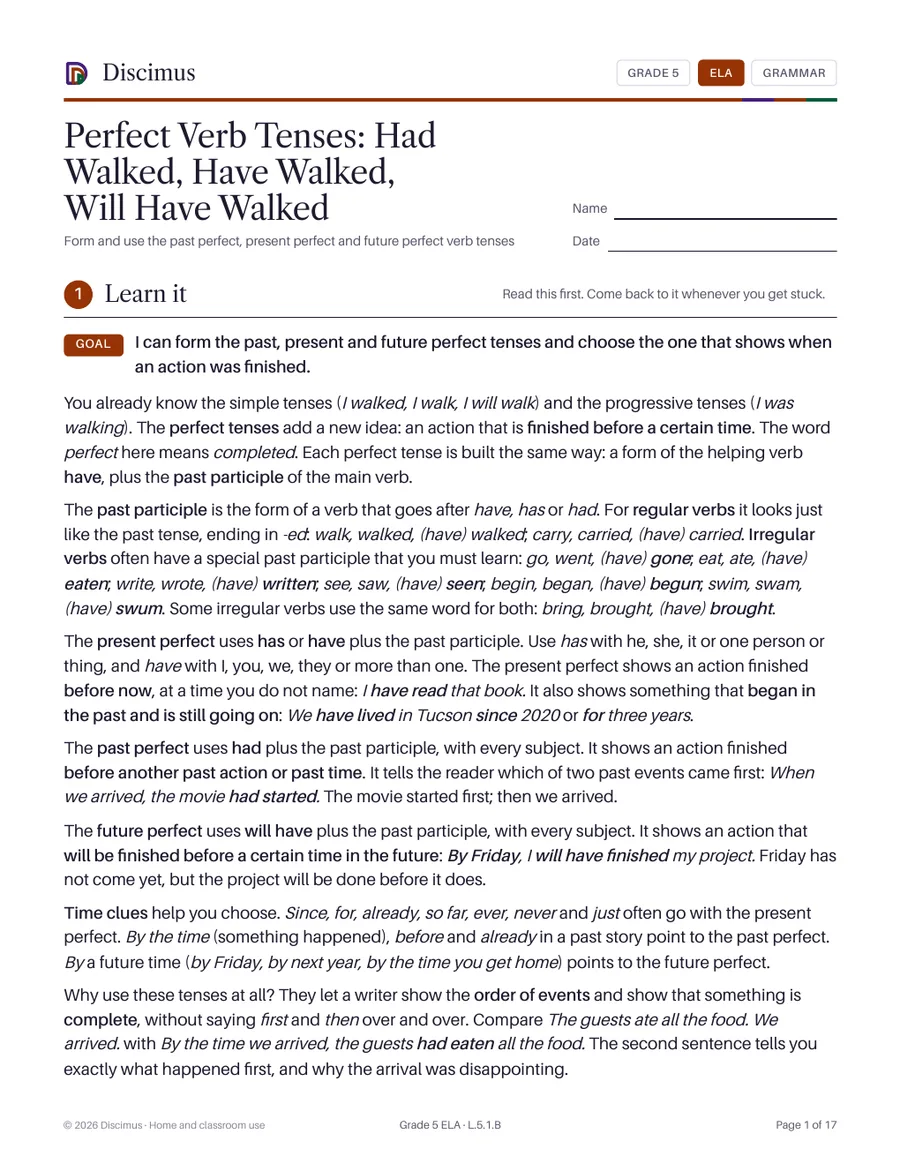
Form and use the past perfect, present perfect and future perfect verb tenses
Analyze how visual and multimedia elements add to the meaning, tone or beauty of a text
Read grade 5 prose and poetry aloud with accuracy, a fitting rate and expression
Quote accurately from a nonfiction text to explain what it says and to support inferences
Quote accurately from a literary text to explain what it states and to support inferences
Read and understand grade 5 history, science and technical texts independently
Read grade 5 texts with a clear purpose, check understanding while reading, and sum up
Read and understand grade 5 stories, plays and poems on my own, fixing confusion as I go
Use dictionaries, glossaries and thesauruses to find pronunciation and precise meaning
Conduct a short research project using several sources to investigate different aspects
Compare stories in the same genre on how they approach similar themes and topics
Compare and contrast the overall structure of two or more nonfiction texts on one topic
Integrate information from several texts on one topic to write or speak knowledgeably
Compare and contrast characters, settings or events in a story or play, citing details
Interpret similes, metaphors and other figurative language in context
Spell grade 5 words using suffix rules and patterns, and check spellings in a dictionary
Gather relevant information, paraphrase or summarize it in notes, and list sources
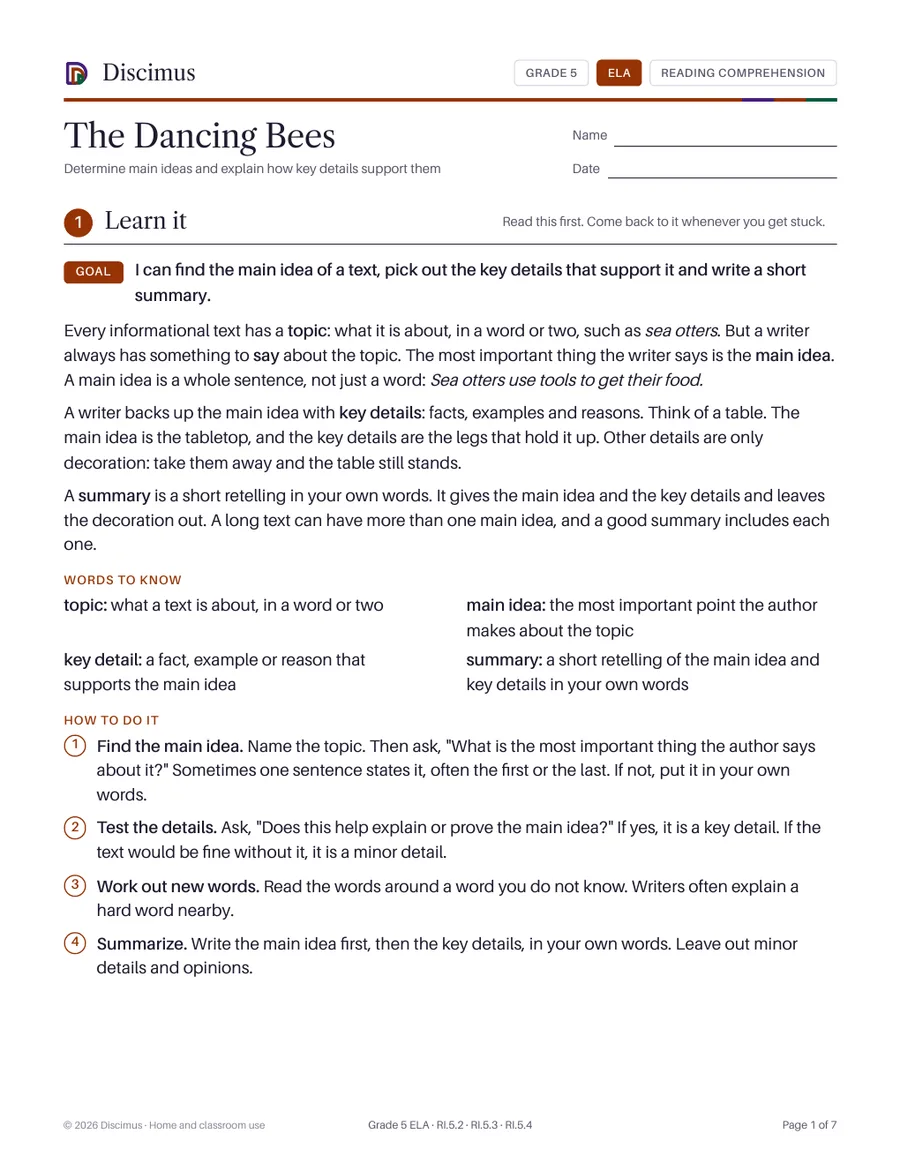
Determine main ideas and explain how key details support them
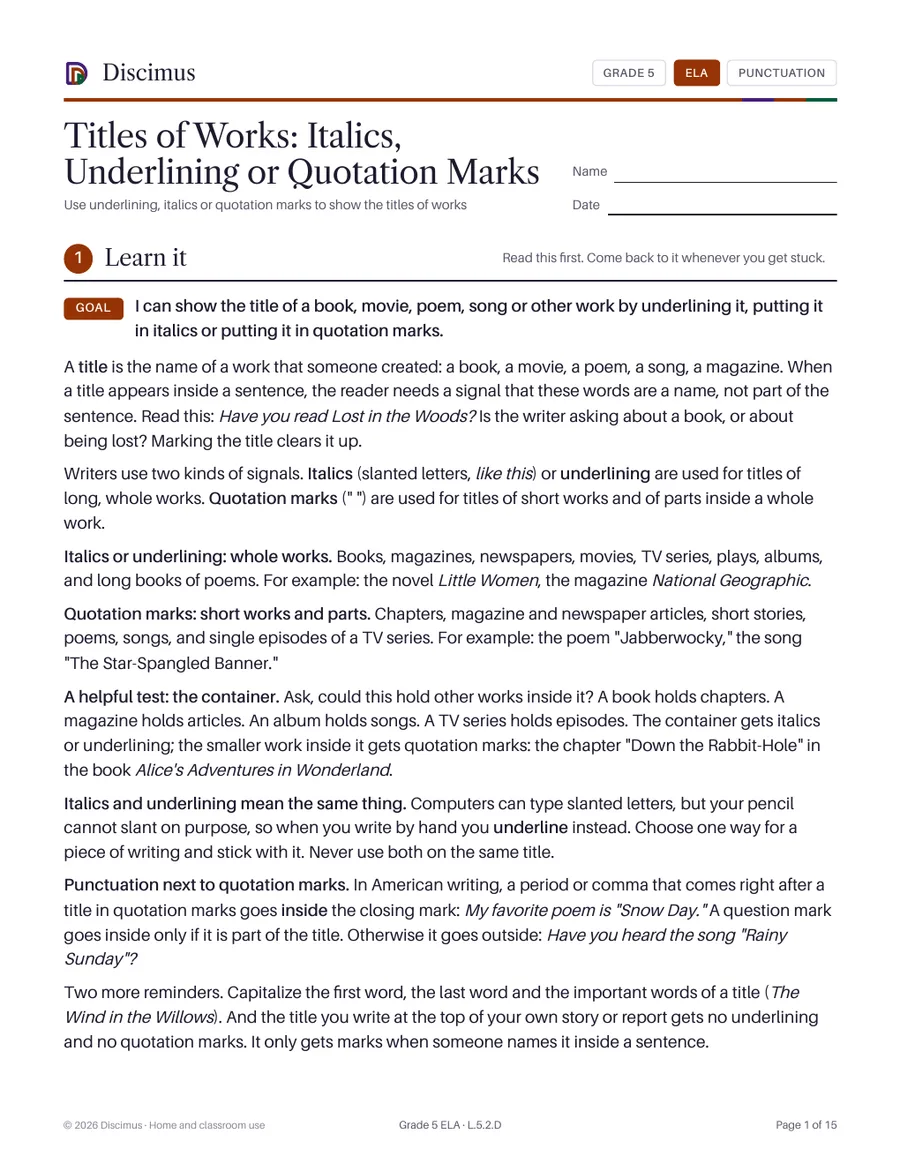
Use underlining, italics or quotation marks to show the titles of works
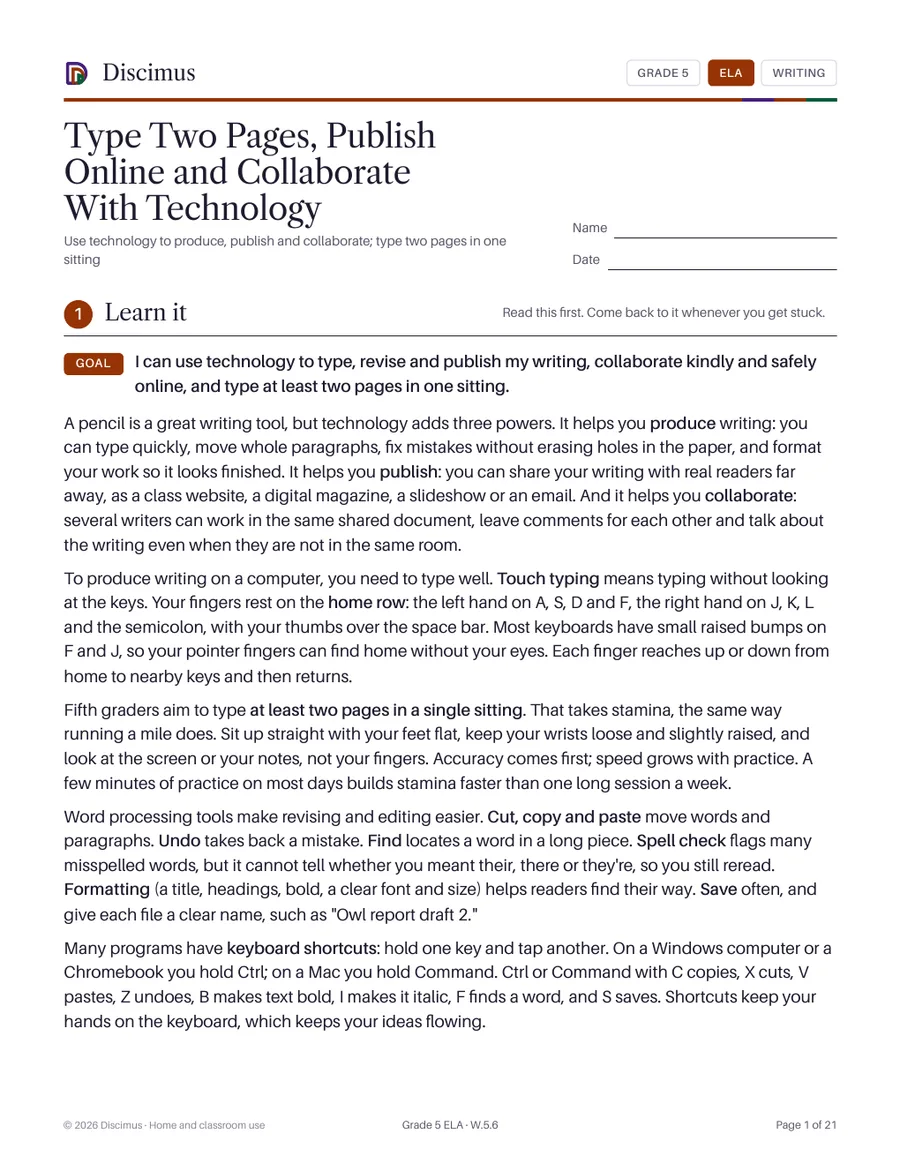
Use technology to produce, publish and collaborate; type two pages in one sitting
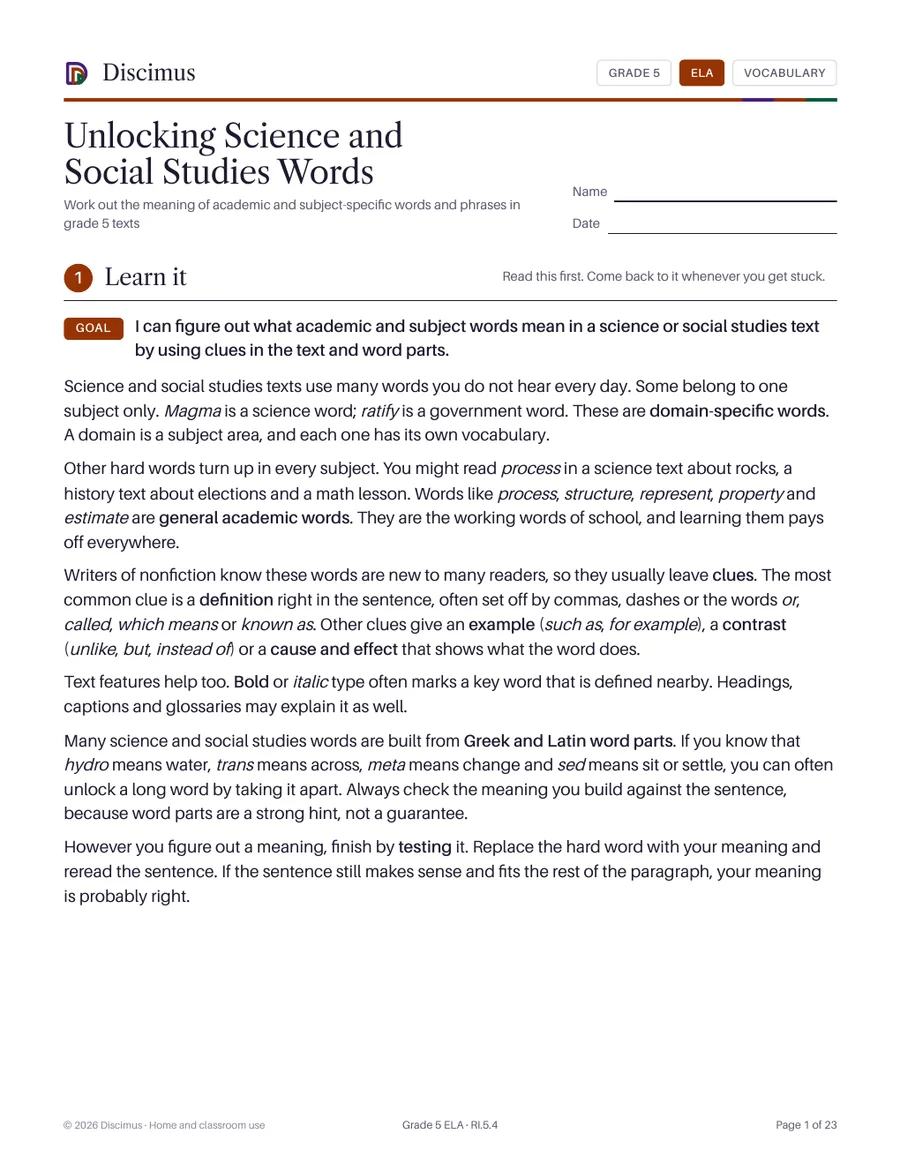
Work out the meaning of academic and subject-specific words and phrases in grade 5 texts
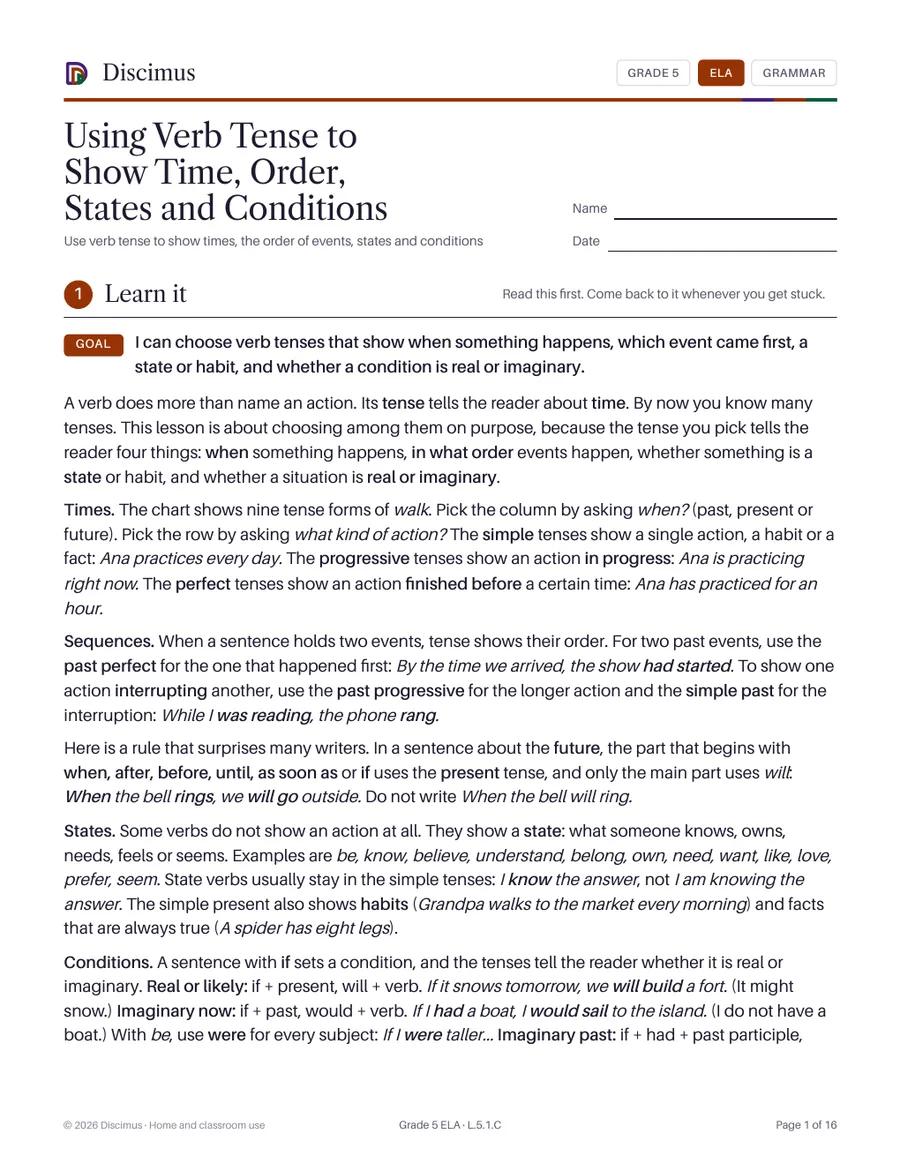
Use verb tense to show times, the order of events, states and conditions
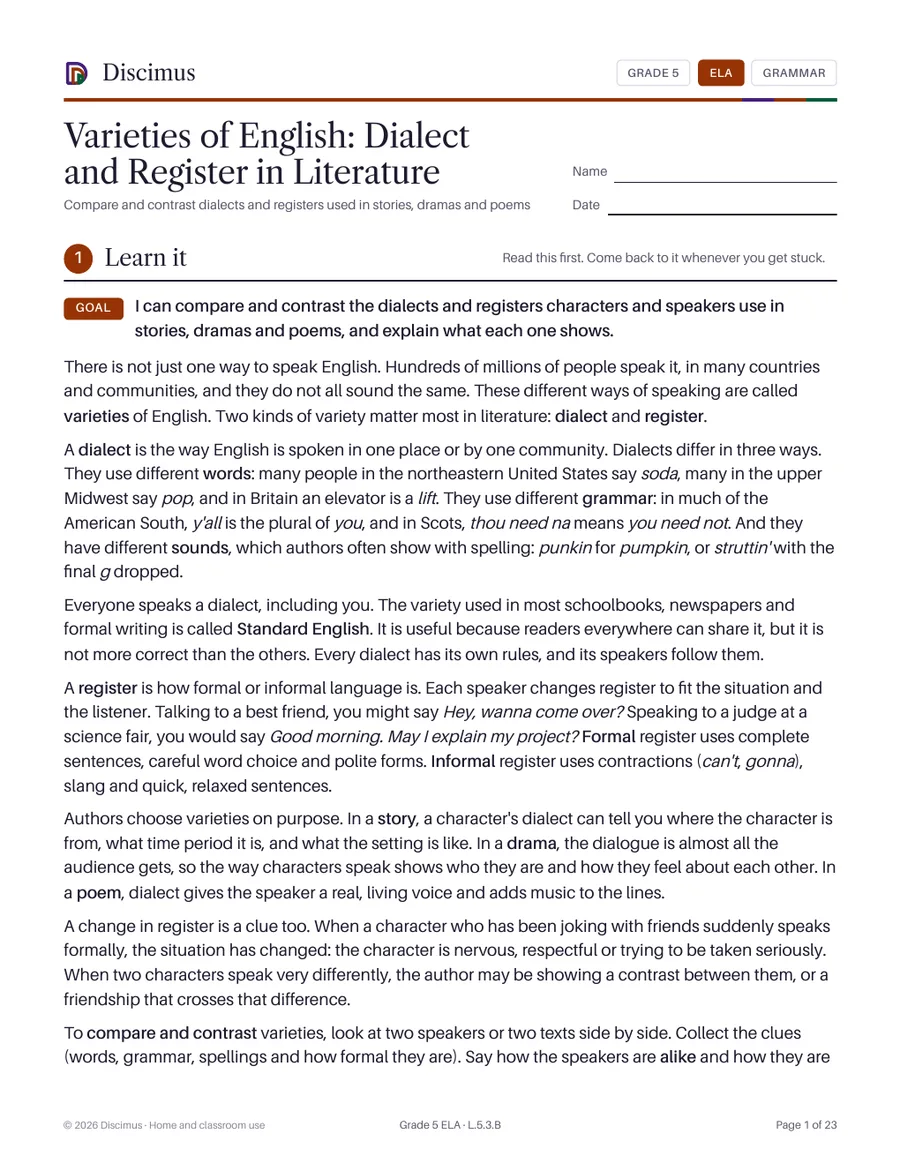
Compare and contrast dialects and registers used in stories, dramas and poems
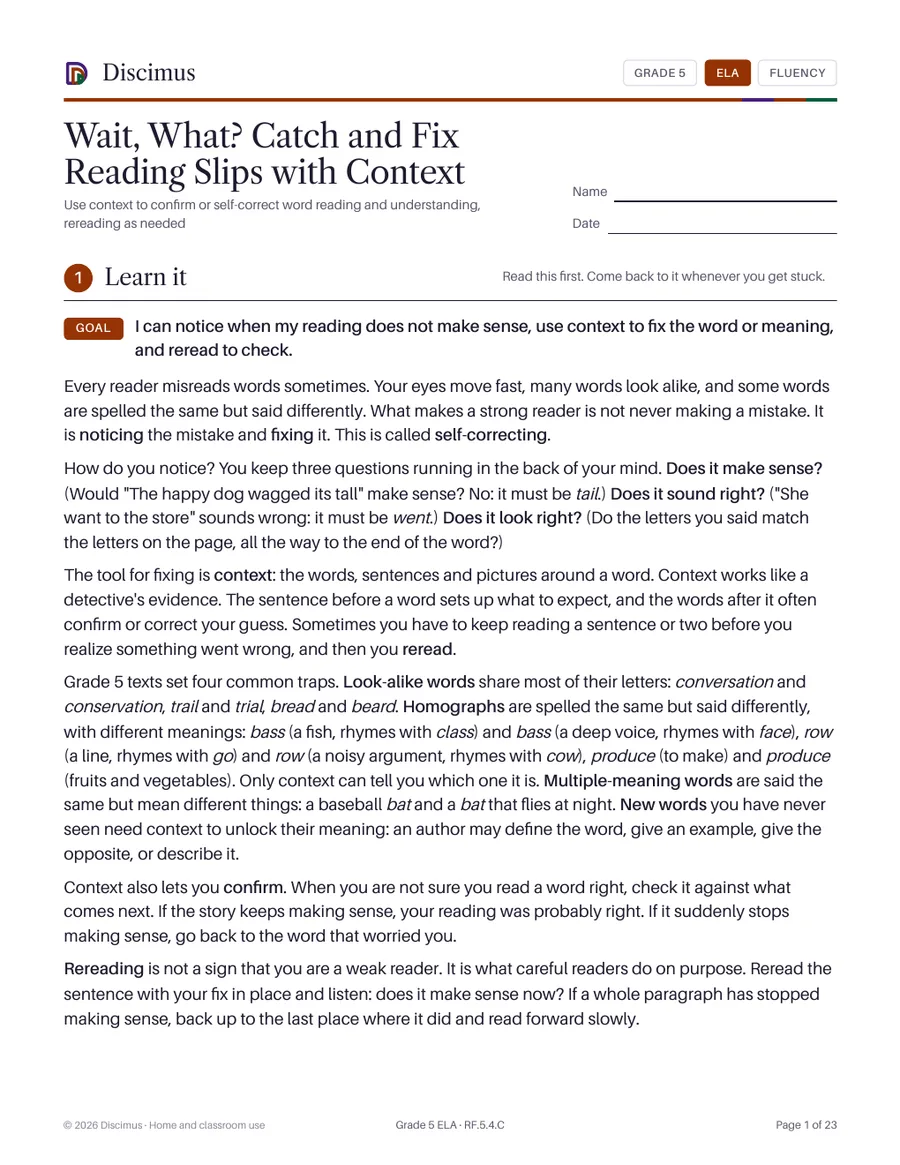
Use context to confirm or self-correct word reading and understanding, rereading as needed
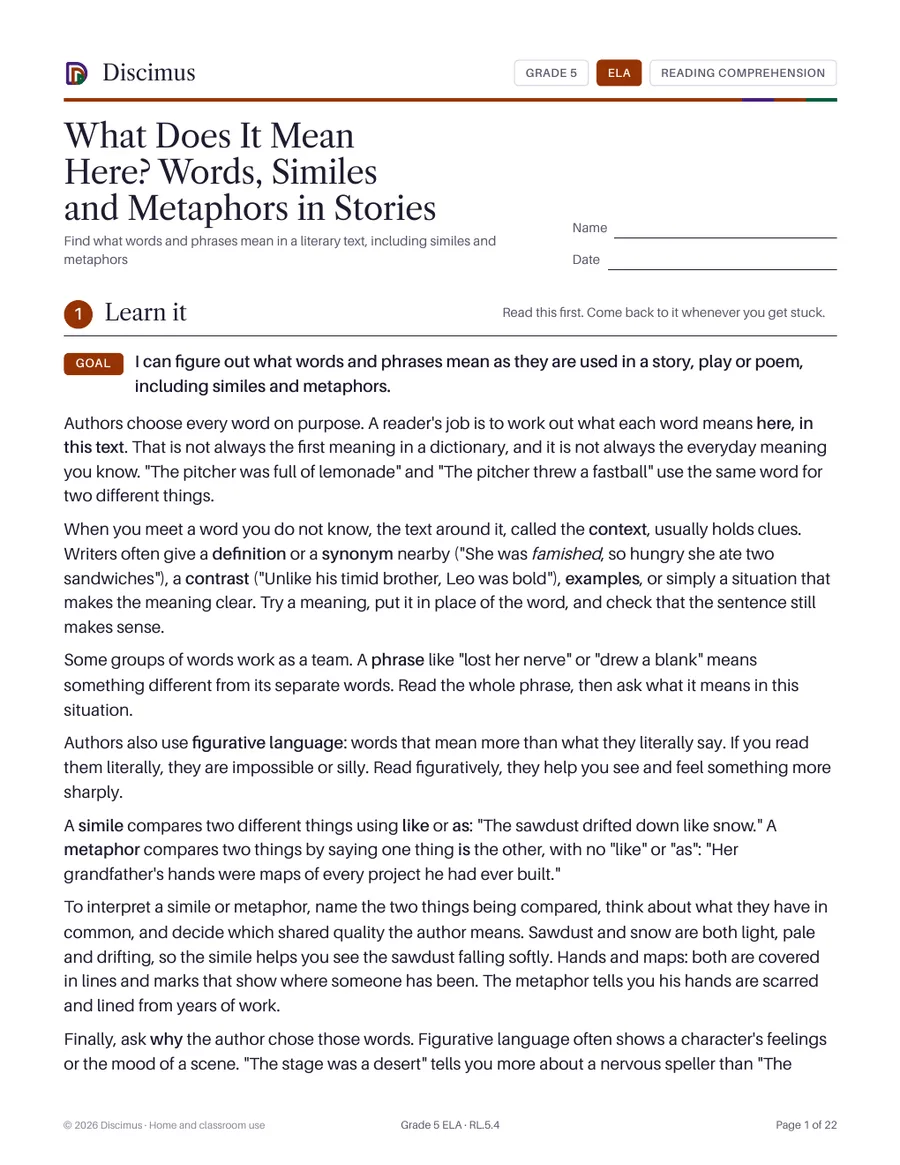
Find what words and phrases mean in a literary text, including similes and metaphors
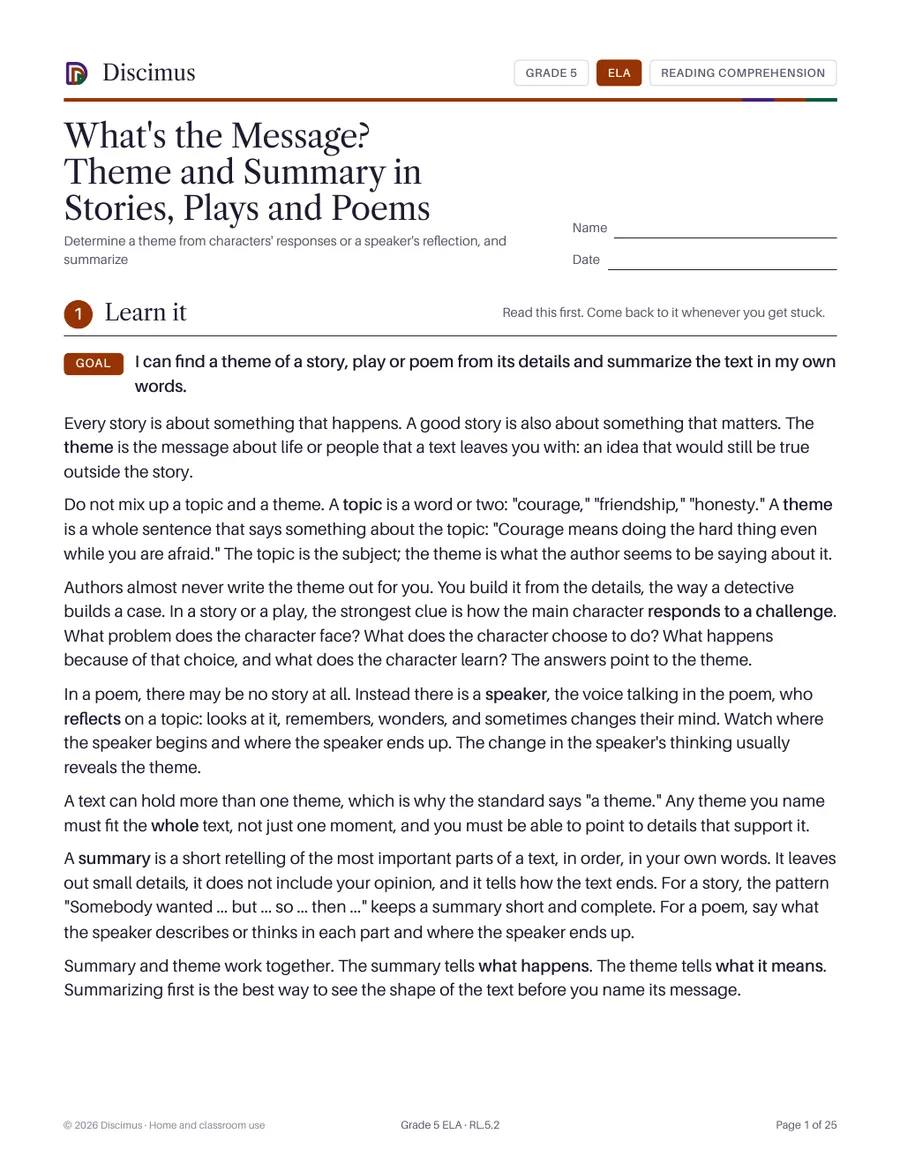
Determine a theme from characters' responses or a speaker's reflection, and summarize
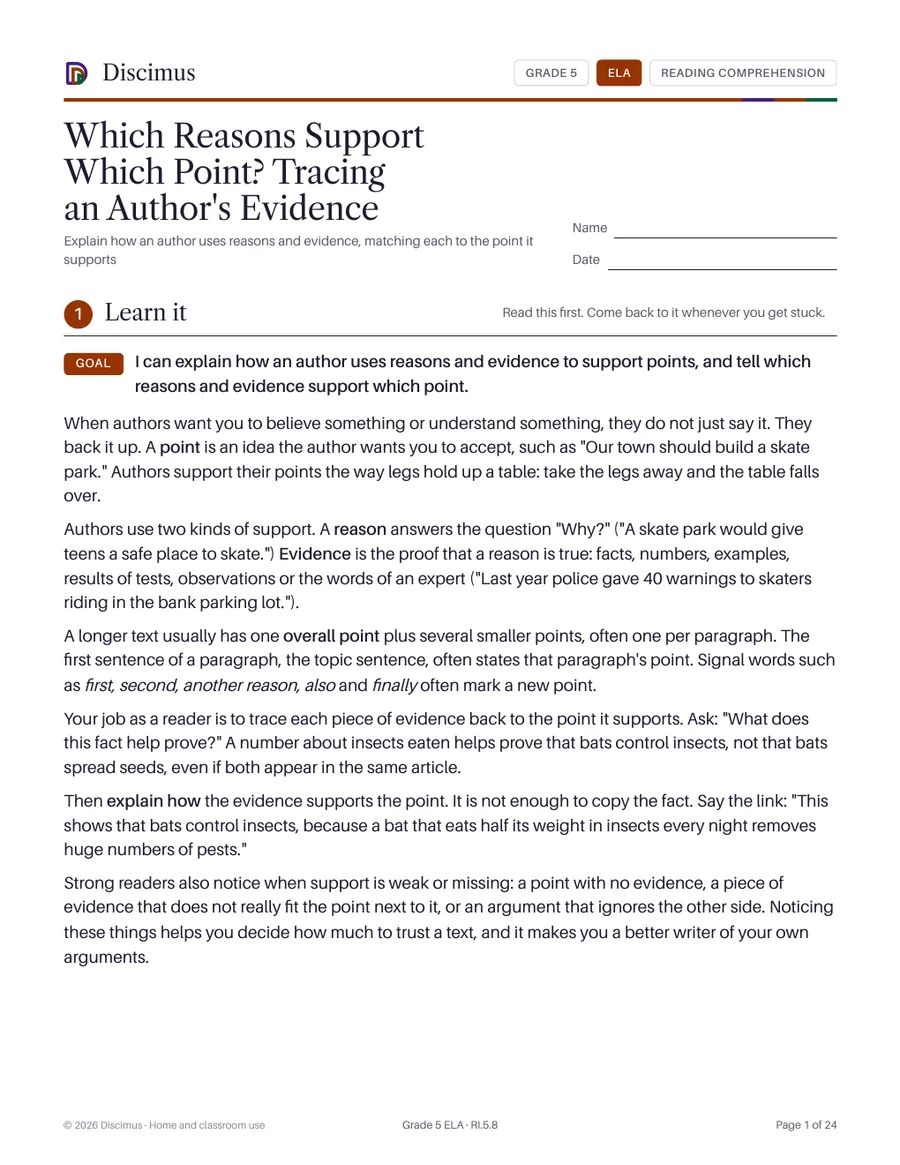
Explain how an author uses reasons and evidence, matching each to the point it supports
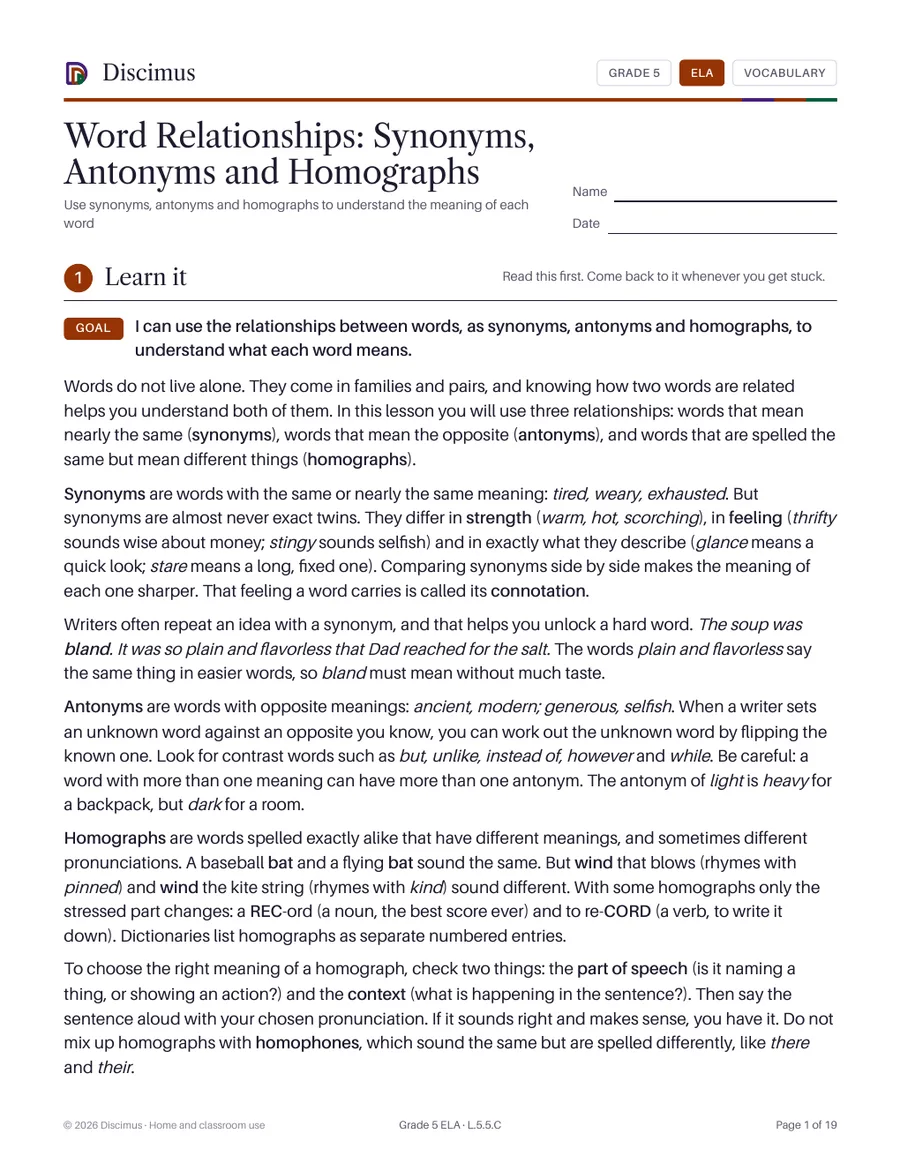
Use synonyms, antonyms and homographs to understand the meaning of each word
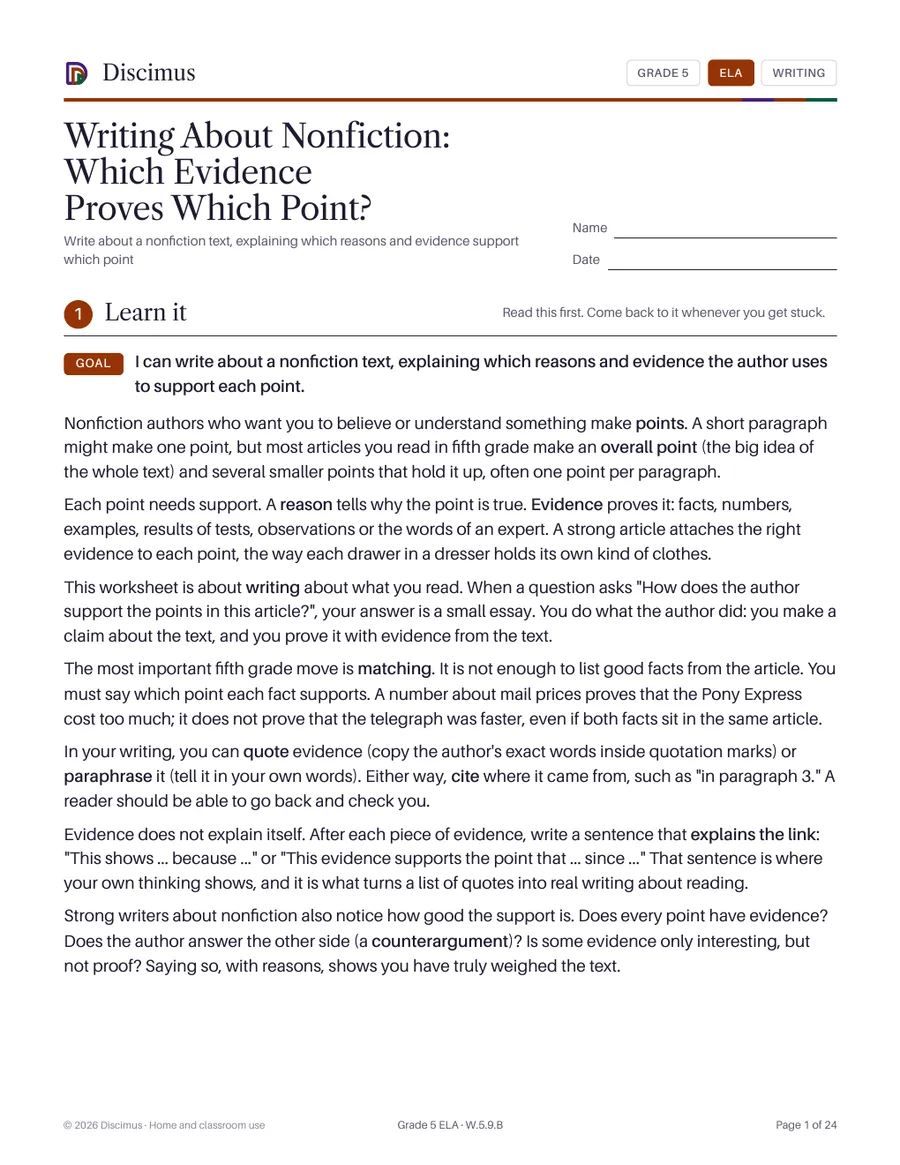
Write about a nonfiction text, explaining which reasons and evidence support which point
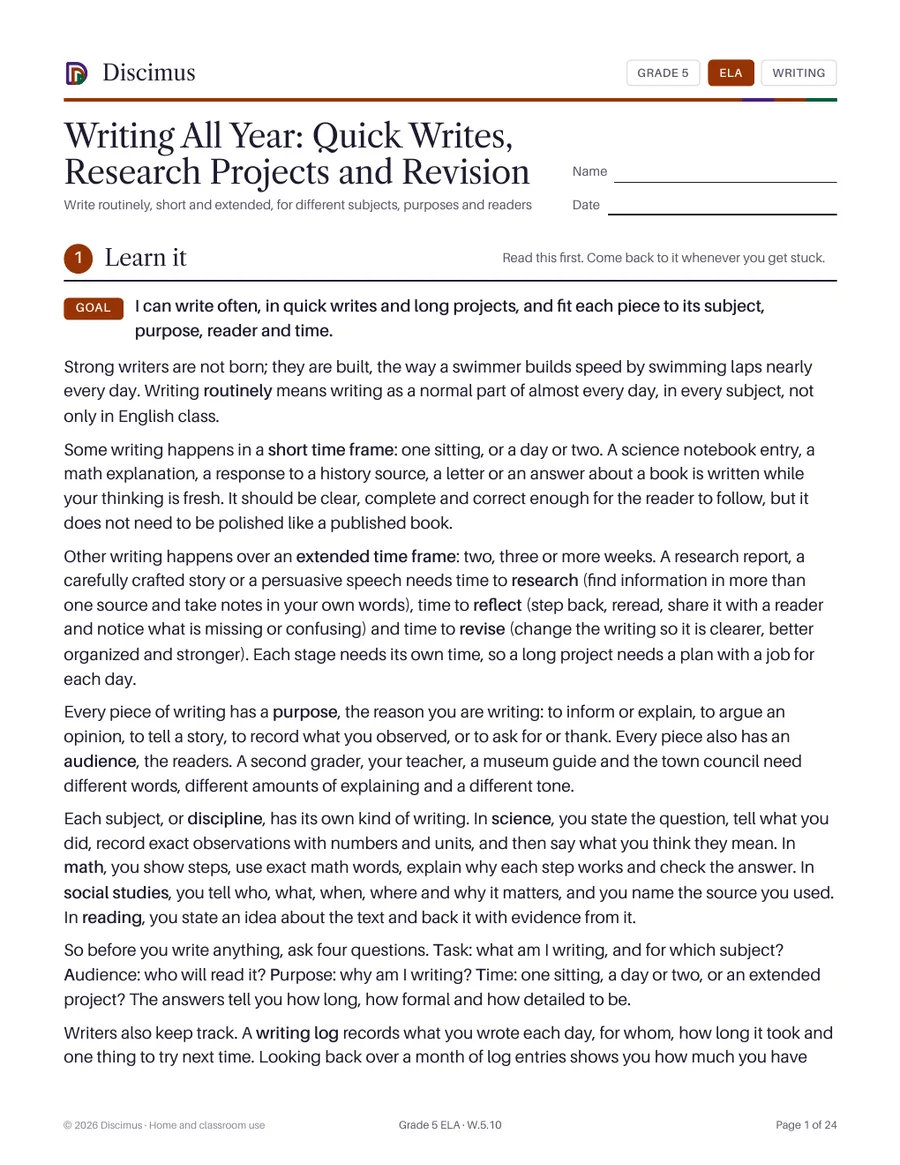
Write routinely, short and extended, for different subjects, purposes and readers
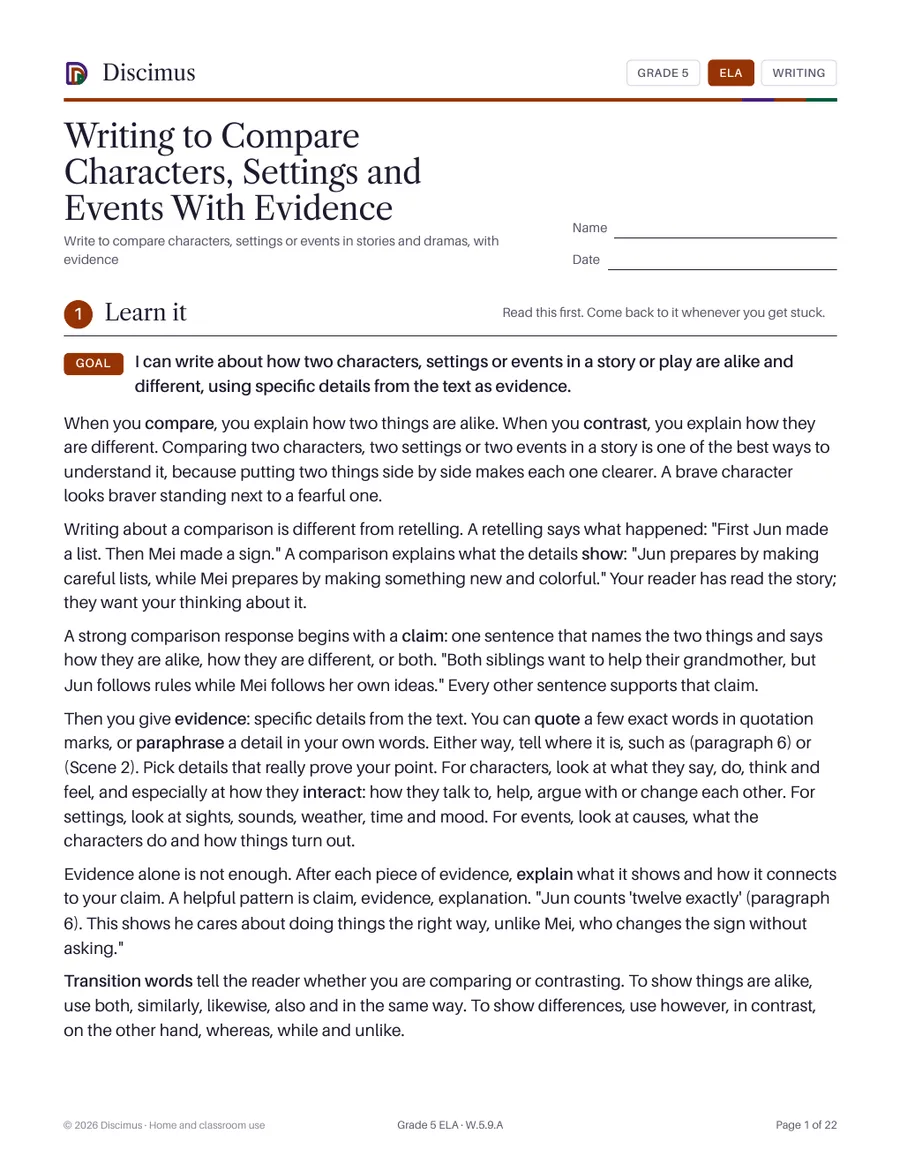
Write to compare characters, settings or events in stories and dramas, with evidence