Define the Problem First: Criteria and Constraints
Define a design problem with testable criteria and constraints on materials, time or cost
Next Generation Science Standards
Life, earth, physical science and the habits of investigation.
Define a design problem with testable criteria and constraints on materials, time or cost
Gather and combine information on how communities use science to protect resources
Plan and run fair tests, control variables and use failure points to improve a prototype
Develop a model of how matter moves among plants, animals, decomposers and the environment
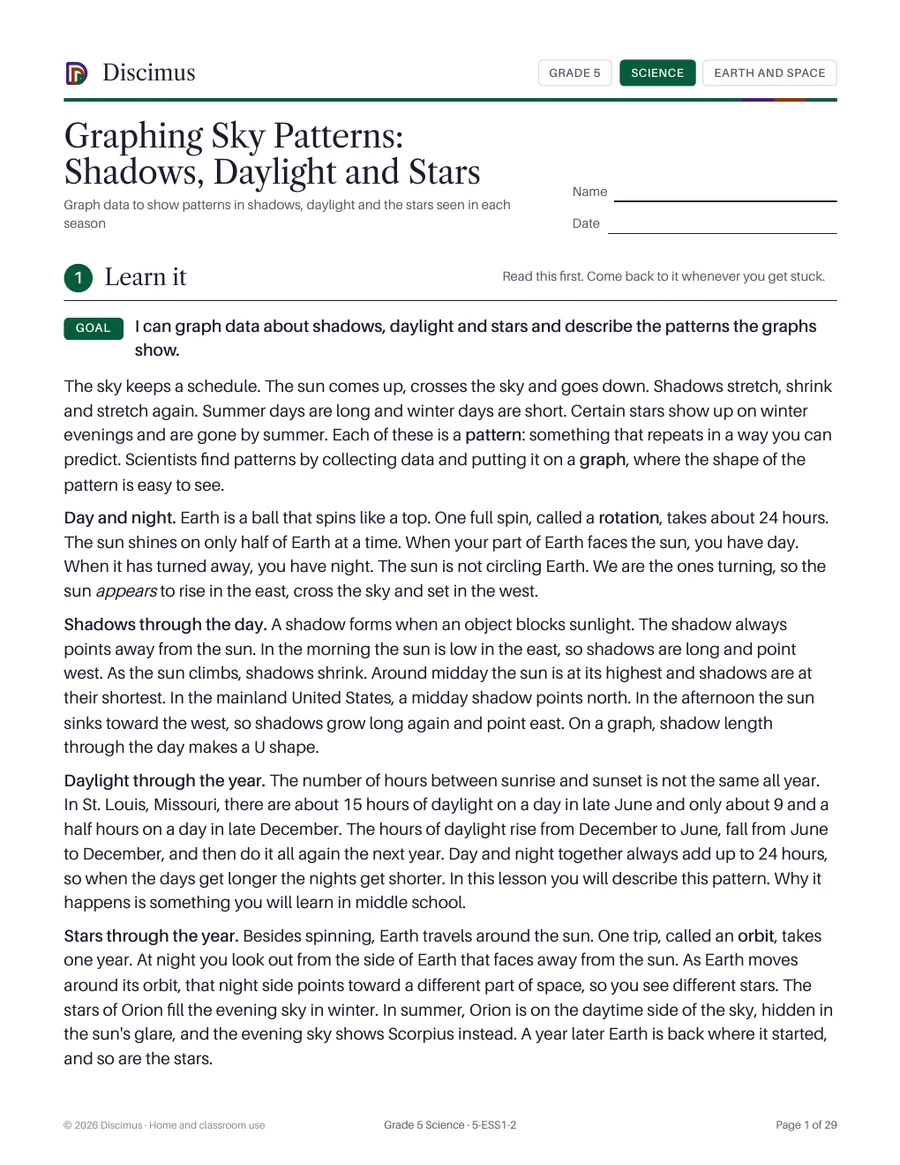
Graph data to show patterns in shadows, daylight and the stars seen in each season
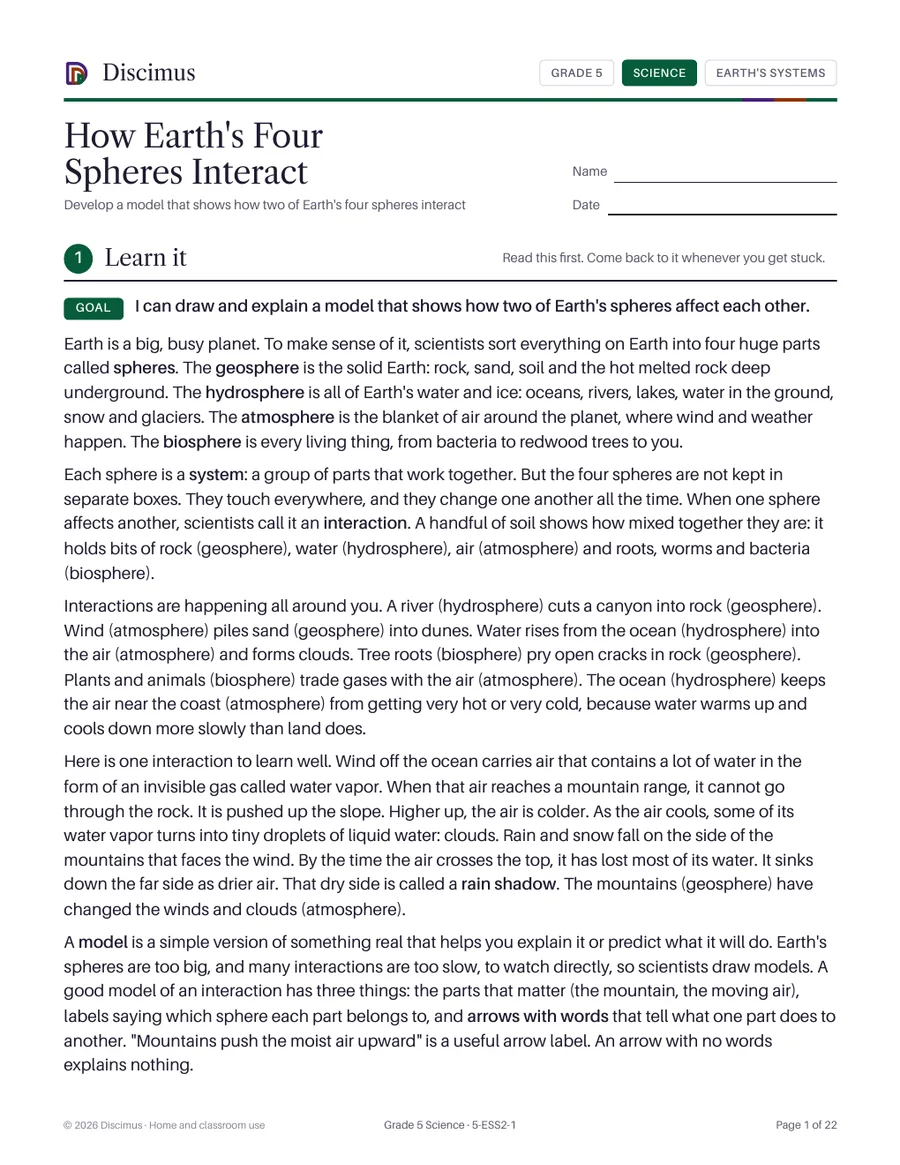
Develop a model that shows how two of Earth's four spheres interact
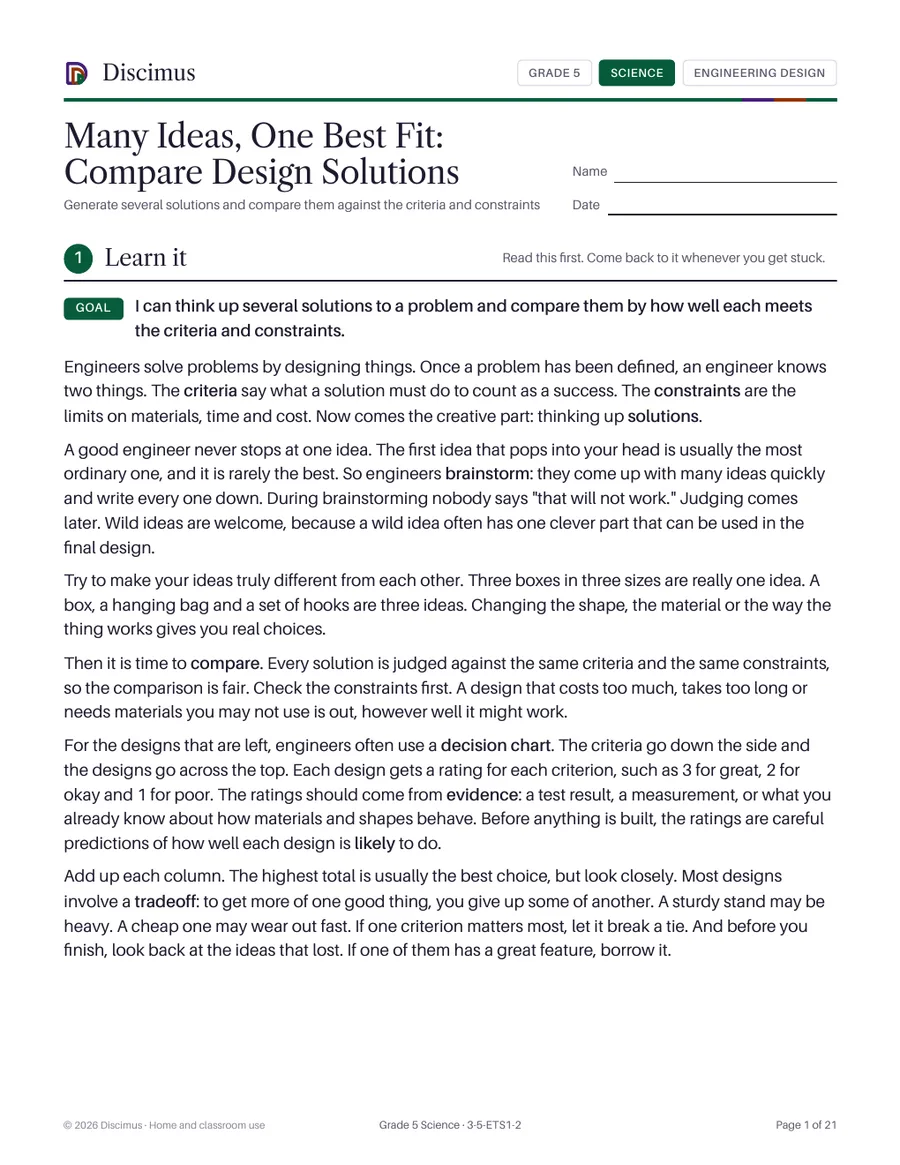
Generate several solutions and compare them against the criteria and constraints
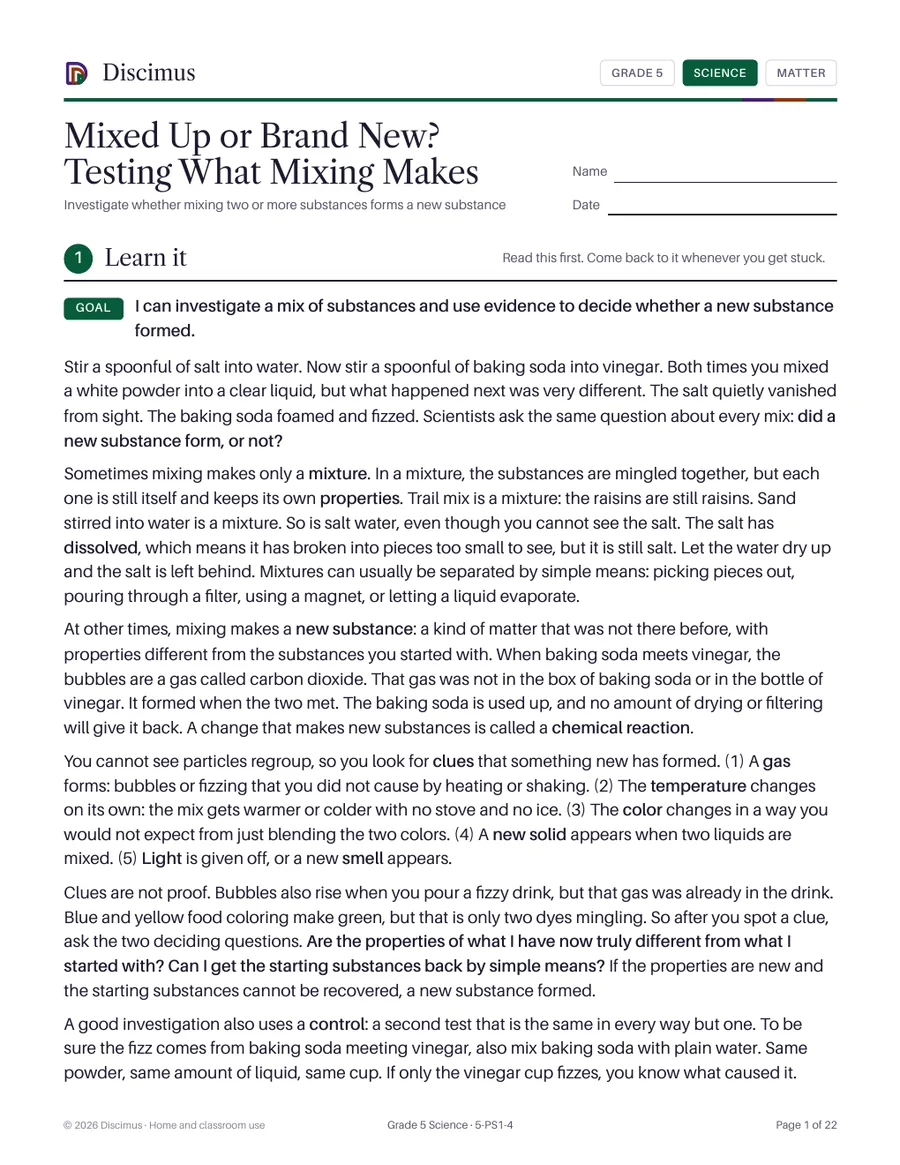
Investigate whether mixing two or more substances forms a new substance
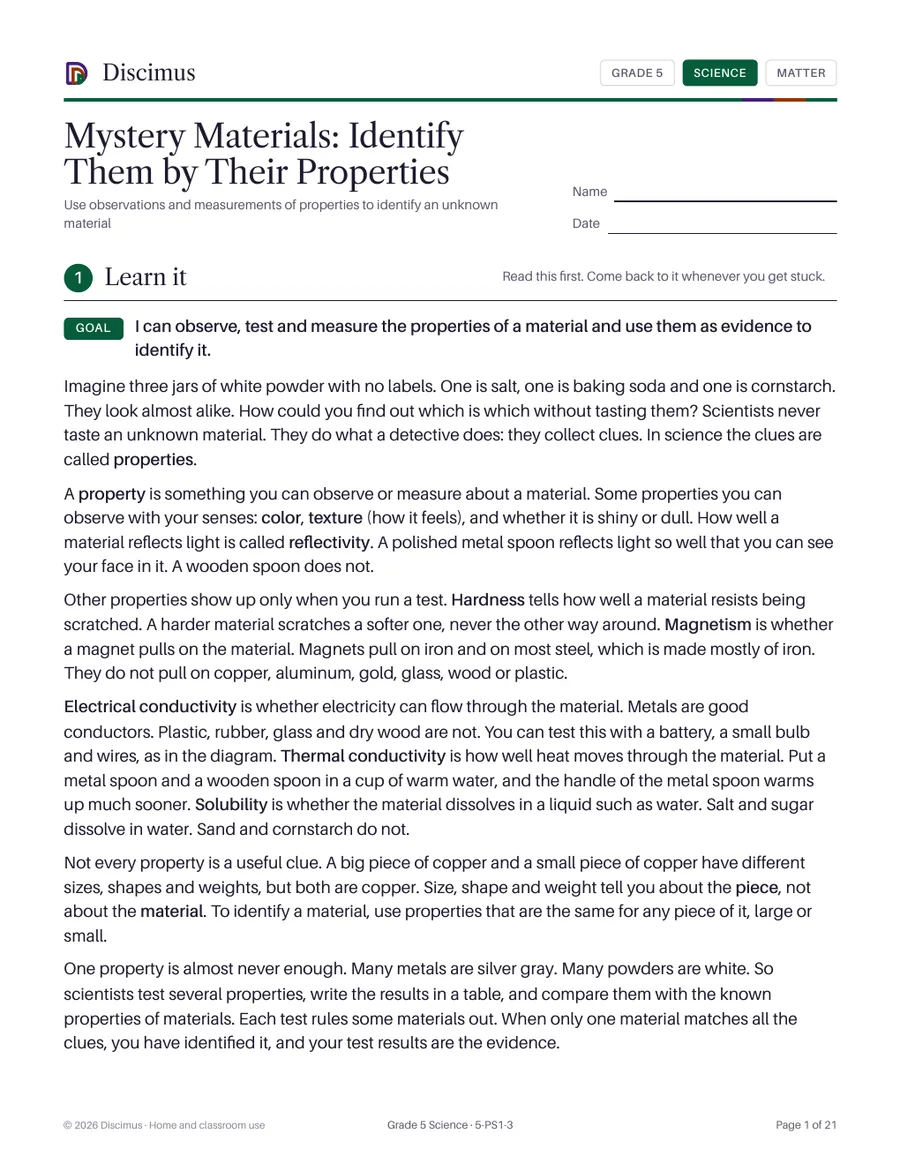
Use observations and measurements of properties to identify an unknown material
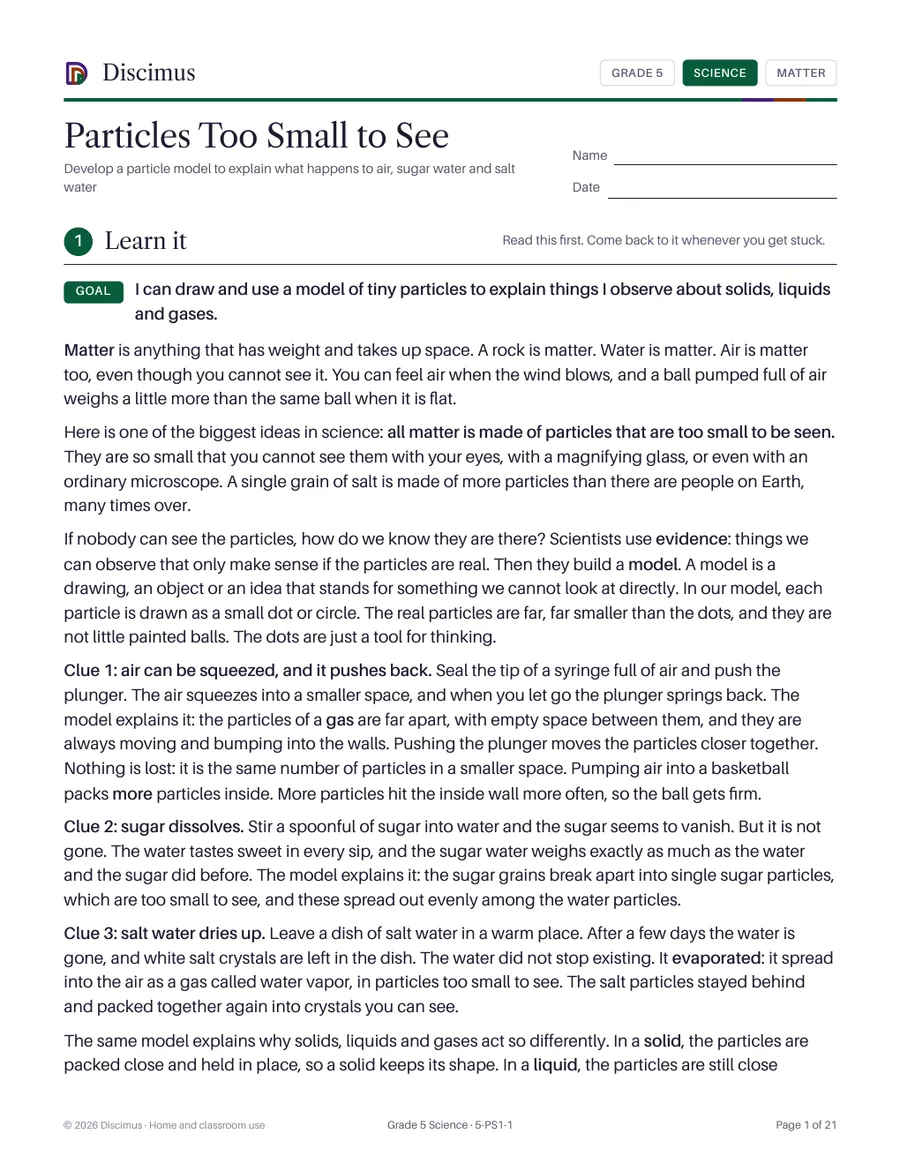
Develop a particle model to explain what happens to air, sugar water and salt water
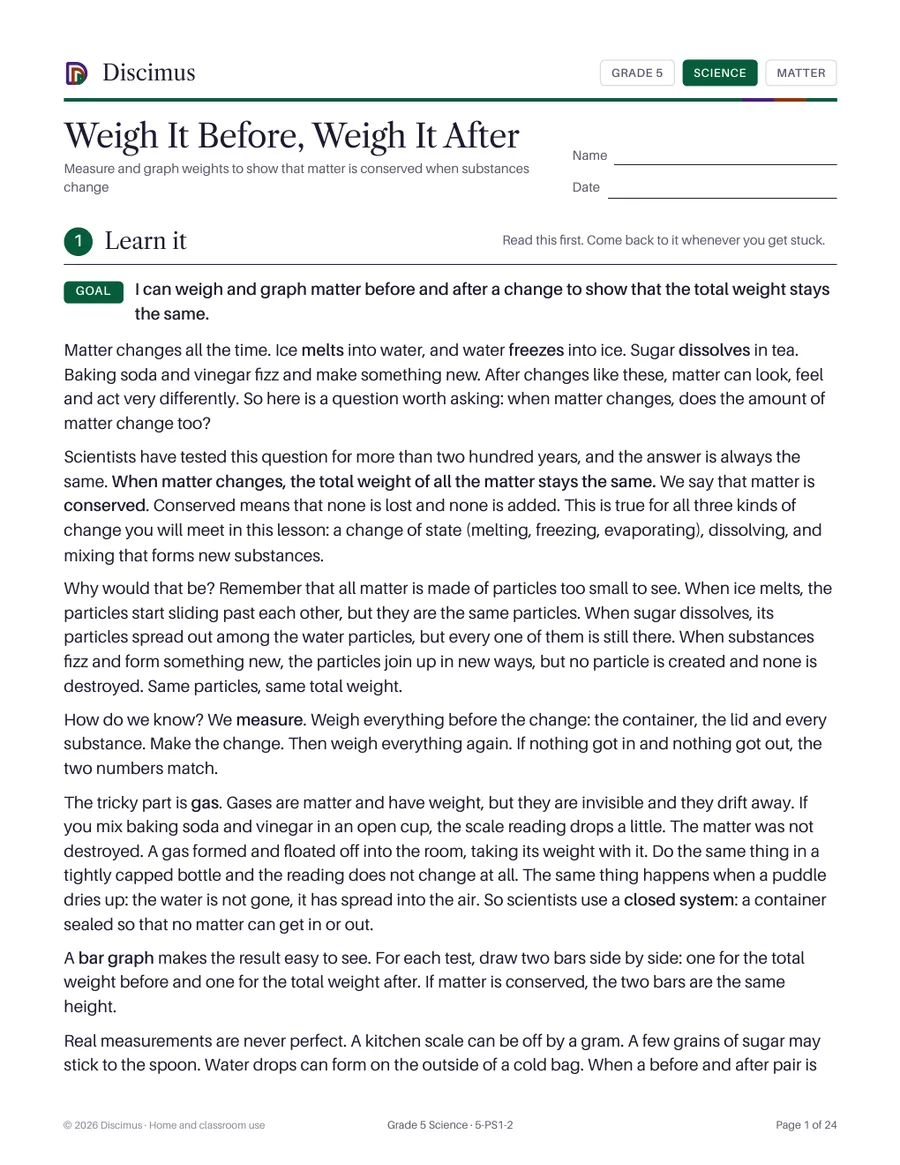
Measure and graph weights to show that matter is conserved when substances change
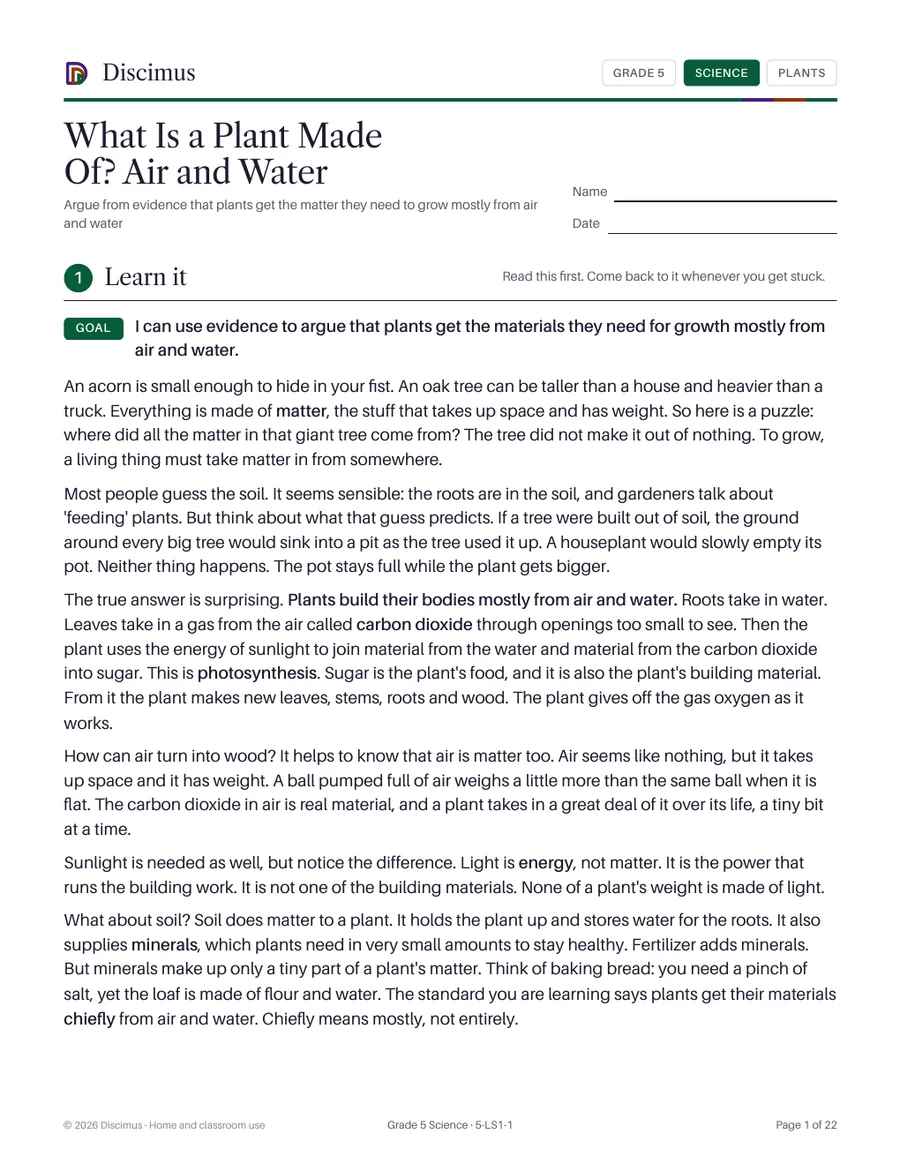
Argue from evidence that plants get the matter they need to grow mostly from air and water
Describe and graph how much salt water and fresh water Earth's reservoirs hold
Argue from evidence that Earth's gravity pulls objects down, toward Earth's center
Argue from evidence that the sun looks brighter than other stars because it is closer
Use a model to trace the energy in an animal's food back to the sun