Air Masses on the Move: Evidence for Changing Weather
Collect and analyze weather data as evidence that moving air masses change the weather
Next Generation Science Standards
Life, earth, physical science and the habits of investigation.
Collect and analyze weather data as evidence that moving air masses change the weather
Analyze test data to find each design's best features and combine them in a new design
Explain uneven distributions of mineral, energy and groundwater resources with evidence
Use models to describe how gravity controls orbits in the solar system and the galaxy
Develop and use a model to explain how the parts of a cell help the whole cell function
Design a method to monitor a human impact on the environment and reduce it
Define a design problem's criteria and constraints precisely enough to test a solution
Argue from data how population and per-capita resource use change Earth's systems
Analyze fossil, rock, continent-shape and seafloor data as evidence of past plate motion
Use a Sun, Earth and Moon model to explain lunar phases, eclipses and seasons
Explain how rock strata and fossils are used to order events in Earth's history
Analyze data to compare the sizes, layers, features and orbits of solar system objects
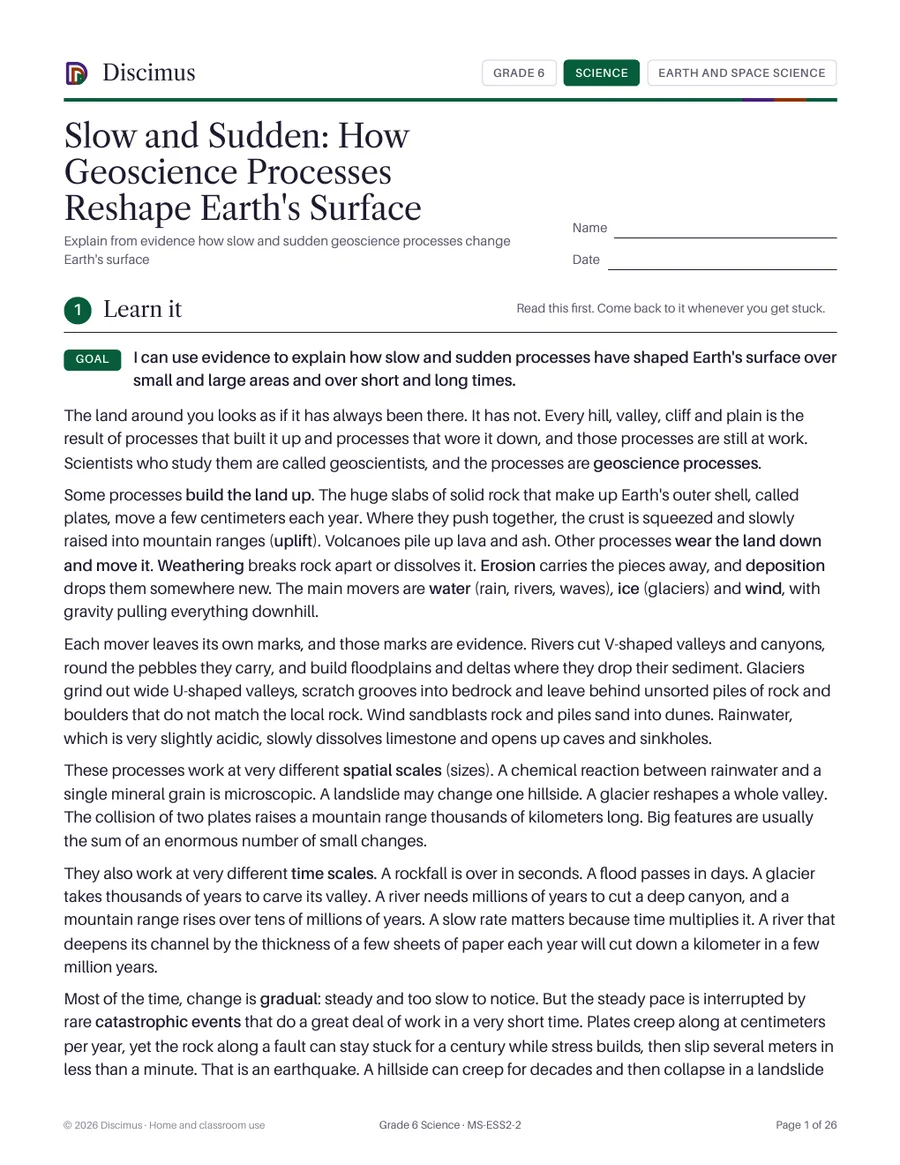
Explain from evidence how slow and sudden geoscience processes change Earth's surface
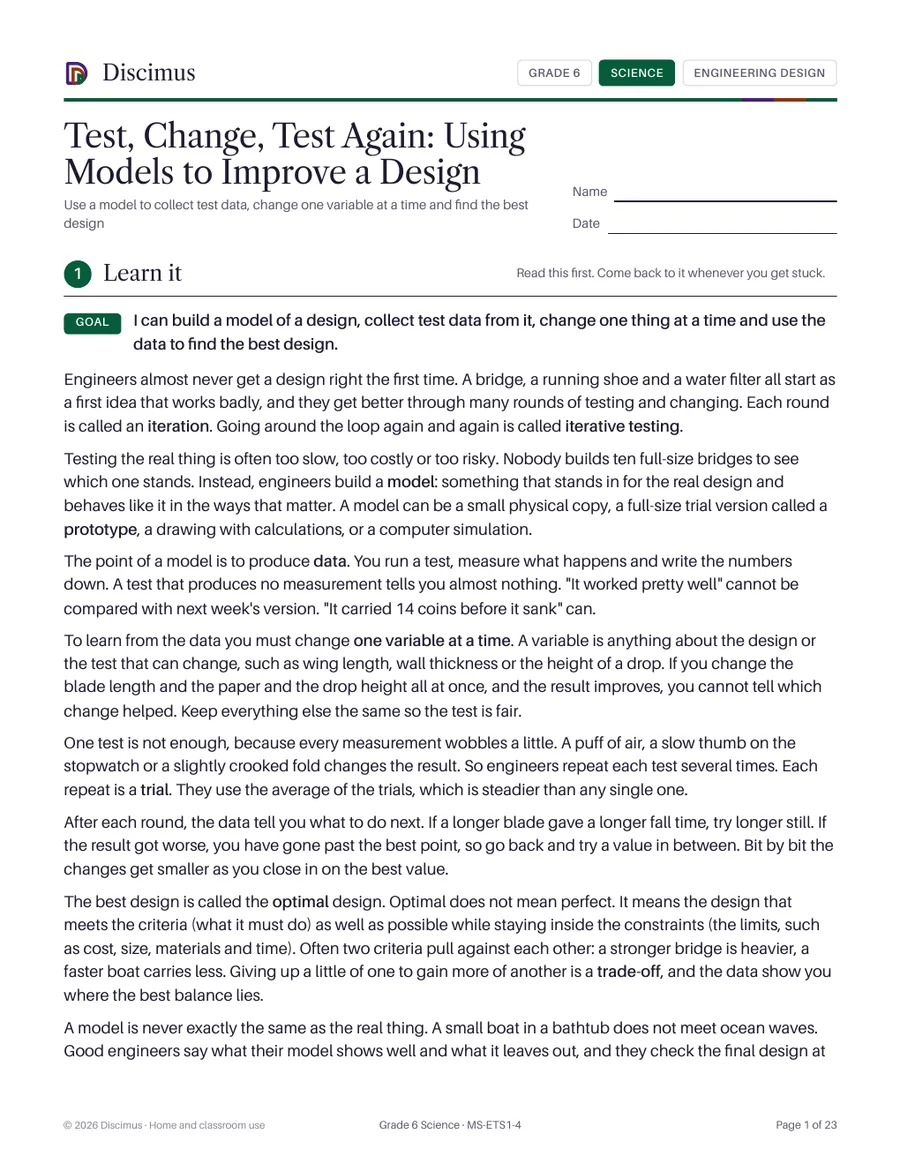
Use a model to collect test data, change one variable at a time and find the best design
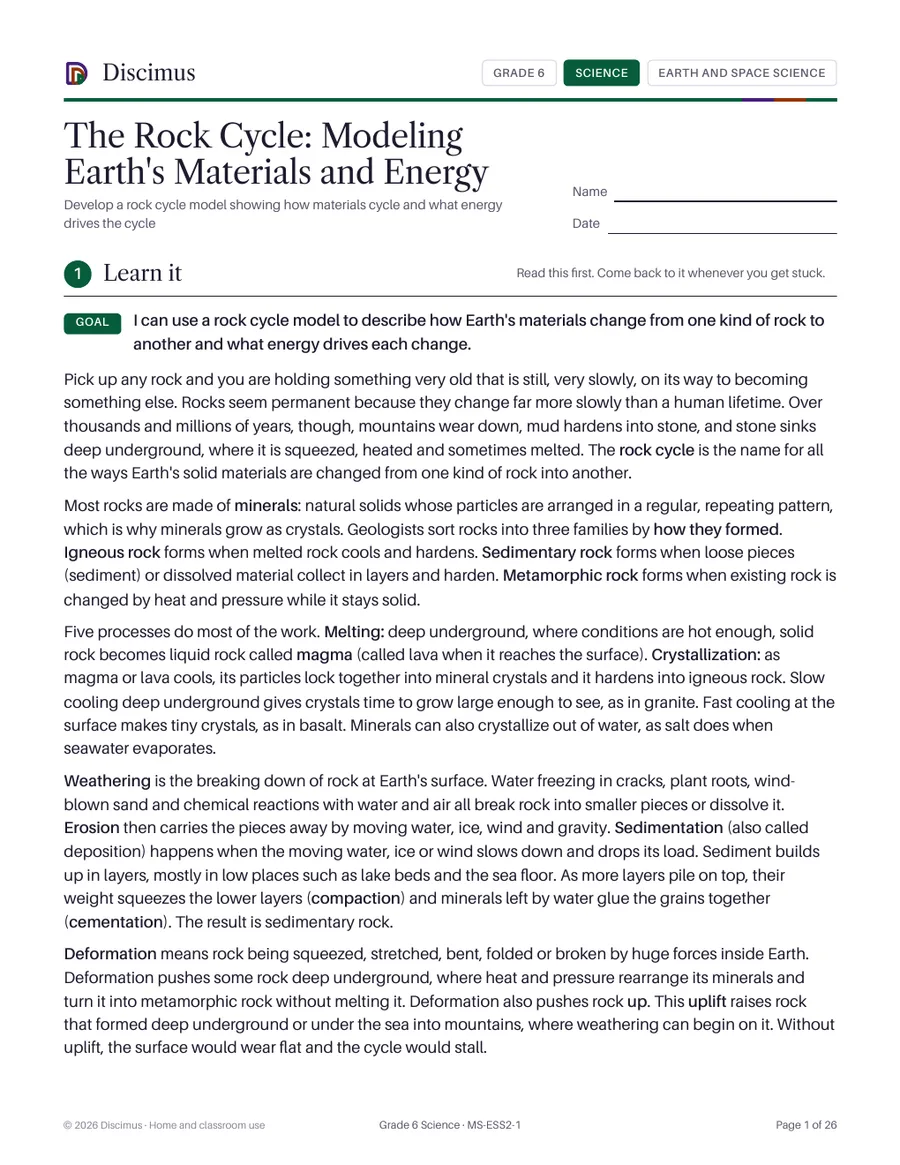
Develop a rock cycle model showing how materials cycle and what energy drives the cycle
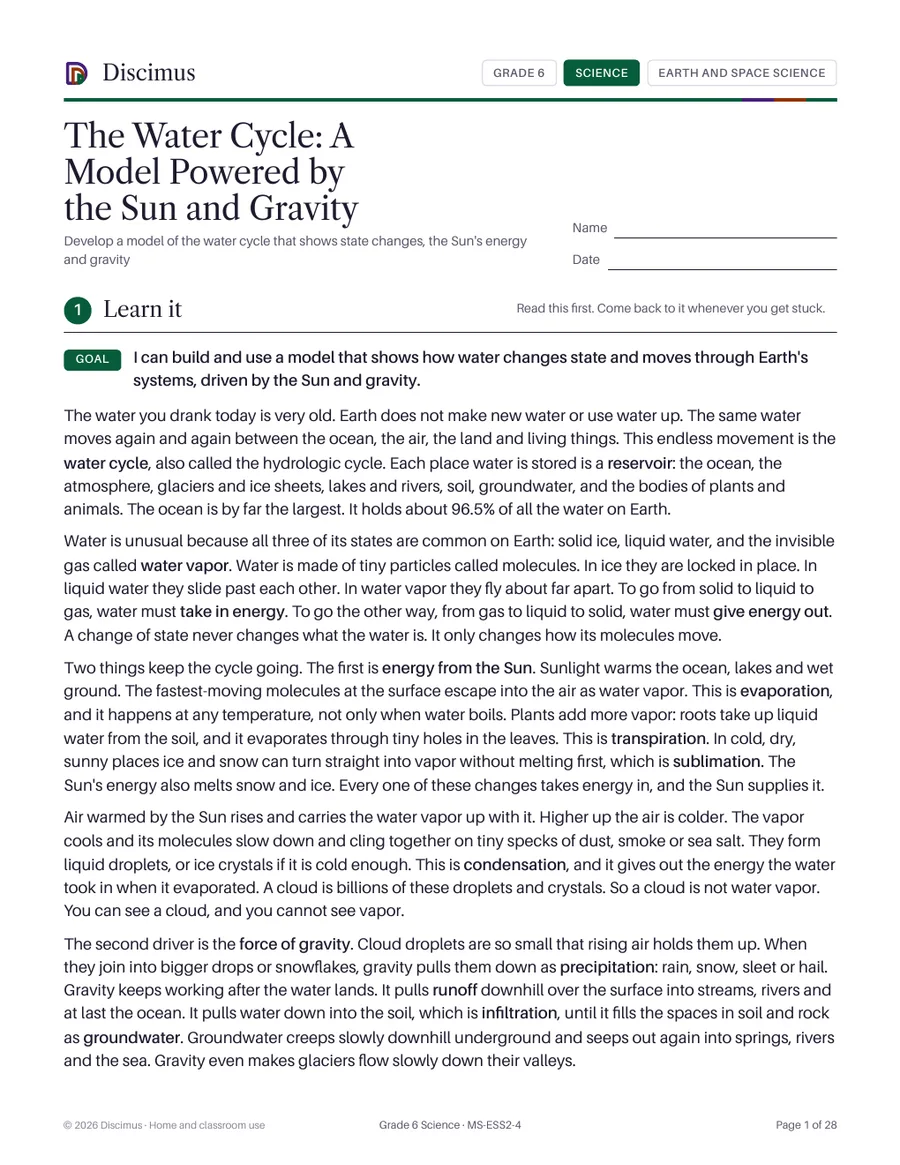
Develop a model of the water cycle that shows state changes, the Sun's energy and gravity
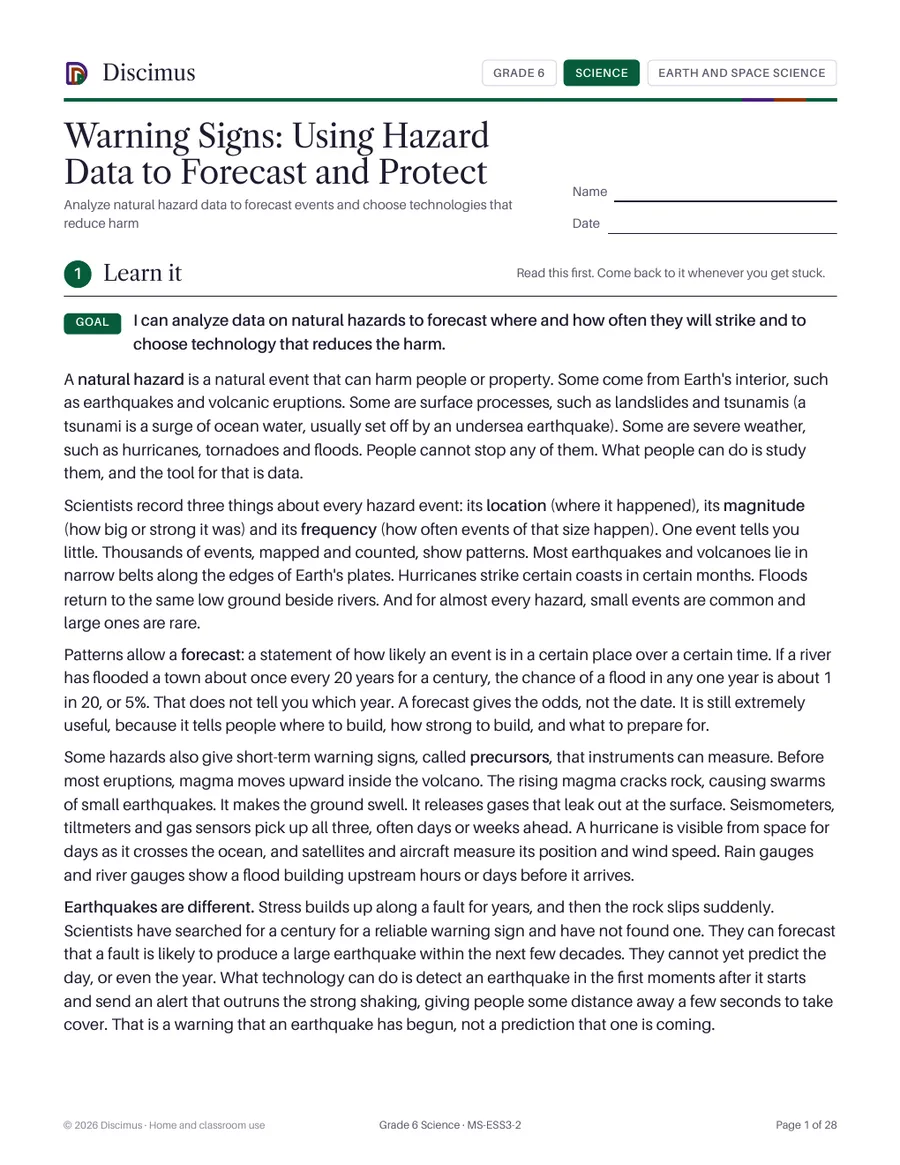
Analyze natural hazard data to forecast events and choose technologies that reduce harm
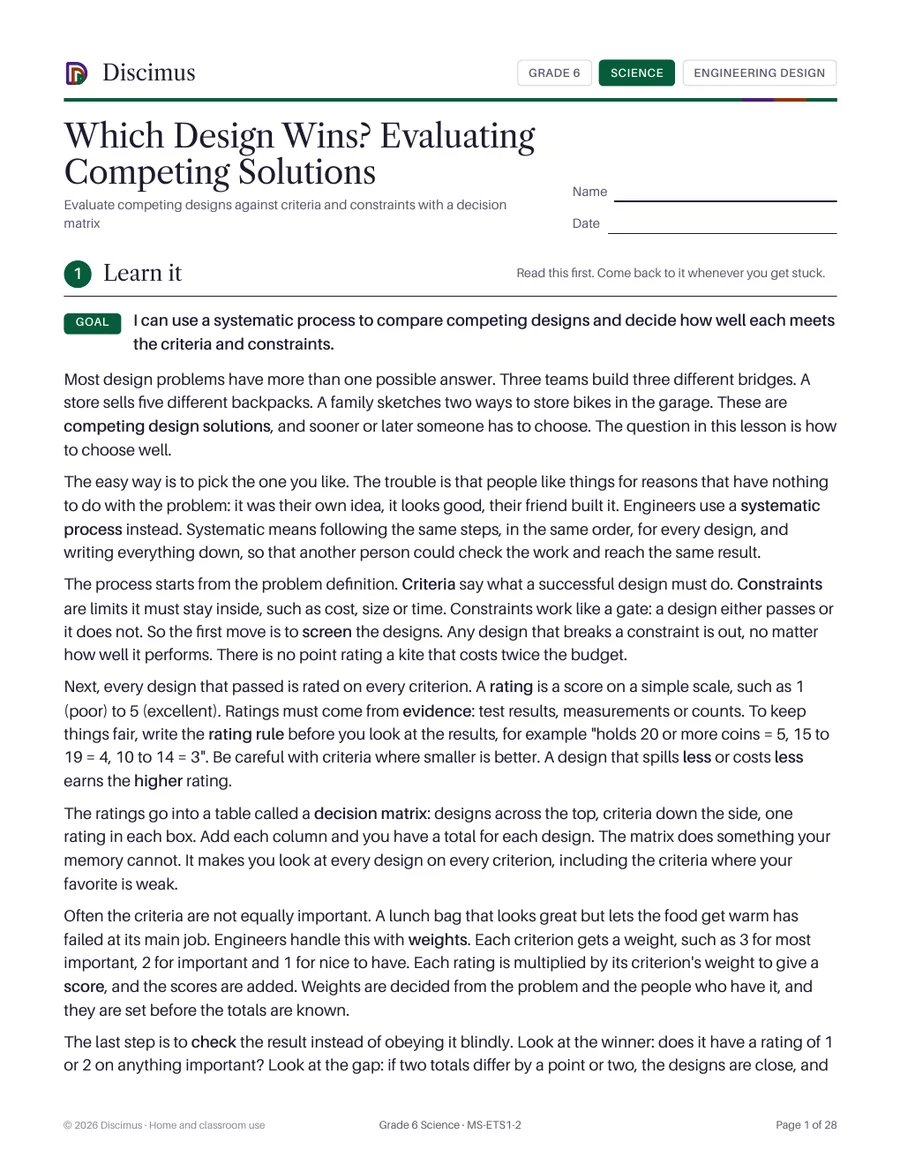
Evaluate competing designs against criteria and constraints with a decision matrix
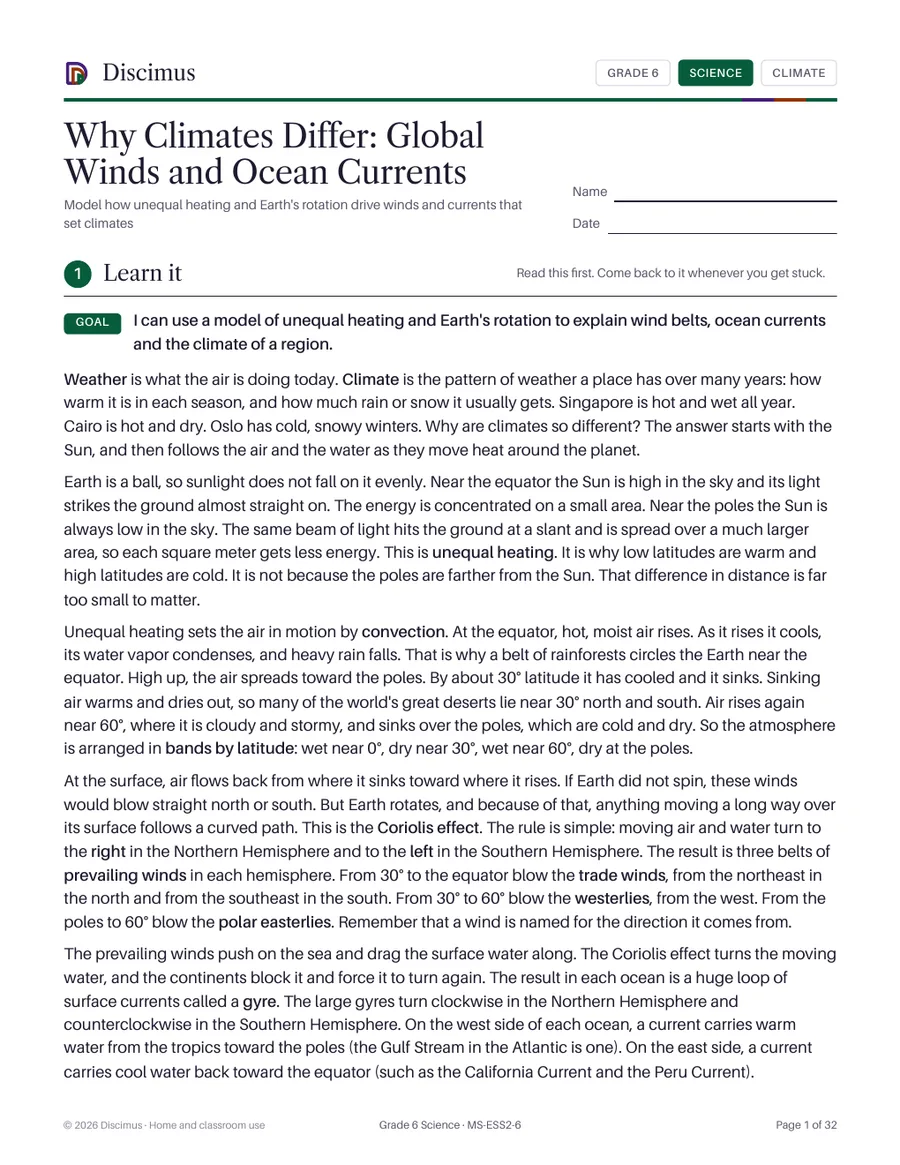
Model how unequal heating and Earth's rotation drive winds and currents that set climates
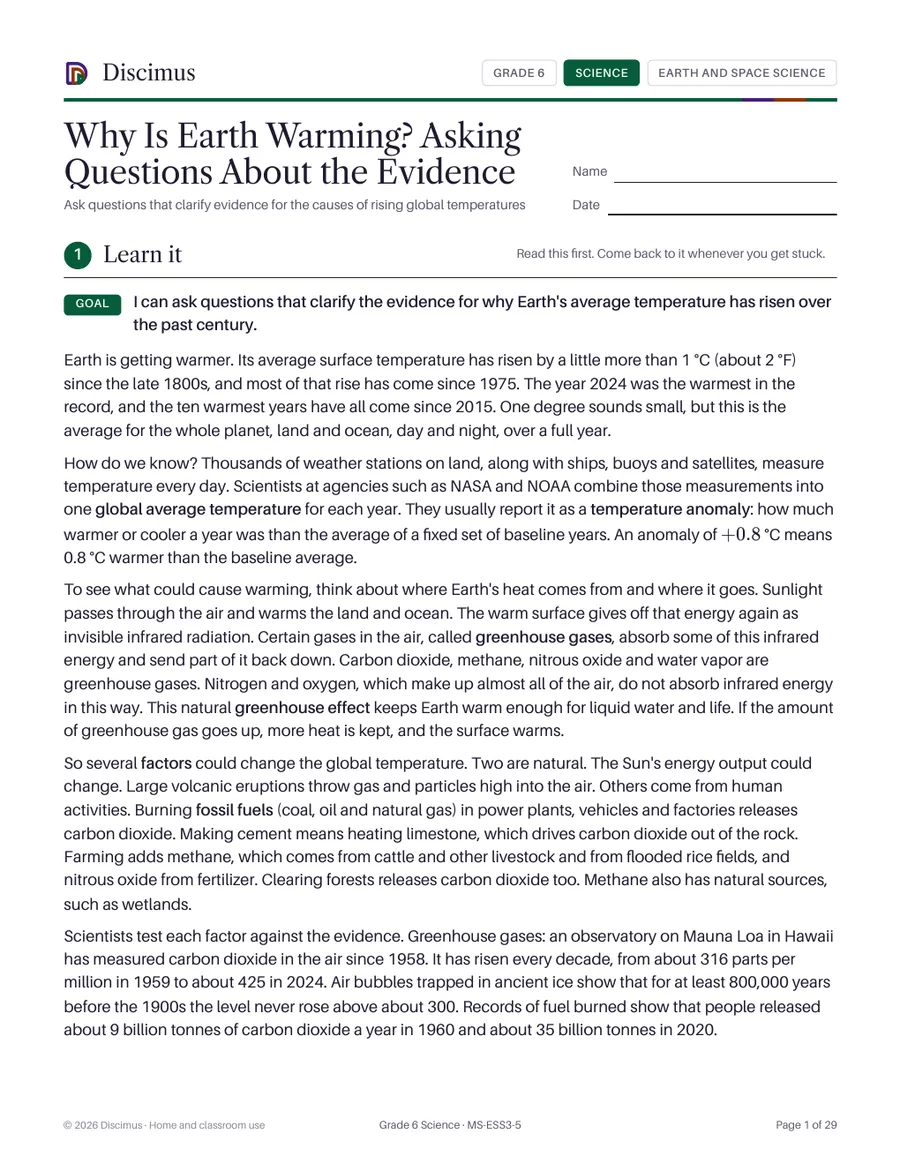
Ask questions that clarify evidence for the causes of rising global temperatures