Skip to content
Discimus
  • Grades
  • Subjects
  • Occasions
  • Standards
  • Membership
Sign inJoin
  1. Home
  2. Grades
  3. Grade 7
  4. English Language Arts

Common Core State Standards for English Language Arts

Grade 7 English Language Arts

Phonics, reading, grammar, vocabulary and writing.

TopicsFigurative Language 1Grammar 3Punctuation 1Reading Comprehension 19Spelling 1Vocabulary 7Writing 25
StandardsL.7.1.AL.7.1.BL.7.1.CL.7.2.AL.7.2.BL.7.3.AL.7.4.AL.7.4.BL.7.4.CL.7.4.DL.7.5.AL.7.5.BL.7.5.CL.7.6RI.7.1RI.7.2RI.7.3RI.7.4RI.7.5RI.7.6RI.7.7RI.7.8RI.7.9RI.7.10RL.7.1RL.7.2RL.7.3RL.7.4RL.7.5RL.7.6RL.7.7RL.7.9RL.7.10W.7.1.AW.7.1.BW.7.1.CW.7.1.DW.7.1.EW.7.2.AW.7.2.BW.7.2.CW.7.2.DW.7.2.EW.7.2.FW.7.3.AW.7.3.BW.7.3.CW.7.3.DW.7.3.EW.7.4W.7.5W.7.6W.7.7W.7.8W.7.9.AW.7.9.BW.7.10
  • ELAGrade 7

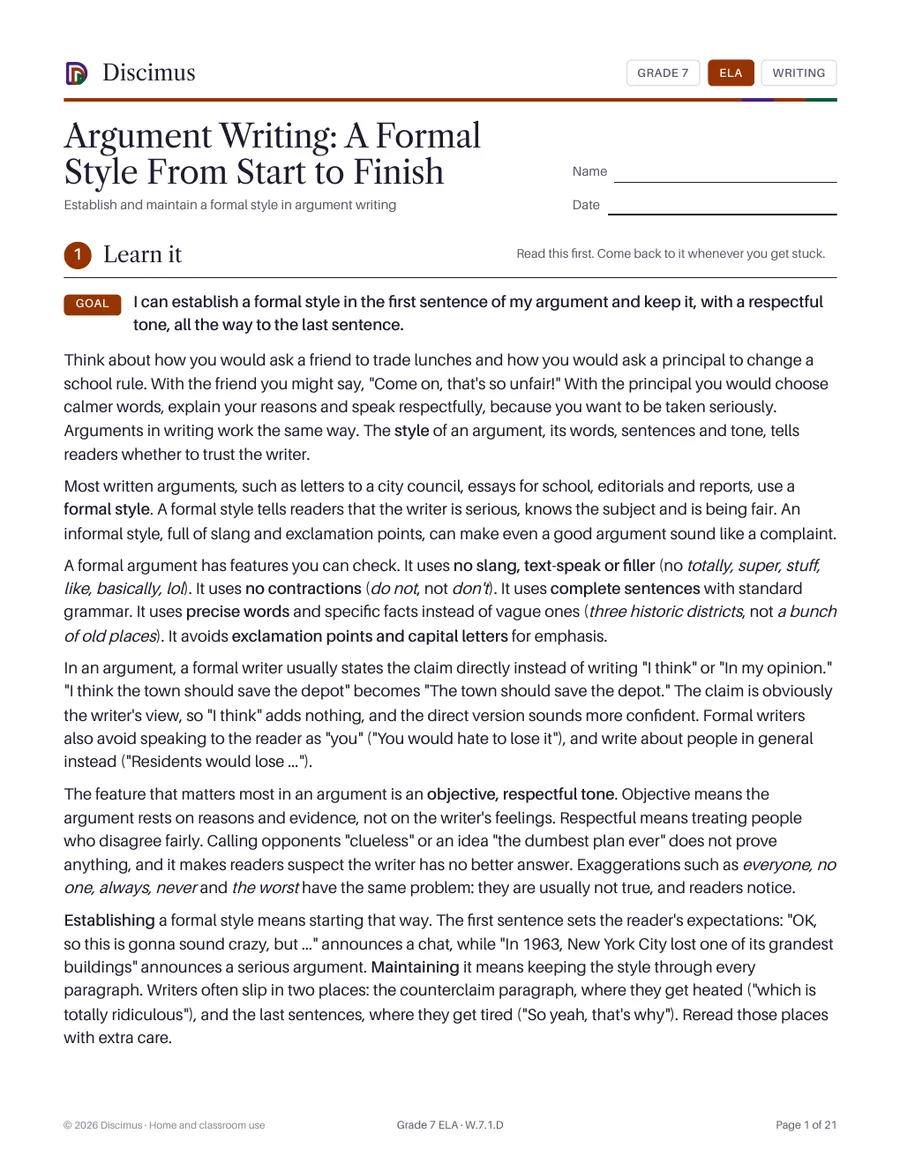
    Allusions: References to Myths, the Bible and Famous Books

    Interpret literary, biblical and mythological allusions in context
  • ELAGrade 7

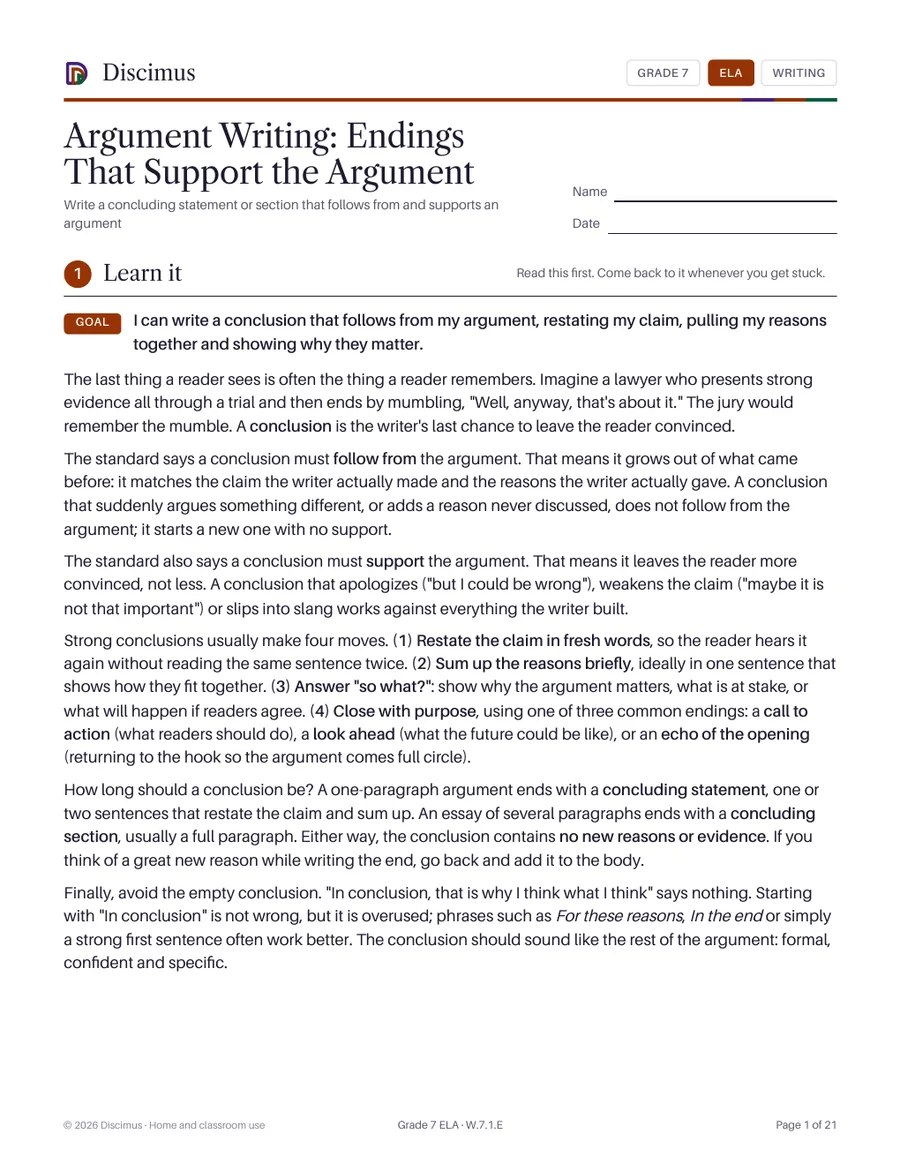
    Argument Writing: A Formal Style From Start to Finish

    Establish and maintain a formal style in argument writing
  • ELAGrade 7

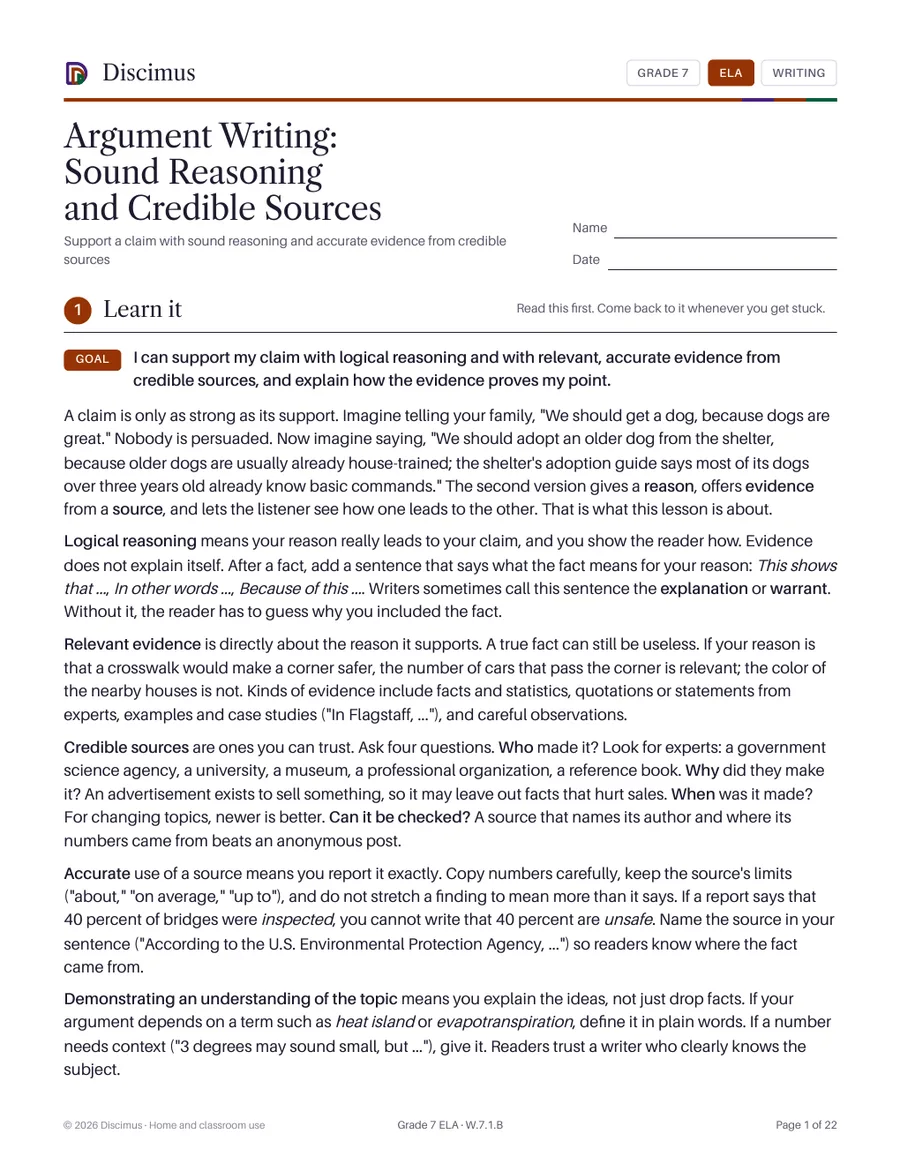
    Argument Writing: Endings That Support the Argument

    Write a concluding statement or section that follows from and supports an argument
  • ELAGrade 7

    Argument Writing: Sound Reasoning and Credible Sources

    Support a claim with sound reasoning and accurate evidence from credible sources
  • ELAGrade 7

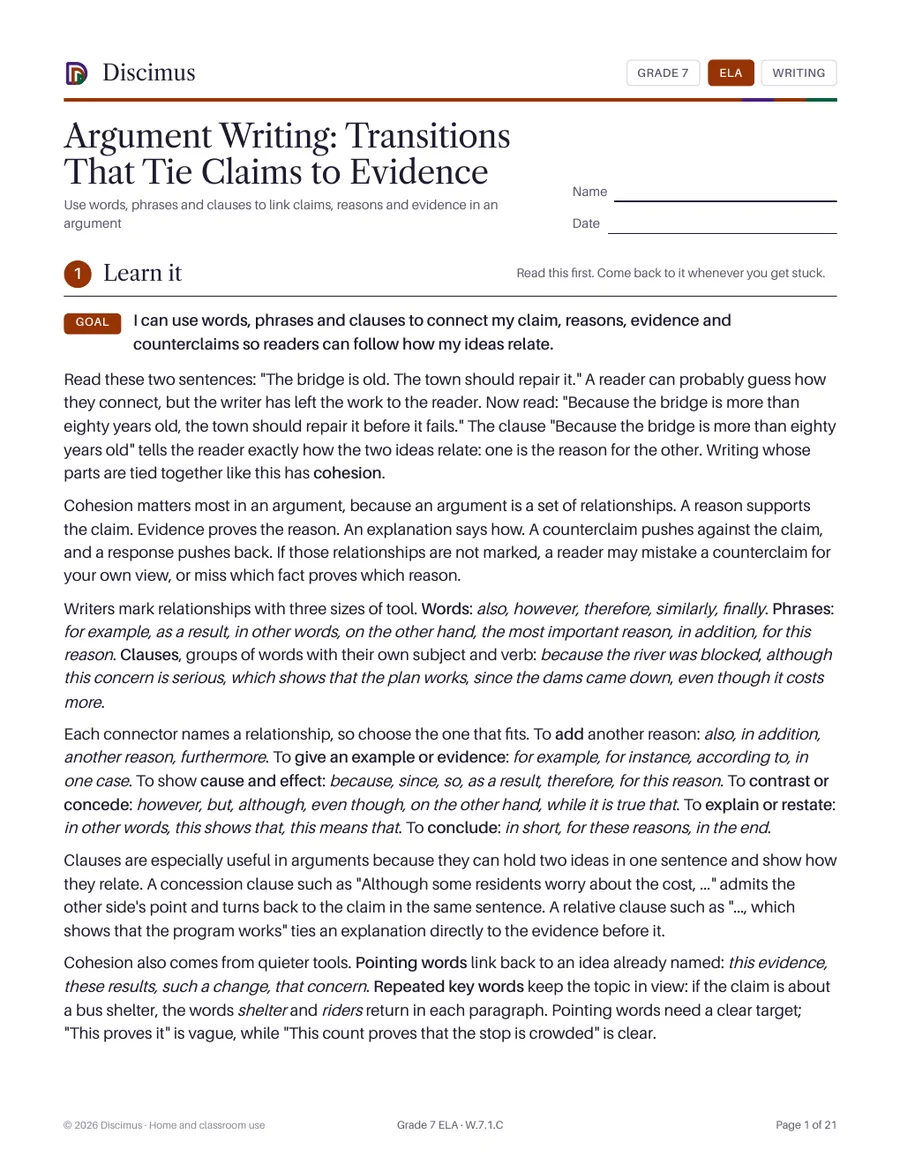
    Argument Writing: Transitions That Tie Claims to Evidence

    Use words, phrases and clauses to link claims, reasons and evidence in an argument
  • ELAGrade 7

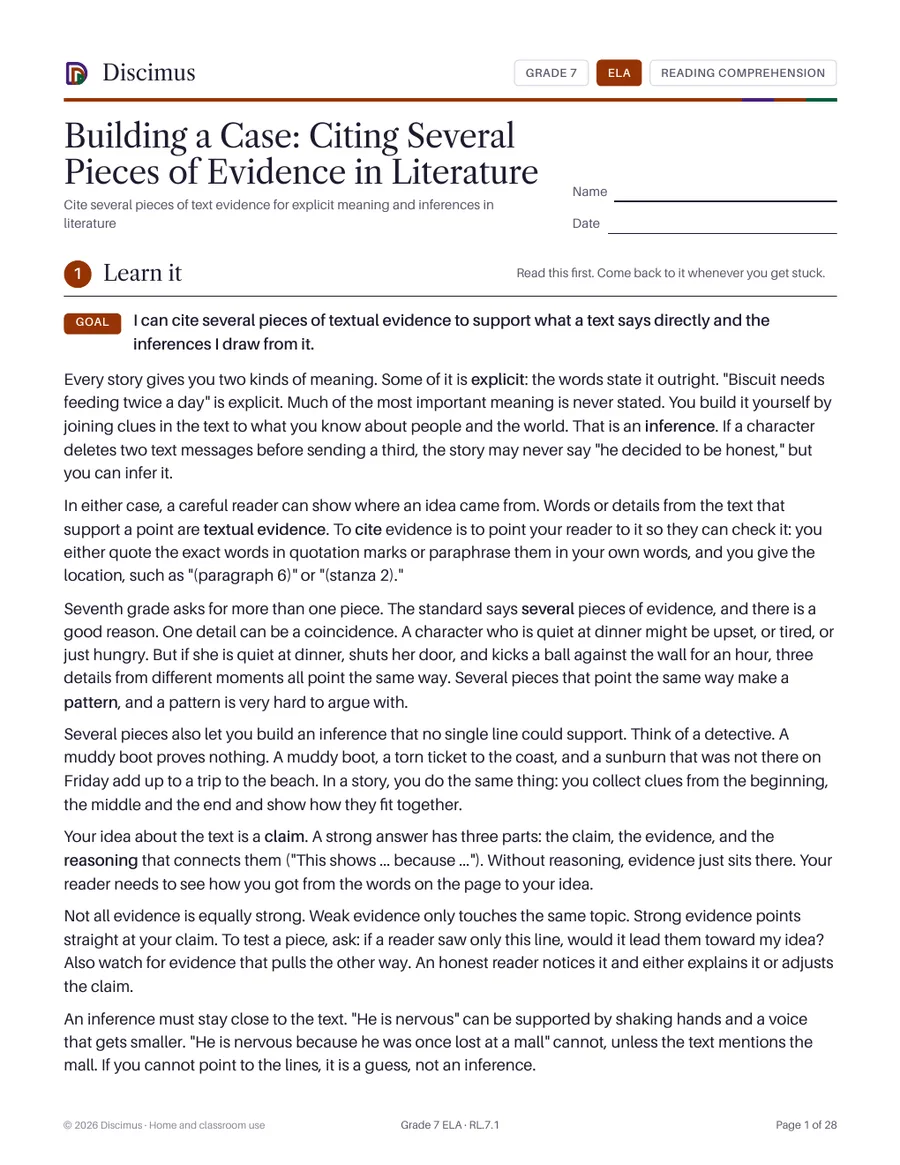
    Building a Case: Citing Several Pieces of Evidence in Literature

    Cite several pieces of text evidence for explicit meaning and inferences in literature
  • ELAGrade 7

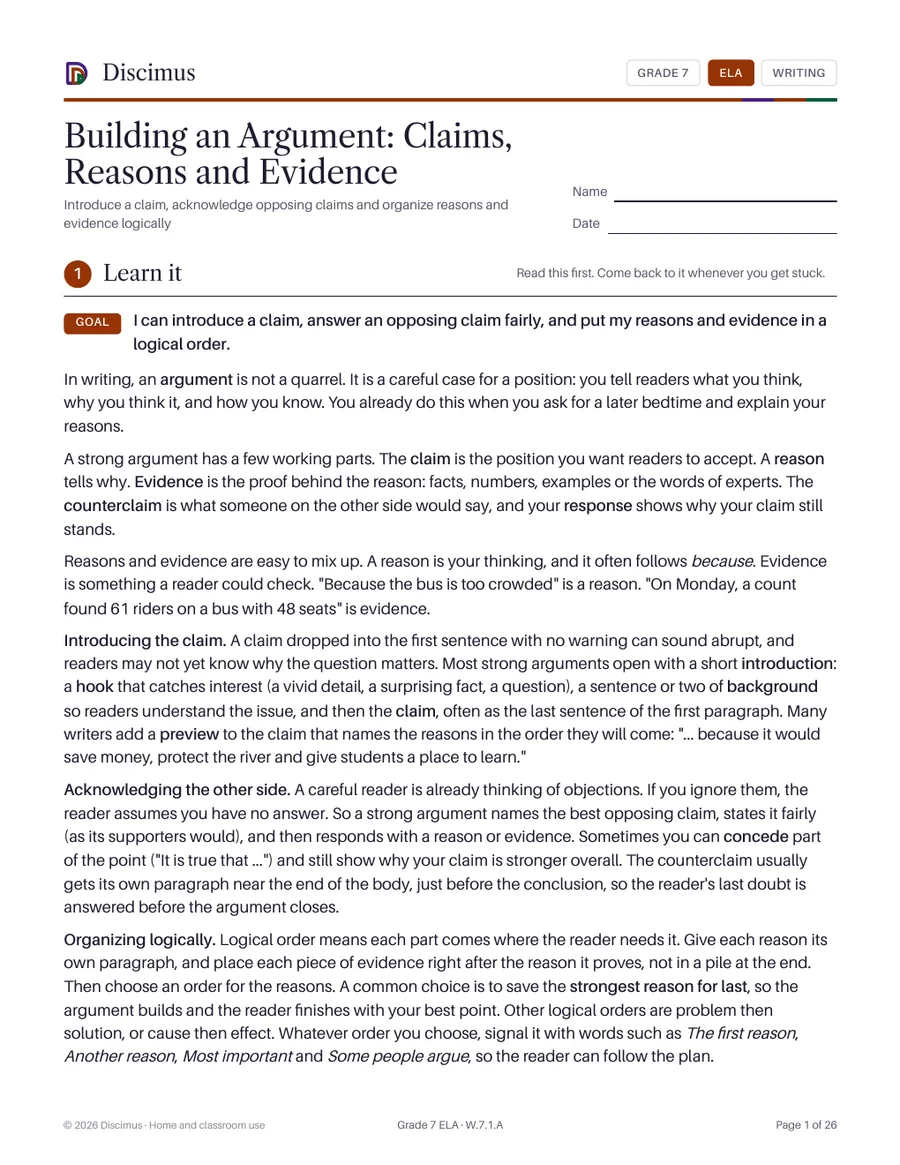
    Building an Argument: Claims, Reasons and Evidence

    Introduce a claim, acknowledge opposing claims and organize reasons and evidence logically
  • ELAGrade 7

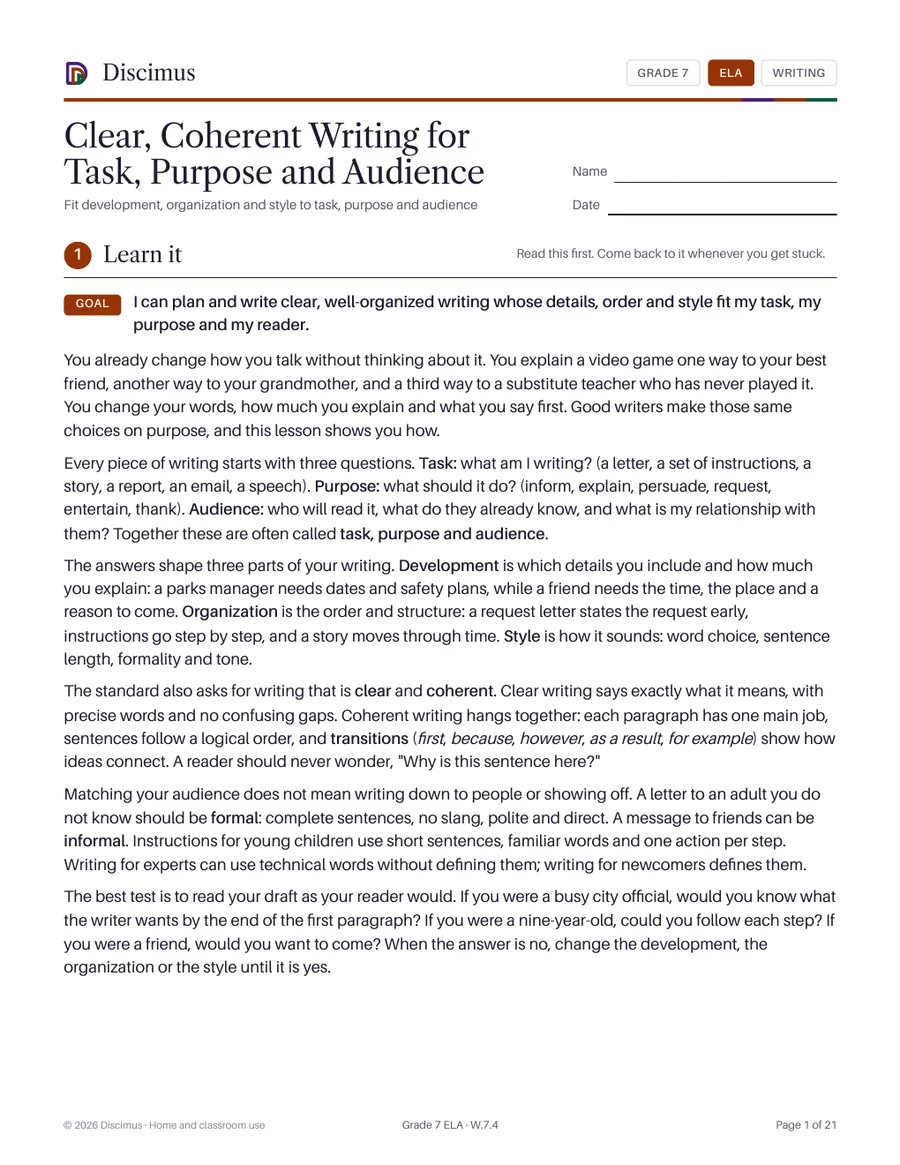
    Clear, Coherent Writing for Task, Purpose and Audience

    Fit development, organization and style to task, purpose and audience
  • ELAGrade 7

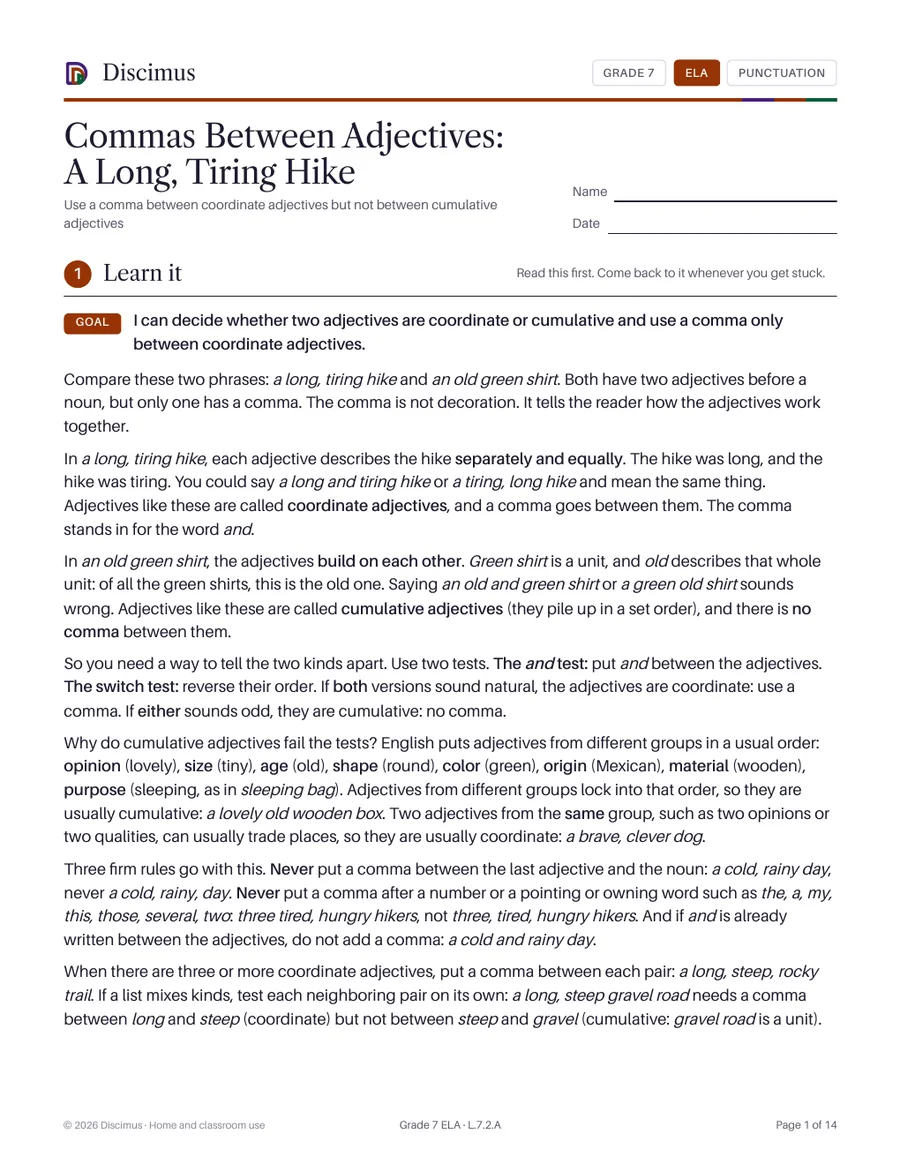
    Commas Between Adjectives: A Long, Tiring Hike

    Use a comma between coordinate adjectives but not between cumulative adjectives
  • ELAGrade 7

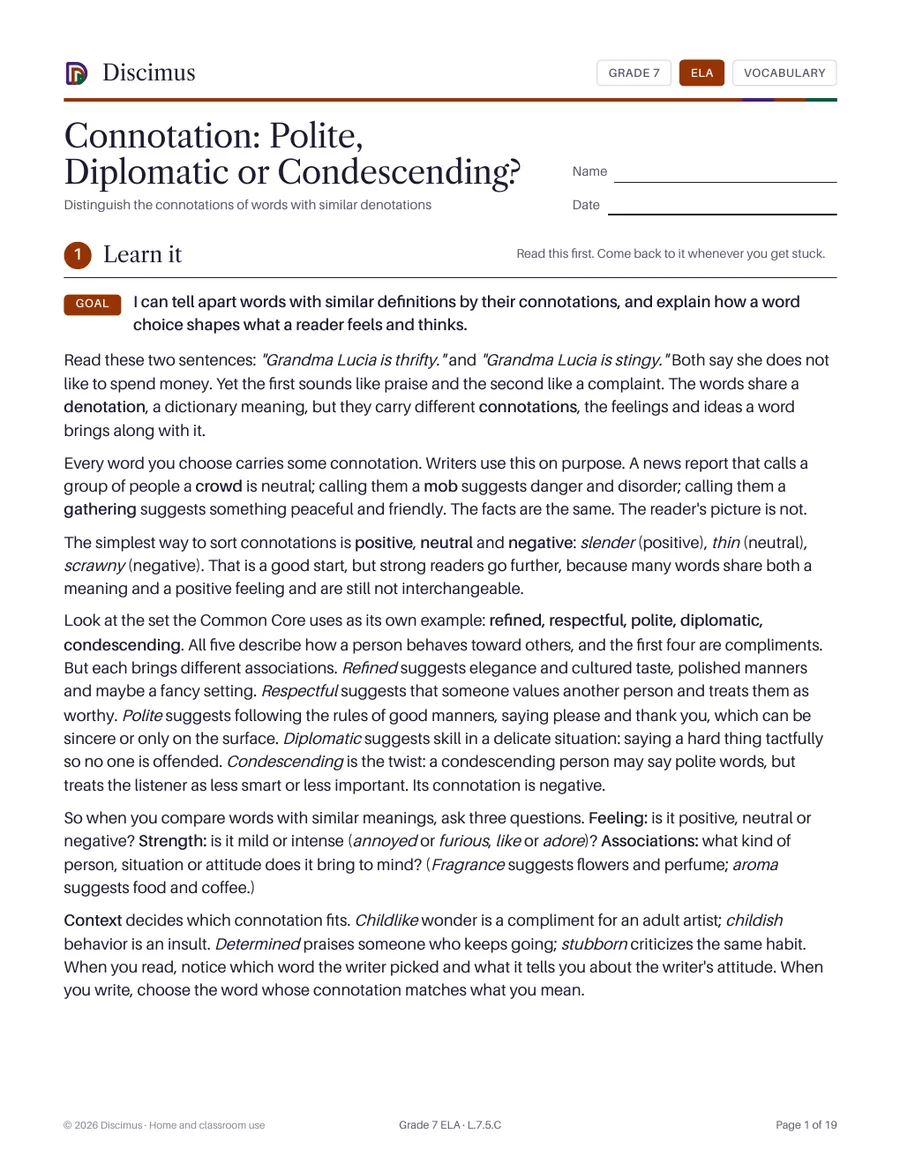
    Connotation: Polite, Diplomatic or Condescending?

    Distinguish the connotations of words with similar denotations
  • ELAGrade 7

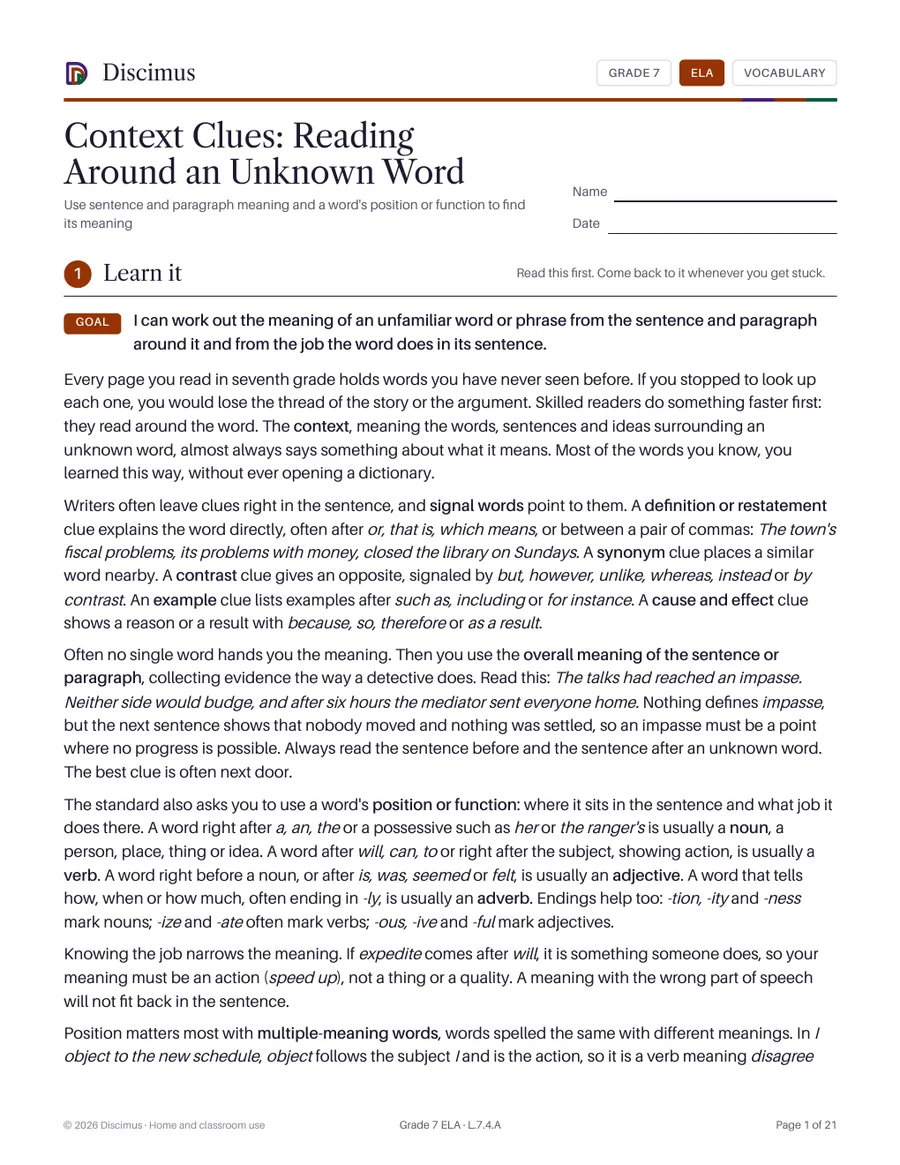
    Context Clues: Reading Around an Unknown Word

    Use sentence and paragraph meaning and a word's position or function to find its meaning
  • ELAGrade 7

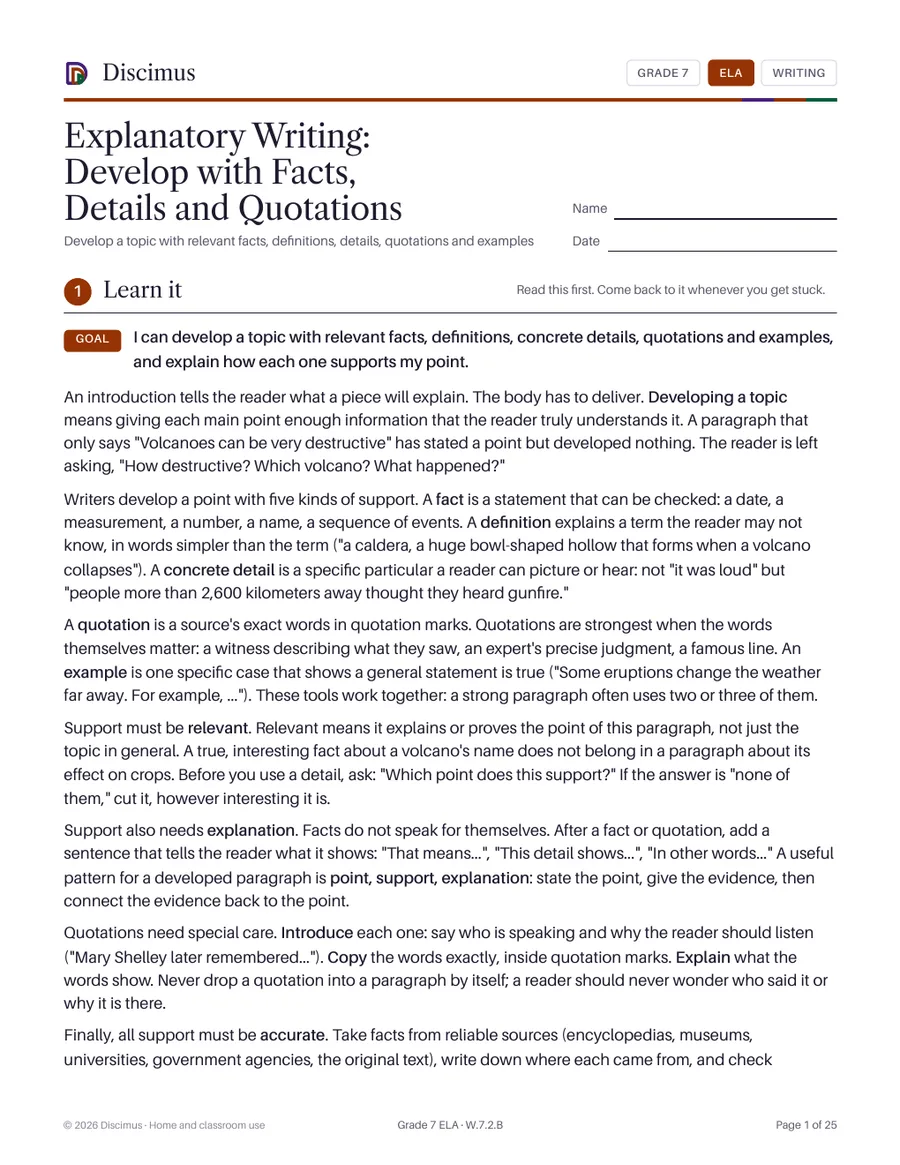
    Explanatory Writing: Develop with Facts, Details and Quotations

    Develop a topic with relevant facts, definitions, details, quotations and examples
  • ELAGrade 7

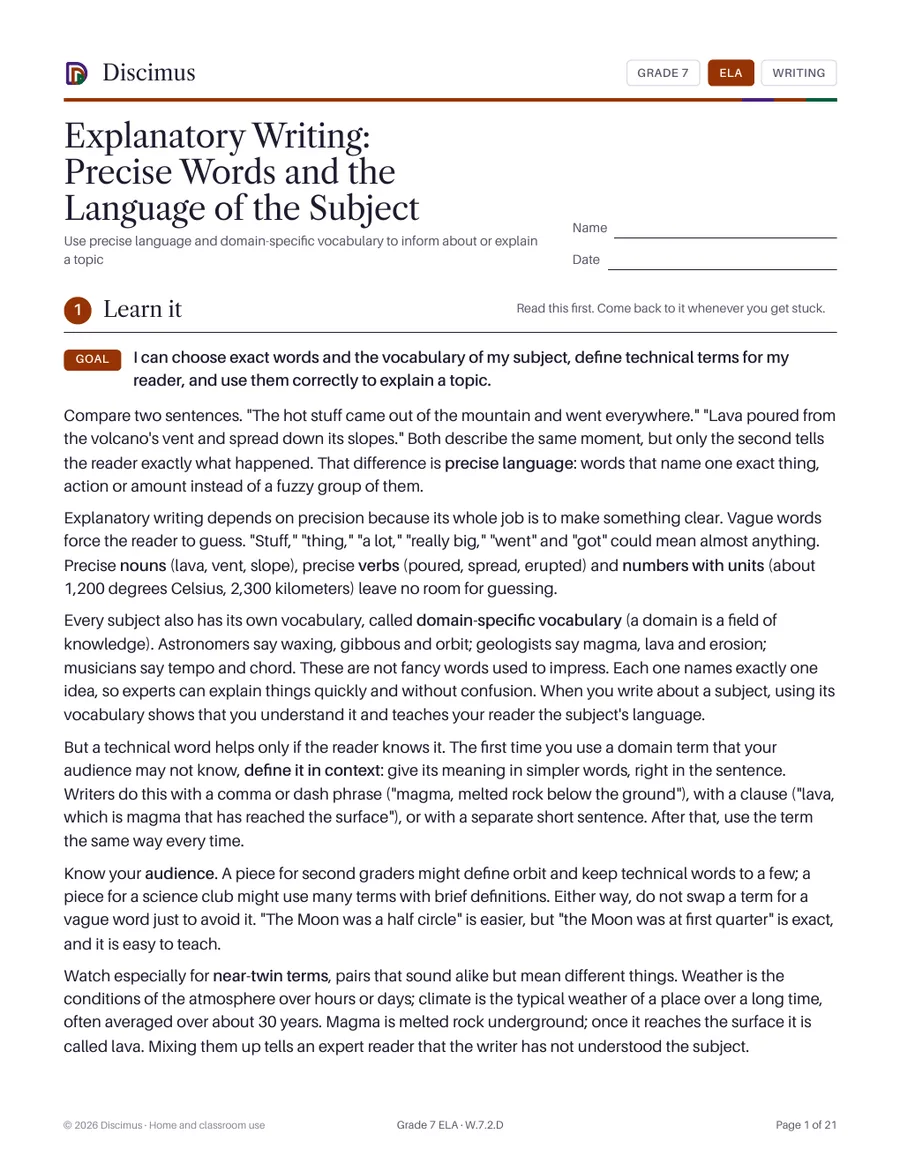
    Explanatory Writing: Precise Words and the Language of the Subject

    Use precise language and domain-specific vocabulary to inform about or explain a topic
  • ELAGrade 7

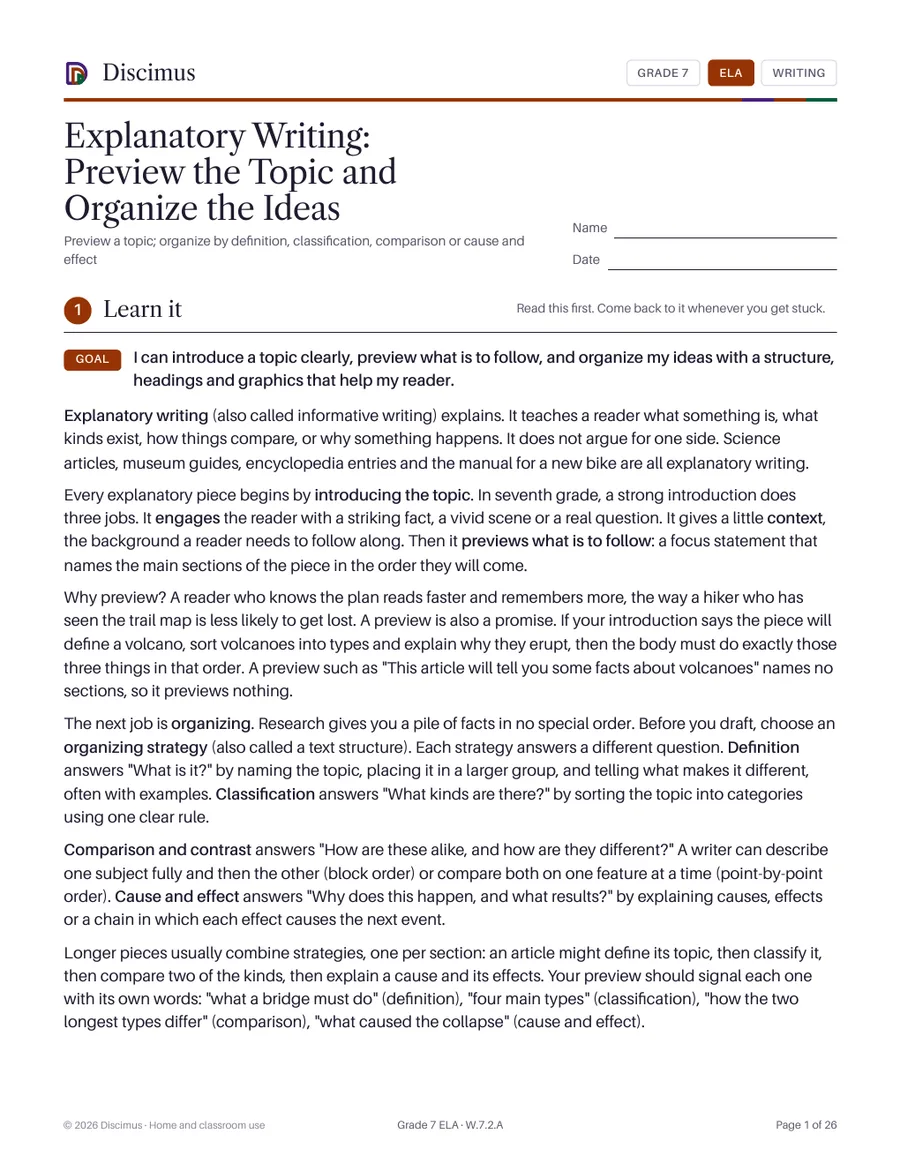
    Explanatory Writing: Preview the Topic and Organize the Ideas

    Preview a topic; organize by definition, classification, comparison or cause and effect
  • ELAGrade 7

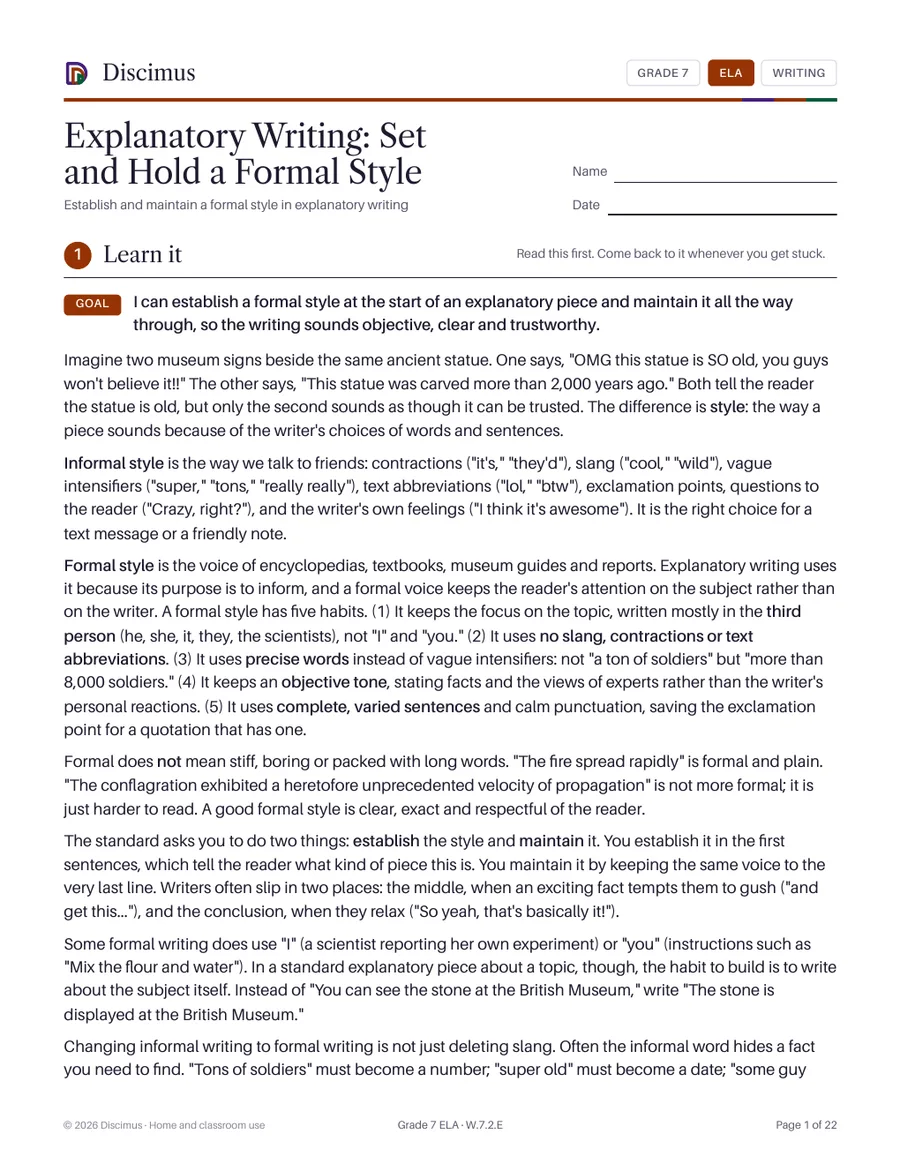
    Explanatory Writing: Set and Hold a Formal Style

    Establish and maintain a formal style in explanatory writing
  • ELAGrade 7

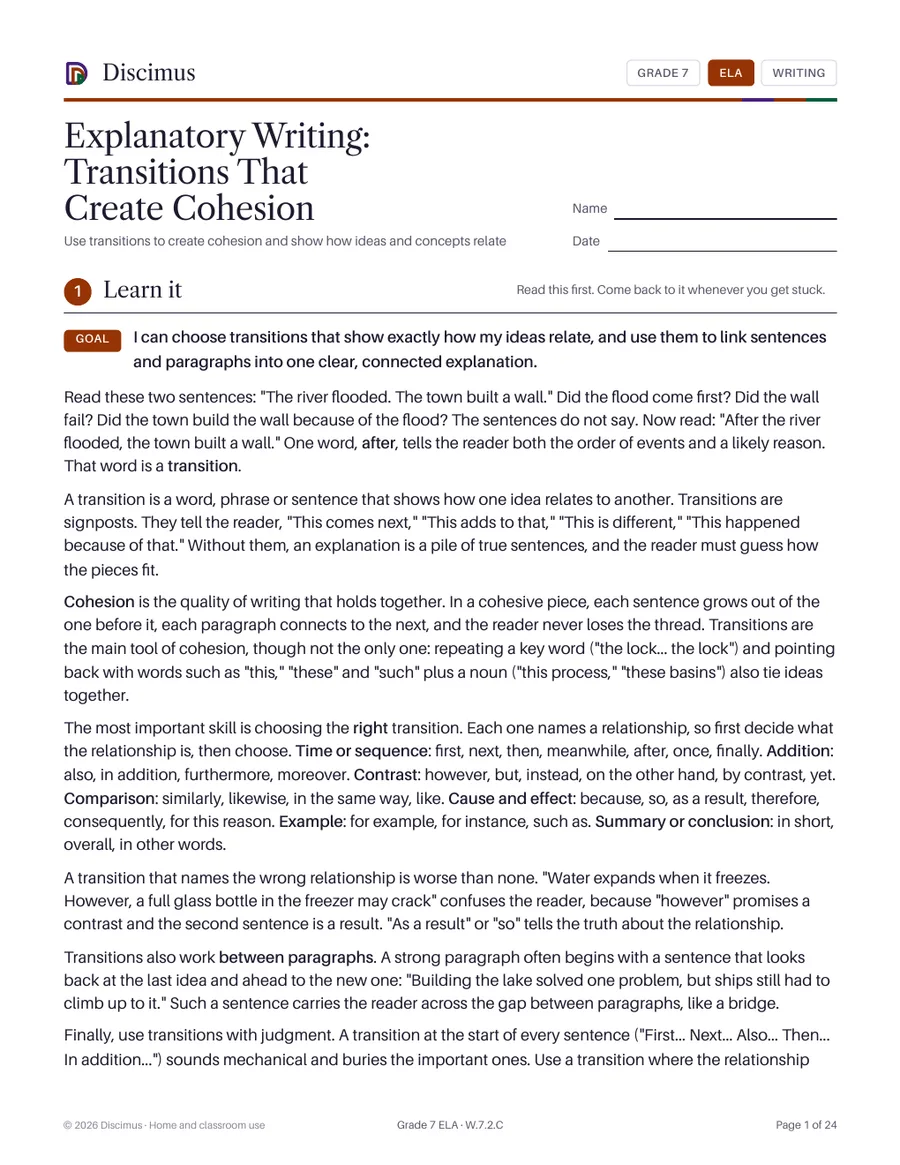
    Explanatory Writing: Transitions That Create Cohesion

    Use transitions to create cohesion and show how ideas and concepts relate
  • ELAGrade 7

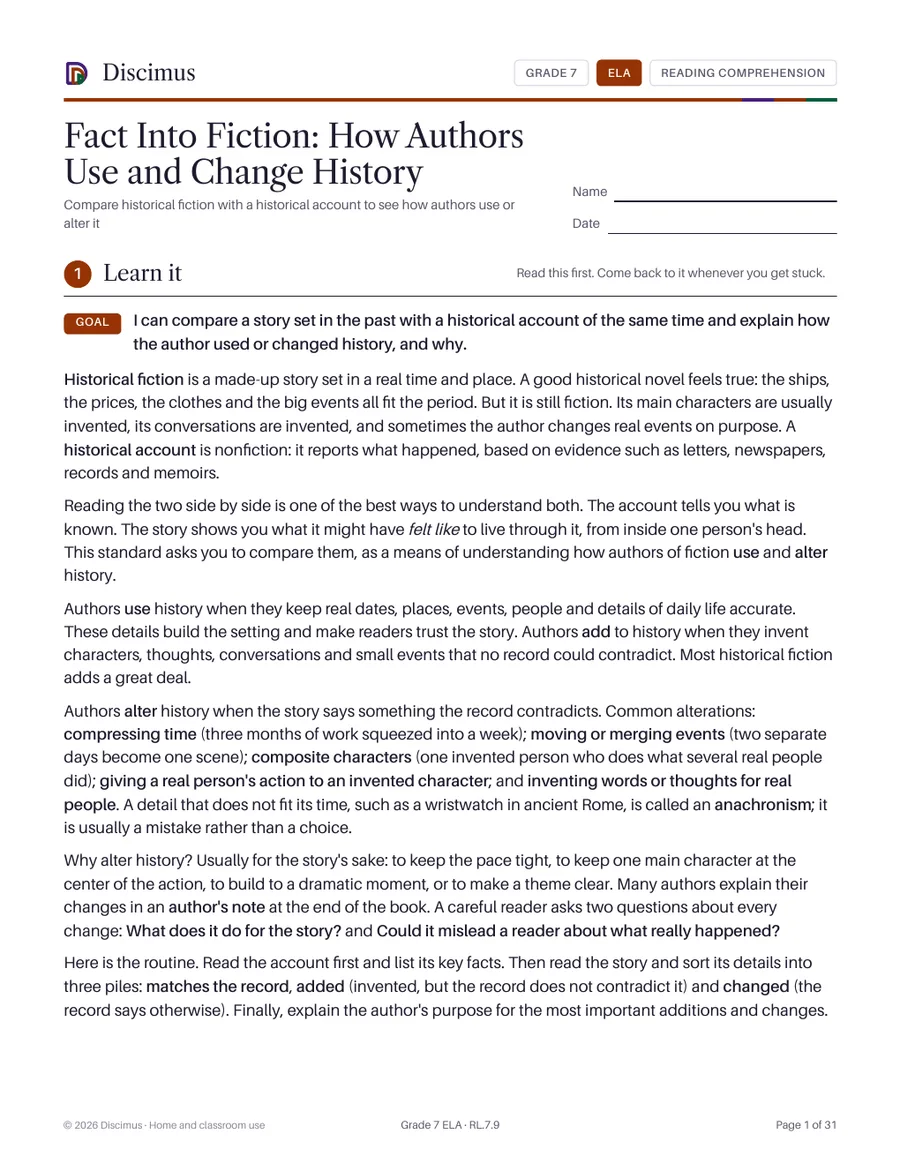
    Fact Into Fiction: How Authors Use and Change History

    Compare historical fiction with a historical account to see how authors use or alter it
  • ELAGrade 7

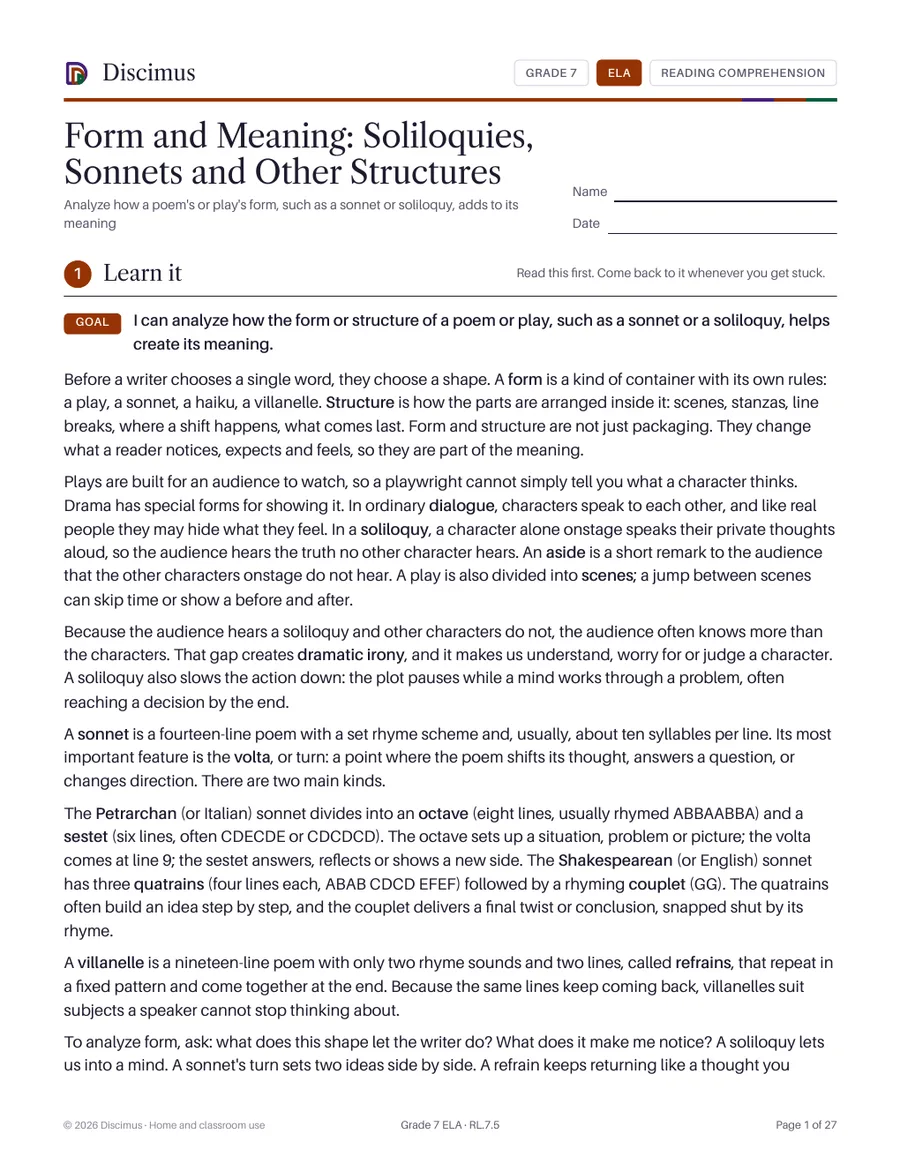
    Form and Meaning: Soliloquies, Sonnets and Other Structures

    Analyze how a poem's or play's form, such as a sonnet or soliloquy, adds to its meaning
  • ELAGrade 7

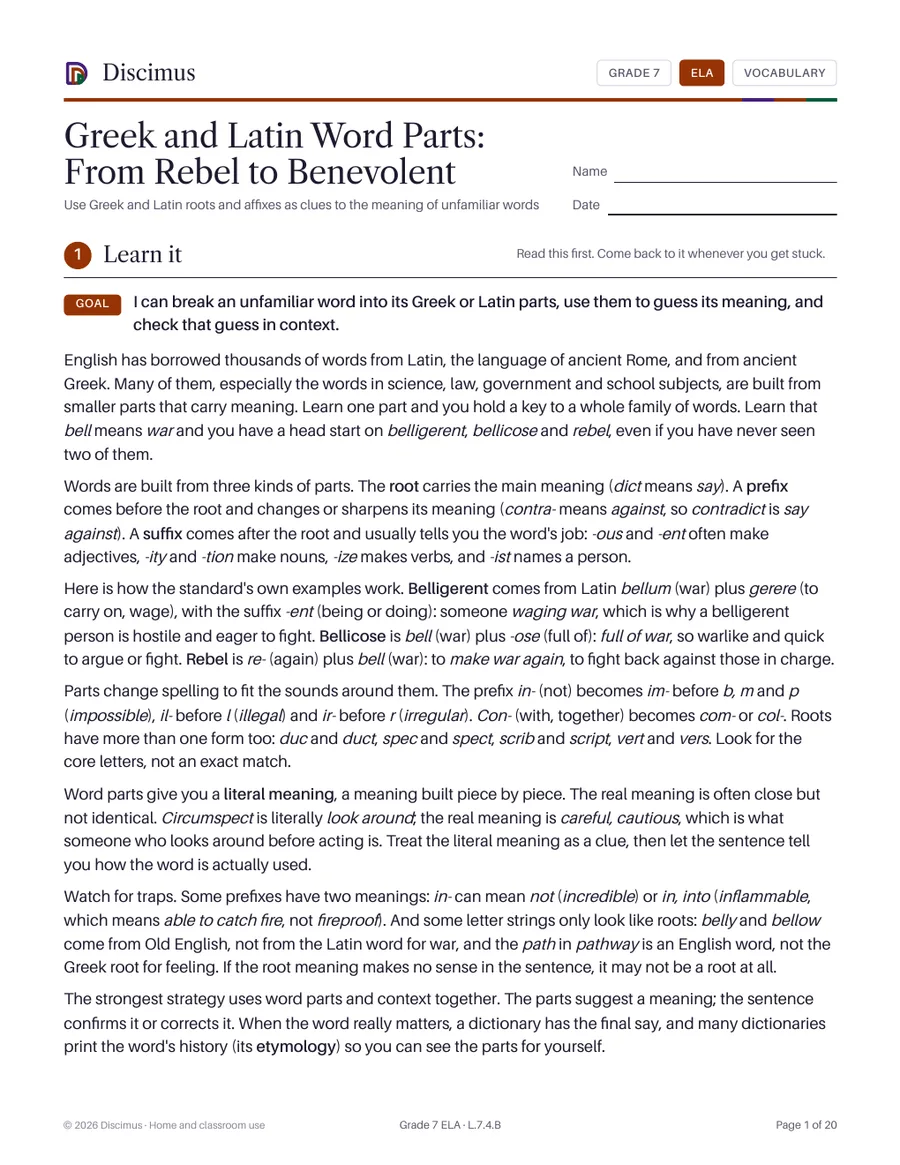
    Greek and Latin Word Parts: From Rebel to Benevolent

    Use Greek and Latin roots and affixes as clues to the meaning of unfamiliar words
  • ELAGrade 7

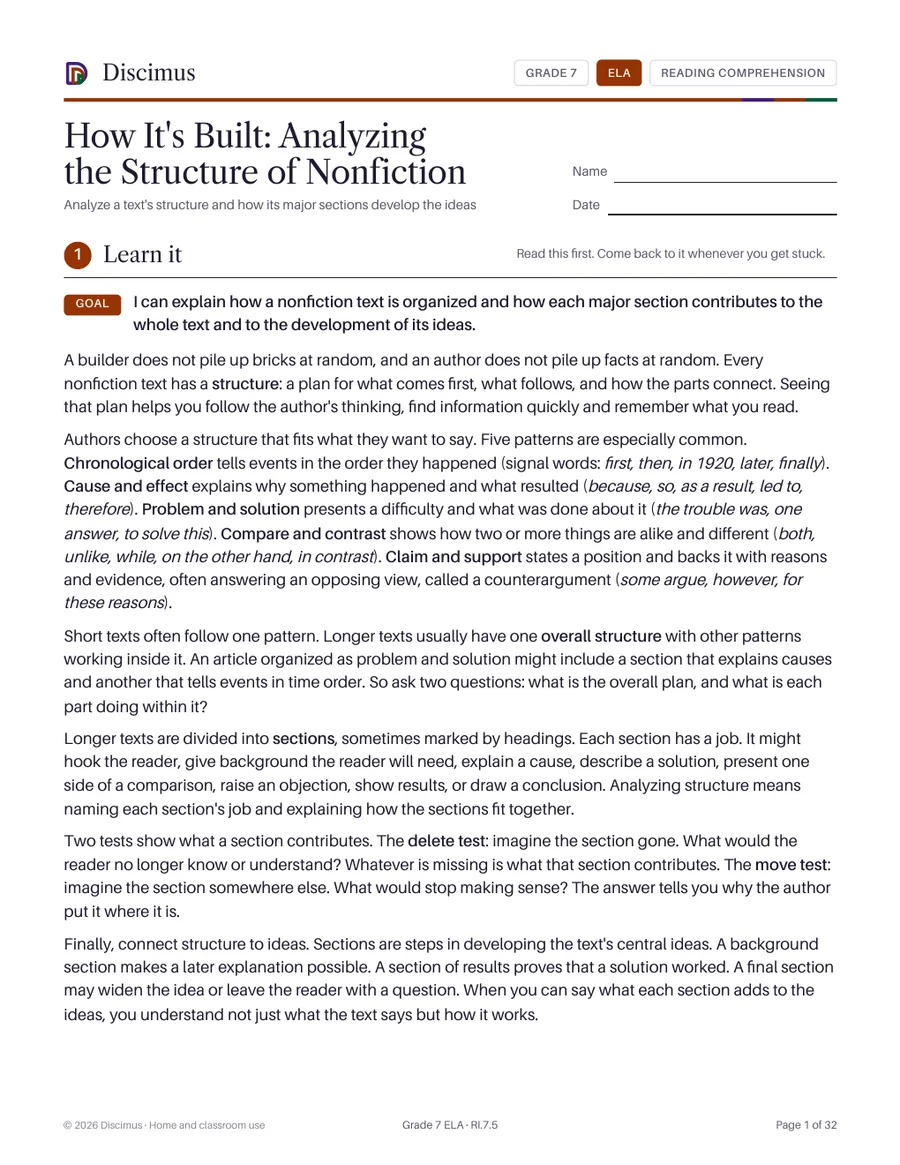
    How It's Built: Analyzing the Structure of Nonfiction

    Analyze a text's structure and how its major sections develop the ideas
  • ELAGrade 7

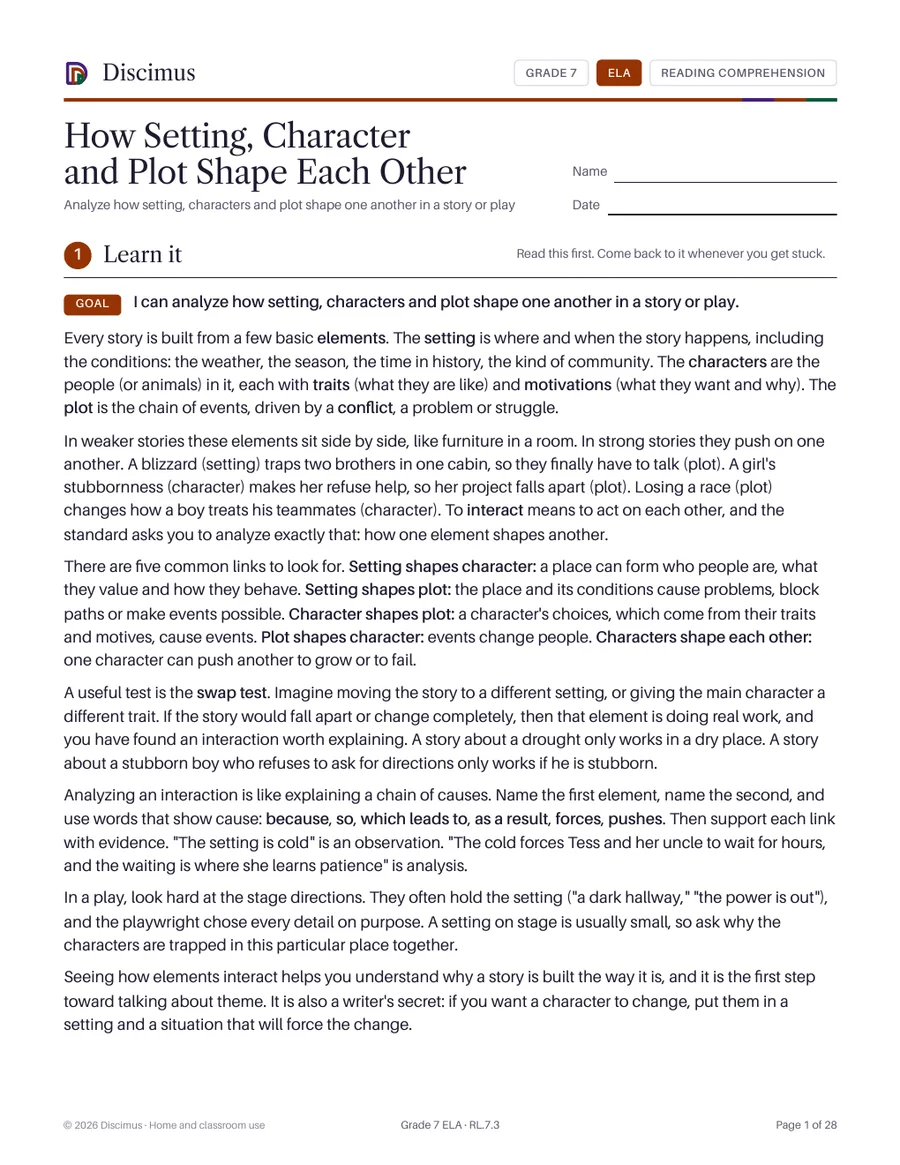
    How Setting, Character and Plot Shape Each Other

    Analyze how setting, characters and plot shape one another in a story or play
  • ELAGrade 7

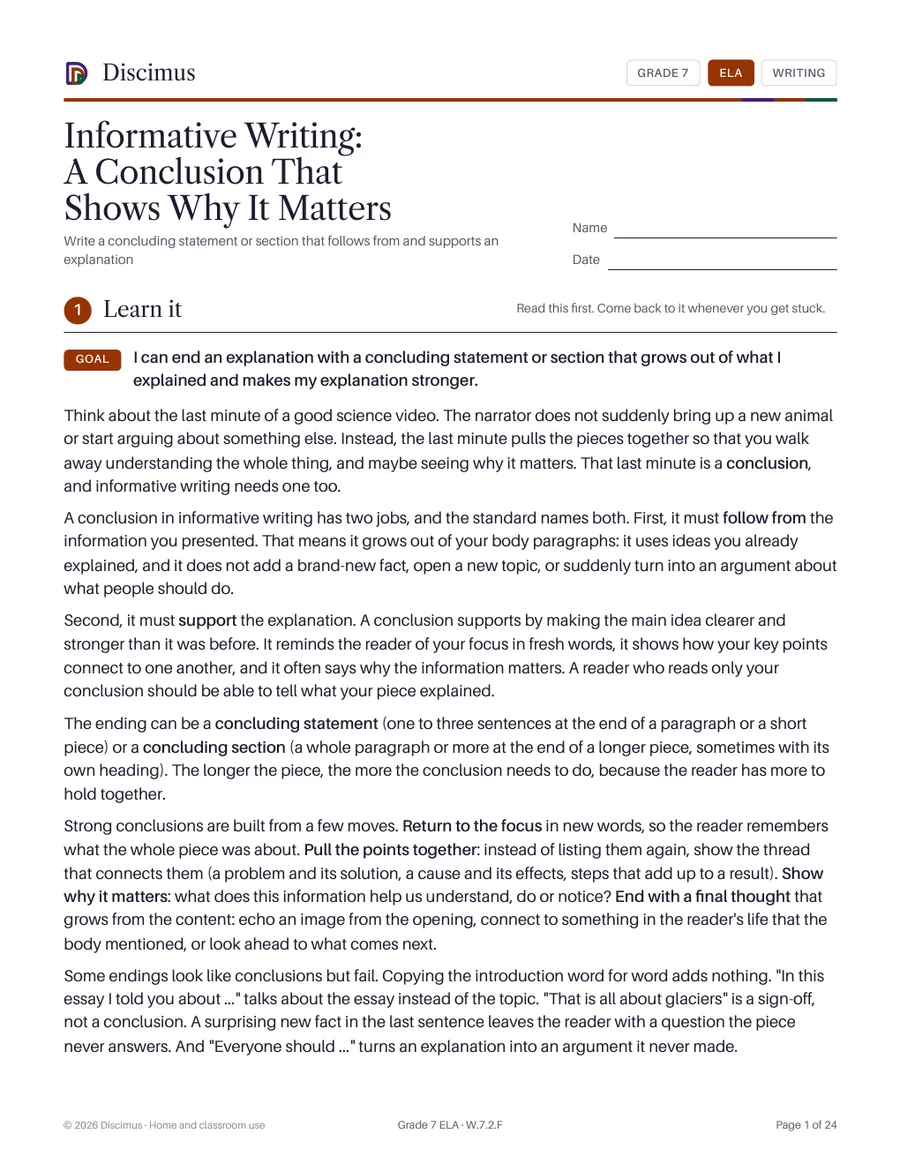
    Informative Writing: A Conclusion That Shows Why It Matters

    Write a concluding statement or section that follows from and supports an explanation
  • ELAGrade 7

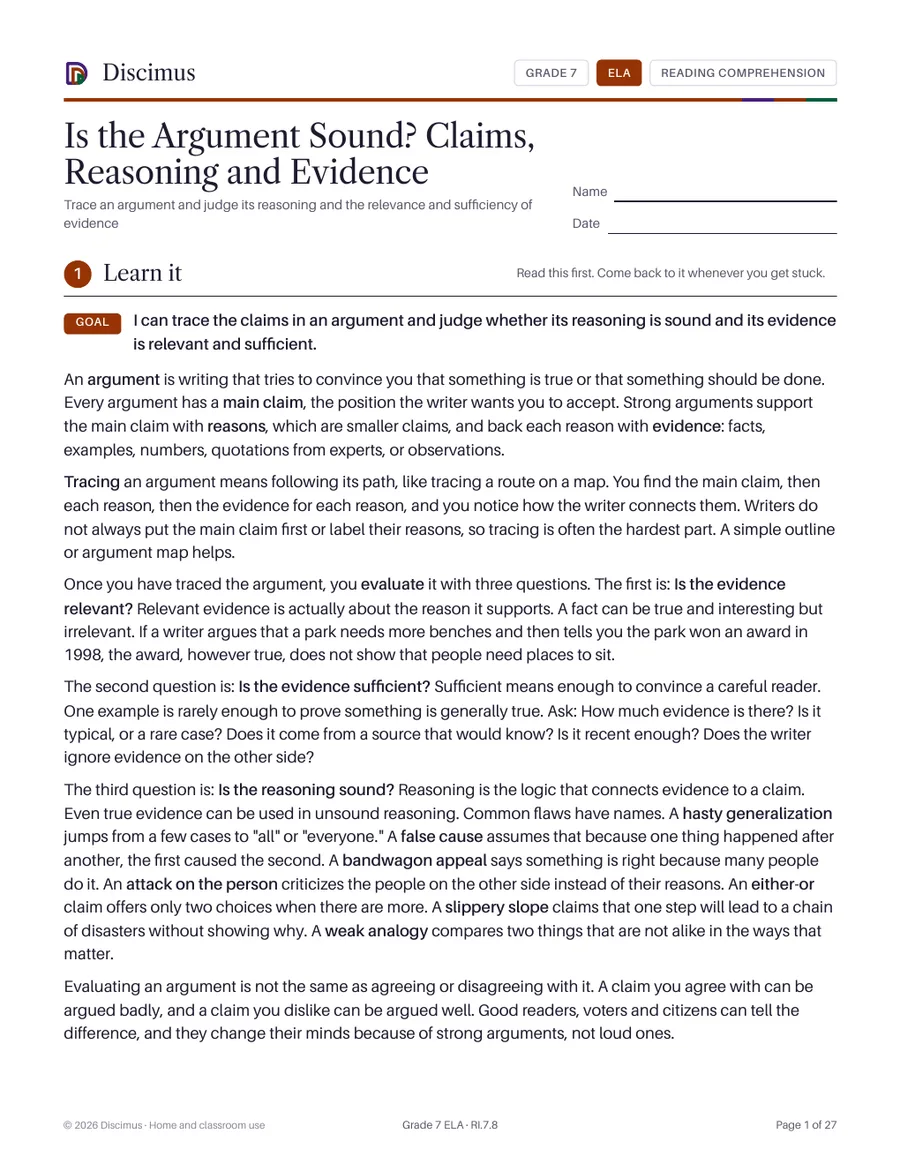
    Is the Argument Sound? Claims, Reasoning and Evidence

    Trace an argument and judge its reasoning and the relevance and sufficiency of evidence
  • ELAGrade 7

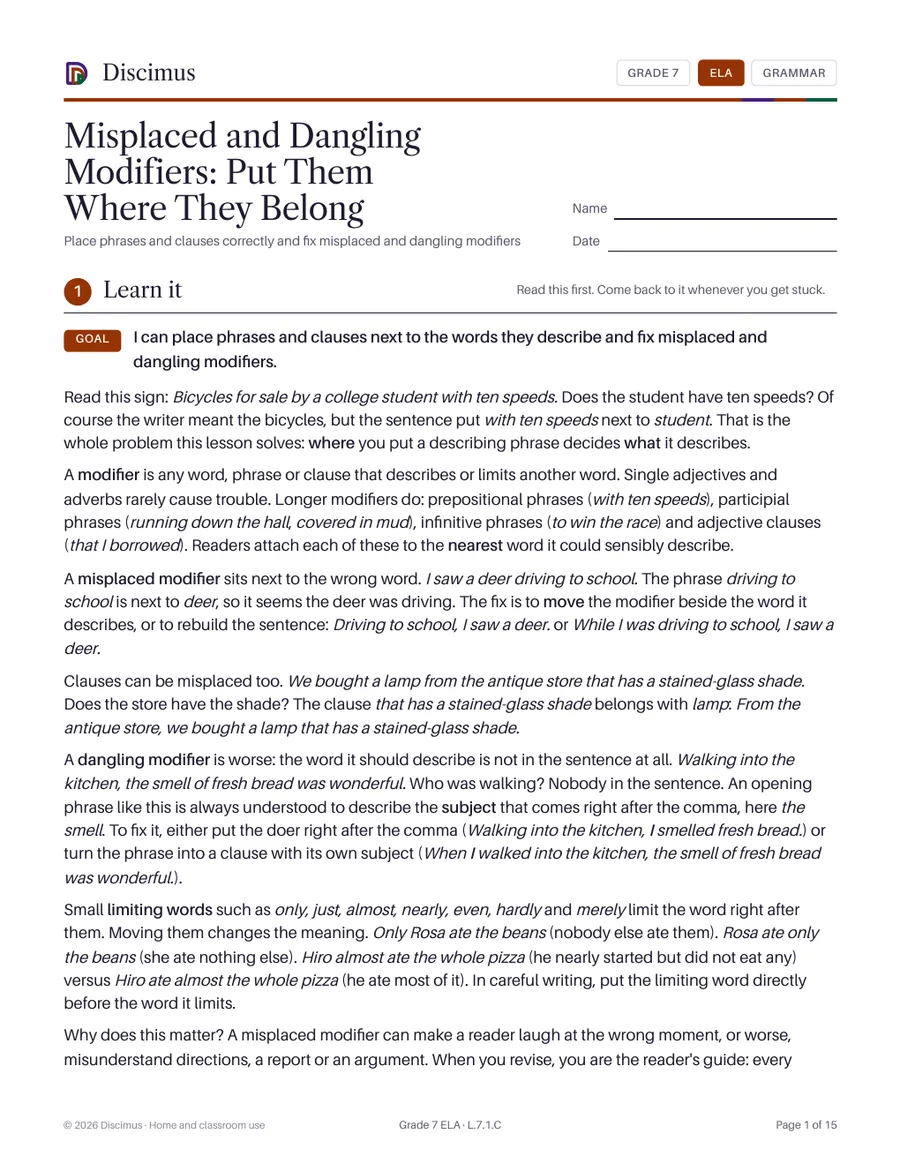
    Misplaced and Dangling Modifiers: Put Them Where They Belong

    Place phrases and clauses correctly and fix misplaced and dangling modifiers
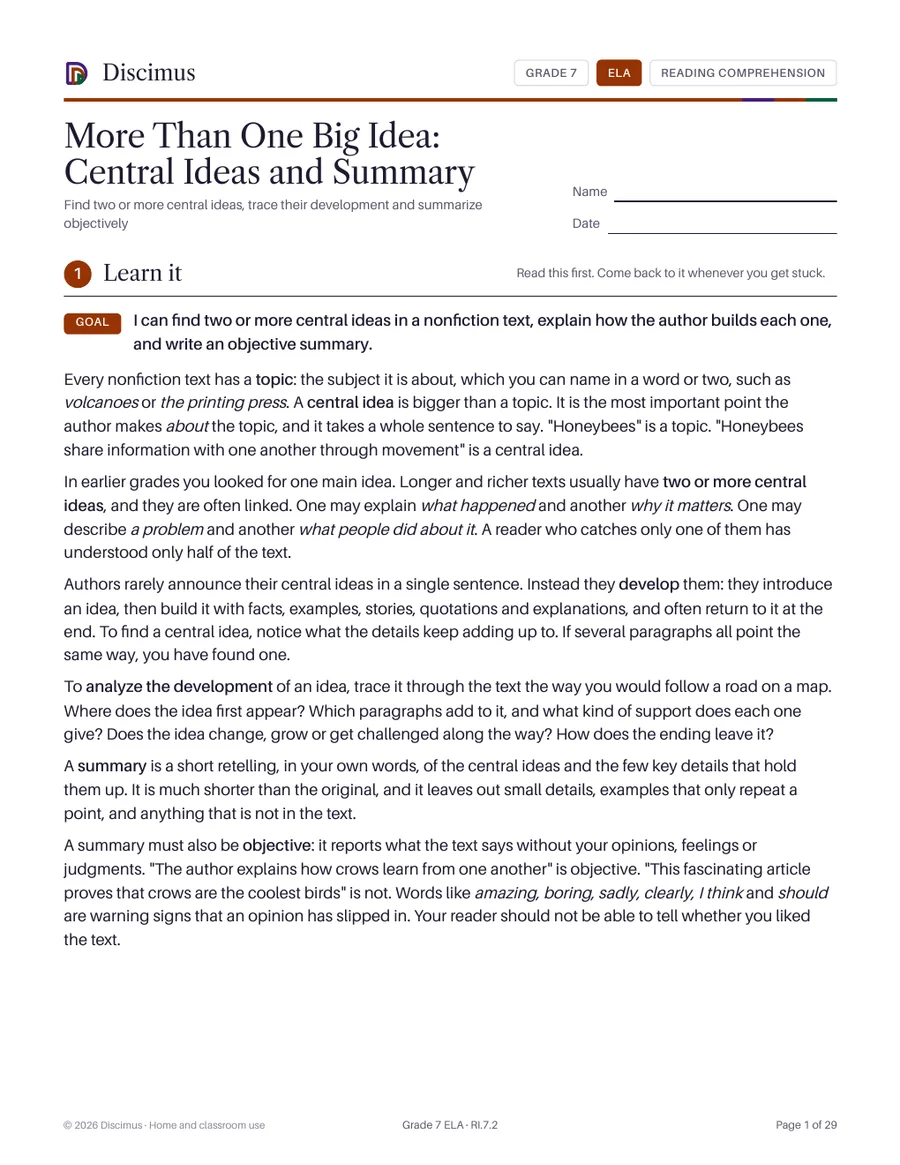
  • ELAGrade 7

    More Than One Big Idea: Central Ideas and Summary

    Find two or more central ideas, trace their development and summarize objectively
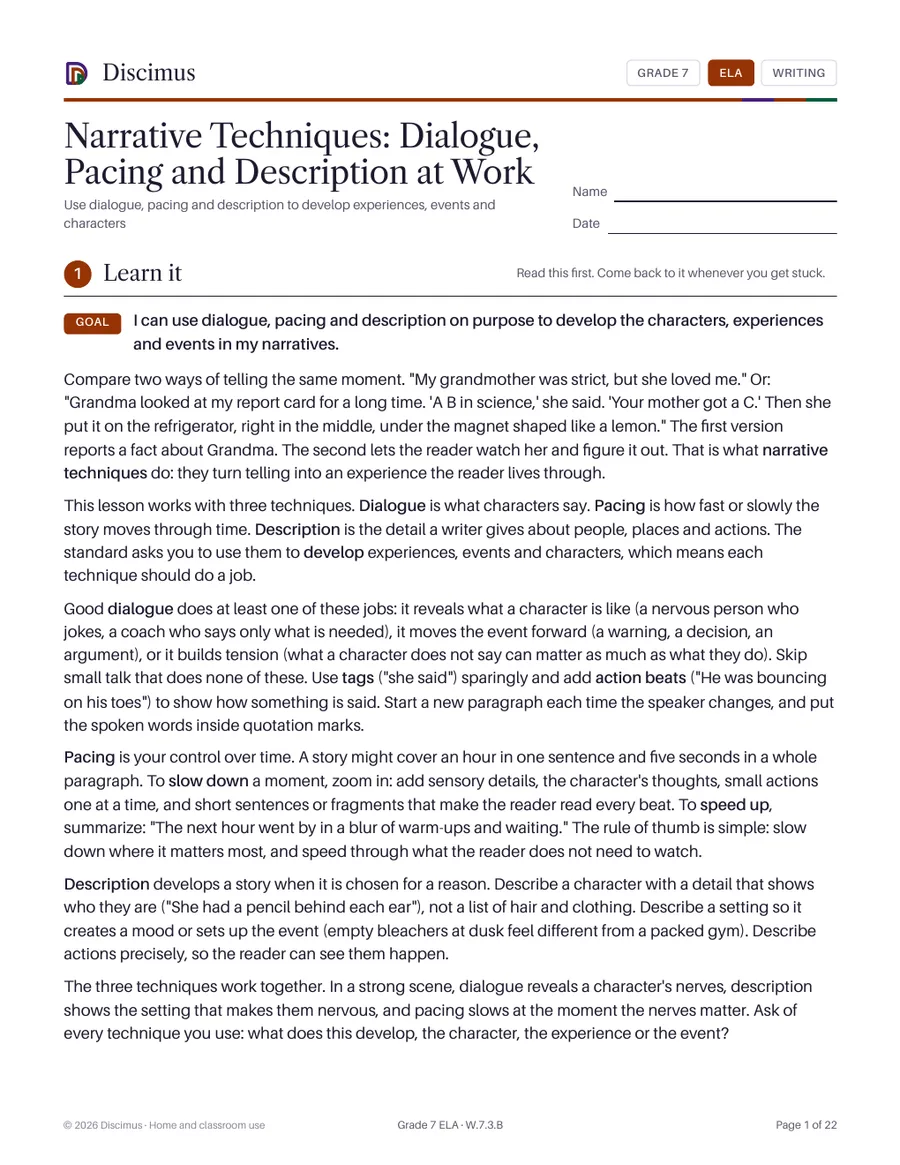
  • ELAGrade 7

    Narrative Techniques: Dialogue, Pacing and Description at Work

    Use dialogue, pacing and description to develop experiences, events and characters
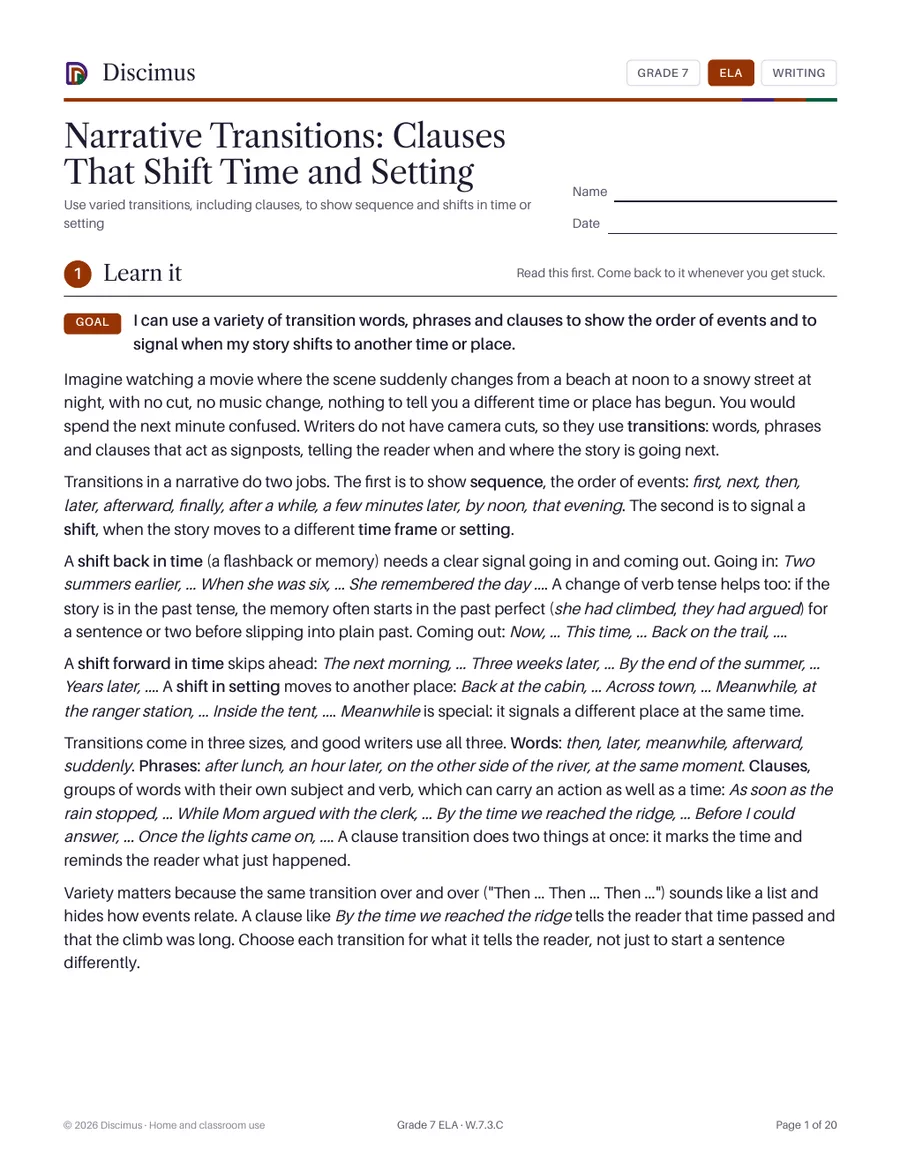
  • ELAGrade 7

    Narrative Transitions: Clauses That Shift Time and Setting

    Use varied transitions, including clauses, to show sequence and shifts in time or setting
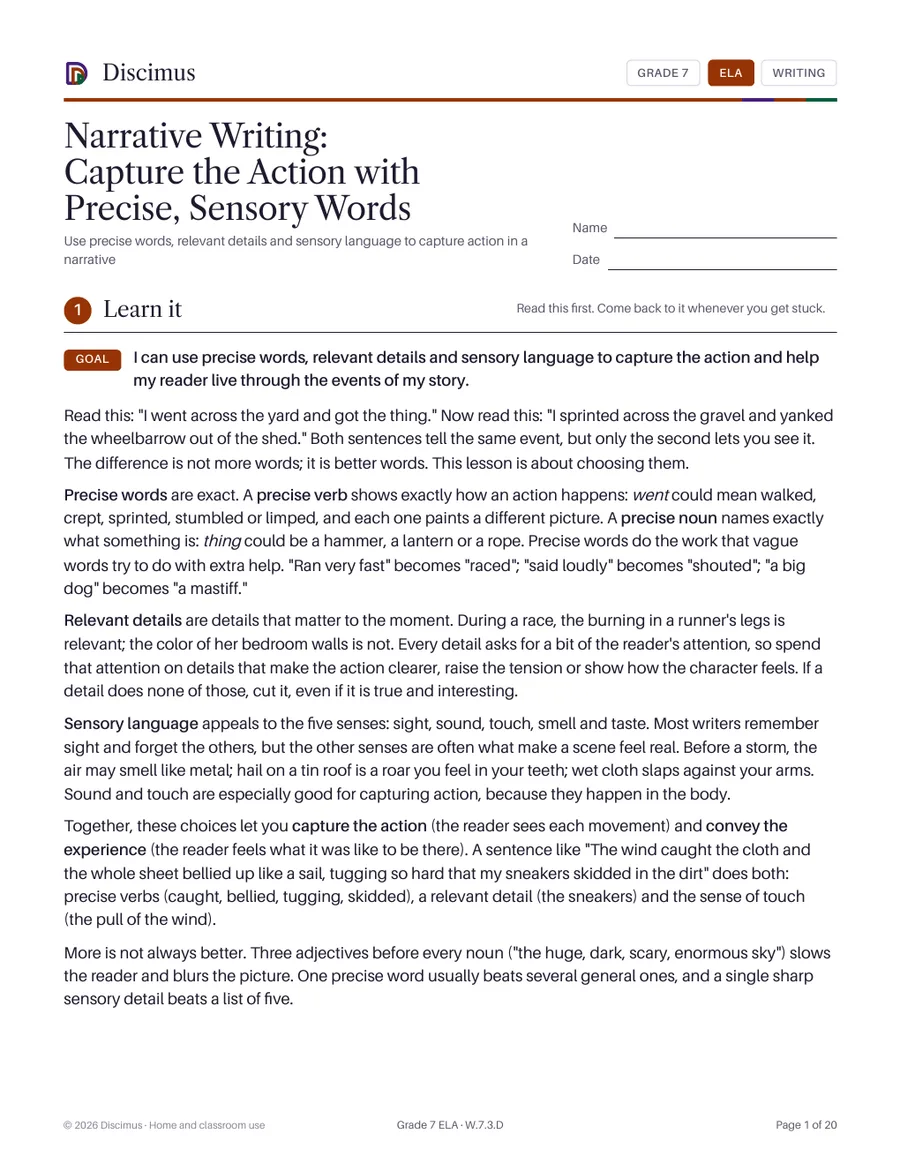
  • ELAGrade 7

    Narrative Writing: Capture the Action with Precise, Sensory Words

    Use precise words, relevant details and sensory language to capture action in a narrative
  • ELAGrade 7

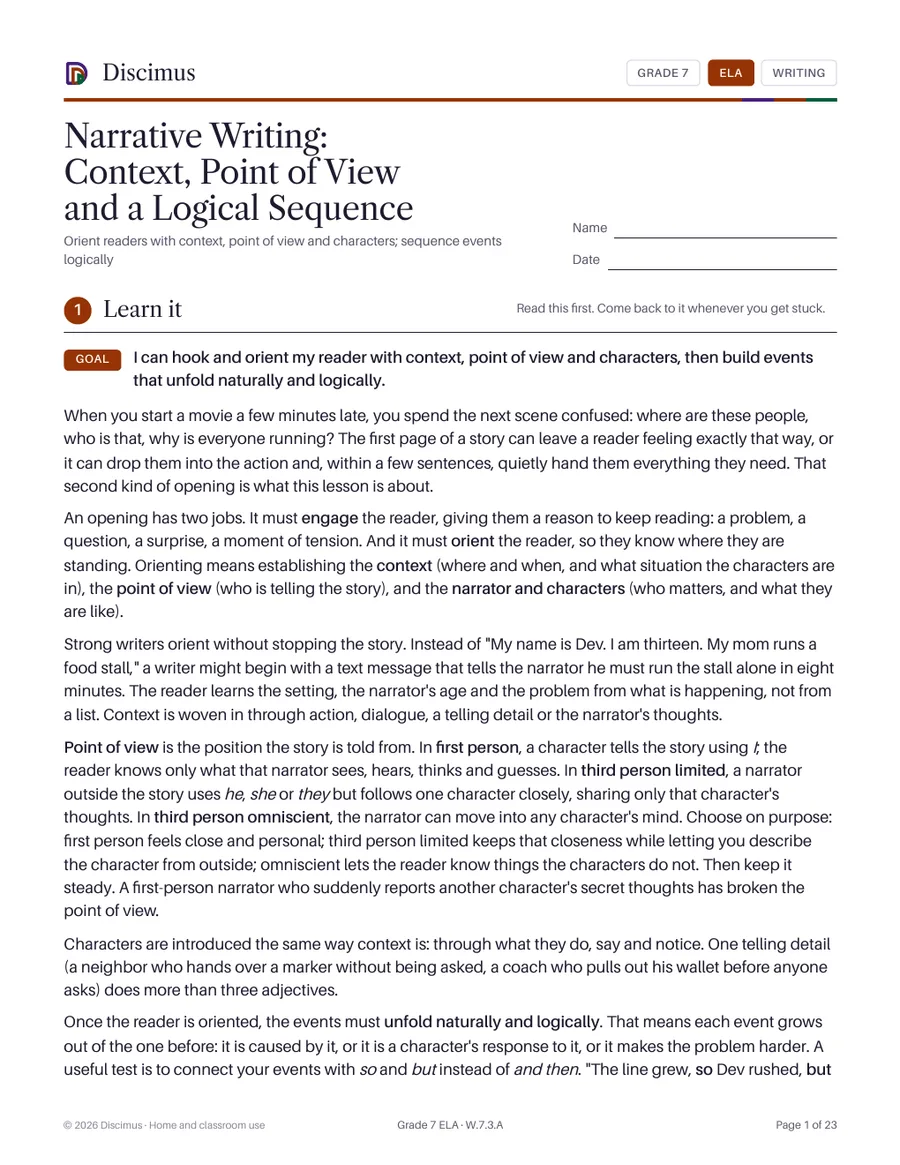
    Narrative Writing: Context, Point of View and a Logical Sequence

    Orient readers with context, point of view and characters; sequence events logically
  • ELAGrade 7

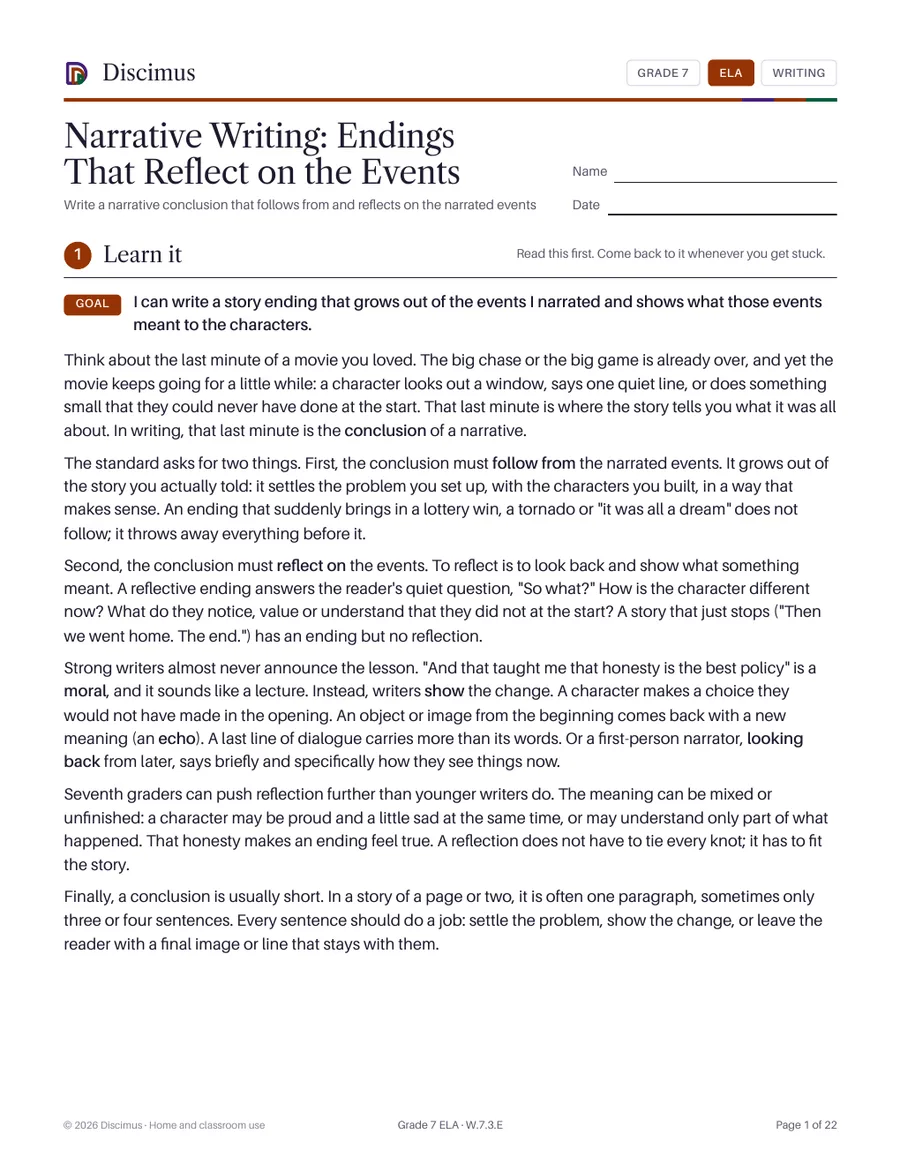
    Narrative Writing: Endings That Reflect on the Events

    Write a narrative conclusion that follows from and reflects on the narrated events
  • ELAGrade 7

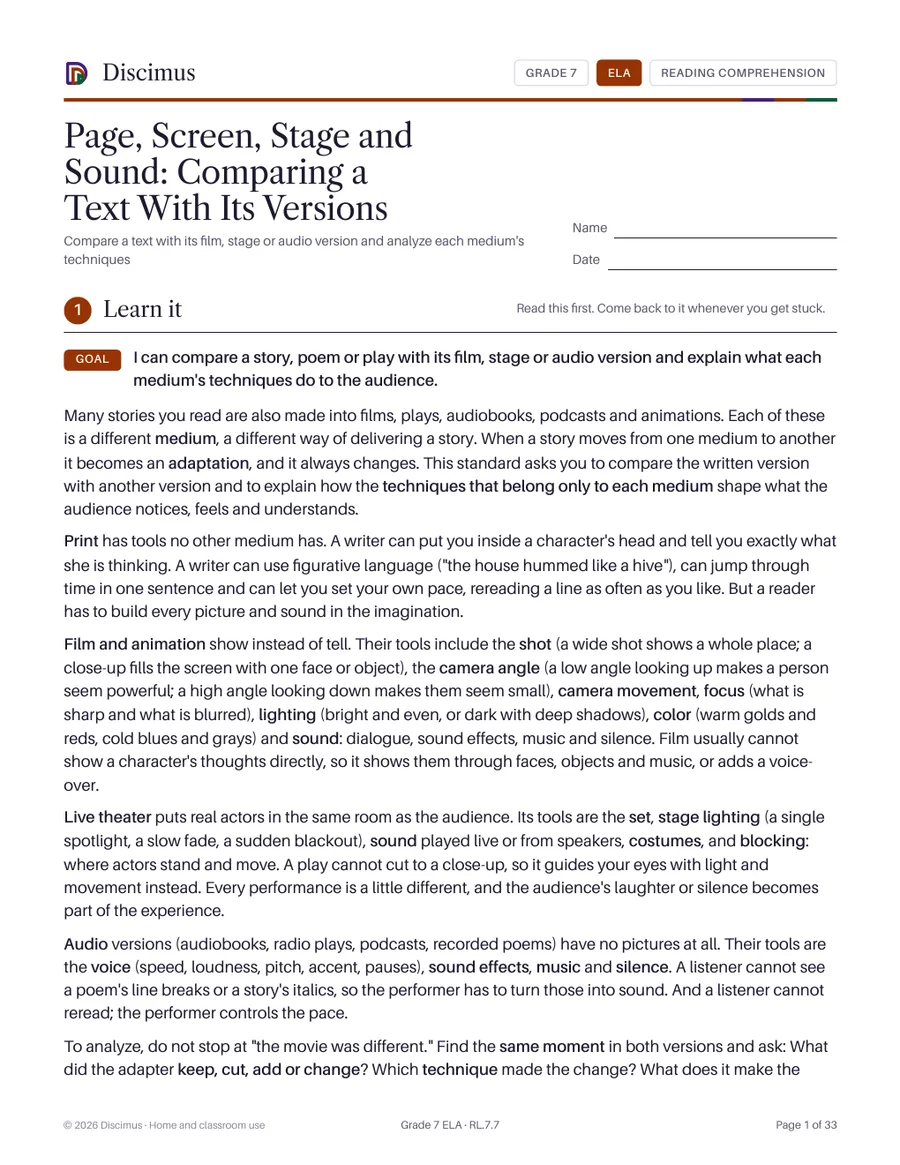
    Page, Screen, Stage and Sound: Comparing a Text With Its Versions

    Compare a text with its film, stage or audio version and analyze each medium's techniques
  • ELAGrade 7

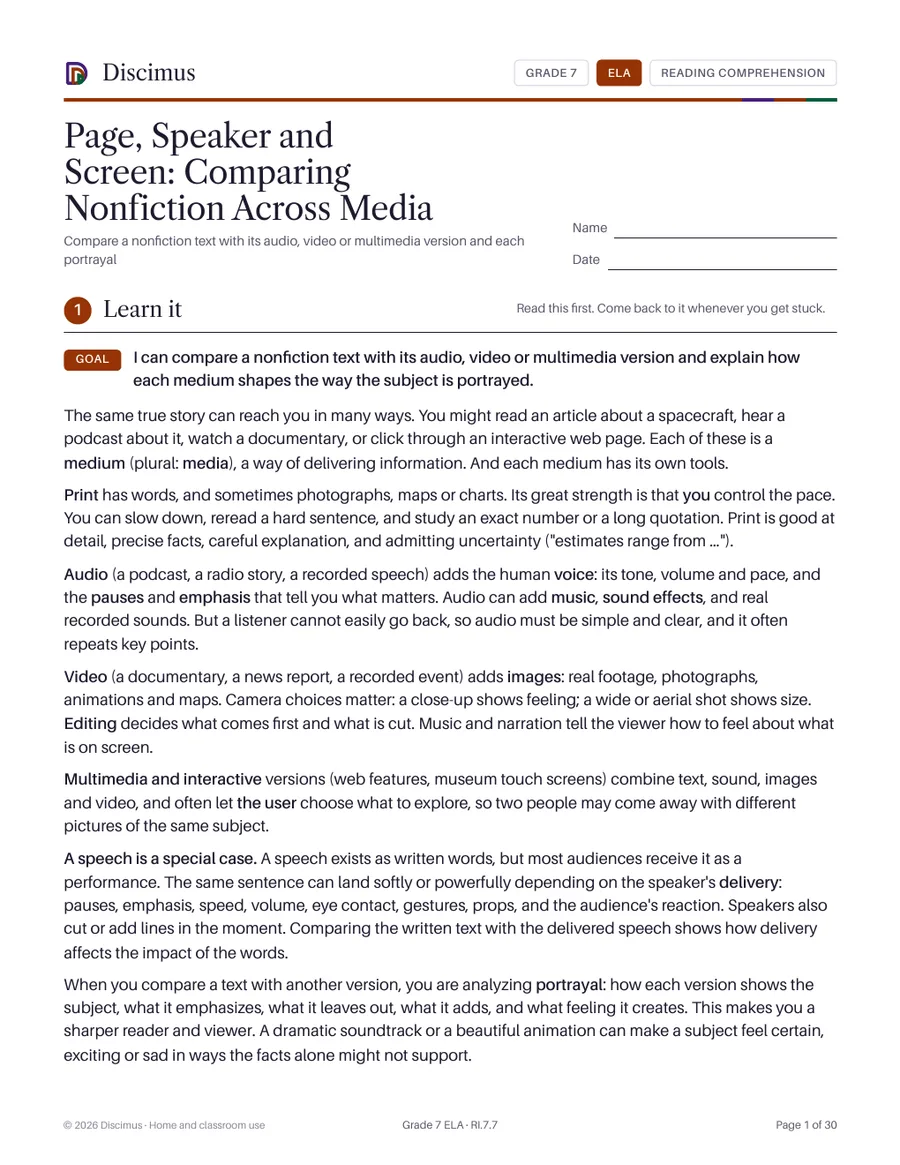
    Page, Speaker and Screen: Comparing Nonfiction Across Media

    Compare a nonfiction text with its audio, video or multimedia version and each portrayal
  • ELAGrade 7

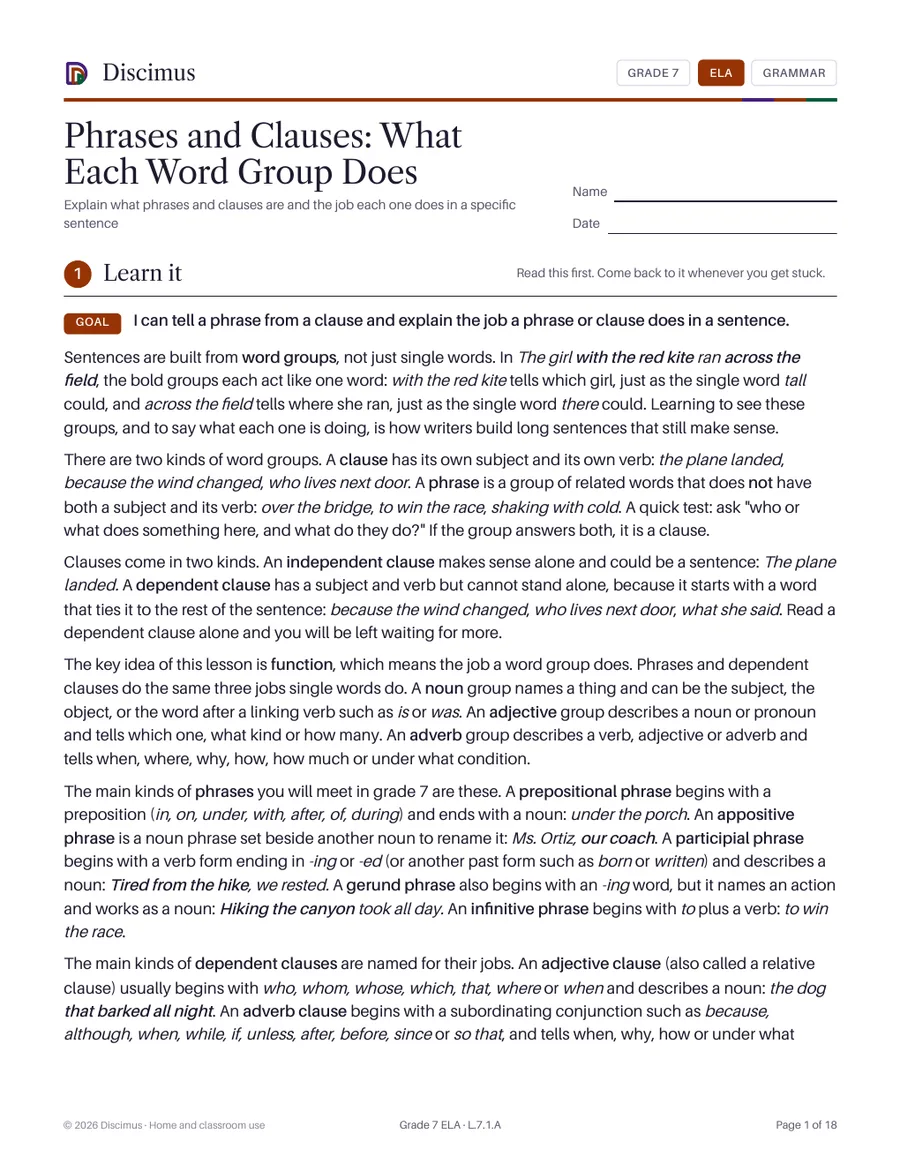
    Phrases and Clauses: What Each Word Group Does

    Explain what phrases and clauses are and the job each one does in a specific sentence
  • ELAGrade 7

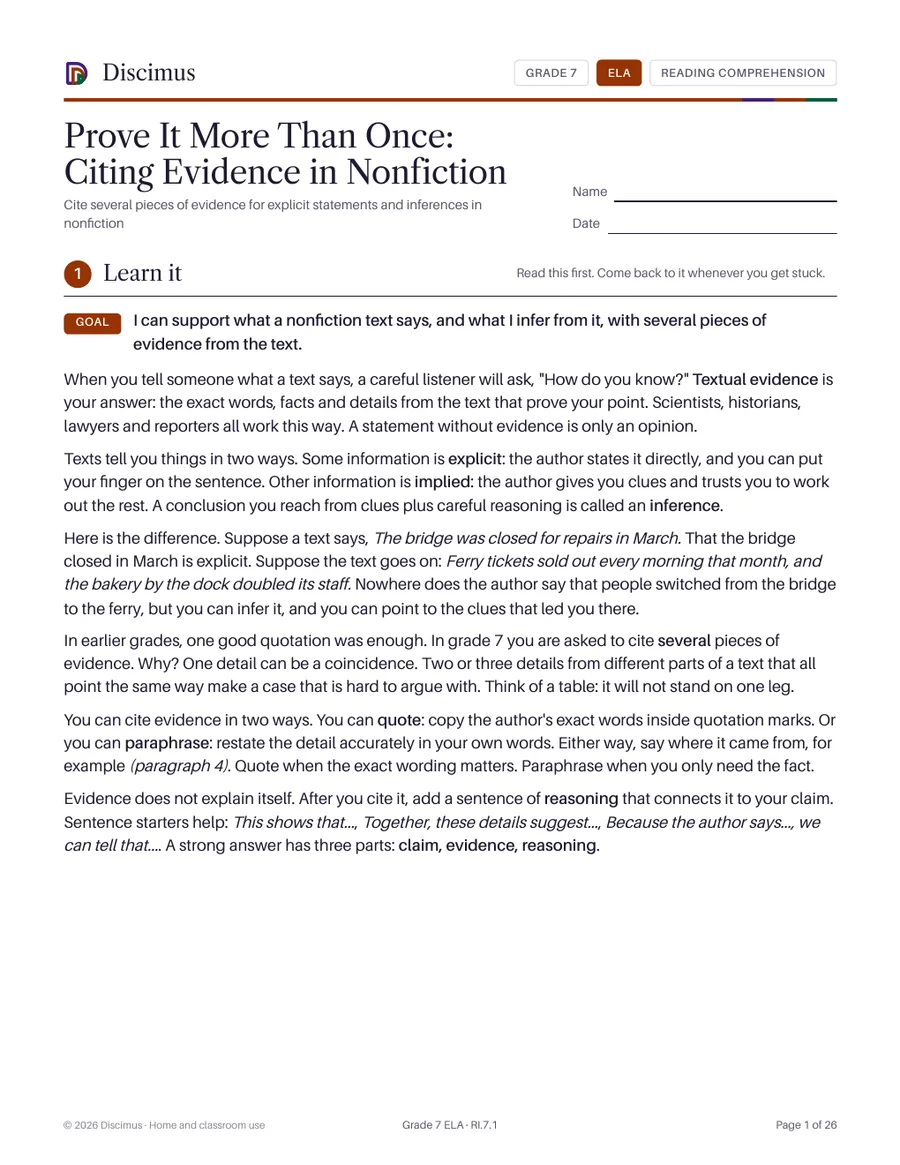
    Prove It More Than Once: Citing Evidence in Nonfiction

    Cite several pieces of evidence for explicit statements and inferences in nonfiction
  • ELAGrade 7

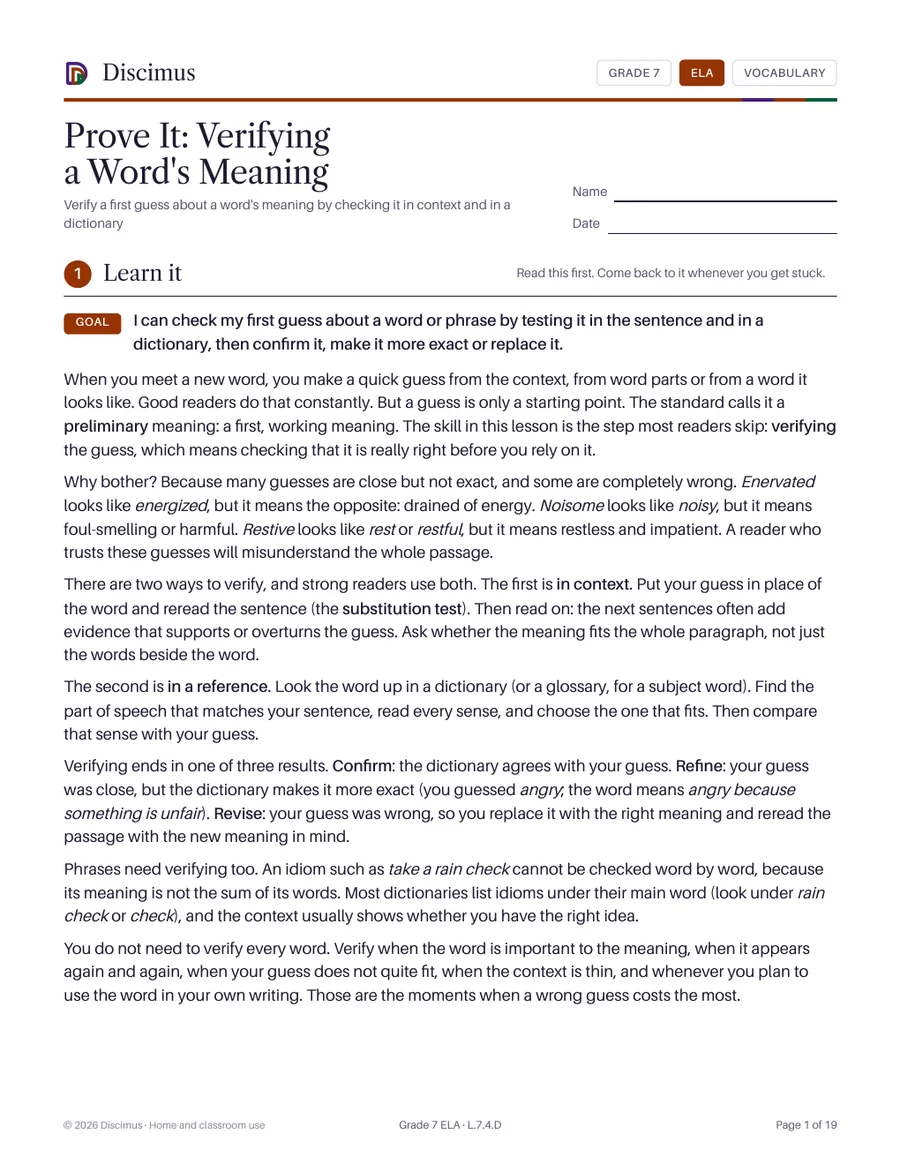
    Prove It: Verifying a Word's Meaning

    Verify a first guess about a word's meaning by checking it in context and in a dictionary
  • ELAGrade 7

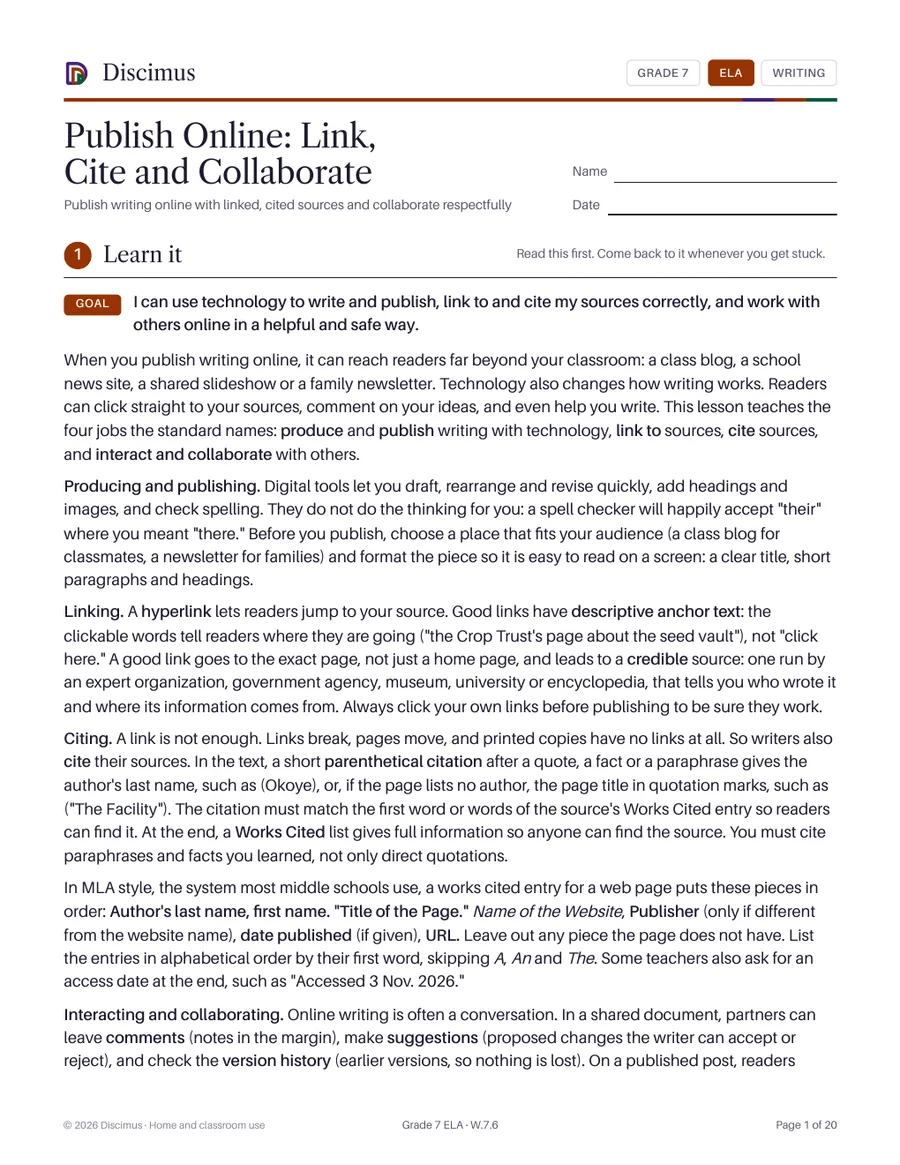
    Publish Online: Link, Cite and Collaborate

    Publish writing online with linked, cited sources and collaborate respectfully
  • ELAGrade 7

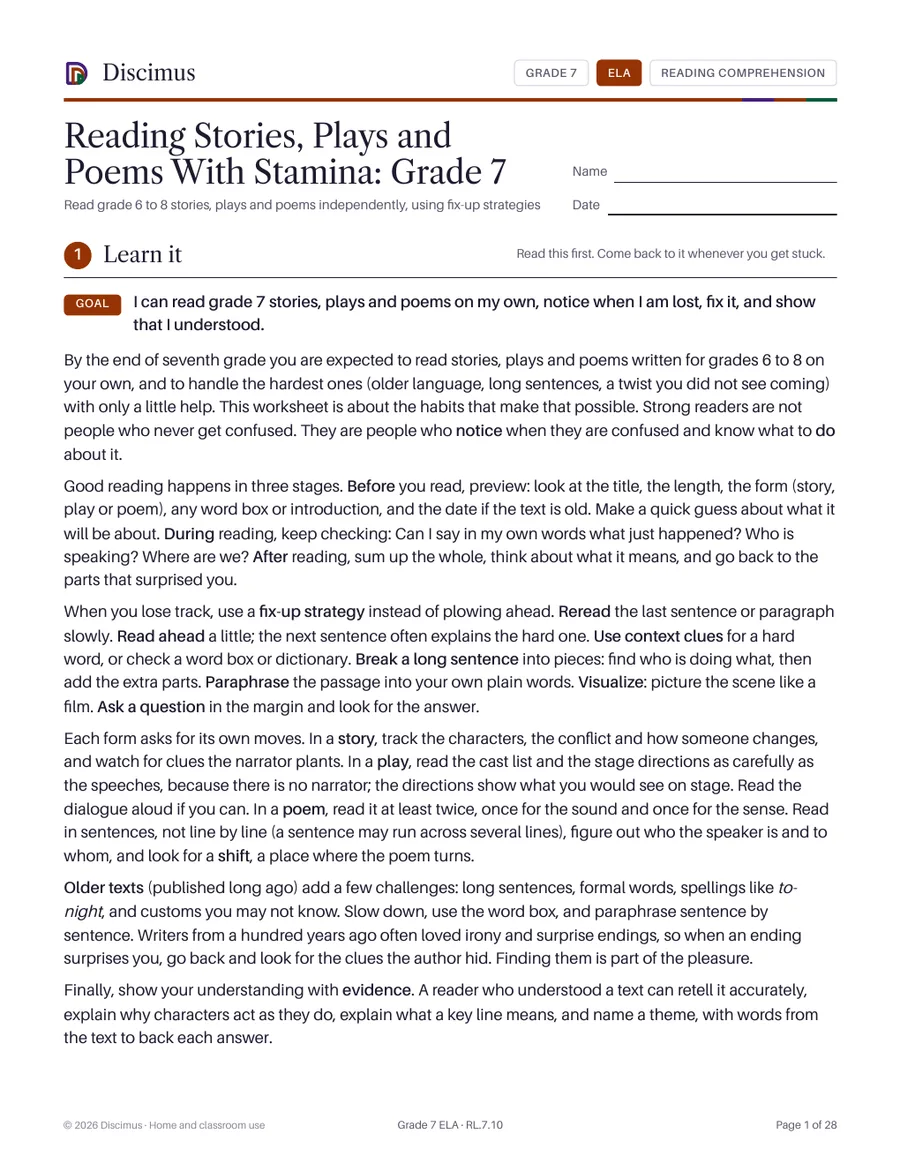
    Reading Stories, Plays and Poems With Stamina: Grade 7

    Read grade 6 to 8 stories, plays and poems independently, using fix-up strategies
  • ELAGrade 7

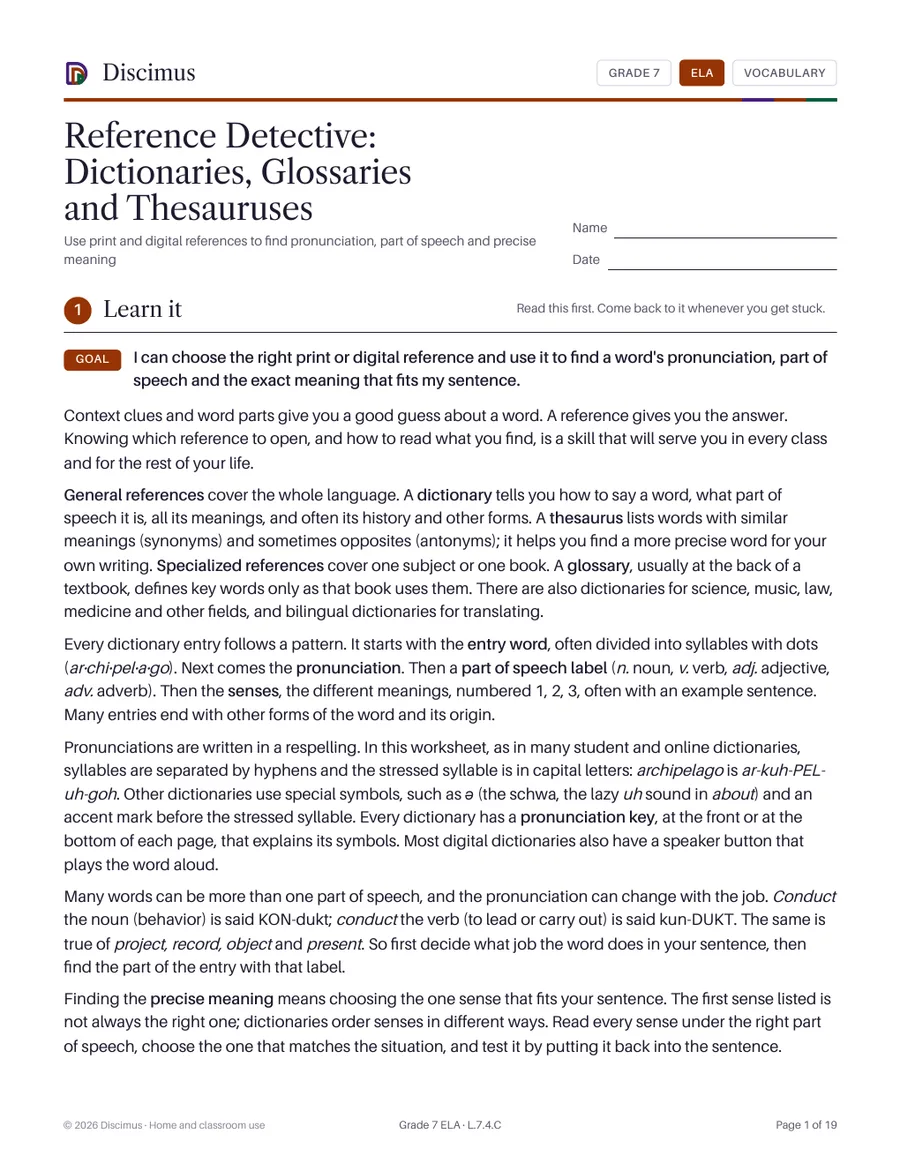
    Reference Detective: Dictionaries, Glossaries and Thesauruses

    Use print and digital references to find pronunciation, part of speech and precise meaning
  • ELAGrade 7

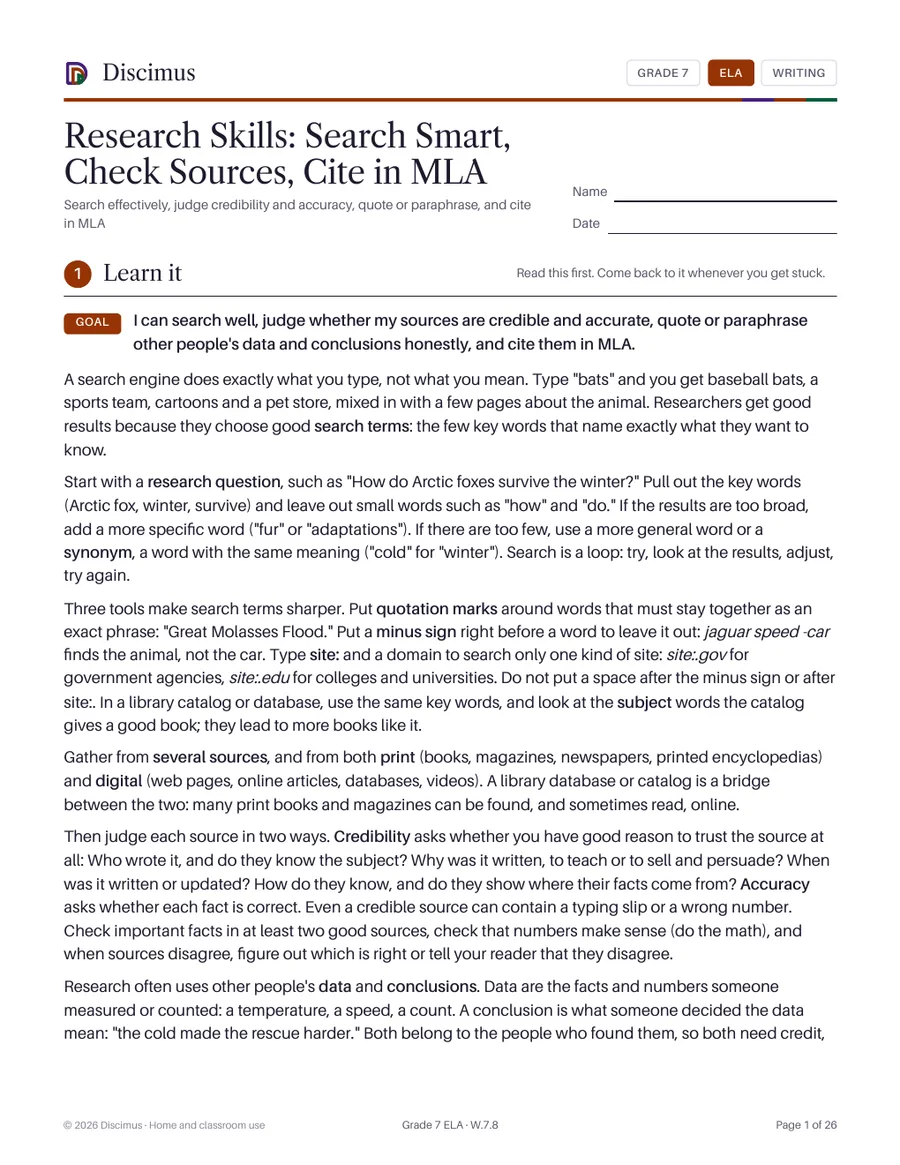
    Research Skills: Search Smart, Check Sources, Cite in MLA

    Search effectively, judge credibility and accuracy, quote or paraphrase, and cite in MLA
  • ELAGrade 7

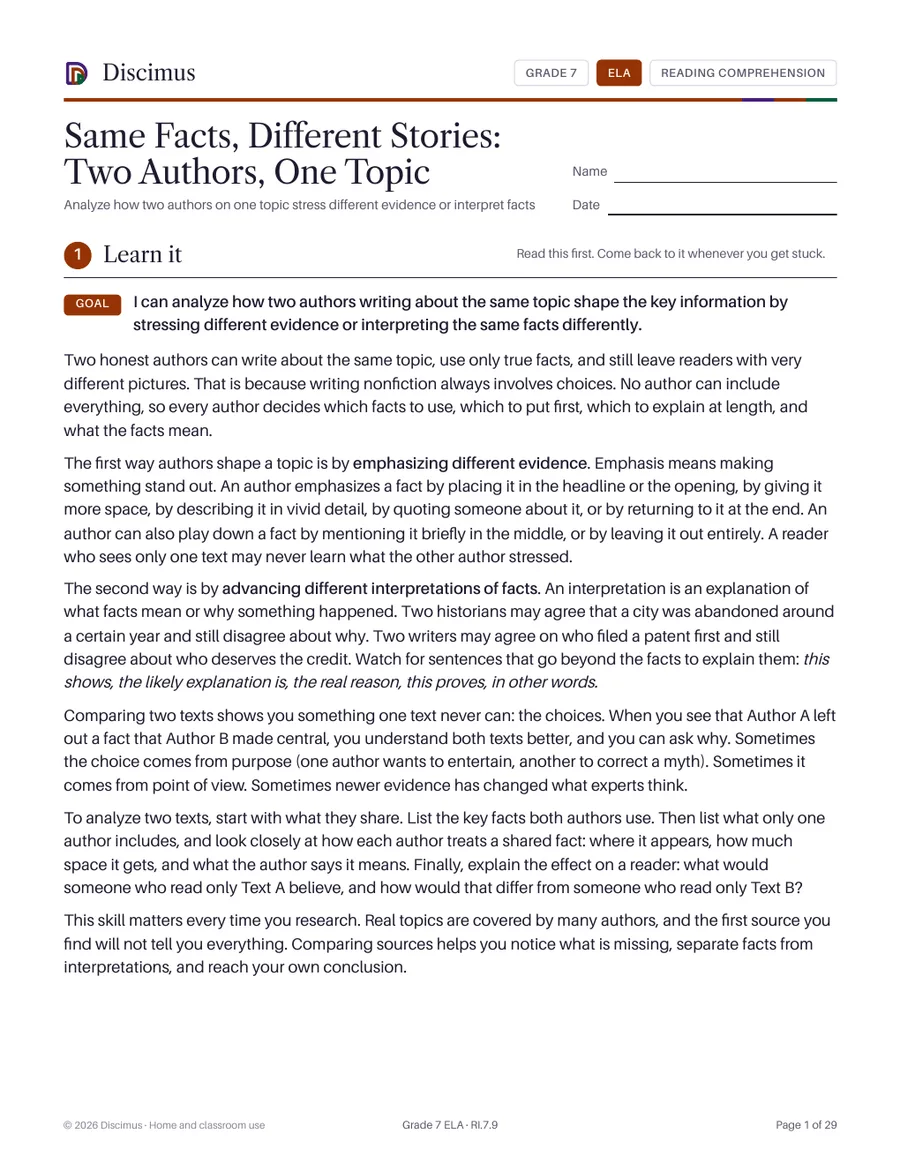
    Same Facts, Different Stories: Two Authors, One Topic

    Analyze how two authors on one topic stress different evidence or interpret facts
  • ELAGrade 7

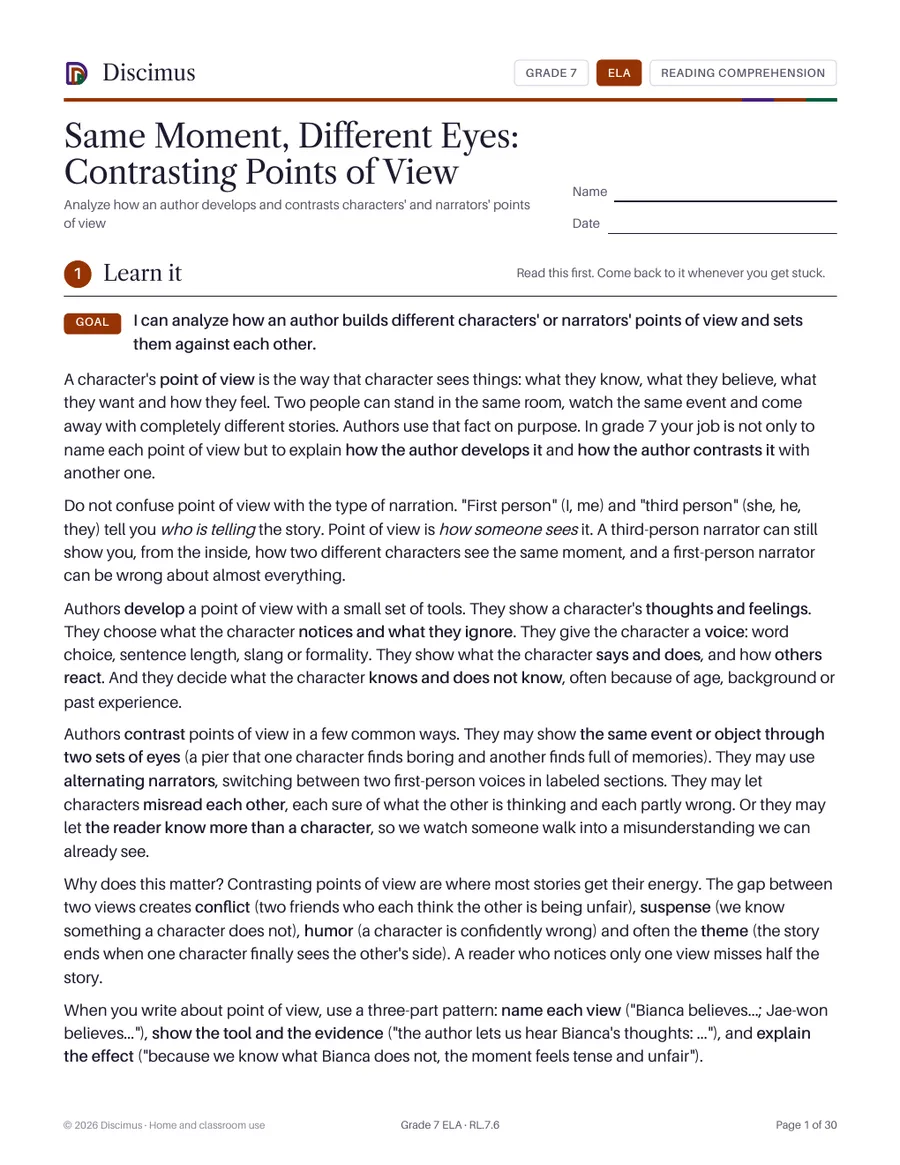
    Same Moment, Different Eyes: Contrasting Points of View

    Analyze how an author develops and contrasts characters' and narrators' points of view
  • ELAGrade 7

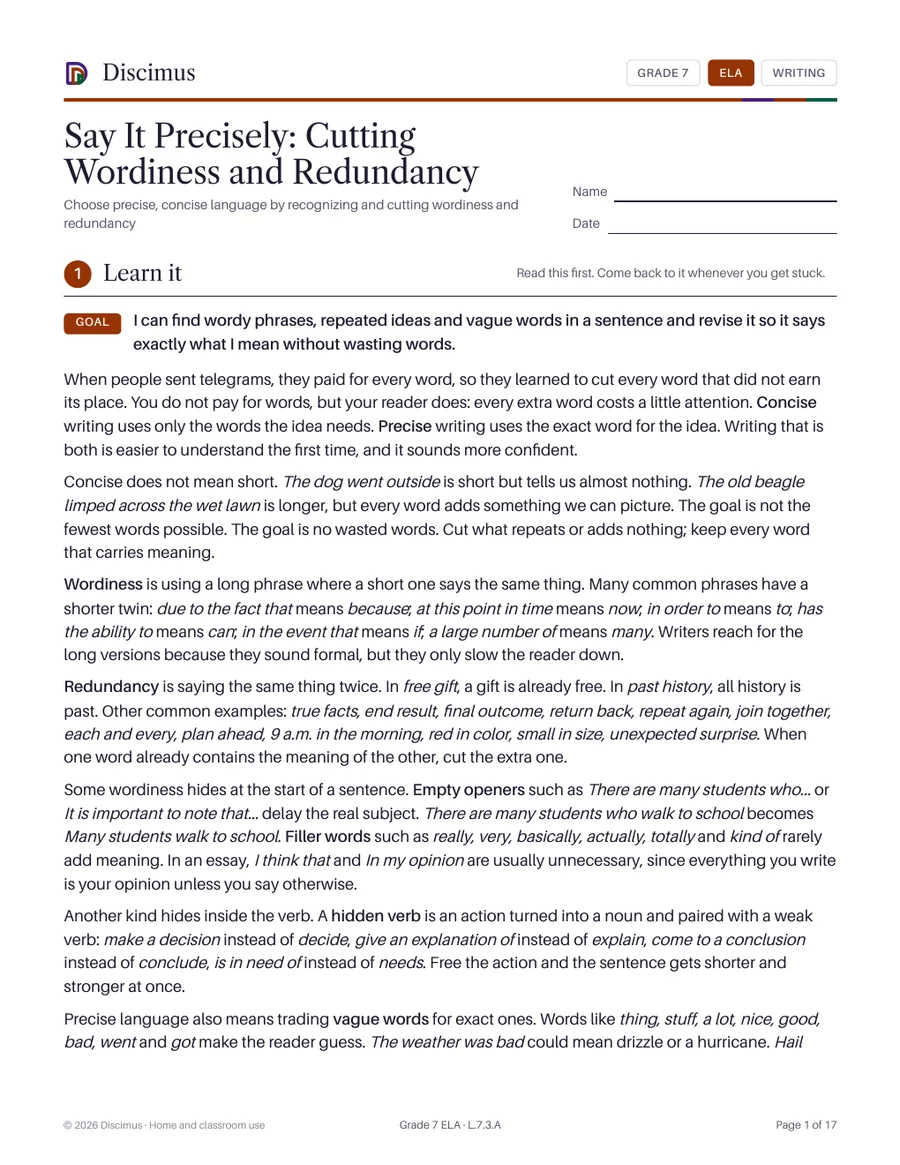
    Say It Precisely: Cutting Wordiness and Redundancy

    Choose precise, concise language by recognizing and cutting wordiness and redundancy
  • ELAGrade 7

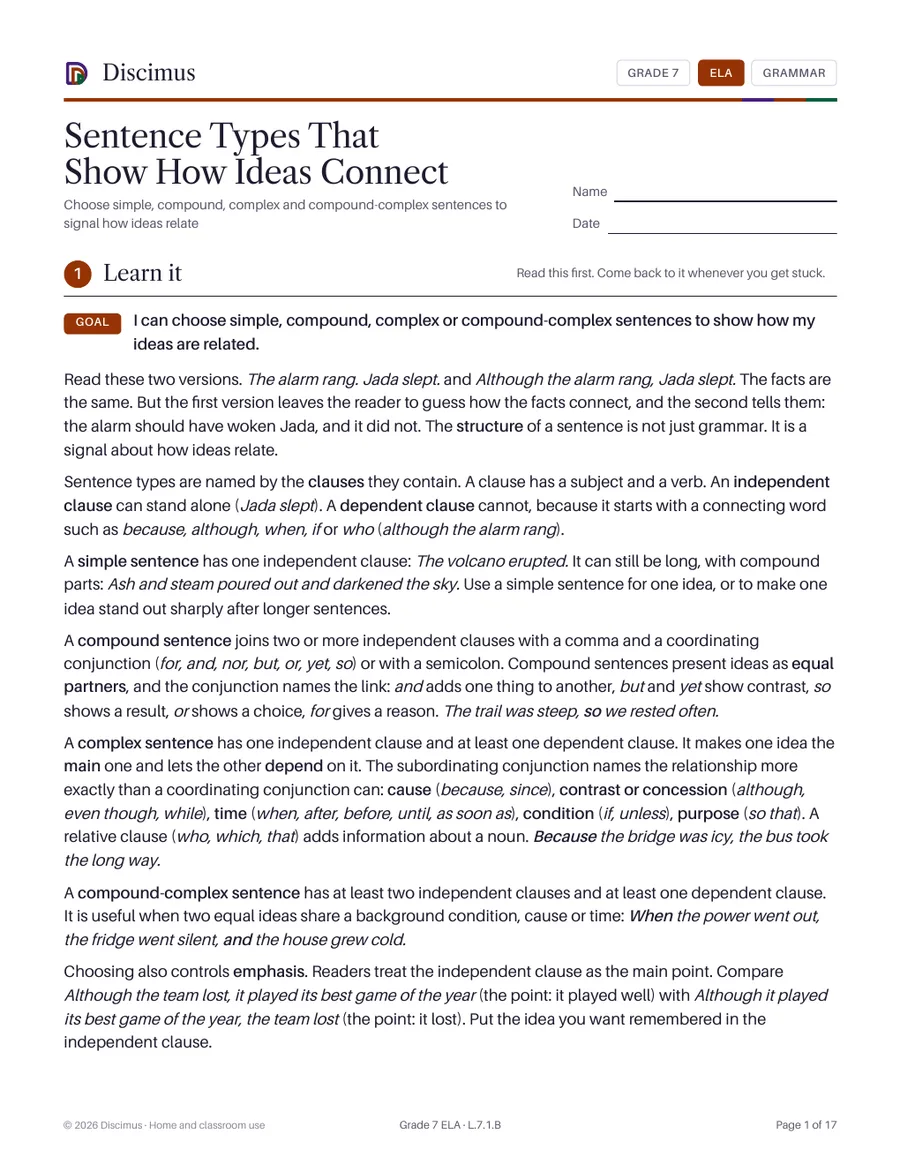
    Sentence Types That Show How Ideas Connect

    Choose simple, compound, complex and compound-complex sentences to signal how ideas relate
  • ELAGrade 7

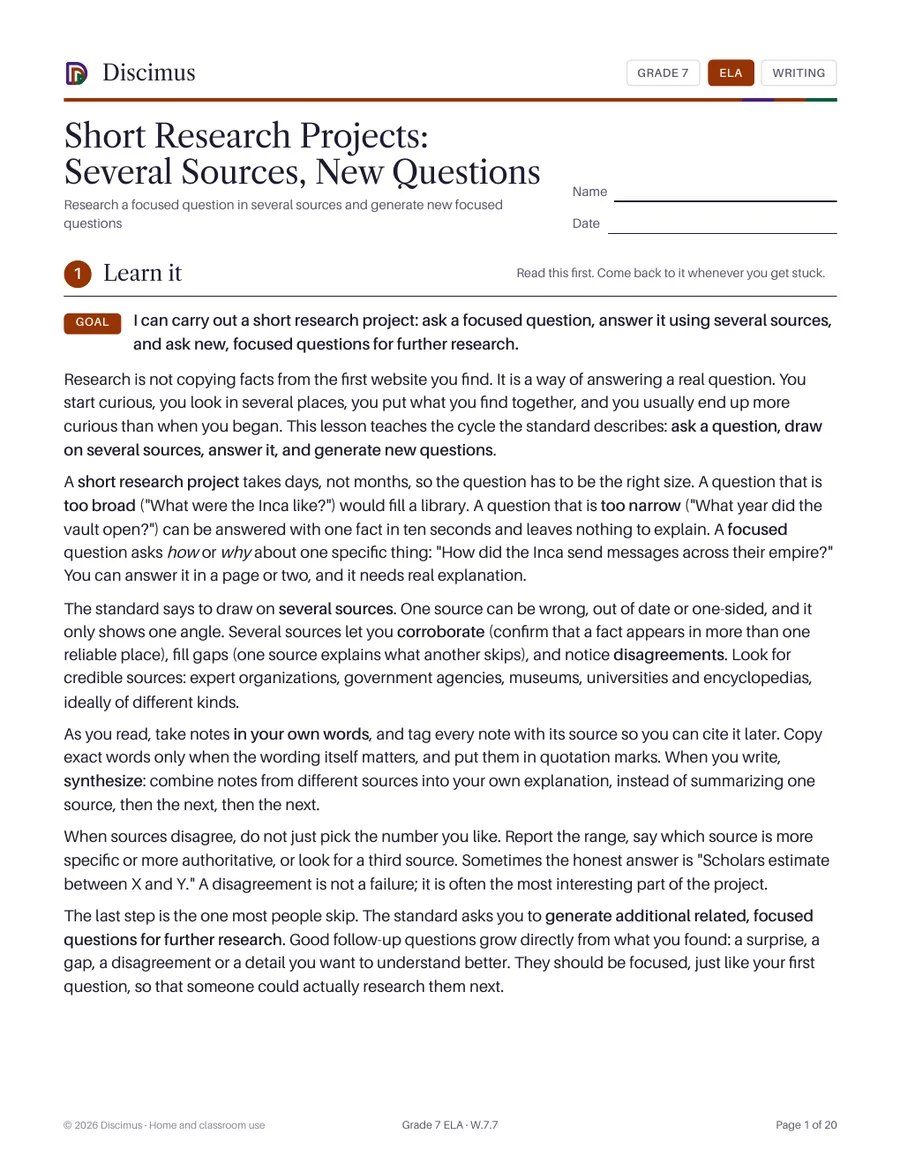
    Short Research Projects: Several Sources, New Questions

    Research a focused question in several sources and generate new focused questions
  • ELAGrade 7

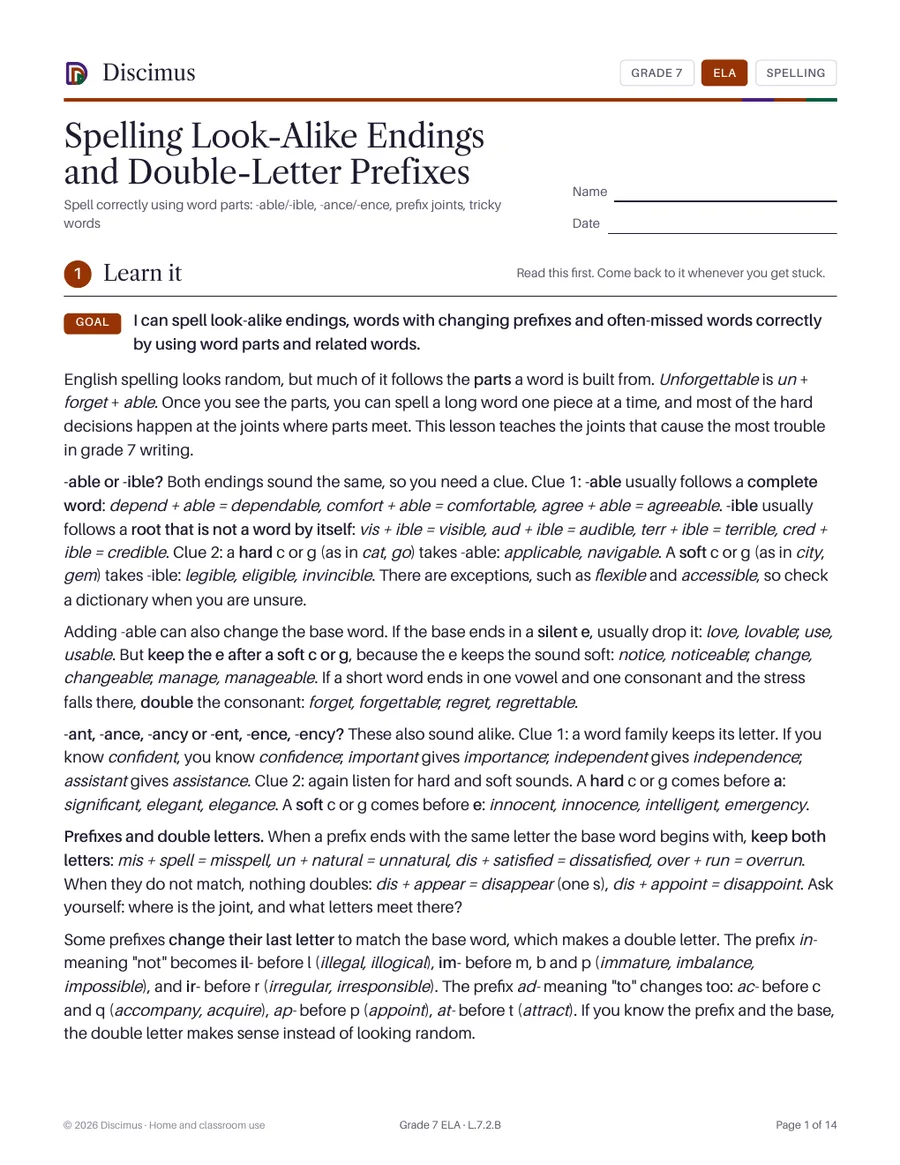
    Spelling Look-Alike Endings and Double-Letter Prefixes

    Spell correctly using word parts: -able/-ible, -ance/-ence, prefix joints, tricky words
  • ELAGrade 7

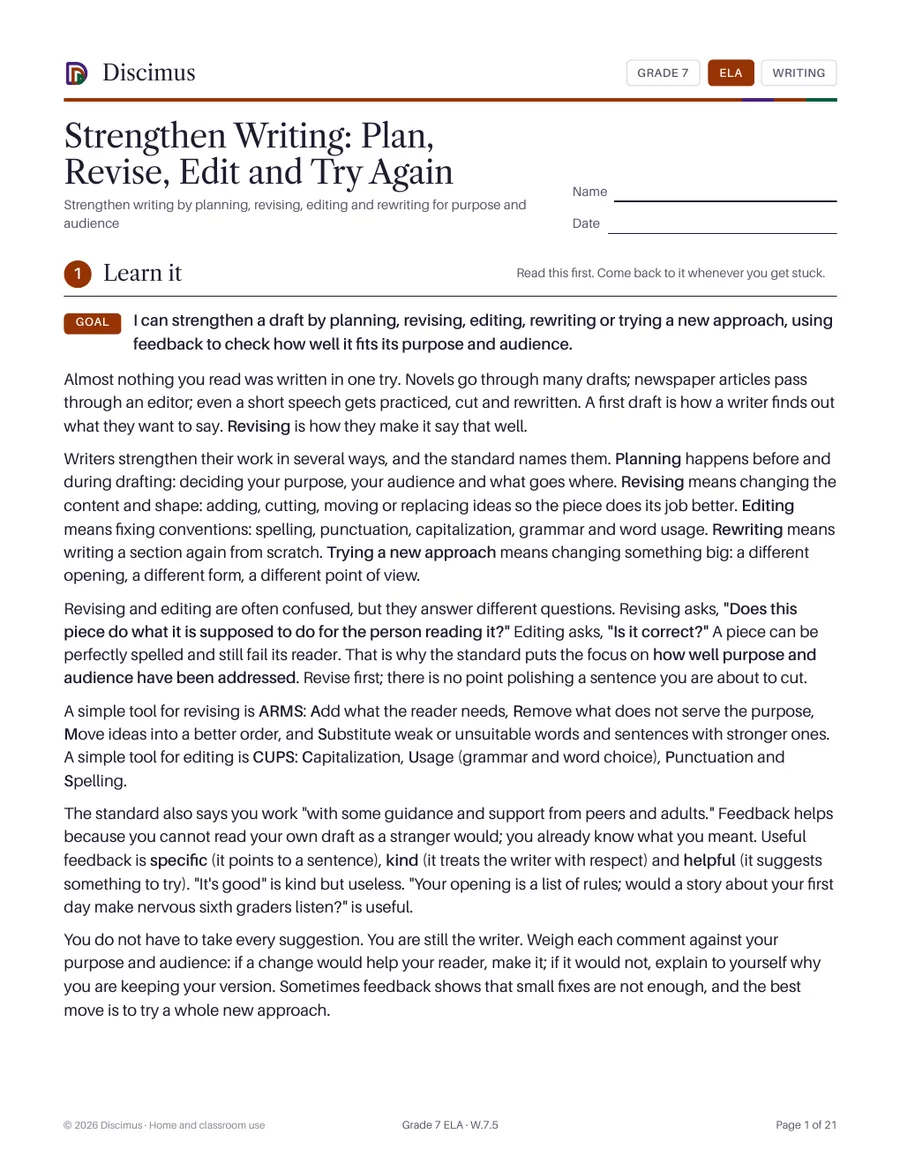
    Strengthen Writing: Plan, Revise, Edit and Try Again

    Strengthen writing by planning, revising, editing and rewriting for purpose and audience
  • ELAGrade 7

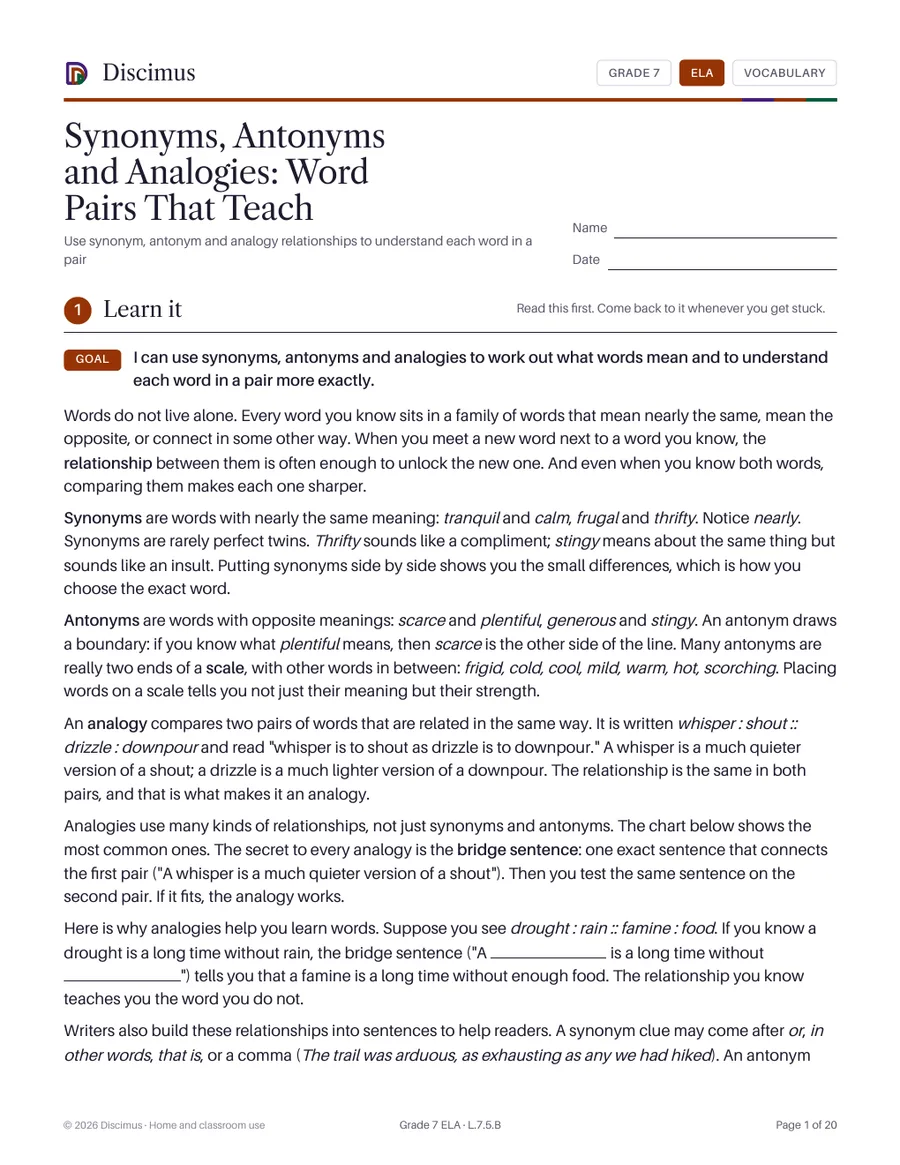
    Synonyms, Antonyms and Analogies: Word Pairs That Teach

    Use synonym, antonym and analogy relationships to understand each word in a pair
  • ELAGrade 7

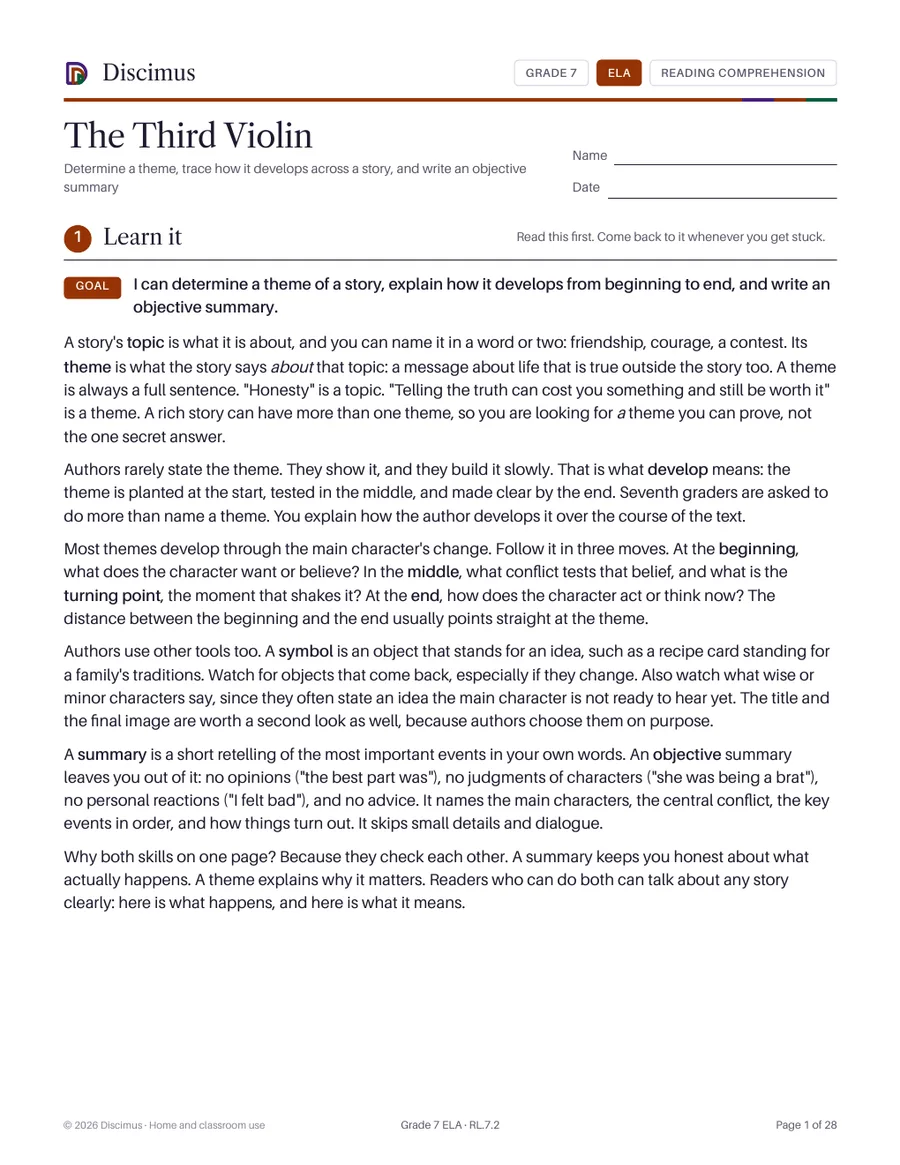
    The Third Violin

    Determine a theme, trace how it develops across a story, and write an objective summary
  • ELAGrade 7

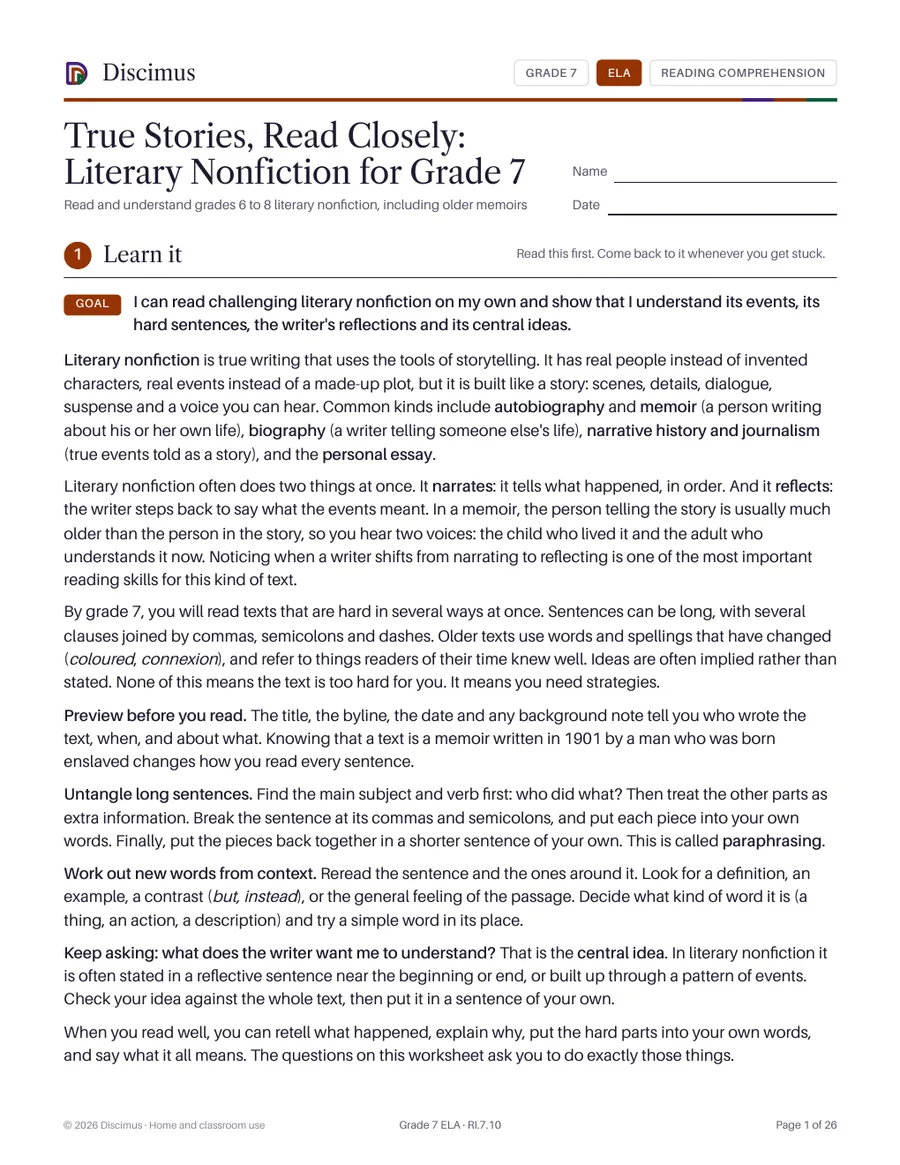
    True Stories, Read Closely: Literary Nonfiction for Grade 7

    Read and understand grades 6 to 8 literary nonfiction, including older memoirs
  • ELAGrade 7

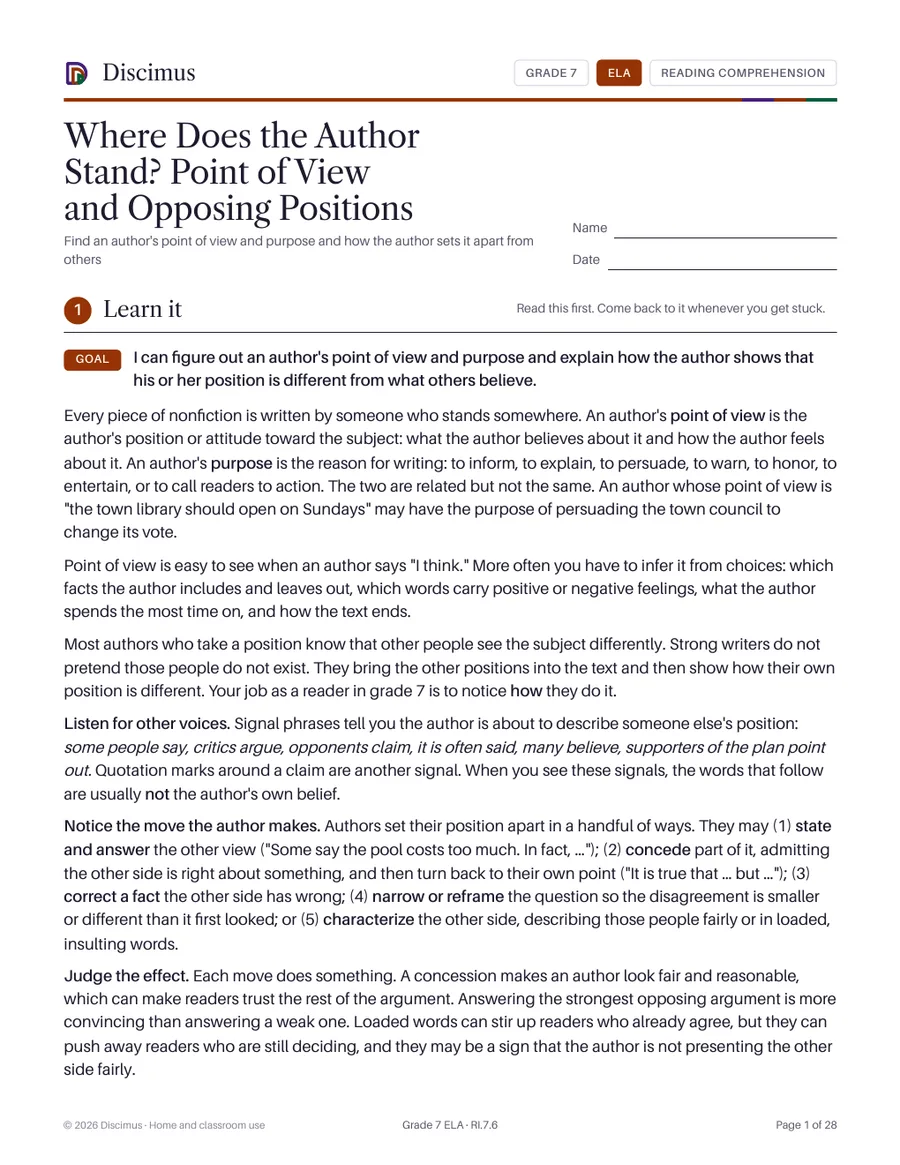
    Where Does the Author Stand? Point of View and Opposing Positions

    Find an author's point of view and purpose and how the author sets it apart from others
  • ELAGrade 7

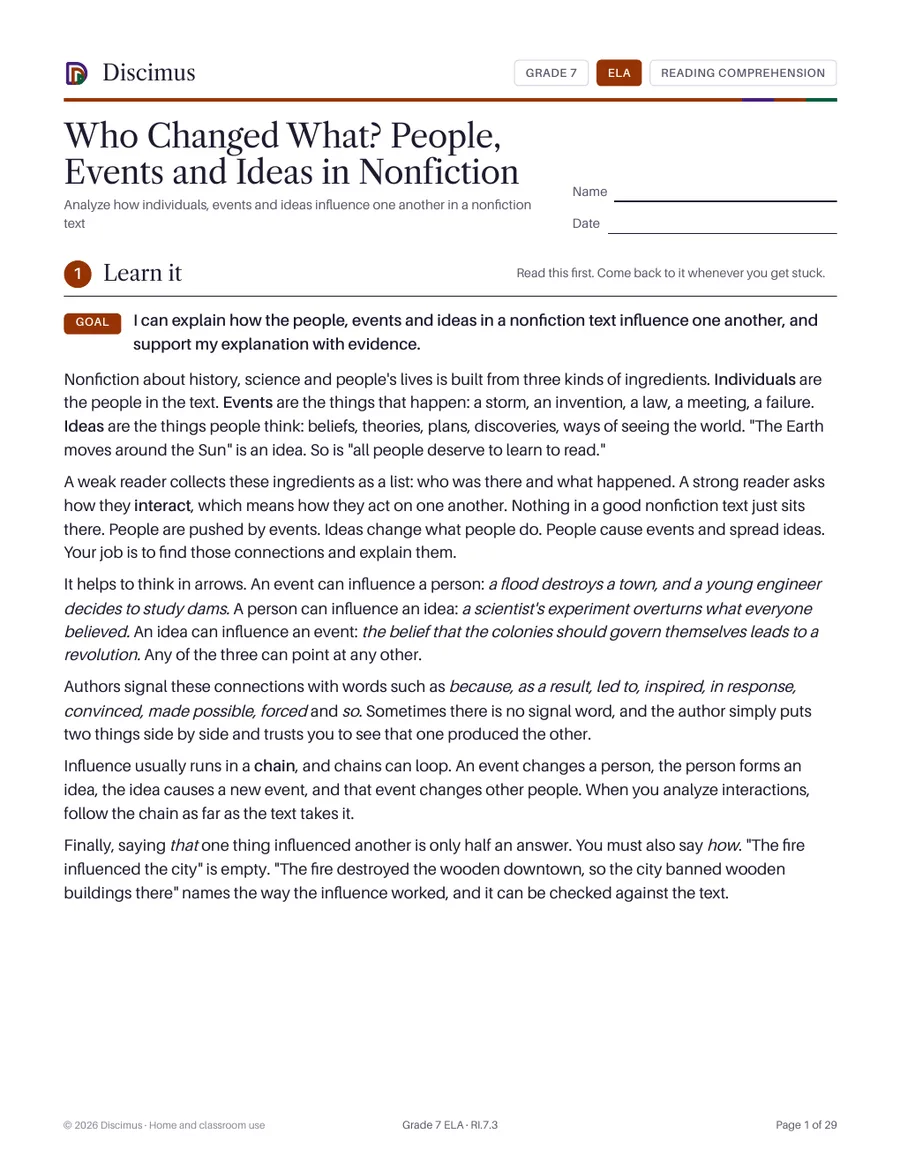
    Who Changed What? People, Events and Ideas in Nonfiction

    Analyze how individuals, events and ideas influence one another in a nonfiction text
  • ELAGrade 7

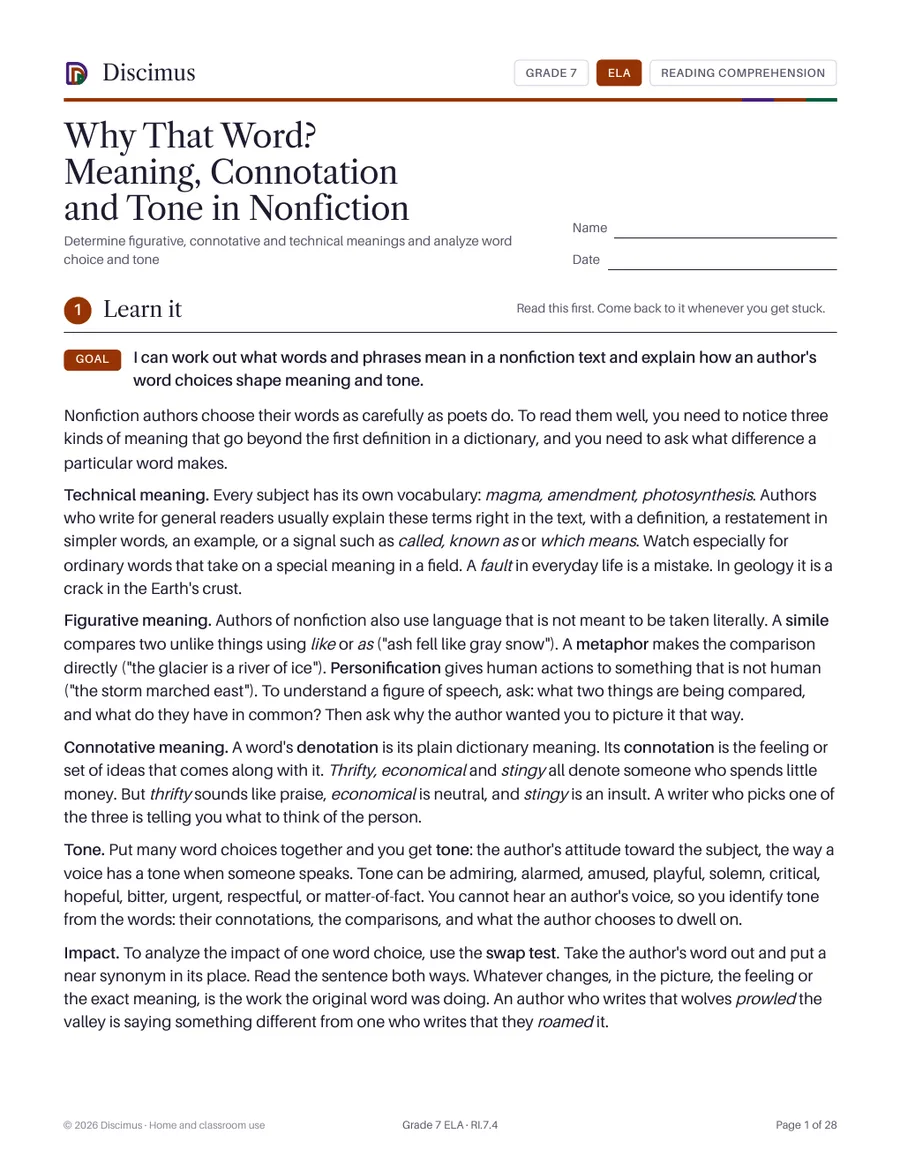
    Why That Word? Meaning, Connotation and Tone in Nonfiction

    Determine figurative, connotative and technical meanings and analyze word choice and tone
  • ELAGrade 7

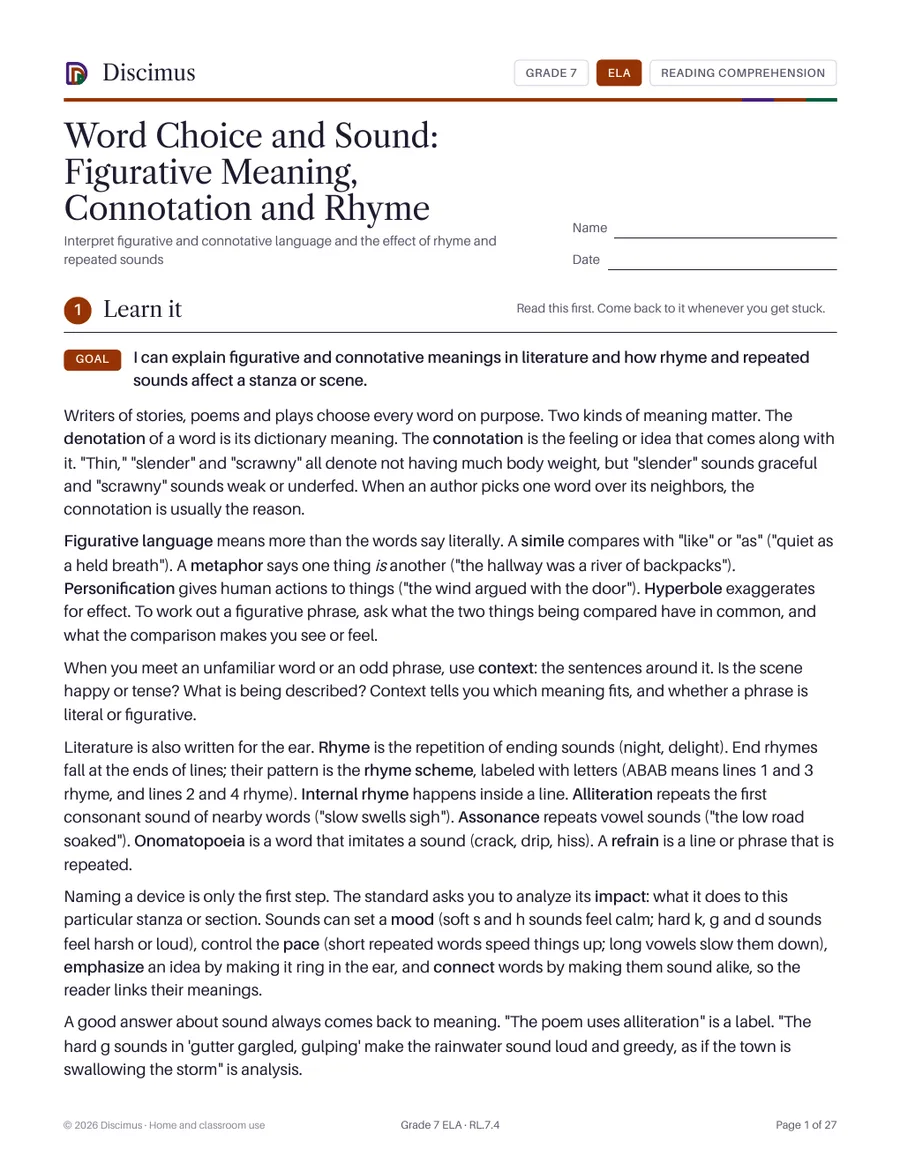
    Word Choice and Sound: Figurative Meaning, Connotation and Rhyme

    Interpret figurative and connotative language and the effect of rhyme and repeated sounds
  • ELAGrade 7

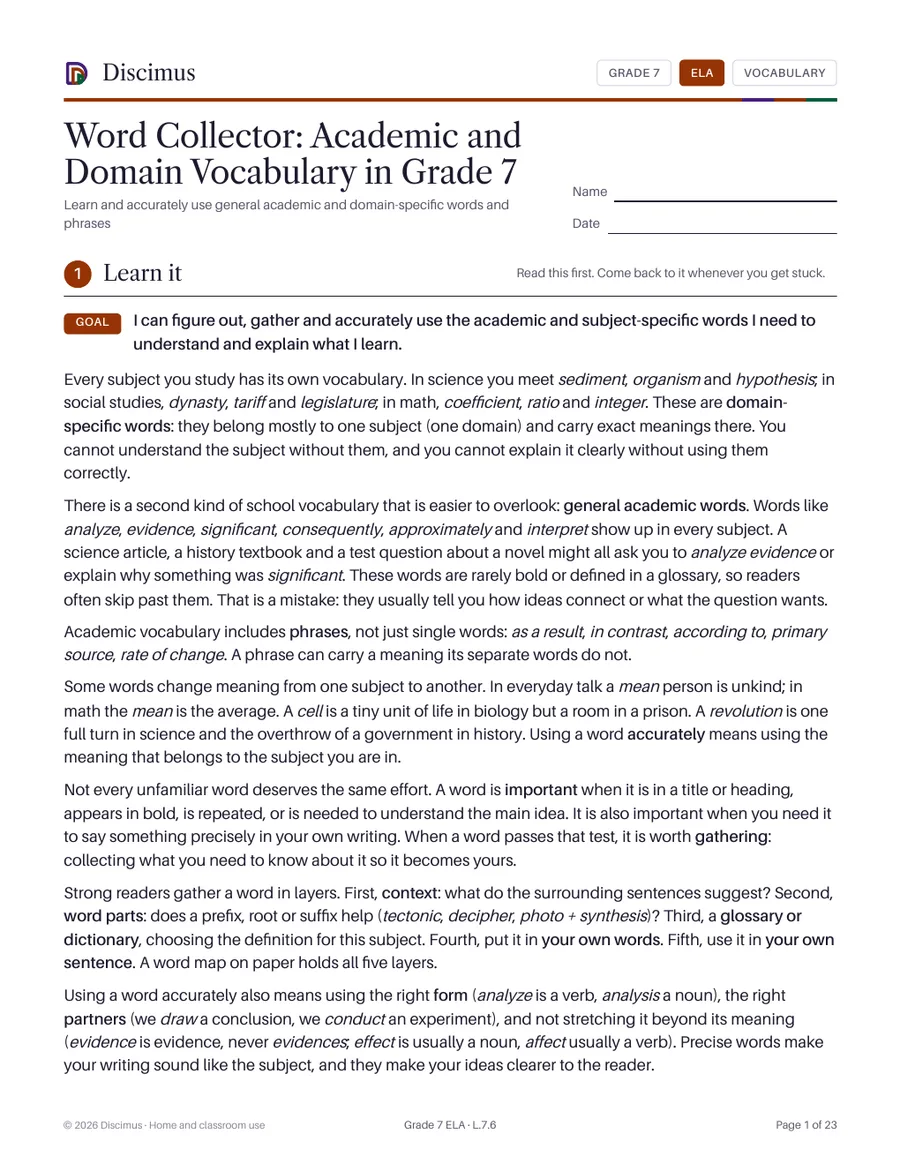
    Word Collector: Academic and Domain Vocabulary in Grade 7

    Learn and accurately use general academic and domain-specific words and phrases
  • ELAGrade 7

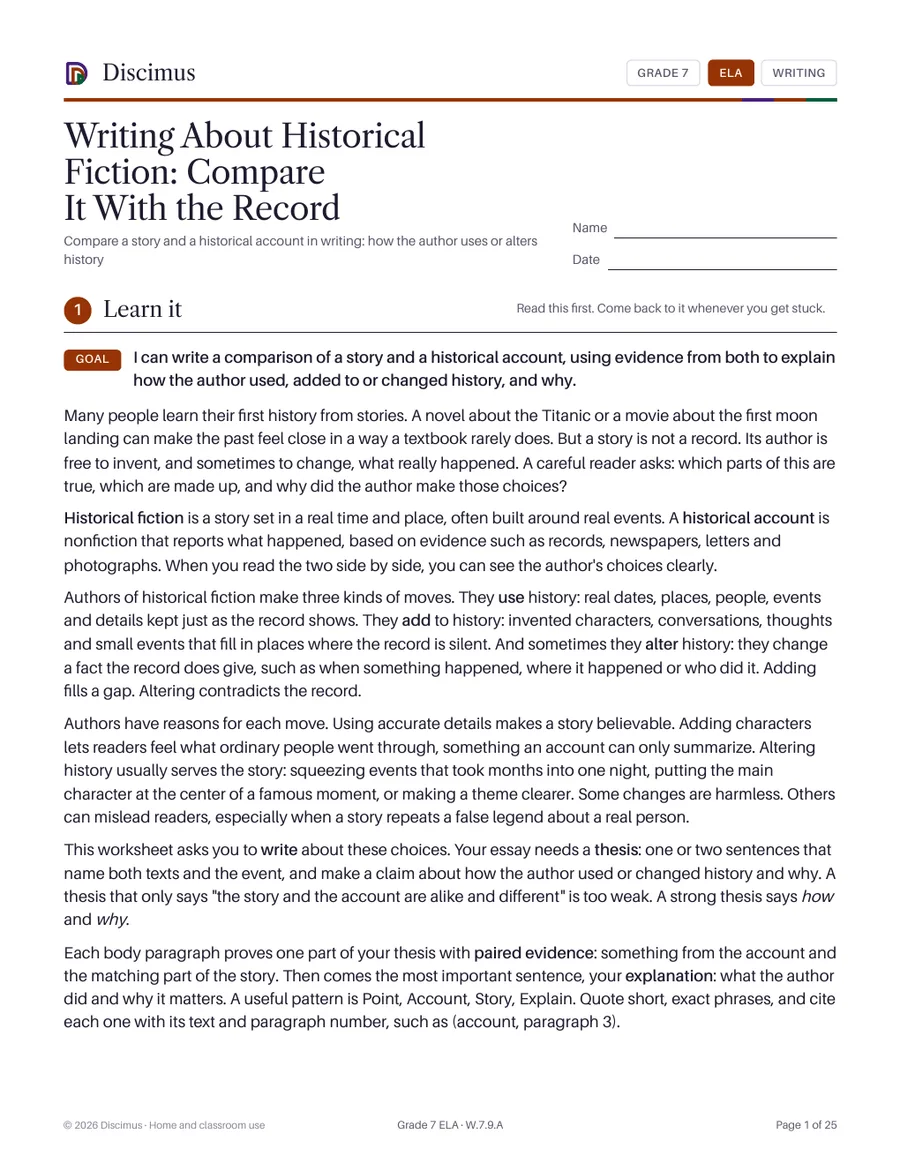
    Writing About Historical Fiction: Compare It With the Record

    Compare a story and a historical account in writing: how the author uses or alters history
  • ELAGrade 7

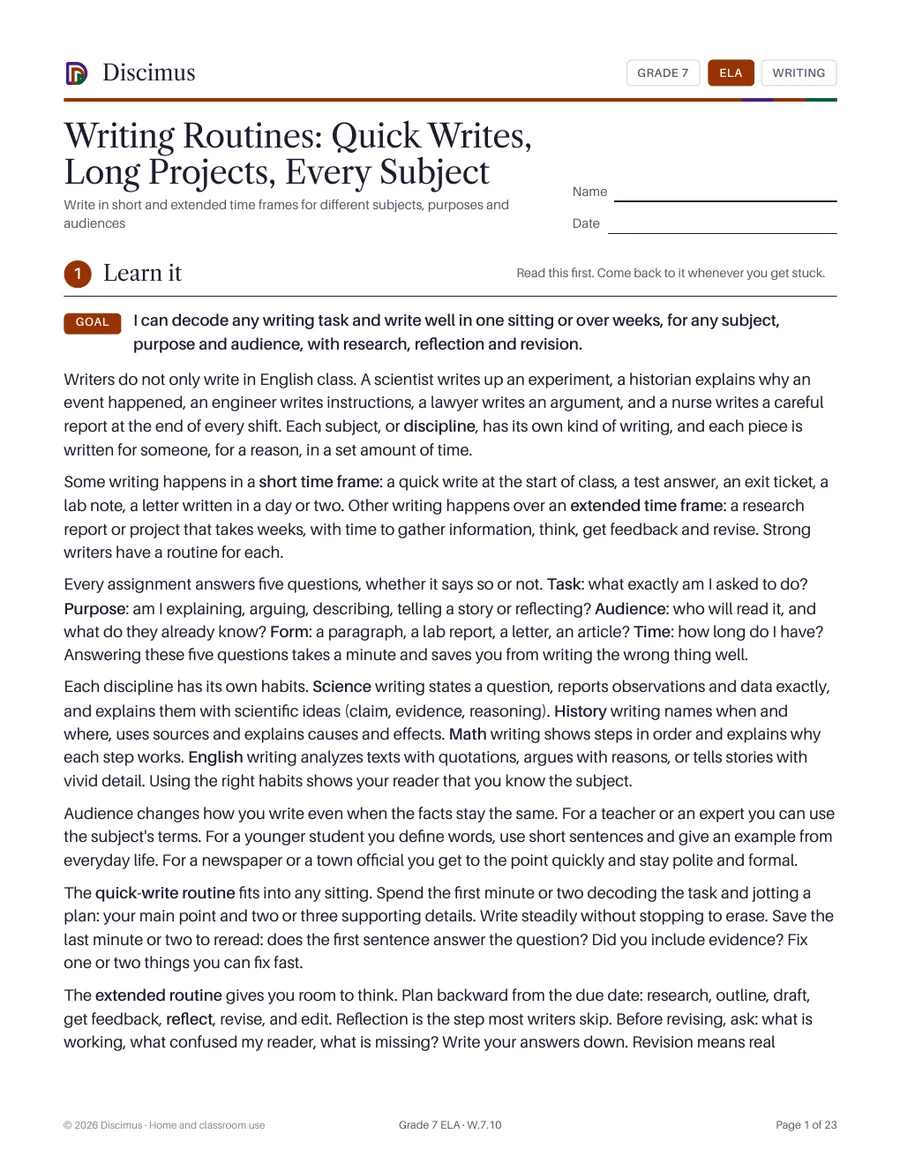
    Writing Routines: Quick Writes, Long Projects, Every Subject

    Write in short and extended time frames for different subjects, purposes and audiences
  • ELAGrade 7

    Writing to Evaluate an Argument: Is It Sound and Supported?

    Write an evaluation of an argument: trace its claims and judge its reasoning and evidence

Discimus

Docendo discimus. By teaching, we learn.

By age

  • Early Childhood
  • Elementary School
  • Middle School
  • High School
  • All grades

By subject

  • Math
  • English Language Arts
  • Science
  • Social Studies
  • Foreign Language
  • Technology

Discimus

  • Membership
  • Occasions
  • Standards
  • About
  • Contact

© 2026 Ceterum. All rights reserved. Worksheets are for home and single-classroom use.

  • Terms
  • Privacy