Skip to content
Discimus
  • Grades
  • Subjects
  • Occasions
  • Standards
  • Membership
Sign inJoin
  1. Home
  2. Grades
  3. Grade 7
  4. Social Studies

C3 Framework for Social Studies

Grade 7 Social Studies

History, geography, civics and economics.

TopicsCivics 7Civics and Government 4Economics 13Government 2Money and Markets 2Rules and Laws 1
StandardsD2.Civ.1.6-8D2.Civ.2.6-8D2.Civ.3.6-8D2.Civ.4.6-8D2.Civ.5.6-8D2.Civ.6.6-8D2.Civ.7.6-8D2.Civ.8.6-8D2.Civ.9.6-8D2.Civ.10.6-8D2.Civ.11.6-8D2.Civ.12.6-8D2.Civ.13.6-8D2.Civ.14.6-8D2.Eco.1.6-8D2.Eco.2.6-8D2.Eco.3.6-8D2.Eco.4.6-8D2.Eco.5.6-8D2.Eco.6.6-8D2.Eco.7.6-8D2.Eco.8.6-8D2.Eco.9.6-8D2.Eco.10.6-8D2.Eco.11.6-8D2.Eco.12.6-8D2.Eco.13.6-8D2.Eco.14.6-8D2.Eco.15.6-8
  • Social StudiesGrade 7

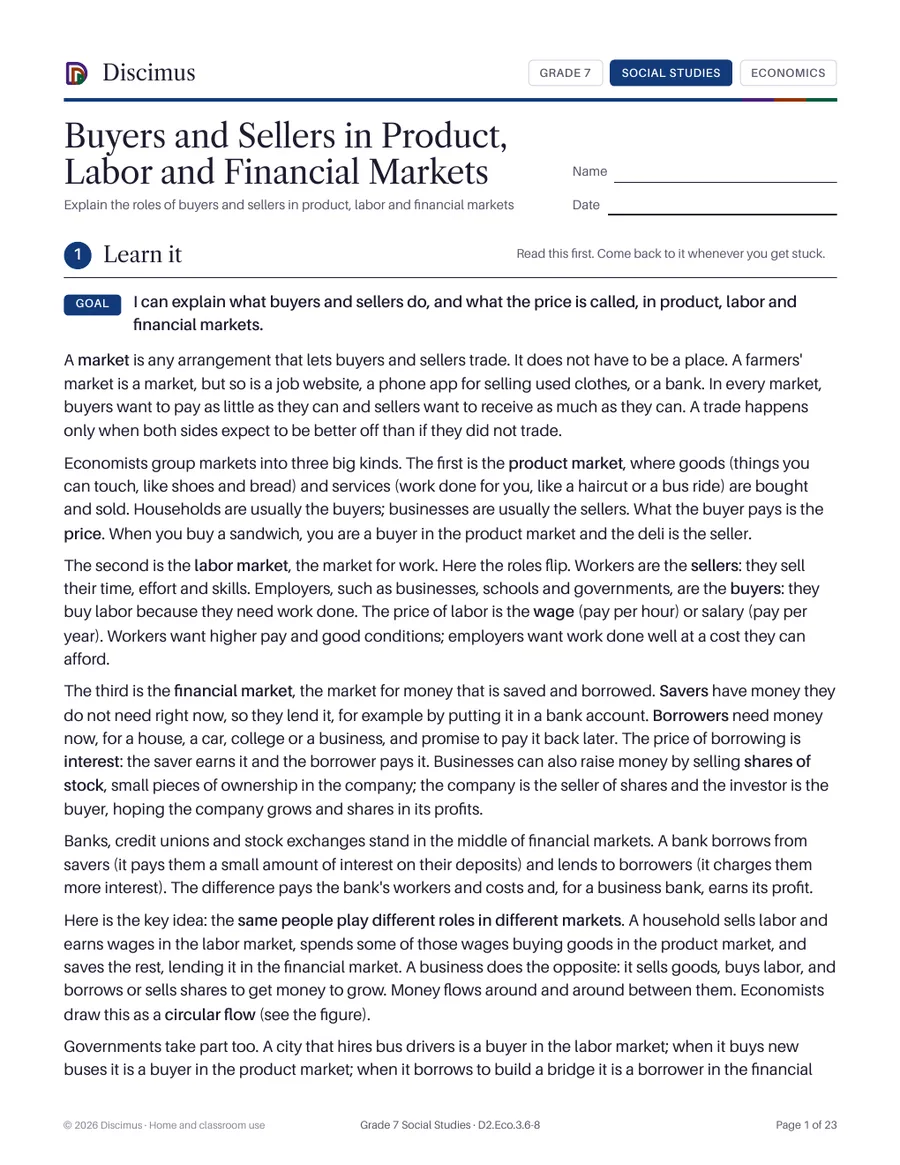
    Built for a Purpose: How Different Bodies Make Decisions

    Tell decision procedures apart by the civic purpose each is designed to serve
  • Social StudiesGrade 7

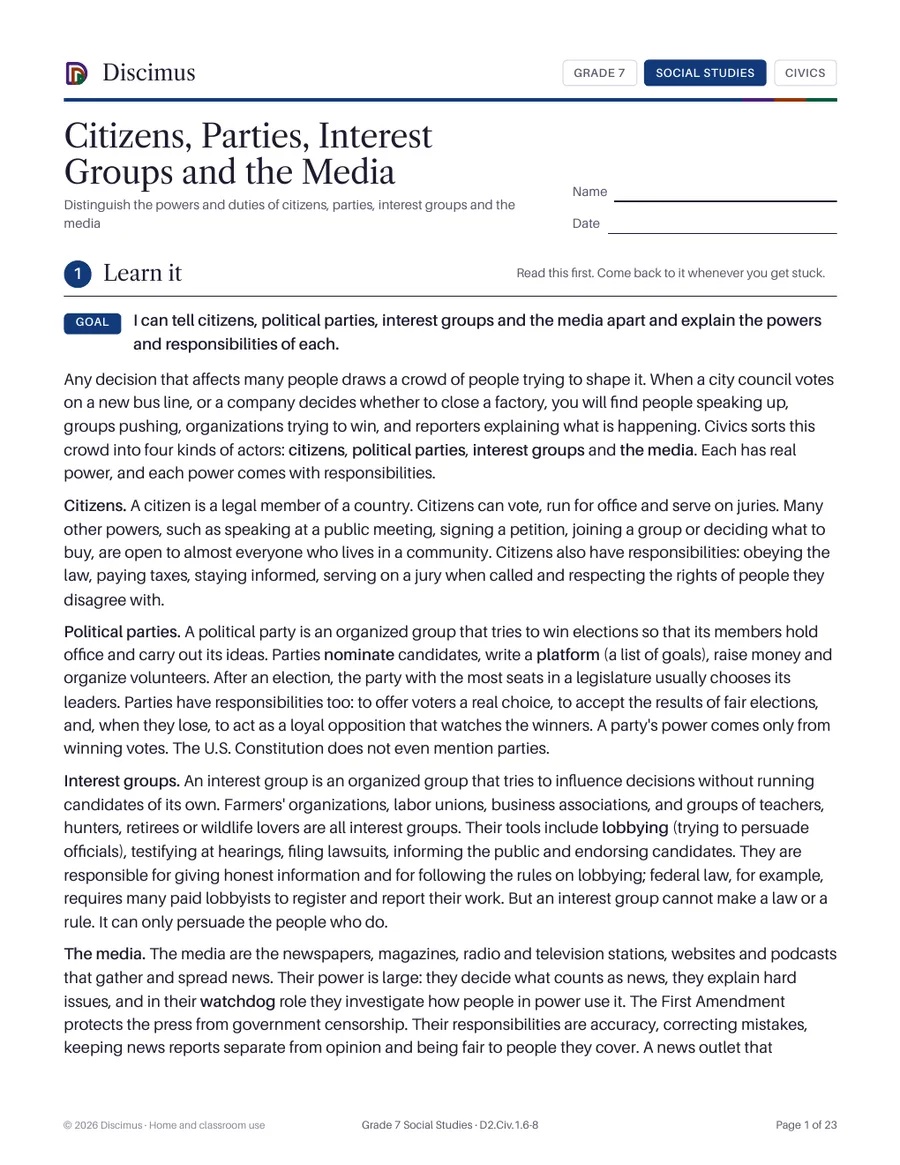
    Buyers and Sellers in Product, Labor and Financial Markets

    Explain the roles of buyers and sellers in product, labor and financial markets
  • Social StudiesGrade 7

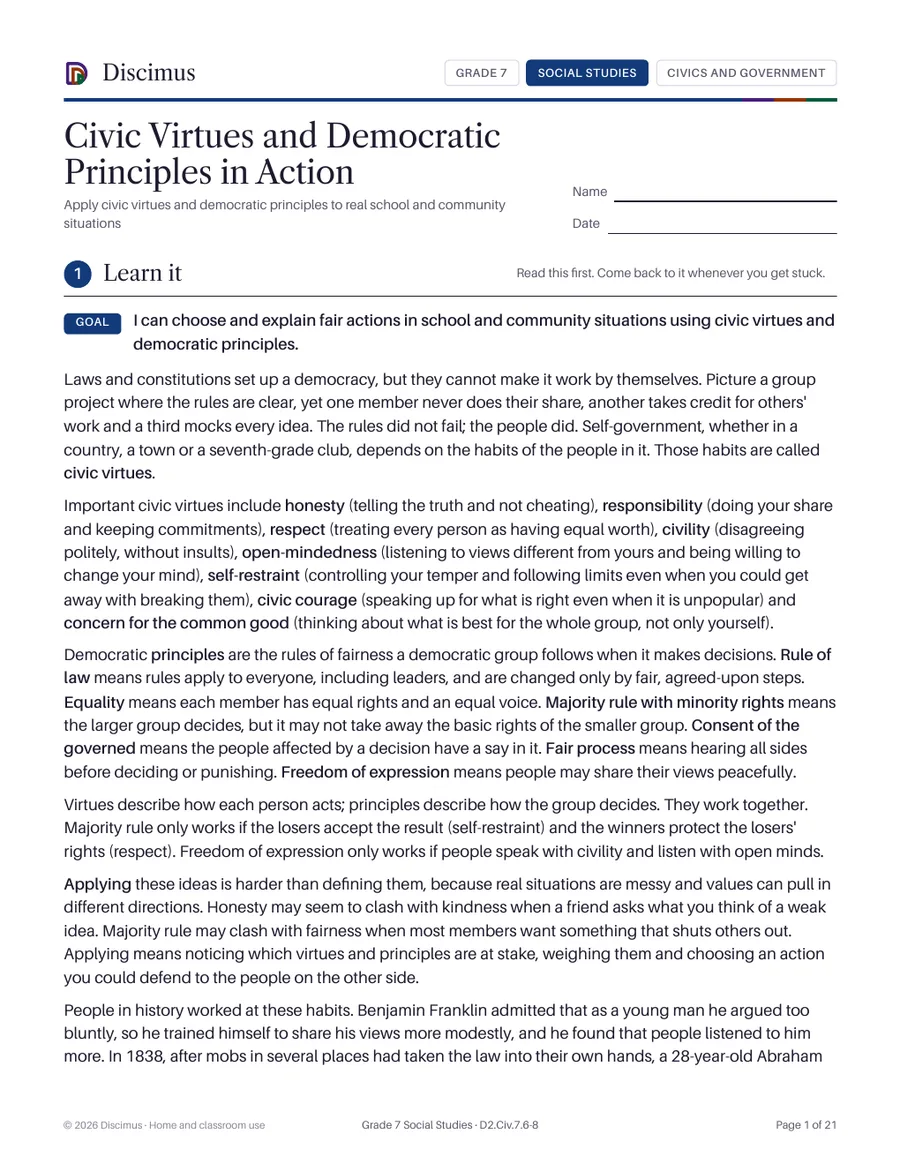
    Citizens, Parties, Interest Groups and the Media

    Distinguish the powers and duties of citizens, parties, interest groups and the media
  • Social StudiesGrade 7

    Civic Virtues and Democratic Principles in Action

    Apply civic virtues and democratic principles to real school and community situations
  • Social StudiesGrade 7

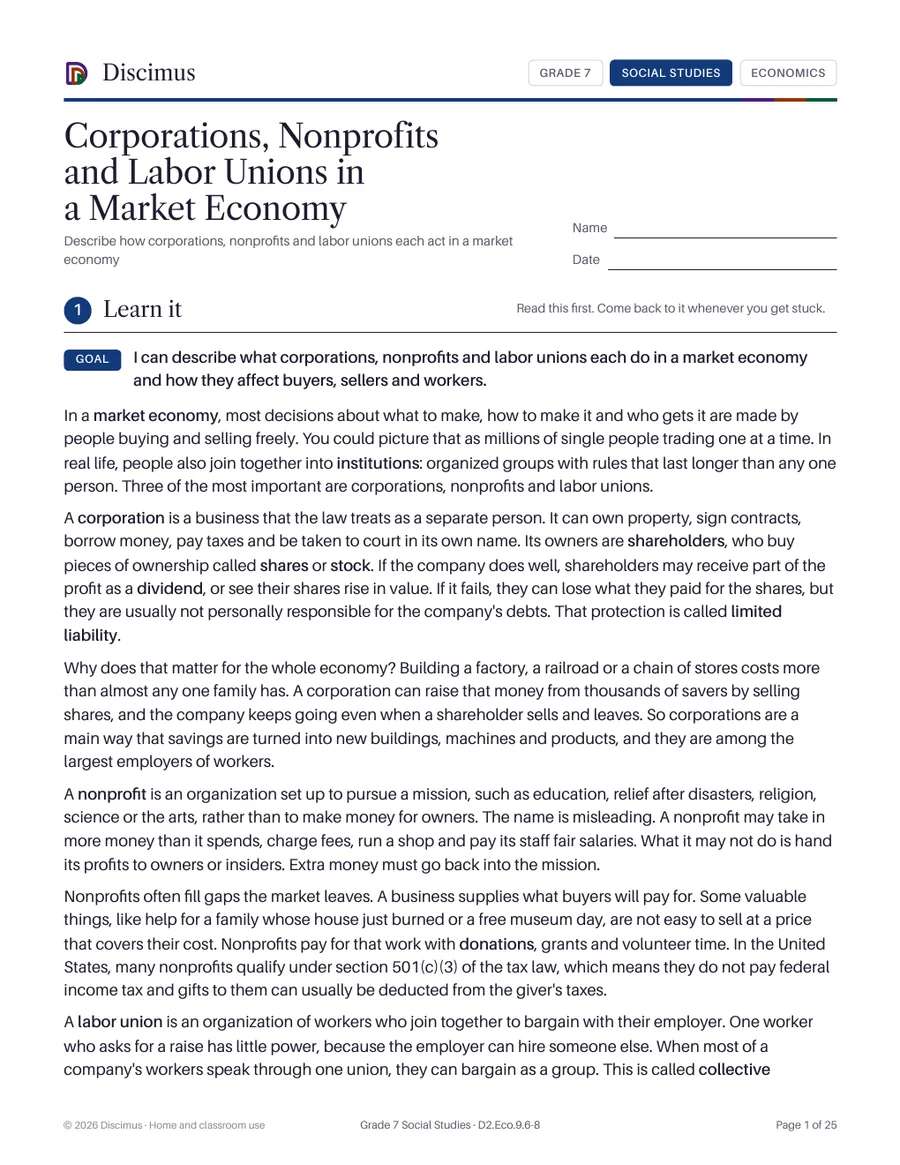
    Corporations, Nonprofits and Labor Unions in a Market Economy

    Describe how corporations, nonprofits and labor unions each act in a market economy
  • Social StudiesGrade 7

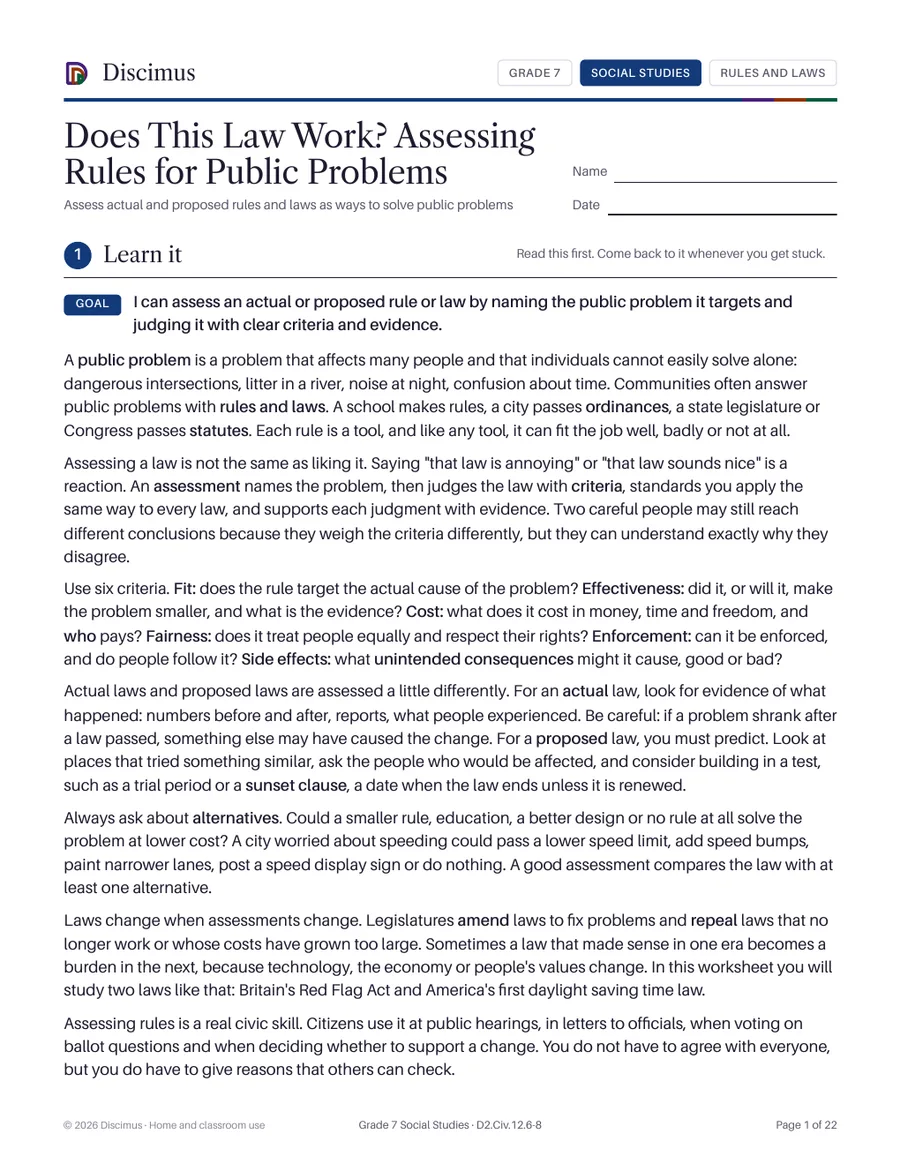
    Does This Law Work? Assessing Rules for Public Problems

    Assess actual and proposed rules and laws as ways to solve public problems
  • Social StudiesGrade 7

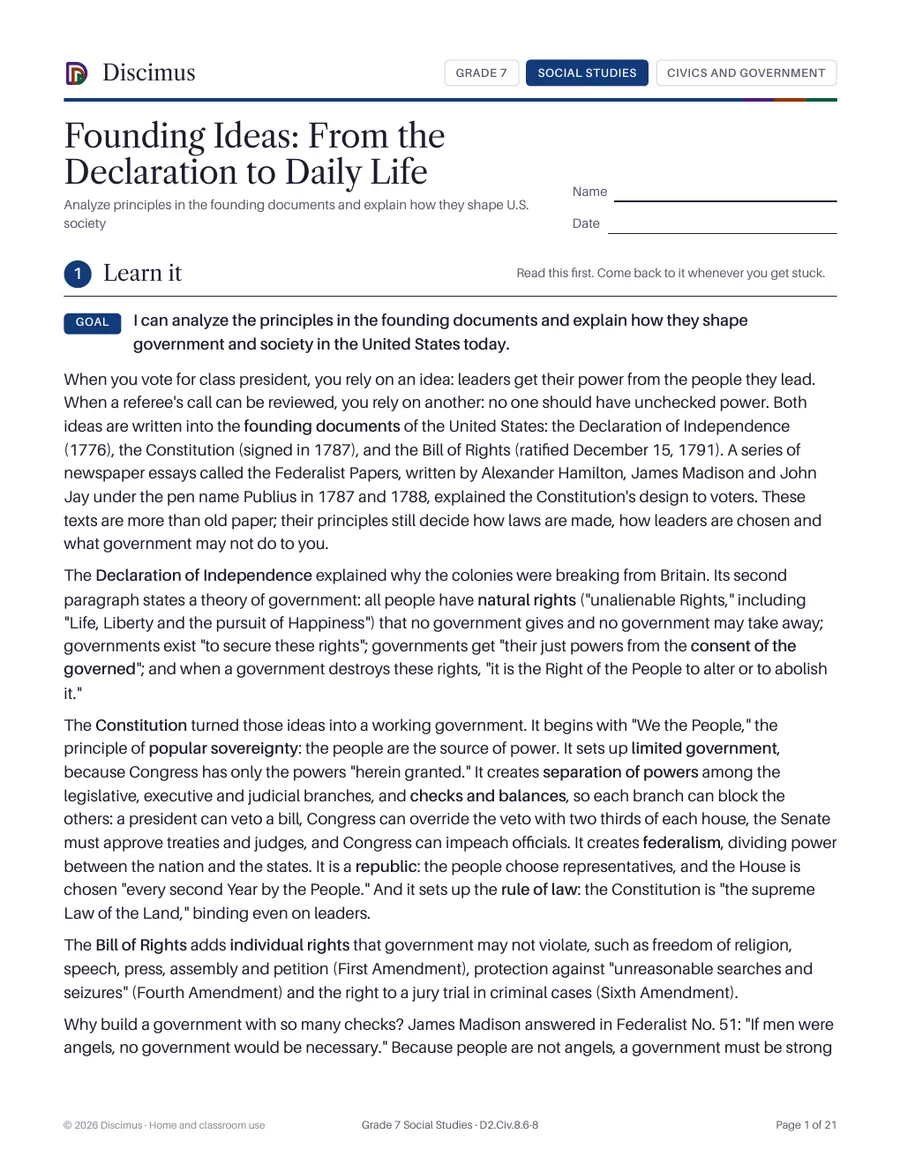
    Founding Ideas: From the Declaration to Daily Life

    Analyze principles in the founding documents and explain how they shape U.S. society
  • Social StudiesGrade 7

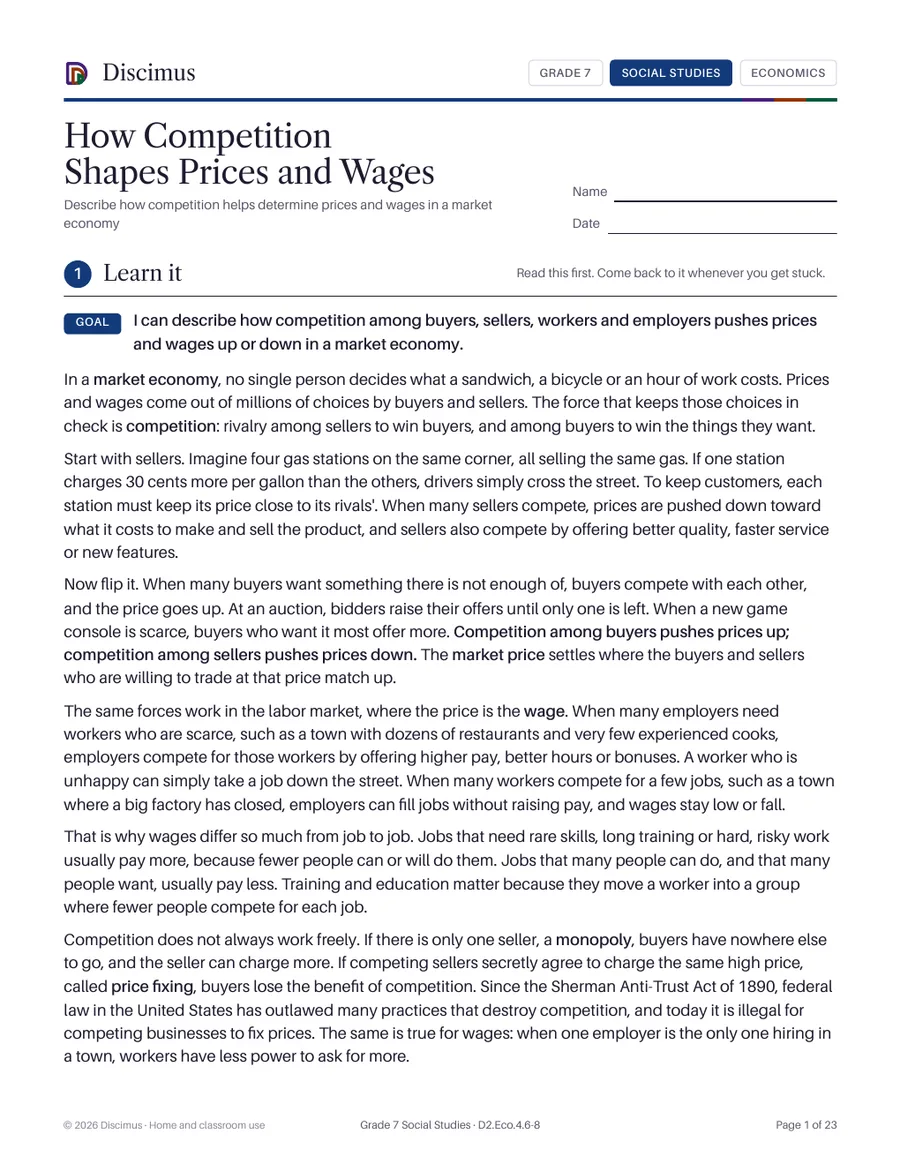
    How Competition Shapes Prices and Wages

    Describe how competition helps determine prices and wages in a market economy
  • Social StudiesGrade 7

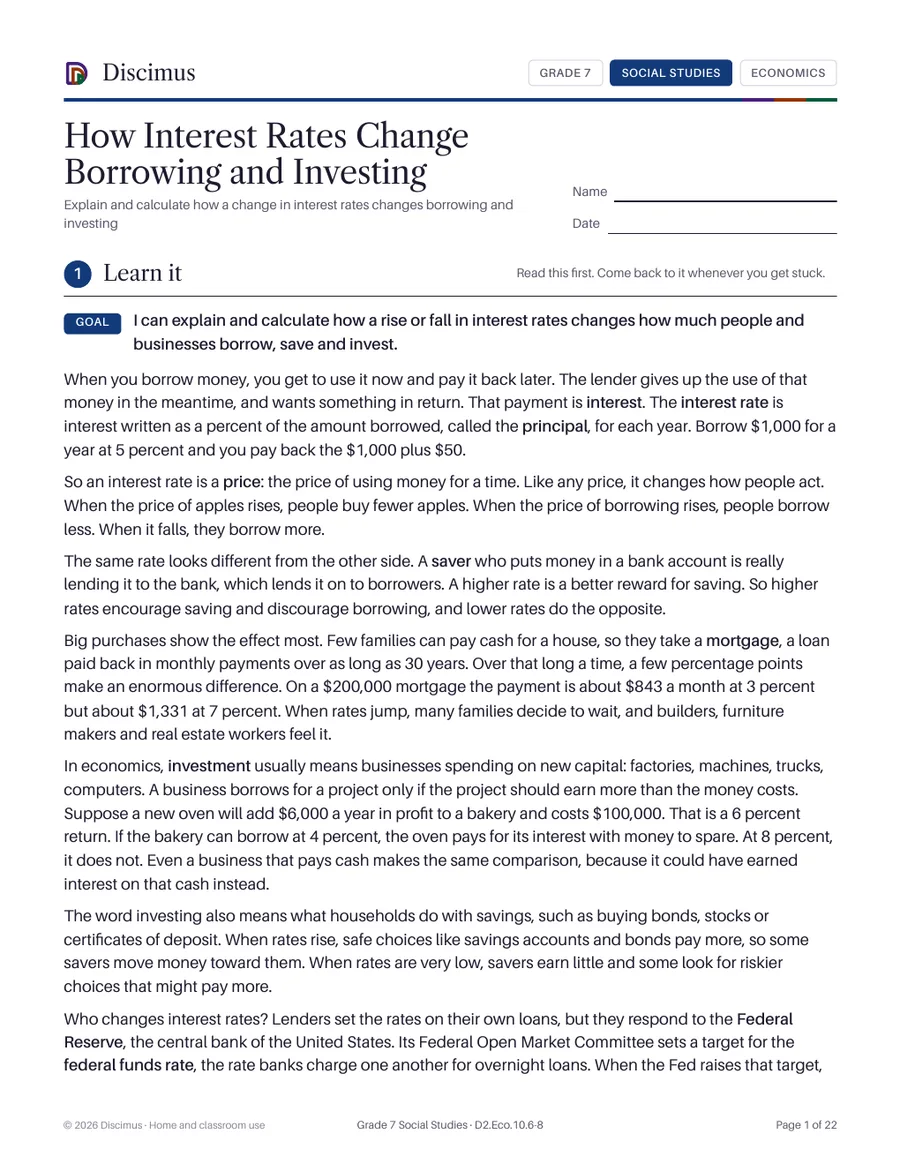
    How Interest Rates Change Borrowing and Investing

    Explain and calculate how a change in interest rates changes borrowing and investing
  • Social StudiesGrade 7

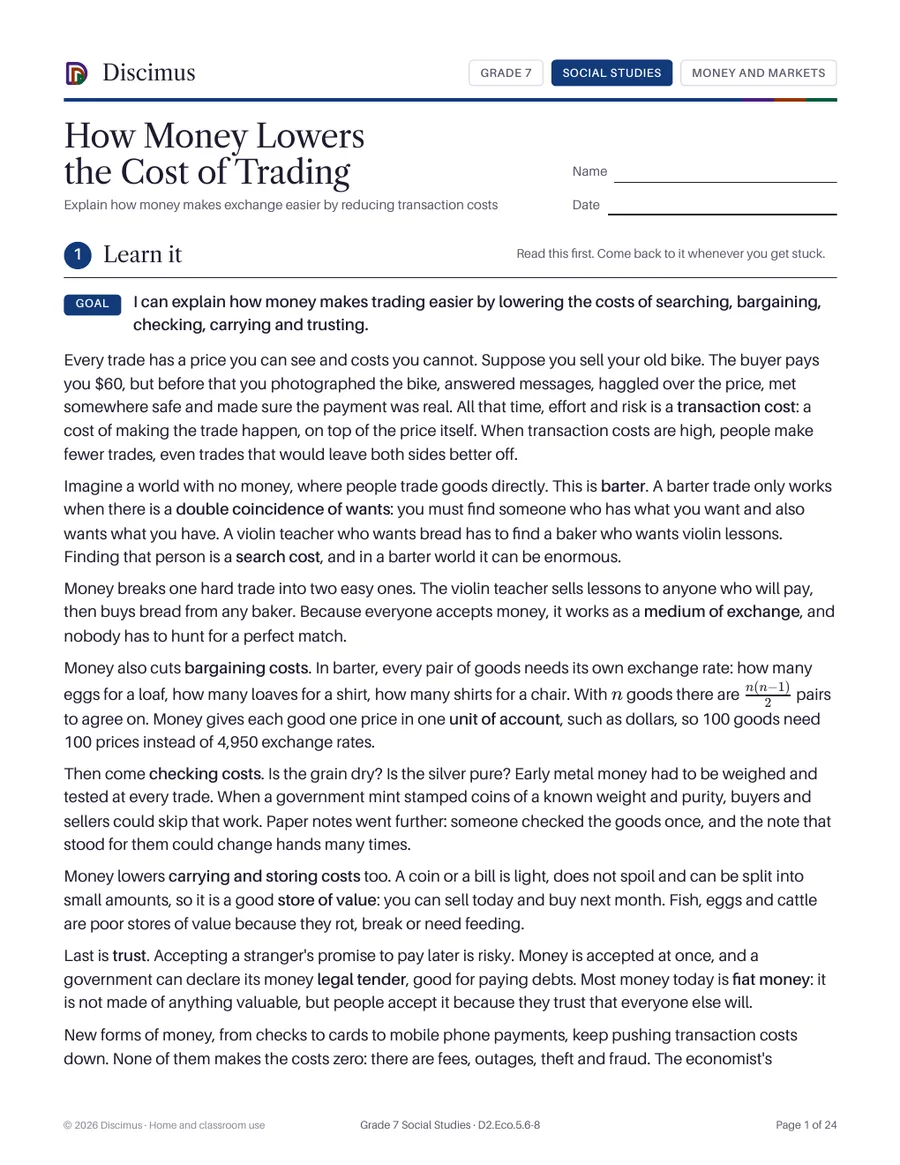
    How Money Lowers the Cost of Trading

    Explain how money makes exchange easier by reducing transaction costs
  • Social StudiesGrade 7

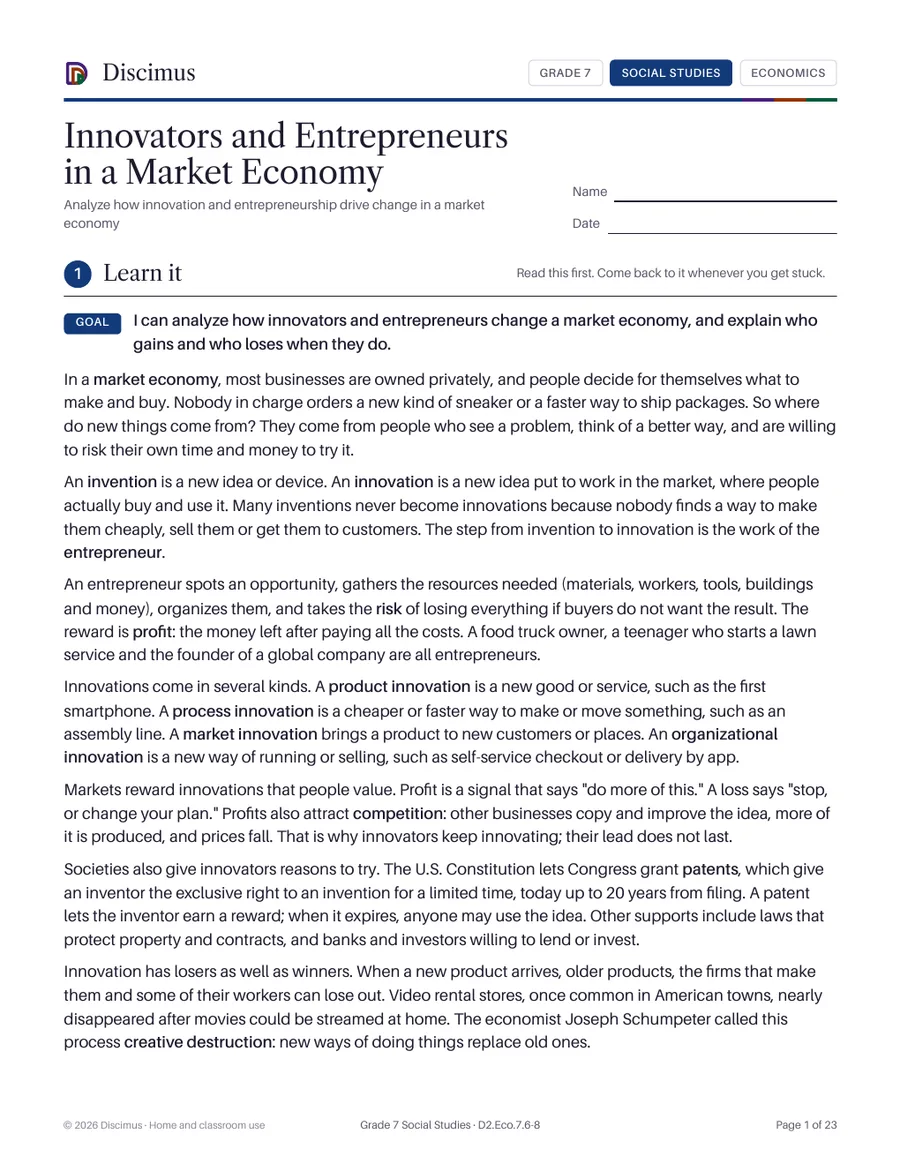
    Innovators and Entrepreneurs in a Market Economy

    Analyze how innovation and entrepreneurship drive change in a market economy
  • Social StudiesGrade 7

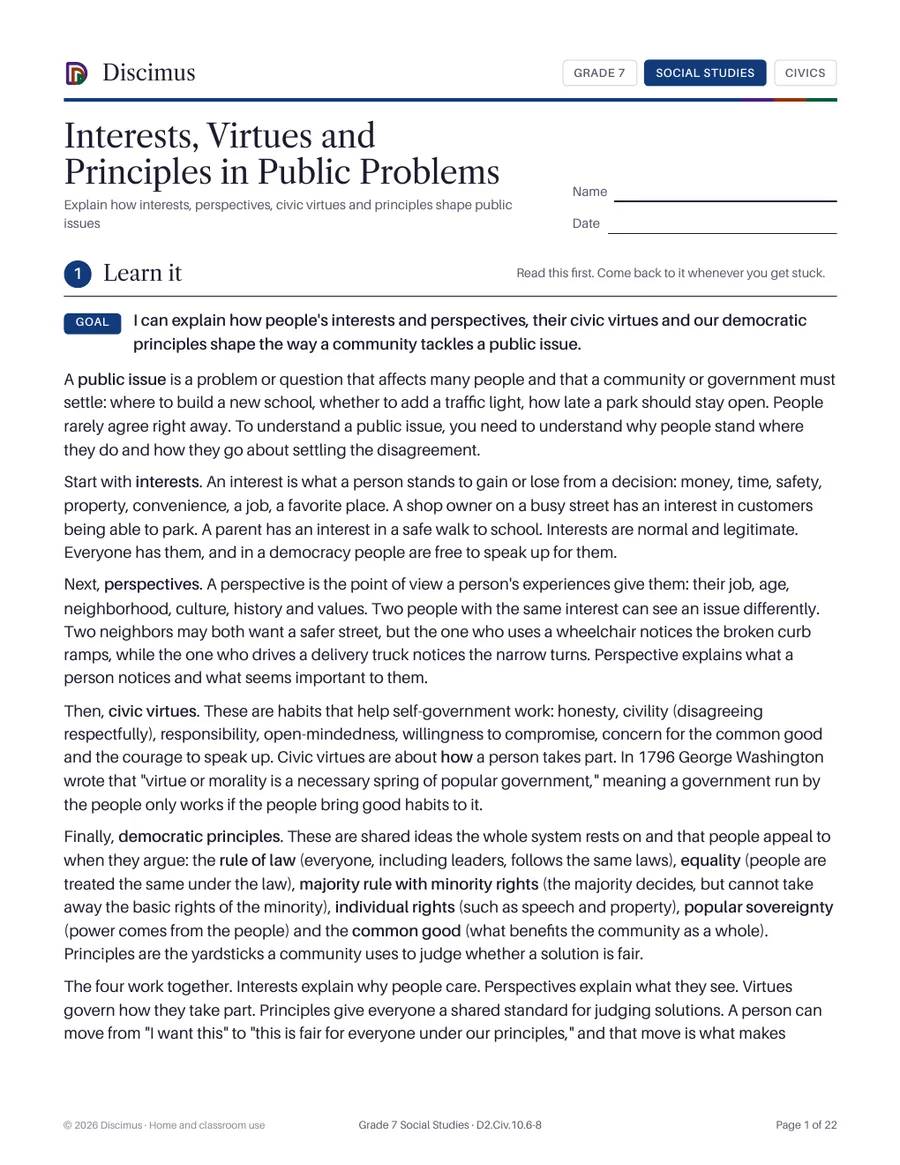
    Interests, Virtues and Principles in Public Problems

    Explain how interests, perspectives, civic virtues and principles shape public issues
  • Social StudiesGrade 7

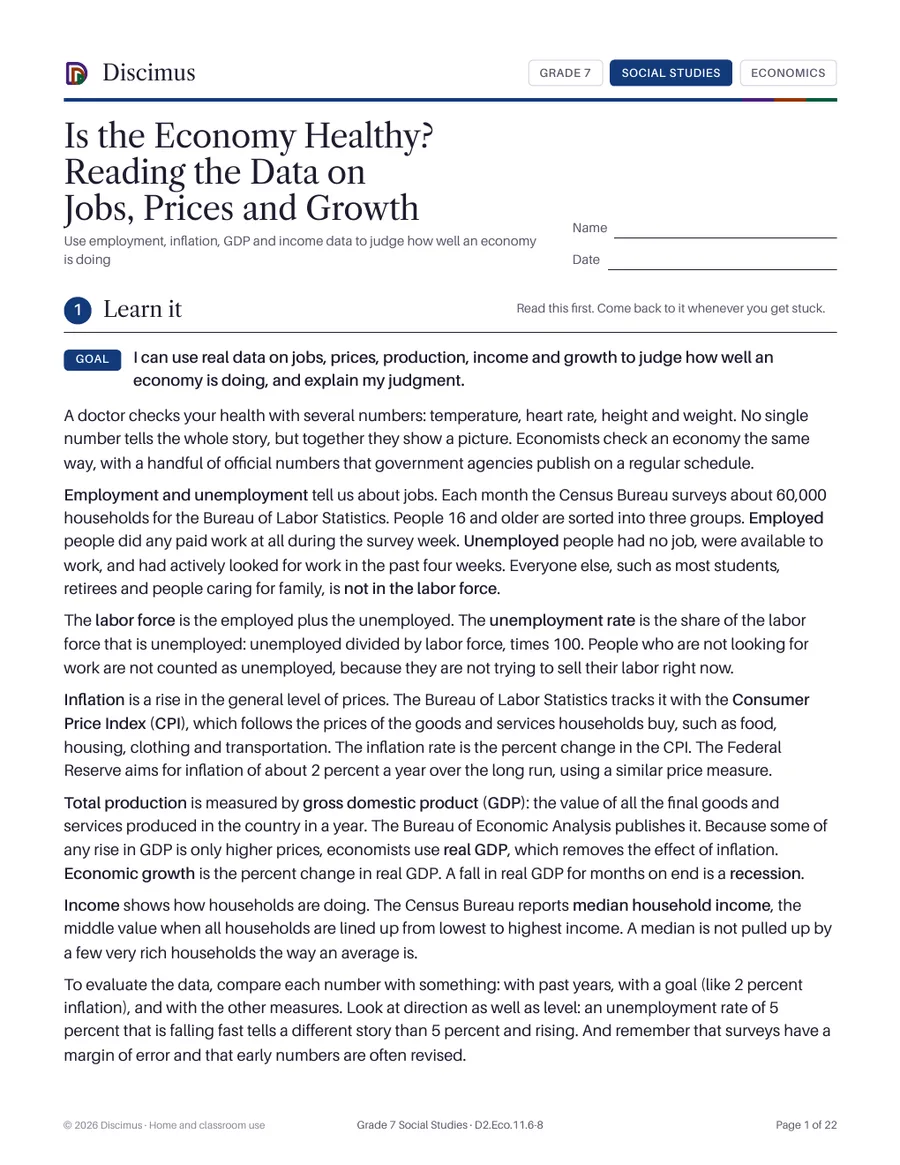
    Is the Economy Healthy? Reading the Data on Jobs, Prices and Growth

    Use employment, inflation, GDP and income data to judge how well an economy is doing
  • Social StudiesGrade 7

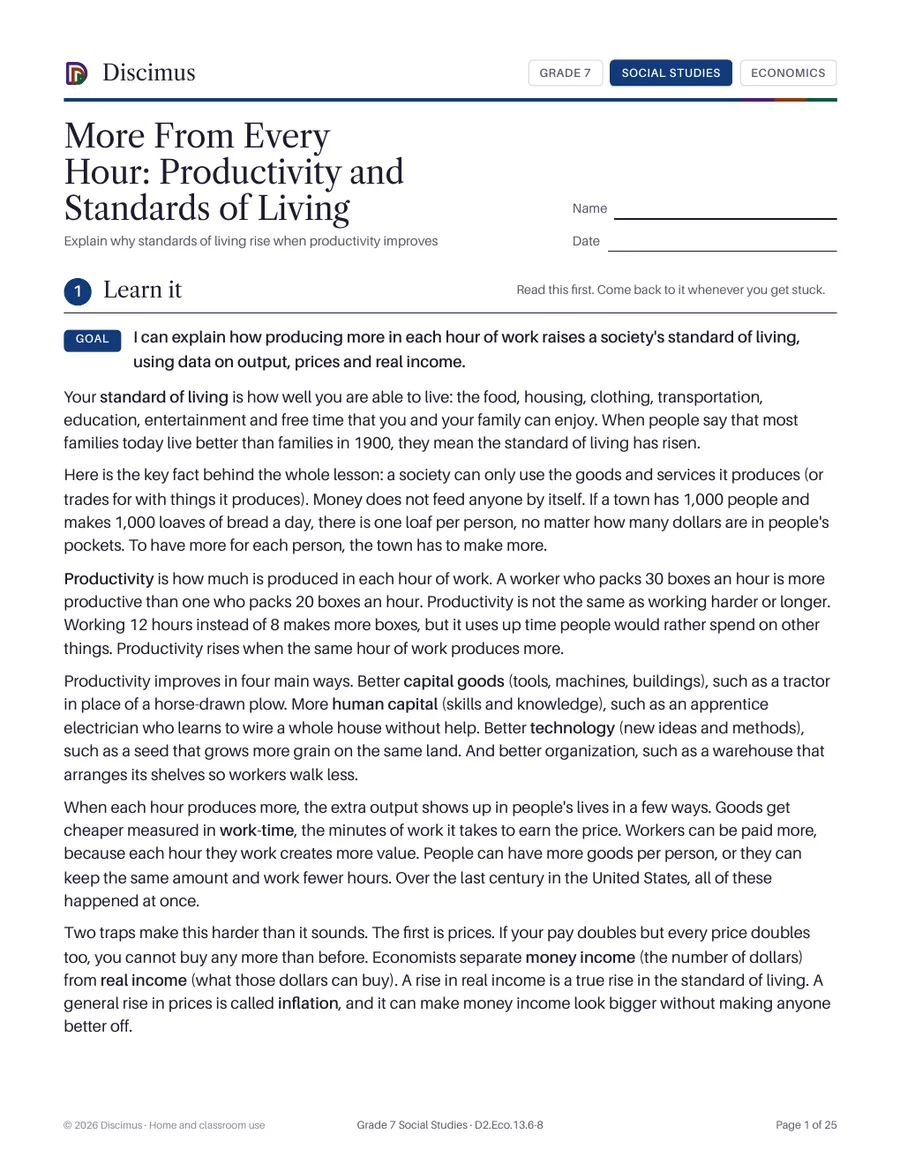
    More From Every Hour: Productivity and Standards of Living

    Explain why standards of living rise when productivity improves
  • Social StudiesGrade 7

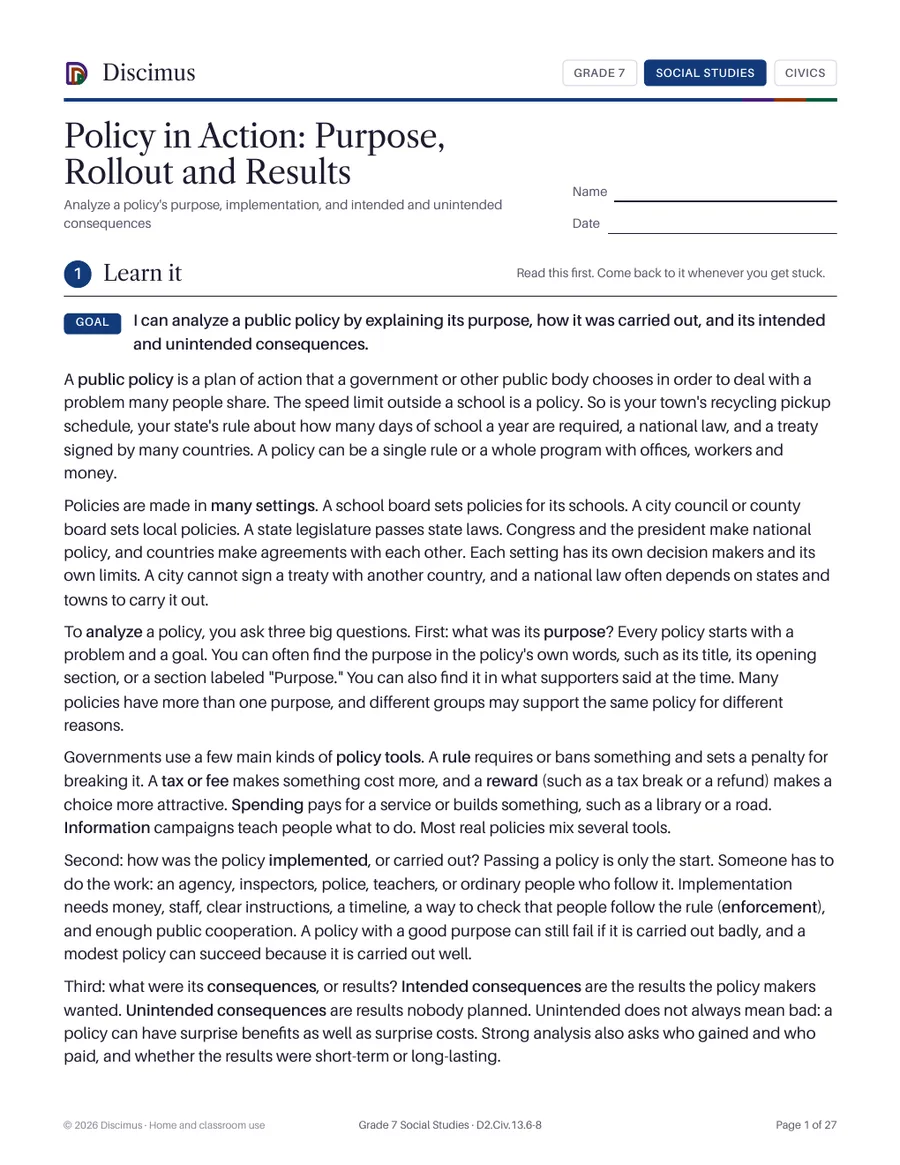
    Policy in Action: Purpose, Rollout and Results

    Analyze a policy's purpose, implementation, and intended and unintended consequences
  • Social StudiesGrade 7

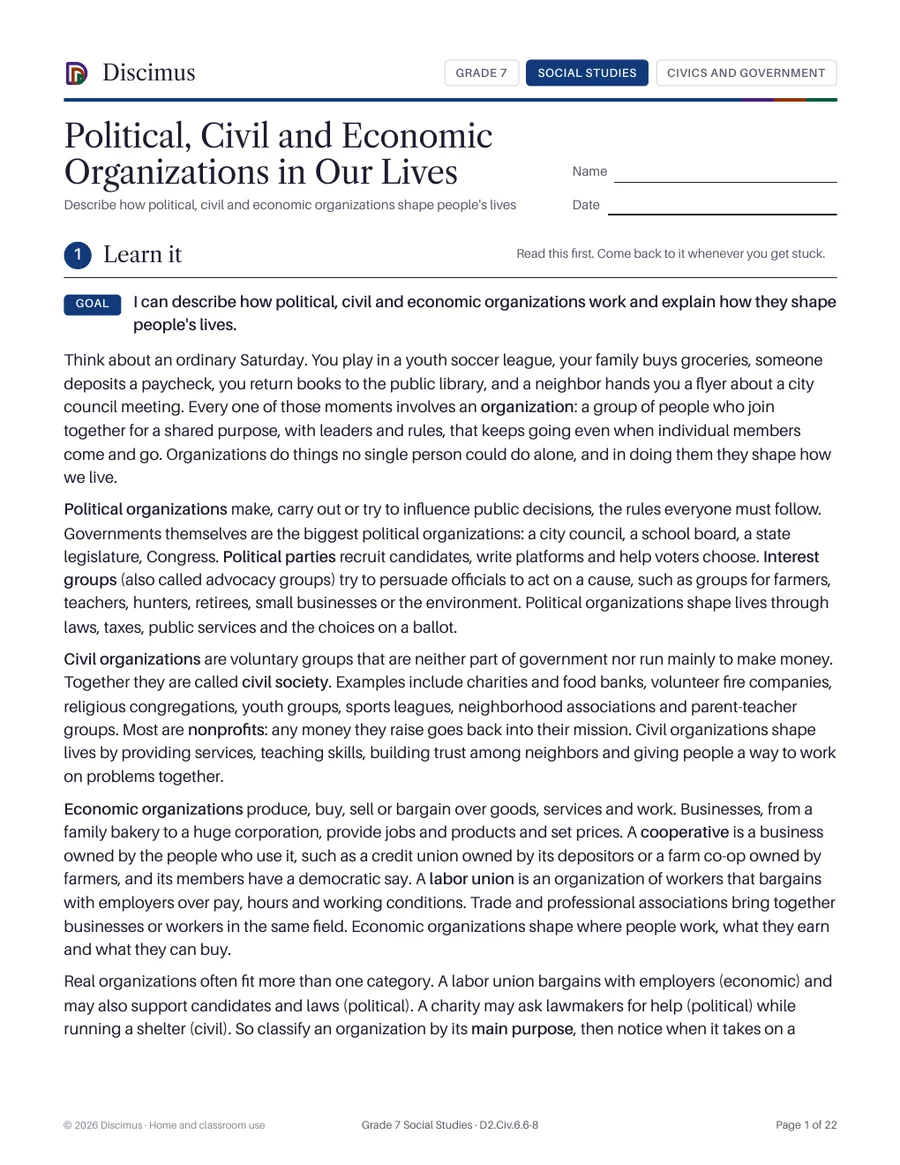
    Political, Civil and Economic Organizations in Our Lives

    Describe how political, civil and economic organizations shape people's lives
  • Social StudiesGrade 7

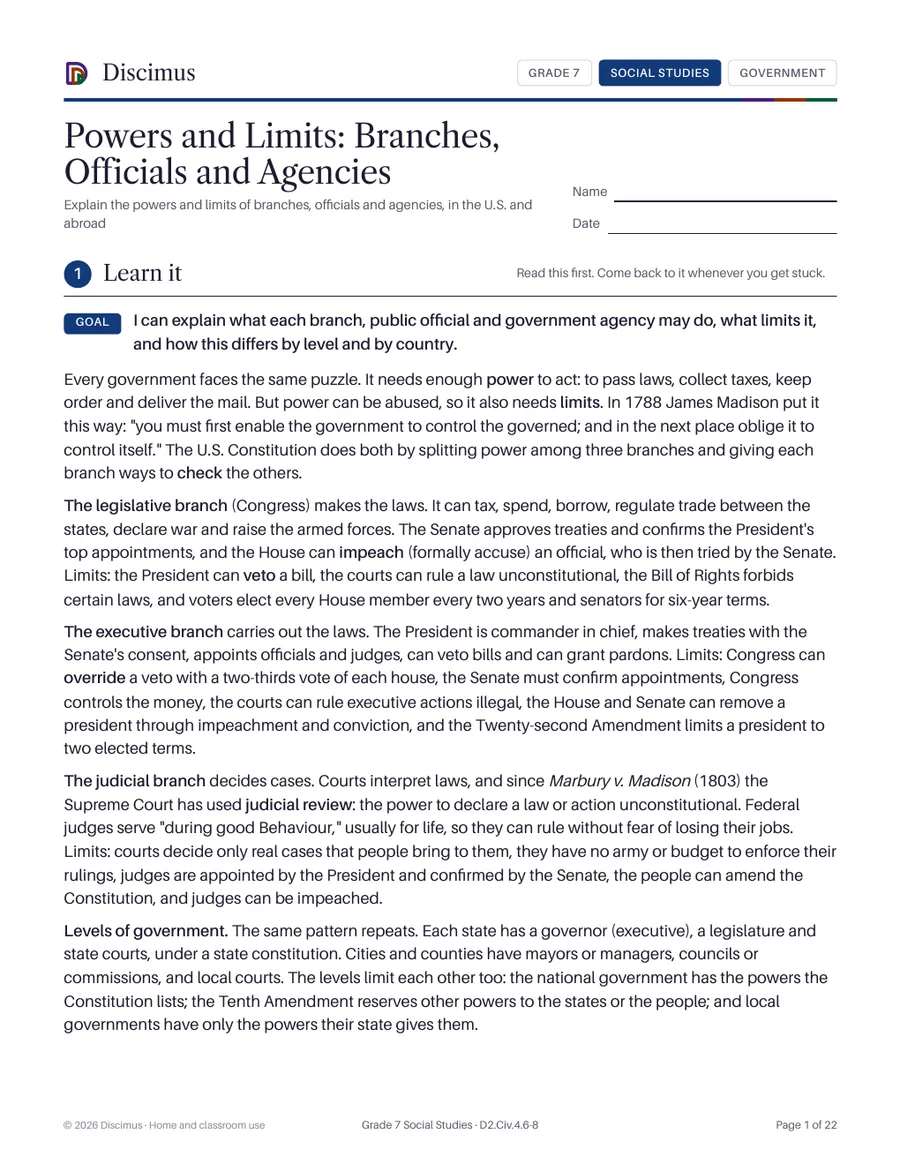
    Powers and Limits: Branches, Officials and Agencies

    Explain the powers and limits of branches, officials and agencies, in the U.S. and abroad
  • Social StudiesGrade 7

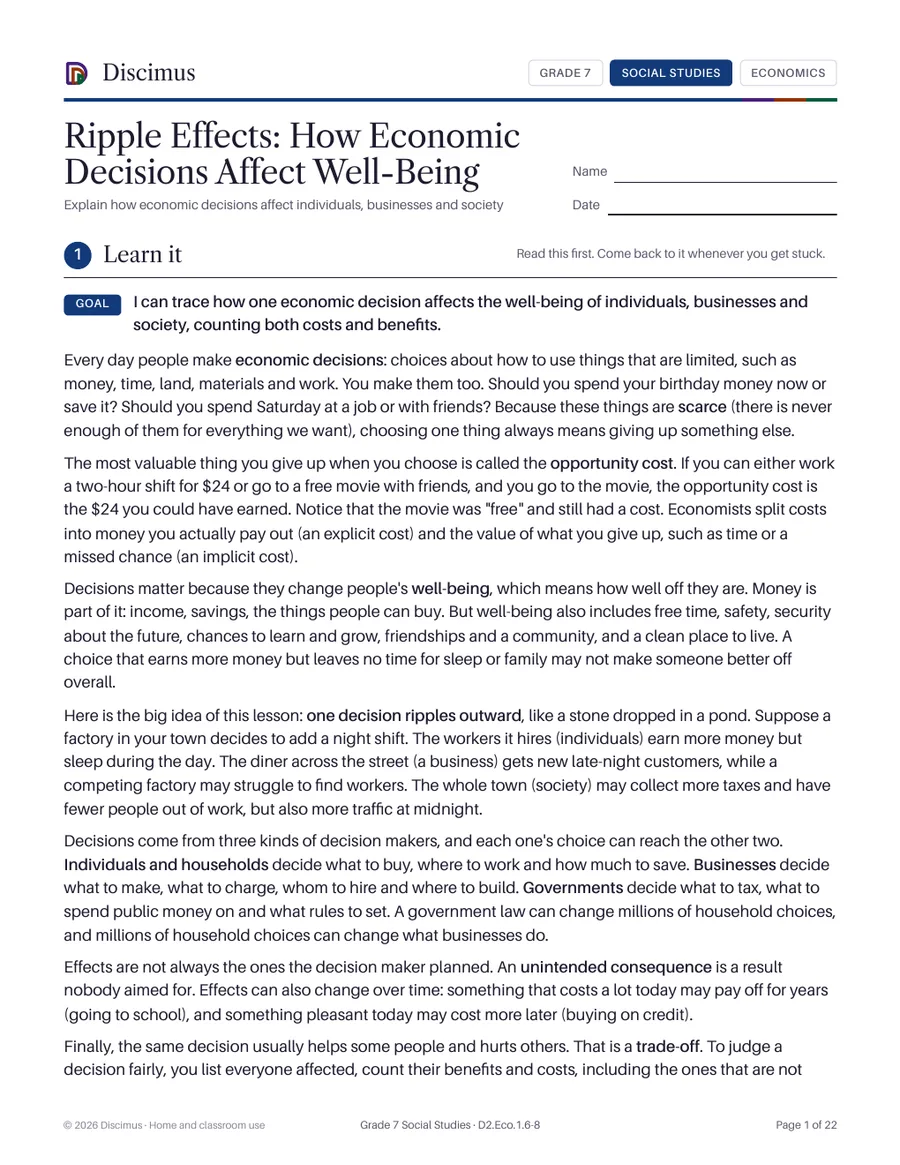
    Ripple Effects: How Economic Decisions Affect Well-Being

    Explain how economic decisions affect individuals, businesses and society
  • Social StudiesGrade 7

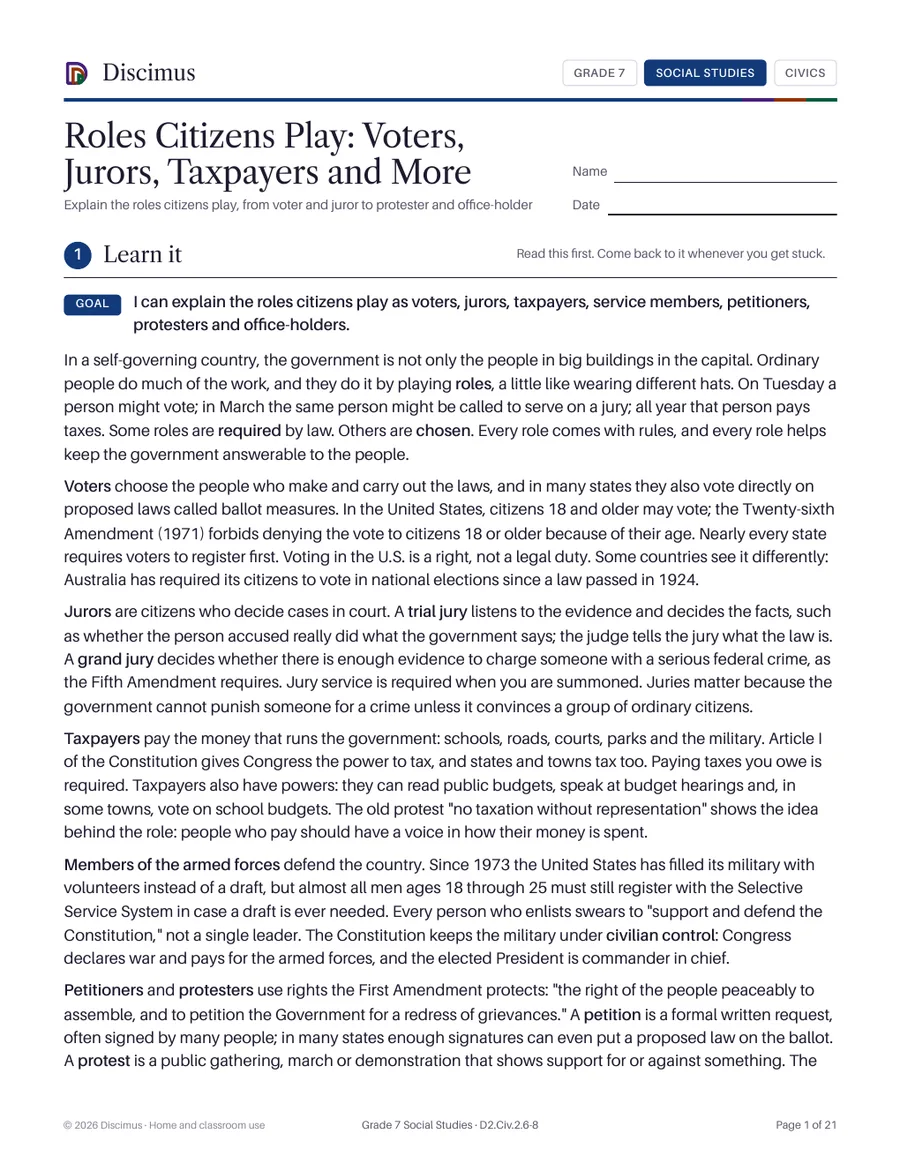
    Roles Citizens Play: Voters, Jurors, Taxpayers and More

    Explain the roles citizens play, from voter and juror to protester and office-holder
  • Social StudiesGrade 7

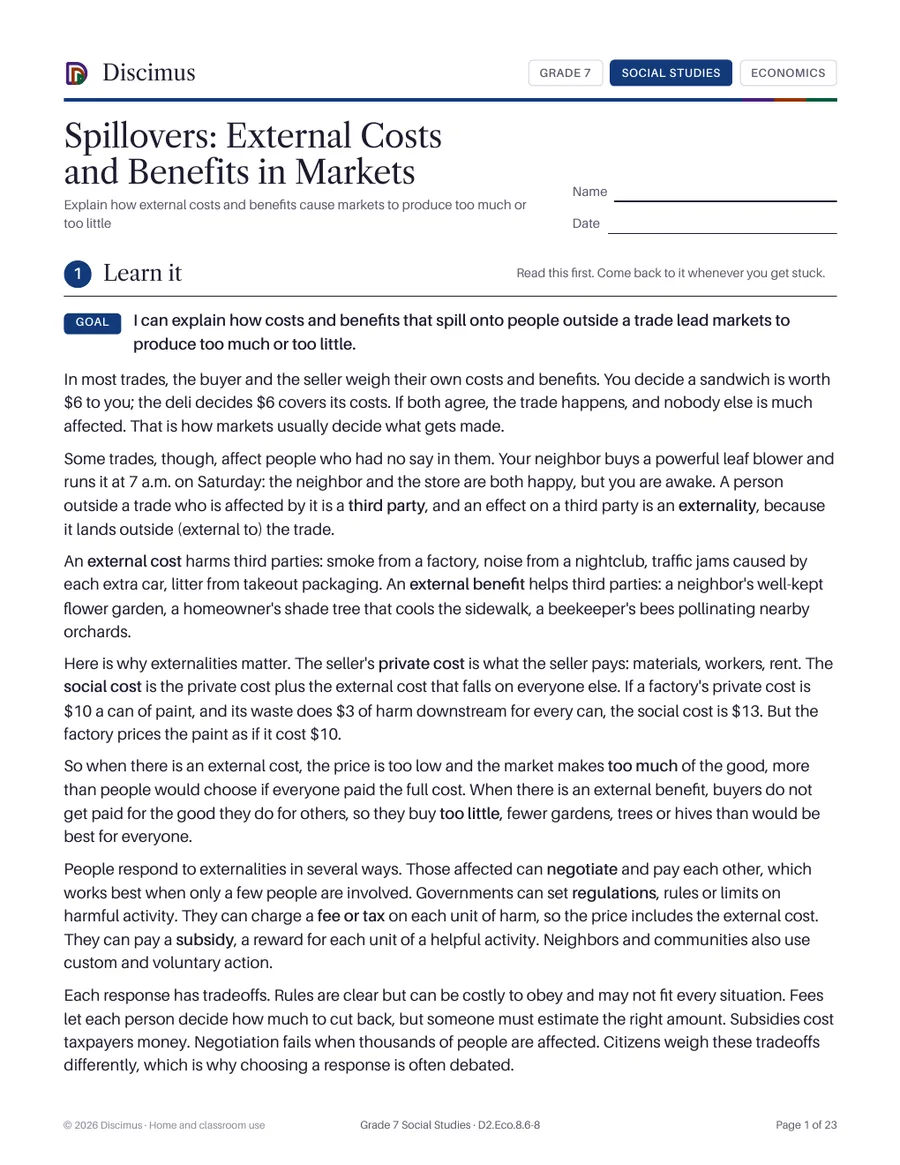
    Spillovers: External Costs and Benefits in Markets

    Explain how external costs and benefits cause markets to produce too much or too little
  • Social StudiesGrade 7

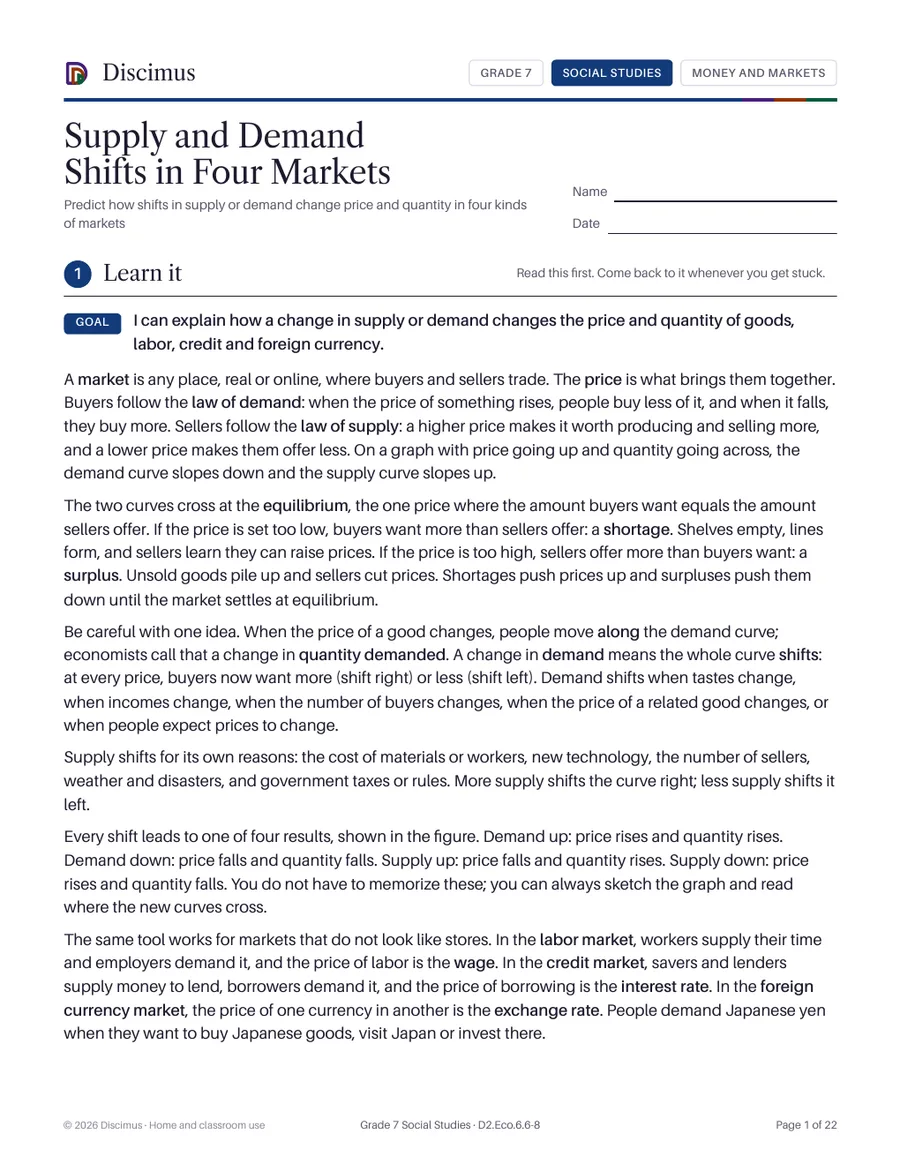
    Supply and Demand Shifts in Four Markets

    Predict how shifts in supply or demand change price and quantity in four kinds of markets
  • Social StudiesGrade 7

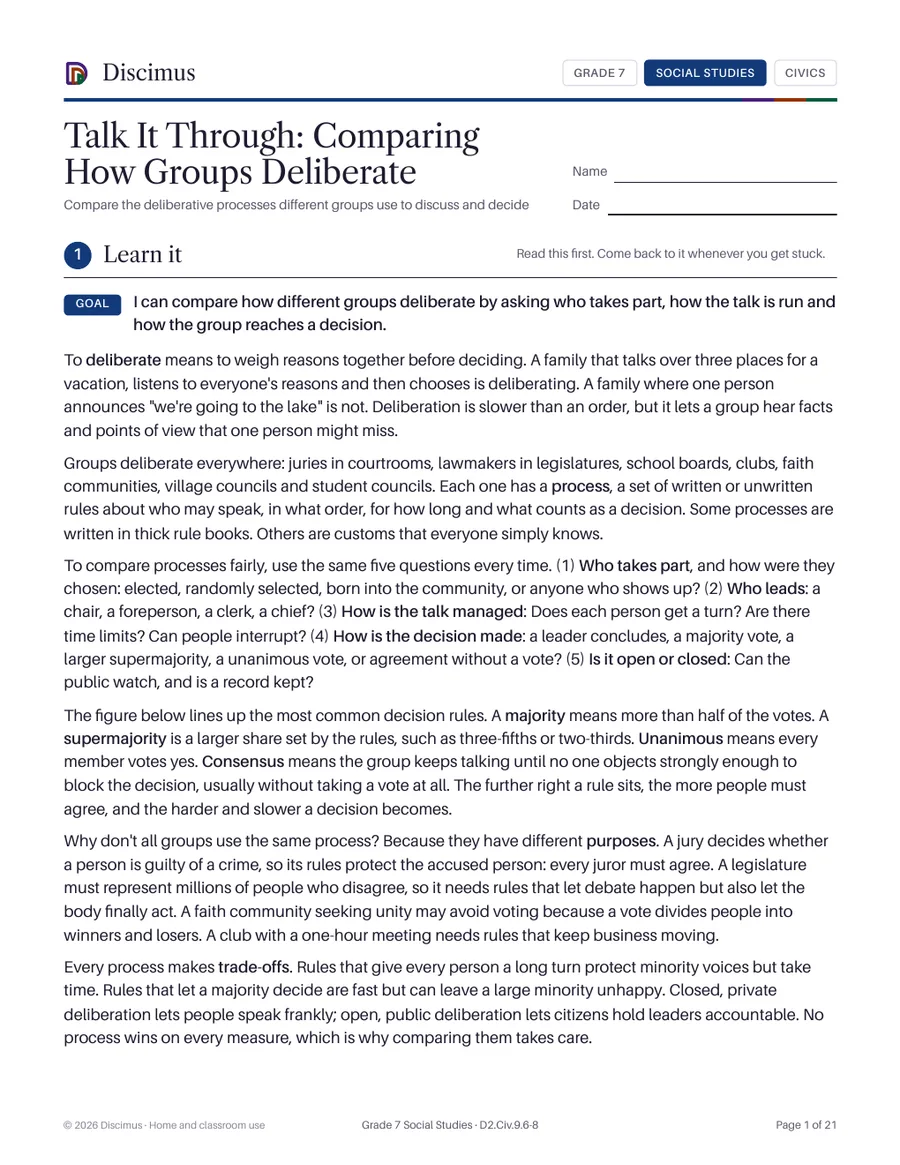
    Talk It Through: Comparing How Groups Deliberate

    Compare the deliberative processes different groups use to discuss and decide
  • Social StudiesGrade 7

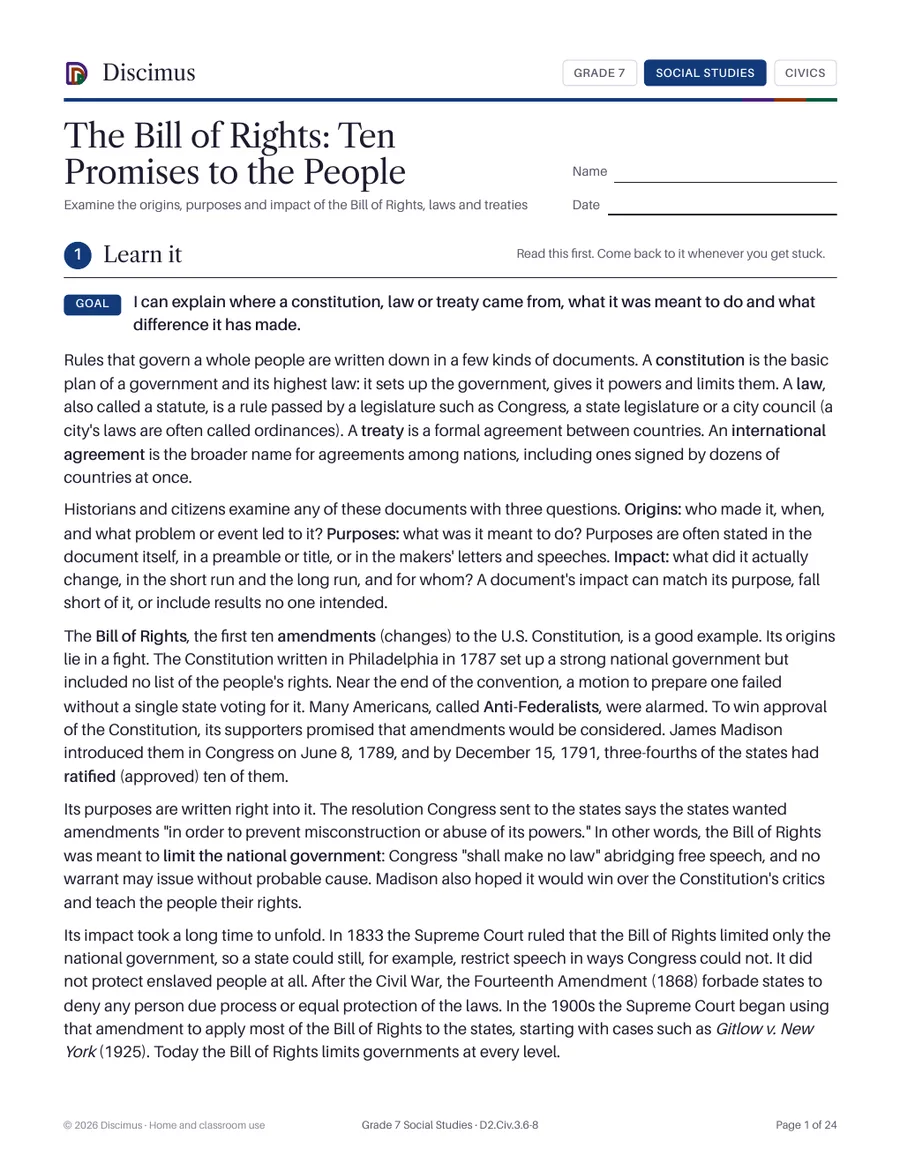
    The Bill of Rights: Ten Promises to the People

    Examine the origins, purposes and impact of the Bill of Rights, laws and treaties
  • Social StudiesGrade 7

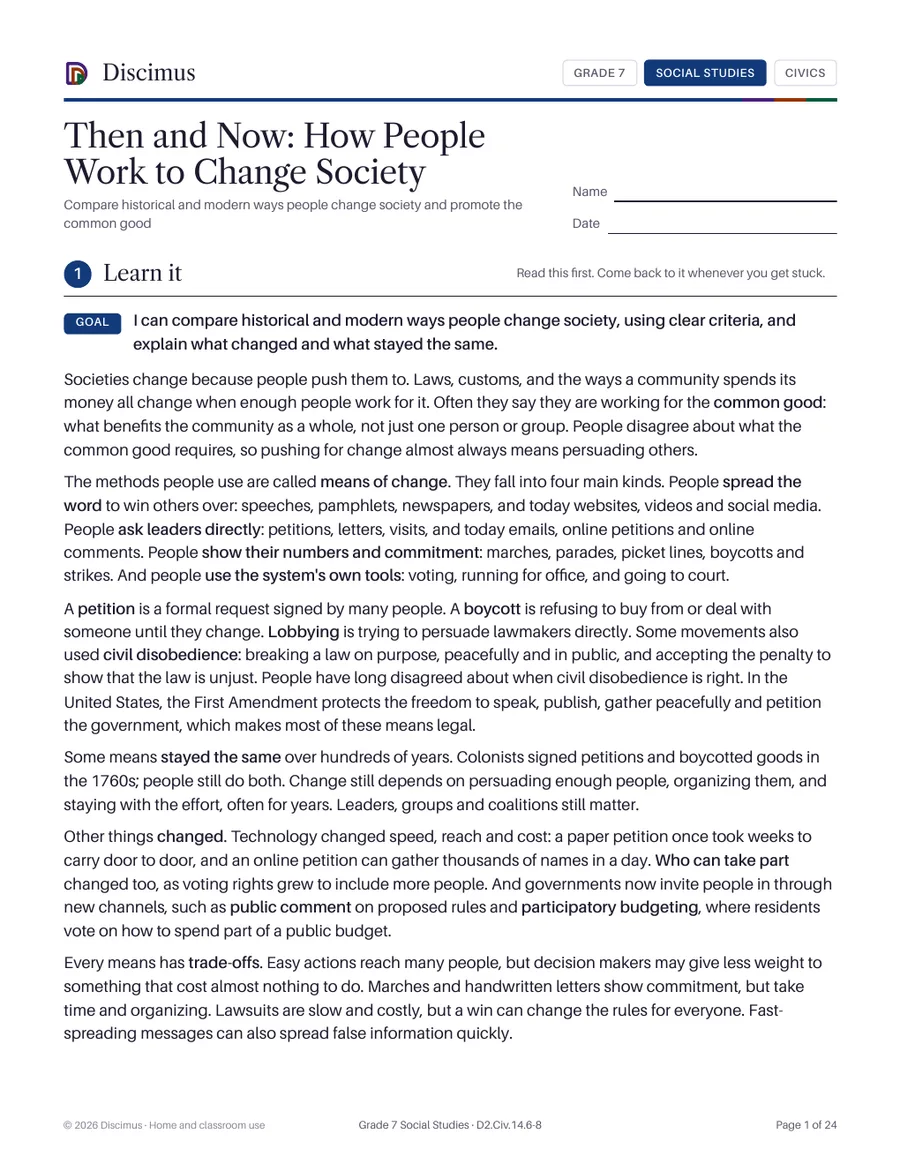
    Then and Now: How People Work to Change Society

    Compare historical and modern ways people change society and promote the common good
  • Social StudiesGrade 7

    Walls at the Border: Barriers to Trade Among Nations

    Explain barriers to trade and how they change trade among nations
  • Social StudiesGrade 7

    Where Government Comes From and How It Is Built

    Explain the origins, functions and structure of U.S., state and other governments
  • Social StudiesGrade 7

    Who Gains and Who Loses from Inflation, Deflation and Unemployment

    Explain how inflation, deflation and unemployment affect different groups of people
  • Social StudiesGrade 7

    Who Pays, Who Gains? Weighing Solutions to an Economic Issue

    Evaluate solutions to an economic issue by their costs and benefits for different groups
  • Social StudiesGrade 7

    Winners, Losers and Trade-Offs: Weighing Trade Policies

    Weigh the benefits and costs of a trade policy for individuals, businesses and society

Discimus

Docendo discimus. By teaching, we learn.

By age

  • Early Childhood
  • Elementary School
  • Middle School
  • High School
  • All grades

By subject

  • Math
  • English Language Arts
  • Science
  • Social Studies
  • Foreign Language
  • Technology

Discimus

  • Membership
  • Occasions
  • Standards
  • About
  • Contact

© 2026 Ceterum. All rights reserved. Worksheets are for home and single-classroom use.

  • Terms
  • Privacy