Analog and Digital Signals: Which Sends Information More Reliably?
Use several sources to explain why digital signals are more reliable than analog
Next Generation Science Standards
Life, earth, physical science and the habits of investigation.
Use several sources to explain why digital signals are more reliable than analog
Develop and read models of the atoms in simple molecules and extended structures
Apply Newton's third law to design and test a solution to a collision problem
Ask testable questions about data on what affects electric and magnetic force strength
Argue from evidence that a change in kinetic energy means energy was transferred
Design, test and improve a device that absorbs or releases heat by a chemical process
Use atom models to show that atoms, and so mass, are conserved in a chemical reaction
Gather and evaluate information on how synthetic materials come from natural resources
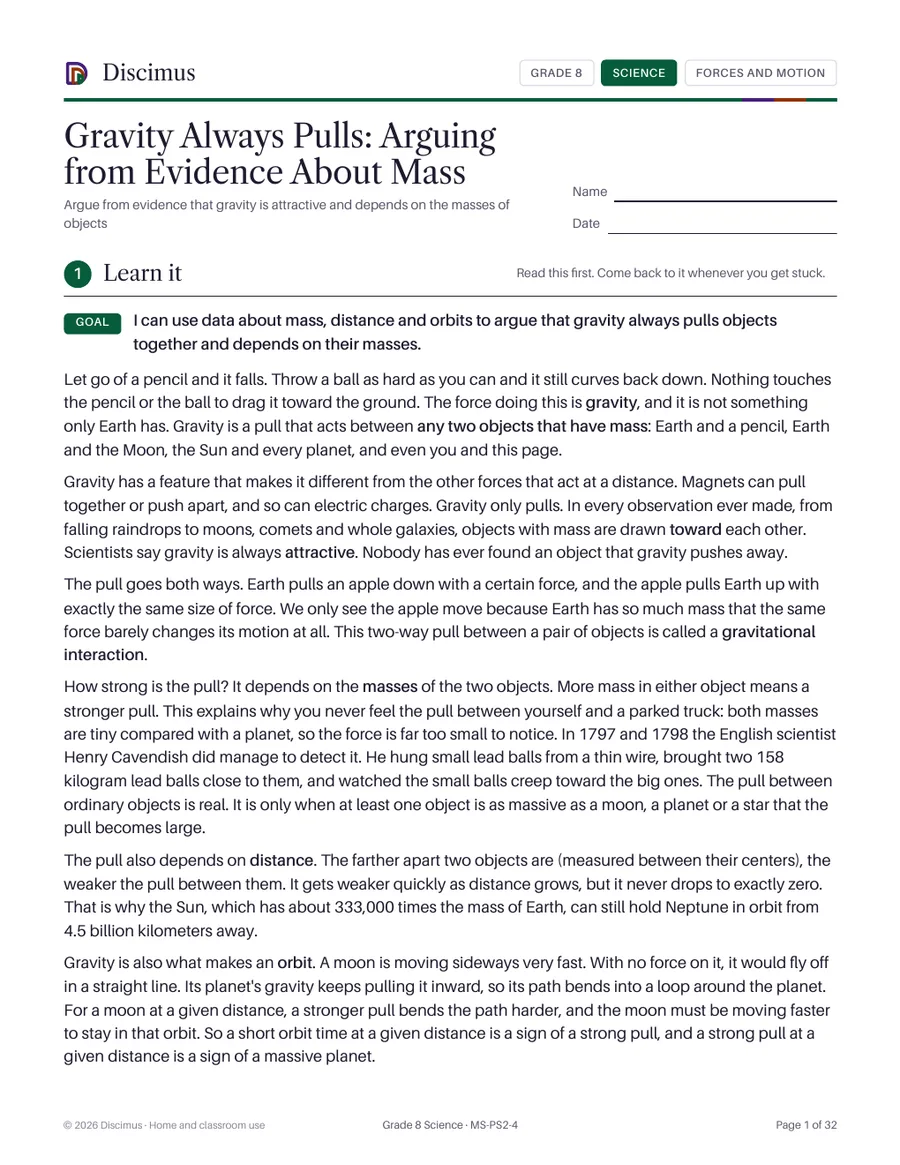
Argue from evidence that gravity is attractive and depends on the masses of objects
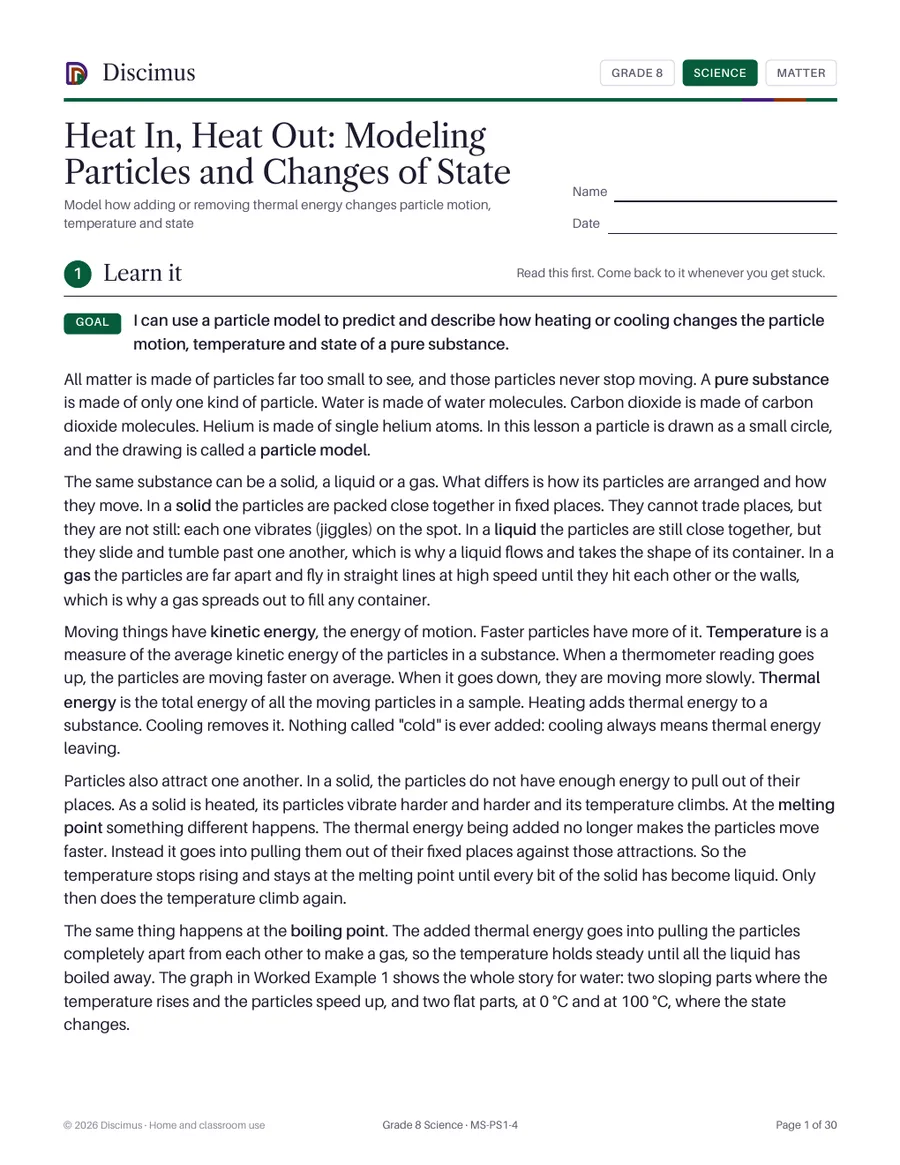
Model how adding or removing thermal energy changes particle motion, temperature and state
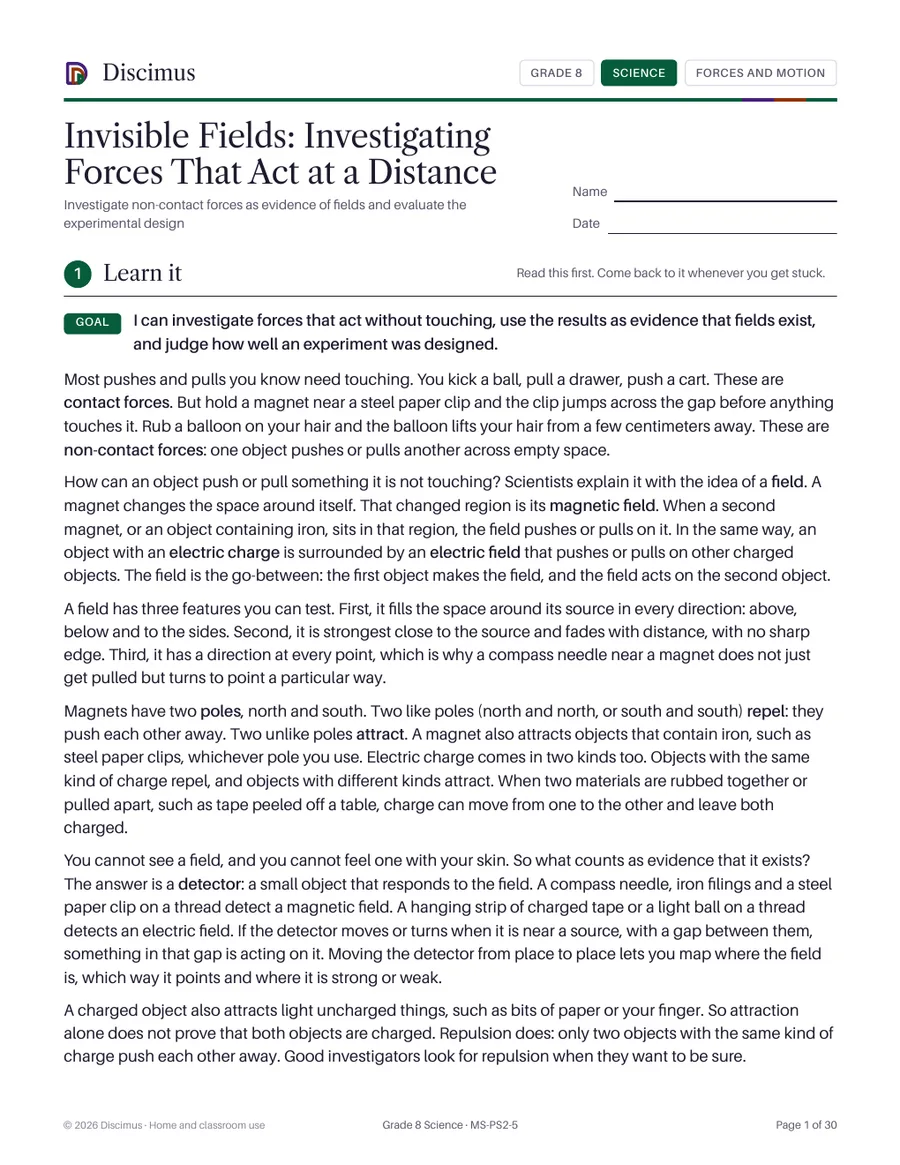
Investigate non-contact forces as evidence of fields and evaluate the experimental design
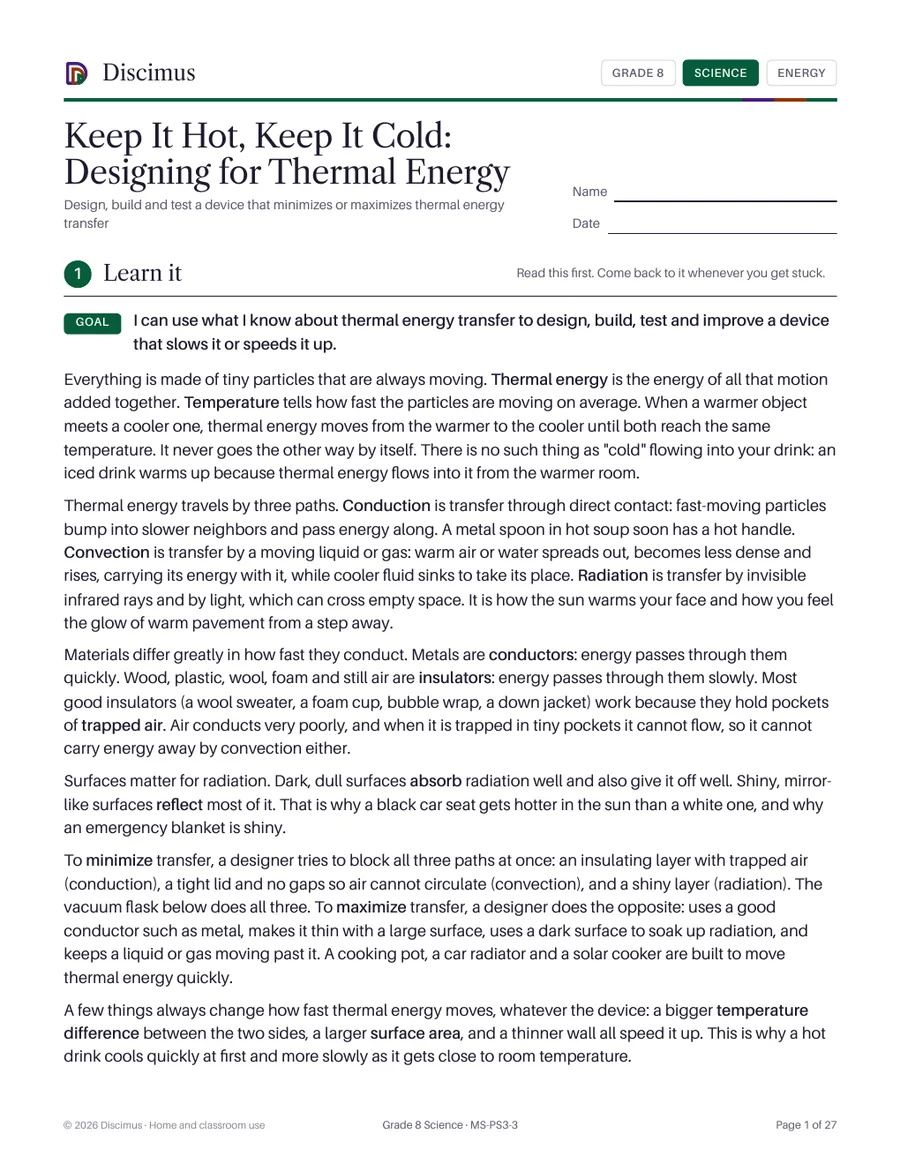
Design, build and test a device that minimizes or maximizes thermal energy transfer
Construct and interpret graphs showing how kinetic energy depends on mass and on speed
Plan an investigation showing how net force and mass change an object's motion
Plan a fair test linking energy transferred, type of matter and mass to temperature change
Model how the arrangement of two interacting objects changes stored potential energy
Use before-and-after property data to decide whether a chemical reaction occurred
Model how light and sound are reflected, absorbed or transmitted by different materials
Describe waves by amplitude, wavelength, frequency and speed; relate amplitude to energy