Skip to content
Discimus
  • Grades
  • Subjects
  • Occasions
  • Standards
  • Membership
Sign inJoin
  1. Home
  2. Grades
  3. Grade 9
  4. Science

Next Generation Science Standards

Grade 9 Science

Life, earth, physical science and the habits of investigation.

TopicsBody Systems 1Cells 1Ecosystems 8Evolution 2Genetics 4Homeostasis 1Matter and Energy in Organisms 3Natural Selection 3
StandardsHS-LS1-1HS-LS1-2HS-LS1-3HS-LS1-4HS-LS1-5HS-LS1-6HS-LS1-7HS-LS2-2HS-LS2-3HS-LS2-4HS-LS2-5HS-LS2-6HS-LS2-7HS-LS2-8HS-LS3-1HS-LS3-2HS-LS3-3HS-LS4-1HS-LS4-2HS-LS4-3HS-LS4-4HS-LS4-5HS-LS4-6
  • ScienceGrade 9

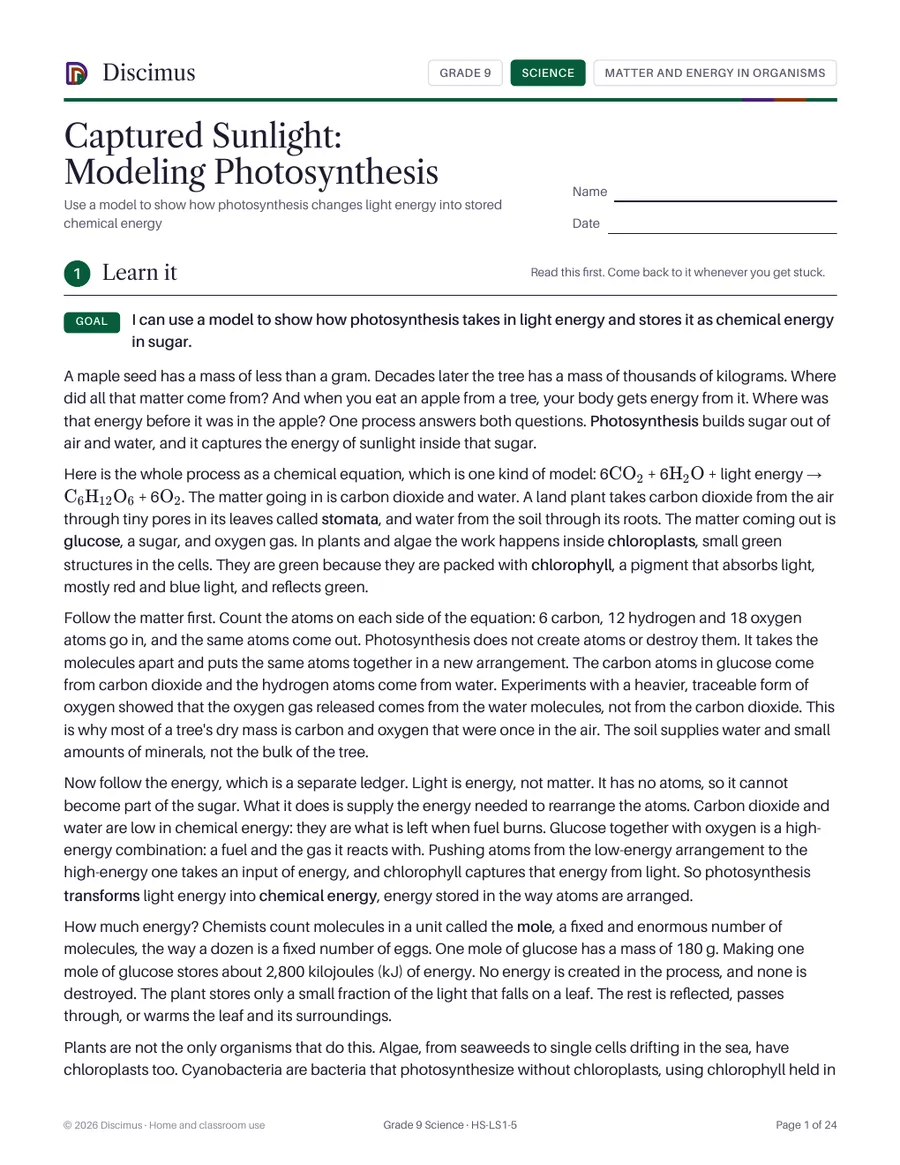
    Captured Sunlight: Modeling Photosynthesis

    Use a model to show how photosynthesis changes light energy into stored chemical energy
  • ScienceGrade 9

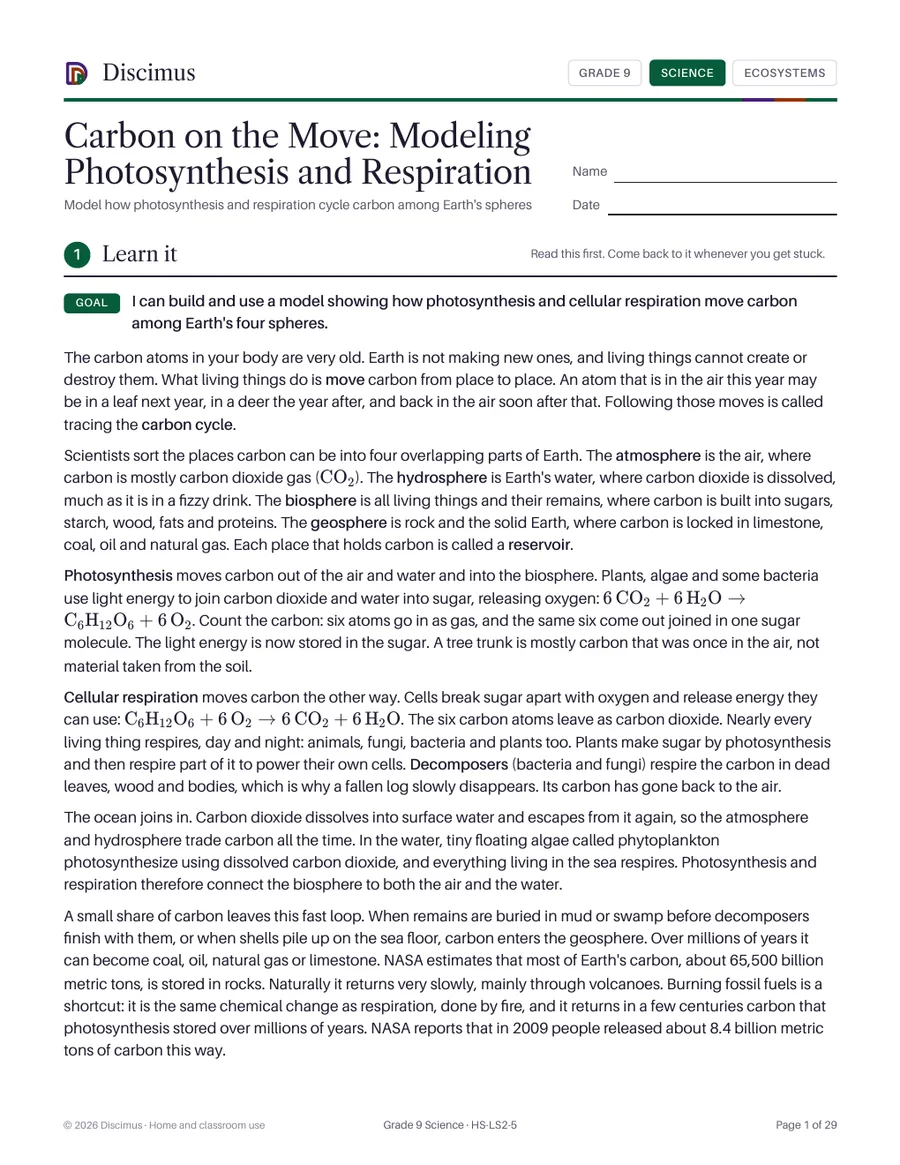
    Carbon on the Move: Modeling Photosynthesis and Respiration

    Model how photosynthesis and respiration cycle carbon among Earth's spheres
  • ScienceGrade 9

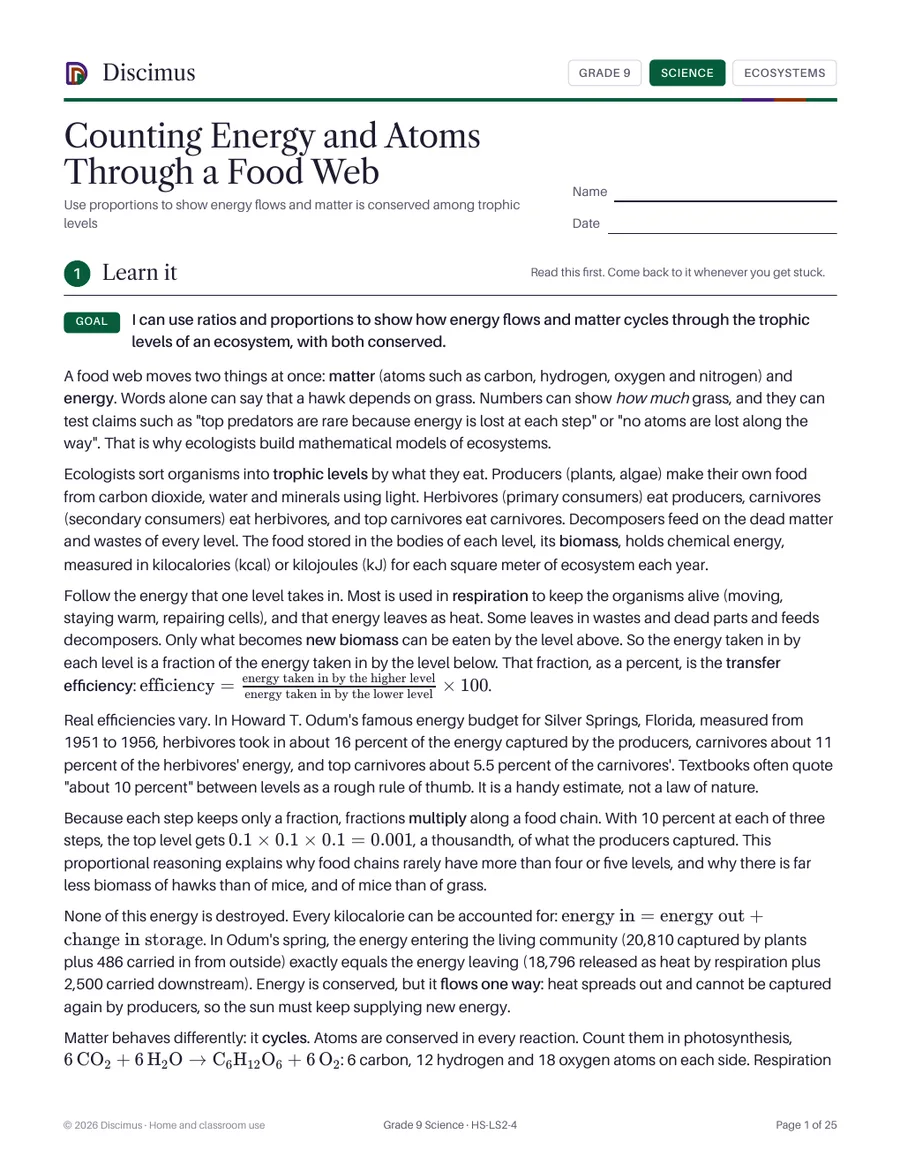
    Counting Energy and Atoms Through a Food Web

    Use proportions to show energy flows and matter is conserved among trophic levels
  • ScienceGrade 9

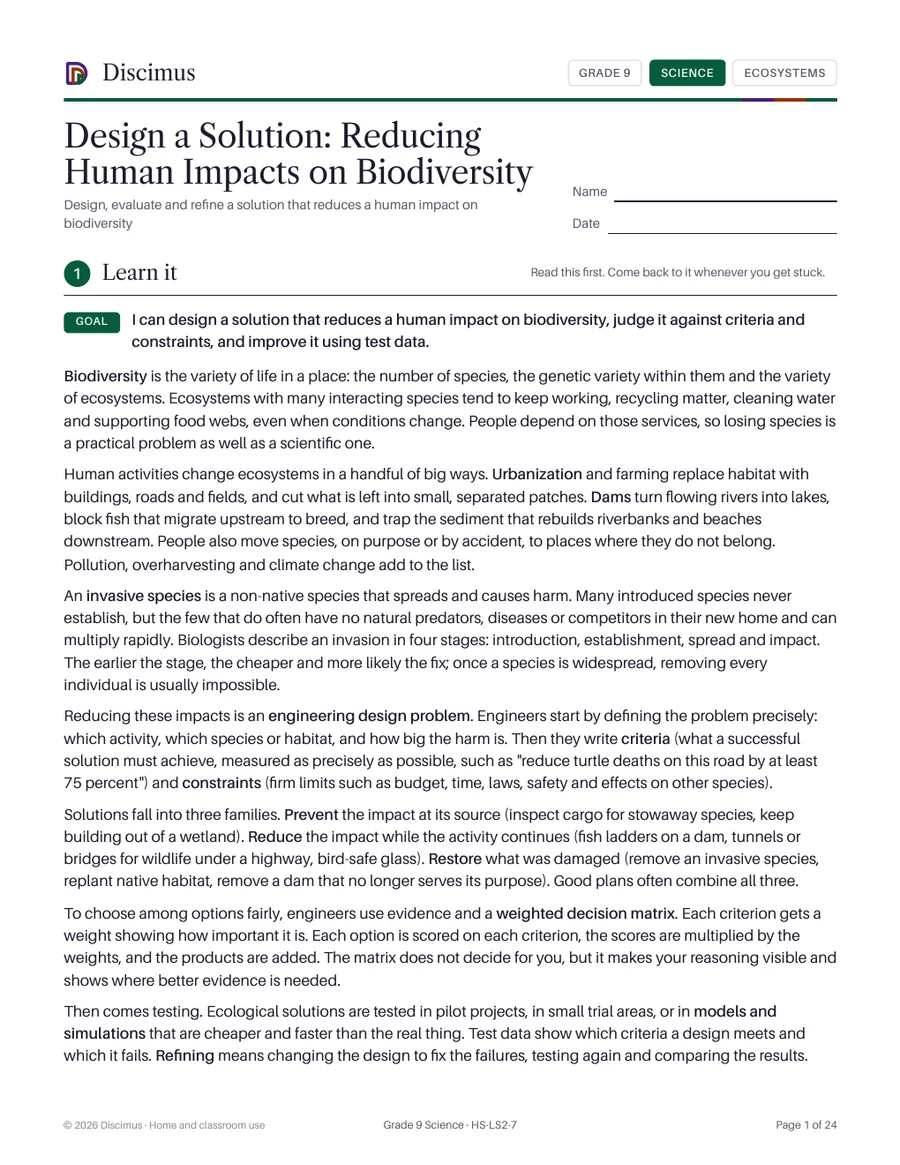
    Design a Solution: Reducing Human Impacts on Biodiversity

    Design, evaluate and refine a solution that reduces a human impact on biodiversity
  • ScienceGrade 9

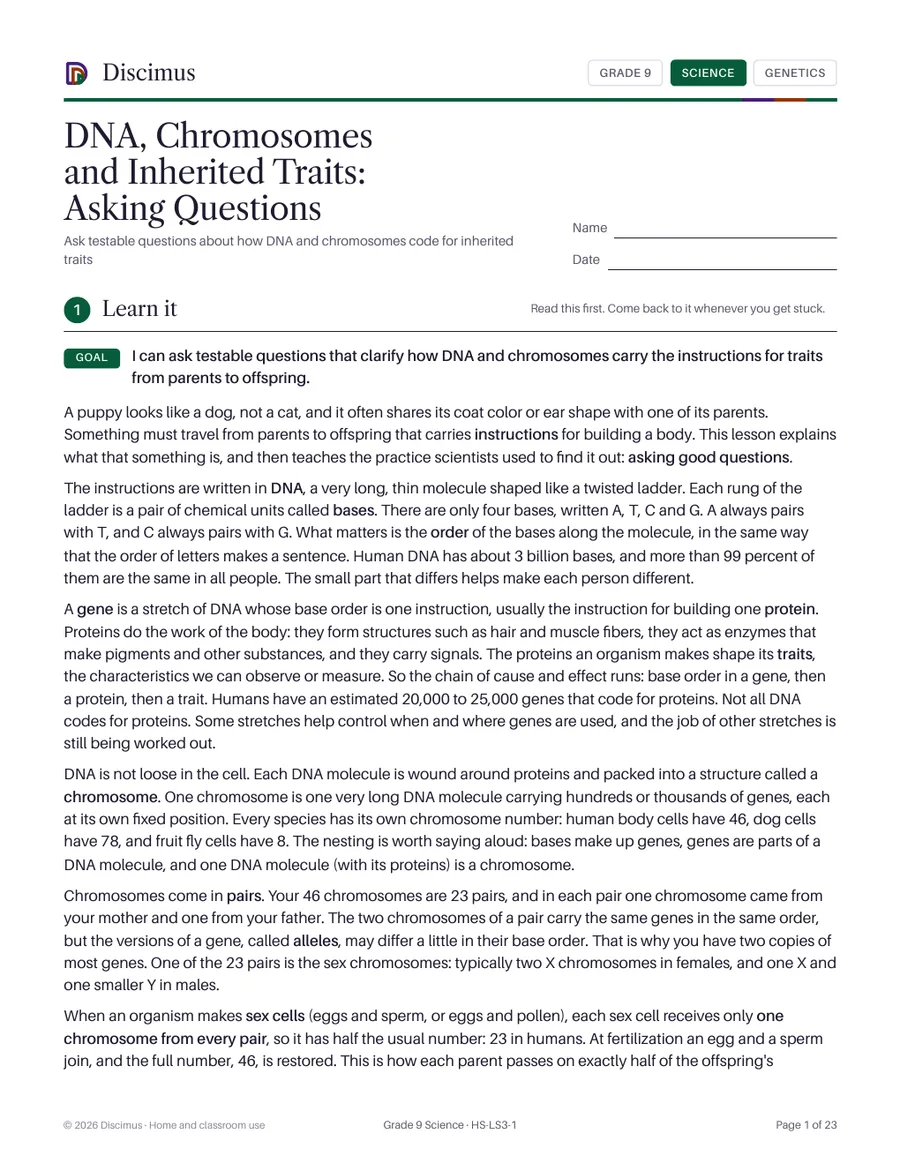
    DNA, Chromosomes and Inherited Traits: Asking Questions

    Ask testable questions about how DNA and chromosomes code for inherited traits
  • ScienceGrade 9

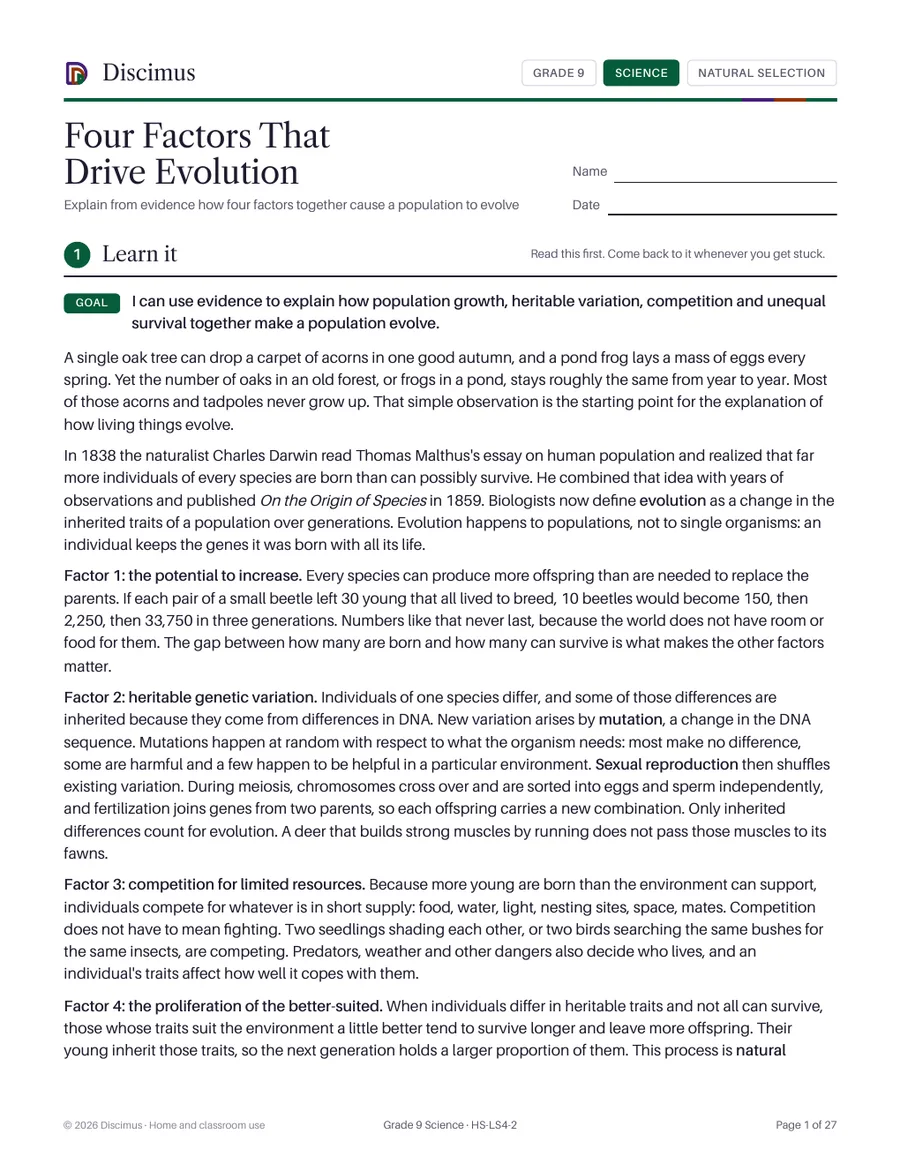
    Four Factors That Drive Evolution

    Explain from evidence how four factors together cause a population to evolve
  • ScienceGrade 9

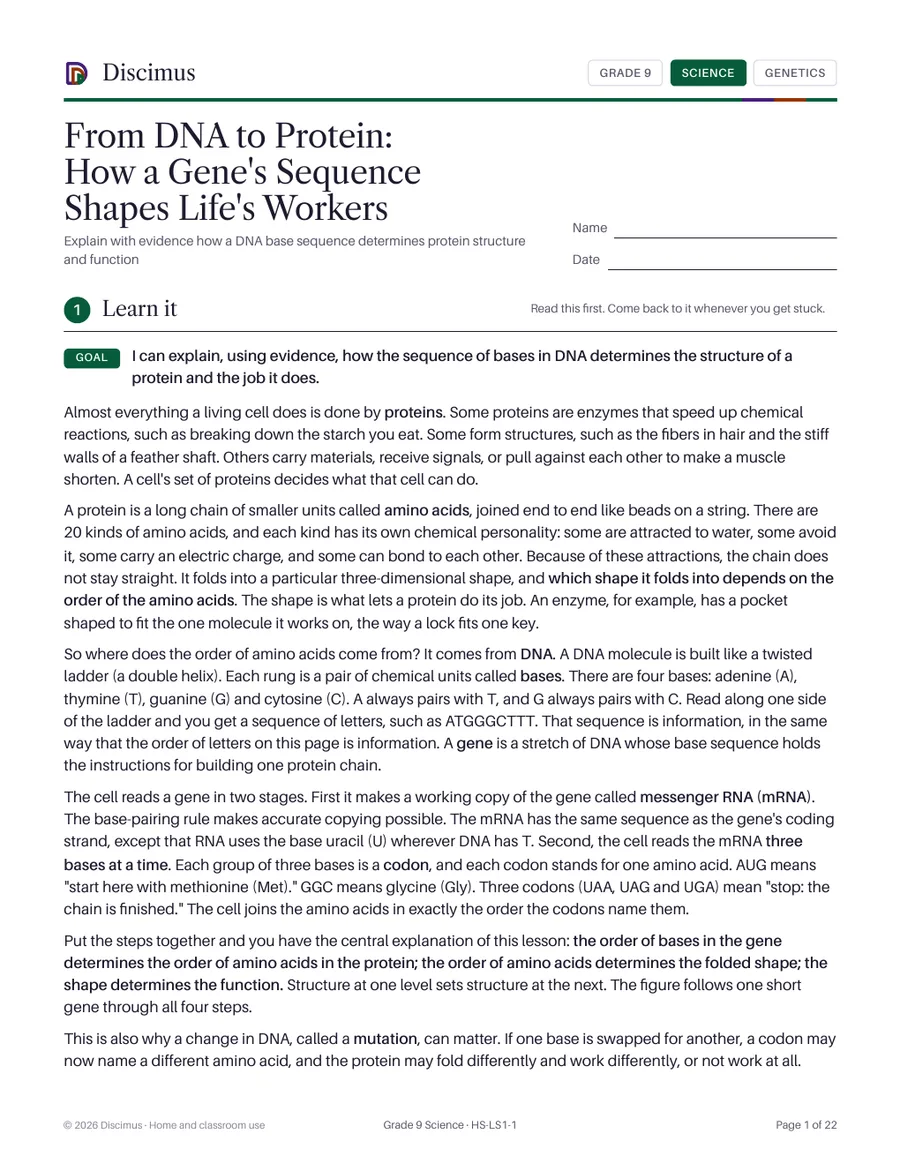
    From DNA to Protein: How a Gene's Sequence Shapes Life's Workers

    Explain with evidence how a DNA base sequence determines protein structure and function
  • ScienceGrade 9

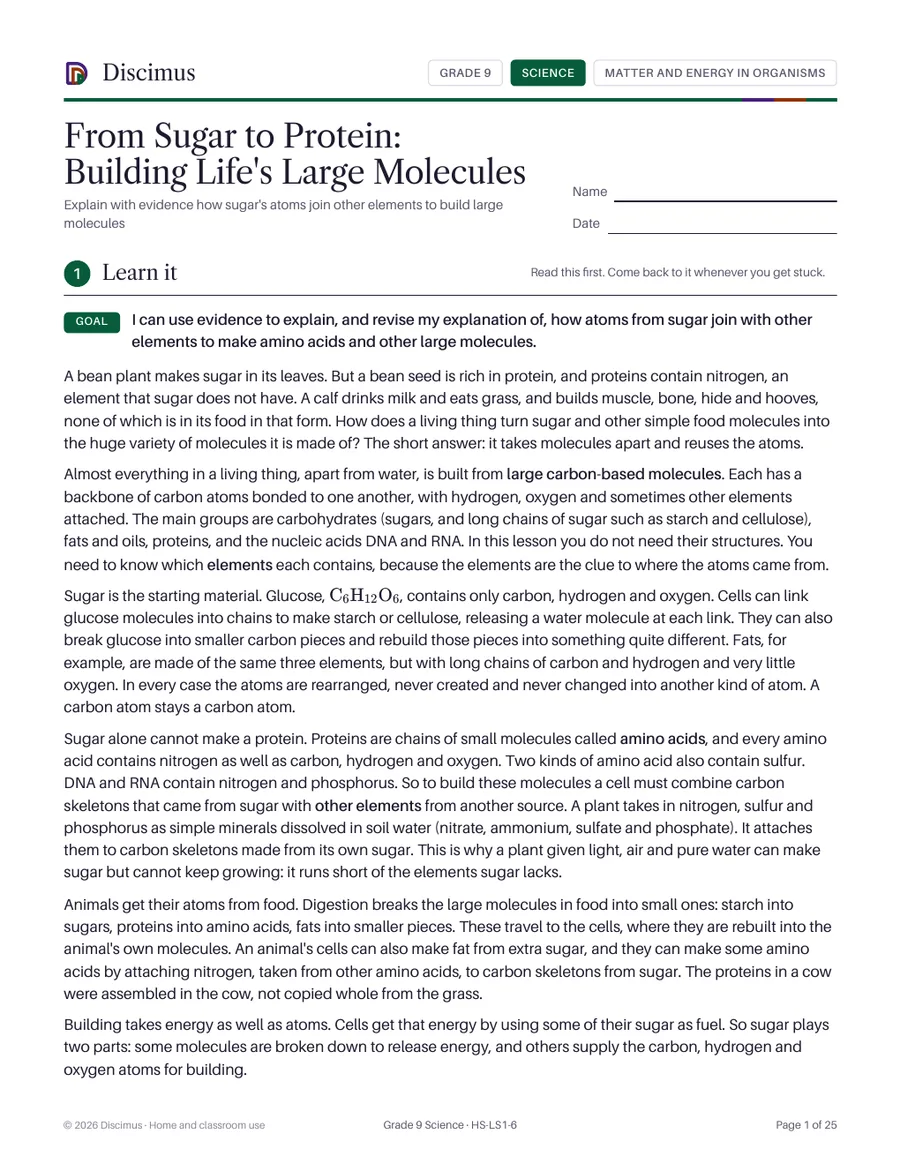
    From Sugar to Protein: Building Life's Large Molecules

    Explain with evidence how sugar's atoms join other elements to build large molecules
  • ScienceGrade 9

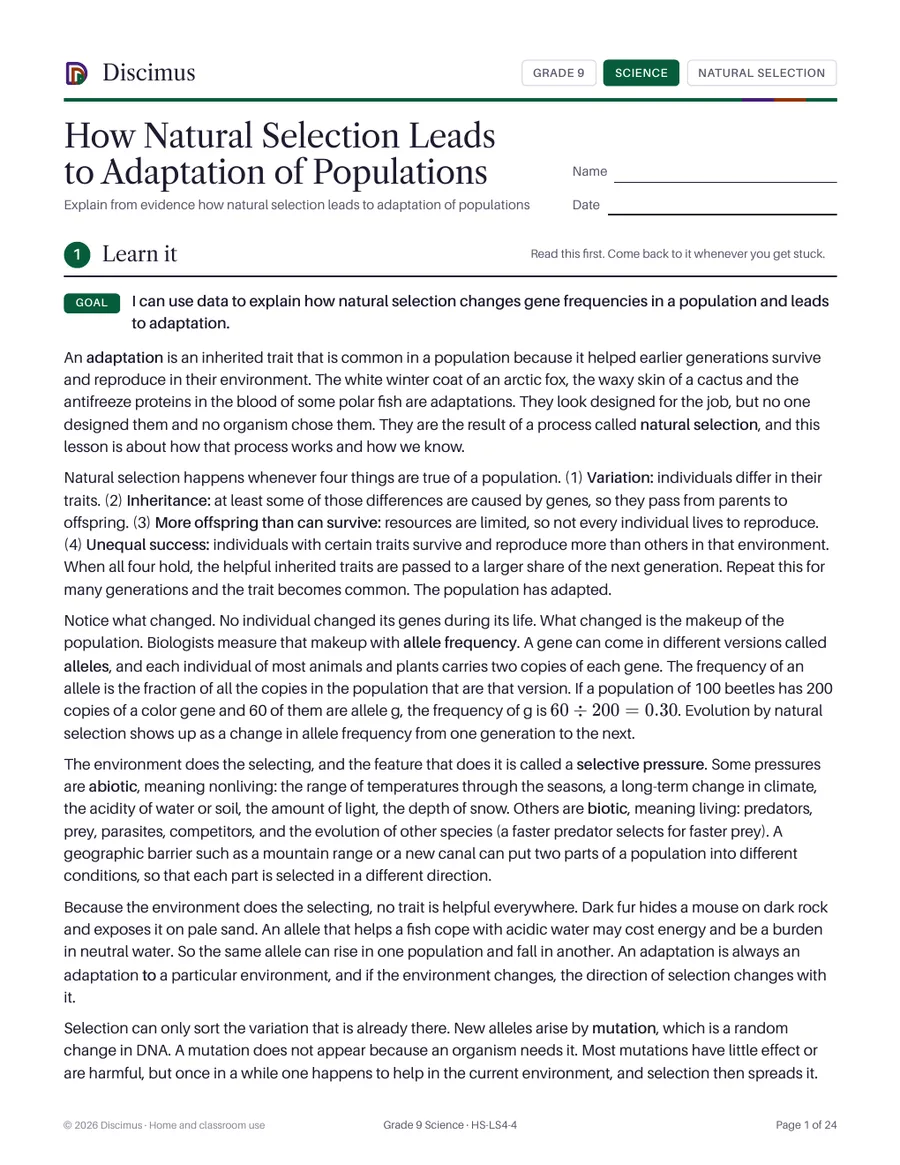
    How Natural Selection Leads to Adaptation of Populations

    Explain from evidence how natural selection leads to adaptation of populations
  • ScienceGrade 9

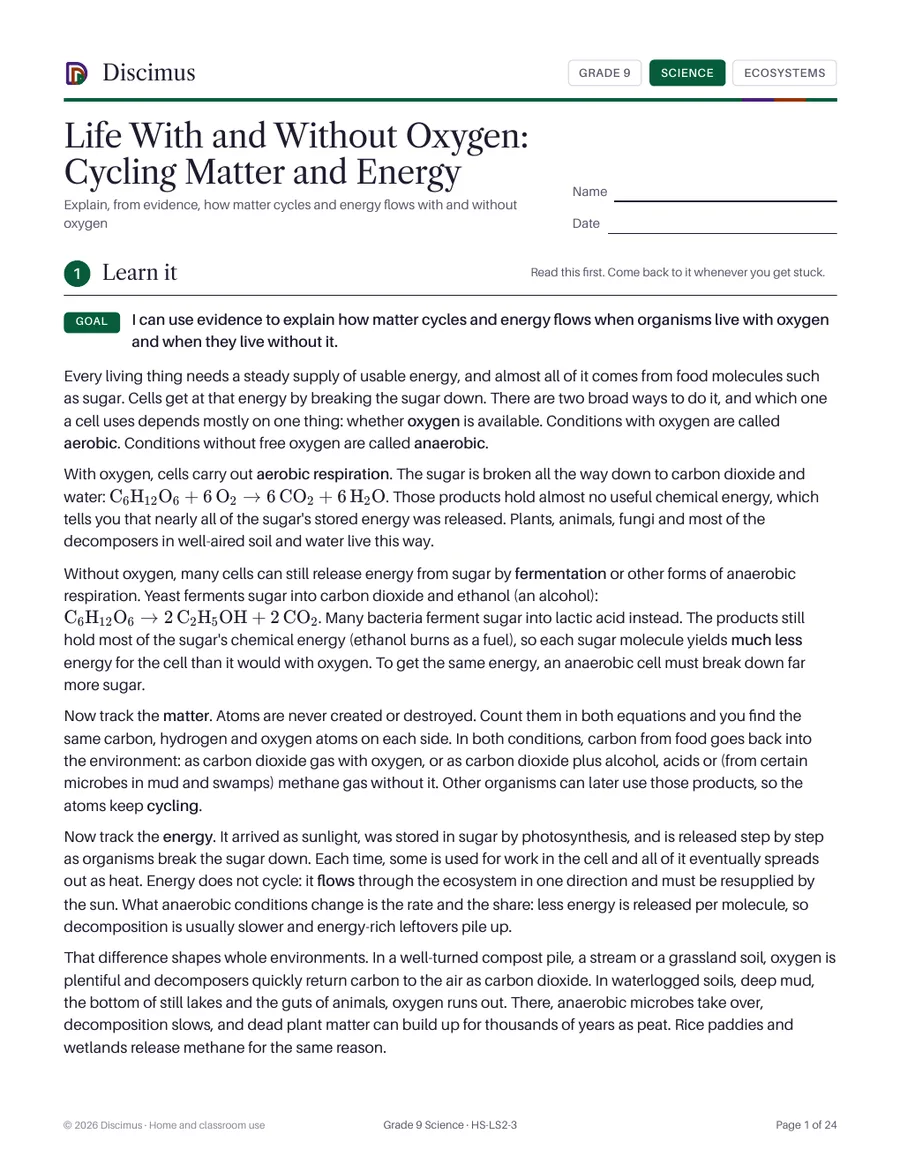
    Life With and Without Oxygen: Cycling Matter and Energy

    Explain, from evidence, how matter cycles and energy flows with and without oxygen
  • ScienceGrade 9

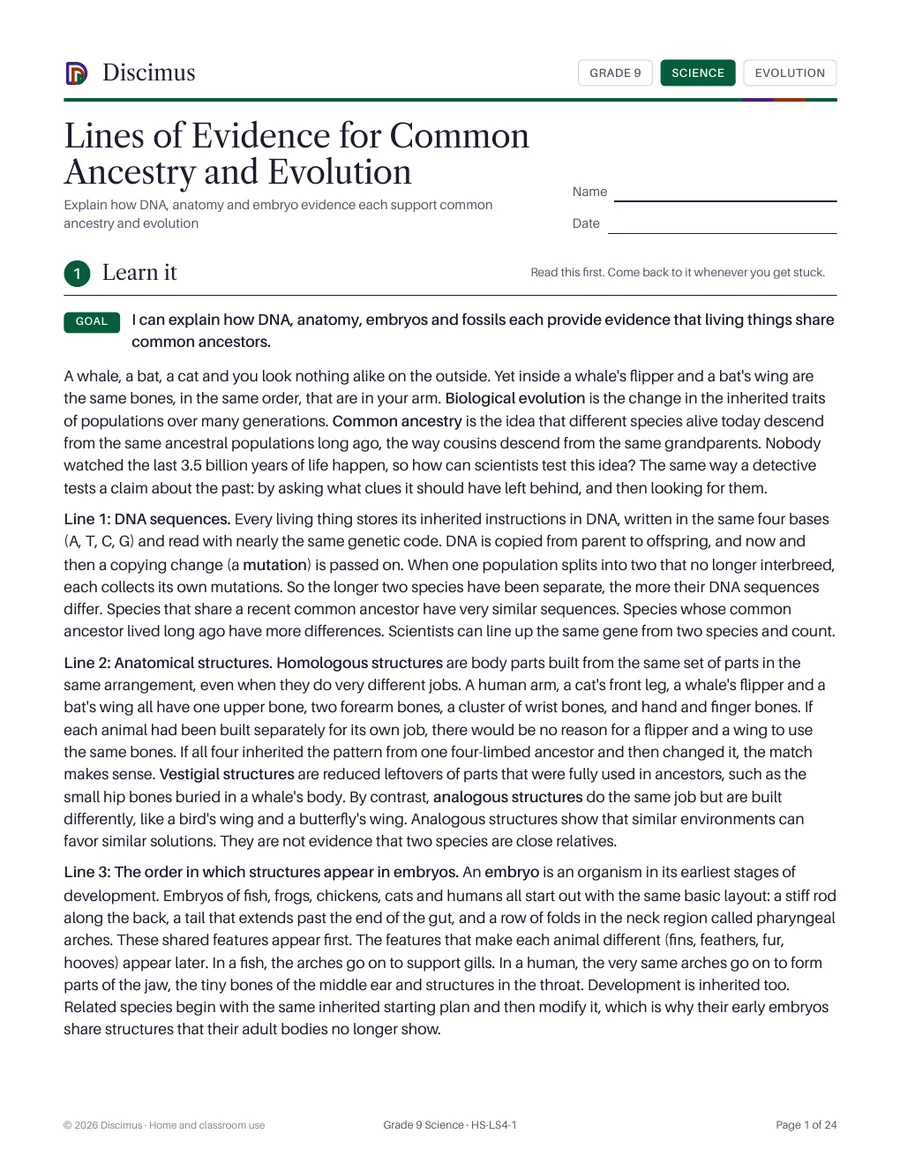
    Lines of Evidence for Common Ancestry and Evolution

    Explain how DNA, anatomy and embryo evidence each support common ancestry and evolution
  • ScienceGrade 9

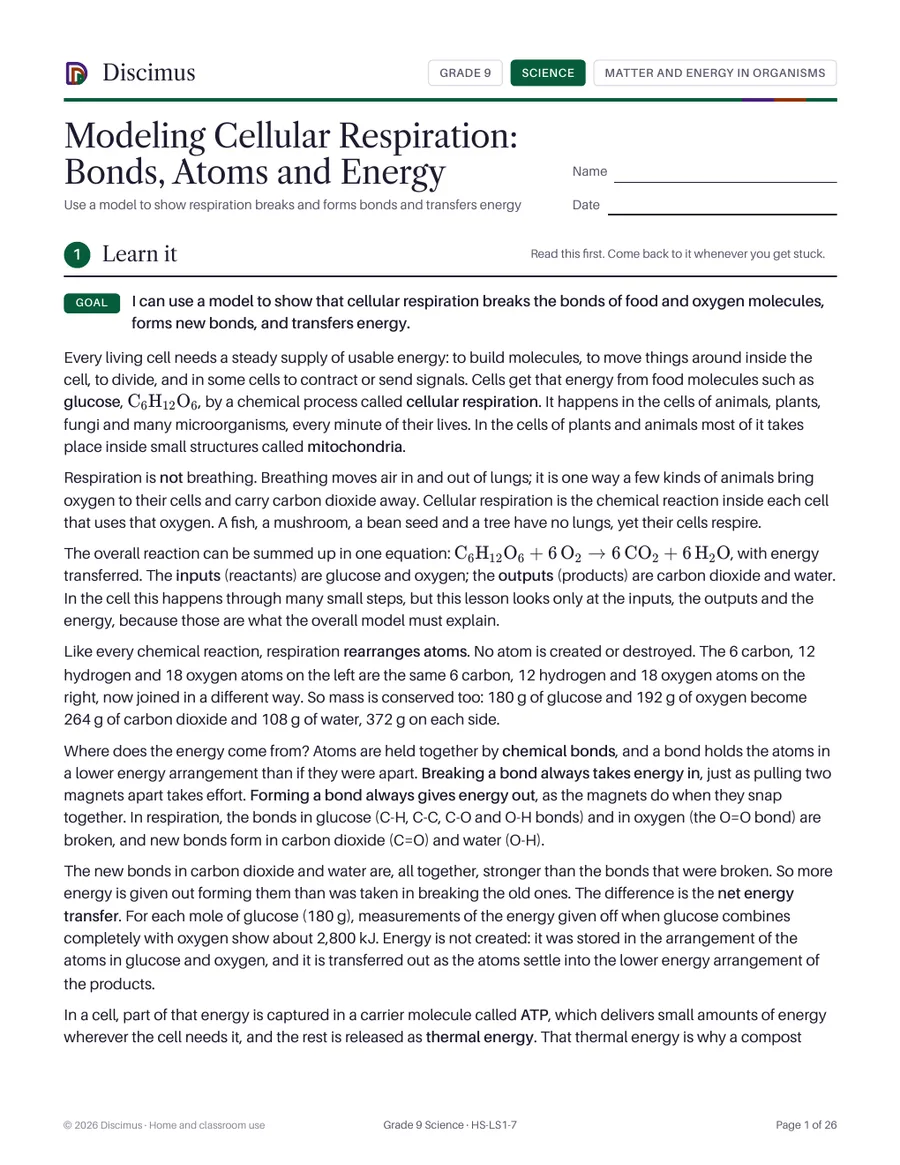
    Modeling Cellular Respiration: Bonds, Atoms and Energy

    Use a model to show respiration breaks and forms bonds and transfers energy
  • ScienceGrade 9

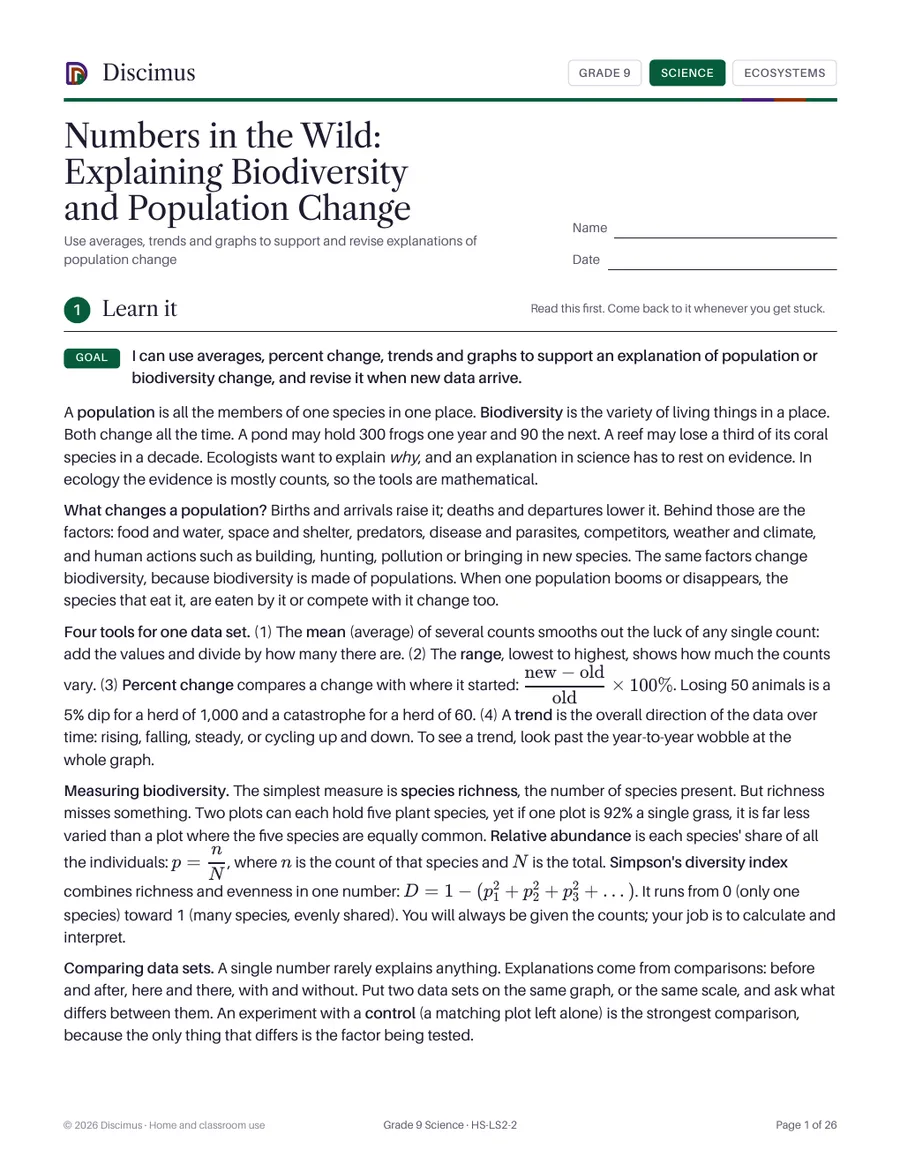
    Numbers in the Wild: Explaining Biodiversity and Population Change

    Use averages, trends and graphs to support and revise explanations of population change
  • ScienceGrade 9

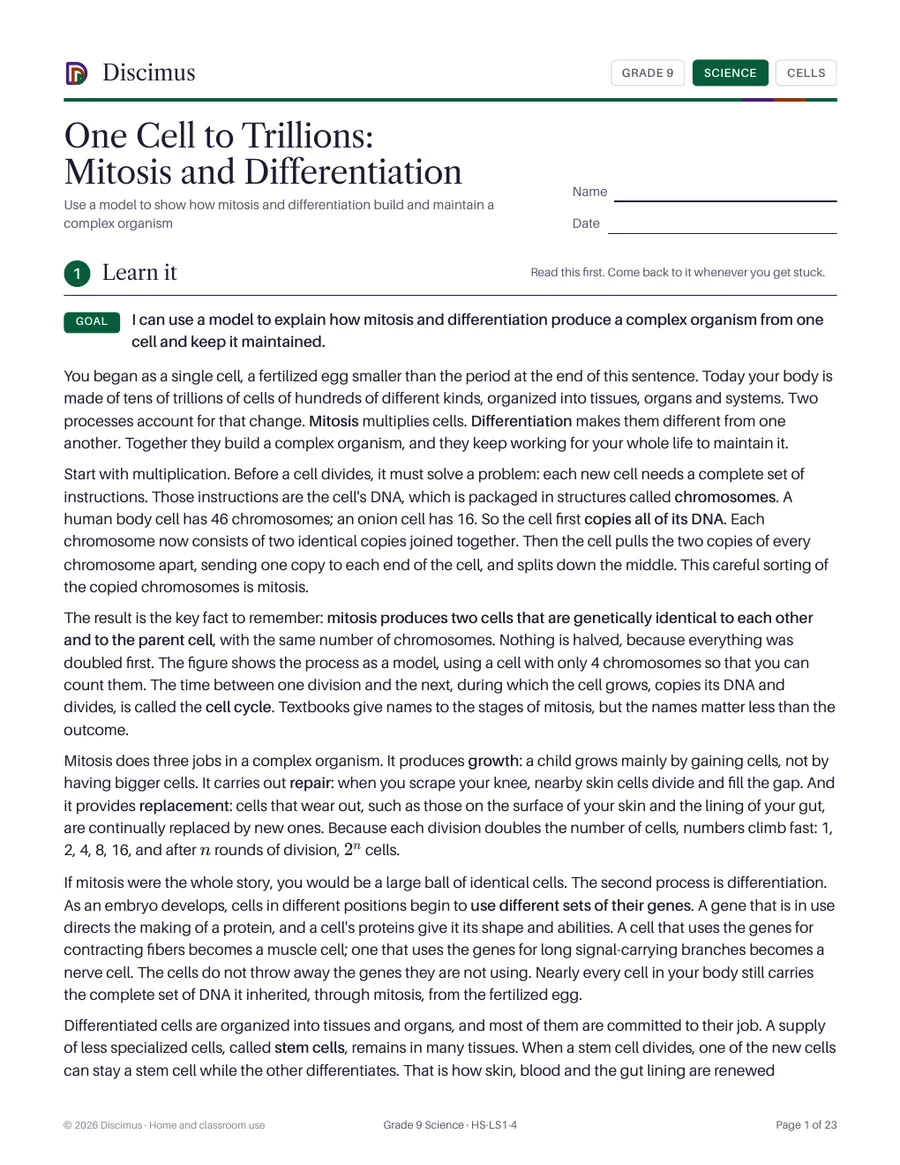
    One Cell to Trillions: Mitosis and Differentiation

    Use a model to show how mitosis and differentiation build and maintain a complex organism
  • ScienceGrade 9

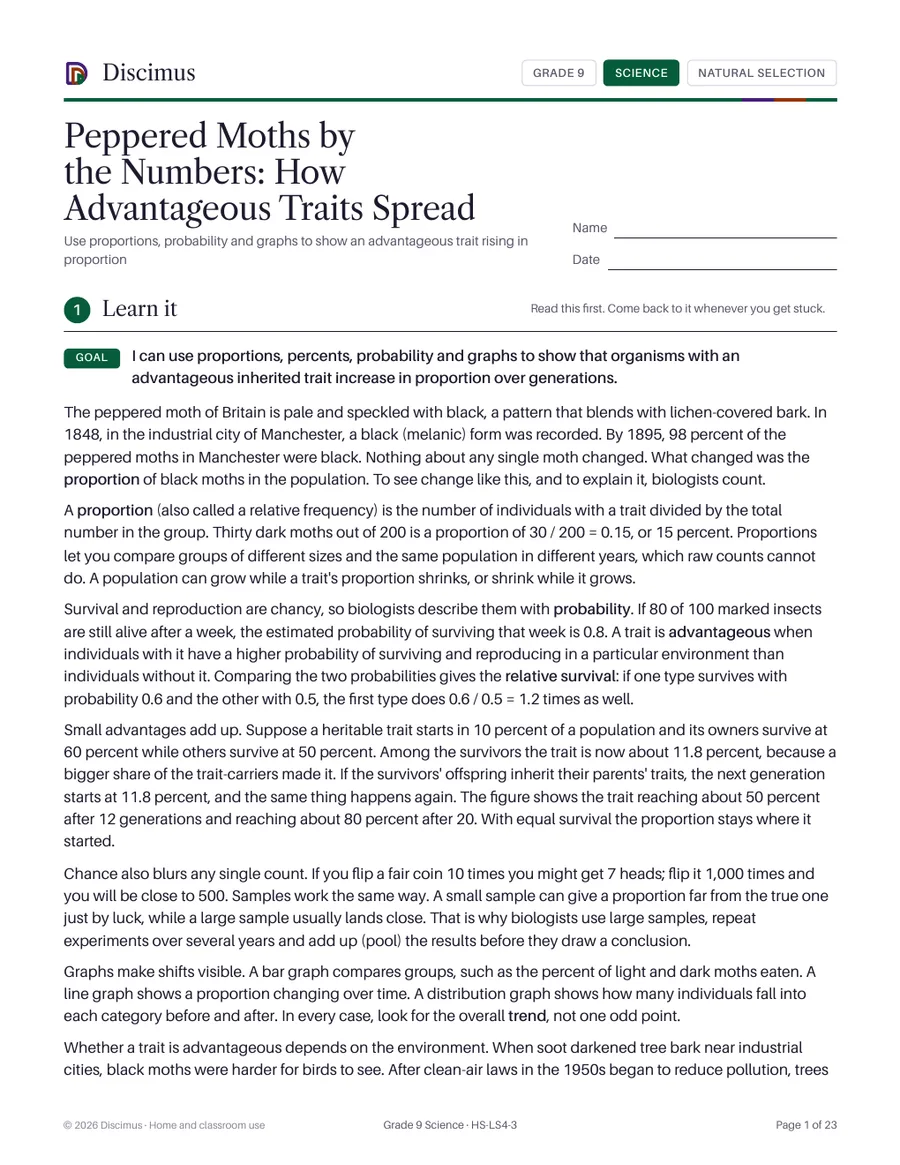
    Peppered Moths by the Numbers: How Advantageous Traits Spread

    Use proportions, probability and graphs to show an advantageous trait rising in proportion
  • Free sample

    ScienceGrade 9

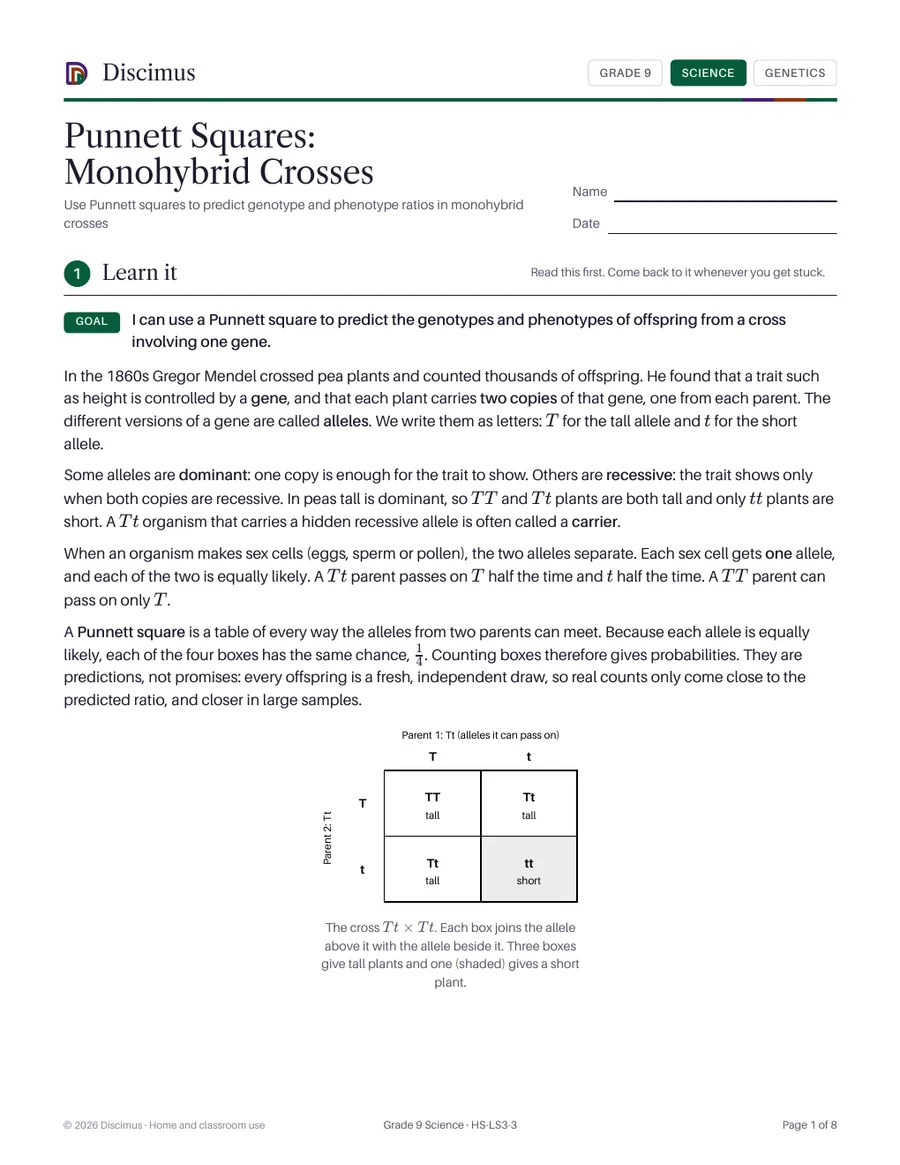
    Punnett Squares: Monohybrid Crosses

    Use Punnett squares to predict genotype and phenotype ratios in monohybrid crosses
  • ScienceGrade 9

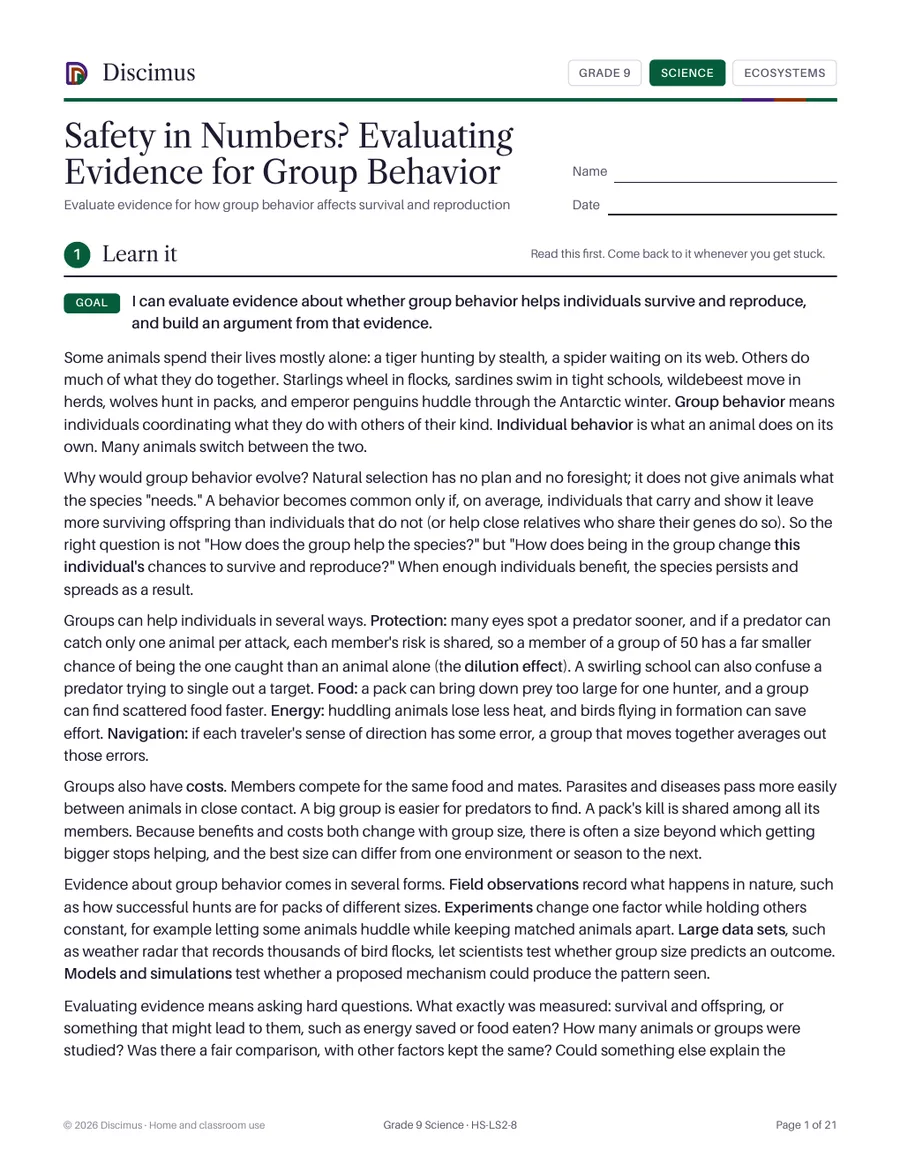
    Safety in Numbers? Evaluating Evidence for Group Behavior

    Evaluate evidence for how group behavior affects survival and reproduction
  • ScienceGrade 9

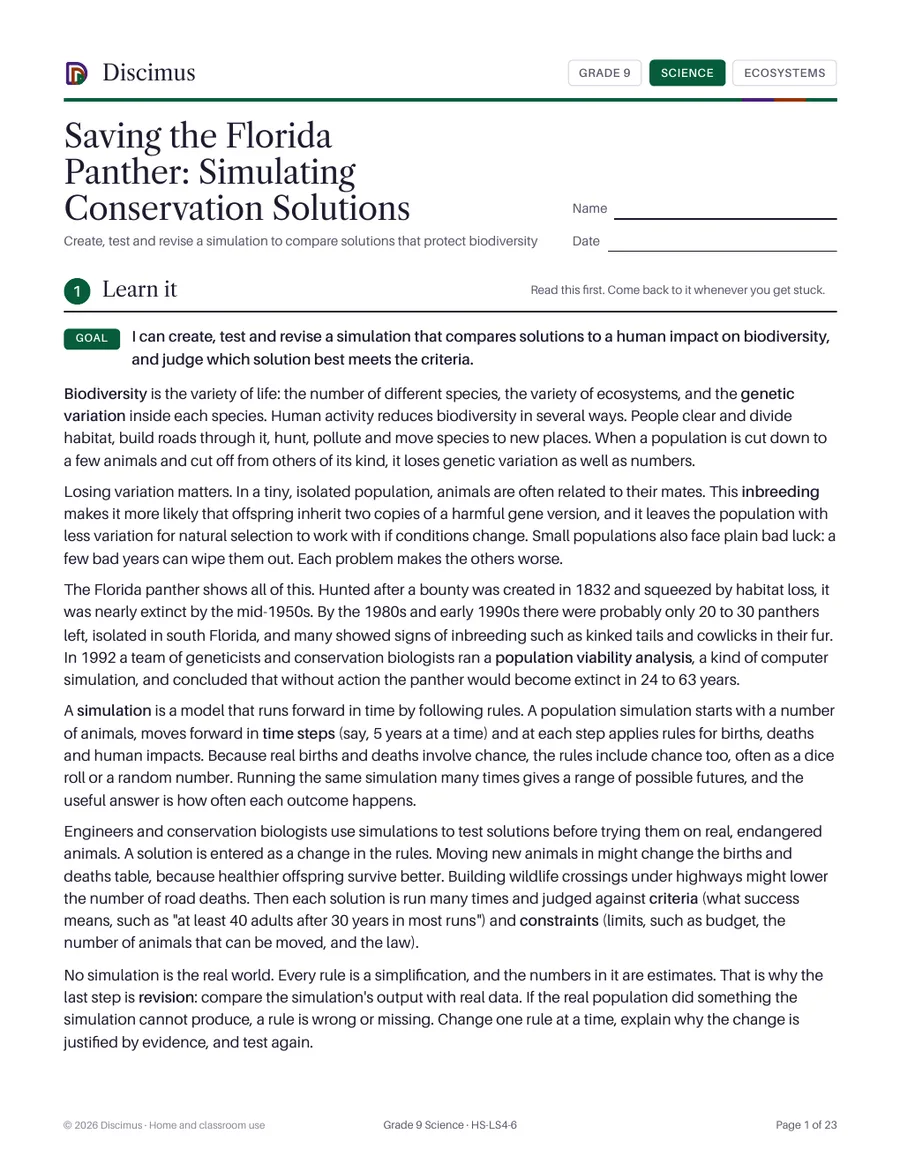
    Saving the Florida Panther: Simulating Conservation Solutions

    Create, test and revise a simulation to compare solutions that protect biodiversity
  • ScienceGrade 9

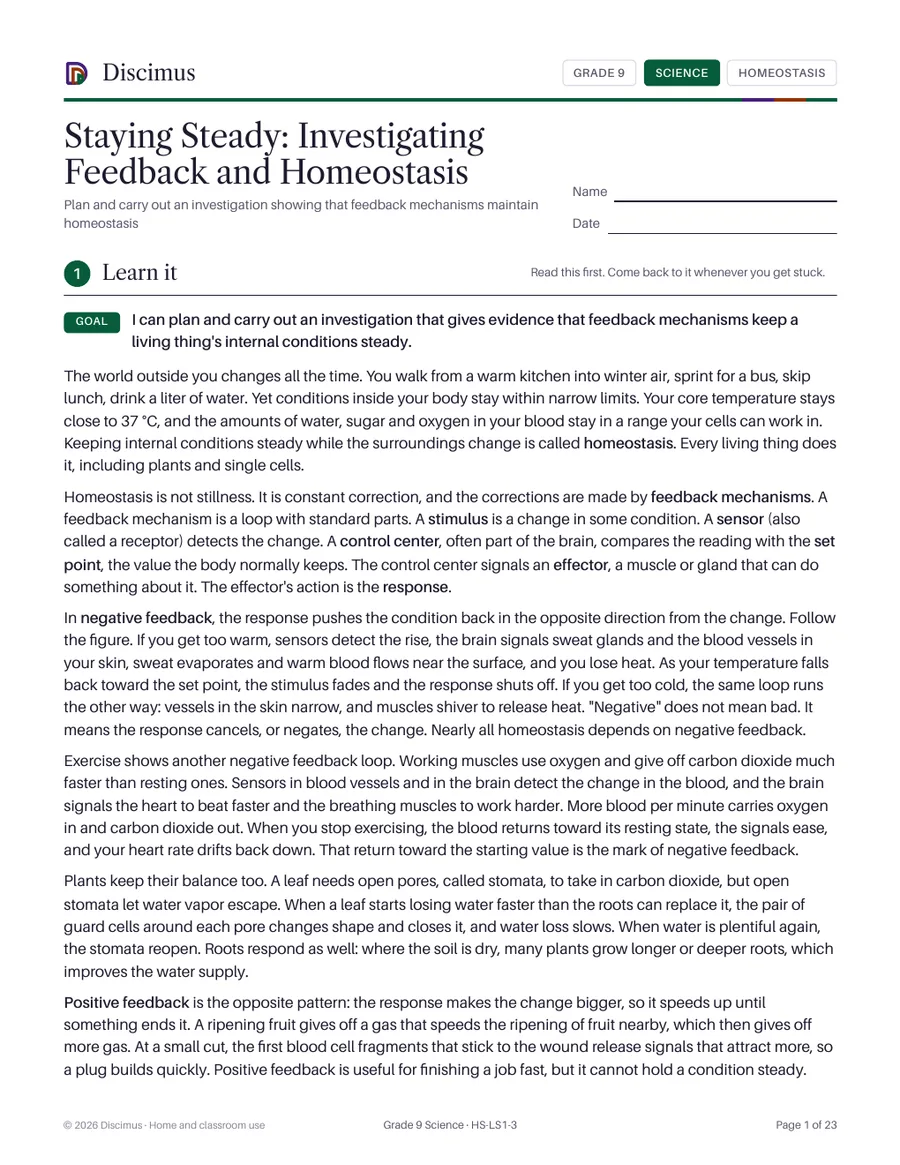
    Staying Steady: Investigating Feedback and Homeostasis

    Plan and carry out an investigation showing that feedback mechanisms maintain homeostasis
  • ScienceGrade 9

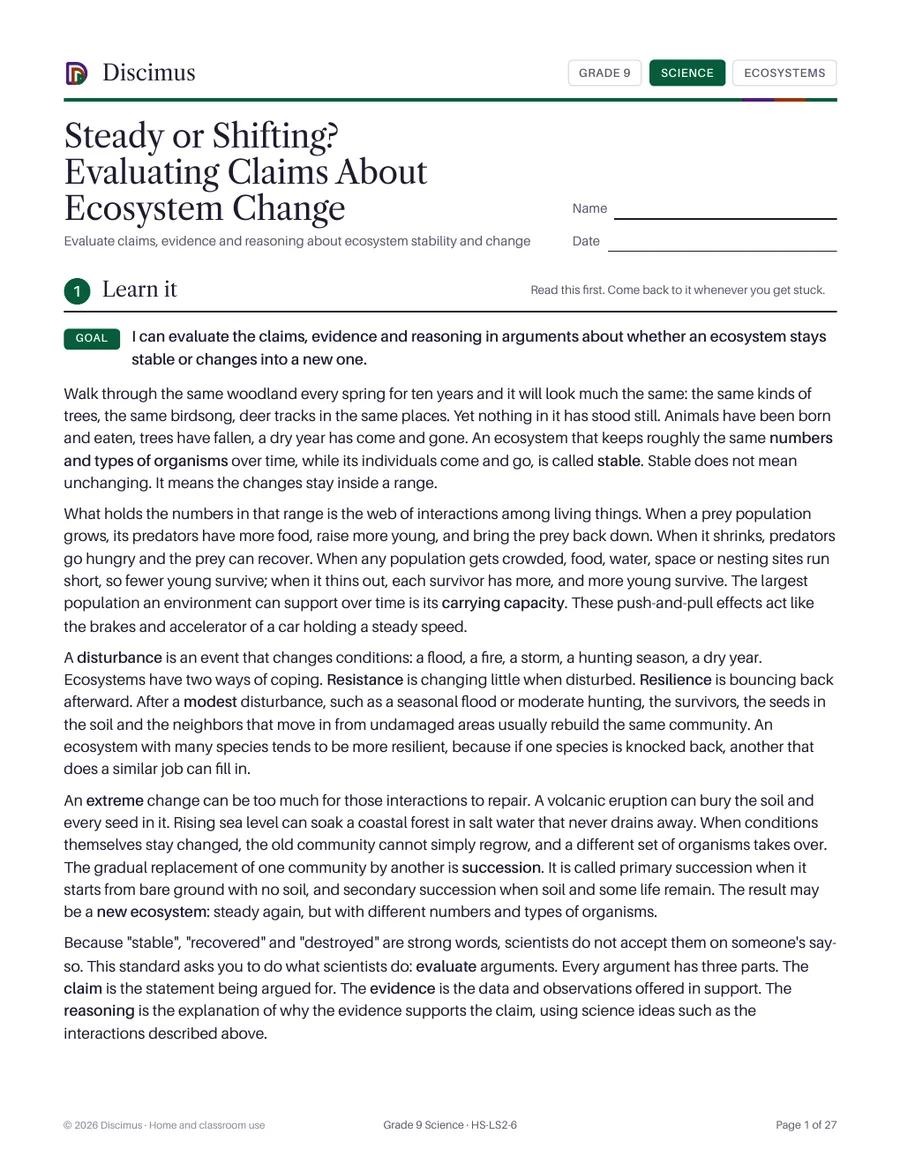
    Steady or Shifting? Evaluating Claims About Ecosystem Change

    Evaluate claims, evidence and reasoning about ecosystem stability and change
  • ScienceGrade 9

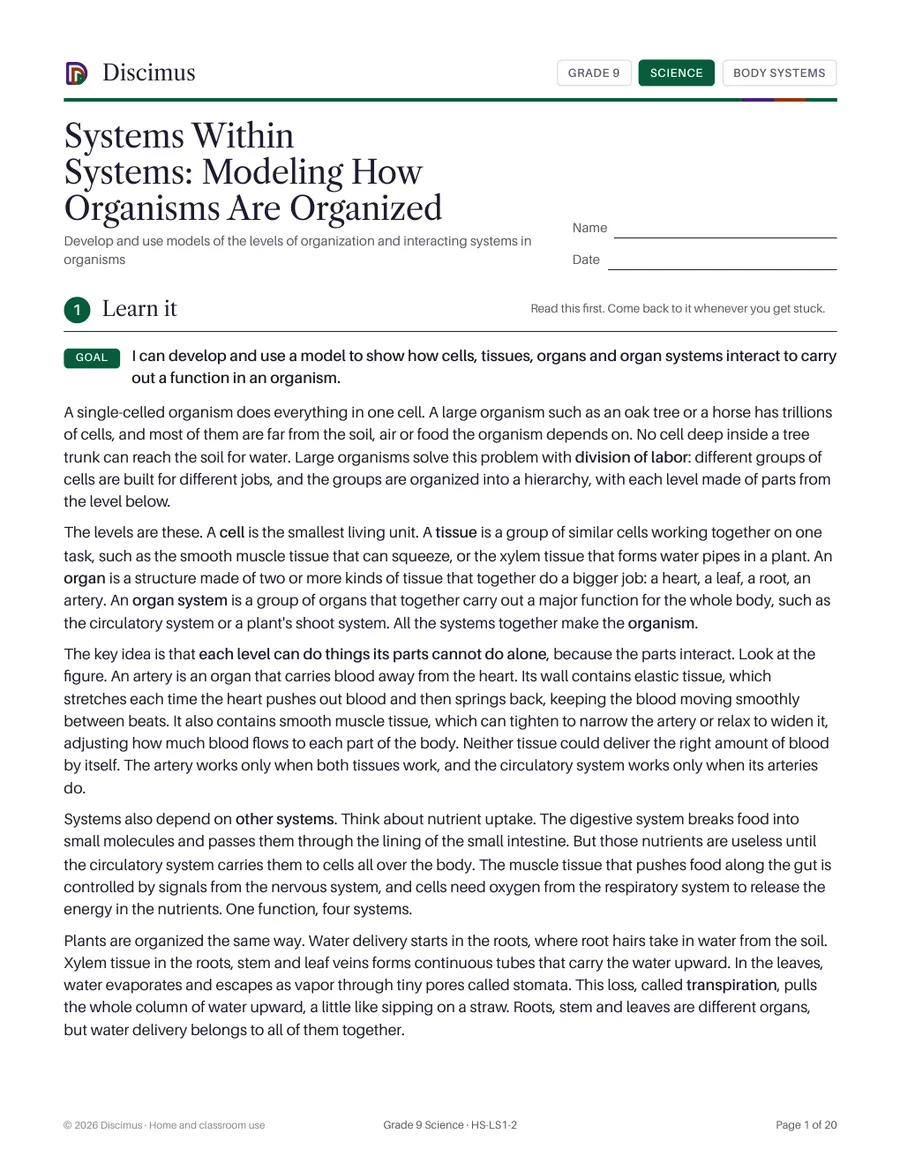
    Systems Within Systems: Modeling How Organisms Are Organized

    Develop and use models of the levels of organization and interacting systems in organisms
  • ScienceGrade 9

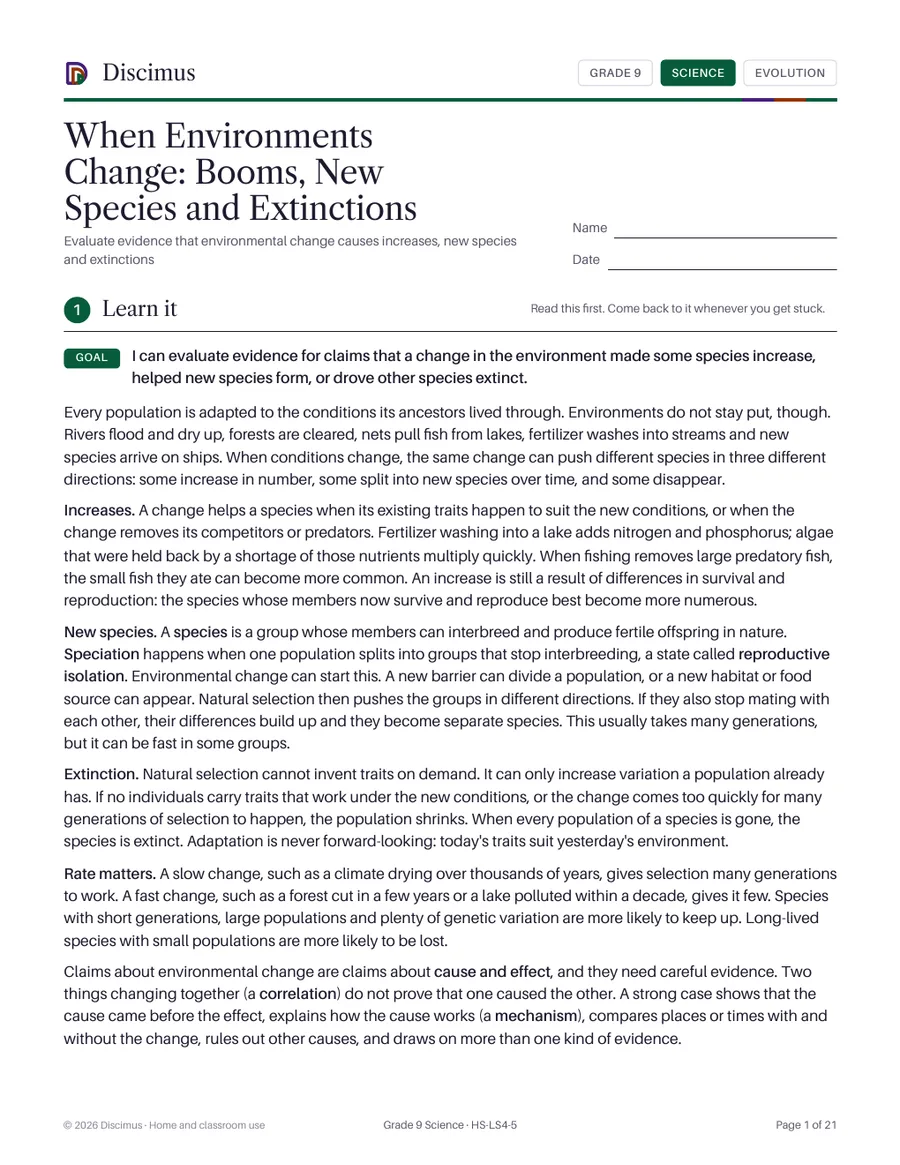
    When Environments Change: Booms, New Species and Extinctions

    Evaluate evidence that environmental change causes increases, new species and extinctions
  • ScienceGrade 9

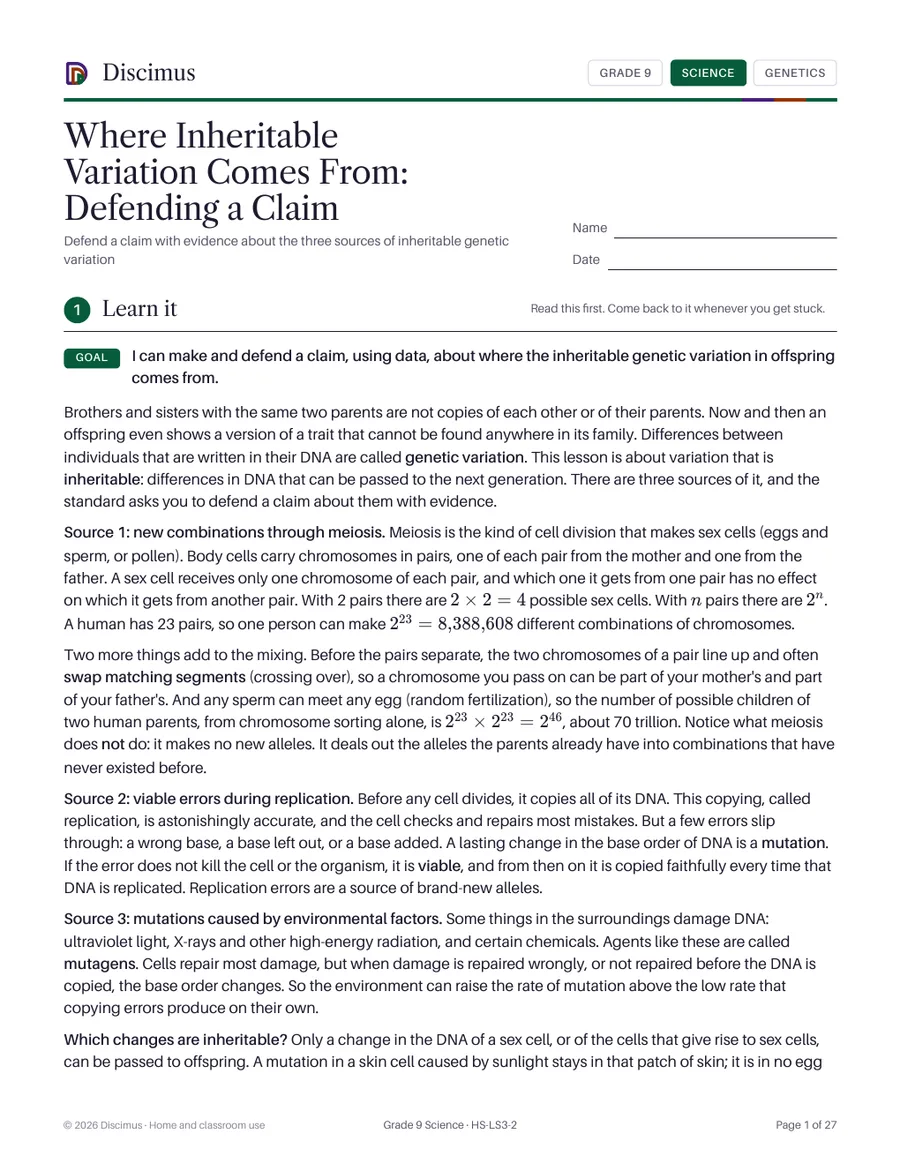
    Where Inheritable Variation Comes From: Defending a Claim

    Defend a claim with evidence about the three sources of inheritable genetic variation

Discimus

Docendo discimus. By teaching, we learn.

By age

  • Early Childhood
  • Elementary School
  • Middle School
  • High School
  • All grades

By subject

  • Math
  • English Language Arts
  • Science
  • Social Studies
  • Foreign Language
  • Technology

Discimus

  • Membership
  • Occasions
  • Standards
  • About
  • Contact

© 2026 Ceterum. All rights reserved. Worksheets are for home and single-classroom use.

  • Terms
  • Privacy