Add a Sound, Change a Sound: Making New Words
Add or swap one sound in a simple one-syllable spoken word to make a new word
Common Core State Standards for English Language Arts
Phonics, reading, grammar, vocabulary and writing.
Add or swap one sound in a simple one-syllable spoken word to make a new word
With adult help, answer a question from memory or from a source the adult provides
Ask and answer who, what, where, when, why and how questions about a story read aloud
Ask and answer questions about key details in a true text read aloud
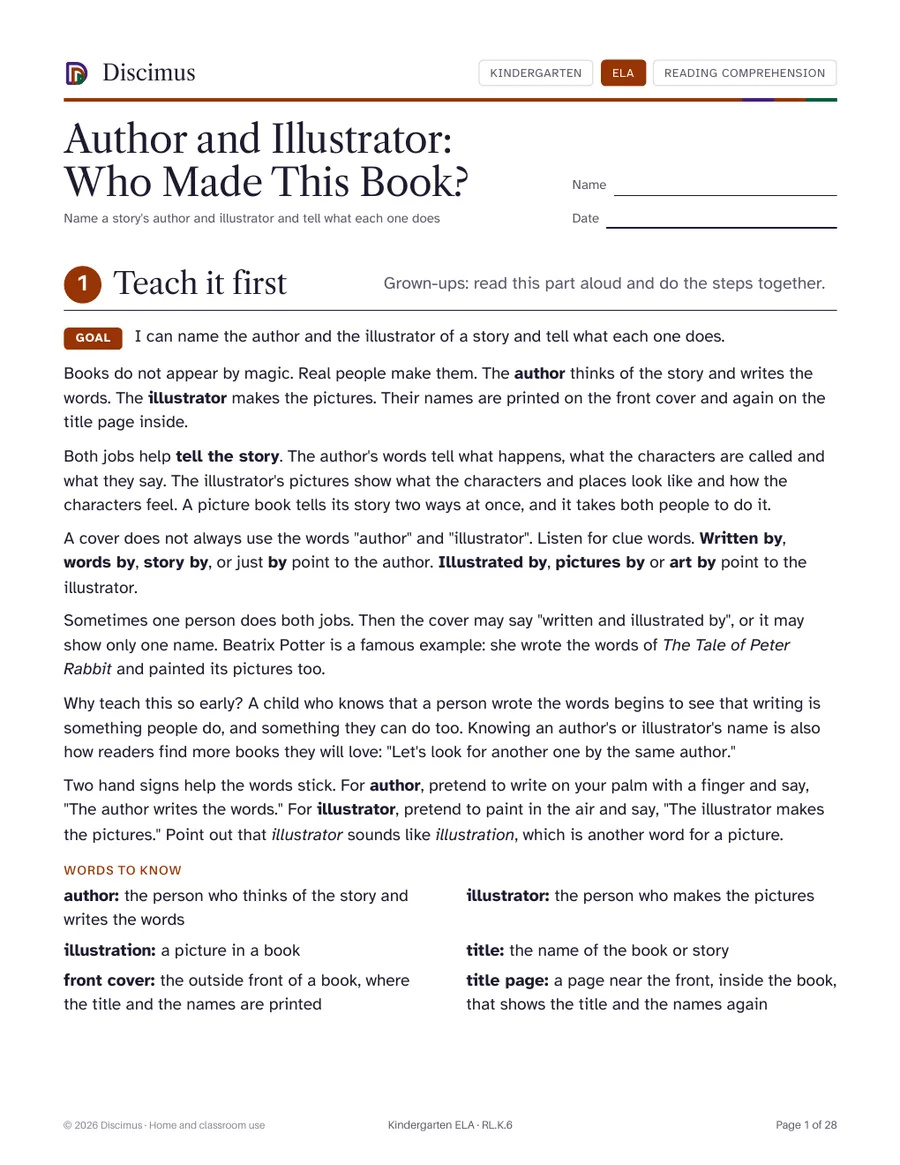
Name a story's author and illustrator and tell what each one does
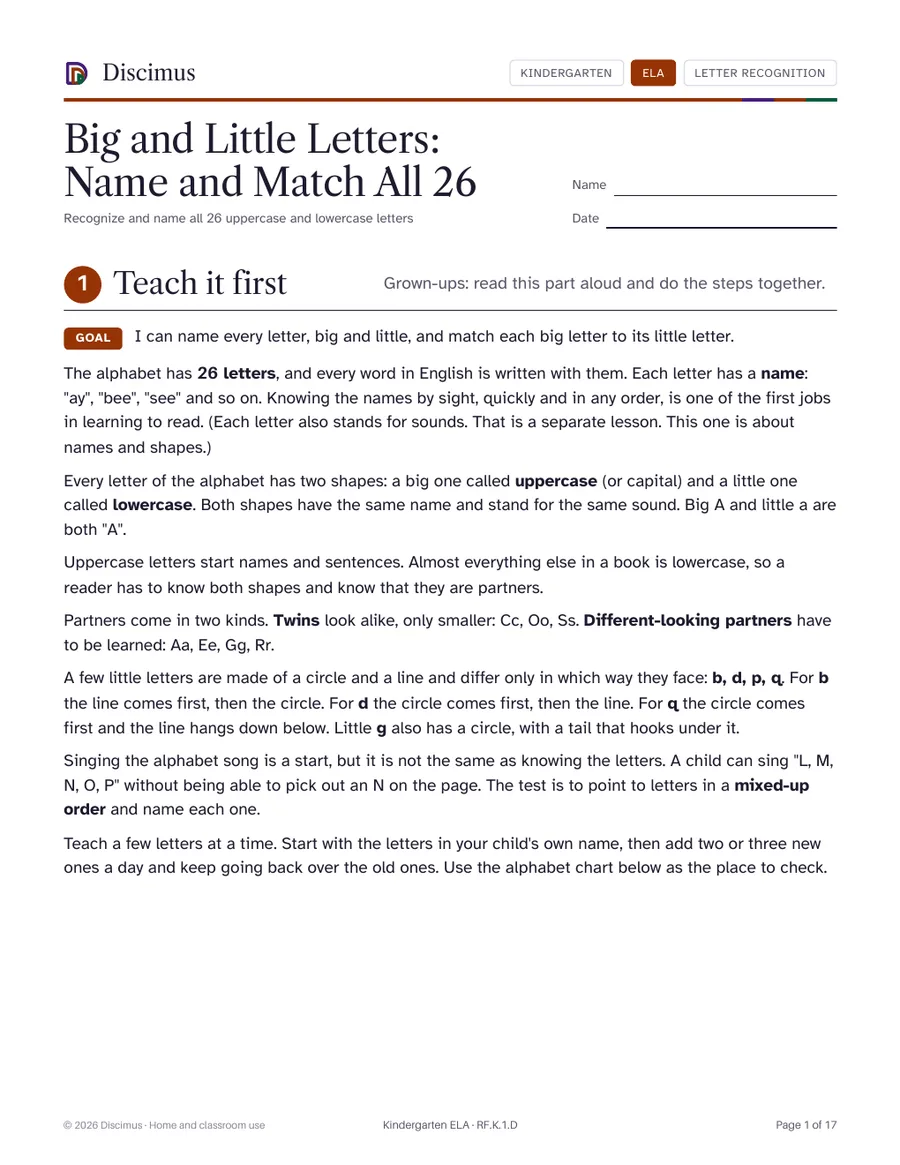
Recognize and name all 26 uppercase and lowercase letters
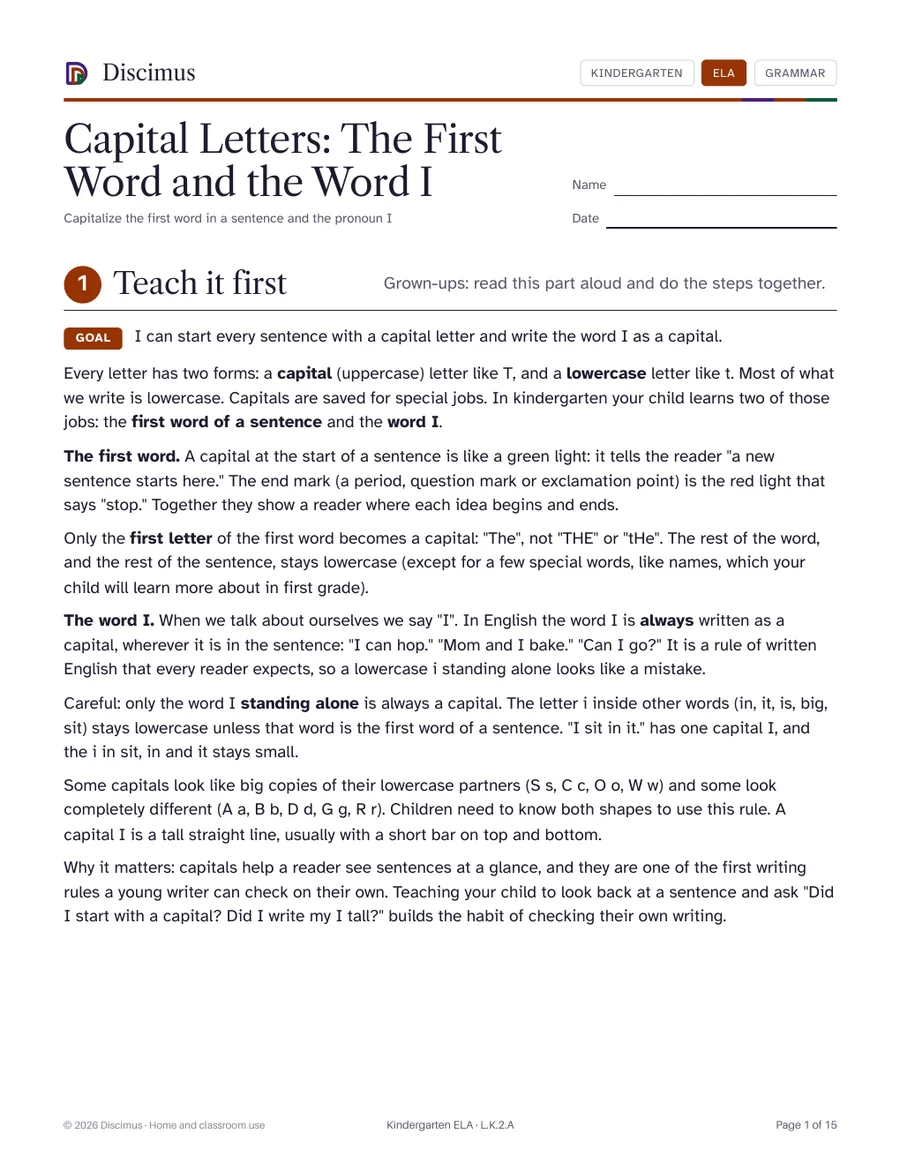
Capitalize the first word in a sentence and the pronoun I
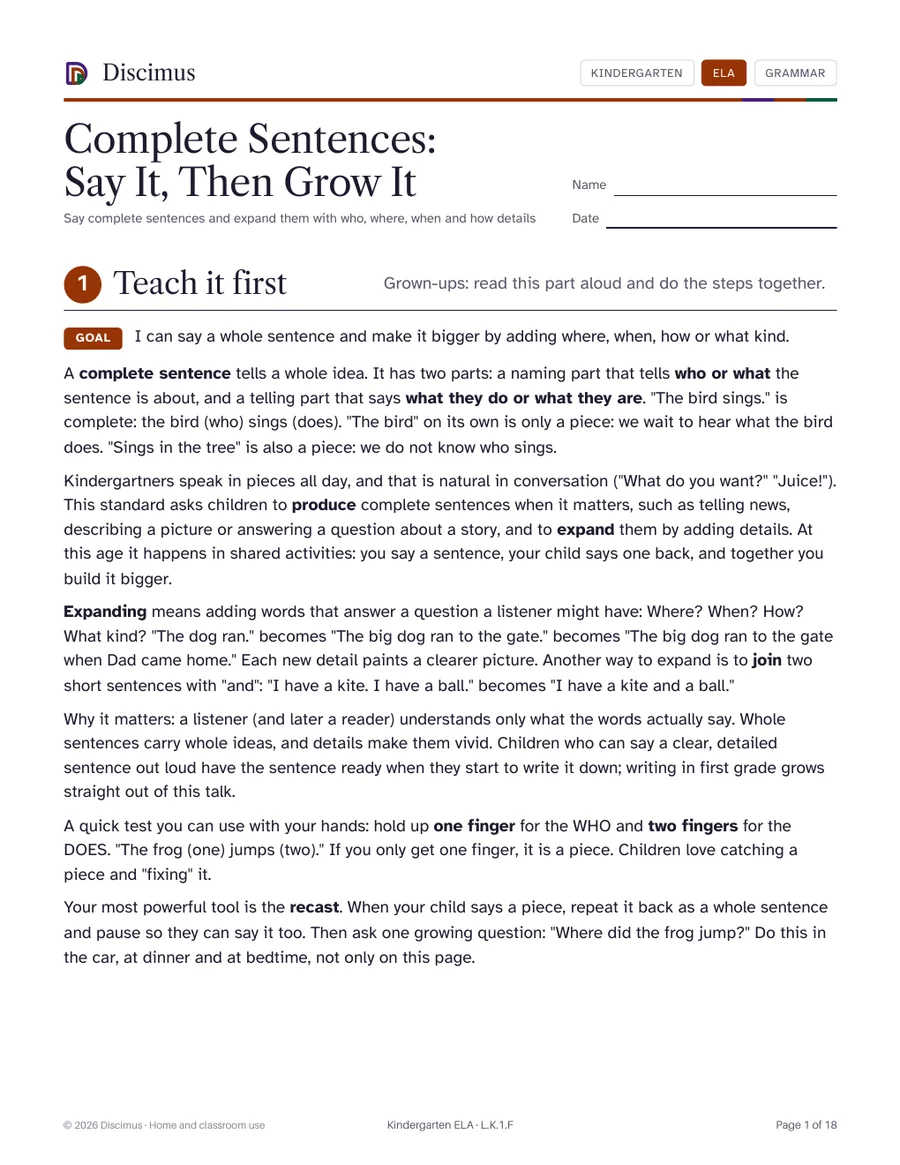
Say complete sentences and expand them with who, where, when and how details
Say the most common sound for each consonant letter
With adult help, use digital tools to make and publish writing, alone and with a partner
Recognize and name end marks: period, question mark and exclamation point
Say the first, middle vowel and last sound in three-sound (CVC) spoken words
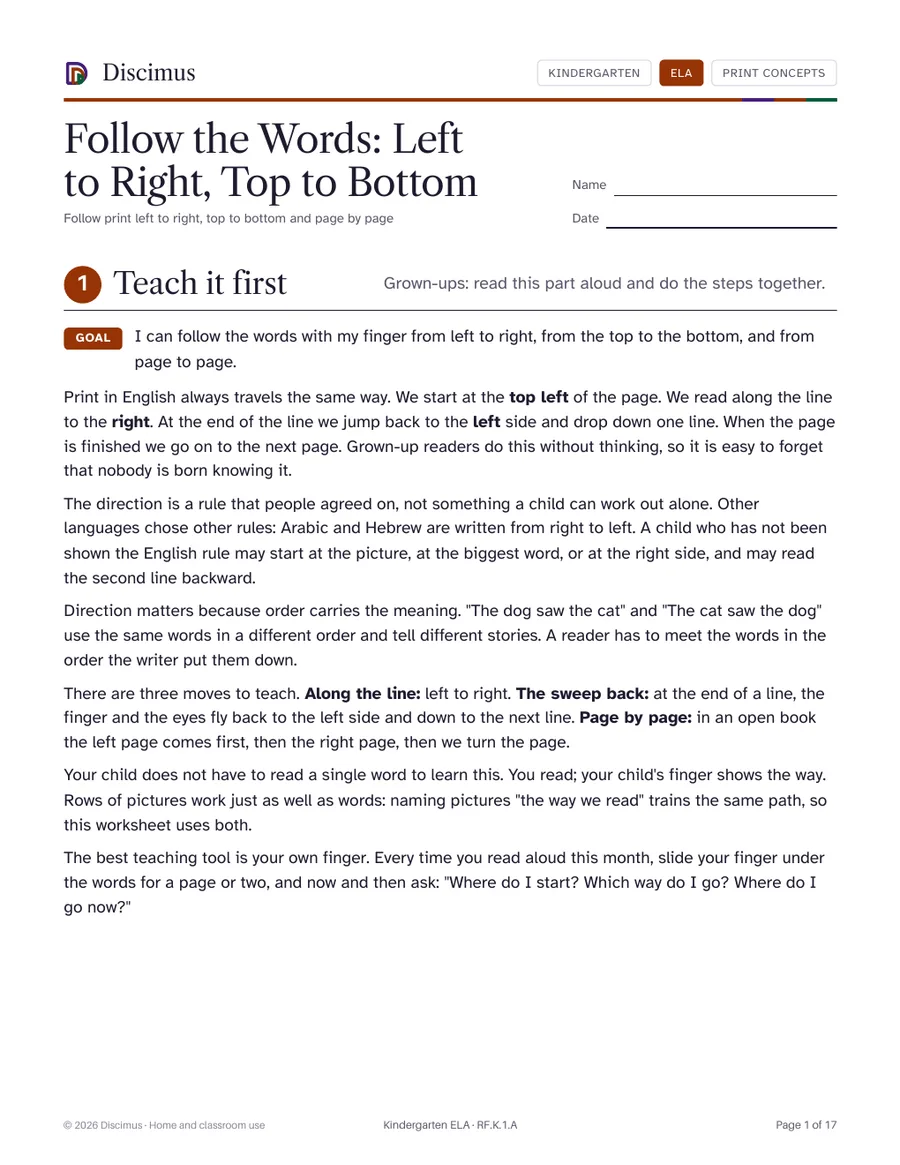
Follow print left to right, top to bottom and page by page
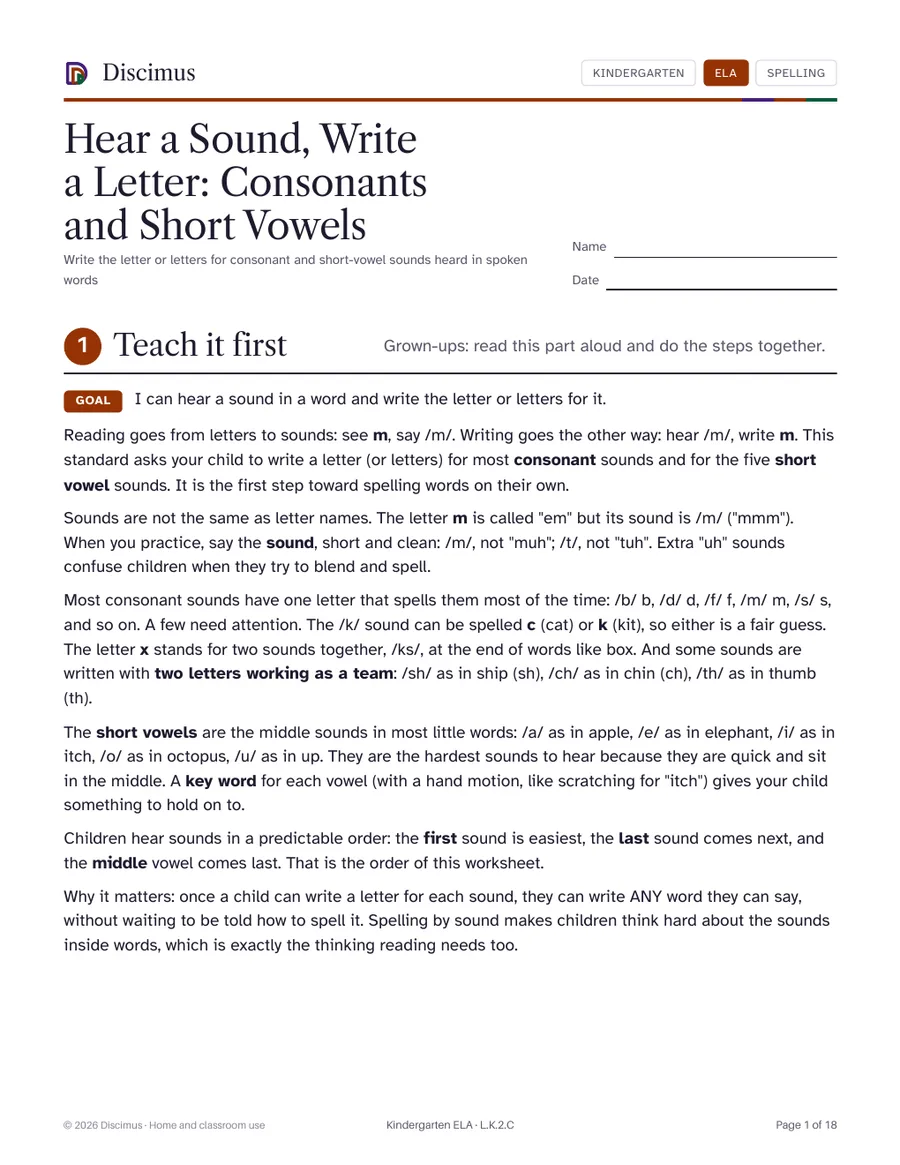
Write the letter or letters for consonant and short-vowel sounds heard in spoken words
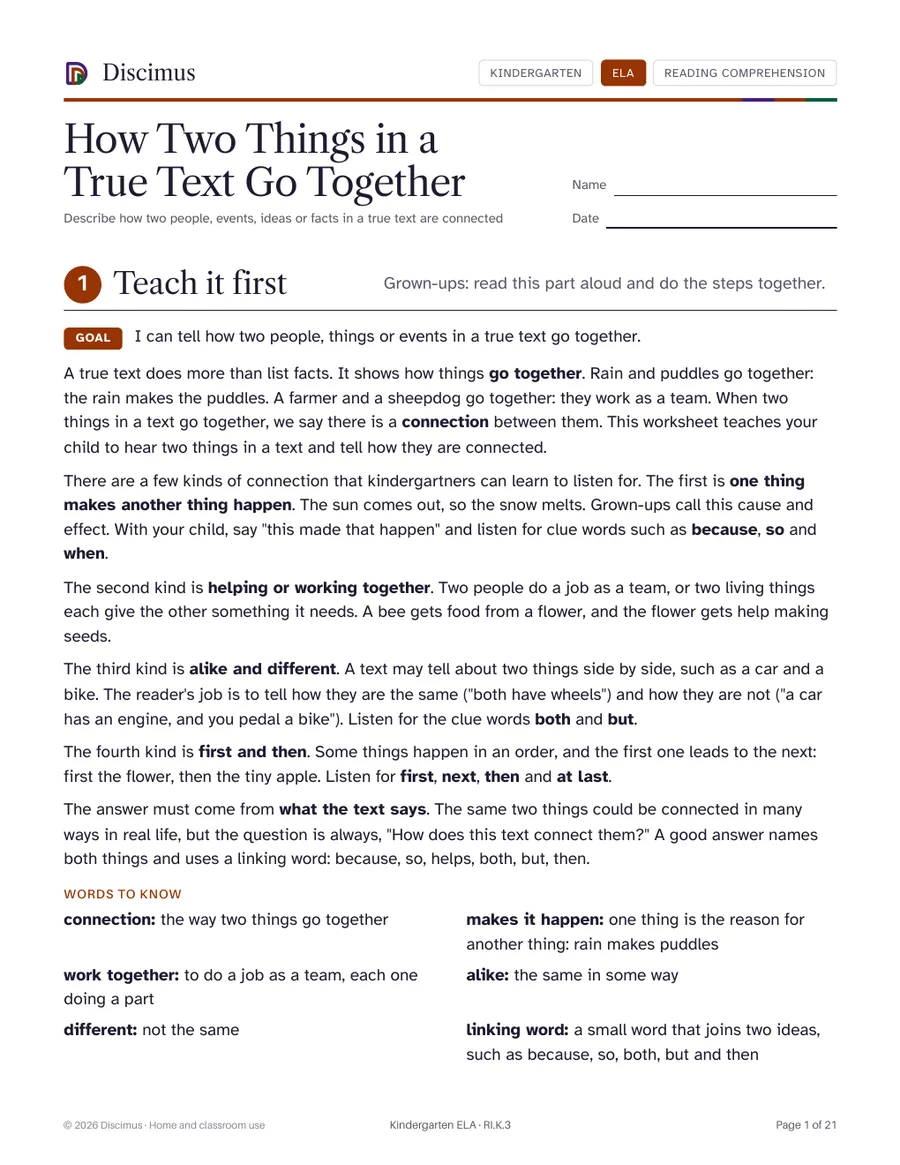
Describe how two people, events, ideas or facts in a true text are connected
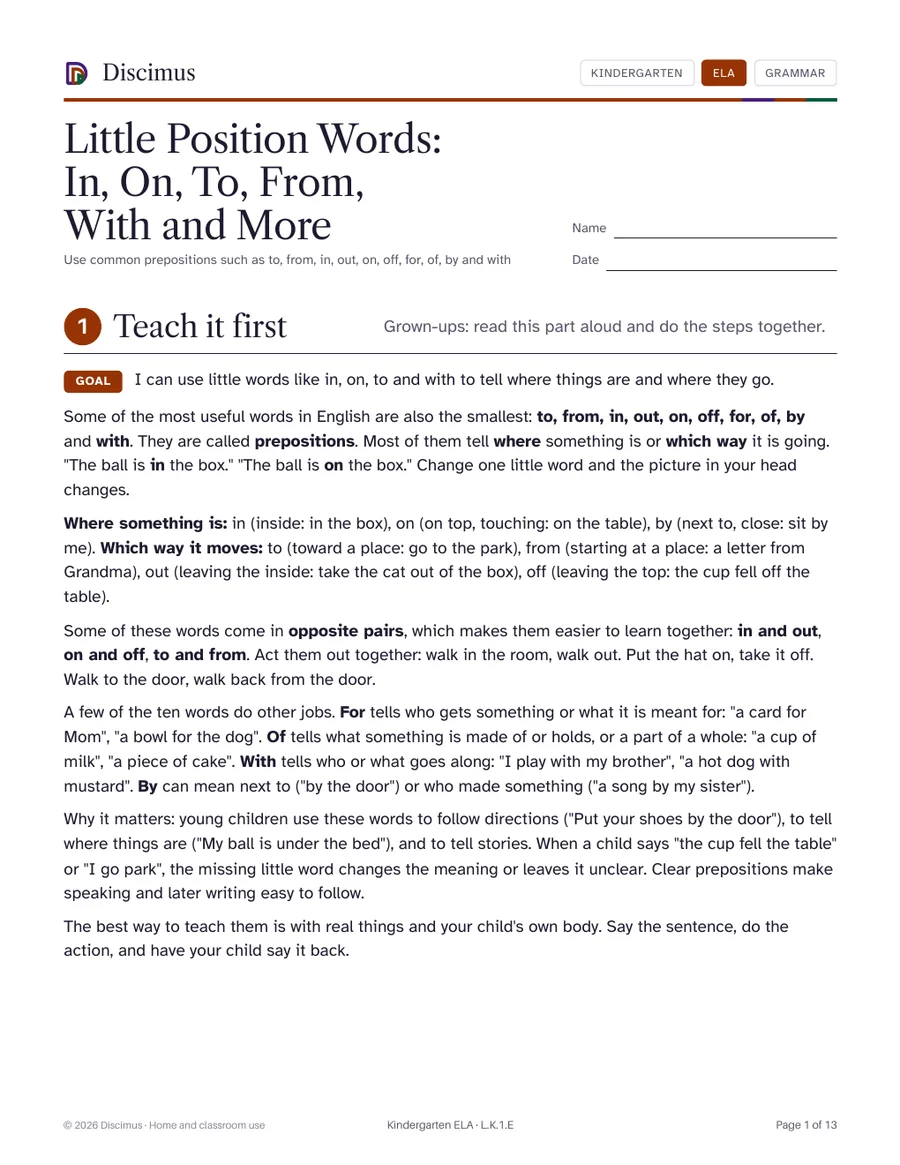
Use common prepositions such as to, from, in, out, on, off, for, of, by and with
Match the short and long sound of each vowel (a, e, i, o, u) to its common spellings
Tell similarly spelled words apart by naming the sounds of the letters that differ
Name the main topic of a true text read aloud and retell its key details
Answer questions and suggestions from a listener and add details to make writing stronger
Draw, dictate and write an opinion that names the topic or book and says what you think
Draw, dictate and write to name a topic and tell some true information about it
Ask and answer questions about unknown words in a true text read aloud
Use common nouns (naming words) and verbs (action words) when speaking and writing
Say regular plural nouns aloud by adding /s/ or /es/ (dog, dogs; wish, wishes)
Blend and segment the onset and rime of one-syllable spoken words
Understand common action words and describing words by naming and using their opposites
Identify the front cover, back cover and title page of a book
Tell which moment of a story a picture shows and what the picture adds
Tell what a picture in a true text shows and match it to the words
Print uppercase and lowercase letters with correct starts, strokes, size and direction
Understand and use who, what, where, when, why and how to ask and answer questions
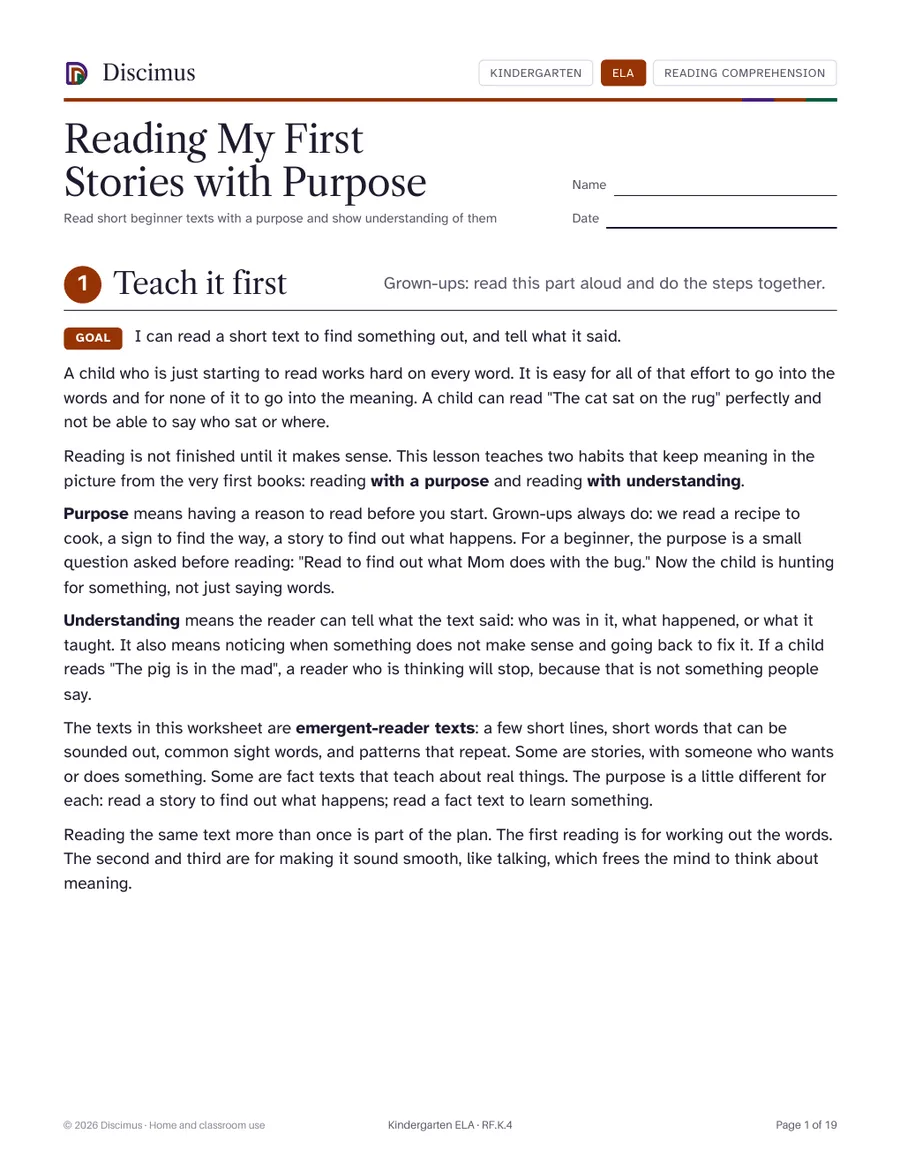
Read short beginner texts with a purpose and show understanding of them
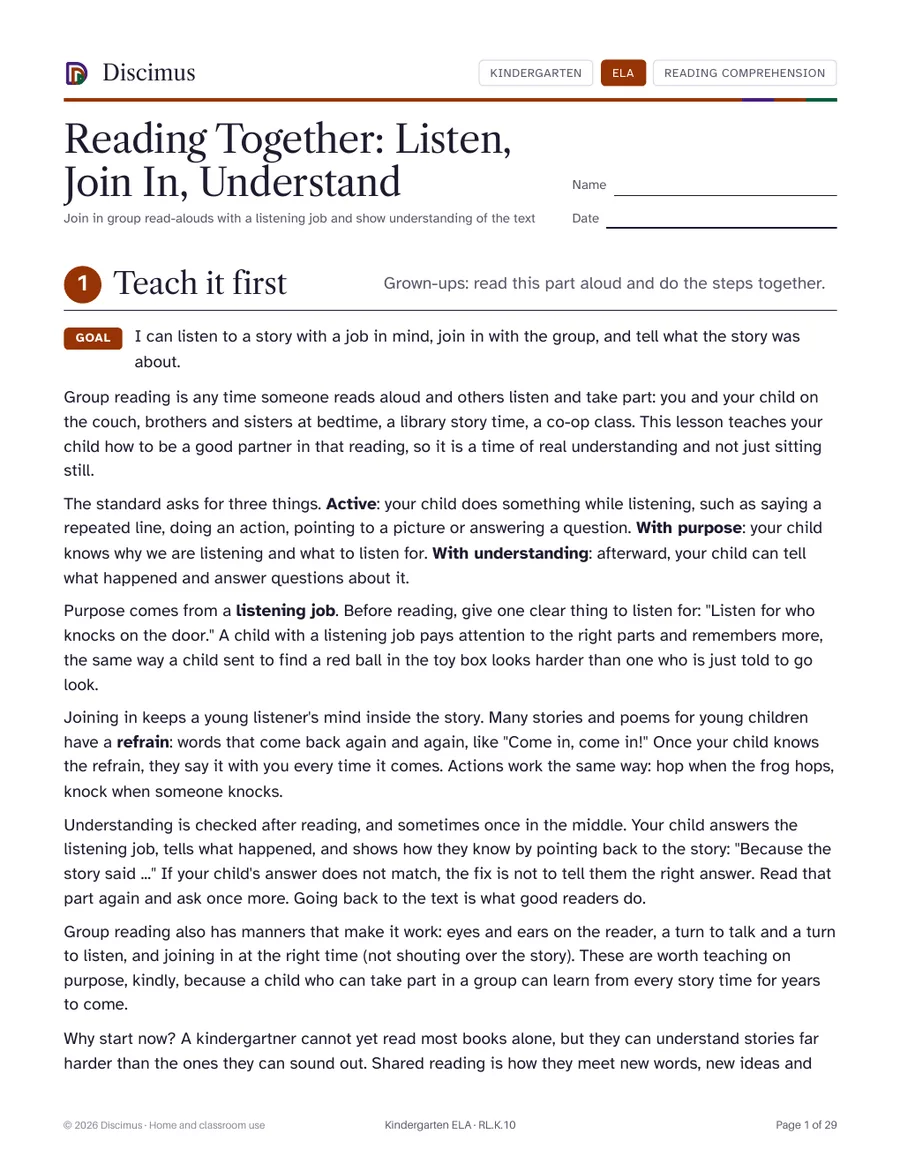
Join in group read-alouds with a listening job and show understanding of the text
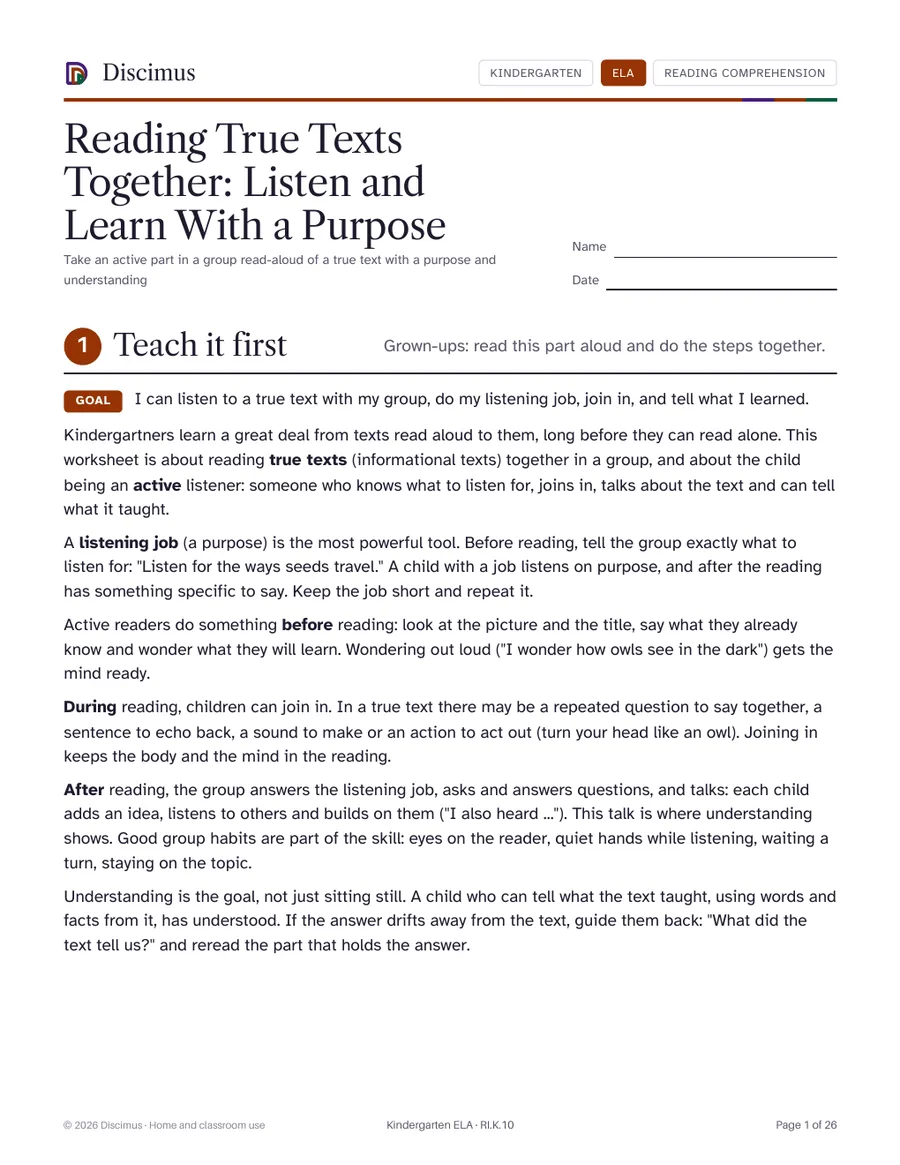
Take an active part in a group read-aloud of a true text with a purpose and understanding
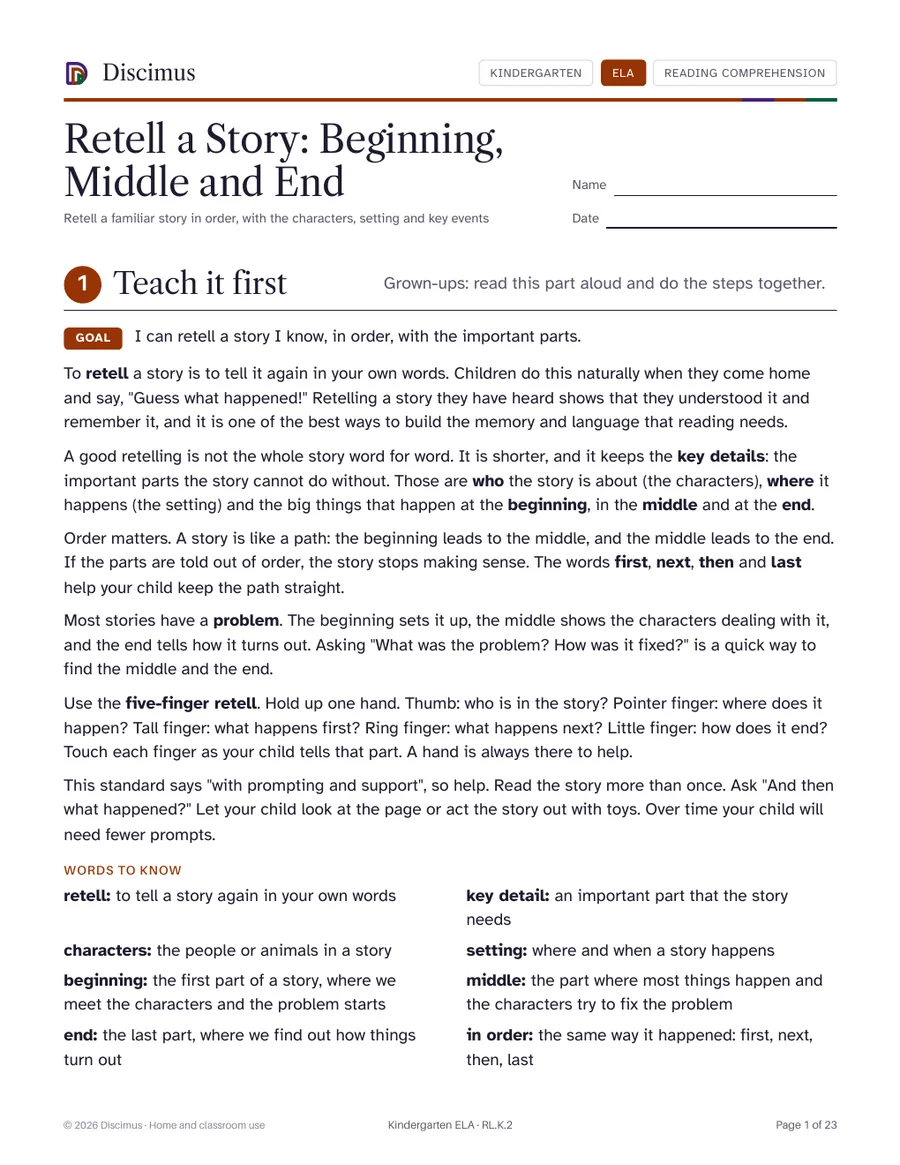
Retell a familiar story in order, with the characters, setting and key events
Tell whether two spoken words rhyme and say a word that rhymes
Compare and contrast what happens to characters in familiar stories
Learn a new meaning for a familiar word and use the sentence to tell which meaning fits
Explore several books by one author in a shared project and give opinions with reasons
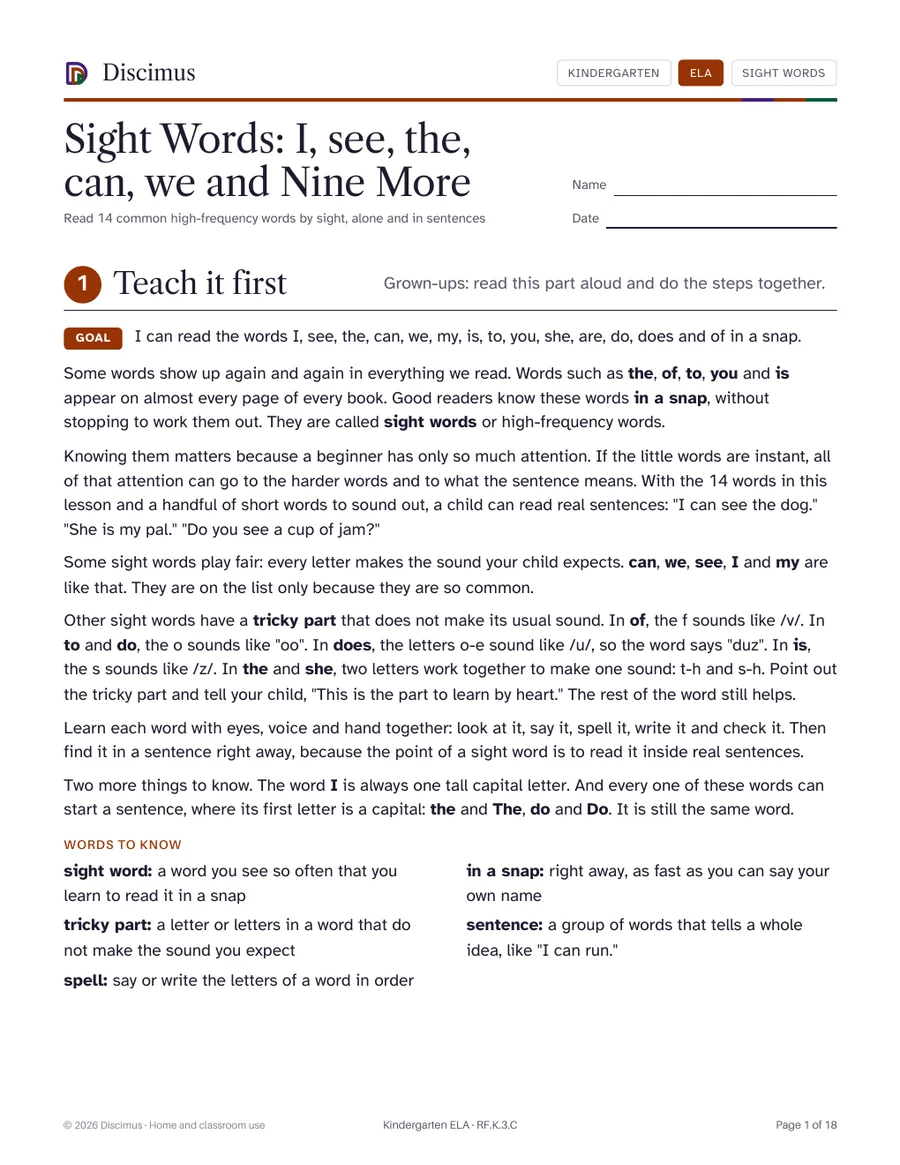
Read 14 common high-frequency words by sight, alone and in sentences
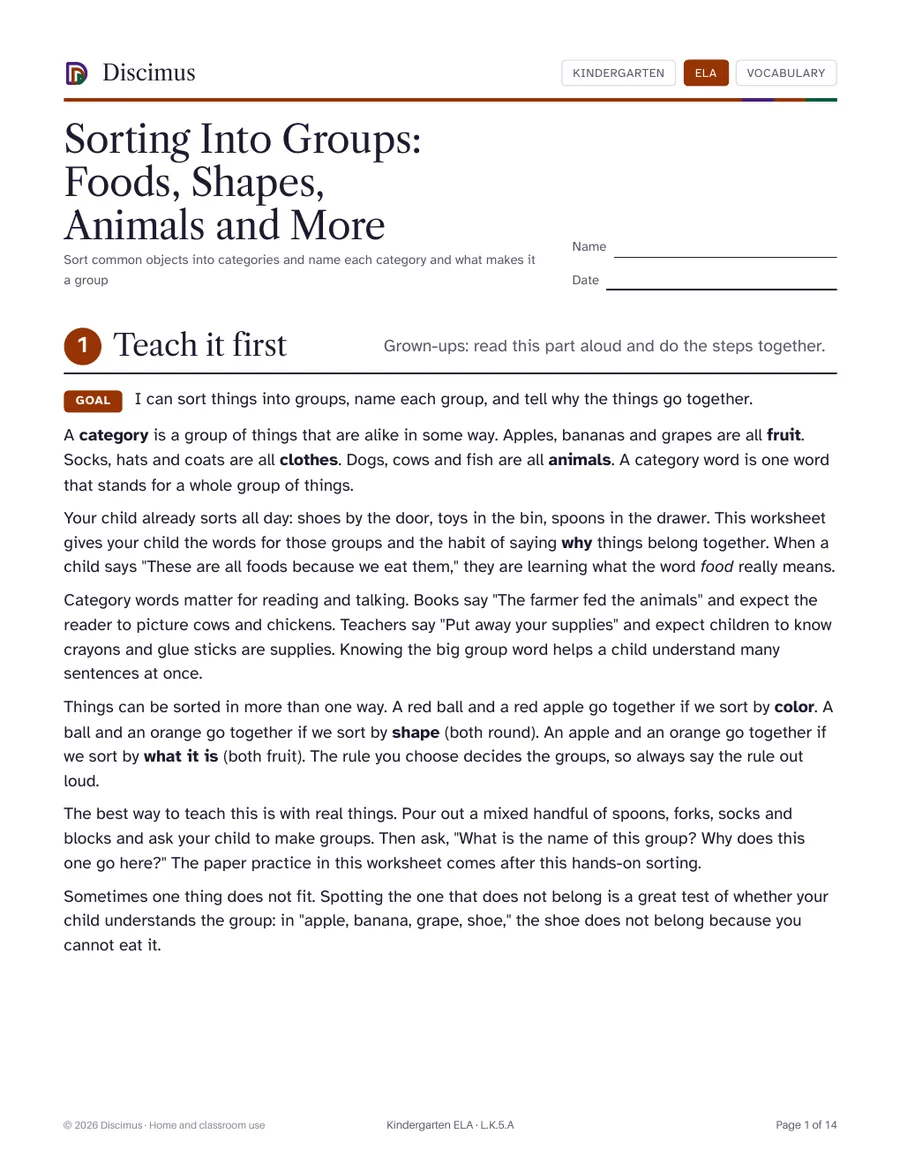
Sort common objects into categories and name each category and what makes it a group
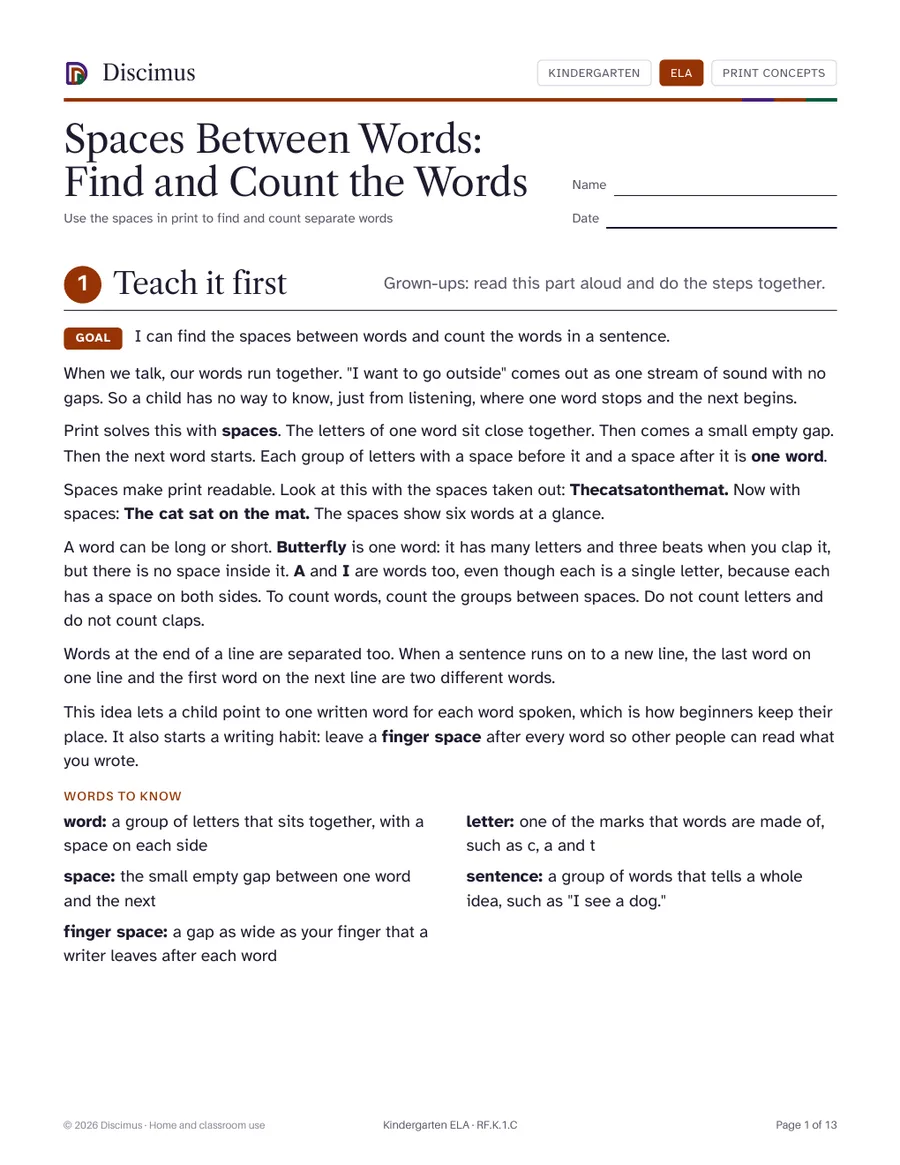
Use the spaces in print to find and count separate words
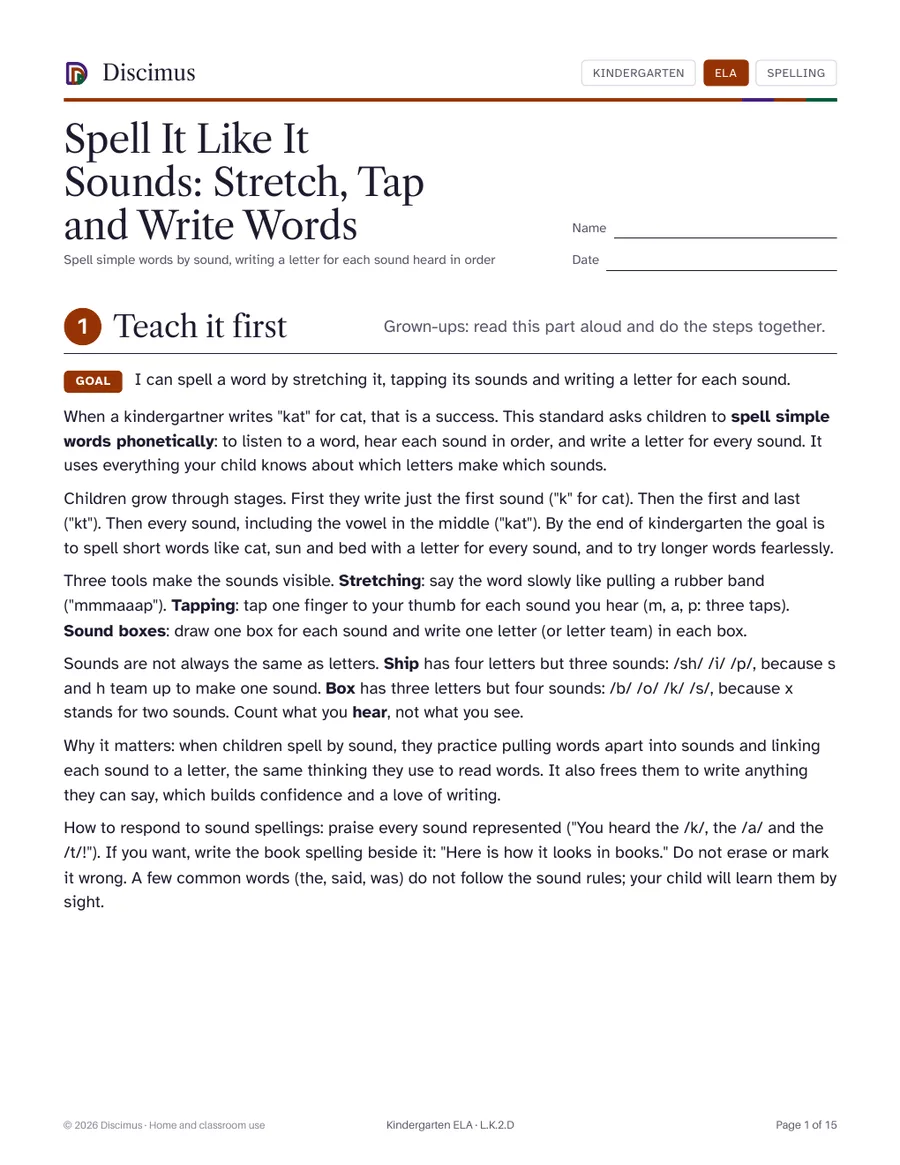
Spell simple words by sound, writing a letter for each sound heard in order
Recognize common types of texts: tell a story from a poem and say how you know
Count, say, blend and segment the syllables in spoken words
Tell how two true texts on the same topic are alike and different
Tell apart close action words (walk, march, strut, prance) by acting them out
Ask and answer questions about unknown words in a story, using clues from the story
Draw, dictate and write about events in the order they happened and tell how you felt
Name the author and illustrator of a true text and tell how each one presents the facts
Name the characters, the setting and the major events of a story read aloud
Identify the reasons an author gives to support a point in a true text
Use new words and phrases from talk and read-alouds when speaking and retelling
Use word parts (-s, -ed, re-, un-, pre-, -ful, -less) as clues to a new word's meaning
Connect words to real-life examples by finding places, things and times each word fits
Know that each spoken word is written with its own letters in a set order