Building a Case: Citing Several Pieces of Evidence in Literature
Cite several pieces of text evidence for explicit meaning and inferences in literature
19 worksheets match.
Cite several pieces of text evidence for explicit meaning and inferences in literature
Compare historical fiction with a historical account to see how authors use or alter it
Analyze how a poem's or play's form, such as a sonnet or soliloquy, adds to its meaning
Analyze a text's structure and how its major sections develop the ideas
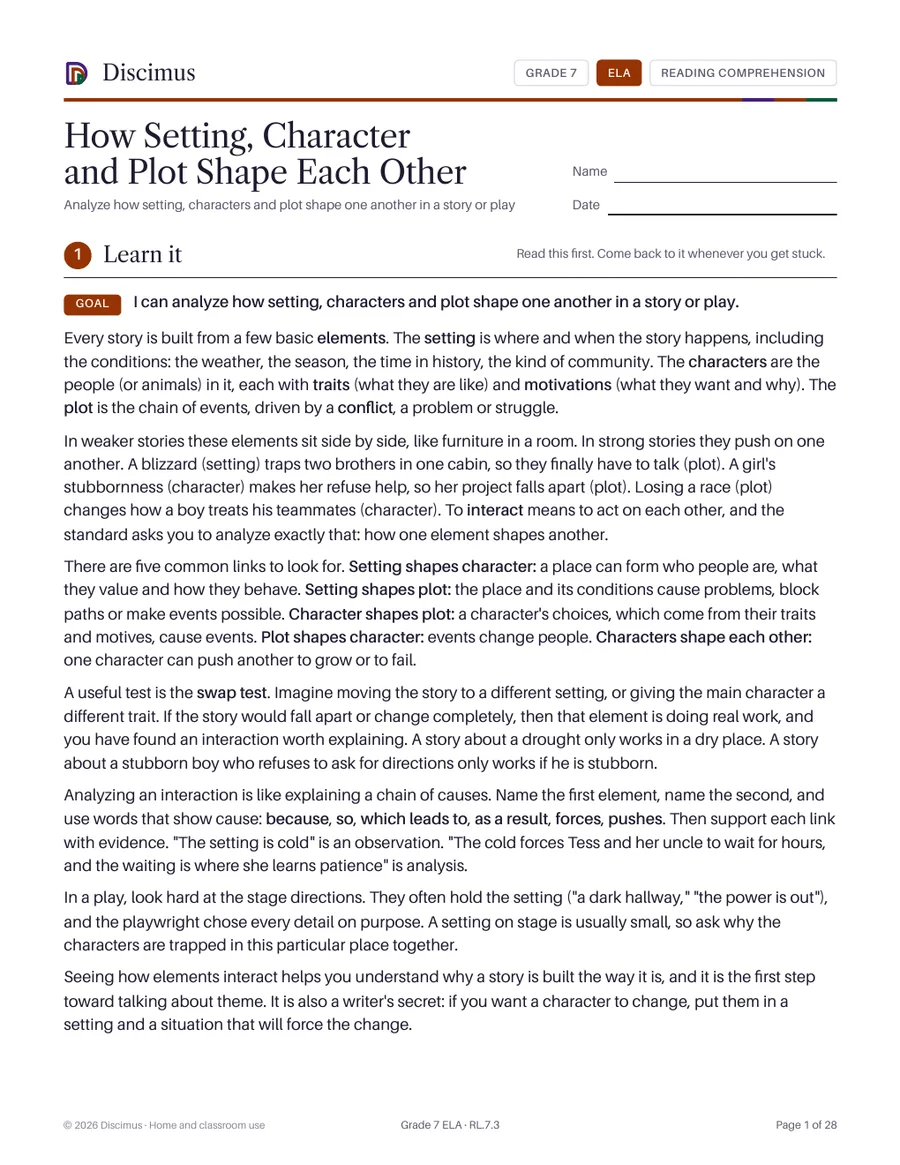
Analyze how setting, characters and plot shape one another in a story or play
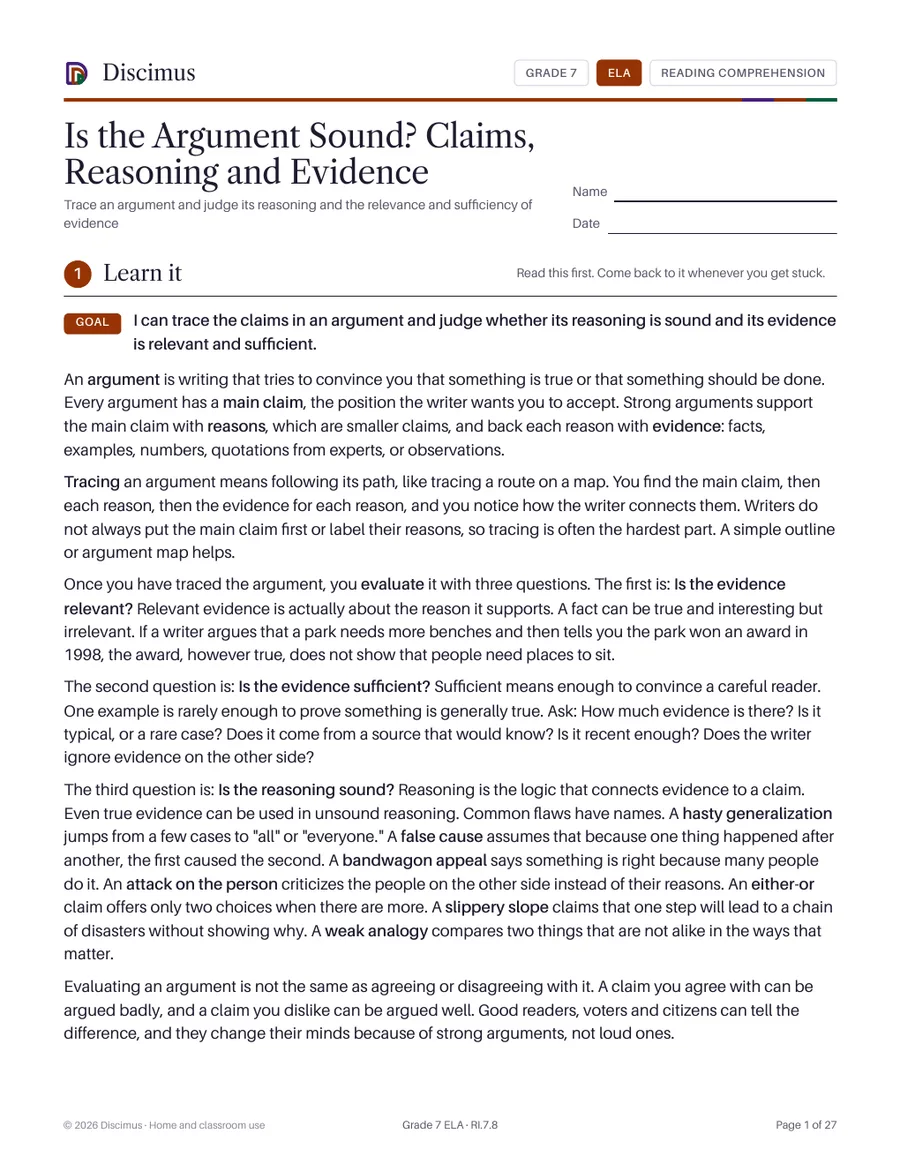
Trace an argument and judge its reasoning and the relevance and sufficiency of evidence
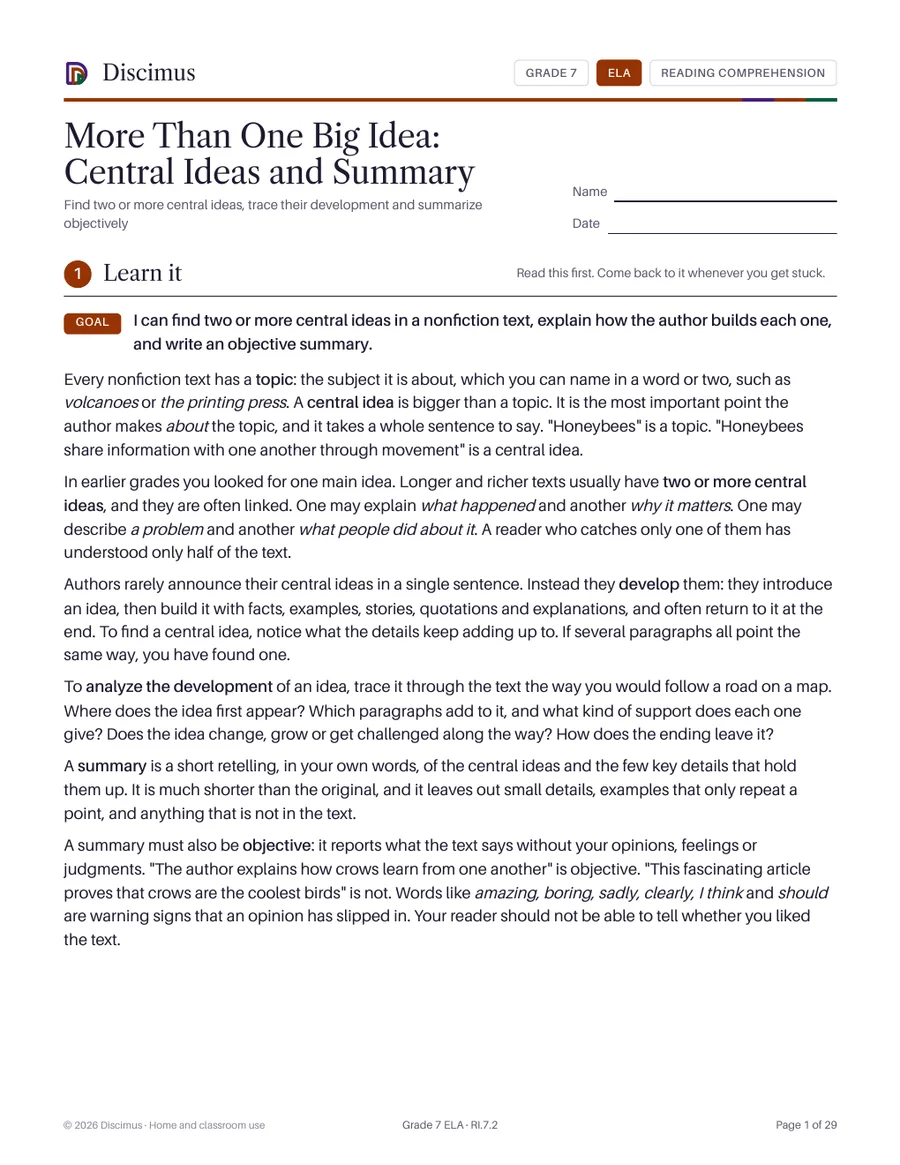
Find two or more central ideas, trace their development and summarize objectively
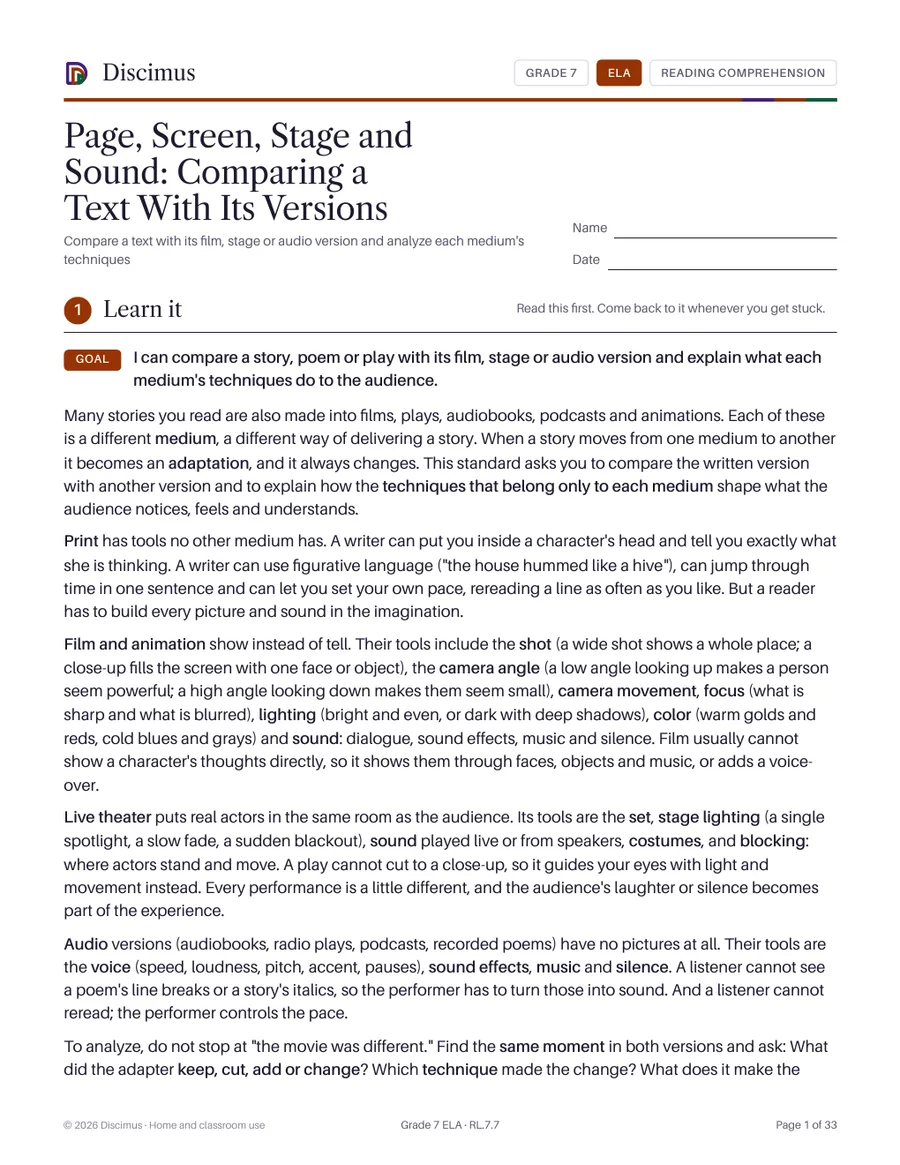
Compare a text with its film, stage or audio version and analyze each medium's techniques
Compare a nonfiction text with its audio, video or multimedia version and each portrayal
Cite several pieces of evidence for explicit statements and inferences in nonfiction
Read grade 6 to 8 stories, plays and poems independently, using fix-up strategies
Analyze how two authors on one topic stress different evidence or interpret facts
Analyze how an author develops and contrasts characters' and narrators' points of view
Determine a theme, trace how it develops across a story, and write an objective summary
Read and understand grades 6 to 8 literary nonfiction, including older memoirs
Find an author's point of view and purpose and how the author sets it apart from others
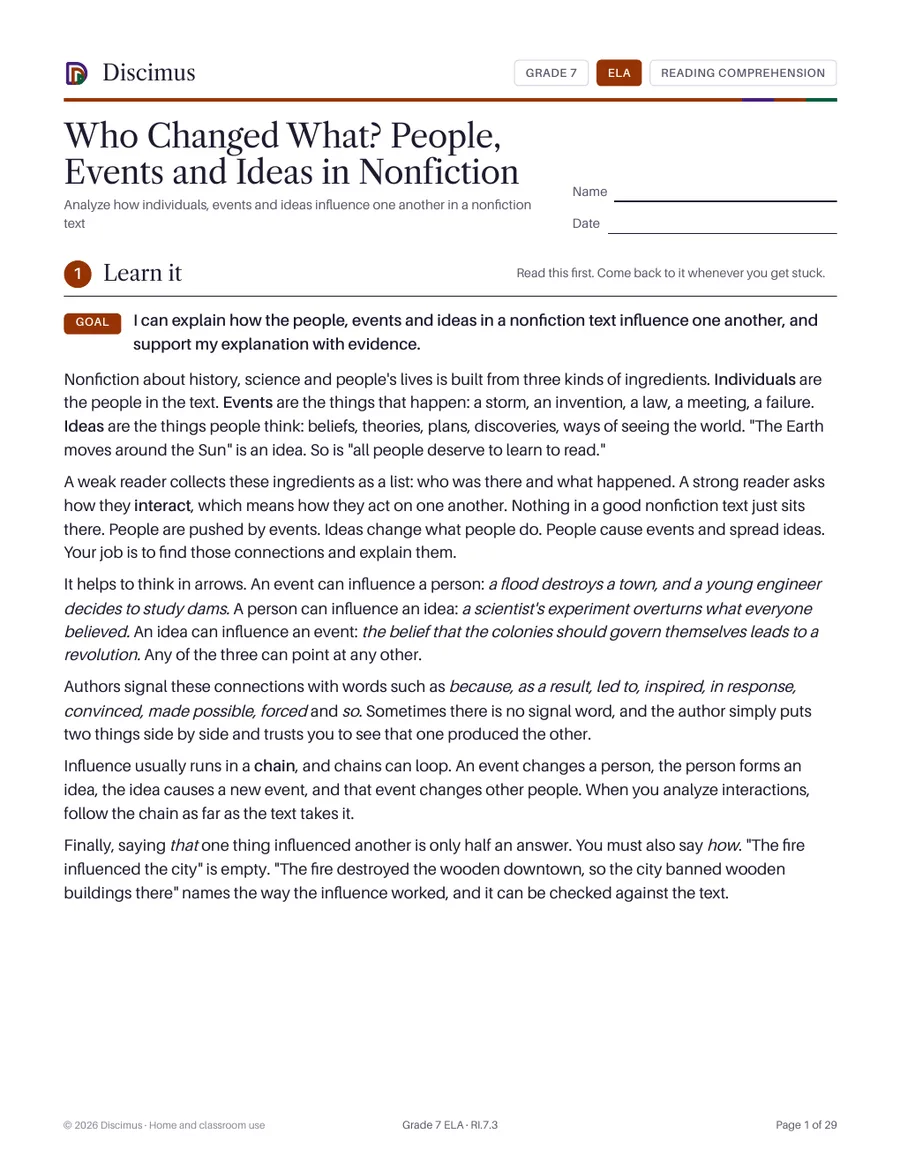
Analyze how individuals, events and ideas influence one another in a nonfiction text
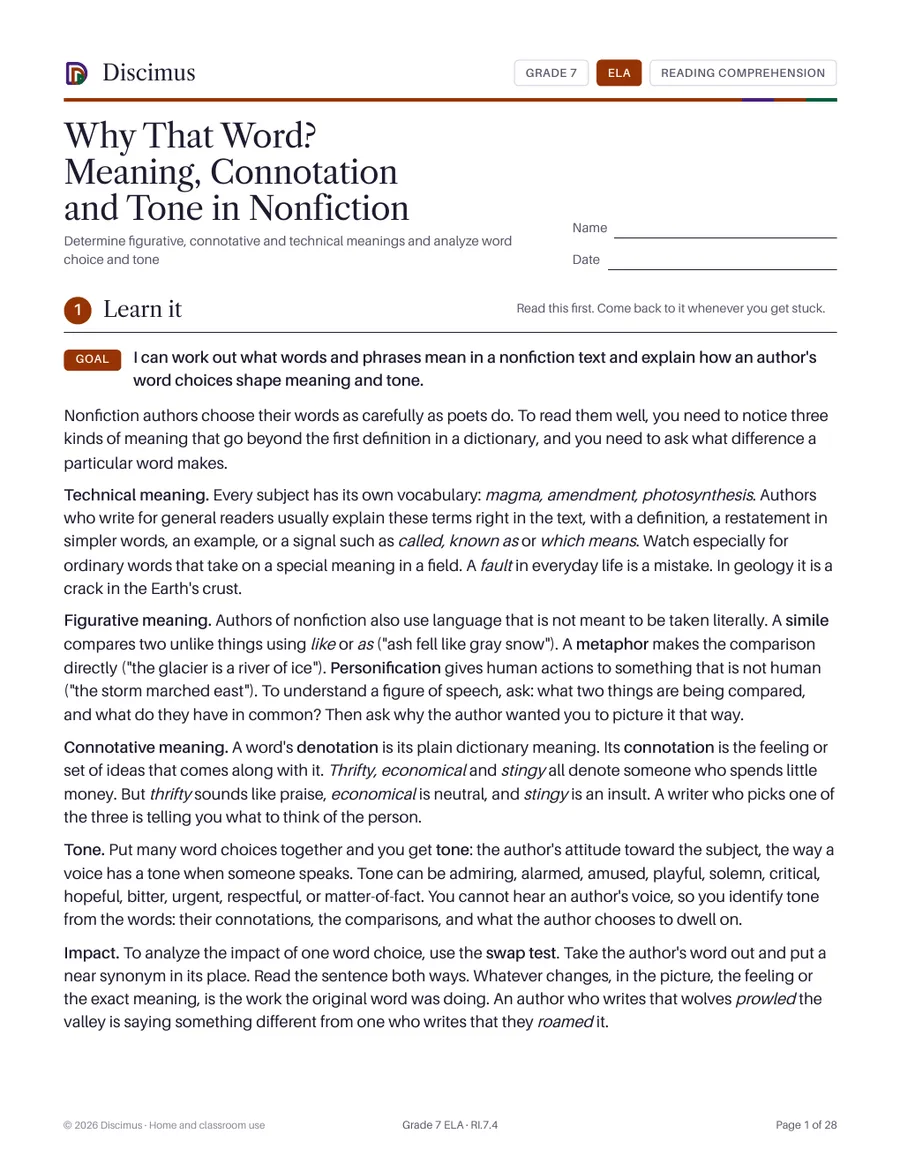
Determine figurative, connotative and technical meanings and analyze word choice and tone
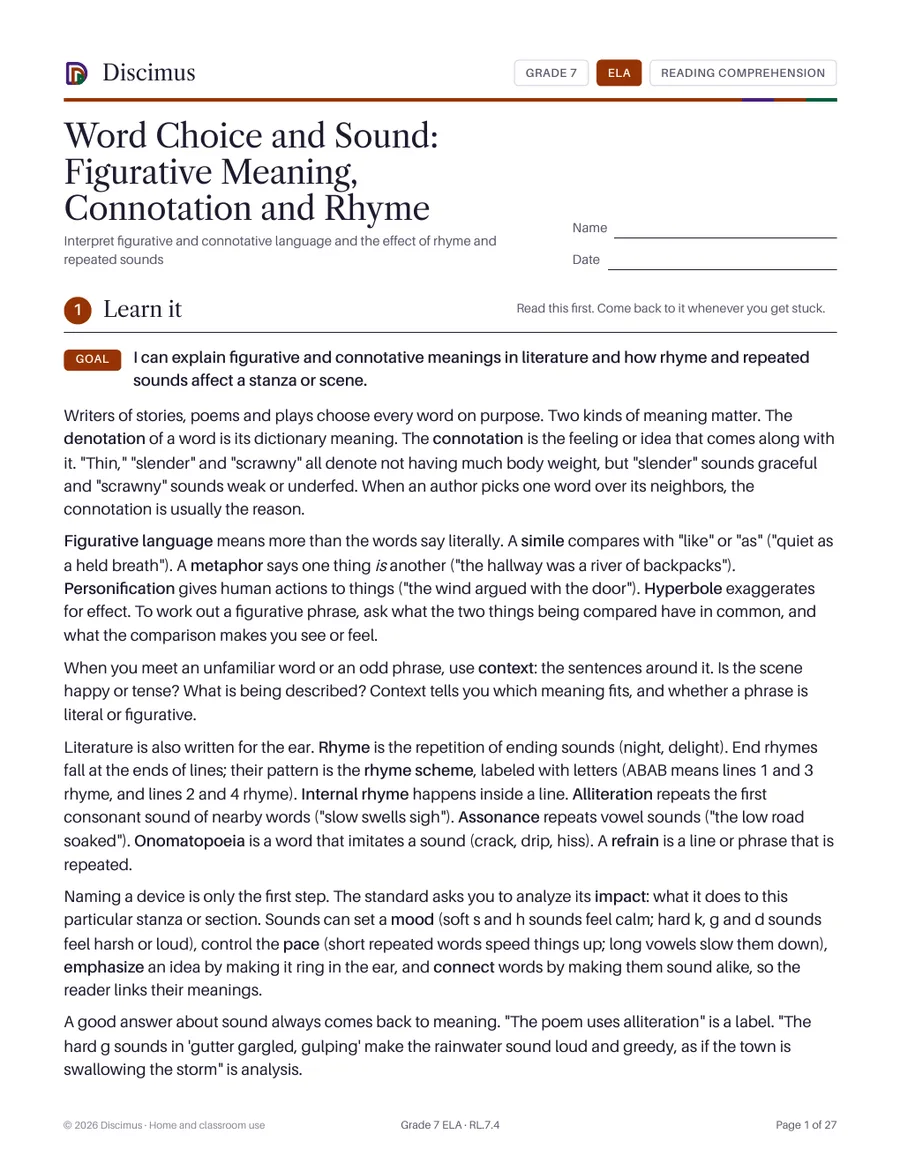
Interpret figurative and connotative language and the effect of rhyme and repeated sounds