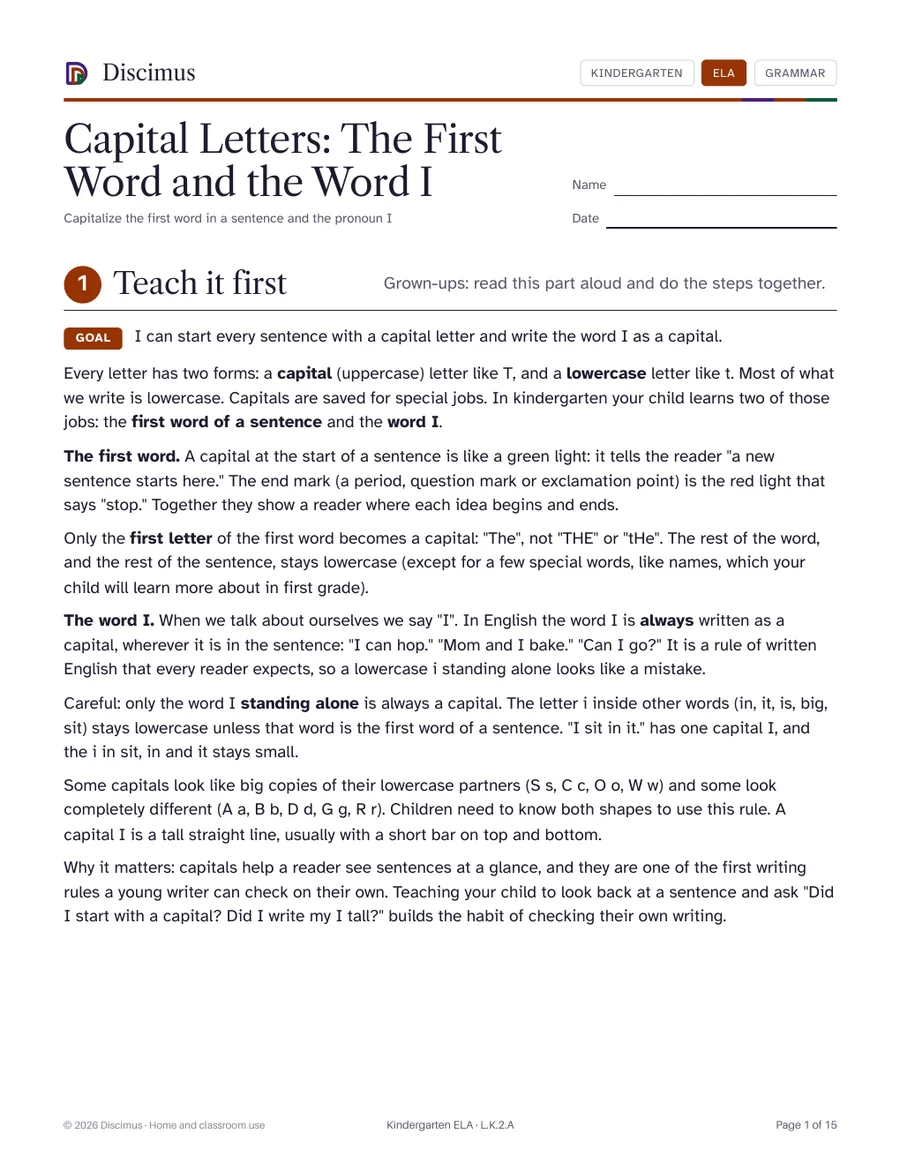
Capital Letters: The First Word and the Word I
Capitalize the first word in a sentence and the pronoun I
76 worksheets match.
Capitalize the first word in a sentence and the pronoun I
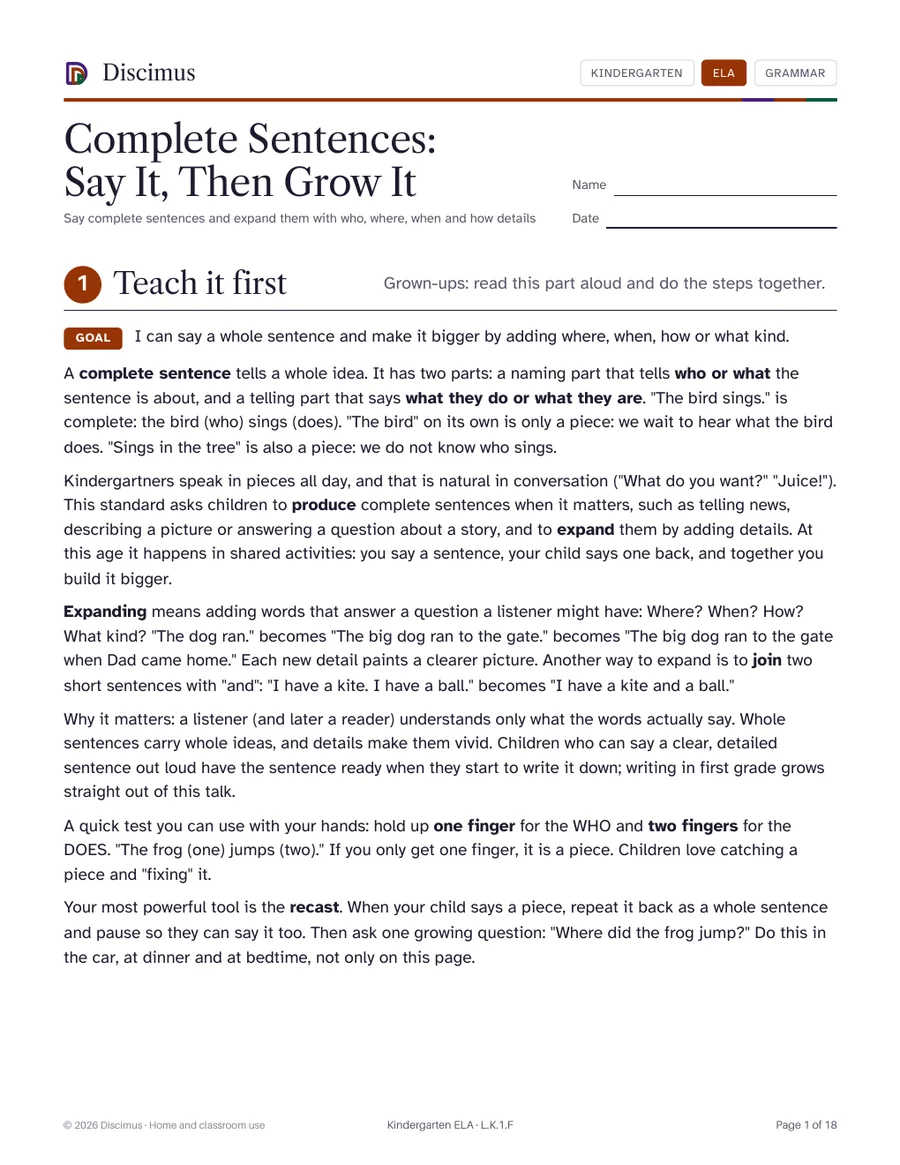
Say complete sentences and expand them with who, where, when and how details
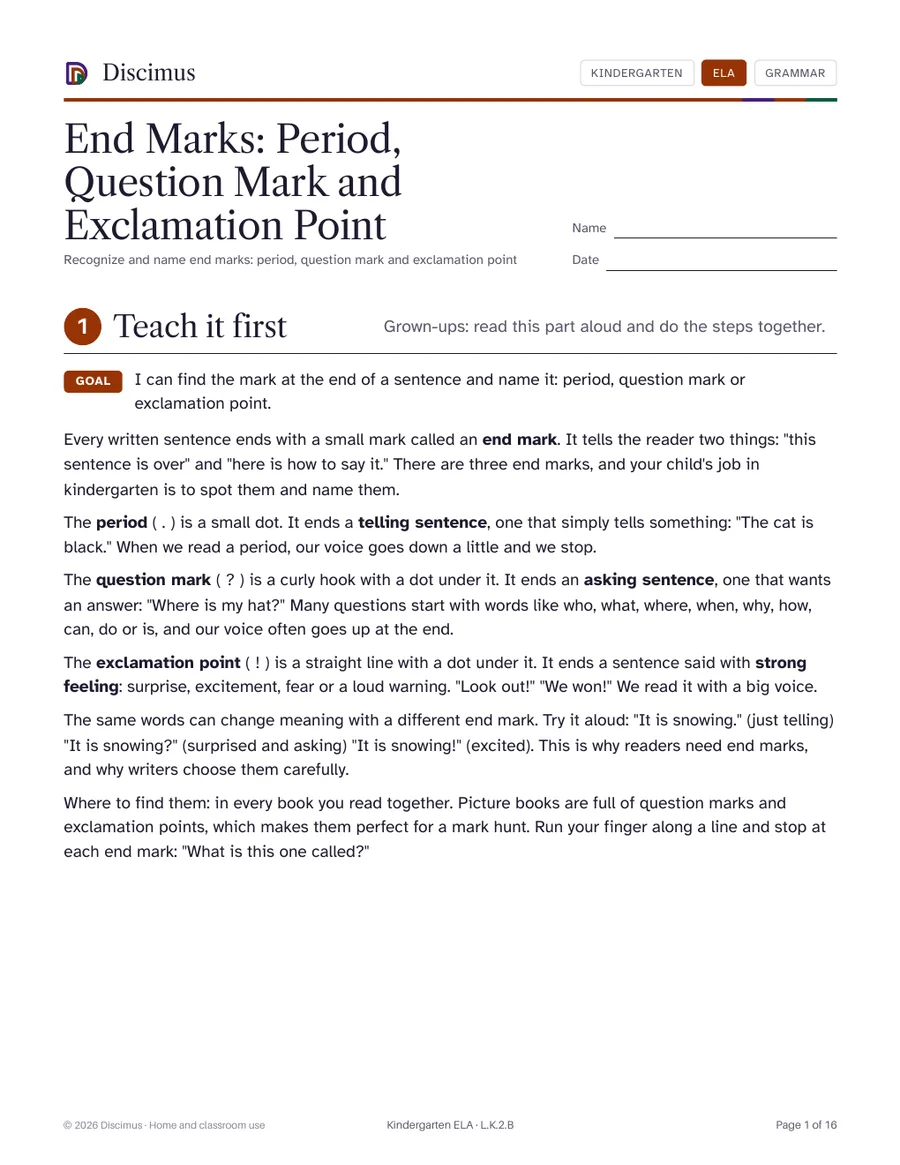
Recognize and name end marks: period, question mark and exclamation point
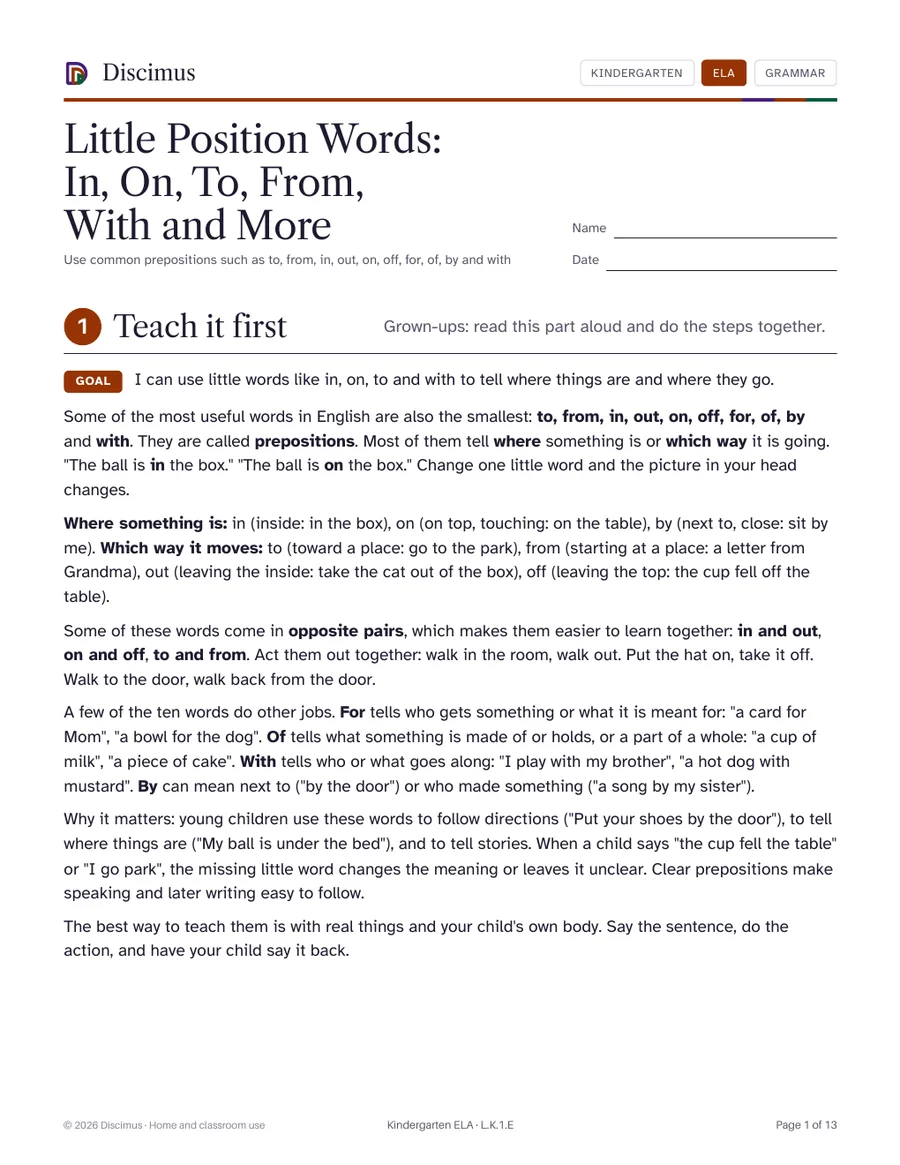
Use common prepositions such as to, from, in, out, on, off, for, of, by and with
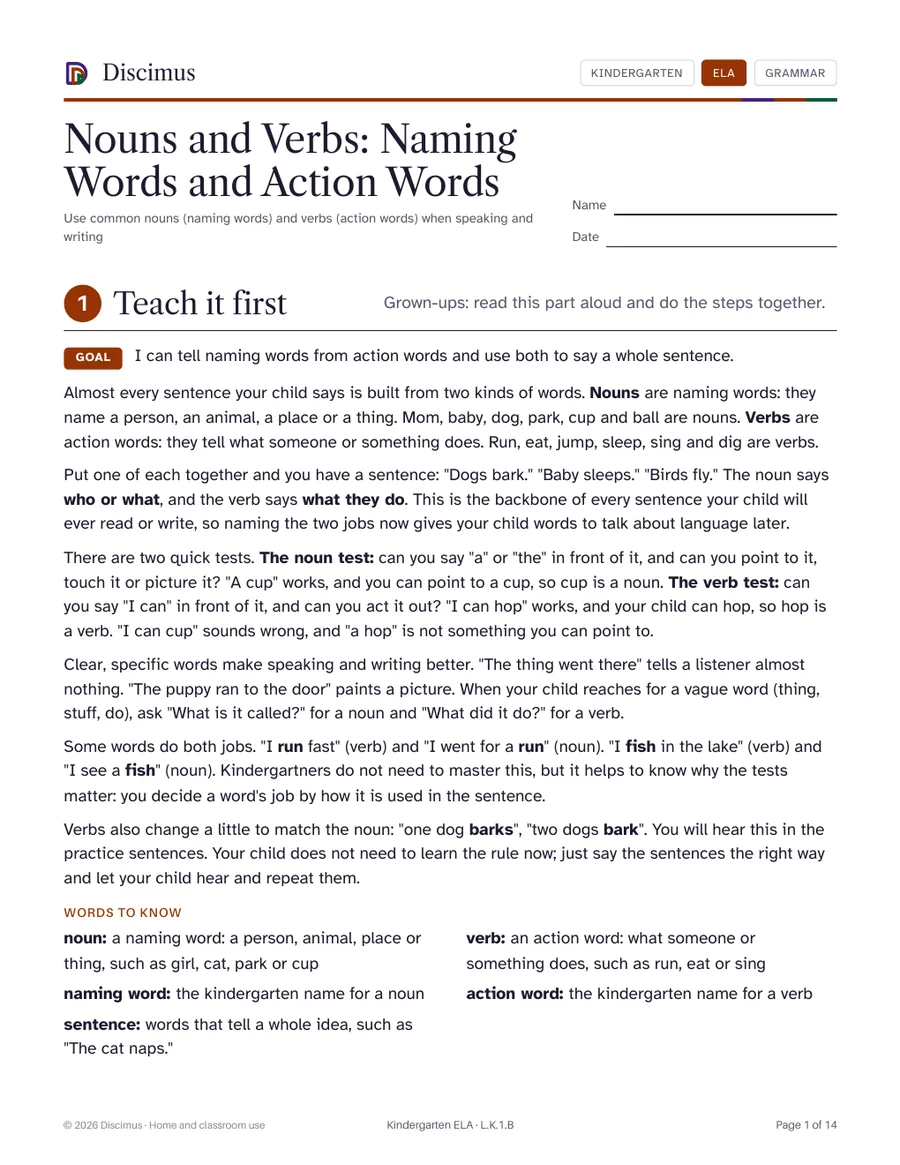
Use common nouns (naming words) and verbs (action words) when speaking and writing
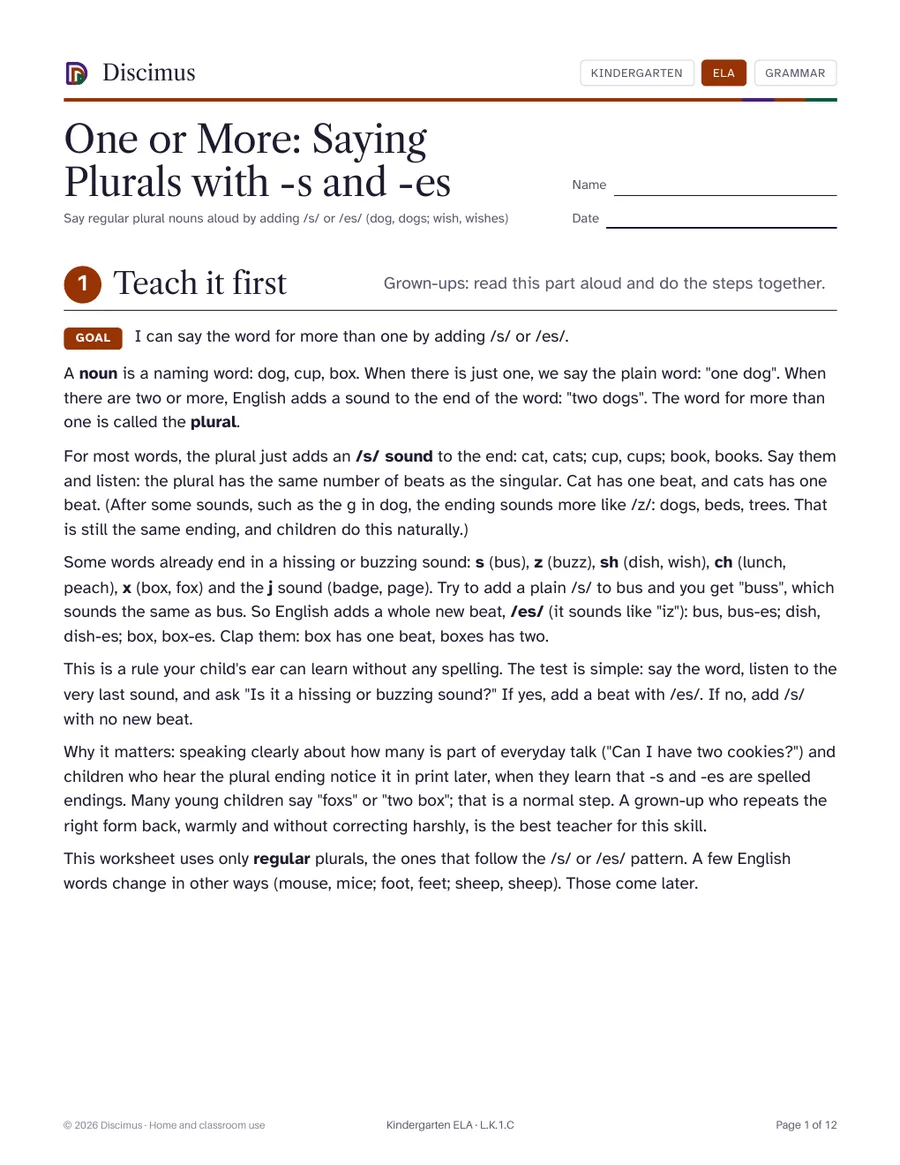
Say regular plural nouns aloud by adding /s/ or /es/ (dog, dogs; wish, wishes)
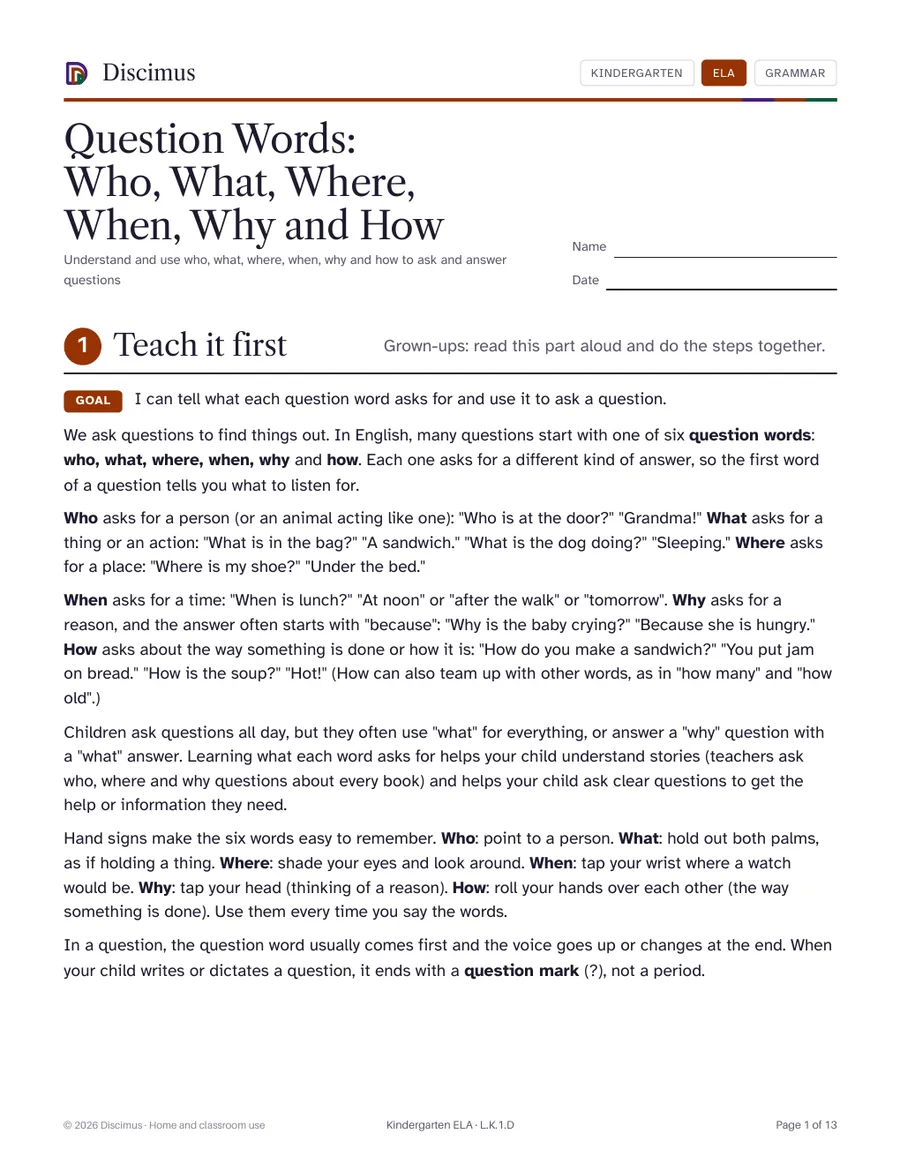
Understand and use who, what, where, when, why and how to ask and answer questions
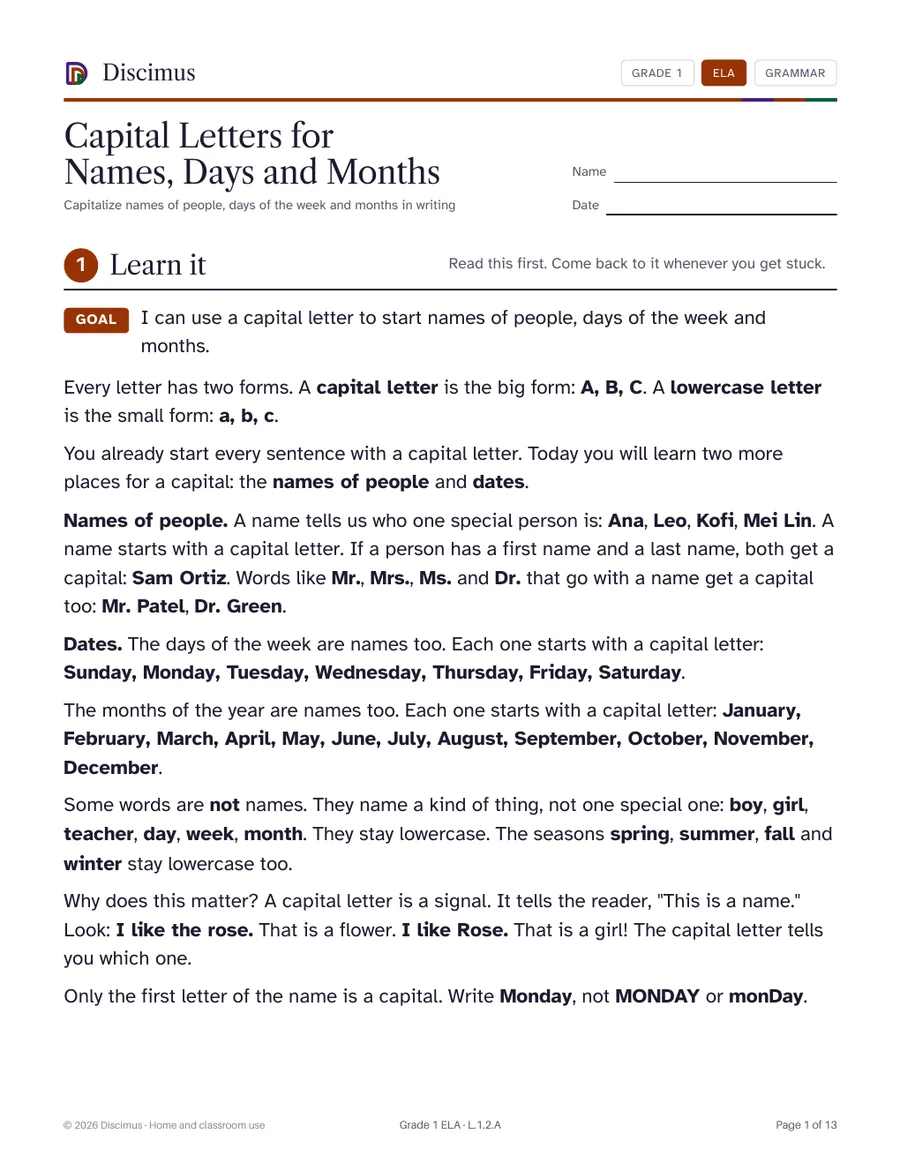
Capitalize names of people, days of the week and months in writing
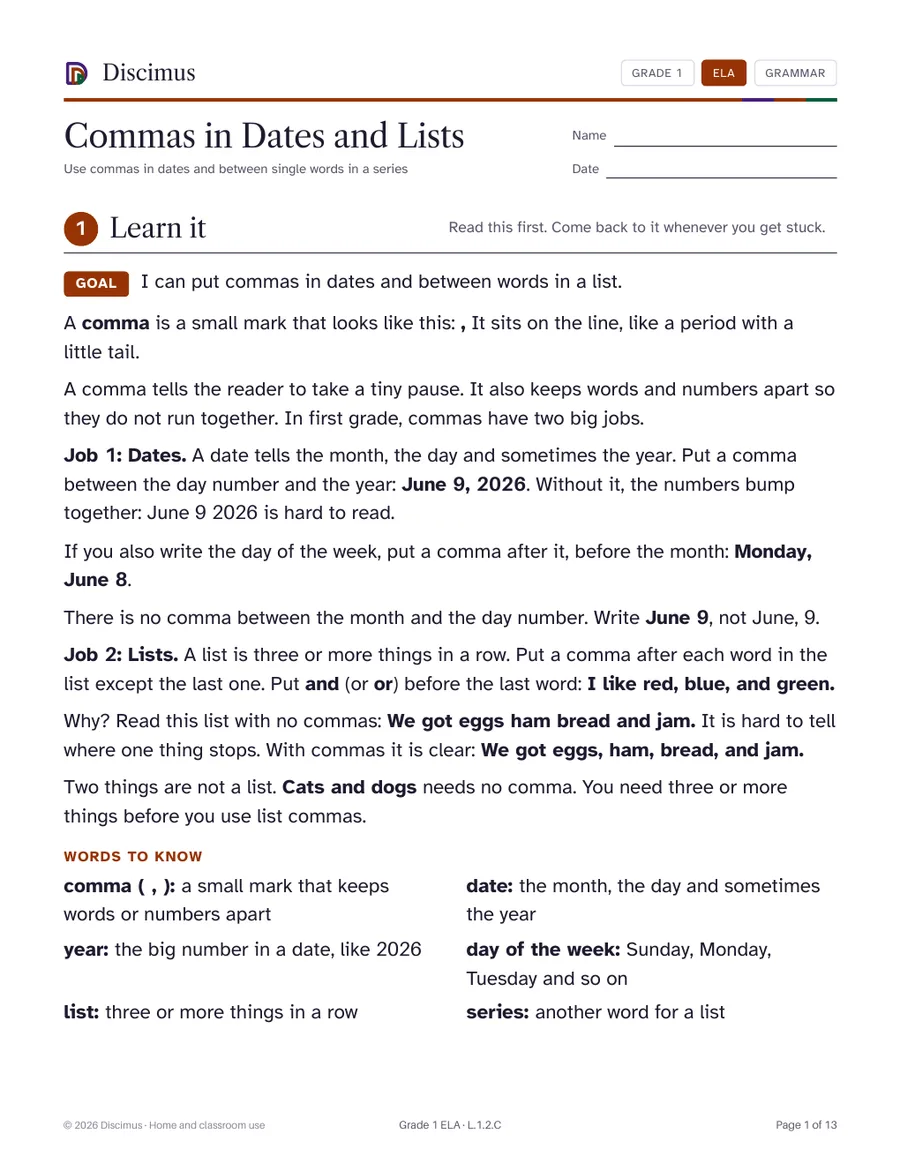
Use commas in dates and between single words in a series
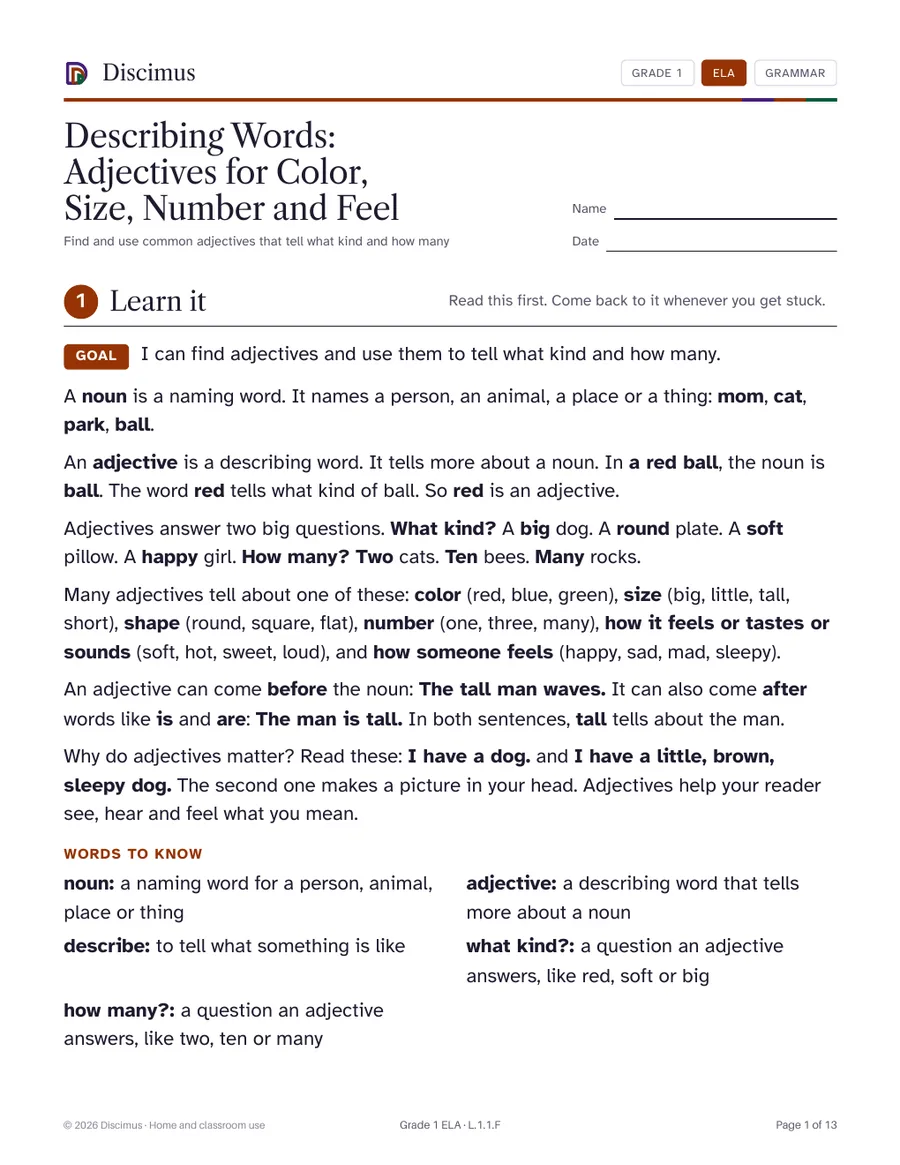
Find and use common adjectives that tell what kind and how many
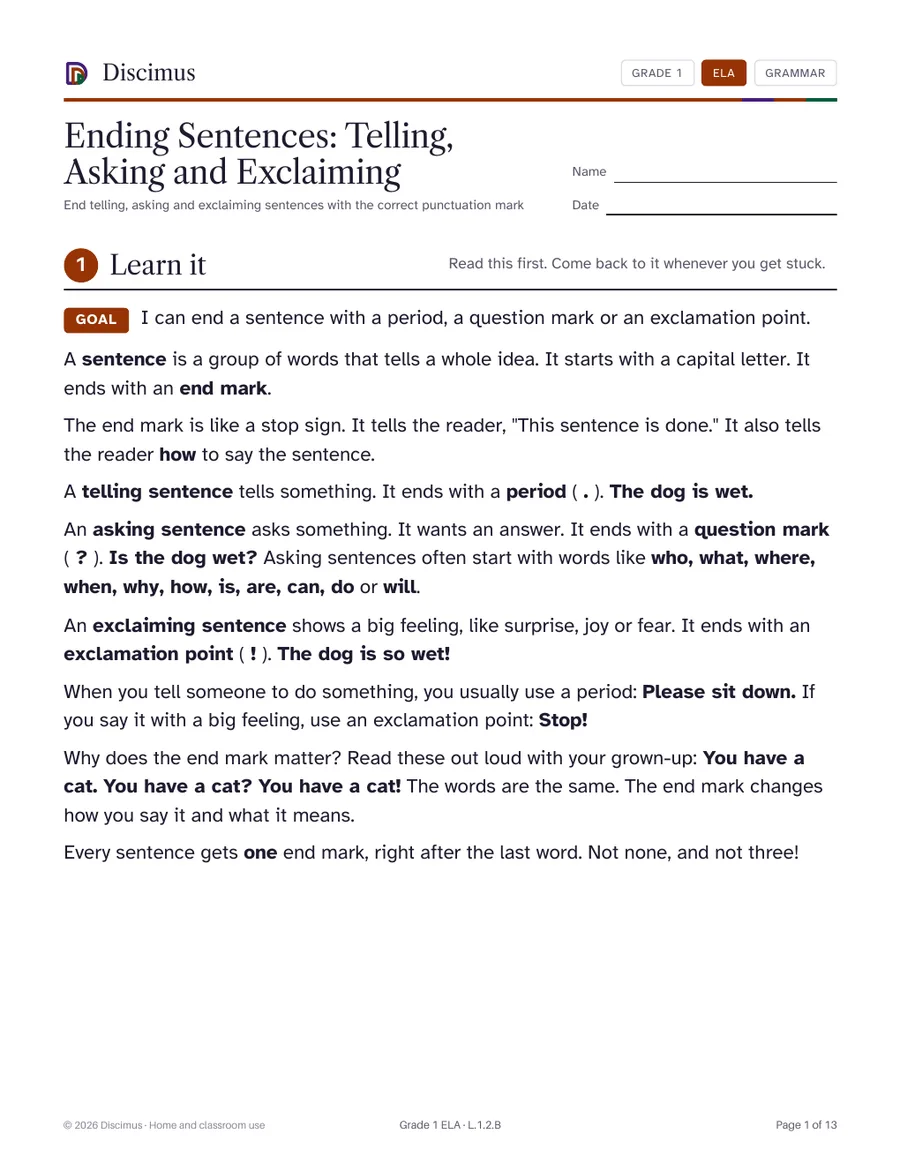
End telling, asking and exclaiming sentences with the correct punctuation mark
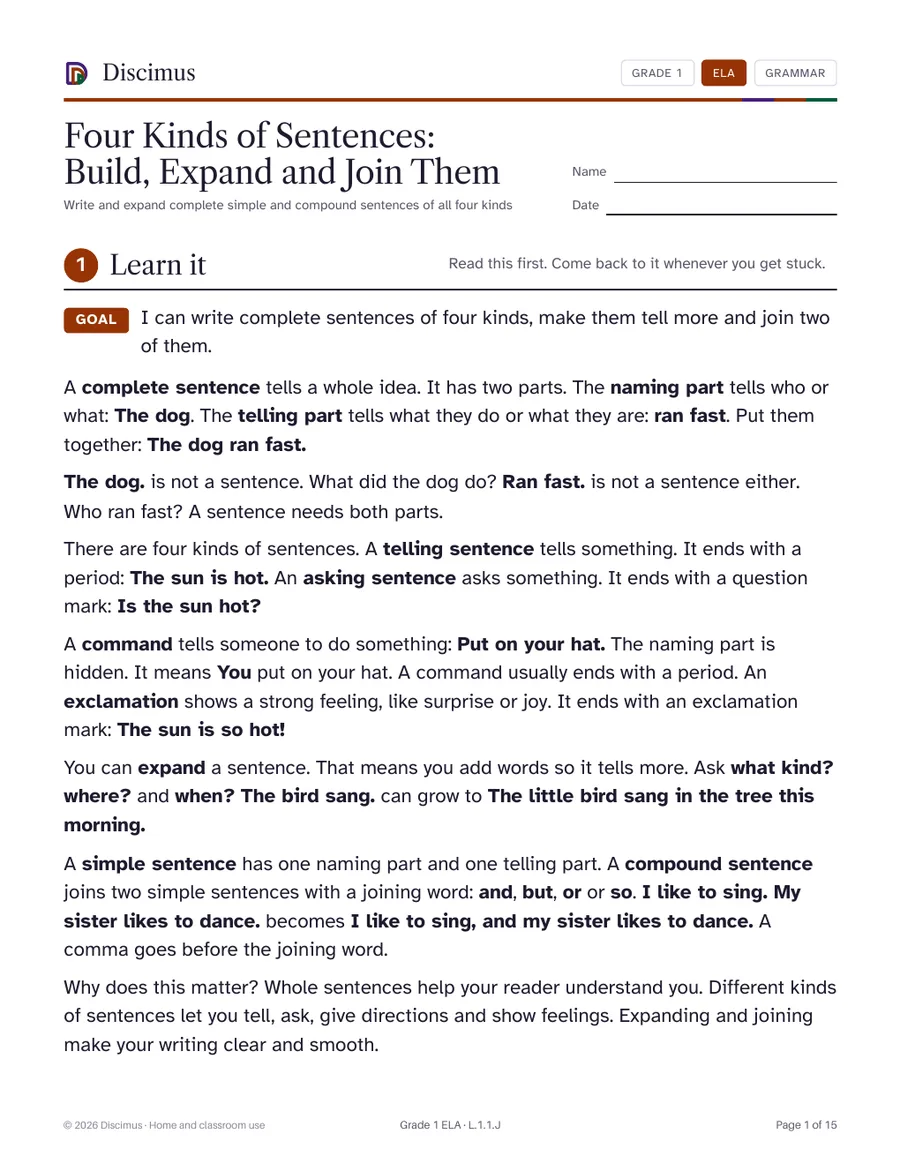
Write and expand complete simple and compound sentences of all four kinds
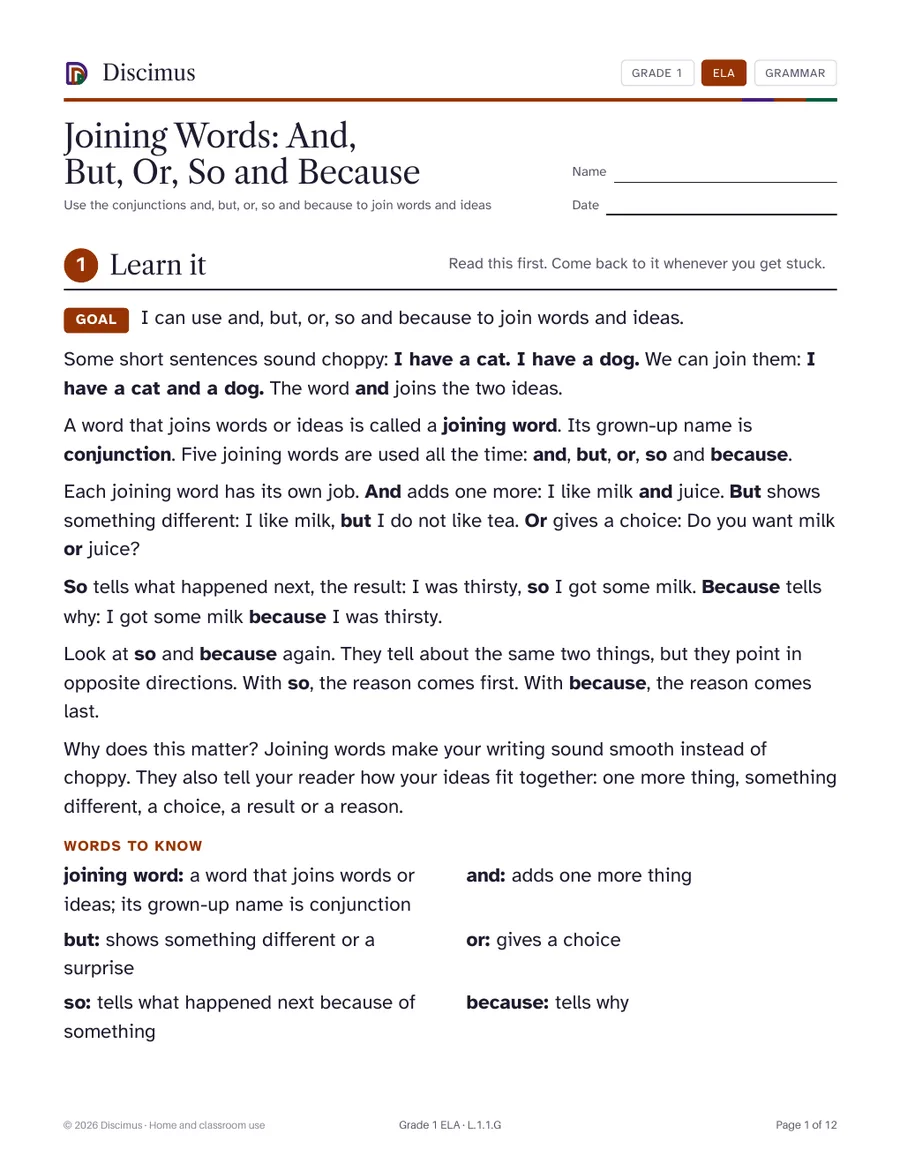
Use the conjunctions and, but, or, so and because to join words and ideas
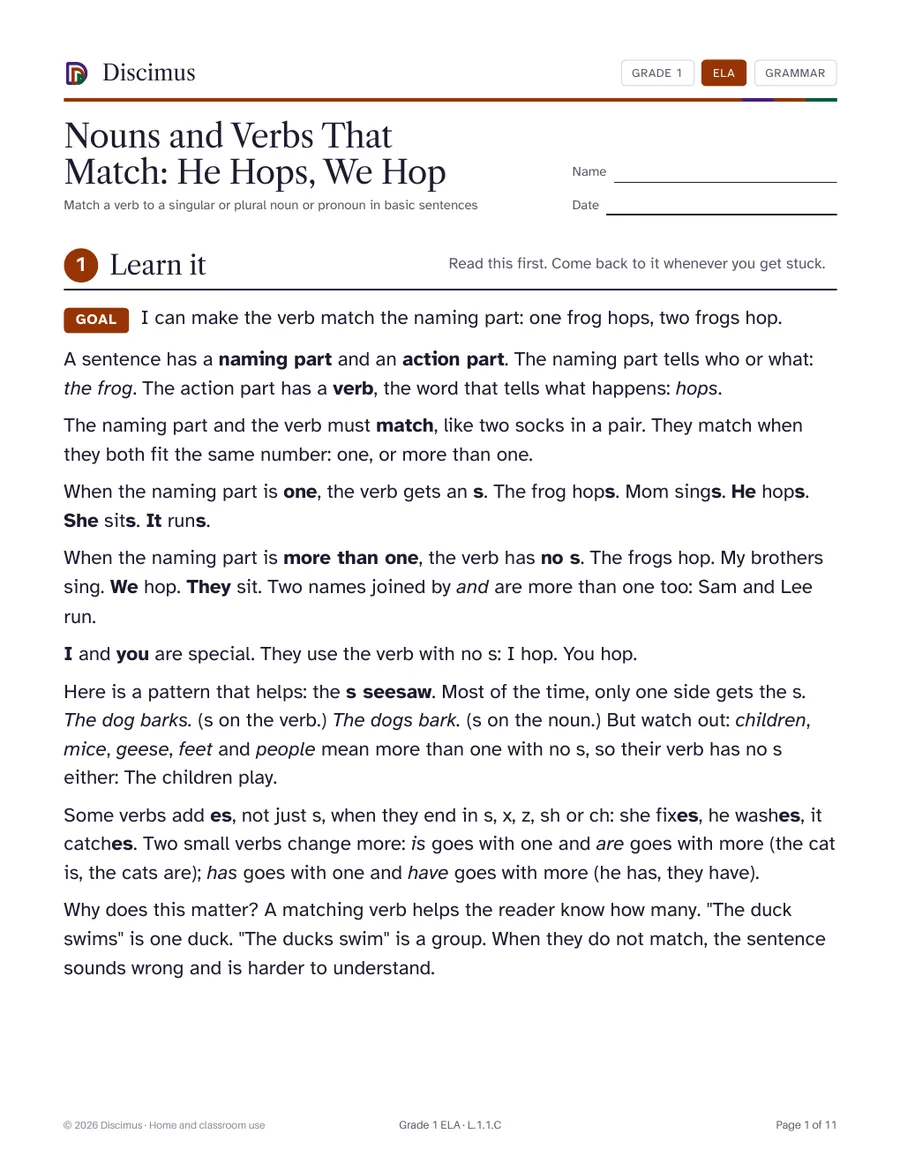
Match a verb to a singular or plural noun or pronoun in basic sentences
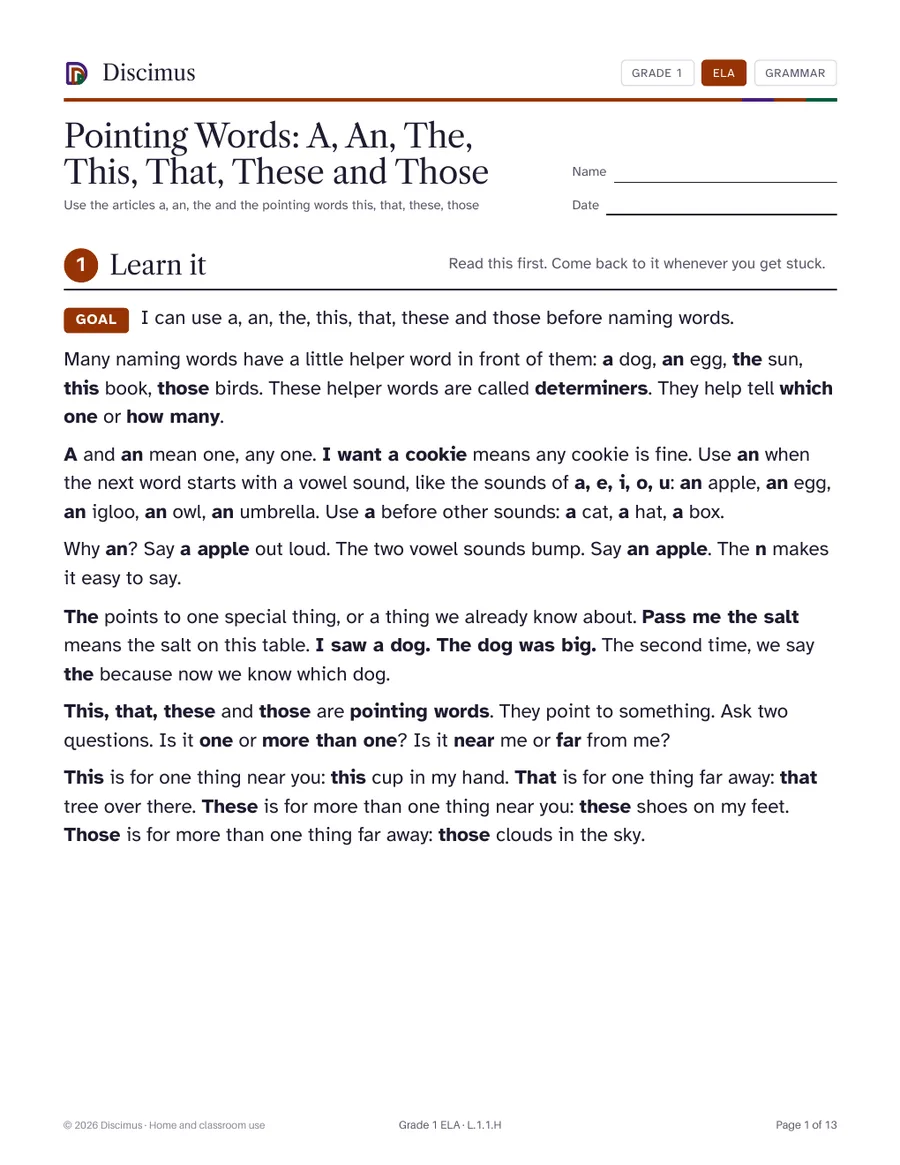
Use the articles a, an, the and the pointing words this, that, these, those
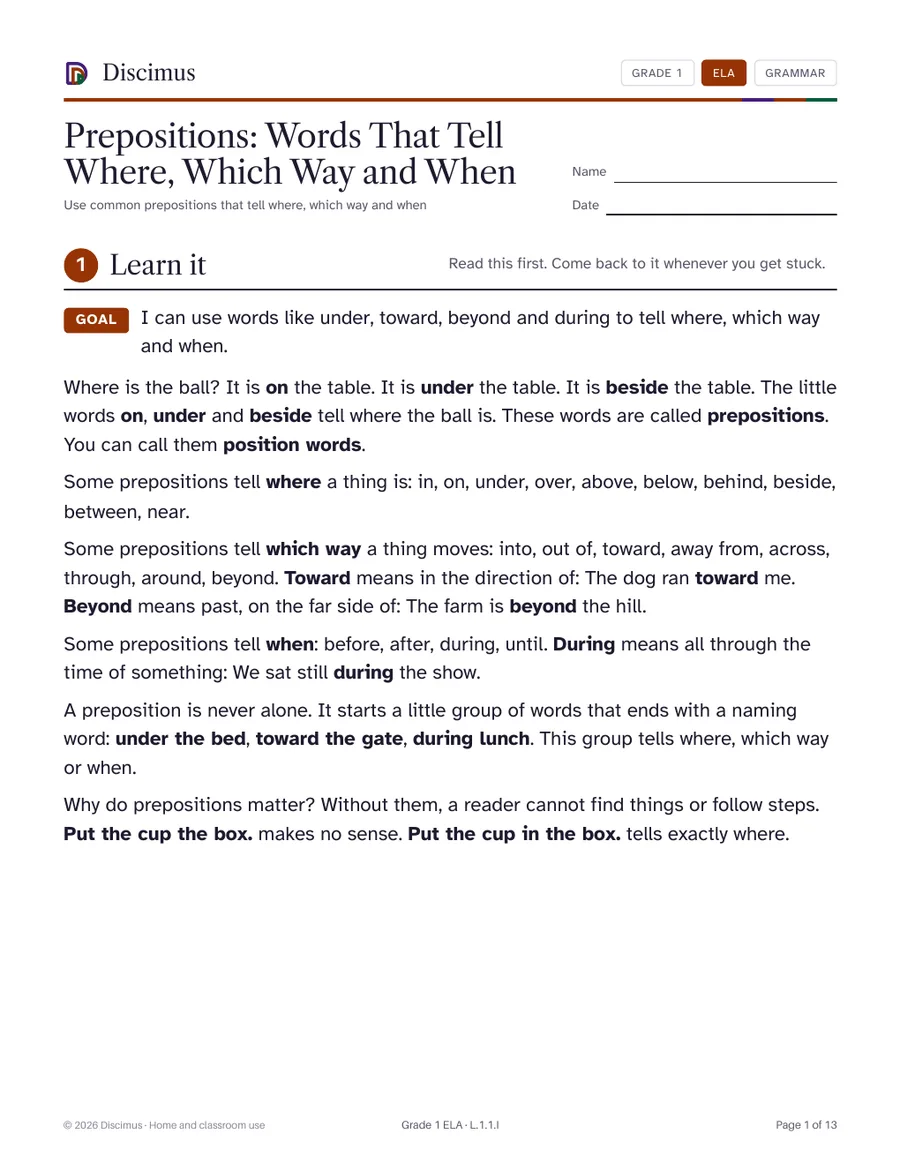
Use common prepositions that tell where, which way and when
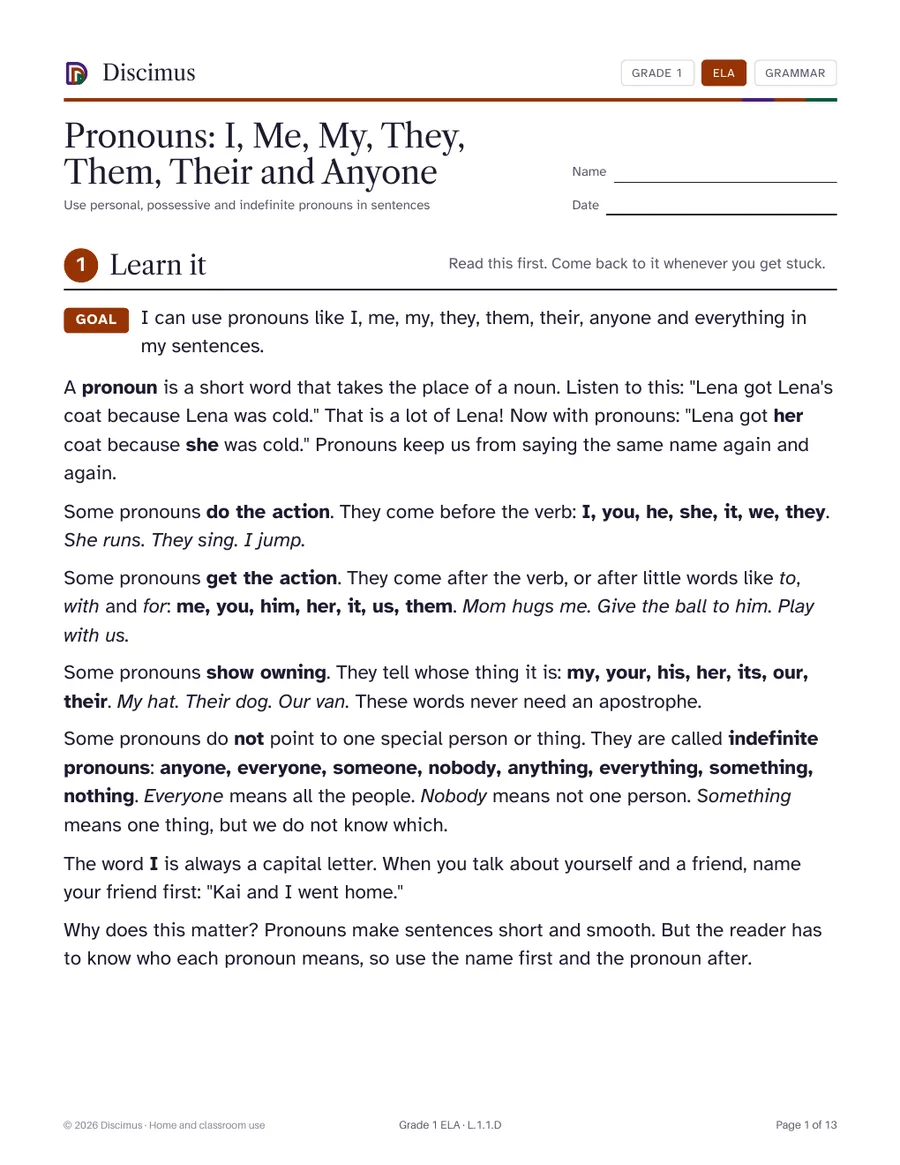
Use personal, possessive and indefinite pronouns in sentences
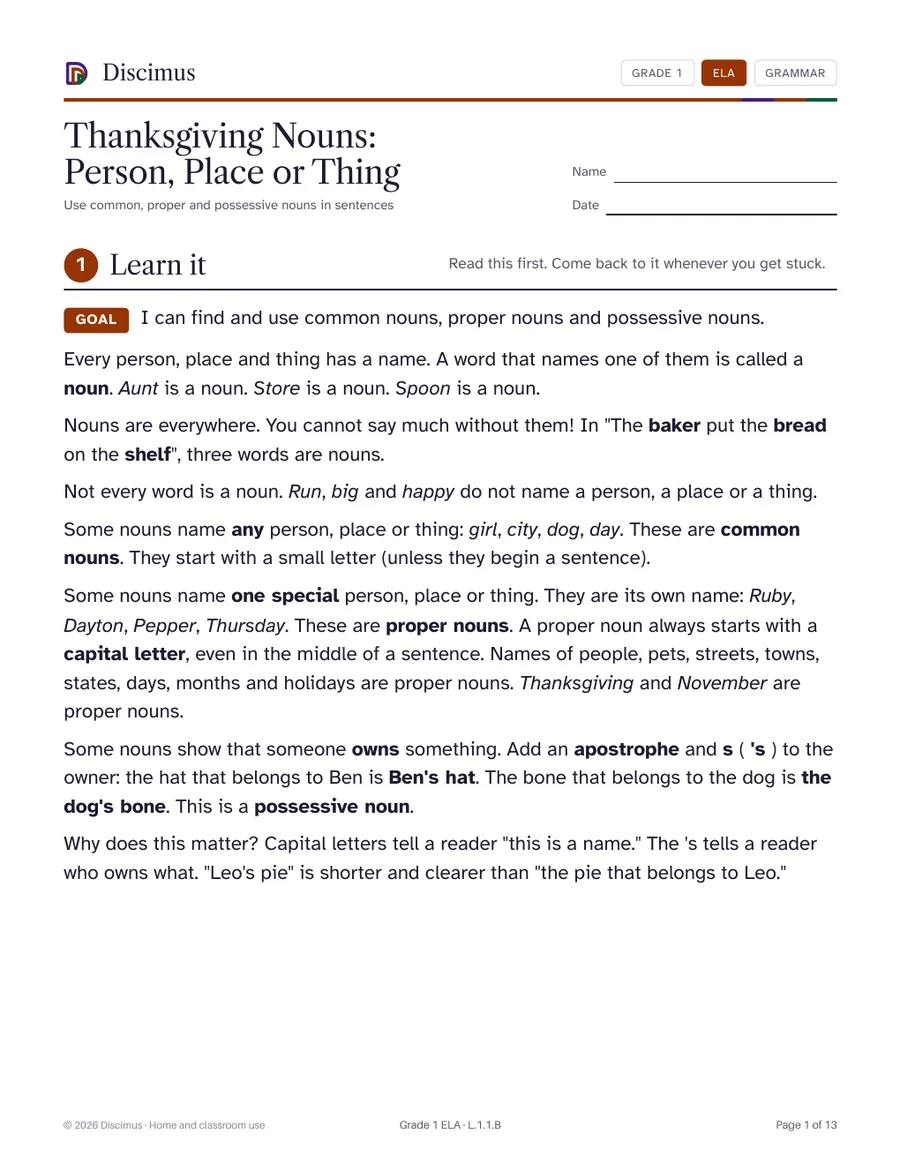
Use common, proper and possessive nouns in sentences
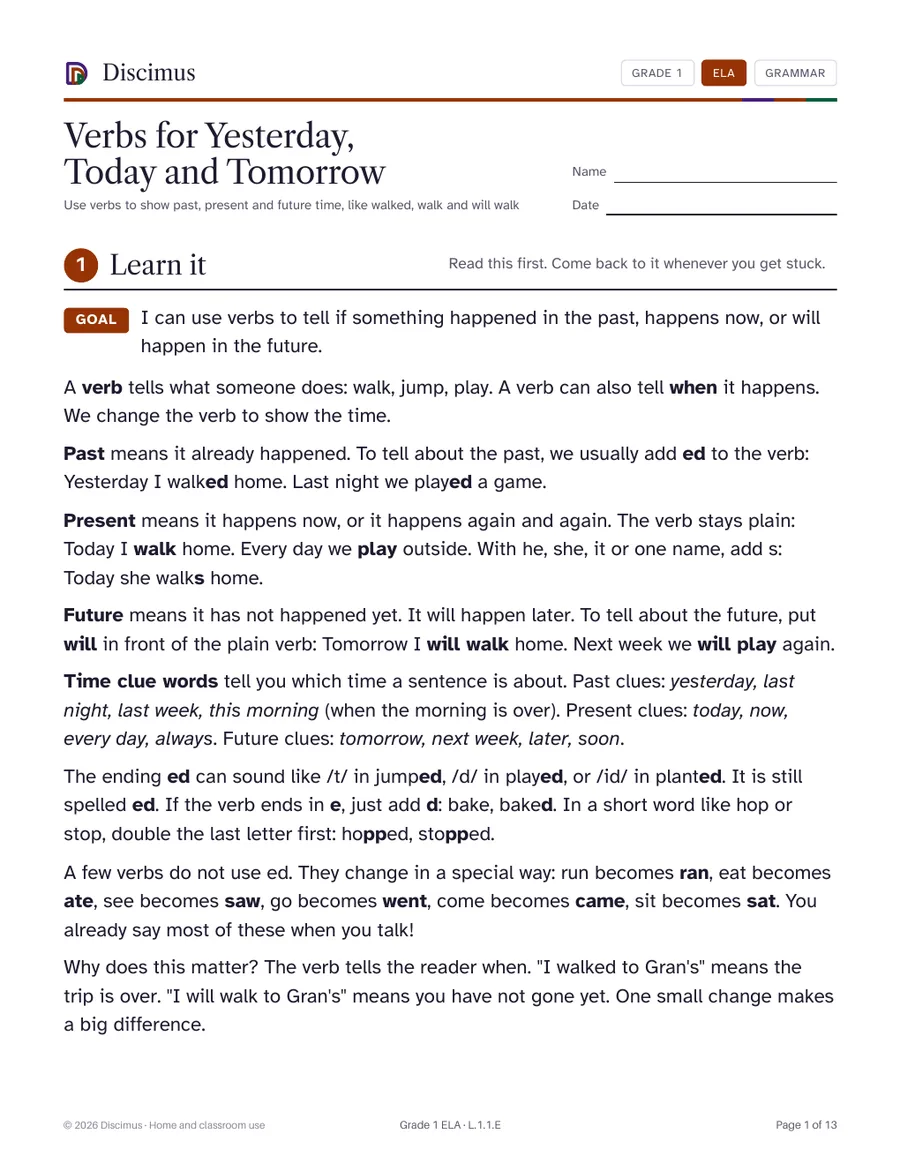
Use verbs to show past, present and future time, like walked, walk and will walk
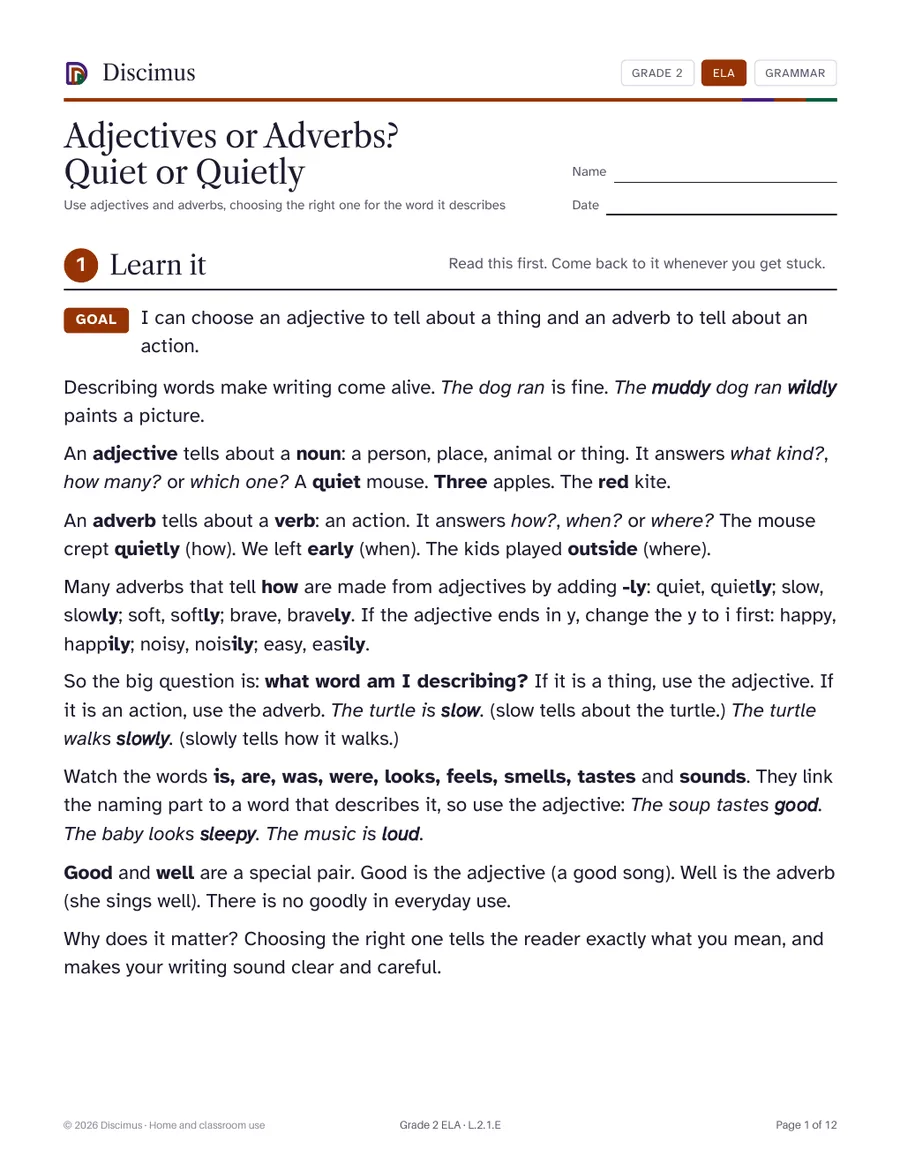
Use adjectives and adverbs, choosing the right one for the word it describes
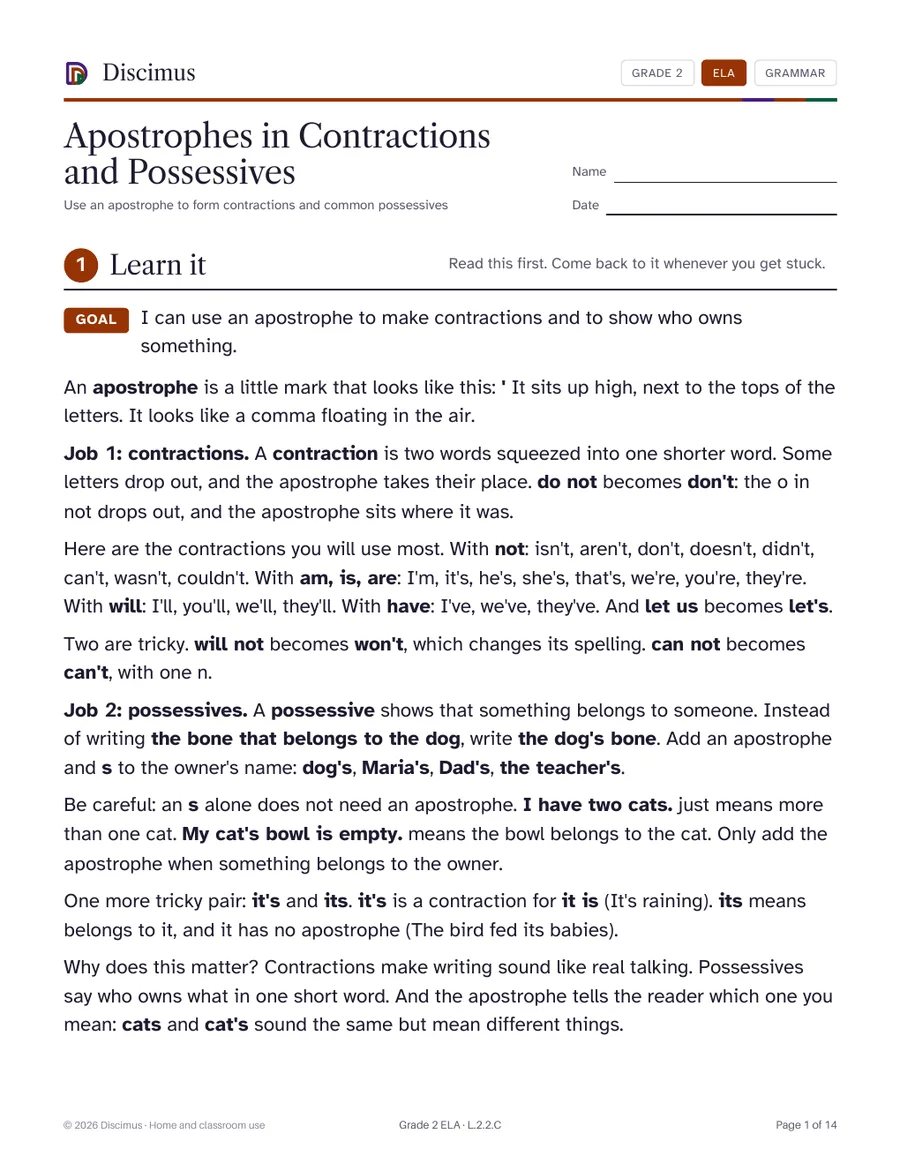
Use an apostrophe to form contractions and common possessives
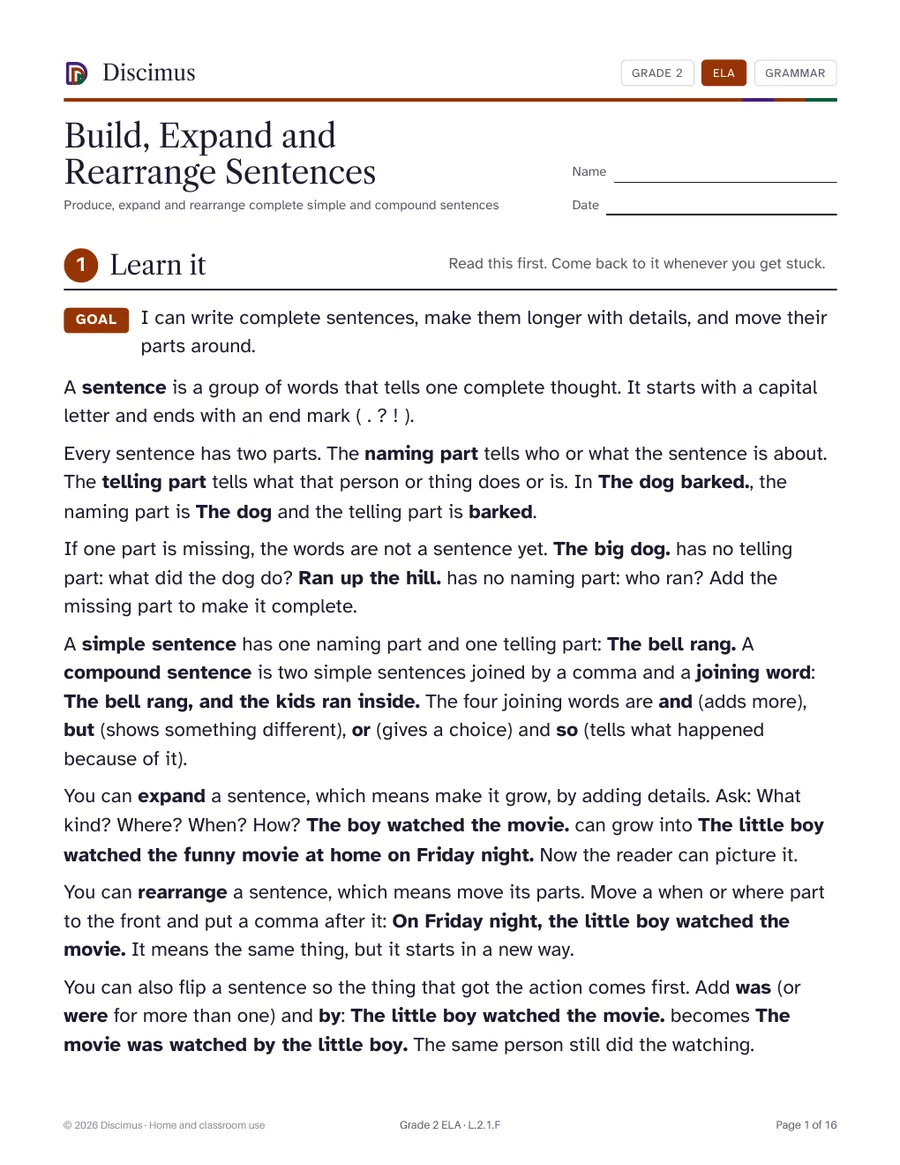
Produce, expand and rearrange complete simple and compound sentences
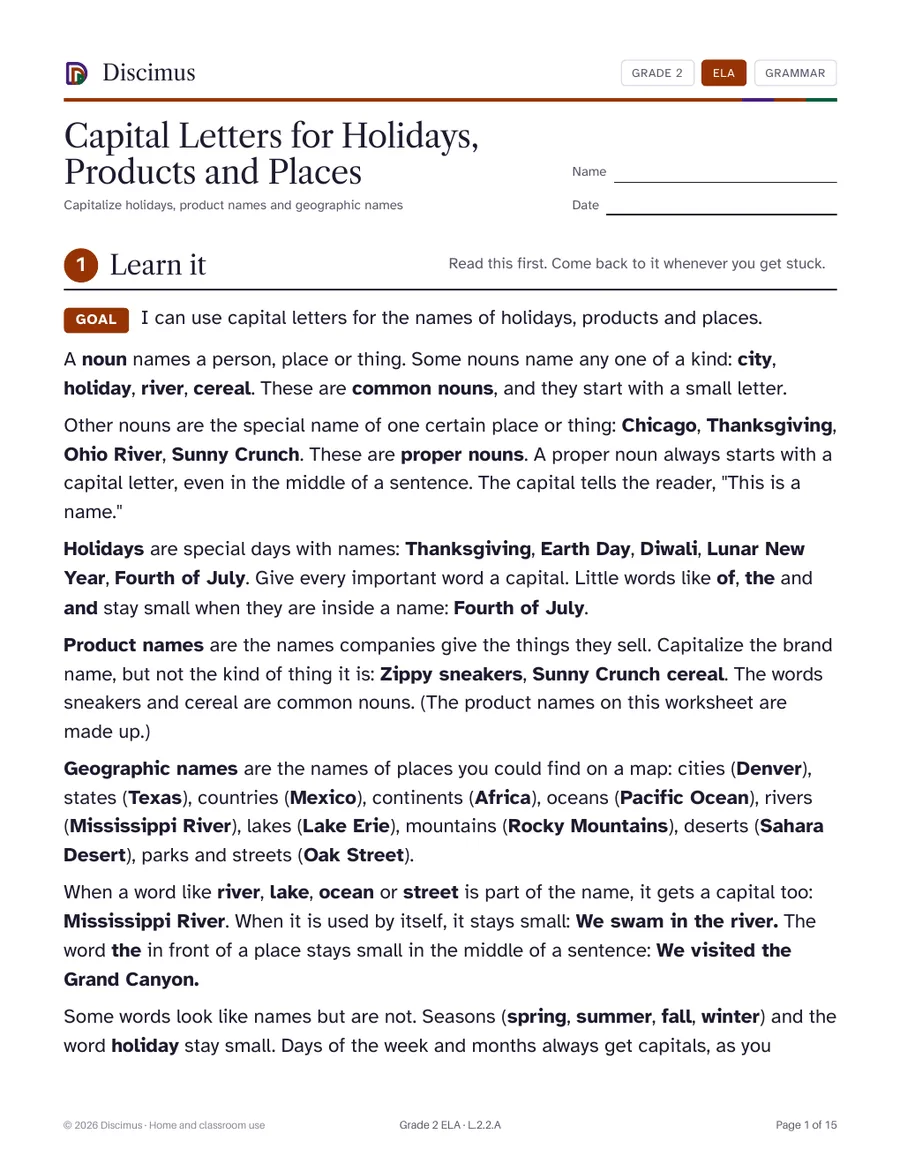
Capitalize holidays, product names and geographic names
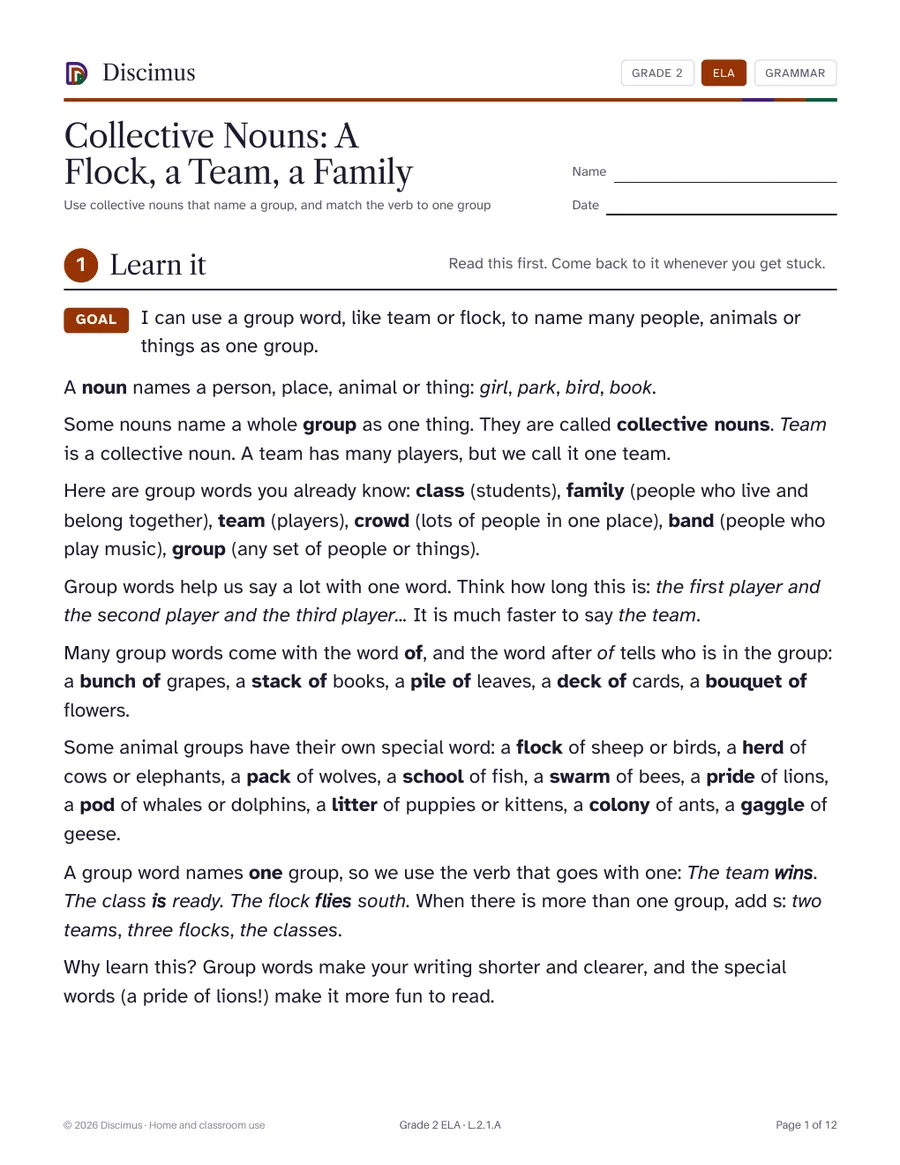
Use collective nouns that name a group, and match the verb to one group
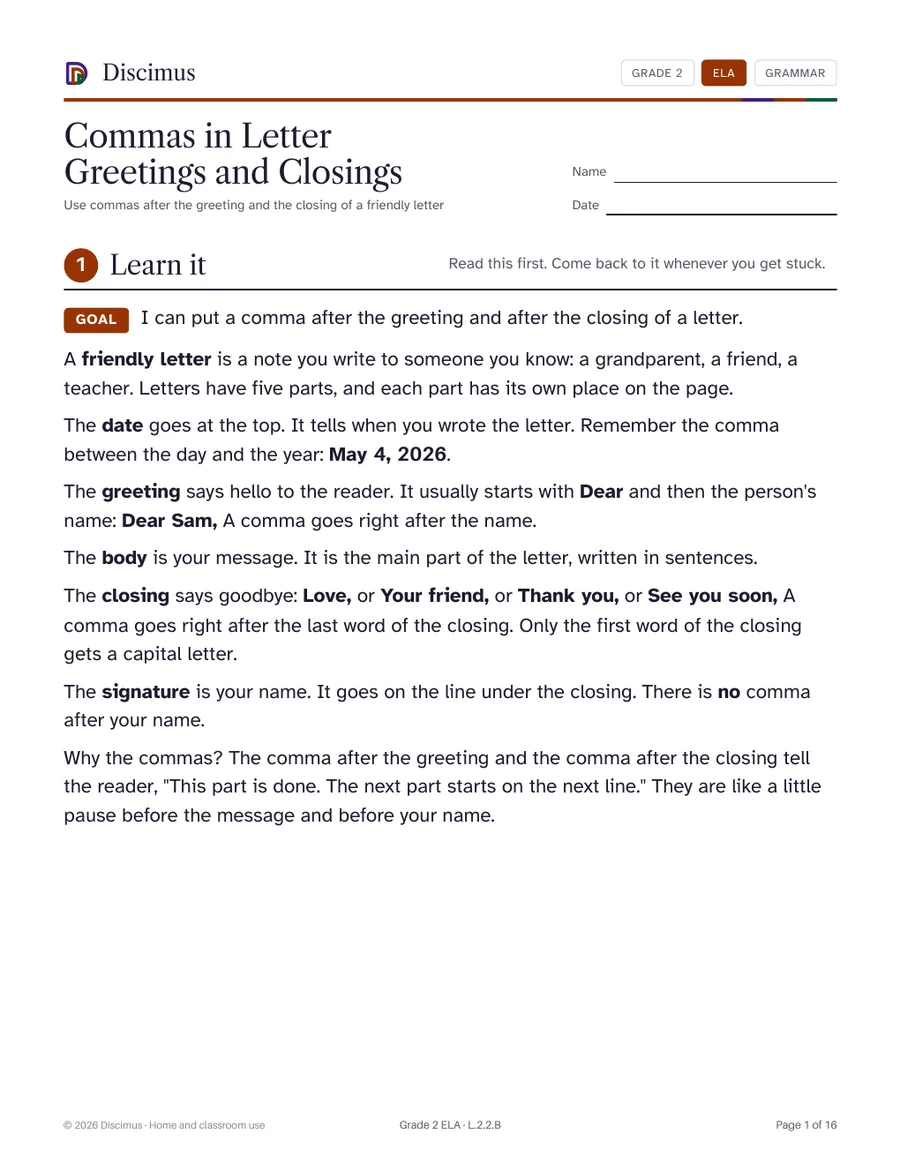
Use commas after the greeting and the closing of a friendly letter
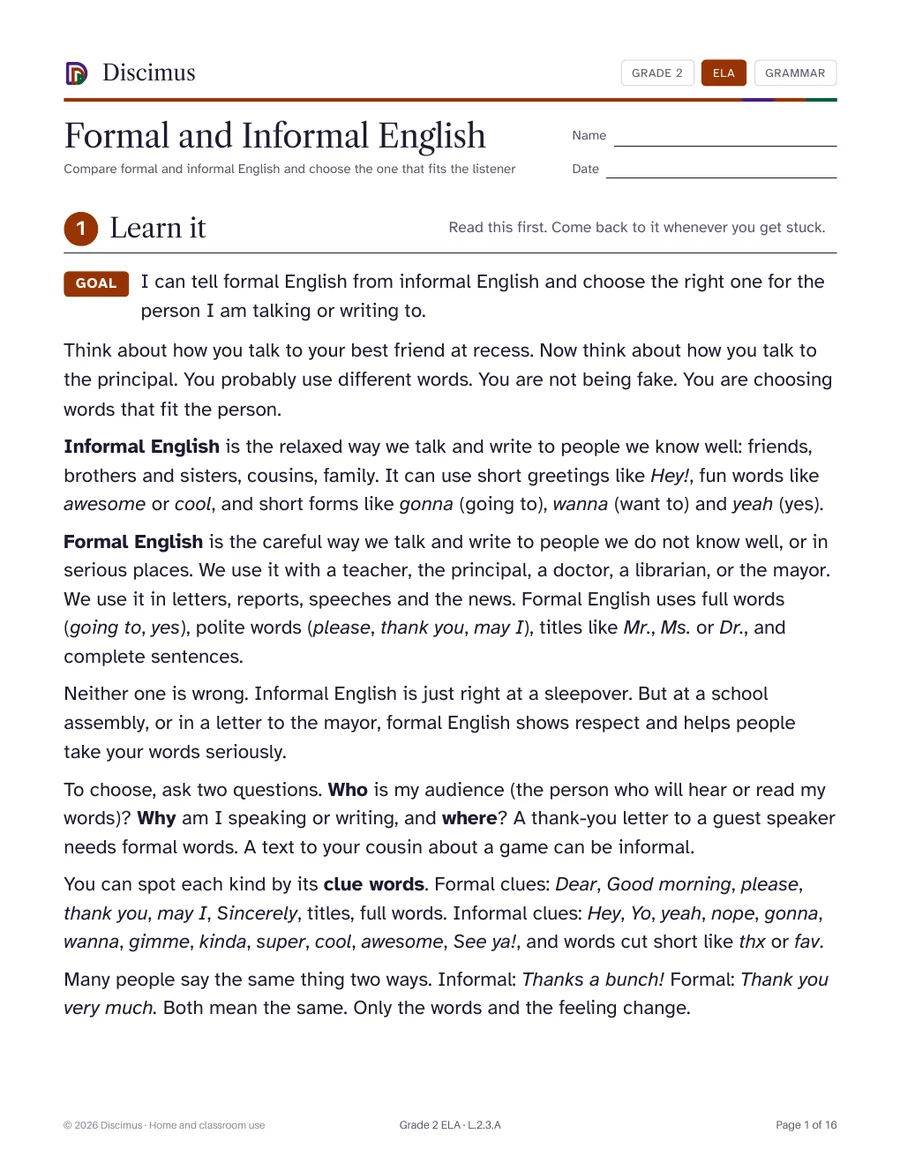
Compare formal and informal English and choose the one that fits the listener
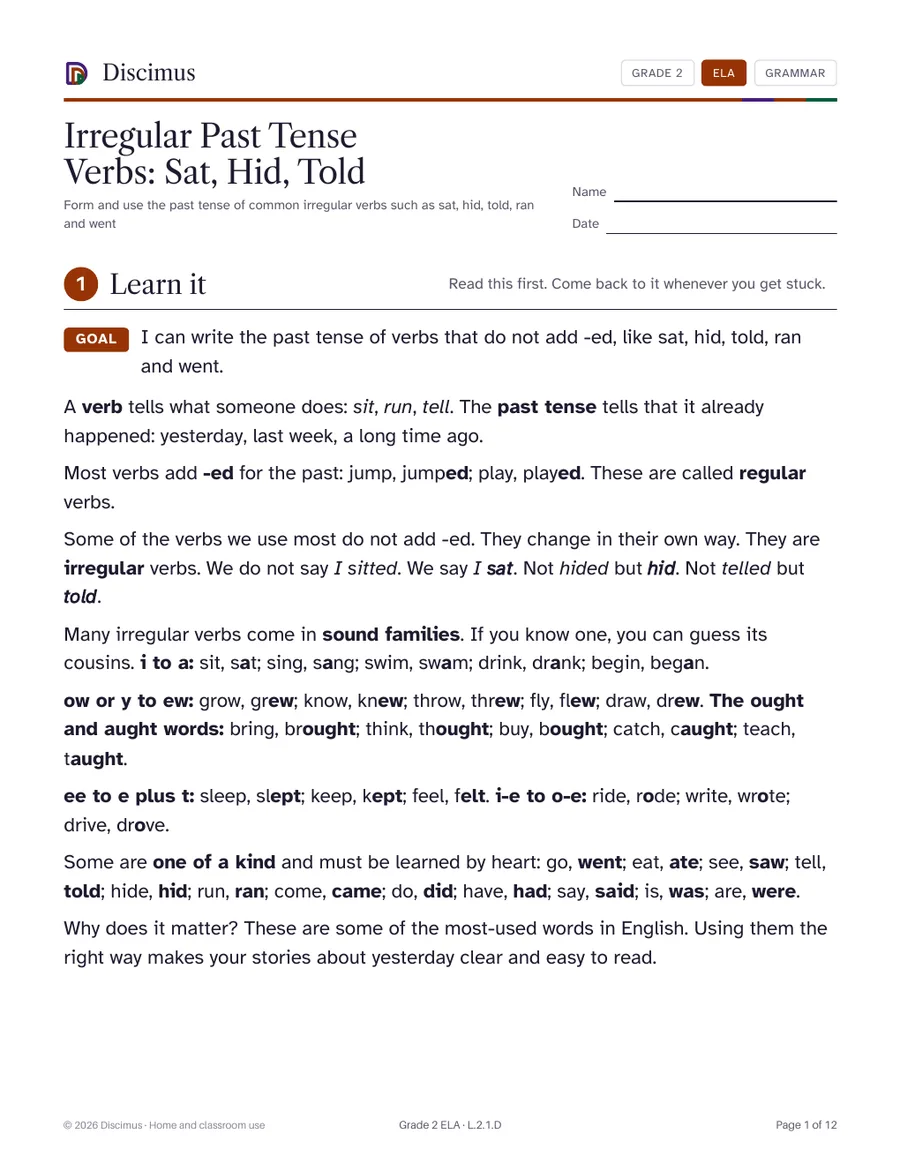
Form and use the past tense of common irregular verbs such as sat, hid, told, ran and went
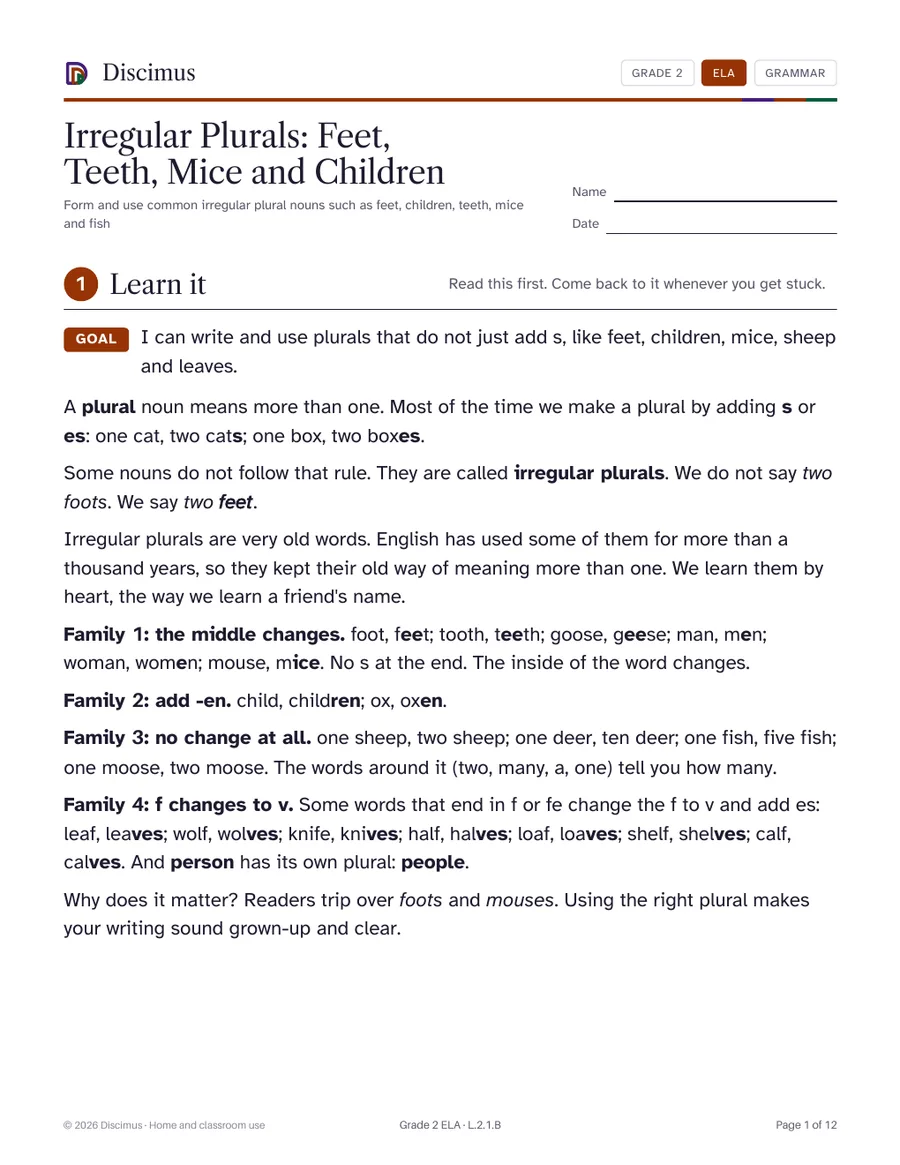
Form and use common irregular plural nouns such as feet, children, teeth, mice and fish
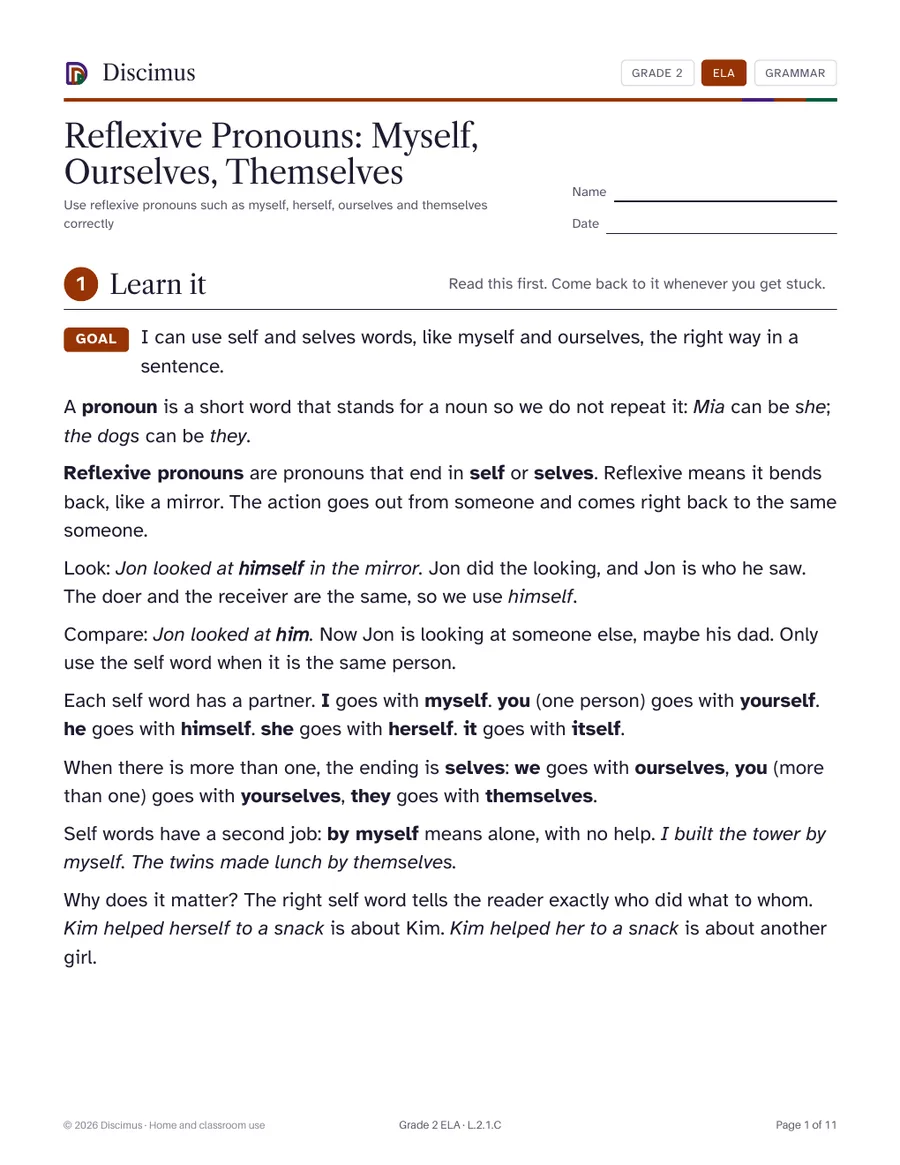
Use reflexive pronouns such as myself, herself, ourselves and themselves correctly
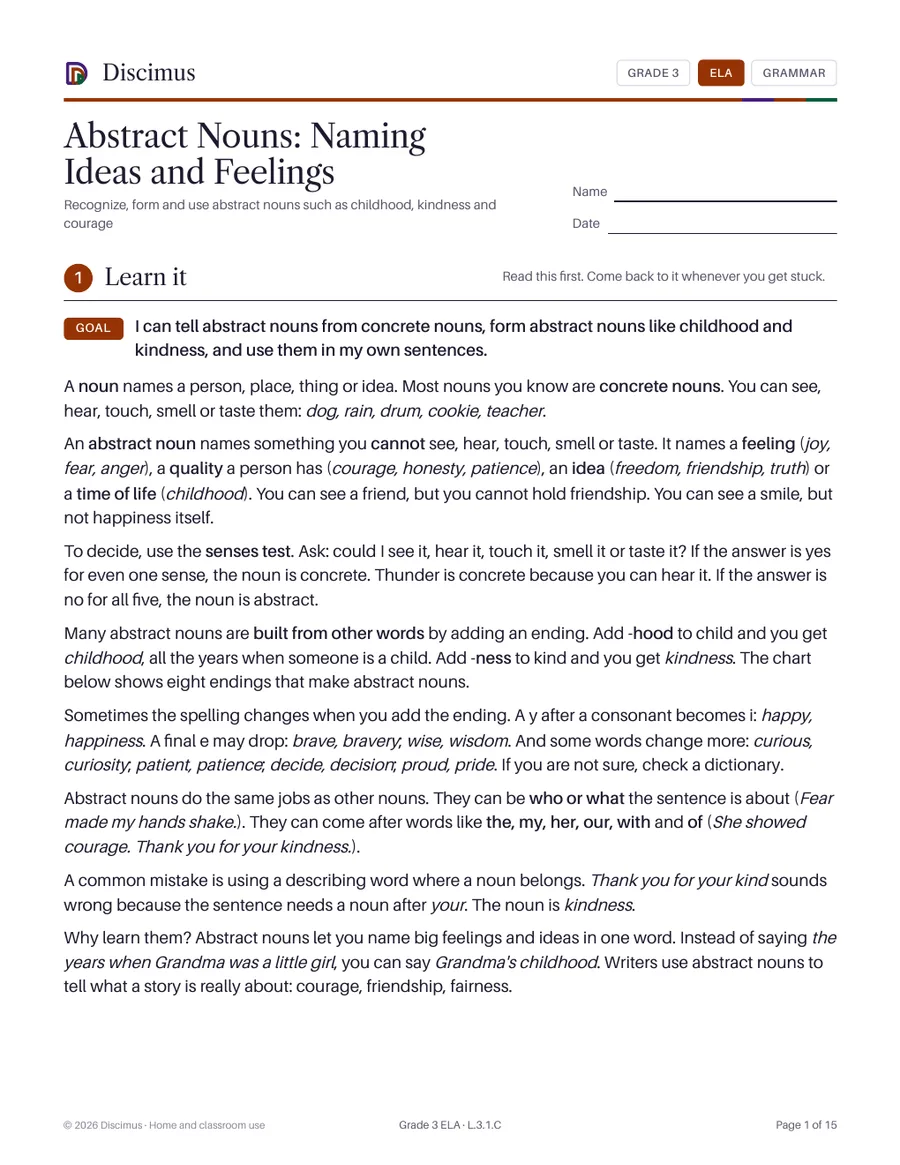
Recognize, form and use abstract nouns such as childhood, kindness and courage
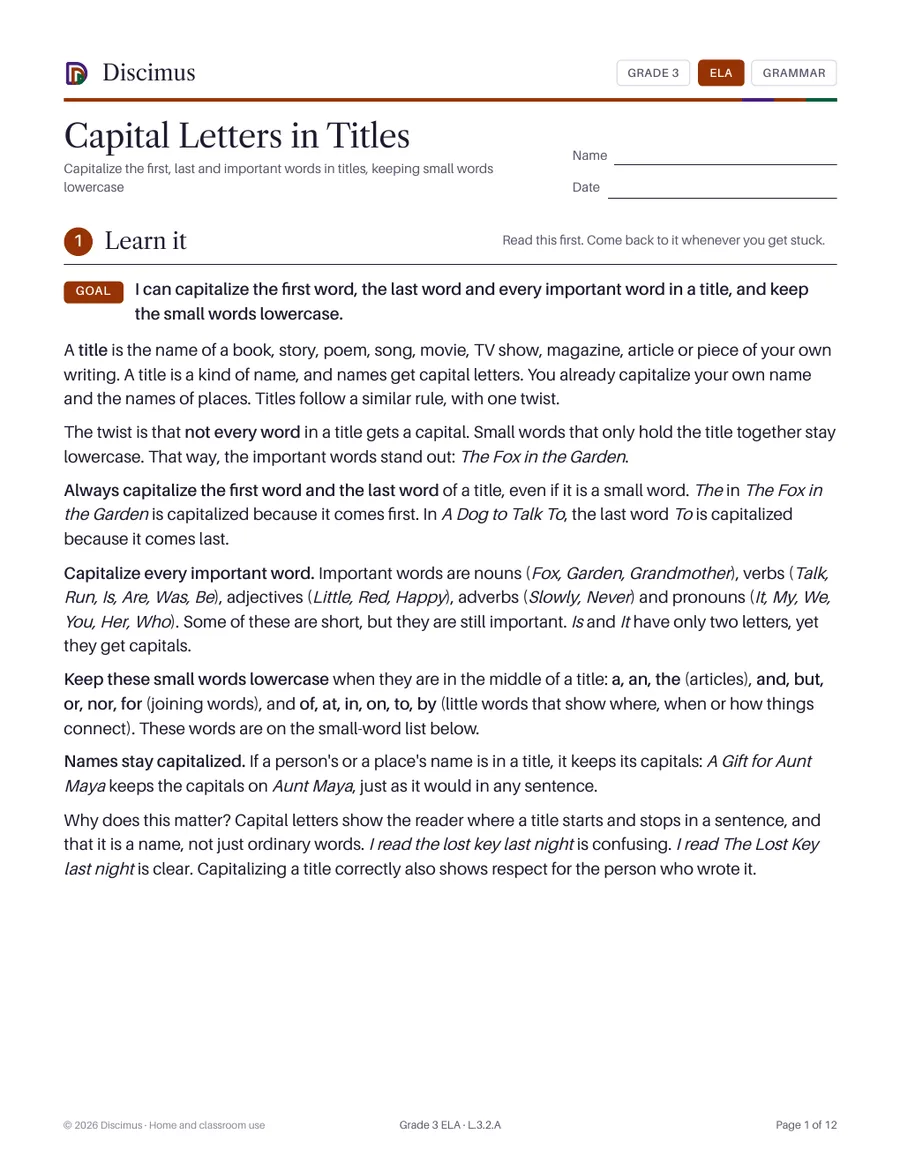
Capitalize the first, last and important words in titles, keeping small words lowercase
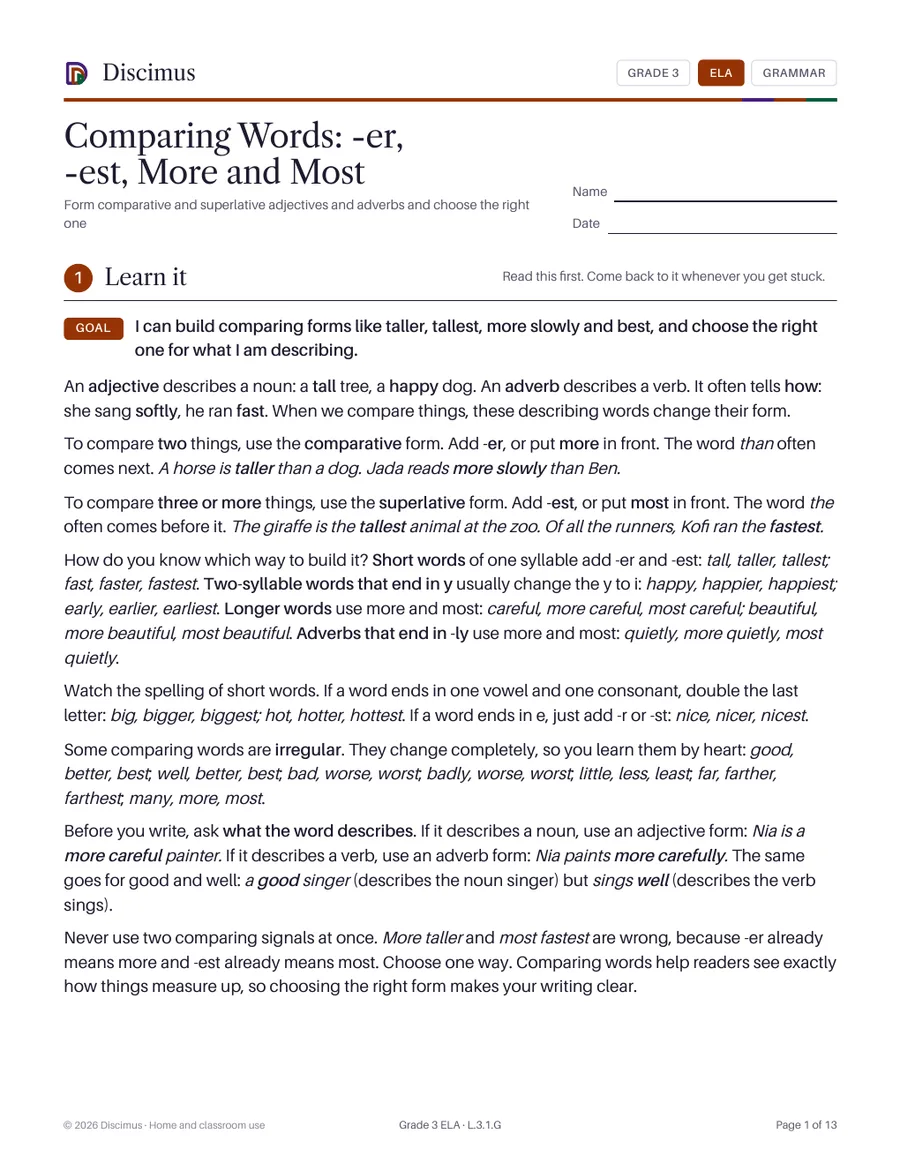
Form comparative and superlative adjectives and adverbs and choose the right one
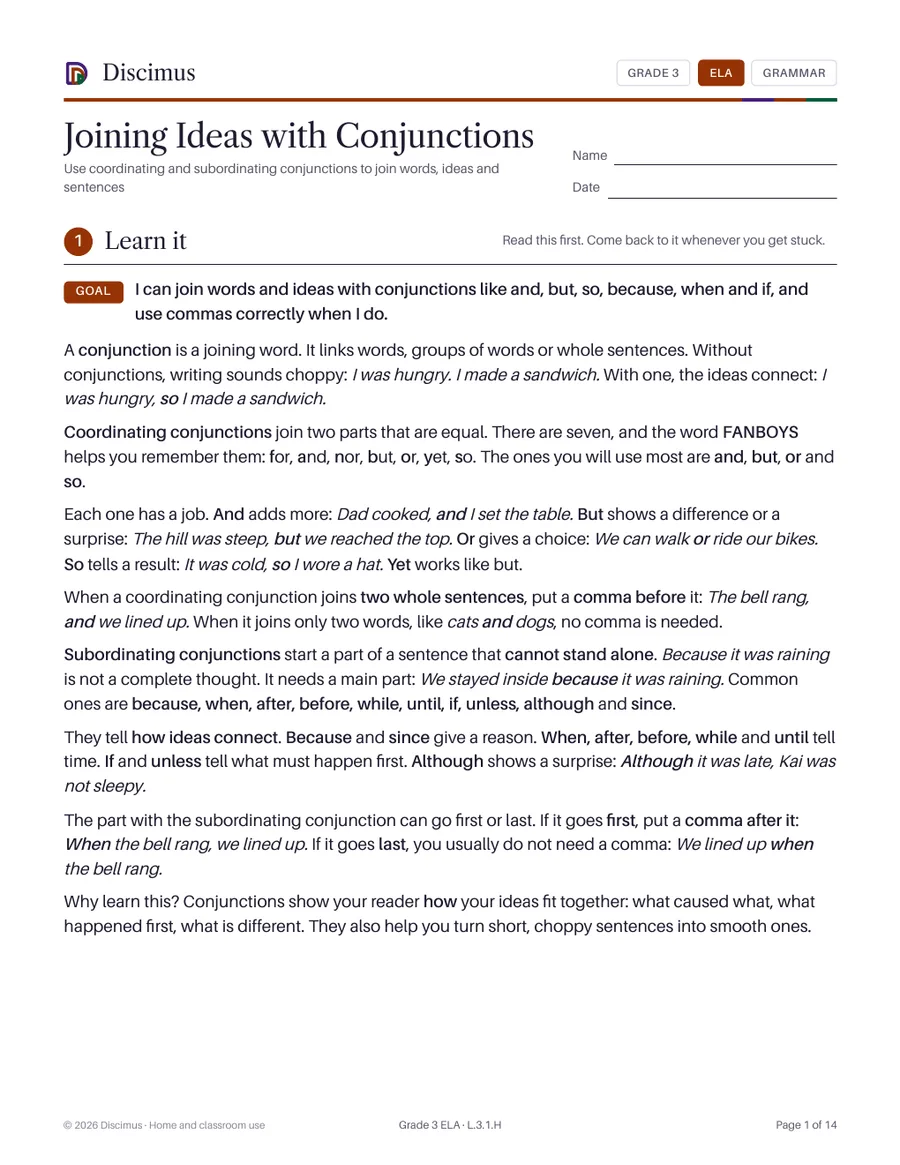
Use coordinating and subordinating conjunctions to join words, ideas and sentences
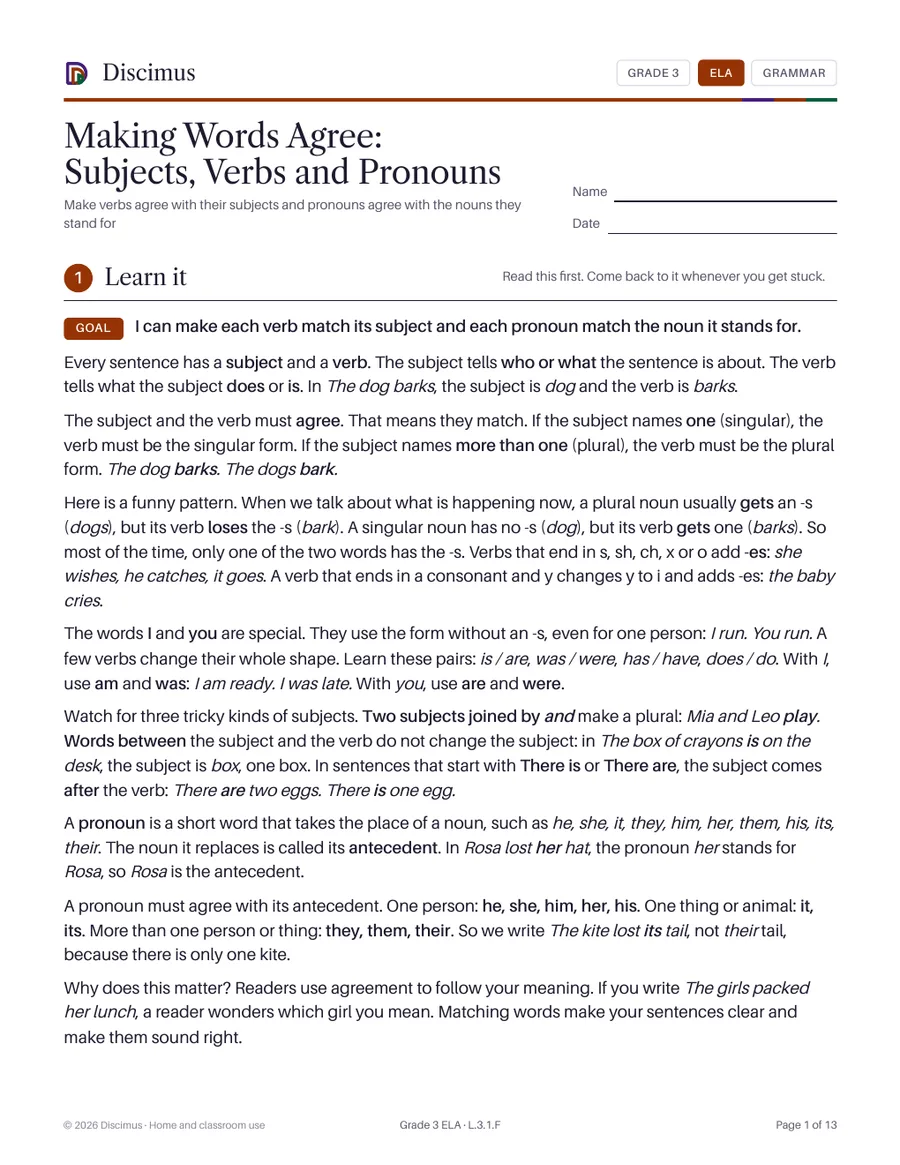
Make verbs agree with their subjects and pronouns agree with the nouns they stand for
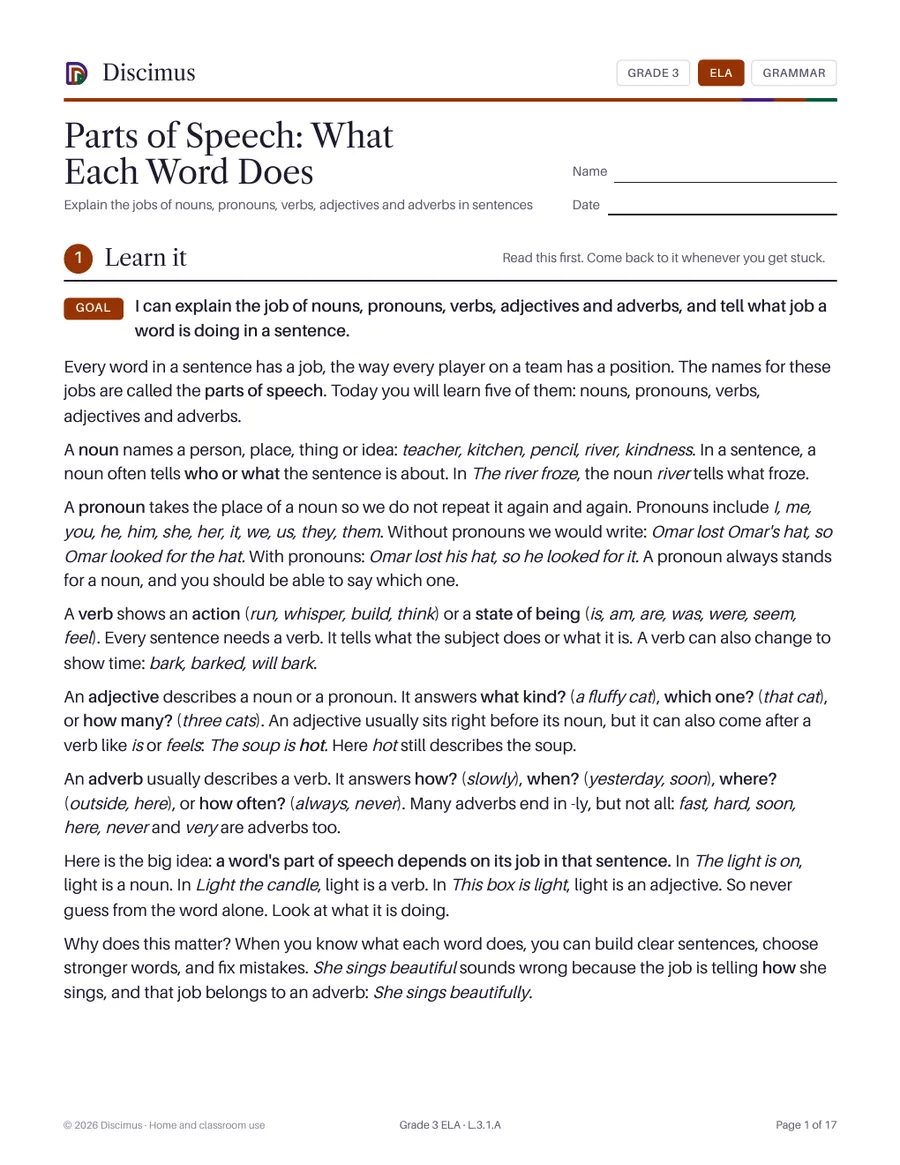
Explain the jobs of nouns, pronouns, verbs, adjectives and adverbs in sentences
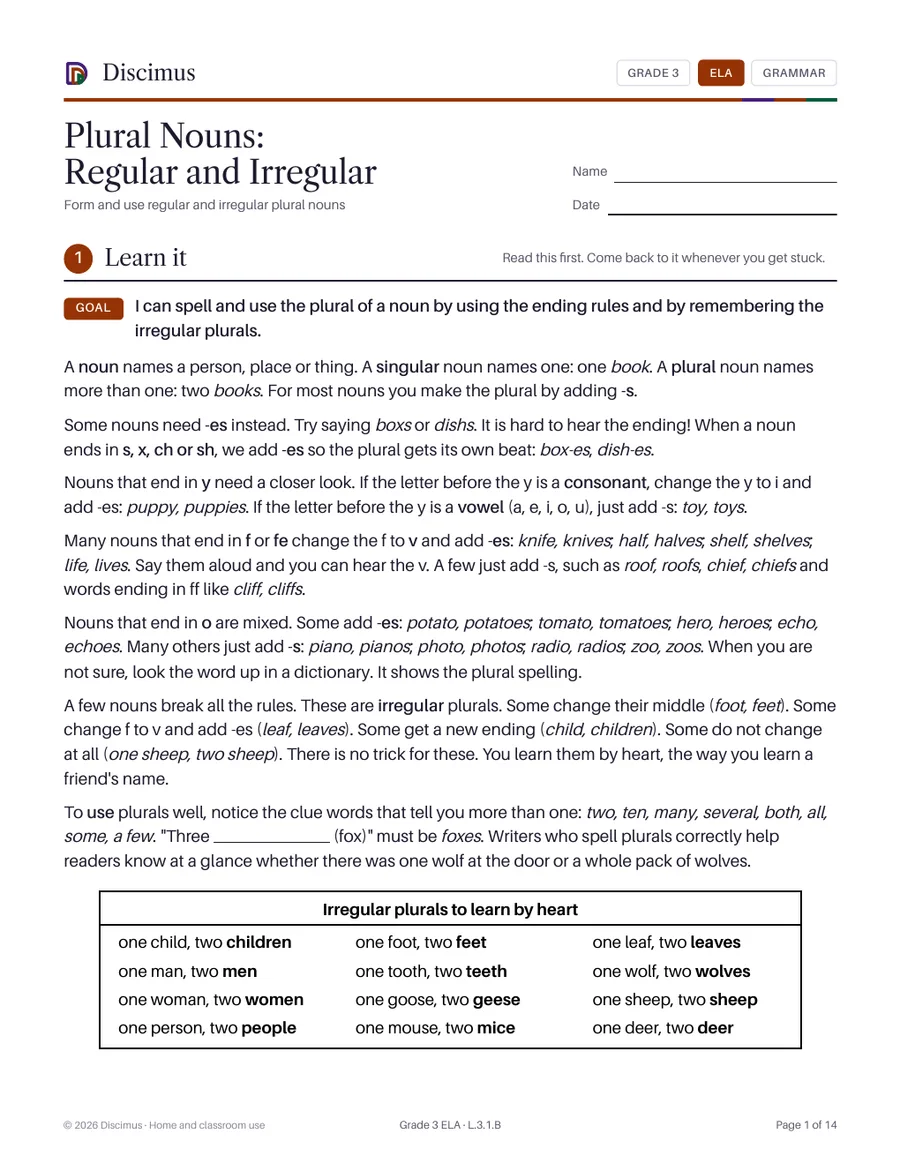
Form and use regular and irregular plural nouns
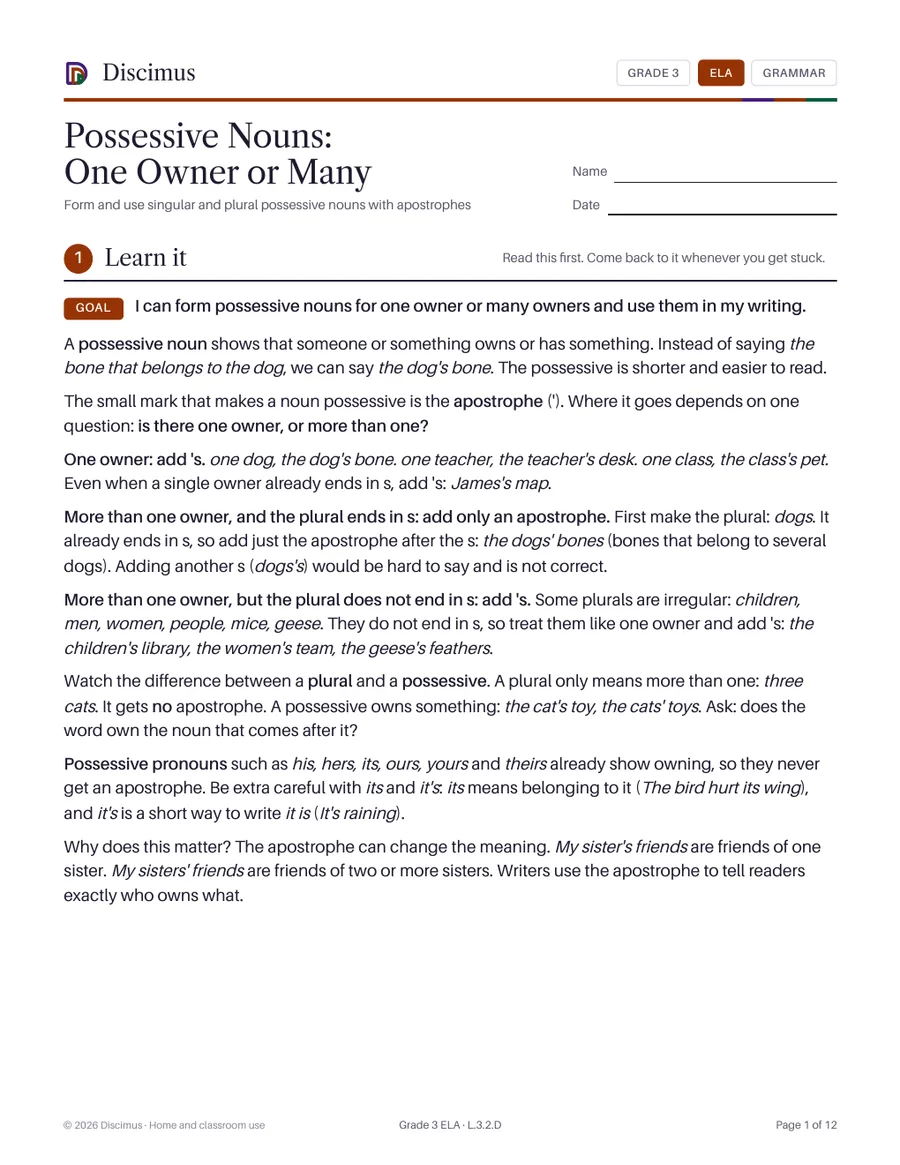
Form and use singular and plural possessive nouns with apostrophes
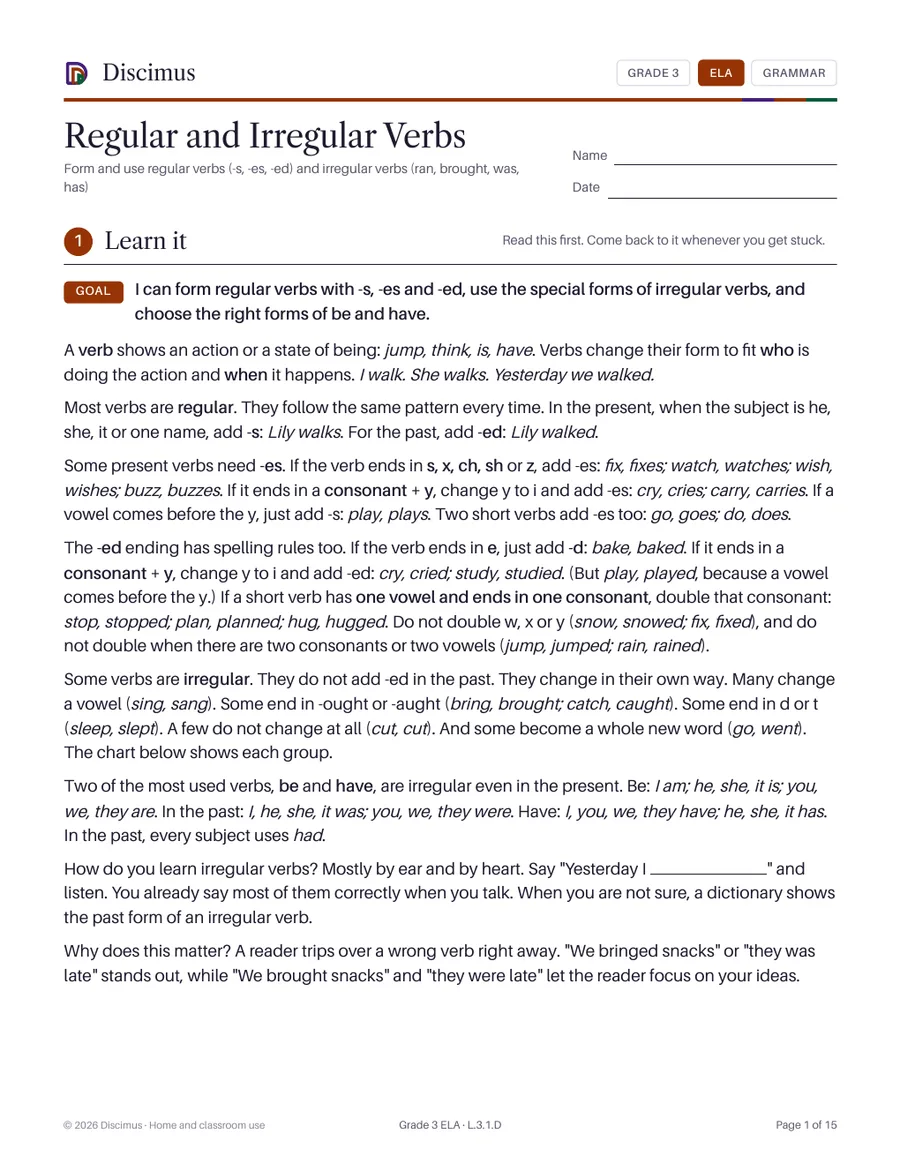
Form and use regular verbs (-s, -es, -ed) and irregular verbs (ran, brought, was, has)
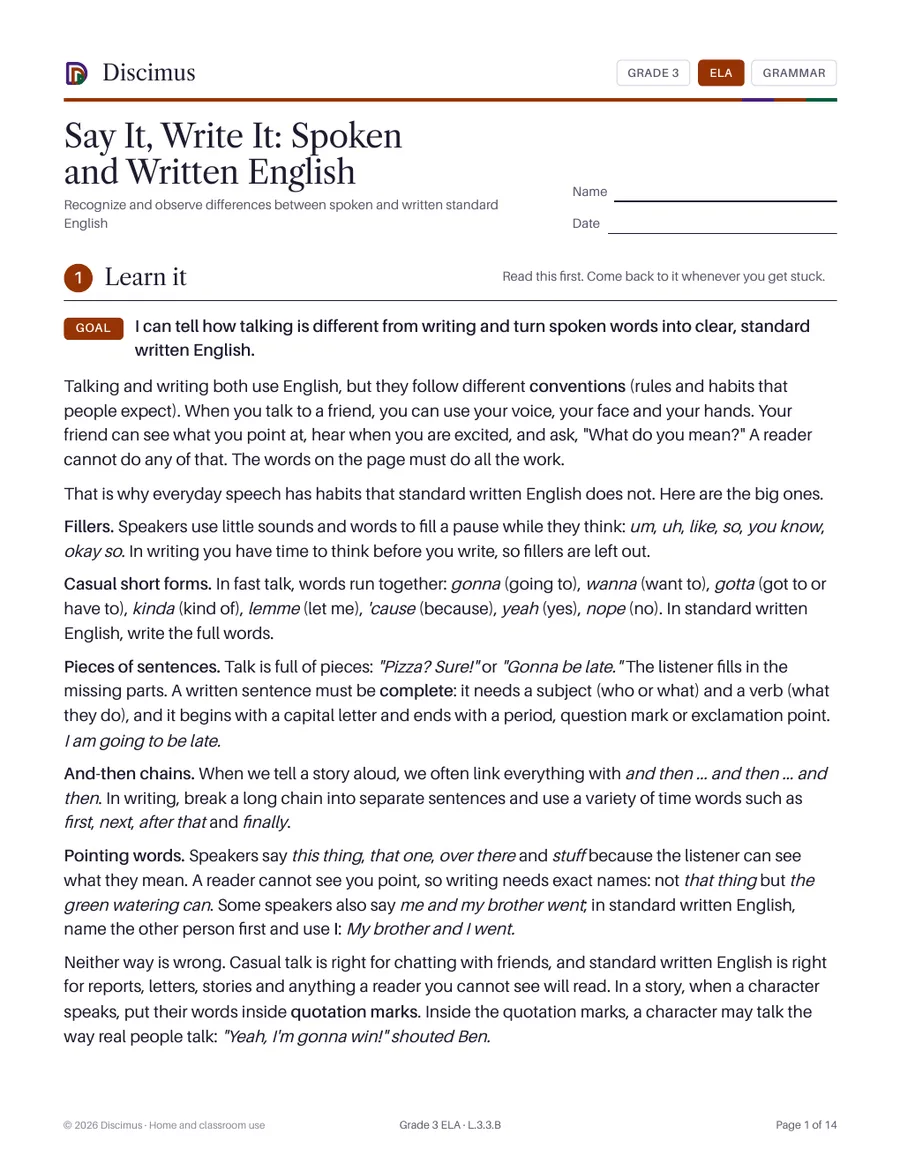
Recognize and observe differences between spoken and written standard English
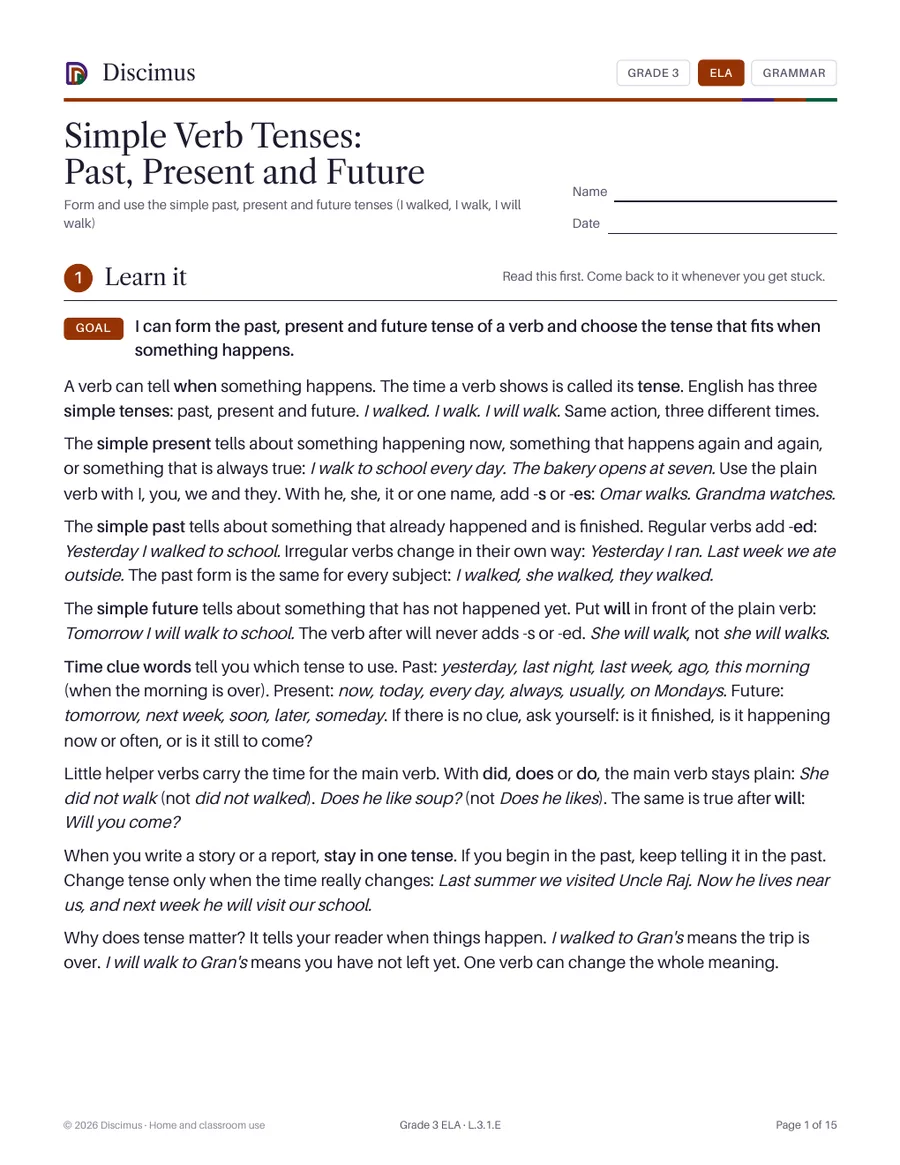
Form and use the simple past, present and future tenses (I walked, I walk, I will walk)
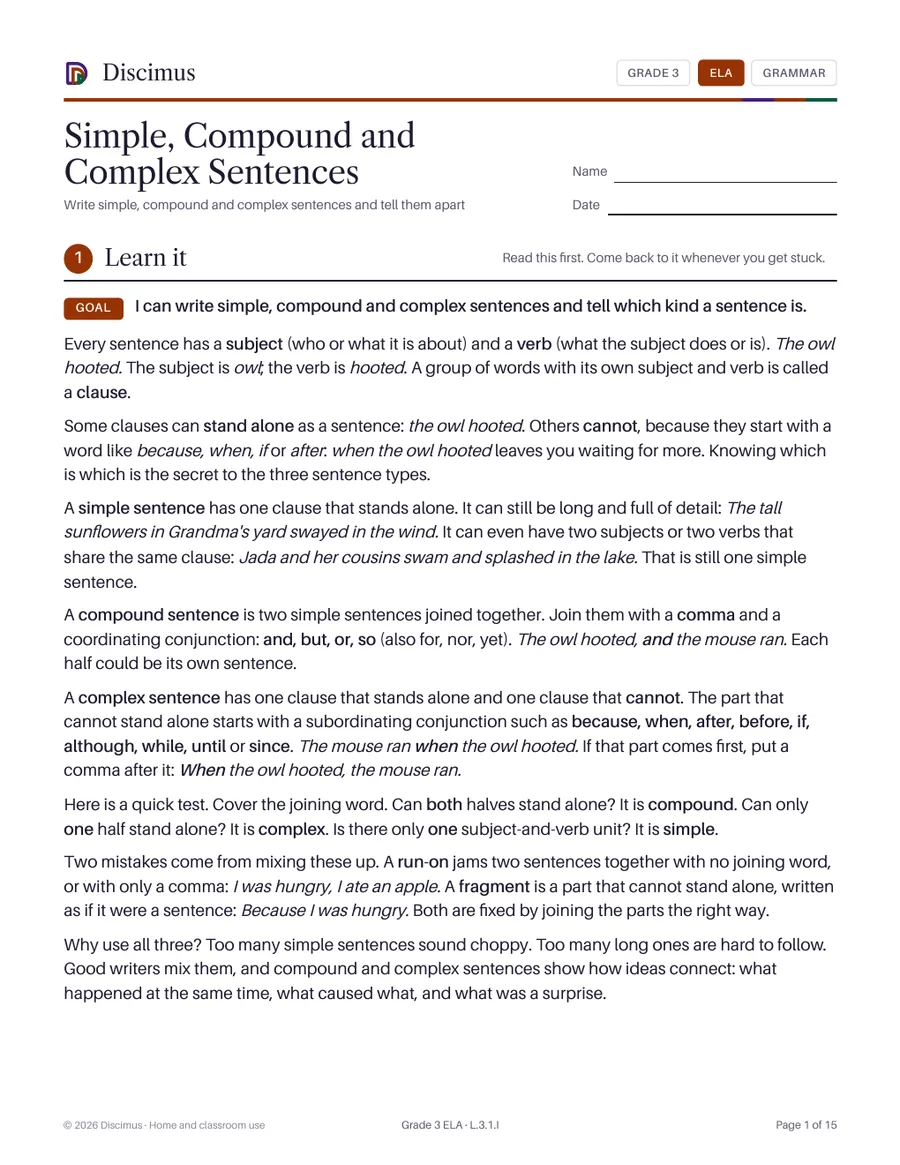
Write simple, compound and complex sentences and tell them apart
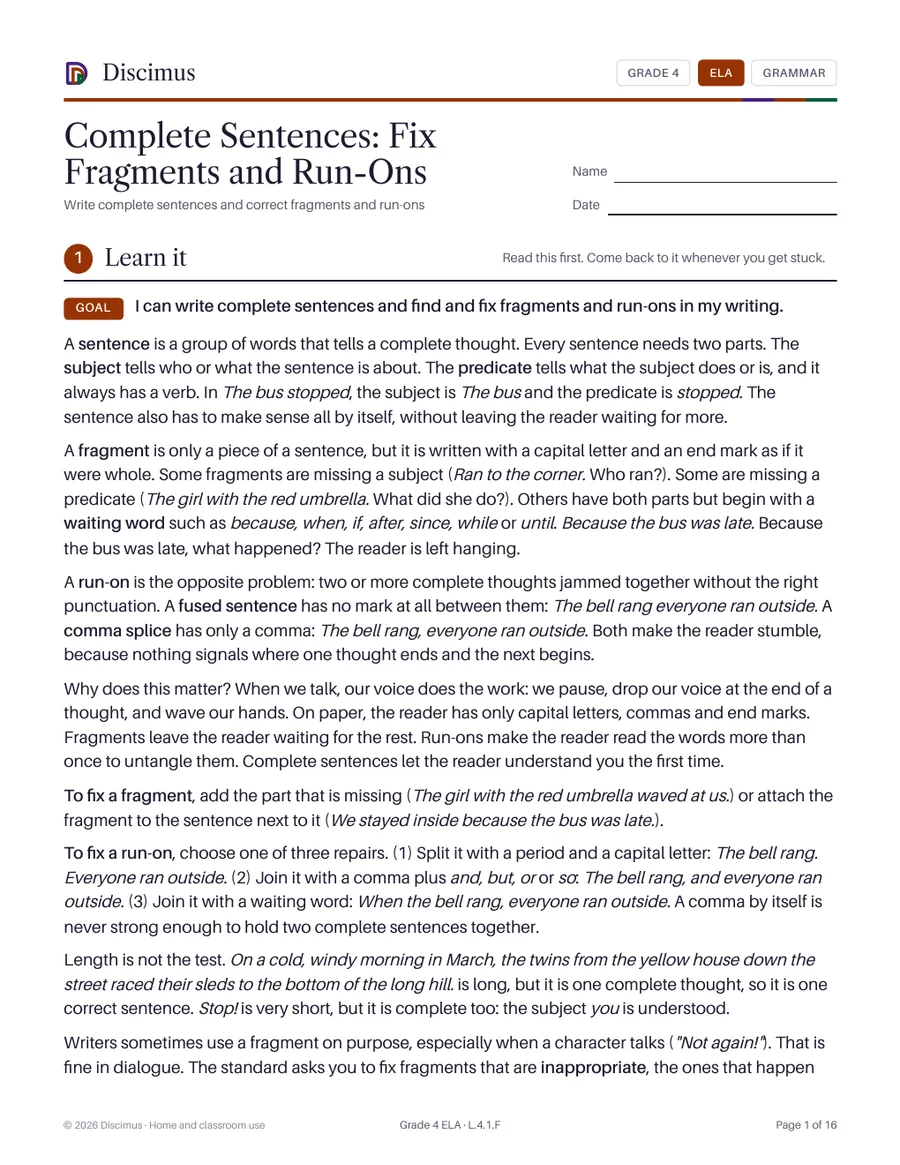
Write complete sentences and correct fragments and run-ons
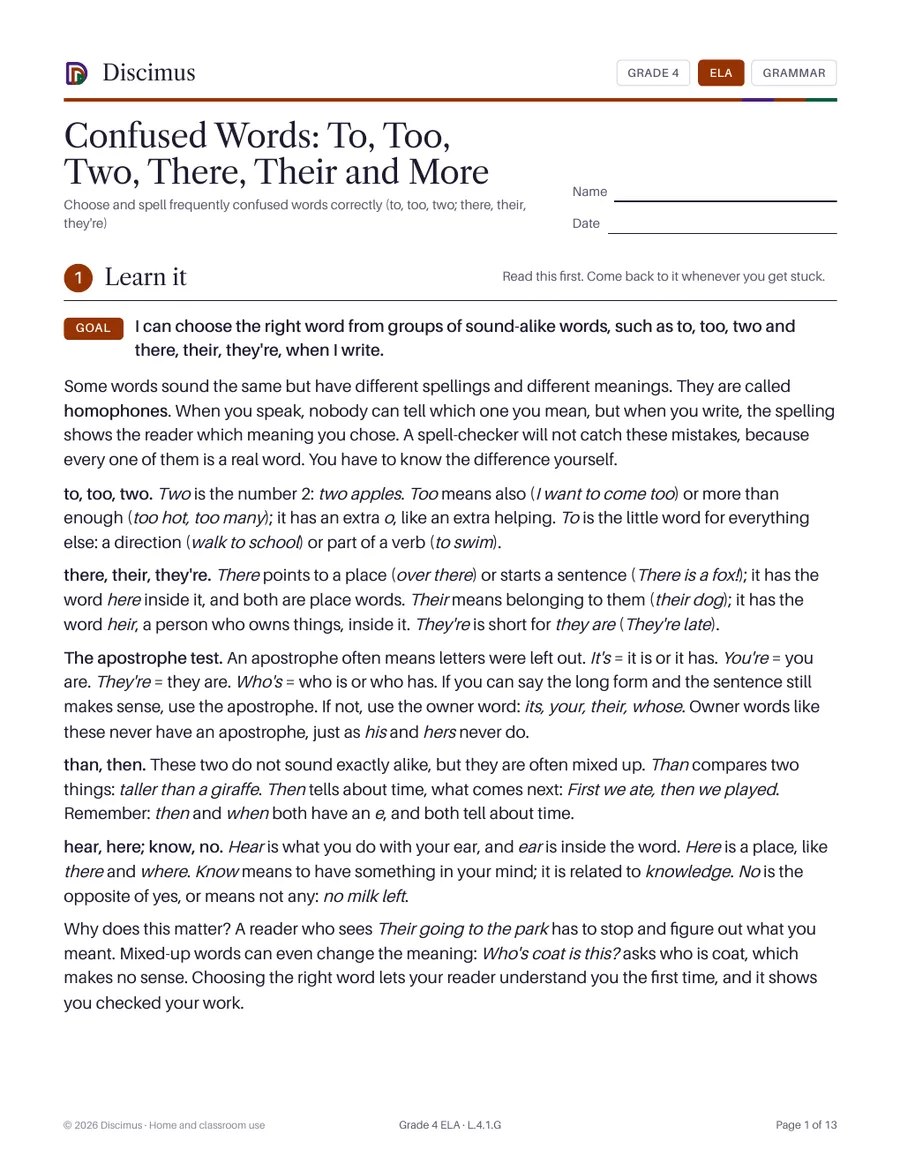
Choose and spell frequently confused words correctly (to, too, two; there, their, they're)
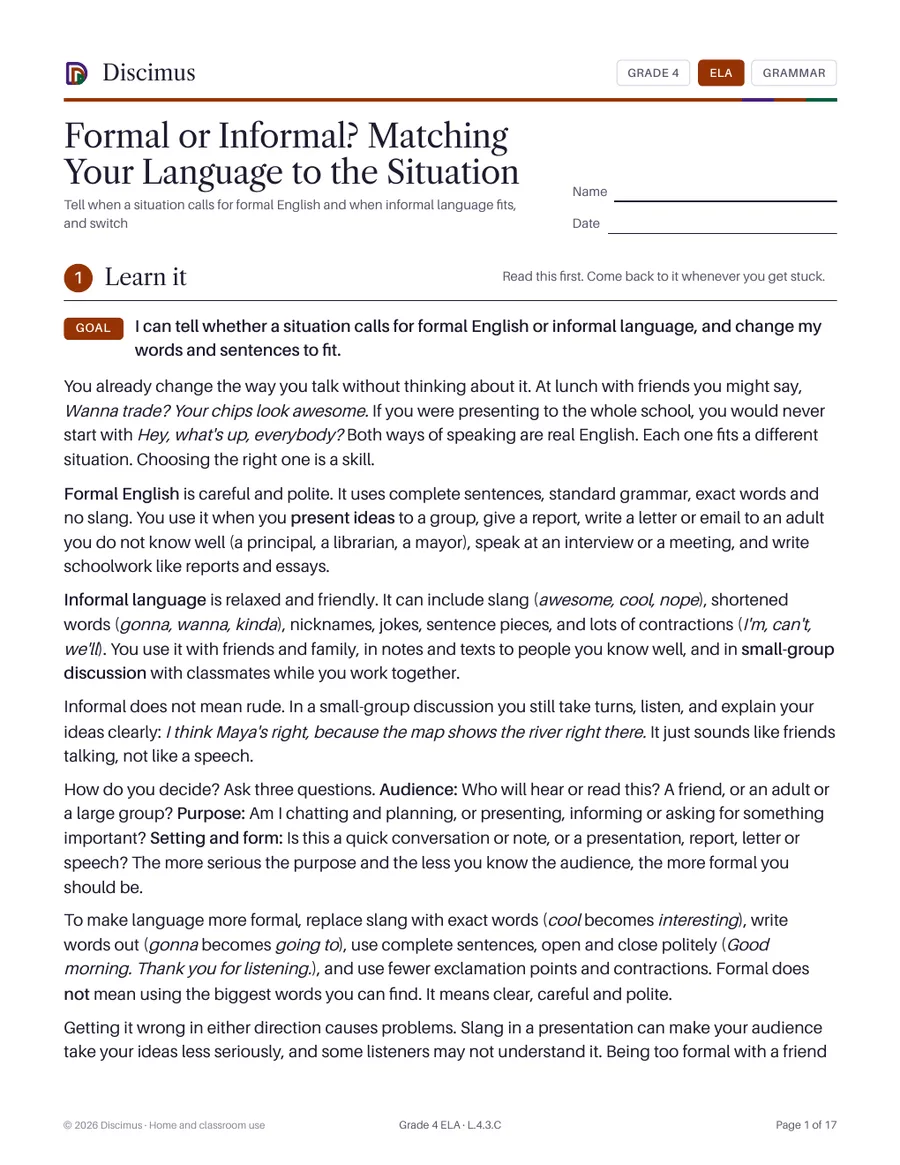
Tell when a situation calls for formal English and when informal language fits, and switch
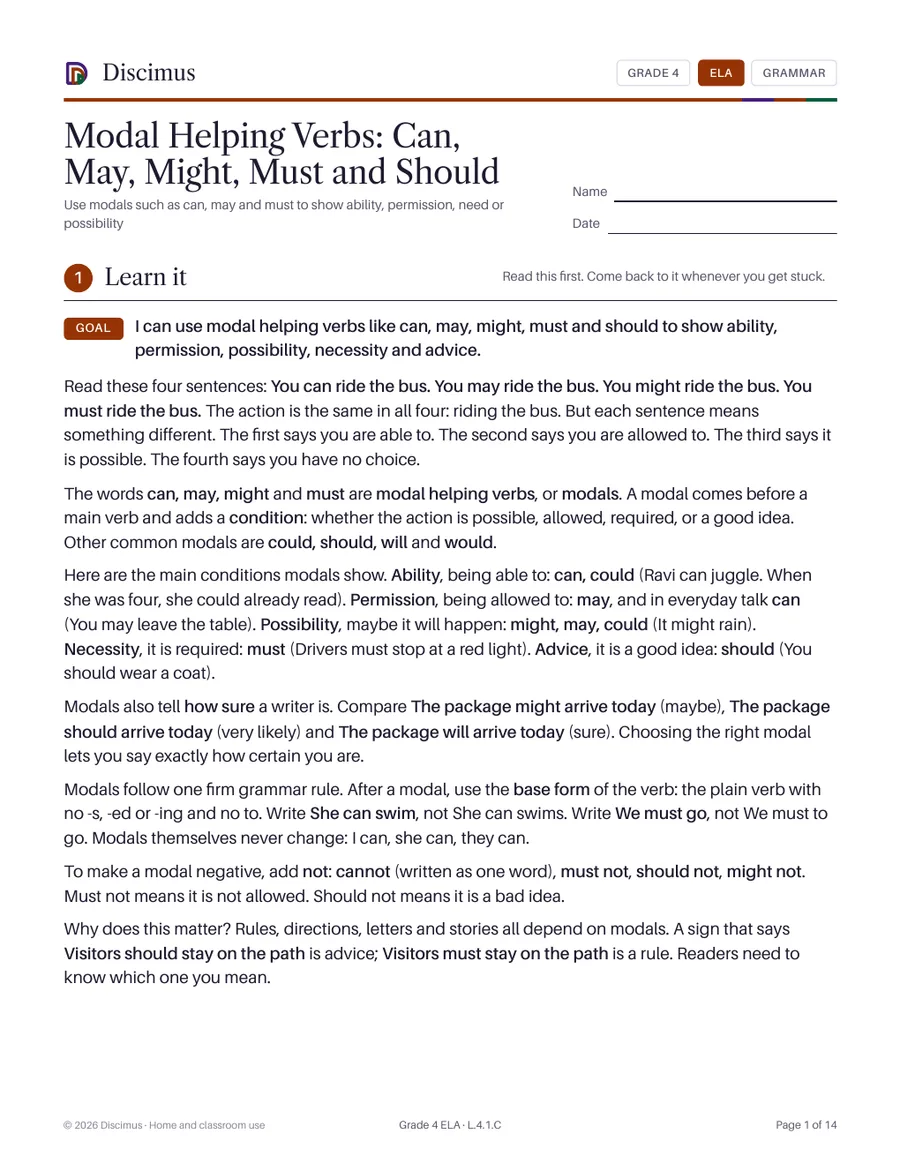
Use modals such as can, may and must to show ability, permission, need or possibility
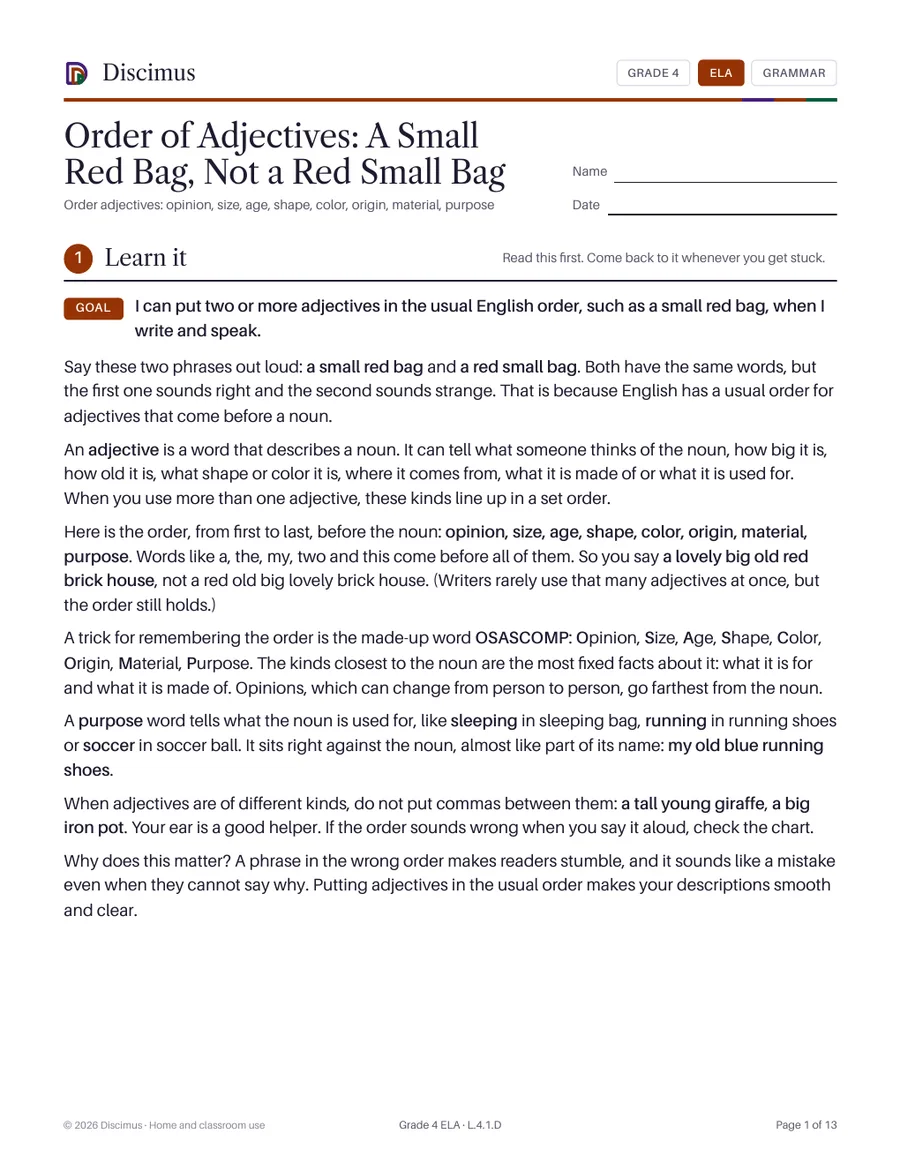
Order adjectives: opinion, size, age, shape, color, origin, material, purpose
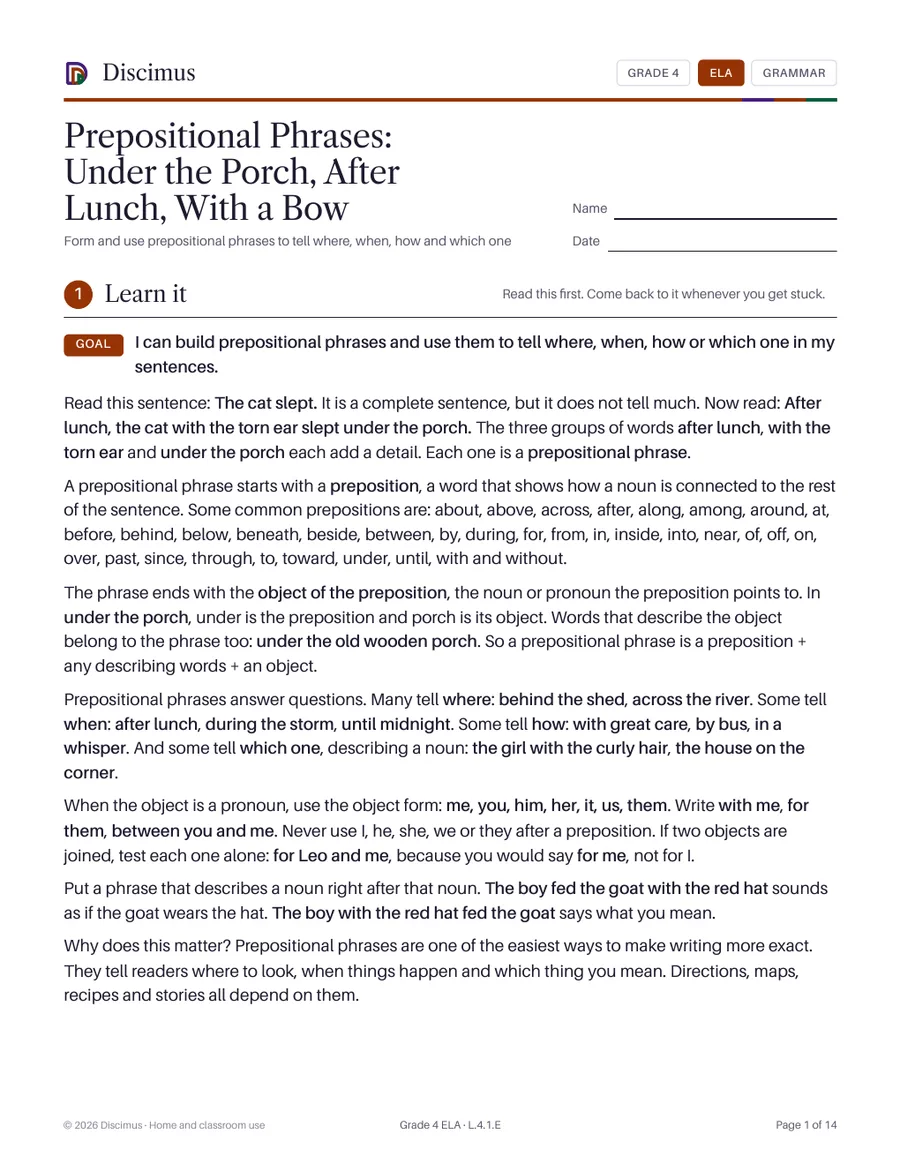
Form and use prepositional phrases to tell where, when, how and which one
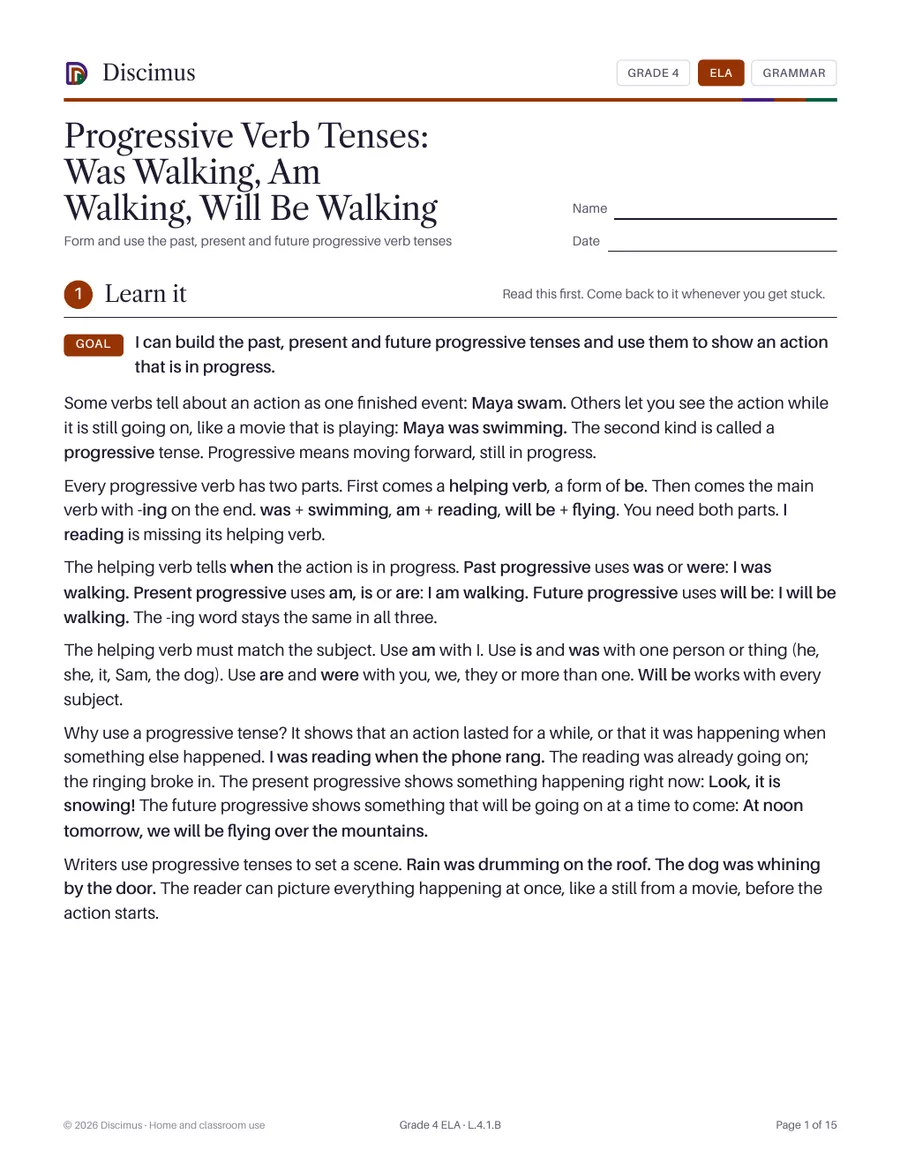
Form and use the past, present and future progressive verb tenses
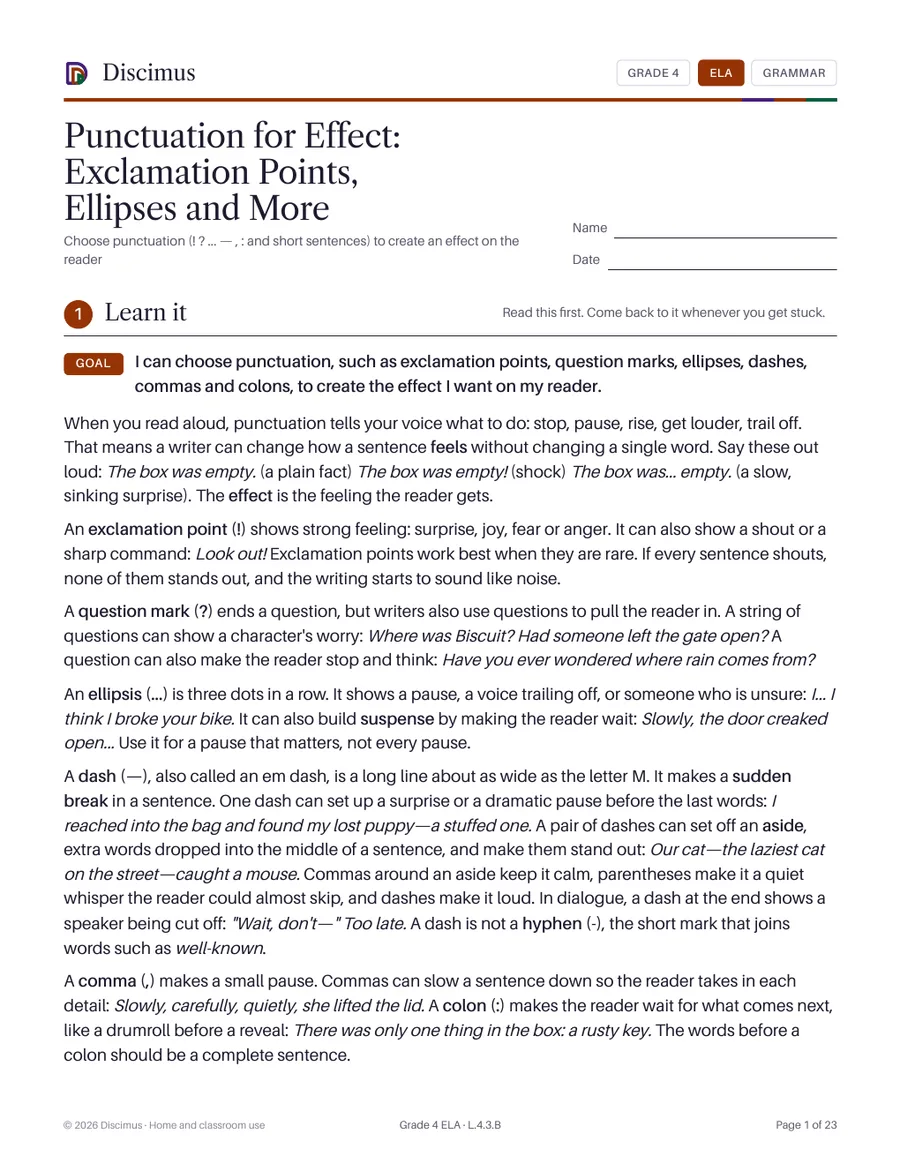
Choose punctuation (! ? ... — , : and short sentences) to create an effect on the reader
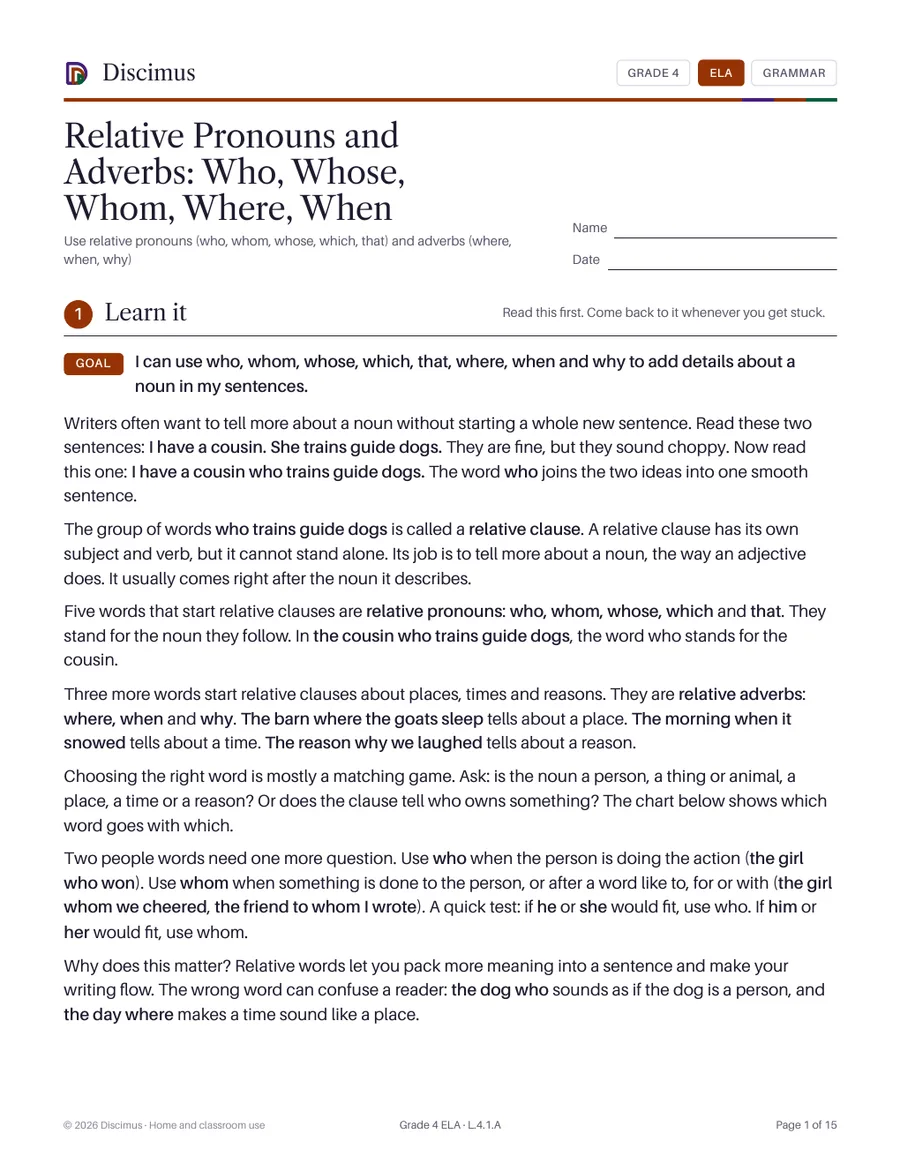
Use relative pronouns (who, whom, whose, which, that) and adverbs (where, when, why)
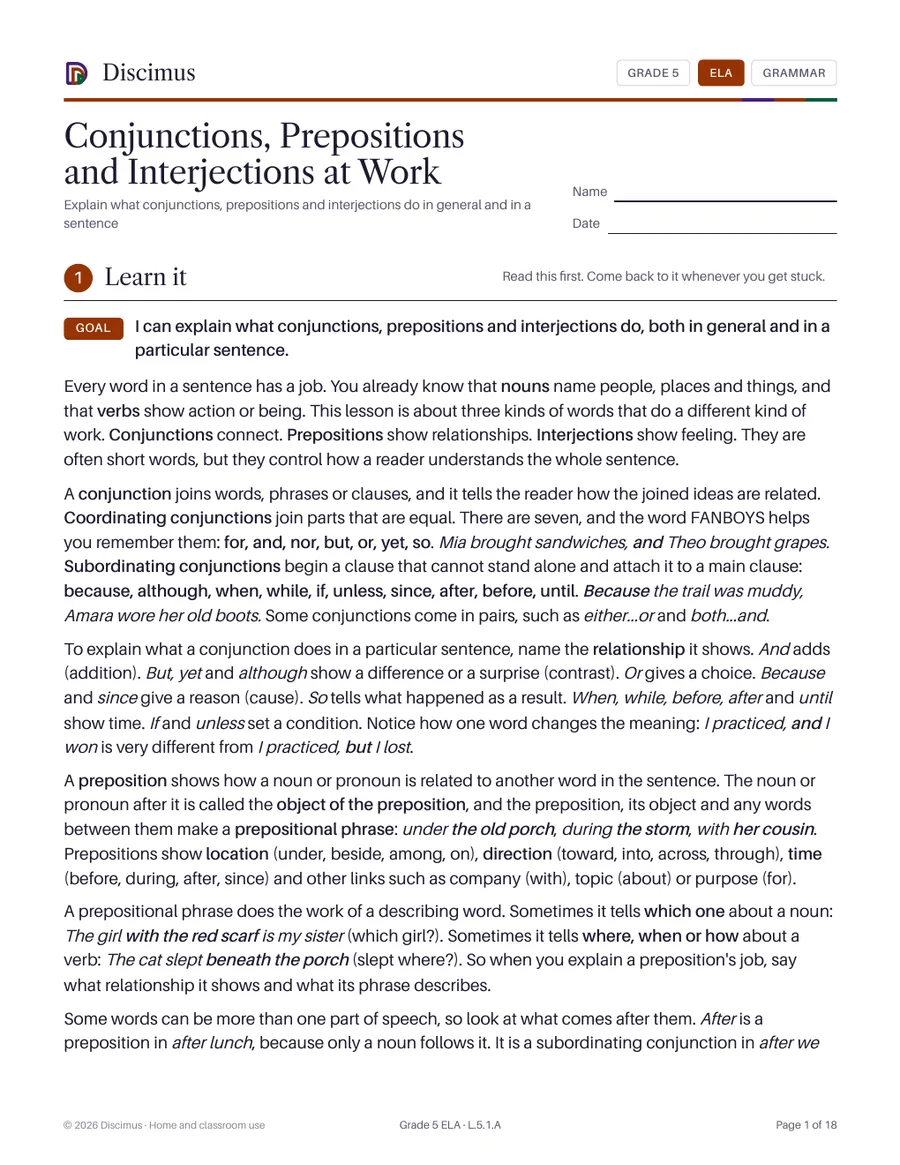
Explain what conjunctions, prepositions and interjections do in general and in a sentence
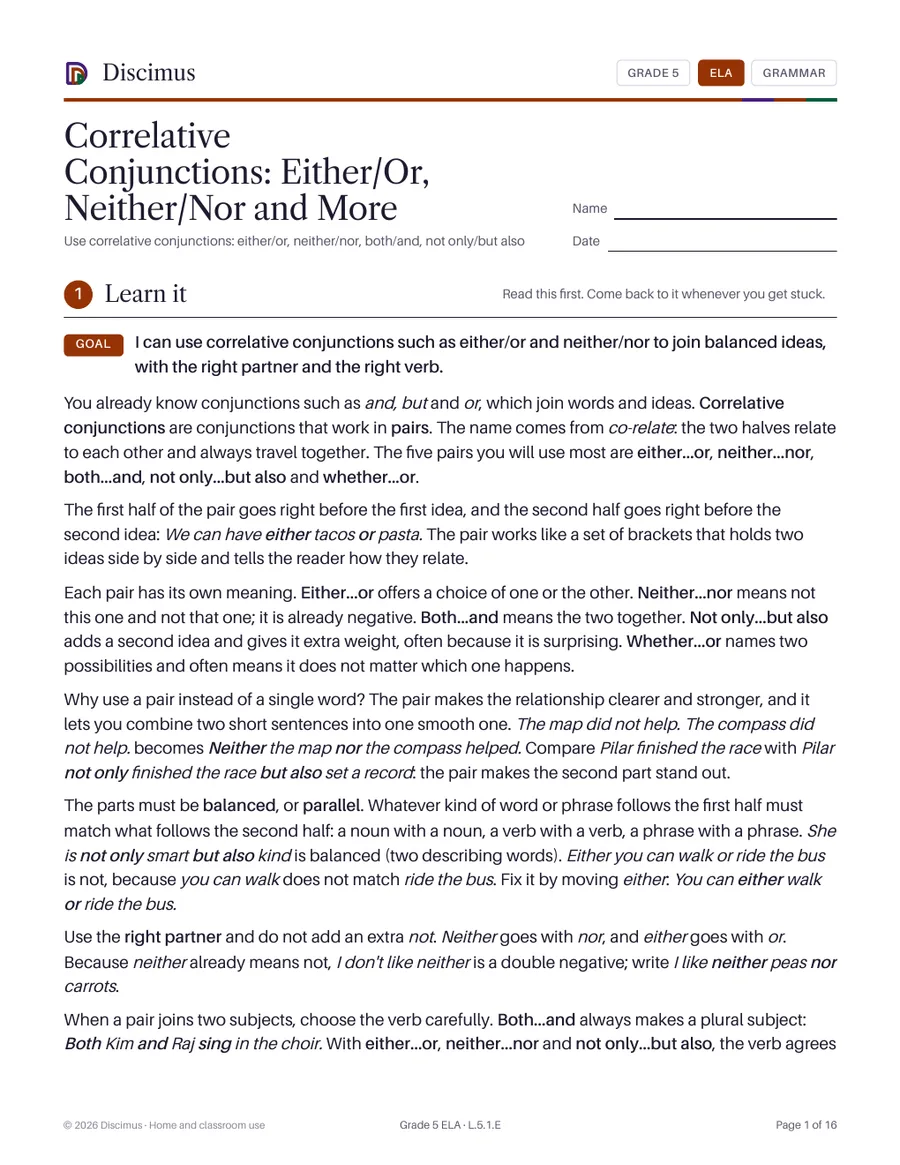
Use correlative conjunctions: either/or, neither/nor, both/and, not only/but also
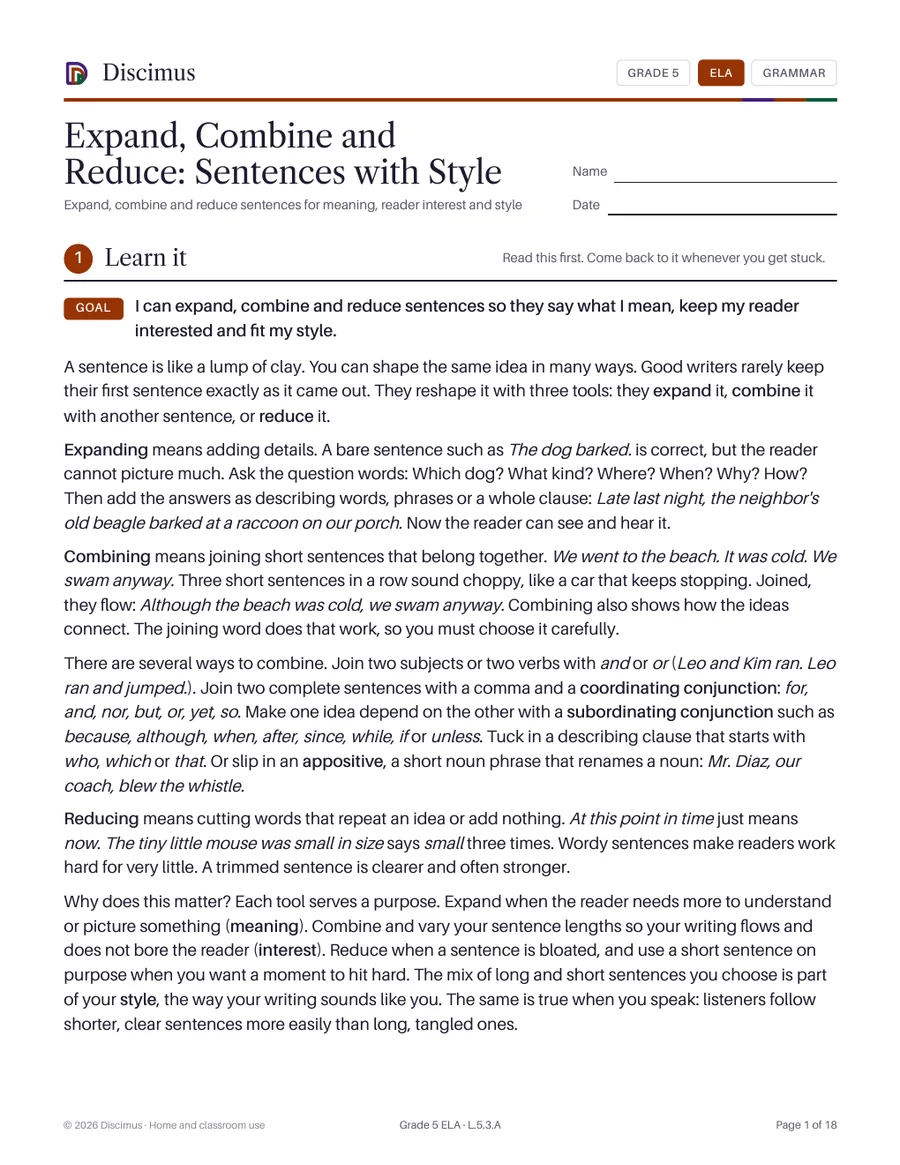
Expand, combine and reduce sentences for meaning, reader interest and style
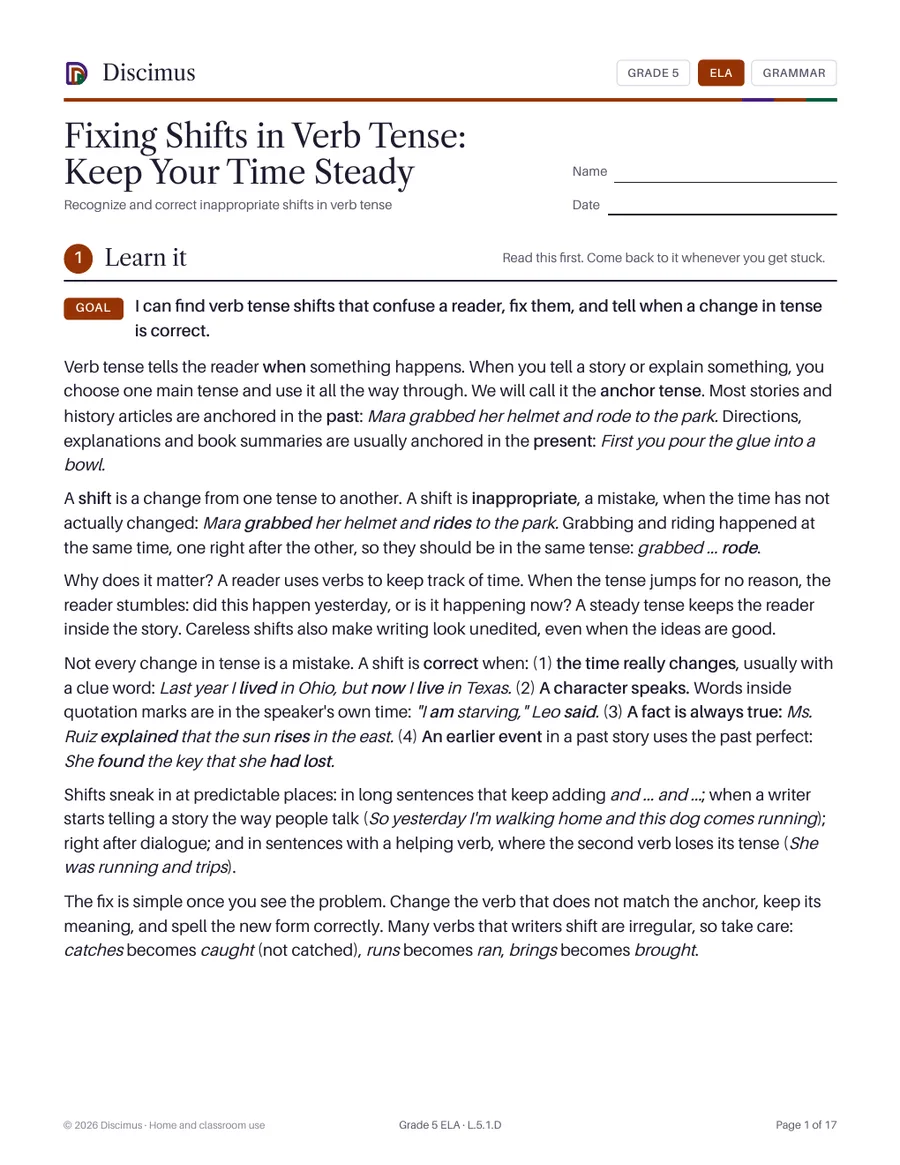
Recognize and correct inappropriate shifts in verb tense
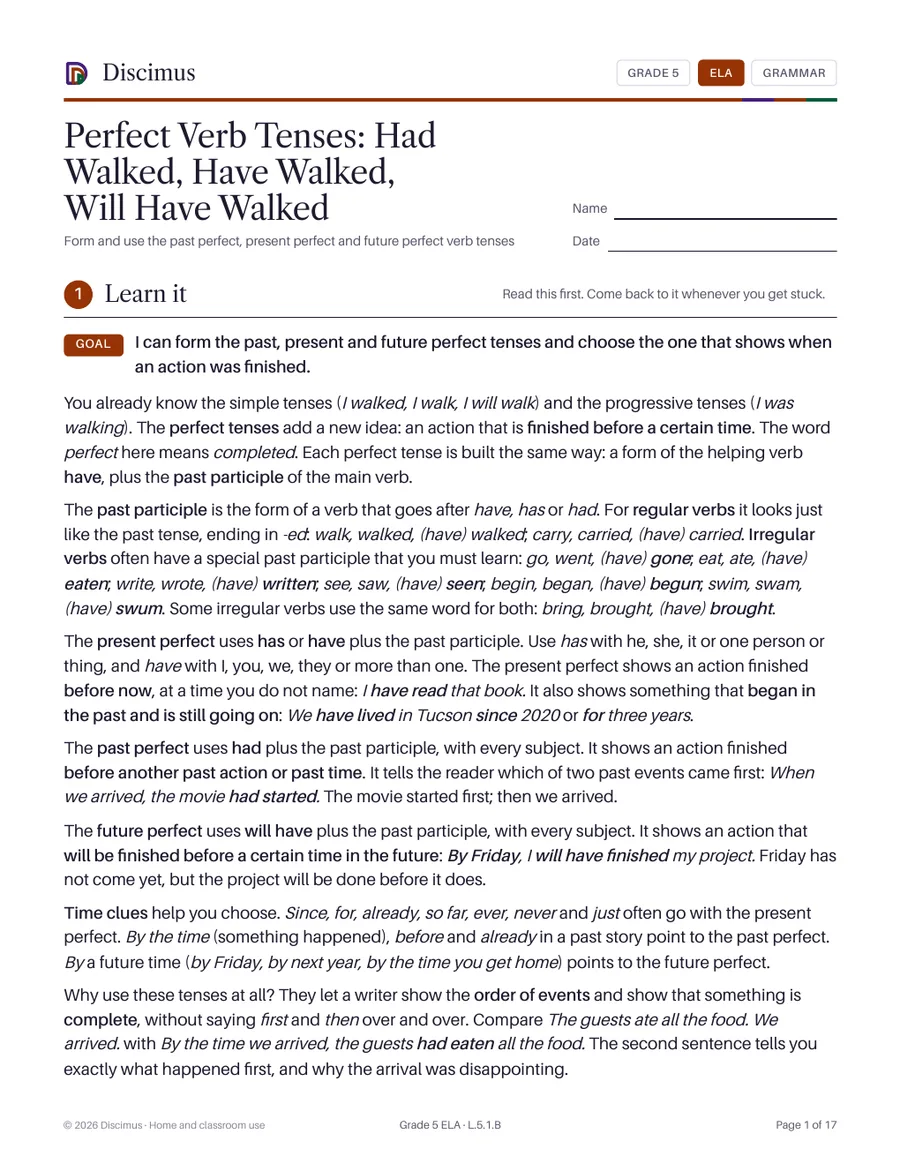
Form and use the past perfect, present perfect and future perfect verb tenses
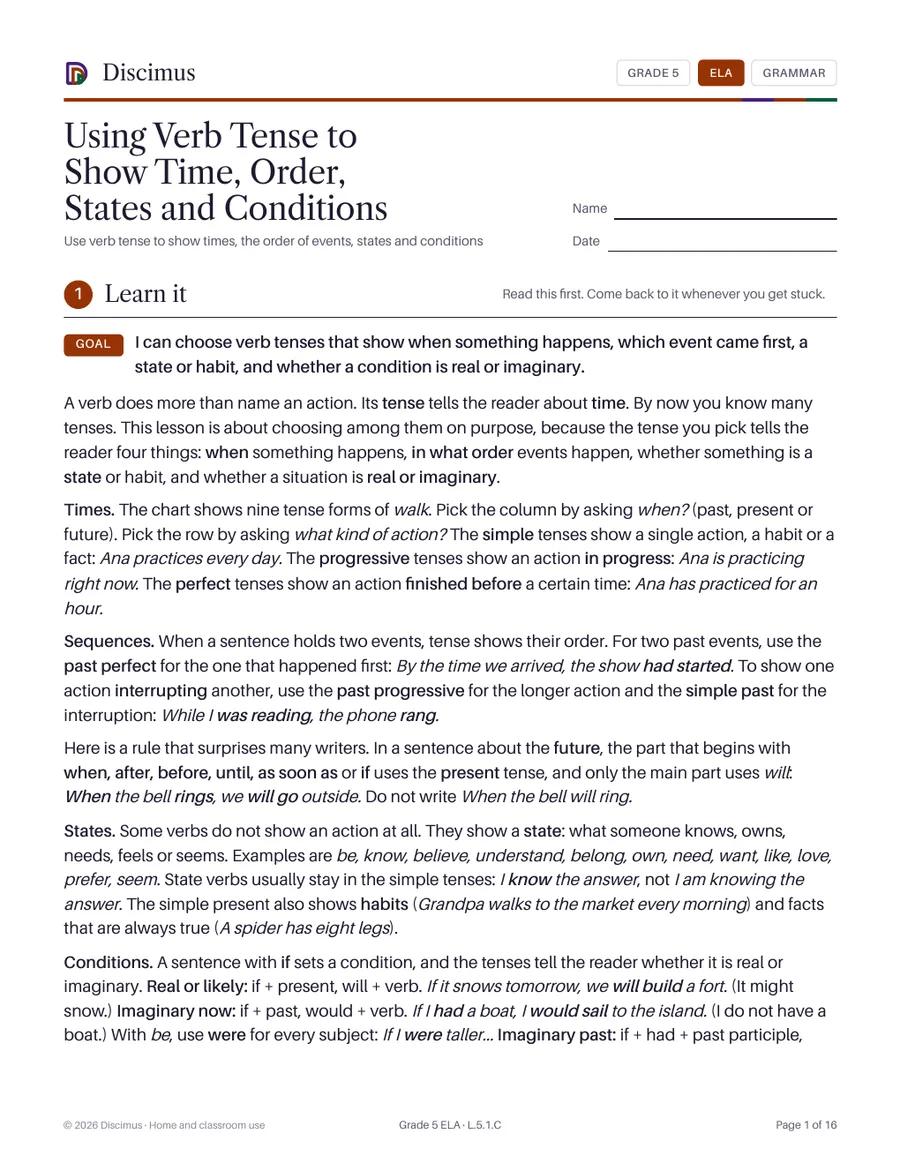
Use verb tense to show times, the order of events, states and conditions
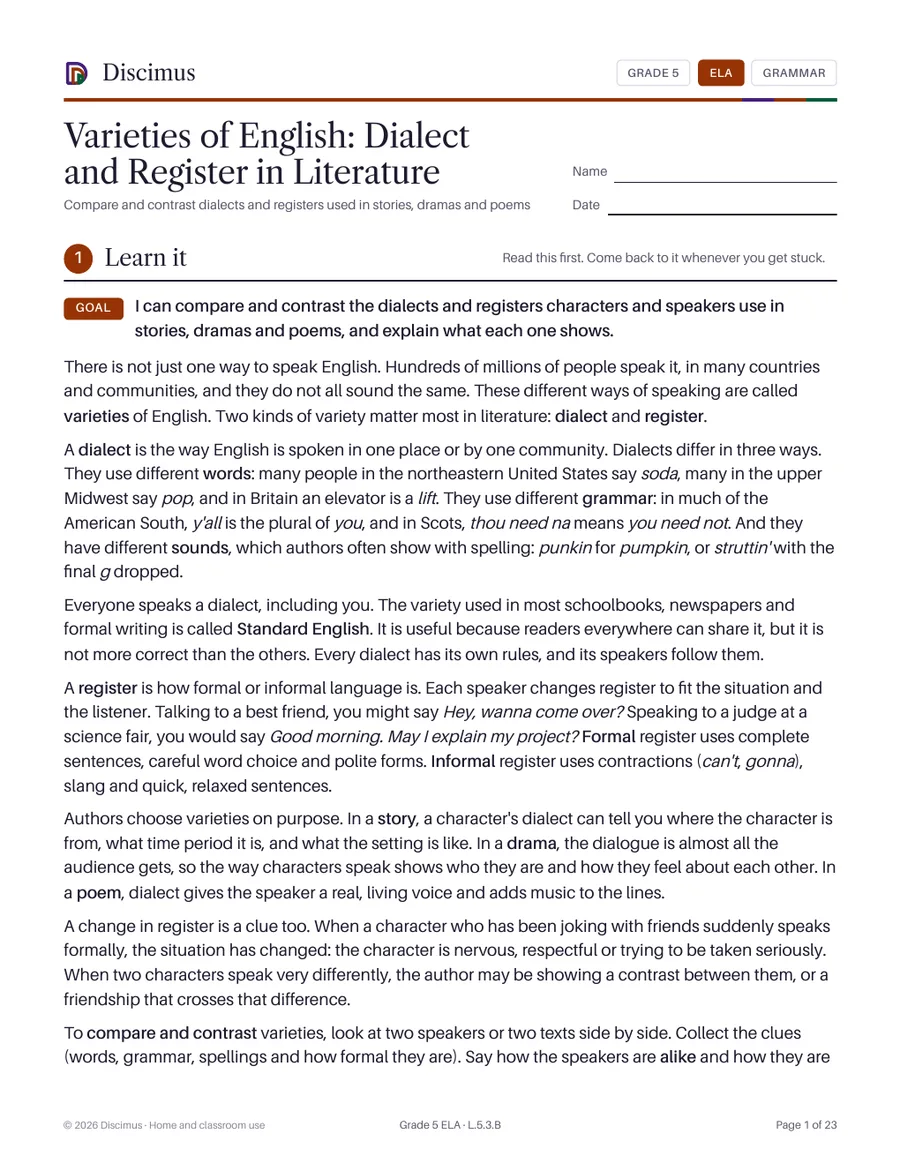
Compare and contrast dialects and registers used in stories, dramas and poems
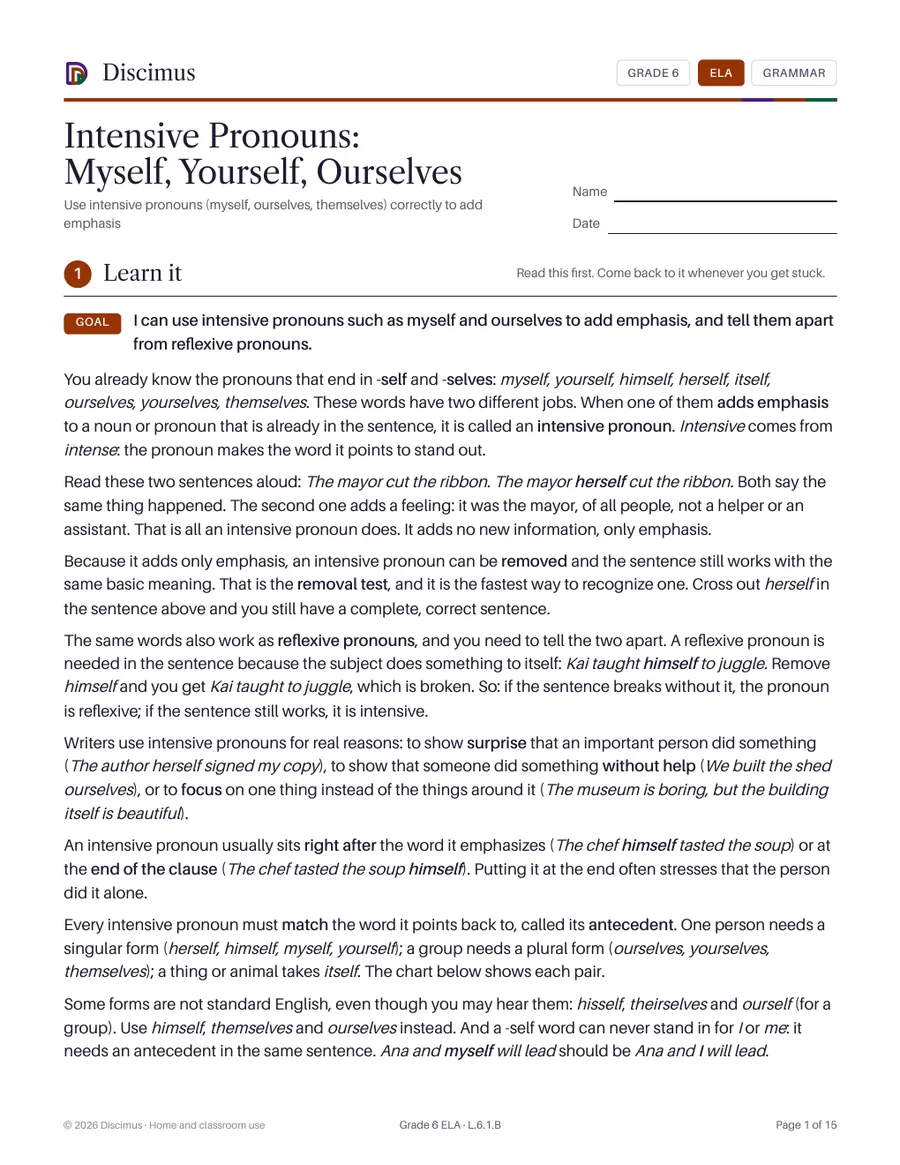
Use intensive pronouns (myself, ourselves, themselves) correctly to add emphasis
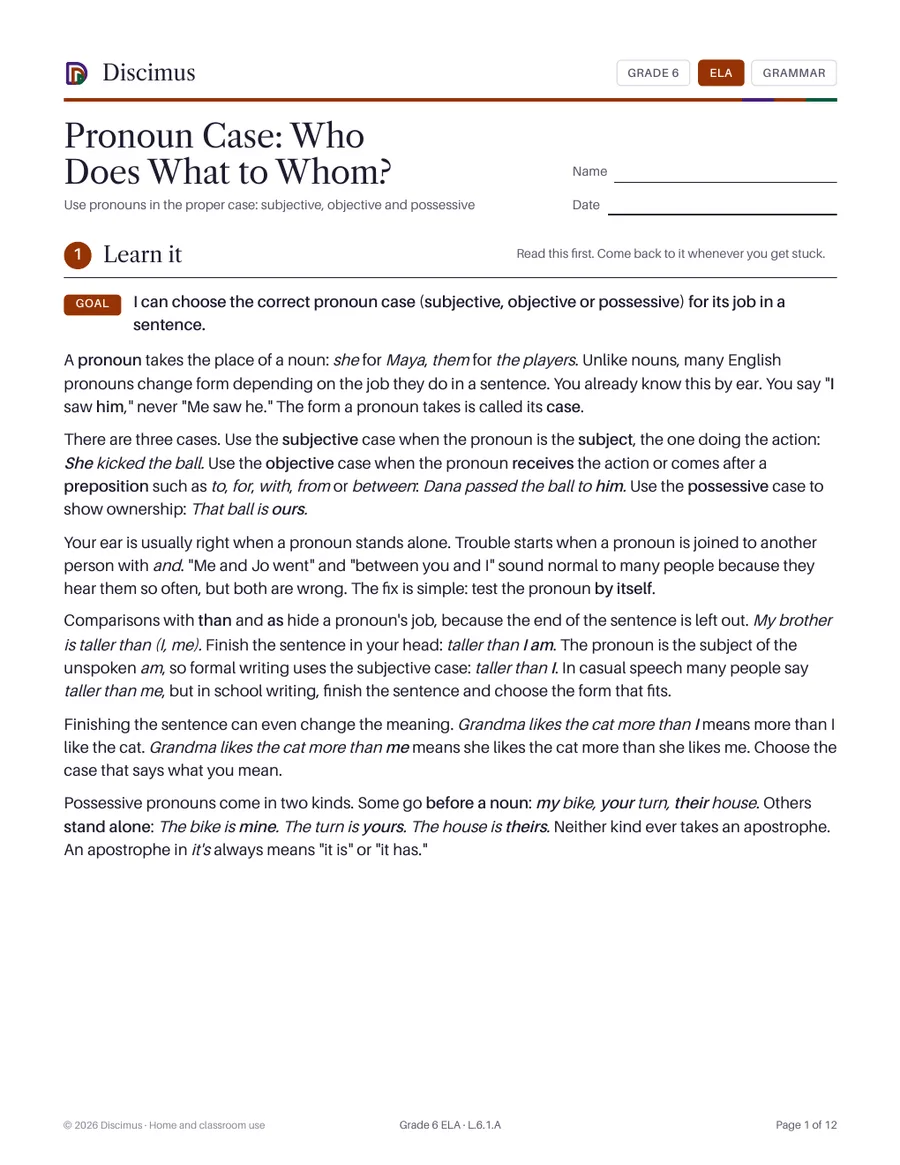
Use pronouns in the proper case: subjective, objective and possessive
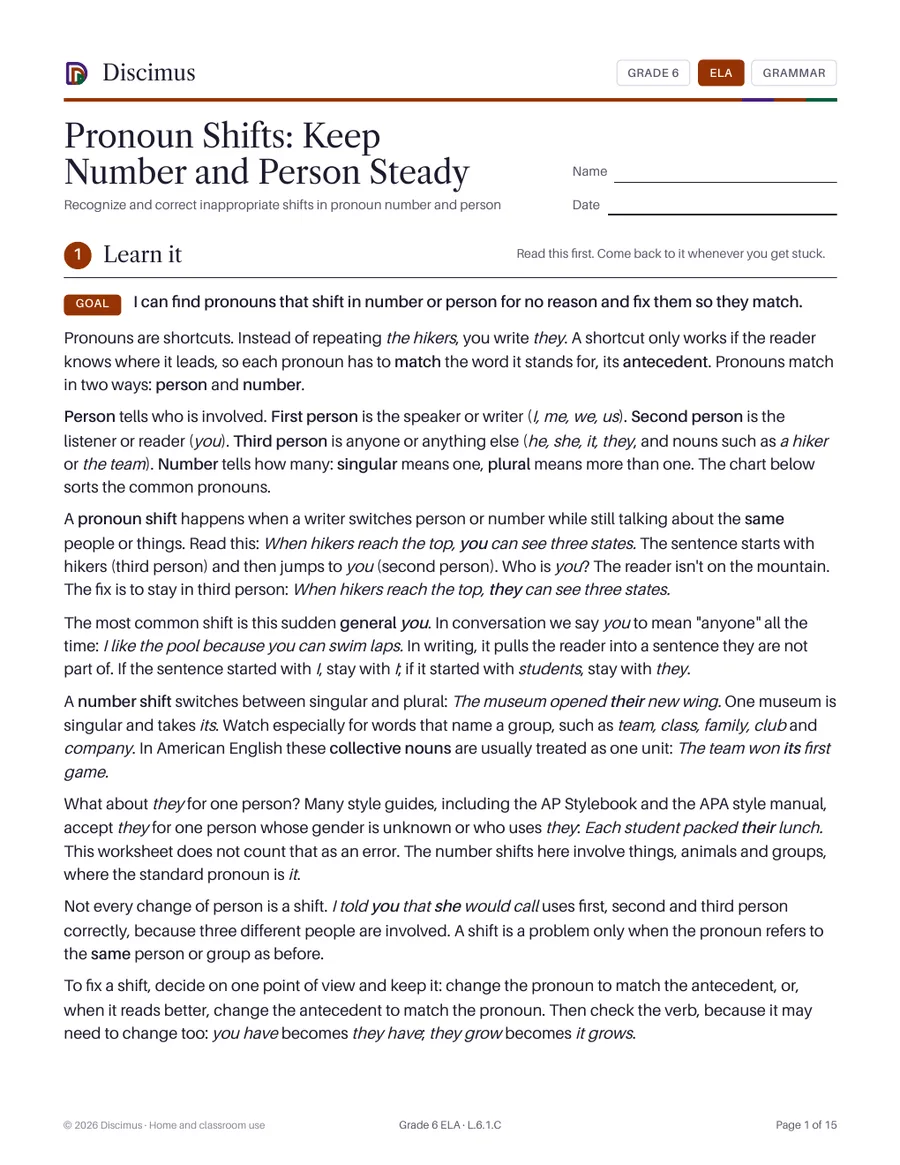
Recognize and correct inappropriate shifts in pronoun number and person
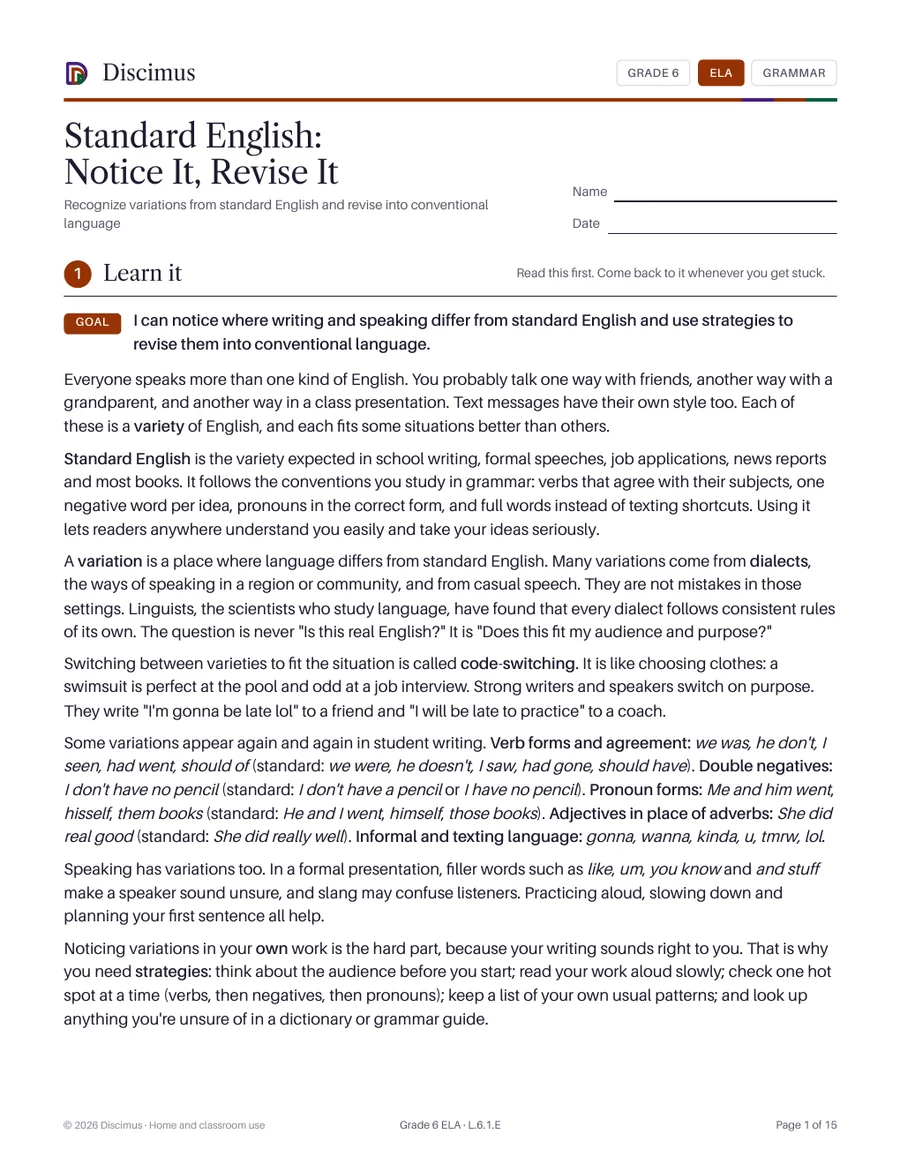
Recognize variations from standard English and revise into conventional language
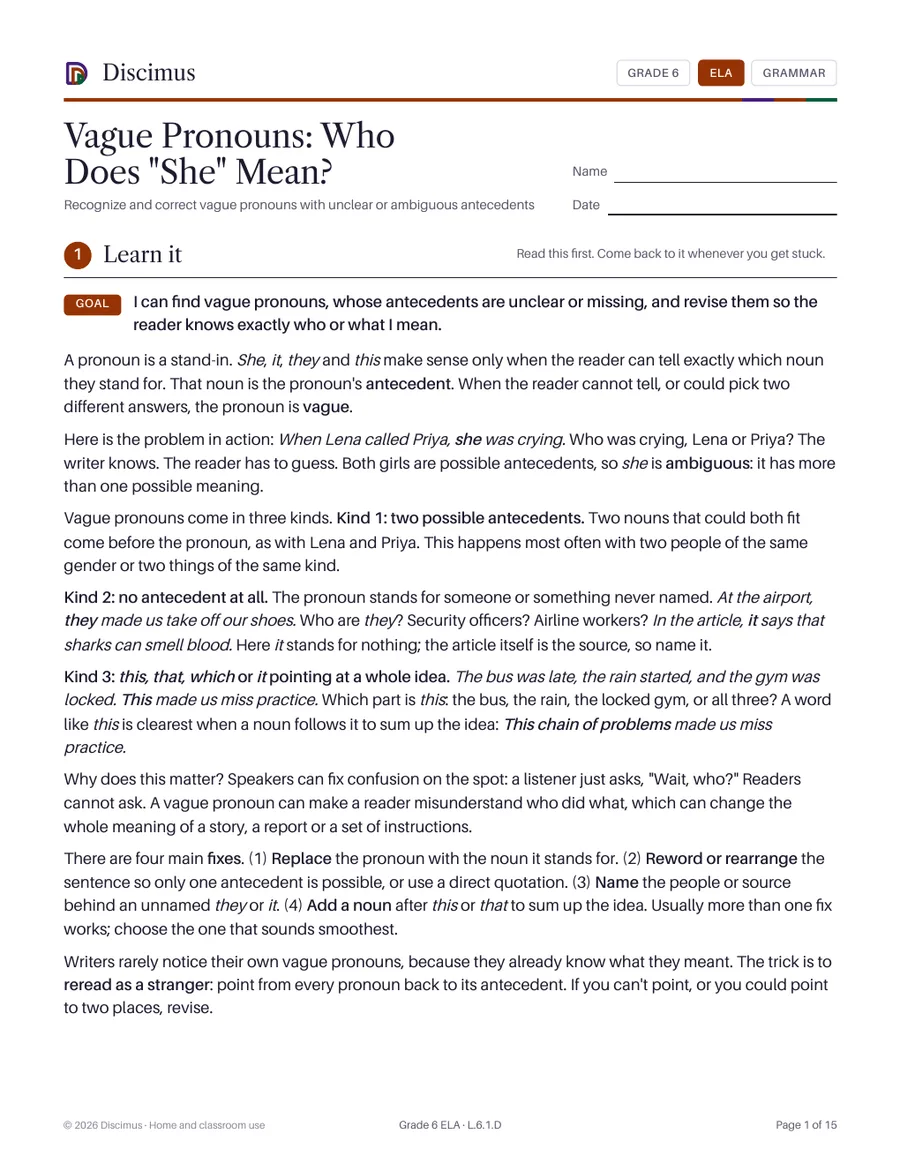
Recognize and correct vague pronouns with unclear or ambiguous antecedents
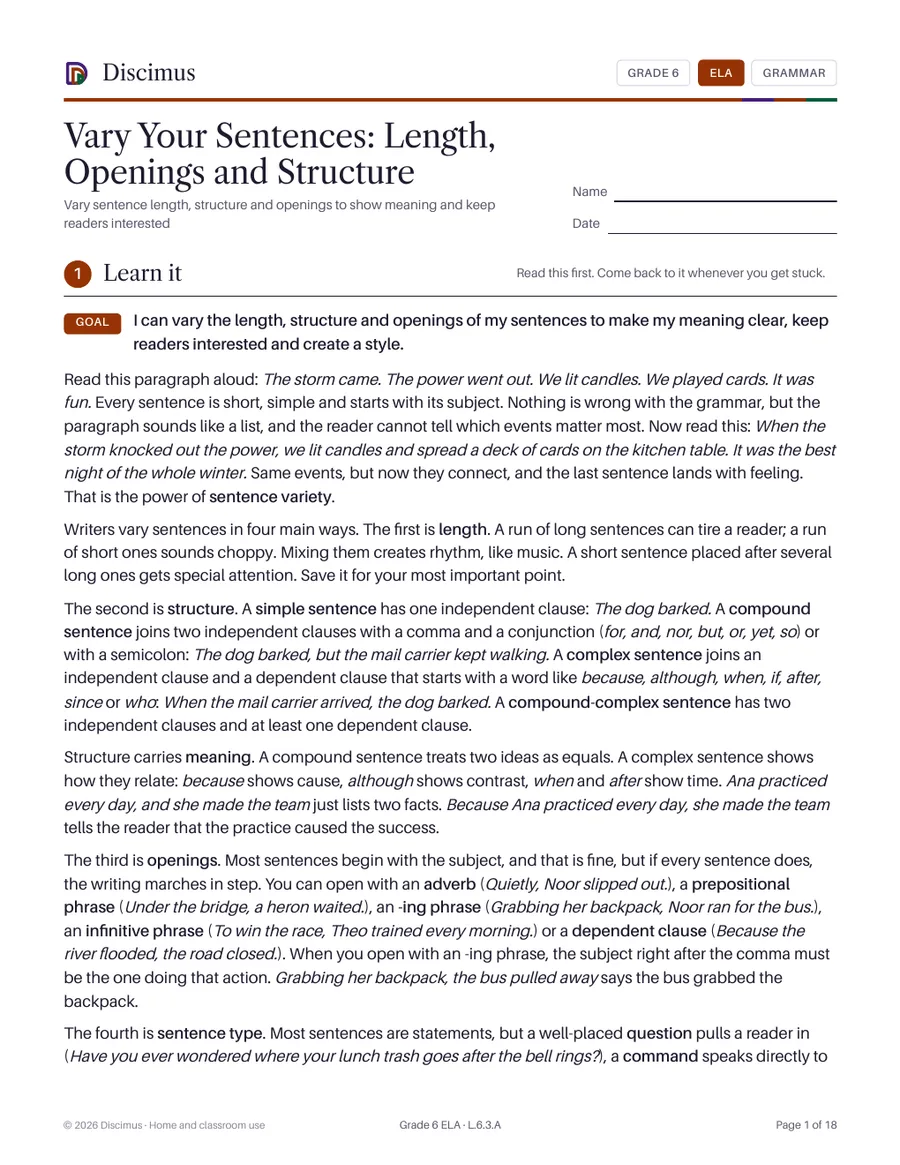
Vary sentence length, structure and openings to show meaning and keep readers interested
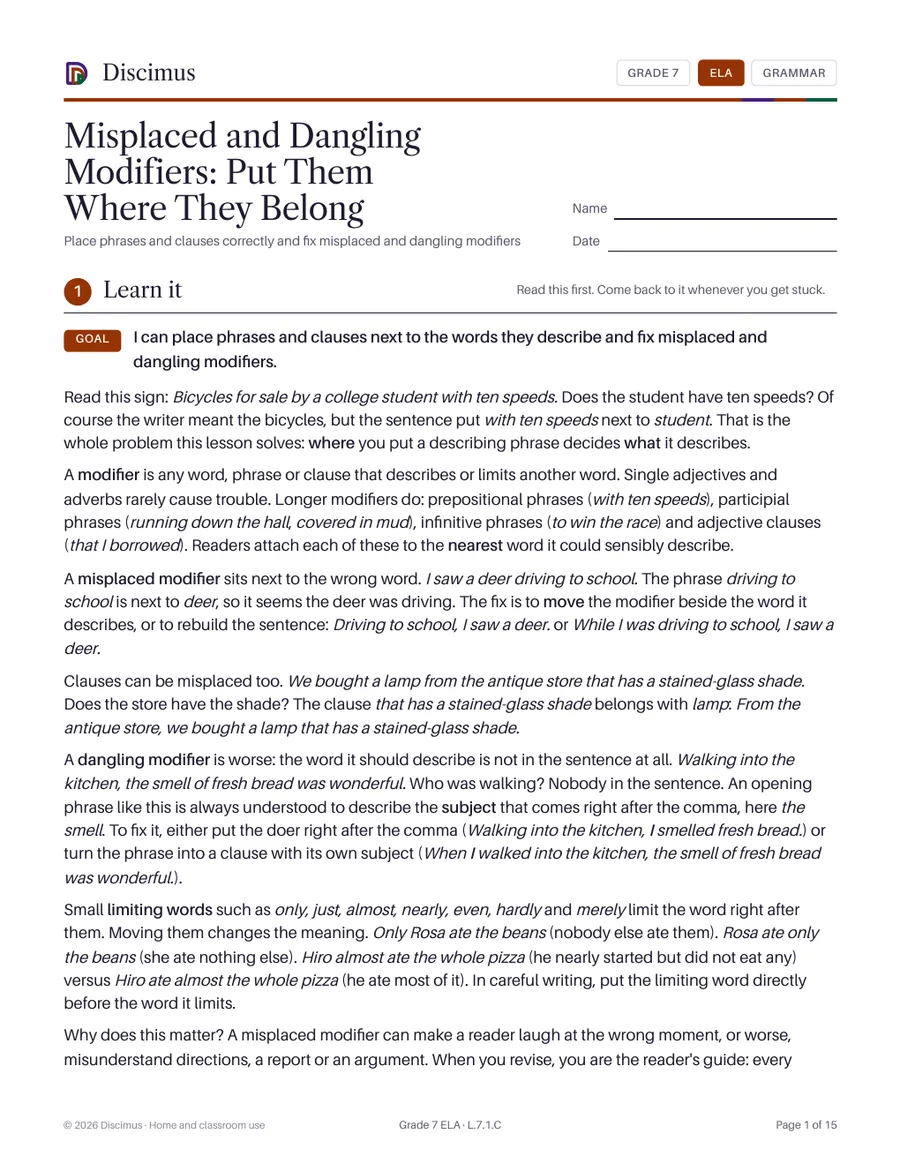
Place phrases and clauses correctly and fix misplaced and dangling modifiers
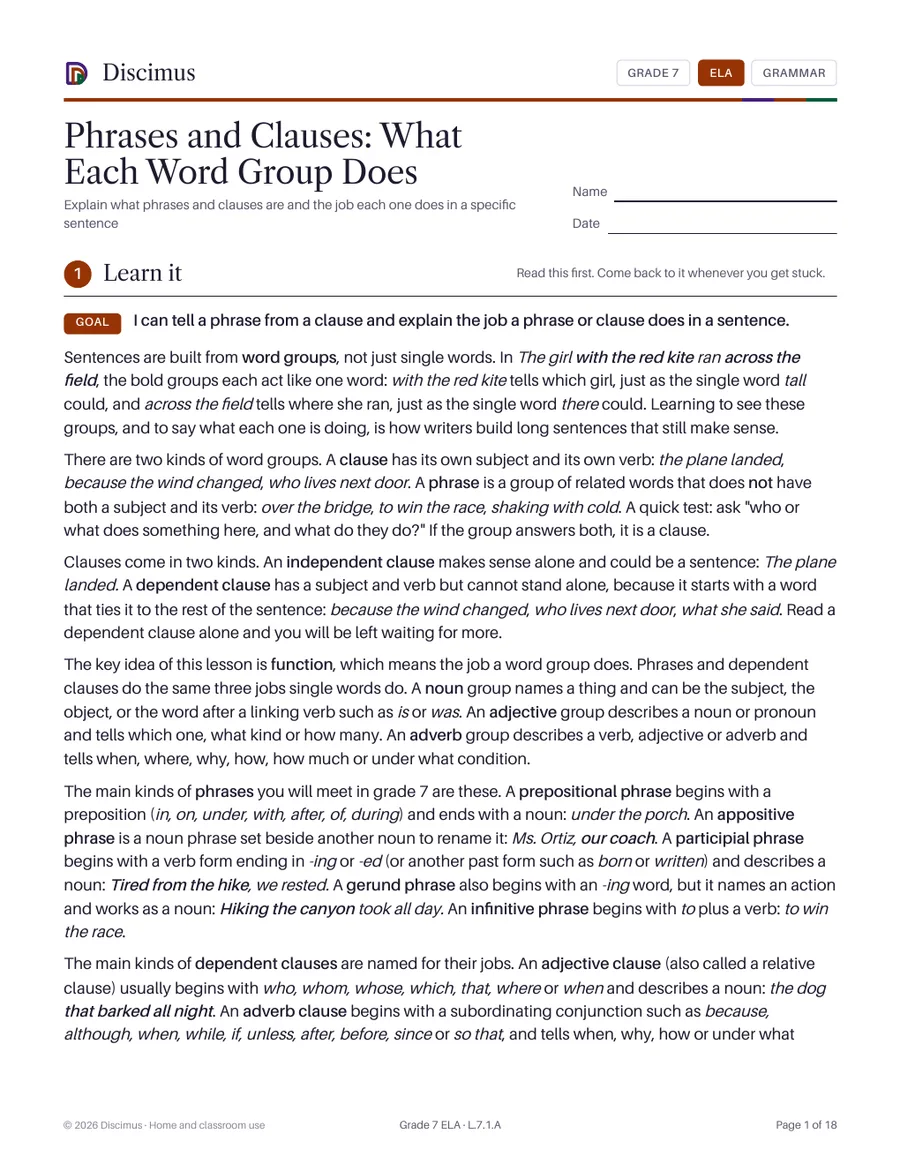
Explain what phrases and clauses are and the job each one does in a specific sentence
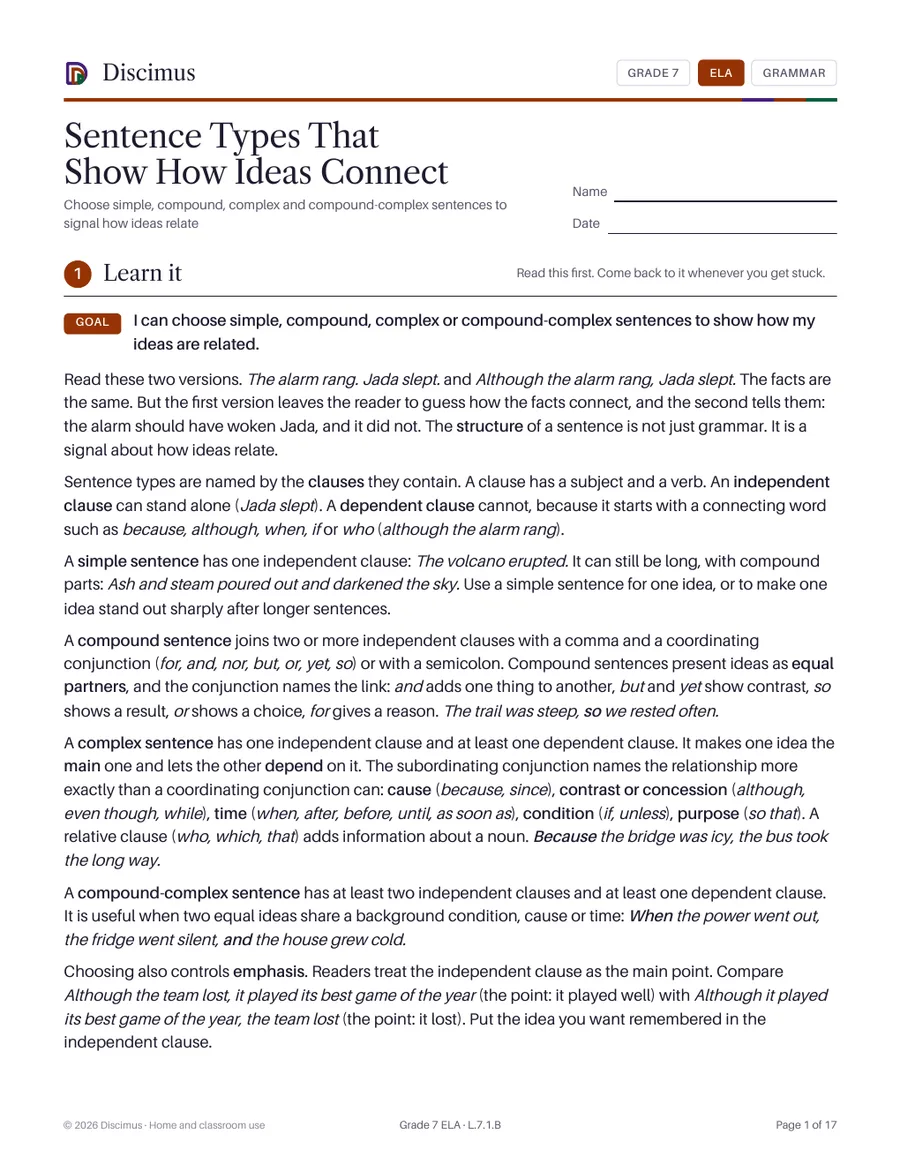
Choose simple, compound, complex and compound-complex sentences to signal how ideas relate
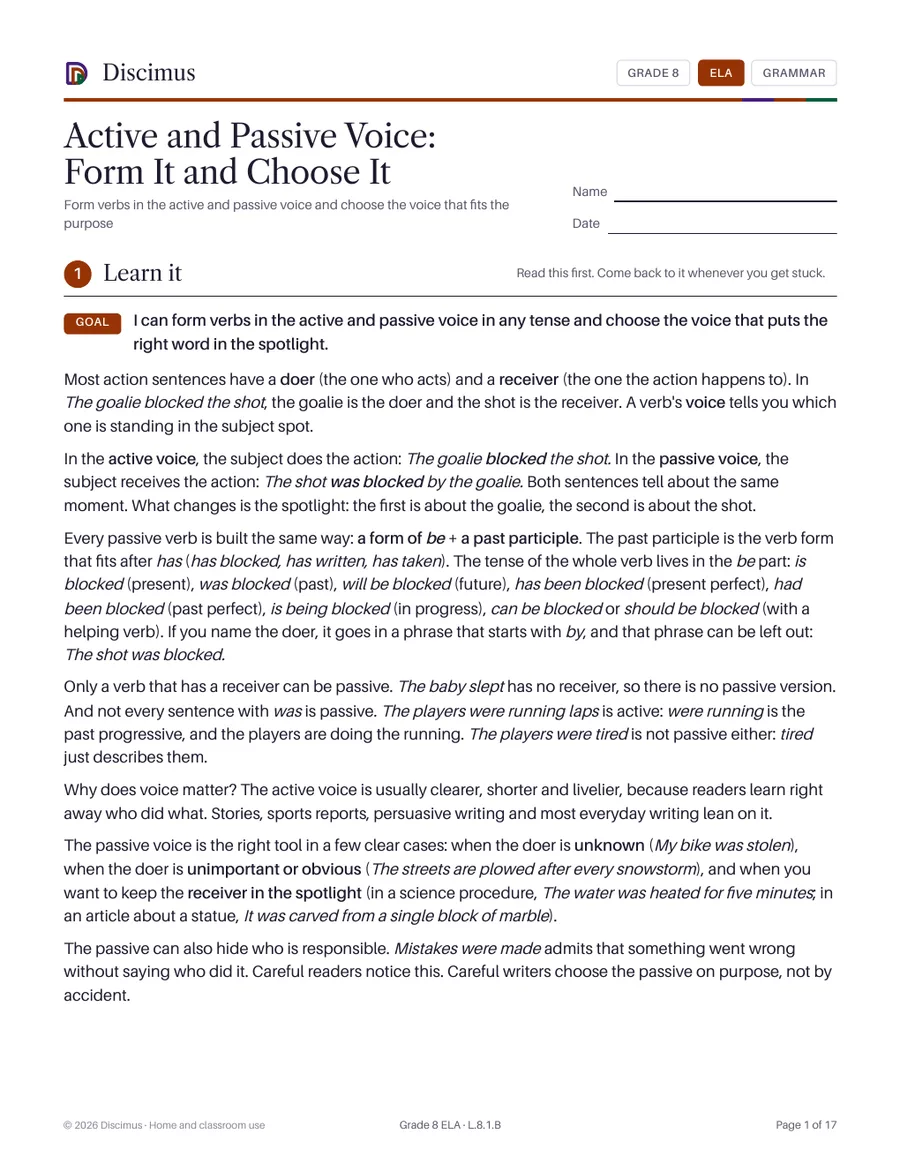
Form verbs in the active and passive voice and choose the voice that fits the purpose
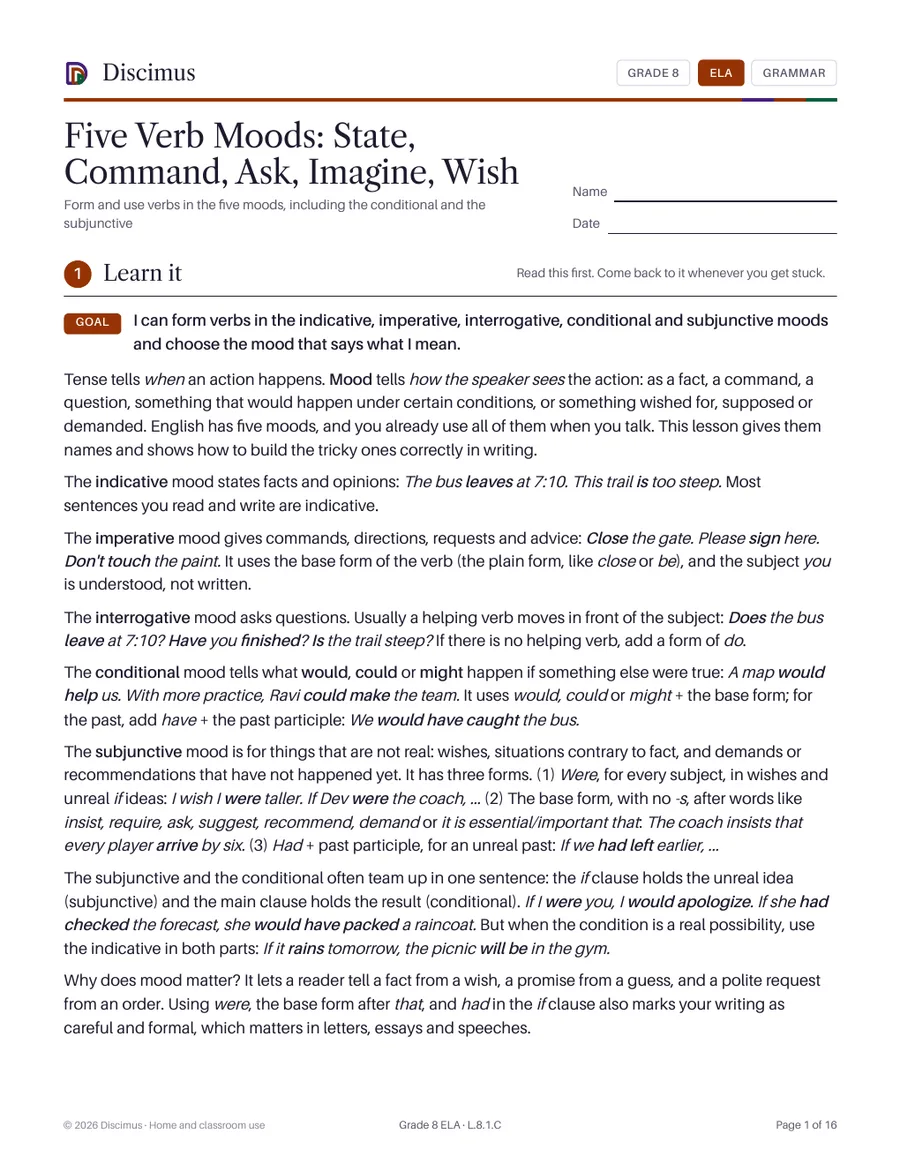
Form and use verbs in the five moods, including the conditional and the subjunctive
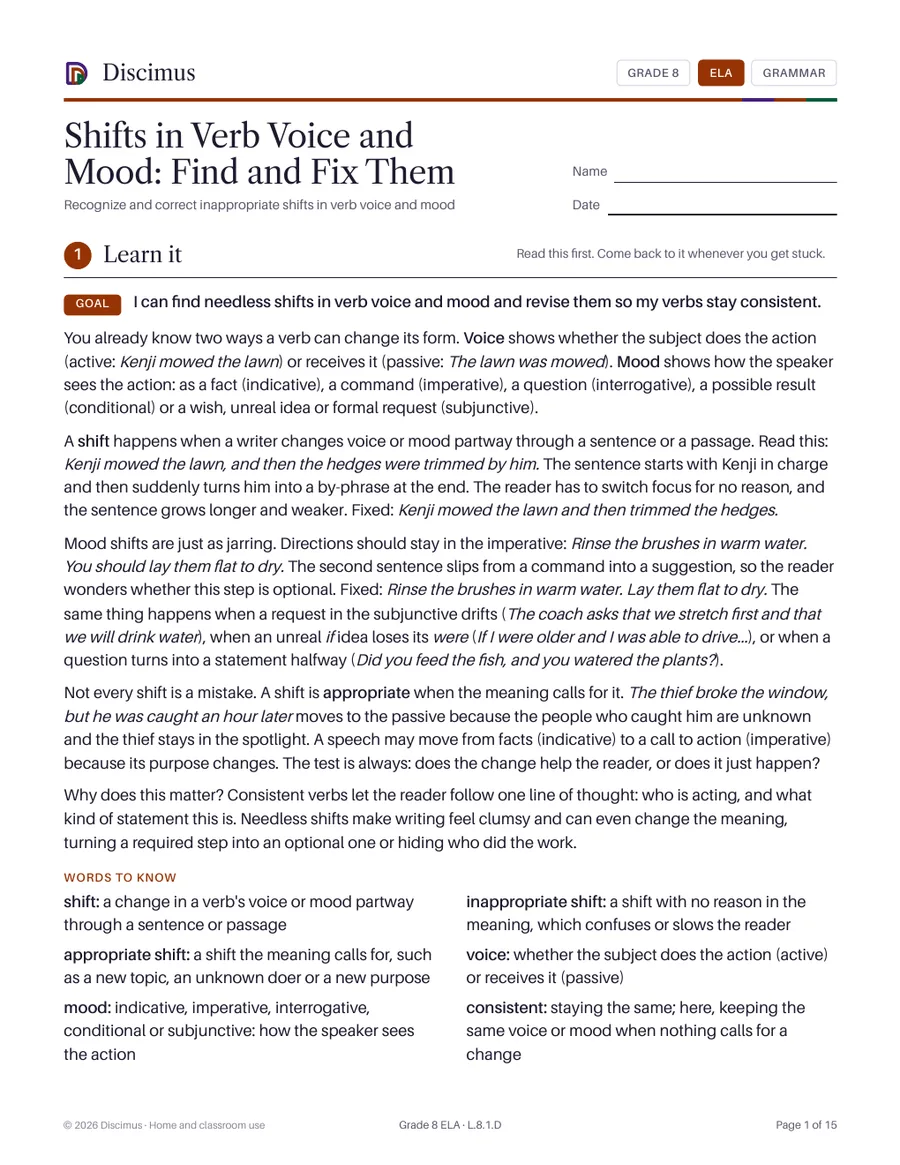
Recognize and correct inappropriate shifts in verb voice and mood
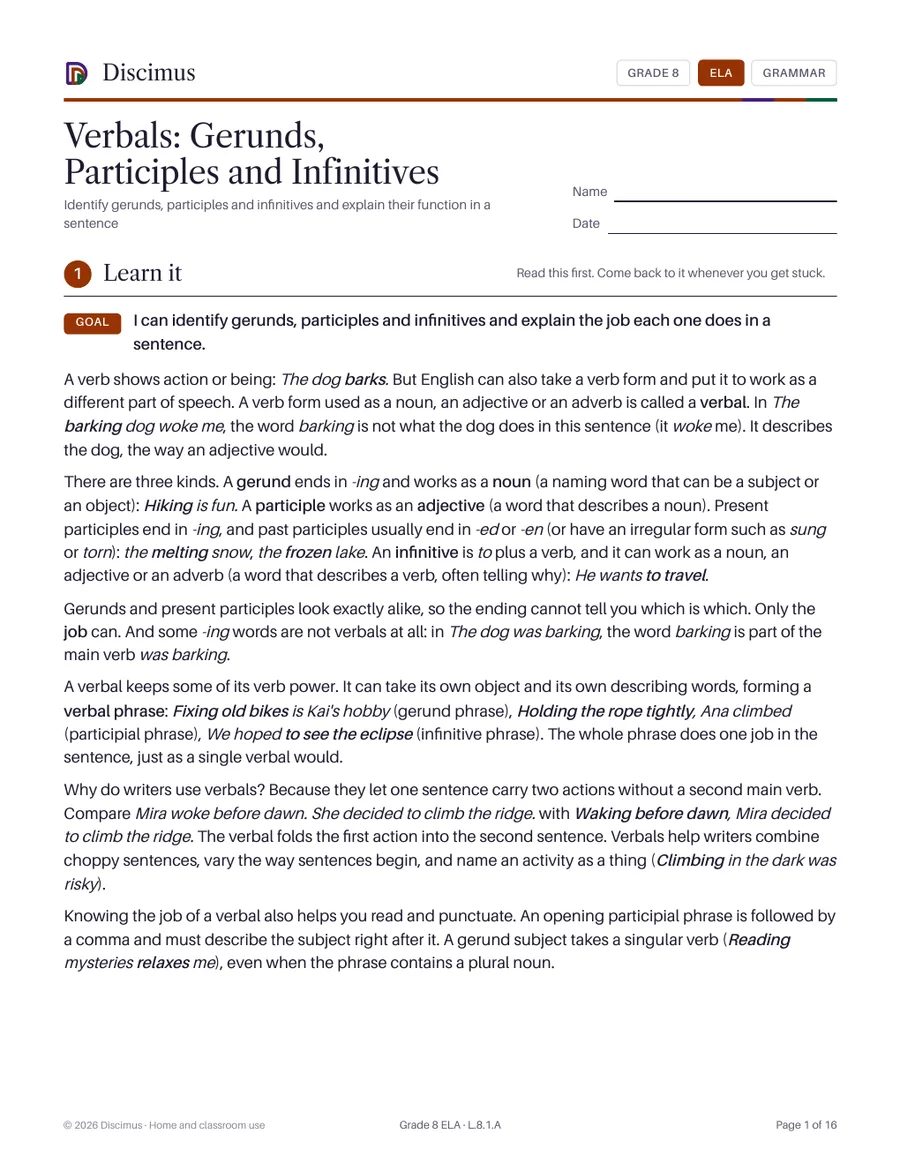
Identify gerunds, participles and infinitives and explain their function in a sentence
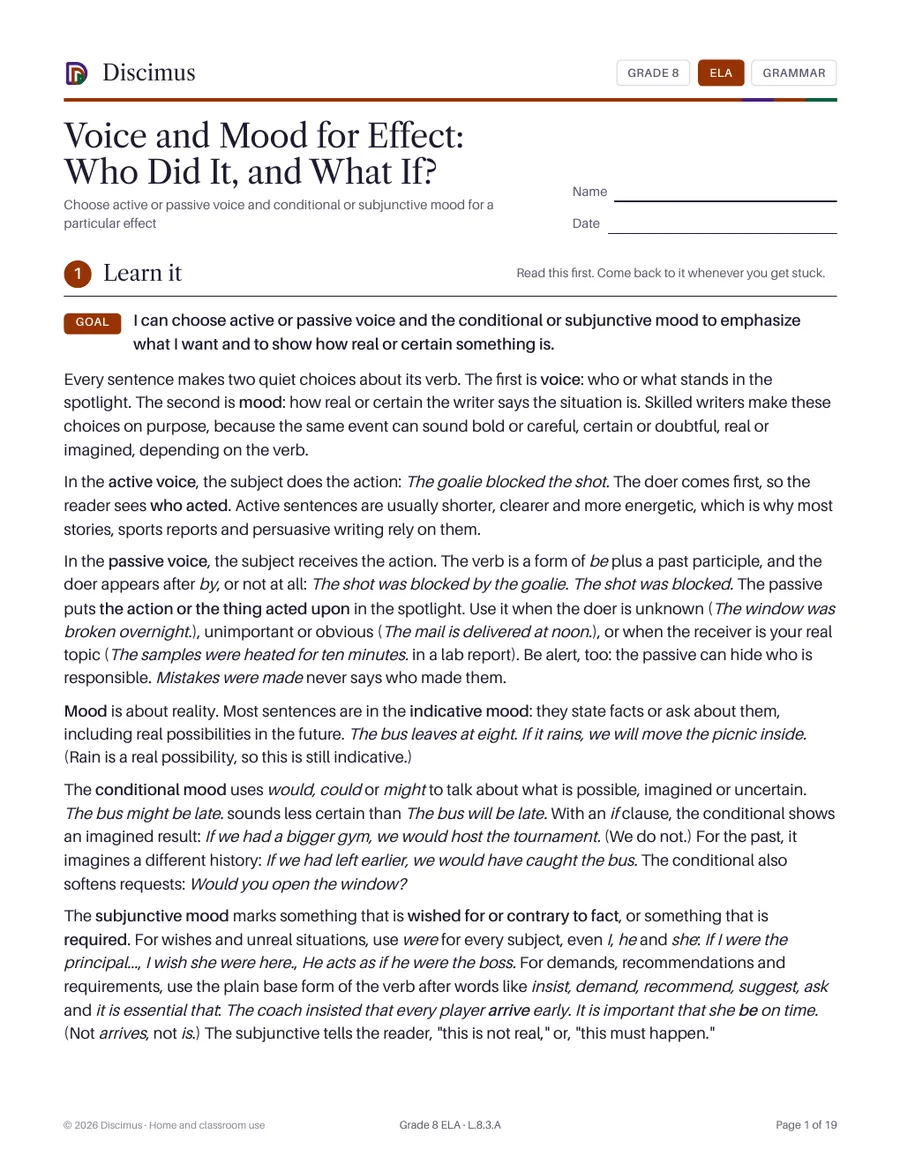
Choose active or passive voice and conditional or subjunctive mood for a particular effect
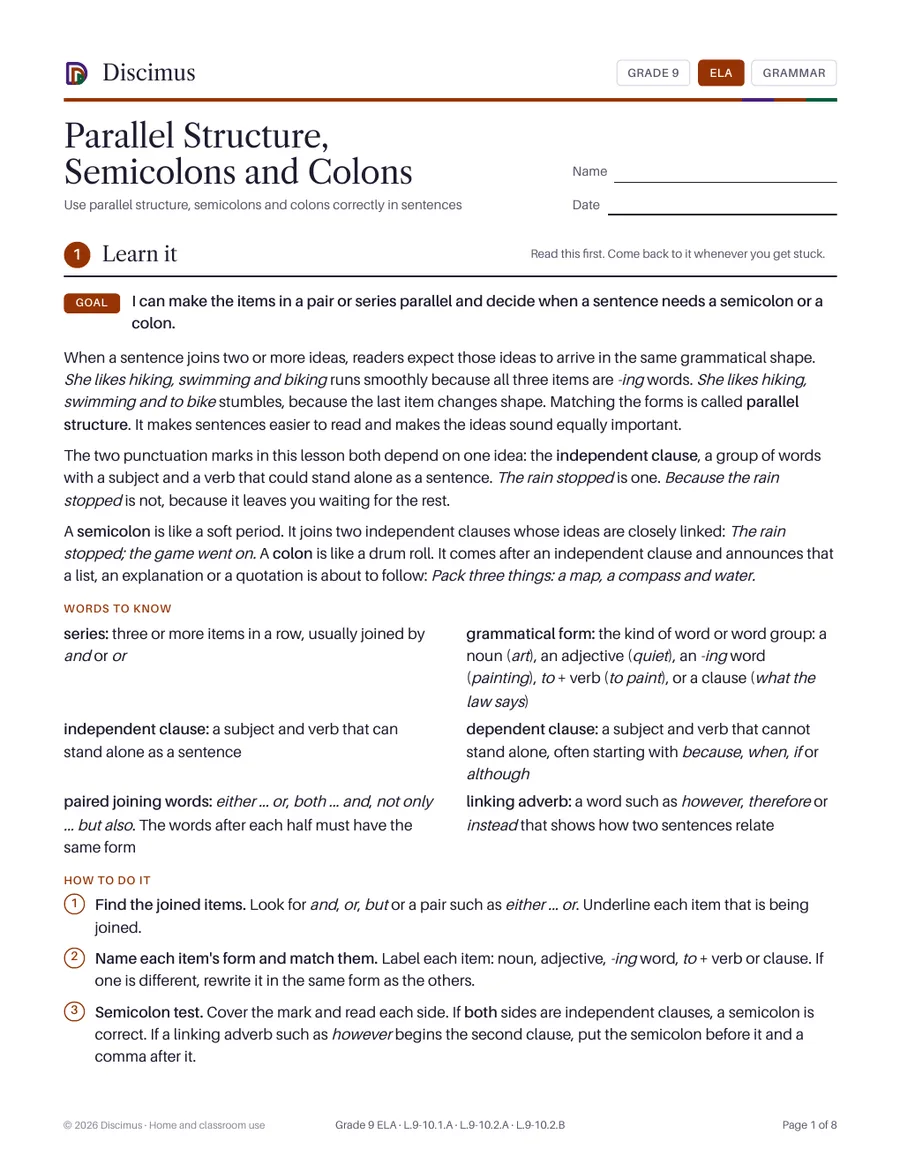
Use parallel structure, semicolons and colons correctly in sentences
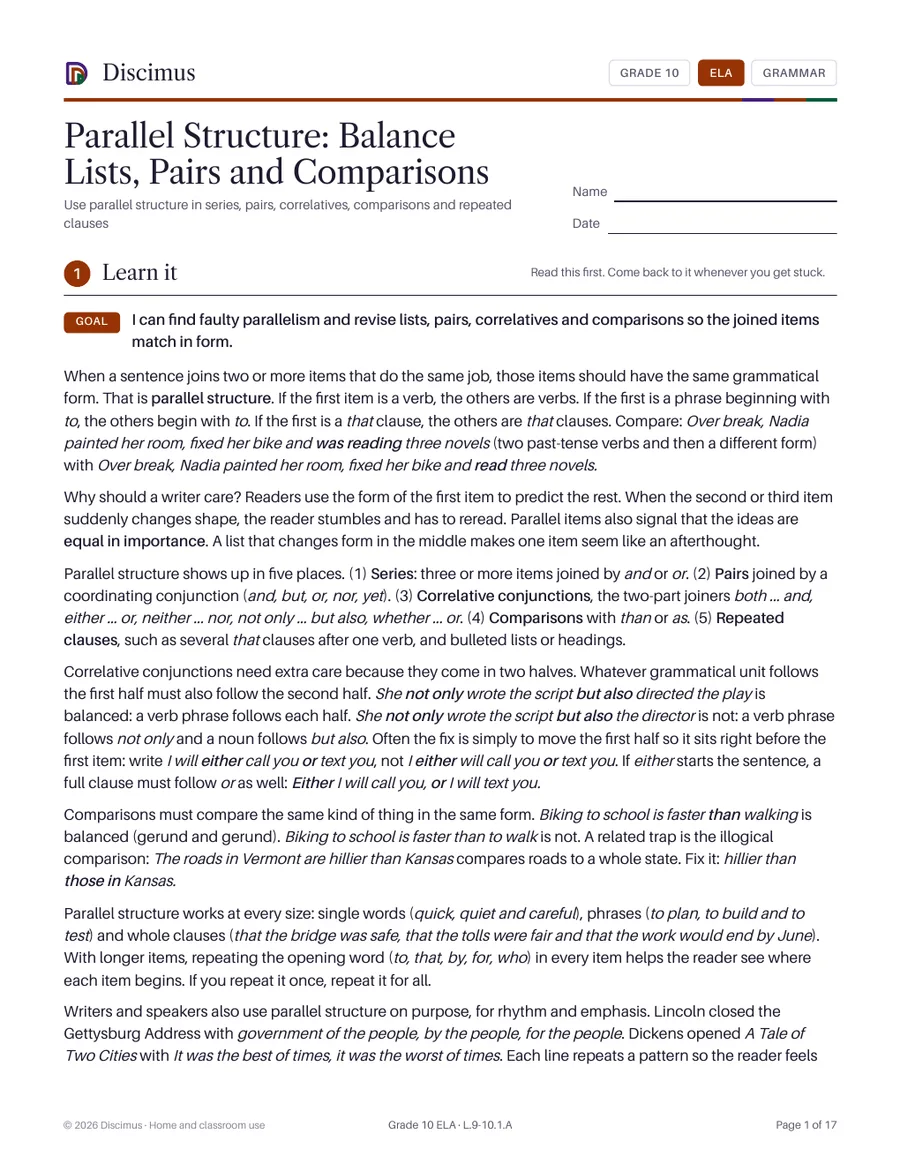
Use parallel structure in series, pairs, correlatives, comparisons and repeated clauses
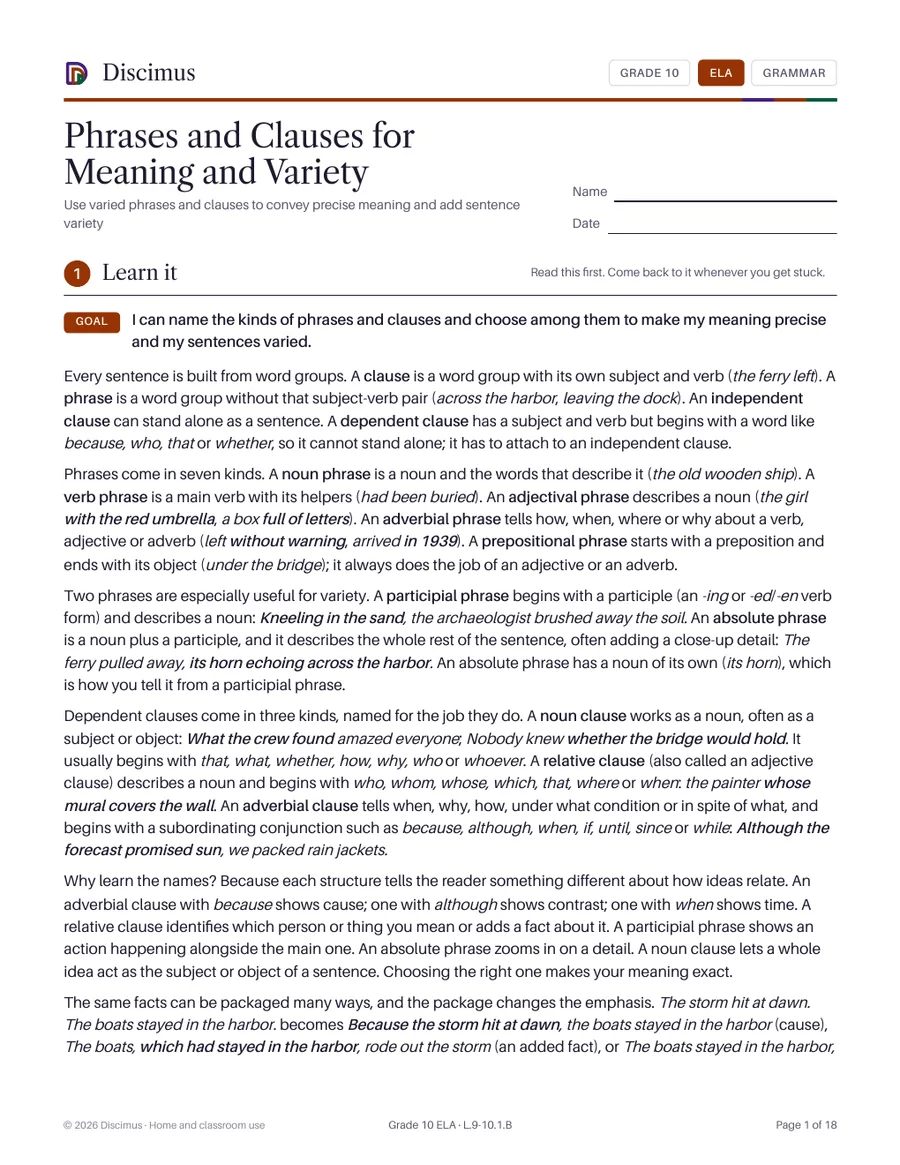
Use varied phrases and clauses to convey precise meaning and add sentence variety
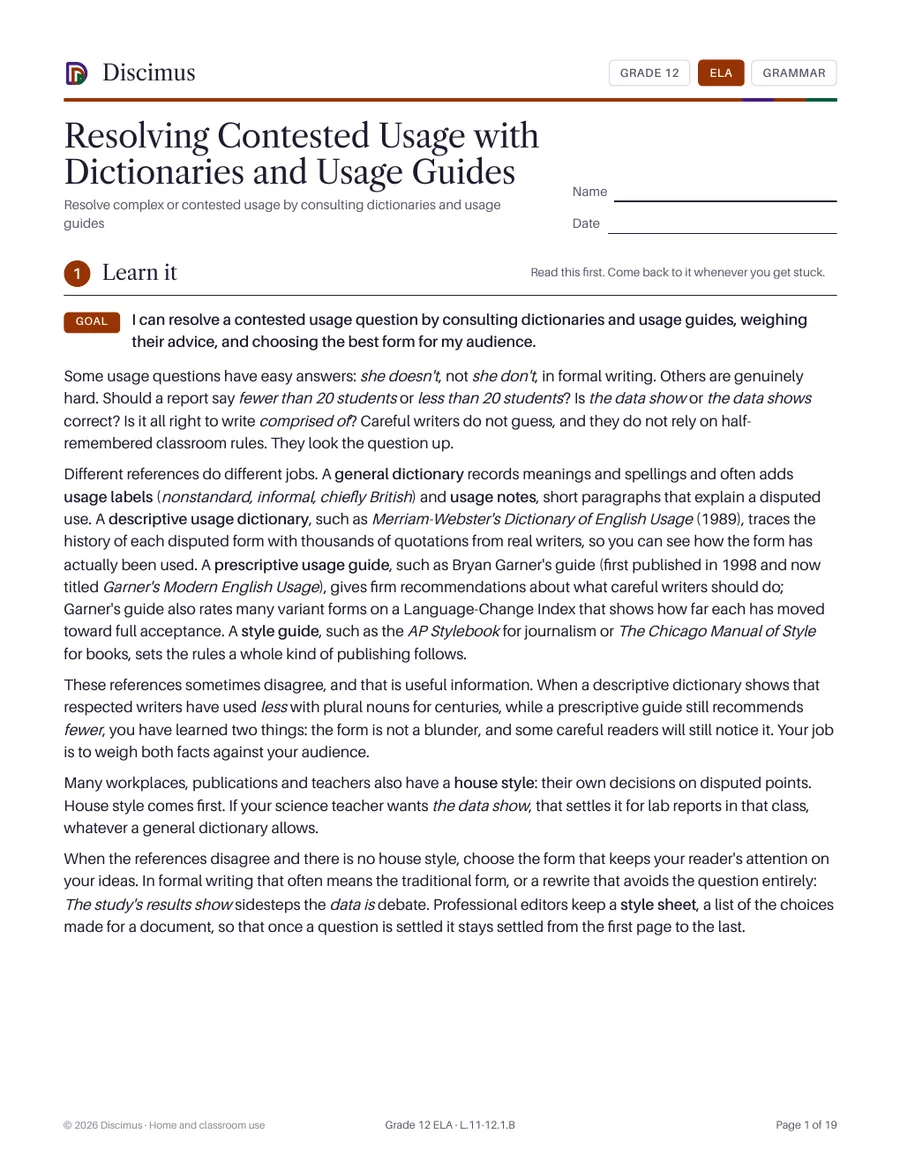
Resolve complex or contested usage by consulting dictionaries and usage guides
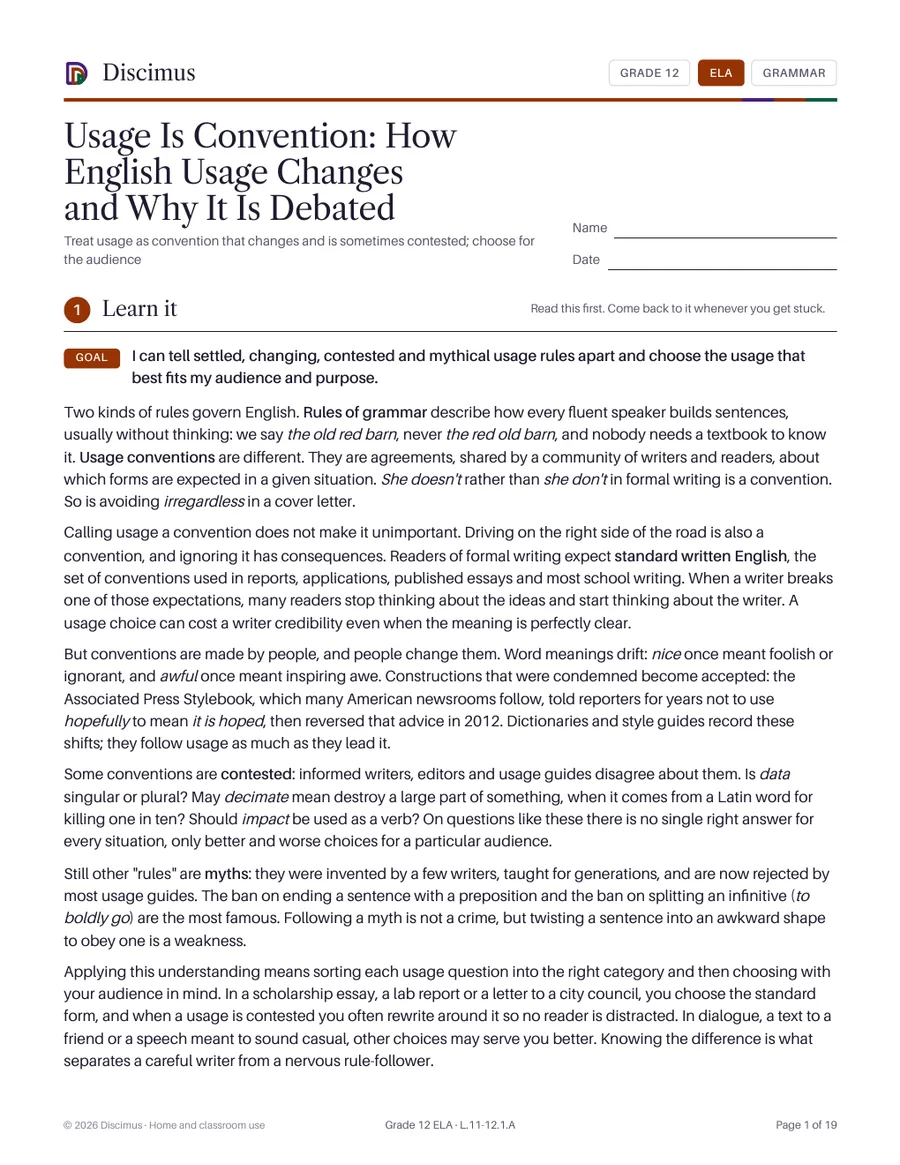
Treat usage as convention that changes and is sometimes contested; choose for the audience