New Words in True Texts: Ask and Find Out
Ask and answer questions about unknown words in a true text read aloud
90 worksheets match.
Ask and answer questions about unknown words in a true text read aloud
Understand common action words and describing words by naming and using their opposites
Learn a new meaning for a familiar word and use the sentence to tell which meaning fits
Sort common objects into categories and name each category and what makes it a group
Tell apart close action words (walk, march, strut, prance) by acting them out
Ask and answer questions about unknown words in a story, using clues from the story
Use new words and phrases from talk and read-alouds when speaking and retelling
Use word parts (-s, -ed, re-, un-, pre-, -ful, -less) as clues to a new word's meaning
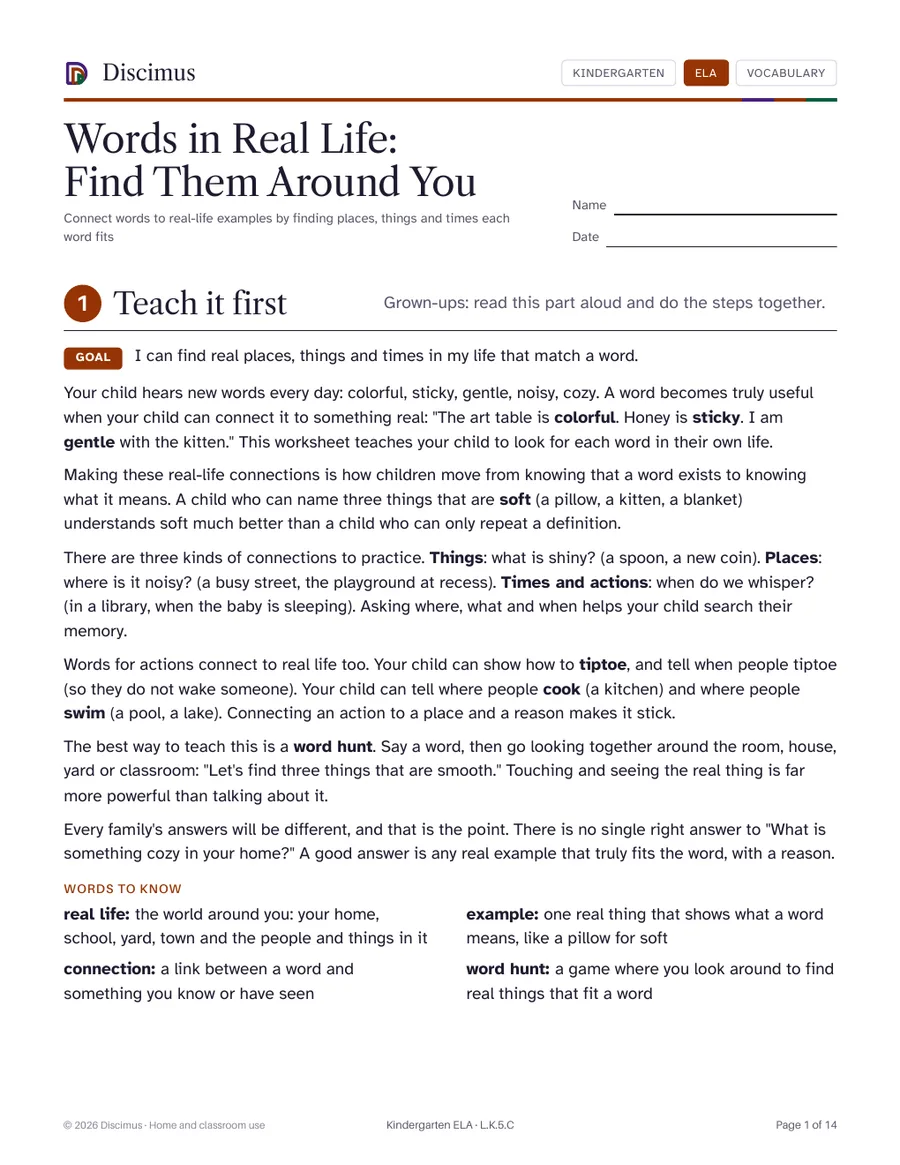
Connect words to real-life examples by finding places, things and times each word fits
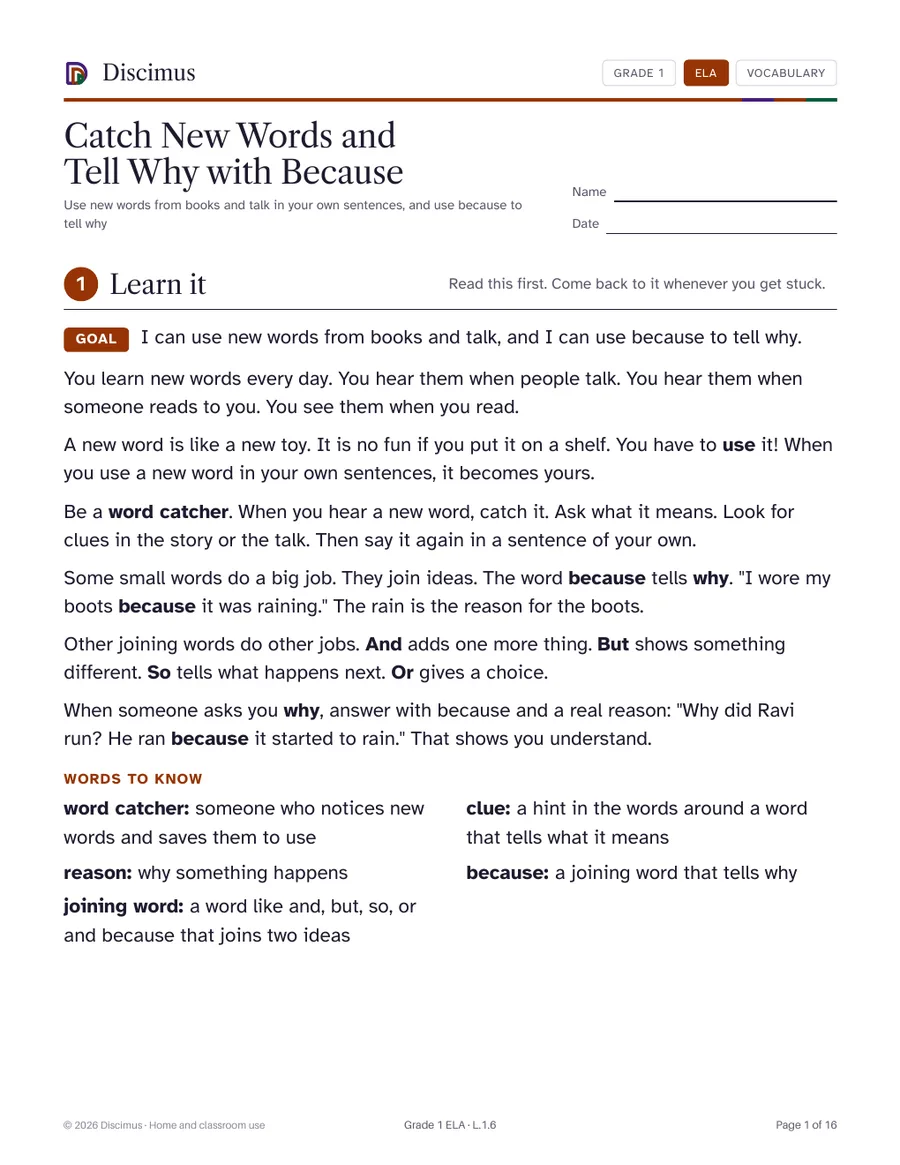
Use new words from books and talk in your own sentences, and use because to tell why
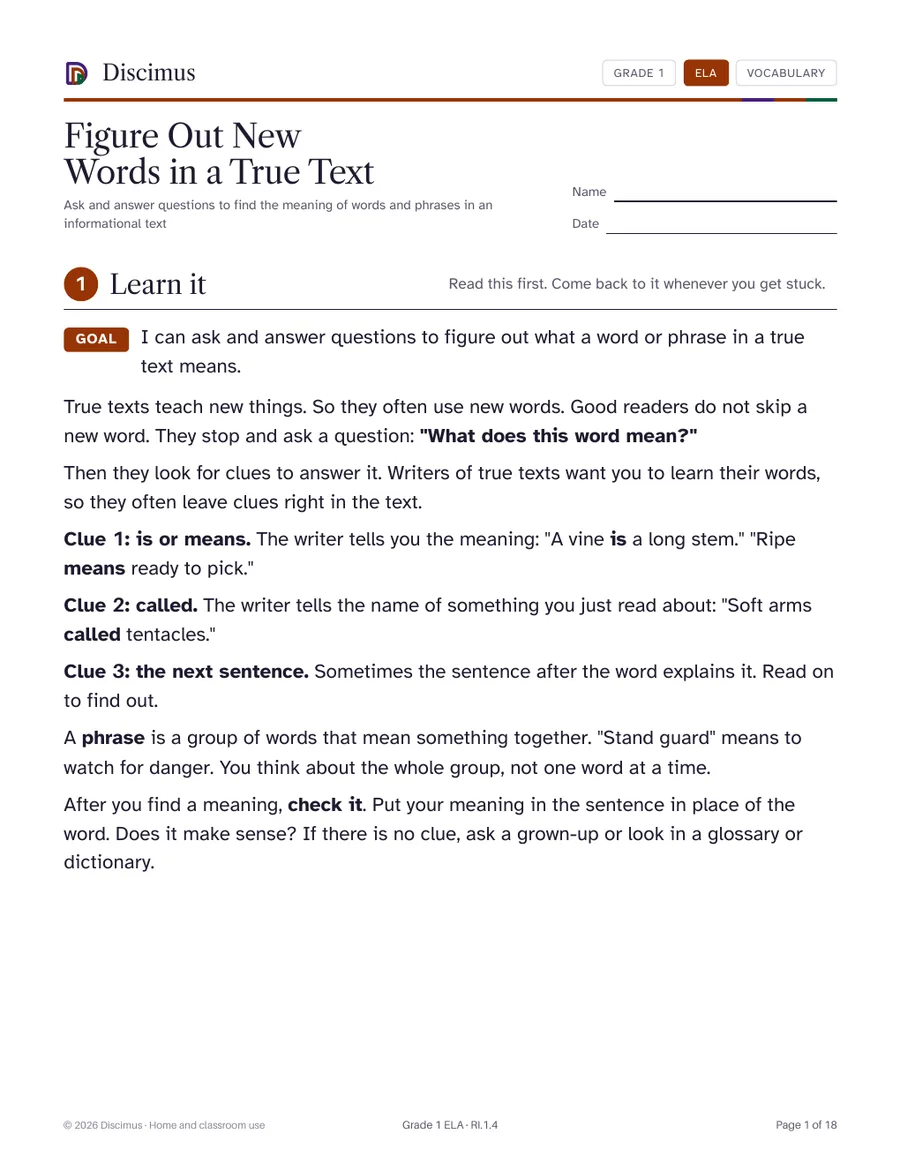
Ask and answer questions to find the meaning of words and phrases in an informational text
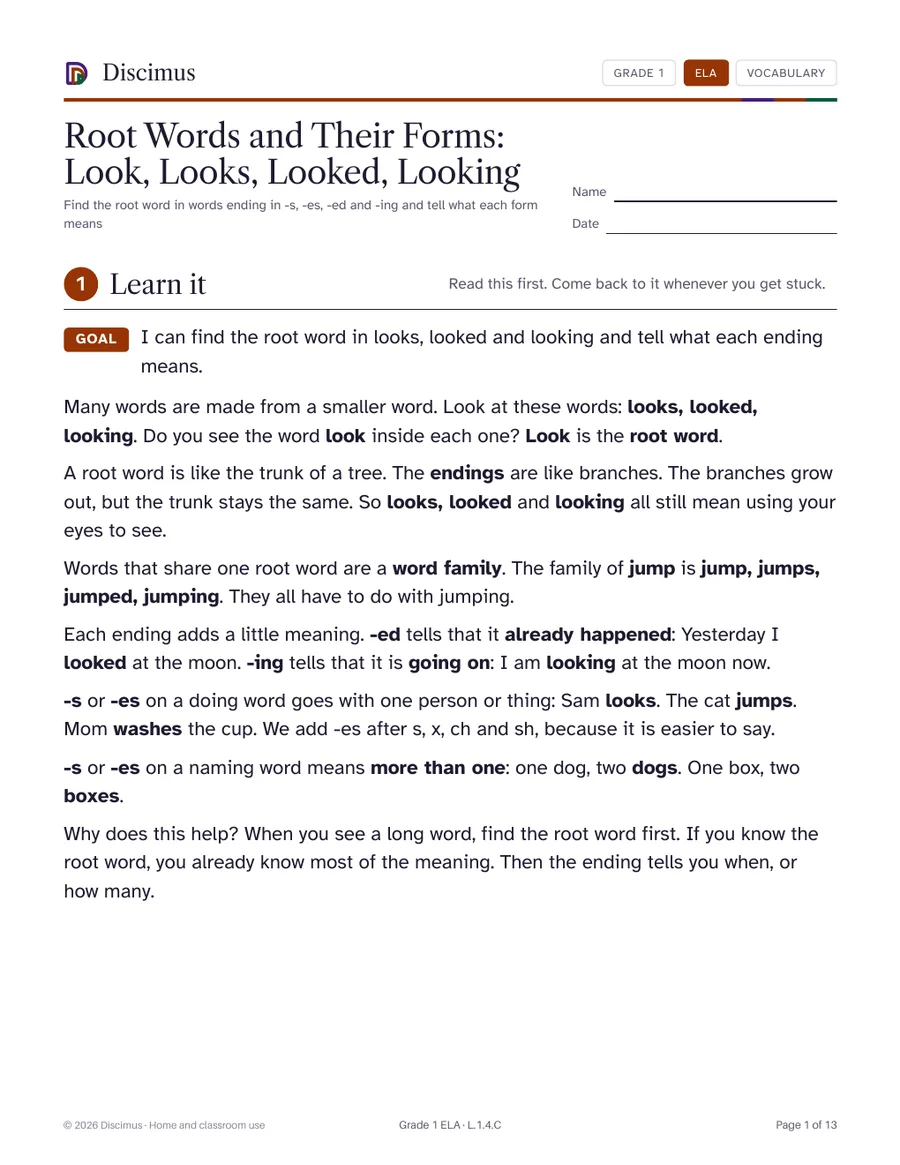
Find the root word in words ending in -s, -es, -ed and -ing and tell what each form means
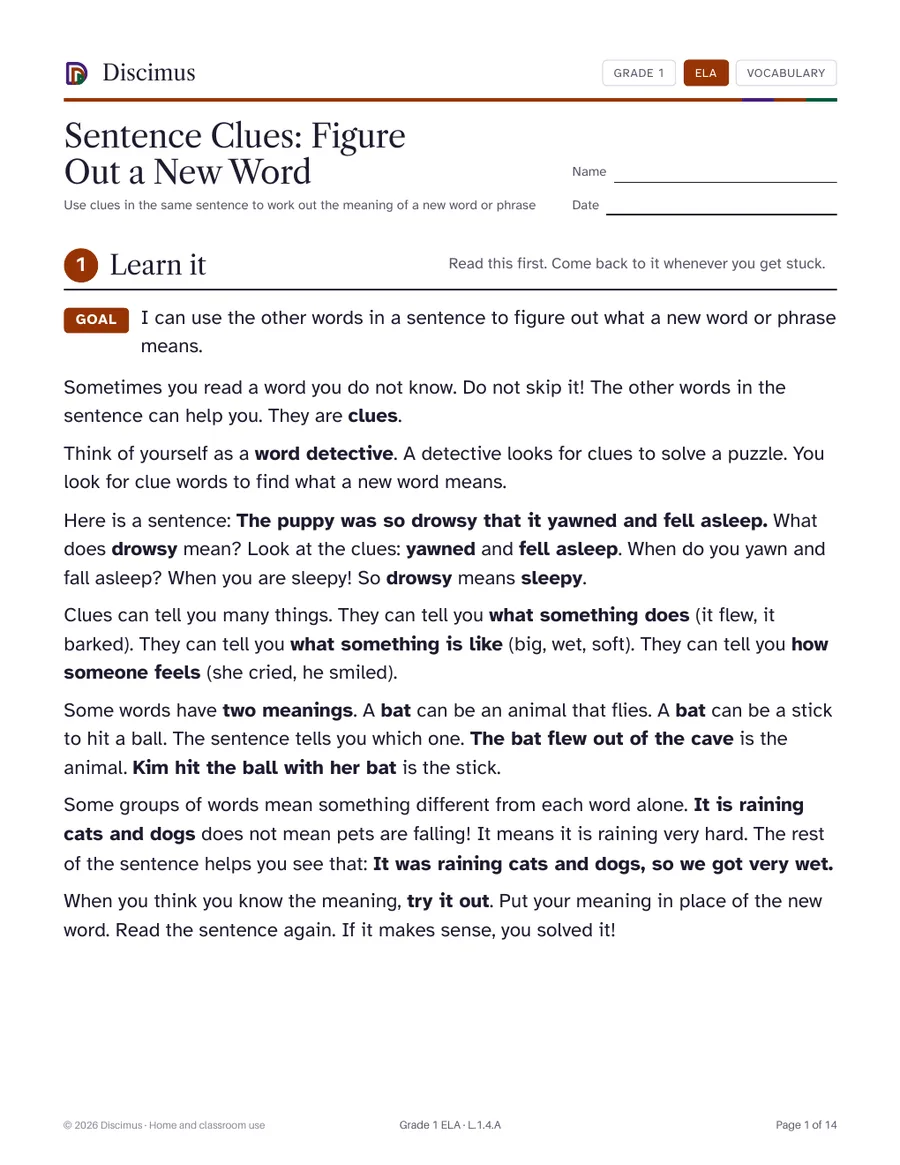
Use clues in the same sentence to work out the meaning of a new word or phrase
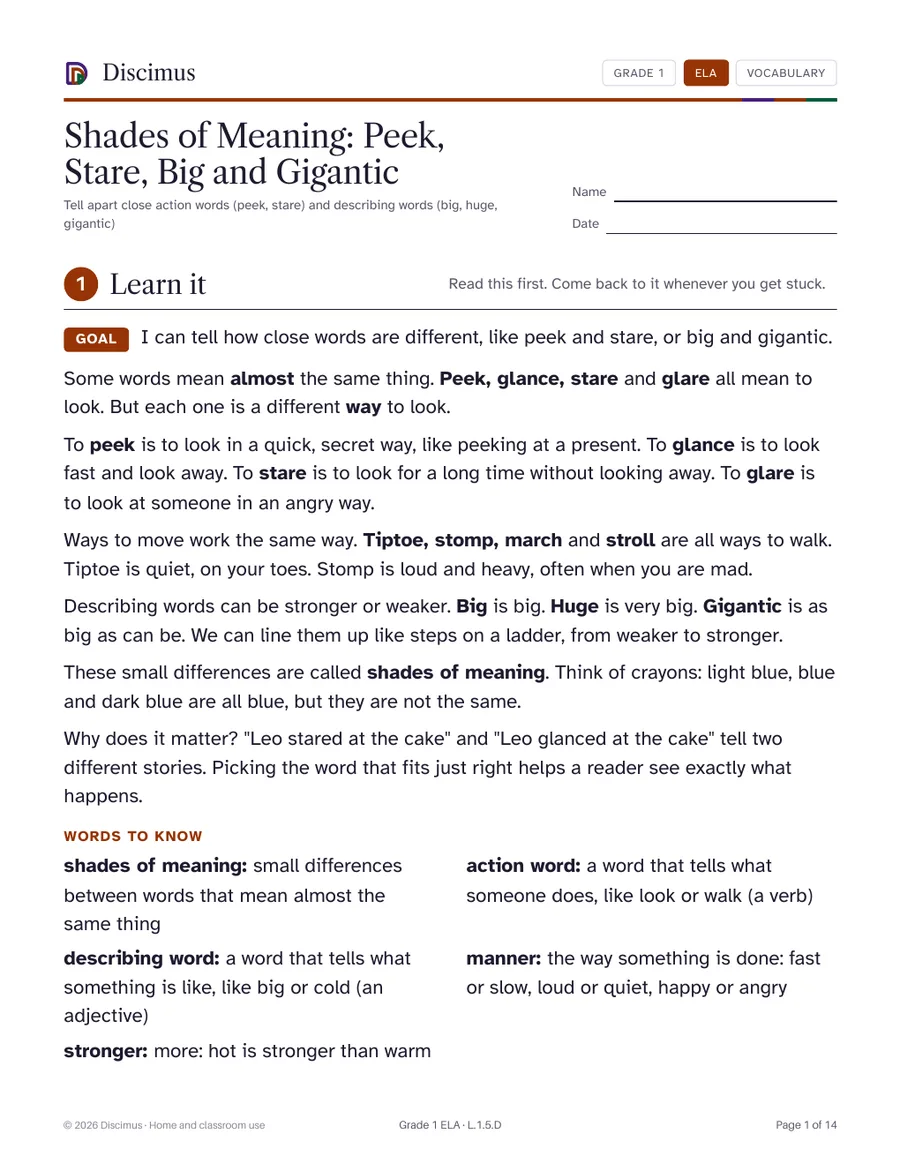
Tell apart close action words (peek, stare) and describing words (big, huge, gigantic)
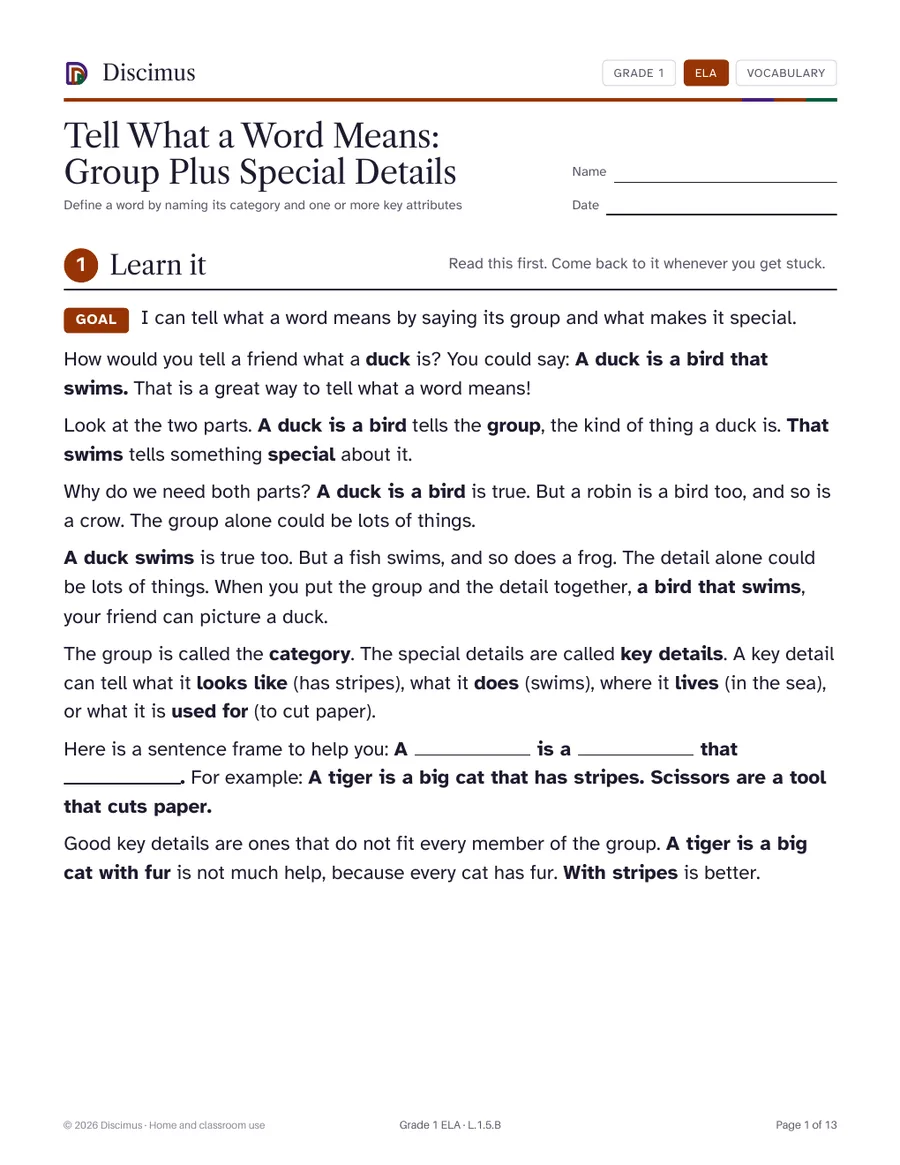
Define a word by naming its category and one or more key attributes
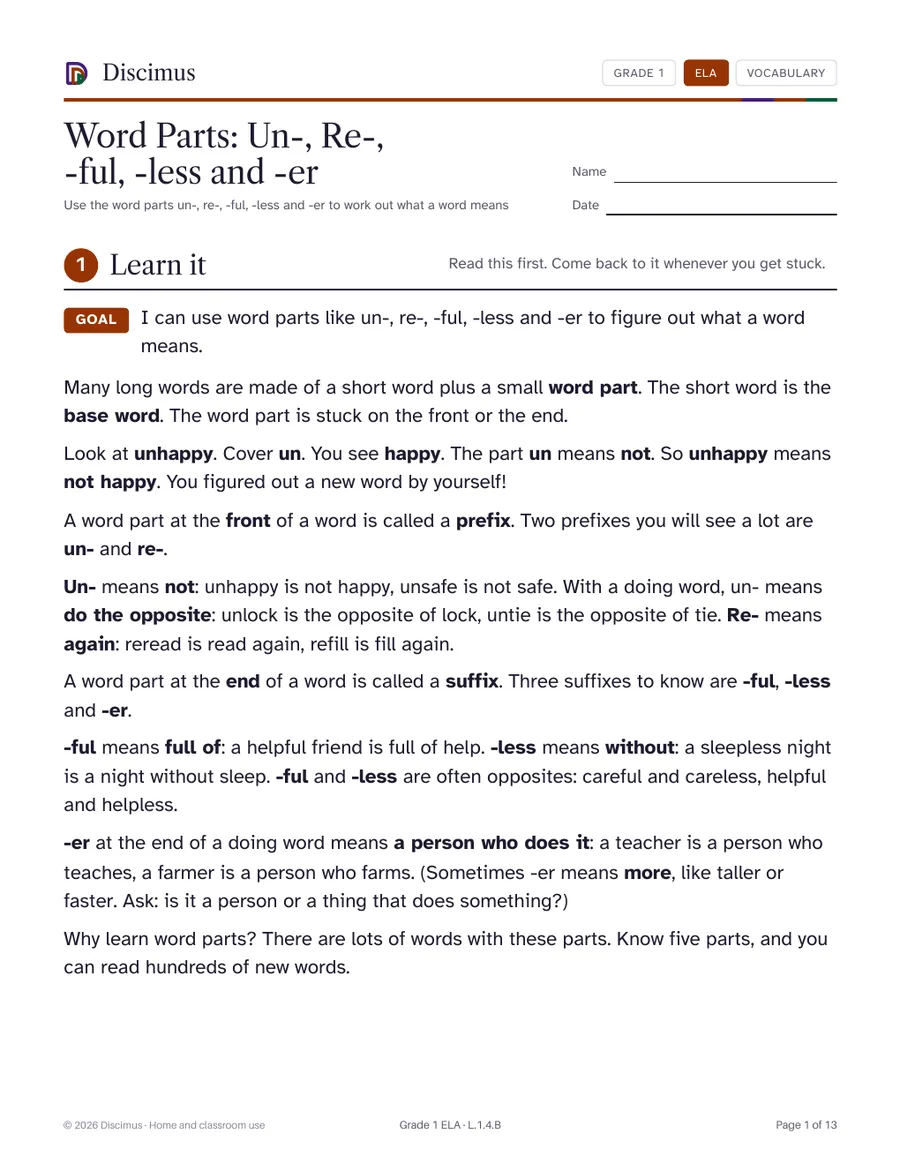
Use the word parts un-, re-, -ful, -less and -er to work out what a word means
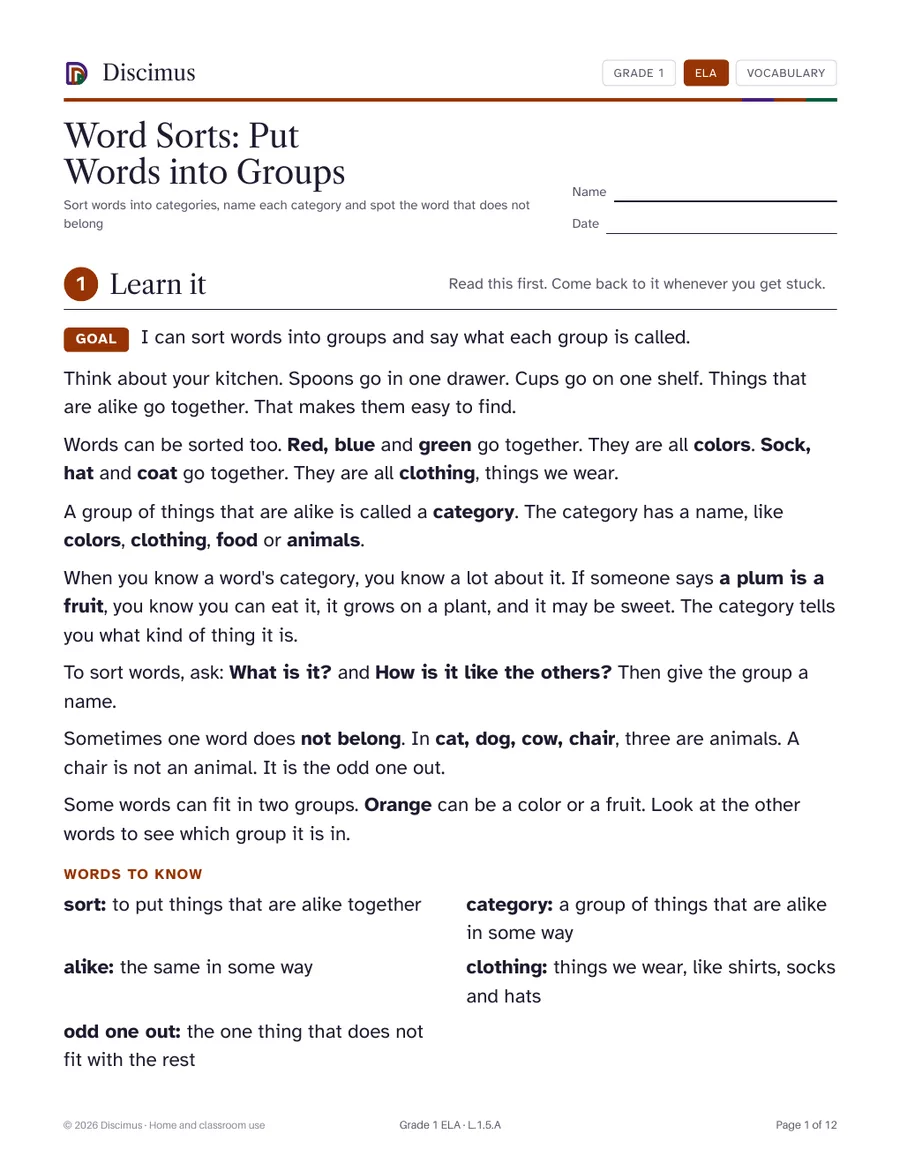
Sort words into categories, name each category and spot the word that does not belong
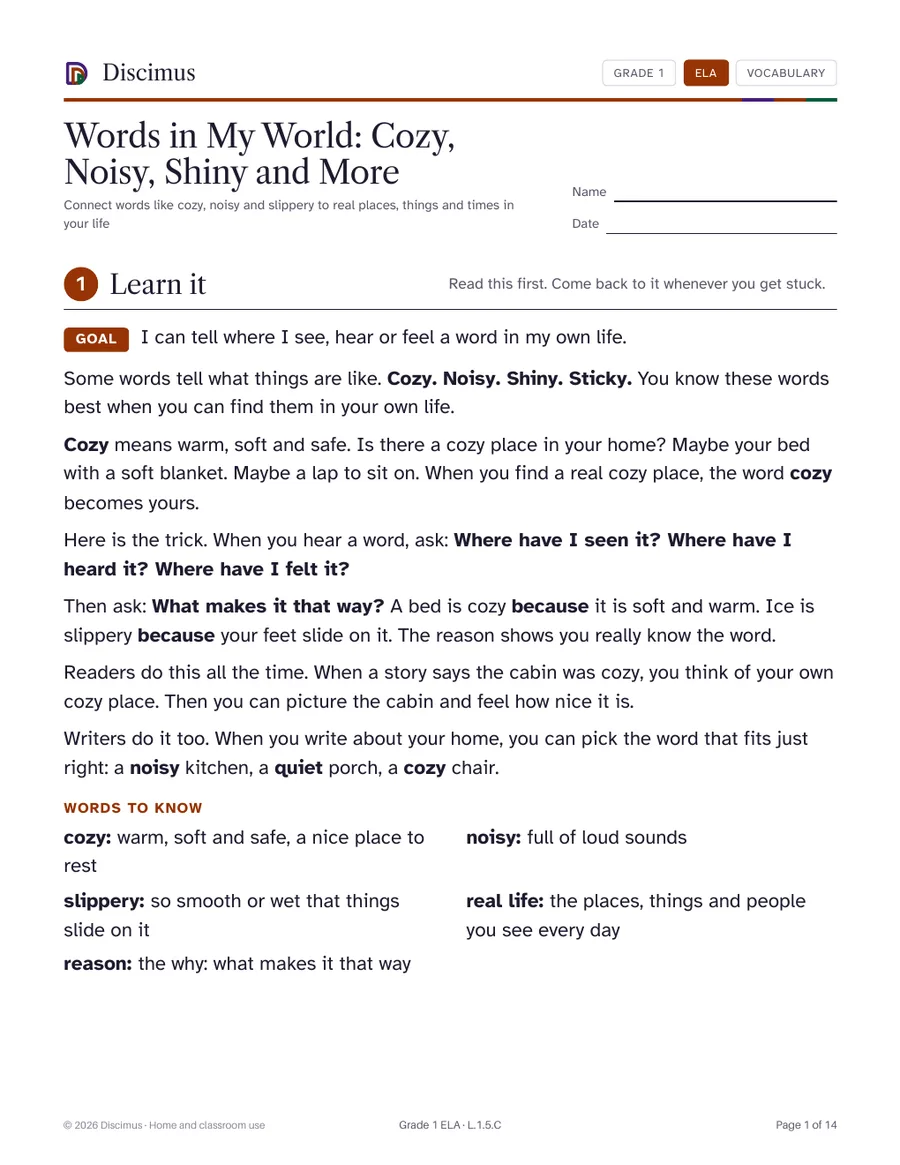
Connect words like cozy, noisy and slippery to real places, things and times in your life
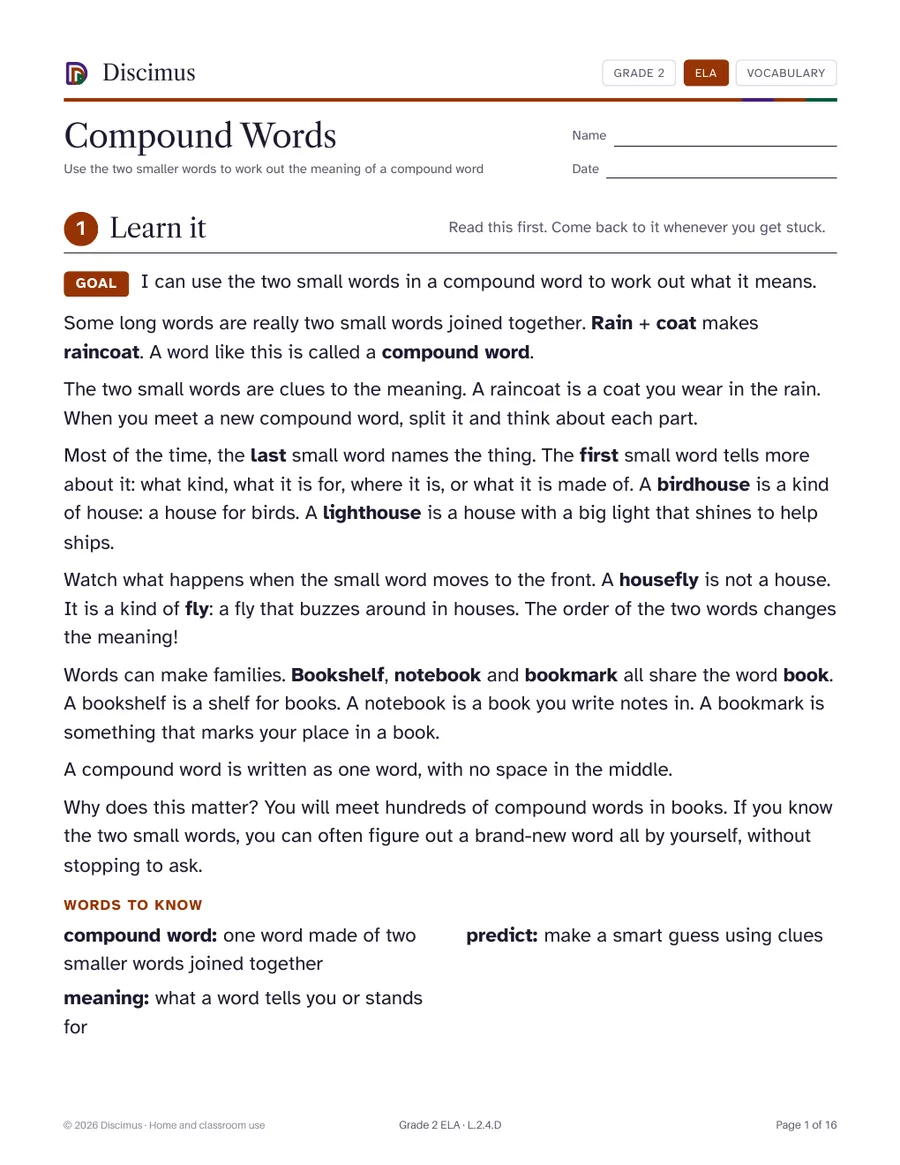
Use the two smaller words to work out the meaning of a compound word
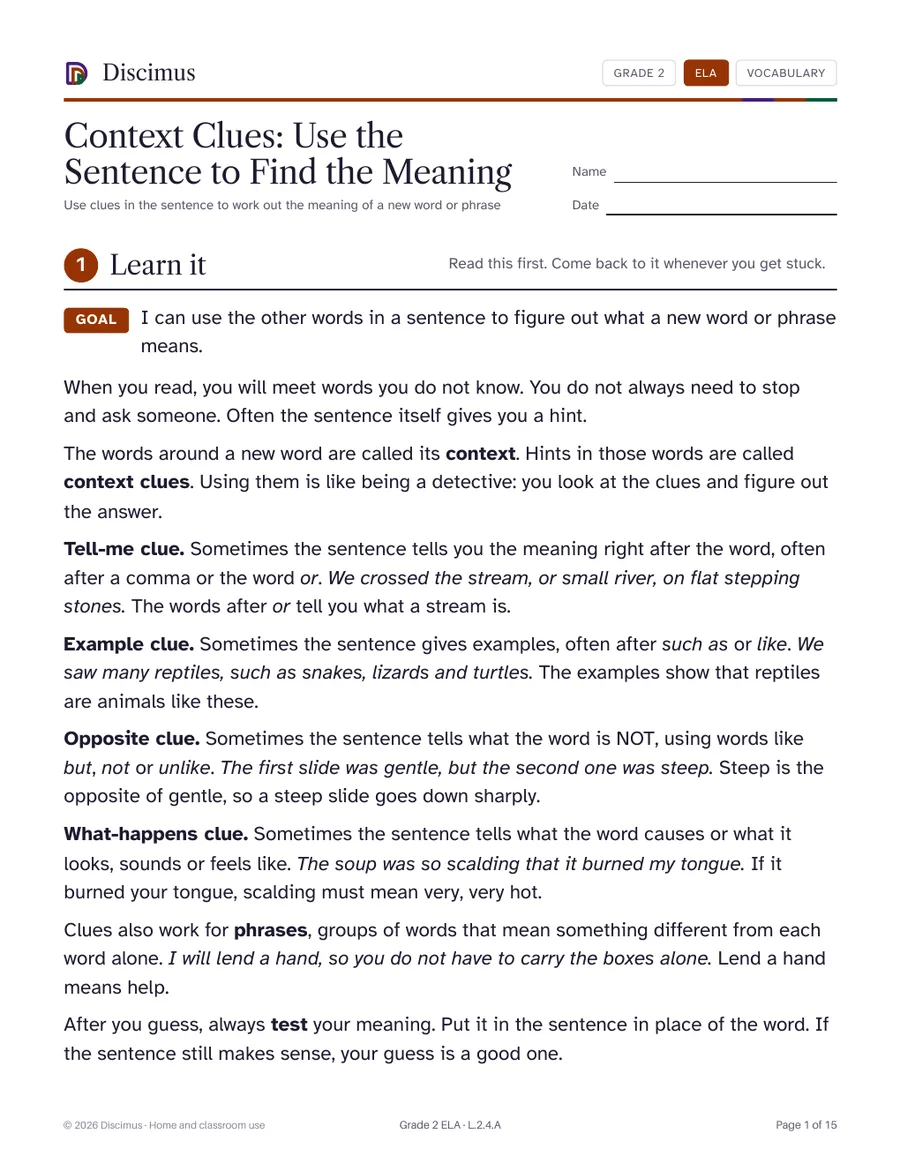
Use clues in the sentence to work out the meaning of a new word or phrase
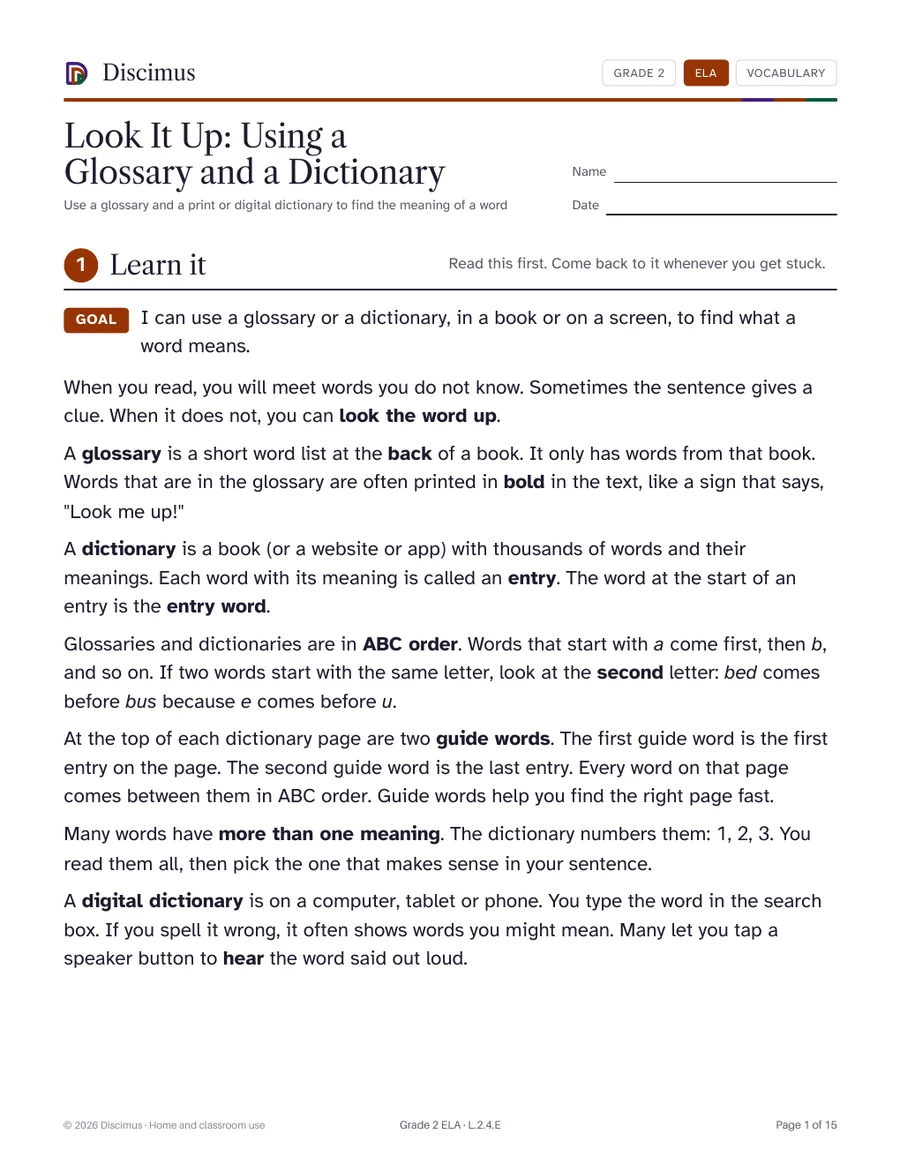
Use a glossary and a print or digital dictionary to find the meaning of a word
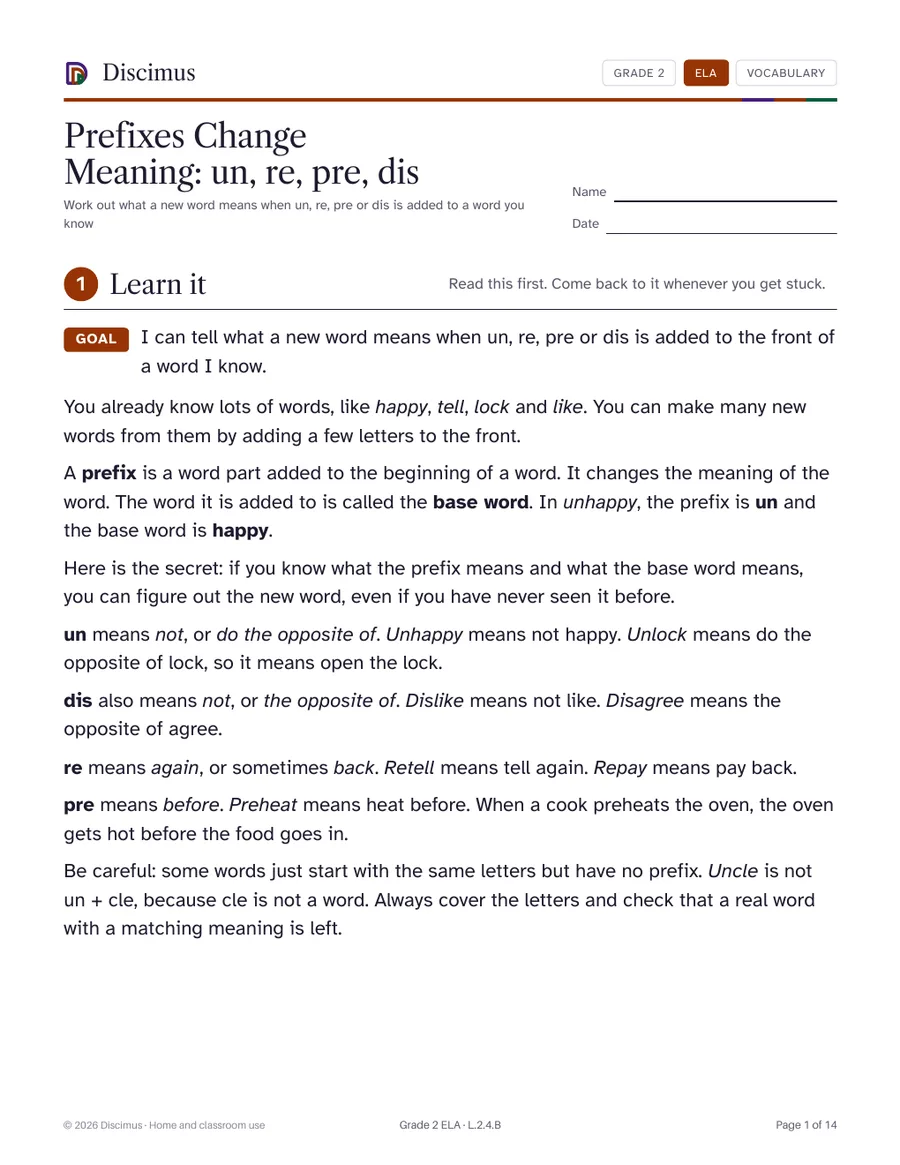
Work out what a new word means when un, re, pre or dis is added to a word you know
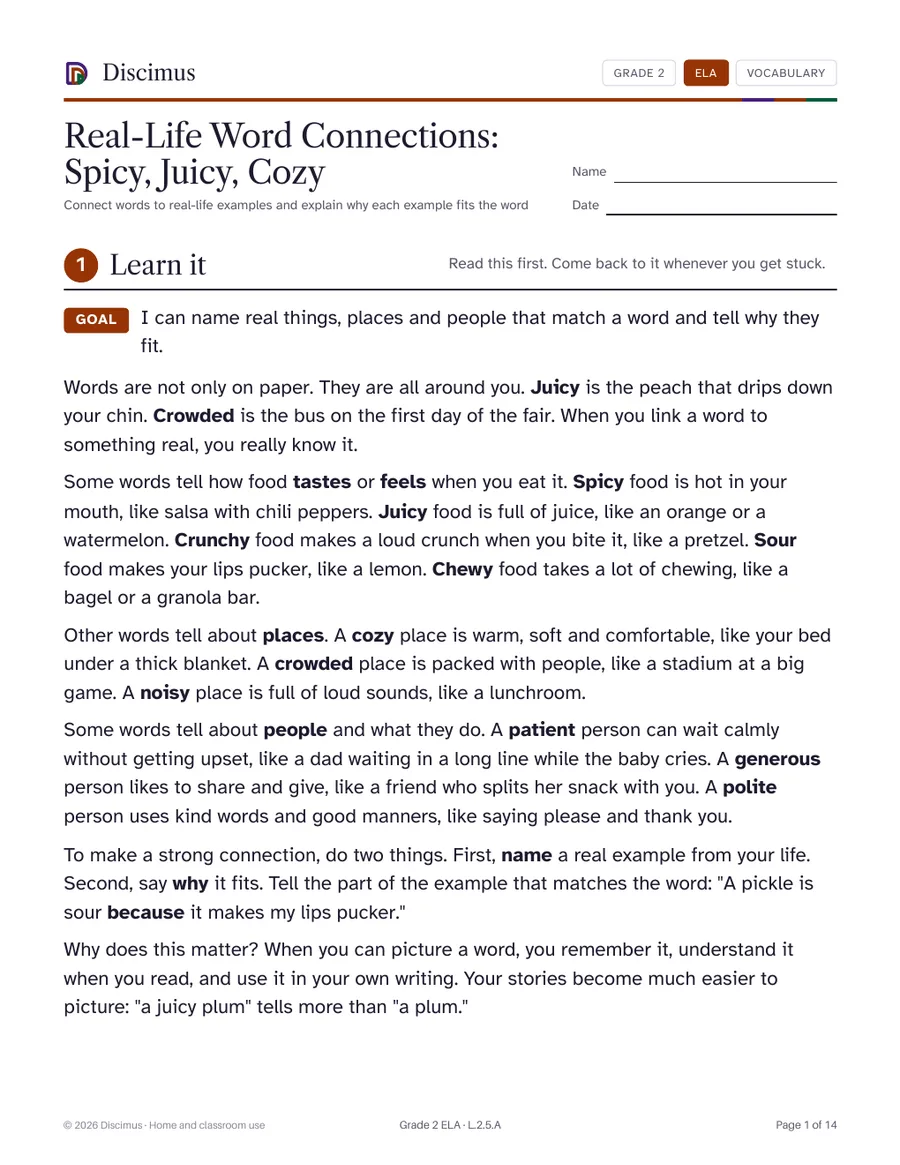
Connect words to real-life examples and explain why each example fits the word
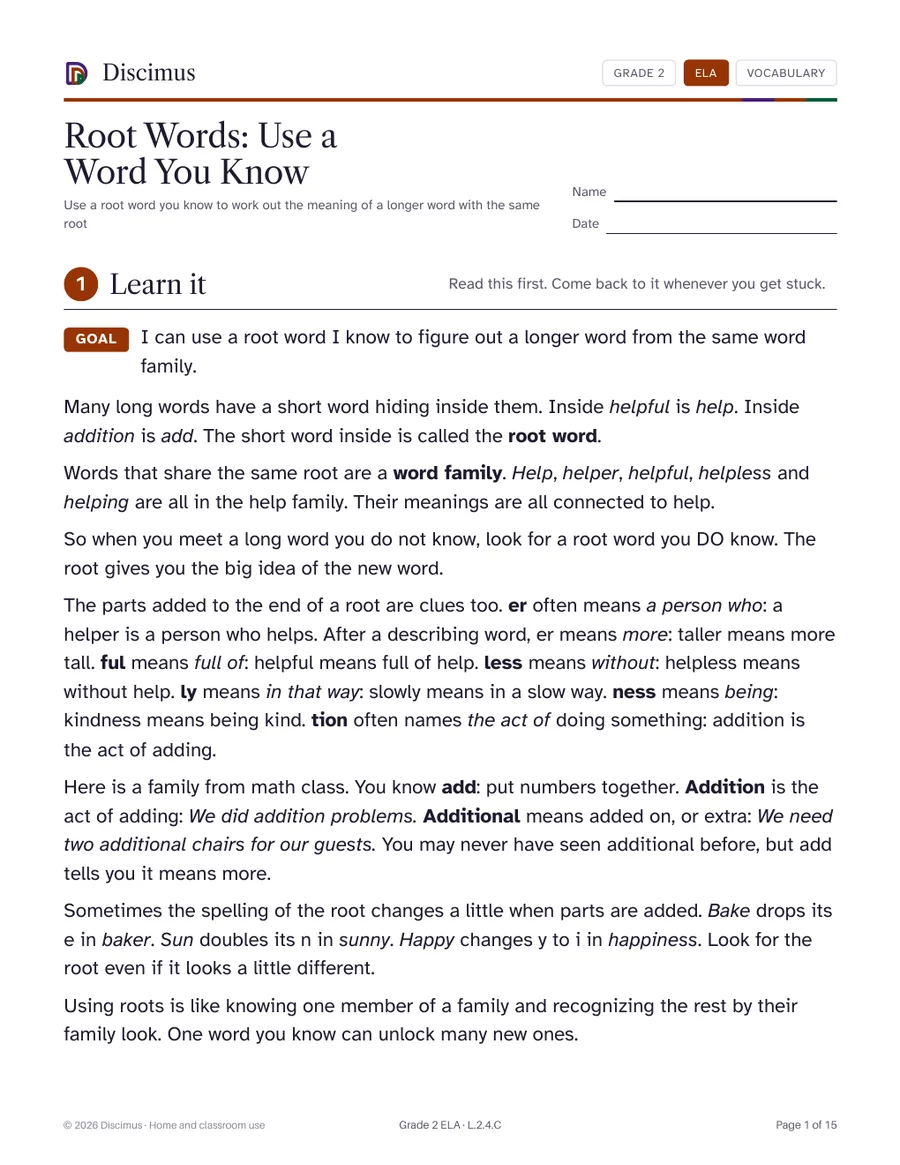
Use a root word you know to work out the meaning of a longer word with the same root
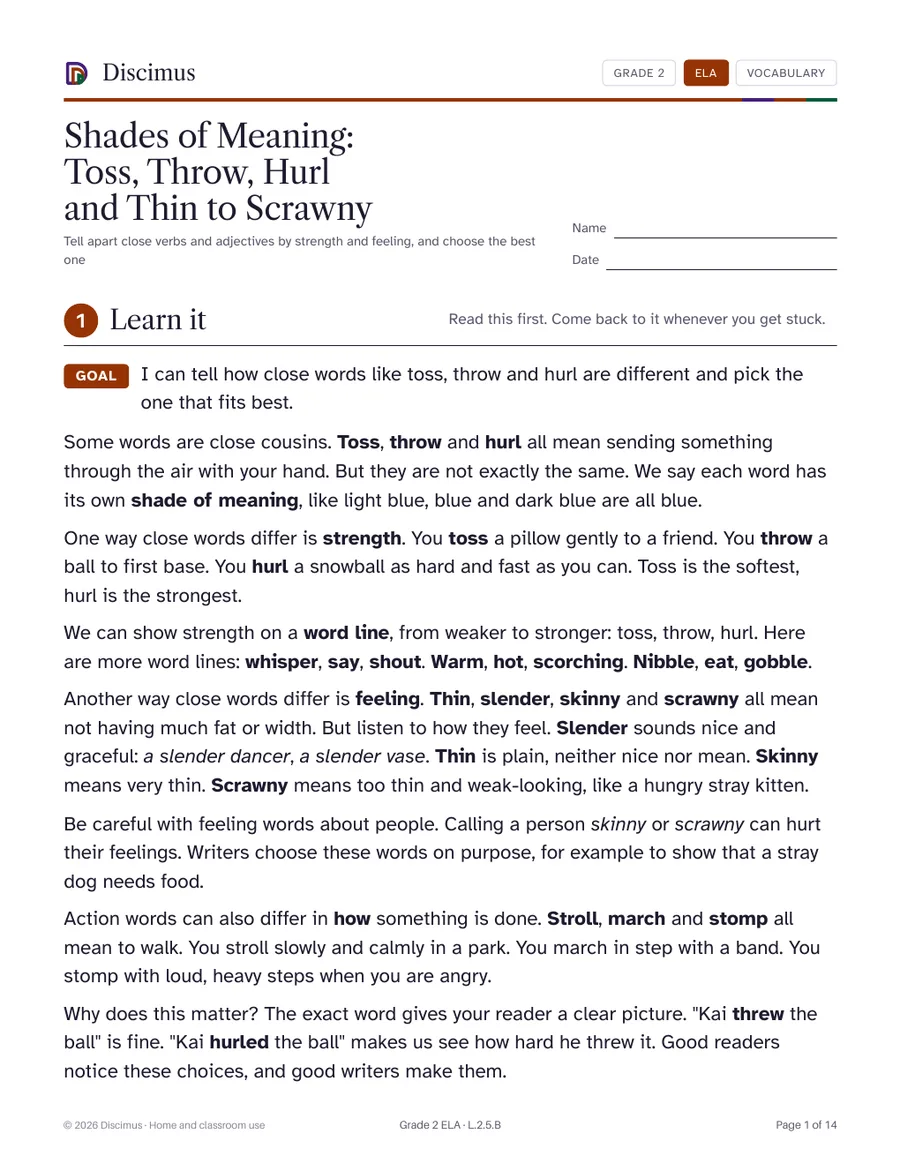
Tell apart close verbs and adjectives by strength and feeling, and choose the best one
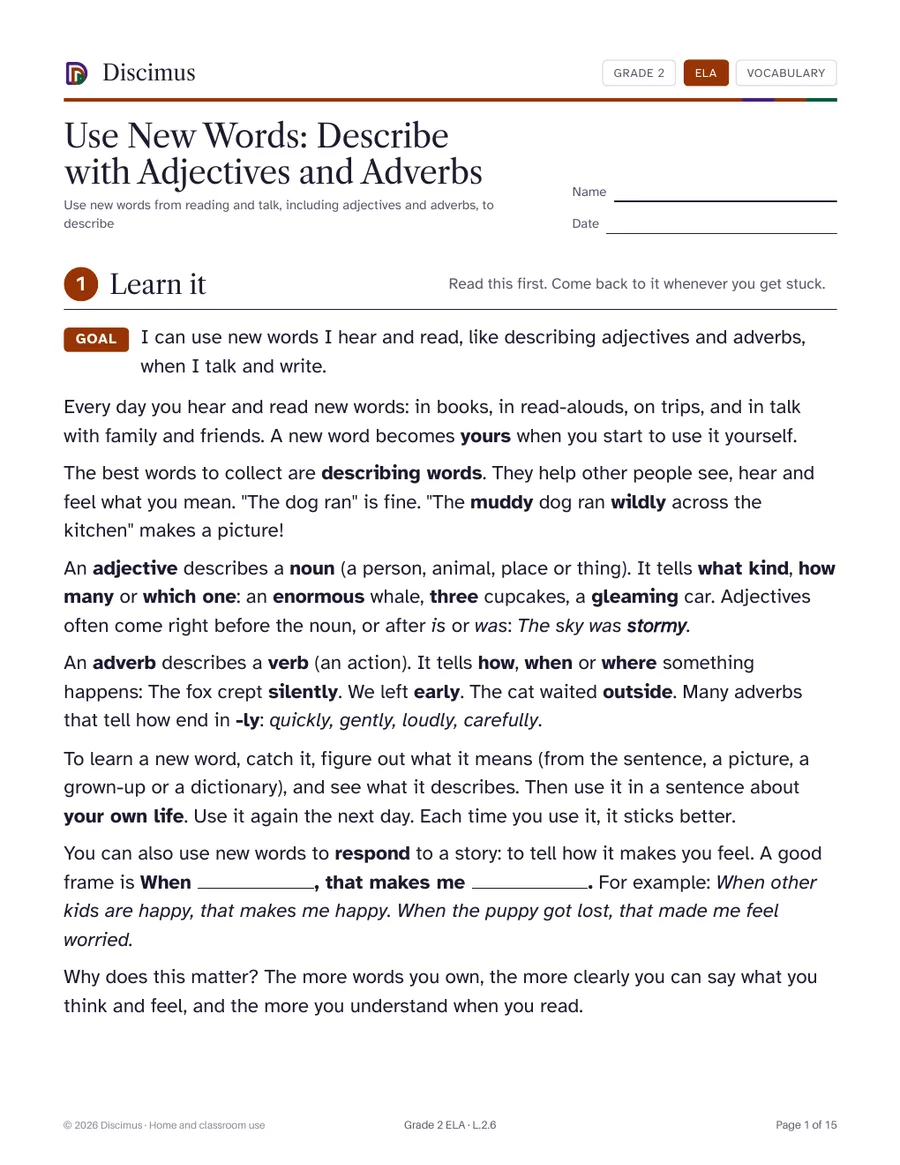
Use new words from reading and talk, including adjectives and adverbs, to describe
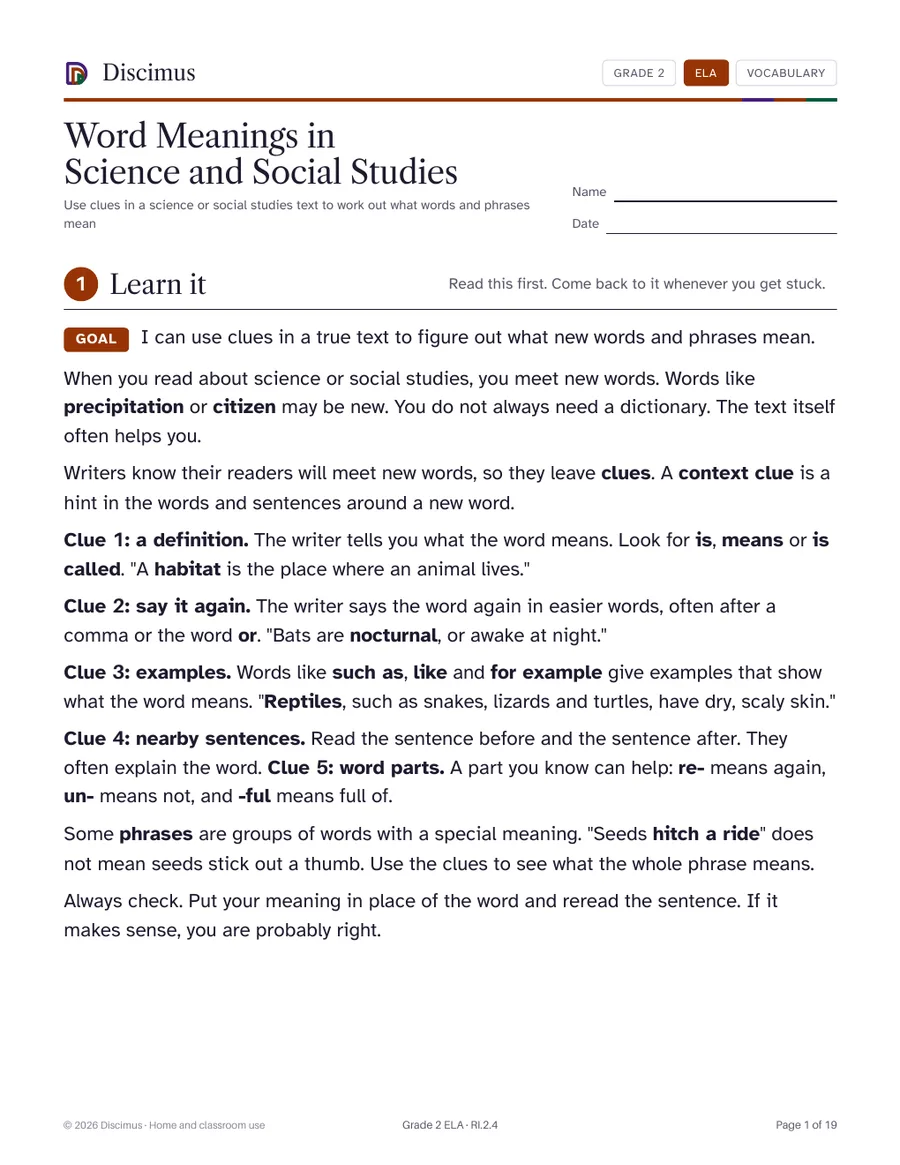
Use clues in a science or social studies text to work out what words and phrases mean
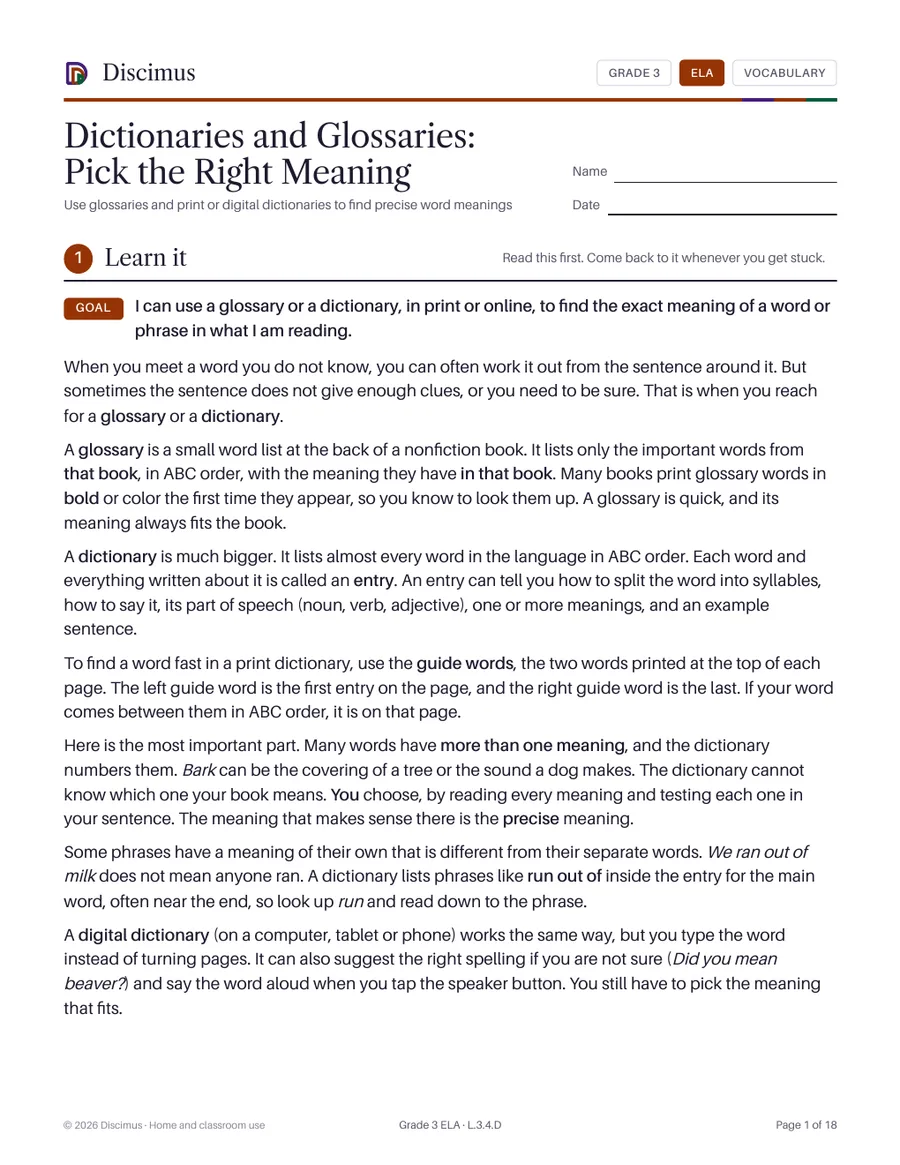
Use glossaries and print or digital dictionaries to find precise word meanings
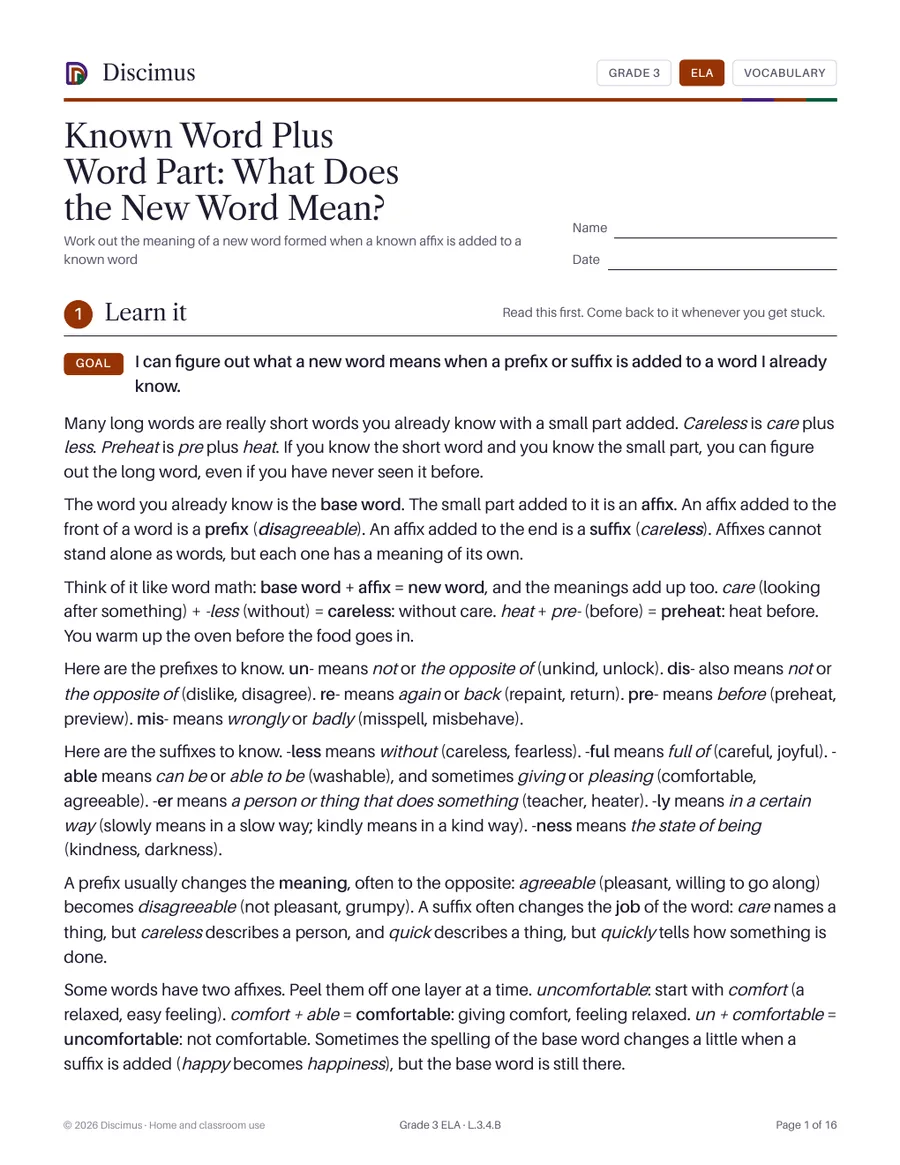
Work out the meaning of a new word formed when a known affix is added to a known word
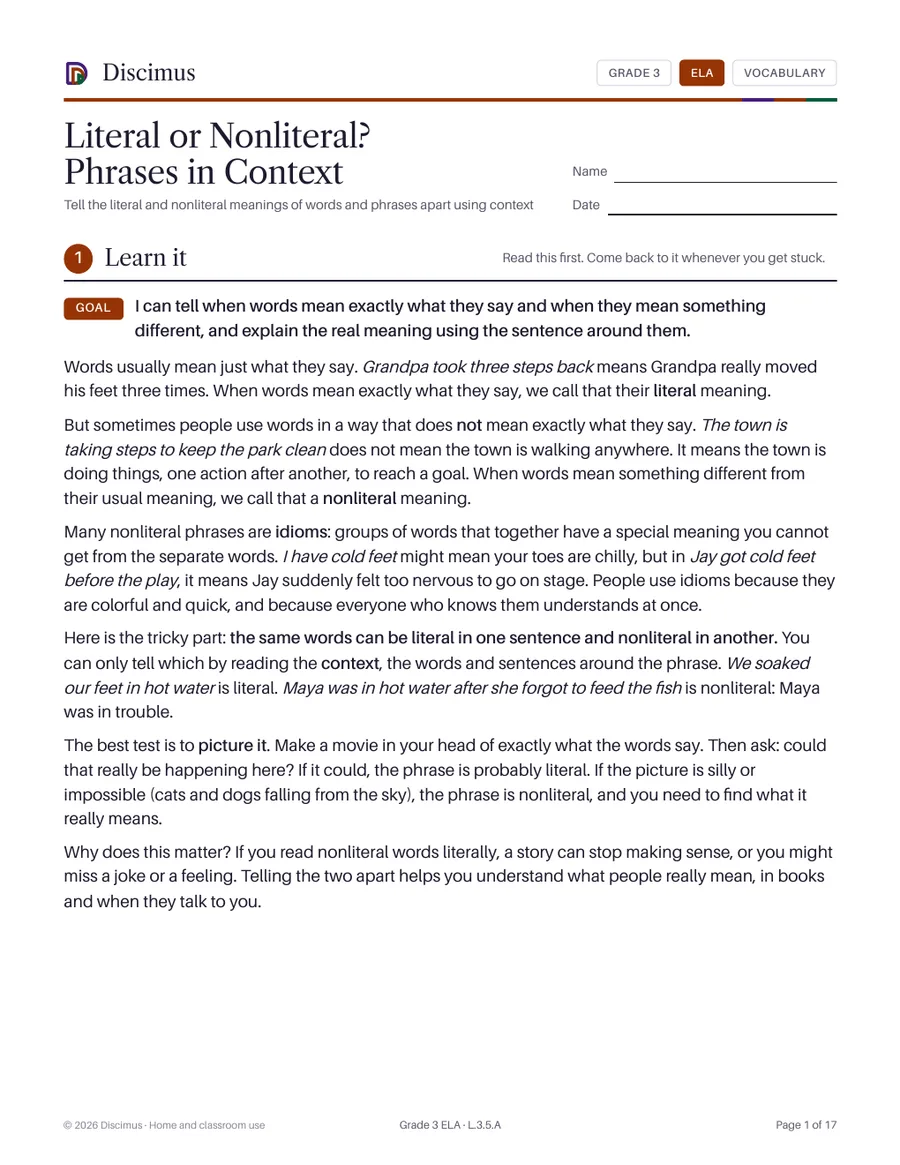
Tell the literal and nonliteral meanings of words and phrases apart using context
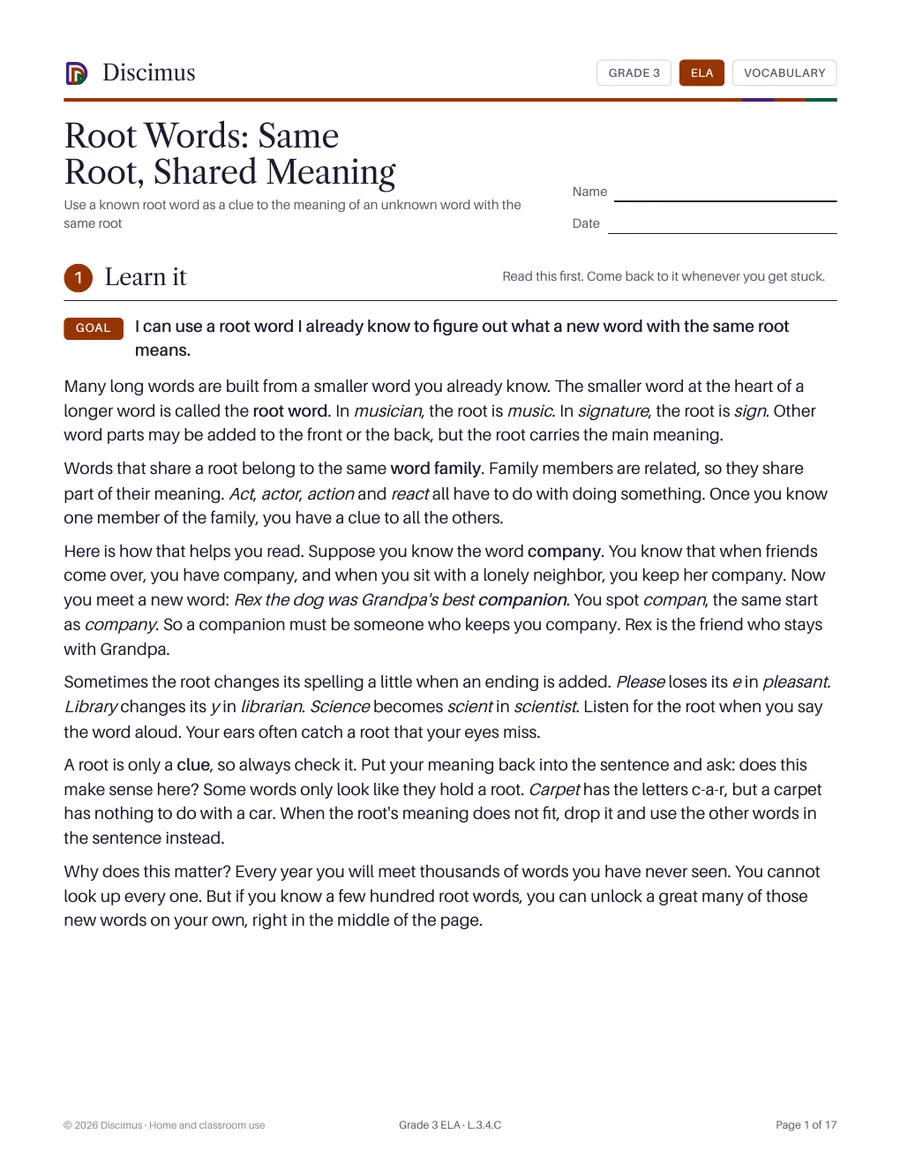
Use a known root word as a clue to the meaning of an unknown word with the same root
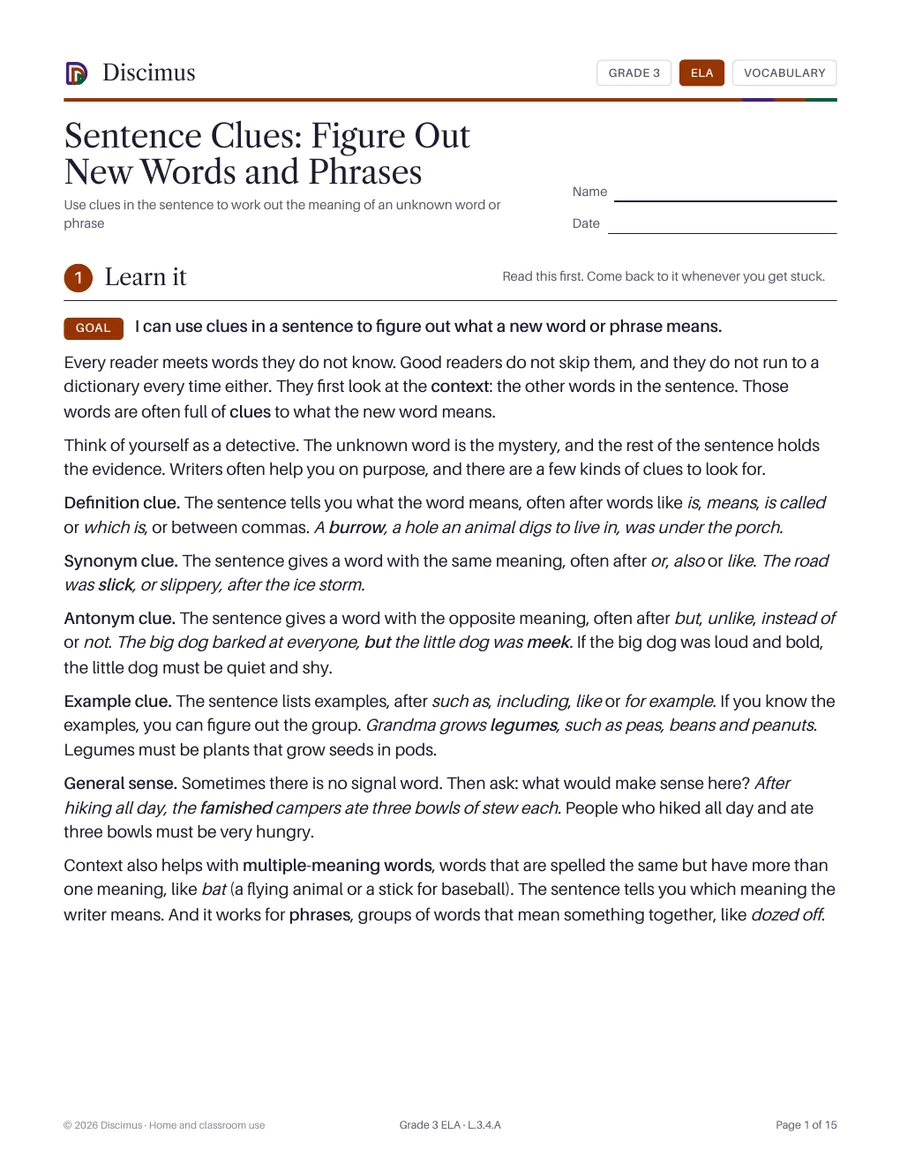
Use clues in the sentence to work out the meaning of an unknown word or phrase
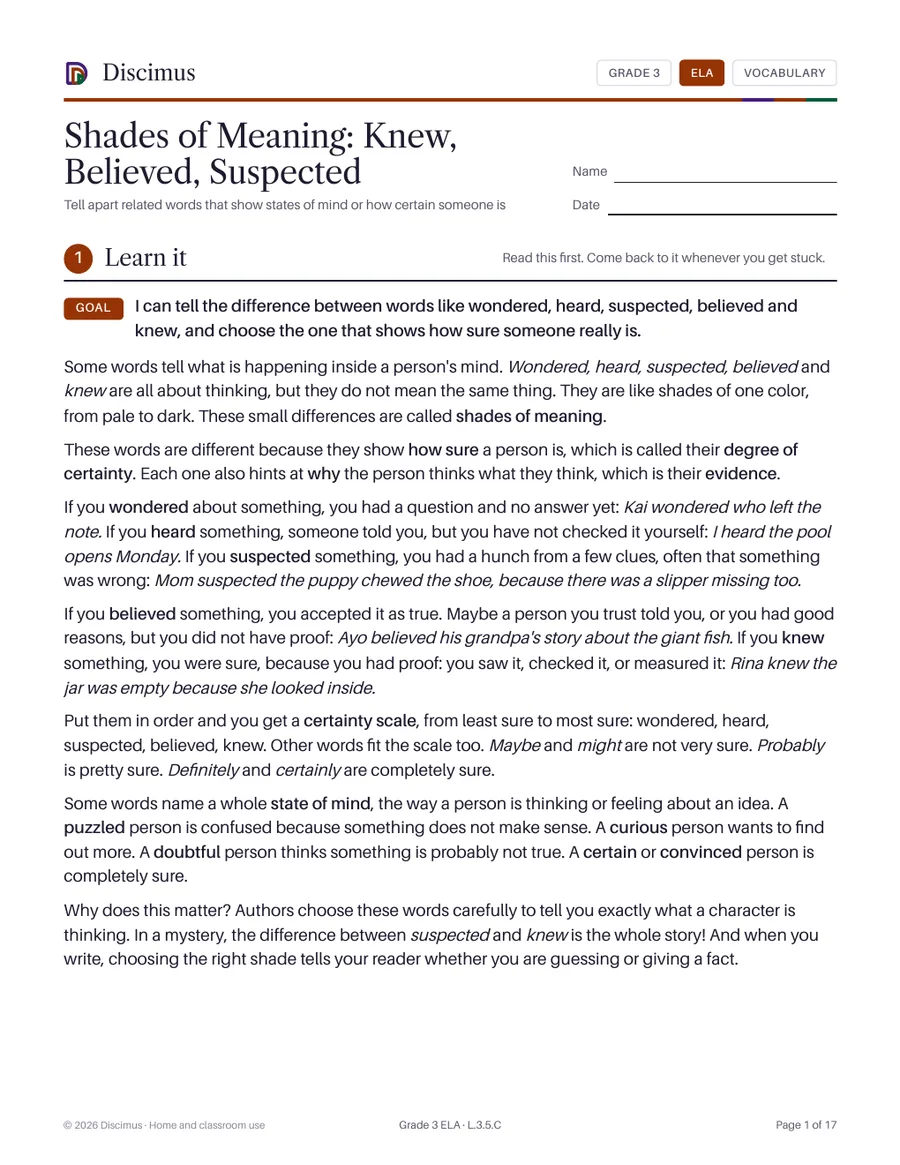
Tell apart related words that show states of mind or how certain someone is
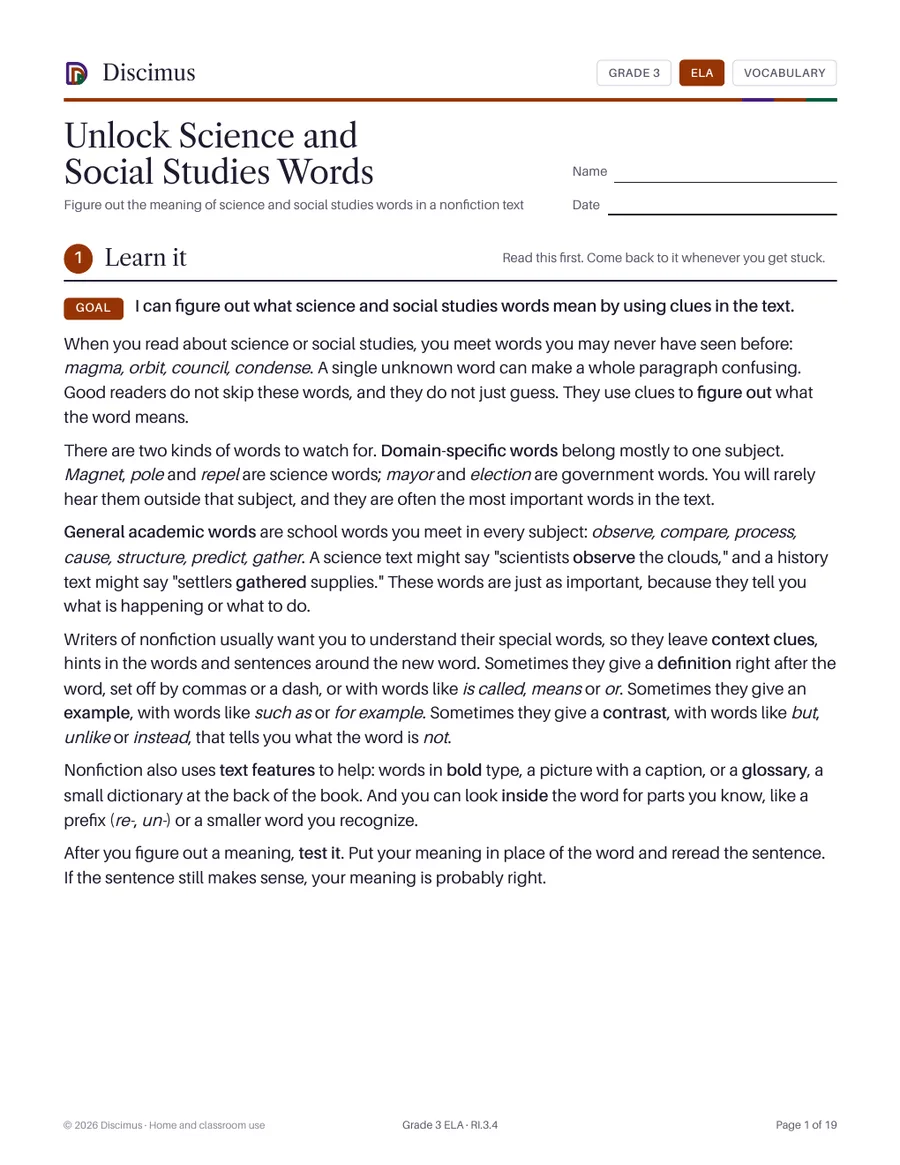
Figure out the meaning of science and social studies words in a nonfiction text
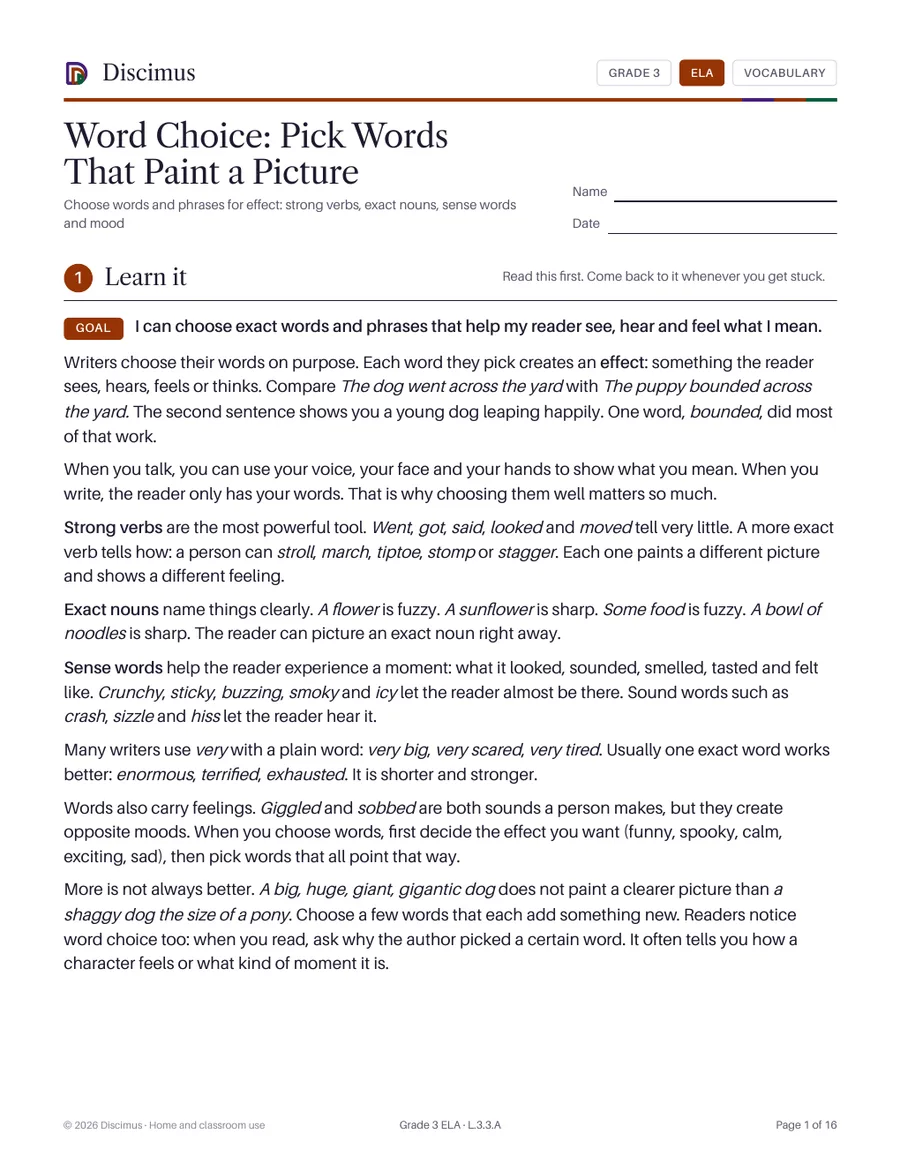
Choose words and phrases for effect: strong verbs, exact nouns, sense words and mood
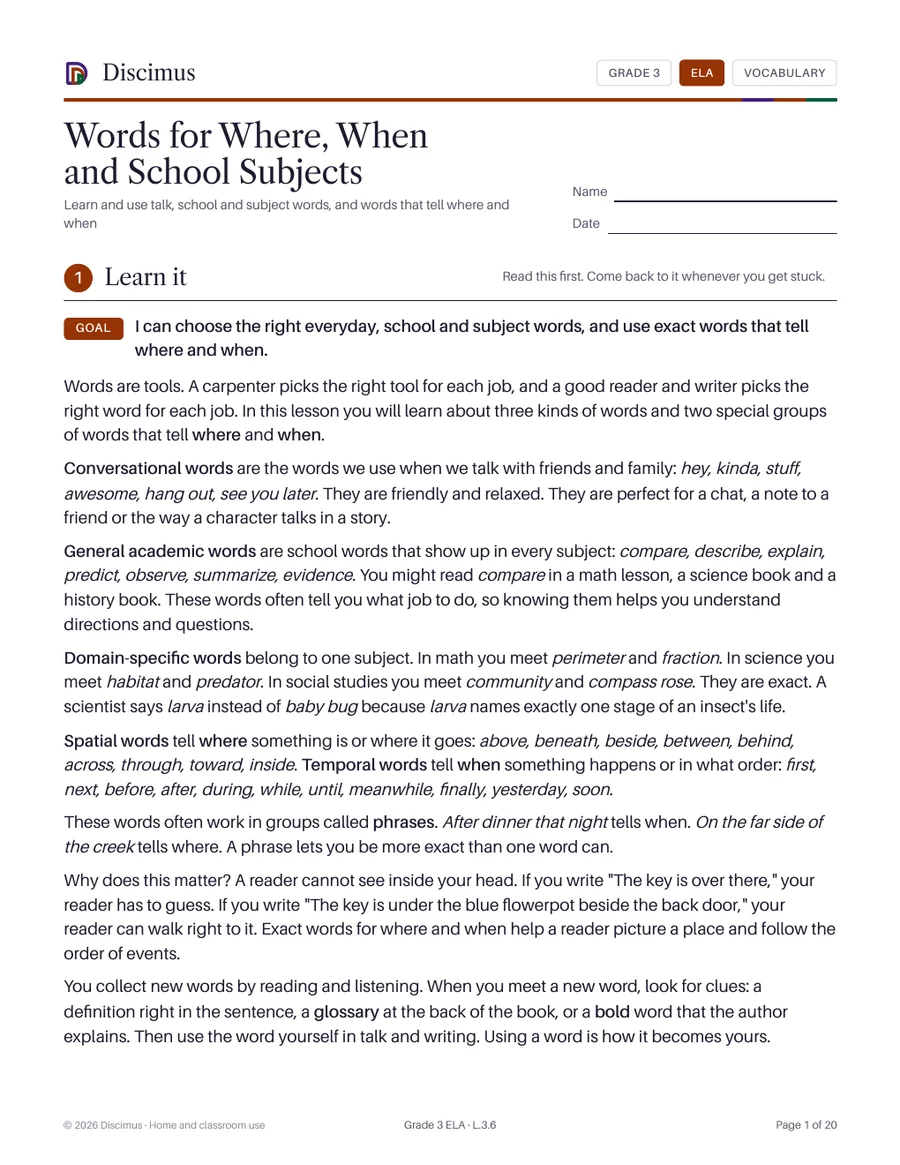
Learn and use talk, school and subject words, and words that tell where and when
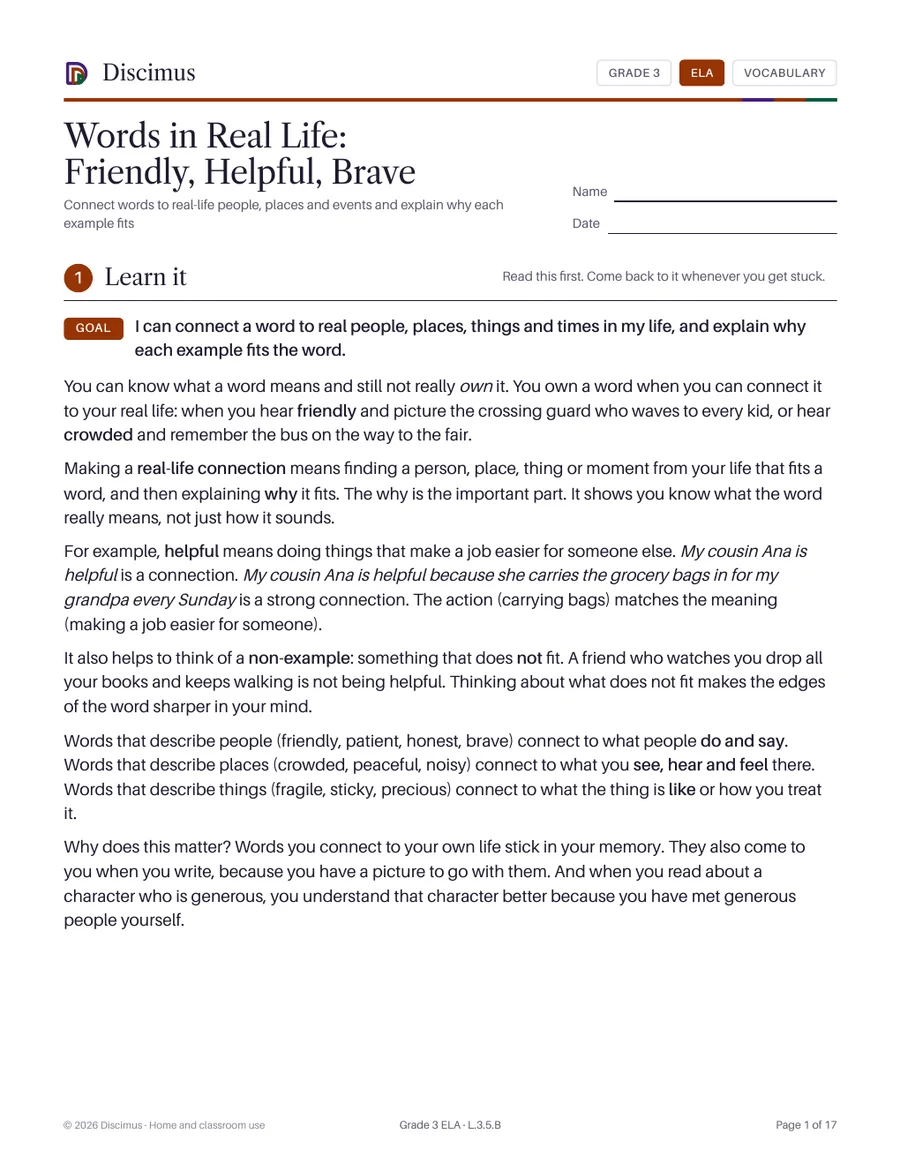
Connect words to real-life people, places and events and explain why each example fits
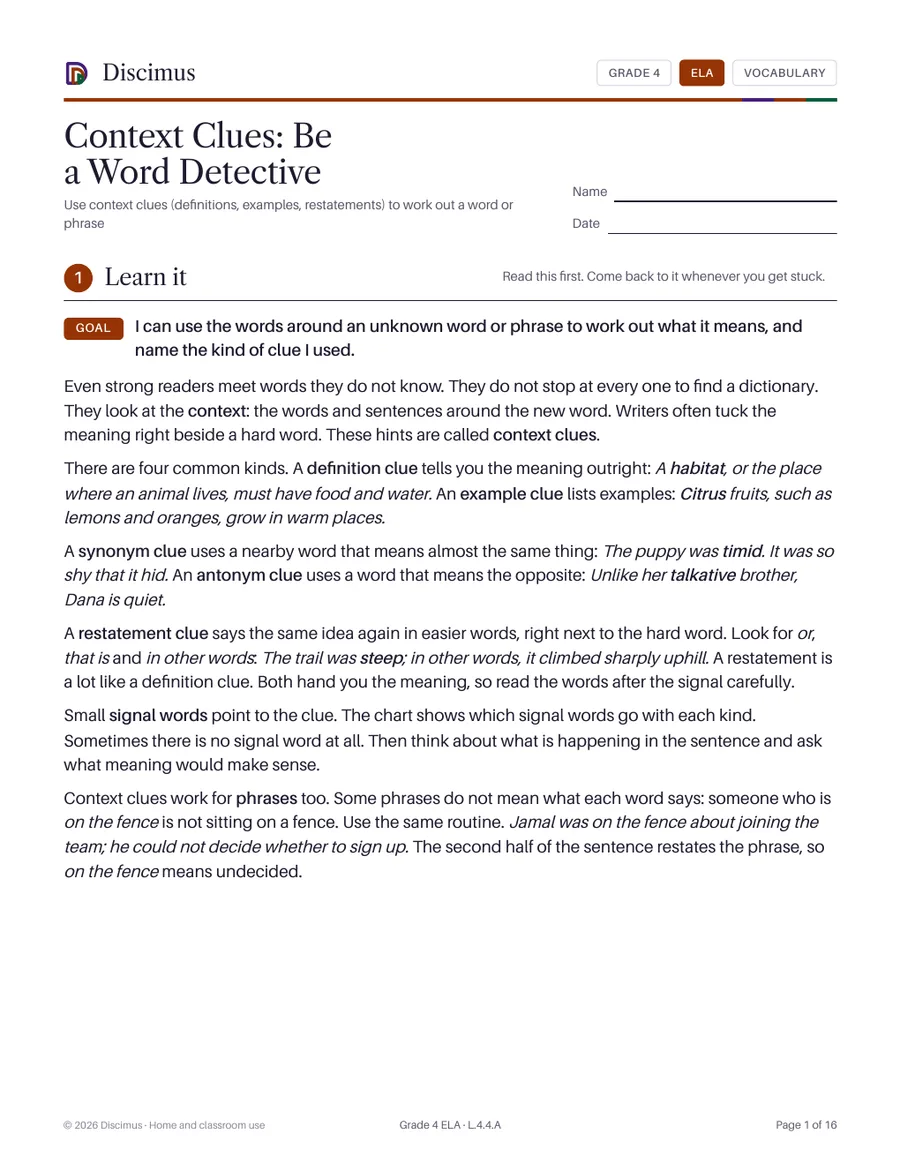
Use context clues (definitions, examples, restatements) to work out a word or phrase
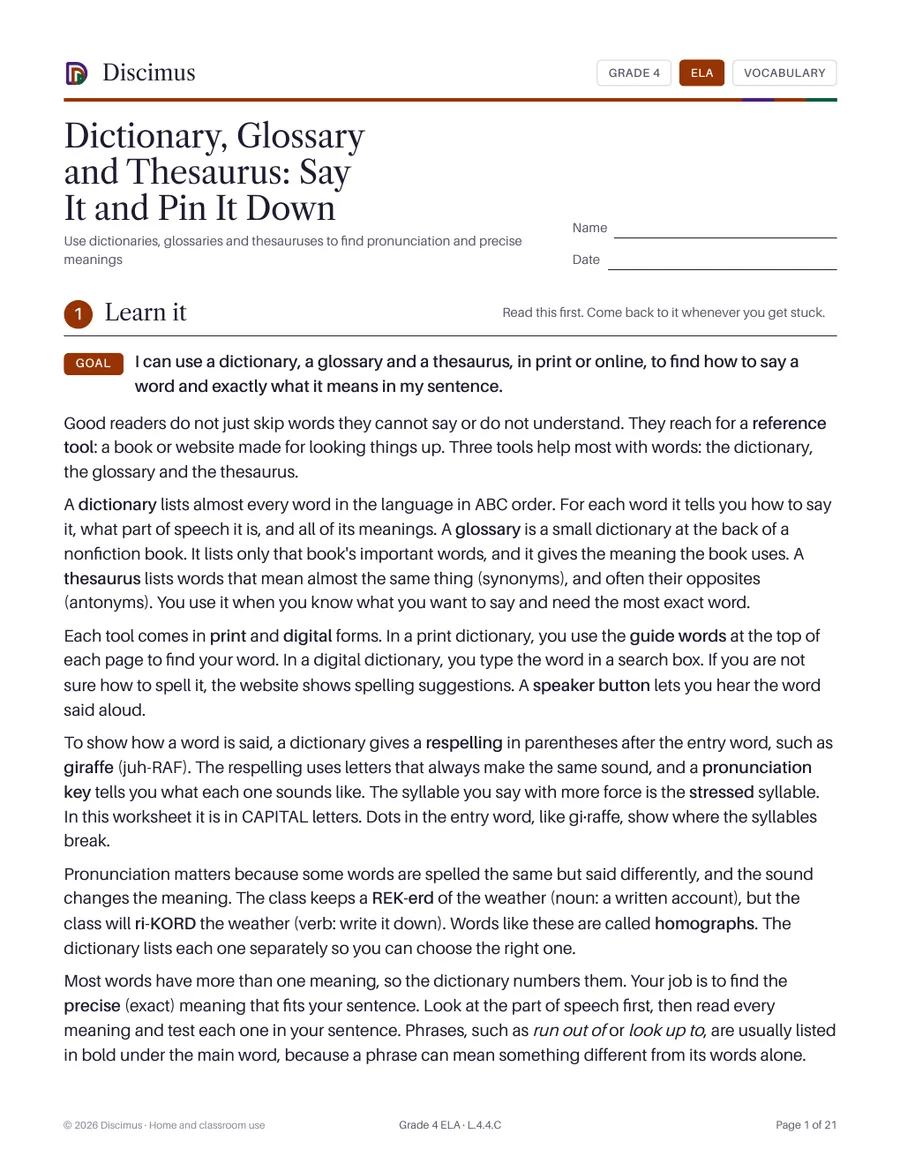
Use dictionaries, glossaries and thesauruses to find pronunciation and precise meanings
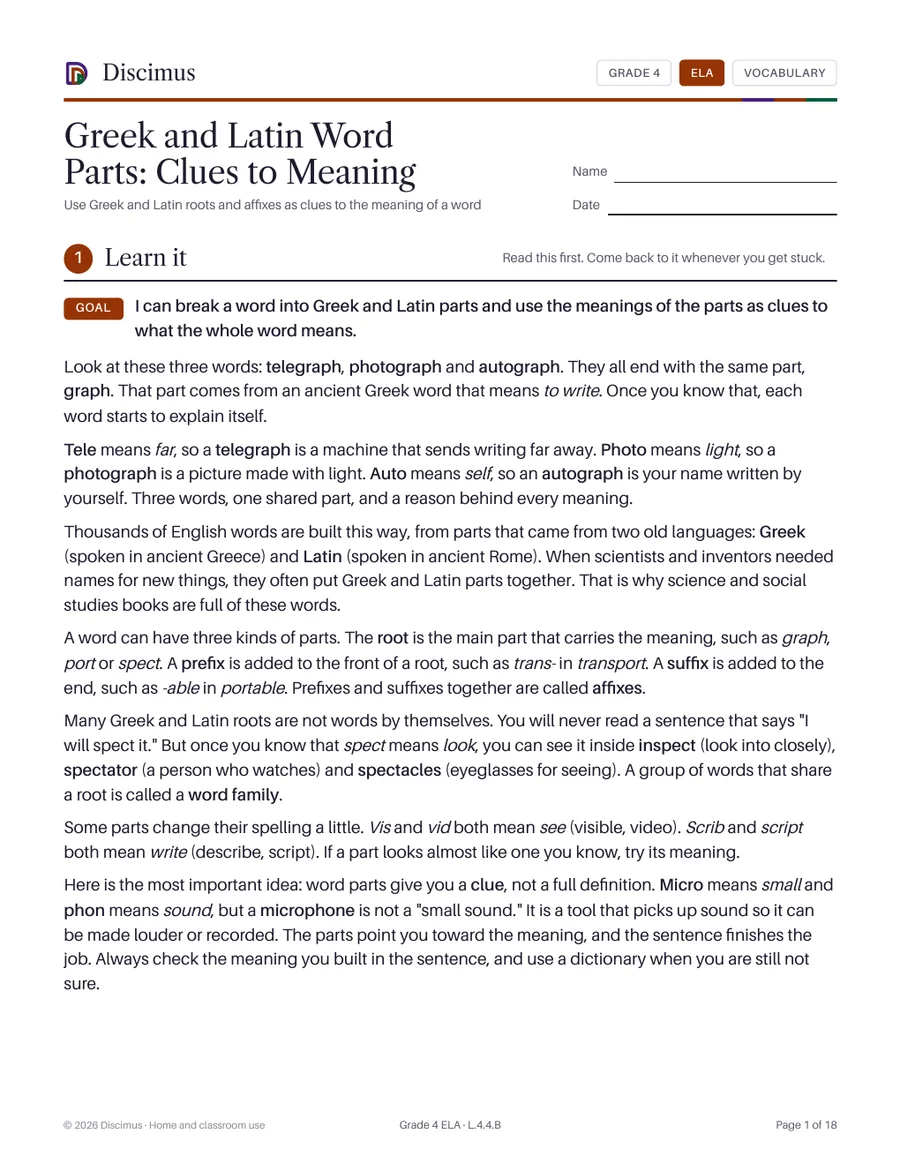
Use Greek and Latin roots and affixes as clues to the meaning of a word
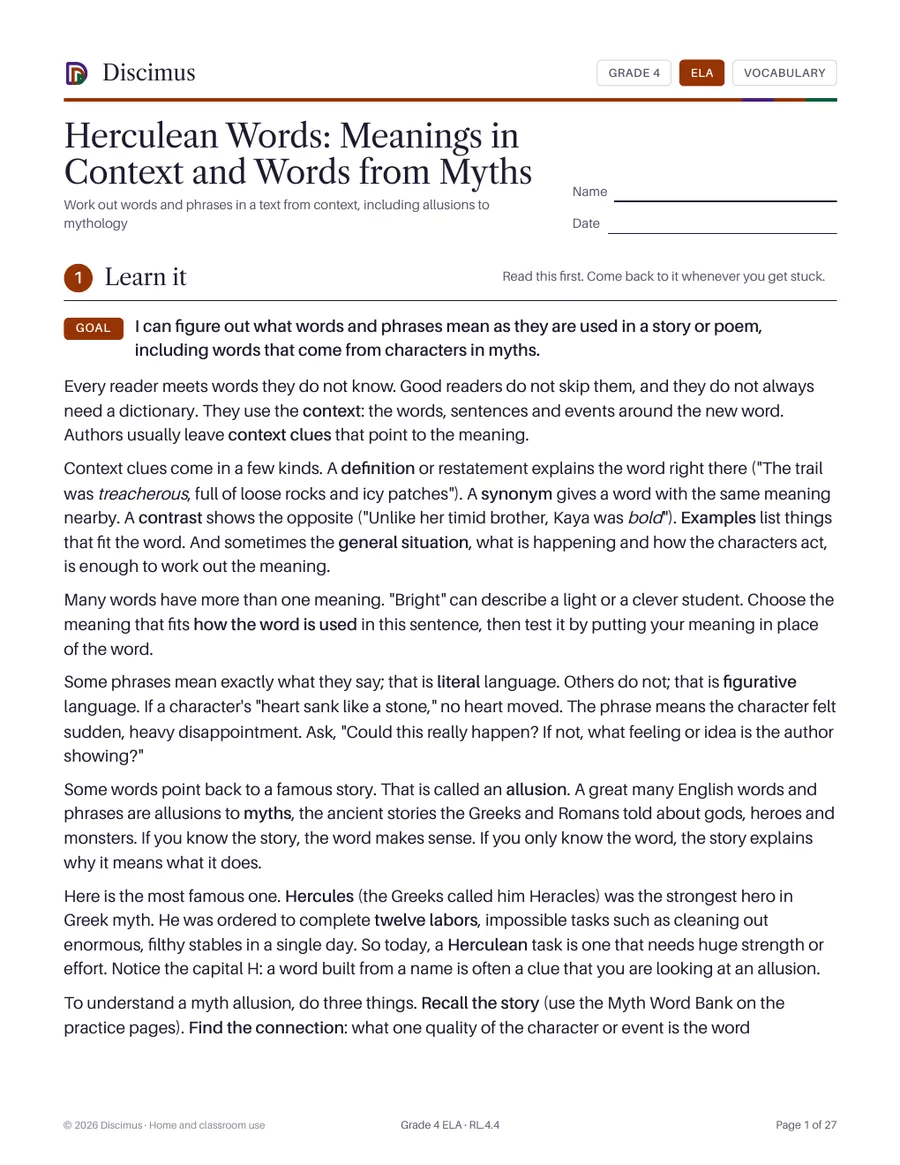
Work out words and phrases in a text from context, including allusions to mythology
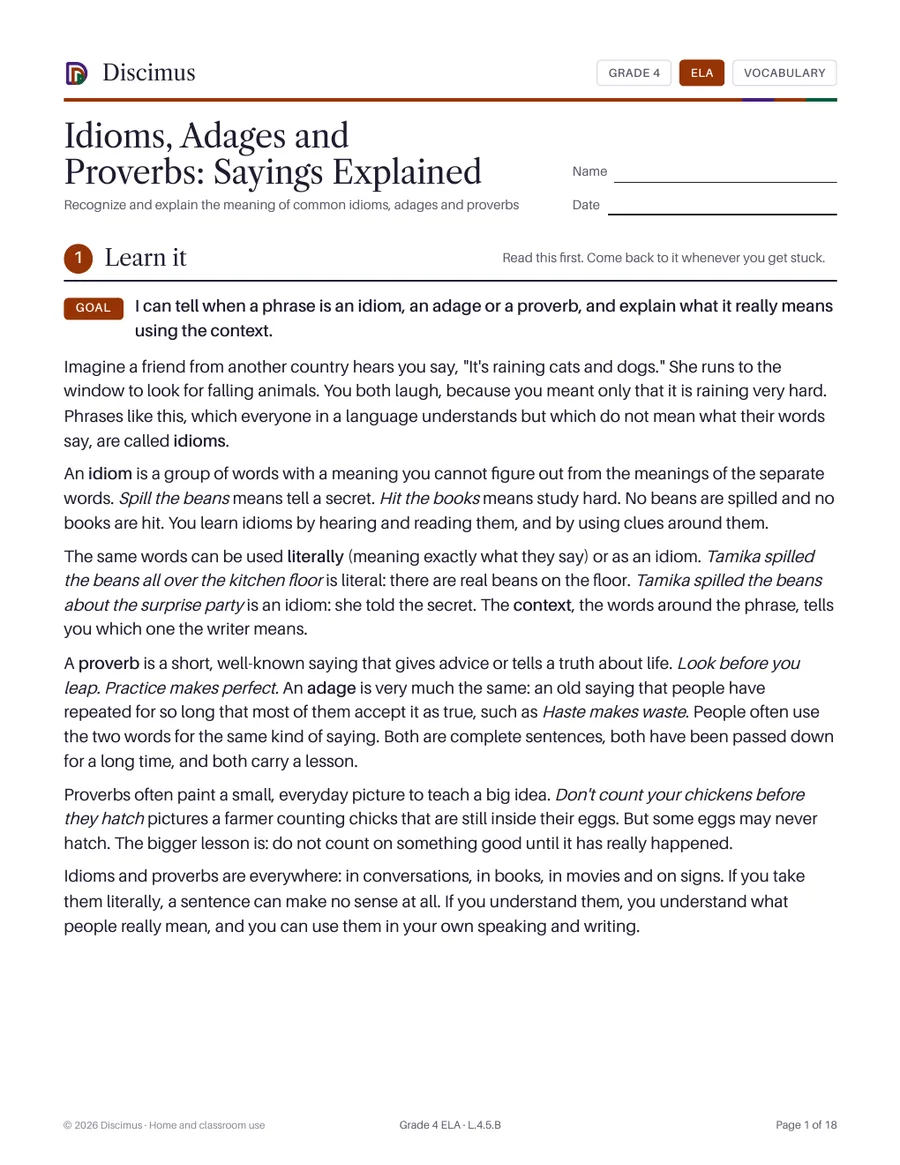
Recognize and explain the meaning of common idioms, adages and proverbs
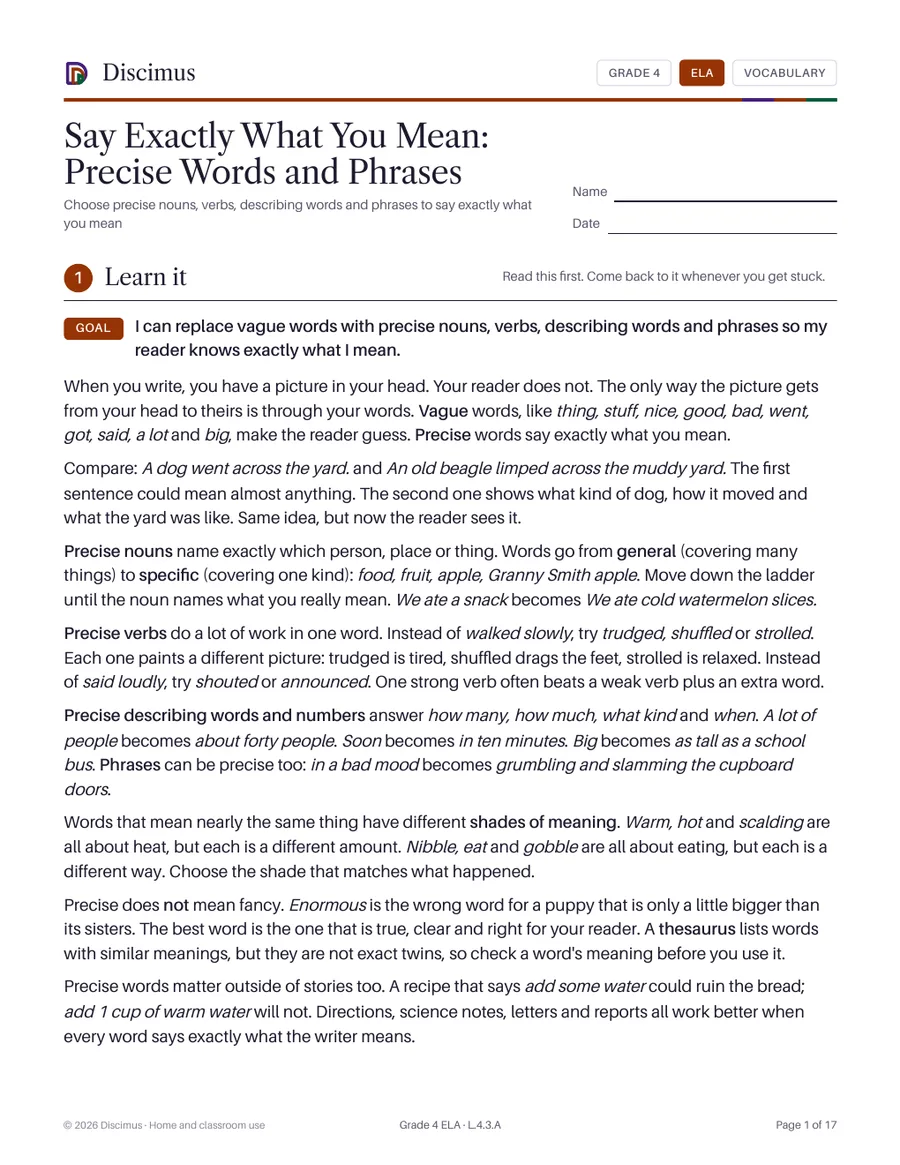
Choose precise nouns, verbs, describing words and phrases to say exactly what you mean
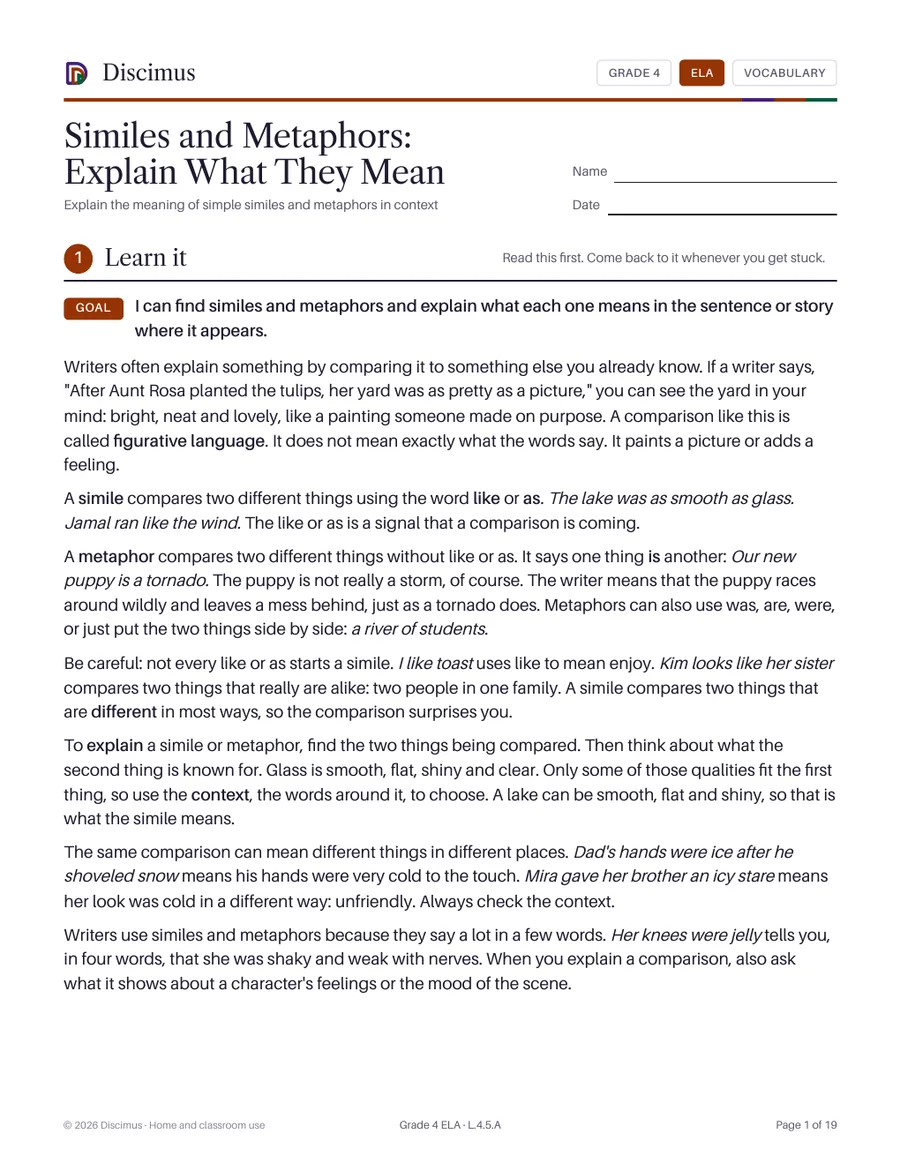
Explain the meaning of simple similes and metaphors in context
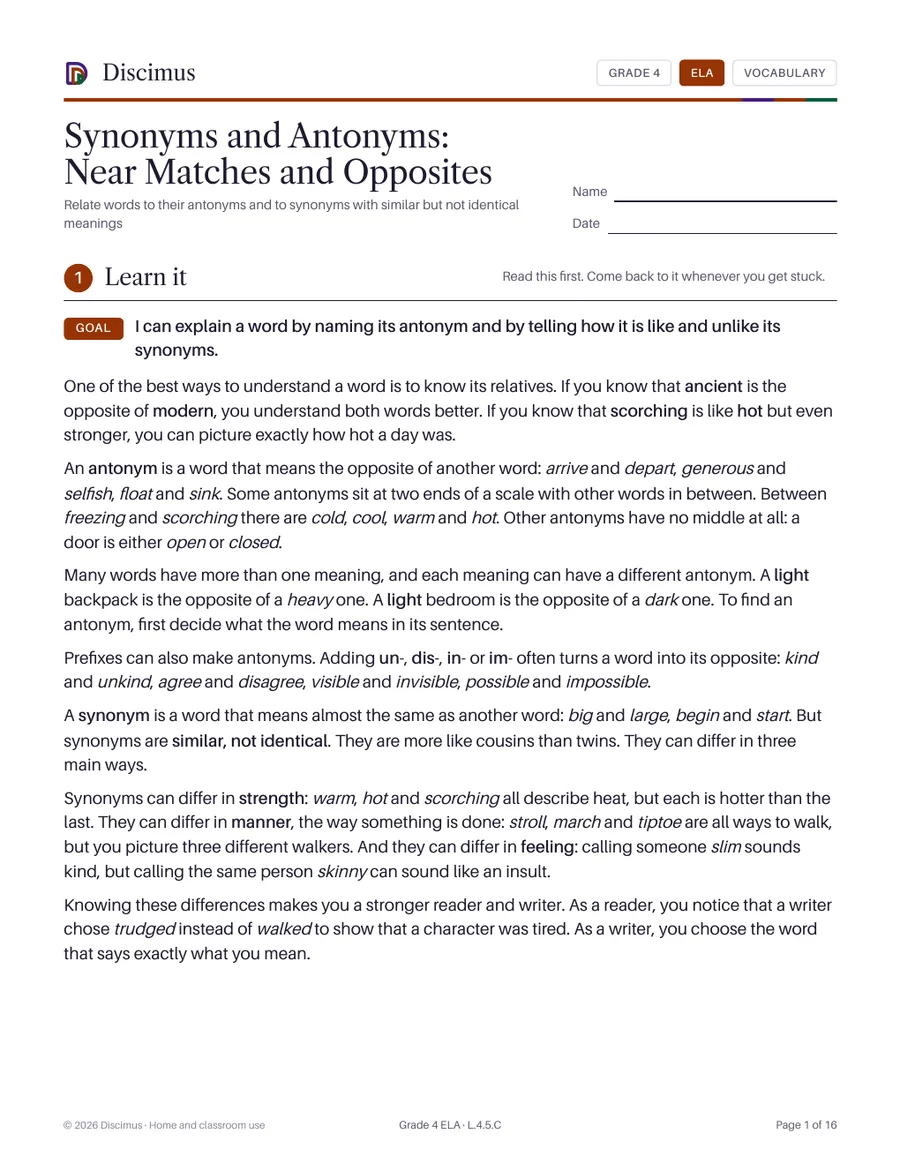
Relate words to their antonyms and to synonyms with similar but not identical meanings
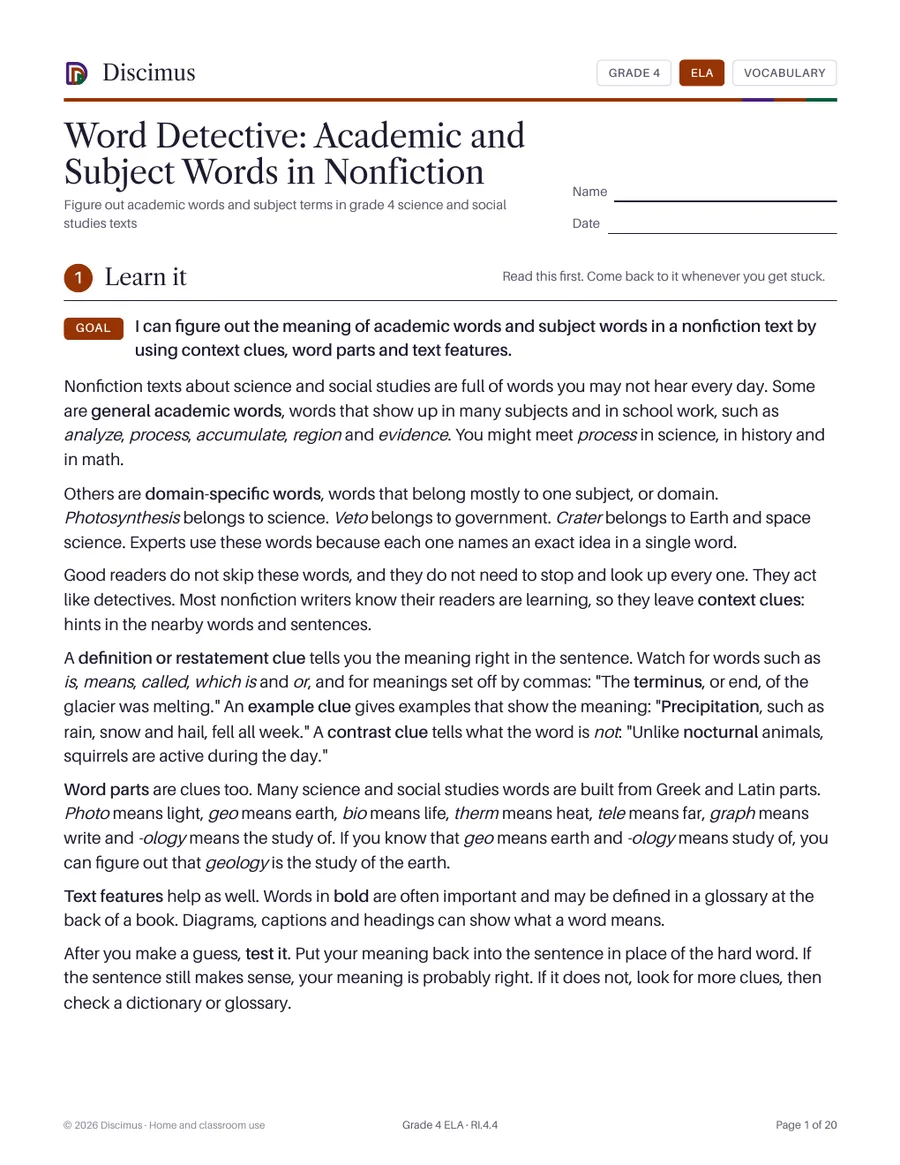
Figure out academic words and subject terms in grade 4 science and social studies texts
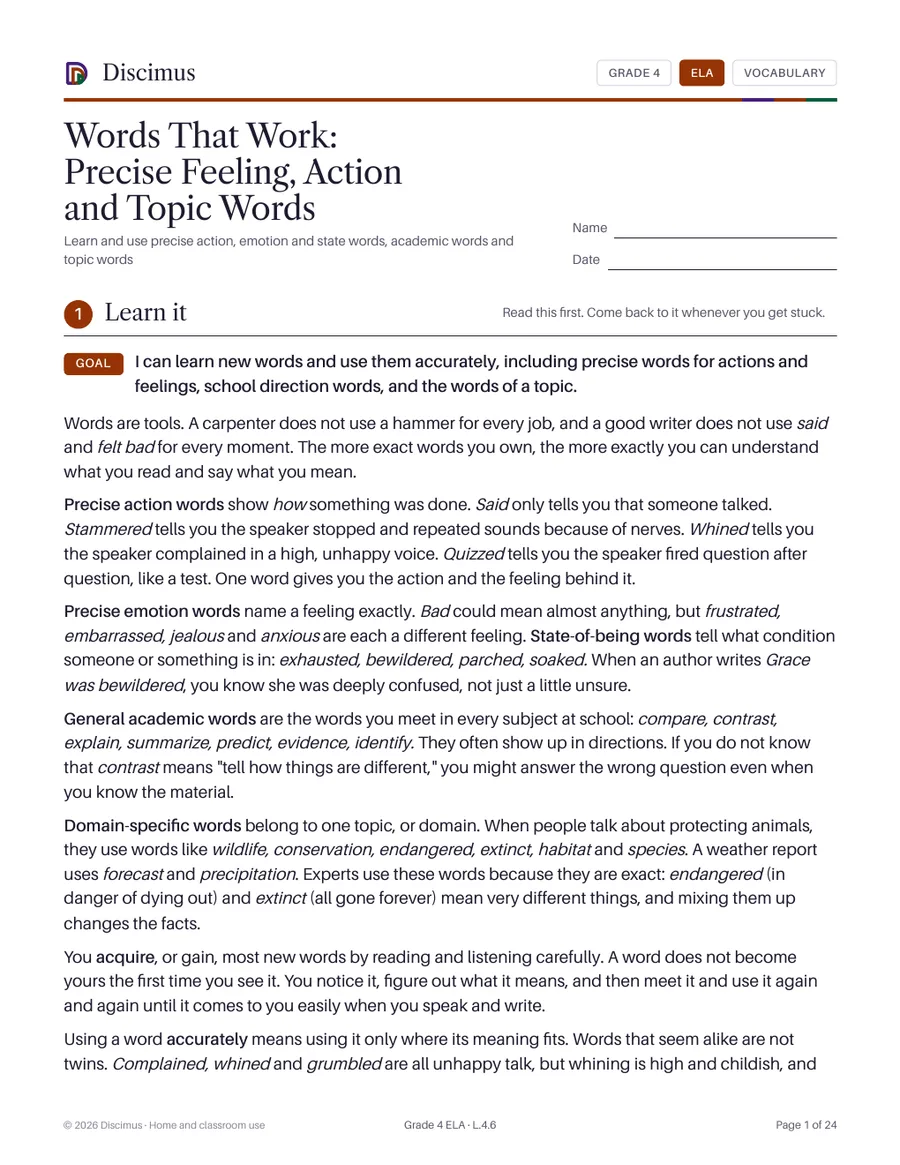
Learn and use precise action, emotion and state words, academic words and topic words
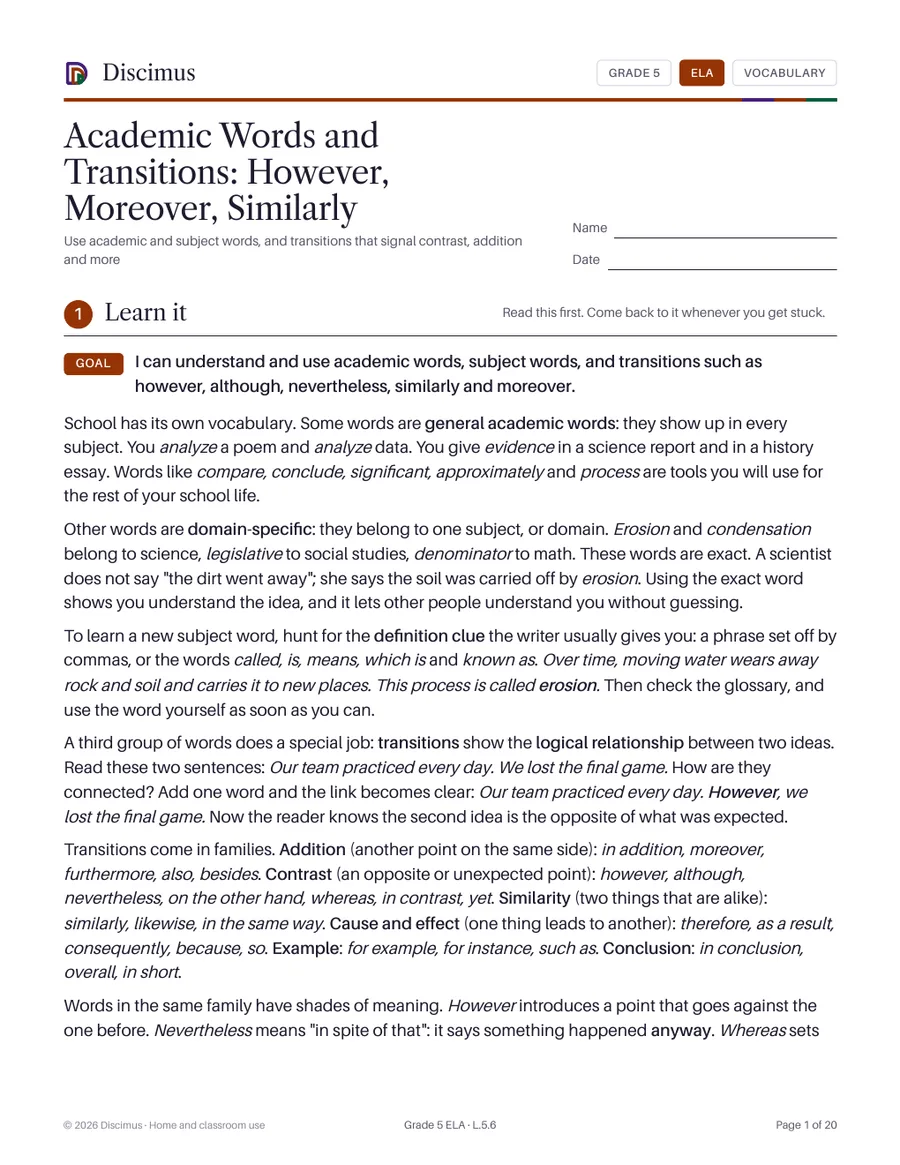
Use academic and subject words, and transitions that signal contrast, addition and more
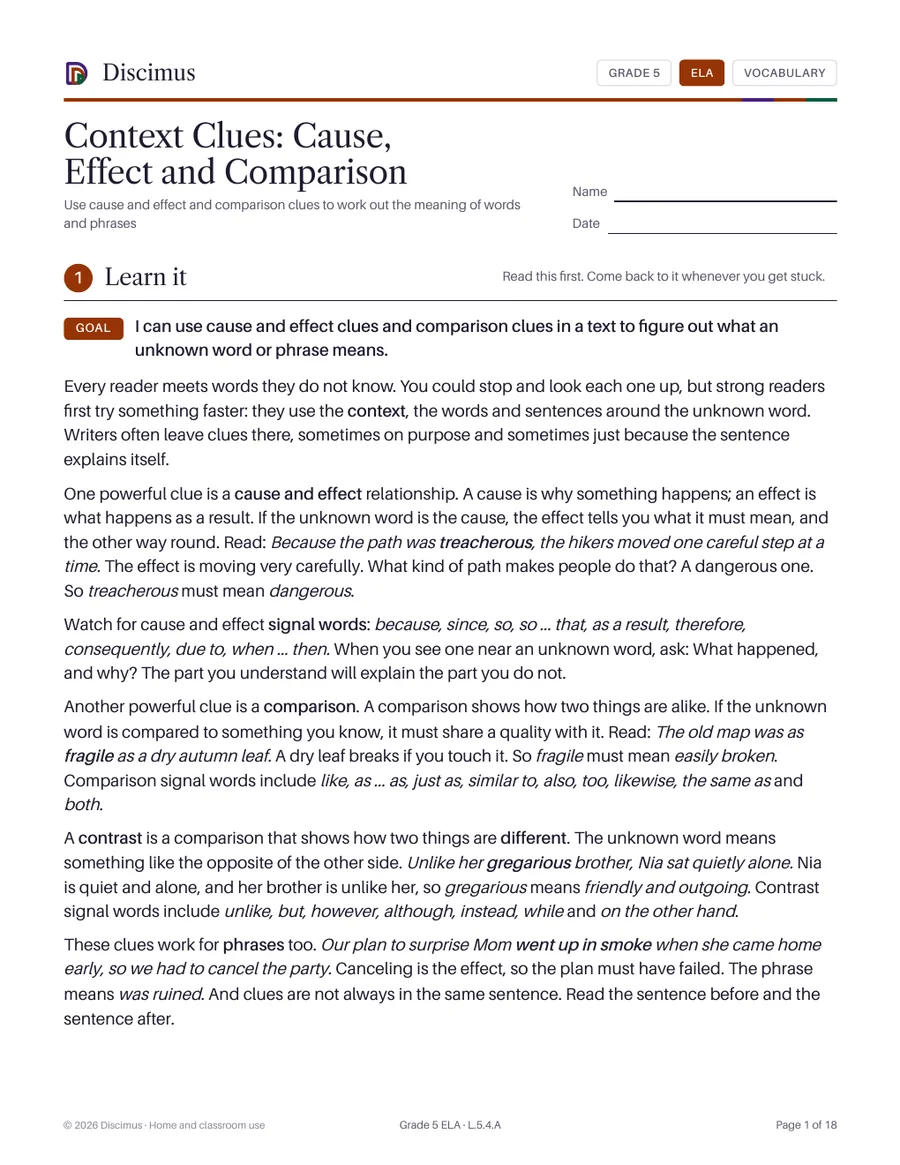
Use cause and effect and comparison clues to work out the meaning of words and phrases
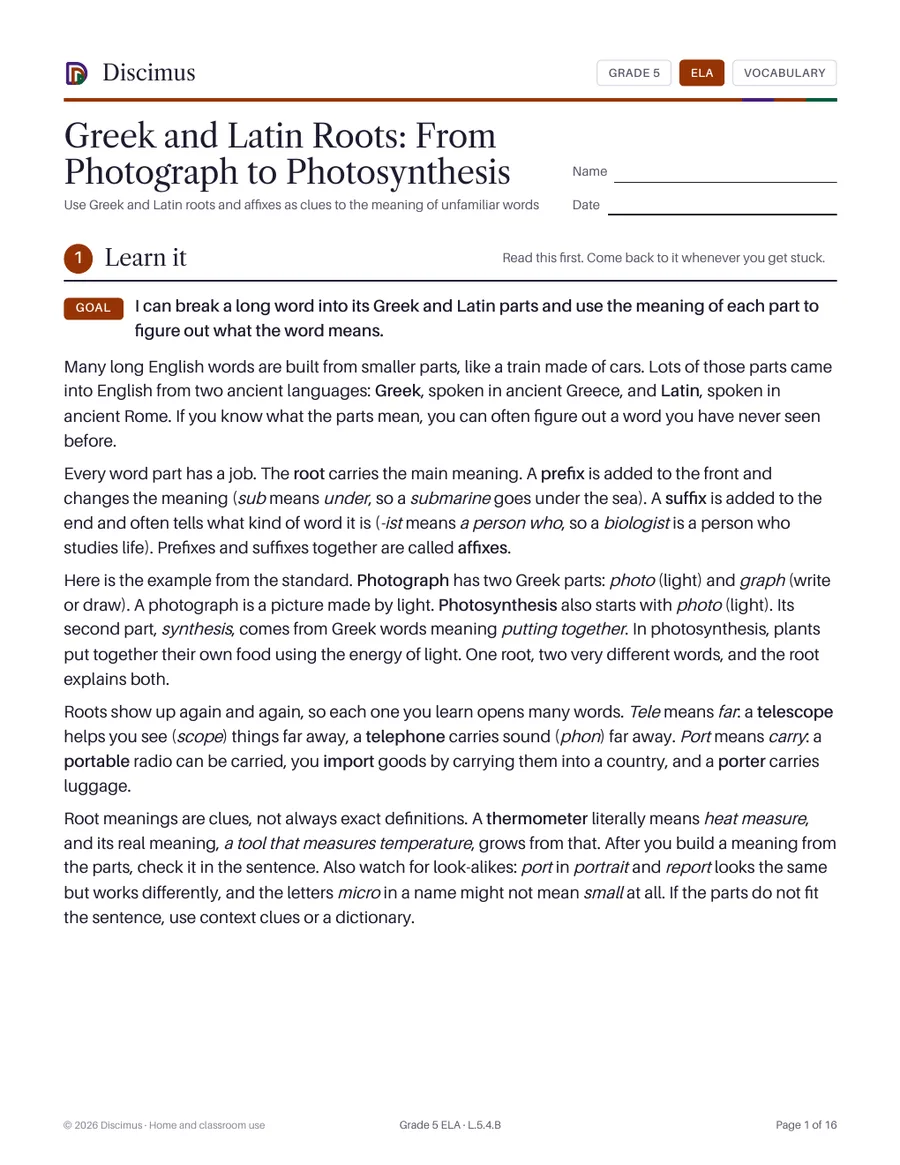
Use Greek and Latin roots and affixes as clues to the meaning of unfamiliar words
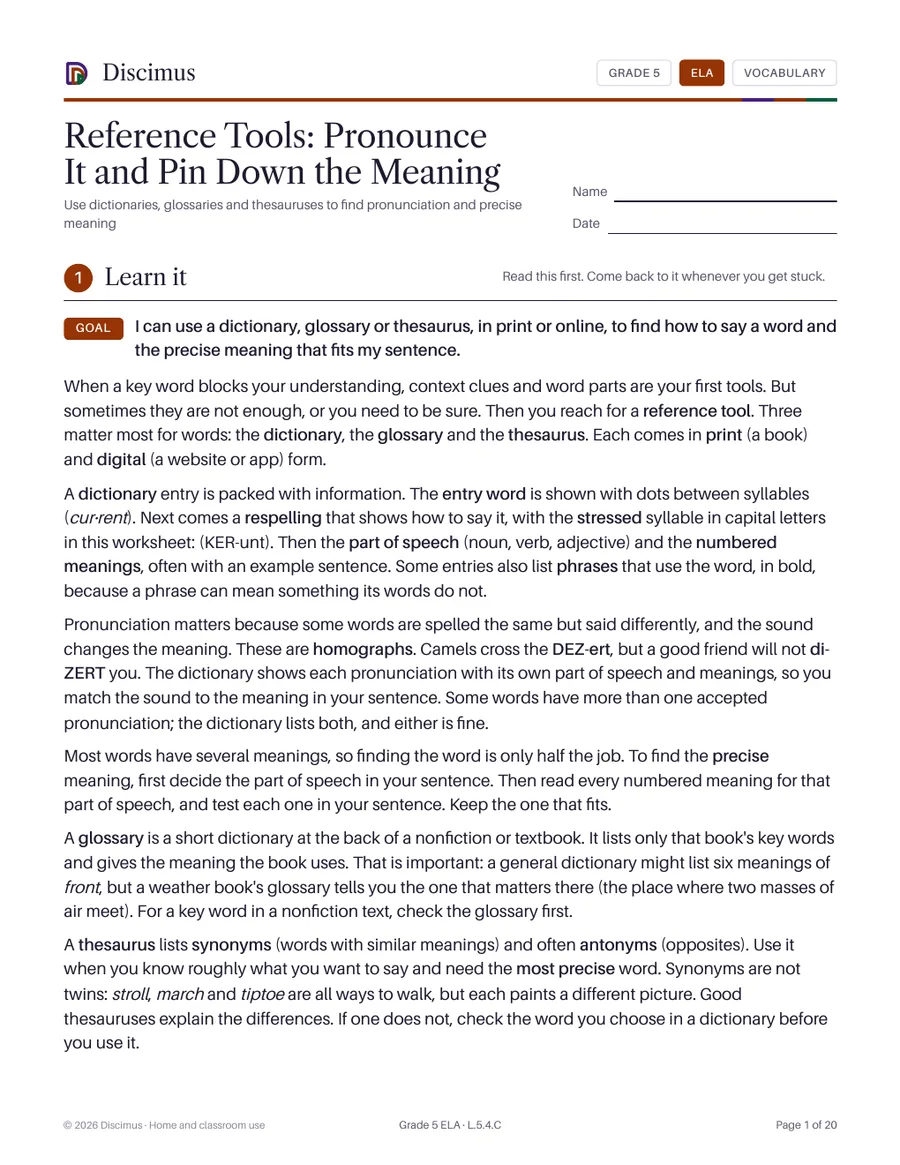
Use dictionaries, glossaries and thesauruses to find pronunciation and precise meaning
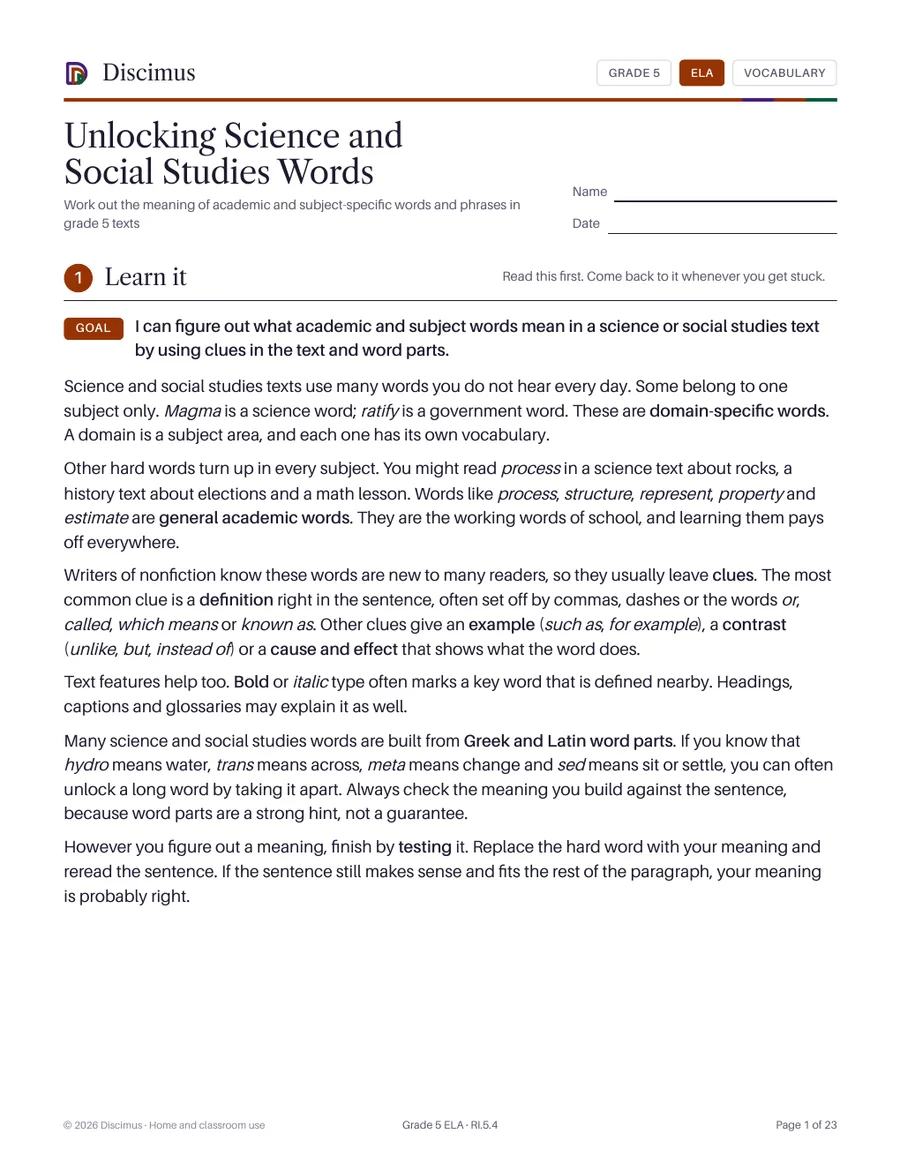
Work out the meaning of academic and subject-specific words and phrases in grade 5 texts
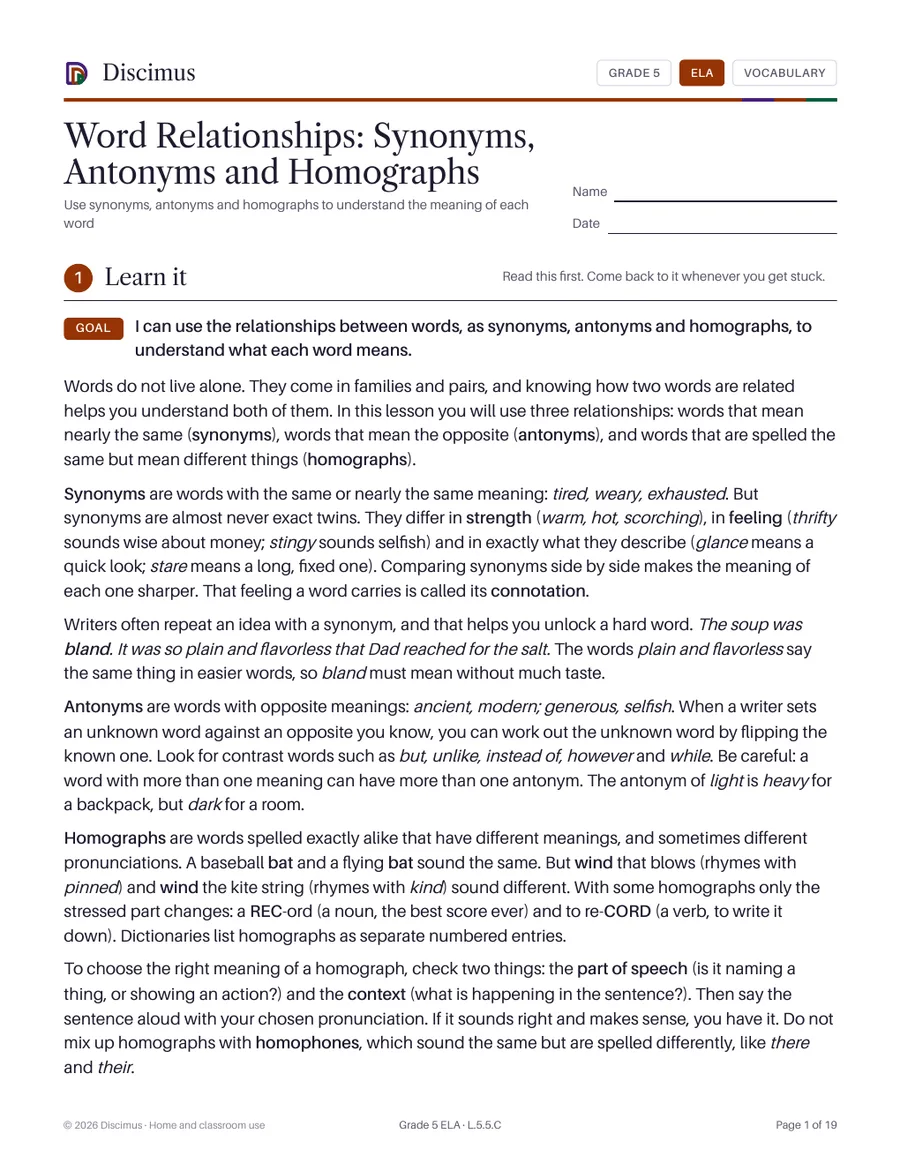
Use synonyms, antonyms and homographs to understand the meaning of each word
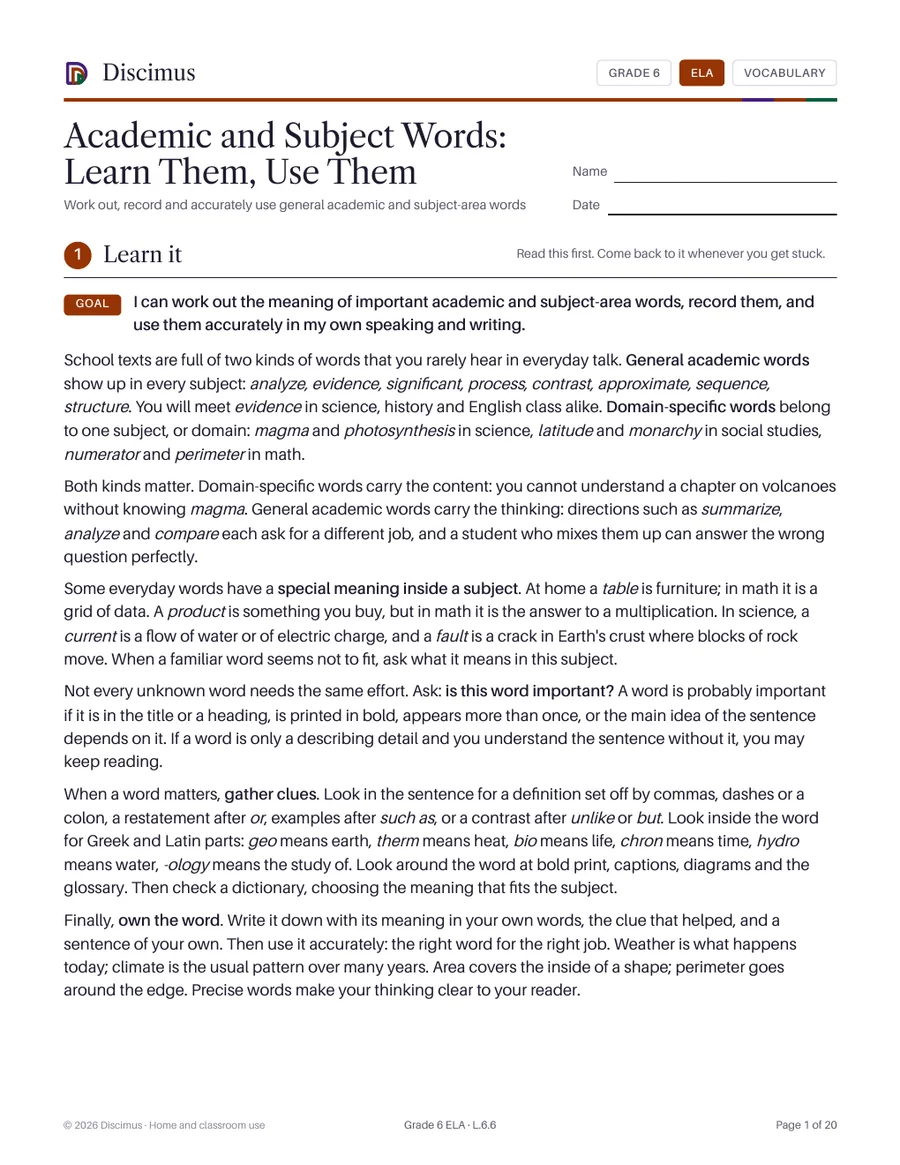
Work out, record and accurately use general academic and subject-area words
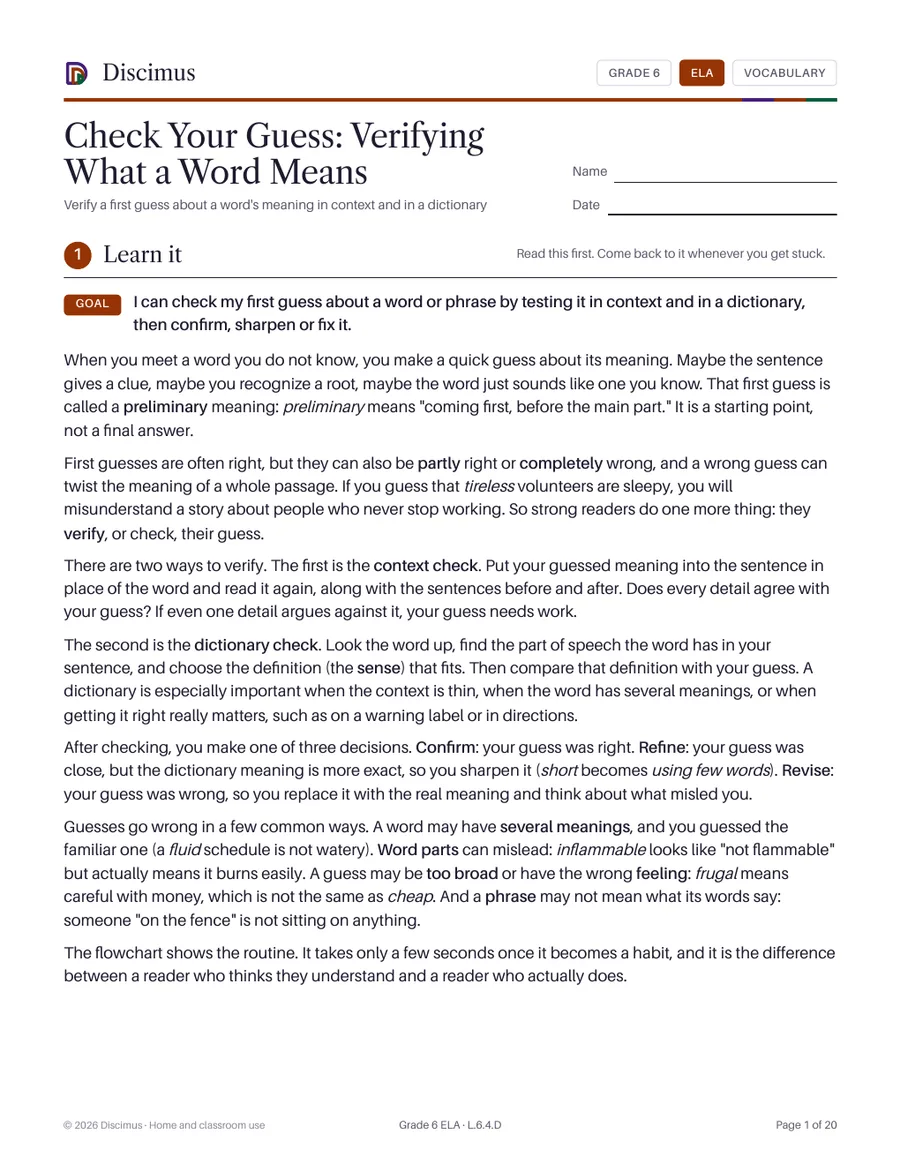
Verify a first guess about a word's meaning in context and in a dictionary
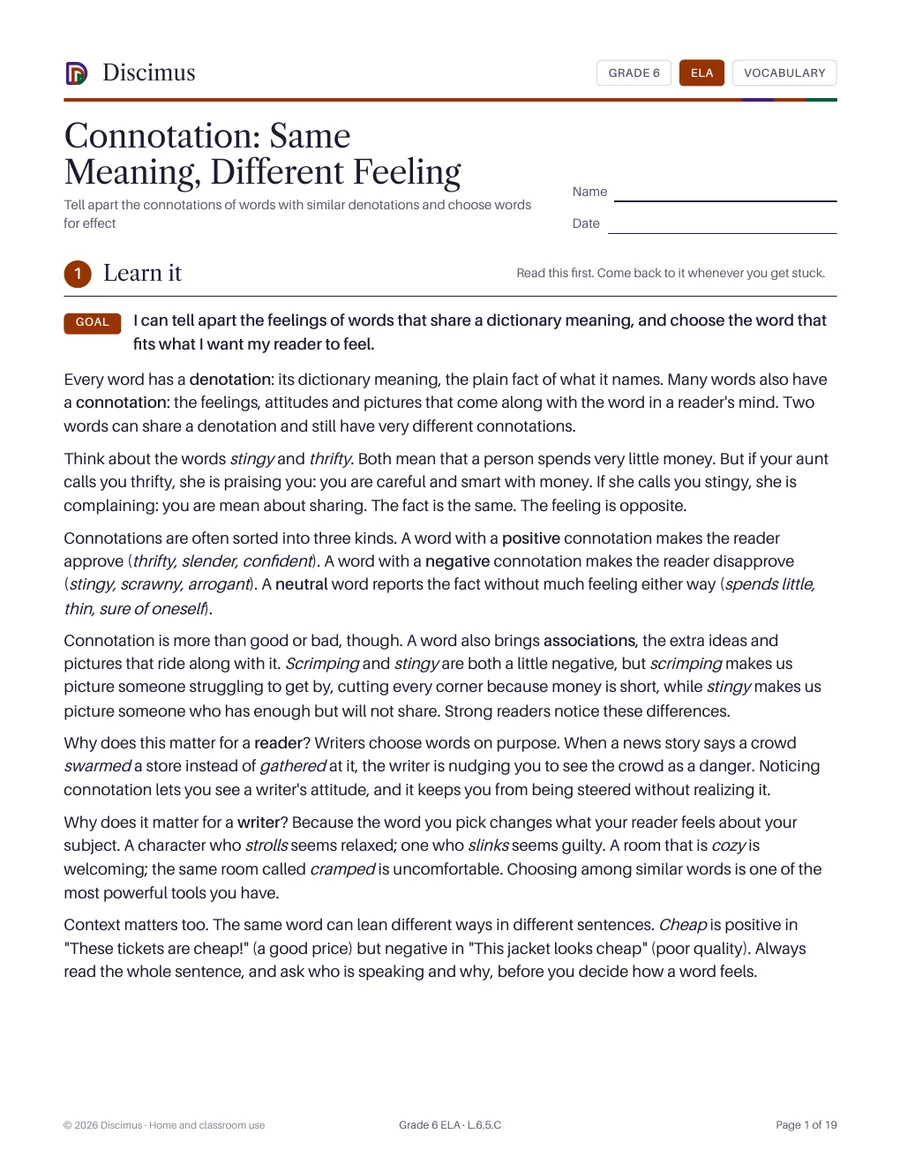
Tell apart the connotations of words with similar denotations and choose words for effect
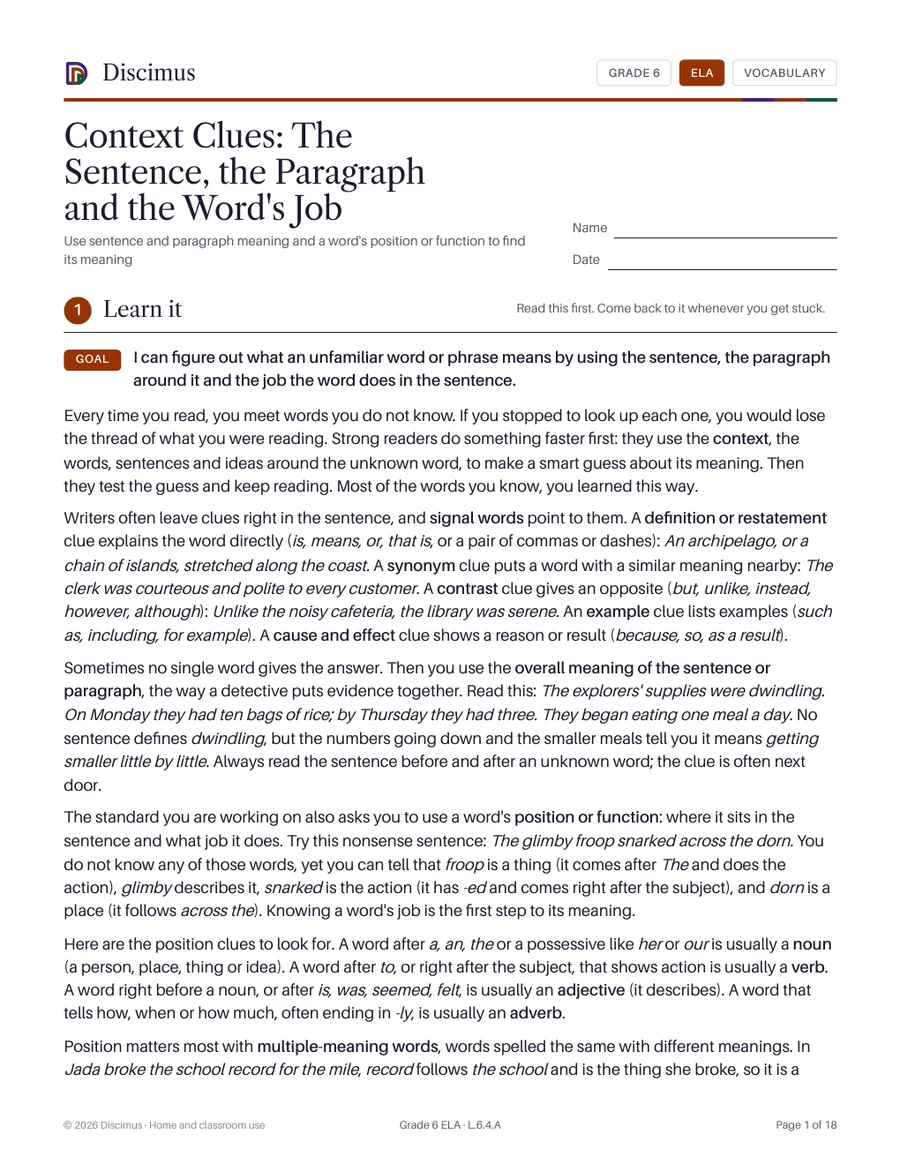
Use sentence and paragraph meaning and a word's position or function to find its meaning
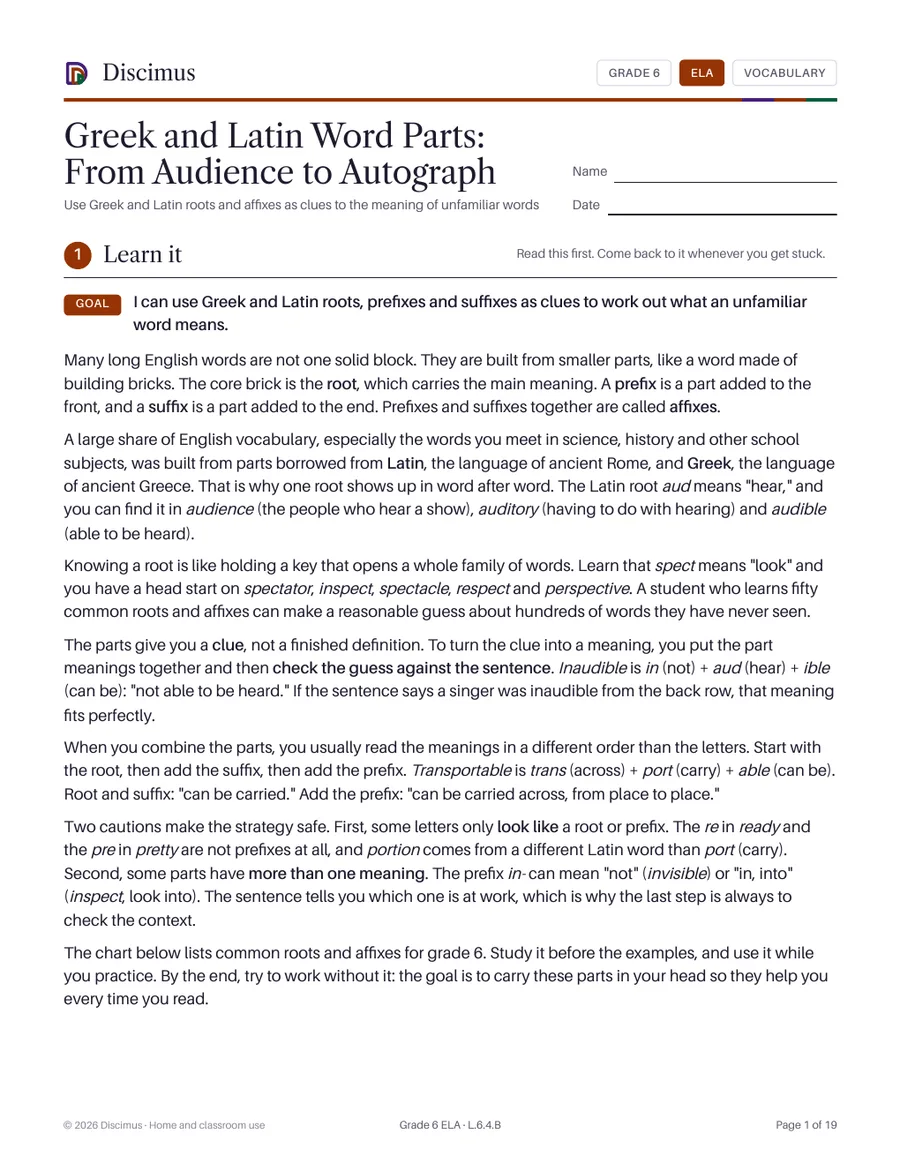
Use Greek and Latin roots and affixes as clues to the meaning of unfamiliar words
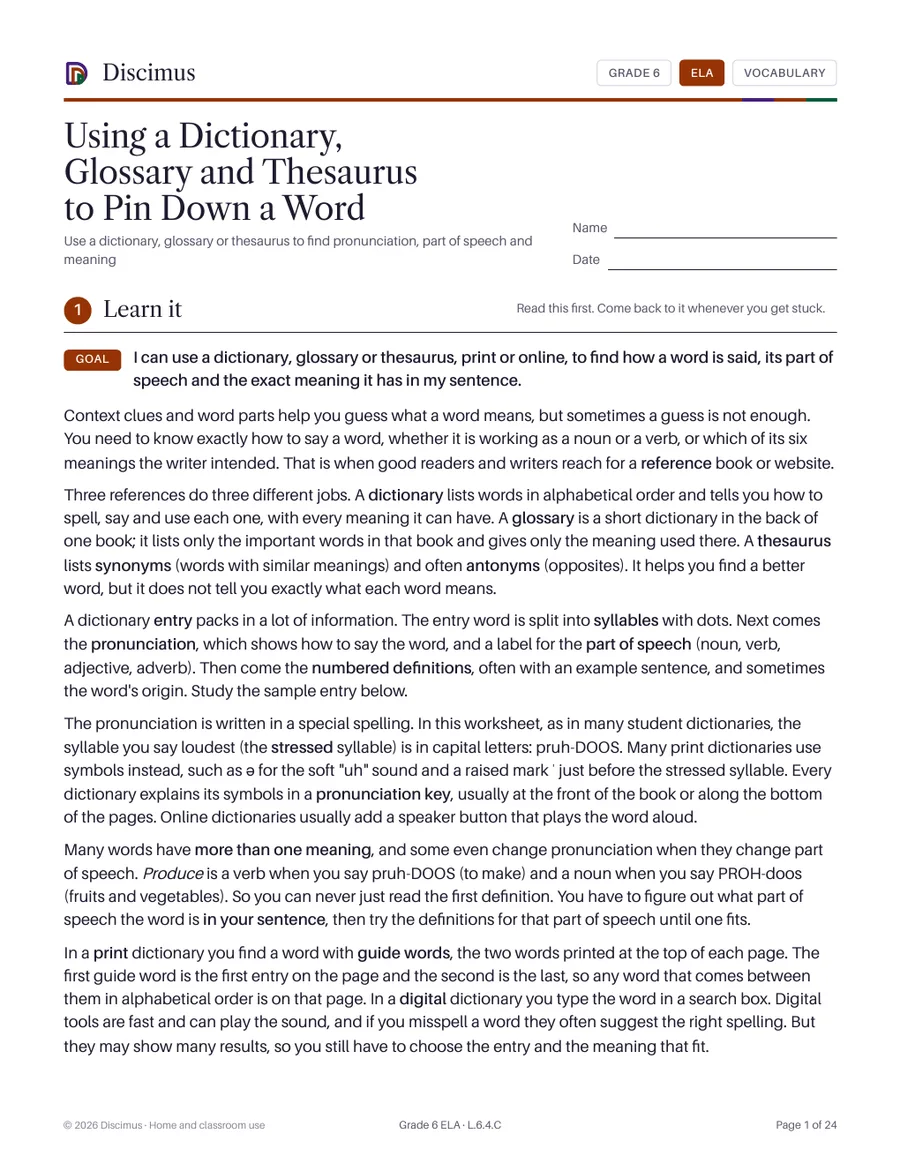
Use a dictionary, glossary or thesaurus to find pronunciation, part of speech and meaning
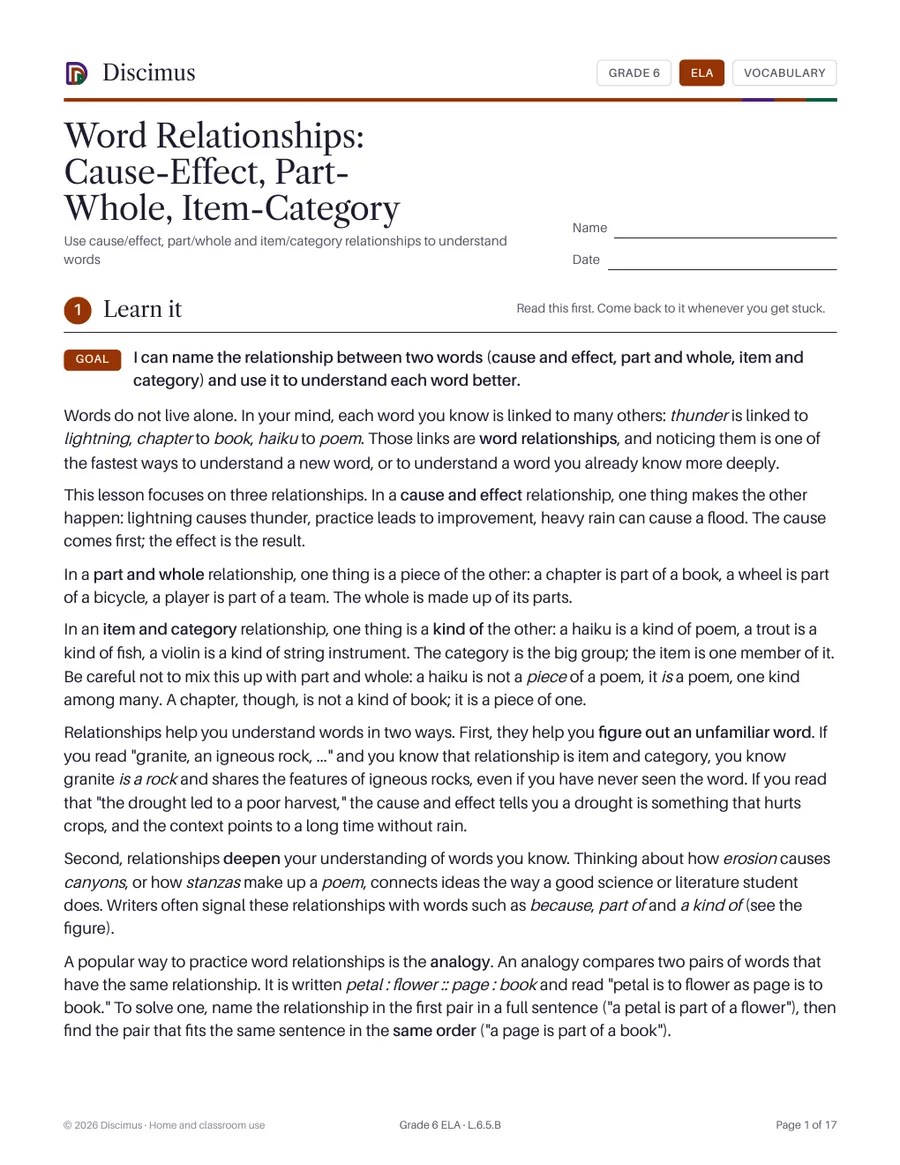
Use cause/effect, part/whole and item/category relationships to understand words
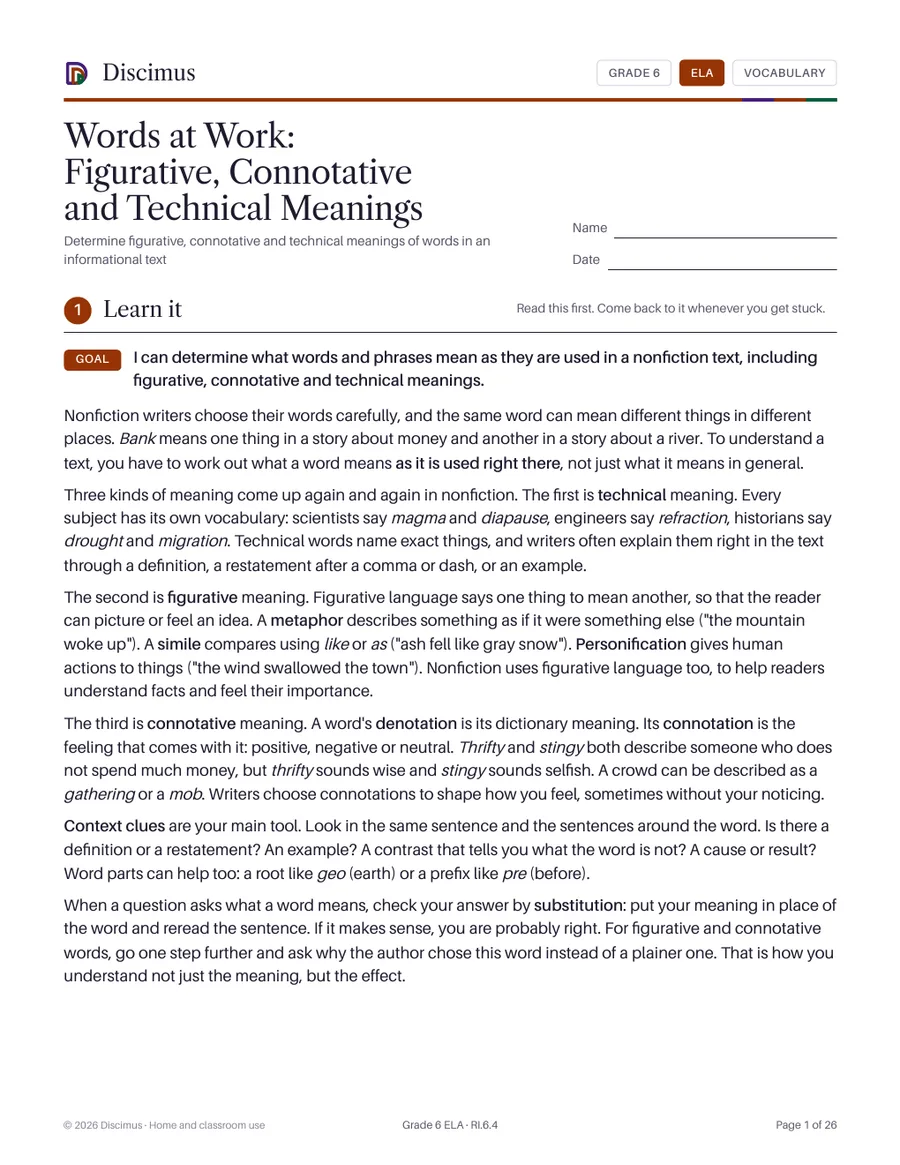
Determine figurative, connotative and technical meanings of words in an informational text
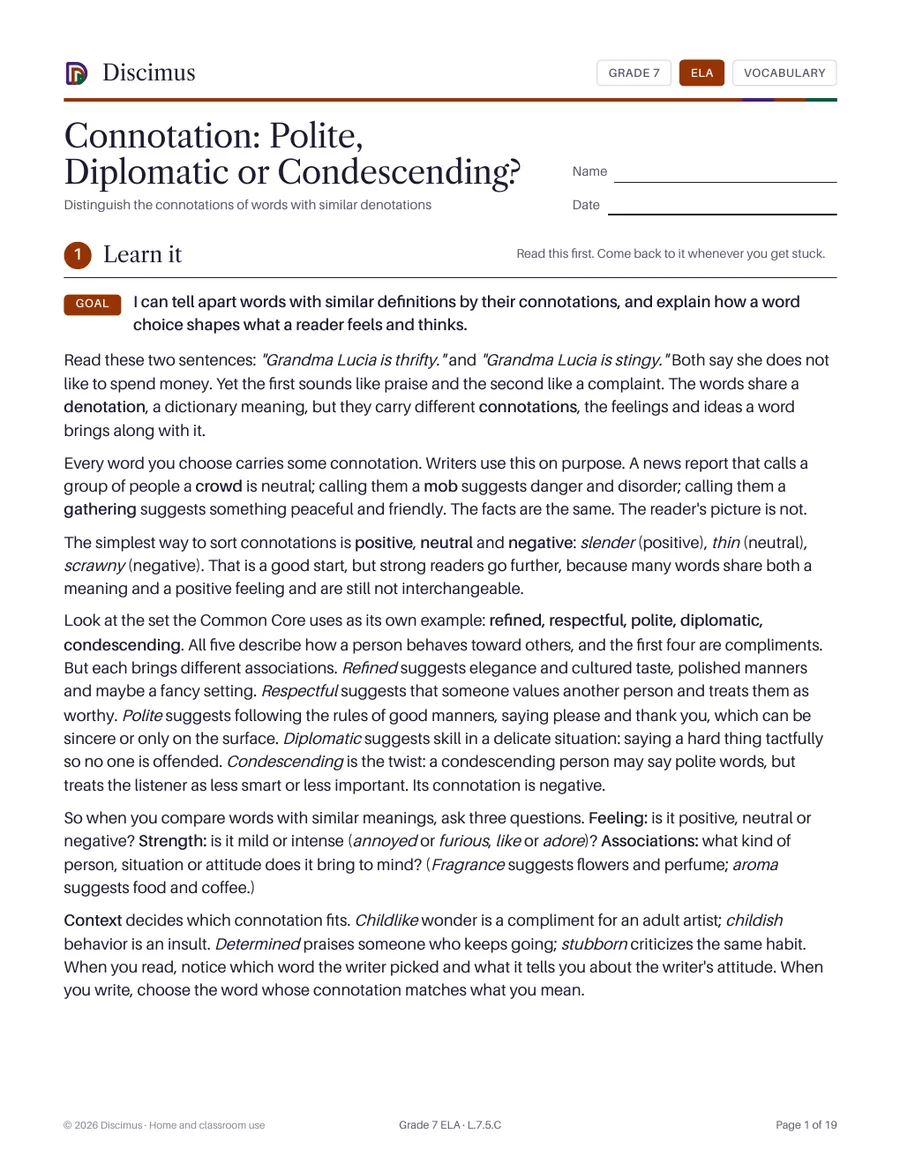
Distinguish the connotations of words with similar denotations
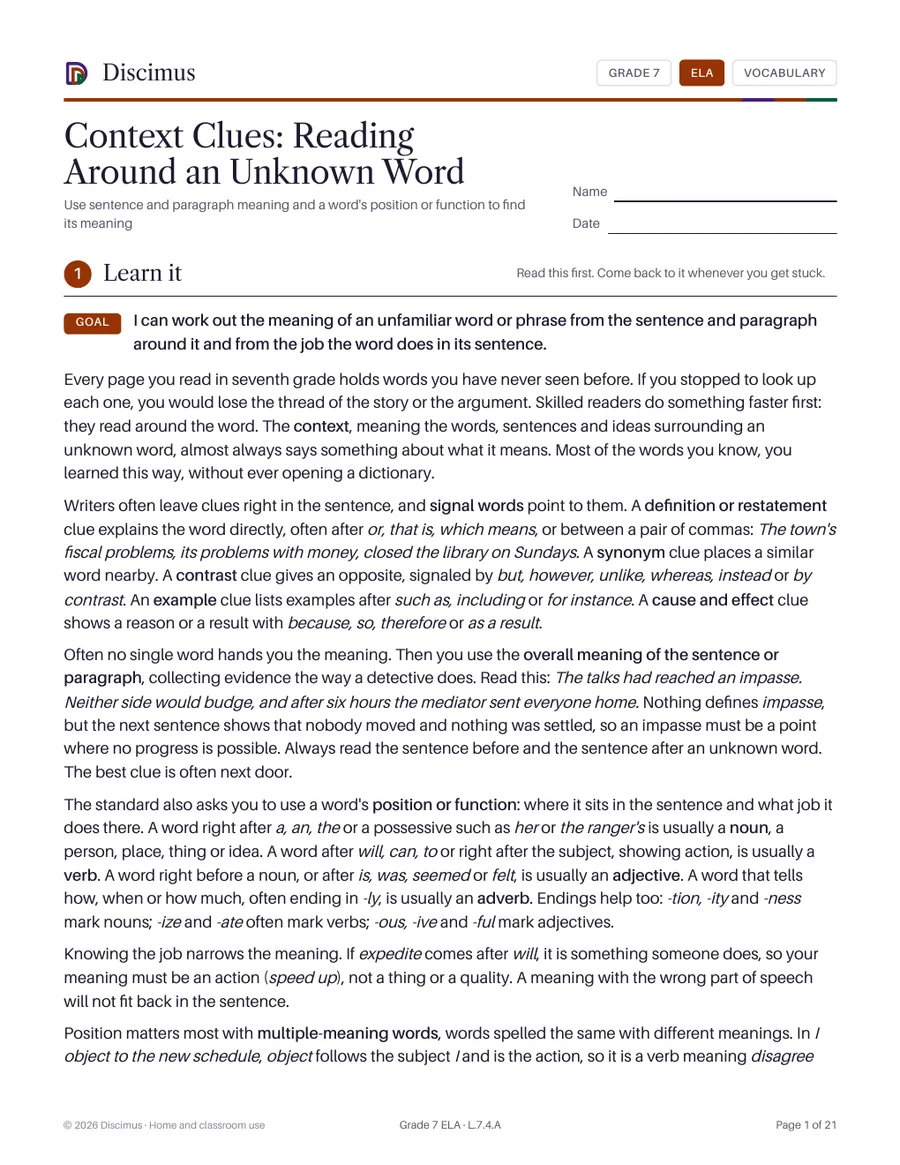
Use sentence and paragraph meaning and a word's position or function to find its meaning
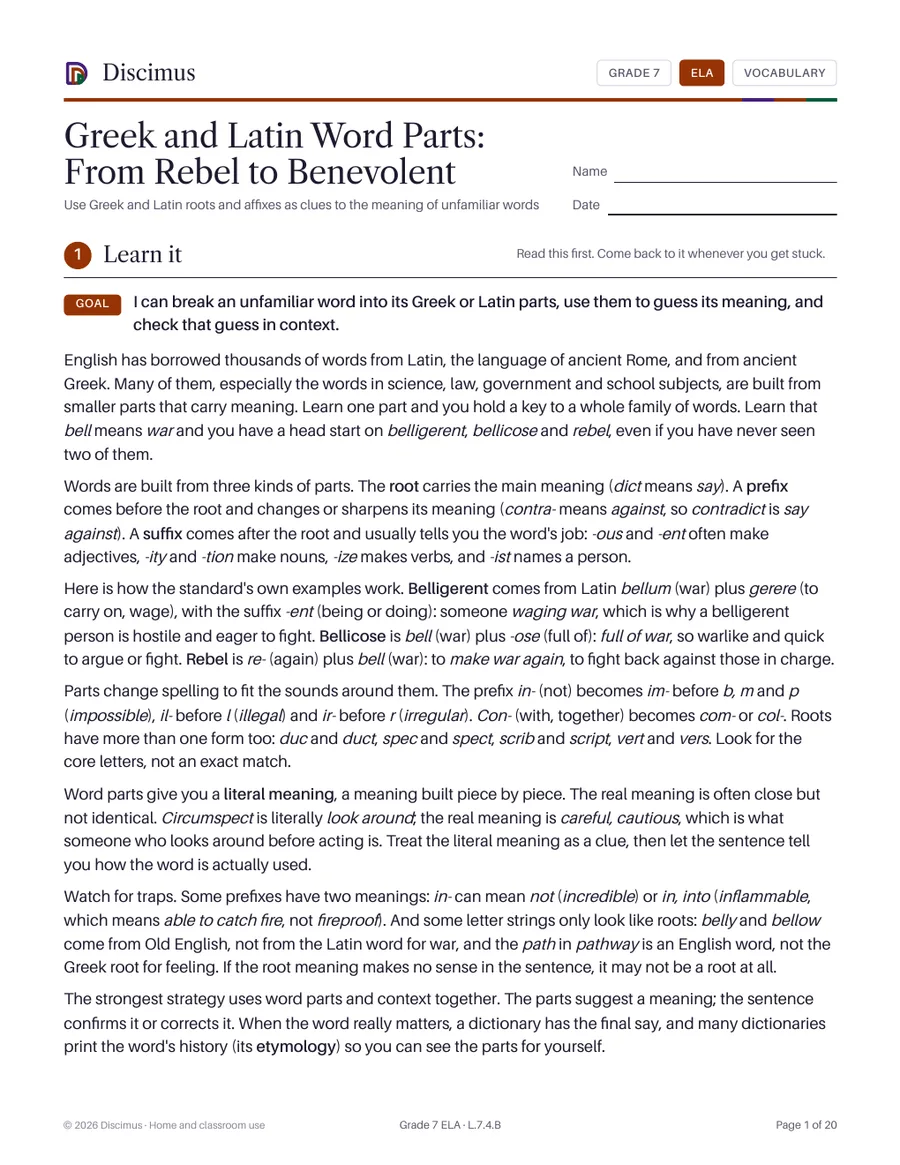
Use Greek and Latin roots and affixes as clues to the meaning of unfamiliar words
Verify a first guess about a word's meaning by checking it in context and in a dictionary
Use print and digital references to find pronunciation, part of speech and precise meaning
Use synonym, antonym and analogy relationships to understand each word in a pair
Learn and accurately use general academic and domain-specific words and phrases
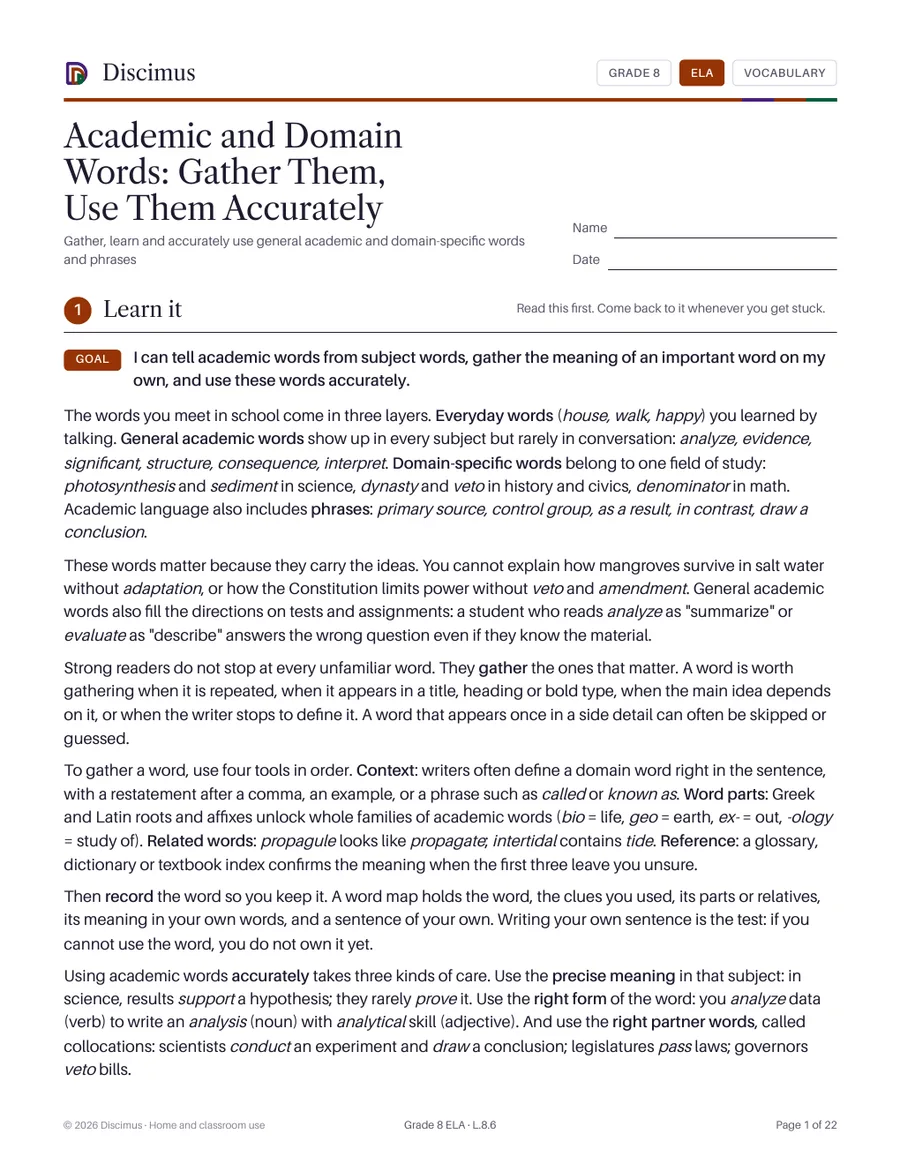
Gather, learn and accurately use general academic and domain-specific words and phrases
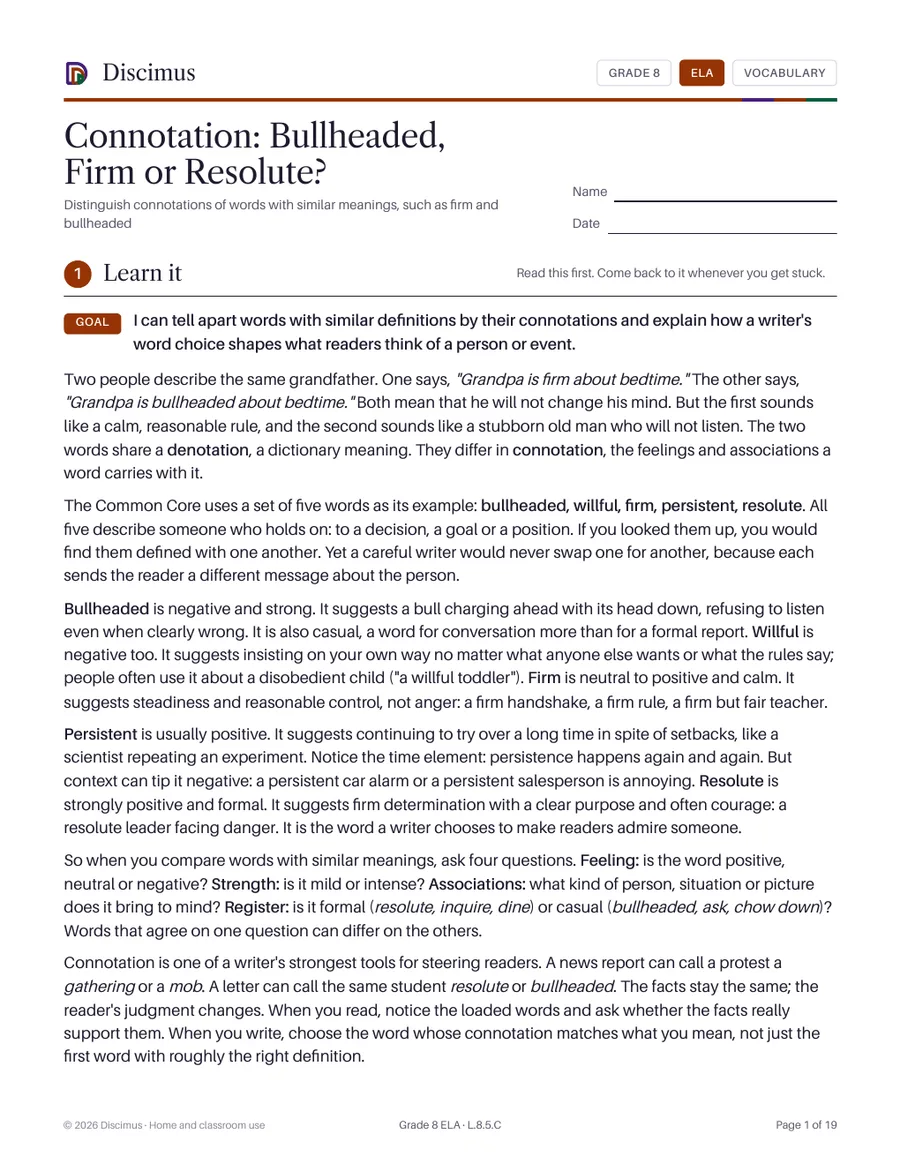
Distinguish connotations of words with similar meanings, such as firm and bullheaded
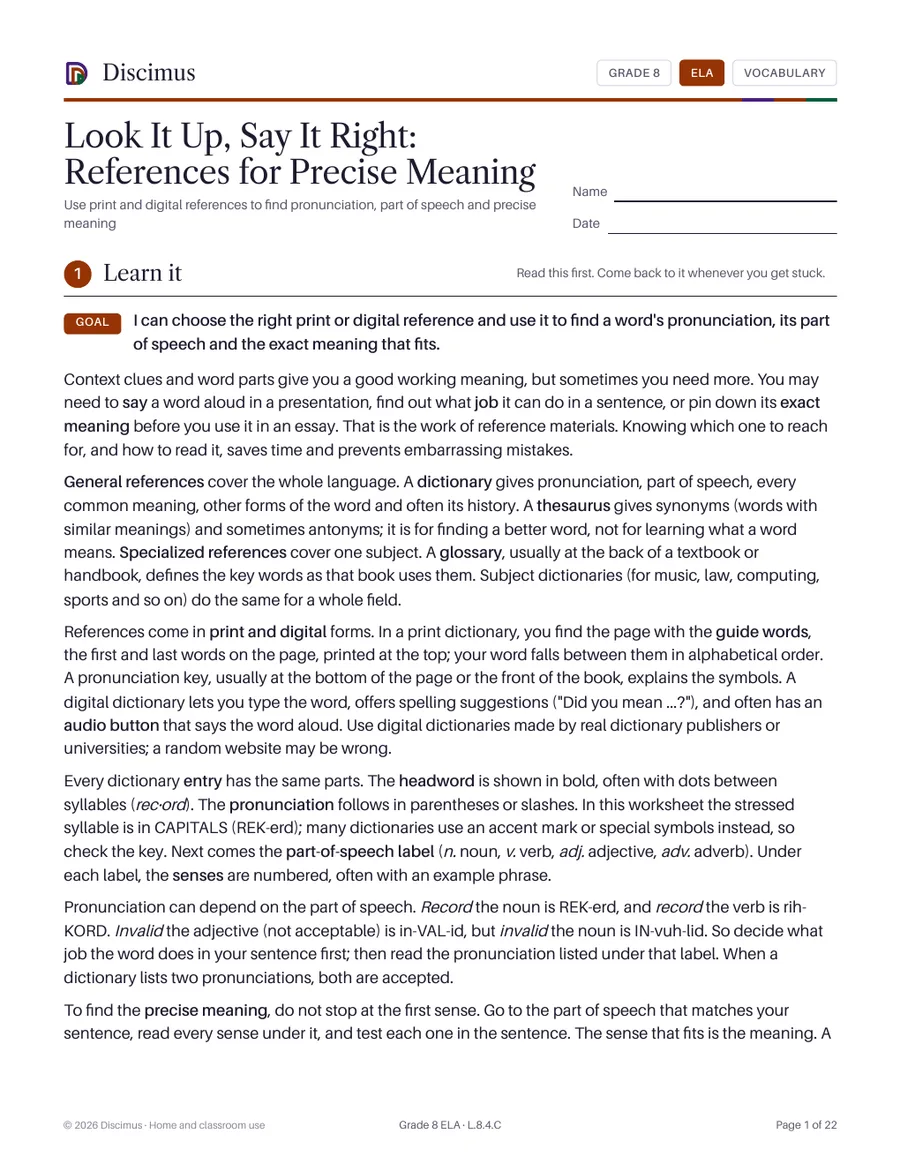
Use print and digital references to find pronunciation, part of speech and precise meaning
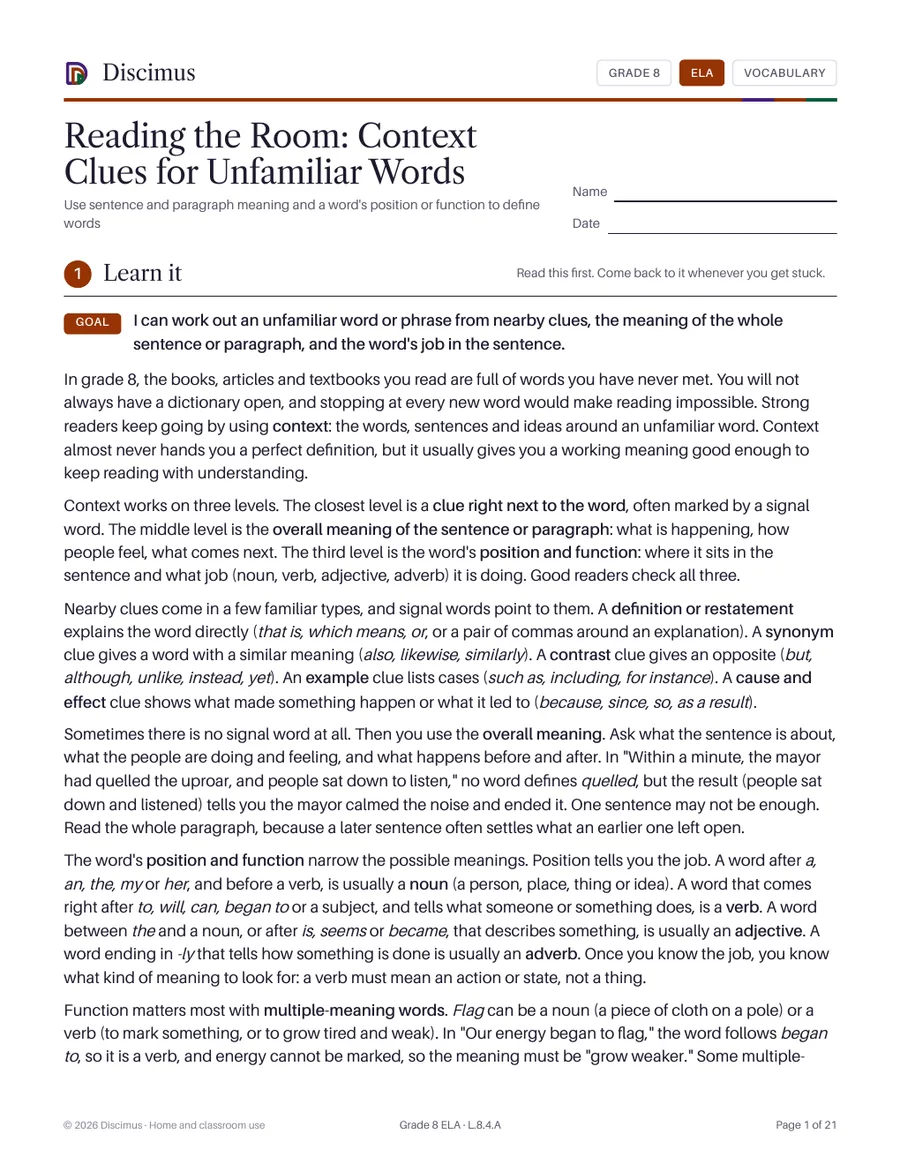
Use sentence and paragraph meaning and a word's position or function to define words
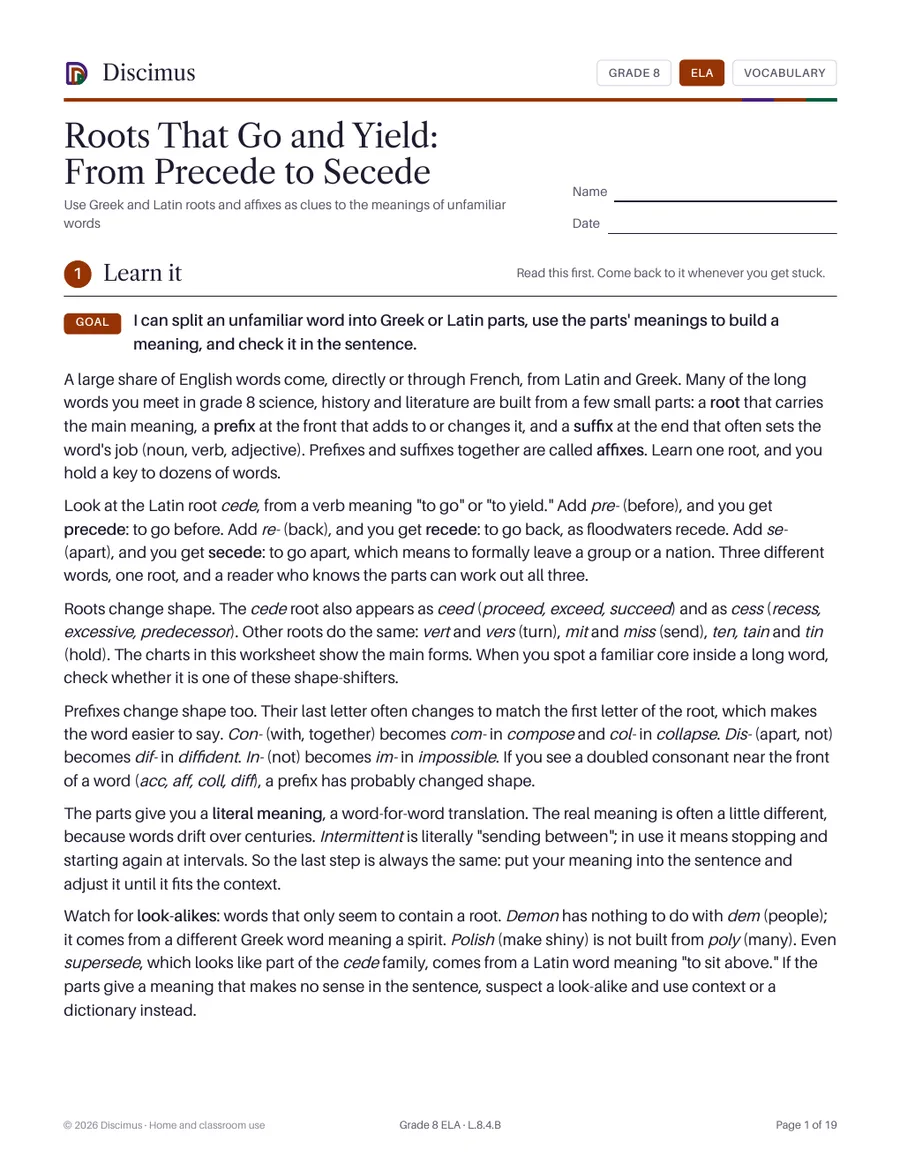
Use Greek and Latin roots and affixes as clues to the meanings of unfamiliar words
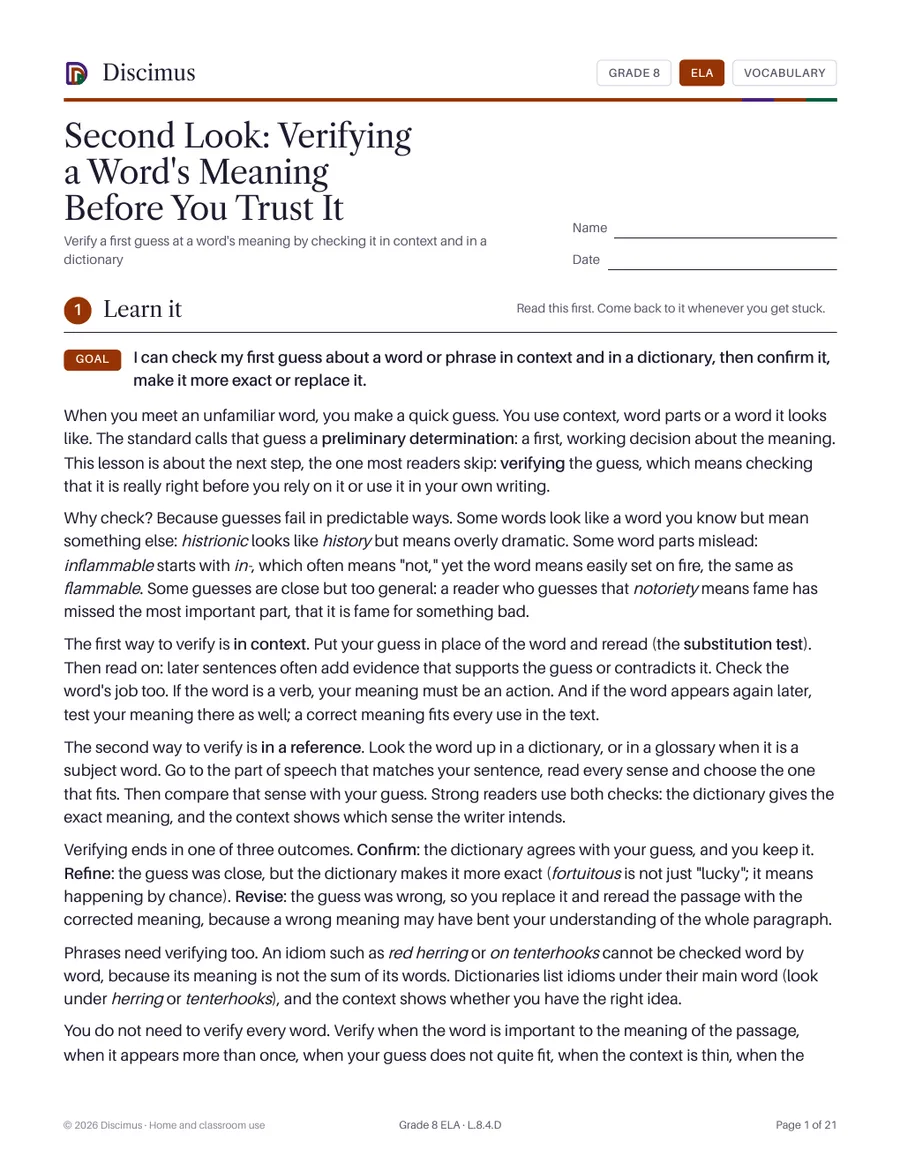
Verify a first guess at a word's meaning by checking it in context and in a dictionary
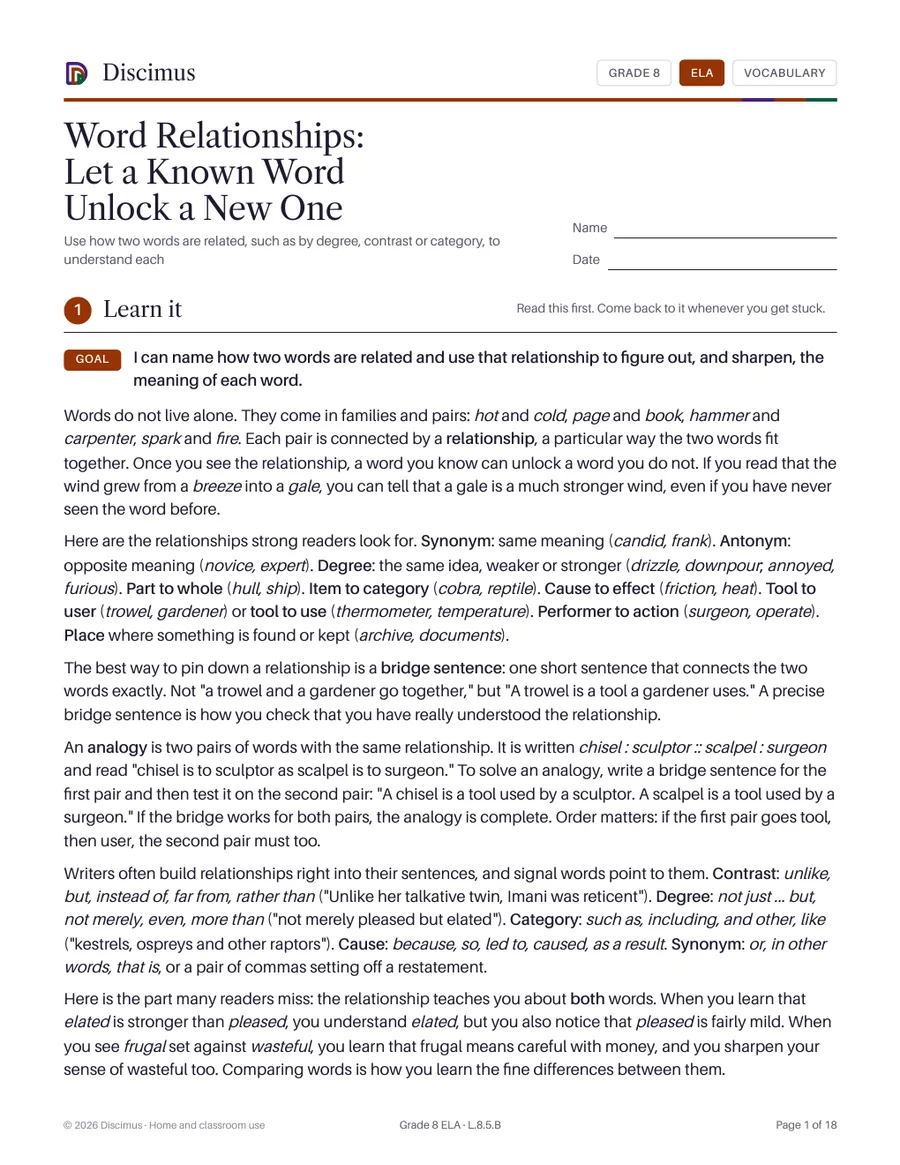
Use how two words are related, such as by degree, contrast or category, to understand each
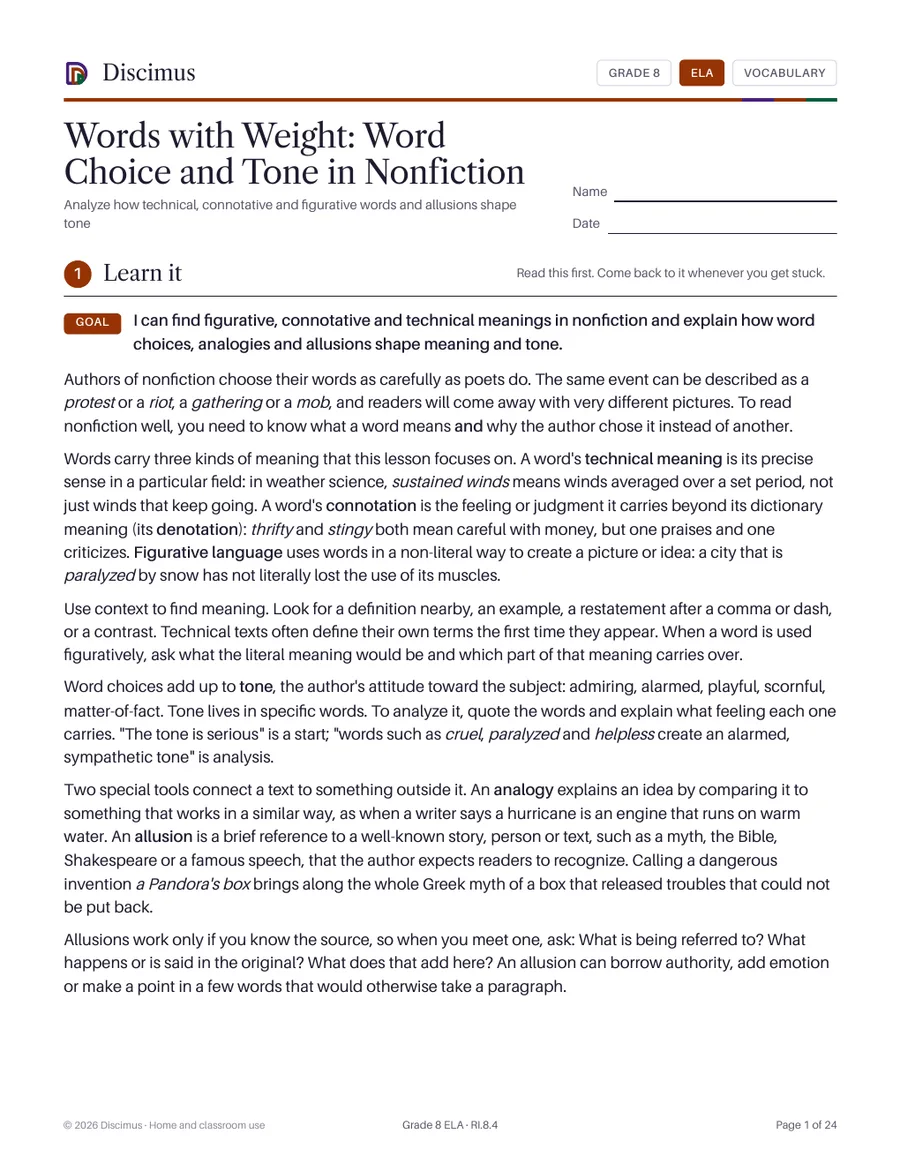
Analyze how technical, connotative and figurative words and allusions shape tone
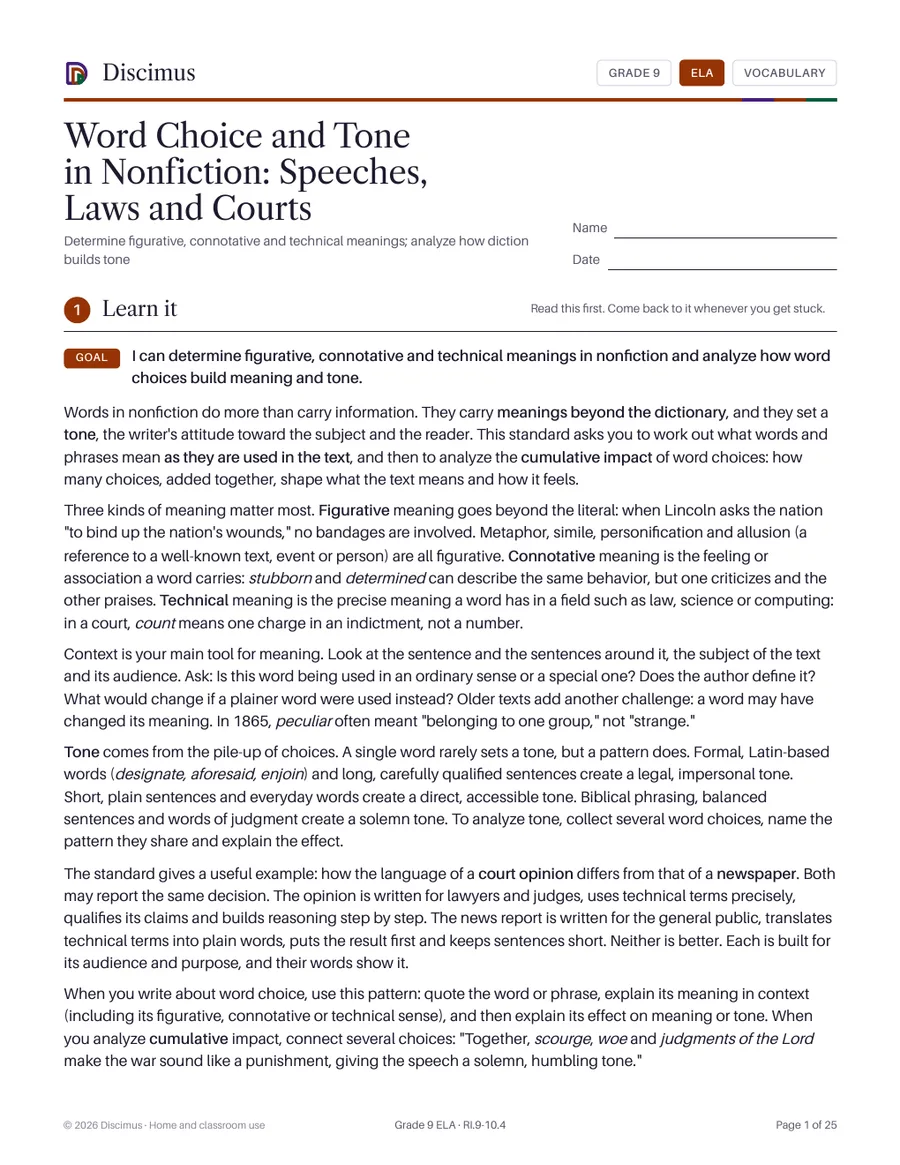
Determine figurative, connotative and technical meanings; analyze how diction builds tone
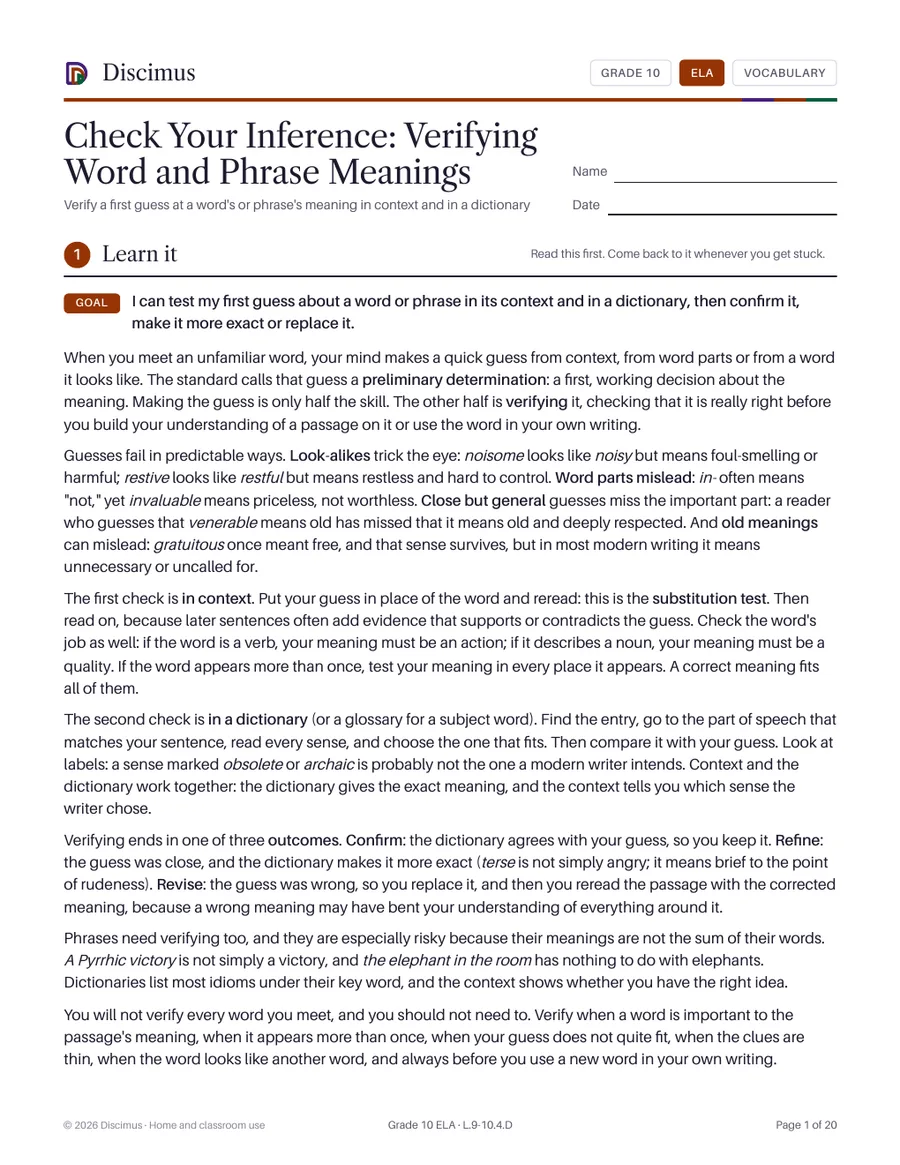
Verify a first guess at a word's or phrase's meaning in context and in a dictionary
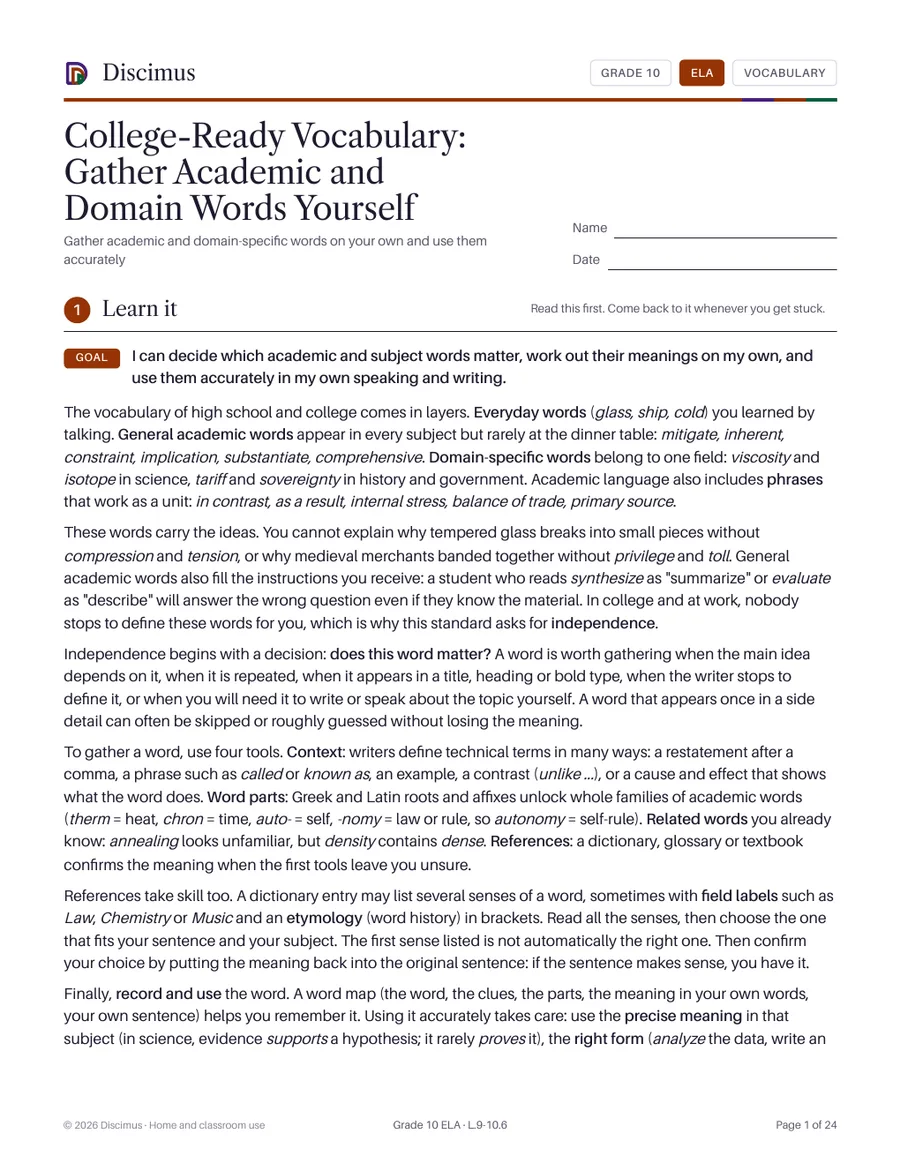
Gather academic and domain-specific words on your own and use them accurately
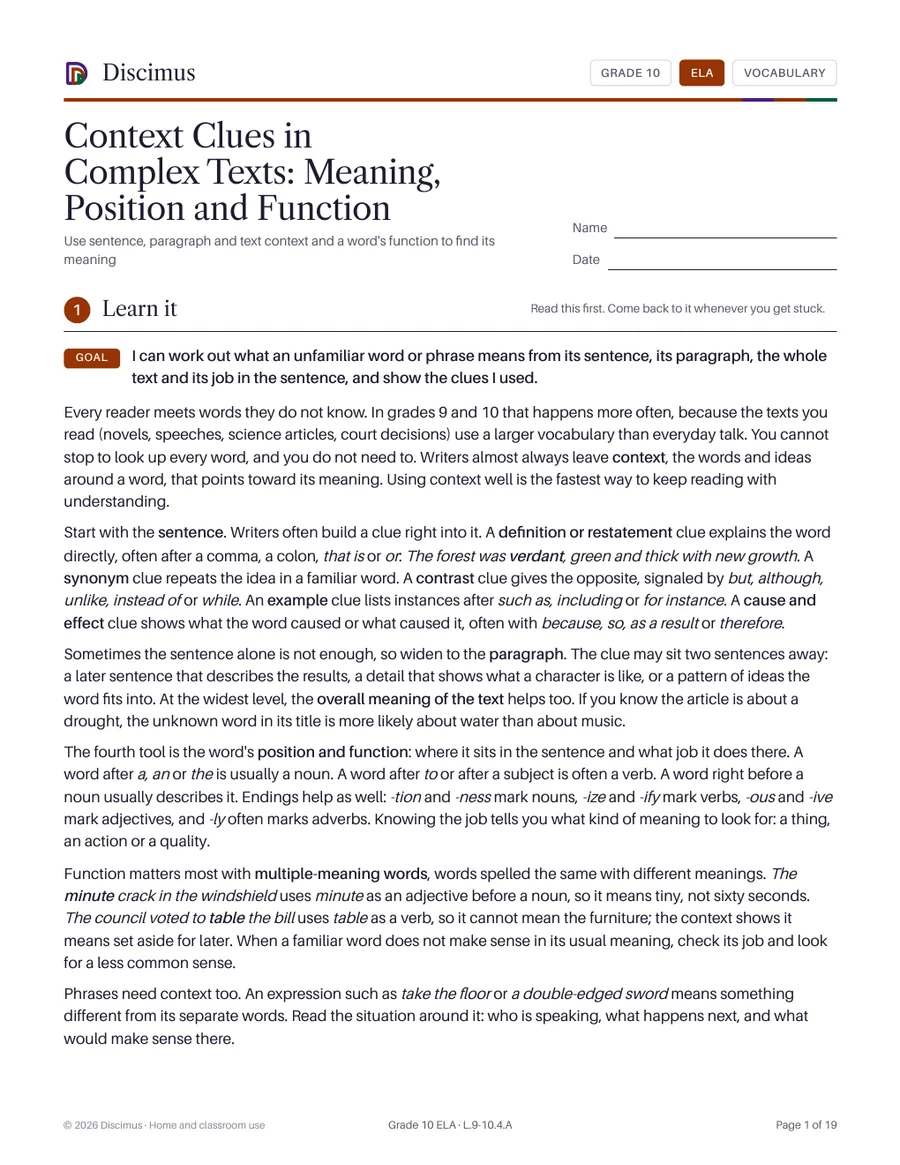
Use sentence, paragraph and text context and a word's function to find its meaning
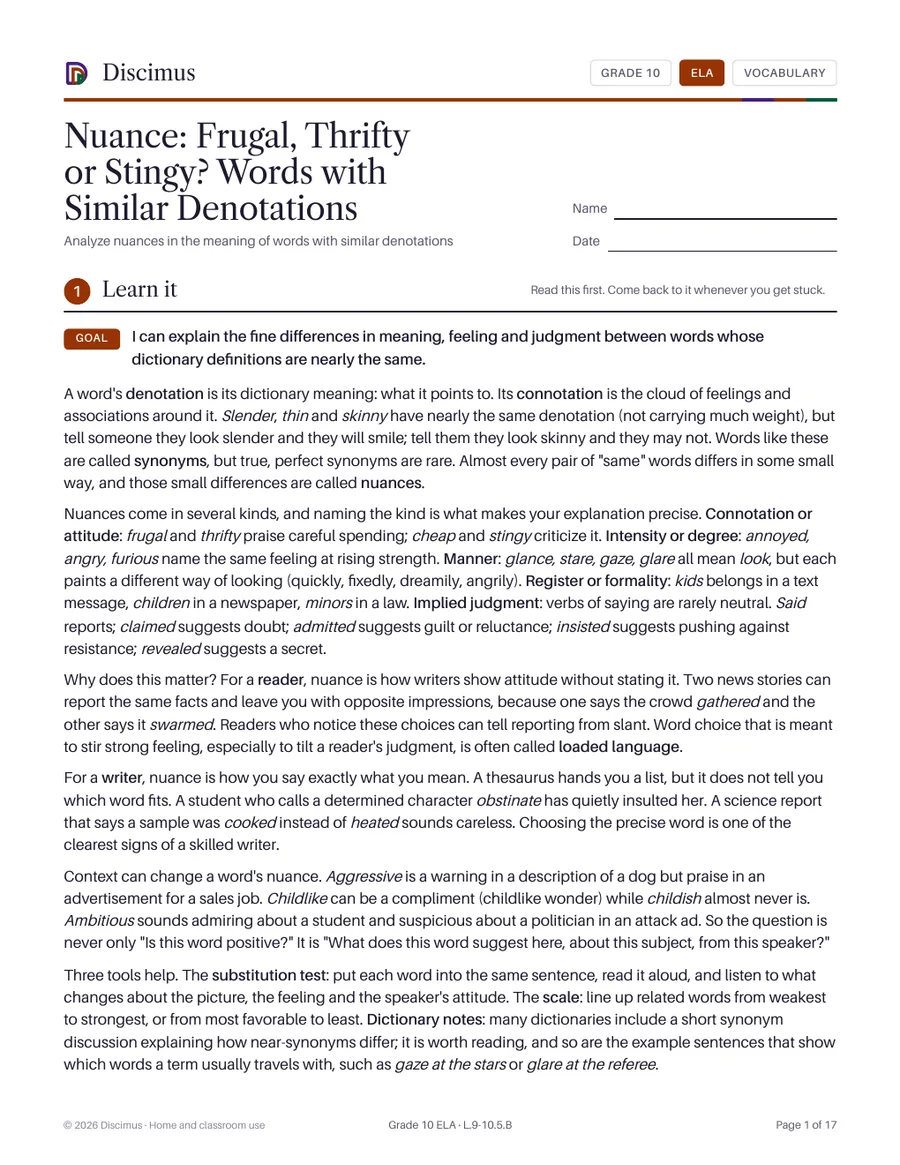
Analyze nuances in the meaning of words with similar denotations
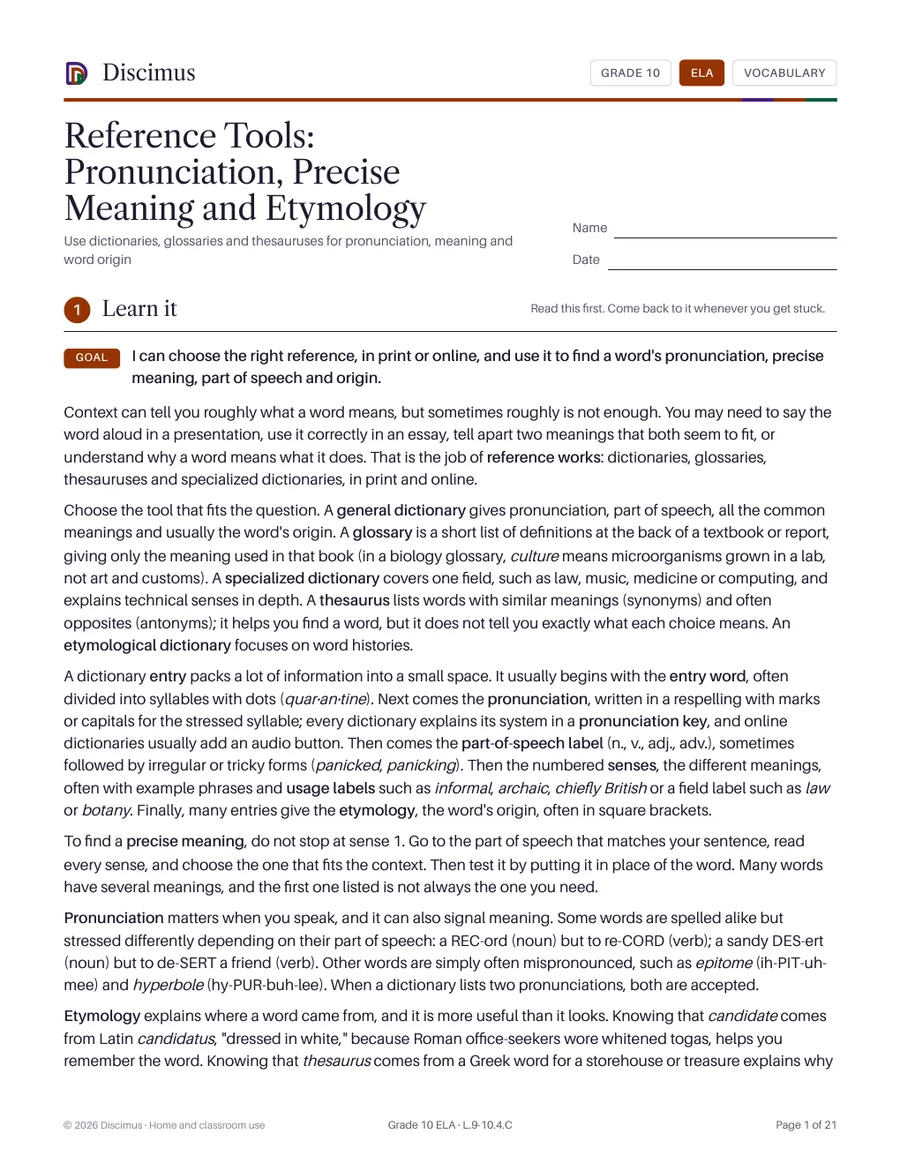
Use dictionaries, glossaries and thesauruses for pronunciation, meaning and word origin
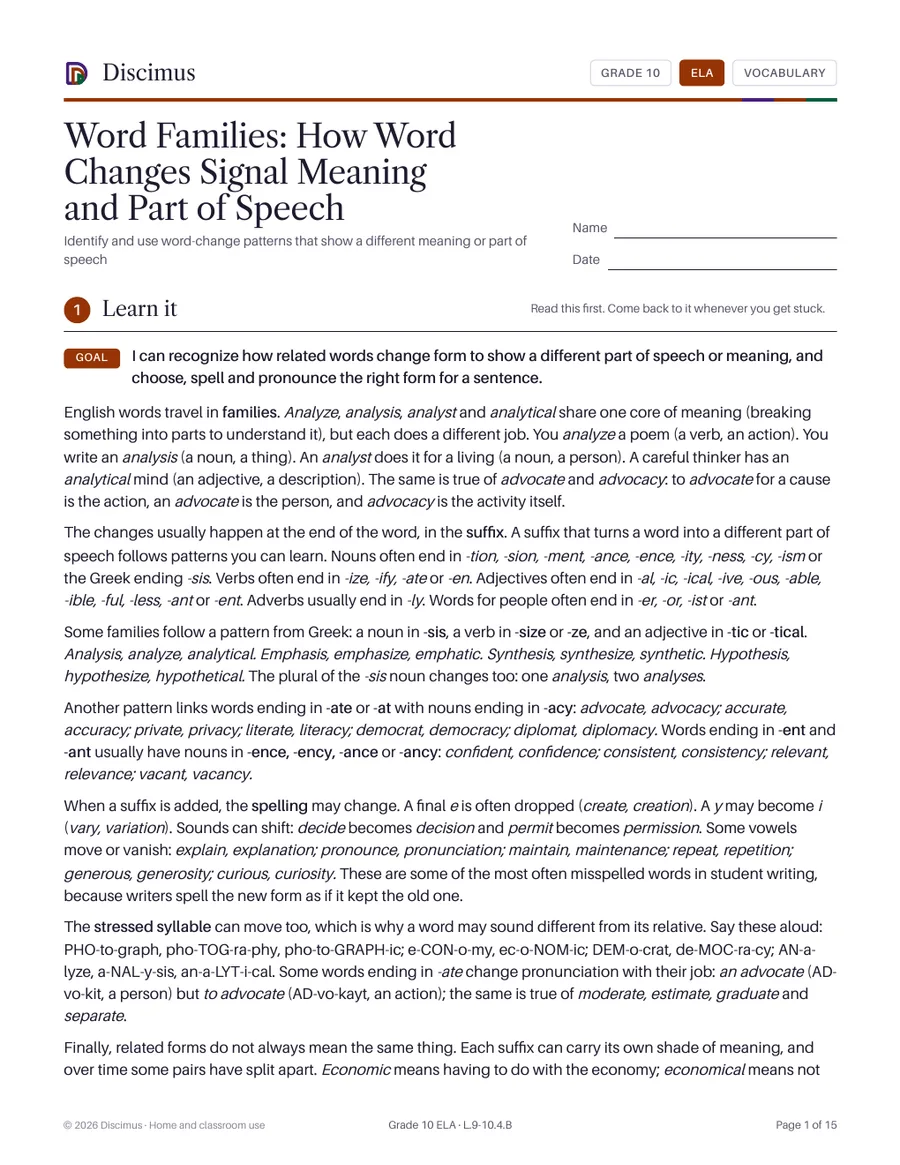
Identify and use word-change patterns that show a different meaning or part of speech
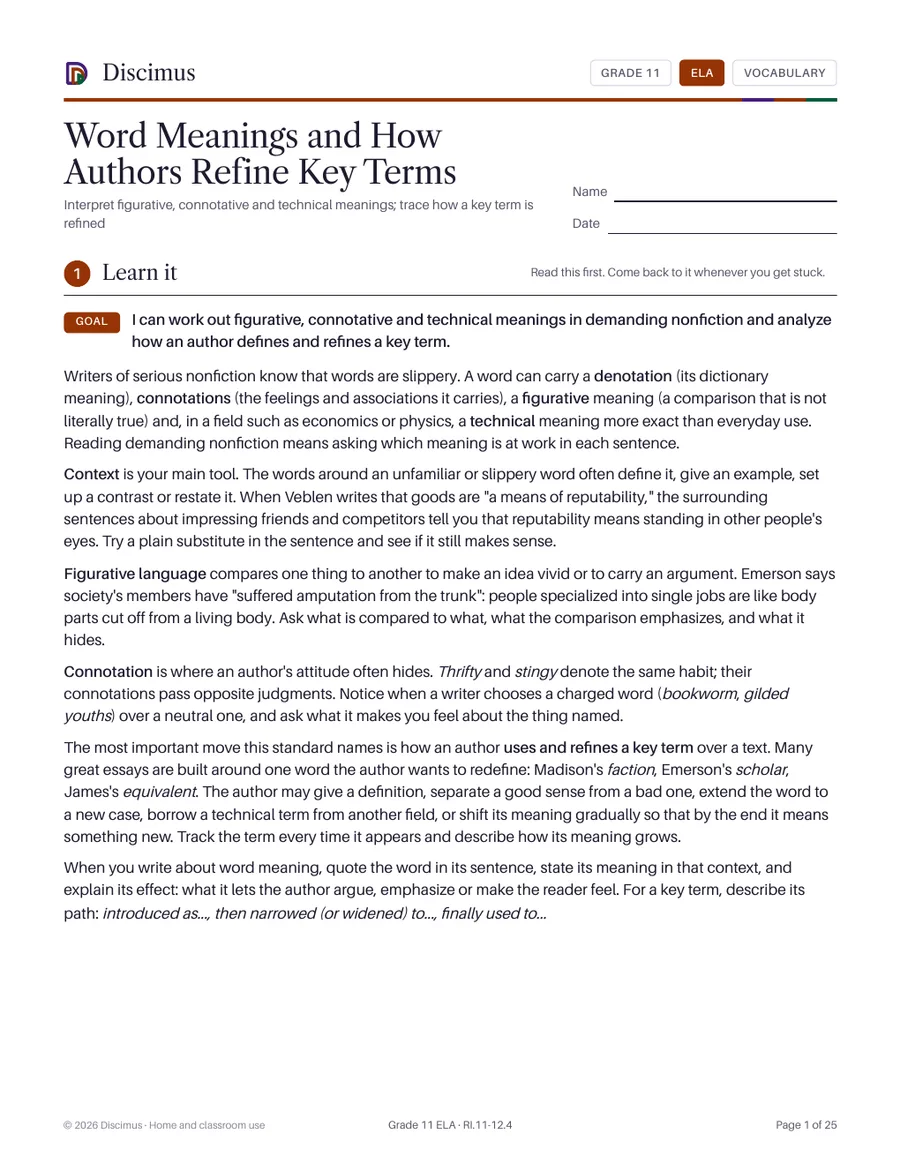
Interpret figurative, connotative and technical meanings; trace how a key term is refined
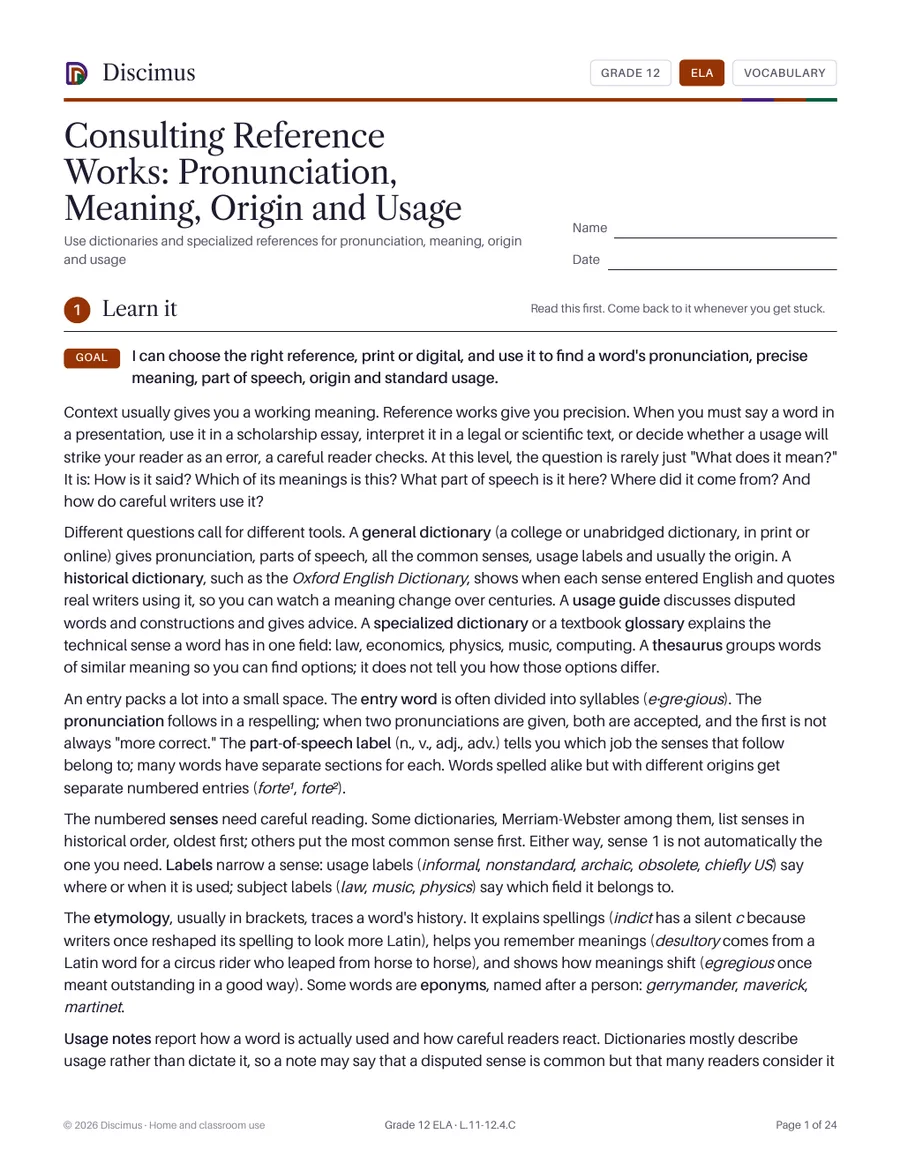
Use dictionaries and specialized references for pronunciation, meaning, origin and usage
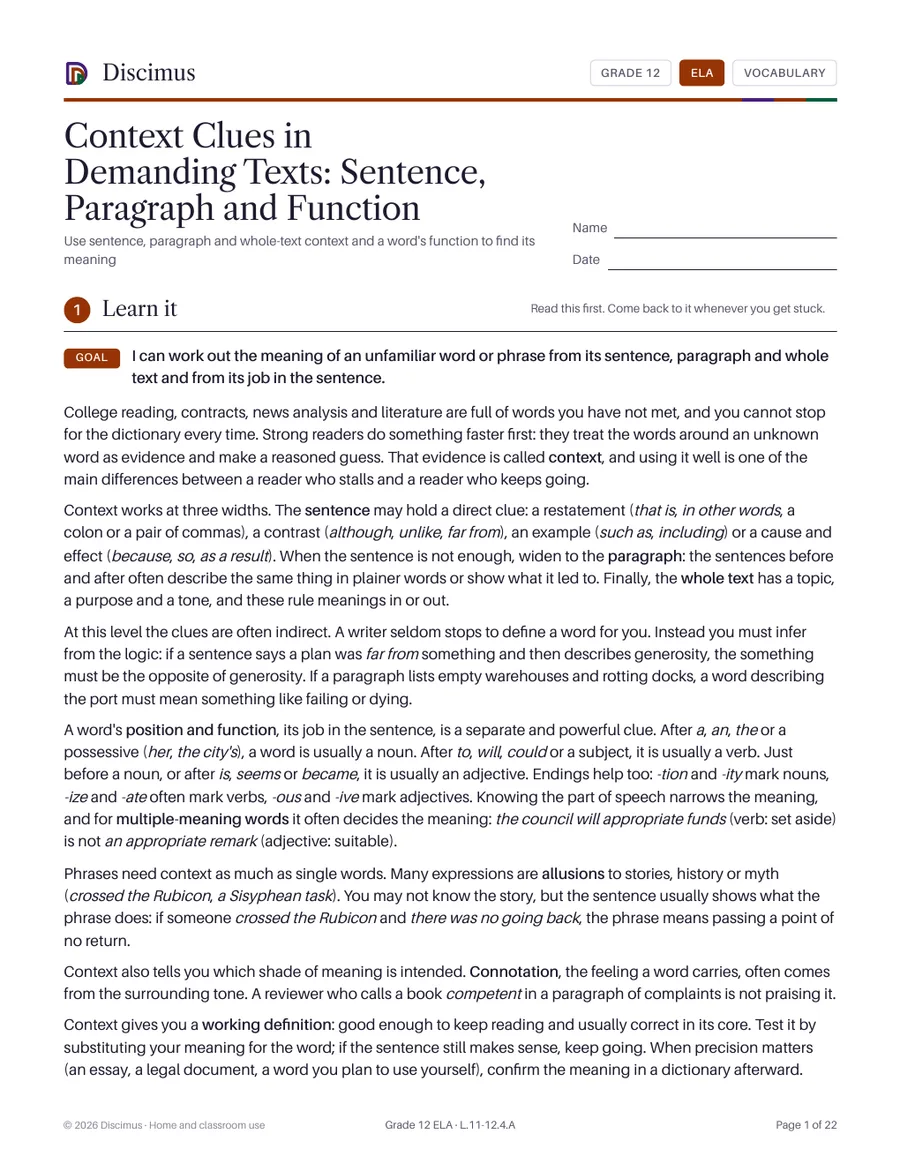
Use sentence, paragraph and whole-text context and a word's function to find its meaning
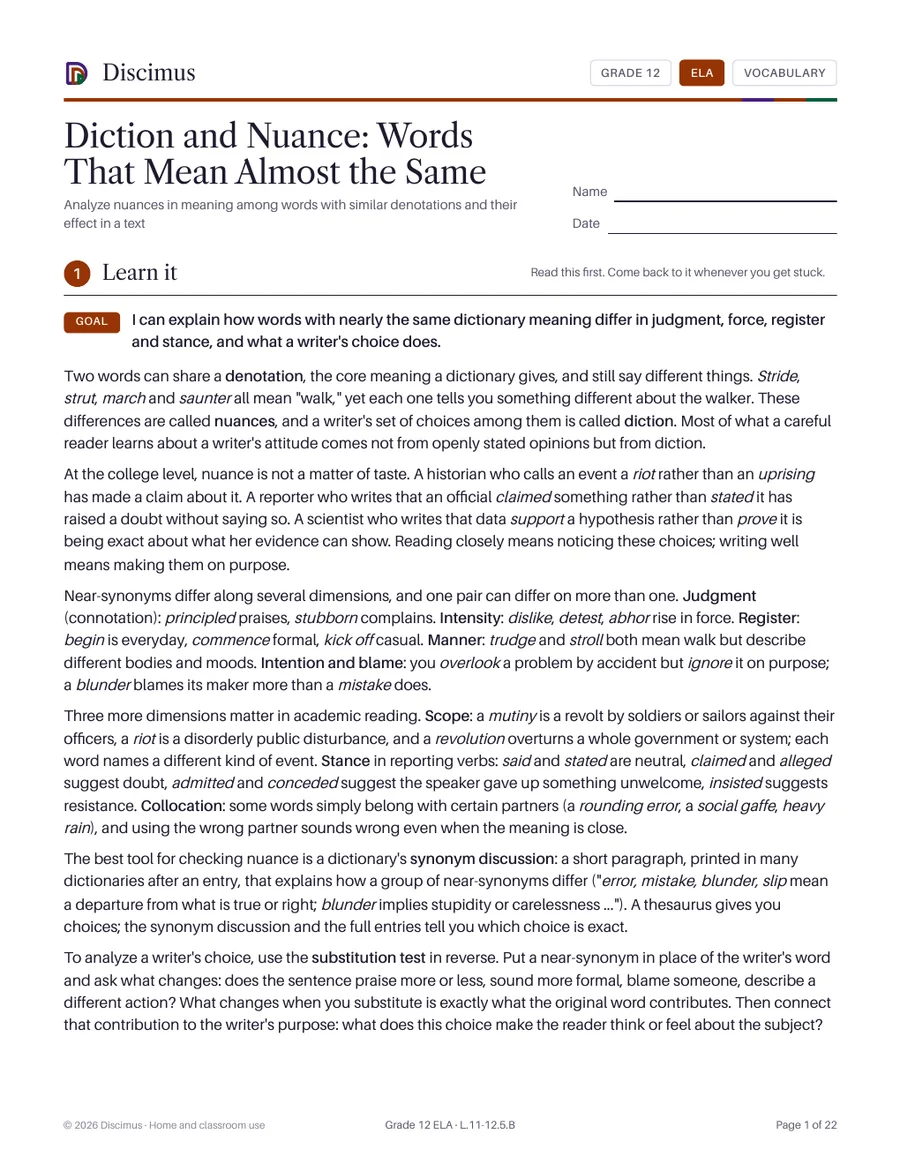
Analyze nuances in meaning among words with similar denotations and their effect in a text
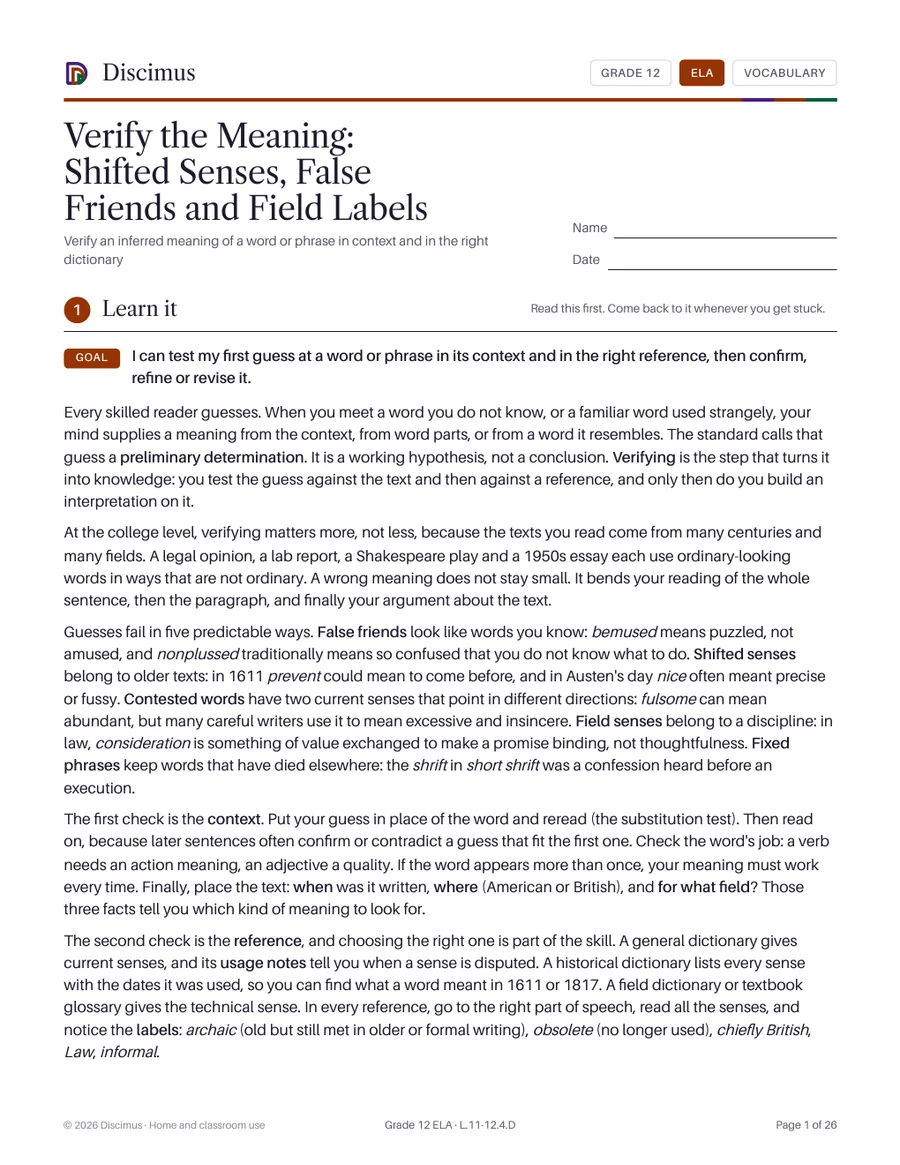
Verify an inferred meaning of a word or phrase in context and in the right dictionary
Identify and use word-change patterns that signal a different meaning or part of speech
Acquire, gather on your own and use accurately general academic and domain-specific words