Building and Drawing Shapes
Model shapes by building them from sticks and clay balls and by drawing them
38 worksheets match.
Model shapes by building them from sticks and clay balls and by drawing them
Describe and compare flat and solid shapes by their sides, corners, faces and side lengths
Identify shapes as flat (two-dimensional) or solid (three-dimensional)
Join simple shapes with full sides touching to make larger shapes
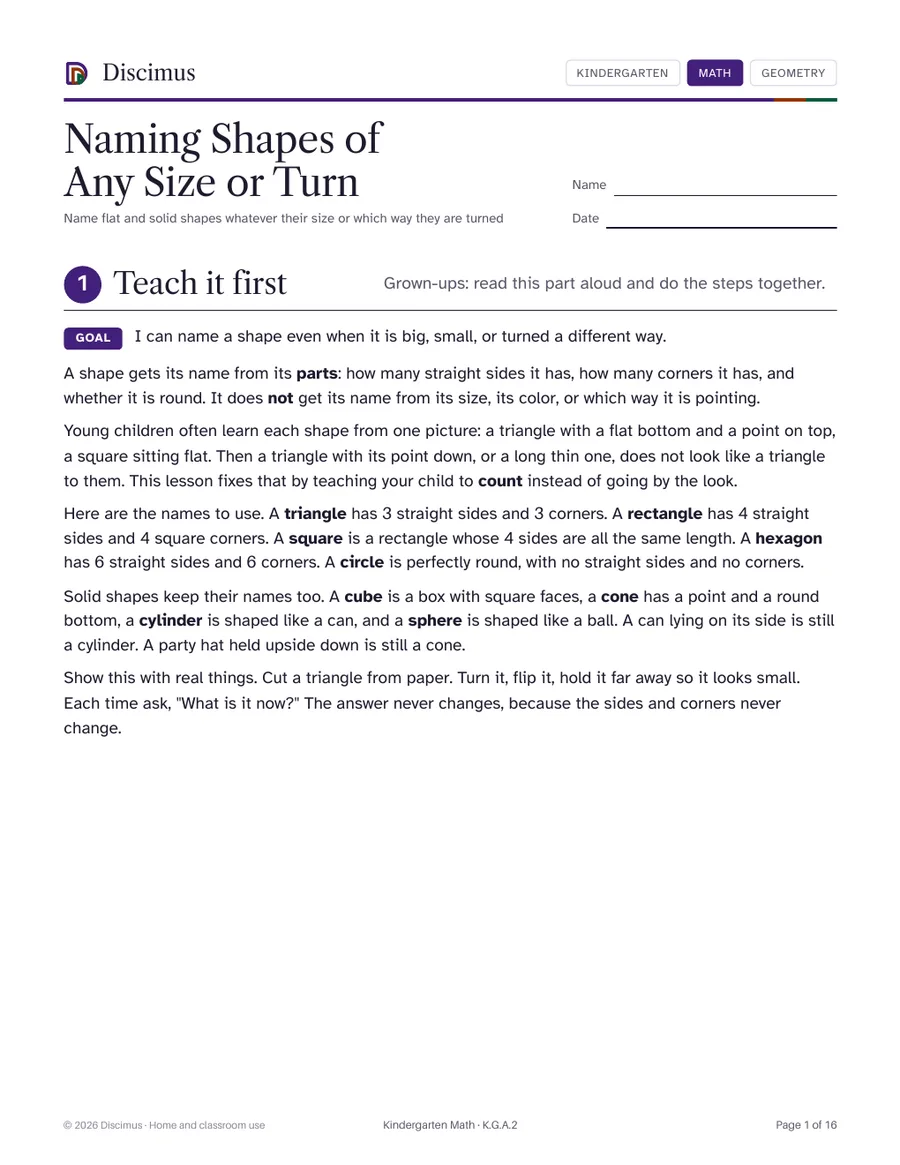
Name flat and solid shapes whatever their size or which way they are turned
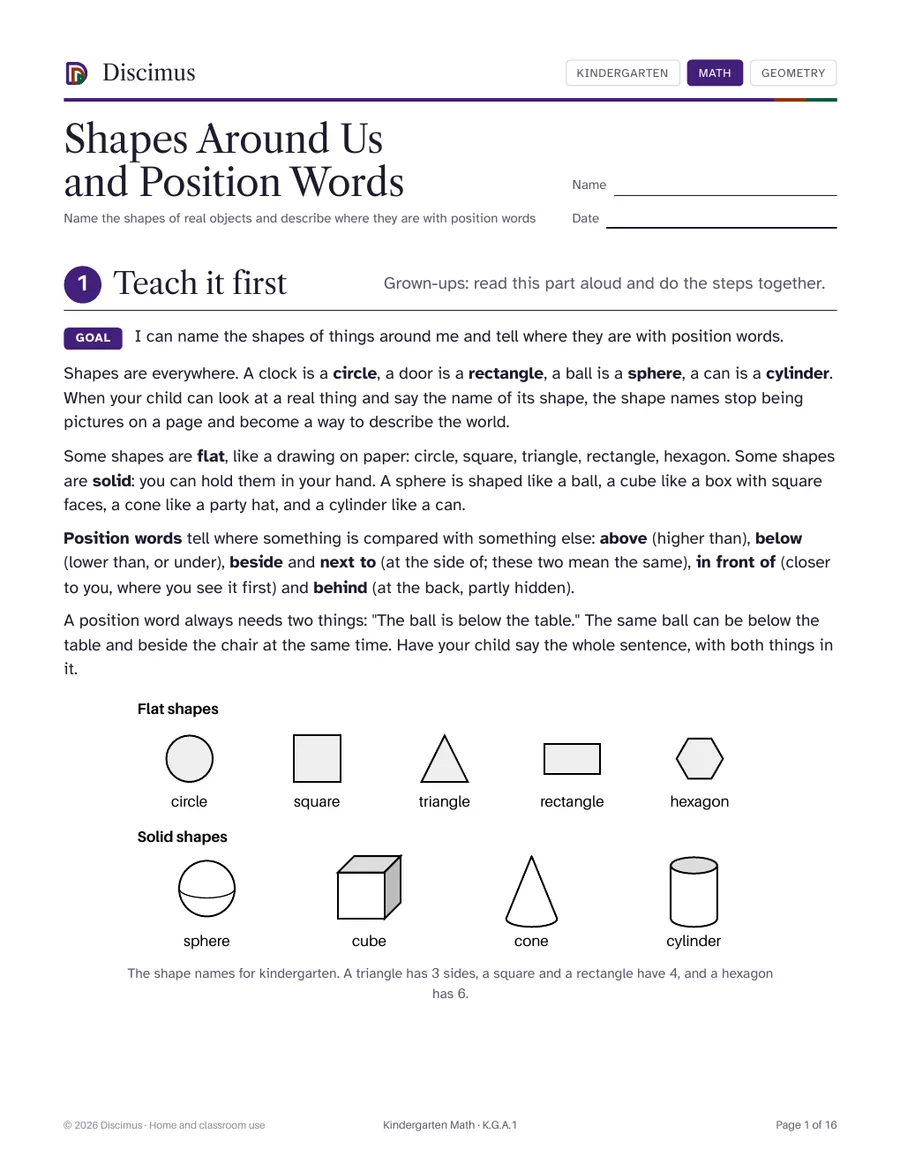
Name the shapes of real objects and describe where they are with position words
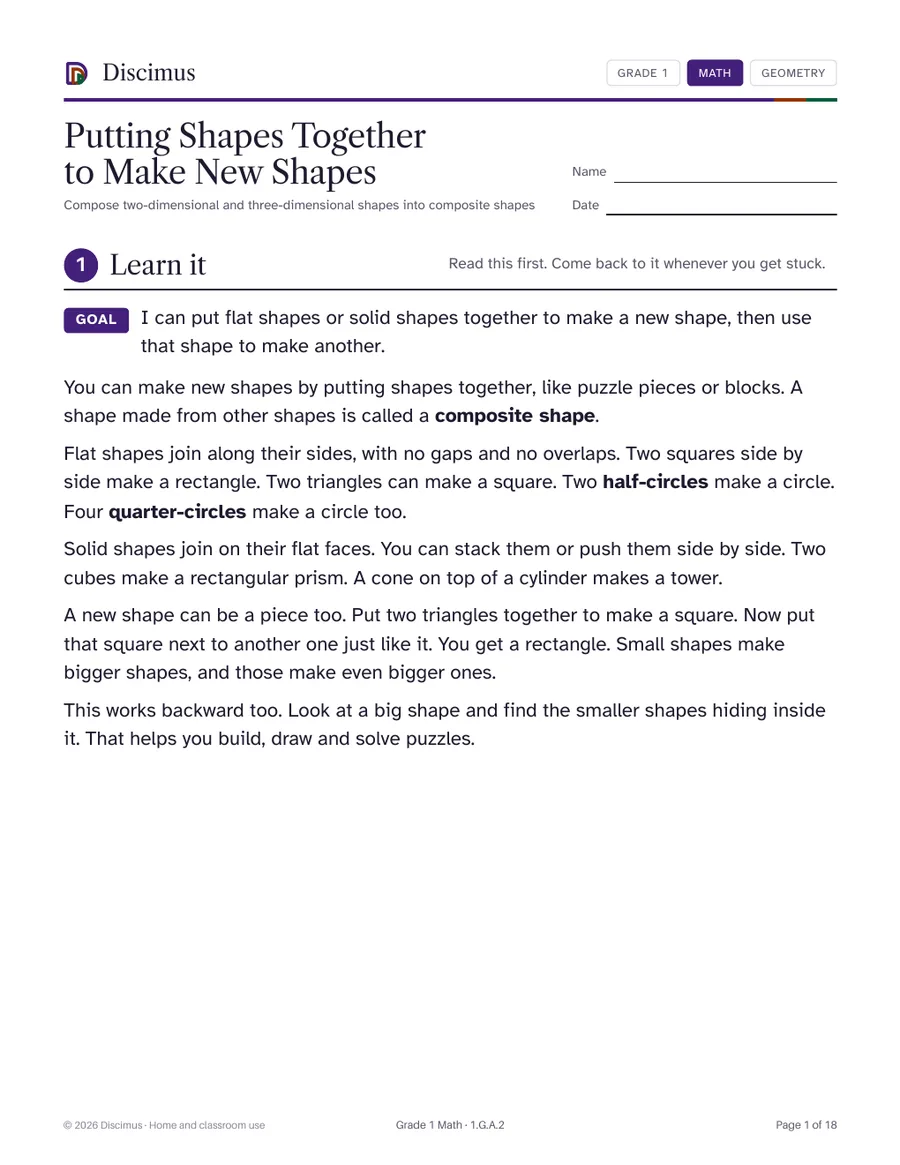
Compose two-dimensional and three-dimensional shapes into composite shapes
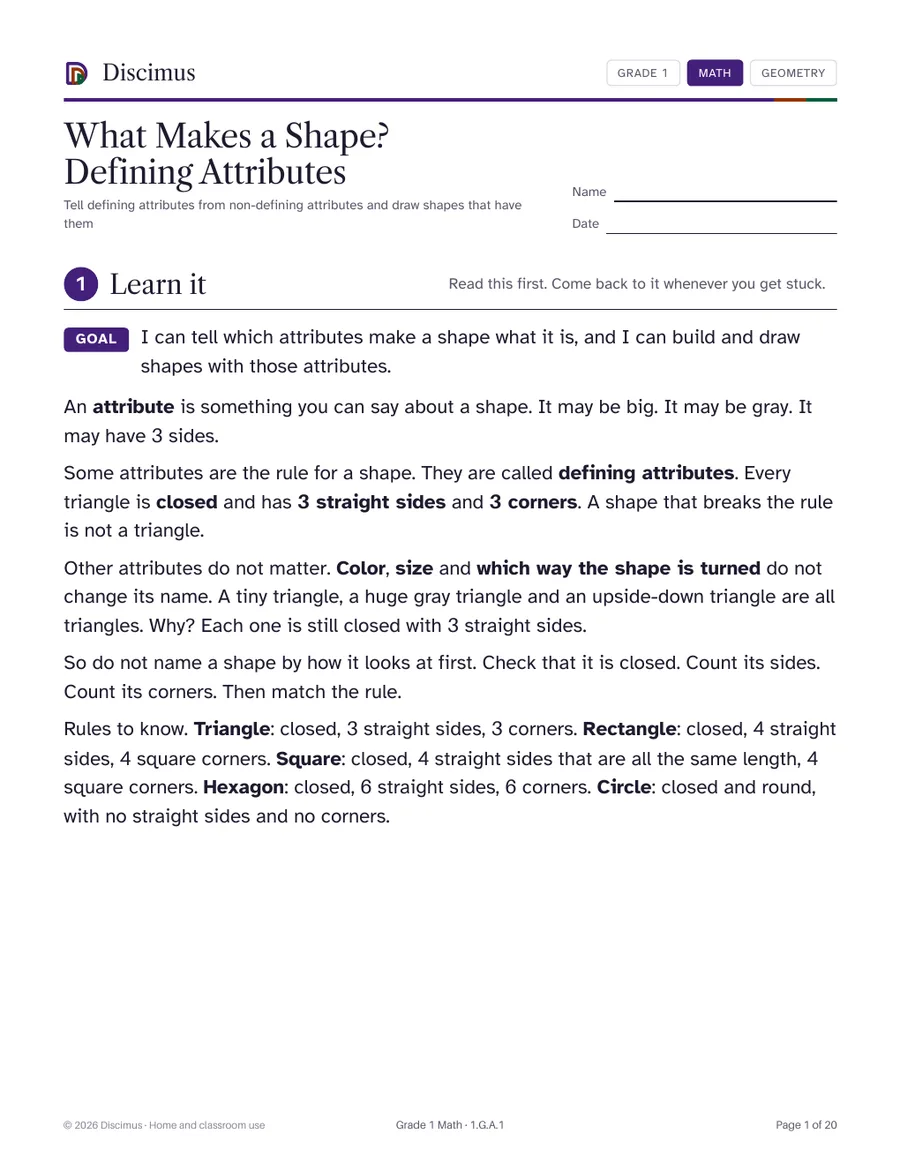
Tell defining attributes from non-defining attributes and draw shapes that have them
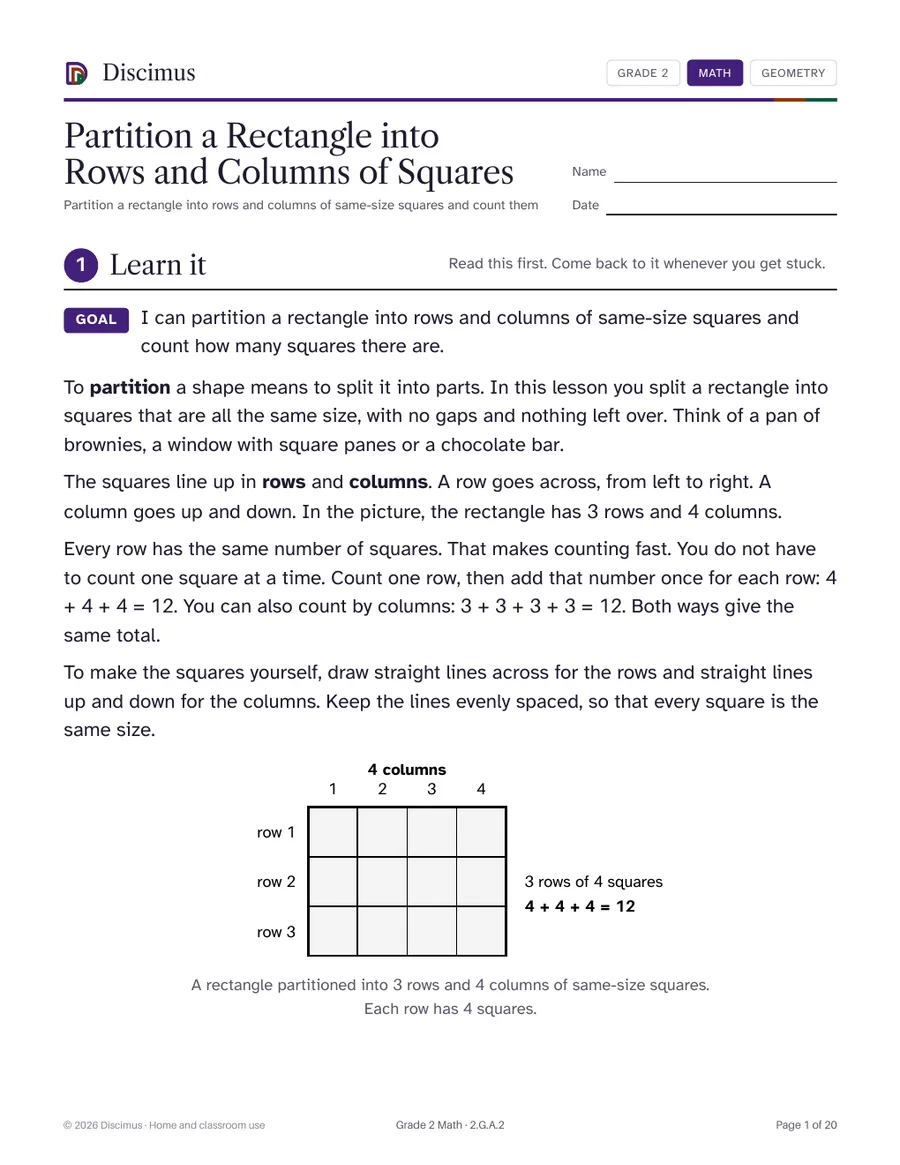
Partition a rectangle into rows and columns of same-size squares and count them
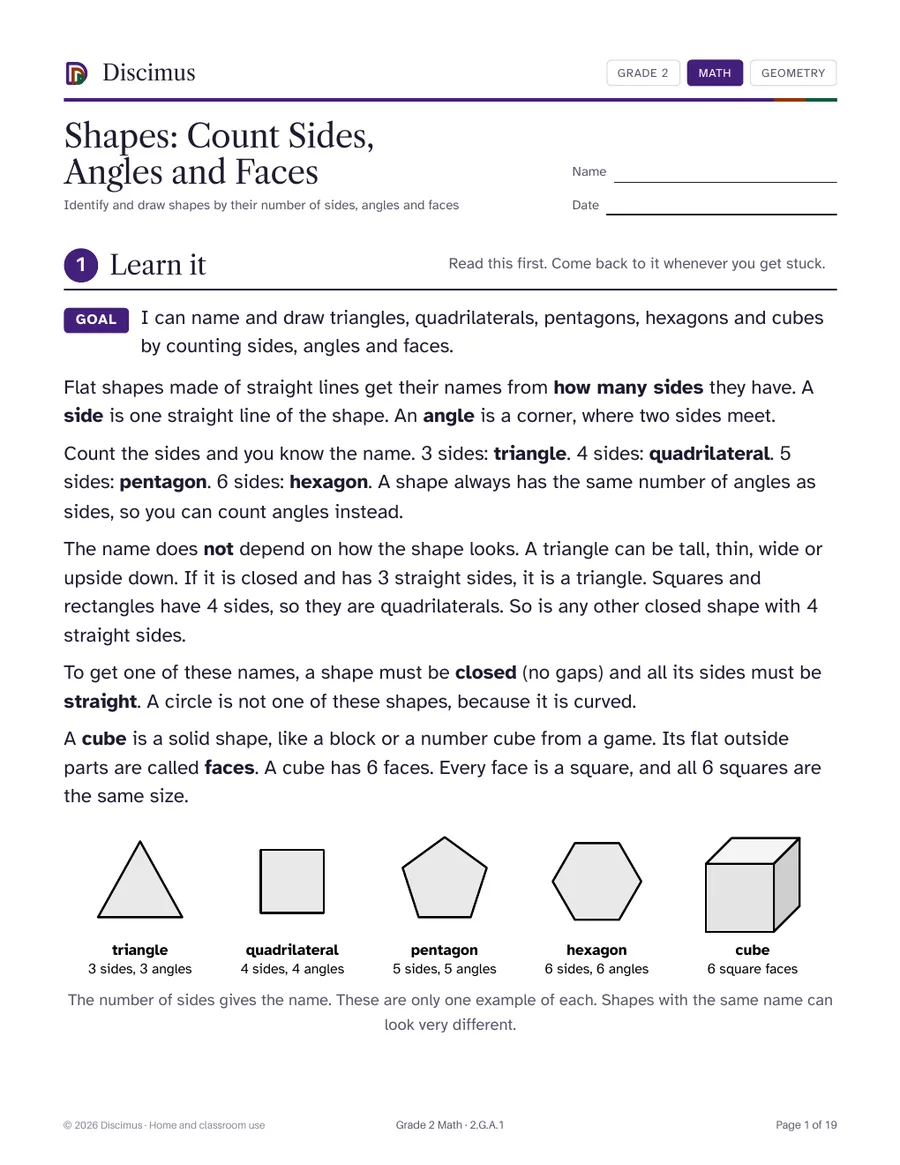
Identify and draw shapes by their number of sides, angles and faces
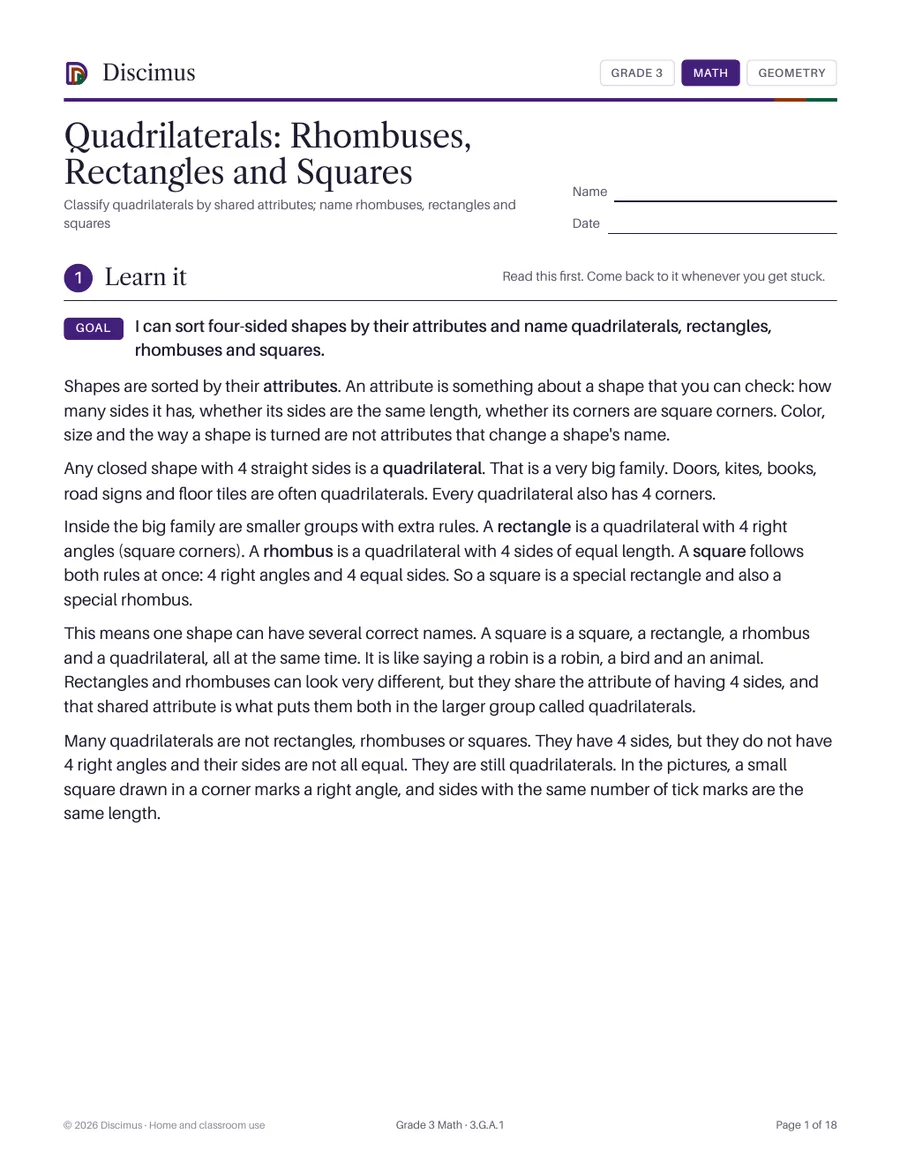
Classify quadrilaterals by shared attributes; name rhombuses, rectangles and squares
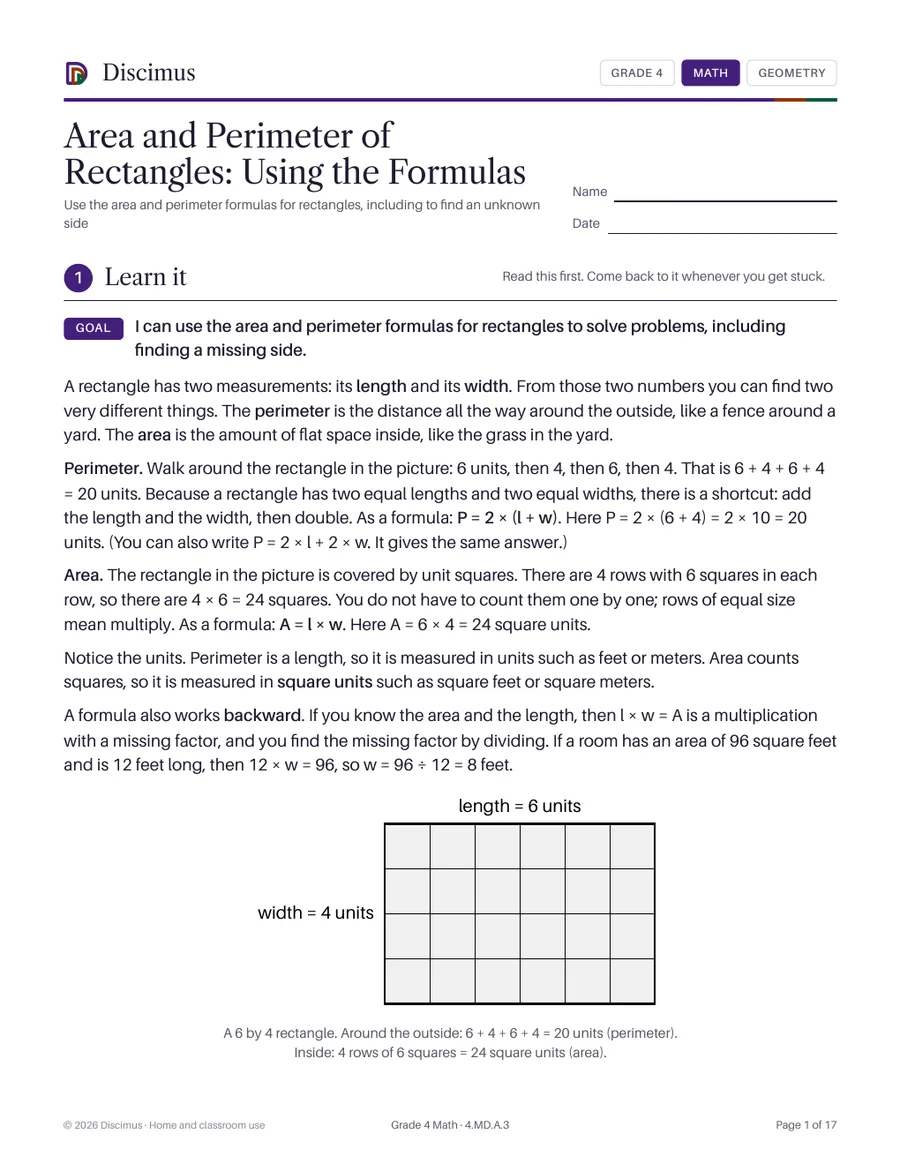
Use the area and perimeter formulas for rectangles, including to find an unknown side
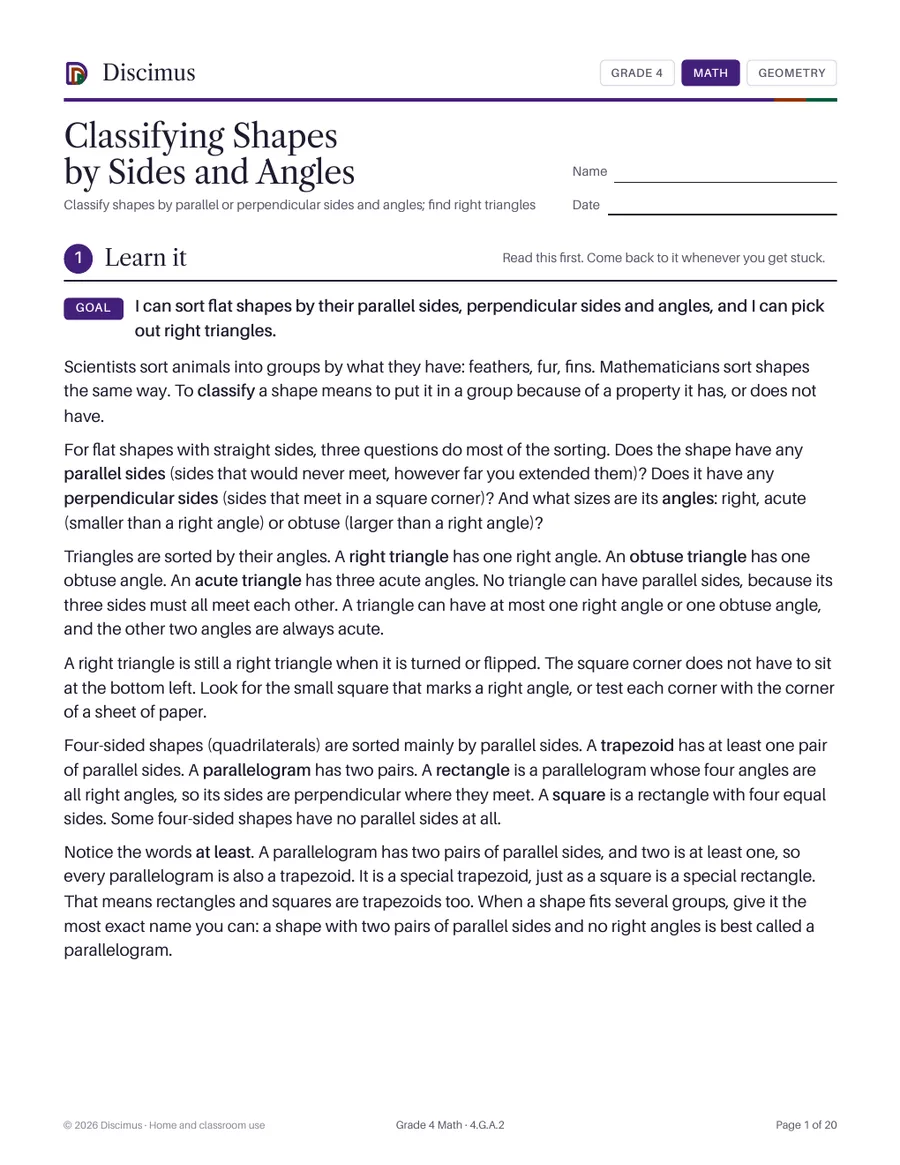
Classify shapes by parallel or perpendicular sides and angles; find right triangles
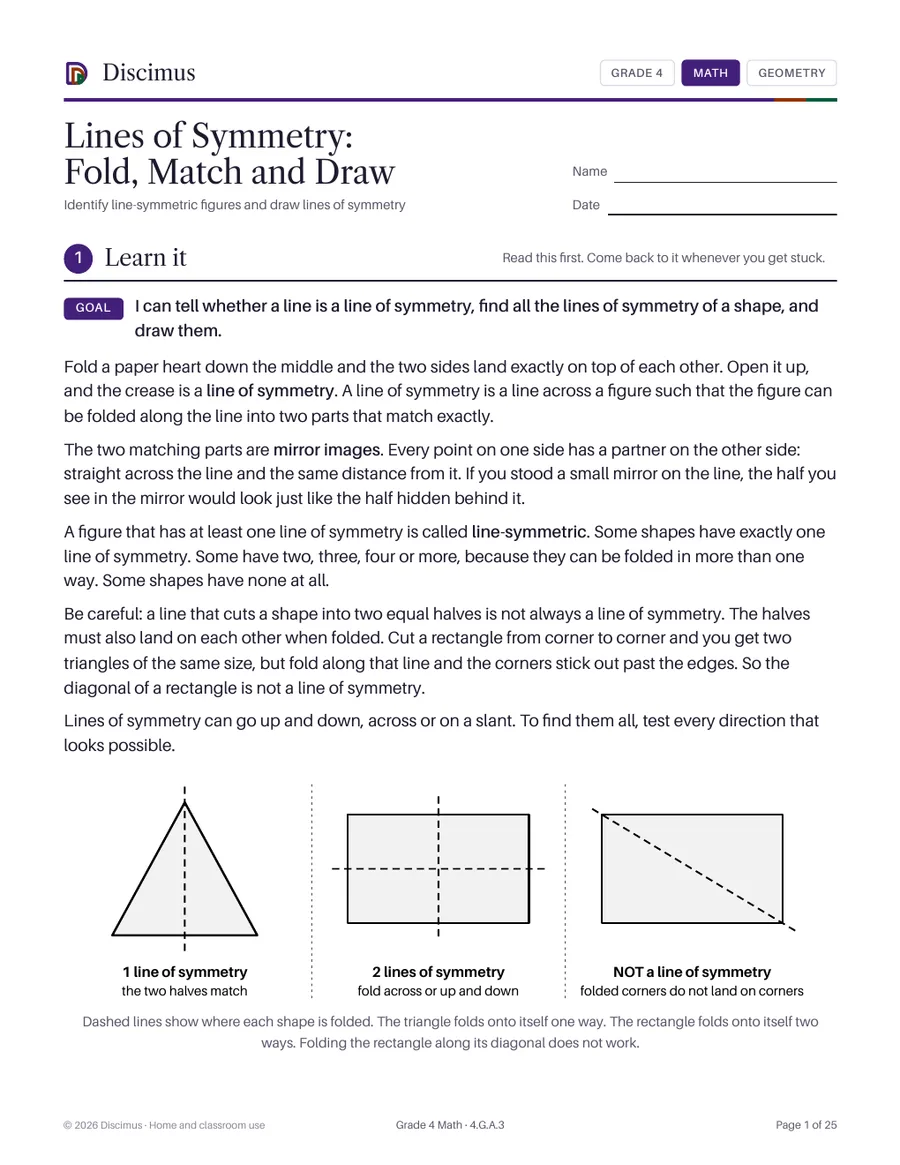
Identify line-symmetric figures and draw lines of symmetry
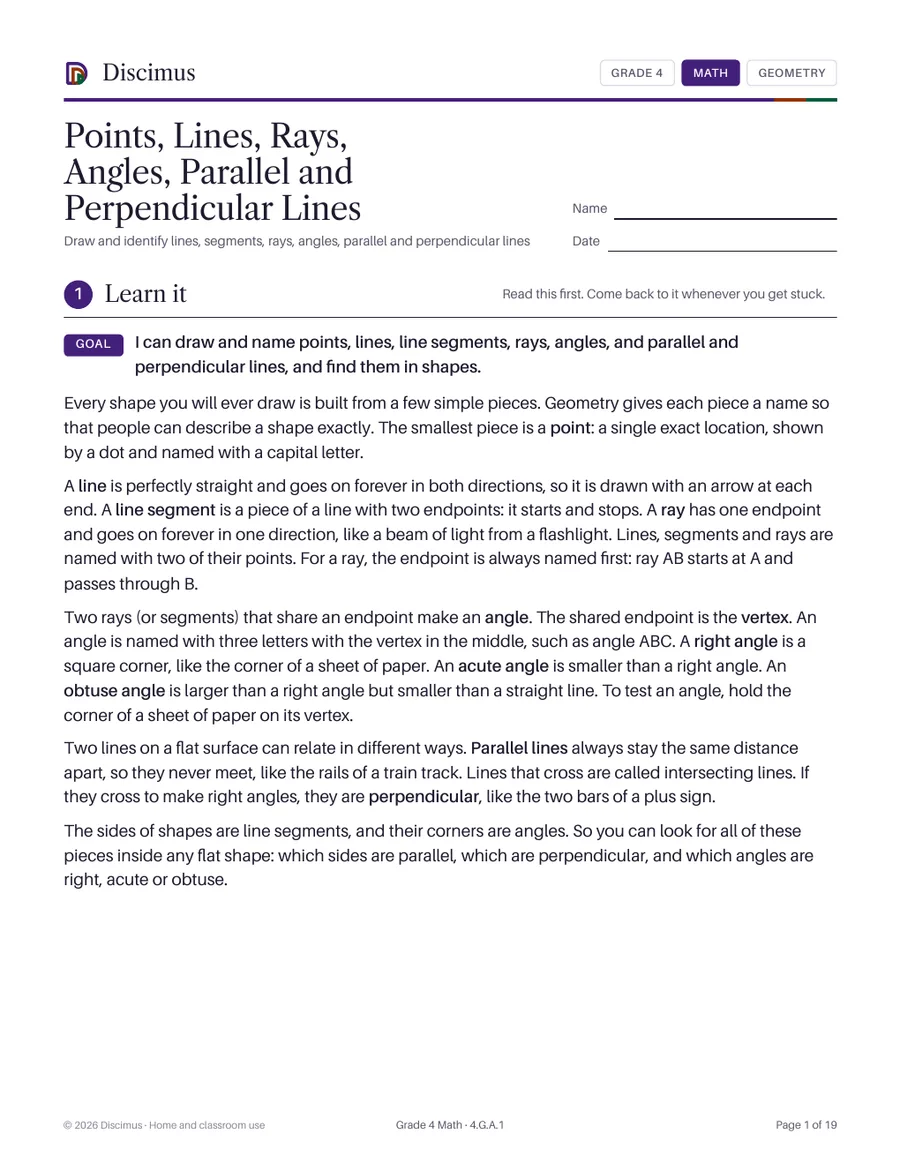
Draw and identify lines, segments, rays, angles, parallel and perpendicular lines
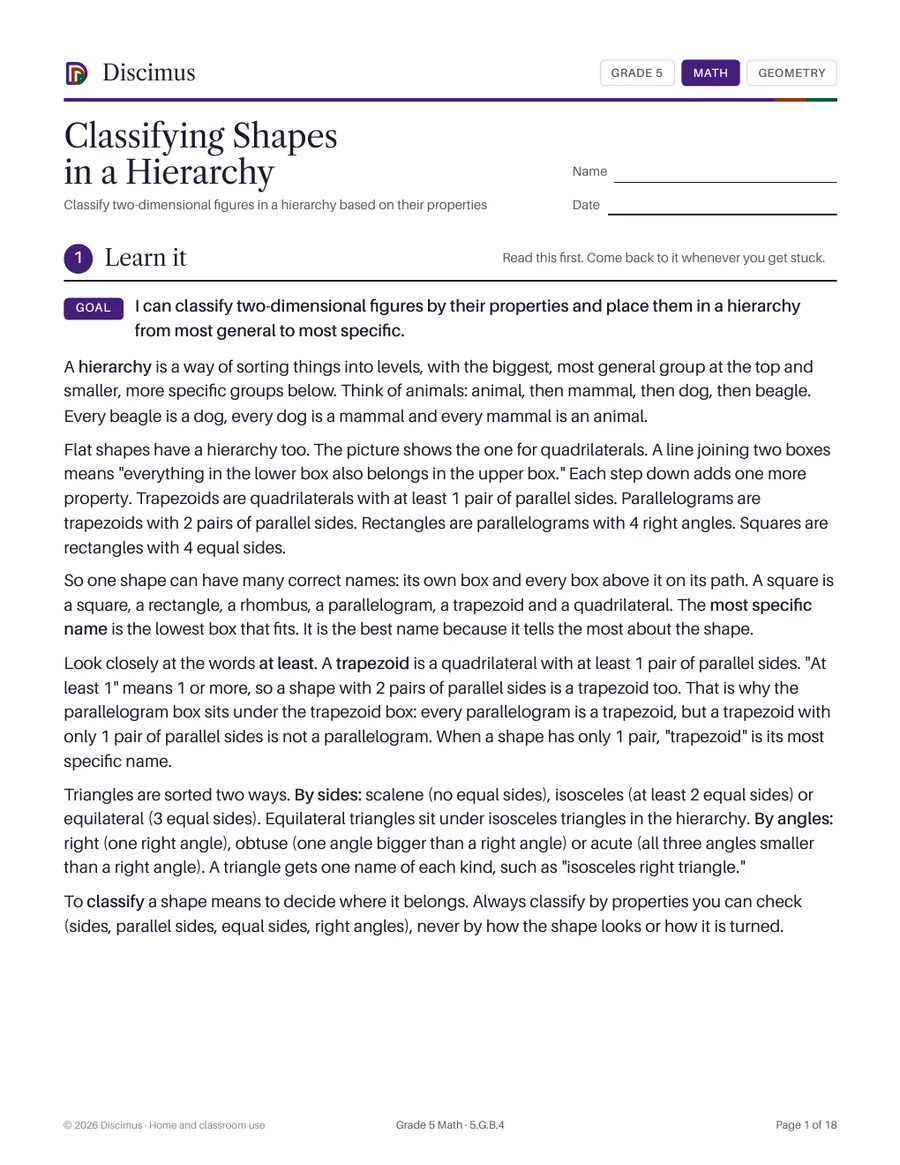
Classify two-dimensional figures in a hierarchy based on their properties
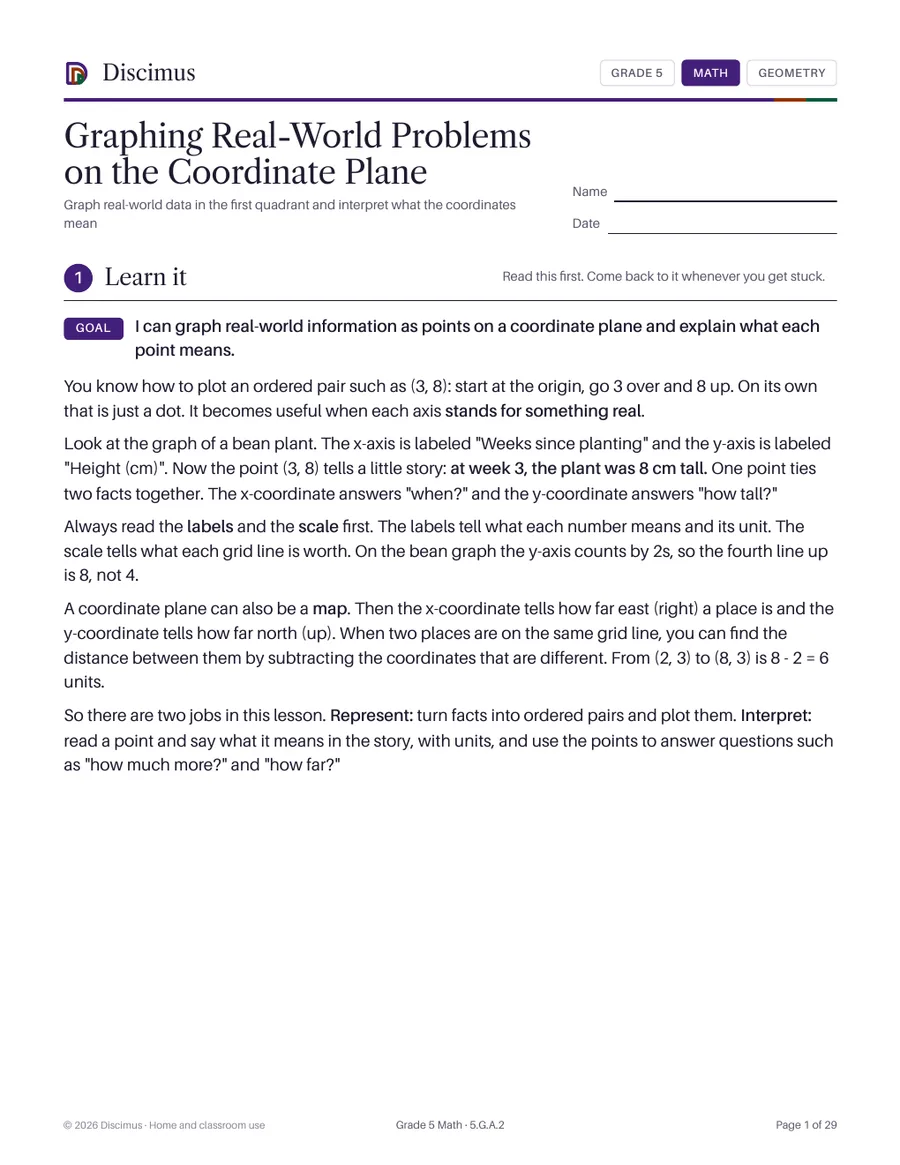
Graph real-world data in the first quadrant and interpret what the coordinates mean
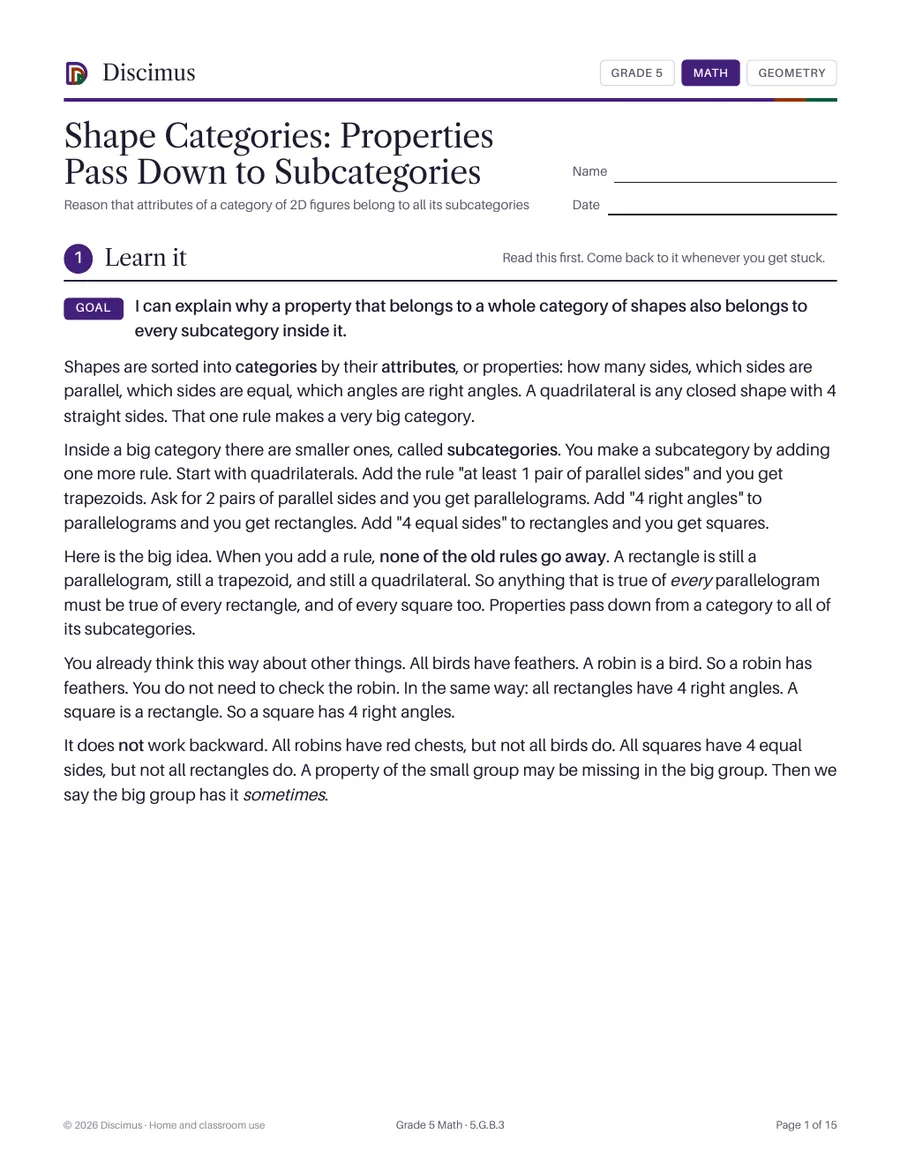
Reason that attributes of a category of 2D figures belong to all its subcategories
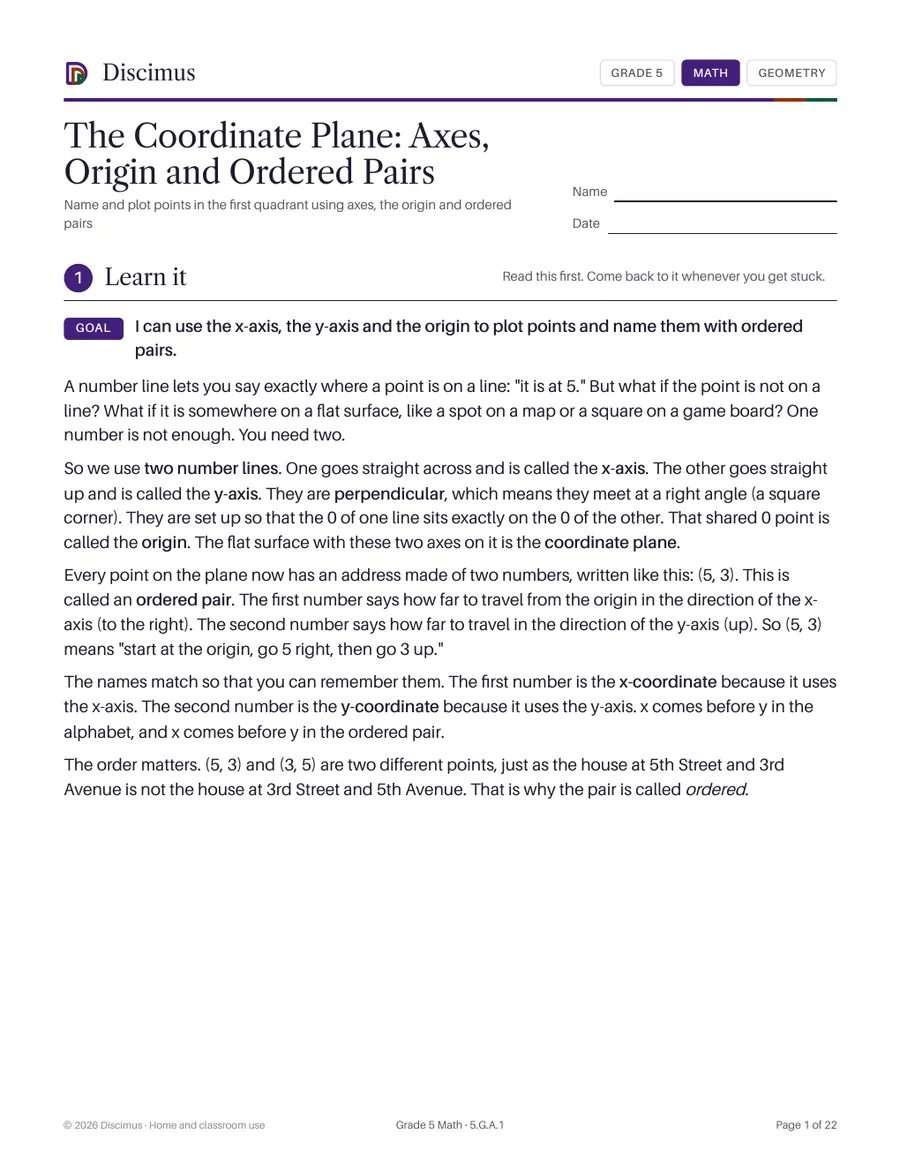
Name and plot points in the first quadrant using axes, the origin and ordered pairs
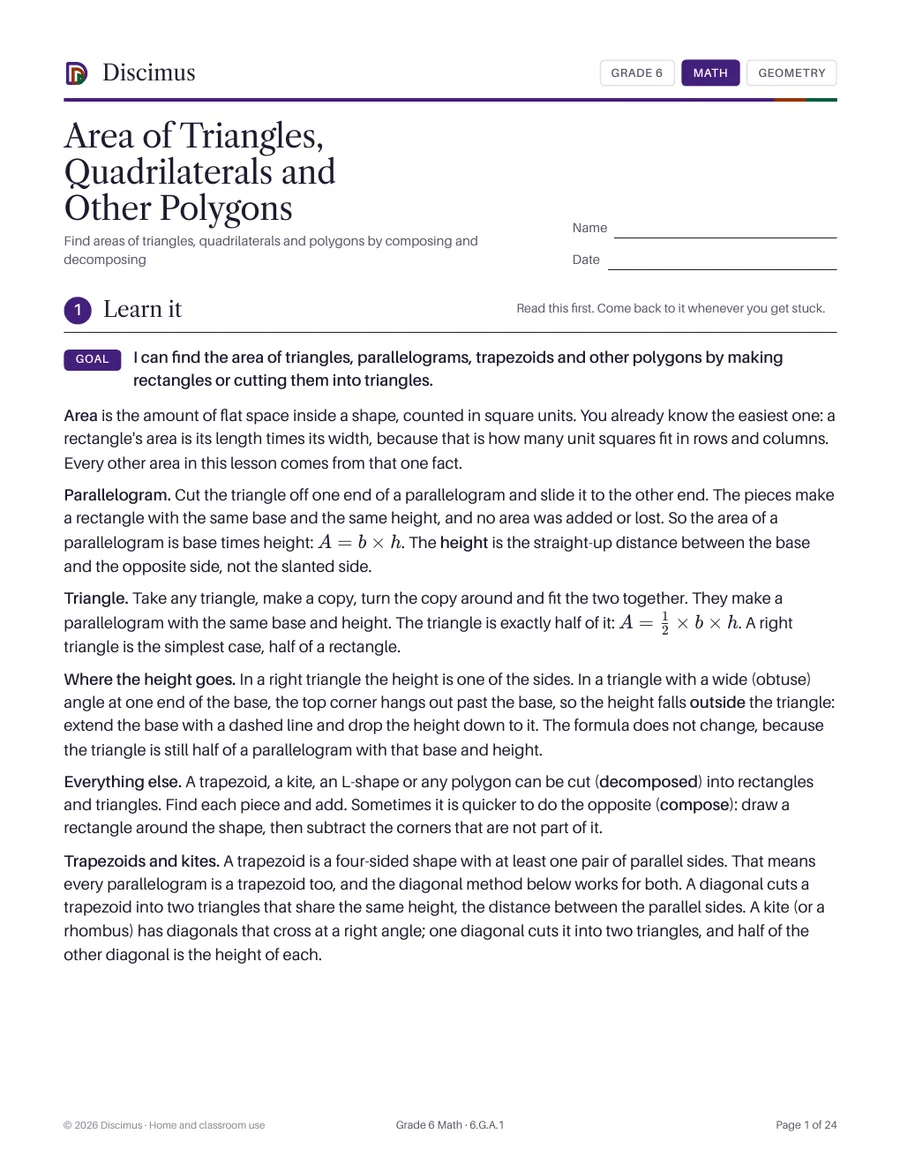
Find areas of triangles, quadrilaterals and polygons by composing and decomposing
Represent prisms and pyramids with nets and use the nets to find surface area
Draw polygons from vertex coordinates and find horizontal and vertical side lengths
Find the volume of right rectangular prisms with fractional edge lengths
Write and solve equations for unknown angles using angle pair relationships
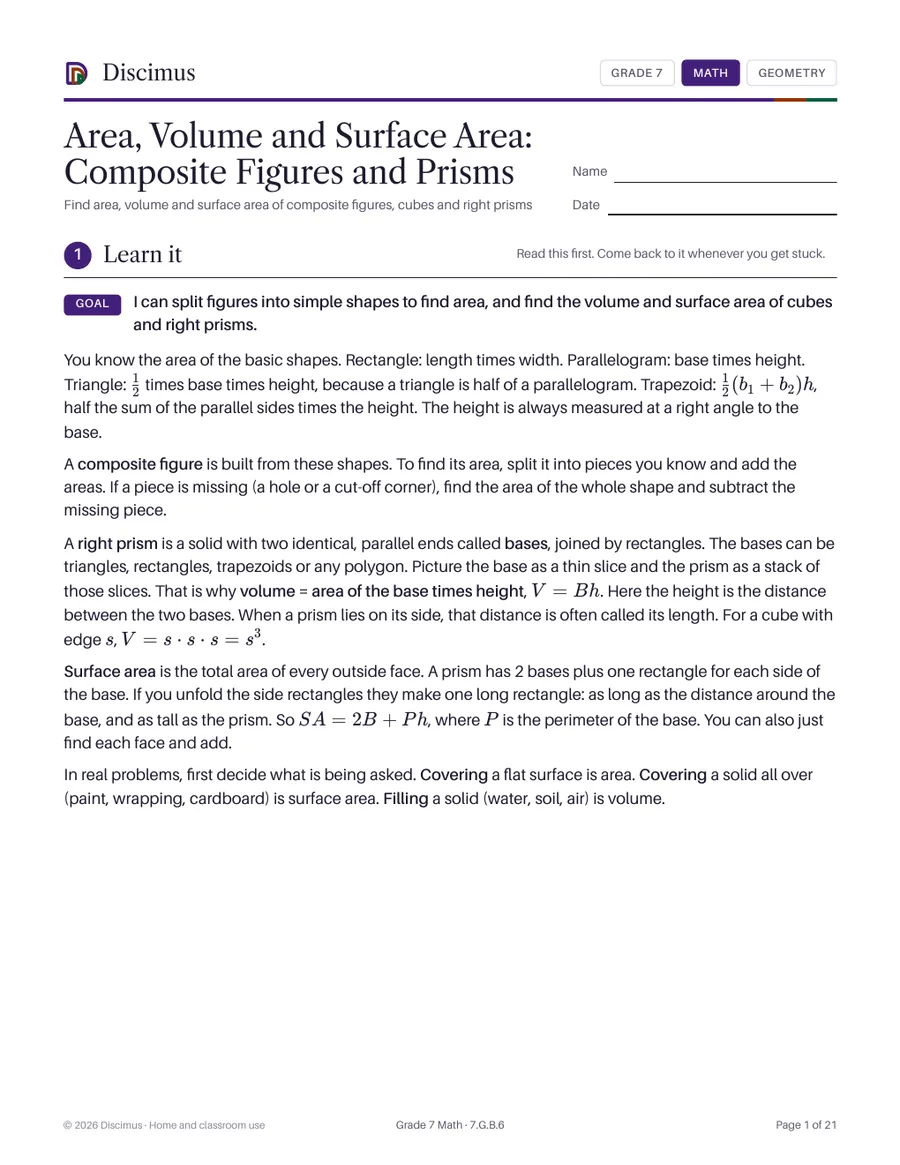
Find area, volume and surface area of composite figures, cubes and right prisms
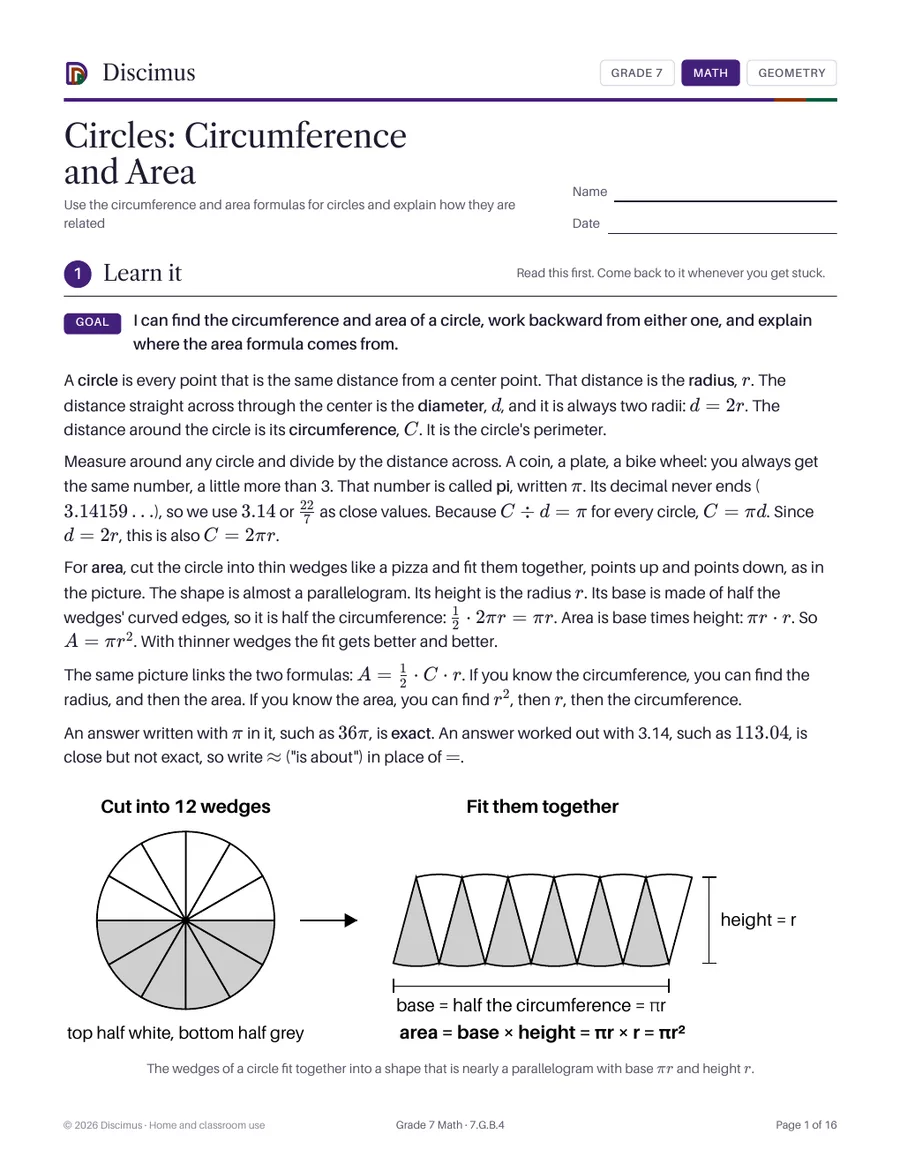
Use the circumference and area formulas for circles and explain how they are related
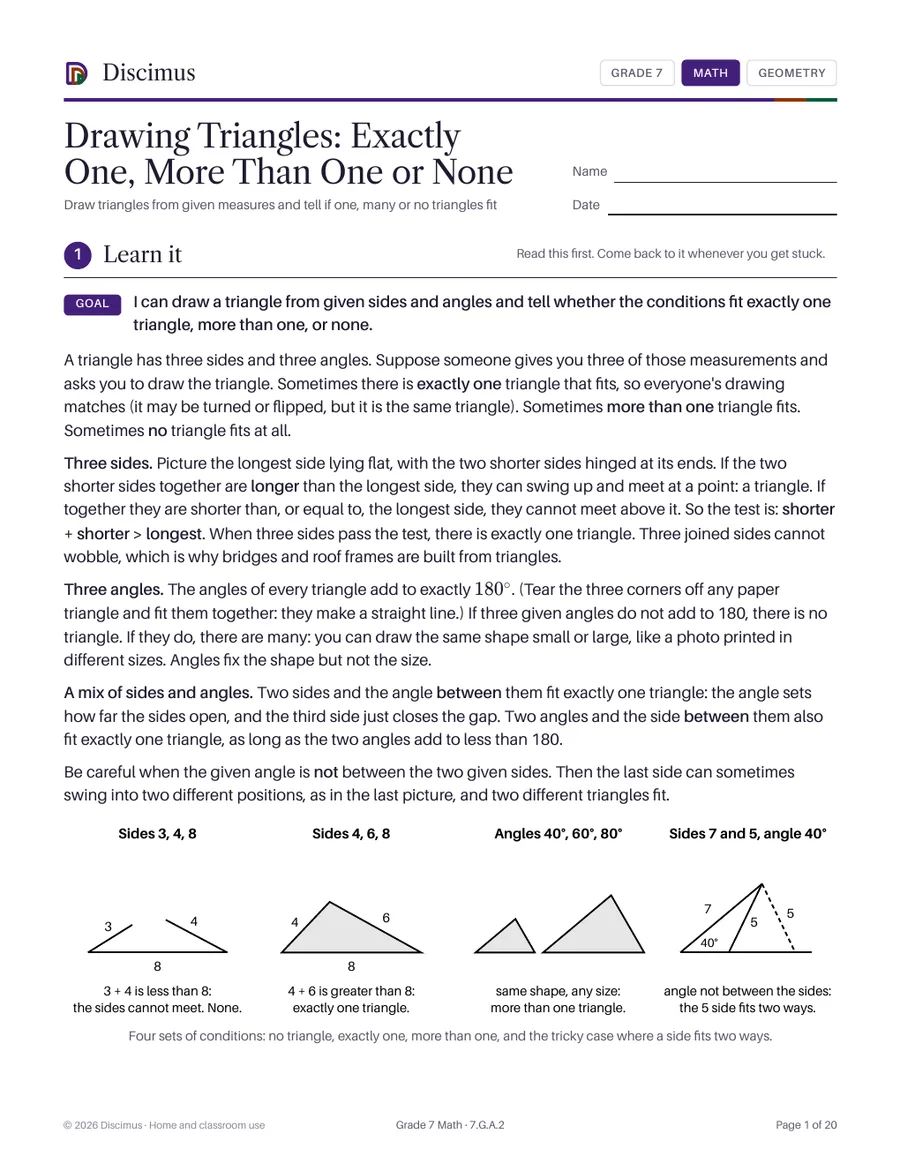
Draw triangles from given measures and tell if one, many or no triangles fit
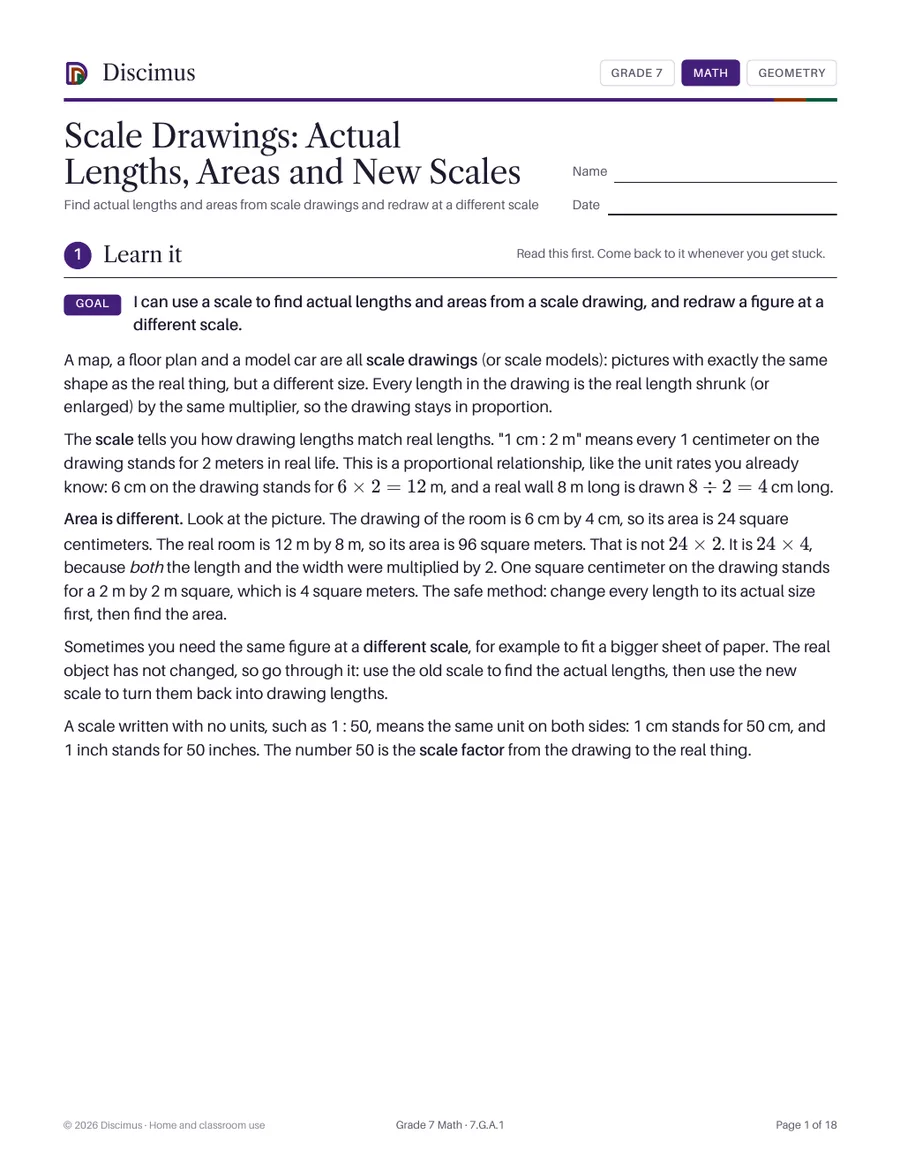
Find actual lengths and areas from scale drawings and redraw at a different scale
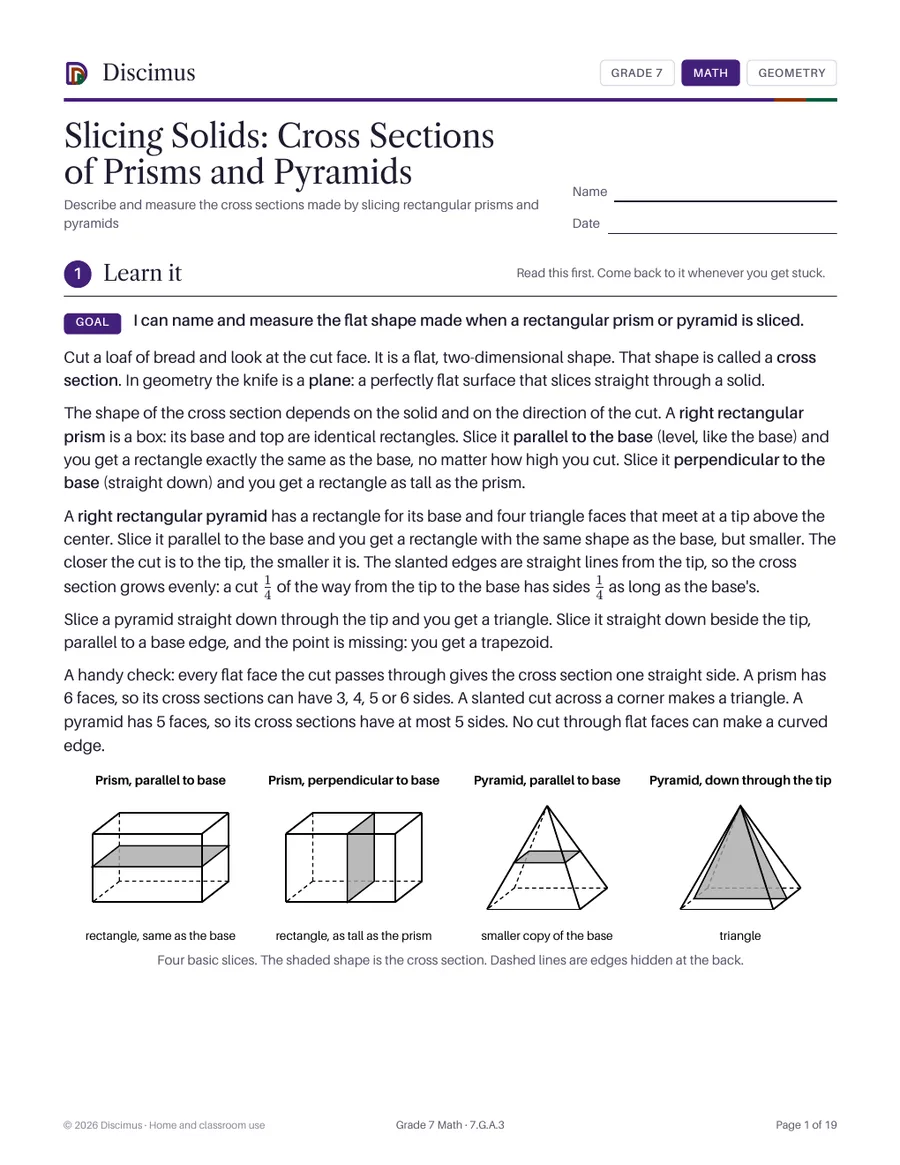
Describe and measure the cross sections made by slicing rectangular prisms and pyramids
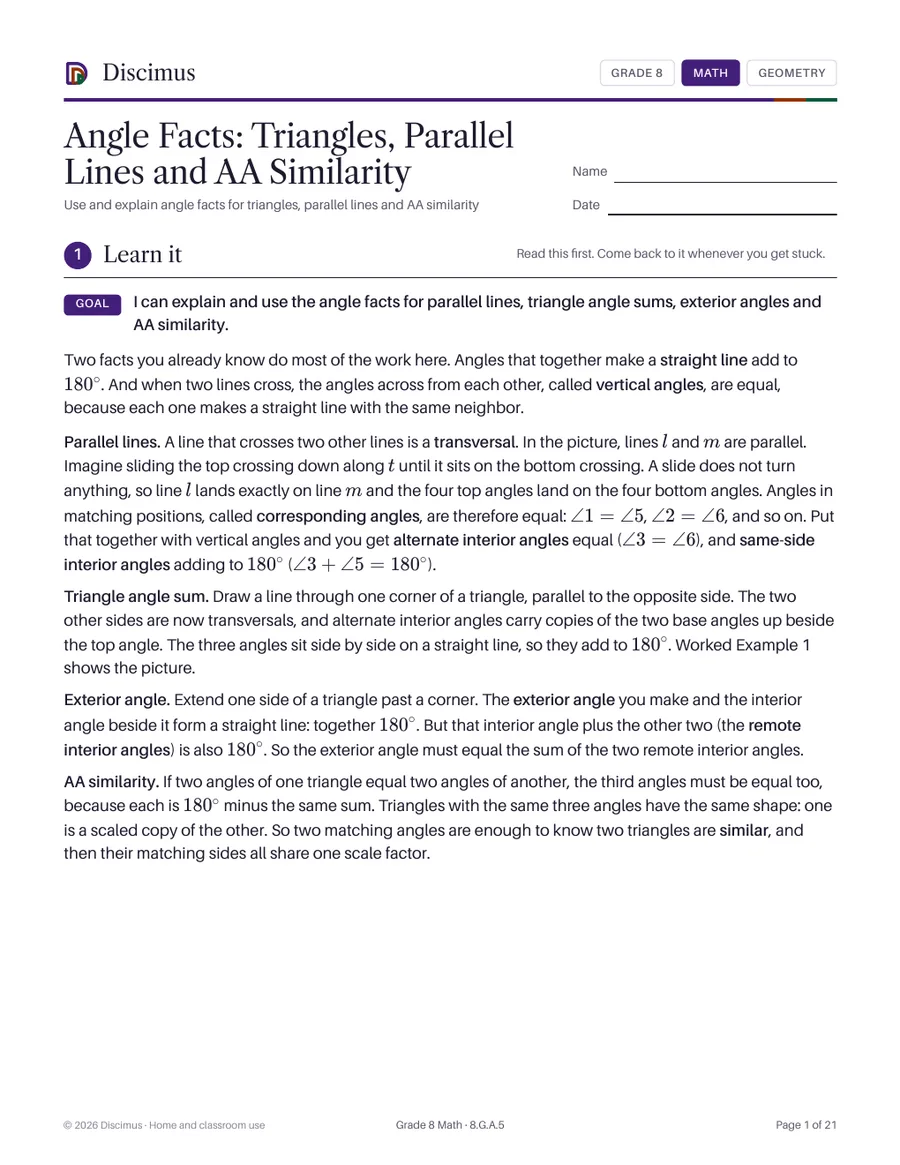
Use and explain angle facts for triangles, parallel lines and AA similarity
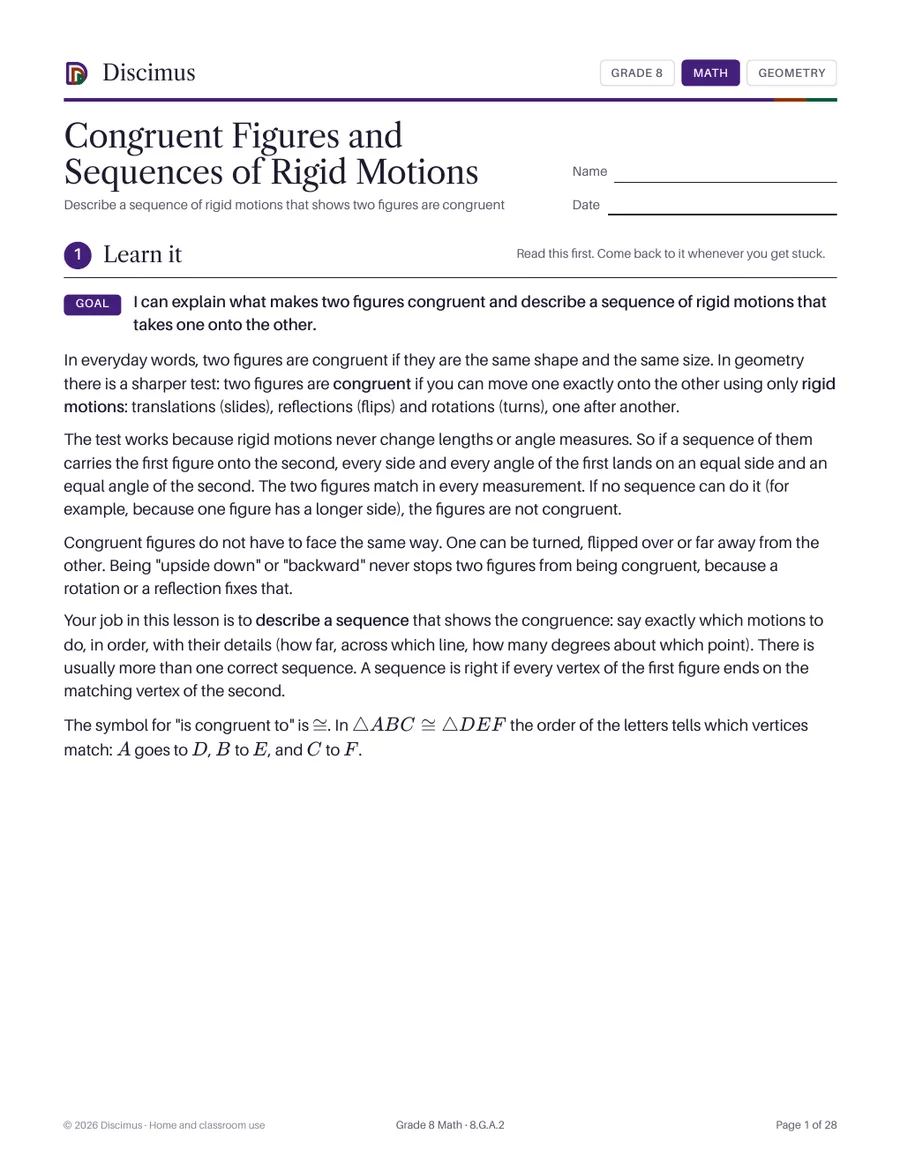
Describe a sequence of rigid motions that shows two figures are congruent
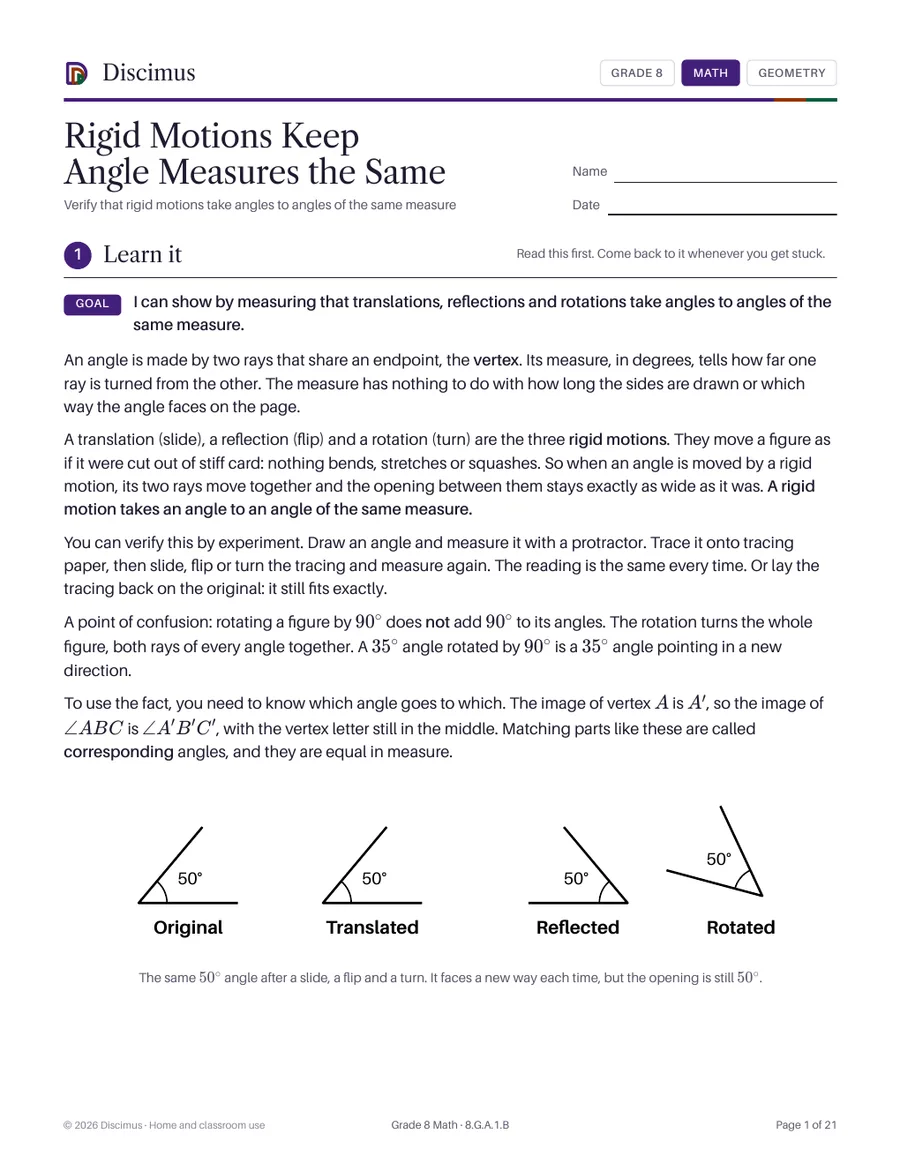
Verify that rigid motions take angles to angles of the same measure
Verify that rigid motions take lines to lines and segments to segments of equal length
Verify that rigid motions take parallel lines to parallel lines
Show two figures are similar by describing a sequence of transformations
Describe translations, reflections, rotations and dilations using coordinate rules
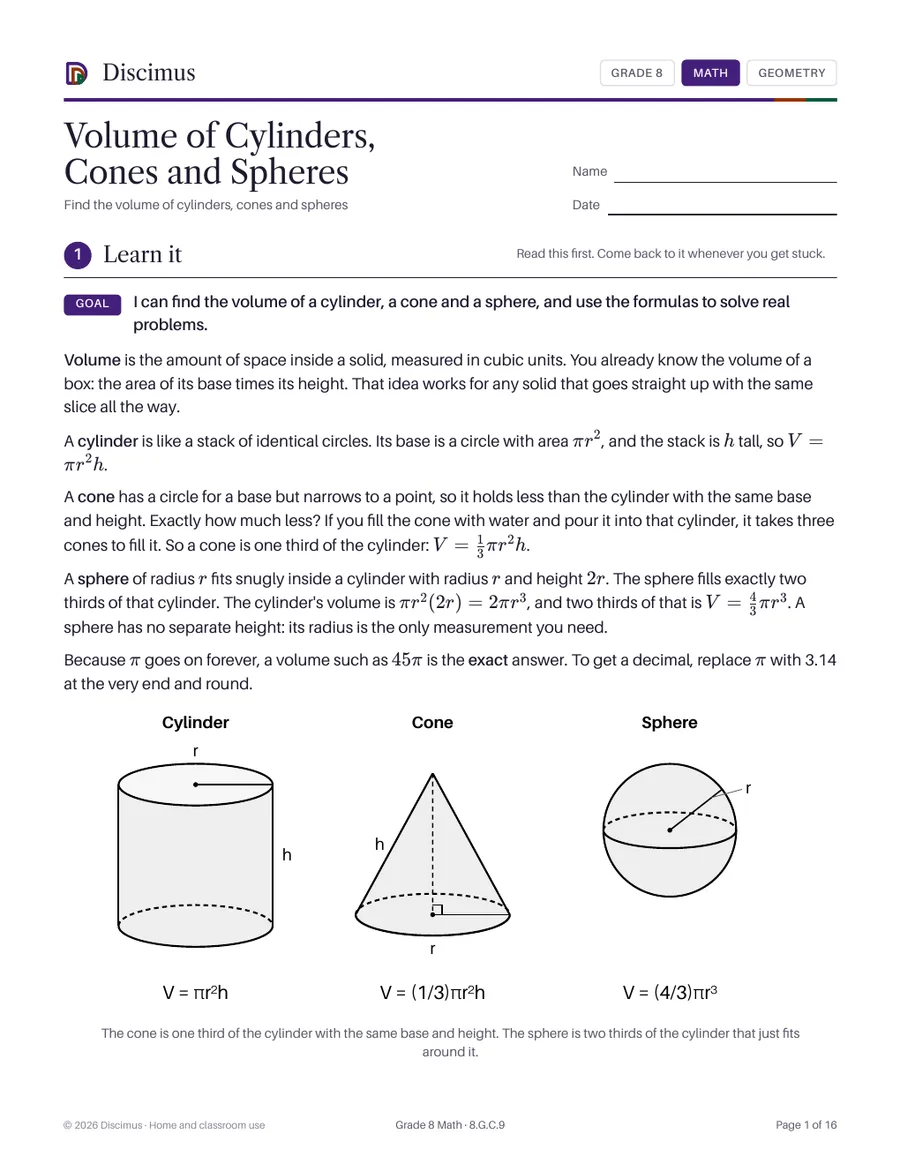
Find the volume of cylinders, cones and spheres
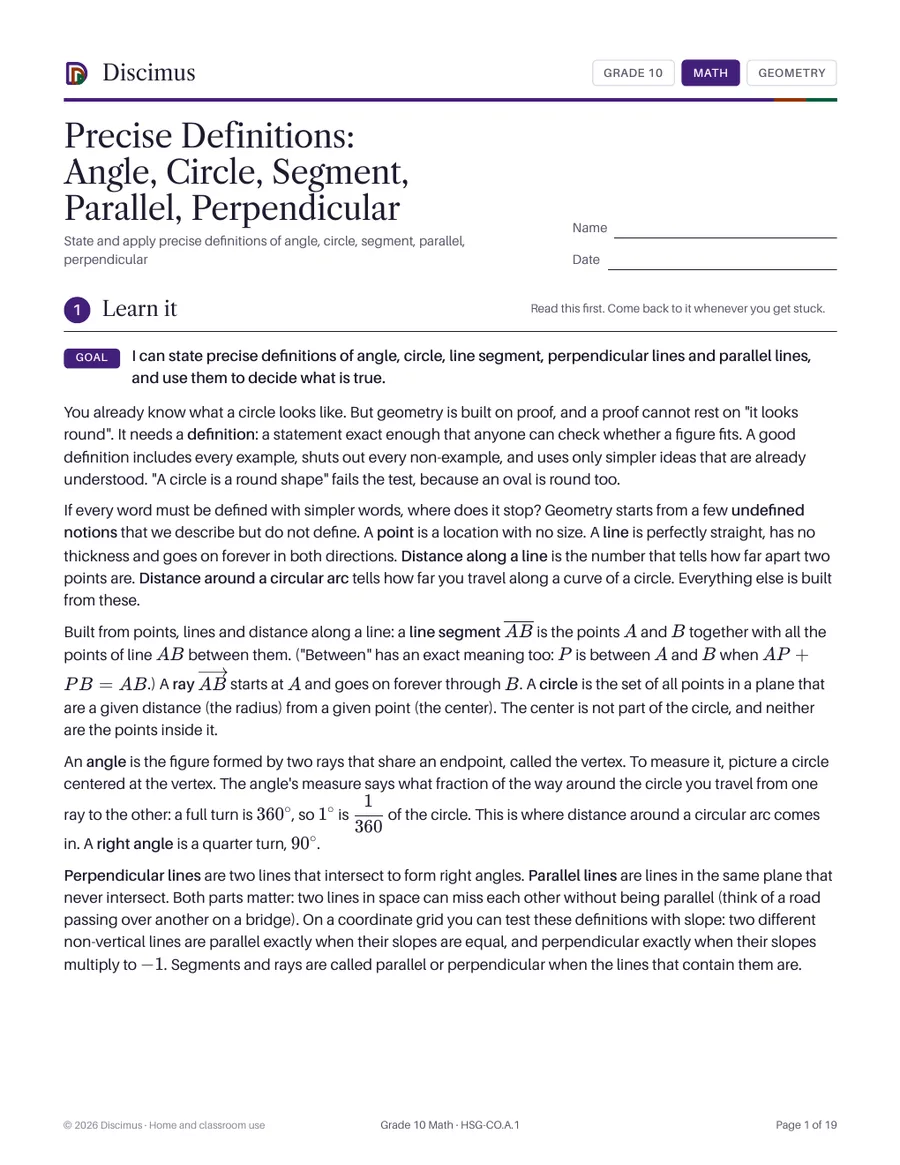
State and apply precise definitions of angle, circle, segment, parallel, perpendicular