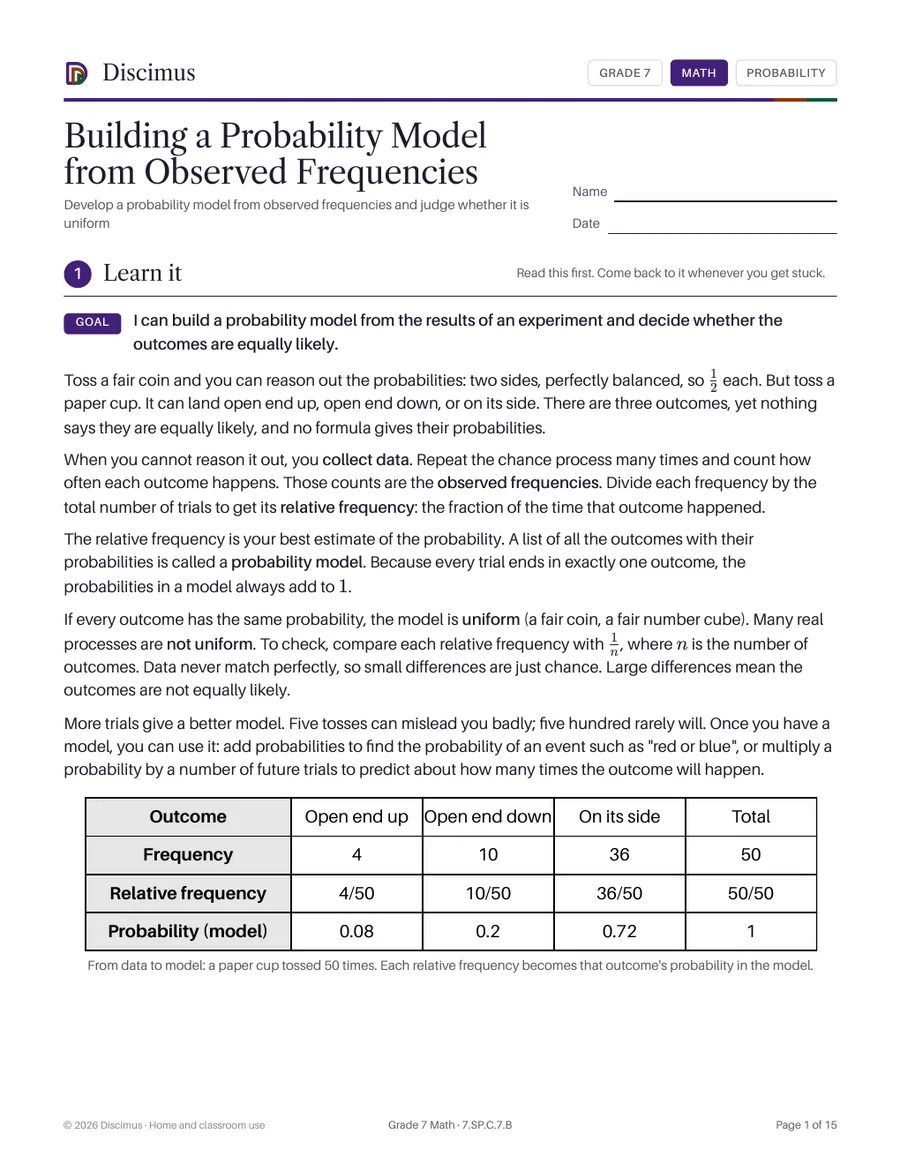
Building a Probability Model from Observed Frequencies
Develop a probability model from observed frequencies and judge whether it is uniform
21 worksheets match.
Develop a probability model from observed frequencies and judge whether it is uniform
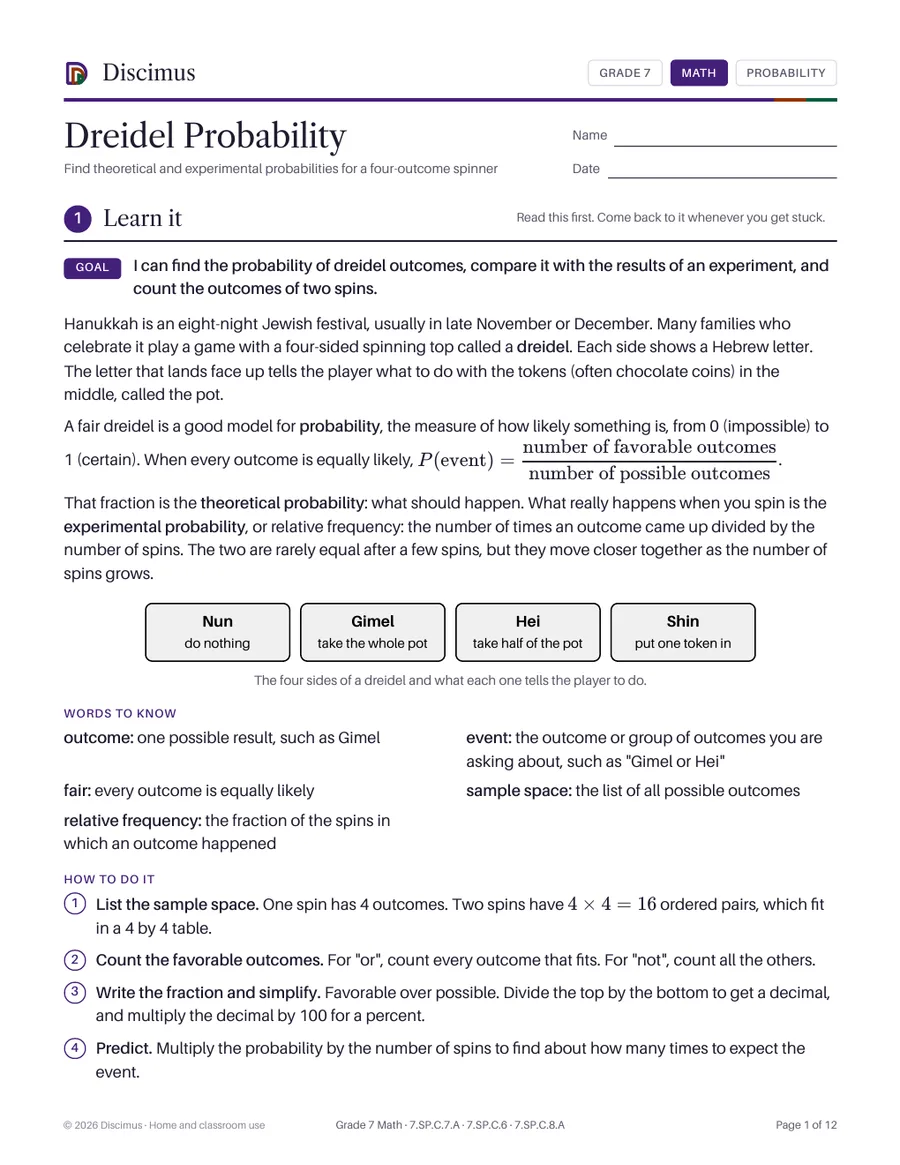
Find theoretical and experimental probabilities for a four-outcome spinner
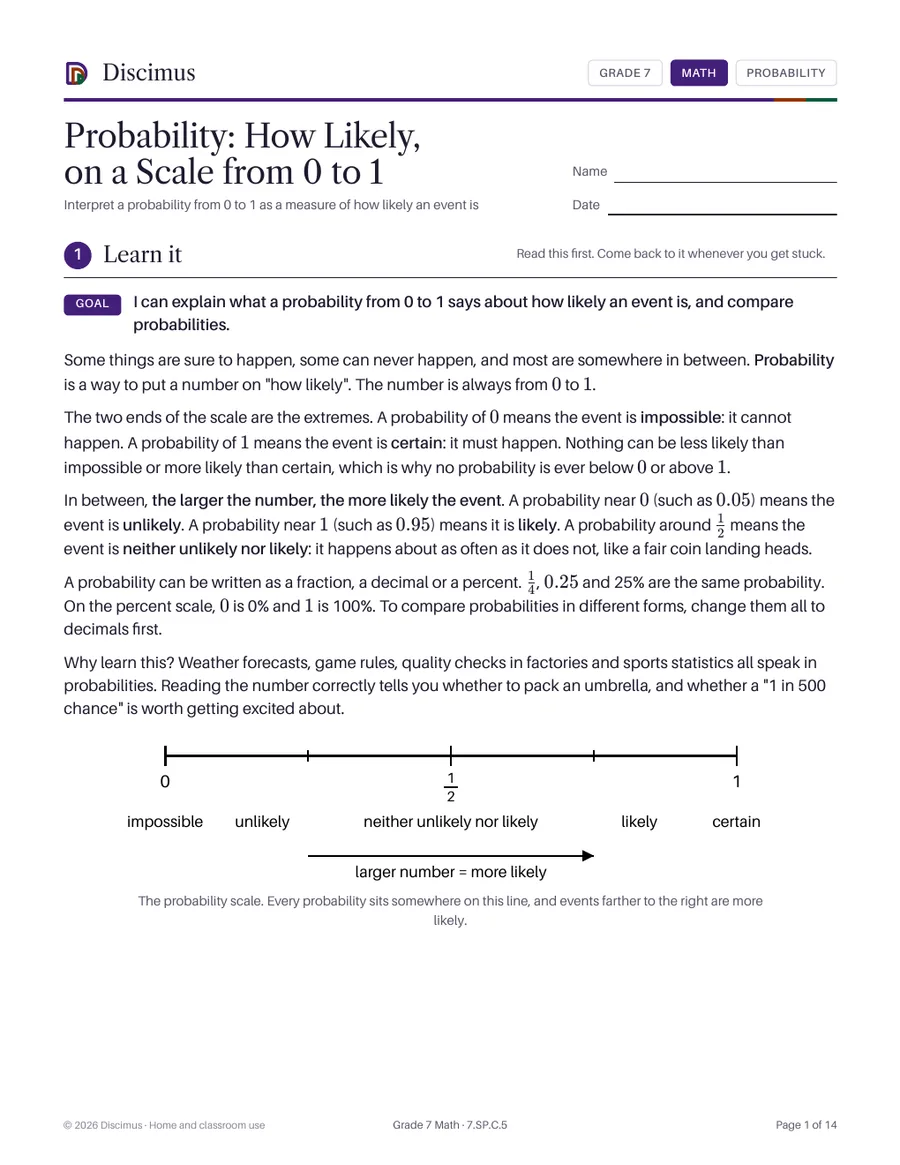
Interpret a probability from 0 to 1 as a measure of how likely an event is
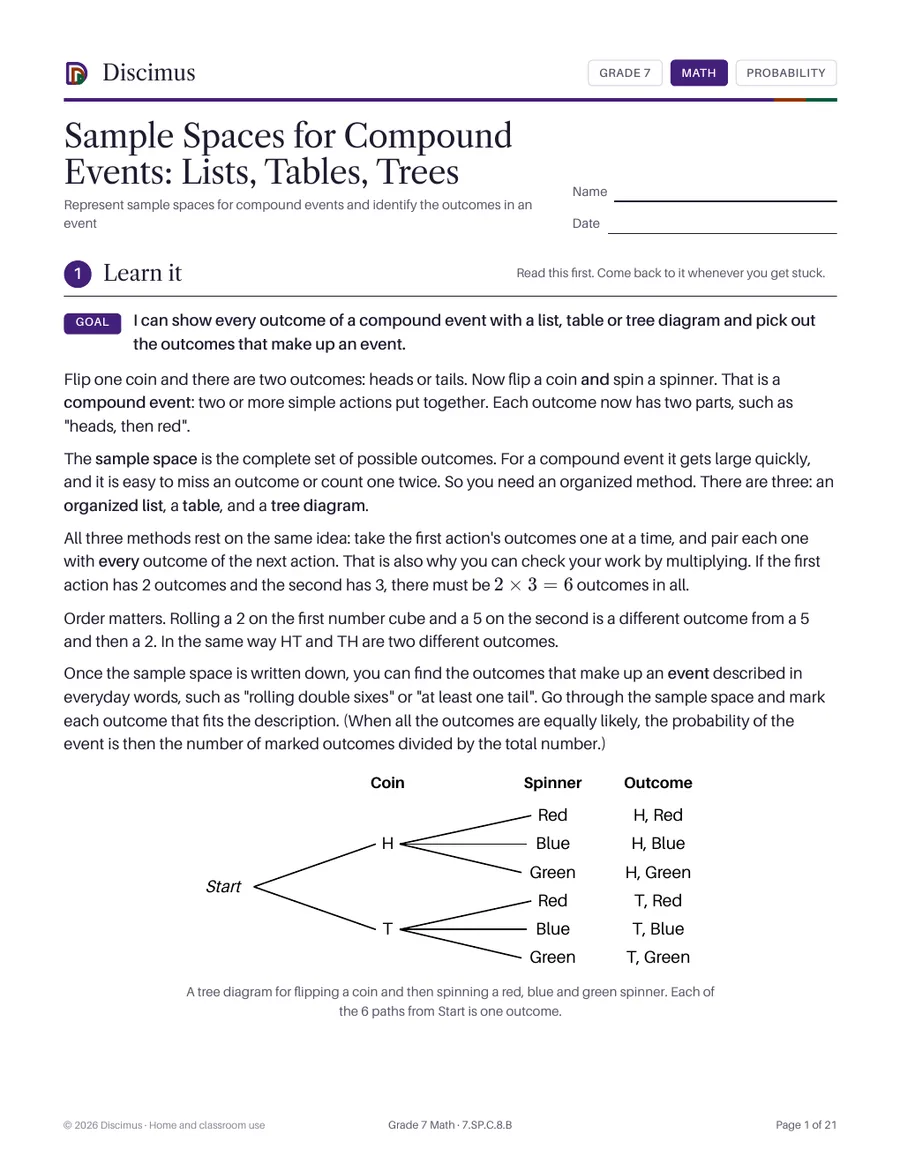
Represent sample spaces for compound events and identify the outcomes in an event
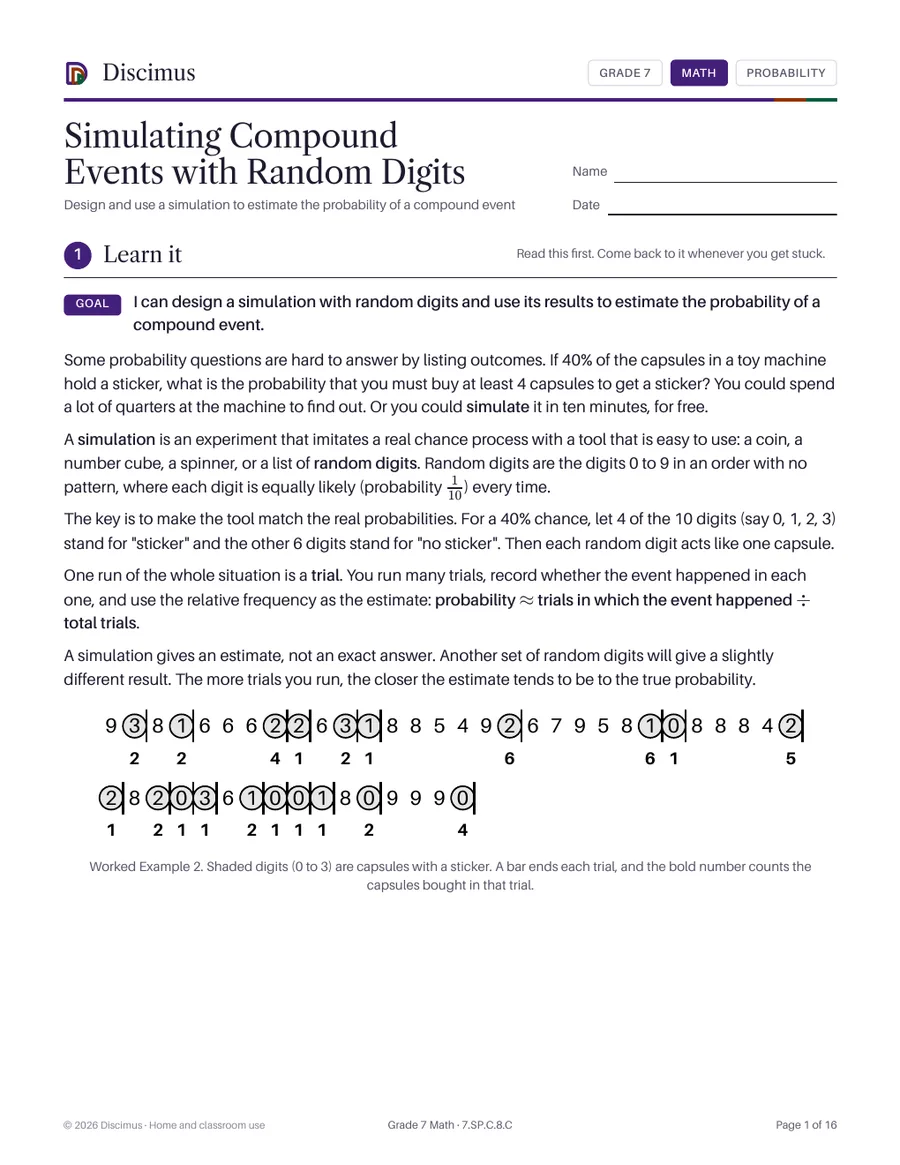
Design and use a simulation to estimate the probability of a compound event
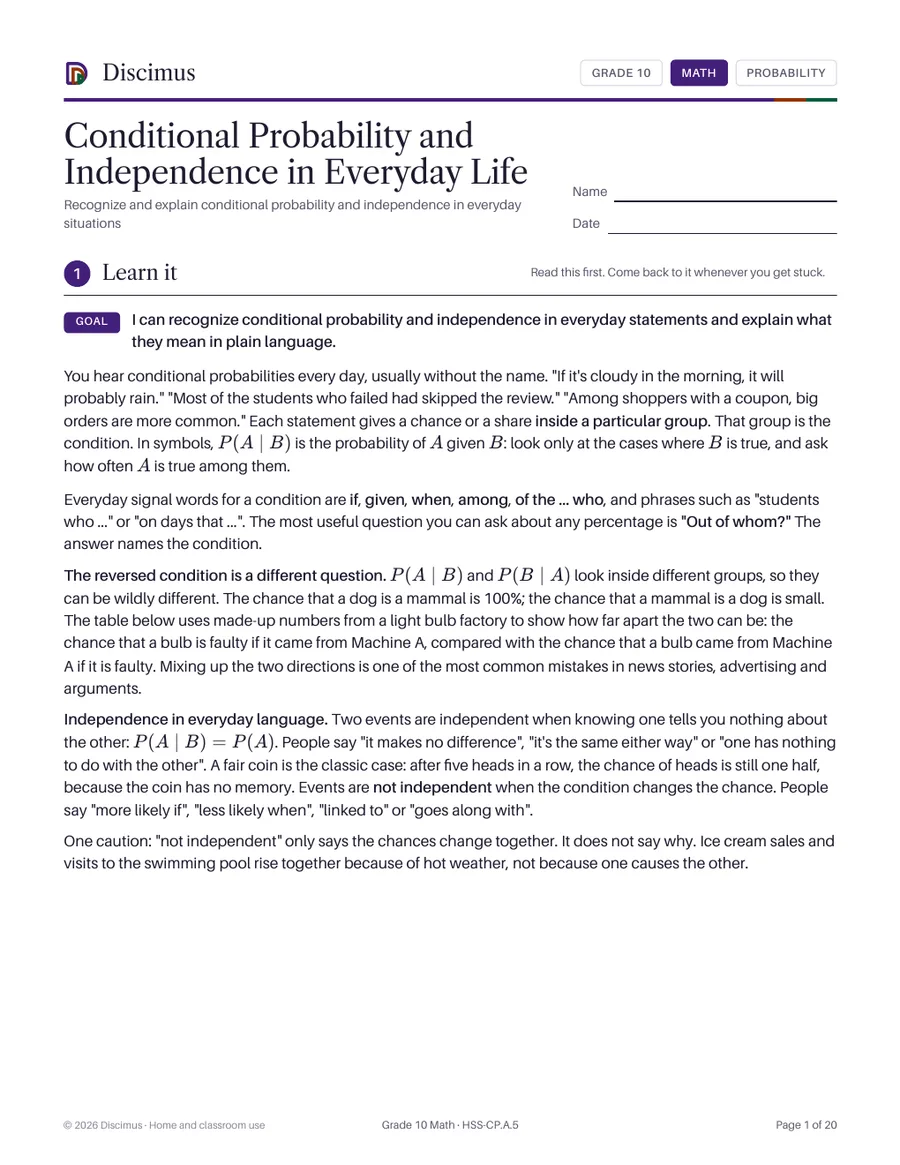
Recognize and explain conditional probability and independence in everyday situations
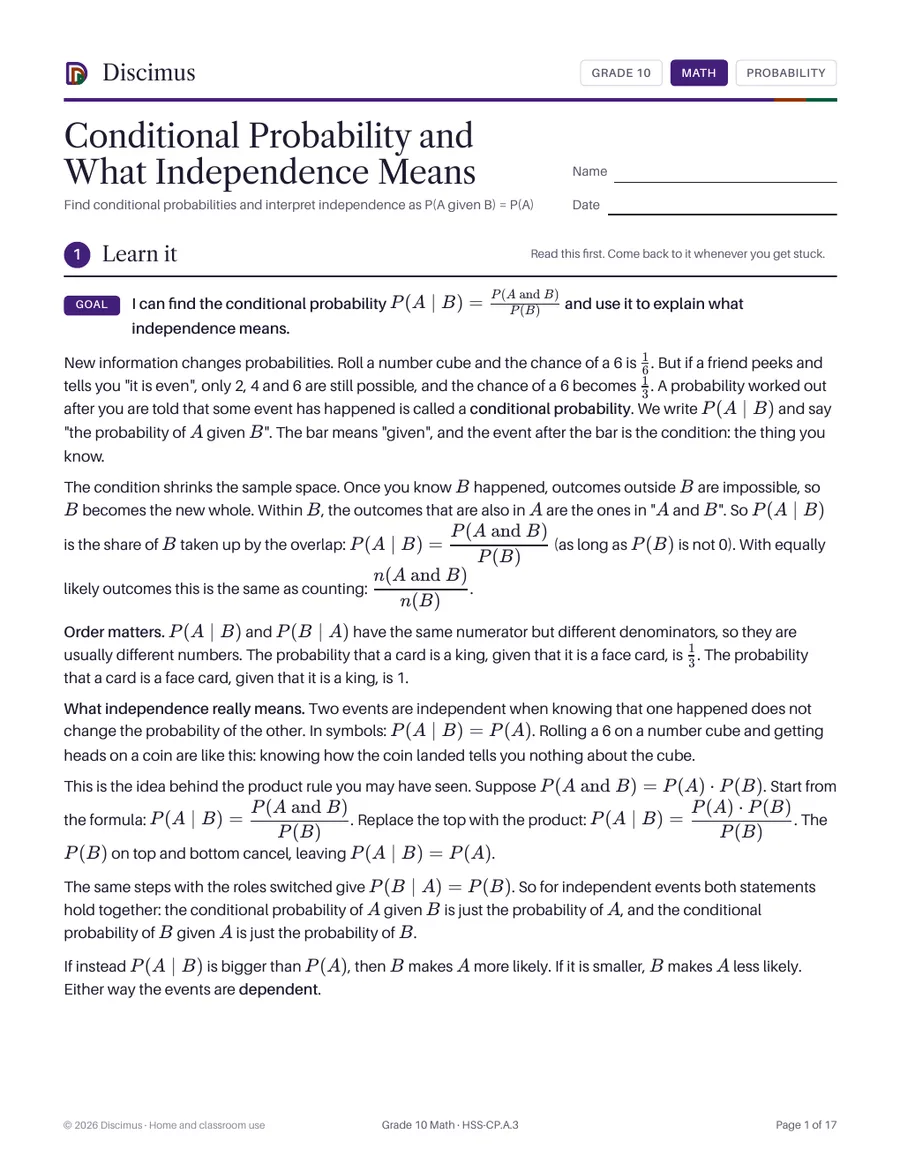
Find conditional probabilities and interpret independence as P(A given B) = P(A)
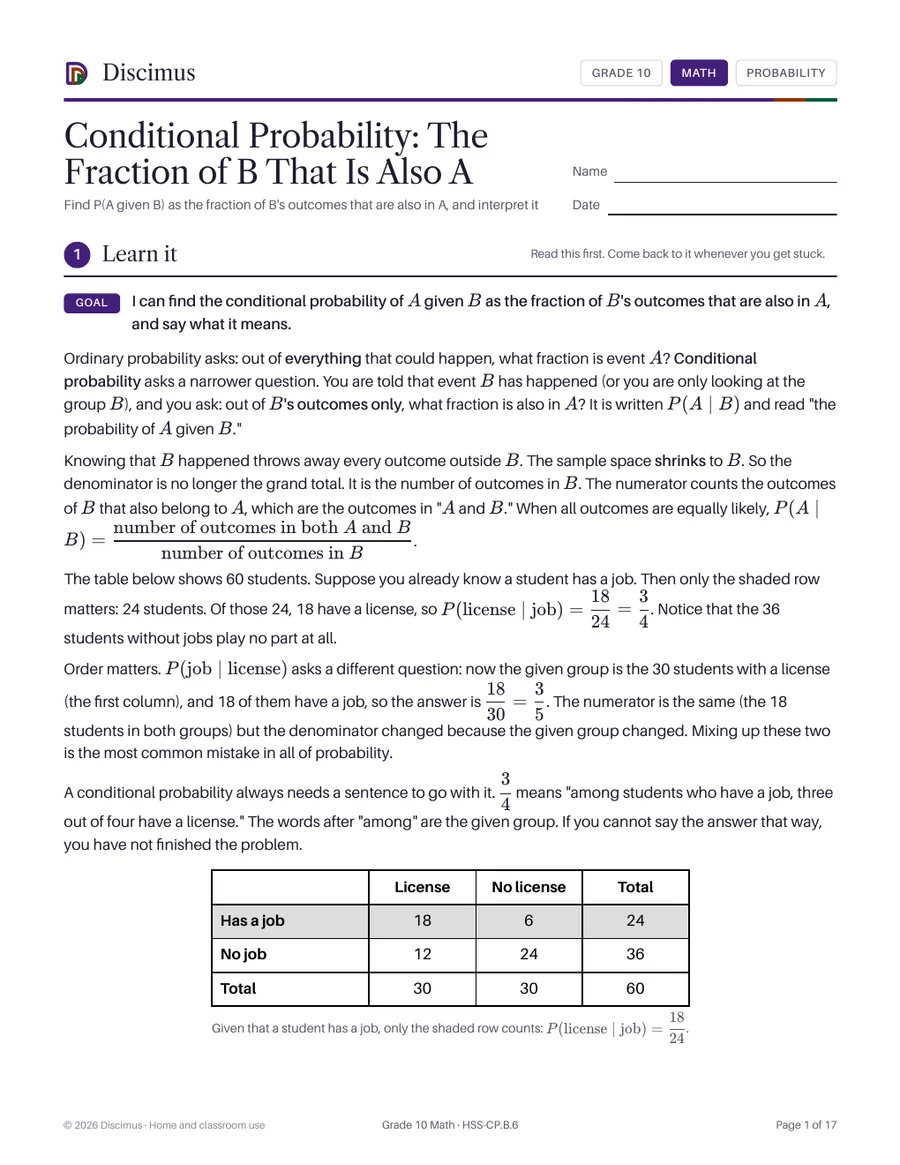
Find P(A given B) as the fraction of B's outcomes that are also in A, and interpret it
Describe events as subsets of a sample space using unions, intersections and complements
Decide whether two events are independent by comparing P(A and B) with P(A) times P(B)
Use permutations and combinations to find probabilities of compound events
Apply the Addition Rule P(A or B) = P(A) + P(B) - P(A and B) and interpret the answer
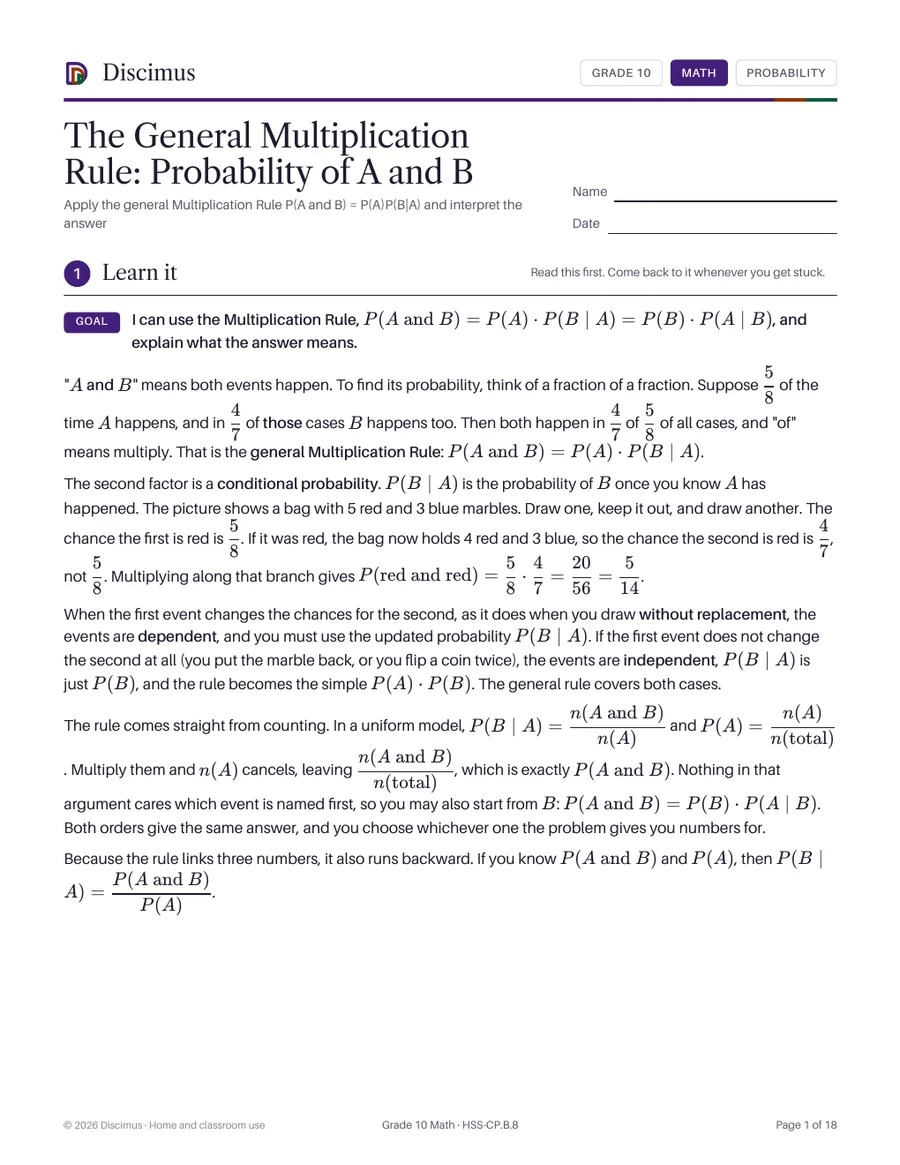
Apply the general Multiplication Rule P(A and B) = P(A)P(B|A) and interpret the answer
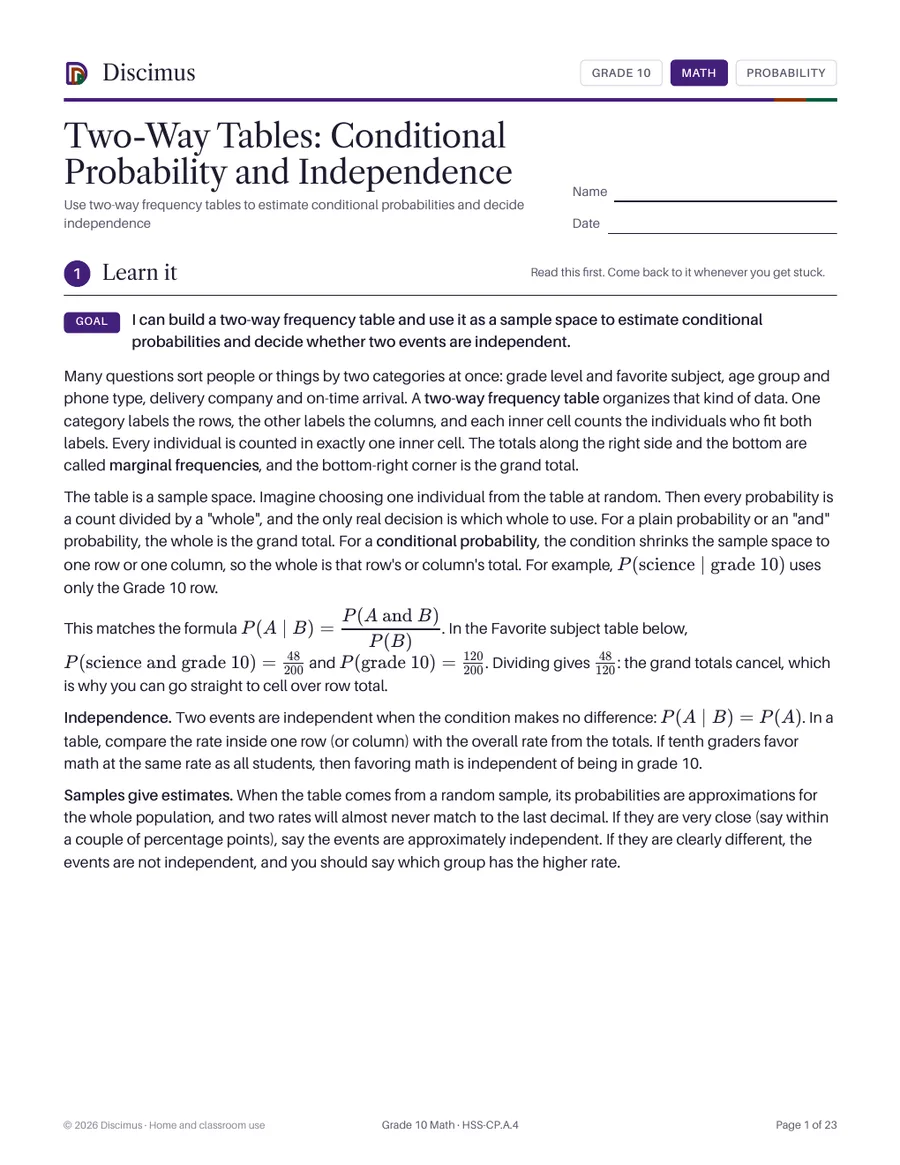
Use two-way frequency tables to estimate conditional probabilities and decide independence
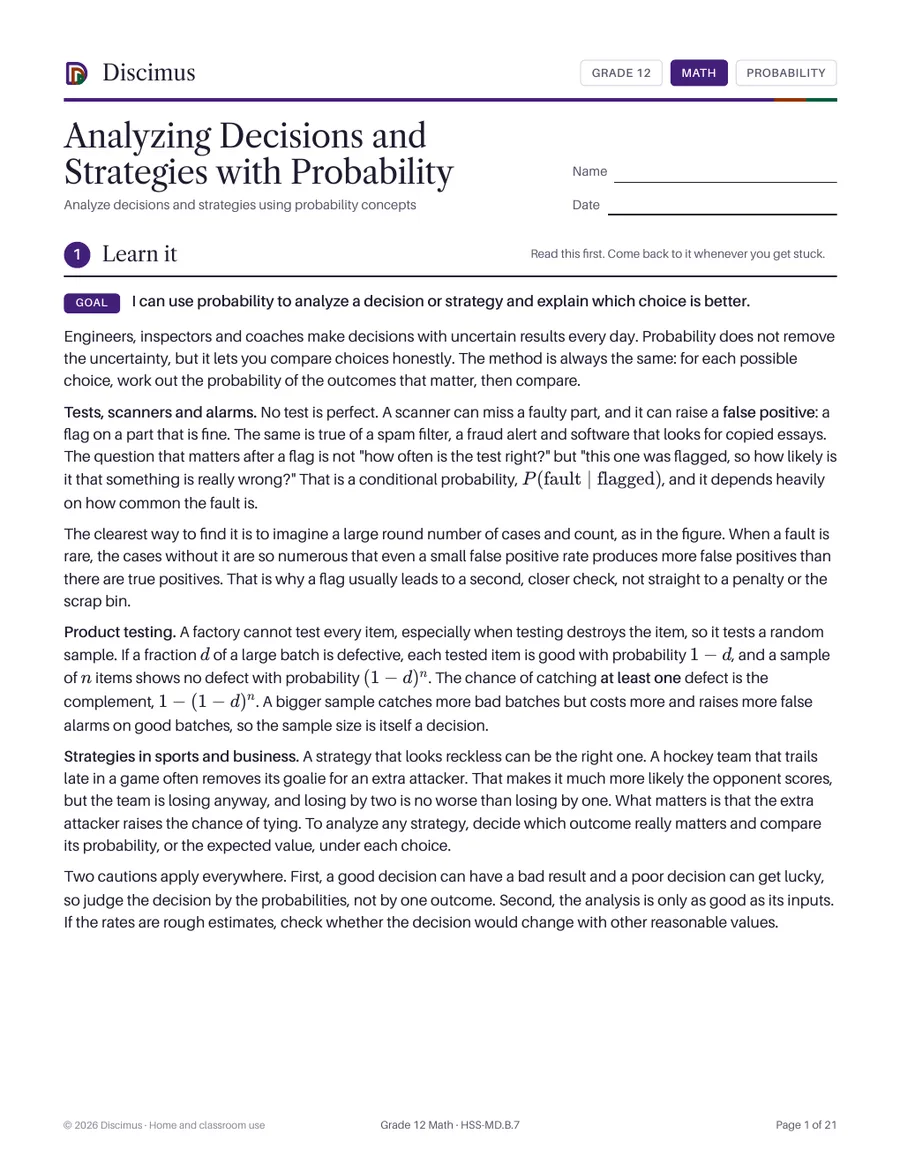
Analyze decisions and strategies using probability concepts
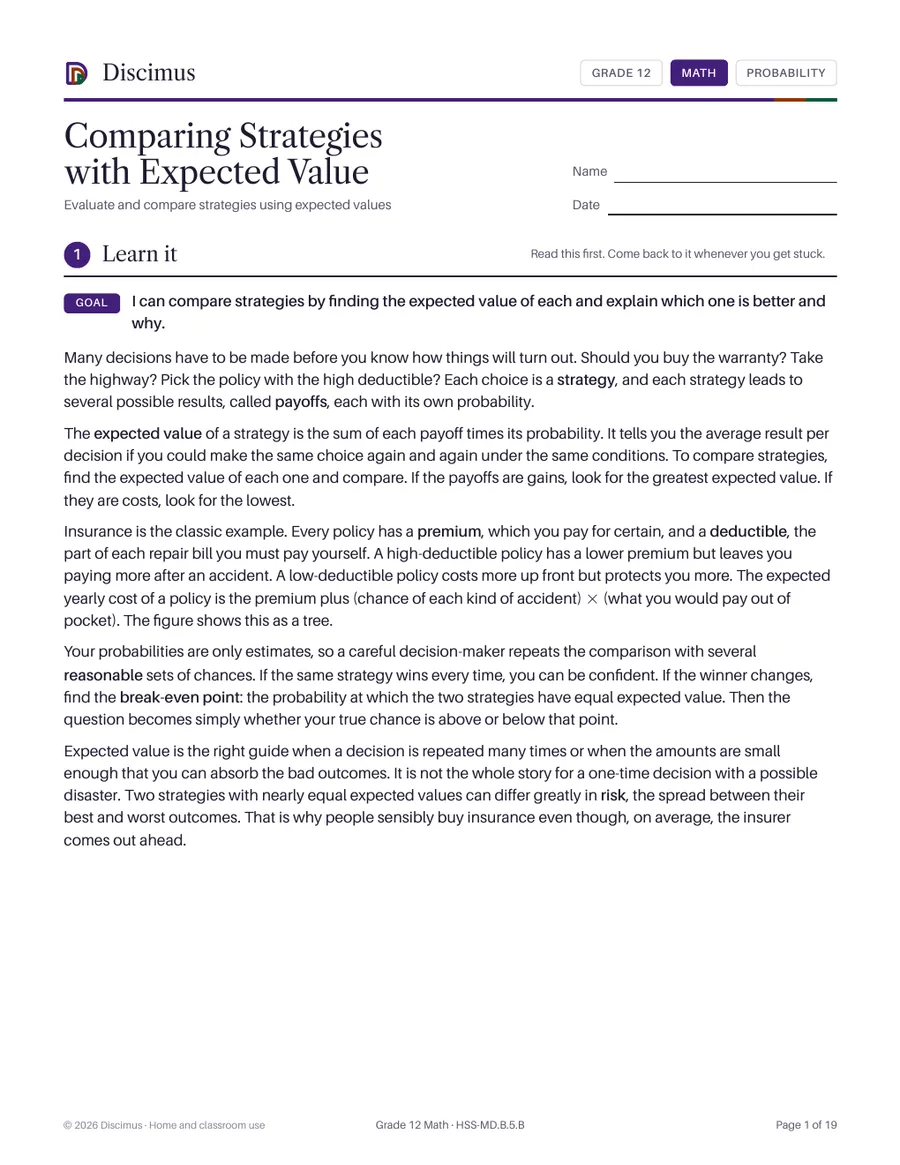
Evaluate and compare strategies using expected values
Develop an empirical probability distribution from data and find its expected value
Use probabilities to make and test fair decisions
Define a random variable on a sample space and graph its probability distribution
Calculate and interpret the expected value of a discrete random variable
Develop a theoretical probability distribution and find its expected value