Daylight and the Time of Year
Observe at different times of year to compare the amount of daylight in each season
27 worksheets match.
Observe at different times of year to compare the amount of daylight in each season
Use observations of the sun, moon and stars to describe and predict sky patterns
Compare solutions that slow or stop wind and water from changing the shape of the land
Make and read models (maps and 3D models) of the land and water in an area
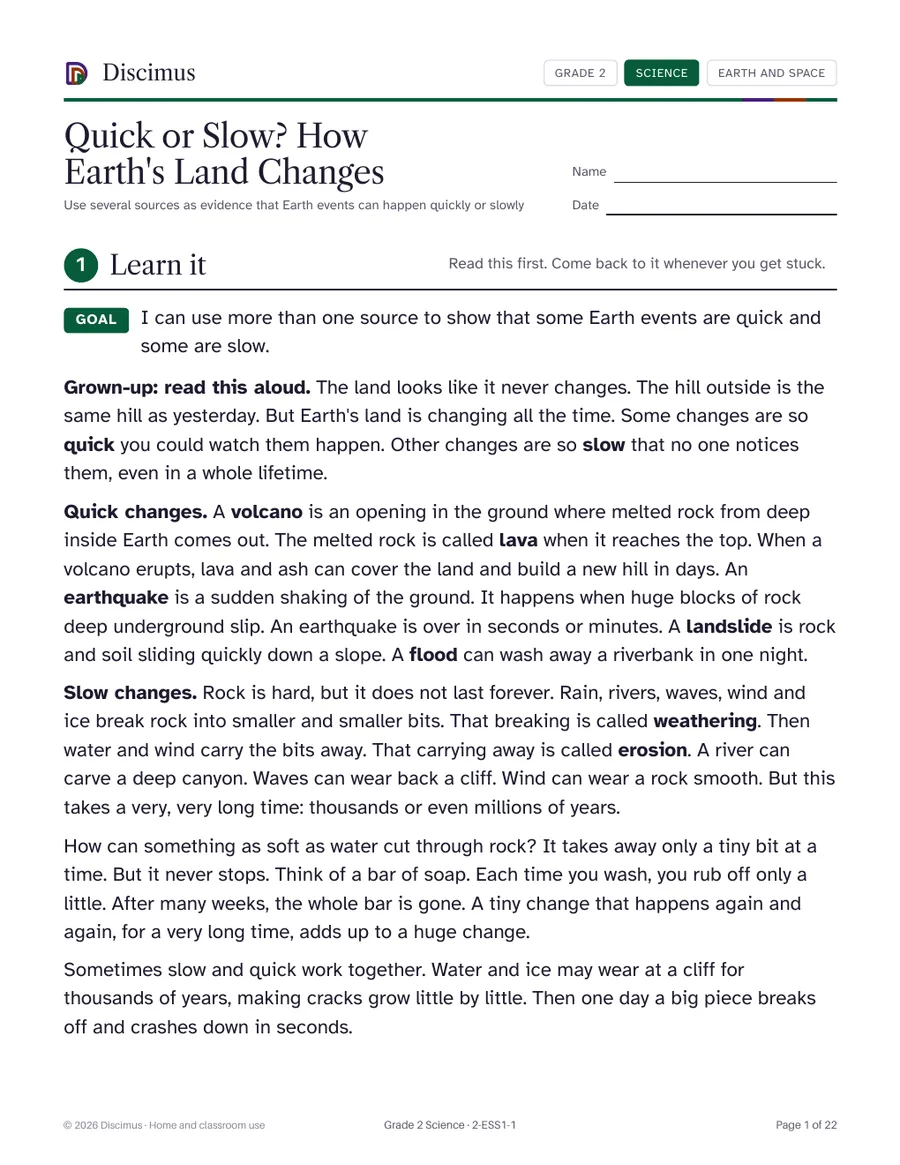
Use several sources as evidence that Earth events can happen quickly or slowly
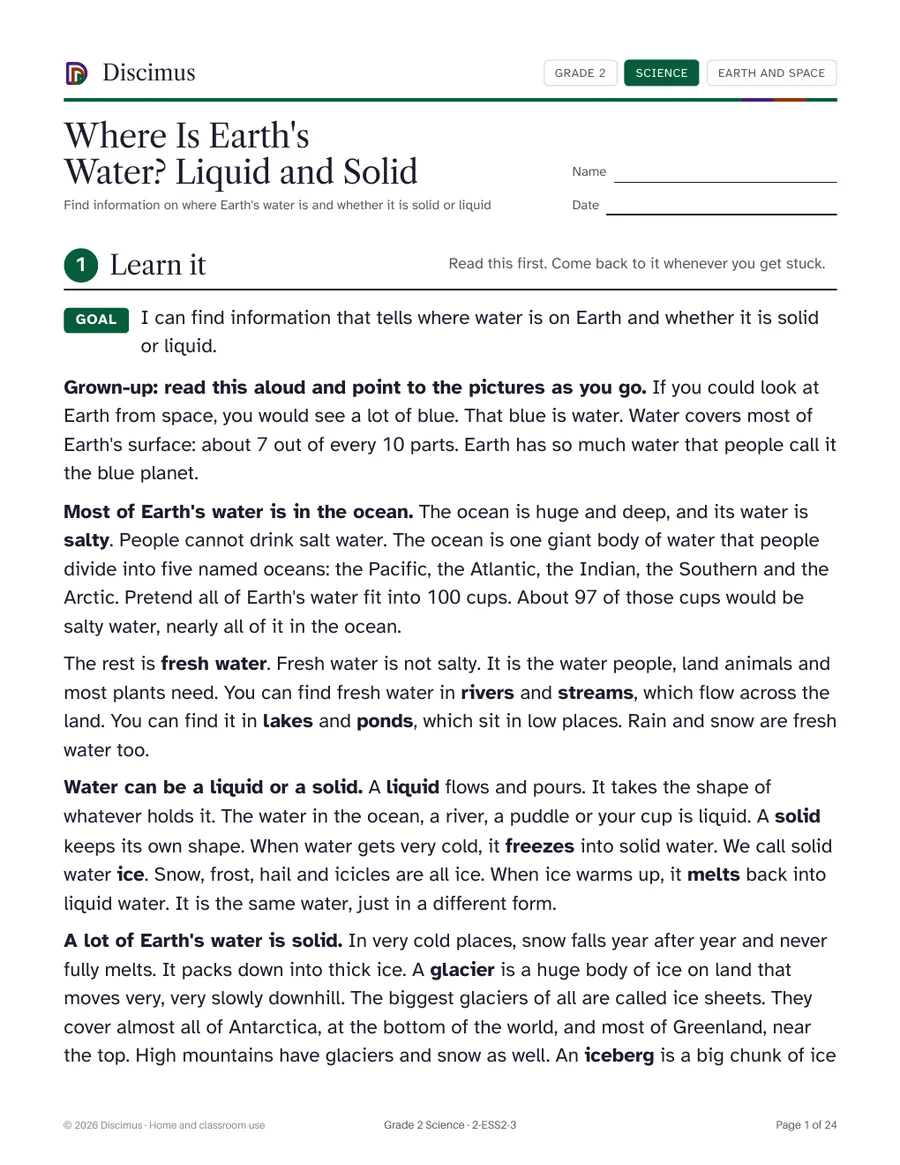
Find information on where Earth's water is and whether it is solid or liquid
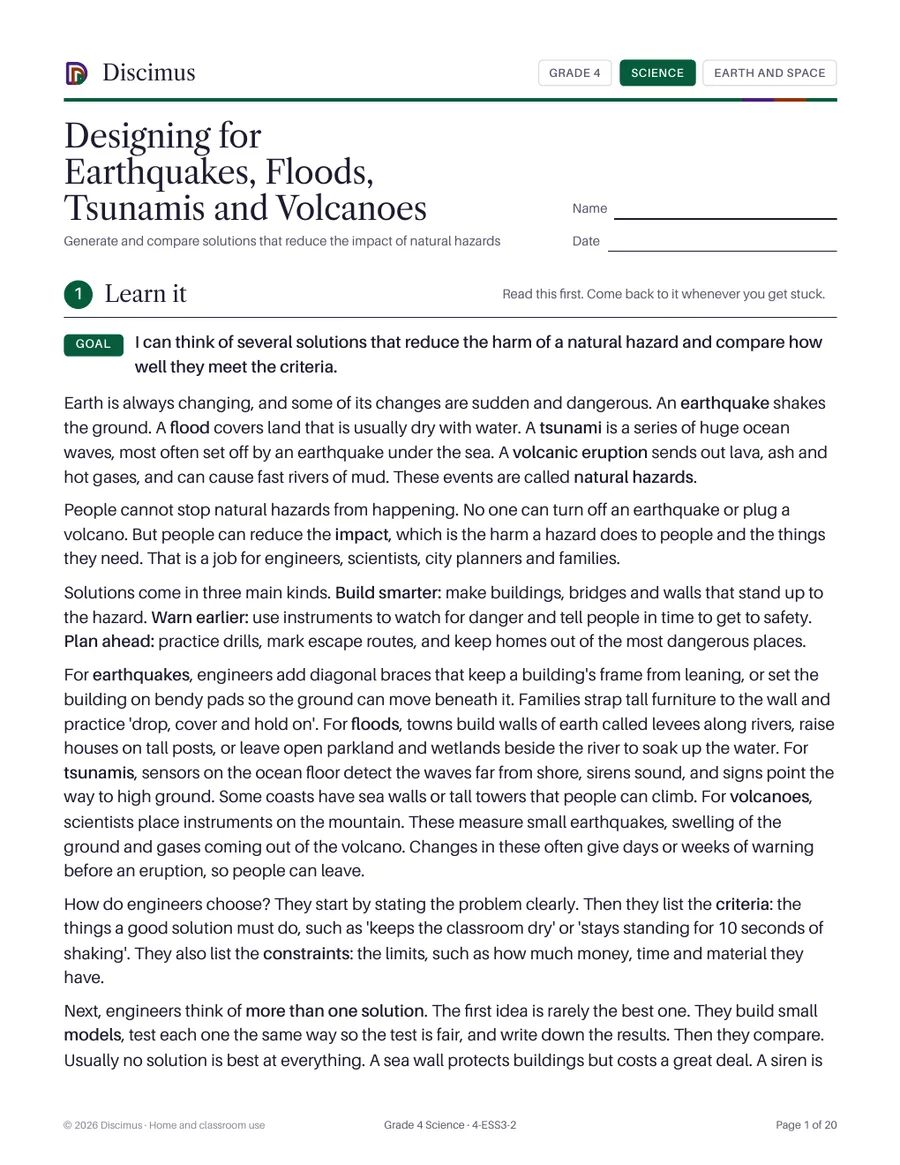
Generate and compare solutions that reduce the impact of natural hazards
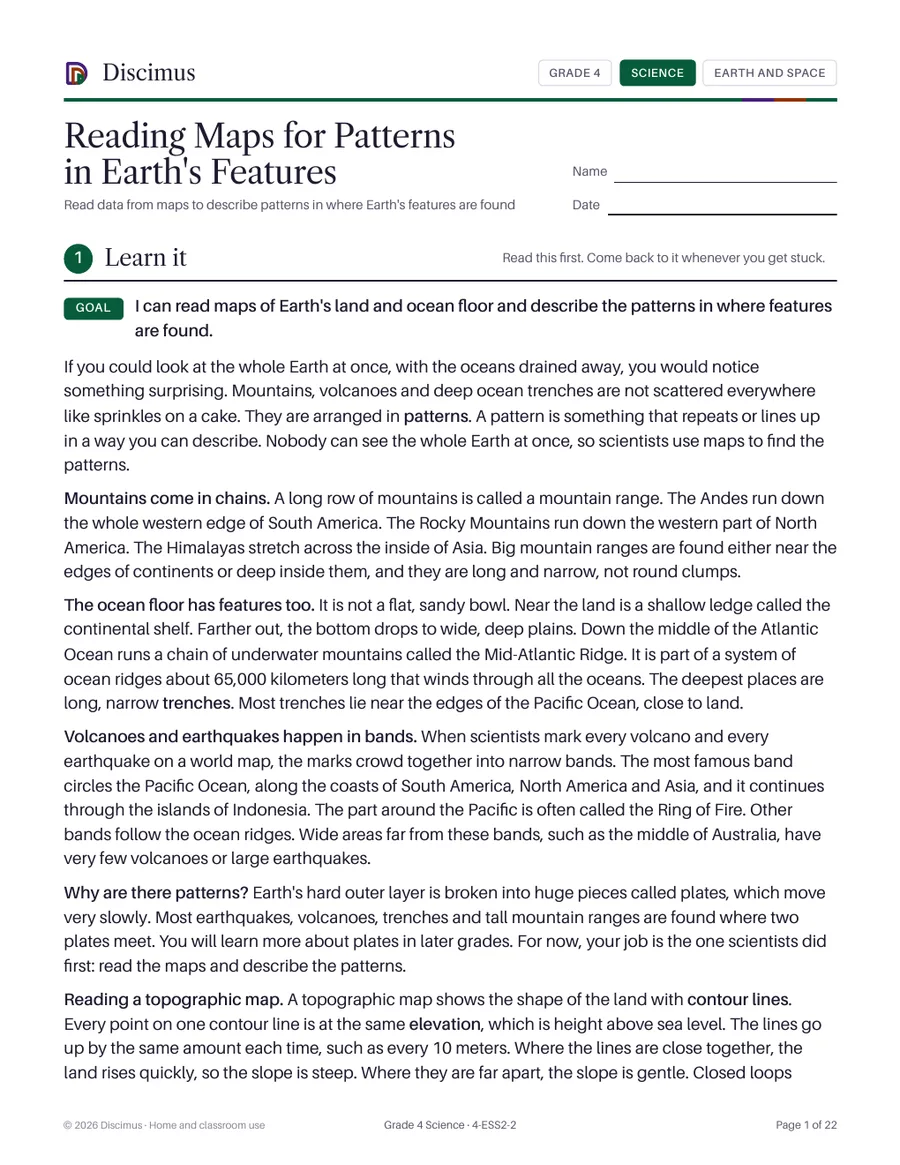
Read data from maps to describe patterns in where Earth's features are found
Use patterns in rock layers and fossils as evidence that a landscape changed over time
Measure and observe to give evidence of weathering and the rate of erosion
Graph data to show patterns in shadows, daylight and the stars seen in each season
Argue from evidence that the sun looks brighter than other stars because it is closer
Model how internal and surface processes build and wear down land and sea-floor features
Build and use a quantitative box model of carbon cycling among Earth's four spheres
Use rock ages, meteorites and cratering to construct an account of Earth's early history
Use an energy budget model to explain how changes in energy flow change Earth's climate
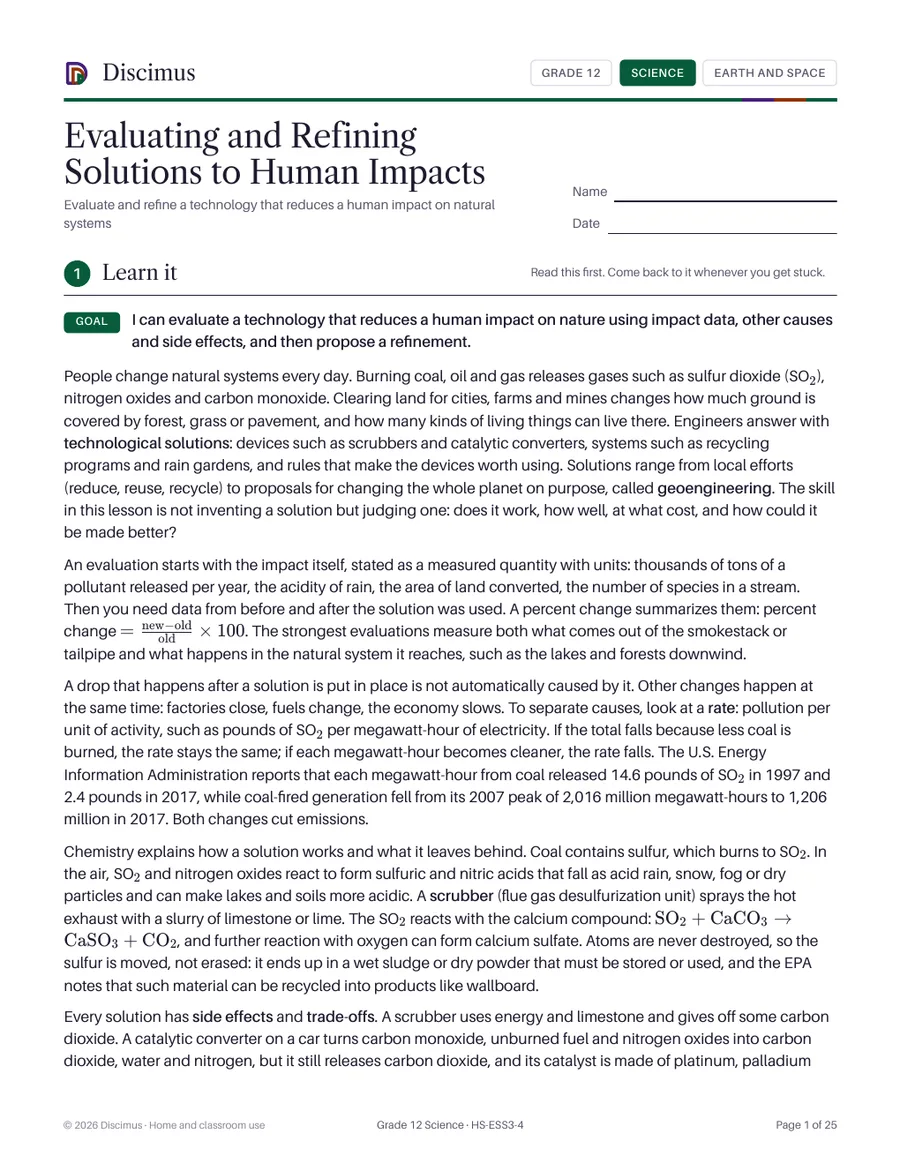
Evaluate and refine a technology that reduces a human impact on natural systems
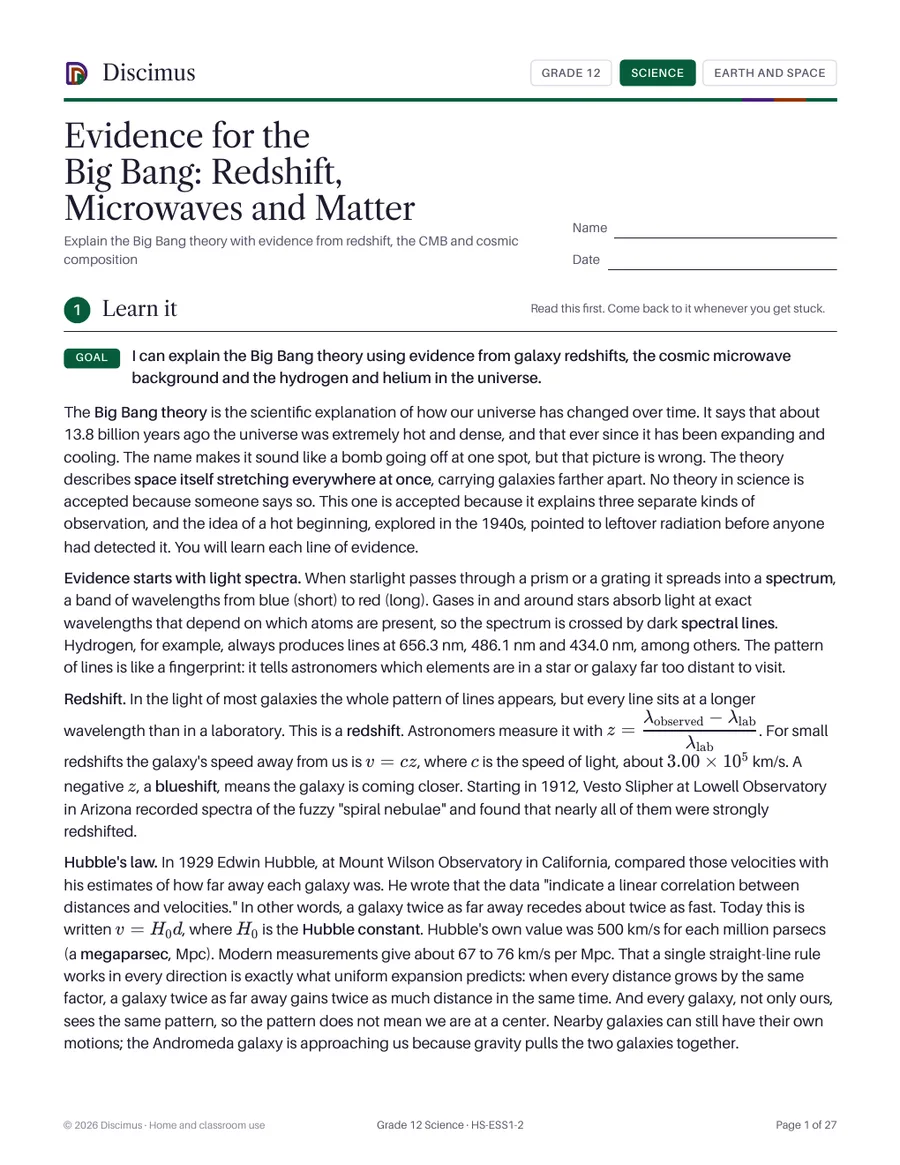
Explain the Big Bang theory with evidence from redshift, the CMB and cosmic composition
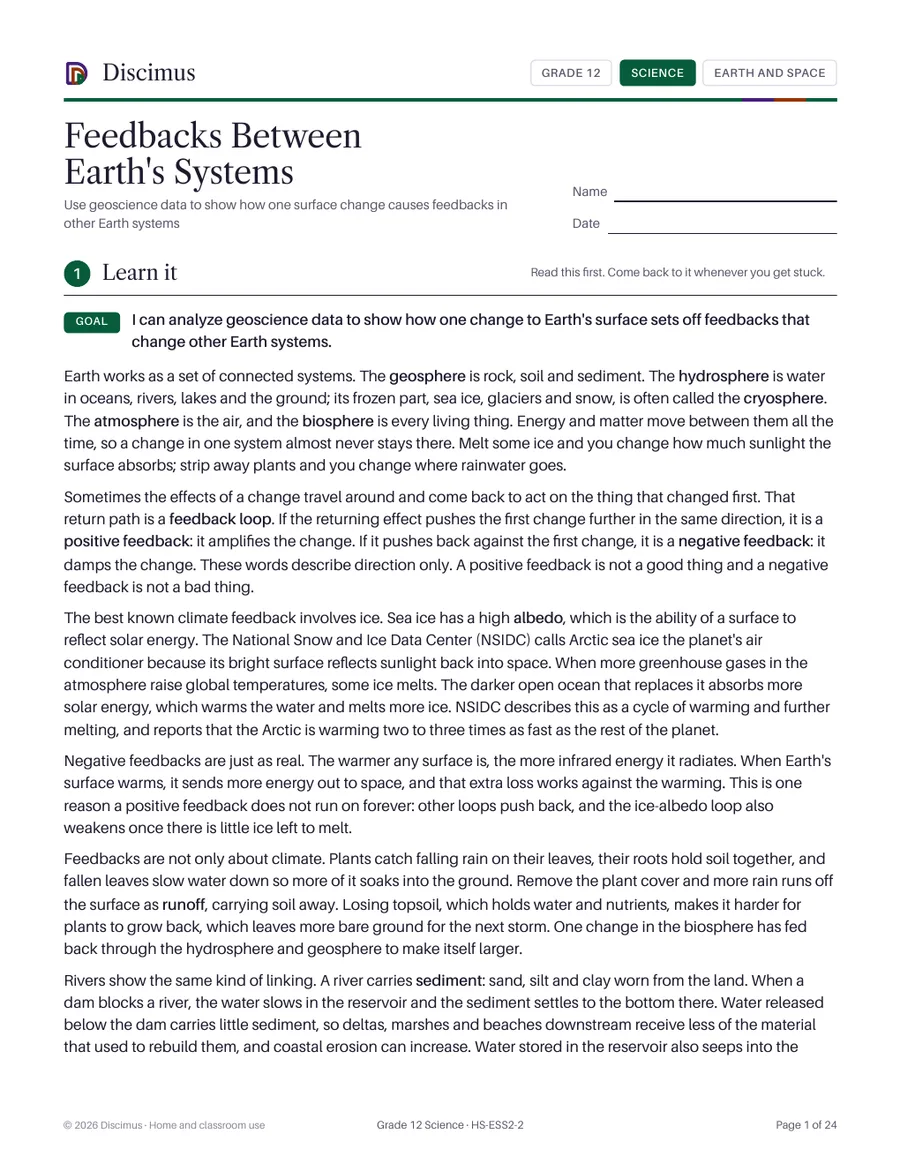
Use geoscience data to show how one surface change causes feedbacks in other Earth systems
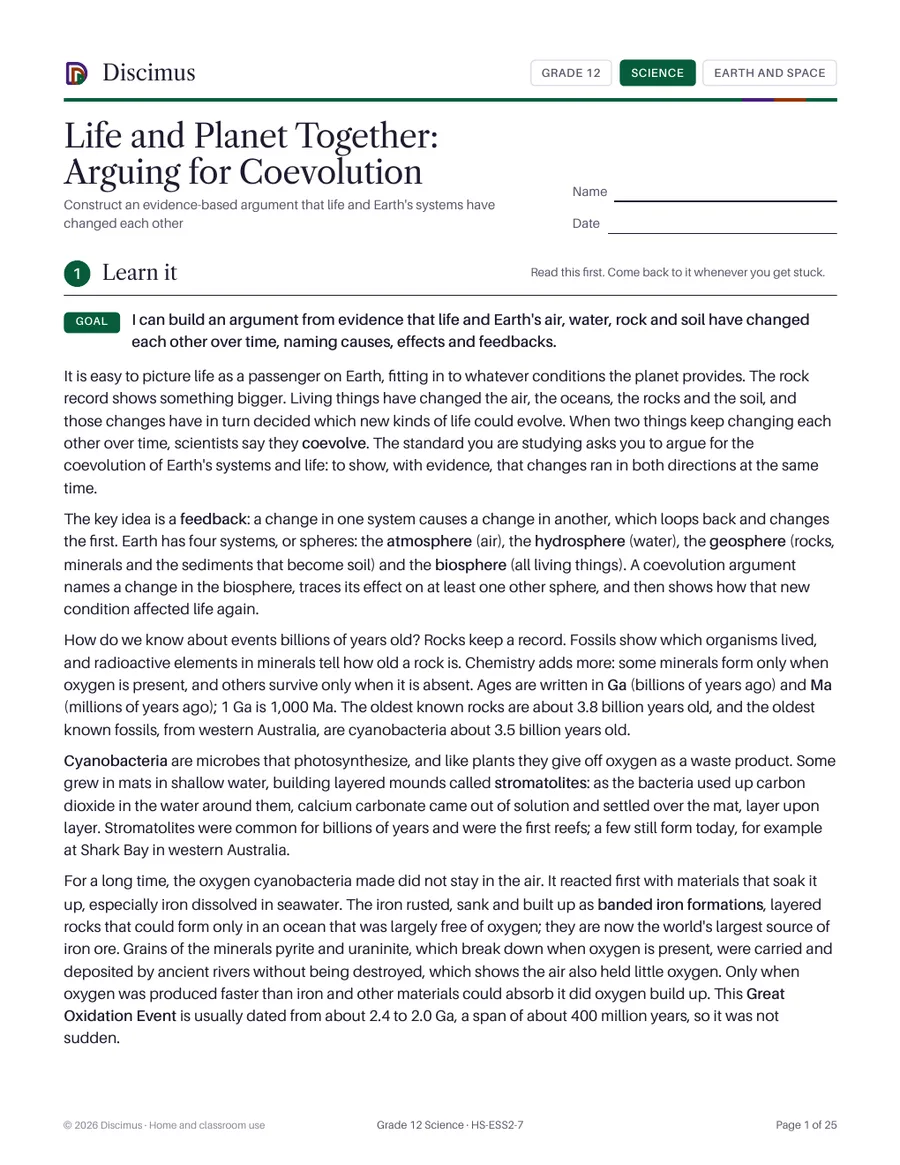
Construct an evidence-based argument that life and Earth's systems have changed each other
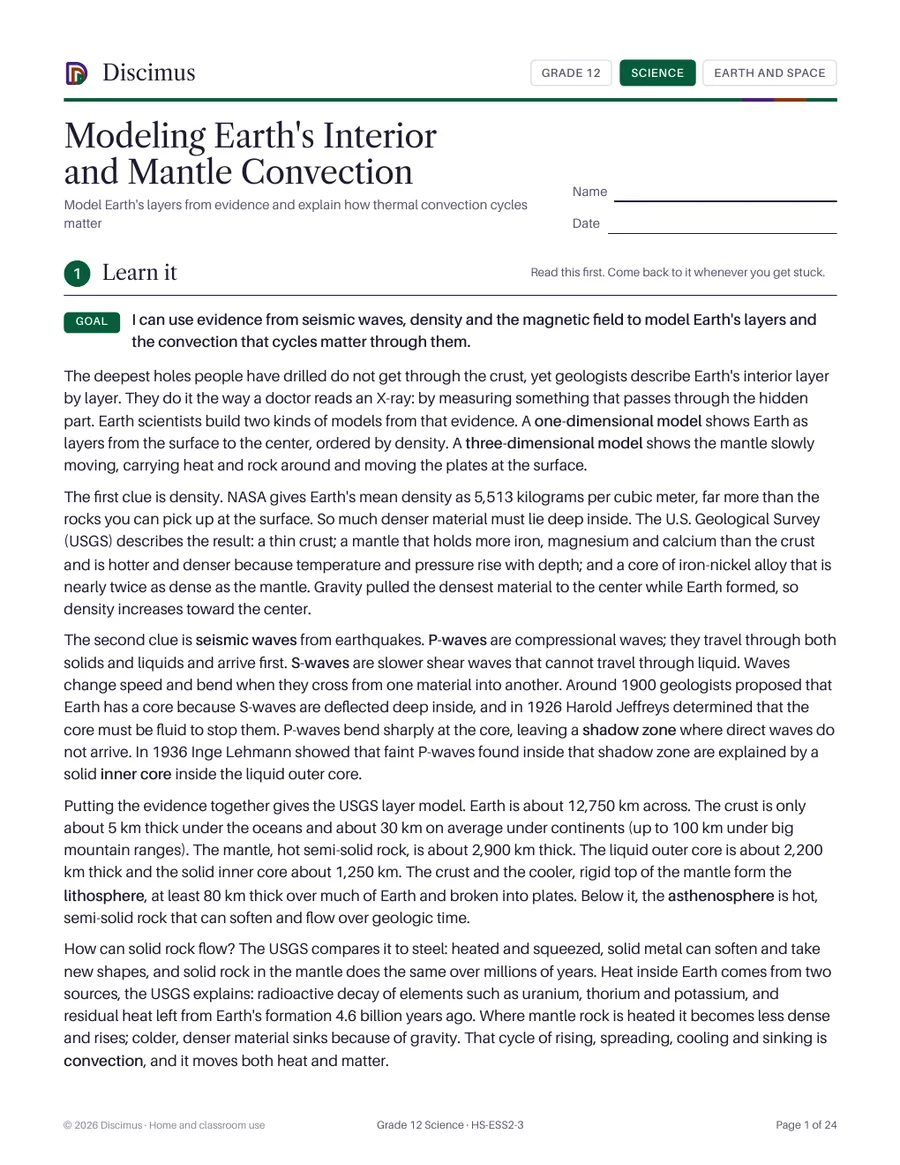
Model Earth's layers from evidence and explain how thermal convection cycles matter
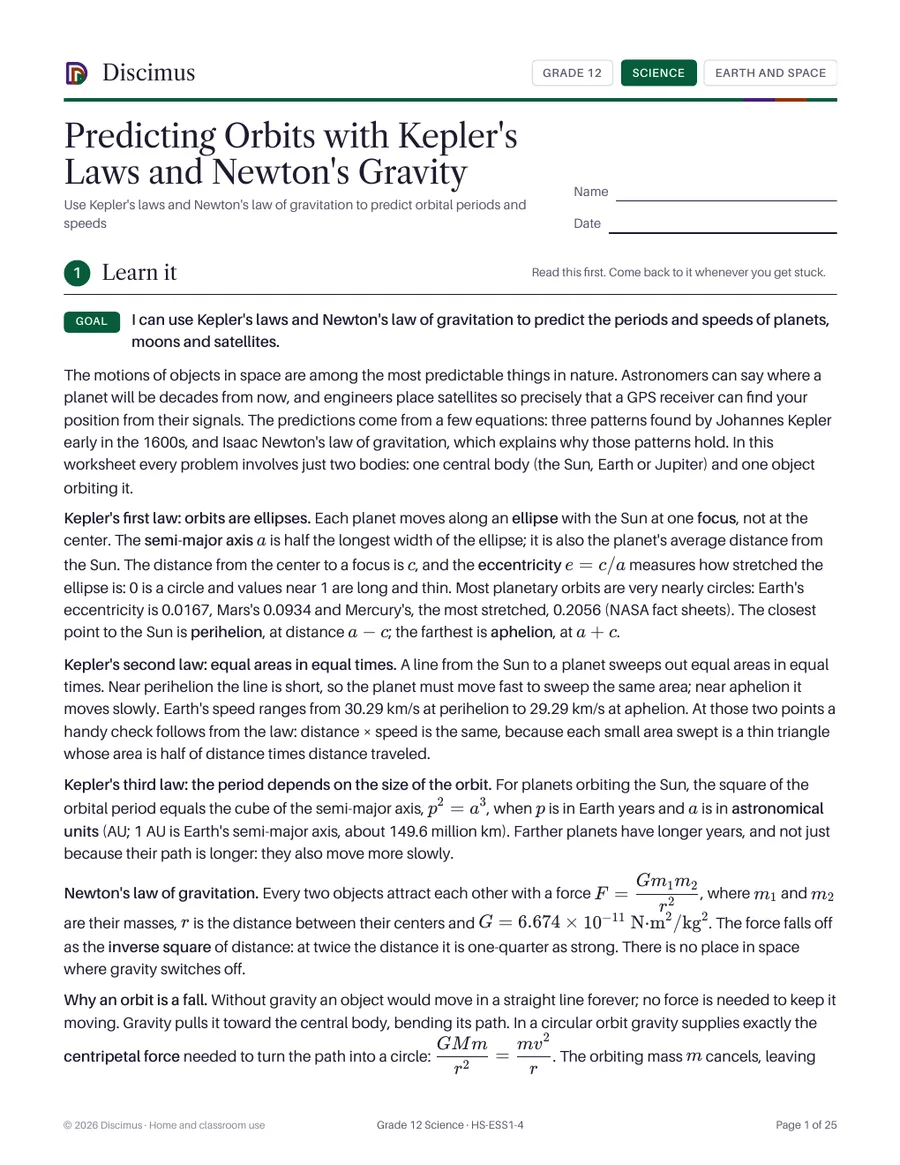
Use Kepler's laws and Newton's law of gravitation to predict orbital periods and speeds
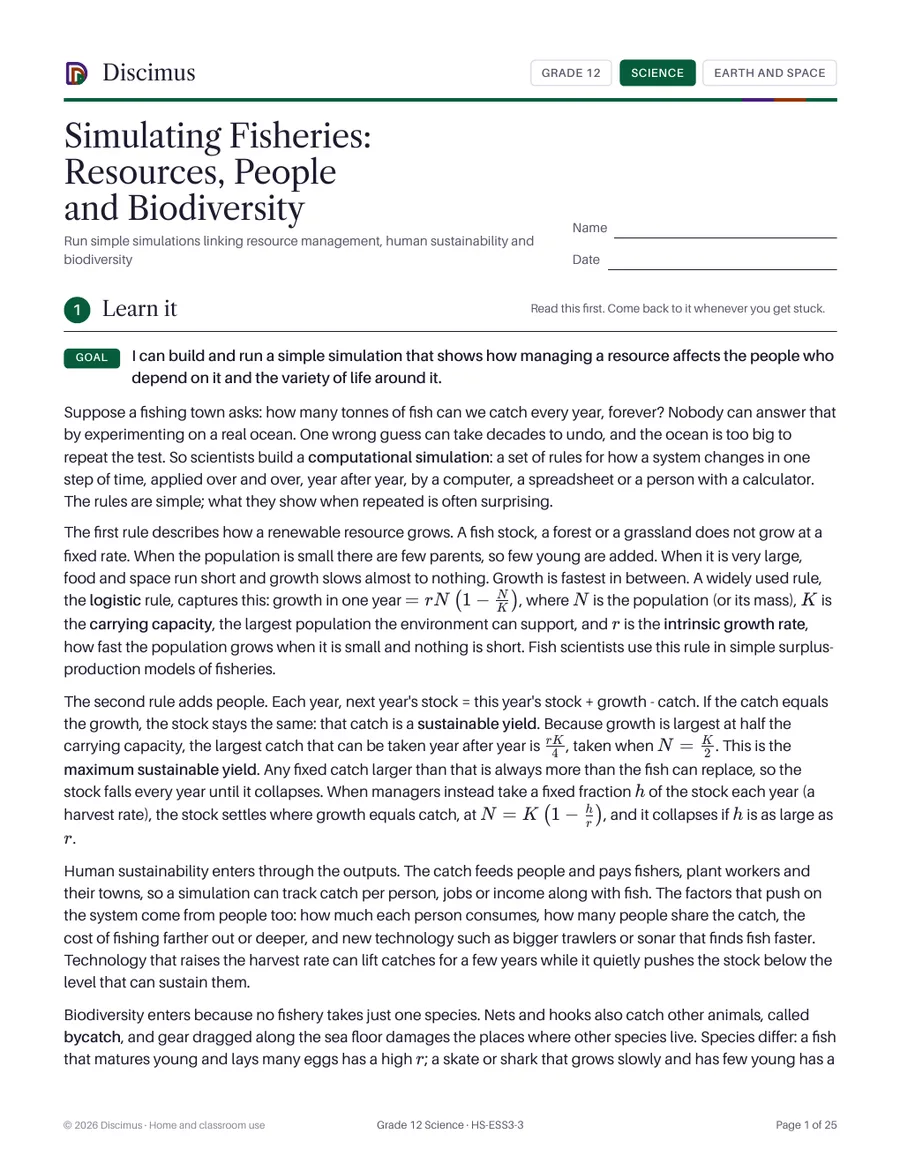
Run simple simulations linking resource management, human sustainability and biodiversity
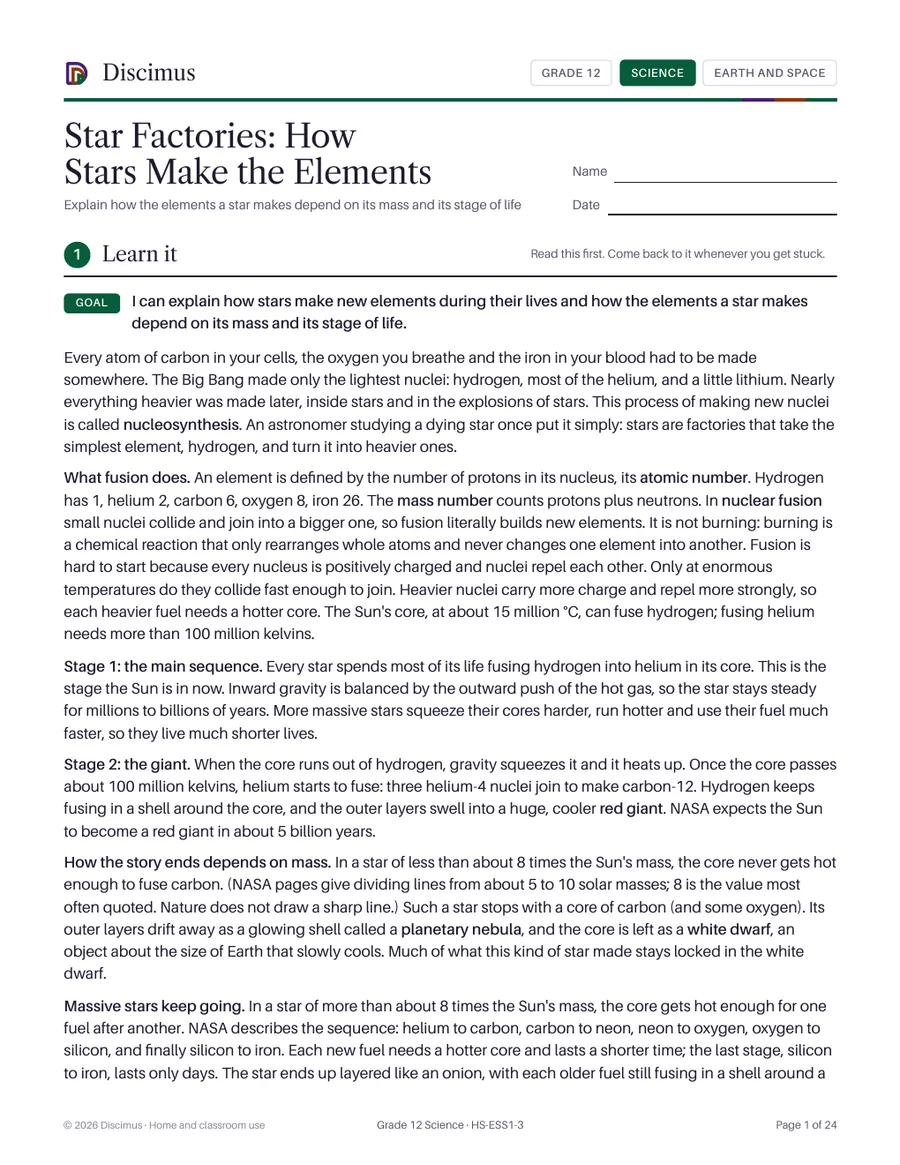
Explain how the elements a star makes depend on its mass and its stage of life
Model the Sun's life span and how energy from core fusion reaches Earth as radiation
Evaluate competing designs for using energy and mineral resources with cost-benefit ratios
Use plate tectonics to explain the ages of oceanic and continental crustal rocks