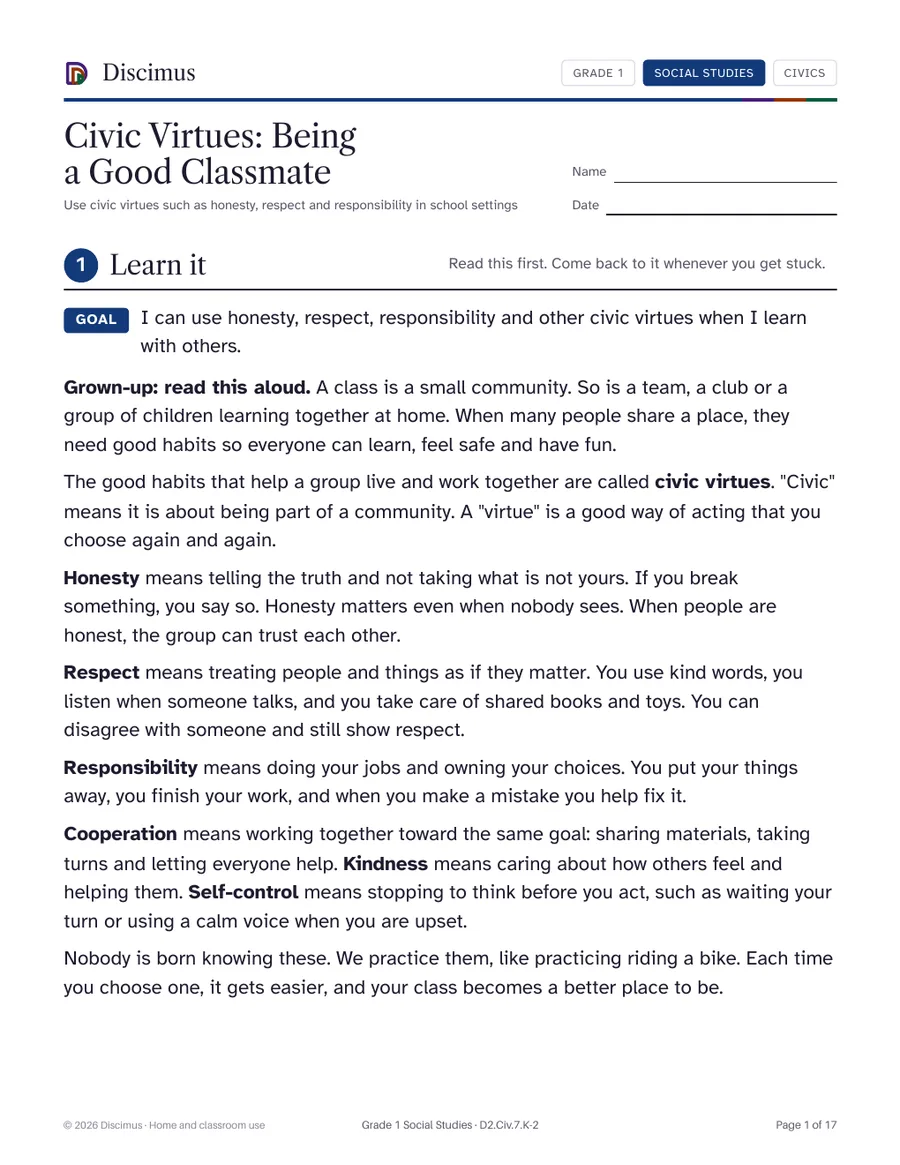
Civic Virtues: Being a Good Classmate
Use civic virtues such as honesty, respect and responsibility in school settings
39 worksheets match.
Use civic virtues such as honesty, respect and responsibility in school settings
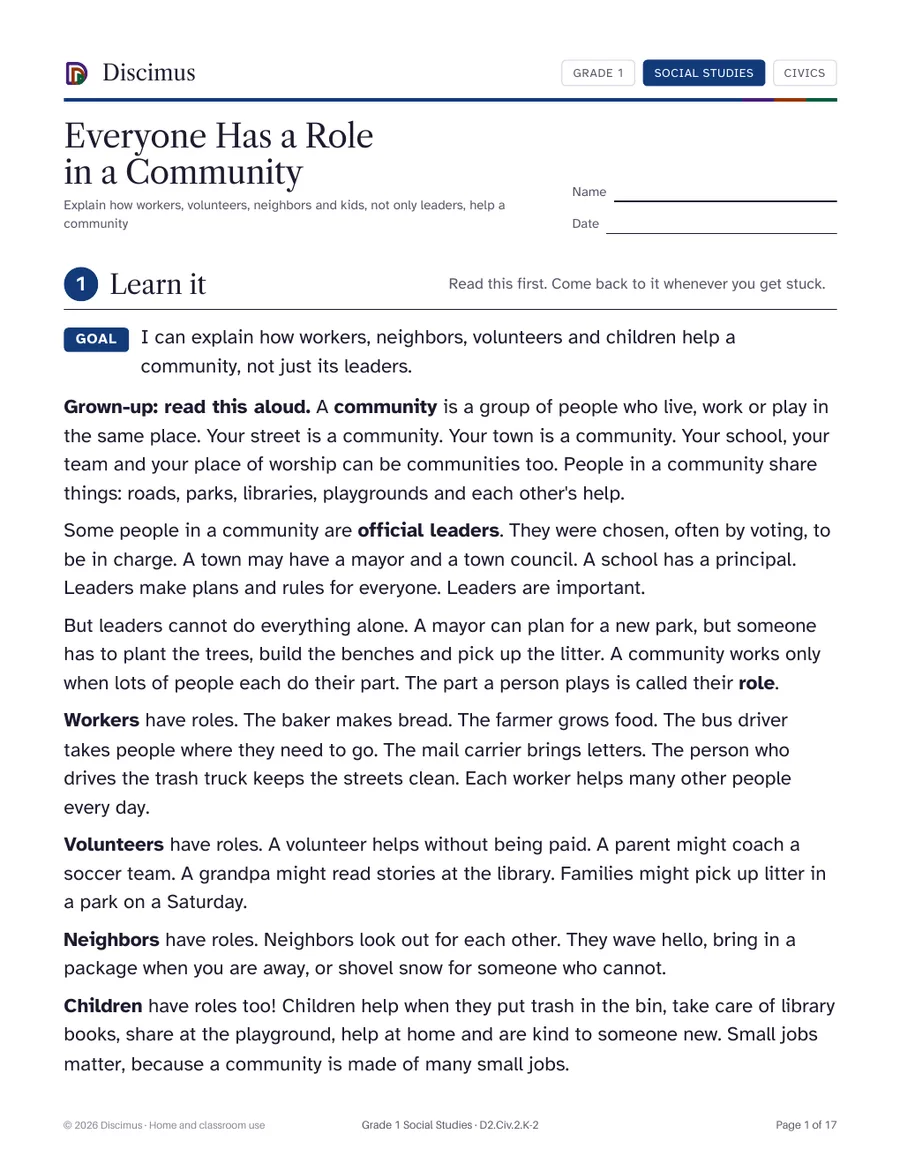
Explain how workers, volunteers, neighbors and kids, not only leaders, help a community
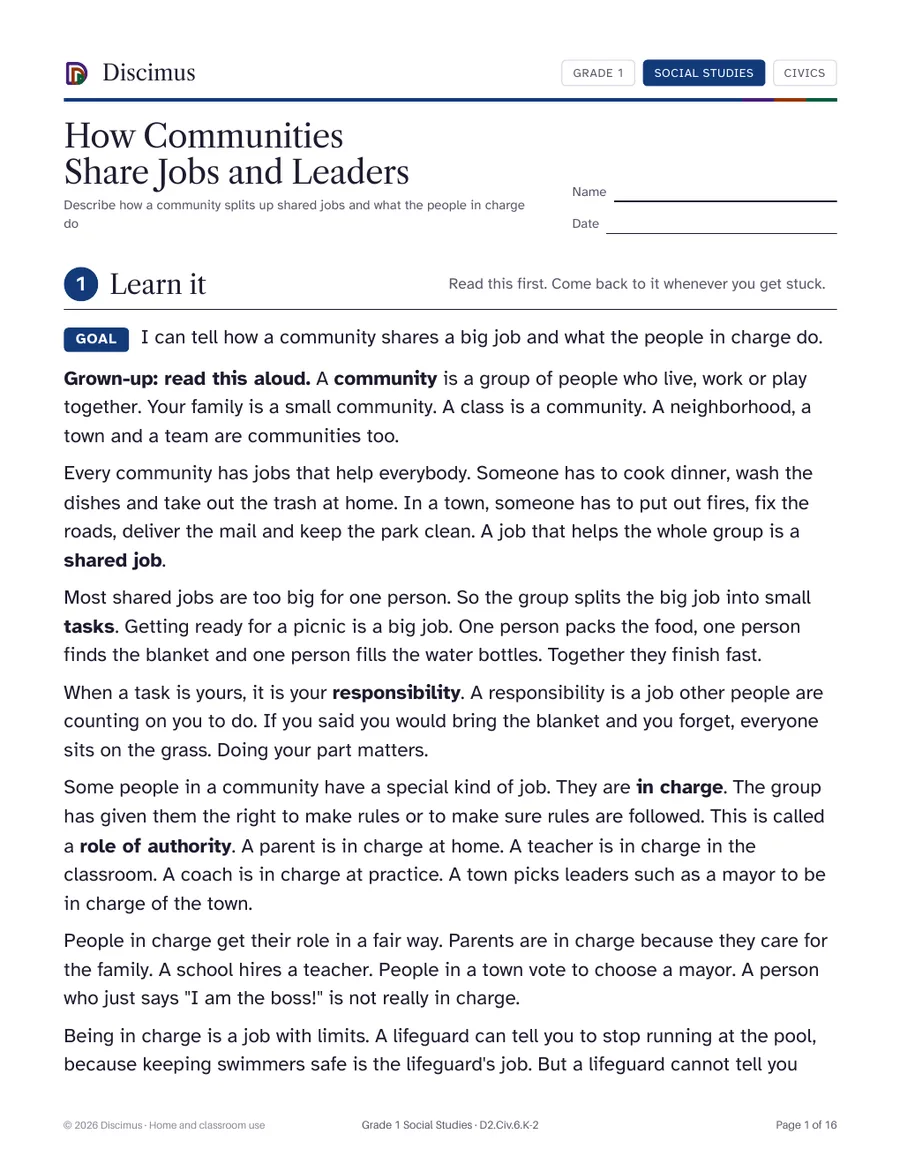
Describe how a community splits up shared jobs and what the people in charge do
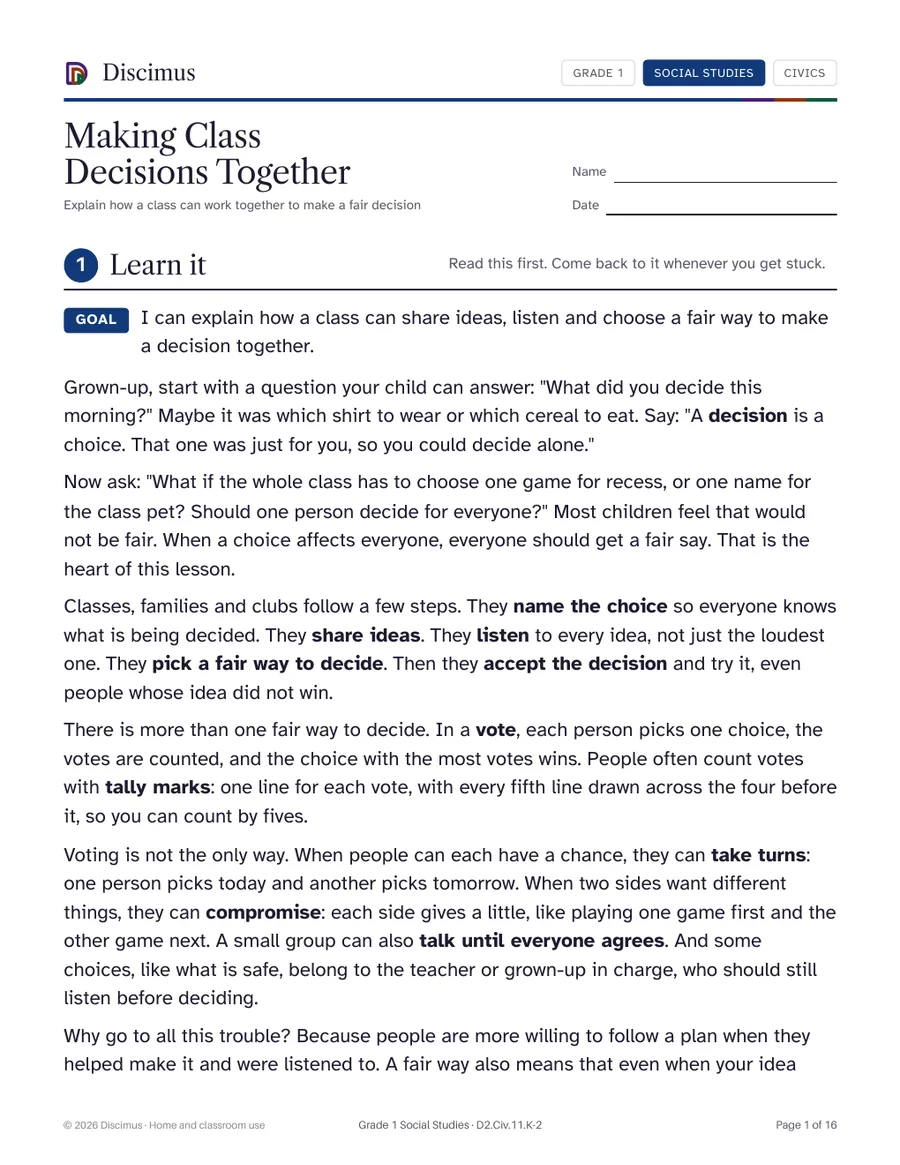
Explain how a class can work together to make a fair decision
Tell my own point of view and compare it with how other people see the same thing
Describe what a person in authority may decide and must do for the people in their care
Describe how people have worked to make their communities better, long ago and today
Follow discussion rules, listen and respond to others, and help a group make a decision
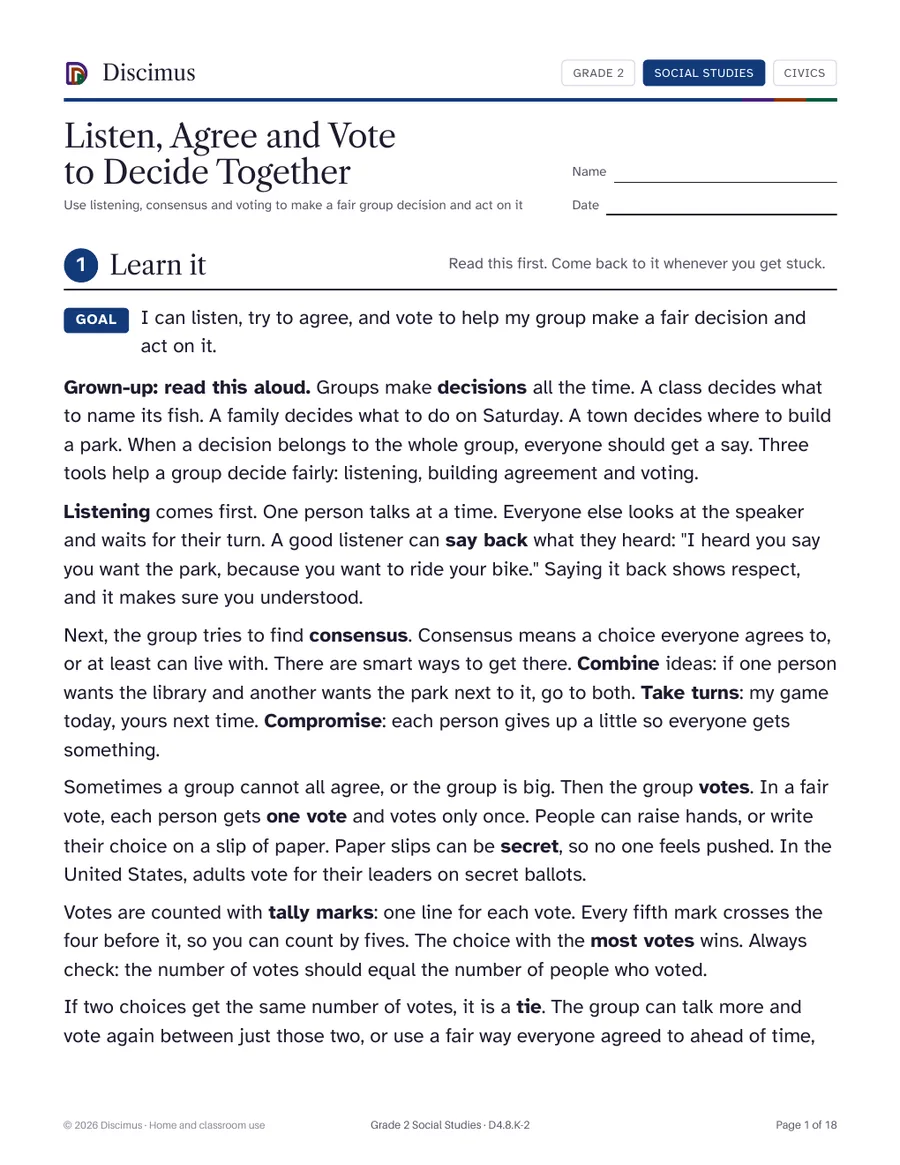
Use listening, consensus and voting to make a fair group decision and act on it
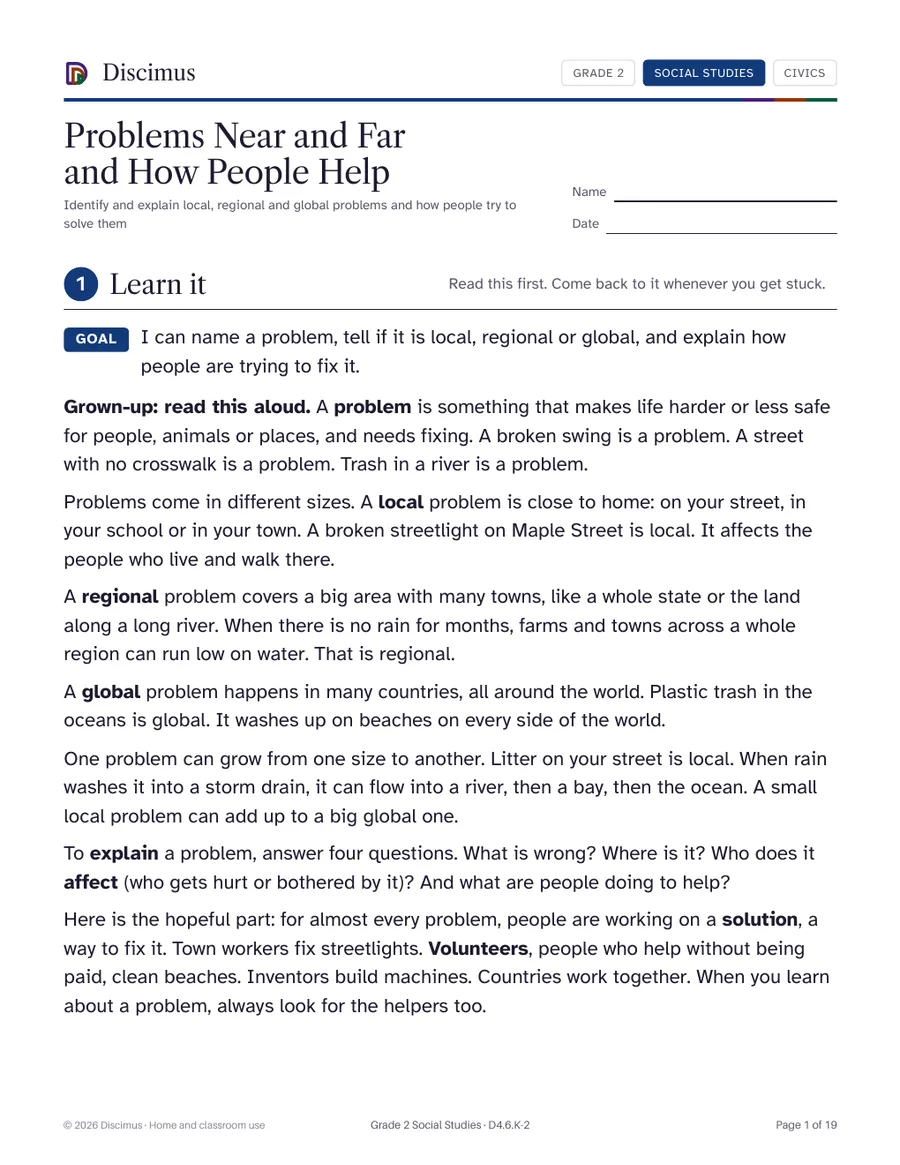
Identify and explain local, regional and global problems and how people try to solve them
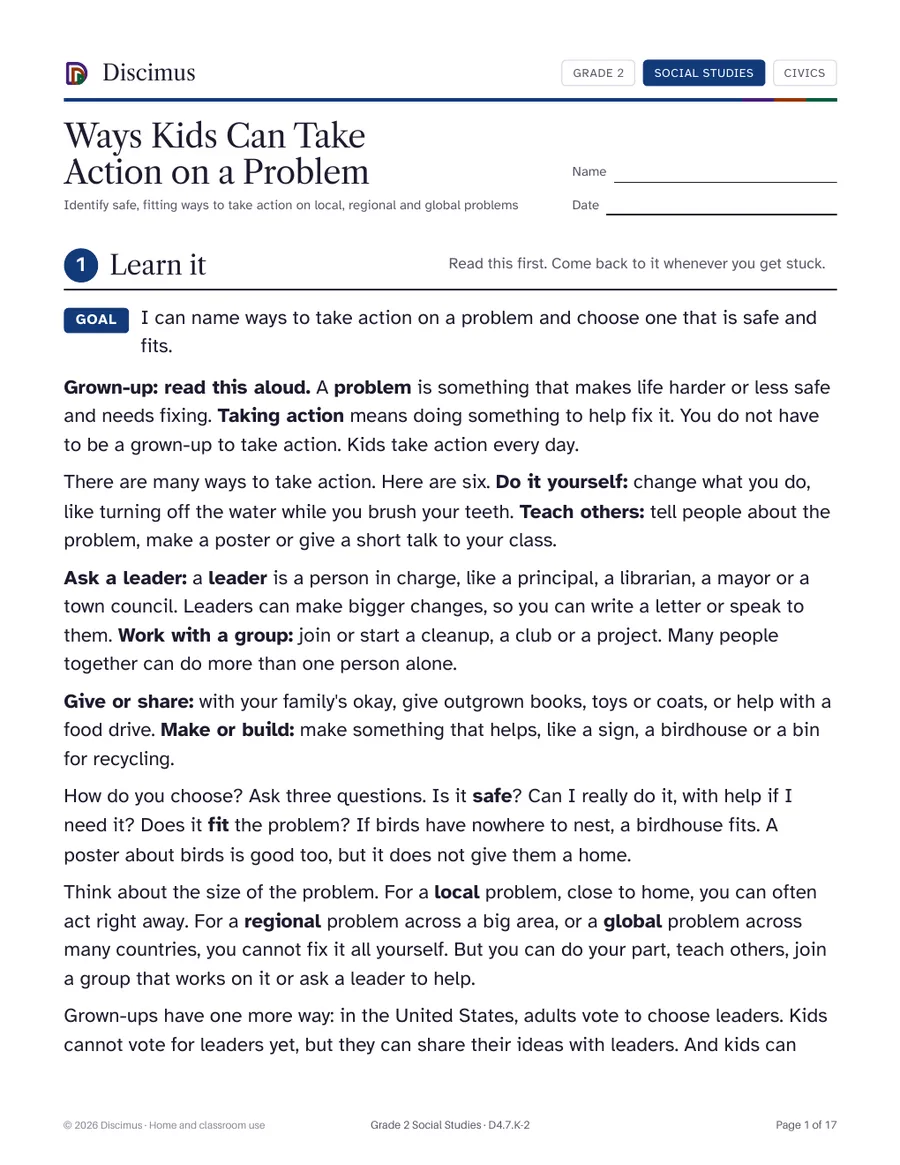
Identify safe, fitting ways to take action on local, regional and global problems
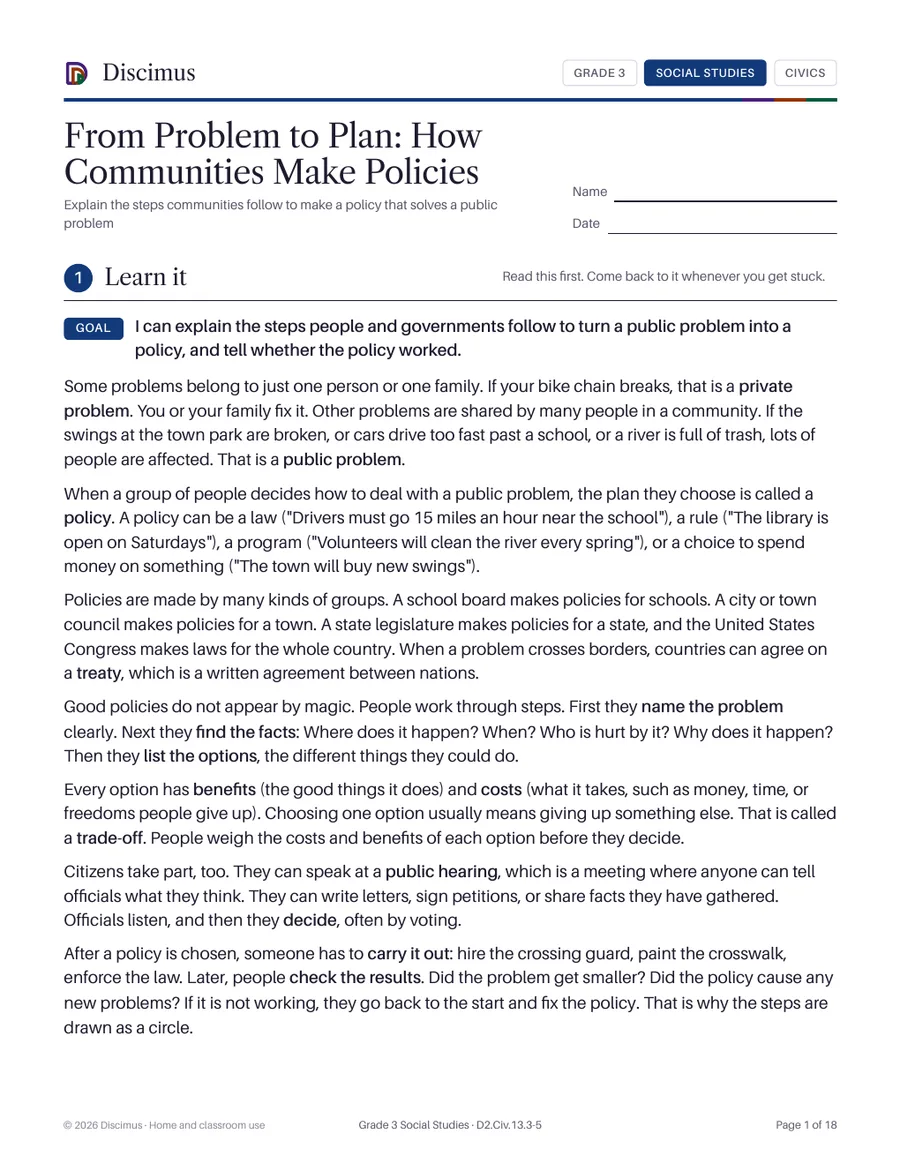
Explain the steps communities follow to make a policy that solves a public problem
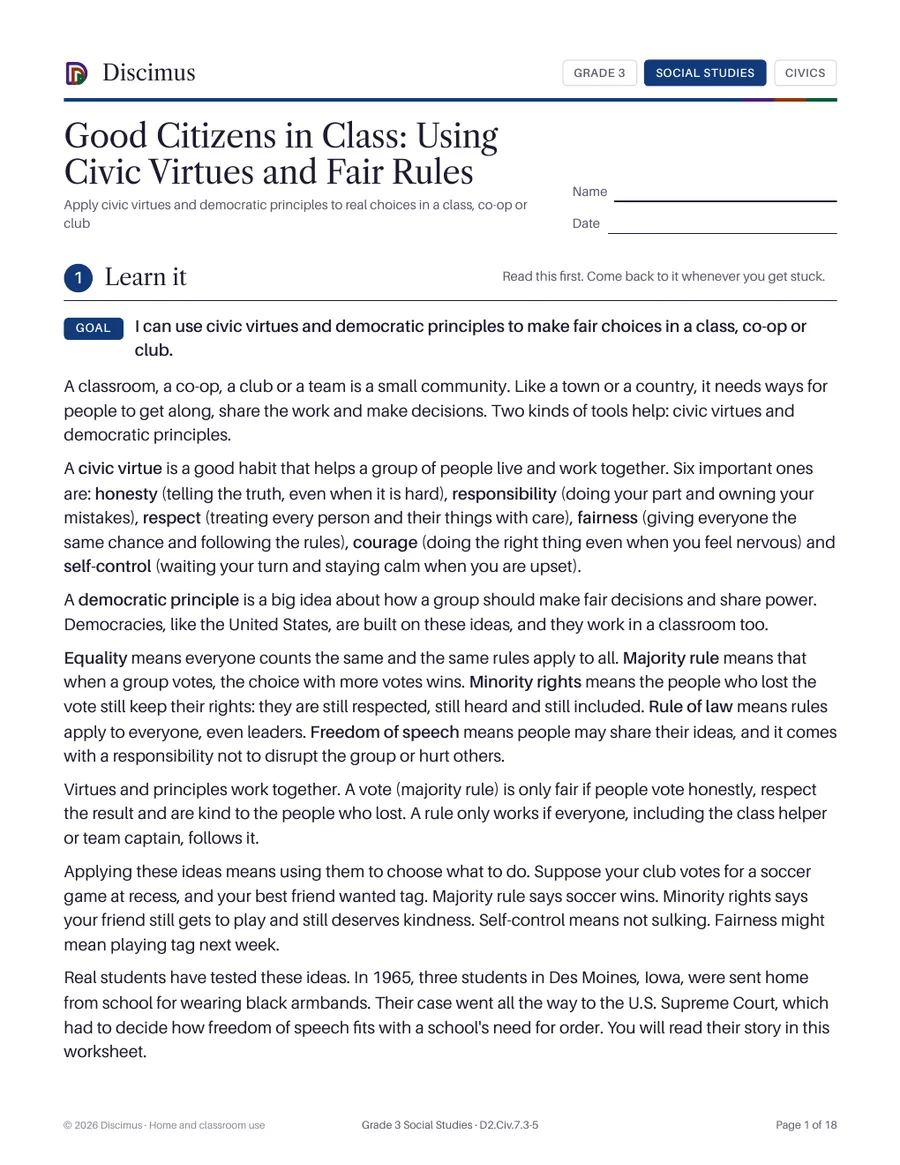
Apply civic virtues and democratic principles to real choices in a class, co-op or club
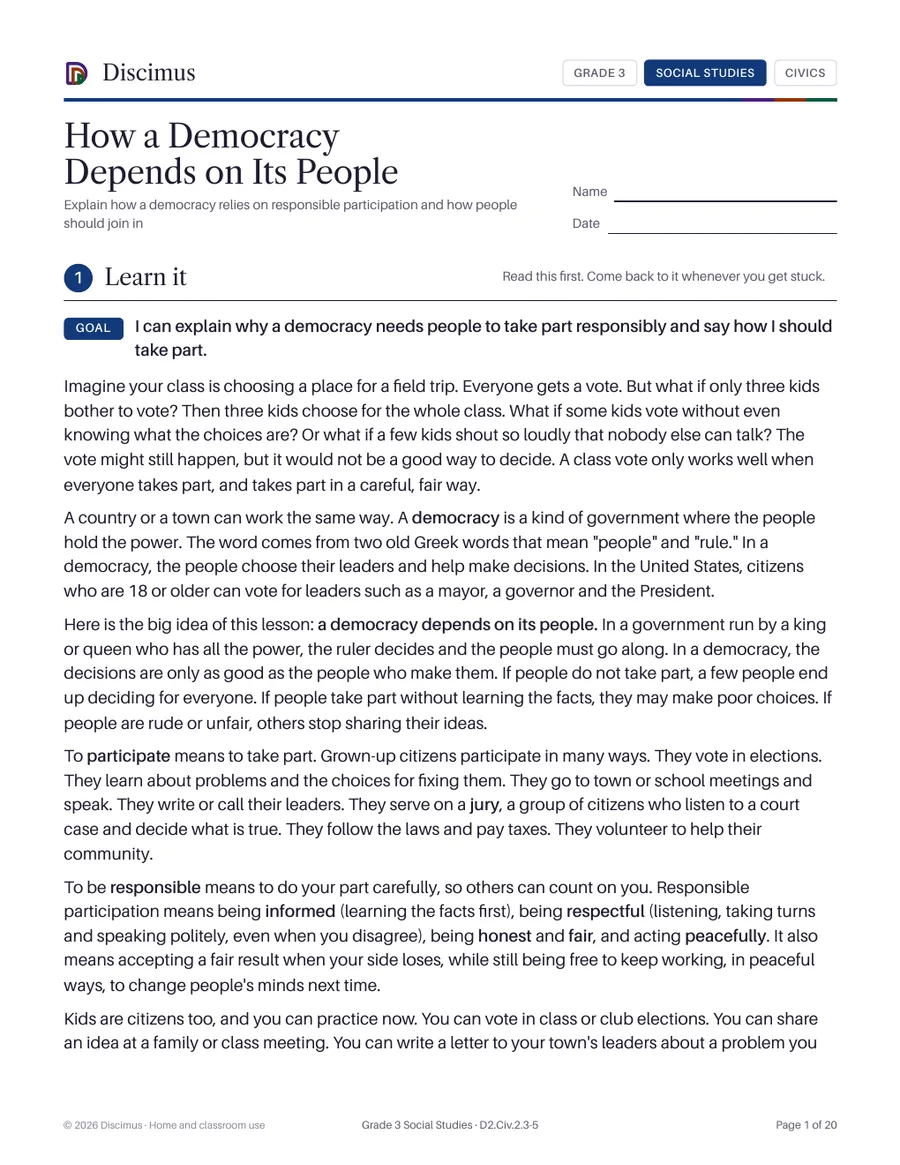
Explain how a democracy relies on responsible participation and how people should join in
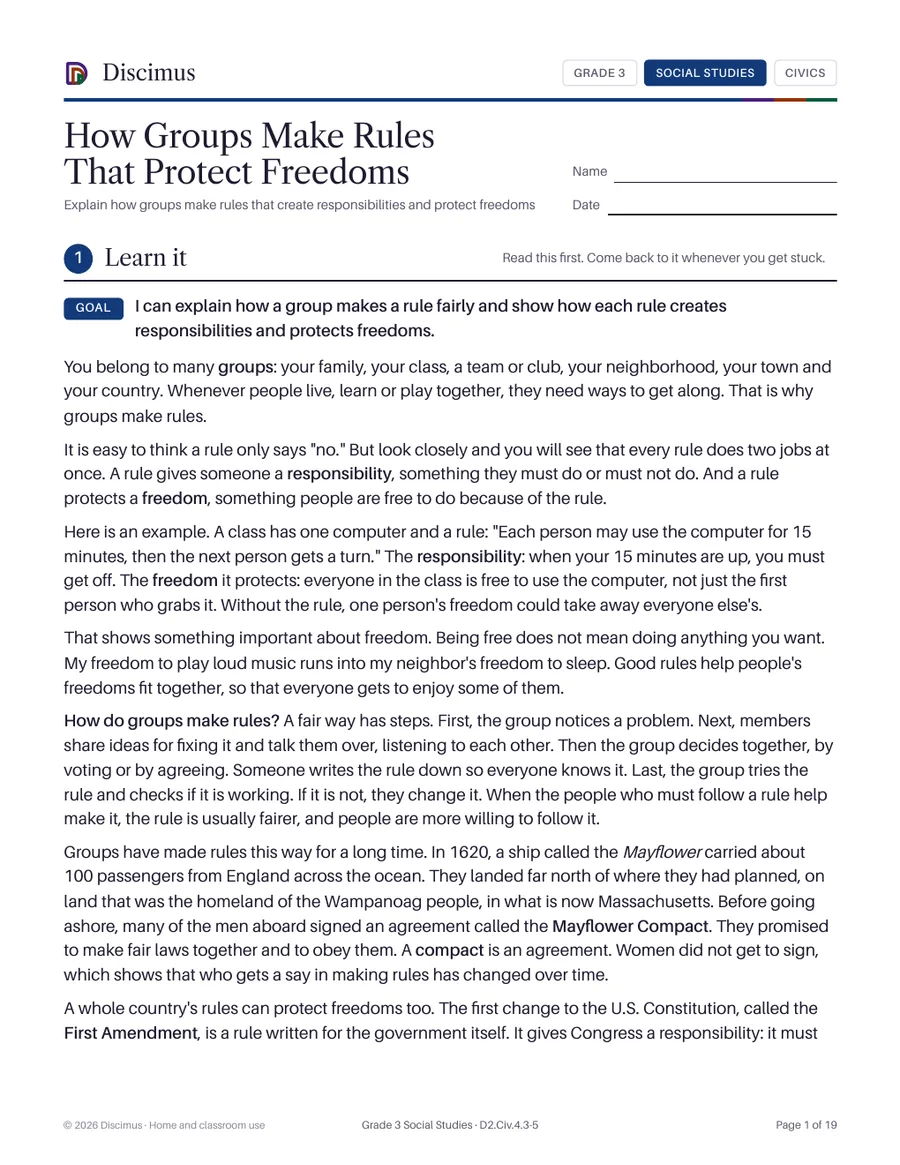
Explain how groups make rules that create responsibilities and protect freedoms
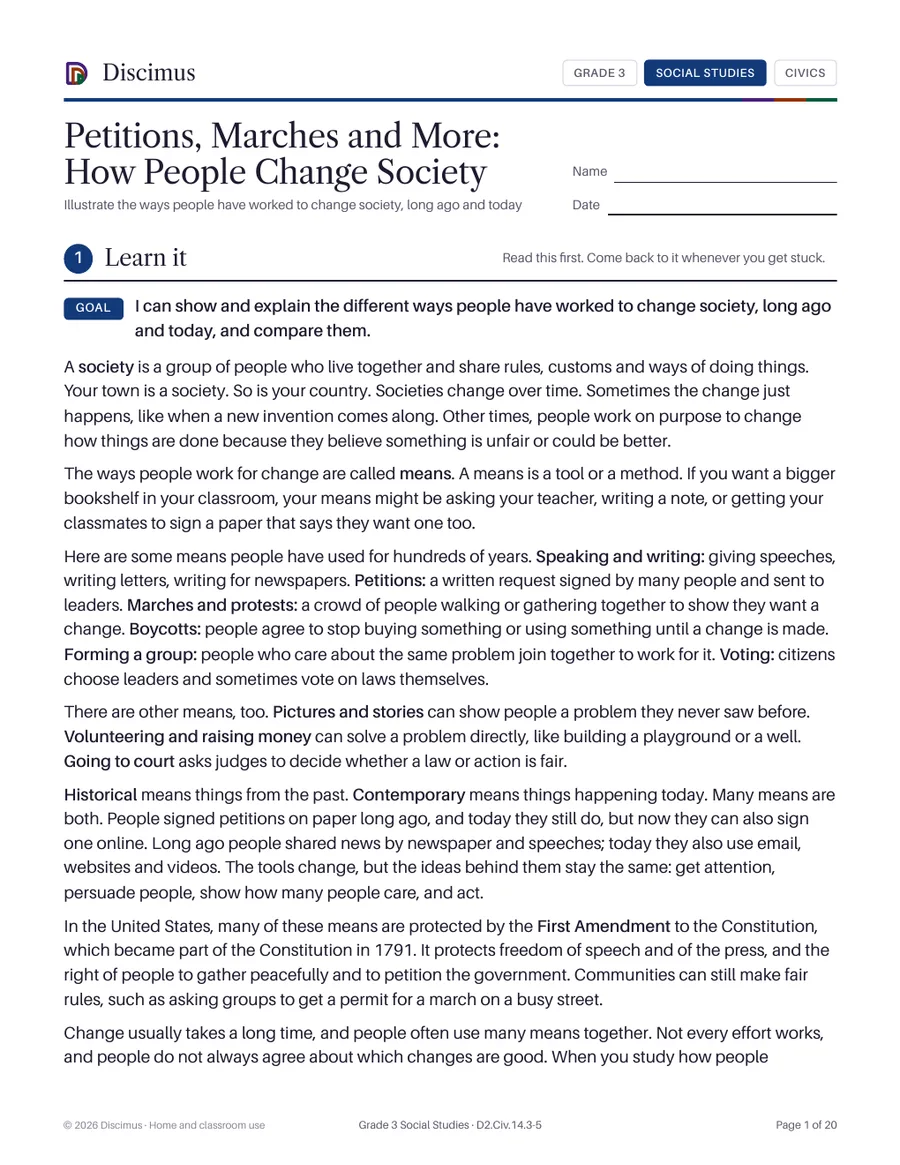
Illustrate the ways people have worked to change society, long ago and today
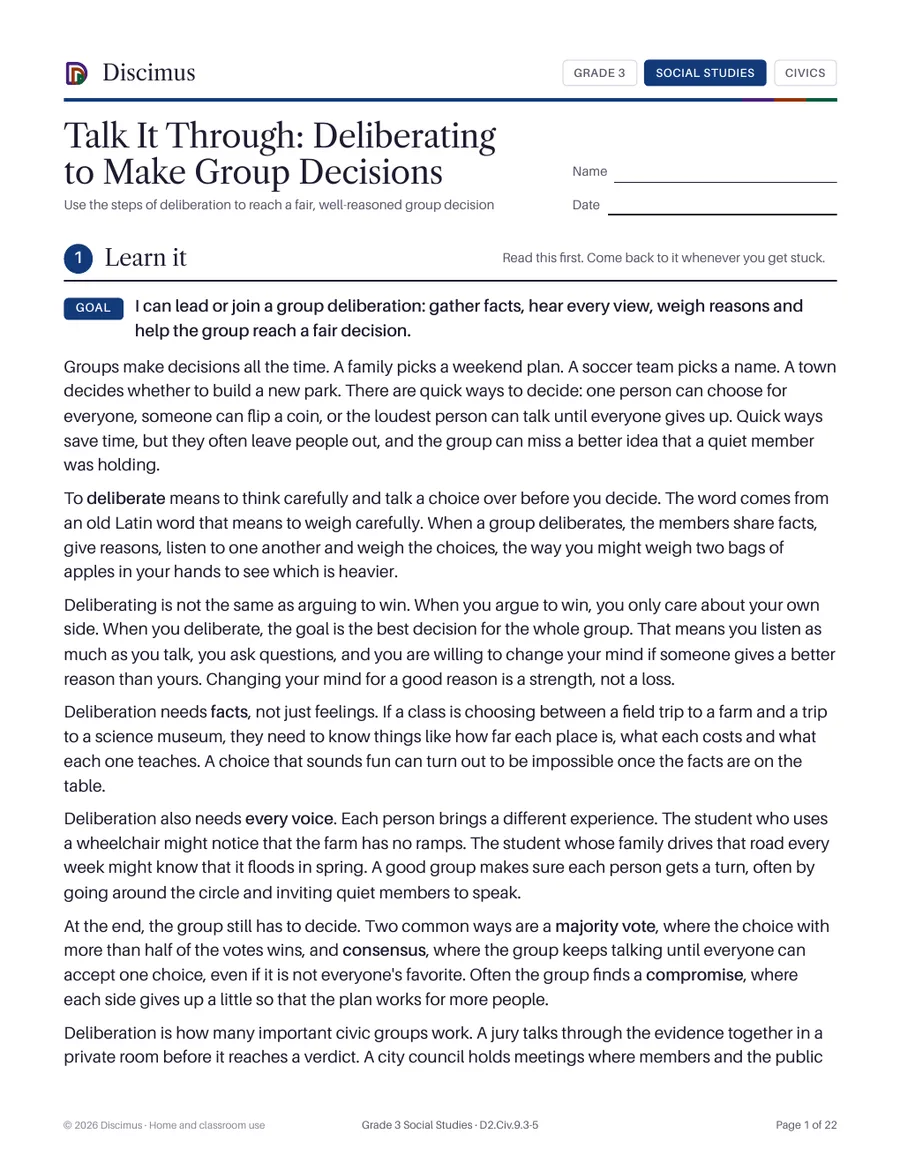
Use the steps of deliberation to reach a fair, well-reasoned group decision
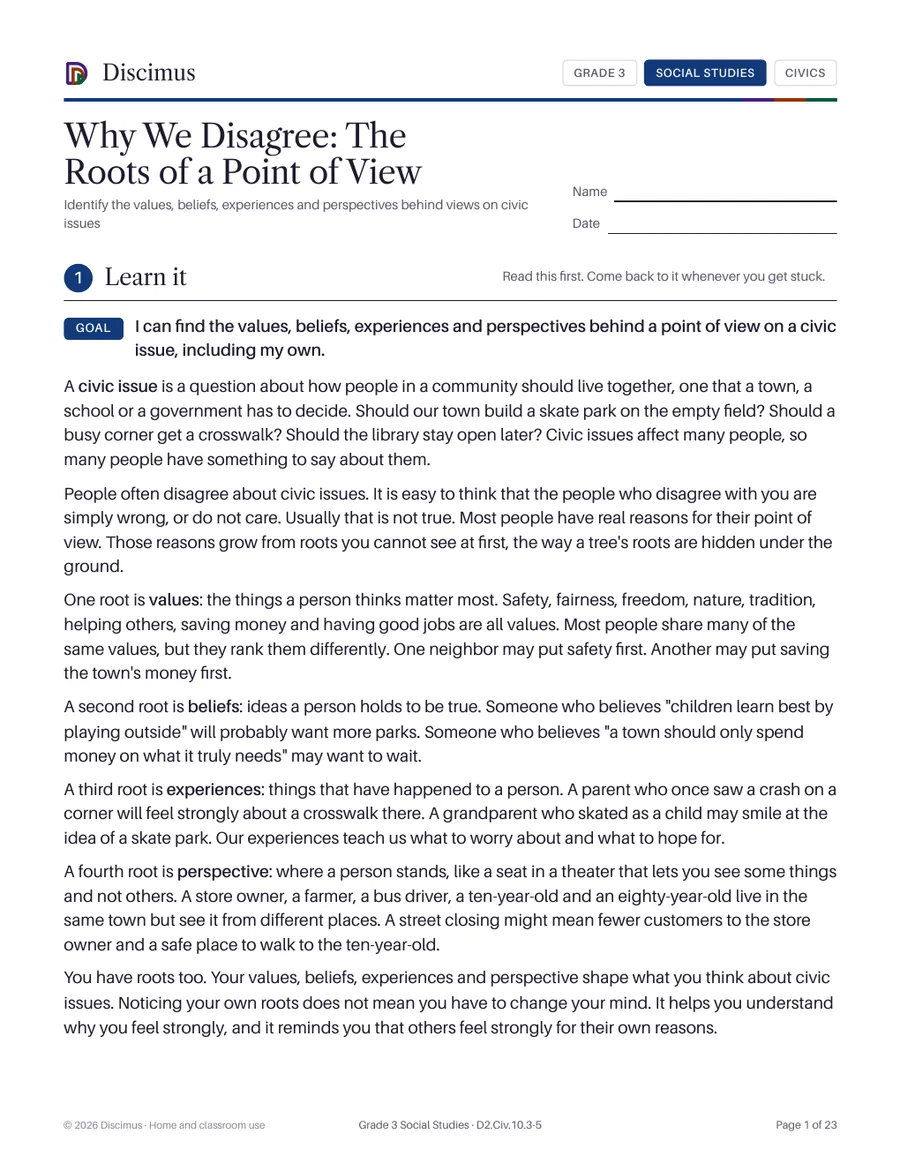
Identify the values, beliefs, experiences and perspectives behind views on civic issues
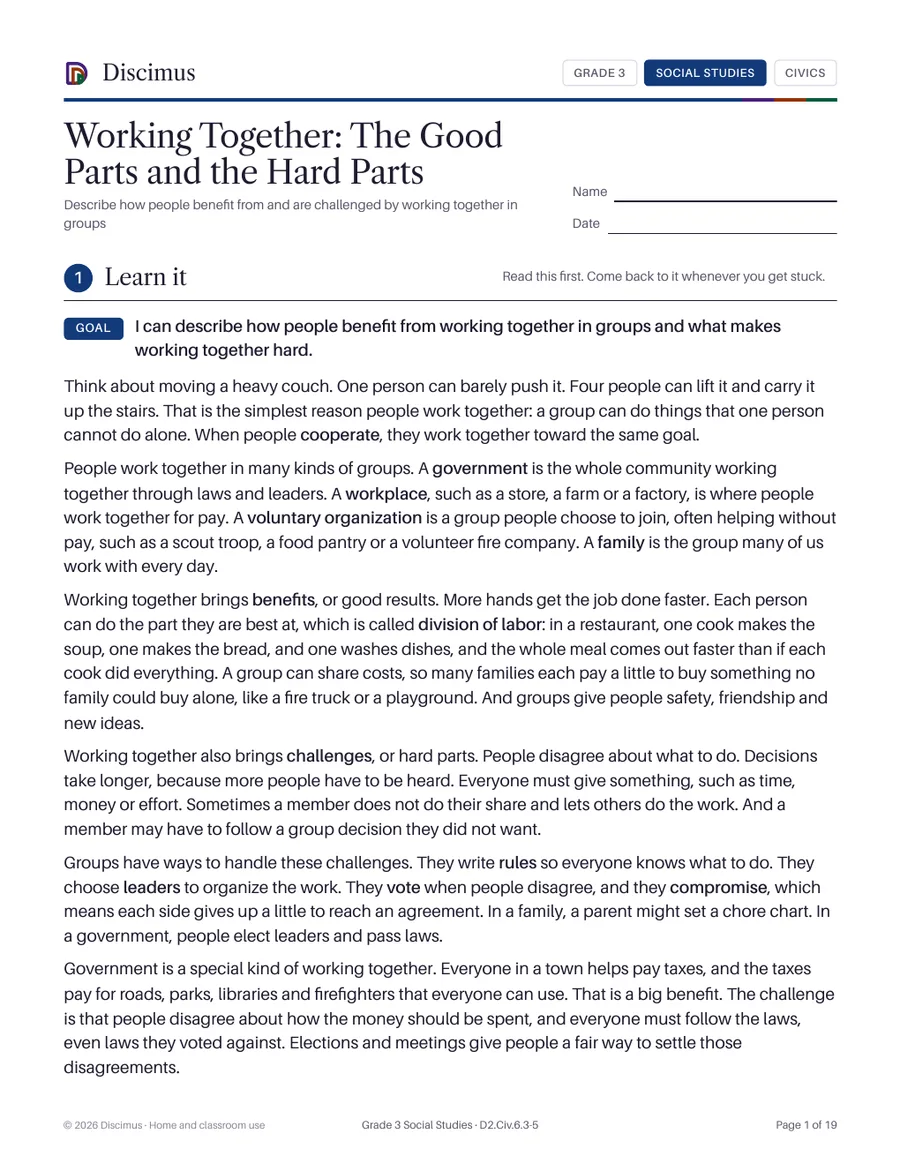
Describe how people benefit from and are challenged by working together in groups
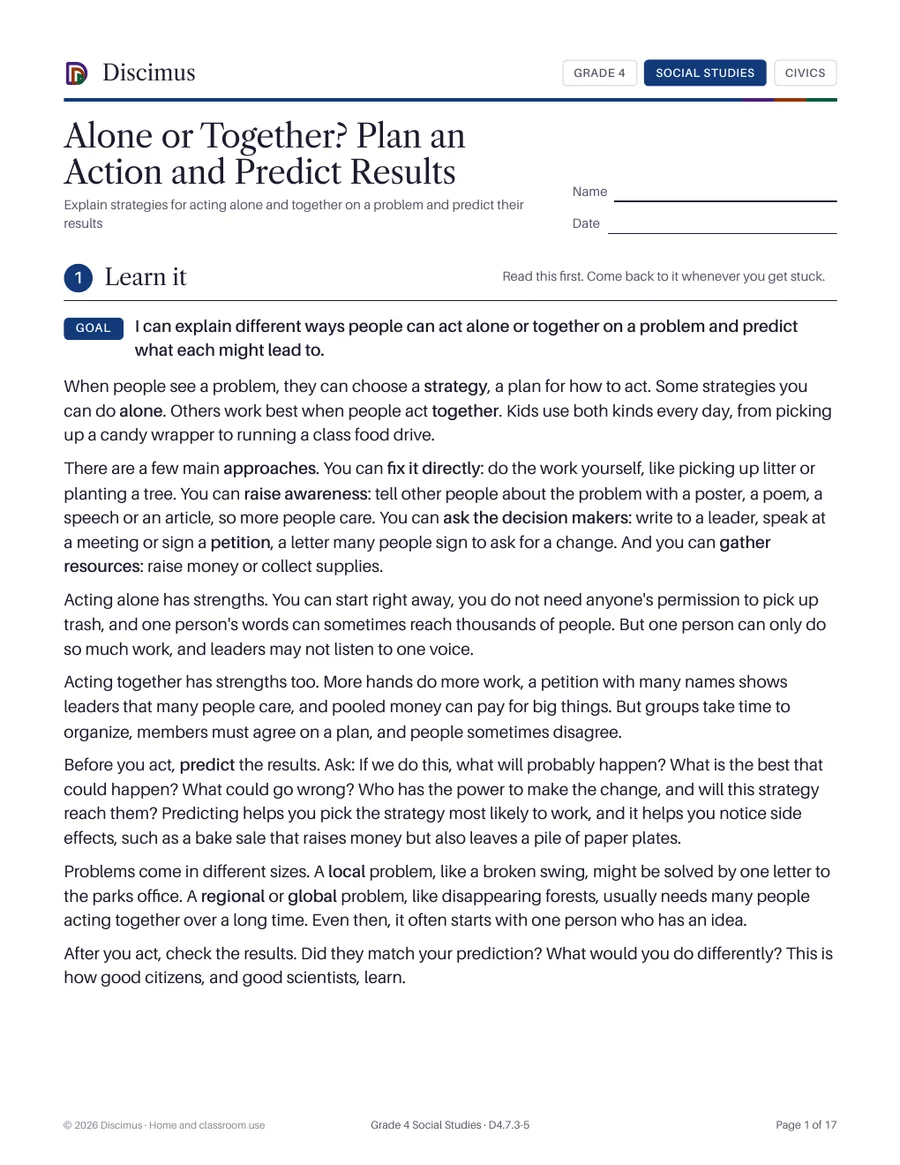
Explain strategies for acting alone and together on a problem and predict their results
Use discussion, meeting steps and voting rules to make and act on decisions at school
Distinguish the powers and duties of citizens, parties, interest groups and the media
Explain how interests, perspectives, civic virtues and principles shape public issues
Analyze a policy's purpose, implementation, and intended and unintended consequences
Explain the roles citizens play, from voter and juror to protester and office-holder
Compare the deliberative processes different groups use to discuss and decide
Examine the origins, purposes and impact of the Bill of Rights, laws and treaties
Compare historical and modern ways people change society and promote the common good
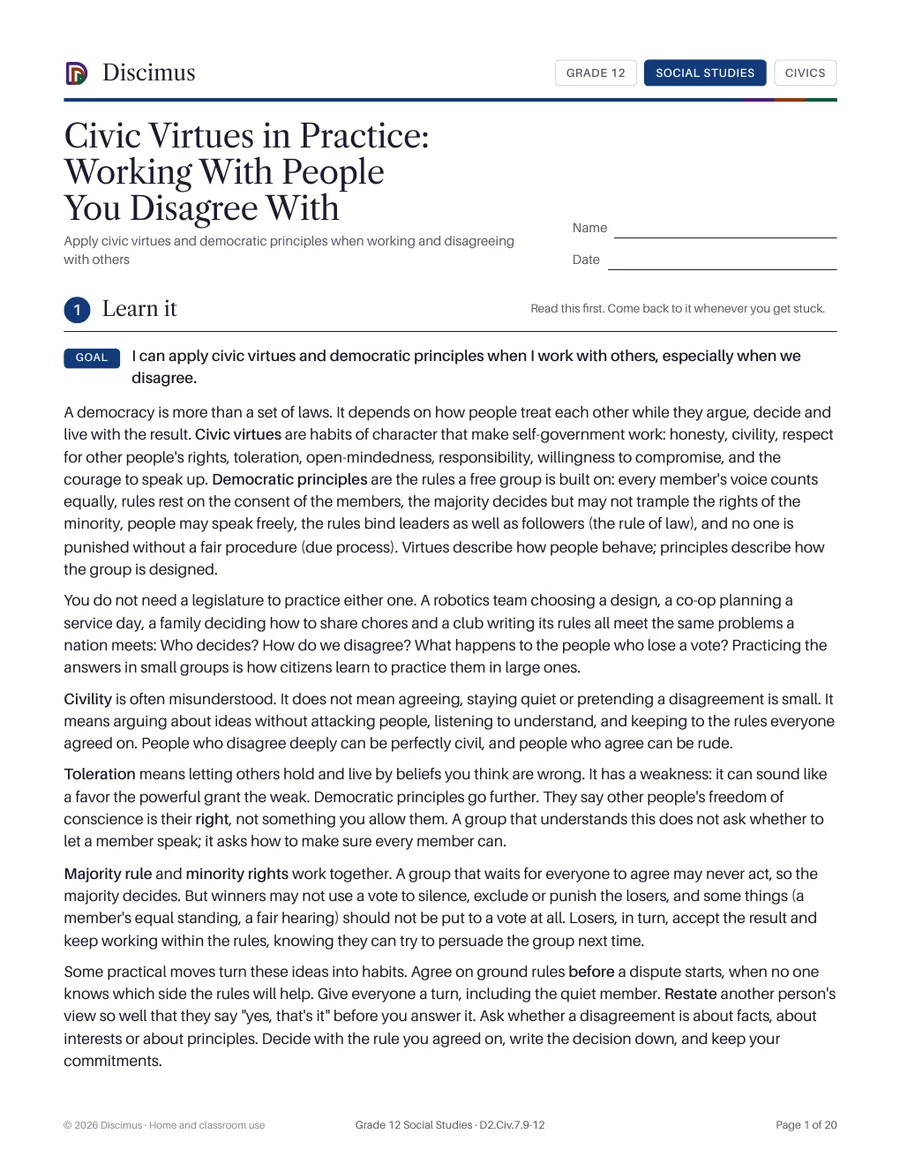
Apply civic virtues and democratic principles when working and disagreeing with others
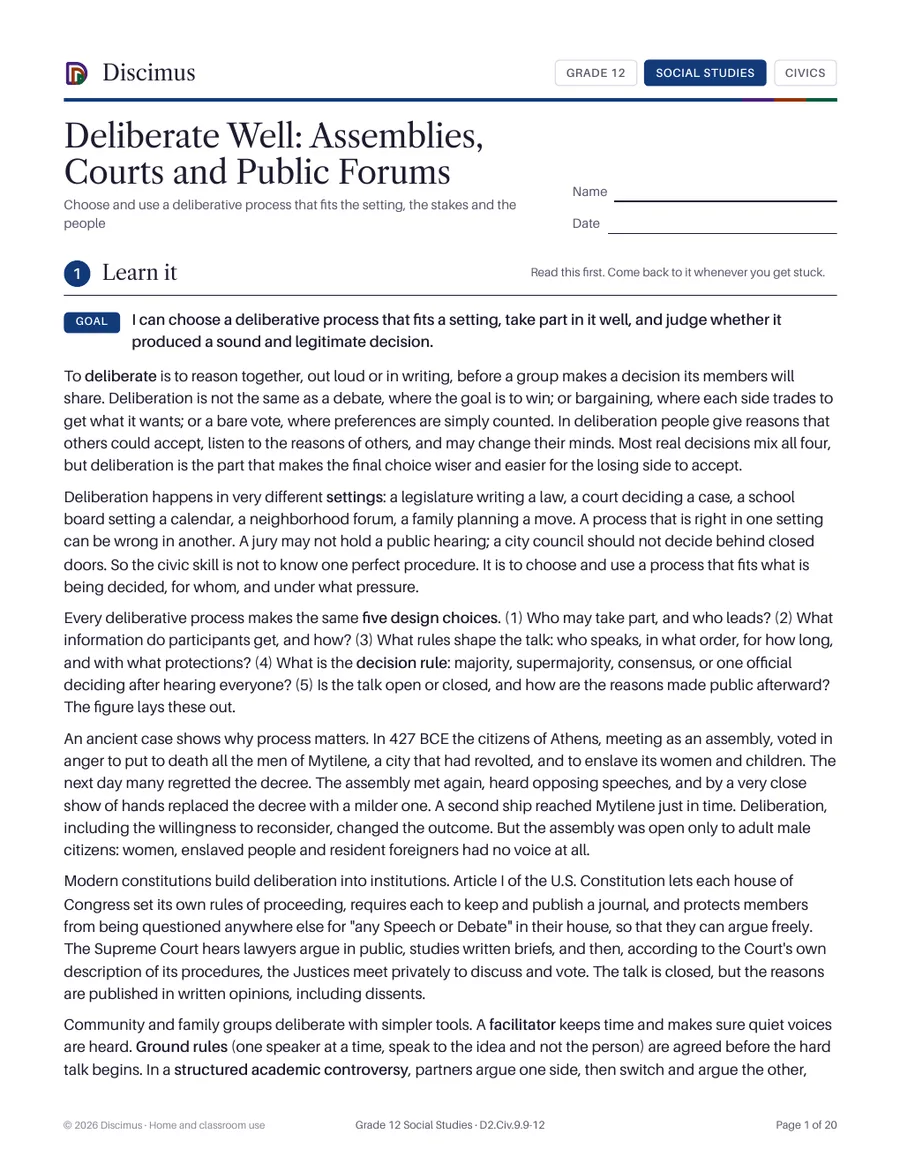
Choose and use a deliberative process that fits the setting, the stakes and the people
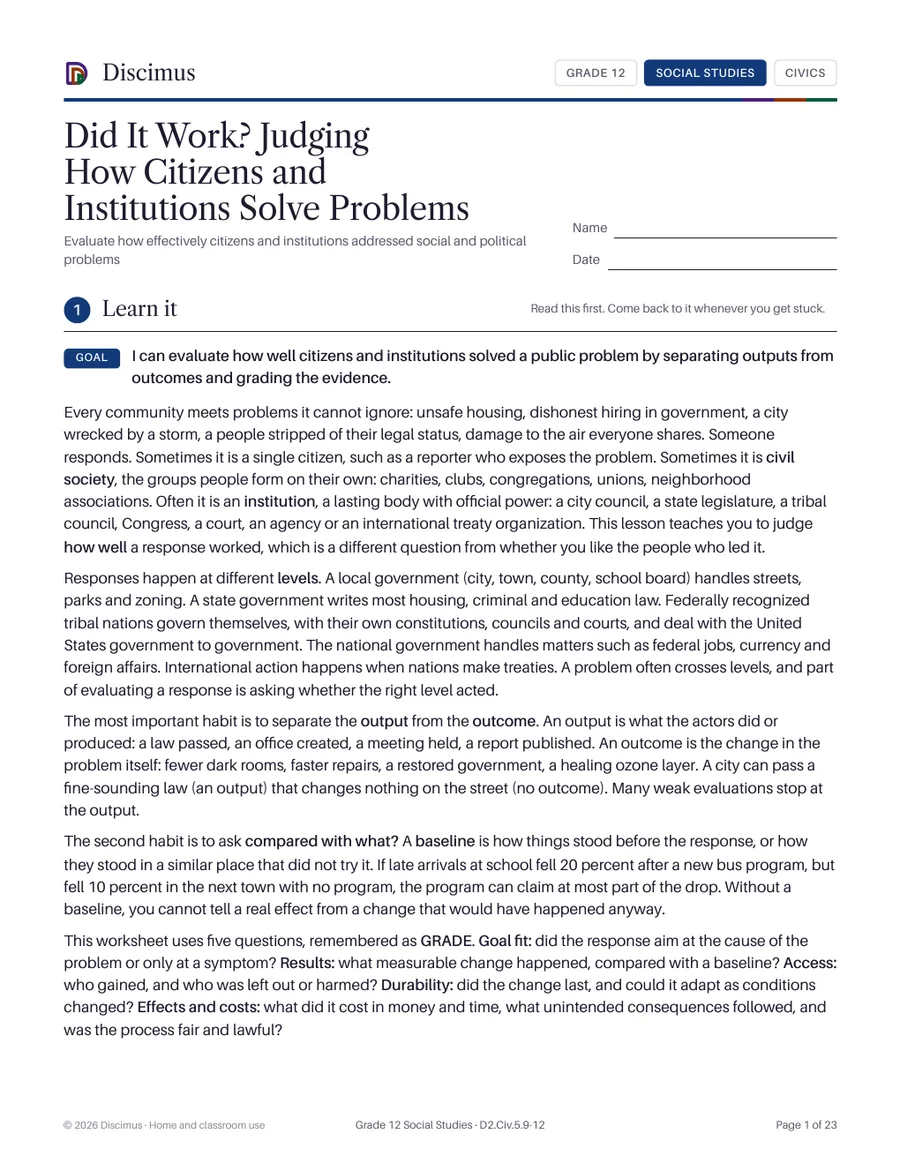
Evaluate how effectively citizens and institutions addressed social and political problems
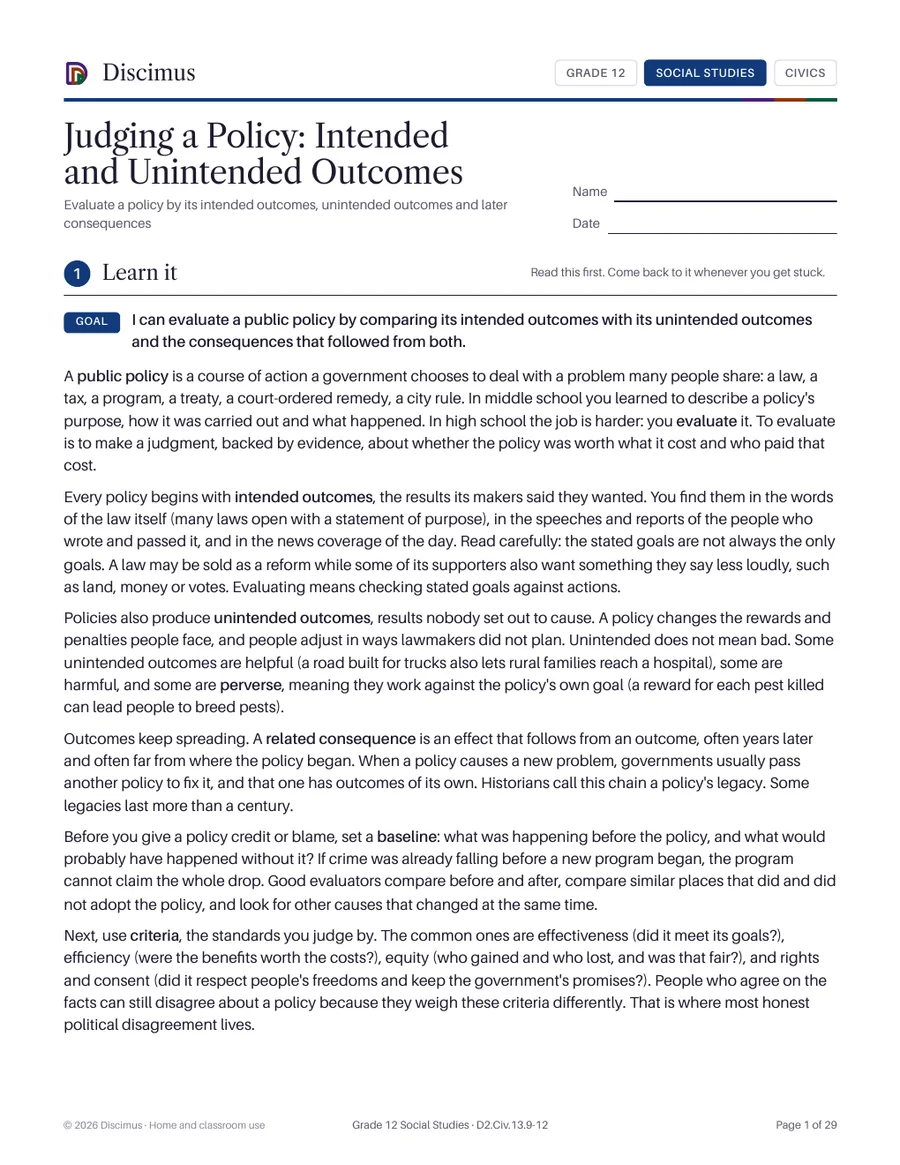
Evaluate a policy by its intended outcomes, unintended outcomes and later consequences
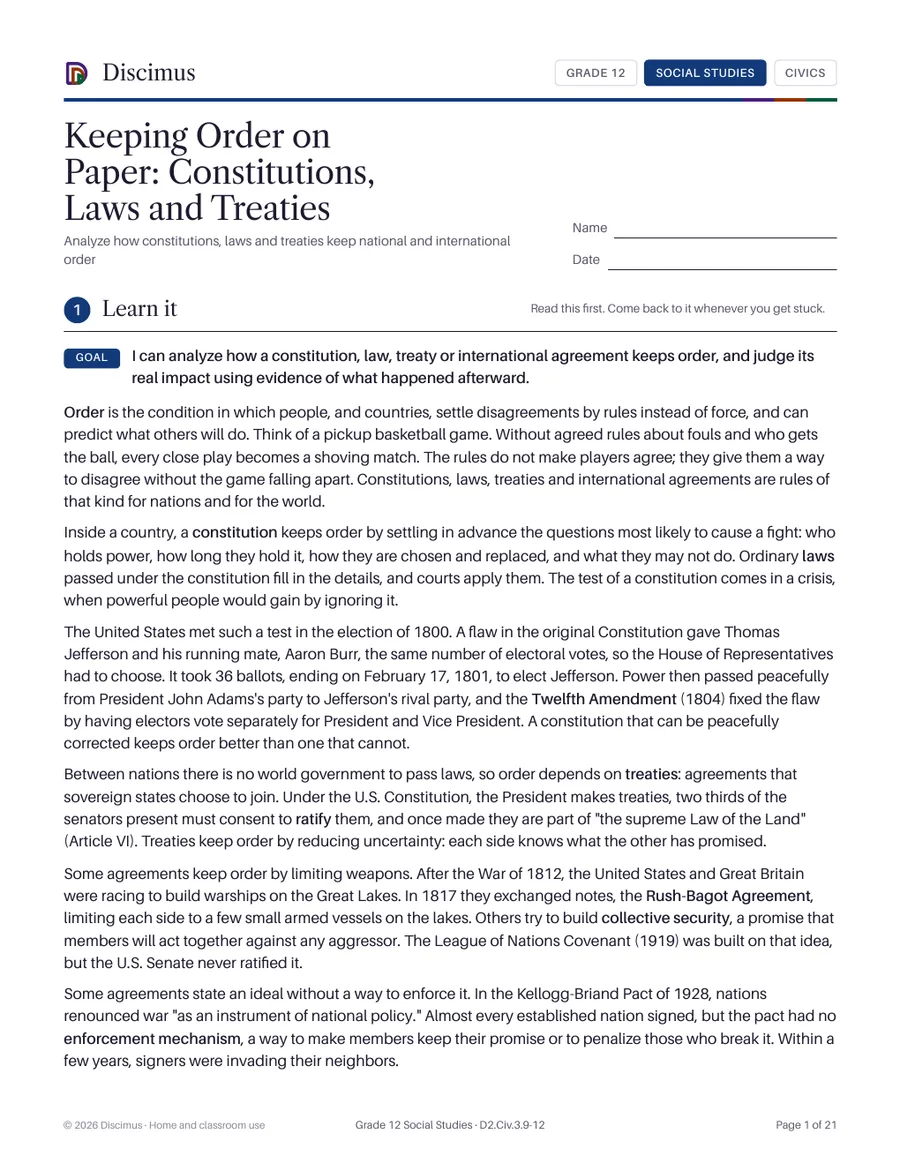
Analyze how constitutions, laws and treaties keep national and international order
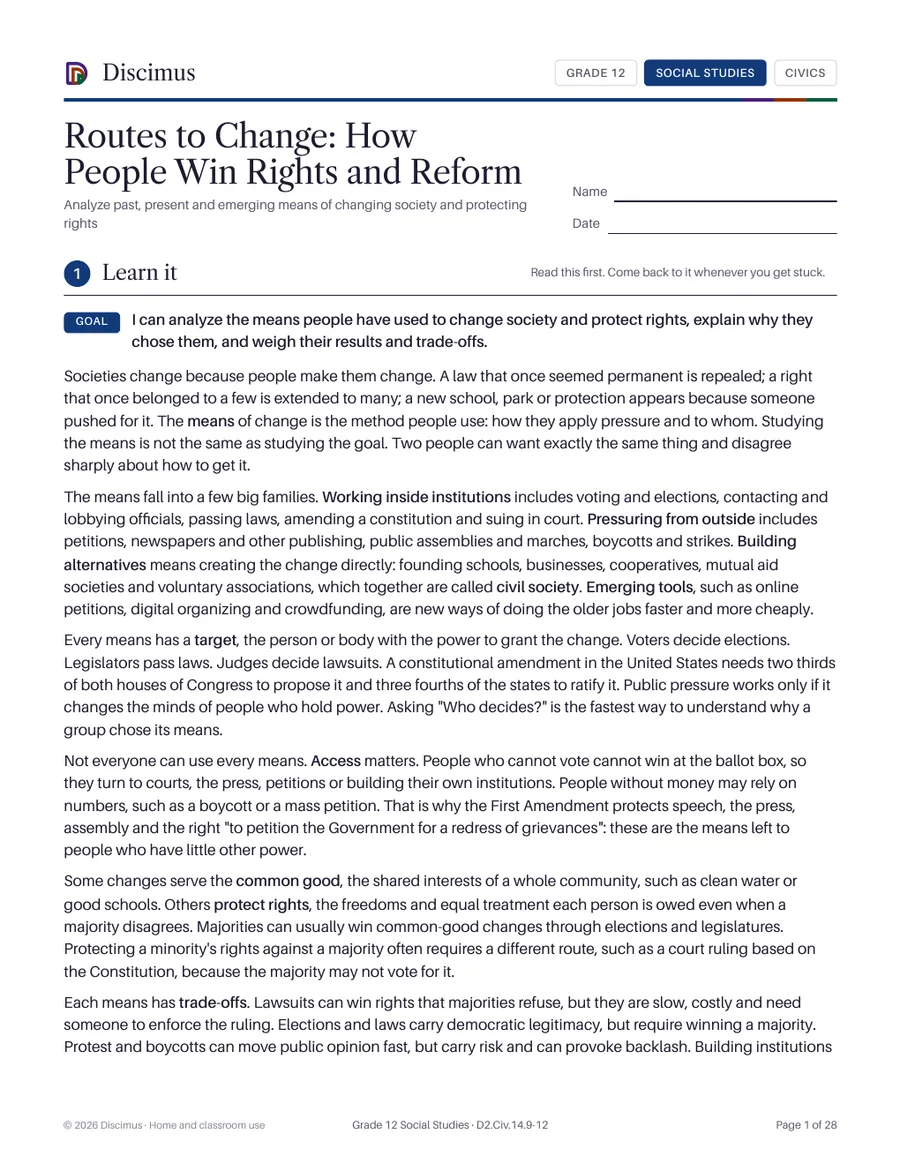
Analyze past, present and emerging means of changing society and protecting rights
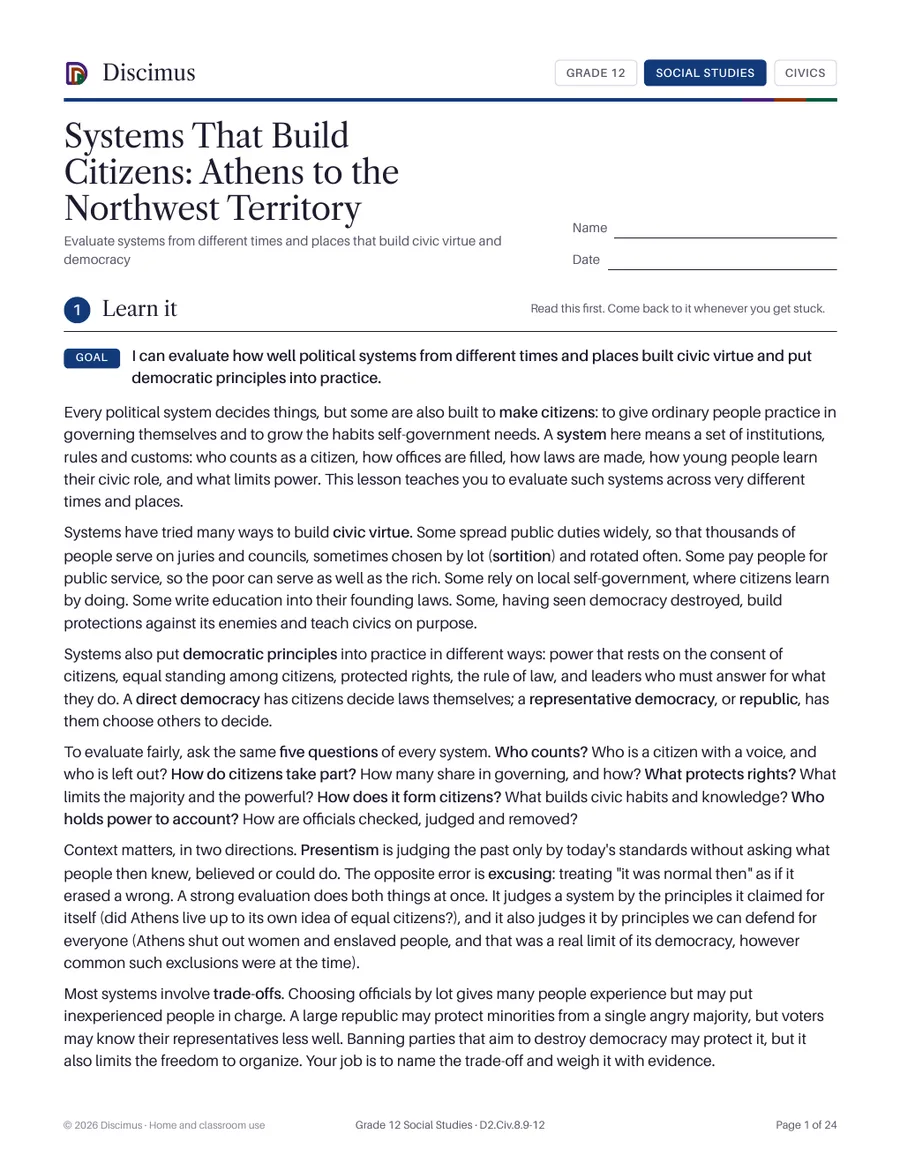
Evaluate systems from different times and places that build civic virtue and democracy
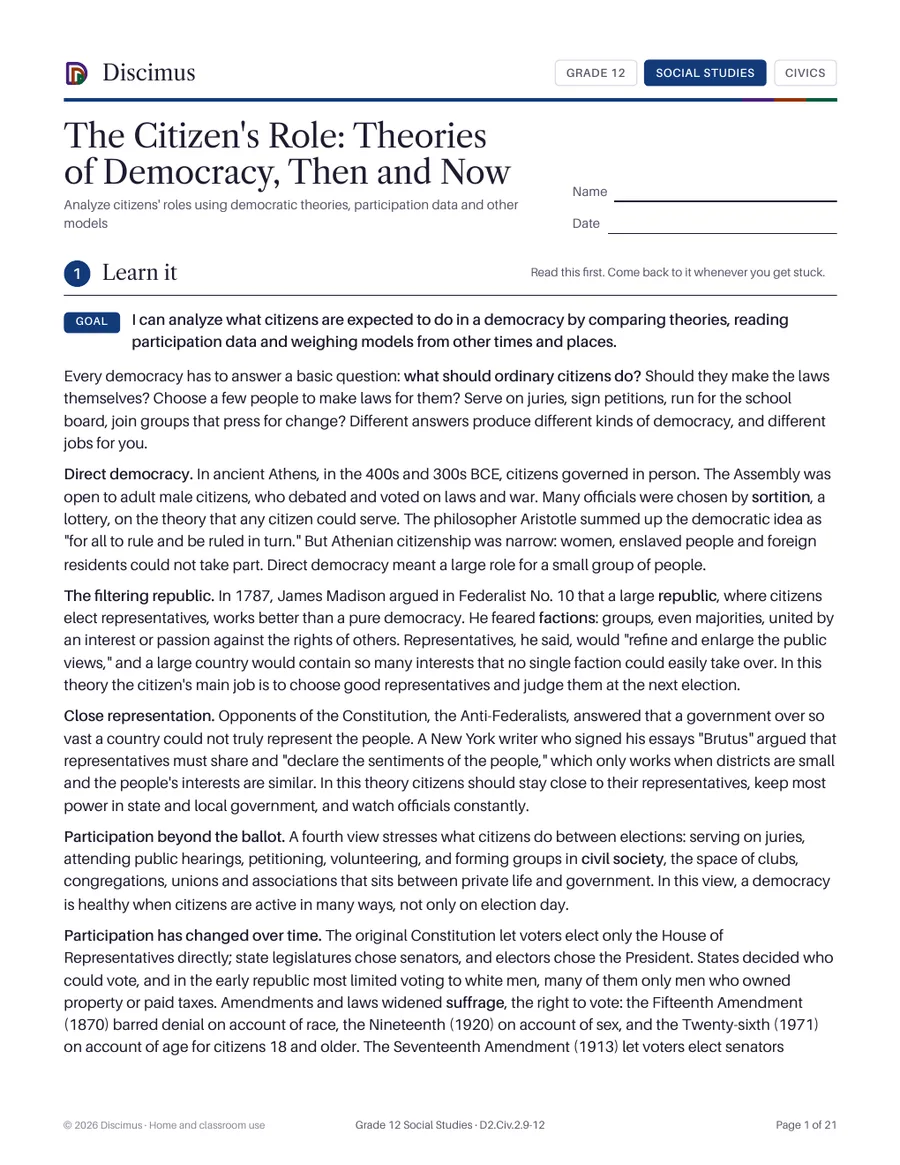
Analyze citizens' roles using democratic theories, participation data and other models
Distinguish the powers of local, state, tribal, national and international institutions
Critique relationships among governments, civil society and markets using clear criteria
Analyze how personal interests and perspectives shape the way people apply rights