
Needs and Wants
Explain that we must choose because there is not enough of everything we want
50 worksheets match.
Explain that we must choose because there is not enough of everything we want
Name the benefits and costs of a personal decision and use them to choose
Describe goods and services made in our community and ones from other communities
Describe goods and services that town, state and national governments provide
Explain how people earn income by working for an employer or selling goods and services
Describe products made abroad and sold here, and products made here and sold abroad

Describe the knowledge and skills people need to produce goods and services
Give examples of capital goods and human capital and tell how workers use both
Describe the costs a producer pays to make and sell a good or a service
Explain why people in one country trade goods and services with people in other countries
Explain the reasons people save money and what saving asks them to give up now

Compare the benefits and costs of a choice, including its opportunity cost
Explain how governments pay for goods and services with taxes, fees and borrowing
Explain inflation, deflation and unemployment and recognize each in prices and job data
Explain how investing in skills raises productivity and can raise future income
Explain how trade makes nations depend more and more on one another
Explain how better capital goods and more human capital raise productivity
Identify the natural resources, human capital and physical capital used in production
Identify positive and negative incentives and explain how they change people's decisions
Identify external benefits and costs that fall on people outside a choice or trade
Explain how growing trade between nations affects different groups within each nation
Explain why individuals and businesses specialize and then trade
Explain the roles of buyers and sellers in product, labor and financial markets
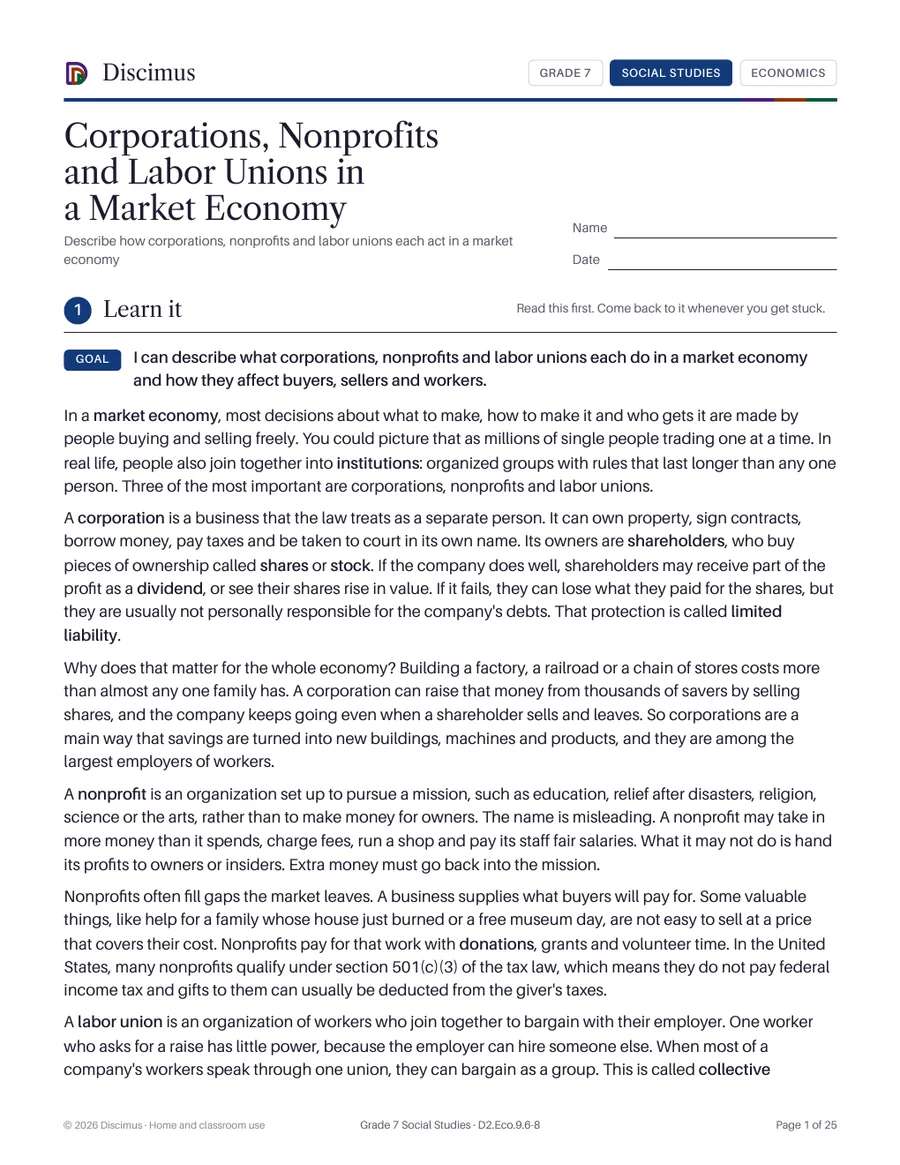
Describe how corporations, nonprofits and labor unions each act in a market economy
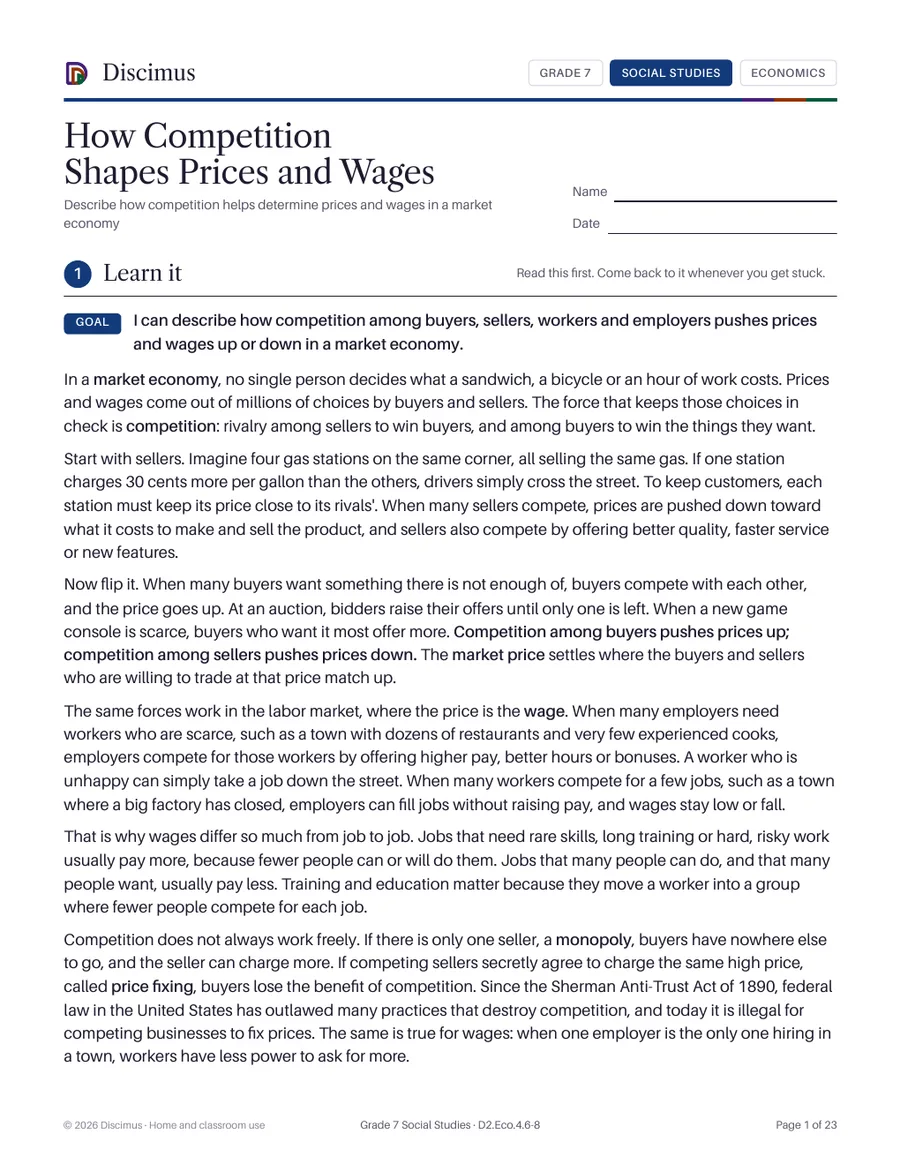
Describe how competition helps determine prices and wages in a market economy
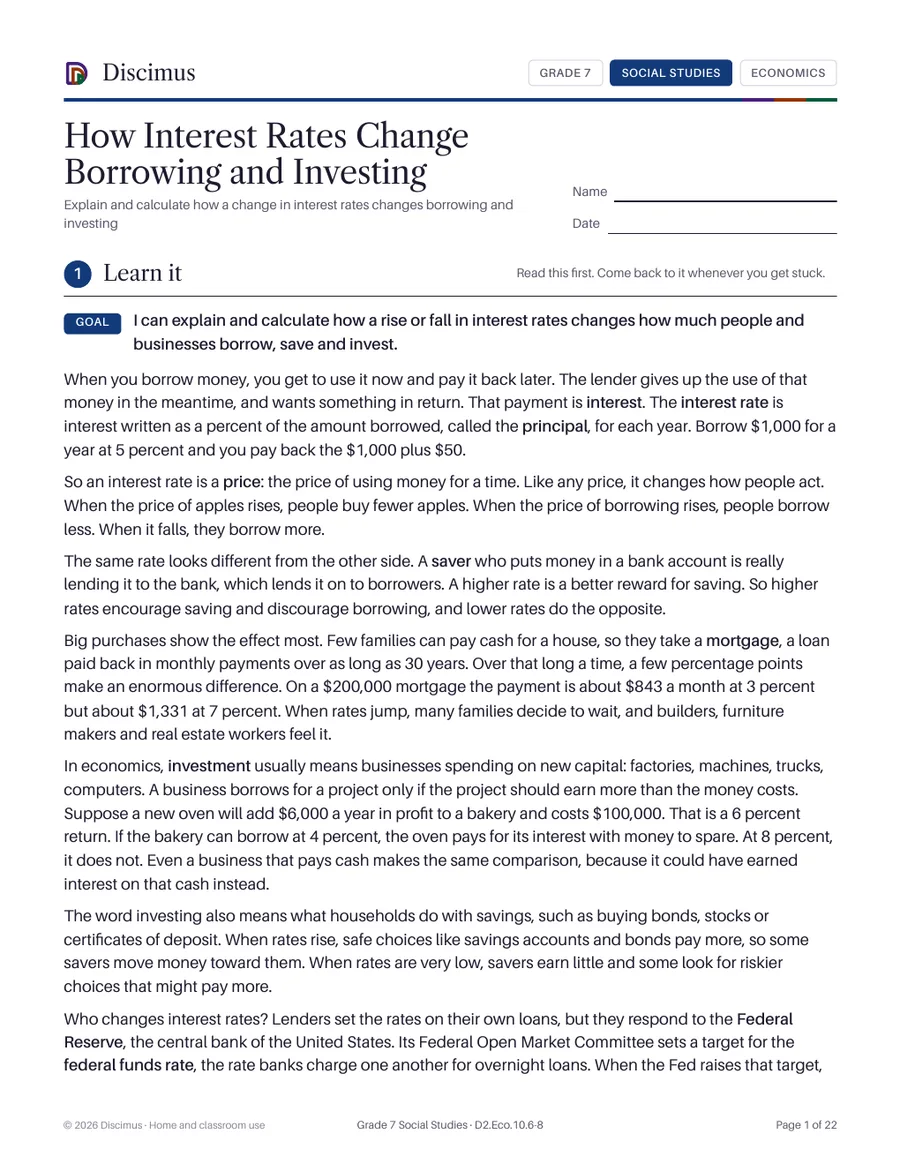
Explain and calculate how a change in interest rates changes borrowing and investing
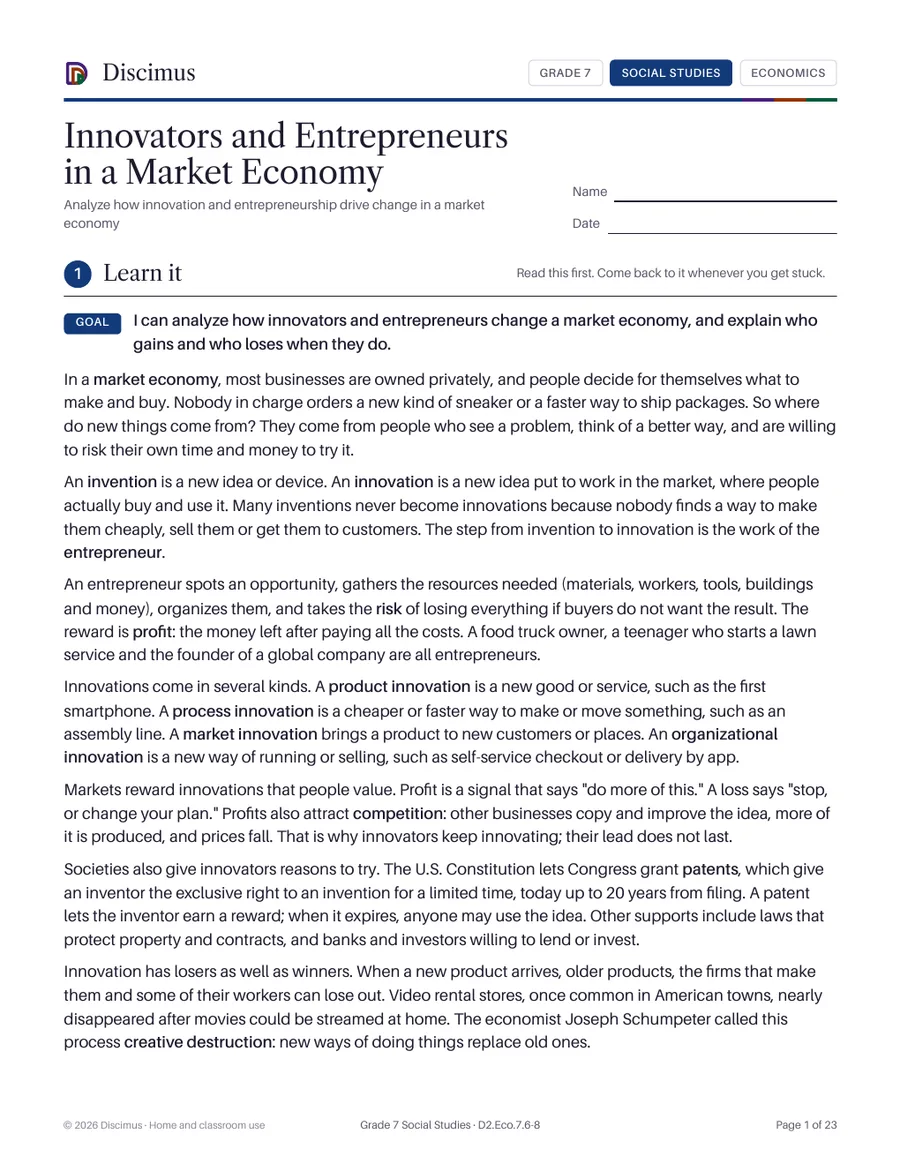
Analyze how innovation and entrepreneurship drive change in a market economy
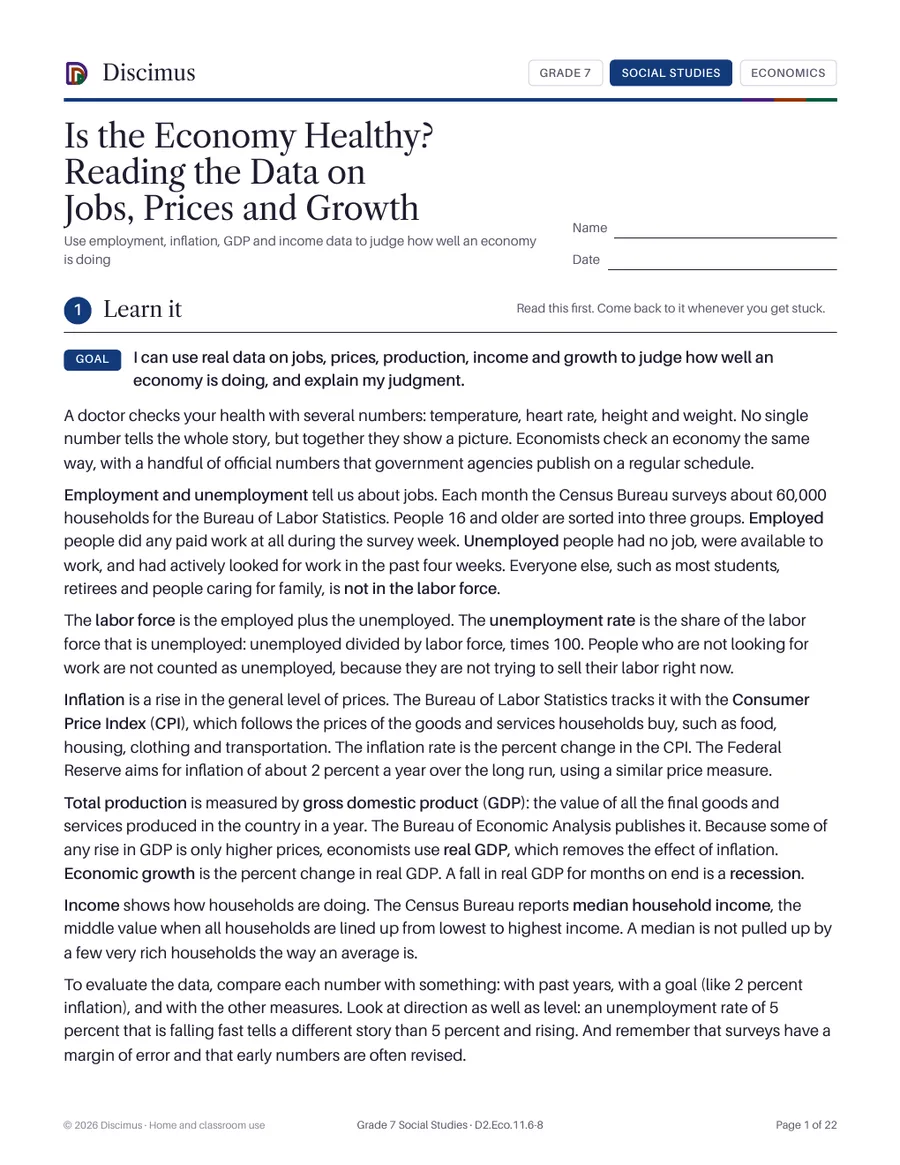
Use employment, inflation, GDP and income data to judge how well an economy is doing
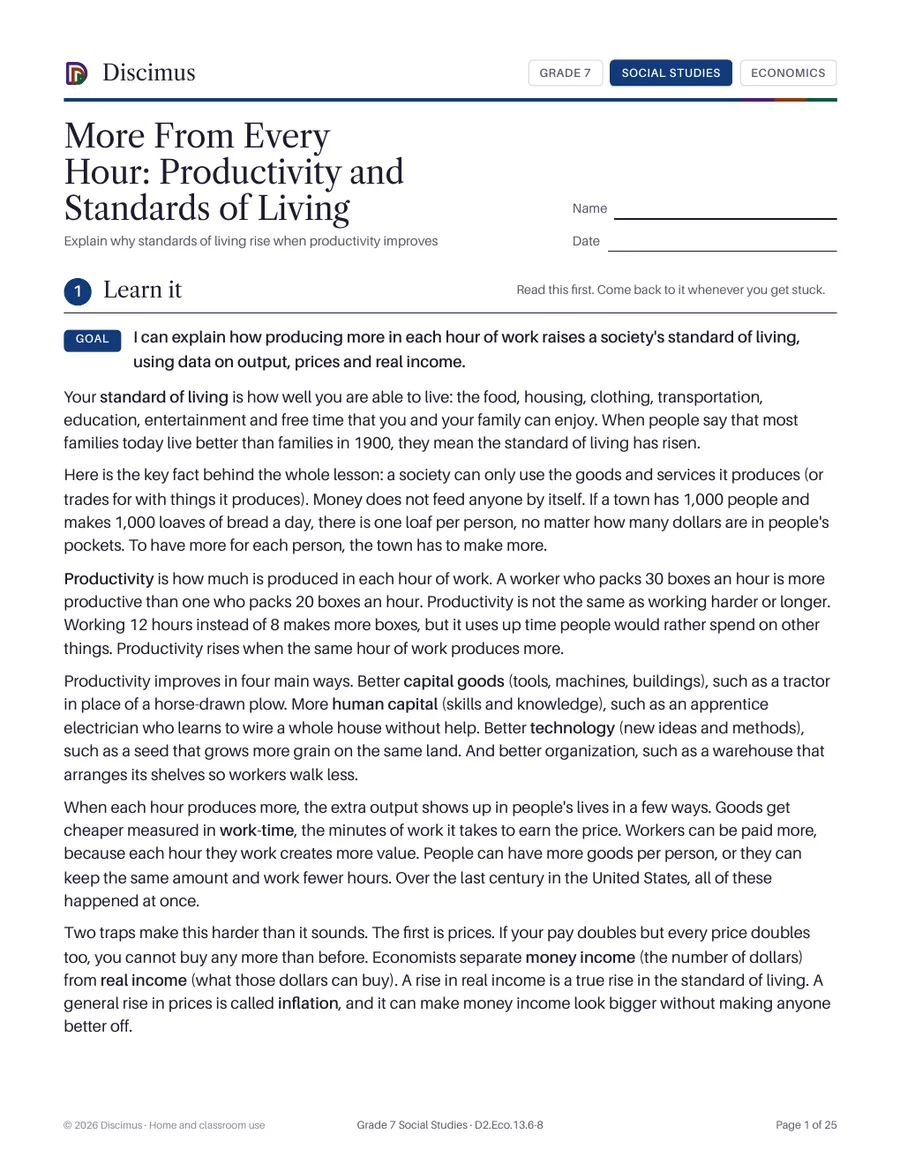
Explain why standards of living rise when productivity improves
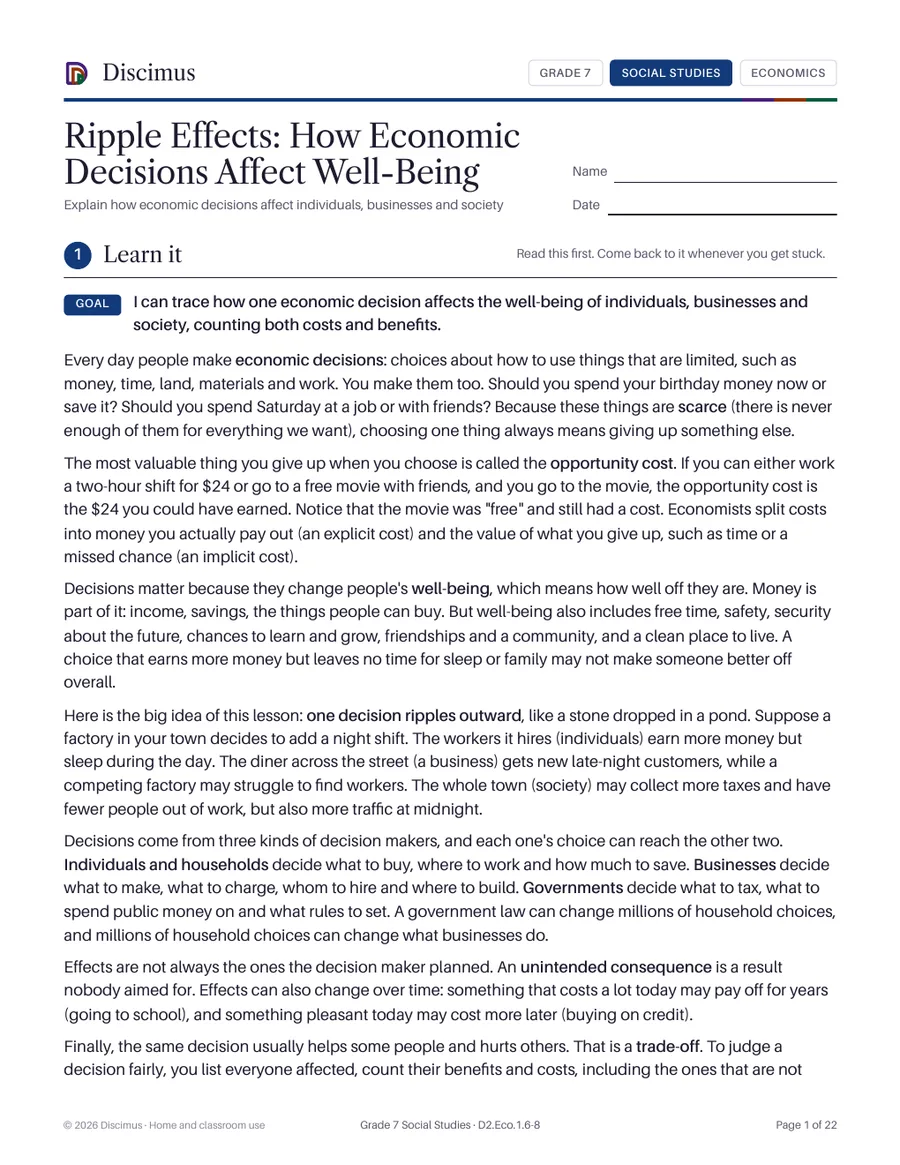
Explain how economic decisions affect individuals, businesses and society
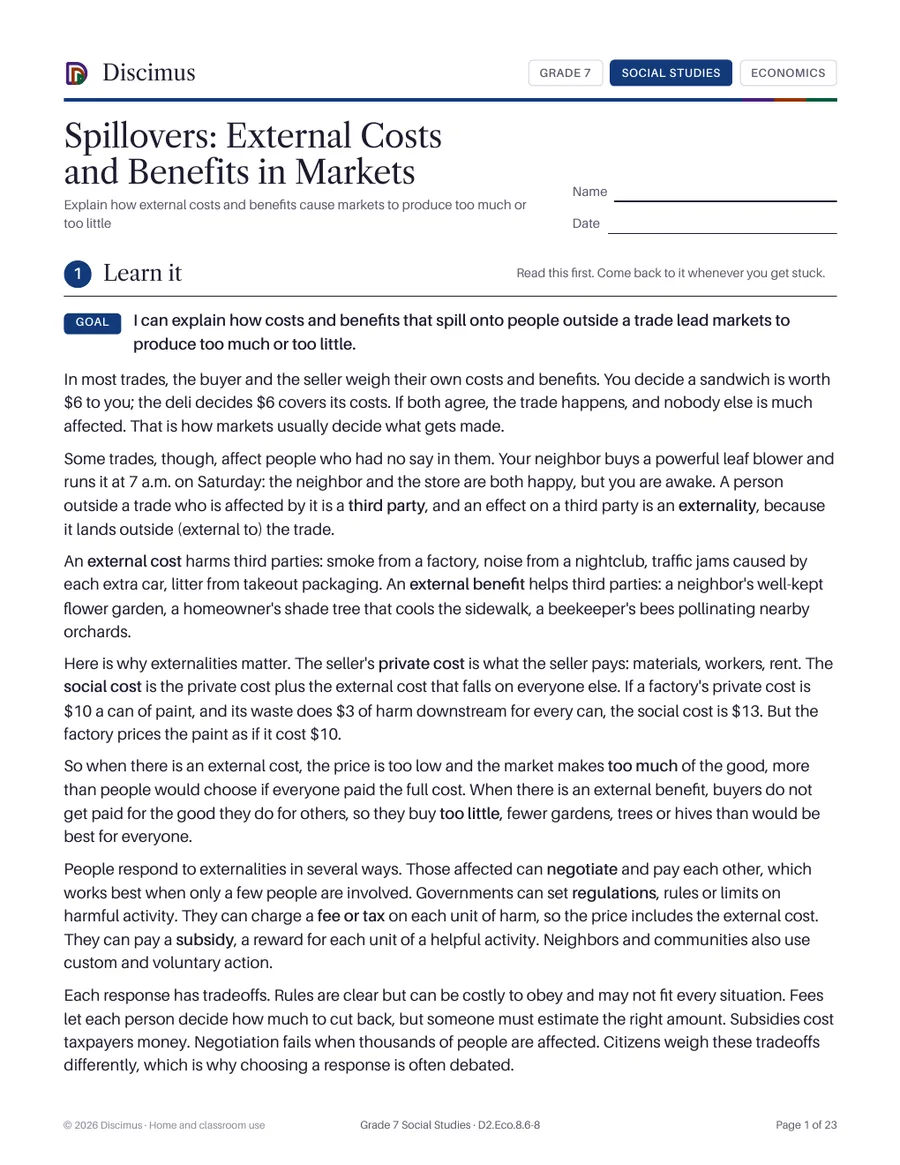
Explain how external costs and benefits cause markets to produce too much or too little
Explain barriers to trade and how they change trade among nations
Explain how inflation, deflation and unemployment affect different groups of people
Evaluate solutions to an economic issue by their costs and benefits for different groups
Weigh the benefits and costs of a trade policy for individuals, businesses and society
Describe intended and unintended consequences of government policies to improve markets
Evaluate which monetary and fiscal policies fit different economic conditions
Analyze how comparative advantage shapes what nations produce and trade, and who gains
Explain how globalization affects growth, jobs, rights, environment and income in nations
Evaluate how much competition exists among sellers and among buyers in a specific market
Analyze how a policy's incentives change choices and spread costs and benefits to groups
Explain how technology, capital goods and human capital raise growth and living standards
Use marginal benefit and marginal cost to build an argument for or against a solution
Describe how clear property rights and the rule of law make a market economy work
Use leading, coincident and lagging indicators to judge the economy's present and future
Describe the consequences of competition in specific markets
Use current data to explain how spending, production and money affect the economy
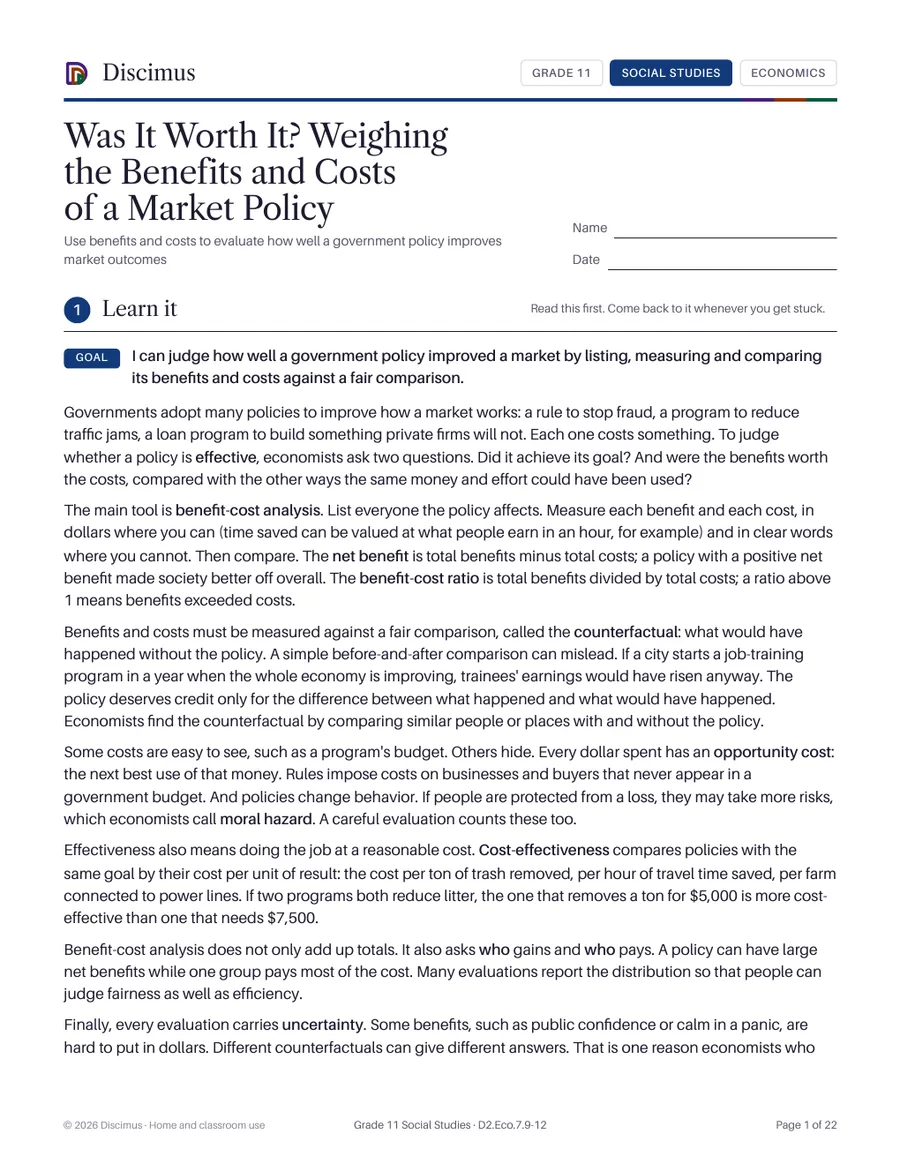
Use benefits and costs to evaluate how well a government policy improves market outcomes
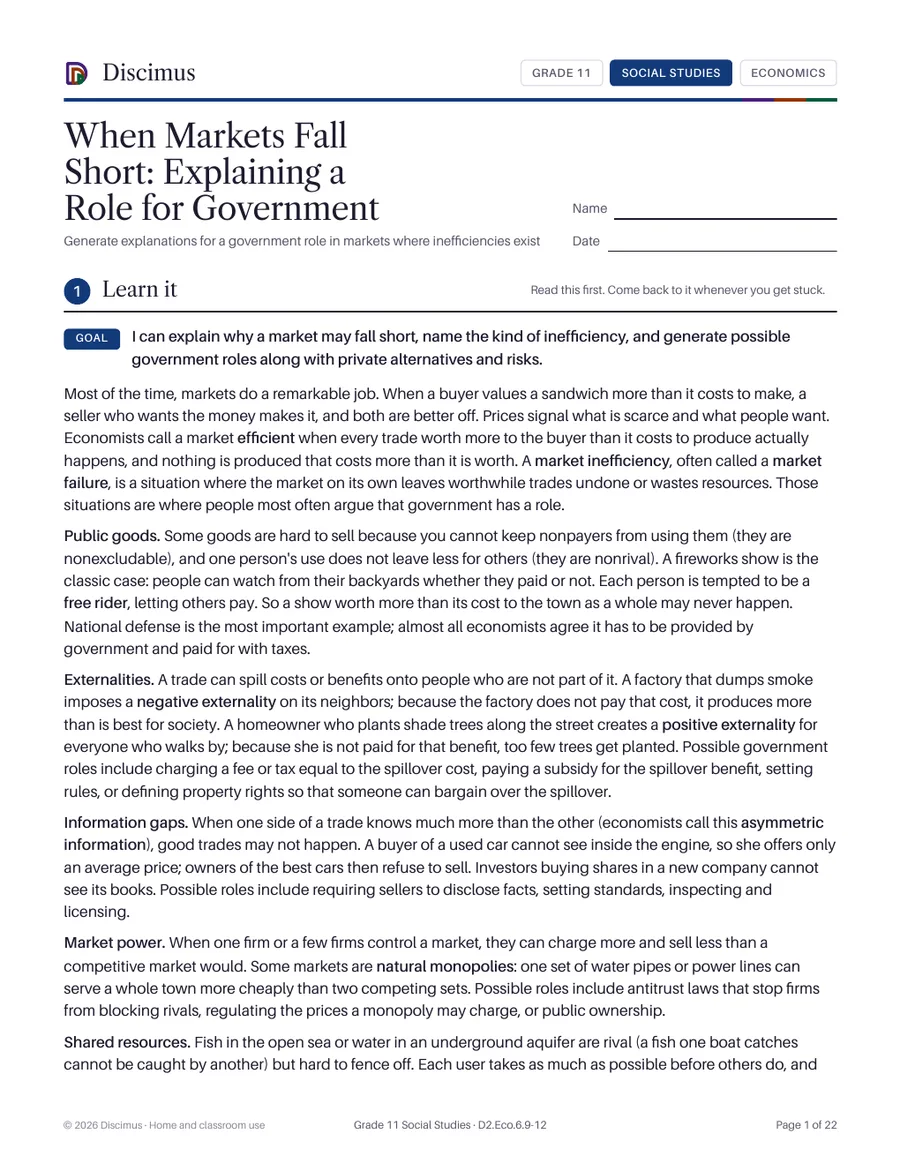
Generate explanations for a government role in markets where inefficiencies exist
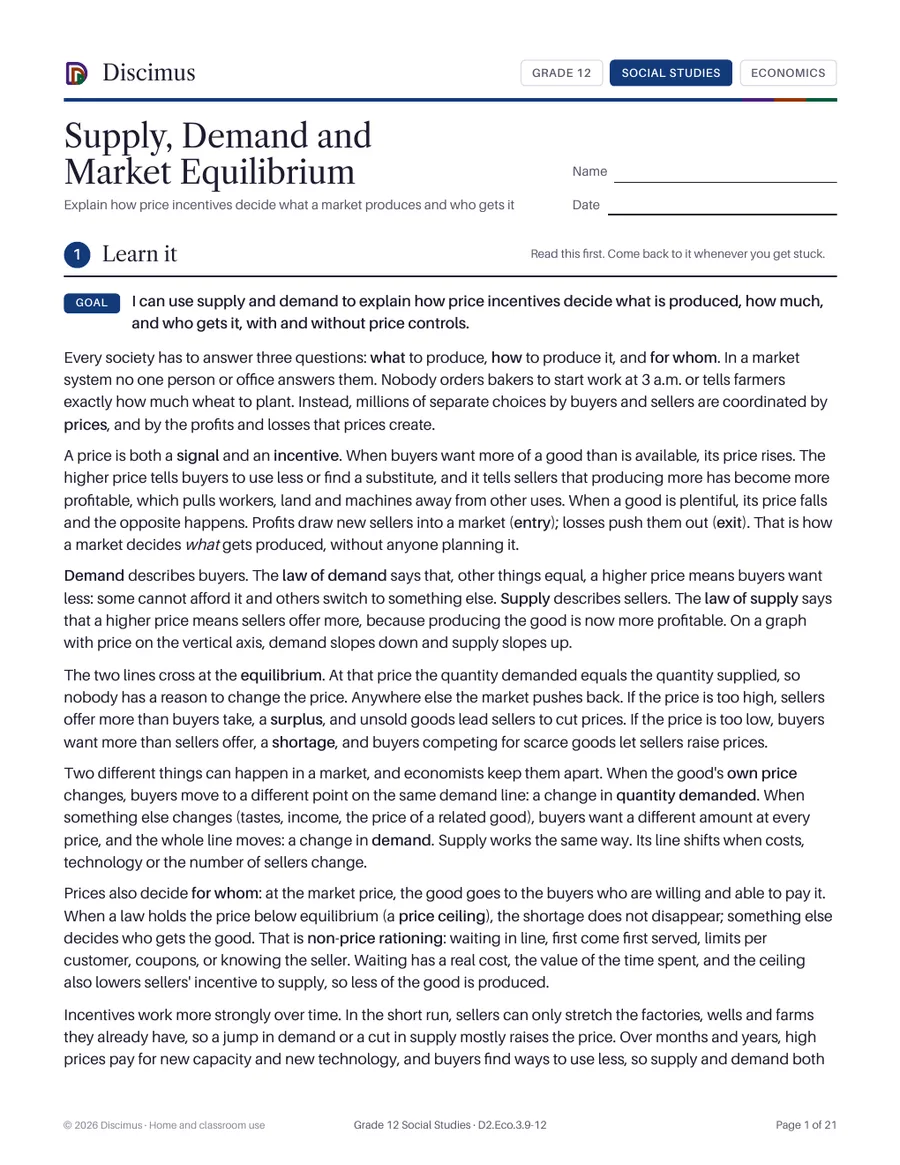
Explain how price incentives decide what a market produces and who gets it