Skip to content
Discimus
  • Grades
  • Subjects
  • Occasions
  • Standards
  • Membership
Sign inJoin
  1. Home
  2. Grades
  3. Grade 10
  4. Social Studies

C3 Framework for Social Studies

Grade 10 Social Studies

History, geography, civics and economics.

TopicsHistory 4Reading in History 10U.S. History 1Using Sources 6World History 5
StandardsD2.His.2.9-12D2.His.3.9-12D2.His.4.9-12D2.His.5.9-12D2.His.6.9-12D2.His.7.9-12D2.His.8.9-12D2.His.9.9-12D2.His.10.9-12D2.His.11.9-12D2.His.12.9-12D2.His.13.9-12D2.His.14.9-12D2.His.15.9-12D2.His.16.9-12D2.His.17.9-12RH.9-10.1RH.9-10.2RH.9-10.3RH.9-10.4RH.9-10.5RH.9-10.6RH.9-10.7RH.9-10.8RH.9-10.9RH.9-10.10
  • Social StudiesGrade 10

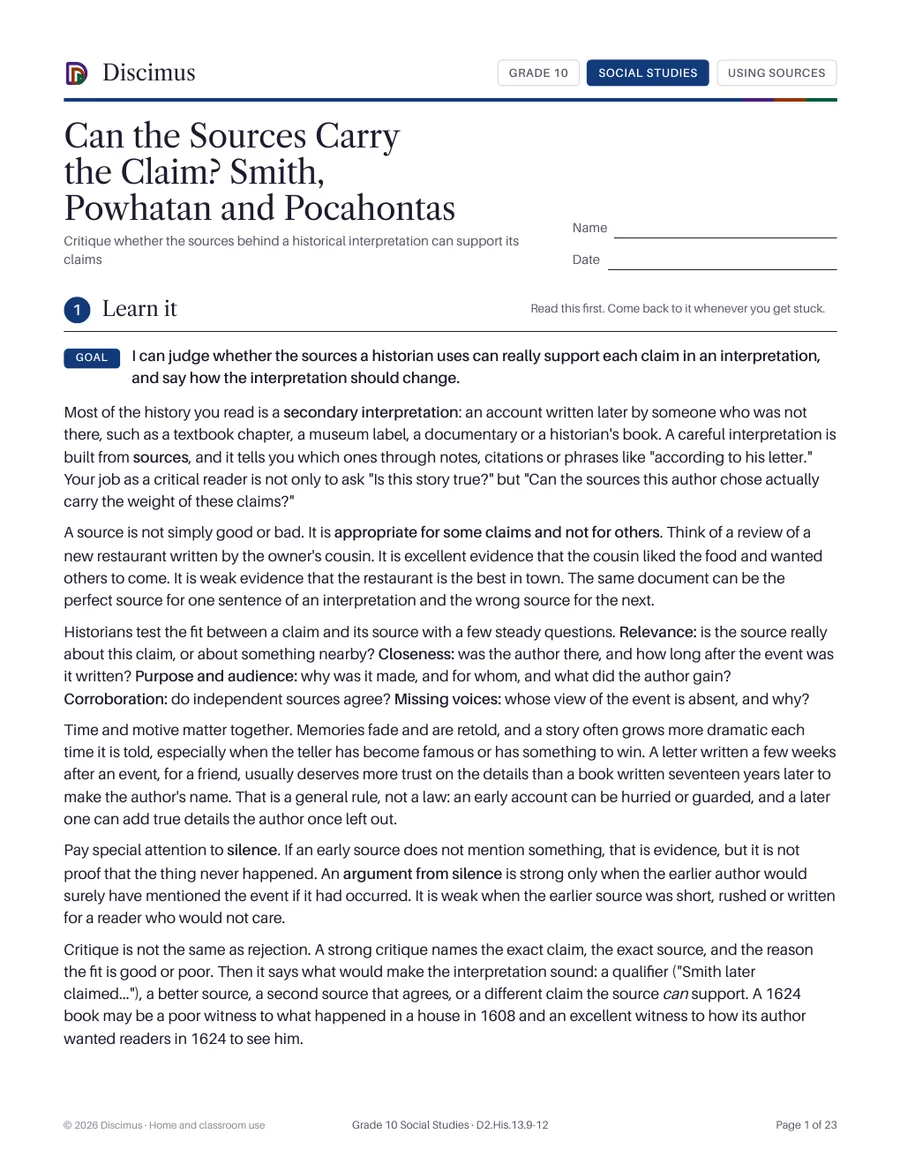
    Can the Sources Carry the Claim? Smith, Powhatan and Pocahontas

    Critique whether the sources behind a historical interpretation can support its claims
  • Social StudiesGrade 10

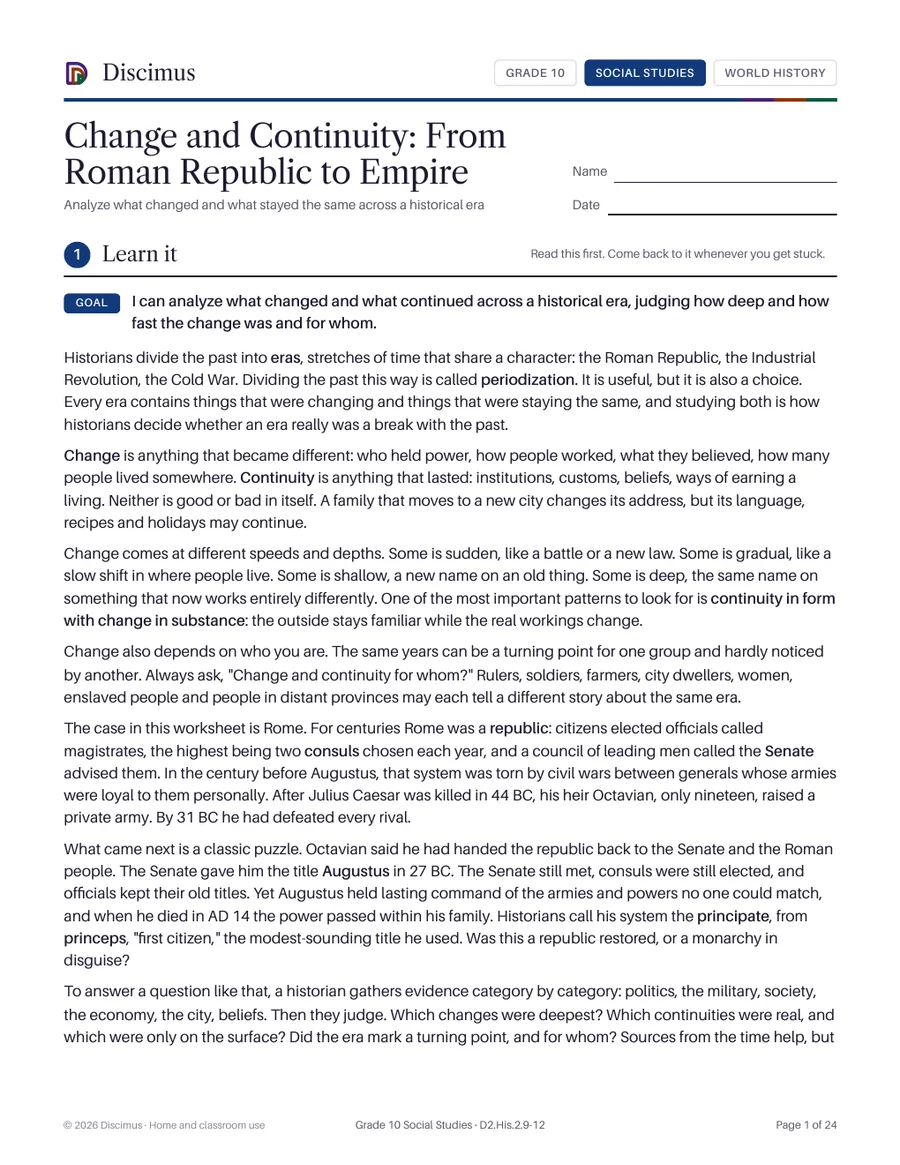
    Change and Continuity: From Roman Republic to Empire

    Analyze what changed and what stayed the same across a historical era
  • Social StudiesGrade 10

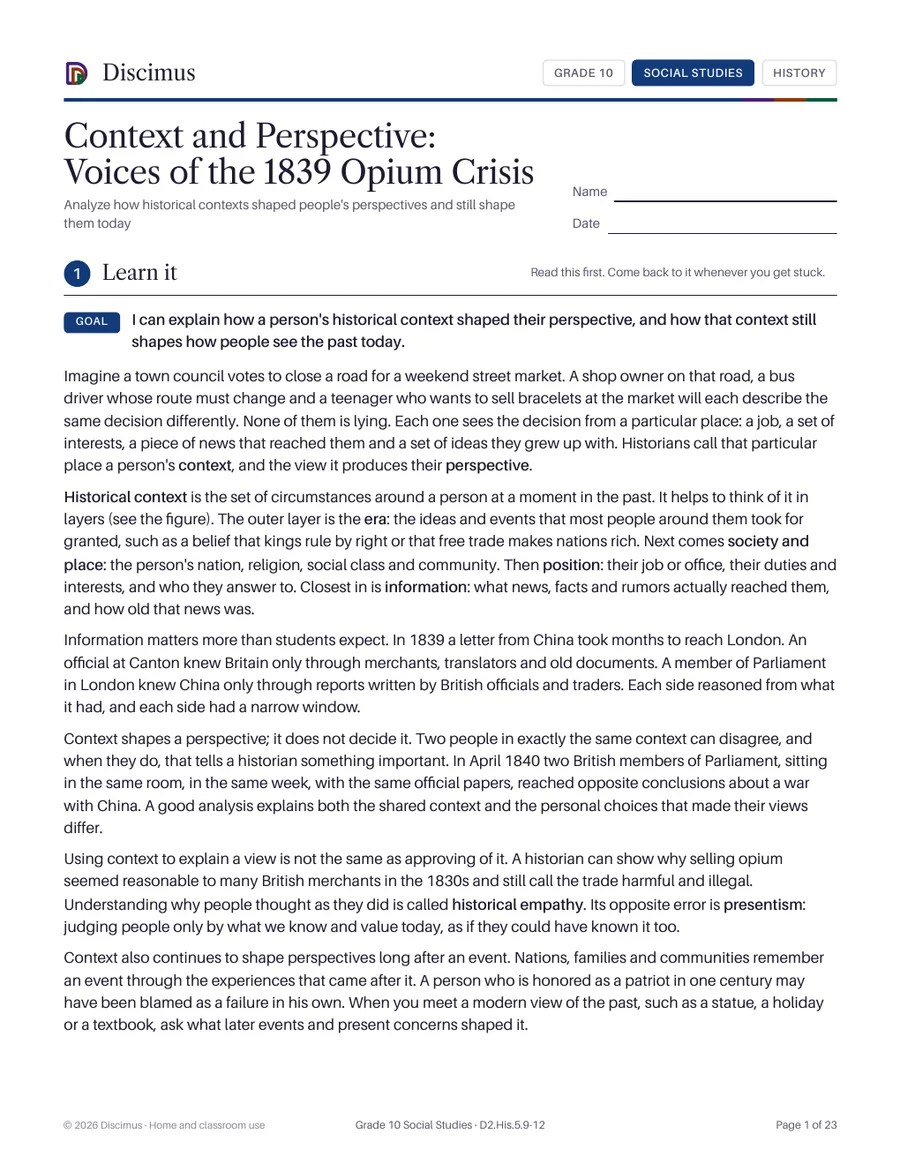
    Context and Perspective: Voices of the 1839 Opium Crisis

    Analyze how historical contexts shaped people's perspectives and still shape them today
  • Social StudiesGrade 10

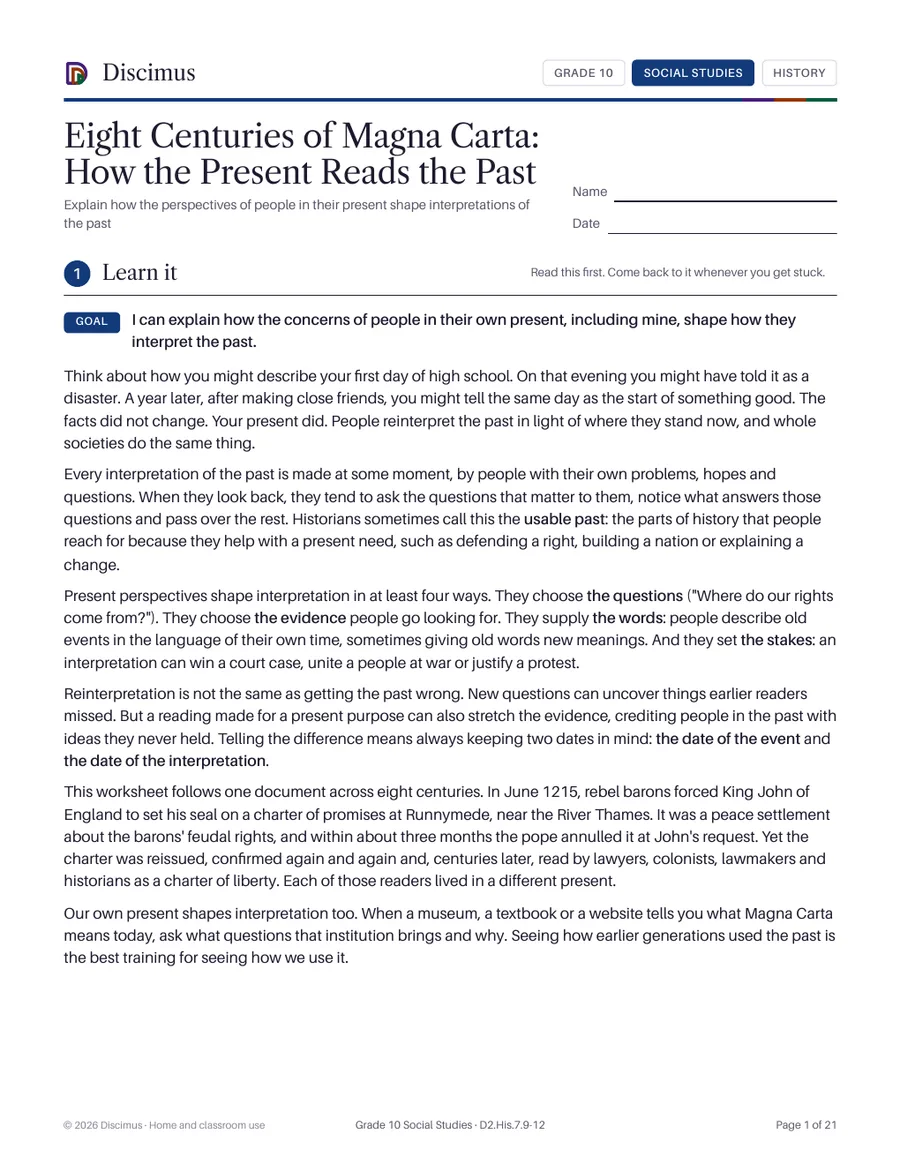
    Eight Centuries of Magna Carta: How the Present Reads the Past

    Explain how the perspectives of people in their present shape interpretations of the past
  • Social StudiesGrade 10

    Greased Cartridges or Deeper Causes? The Rebellion of 1857

    Tell long-term causes from triggering events to argue why the 1857 rebellion happened
  • Social StudiesGrade 10

    History Sources: Cause or Sequence? Analyzing a Chain of Events

    Analyze a series of historical events and decide whether earlier events caused later ones
  • Social StudiesGrade 10

    History Sources: Central Ideas and Accurate Summaries

    Find the central idea of a history source and summarize how its events or ideas develop
  • Social StudiesGrade 10

    History Sources: Cite Evidence and Weigh Date and Origin

    Cite specific evidence from primary and secondary sources, weighing their date and origin
  • Social StudiesGrade 10

    History Sources: How Structure Shapes an Explanation

    Analyze how a history text's structure emphasizes key points and builds an explanation
  • Social StudiesGrade 10

    History Sources: Political, Social and Economic Words in Context

    Work out what political, social and economic words mean as used in history texts
  • Social StudiesGrade 10

    How Significance Changes Over Time: The Trial of Socrates

    Use questions to assess how the significance of people's actions changes with context
  • Social StudiesGrade 10

    Is It Accurate? Critique Histories in Poems, Paintings and Video

    Critique the central argument of a history book, film, painting or poem for accuracy
  • Social StudiesGrade 10

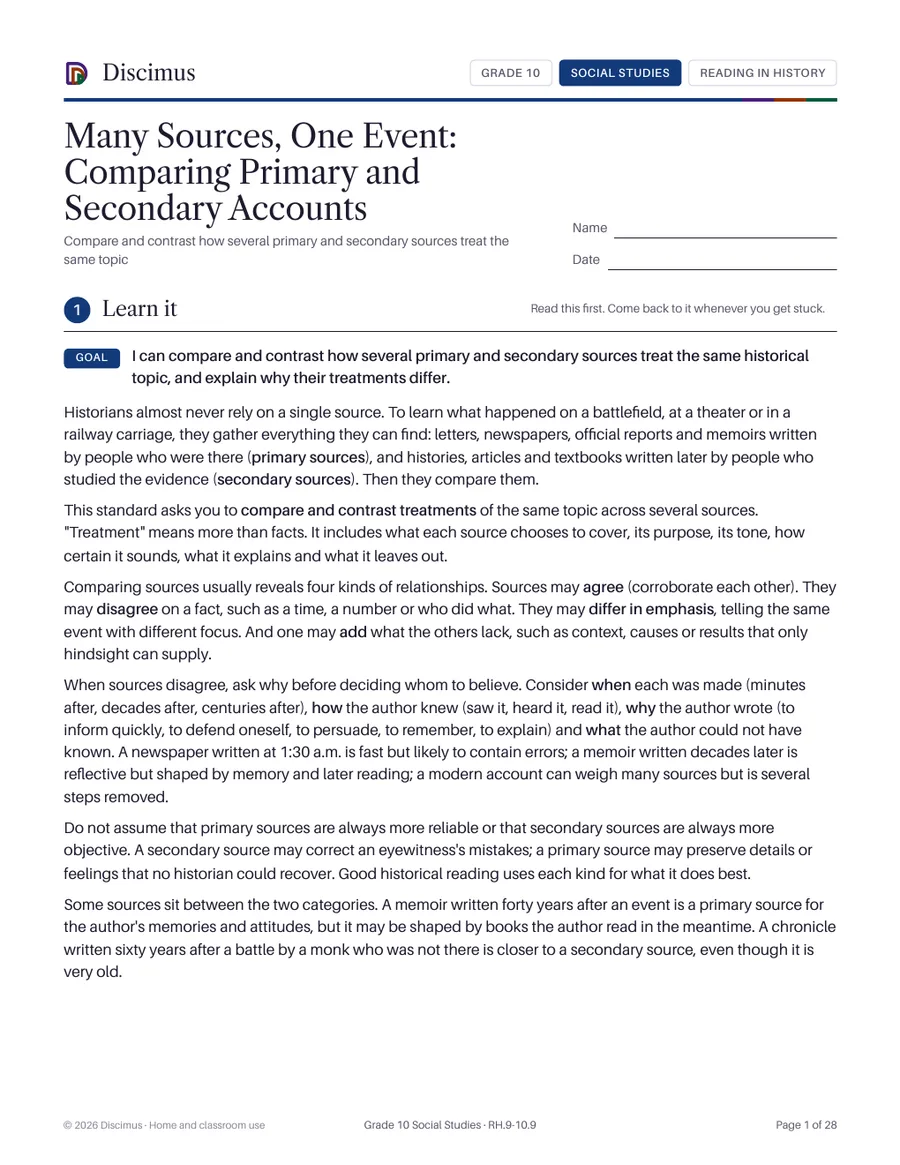
    Many Sources, One Event: Comparing Primary and Secondary Accounts

    Compare and contrast how several primary and secondary sources treat the same topic
  • Social StudiesGrade 10

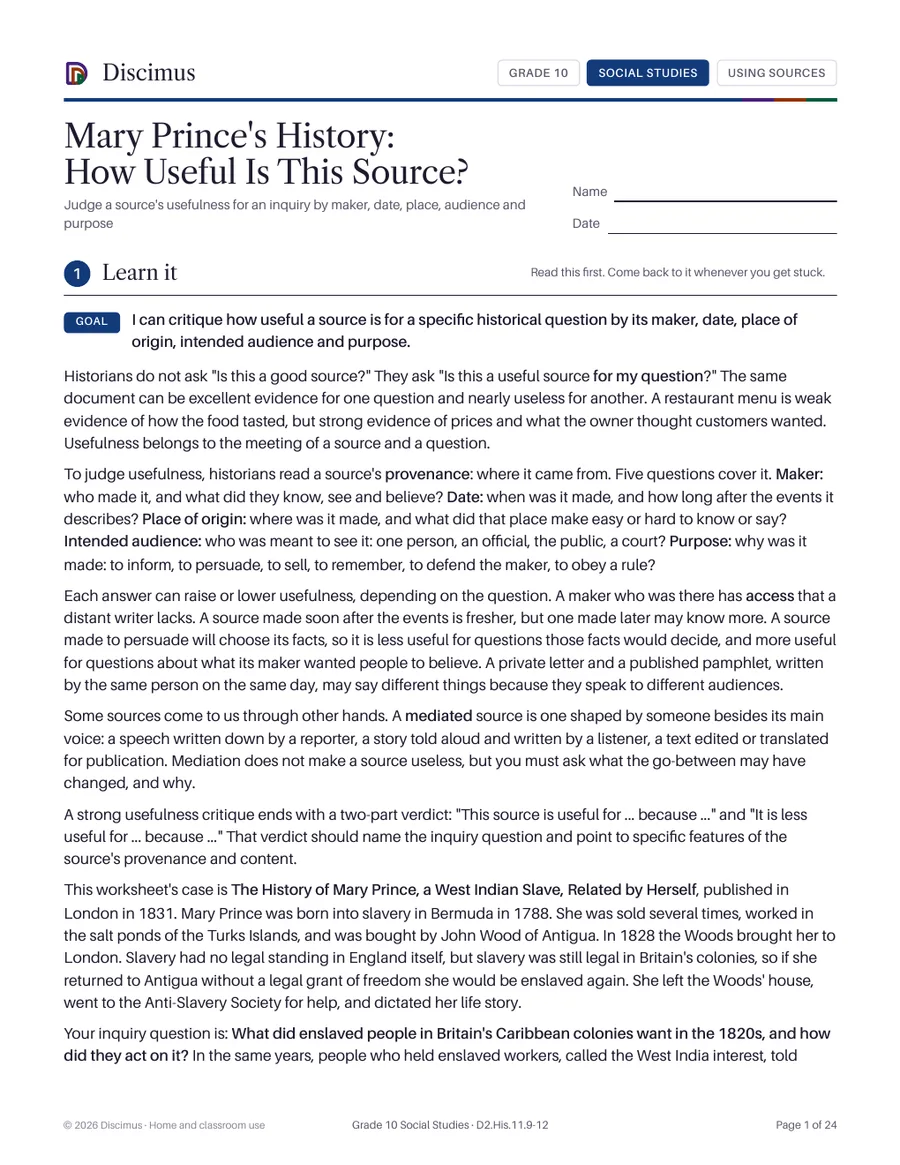
    Mary Prince's History: How Useful Is This Source?

    Judge a source's usefulness for an inquiry by maker, date, place, audience and purpose
  • Social StudiesGrade 10

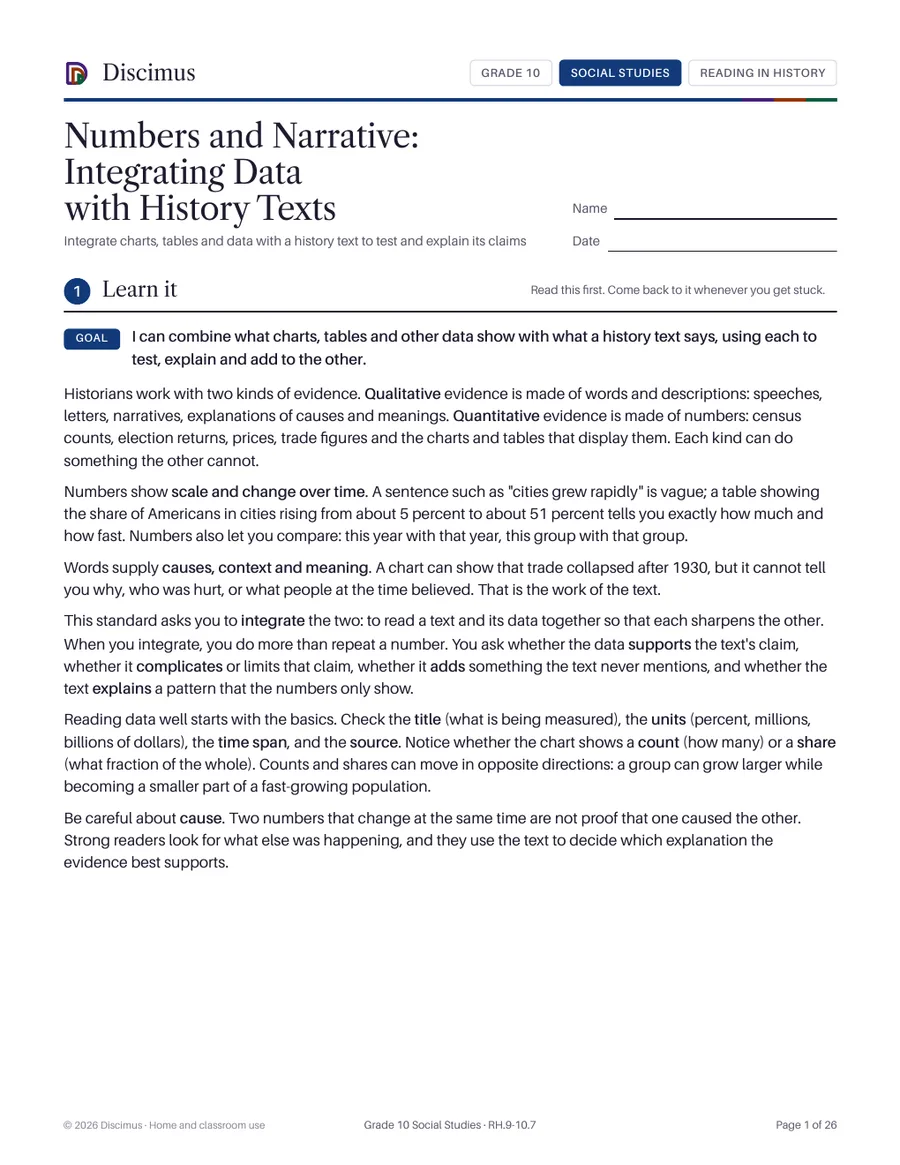
    Numbers and Narrative: Integrating Data with History Texts

    Integrate charts, tables and data with a history text to test and explain its claims
  • Social StudiesGrade 10

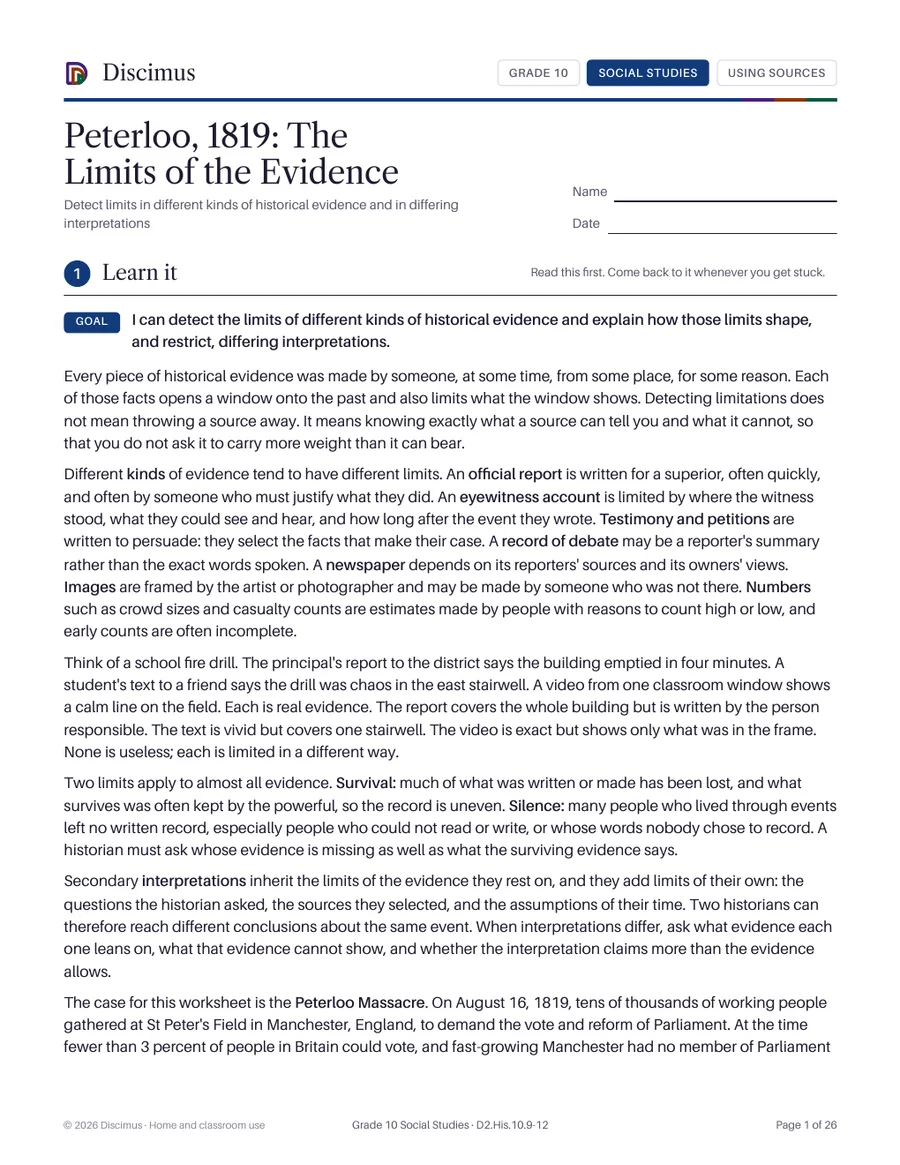
    Peterloo, 1819: The Limits of the Evidence

    Detect limits in different kinds of historical evidence and in differing interpretations
  • Social StudiesGrade 10

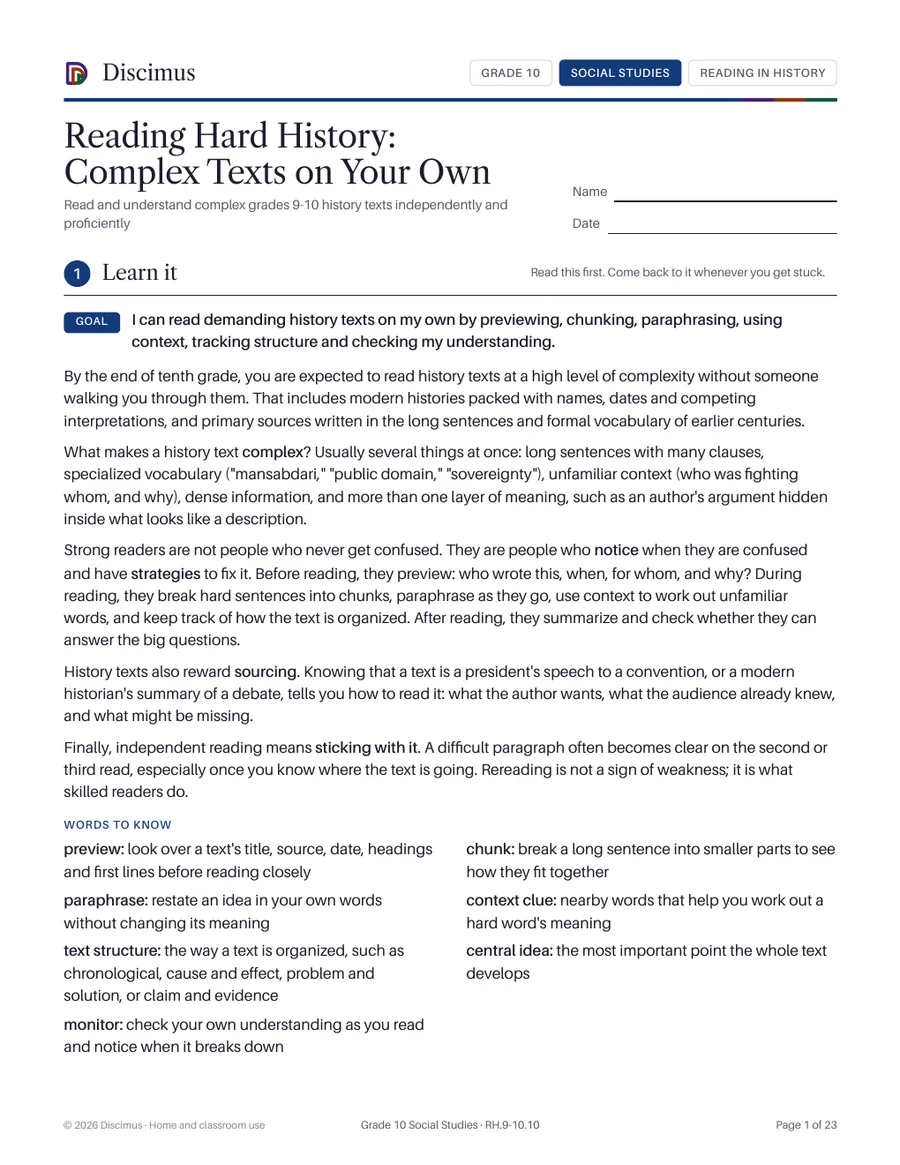
    Reading Hard History: Complex Texts on Your Own

    Read and understand complex grades 9-10 history texts independently and proficiently
  • Social StudiesGrade 10

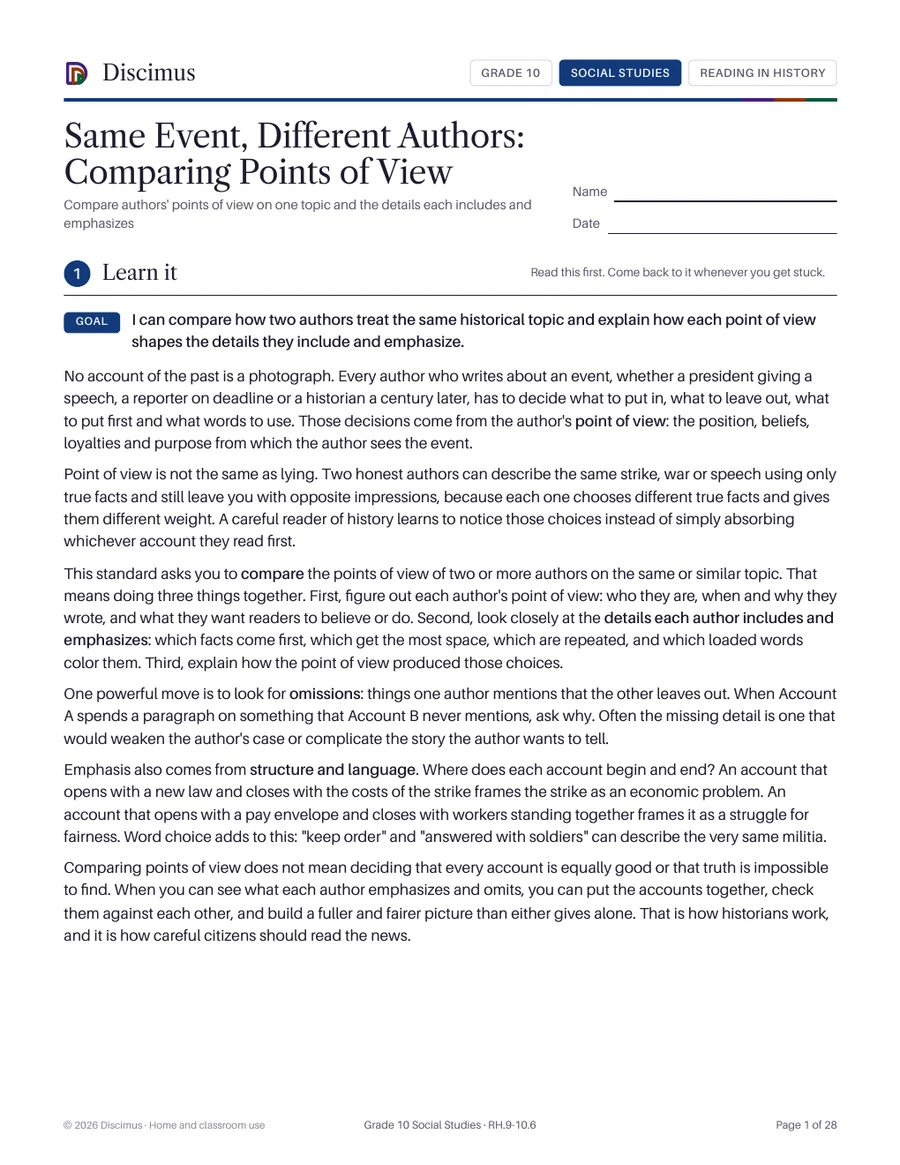
    Same Event, Different Authors: Comparing Points of View

    Compare authors' points of view on one topic and the details each includes and emphasizes
  • Social StudiesGrade 10

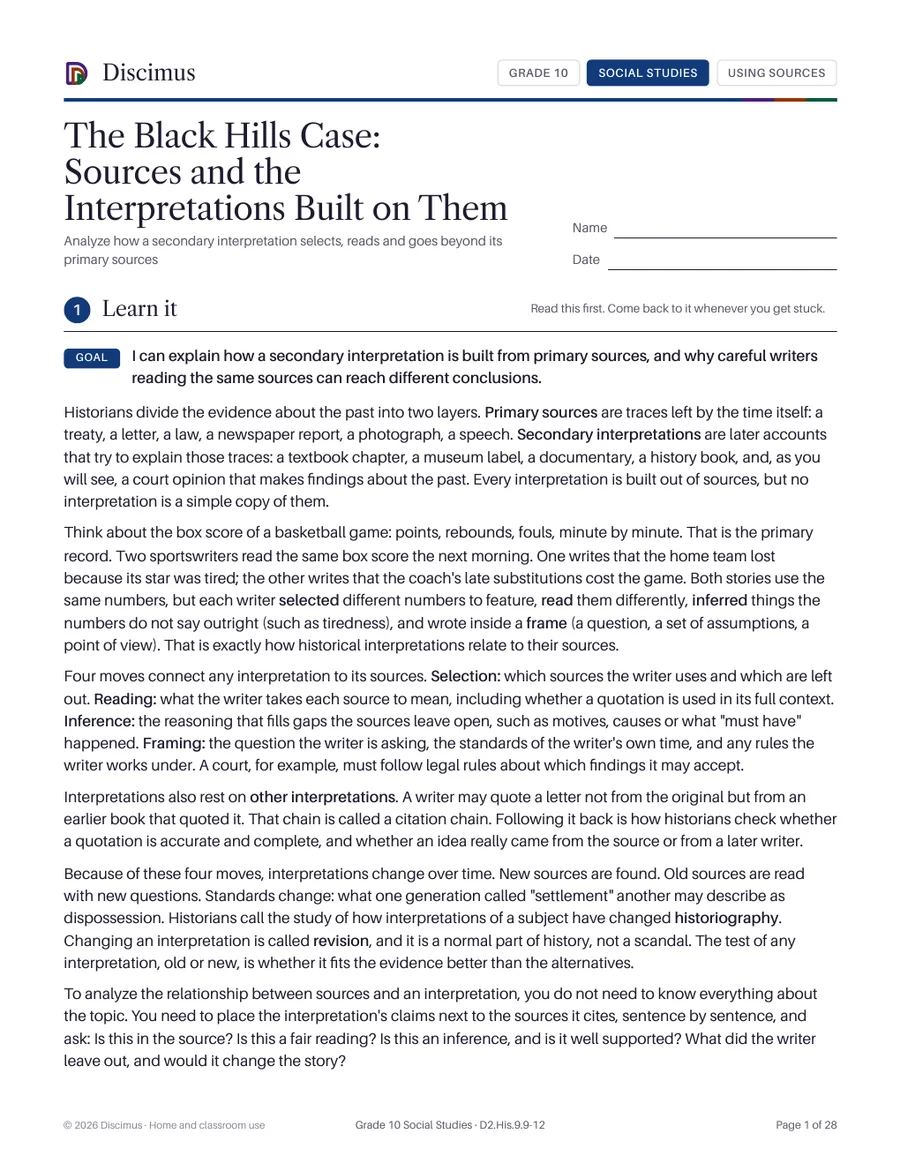
    The Black Hills Case: Sources and the Interpretations Built on Them

    Analyze how a secondary interpretation selects, reads and goes beyond its primary sources
  • Social StudiesGrade 10

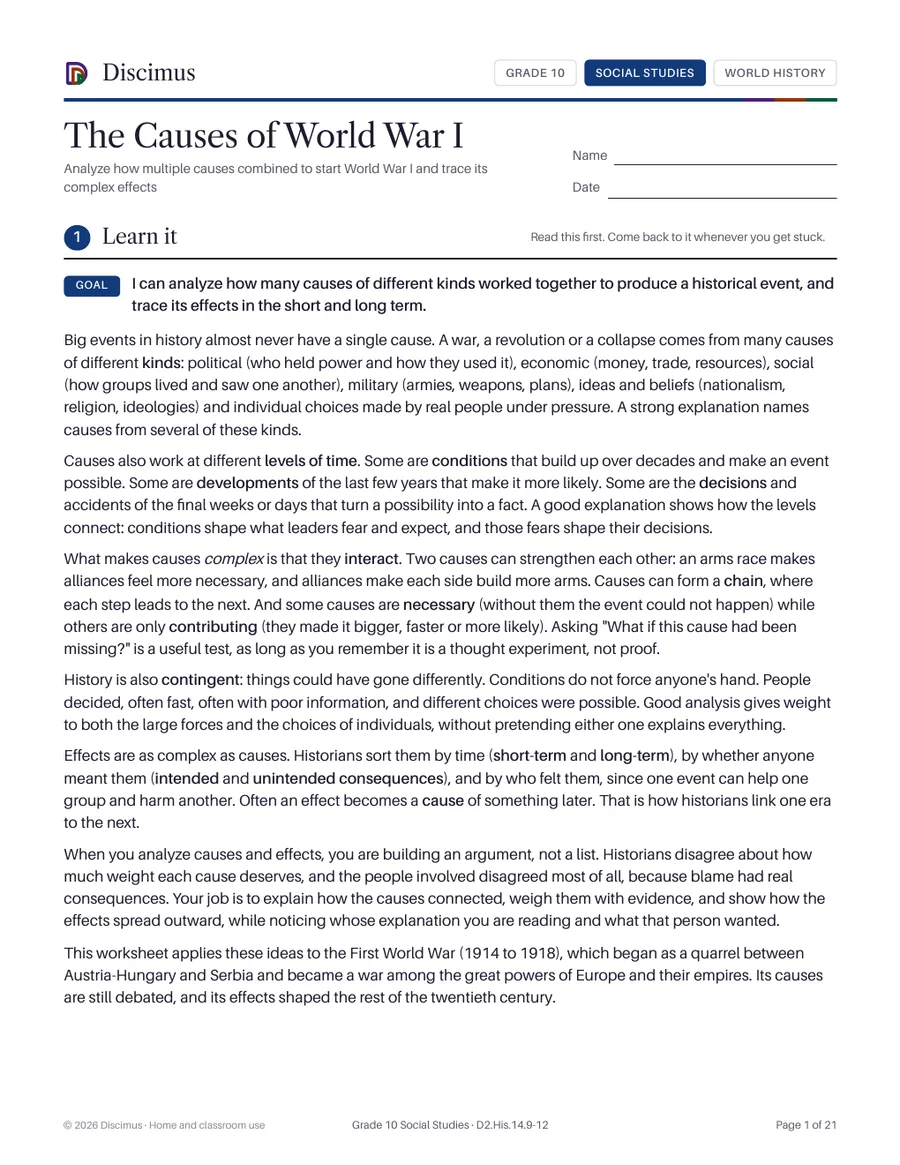
    The Causes of World War I

    Analyze how multiple causes combined to start World War I and trace its complex effects
  • Social StudiesGrade 10

    The Korematsu Case: Questions That Lead to New Sources

    Use questions raised by several sources to pursue an inquiry and find additional sources
  • Social StudiesGrade 10

    The Silence of Carthage: What Surviving Sources Can and Cannot Tell

    Analyze how the sources that survive limit our interpretations of people's perspectives
  • Social StudiesGrade 10

    Weighing the Argument: Reasoning and Evidence in History

    Assess how well the reasoning and evidence in a history text support the author's claims
  • Social StudiesGrade 10

    What Shaped Their Views? Perspectives on Britain's 1832 Reform Act

    Analyze the interacting factors that shaped people's perspectives in a past era
  • Social StudiesGrade 10

    Who Won the War of 1812? Building an Argument from Many Sources

    Integrate several primary sources and interpretations into one reasoned argument
  • Social StudiesGrade 10

    Whose History? How Macaulay and Carlyle Shaped Their Stories

    Analyze how the perspectives of those writing history shaped the histories they produced

Discimus

Docendo discimus. By teaching, we learn.

By age

  • Early Childhood
  • Elementary School
  • Middle School
  • High School
  • All grades

By subject

  • Math
  • English Language Arts
  • Science
  • Social Studies
  • Foreign Language
  • Technology

Discimus

  • Membership
  • Occasions
  • Standards
  • About
  • Contact

© 2026 Ceterum. All rights reserved. Worksheets are for home and single-classroom use.

  • Terms
  • Privacy