Civic Virtues in Practice: Working With People You Disagree With
Apply civic virtues and democratic principles when working and disagreeing with others
C3 Framework for Social Studies
History, geography, civics and economics.
Apply civic virtues and democratic principles when working and disagreeing with others
Choose and use a deliberative process that fits the setting, the stakes and the people
Evaluate how effectively citizens and institutions addressed social and political problems
Find the central ideas of a history source and summarize how its key details relate
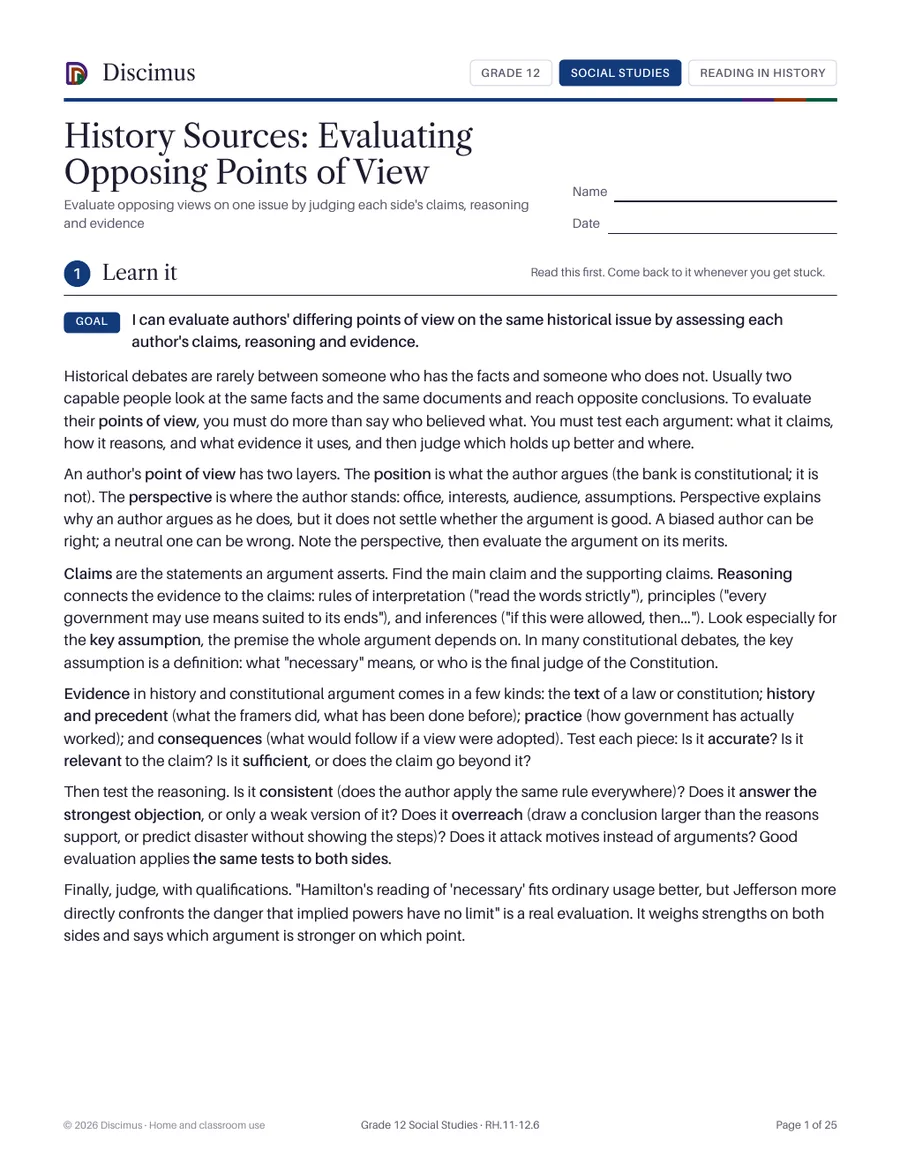
Evaluate opposing views on one issue by judging each side's claims, reasoning and evidence
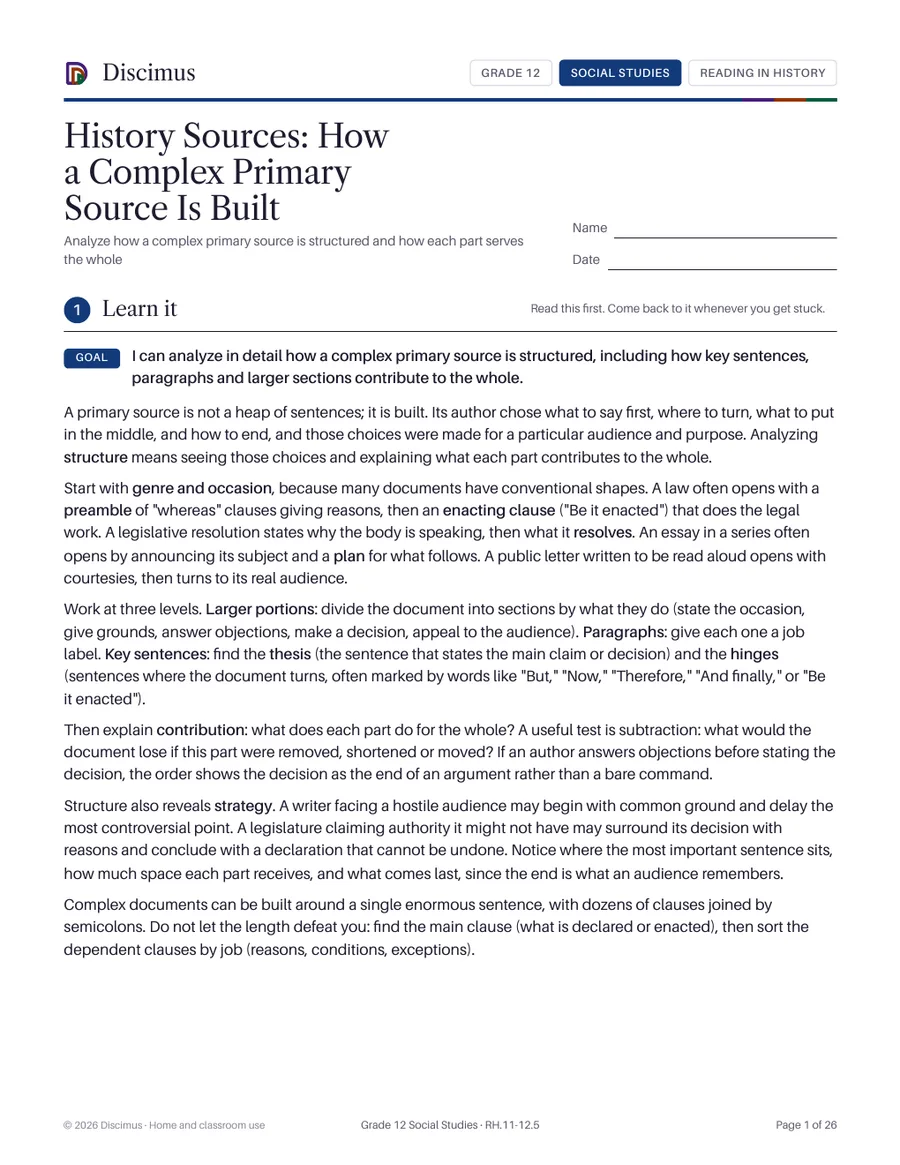
Analyze how a complex primary source is structured and how each part serves the whole
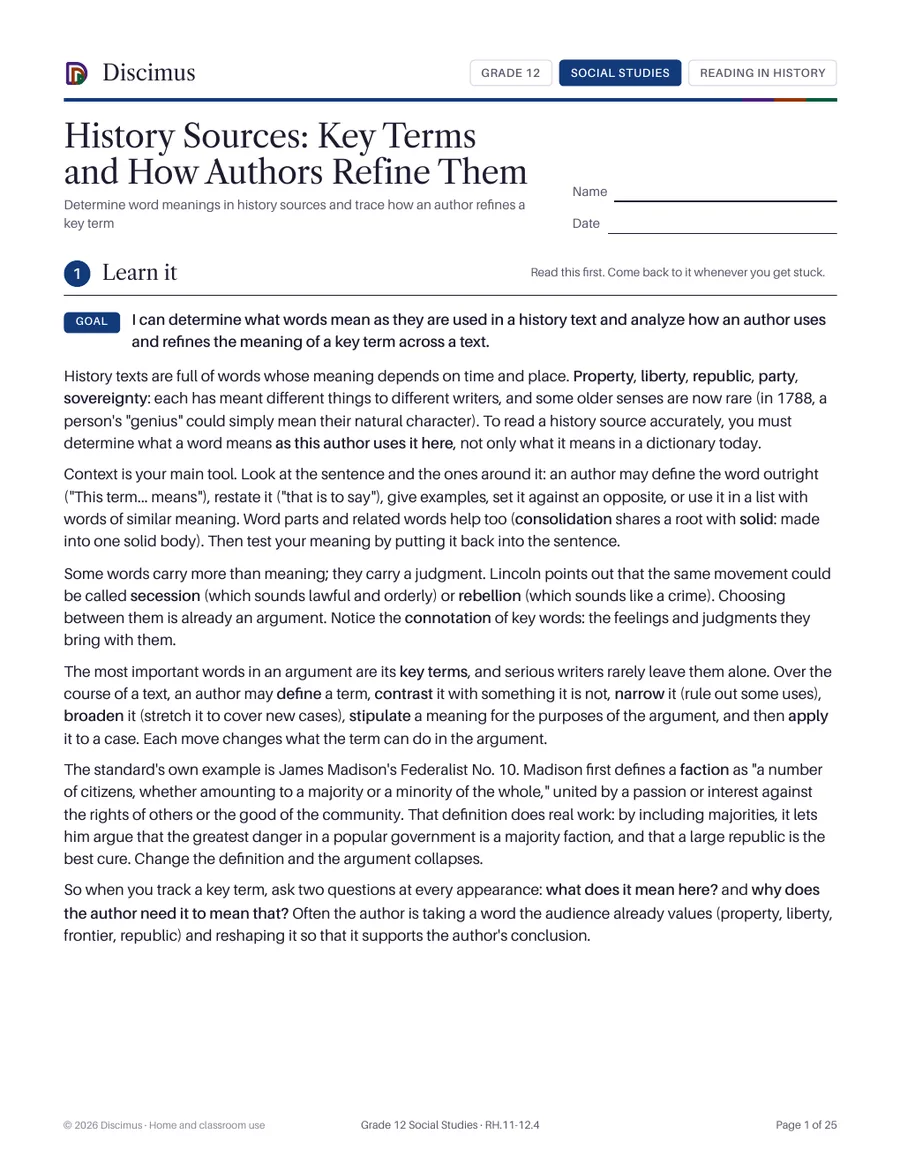
Determine word meanings in history sources and trace how an author refines a key term
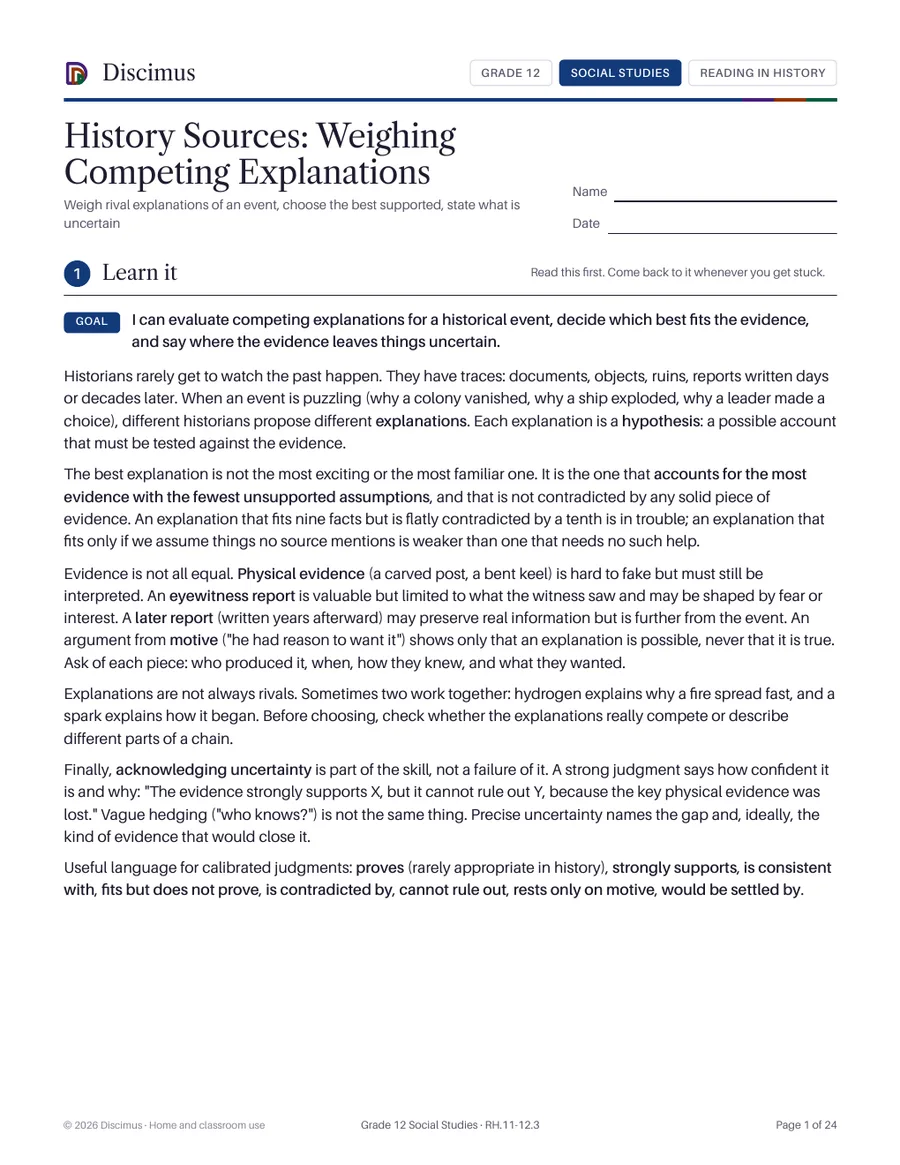
Weigh rival explanations of an event, choose the best supported, state what is uncertain
Evaluate a policy by its intended outcomes, unintended outcomes and later consequences
Analyze how constitutions, laws and treaties keep national and international order
Integrate and evaluate texts, tables, charts and maps to answer a historical question
Integrate primary and secondary sources into one account of an event, noting discrepancies
Explain how constitutional powers and limits have changed over time and remain contested
Read and understand complex history and social science texts independently
Analyze past, present and emerging means of changing society and protecting rights
Explain how price incentives decide what a market produces and who gets it
Evaluate systems from different times and places that build civic virtue and democracy
Evaluate an author's premises, claims and evidence by corroborating or challenging them
Analyze citizens' roles using democratic theories, participation data and other models
Analyze how people use and challenge laws at every level to address public issues
Evaluate decision procedures at local, state, national and world levels by civic purpose
Distinguish the powers of local, state, tribal, national and international institutions
Critique relationships among governments, civil society and markets using clear criteria
Analyze how personal interests and perspectives shape the way people apply rights