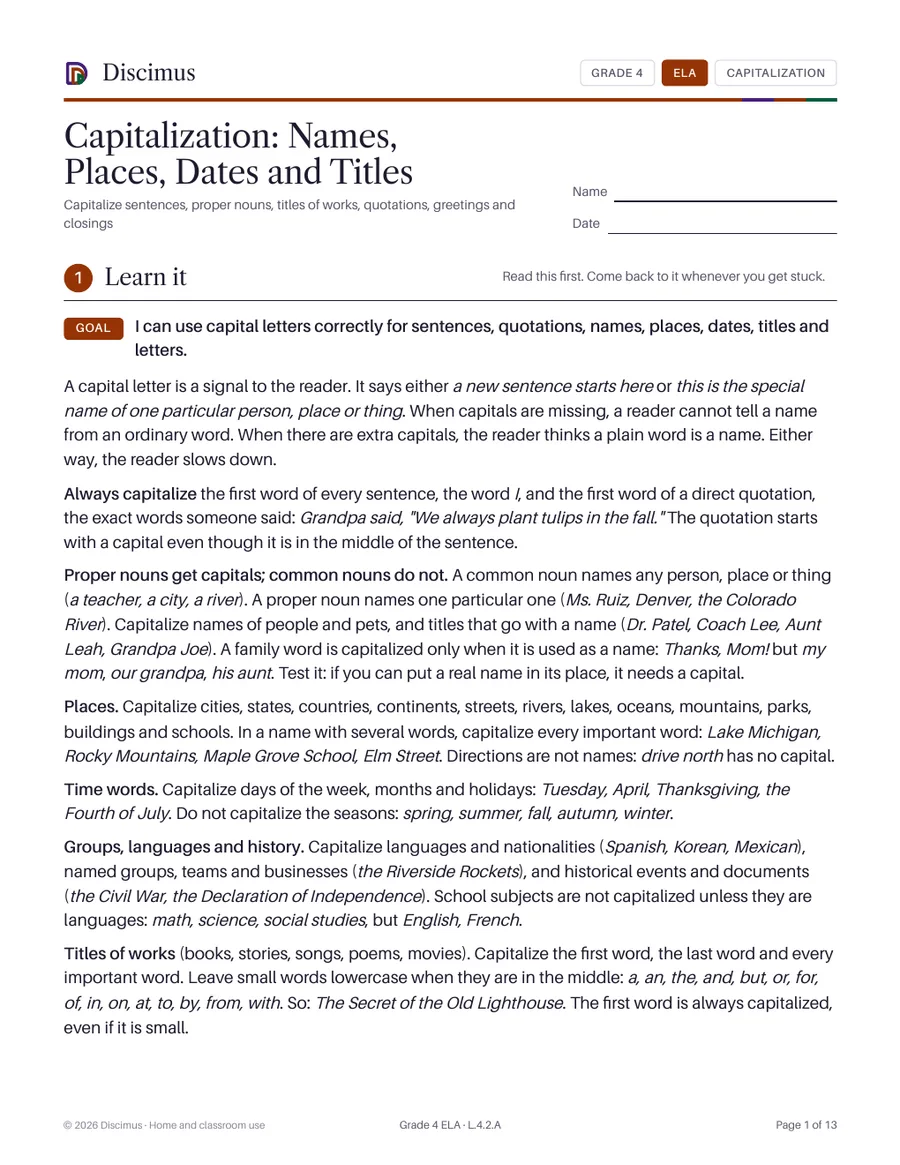
Capitalization: Names, Places, Dates and Titles
Capitalize sentences, proper nouns, titles of works, quotations, greetings and closings
Common Core State Standards for English Language Arts
Phonics, reading, grammar, vocabulary and writing.
Capitalize sentences, proper nouns, titles of works, quotations, greetings and closings
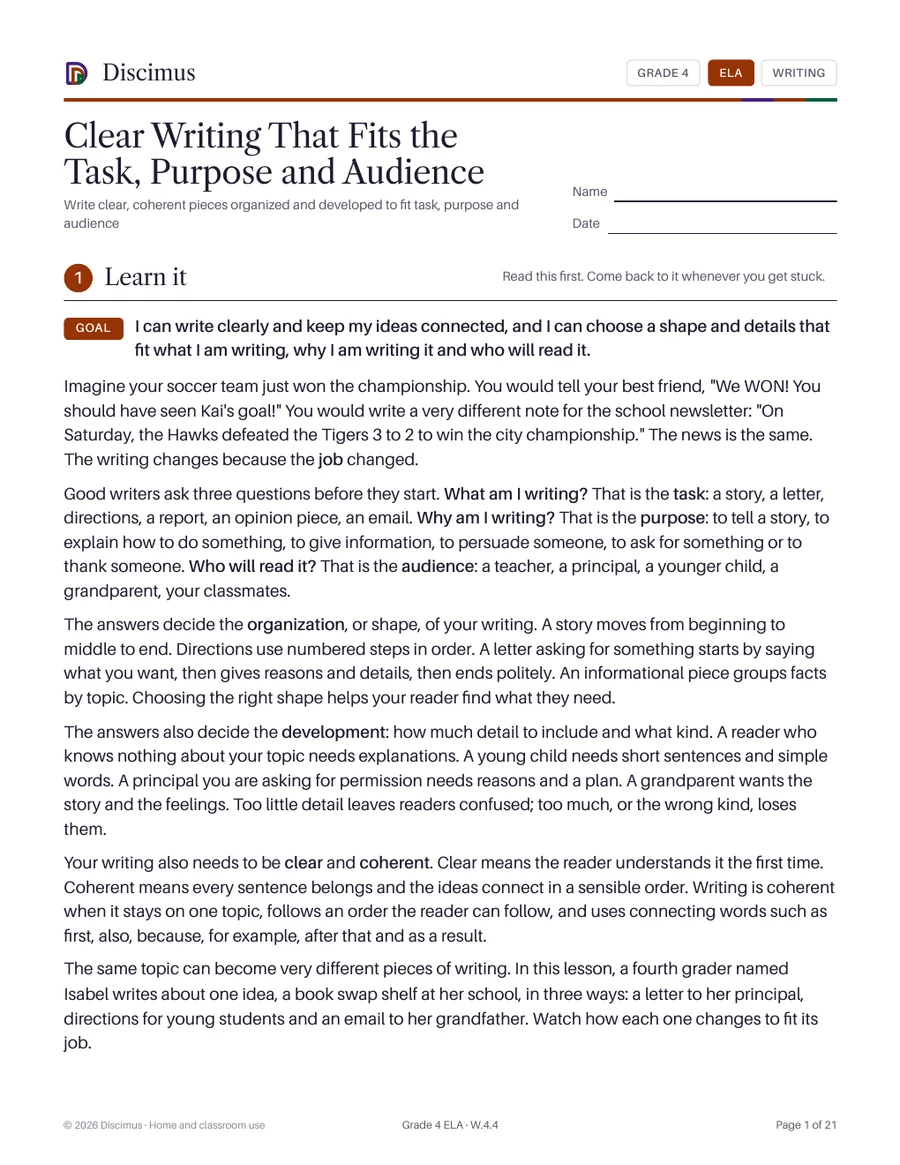
Write clear, coherent pieces organized and developed to fit task, purpose and audience
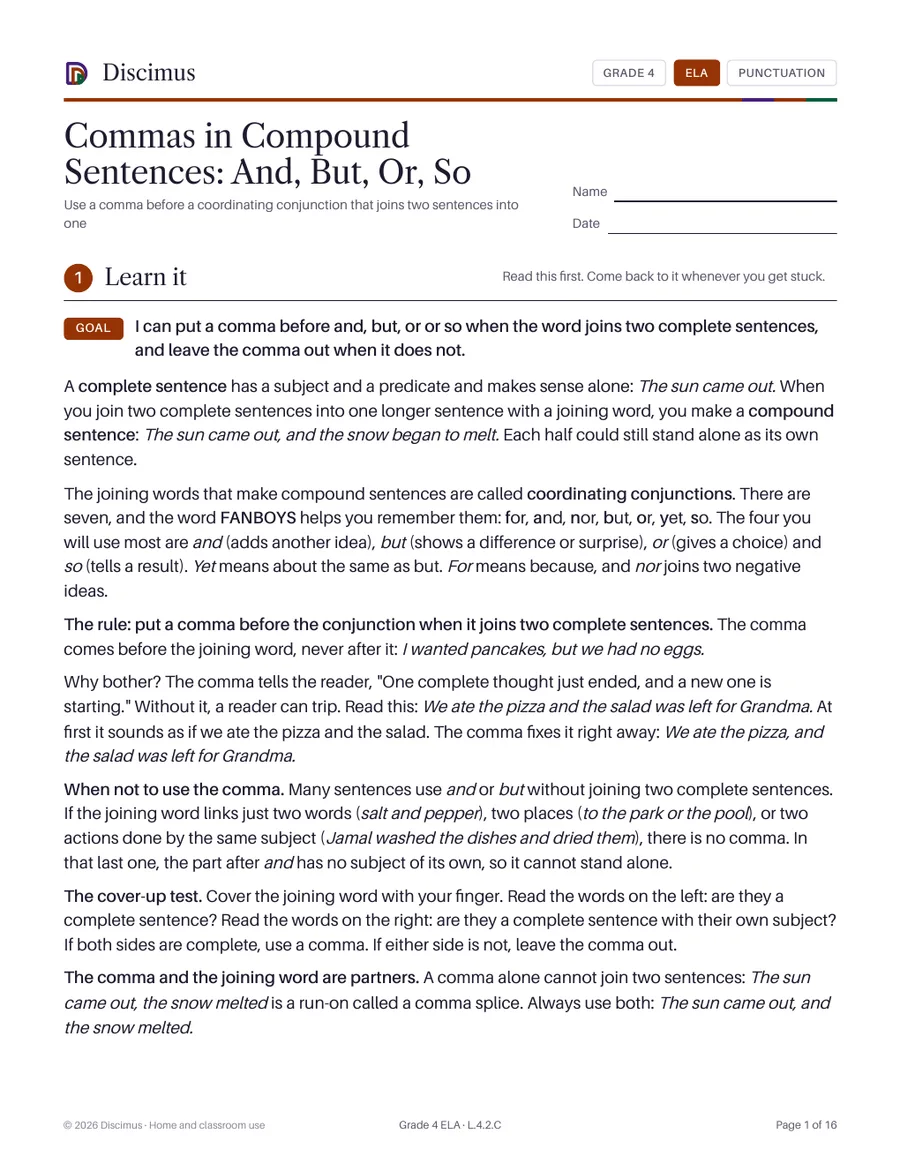
Use a comma before a coordinating conjunction that joins two sentences into one
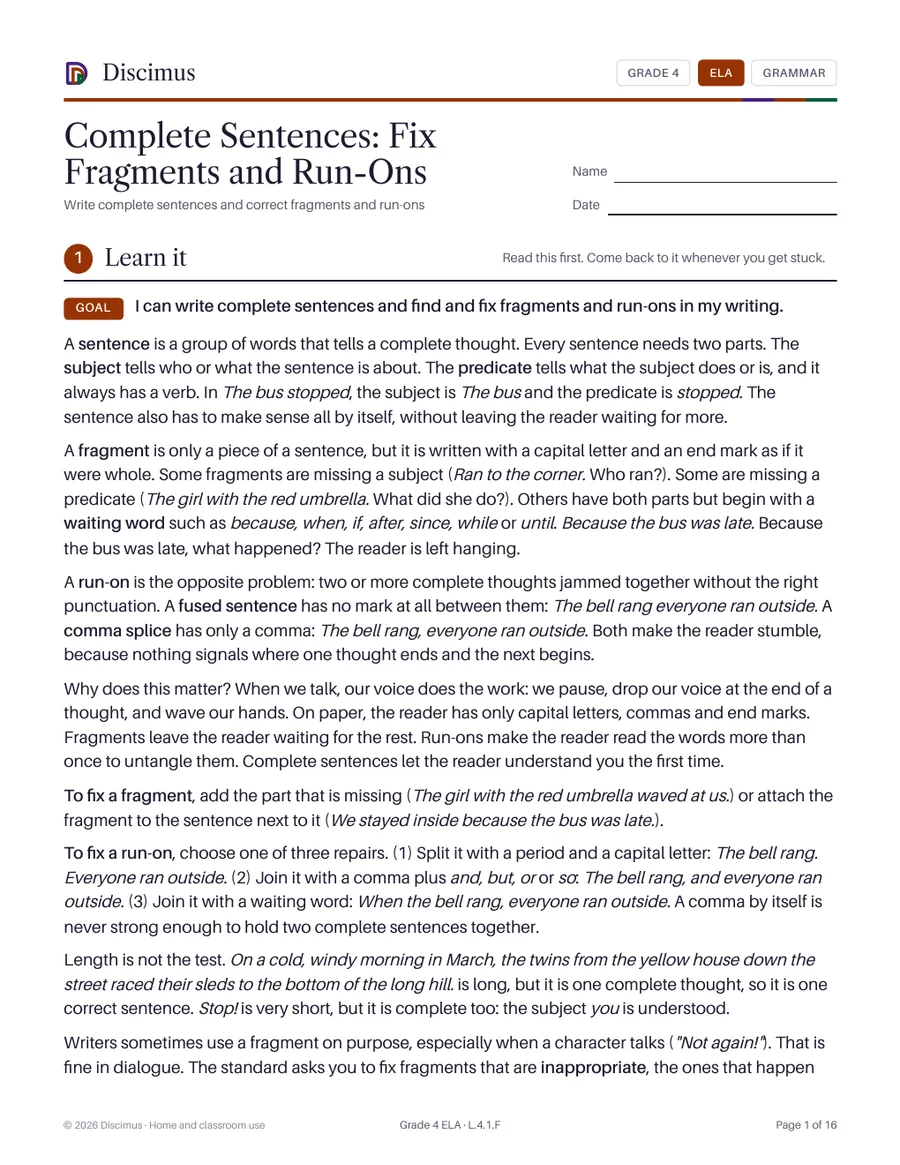
Write complete sentences and correct fragments and run-ons
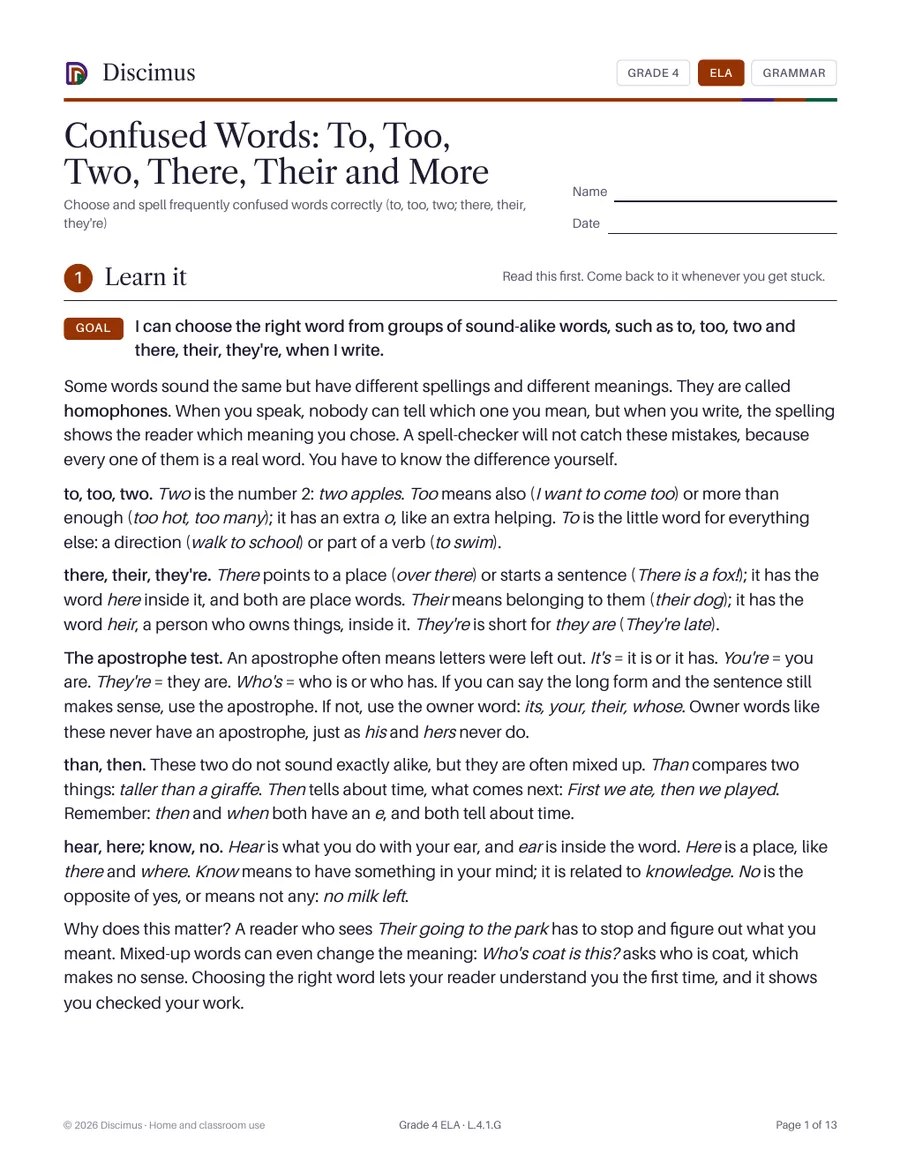
Choose and spell frequently confused words correctly (to, too, two; there, their, they're)
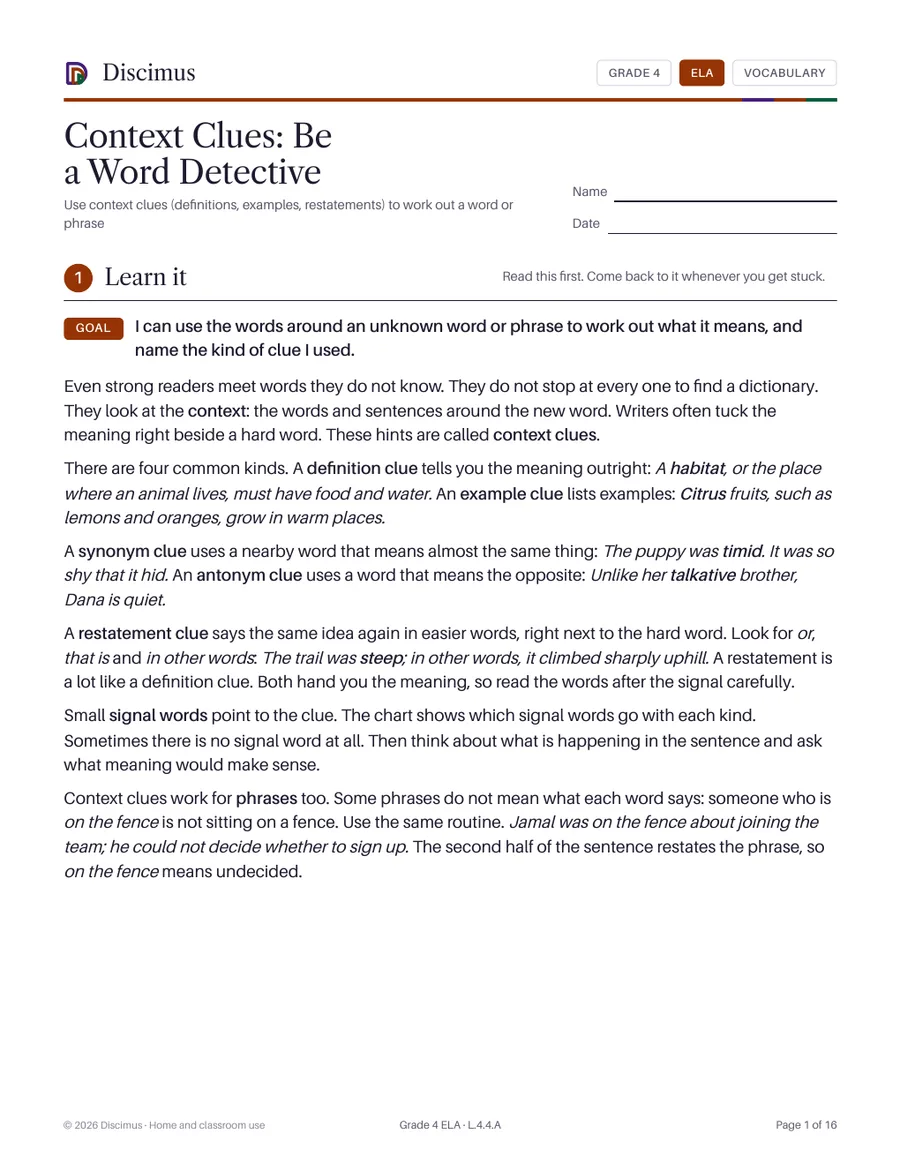
Use context clues (definitions, examples, restatements) to work out a word or phrase
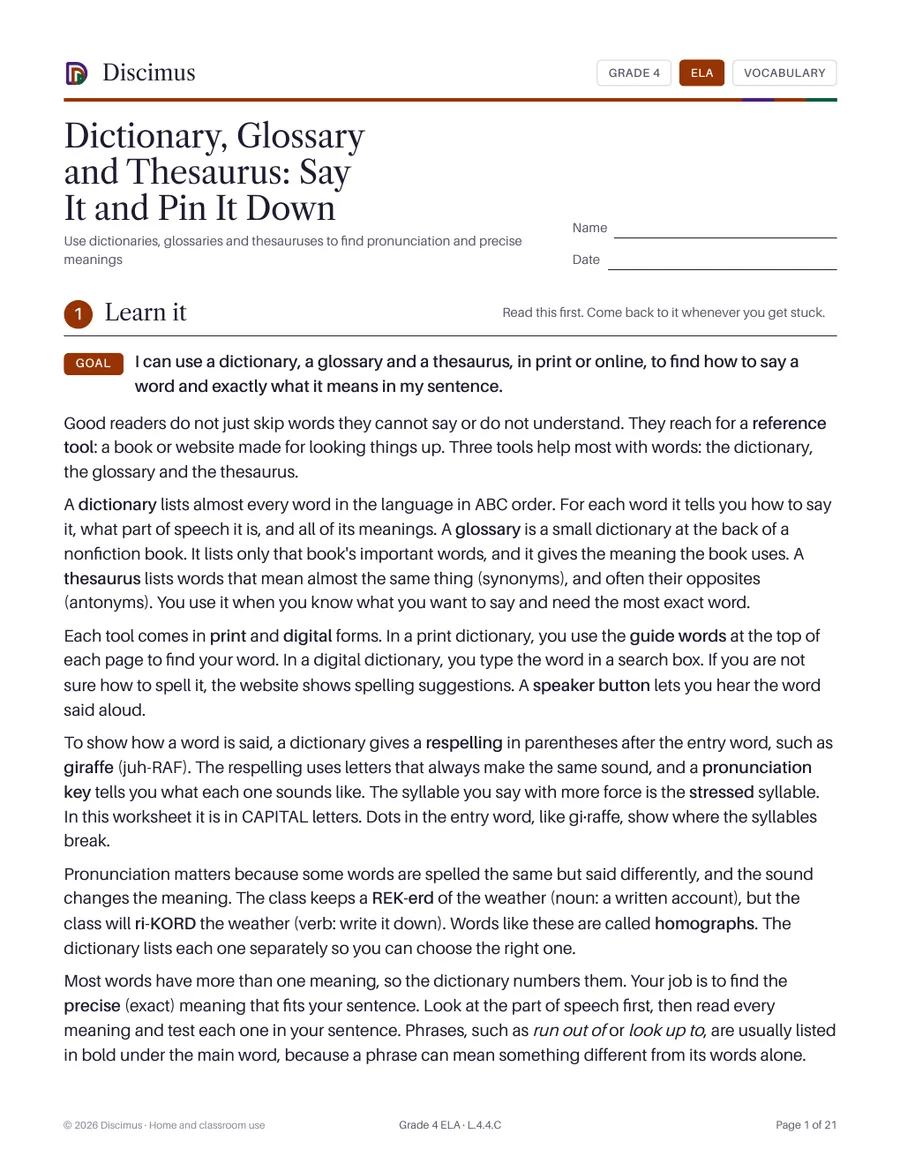
Use dictionaries, glossaries and thesauruses to find pronunciation and precise meanings
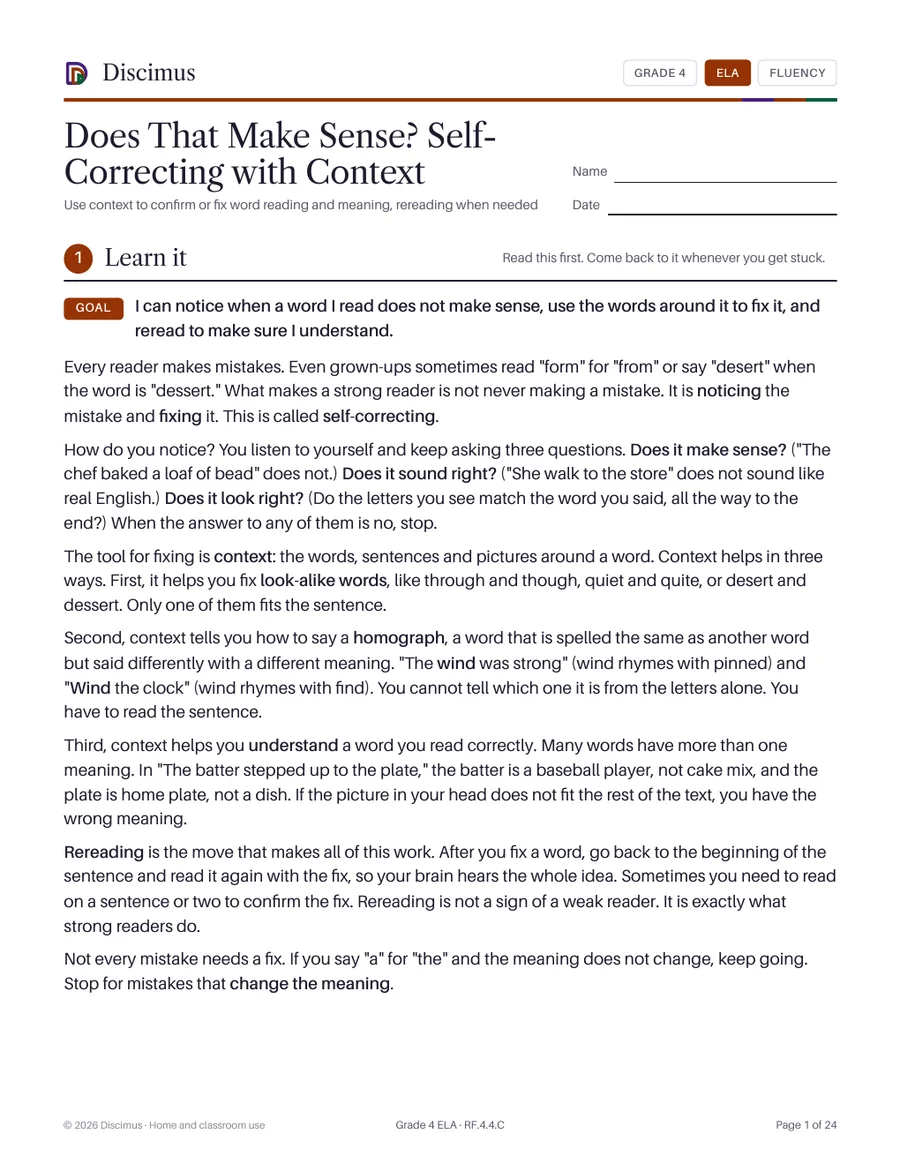
Use context to confirm or fix word reading and meaning, rereading when needed
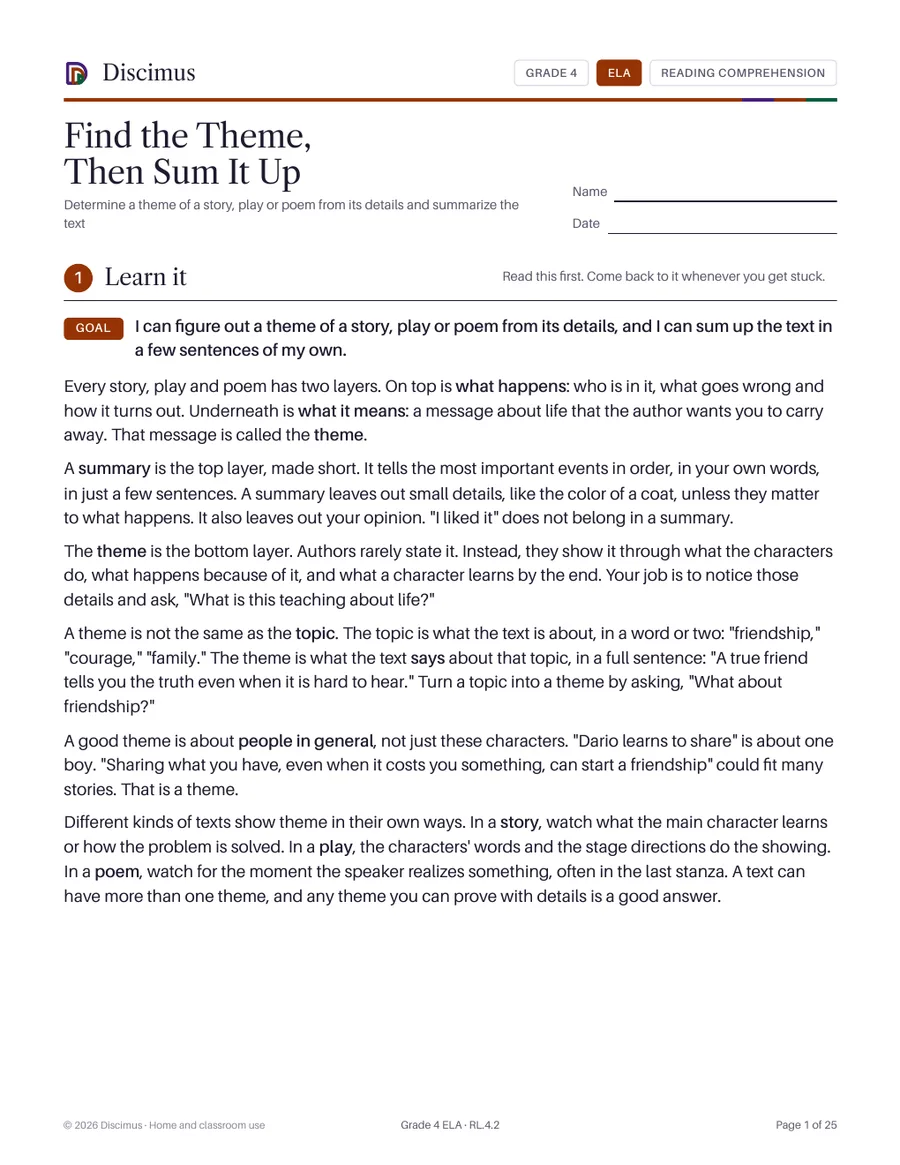
Determine a theme of a story, play or poem from its details and summarize the text
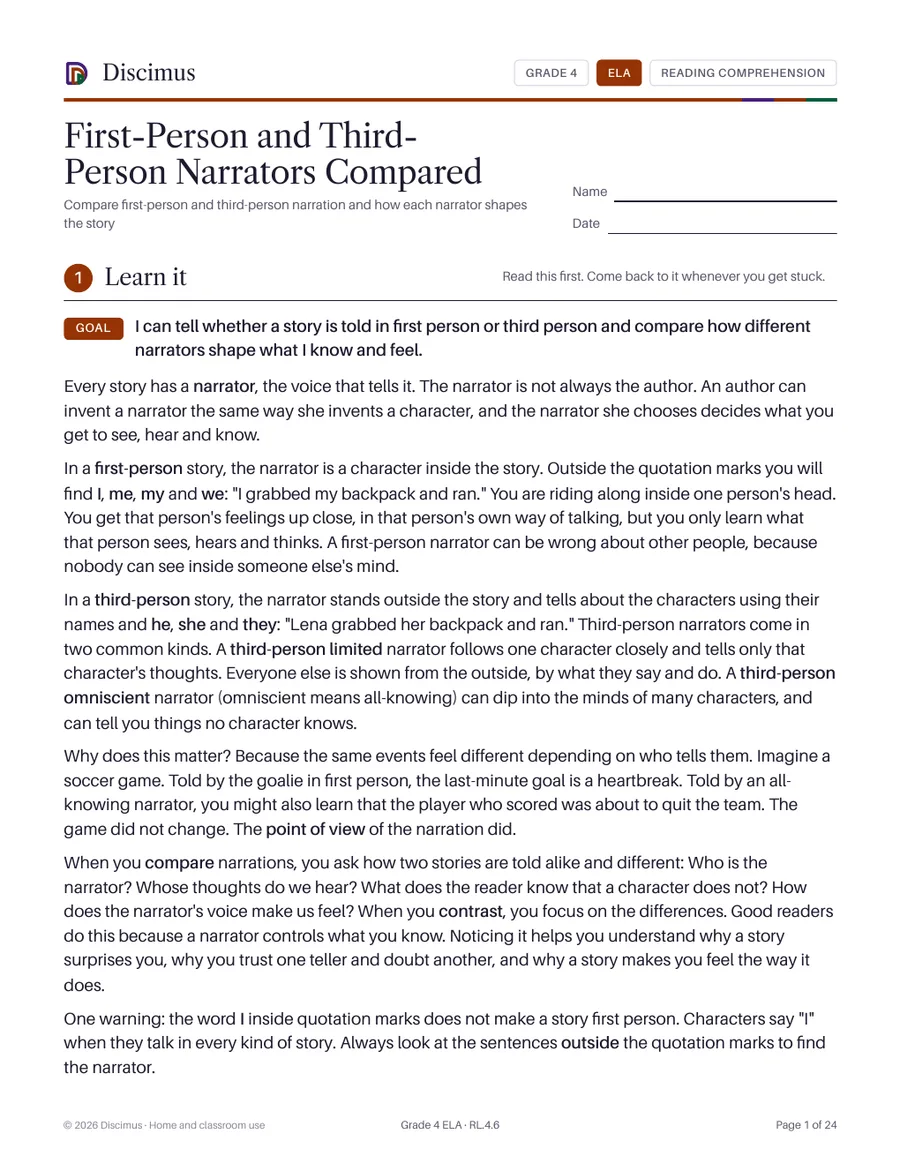
Compare first-person and third-person narration and how each narrator shapes the story
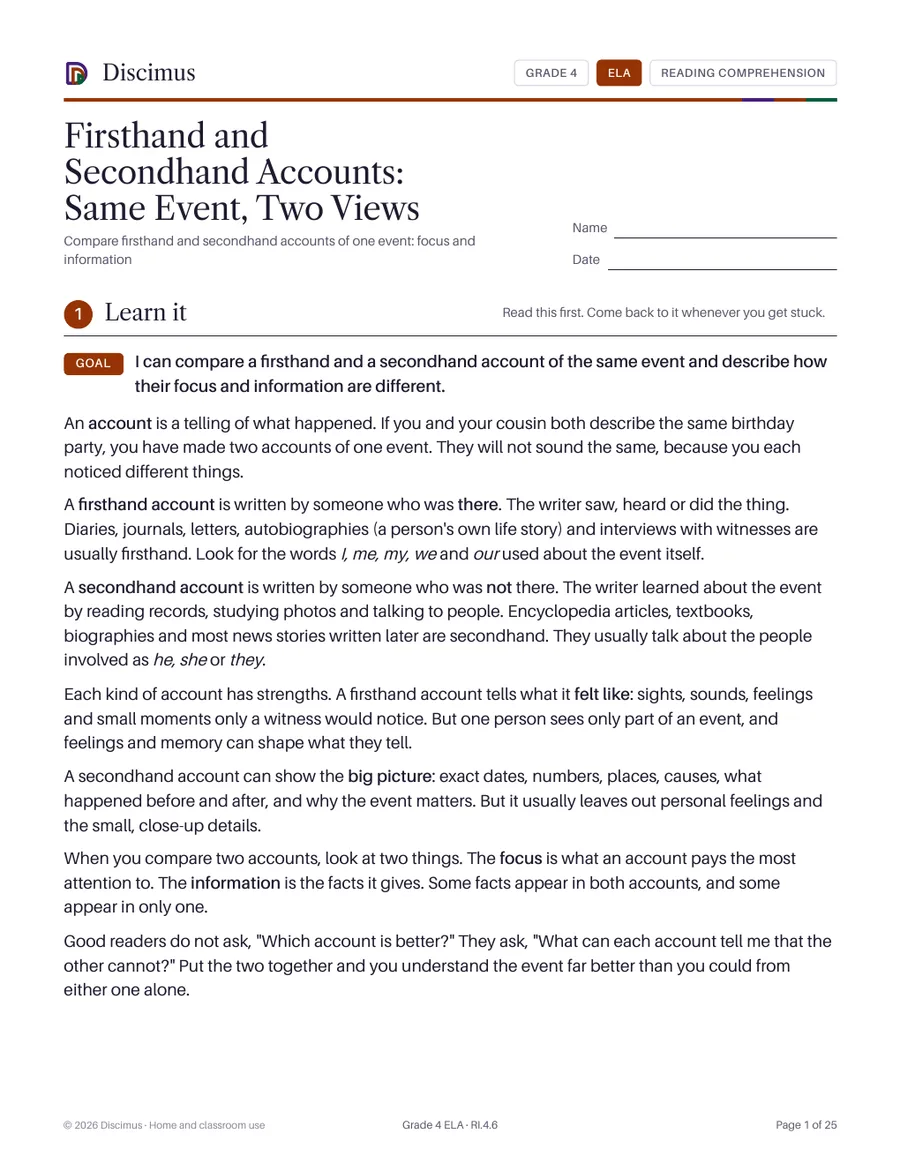
Compare firsthand and secondhand accounts of one event: focus and information
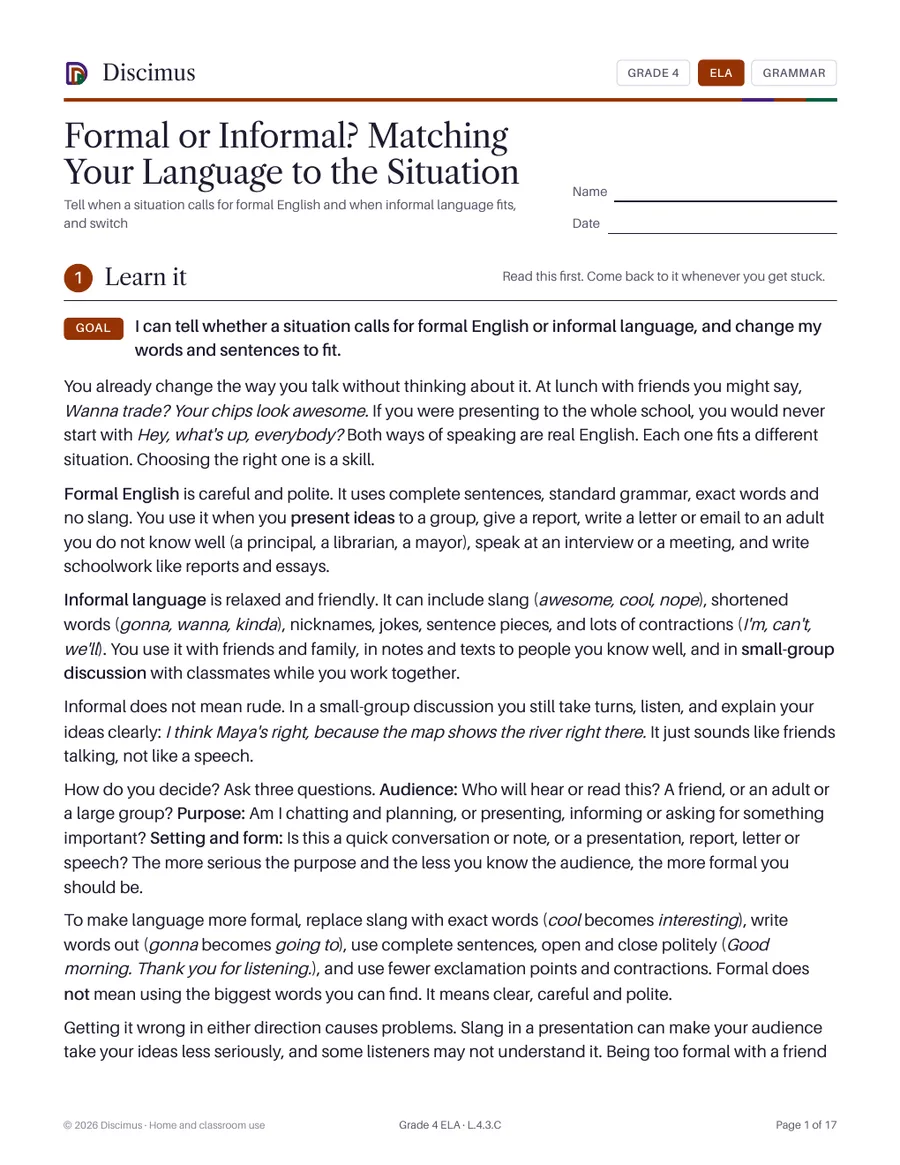
Tell when a situation calls for formal English and when informal language fits, and switch
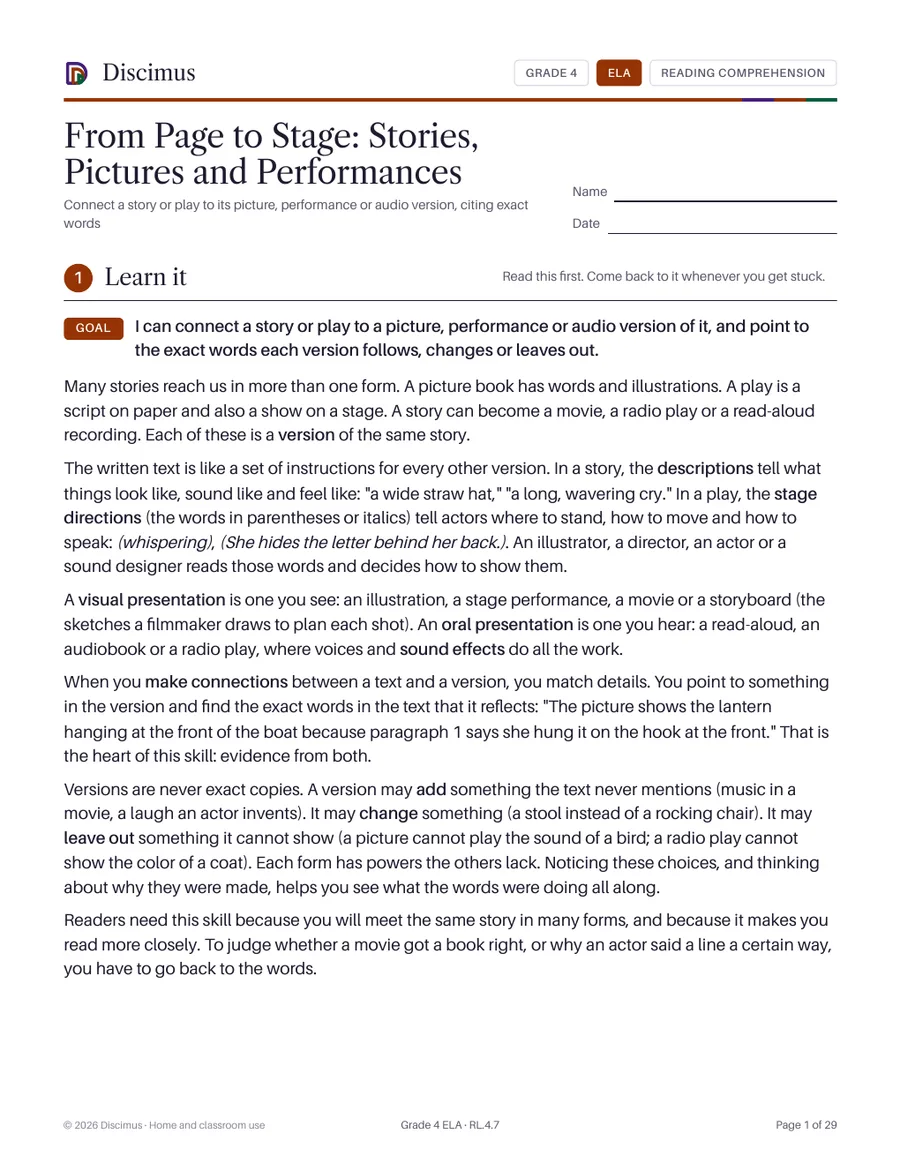
Connect a story or play to its picture, performance or audio version, citing exact words
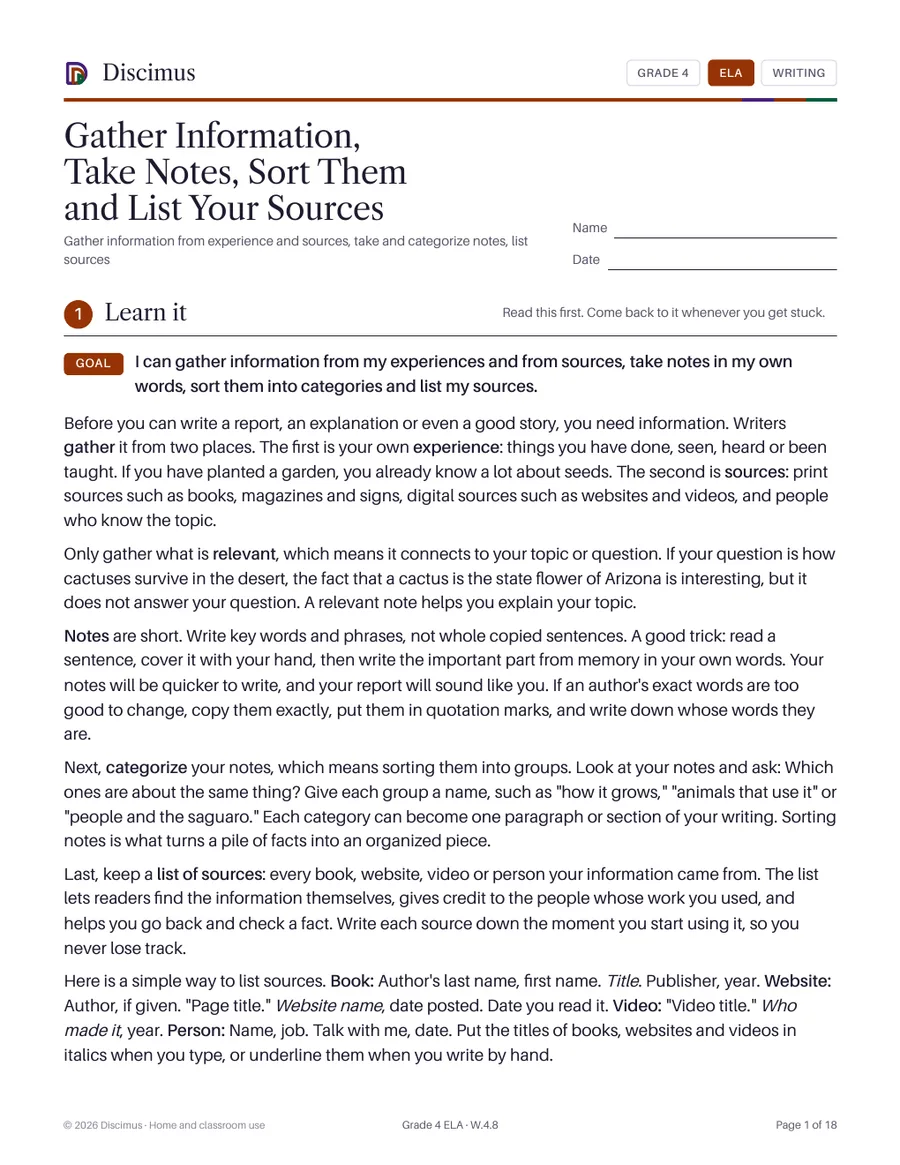
Gather information from experience and sources, take and categorize notes, list sources
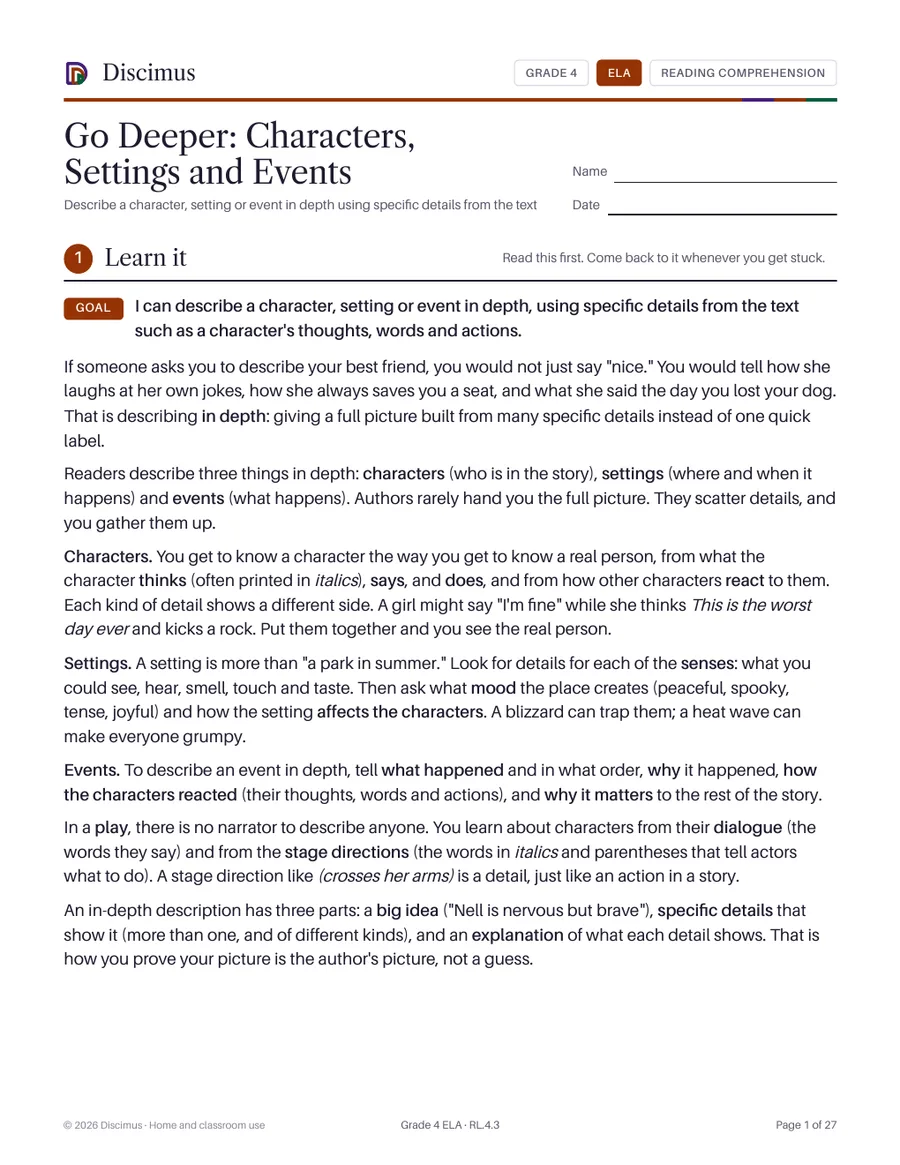
Describe a character, setting or event in depth using specific details from the text
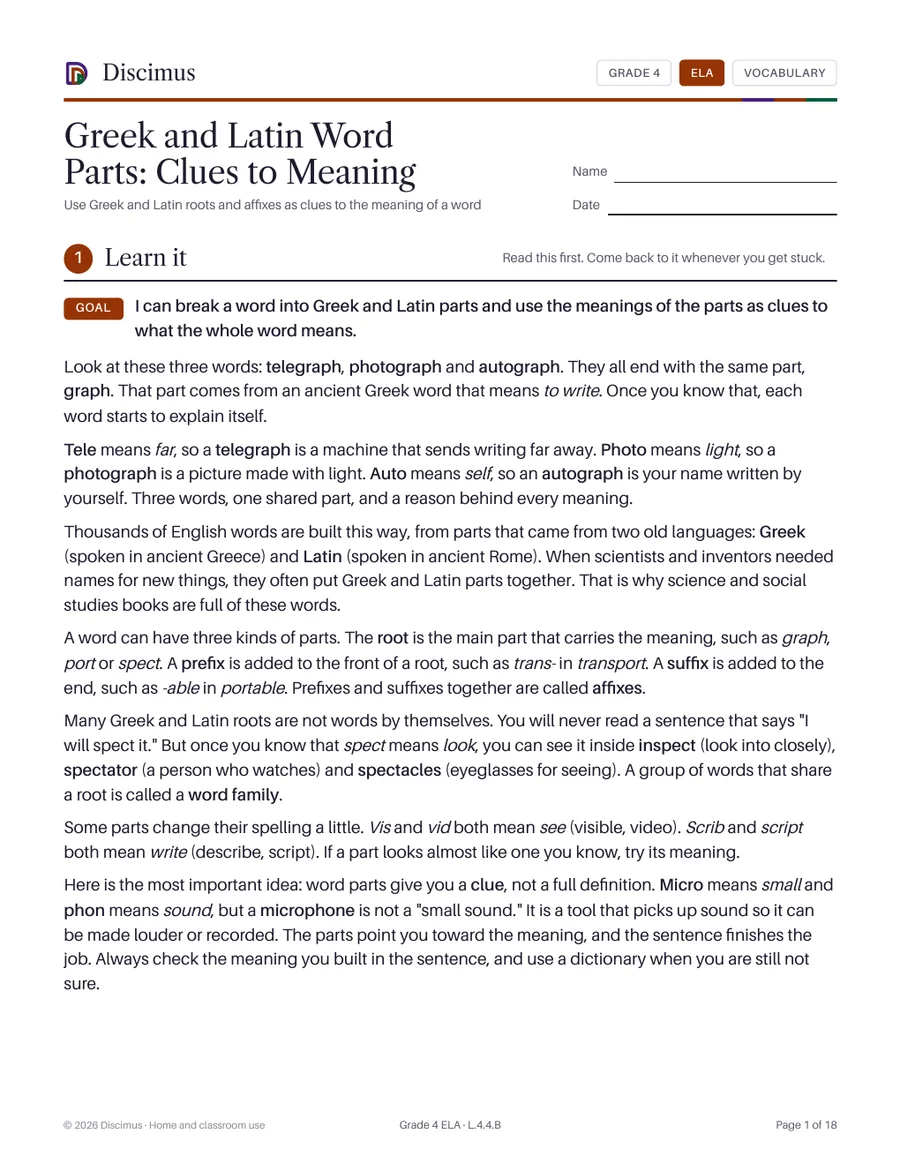
Use Greek and Latin roots and affixes as clues to the meaning of a word
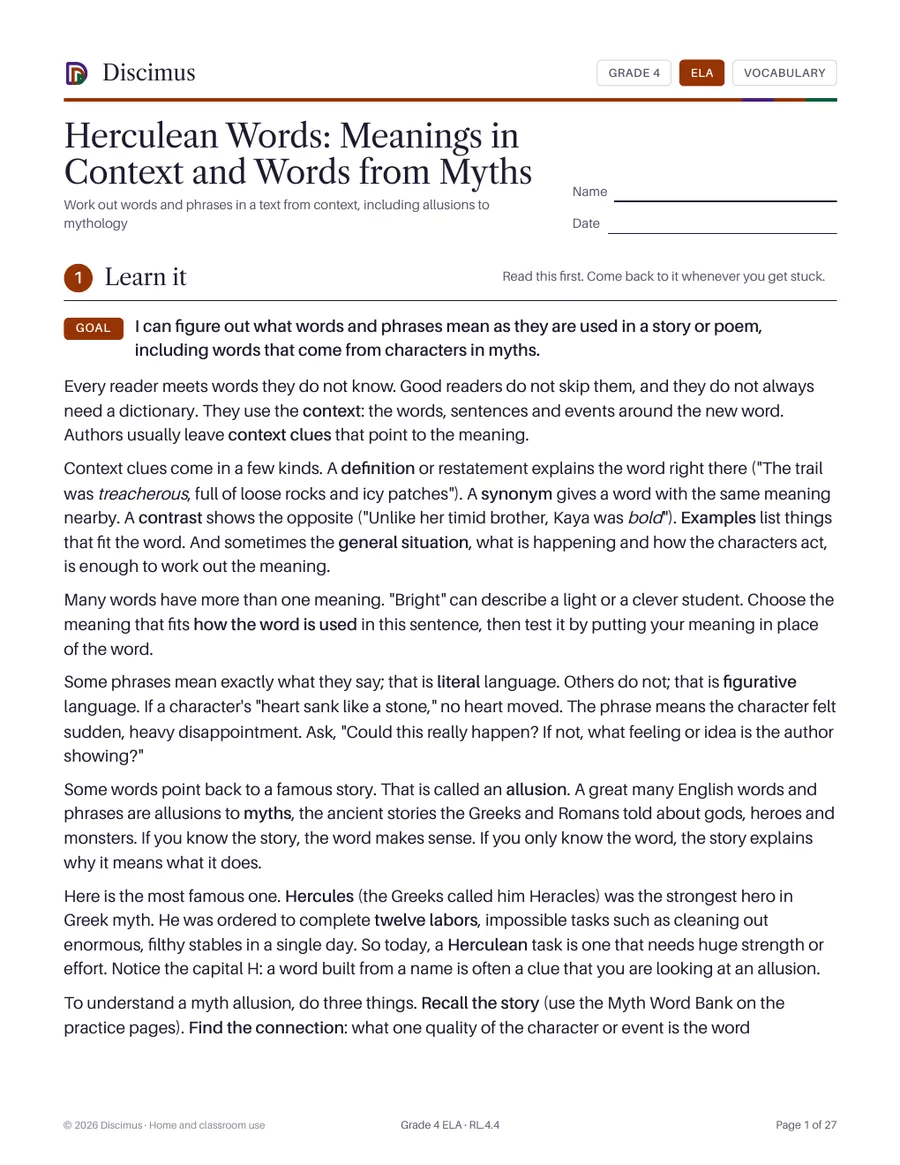
Work out words and phrases in a text from context, including allusions to mythology
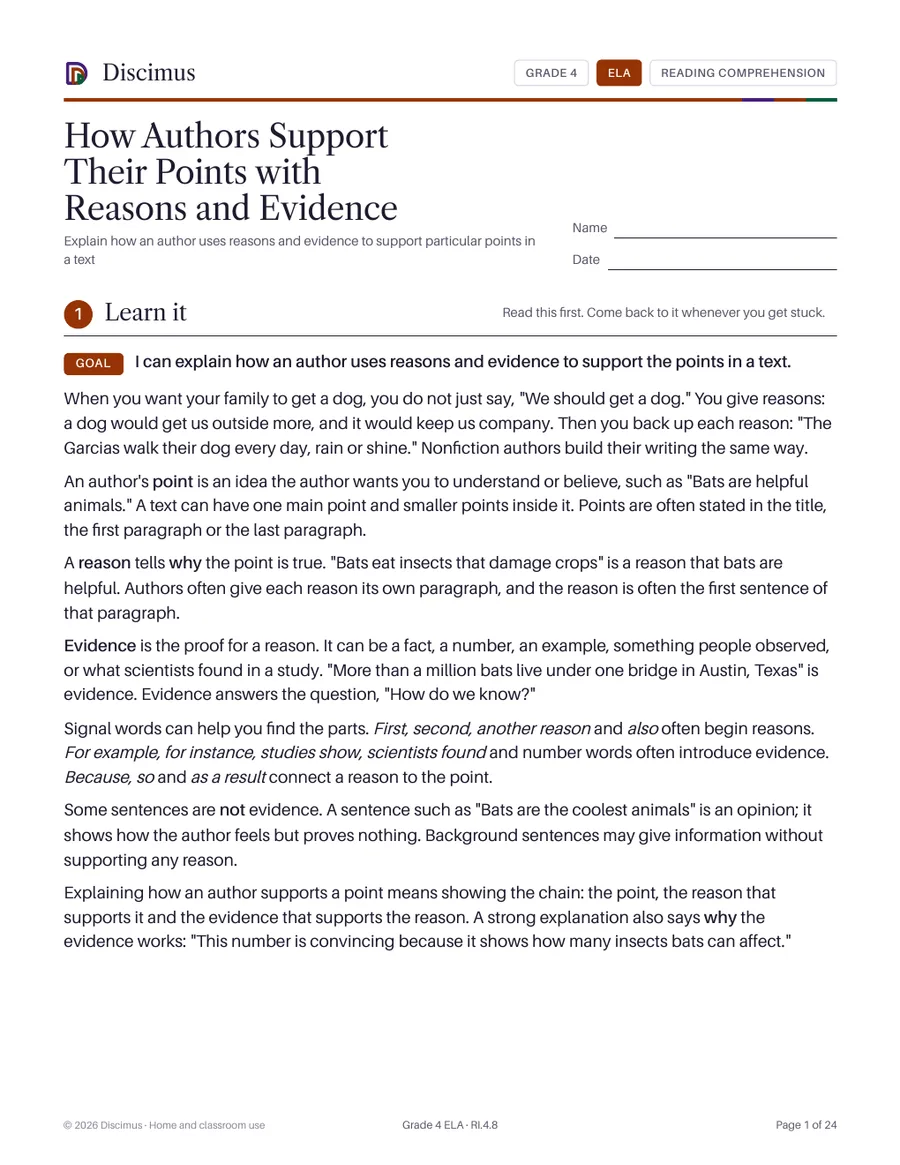
Explain how an author uses reasons and evidence to support particular points in a text
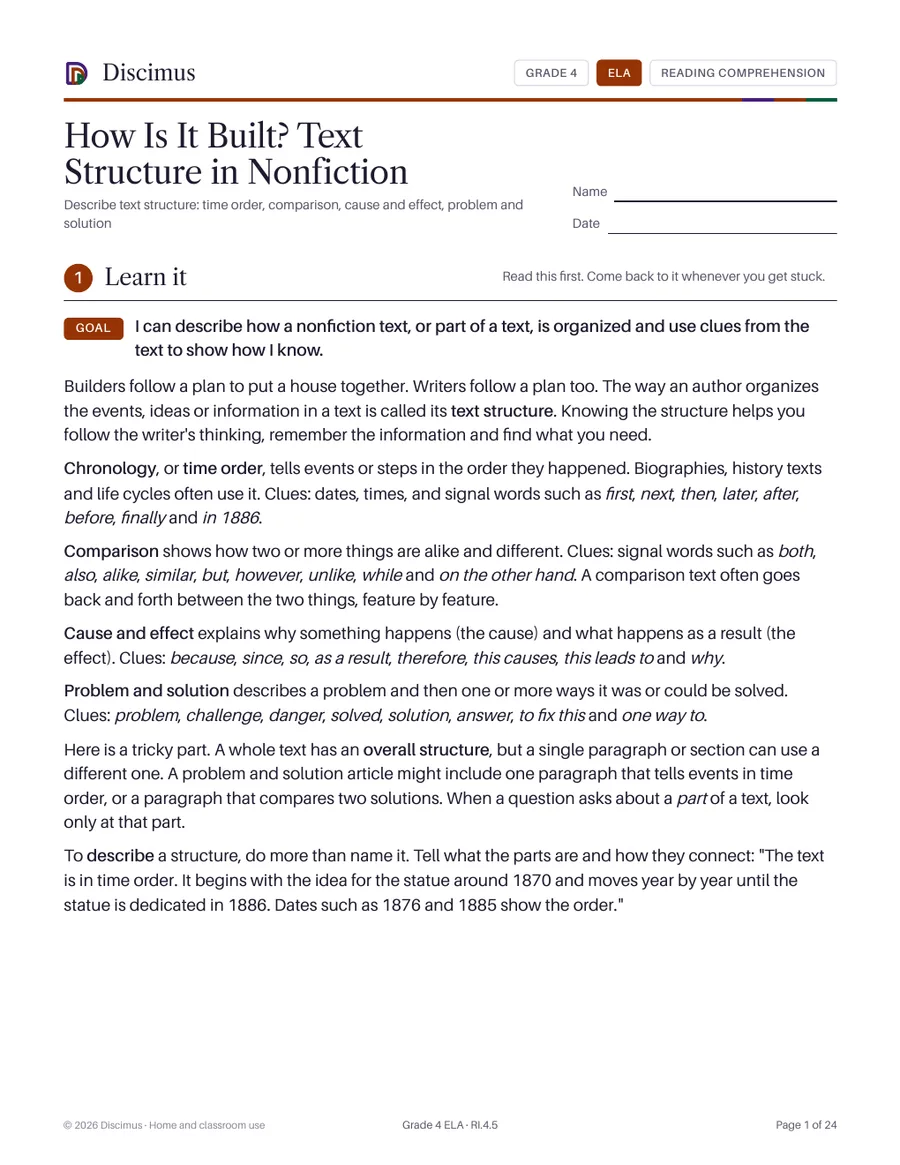
Describe text structure: time order, comparison, cause and effect, problem and solution
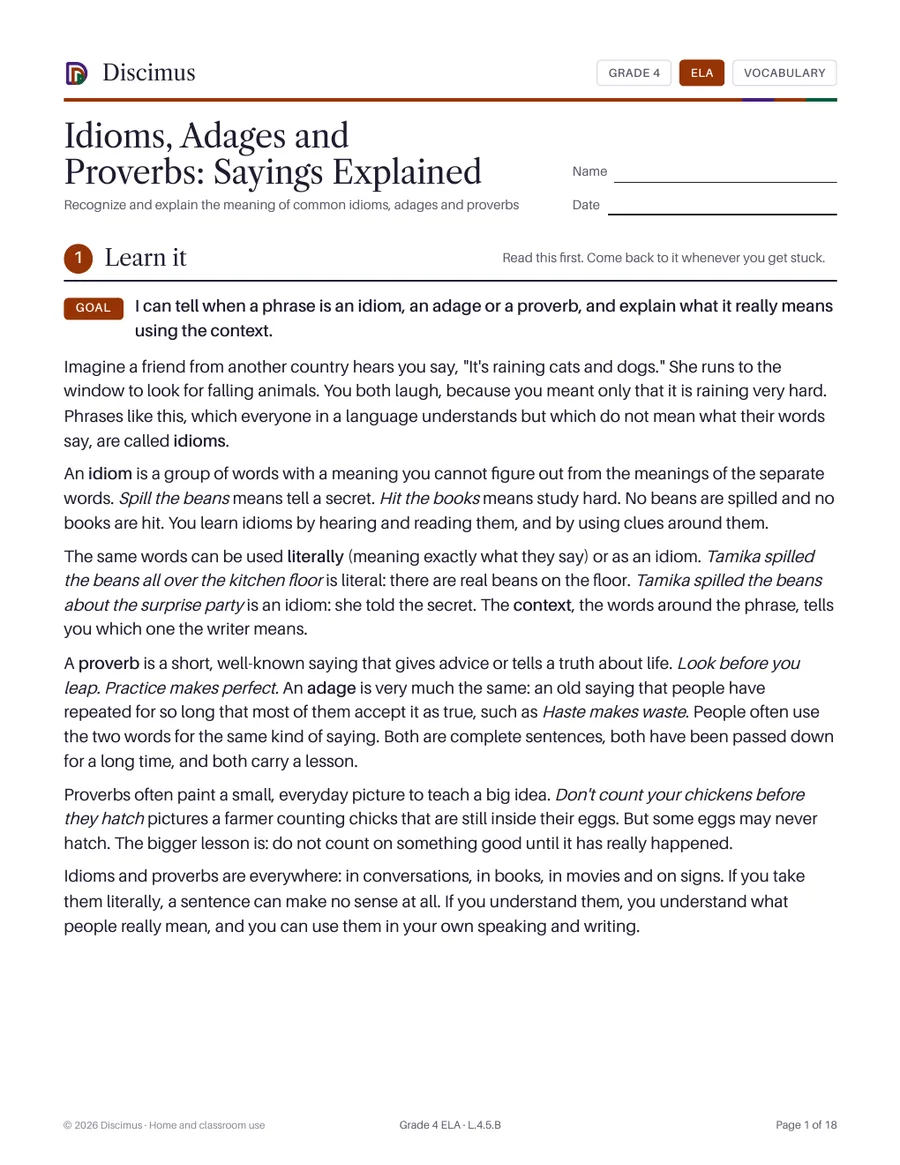
Recognize and explain the meaning of common idioms, adages and proverbs
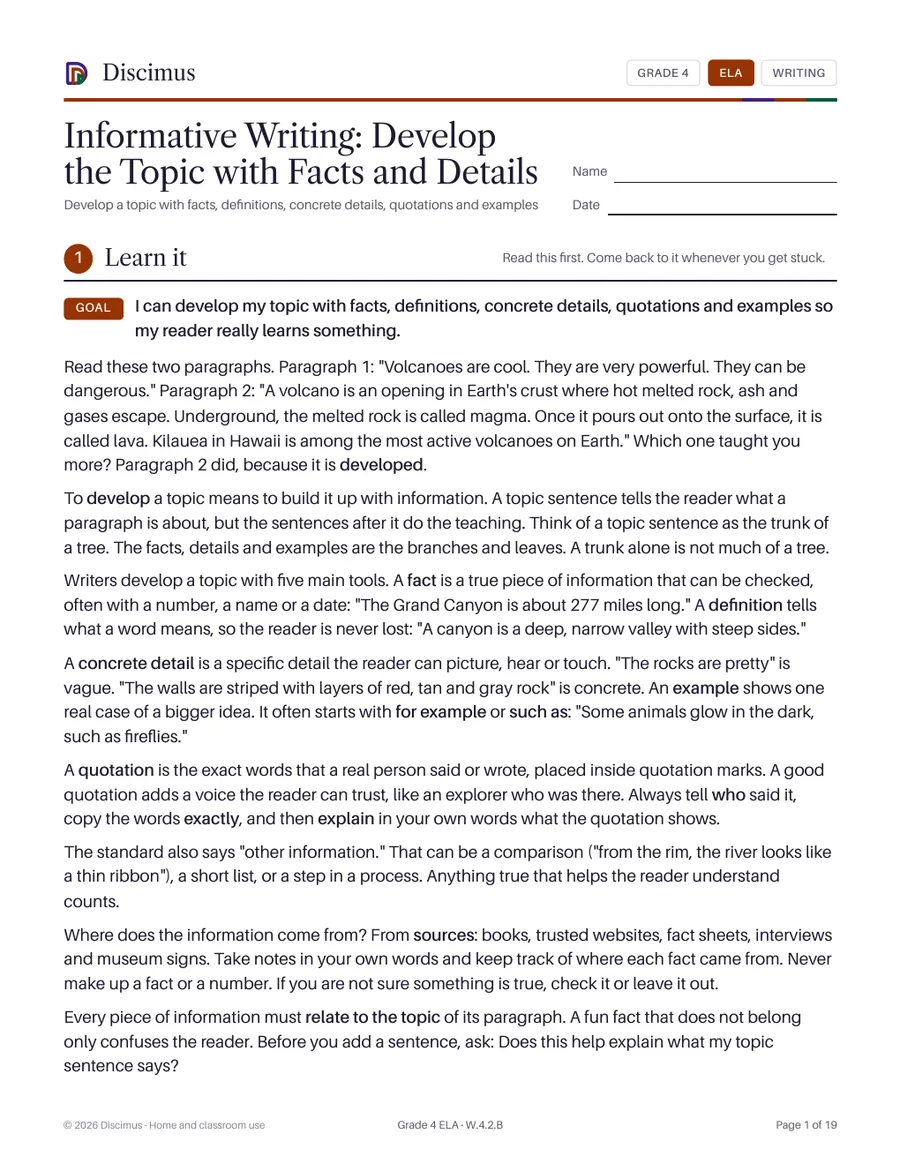
Develop a topic with facts, definitions, concrete details, quotations and examples
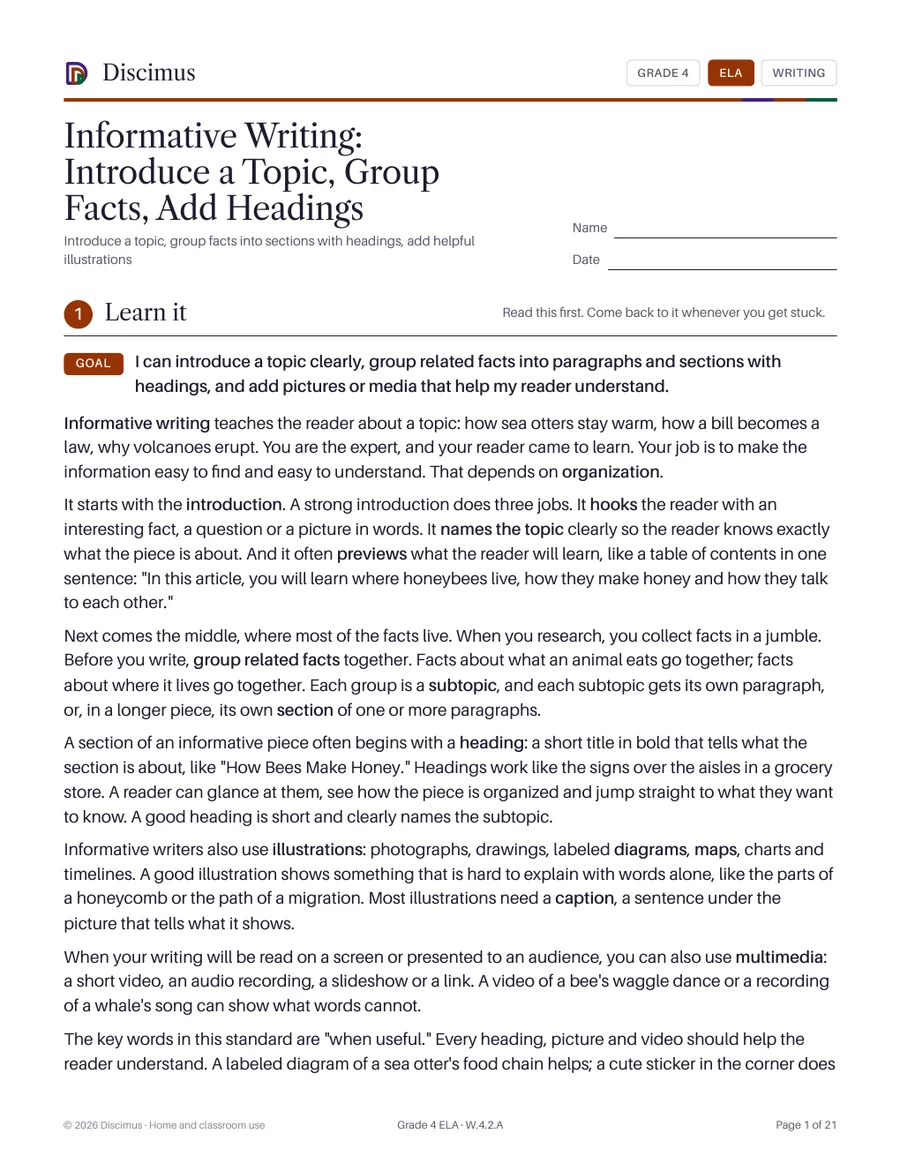
Introduce a topic, group facts into sections with headings, add helpful illustrations
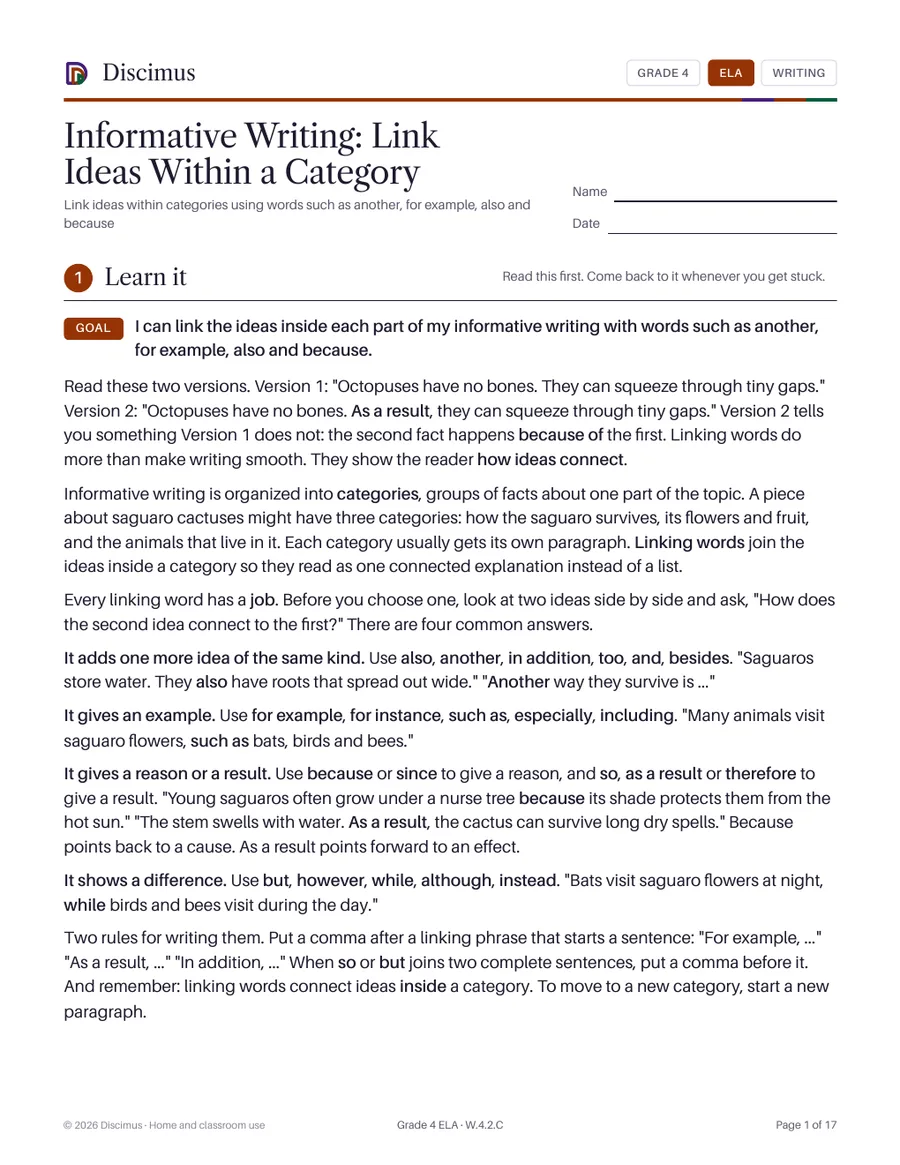
Link ideas within categories using words such as another, for example, also and because
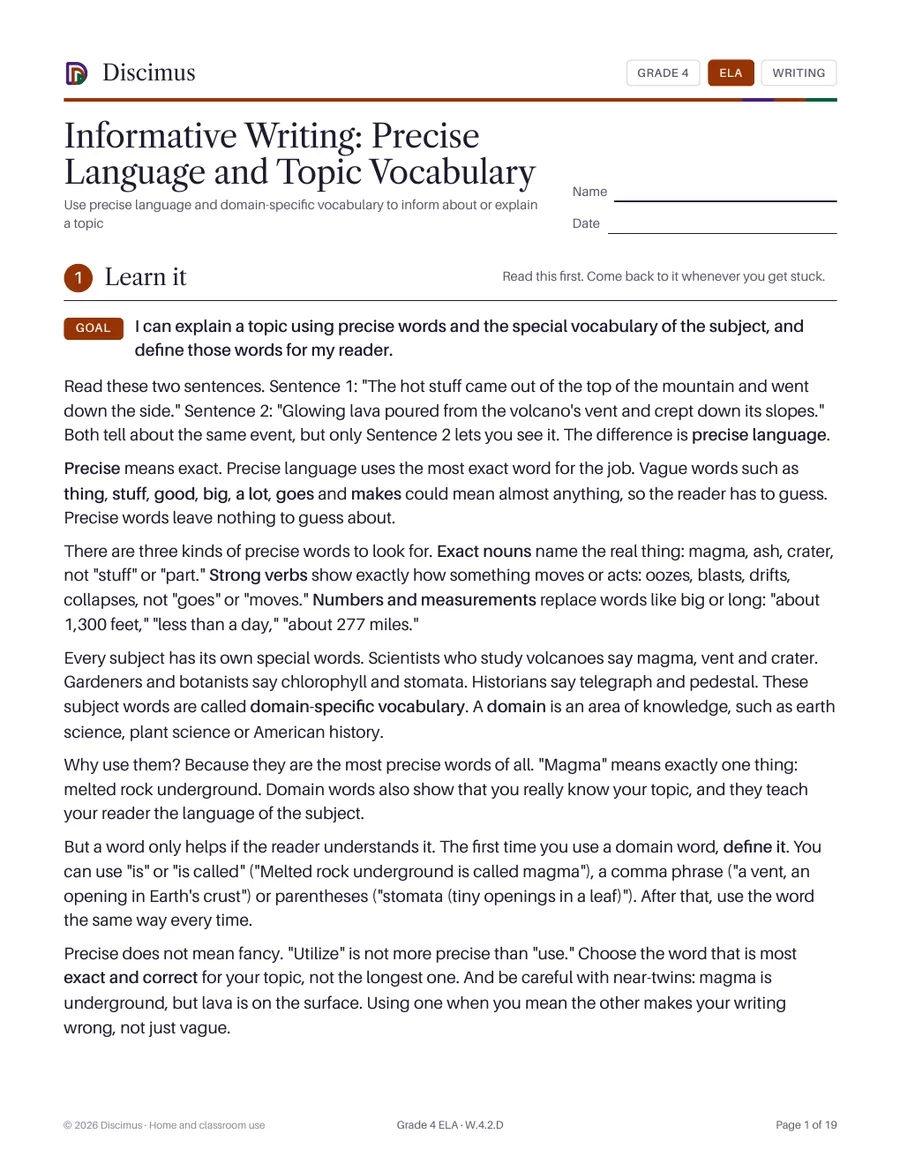
Use precise language and domain-specific vocabulary to inform about or explain a topic
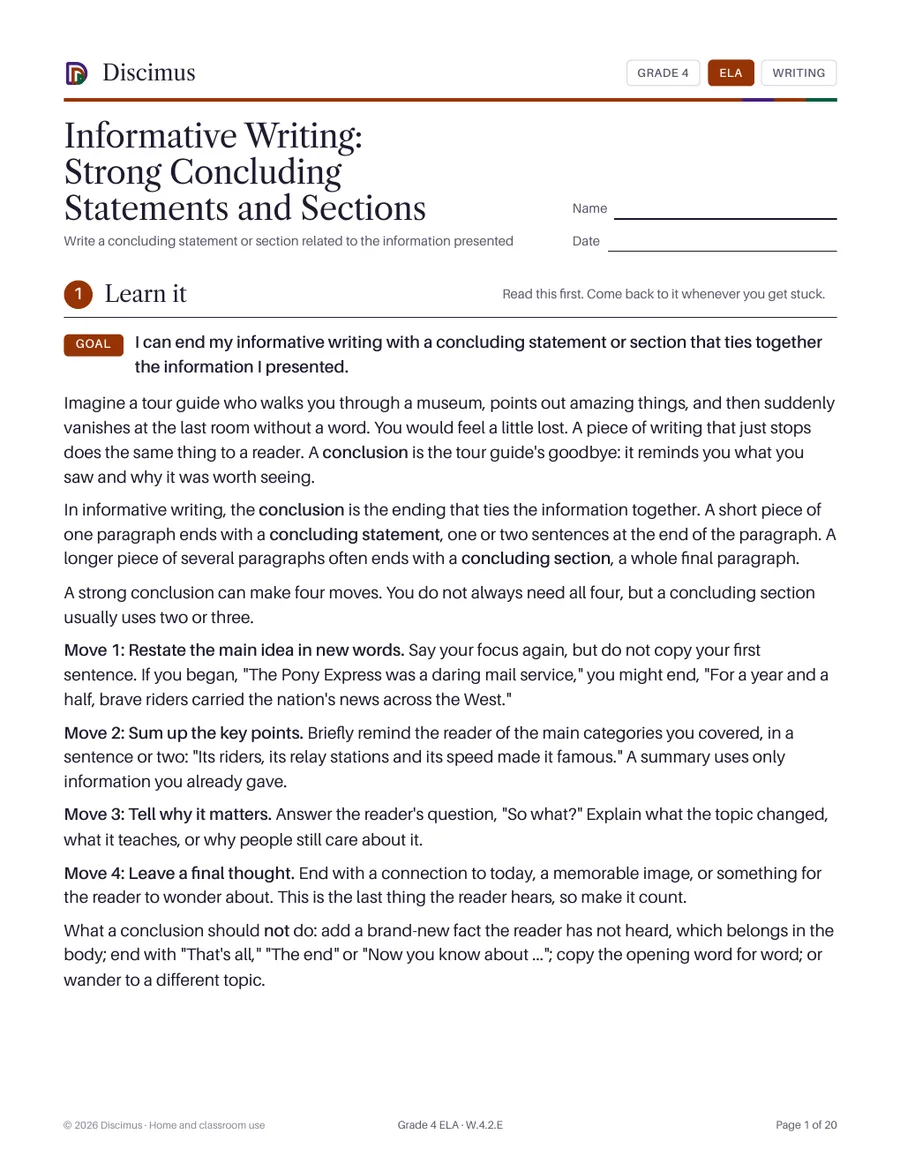
Write a concluding statement or section related to the information presented
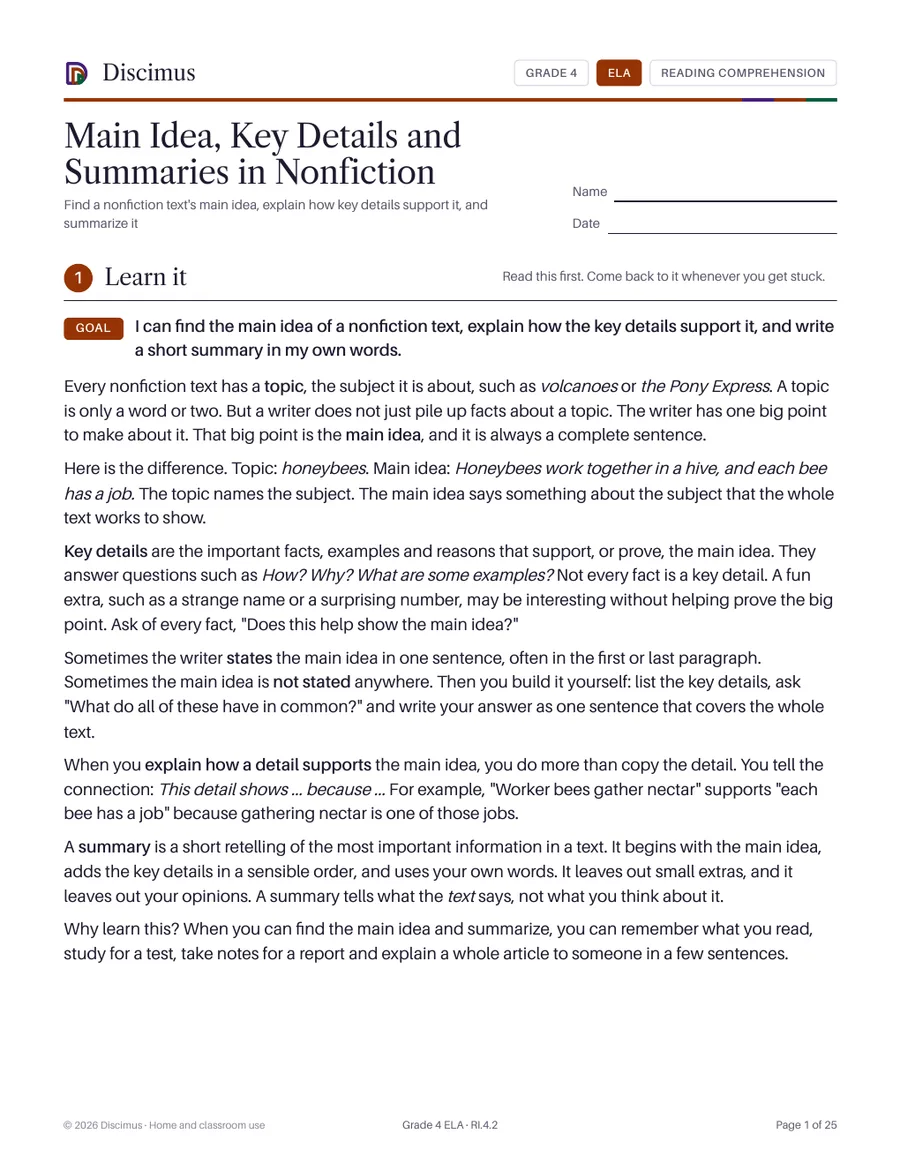
Find a nonfiction text's main idea, explain how key details support it, and summarize it
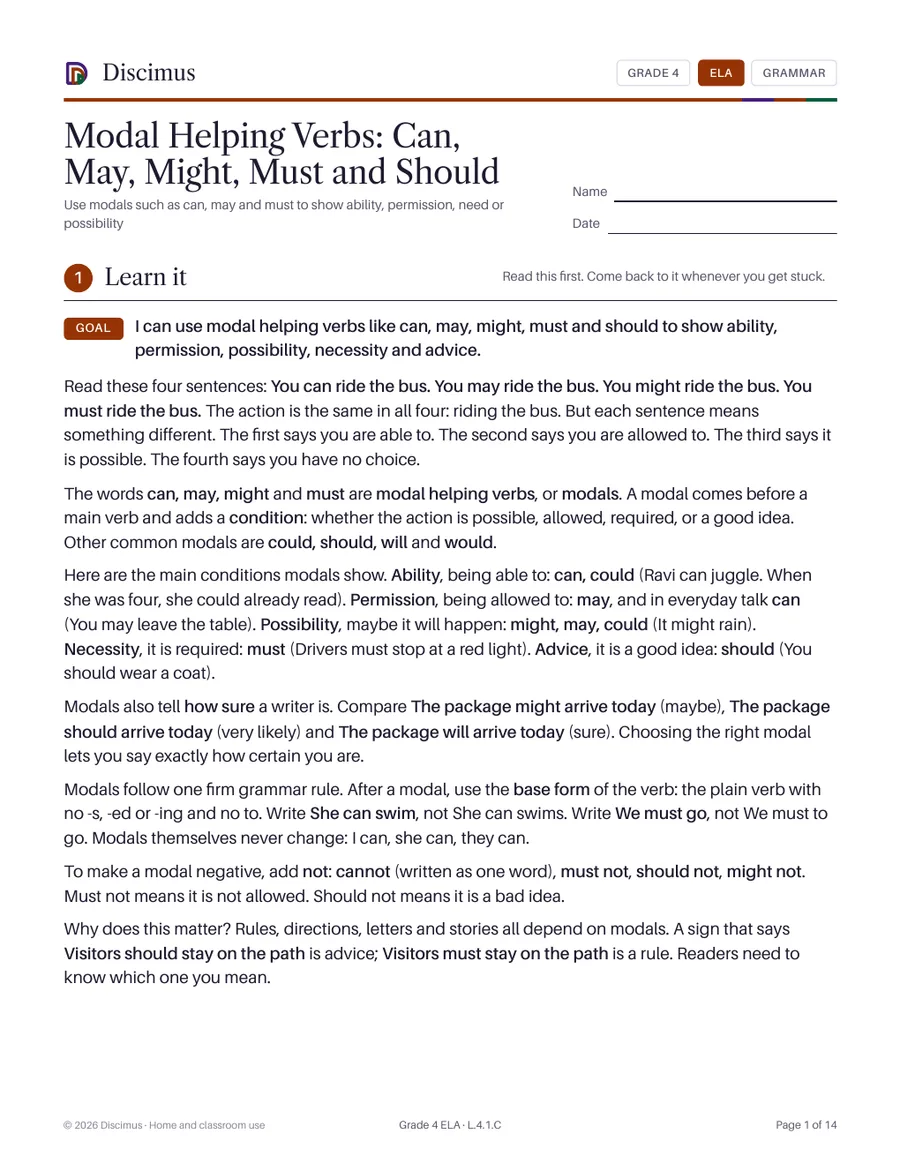
Use modals such as can, may and must to show ability, permission, need or possibility
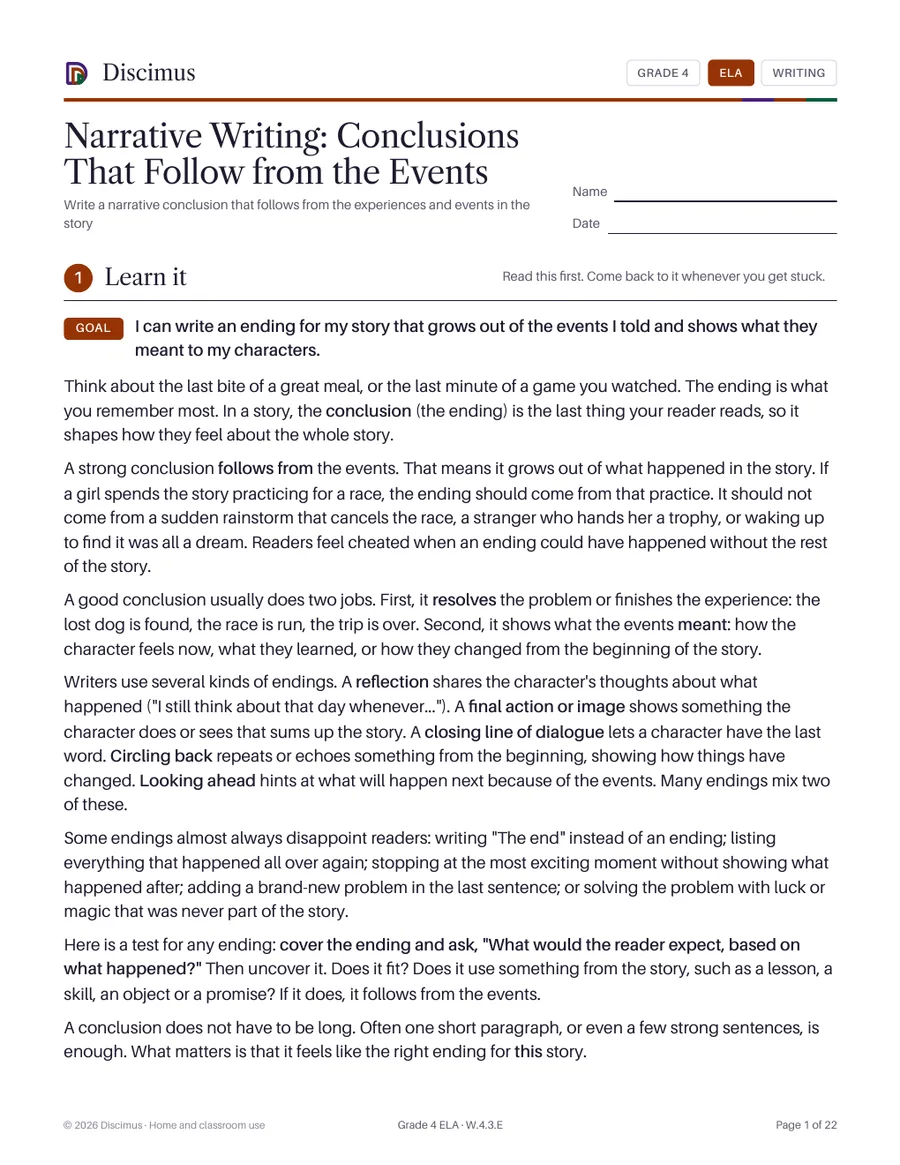
Write a narrative conclusion that follows from the experiences and events in the story
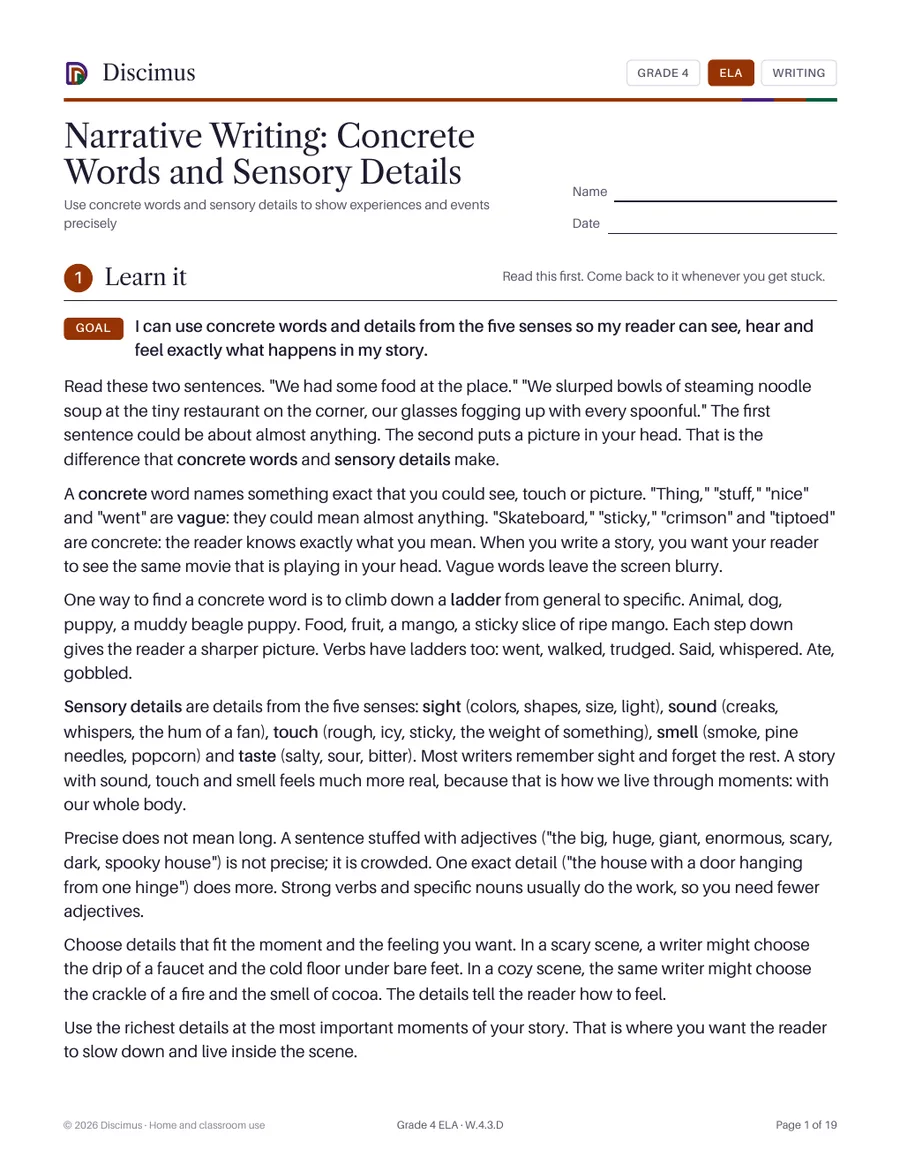
Use concrete words and sensory details to show experiences and events precisely
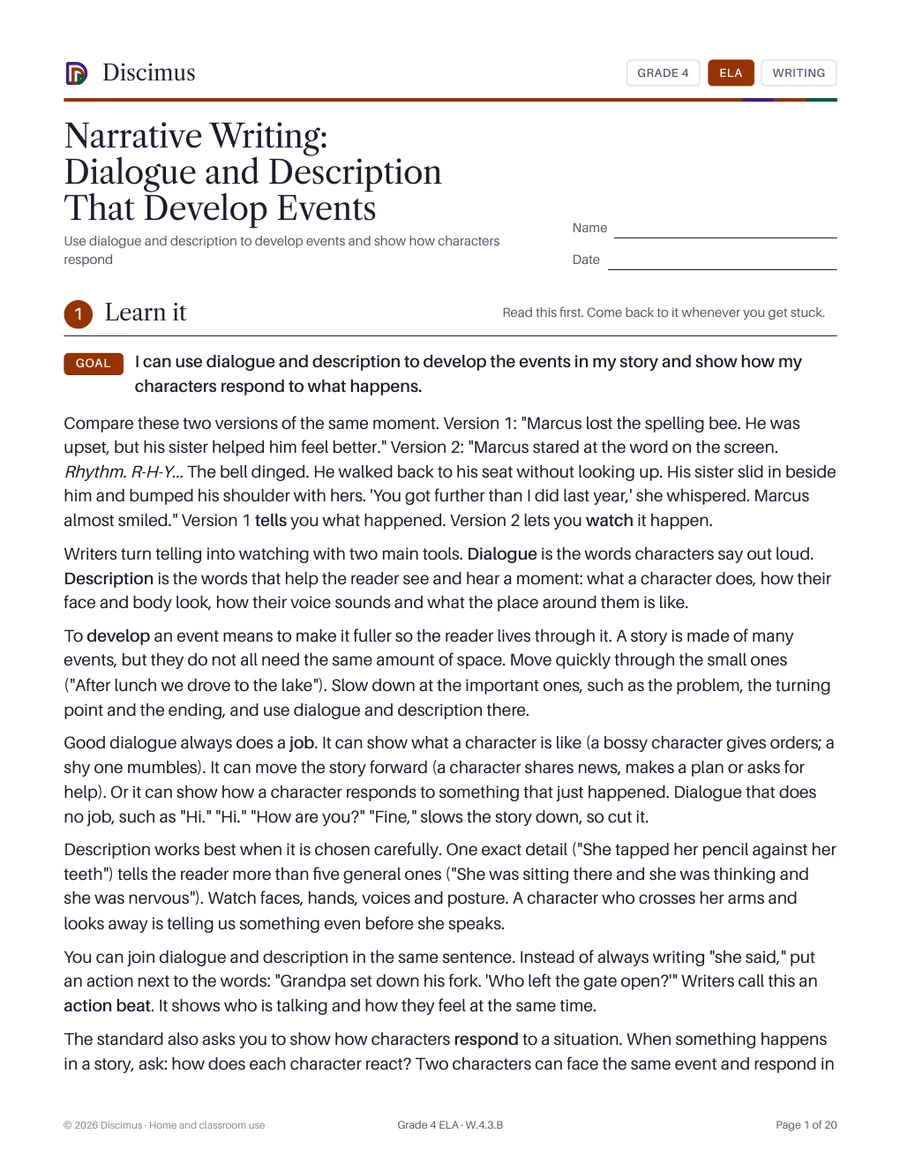
Use dialogue and description to develop events and show how characters respond
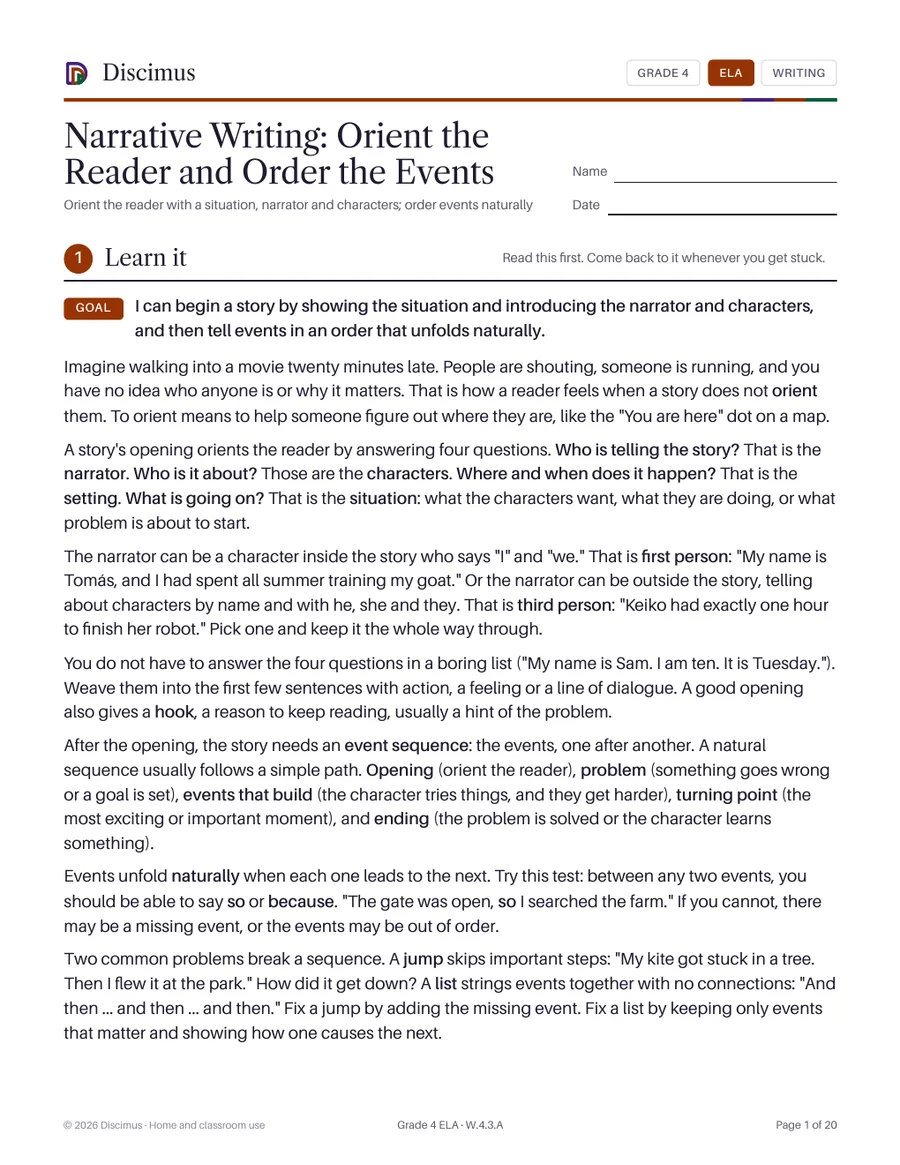
Orient the reader with a situation, narrator and characters; order events naturally
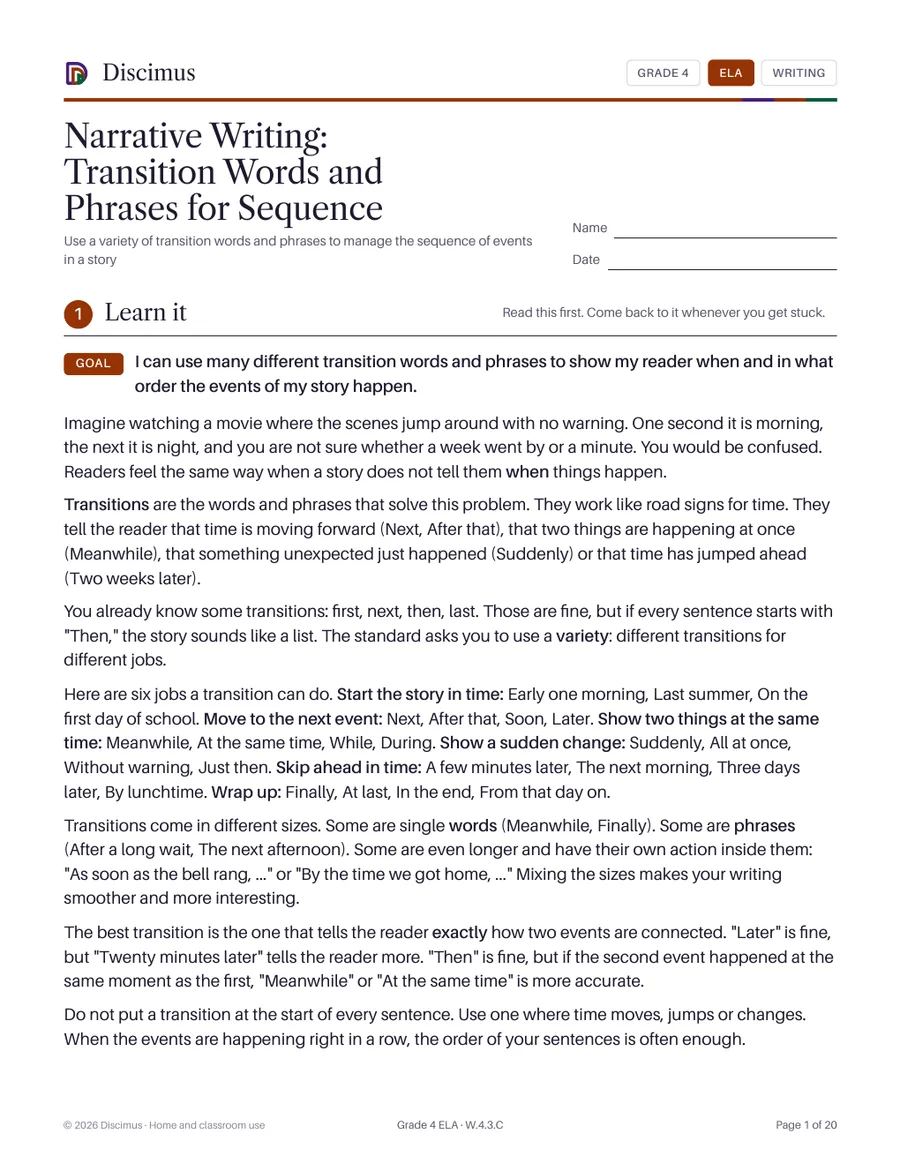
Use a variety of transition words and phrases to manage the sequence of events in a story
Read and understand grade 4 to 5 history, science and technical texts independently
Support each opinion reason with facts, details and examples, then explain them
Introduce a topic or text, state an opinion, and group related ideas into a clear plan
Link opinion and reasons with words like for instance, in order to, in addition
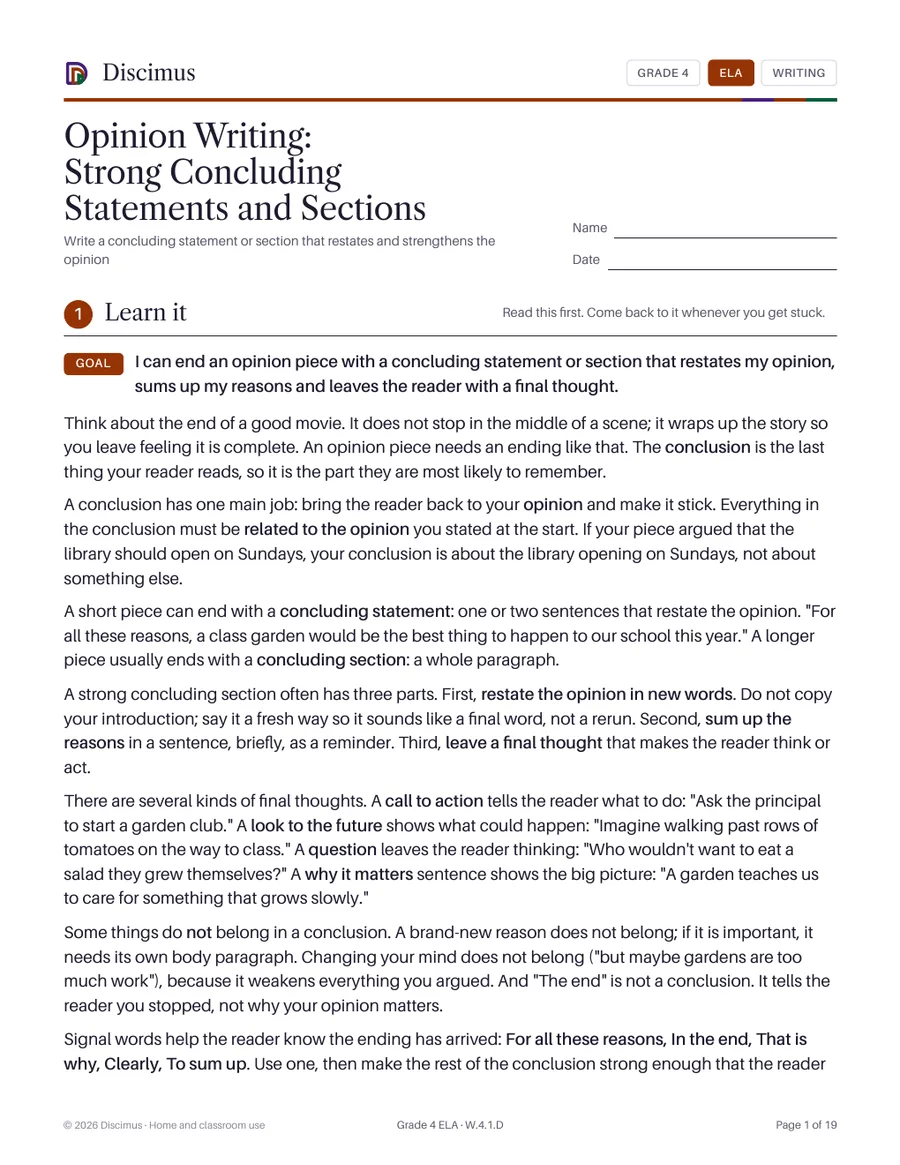
Write a concluding statement or section that restates and strengthens the opinion
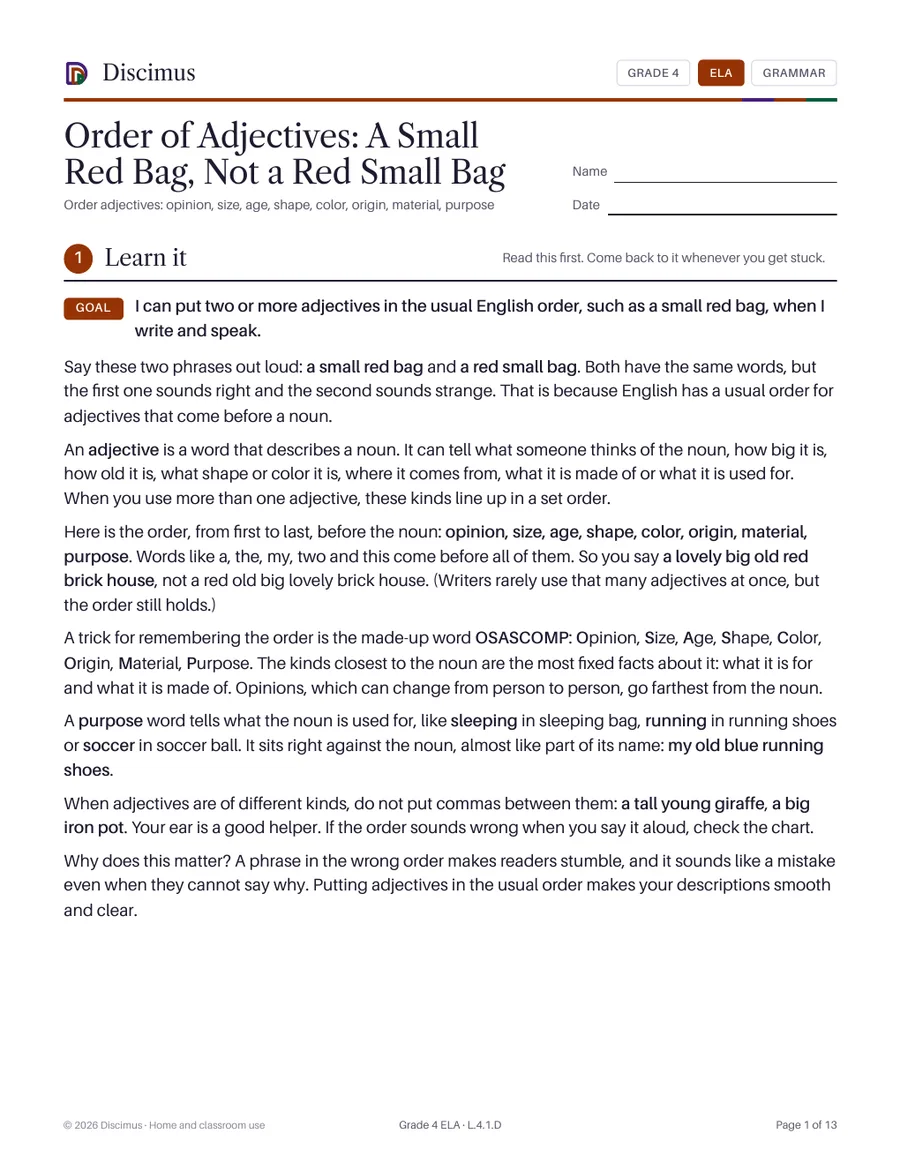
Order adjectives: opinion, size, age, shape, color, origin, material, purpose
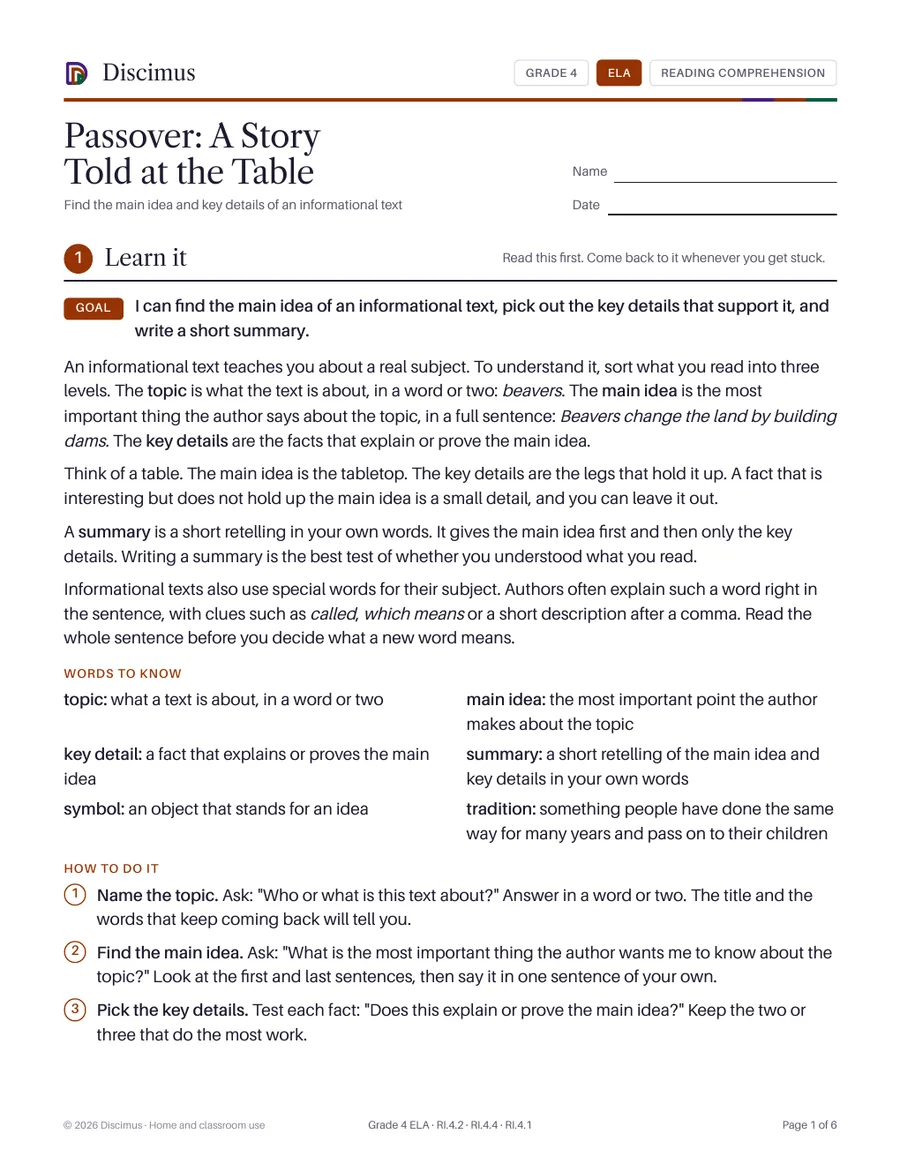
Find the main idea and key details of an informational text
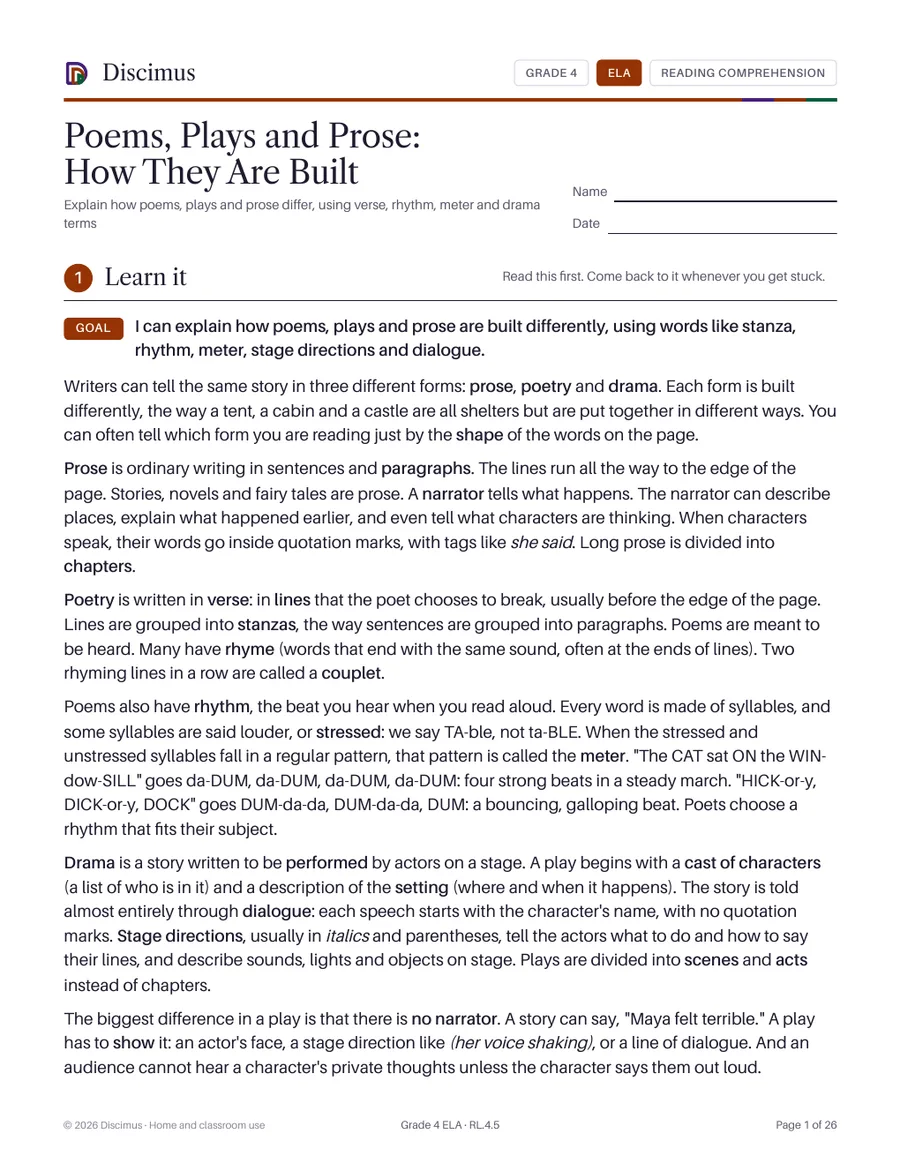
Explain how poems, plays and prose differ, using verse, rhythm, meter and drama terms
Form and use prepositional phrases to tell where, when, how and which one
Form and use the past, present and future progressive verb tenses
Use nonfiction details and examples to explain what a text says and to support inferences
Use details and examples from a story to explain what it states and what you can infer
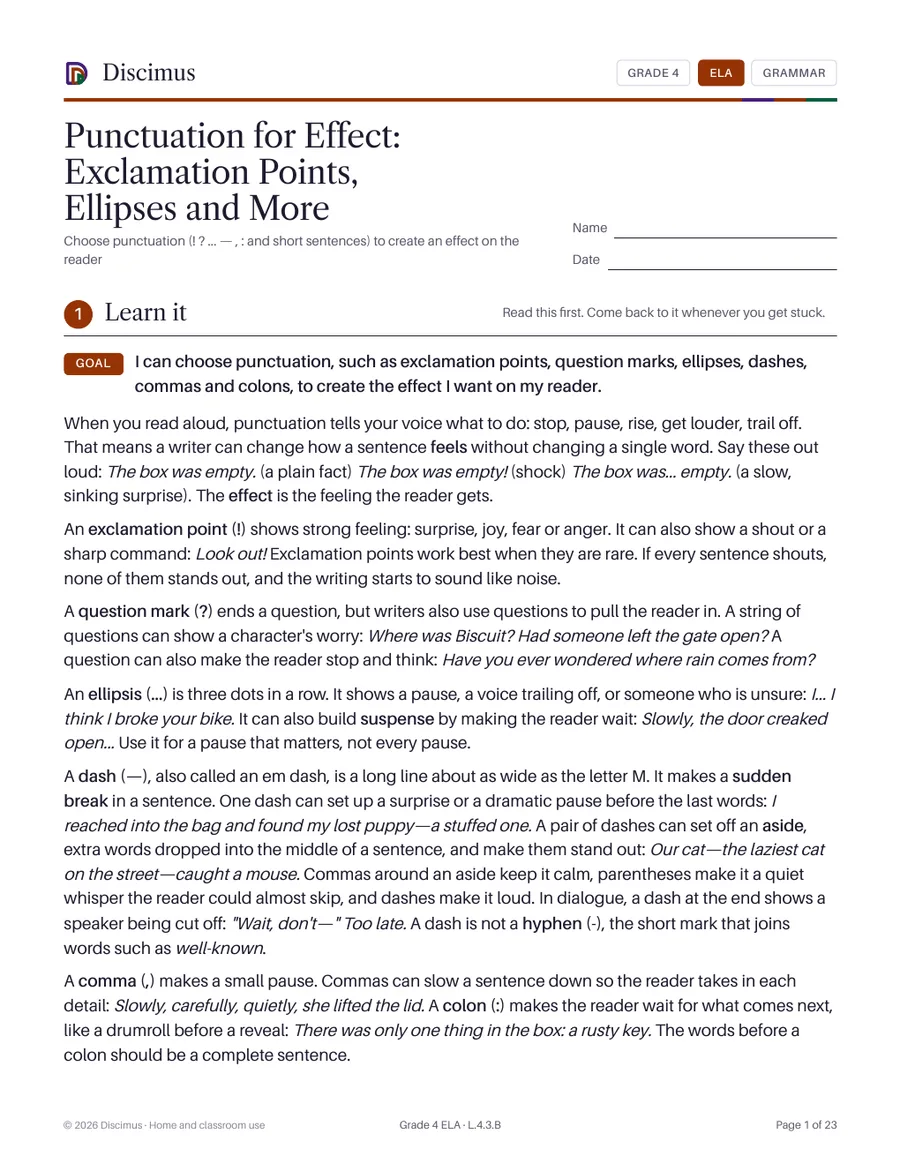
Choose punctuation (! ? ... — , : and short sentences) to create an effect on the reader
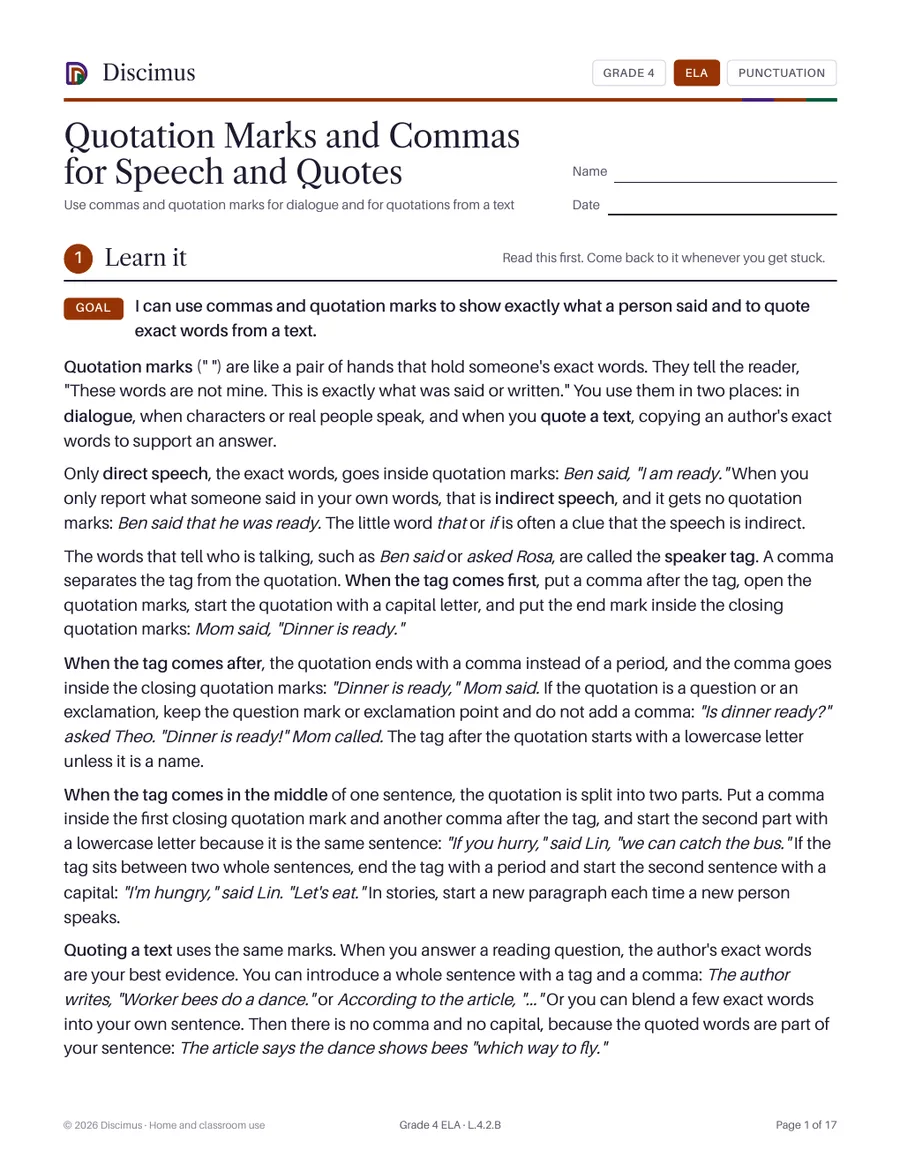
Use commas and quotation marks for dialogue and for quotations from a text
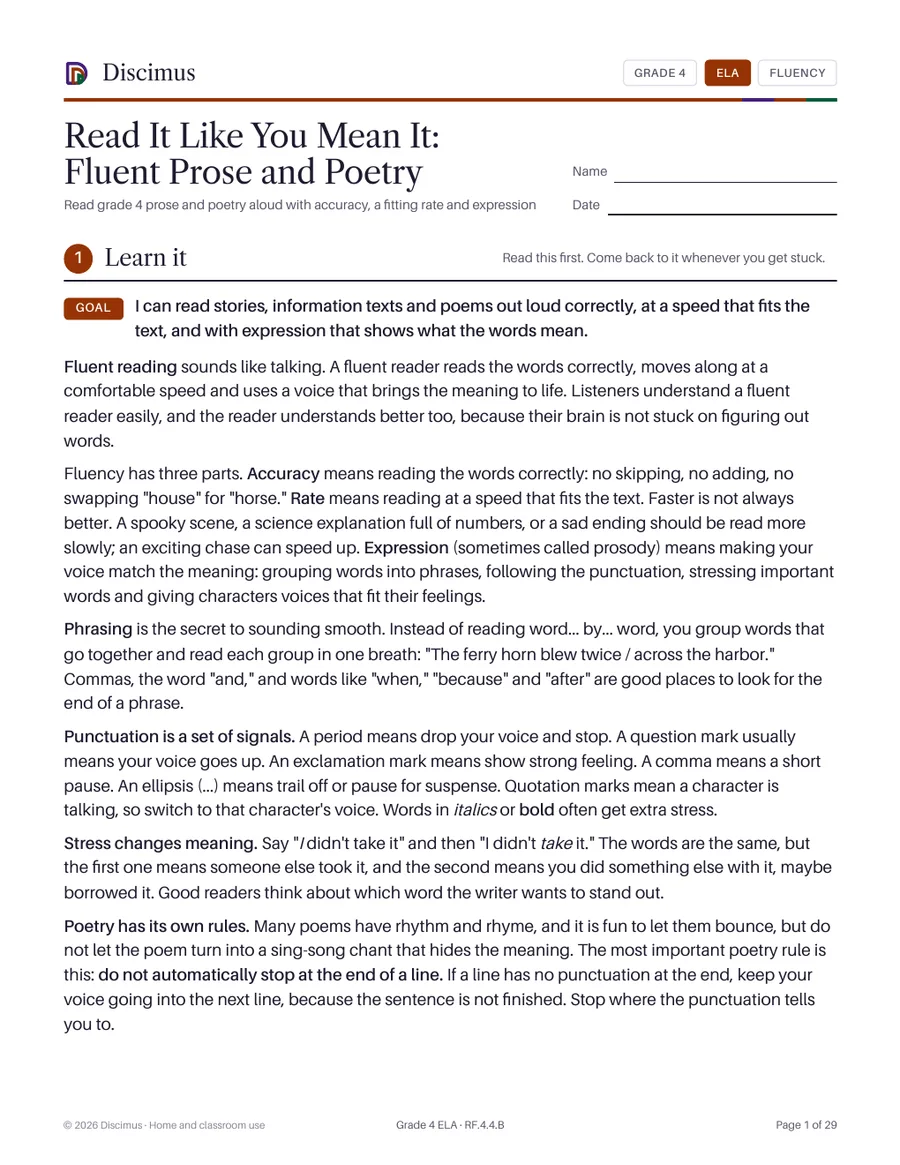
Read grade 4 prose and poetry aloud with accuracy, a fitting rate and expression
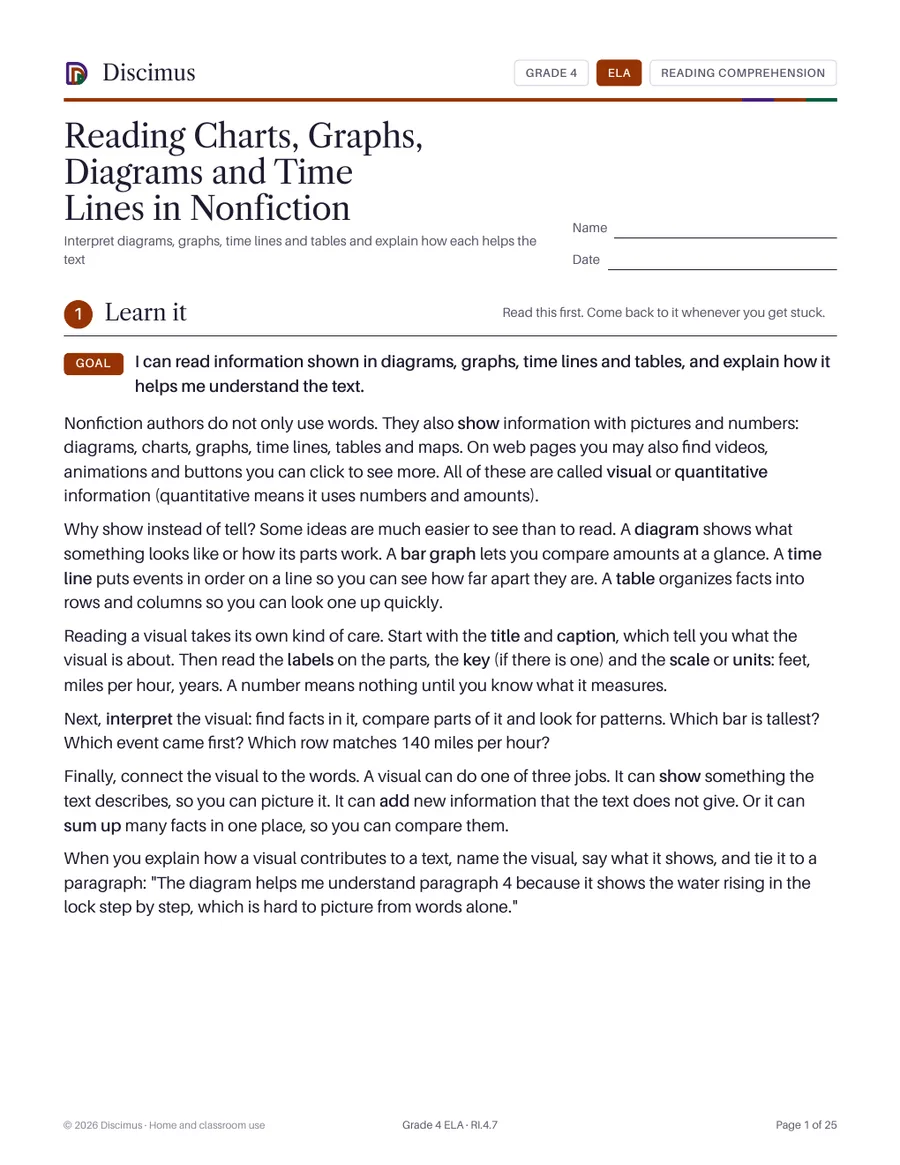
Interpret diagrams, graphs, time lines and tables and explain how each helps the text
Read grade 4 to 5 stories, plays and poems on my own, using fix-up strategies
Use relative pronouns (who, whom, whose, which, that) and adverbs (where, when, why)
Compare how myths and folktales from different cultures treat a shared theme or pattern
Choose precise nouns, verbs, describing words and phrases to say exactly what you mean
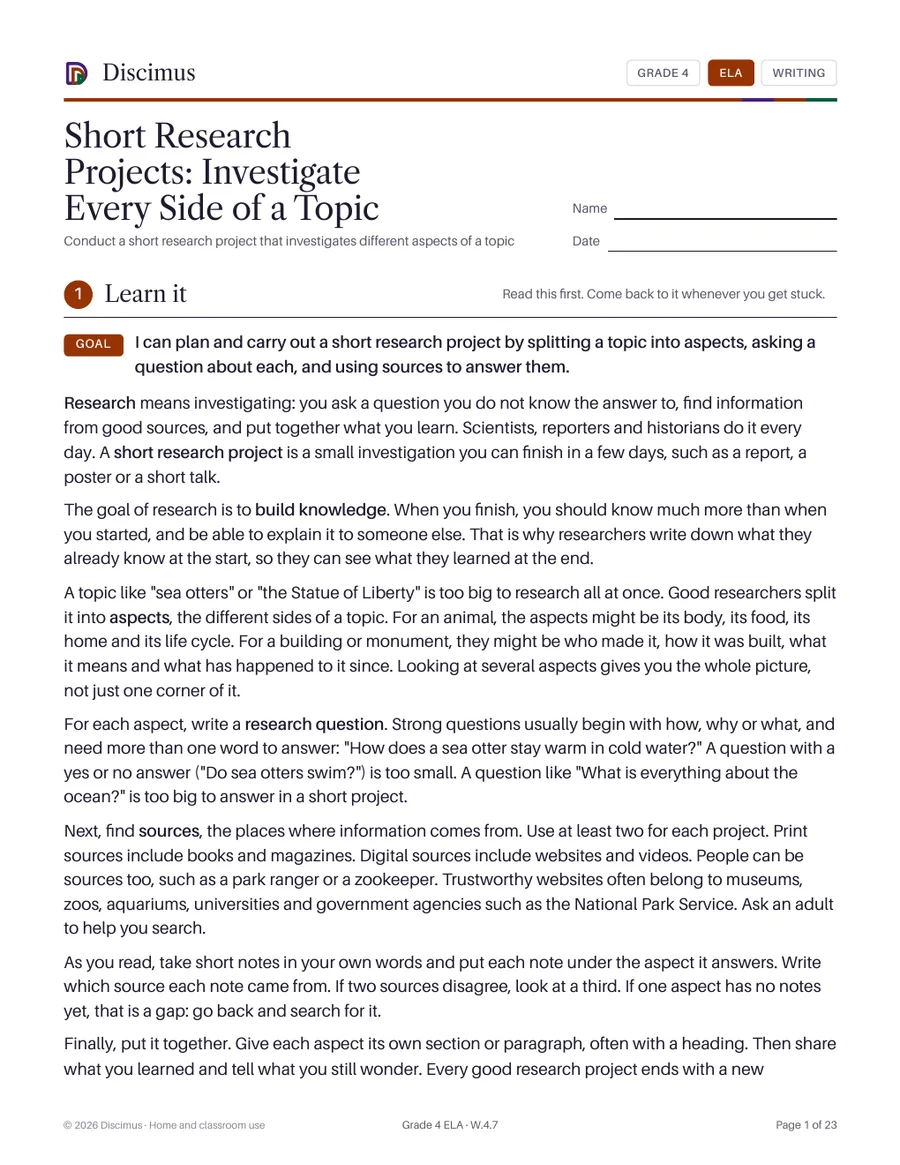
Conduct a short research project that investigates different aspects of a topic
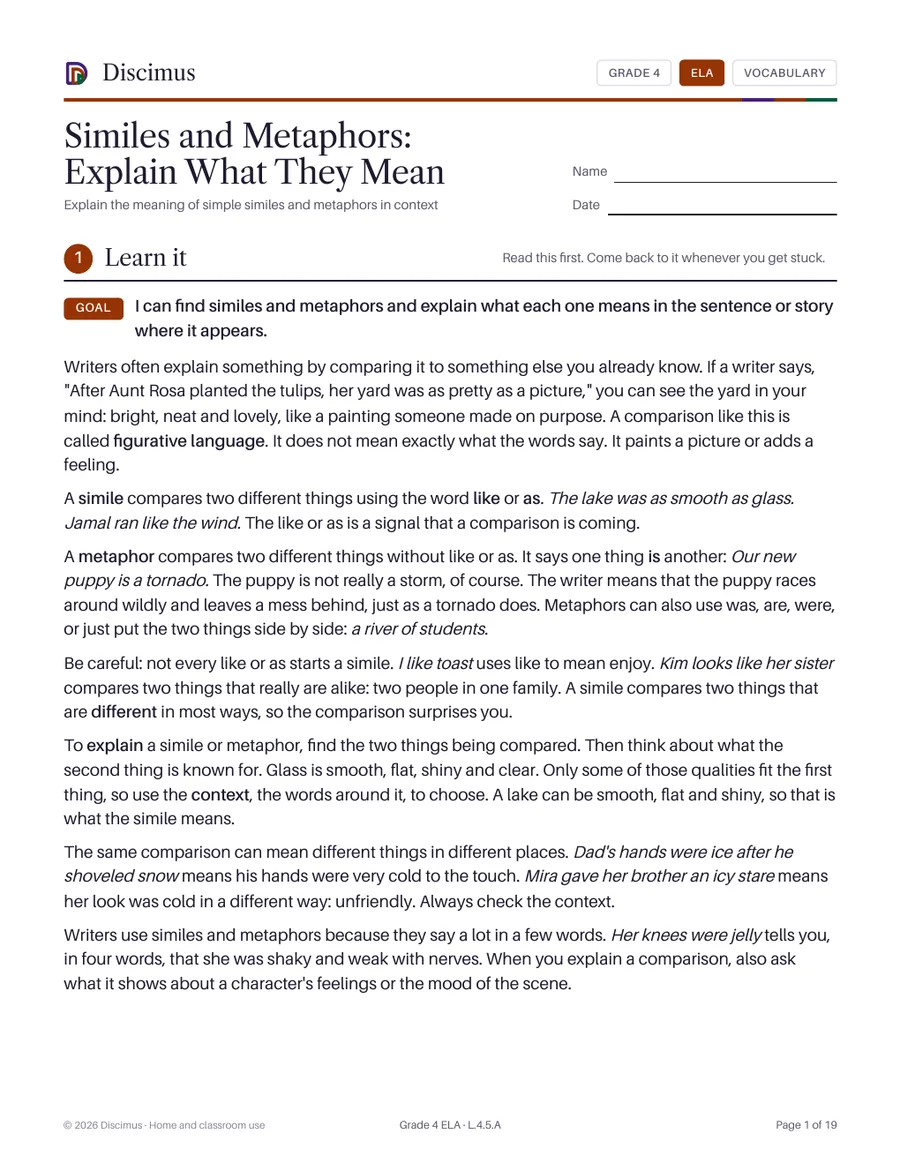
Explain the meaning of simple similes and metaphors in context
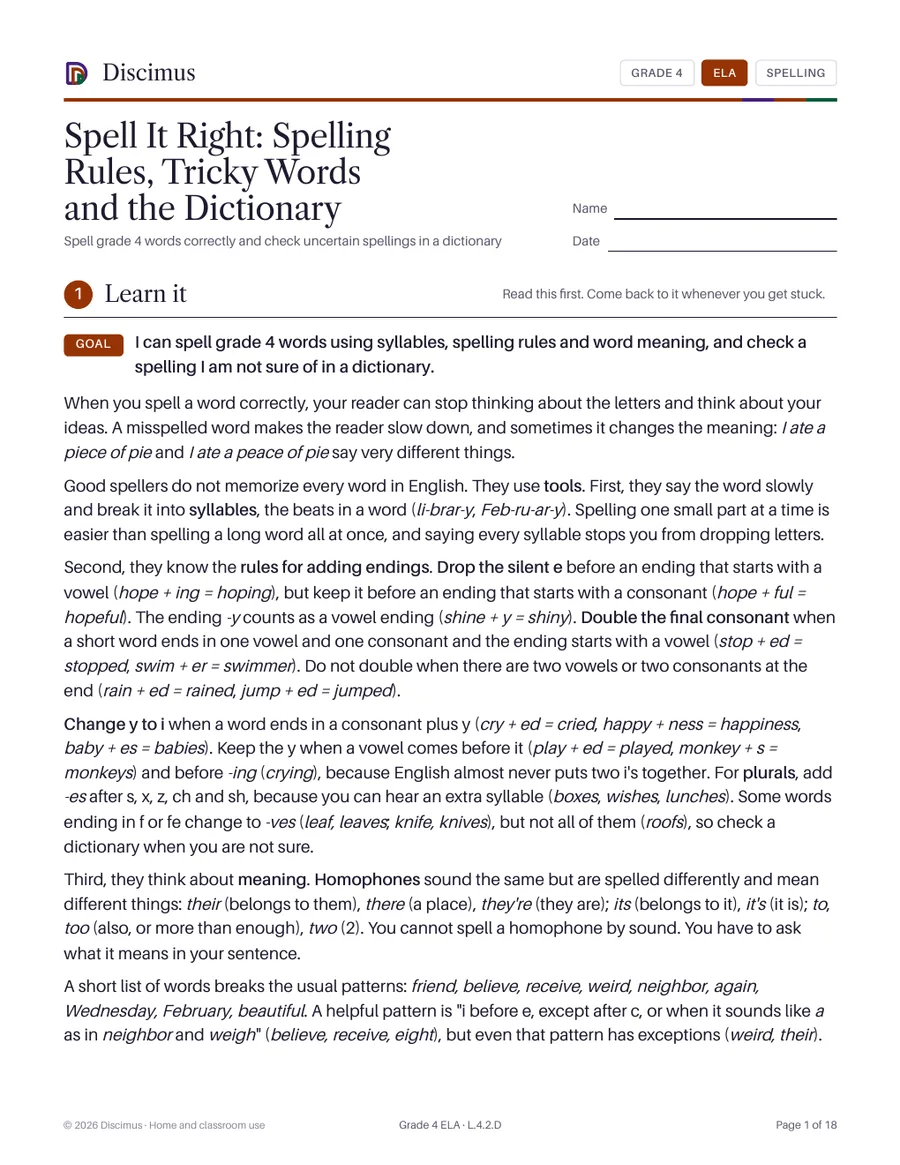
Spell grade 4 words correctly and check uncertain spellings in a dictionary
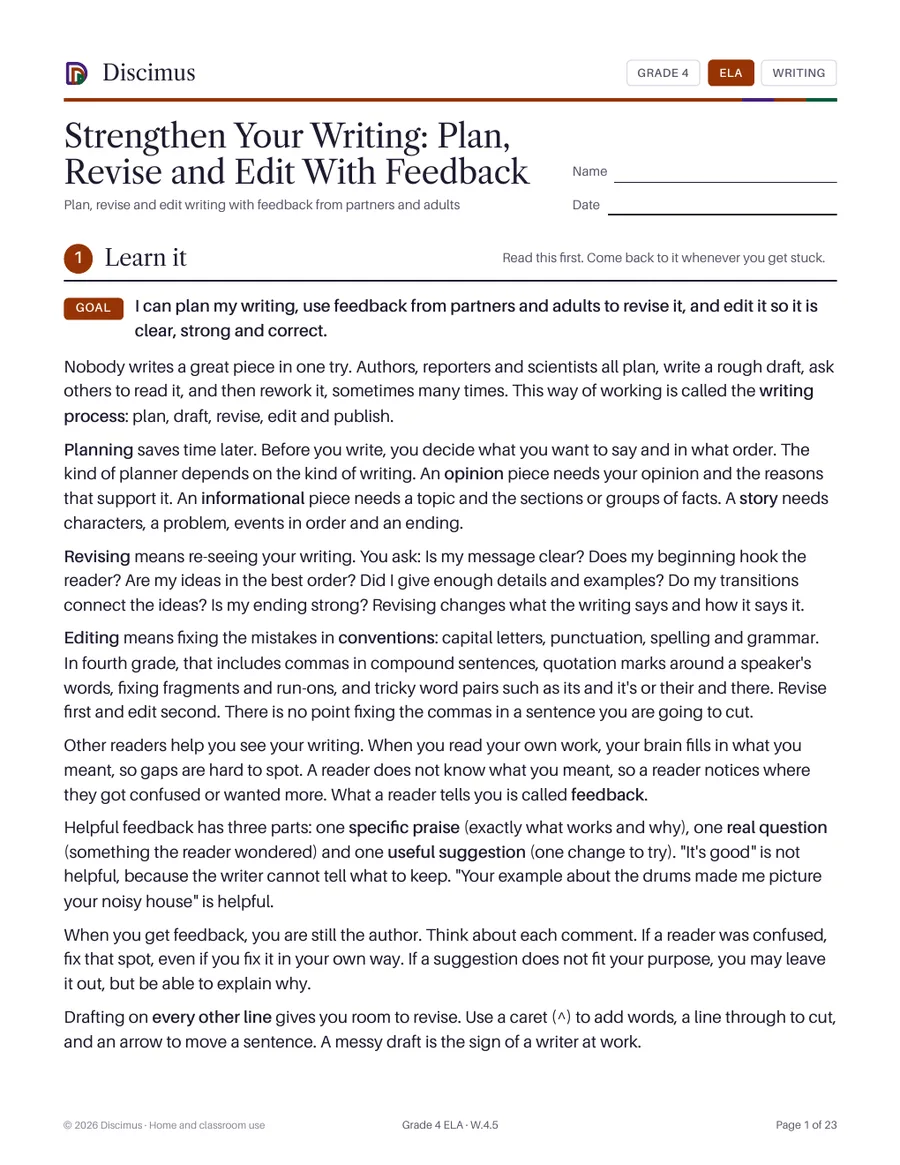
Plan, revise and edit writing with feedback from partners and adults
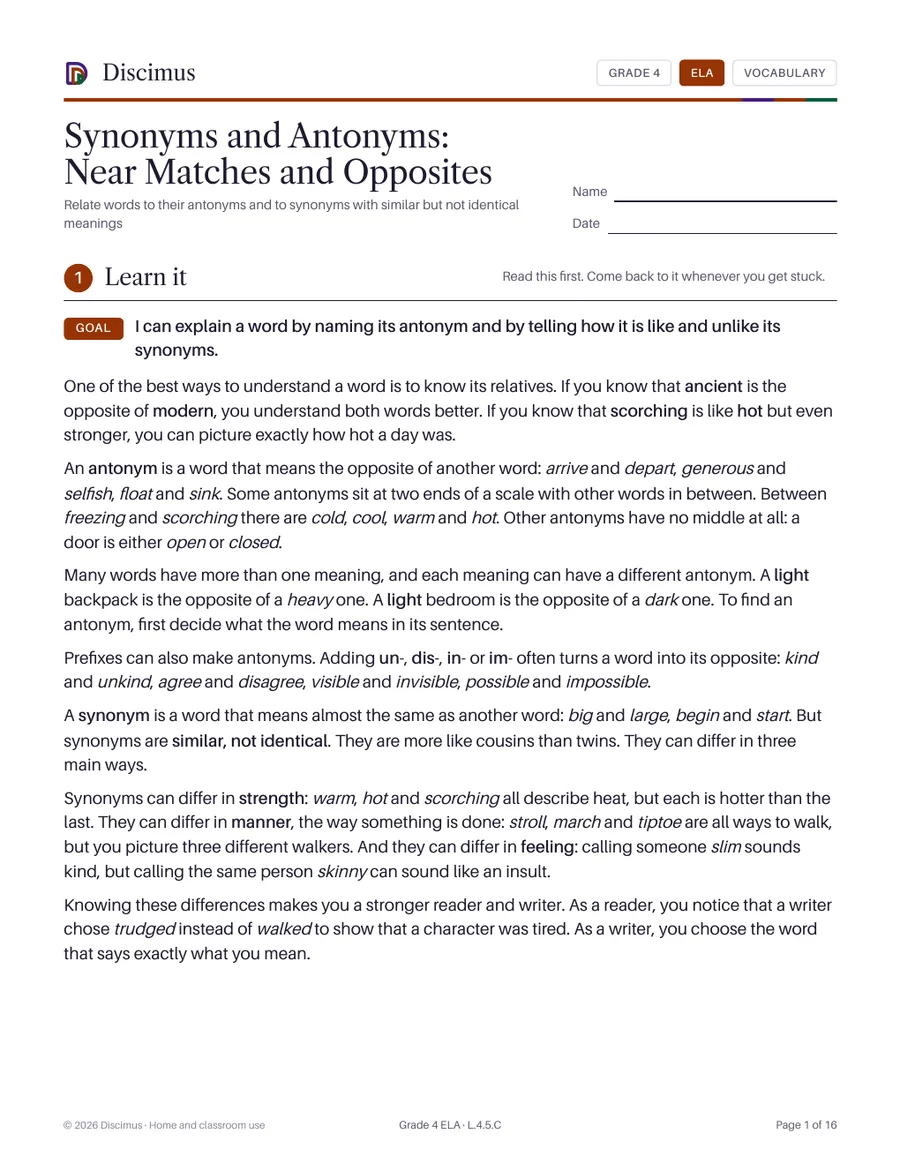
Relate words to their antonyms and to synonyms with similar but not identical meanings
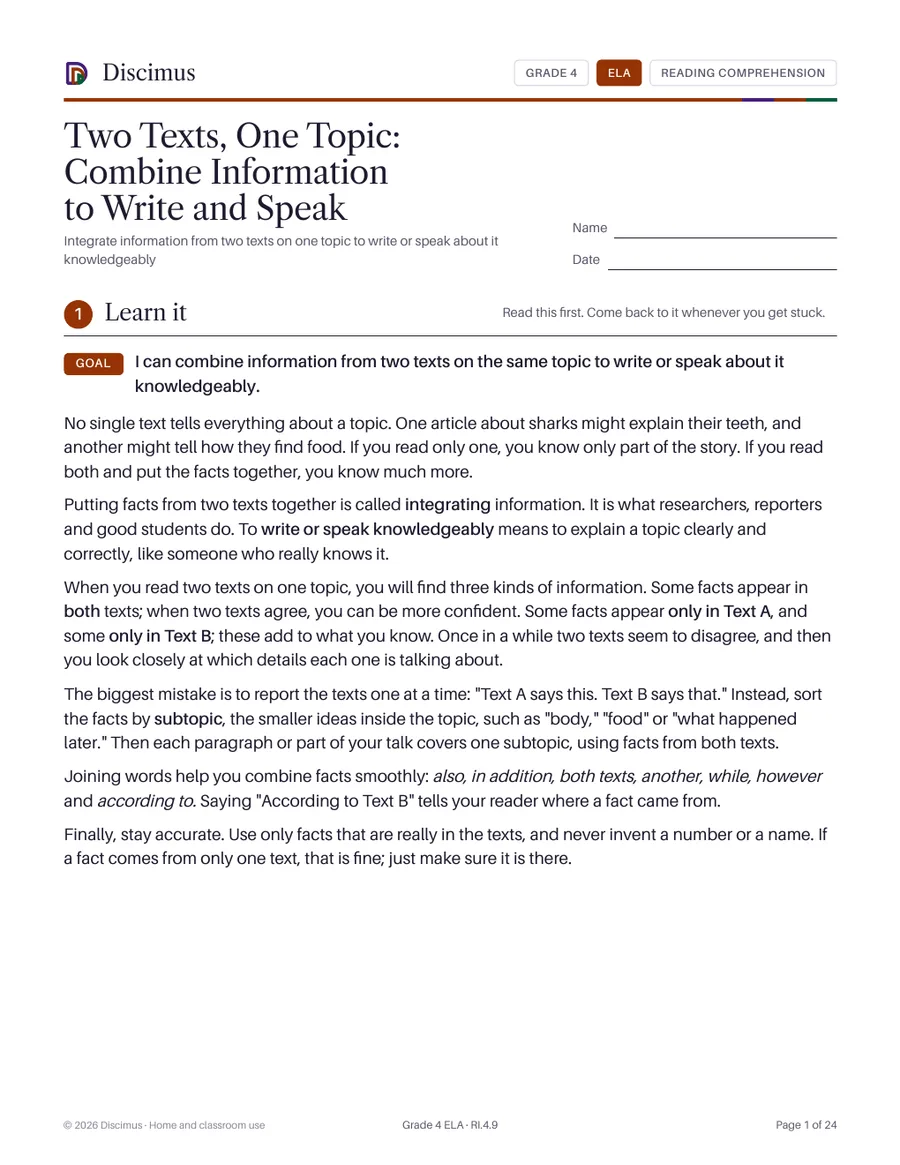
Integrate information from two texts on one topic to write or speak about it knowledgeably
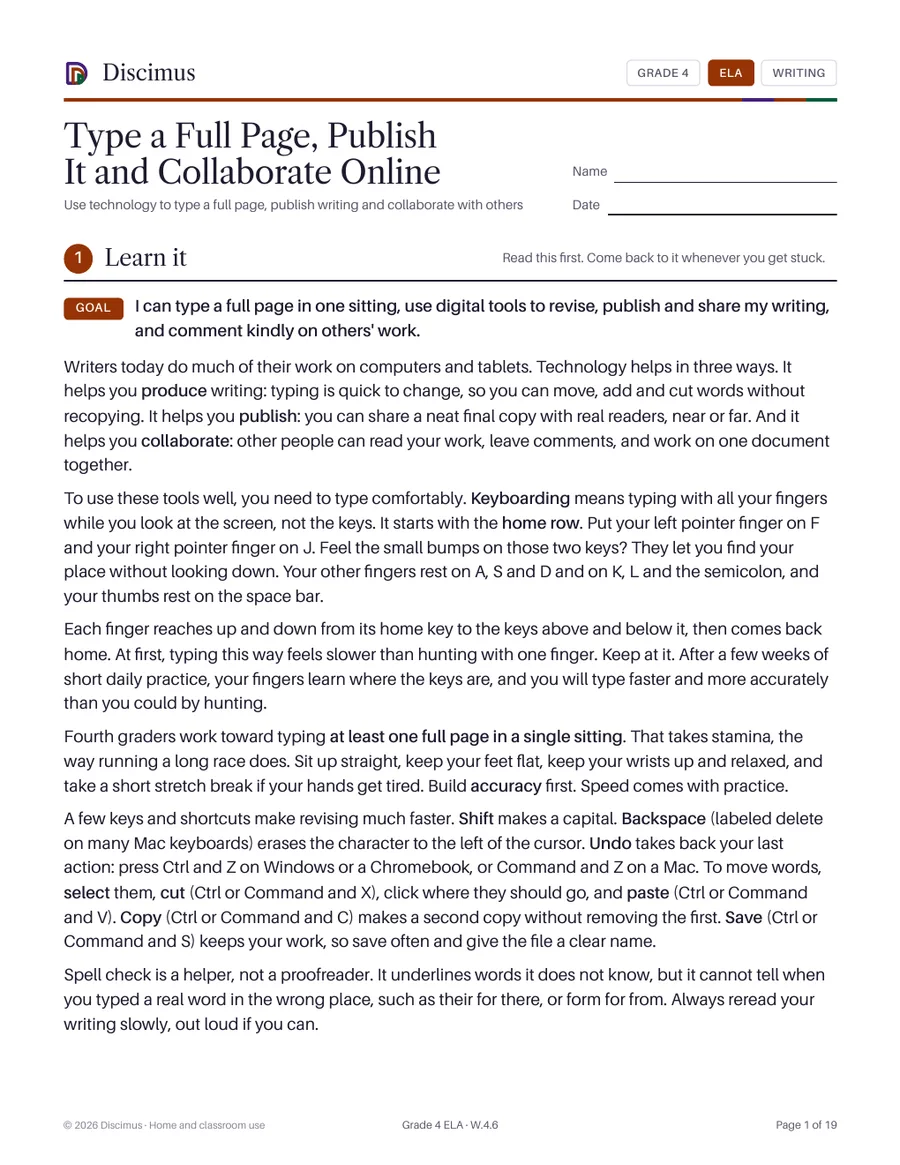
Use technology to type a full page, publish writing and collaborate with others
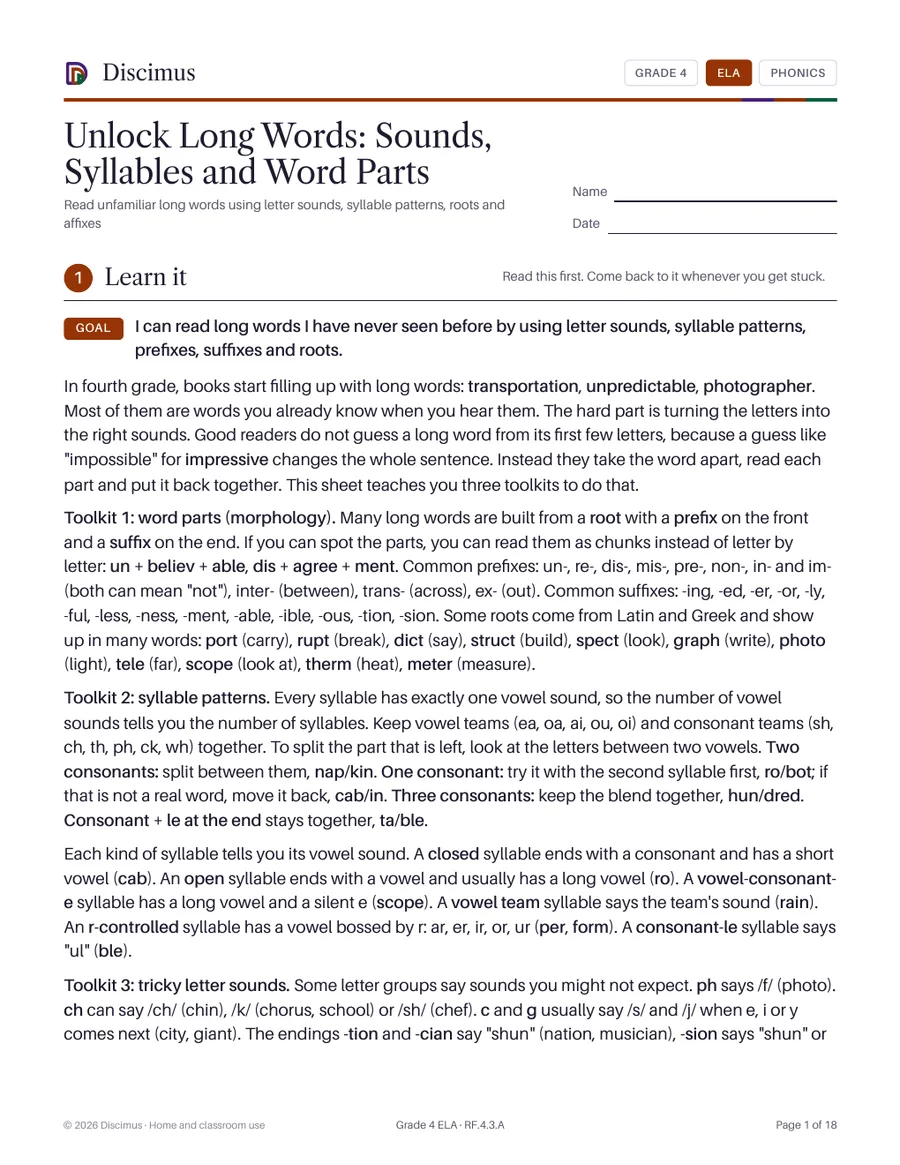
Read unfamiliar long words using letter sounds, syllable patterns, roots and affixes
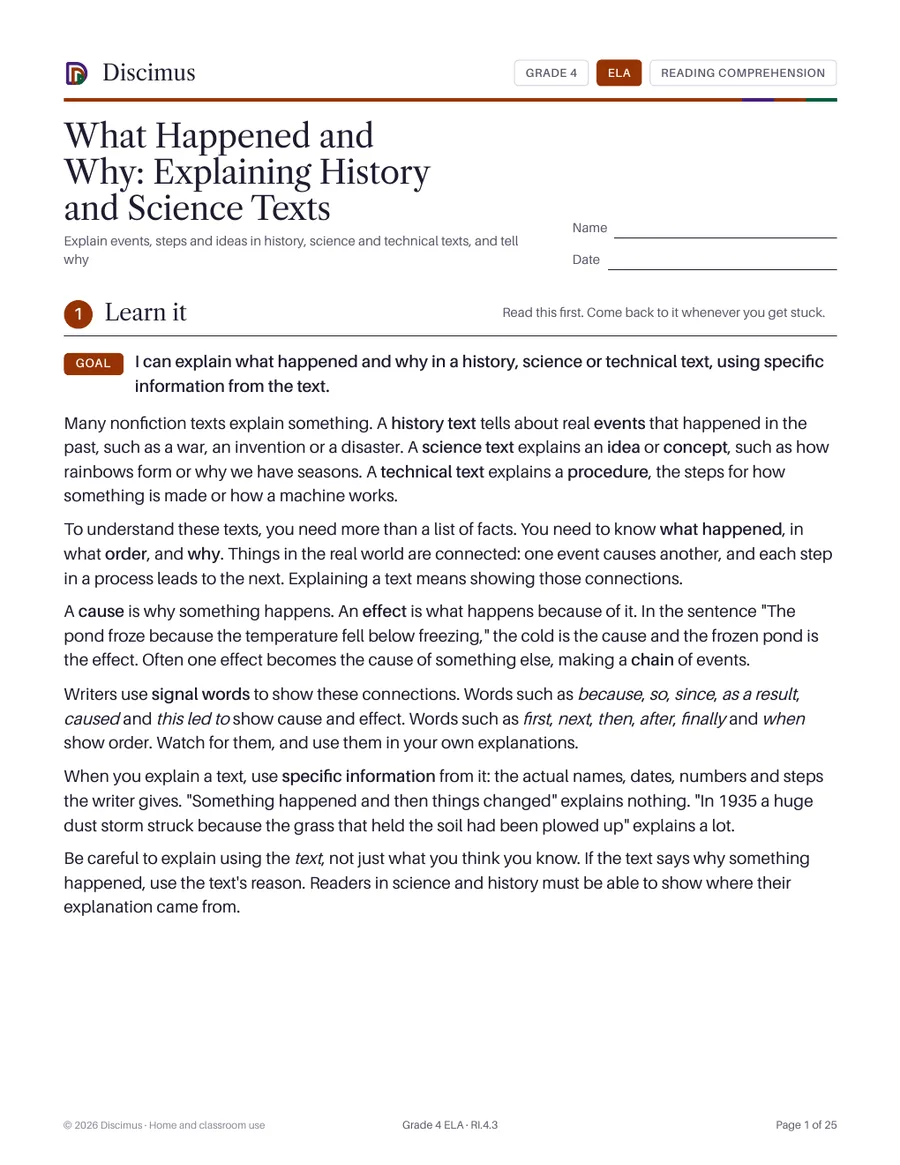
Explain events, steps and ideas in history, science and technical texts, and tell why
 Free sample
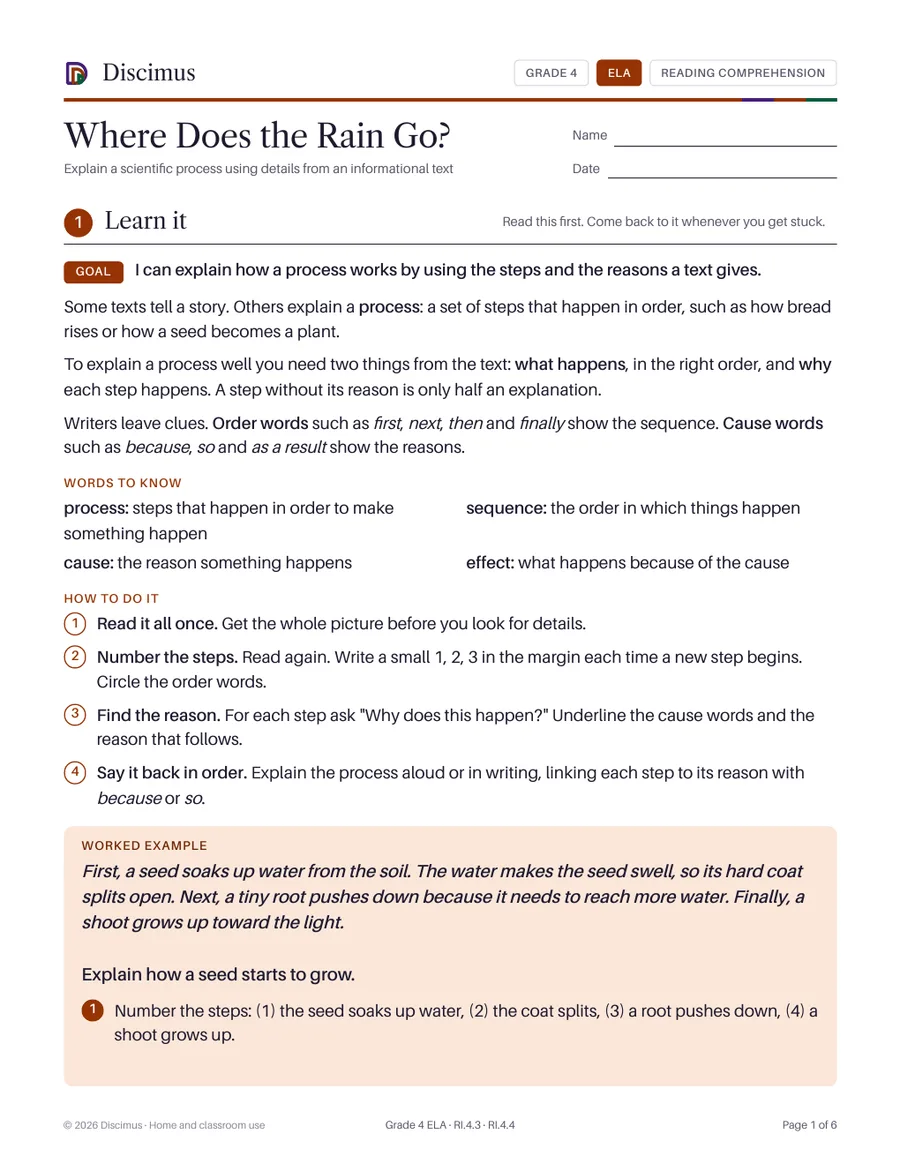
Explain a scientific process using details from an informational text
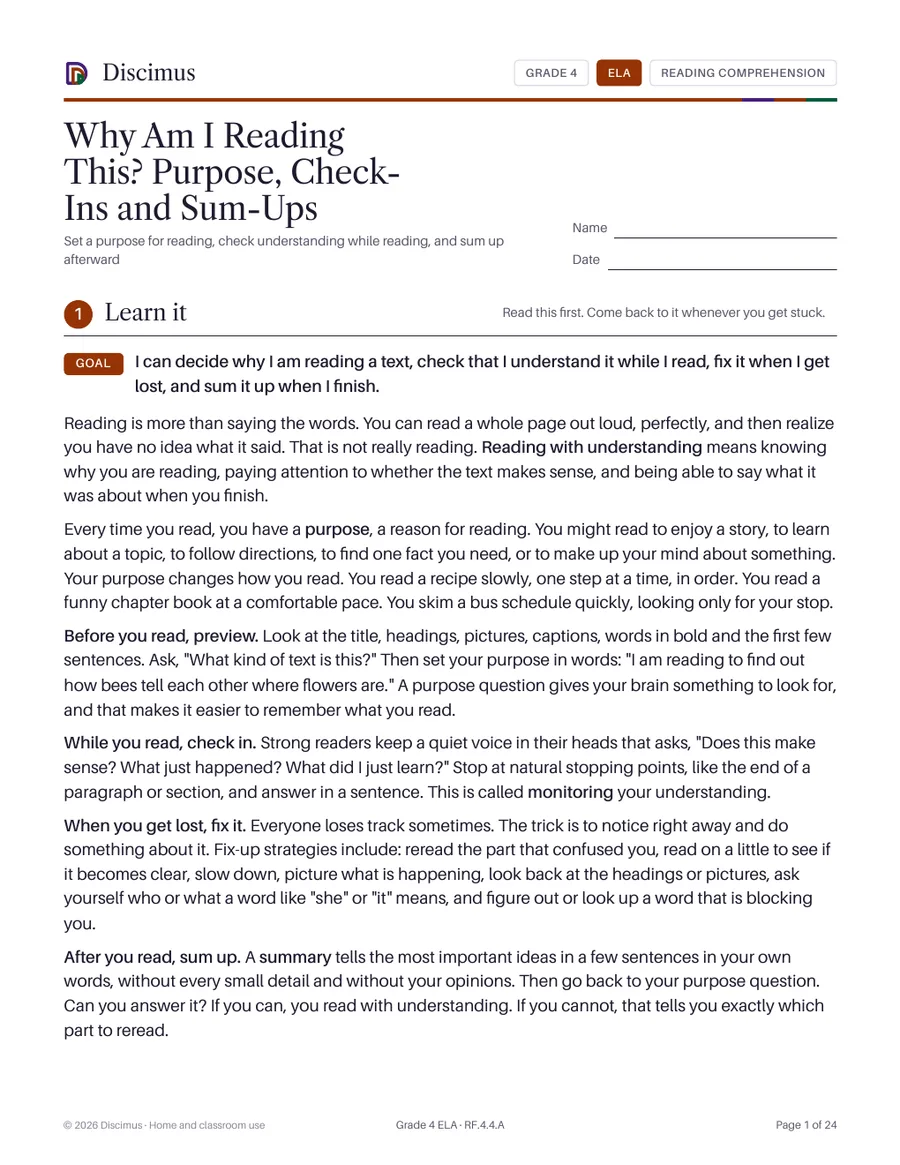
Set a purpose for reading, check understanding while reading, and sum up afterward
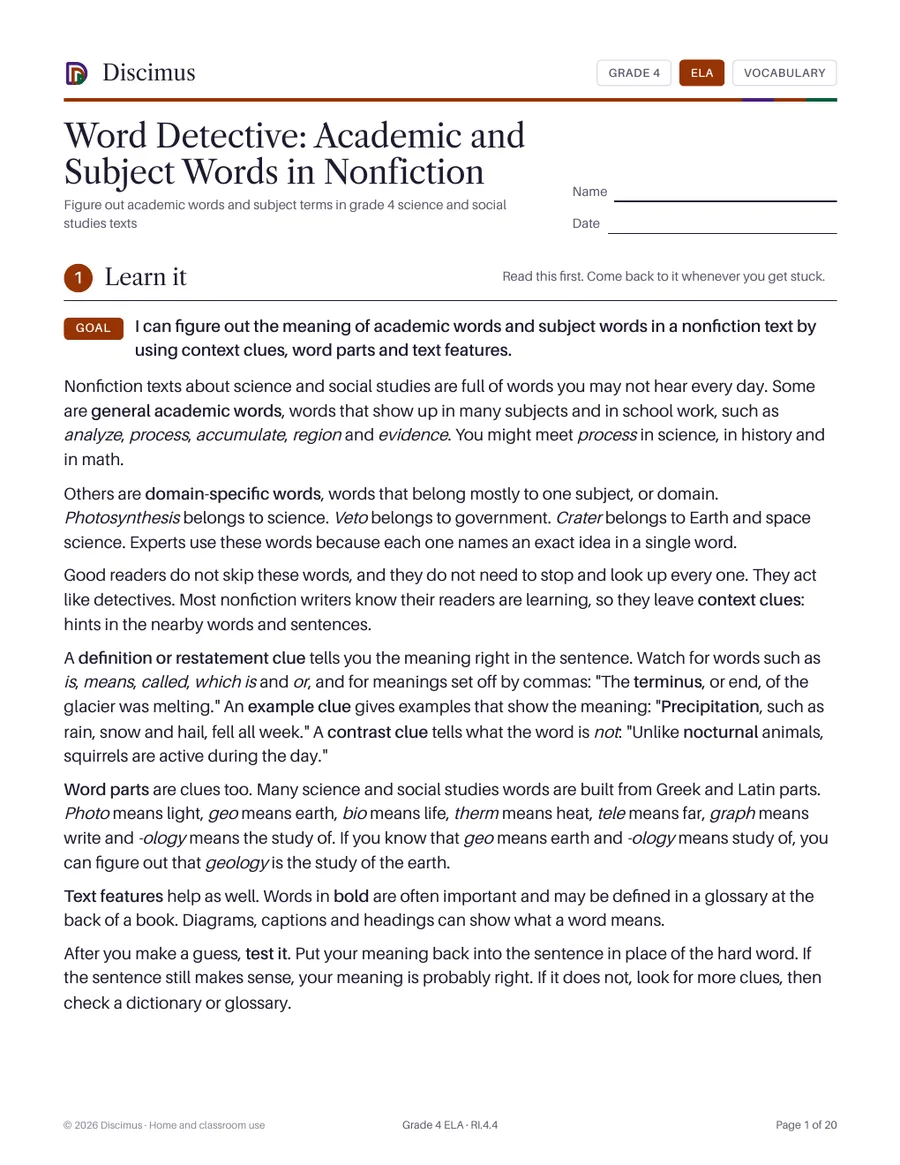
Figure out academic words and subject terms in grade 4 science and social studies texts
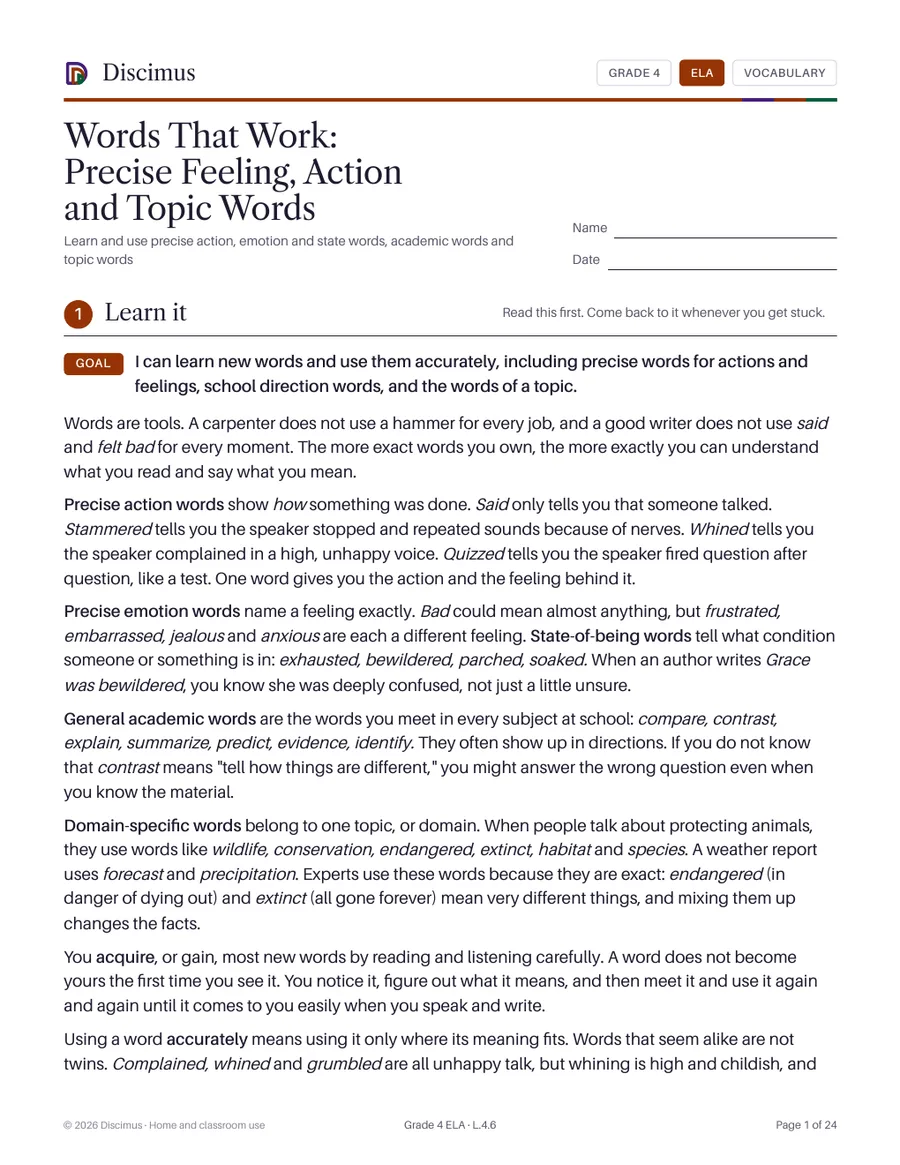
Learn and use precise action, emotion and state words, academic words and topic words
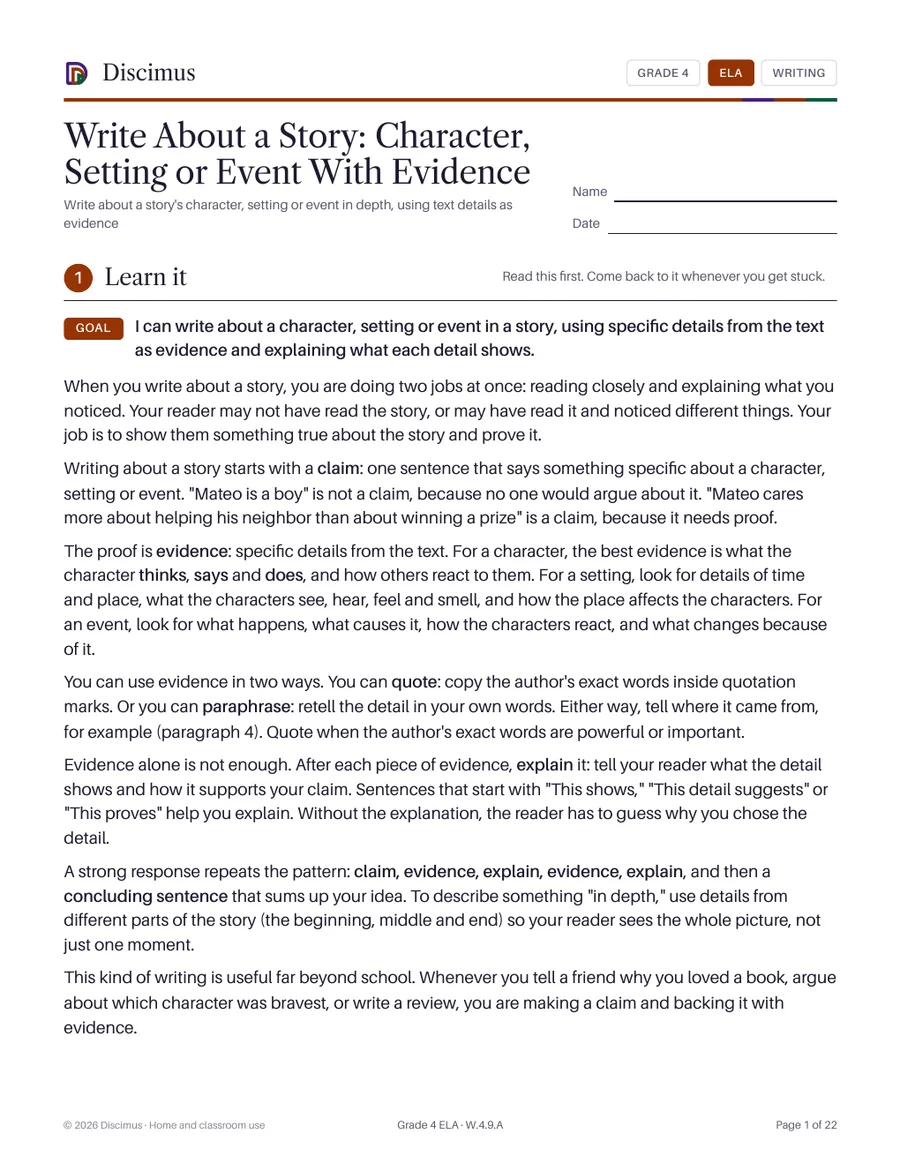
Write about a story's character, setting or event in depth, using text details as evidence
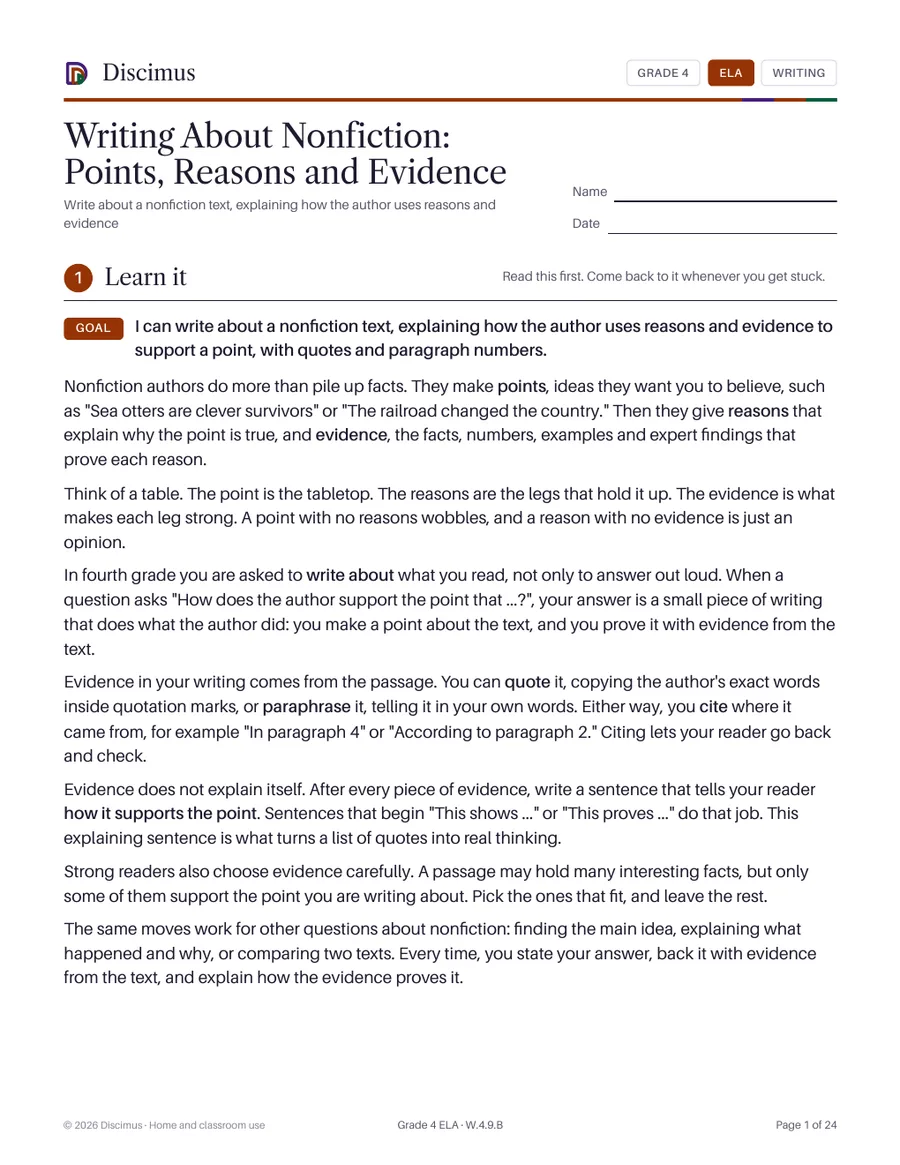
Write about a nonfiction text, explaining how the author uses reasons and evidence
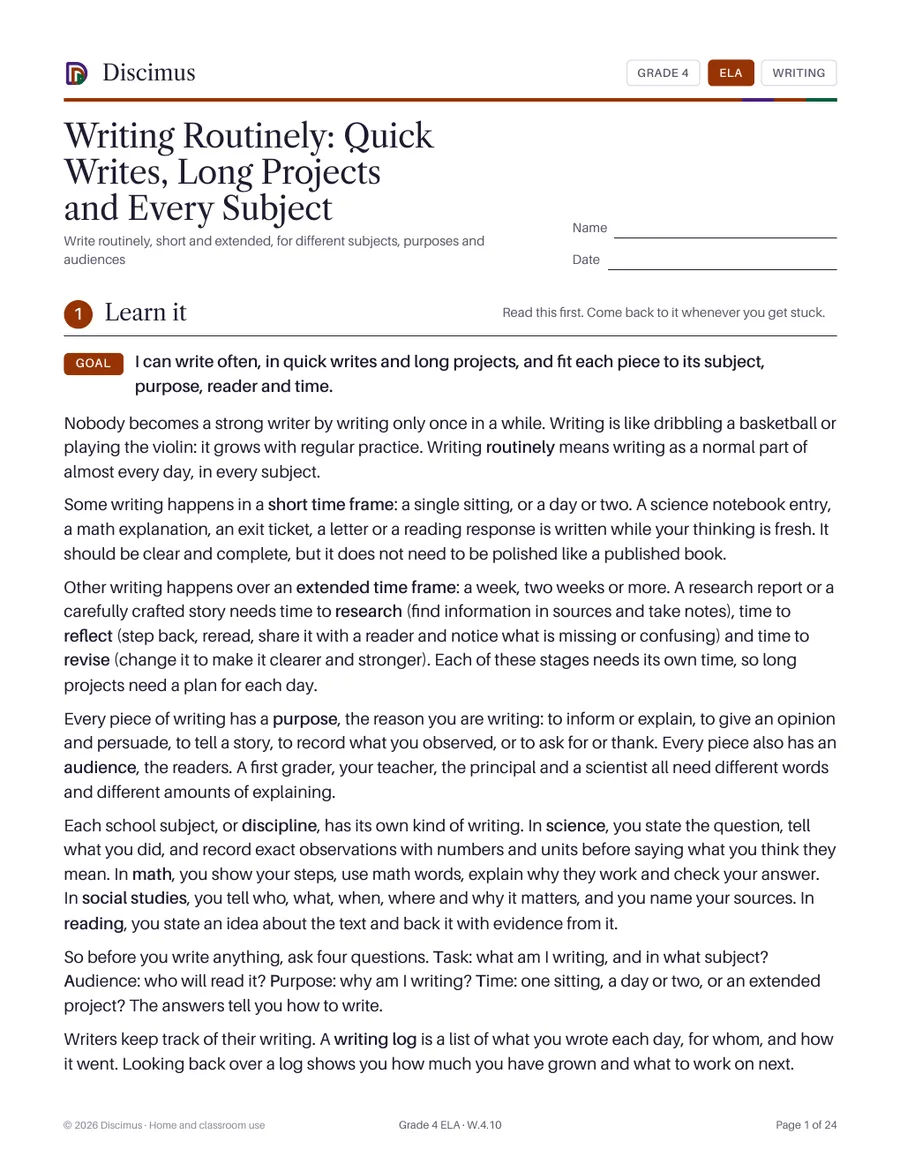
Write routinely, short and extended, for different subjects, purposes and audiences