Skip to content
Discimus
  • Grades
  • Subjects
  • Occasions
  • Standards
  • Membership
Sign inJoin
  1. Home
  2. Grades
  3. Grade 7
  4. Science

Next Generation Science Standards

Grade 7 Science

Life, earth, physical science and the habits of investigation.

TopicsBody Systems 1Cells 1Earth and Space Science 1Ecosystems 5Evolution 3Food and Energy 1Growth and Development 1Heredity 3Natural Selection 2Plants 1Reading in Science 10Reproduction 1Senses and the Brain 1
StandardsMS-ESS1-1MS-LS1-1MS-LS1-3MS-LS1-4MS-LS1-5MS-LS1-6MS-LS1-7MS-LS1-8MS-LS2-1MS-LS2-2MS-LS2-3MS-LS2-4MS-LS2-5MS-LS3-1MS-LS3-2MS-LS4-1MS-LS4-2MS-LS4-3MS-LS4-4MS-LS4-5MS-LS4-6RST.6-8.1RST.6-8.2RST.6-8.3RST.6-8.4RST.6-8.5RST.6-8.6RST.6-8.7RST.6-8.8RST.6-8.9RST.6-8.10
  • ScienceGrade 7

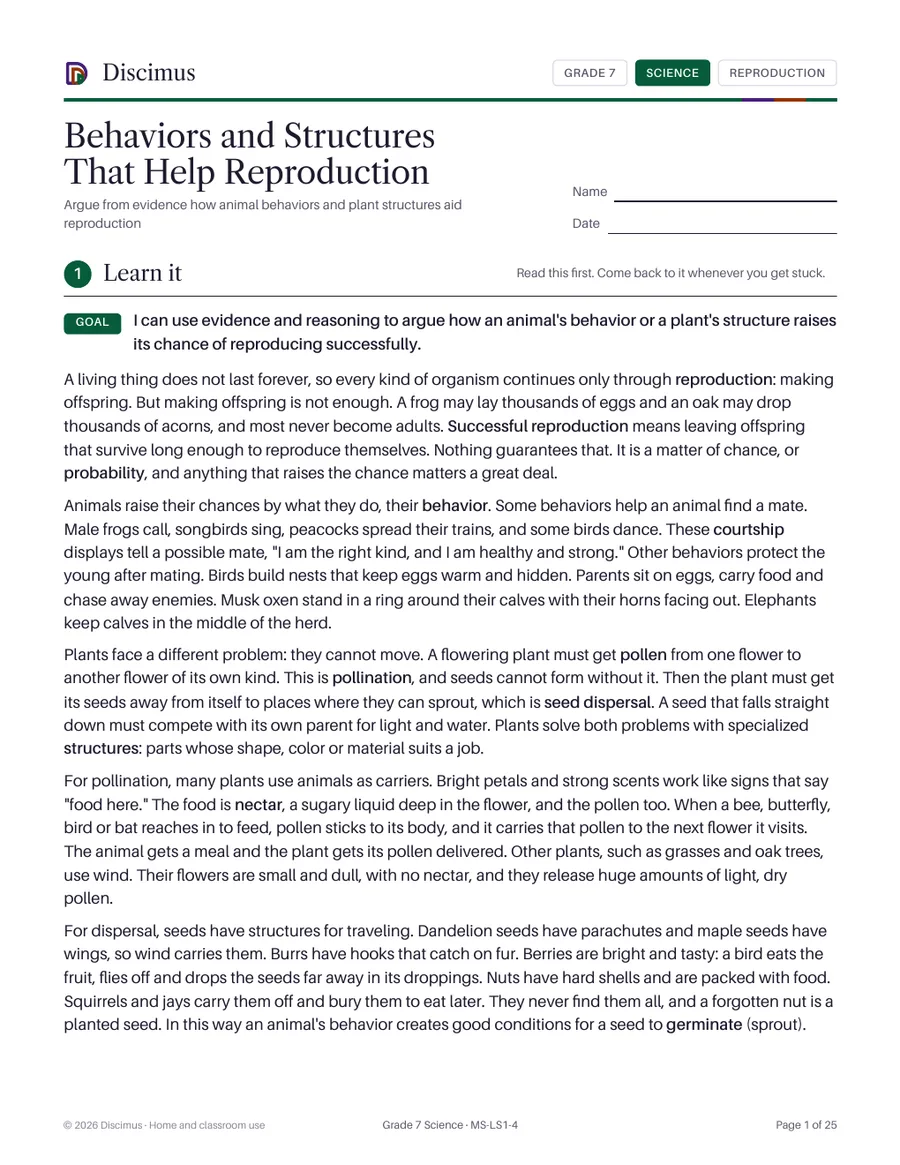
    Anatomy Clues to Evolutionary Relationships

    Explain anatomical similarities in living and fossil organisms to infer relationships
  • ScienceGrade 7

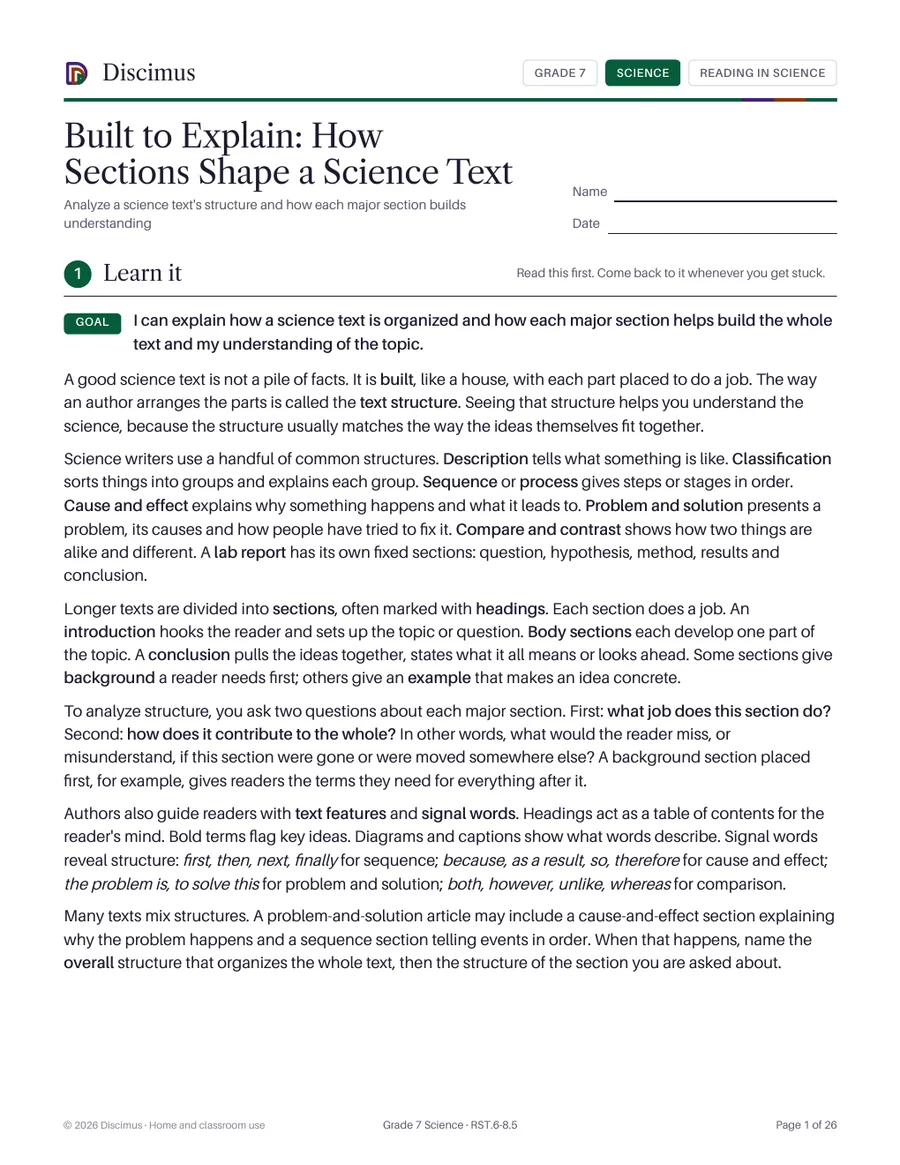
    Behaviors and Structures That Help Reproduction

    Argue from evidence how animal behaviors and plant structures aid reproduction
  • ScienceGrade 7

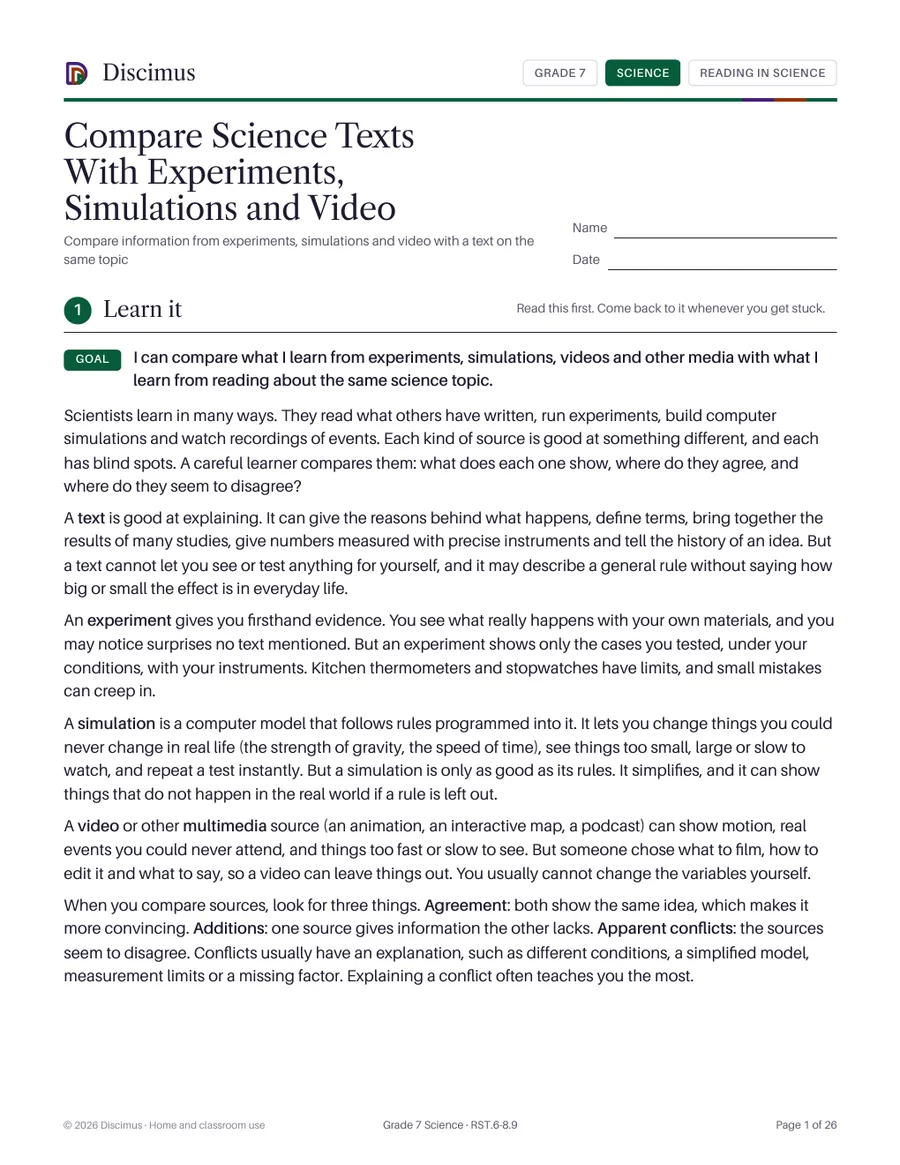
    Built to Explain: How Sections Shape a Science Text

    Analyze a science text's structure and how each major section builds understanding
  • ScienceGrade 7

    Compare Science Texts With Experiments, Simulations and Video

    Compare information from experiments, simulations and video with a text on the same topic
  • ScienceGrade 7

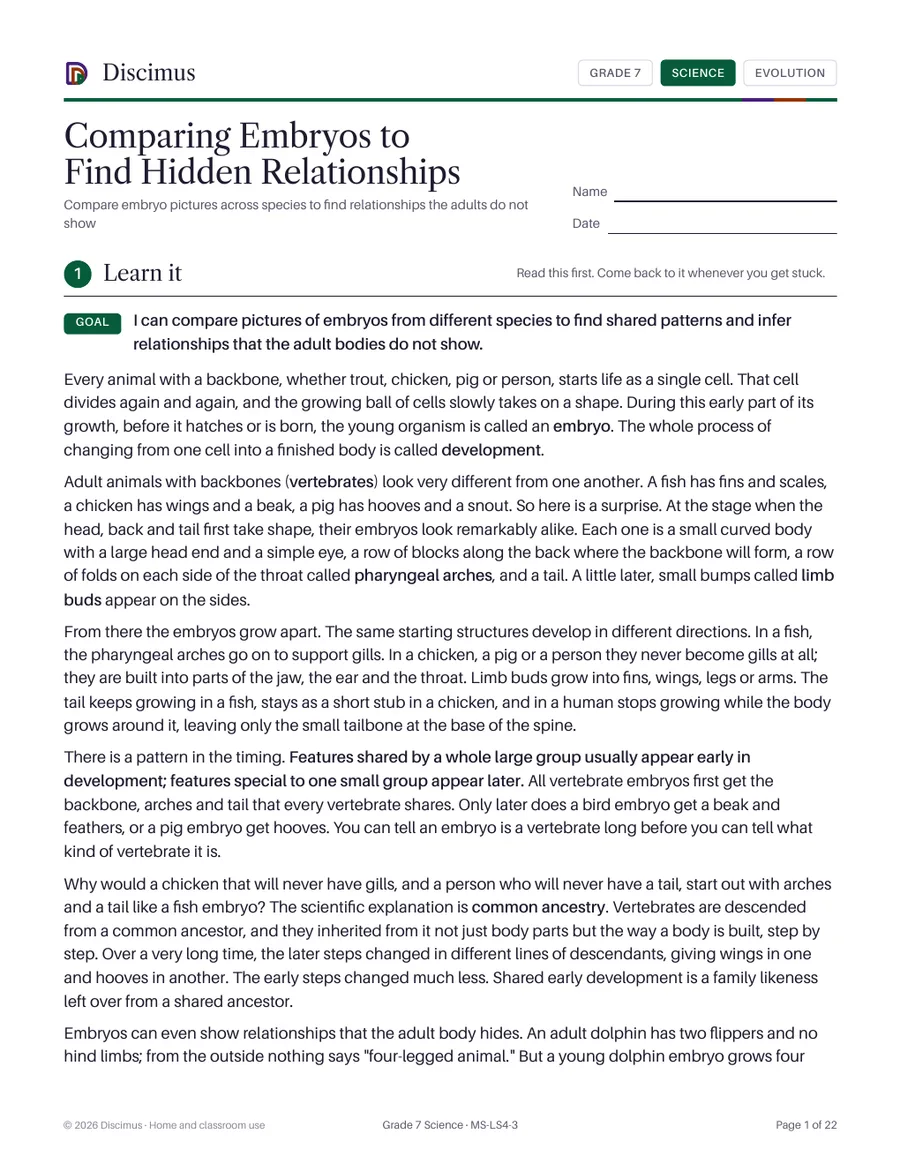
    Comparing Embryos to Find Hidden Relationships

    Compare embryo pictures across species to find relationships the adults do not show
  • ScienceGrade 7

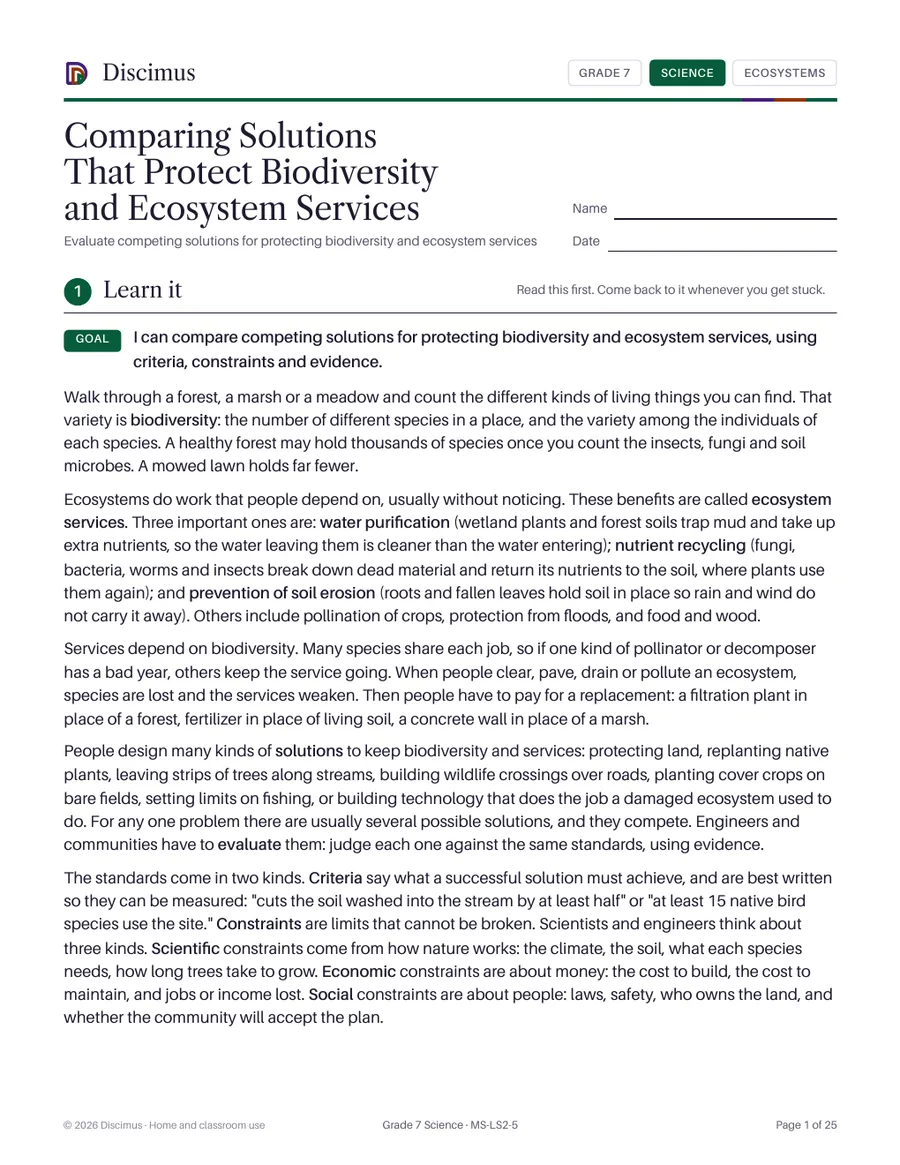
    Comparing Solutions That Protect Biodiversity and Ecosystem Services

    Evaluate competing solutions for protecting biodiversity and ecosystem services
  • ScienceGrade 7

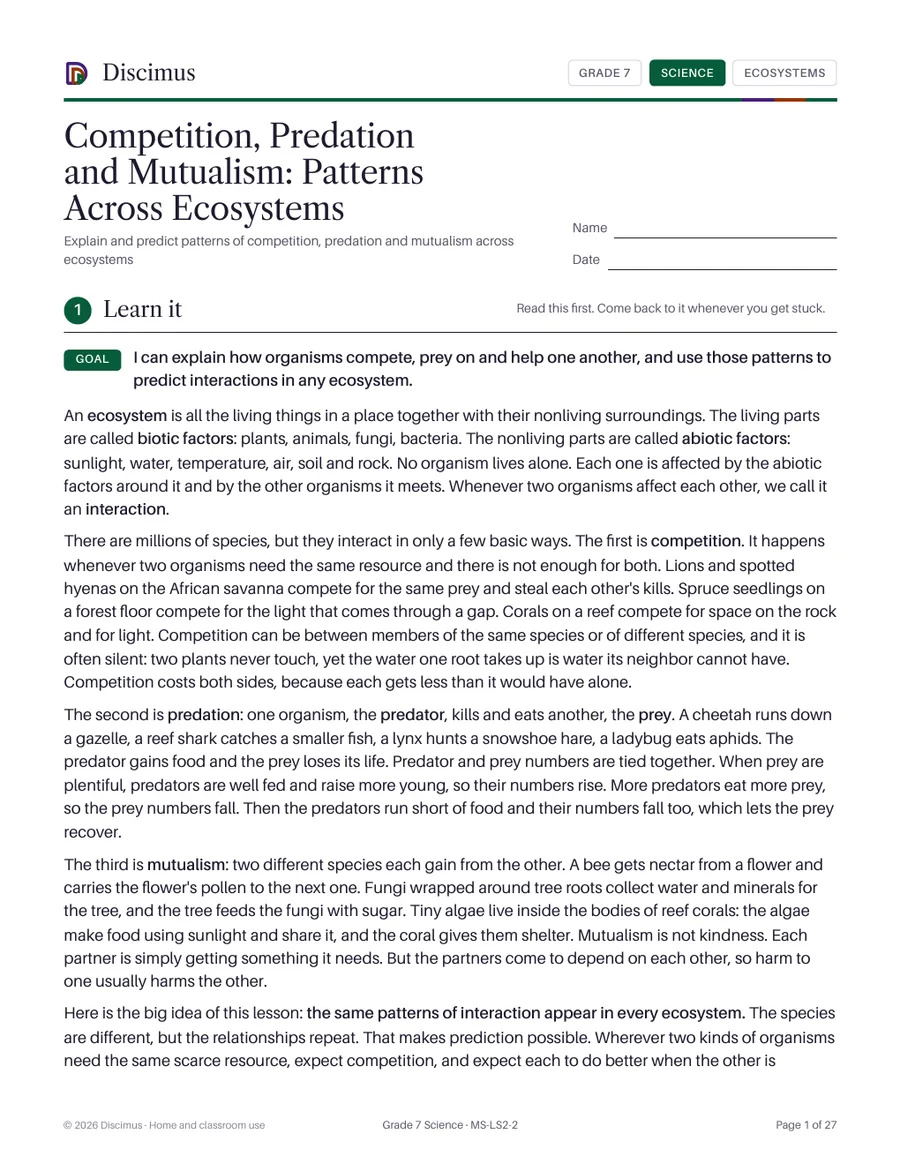
    Competition, Predation and Mutualism: Patterns Across Ecosystems

    Explain and predict patterns of competition, predation and mutualism across ecosystems
  • ScienceGrade 7

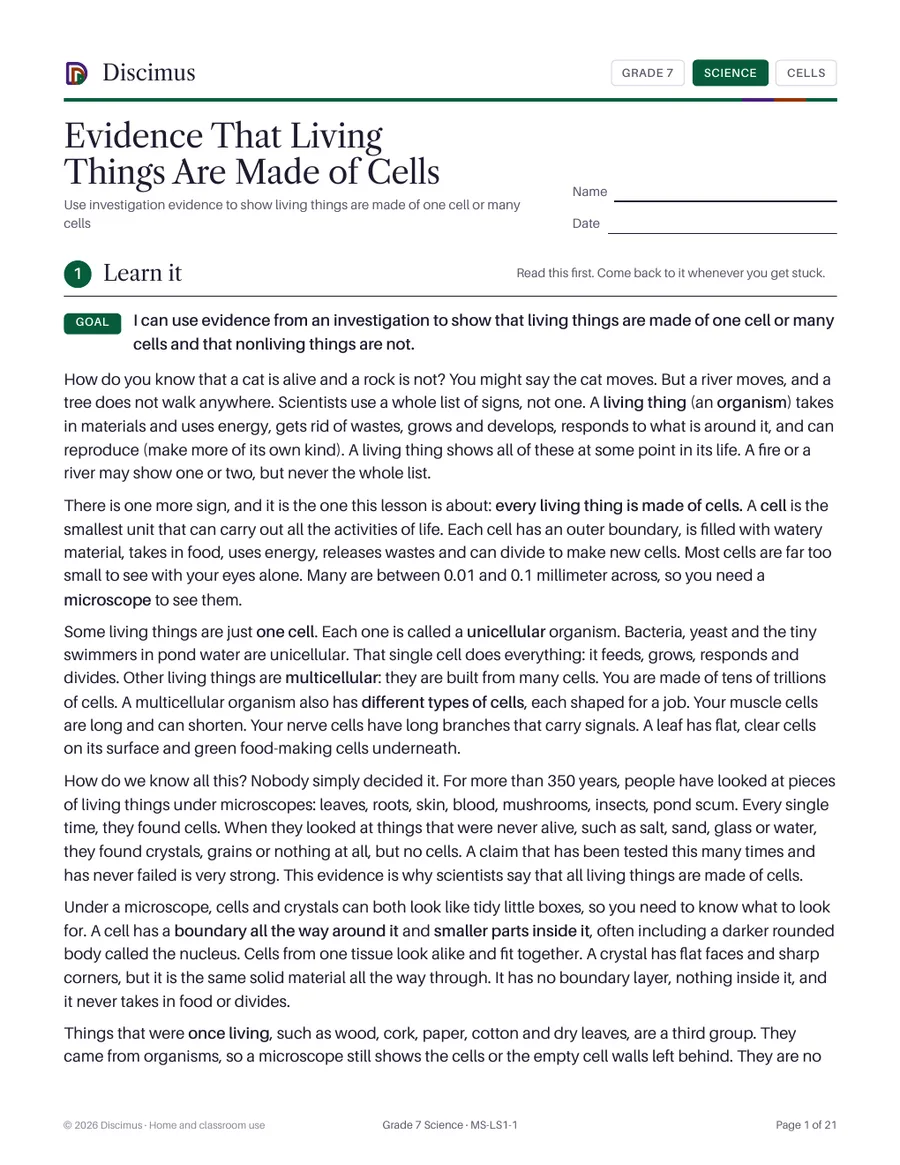
    Evidence That Living Things Are Made of Cells

    Use investigation evidence to show living things are made of one cell or many cells
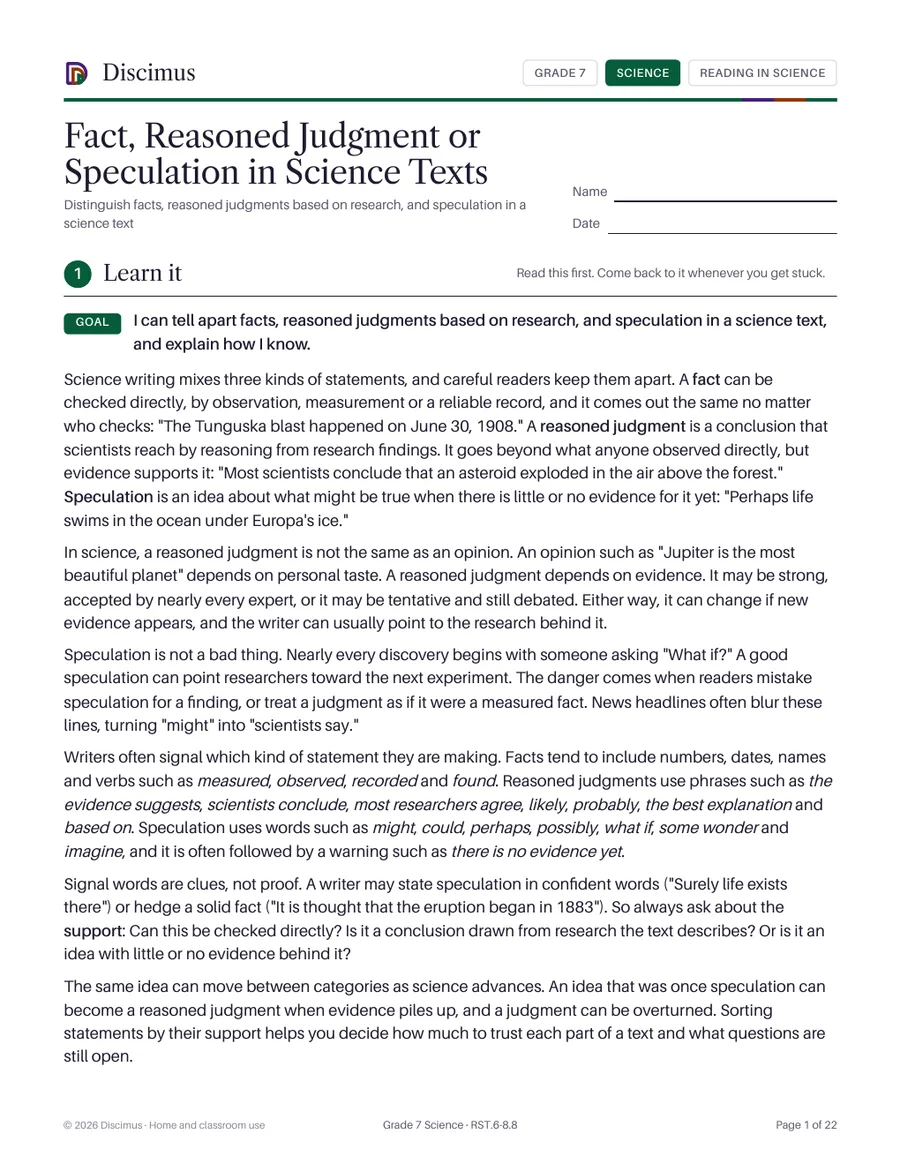
  • ScienceGrade 7

    Fact, Reasoned Judgment or Speculation in Science Texts

    Distinguish facts, reasoned judgments based on research, and speculation in a science text
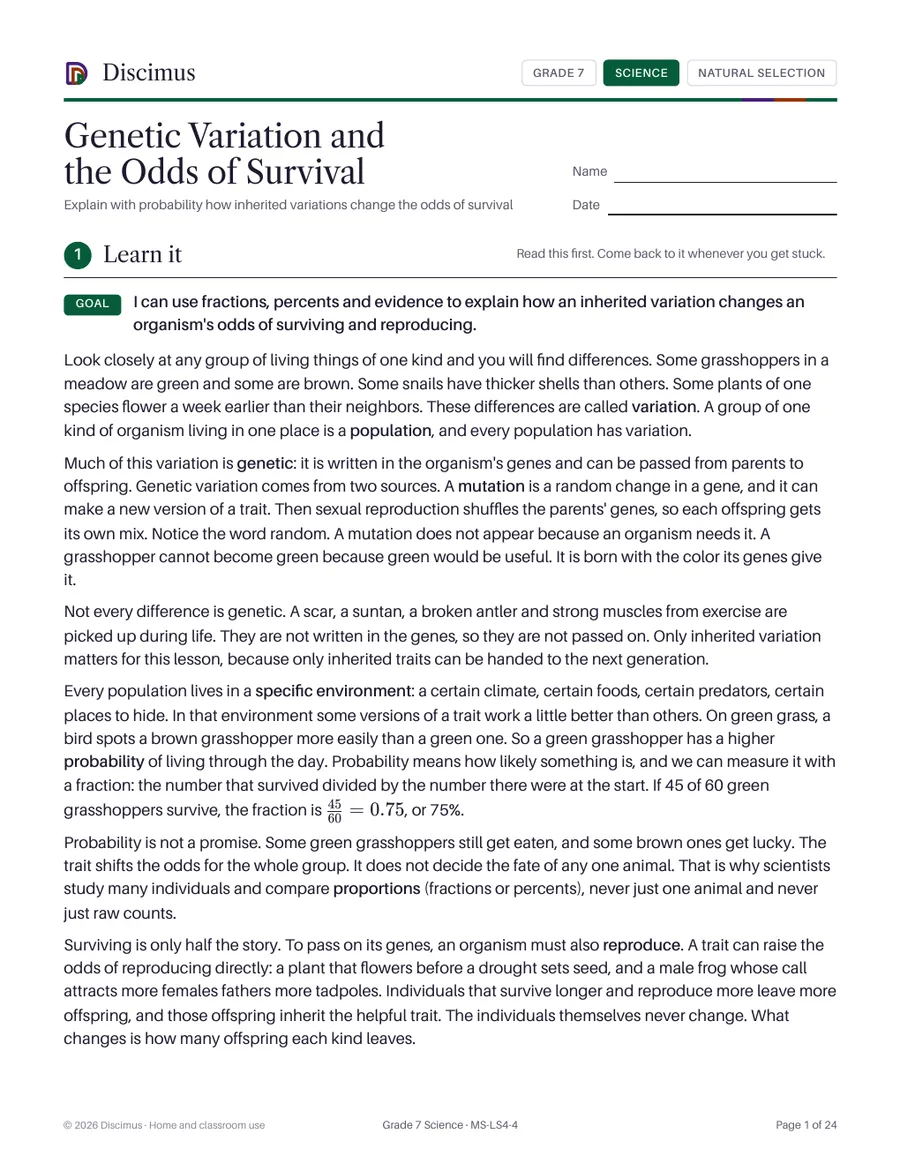
  • ScienceGrade 7

    Genetic Variation and the Odds of Survival

    Explain with probability how inherited variations change the odds of survival
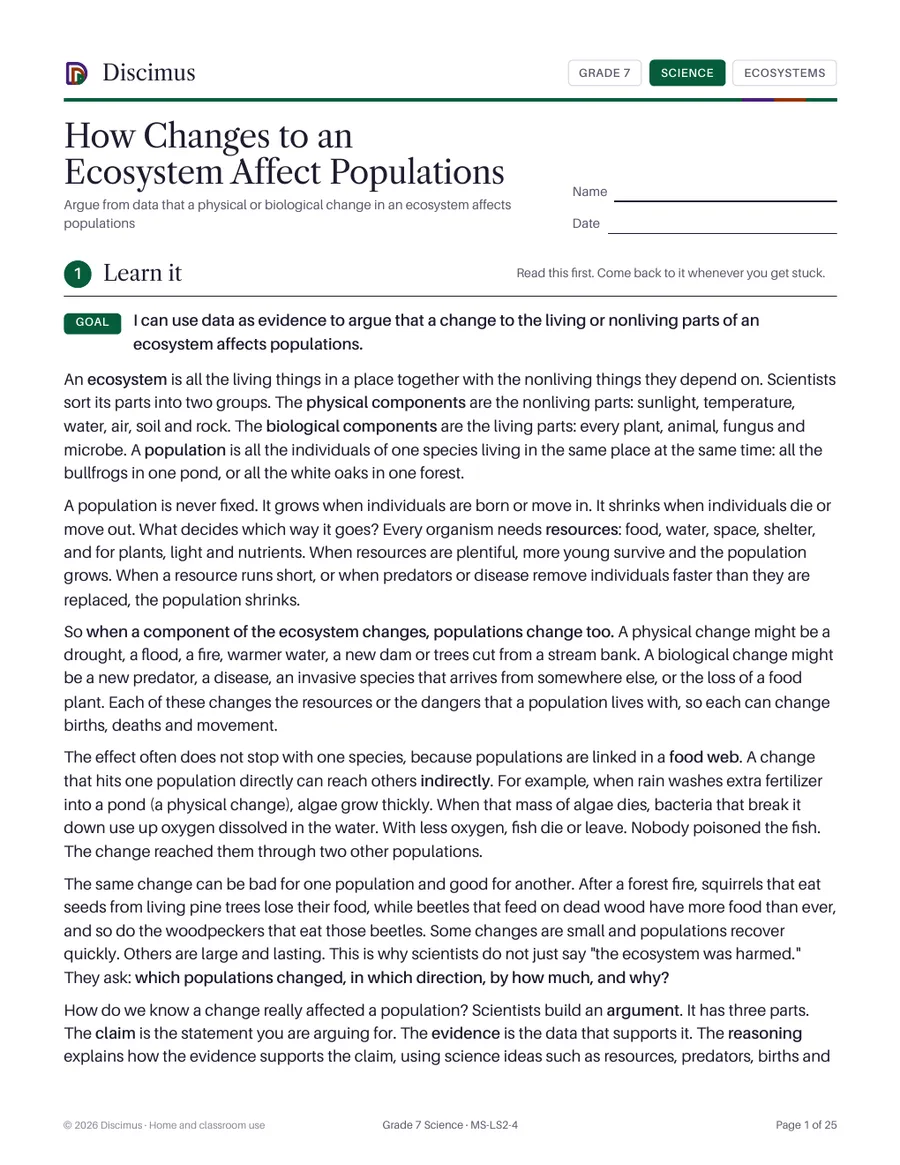
  • ScienceGrade 7

    How Changes to an Ecosystem Affect Populations

    Argue from data that a physical or biological change in an ecosystem affects populations
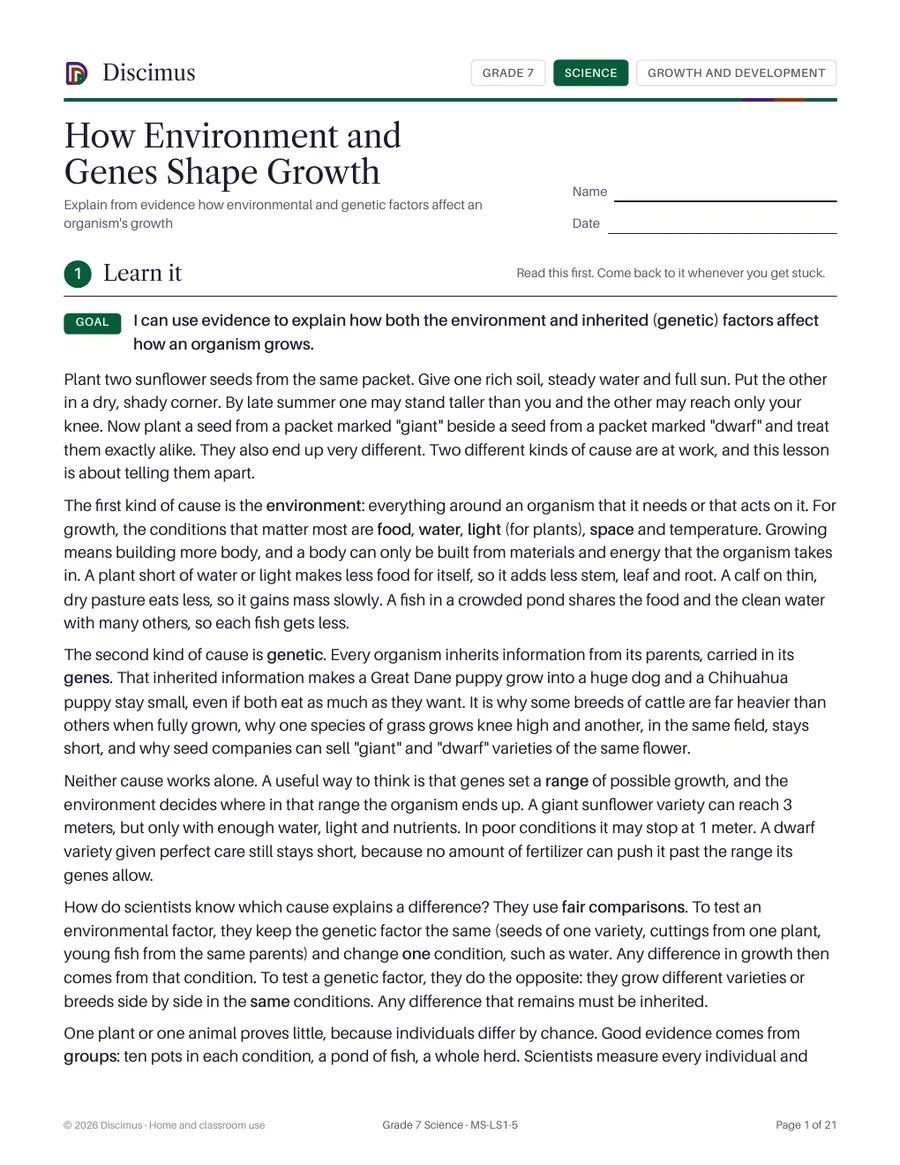
  • ScienceGrade 7

    How Environment and Genes Shape Growth

    Explain from evidence how environmental and genetic factors affect an organism's growth
  • ScienceGrade 7

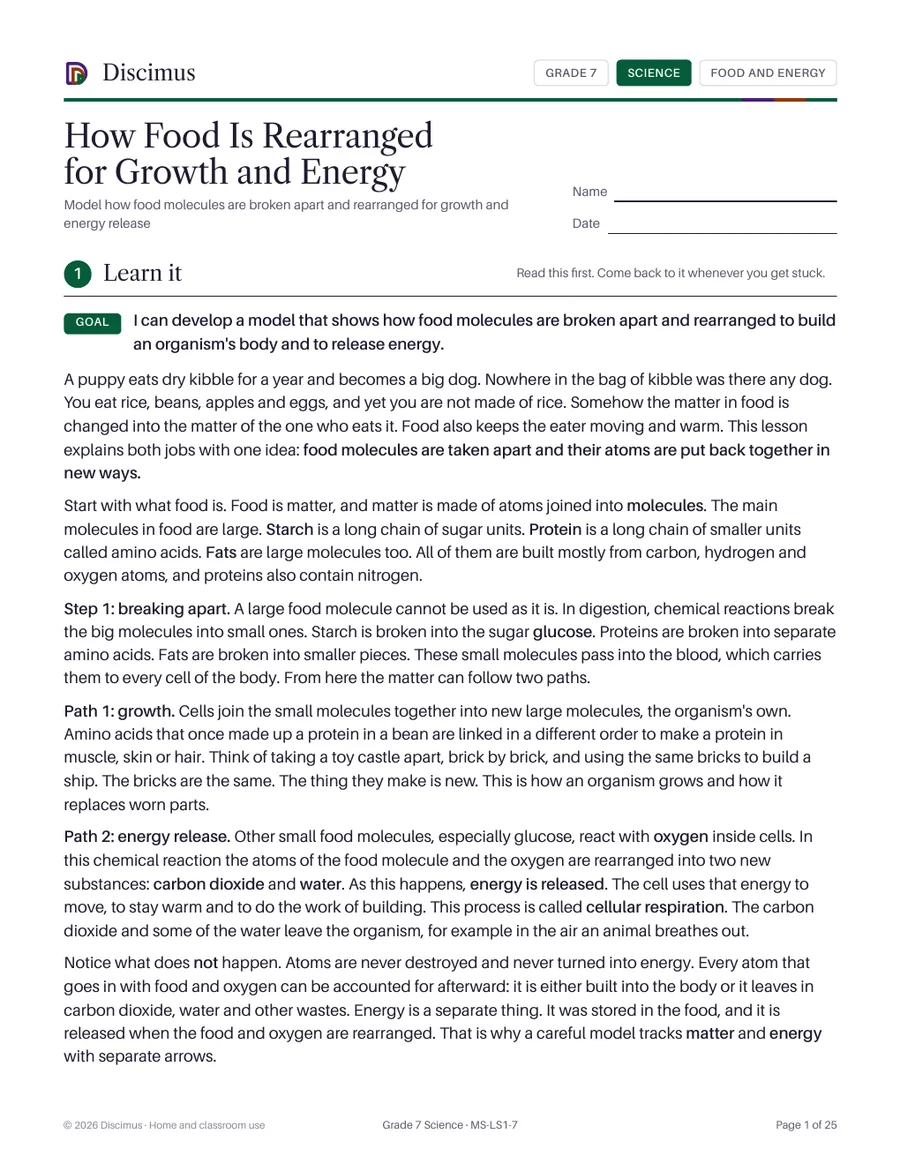
    How Food Is Rearranged for Growth and Energy

    Model how food molecules are broken apart and rearranged for growth and energy release
  • ScienceGrade 7

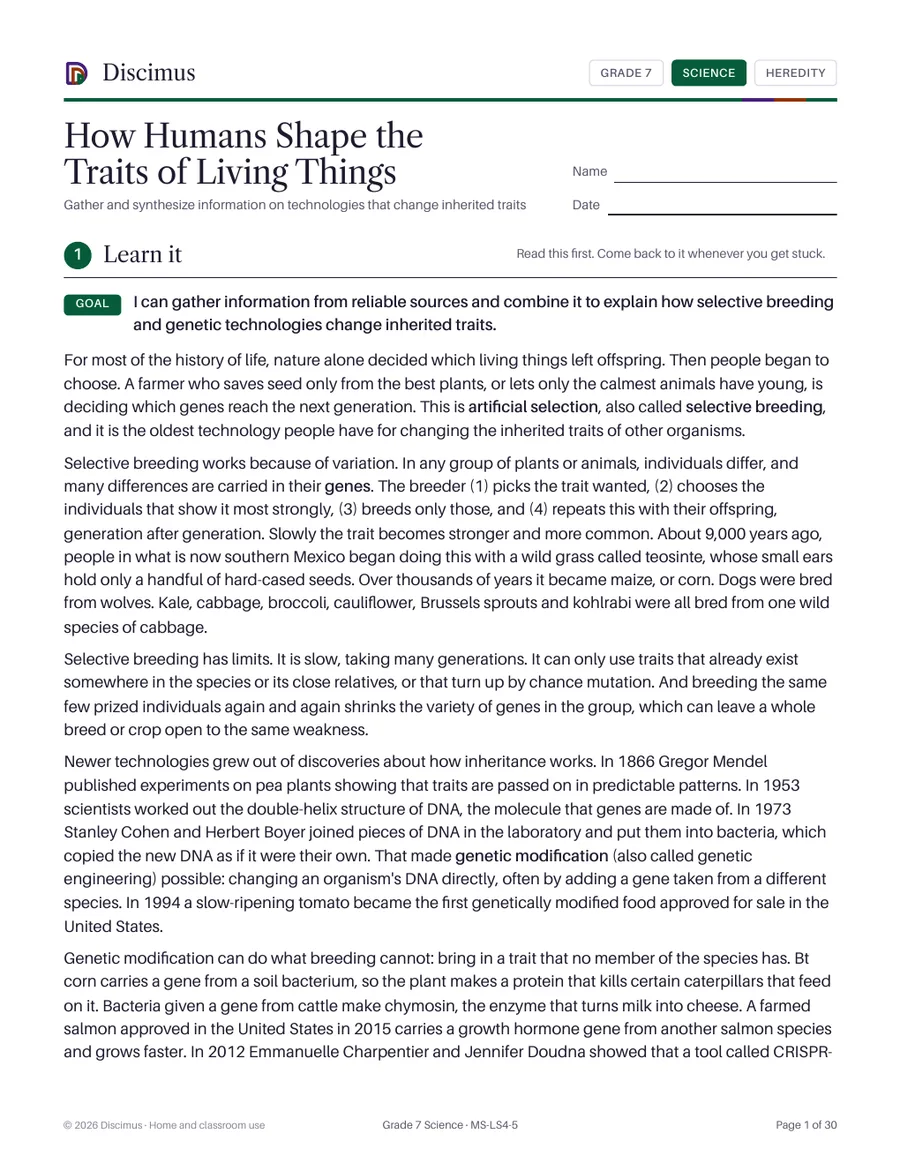
    How Humans Shape the Traits of Living Things

    Gather and synthesize information on technologies that change inherited traits
  • ScienceGrade 7

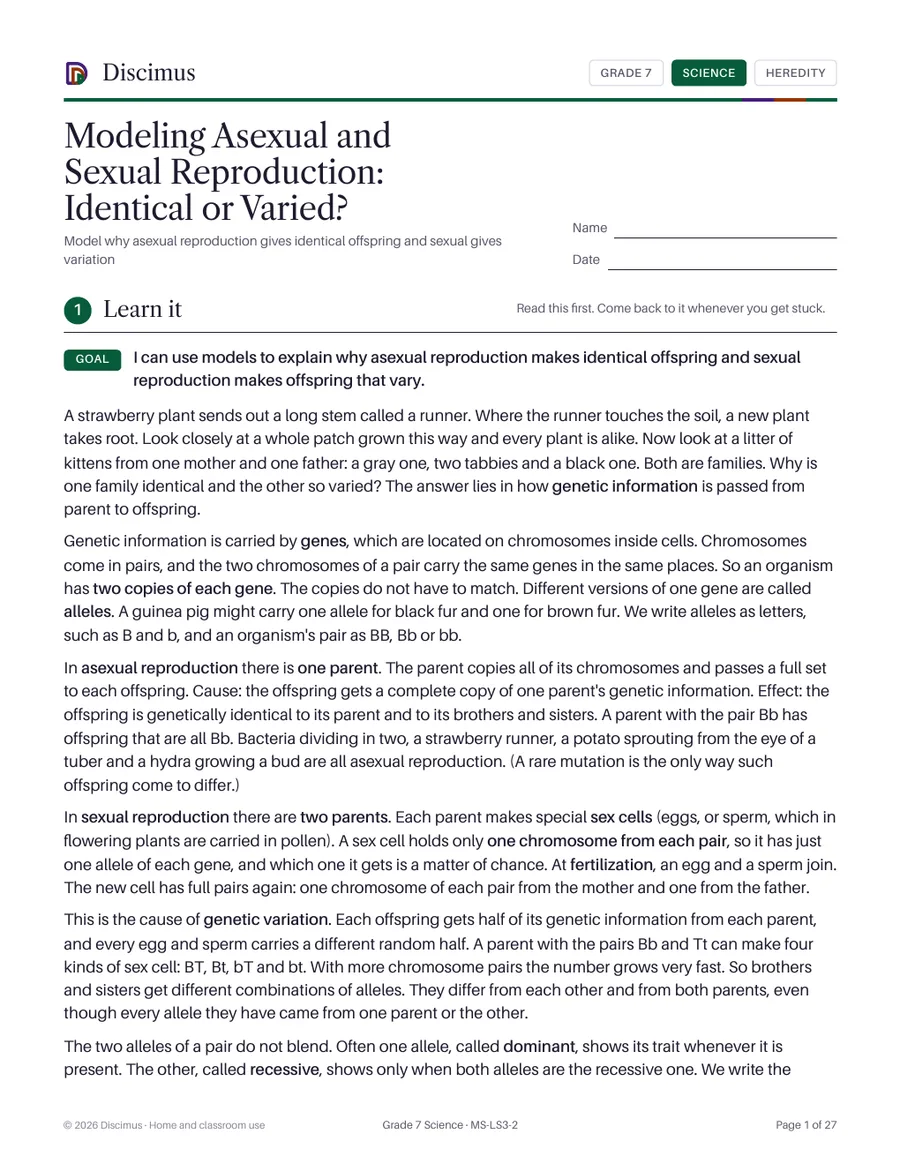
    Modeling Asexual and Sexual Reproduction: Identical or Varied?

    Model why asexual reproduction gives identical offspring and sexual gives variation
  • ScienceGrade 7

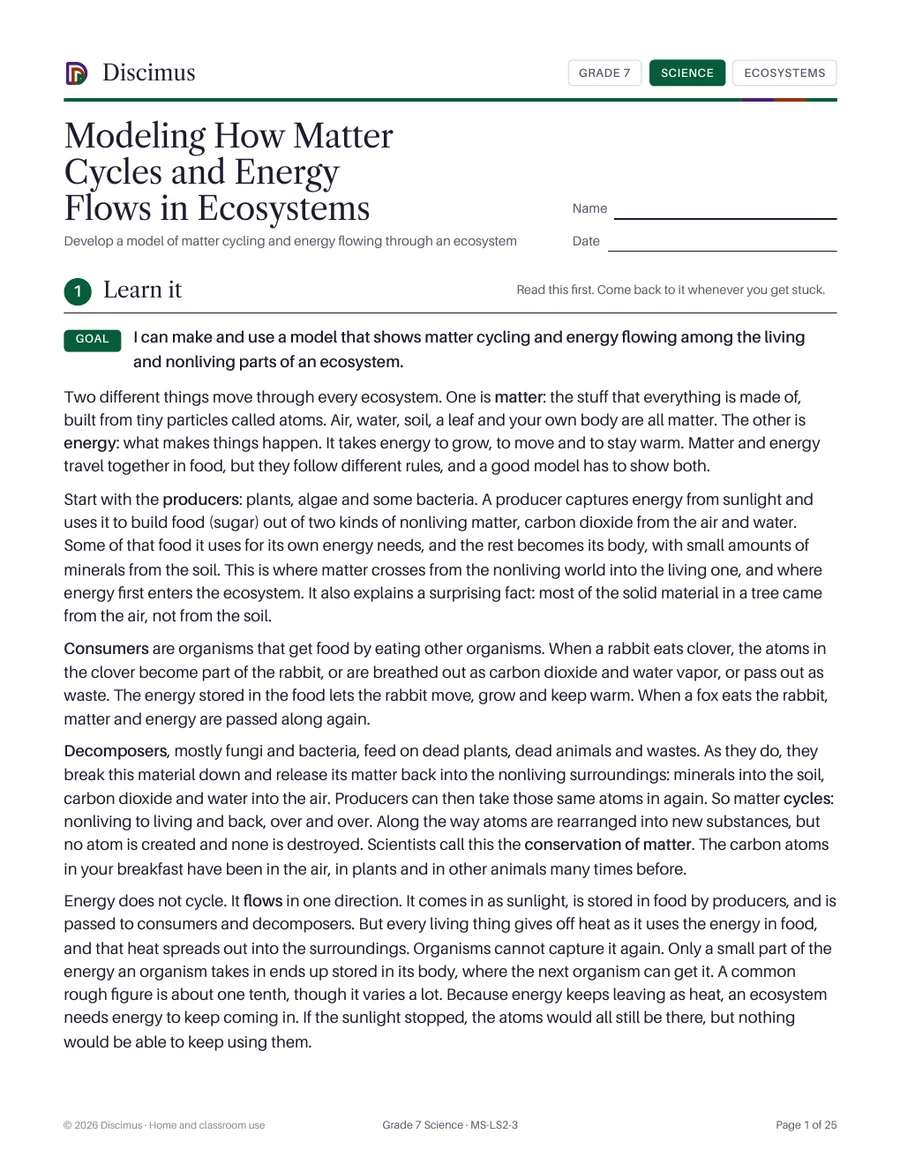
    Modeling How Matter Cycles and Energy Flows in Ecosystems

    Develop a model of matter cycling and energy flowing through an ecosystem
  • ScienceGrade 7

    Mutations: How a Changed Gene Can Change a Protein and a Trait

    Model how a gene mutation may change a protein and help, harm or not affect an organism
  • ScienceGrade 7

    Photosynthesis: How Plants Make Food

    Explain from evidence how photosynthesis cycles matter and moves energy through organisms
  • ScienceGrade 7

    Prove It: Citing Evidence in Science and Technical Texts

    Cite specific evidence, including data, to support analysis of science texts
  • ScienceGrade 7

    Reading Patterns in the Fossil Record

    Analyze rock layer and fossil data for patterns of diversity, extinction and change
  • ScienceGrade 7

    Reading Science and Technical Texts on Your Own

    Read and understand grade 6 to 8 science and technical texts independently
  • ScienceGrade 7

    Resources and Populations: Reading the Evidence

    Analyze data for evidence of how resource availability affects organisms and populations
  • ScienceGrade 7

    Science Text and Visuals: Tables, Graphs, Diagrams and Flowcharts

    Combine numbers and details in a science text with a table, graph, diagram or flowchart
  • ScienceGrade 7

    Sensory Receptors: Messages to the Brain

    Gather and combine information on how receptors signal the brain for behavior or memory
  • Free sample

    ScienceGrade 7

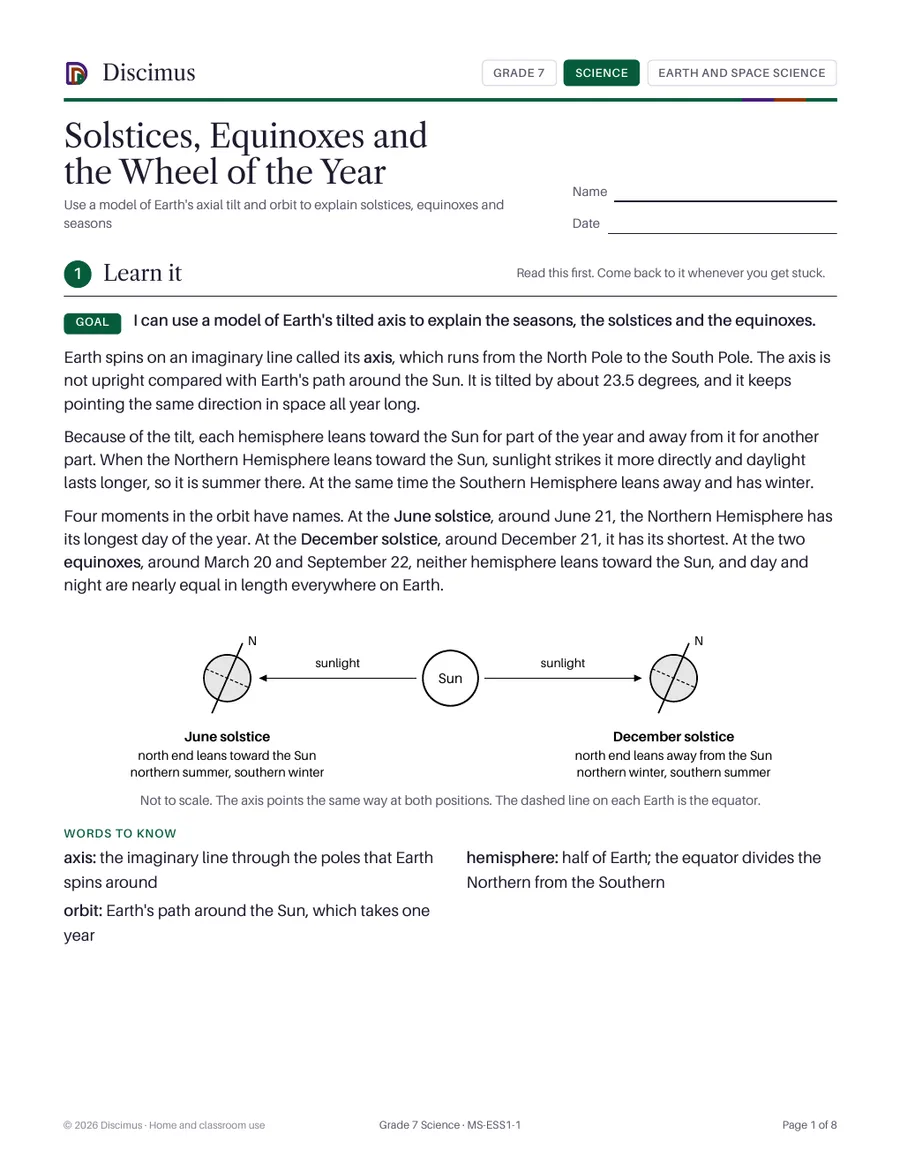
    Solstices, Equinoxes and the Wheel of the Year

    Use a model of Earth's axial tilt and orbit to explain solstices, equinoxes and seasons
  • ScienceGrade 7

    Speaking Science: Symbols, Key Terms and Technical Words

    Determine the meaning of symbols, key terms and technical words in a science context
  • ScienceGrade 7

    Step by Step: Following Science Procedures Precisely

    Follow a multistep science procedure precisely in experiments, measurements and tasks
  • ScienceGrade 7

    The Big Idea: Central Ideas and Summaries of Science Texts

    Find the central idea or conclusion of a science text and write an objective summary
  • ScienceGrade 7

    The Body as a System of Interacting Systems

    Argue from evidence that the body is a system of interacting systems built from cells
  • ScienceGrade 7

    Using Math to Track Natural Selection Over Time

    Use percents, means, models and graphs to explain how traits rise or fall over generations
  • ScienceGrade 7

    Why Science Authors Explain, Instruct and Report

    Analyze why a science author explains, describes a procedure or discusses an experiment

Discimus

Docendo discimus. By teaching, we learn.

By age

  • Early Childhood
  • Elementary School
  • Middle School
  • High School
  • All grades

By subject

  • Math
  • English Language Arts
  • Science
  • Social Studies
  • Foreign Language
  • Technology

Discimus

  • Membership
  • Occasions
  • Standards
  • About
  • Contact

© 2026 Ceterum. All rights reserved. Worksheets are for home and single-classroom use.

  • Terms
  • Privacy