Angle Facts: Triangles, Parallel Lines and AA Similarity
Use and explain angle facts for triangles, parallel lines and AA similarity
Common Core State Standards for Mathematics
From counting to calculus, one skill at a time.
Use and explain angle facts for triangles, parallel lines and AA similarity
Approximate irrational numbers with rational numbers to compare, locate and estimate
Compare properties of two functions given in different representations
Describe a sequence of rigid motions that shows two figures are congruent
Describe a functional relationship from a graph and sketch a graph from a description
Estimate quantities as a single digit times a power of 10 and compare them by division
Informally fit a straight line to a scatter plot and assess how well it fits
Graph proportional relationships, read the unit rate as slope, and compare representations
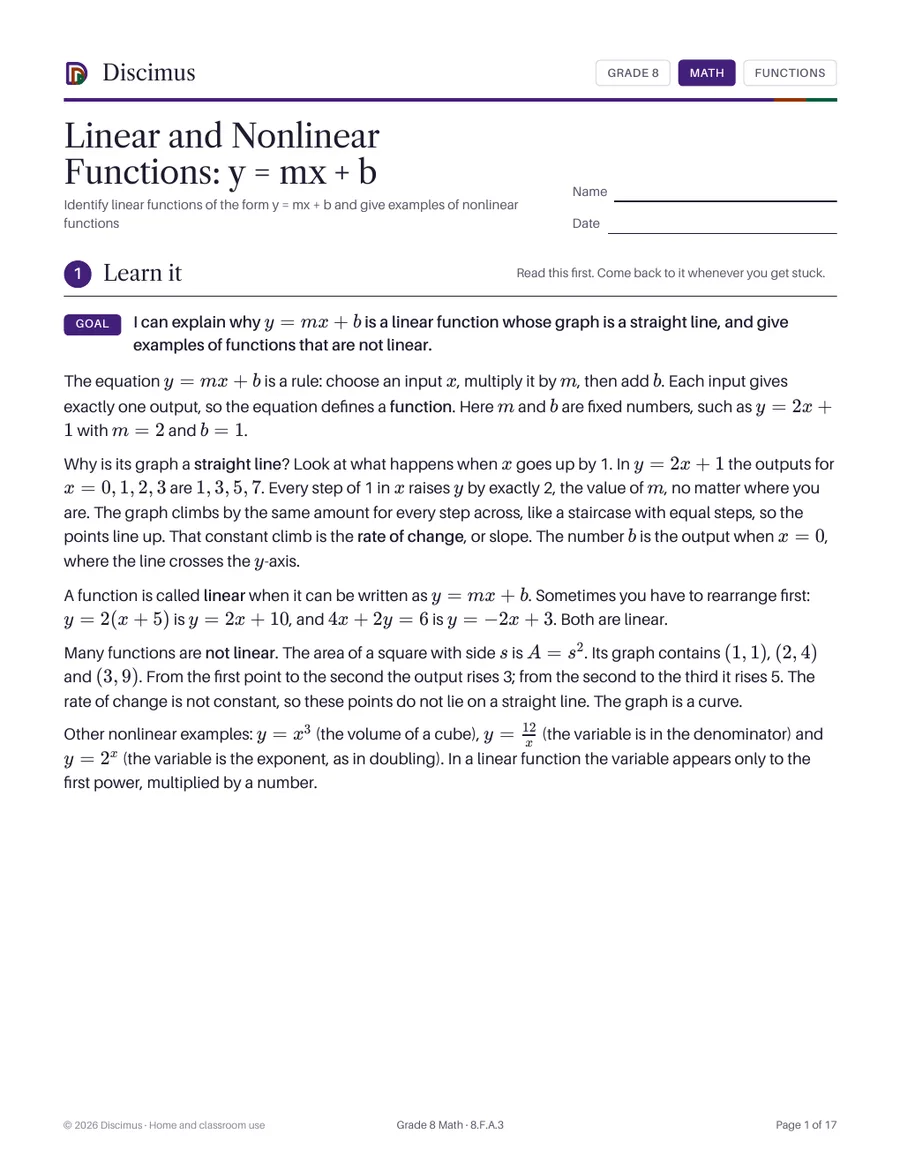
Identify linear functions of the form y = mx + b and give examples of nonlinear functions
 Free sample
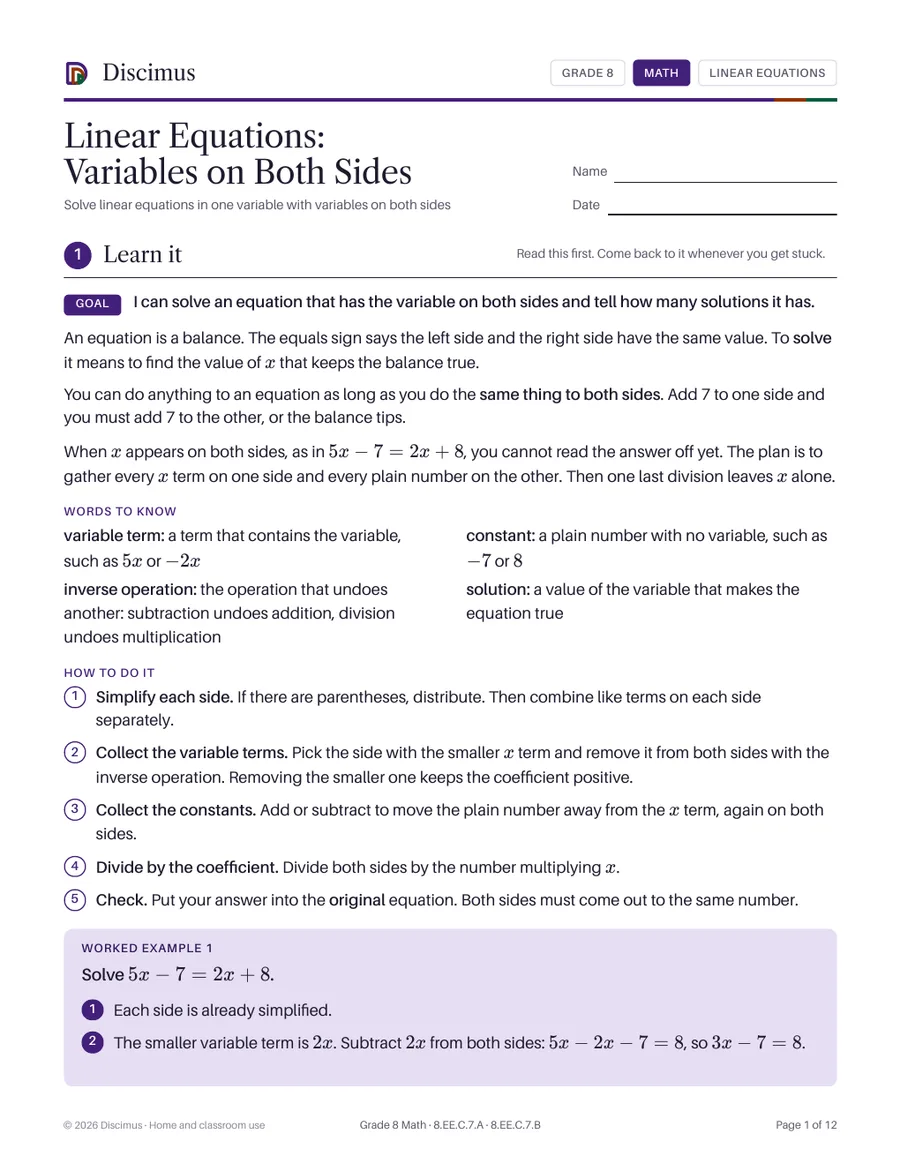
Solve linear equations in one variable with variables on both sides
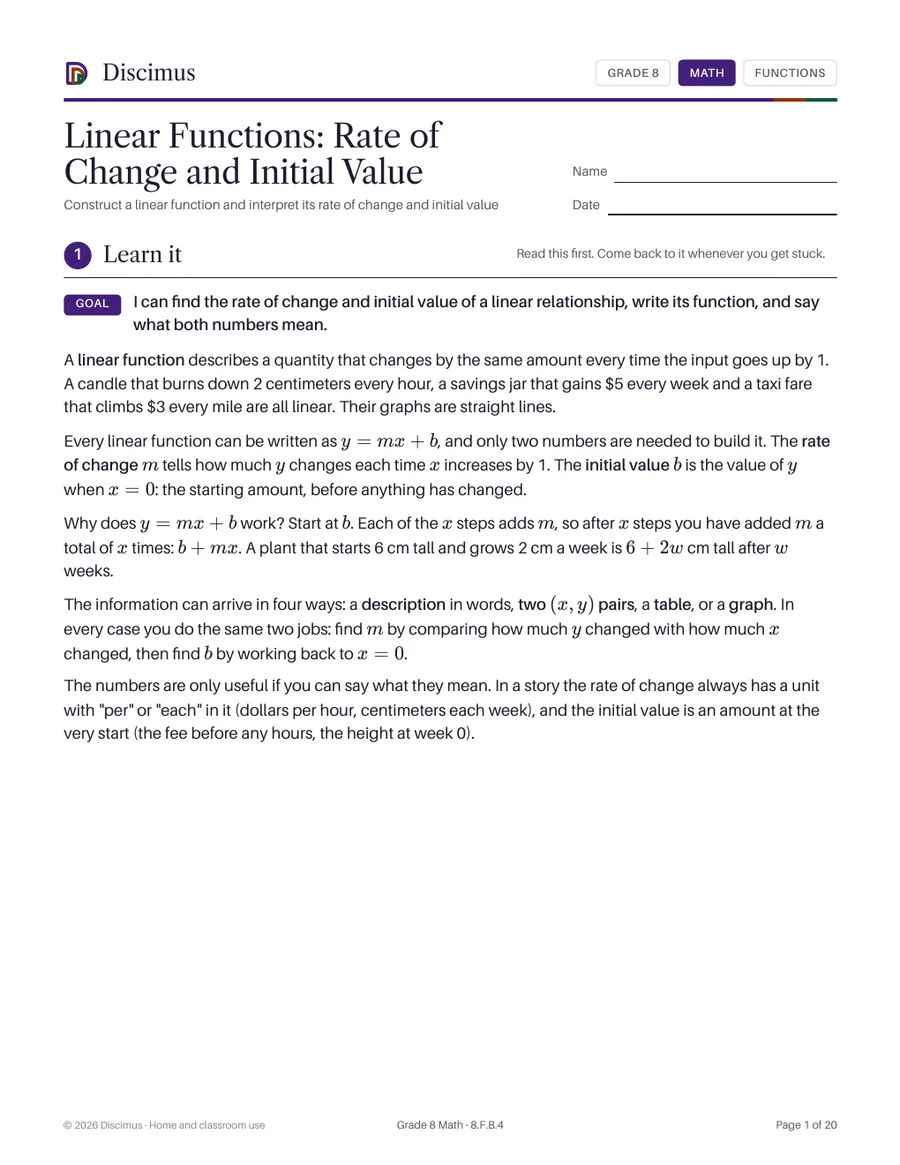
Construct a linear function and interpret its rate of change and initial value
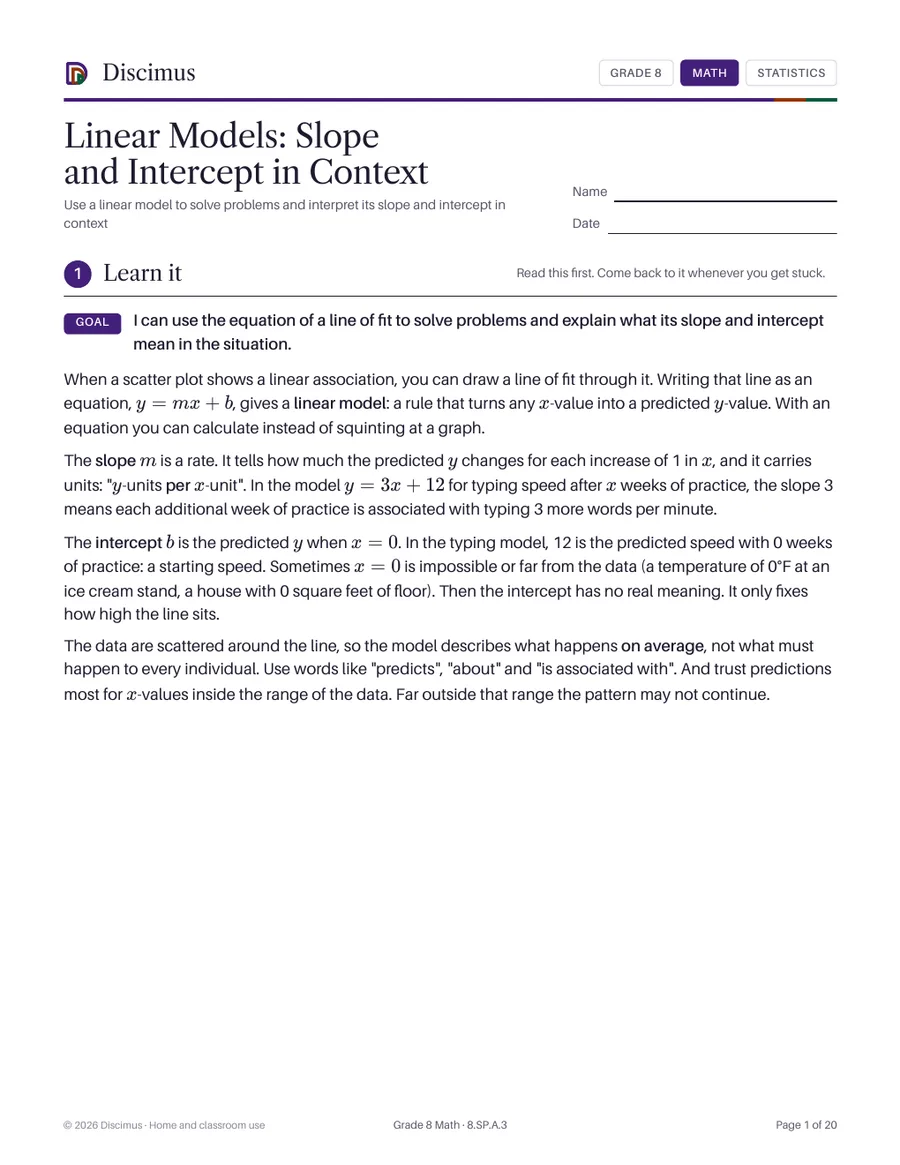
Use a linear model to solve problems and interpret its slope and intercept in context
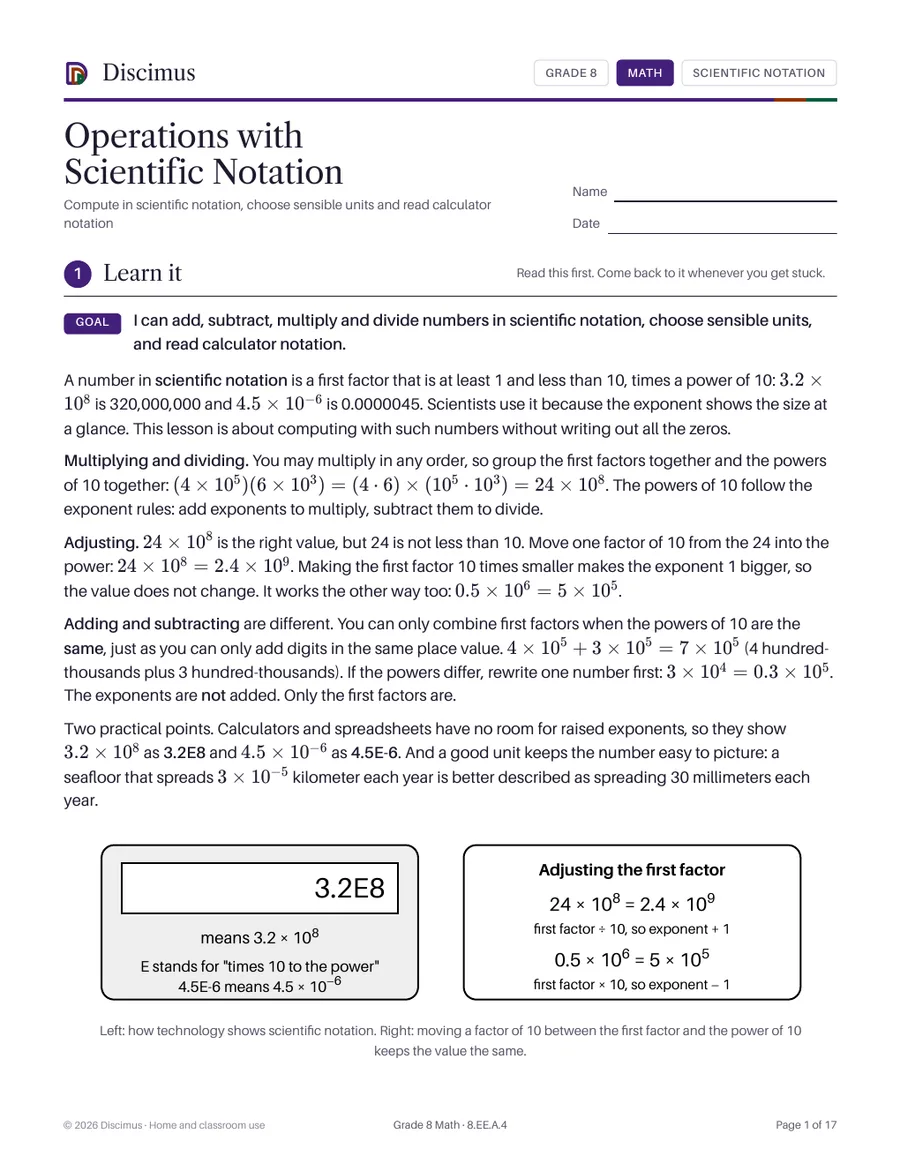
Compute in scientific notation, choose sensible units and read calculator notation
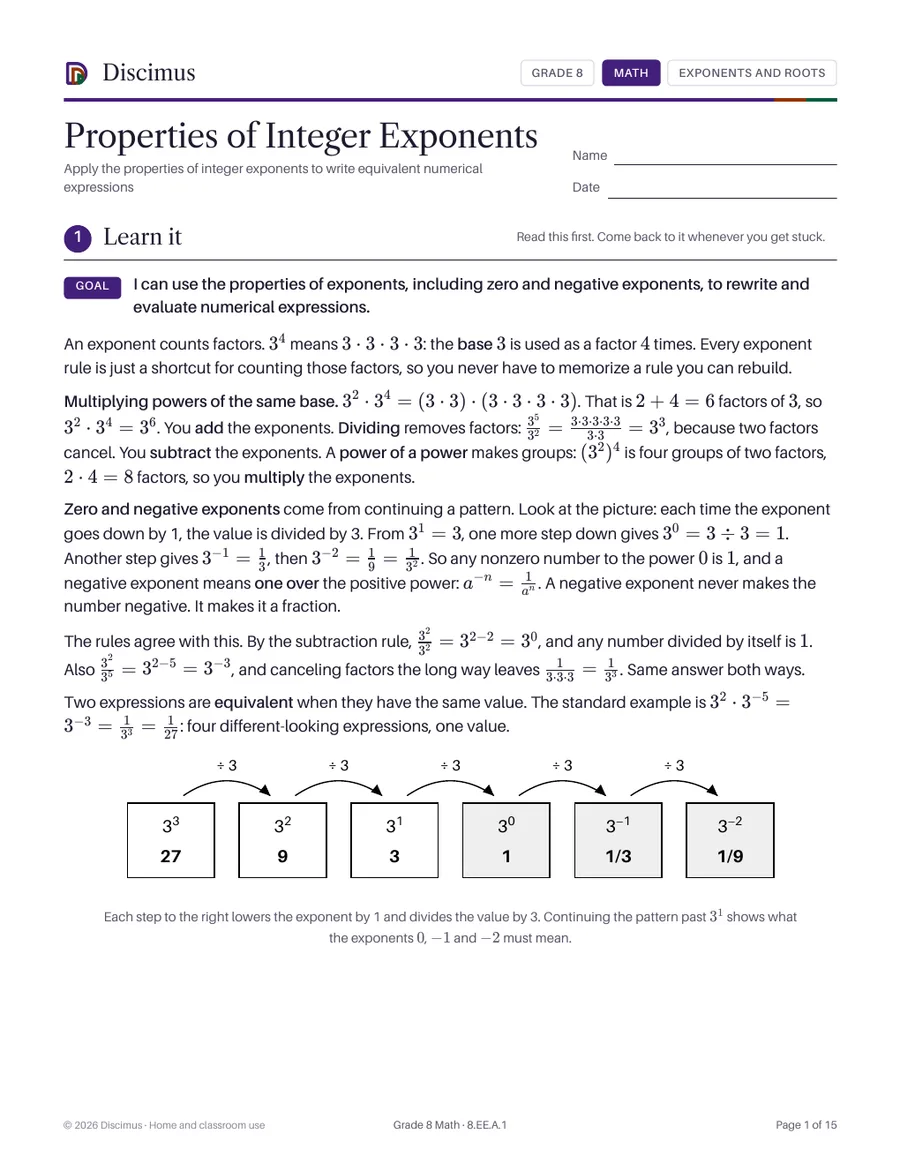
Apply the properties of integer exponents to write equivalent numerical expressions
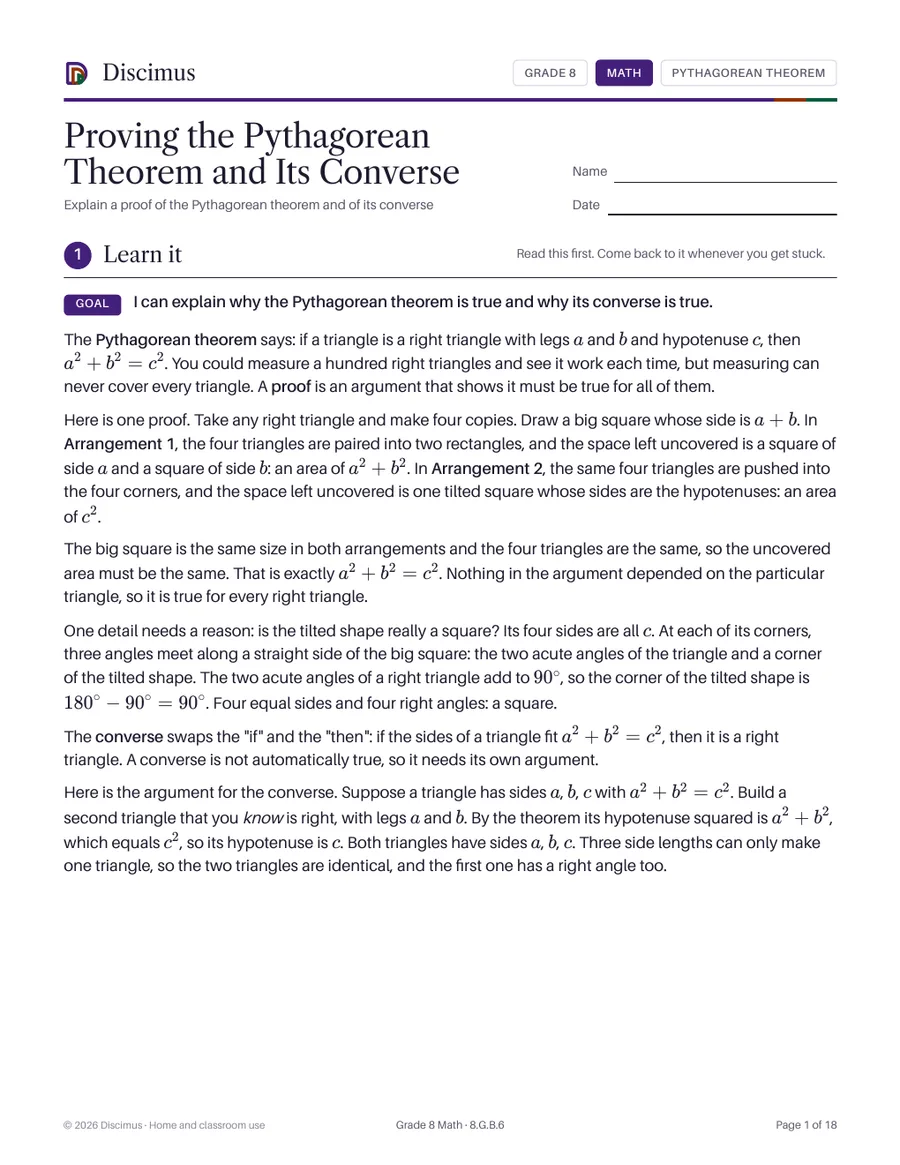
Explain a proof of the Pythagorean theorem and of its converse
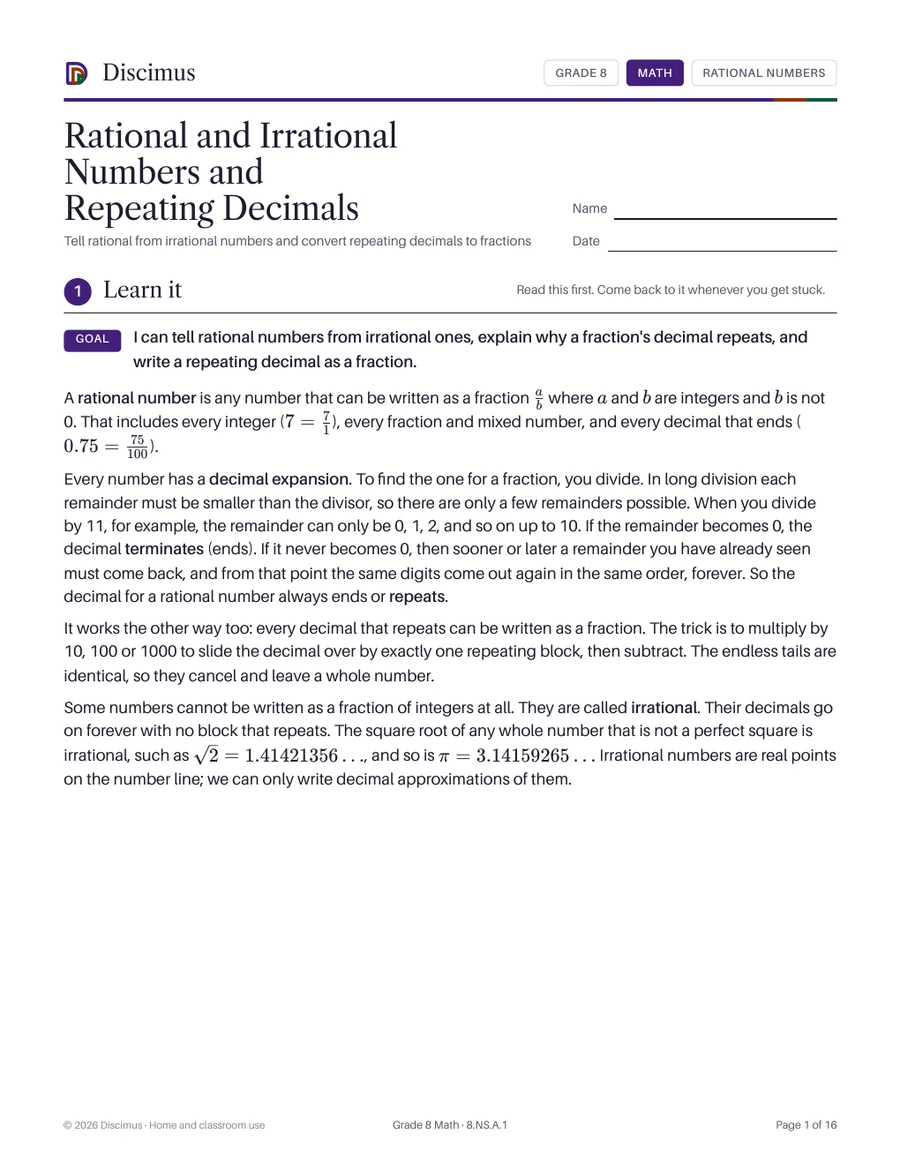
Tell rational from irrational numbers and convert repeating decimals to fractions
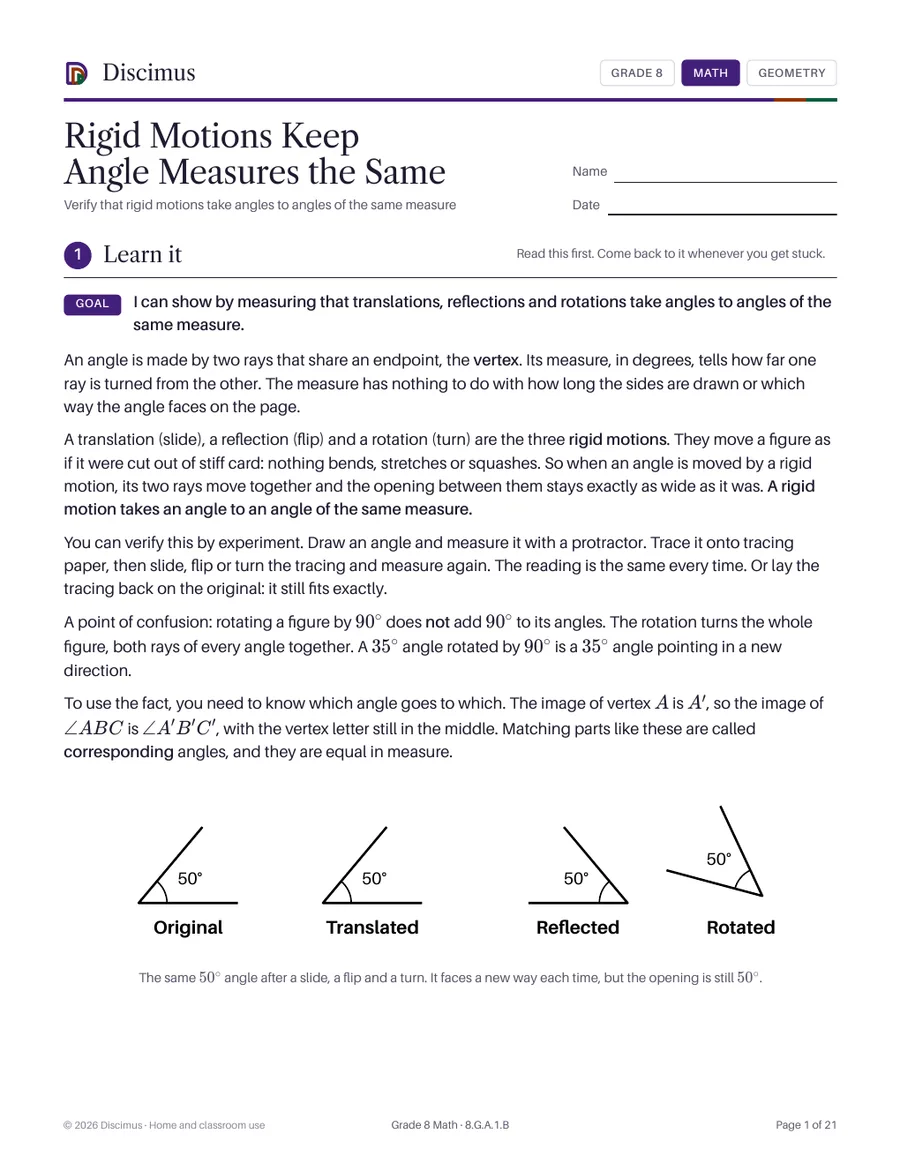
Verify that rigid motions take angles to angles of the same measure
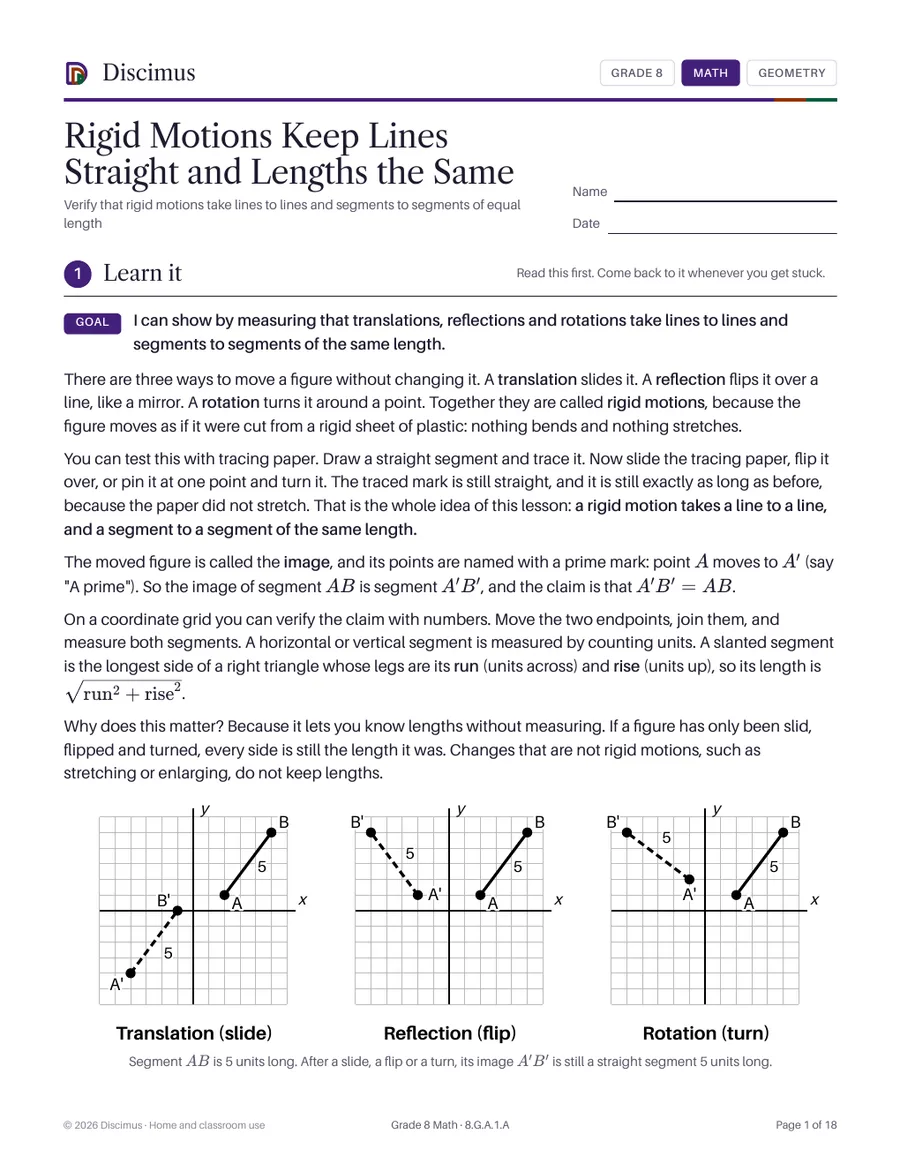
Verify that rigid motions take lines to lines and segments to segments of equal length
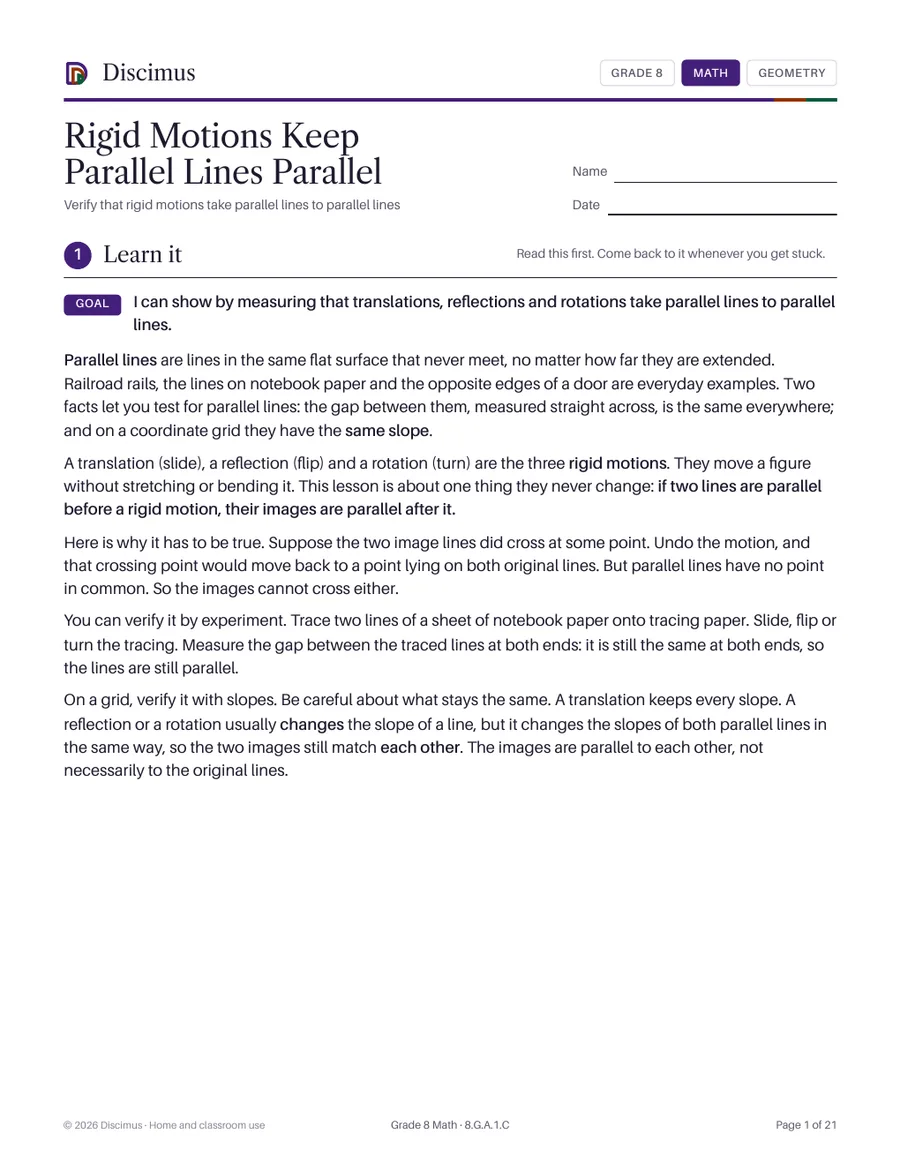
Verify that rigid motions take parallel lines to parallel lines
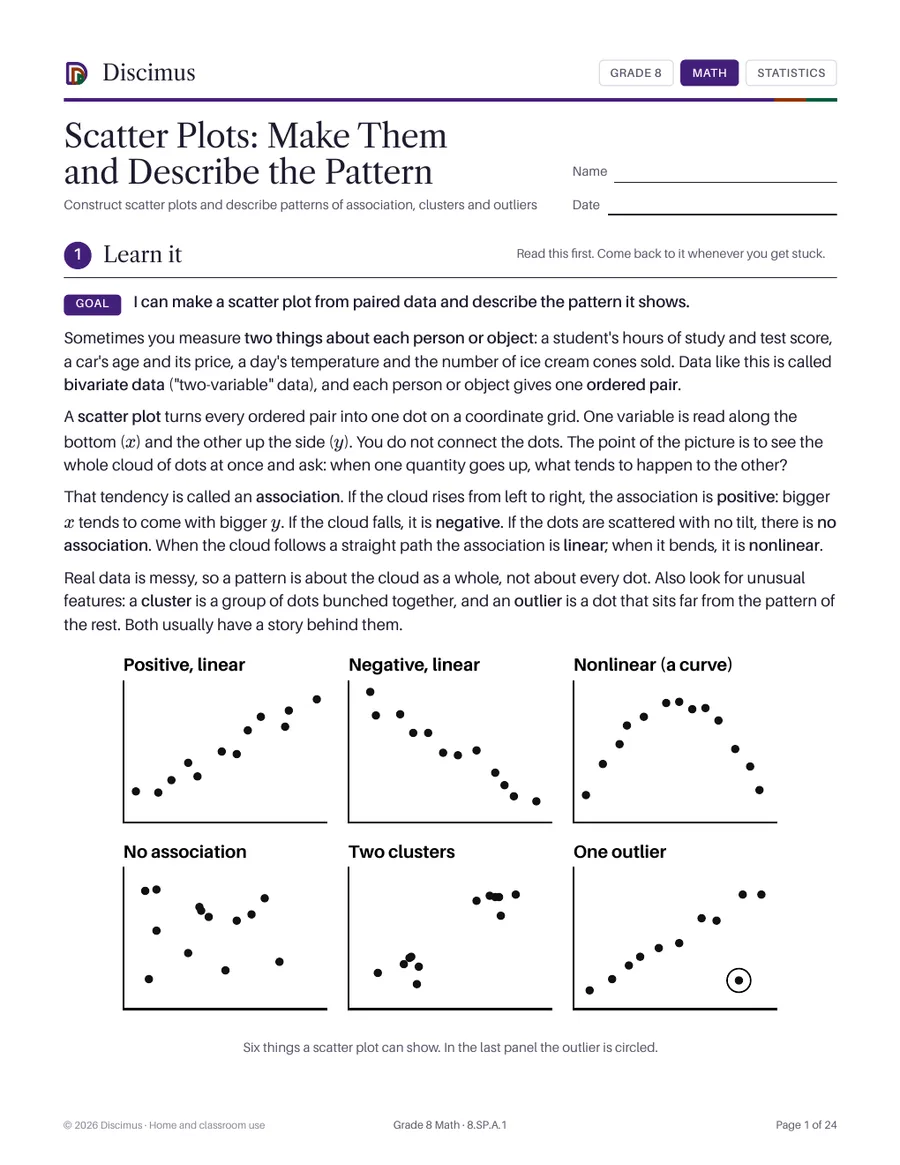
Construct scatter plots and describe patterns of association, clusters and outliers
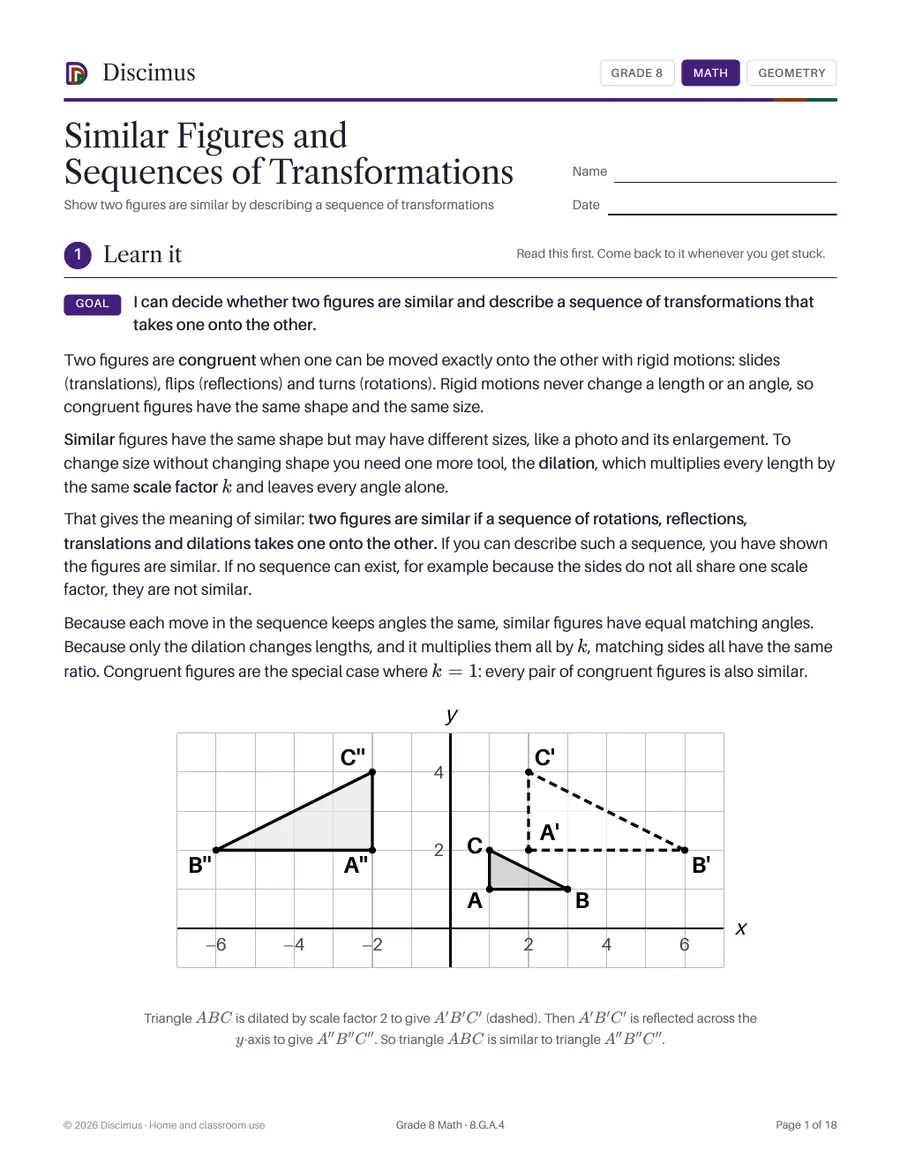
Show two figures are similar by describing a sequence of transformations
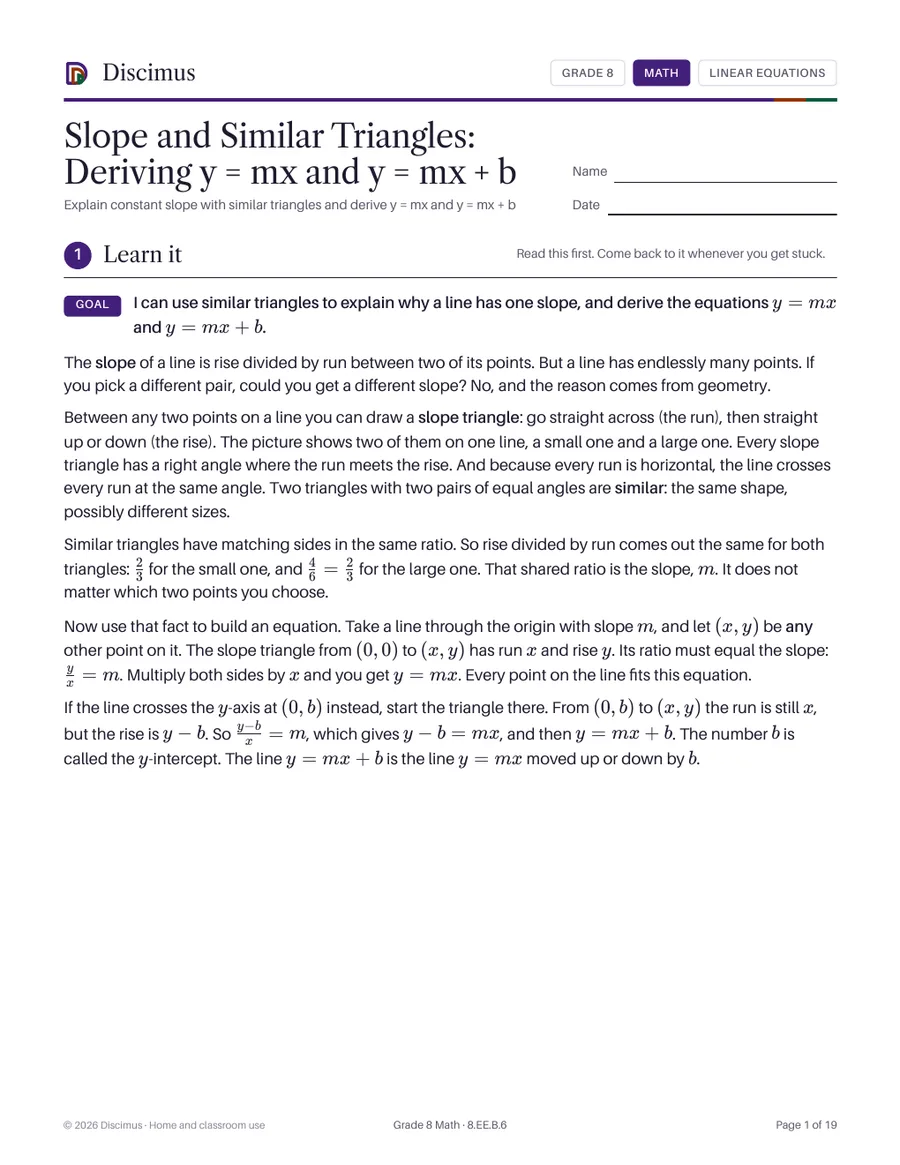
Explain constant slope with similar triangles and derive y = mx and y = mx + b
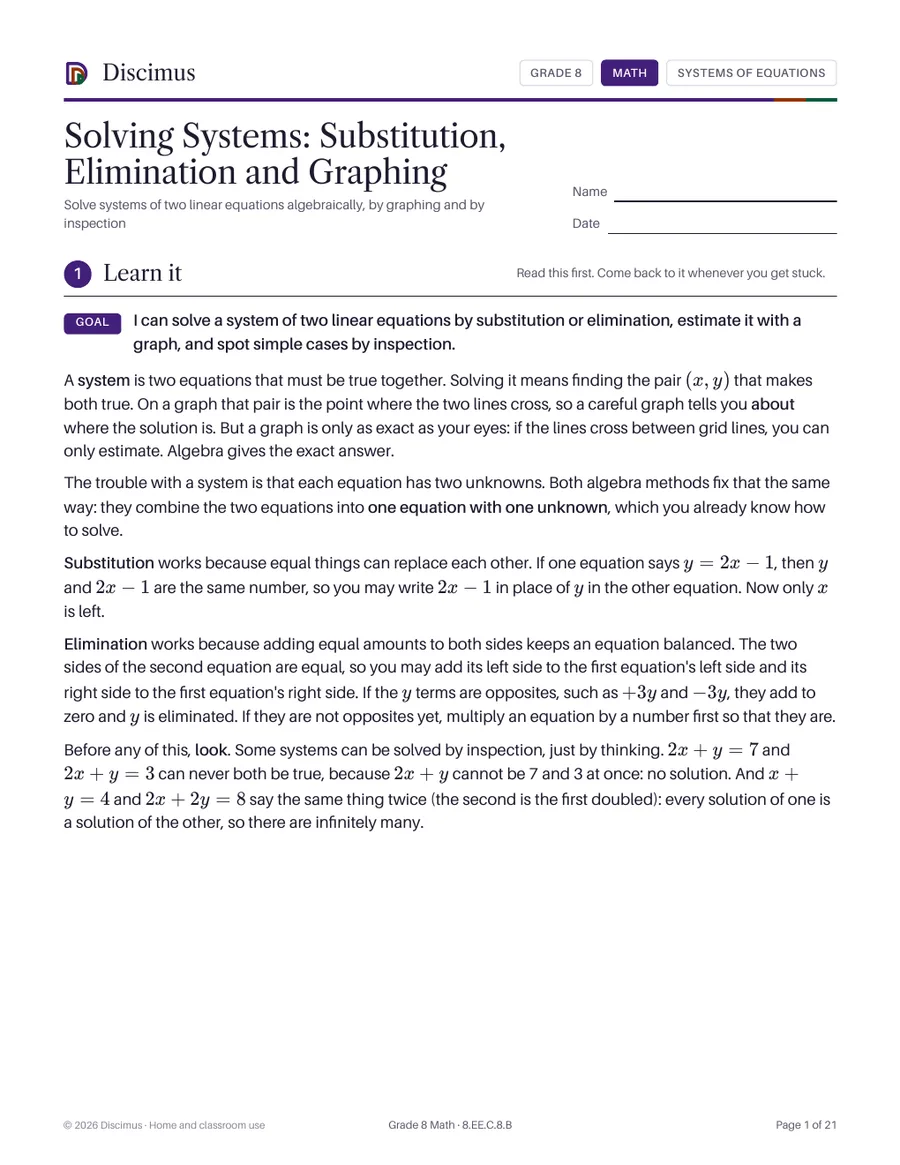
Solve systems of two linear equations algebraically, by graphing and by inspection
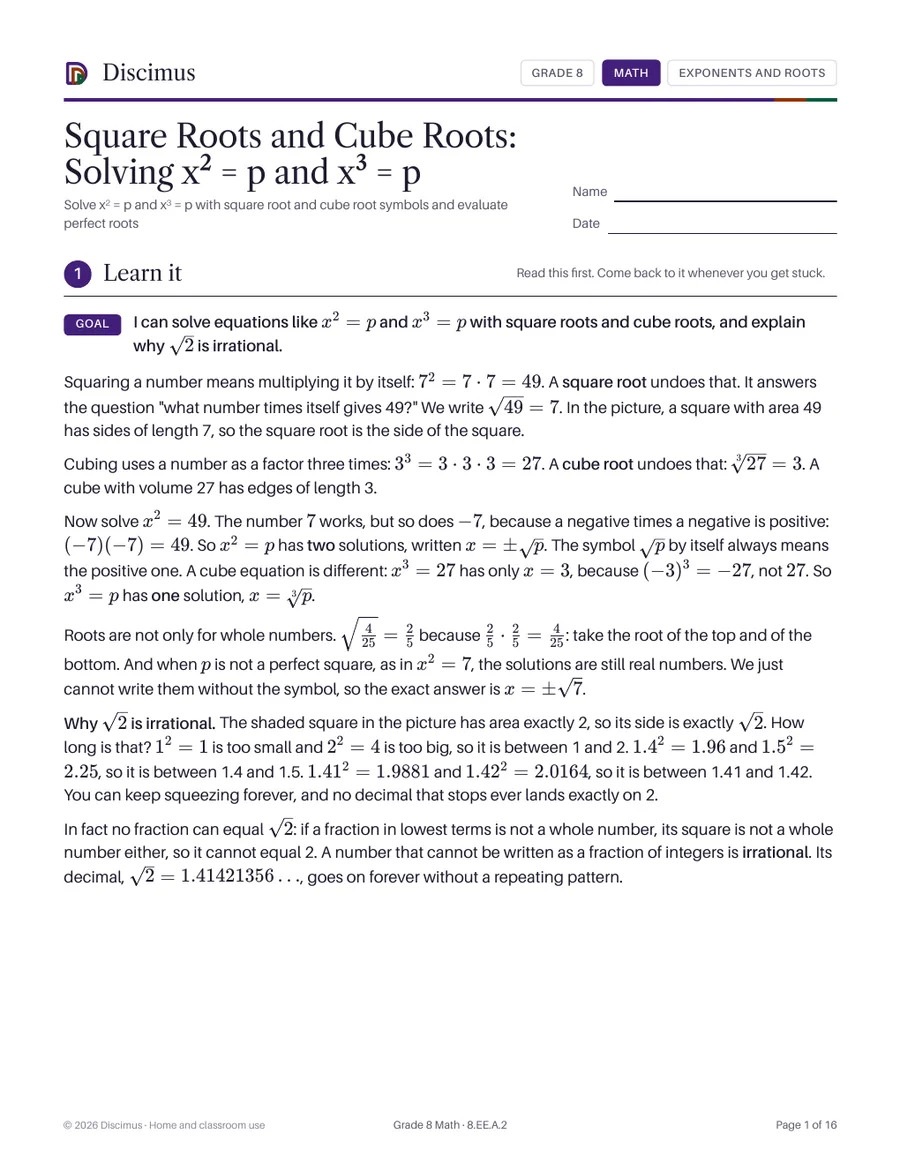
Solve x² = p and x³ = p with square root and cube root symbols and evaluate perfect roots
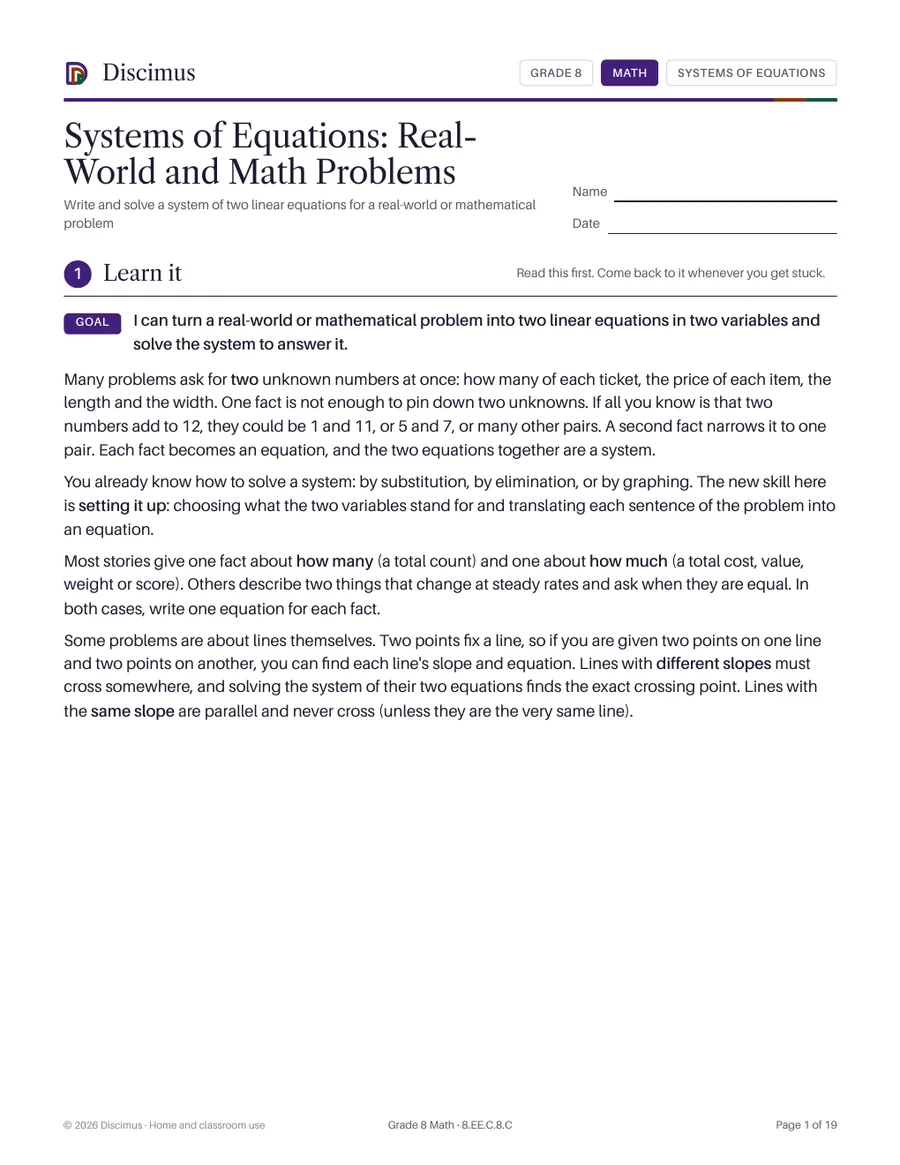
Write and solve a system of two linear equations for a real-world or mathematical problem
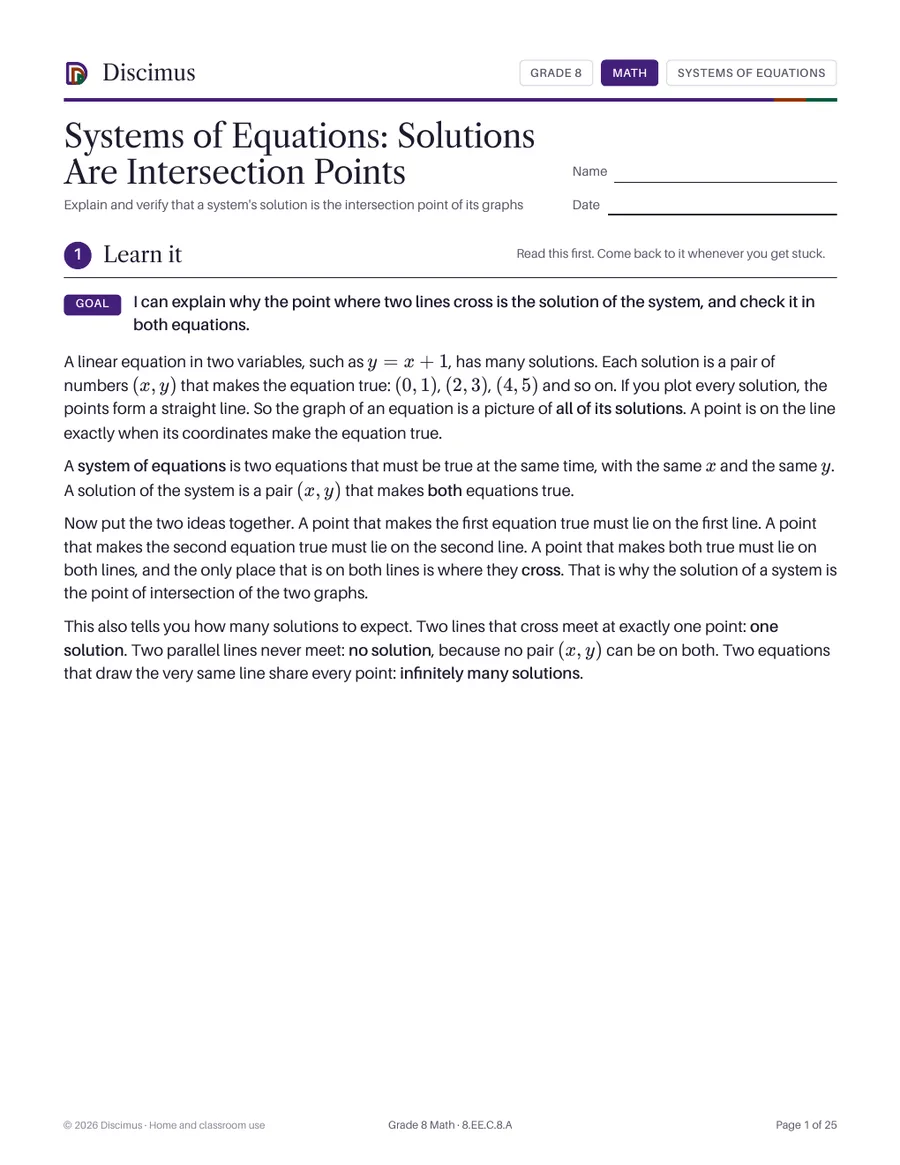
Explain and verify that a system's solution is the intersection point of its graphs
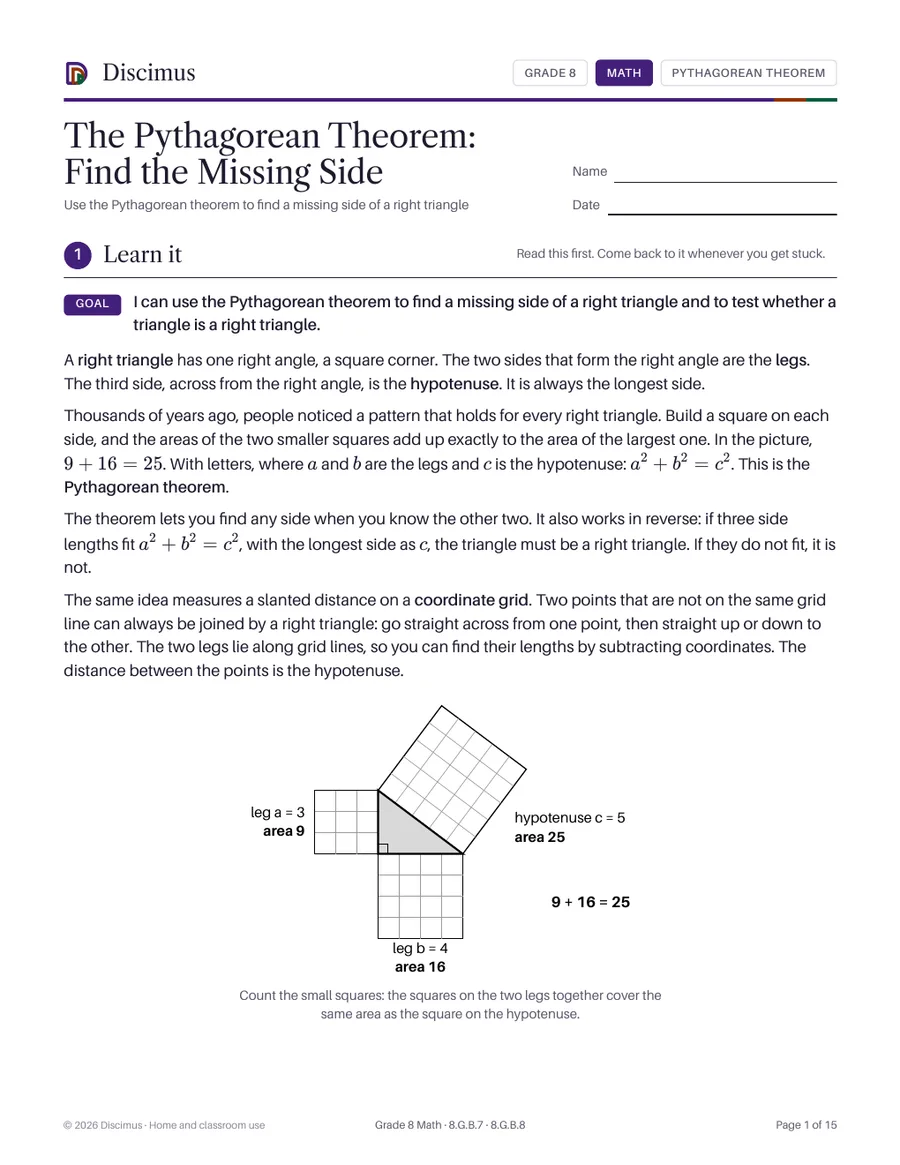
Use the Pythagorean theorem to find a missing side of a right triangle
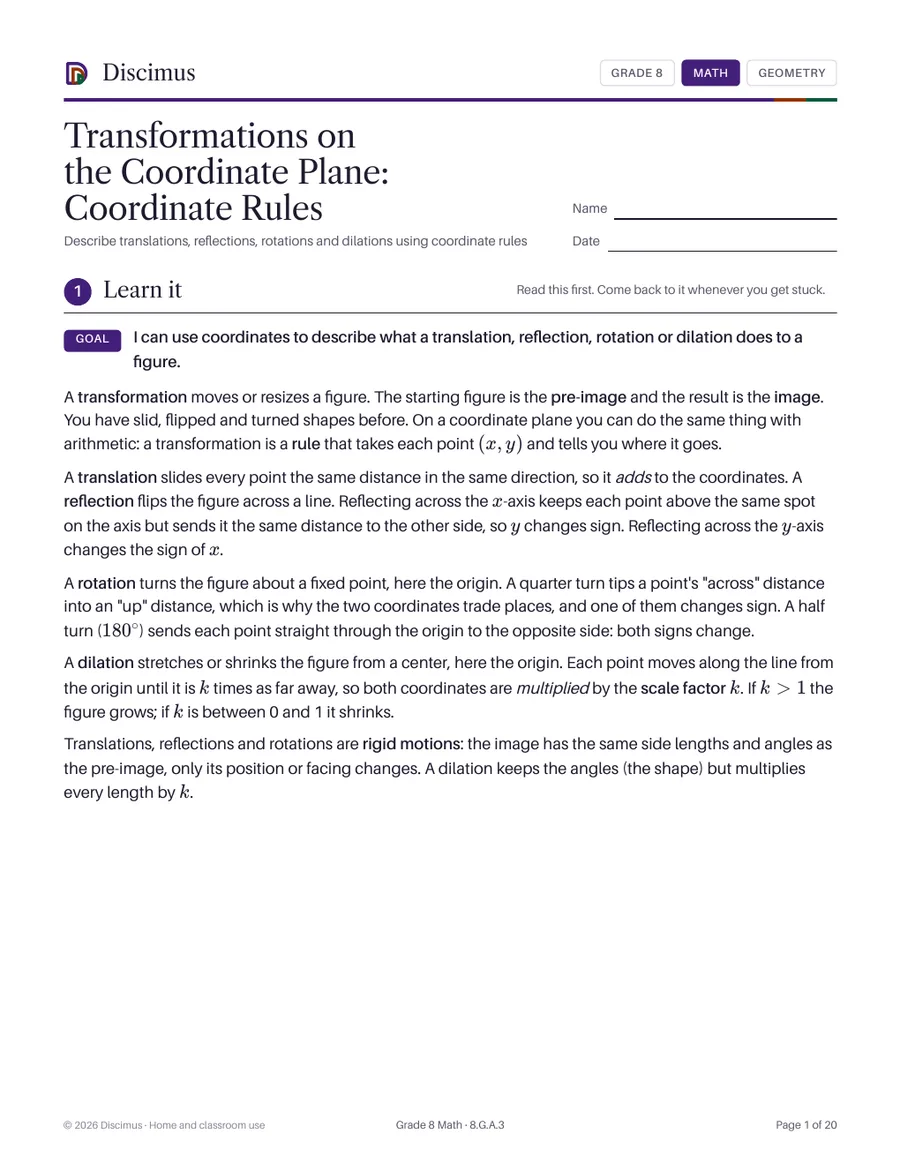
Describe translations, reflections, rotations and dilations using coordinate rules
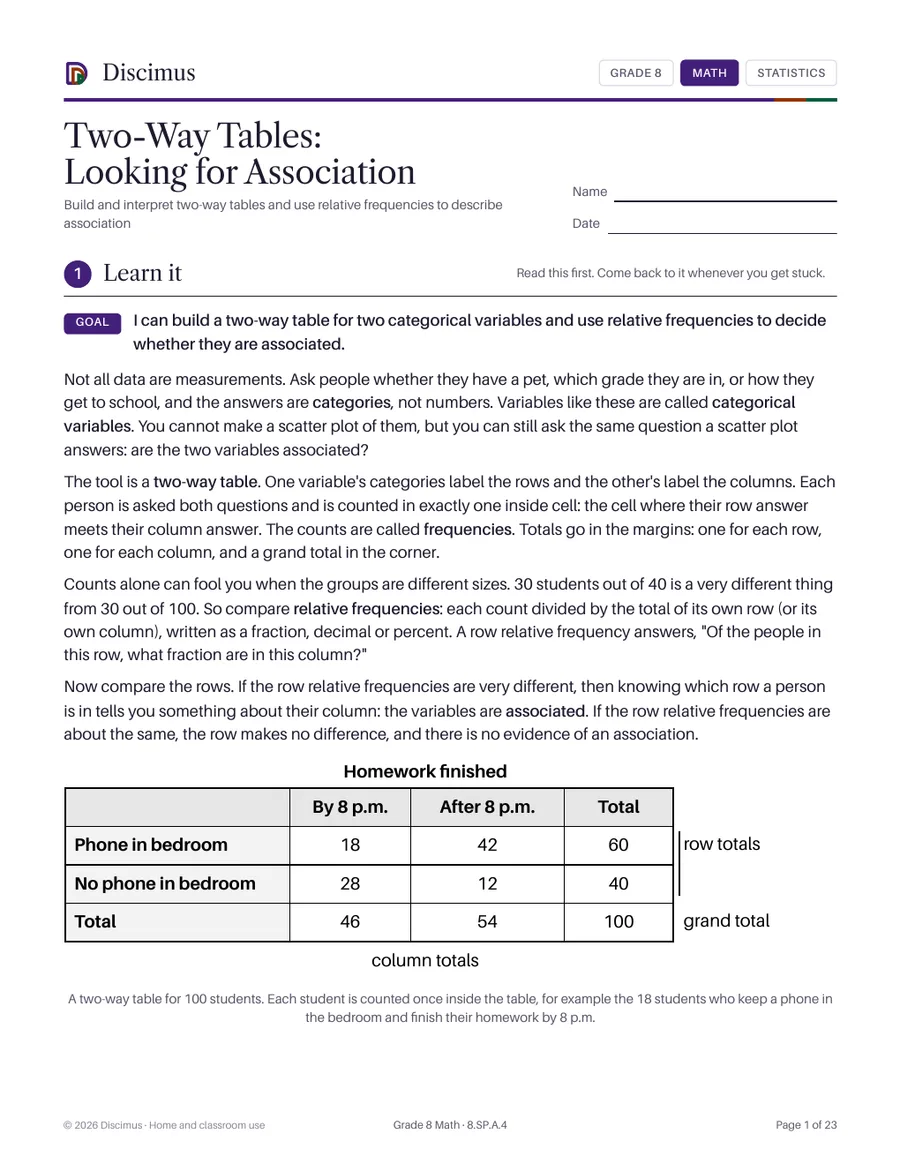
Build and interpret two-way tables and use relative frequencies to describe association
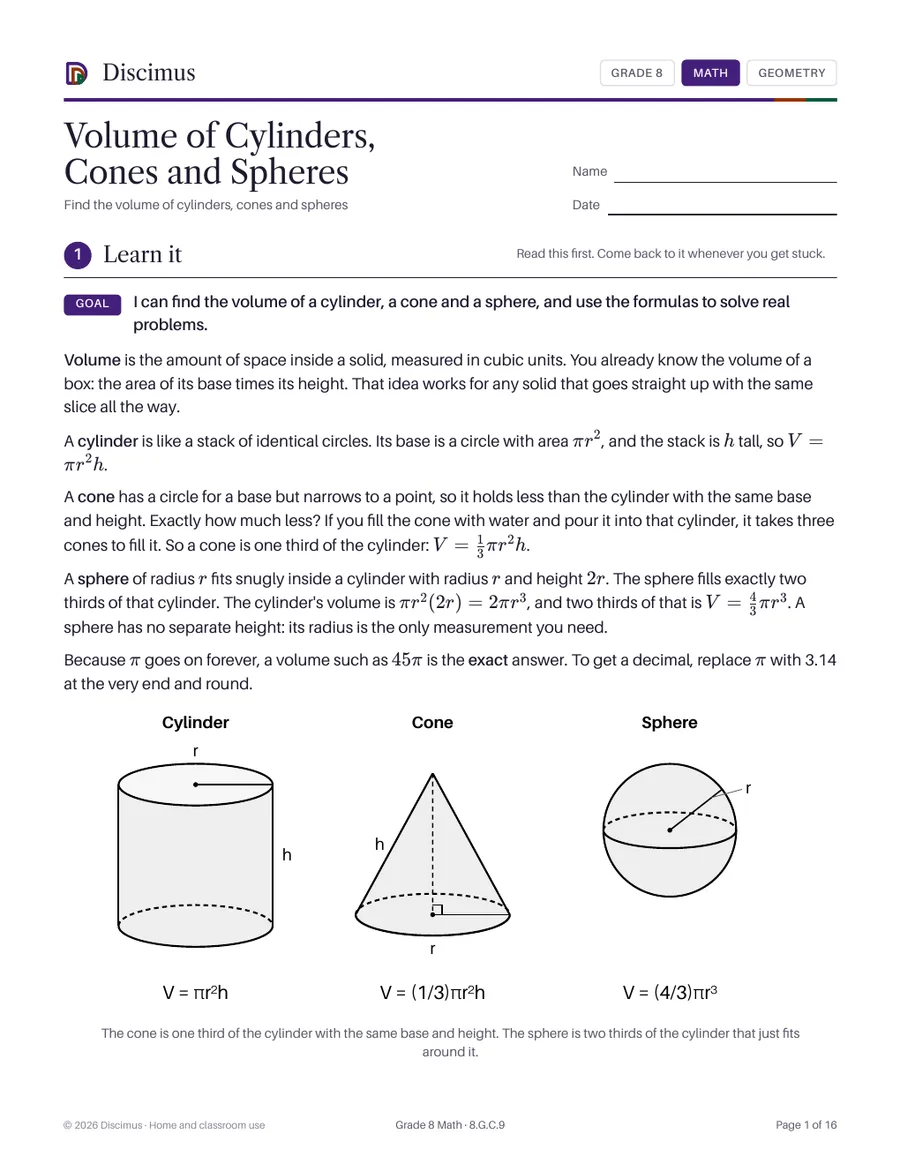
Find the volume of cylinders, cones and spheres
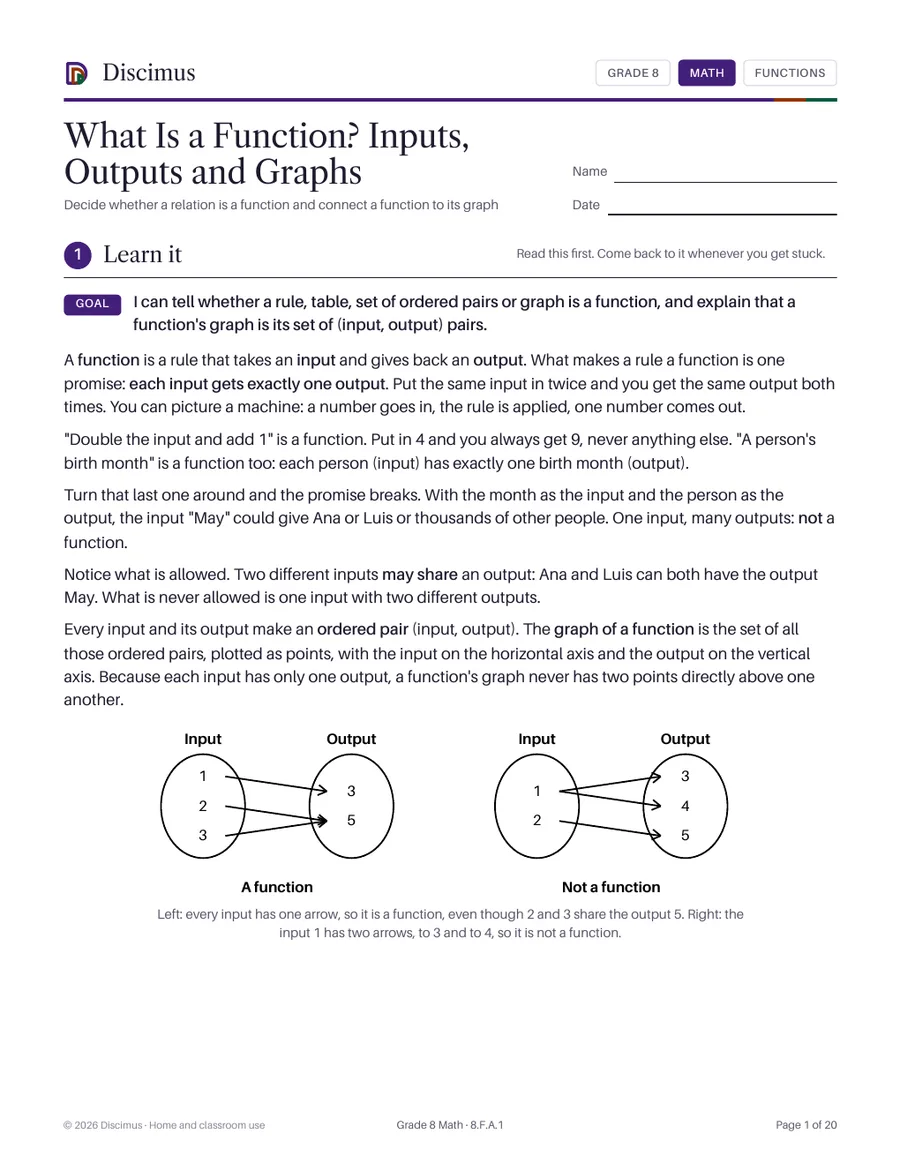
Decide whether a relation is a function and connect a function to its graph