Evaluate an Argument in Writing: Reasoning, Evidence, Fallacies
Evaluate an argument in writing: reasoning, evidence, false claims and fallacies
19 worksheets match.
Evaluate an argument in writing: reasoning, evidence, false claims and fallacies
Develop a topic with well-chosen facts, definitions, details, quotations and examples
Keep a formal style and objective tone and follow the writing norms of a discipline
Introduce a complex topic and organize it to show connections and distinctions
Use precise language and domain-specific vocabulary to explain a complex topic
Use varied, precise transitions to link sections and clarify relationships among ideas
Fit development, organization and style to the task, purpose and audience
Write an informative conclusion that follows from the body and shows its significance
Write an analysis of how an author draws on and transforms source material
Write a narrative conclusion that follows from the events and reflects on their meaning
Use precise words, telling details and sensory language to make narrative vivid
Orient readers to a situation, narrator and point of view, then build a smooth progression
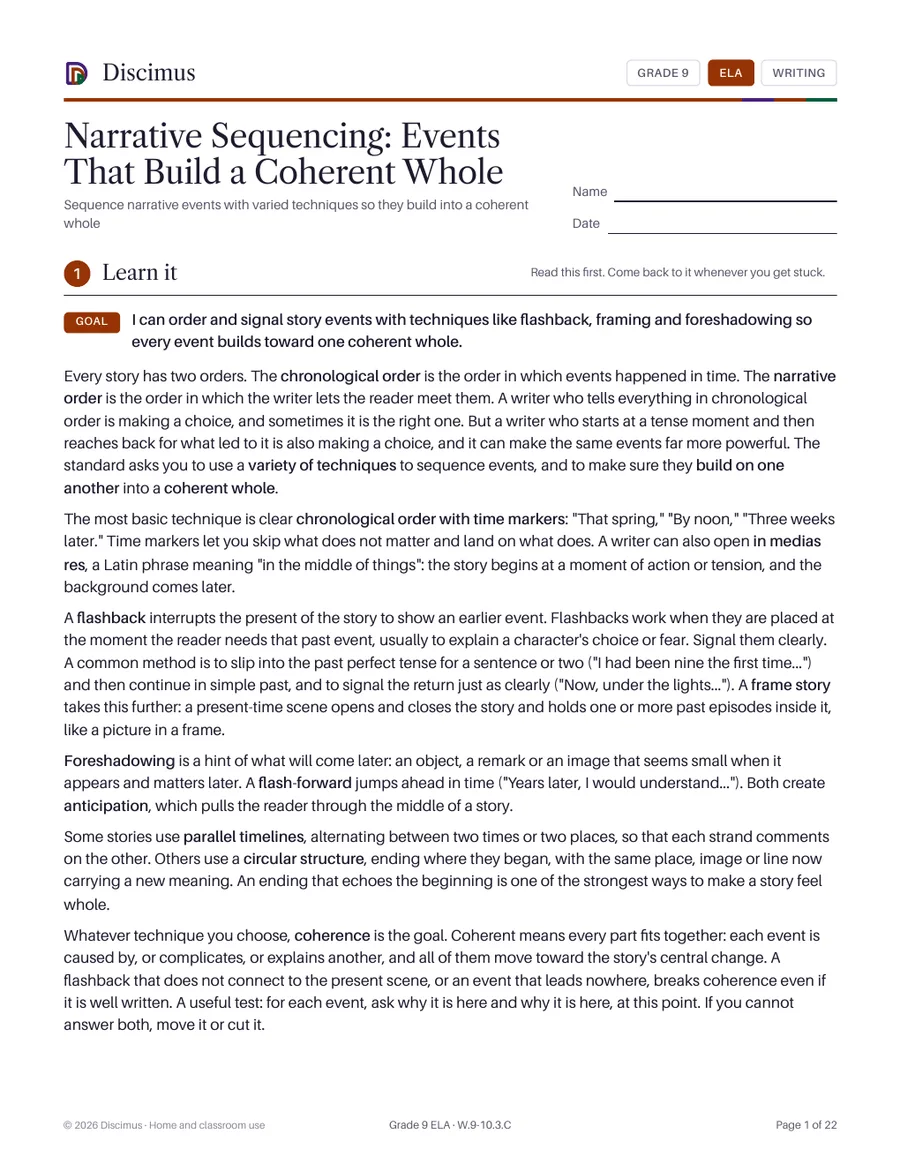
Sequence narrative events with varied techniques so they build into a coherent whole
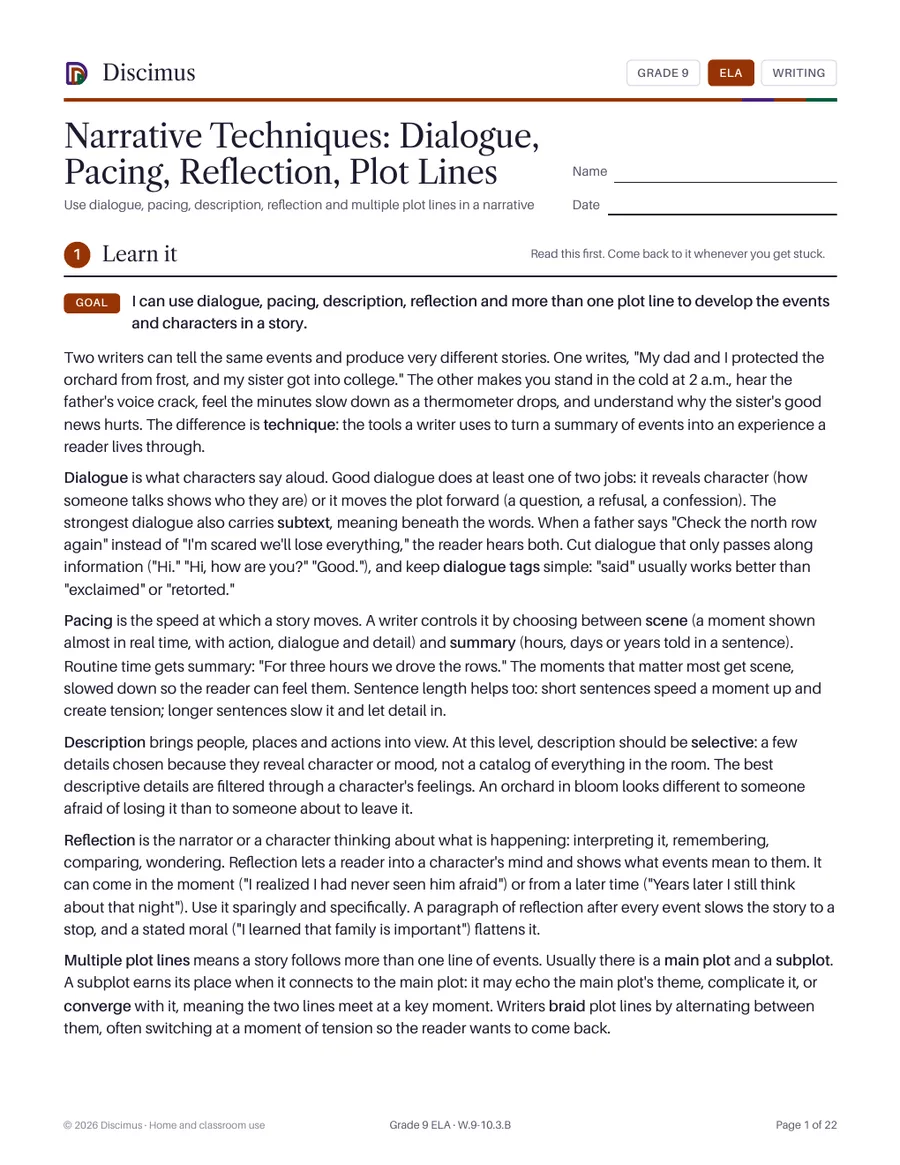
Use dialogue, pacing, description, reflection and multiple plot lines in a narrative
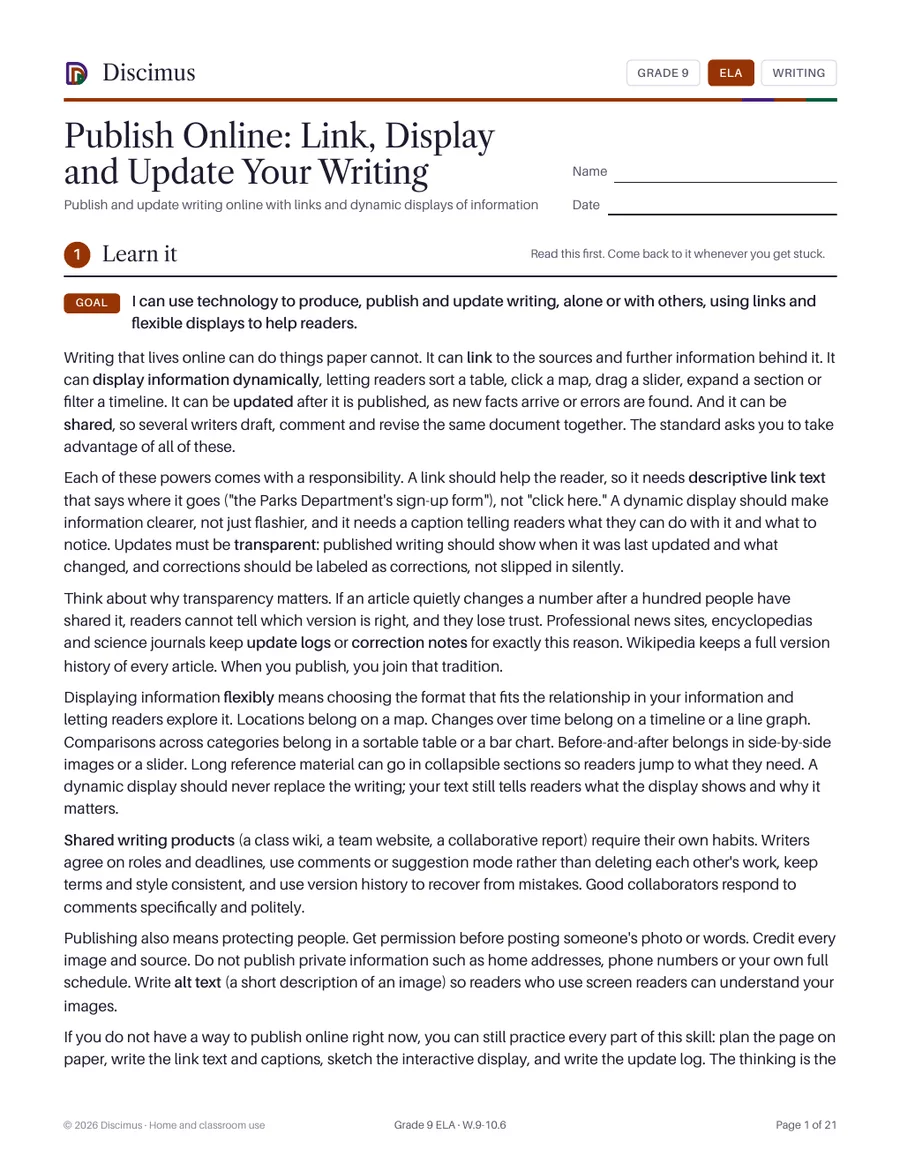
Publish and update writing online with links and dynamic displays of information
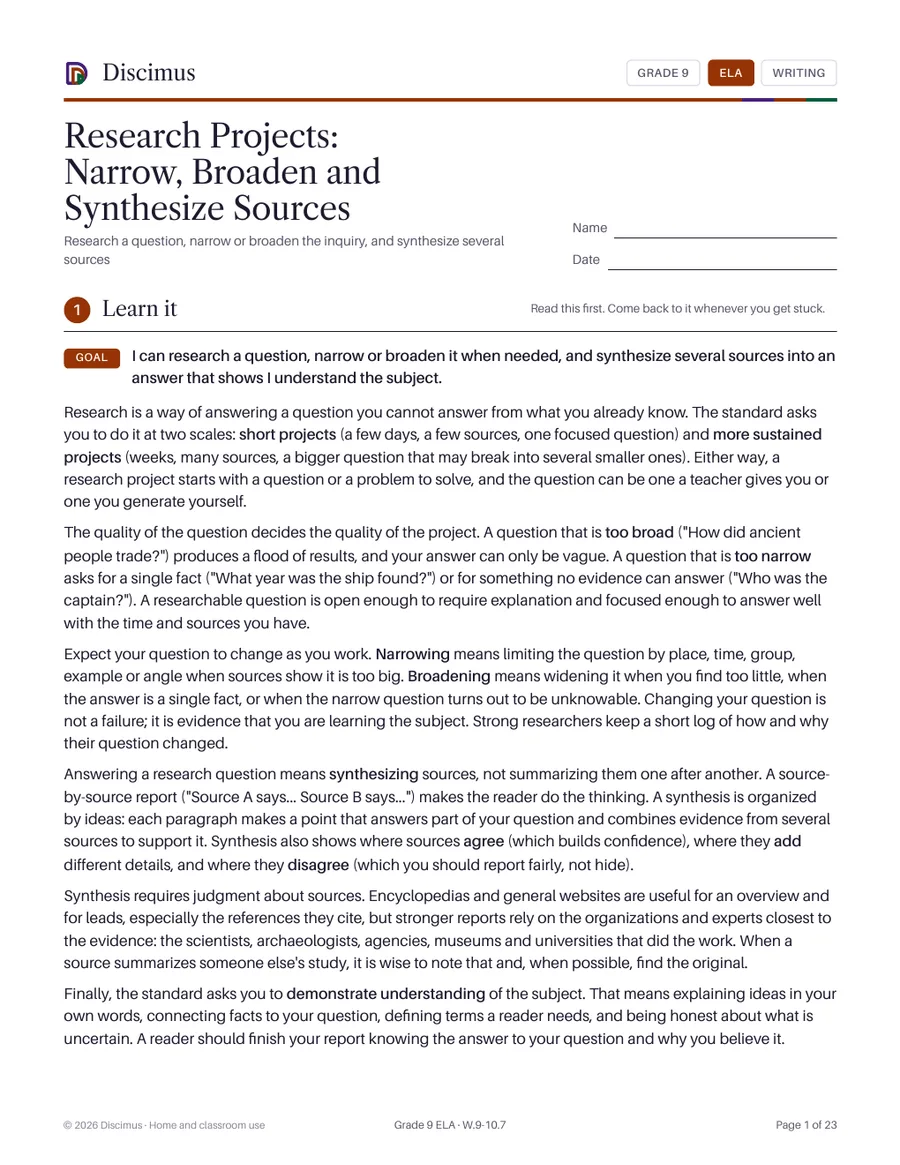
Research a question, narrow or broaden the inquiry, and synthesize several sources
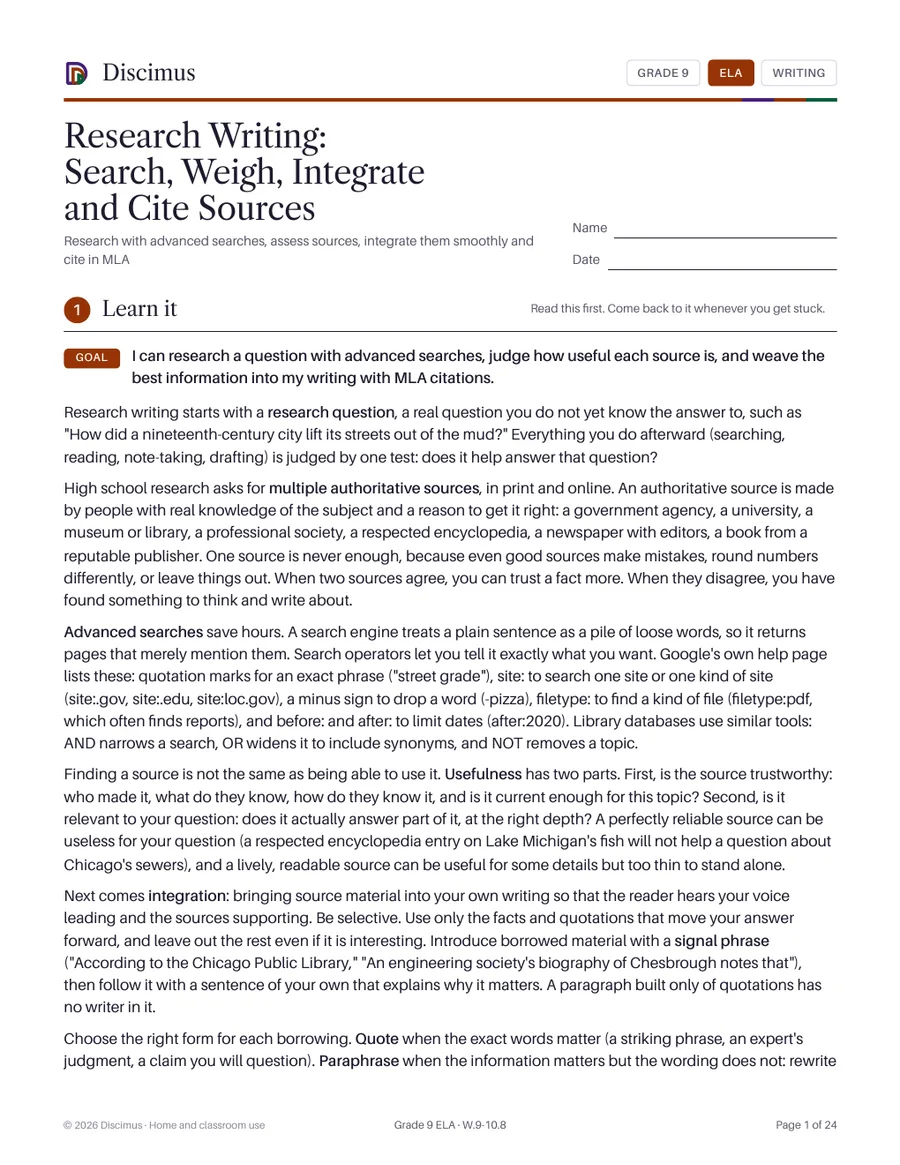
Research with advanced searches, assess sources, integrate them smoothly and cite in MLA
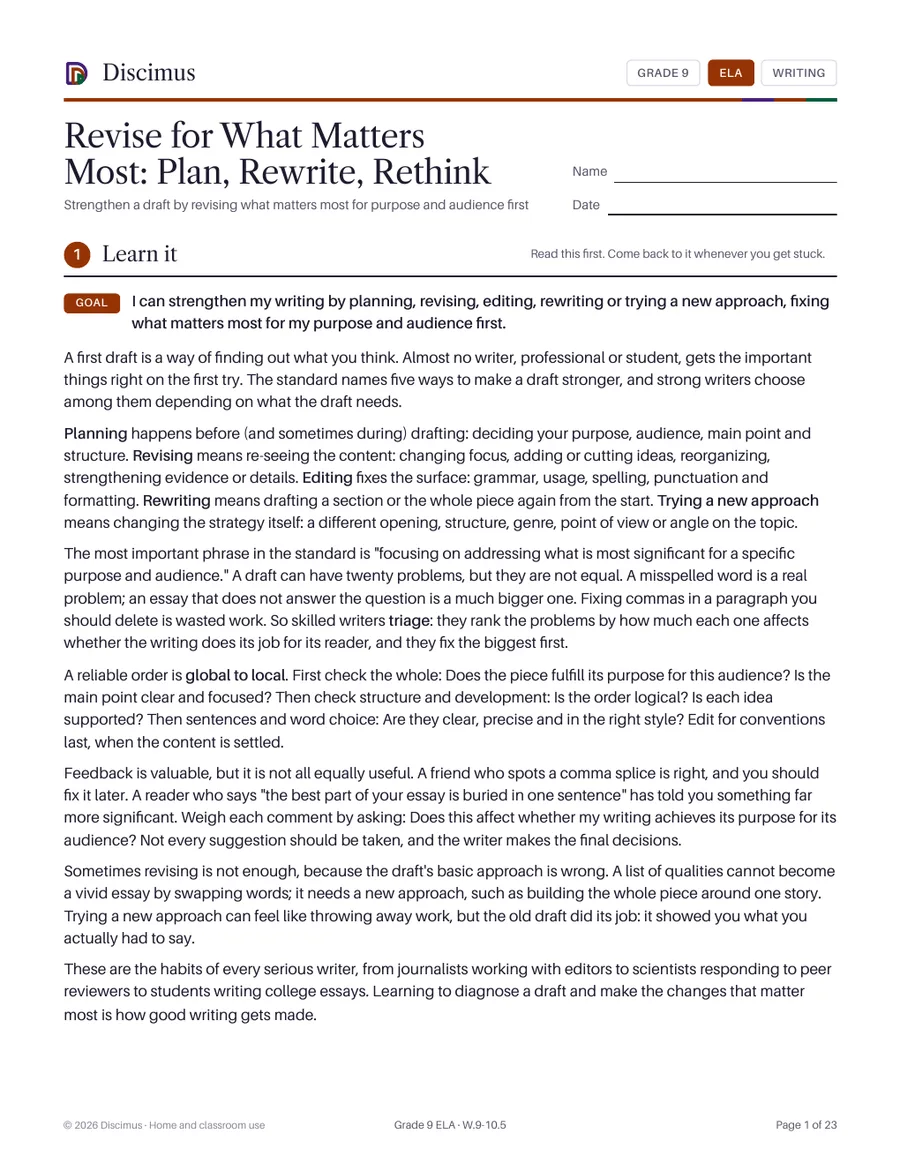
Strengthen a draft by revising what matters most for purpose and audience first
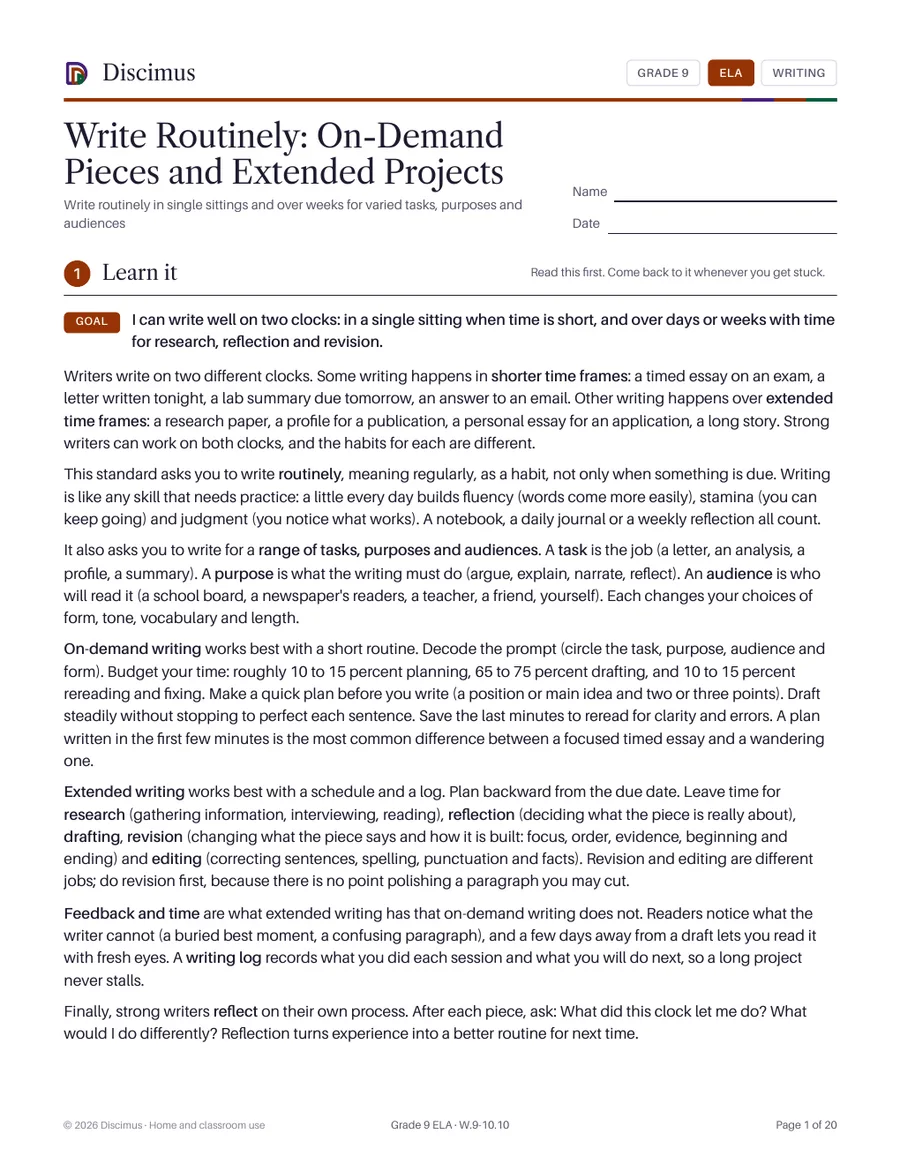
Write routinely in single sittings and over weeks for varied tasks, purposes and audiences