City, Suburb and Country: Getting What We Need
Compare how city, suburb and country families get needs from nearby and from far away
41 worksheets match.
Compare how city, suburb and country families get needs from nearby and from far away
Tell ways a flood, big storm, earthquake or wildfire can change life for people in a place
Tell how people change a place, and whether a change helps or hurts it
Tell how a place's natural features and the things people make there change over time
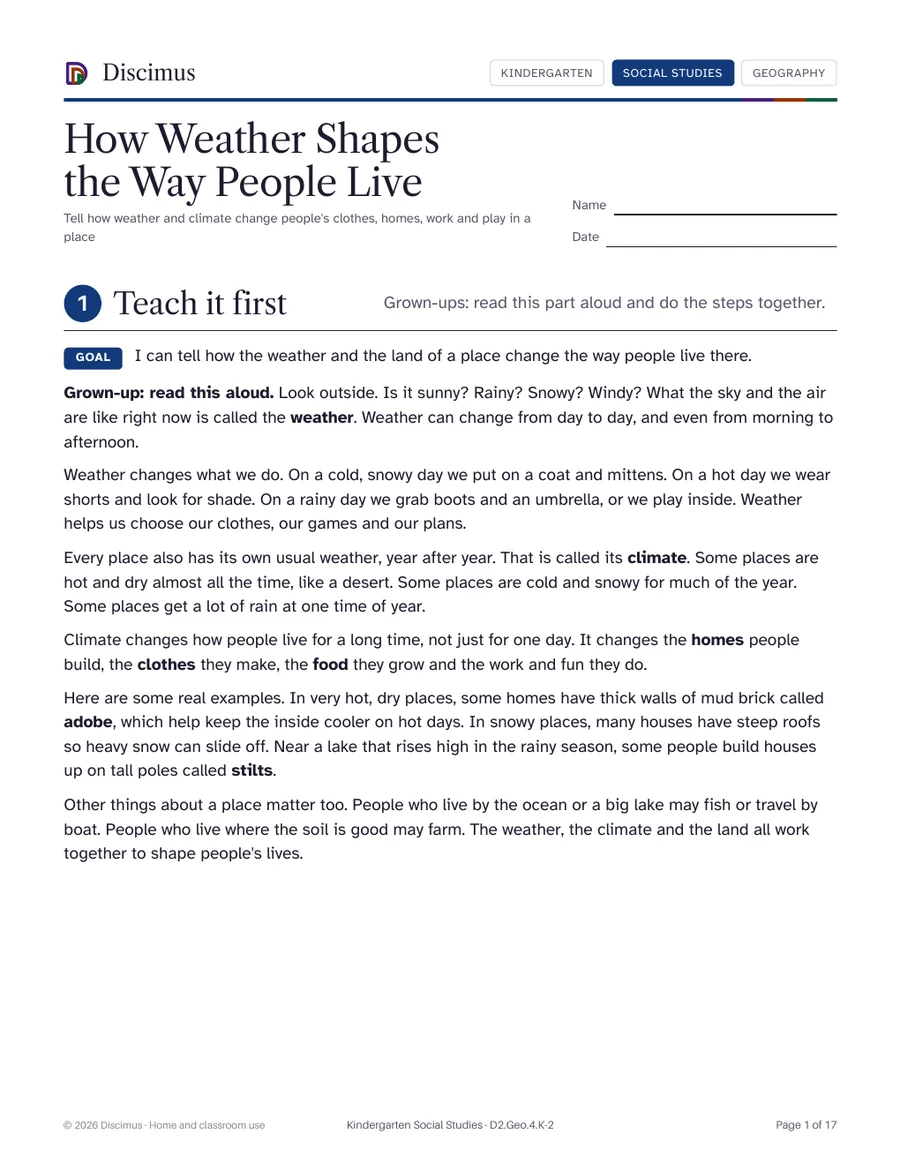
Tell how weather and climate change people's clothes, homes, work and play in a place
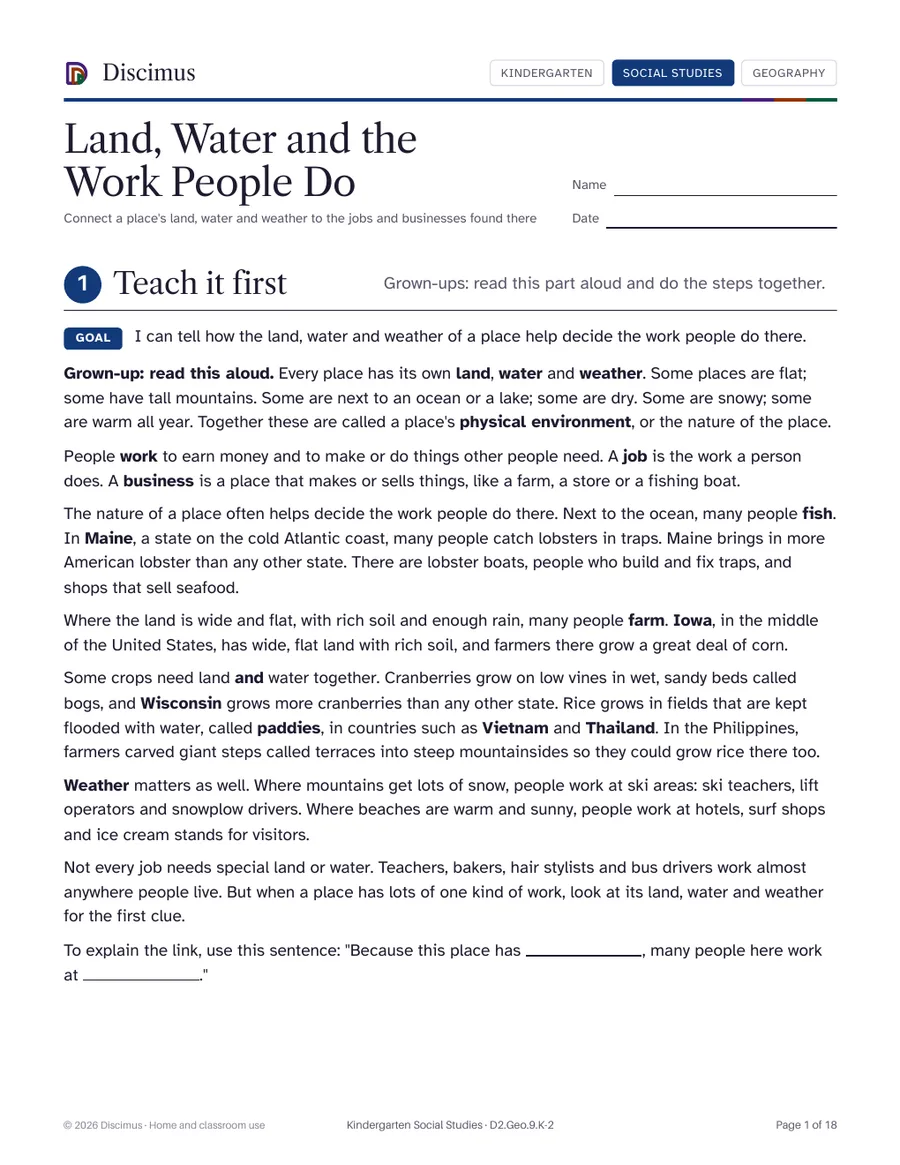
Connect a place's land, water and weather to the jobs and businesses found there
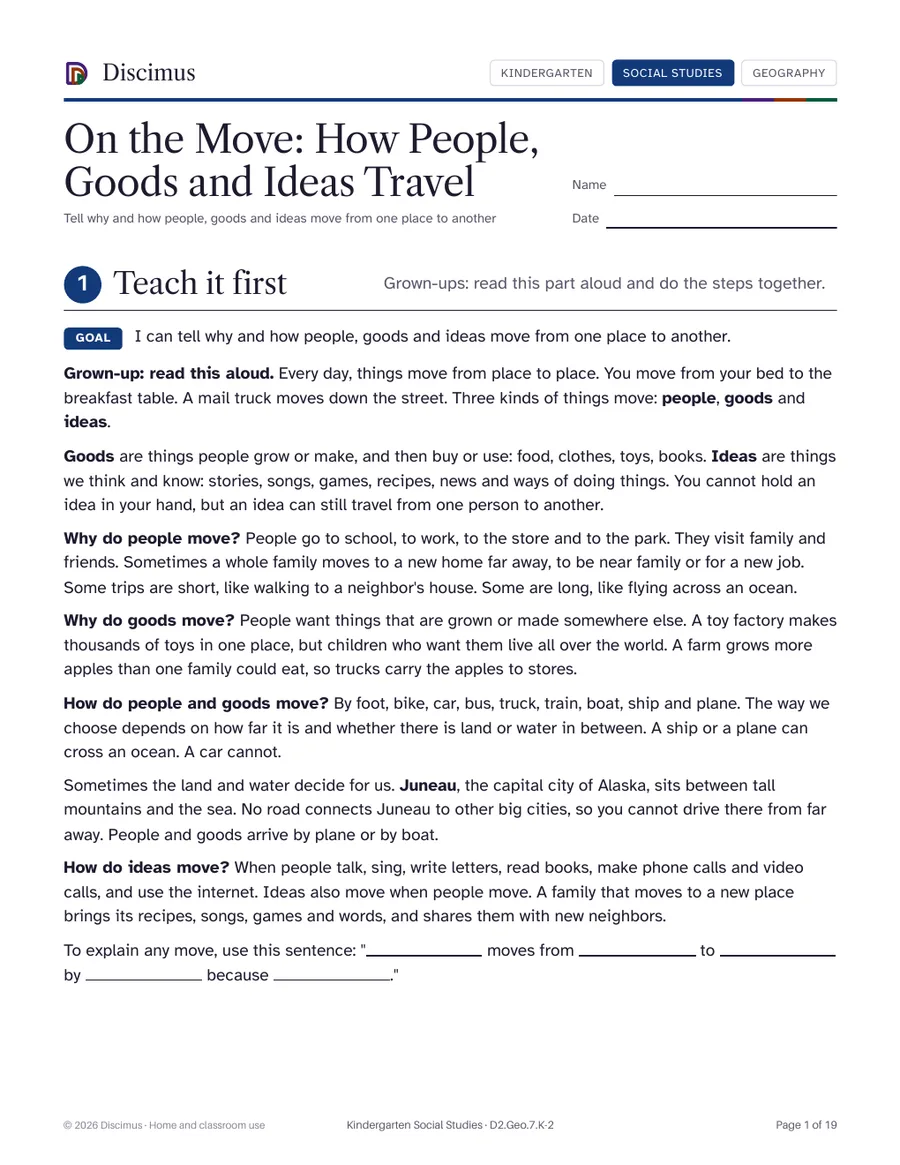
Tell why and how people, goods and ideas move from one place to another
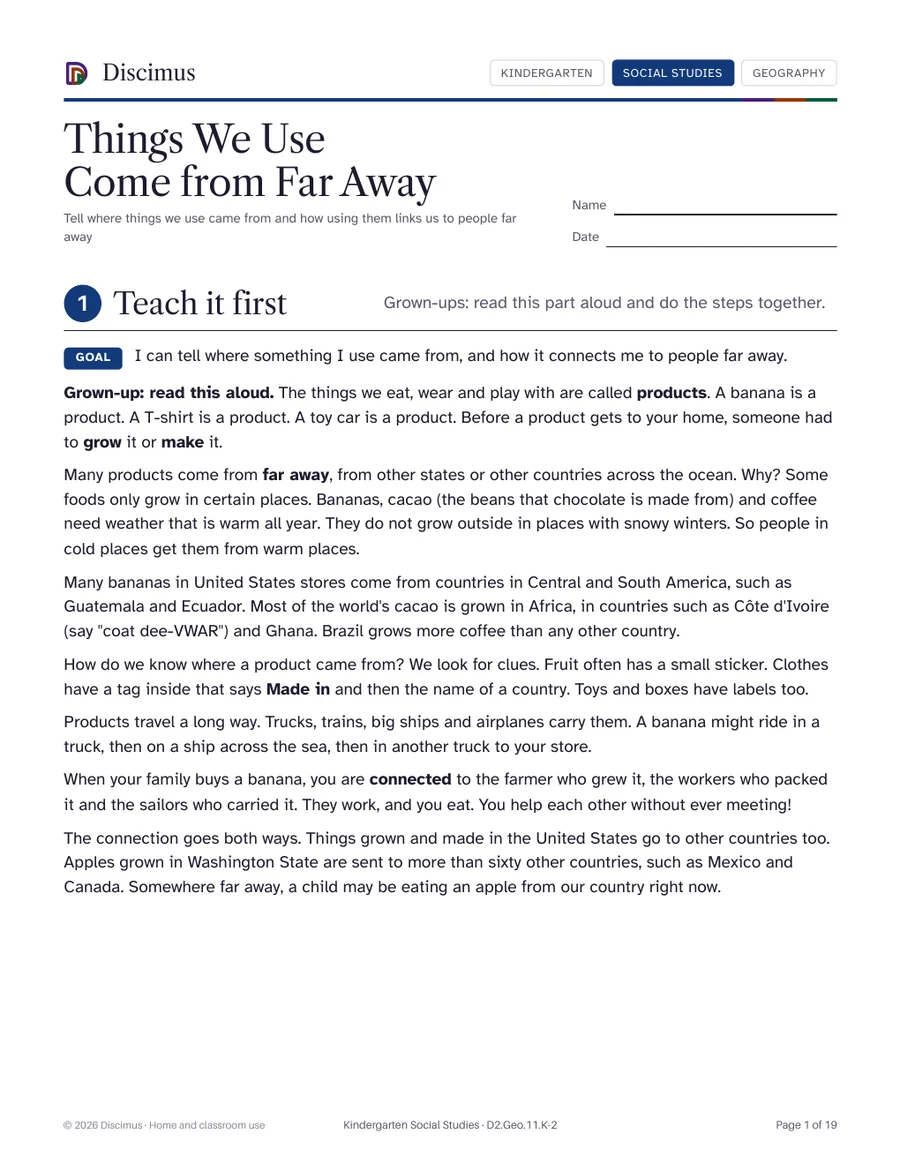
Tell where things we use came from and how using them links us to people far away
Name the nature and people clues that make a specific place special
Explain how natural and technological disasters change towns and make people move
Explain how nature and ways of life shape where people live in a region
Explain how a group's culture shapes the way it changes and adapts to its environment
Explain how where people settle and move relates to natural resources and their use
Explain how nature and culture shape the movement of people, goods and ideas
Explain how a natural or human-made disaster in one place affects people in other places
Use maps, graphs and images to explain how a place's location shapes its environment
Explain how the environmental and cultural characteristics of a place change over time
Describe how links with nearby and faraway places change where work happens in a place
Explain why world regions have different climates, plants and animals
Compare places by their mix of cultural and environmental traits and explain why
Explain how culture and economic choices change environments and lives near and far
Explain how physical and human characteristics of places connect to identity and culture
Explain how changes in where people live change the way land is used in particular places
Use maps, satellite images and photos to explain environmental change and place links
Explain how transport and communication technology change links and the spread of ideas
Analyze how human-environment relationships extend or shrink settlement and movement
Analyze how cultural and environmental characteristics vary among world regions
Evaluate how human-caused environmental change shapes conflict and cooperation
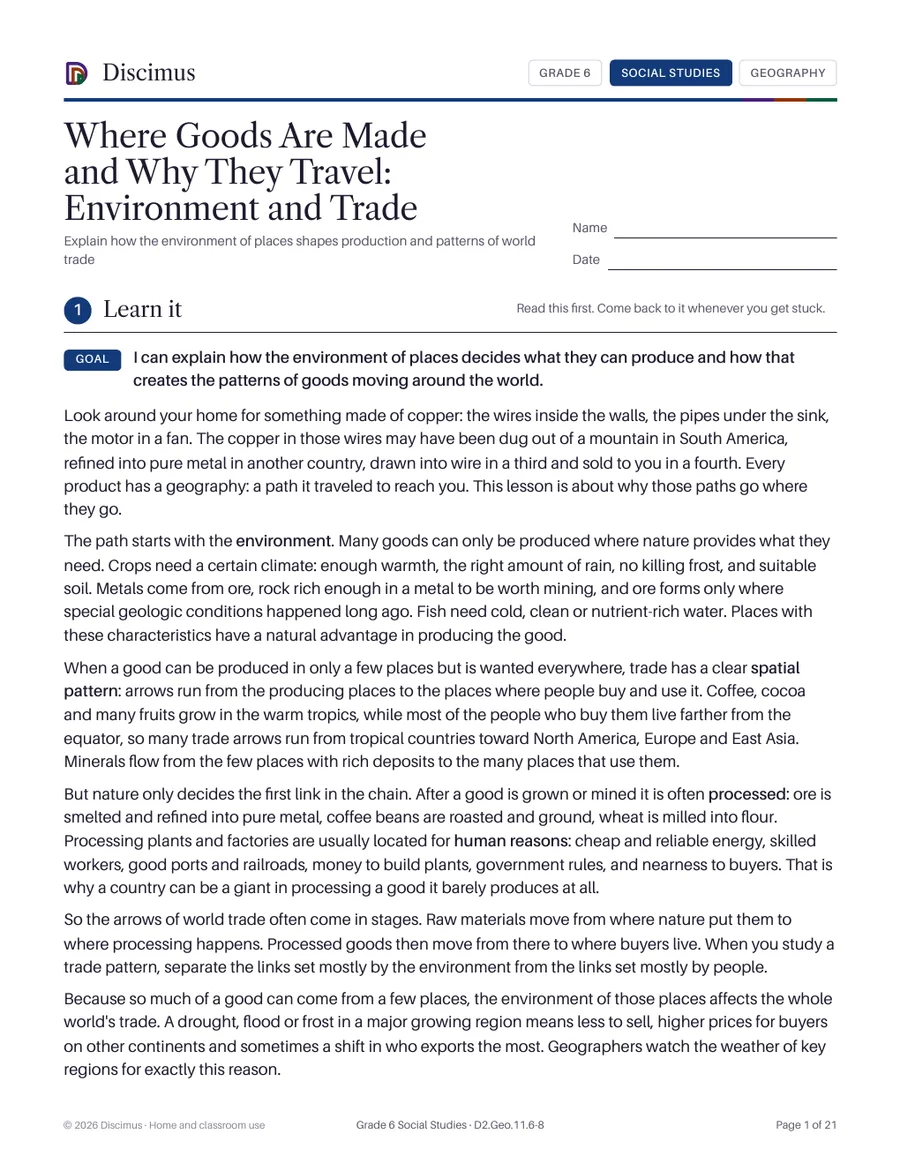
Explain how the environment of places shapes production and patterns of world trade
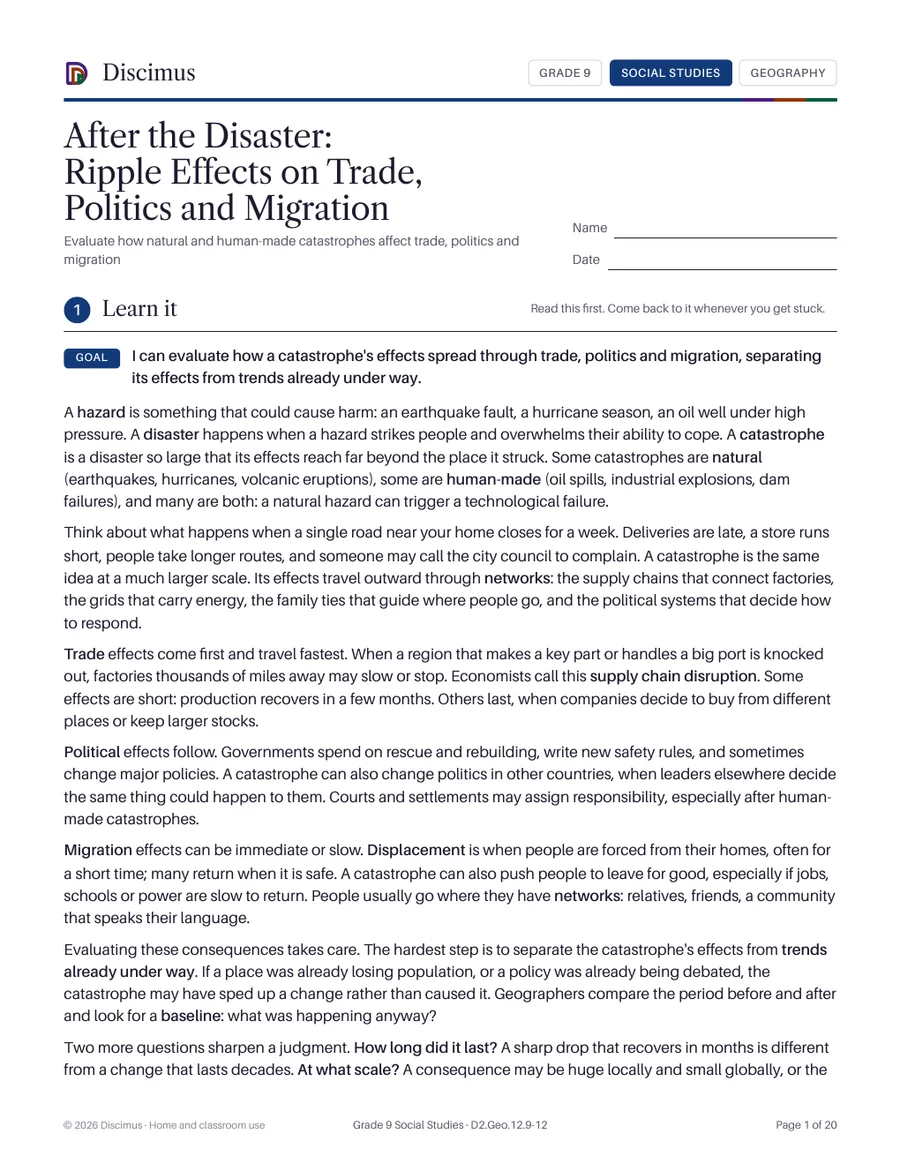
Evaluate how natural and human-made catastrophes affect trade, politics and migration
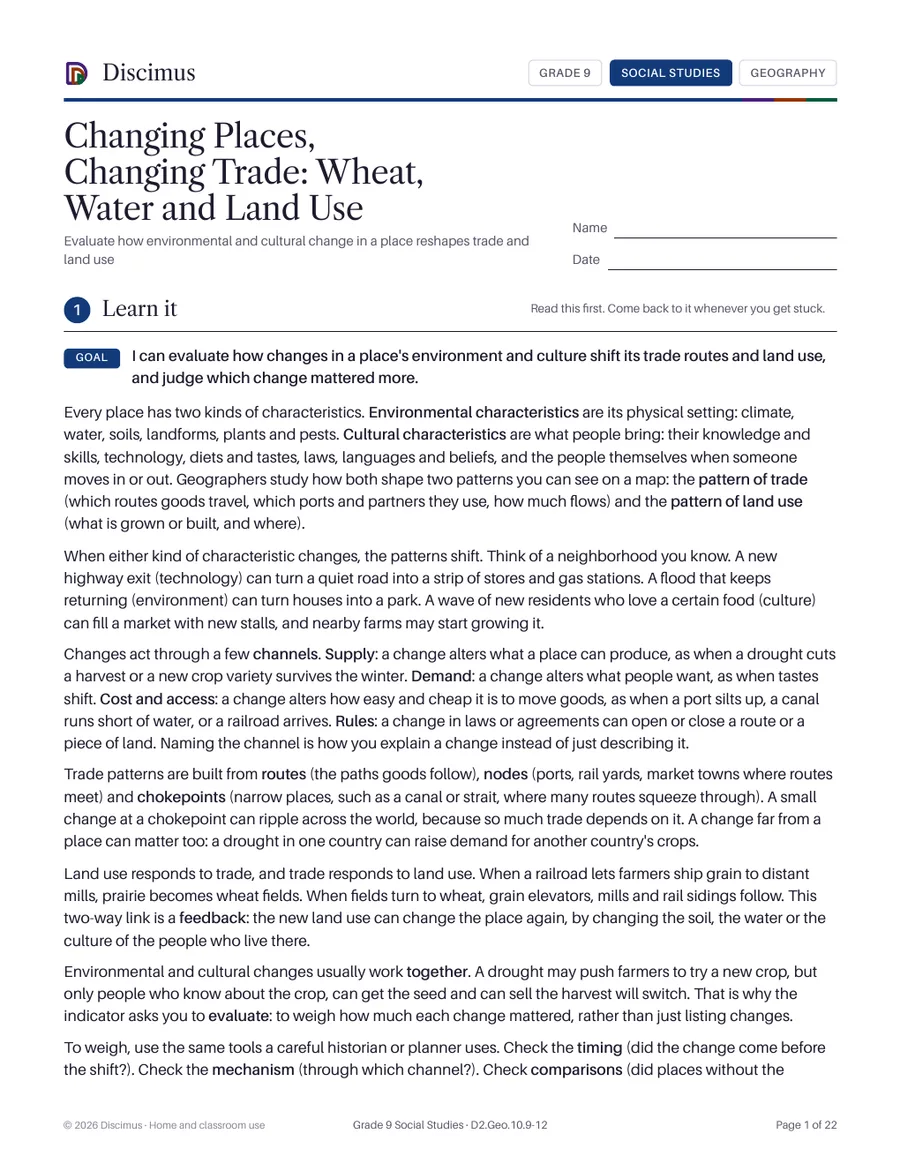
Evaluate how environmental and cultural change in a place reshapes trade and land use
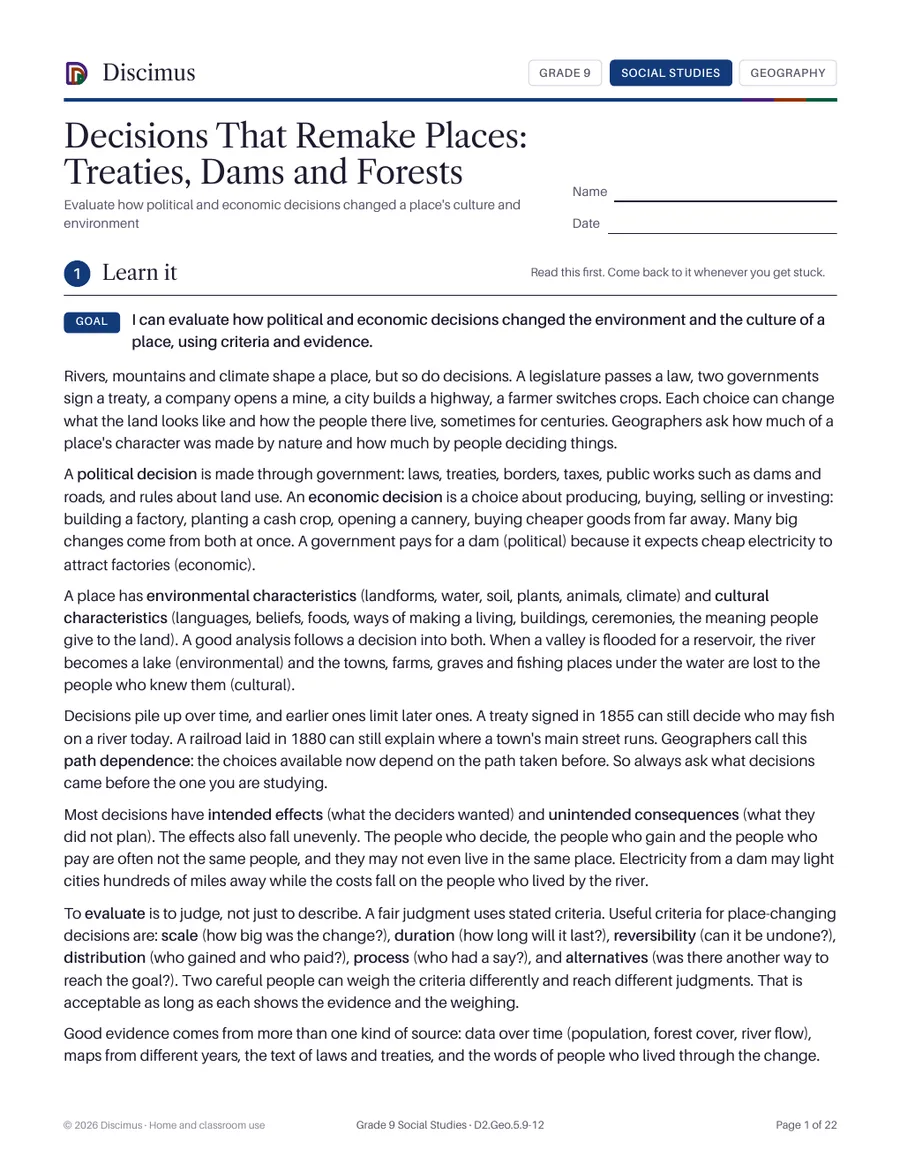
Evaluate how political and economic decisions changed a place's culture and environment
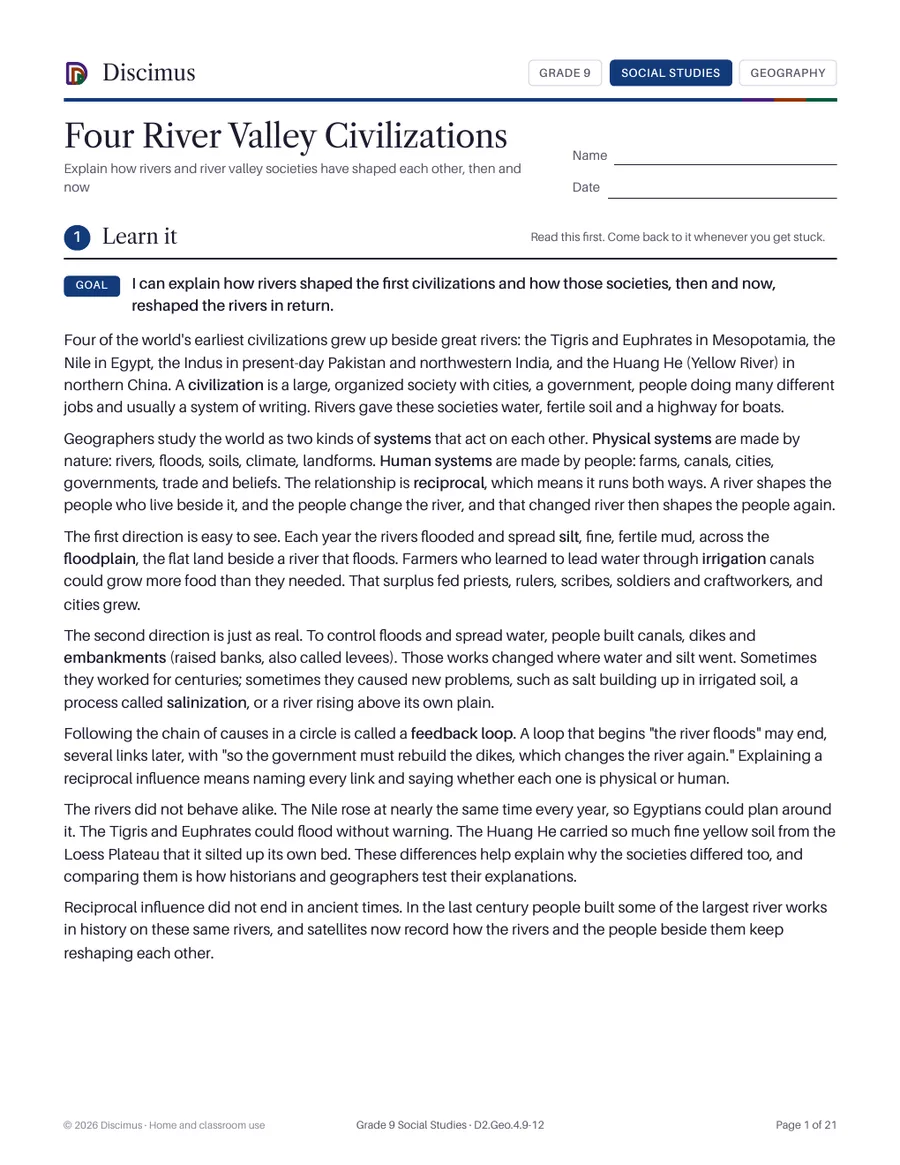
Explain how rivers and river valley societies have shaped each other, then and now
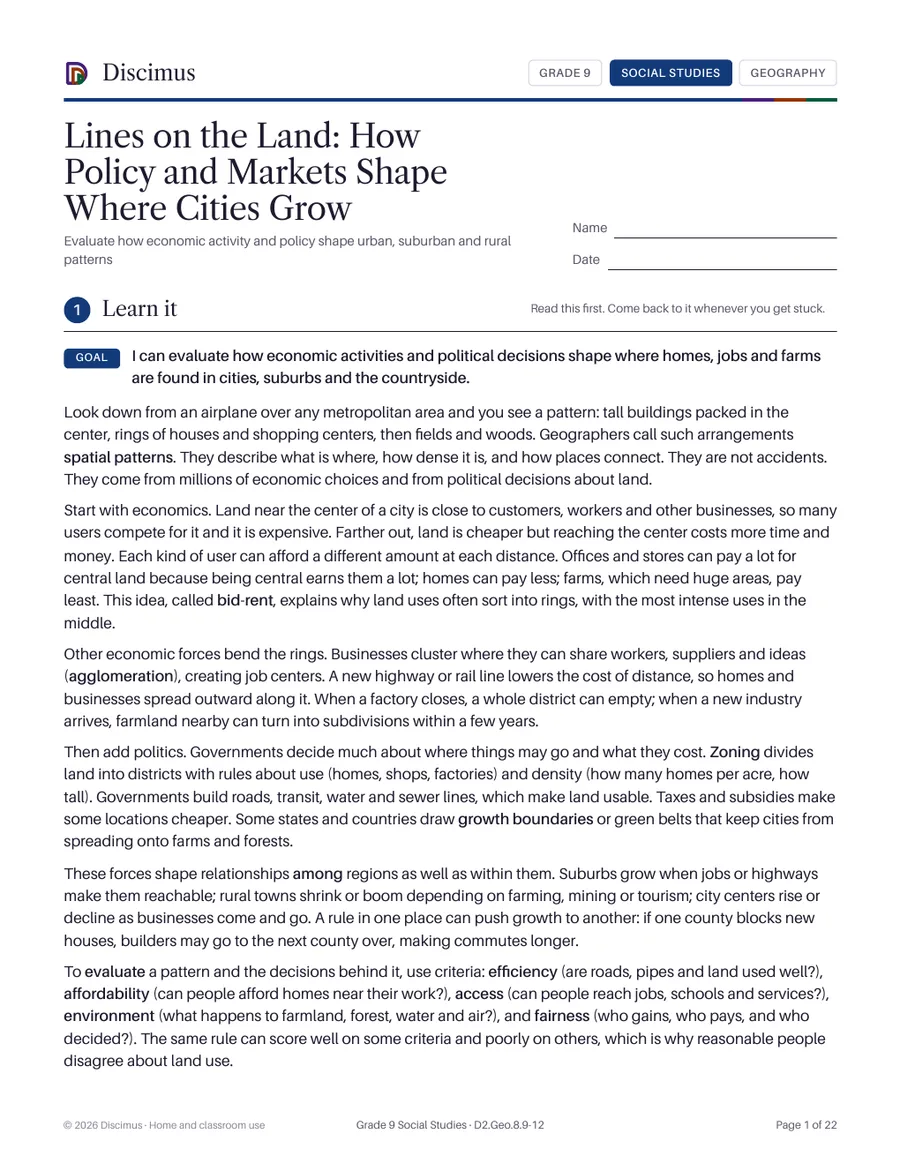
Evaluate how economic activity and policy shape urban, suburban and rural patterns
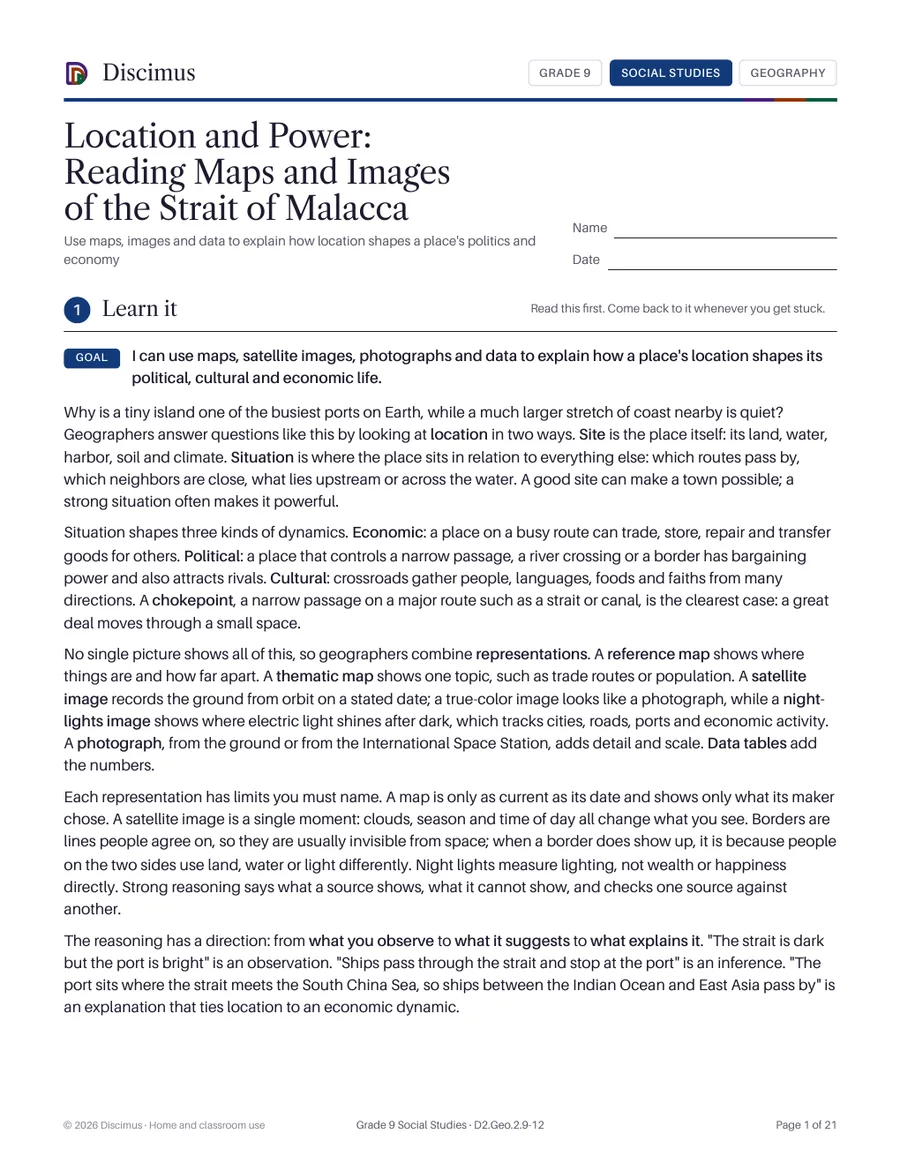
Use maps, images and data to explain how location shapes a place's politics and economy
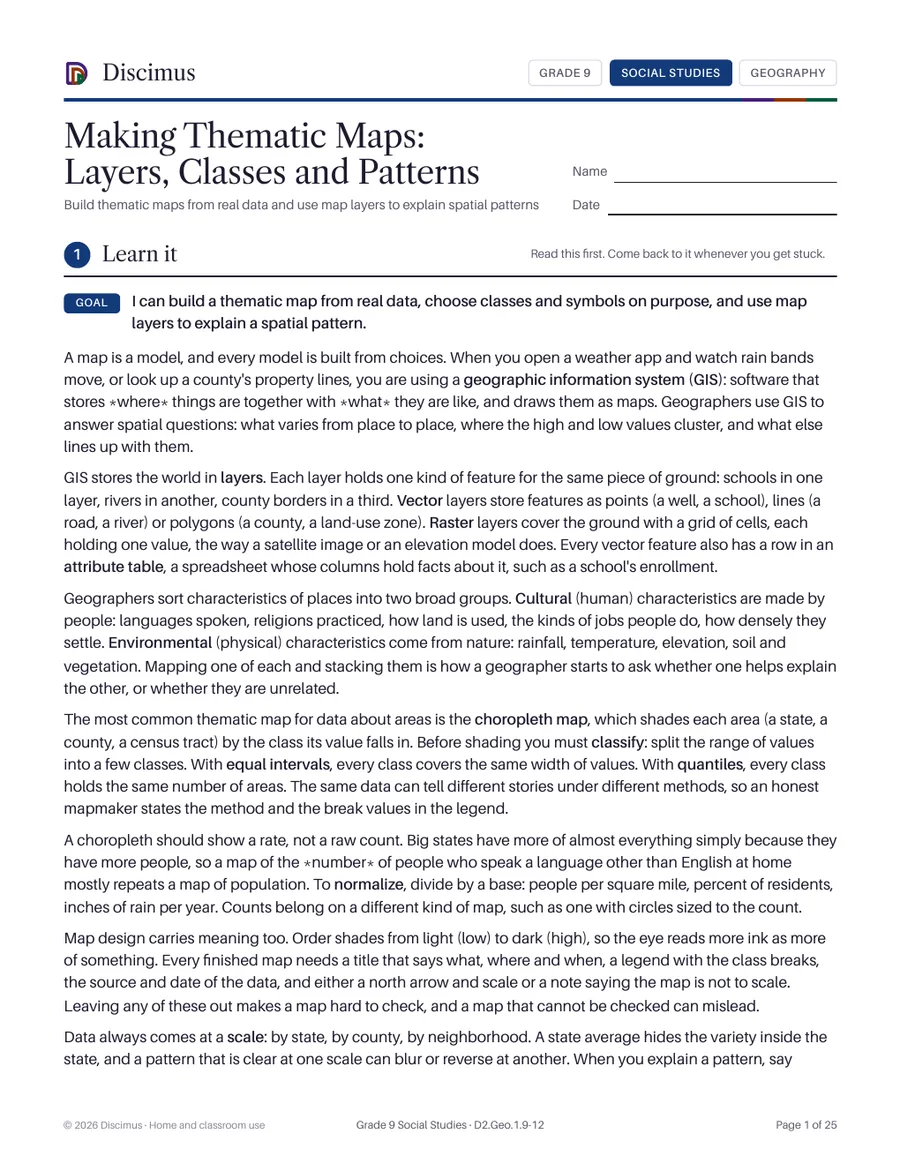
Build thematic maps from real data and use map layers to explain spatial patterns
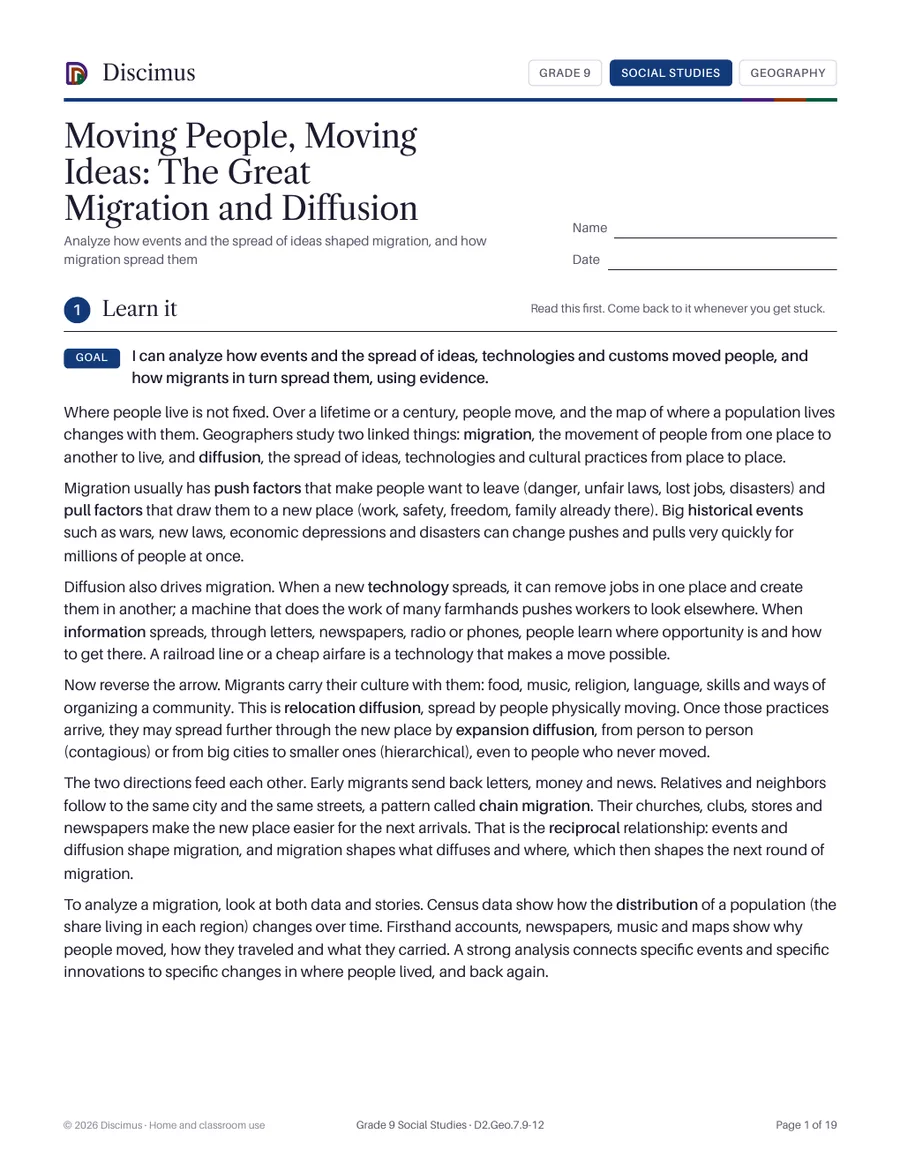
Analyze how events and the spread of ideas shaped migration, and how migration spread them
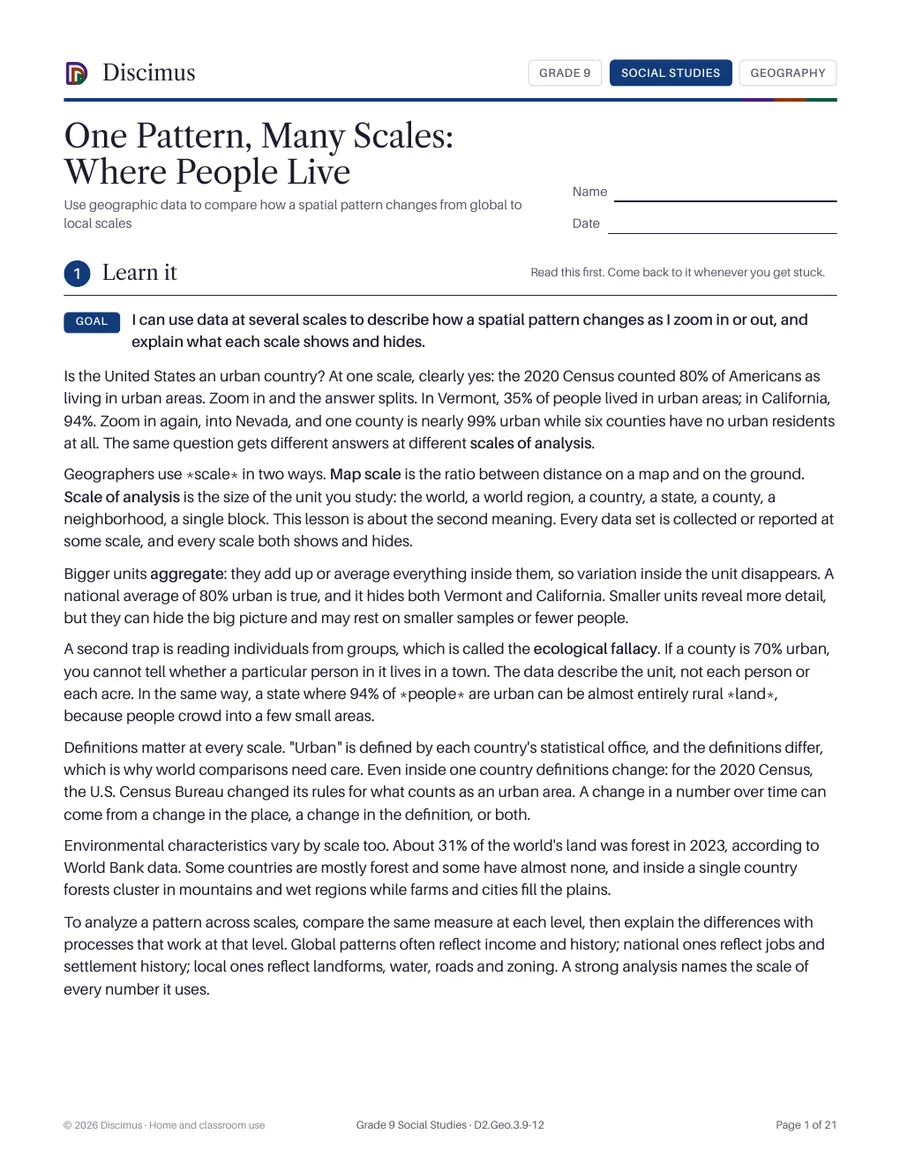
Use geographic data to compare how a spatial pattern changes from global to local scales
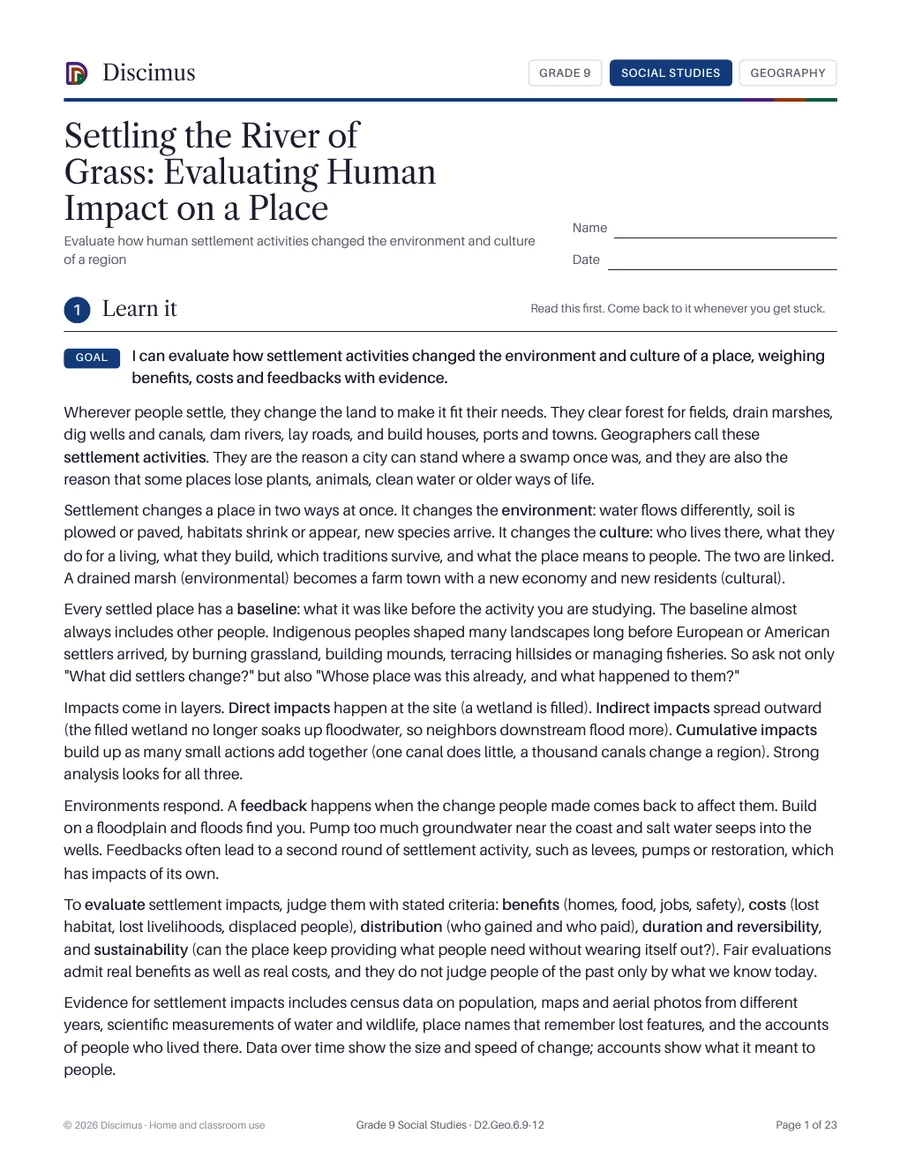
Evaluate how human settlement activities changed the environment and culture of a region
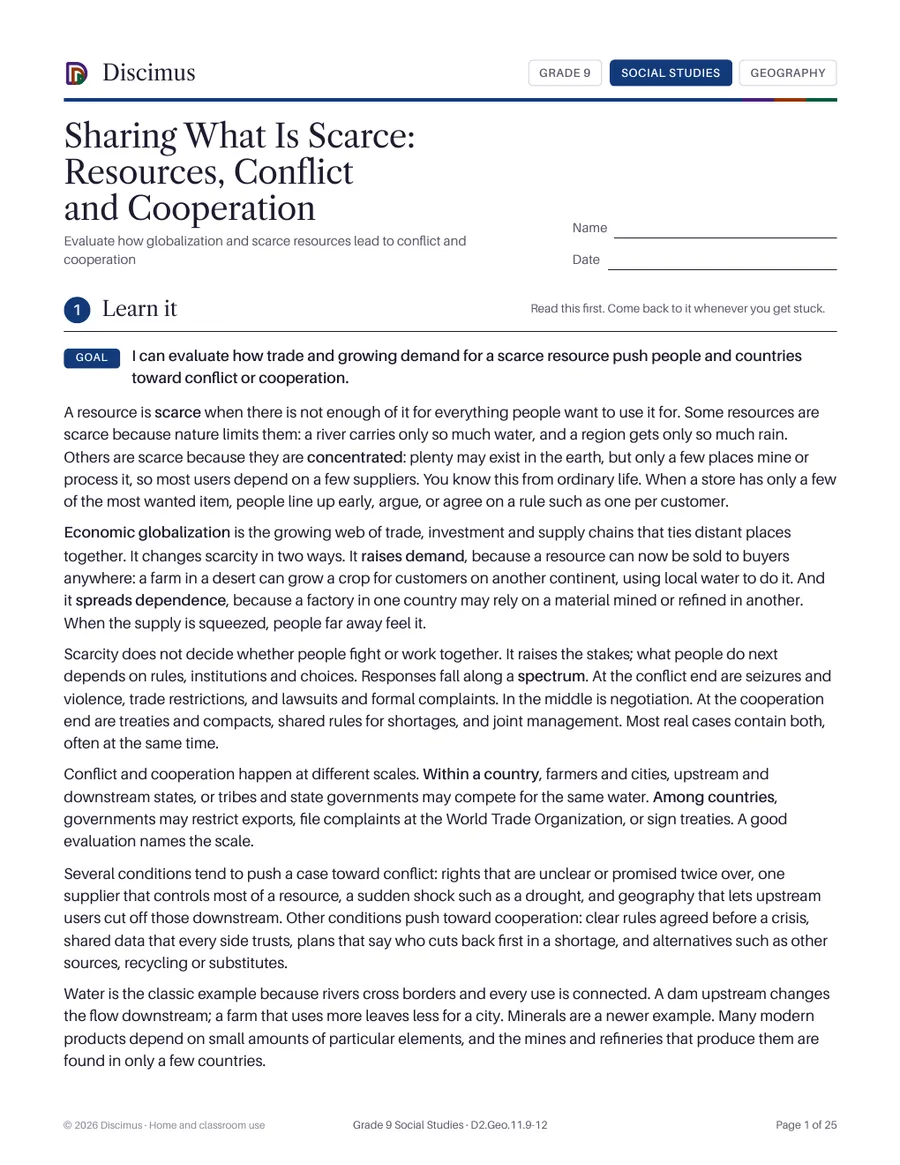
Evaluate how globalization and scarce resources lead to conflict and cooperation
Evaluate how long-term climate variability shapes migration, settlement and land use