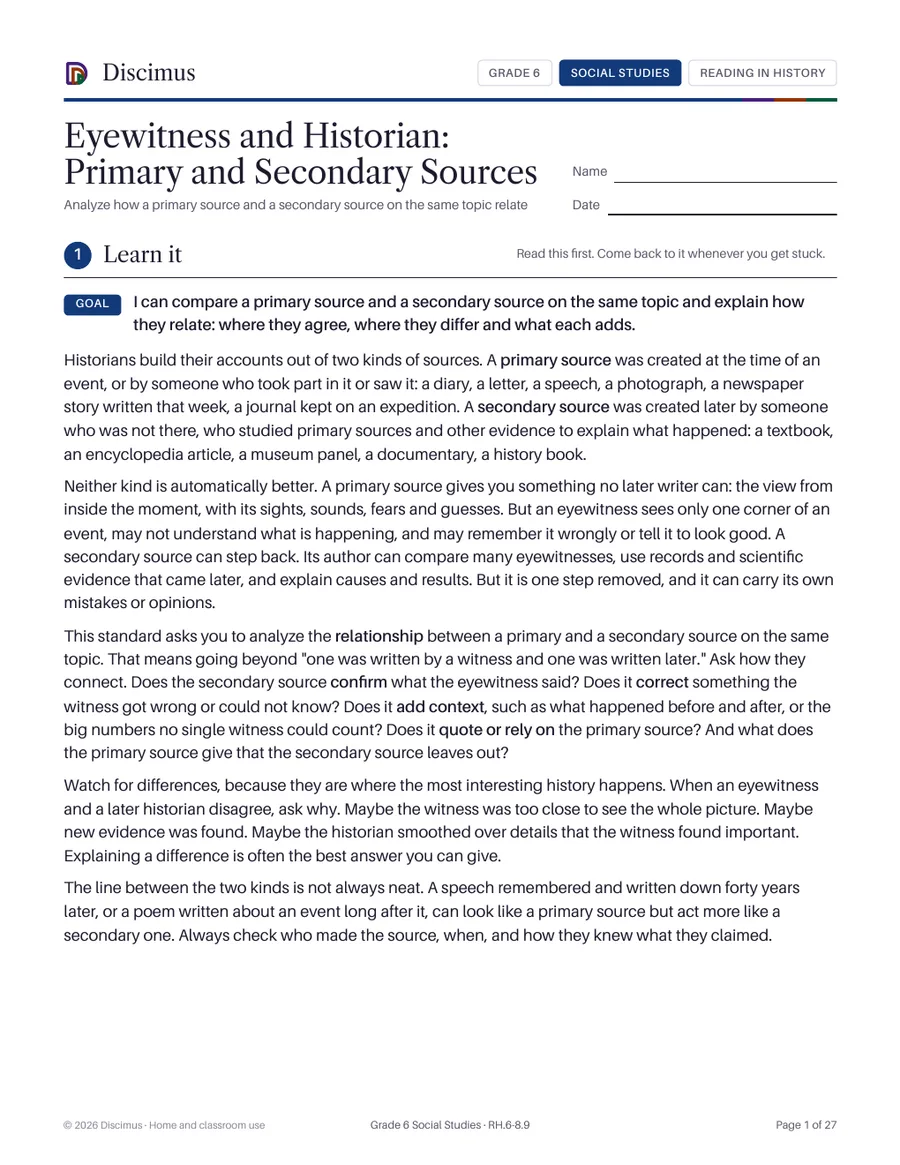
Eyewitness and Historian: Primary and Secondary Sources
Analyze how a primary source and a secondary source on the same topic relate
29 worksheets match.
Analyze how a primary source and a secondary source on the same topic relate
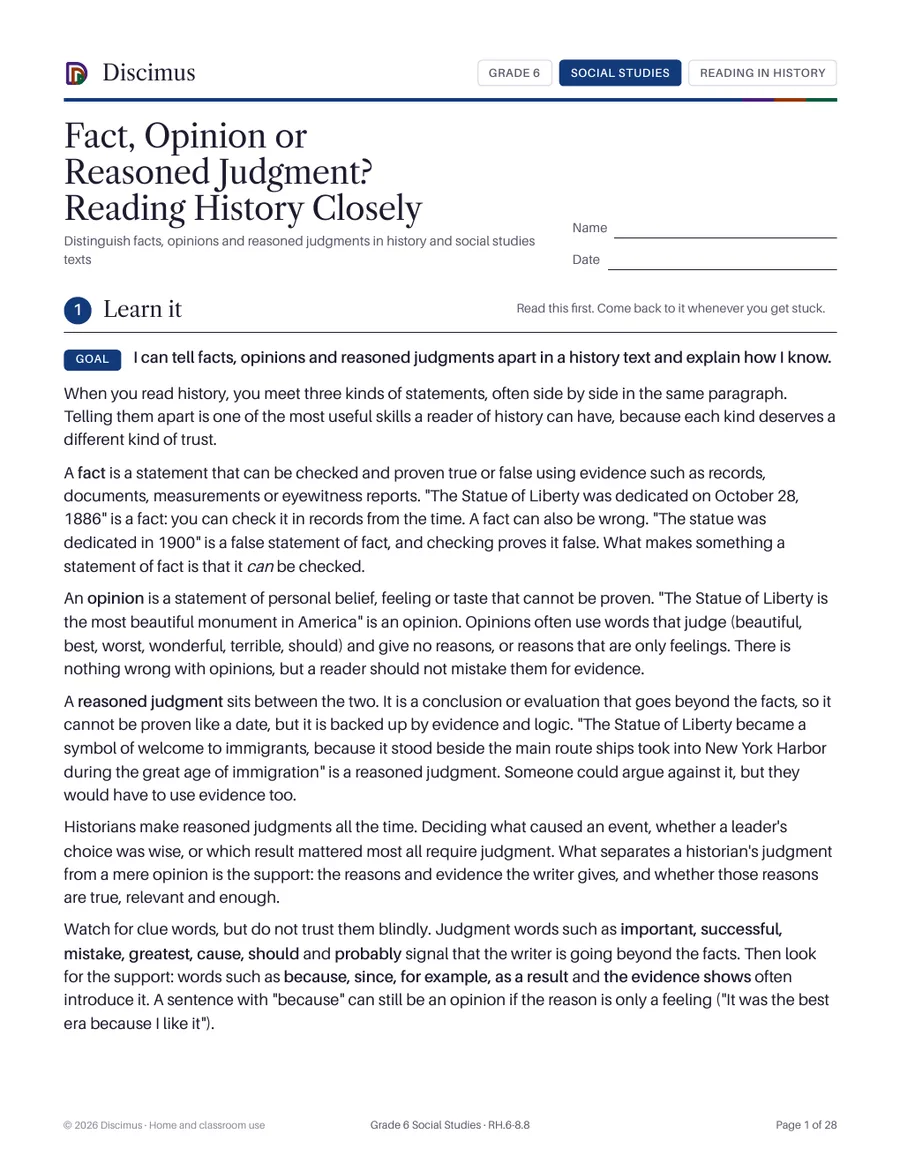
Distinguish facts, opinions and reasoned judgments in history and social studies texts
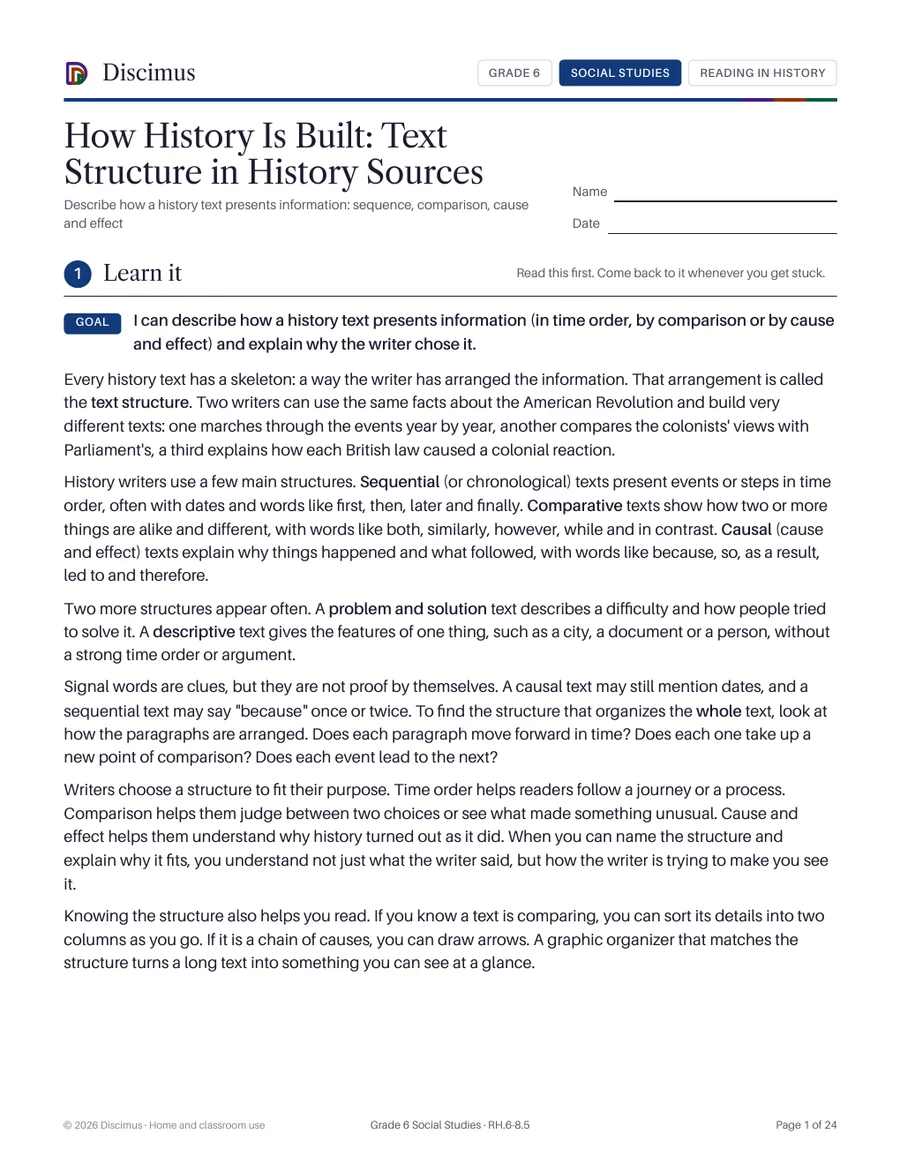
Describe how a history text presents information: sequence, comparison, cause and effect
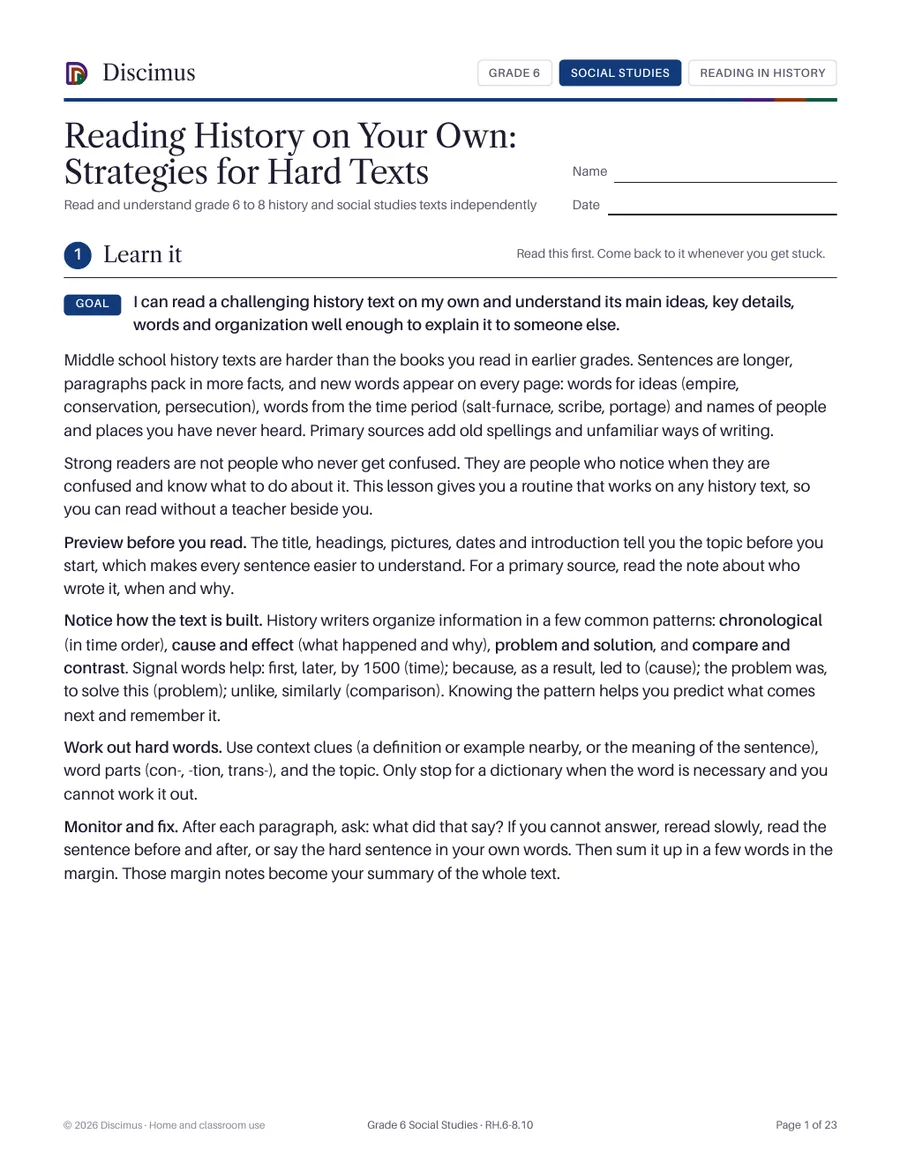
Read and understand grade 6 to 8 history and social studies texts independently
Integrate information from cartoons, diagrams, graphs and tables with a history text
Cite specific text evidence to support analysis of primary and secondary history sources
Identify loaded language and included or omitted facts that reveal a history author's view
Identify the key steps, actors and conditions in a text's description of a civics process
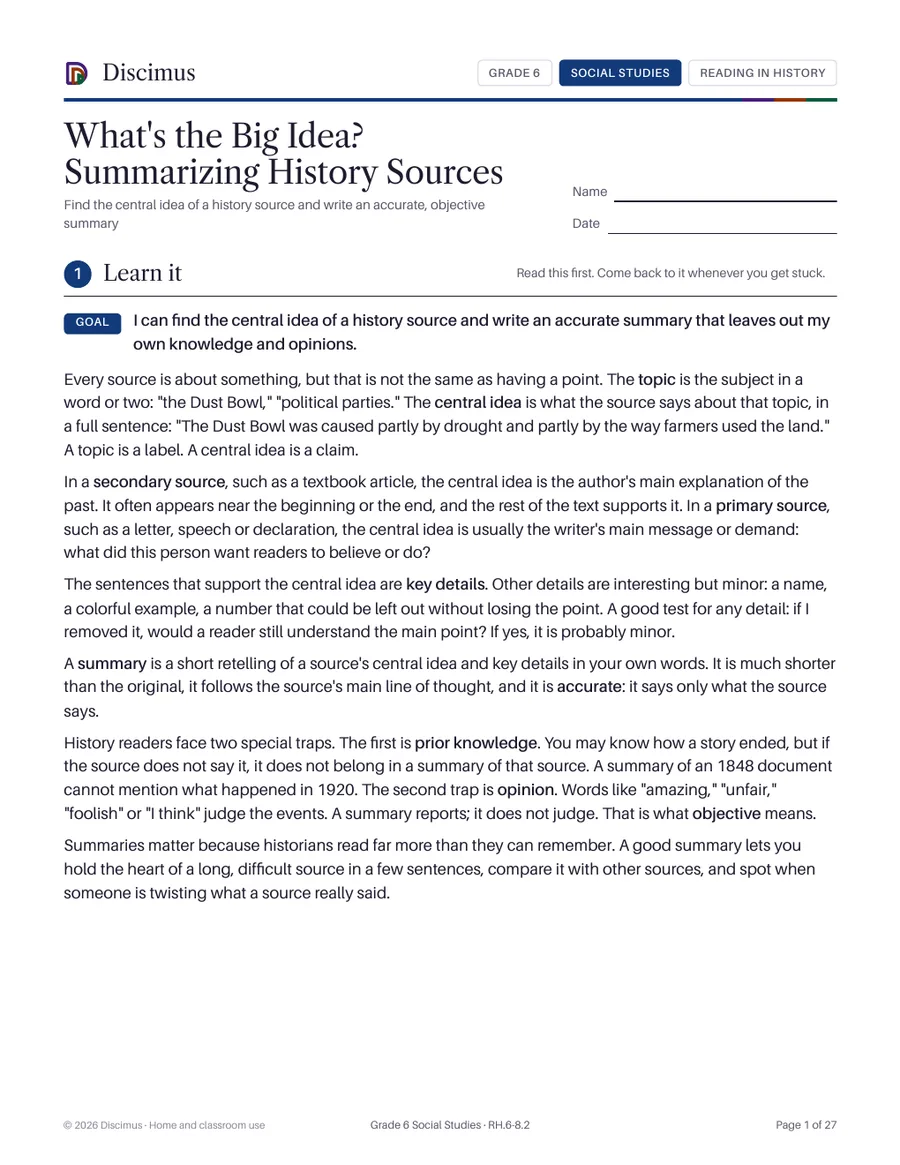
Find the central idea of a history source and write an accurate, objective summary
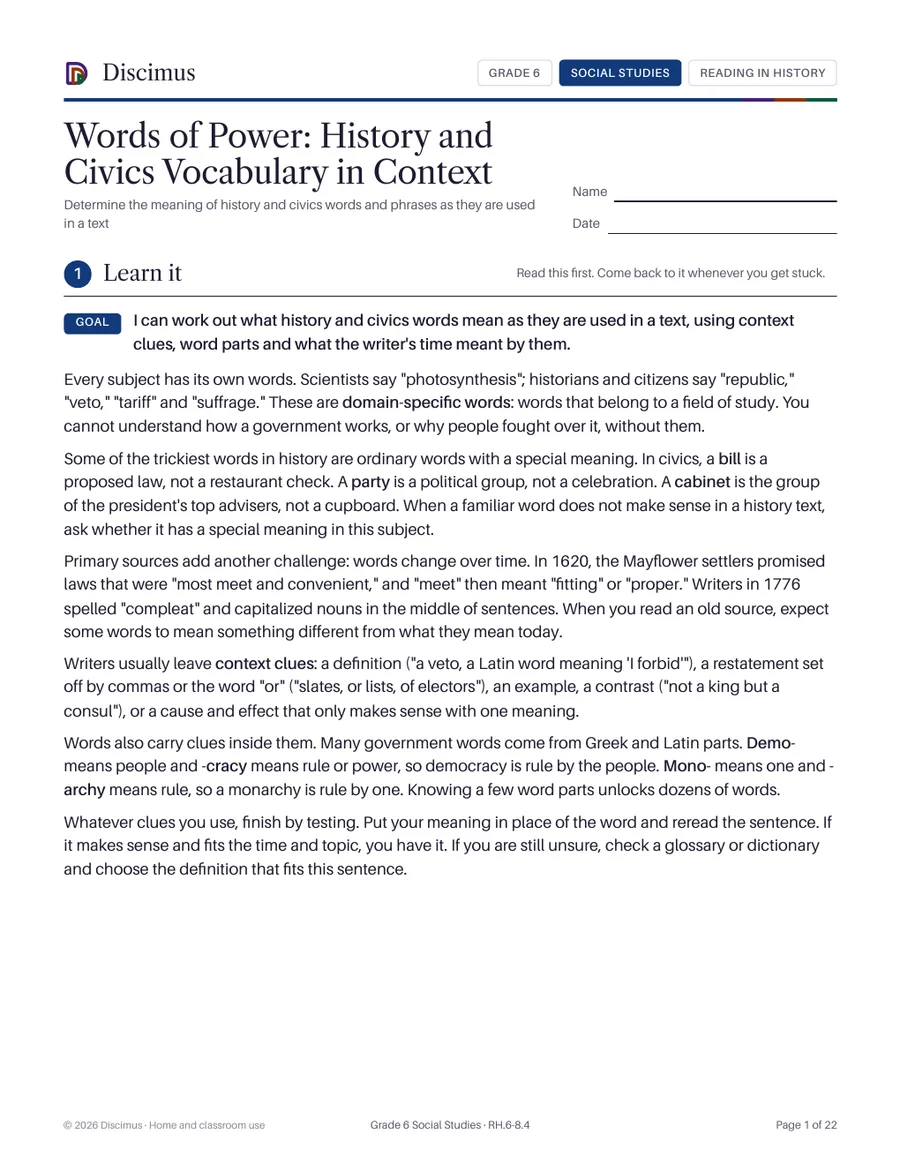
Determine the meaning of history and civics words and phrases as they are used in a text
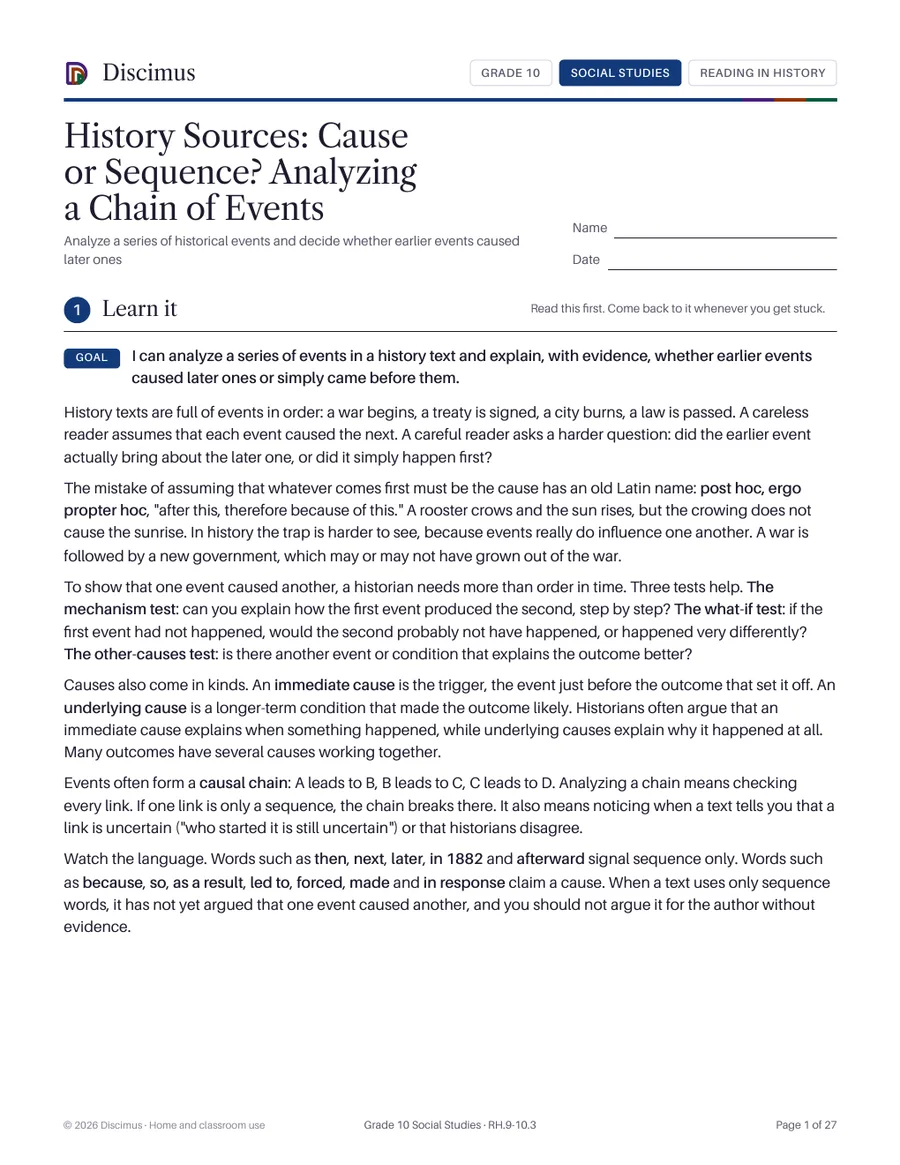
Analyze a series of historical events and decide whether earlier events caused later ones
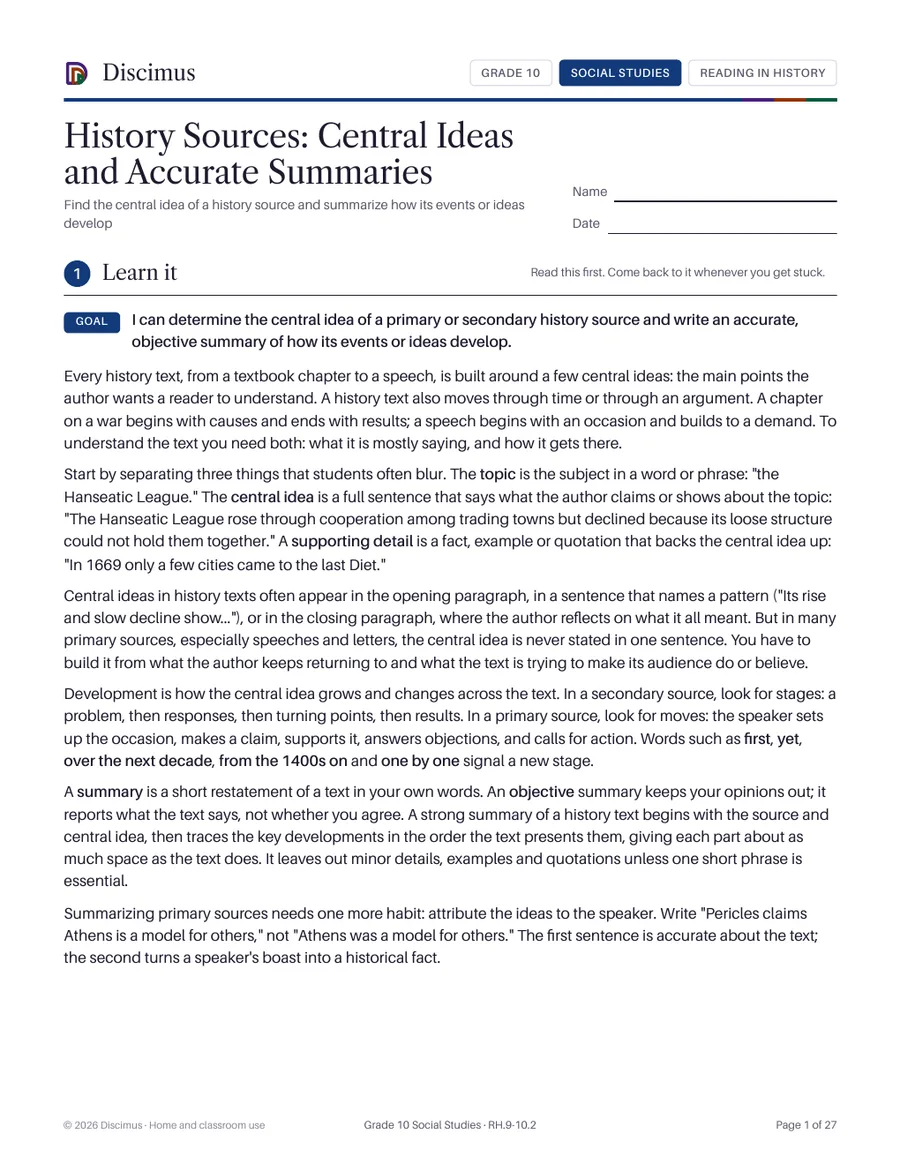
Find the central idea of a history source and summarize how its events or ideas develop
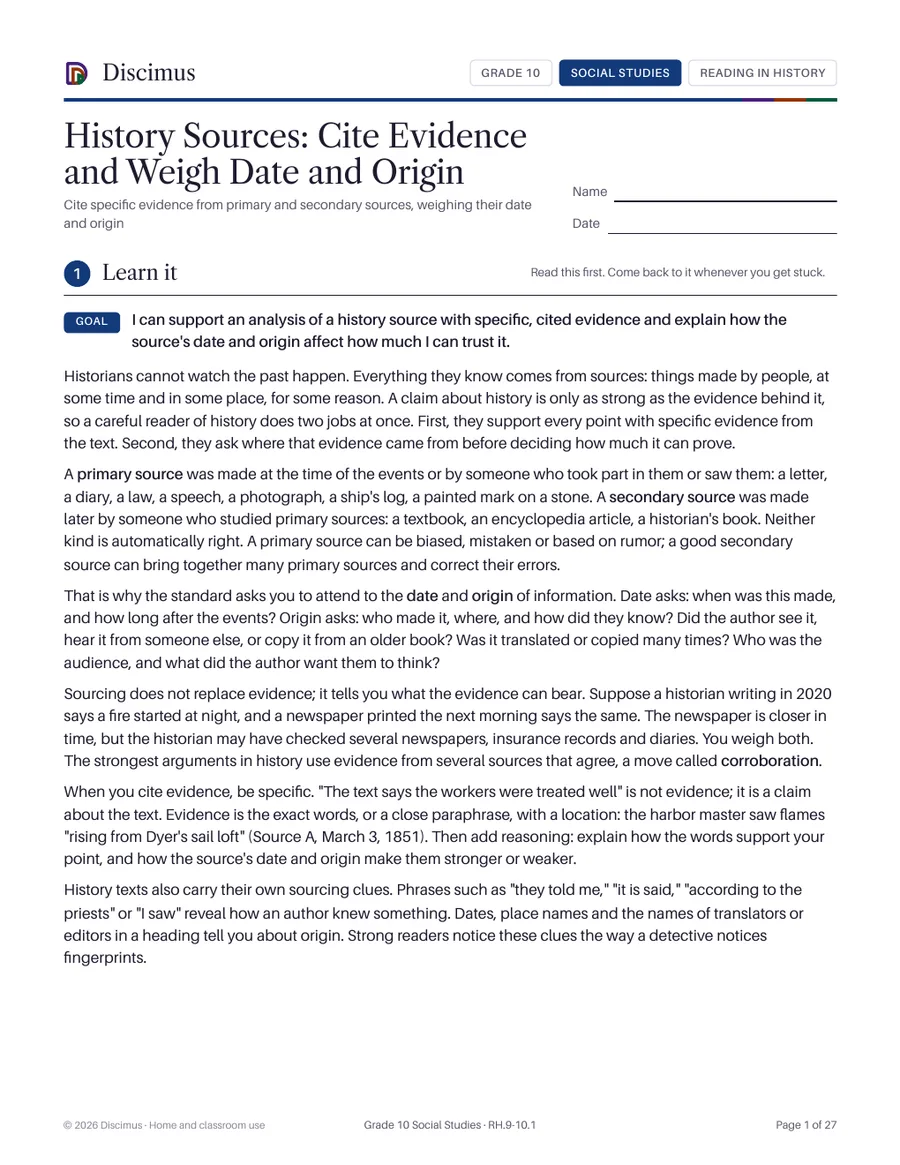
Cite specific evidence from primary and secondary sources, weighing their date and origin
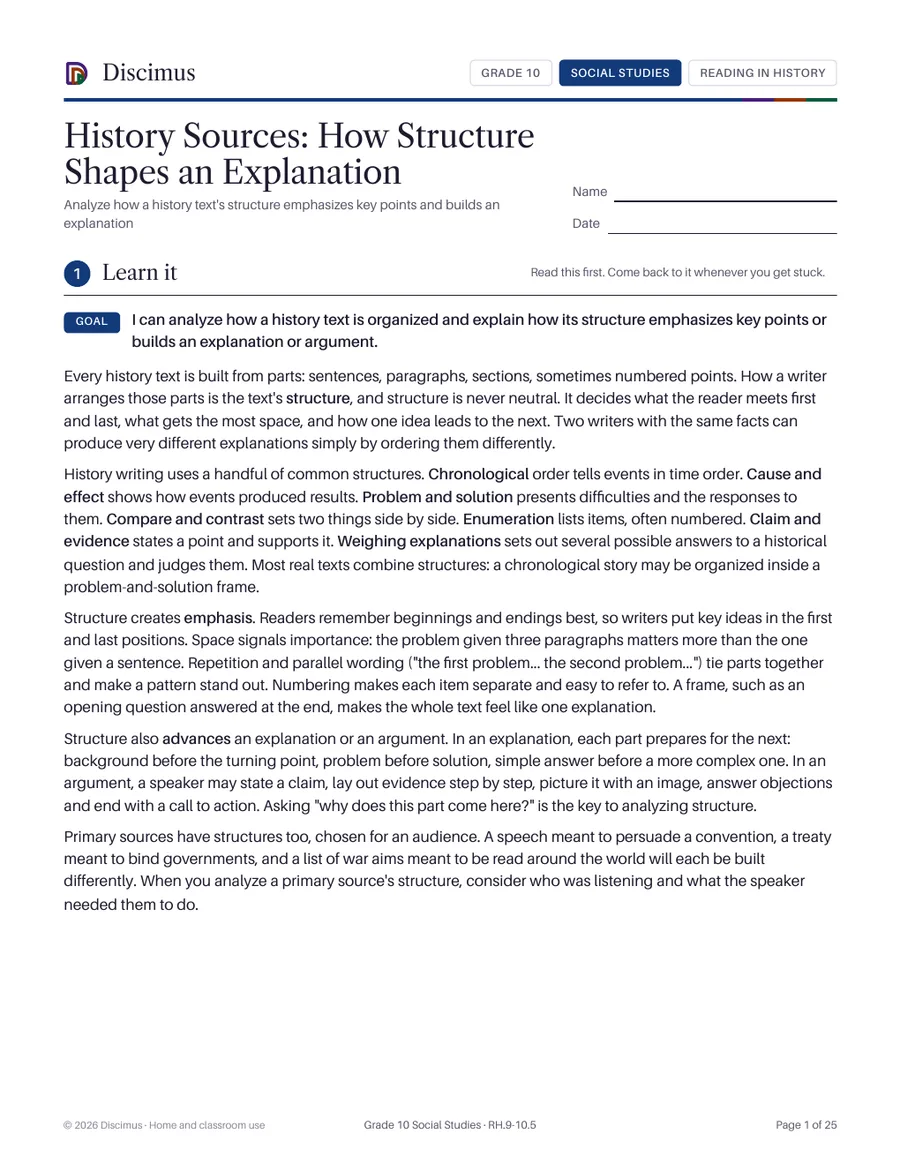
Analyze how a history text's structure emphasizes key points and builds an explanation
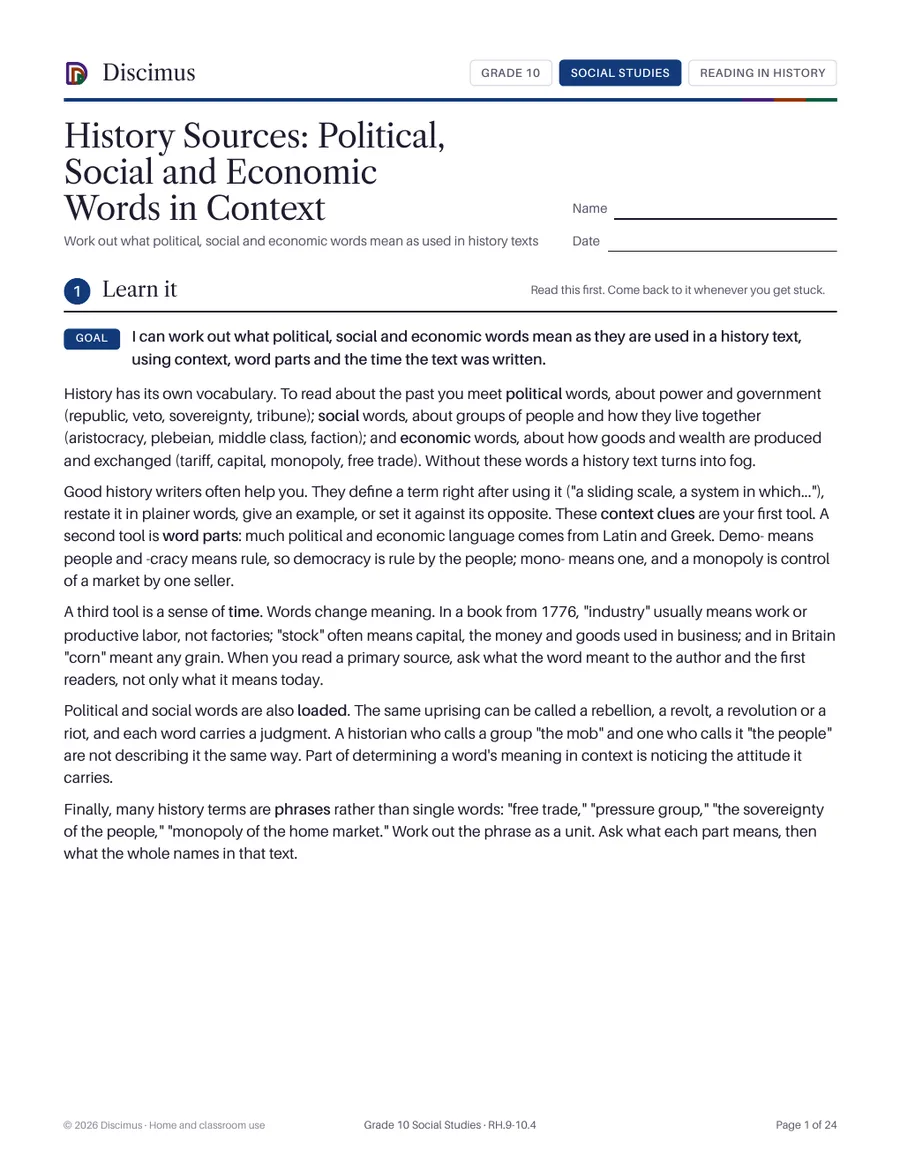
Work out what political, social and economic words mean as used in history texts
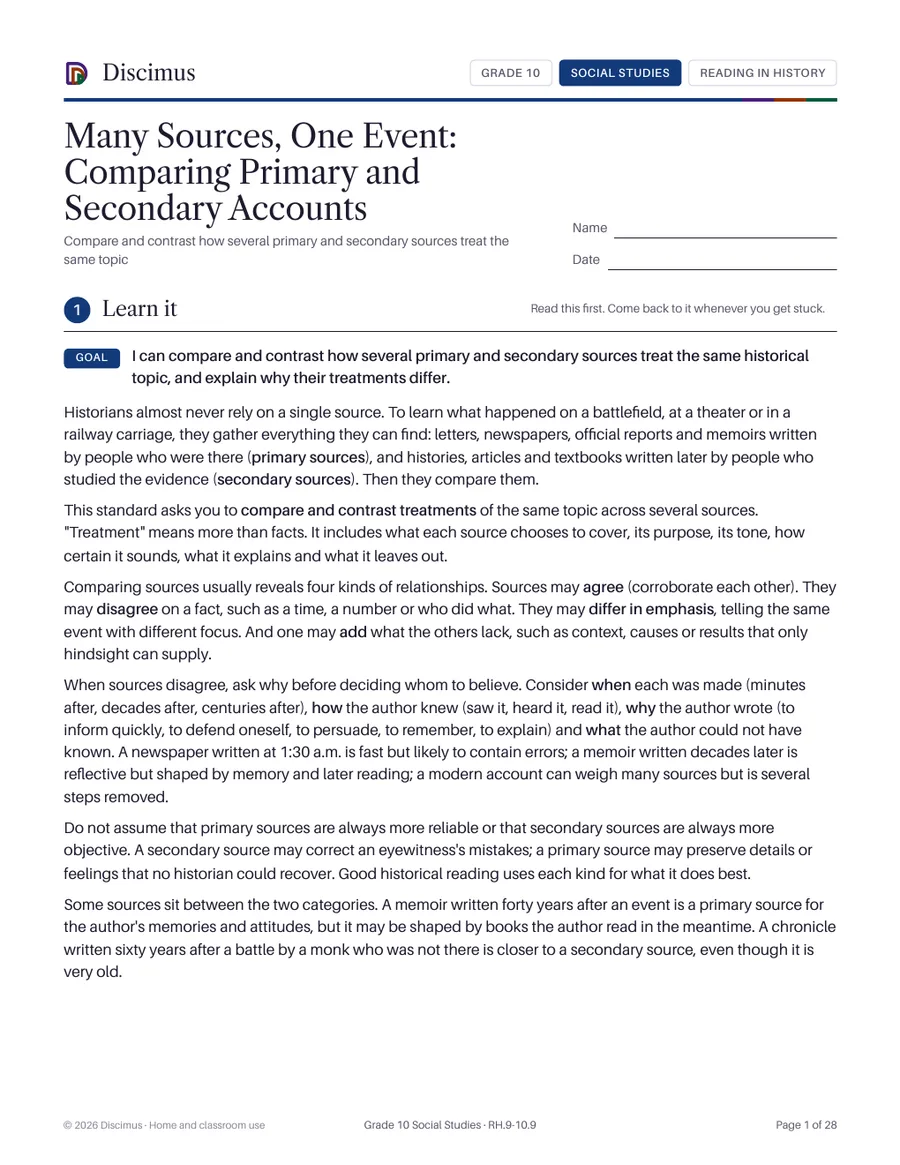
Compare and contrast how several primary and secondary sources treat the same topic
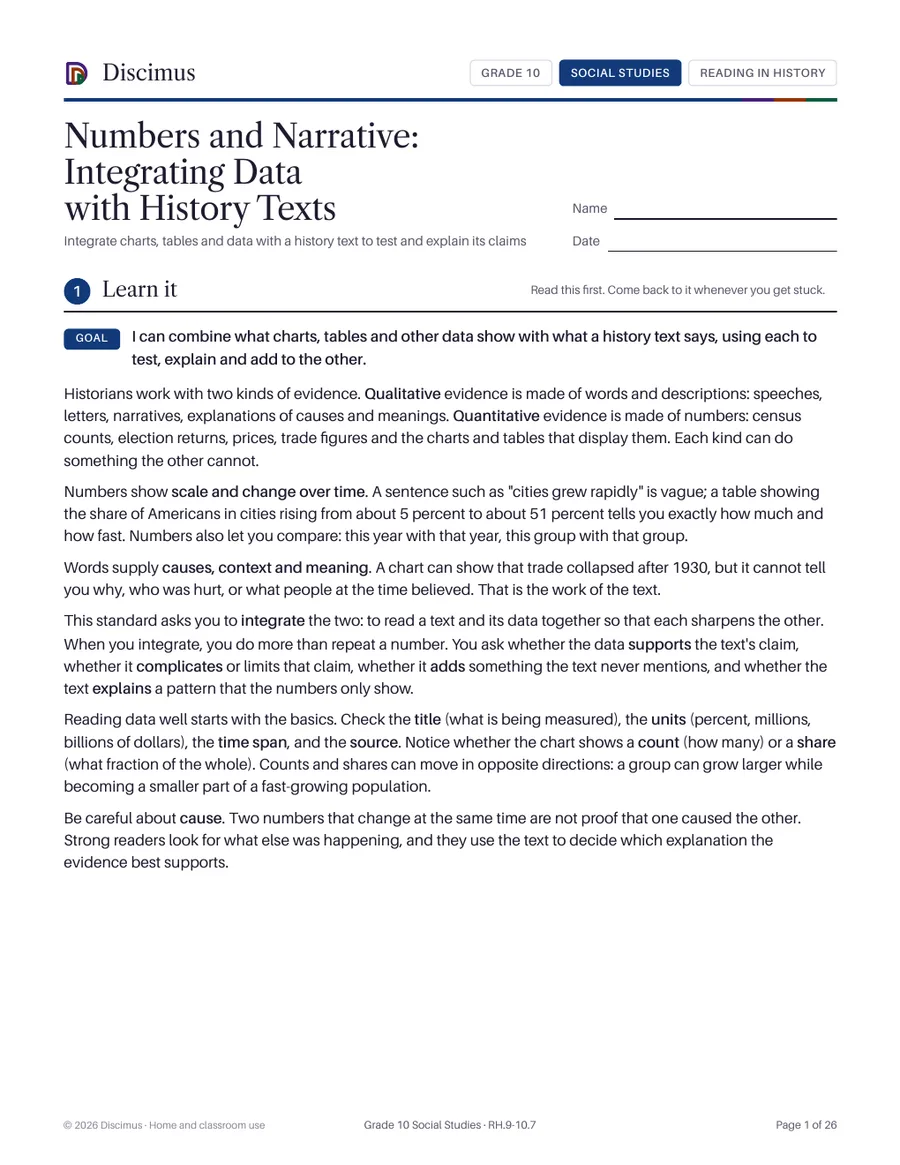
Integrate charts, tables and data with a history text to test and explain its claims
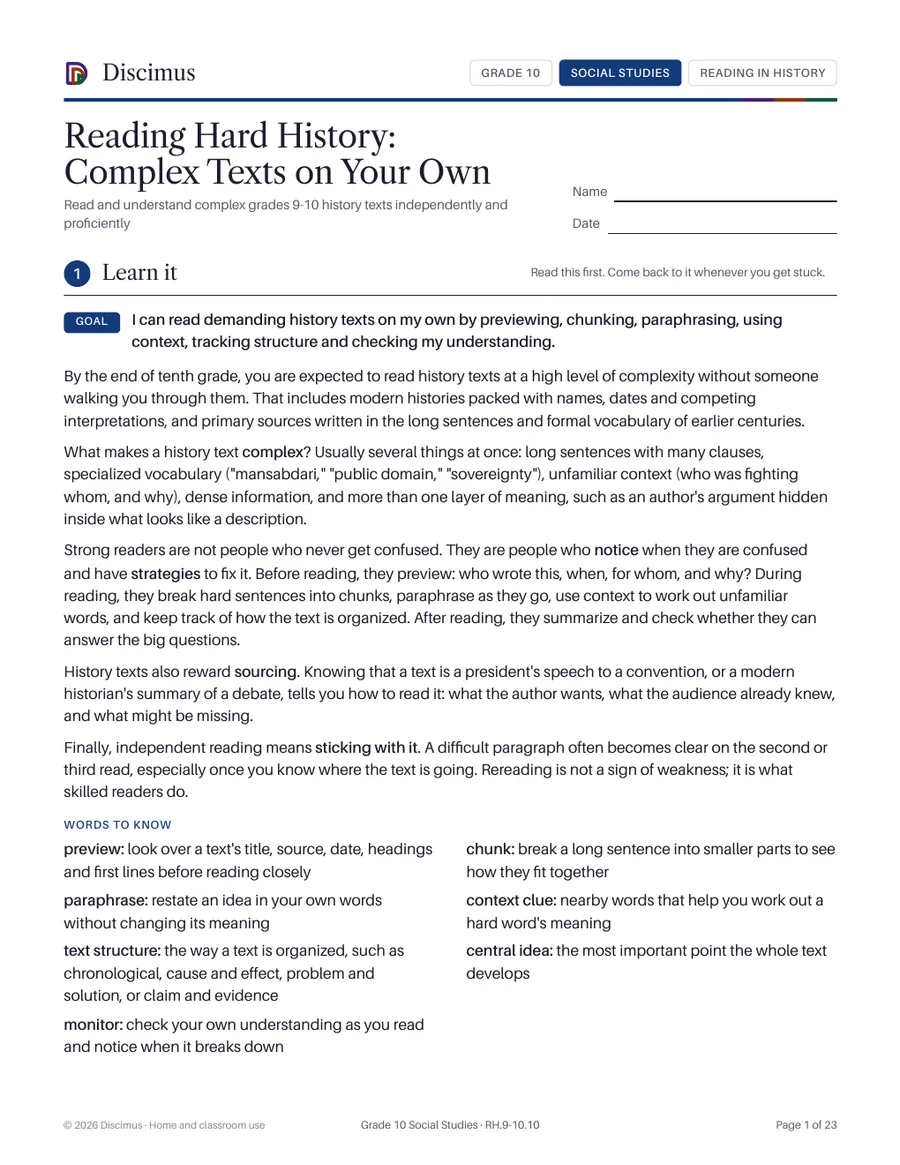
Read and understand complex grades 9-10 history texts independently and proficiently
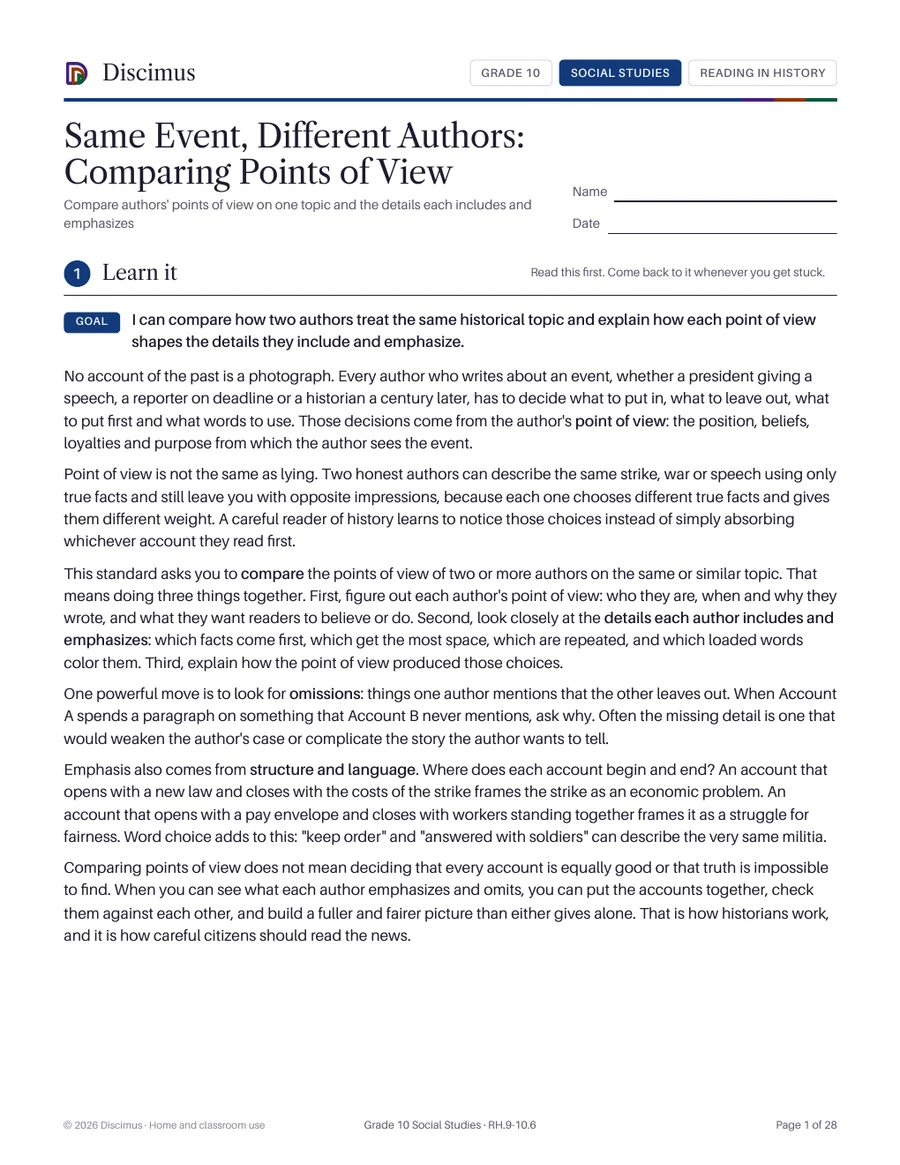
Compare authors' points of view on one topic and the details each includes and emphasizes
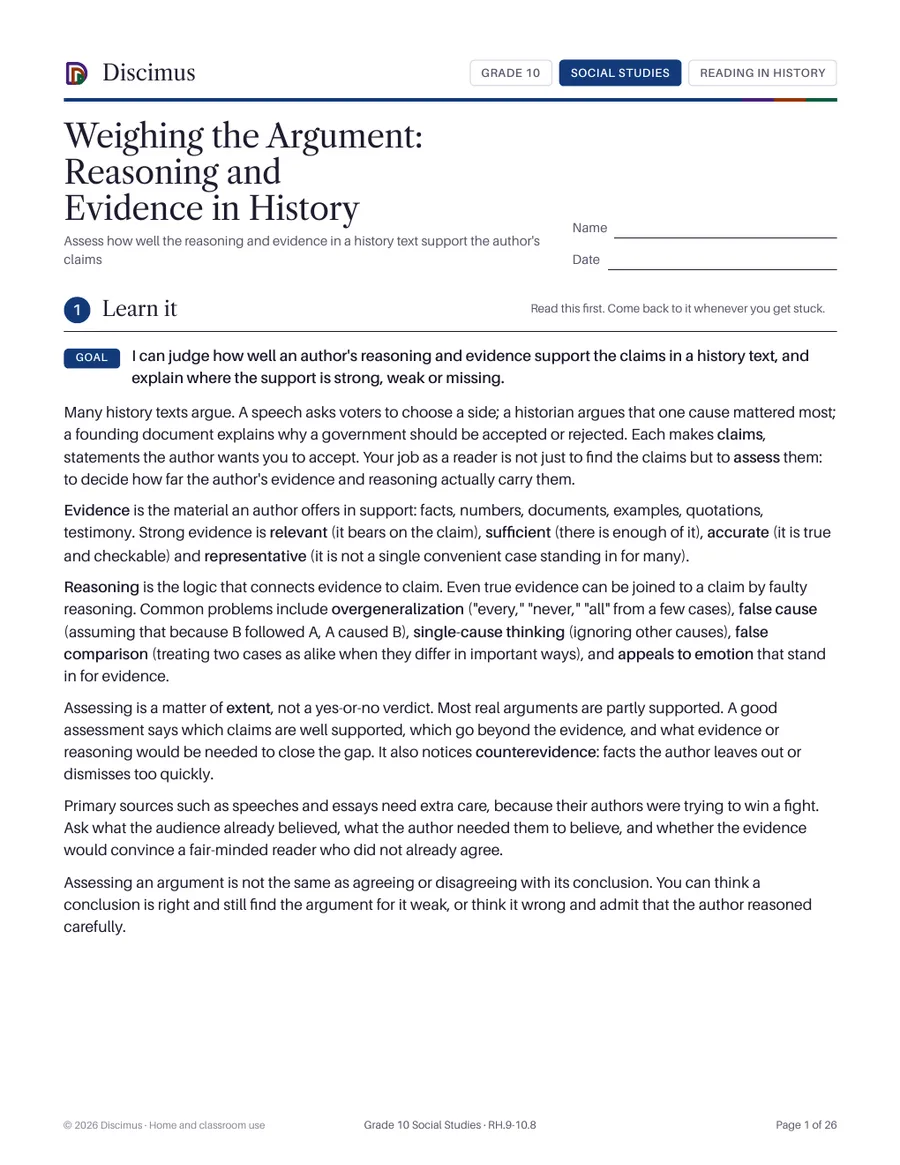
Assess how well the reasoning and evidence in a history text support the author's claims
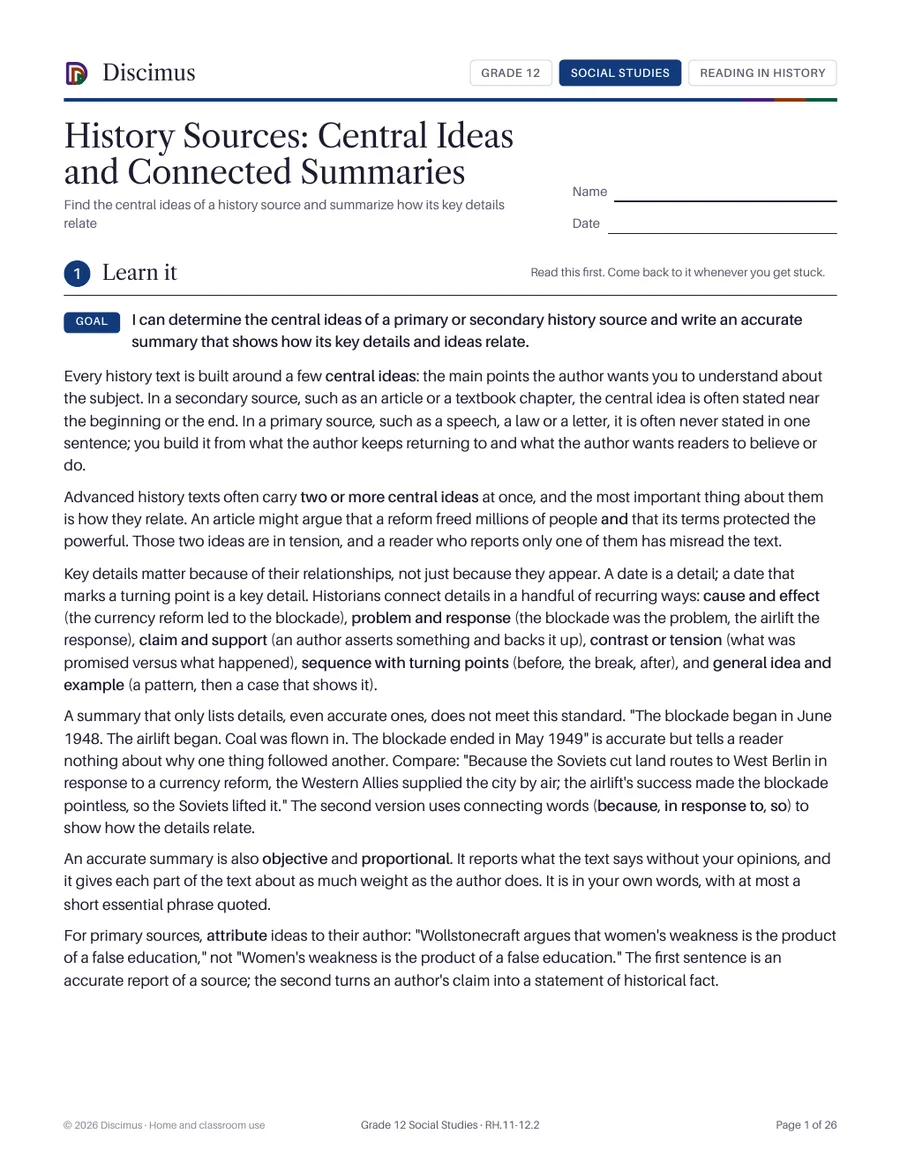
Find the central ideas of a history source and summarize how its key details relate
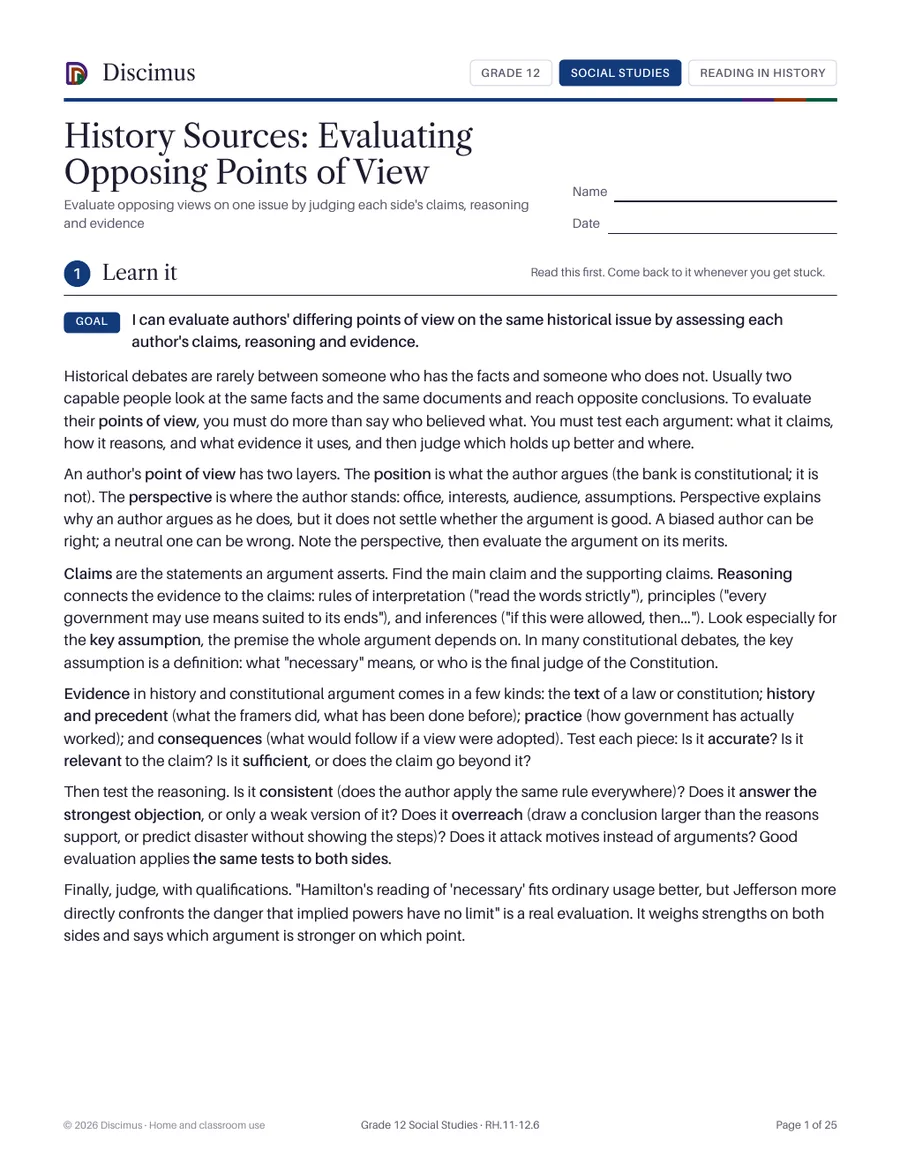
Evaluate opposing views on one issue by judging each side's claims, reasoning and evidence
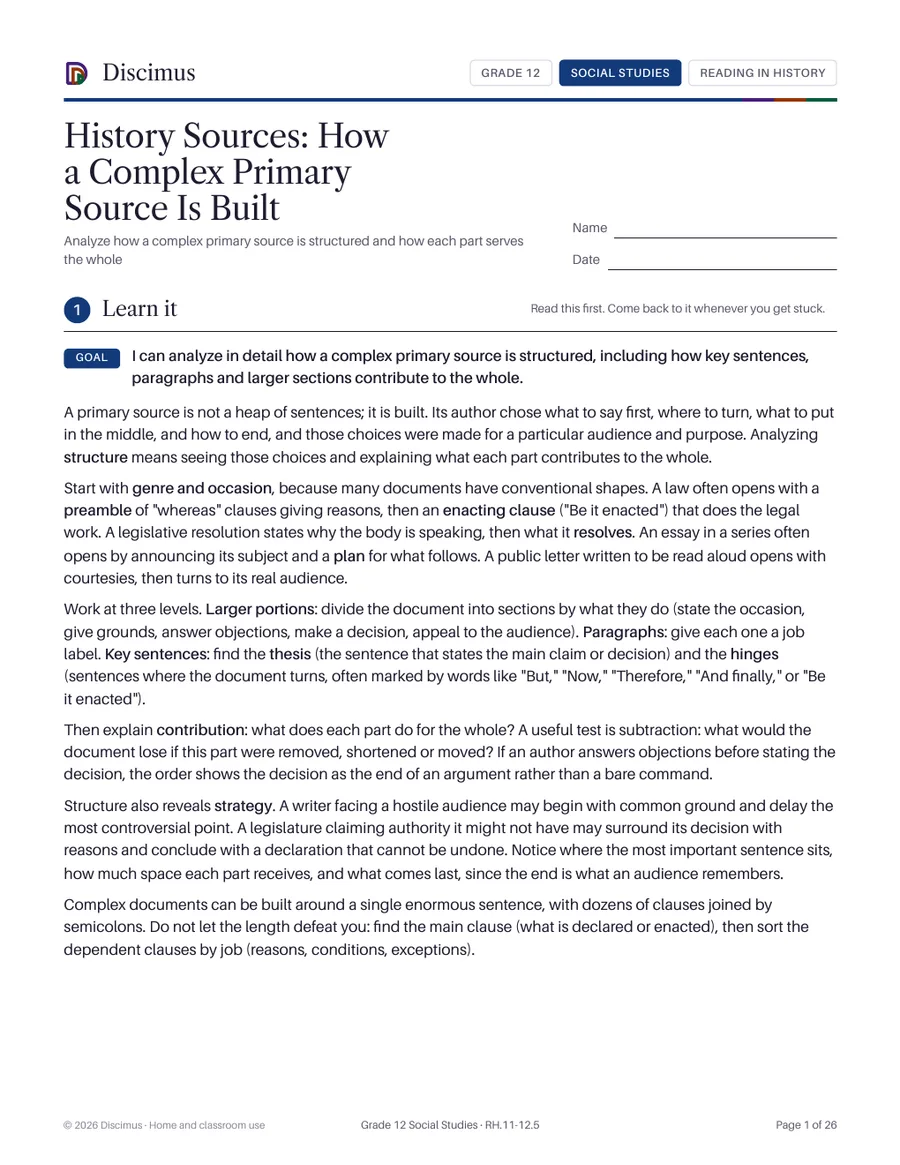
Analyze how a complex primary source is structured and how each part serves the whole
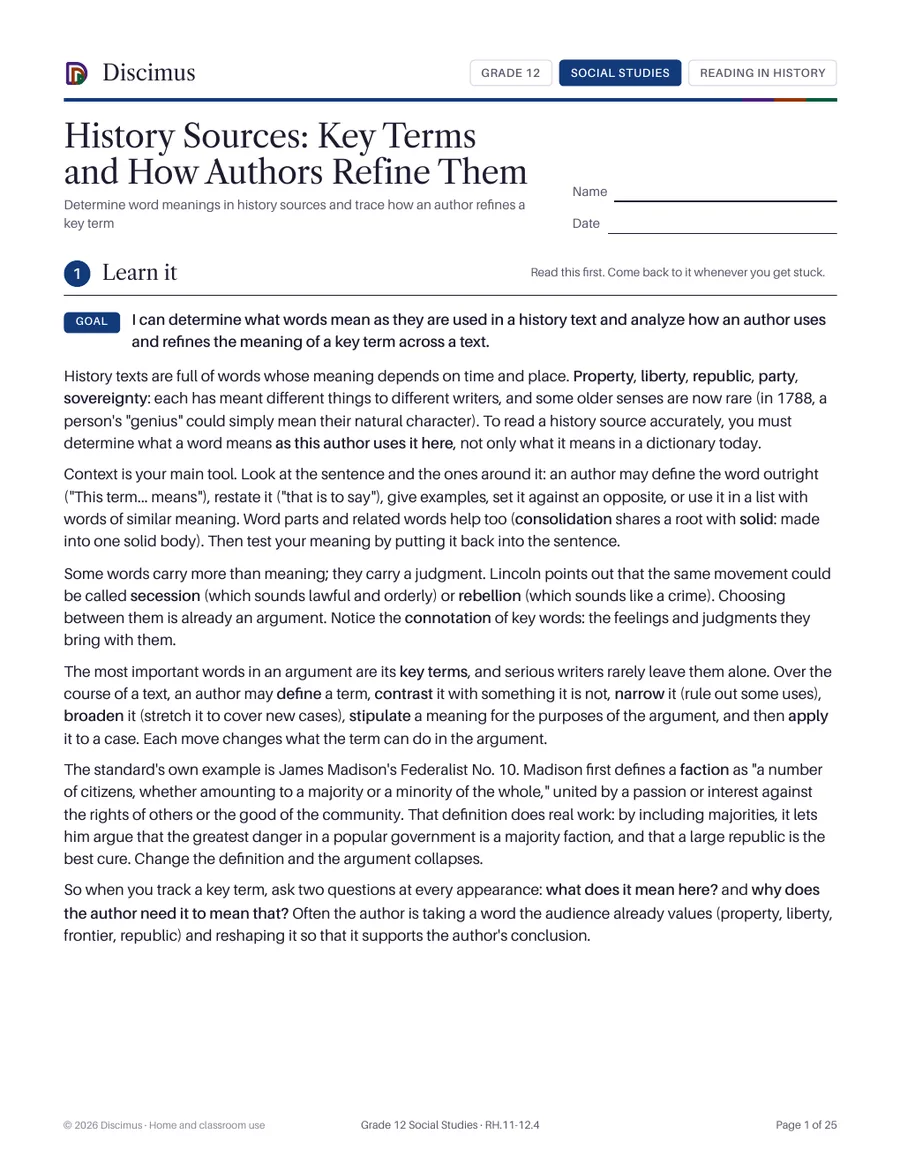
Determine word meanings in history sources and trace how an author refines a key term
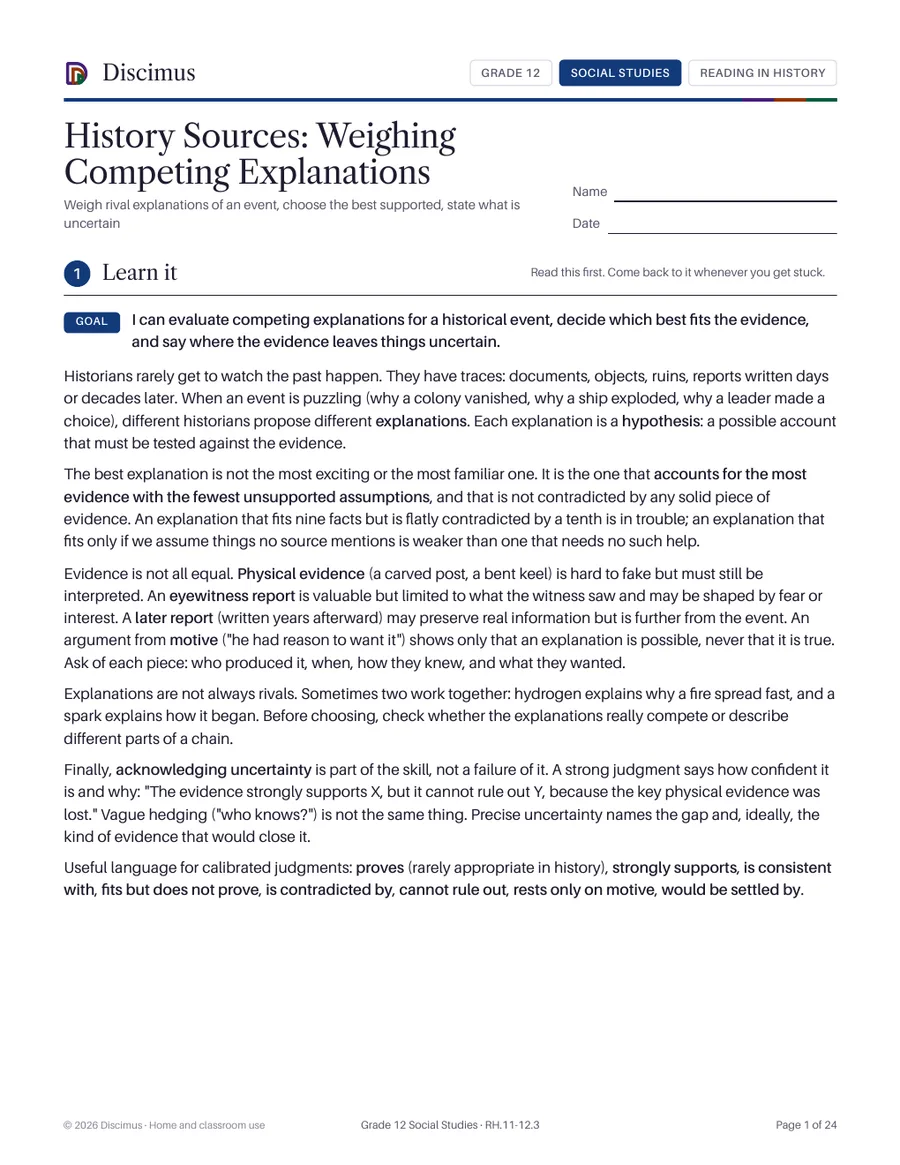
Weigh rival explanations of an event, choose the best supported, state what is uncertain
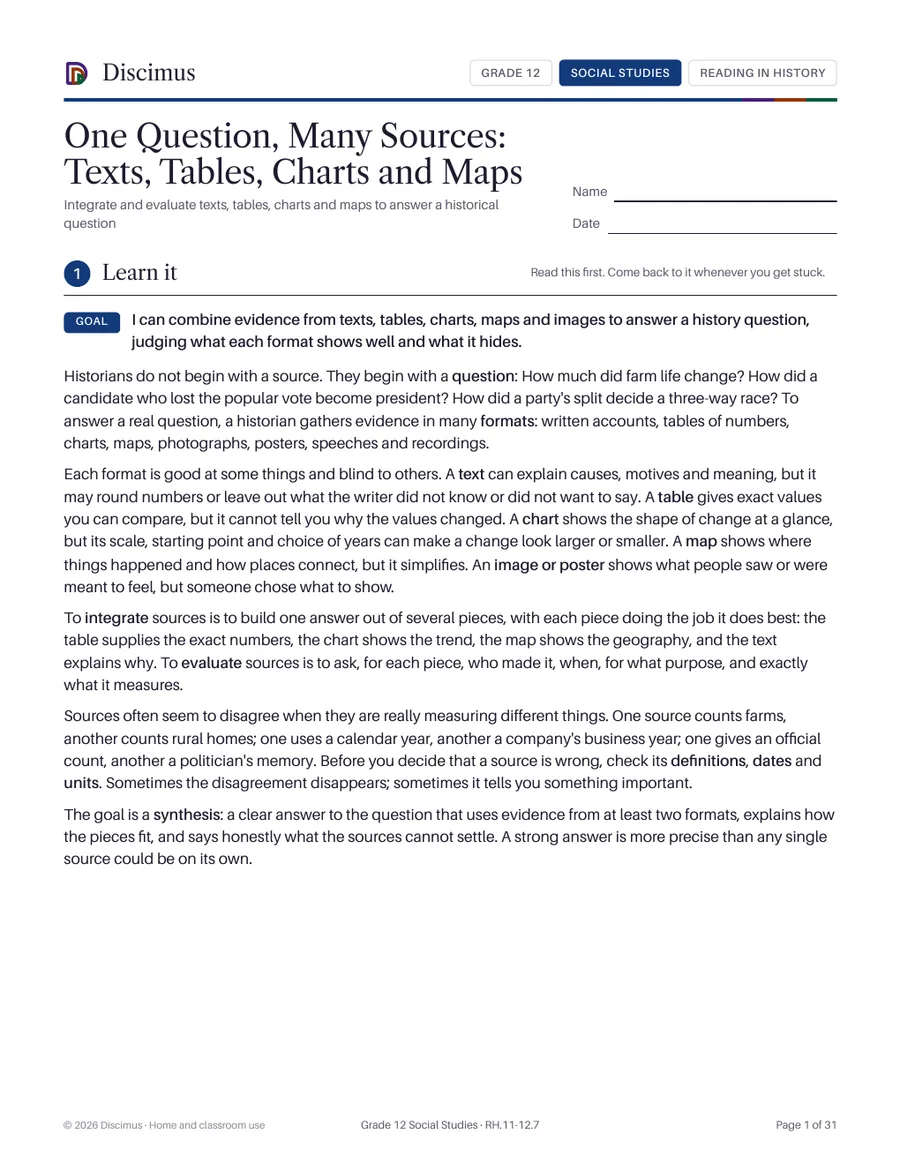
Integrate and evaluate texts, tables, charts and maps to answer a historical question
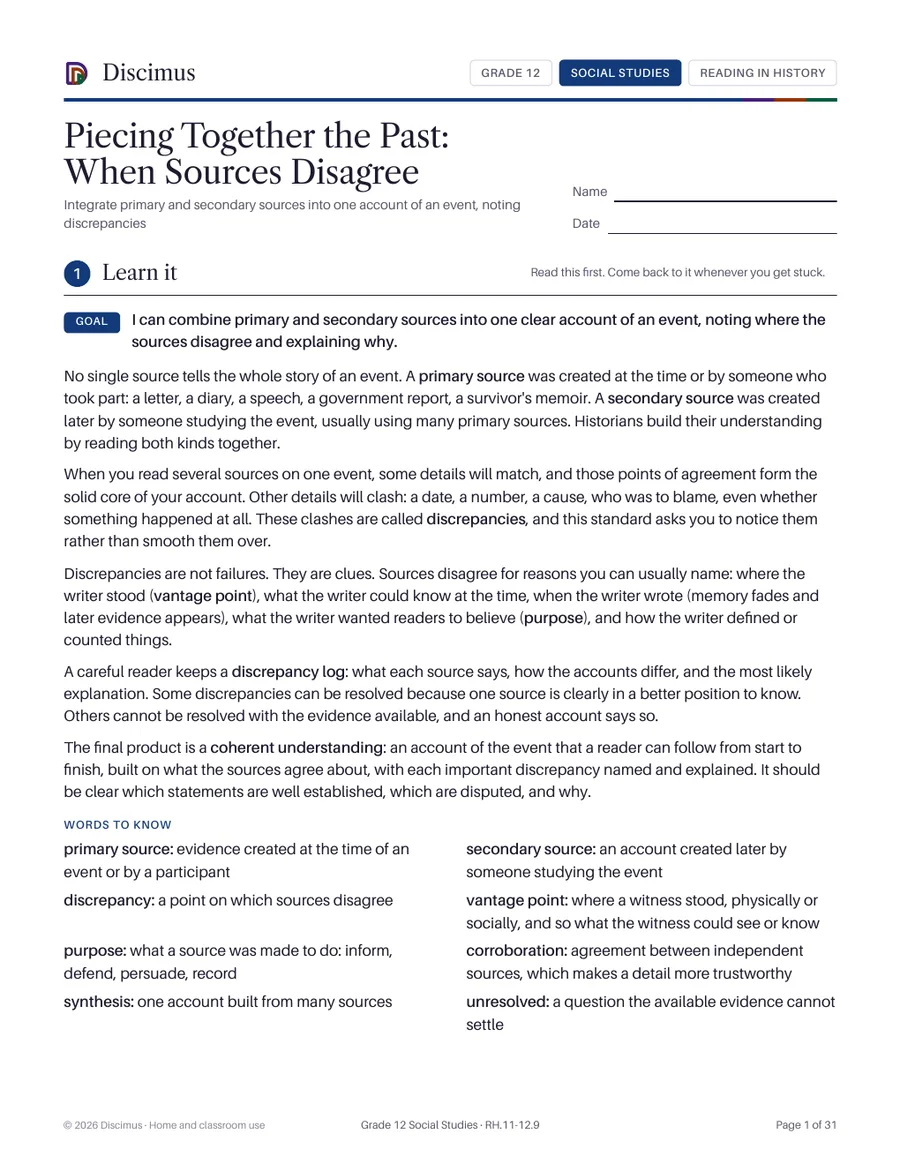
Integrate primary and secondary sources into one account of an event, noting discrepancies
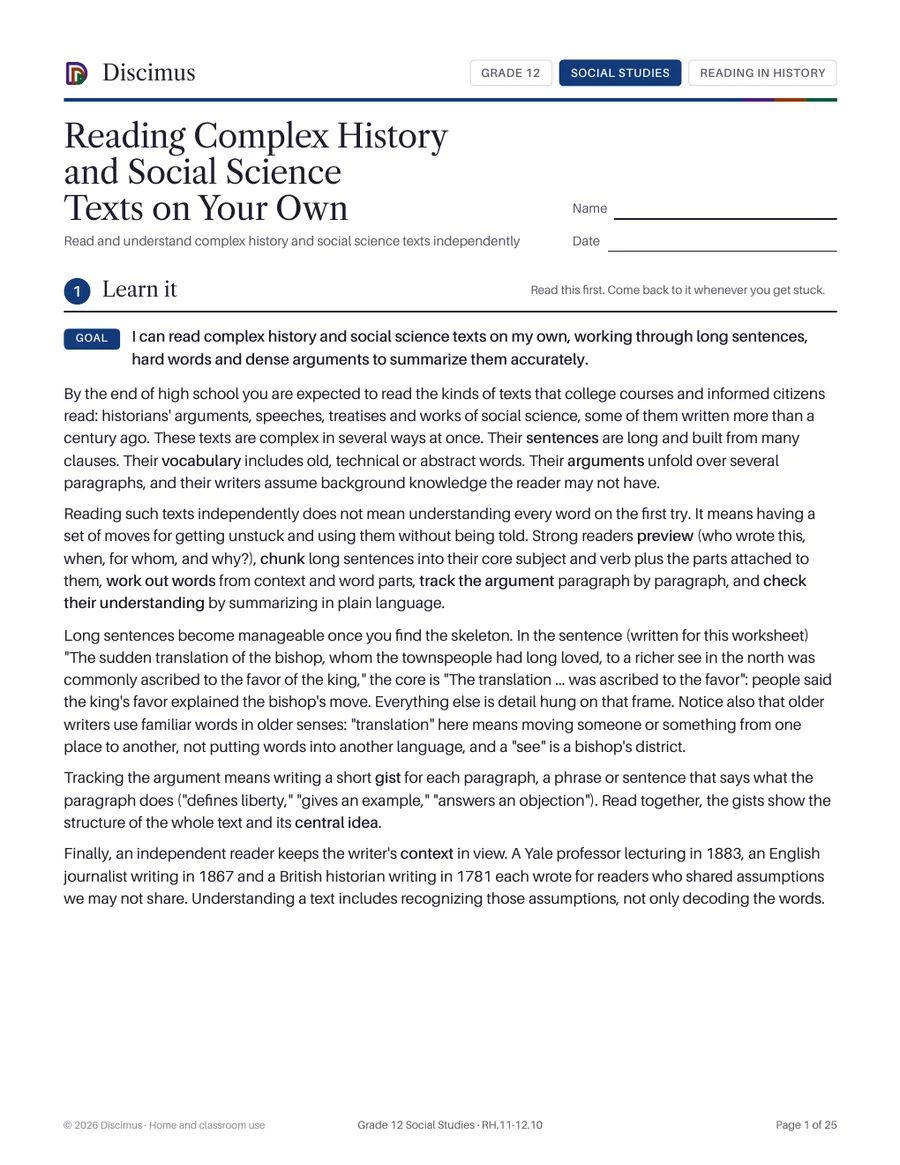
Read and understand complex history and social science texts independently
Evaluate an author's premises, claims and evidence by corroborating or challenging them