Alone or Together? Plan an Action and Predict Results
Explain strategies for acting alone and together on a problem and predict their results
C3 Framework for Social Studies
History, geography, civics and economics.
Explain strategies for acting alone and together on a problem and predict their results
Describe what credit unions, insurers, investment firms and the Federal Reserve do
Find the big ideas in a compelling question and tell which ones people see differently
Build an argument with a claim, evidence from several sources, and reasoning
Use evidence from sources to make and support a claim that answers a compelling question
Compare the benefits and costs of a choice, including its opportunity cost
Choose sources that answer inquiry questions, including sources from people who disagree
Critique an argument by testing its evidence, reasoning and fairness
Use discussion, meeting steps and voting rules to make and act on decisions at school
Explain how or why something happened using sequence, reasoning, examples and data
Tell facts from opinions and use the difference to judge how credible each source is
Use geography, economics, civics and history to explain challenges and opportunities
Find evidence in several sources to answer a compelling question and see where they agree
Explain how governments pay for goods and services with taxes, fees and borrowing

Explain how money solves the problems of barter and makes exchange easier
Calculate profit and explain how profit and loss change what sellers make and sell
Explain inflation, deflation and unemployment and recognize each in prices and job data
Explain what an interest rate is and find the interest a saver earns or a borrower pays
Critique an explanation by checking its question, facts, evidence and because-links
Explain how investing in skills raises productivity and can raise future income
Explain how trade makes nations depend more and more on one another
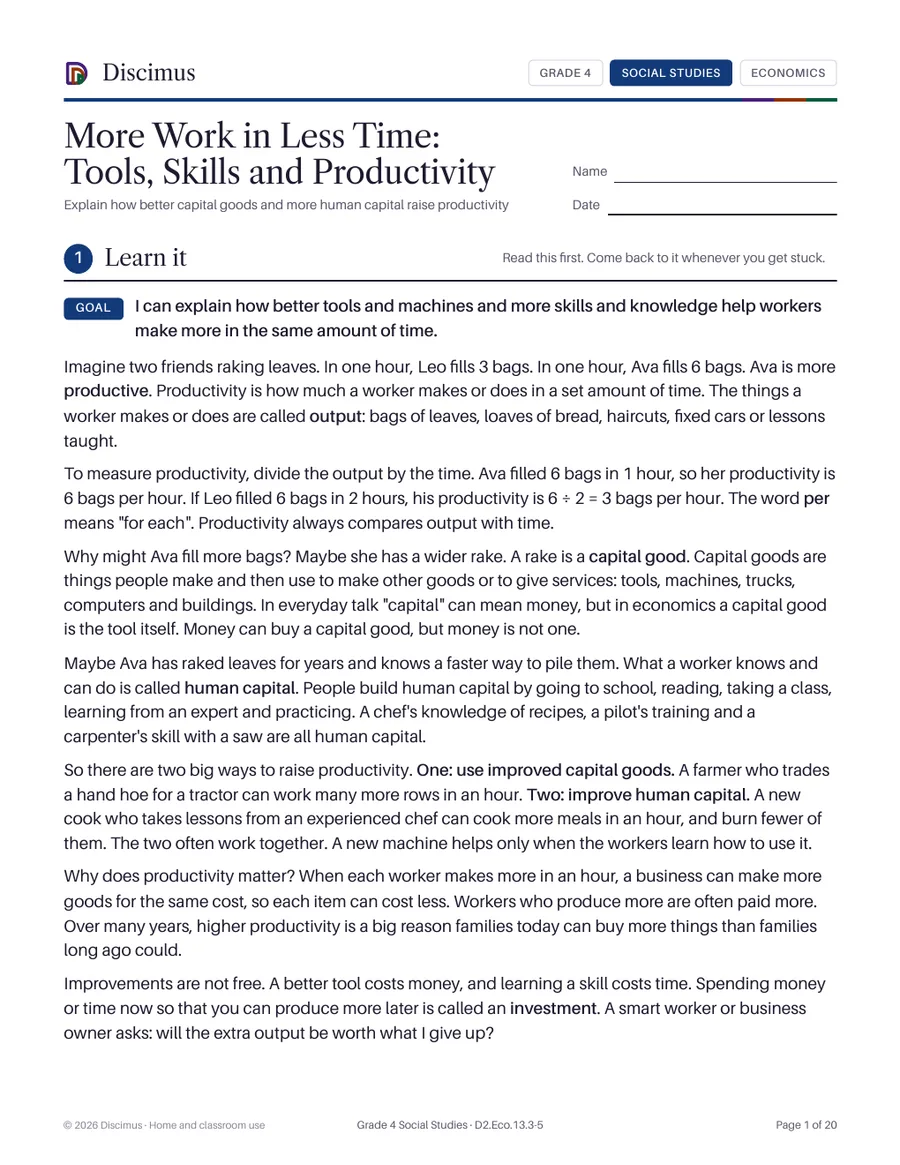
Explain how better capital goods and more human capital raise productivity
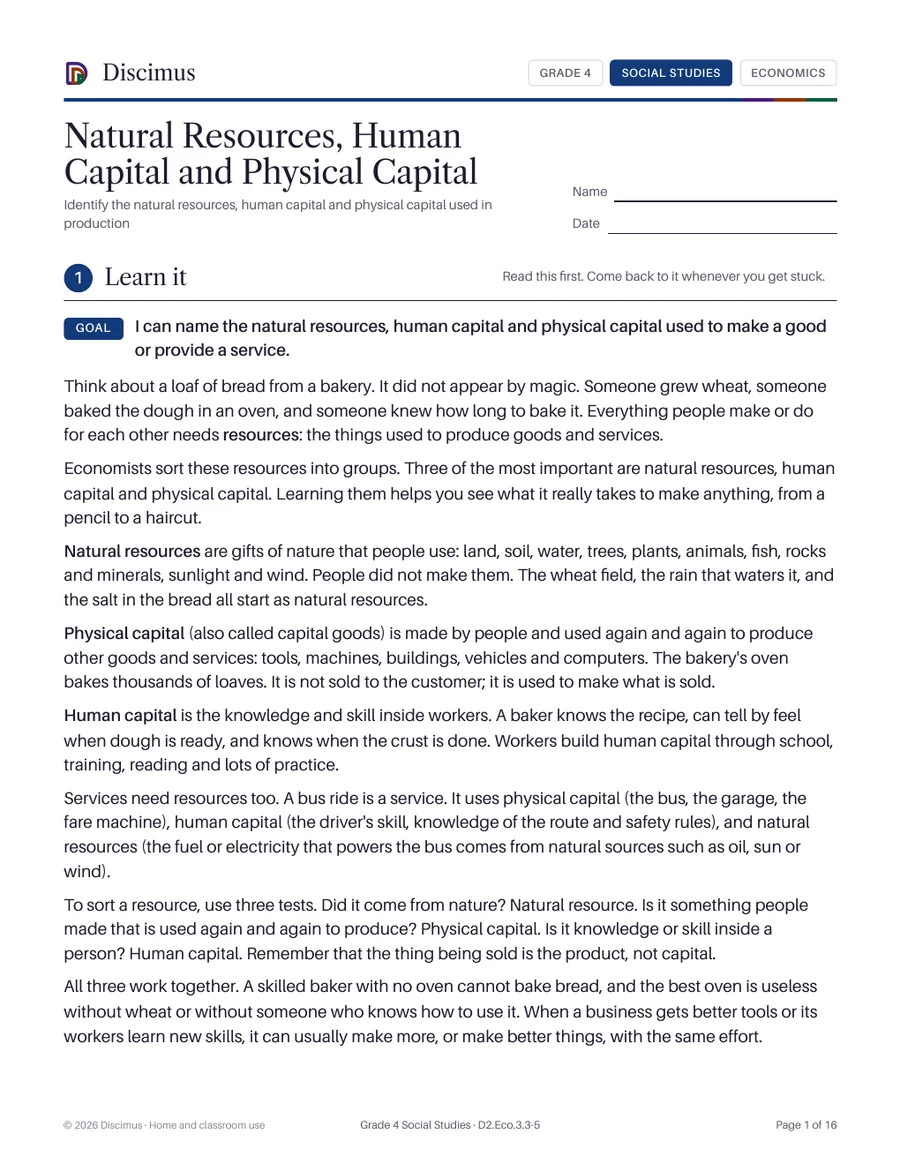
Identify the natural resources, human capital and physical capital used in production
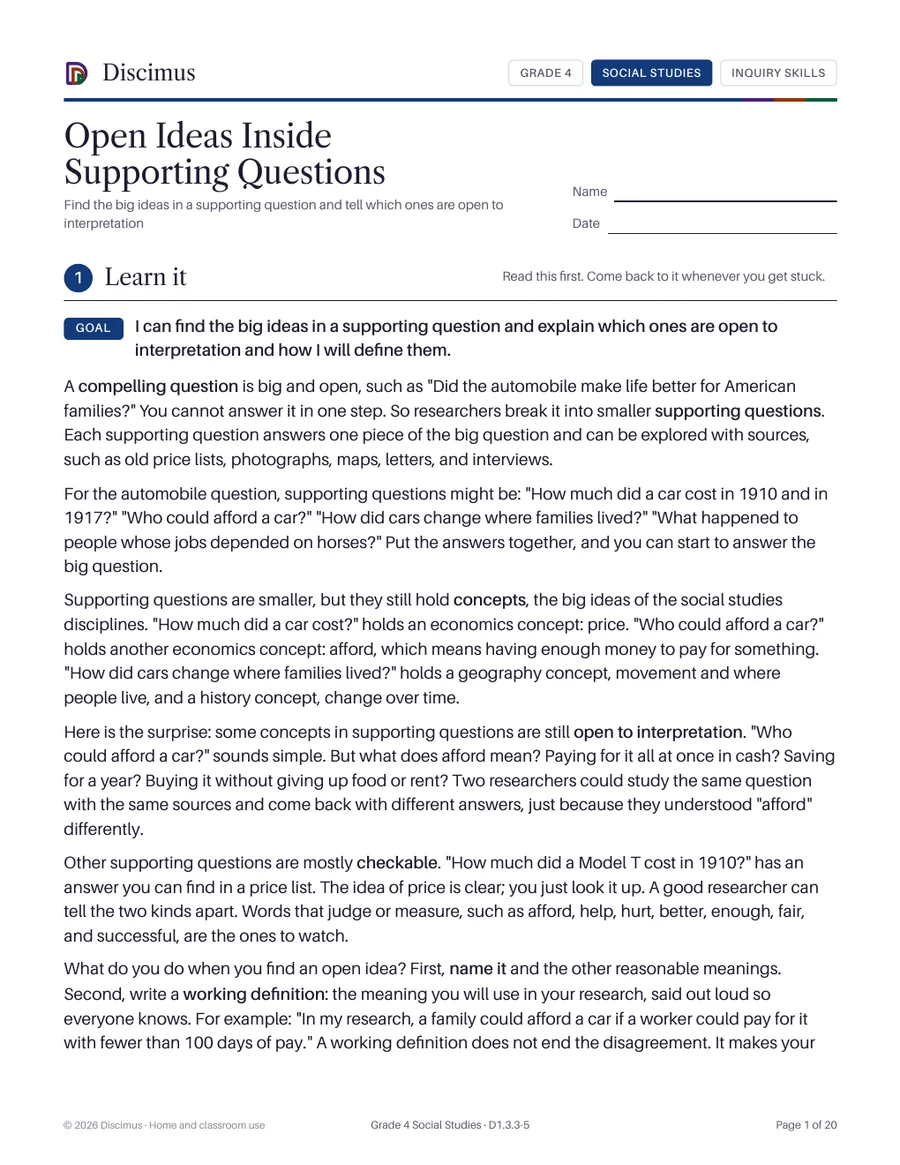
Find the big ideas in a supporting question and tell which ones are open to interpretation
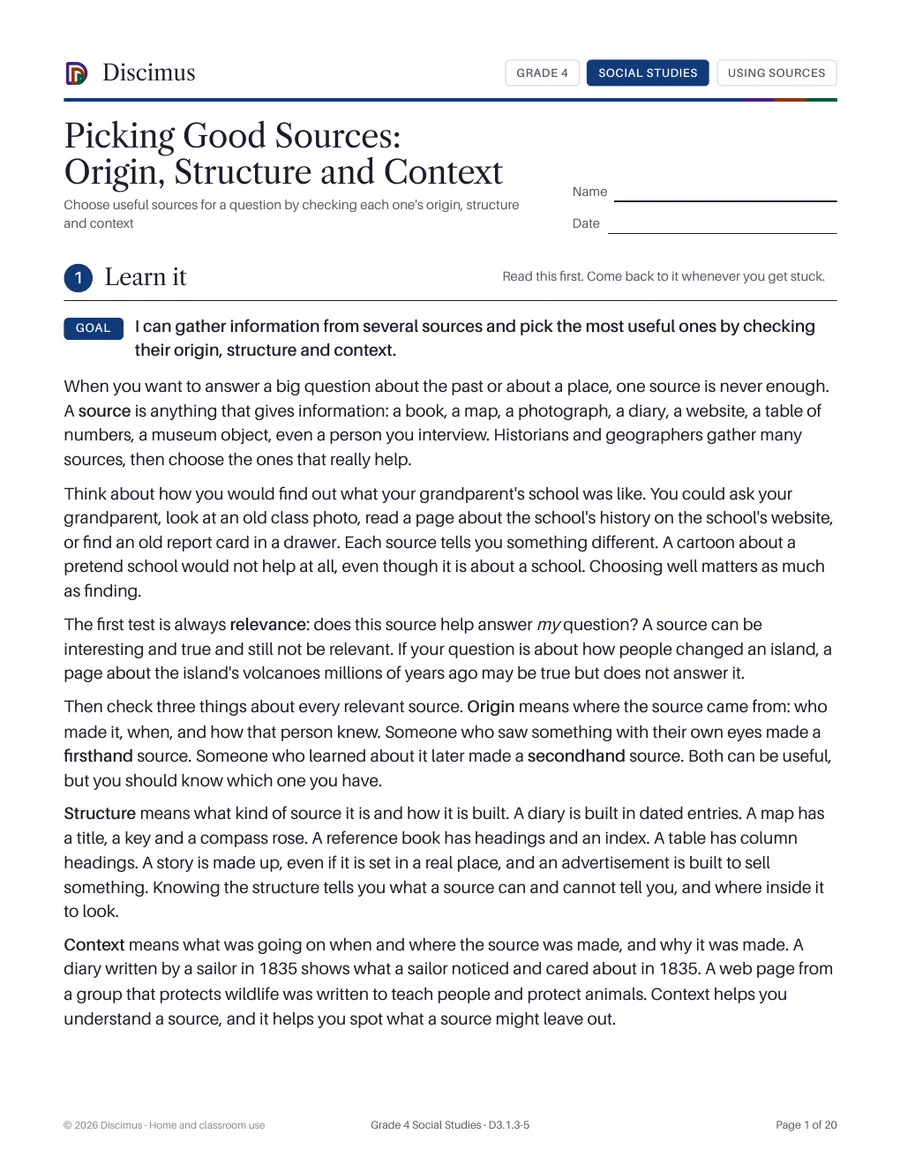
Choose useful sources for a question by checking each one's origin, structure and context
Identify positive and negative incentives and explain how they change people's decisions
Summarize an argument or explanation and present it to a real audience in a fitting format
Identify external benefits and costs that fall on people outside a choice or trade
Explain how supporting questions help answer a compelling question in an inquiry
Explain how growing trade between nations affects different groups within each nation
Explain why a compelling question is important to peers, adults and the wider community
Explain why individuals and businesses specialize and then trade