Alike and Unlike: Comparing Places by Culture and Environment
Compare places by their mix of cultural and environmental traits and explain why
C3 Framework for Social Studies
History, geography, civics and economics.
Compare places by their mix of cultural and environmental traits and explain why
Build an argument from several sources and state its strengths and limitations
Critique the structure of an explanation: thesis, pattern, links, evidence and conclusion
Critique an argument's credibility by checking its source, evidence and reasoning
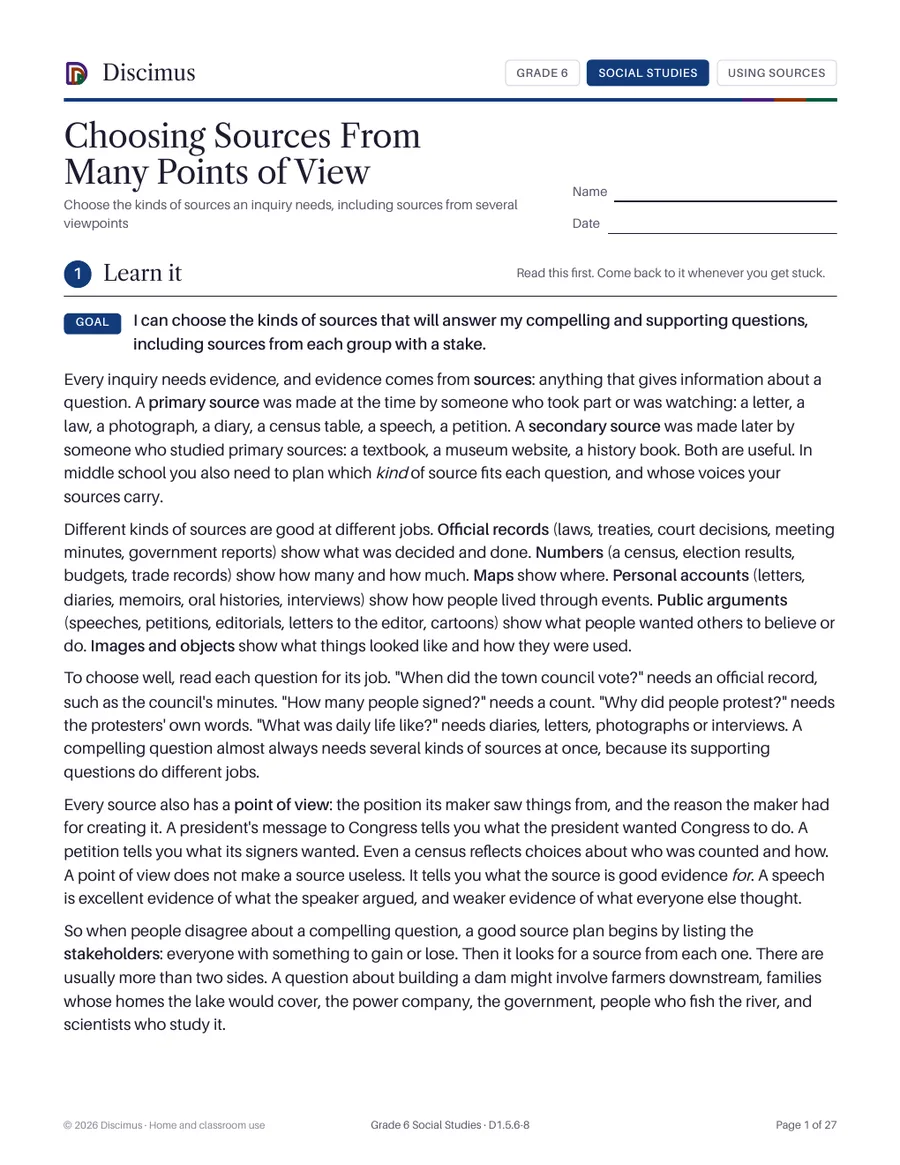
Choose the kinds of sources an inquiry needs, including sources from several viewpoints
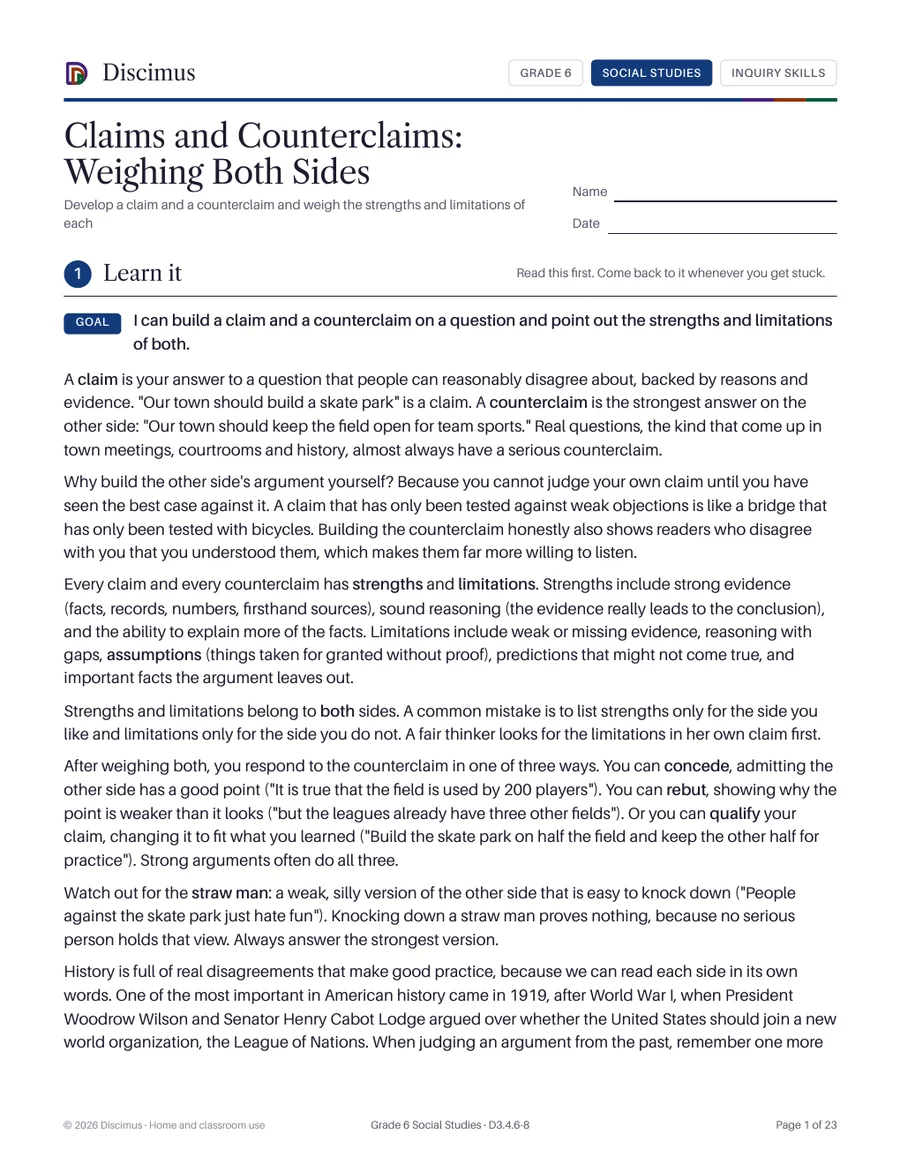
Develop a claim and a counterclaim and weigh the strengths and limitations of each
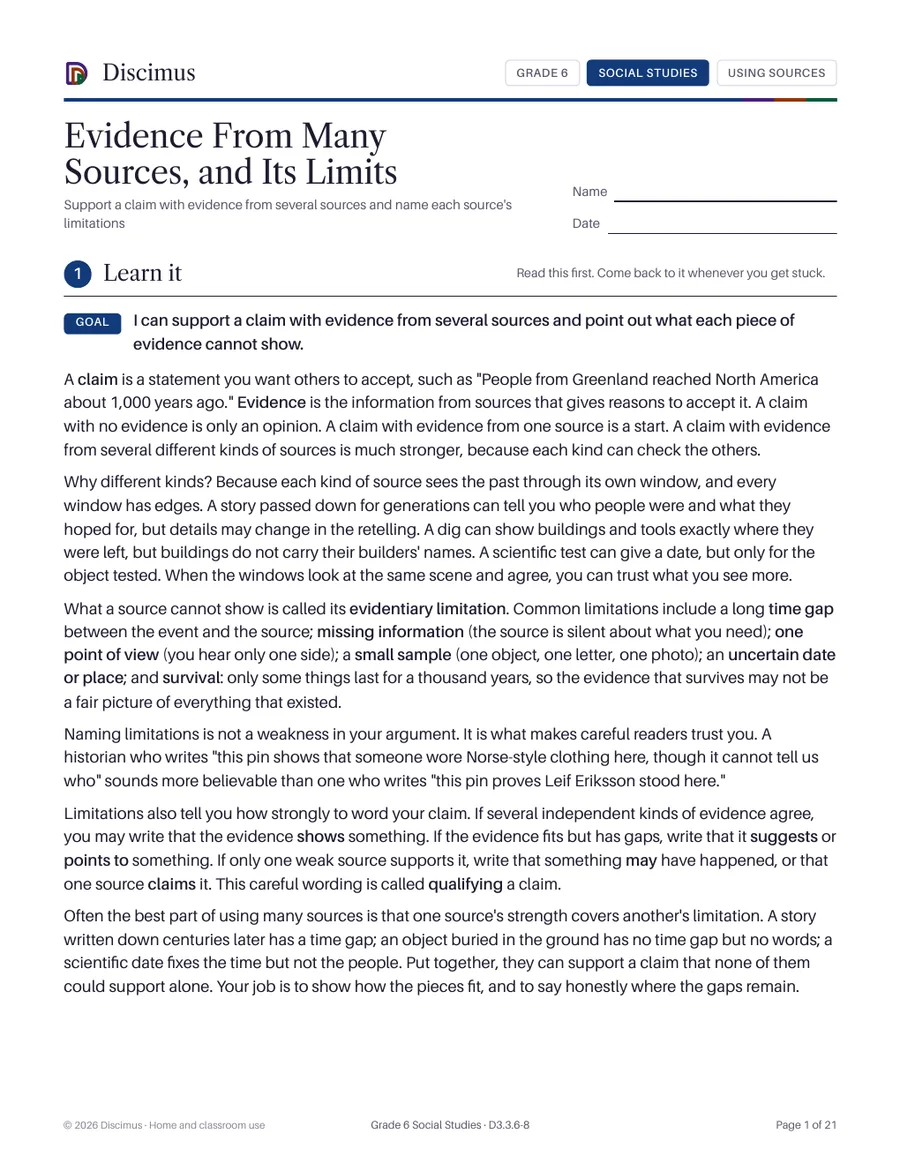
Support a claim with evidence from several sources and name each source's limitations
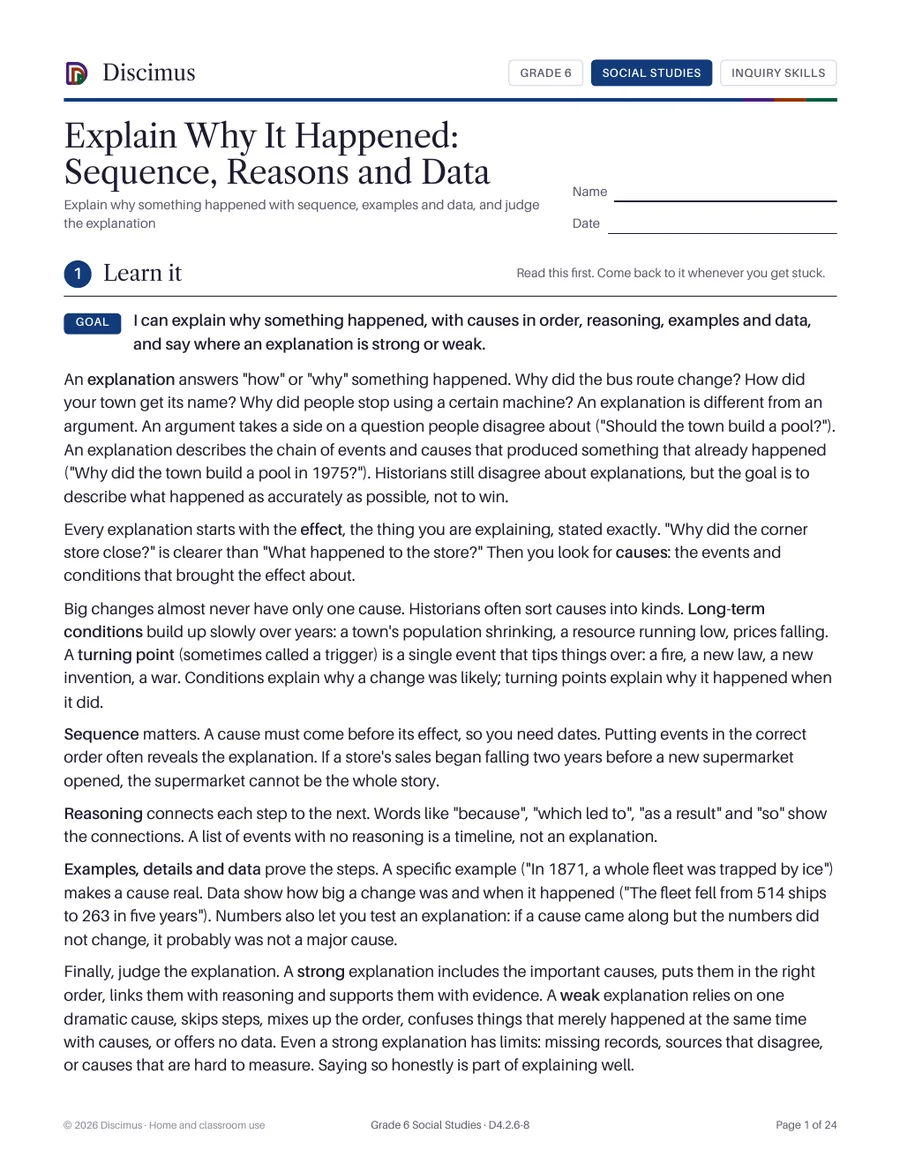
Explain why something happened with sequence, examples and data, and judge the explanation
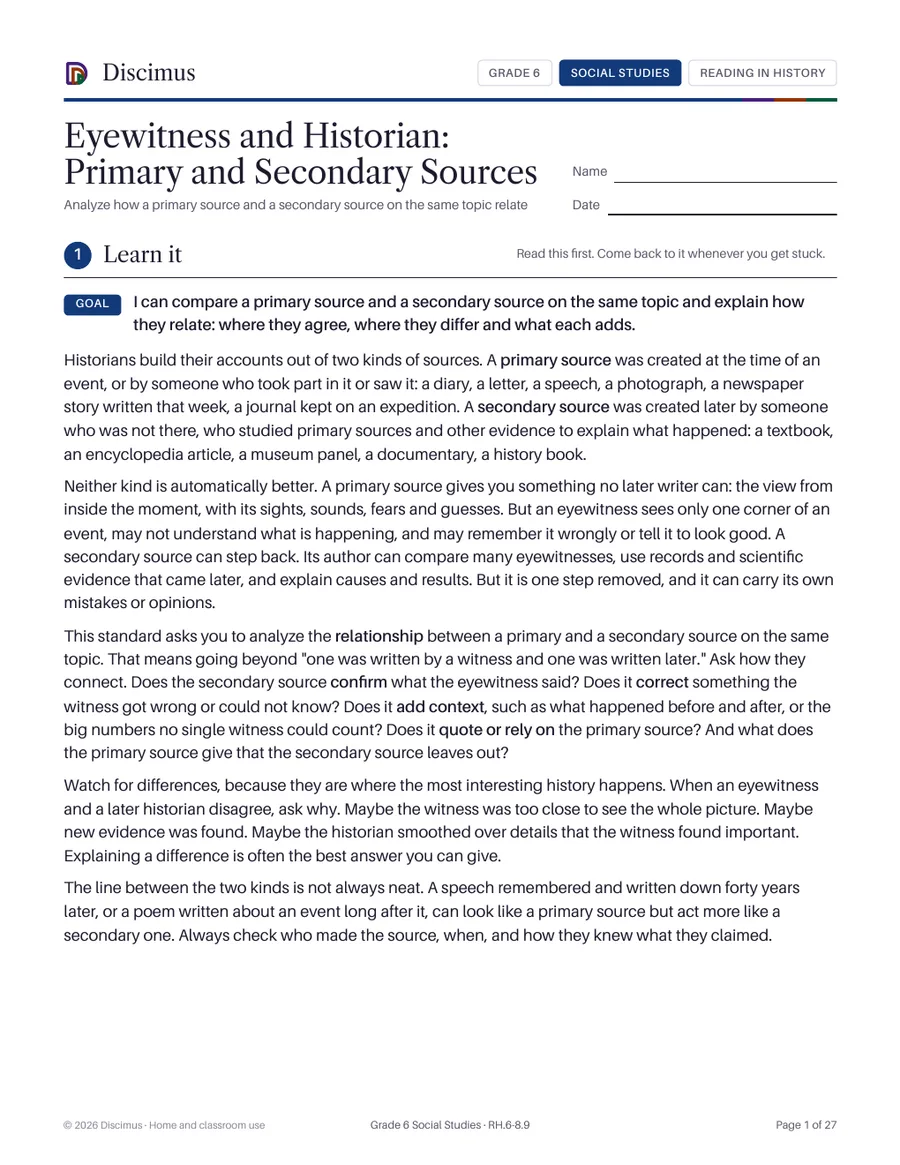
Analyze how a primary source and a secondary source on the same topic relate
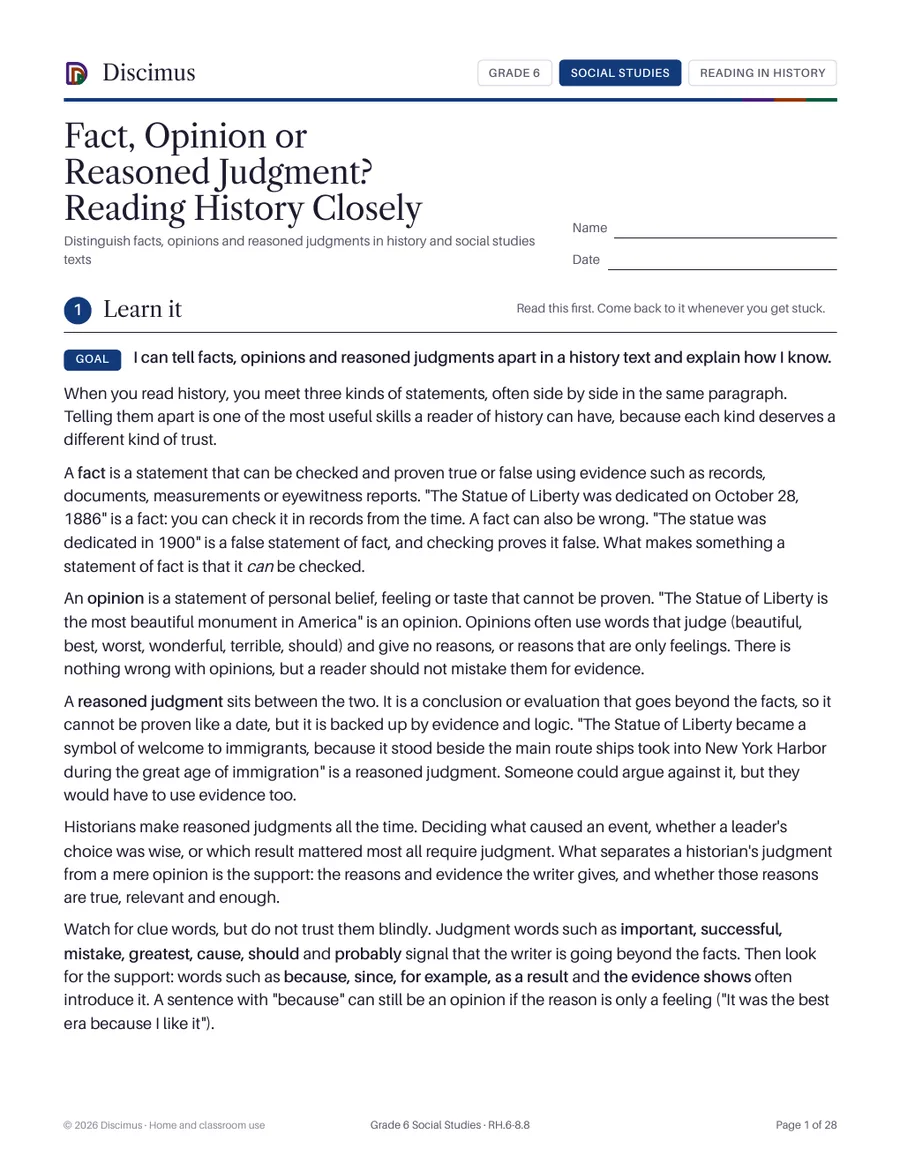
Distinguish facts, opinions and reasoned judgments in history and social studies texts
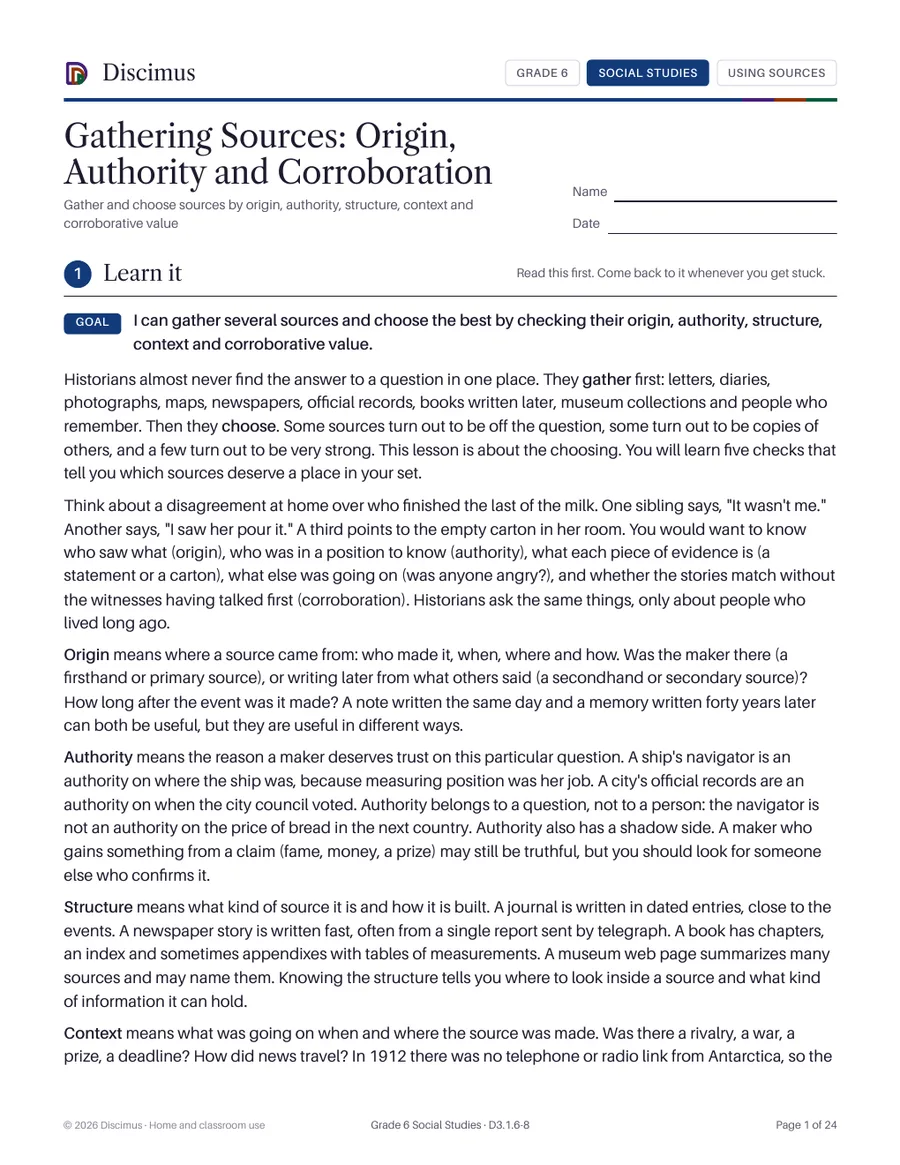
Gather and choose sources by origin, authority, structure, context and corroborative value
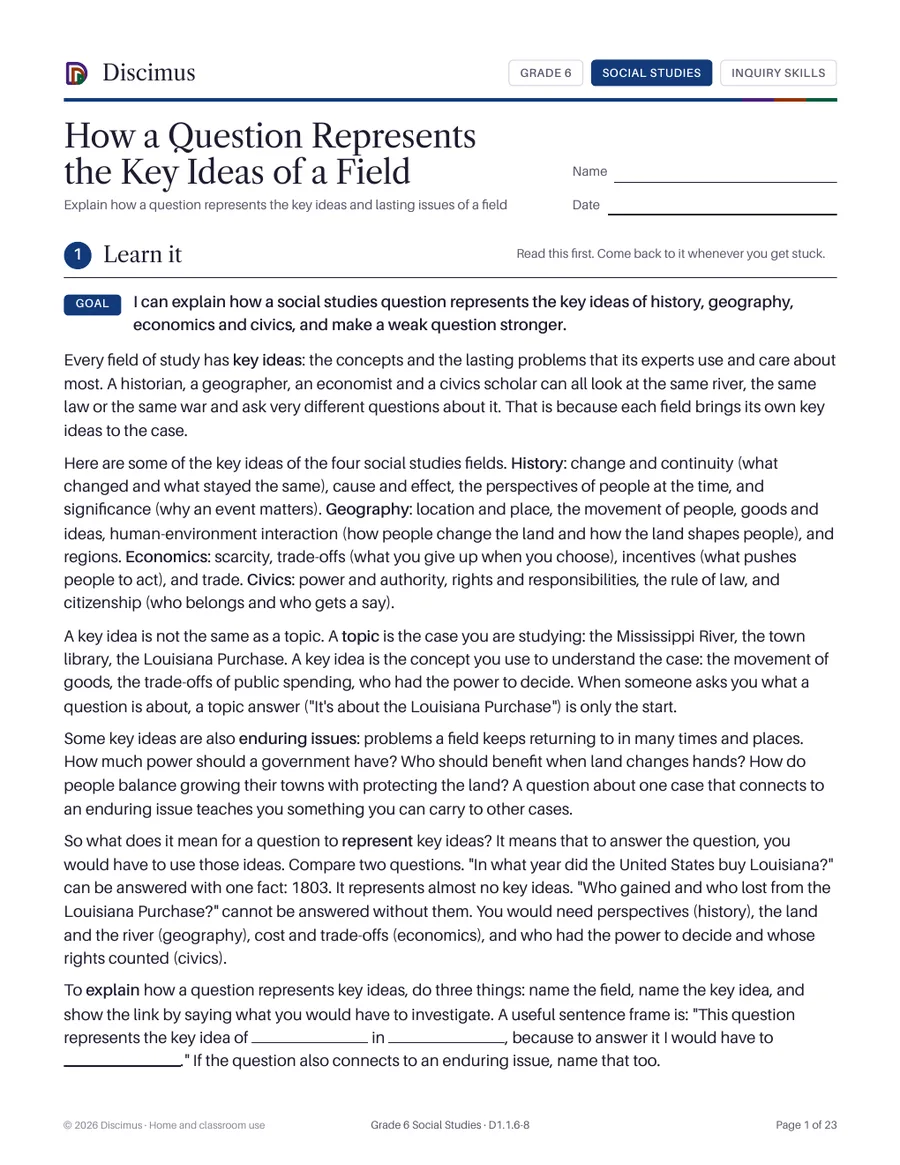
Explain how a question represents the key ideas and lasting issues of a field
Explain how culture and economic choices change environments and lives near and far
Describe how a history text presents information: sequence, comparison, cause and effect
Judge a source's credibility for a question by its relevance and its intended use
Explain how physical and human characteristics of places connect to identity and culture
Build thematic maps from data and explain patterns of cultural and environmental features
Use paper and electronic maps and graphs to show and analyze spatial patterns
Explain several causes and effects of the rise of the first cities in Mesopotamia
Explain how changes in where people live change the way land is used in particular places
Apply democratic procedures such as motions, votes, consensus and ranked choice to decide
Analyze a problem at local, regional and global levels over time using four lenses
Explain how compelling and supporting questions shape and strengthen each other
Use maps, satellite images and photos to explain environmental change and place links
Read and understand grade 6 to 8 history and social studies texts independently
Integrate information from cartoons, diagrams, graphs and tables with a history text
Cite specific text evidence to support analysis of primary and secondary history sources
Explain how transport and communication technology change links and the spread of ideas
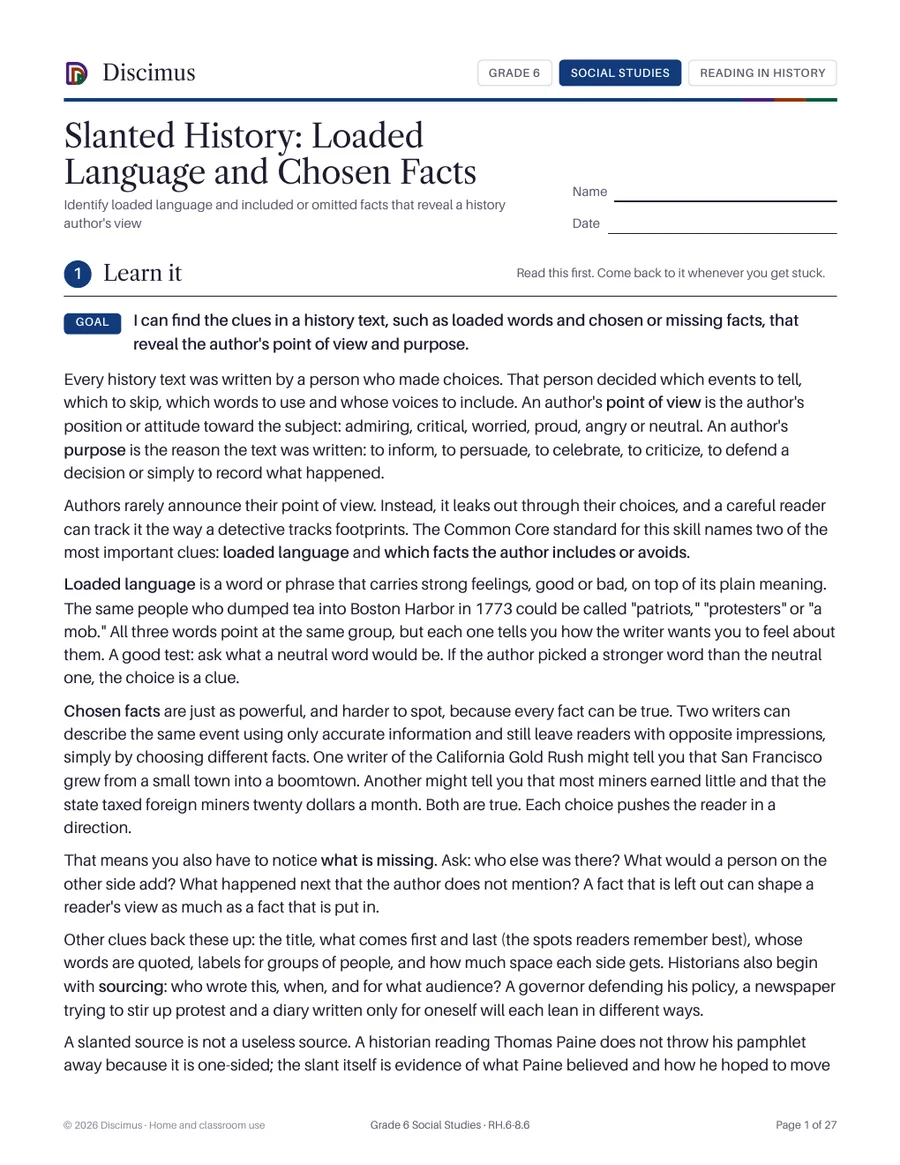
Identify loaded language and included or omitted facts that reveal a history author's view
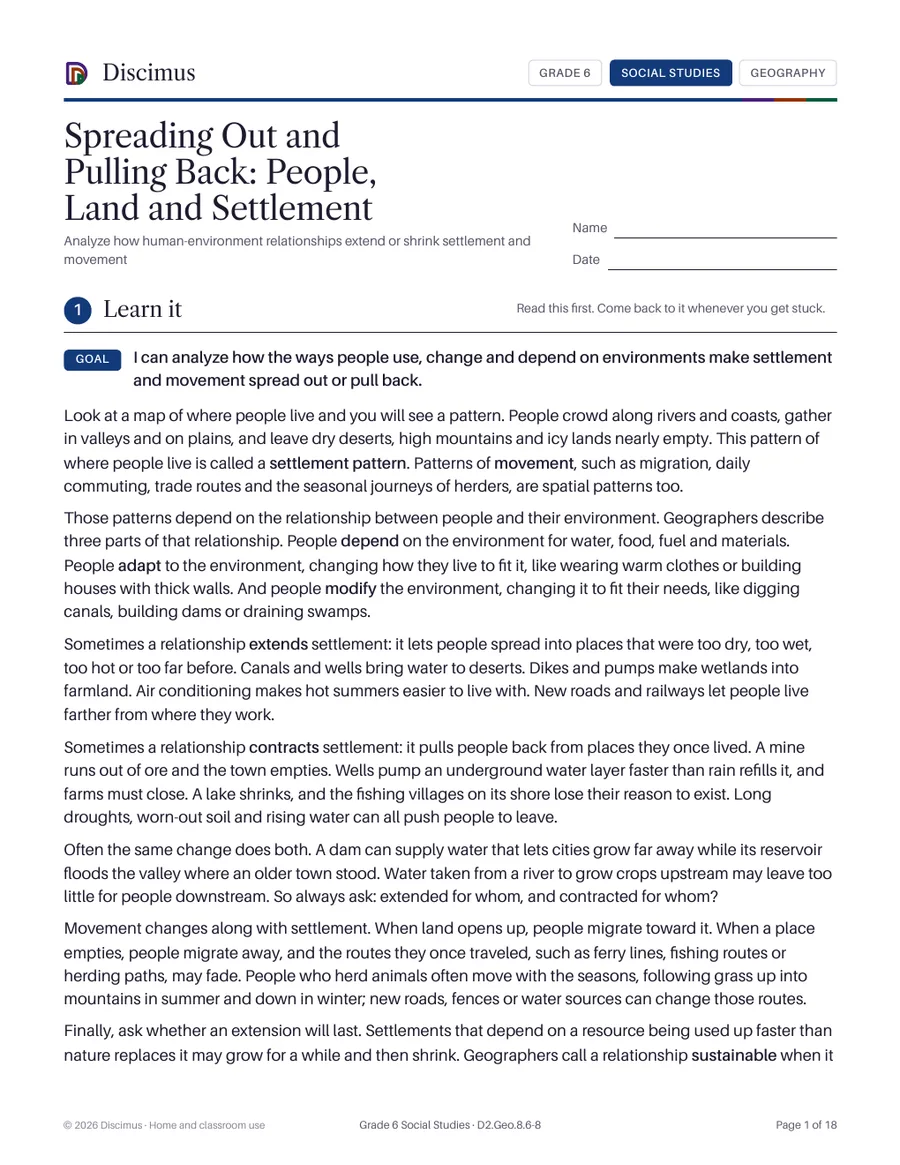
Analyze how human-environment relationships extend or shrink settlement and movement
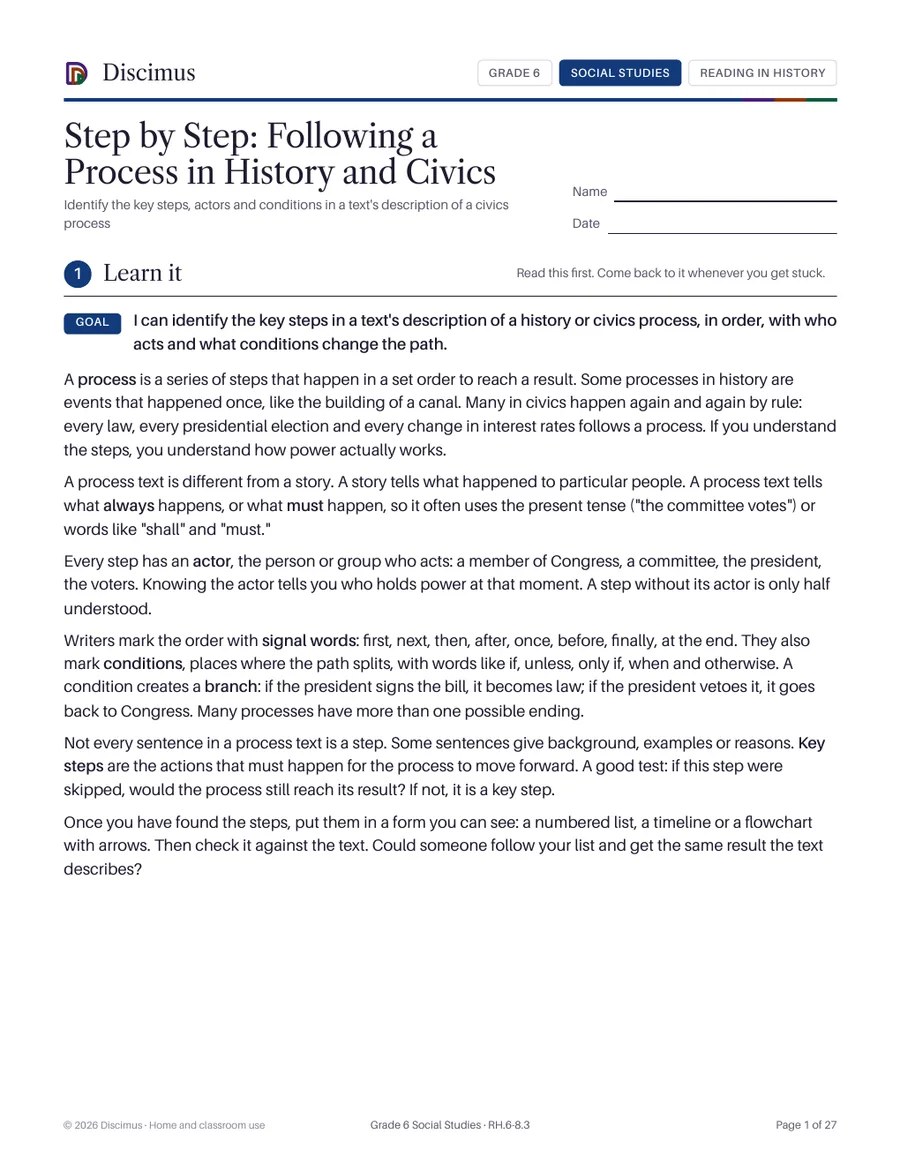
Identify the key steps, actors and conditions in a text's description of a civics process
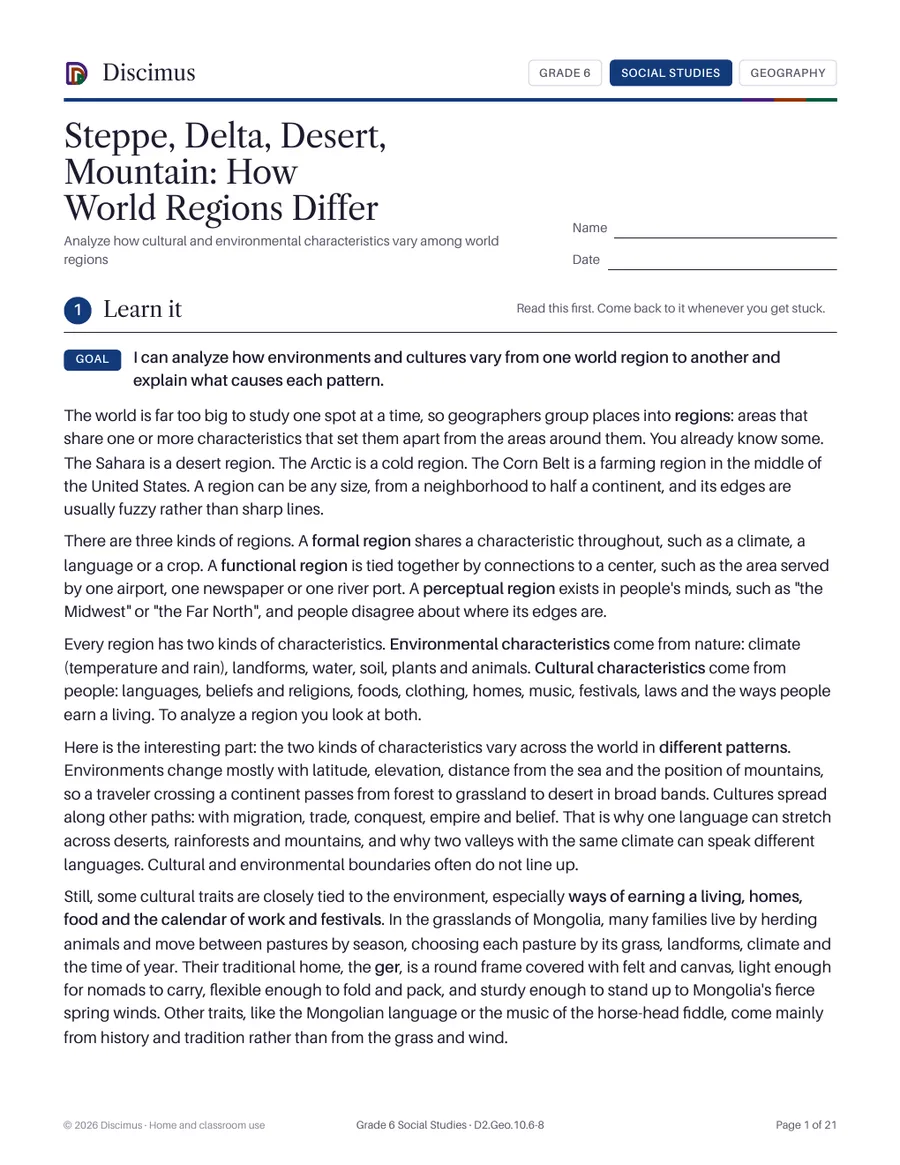
Analyze how cultural and environmental characteristics vary among world regions
Adapt an argument or explanation for a real audience and venue outside the classroom
Evaluate how human-caused environmental change shapes conflict and cooperation
Find the central idea of a history source and write an accurate, objective summary
Explain points of agreement among experts about the ideas in a compelling question
Explain points of agreement among experts about the ideas in a supporting question
Explain how the environment of places shapes production and patterns of world trade

Assess individual and group capacity to act using levers, strategies and outcomes
Determine the meaning of history and civics words and phrases as they are used in a text