Skip to content
Discimus
  • Grades
  • Subjects
  • Occasions
  • Standards
  • Membership
Sign inJoin
  1. Home
  2. Grades
  3. Grade 9
  4. English Language Arts

Common Core State Standards for English Language Arts

Grade 9 English Language Arts

Phonics, reading, grammar, vocabulary and writing.

TopicsArgument Writing 4Close Reading 1Grammar 1Reading Comprehension 18Vocabulary 1Writing 19
StandardsL.9-10.1.AL.9-10.2.AL.9-10.2.BRI.9-10.1RI.9-10.2RI.9-10.3RI.9-10.4RI.9-10.5RI.9-10.6RI.9-10.7RI.9-10.8RI.9-10.9RI.9-10.10RL.9-10.1RL.9-10.2RL.9-10.3RL.9-10.4RL.9-10.5RL.9-10.6RL.9-10.7RL.9-10.9RL.9-10.10W.9-10.1.BW.9-10.1.CW.9-10.1.DW.9-10.1.EW.9-10.2.AW.9-10.2.BW.9-10.2.CW.9-10.2.DW.9-10.2.EW.9-10.2.FW.9-10.3.AW.9-10.3.BW.9-10.3.CW.9-10.3.DW.9-10.3.EW.9-10.4W.9-10.5W.9-10.6W.9-10.7W.9-10.8W.9-10.9.AW.9-10.9.BW.9-10.10
  • ELAGrade 9

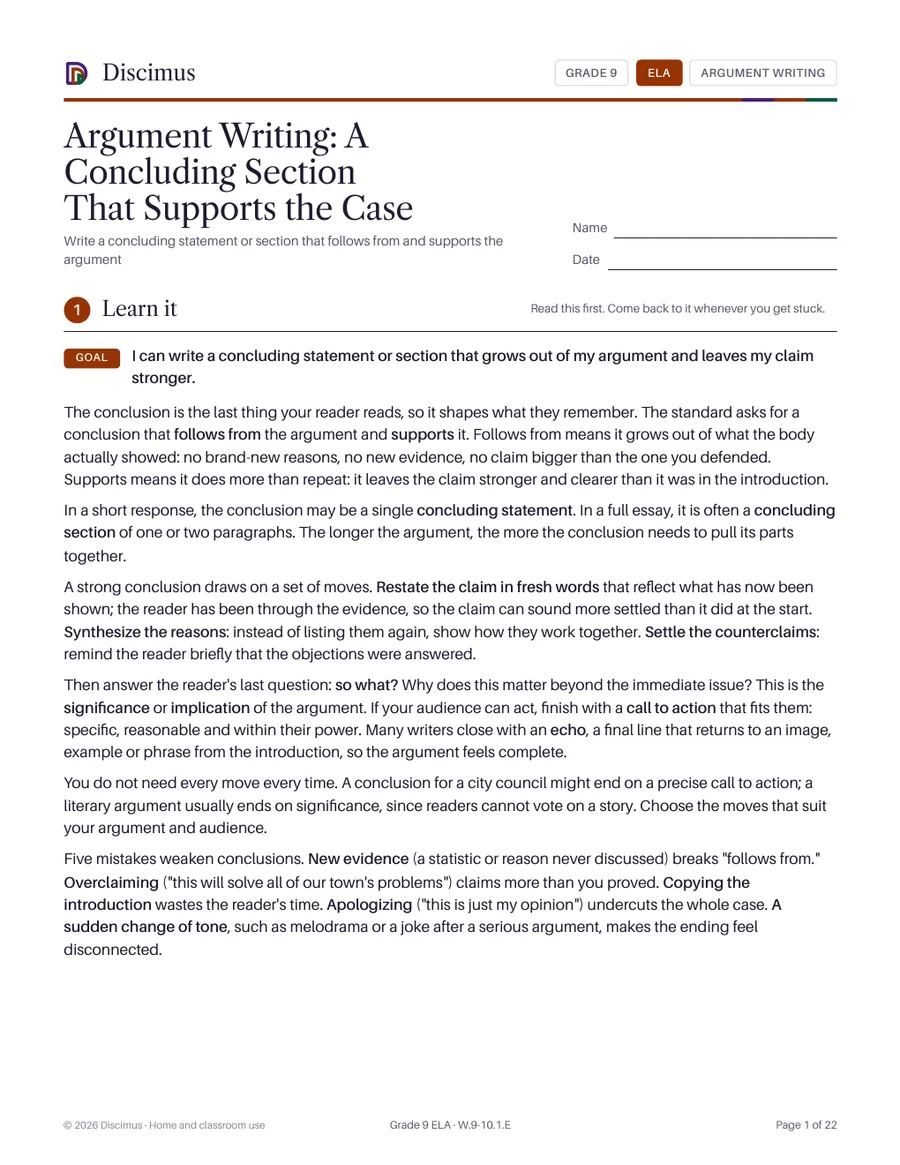
    Argument Writing: A Concluding Section That Supports the Case

    Write a concluding statement or section that follows from and supports the argument
  • ELAGrade 9

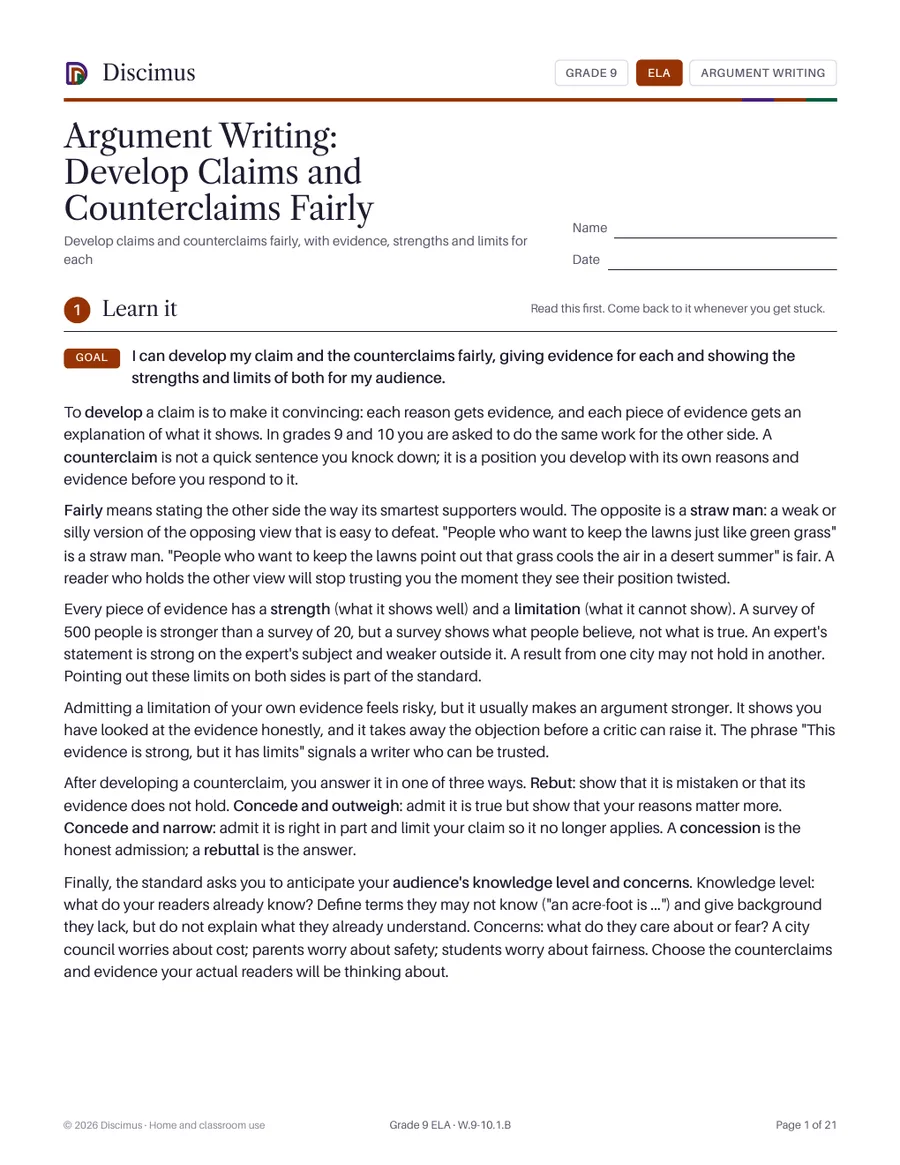
    Argument Writing: Develop Claims and Counterclaims Fairly

    Develop claims and counterclaims fairly, with evidence, strengths and limits for each
  • ELAGrade 9

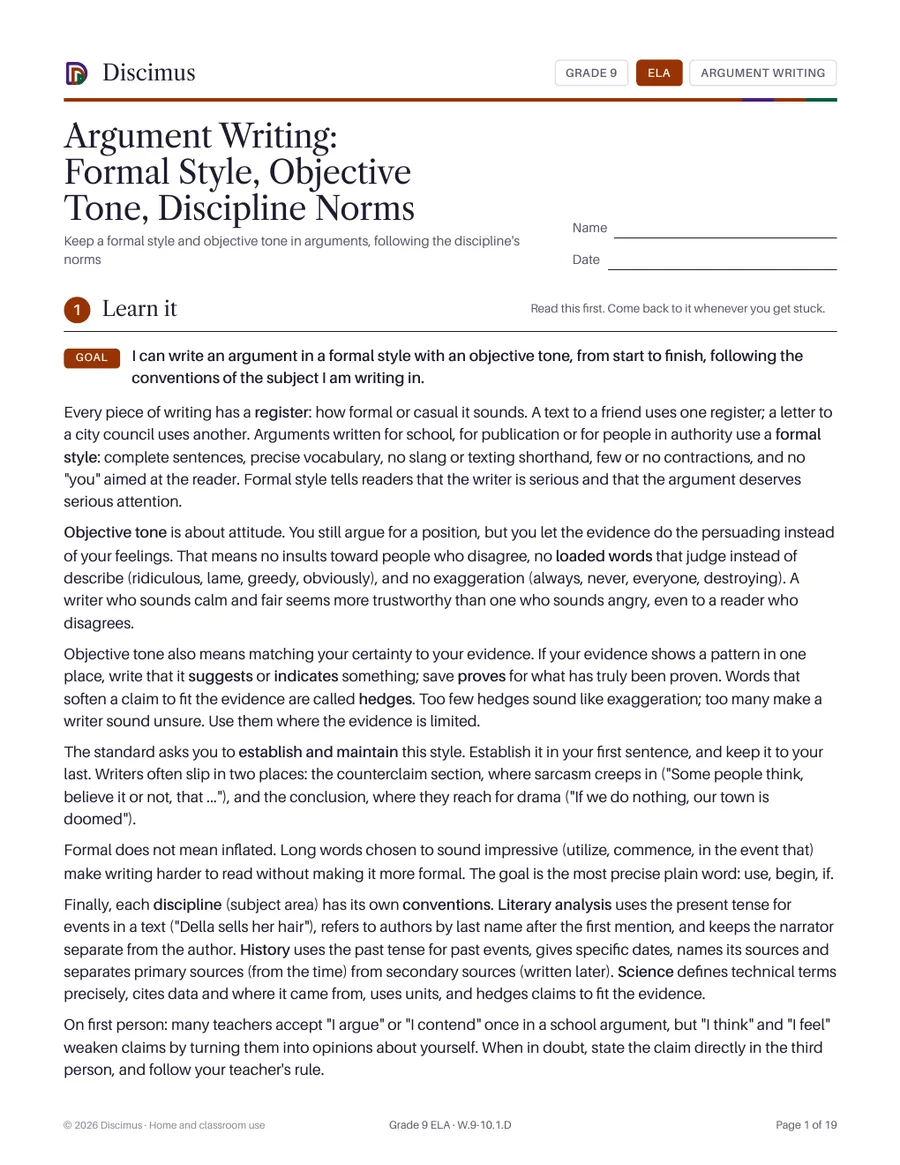
    Argument Writing: Formal Style, Objective Tone, Discipline Norms

    Keep a formal style and objective tone in arguments, following the discipline's norms
  • ELAGrade 9

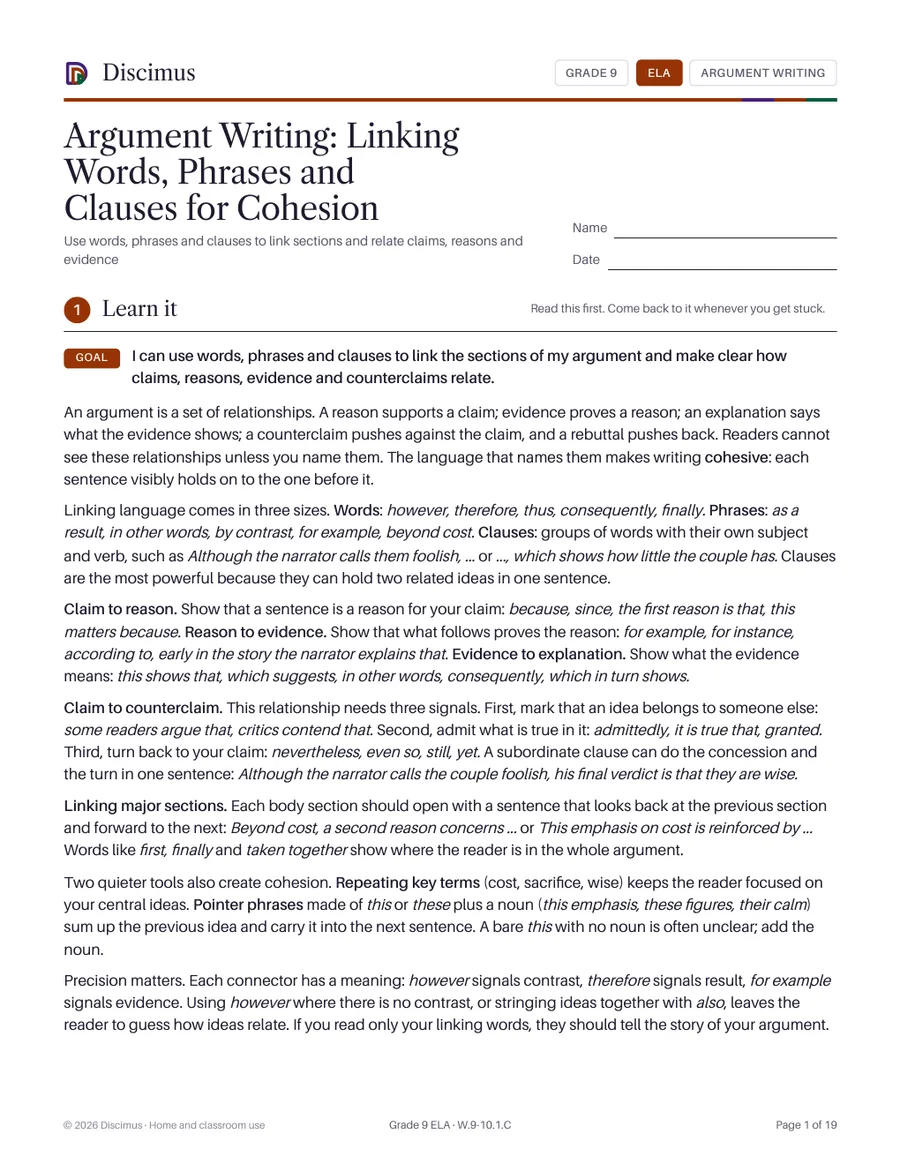
    Argument Writing: Linking Words, Phrases and Clauses for Cohesion

    Use words, phrases and clauses to link sections and relate claims, reasons and evidence
  • ELAGrade 9

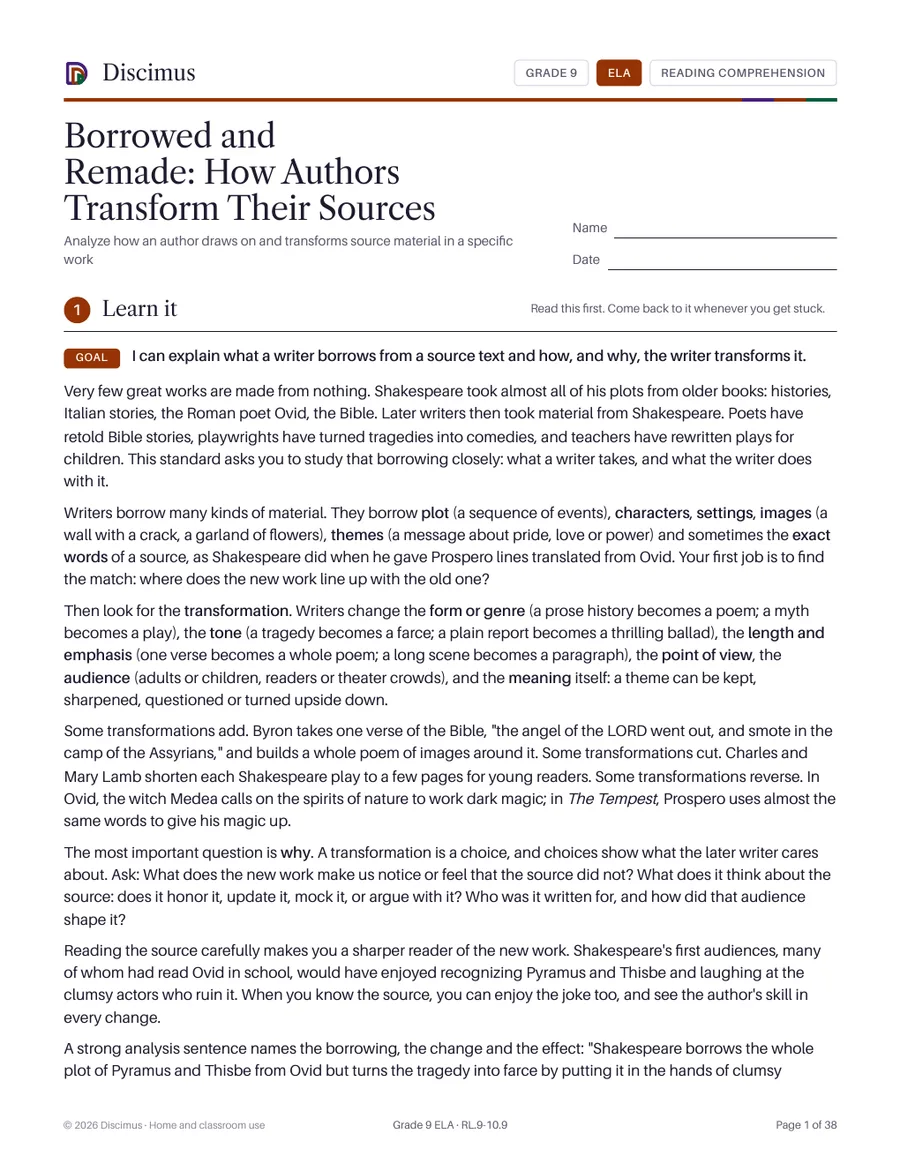
    Borrowed and Remade: How Authors Transform Their Sources

    Analyze how an author draws on and transforms source material in a specific work
  • ELAGrade 9

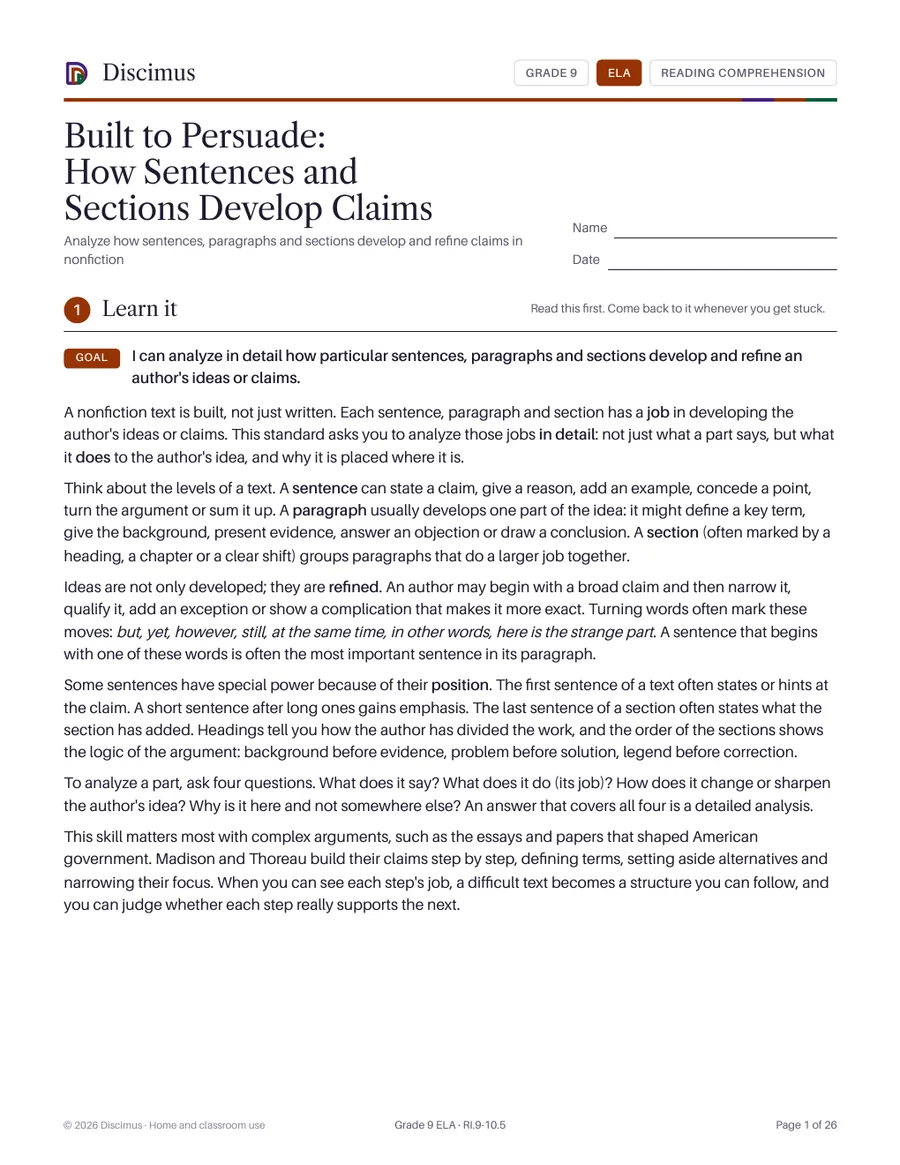
    Built to Persuade: How Sentences and Sections Develop Claims

    Analyze how sentences, paragraphs and sections develop and refine claims in nonfiction
  • ELAGrade 9

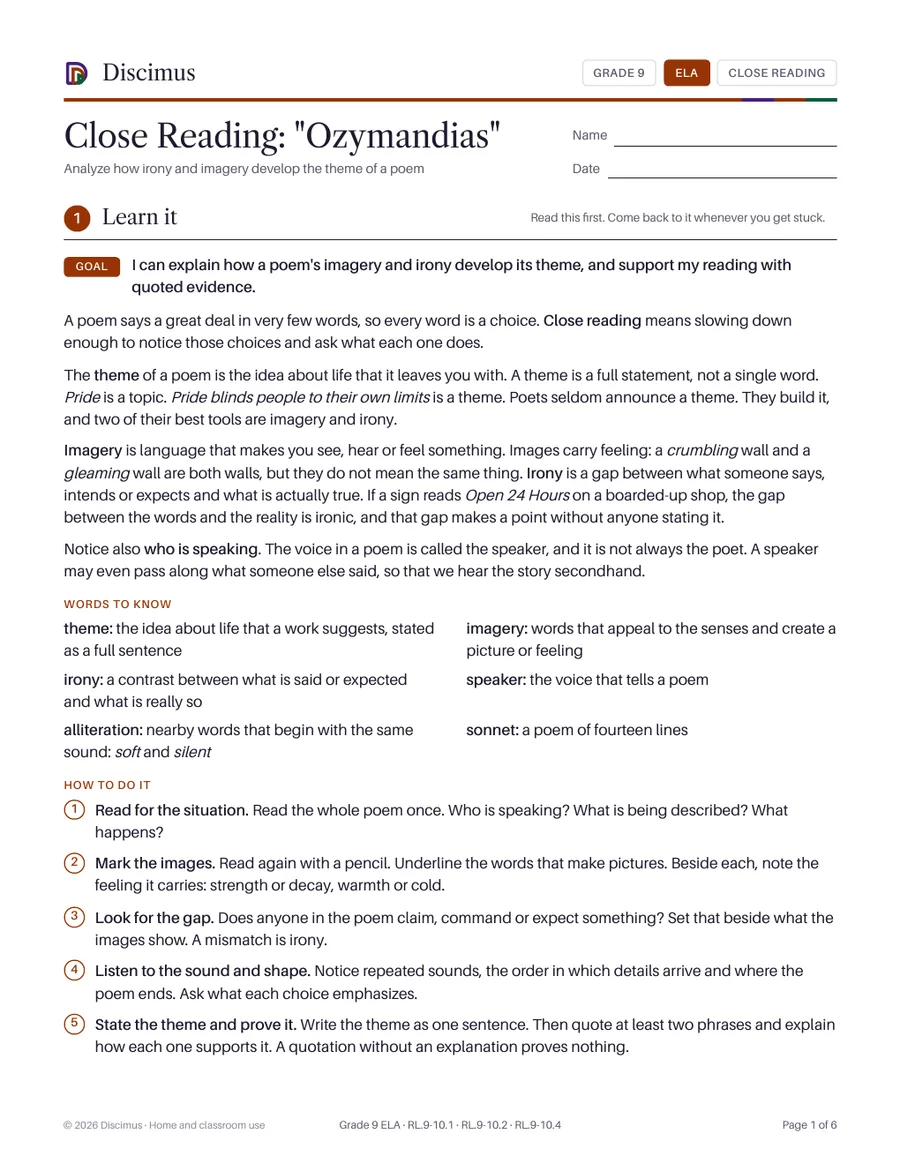
    Close Reading: "Ozymandias"

    Analyze how irony and imagery develop the theme of a poem
  • ELAGrade 9

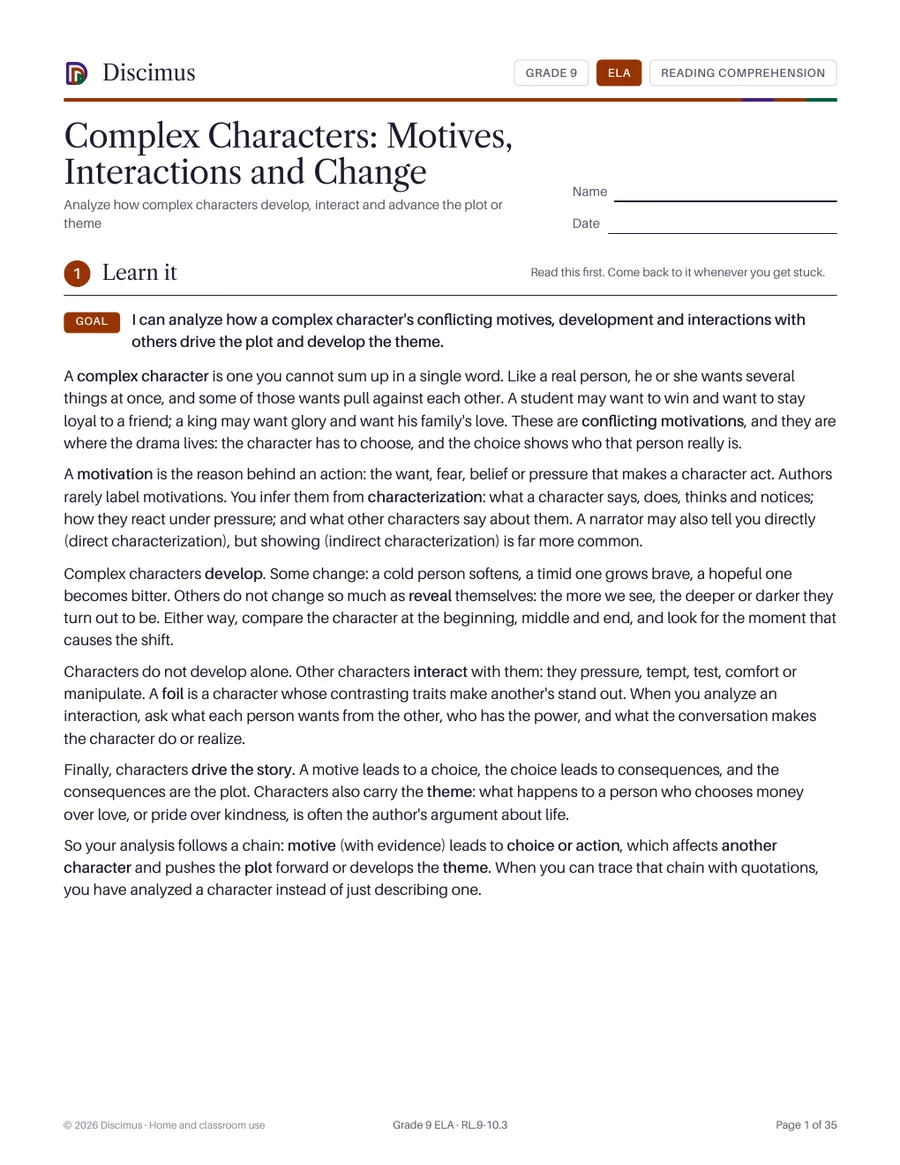
    Complex Characters: Motives, Interactions and Change

    Analyze how complex characters develop, interact and advance the plot or theme
  • ELAGrade 9

    Evaluate an Argument in Writing: Reasoning, Evidence, Fallacies

    Evaluate an argument in writing: reasoning, evidence, false claims and fallacies
  • ELAGrade 9

    Explanatory Texts: Develop a Topic for Your Audience

    Develop a topic with well-chosen facts, definitions, details, quotations and examples
  • ELAGrade 9

    Explanatory Texts: Formal Style, Objective Tone, Discipline Norms

    Keep a formal style and objective tone and follow the writing norms of a discipline
  • ELAGrade 9

    Explanatory Texts: Introduce and Organize Complex Ideas

    Introduce a complex topic and organize it to show connections and distinctions
  • ELAGrade 9

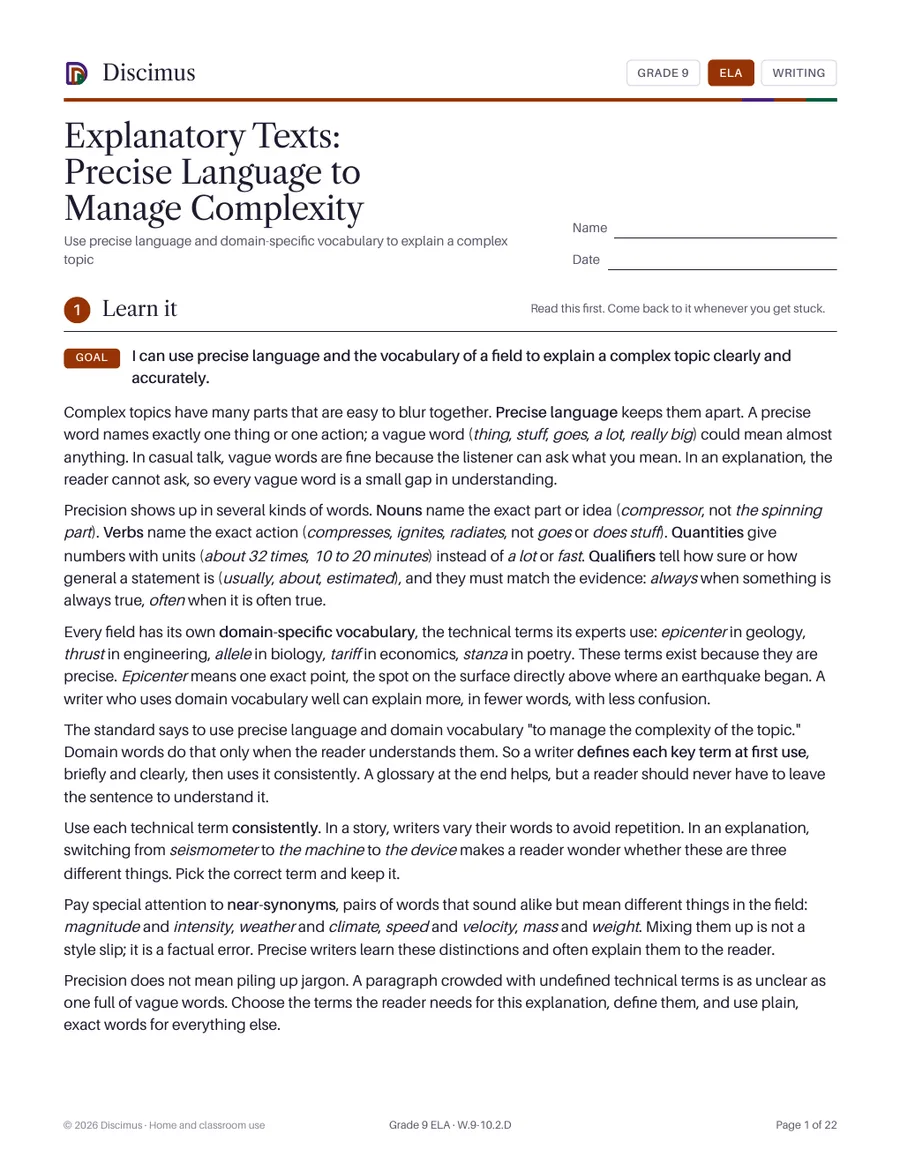
    Explanatory Texts: Precise Language to Manage Complexity

    Use precise language and domain-specific vocabulary to explain a complex topic
  • ELAGrade 9

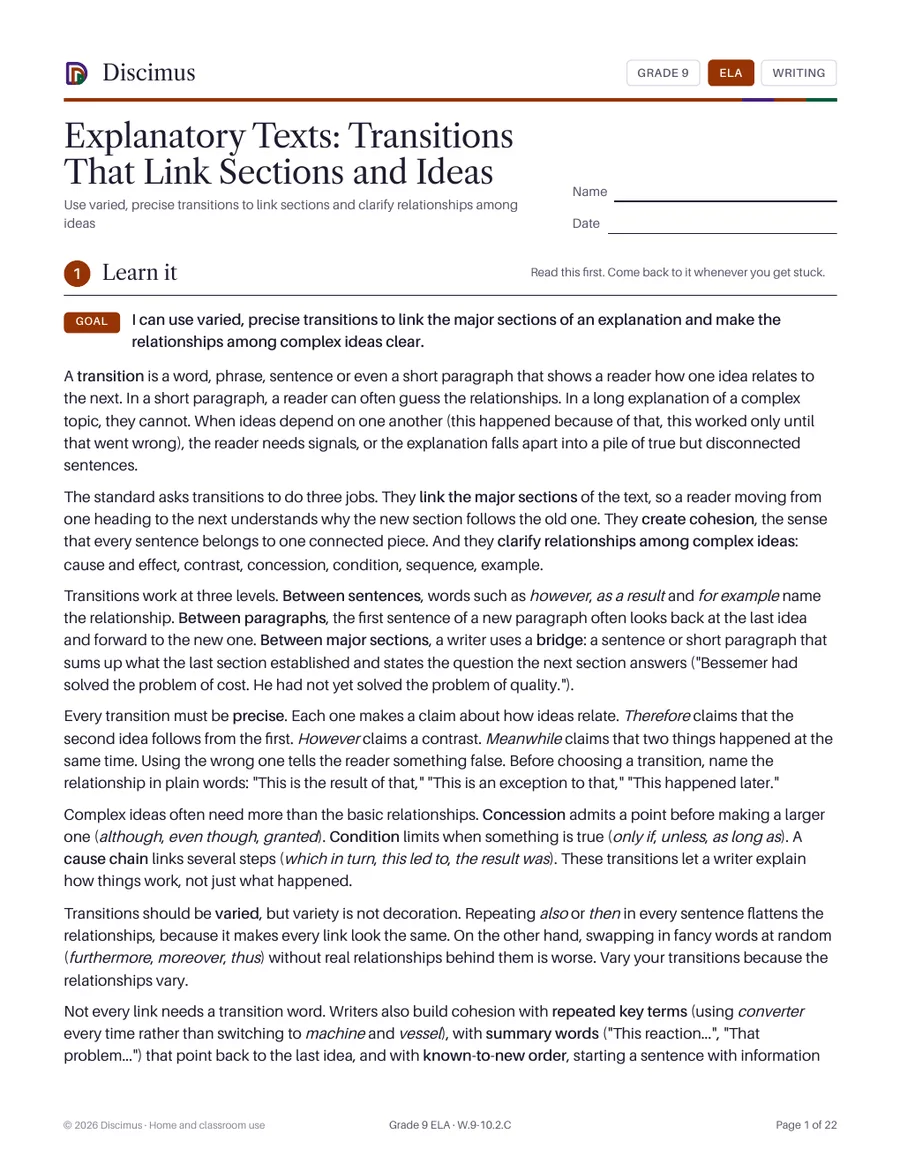
    Explanatory Texts: Transitions That Link Sections and Ideas

    Use varied, precise transitions to link sections and clarify relationships among ideas
  • ELAGrade 9

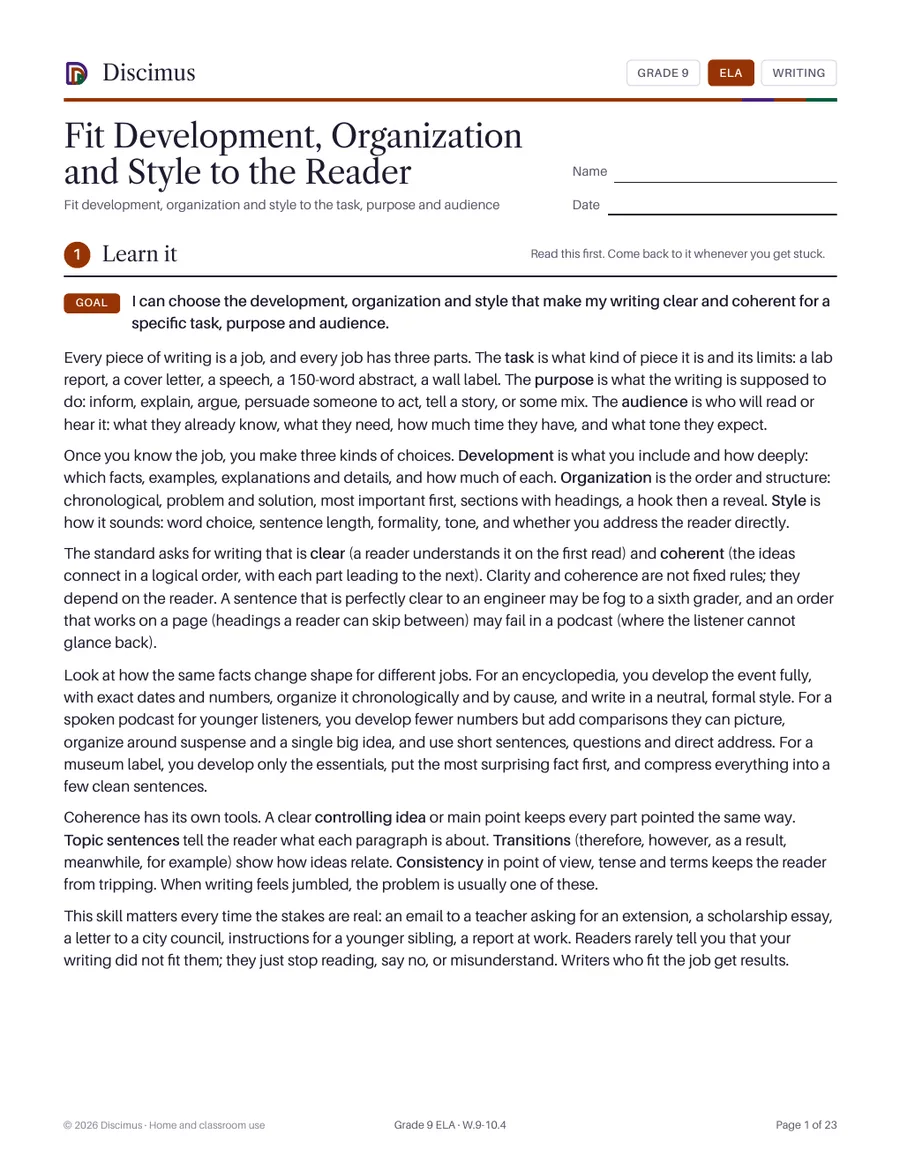
    Fit Development, Organization and Style to the Reader

    Fit development, organization and style to the task, purpose and audience
  • ELAGrade 9

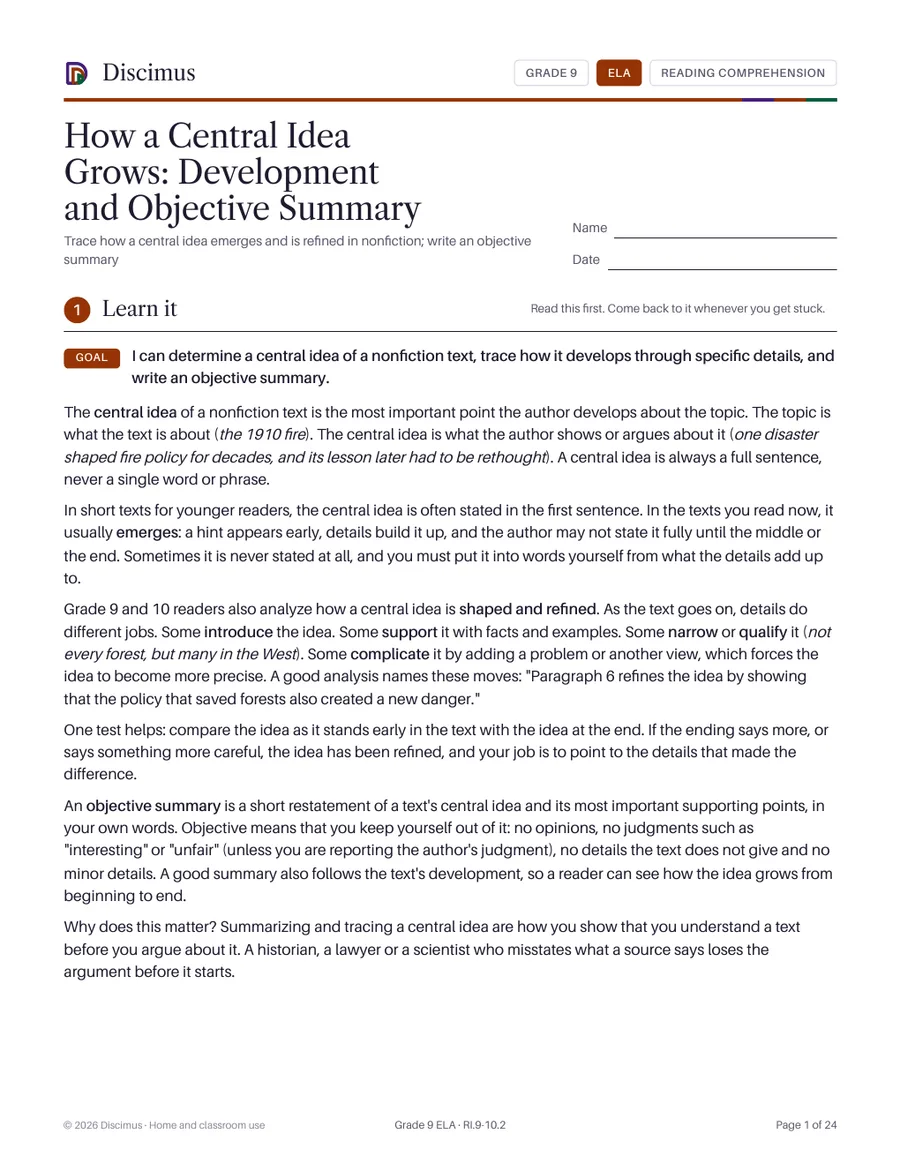
    How a Central Idea Grows: Development and Objective Summary

    Trace how a central idea emerges and is refined in nonfiction; write an objective summary
  • ELAGrade 9

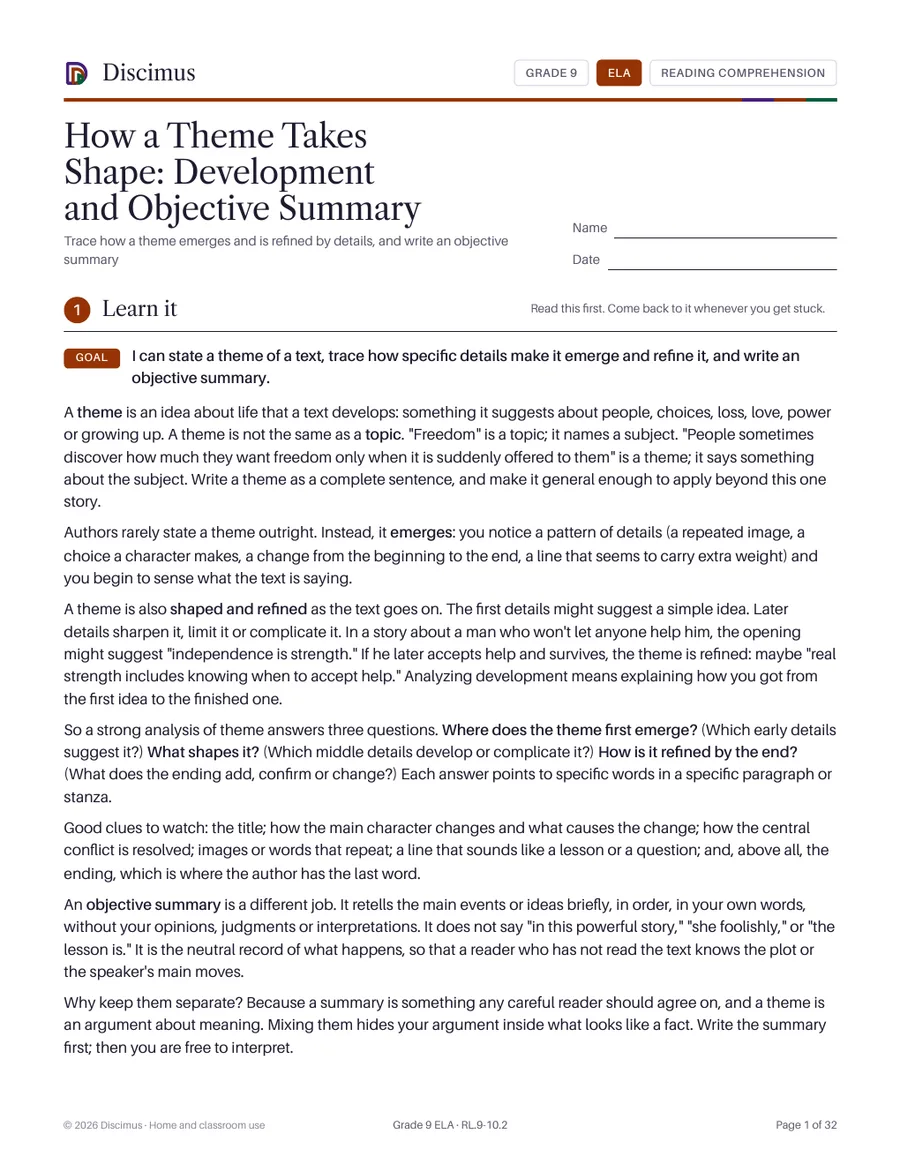
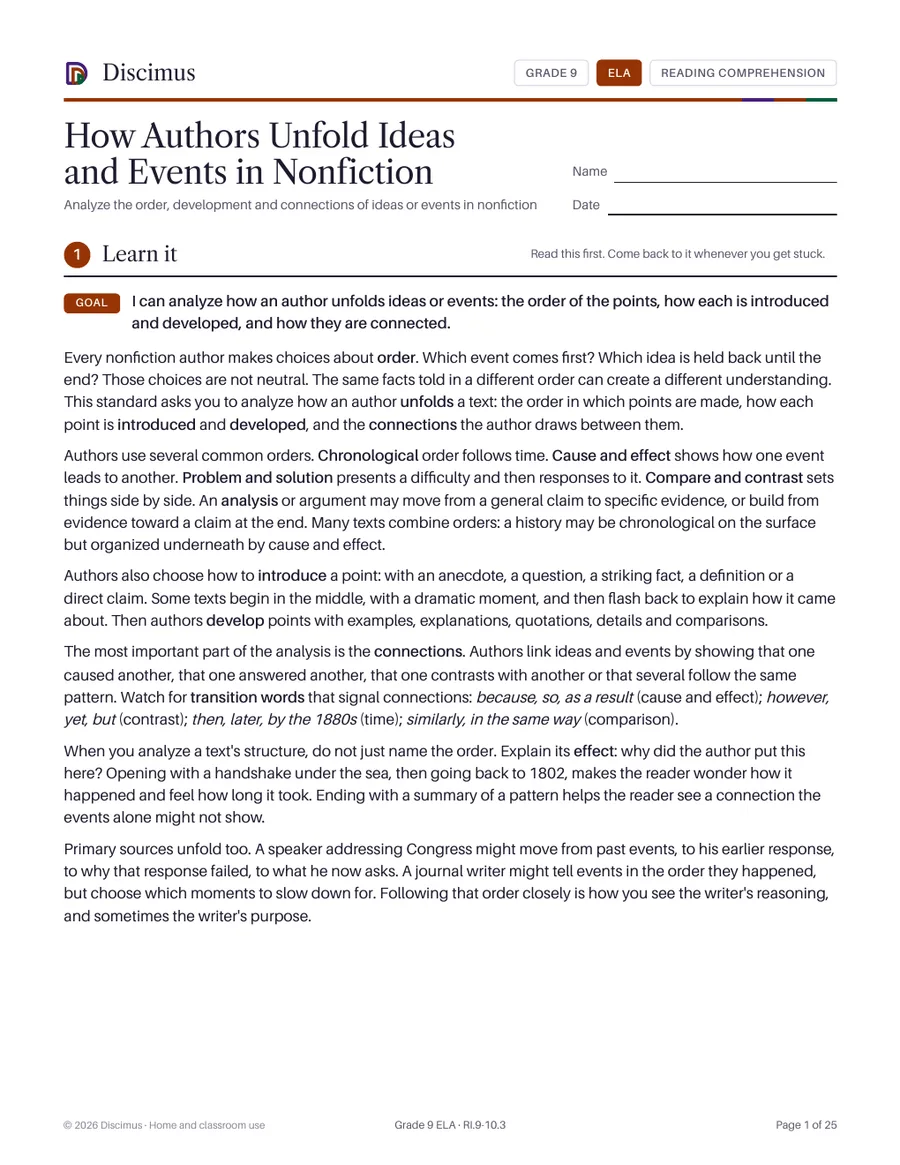
    How a Theme Takes Shape: Development and Objective Summary

    Trace how a theme emerges and is refined by details, and write an objective summary
  • ELAGrade 9

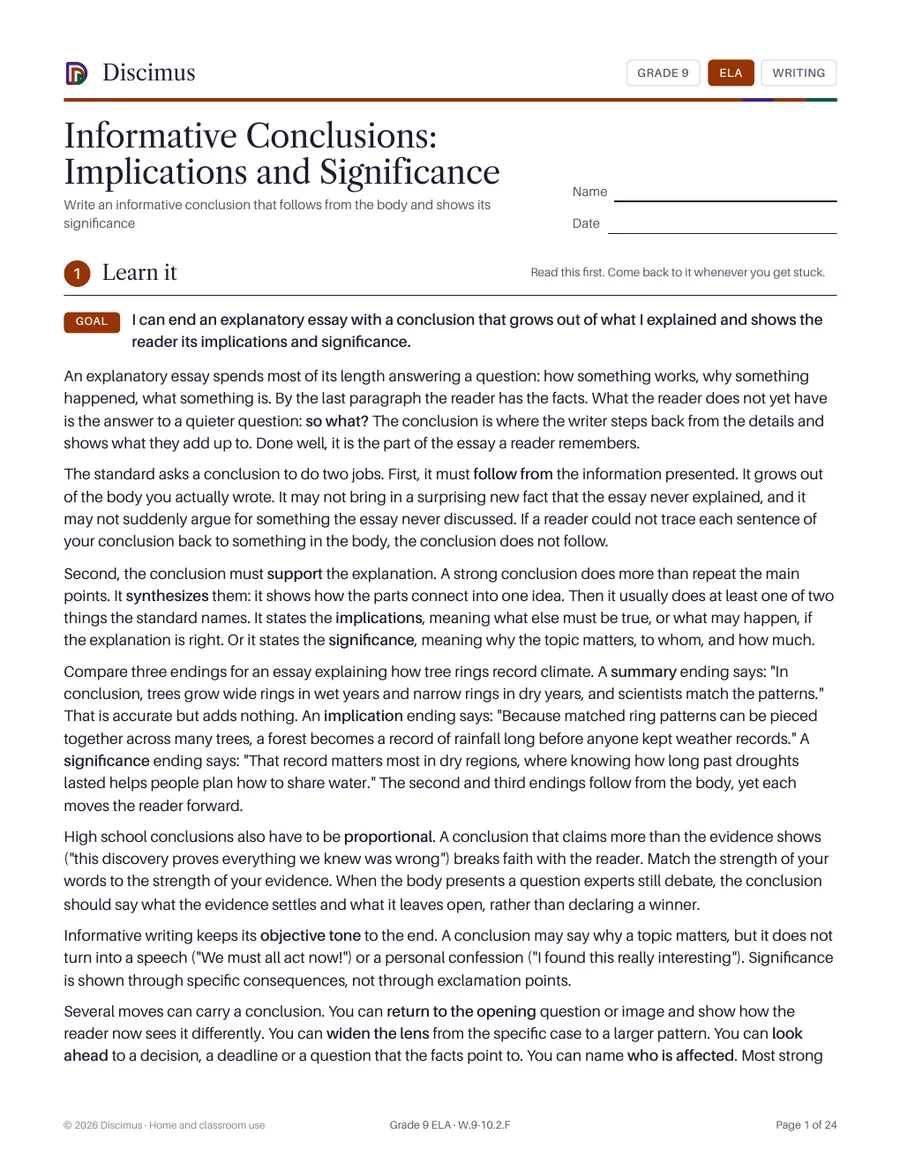
    How Authors Unfold Ideas and Events in Nonfiction

    Analyze the order, development and connections of ideas or events in nonfiction
  • ELAGrade 9

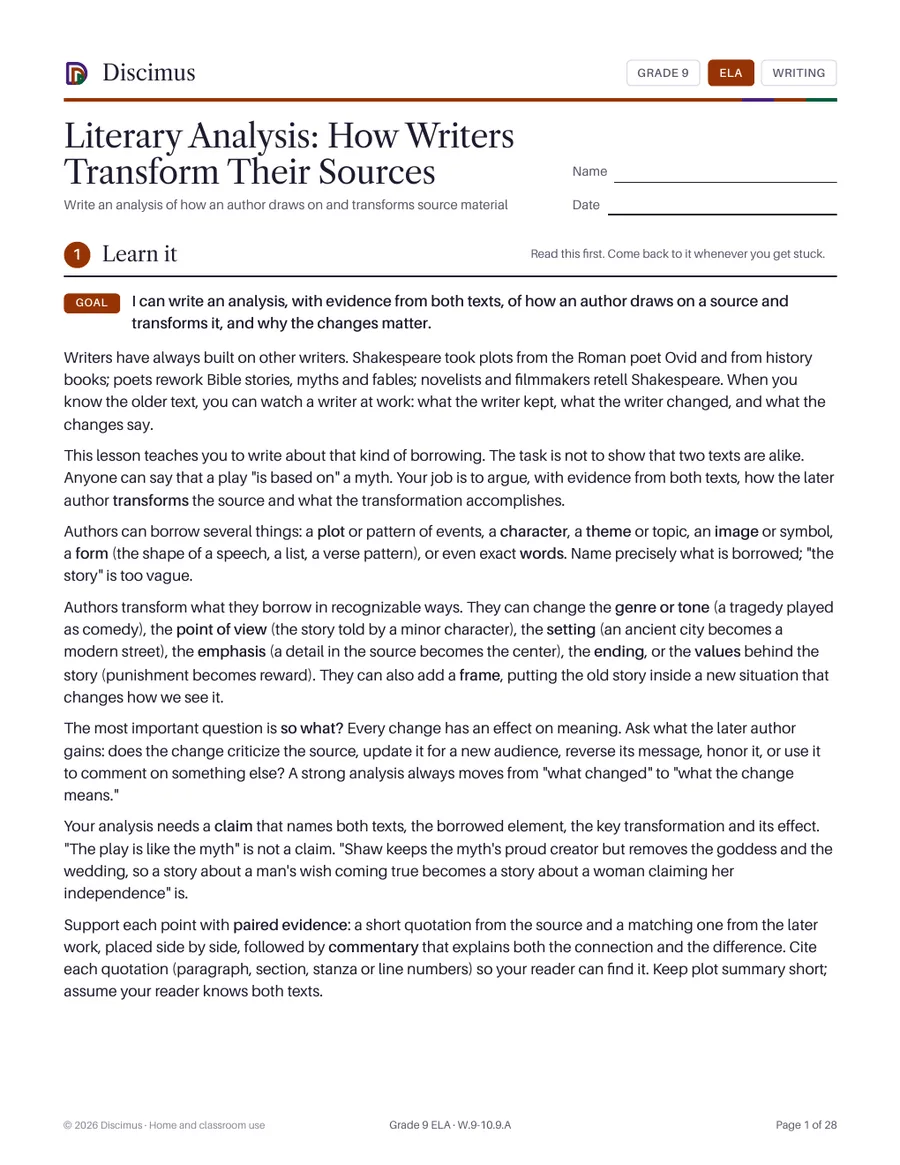
    Informative Conclusions: Implications and Significance

    Write an informative conclusion that follows from the body and shows its significance
  • ELAGrade 9

    Literary Analysis: How Writers Transform Their Sources

    Write an analysis of how an author draws on and transforms source material
  • ELAGrade 9

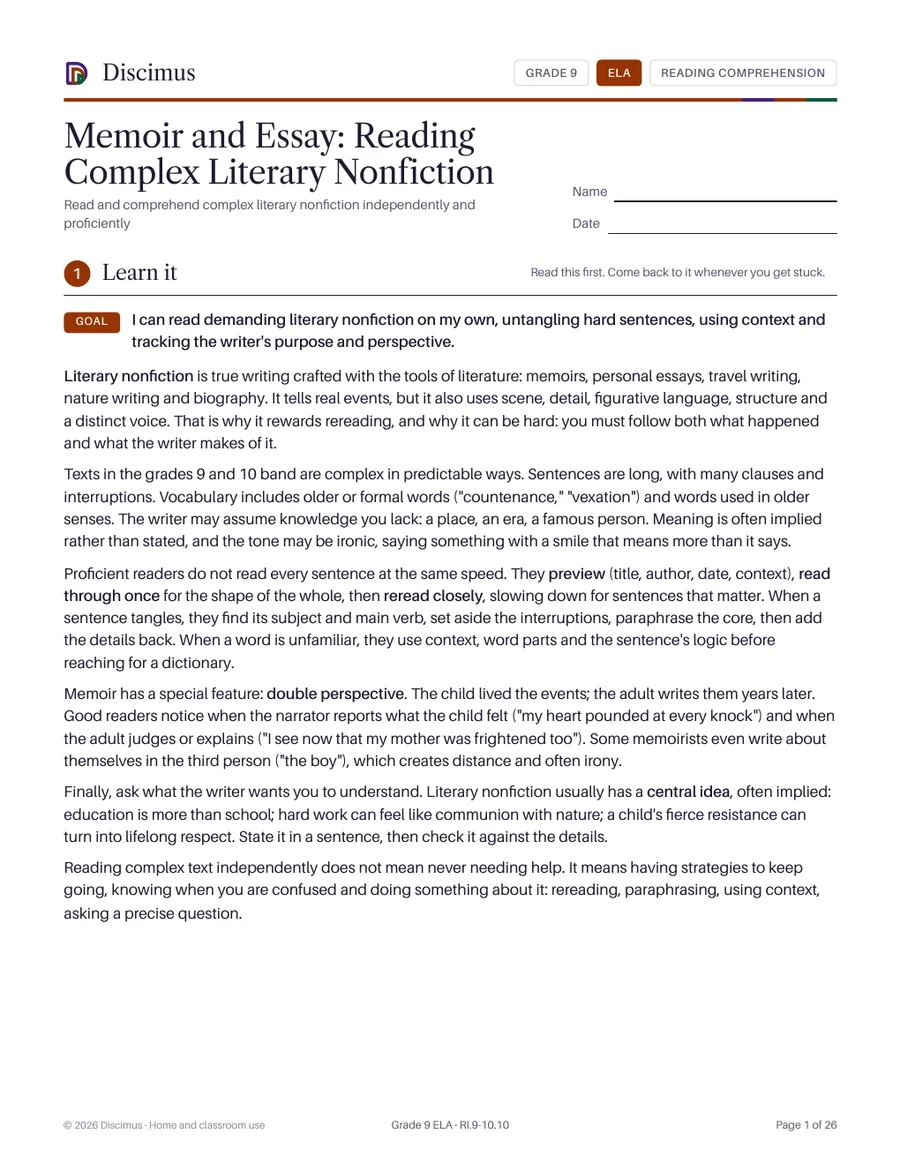
    Memoir and Essay: Reading Complex Literary Nonfiction

    Read and comprehend complex literary nonfiction independently and proficiently
  • ELAGrade 9

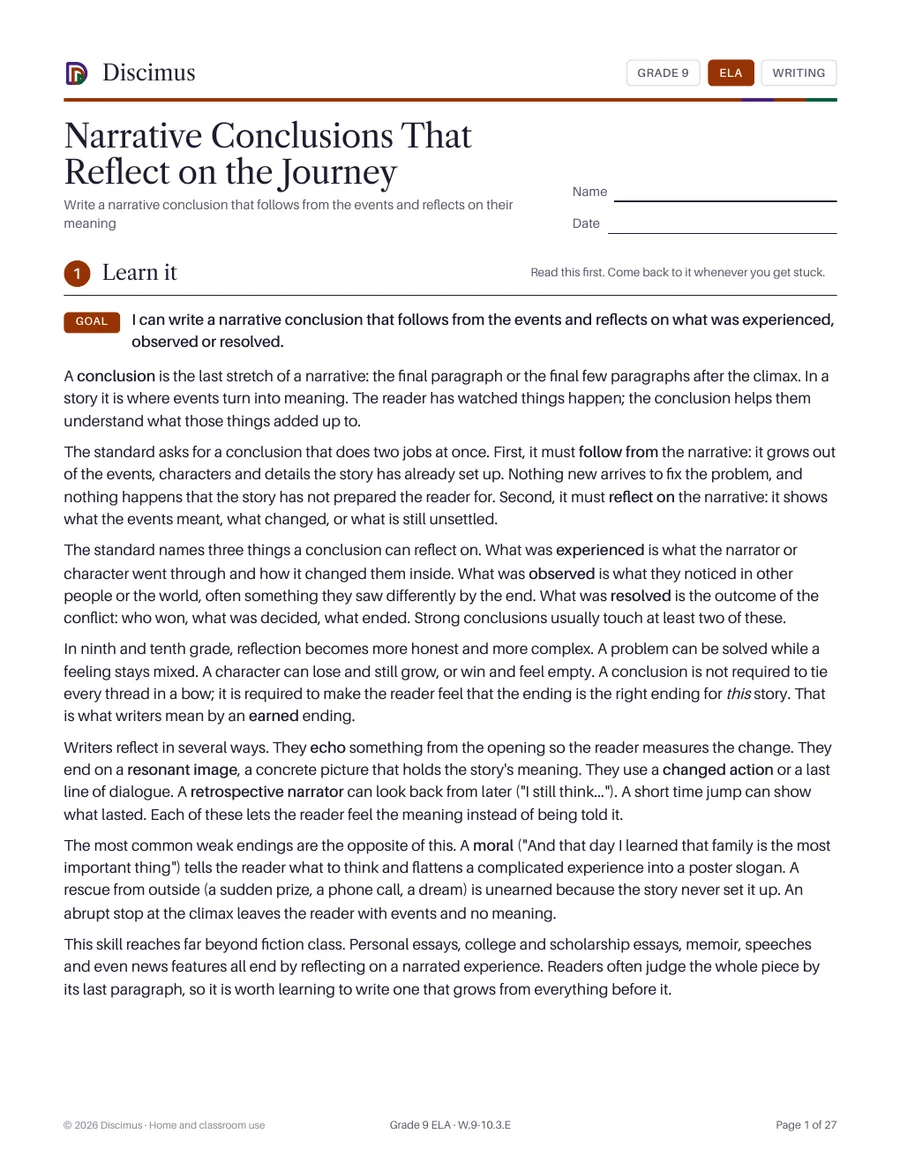
    Narrative Conclusions That Reflect on the Journey

    Write a narrative conclusion that follows from the events and reflects on their meaning
  • ELAGrade 9

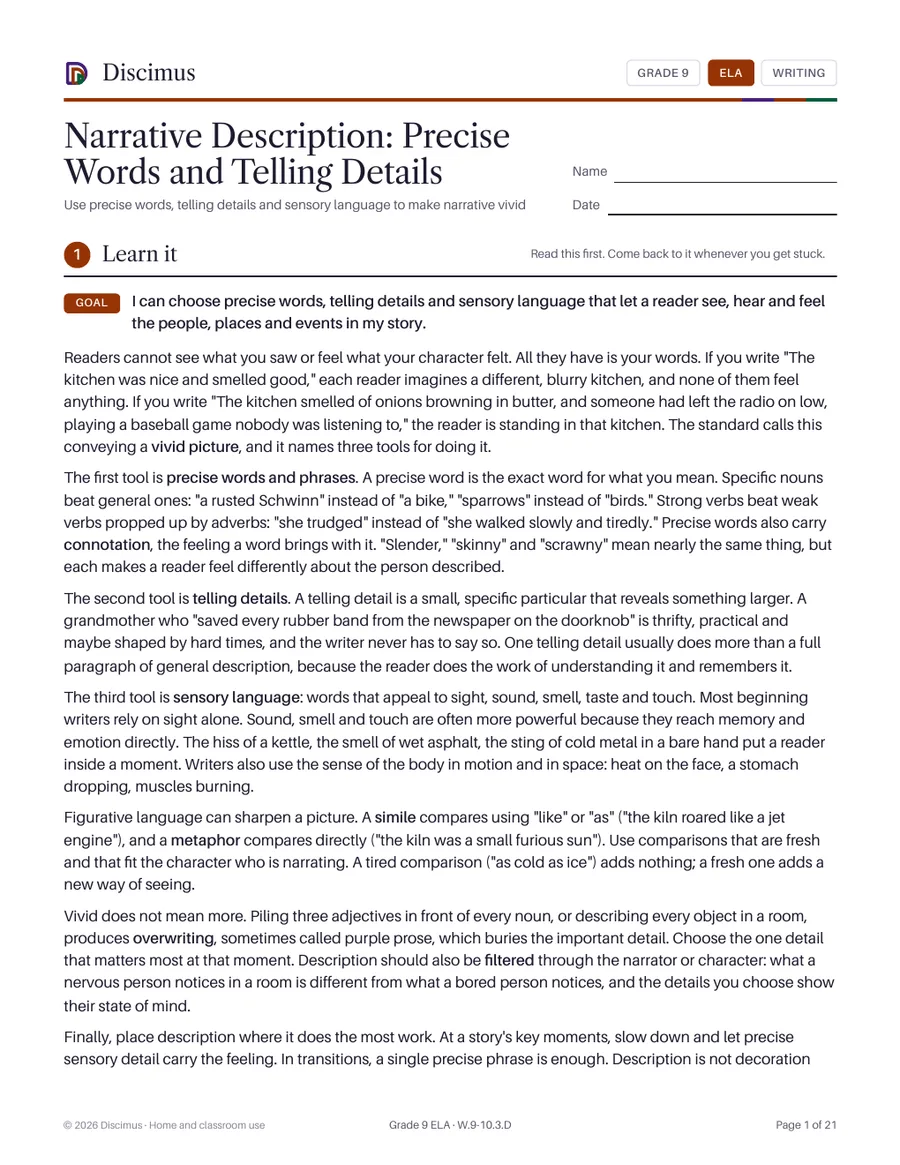
    Narrative Description: Precise Words and Telling Details

    Use precise words, telling details and sensory language to make narrative vivid
  • ELAGrade 9

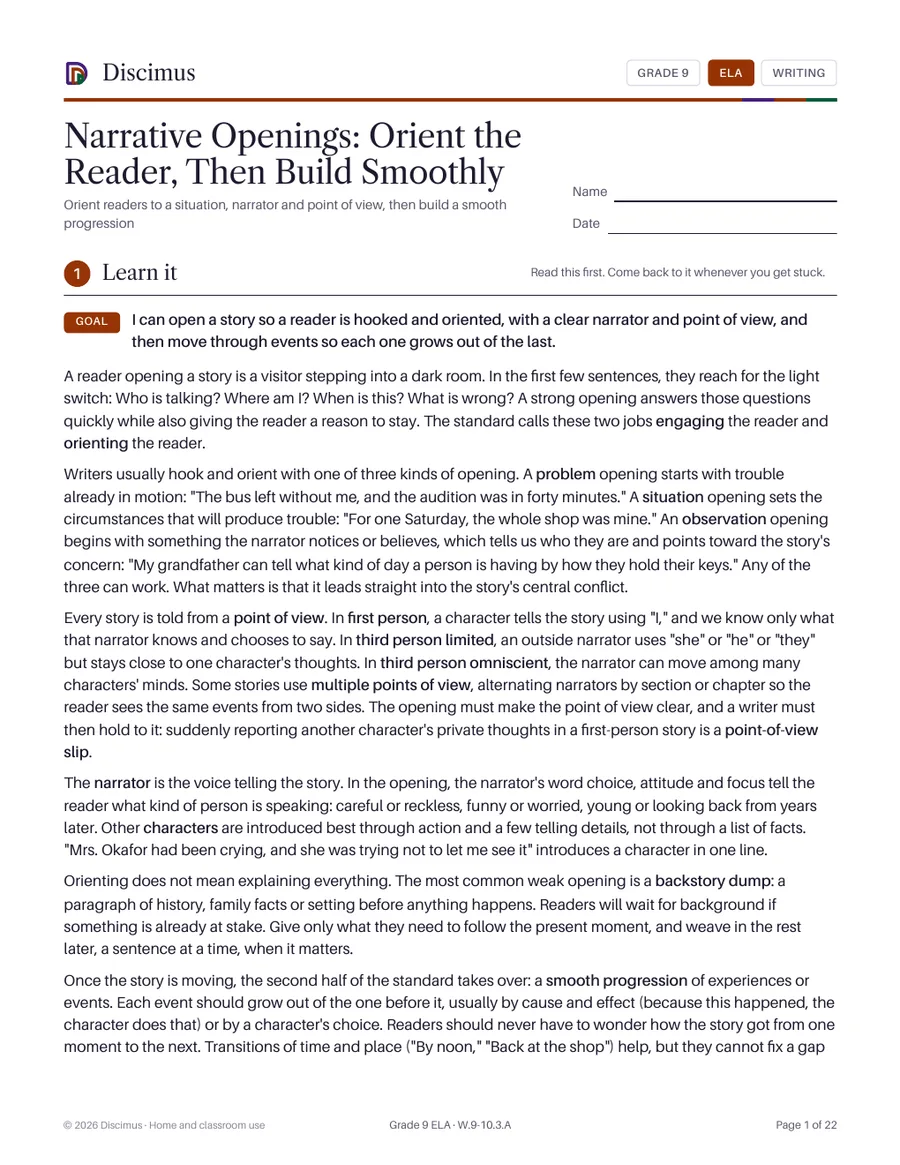
    Narrative Openings: Orient the Reader, Then Build Smoothly

    Orient readers to a situation, narrator and point of view, then build a smooth progression
  • ELAGrade 9

    Narrative Sequencing: Events That Build a Coherent Whole

    Sequence narrative events with varied techniques so they build into a coherent whole
  • ELAGrade 9

    Narrative Techniques: Dialogue, Pacing, Reflection, Plot Lines

    Use dialogue, pacing, description, reflection and multiple plot lines in a narrative
  • ELAGrade 9

    One Life, Many Mediums: Print and Multimedia Accounts

    Compare accounts of a subject in different mediums and the details each one emphasizes
  • ELAGrade 9

    One Subject, Two Art Forms: What Each Emphasizes and Leaves Out

    Compare a subject or key scene in two artistic mediums: what each emphasizes or leaves out
  • ELAGrade 9

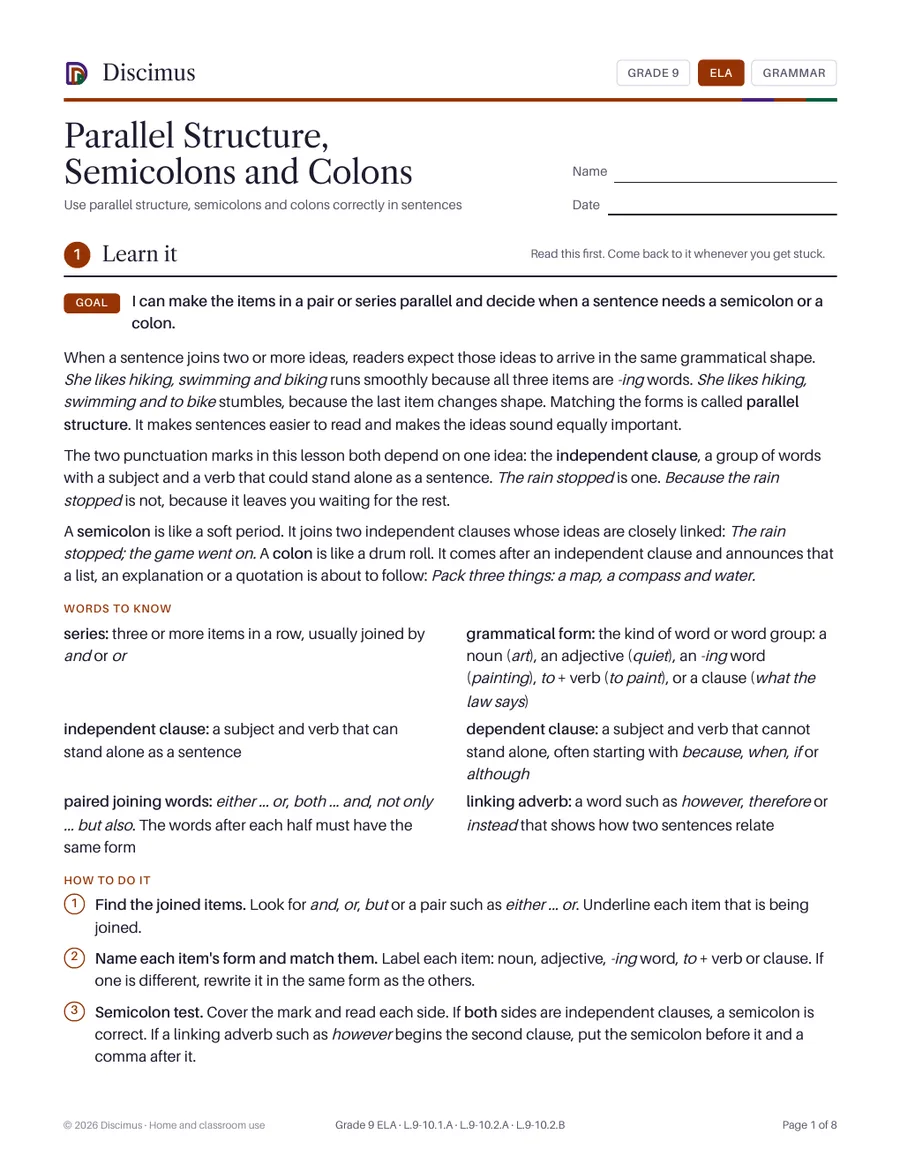
    Parallel Structure, Semicolons and Colons

    Use parallel structure, semicolons and colons correctly in sentences
  • ELAGrade 9

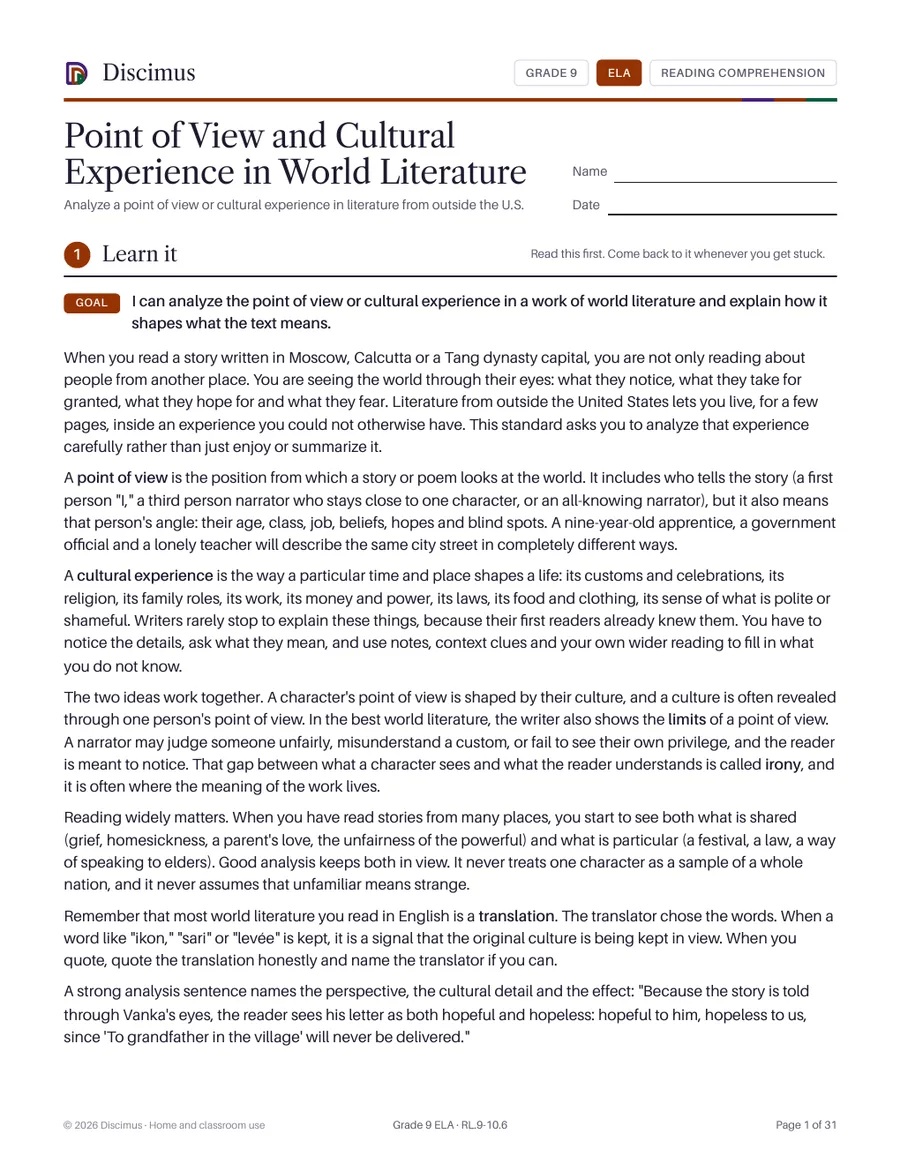
    Point of View and Cultural Experience in World Literature

    Analyze a point of view or cultural experience in literature from outside the U.S.
  • ELAGrade 9

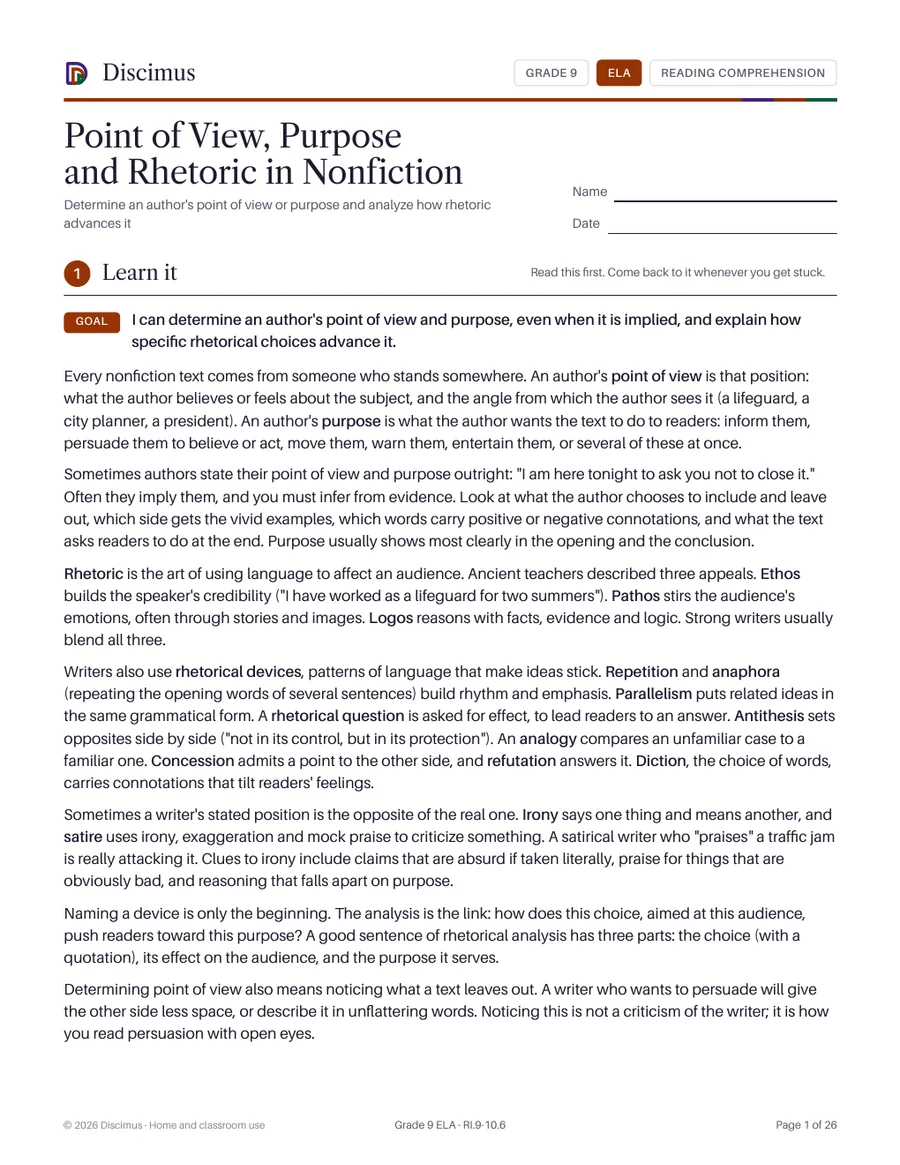
    Point of View, Purpose and Rhetoric in Nonfiction

    Determine an author's point of view or purpose and analyze how rhetoric advances it
  • ELAGrade 9

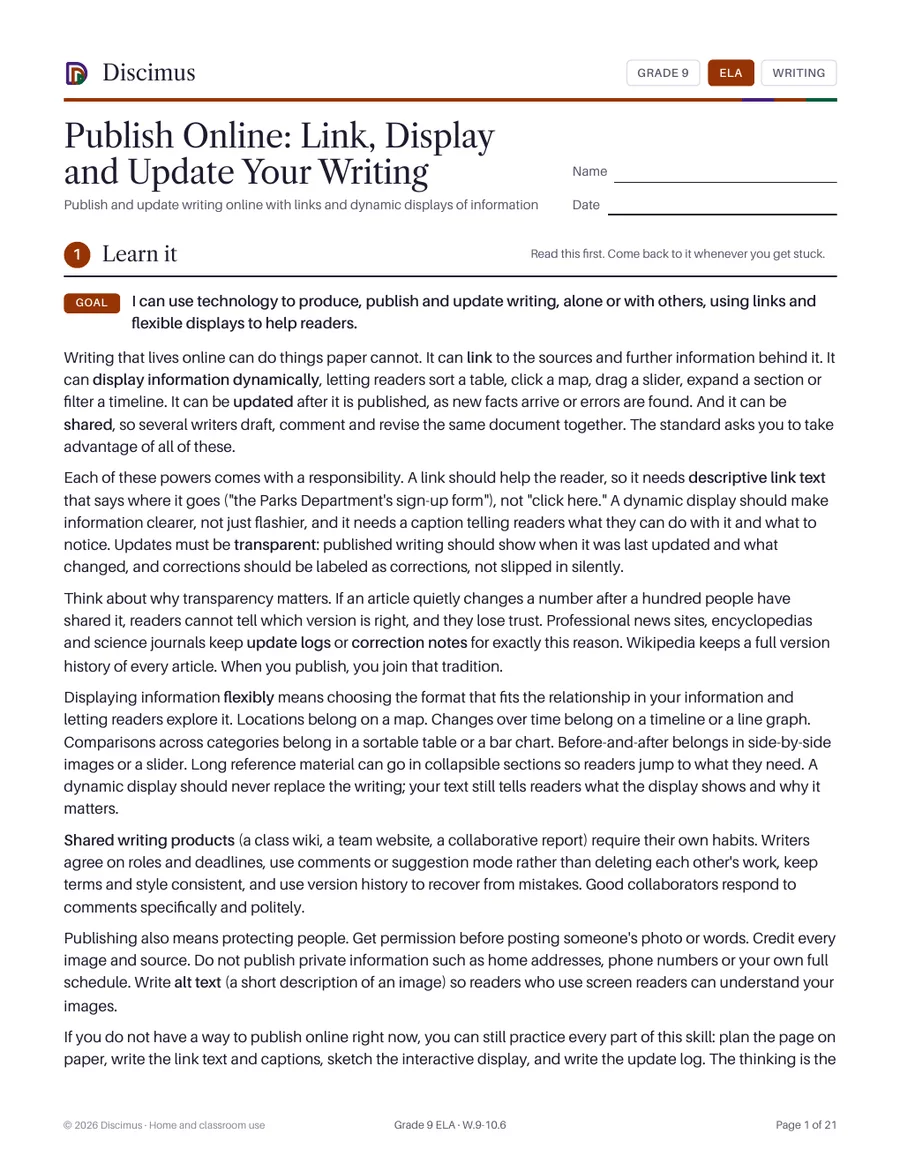
    Publish Online: Link, Display and Update Your Writing

    Publish and update writing online with links and dynamic displays of information
  • ELAGrade 9

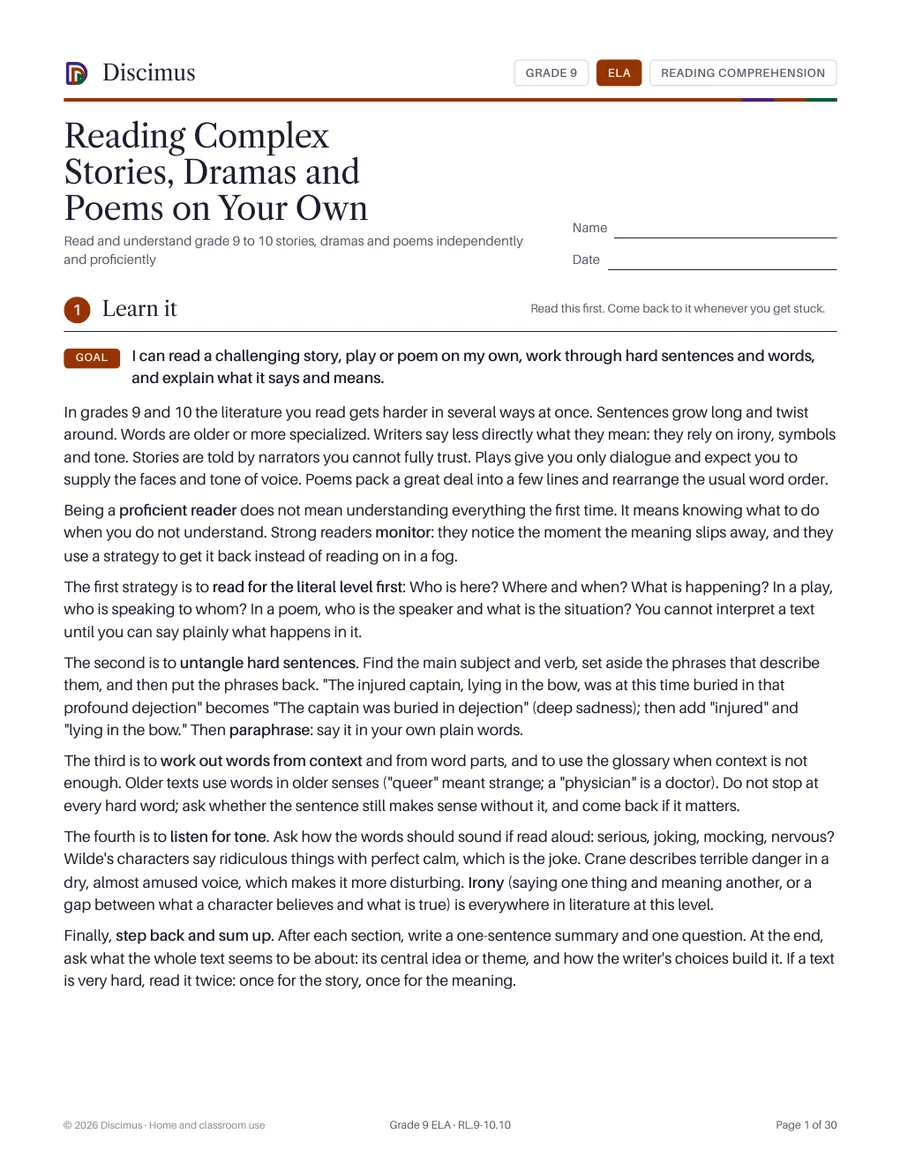
    Reading Complex Stories, Dramas and Poems on Your Own

    Read and understand grade 9 to 10 stories, dramas and poems independently and proficiently
  • ELAGrade 9

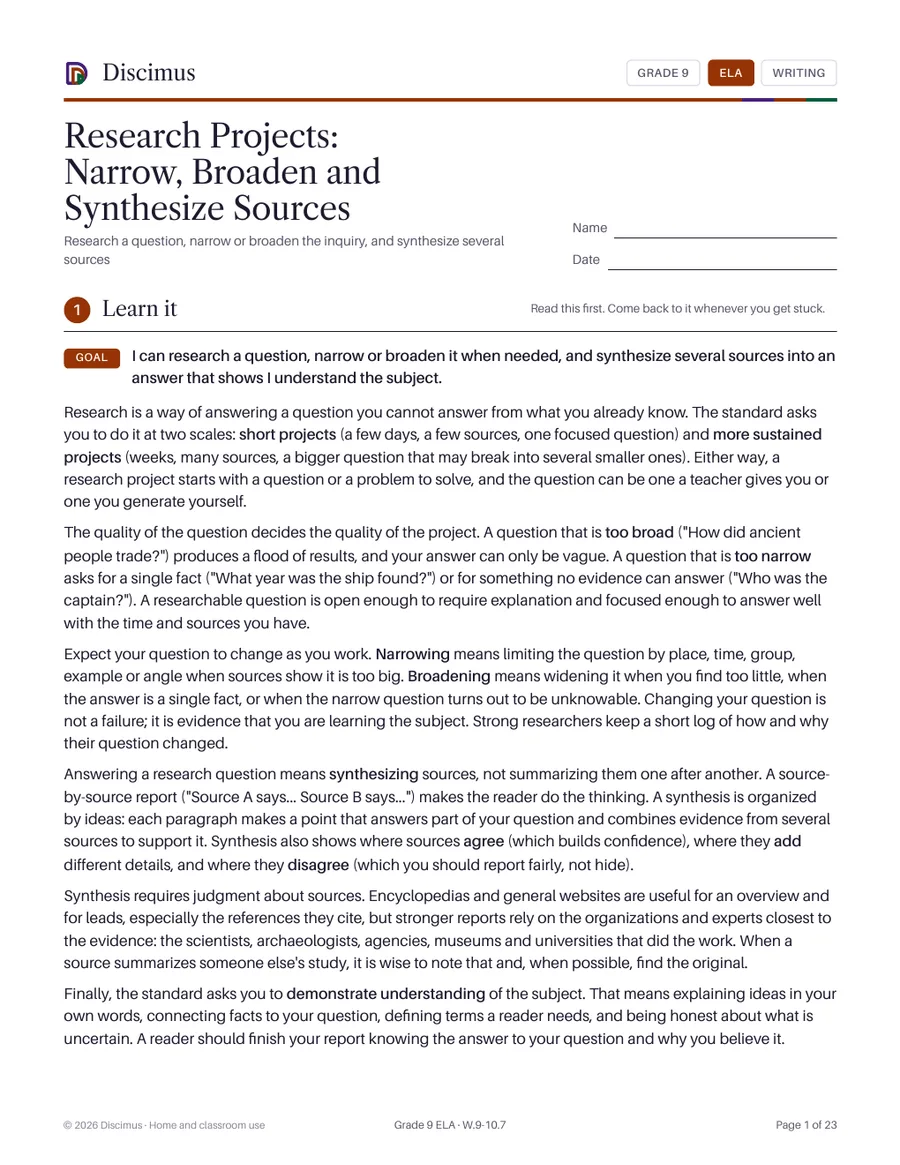
    Research Projects: Narrow, Broaden and Synthesize Sources

    Research a question, narrow or broaden the inquiry, and synthesize several sources
  • ELAGrade 9

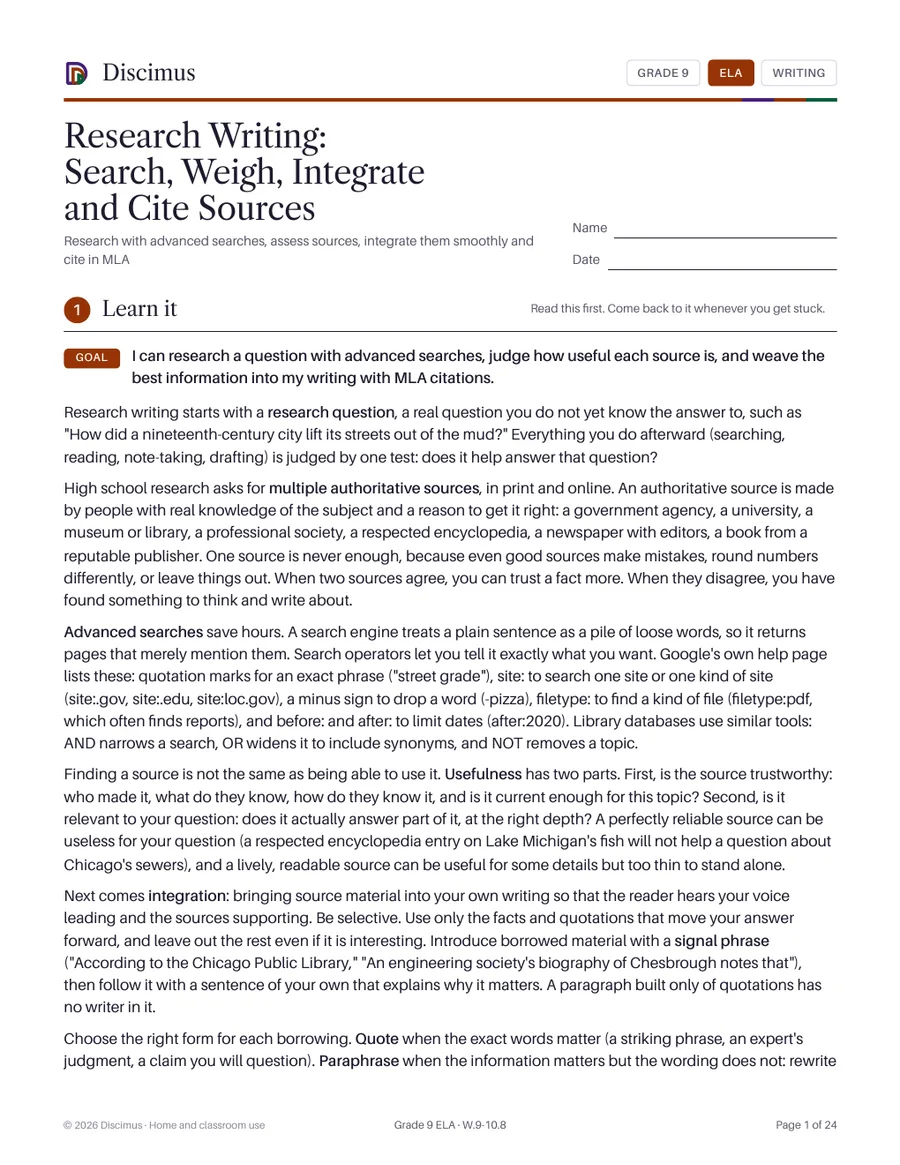
    Research Writing: Search, Weigh, Integrate and Cite Sources

    Research with advanced searches, assess sources, integrate them smoothly and cite in MLA
  • ELAGrade 9

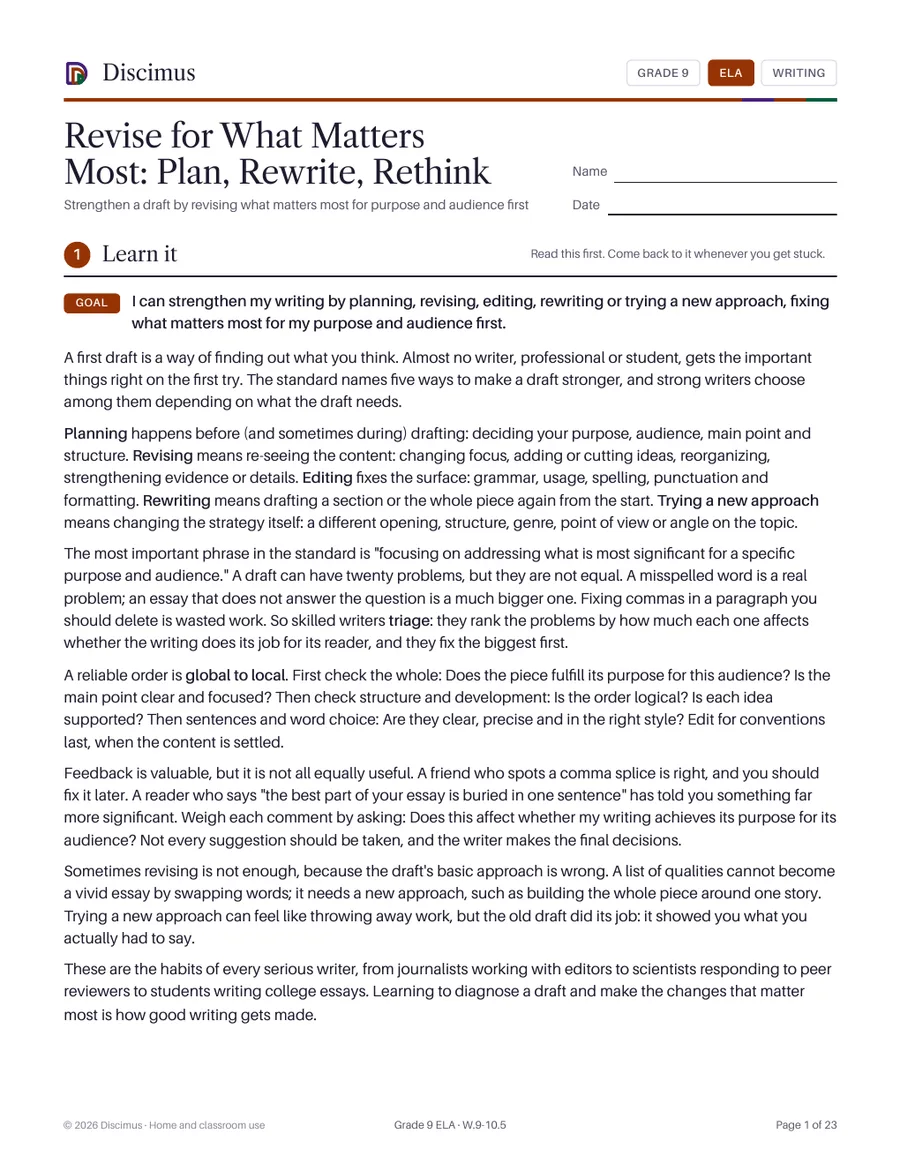
    Revise for What Matters Most: Plan, Rewrite, Rethink

    Strengthen a draft by revising what matters most for purpose and audience first
  • ELAGrade 9

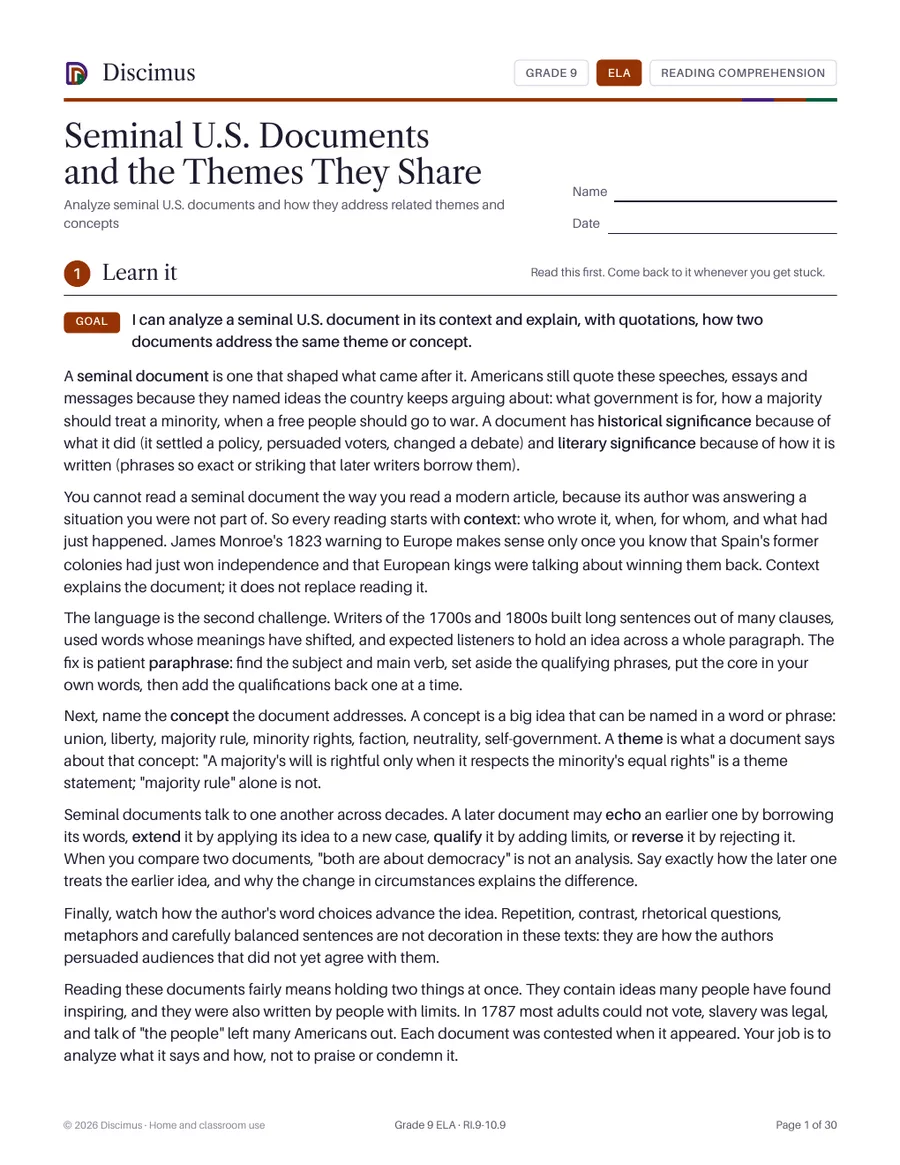
    Seminal U.S. Documents and the Themes They Share

    Analyze seminal U.S. documents and how they address related themes and concepts
  • ELAGrade 9

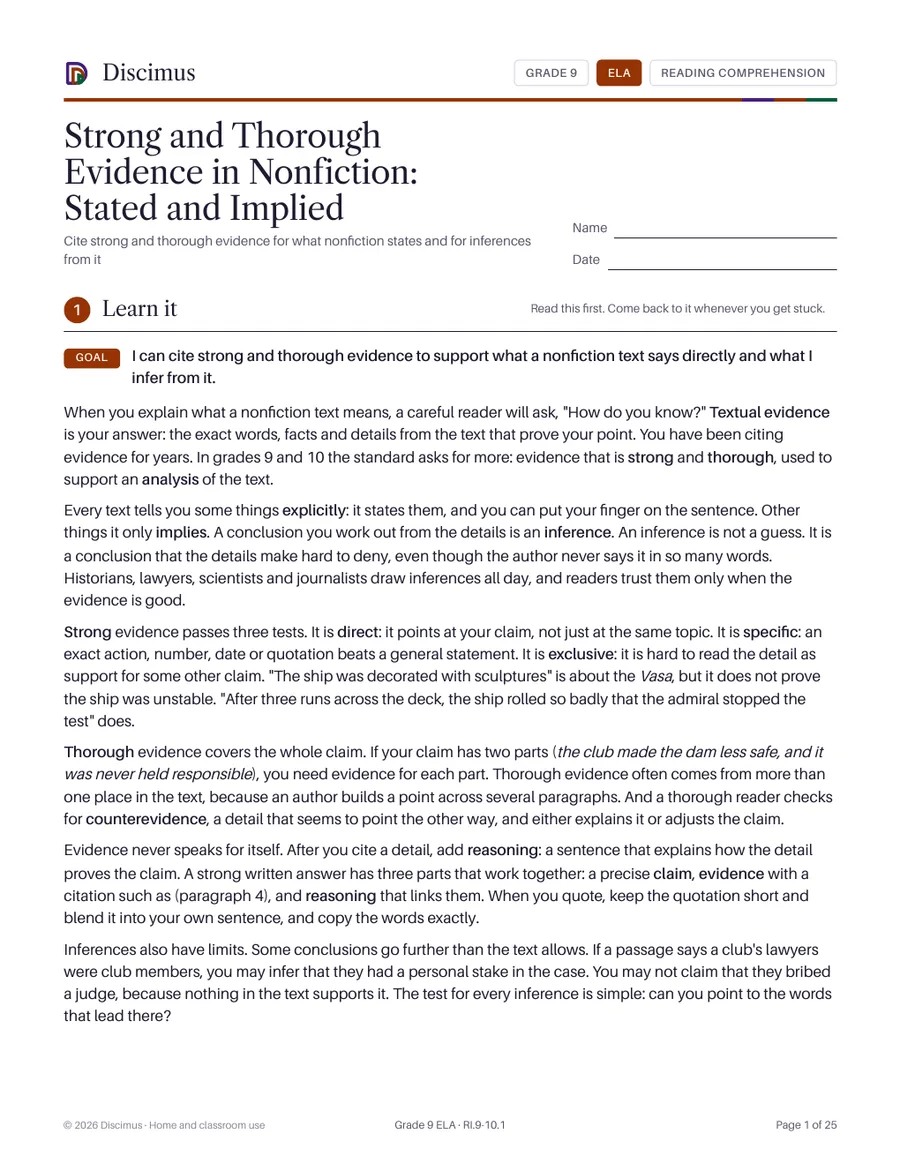
    Strong and Thorough Evidence in Nonfiction: Stated and Implied

    Cite strong and thorough evidence for what nonfiction states and for inferences from it
  • ELAGrade 9

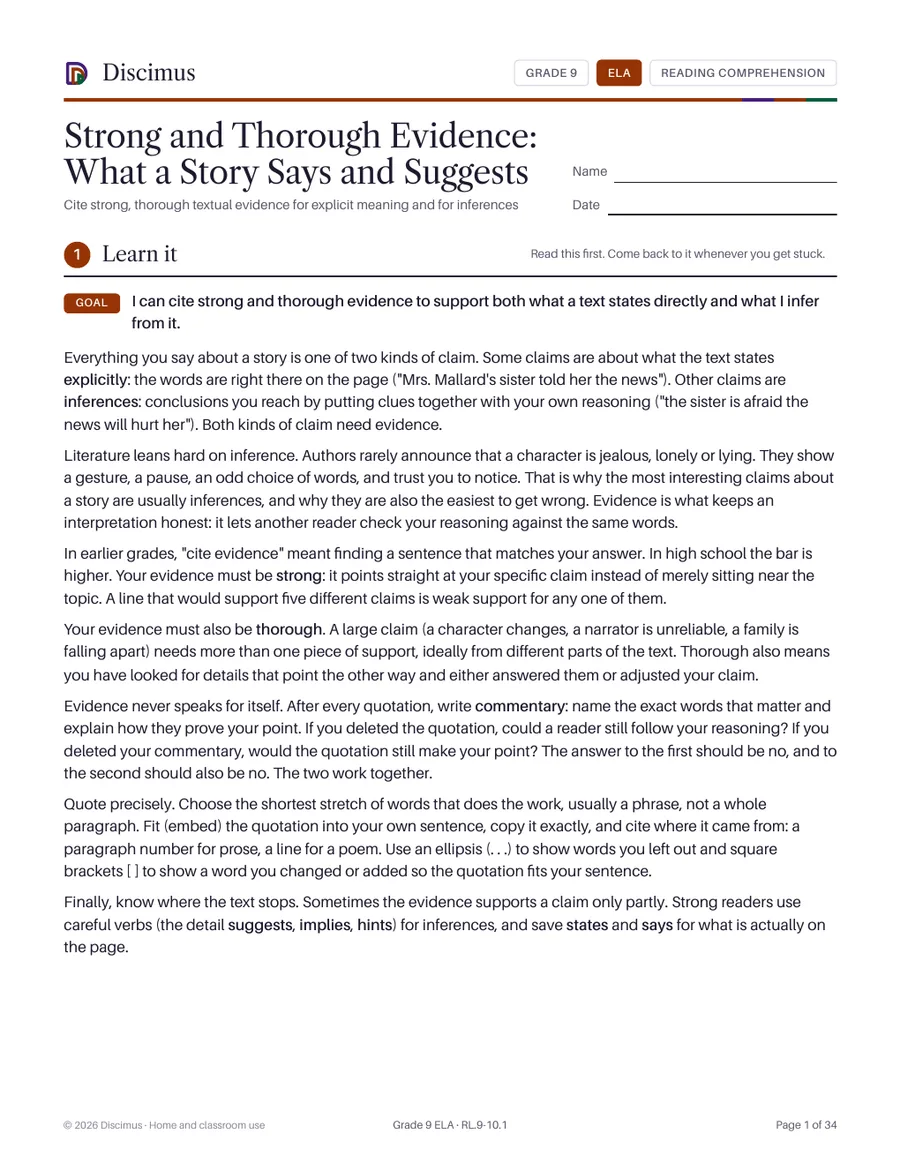
    Strong and Thorough Evidence: What a Story Says and Suggests

    Cite strong, thorough textual evidence for explicit meaning and for inferences
  • ELAGrade 9

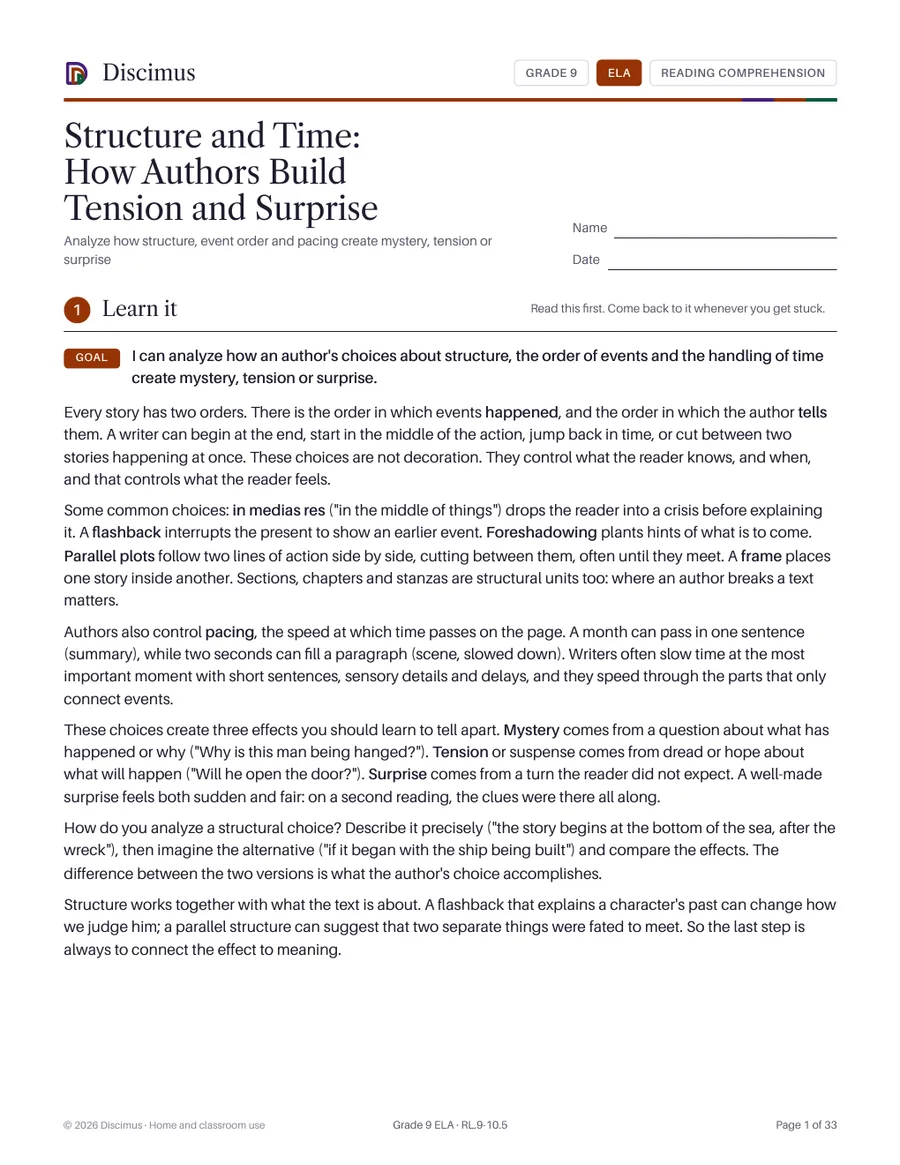
    Structure and Time: How Authors Build Tension and Surprise

    Analyze how structure, event order and pacing create mystery, tension or surprise
  • ELAGrade 9

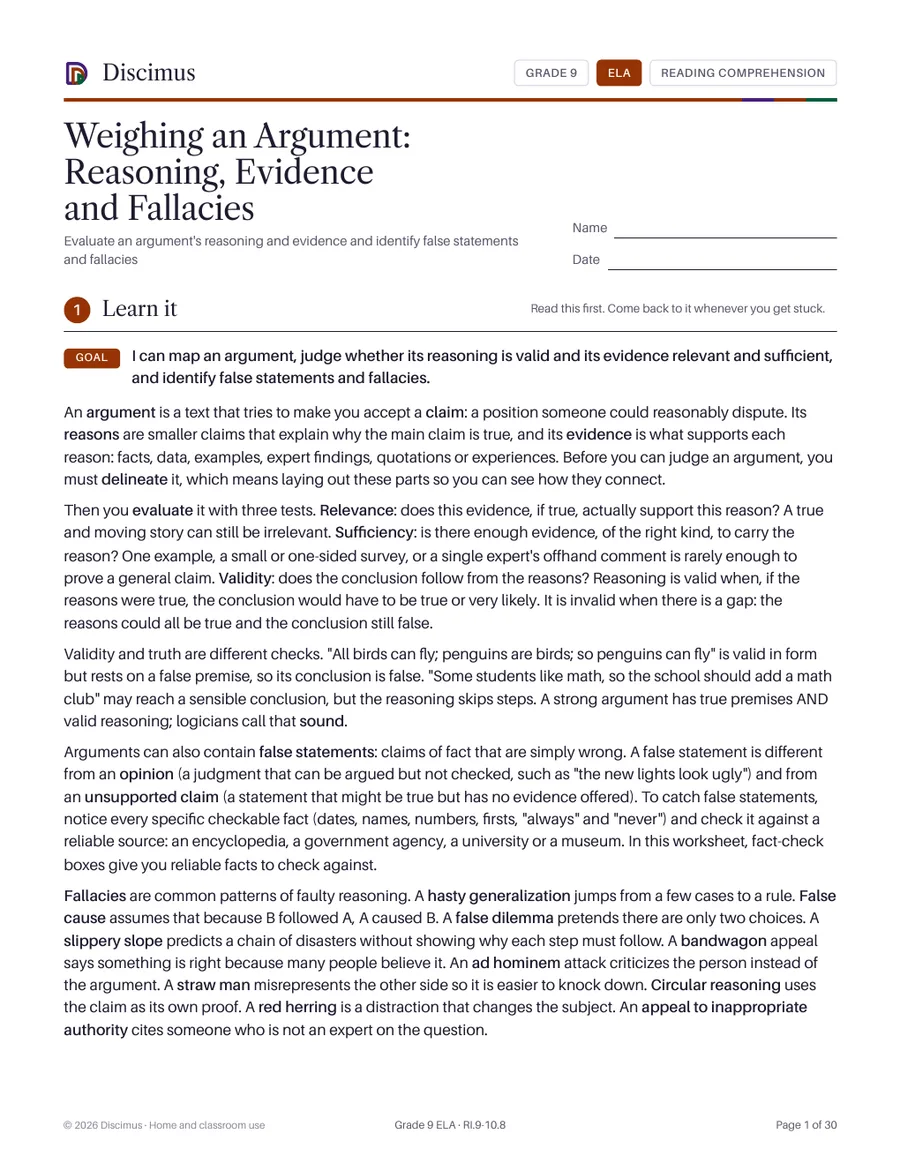
    Weighing an Argument: Reasoning, Evidence and Fallacies

    Evaluate an argument's reasoning and evidence and identify false statements and fallacies
  • ELAGrade 9

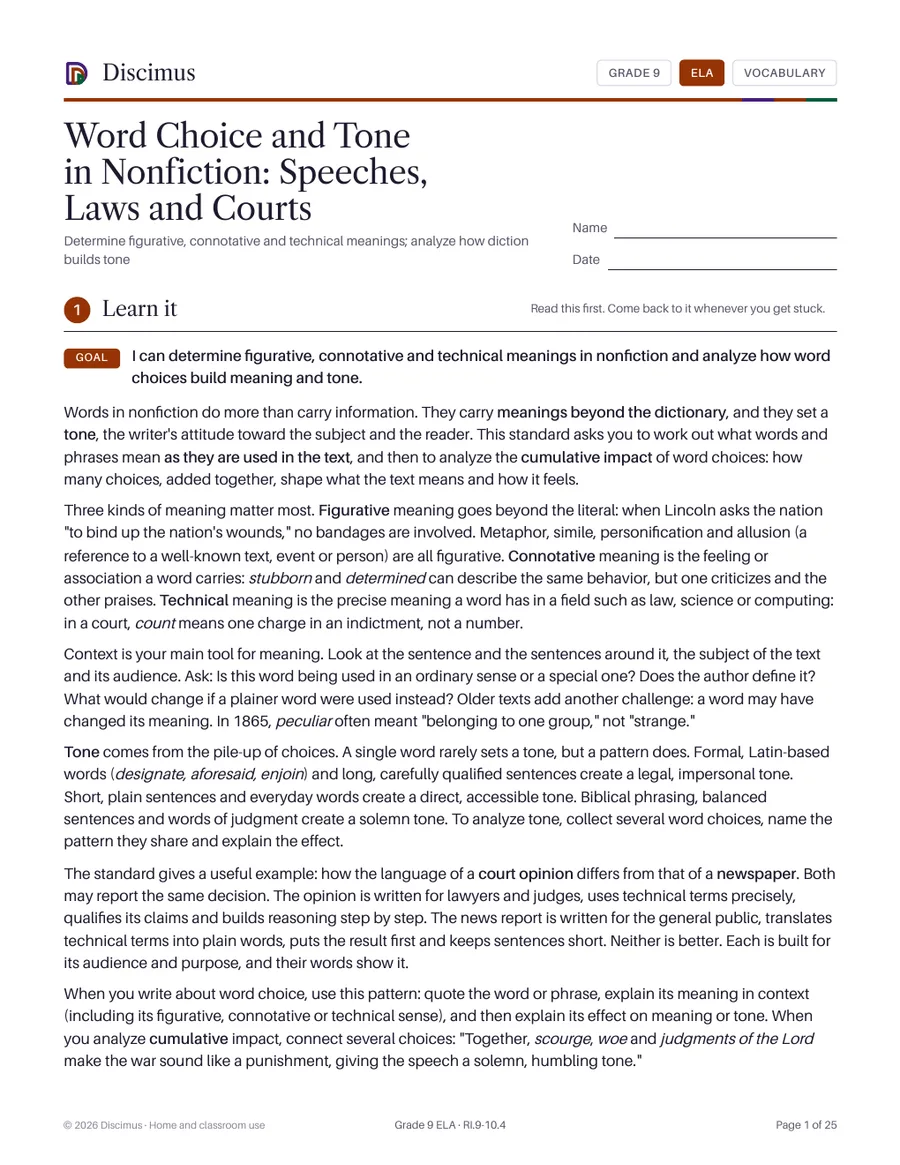
    Word Choice and Tone in Nonfiction: Speeches, Laws and Courts

    Determine figurative, connotative and technical meanings; analyze how diction builds tone
  • ELAGrade 9

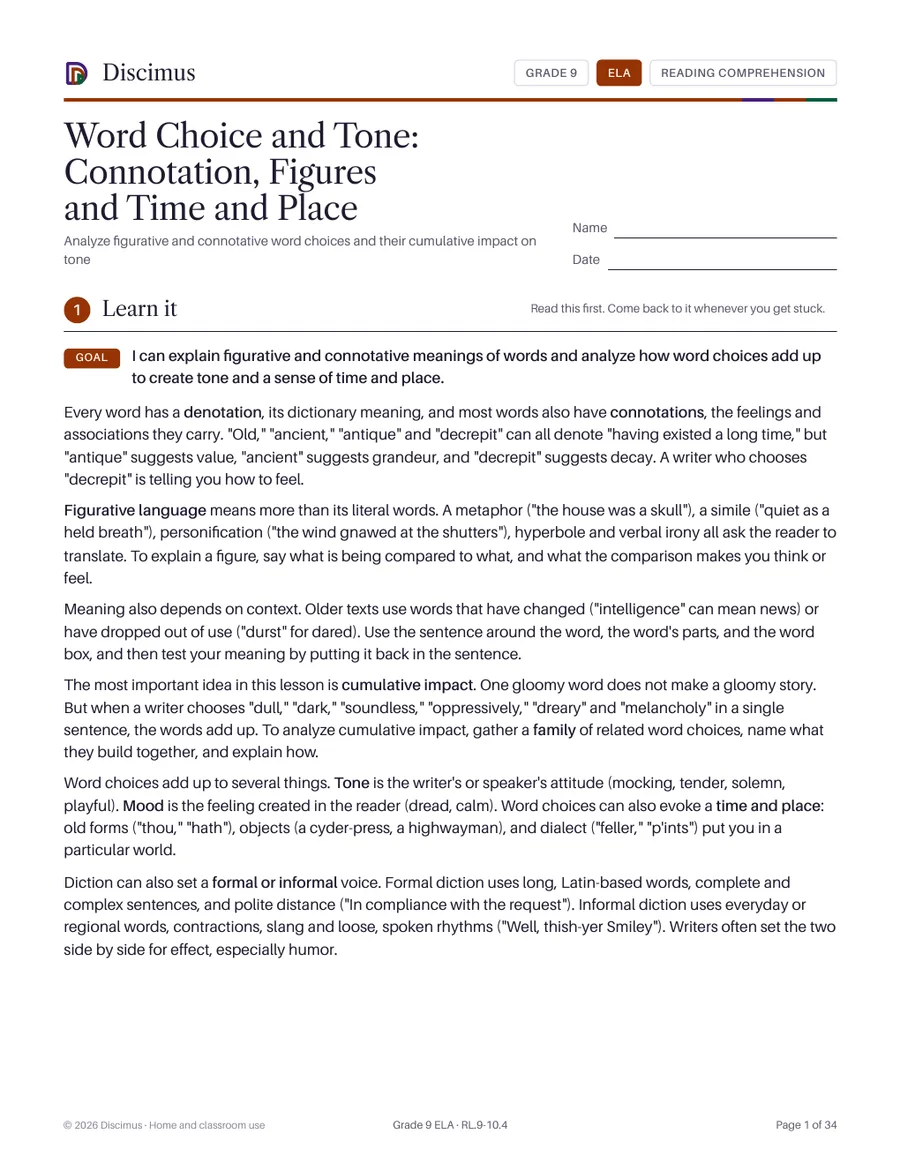
    Word Choice and Tone: Connotation, Figures and Time and Place

    Analyze figurative and connotative word choices and their cumulative impact on tone
  • ELAGrade 9

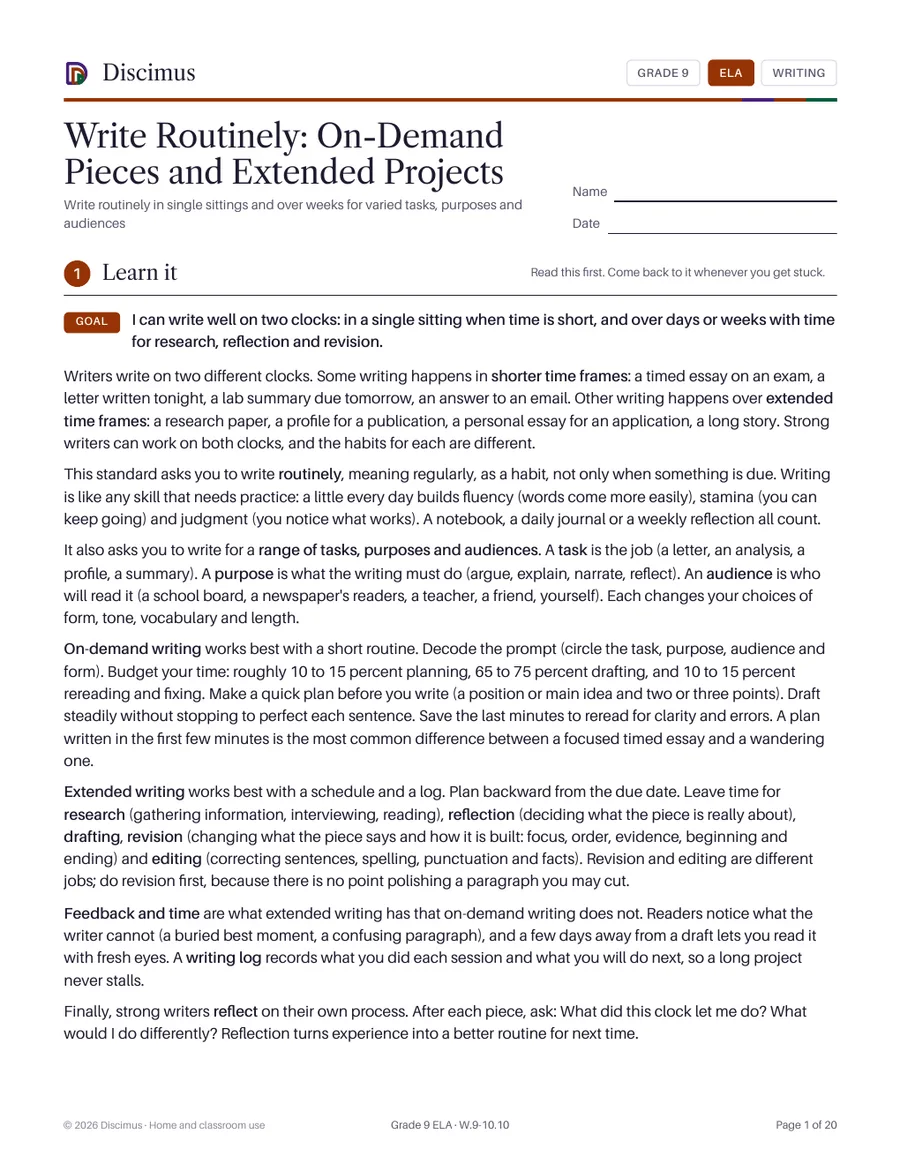
    Write Routinely: On-Demand Pieces and Extended Projects

    Write routinely in single sittings and over weeks for varied tasks, purposes and audiences

Discimus

Docendo discimus. By teaching, we learn.

By age

  • Early Childhood
  • Elementary School
  • Middle School
  • High School
  • All grades

By subject

  • Math
  • English Language Arts
  • Science
  • Social Studies
  • Foreign Language
  • Technology

Discimus

  • Membership
  • Occasions
  • Standards
  • About
  • Contact

© 2026 Ceterum. All rights reserved. Worksheets are for home and single-classroom use.

  • Terms
  • Privacy