Skip to content
Discimus
  • Grades
  • Subjects
  • Occasions
  • Standards
  • Membership
Sign inJoin
  1. Home
  2. Grades
  3. Grade 9
  4. Social Studies

C3 Framework for Social Studies

Grade 9 Social Studies

History, geography, civics and economics.

TopicsGeography 12Inquiry Skills 14Using Sources 3
StandardsD1.1.9-12D1.2.9-12D1.3.9-12D1.4.9-12D1.5.9-12D2.Geo.1.9-12D2.Geo.2.9-12D2.Geo.3.9-12D2.Geo.4.9-12D2.Geo.5.9-12D2.Geo.6.9-12D2.Geo.7.9-12D2.Geo.8.9-12D2.Geo.9.9-12D2.Geo.10.9-12D2.Geo.11.9-12D2.Geo.12.9-12D3.1.9-12D3.2.9-12D3.3.9-12D3.4.9-12D4.1.9-12D4.2.9-12D4.3.9-12D4.4.9-12D4.5.9-12D4.6.9-12D4.7.9-12D4.8.9-12
  • Social StudiesGrade 9

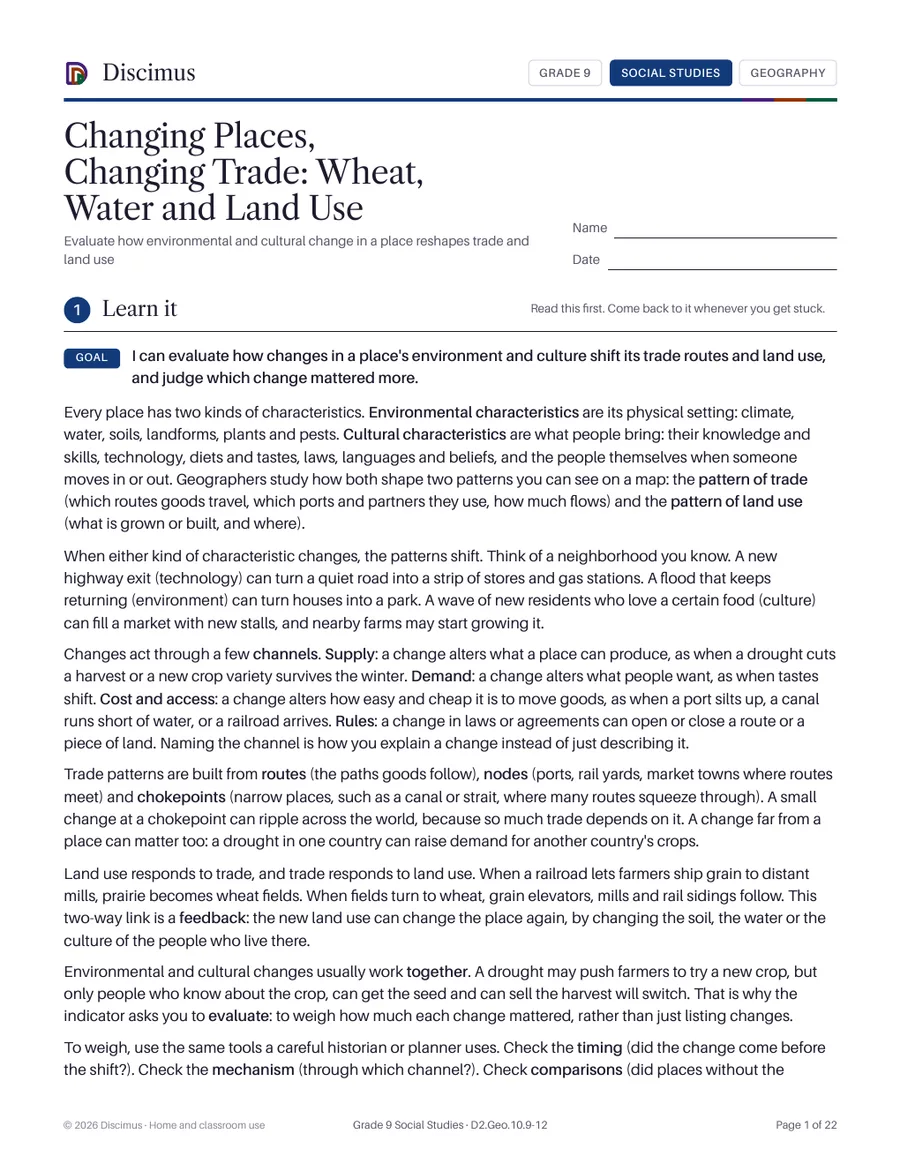
    After the Disaster: Ripple Effects on Trade, Politics and Migration

    Evaluate how natural and human-made catastrophes affect trade, politics and migration
  • Social StudiesGrade 9

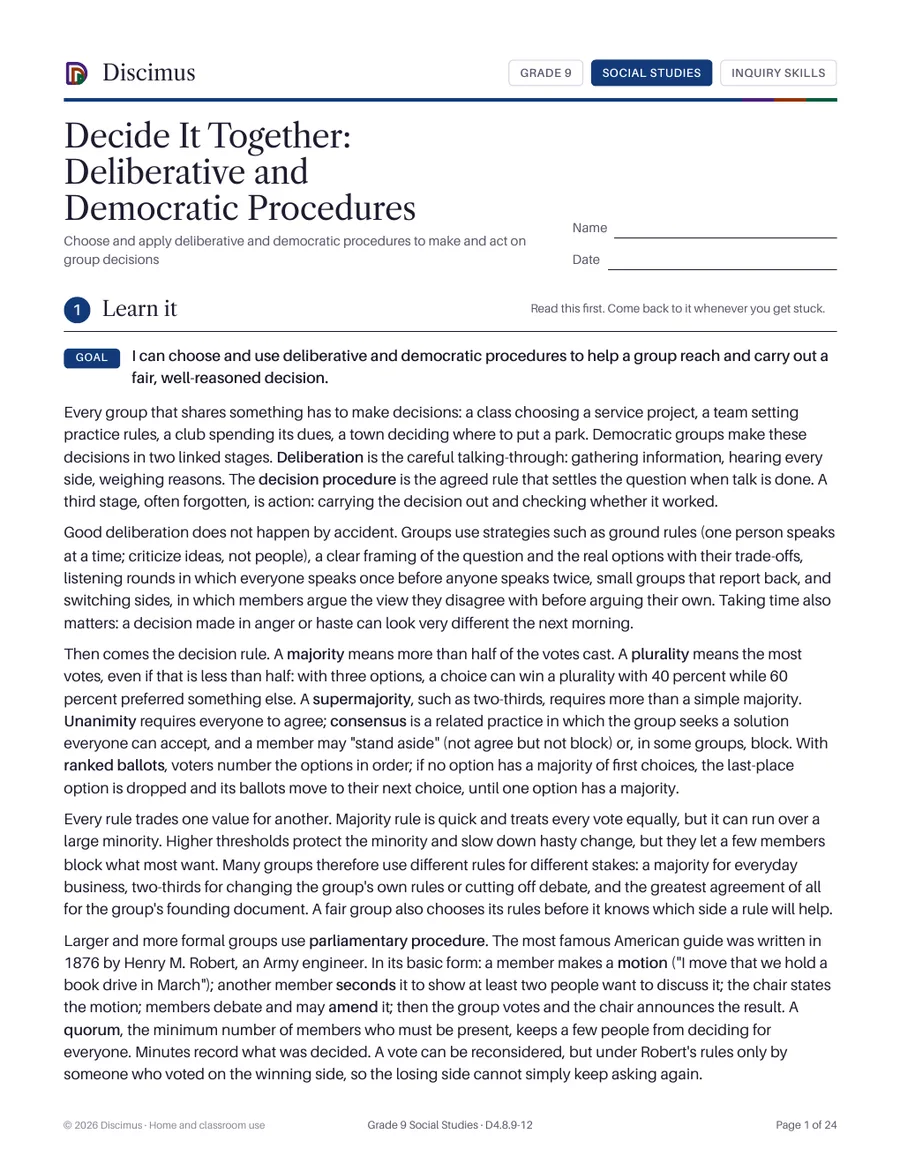
    Changing Places, Changing Trade: Wheat, Water and Land Use

    Evaluate how environmental and cultural change in a place reshapes trade and land use
  • Social StudiesGrade 9

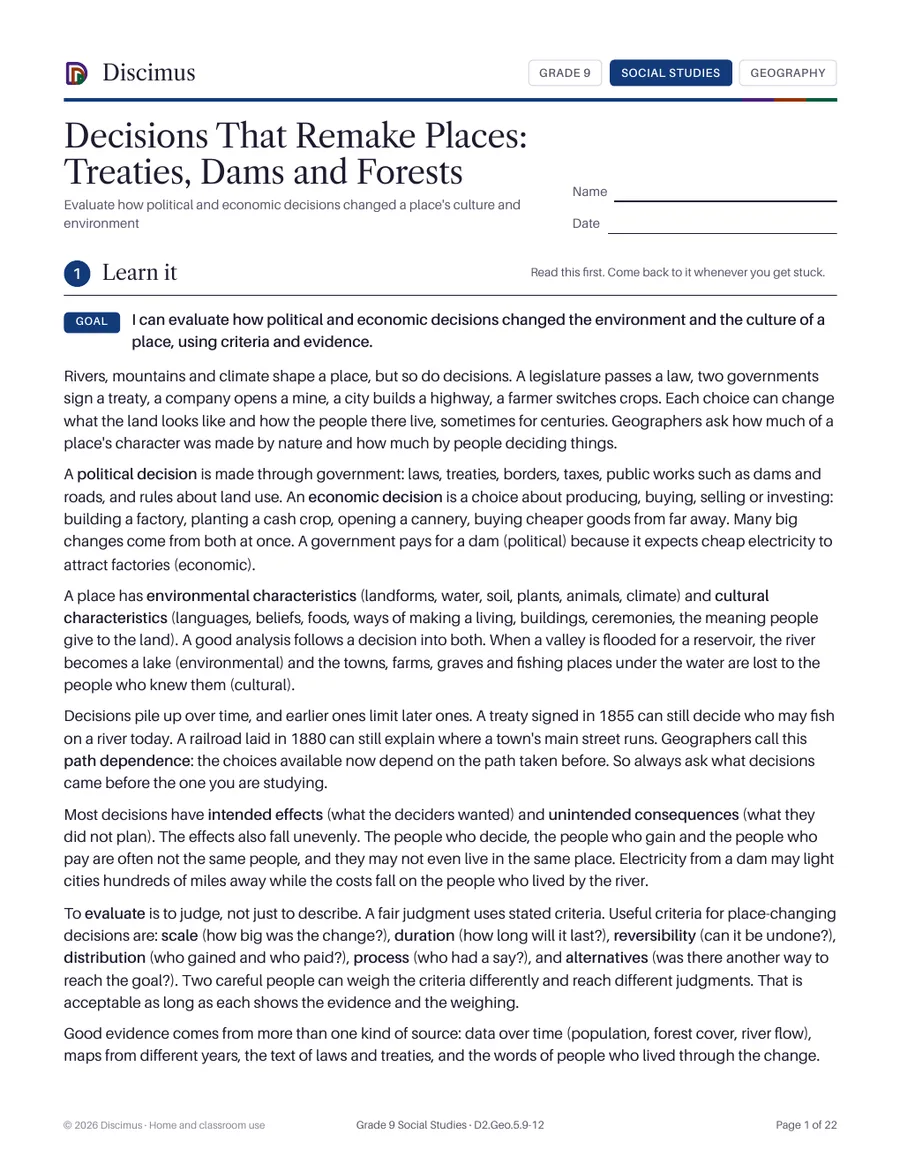
    Decide It Together: Deliberative and Democratic Procedures

    Choose and apply deliberative and democratic procedures to make and act on group decisions
  • Social StudiesGrade 9

    Decisions That Remake Places: Treaties, Dams and Forests

    Evaluate how political and economic decisions changed a place's culture and environment
  • Social StudiesGrade 9

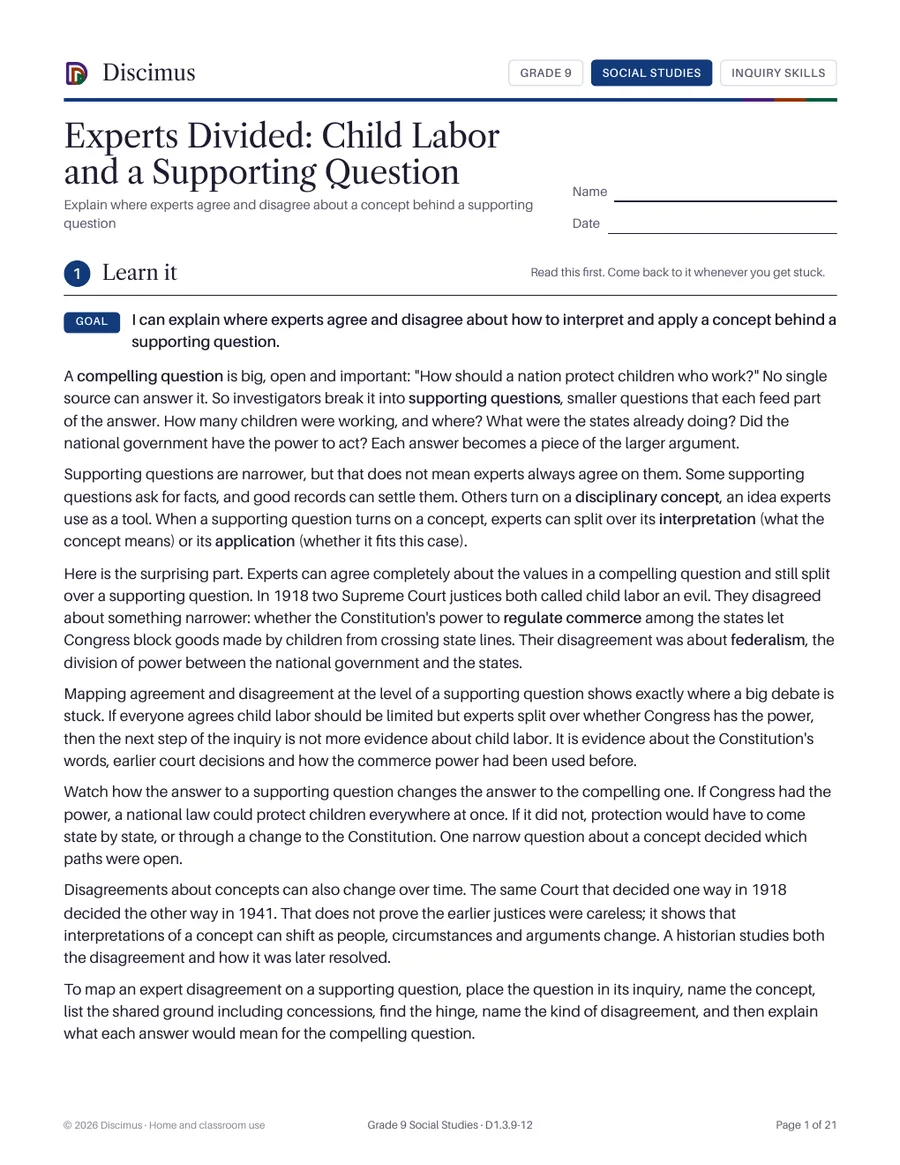
    Experts Divided: Child Labor and a Supporting Question

    Explain where experts agree and disagree about a concept behind a supporting question
  • Social StudiesGrade 9

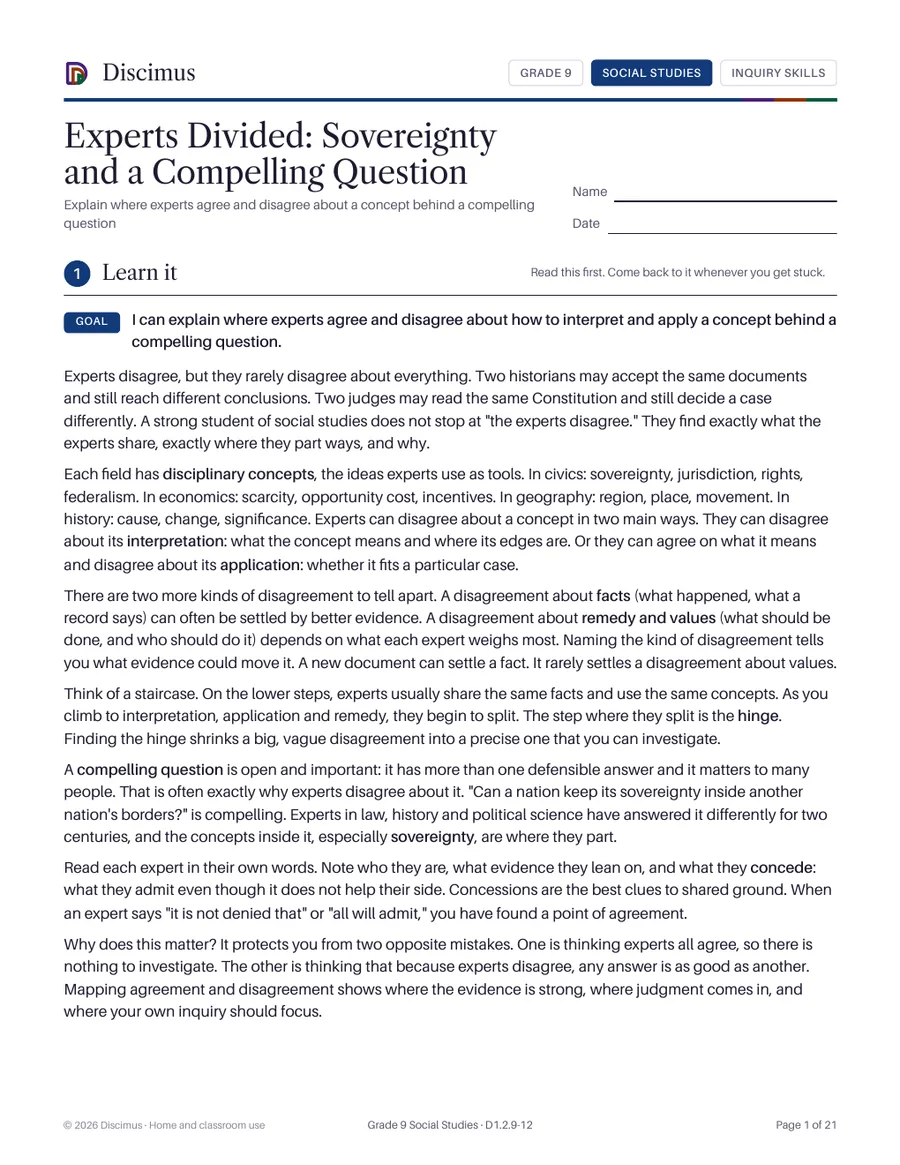
    Experts Divided: Sovereignty and a Compelling Question

    Explain where experts agree and disagree about a concept behind a compelling question
  • Social StudiesGrade 9

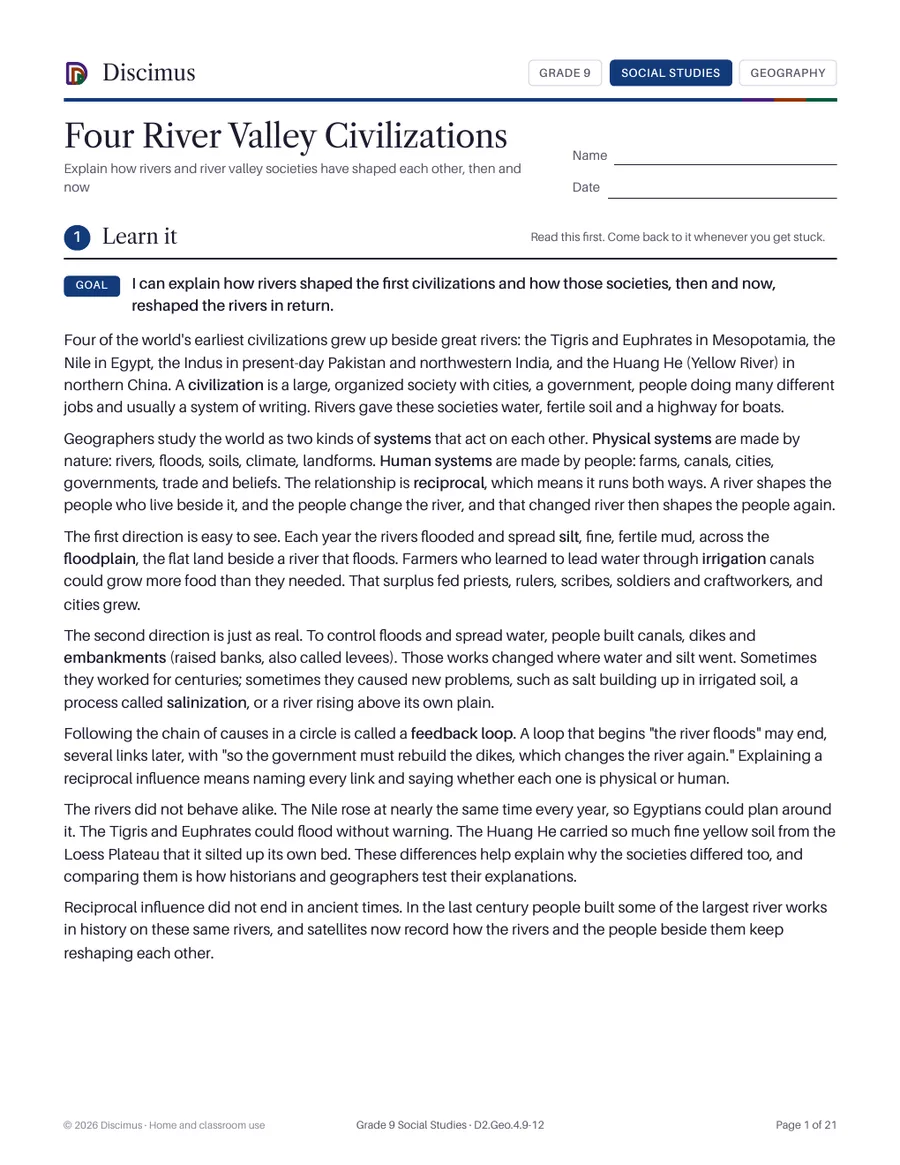
    Four River Valley Civilizations

    Explain how rivers and river valley societies have shaped each other, then and now
  • Social StudiesGrade 9

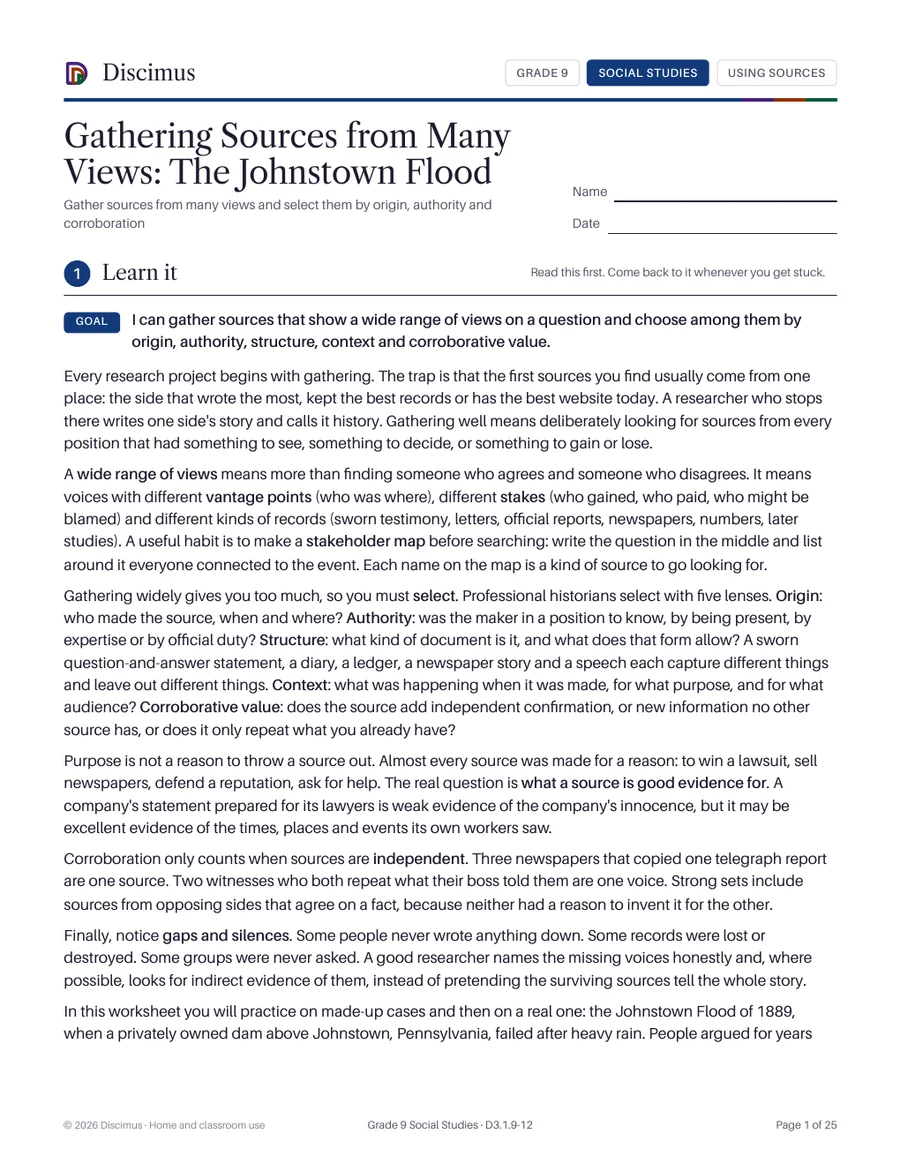
    Gathering Sources from Many Views: The Johnstown Flood

    Gather sources from many views and select them by origin, authority and corroboration
  • Social StudiesGrade 9

    How Experts Judge a Source: The Donation of Constantine

    Judge a source's credibility by examining how experts have valued it and why
  • Social StudiesGrade 9

    How Supporting Questions and Sources Grow an Inquiry

    Explain how supporting questions build an inquiry and how sources raise new questions
  • Social StudiesGrade 9

    Inconsistent Evidence, Better Claims: Lexington, 1775

    Use inconsistencies across several sources to revise or strengthen a historical claim
  • Social StudiesGrade 9

    Lines on the Land: How Policy and Markets Shape Where Cities Grow

    Evaluate how economic activity and policy shape urban, suburban and rural patterns
  • Social StudiesGrade 9

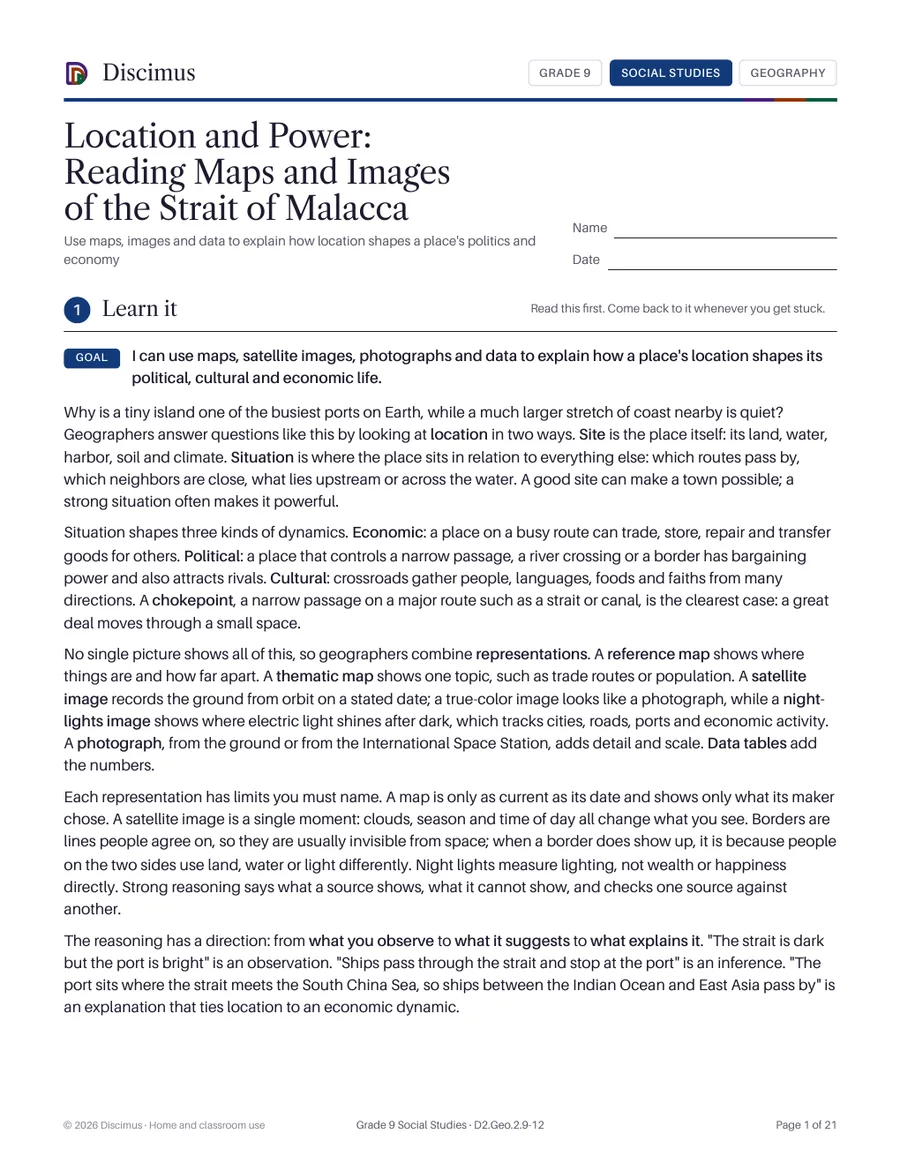
    Location and Power: Reading Maps and Images of the Strait of Malacca

    Use maps, images and data to explain how location shapes a place's politics and economy
  • Social StudiesGrade 9

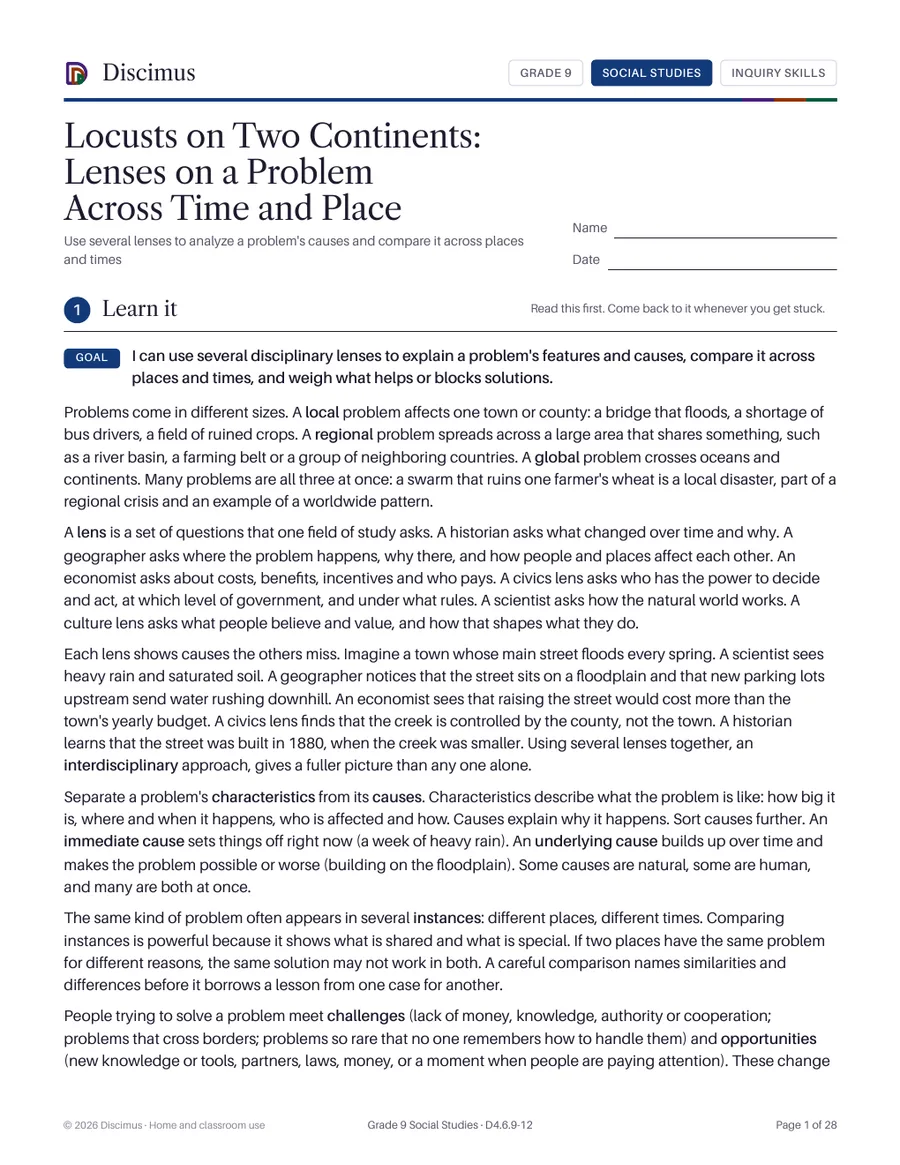
    Locusts on Two Continents: Lenses on a Problem Across Time and Place

    Use several lenses to analyze a problem's causes and compare it across places and times
  • Social StudiesGrade 9

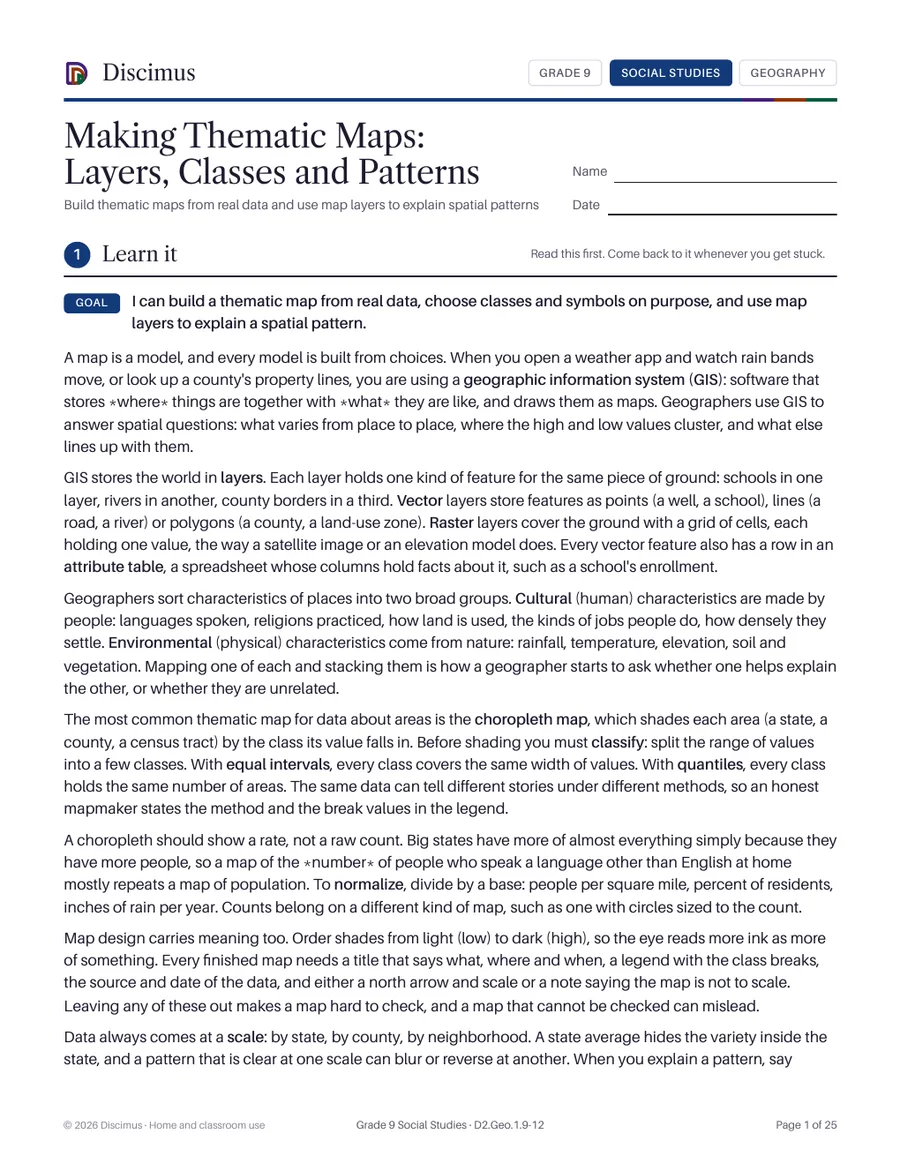
    Making Thematic Maps: Layers, Classes and Patterns

    Build thematic maps from real data and use map layers to explain spatial patterns
  • Social StudiesGrade 9

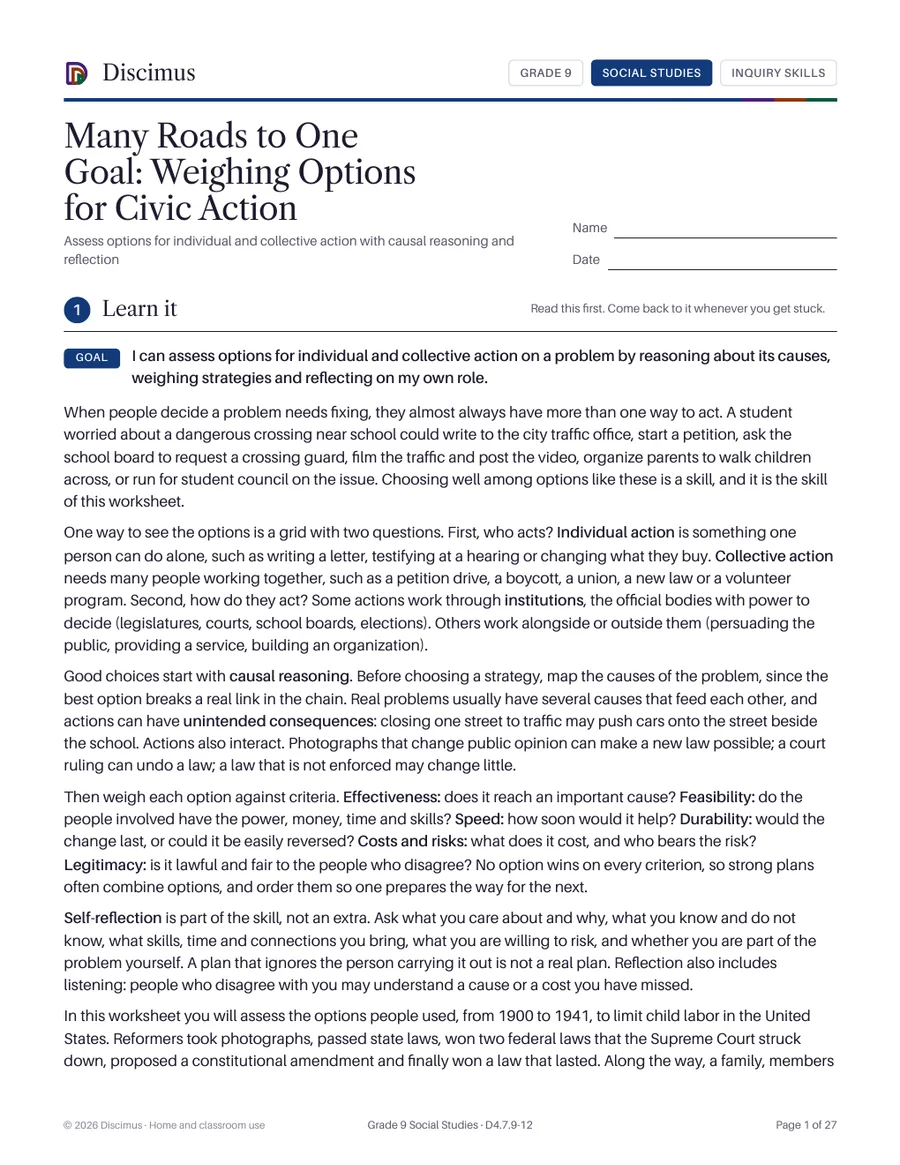
    Many Roads to One Goal: Weighing Options for Civic Action

    Assess options for individual and collective action with causal reasoning and reflection
  • Social StudiesGrade 9

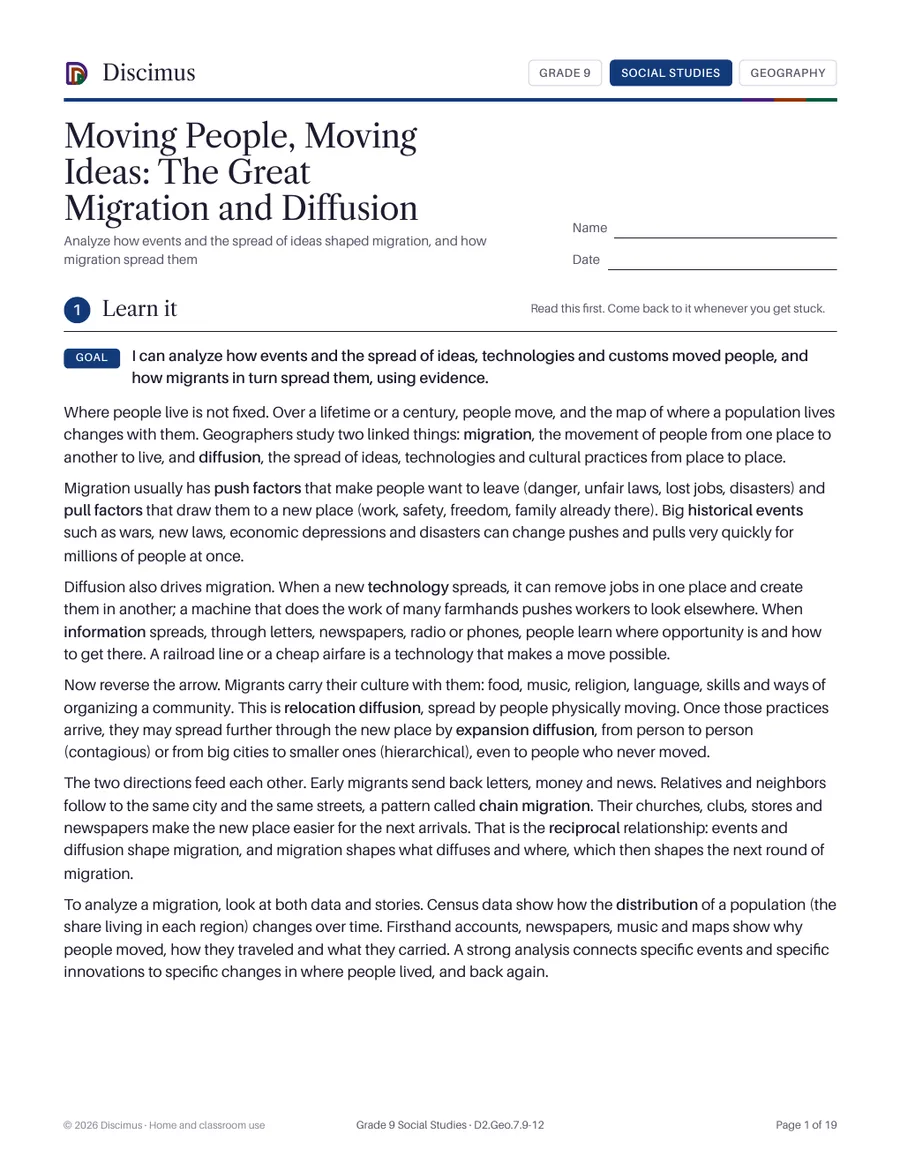
    Moving People, Moving Ideas: The Great Migration and Diffusion

    Analyze how events and the spread of ideas shaped migration, and how migration spread them
  • Social StudiesGrade 9

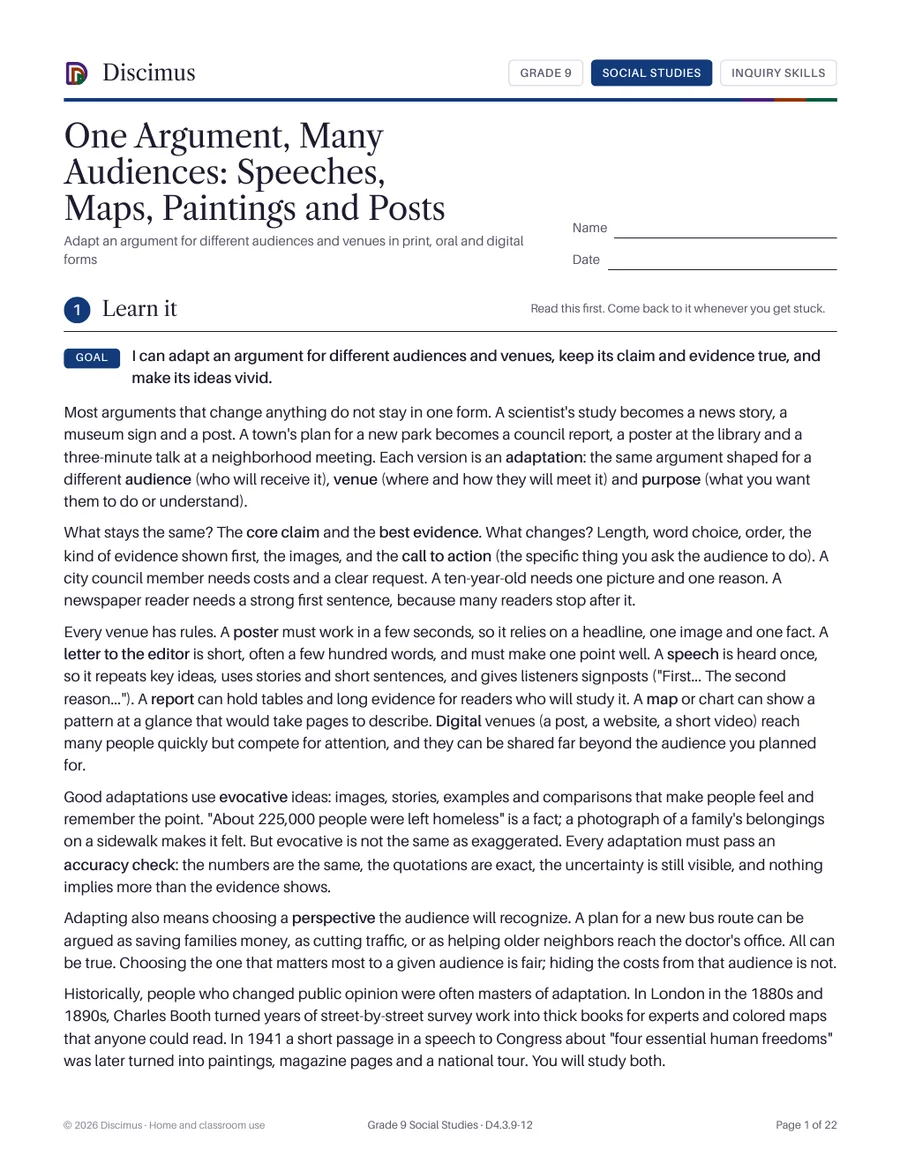
    One Argument, Many Audiences: Speeches, Maps, Paintings and Posts

    Adapt an argument for different audiences and venues in print, oral and digital forms
  • Social StudiesGrade 9

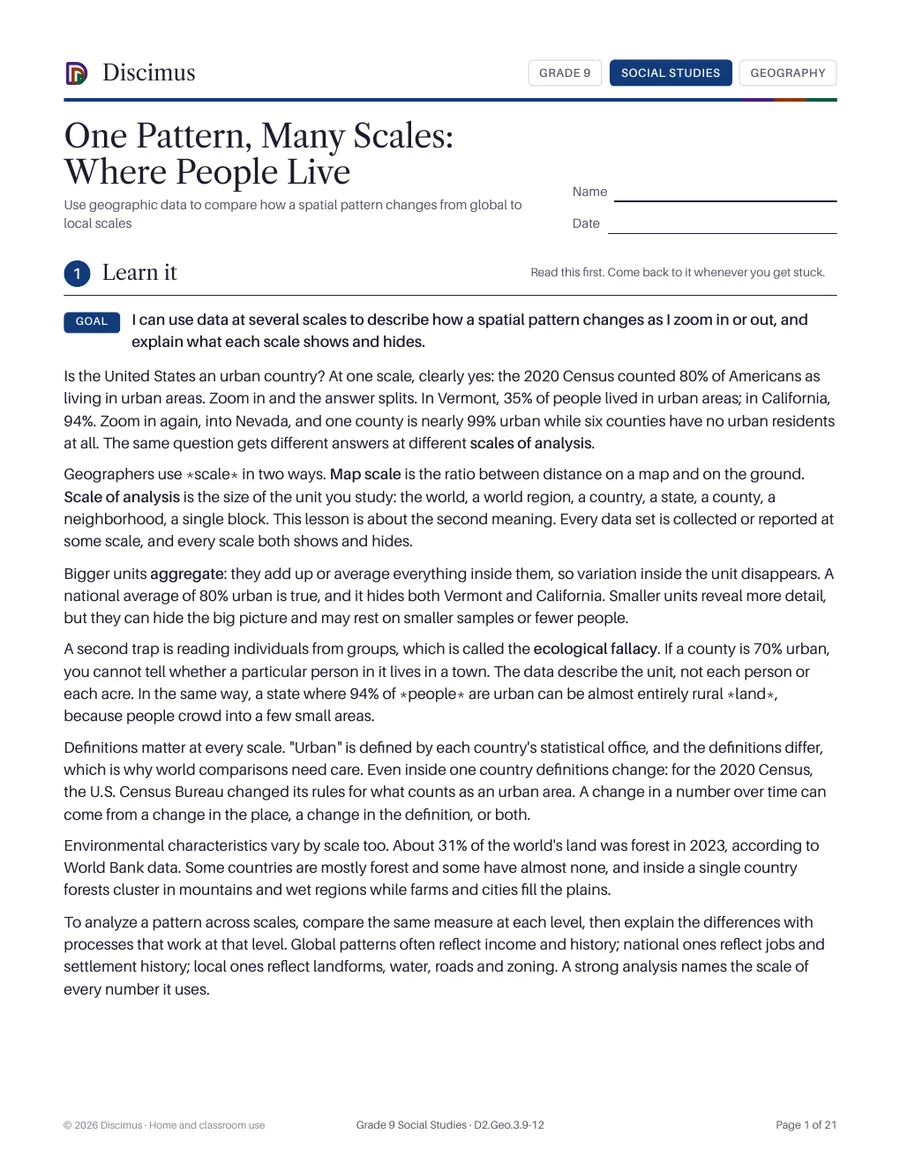
    One Pattern, Many Scales: Where People Live

    Use geographic data to compare how a spatial pattern changes from global to local scales
  • Social StudiesGrade 9

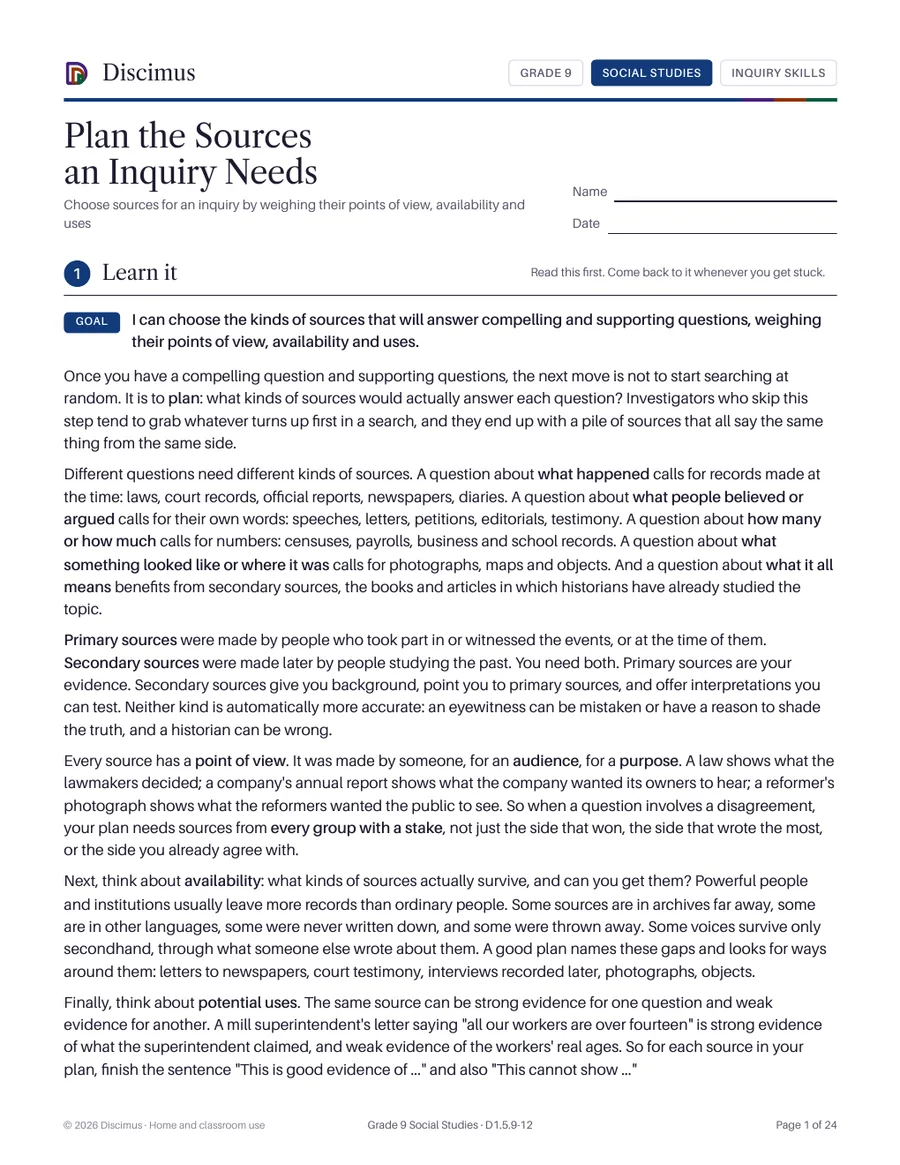
    Plan the Sources an Inquiry Needs

    Choose sources for an inquiry by weighing their points of view, availability and uses
  • Social StudiesGrade 9

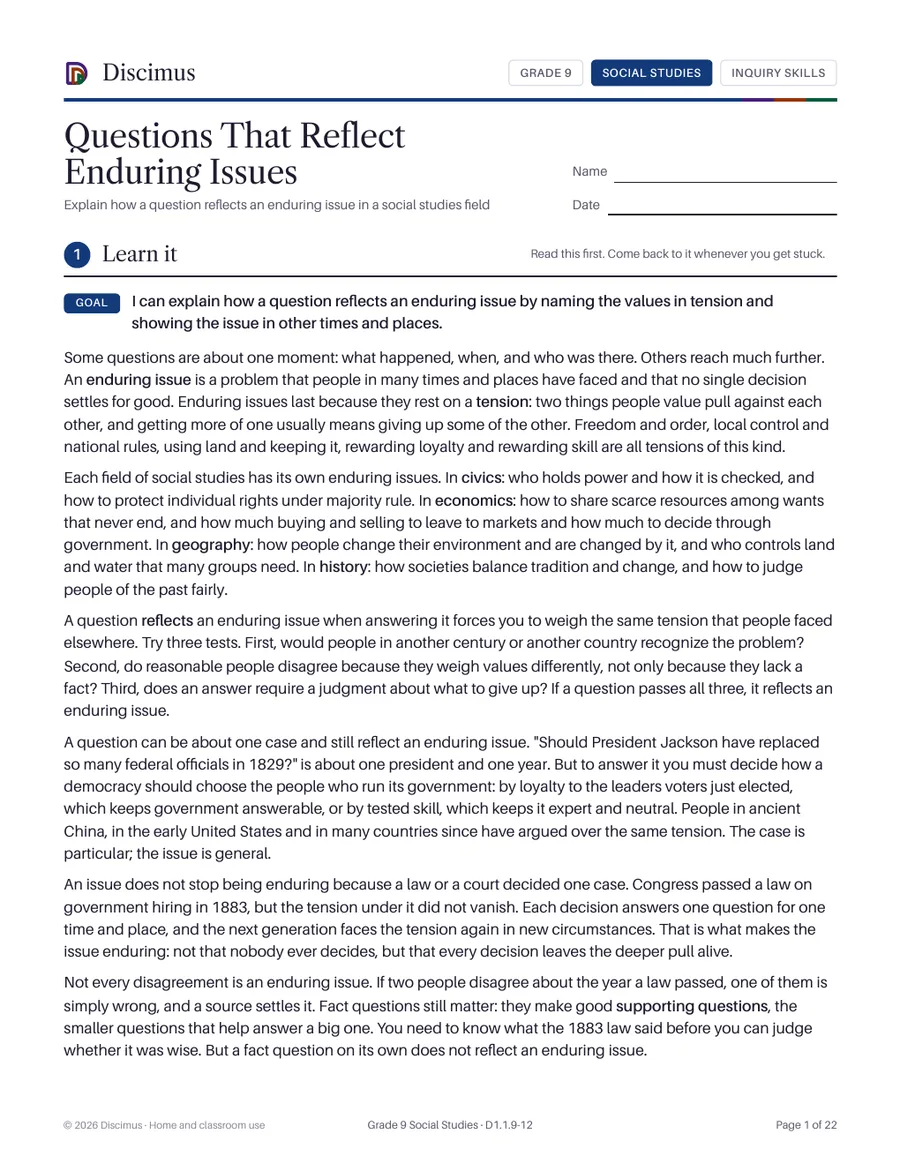
    Questions That Reflect Enduring Issues

    Explain how a question reflects an enduring issue in a social studies field
  • Social StudiesGrade 9

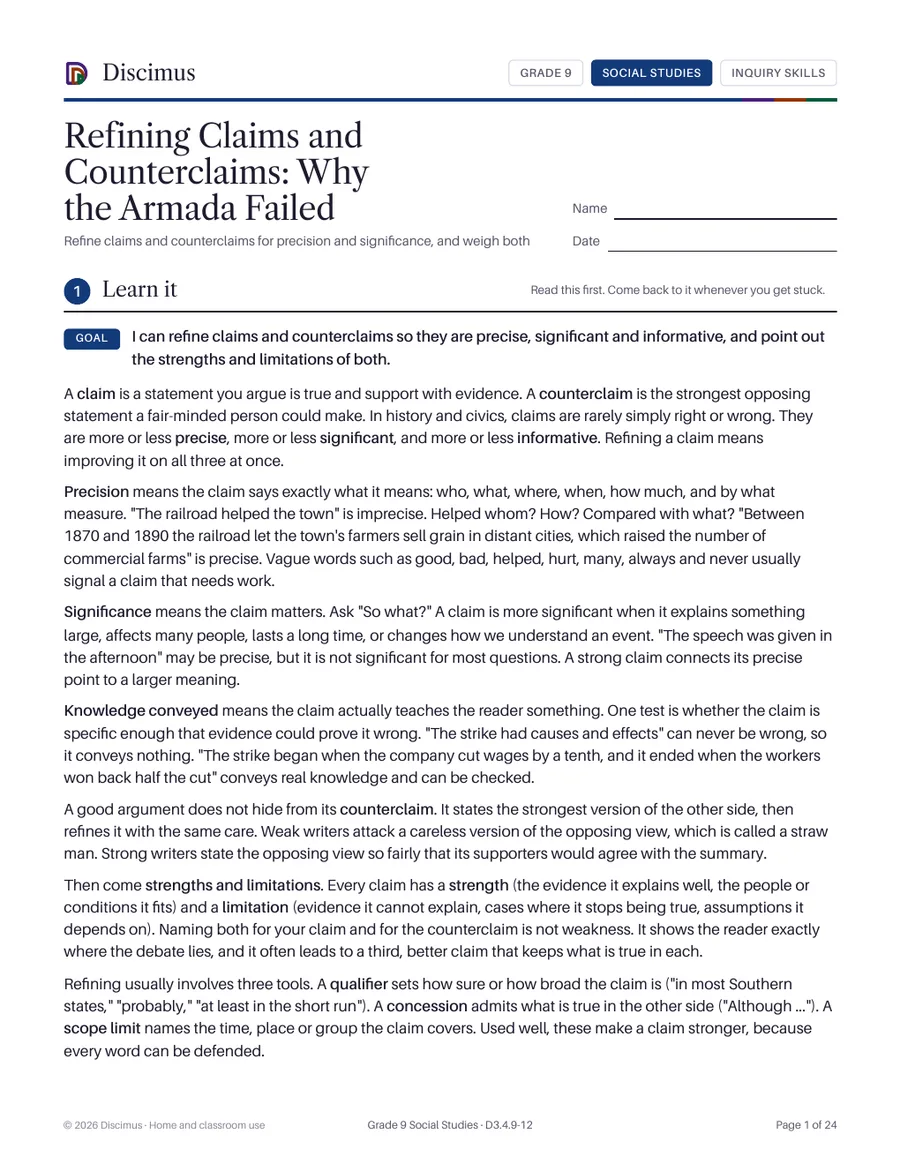
    Refining Claims and Counterclaims: Why the Armada Failed

    Refine claims and counterclaims for precision and significance, and weigh both
  • Social StudiesGrade 9

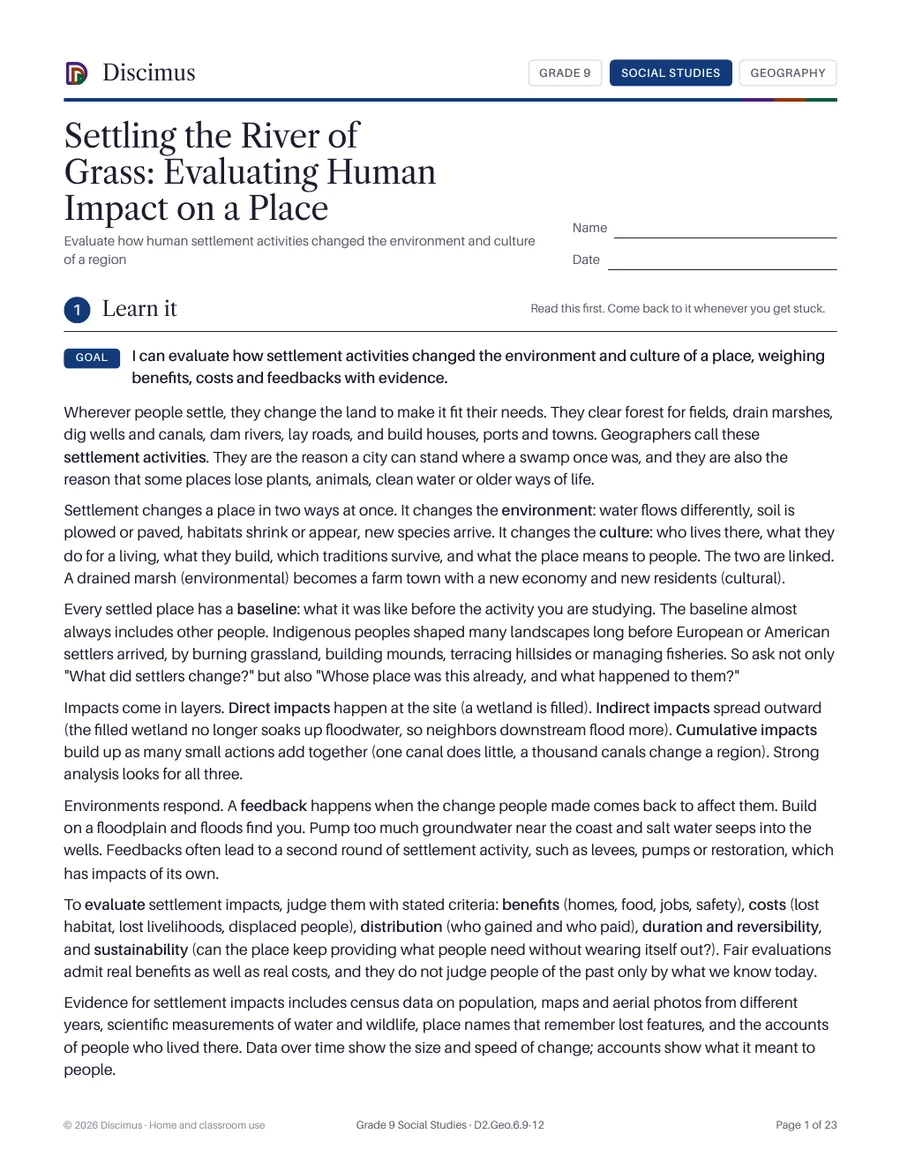
    Settling the River of Grass: Evaluating Human Impact on a Place

    Evaluate how human settlement activities changed the environment and culture of a region
  • Social StudiesGrade 9

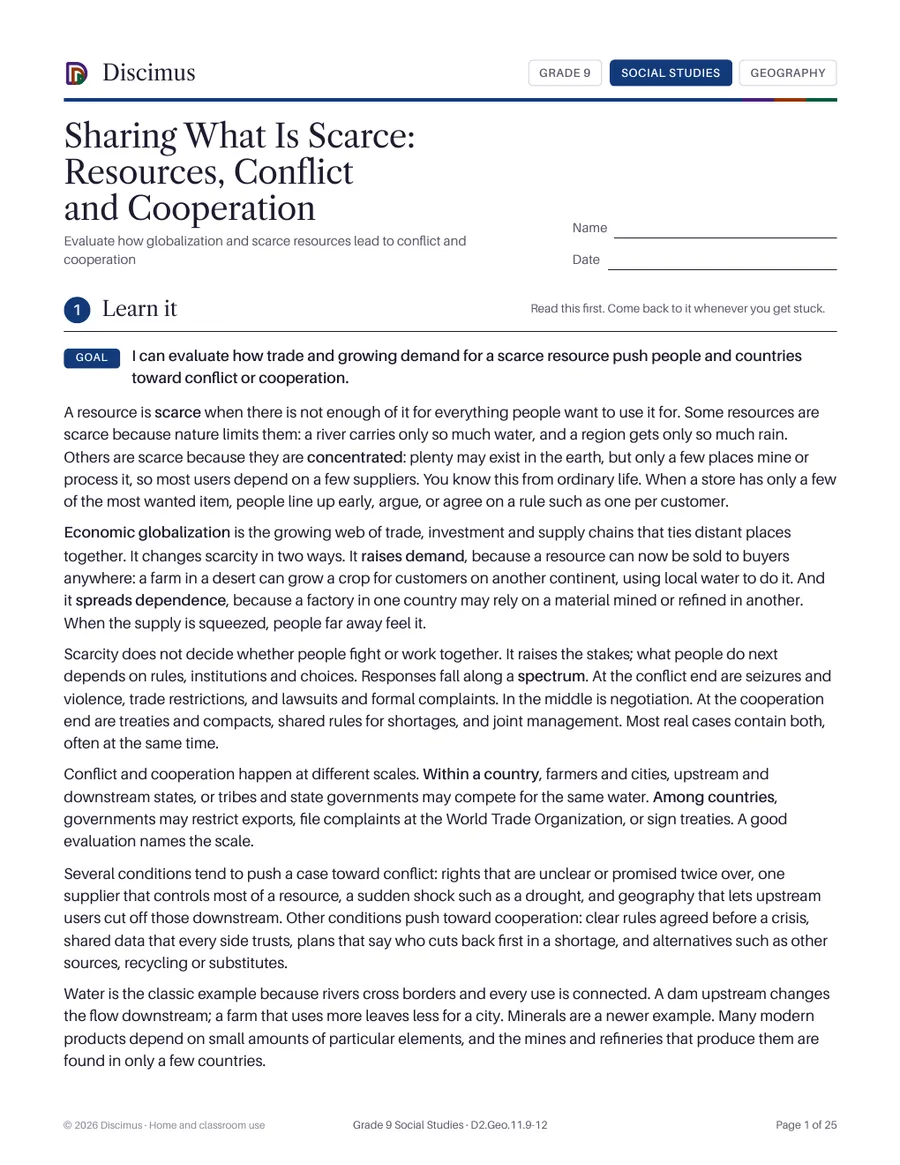
    Sharing What Is Scarce: Resources, Conflict and Cooperation

    Evaluate how globalization and scarce resources lead to conflict and cooperation
  • Social StudiesGrade 9

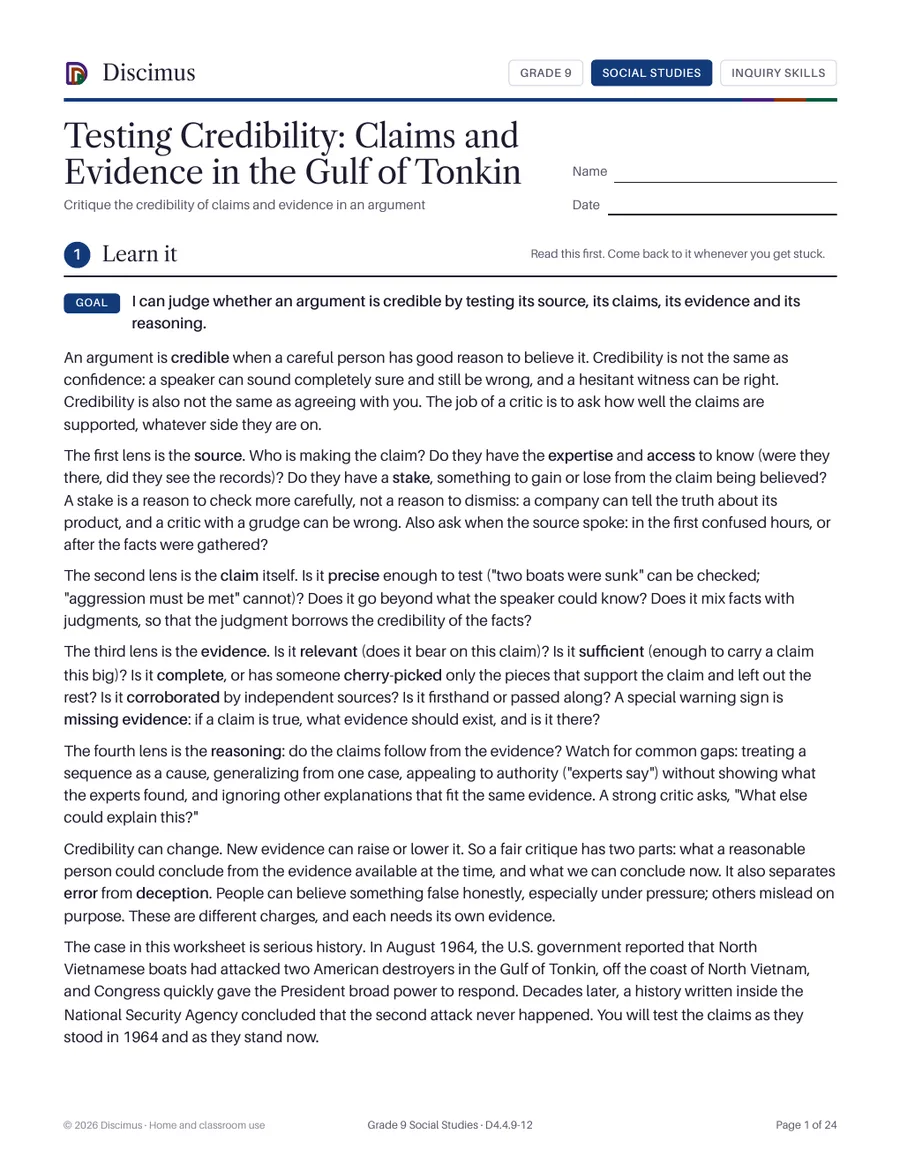
    Testing Credibility: Claims and Evidence in the Gulf of Tonkin

    Critique the credibility of claims and evidence in an argument
  • Social StudiesGrade 9

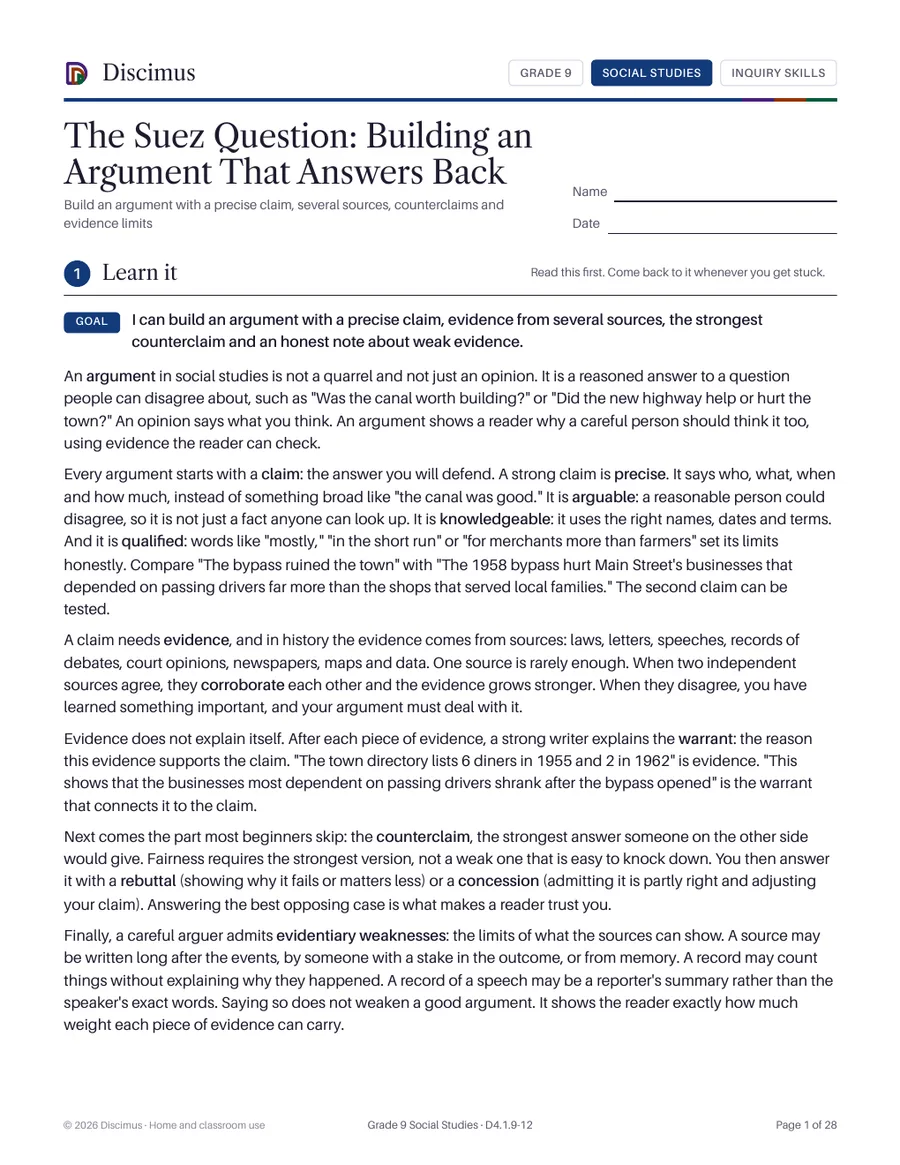
    The Suez Question: Building an Argument That Answers Back

    Build an argument with a precise claim, several sources, counterclaims and evidence limits
  • Social StudiesGrade 9

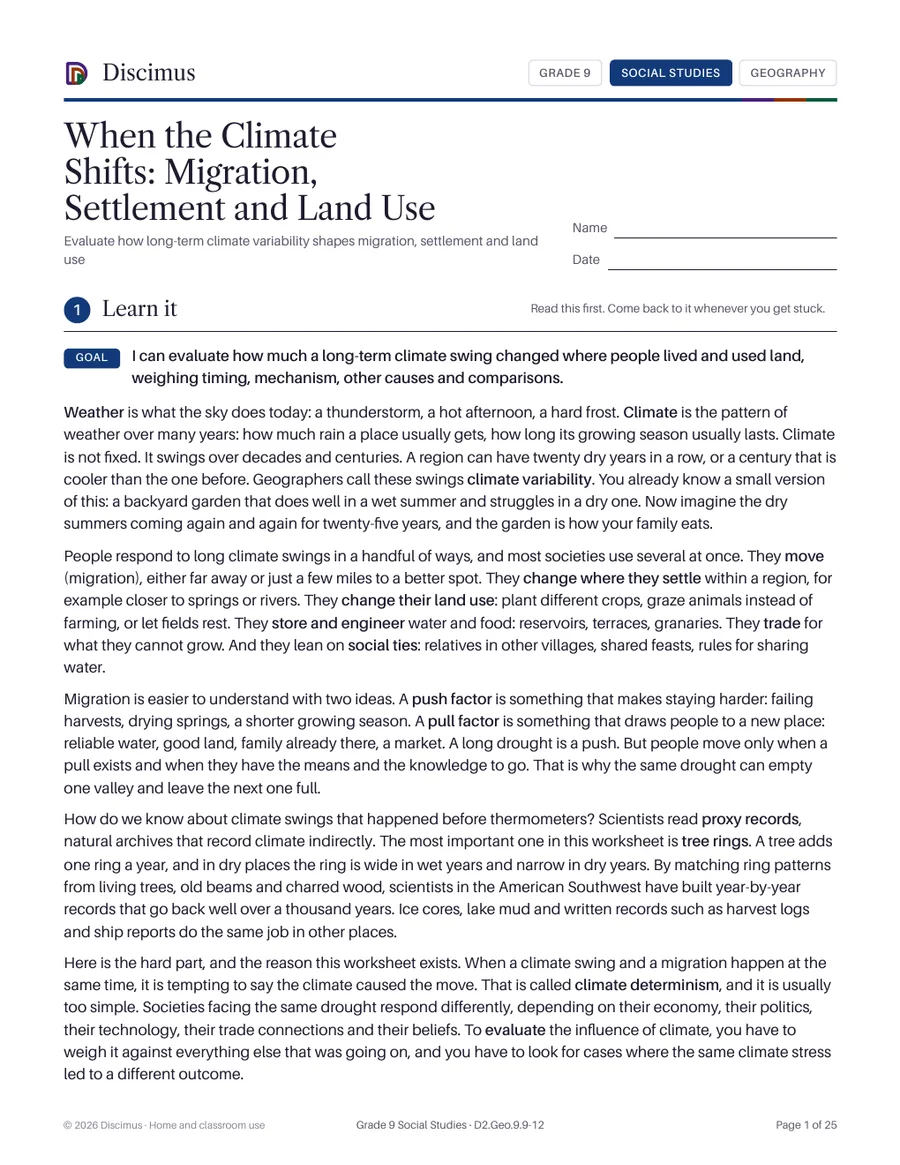
    When the Climate Shifts: Migration, Settlement and Land Use

    Evaluate how long-term climate variability shapes migration, settlement and land use
  • Social StudiesGrade 9

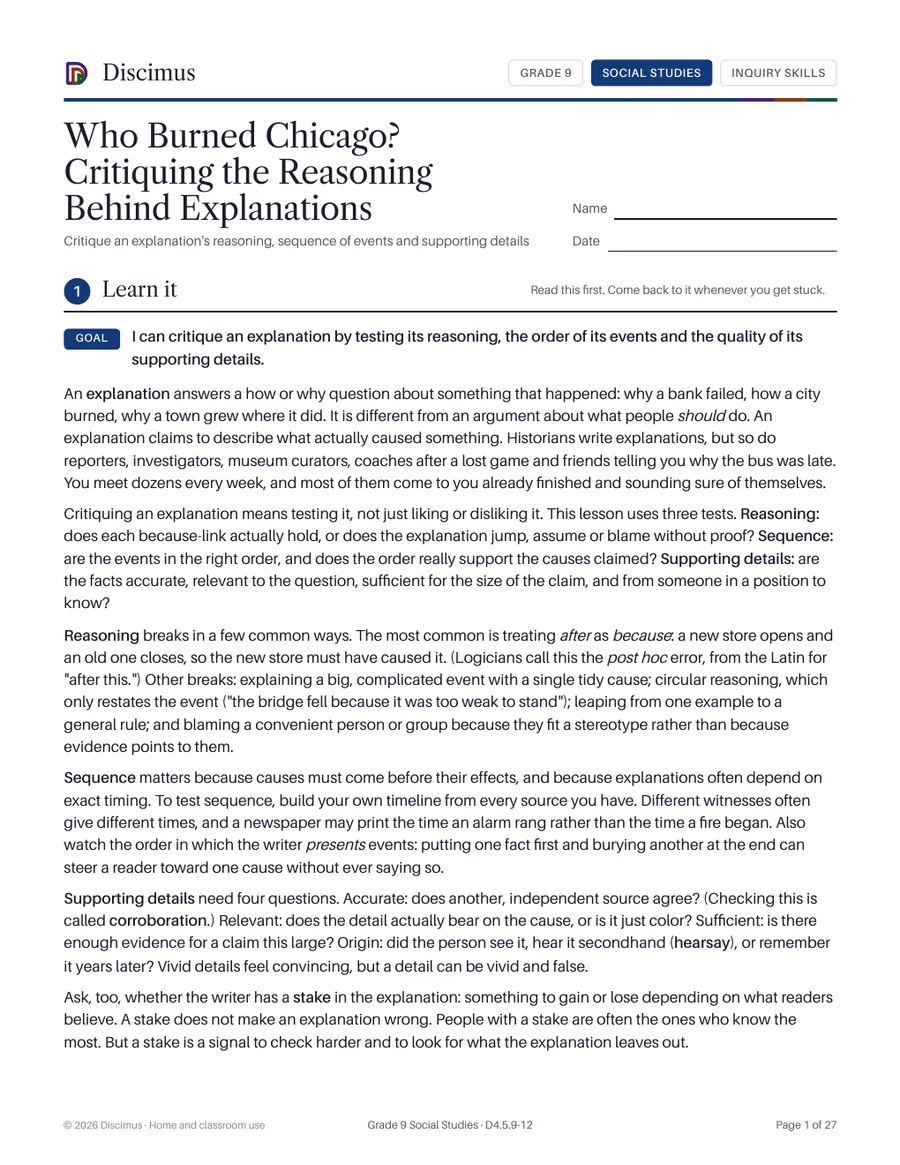
    Who Burned Chicago? Critiquing the Reasoning Behind Explanations

    Critique an explanation's reasoning, sequence of events and supporting details
  • Social StudiesGrade 9

    Why San Francisco Burned: Explaining with Sequence, Causes and Data

    Build explanations with sound reasoning, correct order, pertinent data and stated limits

Discimus

Docendo discimus. By teaching, we learn.

By age

  • Early Childhood
  • Elementary School
  • Middle School
  • High School
  • All grades

By subject

  • Math
  • English Language Arts
  • Science
  • Social Studies
  • Foreign Language
  • Technology

Discimus

  • Membership
  • Occasions
  • Standards
  • About
  • Contact

© 2026 Ceterum. All rights reserved. Worksheets are for home and single-classroom use.

  • Terms
  • Privacy