Answer a Question: Remember It or Look It Up
With adult help, answer a question from memory or from a source the adult provides
248 worksheets match.
With adult help, answer a question from memory or from a source the adult provides
With adult help, use digital tools to make and publish writing, alone and with a partner
Answer questions and suggestions from a listener and add details to make writing stronger
Draw, dictate and write an opinion that names the topic or book and says what you think
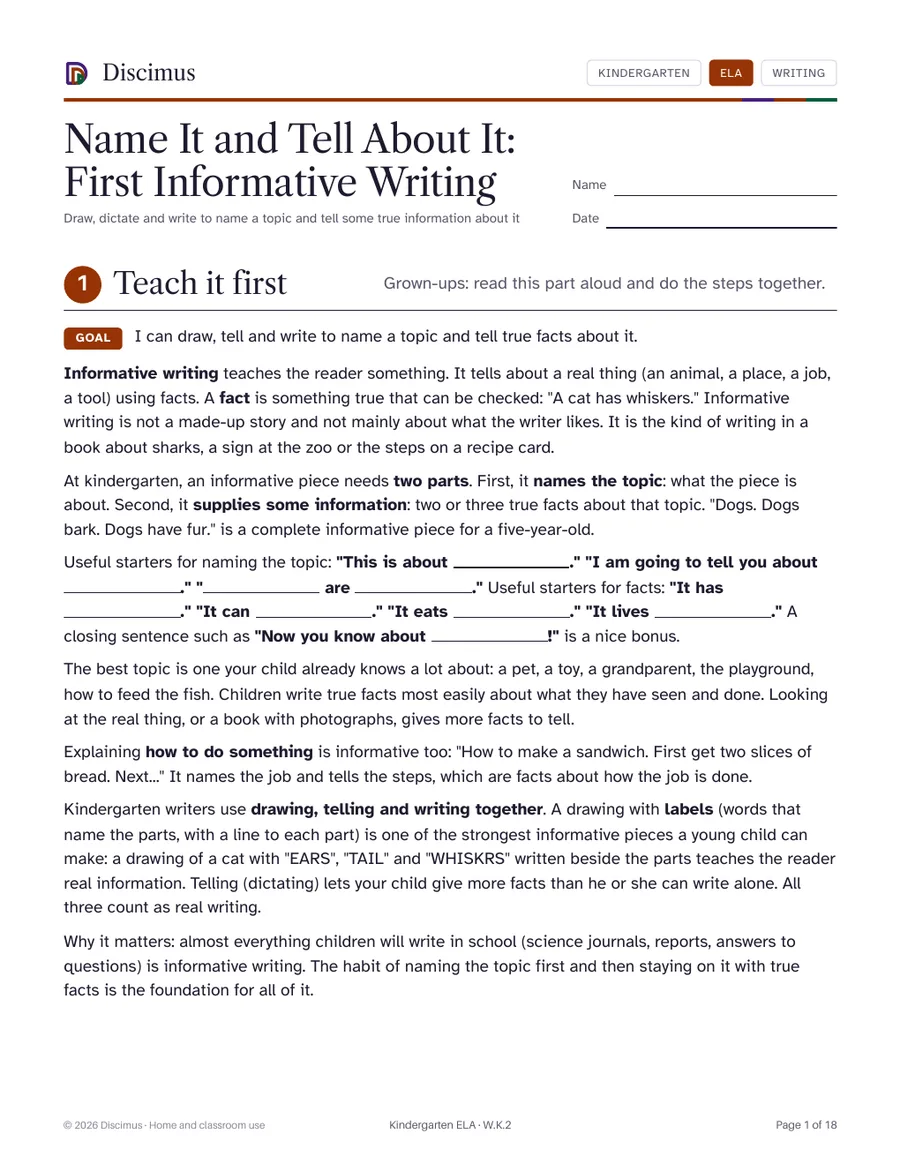
Draw, dictate and write to name a topic and tell some true information about it
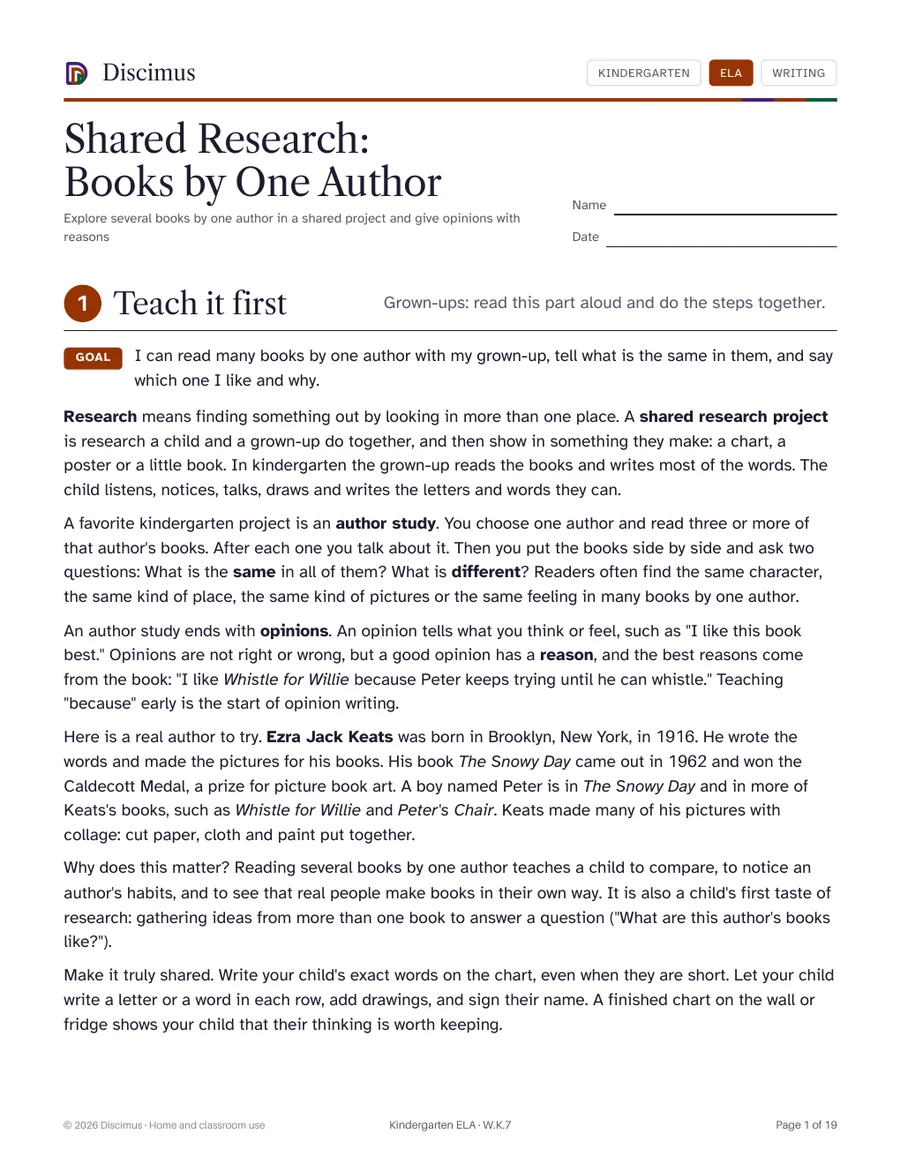
Explore several books by one author in a shared project and give opinions with reasons
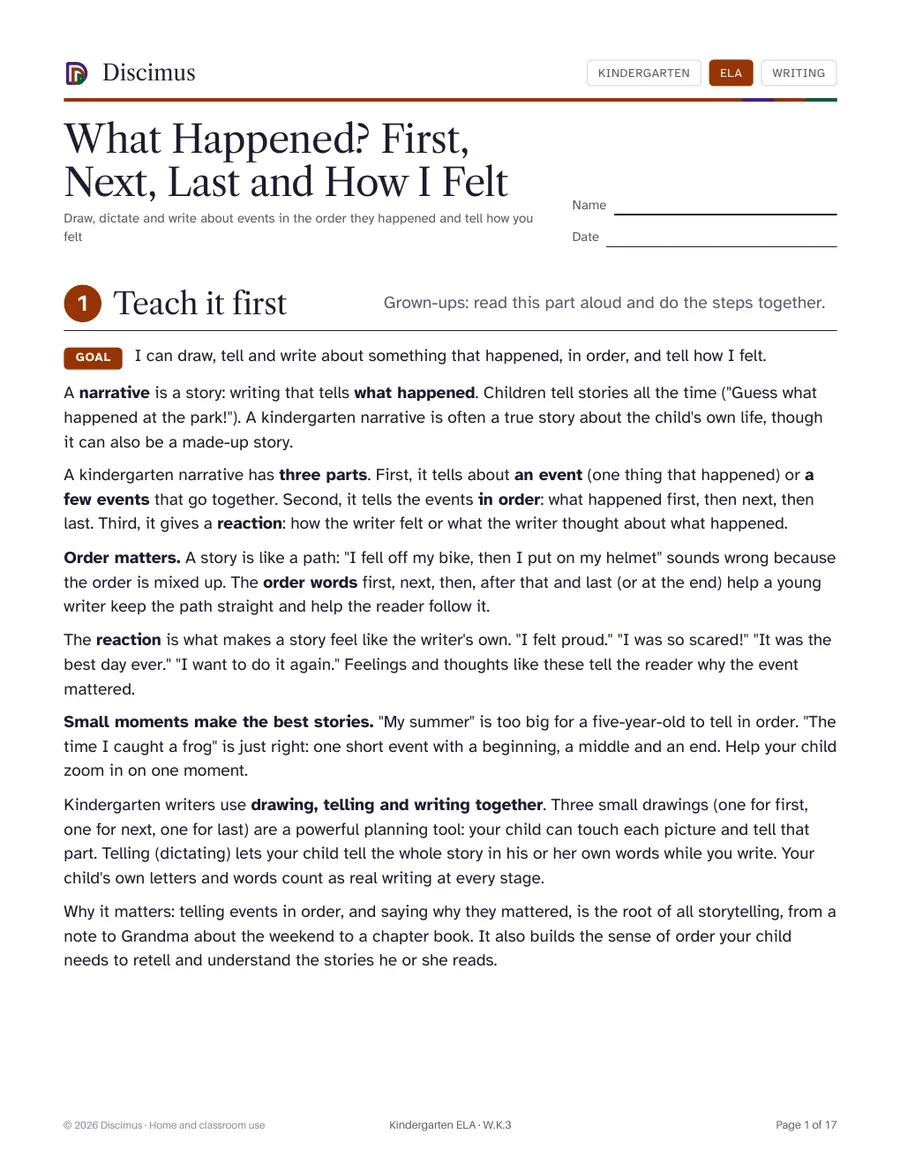
Draw, dictate and write about events in the order they happened and tell how you felt
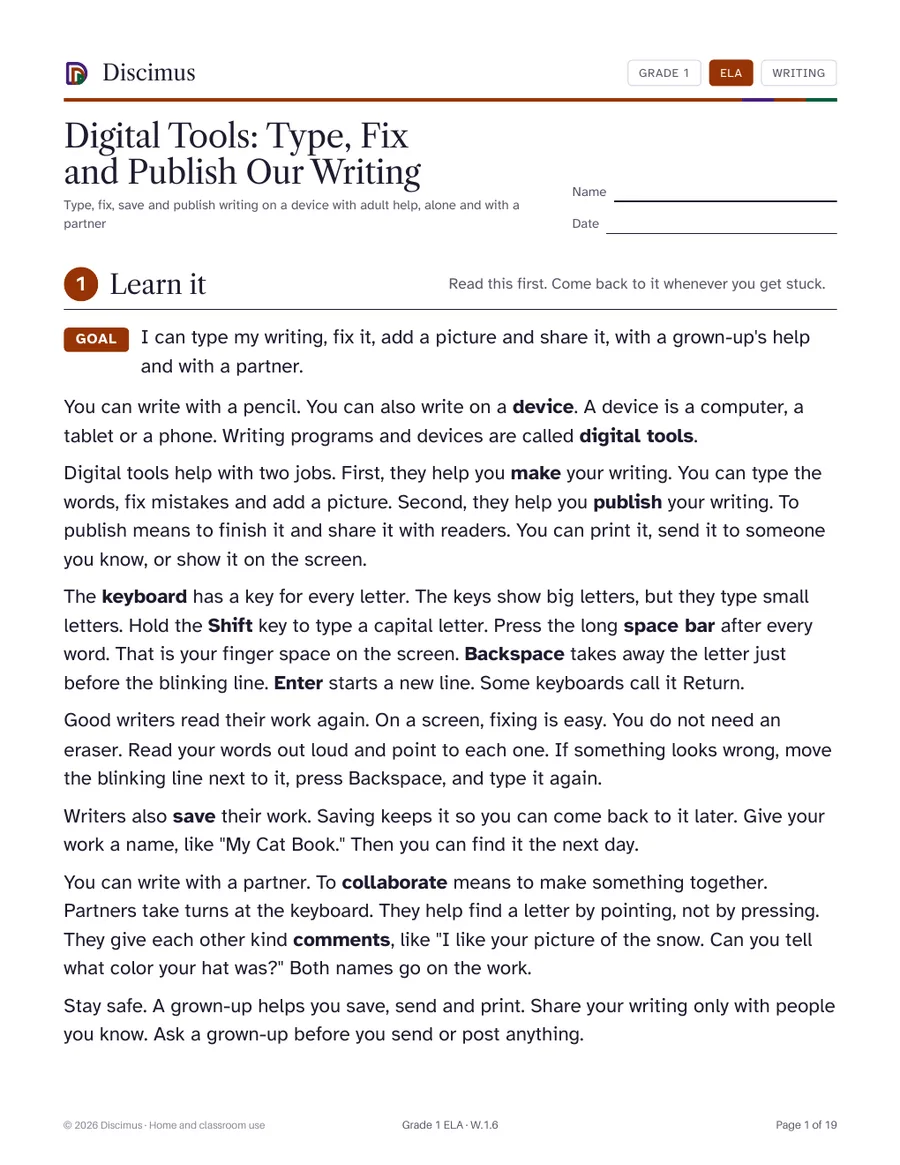
Type, fix, save and publish writing on a device with adult help, alone and with a partner
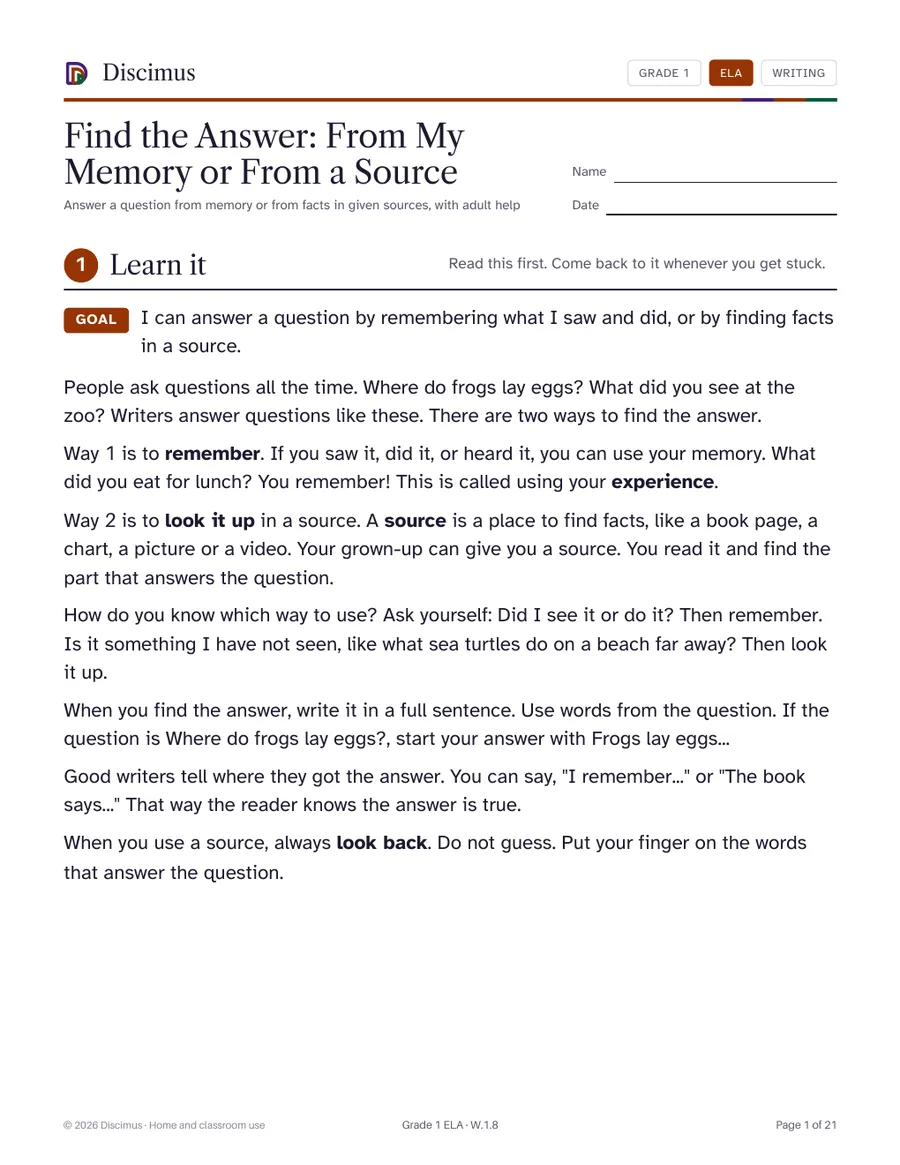
Answer a question from memory or from facts in given sources, with adult help
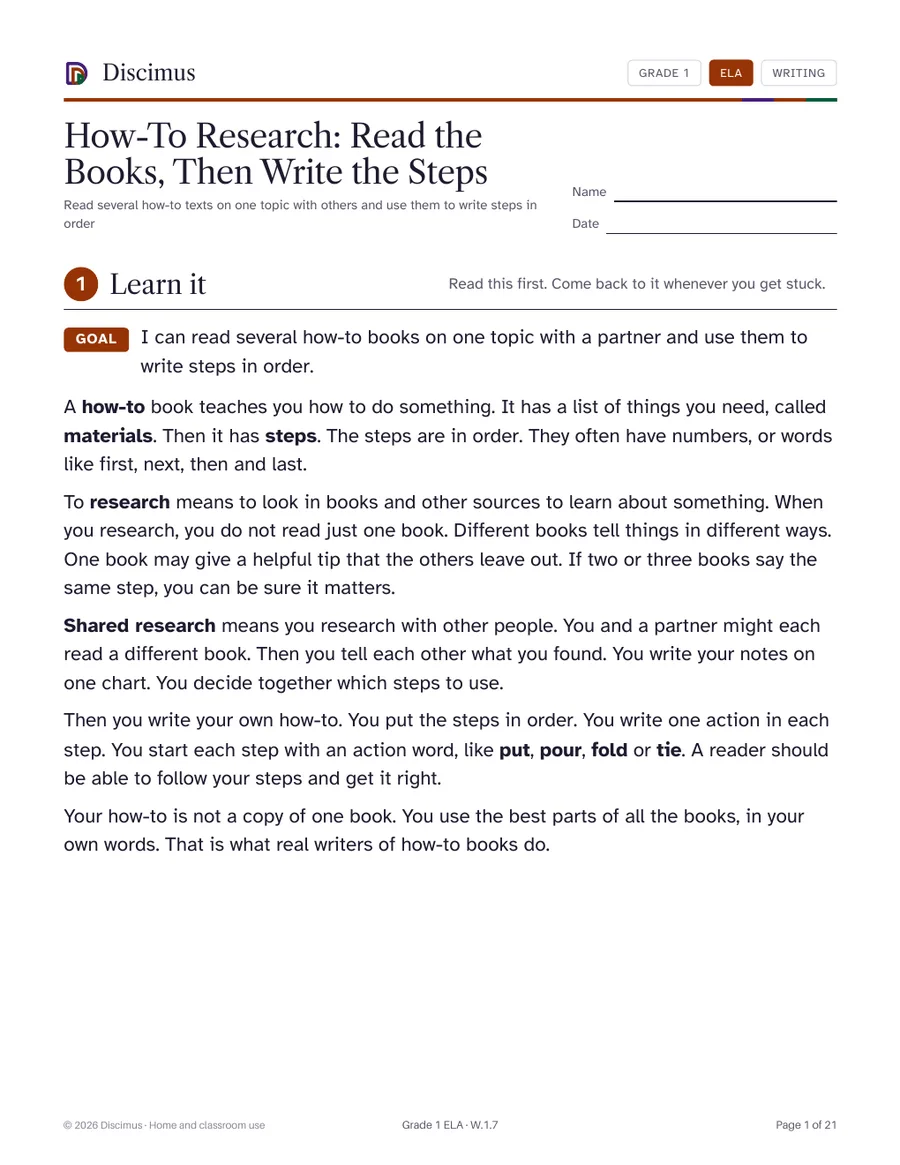
Read several how-to texts on one topic with others and use them to write steps in order
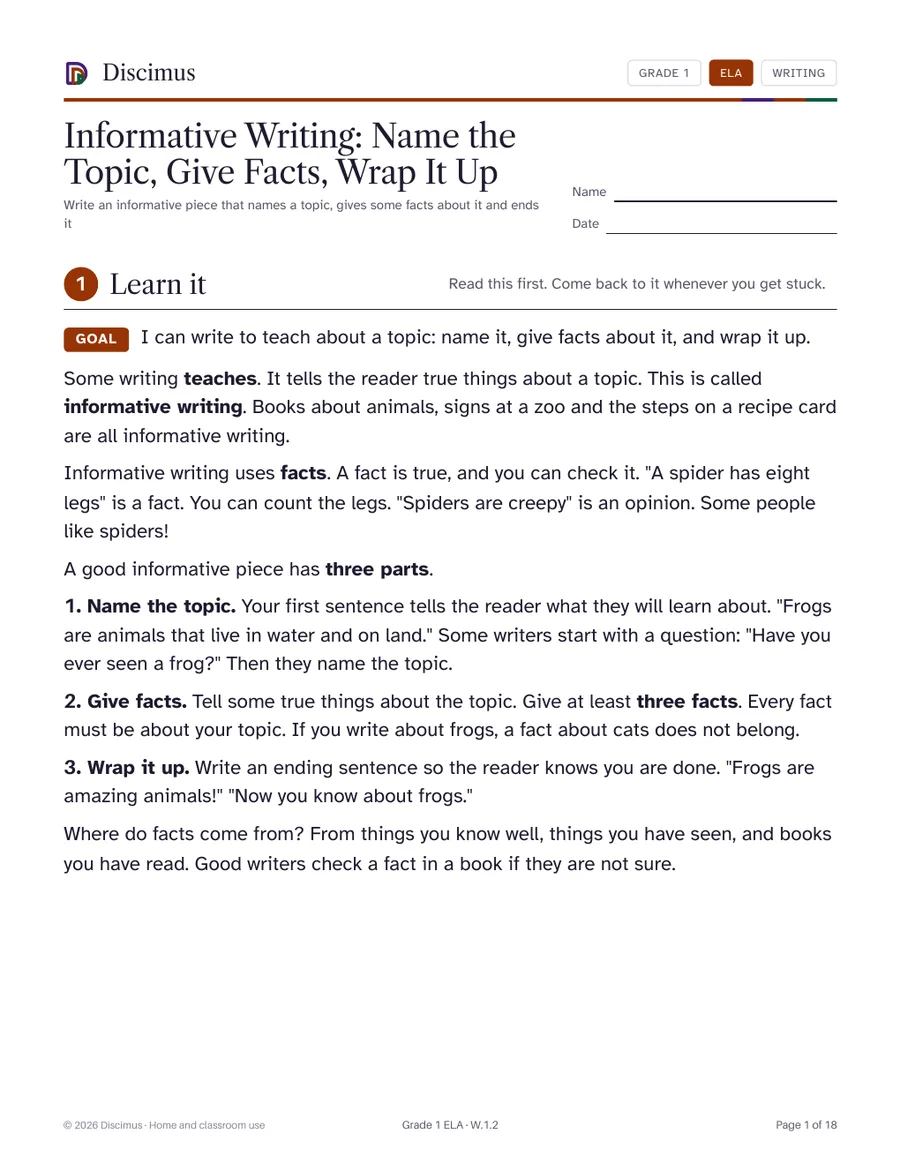
Write an informative piece that names a topic, gives some facts about it and ends it
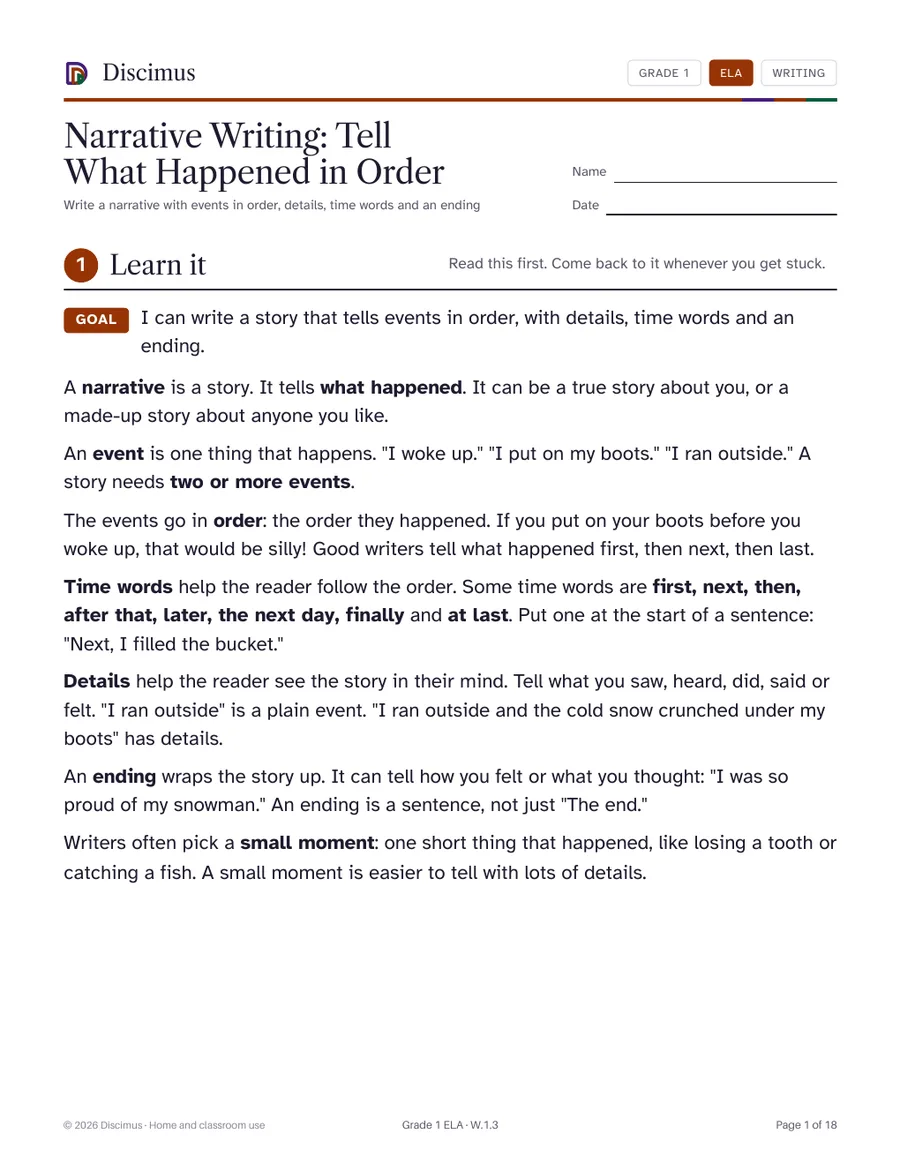
Write a narrative with events in order, details, time words and an ending
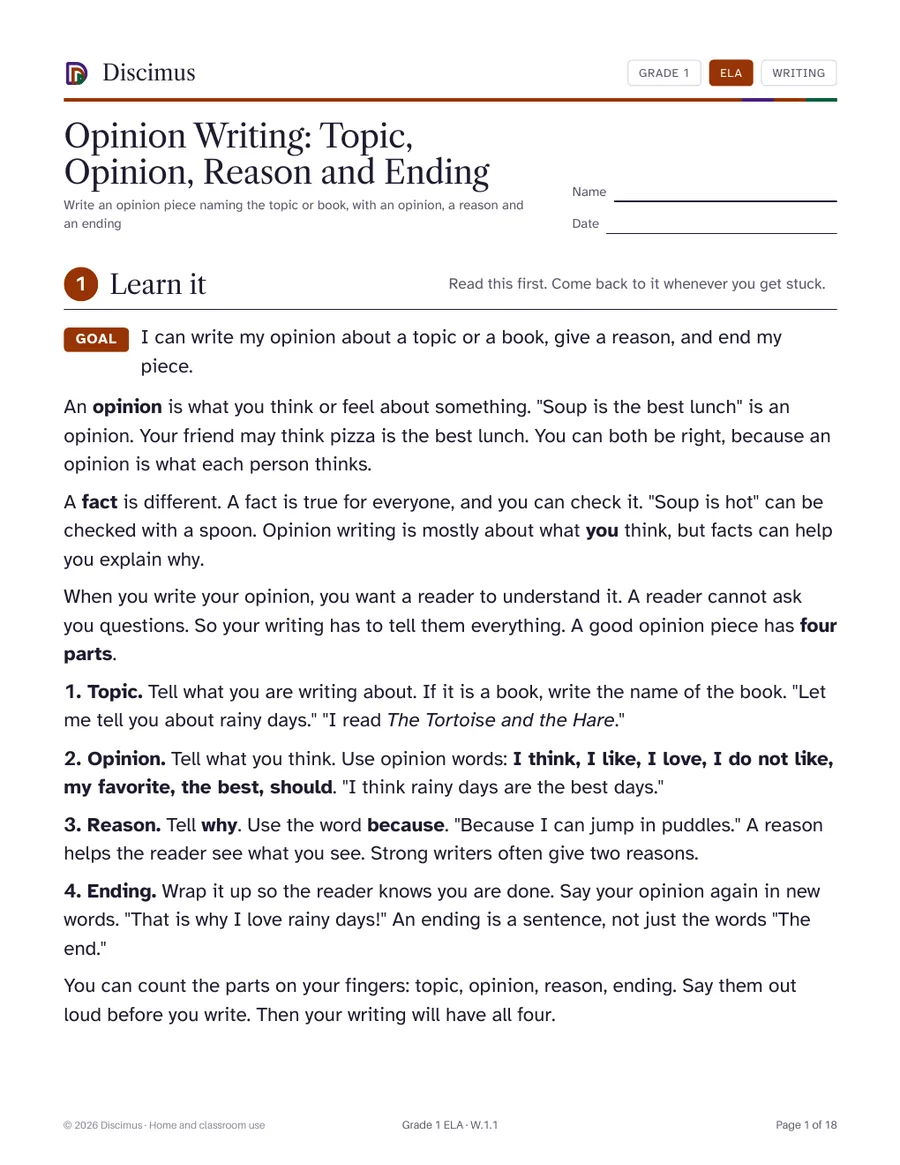
Write an opinion piece naming the topic or book, with an opinion, a reason and an ending
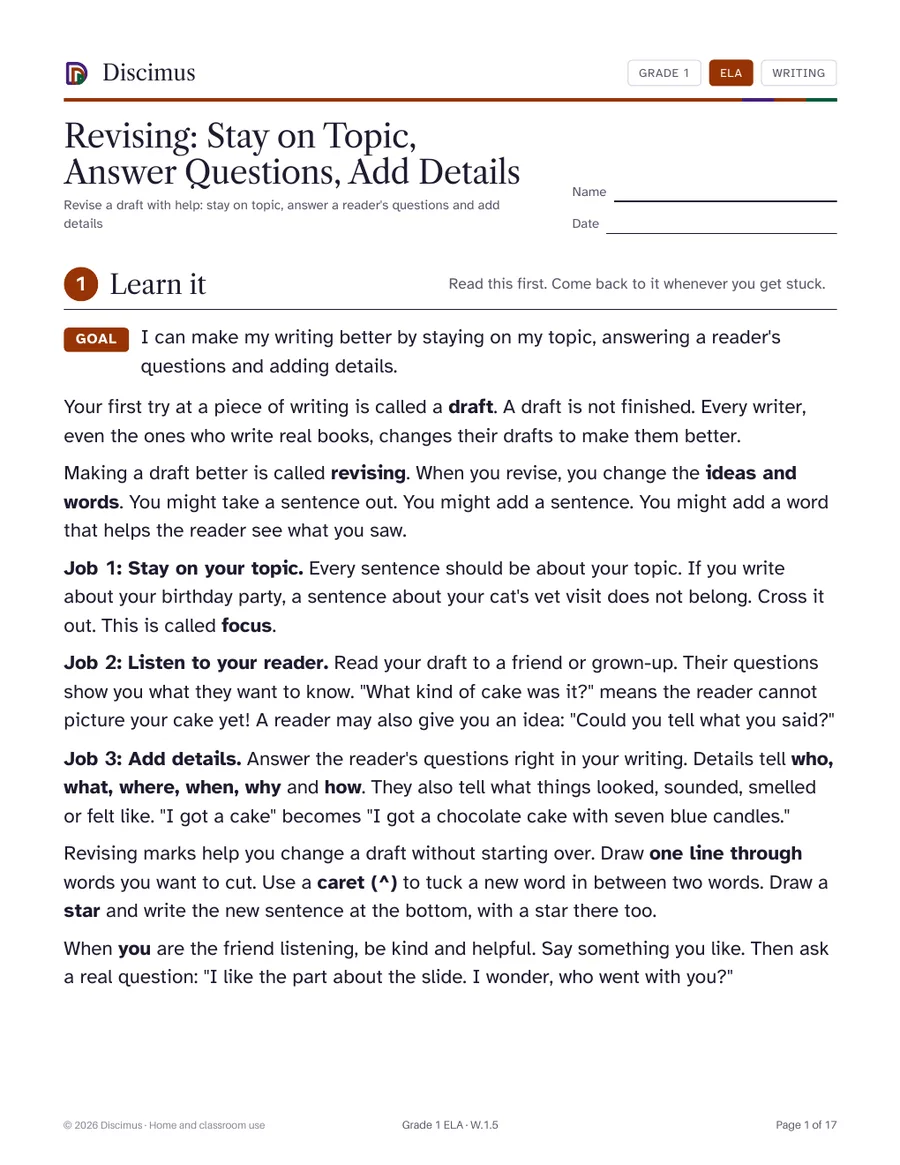
Revise a draft with help: stay on topic, answer a reader's questions and add details
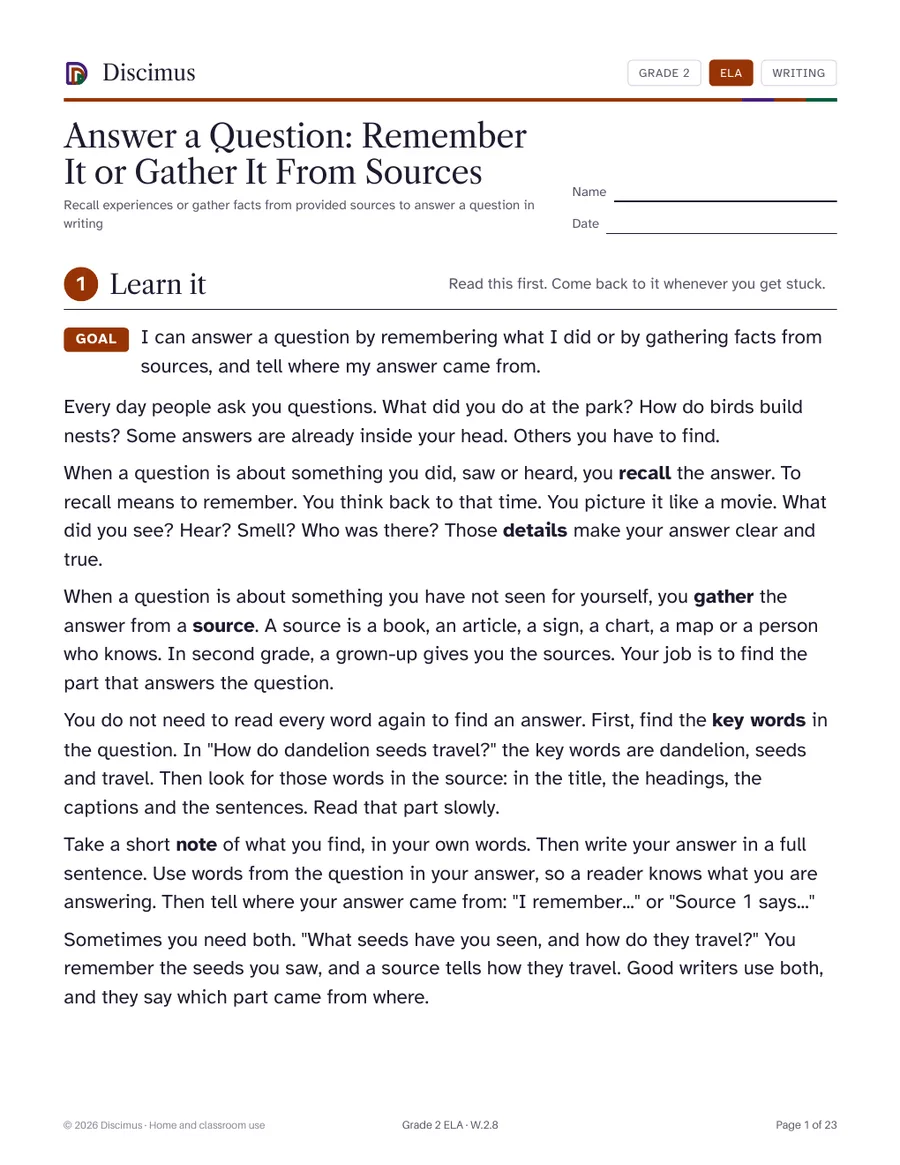
Recall experiences or gather facts from provided sources to answer a question in writing
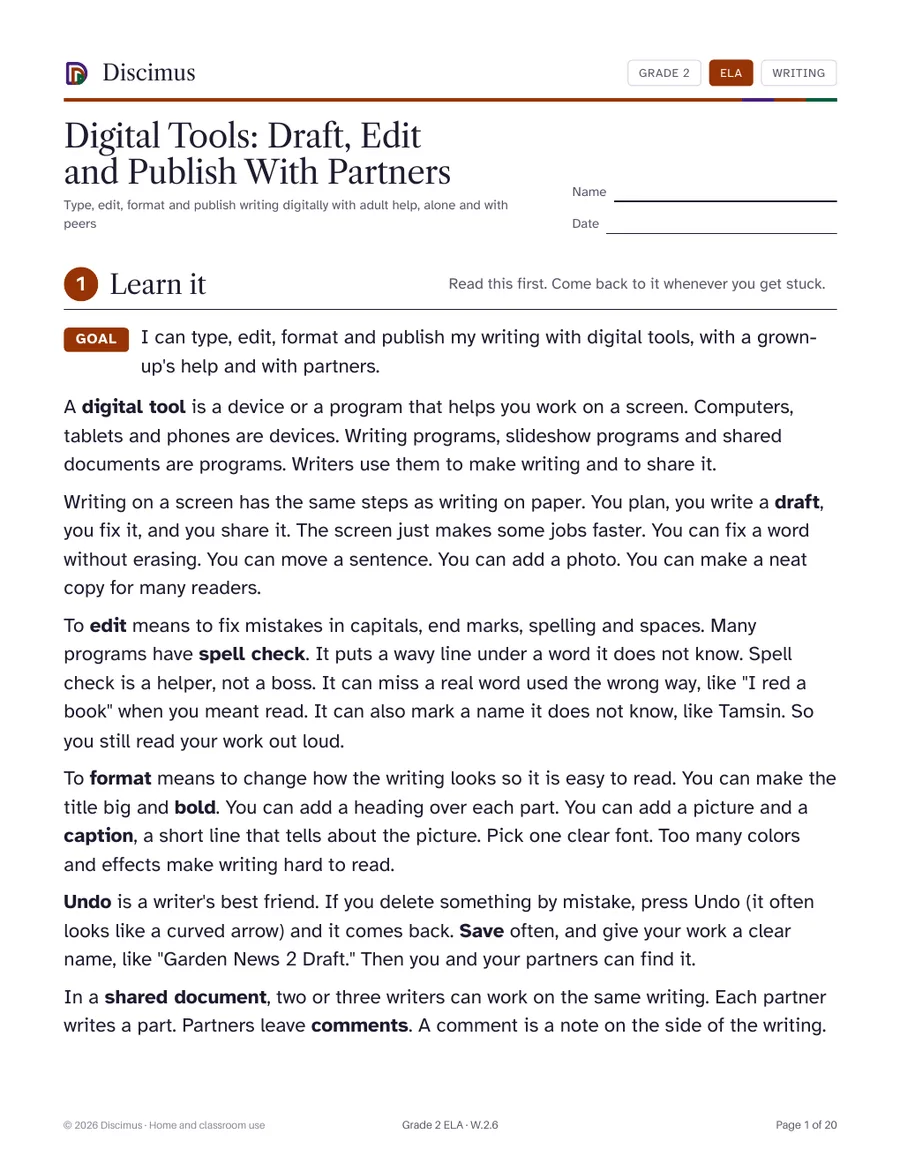
Type, edit, format and publish writing digitally with adult help, alone and with peers
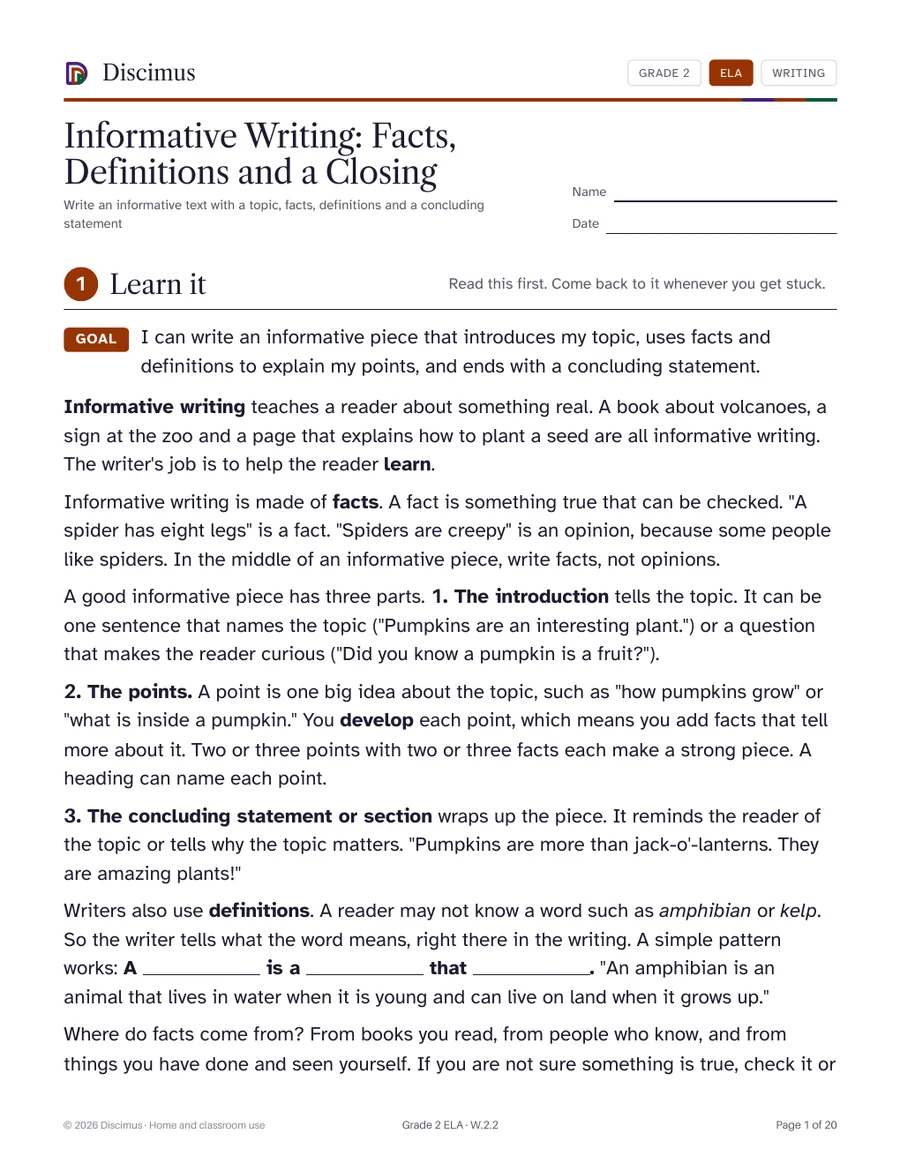
Write an informative text with a topic, facts, definitions and a concluding statement
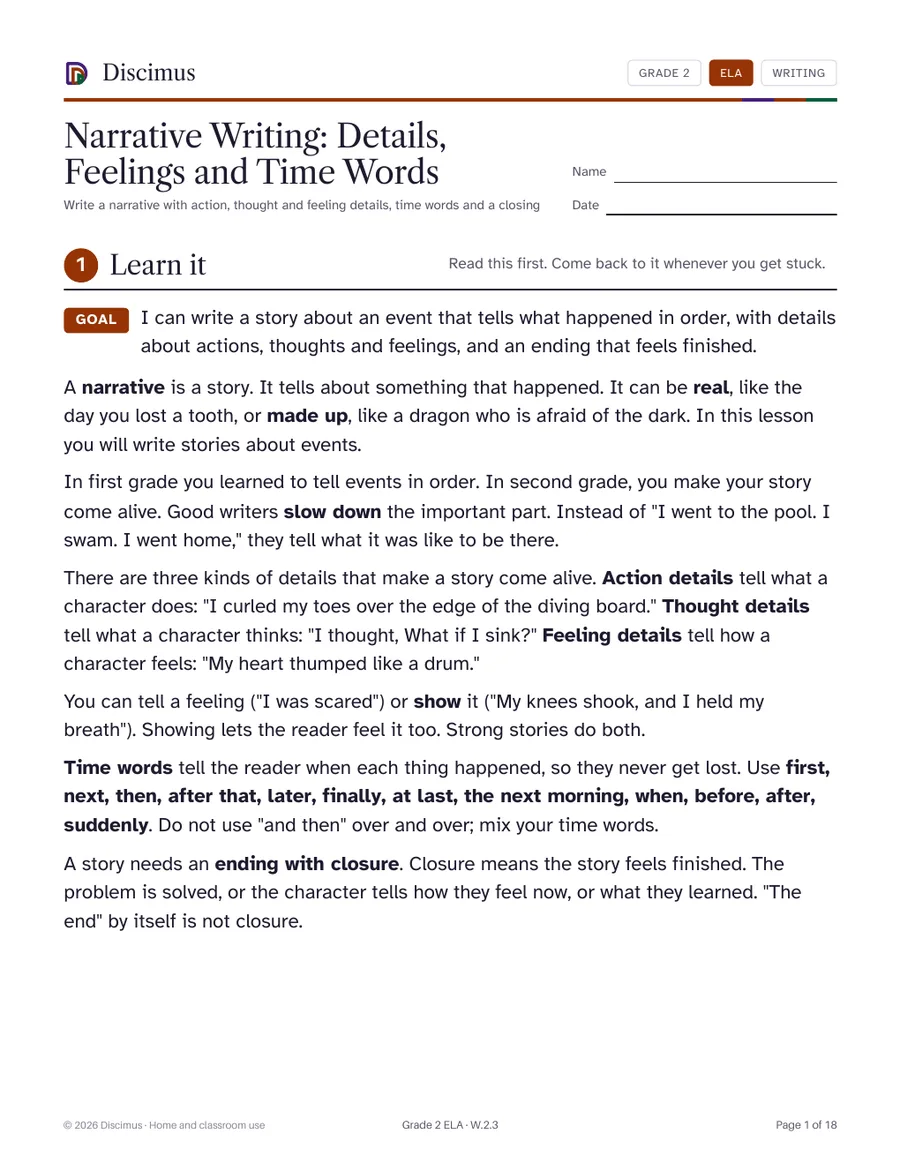
Write a narrative with action, thought and feeling details, time words and a closing
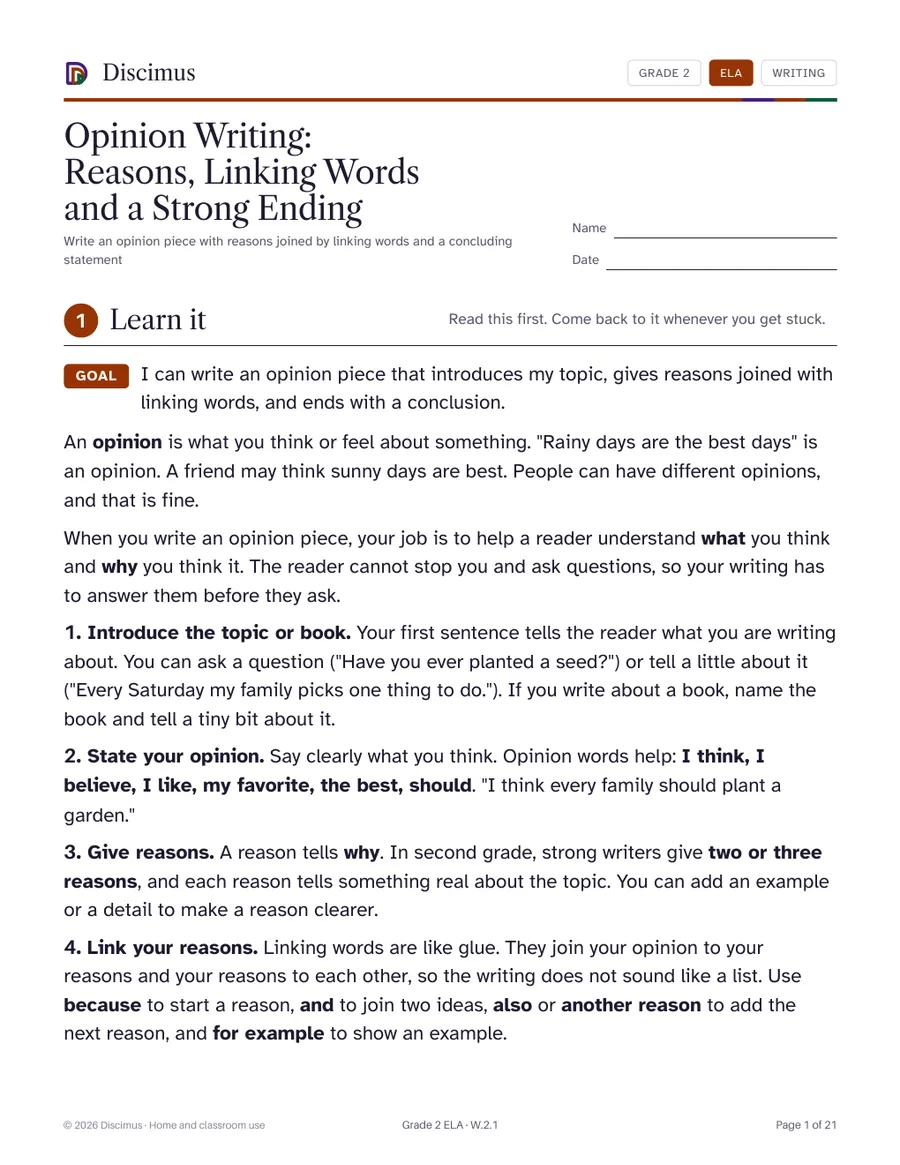
Write an opinion piece with reasons joined by linking words and a concluding statement
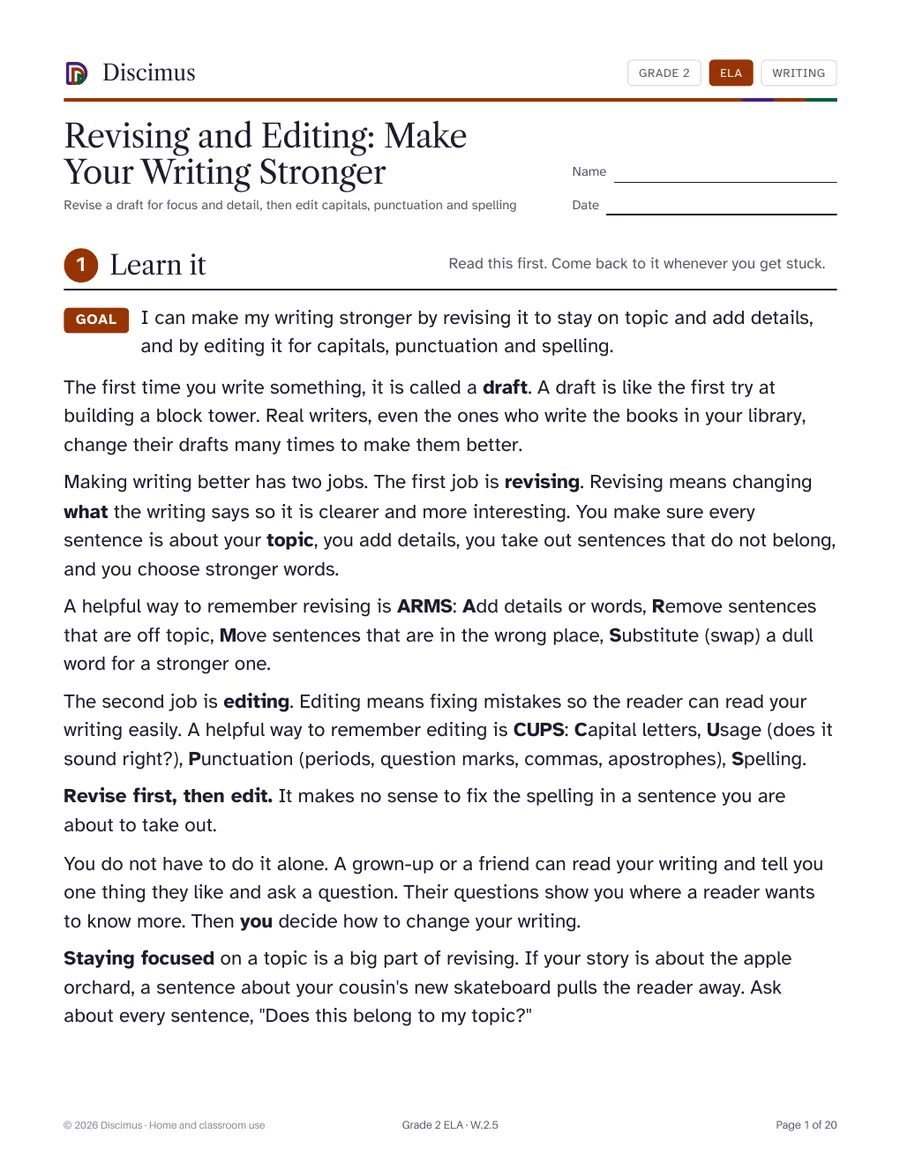
Revise a draft for focus and detail, then edit capitals, punctuation and spelling
Read several sources on one topic to write a shared report, and keep a science log
Choose organization and details that fit the writing task, purpose and audience
Develop an informative topic with facts, definitions and details
Introduce a topic, group related facts under headings, and add helpful illustrations
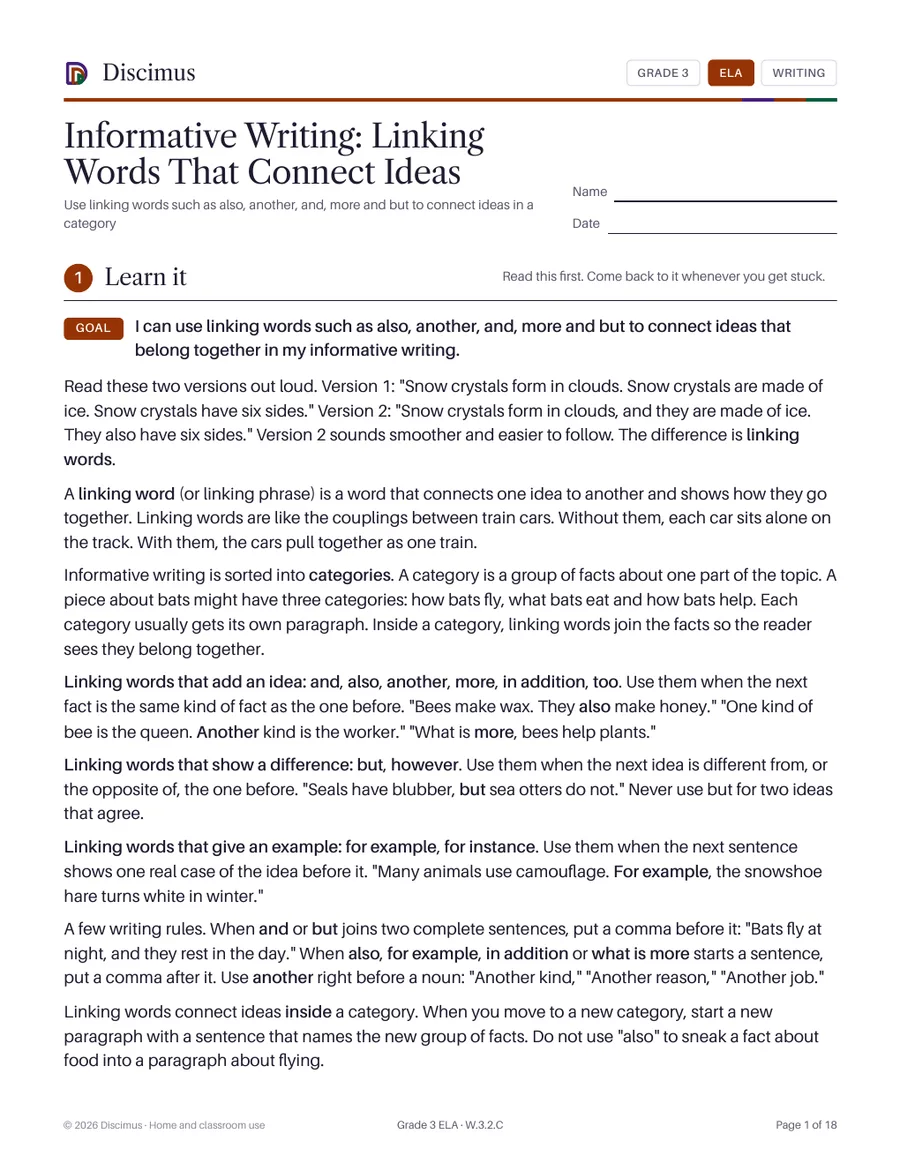
Use linking words such as also, another, and, more and but to connect ideas in a category
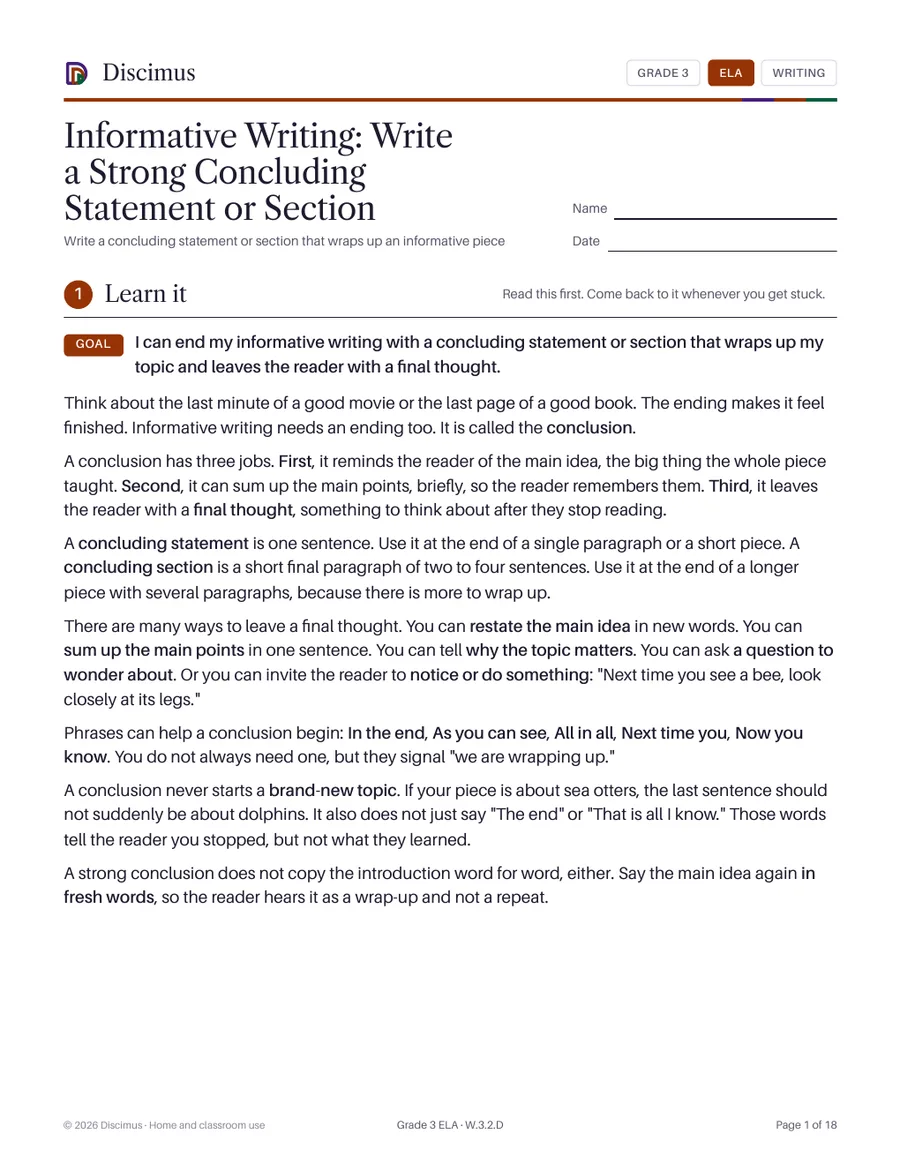
Write a concluding statement or section that wraps up an informative piece
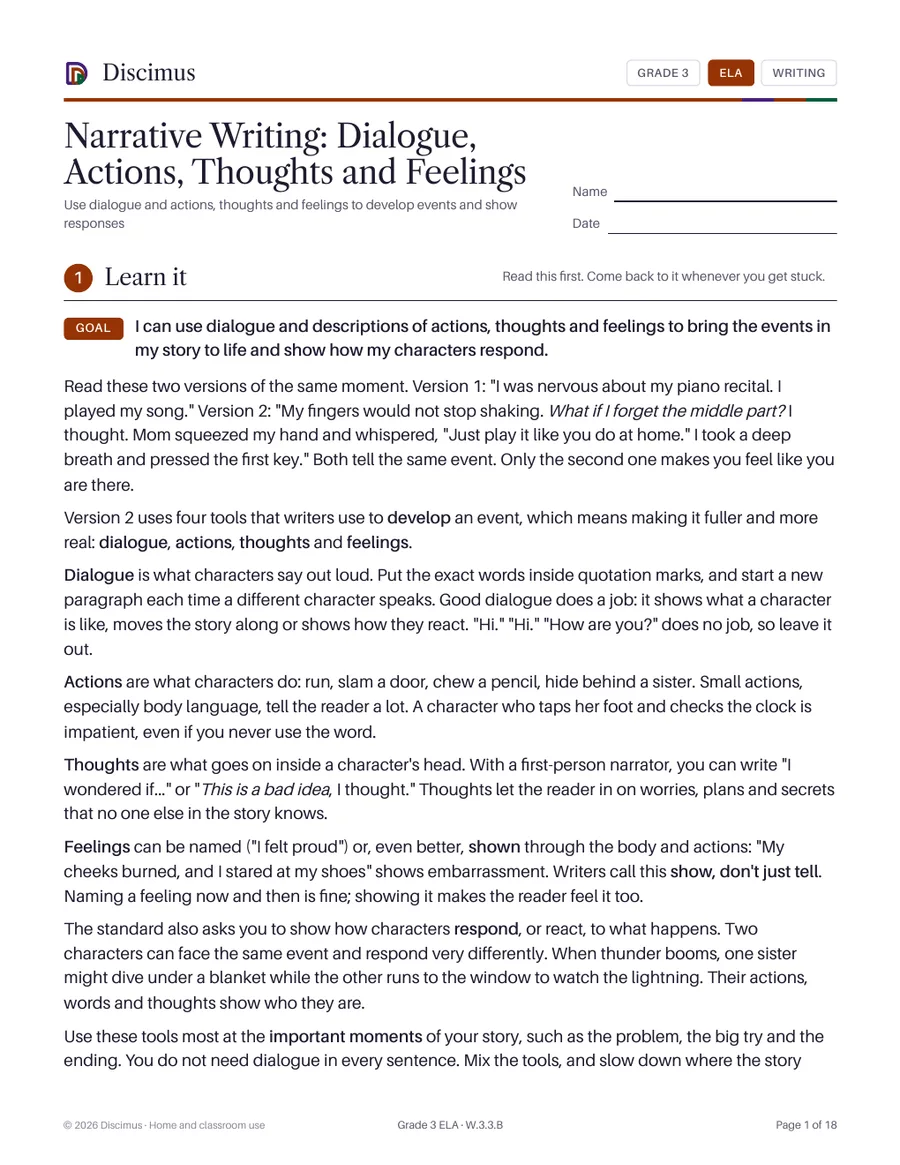
Use dialogue and actions, thoughts and feelings to develop events and show responses
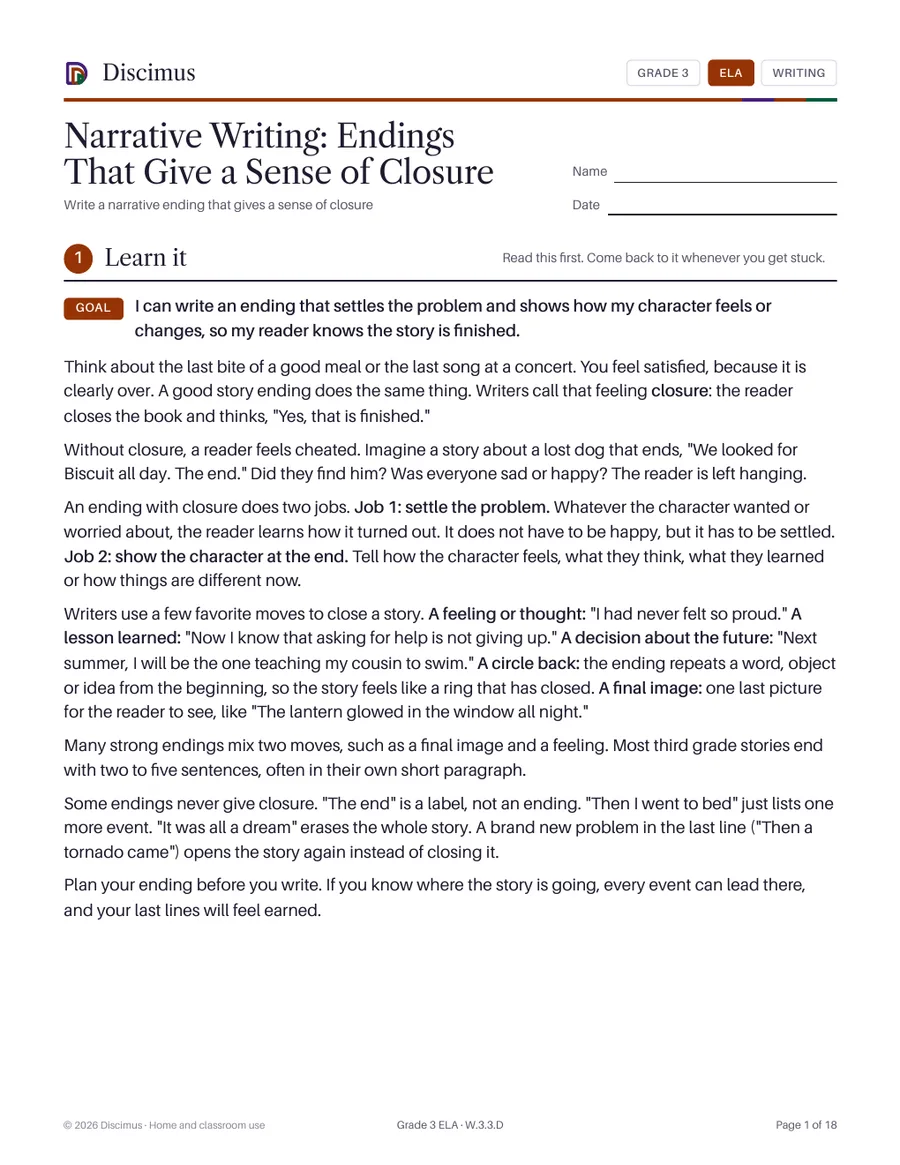
Write a narrative ending that gives a sense of closure
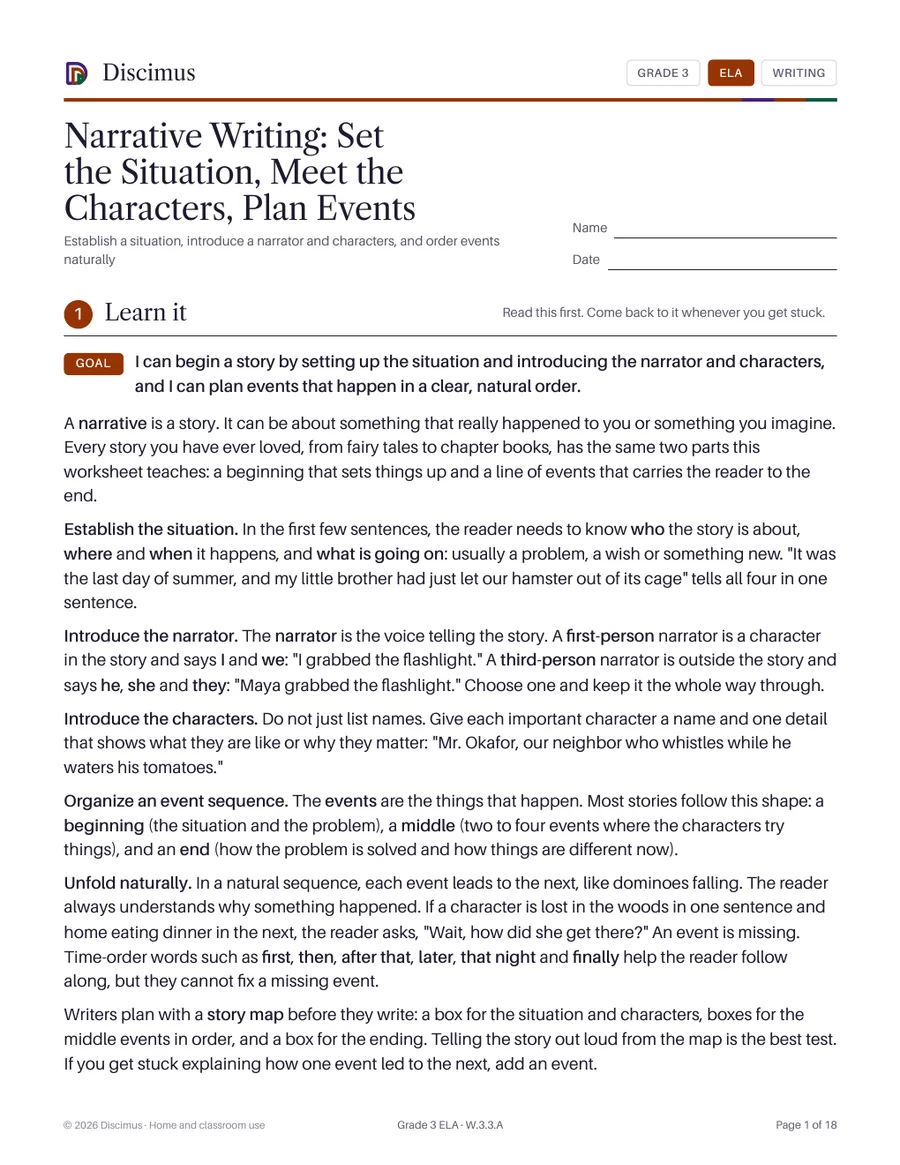
Establish a situation, introduce a narrator and characters, and order events naturally
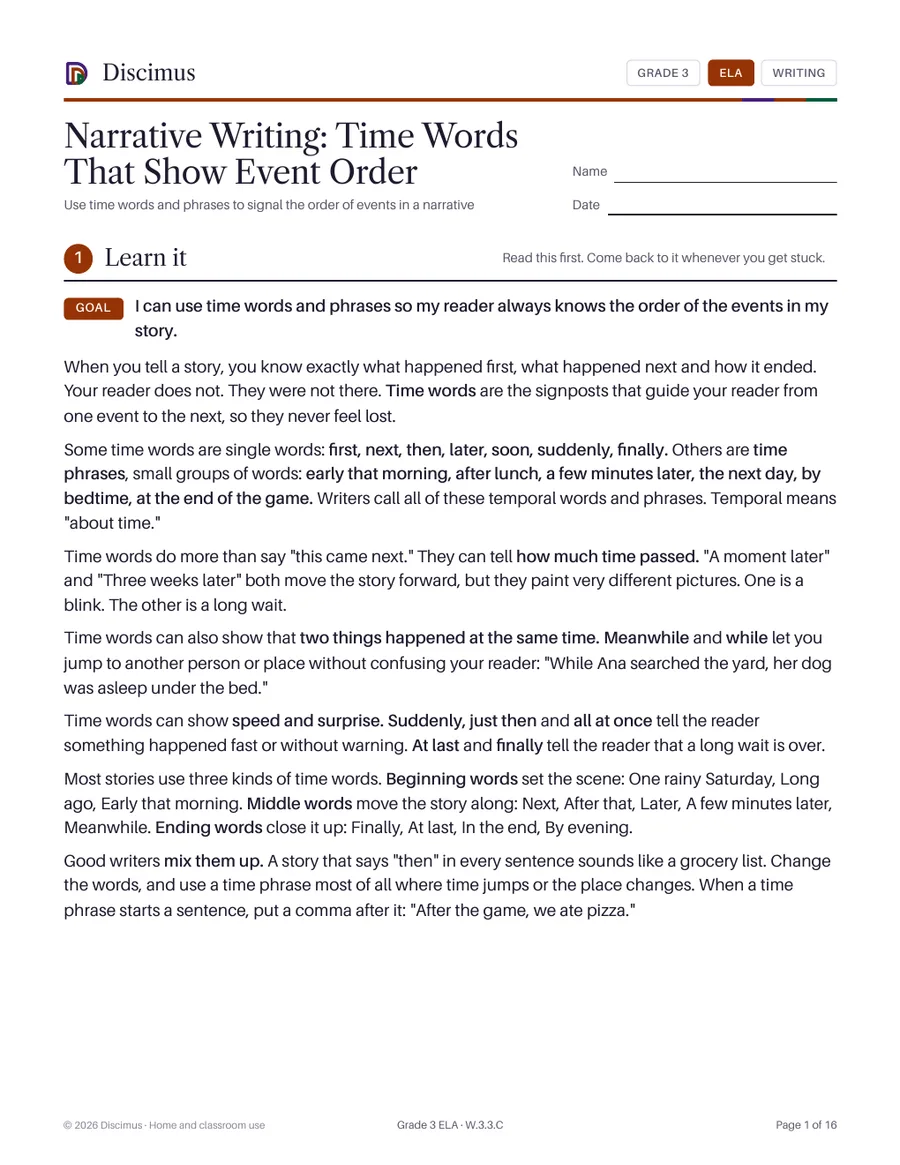
Use time words and phrases to signal the order of events in a narrative
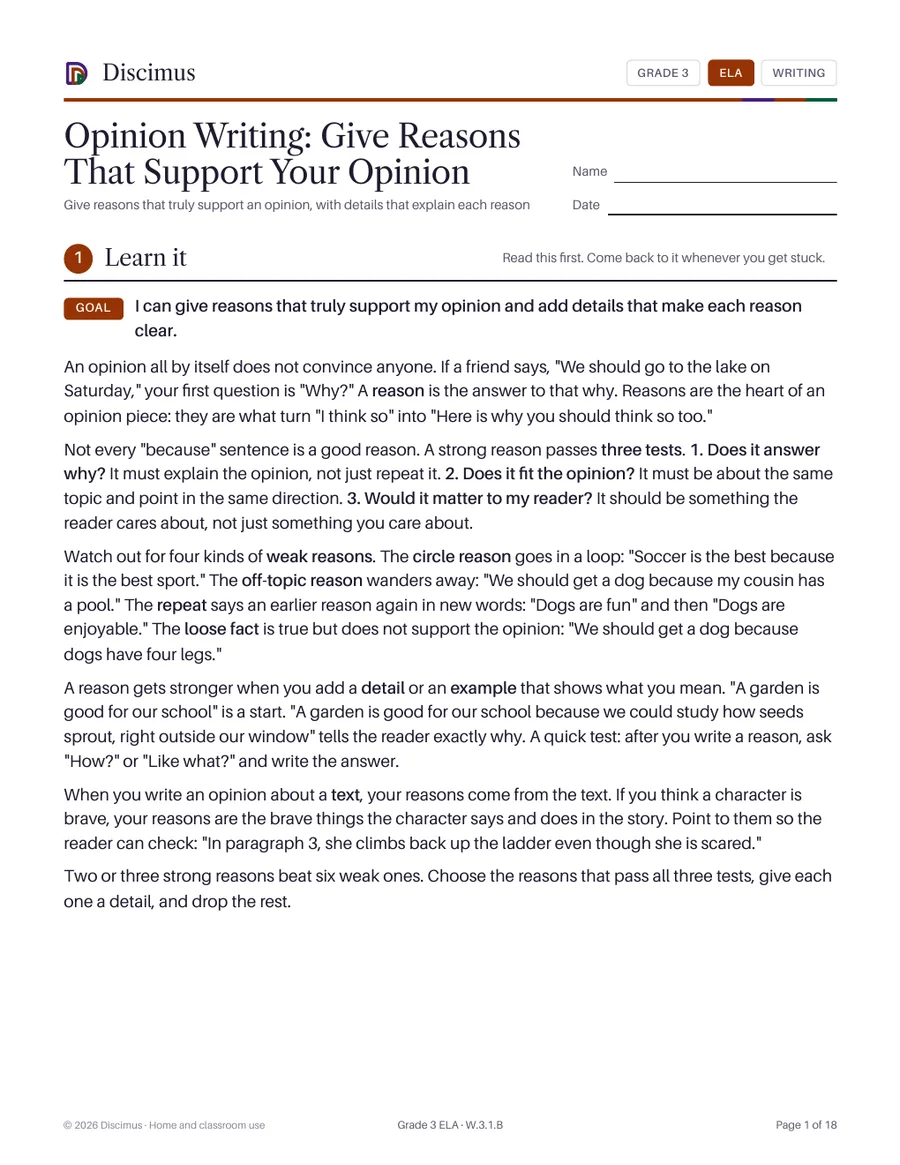
Give reasons that truly support an opinion, with details that explain each reason
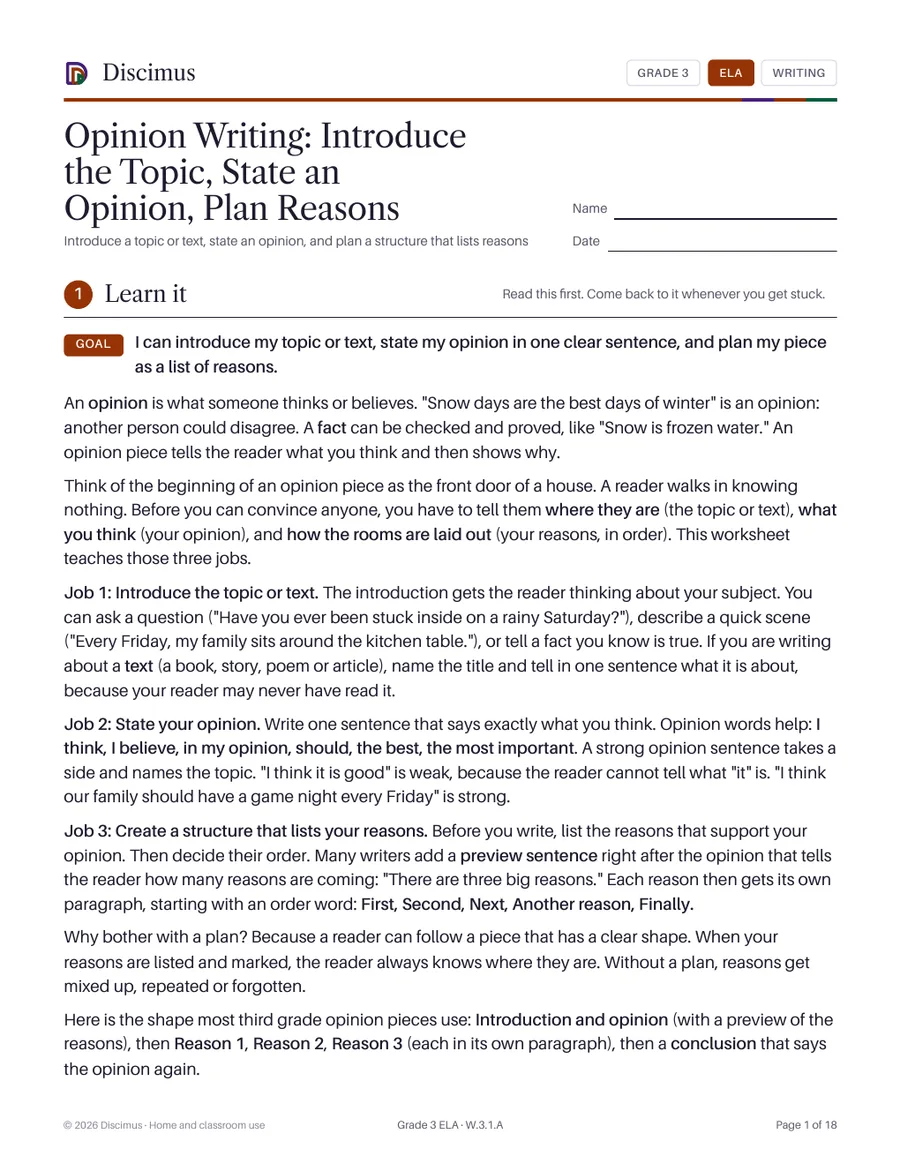
Introduce a topic or text, state an opinion, and plan a structure that lists reasons
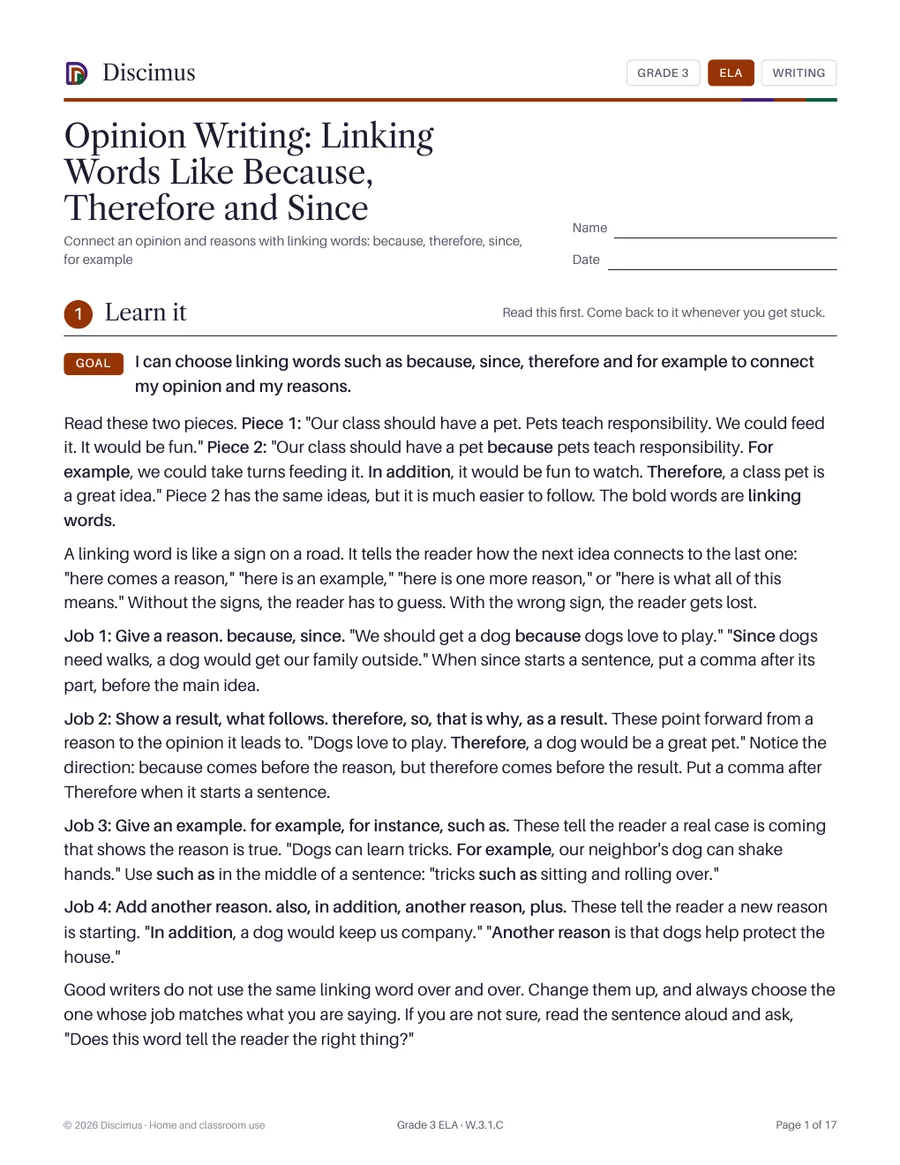
Connect an opinion and reasons with linking words: because, therefore, since, for example
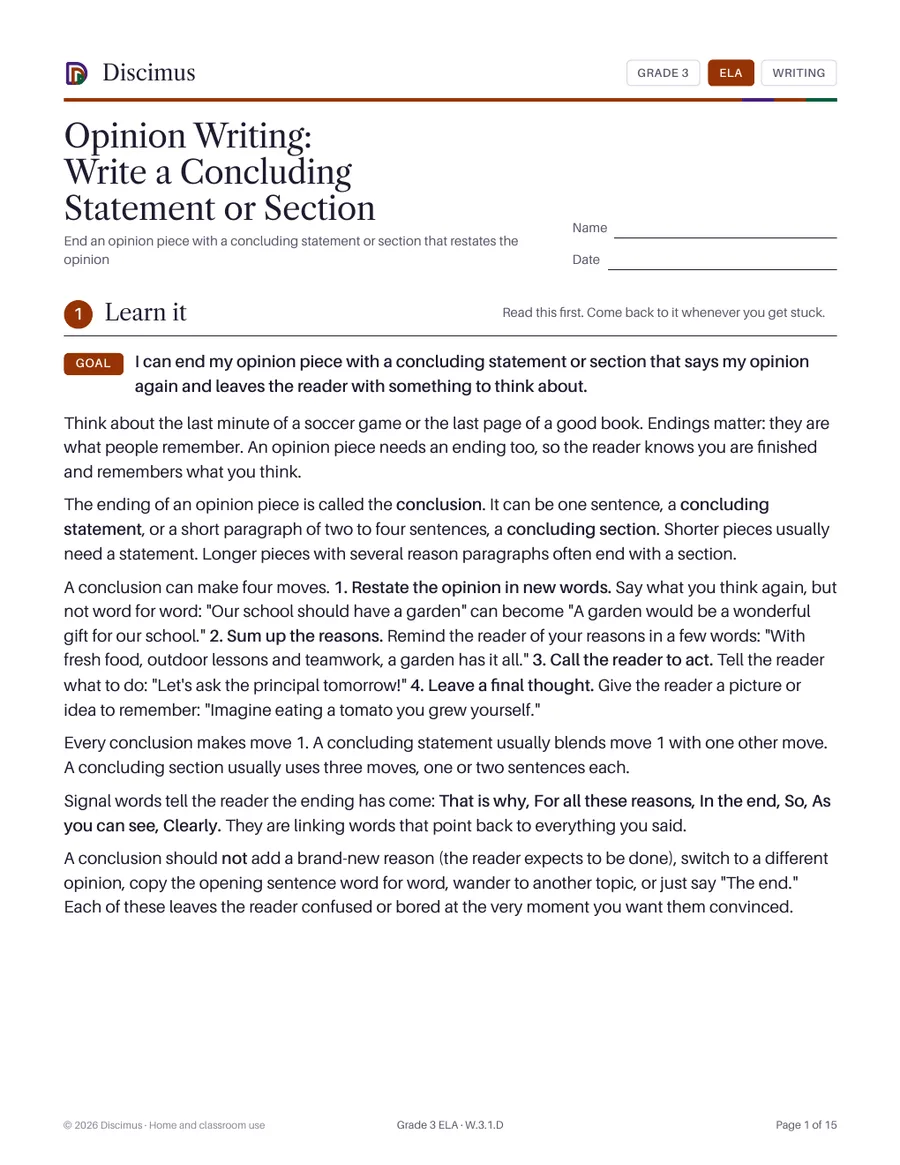
End an opinion piece with a concluding statement or section that restates the opinion
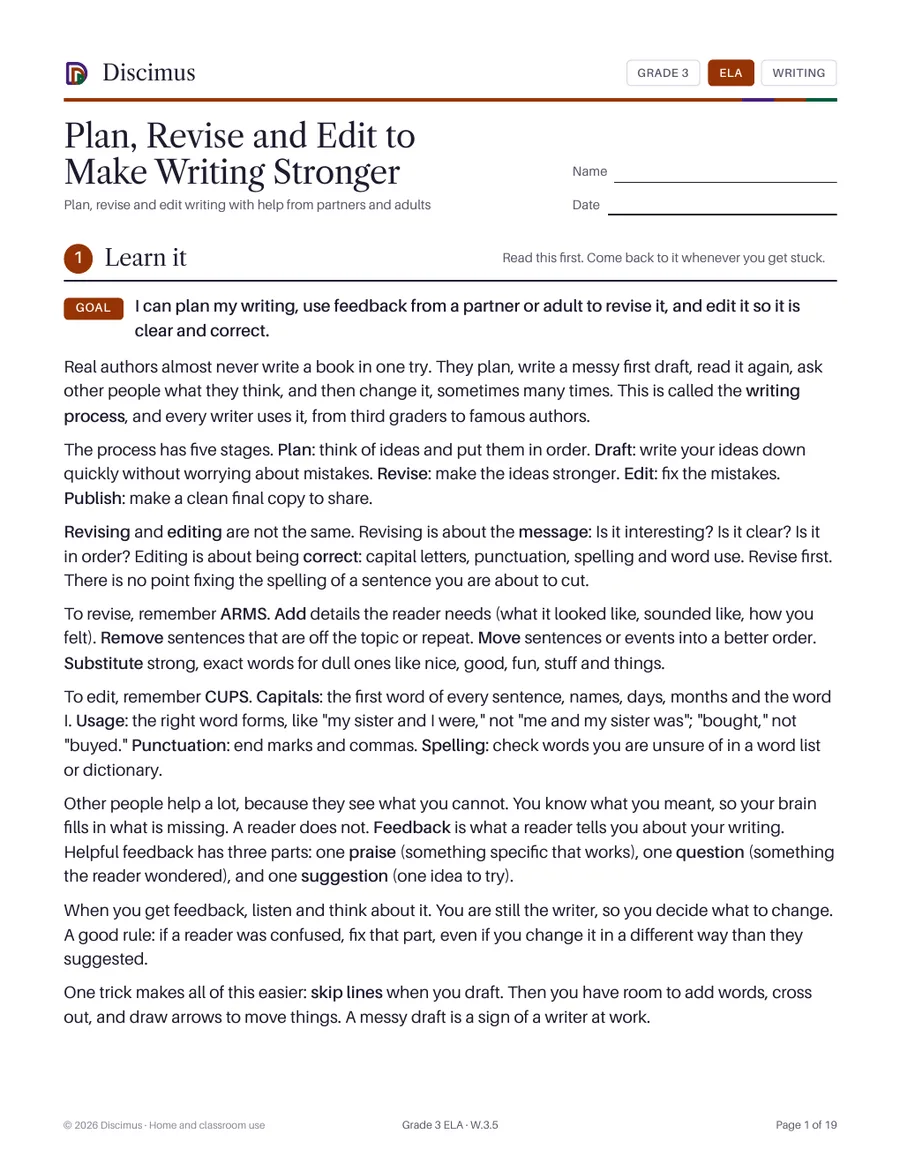
Plan, revise and edit writing with help from partners and adults
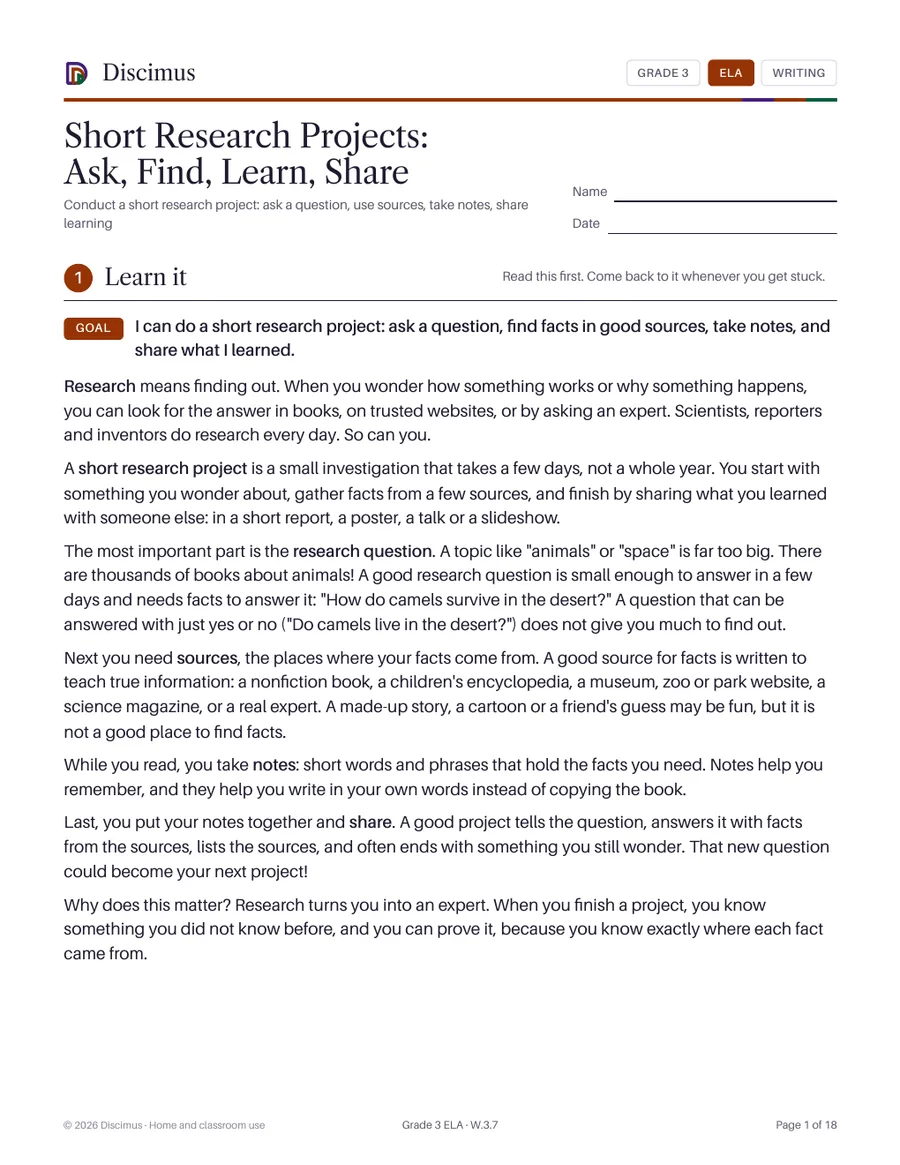
Conduct a short research project: ask a question, use sources, take notes, share learning
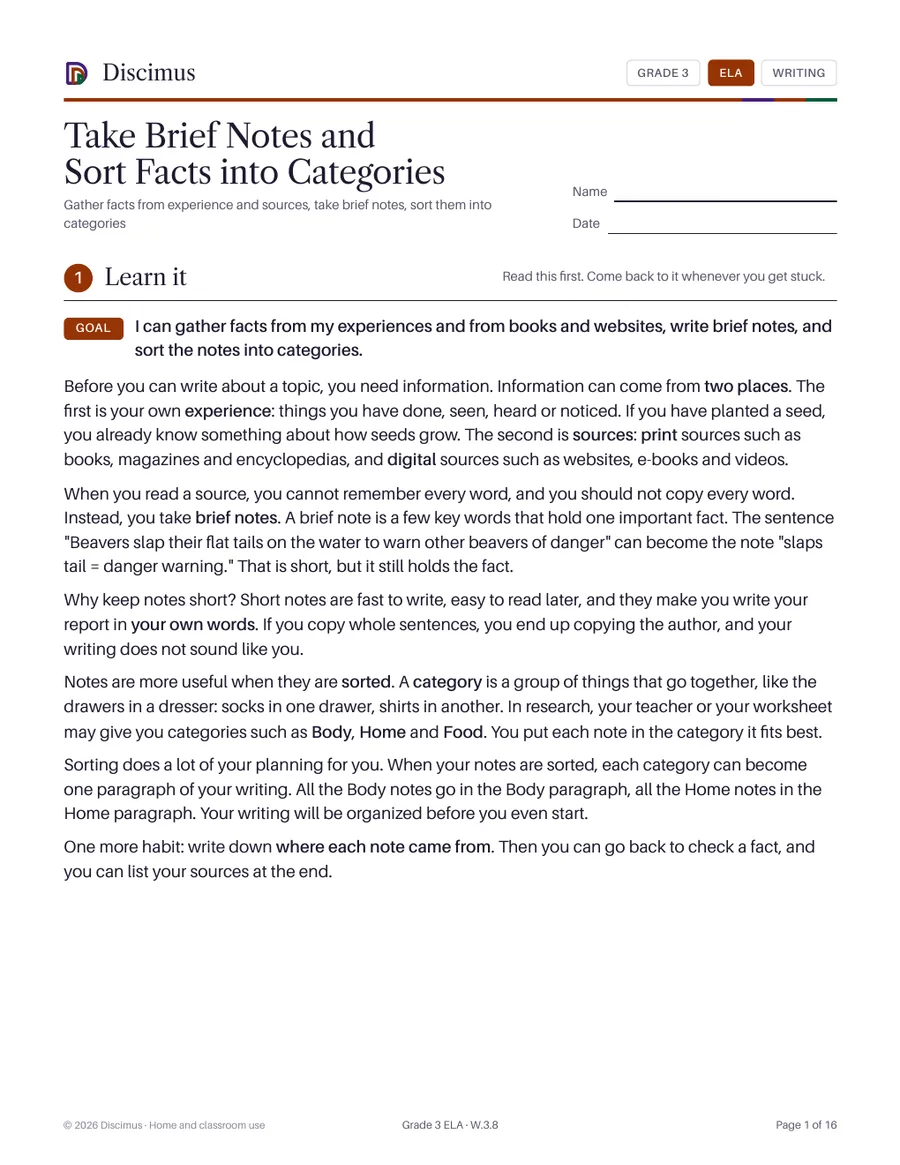
Gather facts from experience and sources, take brief notes, sort them into categories
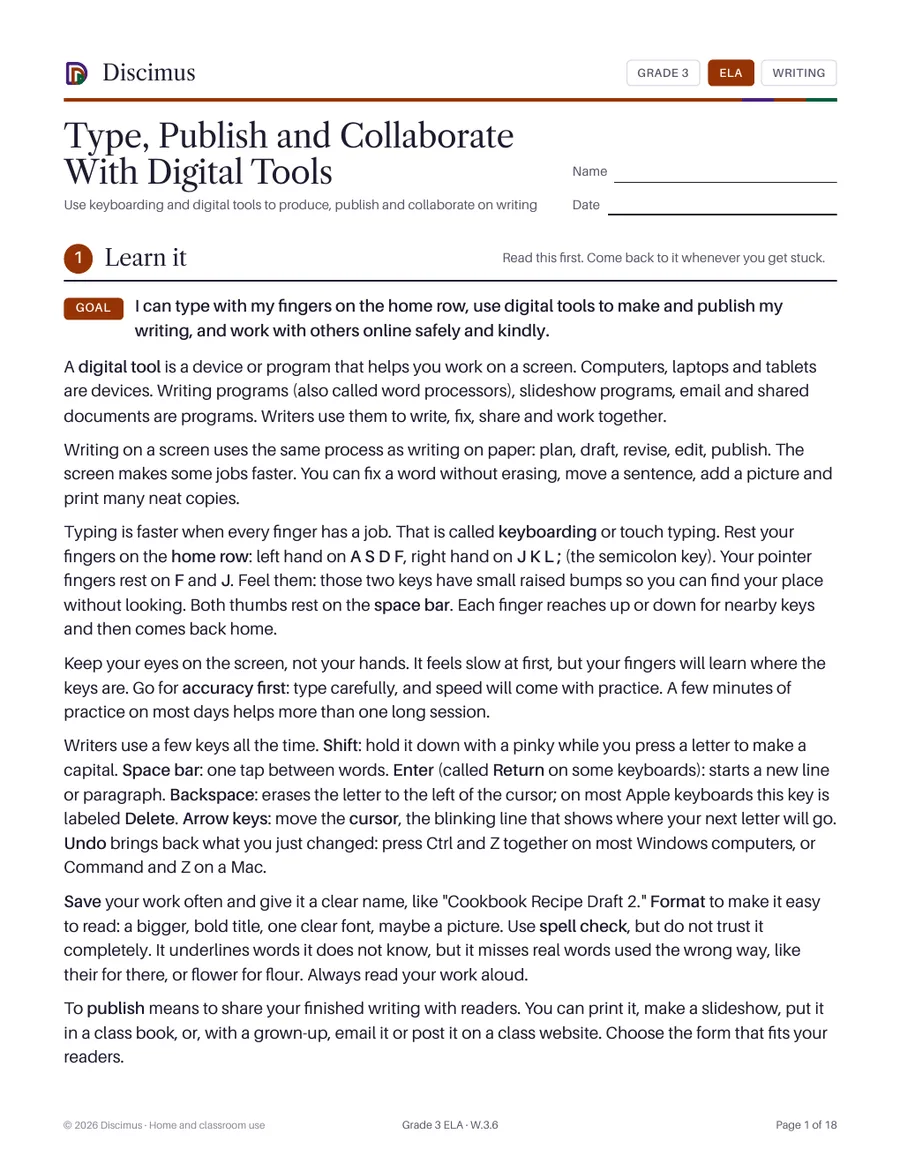
Use keyboarding and digital tools to produce, publish and collaborate on writing
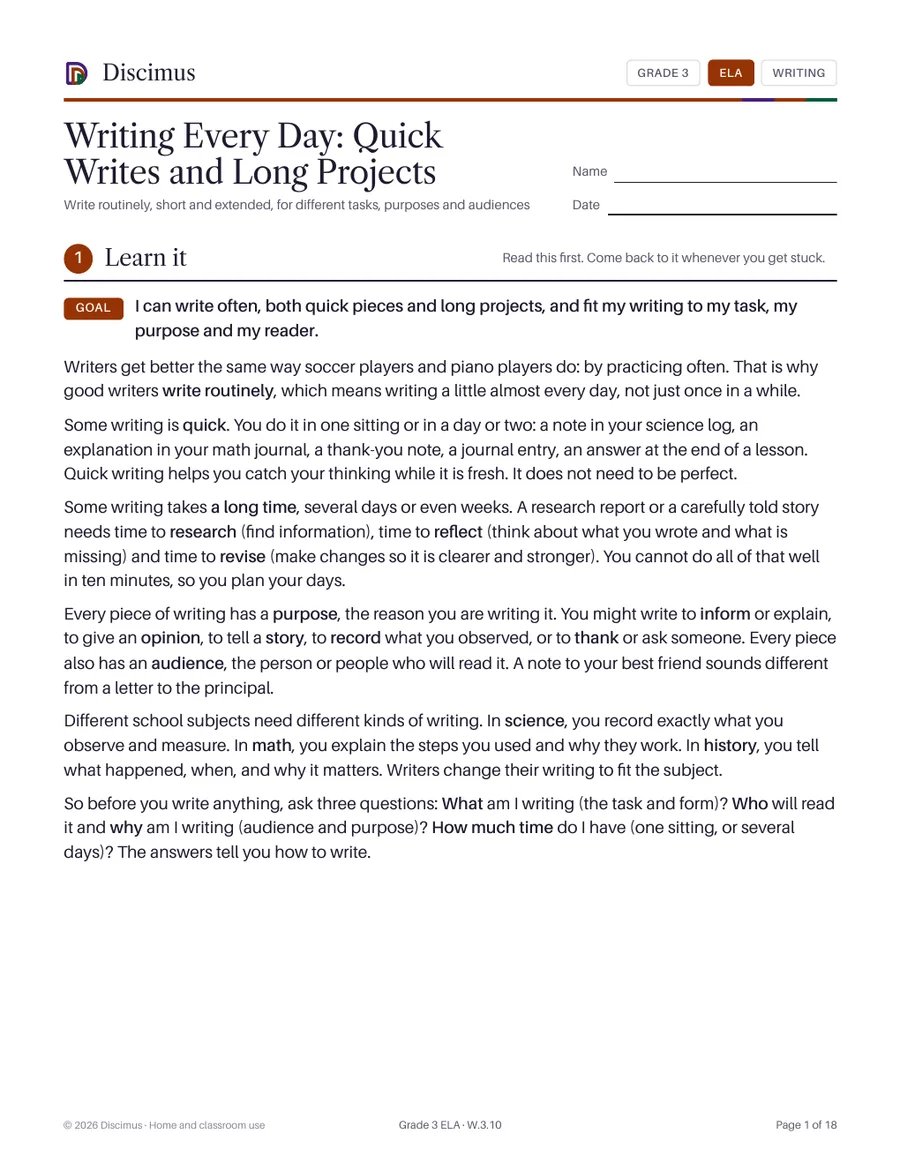
Write routinely, short and extended, for different tasks, purposes and audiences
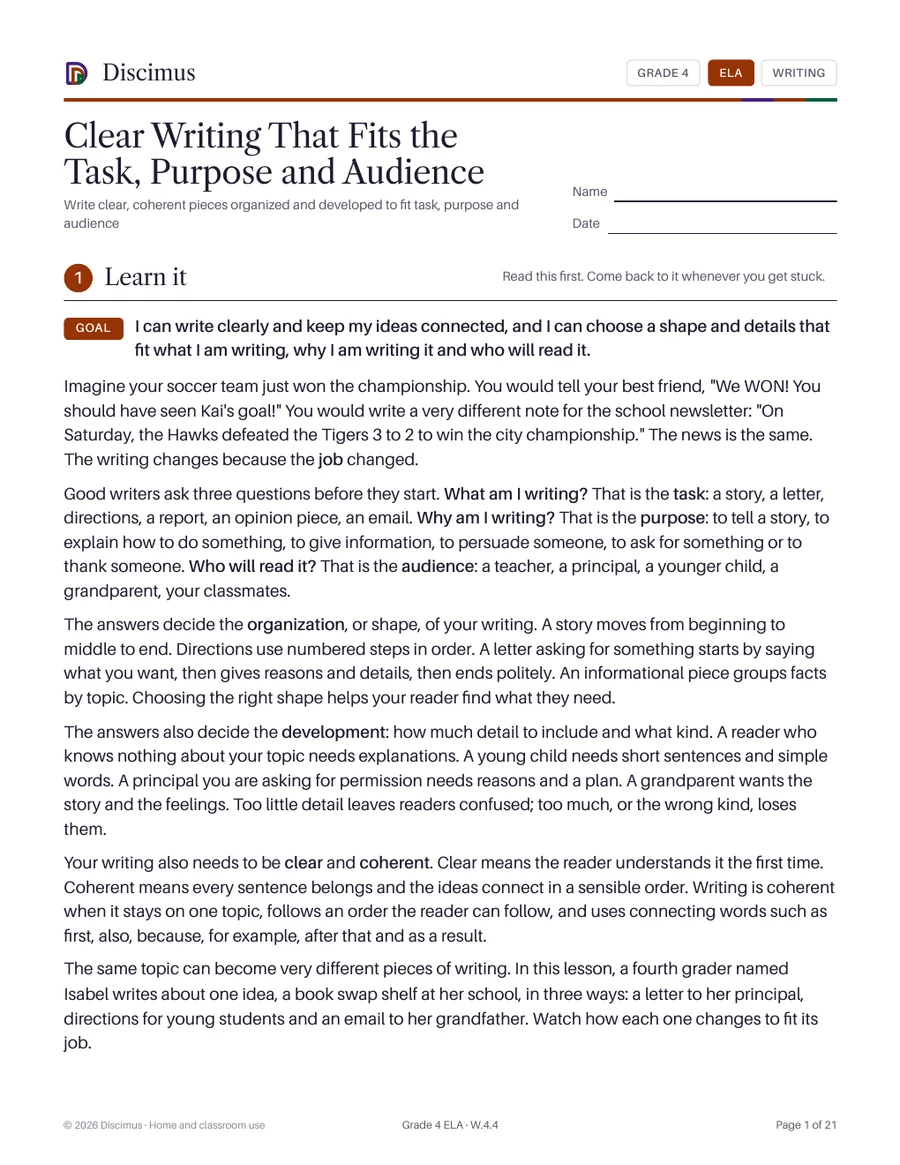
Write clear, coherent pieces organized and developed to fit task, purpose and audience
Gather information from experience and sources, take and categorize notes, list sources
Develop a topic with facts, definitions, concrete details, quotations and examples
Introduce a topic, group facts into sections with headings, add helpful illustrations
Link ideas within categories using words such as another, for example, also and because
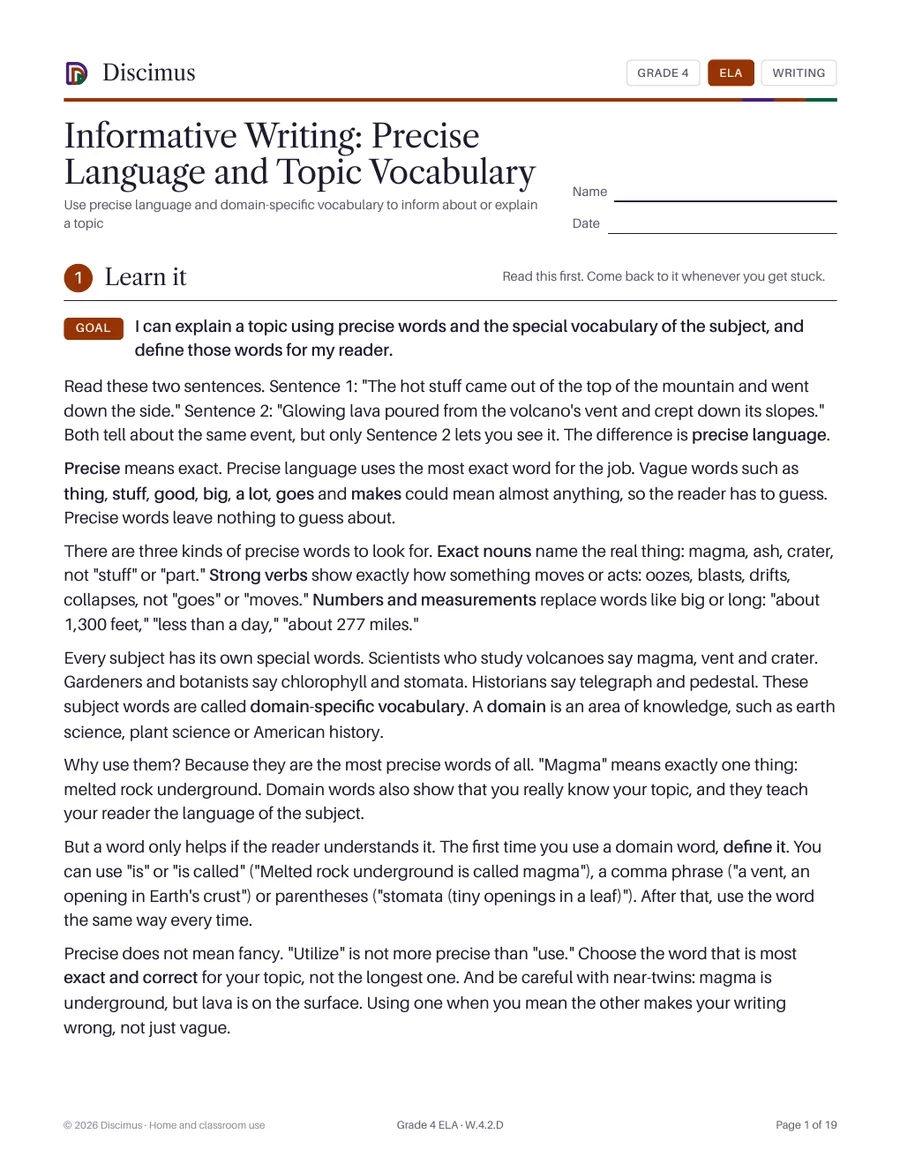
Use precise language and domain-specific vocabulary to inform about or explain a topic
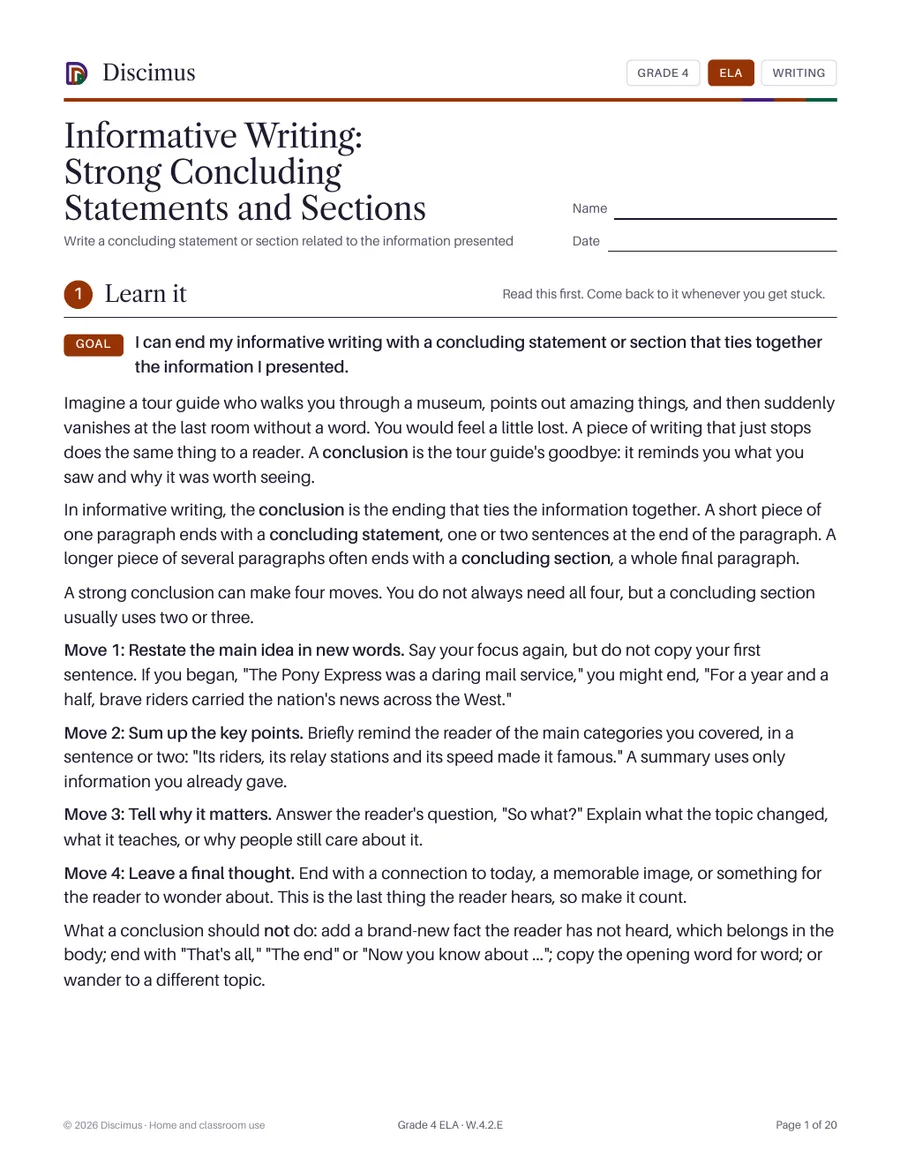
Write a concluding statement or section related to the information presented
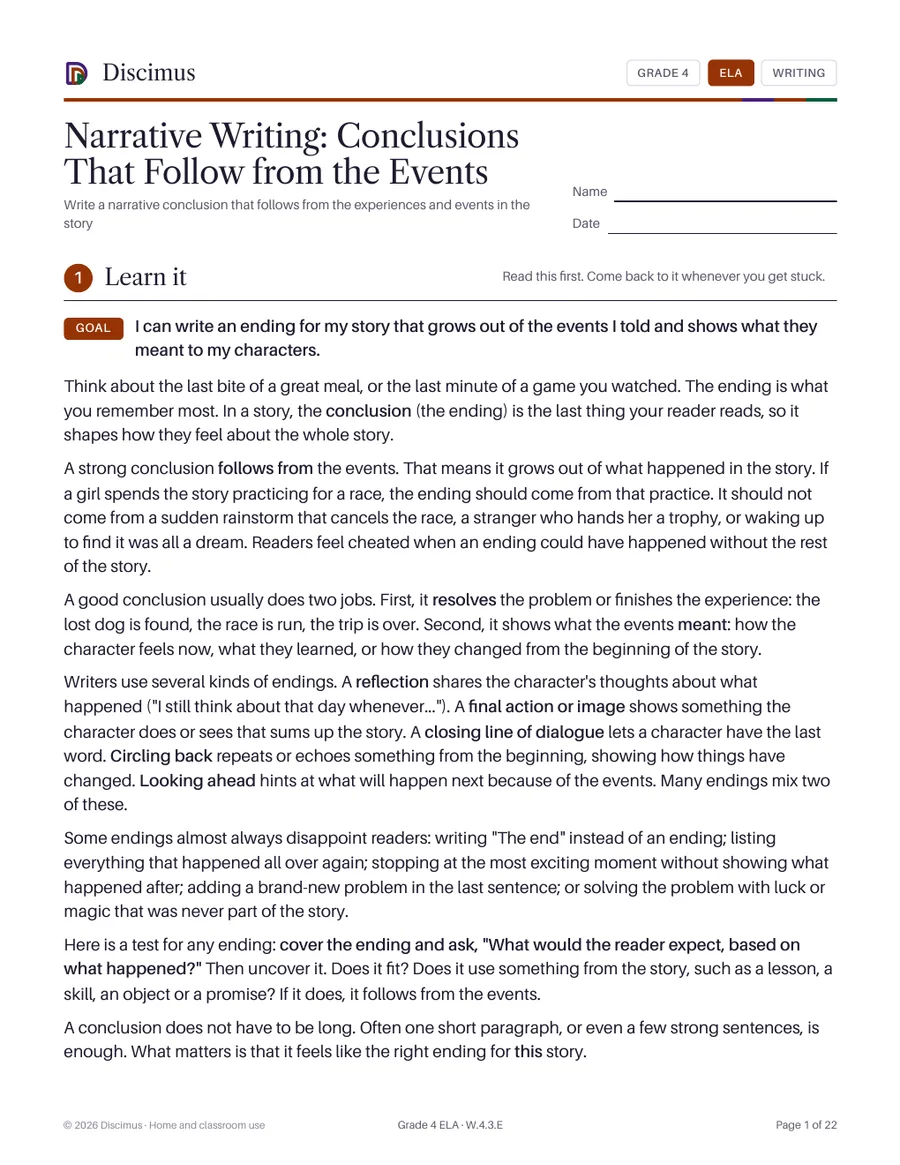
Write a narrative conclusion that follows from the experiences and events in the story
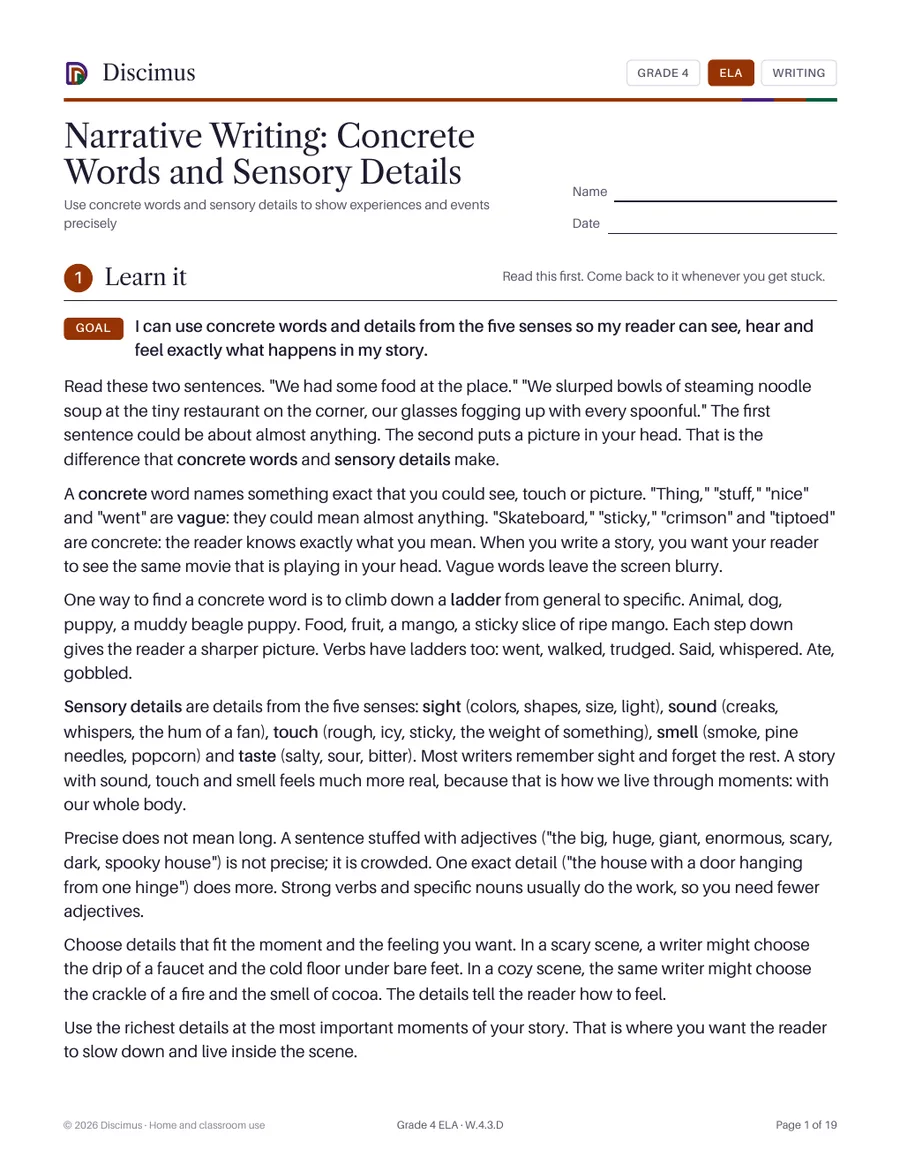
Use concrete words and sensory details to show experiences and events precisely
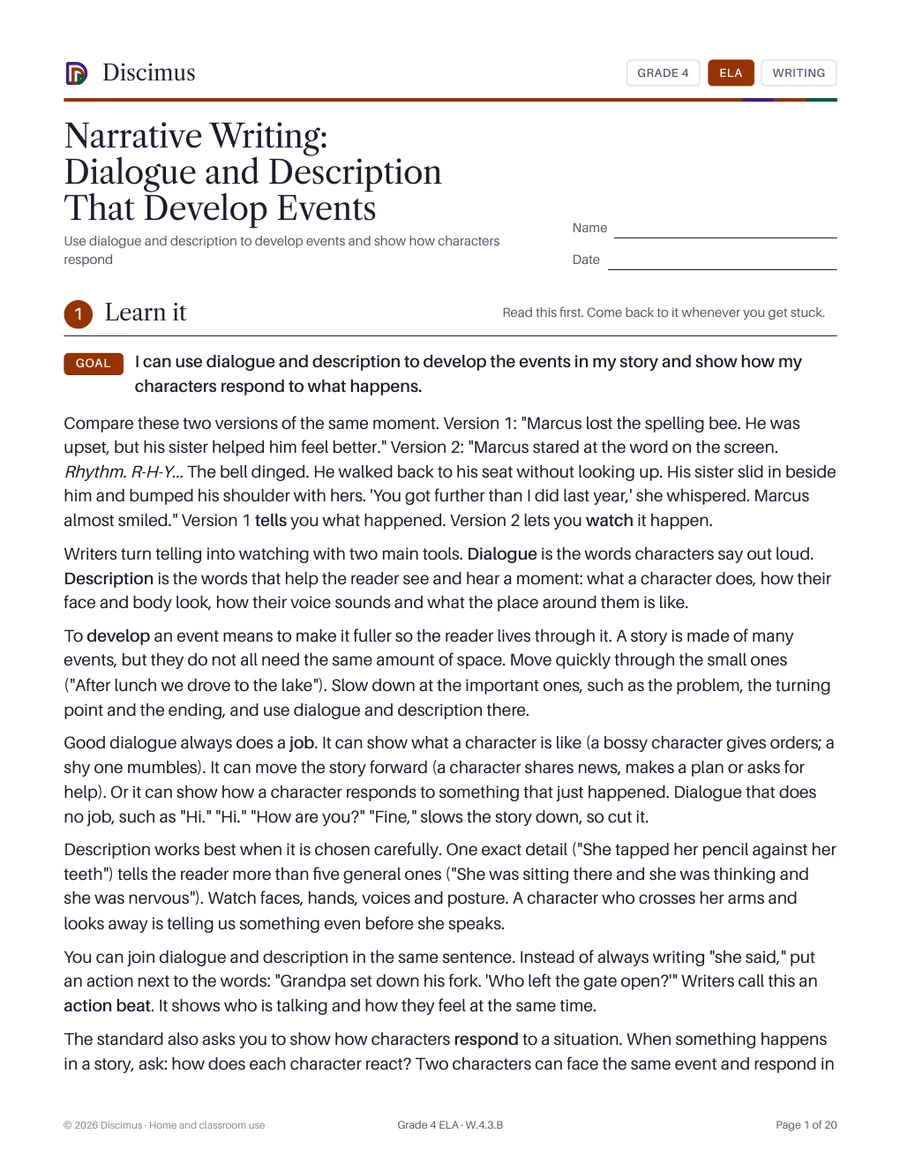
Use dialogue and description to develop events and show how characters respond
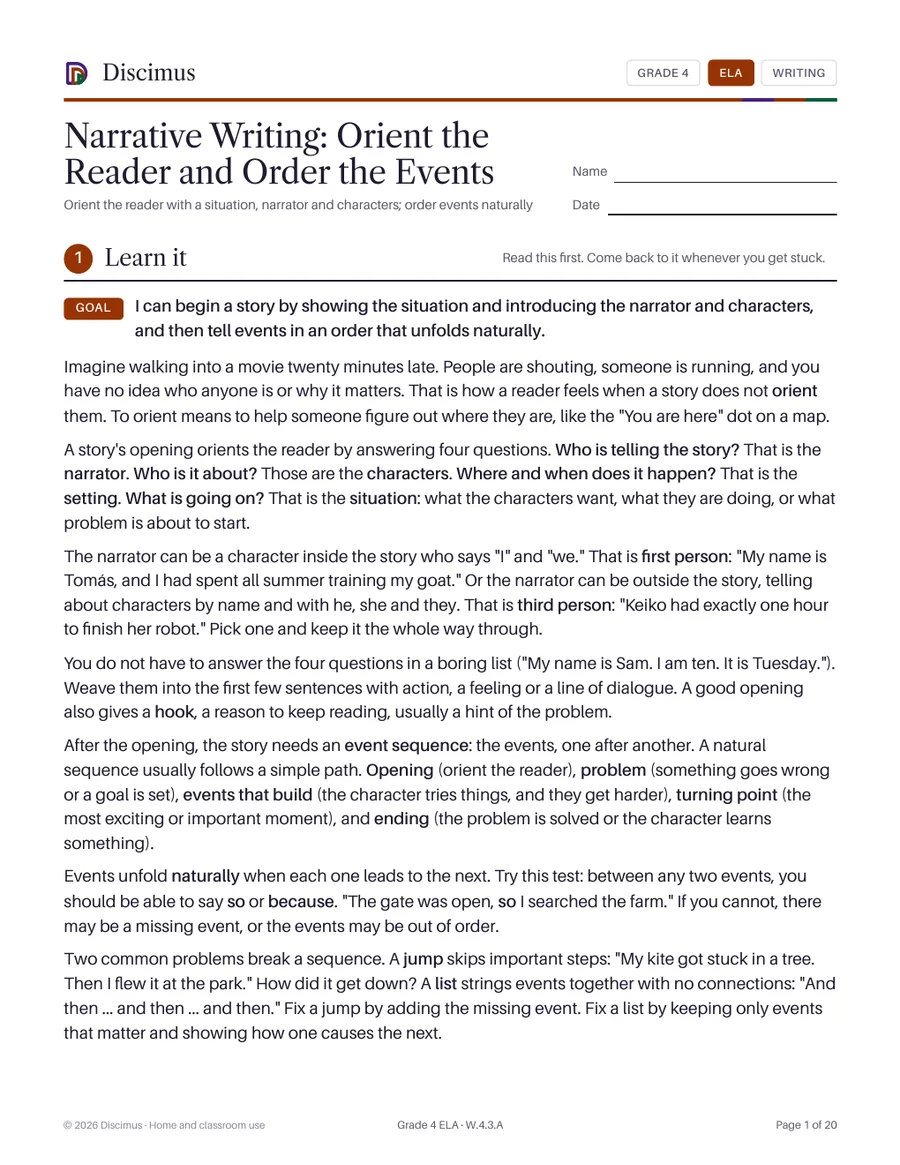
Orient the reader with a situation, narrator and characters; order events naturally
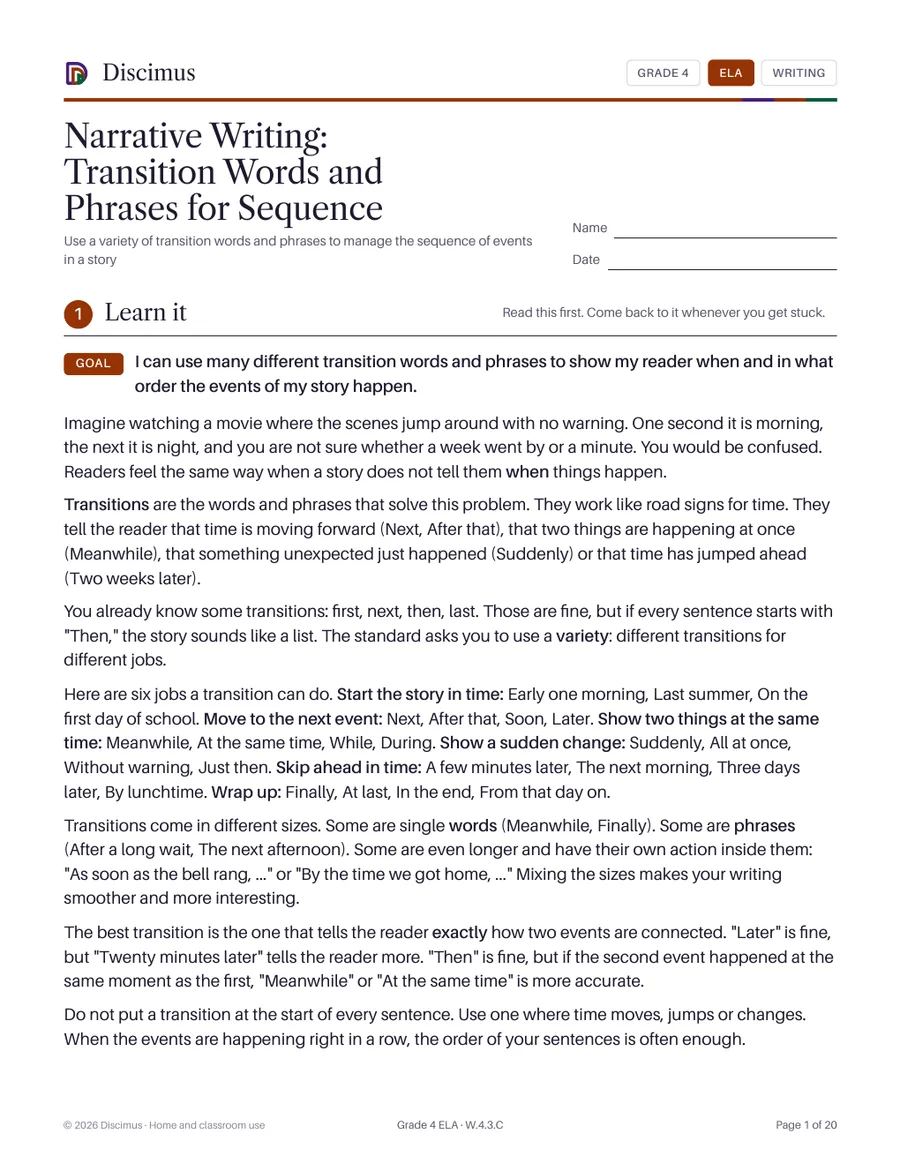
Use a variety of transition words and phrases to manage the sequence of events in a story
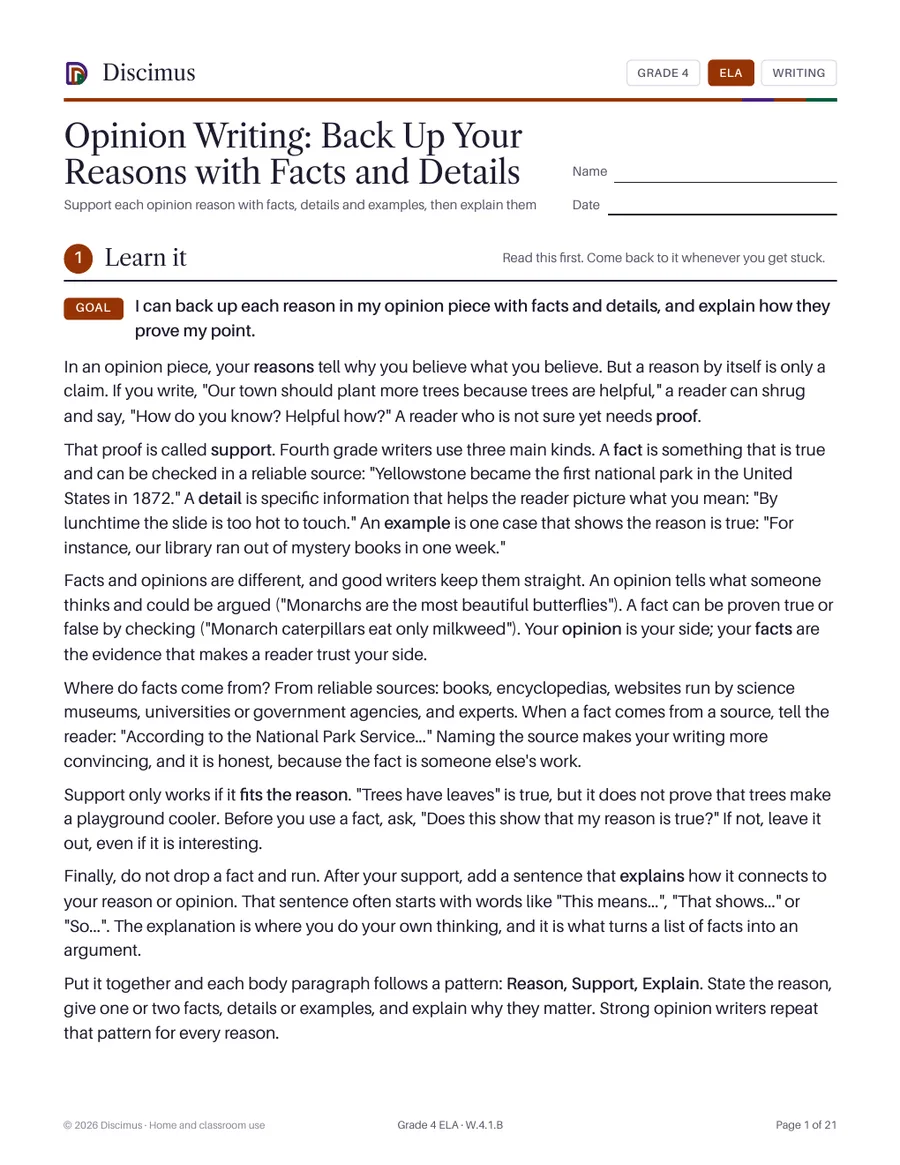
Support each opinion reason with facts, details and examples, then explain them
Introduce a topic or text, state an opinion, and group related ideas into a clear plan
Link opinion and reasons with words like for instance, in order to, in addition
Write a concluding statement or section that restates and strengthens the opinion
Conduct a short research project that investigates different aspects of a topic
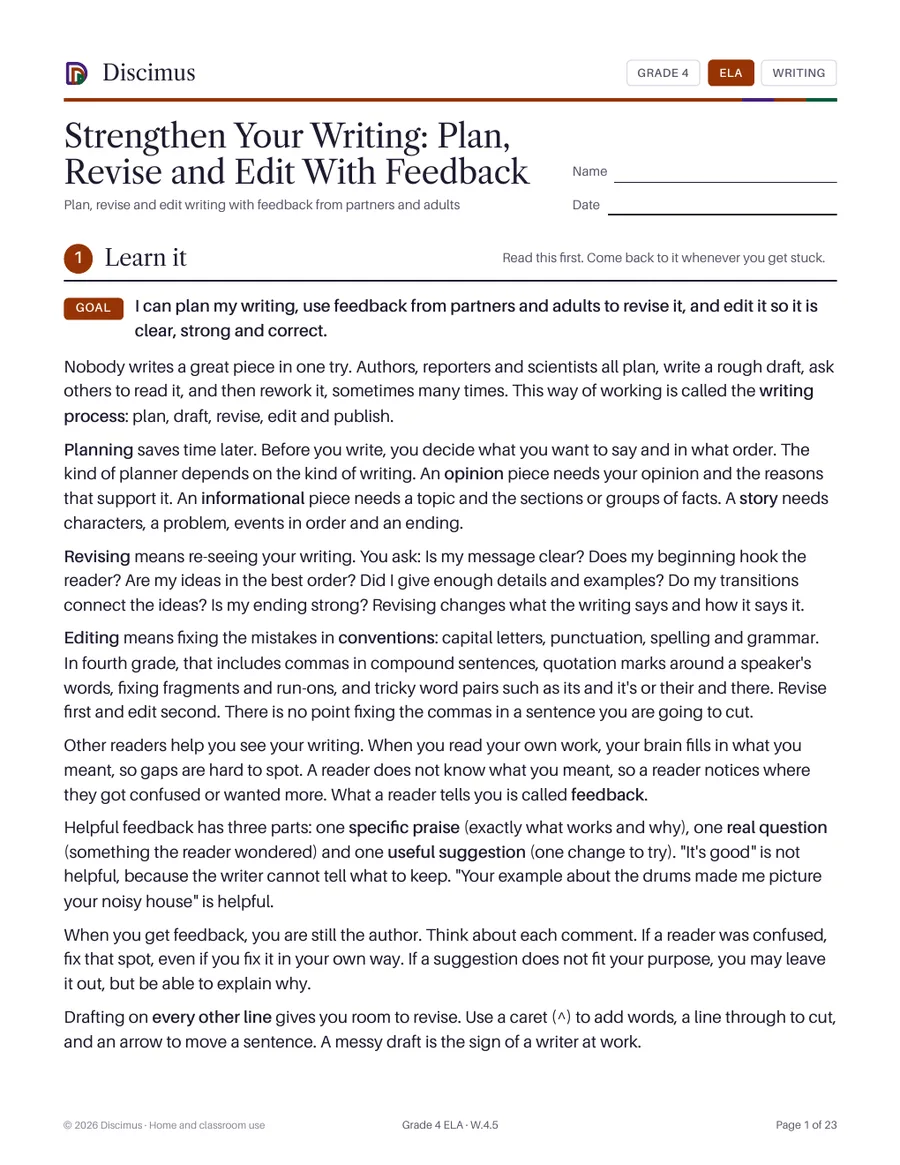
Plan, revise and edit writing with feedback from partners and adults
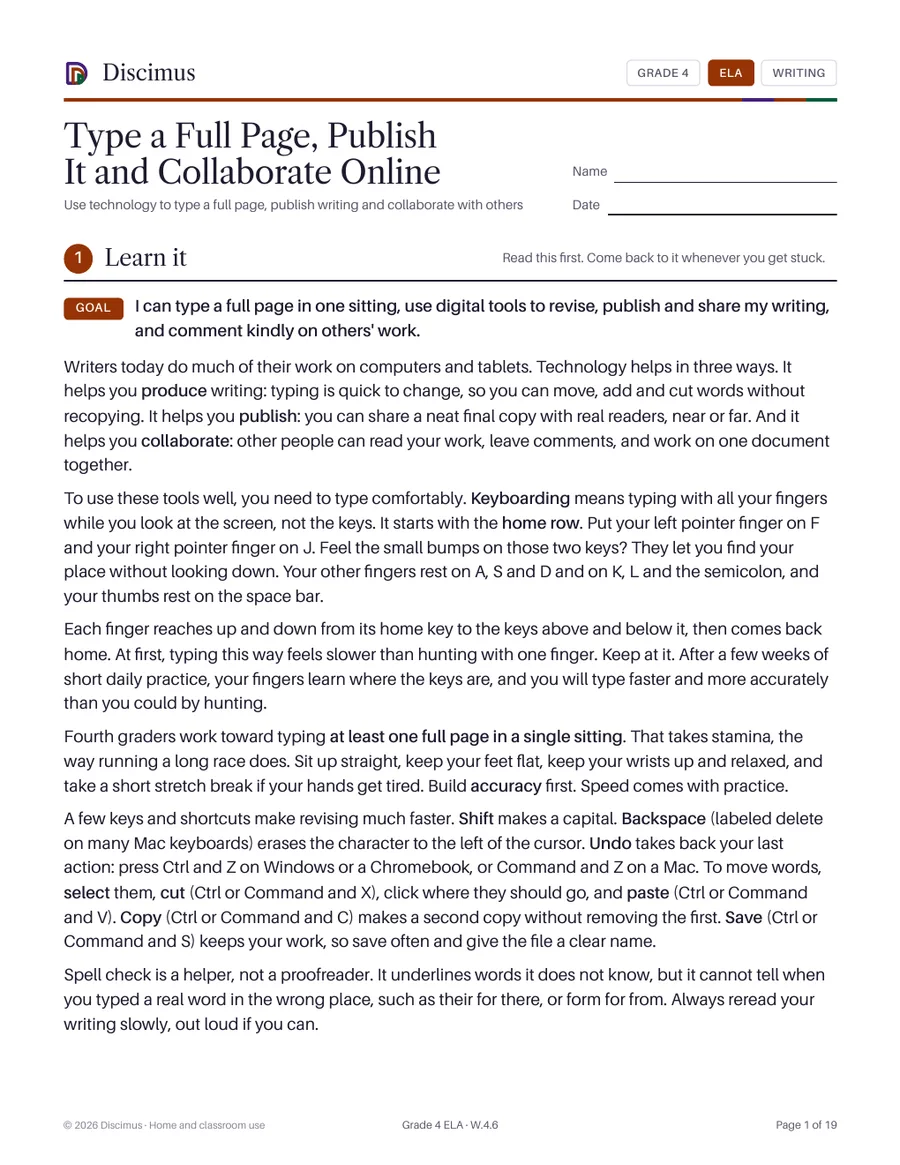
Use technology to type a full page, publish writing and collaborate with others
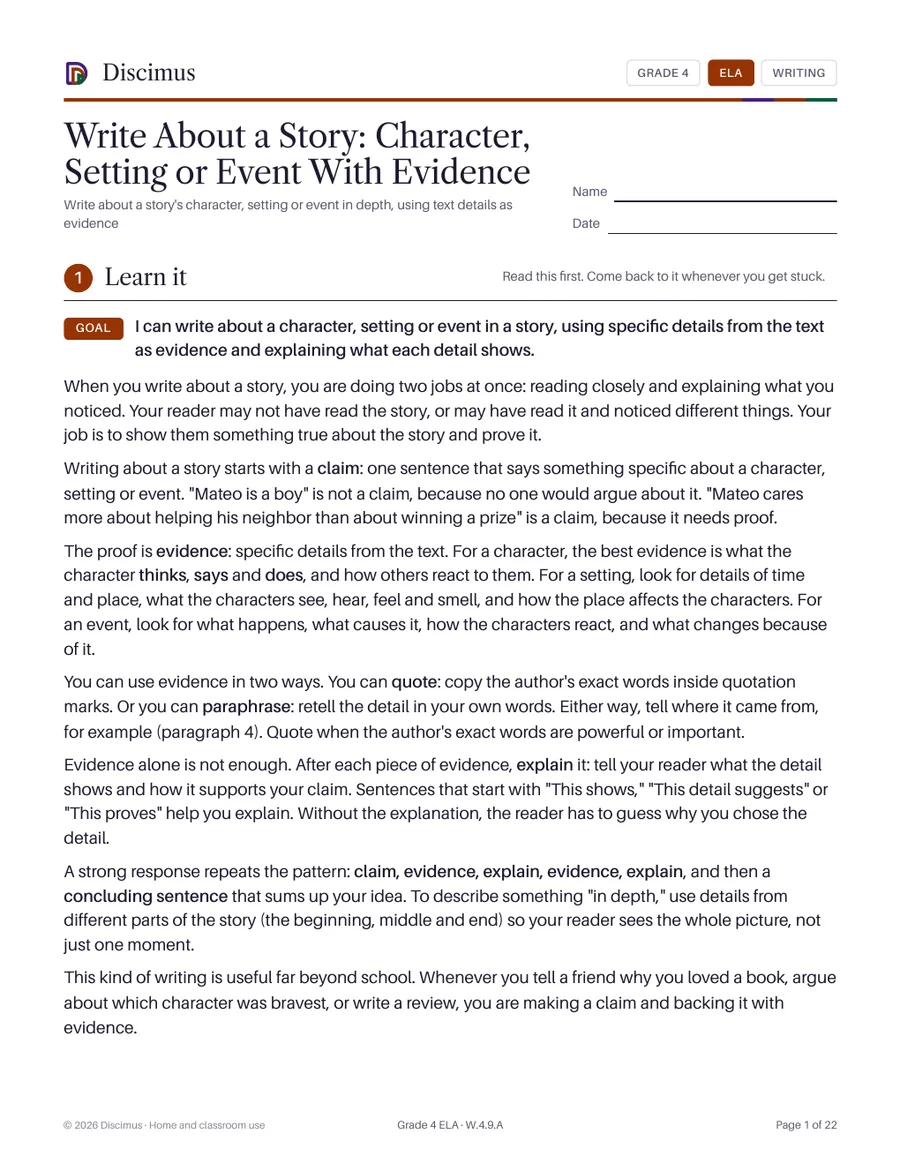
Write about a story's character, setting or event in depth, using text details as evidence
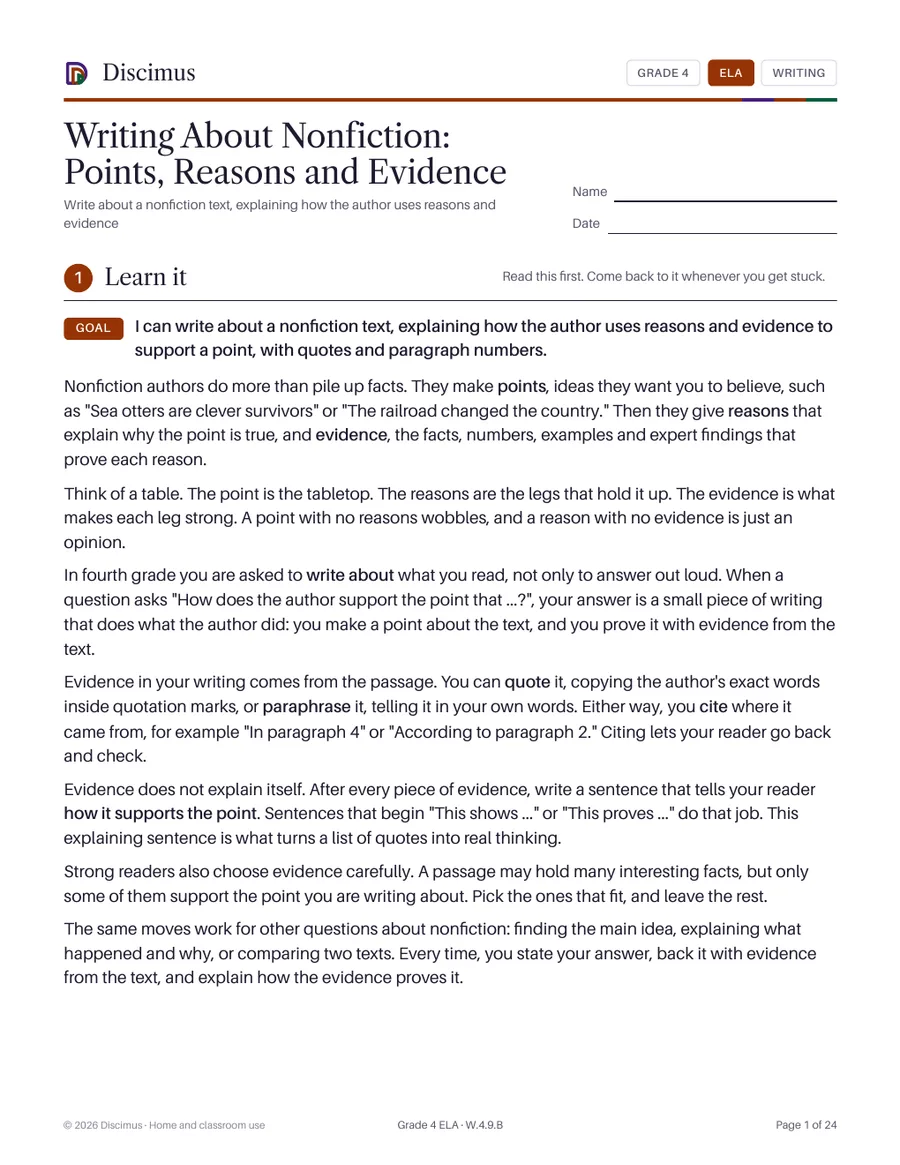
Write about a nonfiction text, explaining how the author uses reasons and evidence
Write routinely, short and extended, for different subjects, purposes and audiences
Write clearly and coherently, fitting development and organization to task and audience
Write a concluding statement or section related to the information presented
Develop an informative topic with facts, definitions, details, quotations and examples
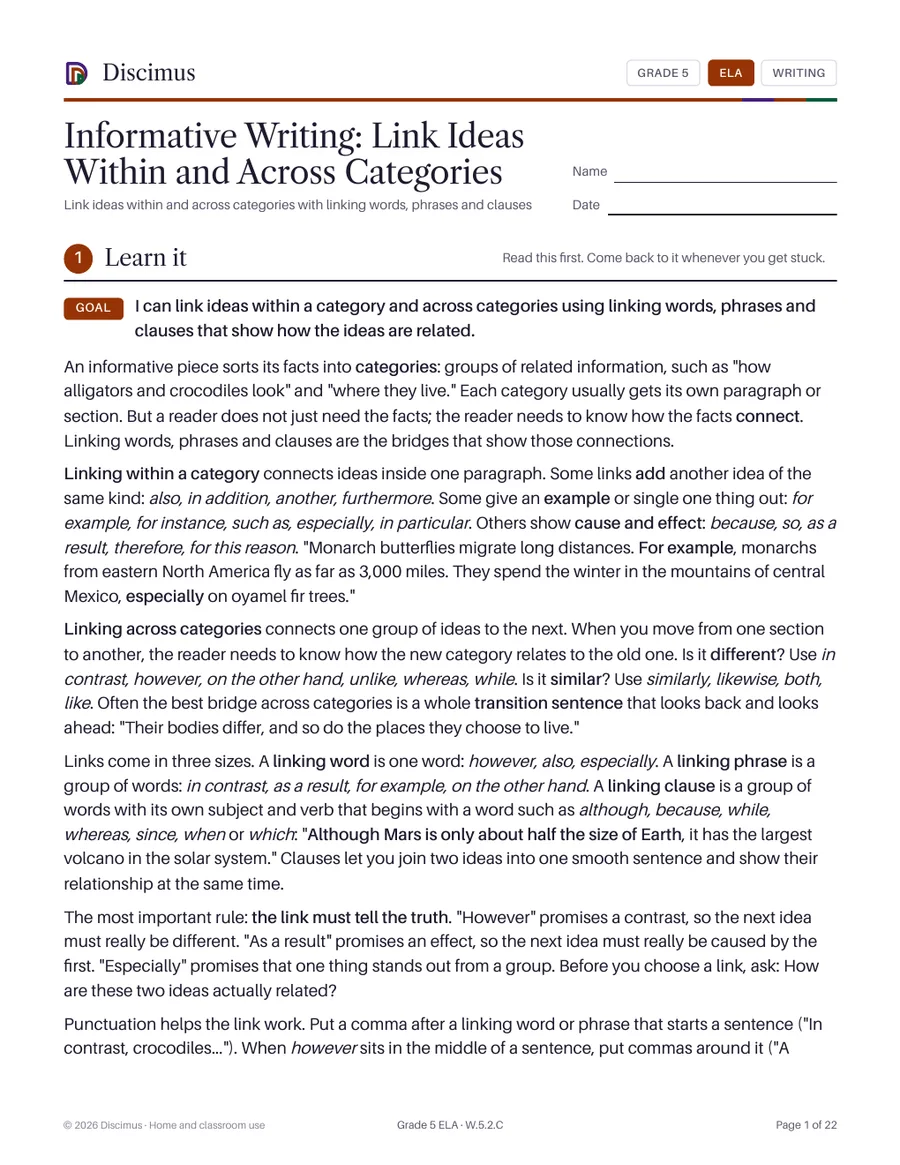
Link ideas within and across categories with linking words, phrases and clauses
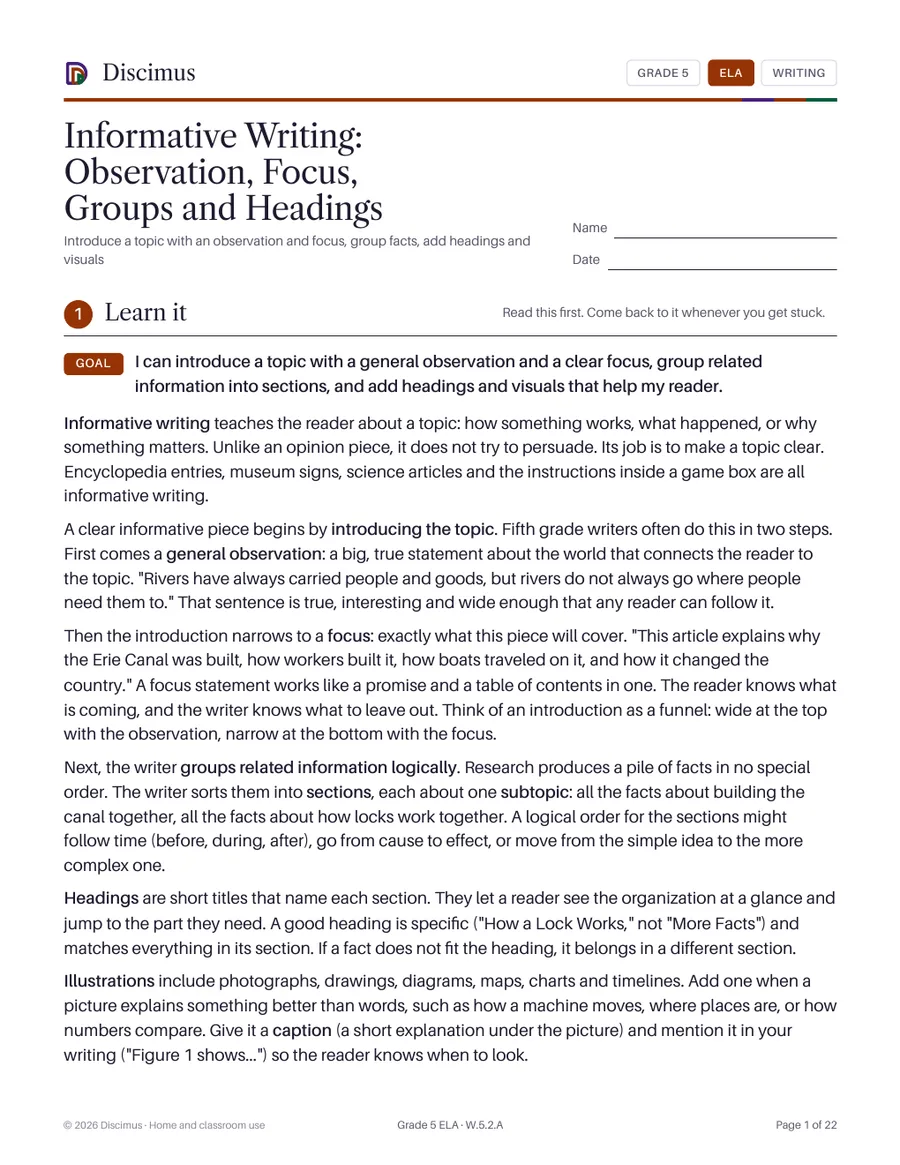
Introduce a topic with an observation and focus, group facts, add headings and visuals
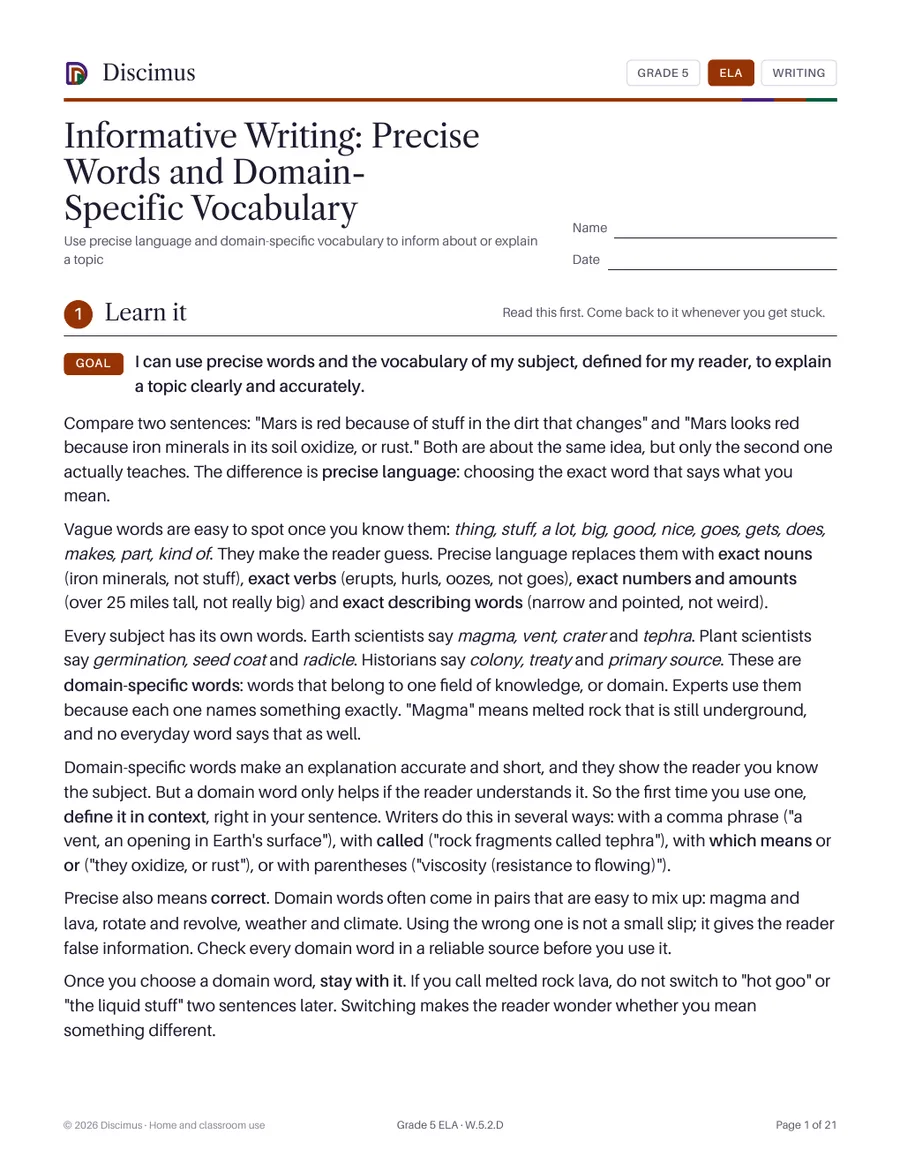
Use precise language and domain-specific vocabulary to inform about or explain a topic
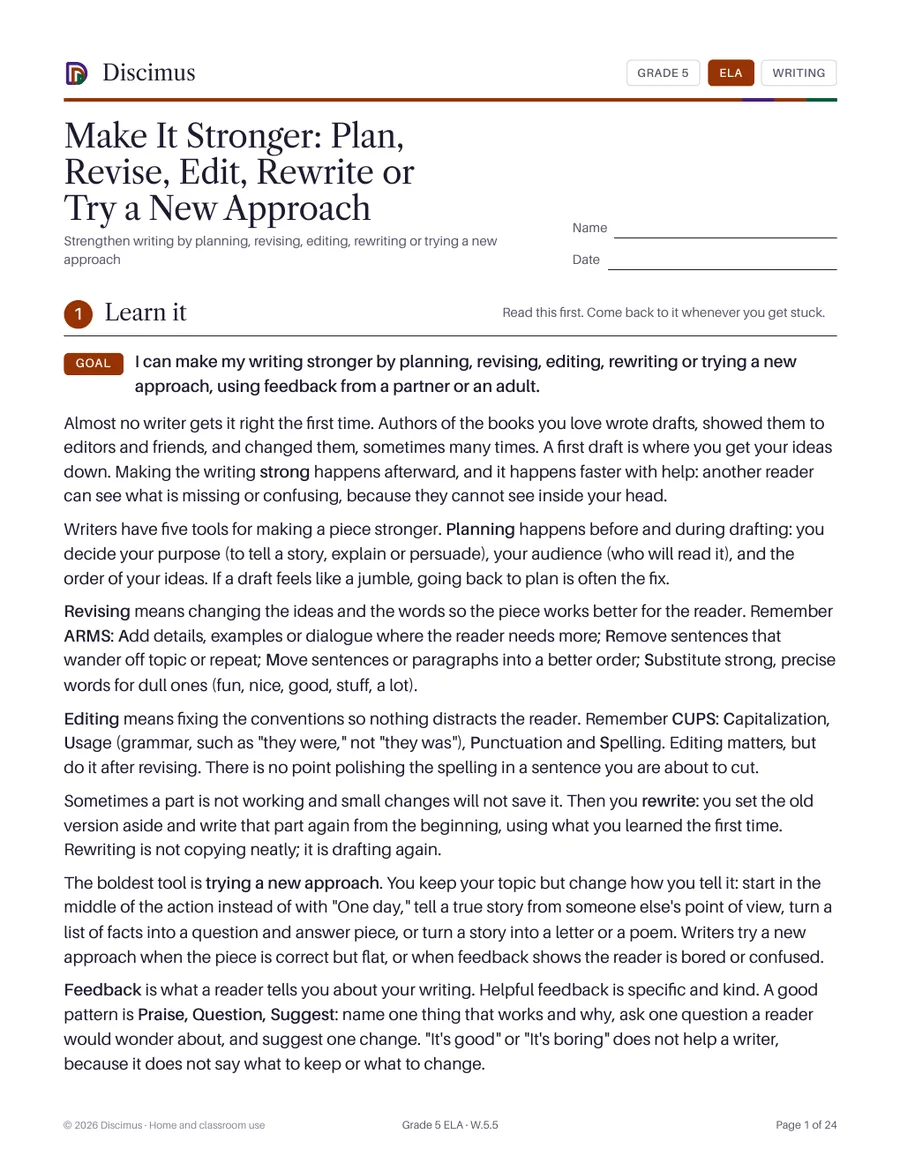
Strengthen writing by planning, revising, editing, rewriting or trying a new approach
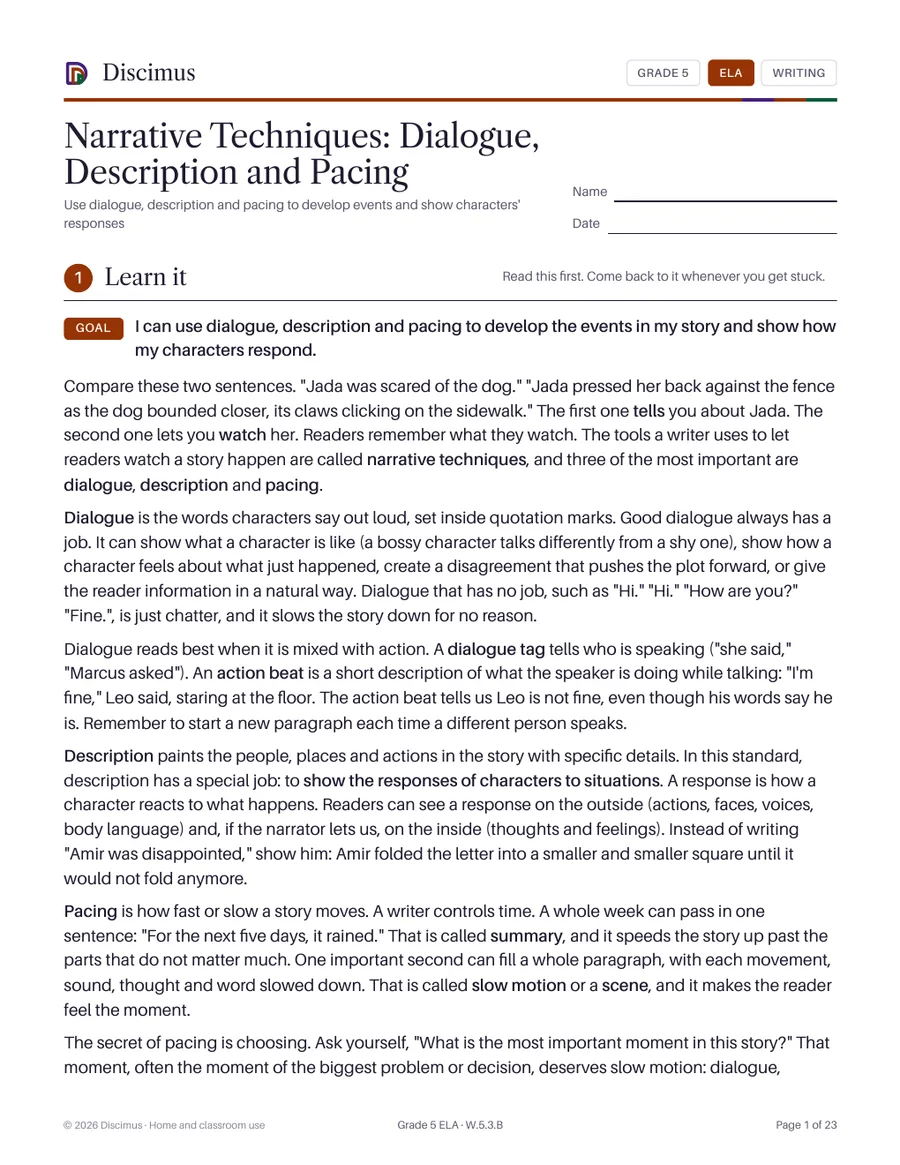
Use dialogue, description and pacing to develop events and show characters' responses
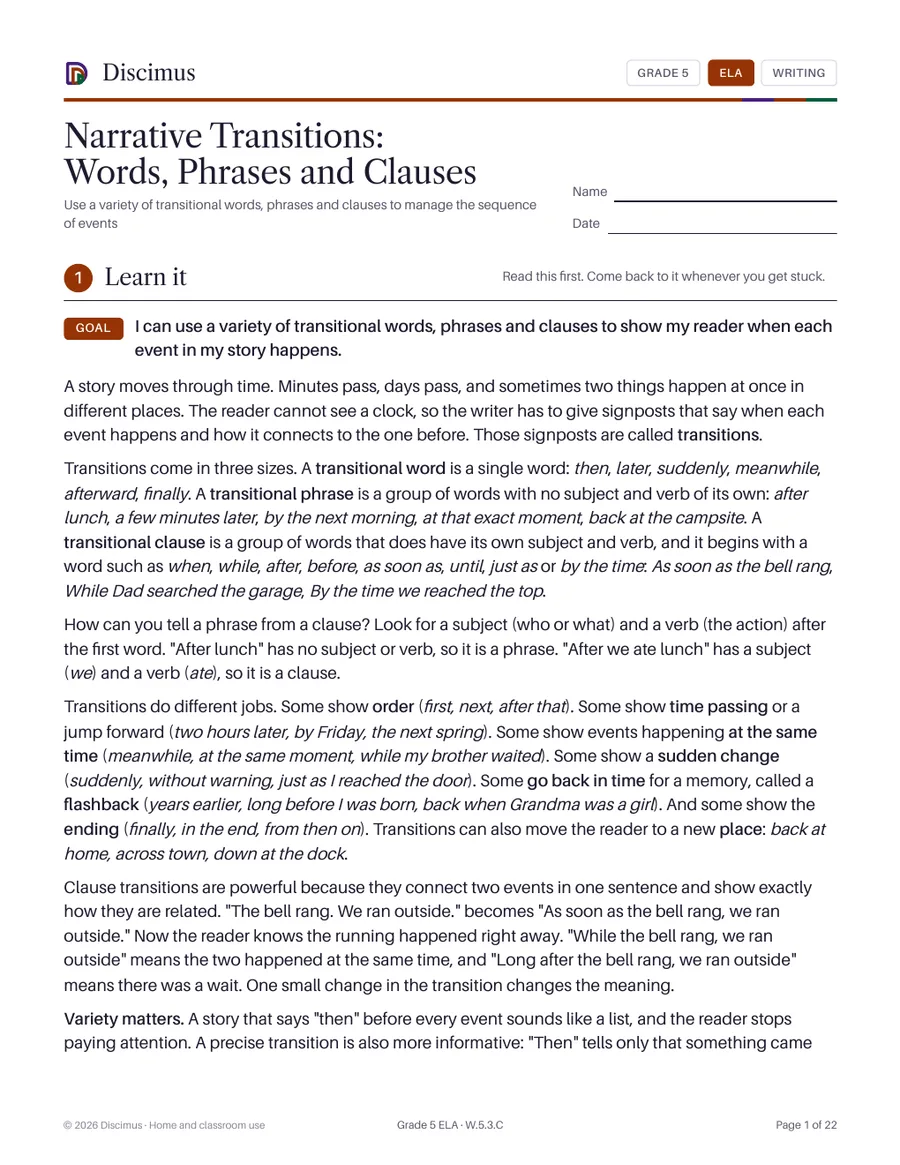
Use a variety of transitional words, phrases and clauses to manage the sequence of events
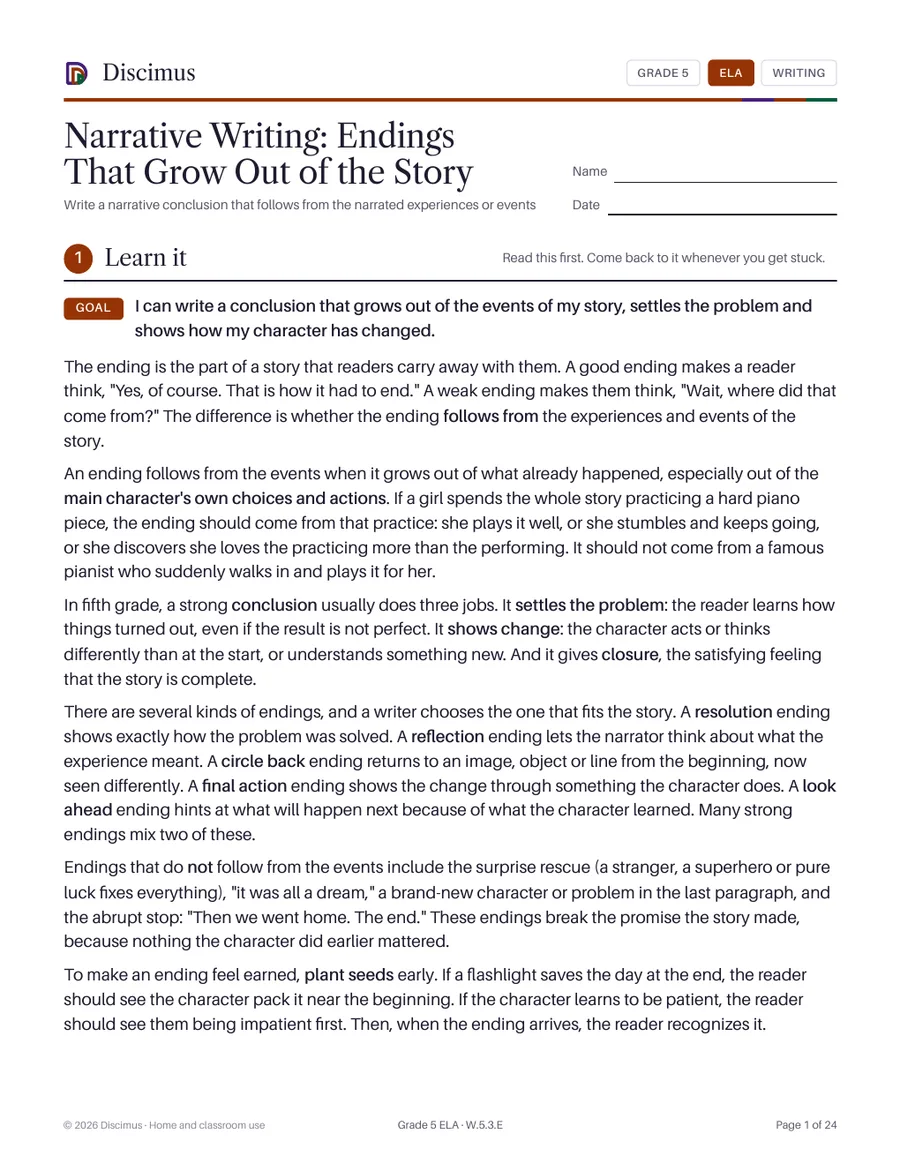
Write a narrative conclusion that follows from the narrated experiences or events
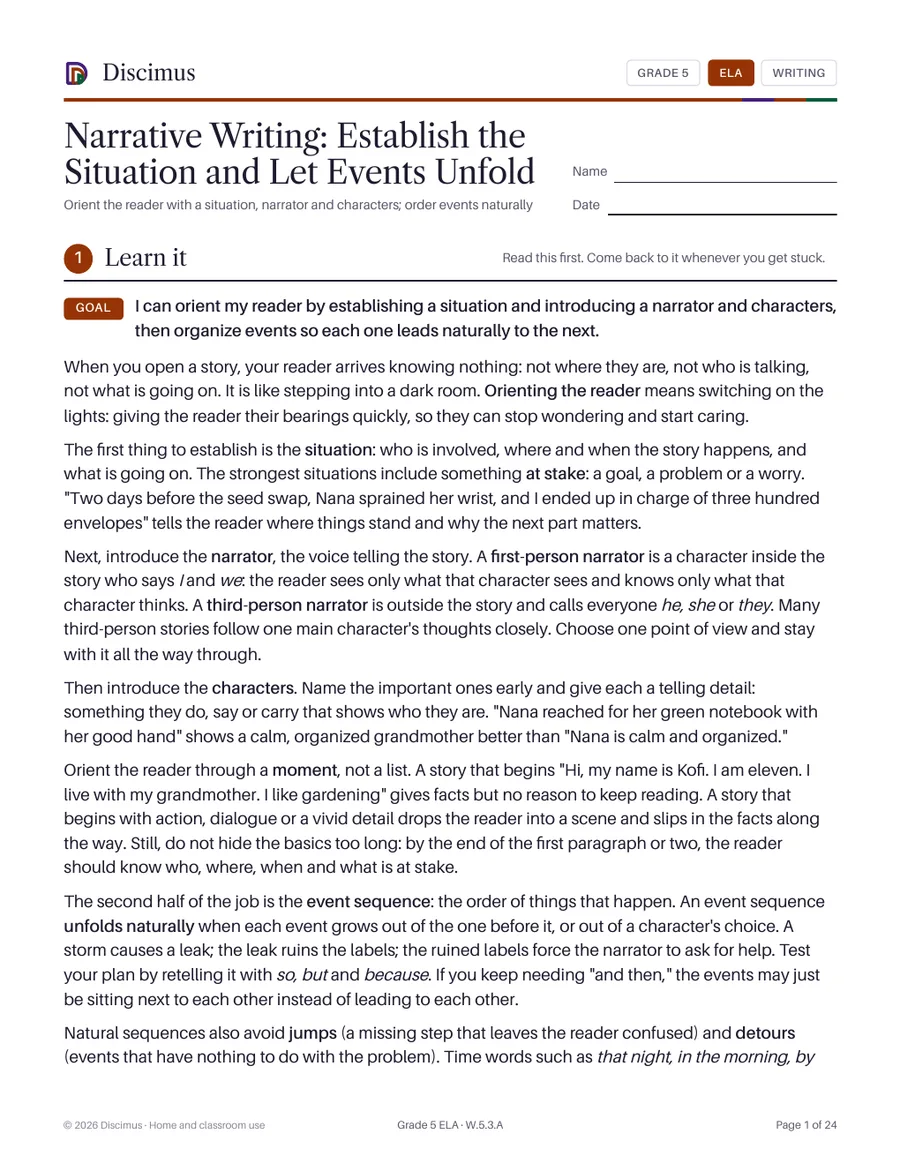
Orient the reader with a situation, narrator and characters; order events naturally
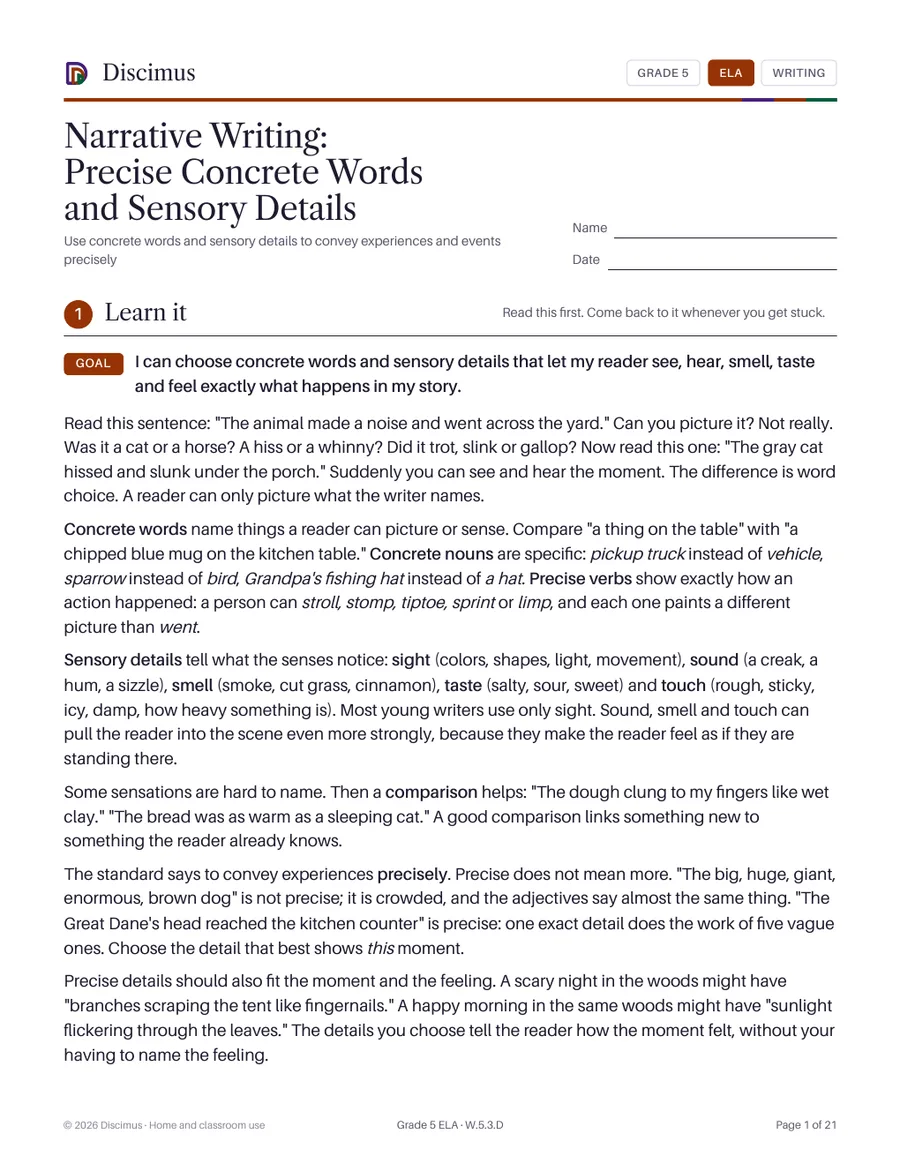
Use concrete words and sensory details to convey experiences and events precisely
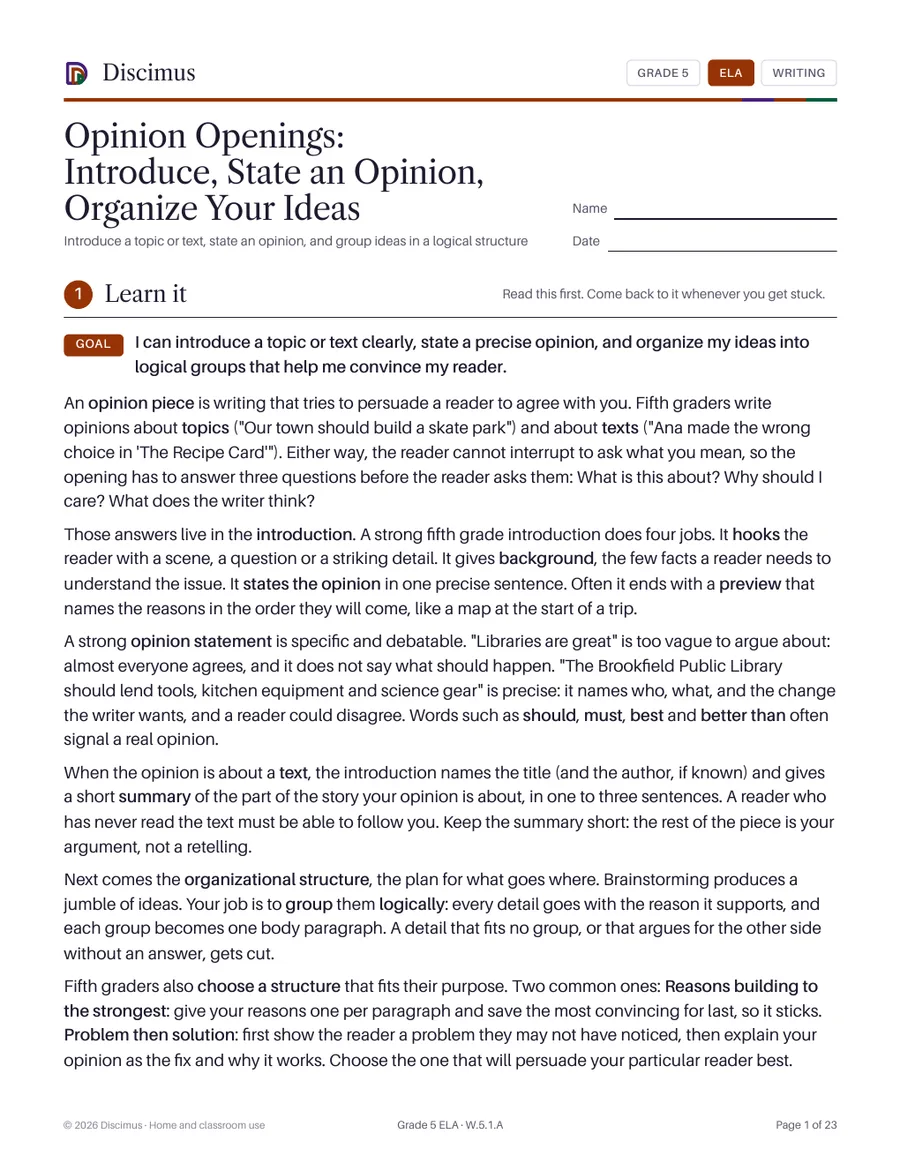
Introduce a topic or text, state an opinion, and group ideas in a logical structure
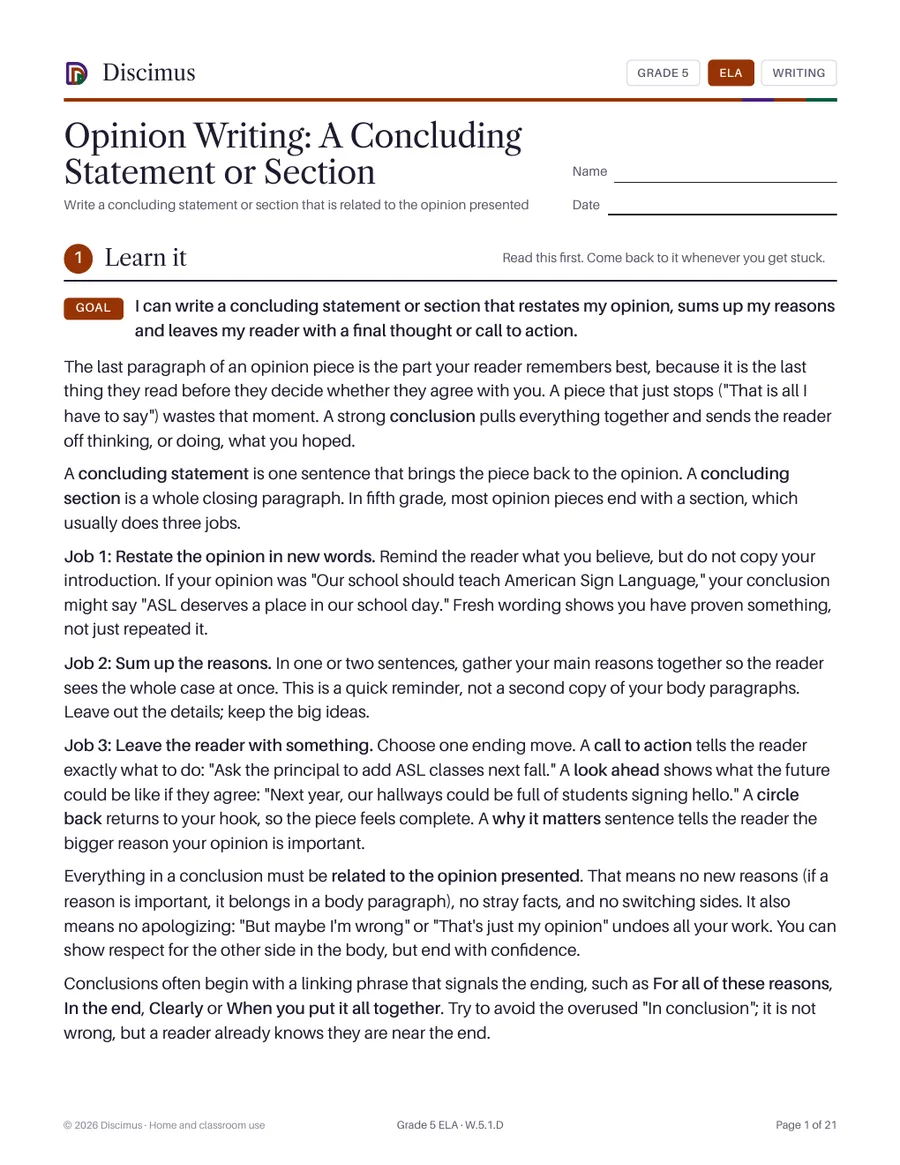
Write a concluding statement or section that is related to the opinion presented
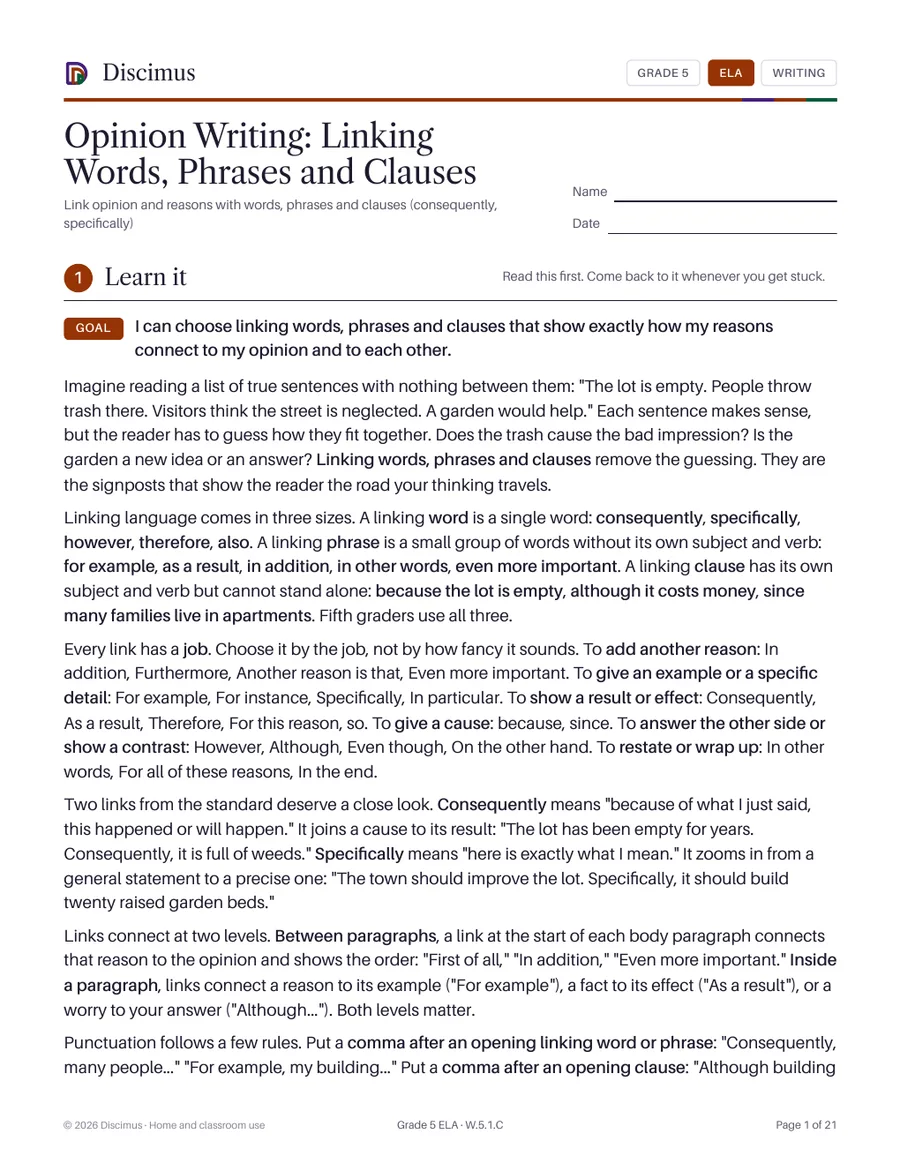
Link opinion and reasons with words, phrases and clauses (consequently, specifically)
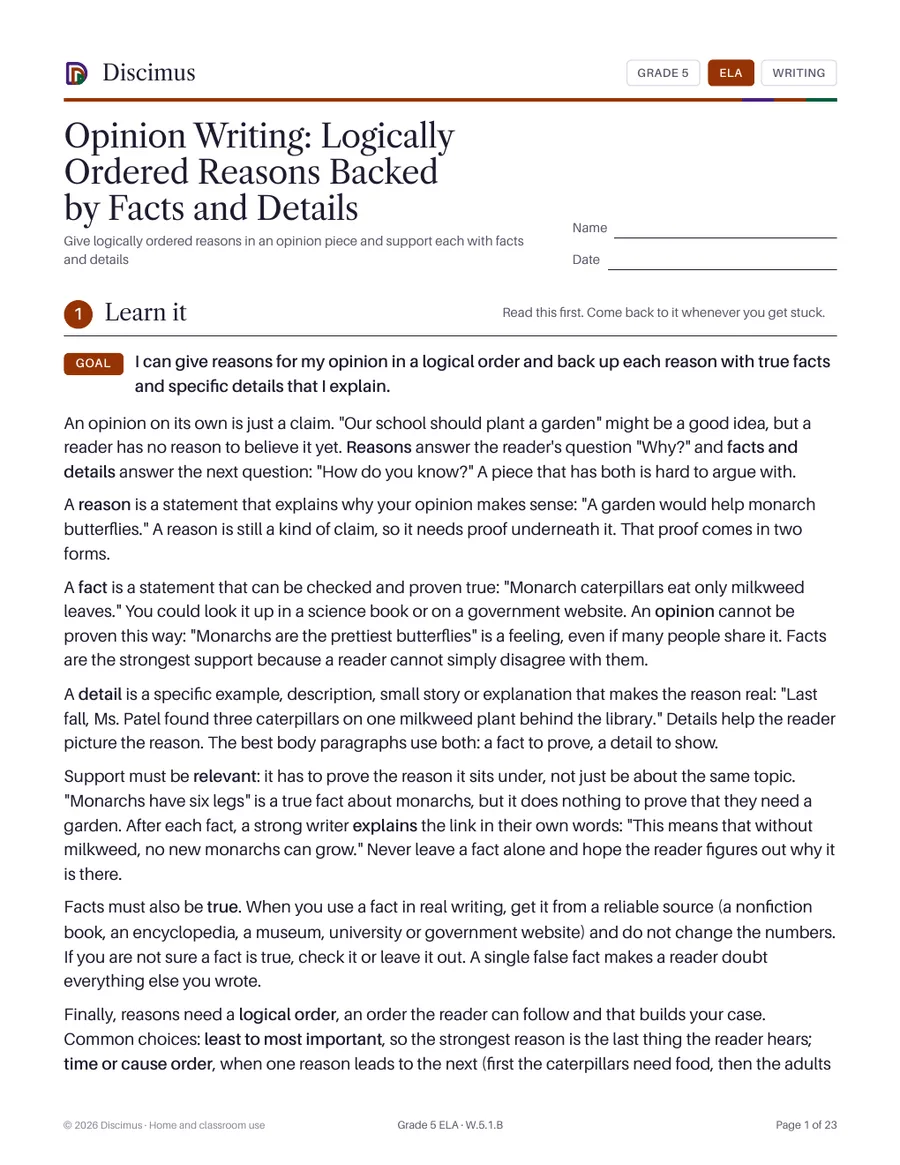
Give logically ordered reasons in an opinion piece and support each with facts and details
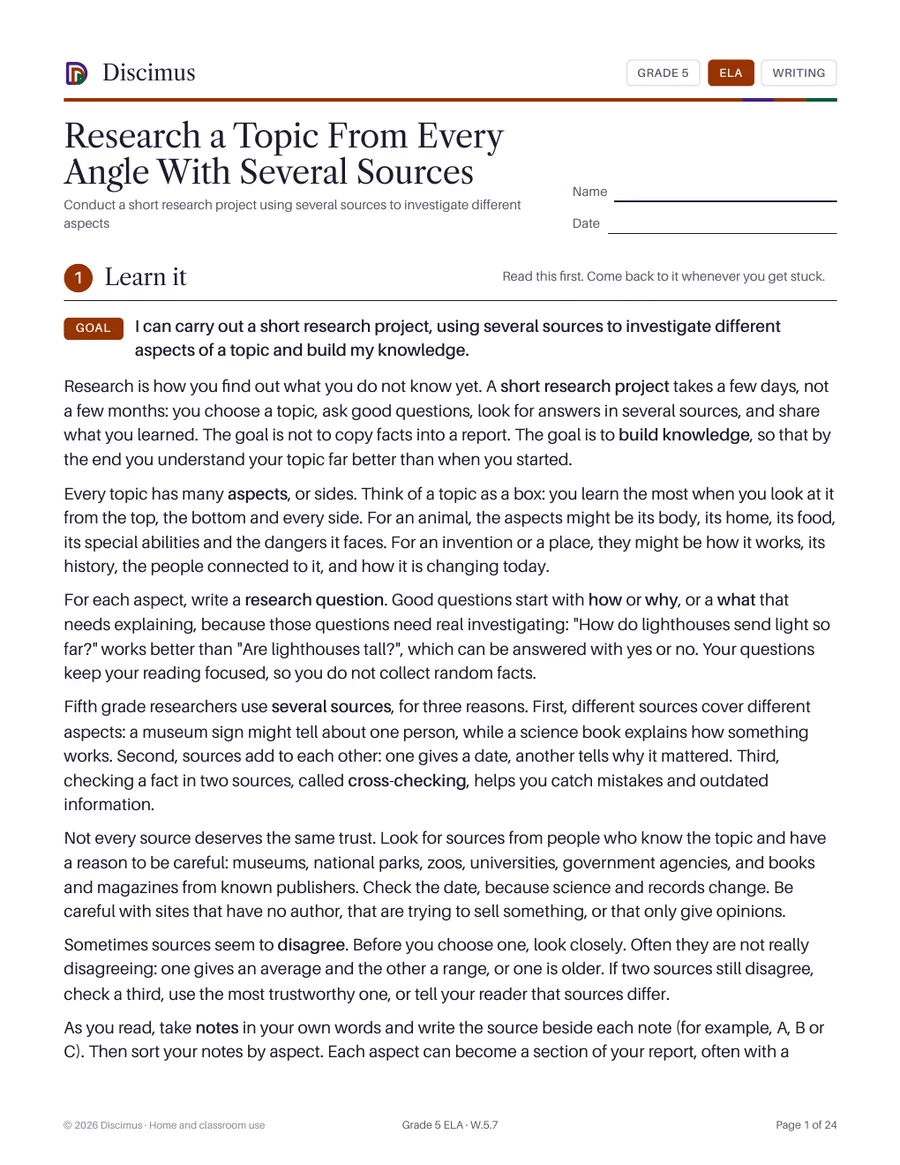
Conduct a short research project using several sources to investigate different aspects
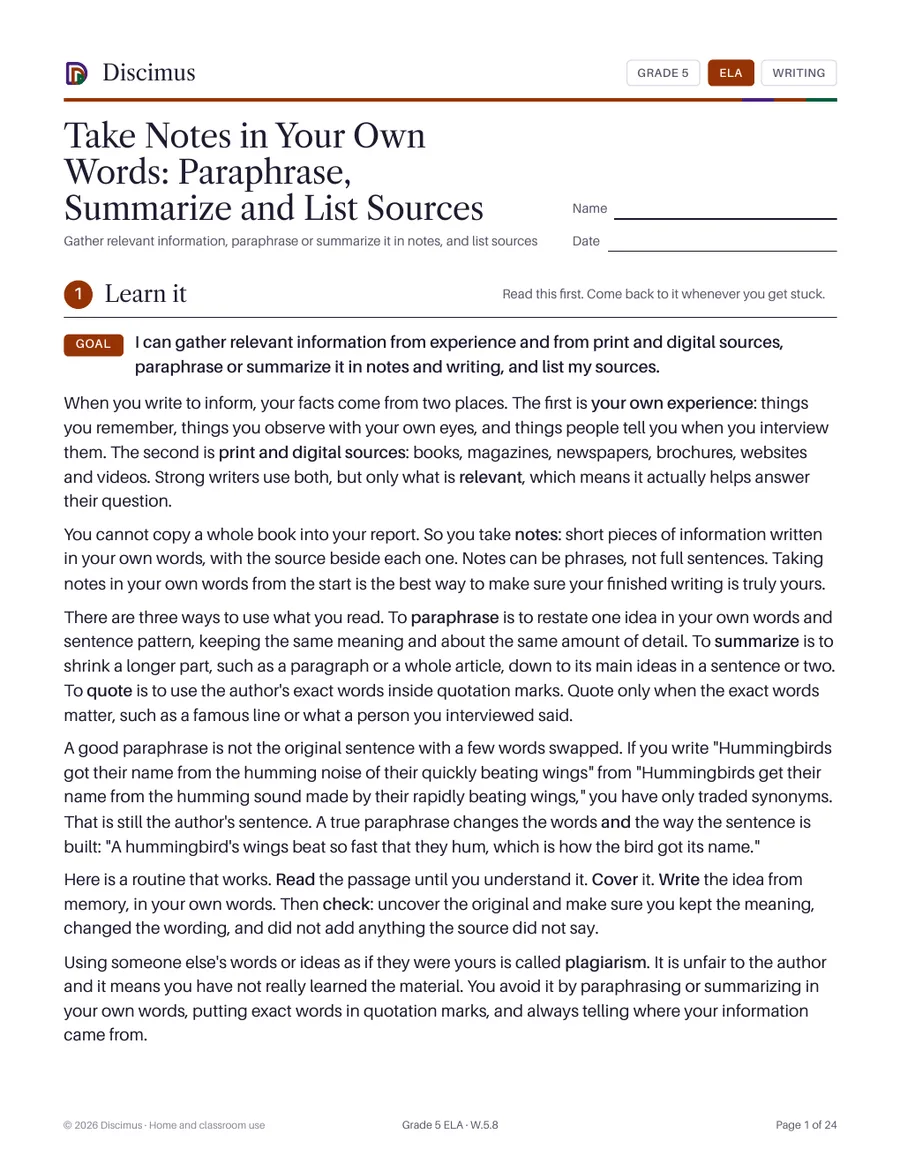
Gather relevant information, paraphrase or summarize it in notes, and list sources
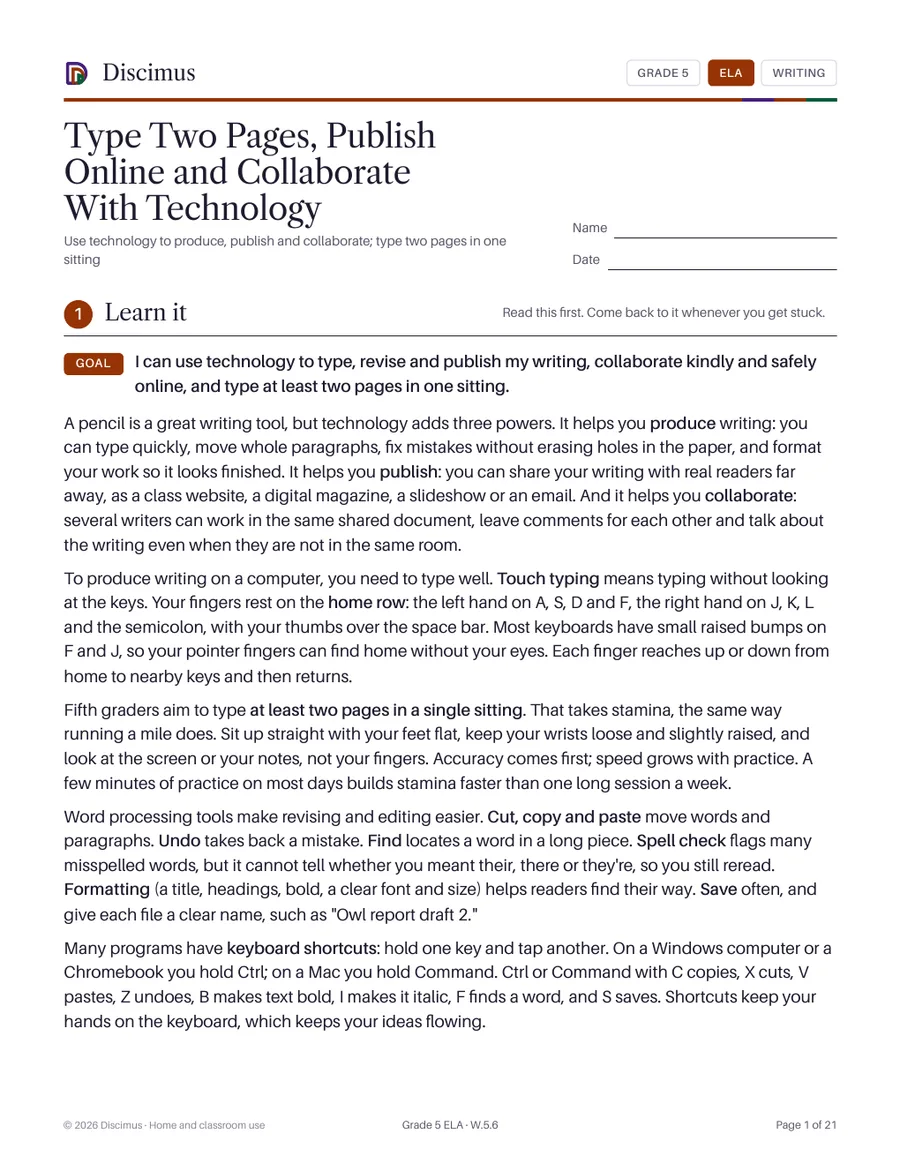
Use technology to produce, publish and collaborate; type two pages in one sitting
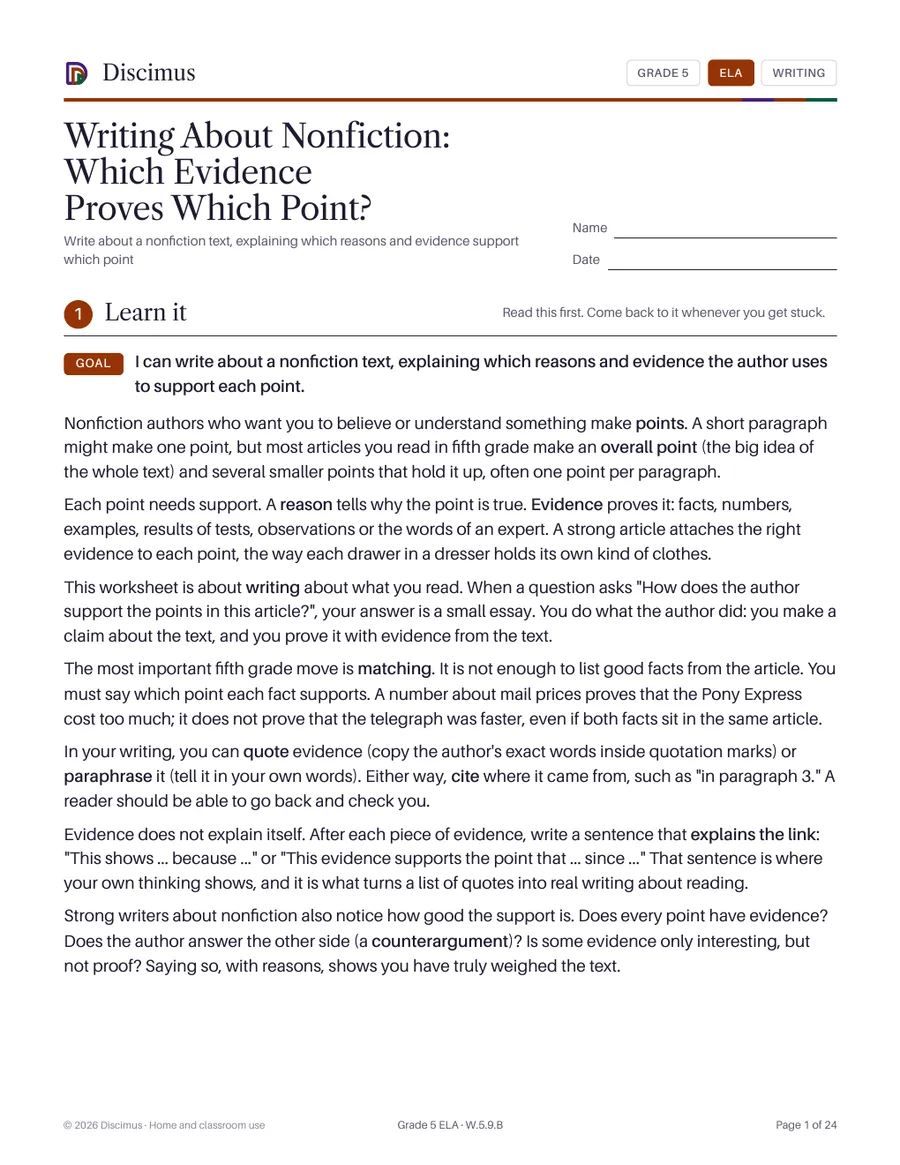
Write about a nonfiction text, explaining which reasons and evidence support which point
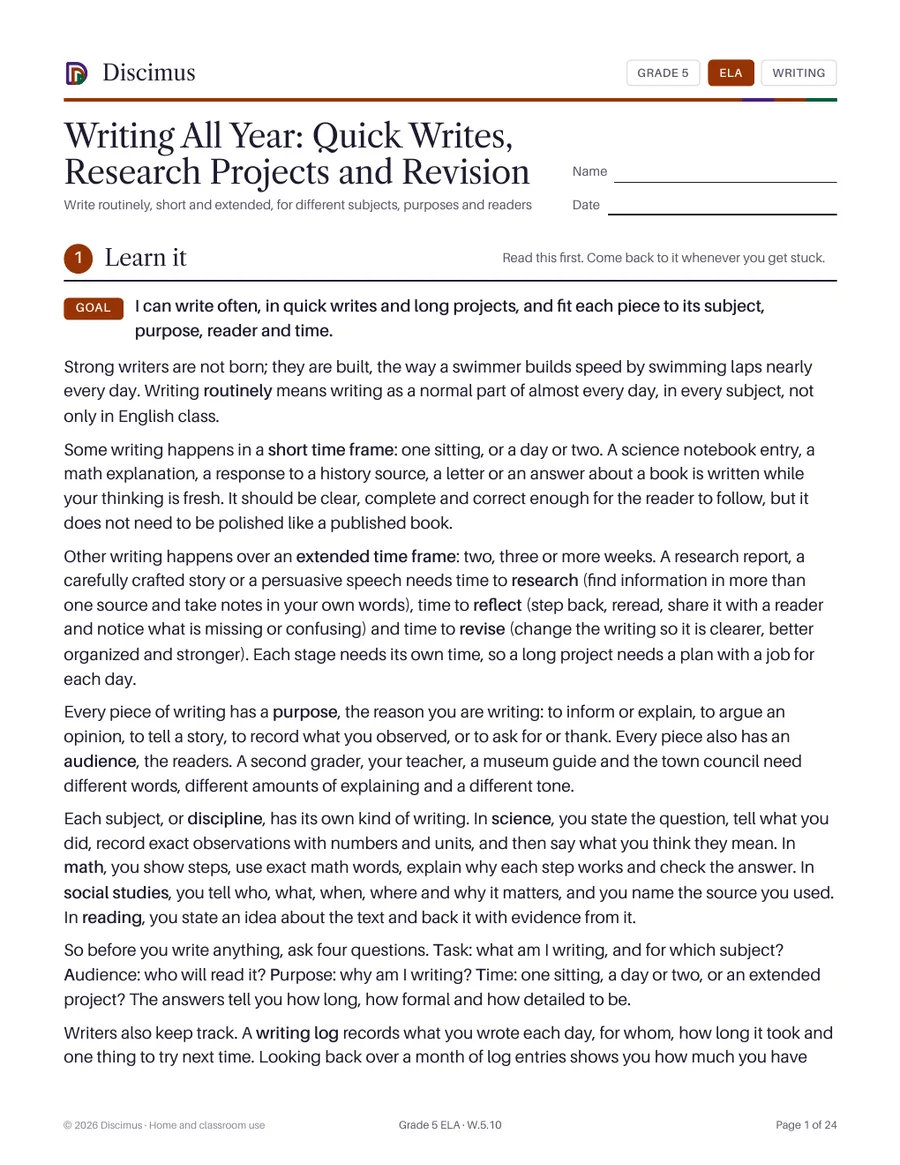
Write routinely, short and extended, for different subjects, purposes and readers
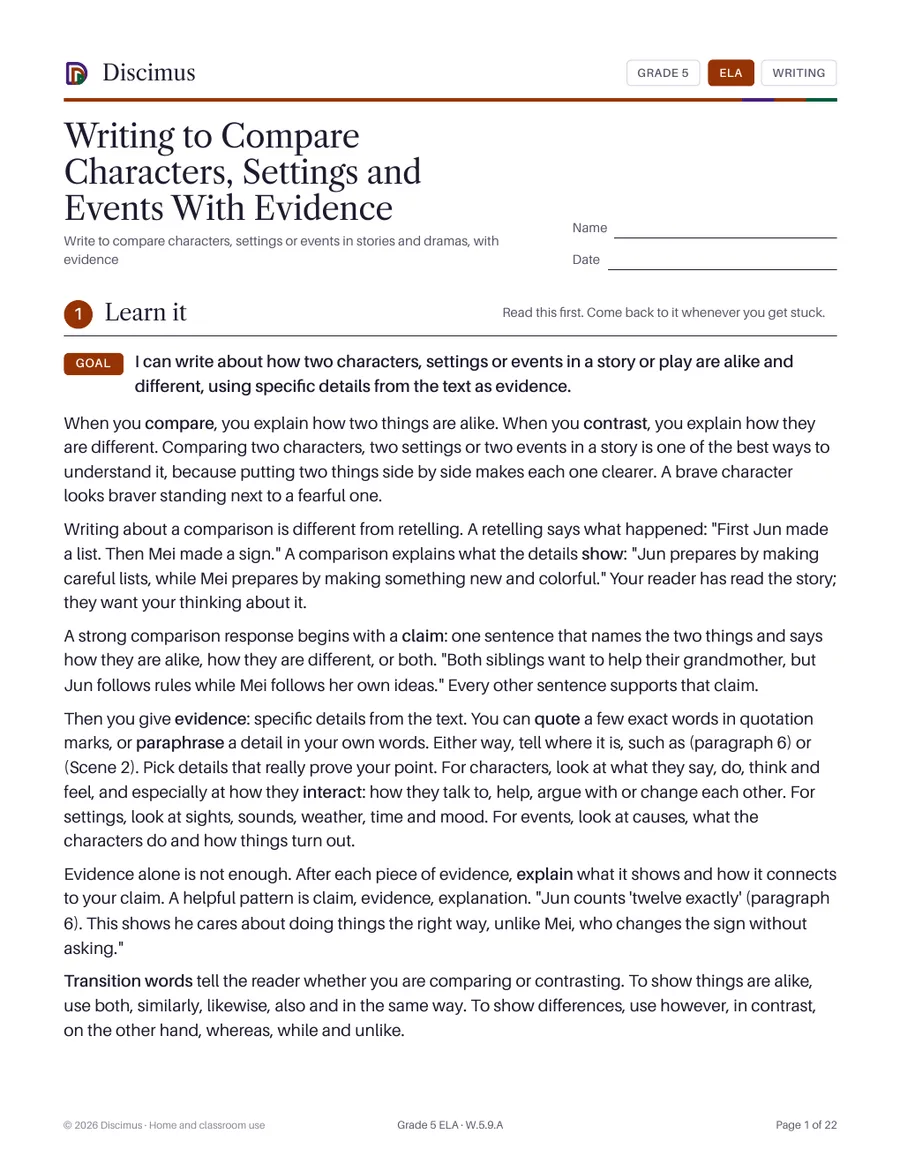
Write to compare characters, settings or events in stories and dramas, with evidence
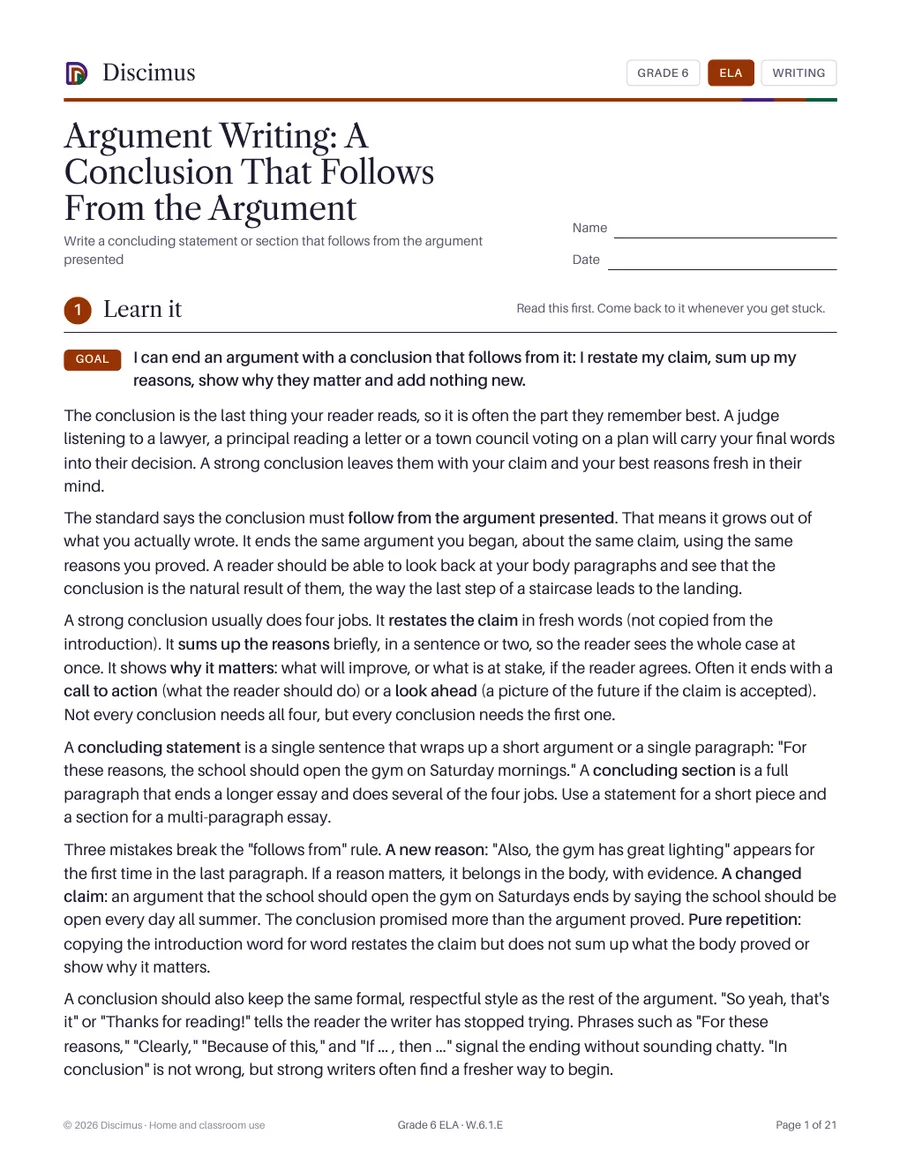
Write a concluding statement or section that follows from the argument presented
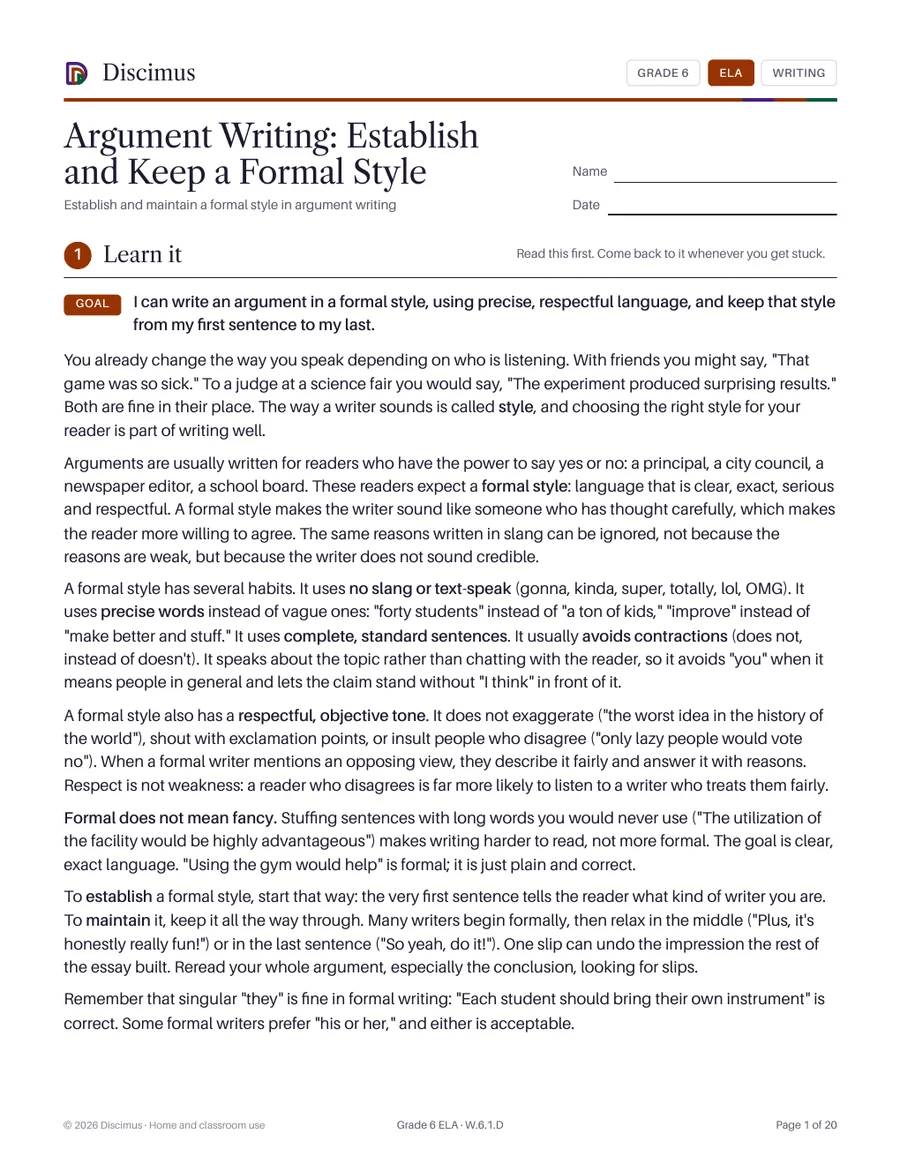
Establish and maintain a formal style in argument writing
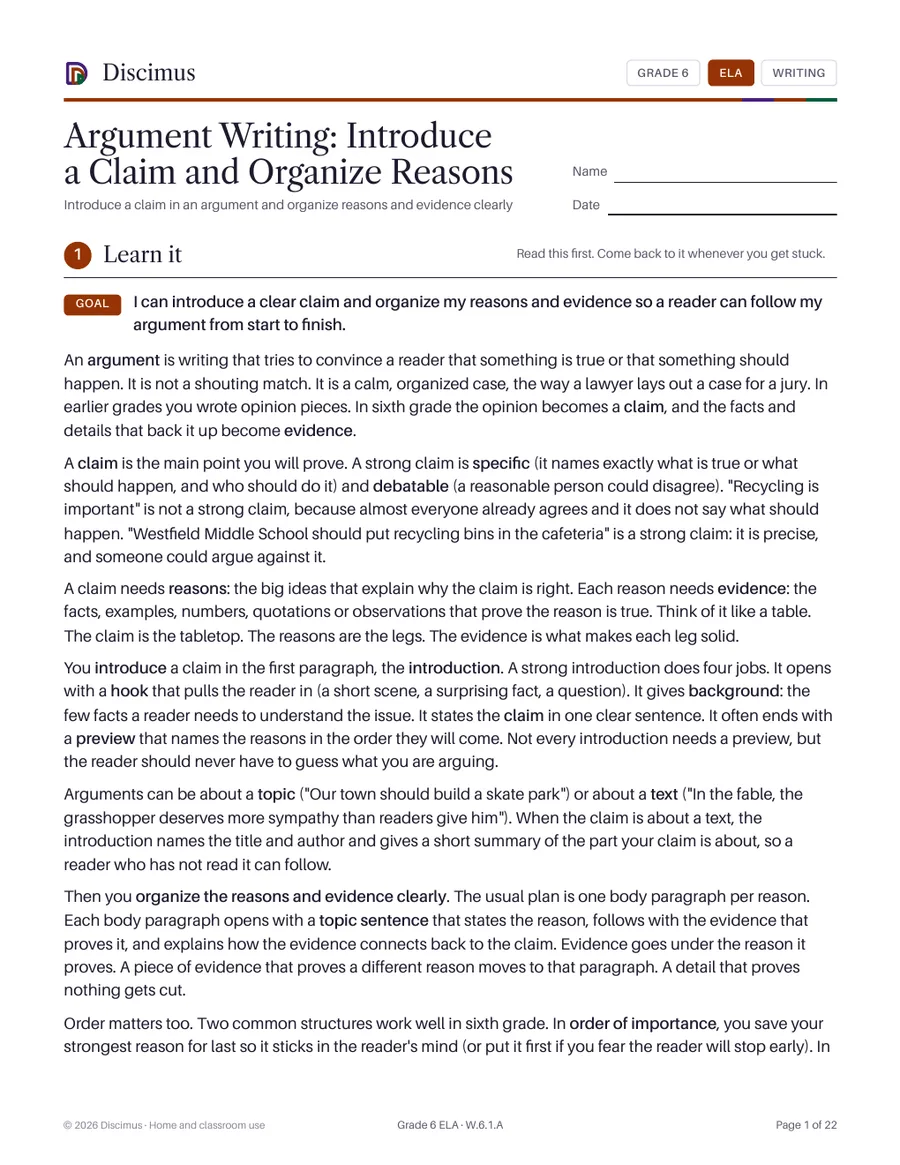
Introduce a claim in an argument and organize reasons and evidence clearly
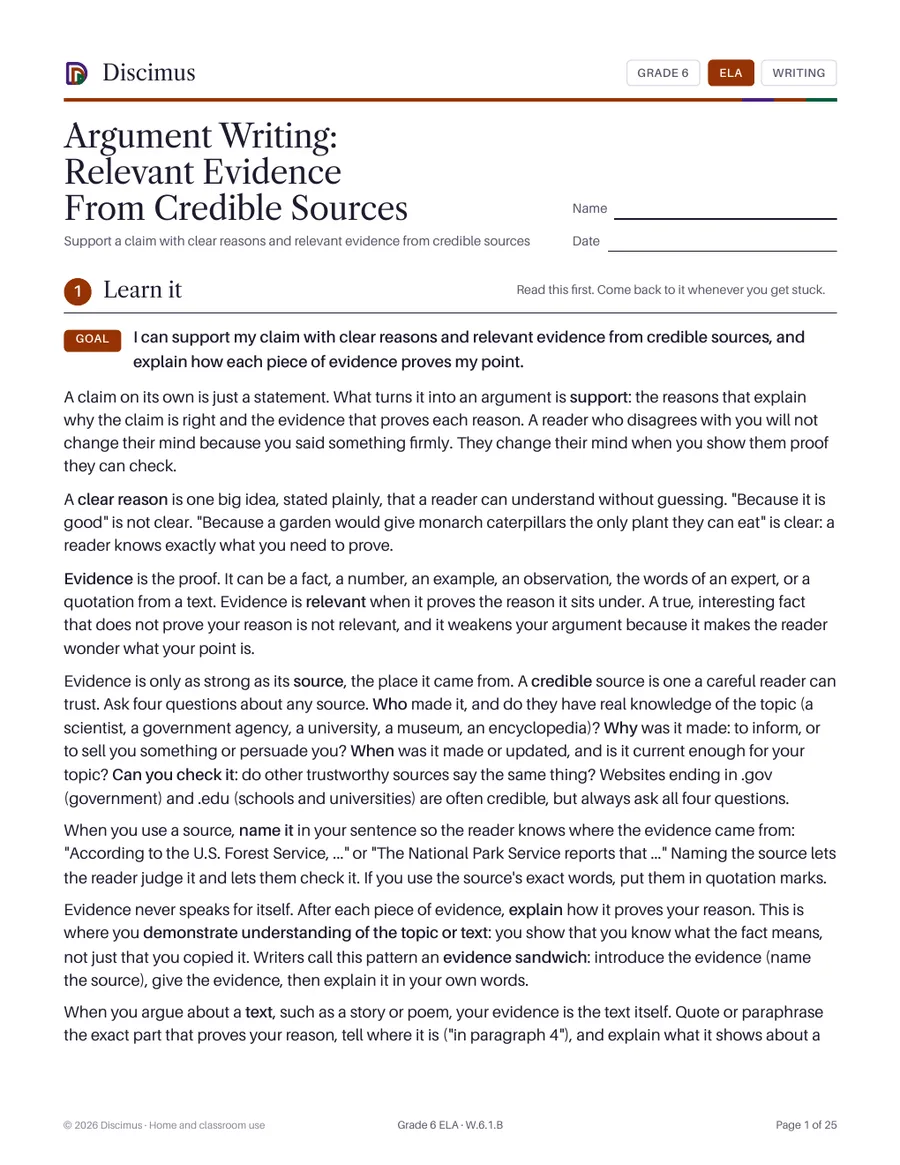
Support a claim with clear reasons and relevant evidence from credible sources
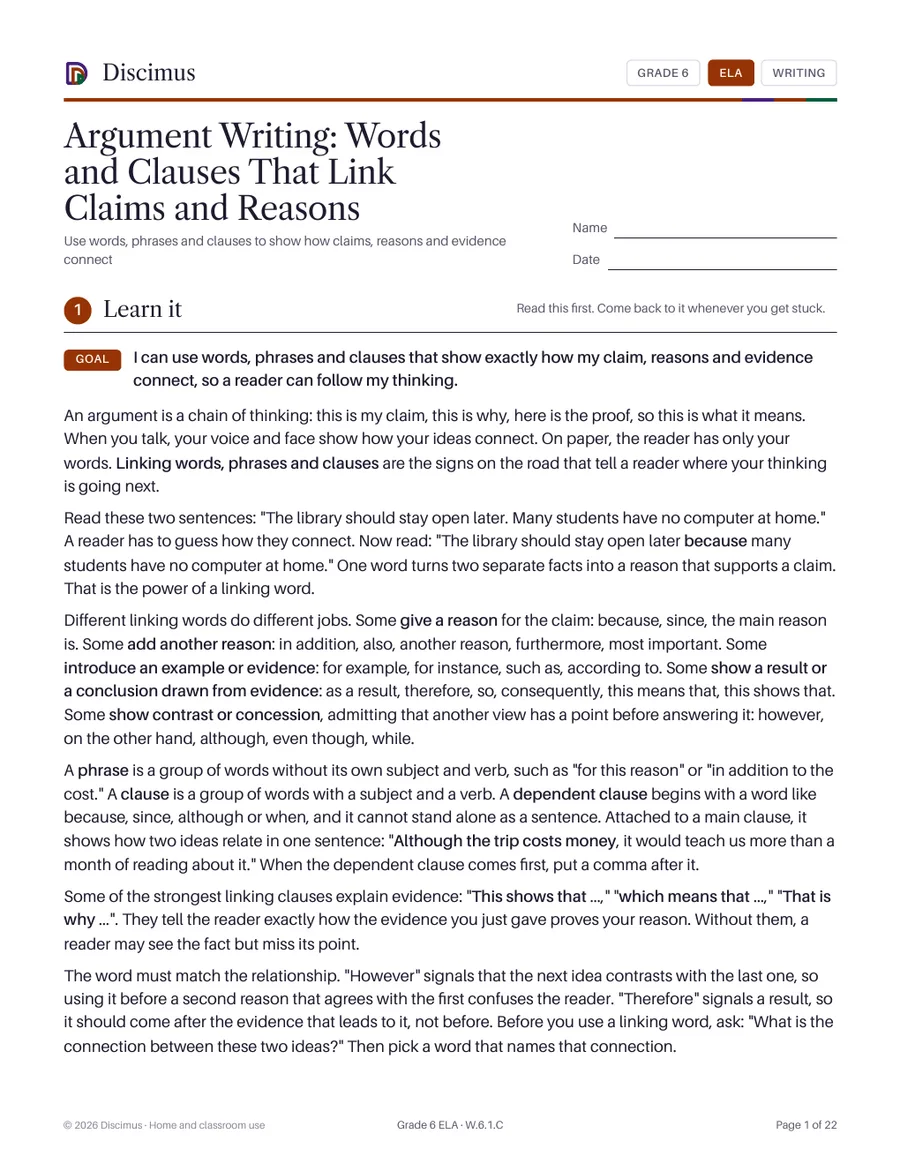
Use words, phrases and clauses to show how claims, reasons and evidence connect
Choose development, organization and style that fit the task, purpose and audience
Strengthen writing by planning, revising, editing, rewriting or trying a new approach
Write a concluding statement or section that follows from the information or explanation
Develop a topic with relevant facts, definitions, details, quotations and examples
Establish and maintain a formal style in informative writing
Introduce a topic; organize by definition, classification, comparison or cause and effect
Use precise language and domain-specific vocabulary to inform about or explain a topic
Use transitions that make the relationships between ideas clear in informative writing
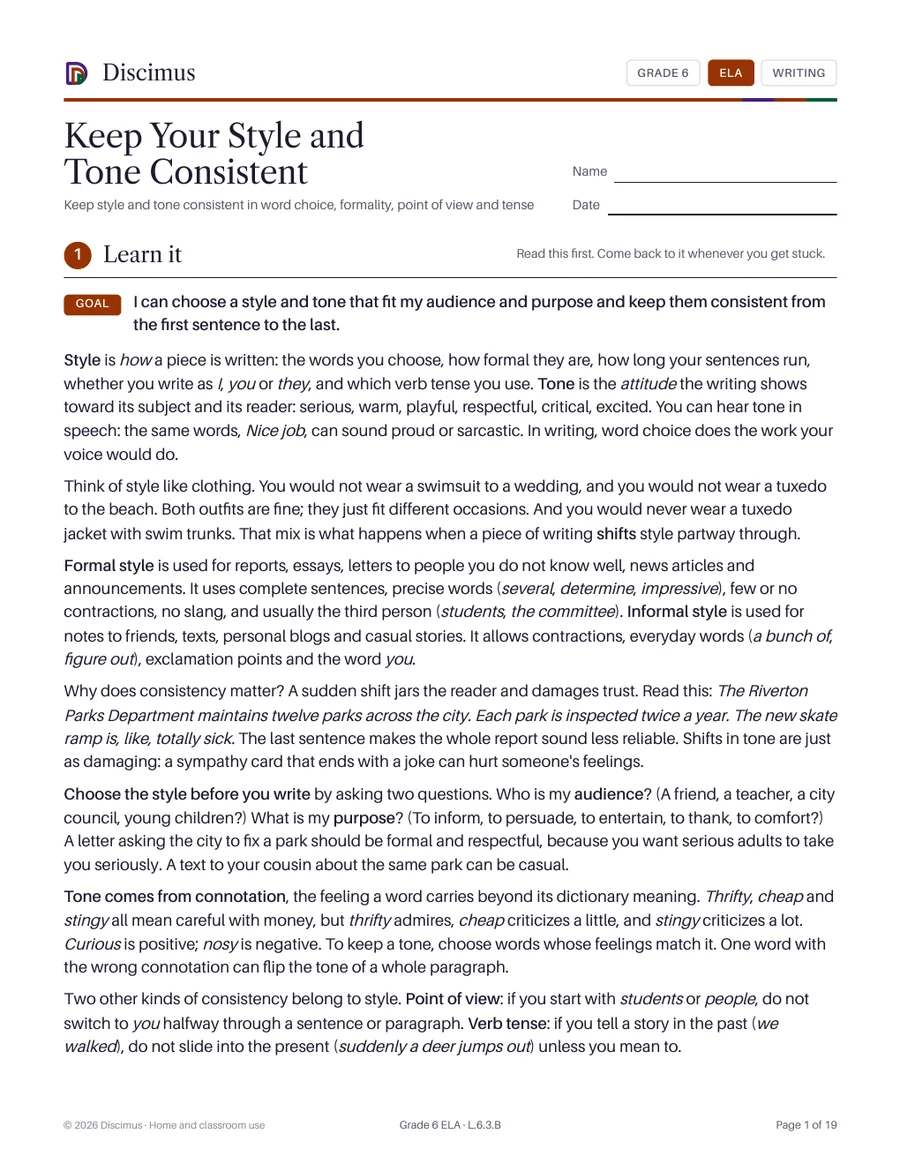
Keep style and tone consistent in word choice, formality, point of view and tense
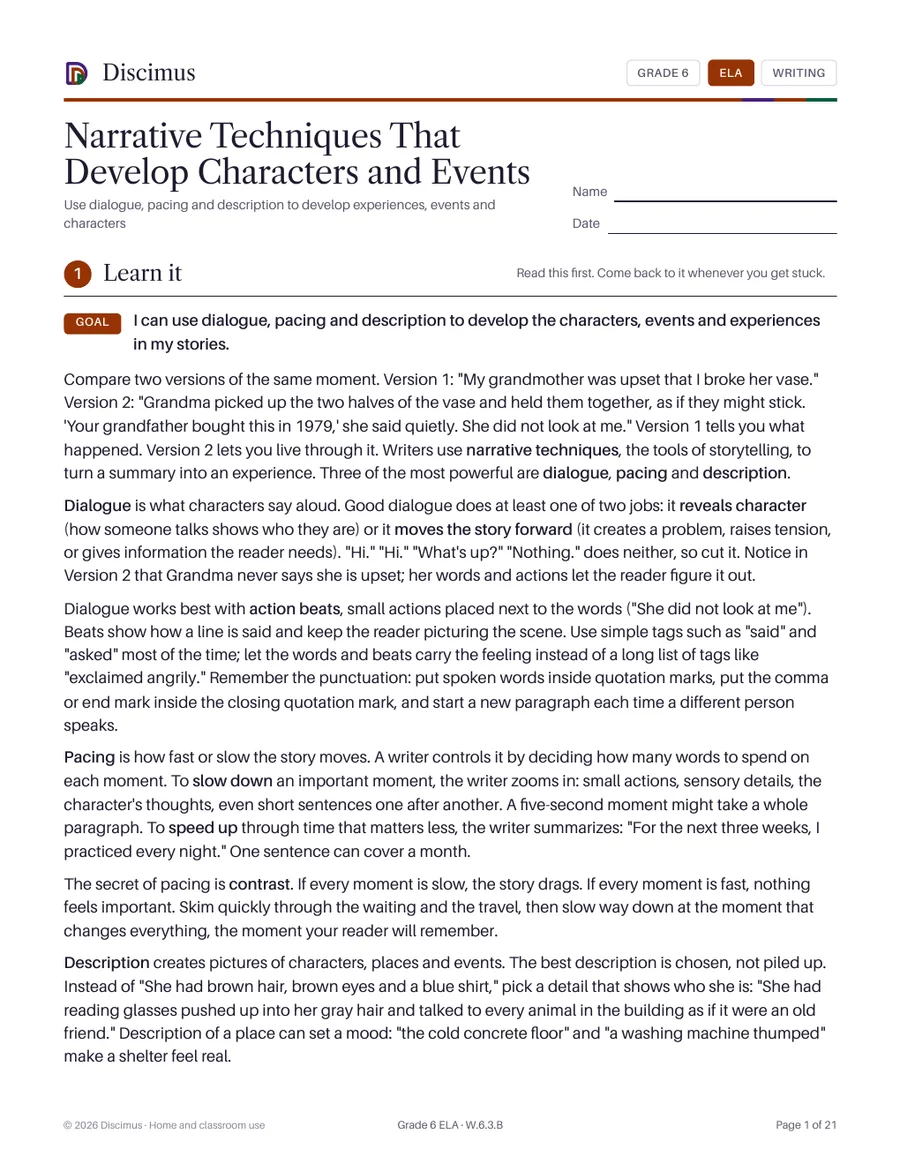
Use dialogue, pacing and description to develop experiences, events and characters
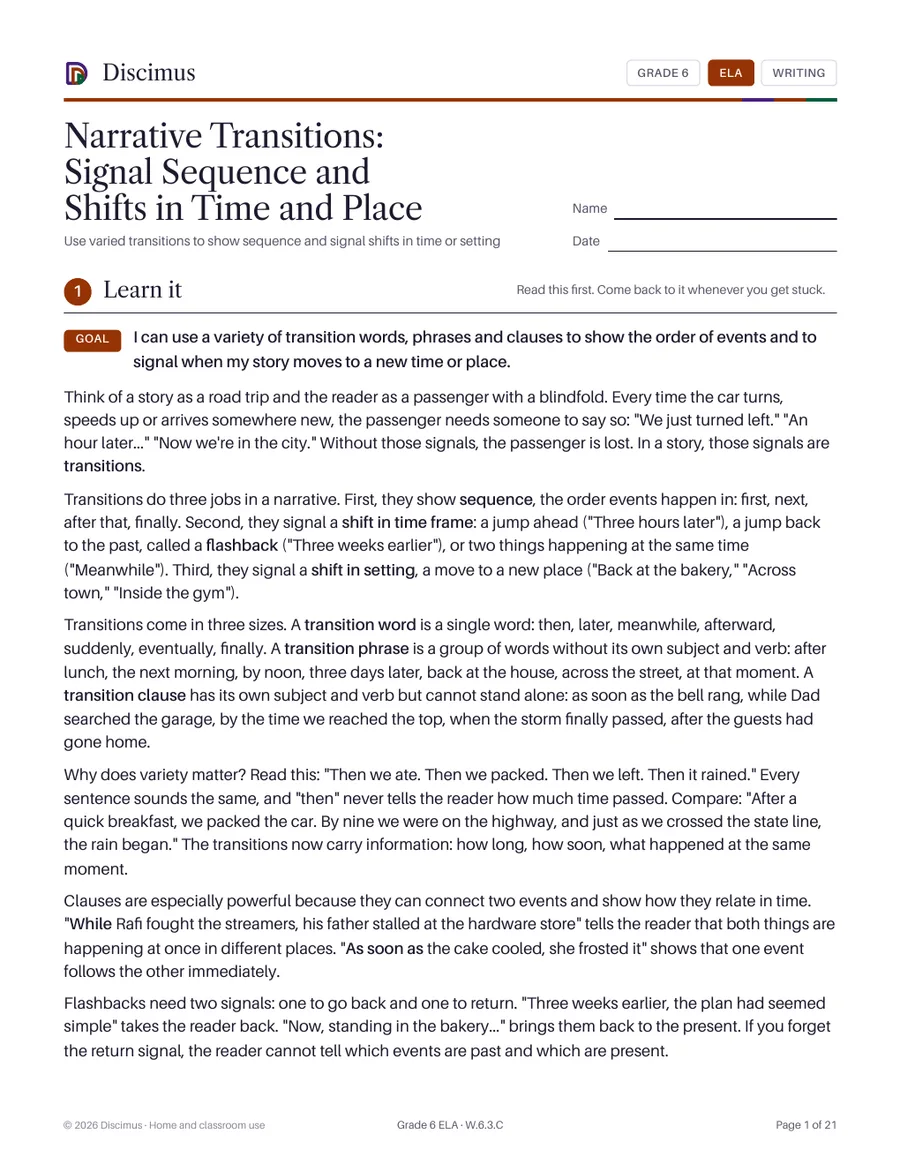
Use varied transitions to show sequence and signal shifts in time or setting
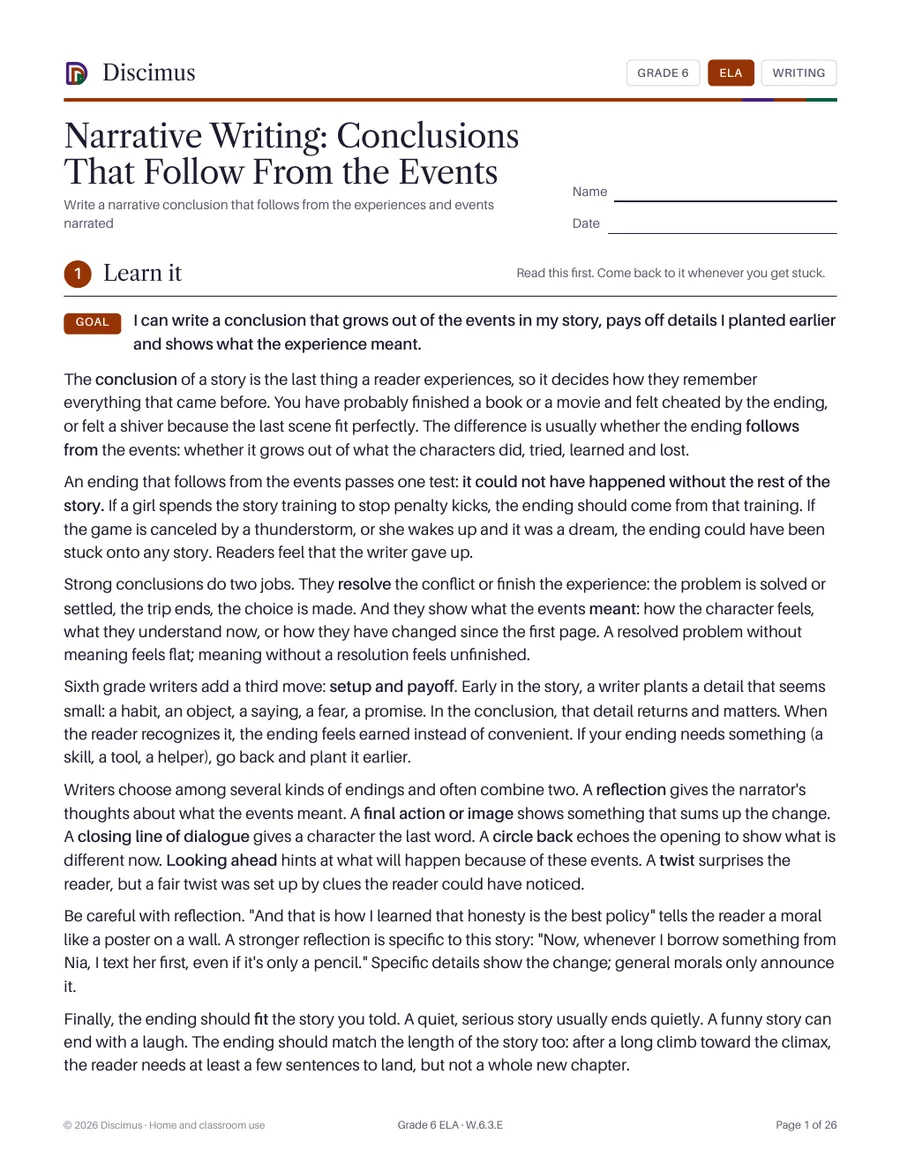
Write a narrative conclusion that follows from the experiences and events narrated
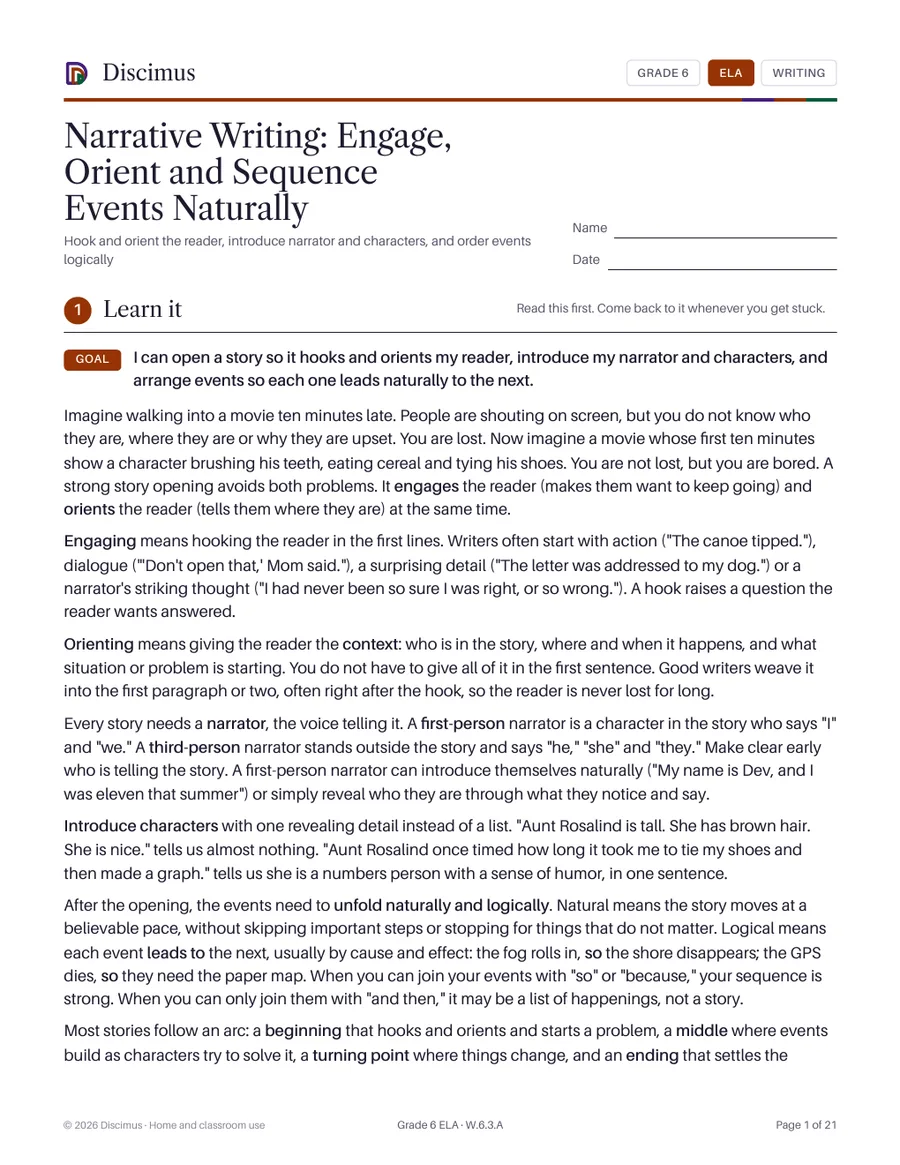
Hook and orient the reader, introduce narrator and characters, and order events logically
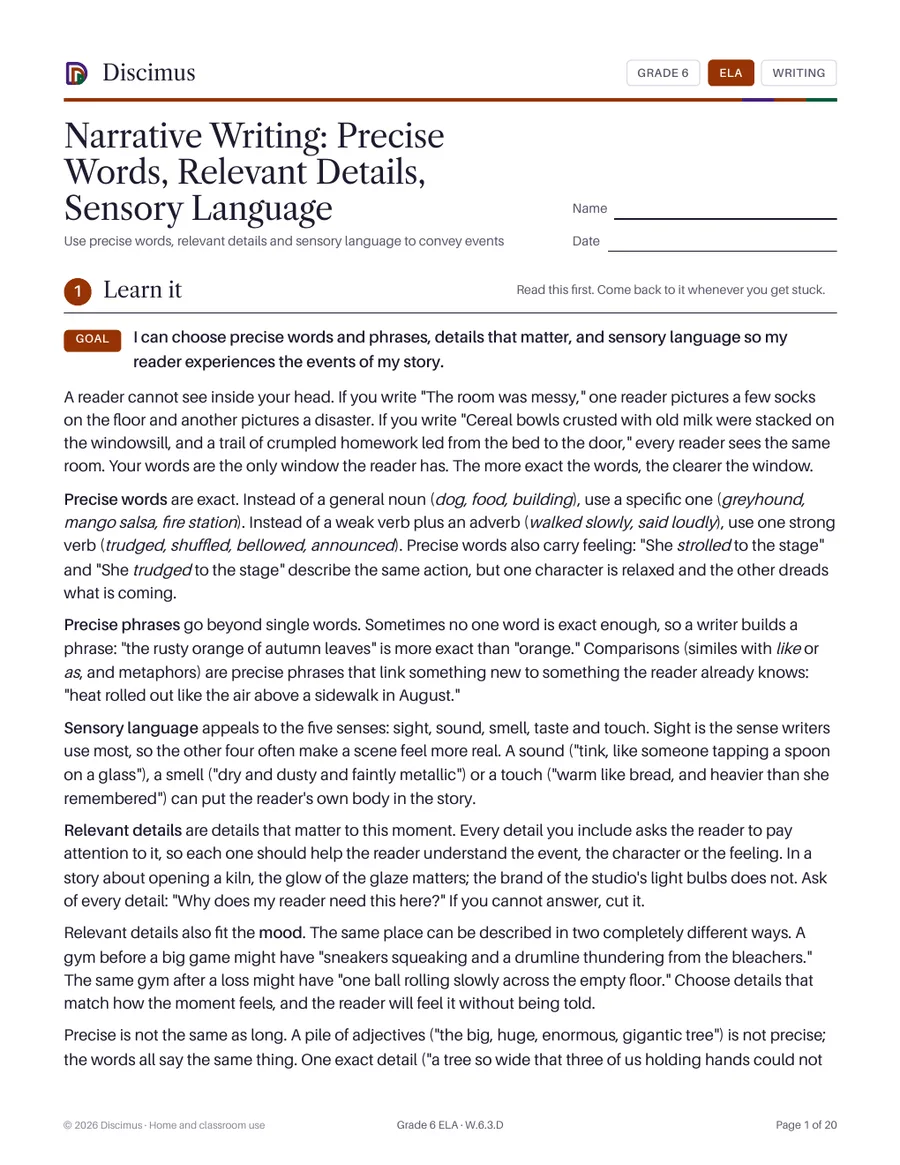
Use precise words, relevant details and sensory language to convey events
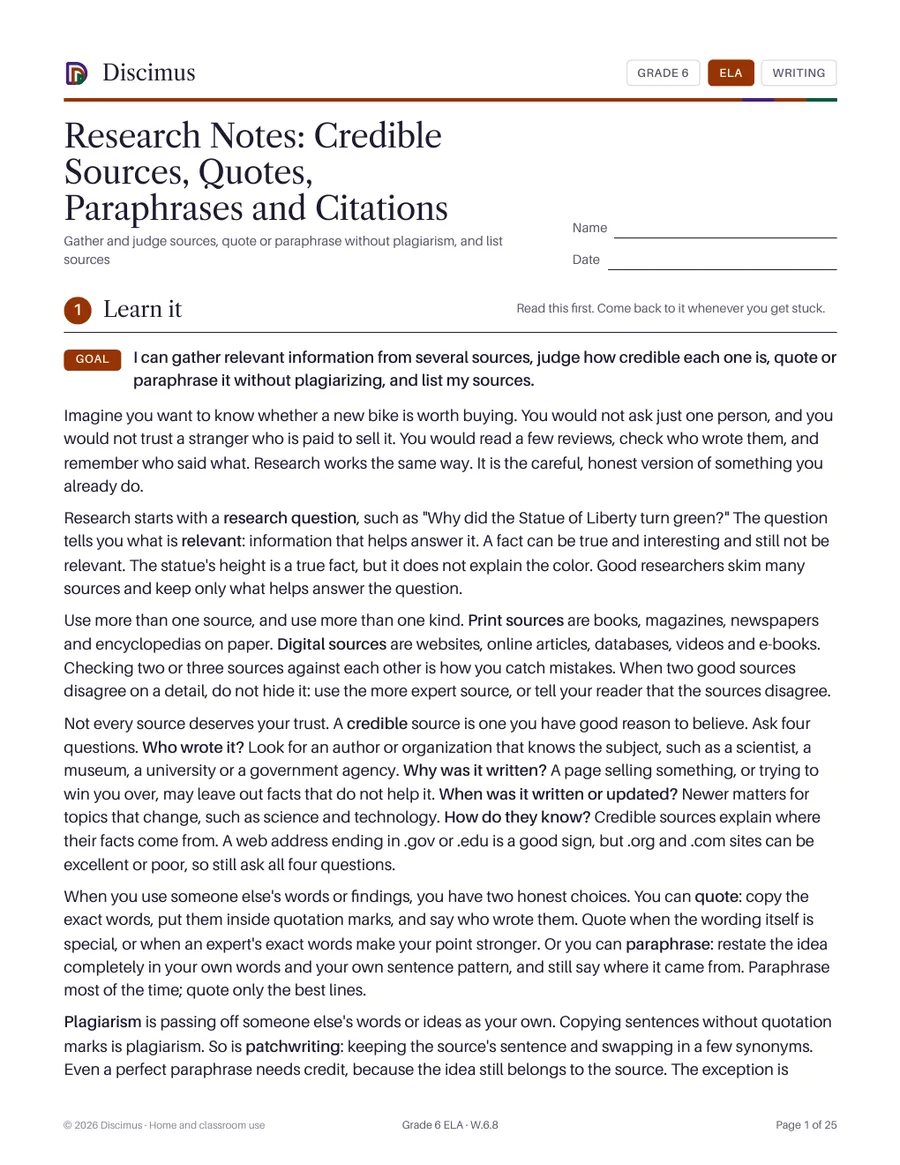
Gather and judge sources, quote or paraphrase without plagiarism, and list sources
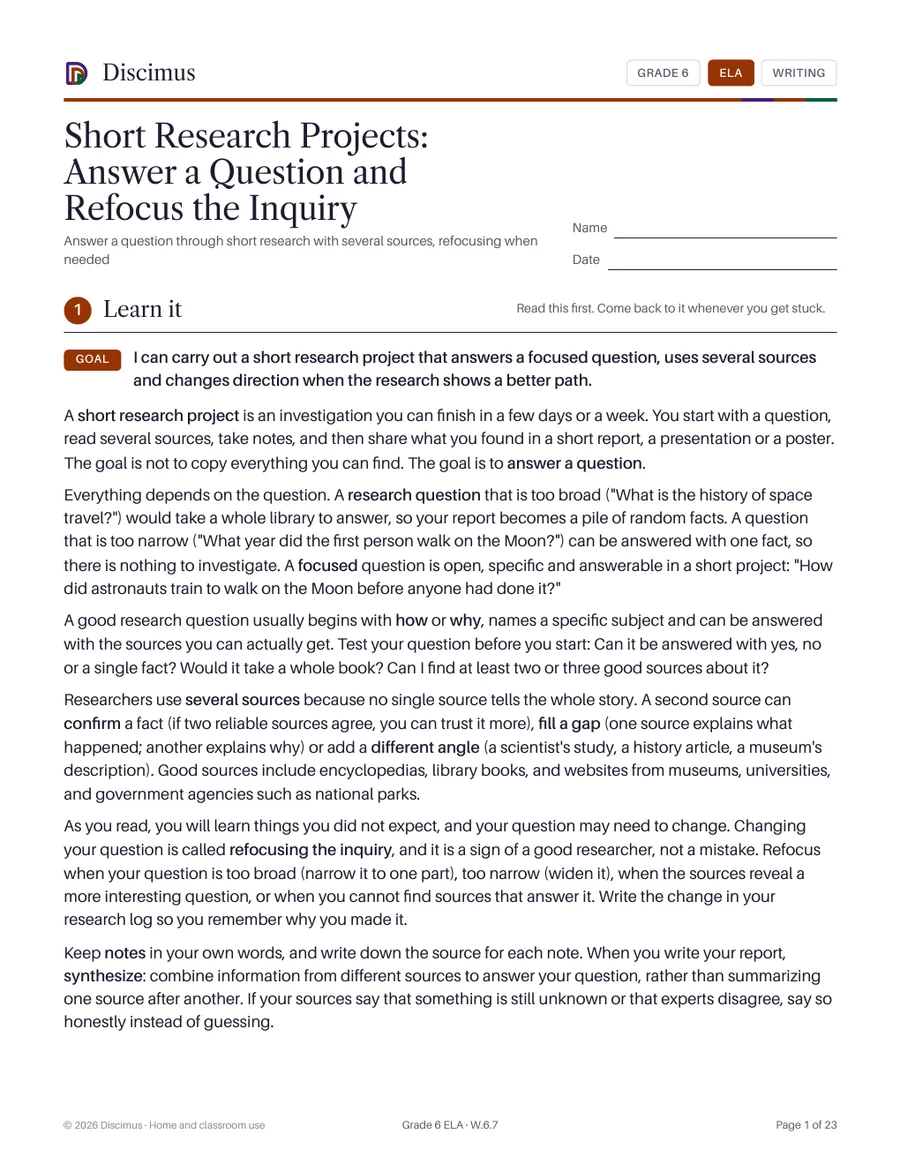
Answer a question through short research with several sources, refocusing when needed
Use technology to publish and collaborate, and type three pages in one sitting
Write an evaluation of an argument, citing which claims are supported and which are not
Write to compare how texts in different genres approach a similar theme, citing evidence
Write routinely in short and extended time frames for varied subjects, purposes, readers
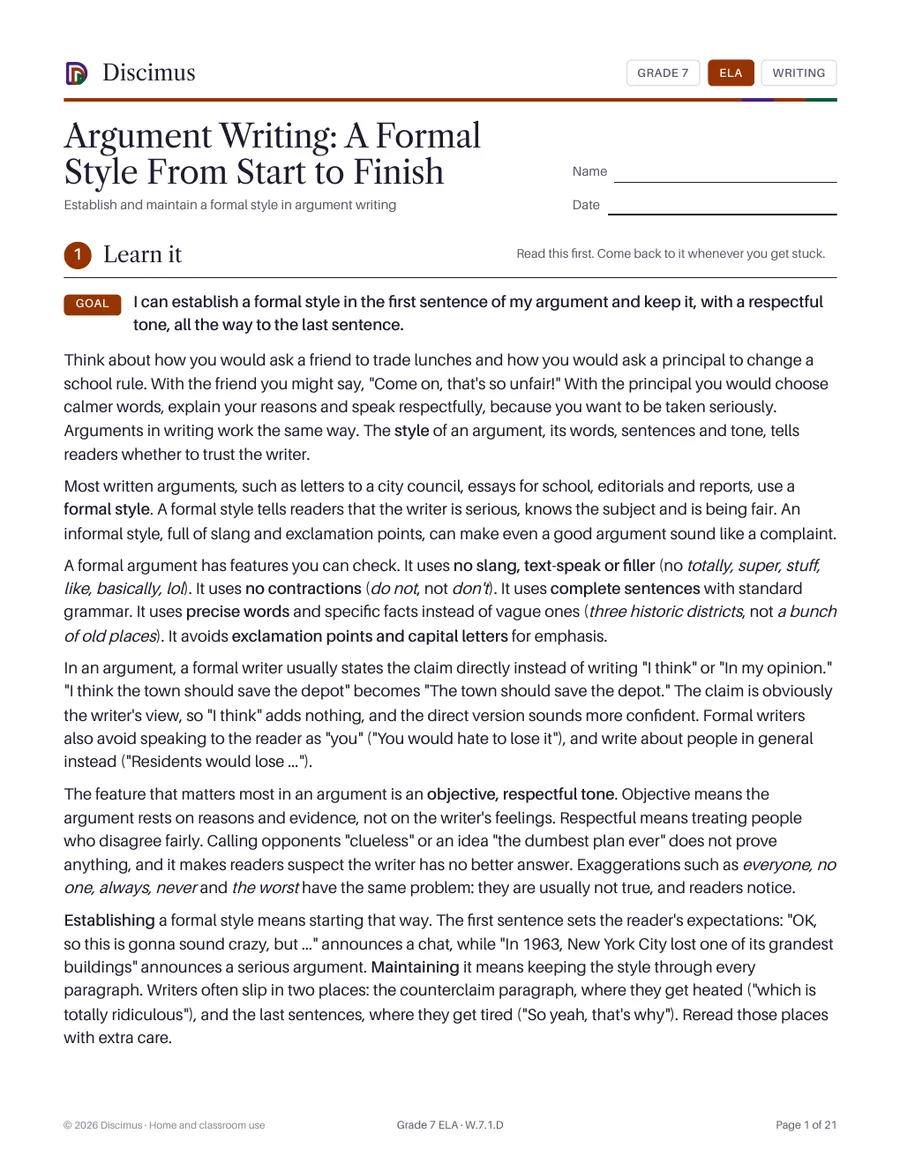
Establish and maintain a formal style in argument writing
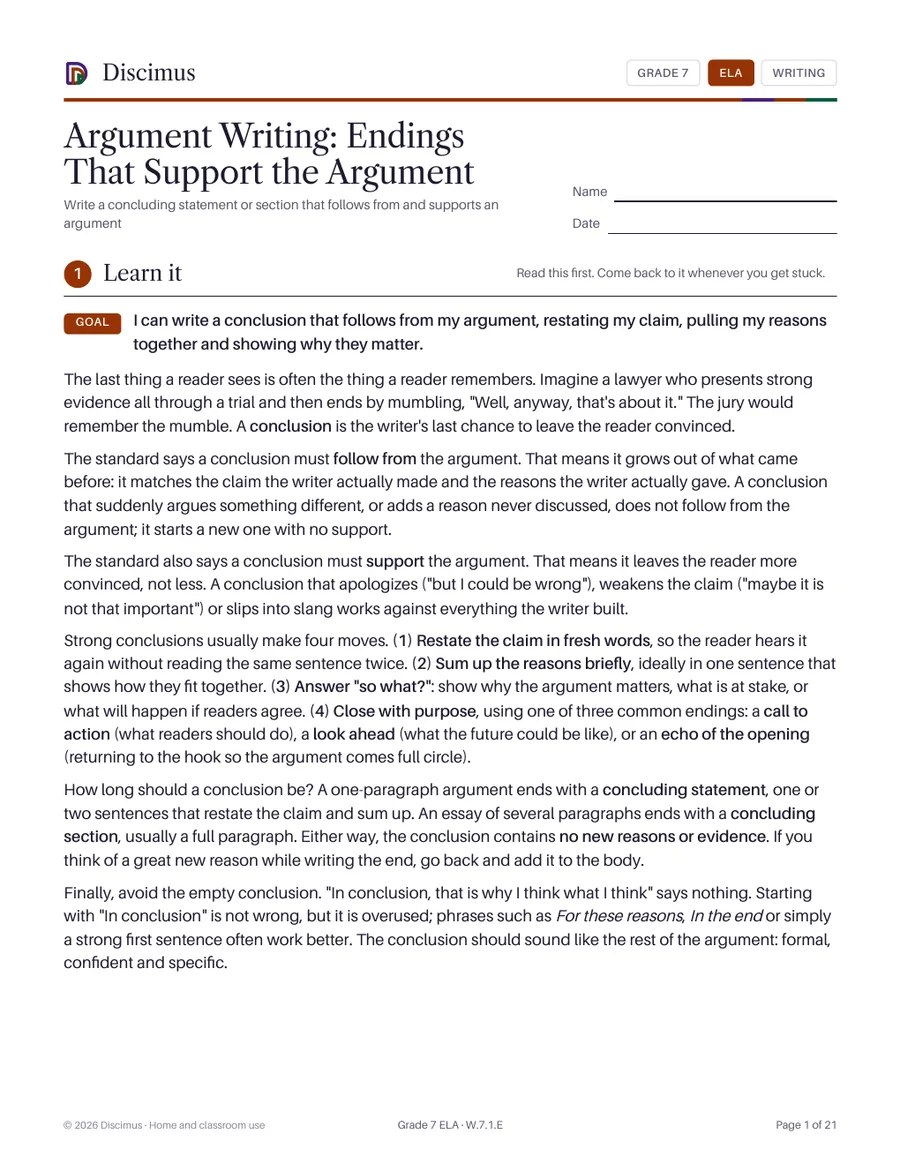
Write a concluding statement or section that follows from and supports an argument
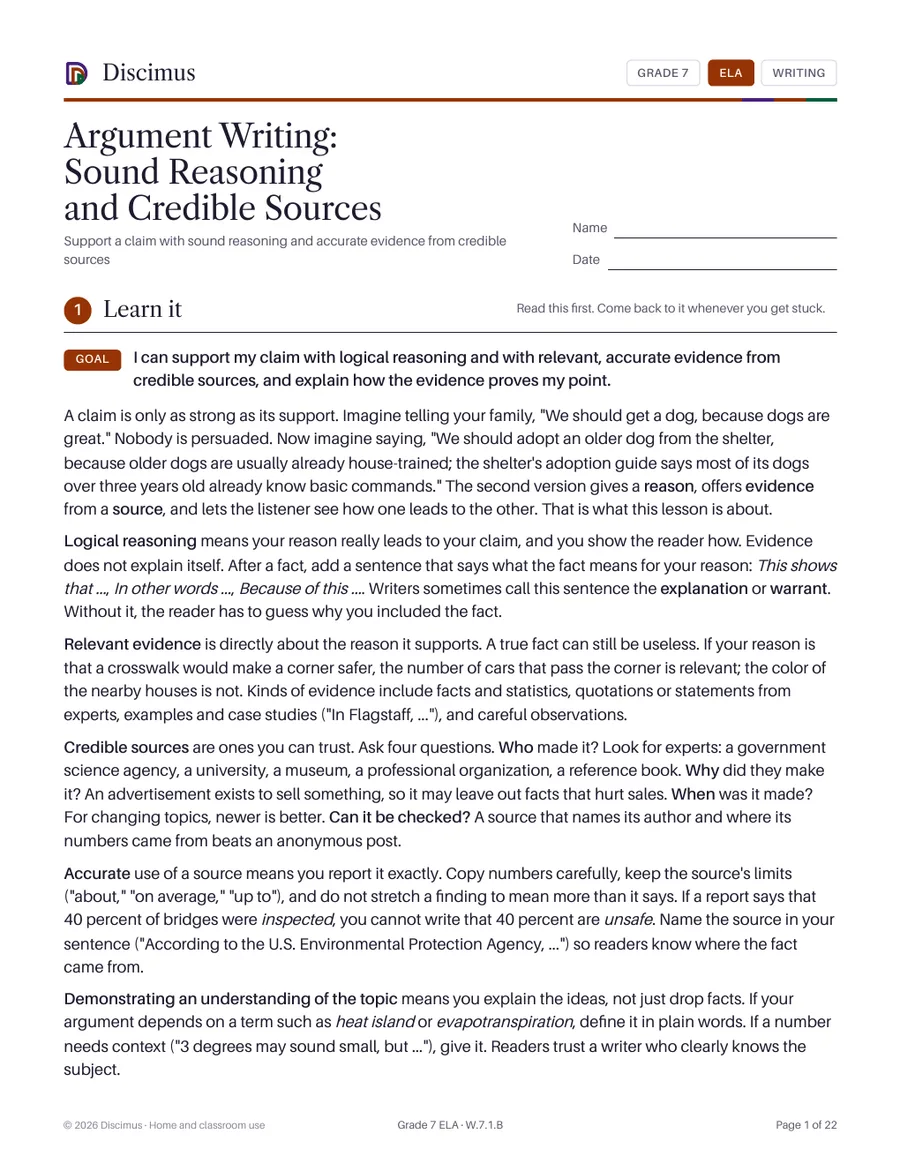
Support a claim with sound reasoning and accurate evidence from credible sources
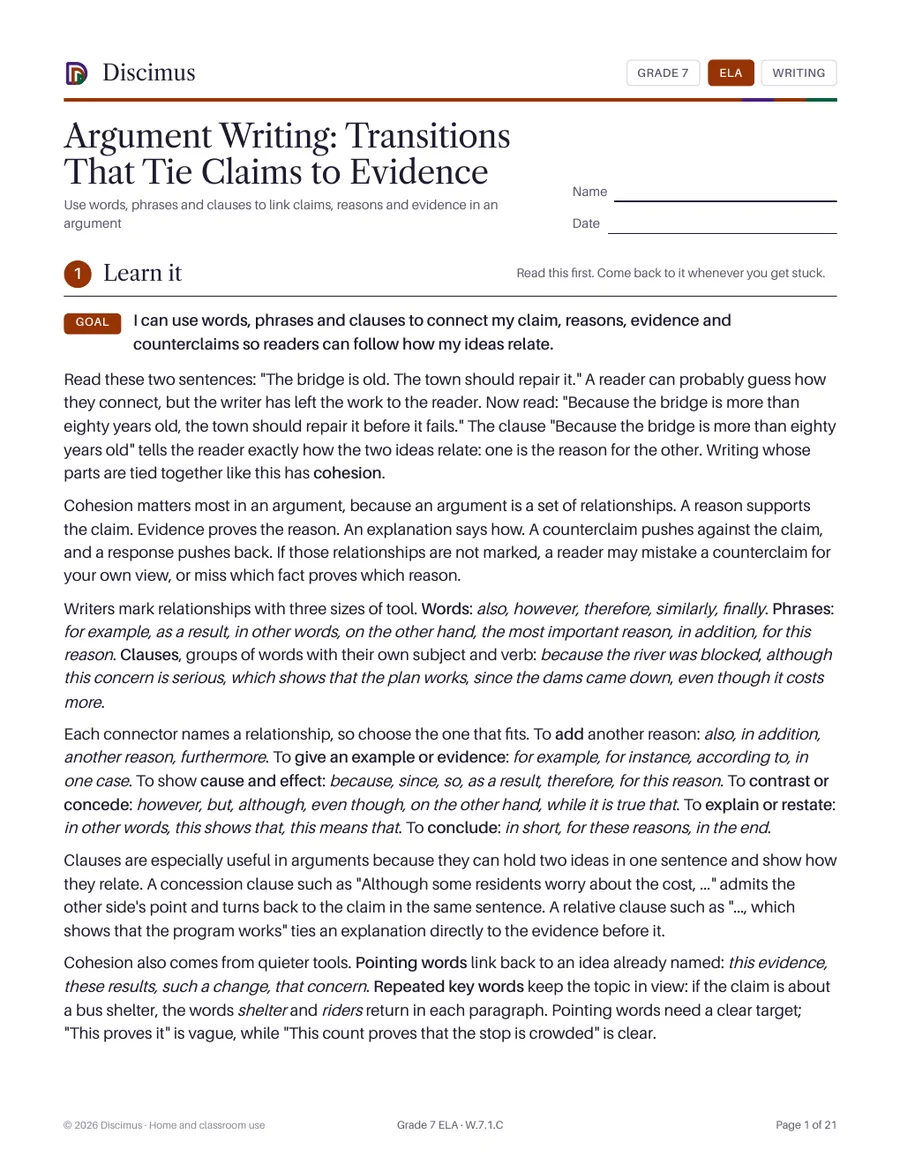
Use words, phrases and clauses to link claims, reasons and evidence in an argument
Introduce a claim, acknowledge opposing claims and organize reasons and evidence logically
Fit development, organization and style to task, purpose and audience
Develop a topic with relevant facts, definitions, details, quotations and examples
Use precise language and domain-specific vocabulary to inform about or explain a topic
Preview a topic; organize by definition, classification, comparison or cause and effect
Establish and maintain a formal style in explanatory writing
Use transitions to create cohesion and show how ideas and concepts relate
Write a concluding statement or section that follows from and supports an explanation
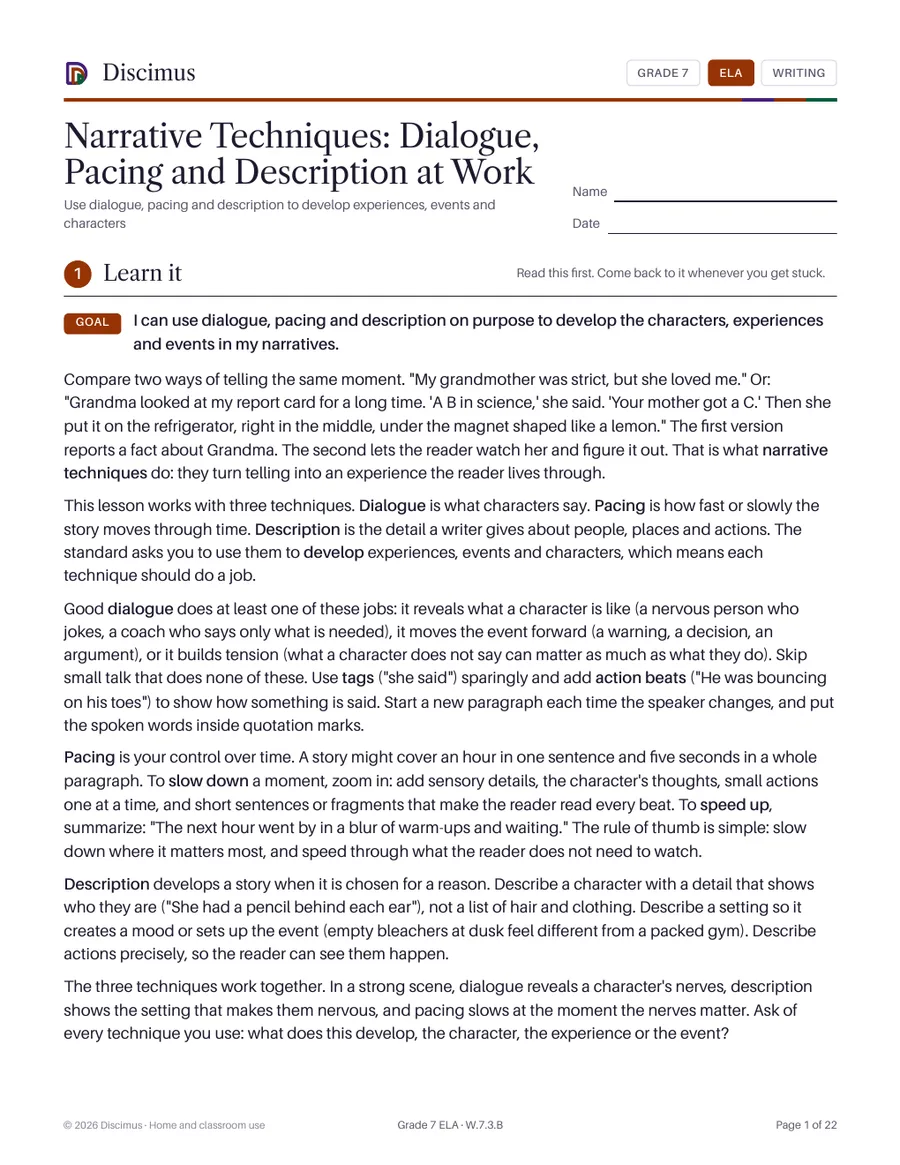
Use dialogue, pacing and description to develop experiences, events and characters
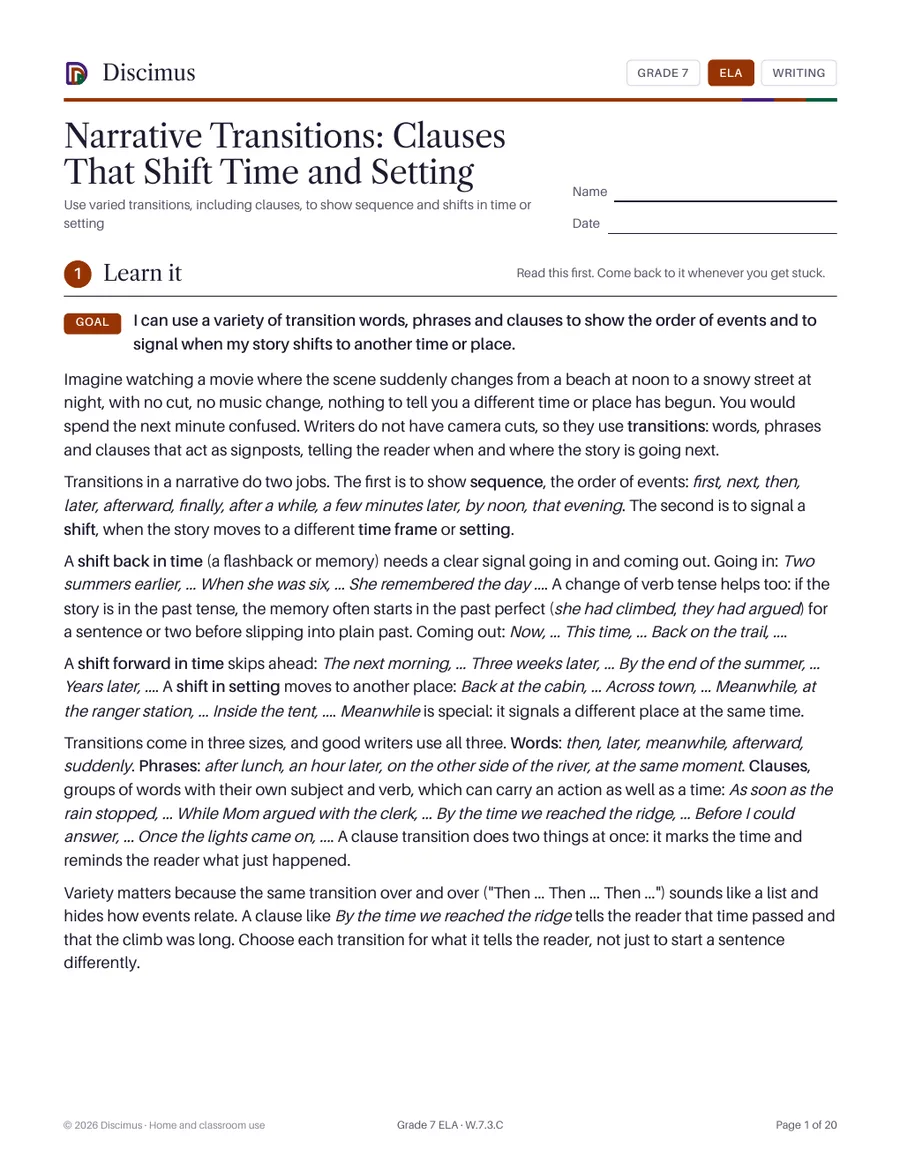
Use varied transitions, including clauses, to show sequence and shifts in time or setting
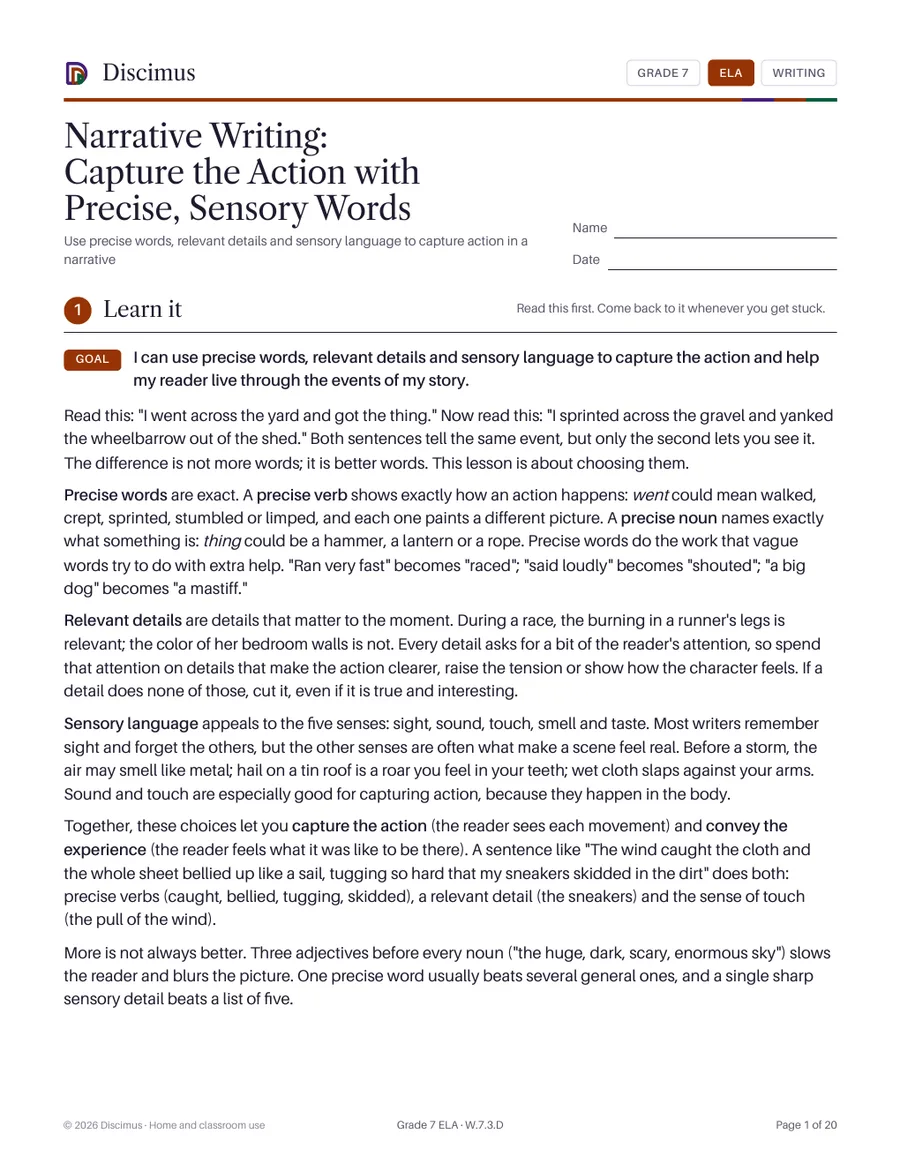
Use precise words, relevant details and sensory language to capture action in a narrative
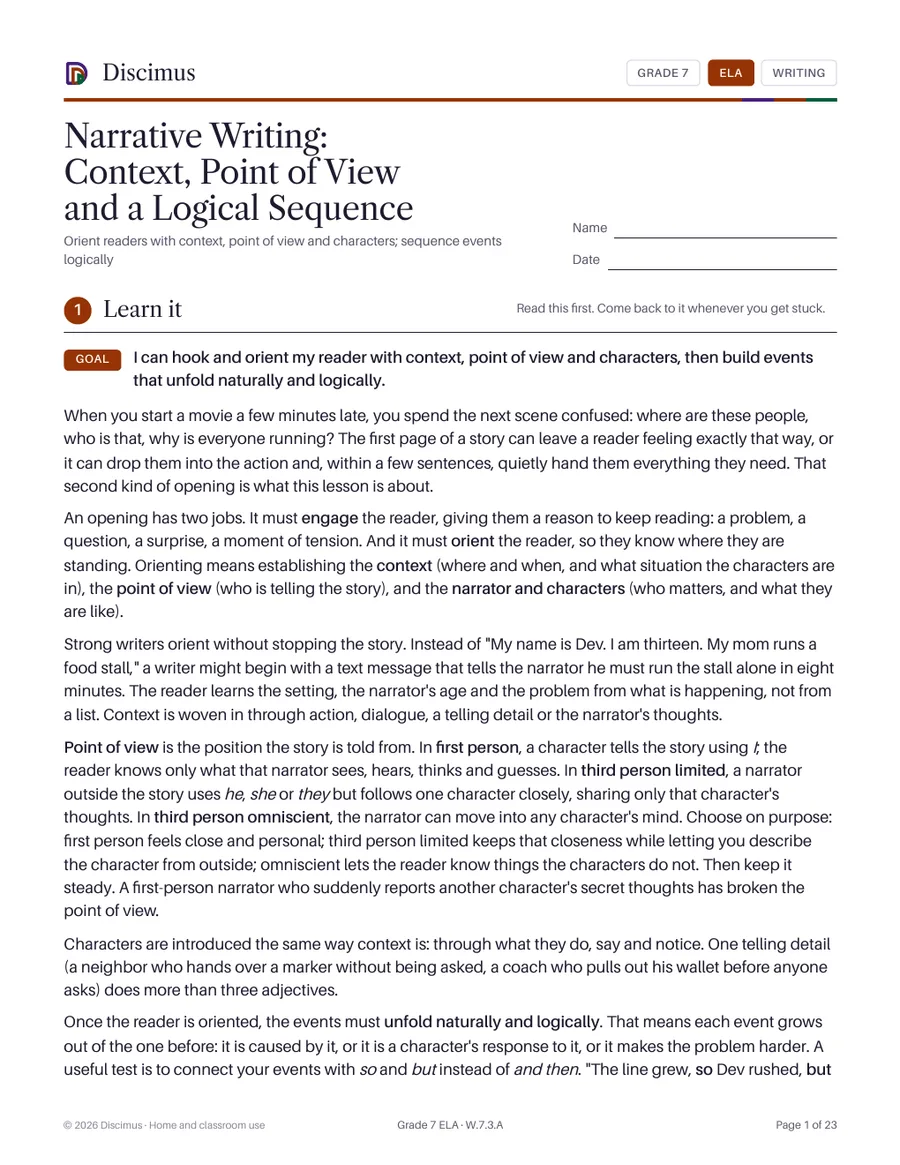
Orient readers with context, point of view and characters; sequence events logically
Write a narrative conclusion that follows from and reflects on the narrated events
Publish writing online with linked, cited sources and collaborate respectfully
Search effectively, judge credibility and accuracy, quote or paraphrase, and cite in MLA
Choose precise, concise language by recognizing and cutting wordiness and redundancy
Research a focused question in several sources and generate new focused questions
Strengthen writing by planning, revising, editing and rewriting for purpose and audience
Compare a story and a historical account in writing: how the author uses or alters history
Write in short and extended time frames for different subjects, purposes and audiences
Write an evaluation of an argument: trace its claims and judge its reasoning and evidence
Establish and maintain a formal style in argument writing
Introduce a claim, distinguish it from other claims, and order reasons logically
Write a concluding statement or section that follows from and supports the argument
Use words, phrases and clauses to link claims, counterclaims, reasons and evidence
Support a claim with logical reasoning and relevant evidence from credible sources
Write conclusions that follow from and support history, science and technical explanations
Draw and explain evidence from informational texts for analysis, reflection and research
Develop a topic with relevant facts, definitions, details, quotations and examples
Establish and maintain a formal style in explanatory writing
Use precise language and domain-specific vocabulary to explain a topic
Introduce and preview a topic; group information into broader categories with headings
Use varied transitions to create cohesion and show how ideas and concepts relate
Choose development, organization and style that fit the task, purpose and audience
Establish and maintain a formal style in a history, science or technical argument
Write a conclusion that follows from and supports a history, science or technical argument
Support a history or science claim with sound reasoning and accurate, credible evidence
Introduce a history or science claim, distinguish it from other claims, order the support
Use words, phrases and clauses to link claims, counterclaims, reasons and evidence
Develop a history or science topic with facts, definitions, details, quotations, examples
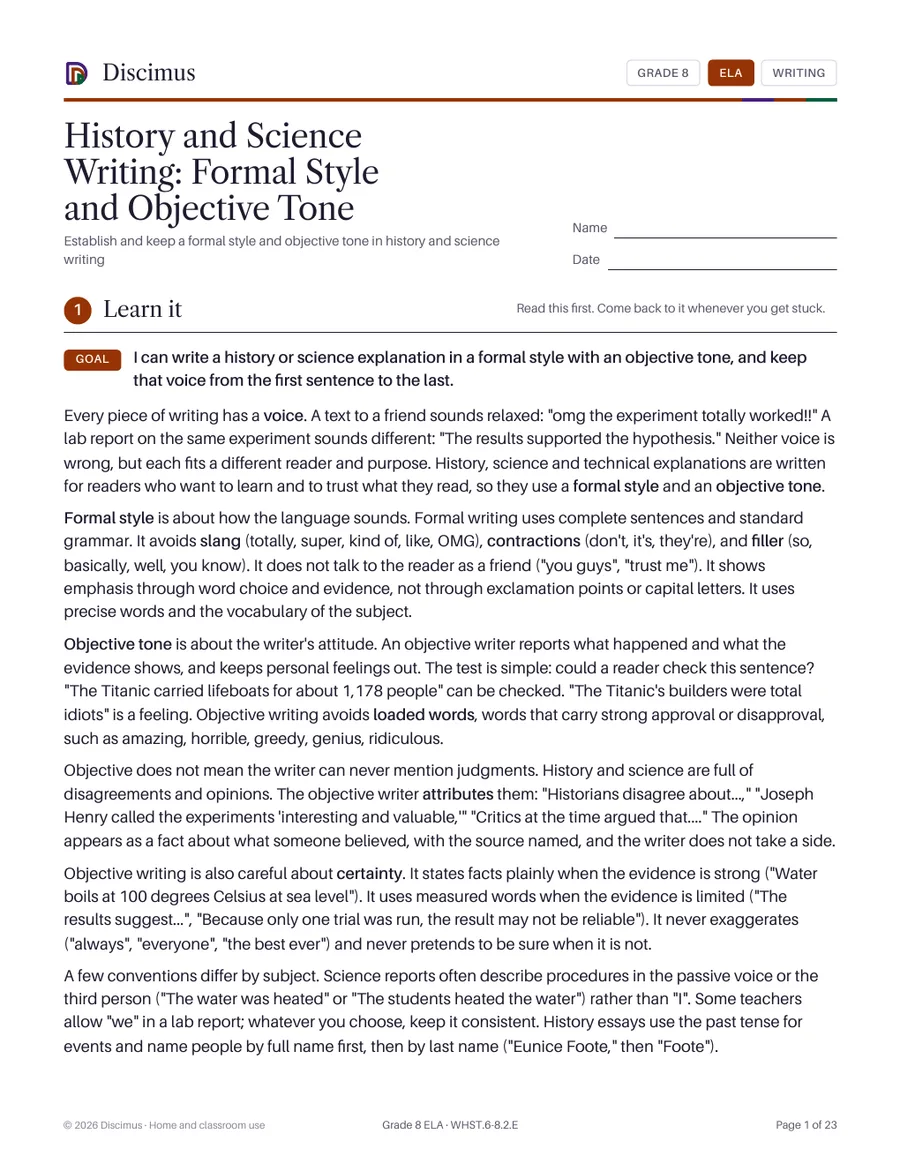
Establish and keep a formal style and objective tone in history and science writing
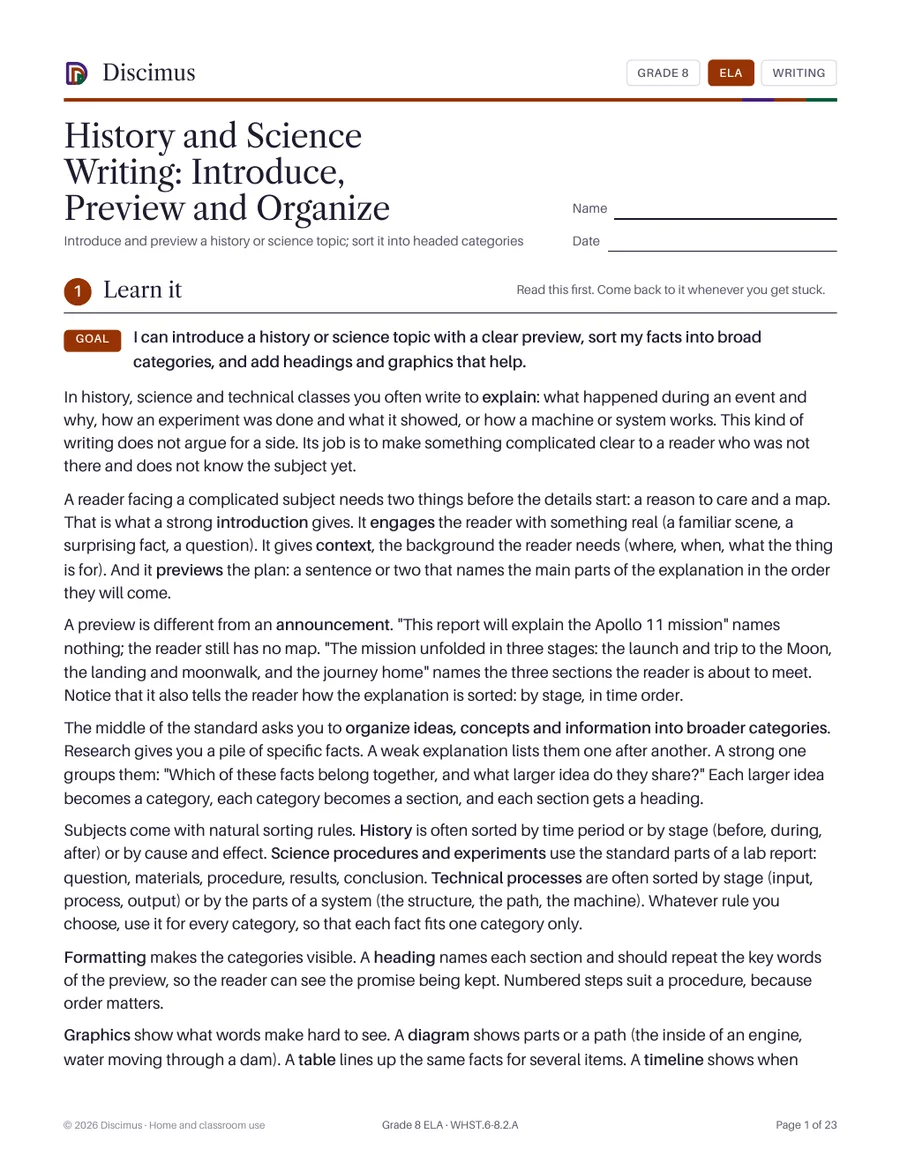
Introduce and preview a history or science topic; sort it into headed categories
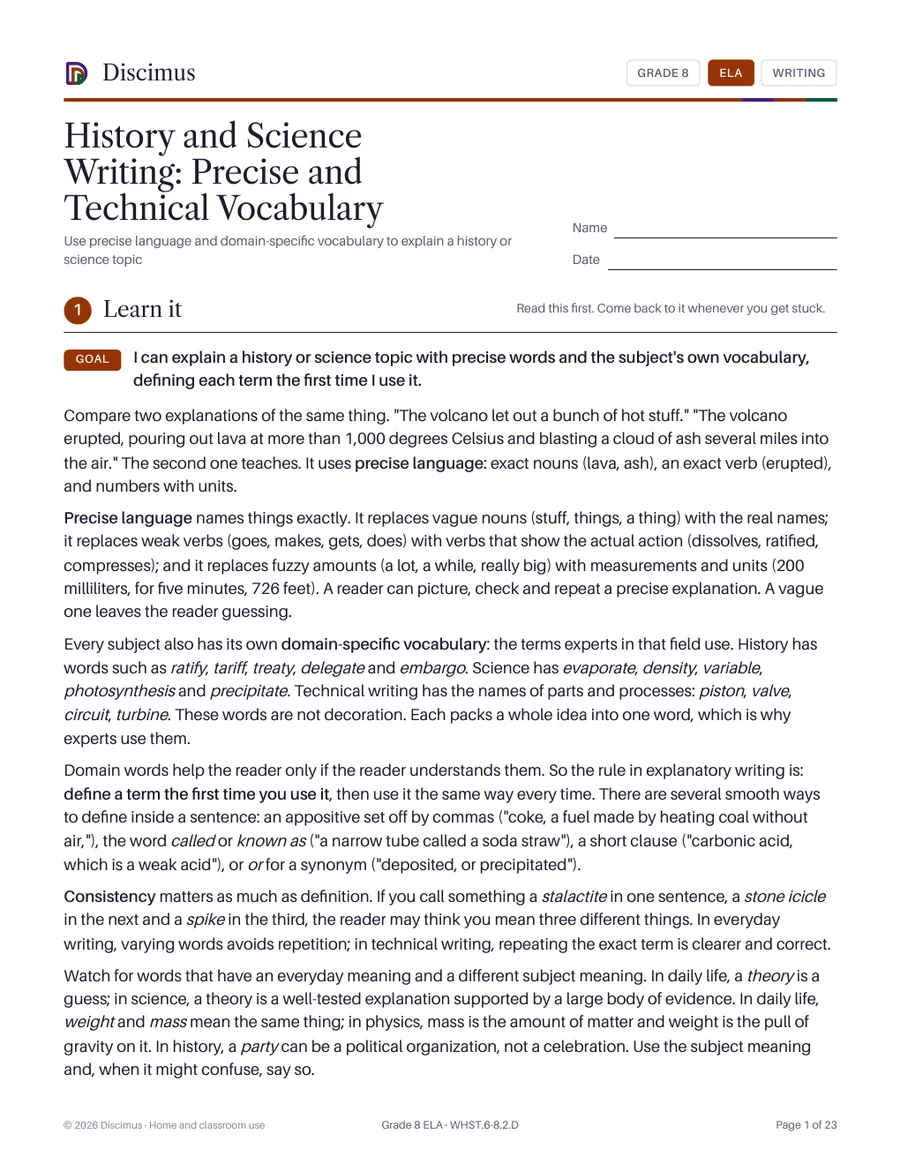
Use precise language and domain-specific vocabulary to explain a history or science topic
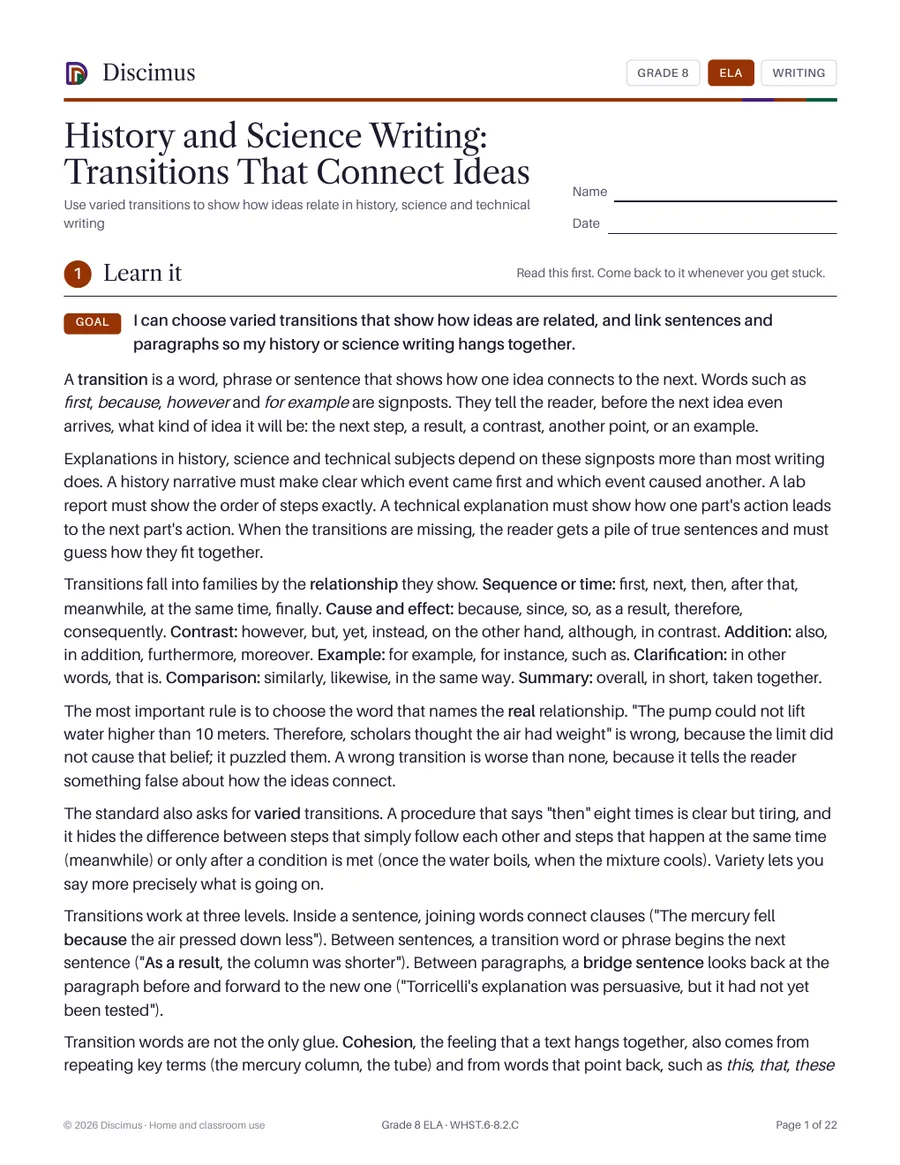
Use varied transitions to show how ideas relate in history, science and technical writing
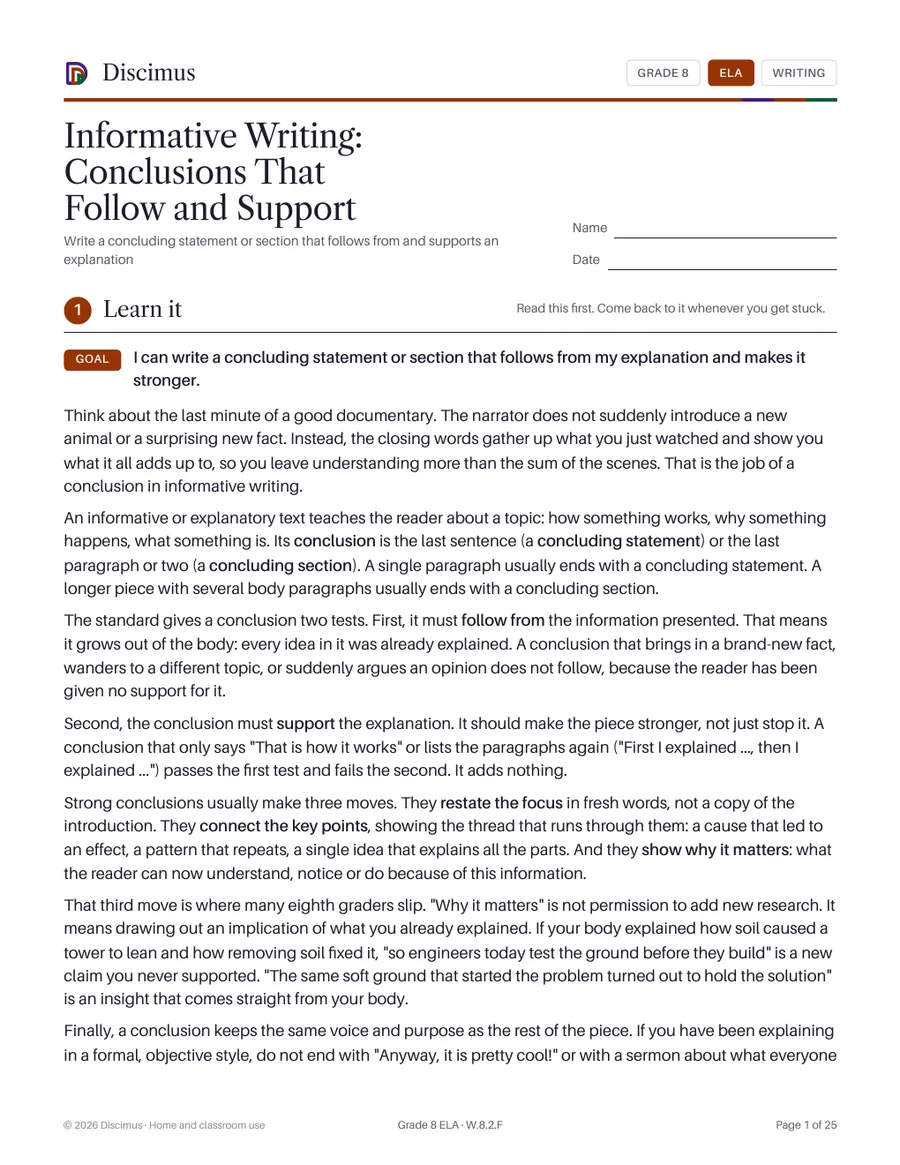
Write a concluding statement or section that follows from and supports an explanation
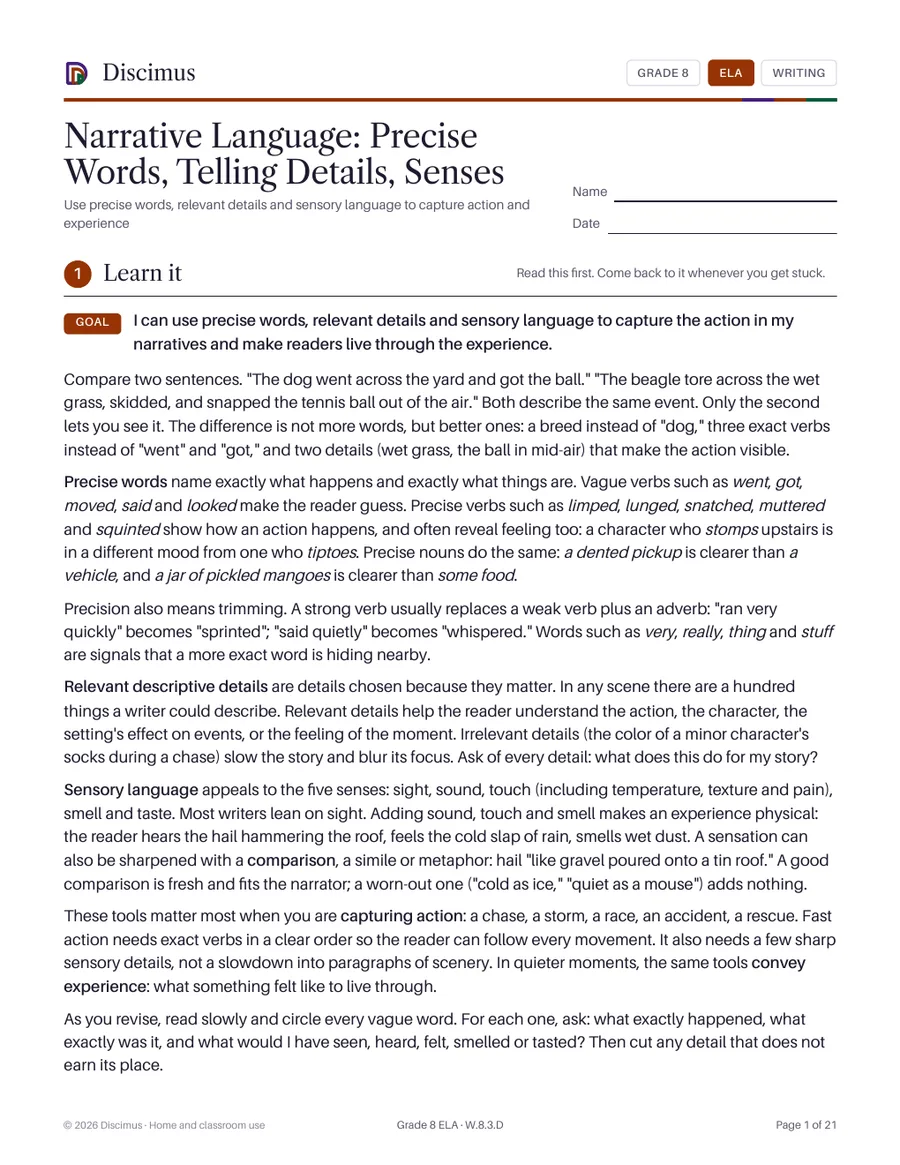
Use precise words, relevant details and sensory language to capture action and experience
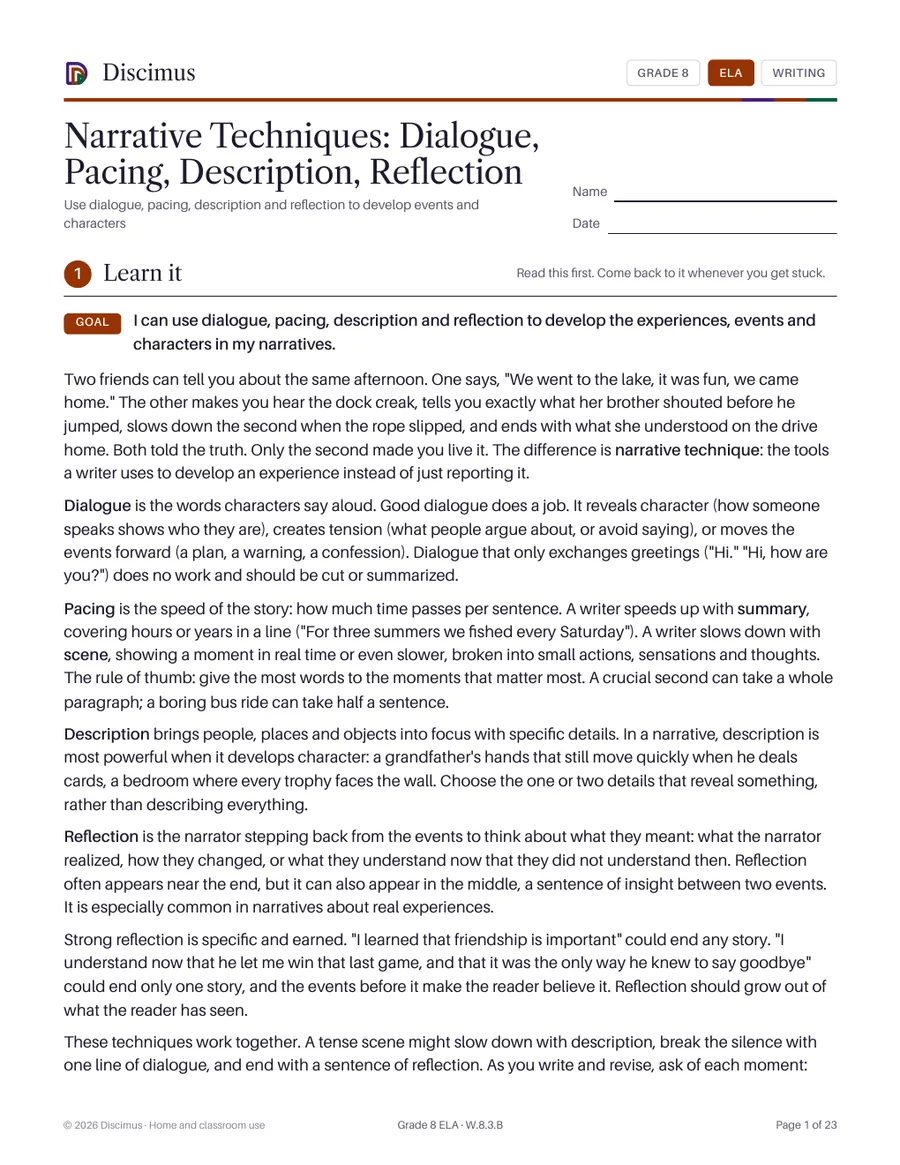
Use dialogue, pacing, description and reflection to develop events and characters
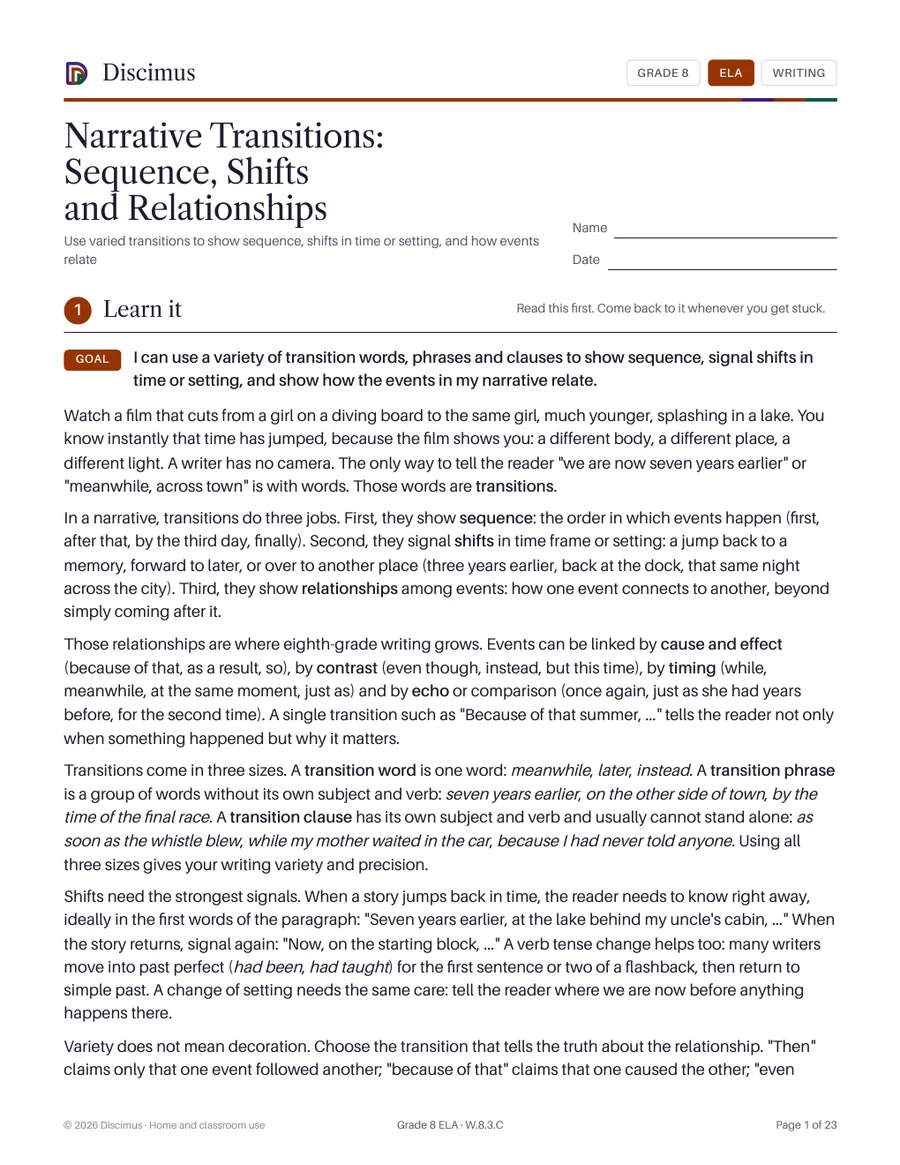
Use varied transitions to show sequence, shifts in time or setting, and how events relate
Write a narrative conclusion that follows from and reflects on the narrated events
Orient readers with context, point of view and characters; sequence events logically
Publish writing with digital tools that show how ideas connect, and collaborate online
Use technology to publish content writing and show how information and ideas connect
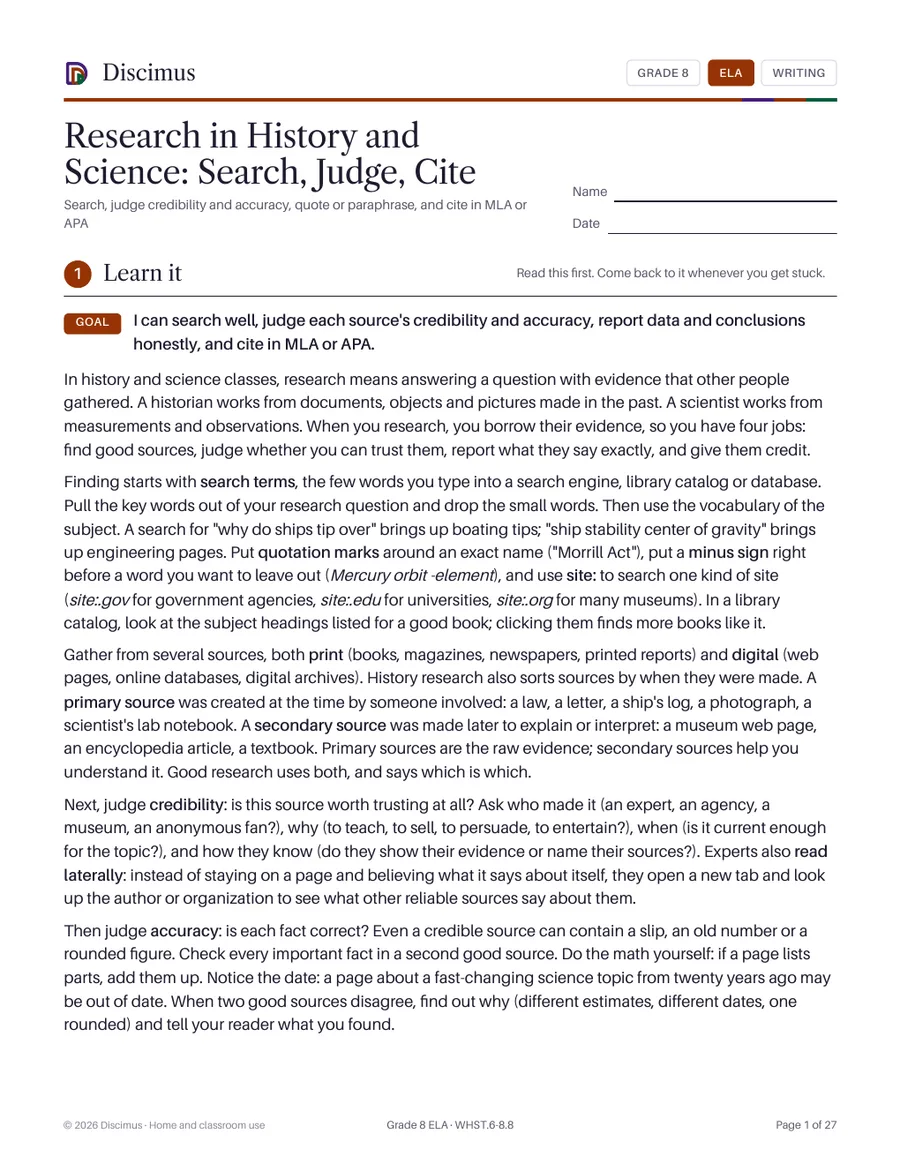
Search, judge credibility and accuracy, quote or paraphrase, and cite in MLA or APA
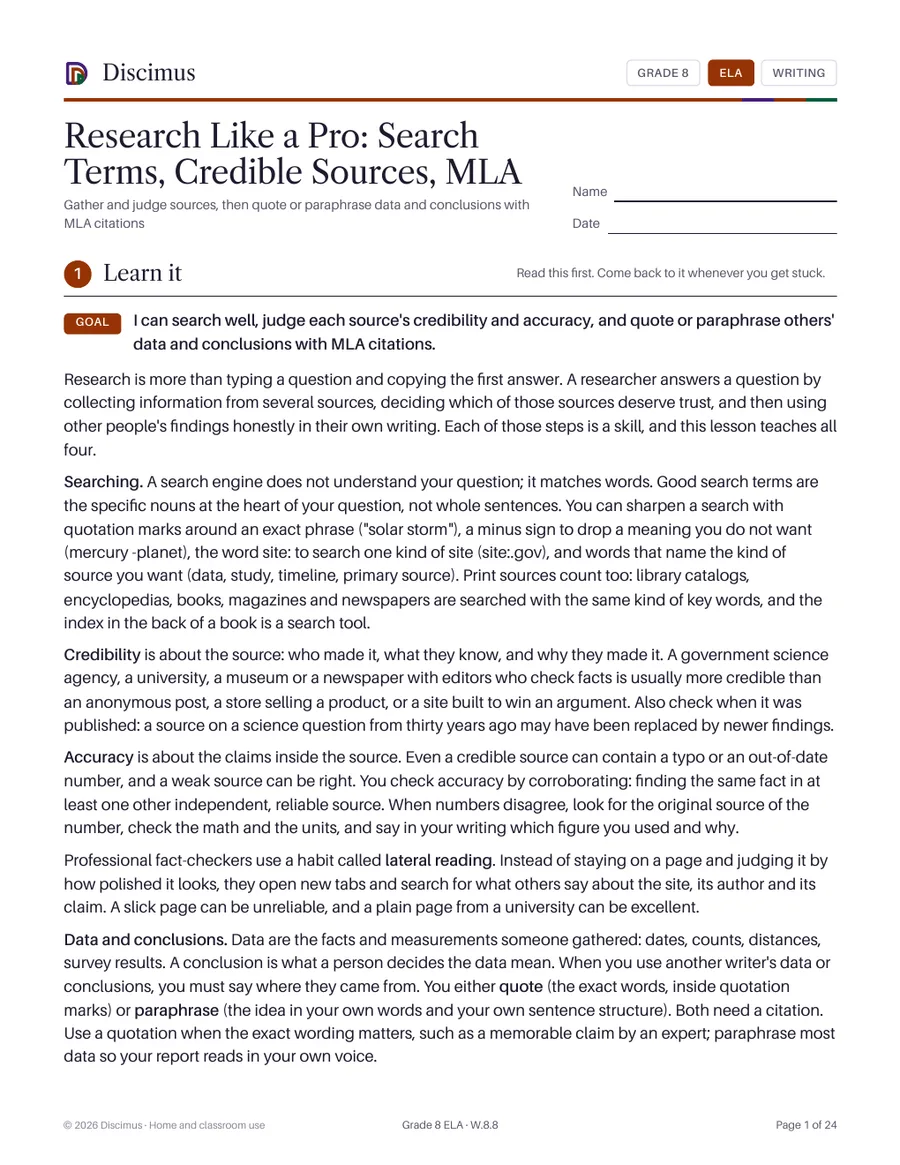
Gather and judge sources, then quote or paraphrase data and conclusions with MLA citations
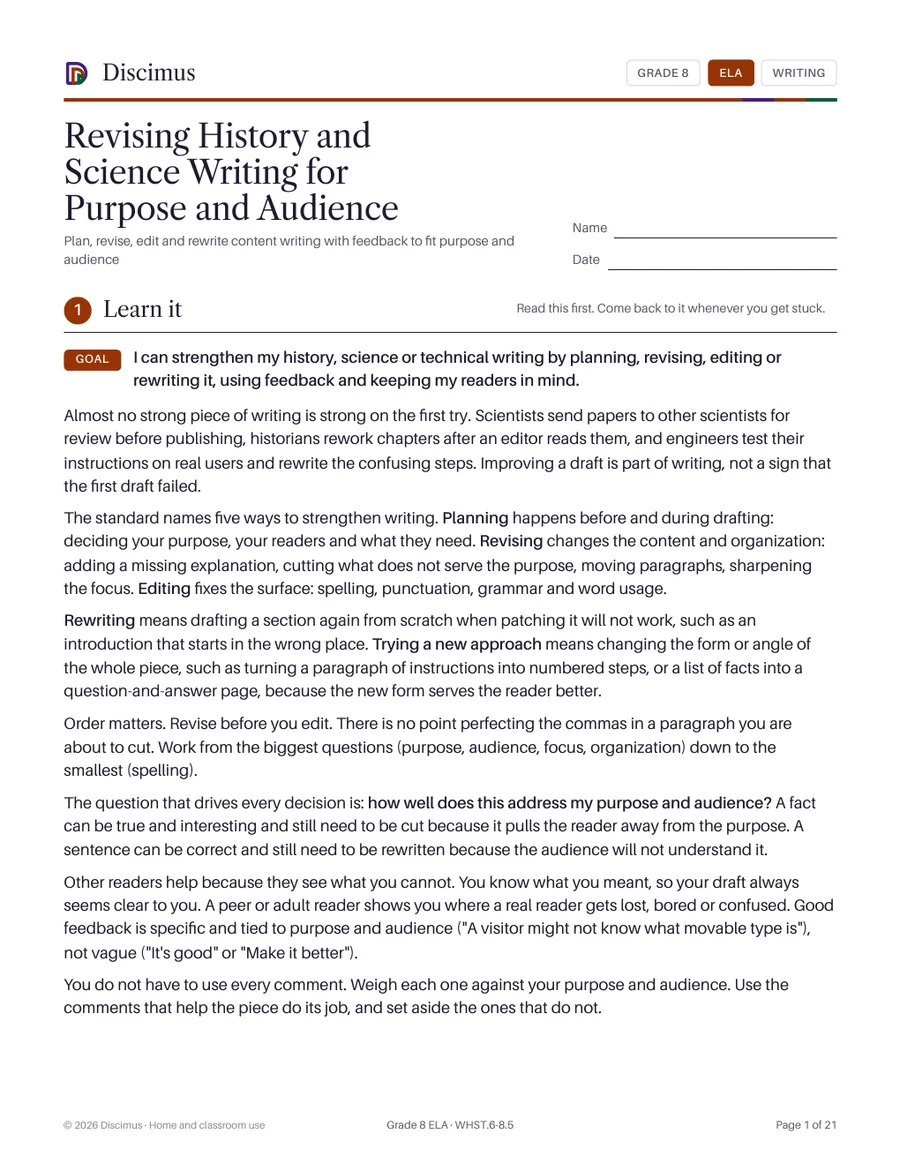
Plan, revise, edit and rewrite content writing with feedback to fit purpose and audience
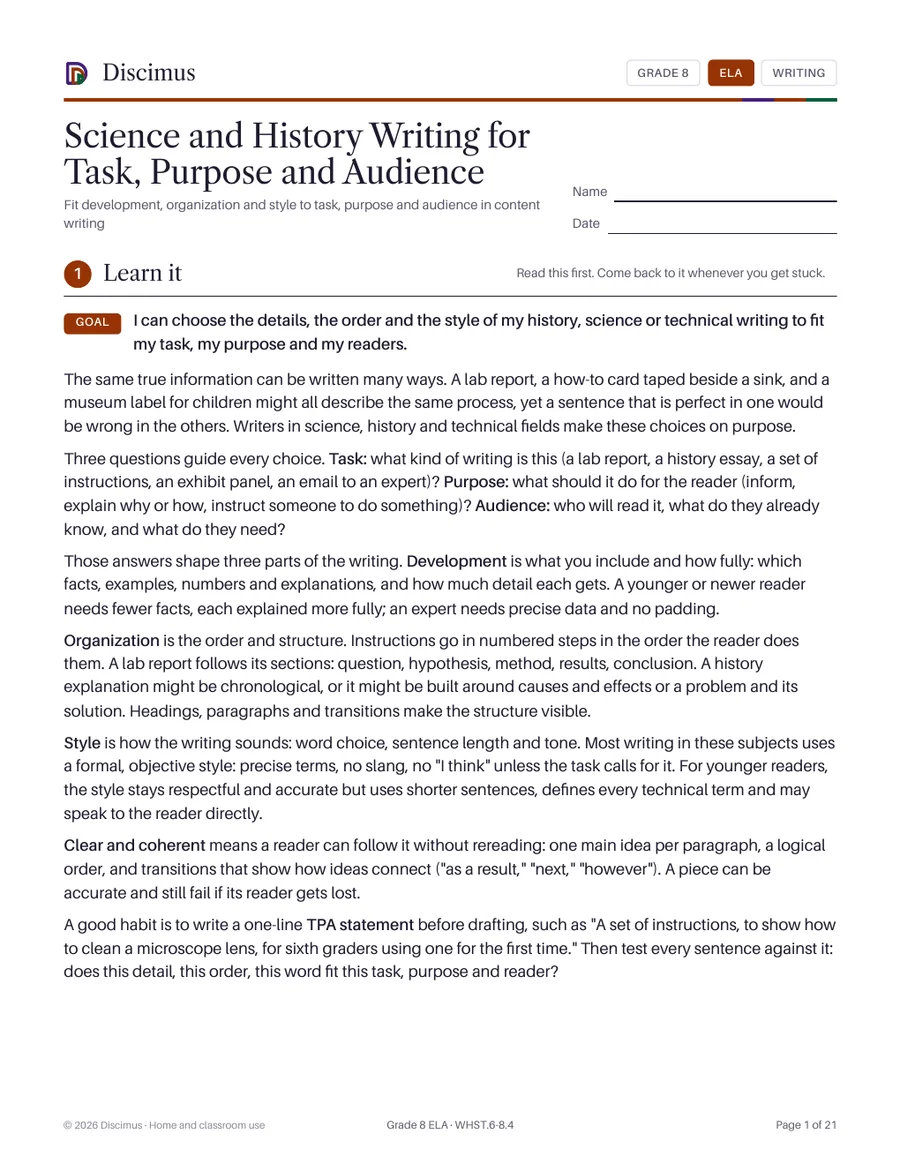
Fit development, organization and style to task, purpose and audience in content writing
Answer a history or science question from several sources and ask focused new questions
Research a focused question with several sources, then generate follow-up questions
Plan, revise, edit, rewrite or try a new approach, judging changes by purpose and audience
Analyze in writing how a modern story borrows from and renews an old myth or tale
Write an evaluation of an argument's claims, reasoning and evidence, citing the text
Write in a single sitting and over several weeks, using research, reflection and revision
Write science, history and technical tasks in short and extended time frames
Evaluate an argument in writing: reasoning, evidence, false claims and fallacies
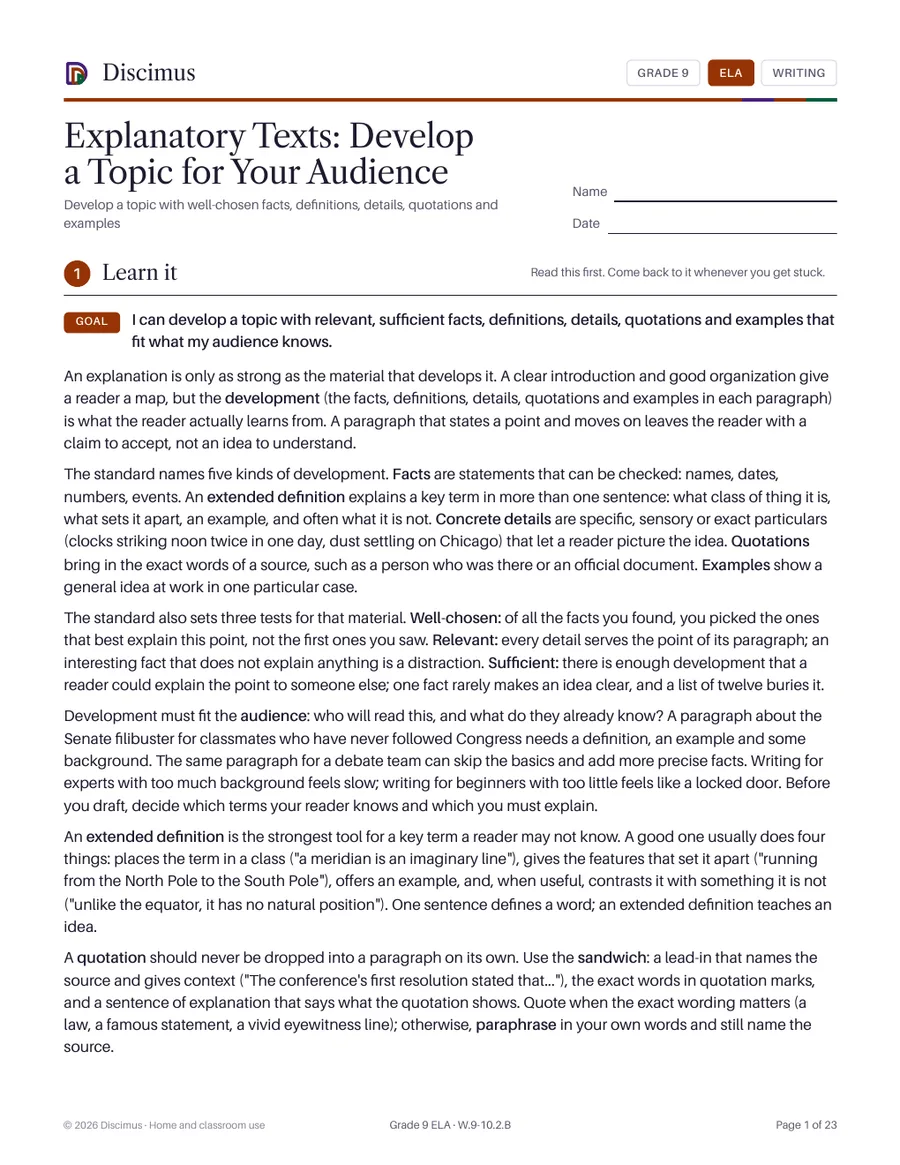
Develop a topic with well-chosen facts, definitions, details, quotations and examples
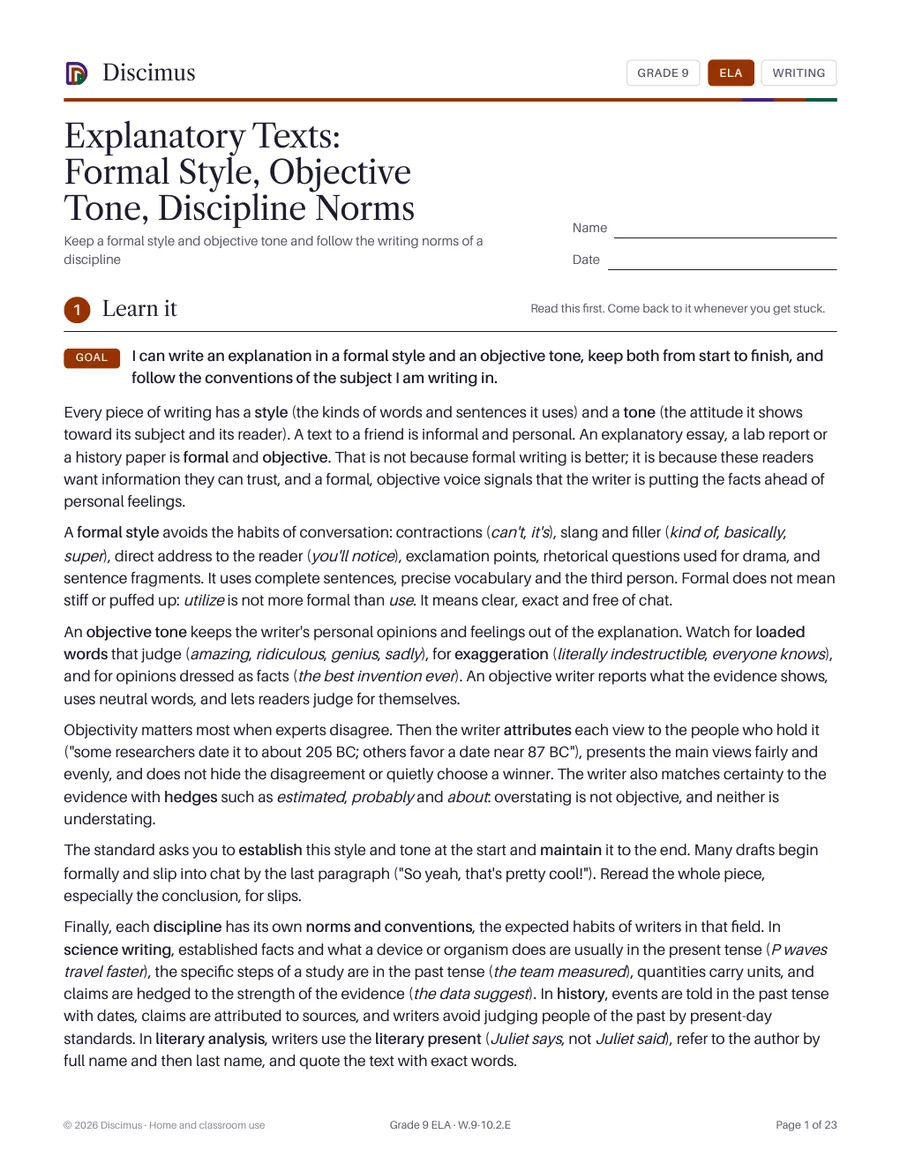
Keep a formal style and objective tone and follow the writing norms of a discipline
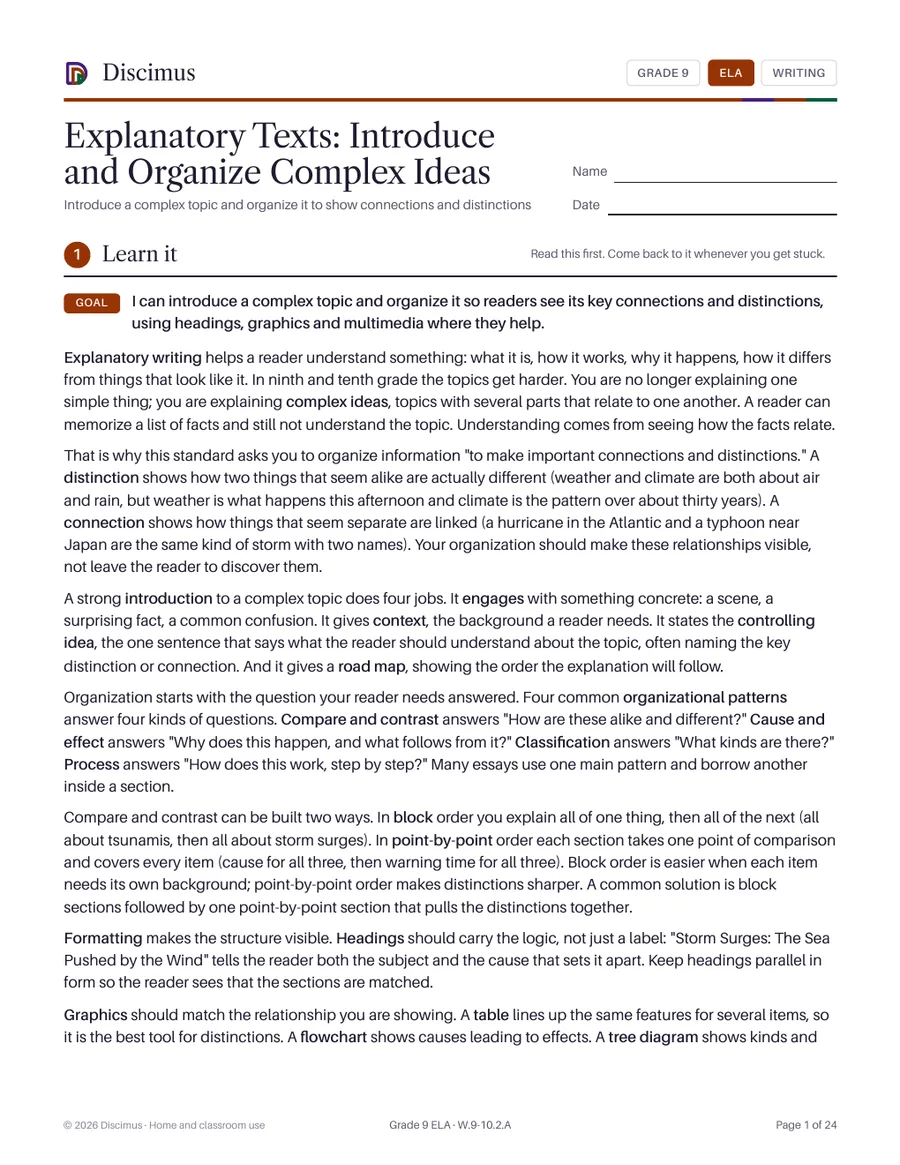
Introduce a complex topic and organize it to show connections and distinctions
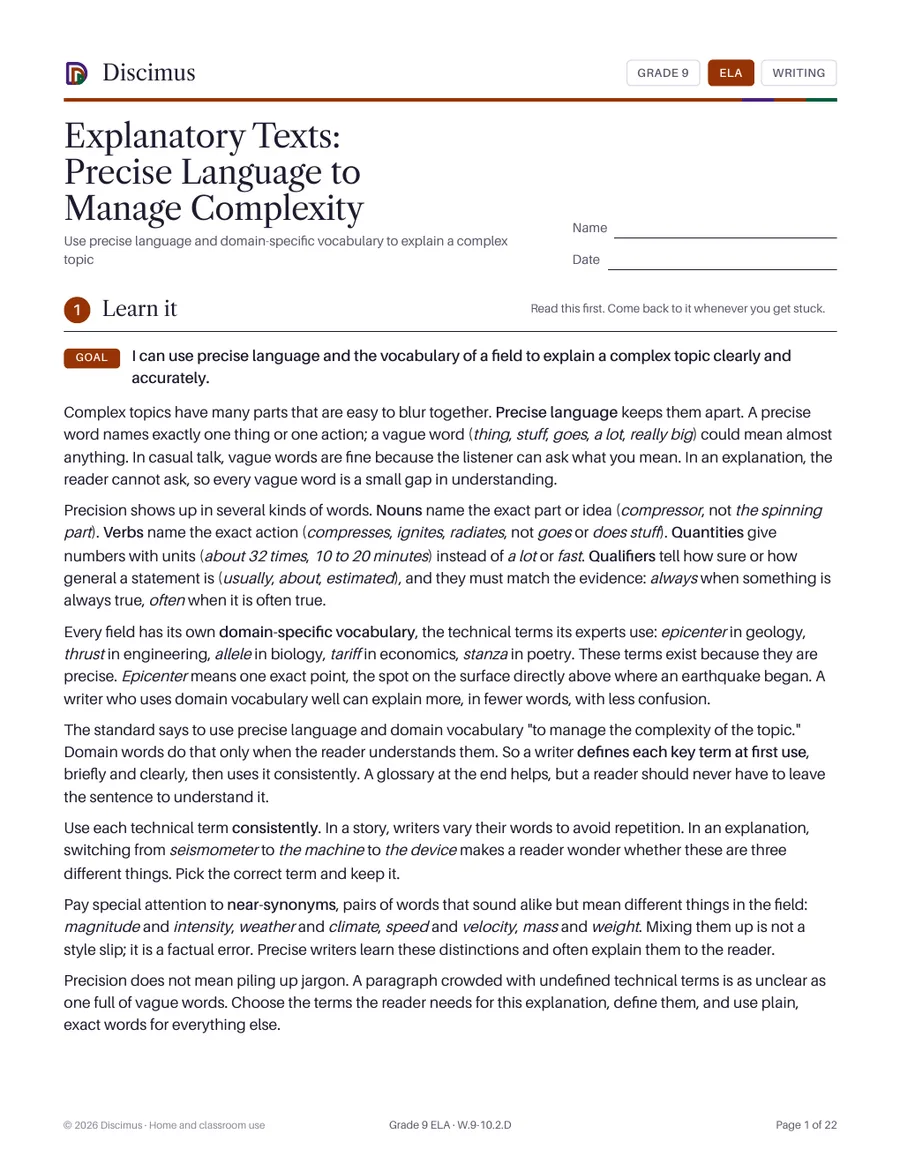
Use precise language and domain-specific vocabulary to explain a complex topic
Use varied, precise transitions to link sections and clarify relationships among ideas
Fit development, organization and style to the task, purpose and audience
Write an informative conclusion that follows from the body and shows its significance
Write an analysis of how an author draws on and transforms source material
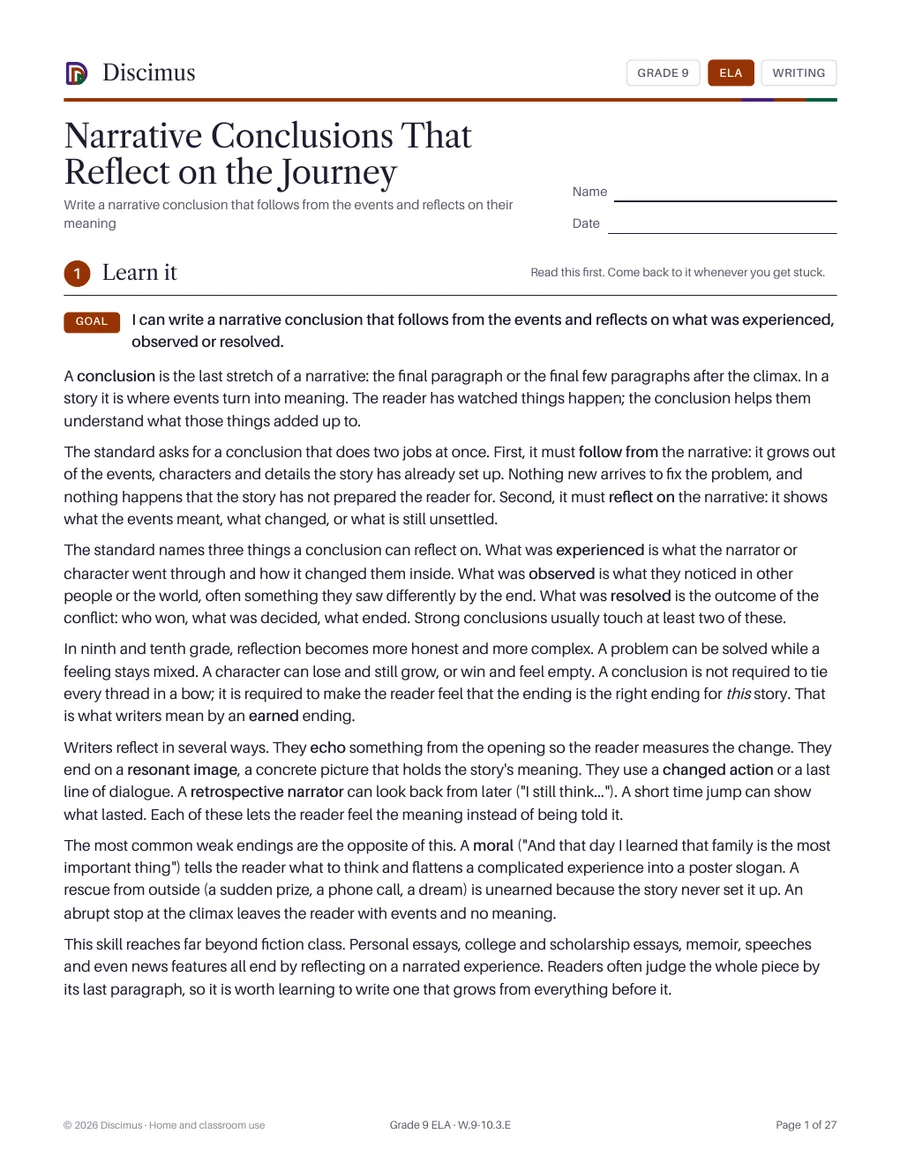
Write a narrative conclusion that follows from the events and reflects on their meaning
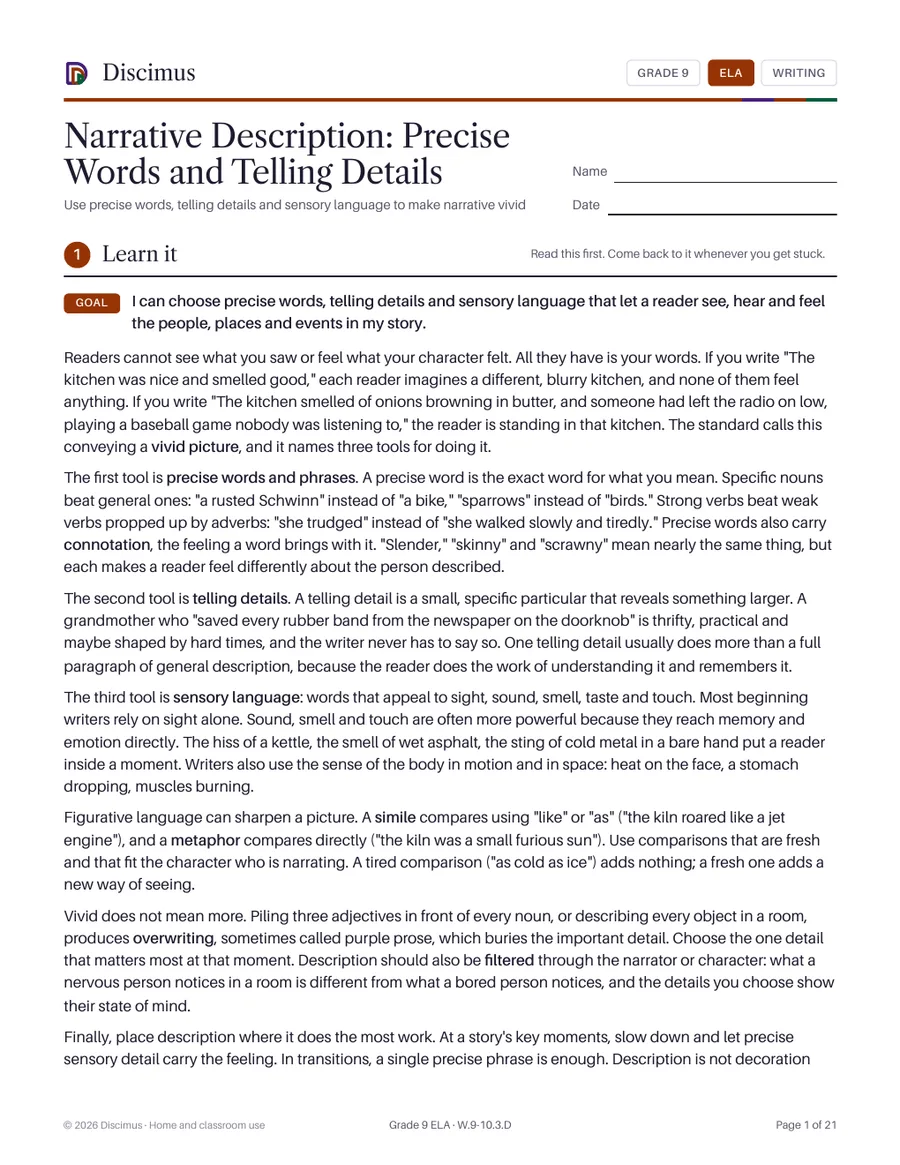
Use precise words, telling details and sensory language to make narrative vivid
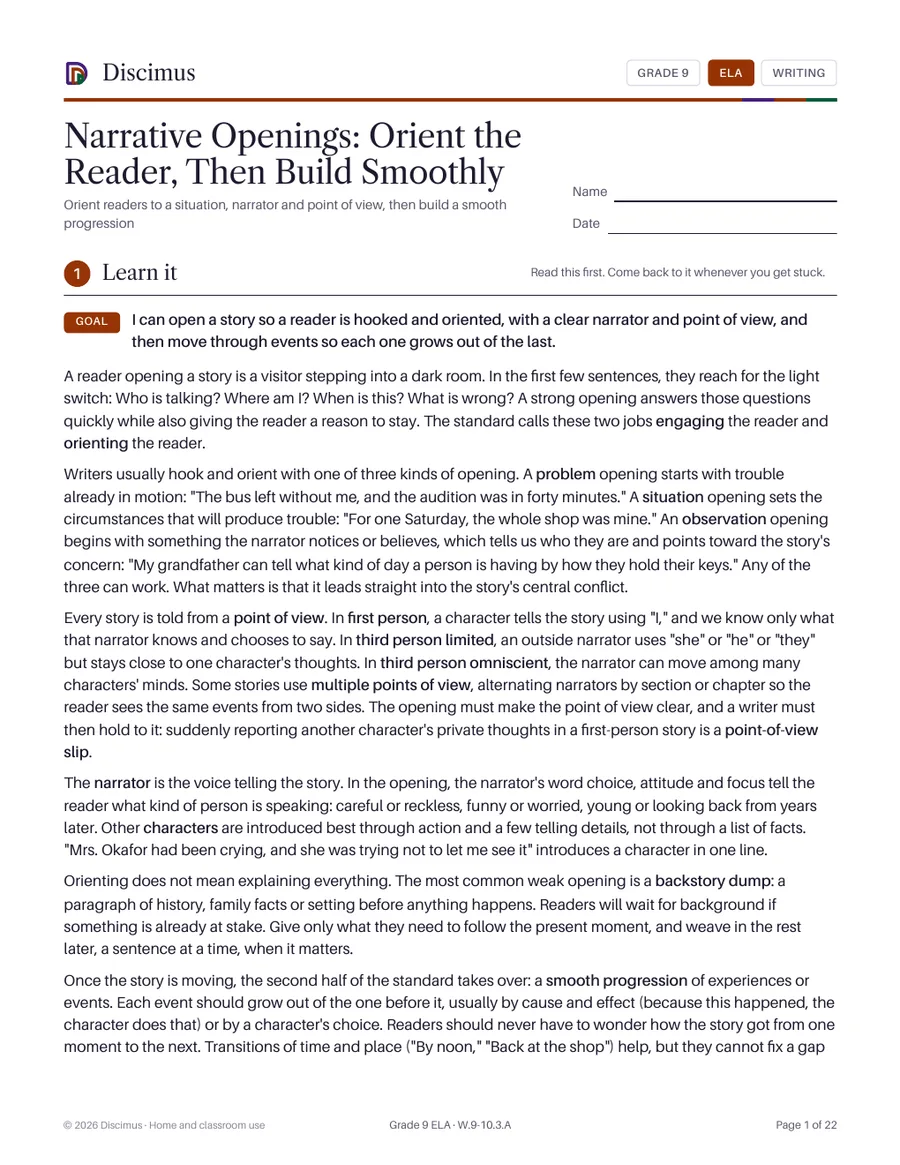
Orient readers to a situation, narrator and point of view, then build a smooth progression
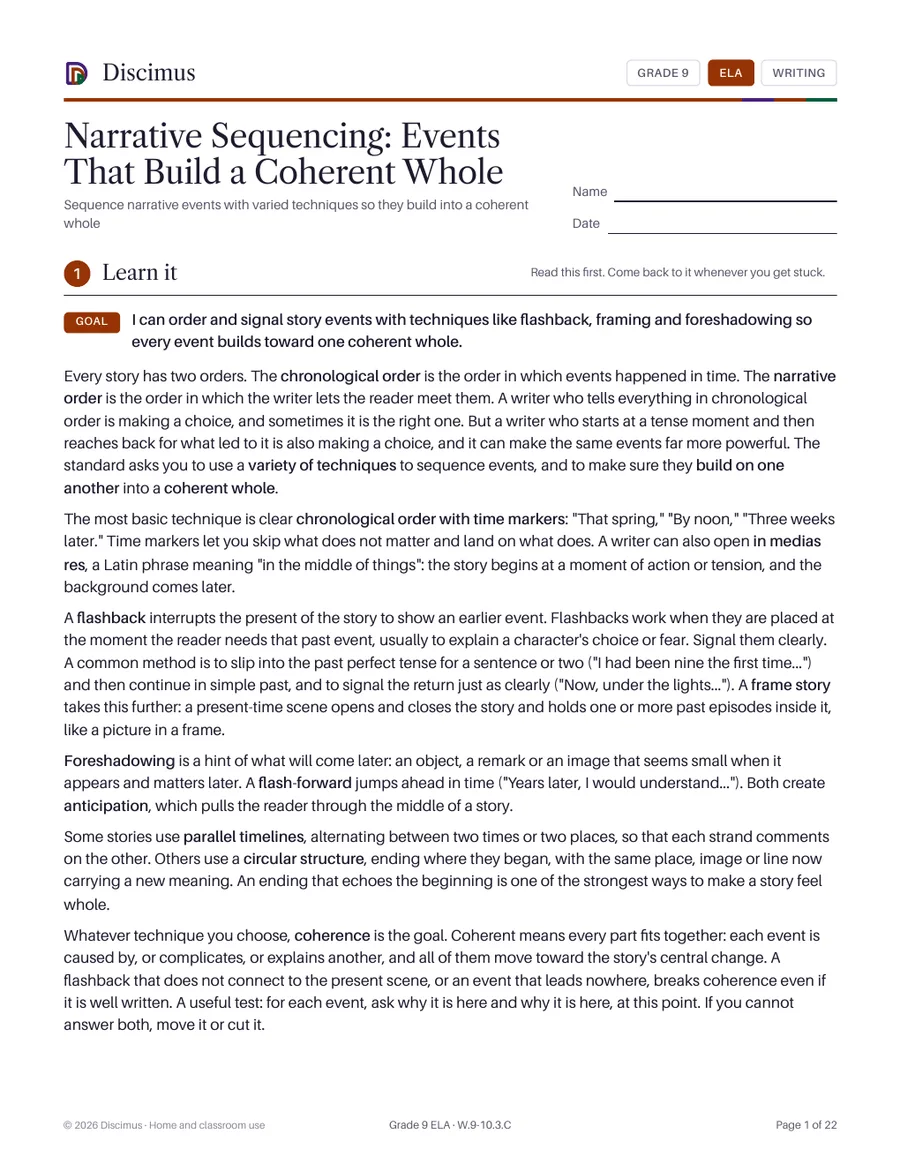
Sequence narrative events with varied techniques so they build into a coherent whole
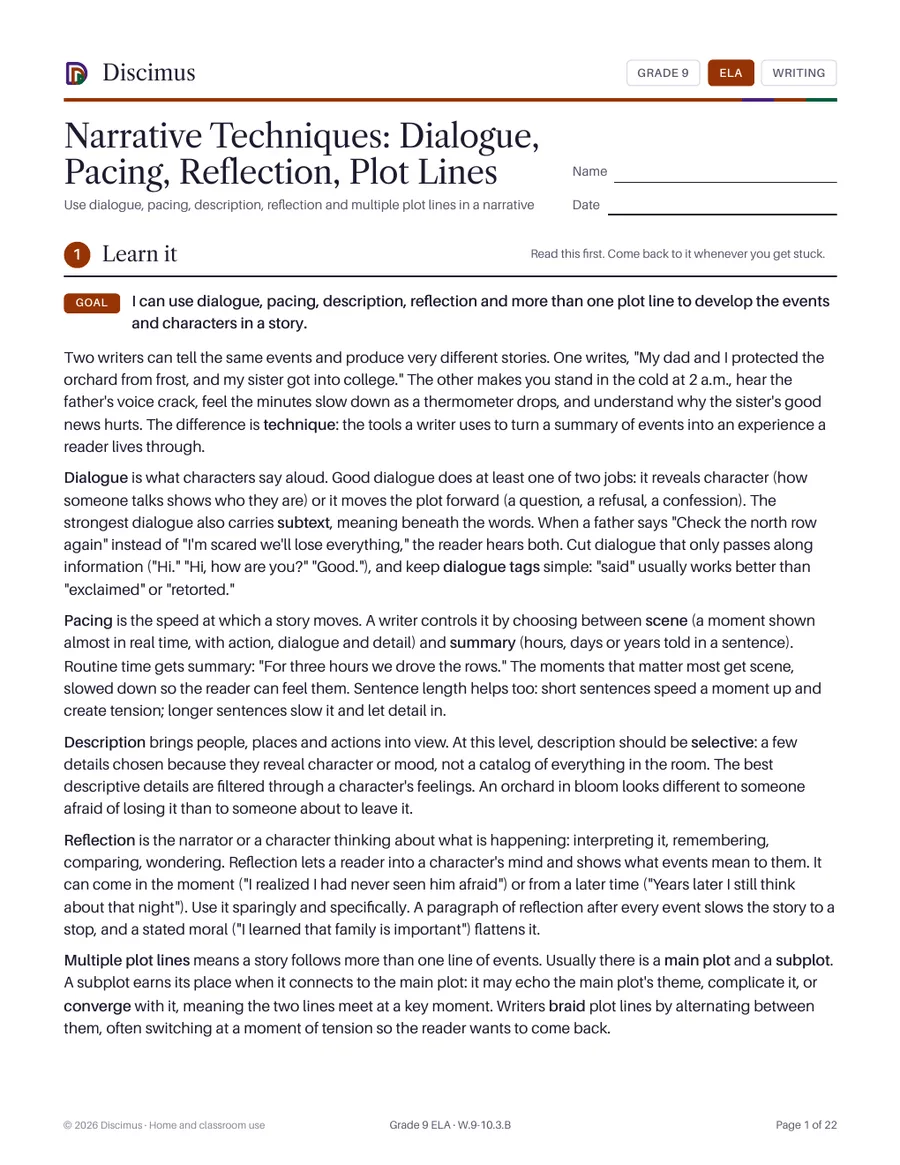
Use dialogue, pacing, description, reflection and multiple plot lines in a narrative
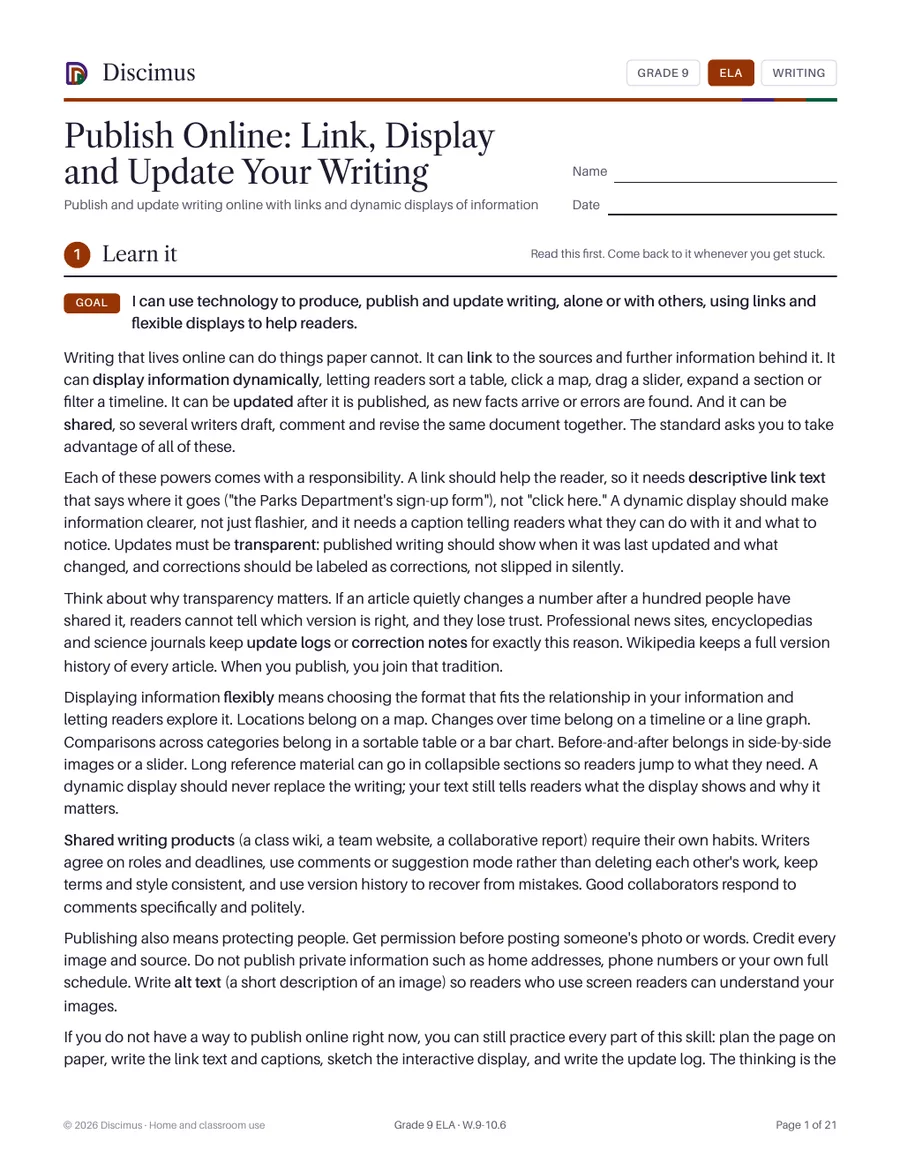
Publish and update writing online with links and dynamic displays of information
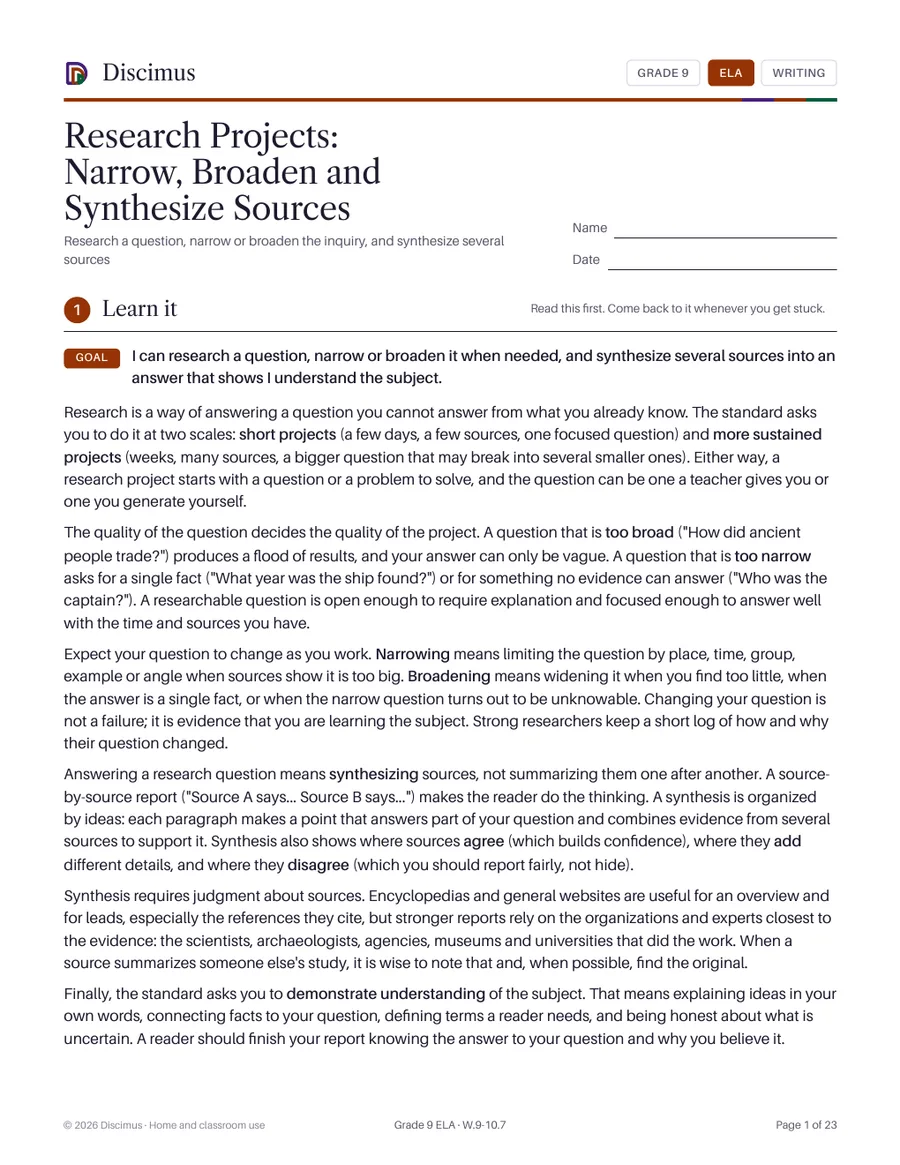
Research a question, narrow or broaden the inquiry, and synthesize several sources
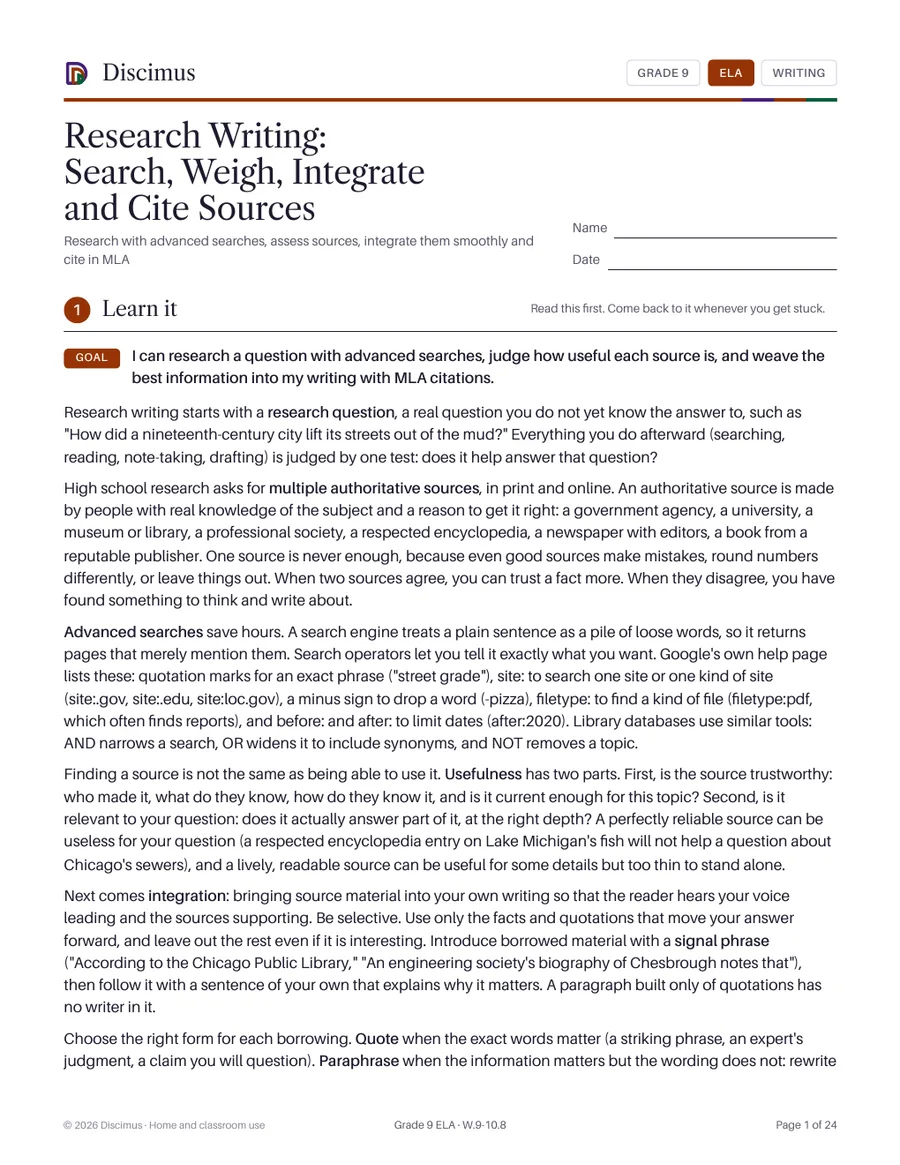
Research with advanced searches, assess sources, integrate them smoothly and cite in MLA
Strengthen a draft by revising what matters most for purpose and audience first
Write routinely in single sittings and over weeks for varied tasks, purposes and audiences
Write history and science conclusions that follow from the body and show significance
Draw, weigh and explain text evidence for analysis, reflection and research
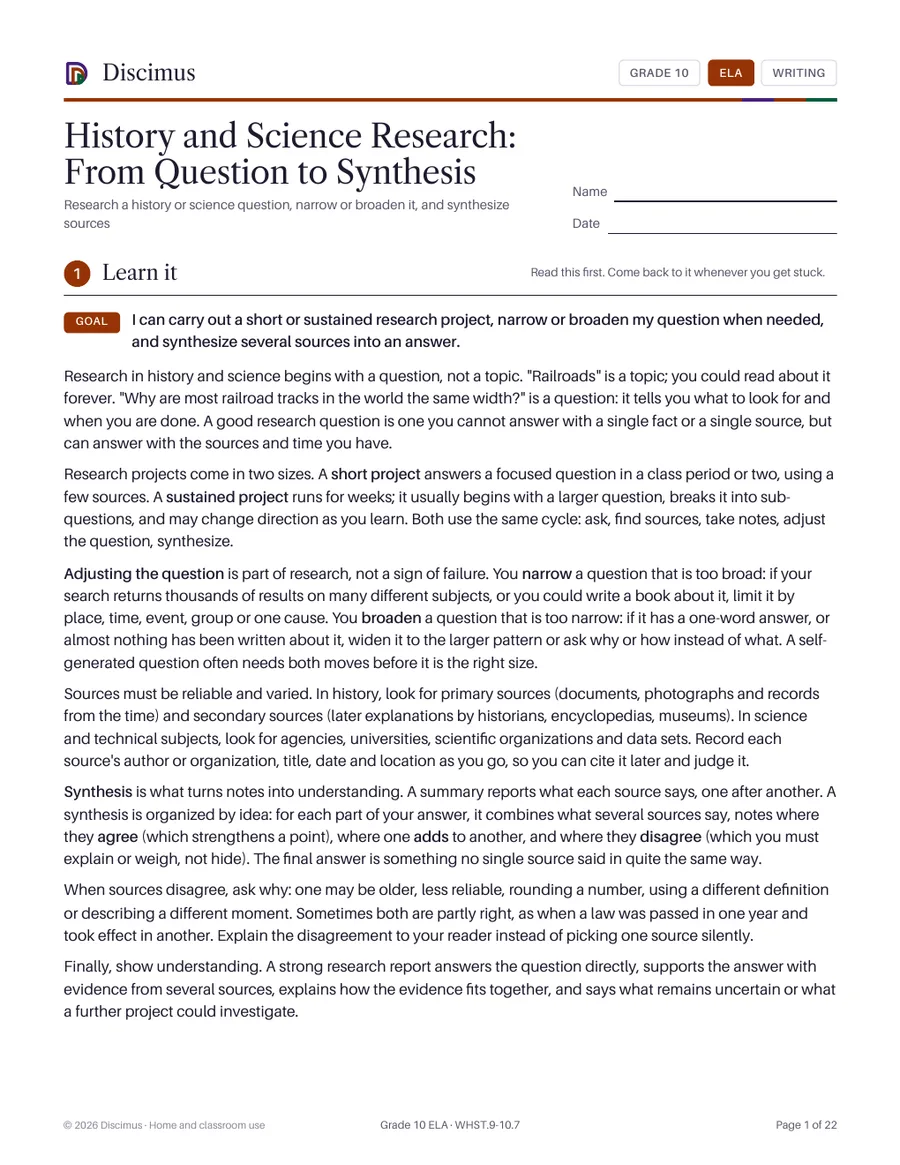
Research a history or science question, narrow or broaden it, and synthesize sources
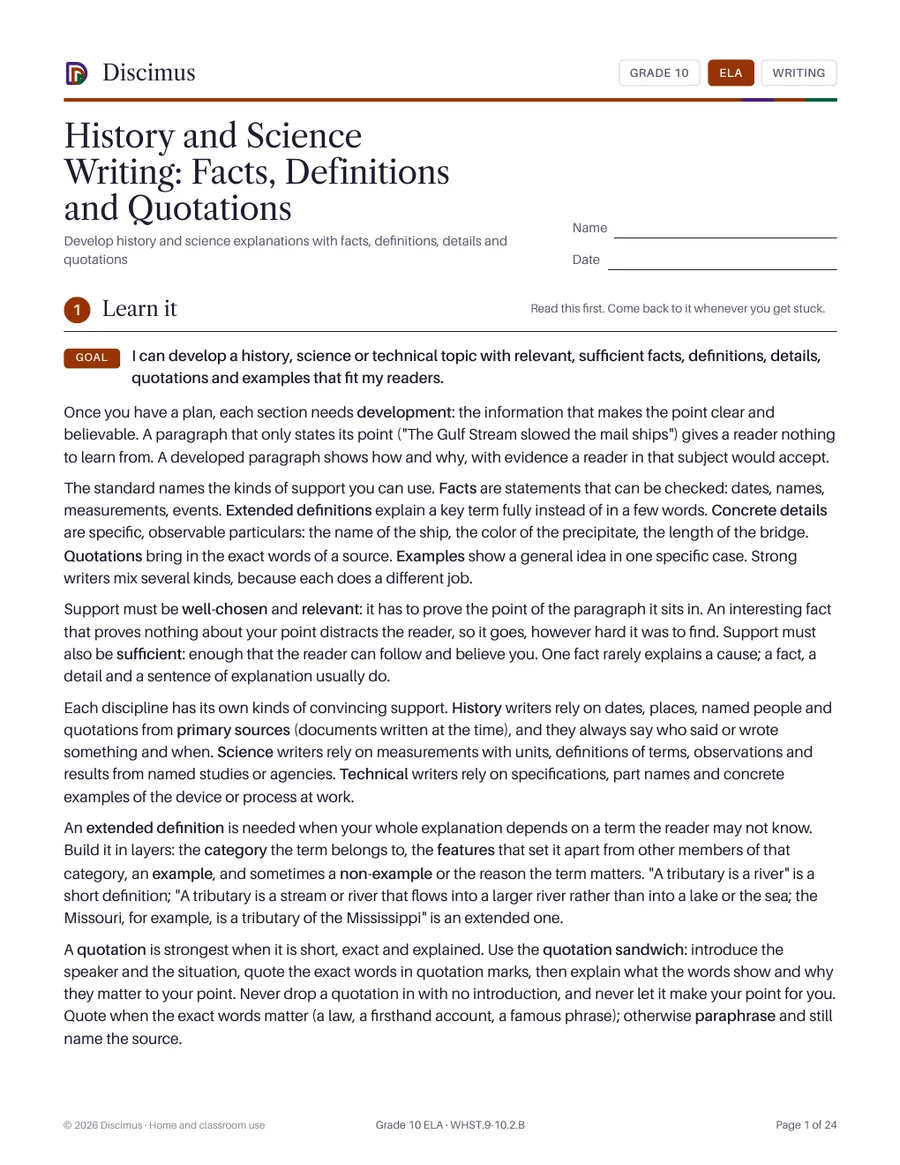
Develop history and science explanations with facts, definitions, details and quotations
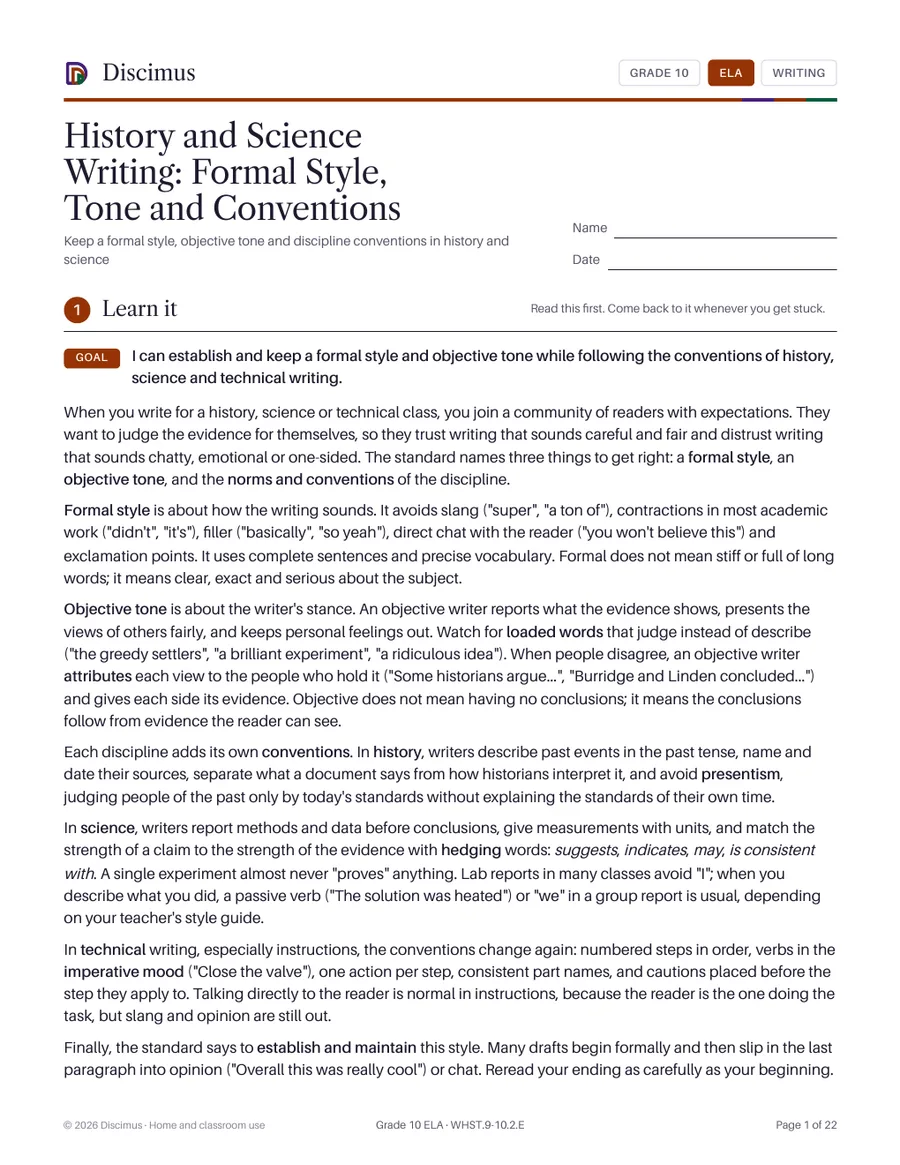
Keep a formal style, objective tone and discipline conventions in history and science
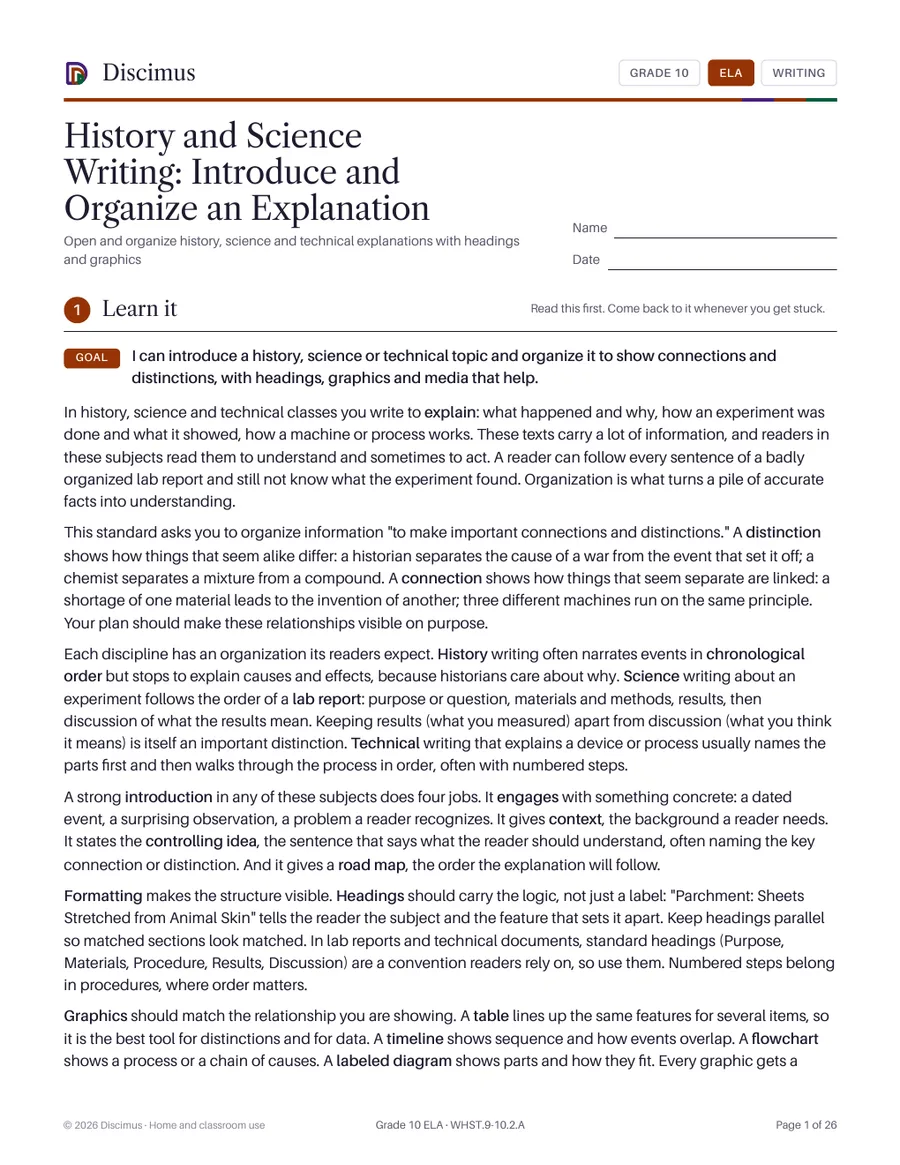
Open and organize history, science and technical explanations with headings and graphics
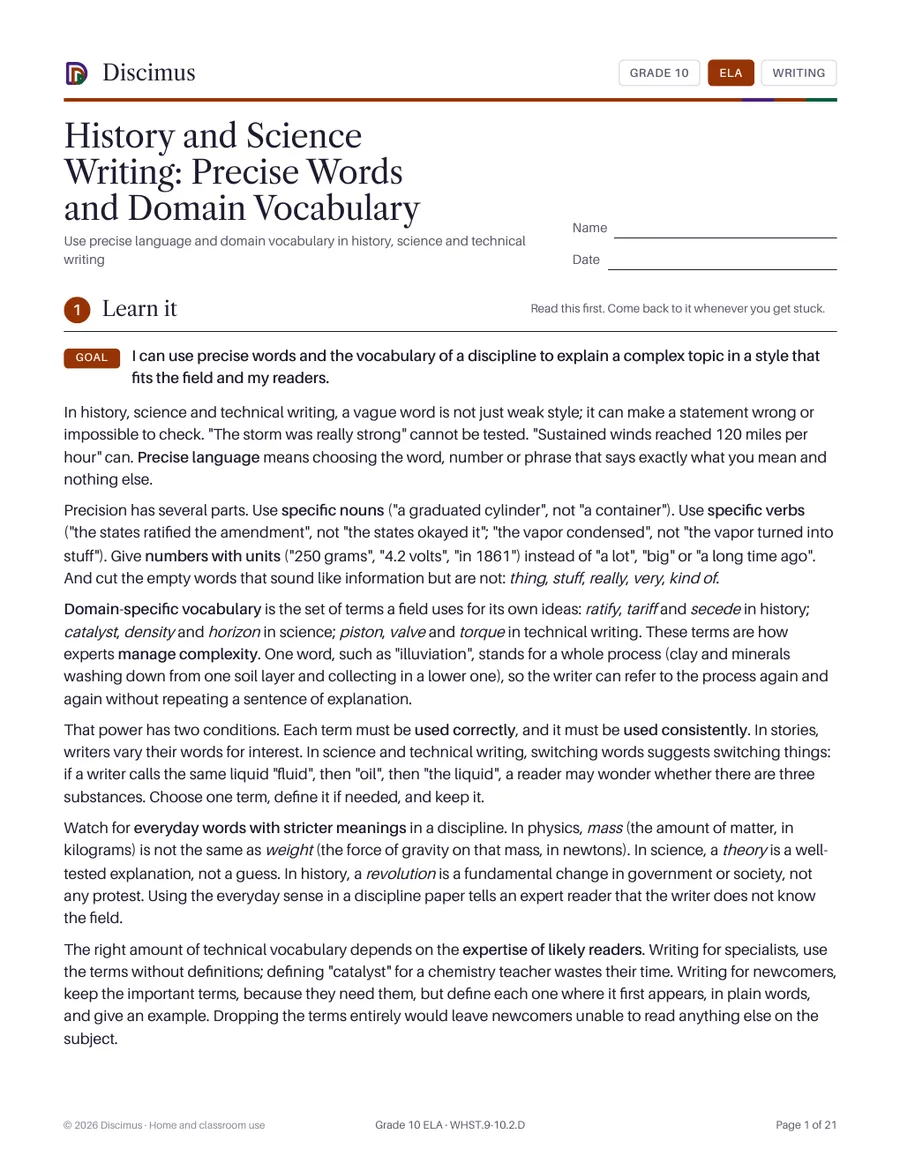
Use precise language and domain vocabulary in history, science and technical writing
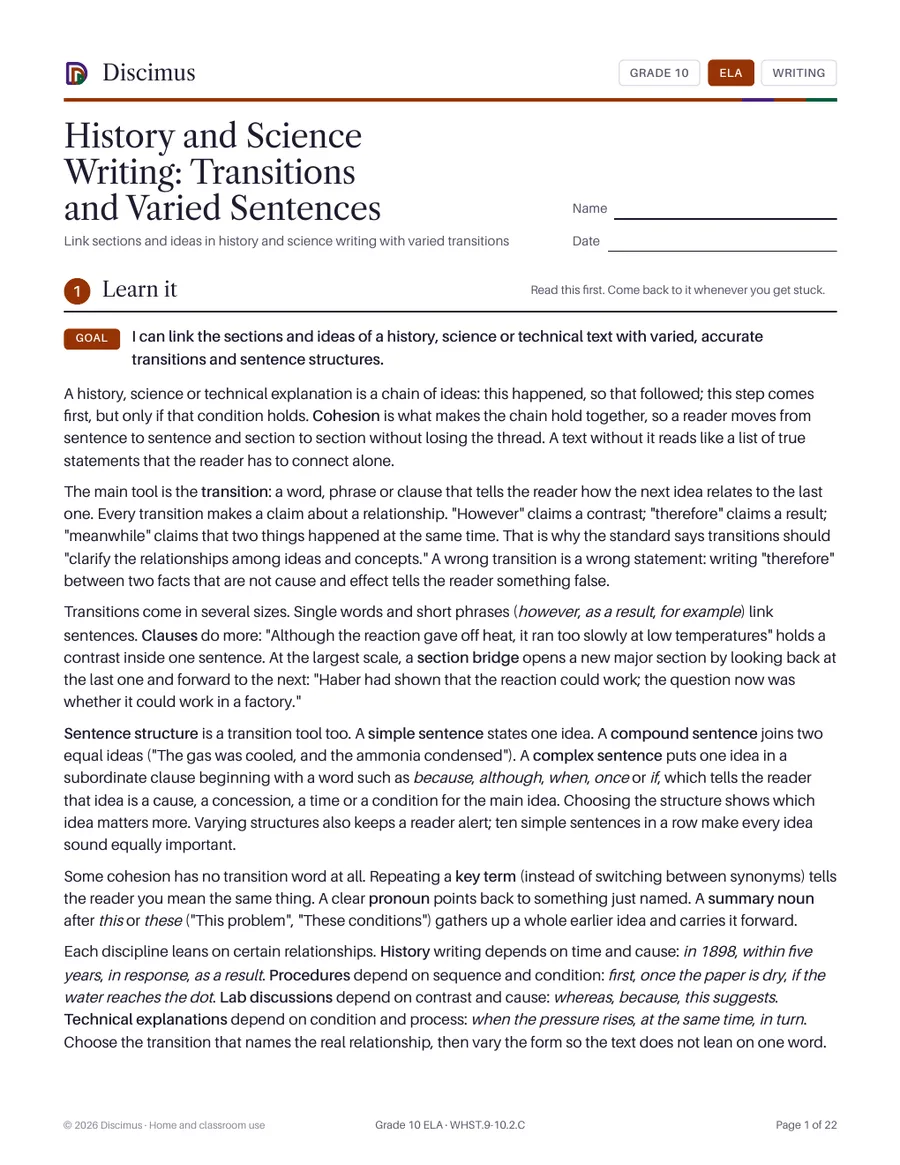
Link sections and ideas in history and science writing with varied transitions
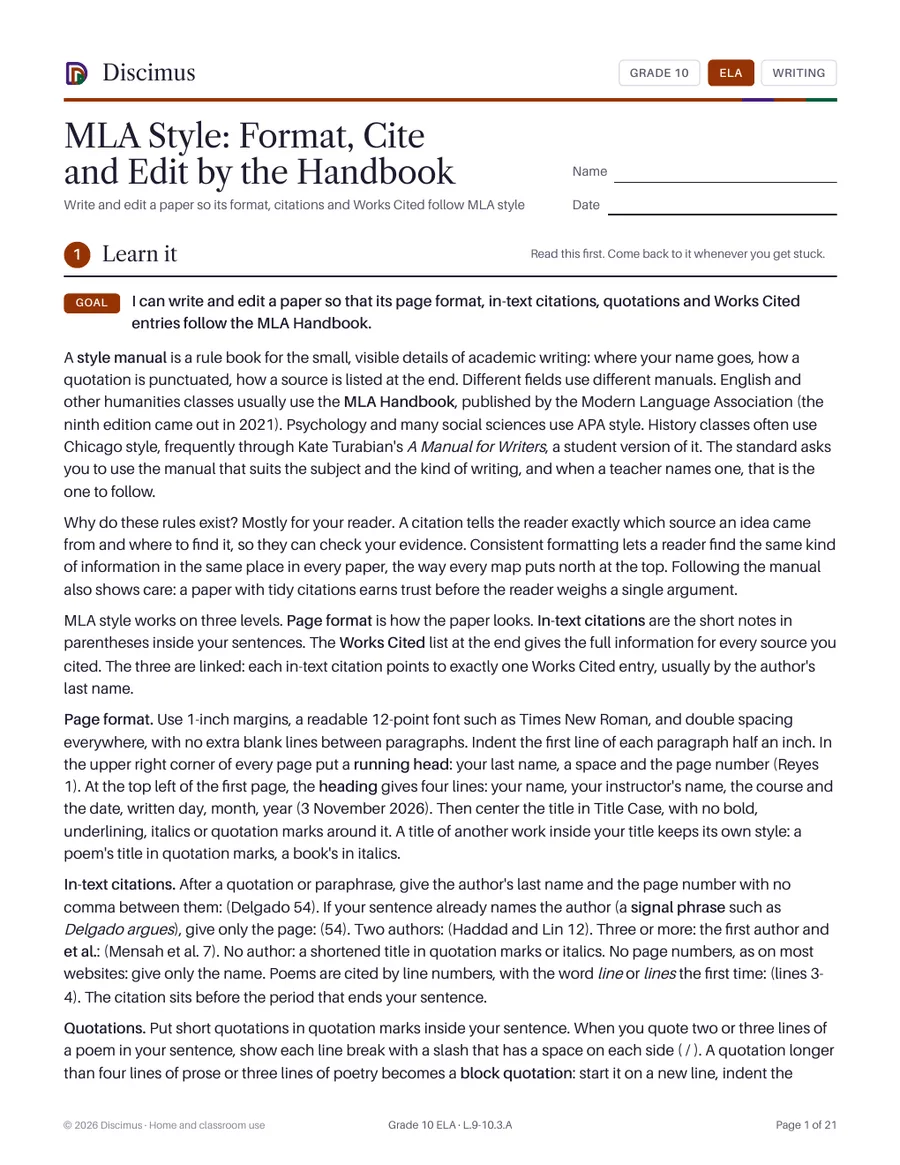
Write and edit a paper so its format, citations and Works Cited follow MLA style
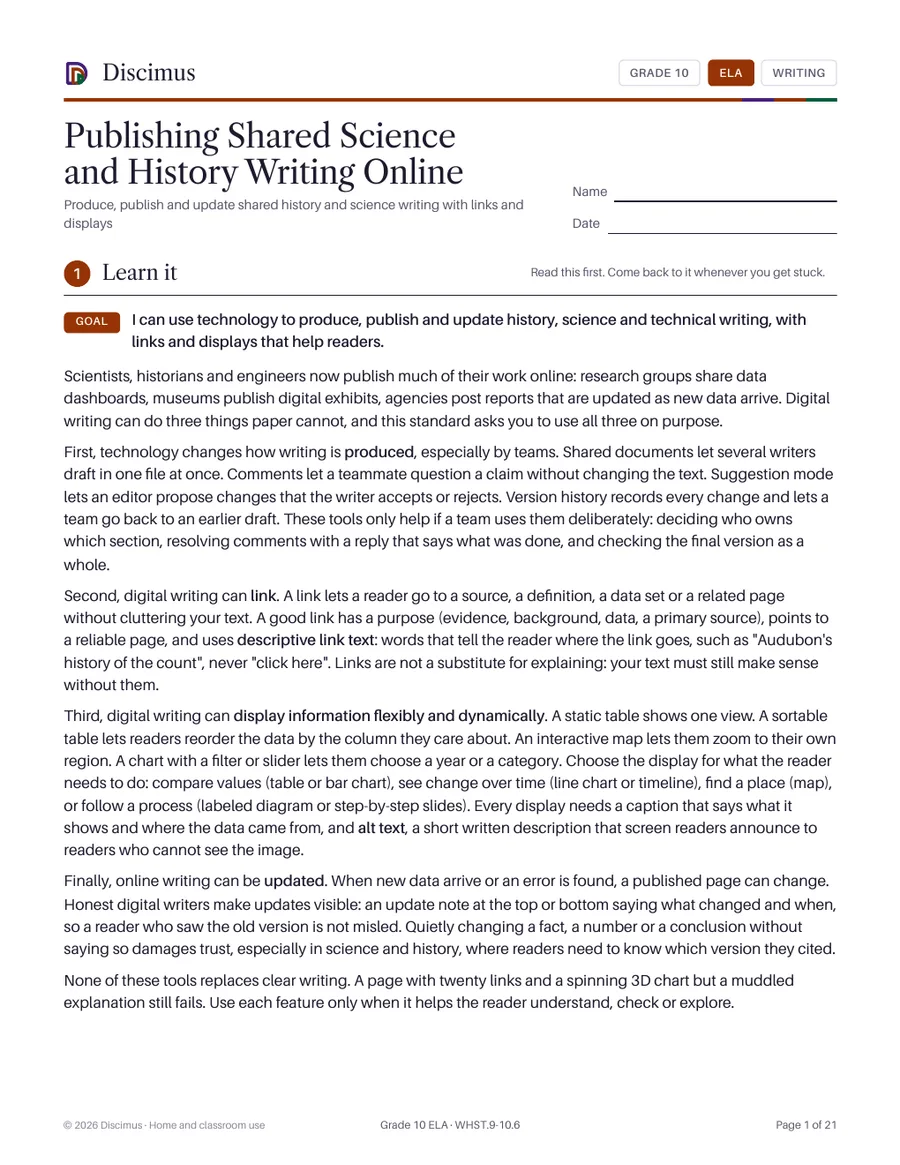
Produce, publish and update shared history and science writing with links and displays
Search with advanced tools, weigh each source's usefulness, integrate evidence and cite it
Plan, revise, edit and rethink history and science writing, fixing what matters most first
Write a concluding section that follows from and supports a history or science argument
Keep a formal style and objective tone and follow the norms of history and science writing
Use linking words, phrases and clauses to show how claims, reasons and evidence relate
Write a precise discipline claim, set it apart from other claims, organize the argument
Develop claims and counterclaims fairly with data, strengths and limits, for an audience
Fit development, organization and style to task and audience in history and science
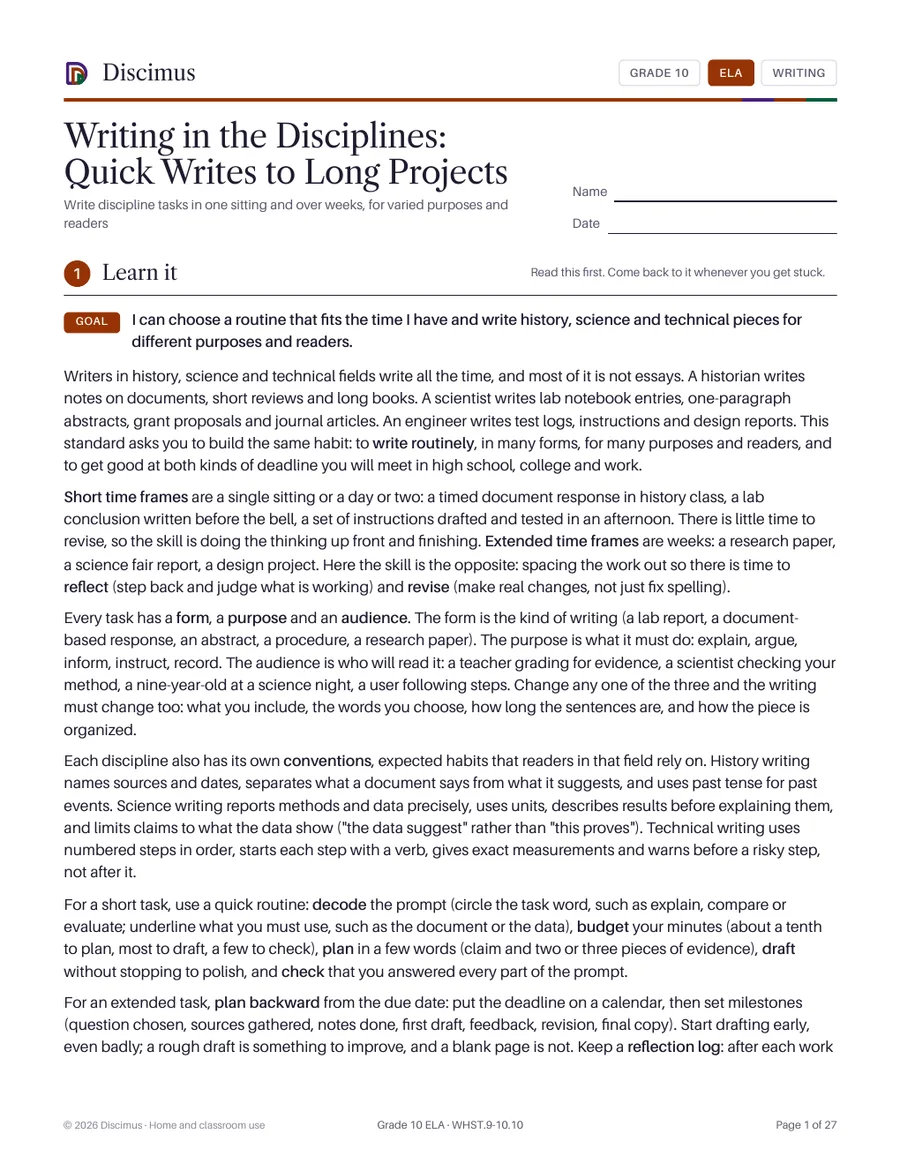
Write discipline tasks in one sitting and over weeks, for varied purposes and readers
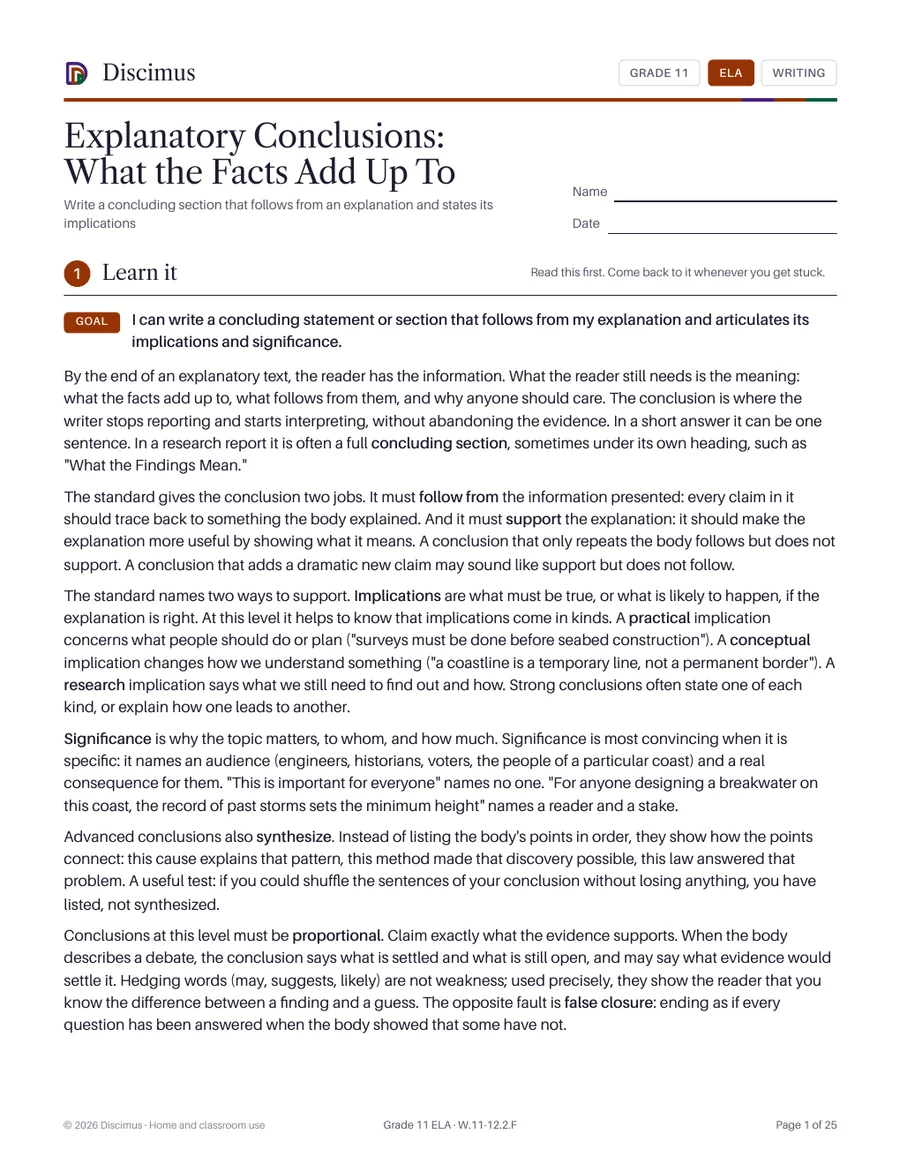
Write a concluding section that follows from an explanation and states its implications
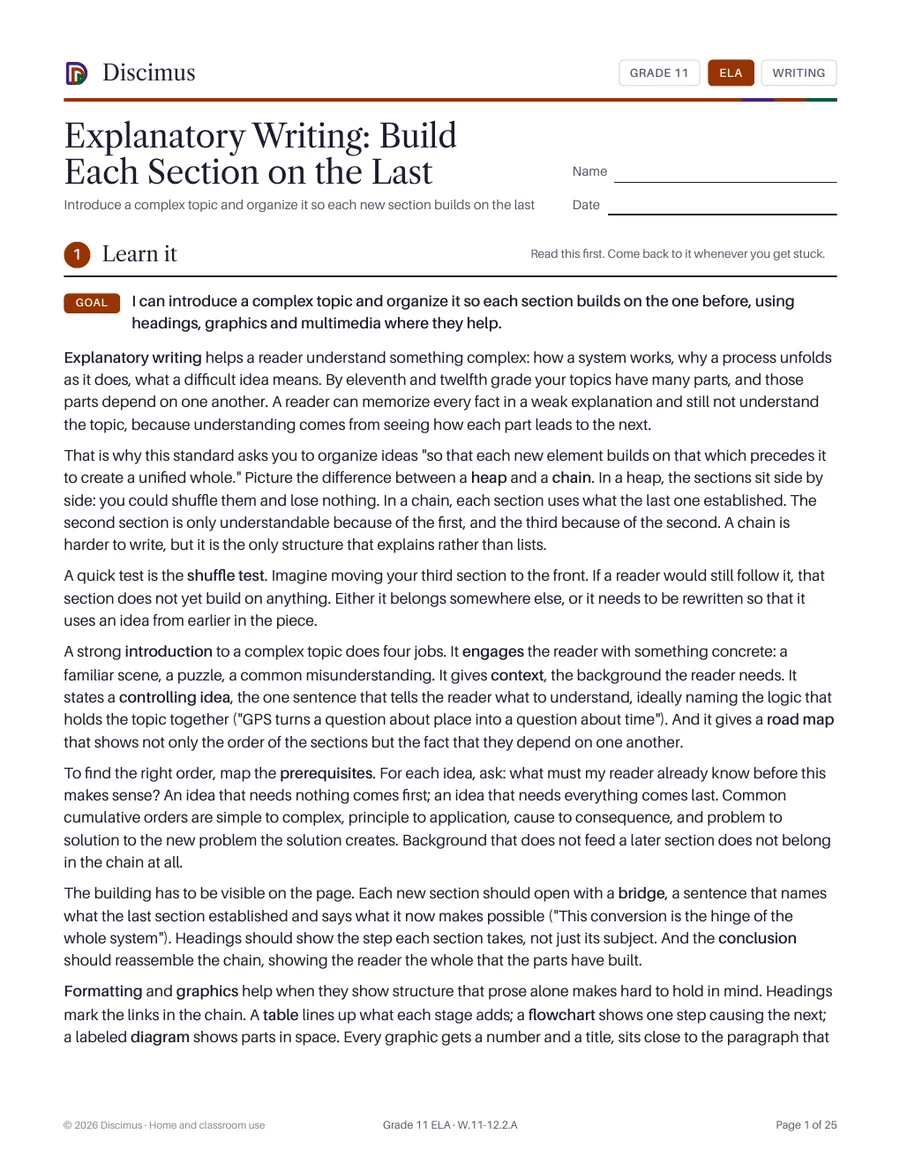
Introduce a complex topic and organize it so each new section builds on the last
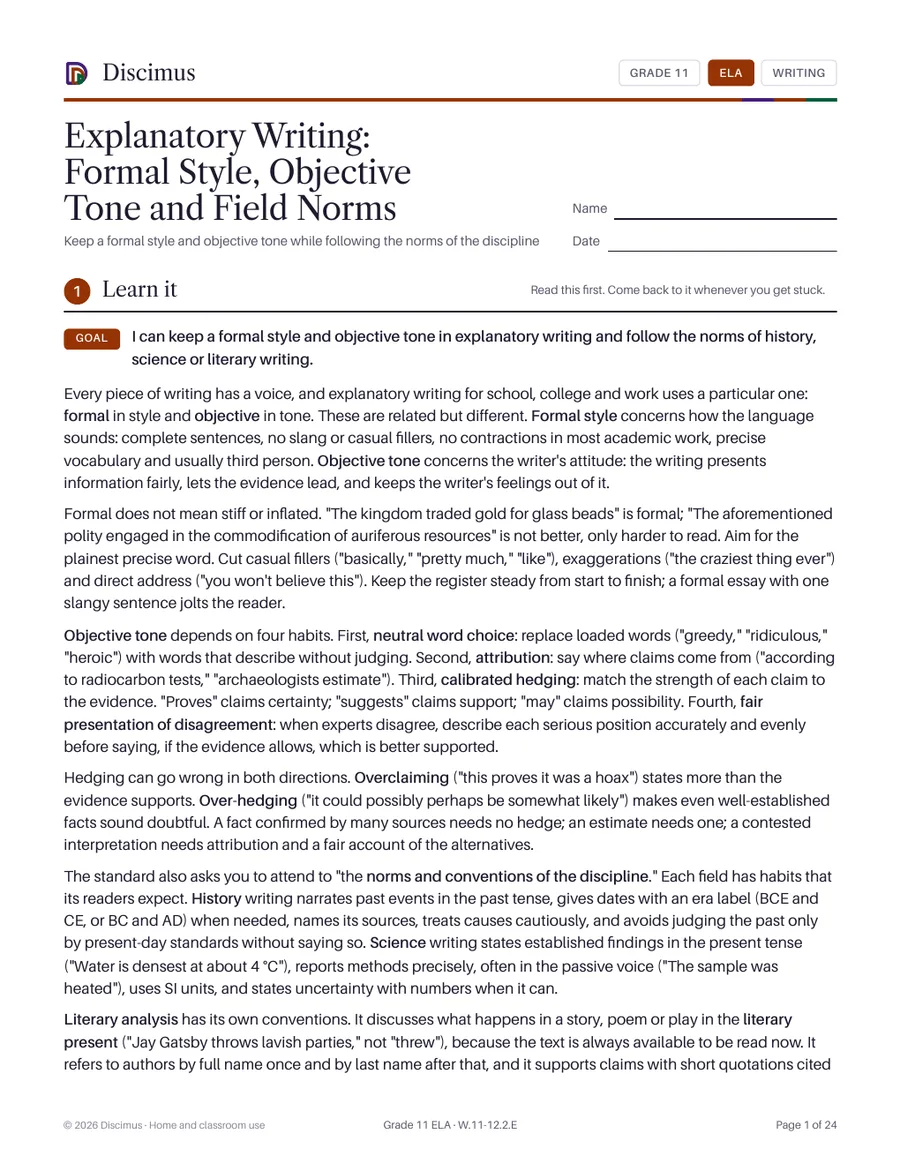
Keep a formal style and objective tone while following the norms of the discipline
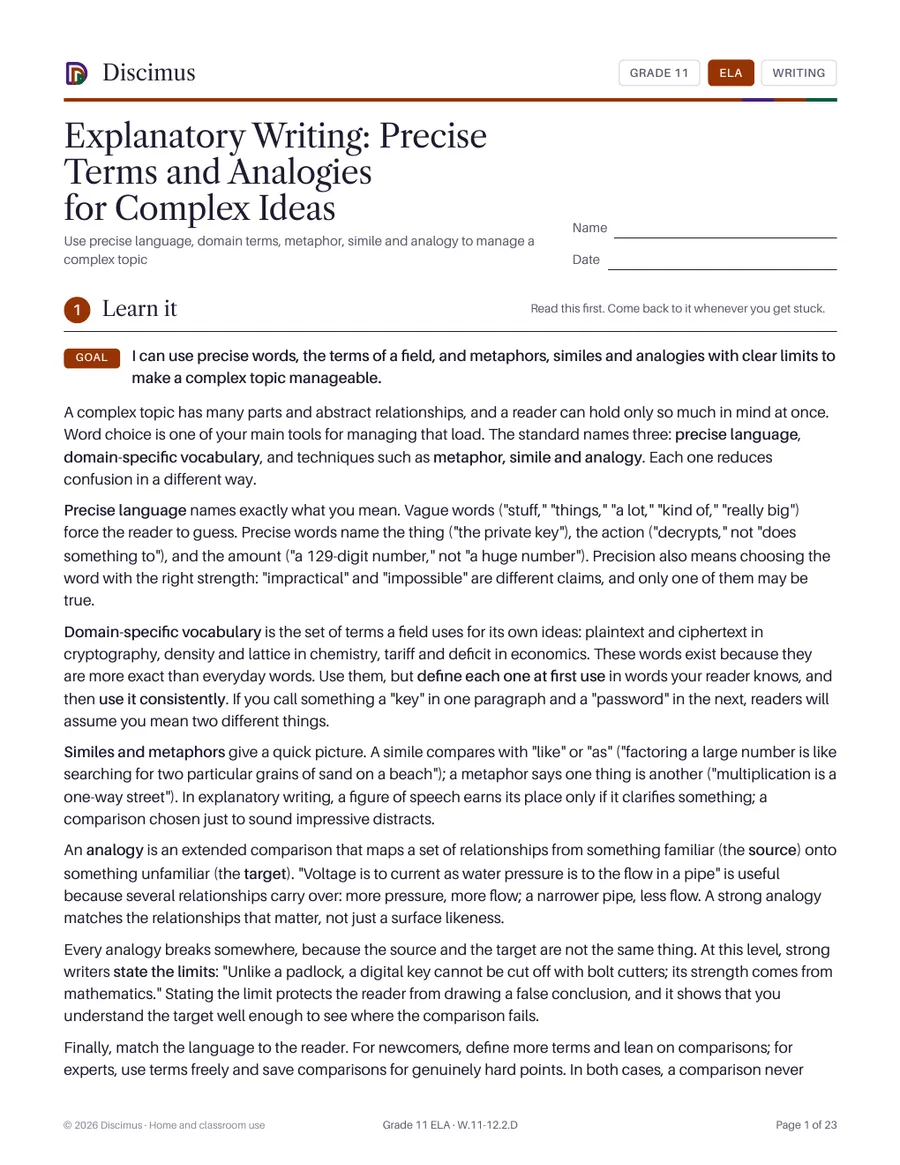
Use precise language, domain terms, metaphor, simile and analogy to manage a complex topic
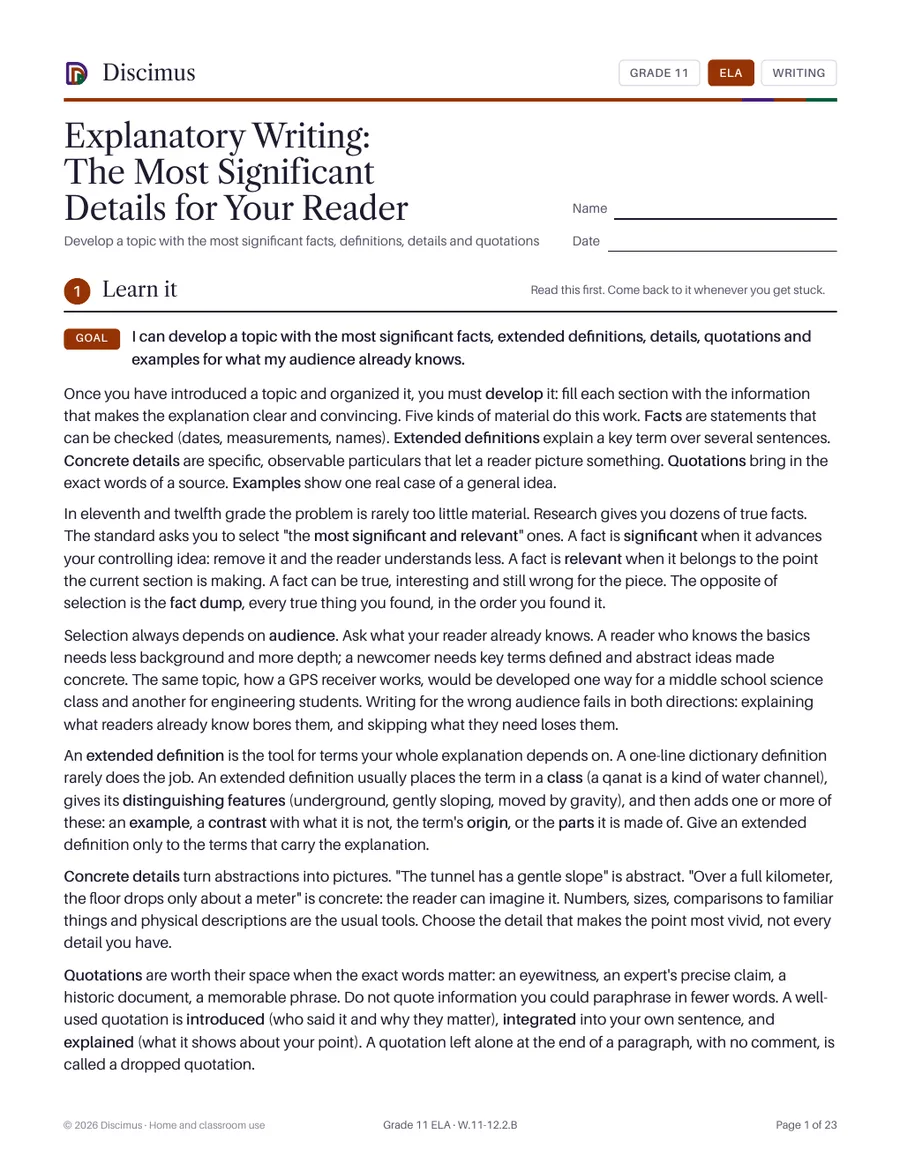
Develop a topic with the most significant facts, definitions, details and quotations
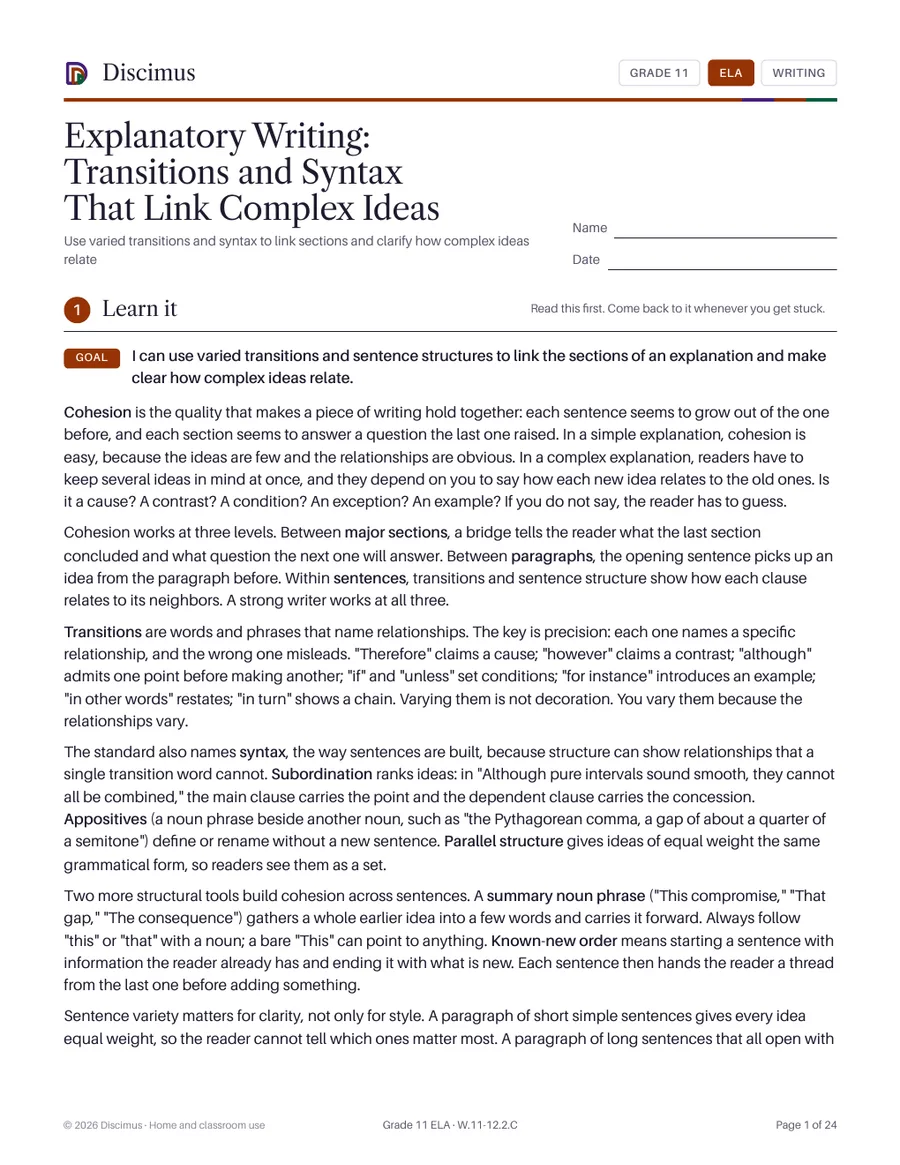
Use varied transitions and syntax to link sections and clarify how complex ideas relate
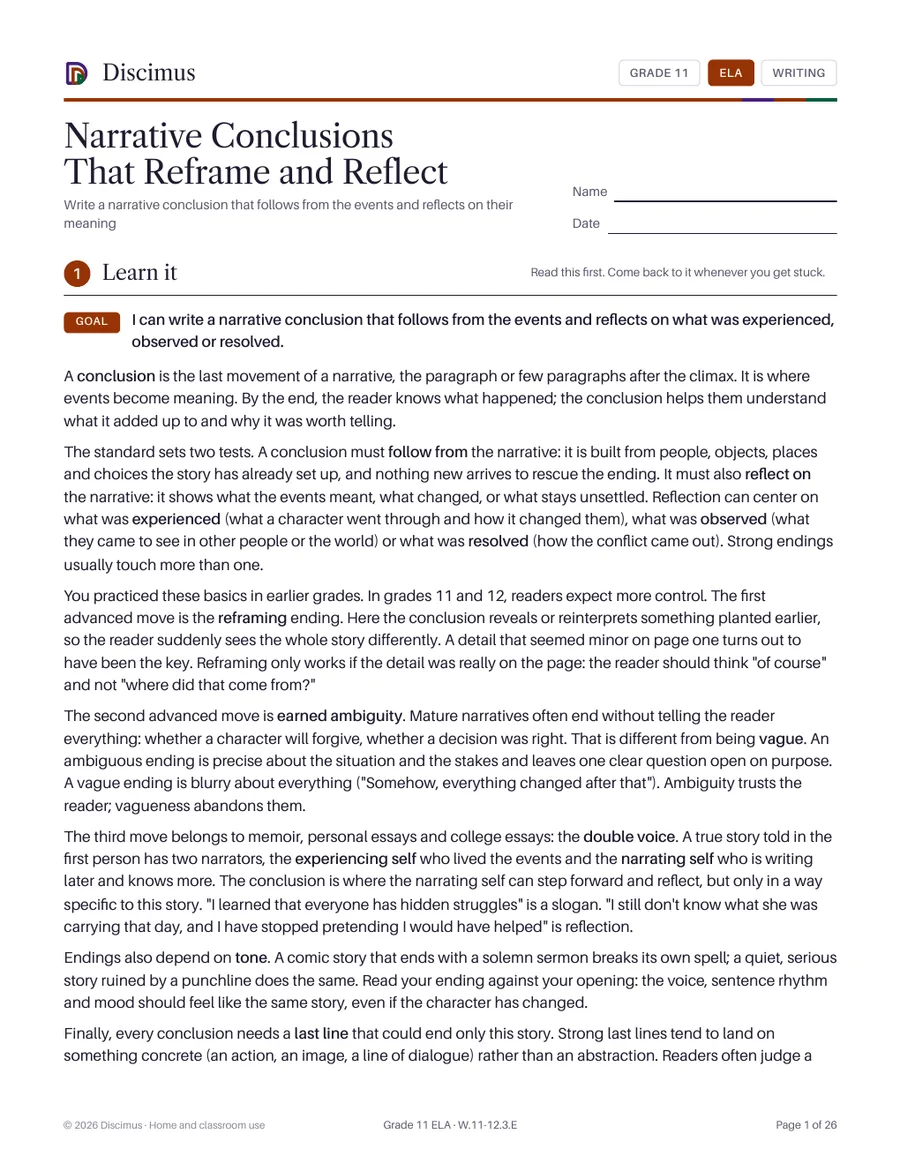
Write a narrative conclusion that follows from the events and reflects on their meaning
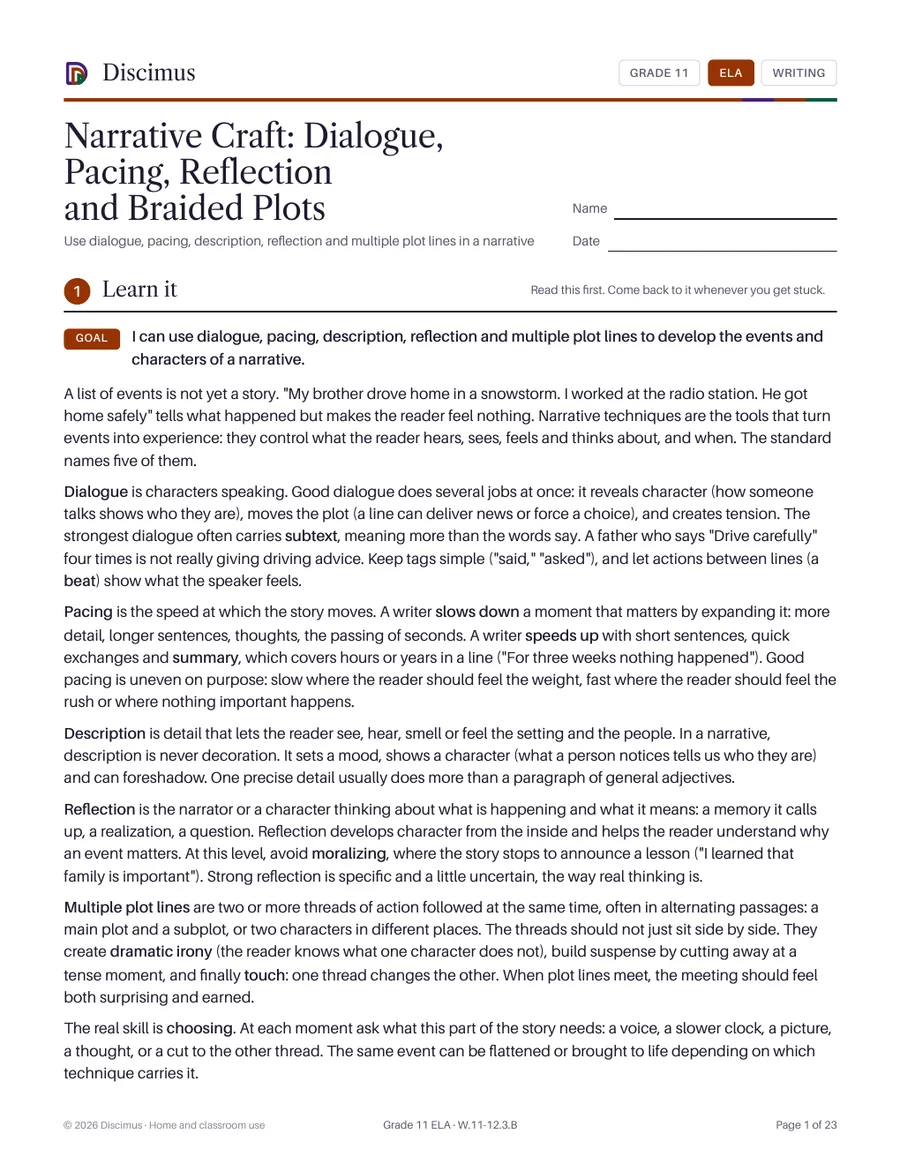
Use dialogue, pacing, description, reflection and multiple plot lines in a narrative
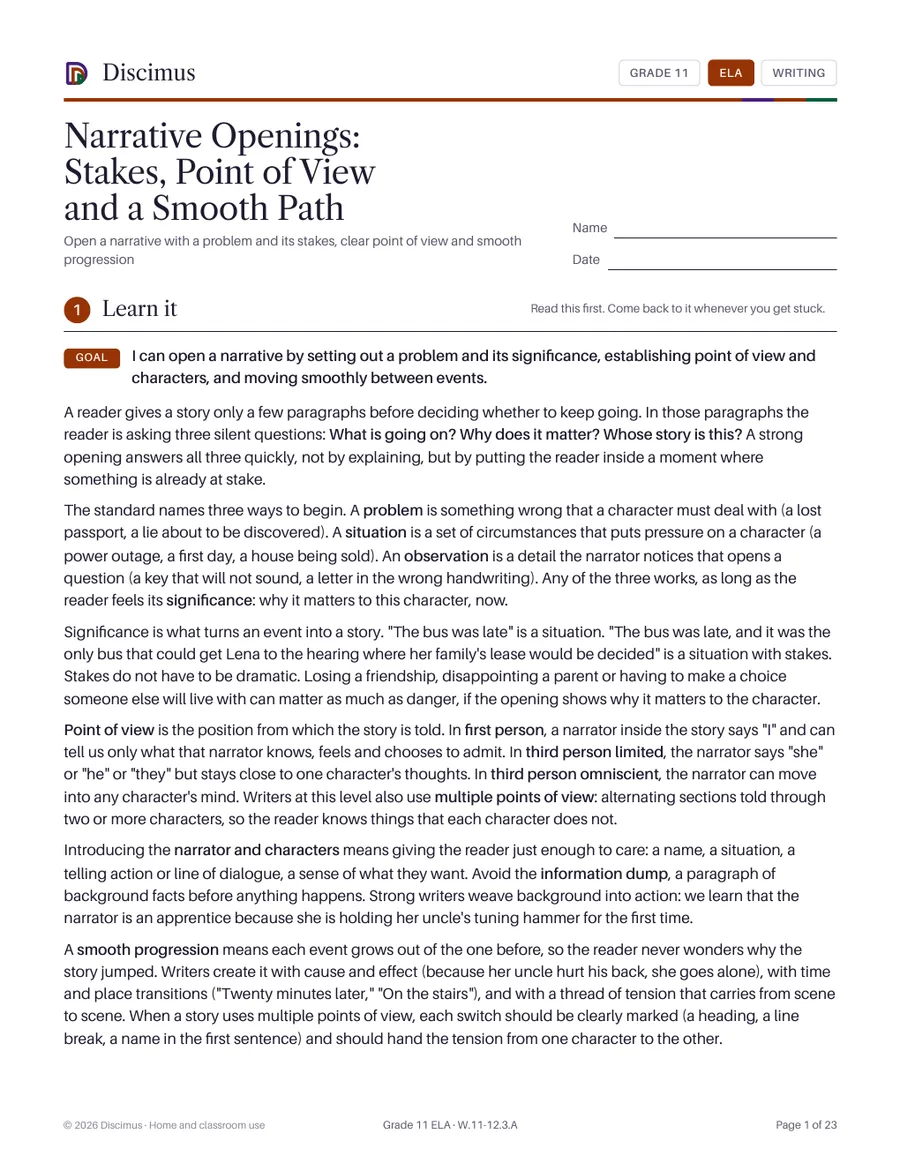
Open a narrative with a problem and its stakes, clear point of view and smooth progression
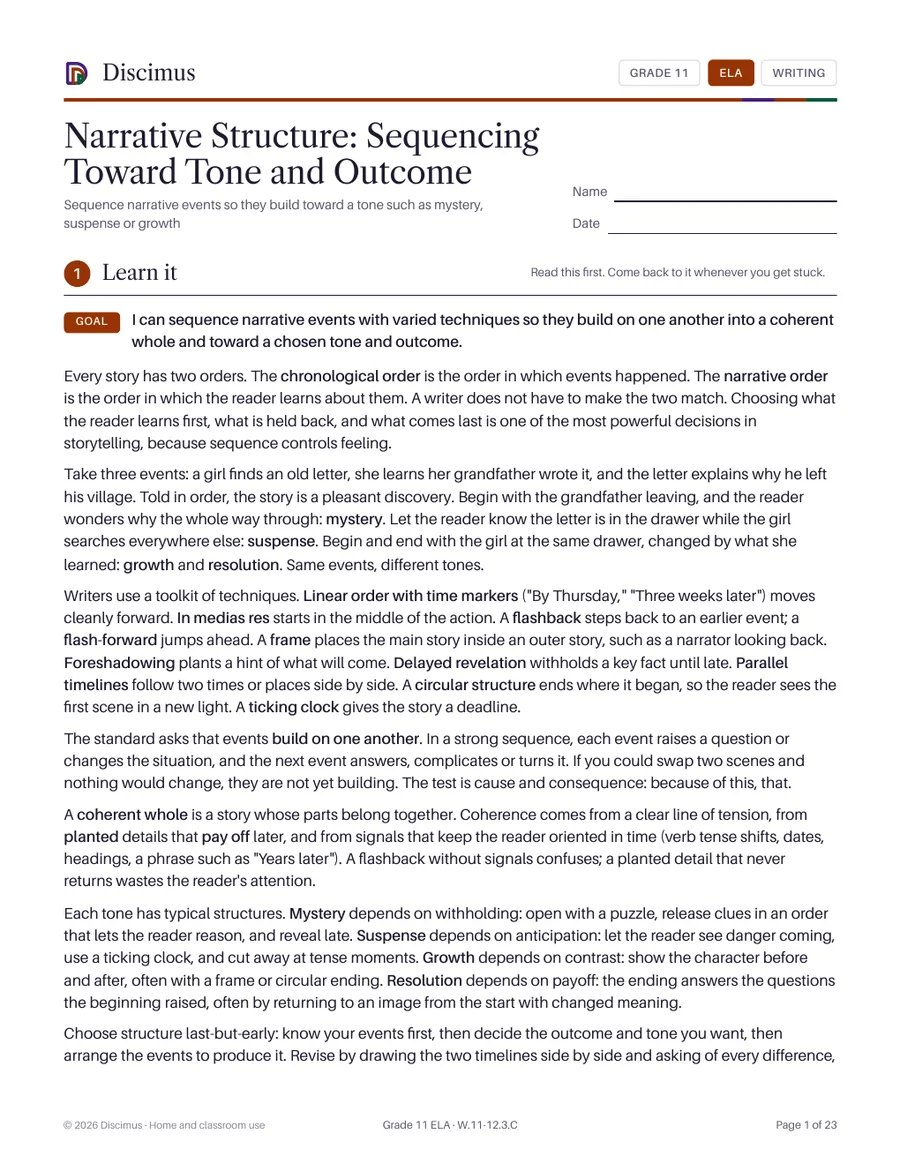
Sequence narrative events so they build toward a tone such as mystery, suspense or growth
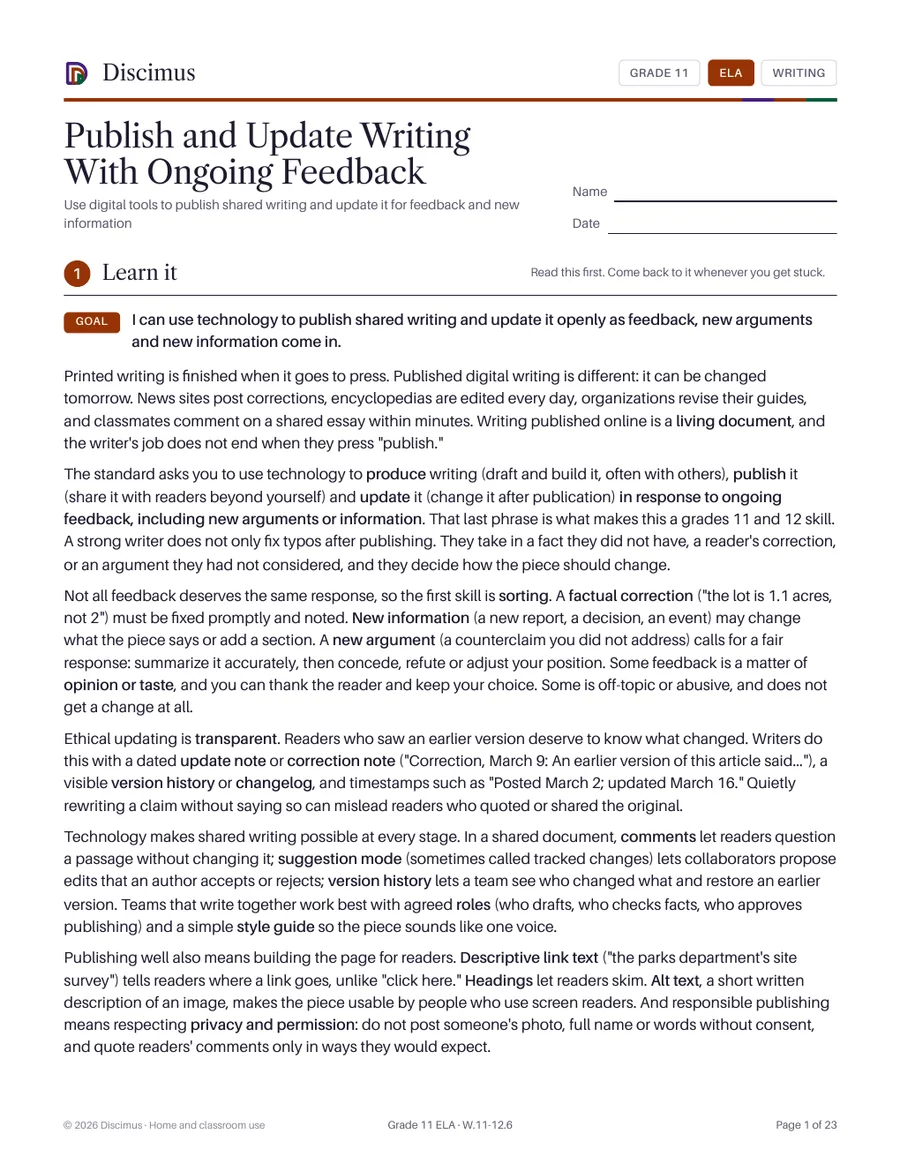
Use digital tools to publish shared writing and update it for feedback and new information
Conduct a research project: refine a question and synthesize sources that disagree
Strengthen a draft with the revision move that matters most for purpose and audience
Fit development, organization and style to the task, purpose and audience
Use precise words, telling details and sensory language to make a narrative vivid
Write an analysis comparing how two American works from the same period treat a theme
Write an analysis that delineates and evaluates the reasoning in seminal U.S. texts
Write routinely in single sittings and over weeks for varied tasks, purposes and audiences
Search well, weigh each source's strengths and limits, integrate selectively and cite
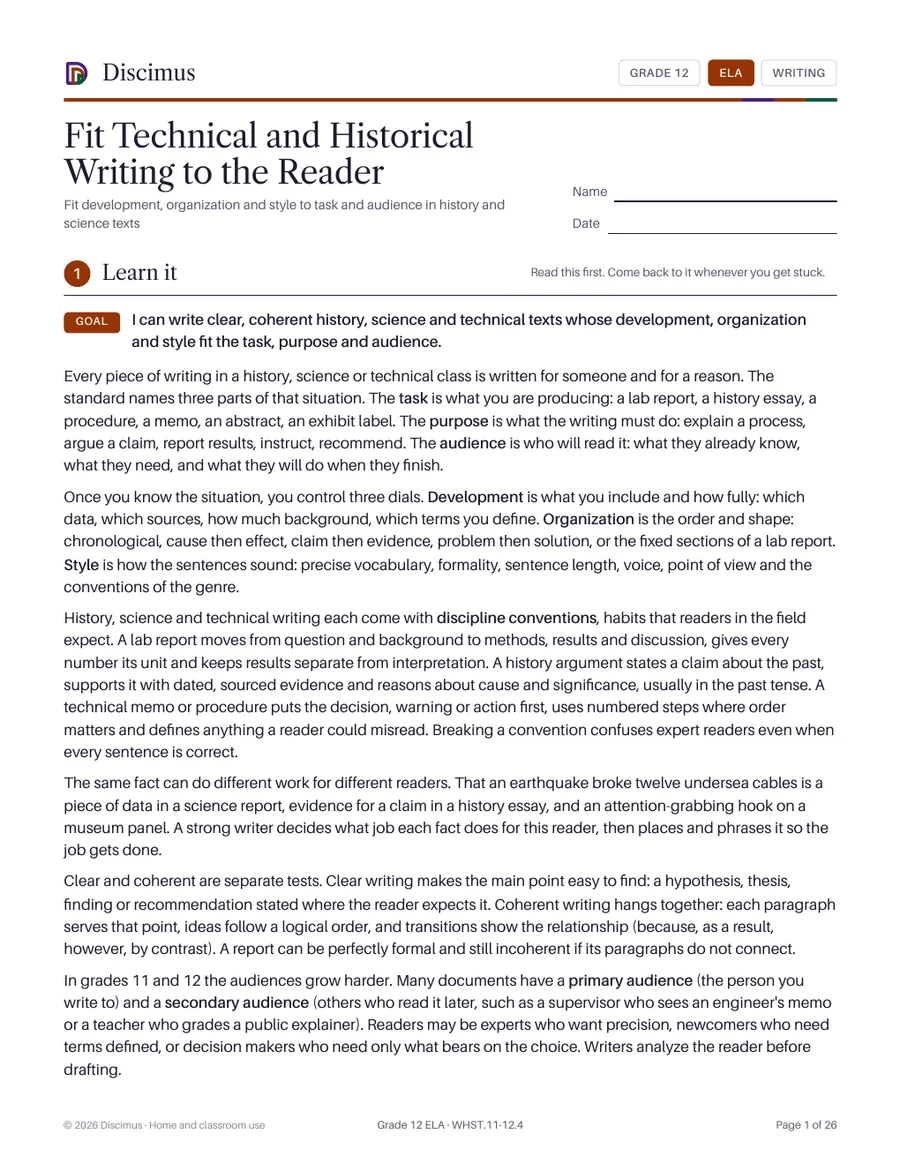
Fit development, organization and style to task and audience in history and science texts
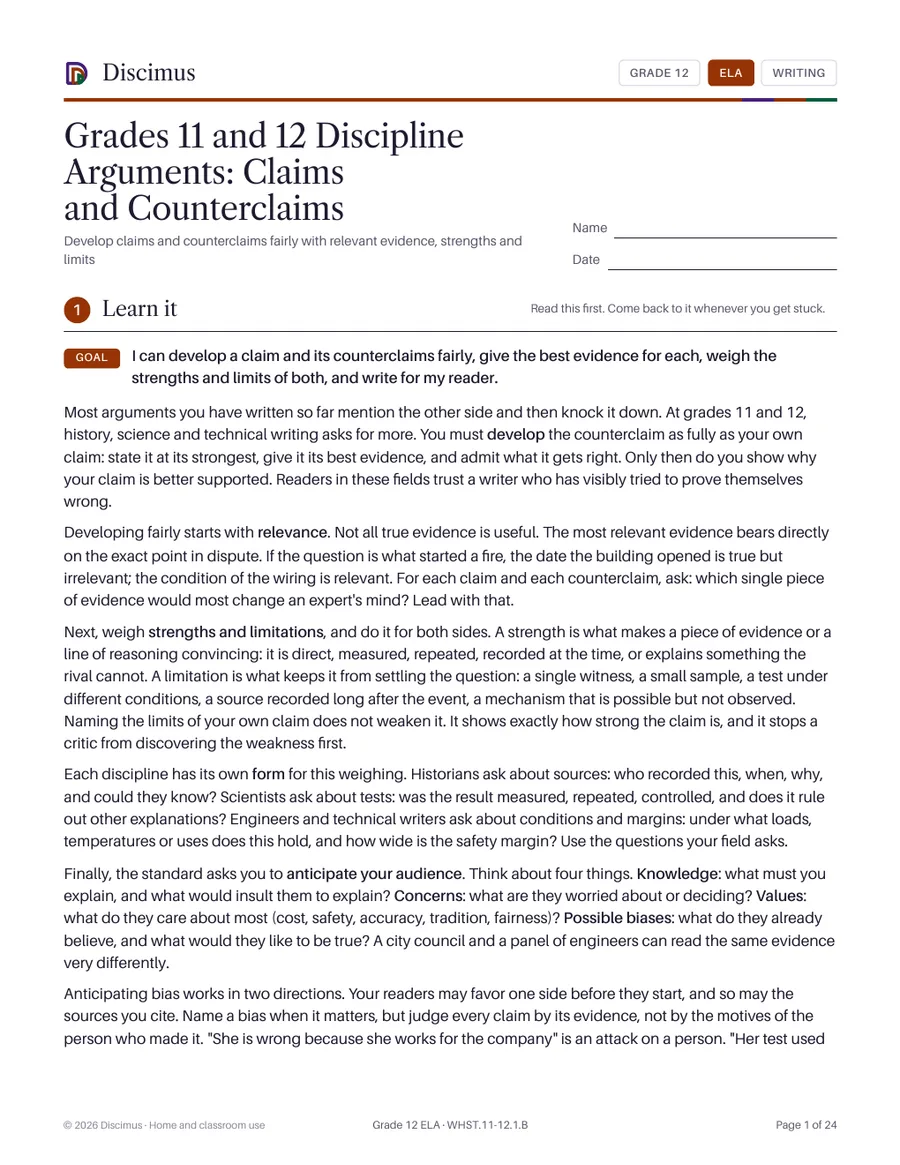
Develop claims and counterclaims fairly with relevant evidence, strengths and limits
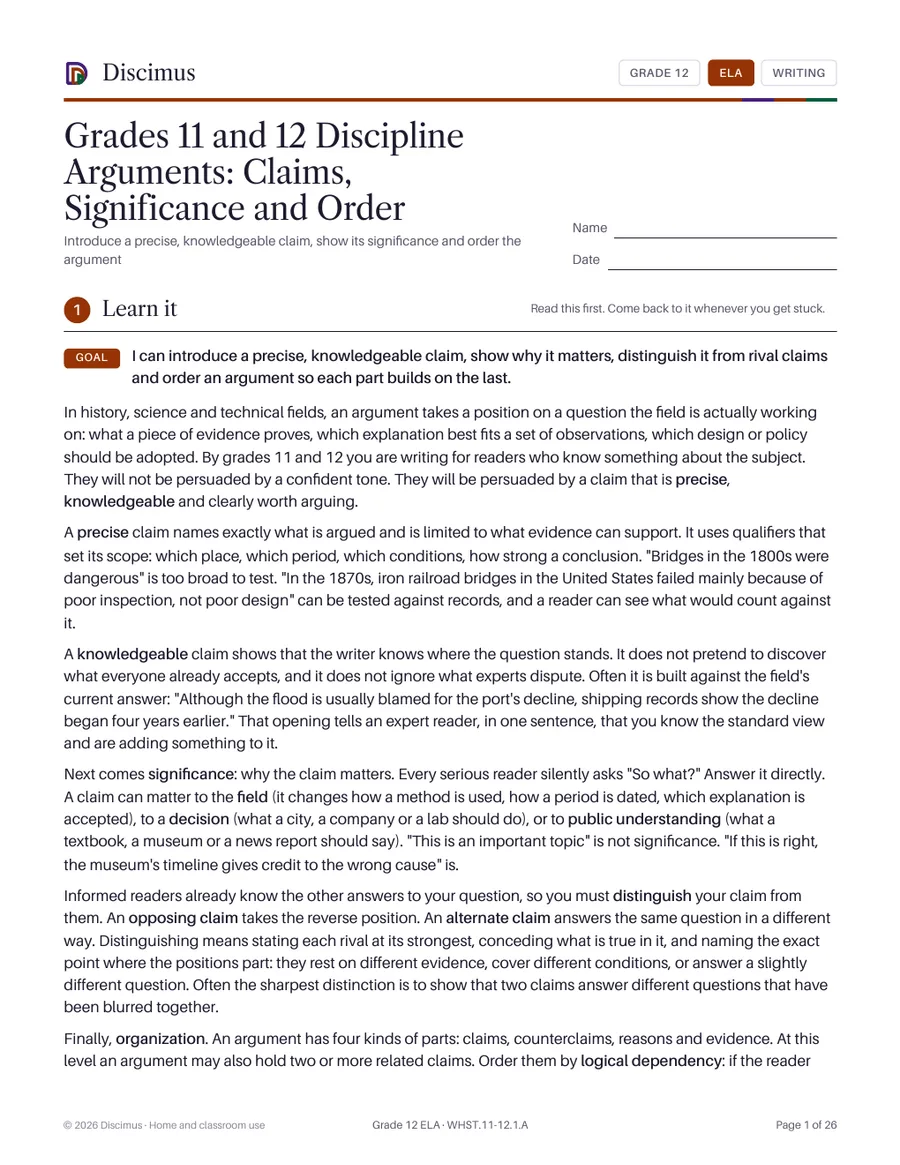
Introduce a precise, knowledgeable claim, show its significance and order the argument
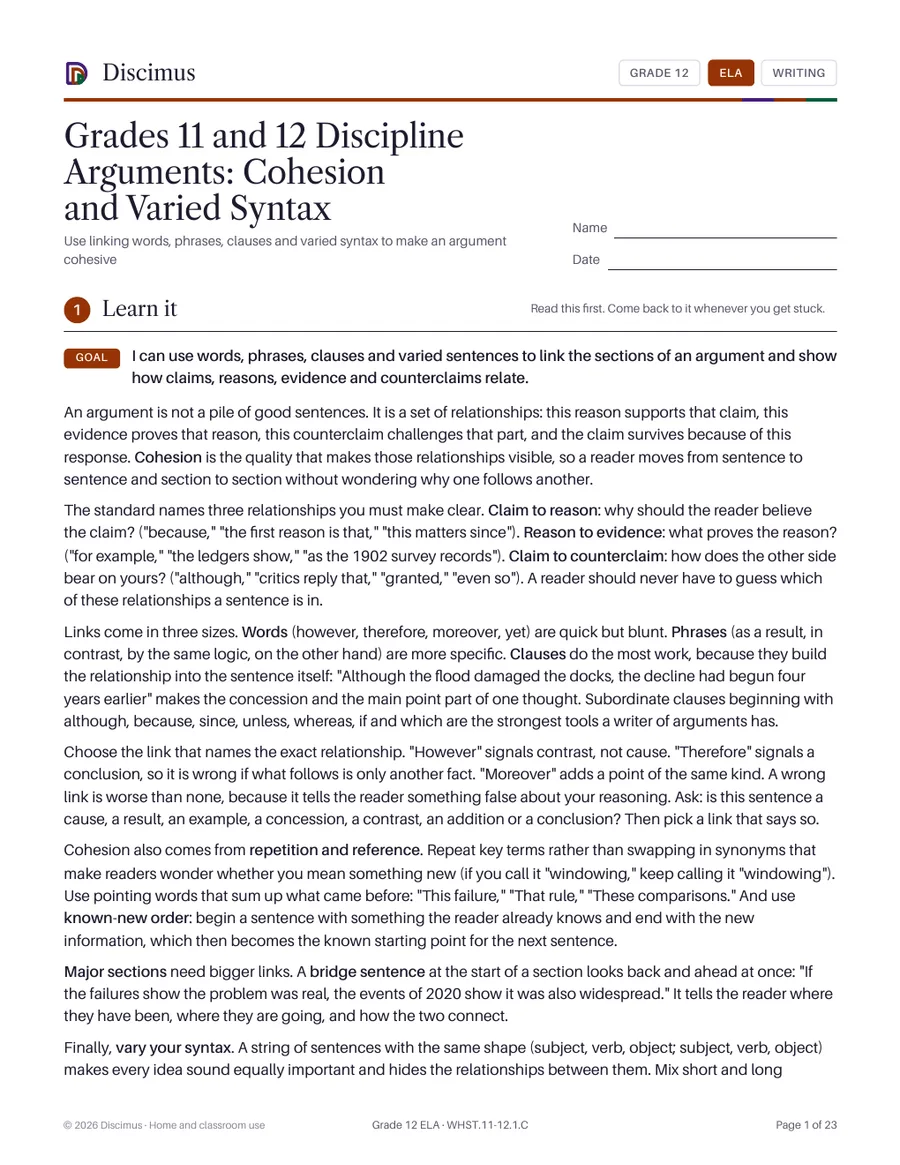
Use linking words, phrases, clauses and varied syntax to make an argument cohesive
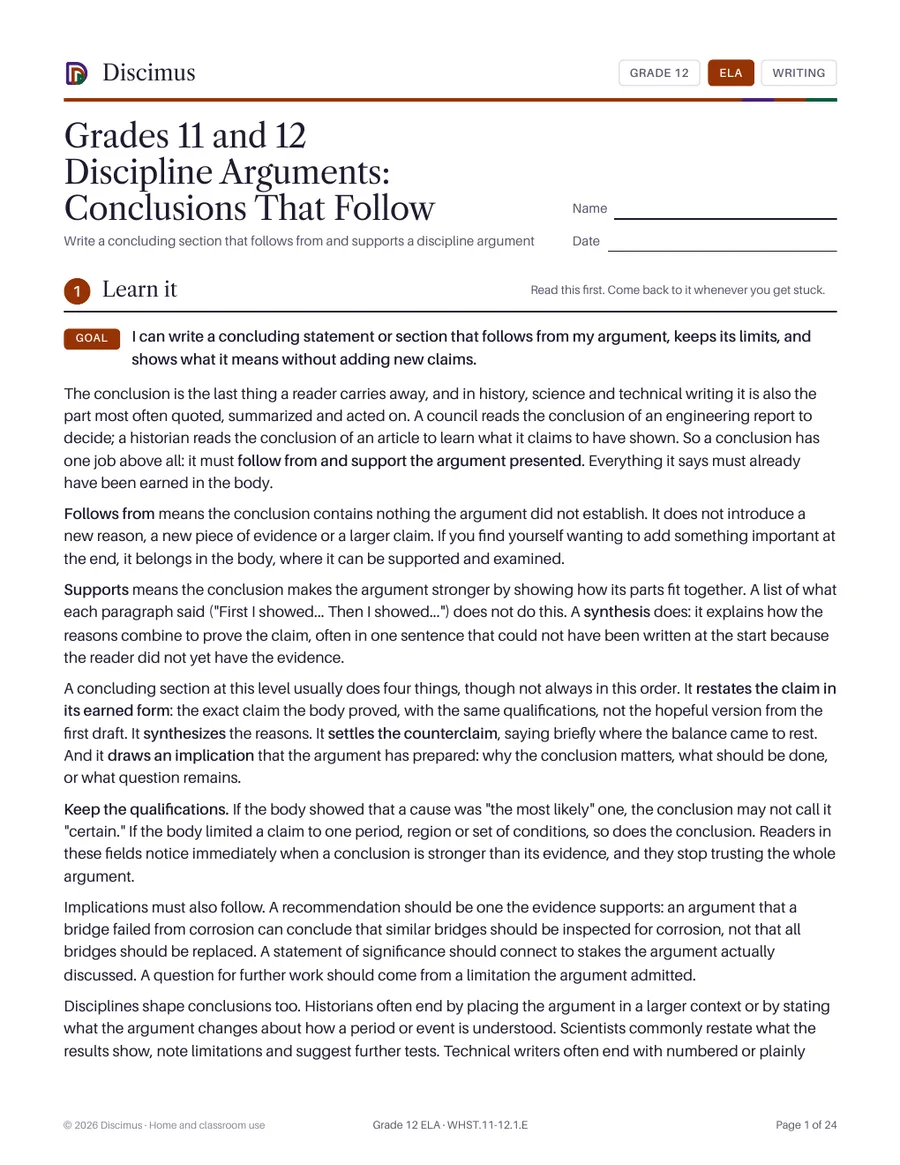
Write a concluding section that follows from and supports a discipline argument
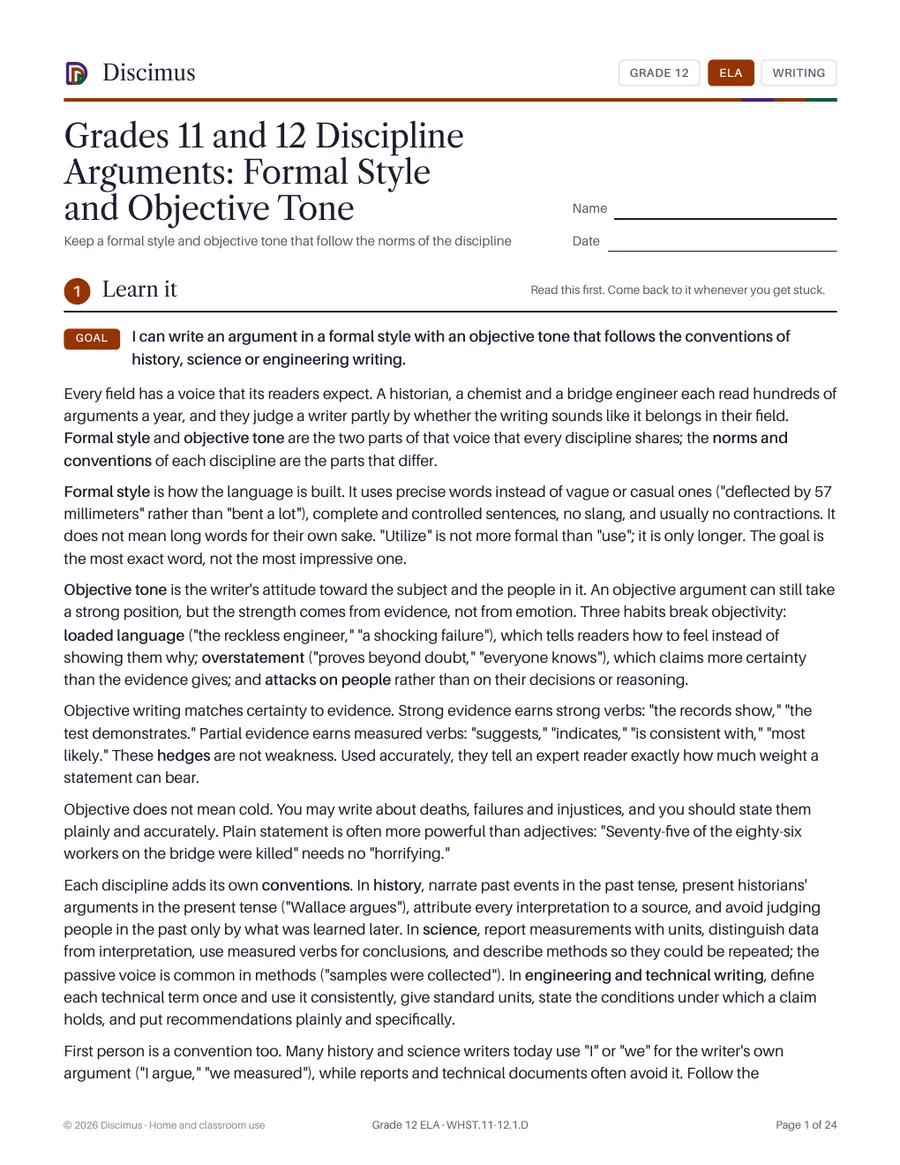
Keep a formal style and objective tone that follow the norms of the discipline
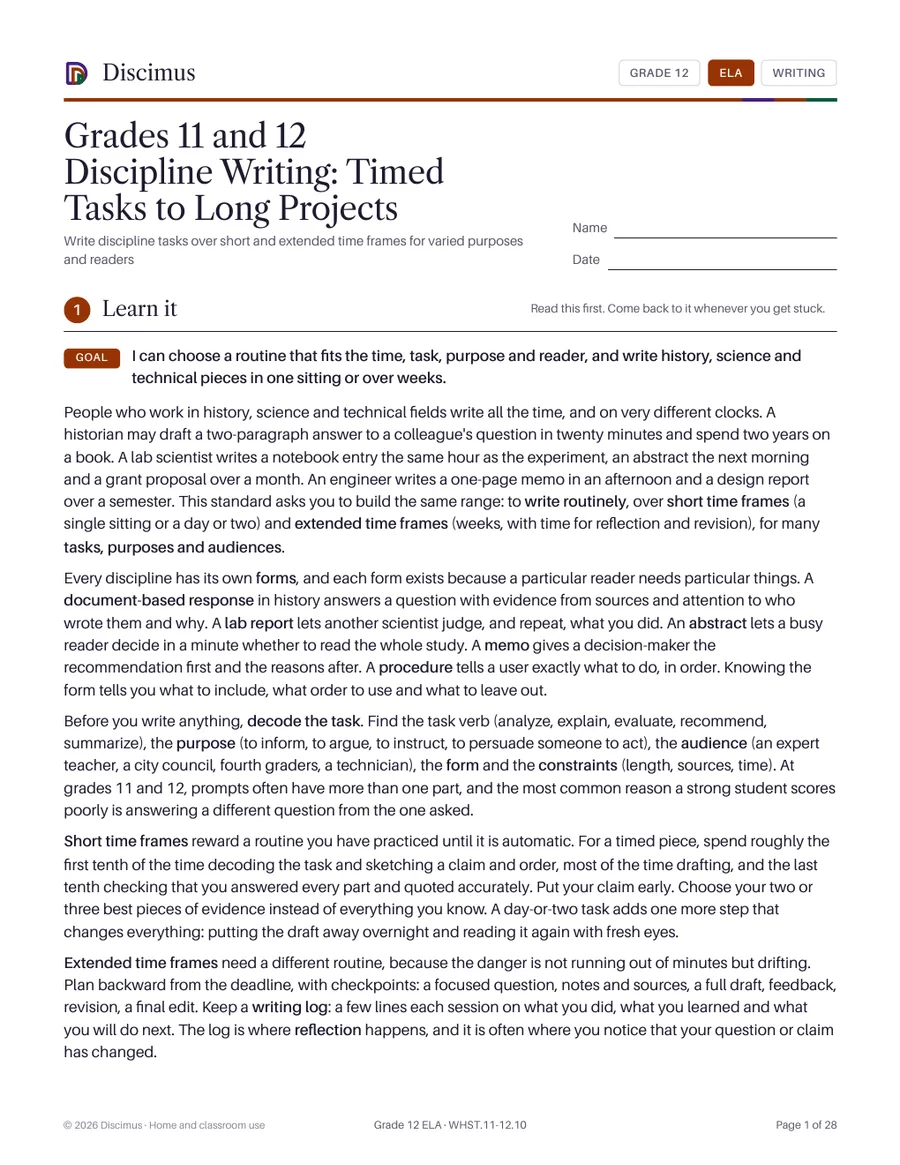
Write discipline tasks over short and extended time frames for varied purposes and readers
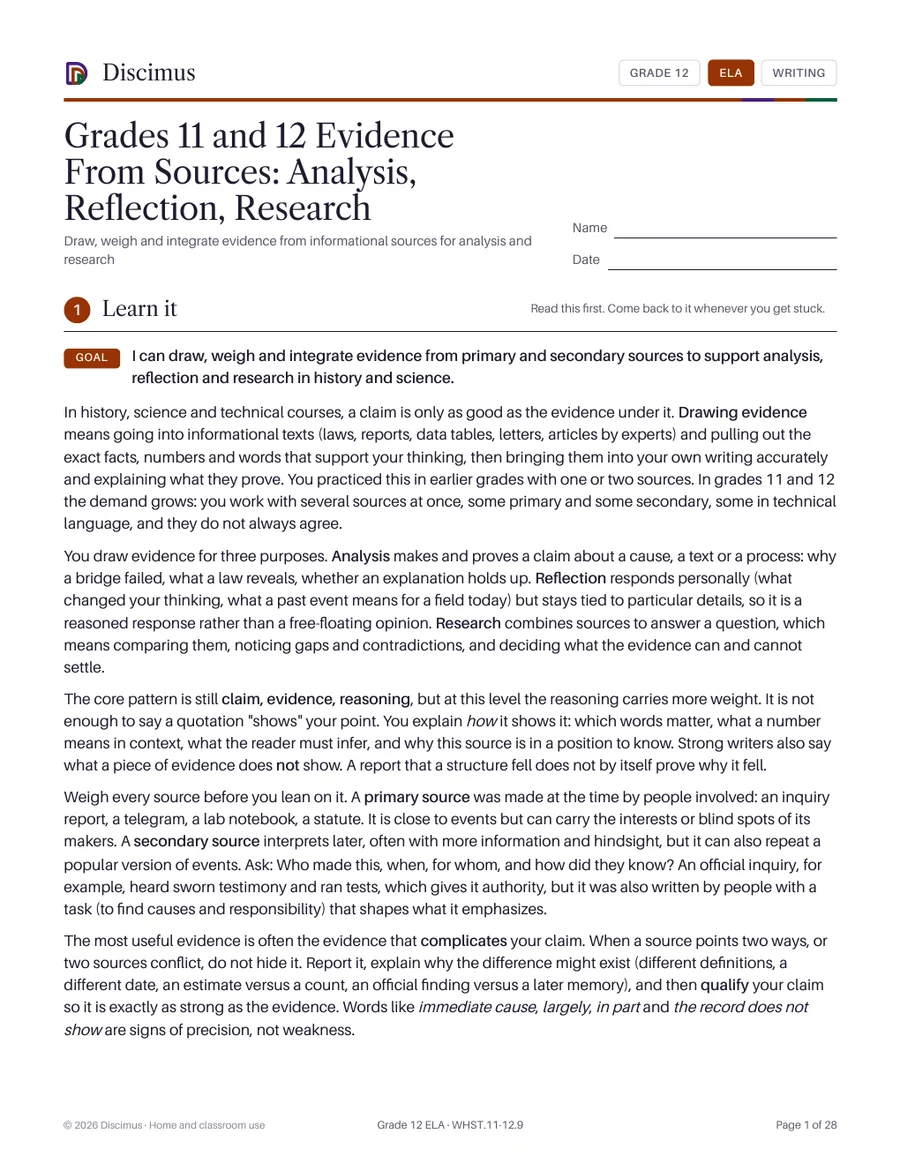
Draw, weigh and integrate evidence from informational sources for analysis and research
Produce, publish and update shared science and history writing as evidence arrives
Research a question or problem, narrow or broaden it, and synthesize several sources
Plan, revise, edit and rewrite history and technical writing, biggest problems first
Write concluding sections that follow from an explanation and state its significance
Introduce and order history, science and technical topics so each part builds on the last
Use precise terms, domain vocabulary and analogies with a knowledgeable stance
Develop discipline explanations with the most significant facts, definitions and quotes
Link sections and ideas in discipline writing with varied transitions and syntax