Ask Questions About an Old Ice Card
Ask questions about a source from the past and how it connects to life long ago
33 worksheets match.
Ask questions about a source from the past and how it connects to life long ago
Explain how a source teaches about the past: look closely, think, wonder and check
Name and sort kinds of historical sources: written, pictures, objects and spoken memories
Find who made a source, and when and where, from clues on the source itself
Choose sources that answer inquiry questions, including sources from people who disagree
Tell facts from opinions and use the difference to judge how credible each source is
Choose useful sources for a question by checking each one's origin, structure and context
Generate questions about several historical sources and how they connect to an event
Summarize how different kinds of historical sources are used to explain past events
Compare information provided by different historical sources about the same past event
Judge a source's usefulness for a topic from its maker, date, place, audience and purpose
Find and summarize the central claim and main points of a secondary history work
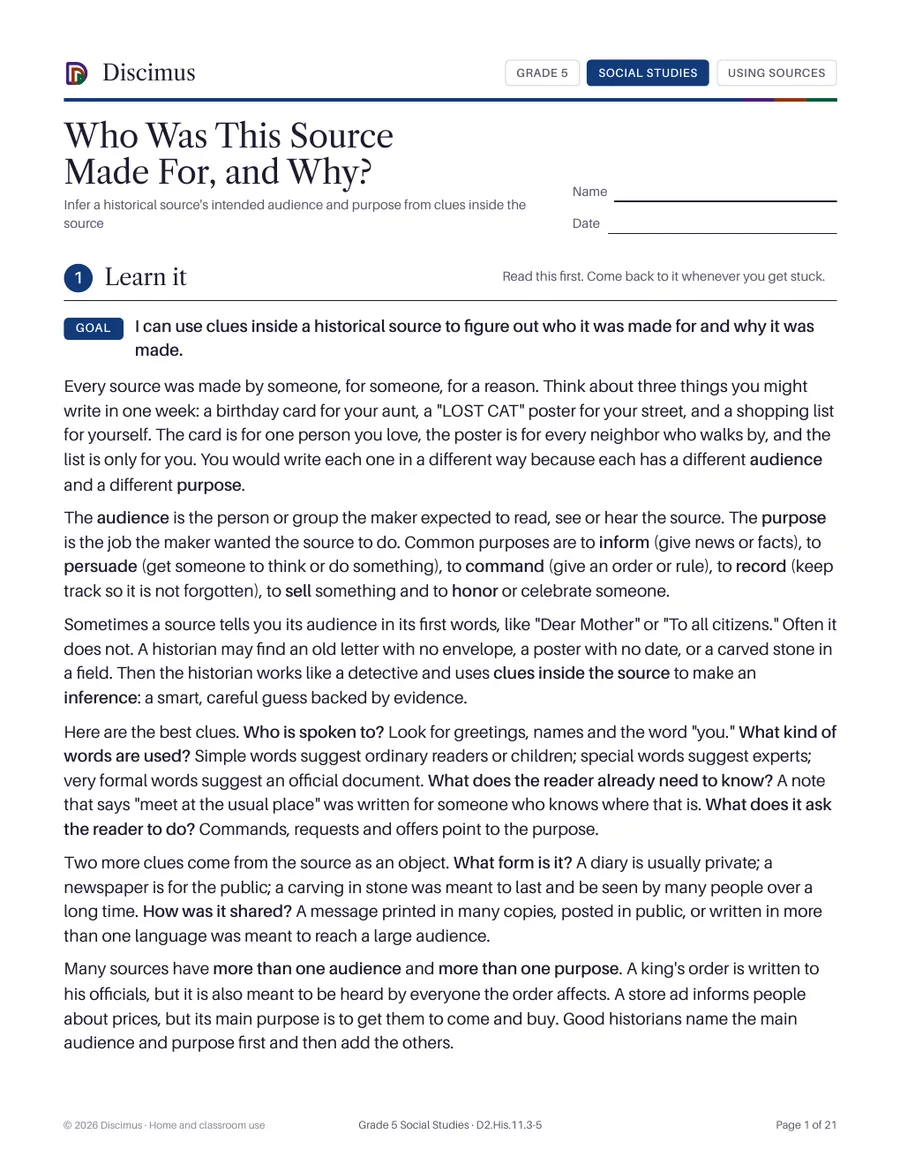
Infer a historical source's intended audience and purpose from clues inside the source
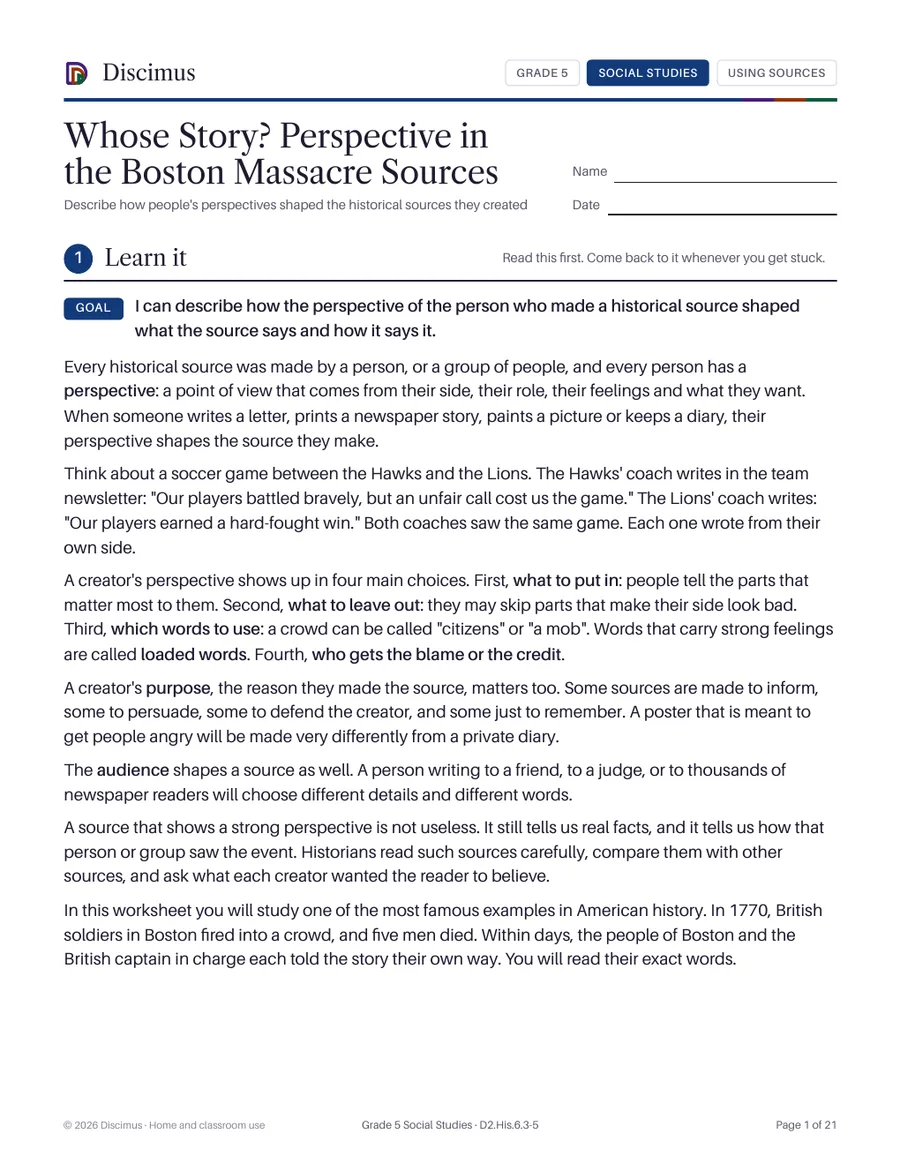
Describe how people's perspectives shaped the historical sources they created
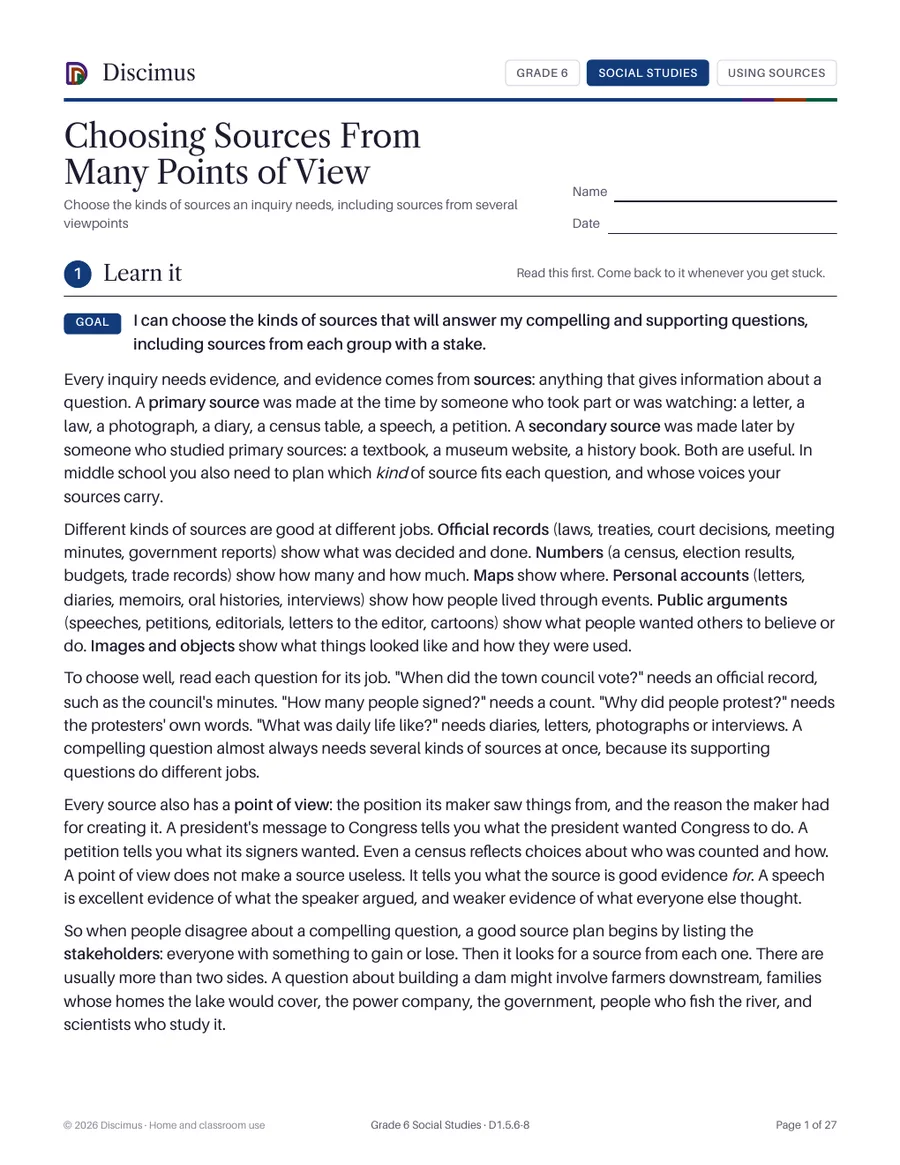
Choose the kinds of sources an inquiry needs, including sources from several viewpoints
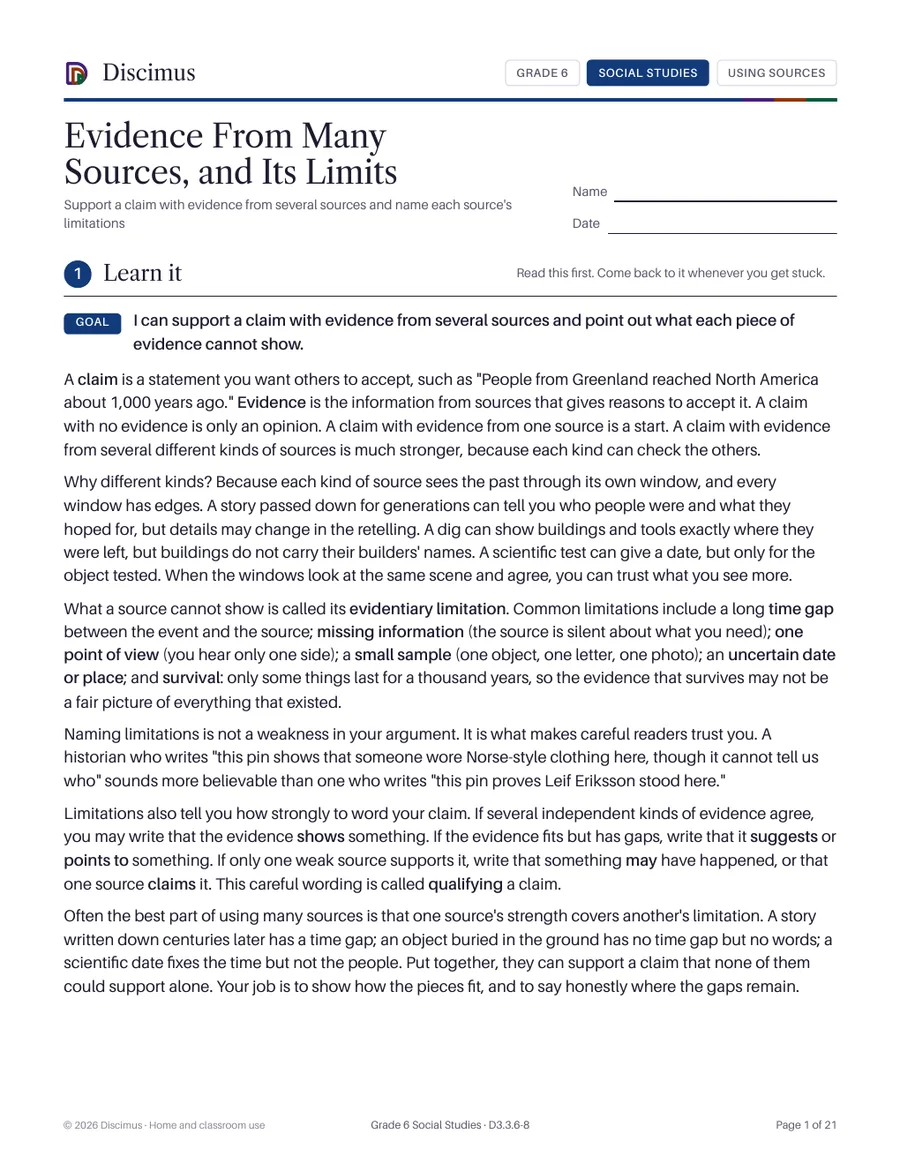
Support a claim with evidence from several sources and name each source's limitations
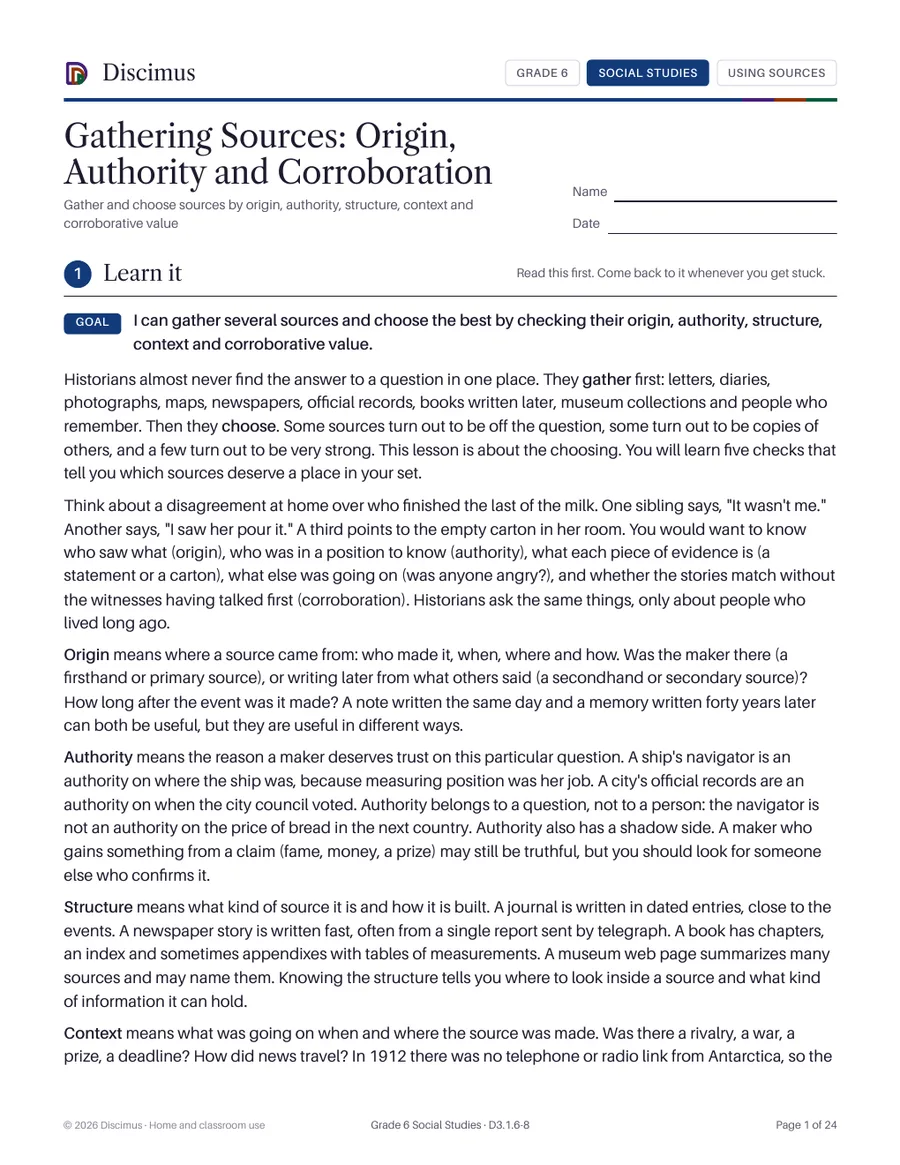
Gather and choose sources by origin, authority, structure, context and corroborative value
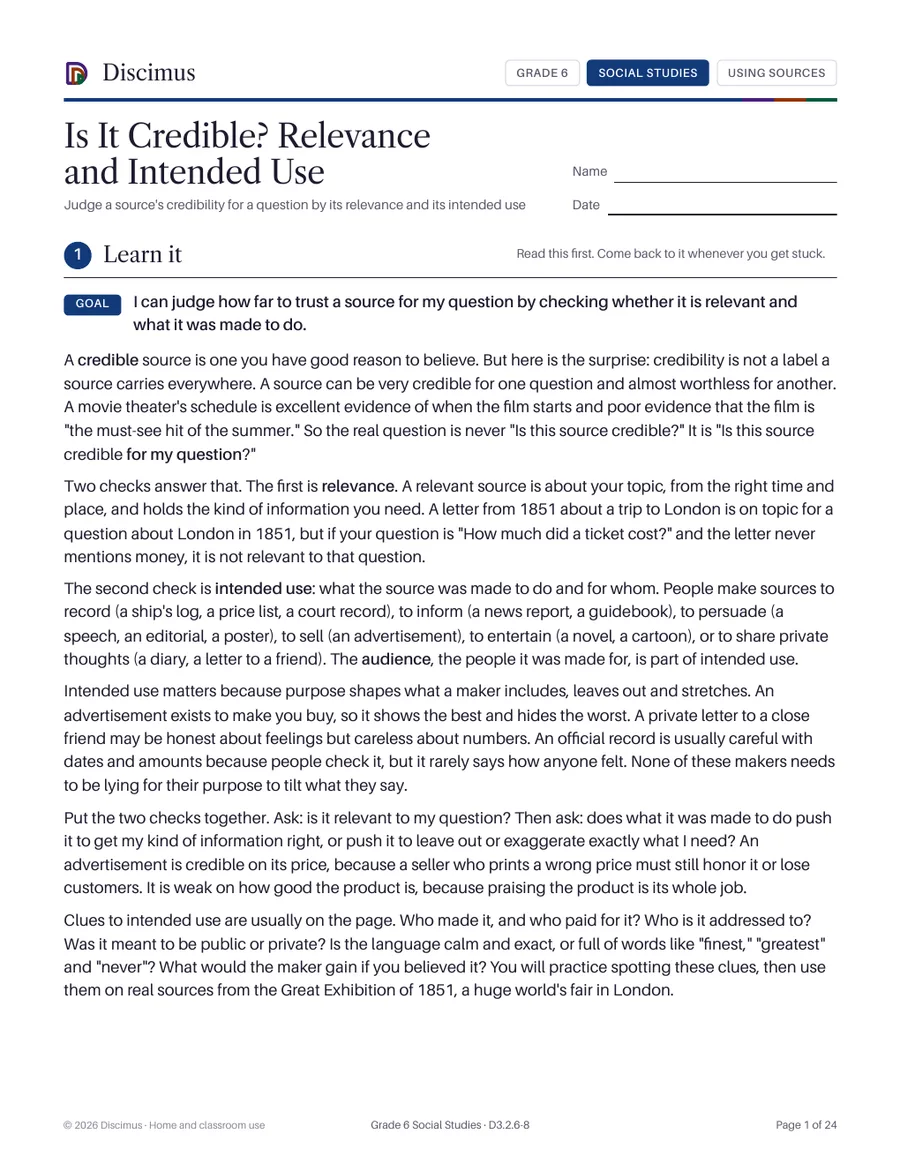
Judge a source's credibility for a question by its relevance and its intended use
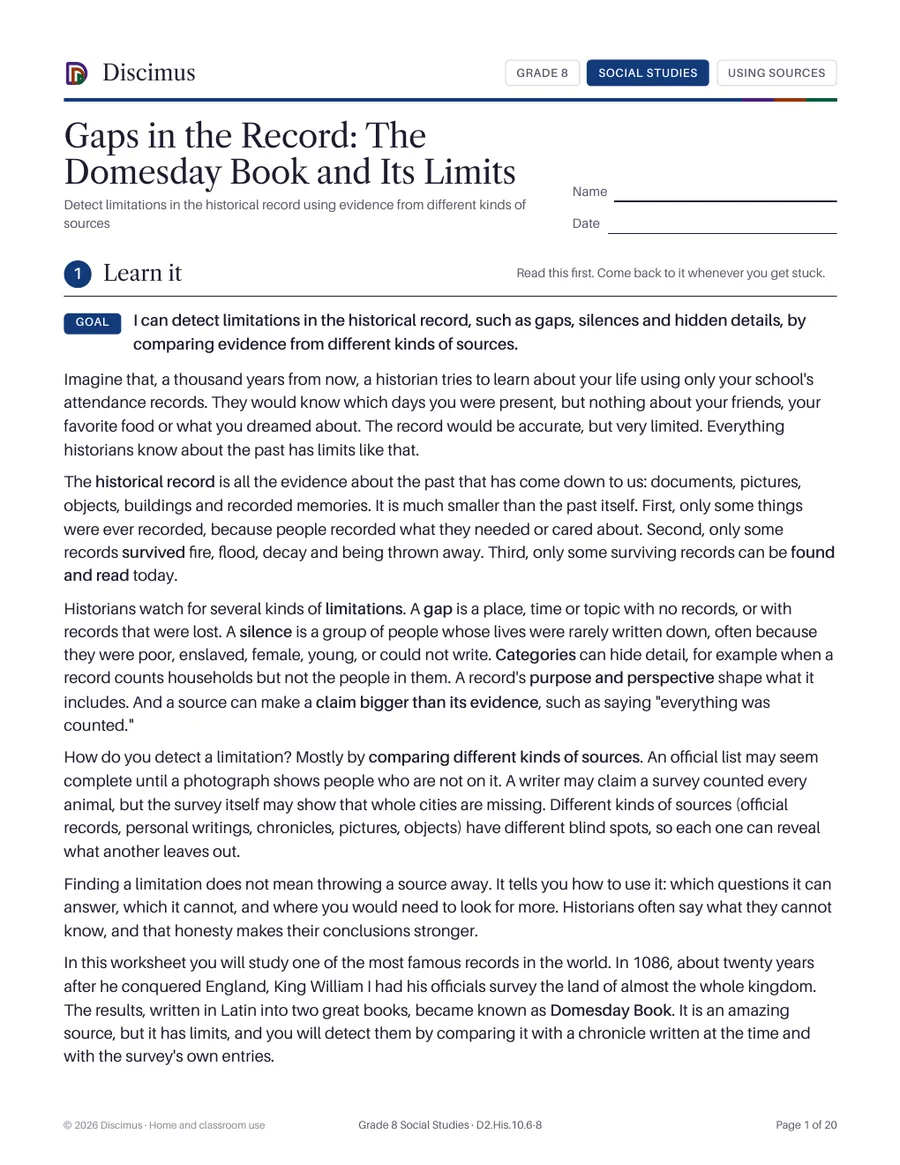
Detect limitations in the historical record using evidence from different kinds of sources
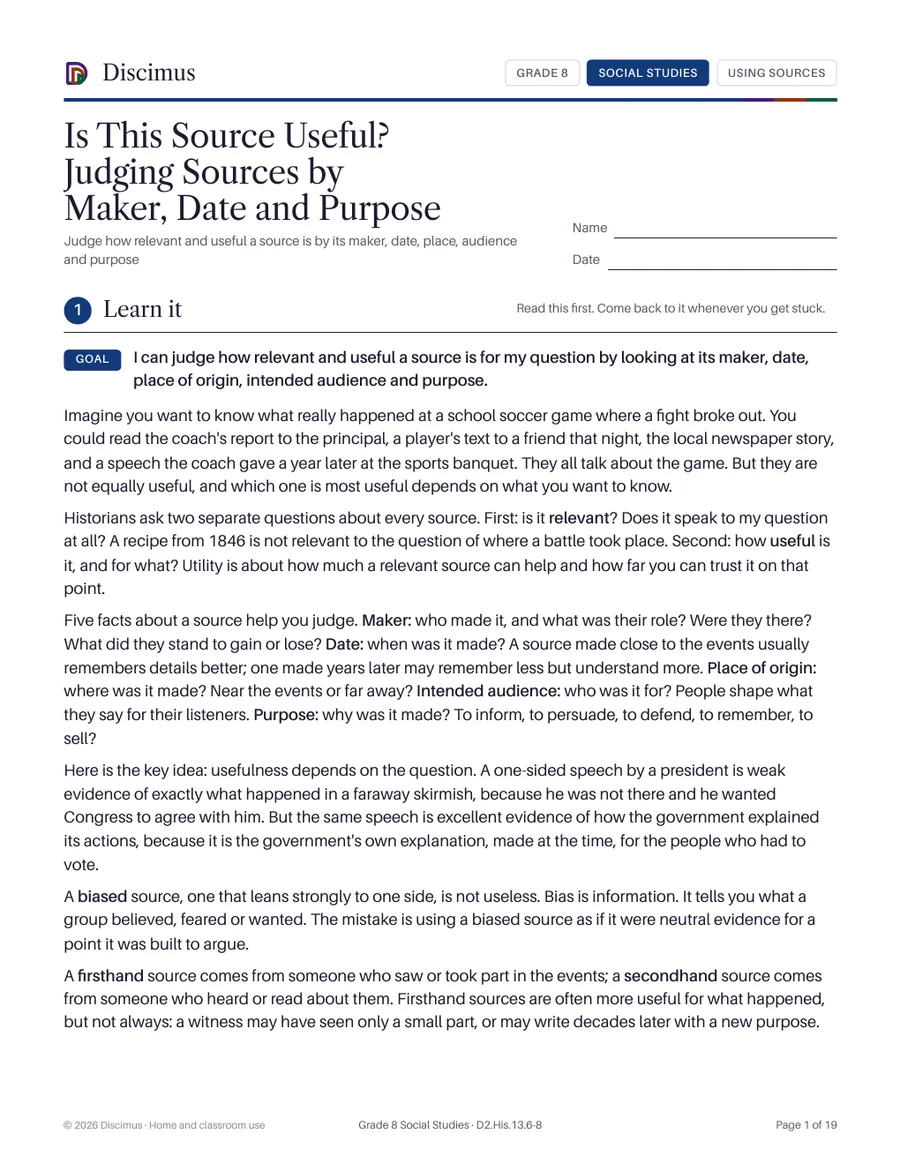
Judge how relevant and useful a source is by its maker, date, place, audience and purpose
Use questions raised by several sources to choose new areas of inquiry and more sources
Infer a plausible maker, date, place and audience for a source by using other sources
Classify the kinds of historical sources used in a secondary interpretation
Analyze how creators' perspectives shaped the information in the sources they made
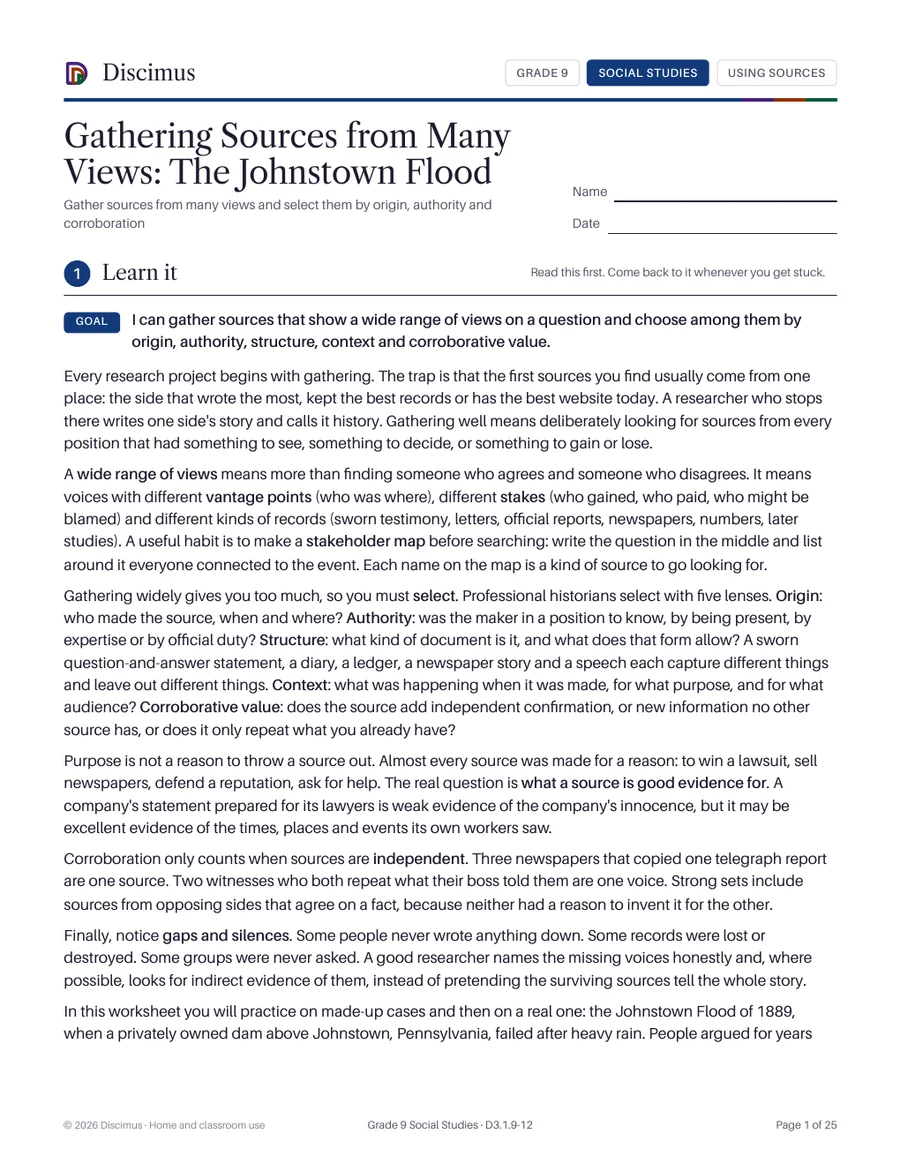
Gather sources from many views and select them by origin, authority and corroboration
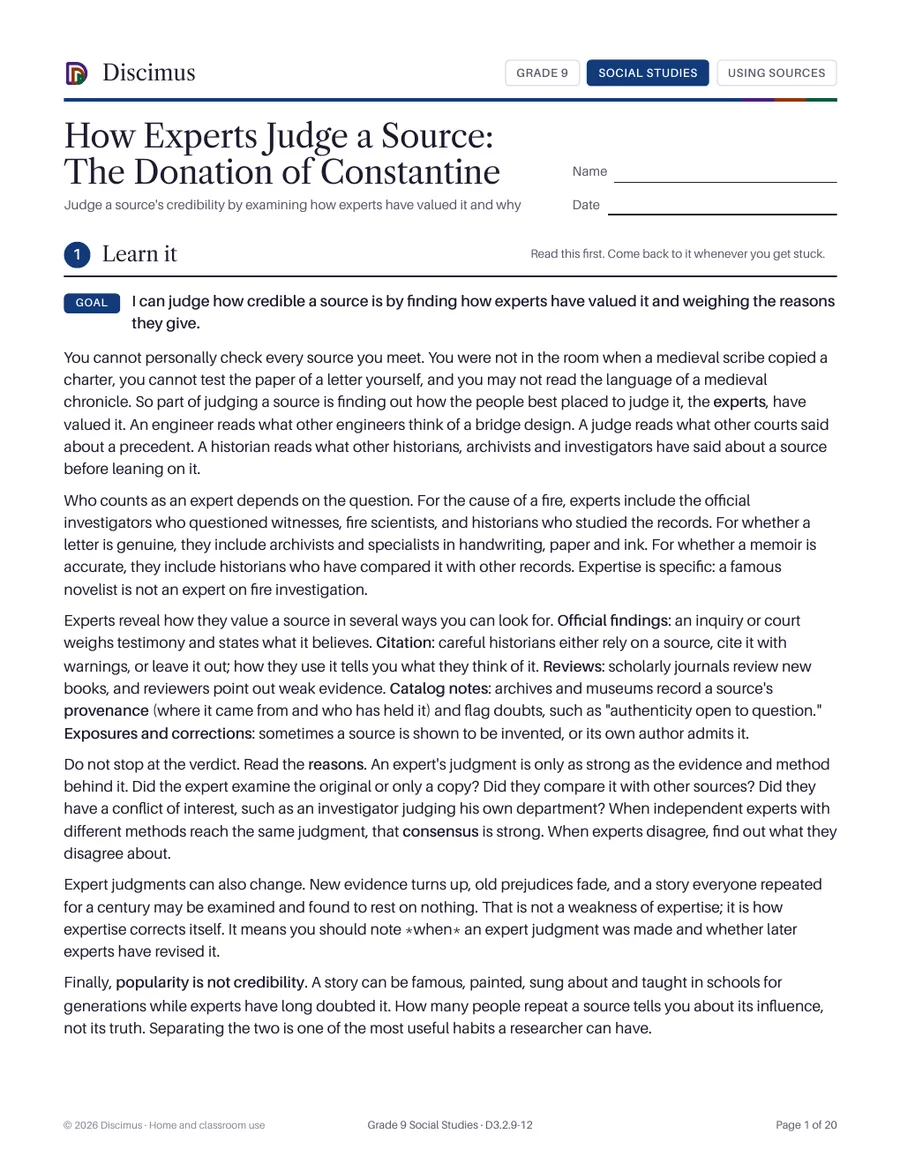
Judge a source's credibility by examining how experts have valued it and why
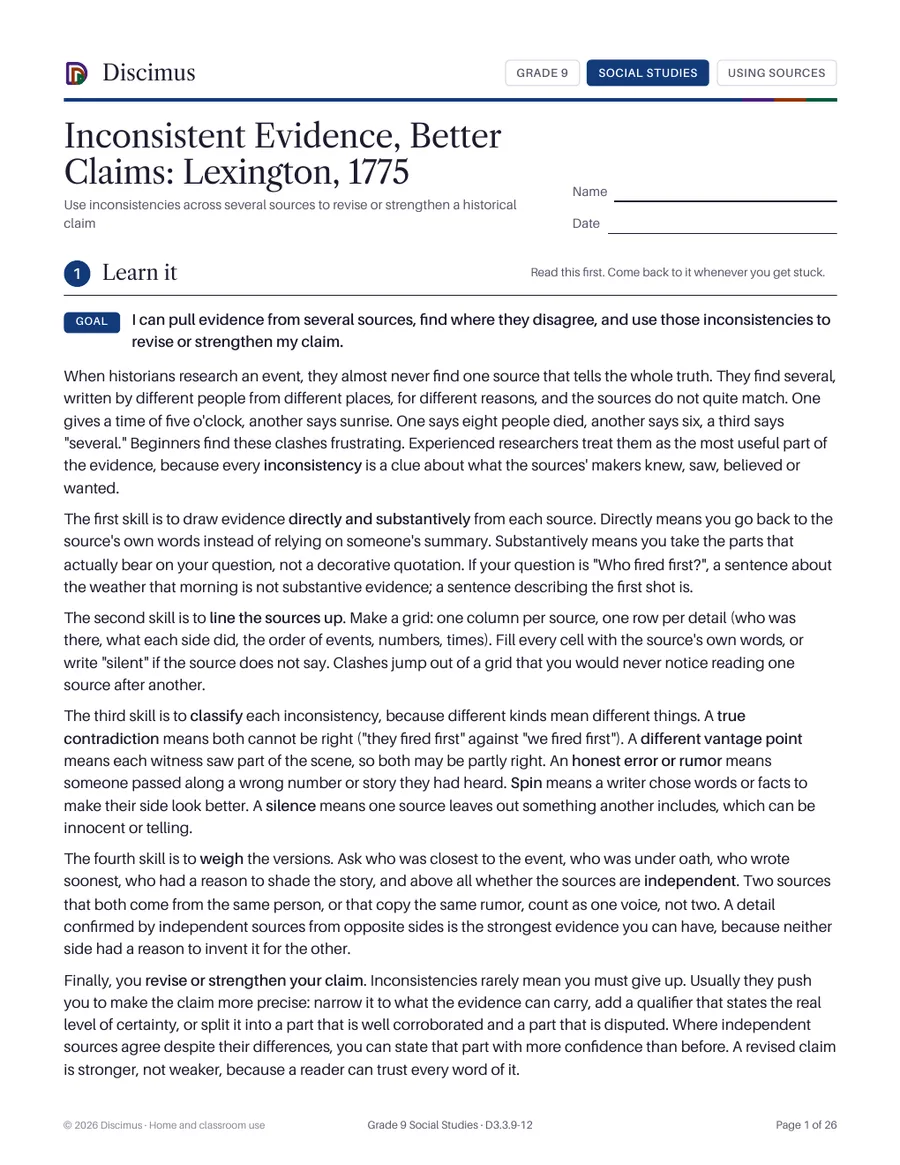
Use inconsistencies across several sources to revise or strengthen a historical claim
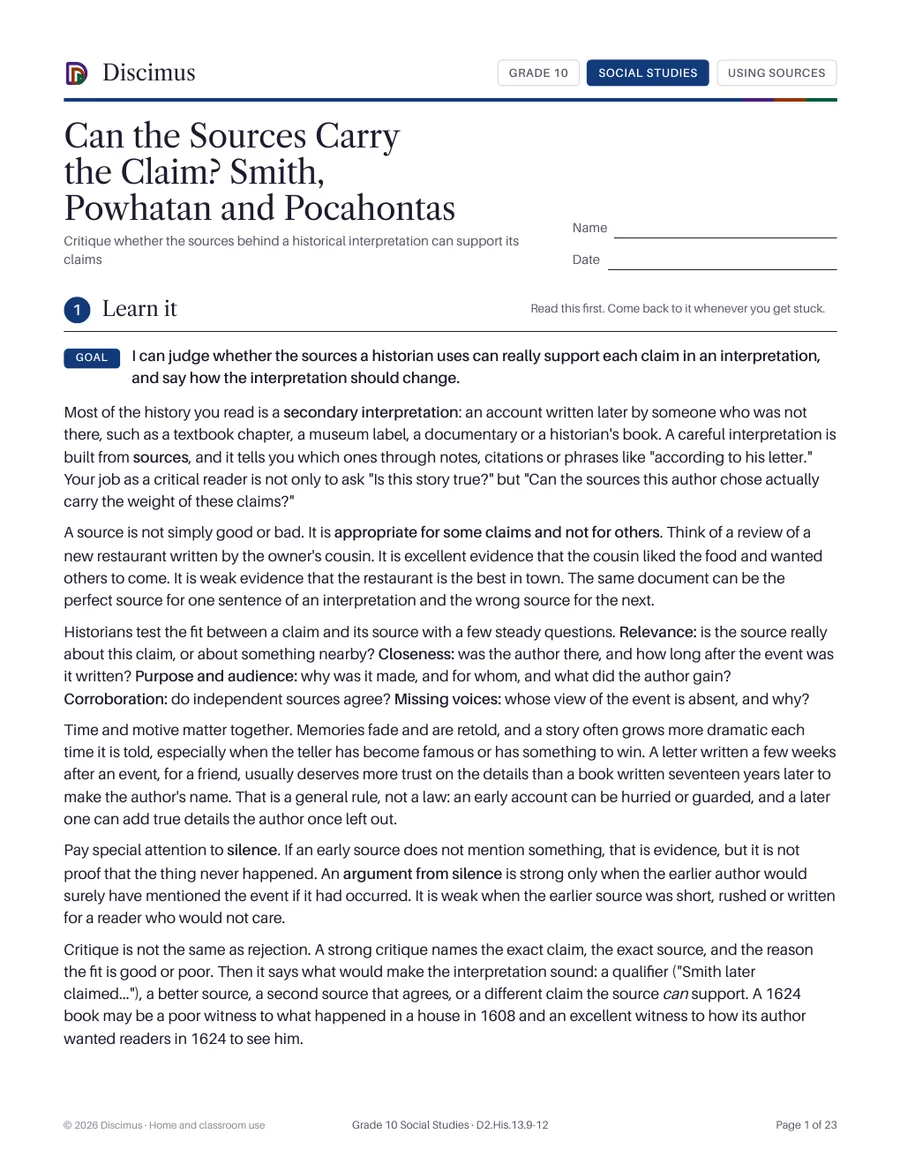
Critique whether the sources behind a historical interpretation can support its claims
Critique the central argument of a history book, film, painting or poem for accuracy
Judge a source's usefulness for an inquiry by maker, date, place, audience and purpose
Detect limits in different kinds of historical evidence and in differing interpretations
Analyze how a secondary interpretation selects, reads and goes beyond its primary sources
Use questions raised by several sources to pursue an inquiry and find additional sources