Ask and Answer Questions About a Story
Ask and answer who, what, where, when, why and how questions about a story read aloud
210 worksheets match.
Ask and answer who, what, where, when, why and how questions about a story read aloud
Ask and answer questions about key details in a true text read aloud
Name a story's author and illustrator and tell what each one does
Describe how two people, events, ideas or facts in a true text are connected
Name the main topic of a true text read aloud and retell its key details
Identify the front cover, back cover and title page of a book
Tell which moment of a story a picture shows and what the picture adds
Tell what a picture in a true text shows and match it to the words
Read short beginner texts with a purpose and show understanding of them
Join in group read-alouds with a listening job and show understanding of the text
Take an active part in a group read-aloud of a true text with a purpose and understanding
Retell a familiar story in order, with the characters, setting and key events
Compare and contrast what happens to characters in familiar stories
Recognize common types of texts: tell a story from a poem and say how you know
Tell how two true texts on the same topic are alike and different
Name the author and illustrator of a true text and tell how each one presents the facts
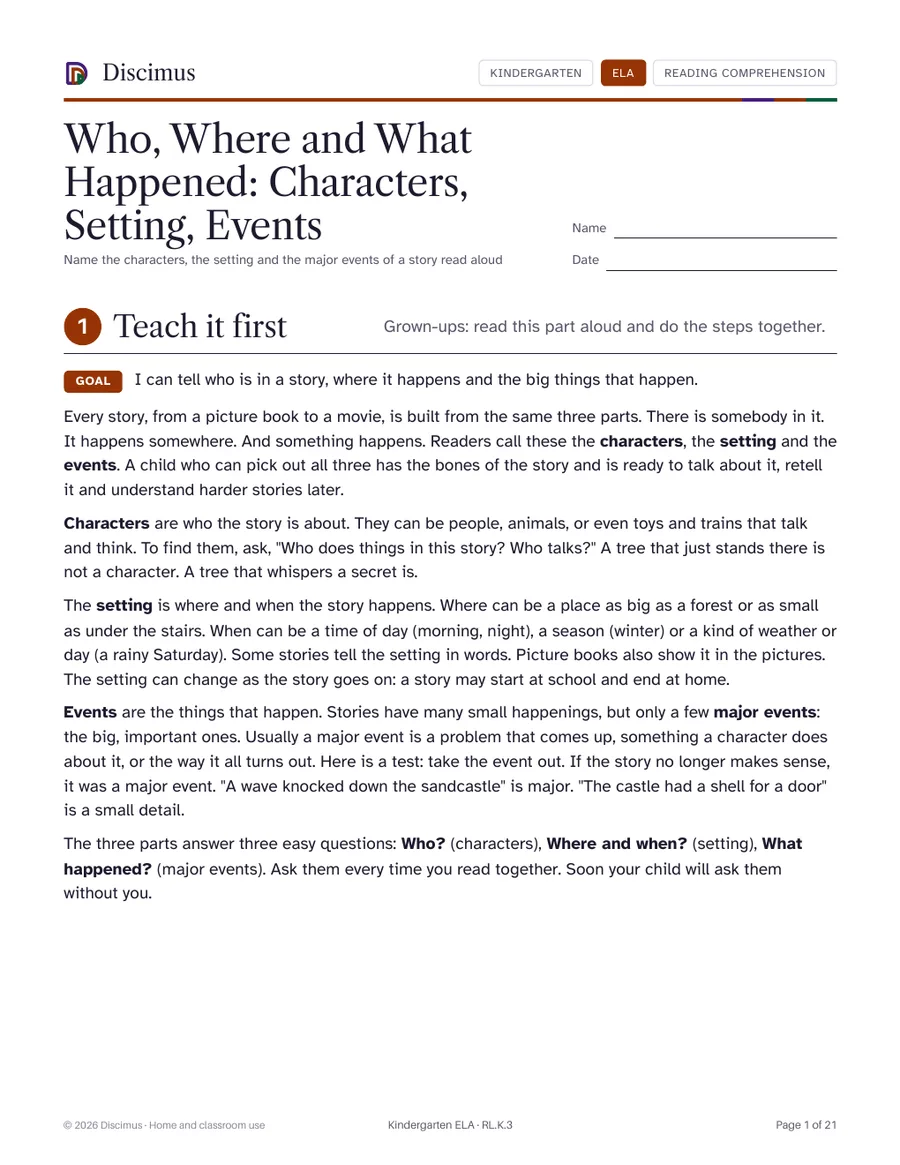
Name the characters, the setting and the major events of a story read aloud
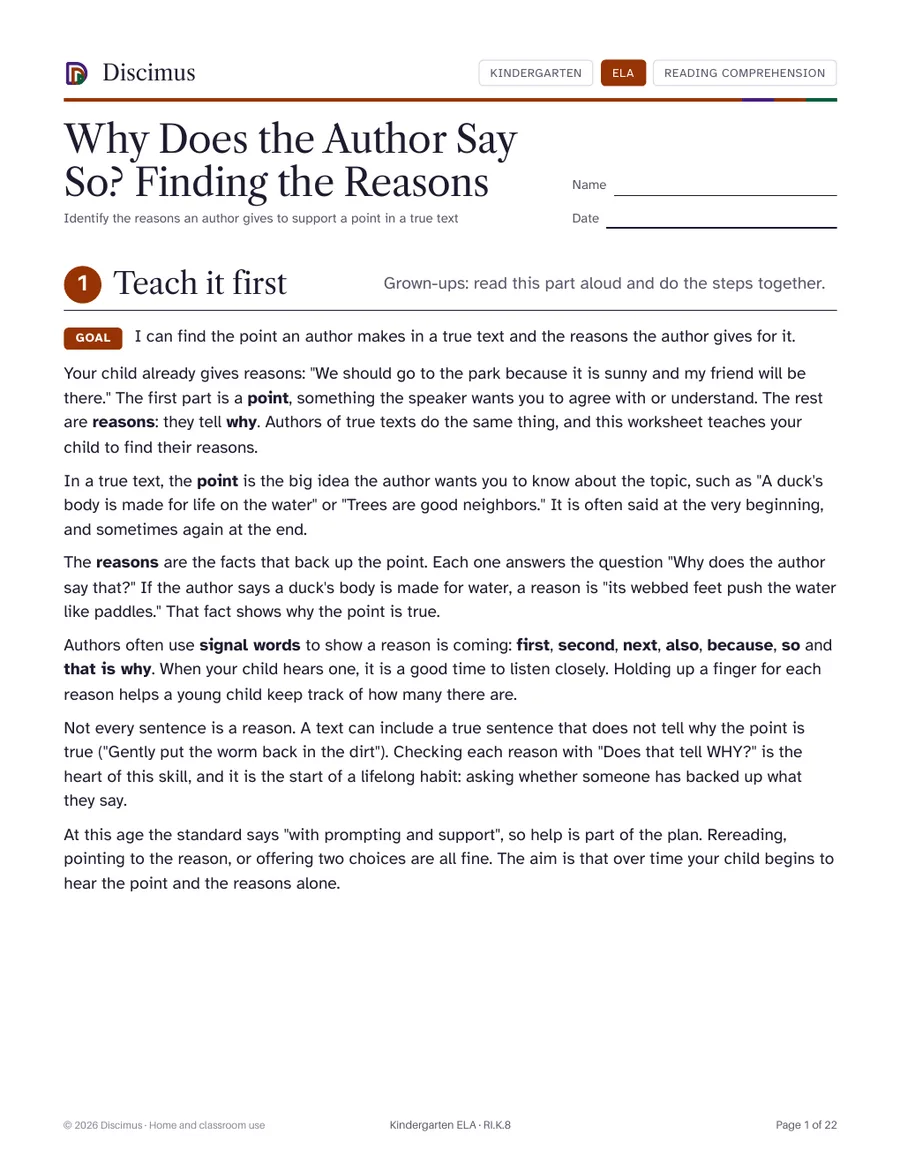
Identify the reasons an author gives to support a point in a true text
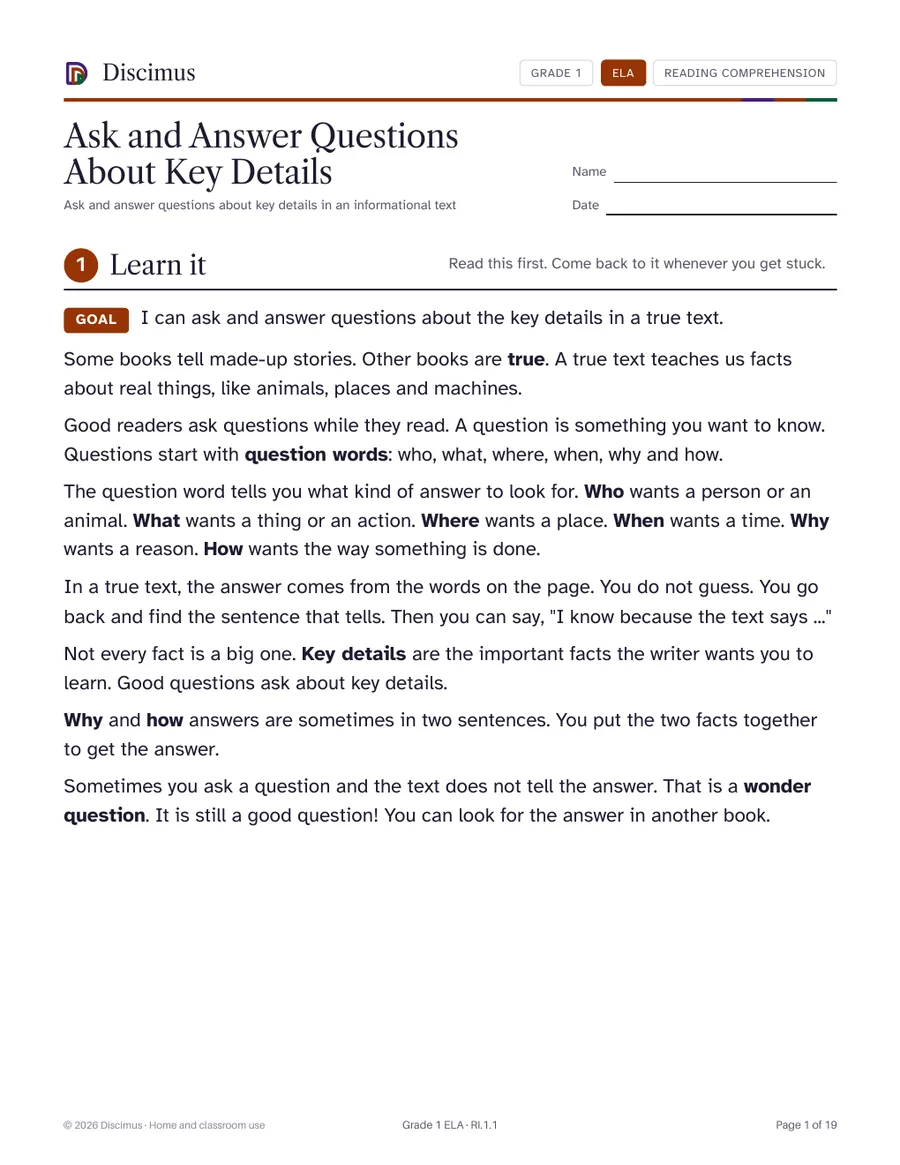
Ask and answer questions about key details in an informational text
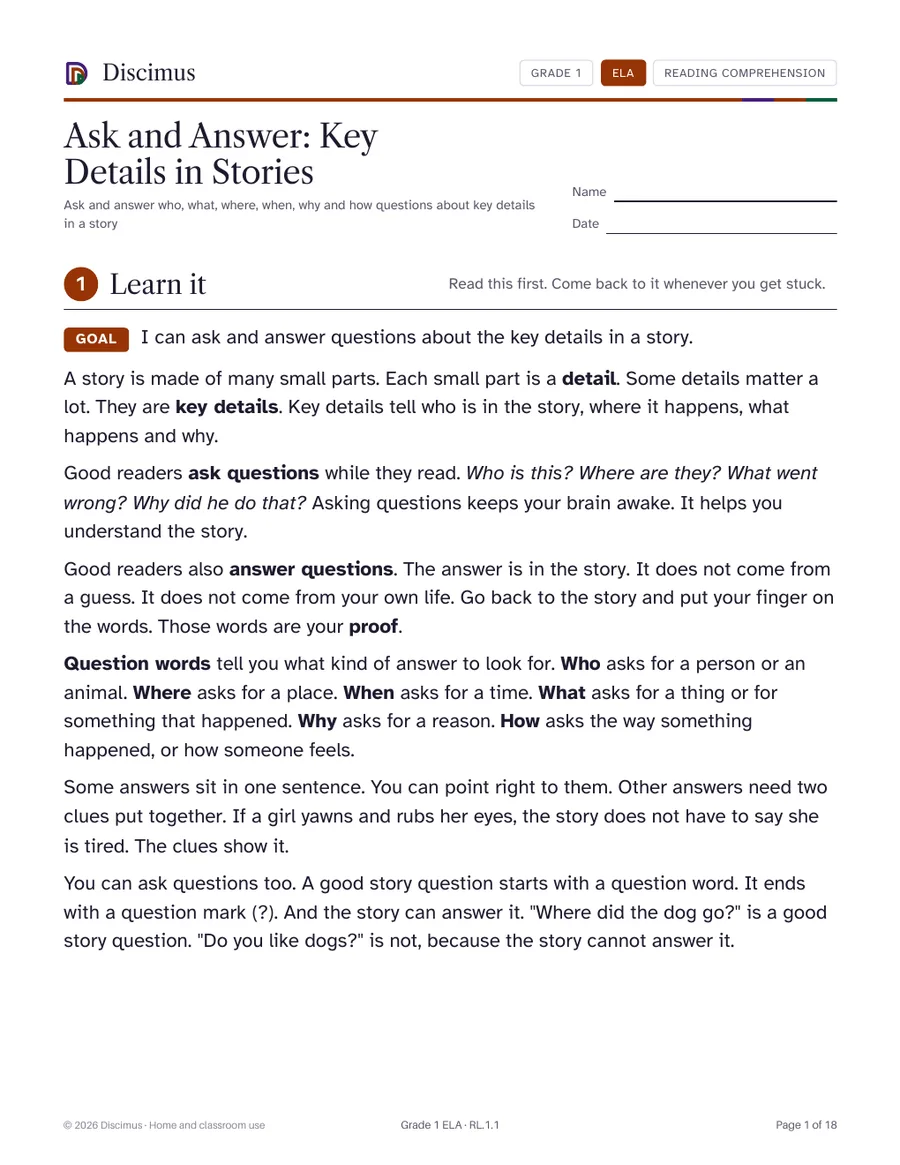
Ask and answer who, what, where, when, why and how questions about key details in a story
Use context to confirm or self-correct words and meaning, rereading when needed
Find words in stories and poems that show feelings or appeal to the five senses
Describe how two events, ideas, people or facts in an informational text connect
Identify the main topic and retell key details of an informational text
Tell which facts in a true text come from the pictures and which come from the words
Use illustrations and details in a story to describe its characters, setting or events
Read grade-level text with a purpose, check understanding and retell what was read
Read grade 1 stories and poems with prompting and support
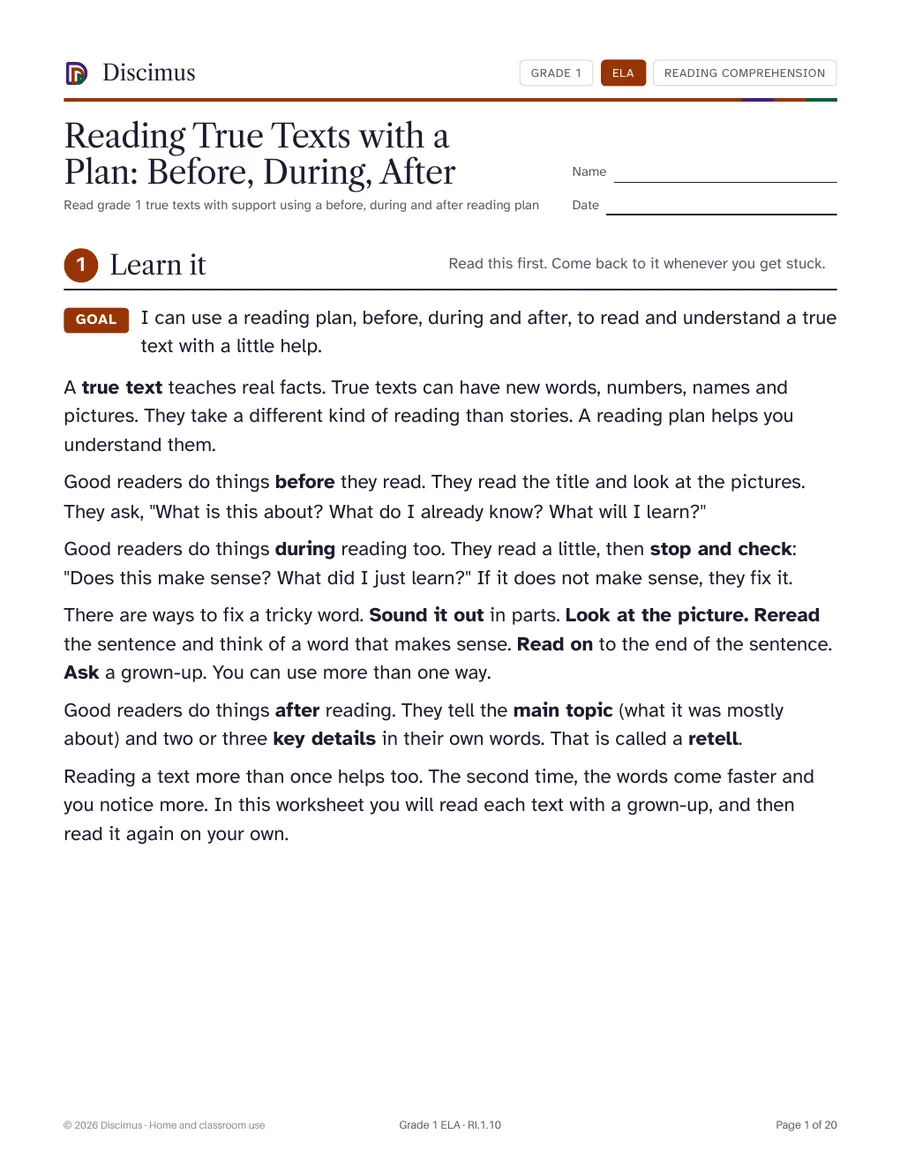
Read grade 1 true texts with support using a before, during and after reading plan
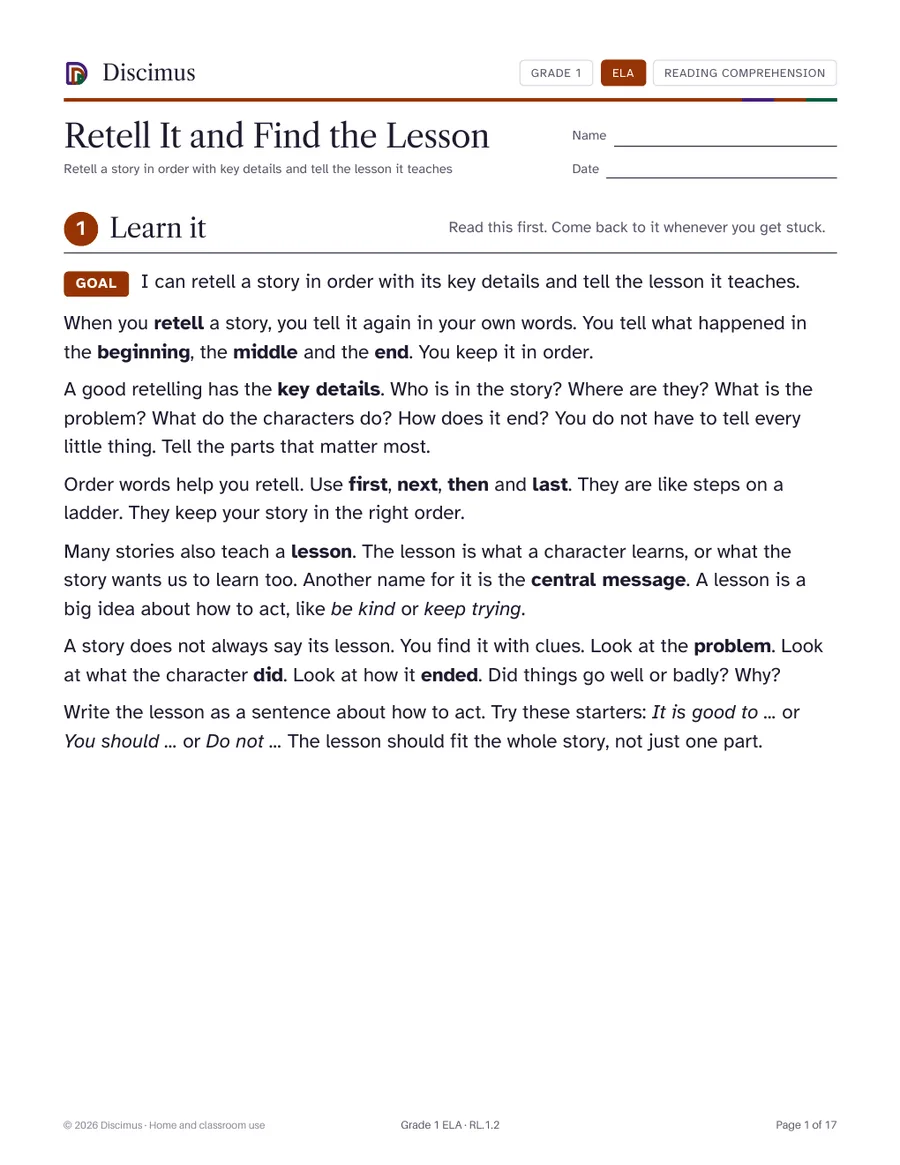
Retell a story in order with key details and tell the lesson it teaches
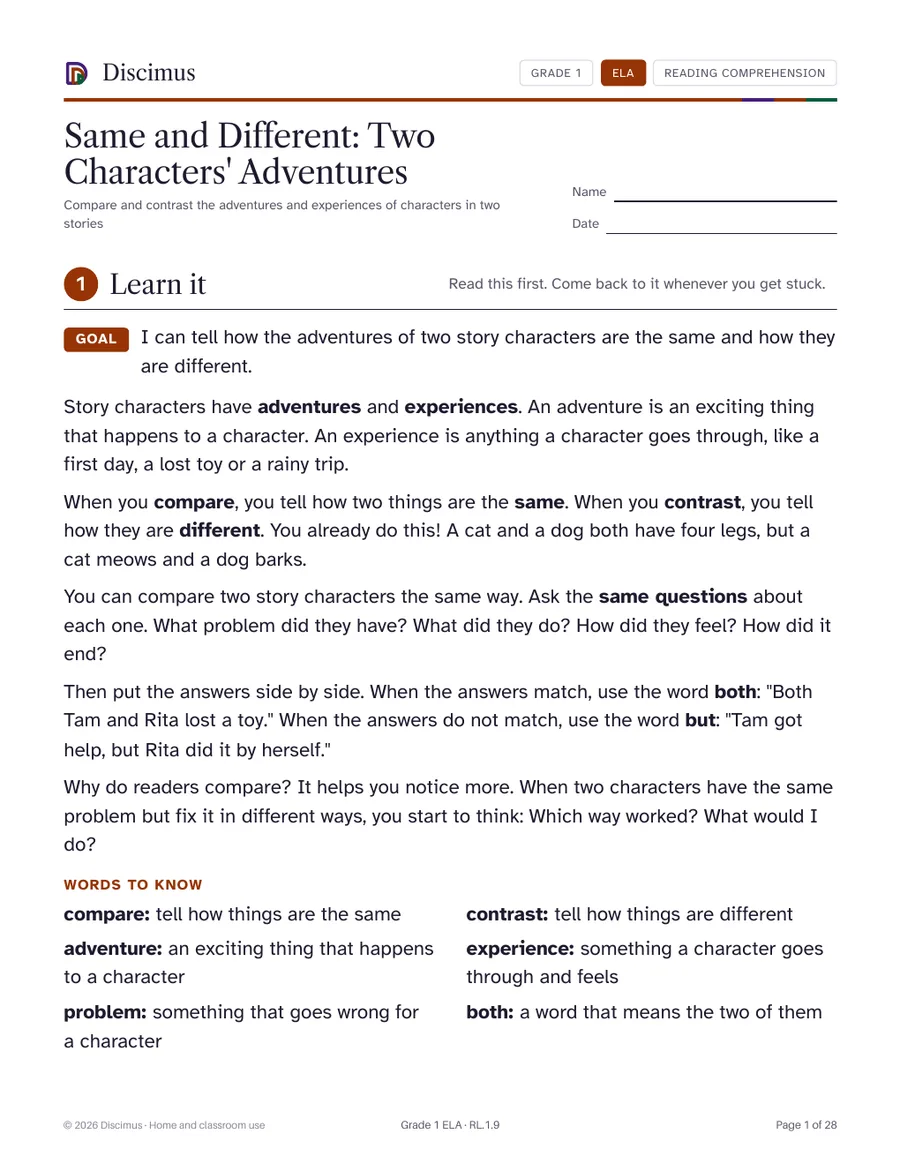
Compare and contrast the adventures and experiences of characters in two stories
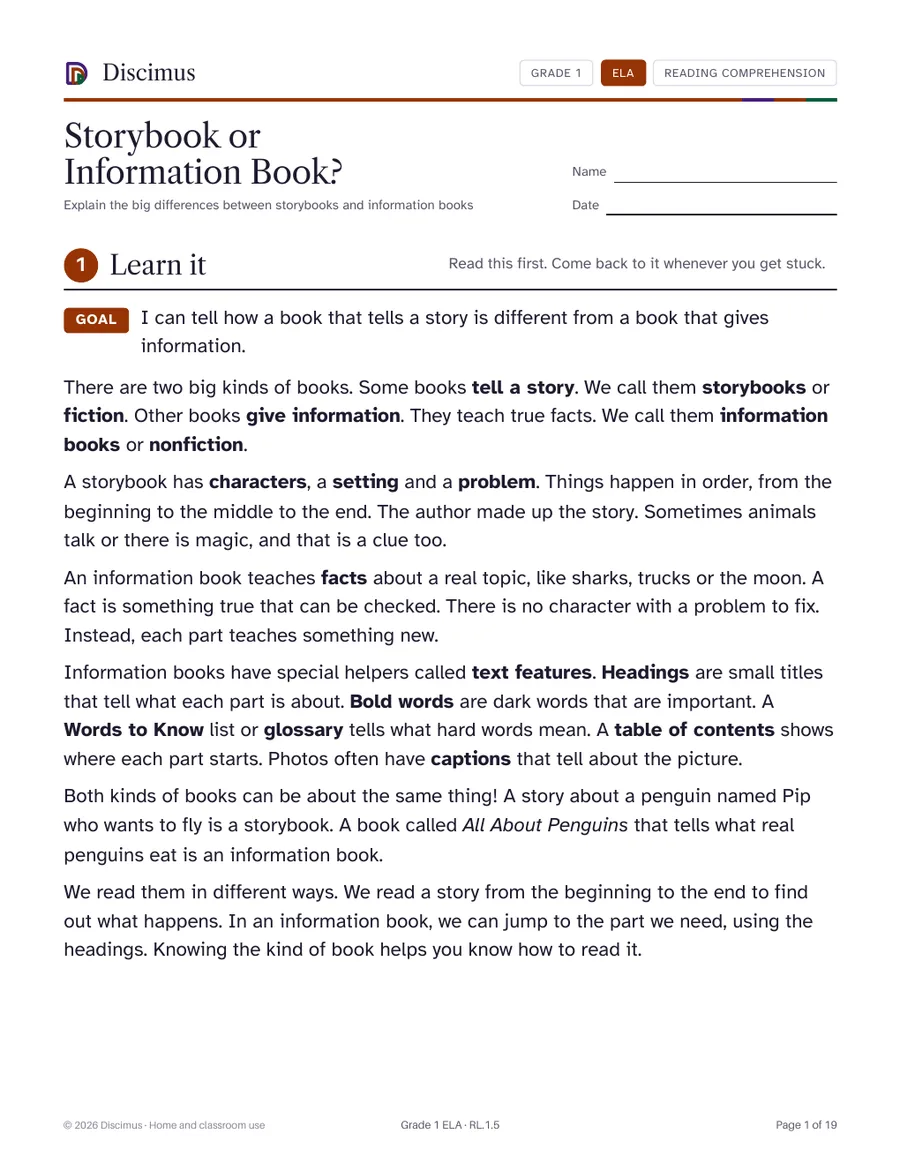
Explain the big differences between storybooks and information books
Use text features such as headings, contents, glossaries, menus and icons to find facts
Answer questions about the characters, setting and events in a story
Tell how two true texts on one topic are alike and different in words, pictures and steps
Use the pictures and the details in a true text to describe its key idea
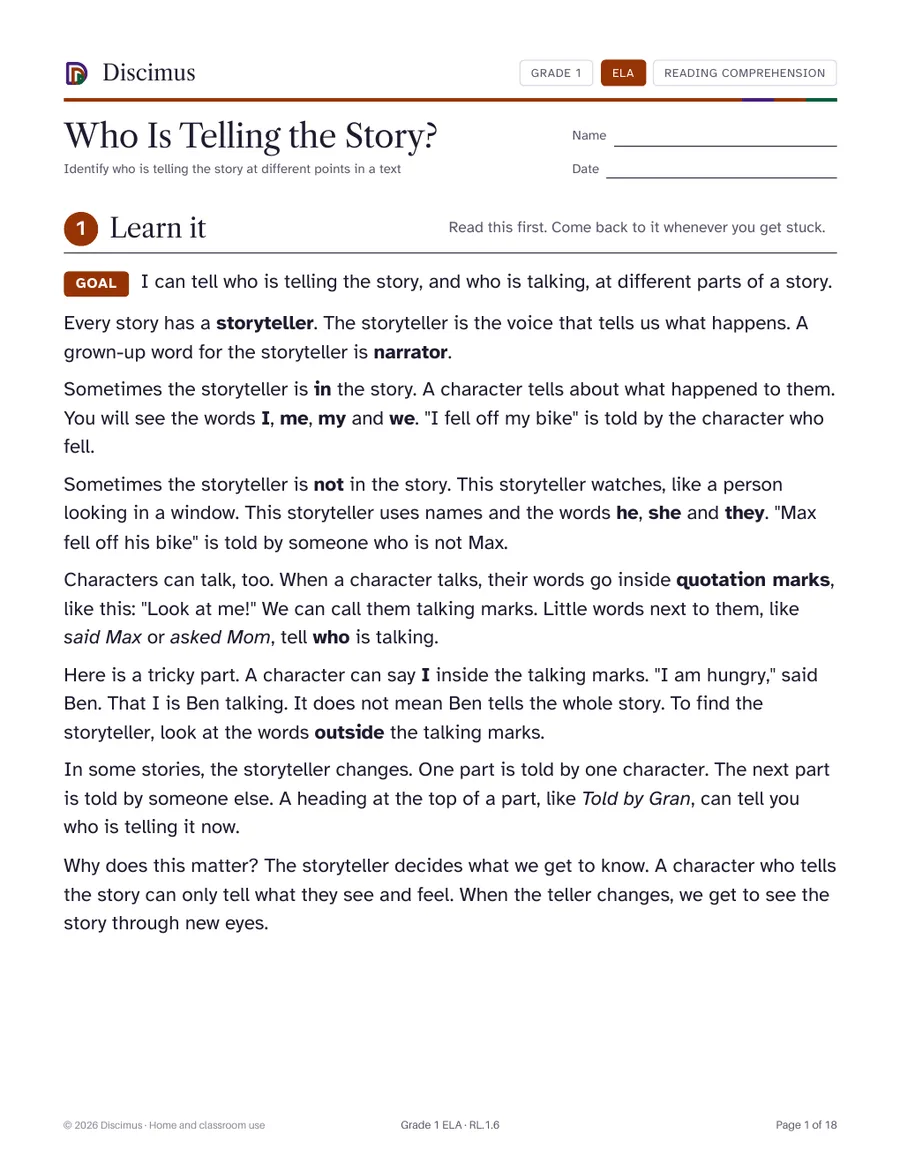
Identify who is telling the story at different points in a text
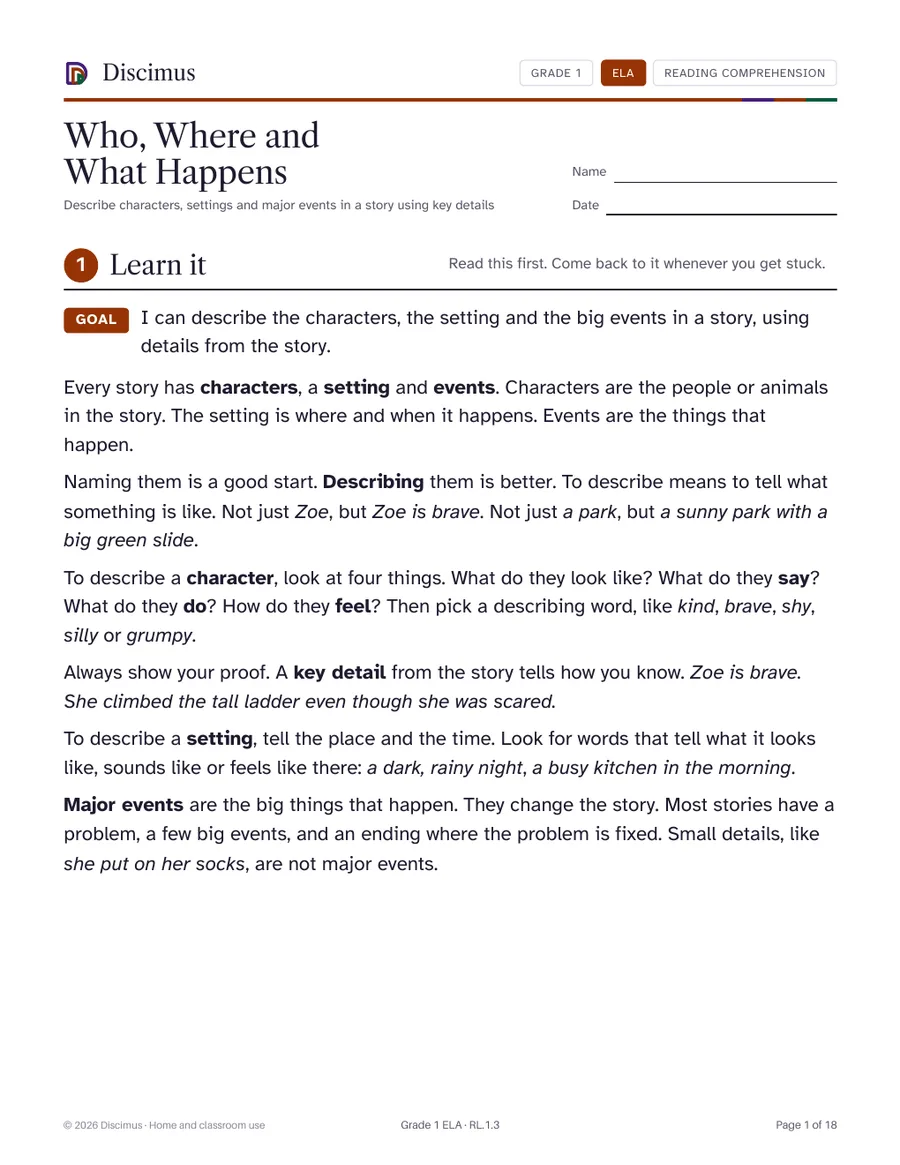
Describe characters, settings and major events in a story using key details
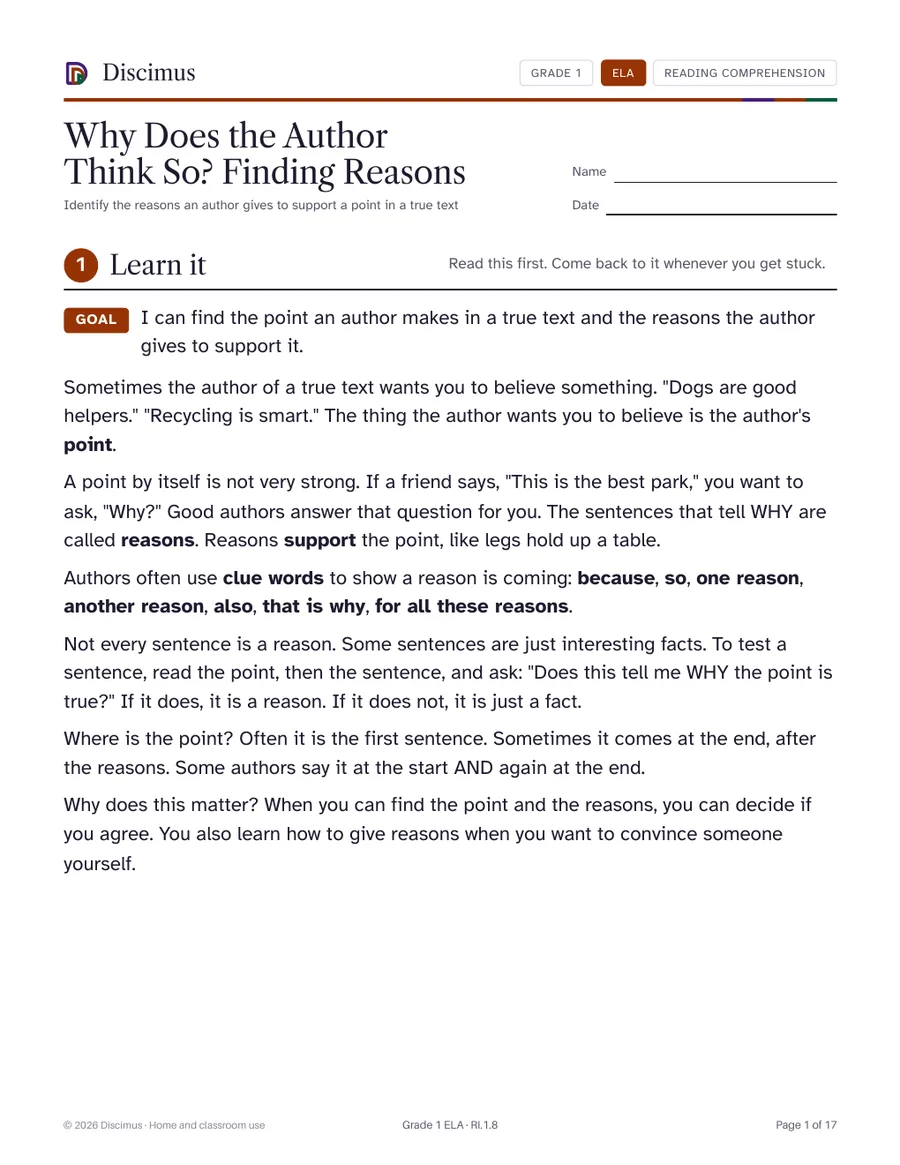
Identify the reasons an author gives to support a point in a true text
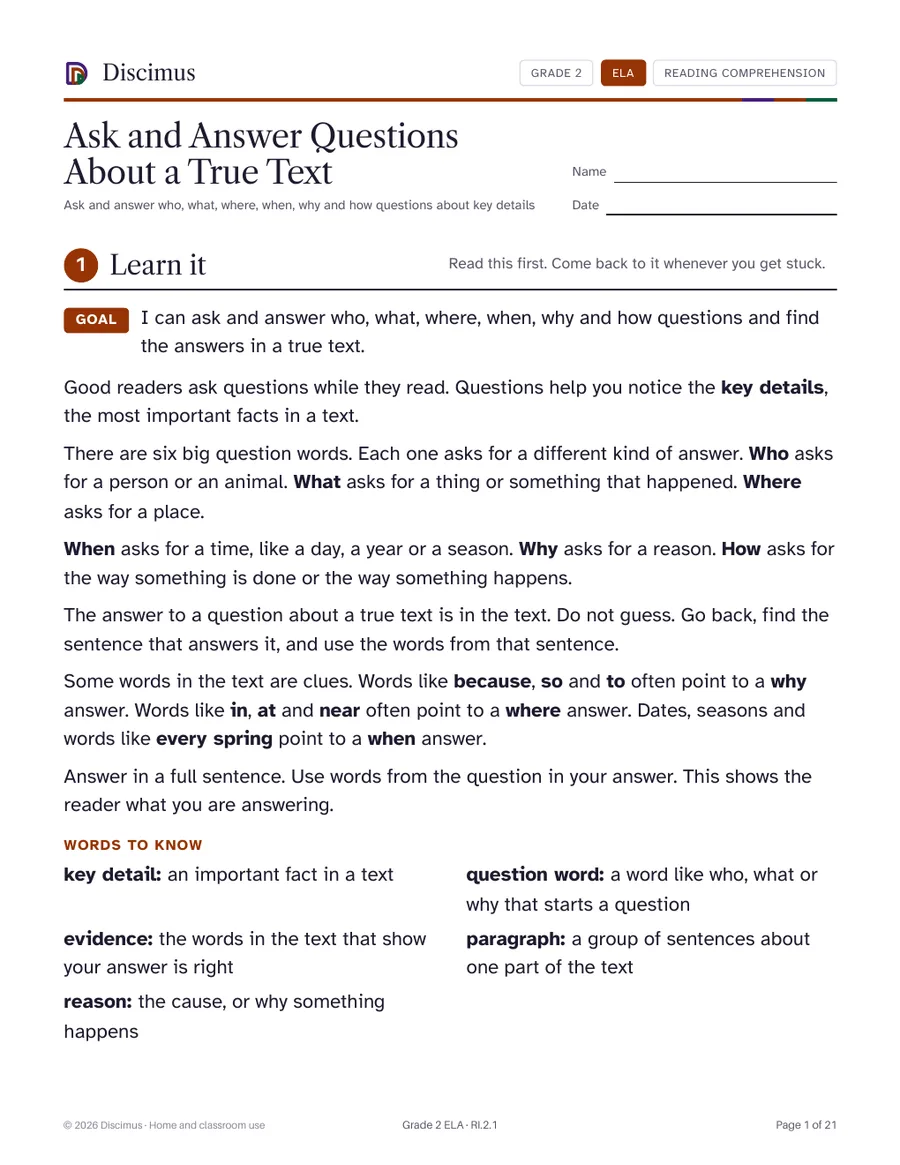
Ask and answer who, what, where, when, why and how questions about key details
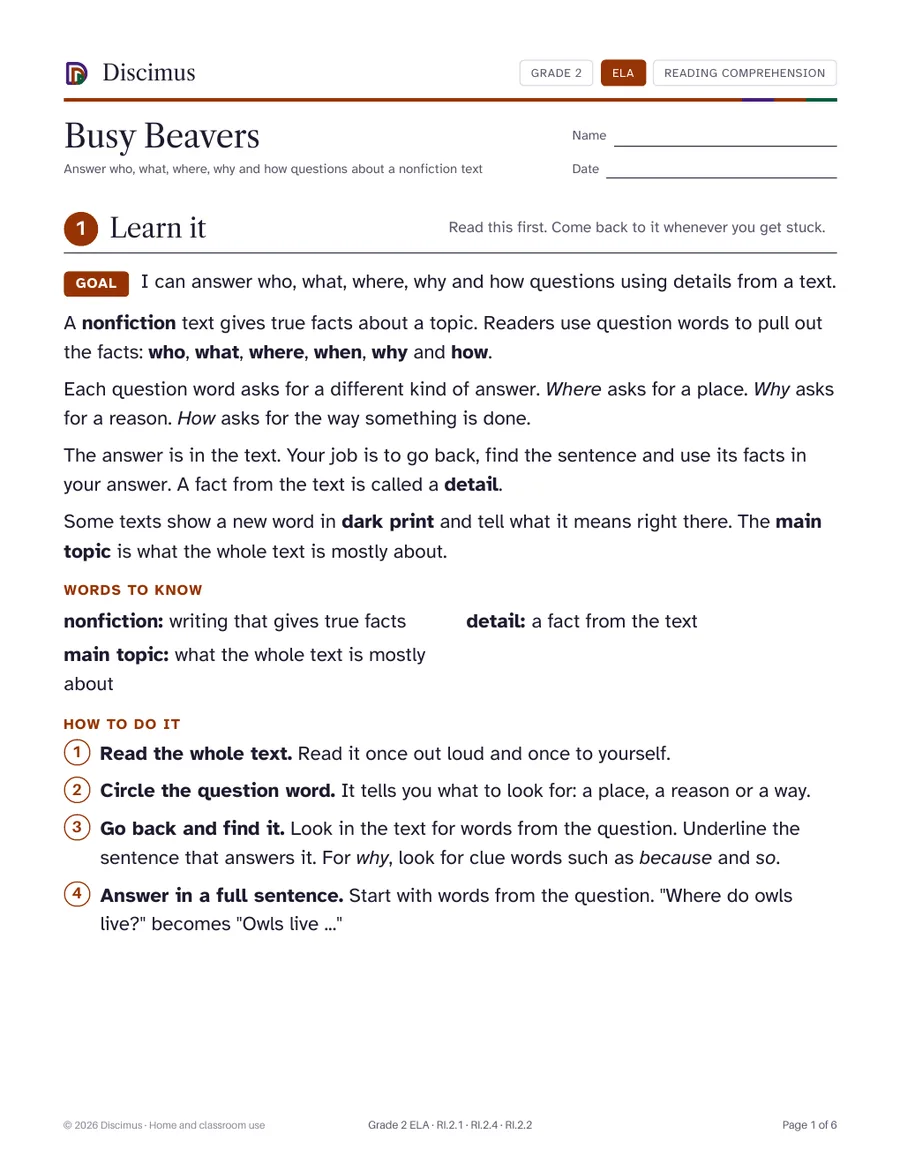
Answer who, what, where, why and how questions about a nonfiction text
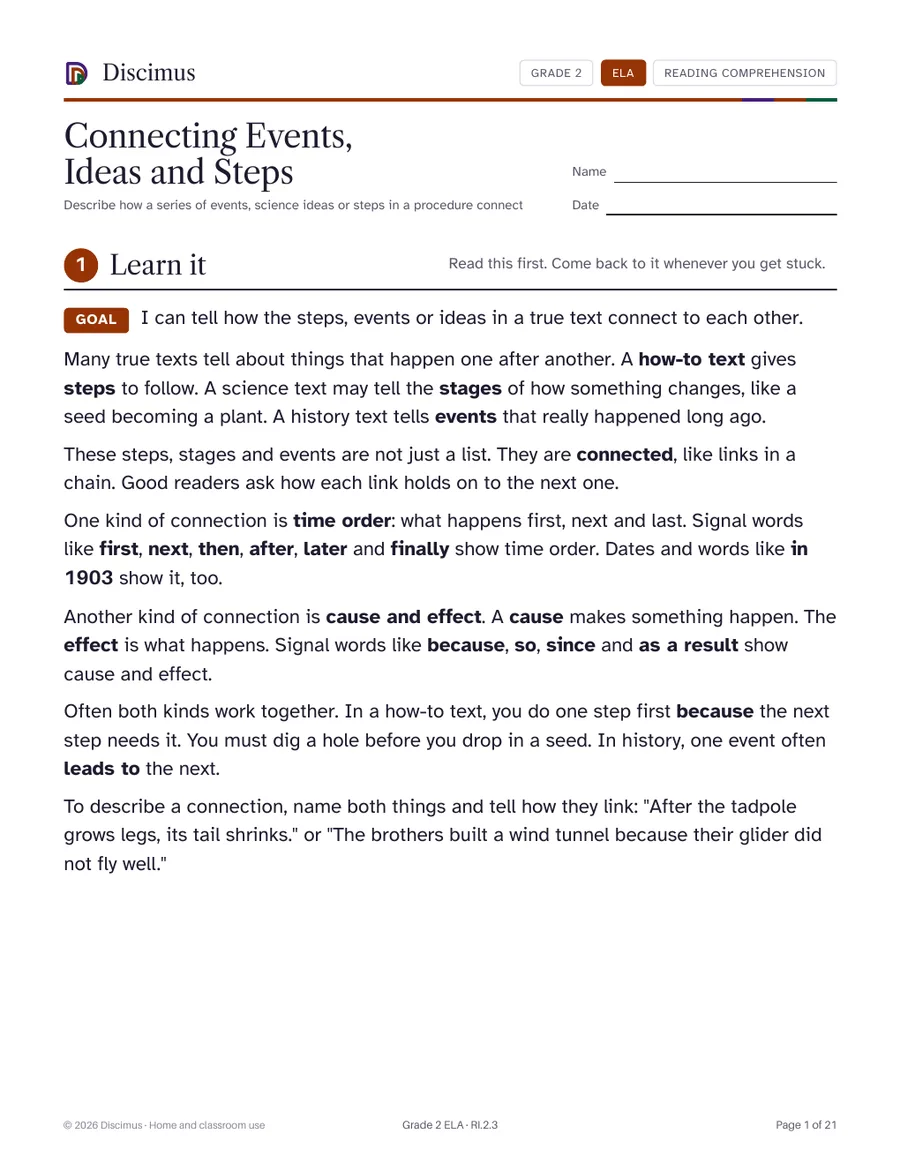
Describe how a series of events, science ideas or steps in a procedure connect
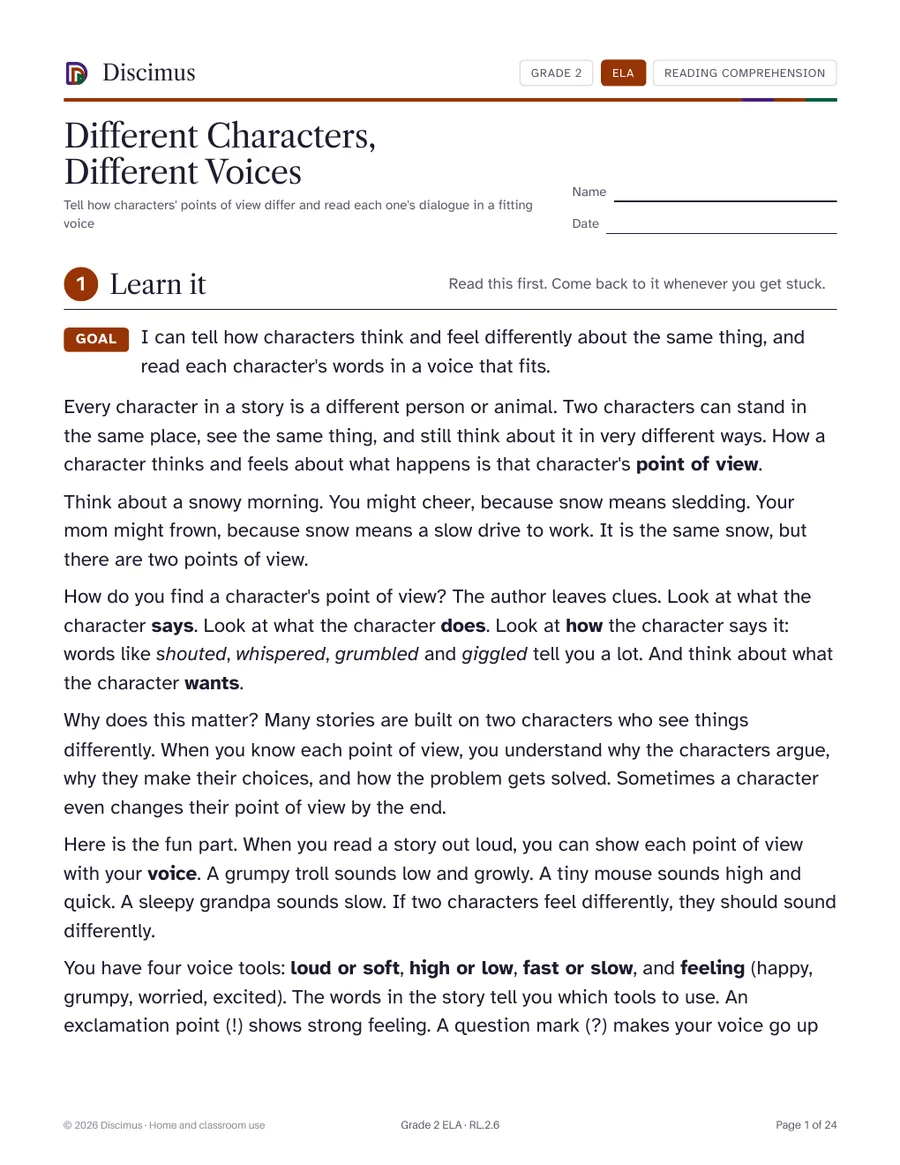
Tell how characters' points of view differ and read each one's dialogue in a fitting voice
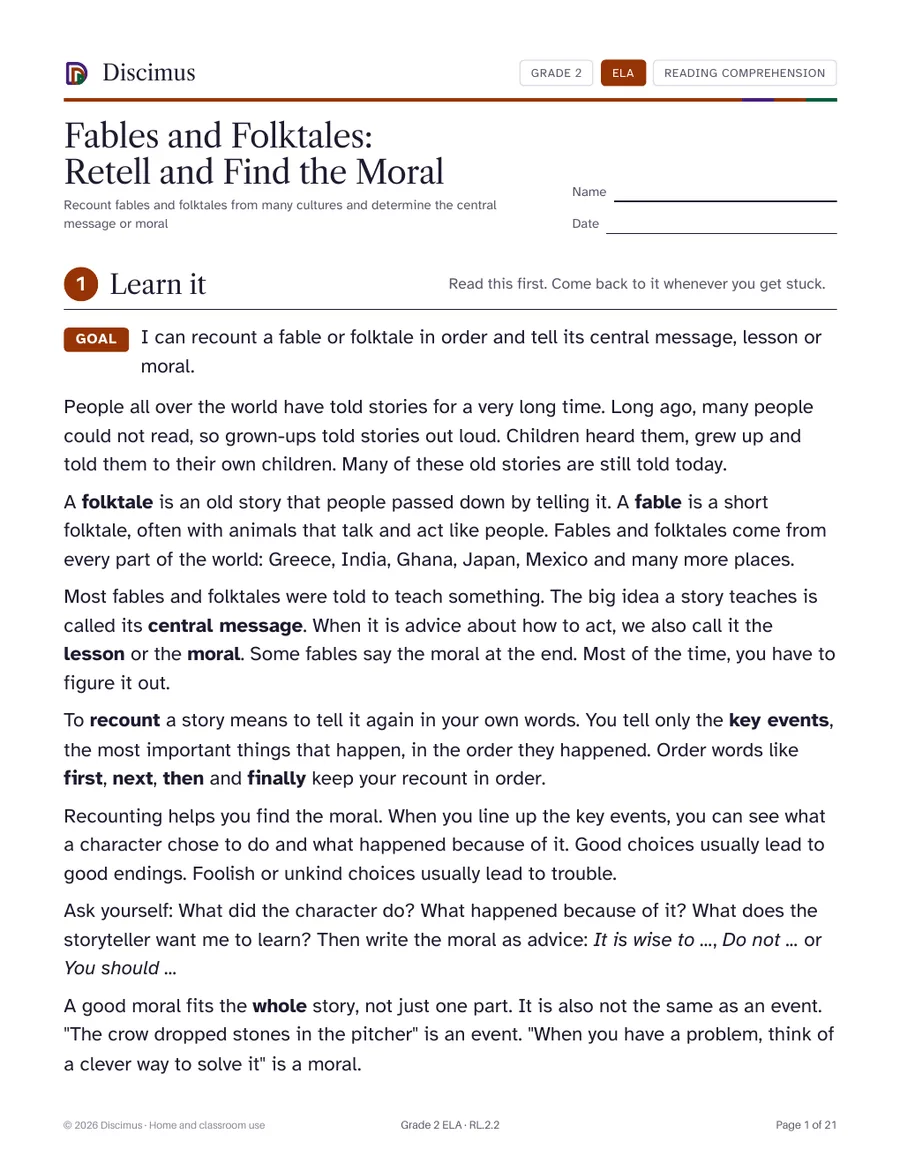
Recount fables and folktales from many cultures and determine the central message or moral
Describe how characters respond to major events and challenges in a story
Explain how diagrams and pictures add to and clarify a true text
Identify the main topic of a text with several paragraphs and the focus of each paragraph
Describe how the reasons in a true text support the specific points the author makes
Use pictures and words in print or digital stories to understand characters, setting, plot
Read and understand grade 2 to 3 science, history and how-to texts independently
Read grade 2 text with a purpose, check understanding while reading and retell it
Compare and contrast two versions of the same story from different authors or cultures
Ask and answer who, what, when and why questions about an informational text
Describe story structure: how the beginning introduces and the ending concludes a story
Read and understand grade 2 to 3 stories and poems independently, using fix-up strategies
Use captions, bold words, subheadings, glossaries, indexes, menus and icons to find facts
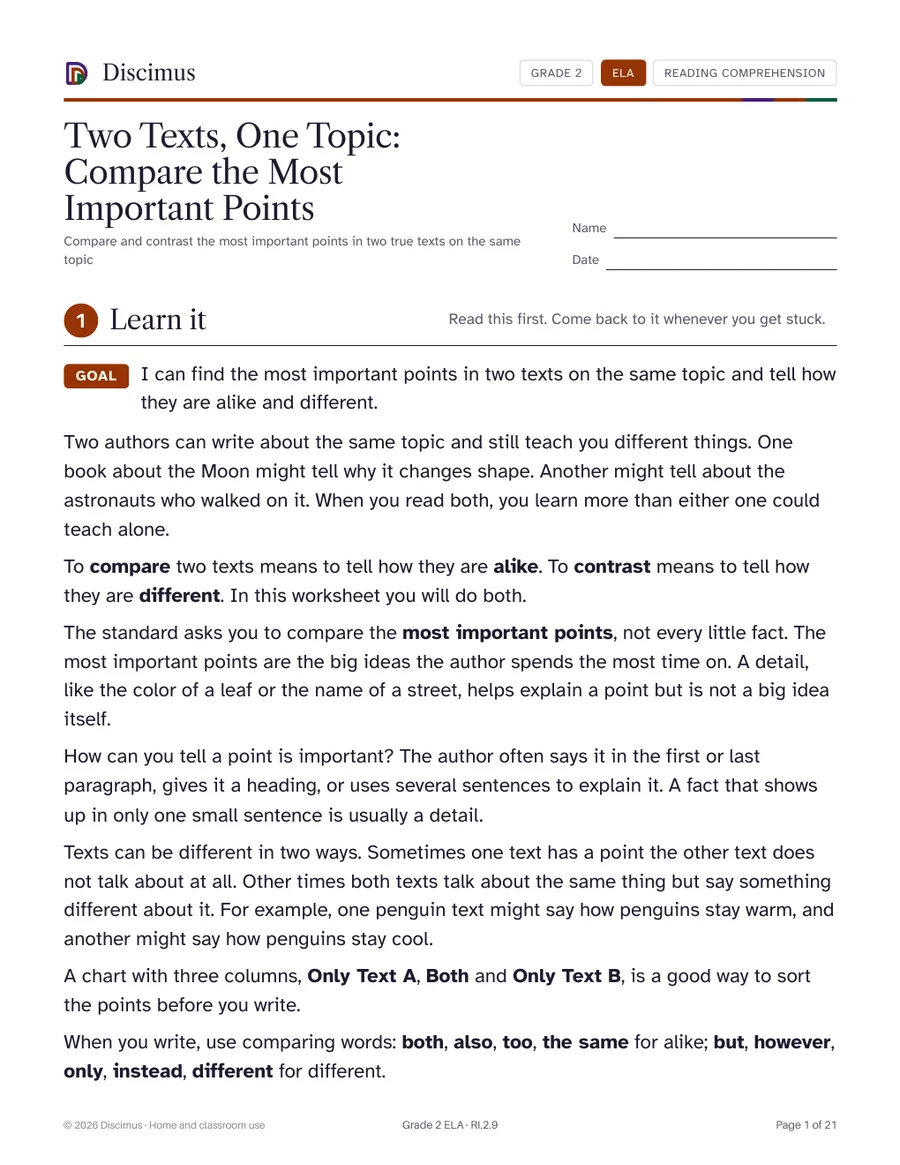
Compare and contrast the most important points in two true texts on the same topic
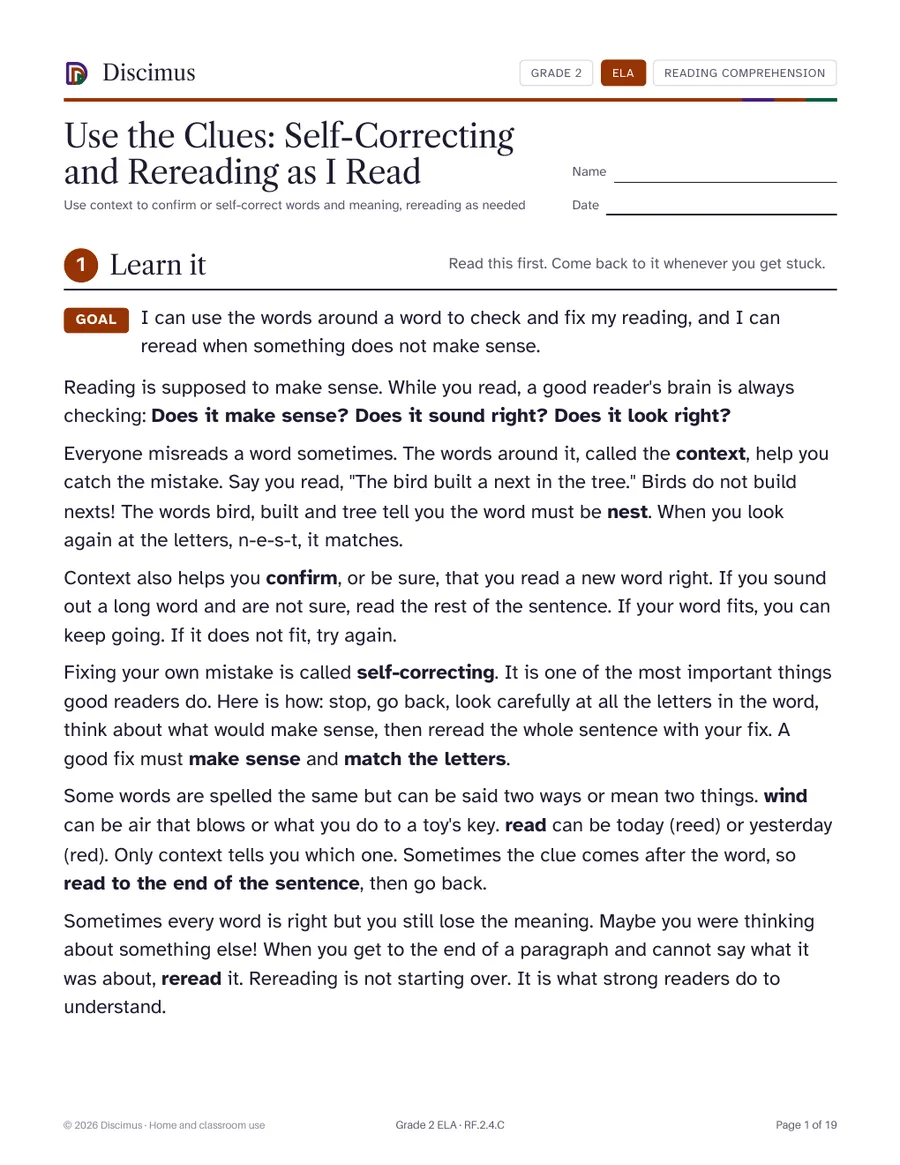
Use context to confirm or self-correct words and meaning, rereading as needed
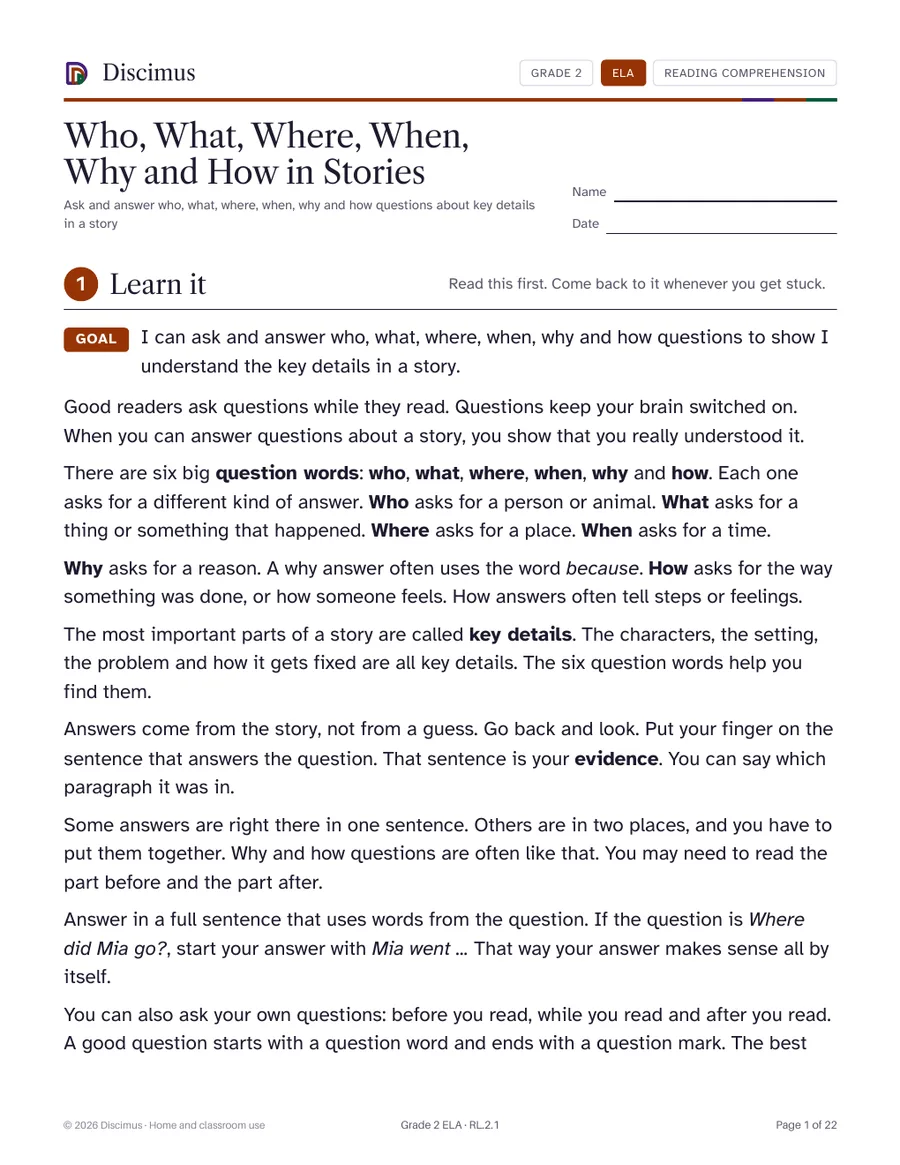
Ask and answer who, what, where, when, why and how questions about key details in a story
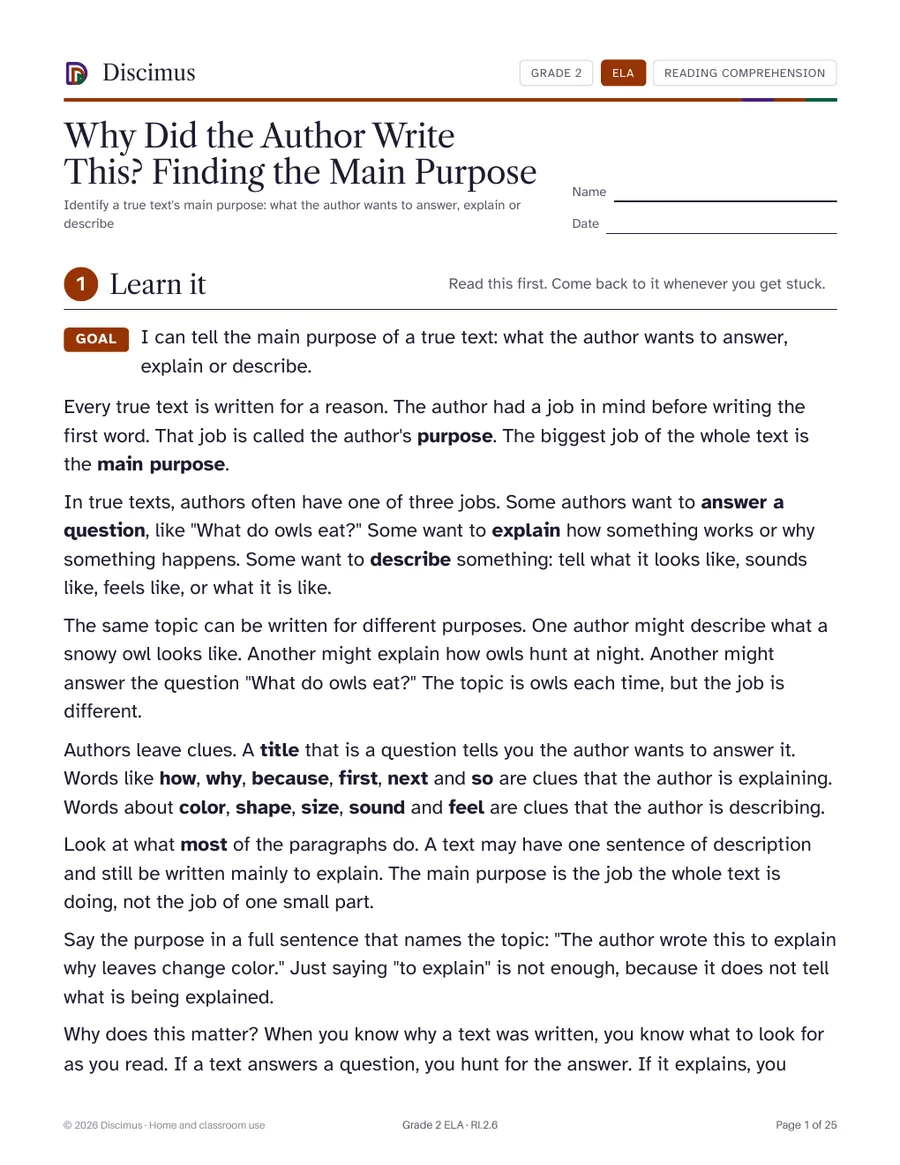
Identify a true text's main purpose: what the author wants to answer, explain or describe
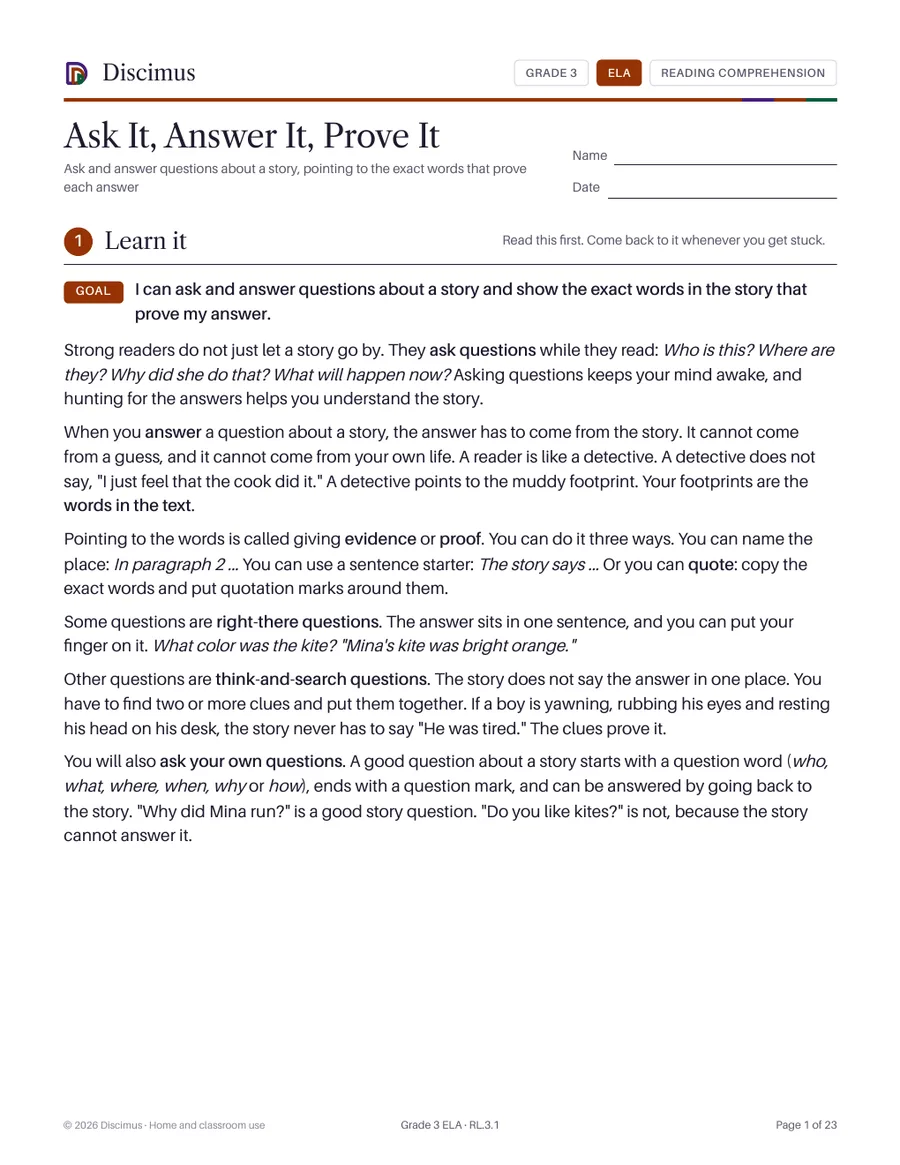
Ask and answer questions about a story, pointing to the exact words that prove each answer
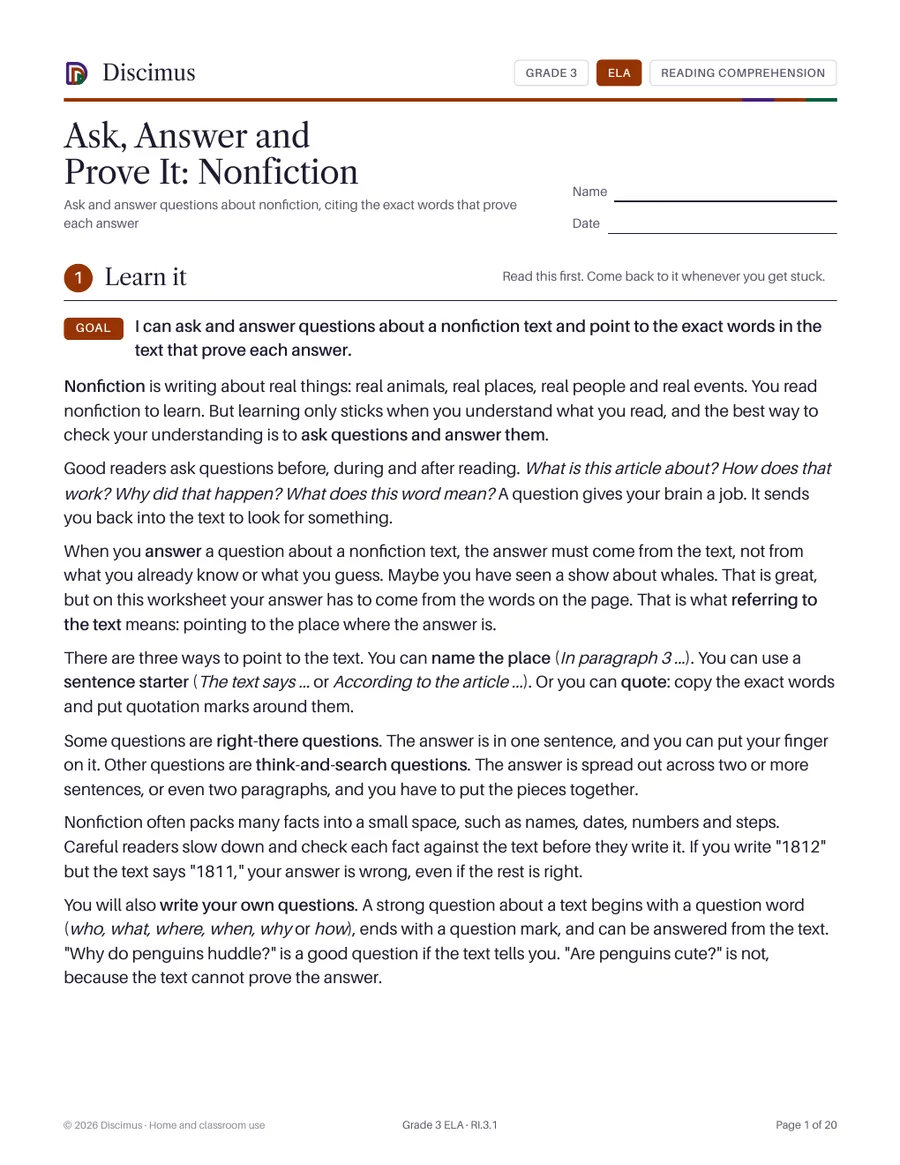
Ask and answer questions about nonfiction, citing the exact words that prove each answer
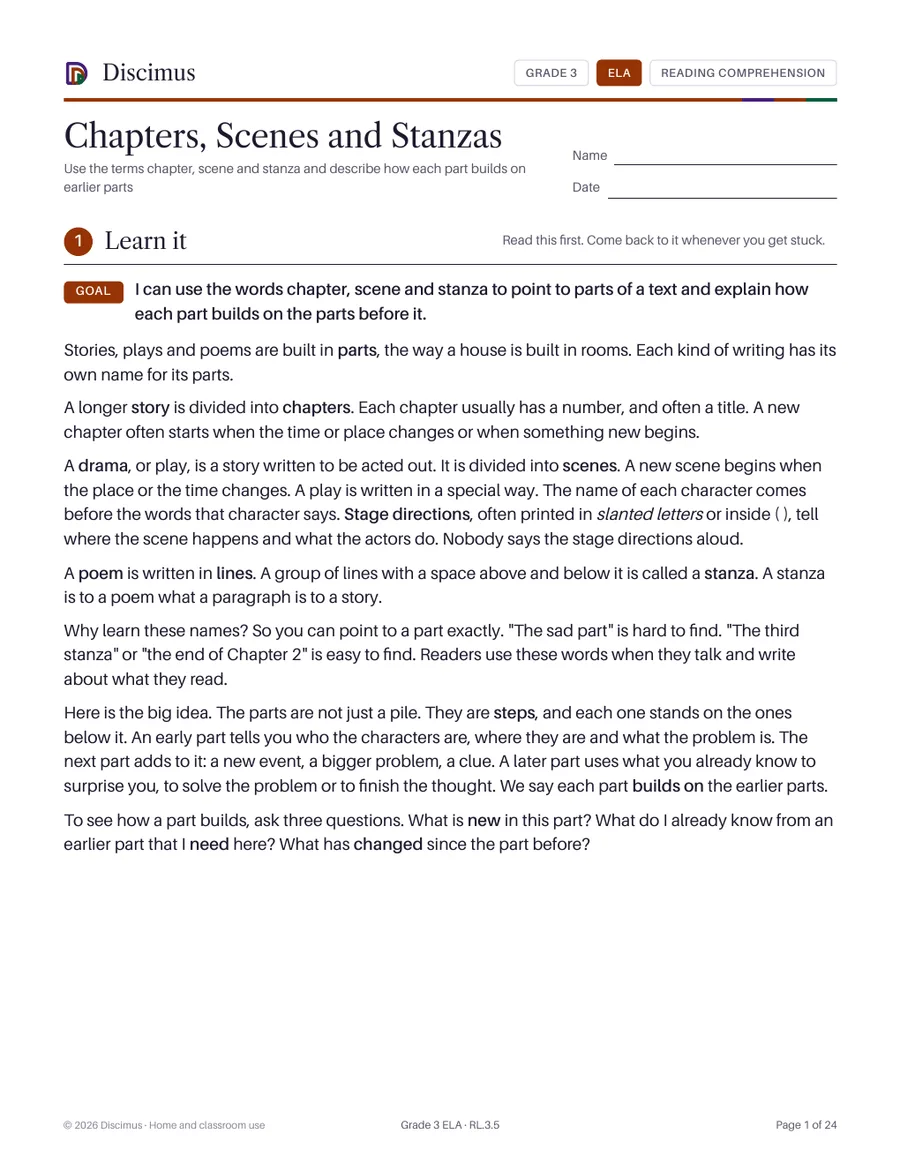
Use the terms chapter, scene and stanza and describe how each part builds on earlier parts
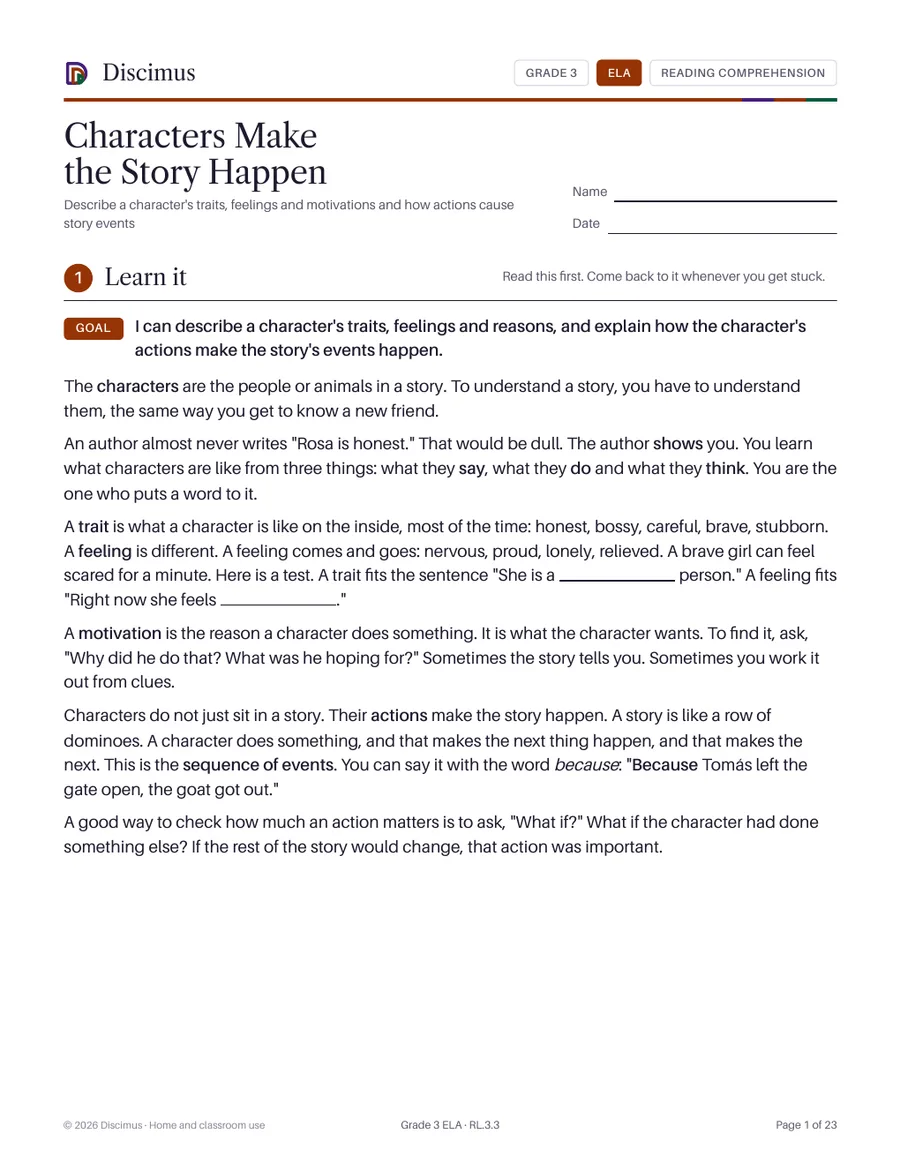
Describe a character's traits, feelings and motivations and how actions cause story events
Compare and contrast themes, settings and plots of stories in a series
Explain how events, ideas or steps connect, using time, sequence and cause-effect words
Use text features and search tools to find information on a topic quickly
Explain how a story's illustrations add to its words: mood, character and setting
Describe how sentences and paragraphs connect: sequence, comparison, or cause and effect
Find the main idea of a nonfiction text and explain how key details support it
Use maps, diagrams and timelines with the words to explain where, when, why and how
Tell my own point of view apart from the narrator's and the characters' points of view
Set a purpose before reading, check understanding while reading, and sum up after
Read history, science and how-to texts independently using a reading routine
Read and understand challenging grade 3 stories, plays and poems independently
Recount a fable, folktale or myth and explain how key details show its lesson
Compare and contrast the most important points and key details in two texts on one topic
Describe a character and explain how her actions move the story forward
Work out word and phrase meanings in a story and tell literal from nonliteral language
Tell the author's point of view in a nonfiction text apart from your own point of view
Determine a theme of a story, play or poem from its details and summarize the text
Compare first-person and third-person narration and how each narrator shapes the story
Compare firsthand and secondhand accounts of one event: focus and information
Connect a story or play to its picture, performance or audio version, citing exact words
Describe a character, setting or event in depth using specific details from the text
Explain how an author uses reasons and evidence to support particular points in a text
Describe text structure: time order, comparison, cause and effect, problem and solution
Find a nonfiction text's main idea, explain how key details support it, and summarize it
Read and understand grade 4 to 5 history, science and technical texts independently
Find the main idea and key details of an informational text
Explain how poems, plays and prose differ, using verse, rhythm, meter and drama terms
Use nonfiction details and examples to explain what a text says and to support inferences
Use details and examples from a story to explain what it states and what you can infer
Interpret diagrams, graphs, time lines and tables and explain how each helps the text
Read grade 4 to 5 stories, plays and poems on my own, using fix-up strategies
Compare how myths and folktales from different cultures treat a shared theme or pattern
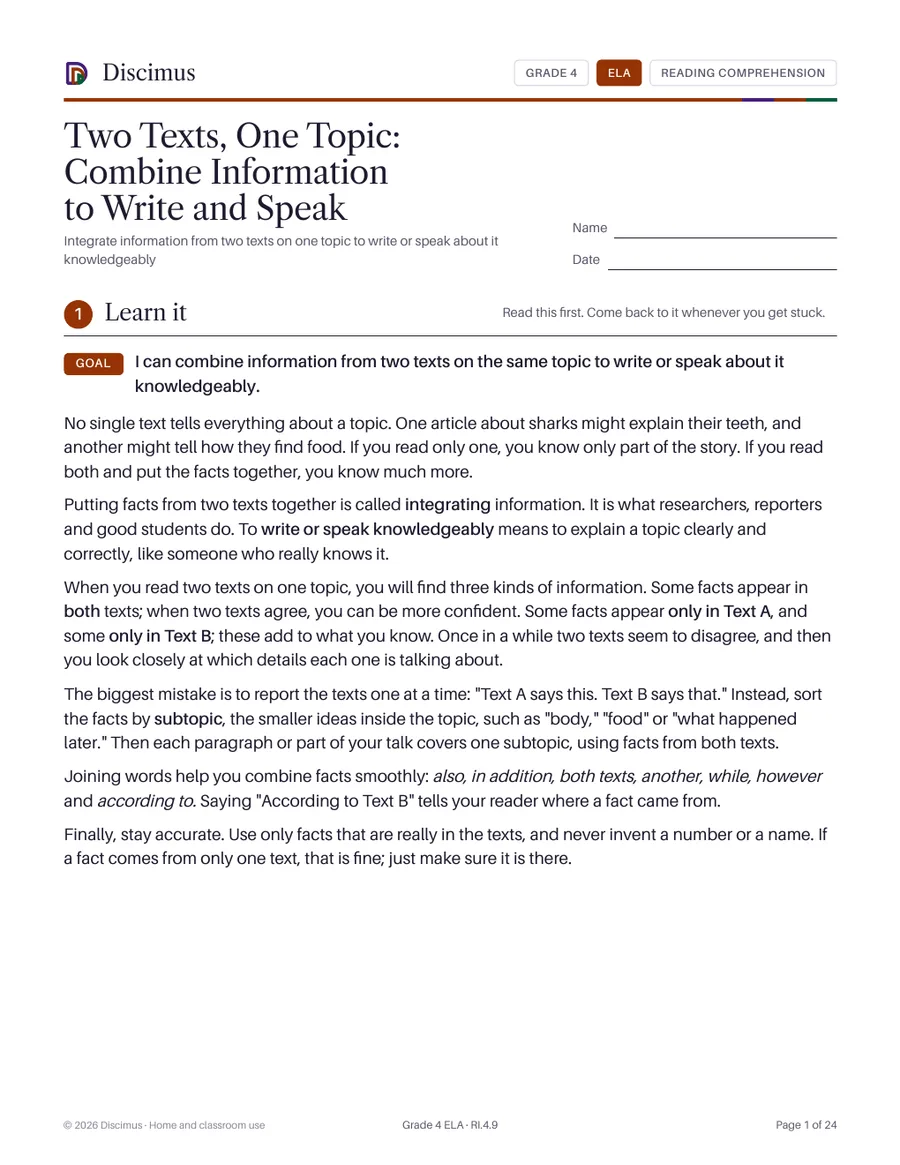
Integrate information from two texts on one topic to write or speak about it knowledgeably
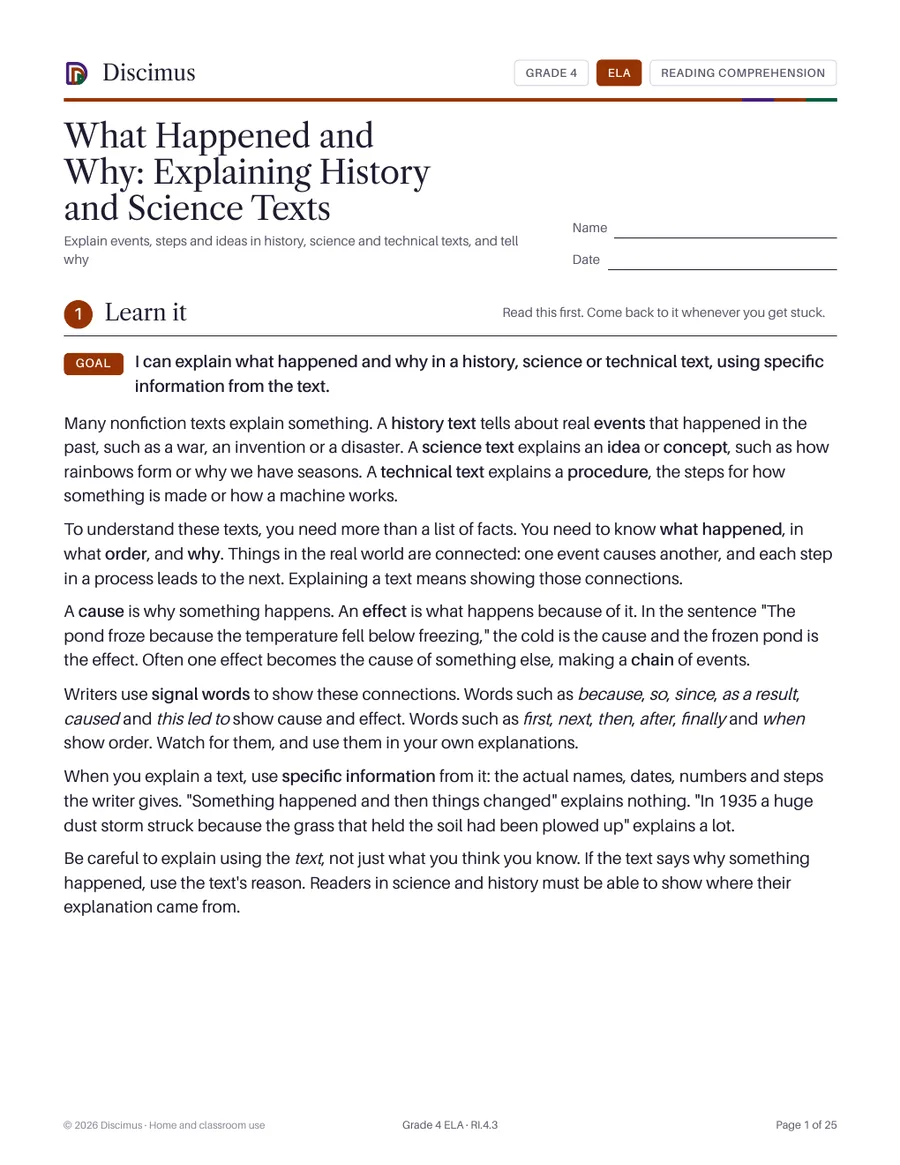
Explain events, steps and ideas in history, science and technical texts, and tell why
 Free sample
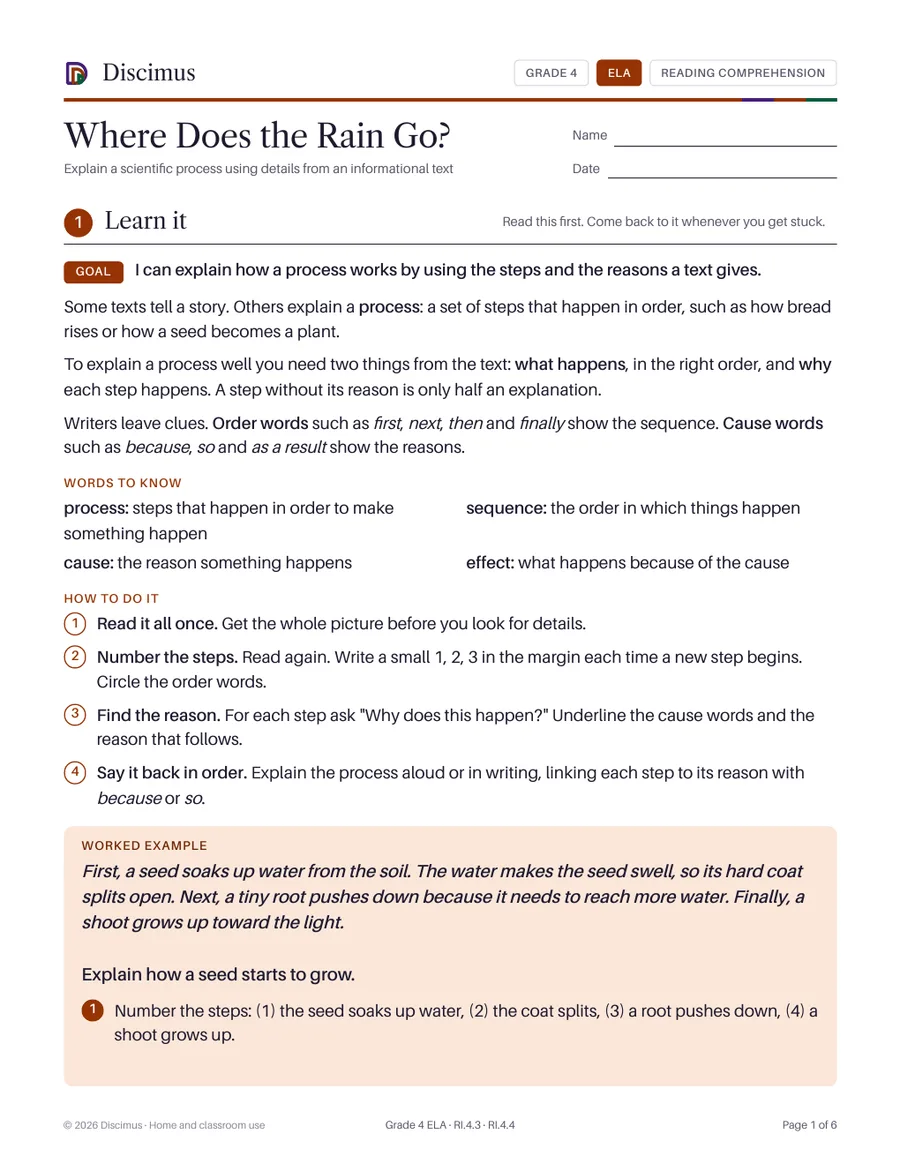
Explain a scientific process using details from an informational text
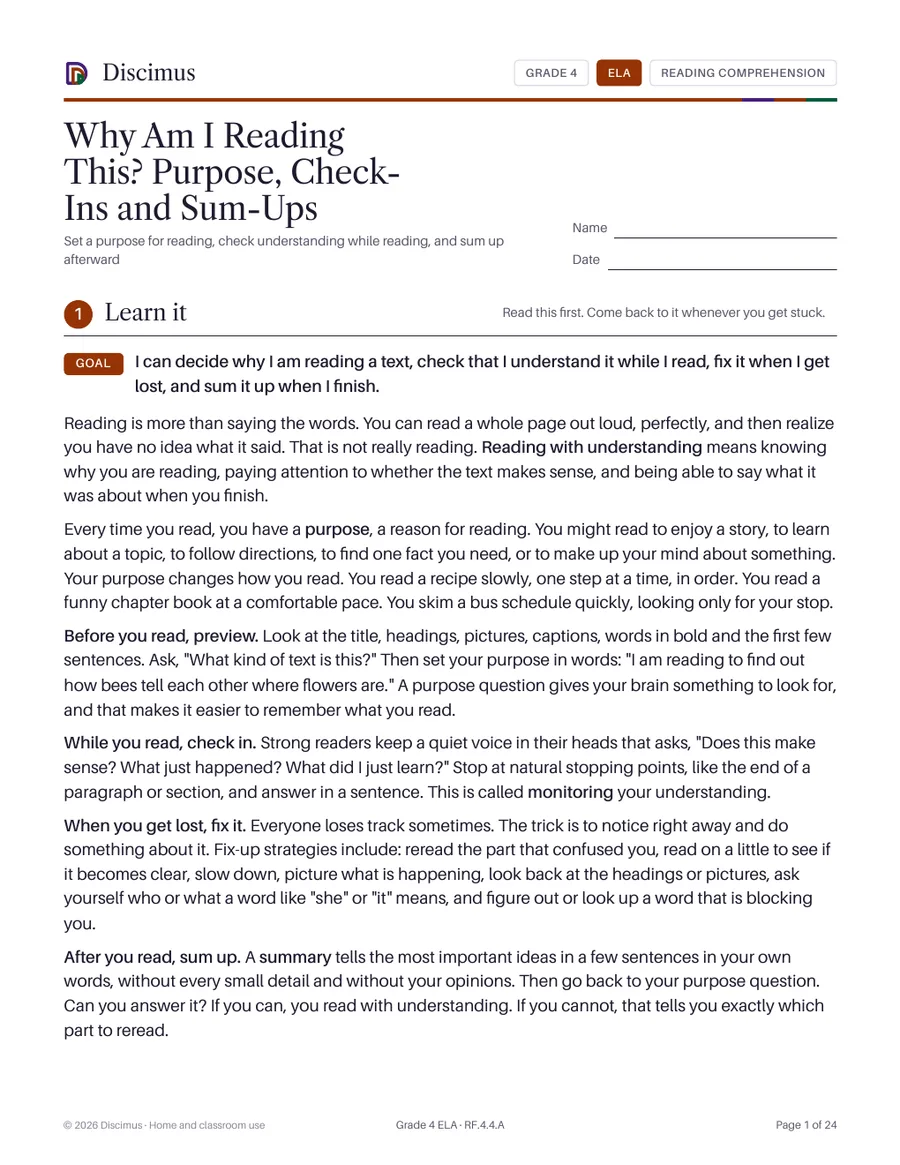
Set a purpose for reading, check understanding while reading, and sum up afterward
Explain how chapters, scenes or stanzas fit together to build a story, play or poem
Use several print and digital sources to find an answer quickly or solve a problem
Describe how a narrator's or speaker's point of view influences how events are described
Explain how people, events and ideas interact in history, science and technical texts
Compare several accounts of one event or topic and the points of view they represent
 Free sample
Explain relationships between events in a biography using evidence from the text
Find two or more main ideas in a nonfiction text, explain their key details and summarize
Analyze how visual and multimedia elements add to the meaning, tone or beauty of a text
Quote accurately from a nonfiction text to explain what it says and to support inferences
Quote accurately from a literary text to explain what it states and to support inferences
Read and understand grade 5 history, science and technical texts independently
Read grade 5 texts with a clear purpose, check understanding while reading, and sum up
Read and understand grade 5 stories, plays and poems on my own, fixing confusion as I go
Compare stories in the same genre on how they approach similar themes and topics
Compare and contrast the overall structure of two or more nonfiction texts on one topic
Integrate information from several texts on one topic to write or speak knowledgeably
Compare and contrast characters, settings or events in a story or play, citing details
Determine main ideas and explain how key details support them
Find what words and phrases mean in a literary text, including similes and metaphors
Determine a theme from characters' responses or a speaker's reflection, and summarize
Explain how an author uses reasons and evidence, matching each to the point it supports
Determine an author's purpose and point of view and explain how the text conveys them
Analyze how a text introduces, illustrates and elaborates a key individual, event or idea
Describe how a plot unfolds in episodes and how characters respond and change
Explain how an author develops the point of view of a narrator or speaker
Cite text evidence to support what a nonfiction text says directly and inferences from it
Analyze how a sentence, paragraph or section fits a text's structure and builds its ideas
Compare and contrast how a memoir and a biography present the same events
Compare how texts in different forms or genres approach similar themes and topics
Compare reading a story, drama or poem with listening to or watching a version of it
Analyze how a sentence, chapter, scene or stanza develops a text's theme, setting or plot
Cite text evidence for explicit details and for inferences drawn from a literary text
Integrate information from text, graphs, maps, tables and diagrams to understand a topic
Read grade 6 to 8 literary nonfiction independently, using fix-up strategies
Read and understand grade 6 stories, dramas and poems independently, fixing confusion
Cite text evidence and determine the central idea of an informational text
Determine a theme, explain how details convey it, and write an objective summary
Trace an argument and tell claims backed by reasons and evidence from claims that are not
Determine a central idea, explain how details convey it and write an objective summary
Cite several pieces of text evidence for explicit meaning and inferences in literature
Compare historical fiction with a historical account to see how authors use or alter it
Analyze how a poem's or play's form, such as a sonnet or soliloquy, adds to its meaning
Analyze a text's structure and how its major sections develop the ideas
Analyze how setting, characters and plot shape one another in a story or play
Trace an argument and judge its reasoning and the relevance and sufficiency of evidence
Find two or more central ideas, trace their development and summarize objectively
Compare a text with its film, stage or audio version and analyze each medium's techniques
Compare a nonfiction text with its audio, video or multimedia version and each portrayal
Cite several pieces of evidence for explicit statements and inferences in nonfiction
Read grade 6 to 8 stories, plays and poems independently, using fix-up strategies
Analyze how two authors on one topic stress different evidence or interpret facts
Analyze how an author develops and contrasts characters' and narrators' points of view
Determine a theme, trace how it develops across a story, and write an objective summary
Read and understand grades 6 to 8 literary nonfiction, including older memoirs
Find an author's point of view and purpose and how the author sets it apart from others
Analyze how individuals, events and ideas influence one another in a nonfiction text
Determine figurative, connotative and technical meanings and analyze word choice and tone
Interpret figurative and connotative language and the effect of rhyme and repeated sounds
Determine an author's point of view and analyze how the author answers conflicting views
Trace how a central idea develops through supporting ideas and write an objective summary
Compare the structures of two texts and how each structure shapes meaning and style
Read and understand complex literary nonfiction independently and proficiently
Map an argument and judge its reasoning and the relevance and sufficiency of its evidence
Analyze how figurative words, connotations, analogies and allusions shape meaning and tone
Judge how faithful a production is to a text and evaluate directors' and actors' choices
Analyze a paragraph's structure and how its sentences develop and refine a key concept
Analyze how dialogue and incidents propel action, reveal character or provoke decisions
Analyze how a text links and separates ideas through comparisons, analogies and categories
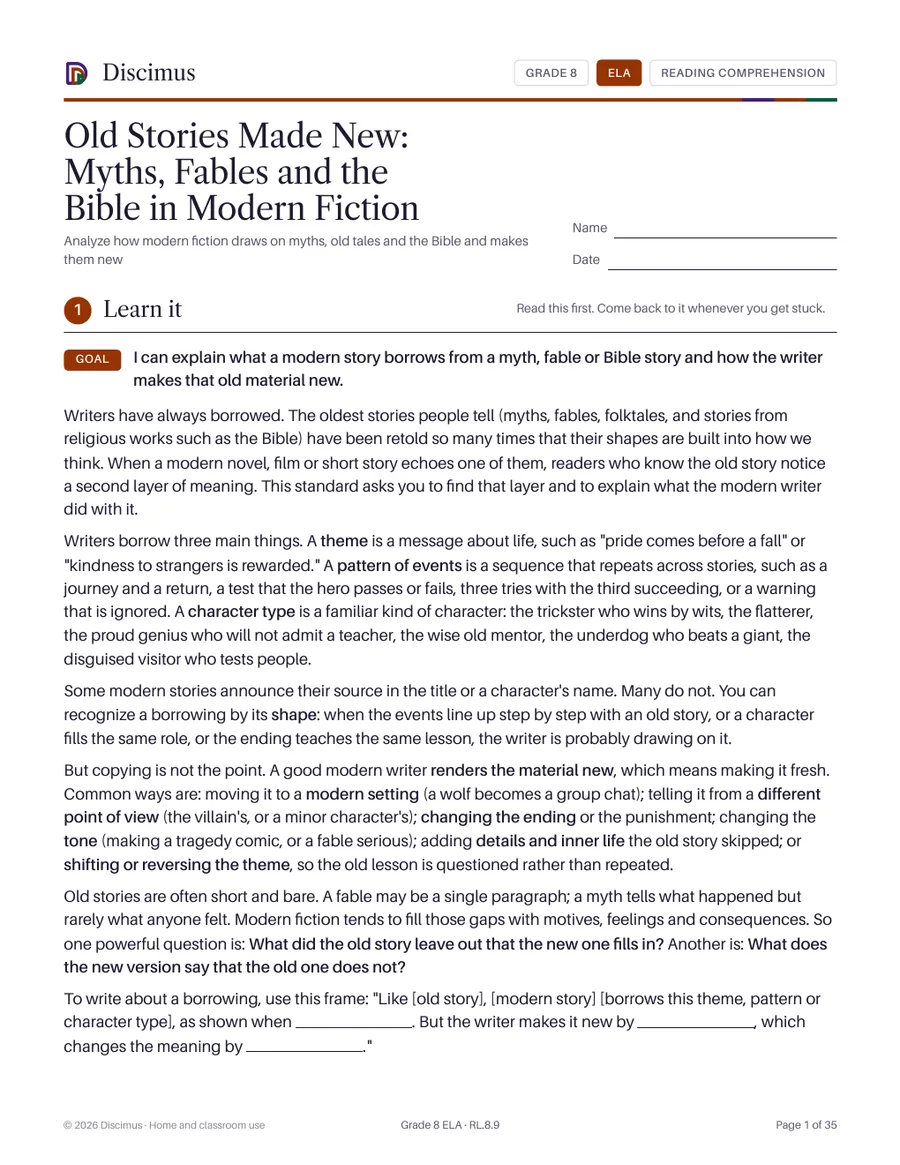
Analyze how modern fiction draws on myths, old tales and the Bible and makes them new
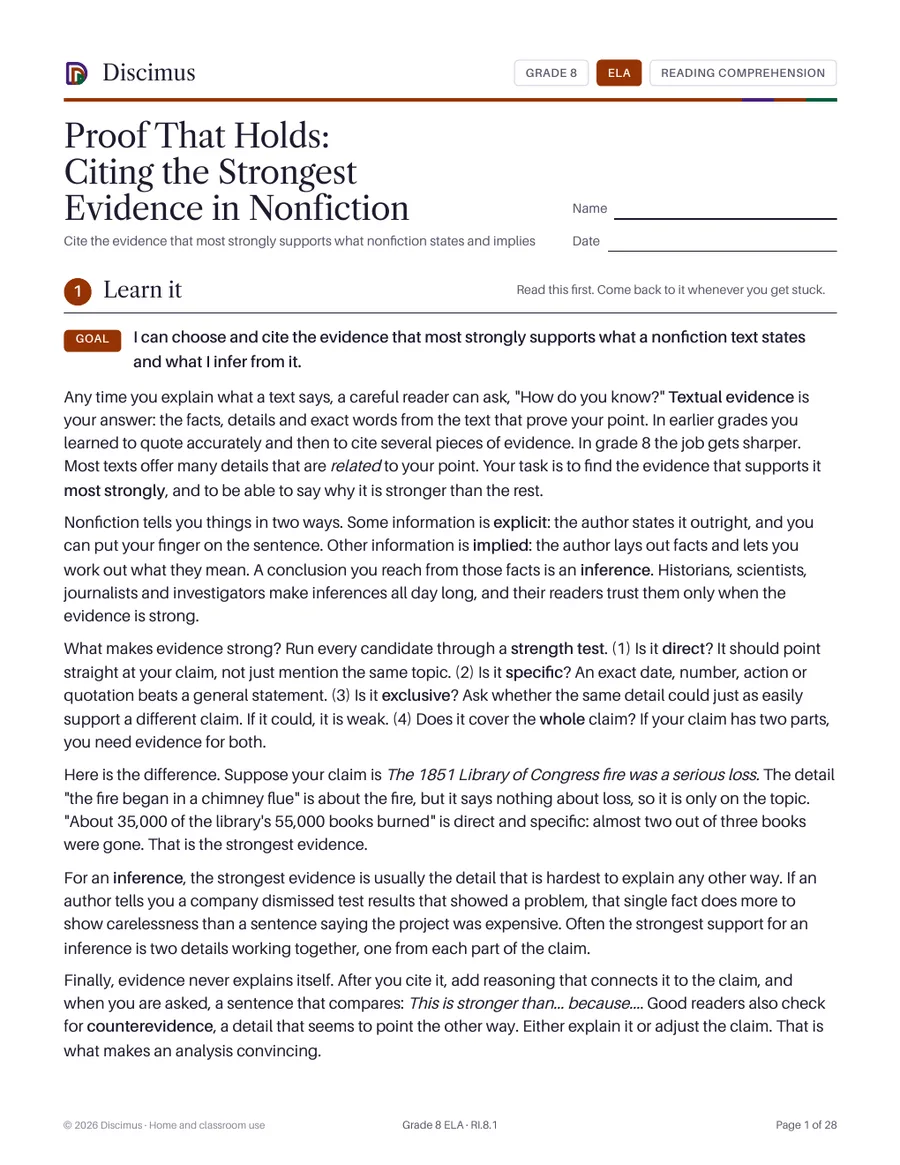
Cite the evidence that most strongly supports what nonfiction states and implies
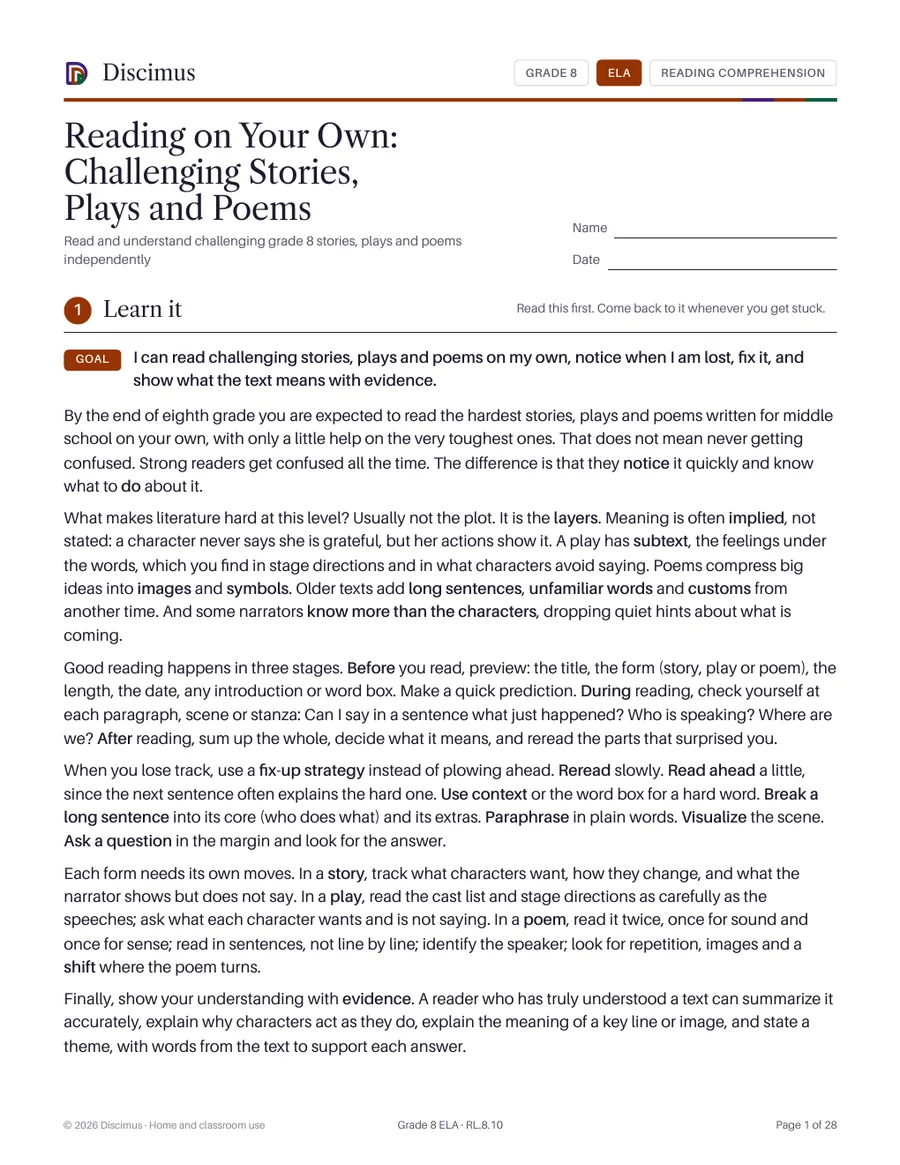
Read and understand challenging grade 8 stories, plays and poems independently
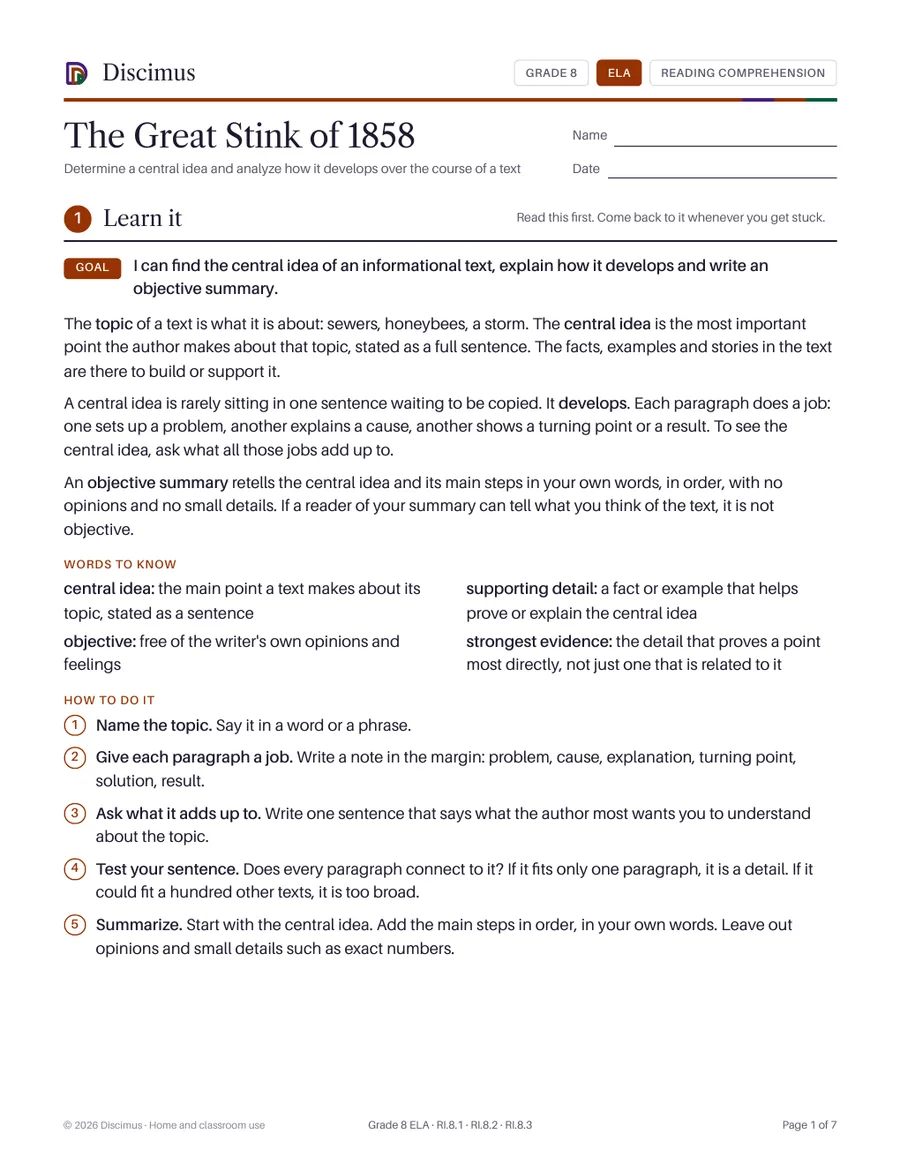
Determine a central idea and analyze how it develops over the course of a text
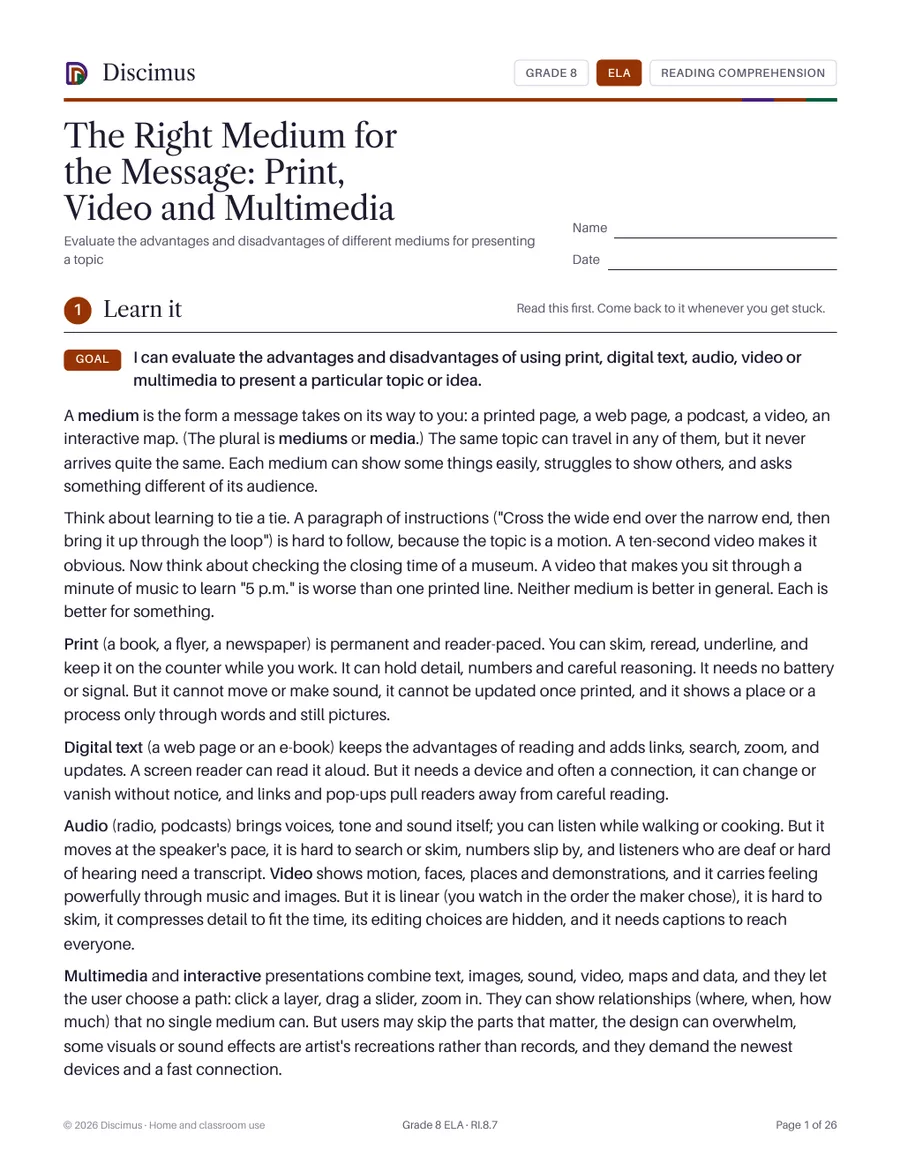
Evaluate the advantages and disadvantages of different mediums for presenting a topic
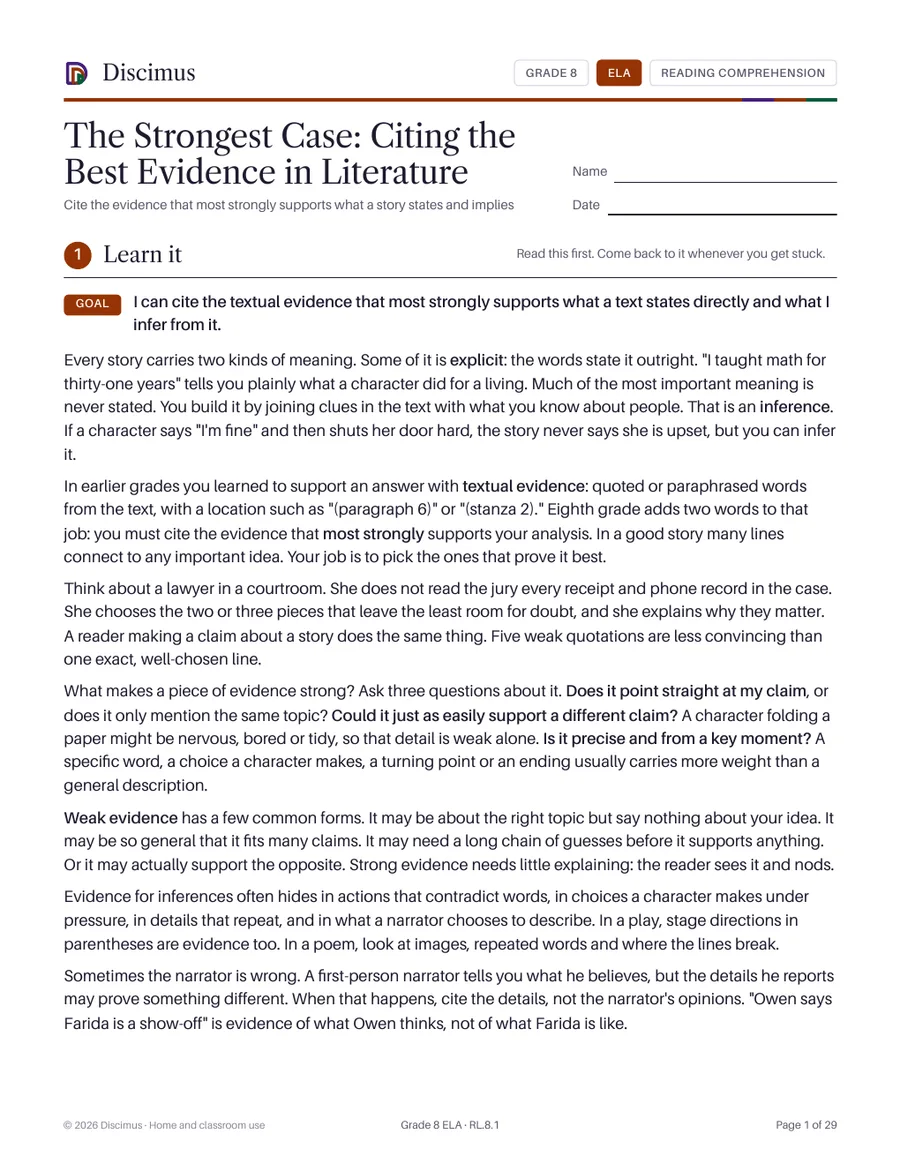
Cite the evidence that most strongly supports what a story states and implies
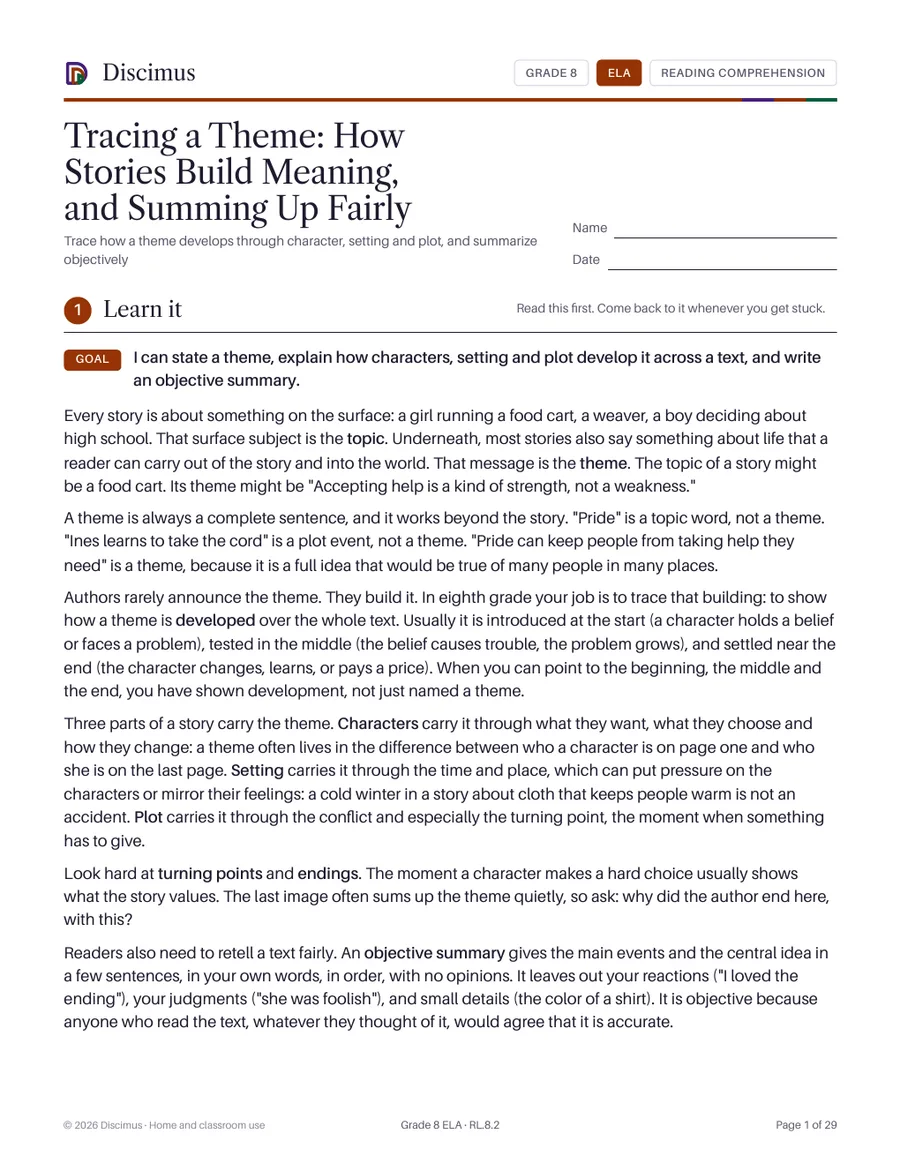
Trace how a theme develops through character, setting and plot, and summarize objectively
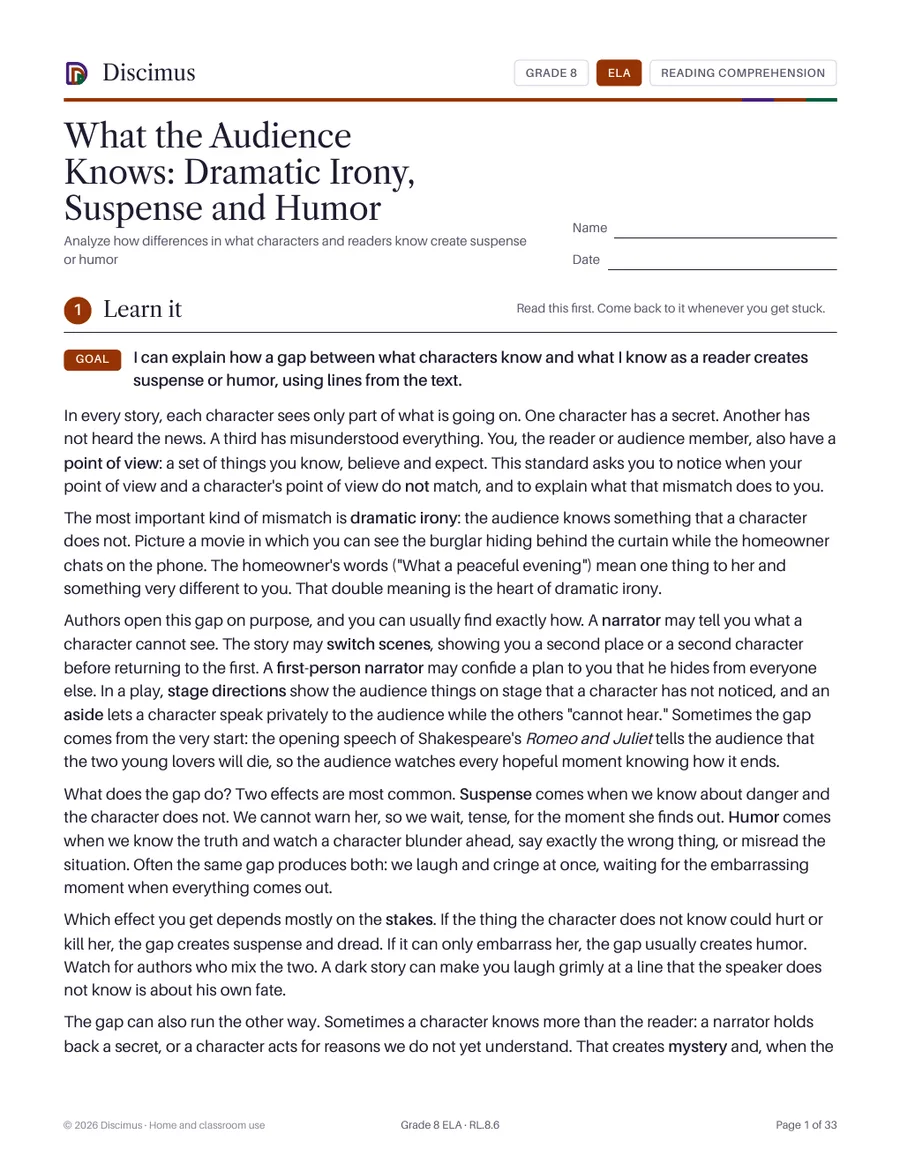
Analyze how differences in what characters and readers know create suspense or humor
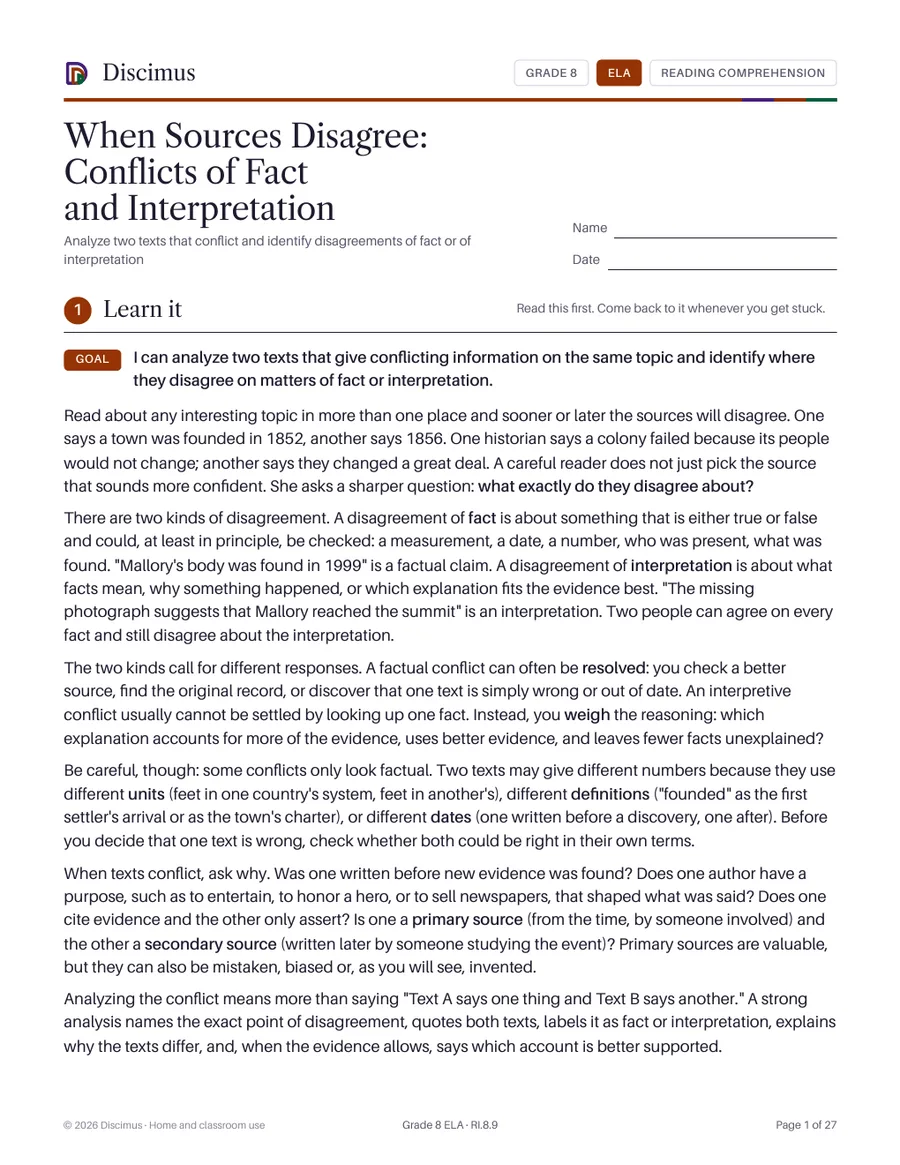
Analyze two texts that conflict and identify disagreements of fact or of interpretation
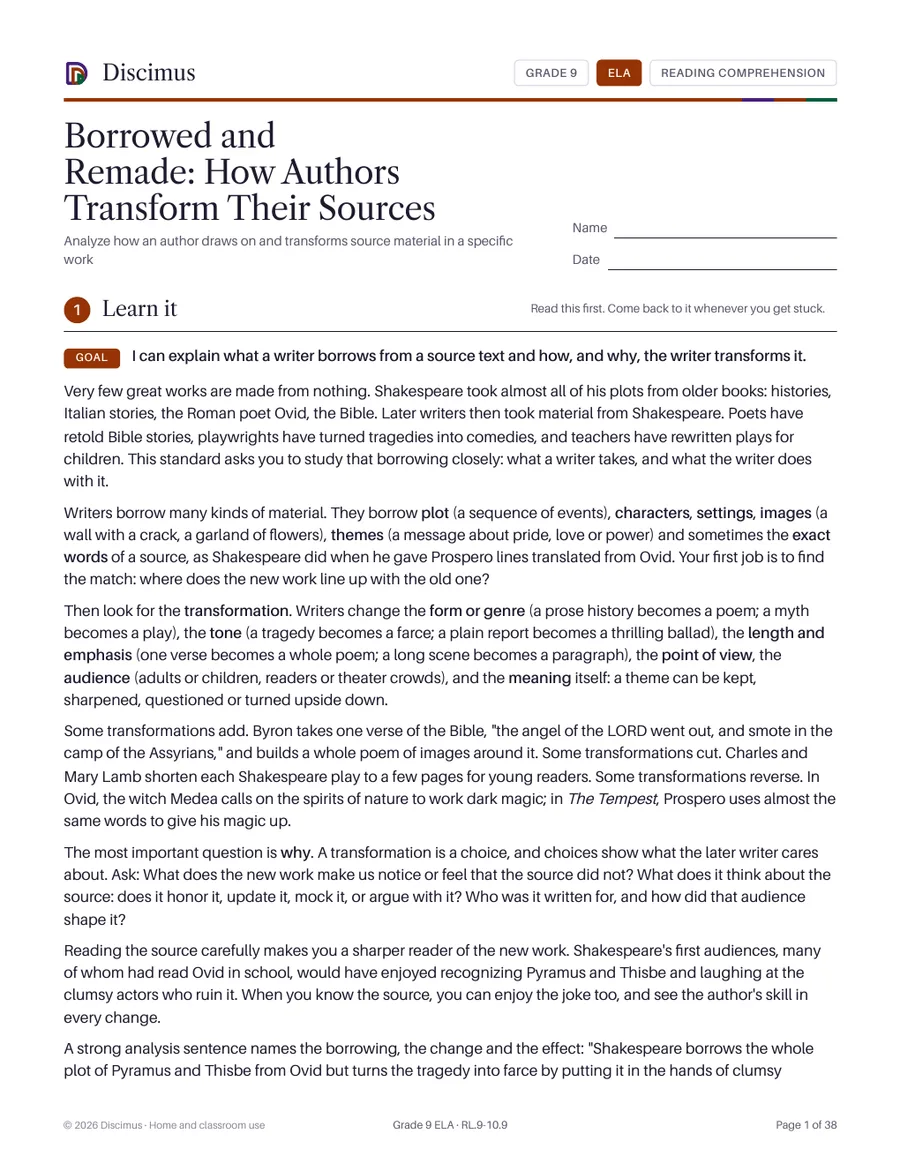
Analyze how an author draws on and transforms source material in a specific work
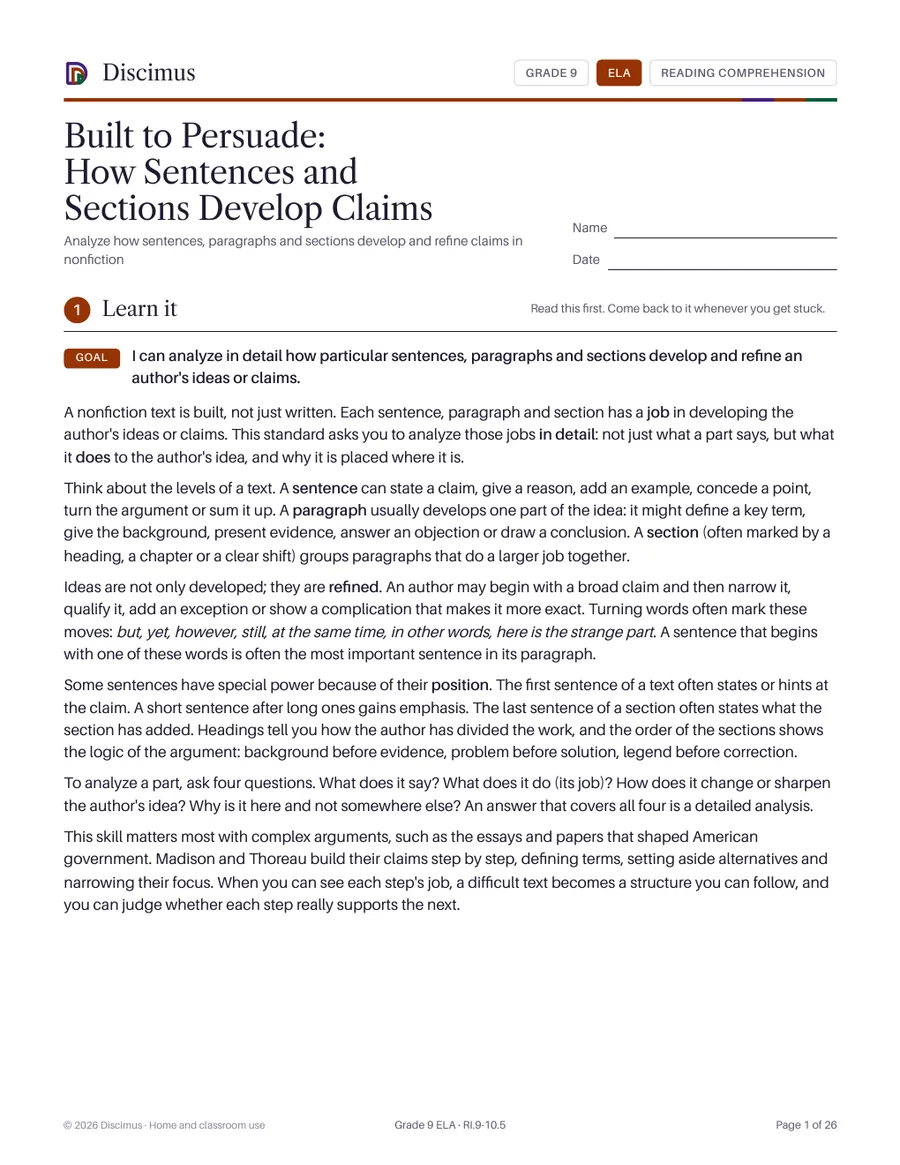
Analyze how sentences, paragraphs and sections develop and refine claims in nonfiction
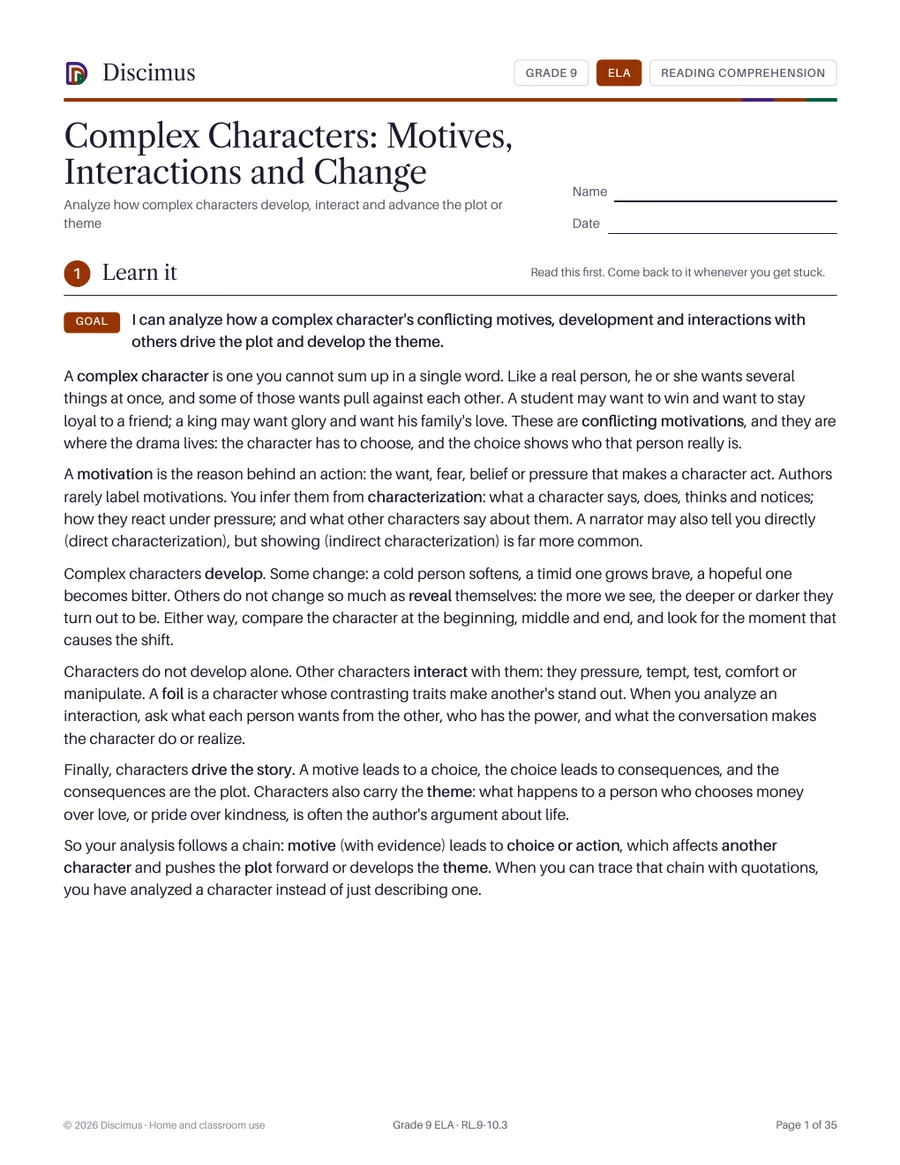
Analyze how complex characters develop, interact and advance the plot or theme
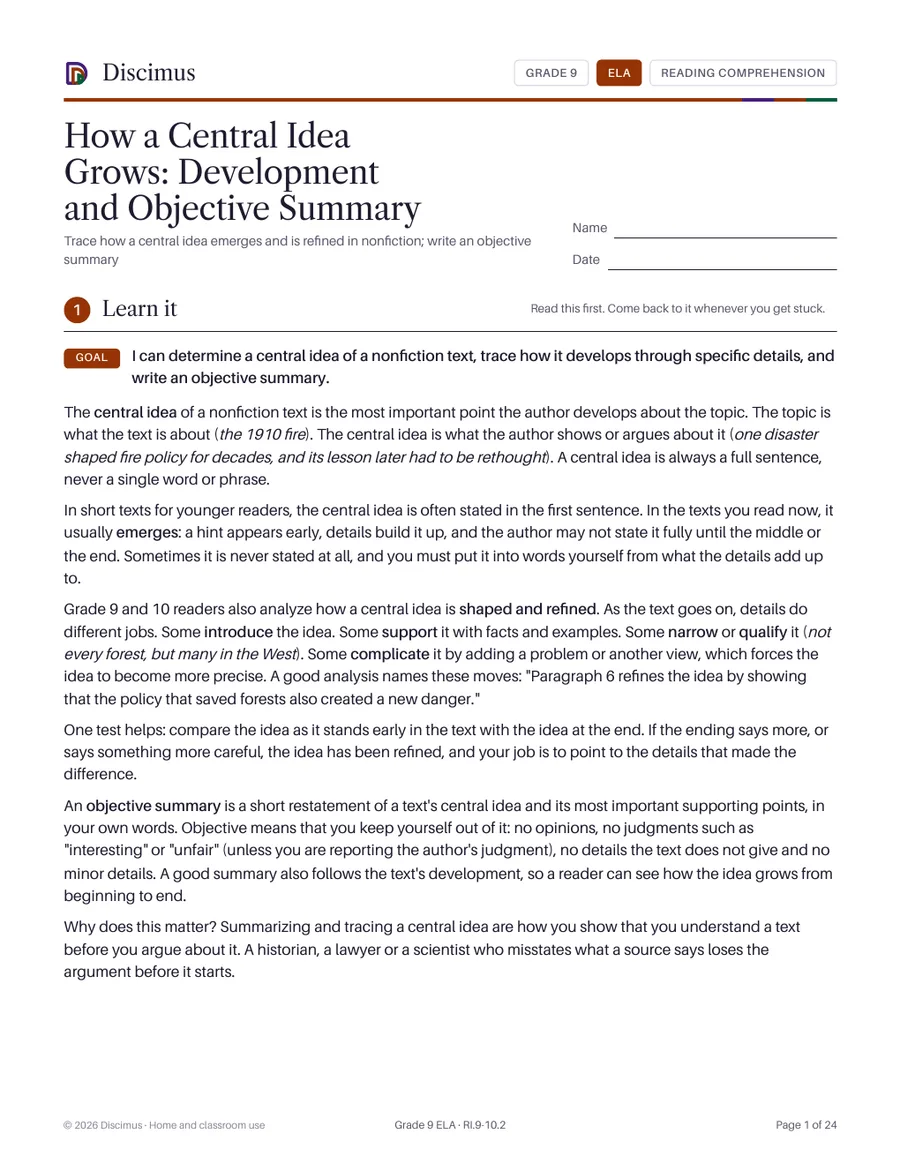
Trace how a central idea emerges and is refined in nonfiction; write an objective summary
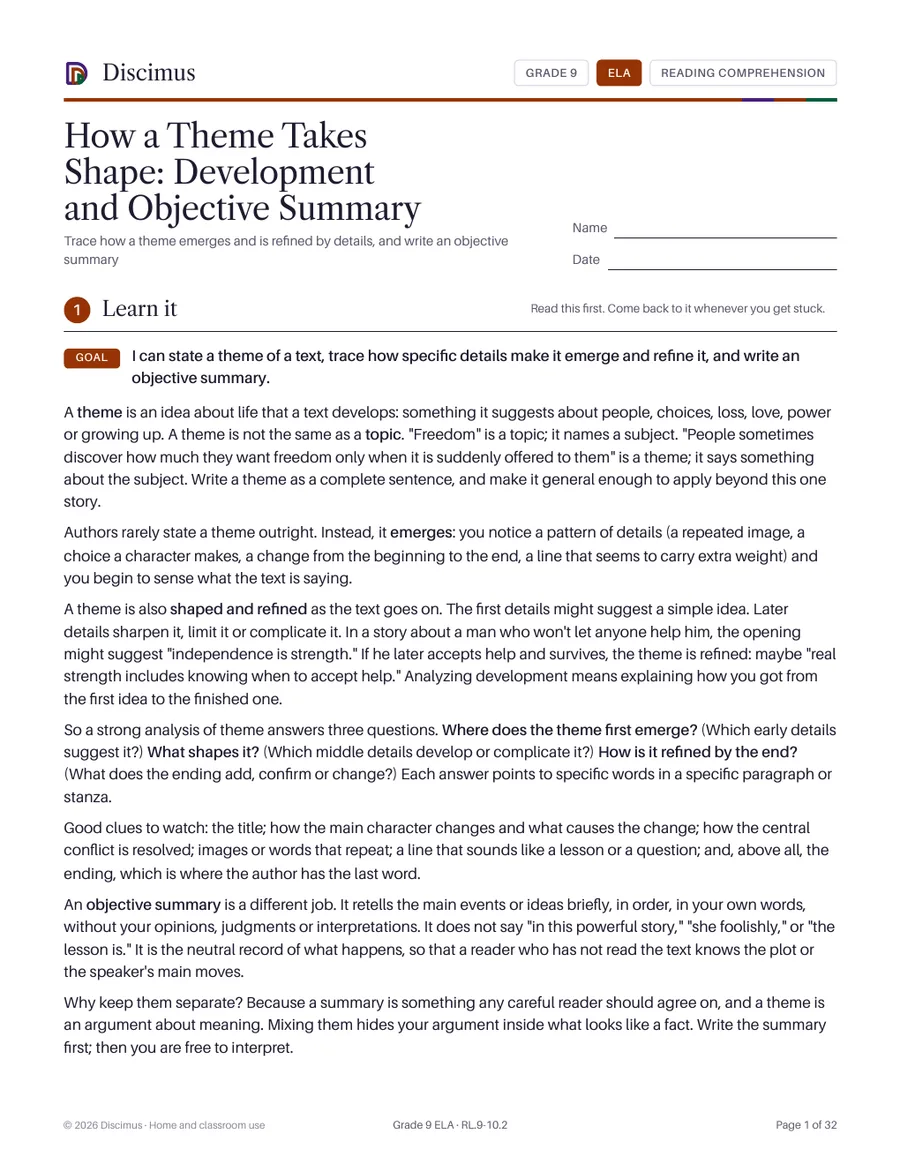
Trace how a theme emerges and is refined by details, and write an objective summary
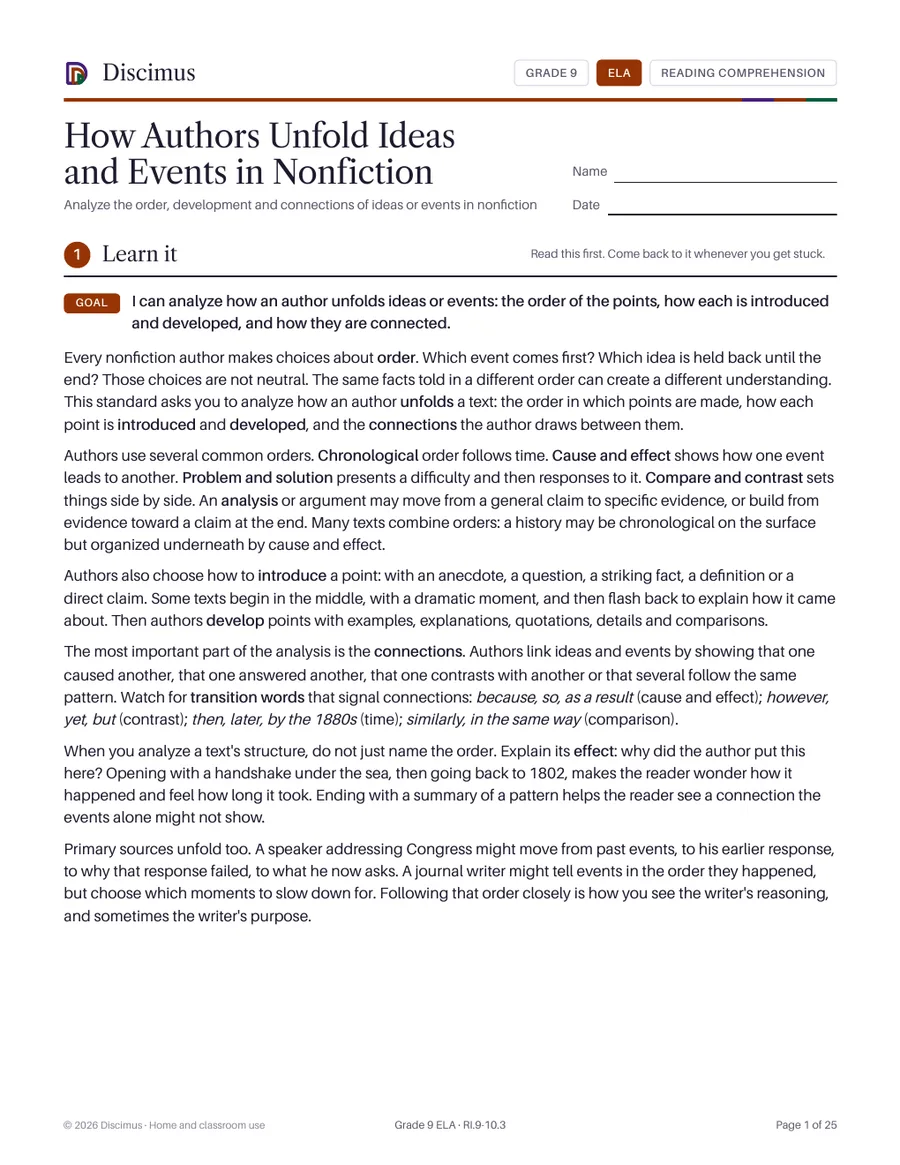
Analyze the order, development and connections of ideas or events in nonfiction
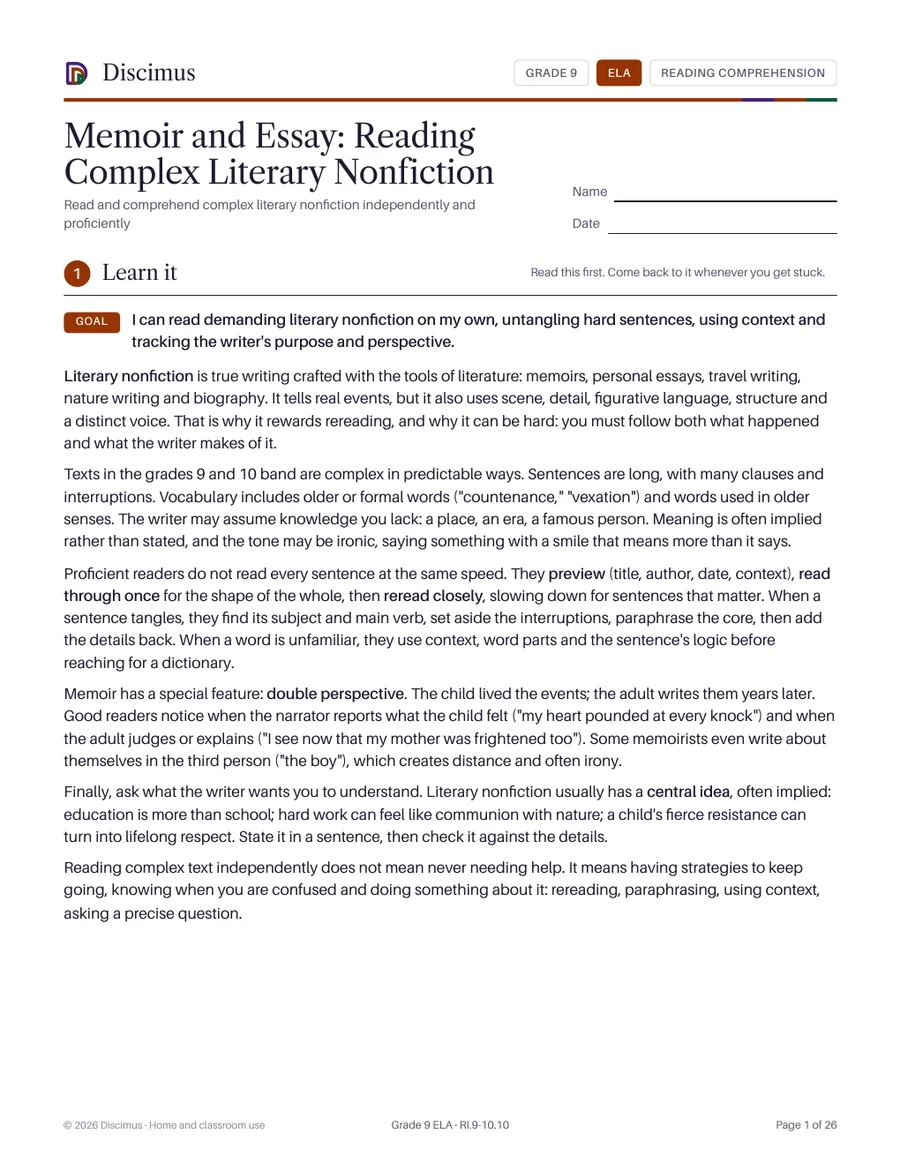
Read and comprehend complex literary nonfiction independently and proficiently
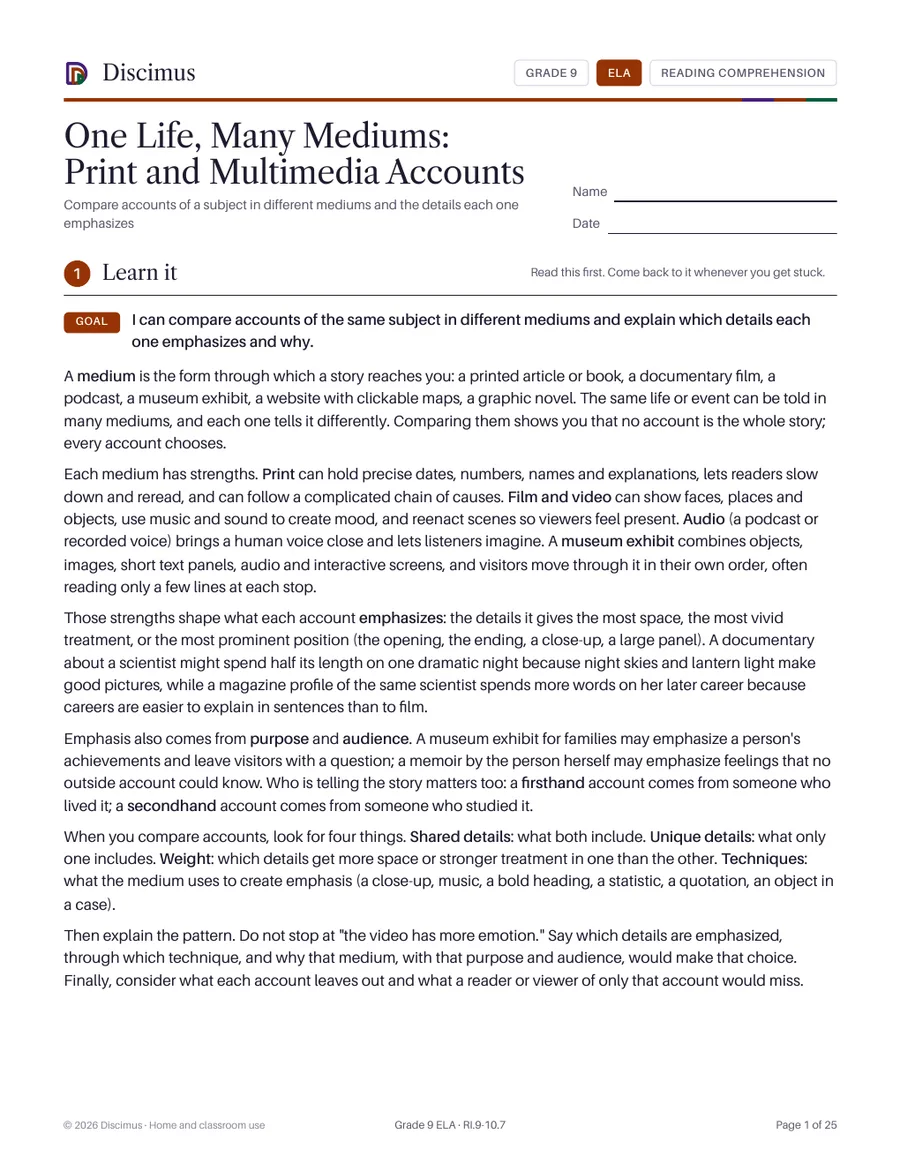
Compare accounts of a subject in different mediums and the details each one emphasizes
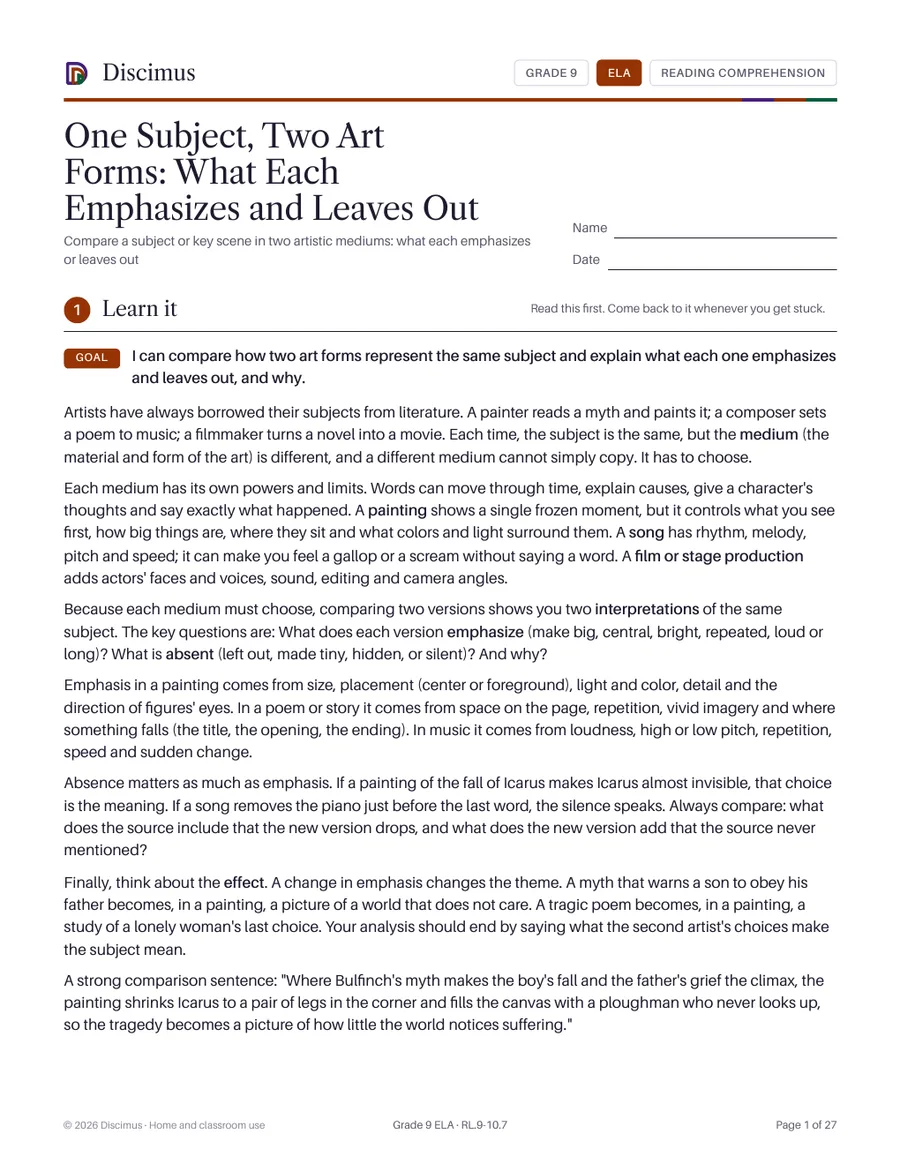
Compare a subject or key scene in two artistic mediums: what each emphasizes or leaves out
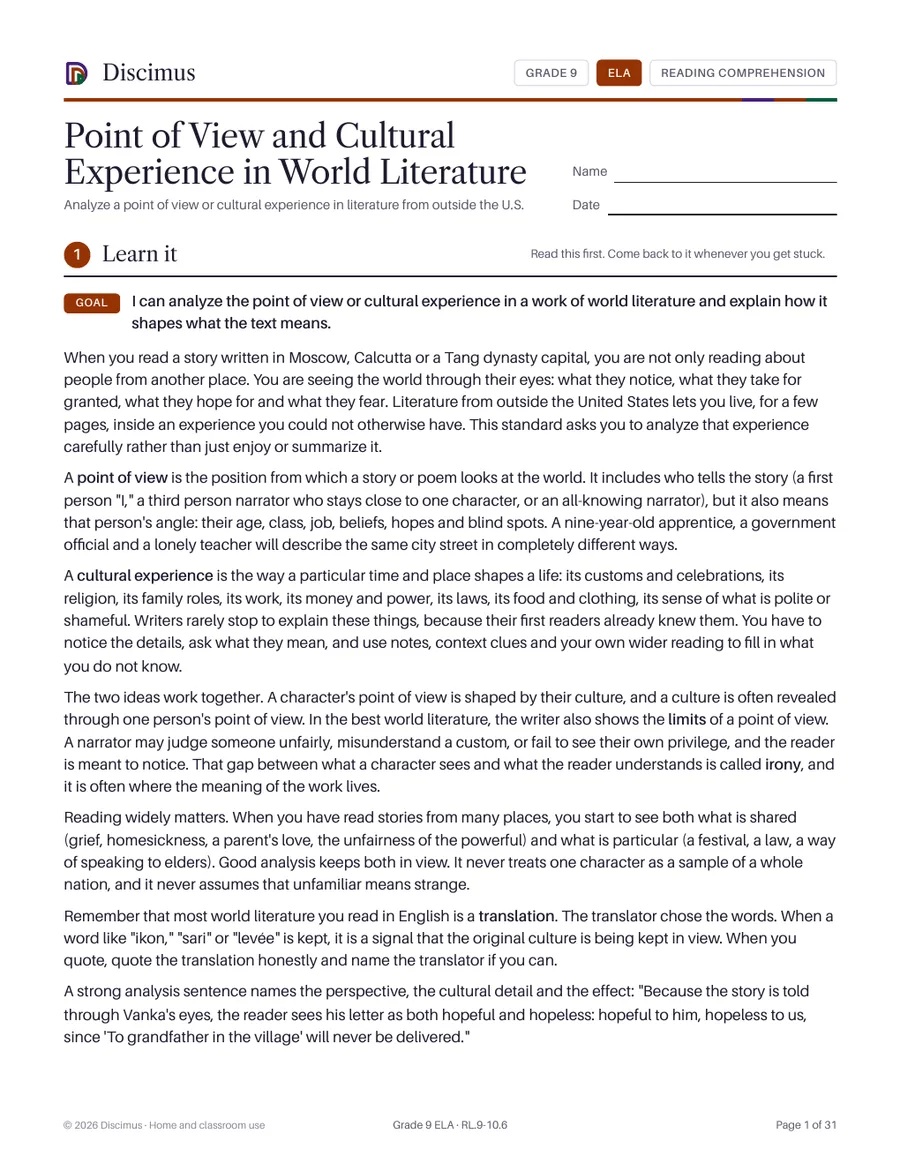
Analyze a point of view or cultural experience in literature from outside the U.S.
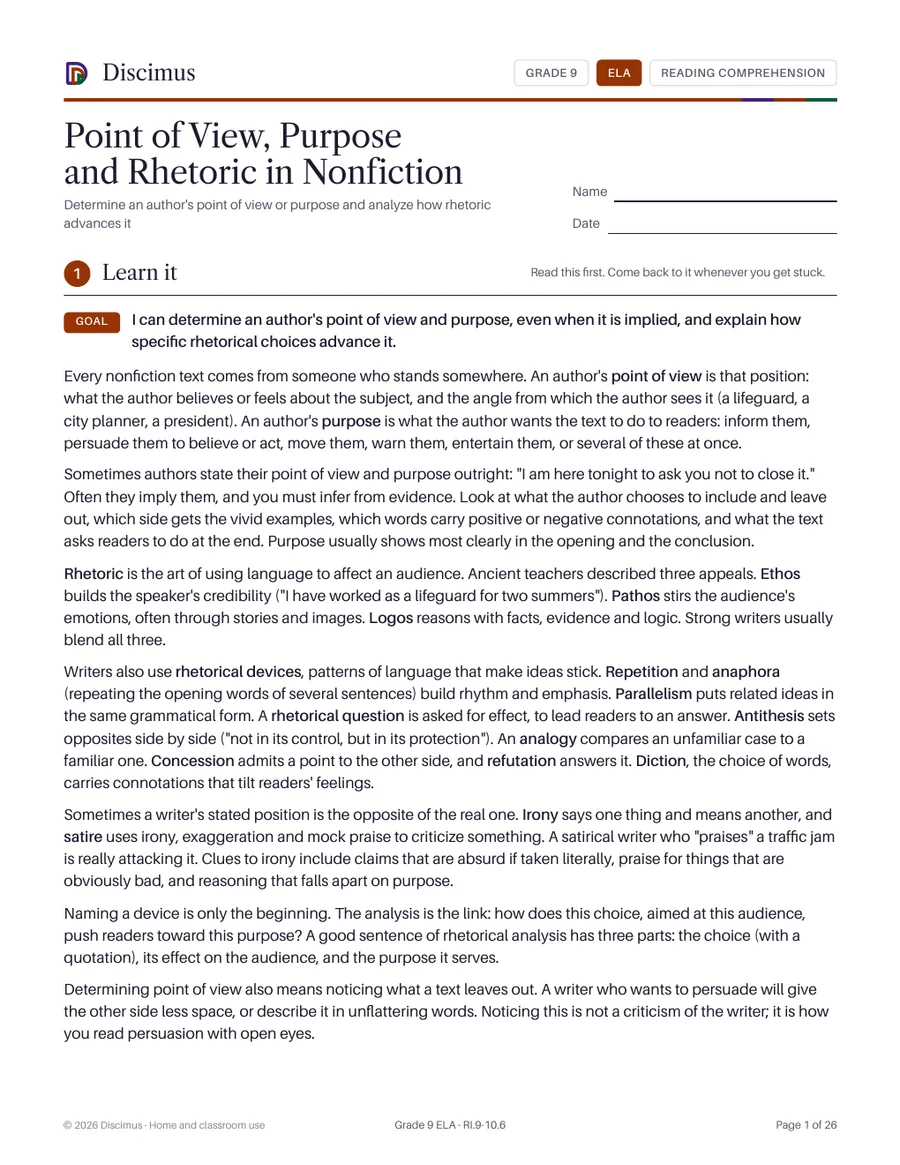
Determine an author's point of view or purpose and analyze how rhetoric advances it
Read and understand grade 9 to 10 stories, dramas and poems independently and proficiently
Analyze seminal U.S. documents and how they address related themes and concepts
Cite strong and thorough evidence for what nonfiction states and for inferences from it
Cite strong, thorough textual evidence for explicit meaning and for inferences
Analyze how structure, event order and pacing create mystery, tension or surprise
Evaluate an argument's reasoning and evidence and identify false statements and fallacies
Analyze figurative and connotative word choices and their cumulative impact on tone
Analyze the impact of an author's choices about setting, order of events and characters
Trace how two or more central ideas develop and interact, and write an objective summary
Delineate and evaluate the reasoning in seminal U.S. legal texts and public advocacy
Evaluate whether an author's structure makes points clear, convincing and engaging
Cite strong evidence for stated and implied points and find where a text is uncertain
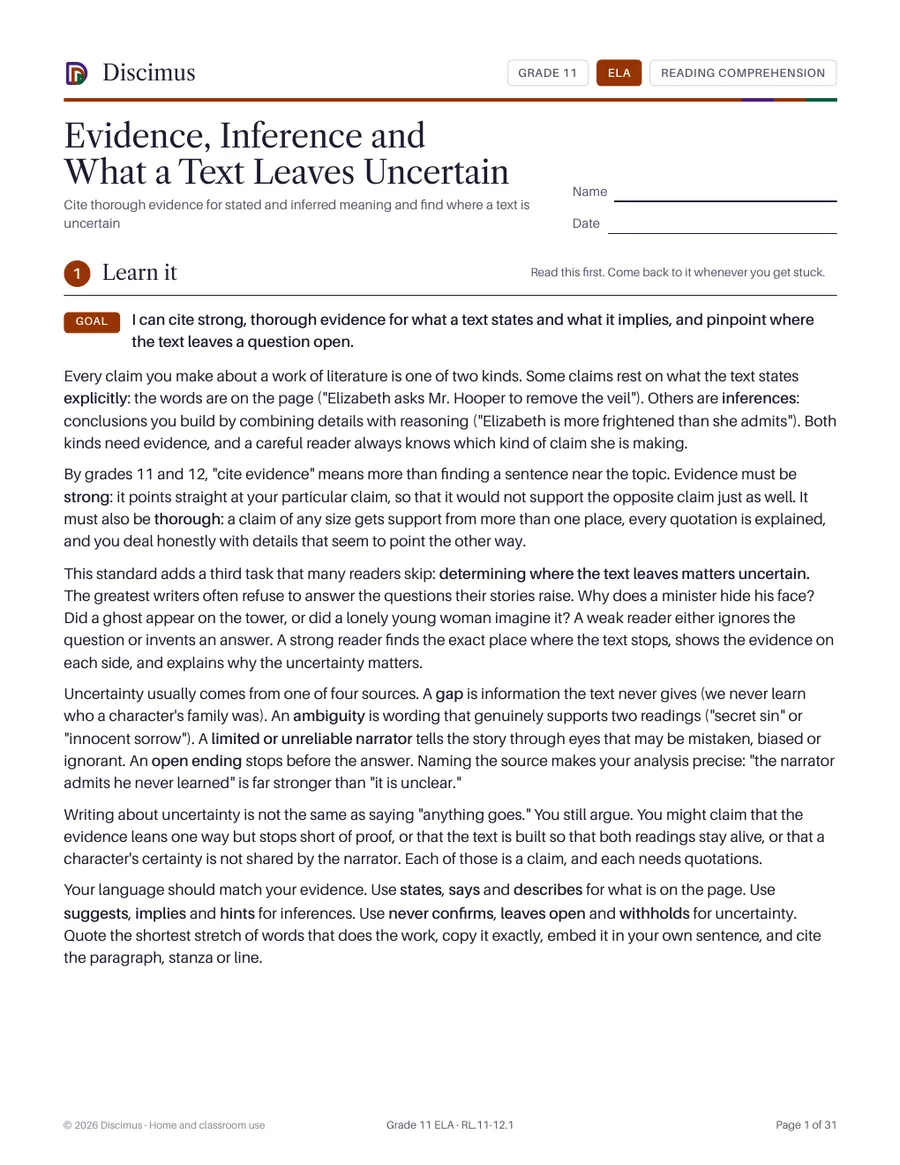
Cite thorough evidence for stated and inferred meaning and find where a text is uncertain
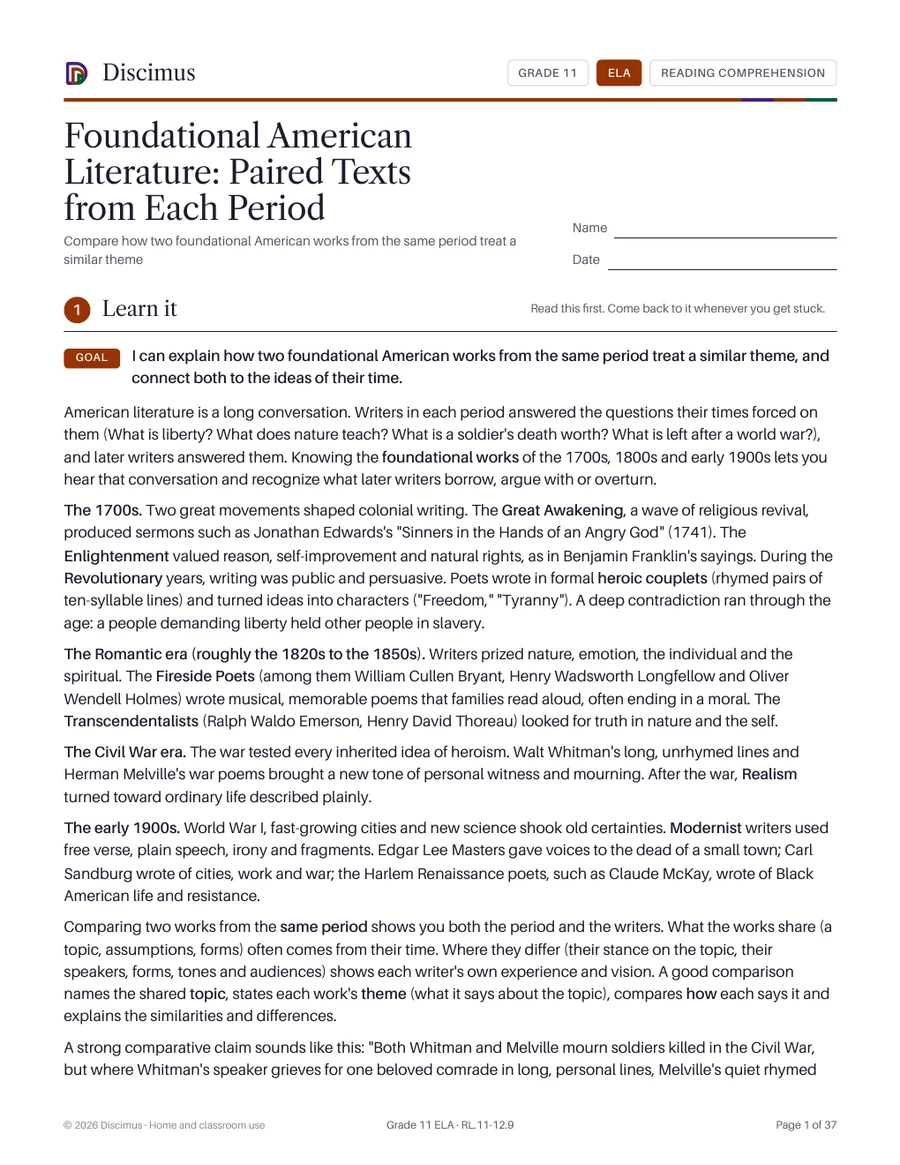
Compare how two foundational American works from the same period treat a similar theme
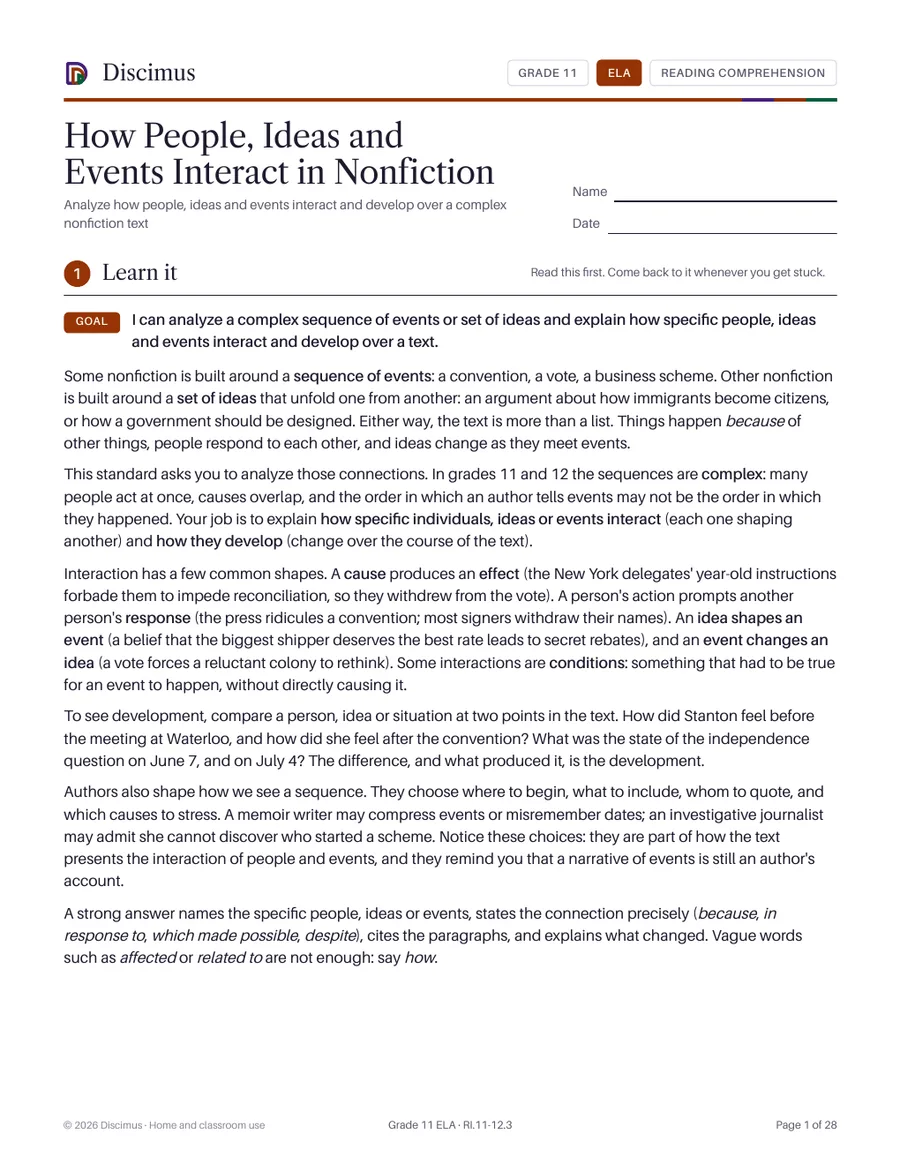
Analyze how people, ideas and events interact and develop over a complex nonfiction text
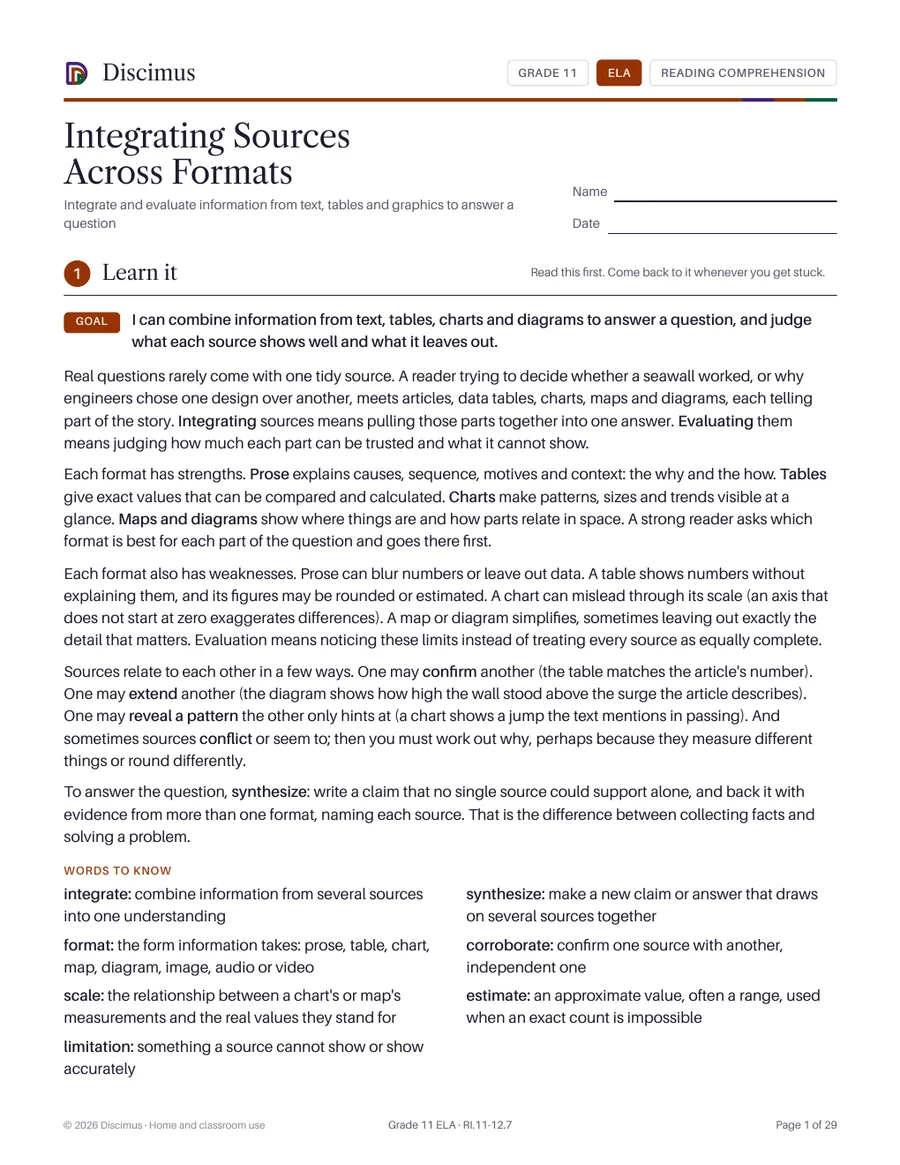
Integrate and evaluate information from text, tables and graphics to answer a question
Trace how two or more themes develop and interact, and write an objective summary
Analyze multiple interpretations of a story or play and evaluate how each reads the source
Read and comprehend complex literary nonfiction at the grade 11 to college-ready level
Read and understand grade 11 to college-ready stories, dramas and poems independently
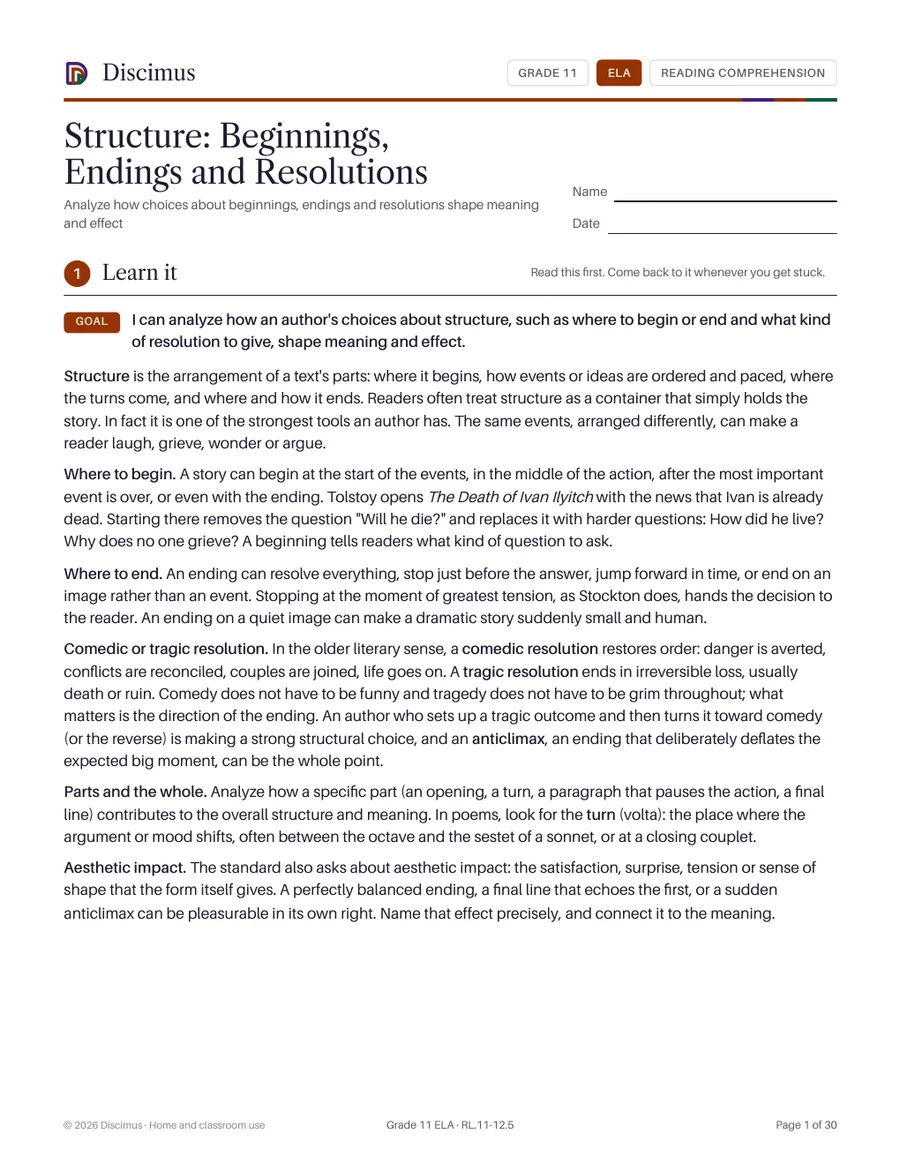
Analyze how choices about beginnings, endings and resolutions shape meaning and effect
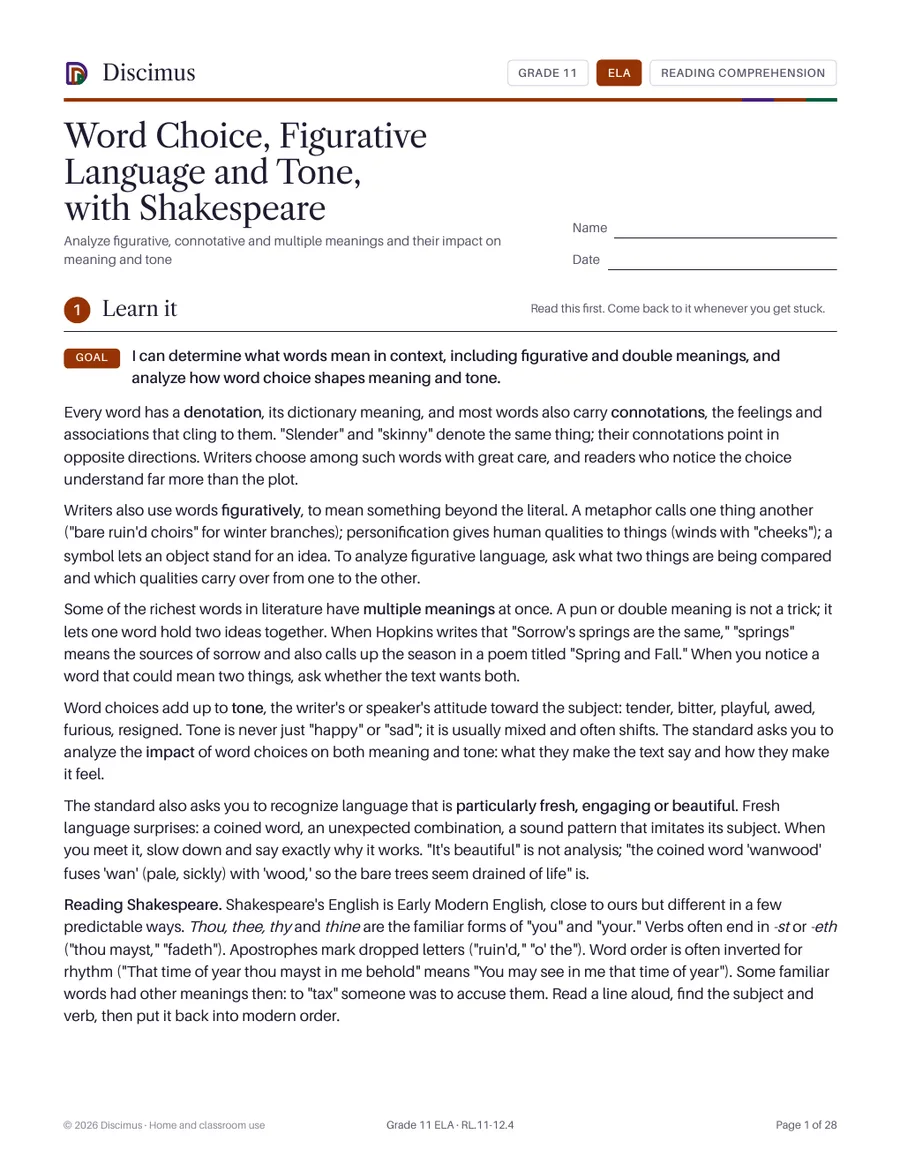
Analyze figurative, connotative and multiple meanings and their impact on meaning and tone