Ask and Answer Questions About Arguments
Ask and answer what, why, how-do-you-know and what-about questions about an argument
51 worksheets match.
Ask and answer what, why, how-do-you-know and what-about questions about an argument
Ask questions to understand, learn more about and check an explanation, and answer from it
Choose the kinds of sources (maps, photos, people, objects) that help answer a question
Explain how something in a community happens, in order, with the facts that matter
Evaluate a source by telling facts from opinions and saying how a fact could be checked
Find the facts and big-idea words (concepts) that help answer a supporting question
Name civics, economics, geography and history ideas that connect to a big question
State a claim about a shared choice and back it with two or more reasons that fit
Choose sources by who made them and how they are set up, then gather relevant facts
Tell how supporting questions help answer a compelling question, and ask helpful ones
Sum up an argument's claim and main reasons, then share it on paper, aloud or on a screen
Explain why a big (compelling) question matters to me, with reasons from my own life
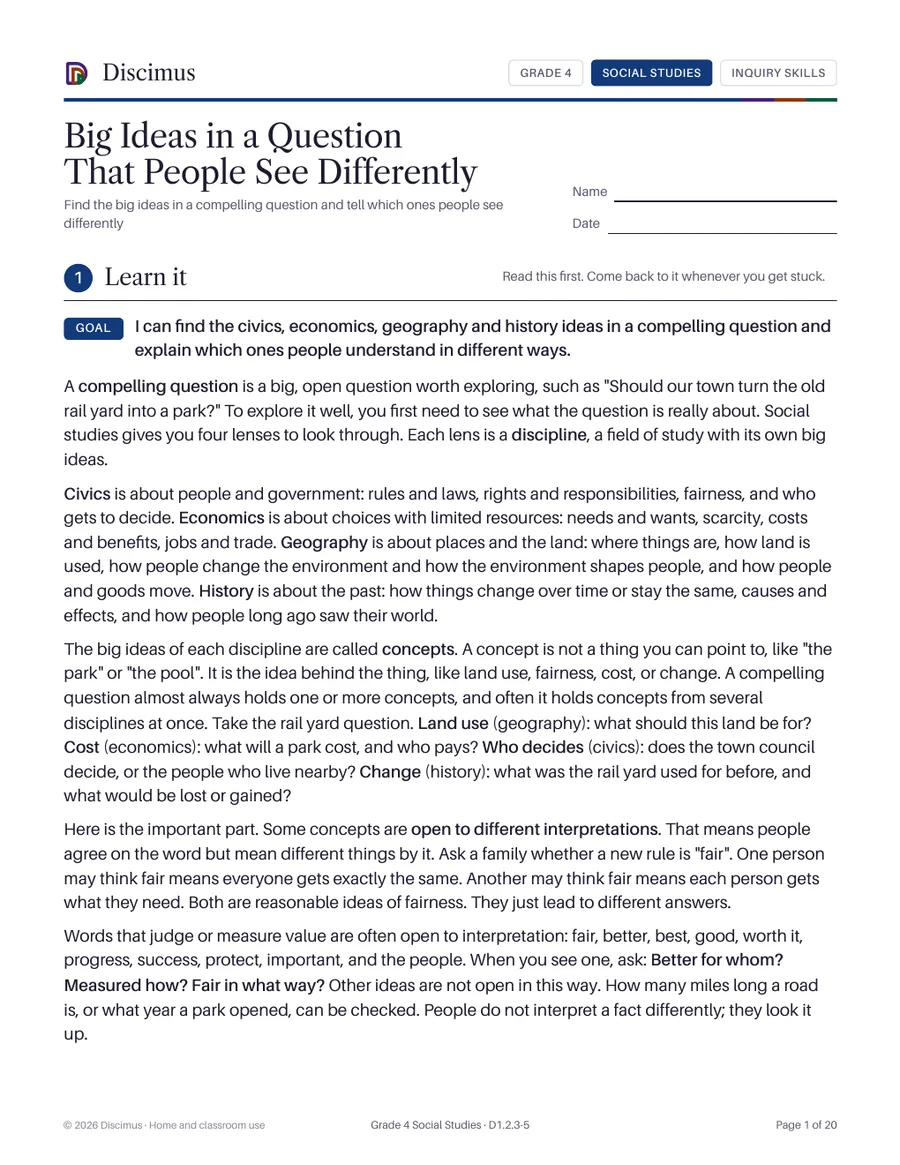
Find the big ideas in a compelling question and tell which ones people see differently
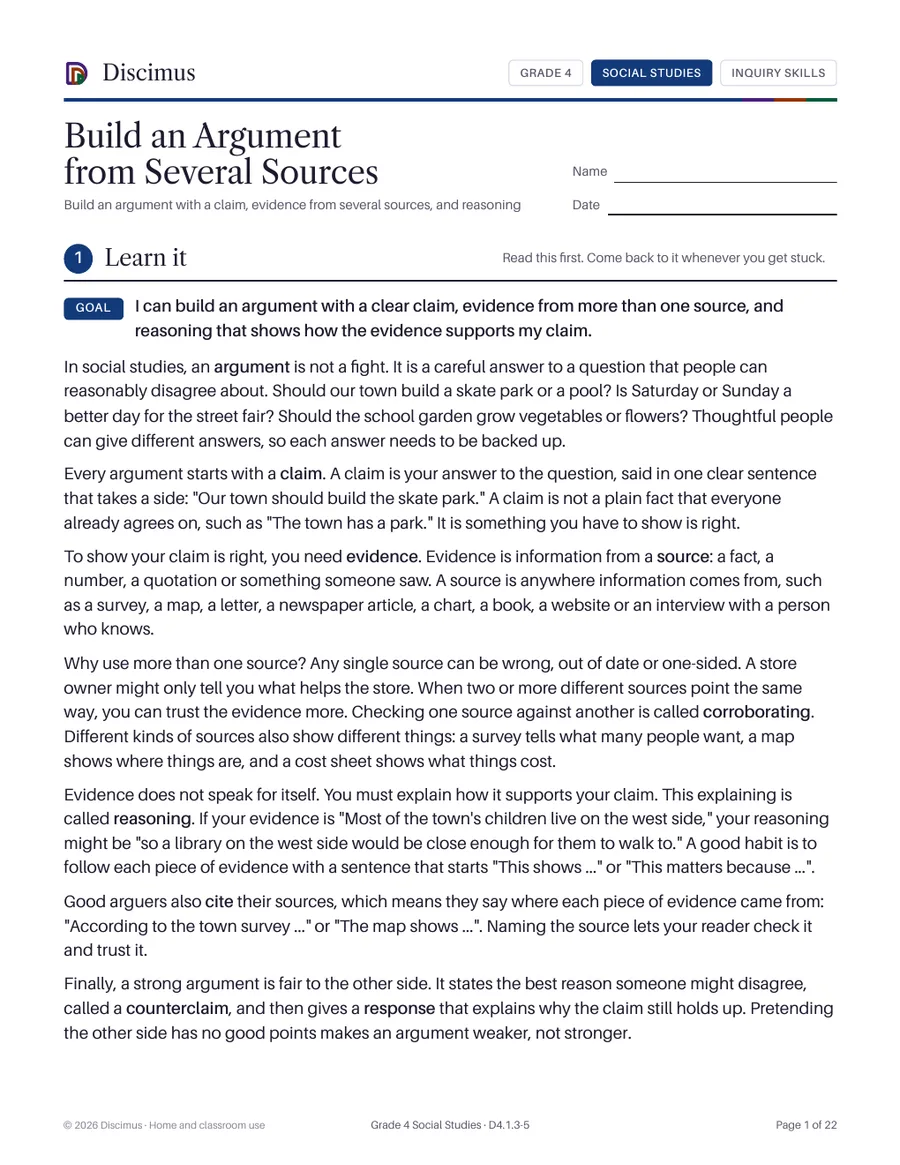
Build an argument with a claim, evidence from several sources, and reasoning
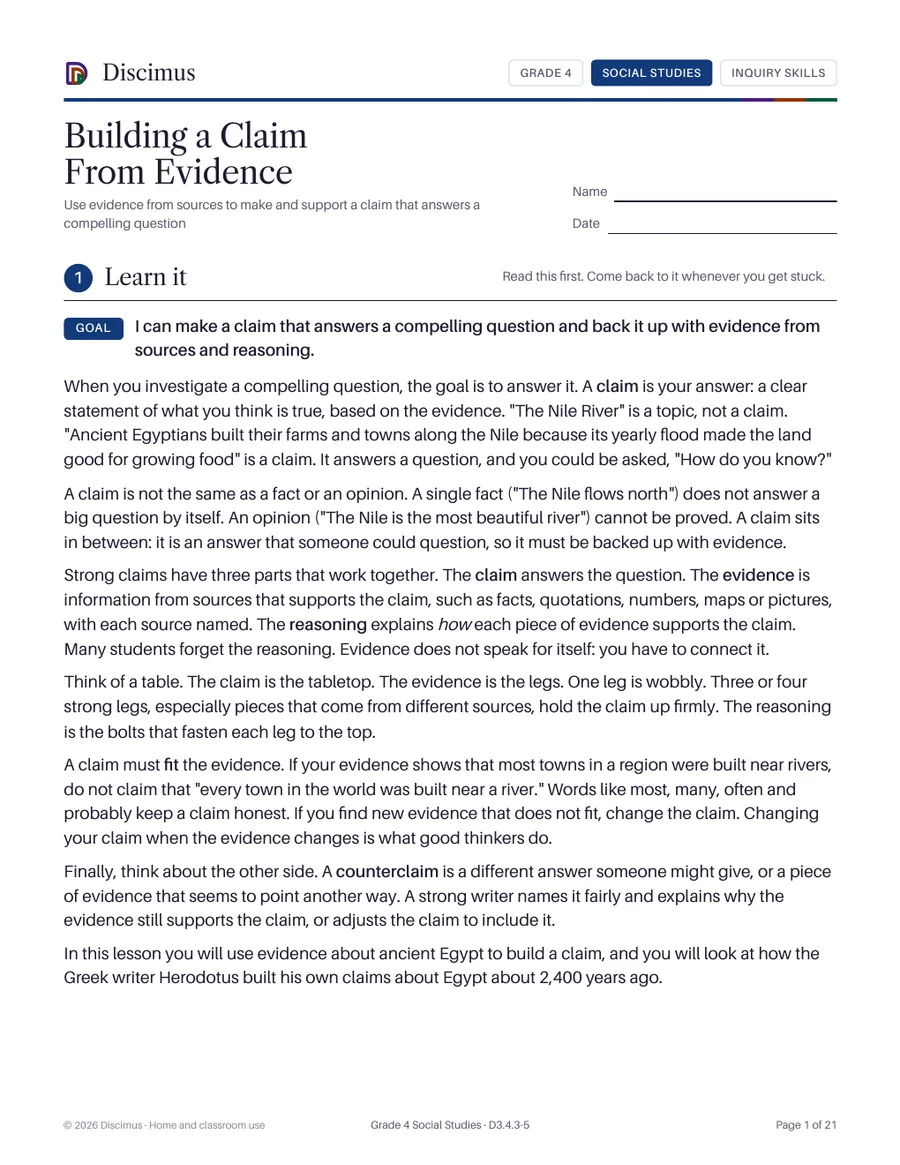
Use evidence from sources to make and support a claim that answers a compelling question
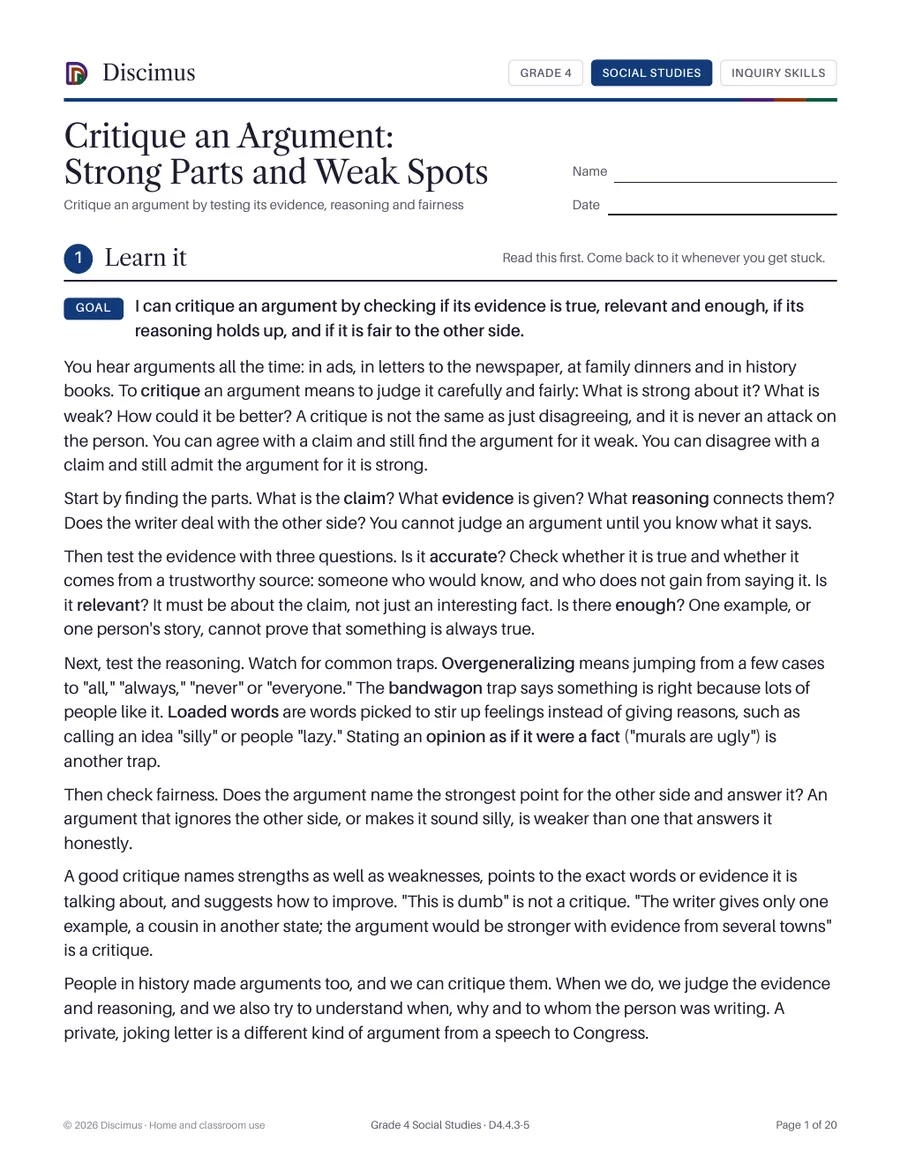
Critique an argument by testing its evidence, reasoning and fairness
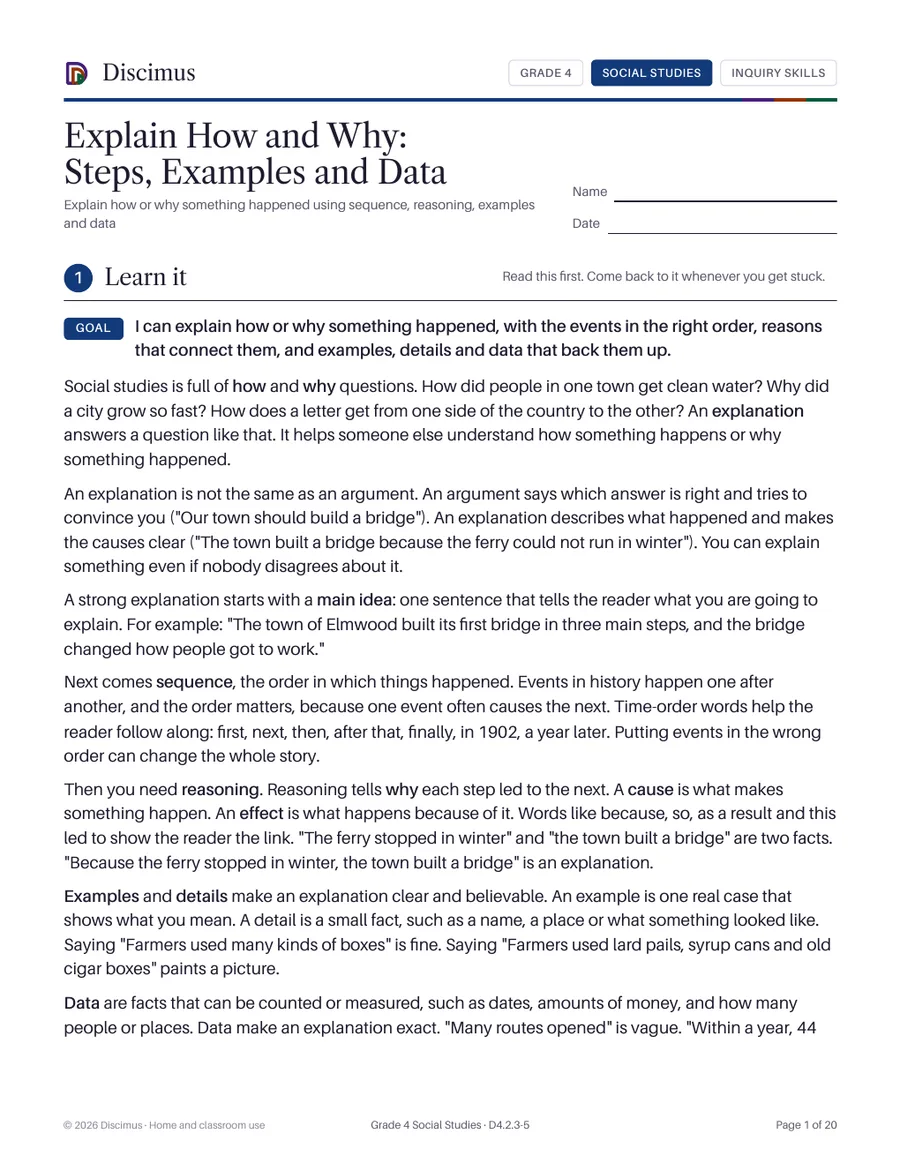
Explain how or why something happened using sequence, reasoning, examples and data
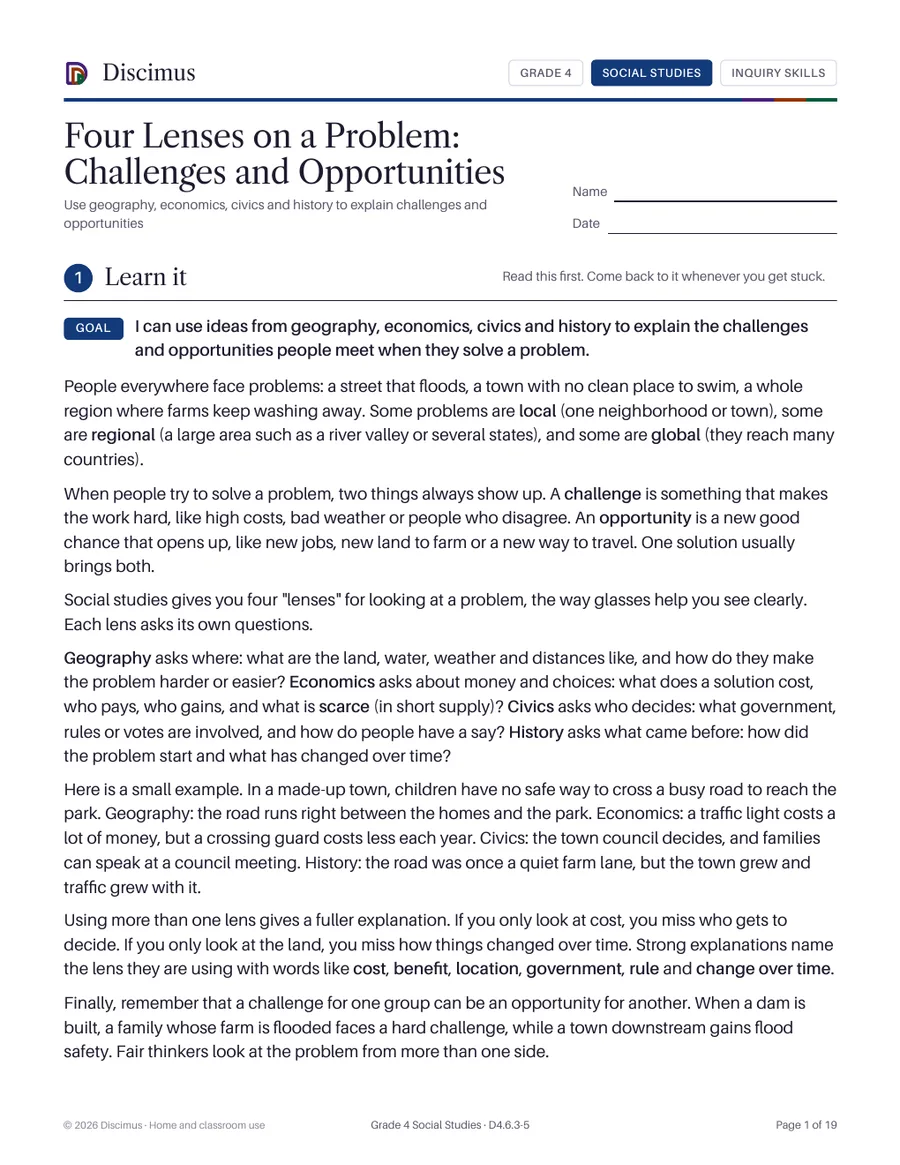
Use geography, economics, civics and history to explain challenges and opportunities
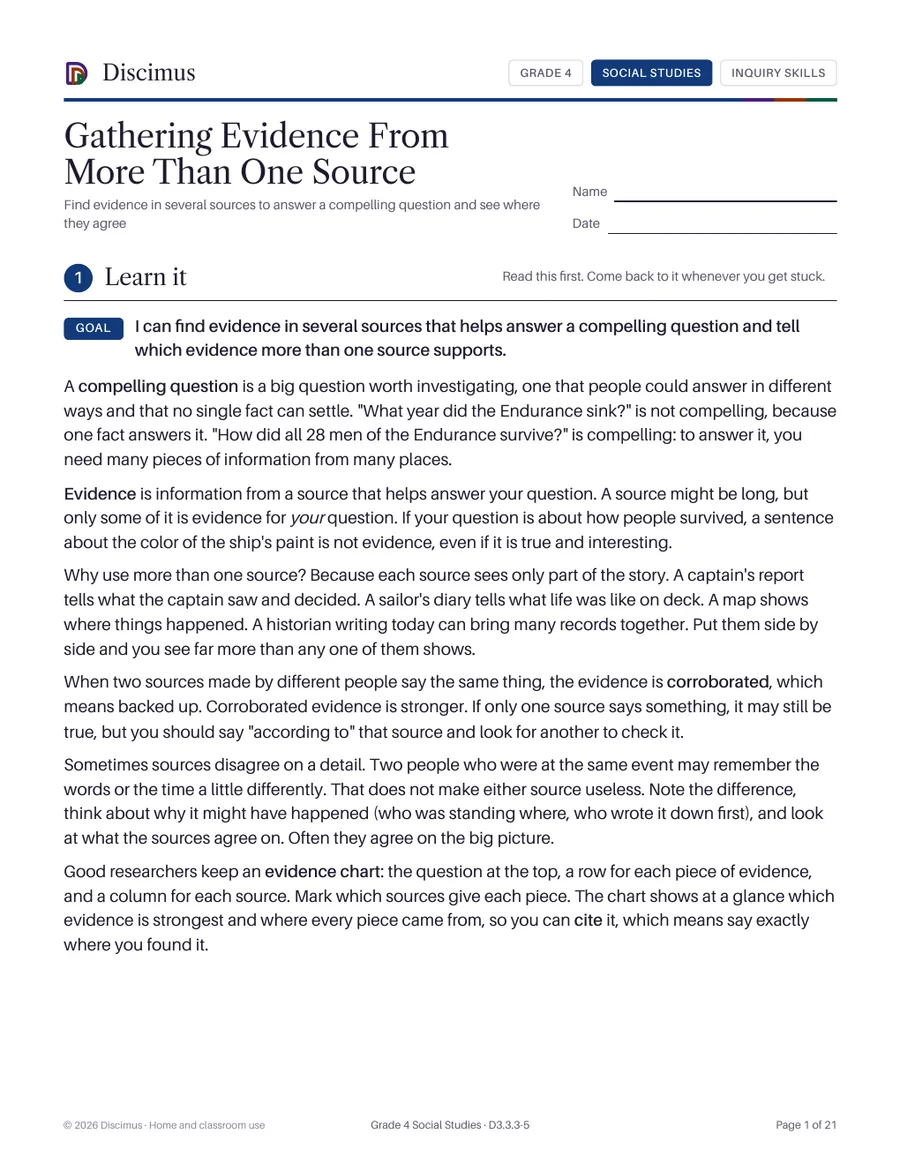
Find evidence in several sources to answer a compelling question and see where they agree
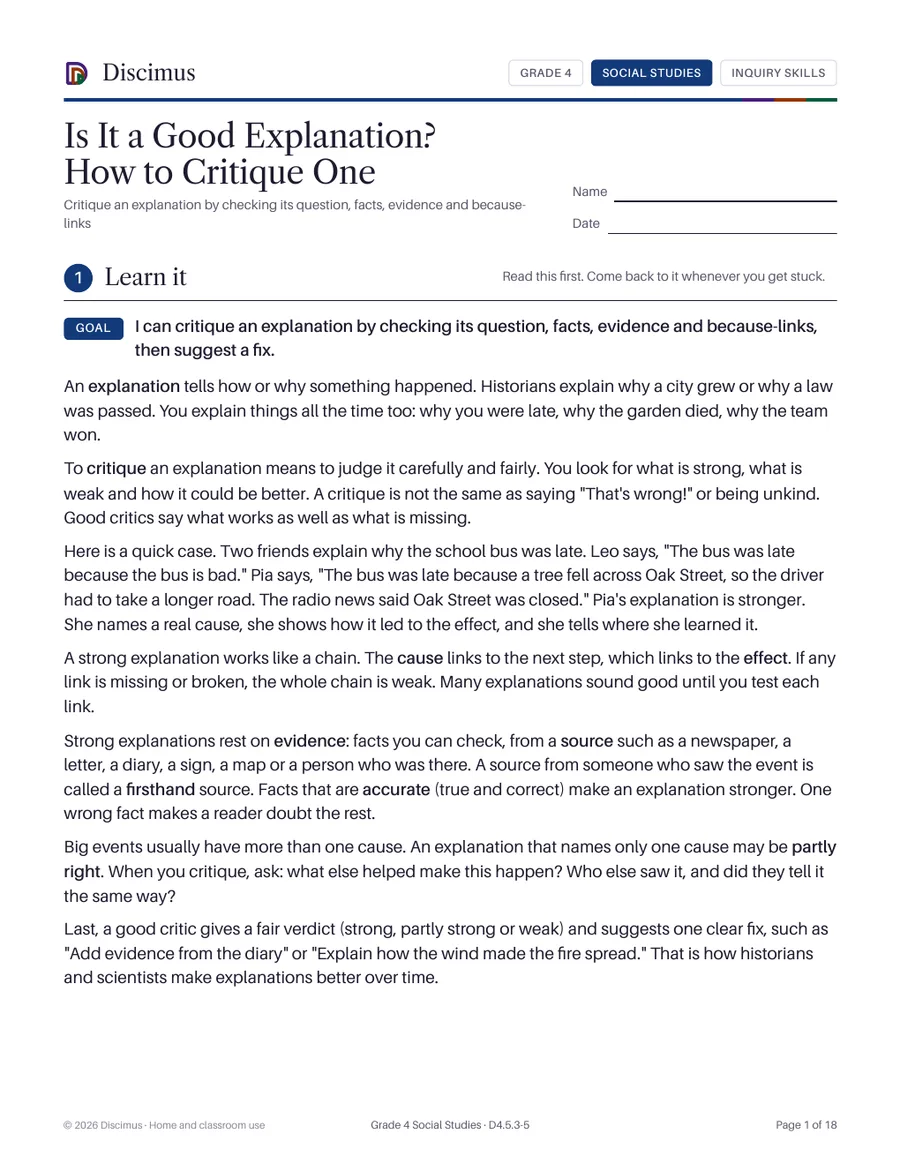
Critique an explanation by checking its question, facts, evidence and because-links
Find the big ideas in a supporting question and tell which ones are open to interpretation
Summarize an argument or explanation and present it to a real audience in a fitting format
Explain how supporting questions help answer a compelling question in an inquiry
Explain why a compelling question is important to peers, adults and the wider community
Build an argument from several sources and state its strengths and limitations
Critique the structure of an explanation: thesis, pattern, links, evidence and conclusion
Critique an argument's credibility by checking its source, evidence and reasoning
Develop a claim and a counterclaim and weigh the strengths and limitations of each
Explain why something happened with sequence, examples and data, and judge the explanation
Explain how a question represents the key ideas and lasting issues of a field
Apply democratic procedures such as motions, votes, consensus and ranked choice to decide
Analyze a problem at local, regional and global levels over time using four lenses
Explain how compelling and supporting questions shape and strengthen each other
Adapt an argument or explanation for a real audience and venue outside the classroom
Explain points of agreement among experts about the ideas in a compelling question
Explain points of agreement among experts about the ideas in a supporting question
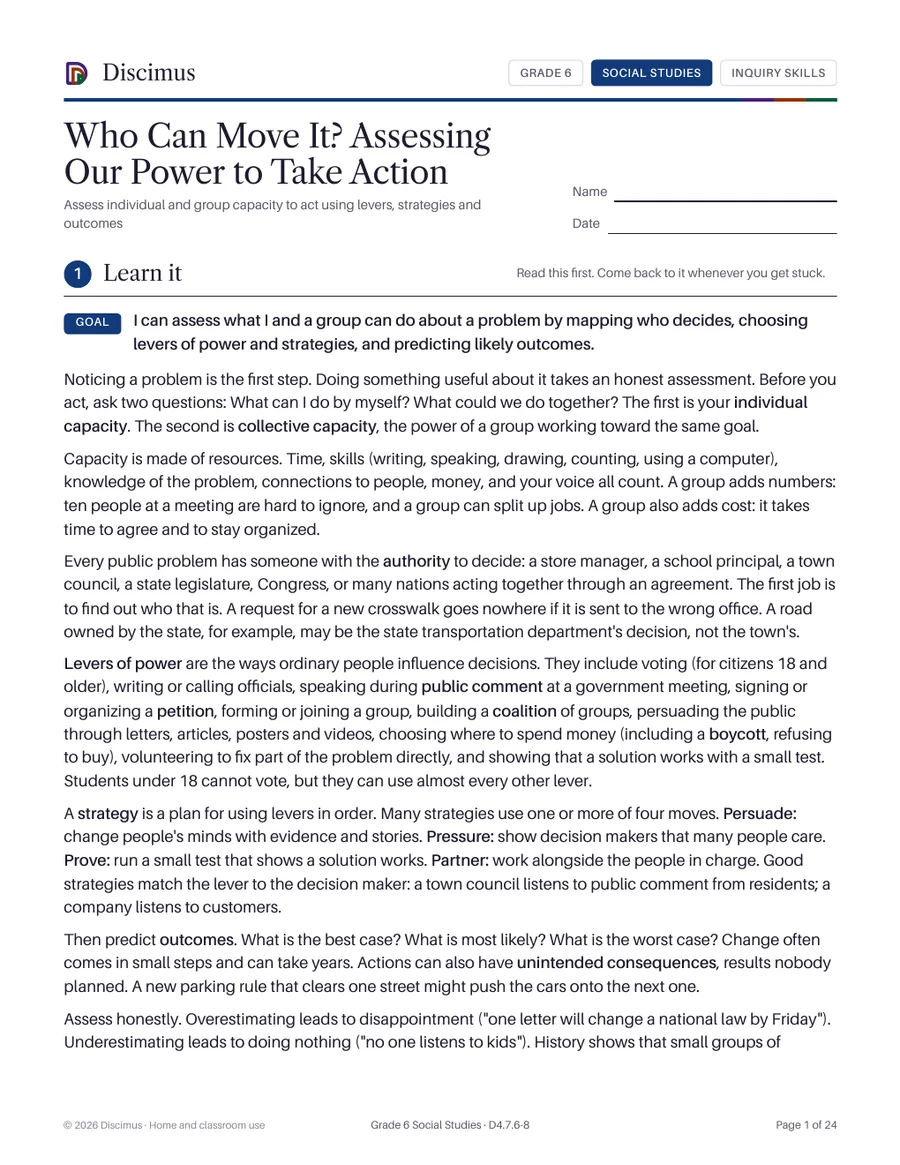
Assess individual and group capacity to act using levers, strategies and outcomes
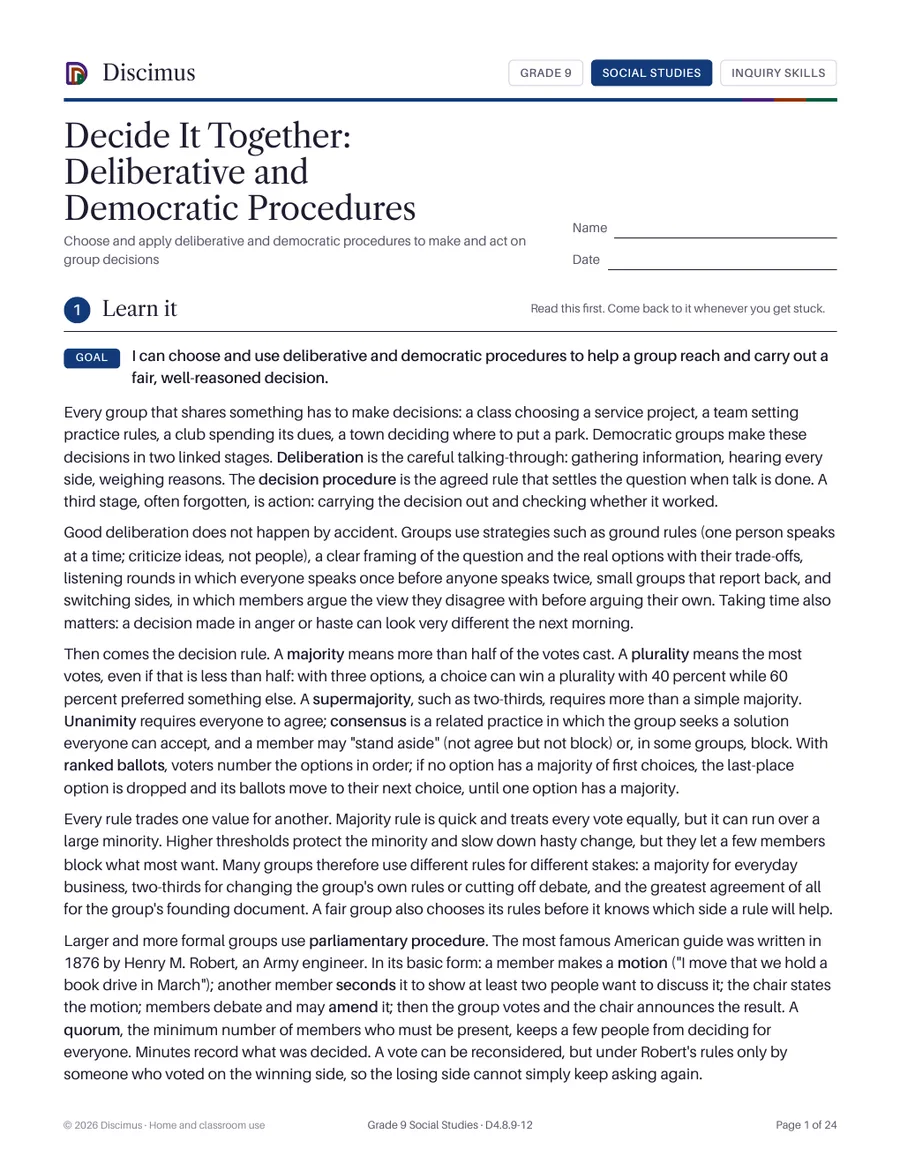
Choose and apply deliberative and democratic procedures to make and act on group decisions
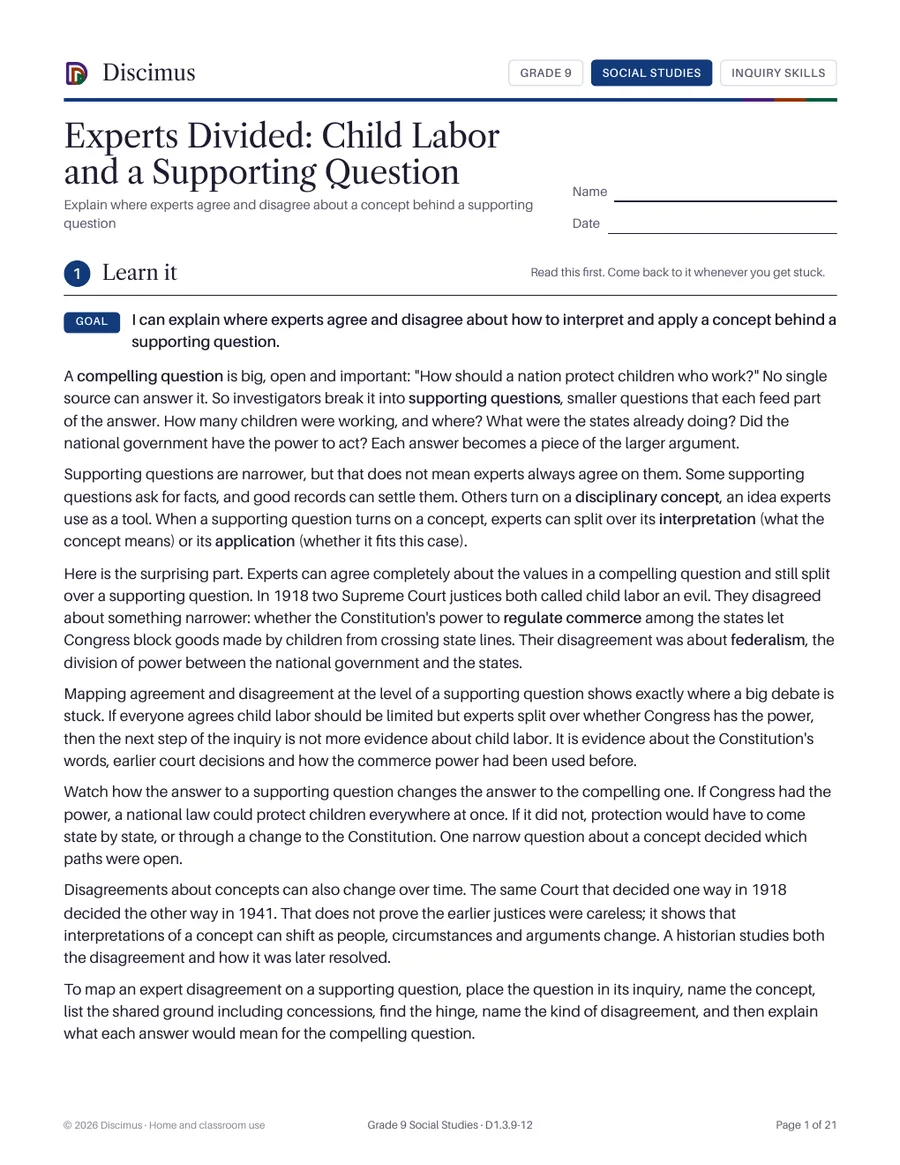
Explain where experts agree and disagree about a concept behind a supporting question
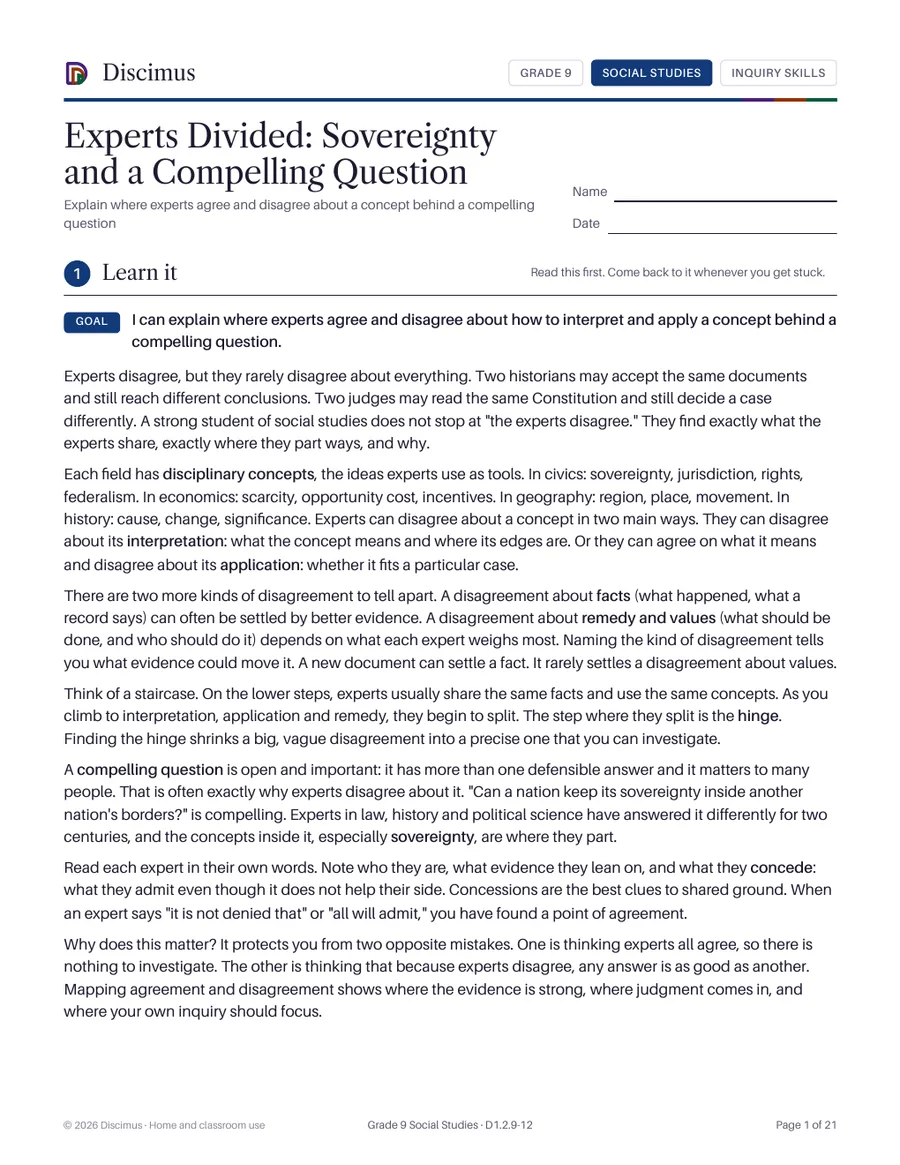
Explain where experts agree and disagree about a concept behind a compelling question
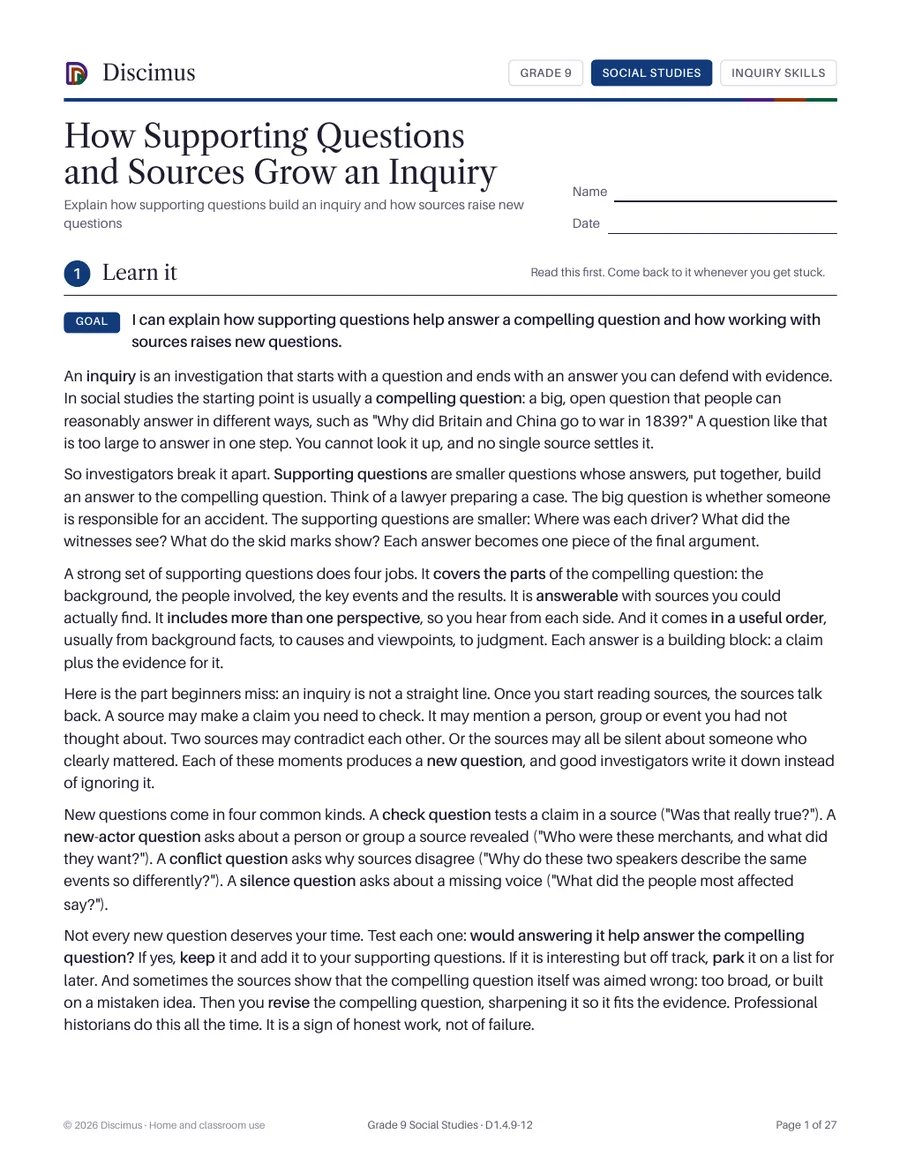
Explain how supporting questions build an inquiry and how sources raise new questions
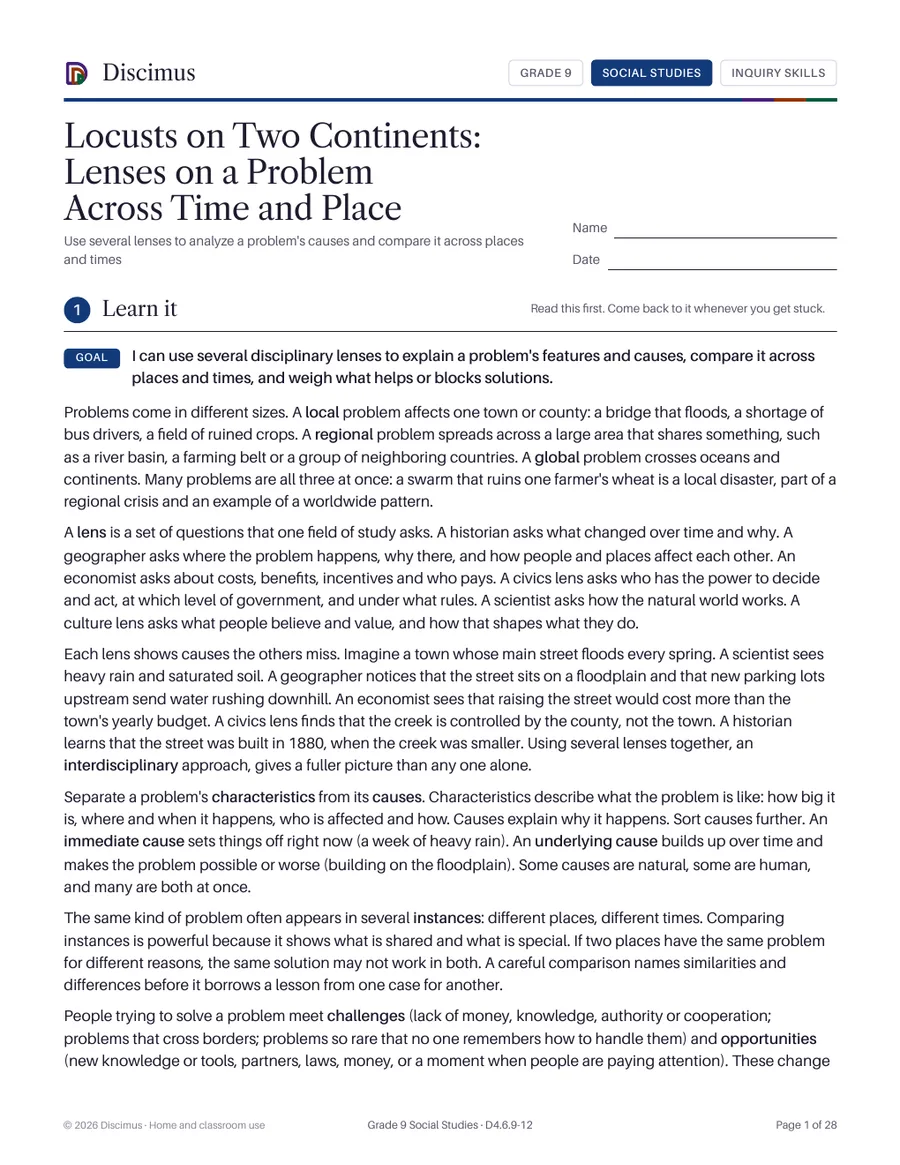
Use several lenses to analyze a problem's causes and compare it across places and times
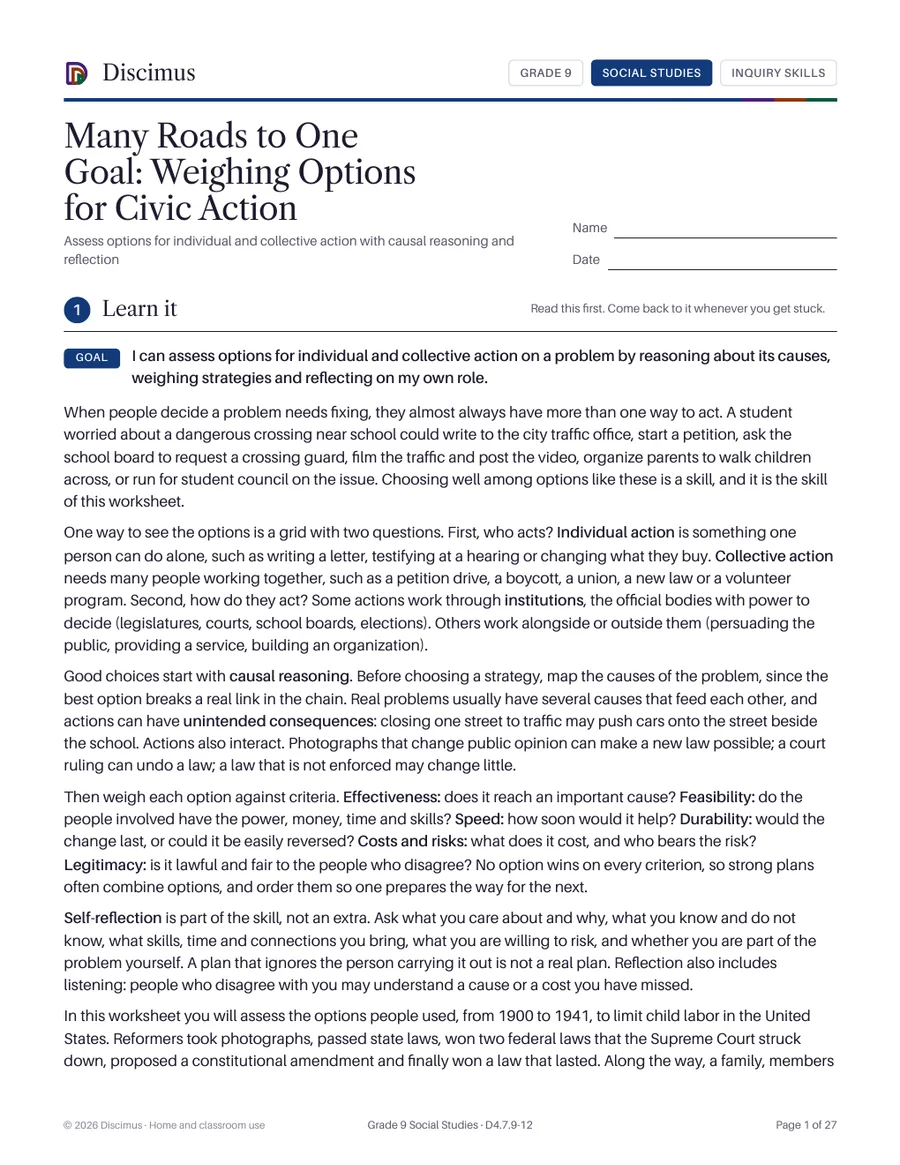
Assess options for individual and collective action with causal reasoning and reflection
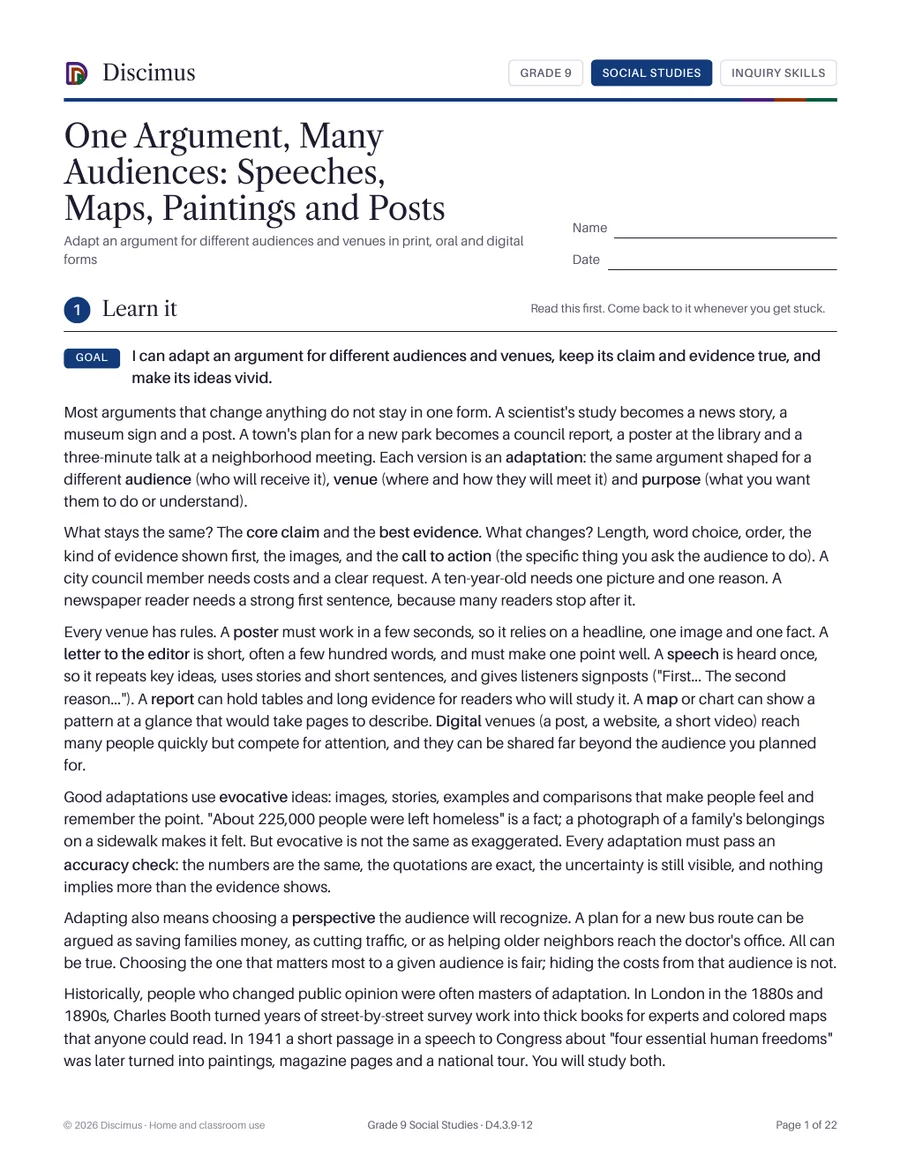
Adapt an argument for different audiences and venues in print, oral and digital forms
Choose sources for an inquiry by weighing their points of view, availability and uses
Explain how a question reflects an enduring issue in a social studies field
Refine claims and counterclaims for precision and significance, and weigh both
Critique the credibility of claims and evidence in an argument
Build an argument with a precise claim, several sources, counterclaims and evidence limits
Critique an explanation's reasoning, sequence of events and supporting details
Build explanations with sound reasoning, correct order, pertinent data and stated limits